
Stephen Drape. Oxford University Computing Laboratory. with thanks to Jeff Sanders
|
|
|
- Clementine Maxwell
- 10 years ago
- Views:
Transcription
1 Stephen Drape Oxford University Computing Laboratory with thanks to Jeff Sanders

2 Obfuscation is a program transformation: Used to make a program "harder to understand" Try to make reverse engineering harder Must preserve functionality Concerns about efficiency

3 Obfuscation is usually applied to objectoriented languages such as Java and C#. When compiling these languages, an intermediate representation is produced. It is possible to recover the original code from this representation obfuscation can make this process harder.

4 Instead of obfuscating an imperative program, we consider obfuscating operations of a data-type we can then exploit properties of that data-type (see later!). We model the data-types and the operations in Haskell.

5 ! We want to obfuscate some set operations. Using functional programs, we can: Derive obfuscations Easily establish proofs of correctness Both of these are difficult to do in imperative languages.

6 # $ Adapt "array splitting" consider a particular example "alternating split" Write xs ~ l,r a to denote xs is split into two lists l and r xs is data refined by l,r a [5,7,5,4,3,1,1] ~ [5,5,3,1], [7,4,1] a Invariant: r l r +1 "

7 $ split([ ]) = [ ],[ ] a split([p]) = [p],[ ] a split(p:q:xs) = p:l, q:r a where l, r a = split(xs) unsplit [ ], [ ] a = [ ] unsplit [p], [ ] a unsplit p:l, q:r a = = [p] p:q:unsplit(l, r a ) %
![split(xs) unsplit [ ], [ ] a = [ ] unsplit [p],](/docs-images/43/14482239/images/page_7.jpg "[ ] a unsplit p:l, q:r a = = [p] p:q:unsplit(l,")
8 split. op = sp_op. split Data Refinement sp_op = split. op. unsplit op = unsplit. sp_op. split &

9 # p: l, r a =p:r, l a l 0, r 0 a ++ l 1, r 1 a l 0 == r 0 = l 0 ++ l 1, r 0 ++ r 1 a otherwise = l 0 ++ r 1, r 0 ++ l 1 a : and ++ distribute over split '

10 )# * $ member p xs = or(map (==p) xs) insert p xs = if member p xs then xs else p:xs delete p xs = ys ++ (if null zs then zs else tail zs) where (ys,zs) = span (/=p) xs (

11 $ Deriving the delete operation for split lists delete a p = split.delete p.unsplit Let l = [l 0, l 1,, l j, l j+1,,l n ] r = [r 0, r 1,,r n' ] and xs ~ l,r a We have three cases (a) p l (b) p r (c) p l, r a
![unsplit Let l = [l 0, l 1,, l j, l j+1,,l n ] r =](/docs-images/43/14482239/images/page_11.jpg "[r 0, r 1,,r n' ] and xs ~ l,r a We have three")
12 +,-,p l) Suppose that l j = p Let (ly,lz) = span (/=p) l = ([l 0, l 1,, l j-1 ], [l j, l j+1,, l n ]) (ry,rz) = splitat ly r = ([r 0, r 1,, r j-1 ], [r j,, r n' ])
![j-1 ], [l j, l j+1,, l n ]) (ry,rz) =](/docs-images/43/14482239/images/page_12.jpg "splitat ly r = ([r 0, r 1,, r j-1 ], [r")
13 +,-,p l) delete a pl, r a = {derivation equation} split(delete p (unsplitl, r a )) ={definition of unsplit} split(delete p [l 0, r 0, l 1, ]) ={definition of delete, l j =p} split([l 0, r 0,..., r j-1 ] ++ [r j, ])
![unsplit} split(delete p [l 0, r 0, l 1, ])](/docs-images/43/14482239/images/page_13.jpg "={definition of delete, l j =p} split([l 0, r 0,.")
14 +,-,p l) split([l 0, r 0,..., r j-1 ] ++ [r j, ]) ={split distributes over ++} split([l 0, r 0,...])++ split([r j, ]) ={definition of split} [l 0, ], [r 0, ] a ++ [r j,, r n' ], [l j+1,, l n ] a ={earlier definitions} ly, ry a ++ rz, tail lz a

15 +,-,p l) ly, ry a ++ rz, tail lz a ={definition of ++, ly = ry } ly ++ rz, ry ++ tail lz a We cannot simplify this further, but as lists are unordered: ly, ry a is equivalent to ry, ly a

16 +,-,p l) ry, ly a ++ rz, tail lz a ={definition of ++} ry ++ rz, ly ++ tail lz a ={definitions} r, delete p l a "

17 +,-,p r) delete a pl, r a = { l =(head l):(tail l), l [ ]} delete a p(head l): (tail l), r a ={definition of :} delete a p ((head l): r, tail l a ) ={head l p} (head l):(delete a p r, tail l a ) %

18 +,-,p r) (head l):(delete a p r, tail l a ) = {previous definition of delete a } (head l):(tail l, delete p r a ) ={definition of :} (head l):(delete p r),tail l a &

19 $ (c) p l and p r delete a pl, r a = l, r a Final definition delete a pl, r a member p l = r, delete p l a member p r = (head l):(delete p r), tail l a otherwise = l, r a '

20 . insert a pl, r a = if member a pl, r a thenl, r a elsep:r, l a We will now prove that insert p = unsplit. (insert a p). split (

21 ! Case for p xs is trivial. Otherwise, suppose that: xs ~ l, r a and p xs unsplit(insert a p split(xs)) ={xs ~ l, r a } unsplit(insert a p (l, r a ))
22 ! unsplit(insert a p (l, r a )) ={definition of insert a } unsplit(p:r, l a ) ={definition of :} unsplit(p:l, r a ) ={property of :} p:unsplit(l, r a )
23 ! p:unsplit(l, r a ) ={xs ~ l, r a } p:xs ={definition of insert} insert p xs
24 +/$0 delete p xs = ys ++ (if null zs then zs else tail zs) where (ys,zs) = span ( p) xs delete a pl, r a member p l = r, delete p l a member p r = (head l):(delete p r), tail l a otherwise = l, r a Both functions have linear complexity.
25 +/$0 insert p xs = if member p xs then xs else p:xs insert a p l, r a = if member a p l, r a thenl, r a elsep:r, l a Again, these functions have linear complexity.
26 1 1 The paper looks at three representations: Unordered with duplicates Unordered without duplicates Strictly-increasing Proofs and derivations of delete and insert are given for the other representations. Also, another split is considered. "
27 2 At the beginning, it was stated we obfuscate data-types directly so that we can exploit properties of the data-type. Suppose that we want to split a matrix and we want to develop a transpose operation for the split matrix. Suppose we flatten the matrix to an array and then split this array. %
28 & 2 Using arrays means that we lose the "shape" of the matrix and so we have difficulty in constructing a transpose operation. Using matrices directly: = T T T T T D B C A D C B A
29 +$ We have seen that using data-types and functional programming, we can derive obfuscations prove correctness Our operations make little change to the complexity Have to keep split secret '
30 3 Possible areas for future work Other obfuscations Other data-types (matrices, trees) Automation Obfuscation definition (
31
The countdown problem
 JFP 12 (6): 609 616, November 2002. c 2002 Cambridge University Press DOI: 10.1017/S0956796801004300 Printed in the United Kingdom 609 F U N C T I O N A L P E A R L The countdown problem GRAHAM HUTTON
α = u v. In other words, Orthogonal Projection
 Orthogonal Projection Given any nonzero vector v, it is possible to decompose an arbitrary vector u into a component that points in the direction of v and one that points in a direction orthogonal to v
Specifying Imperative Data Obfuscations
 Specifying Imperative Data Obfuscations Stephen Drape, Clark Thomborson and Anirban Majumdar Department of Computer Science, The University of Auckland, New Zealand. Abstract. An obfuscation aims to transform
Methods for Finding Bases
 Methods for Finding Bases Bases for the subspaces of a matrix Row-reduction methods can be used to find bases. Let us now look at an example illustrating how to obtain bases for the row space, null space,
is in plane V. However, it may be more convenient to introduce a plane coordinate system in V.
 .4 COORDINATES EXAMPLE Let V be the plane in R with equation x +2x 2 +x 0, a two-dimensional subspace of R. We can describe a vector in this plane by its spatial (D)coordinates; for example, vector x 5
( ) which must be a vector
 MATH 37 Linear Transformations from Rn to Rm Dr. Neal, WKU Let T : R n R m be a function which maps vectors from R n to R m. Then T is called a linear transformation if the following two properties are
Linear Codes. Chapter 3. 3.1 Basics
 Chapter 3 Linear Codes In order to define codes that we can encode and decode efficiently, we add more structure to the codespace. We shall be mainly interested in linear codes. A linear code of length
Math Circle Beginners Group October 18, 2015
 Math Circle Beginners Group October 18, 2015 Warm-up problem 1. Let n be a (positive) integer. Prove that if n 2 is odd, then n is also odd. (Hint: Use a proof by contradiction.) Suppose that n 2 is odd
Obfuscation of Abstract Data-Types
 Obfuscation of Abstract Data-Types Stephen Drape St John s College Thesis submitted for the degree of Doctor of Philosophy at the University of Oxford Trinity Term 2004 Obfuscation of Abstract Data Types
Orthogonal Projections
 Orthogonal Projections and Reflections (with exercises) by D. Klain Version.. Corrections and comments are welcome! Orthogonal Projections Let X,..., X k be a family of linearly independent (column) vectors
Functional Programming
 FP 2005 1.1 3 Functional Programming WOLFRAM KAHL [email protected] Department of Computing and Software McMaster University FP 2005 1.2 4 What Kinds of Programming Languages are There? Imperative telling
160 CHAPTER 4. VECTOR SPACES
 160 CHAPTER 4. VECTOR SPACES 4. Rank and Nullity In this section, we look at relationships between the row space, column space, null space of a matrix and its transpose. We will derive fundamental results
Section 5.3. Section 5.3. u m ] l jj. = l jj u j + + l mj u m. v j = [ u 1 u j. l mj
![Section 5.3. Section 5.3. u m ] l jj. = l jj u j + + l mj u m. v j = [ u 1 u j. l mj](/thumbs/31/14930763.jpg "Section 5.3. Section 5.3. u m ] l jj. = l jj u j + + l mj u m. v j = [ u 1 u j. l mj") Section 5. l j v j = [ u u j u m ] l jj = l jj u j + + l mj u m. l mj Section 5. 5.. Not orthogonal, the column vectors fail to be perpendicular to each other. 5..2 his matrix is orthogonal. Check that
Section 5. l j v j = [ u u j u m ] l jj = l jj u j + + l mj u m. l mj Section 5. 5.. Not orthogonal, the column vectors fail to be perpendicular to each other. 5..2 his matrix is orthogonal. Check that
NOTES ON LINEAR TRANSFORMATIONS
 NOTES ON LINEAR TRANSFORMATIONS Definition 1. Let V and W be vector spaces. A function T : V W is a linear transformation from V to W if the following two properties hold. i T v + v = T v + T v for all
Abstract Data Type. EECS 281: Data Structures and Algorithms. The Foundation: Data Structures and Abstract Data Types
 EECS 281: Data Structures and Algorithms The Foundation: Data Structures and Abstract Data Types Computer science is the science of abstraction. Abstract Data Type Abstraction of a data structure on that
Problem Set 5 Due: In class Thursday, Oct. 18 Late papers will be accepted until 1:00 PM Friday.
 Math 312, Fall 2012 Jerry L. Kazdan Problem Set 5 Due: In class Thursday, Oct. 18 Late papers will be accepted until 1:00 PM Friday. In addition to the problems below, you should also know how to solve
MATH 304 Linear Algebra Lecture 18: Rank and nullity of a matrix.
 MATH 304 Linear Algebra Lecture 18: Rank and nullity of a matrix. Nullspace Let A = (a ij ) be an m n matrix. Definition. The nullspace of the matrix A, denoted N(A), is the set of all n-dimensional column
December 4, 2013 MATH 171 BASIC LINEAR ALGEBRA B. KITCHENS
 December 4, 2013 MATH 171 BASIC LINEAR ALGEBRA B KITCHENS The equation 1 Lines in two-dimensional space (1) 2x y = 3 describes a line in two-dimensional space The coefficients of x and y in the equation
THE DIMENSION OF A VECTOR SPACE
 THE DIMENSION OF A VECTOR SPACE KEITH CONRAD This handout is a supplementary discussion leading up to the definition of dimension and some of its basic properties. Let V be a vector space over a field
Lecture 15 An Arithmetic Circuit Lowerbound and Flows in Graphs
 CSE599s: Extremal Combinatorics November 21, 2011 Lecture 15 An Arithmetic Circuit Lowerbound and Flows in Graphs Lecturer: Anup Rao 1 An Arithmetic Circuit Lower Bound An arithmetic circuit is just like
Advanced compiler construction. General course information. Teacher & assistant. Course goals. Evaluation. Grading scheme. Michel Schinz 2007 03 16
 Advanced compiler construction Michel Schinz 2007 03 16 General course information Teacher & assistant Course goals Teacher: Michel Schinz [email protected] Assistant: Iulian Dragos INR 321, 368 64
Chapter 6. Orthogonality
 6.3 Orthogonal Matrices 1 Chapter 6. Orthogonality 6.3 Orthogonal Matrices Definition 6.4. An n n matrix A is orthogonal if A T A = I. Note. We will see that the columns of an orthogonal matrix must be
Question 2: How do you solve a matrix equation using the matrix inverse?
 Question : How do you solve a matrix equation using the matrix inverse? In the previous question, we wrote systems of equations as a matrix equation AX B. In this format, the matrix A contains the coefficients
Network (Tree) Topology Inference Based on Prüfer Sequence
 Network (Tree) Topology Inference Based on Prüfer Sequence C. Vanniarajan and Kamala Krithivasan Department of Computer Science and Engineering Indian Institute of Technology Madras Chennai 600036 [email protected],
Recall that two vectors in are perpendicular or orthogonal provided that their dot
 Orthogonal Complements and Projections Recall that two vectors in are perpendicular or orthogonal provided that their dot product vanishes That is, if and only if Example 1 The vectors in are orthogonal
1.2 Solving a System of Linear Equations
 1.. SOLVING A SYSTEM OF LINEAR EQUATIONS 1. Solving a System of Linear Equations 1..1 Simple Systems - Basic De nitions As noticed above, the general form of a linear system of m equations in n variables
7.1 Our Current Model
 Chapter 7 The Stack In this chapter we examine what is arguably the most important abstract data type in computer science, the stack. We will see that the stack ADT and its implementation are very simple.
Please follow these guidelines when preparing your answers:
 PR- ASSIGNMNT 3000500 Quantitative mpirical Research The objective of the pre- assignment is to review the course prerequisites and get familiar with SPSS software. The assignment consists of three parts:
Continued Fractions and the Euclidean Algorithm
 Continued Fractions and the Euclidean Algorithm Lecture notes prepared for MATH 326, Spring 997 Department of Mathematics and Statistics University at Albany William F Hammond Table of Contents Introduction
A binary search tree or BST is a binary tree that is either empty or in which the data element of each node has a key, and:
 Binary Search Trees 1 The general binary tree shown in the previous chapter is not terribly useful in practice. The chief use of binary trees is for providing rapid access to data (indexing, if you will)
Lectures notes on orthogonal matrices (with exercises) 92.222 - Linear Algebra II - Spring 2004 by D. Klain
 Lectures notes on orthogonal matrices (with exercises) 92.222 - Linear Algebra II - Spring 2004 by D. Klain 1. Orthogonal matrices and orthonormal sets An n n real-valued matrix A is said to be an orthogonal
Similar matrices and Jordan form
 Similar matrices and Jordan form We ve nearly covered the entire heart of linear algebra once we ve finished singular value decompositions we ll have seen all the most central topics. A T A is positive
Row Echelon Form and Reduced Row Echelon Form
 These notes closely follow the presentation of the material given in David C Lay s textbook Linear Algebra and its Applications (3rd edition) These notes are intended primarily for in-class presentation
MATH10212 Linear Algebra. Systems of Linear Equations. Definition. An n-dimensional vector is a row or a column of n numbers (or letters): a 1.
 MATH10212 Linear Algebra Textbook: D. Poole, Linear Algebra: A Modern Introduction. Thompson, 2006. ISBN 0-534-40596-7. Systems of Linear Equations Definition. An n-dimensional vector is a row or a column
Modeling and Performance Evaluation of Computer Systems Security Operation 1
 Modeling and Performance Evaluation of Computer Systems Security Operation 1 D. Guster 2 St.Cloud State University 3 N.K. Krivulin 4 St.Petersburg State University 5 Abstract A model of computer system
It has a parameter list Account(String n, double b) in the creation of an instance of this class.
 Lecture 10 Private Variables Let us start with some code for a class: String name; double balance; // end Account // end class Account The class we are building here will be a template for an account at
Eigenvalues, Eigenvectors, Matrix Factoring, and Principal Components
 Eigenvalues, Eigenvectors, Matrix Factoring, and Principal Components The eigenvalues and eigenvectors of a square matrix play a key role in some important operations in statistics. In particular, they
Zabin Visram Room CS115 CS126 Searching. Binary Search
 Zabin Visram Room CS115 CS126 Searching Binary Search Binary Search Sequential search is not efficient for large lists as it searches half the list, on average Another search algorithm Binary search Very
Factorization Theorems
 Chapter 7 Factorization Theorems This chapter highlights a few of the many factorization theorems for matrices While some factorization results are relatively direct, others are iterative While some factorization
CHAPTER 4 ESSENTIAL DATA STRUCTRURES
 CHAPTER 4 ESSENTIAL DATA STRUCTURES 72 CHAPTER 4 ESSENTIAL DATA STRUCTRURES In every algorithm, there is a need to store data. Ranging from storing a single value in a single variable, to more complex
V. Adamchik 1. Graph Theory. Victor Adamchik. Fall of 2005
 V. Adamchik 1 Graph Theory Victor Adamchik Fall of 2005 Plan 1. Basic Vocabulary 2. Regular graph 3. Connectivity 4. Representing Graphs Introduction A.Aho and J.Ulman acknowledge that Fundamentally, computer
IE 680 Special Topics in Production Systems: Networks, Routing and Logistics*
 IE 680 Special Topics in Production Systems: Networks, Routing and Logistics* Rakesh Nagi Department of Industrial Engineering University at Buffalo (SUNY) *Lecture notes from Network Flows by Ahuja, Magnanti
The Advantages and Disadvantages of Network Computing Nodes
 Big Data & Scripting storage networks and distributed file systems 1, 2, in the remainder we use networks of computing nodes to enable computations on even larger datasets for a computation, each node
The Technology Behind a Graphical User Interface for an Equational Reasoning Assistant
 The Technology Behind a Graphical User Interface for an Equational Reasoning Assistant Andy Gill Department of Computing Science, University of Glasgow Abstract The Haskell Equational Reasoning Assistant
4.5 Linear Dependence and Linear Independence
 4.5 Linear Dependence and Linear Independence 267 32. {v 1, v 2 }, where v 1, v 2 are collinear vectors in R 3. 33. Prove that if S and S are subsets of a vector space V such that S is a subset of S, then
[Refer Slide Time: 05:10]
![[Refer Slide Time: 05:10]](/thumbs/29/13447118.jpg "[Refer Slide Time: 05:10]") Principles of Programming Languages Prof: S. Arun Kumar Department of Computer Science and Engineering Indian Institute of Technology Delhi Lecture no 7 Lecture Title: Syntactic Classes Welcome to lecture
Principles of Programming Languages Prof: S. Arun Kumar Department of Computer Science and Engineering Indian Institute of Technology Delhi Lecture no 7 Lecture Title: Syntactic Classes Welcome to lecture
Data Structures Fibonacci Heaps, Amortized Analysis
 Chapter 4 Data Structures Fibonacci Heaps, Amortized Analysis Algorithm Theory WS 2012/13 Fabian Kuhn Fibonacci Heaps Lacy merge variant of binomial heaps: Do not merge trees as long as possible Structure:
3 Orthogonal Vectors and Matrices
 3 Orthogonal Vectors and Matrices The linear algebra portion of this course focuses on three matrix factorizations: QR factorization, singular valued decomposition (SVD), and LU factorization The first
DATA OBFUSCATION. What is data obfuscation?
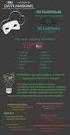 DATA OBFUSCATION What data obfuscation? Data obfuscations break the data structures used in the program and encrypt literals. Th method includes modifying inheritance relations, restructuring arrays, etc.
6. Cholesky factorization
 6. Cholesky factorization EE103 (Fall 2011-12) triangular matrices forward and backward substitution the Cholesky factorization solving Ax = b with A positive definite inverse of a positive definite matrix
Mathematics Course 111: Algebra I Part IV: Vector Spaces
 Mathematics Course 111: Algebra I Part IV: Vector Spaces D. R. Wilkins Academic Year 1996-7 9 Vector Spaces A vector space over some field K is an algebraic structure consisting of a set V on which are
AN ALGORITHM FOR DETERMINING WHETHER A GIVEN BINARY MATROID IS GRAPHIC
 AN ALGORITHM FOR DETERMINING WHETHER A GIVEN BINARY MATROID IS GRAPHIC W. T. TUTTE. Introduction. In a recent series of papers [l-4] on graphs and matroids I used definitions equivalent to the following.
Lecture 1: Introduction
 Programming Languages Lecture 1: Introduction Benjamin J. Keller Department of Computer Science, Virginia Tech Programming Languages Lecture 1 Introduction 2 Lecture Outline Preview History of Programming
6.042/18.062J Mathematics for Computer Science. Expected Value I
 6.42/8.62J Mathematics for Computer Science Srini Devadas and Eric Lehman May 3, 25 Lecture otes Expected Value I The expectation or expected value of a random variable is a single number that tells you
Static Analysis of Virtualization- Obfuscated Binaries
 Static Analysis of Virtualization- Obfuscated Binaries Johannes Kinder School of Computer and Communication Sciences École Polytechnique Fédérale de Lausanne (EPFL), Switzerland Virtualization Obfuscation
8 Square matrices continued: Determinants
 8 Square matrices continued: Determinants 8. Introduction Determinants give us important information about square matrices, and, as we ll soon see, are essential for the computation of eigenvalues. You
Direct Methods for Solving Linear Systems. Matrix Factorization
 Direct Methods for Solving Linear Systems Matrix Factorization Numerical Analysis (9th Edition) R L Burden & J D Faires Beamer Presentation Slides prepared by John Carroll Dublin City University c 2011
Computer Science Information Sheet for entry in 2016. What is Computer Science?
 Computer Science Information Sheet for entry in 2016 What is Computer Science? Computer Science is about understanding computer systems and networks at a deep level. Computers and the programs they run
Math 312 Homework 1 Solutions
 Math 31 Homework 1 Solutions Last modified: July 15, 01 This homework is due on Thursday, July 1th, 01 at 1:10pm Please turn it in during class, or in my mailbox in the main math office (next to 4W1) Please
MATRIX ALGEBRA AND SYSTEMS OF EQUATIONS. + + x 2. x n. a 11 a 12 a 1n b 1 a 21 a 22 a 2n b 2 a 31 a 32 a 3n b 3. a m1 a m2 a mn b m
 MATRIX ALGEBRA AND SYSTEMS OF EQUATIONS 1. SYSTEMS OF EQUATIONS AND MATRICES 1.1. Representation of a linear system. The general system of m equations in n unknowns can be written a 11 x 1 + a 12 x 2 +
Problems and Measures Regarding Waste 1 Management and 3R Era of public health improvement Situation subsequent to the Meiji Restoration

7. LU factorization. factor-solve method. LU factorization. solving Ax = b with A nonsingular. the inverse of a nonsingular matrix
 7. LU factorization EE103 (Fall 2011-12) factor-solve method LU factorization solving Ax = b with A nonsingular the inverse of a nonsingular matrix LU factorization algorithm effect of rounding error sparse
Chapter 13. Disk Storage, Basic File Structures, and Hashing
 Chapter 13 Disk Storage, Basic File Structures, and Hashing Chapter Outline Disk Storage Devices Files of Records Operations on Files Unordered Files Ordered Files Hashed Files Dynamic and Extendible Hashing
Matrix Differentiation
 1 Introduction Matrix Differentiation ( and some other stuff ) Randal J. Barnes Department of Civil Engineering, University of Minnesota Minneapolis, Minnesota, USA Throughout this presentation I have
How To Create A Tree From A Tree In Runtime (For A Tree)
 Binary Search Trees < 6 2 > = 1 4 8 9 Binary Search Trees 1 Binary Search Trees A binary search tree is a binary tree storing keyvalue entries at its internal nodes and satisfying the following property:
Vector Spaces 4.4 Spanning and Independence
 Vector Spaces 4.4 and Independence October 18 Goals Discuss two important basic concepts: Define linear combination of vectors. Define Span(S) of a set S of vectors. Define linear Independence of a set
Lecture 12: Software protection techniques. Software piracy protection Protection against reverse engineering of software
 Lecture topics Software piracy protection Protection against reverse engineering of software Software piracy Report by Business Software Alliance for 2001: Global economic impact of software piracy was
root node level: internal node edge leaf node CS@VT Data Structures & Algorithms 2000-2009 McQuain
 inary Trees 1 A binary tree is either empty, or it consists of a node called the root together with two binary trees called the left subtree and the right subtree of the root, which are disjoint from each
MATRIX ALGEBRA AND SYSTEMS OF EQUATIONS
 MATRIX ALGEBRA AND SYSTEMS OF EQUATIONS Systems of Equations and Matrices Representation of a linear system The general system of m equations in n unknowns can be written a x + a 2 x 2 + + a n x n b a
CS3220 Lecture Notes: QR factorization and orthogonal transformations
 CS3220 Lecture Notes: QR factorization and orthogonal transformations Steve Marschner Cornell University 11 March 2009 In this lecture I ll talk about orthogonal matrices and their properties, discuss
Lecture 3: Finding integer solutions to systems of linear equations
 Lecture 3: Finding integer solutions to systems of linear equations Algorithmic Number Theory (Fall 2014) Rutgers University Swastik Kopparty Scribe: Abhishek Bhrushundi 1 Overview The goal of this lecture
SHARP BOUNDS FOR THE SUM OF THE SQUARES OF THE DEGREES OF A GRAPH
 31 Kragujevac J. Math. 25 (2003) 31 49. SHARP BOUNDS FOR THE SUM OF THE SQUARES OF THE DEGREES OF A GRAPH Kinkar Ch. Das Department of Mathematics, Indian Institute of Technology, Kharagpur 721302, W.B.,
Lecture 5 Principal Minors and the Hessian
 Lecture 5 Principal Minors and the Hessian Eivind Eriksen BI Norwegian School of Management Department of Economics October 01, 2010 Eivind Eriksen (BI Dept of Economics) Lecture 5 Principal Minors and
FUZZY CLUSTERING ANALYSIS OF DATA MINING: APPLICATION TO AN ACCIDENT MINING SYSTEM
 International Journal of Innovative Computing, Information and Control ICIC International c 0 ISSN 34-48 Volume 8, Number 8, August 0 pp. 4 FUZZY CLUSTERING ANALYSIS OF DATA MINING: APPLICATION TO AN ACCIDENT
AUTOMATED TEST GENERATION FOR SOFTWARE COMPONENTS
 TKK Reports in Information and Computer Science Espoo 2009 TKK-ICS-R26 AUTOMATED TEST GENERATION FOR SOFTWARE COMPONENTS Kari Kähkönen ABTEKNILLINEN KORKEAKOULU TEKNISKA HÖGSKOLAN HELSINKI UNIVERSITY OF
Datatype-generic data migrations
 Datatype-generic data migrations IFIP WG 21 meeting #73, Lökeberg, Sweden Andres Löh August 31, 2015 The Haskell Consultants Motivation Datatypes evolve Motivation Datatypes evolve Example: data Person
Matrix Representations of Linear Transformations and Changes of Coordinates
 Matrix Representations of Linear Transformations and Changes of Coordinates 01 Subspaces and Bases 011 Definitions A subspace V of R n is a subset of R n that contains the zero element and is closed under
CS2Bh: Current Technologies. Introduction to XML and Relational Databases. Introduction to Databases. Why databases? Why not use XML?
 CS2Bh: Current Technologies Introduction to XML and Relational Databases Spring 2005 Introduction to Databases CS2 Spring 2005 (LN5) 1 Why databases? Why not use XML? What is missing from XML: Consistency
Systems of Linear Equations
 Systems of Linear Equations Beifang Chen Systems of linear equations Linear systems A linear equation in variables x, x,, x n is an equation of the form a x + a x + + a n x n = b, where a, a,, a n and
5. Orthogonal matrices
 L Vandenberghe EE133A (Spring 2016) 5 Orthogonal matrices matrices with orthonormal columns orthogonal matrices tall matrices with orthonormal columns complex matrices with orthonormal columns 5-1 Orthonormal
9 MATRICES AND TRANSFORMATIONS
 9 MATRICES AND TRANSFORMATIONS Chapter 9 Matrices and Transformations Objectives After studying this chapter you should be able to handle matrix (and vector) algebra with confidence, and understand the
Chapter 13. Chapter Outline. Disk Storage, Basic File Structures, and Hashing
 Chapter 13 Disk Storage, Basic File Structures, and Hashing Copyright 2007 Ramez Elmasri and Shamkant B. Navathe Chapter Outline Disk Storage Devices Files of Records Operations on Files Unordered Files
Boogie: A Modular Reusable Verifier for Object-Oriented Programs
 Boogie: A Modular Reusable Verifier for Object-Oriented Programs M. Barnett, B.E. Chang, R. DeLine, B. Jacobs, K.R.M. Leino Lorenzo Baesso ETH Zurich Motivation Abstract Domains Modular Architecture Automatic
OPTIMAl PREMIUM CONTROl IN A NON-liFE INSURANCE BUSINESS
 ONDERZOEKSRAPPORT NR 8904 OPTIMAl PREMIUM CONTROl IN A NON-liFE INSURANCE BUSINESS BY M. VANDEBROEK & J. DHAENE D/1989/2376/5 1 IN A OPTIMAl PREMIUM CONTROl NON-liFE INSURANCE BUSINESS By Martina Vandebroek
Notes on Factoring. MA 206 Kurt Bryan
 The General Approach Notes on Factoring MA 26 Kurt Bryan Suppose I hand you n, a 2 digit integer and tell you that n is composite, with smallest prime factor around 5 digits. Finding a nontrivial factor
2. Basic Relational Data Model
 2. Basic Relational Data Model 2.1 Introduction Basic concepts of information models, their realisation in databases comprising data objects and object relationships, and their management by DBMS s that
Unit 4.3 - Storage Structures 1. Storage Structures. Unit 4.3
 Storage Structures Unit 4.3 Unit 4.3 - Storage Structures 1 The Physical Store Storage Capacity Medium Transfer Rate Seek Time Main Memory 800 MB/s 500 MB Instant Hard Drive 10 MB/s 120 GB 10 ms CD-ROM
GROUP ALGEBRAS. ANDREI YAFAEV
 GROUP ALGEBRAS. ANDREI YAFAEV We will associate a certain algebra to a finite group and prove that it is semisimple. Then we will apply Wedderburn s theory to its study. Definition 0.1. Let G be a finite
Merkle Hash Trees for Distributed Audit Logs
 Merkle Hash Trees for Distributed Audit Logs Subject proposed by Karthikeyan Bhargavan [email protected] April 7, 2015 Modern distributed systems spread their databases across a large number
1 Introduction to Matrices
 1 Introduction to Matrices In this section, important definitions and results from matrix algebra that are useful in regression analysis are introduced. While all statements below regarding the columns
2. (a) Explain the strassen s matrix multiplication. (b) Write deletion algorithm, of Binary search tree. [8+8]
![2. (a) Explain the strassen s matrix multiplication. (b) Write deletion algorithm, of Binary search tree. [8+8]](/thumbs/40/21097758.jpg "2. (a) Explain the strassen s matrix multiplication. (b) Write deletion algorithm, of Binary search tree. [8+8]") Code No: R05220502 Set No. 1 1. (a) Describe the performance analysis in detail. (b) Show that f 1 (n)+f 2 (n) = 0(max(g 1 (n), g 2 (n)) where f 1 (n) = 0(g 1 (n)) and f 2 (n) = 0(g 2 (n)). [8+8] 2. (a)
Code No: R05220502 Set No. 1 1. (a) Describe the performance analysis in detail. (b) Show that f 1 (n)+f 2 (n) = 0(max(g 1 (n), g 2 (n)) where f 1 (n) = 0(g 1 (n)) and f 2 (n) = 0(g 2 (n)). [8+8] 2. (a)
Applied Linear Algebra I Review page 1
 Applied Linear Algebra Review 1 I. Determinants A. Definition of a determinant 1. Using sum a. Permutations i. Sign of a permutation ii. Cycle 2. Uniqueness of the determinant function in terms of properties
Alok Gupta. Dmitry Zhdanov
 RESEARCH ARTICLE GROWTH AND SUSTAINABILITY OF MANAGED SECURITY SERVICES NETWORKS: AN ECONOMIC PERSPECTIVE Alok Gupta Department of Information and Decision Sciences, Carlson School of Management, University
Introduction to Software Testing Chapter 8.1 Building Testing Tools Instrumentation. Chapter 8 Outline
 Introduction to Software Testing Chapter 8. Building Testing Tools Instrumentation Paul Ammann & Jeff Offutt www.introsoftwaretesting.com Chapter 8 Outline. Instrumentation for Graph and Logical Expression
Section 1.7 22 Continued
 Section 1.5 23 A homogeneous equation is always consistent. TRUE - The trivial solution is always a solution. The equation Ax = 0 gives an explicit descriptions of its solution set. FALSE - The equation
Software Protection through Code Obfuscation
 Software Protection through Code Obfuscation Dissertation submitted in partial fulfillment of the requirements for the degree of Master of Technology, Computer Engineering by Aniket Kulkarni Roll No: 121022016