
MAJOR LEAGUE BASEBALL 2011 ATTENDANCE ANALYSIS. Compiled and Written by David P. Kronheim.
|
|
|
- Nathan Park
- 10 years ago
- Views:
Transcription
1 MAJOR LEAGUE BASEBALL 2011 ATTENDANCE ANALYSIS Compiled and Written by David P. Kronheim 2012

2 MAJOR LEAGUE BASEBALL 2011 ATTENDANCE ANALYSIS TABLE OF CONTENTS PAGES Attendance Reporting Guidelines, Definition of a Sellout, Information Sources Attendance Overview Summary, and 2011 vs Team-by-Team Attendance Table. 4-6 League Attendance, 3 million Seasons, Biggest Year-to-Year Changes in MLB History, Other Notes , 2011 Spring Training, Opening Day, All-Star Game, Post-Season Attendance, Big Gains & Losses The Economy s Effect on Attendance for Baseball. Average Attendance per Date Interleague Play, Growth in the Decade, 2011 Comparison with Recent Years, Weather Notes Recent Attendance Trends in Other Sports.. 17 A Comparison of Each Team s Annual Attendance with the Annual MLB Average Attendance per Team American League Teams 2011 Analysis and Historical Highlights National League Teams 2011 Analysis and Historical Highlights Every Team s Record High Attendance for a Season, and for a Single Home Date MAJOR LEAGUE ATTENDANCE HISTORY SECTION Declines by Pennant Winners, Attendance in New Ballparks, Baseball s Worst Attendance Years Largest Team Season Attendance Increases and Declines in Major League History Worst Declines in Attendance for Teams in Their Second Year in a Ballpark. 50 Best and Worst Season Attendance at Current Major League Parks.. 51 Biggest Gains and Losses by First-Place Teams. Attendance Changes for Teams that Relocated All-Star Game and Post-Season Attendance Records Attendance in Multi-Team Markets Past and Present vs The Last Full Season Prior to the Work Stoppage Yearly Attendance Since 1900, Teams with the Highest and Lowest Attendance by League, Each Year Decade Attendance Totals ( ) - by League Number of Seasons that Each Team had the Best or Worst Attendance in its League. 69 Individual Team Attendance Milestones. 70 The Teams that Drew Best and Worst in Each Decade Highest Team Season Totals in Each League, Yearly Team Highs and Lows for Each Decade.. 72 A Look Back at 1961 and 1962, Major League Baseball s First Expansion Seasons 73-75

3 MAJOR LEAGUE BASEBALL 2011 ATTENDANCE ANALYSIS This report is a comprehensive analysis of Major League Baseball Attendance for 2011, and throughout Major League history. Highlights of this report include: An overview and analysis of Major League attendance for 2011 and recent seasons. League and team-by-team analysis, highlights, and historical data. How attendance has been affected by: pennant winning seasons; team relocations; new ballparks; World Series winners in two-team markets. The economy and baseball attendance. It includes recent attendance trends in other sports. Multi-team market trends (New York, Chicago, San Francisco/Oakland, and Los Angeles). How 2011 attendance compares with attendance just prior to the 1994 shutdown. Major League attendance history and analysis since Biggest team attendance increases and declines in Major League history. Attendance history and highlights of old Yankee Stadium. Best and worst season attendance at current ballparks. Biggest attendance declines in a ballpark s second season. A section on Division Series, Championship Series, World Series, and All-Star Game attendance. How each team s yearly attendance compares with the annual MLB average attendance per team. Attendance growth in a ballpark s final year. A yearly listing of the team with the highest and lowest attendance in each league The number of times each team had the highest or lowest attendance in its league. NEW FEATURES THIS YEAR A look back at 1961 and 1962, Major League Baseball s first expansion seasons. 10 year (2011 vs. 2001) attendance growth rate for other sports. NOTE TO LEAGUES, TEAMS, MEDIA, AND WEBSITES You can download this report, and the 2011 Minor League Baseball Attendance Analysis, in PDF form, at numbertamer.com. Go to the Website s Baseball Reports page for the PDF links to each report. Permission is granted for you to copy, distribute, publish, and use any of the material, including tables, appearing in these attendance analyses. Credit to numbertamer.com would be appreciated. Please contact David Kronheim ([email protected]) if you have any questions about these reports. Comments, corrections, and suggestions are always welcome. Note that these reports are copyrighted.

4 2011 MAJOR LEAGUE BASEBALL ATTENDANCE Page 2 MAJOR LEAGUE BASEBALL ATTENDANCE REPORTING GUIDELINES All attendance figures used in this analysis were obtained from the Major League Baseball Information System, and are for tickets sold. Tickets purchased, but never used, are included in attendance totals. All professional sports leagues in North America now use this method to compile official attendance. So quite often, actual attendance in the ballpark is significantly lower than the official announced attendance. Until 1993, the National League only counted tickets sold and actually used, as their official paid attendance. The National League didn t count no-shows in their attendance figures through American League figures did include the no-shows for many years before then. Attendance from years prior to 1998 was obtained from Total Baseball -The Ultimate Baseball Encyclopedia 8 th Edition, published in Major League Baseball issues a report on attendance right after the regular season. Those figures are later audited, and changes are sometimes made. This can result in discrepancies in attendance figures listed by different sources, such as team media guides, the American League Red Book, the National League Green Book, and The Sporting News Complete Baseball Record Book. The revised 2011 figures that were published in the MLB 2011 Official Averages Book, and in an MLB Advanced Media update, are used in this analysis. Unlike some other leagues, Major League Baseball announced regular season attendance figures often do not include tickets that teams give away free. Announced attendance for post-season games is for all tickets distributed. That is why the listed attendance for sold out post-season games is almost always higher than listed attendance for sold out regular season games. Some ballparks have fewer seats available for post-season play because some sections in the stands are used as additional media seating. WHAT S A SELLOUT? A sellout is generally defined as all seats available for public purchase to a particular game being sold out. Free tickets provided to players, league and team officials, and other guests, may, or may not be, included in the announced attendance for each game. So a game listed as a sellout may have an announced attendance figure that is less than the ballpark s seating capacity. Standing-room tickets sold are included in the official game attendance. But not all of them have to be sold for a game to be listed as a sellout. As long as all available seats to a game are sold, it s a sellout. This is a fair policy since not all teams sell standing-room tickets. In 2011, the Boston Red Sox, Philadelphia Phillies, and San Francisco Giants sold out every home game. Each of these team s sellout streaks continued beyond Opening Day The Red Sox, Phillies and Giants all sold standing-room tickets. Attendance at Fenway Park ranged from a low of 37,015 to a high of 38,525. At Citizens Bank Park in Philadelphia, the smallest crowd was 44,123, while the largest was 45,894. The smallest crowd at San Francisco s AT&T Park was 40,870, and the largest was 42,648. EXCEPT WHERE SPECIFICALLY NOTED OTHERWISE, ALL TEAM, LEAGUE, AND OVERALL MAJOR LEAGUE ATTENDANCE FIGURES IN THIS REPORT ARE FOR HOME, REGULAR SEASON GAMES ONLY. This report was compiled, analyzed, and written by David P. Kronheim, Director of Marketing Research for Number Tamer, which is a marketing research service with clients in the sports industry.

5 2011 MAJOR LEAGUE BASEBALL ATTENDANCE Page 3 INFORMATION AND DATA SOURCES USED TO COMPILE THIS REPORT All tables and analyses in this report and in the 2011 Minor League Baseball Attendance Analysis were created by David Kronheim. But much of the raw data, and other information is from the following Websites and publications, all of which are excellent sources of information: Total Baseball The Ultimate Baseball Encyclopedia 8 th Edition, published in This book contains Major League attendance figures going back to the 19 th Century. The ESPN Official Encyclopedia of Major League Baseball Edited by Pete Palmer and Gary Gillette This book has the most comprehensive review of yearly Major League statistical data as far back as the 1870 s. But the book s most unique feature is its player register, which lists the yearly and career statistics for every single player who has ever appeared in a Major League game. MLB.com The Official Website of Major League Baseball This is the official source of current Major League Statistics, which are updated daily during the season. The site has a great deal of statistical information about Major League history, and every team s daily Game Notes. MLB.com also runs each team s Website, which has team information, videos, and many other features. Minorleaguebaseball.com The Official Website of Minor League Baseball This is the site that covers Minor Leagues and teams that are affiliated with Major League Baseball. It has up-to-date statistics for every league and team, and a host of other features and videos. Also of great help, are the annual Minor League Baseball Information Guide, and individual league and team Media Guides. Oursportscentral.com -- A site that covers minor leagues in baseball and other sports. Retrosheet.org This site has box scores and play-by-play reports from tens of thousands of Major League games, going back decades. The information used here was obtained free of charge and is copyrighted by retrosheet.org. Independent Minor League Websites - Every independent minor league has its own site, which contains news features, statistics, and links to each independent team Website. Baseball Hall of Fame Reference Library Located at the Baseball Hall of Fame in Cooperstown, NY. Major League Team Media Guides - All Major League teams publish an annual Media Guide, which is the team s official record book. These guides also contain biographical and statistical data about each player on the team s Major League roster, and in its Minor League system, along with a good deal of information about the team s history. Baseballparks.com, Ballparkbiz.com, and Ballparkdigest.com - These sites have features and photos about Major League and Minor League ballparks, past, present, and future. The Baseball America Directory This is an annual compilation of Minor League team and ballpark information. The Sporting News Official Baseball Guide From the 1940 s to the early 2000 s, this book had been a complete review of the previous season. It is no longer published. Mud Hens and Mavericks by Judith Blahnik and Phillip S. Schulz, published in 1995 by Viking Penguin -- This book had ballpark and attendance information about many Minor League teams. Encyclopedia of Minor League Baseball (Third Edition ) Edited by Lloyd Johnson and Miles Wolff, and published by Baseball America. It contains standings and statistics on every Minor League since the 19 th Century. Thebaseballcube.com A historical Website containing team and individual player statistics for every Major League team. Also has an extensive Minor League statistical database going back to the late 1970 s.

6 2011 MAJOR LEAGUE BASEBALL ATTENDANCE Page ATTENDANCE OVERVIEW -- SUMMARY Major League Baseball attendance was 73,415,306 in 2011, up 360,899 from This was the first increase since Attendance fell 0.4% in 2010, and there was a 6.6% decline in American League attendance rose 510,531 (1.6%), while the National League was down 149,632 (0.4%). The 2011 total attendance was the 5 th highest in Major League history. In 2009, attendance fell 5,220,345, the largest decline ever in a season not cut short by a strike. The 6.6% decrease was the worst percentage drop since The weak economy, and two new ballparks in New York that were smaller than the parks they replaced, were the most significant causes for this decline in attendance. 17 (8 A.L., 9 N.L.) of the 30 teams posted gains in teams had increases in attendance in In 2009, attendance rose for 9 teams, and fell for 21 teams. It was the highest number of teams in MLB history to have a decline in any season. 17 teams saw attendance fall in 2008, but only 8 teams had losses for Philadelphia topped the Majors in attendance for the first time in team history. They drew a team record-high 3,680,718. Every game was sold out, pushing their sellout streak to 204 games, a National League record. The Yankees drew 3,653,700 in 2011 to lead the American League in attendance for the 9 th straight year. Cleveland, up 446,023 (32.0%), had the largest total and percentage gain of any team. Texas drew a team-record 2,946,949, up 441,778 (17.6%). San Francisco had the biggest total gain in the National League. The Giants drew a team record-high 3,387,303, up 349,860 (11.5%), and sold out every home game for the second time in team history. They also did it in Milwaukee s total attendance of 3,071,373 was their best ever. The Brewers had 37 sellouts. Minnesota s total attendance fell 1.7% from the record-high set in 2010, but they still sold out 59 games. Boston s Major League record streaks of 12 consecutive seasons with an attendance increase, and 10 straight years of setting a team attendance record, ended in But the sellout streak at Fenway Park continues. The Red Sox have sold out an MLB record-high 712 straight regular season games going into the 2012 season. In Los Angeles, the Angels outdrew the Dodgers for the first time in their 51 year history. The Angels also topped 3 million for the 9 th consecutive season. Negative publicity about security at Dodger Stadium, and ownership turmoil, led to decline of 627,512 by the Dodgers, by far the worst attendance loss of any team. The 17.6% percentage dip was also an MLB worst in Dodger attendance dropped below 3 million for the first time since the strike-shortened 1995 season. Pittsburgh had its best attendance since 2001, and 4 th highest of all time. Total attendance was up 327,030, and the 20.3% increase was the highest percentage gain among National League teams. Despite making the playoffs in the final moment of the regular season, Tampa Bay s attendance fell 314,257 (17.0%), the biggest drop in both total and percentage in the American League. The Rays became just the 7 th team in Major League history to make the post-season in a year when they had the largest total attendance decline in their league. Their total attendance of 1,529,188 was the lowest of any team that made the post-season since the 2003 Marlins, and the lowest of any American League post-season team since Oakland in Oakland s total of 1,476,781 was the lowest in the Majors in However, this was the highest attendance ever by a team that finished in last place in the yearly attendance rankings was the first time in MLB history that every team topped 1.4 million. World Champion St. Louis reached 3 million for the 8 th year in a row, and for the 13 th time in the last 14 years.

7 2011 MAJOR LEAGUE BASEBALL ATTENDANCE Page ATTENDANCE OVERVIEW -- SUMMARY 5 teams were down at least 200,000 in 2011, and 4 teams had a decline that large in teams saw attendance drop by at least 200,000 in 2009, with a record-high of 6 teams down at least 500, teams fell by over 200,000 in But the Chicago White Sox had the only 200,000+ decline in Florida had the smallest attendance in the National League for the 6 th straight year. But this team, renamed the Miami Marlins, is getting a big boost in attendance in 2012, because they moved to a new ballpark. Colorado had its best attendance since 2001, and the Cubs surpassed 3 million for the 8 th consecutive season. Seattle had its smallest attendance since 1995, and Houston had its lowest total since teams surpassed 3 million in attendance in 2011 and 9 teams also did it in 2010 and An all-time high of 10 teams reached this mark in 2008, 2007, and in Average attendance per date was 30,362 in 2011, up 224 from the 2010 average of 30,138. The Phillies averaged 45,441 per home date, best in the Majors. The Yankees led the American League with an average of 45,107 per date. The Giants also averaged more than 40,000 per date. 13 teams surpassed 2.5 million in home attendance in 2011, and 20 teams topped 2 million. 3 of the 8 teams (Yankees, Cardinals, Rays) who played in the post-season of 2011 had declines in attendance. The Dodgers topped 2 million for the 39 th consecutive season. Atlanta topped 2 million for the 21 st straight year, and Boston reached this mark for the 17 th year in a row. The Yankees, Cubs, and Cardinals each have drawn more than 2 million for 16 straight seasons through Baltimore has the American League s record streak of 19 straight years above 2 million. That streak came to an end in Seattle s 15 year streak of topping 2 million ended in The Yankees topped 2.5 million for the 18 th time, most ever for an American League team, but the Dodgers have now reached 2.5 million 38 times. St. Louis has done it 22 times. Pittsburgh is the only recent non-expansion team whose current all-time attendance record was set in a year when they had a losing record. The Pirates set their high mark in 2001, the year PNC Park opened. (Miami, Colorado, Tampa Bay, Washington, and Arizona, each set their records in their first season.) Attendance declines in 2010 and 2009 pushed figures back below levels reached prior to the 1994 strike average attendance per date of 30,362 is below the 1993 average of 31,337. If 1998 expansion teams Tampa Bay and Arizona are excluded, the 2011 average for the 28 teams that operated in 1993 rises to 30,930 per date. SOMETHING TO KEEP IN MIND ABOUT THE BIG DECLINES IN NEW YORK IN 2009 In 2009, the Yankees had the biggest loss ever for a team that won a division, and/or the World Series. The Mets had the second worst attendance decline in Major League history. The main reason for the drop in attendance for both teams is that they each drew more than 4 million in 2008, and then moved into smaller ballparks in Even if both teams had sold out every game in 2009, they still would have posted a significant decline in attendance. Old Yankee Stadium had a seating capacity of 57,545, while new Yankee Stadium s capacity is 50,329. Shea Stadium s capacity was 57,365. Citi Field has 41,922 seats (It had 41,800 seats from 2009 through 2011). The Colorado Rockies and the St. Louis Cardinals are the only other teams to draw at least 3 million in the final full season in a ballpark. Colorado set the all time Major League attendance record in 1993, their only full season in Mile High Stadium, when they drew 4,483,350. St. Louis drew 3,538,948 in 2005, their final year in Busch Memorial Stadium. Both of these teams moved to smaller ballparks.

8 Final - Adjusted MAJOR LEAGUE BASEBALL HOME ATTENDANCE vs Page 6 AMERICAN LEAGUE 2011 vs TEAM # DATES 2011 ATTENDANCE 2011 AVG/DATE 2010 ATTENDANCE # DIFFERENCE % CHANGE Baltimore 80 1,755,461 21,943 1,733,019 22, Boston 81 3,054,001 37,704 3,046,444 7, Chicago White Sox 81 2,001,262 24,707 2,194,378 (193,116) (8.8) Cleveland 81 1,840,835 22,726 1,394, , Detroit 81 2,642,045 32,618 2,461, , Kansas City 81 1,724,773 21,293 1,615, , L.A. Angels - Anaheim 81 3,166,321 39,090 3,250,756 (84,435) (2.6) Minnesota 81 3,168,107 39,112 3,223,640 (55,533) (1.7) New York Yankees 81 3,653,700 45,107 3,765,807 (112,107) (3.0) Oakland 80 1,476,781 18,460 1,418,391 58, Seattle 81 1,896,936 23,419 2,085,950 (189,014) (9.1) Tampa Bay 81 1,529,188 18,879 1,843,445 (314,257) (17.0) Texas 81 2,946,949 36,382 2,505, , Toronto 81 1,818,103 22,446 1,625, , American Lea. Total 1,132 32,674,462 28,864 32,163, , NATIONAL LEAGUE Arizona 81 2,107,095 26,014 2,057,135 49, Atlanta 79 2,372,940 30,037 2,510,119 (137,179) (5.5) Chicago Cubs 81 3,017,966 37,259 3,062,973 (45,007) (1.5) Cincinnati 81 2,213,498 27,327 2,060, , Colorado 81 2,897,068 35,766 2,875,245 21, Florida 80 1,520,582 19,007 1,535,226 (14,644) (1.0) Houston 81 2,067,016 25,519 2,331,490 (264,474) (11.3) Los Angeles Dodgers 81 2,934,808 36,232 3,562,320 (627,512) (17.6) Milwaukee 81 3,071,373 37,918 2,776, , New York Mets 78 2,352,596 30,161 2,559,738 (207,142) (8.1) Philadelphia 81 3,680,718 45,441 3,647,249 33, Pittsburgh 80 1,940,429 24,255 1,613, , St. Louis 81 3,093,954 38,197 3,301,218 (207,264) (6.3) San Diego 81 2,143,018 26,457 2,131,774 11, San Francisco 81 3,387,303 41,819 3,037, , Washington 78 1,940,480 24,878 1,828, , National Lea. Total 1,286 40,740,844 31,680 40,890,476 (149,632) (0.4) Major League Total 2,418 73,415,306 30,362 73,054, , Attendance comparison for 2011 vs is based on total home attendance for each year, regardless of the number of home dates. Toronto's 2010 attendance includes 3 home games vs. the Phillies that were played in Philadelphia, and drew a total of 130,070. Florida's 2010 attendance includes 3 home games played in San Juan, Puerto Rico that drew a total of 55,678. Florida's 2011 attendance includes 3 home games vs. Seattle that were played in Seattle, and drew a total of 43,100. SOURCES: 2011 and 2010 Official Averages Books published by the MLB Information System, and an MLB Advanced Media update.

9 2011 MAJOR LEAGUE BASEBALL ATTENDANCE Page ATTENDANCE OVERVIEW Major League Baseball attendance rose 360,899 in 2011 to 73,415,306. This followed 3 straight years of declines. In 2010, the loss was 313,252. But in 2009, attendance declined 5,220,345. That decline was the largest in Major League history in any full season. A record-high attendance of 79,503,175 was reached in On a percentage basis, the 2011 gain was 0.5%. The 2010 decline was 0.4%. The 6.6% decline in 2009 was the largest percentage loss since In the last 31 non-strike affected seasons, attendance was up 20 times and down 11 times. 17 of the 30 teams had an increase in attendance in teams had gains in Attendance rose for 9 teams, while a record-high 21 teams had a decline in teams had gains, and 17 teams suffered decreases in Just 8 teams saw attendance fall in the 2007 season. Cleveland got off to a good start on the field in 2011, and had a 32.0% attendance increase. The Indians had the worst % loss in Pittsburgh was up 20.3%, Texas had a 17.6% gain, and Toronto, Milwaukee, and San Francisco also had 10%+ gains. Just 4 teams posted double-digit % gains in 2010, and only 2 teams were up 10%+ in teams had a double-digit % increase in attendance in teams saw increases of at least 10% in The Dodgers, down 17.6%, had the largest percentage decline in Tampa Bay had a 17.0% loss, and Houston was down 13.4%. 4 teams had 10%+ losses in In 2009, attendance fell by at least 20% for the New York Mets, Toronto, Washington, and San Diego. 6 other teams had declines of at least 10%. 5 teams saw attendance fall at least 10% in No team had a double-digit decline in teams had total attendance increases of at least 200,000 in 2011, led by a gain of 446,023 for Cleveland. Texas was up 441,778, San Francisco had a gain of 349,860, Pittsburgh was up 327,030, and Milwaukee s attendance rose 294,842. There were gains of at least 200,000 for 5 teams in Kansas City and Texas were the only teams whose attendance was up at least 200,000 in teams had a total attendance increase of at least 200,000 in 2008, and 9 teams posted gains of 200,000 or more in The Dodgers had the largest total attendance decline in 2011, down 627,512. Tampa Bay had a loss of 314,257. Houston, St. Louis, and the Mets also fell 200,000+. There were 4 teams down over 200,000 in In 2009, attendance fell more than 500,000 for a record-high 6 teams, and 12 teams had declines of at least 200,000 that year. In 2008, 8 teams had a 200,000+ decline, but only the White Sox had a dip of at least 200,000 in In 2011, 9 teams surpassed 3 million in home attendance, while 13 teams drew at least 2.5 million, and 20 teams topped 2 million. In 2008, a record-tying 10 teams drew more than 3 million. LEAGUE ATTENDANCE vs American League attendance rose 1.6% to 32,674,462, up 510,531. The record-high of 35,389,658 for the 14 team league was set in National League 2011 attendance was 40,740,844, down 0.4% (149,632). The 16 team National League drew a record-high 44,113,517 in teams in the American League had higher attendance in 2011 than in 2010, while 9 National League teams had gains in 2011 vs AVERAGE SEASON ATTENDANCE PER TEAM The 30 Major League teams had a combined average season attendance of 2,447,177 per team in 2011, up 12,030 from an average of 2,435,147 per team in The record-high average per team was 2,650,106 in In 2006, the average was 2,534,760. Before that, the record-high average per team was in 1993, when the 28 teams existing at that time averaged 2,509,159.

10 2011 MAJOR LEAGUE BASEBALL ATTENDANCE Page ATTENDANCE OVERVIEW ROAD ATTENDANCE LEADERS The Yankees led the Major Leagues in road attendance in 2011, drawing 2,691,590 away from Yankee Stadium. The Yankees also had the highest combined home/road attendance among American League teams for the 13 th straight year. Highest road attendance for a National League team was 2,673,012 by Philadelphia. In 2010, the Yankees led the Majors in road attendance, with the Dodgers as the top road draw in the National League. The all-time record for Major League road attendance is 3,308,666 by the 2004 Yankees. Prior to 2004, Cincinnati held the road attendance record (3,016,074), set in MILLION IS NOW ROUTINE The 1978 Dodgers were the first team to top 3 million in attendance. They ve reached that level 25 times, but fell short of that mark in 2011 for the first time since In 1988, Minnesota was the first American League team to draw 3 million. But they didn t do it again until Attendance of 3 million has been achieved 56 times by American League teams, and 98 times in the National League. 22 of the 30 Major League teams have drawn 3 million at least once, and the Yankees, Mets, Toronto, and Colorado have all surpassed 4 million in a season. In 2008, 2007, and 2000, a record-high of 10 teams reached 3 million. 3 MILLION SEASONS # Seasons Teams # Seasons Teams 25 Los Angeles Dodgers 6 Cleveland, Atlanta, N.Y. Mets 15 St. Louis 5 Seattle, Toronto 13 N.Y. Yankees 4 Houston, Boston 10 San Francisco 3 Arizona, Minnesota, Milwaukee 9 Baltimore, Colorado, L.A. Angels 2 Detroit 8 Chicago Cubs 1 Florida, San Diego 7 Philadelphia MINOR LEAGUE BASEBALL ATTENDANCE DOWN SLIGHTLY IN 2011 Fewer minor league teams operated in Attendance for minor leagues affiliated with Major League Baseball was 41,252,053. Independent minor leagues drew 6,830,777. Combined affiliated/independent minor leagues attendance was down 2.9%. It was the 3 rd straight decline in total Minor League attendance. Prior to 2009, the last overall decline in the Minors was in Total combined Major League/Minor League 2011 attendance was 121,498,146. The combined Major League/Minor League record is 130,801,908, set in Much more detail about 2011 Minor League baseball attendance can be found in the Minor League Attendance Analysis at numbertamer.com. A BIG DAY AT THE GATE The best day of attendance in Major League history was on July 28, 2007, when 717,478 tickets were sold for the 17 games played that day. (There were two, separate-admission day/night doubleheaders.) Average attendance per game for that day was 42,205. The largest regular-season crowd of 2011 was 56,432 on Opening Day at Dodger Stadium. The largest crowd at an American League ballpark was 50,146 for Opening Day at Texas. Largest post-season attendance was 51,539 at Texas for Game 4 of the World Series. The biggest crowd at any type of game in Major League history was 115,300, for an exhibition game between the Dodgers and Red Sox at the Los Angeles Coliseum in The game was a return to the Dodgers original home in Los Angeles, where they played from 1958 through The old record for best attendance at any type of MLB game was 93,103, at the Los Angeles Coliseum for a 1959 exhibition game with the Dodgers and Yankees that honored former Dodger catcher Roy Campanella.

11 2011 MAJOR LEAGUE BASEBALL ATTENDANCE Page ATTENDANCE OVERVIEW BIGGEST YEAR-TO-YEAR CHANGES IN ATTENDANCE 2009 had the biggest total attendance decline ever in a non-strike year, and the worst % decline since had the 4 th largest increase in total attendance in a non-expansion year, or in a year that did not follow a season shortened either by a strike, or by World War I. Despite the declines in 2008, 2009, and 2010, the 2011 attendance is still up over 5.8 million from Since 1996, the first full season after the strike-shortened 1994 and 1995 seasons, attendance has increased by 13.3 million, with two more teams playing now. Average attendance per team is up more than 300,000 since LARGEST INCREASES IN MAJOR LEAGUE ATTENDANCE (Non-expansion years, full season the previous year) BY TOTAL ATTENDANCE (since 1901) BY % INCREASE (since 1946) Year # Increase Year % Increase ,682, % ,454, ,505, ,460, ,071, ,913, ,740, Total attendance declines in 2009 and 2002 were much higher than in any other years. But both were down from a total of over 72 million the previous year. The 1950 decline was down from 20.2 million in LARGEST DECLINES IN MAJOR LEAGUE ATTENDANCE (Full Seasons) BY TOTAL ATTENDANCE (since 1901) BY % DECLINE (since 1946) Year # Decline Year % Decline ,220, % ,558, ,752, ,903, ,665, ,493, ,492, Prior to 1946, attendance fluctuated much more on a percentage basis. It fell over 15% in 4 full seasons, led by a 29.9% drop in Attendance was up more than 15% in 7 seasons, led by a gain of 39.6% in BASEBALL S GREATEST YEAR OF GROWTH 1946 was the first full post-world War II season, and fans came to games in record numbers. The 16 teams that existed at that time drew a combined record-high 18,523,289. That shattered the previous record of 10,841,123 set in Total attendance rose 7,682,166 (70.9%). That remains the biggest yearly increase in Major League history when comparing two full seasons. It is also the only year that every single team had an attendance increase. American League attendance went up 72.4%, and the National League was up 69.2%. The Yankees drew 2,265,512 in 1946, up 1,383,667 (156.9%), and became the first team to top 2 million. Both Boston teams had spectacular growth. The Red Sox surpassed 1.4 million, which was a 134.7% increase from the 603,974 they drew in Boston Braves attendance was 969,673 in 1946, up 159.1% from the 1945 total of 374,178. The biggest % gain was by the Phillies, who drew 1,045,247 in 1946, up 266.7%, from just 285,057 in The St. Louis Browns had the smallest increase (9.0%).

12 2011 MAJOR LEAGUE BASEBALL ATTENDANCE Page ATTENDANCE OVERVIEW SPRING TRAINING AND SPECIAL EVENTS SPRING TRAINING Spring Training exhibition games drew 3,513,720 in 2011, up from 3,509,343 in The 2011 average per date was 7,200. Record Spring Training average per date is 8,026, set in It includes a Dodgers-Red Sox game at the Los Angeles Coliseum that drew 115,300. Exclude that game, and the average per date was still a record-high 7,793. In 1994, Spring Training games drew an average crowd of 7,709, which is now 3 rd best of all time Spring Training attendance was 3,710,185. The average per date of 7,730 was the 2 nd best ever. OPENING DAY The home opener is always exciting, whether it s played at home, or on the road..yogi Berra Every team, except Washington, sold out its home opener in For 18 teams, Opening Day had the biggest crowd of the season. 28 of the 30 teams sold out Opening Day Every Opener was sold out in The largest crowd to ever attend an Opening Day game was 80,227 at Mile High Stadium in Denver in 1993, for the first home game in Colorado Rockies history. This was also the largest attendance for any regular-season National League game. In 1958, at the Memorial Coliseum, 78,762 attended the first game the Dodgers ever played in Los Angeles. The American League record for Opening Day was 74,420 at Cleveland, in The Indians only drew 615,107 for that entire season. The biggest regular-season crowd in Major League history was 84,587 in Cleveland on September 12, ALL-STAR GAME The 2011 All-Star Game was played in Arizona in front of a crowd of 47,994. In 2012, Kansas City will host the game for the third time. Municipal Stadium in Kansas City was the site of one of the two All-Star Games in The 1973 game was played at Kauffman Stadium, which was in its first year. POST-SEASON In 2011 post-season play, the 19 Division Series games drew 855,508. The 12 League Championship Series games attracted 546,466, and attendance for the 7 World Series games was 342,878. Total attendance for the 38 post-season games was 1,744,852. In 2010, the 32 post-season games drew a total of 1,486,274. Comparing postseason attendance year-to-year has little value since the number of games and the capacity of the ballparks they re played in can vary. More information about post-season attendance in Major League history can be found in this report s Historical Notes section on page 54. WHEN IS A HOME GAME PLAYED AWAY FROM HOME? In 2011, a concert in their park forced Florida to play a 3 game home series with the Mariners in Seattle. The Marlins were the home team for the series, and the 43,100 attendance for those games is included in their home total. RAINY SEASON There were 51 rainouts in the Majors in 2011, the most since 54 games were postponed in But with rained-out games being made up as part of day-night doubleheaders, or on off-days, there were just 6 fewer playing dates in 2011 than in There was only one lost date (by Baltimore) among all A.L. teams, and 10 lost dates by N.L. teams. Oakland played the only single admission double-header that was on the original schedule.

13 2011 MAJOR LEAGUE BASEBALL ATTENDANCE Page ATTENDANCE OVERVIEW SOME BIG GAINS IN teams saw their total attendance rise in 2011, and 5 of them posted increases of more than 200,000. Cleveland had a gain of 446,023. Texas was up 441,778 in 2011, after a 349,155 increase in San Francisco had a gain of 349,860. Pittsburgh was up 327,030, and Milwaukee had a 294,842 increase. In 2010, there also were 5 teams with increases of better than 200,000. Just 2 teams were up more than 200,000 in 2009, 4 teams had increases of 200,000+ in 2008, and 9 teams had total attendance gains of at least 200,000 in On a percent growth basis, Cleveland had a 32.0% gain in total attendance, Pittsburgh was up 20.3%, Texas had a 17.6% gain, and Toronto, San Francisco, and Milwaukee also were up at least 10%. In 2010, 4 teams increased attendance by at least 10%. Only 2 teams had double-digit % gains in Gains of at least 10% were posted by 4 teams in 2008, and by 9 teams in FEWER LOSSES IN teams saw attendance fall in of them had declines of more than 200,000. The Dodgers were down 627,512. That was the 16 th worst total attendance loss in Major League history. Tampa Bay fell 314,257. Houston dipped 264,474. St. Louis was down 207,264, and the Mets suffered a 207,142 decrease. On a percentage loss basis, 3 teams had double-digit declines in total attendance. The Dodgers were down 17.6%, Tampa Bay posted a 17.0% decrease, and Houston fell 11.3%. 4 teams had 10%+ declines in There were 16 teams with attendance declines in 2010, but just 4 of them were down more than 200,000. In 2009, total attendance declined for 21 teams. A record-high 6 teams had attendance fall by at least 500,000. For 12 teams, the losses exceeded 200,000. The Mets, in their much smaller ballpark, dipped 906,139, the 2 nd worst drop in MLB history. Detroit was down 635, teams had double-digit percentage declines. 17 teams had total attendance losses in But only 8 teams had a decline in total attendance in That was the smallest number of teams showing a decline since 1987, when just 6 of the 26 teams playing at that time had lower attendance than in In 2007, the Chicago White Sox had the biggest decline (273,016). The last year prior to 2007 that the team with the worst drop in attendance had a smaller loss (not counting years where the previous season was shortened greatly by a strike) came in That year, the Mets had the largest dip (221,795). The 1972 season was one week shorter due to a strike. Ironically, the Mets won the National League championship in If you compare two seasons that were not shorter for any length, you had to go back 48 years since the team with the biggest decline for the year, had a smaller loss than the White Sox did in In 1959, the Milwaukee Braves had the year s worst decline in the Major Leagues. Their attendance fell 221,989, even though they finished in a first place tie (They lost a pennant playoff to the Dodgers.). Two years earlier, the Brooklyn Dodgers, in their final season in New York, had the biggest loss in the Majors, as their attendance dipped 185,304. The White Sox also suffered the biggest percentage loss in 2007, down 9.2%. The previous time that not even one team had a drop of at least 10% was in 1946, when all 16 teams operating at that time had increases is the only year that followed a year with a full schedule, where every MLB team achieved an attendance increase.

14 2011 MAJOR LEAGUE BASEBALL ATTENDANCE Page ATTENDANCE OVERVIEW WILL THE IMPROVING ECONOMY HELP ATTENDANCE IN 2012, OR COULD HIGH GAS PRICES HURT? A nickel ain t worth a dime anymore. Yogi Berra Major League attendance rose slightly in It had leveled off in 2010 after significant declines in 2009, caused in good part by the recession. But except for 2009, and for The Great Depression, economic recessions seem to have had little effect on baseball attendance. Likewise, high gas prices don t seem to negatively impact attendance. Major League attendance was 10,132,262 in But the next 3 years had declines of 16.4%, 17.6%, and 12.7%. In 1933, Major League attendance was only 6,089,031, down 40% from the peak reached in Then, starting in 1934, there were 5 consecutive seasons of attendance increases, and 3 of those gains exceeded 10%. But the 1930 total was not topped until Attendance did fall for 5 years in a row from 1949 to 1953, mainly due to the appearance of television in millions of homes. By 1953, MLB attendance was down 31% from the record-high of 20.9 million reached in During other significant recessions in the Post World War II era, Major League ticket prices were much lower, even adjusting to inflation, than they are today. In 1973, according to the Baseball Dope Book, published by The Sporting News, the only tickets priced above $5 were a few Club Boxes. For most teams, the top price for a box seat, even in the front rows, was around $4, and many teams had an average cost per ticket of less than $ was the final season at Yankee Stadium before it underwent a major rebuilding. The average price of a ticket to Yankee Stadium that year was $2.53. (This excludes 135 Loge Box seats, whose price was unlisted.) 17,876 Box seats were priced at $4, 19,182 Reserved seats were $3, General Admission (14,079 seats) cost $1.50, and 13,738 Bleacher tickets went for $1. If every ticket were sold at full price, the total cost to buy all regular 64,875 tickets to one game in 1973, would have been $163,906. You can add about $1,000 for those Loge seats. In 2009, the original price of the most expensive ticket in the new Yankee Stadium was $2,500 per game, if bought on a season ticket basis, and $2,625 if purchased for an individual game. So had the Yankees not lowered prices in May 2009, it would have cost around $35,000 more to buy a season ticket for one such seat for 2009, than it would have cost to buy every single seat in the old Yankee Stadium for one game in ERA OF MULTI-PURPOSE STADIUMS IS COMING TO AN END Sun Life Stadium in Miami Gardens, FL was a Major League Baseball facility for the last time in 2011, as the Marlins moved to a retractable-roof, baseball-only, ballpark in The Miami Dolphins, and the Miami University Hurricanes football teams will continue to make Sun Life Stadium home. Oakland and Toronto are now the only Major League teams that share their parks with a National or Canadian Football League team. The Buffalo Bills play a game each season at the Rogers Centre in Toronto, which is the fulltime home of the CFL Argonauts. Sharing a park with a pro football team was once common. In 1971, 18 of the 24 Major League teams played in a stadium that was also home to an NFL team. That includes the Milwaukee Brewers. The Green Bay Packers played some home games every year at County Stadium in Milwaukee. Although they haven t played in Milwaukee since 1994, to this day, the Packers still have two sets of season ticket holders. The Green Package is made up of fans that had tickets to the games that were played in Green Bay, and now their ticket plan is for one pre-season and 6 regular season games. The Gold Package primarily owned Packers Milwaukee tickets, and they now get tickets to one pre-season game and regular season games 2 and 5. There are many fans that likely had tickets for both the Green Bay and Milwaukee games. The Packers have a season ticket waiting list of about 88,000. Tampa Bay, Texas, Arizona, and Washington are the only teams that never shared a park in their current city with an NFL or CFL team. When the Washington Nationals were the Montreal Expos, they did share Olympic Stadium with the CFL Alouettes. The Texas Rangers used to play in Washington, and were co-tennants in Robert F. Kennedy Stadium with the Redskins. Earlier in Washington, the original Senators shared Griffith Stadium with the Redskins. In Chicago, the Bears used to play at Wrigley Field, and the Chicago Cardinals, who later moved to St. Louis, and then to Arizona, played at Comiskey Park, the home of the White Sox.

15 2011 MAJOR LEAGUE BASEBALL ATTENDANCE Page ATTENDANCE OVERVIEW AVERAGE ATTENDANCE PER HOME DATE Major League average attendance per date was 30,362 in 2011, up 224 from The record-high average of 32,785 was set in Games played in A.L. parks averaged 28,864, up 426 from The A.L. record-high is 31,318 in National League home dates averaged 31,680 in 2011, up 56 from (The N.L. average per date rose, even though the total fell, due to 7 fewer dates in 2011, than in 2010.) N.L. record average is 34,201, in The Phillies averaged 45,441 per date, best in the Majors in That is 1,790 over Citizens Bank Park s 2011 seating capacity. Unlike many teams, the Phillies sell standing-room tickets. The Yankees averaged 45,107 to lead the American League. The Giants also averaged over 40,000 per home date. 12 other teams averaged at least 30,000 per date. Tampa Bay (18,879), Oakland (18,460), and Florida (19,007) failed to top 20,000 per date. 17 of the 30 teams had increases in average attendance per home date in Texas had the biggest increase as their average attendance per home date was up 5,454. Cleveland posted a gain of 5,291, Pittsburgh was up 4,336, and San Francisco had a 4,320 gain. The Dodgers had the worst decline in average per date in 2011, down 7,747. Tampa Bay had a 3,880 per date loss, and Houston was down 3,265. The Mets, whose new park, Citi Field, had 15,565 fewer seats than Shea Stadium did, saw their average per date decline 12,450, from 51,165 at Shea Stadium in 2008 to 38,715 at Citi Field in It fell 6,313 in 2010 and 2,241 in There are an additional 122 seats in Citi Field for In 2008, two teams averaged more than 50,000 tickets sold per home date. The Yankees led the Majors with an average of 52,585, the third highest average ever for a full season. Colorado set the full-season record in 1993, and had an even higher average in 1994, when the strike ended the season in August. The Mets (51,165) had the top average in the National League in TEAMS THAT HAVE AVERAGED AT LEAST 50,000 PER HOME DATE IN A SEASON Year Team Total Attendance # Dates Average Per Date 1994 Colorado 3,281, , Colorado 4,483, , New York Yankees 4,271, , New York Yankees 4,259, , New York Yankees 4,243, , New York Mets 4,042, , New York Yankees 4,090, , Toronto 4,057, ,098 The 1994 season ended early due to a strike. Toronto drew over 4 million in both 1991 and 1992, but did not average more than 50,000 per date in those years. A NOTE ABOUT THE TERM HOME DATE: The term average attendance per home date or average attendance per opening is used in baseball, rather than average attendance per game. It is used because baseball teams still play single-admission doubleheaders-- two games for one ticket. For attendance purposes, single-admission doubleheaders count as one date. Day/night doubleheaders, requiring a separate ticket to each game, count as two separate openings or dates. Single-admission doubleheaders were once part of the regular schedule, mainly on Sundays and holidays. But they are rare in the Major Leagues these days, and are almost always used just to make up rained-out games. The only double-header on the original 2011 schedule was in Oakland. There were just 6 Major League singleadmission doubleheaders in 2010 and 11 in By contrast, in 1962, the New York Mets played 30 doubleheaders. They won 3 of them, lost 17, and split 10. The Mets played 22 doubleheaders in 1969 (won 11, lost 3, and split 8), the year they became the first expansion team to not only make the post-season, but to win the World Series.

16 2011 MAJOR LEAGUE BASEBALL ATTENDANCE Page ATTENDANCE OVERVIEW INTERLEAGUE PLAY CONTINUES TO BE A HIT In 2011, games between American and National League teams drew 8,468,620, an average of 33,606 per date. The interleague record-high is 8,932,384 (35,587 per date) in The 2011 average attendance for noninterleague games was 29,985 per date. This continues the trend of interleague games outdrawing games within a league by about 10-12%. It must be noted that interleague games are scheduled for May, June and early July, when attendance is higher than at the start and end of seasons. Houston s move to the American League in 2013 will give each league 15 teams, and so it will require at least one interleague game almost every day, all season long. Since interleague play began in 1997, average attendance per date at those games has been 33,285. American League teams have won 1,939 games, while the National League teams have 1,773 wins. Especially popular are games in two-team markets (New York, Los Angeles, San Francisco-Oakland, and Chicago). The two teams in these markets play each other in a pair of 3 game series at each team s ballpark annually. In 2007, all 24 of these games were sellouts. In 2008, all Yankees-Mets, and Cubs-White Sox games were sold out, as were the 3 games at Angels Stadium, and at AT&T Park in San Francisco. The only non-sellouts were 2 games each in Oakland and at Dodger Stadium. In 2009, all 6 Cubs-White Sox games were sold out, as were all 3 games at Angels Stadium, all 3 at Citi Field, along with 2 games at Dodger Stadium, and one in Oakland. None of the Yankee-Met games at Yankee Stadium or the Giants-A s games in San Francisco were sellouts. In 2010, all Yankees-Mets, and Cubs-White Sox games were sellouts, along with 2 of the 3 Giants-A s games in Oakland and one in San Francisco. In the Angels-Dodgers series, one game in Anaheim was sold out, and although there were no sellouts at Dodger Stadium, each of the 3 games there drew better than 52,000. In 2011, the 3 Cubs-White Sox games at Wrigley Field, all 6 of the Giants-A s games, the 3 Yankees-Mets games at Citi Field, and 2 of the 3 games at Yankee Stadium were sellouts. None of the Dodgers-Angels games, or the Cubs-White Sox games at U.S. Cellular Field sold out. FLORIDA DID NOT GET A BUMP IN ATTENDANCE BEFORE MOVING TO A NEW BALLPARK The Florida Marlins had a small attendance decline in their final year at Sun Life Stadium (formerly known as Joe Robbie Stadium, along with many other names) before moving to their new retractable-roof park in Miami for Over the past 21 years, teams in their final season at an old park often achieved good attendance growth. Part of the reason for this is that season ticketholders at the old park get first priority on seats at the new park. Fans buy season tickets for the final year in the old park, in order to secure a better seating location in the new one. Since 1990, 19 teams have played a full season in their old ballpark prior to moving. 13 of the 19 teams had an attendance increase in their last season at the old park. 6 of those teams were up at least 10%. Cleveland had the biggest gain. In 1993, their final year at Municipal Stadium, the Indians posted a 953,634 increase, up 77.9% from Detroit was up 43.8% in 1999, their last season in Tiger Stadium. Philadelphia s attendance rose 37.4% in 2003, which was their final season at The Vet. Atlanta in 1996, Houston in 1999, and St. Louis in 2005 also had double-digit percentage increases in the last year in an old park. Washington s attendance fell 8.9% in 2007, which was their last year at R.F.K. Stadium. San Diego bade farewell to Jack Murphy Stadium in 2003 with an 8.6% decrease. Milwaukee was down 7.5% in 2000, their last season in County Stadium. Cincinnati in 2002, the Yankees in 2008, and Florida in 2011, had very small decreases. Overall, the 19 teams combined, averaged an 8.1% gain in their final year in an old park. The list of these teams does not include Toronto and Seattle, who moved into their current ballparks in the middle of a season. It also does not include Colorado, because the 1994 season, their final year at Mile High Stadium, ended early due to a strike. Rockies attendance was up when the strike ended the season in August.

17 2011 MAJOR LEAGUE BASEBALL ATTENDANCE Page 15 ATTENDANCE GROWTH IN THE DECADE, AND COMPARING 2011 WITH PREVIOUS YEARS ATTENDANCE IN THE DECADE vs. ATTENDANCE IN THE DECADE Total Major League attendance was 22.2% higher in the 10 year period from 2000 through 2009, than it was during the decade of 1990 through Two seasons in the 1990 s were shorter than usual due to a strike. Also, 4 teams were added in the 1990 s, and the National League did not include no-shows in its attendance figures until The Colorado Rockies and Florida Marlins began play in 1993, and the Tampa Bay Rays and Arizona Diamondbacks had their first seasons in The Montreal Expos moved to Washington for the 2005 season. Another method of comparing attendance in these two decades is by average attendance per team/per season. Average attendance per team/per season was 2,452,493 in the decade from 2000 through This is up 13.3% from the average per team/per season of 2,165,551 from 1990 through of the 26 teams that played during the entire decade of the 1990 s had higher attendance in the decade than in the decade. The San Francisco Giants had the biggest % gain for the decade, as their attendance increased 75.9%. They drew 31.6 million from 2000 through 2009, compared to just 17.9 million in the 1990 s. Moving from cold and windy Candlestick Park, to AT&T Park in 2000 was the big reason for this gain. The New York Yankees had the biggest total attendance gain, from 22.5 million in the 1990 s to 37.7 million in the 2000 s, up 67.8%. Other teams with big percentage increases in the decade include Houston (57.3%), the Mets (53.9%), Milwaukee (53.2%), Detroit (52.6%), and the Angels (42.7%). Toronto had the decade s largest decrease in both total attendance, and percent decline. The Blue Jays drew 31.5 million from 1990 through 1999, but only 20.0 million from 2000 through 2009, a decline of 36.4%. Baltimore s attendance fell 22.3% during this period. Other teams with declines for the decade were Cleveland, Kansas City, Texas, and Atlanta. Also, Colorado and Florida played only 7 seasons in the 1990 s. Yet their total attendance for those 7 years was higher than their 10 year total from 2000 through The Yankees had the highest attendance of any team for the decade from 2000 through 2009, drawing 37,736,795. The Dodgers were next (34,497,939), followed by St. Louis, San Francisco, the Chicago Cubs, the New York Mets, and the Los Angeles Angels. Florida had the lowest attendance for the decade (13,505,417), followed closely by Tampa Bay (13,586,943), and then Washington/Montreal, Kansas City, and Pittsburgh. ATTENDANCE IN 2011 COMPARED TO 2000 Major league attendance in 2011 was 1.3% higher than in National League teams posted a composite gain of 2.5%. American League teams were down 0.1%. 10 of the 16 teams with higher attendance in 2011 than in 2000 had increases of at least 10%. 11 of the 14 teams that were down saw declines of at least 10%. Minnesota nearly tripled its attendance (up 199.0%). The Twins drew 3,168,107 in 2011, up 2,108,392 from 1,059,715 in Philadelphia s attendance increased by 2,067,949 (128.2%) since 2000, as their move to Citizens Bank Park and success on the field has really paid off. Milwaukee has seen a 1,497,752 (95.2%) gain during this period. The Angels had a 1,099,344 gain (53.2%). Washington s attendance was 119.0% higher than it was in 2000, when the team was in Montreal. The largest declines from 2000 were by Cleveland, down 1,615,543 (46.7%), Baltimore, down 1,539,724 (also 46.7%), Seattle down 1,253,098 (39.8%), and Houston, down 989,104 (32.4%). Since the start of the 2000 season, the following 15 teams have opened new ballparks: Detroit, Seattle, Houston, New York Yankees, New York Mets, Cincinnati, Milwaukee, Washington, Philadelphia, Pittsburgh, St. Louis, San Francisco, San Diego, Minnesota, and Miami (in 2012). While the 1.3% gain vs seems modest as a result of the declines in attendance in 2008, 2009, and 2010, there has been a significant increase in average attendance per team over the last few decades average attendance per team is up 16.1% vs. 1990, 47.9% vs. 1980, and 104.3% vs

18 2011 MAJOR LEAGUE BASEBALL ATTENDANCE Page 16 ATTENDANCE IN 2011 COMPARED TO 2002 There was a significant decline in attendance in MLB attendance was 8.2% higher in 2011 than in Total attendance is up 5,556,130 since then. 20 teams had higher attendance in 2011 than in Philadelphia had the largest gain over the past 9 years, up 2,062,577 (127.5%). Minnesota drew 1,243,634 (64.6%) more in 2011 than in Detroit was up 1,138,422 (75.7%). Milwaukee had a 1,101,680 (55.9%) gain since Florida had an 87.0% increase. Washington s attendance was over 1.2 million higher than in 2002, when the team played in Montreal. Seattle has the biggest decline in total attendance since 2002, down 1,643,546 (46.4%). Arizona is down 1,093,630 (34.2%), Baltimore s attendance has fallen 927,456 (34.6%), and Oakland posted a loss of 693,030 (31.9%). ATTENDANCE IN 2011 COMPARED TO 2007 MLB drew a record-high 79,503,175 in attendance is down 6,087,869 (7.7%) since then. 12 teams had better attendance in 2011 than in 2007, but some teams posted big gains during this period. Minnesota was up 871,760 (38.0%). Philadelphia s attendance was 572,393 higher in 2011, a gain of 18.4%. Colorado gained 520,818 (21.9%), and Texas had a 593,087 increase (25.2%). Attendance fell at least 10% for 14 teams, with 8 of them down at least 20%. The Mets, playing in a smaller park, were down 1,501,353 (39.0%). Houston had a 953,389 (31.6%) decline. The Dodgers were down 922,228 (23.9%), Seattle had a 775,549 (29.0%) loss, The White Sox dipped 683,133 (25.4%), and San Diego fell by 647,056 (23.2%). Baltimore, Cleveland, Detroit, Oakland, Toronto, and St. Louis were also down at least 400,000. IT HARDLY EVER RAINS IN CALIFORNIA DURING BASEBALL SEASON With domed stadiums, and fields that drain much better than in the past, rainouts are now less common. They are especially rare in California, and no team has benefited more from great weather than the Angels. Since 1961, they ve had only 15 home rainouts. Their last one was on June 16, The Dodgers have not had a rainout since 2000, and there have been just 17 home games rained out at Dodger Stadium since it opened in San Diego had 16 home rainouts since they began play in 1969, but just 2 since In Northern California, the last postponement in Oakland was in The A s have been rained out just 18 times since California s wet spot is San Francisco, where 32 games have been rained out since The last postponed games in California were in April, 2006, when San Diego had a rainout, and San Francisco had two consecutive rainouts. BUT IT DOES SNOW IN COLORADO On October 10, 2009 (Division Series), the Rockies had the 13 th snowout in their history. 11 of these snowouts have taken place in April, and there was one in September in 1993, the Rockies first season. Early and late season snowfalls are not that unusual in Denver. According to the National Weather Service, since 1950, there have been 20 years when Denver had at least one inch of snow in May (the high was 13.6 inches in May, 1950). There were 15 years where September had at least an inch of snow (record high 17.2 inches in 1971). AND EVEN A DOMED STADIUM CAN HAVE A RAINOUT OR A SNOWOUT Minute Maid Park in Houston has a retractable roof. But in 2008, due to Hurricane Ike, one game was cancelled, and two others got moved to Milwaukee. It was not the first indoor postponement in Houston. In a 1976 storm, 10 inches of rain fell. People couldn t travel to the Astrodome, resulting in what the Astros called a rain-in. In 1983, a game at the Metrodome in Minnesota was postponed because heavy snow made it impossible for fans to get to the park. Snowed out games may be returning to Minnesota now that the Twins have moved back outdoors.

19 2011 MAJOR LEAGUE BASEBALL ATTENDANCE Page 17 RECENT ATTENDANCE TRENDS IN OTHER SPORTS (Sources: NCAA; NFL; NBA; WNBA; NHL; ESPN.com; SI.com; Major League Soccer; minor league hockey league Websites; Sports Business Journal; womensbasketballonline.com) The National Football League set its attendance record in 2007, averaging 67,755 per game. Attendance declined 1.7% in 2008, fell 2.4% in 2009, slipped 0.1% in 2010, and dipped less than 0.1% in NCAA Football Bowl Subdivision (Div. 1A) 2011 total attendance was 37,411,795 down 0.7% from the recordhigh 37,678,722 in Average per game was down 544 to 46,074. The record-high average per game is 46,971 in These figures include neutral site and bowl games. In 2010, total attendance rose 0.6%. Combined 2011 Division 1A and 1AA (Football Championship Subdivision) total attendance rose 0.2%, but average per game fell 539. In NCAA Men s Division 1 basketball, total attendance rose 0.2% in , but average per game fell by 47 to 5,190. Record average per game is 5,735 in The total was up 0.3% in , with average per game down by 8. In , there was a drop of 0.8% in total attendance, and a dip of 133 in average per game. NCAA Women s Division 1 basketball had a 0.6% increase in total attendance to a record high in , but average per game fell by 8 to 1,634. Women s record high average per game is 1,693 in In , total attendance rose 0.9%, and average per game was up 5. All these figures include neutral site and post-season games. National Basketball Association average attendance per game was down 45 (0.3%) to 17,274 in Each team played 33 home games instead of 41, with the season starting late due to the lockout. NBA attendance was up 0.9% for , but fell 2.0% in The WNBA had a total attendance gain of 0.8% in Preliminary data shows that National Hockey League regular season attendance was up 1.8% in , to its 2 nd highest total ever. It rose 0.6% in , but declined 2.2% in Minor league hockey total attendance was down 1.3% in , but average per game rose by 68. The total fell 0.2% in , and 1.2% in Major League Soccer added 2 teams in 2011, and had a total attendance increase of 36.7% to a record-high of 5,468,849. Average per game was up 7.2% to 17,872, the league s best average ever. 10 YEAR ATTENDANCE GROWTH RATE FOR NORTH AMERICAN SPORTS The table below compares 2011 ( for basketball and hockey) and 2001 ( for basketball and hockey) total and average per date/game attendance for Major and Minor League Baseball, the National Football League, The Football Bowl Subdivision (Div.1A) of College Football, the National Basketball Association, the Women s NBA, Division 1 Men s and Women s College Basketball, the National Hockey League, Minor League Hockey, and Major League Soccer NFL figures are preliminary, and subject to change. Total attendance for NCAA College Hockey and Baseball is not available. Sport or League 2011/ Total Attendance 2011 Avg. per Date or Game 2001/ Total Attendance 2001 Avg. per Date or Game % Chg. in Total Att. 11 vs. 01 % Chg. In Avg. Attend. 11 vs. 01 Major League Baseball 73,415,306 30,362 72,417,945 30, % 1.2% Minor League Baseball 48,082,830 3,739 44,805,778 3, NFL Football 17,252,929 67,394 16,166,258 65, NCAA FBS (D1A) Football 37,411,795 46,074 30,318,574 44, NBA Basketball 21,302,573 17,319 19,955,981 16, WNBA Basketball 1,609,097 7,888 2,323,161 9,075 (30.7) (13.1) NCAA Men s D-1 Basketball 27,626,165 5,237 24,100,555 5, (1.4) NCAA Women s D-1 Basket 8,127,941 1,642 6,519,667 1, National Hockey League 21,112,139 17,164 20,373,379 16, Minor League Hockey 12,386,565 4,369 17,543,949 4,496 (29.4) (2.8) Major League Soccer 5,468,849 17,872 2,363,859 14,

20 2011 MAJOR LEAGUE BASEBALL ATTENDANCE Page 18 A COMPARISON OF EACH TEAM S ANNUAL ATTENDANCE WITH ANNUAL MLB AVERAGE PER TEAM In 2011, the 30 Major League teams drew 73,415,306, an average of 2,447,177 per team. 13 teams drew higher than this average, while 17 teams were below it. For 9 teams, attendance was at least 500,000 above this average, while 10 other teams were at least 500,000 below the average. This section compares each team s yearly attendance with the MLB average attendance per team for the same year, and notes how often the team has drawn above or below average. The table on the next page covers the expansion era, going back to For each team, there is a listing of the number of seasons it has played in its current city since 1961, and the number of years during that period that the team has achieved a winning record. The next columns list the number of years that the team s attendance was higher than the Major League average attendance per team, and then, in how many seasons that attendance was at least 500,000 higher than the MLB average per team. This is followed by columns listing the number of years each team drew below the MLB average per team, and in how many seasons the team drew at least 500,000 below that average. The last column shows each team s current streak (through the 2011 season) of drawing above or below the MLB average per team. For example, in 2011, Boston drew 3,054,001. That was more than 500,000 above the 2011 MLB average per team. In 2010, Red Sox attendance was 3,046,444, which also was more than 500,000 above the 2010 MLB average per team. The table on the next page shows that the Red Sox have played 51 seasons in Boston since 1961, with a winning record in 38 of those years. Their annual attendance was above the MLB season average per team 39 times since 1961, and in 11 of those years, they drew more than 500,000 above the MLB average for that year. There were 12 seasons where Red Sox attendance was below the MLB average for the year, but in none of those seasons was it ever more than 500,000 below that MLB average. The current streak column shows that Boston s attendance has been higher than the annual MLB average per team for 13 straight years through The Dodgers have been by far the most successful team at the gate in the past half century. In every single year, since 1958 actually, their attendance has been higher than the MLB average for that year! In 45 of those seasons, Dodger attendance has been at least 500,000 above the MLB average per team for that year. The last time the Dodgers drew less than the MLB average per team was in 1957, their last year in Brooklyn. However, they were above the MLB average in 18 of their final 20 seasons in Brooklyn. The Dodgers current streak of 54 straight years drawing better than the MLB annual average is a record. The Yankees held the old mark, topping the MLB average attendance per team for 50 straight years from 1916 through St. Louis has the next best record since 1961, finishing above the MLB average 43 times, while the Yankees have been above in 40 seasons, and the Red Sox have drawn better than average in 39 years. On the down side, Tampa Bay has never drawn above the MLB annual average per team in its 14 seasons, and has been at least 500,000 below the average in 13 of those years. In 44 seasons in Oakland, the A s have drawn better than average just 7 times, despite having a winning record in 24 of those seasons, including 4 World Series titles. Pittsburgh has been below average 43 times in the last 51 years, including in 35 of the last 36 seasons. Cleveland has just 9 seasons above average, all of them consecutively from 1994 through The Florida (now Miami) Marlins attendance has been at least 500,000 below average for 14 straight years. Kansas City has drawn less than the MLB average attendance per team for 21 years in a row, the longest current losing streak. Some Historical Notes About Average Attendance Per Team From Before 1961 The Browns played in St. Louis from 1902 until they moved to Baltimore in They drew above the MLB yearly average just 6 times in those 52 years, and only once (1922) after 1908.The Cubs drew better than average every year from 1901 through 1926.The original Washington Senators (now the Twins) drew better than average only twice from 1901 through That came in their pennant winning years of 1925 and 1933.The Philadelphia Athletics were below average in their final 23 seasons in Philadelphia ( ).The Boston Braves drew above the MLB average just 6 times from 1900 until moving to Milwaukee in 1953.The Phillies were above average only 10 times from 1900 through 1969.The St. Louis Cardinals, now a great draw, finished above average only 15 times from 1900 through 1960 The New York Giants drew above the average for 43 consecutive seasons, from 1900 through 1942, missed doing it in 1943 by less than 600, were again above average from 1944 through Overall, the Giants were above average 51 times from 1900 until they moved to San Francisco in 1958 Brooklyn was below average every year from 1900 through 1915, but finished above average in all but 6 years from 1920 through 1957, after which the team moved to Los Angeles.

21 2011 MAJOR LEAGUE BASEBALL ATTENDANCE Page 19 INDIVIDUAL TEAM ATTENDANCE ABOVE OR BELOW YEARLY MAJOR LEAGUE AVERAGE PER TEAM # Seasons # Seasons # Seasons # Seasons # Seasons # Winning Above MLB 500,000+ Below MLB 500,000+ Current Team Seasons Average Above Average Below Streak Baltimore below Boston above Chicago White Sox below Cleveland below Detroit above Kansas City below L.A. Angels above Minnesota above New York Yankees above Oakland below Seattle below Tampa Bay below Texas above Toronto below Arizona below Atlanta below Chicago Cubs above Cincinnati below Colorado above Florida below Houston below L.A. Dodgers above Milwaukee above New York Mets below Philadelphia above Pittsburgh below St. Louis above San Diego below San Francisco above Washington below # Seasons is the number of years team has been in its current market. # Winning seasons is the number of years from 1961 (or team inception) through 2011 that team had winning record. Current streak is the consecutive number of seasons the team's attendance had been above or below the yearly Major League average attendance per team - after the 2011 season. Milwaukee's figures include when they played in the American League.
22 2011 MAJOR LEAGUE BASEBALL ATTENDANCE Page ATTENDANCE -- TEAM HIGHLIGHTS AMERICAN LEAGUE YANKEES TOP THE AMERICAN LEAGUE IN ATTENDANCE FOR THE 50 th TIME The Yankees led the American League in attendance in 2011, drawing 3,653,700. This was down 112,107 from It was the 16 th year in a row that the Yankees have reached 2 million, and the 13 th straight season above 3 million. Only the Dodgers, who drew at least 3 million from 1996 through 2010 (15 years), have had a longer 3 million+ streak. The Yankees have exceeded 2 million in 35 seasons, which is more than any American League team. From 2001 through 2007, they had 7 straight years of attendance increases, setting a team record 6 times. They ve also posted gains in 13 of the last 17 seasons was the 9 th year in a row that the Yankees have had the best American League attendance. The record for consecutive seasons leading a league in attendance is 11, set by the Yankees from 1949 through The L.A. Dodgers led the N.L. in attendance for 10 straight years ( ). 20 games at Yankee Stadium were sold out in 2011, and every game drew at least 40,000. The Yankees also played in front of sellout crowds at 28 road games. Since 1920, the Yankees have led the American League in attendance in 50 seasons, and have posted the best Major League attendance 23 times. The Dodgers have topped the N.L. in attendance 38 times, including 10 years in Brooklyn was the first time since 1981 that the Yankees had the top American League attendance. But from 1920 to 1981, the Yankees had the best attendance in the American League 41 times, and led the Major Leagues 16 times. They led the American League 13 times in 14 seasons from 1920 through 1933, covering all but one year of the Babe Ruth era. The also had the best A.L. attendance 16 times in the 19 seasons from 1946 through The Yankees won 15 A.L. pennants and 10 World Series during this period. Yankee attendance has been the best in the Majors in 6 different decades since the 1920 s, and tops in the American League in one other decade. In 2009, the Yankees had the biggest attendance decline in Major League history for a team finishing in first place in a league or division, and the worst decrease in attendance for a World Series winning team. Their 6 year streak of leading all of Major League Baseball in attendance came to an end. The Yankees drew 3,674,495 in 2009, down 584,880 from A major factor in that decline was that new Yankee Stadium seats 50,329, while the old Yankee Stadium s capacity was 57,545. In 2008, the Yankees averaged 52,585 per date, a figure beyond the capacity of their new park. They averaged 45,364 per date in 2009, topping 42,000 for every game. Another reason for the decline was that the Yankees had difficulty selling some of the most expensive seats in the new park, and had to reduce the price of many of them after the start of the season. Only 3 other teams have seen attendance fall when their first season in a new ballpark was a full season, and their last season in the old park was also a full season. The 2009 Mets moved into a much smaller park, and were down 906,139. In 2006, the St. Louis Cardinals sold out every game, but attendance fell 131,834 because new Busch Stadium was a bit smaller than Busch Memorial Stadium. The 1923 Yankees drew 1,007,066 in their first season in the original Yankee Stadium. Their 1922 attendance at the Polo Grounds was 1,026,134. In 2008, the Yankees played their final season in historic Yankee Stadium (84 years and 6,580 games), and became the first team in Major League history to draw 4 million in 4 straight seasons. Their Major League leading attendance of 4,259,375 was actually down from the American League attendance record they set when they drew 4,271,083 in That 2007 total was the second best in MLB history. The Yankees had 58 home sellouts in 2008, and their smallest crowd was 41,302. Attendance was less than 50,000 at only 7 games that year, and at none after May 22. The final 38 games were sellouts, as were 46 of the last 47 games played at old Yankee Stadium. In 2007, Yankee Stadium had 50 sellouts, including 32 of the final 34 games of the year. Attendance was less than 50,000 at only 8 games, and just one game drew under 40,000. YANKEES AGAIN LEAD THE A.L. AND THE MAJORS IN COMBINED HOME AND ROAD ATTENDANCE The Yankees had a Major League best combined home and road total attendance of 6,345,290 in They also led the American League in total home/road attendance for the 13 th straight year. In 2006, the Yankees set a record for combined home and road attendance by a Major League team, with a total of 7,325,051. Prior to 2006, the Major League combined total record was 7,178,421, by the 1993 Colorado Rockies, who drew nearly 4.5 million at home. The old record for an American League team was 7,088,291 by the Yankees in 2005.
23 2011 MAJOR LEAGUE BASEBALL ATTENDANCE Page 21 BASEBALL S MOST HISTORIC BALLPARK -- YANKEE STADIUM ( ) This section takes a brief look at the attendance history of old Yankee Stadium, which closed in 2008, and was replaced in 2009 by a new park, with the same name, and located across the street from the original stadium. From 1903 through 1912, the Yankees were called the Highlanders and played at Hilltop Park in Manhattan. In 1913, the team changed its name to the Yankees, and moved into the Polo Grounds, the home of the New York Giants. The Giants outdrew the Yankees in 6 of the first 7 seasons they shared the Polo Grounds. But after Babe Ruth came to the Yankees in 1920, the Yankees outdrew the Giants 3,546,252 to 2,848,895 over the next 3 years. The Giants then evicted the Yankees from the Polo Grounds. So the Yankees built a magnificent new stadium in the Bronx. Yankee attendance actually dipped slightly in their first season in their own home. Yankee Stadium was the home of the Yankees for 84 seasons. It opened in 1923, and was expanded in 1928, and again in Following the 1973 season, Yankee Stadium underwent a major rebuilding. In 1974 and 1975, the Yankees played at Shea Stadium. Rebuilt Yankee Stadium opened in Its capacity was reduced from 65,010 to 57,145. Some box seats were later added, so the Stadium s final seating capacity was 57, post-season games were played at old Yankee Stadium. All 74 post-season games at the original stadium were World Series games. The rebuilt stadium hosted 87 post-season games, including 26 World Series games. Altogether, the Yankees won 37 A.L. pennants and 26 World Championships in old Yankee Stadium. As successful as the Yankees were on the field, they had almost equal success at the box office. Often, Yankee attendance far surpassed the combined average attendance of the other Major League teams. In 84 seasons at Yankee Stadium, Yankees attendance was higher than the Major League average attendance per team 73 times was the first year since Yankee Stadium opened that Yankee attendance was less than the MLB average. It was also less than the MLB average from 1969 through 1972, and again from 1990 through The table below shows original and rebuilt Yankee Stadium average attendance per season, broken out by decade, and compares it with attendance for all other MLB teams. The column: Avg. Att/Team Other MLB Teams is the average attendance, per year, in each decade for all teams except the Yankees. The column: Yank. Avg. vs. MLB Avg/Team shows in numbers, how much the average Yankee attendance per year in each decade differed from the combined average per year of all other teams. The column: Yank. Avg. vs. MLB Avg. (%) makes the same comparison on a % basis. EXAMPLE: In the 7 years in the 1920 s that Yankee Stadium was open, the Yankees averaged 997,405 per year, compared to a combined average per year of 564,510 for all other teams. The Yankees outdrew all other teams by an average of 432,895 (76.7%) per year, for the decade. Near the bottom of the table, the Total Original line is for the Stadium from 1923 through The Total Rebuilt line is for the rebuilt Stadium from 1976 through 2008, and includes attendance for one game played at Shea Stadium in OLD YANKEE STADIUM ATTENDANCE COMPARED TO MLB ATTENDANCE BY DECADE Years Total Yankee Stad. Attend. Avg. Yankee Att. per Year Avg. Att./Team - Other MLB teams Yank. Avg. vs. MLB Avg/Team Yank. Avg. vs. MLB Avg. (%) ,981, , , , % ,089, , , , ,267,904 1,426, , , ,133,658 1,613, , , ,334,582 1,333,458 1,121, , ,436,081 1,109,020 1,201,977-92, ,989,162 2,247,291 1,481, , ,077,255 2,207,726 1,747, , ,492,091 2,249,209 2,162, , ,062,300 3,784,700 2,407,348 +1,377, Total-Original 64,244,014 1,259, , , Total-Rebuilt 87,620,808 2,655,176 2,040, , Total-All 84Yrs 151,864,822 1,807,915 1,467, , Shea ( 74-75) 2,561,123 1,280,562 1,244, ,
24 2011 MAJOR LEAGUE BASEBALL ATTENDANCE Page 22 BASEBALL S MOST HISTORIC BALLPARK -- YANKEE STADIUM ( ) The following table compares attendance figures of original Yankee Stadium ( ), with attendance at rebuilt Yankee Stadium ( ). New Yankee Stadium opened in 2009, and the old stadium was demolished. ATTENDANCE COMPARISON ORIGINAL YANKEE STADIUM AND REBUILT YANKEE STADIUM Original Stadium ( ) Rebuilt Stadium ( ) # of Seasons 51 (winning record in 45 seasons) 33 (winning record in 28 seasons) Seating Capacity in Final Year 65,010 57,545 Opening Game Attendance 74,200 (announced) 52,613 Actual attendance estimate: 60,000 Final Game Attendance 32,938 (9/30/1973) 54,610 (9/21/2008) First Season s Attendance 1,007,066 (1923) 2,012,434 (1976) Highest Attendance 2,373,901 (1948) 4,271,083 (2007) Lowest Attendance non-strike year 618,330 (1943) 1,748,733 Final Season s Attendance 1,262,103 (1973) 4,259,375 (2008) Total Attendance All Seasons 64,244,014 ( ) 87,580,065 ( ) & Average Attendance Per Season 1,259,687 2,655,176 # Years: Attendance under 1 million 18 0 # Years: Attendance 1-2 million 28 6 # Years: Attendance 2-3 million 5 17 # Years: Attendance 3-4 million 0 6 # Years: Attendance above 4 million 0 4 Total Post-Season Attendance 4,757,461 (74 World Series games) 4,891,534 (30 ALDS, 31 ALCS, 26 World Series Games) Avg. Attend. per Post-Season Game 64,290 56,225 Largest Crowd - Regular Sea. Game 81,841 (5/30/1938) 56,717 (1998 Opener) Largest Crowd - Post-Season Game 74,065 (Game World Ser.) 57,485 (Game ALDS) # Post-Season Games Att. 70, (3 in 1947) 0 (smaller capacity) Smallest Crowd Regular Sea. Game 413 (9/22/1966) 5,851 (4/7/1994) Smallest Crowd Post-Season Game 38,093 (Game World Ser.) 47,505 (Game ALDS) Series High Division Series None Played 170,013 ( games) Series High Championship Series None Played 225,132 ( games) Series High World Series 288,843 ( games) 169,766 ( games) All-Star Game Attendance 62,892 (1939); 38,362 (1960) 56,683 (1977); 55,632 (2008) Grand Total Regular Season, Post-Season, All-Star Attendance 69,102,729 - Attendance was smaller in strike-shortened seasons of 1981, 1994, and & - Excludes 40,743 for a game played at Shea Stadium on 4/15/1998 due to a fallen beam at Yankee Stadium. COMBINED ATTENDANCE: ORIGINAL AND REBUILT YANKEE STADIUM Regular Season 151,824,079 Division Series 1,688,254 All- Star Games ,569 Championship Series 1,738,324 World Series 6,222,417 TOTAL POST-SEASON 9,648,995 GRAND TOTAL - 161,686,643
25 2011 MAJOR LEAGUE BASEBALL ATTENDANCE Page ATTENDANCE -- TEAM HIGHLIGHTS AMERICAN LEAGUE IN BOSTON: A SLIGHT INCREASE, AND THE SELLOUT STREAK CONTINUES The Boston Red Sox sold out every game again in 2011, and topped 3 million for the 4 th straight year. A few more standing room tickets were sold, so attendance was up 7,557. The Red Sox drew 3,054,001, an average of 37,704 per date. The largest crowd of 2011 was 38,525, and the smallest was 37,015. Attendance had declined slightly in 2010, ending Boston s run of setting a team record-high for 10 straight years, and having 12 years in a row of increases. Both of those marks are Major League records. In the early 1960 s, the Red Sox struggled at the gate. From 1961 through 1966, the Red Sox never drew over 950,000. Attendance fell to a post-world War II low of 652,201 in The Impossible Dream pennant winning season of 1967 changed everything. Attendance that year was an American League best 1,727,832, the first time since 1915 that Boston led the A.L. in attendance. Starting in 1967, despite playing in a ballpark with the smallest seating capacity in the Majors most years, the Red Sox have drawn at least 1.4 million in every full season. They ve topped 2 million 28 times, including the last 17 years, and have drawn more than 2.5 million for 12 years in a row. Since 1986, the only season in which the Red Sox did not draw at least 2 million, was strike-shortened Fenway Park, which celebrates its 100 th anniversary in 2012, has a different capacity for day (37,067) and night (37,495) games. Some seats in center field are not sold for day games in order to provide better visibility to batters. THE STREAK AT FENWAY Boston sold out 712 consecutive regular-season home games through the end of 2011, and the streak continued in It is the longest sellout streak in Major League history. The streak began on May 15, 2003, so it has covered 8 full seasons. Also since 2003, the Red Sox have 26 straight post-season sellouts at Fenway Park. 5 other franchises have had sellout seasons : Colorado (1996); San Francisco (2000, 2011); Philadelphia ( ); St. Louis ( ); Cleveland ( ); Minnesota just missed in 2010, selling out 79 of 81 games. The old consecutive sellouts record was 455, at Jacobs (Progressive) Field in Cleveland. That streak ran from June 12, 1995, through Opening Day of Coincidentally, on the same day that the Indians streak began, Colorado had the first of 203 consecutive sellouts at Coors Field. That streak, which is now the 4 th longest in MLB history, ran through September 7, Philadelphia set a new National League record when they recorded their 204 th straight regular season sellout, on the final day of their 2011 home season. The Red Sox also had a long Spring Training sellout streak. They sold out 105 consecutive home games at City of Palms Park in Fort Myers, Florida. That streak began in 2003, and ended when a 2011 split-squad game that was a late addition to their schedule, did not sell out. In 2012, the Red Sox sold out all 16 games in their new Spring Training ballpark, making it 135 sellouts in their last 136 Grapefruit League home games. But the Red Sox don t have the longest sellout streak in pro baseball. The Dayton Dragons of the Midwest League have sold out all 844 home dates in their history, from 2000 through That streak continued into Boston is the only market which has teams in all 4 Major League sports (MLB, NFL, NBA, NHL) to ever have each team sell out all regular season games in a year (2010 and 2011). The Patriots have 193 straight sellouts, including pre-and post-season games, from the start of the 1994 season. All Bruins games have been sellouts since Dec. 5, The Celtics have 5 straight years of sellouts covering through The Portland Trail Blazers of the NBA have the longest sellout streak in North American major league pro sports. They sold out 814 consecutive games (744 in the regular-season, 70 in the playoffs) between 1977 and From 1980 to 1995, the Boston Celtics had 667 consecutive sellouts, 100 of them in the playoffs. The Chicago Bulls, led by Michael Jordan, sold out 610 straight games (515 in the regular-season, 95 in the playoffs) from 1987 to Michael Jordan also had a hand in a baseball attendance record. When he played minor league baseball for the Birmingham Barons of the Southern League in 1994, the league set its all-time attendance record, and the Barons had the highest attendance ever for one team in that league. Both of those records still stand. The New York Knicks had 433 straight sellouts from 1993 to Dallas has the longest current NBA sellout streak at 492 (including 60 playoff games) from Dec. 15, 2001, through the end of their playoff run.
26 2011 MAJOR LEAGUE BASEBALL ATTENDANCE Page ATTENDANCE -- TEAM HIGHLIGHTS AMERICAN LEAGUE THE STREAK - continued The Colorado Avalanche hold the National Hockey League sellout streak record of 487 games (including 80 in the playoffs), from 1995 through Detroit had 452 consecutive sellouts, including playoffs, from December 1996 through April The Minnesota Wild s streak of 409 straight sellouts covering pre-season, regular-season, and playoff games, ended at the start of Some of the sellout streaks at the end of the regular season included Vancouver (404 games), Montreal (333), Edmonton (277), and Pittsburgh (251). There may be other long streaks in the NHL. Some NHL teams do not publish attendance data in their Media Guides or Game Notes. In the National Football League, there have been some long running sellout streaks through the 2011 season. Washington has 368 sellouts in a row (includes pre-season and playoffs) going back to The Denver Broncos have sold out 341 straight games since 1970, including playoffs. Pittsburgh has sold out 308 regular season games in a row since There have been 302 straight sellouts at Lambeau Field in Green Bay going back to Until 1995, the Packers played some of their home games each year in Milwaukee. In college football, Nebraska has the NCAA record with 318 straight sellouts (they won 275 of these games), starting in 1962, and continuing through Notre Dame has the second longest streak 225 games since 1973, and all but one game sold out since Michigan has topped 100,000 at 238 straight games since 1975, but not all those games were sellouts. They ve led the NCAA in football attendance in 36 of the last 37 years. There is no official consecutive sellout listing in men s college basketball. Duke has sold out 339 straight home men s basketball games through , while Kansas has 180 sellouts in a row. Michigan State sold out 323 consecutive home hockey games from 1985 through A GREAT START ON THE FIELD LEADS TO A BIG ATTENDANCE INCREASE IN CLEVELAND The Indians played great early in the 2011 season, especially at home. This led to an attendance increase of 446,023 (32.0%) to 1,840,835. Both the total and percentage gains were the best in the Major Leagues in Their average per date was up an MLB 2 nd best (to Texas) 5,291 from 17,435 in 2010 to 22,726 in Cleveland had 4 sellouts in games drew more than 30,000. The Indians topped 30,000 just 3 times in games drew less than 20,000 in 2011, but in 2010, there were 57 games with attendance below 20,000. In 2010, Cleveland drew just 1,394,812, their lowest total since 1992, including the strike years, and the smallest attendance of any team. Attendance fell by 382,092. This followed a decline of 392,818 in Opening Day 2010 was a sellout. The only other games that drew over 30,000 were one with the Yankees, and one with Washington when Stephen Strasburg pitched. In 1948, the Indians were owned by master promoter Bill Veeck, and they set a new Major League attendance record, drawing 2,620,627 to huge Municipal Stadium. No American League team topped Cleveland s 1948 total until the Yankees did it in was the last time the Indians won a World Series. They played 13 single-admission double headers that year, and averaged 39,706 per date for 66 home dates (only one home date in April). There were 11 regular season crowds of at least 70,000, and attendance topped 50,000 at 23 dates. (Source: Retrosheet.org.) One World Series game in 1948 drew 86,288, the largest crowd for any game ever in an American League ballpark, while the other two World Series games attracted 70,306 and 81,897. The Indians also topped 2 million in On September 12, 1954, the Indians drew 84,587, the largest regular-season crowd in Major League history. But the team and its attendance soon went into a long decline. Between 1956 and 1985, the Indians had just 8 seasons with a winning record. Attendance topped one million only 5 times, and surpassed 1.1 million just twice. Cleveland didn t top 2 million again until 1993, their final year in Cleveland Municipal Stadium. Moving to Progressive Field in 1994 led to a boom in attendance. The Indians topped 3 million each year from 1996 through 2001, including a team record and Major League leading 3,468,456 in They sold out a then-major League record 455 straight games between June 12, 1995, and Opening Day Boston surpassed that sellout streak in There have been 574 sellouts, including Opening Day 2012, at Progressive Field since it opened.
27 2011 MAJOR LEAGUE BASEBALL ATTENDANCE Page ATTENDANCE -- TEAM HIGHLIGHTS AMERICAN LEAGUE FOR THE TWINS: A BIG DECLINE ON THE FIELD, BUT JUST A VERY SMALL DIP AT THE GATE In 2010, the Minnesota Twins won 94 games. In 2011, they won just 63. Only 9 other teams in Major League history have seen their win total drop by at least 30 from one year to the next. As the table below shows, all of those other teams had significant declines in attendance, but the 2011 Twins did not. Their attendance fell just 55,533 (1.7%), and every game drew at least 34, games were sold out, including a streak of 37 in a row. The total of 3,168,107 was the 8 th highest for a team in its 2 nd year in a new park. The best attendance totals for a team in Year 2 in a ballpark were 3,891,014 by Colorado in 1996, and 3,885,284 by Toronto in (The Blue Jays moved to Skydome on June 5, 1989.) ATTENDANCE CHANGE TEAMS WHOSE WIN TOTAL FELL BY AT LEAST 30 GAMES Team Year Decrease in Wins vs. Previous Year # Attendance Chg. vs. Previous Year % Change vs. Previous Year Philadelphia Athletics (200,418) (57.8) Boston Braves (70,451) (23.2) Florida Marlins (613,992) (26.0) Cleveland Indians (355,003) (65.6) Chicago White Sox (289,842) (34.8) Washington Senators (107,459) (24.6) Minnesota Twins (55,533) (1.7) New York Giants (313,526) (40.2) Los Angeles Dodgers (874,904) (26.1) Seattle Mariners (328,133) (10.0) In 2010, The Twins moved into Target Field and drew a team record-high 3,223,640. This was up 807,403 (33.4%) from 2009, their final year in the Metrodome, and was the largest increase of any team that year. The 2010 attendance was up 204.2% from 2000, and up 68.7% from Opening Day was a sellout, and the next 2 games missed being sellouts by no more than a few hundred. The remaining 78 games were all sold out. 40 games drew over 40,000, and average attendance per home date was 39,798, in a ballpark that seats 39,500. The sellout streak ended at 81 games early in the 2011 season. The Twins have now topped 2 million in attendance for a team-record 7 straight years. This followed 11 straight seasons where attendance failed to reach 2 million. In 1988, the Twins drew 3,030,672 to become the first American League team to surpass 3 million in attendance. The 1978 Dodgers were the first N.L. team to do it. Target Field is located in downtown Minneapolis, next to the Target Center, home of the NBA Minnesota Timberwolves. Due to the often early-season cold weather in Minnesota, it has heated concourses, concession areas, and rest rooms. The Twins played 28 seasons in the Metrodome. They drew just 921,186 in 1982, their first season there, and only 858,939 in 1983, the lowest attendance of any season in the Metrodome. Overall regular-season attendance from 1982 through 2009 was 49,884,973, an average of 1,781,606 per season. The average attendance for the 2,234 dates there was 22,330. The Metrodome hosted 9 A.L. Division Series games, 6 A.L. Championship Series games, and 8 World Series games. Those 23 post-season games drew 1,268,241, an average of 55,141 per game. The 1985 All-Star game was played there in front of a crowd of 54,960. From 1961 through 1981, the Twins played outdoors at Metropolitan Stadium in Bloomington. That stadium was replaced by the Mall of America, the largest shopping mall in the United States. In 21 years at The Met, the Twins drew 22,285,287, averaging 1,061,204 per season. The highest attendance was 1,483,547 in 1967, while the lowest for a full season was 662,401 in In 9 of their last 11 years at Metropolitan Stadium, the Twins failed to draw at least one million. Average attendance per date for 1,571 dates at The Met was 14,185.
28 2011 MAJOR LEAGUE BASEBALL ATTENDANCE Page ATTENDANCE -- TEAM HIGHLIGHTS AMERICAN LEAGUE FORGET THE ECONOMY IN DETROIT, THE TIGERS STILL FILL THE BALLPARK Detroit s economic problems are well known. But the Tigers continue to draw well attendance increased 180,808 to 2,642,045, the 4 th best total in team history. They had 17 sellouts, and averaged more than 30,000 per date for the 6 th straight year. Prior to 2006, the Tigers topped 30,000 per date only in 1984 and in In 2009, Detroit s attendance fell 635,452, the worst dip among American League teams for the year, and the 6 th worst decrease ever in that league. It was also the 15 th largest decline in MLB history. But that decline was from their all-time high of 3,202,645 set in was the 2 nd straight year the Tigers set a new team attendance record. There were 27 sellouts, and attendance topped 40,000 at 43 games at Comerica Park, which seats 41,255. In 2007, the Tigers had 41 sellouts and surpassed 3 million for the first time. It broke the record of 2,704,794, set in 1984, their last World Championship year. The 1968 World Champion Tigers were the only A.L. team from 1951 through 1975 that drew 2 million. For the first time, the Tigers have drawn more than 2 million for 7 straight years. Tiger attendance has reached one million in all but 3 years since 1945, and in each of the past 47 years. Only the Dodgers (67 years), and the Cardinals (49 years), have a longer streak of consecutive million+ seasons. It was quite a comeback for the Tigers a few years ago, both on the field, and at the gate. In 2003, the Tigers lost 119 games, and drew just 1,368,285. That s a very low figure for a team playing in a ballpark which was just in its 3 rd year. But by 2006, the Tigers were A.L. champions, and had the 2 nd best attendance increase (571,452) in the Majors. Their 2011 attendance was 93% higher than in Attendance for the other pro sports teams in Detroit is also holding up reasonably well, considering the local economy. The NFL s Lions had attendance drop from an average of 61,304 per game in 2007, to 54,497 in 2008, and to 49,395 in That was a 19.4% decline in two years. But this drop may have had as much to do with the Lions poor record as it did with the economy. The Lions lost all 16 games in 2008, and had only 2 wins in In 2010, the Lions won 6 games, and their average attendance per game went up to 55,786. They made the playoffs in 2011, won 10 games, and attendance averaged 63,743 per game. The Pistons of the NBA play in suburban Auburn Hills, and have been hit with a 35% decline in average attendance per game from to They sold out every game from the start of the season, to the end of the season, averaging 22,076 per game. Average attendance per game fell slightly to 21,877 for In , the Pistons averaged 18,752. Average attendance fell to 16,660 in , and then to 14,413 in , the team s lowest figure since the season. The Red Wings of the NHL have fared best among Detroit s teams. A streak of 452 consecutive sellouts ended at the start of the season. But their average of 19,680 was only down 1.9% from the sellout average of 20,066, and in , all games were sold out. No wonder Detroit is called Hockeytown. A SMALL UPTICK IN KANSAS CITY IN 2011 A $250 million renovation of Kauffman Stadium in Kansas City was completed in 2009, and what was always a beautiful facility, is now fully up-to-date. Royals attendance rose 109,447 (6.8%) in There were 2 sellouts. Attendance topped 30,000 just 10 times, and was under 15,000 at 25 dates. In 2009, the Royals had their best attendance since 1993, and had the best increase in the Majors. The first Major League team to call Kansas City home were the Athletics, who came there from Philadelphia in They drew 1,393,054 in their first season in Missouri, drew 1,015,154 in 1956, and then never topped one million again prior to moving to Oakland in The Royals, a 1969 expansion team, did not top one million until 1973, their first year at Kauffman Stadium. They did draw more than 2 million in 11 seasons between 1978 and 1991, including 7 years in a row from 1985 through 1991, but they haven t done it since. They also averaged at least 20,000 per date every year from 1976 through 1994, but have reached that level just 6 times, including in 2011, since then.
29 2011 MAJOR LEAGUE BASEBALL ATTENDANCE Page ATTENDANCE -- TEAM HIGHLIGHTS AMERICAN LEAGUE BALTIMORE TAKES A TINY STEP FORWARD AT THE BOX OFFICE The last time the Orioles had a winning season was in In 2010, they drew 1,733,019, their lowest attendance since There was a gain of 22,442 in Opening Day and one other game were the only sellouts, and no other games drew more than 40,000. Attendance was under 20,000 at 37 games. From Oriole Park s opening in 1992, until 2003, the Orioles never drew less than 20,000 for any home game. From 1990 through 2005, attendance had topped 2.5 million every year, except 2003, and exceeded 3 million in 9 of 10 seasons between 1992 and Baltimore had the highest total attendance of any team in the 1990 s. They topped the American League in attendance each year from 1995 through 1998, and set American League records by surpassing 2 million for 19 years in a row, and reaching 2.5 million 15 times. This last mark was broken by the Yankees in The 2005 relocation of the Montreal Expos to Washington, just 40 miles away, is also a factor in the lower attendance. Before then, an estimated 20-25% of Orioles attendance was from the Washington area. In 2008, Oriole Park, in its 17 th season, welcomed its 50 millionth fan. That is the quickest any ballpark reached 50 million in attendance. (Coors Field in Denver will top the 50 million mark in 2012, its 18 th year.) All 21 Oriole Park home openers, including 2012, have been sellouts. The ballpark was upgraded in the off-season. Wider seats were installed, and capacity fell from 48,290 to 45,438. In their history at Oriole Park, the Birds have averaged 35,483 per date. From 1954 through 1991 at Memorial Stadium, the Orioles averaged 18,353 per date. Oriole Park at Camden Yards was the first of baseball s retro ballparks, a traditional-looking ballpark, but with all the modern amenities. Nearly half the regular-season dates (777 of 1,575) played there have drawn more than 40,000. But most of those big crowds came in the early years. From 1992 through 2002, attendance topped 40,000 at 660 of 851 games (77.6%). But from 2003 through 2011, only 117 of 724 games (16.2%) had crowds in excess of 40,000, and attendance has topped 40,000 at just 39 of 399 games (9.8%) from 2007 through of the first 214 dates at Oriole Park were sellouts, including a then-major League record 65 in a row from May 23, 1992 through April 20, In this park s first 4 years, a make-up game in 1993 was the only time attendance was under 30,000, and only 3 other games, all in 1995, had attendance under 35,000. Baltimore once had a reputation as a bad baseball city. The Orioles won 4 pennants and 2 World Series between 1966 and But their highest attendance in those years was just 1,203,366 in There was a team in Washington, the Senators, during that period as well. SEATTLE S ATTENDANCE DROPS FOR THE 8 th TIME IN THE LAST 9 YEARS Mariners attendance declined 189,014 in 2011, and is down more than 1.6 million from its peak in The 2011 total of 1,896,936 was the lowest since 1995, and the smallest for a full season since Just 5 games topped 40,000. There were only 2 sellouts, and 32 games drew under 20,000. This is a team that had a really tough time selling tickets from its inception in 1977, until the mid-1990 s, and then had a huge upswing. The Mariners failed to draw one million in 6 of their first 8 seasons, and never averaged at least 20,000 per date until 1991, but have done it every year since. Seattle had the worst attendance of any team during the 1980 s, and did not reach 1.5 million until 1990, and topped 1.7 million just twice until But they had attracted at least 2 million every year from 1996 through 2010, and topped 3 million in 5 different seasons. The roof at Safeco Field was closed for 15 games in % of games in Safeco s history have been played with the roof open. In 2011, the Florida Marlins were the home team for 3 games vs. the Mariners in Seattle because their home park was unavailable due to a concert. Those games drew a total of 43,100. The attendance figures for those games are included in the Marlins total since they were the home team. On July 29, 1993, the Mariners sold 30,220 tickets for that day s game with Minnesota. That s the largest day-of-game sale in team history. Attendance for the game at the Kingdome was 45,607.
30 2011 MAJOR LEAGUE BASEBALL ATTENDANCE Page ATTENDANCE -- TEAM HIGHLIGHTS AMERICAN LEAGUE TAMPA BAY KEEPS WINNING, BUT THEY JUST CAN T DRAW WELL If people don t want to come out to the ballpark, how re you gonna stop them? Yogi Berra The Tampa Bay Rays are trying hard to attract fans. They ve offered free parking to carpoolers, and have many fan-friendly features at their park. The Rays have made the playoffs 3 times in the last 4 years, and have the 4 th best record in the Majors over this period, with at least 84 wins every year. Before 2008, they never won more than 70 games in any of their first 10 seasons ( ), and finished in last place in the A.L. East every year but one. Despite making the playoffs with a thrilling come-from-way-behind win on the last day of the regular season, Tampa Bay s 2011 attendance fell 314,257 (17.0%), the biggest drop in total and percentage in the American League. The total attendance of 1,529,188 was the lowest of any team that made the post-season since the 2003 Florida Marlins, and the lowest of any American League post-season team since Oakland in The Rays are just the 7 th team in Major League history to be in the post-season in a year when they had the largest total attendance decline in their league. The others: 1907 Chicago Cubs; 1916 Boston Red Sox; 1952 New York Yankees; 1973 New York Mets; 1983 Philadelphia Phillies; 1999 Arizona Diamondbacks. Tampa Bay has only sold out 29 regular-season games in their history, including the first 2 games of But only 3 of those sellouts occurred in the club s first 9 years. Other than Opening Day, only one game topped 30,000 in 2011, and just 37 games drew more than 20,000. Tropicana Field has 41,810 seats. But some have obstructed views, and are not sold for regular-season games. So the ballpark s listed capacity is 34,078. In 2008, Rays attendance rose by 424,379 (30.6%). Both the total and % increases were the best in the Majors for There were 8 regular-season, and 8 post-season sellouts. That year was the time since 1999 that the Rays topped 1.5 million. Their attendance has surpassed 2 million only in 1998, their first season. The Rays won 31 more games in 2008 than in Since 1900, only 7 teams have had a higher increase in their win total from one season to the next. Not surprisingly, 12 of the 13 teams that increased their win total by at least 30 games had a big increase in attendance. The exception was the 1999 Arizona Diamondbacks, who, until 2009, had the biggest decline ever by a team that finished in first place in a league or division. The 2009 Yankees won the A.L. East, but their attendance fell 584,880, mostly because they moved into the new and smaller Yankee Stadium. ATTENDANCE CHANGE TEAMS THAT INCREASED THEIR WIN TOTAL BY AT LEAST 30 GAMES Team Year Increase in Wins vs. Previous Year # Attendance Chg. vs. Previous Year % Change vs. Previous Year New York Giants , Arizona Diamondbacks (580,758) (16.1) Philadelphia Phillies , Boston Braves , Boston Red Sox , Baltimore Orioles , St. Louis Cardinals , Philadelphia Phillies , San Francisco ,044, Tampa Bay , St. Louis Browns , St. Louis Cardinals , Detroit Tigers , was the first season for the Browns in St. Louis. They played as the Milwaukee Brewers in National League attendance began to include no-shows in 1993, increasing San Francisco s gain that year.
31 2011 MAJOR LEAGUE BASEBALL ATTENDANCE Page ATTENDANCE -- TEAM HIGHLIGHTS AMERICAN LEAGUE TEXAS SETS A NEW ATTENDANCE RECORD AS THEY WIN A SECOND STRAIGHT PENNANT In 2011, the Texas Rangers won their 2 nd straight American League championship, posted the Major Leagues 2 nd best increase in attendance for the 3 rd year in a row, and set a team record for attendance. The Rangers drew a team record-high 2,946,949, breaking the mark set in This was an increase of 441,778 (17.6%) from Average per date rose by a Major League best 5,454. This occurred during one of the hottest summers ever in the Dallas area. In the previous 2 years, Rangers attendance rose 349,155, and 210,159. Overall, their attendance is up 51.4% since games attracted at least 40,000, and there were 11 sellouts. It took a while for the Rangers to become popular in the Dallas-Fort Worth area. Attendance failed to reach 700,000 in both 1972 and 1973, the first two seasons the team played in Texas, after moving from Washington, DC. They topped 1.5 million just once until 1986, but have done it every year since then. They reached 2 million for the first time in 1989, but have topped that every year except 1995 and 2008 from that point on. There were just 59 sellouts in the 22 years that the Rangers played at Arlington Stadium, which was an expanded minor league park. There have been 122 sellouts at Rangers Ballpark since it opened, through Opening Day In their first 14 years in Texas ( ), the Rangers averaged over 20,000 per date just once. Strikeshortened 1994 was the first year the Rangers played in their current park. They sold out a team record-high 21 games, even though they only had 62 home dates that year, and averaged 40,000+ per date for the only time in team history. Of the 21 teams that have moved into a new ballpark since 1990 (including Florida in 2012), the Rangers are the only one whose new park has a larger capacity than the old one. Weather note: The Rangers have been rained out 63 times in their 40 years in Texas. But only one of those rainouts has taken place in July, and there has only been one rainout in August. IT TOOK 51 YEARS, BUT FINALLY, THE ANGELS OUTDREW THE DODGERS IN A SEASON! The Los Angeles Angels of Anaheim have been among the leaders in Major League attendance for more than a decade, and 2011 wasn t any different. Attendance fell 2.6% (84,435) to 3,166,321, but that still was 3 rd best in the American League. There were 9 sellouts, attendance at every game exceeded 31,000, and 34 games drew better than 40,000. The Angels topped 3 million for the 9 th consecutive season, and surpassed 2 million for 14 th straight year. Only the Dodgers and the Yankees have had had more consecutive 3 million years than the Angels. The Angels have also reached 2 million in attendance 28 times in the last 30 full seasons. But what made 2011 different was that for the first time ever, the Angels finally had a higher season attendance than the Dodgers. The 2 Los Angeles area teams had not been too far apart in attendance in recent years. But in their early years, the Angels were a distant second in fan appeal in Los Angeles. Dodgers official attendance was at least one million higher than Angels attendance in 20 seasons, including in 15 of the first 18 years that the Angels were in operation. Until 1986, there were only 2 years (1967, 1979) when the Dodgers didn t draw at least 500,000 more than the Angels. This despite the fact that until 1993, the Dodgers, like all National League teams, did not include no-shows in their official attendance, while the Angels, and all American League teams, did. Between their first season in 1961, and 1974, Angels attendance was under one million 8 times. Their highest total until 1977 was 1,400,321, in 1966, the year Angels Stadium opened. That park was originally designed just for baseball, but was expanded to a capacity of 65,158 in 1980, in order to accommodate Rams football. After the Rams moved to St. Louis, the ballpark underwent a major rebuilding, completed in It s once again a primarily baseball facility, and its seating capacity is 45,957. In 1961, their first season, the Angels played at Wrigley Field. No, not the Wrigley Field in Chicago, but Wrigley Field in Los Angeles, which had been home to a Cubs minor league team before the Dodgers moved to California in The Angels moved into Dodger Stadium, which they called Chavez Ravine Stadium, in 1962, and played there through 1965, before getting their own home in 1966.
32 2011 MAJOR LEAGUE BASEBALL ATTENDANCE Page ATTENDANCE -- TEAM HIGHLIGHTS AMERICAN LEAGUE OAKLAND HAS ANOTHER SMALL GAIN, AND THEY STILL HOPE FOR A NEW PARK--SOMEWHERE If you don t know where you re going, you might not get there. Yogi Berra The Athletics ended a 6 year streak of attendance decreases in Oakland with a gain of 9,608 in In 2011, their attendance rose 58,390. Opening Day, one game with the Yankees, and the 3 game series with San Francisco, sold out. Just 2 other games attracted at least 30,000, and attendance was above 20,000 at only 24 games. Oakland set a sort-of attendance record in They drew 1,476,781, lowest among all Major League teams. But they became the first team in Major League history to post a particular year s poorest attendance, and yet still draw more than 1.47 million. This was the 7 th time in Oakland history that they ve had the lowest MLB attendance. The A s have tried for a more intimate feel for their ballpark. They don t sell upper deck seats, and list their capacity as 35,067 in the Oakland (O.co) Coliseum, which seats 63,024 for football. The biggest crowd ever to attend an A s game in Oakland was 55,989 in The largest number of sellouts in team history was 20, in 1990, when the A s set their all-time season attendance record. In the early 1970 s the A s were very successful, with 5 consecutive A.L. West titles, and winning 3 straight World Series from 1972 to But their attendance was poor. The only World Champion team of those years to top one million in attendance was in 1973, and they barely made it, drawing 1,000,763. Attendance reached one million only one other time during the A s first 13 seasons ( ) in Oakland. Their worst attendance was just 306,763 in That was the lowest attendance for any team since the Browns drew 297,238 in 1953, their final season in St. Louis before moving to Baltimore. In 1979, the A s averaged just 3,984 per date. Attendance was below 1,000 at 2 games, with a low of 653, and 19 games had crowds between 1,000 and 2,000. Just 5 games all year had crowds above 10,000, the largest being 19,538 for a July 6 twi-night doubleheader with the Yankees. (Source for 1979 data: Box scores from The Sporting News) The Athletics played in Philadelphia from 1901 through Their highest attendance in Philadelphia was 945,076 in They topped one million in each of their first 2 seasons in Kansas City (1955 and 1956), but never reached that level again before moving to Oakland. The search continues to find a location for a new ballpark for the Athletics. They thought they had a site in Fremont, 22 miles south of their current home, and 12 miles from downtown San Jose. Plans were made for a 32,000 seat, very hi-tech ballpark, to be named Cisco Field, but construction never began. Now the Athletics are trying to get Major League Baseball to give them approval to build a new ballpark in San Jose. But the San Francisco Giants are very much against that location, claiming that San Jose is part of their territory. Another option being explored is to build a new park in Oakland Now that the Marlins have moved to a new baseball-only facility, the A s are the last team to share their stadium fulltime with a National Football League team. Toronto shares their park with a Canadian Football League team as a regular tenant, and the Buffalo Bills play a game there every year. On Saturday afternoon July 16, 2011, the Athletics drew 27,379 for a promotion not seen in the Big Leagues for a long time an old-fashioned, scheduled, single-admission doubleheader. These days, the few single-admission doubleheaders played in the Majors are to make up rainouts. The Athletics opened their 2012 season with home games against Seattle at the Tokyo Dome in Japan. These 2 games drew sellout crowds of 44,227 and 43,391, which will be included in Oakland s 2012 home attendance total. They also sold out their opener in Oakland.
33 2011 MAJOR LEAGUE BASEBALL ATTENDANCE Page ATTENDANCE -- TEAM HIGHLIGHTS AMERICAN LEAGUE WHITE SOX ATTENDANCE FALLS FOR THE 5 th STRAIGHT YEAR The Chicago White Sox had the Major Leagues biggest dip in attendance in 2007, another decline in 2008, and were down 216,485 in The loss in 2010 was much smaller though, down 89,785. In 2011, their attendance fell 193,116. But the White Sox did top 2 million for a team-record 7 th straight season. Prior to this streak, attendance reached 2 million just 6 times in team history. Combined attendance from 2005 through 2011 is the highest 7 year total the Sox have ever had. Opening Day was the only sellout in 2011, and there were just 11 crowds above 30,000. The White Sox, Reds, the Philadelphia A s, and the St. Louis Browns, were the only teams that did not draw at least one million in any of 5 years following World War II. But starting in 1951, the White Sox drew one million in 14 of the next 15 years, and were Chicago s dominant team, in attendance, and on the field. Then attendance fell under one million for 6 straight years, with a low of 495,355 in After the White Sox played some home games in Milwaukee in 1968 and 1969, it was thought they would move there permanently. Attendance later picked up significantly, and by 1983, it topped 2 million. Then it fell again, and there was talk of moving the team to a new ballpark in St. Petersburg. A White Sox presence in Chicago was assured when new Comiskey Park (now U.S. Cellular Field) opened in That ballpark in St. Petersburg is now home to the Tampa Bay Rays. In 2003, U.S. Cellular Field underwent a major renovation, even though it was only 12 years old. The top rows of the upper deck were removed, and capacity was decreased from 47,098 in 2003 to 40,615 in TORONTO ATTENDANCE BOUNCES BACK In 2010, the Toronto Blue Jays had their lowest attendance in 28 years. But their 2011 attendance increased 192,548 (11.8%) to 1,818,103. They had 2 sellouts, 5 games attracted at least 40,000, and 14 games drew more than 30,000. But attendance was under 20,000 at 42 games. The 2010 home opener was the only game to reach 40,000 that year, and 50 games had crowds below 20,000. This does not include 3 games that the Blue Jays played that year as the home team in Philadelphia, due to an economic summit in Toronto. Each of those games drew over 40,000. Prior to posting losses of 250,574 in 2010, and 524,287 in 2009, the Blue Jays had 6 consecutive attendance increases from 2003 to 2008, and their 2008 total of 2.4 million was their best since Attendance had been above 2 million for 16 straight years, from 1984 through 1999, but then fell below that mark for 5 years. The Jays went back above 2 million for 4 straight seasons until Strike-shortened 1981 is the only year in Blue Jays history, which began in 1977, that the team did not draw at least 1,275,000. In 1991, Toronto became the first team to reach 4 million in attendance for a season. They also topped that mark in their World Series winning years of 1992 and During those years, the Blue Jays had 5 sellout streaks of at least 38 games, with the longest streak covering 60 games from May 18, 1990 to Opening Day But the 1994 strike denied the Blue Jays the opportunity to defend their World Championship as there were no playoffs that year. Attendance took a huge hit in the following seasons, falling to 1,636,904 by The Rogers Centre, formerly called Skydome (officially, there was no The in front of the name Skydome), was the first stadium with a retractable roof in the Major Leagues. The facility, which includes a hotel in the outfield, opened in Through 2011, the Blue Jays have played 1,821 games there. 983 games have been played with the roof open, and 738 with the roof closed. At 100 games, the roof was closed during the game due to weather, or in the case of a game in 1990, due to flying insects. In fact, that game had a 35 minute bug delay. An unsafe roof on April 12, 2001 resulted in a postponement. Seattle, Arizona, Houston, Miami and Milwaukee now also have retractable roof parks, and Tampa Bay wants to build one. Tampa Bay is the only team playing in a stadium with a roof that can t be opened. The Rays and the Blue Jays have the only Major League parks with artificial turf. The largest baseball crowd at Skydome/Rogers Centre was 52,382 for the 1991 All-Star Game. A game in the 1992 World Series drew 52,268. The biggest regular-season attendance was 50,560 on Opening Day But the largest crowd ever for an event in this stadium was 68,237 for WrestleMania X8 in 2002.
34 2011 MAJOR LEAGUE BASEBALL ATTENDANCE Page ATTENDANCE -- TEAM HIGHLIGHTS NATIONAL LEAGUE PHILLIES 2011 ATTENDANCE MILESTONES: LEAD MLB; A TEAM RECORD HIGH; AN N.L. SELLOUT RECORD 2011 was an amazing attendance year for the Phillies! The drew a team-record-high for the 4 th straight season, led Major League Baseball in attendance for the first time ever, and set a National League record for consecutive games sold out! Philadelphia s total attendance of 3,680,718, and an average per date of 45,441, was the best in the Majors. Their sellout streak reached 204 on the last day of the regular season, breaking the National League record of 203 straight sellouts set by Colorado from 1995 to Attendance has topped 40,000 at 231 consecutive regular season games through The Phillies have now surpassed 3 million in 6 of their 8 seasons at Citizen s Bank Park was the only year they drew 3 million at Veterans Stadium, their former home. It s been 4 incredible years in a row for the Phillies! In 2008, they won the World Series, drew 3,422,583, which was a team record-high, and was also the best attendance ever for a National League World Series winner. (Toronto drew over 4 million in their World Championship years of 1992 and 1993.) 50 games were sold out was an even better year than 2008 in terms of attendance, with a new team record-high of 3,600, games were sellouts, including the final 42 of the year. There were only 3 crowds below 40,000, all in April. In 2010, the Phillies drew another new team record-high of 3,647,249 to lead the National League in attendance for the first time since Every game was sold out. But many years ago, the Phillies were pretty much ignored in their home town. Attendance never rose above 306,000 in any season from 1921 through The Phillies played at a very run-down ballpark called the Baker Bowl, until moving in with the Athletics at Shibe Park (later named Connie Mack Stadium) in the middle of the 1938 season. The Phillies topped one million just 6 times until they moved into Veterans Stadium in The Phillies have experienced a huge increase in attendance in the years after they moved to Citizens Bank Park in 2004, even though Veterans Stadium had a much higher seating capacity. ATTENDANCE COMPARISON FIRST 8 YEARS AT CITIZENS BANK PARK VS. LAST 8 YEARS AT THE VET CITIZENS BANK PARK VETERANS STAD # GAIN CBP VS. THE VET % GAIN CBP VS. THE VET # of Home Dates Seating Capacity 43,651 61,831 (18,180) (29.4)% Total Attendance 26,076,779 14,070,077 12,006, Average per Season 3,259,597 1,758,760 1,500, Average per Date 40,492 22,369 18, ANOTHER 2011 FIRST FOR THE PHILLIES, AND THEIR MINOR LEAGUE TEAMS The 2011 Philadelphia Phillies are the first team to ever lead Major League Baseball in attendance in the same year that one their Minor League affiliates led all of Minor League Baseball in attendance. The Lehigh Valley IronPigs, who play in Allentown, PA, are the Class AAA farm team of the Phillies. They drew 628,925 in 2011, the best attendance in the Minor Leagues for the year. Never before had a team achieved the top attendance in the Minor Leagues in the same year that their parent Big League team led all of MLB in attendance. A team has led its own league, but not all of the Major Leagues, in attendance in the same year that one of its affiliates had the best attendance in the Minor Leagues. It has occurred in these 7 seasons: 1931 and 1932 Yankees (Newark, NJ led the Minors); 1955 and 1956 Yankees (Denver); 1979 Yankees (Columbus, OH); 1980 Yankees (Class AA Nashville); 1999 Cleveland (Buffalo). No National League team has ever done this. Two other Phillies affiliates, Reading of the Eastern League, and Clearwater of the Florida State League, led their leagues in total attendance in 2011, and Lakewood had the best average per date in the South Atlantic League. The last time the Major League attendance leader had so many affiliates lead their leagues in attendance, was in That year, the St. Louis Cardinals led MLB in attendance, and 4 of their farm teams topped their respective leagues.
35 2011 MAJOR LEAGUE BASEBALL ATTENDANCE Page ATTENDANCE -- TEAM HIGHLIGHTS NATIONAL LEAGUE PIRATES STILL AWAIT ANOTHER WINNING YEAR, BUT THEIR ATTENDANCE ROSE SIGNIFICANTLY IN 2011 PNC Park may be the most beautiful setting in all of Major League Baseball, with its spectacular riverfront site, downtown Pittsburgh skyline view, and the adjacent bridge named for Pirate all-time great Roberto Clemente. But the team has not done well on the field over the past 2 decades was the last time the Pirates had more wins than losses in a season. Their streak of 19 consecutive losing years is a Major League record. There were signs of a better future for the Pirates in 2011, as they stayed in playoff contention through much of the summer. Attendance reflected that improvement, rising 327,030 (20.3%) to 1,940,429, which was the 4 th highest total in team history. In 2011, the Pirates sold out 17 games, drew at least 30,000 to 25 games, and had 8 of the 9 biggest crowds in PNC Park s 11 year history. 34 games drew less than 20,000. By comparison, in 2010, there 7 sellouts, only 11 games drew at least 30,000, and attendance was under 20,000 at 46 games, with 5 games attracting less than 10,000. The Buccos record high for sellouts in a season is 19 in The Pirates continue to draw well on Opening Day. 11 of the first 12 openers at PNC Park, including 2012, have been sold out, as were the final 4 Opening Day games at Three Rivers Stadium, which was a larger facility. The Pirates have drawn over 2 million just 3 times in team history, and only once since 1991, and they ve never topped 2.5 million. Only expansion teams Tampa Bay and Miami, who began play in the 1990 s, have reached 2 million less often than the Pirates. Splash Hits in Pittsburgh Since PNC Park opened in 2001, 30 home runs have landed in the Allegheny River beyond the outfield wall. But only one of these home runs, a 479-foot shot by Daryle Ward of Houston in 2002, made it into the river on the fly. PADRES ACHIEVE THEIR FIRST BACK-TO-BACK ATTENDANCE GAINS SINCE 1989 San Diego s attendance was up 11,244 in This followed a gain of 209,171 in This was the first time since 1988 and 1989 that Padres attendance rose in 2 consecutive full seasons. They had 4 sellouts, 6 crowds of better than 40,000, and topped 30,000 at 25 games. Attendance had fallen 504,932 (20.8%) in 2009, and 362,539 (13.0%) in Petco Park has experienced something very rare recently 2 rains delays in 2010 (18 minutes and 22 minutes), and a long rain delay in 2011, leading to a suspended game. The last rainout in San Diego was in There was a bee delay at Petco Park in The Padres ended a streak of 13 years in a row with attendance over 2 million in 2009, but went back above this level in 2010 and They had drawn 2 million just twice until San Diego had very poor attendance early in its history. The team never drew more than 700,000 in any of its first 5 seasons ( ). After the 1973 season, the Padres were about to move to Washington, DC, when McDonald s CEO Ray Kroc bought the team, and kept them in California. Since then, they failed to draw at least one million only in 1981 and in 1994, two seasons shortened significantly by strikes. In 1981, there were 52,000 fans at one Padres game, but the official paid attendance was 0. This took place after the strike, when everyone was admitted free to that one game as a goodwill gesture. The Padres set their season attendance record in 2004, when they topped 3 million. There were 70 crowds of at least 30,000 that year, with 24 sellouts. But the Padres drew many large crowds at their previous home, San Diego Jack Murphy Stadium. In 2001, they had 7 crowds of more than 60,000, and at the 1998 World Series, they attracted 65,427 to Game 4. Those large figures won t be exceeded any time soon, because Petco Park seats 42,691.
36 2011 MAJOR LEAGUE BASEBALL ATTENDANCE Page ATTENDANCE -- TEAM HIGHLIGHTS NATIONAL LEAGUE METS SUFFER A THIRD STRAIGHT DECLINE The New York Mets had attendance fall 207,142 (8.1%) in 2011, to 2,352,596, their lowest total since Opening Day, and the 3 games with the Yankees were the only sellouts. Just one other game drew over 40, games had crowds of less than 30,000. They lost 3 dates due to rain. In 2009, every game topped 35,000. In 2010, Mets attendance fell 576,166 (18.4%), the worst decline for that year in the Majors. But perhaps no other attendance statistic in Major League history could be misinterpreted as much as the one that shows that attendance for the Mets dropped 906,139 in It was the 2 nd largest decline ever, exceeded only by the loss of 952,667 by the 1967 Los Angeles Dodgers. The Mets moved from 57,365 seat Shea Stadium, to 41,800 seat Citi Field in In Shea Stadium s final season (2008), the Mets set their 3 rd consecutive team attendance record, drawing 4,042,043. That was the 2 nd highest attendance ever by a National League team. 30 of the last 36 games played at Shea drew more than 50,000, and 47 crowds reached that level for the year. The smallest attendance at any Mets home game in 2008 was 45,321, which was over 3,500 higher than Citi Field s 2009 capacity. Standing-room was not sold at Citi Field in The Mets also had drawn at least 52,000 for each of the last 10 Home Openers at Shea Stadium. So considering how high Mets attendance was in 2008, and how much smaller their new ballpark is, they were going to have a huge decline in total attendance in 2009, no matter what. Even if the Mets had sold every single ticket possible in 2009, including player and comp tickets, their attendance still would have fallen by 656,243. From 2005 through 2007, the Mets had 3 straight years with gains of more than 470,000. They had the biggest increase among National League teams in both 2005 and 2006, and the 2 nd best gain in both the National League, and in the Majors, in After playing their first two seasons in the Polo Grounds, the Mets moved into new Shea Stadium in That year, they drew 1,732,597, despite a record, and a last (10 th ) place finish in the N.L. Meanwhile in the Bronx, the Yankees won their 5 th straight American League pennant, yet their attendance was just 1,305,638. The Mets first topped 2 million in their miracle championship season of They ve now reached that level 25 times was the first of the 6 seasons that Mets attendance was above 3 million. Smallest attendance for a full season at Shea was 788,905 in Attendance in strike-shortened 1981 was 704,244. The Mets led the Majors in attendance in 1969, 1970, 1971, 1972, and 1988, and led the National League in Shea Stadium was the only facility to ever be the home of 4 major league sports teams in one year. The Jets played there from 1964 through The Yankees also called Shea home in 1974 and 1975, while Yankee Stadium was being rebuilt, and the NFL s New York Giants used it as a home field for the 1975 season. IN ARIZONA, A BIG INCREASE IN WINS, A SMALL INCREASE IN ATTENDANCE The Arizona Diamondbacks had 29 more wins in 2011 than in Only 13 teams in MLB history have had a larger increase in wins from one year to the next. See page 28 for the list. But their attendance rose just 49,960 (2.4%) to 2,107,095. Only 3 games were sold out. Attendance topped 30,000 at 18 games, but it was below 20,000 for 23 games. The crowds did pick up toward the end of the season. The Diamondbacks averaged 24,401 per date from April through August. But in September, they averaged 34,450 per date, and 5 games that month drew over 40,000. While the Diamondbacks have never matched the total of 3,600,412, with 21 sellouts, that they drew in 1998, their first season, they have surpassed 2 million every year, and have reached 3 million during 3 seasons. In 2011, the Diamondbacks and the Rockies moved into a new Spring Training facility on Native American land at Salt River Flats in Scottsdale, AZ. The 2 teams drew a combined 359,308, the highest spring attendance at a ballpark shared by 2 teams. The old record was 230,136 by Seattle and San Diego at Peoria, AZ in 2008.
37 2011 MAJOR LEAGUE BASEBALL ATTENDANCE Page ATTENDANCE -- TEAM HIGHLIGHTS NATIONAL LEAGUE DODGERS HAD A HUGE DROP IN ATTENDANCE IN CAN THEIR NEW OWNERSHIP TURN IT AROUND? In baseball, you don t know nothing. Yogi Berra (Source: Baseballalmanac.com) In terms of attendance, the Los Angeles Dodgers are the most successful team in Major League history. But in 2011, ownership problems, and security concerns at Dodger Stadium, resulted in huge attendance losses. Dodger attendance fell 627,512 (17.6%), the worst total and percentage decreases of any team in The drop in total attendance was the 16 th worst in MLB history. The 2011 total of 2,934,808 was their smallest since shorter-season 1995, and lowest for a full season since To top it off, the Dodgers were outdrawn by the Angels in a season for the first time ever. The Dodgers and Angels have shared the Los Angeles market since Average attendance per date fell 7,747, from 43,979 in 2010, to 36,232 in games sold out in 2011, and there were 5 crowds above 50,000, 19 better than 40,000, but 14 games attracted under 30,000. In 2010, the Dodgers topped 50,000 at 11 games, 61 games drew at least 40,000, and every game topped 33,000. Dodger Stadium, still in one of the most beautiful settings of any ballpark, celebrates its 50 th anniversary in A new ownership team, which includes NBA and Laker great Magic Johnson, is now in place, and the team is looking to return to its usual position at, or near the top, of the attendance standings. A good start on the field did result in an increase in attendance during the early part of the 2012 season. In 2009, the Dodgers drew 3,761,651, the 2 nd highest total in team history, and the 9 th best attendance in the history of the National League. Since moving to Los Angeles in 1958, the Dodgers have been the Majors top draw 22 times, and have led the National League 28 times. The Dodgers had baseball s best attendance 21 times in their first 29 years in Los Angeles was the first time since 1986 that the Dodgers drew more than any other team in the Majors. But they have led the National League in attendance in 5 of the last 8 seasons. Dodgers attendance went up for 7 straight years from 2001 to 2007, the longest streak of increases in National League history. The team record for sellouts is 42 in There were 28 sellouts in Attendance on Opening Day at Dodger Stadium has topped 50,000 every year, including 2012, since the National league began to include no-shows in its figures starting in From 1958 to 1992, when the turnstile count, and not tickets sold, determined official National League attendance, there were 10 home openers that drew at least 50,000. The first home opener in 1958 at the Los Angeles Memorial Coliseum drew 78,762, which at that point was the largest crowd ever at a National League game. That record was topped by Colorado in In 2007, the Dodgers set their all-time high of 3,857,036, which is now the 6 th highest attendance ever by a National League club. It was the largest season total in the N.L. since Colorado drew 3,888,453 in In 1978, the Dodgers became the first team to ever draw 3 million. They ve now done it 25 times, including 15 years in a row from 1996 through Dodger attendance has been over one million for 67 straight years, going back to their days in Brooklyn. It has been in excess of 2 million in each of the last 39 years (including strike seasons), and 47 times overall, and has topped 2.5 million 38 times. These are all Major League records. Attendance surpassed 3.5 million in each of the 6 seasons prior to Lowest Dodger season attendance in 54 years in Los Angeles was 1,581,093 in They ve topped 2.4 million in every full season since From 1900 on, Dodgers have drawn over 191 million, the best of any Major League team. Since moving to Los Angeles in 1958, the Dodgers have drawn million. No other team even comes close to that figure. Next highest totals for 1958 through 2011 have been achieved by the Yankees (122.0 million), and St. Louis (119.0 million). In 2008, the Dodgers celebrated 50 years in Los Angeles with an exhibition game vs. Boston at the Los Angeles Memorial Coliseum, their home from 1958 through The game drew 115,300, the largest crowd ever at a baseball game in the United States. The Dodgers also held the previous attendance record for any game, which was 93,103, for a 1959 exhibition game with the Yankees.
38 2011 MAJOR LEAGUE BASEBALL ATTENDANCE Page ATTENDANCE -- TEAM HIGHLIGHTS NATIONAL LEAGUE CUBS ATTENDANCE IS THE LOWEST SINCE 2003, BUT THEY STILL TOP 3 MILLION The Chicago Cubs had a 45,007 decline in attendance in 2011 to 3,017,966. But it still was the 8 th straight year they ve topped 3 million. Only 2 games drew less than 30,000, and attendance topped 40,000 at 19 games. The Cubs don t list sellouts in their Media Guide or in their Game Notes, so that information is not available. In 2008, the Cubs drew 3,300,200, an all-time record-high for the team, and for the City of Chicago. The 2008 average crowd at Wrigley Field was 40,743, which is close to a sellout. Every game drew at least 37,000, and attendance was more than 40,000 at 42 of the last 43 games of the year. The Cubs have topped 1.8 million in attendance every year since They have surpassed 2 million for 16 consecutive years, and in every non-strike-shortened season since They ve reached 2.5 million for 14 straight years. But the Cubs used to really struggle to attract fans. Between 1953 and 1967, they never drew one million. In 5 of those seasons, attendance failed to reach 700,000. Earlier in team history, the Cubs were quite successful. In 1927, they became the first National League team to draw one million, a level they saw every year through They attracted a then-major League record total of 1,485,166 in That mark was not topped by any team until The only other teams that drew over one million in a season until 1940 were the New York Yankees (9 times), Detroit (3 times), and Brooklyn (once). Wrigley Field was originally named Weeghman Field. It opened in 1914 as the home of the Chicago Federals of the Federal League. In 1916, the Cubs moved to the Friendly Confines. Their largest crowd there was 51,556 in 1930, on Ladies Day. Two Wrigley Field icons, which remain today, the center field hand-operated scoreboard, and the ivy on the outfield wall, were installed in the late 1930 s. But lights for night games were not put in until The wind is almost always a factor at Wrigley Field. The Cubs keep track of what direction the wind blows when every game begins. From 2003 through 2011 (729 games), the wind blew in at the start of 402 games, blew out at 215 games, 111 games had a crosswind, and one game in 2011 had no wind. In recent years, a two-team combined average of 8 runs per game are scored when the wind blows in, but an average of about combined runs a game are scored when there is a crosswind, or the wind blows out. There have been 12,236 home runs hit in Wrigley Field through the 2011 season. A CHAMPIONSHIP FOR ST LOUIS, ATTENDANCE FALLS, BUT THEIR 3 MILLION STREAK CONTINUES The 2011 World Champion Cardinals saw attendance fall by 207,264 to 3,093,954, their lowest total since games had attendance of at least 40,000. The Cardinals have now drawn 3 million for the last 8 seasons, and in 13 of the last 14 years. Cardinals attendance has been above 2 million in every full season since 1982, and over one million every year since Only the Dodgers, who have surpassed 2 million in every season since 1973, and been over one million in all seasons since 1945, have a longer streak was the 15 th time that St. Louis has topped 3 million. They ve surpassed 2.5 million 22 times, and have been above 2 million for 30 seasons. Here again, only the Dodgers have reached the 3 million and 2.5 million levels more often, and only the Dodgers and Yankees have drawn over 2 million in more seasons than St. Louis has. The 2006 Cardinals became the first team since the 1923 New York Yankees to win the World Series in their first year in a new ballpark. (The 2009 Yankees did it too.) Yet their attendance fell 131,834 from 2005, even though every game was sold out. That s because new Busch Stadium has a lower seating capacity than Busch Stadium II. It has 43,975 seats, and a full capacity of 46,861, including standing room, and party rooms. All 2007 games were sold out as well. Through early May 2012, new Busch Stadium s smallest crowd ever is 32,007. Back in the 1930 s, the Cardinals were one of the most exciting and colorful teams in baseball. Yet they didn t draw very well. The World Champion 1934 team attracted only 325,056. Their 1946 World Series winners were the first Cardinal team to draw one million. In 1950, the Cards became the first club to schedule a night home opener. Even though St. Louis ranks as just the 21 st largest TV market, based on A.C. Nielsen estimates, the Cardinals attract many fans from a very wide geographical area of the Midwest. For years, they ve had a large radio network that broadcasts their games. In 2012, it has 117 stations, spread out over 9 states.
39 2011 MAJOR LEAGUE BASEBALL ATTENDANCE Page ATTENDANCE -- TEAM HIGHLIGHTS NATIONAL LEAGUE HOUSTON S ATTENDANCE FALLS AGAIN, BUT THE TEAM HAS NEW OWNERSHIP Astros attendance was down 264,474 in 2011, and has dipped 953,389 since The 2011 total of 2,067,016 was the lowest for the Astros since 1997, when they played at the Astrodome. Opening Day was the only sellout, and just 10 crowds topped 30, saw 9 of the 10 smallest crowds in Minute Maid Park history marks this franchise s 50 th anniversary, and its last year in the National League, before moving to the A.L. in They played their first 3 years ( ) as the Houston Colt.45s in an outdoor stadium. That park was dismantled, and then rebuilt in Torreon, Mexico. The Astros initially drew 2 million in 1965, when they opened the Astrodome, baseball s first indoor stadium. That year, their attendance rose 1,425,697, the largest increase in MLB history. The Astros reached 2 million just twice more until 1997, but have been above it every year since. Until 2010, the Astros drew 2.5 million+ for 6 years in a row, and in 9 of 10 years. They ve topped 3 million 3 times since The Astrodome had natural grass in its first season. But fielders had difficulty with fly balls due to glare from the dome. The panels of the dome were painted to cut the glare, but that killed off the grass. So in 1966, the Astrodome became the first Major League ballpark with artificial turf. On May 12, 1995, a game there had a paid attendance of 0. All tickets were free as the Astros tried to make amends with fans after the strike. Minute Maid Park, the current home of the Astros, has a railroad motif. It is located next to Union Station, a classic railroad depot built in Since the park opened in 2000, 263 games there have been played with the roof open, 566 games with the roof closed, and at 140 games, the roof was opened during the game. THE ROCKIES POST THEIR 6 TH STRAIGHT GAIN, AND THEIR BEST ATTENDANCE IN A DECADE Rockies attendance rose 21,823 in 2011 to 2,897,068, their best attendance since Crowds exceeded 40,000 at 23 games, and were above 30,000 for 69 games. In 1993, their first season, the Rockies set the all-time Major League attendance record, when they drew 4,483,350, and averaged 56,751 per home date. This record is unlikely to be surpassed anytime in the near future. Their current park, Coors Field, seats 50,398. In 1993 and 1994, the Rockies played at Mile High Stadium, which had a capacity of around 75,000, with extra seats added at times. In 1994, the Rockies were drawing even better than in 1993, averaging 58,598 per date, when the strike ended the season in August. In their two seasons (135 dates) at Mile High Stadium, the Rockies had crowds of better than 60,000 at 52 games, and topped 70,000 for 21 games. They drew a total of 7,764,861, an average of 57,517 per date. Among the other attendance records the Rockies hold are: Largest for a National League day game, and for Opening Day (both set on Opening Day 1993 with a crowd of 80,227); Highest for a National League night game (73,957 in 1994); Highest for a 3 game series (217,009 in 1994); Highest for a 4 game series (259,113 in 1994). Plus, Denver also has the record for the largest attendance at a Minor League game. In 1982, the Denver Bears of the American Association drew 65,666 on Fireworks Night. Also, the Rockies held a National League record by selling out 203 consecutive games from June 12, 1995 through September 6, Philadelphia surpassed this mark on the final day of the 2011 season when they sold out their 204 th straight regular season game. Colorado topped 3 million in each of the team s first 9 years. They have not done it since, but 2005 was the only year when attendance was under 2 million. The Rockies led the Majors in attendance every year from 1993 through 1999, and averaged more than 40,000 per date in each of their first 8 seasons. They have 3 of the 4 highest season attendance totals in National League history. The 2008 Mets have the other. Since 1993, the Rockies total attendance is 57.5 million. Only the Yankees (62.0 million) and the Dodgers (61.9 million) have a higher total attendance over this 19 year period. St. Louis has drawn 57.3 million since Coors Field and Target Field in Minnesota are the only Major League ballparks whose fields have a heating system. They need that in Denver because they ve had 13 snowouts in their Major League history. There have been 12 games in Colorado where the gametime temperature was below 40 degrees, with the coldest being 28 degrees for a game in On the other hand, 5 games have begun with a temperature of 97 degrees. Coors Field has a row of purple seats in the upper deck, marking an elevation of one mile above sea level.
40 2011 MAJOR LEAGUE BASEBALL ATTENDANCE Page ATTENDANCE -- TEAM HIGHLIGHTS NATIONAL LEAGUE ANOTHER NICE ATTENDANCE INCREASE FOR THE REDS The Reds had a 152,948 (7.4%) increase in 2011 to 2,213,498, their best total since A Great American Ballpark high of 12 games were sold out. 32 games had crowds of at least 30,000. In 2008, Cincinnati s attendance was up by 37. That s not 37 per date, but 37 for the entire season. This is the smallest year-to-year change in attendance in Major League history. In 1970, the Oakland A s had a gain of 123 for the year, and in 1930, attendance for the New York Giants fell by 92. According to Total Baseball, St. Louis Cardinals attendance rose by 121 in (The Cardinals Media Guide has a different number.) Now here are a couple of two-year oddities in attendance change: In 1954, the Chicago White Sox drew exactly 46 less than in 1952, and attendance for the Angels in 1975 was 43 less than in A total of 68 games, including a 2010 post-season game, and the first 2 games of 2012, have been sold out at Great American Ballpark since it opened in This park was built right next to Riverfront Stadium, the Reds home from mid-1970 through It has become common in the last two decades for new Major League ballparks to be built very close to an older one. The White Sox, Yankees, Mariners, Rangers, Braves, Brewers, Mets, Phillies, Pirates, and Cardinals have also opened new ballparks adjacent to their former homes. The highest attendance in Cincinnati was in 1976, when The Big Red Machine World Series winners drew 2,629,708 in just 75 home dates. 10 dates had crowds above 50,000, and attendance topped 45,000 for 20 dates. The Reds are the only Major League team whose current season record-high attendance mark was set prior to Riverfront Stadium seated 51,744, while Great American Ballpark has a capacity of 42,319. The Reds drew more than 2 million every year from 1973 through That was very impressive for a team in a small market at a time when National League attendance figures only counted actual in-stadium paid attendance, and did not include no-shows, which are tickets sold but not used. Teams also played more single-admission double headers in those days. So most teams had fewer home dates per year than they do now. Cincinnati hosted the first night game in Major League history. It was played at Crosley Field on May 24, 1935, and drew a crowd of 20,422. The Reds played 7 night games that year. MILWAUKEE, MAJOR LEAGUE BASEBALL S 2 nd SMALLEST MARKET, SETS AN ALL-TIME ATTENDANCE HIGH In 2011, the Brewers had the most wins (96) in team history. They also set a season attendance record, drawing 3,071,373. This was up 294,842 (10.6%) from The old record was set in It was the 3 rd time in the last 4 years that Milwaukee has topped 3 million. That s quite an achievement for the 2 nd smallest market (larger only than Cincinnati) with a Major League team, based on the A.C. Nielsen estimate of TV households. There were 37 sellouts, and 71 games drew over 30,000. Brewers attendance is up 80% since was the first time since 1982 that the Brewers were in the playoffs, and fans turned out in huge numbers. Attendance topped 3 million for the first time ever, as the Brew Crew drew 3,068,458, breaking a record they had set in A record-high 44 games were sold out at Miller Park, including 22 in a row. In 2007, the Brewers had their first winning record since Their total attendance increase from 2006 (533,501), and the percentage gain (22.8%), were the best in the Major Leagues that year. There were 31 sellouts at Miller Park in 2007, breaking the previous record of 20. In 31 seasons at County Stadium, the Brewers reached 2 million only once, in They ve now done it 9 times since moving to Miller Park in Major League Baseball first came to Milwaukee in 1953, when the Boston Braves moved there. In 1954, they became the first National League team to draw 2 million, a mark they reached for 4 straight years. Then attendance took a huge dive, falling from 2,215,404 in 1957 to 766,921 in The Braves moved to Atlanta in But Milwaukee got a new team in 1970, when the Seattle Pilots moved to Milwaukee and became the Brewers. A fan favorite at Miller Park is the Sausage Race between 5 mascots wearing sausage costumes. In 2011, the Hot Dog had 26 wins, The Chorizo won 18 races, the Polish and Italian Sausages each had 14 wins, and the Bratwurst won 11 times. The Hot Dog also won the most races in 2007, 2008, and 2009, and the Italian Sausage had the most wins in 2010.
41 2011 MAJOR LEAGUE BASEBALL ATTENDANCE Page ATTENDANCE -- TEAM HIGHLIGHTS NATIONAL LEAGUE SAME OLD STORY FOR FLORIDA IN 2011, BUT 2012 BRINGS A NEW NAME, AND A NEW BALLPARK A new era has arrived for the Marlins, who are now named the Miami Marlins. They ve moved into their new retractable-roof, baseball designed ballpark, which has a capacity of 37,442. It is on the site of the old Orange Bowl stadium in the Little Havana section. The roof will eliminate rain delays and rainouts, and best of all, the ballpark is air conditioned. So 2012 is bringing a huge increase in attendance for the Marlins. In fact 8 of the first 11 games at the new Marlins Park drew more than 30,000. By contrast, the Marlins had just 8 home crowds of at least 30,000 in 155 dates played at Sun Life Stadium in Miami Gardens for the entire 2010 and 2011 seasons combined. In 2011, the Marlins finished last in the National League attendance standings for the 6 th straight year. Attendance was down 14,644 to 1,520,582. This total included 3 home games that were played in Seattle due to a concert at Sun Life Stadium. Those 3 games in Seattle drew a total of 43,100. Overall, the Marlins drew more than 30,000 just 4 times in 2011, and 45 games had crowds of under 20,000. But attendance topped 20,000 at each of the last 22 games of the season. In their first season (1993) the Marlins drew 3,064,847. But since then, they ve topped 2 million only in 1997, despite winning two World Championships. Average attendance per home date was 38,311 in 1993, and 32,838 in 1994, but has been over 25,000 only once since then. Their lowest season attendance was 813,111 in The heat, humidity, and constant threat of rain during the summer were a major problem for the Marlins until now. They averaged 1-2 weather postponements, and around 9-10 rain delays per year in their 19 year history. 6 of the postponements have been due to hurricanes had many weather problems. The Marlins lost 3 dates to rain, and also had a team record-high 22 rain delays. The previous record for rain delays in a season was 16 in both 1999 and rain delays took place in 2010, and there were 9 in Since they began play in 1993, the Marlins have had 29 postponements, and 177 rain delays totaling 177 hours and 22 minutes. Sun Life Stadium, formerly known as Joe Robbie Stadium, Dolphins Stadium, Pro Player Stadium, and a few other names, was the home of the Marlins from 1993 through That stadium opened in 1987 for the NFL s Dolphins, and was reconfigured in 1993 to allow regular season Major League Baseball games to be played there. In recent years, this facility has been significantly upgraded. The Marlins played 1,479 regular season dates in this stadium and drew a total to 30,386,717, averaging 20,545 per date. This total excludes 2 home games moved to Chicago due to a hurricane in 2004, 3 games played in San Juan in 2010, and those 3 games in Seattle in The 2005 opener drew 57,405, which is the largest regular season crowd in team history, and the lowest attendance for a Marlins game in Miami was 4,466 on April 11, Prior to the birth of the Marlins, Sun Life Stadium hosted 13 Spring Training games, the first of which was in Those 13 games drew a total of about 370,000. In 1991, 67,654 attended an Orioles-Yankees game. That was the largest crowd ever at an exhibition game played at a (then) non-major League ballpark. There have been 17 post season games in Miami, and they attracted a total of 1,033,966, an average of 60,822 per game. The last 12 post-season home games for the Marlins have all drawn at least 60,000 each, and attendance topped 65,000 at 11 of those games. The Marlins hold the records for largest crowd at a National League Division Series game (65,464 in 2003), and a National League Championship Series game (65,829 in 2003). Sun Life Stadium is also home to the NFL Dolphins, Miami University football, and the Orange Bowl. The Dolphins have played 198 regular season games there from 1987 through 2011, drawing a total of 13,888,843, an average of 70,146 per game. 8 Dolphins post-season games have drawn 573,342, an average of 71,668 per game. Miami University has played at Sun Life Stadium since In 4 seasons there, the Hurricanes have drawn 1,212,730 for 25 games, averaging 48,509 per game. The first Orange Bowl game was played there on Dec. 31, The 15 Orange Bowl games at Sun Life have had total attendance of 1,095,292, averaging 73,019 per game. Sun Life Stadium will be host of the B.C.S. College Football Championship Game in January, The Super Bowl has been played at Sun Life Stadium in 1989, 1995, 1999, 2007, and Those 5 games drew 372,610, an average of 74,522.
42 2011 MAJOR LEAGUE BASEBALL ATTENDANCE Page ATTENDANCE -- TEAM HIGHLIGHTS NATIONAL LEAGUE SAN FRANCISCO FOLLOWS ITS CHAMPIONSHIP SEASON WITH A RECORD HIGH AND A SELLOUT SEASON In 2011, the Giants followed up their first World Championship since the team moved to San Francisco in 1958 with a team record-high in attendance, and sold out every game. They drew 3,387,303, up 349,860 (11.5%) from 2010, and broke the team attendance record of 3,277,244, set in Average per date was 41,819. This was the 2 nd season that the Giants have sold out every game. They also did it in 2000, which was the year AT&T Park opened. It was named Pac Bell Park at that time. AT&T Park was the first privately financed Major League ballpark since Dodger Stadium opened in 1962, and it has been a huge success for the Giants. From 2000 through 2007, the Giants topped 3 million every year. The only other teams to achieve such a long streak of attendance above 3 million are the Dodgers ( ), Colorado ( ), the Angels ( ), St. Louis ( ), Cubs ( ), and the Yankees ( ). The Giants had topped 2 million only 3 times until they moved into AT&T Park in The Giants drew less than one million in 9 of 10 seasons from 1968 through 1977, and did not top 2 million until Average attendance per year in 40 seasons at windy Candlestick Park was 1,353,365, with the highest yearly total being 2,606,354 in The Giants have averaged 3,165,066 per year for 12 seasons at AT&T Park, an increase of 134% over the Candlestick Park average. Sellouts are quite common at AT&T Park. 531 of 972 (54.6%) regular-season games, through 2011, have been sold out there, including all games in 2000 and The first 15 games of the 2012 season were sold out as well, so the sellout streak there was 99 straight regular season games, and continuing, through May 6, In 2001, the Giants had the National League s highest attendance for the first time since Between 1902 and 1944, the New York Giants had the best N.L. attendance 24 times. The Giants topped the National League in attendance again in both 2002 and was also just the 5 th time that the Giants outdrew the Dodgers since both of these teams moved to California in The Giants finished ahead of their Southern California rivals in the attendance race each year from 2000 through Splash Hits in San Francisco There have been 84 home runs, 35 of them by Barry Bonds, which reached the waters of McCovey Cove on the fly since the opening of AT&T Park. McCovey Cove, a small inlet of San Francisco Bay, is named for all-time Giants great and Hall-of-Famer, Willie McCovey. BRAVES MISS THE PLAYOFFS ON THE LAST DAY OF THE SEASON, AND ATTENDANCE WAS DOWN AS WELL Atlanta had a tough ending to its 2011 season, losing 18 of the final 26 games, and missing the post-season with a last day loss. Attendance was down 137,179 (5.5%) to 2,372,940, the lowest total since There were 2 lost dates due to rain. Still, it was the 21 st straight year the Atlanta Braves have topped 2 million, something they did just once prior to (The Milwaukee Braves drew more than 2 million 4 times.) 3 games were sold out in 2011, and 13 games attracted more than 40,000. After the Braves moved to Atlanta from Milwaukee in 1966, it took some time for them to become a big hit with the fans. From 1972 to 1981, Atlanta s attendance reached one million just once. Even when Henry Aaron was chasing Babe Ruth s career home run record in 1972 and 1973, the Braves drew well short of a million. They averaged less than 20,000 per date every year from 1967 through 1981, and topped that mark just 3 times from 1967 through In 1991, things turned around. The Braves went from last place in 1990, to National League champions in Attendance rose more than 1.16 million. In 1993, the Braves set their all-time high, drawing 3,884,725, which at that time was the 2 nd best N.L. figure ever (now ranks #5), and a nearly four-fold gain from The Braves have averaged over 30,000 per date in 18 of the last 20 years, topping 40,000 per date in 5 of these seasons.
43 2011 MAJOR LEAGUE BASEBALL ATTENDANCE Page ATTENDANCE -- TEAM HIGHLIGHTS NATIONAL LEAGUE IN WASHINGTON, ATTENDANCE IS UP, THE FUTURE LOOKS BRIGHT, BUT TEDDY JUST CAN T WIN There has been quite a bit of optimism around the Washington Nationals, as they ve improved the team on the field, with some potential big stars. Ticket sales and sponsorships were also up heading in the 2012 season. In 2011, Nationals attendance rose 112,414 (6.1%) to 1,940,480. There were 3 dates lost due to weather. Attendance topped 40,000 at 2 games, and 8 games drew more than 35,000. But crowds were less than 20,000 at 21 games. The Nationals were hoping that pitching sensation Stephen Strasburg would bring wins on the field, and attract lots of fans in the stands when he first joined the team in For a while, after being called up from the Minors, he did, until an injury put him out of action for the rest of 2010, and most of The Nats averaged 33,446 for the 7 home games that Strasburg started in Their season average per date for all 2010 games was just 22,569. In 2011, they averaged 24,878 per date. In 2008, Nationals attendance rose by 360,382 (18.4%), the best increase in the National League. But the team had hoped for a better first season at Nationals Park. The attendance of 2,321,988 was the smallest first year, full-season attendance in a brand new park since Minnesota drew just 921,186 in 1982, at The Metrodome. Tampa Bay had lower attendance in 1998 than the Nationals had in 2009, but Tropicana Field was 10 years old at the time. Opening Night was the only sellout, and the Nats topped 35,000 at just 7 games at their 41,546 seat park. The Nationals drew 2,731,993 in 2005, which was their first year in Washington, after moving from Montreal. That was a pleasant surprise considering that the team s move was not finalized until the previous December. Attendance fell over the next couple of years. But it still was a huge improvement from both versions of the old Washington Senators, who really were bad, on the field, and at the box office. The original Senators, who became the Minnesota Twins in 1961, had only 4 winning years from 1934 through The expansion Senators, who became the Texas Rangers in 1972, had just one winning record in 11 seasons in Washington. In the final 38 years in D.C., the two versions of the Senators came within 13 games of first place just once. The attendance record wasn t better. Only in 1946, did the Senators top one million (1,027,216), and attendance reached 800,000 just 5 times. The expansion Senators drew only 729,775 in 1962, their first year in new DC Stadium (later renamed Robert F. Kennedy Stadium), and their highest attendance was 918,106 in Washington franchises had the lowest attendance in the American League 11 times in the last 17 years that Washington had a team in the American League ( ). Total attendance in 13 seasons (10 for the Senators and 3 for the Nationals) at RFK Stadium was 11,602,457, an average of 892,497 per year. There are plenty of political conspiracy theories in Washington, especially in Presidential Election years, but they can be tough to substantiate. But there is clear proof of a Washington conspiracy in a baseball park about one mile south of the Capitol. Every game at Nationals Park has a race featuring mascots who wear oversize heads that represent former presidents George Washington, Thomas Jefferson, Abraham Lincoln, and Theodore Roosevelt. In 2011, the Lincoln and Jefferson mascots tied at 30 wins, while Washington won 23 races, and Jayson Werth, a Nationals player, snuck into a race and got a win. Lincoln also had the most wins in 2010, 2009, and 2008, while Washington won the most races in 2007, and Jefferson led in The all-time totals for the race are: Lincoln 185 wins; Jefferson 134 wins; Washington 132 wins; Werth 1 win; and Teddy Roosevelt 0 wins. So Teddy Roosevelt has not won a single race in the 6 years it s been run. Is it politics? Is it a lack of speed? Even when the Nationals players charged the field to trip up Lincoln, Jefferson, and Washington, Teddy still didn t win. Jayson Werth got the victory in that race. There has been a grassroots movement to support Teddy Roosevelt, including protests, t-shirts, and a Website named Letteddywin.com, which is the source of the race results listed here. A Congressional investigation may be next.
44 2011 MAJOR LEAGUE BASEBALL ATTENDANCE Page 42 INDIVIDUAL TEAMS - SEASON ATTENDANCE RECORDS TEAM BEST ATTENDANCE YEAR AMERICAN LEAGUE Baltimore 3,711, Boston 3,062, Chicago White Sox 2,957, Cleveland 3,468, Detroit 3,202, Kansas City 2,477, Minnesota 3,223, Los Angeles Angels of Anaheim 3,406, New York Yankees 4,271, Oakland 2,900, Seattle 3,540, Tampa Bay 2,261, Texas 2,946, Toronto 4,057, AMERICAN LEAGUE TOTAL 35,389, NATIONAL LEAGUE Arizona 3,600, Atlanta 3,884, Chicago Cubs 3,300, Cincinnati 2,629, Colorado 4,483, Houston 3,087, Los Angeles Dodgers 3,857, Miami (Florida) 3,064, Milwaukee 3,071, New York Mets 4,042, Philadelphia 3,680, Pittsburgh 2,436, St. Louis 3,552, San Diego 3,016, San Francisco 3,387, Washington 2,731, NATIONAL LEAGUE TOTAL 44,113, MAJOR LEAGUE TOTAL 79,503, SOURCES: Total Baseball 8 th Edition, MLB Information System
45 2011 MAJOR LEAGUE BASEBALL ATTENDANCE Page 43 INDIVIDUAL TEAMS SINGLE HOME DATE ATTENDANCE RECORDS This table lists each team s highest attendance for a regular-season game and for a post-season game at their current ballpark, through early May, It also lists regular-season and post-season game attendance highs at each team s previous home park. Oakland, Tampa Bay, and Arizona have only played at their current parks. The Red Sox and Cubs have been in their present ballparks for more than 95 years, so data for their previous homes is not listed. The all-time game attendance records for the Red Sox and Cubs are much higher than their ballpark s current capacity, because long ago, teams sold overflow tickets which allowed fans to watch from the edge of the field. Record attendance for post-season games is almost always higher than the record for a regular-season game because free tickets, which usually don t get included in attendance totals, are not issued for post-season games. With the exception of Toronto and Texas, all teams that have opened a new ballpark since 1983 have moved into a smaller facility than their previous home. Capacity at Angels Stadium in Anaheim was reduced in 1997 when that park was remodeled. The top regular season crowd at Angels Stadium since 1997 was 44,380 in 2007, and highest post-season attendance was 45,354 in The biggest regular season crowd at rebuilt Yankee Stadium ( ) was 56,717 in 2008, and best post-season crowd there was 57,485 in Team Current Park Regular-Season Current Park Post-Season Former Park Regular-Season Former Park Post-Season Baltimore 49,828 (2005) 49,137 (1997) 52,395 (1988) 54,458 (1966) Boston 47,627 (1935) 39,067 (2008) Chicago White Sox 46,027 (2002) 46,246 (1993) 55,555 (1973) 48,013 (1959) Cleveland 43,399 (1999) 45,274 (1997) 84,587 (1954) 86,288 (1948) Detroit 45,280 (2008) 43,581 (2011) 58,369 (1947) 55,189 (1940) Kansas City 42,039 (1983) 42,633 (1980) 36,623 (1971) No Games Played Los Angeles Angels 63,132 (1983) 64,406 (1982) 53,591 (1962) No Games Played Minnesota 41,378 (2011) 42,035 (2010) 54,088 (2009) 55,990 (2002) New York Yankees 49,716 (2010) 50,940 (2011) 81,841 (1938) 74,065 (1947) Oakland 55,989 (2004) 55,861 (2001) Seattle 46,596 (2004) 48,010 (2000) 57,816 (1998) 59,579 (1997) Tampa Bay 45,369 (1998) 41,845 (2010) Texas 51,573 (2006) 52,419 (2010) 43,705 (1983) No Games Played Toronto 50,560 (2005) 52,268 (1992) 47,828 (1987) 39,115 (1985) Arizona 49,826 (2007) 49,707 (2001) Atlanta 54,296 (2010) 54,357 (2003) 53,775 (1974) 52,173 (1982) Chi. Cubs 51,556 (1930) 50,740 (1929) Cincinnati 42,956 (2012) 44,599 (2010) 55,596 (2000) 56,393 (1975) Colorado 49,509 (2010) 50,724 (2007) 80,227 (1993) No Games Played Houston 43,836 (2010) 43,759 (2005) 54,037 (1999) 53,688 (1997) Los Angeles Dodgers 57,097 (2009) 56,800 (2008) 78,762 (1958) 92,706 (1959) Miami (Florida) 36,601 (2012) No Games Played 57,405 (2005) 67,498 (1997) Milwaukee 46,218 (2003) 44,122 (2011) 56,354 (2000) 56,562 (1982) New York Mets 42,080 (2012) No Games Played 56,350 (2008) 57,397 (1969) Philadelphia 45,894 (2011) 46,575 (2011) 63,816 (1984) 67,064 (1983) Pittsburgh 39,585 (2012) No Games Played 55,351 (2000) 57,533 (1991) St. Louis 46,918 (2010) 47,399 (2011) 53,415 (1994) 56,782 (1996) San Diego 45,896 (2009) 45,093 (2005) 61,674 (1999) 65,427 (1998) San Francisco 43,503 (2007) 44,046 (2010) 61,389 (1999) 62,084 (1989) Washington 44,685 (2011) No Games Played 45,596 (2005) No Games Played Regular-season single game records listed here for the former ballparks in Pittsburgh and Washington come from Retrosheet.org. The Pirates and Nationals did not list these records in their Media Guides.
46 2011 MAJOR LEAGUE BASEBALL ATTENDANCE Page 44 HISTORICAL ATTENDANCE NOTES A PENNANT HASN T ALWAYS LED TO A BOOST IN ATTENDANCE Both Texas and San Francisco followed-up their 2010 World Series appearance with an increase in attendance in The Giants sold out every home game in 2011, and both teams set new team season attendance records. But a drop in attendance a year after winning a pennant was common for a long time in the Majors. Between 1901 and 1970, 93 of the 140 pennant winners (66.4%) saw attendance fall the following year. For 62 of those teams, it was at least a 10% decline, with 34 of those teams suffering losses of more than 20%. The 1915 Philadelphia Athletics had the worst % decline (57.8%) for a team the year after they won a pennant. This followed their 39.4% decrease in 1914, a year in which the A s not only finished first in the American League, but also were the defending 1913 World Champions. A s attendance tumbled from 571,896 in 1913 to 146,223 in Since 1971, excluding strike-affected seasons, only 20 of 72 league champions (27.8%) had lower attendance the following year. Teams now sell a much larger percentage of their tickets prior to the start of a new season than they did decades ago, so there is a greater ticket sales bump after a championship season, than in the past. 42 of the 67 World Series winners between 1903 and 1970 had an attendance decrease the next season. The 1932 St. Louis Cardinals were the biggest losers the year after winning the World Series, as their attendance declined 53.5%. Pittsburgh saw a 29.7% decrease in 1961, a year after they won a thrilling World Series. But again since 1971, just 8 of the 36 World Champions saw attendance go down the following year. Florida, down 26.0% in 1998, had the worst drop, when many of the best players from their 1997 World Series winning team did not return. Detroit was down 15.5% in 1985, following their incredible wire-to-wire win in Oakland had a 15.5% dip in 1974, a year they won their 3 rd straight World Series. Again, all these figures exclude strike-affected years. IN TWO-TEAM MARKETS, A WORLD SERIES FOR ONE TEAM, USUALLY DOESN T HURT THE OTHER TEAM There are currently four markets (New York, Los Angeles/Anaheim, San Francisco/Oakland, and Chicago) with two Major League teams. Recent history has shown that when one team in a two-team market plays in the World Series, attendance for the other team in that market usually rises the next year. Since 1959, there have been 31 World Series appearances in non-strike affected seasons by a team that plays in the same market as another team. The following season, the team that did not play in the World Series had an increase in their attendance 22 of 31 times. EXAMPLE: In 2010, the San Francisco Giants were in the World Series. In 2011, attendance for the Oakland Athletics was up. Ironically, the team that did play in the World Series in those 31 years had an increase in attendance the following year just 20 times, including 2011 for the Giants. The New York Yankees were in the World Series in 1962, 1963, and Yet their attendance fell in 1963, 1964, and Meanwhile, the New York Mets, who finished last in the National League, and lost over 100 games in each of those years, had an increase in attendance in every year. The notes above do not include 1989, when both the A s and Giants were in the Bay Area World Series, and 2000, the year of the Yankees-Mets New York Subway Series. In both of these cases, attendance for the World Series winning team (Yankees, A s) increased the following year, while it fell for the losing team. Until the 1950 s, Boston, Philadelphia, St. Louis and Chicago had two teams each, and New York had three. With 16 Major League teams operating, only five other markets had a team. Between 1901 and 1957, there were only three World Series (1909, 1925, and 1940) where both participating teams were from a one-team city. During this same period of time, there were 15 World Series where both teams played in the same market - (New York-13 times, Chicago and St. Louis-once each). In the year after those 15 intra-city World Series, the winning team had an increase in attendance 7 times, and had a decline 8 times. The losing team posted a gain the following year just 4 times, and had a decline 11 times. Both participants saw attendance fall the next year after 7 of these World Series, while there were 3 times when both teams had an increase in the following season. There were 4 instances where the World Series winning team had a gain the following year, while the loser had a loss. In 1952, the Yankees beat the Dodgers in the World Series, but Yankee attendance fell in 1953, while Brooklyn had an increase.
47 2011 MAJOR LEAGUE BASEBALL ATTENDANCE Page 45 HISTORICAL ATTENDANCE NOTES WILL THE NEW BALLPARK IN MIAMI BRING A BIG BOOST IN ATTENDANCE? It s tough to make predictions, especially about the future. Yogi Berra A team moving into a new park usually has a large increase in attendance. That occurred in Washington in 2008, and also happened in Minnesota in By Opening Day, the Twins had already sold more tickets for the 2010 season than they sold in all of Attendance ended up rising 807,403 (33.4%). The 2 nd and 3 rd games of the season were the only non-sellouts, as the Twins set an all-time team attendance record. Now in 2012, the Miami Marlins expect a huge attendance increase as they move into a brand new ballpark. But increased attendance did not, and could not happen in New York in 2009, for both the Yankees and Mets in their new homes. Regardless of what Yankee and Met fans thought of the new ballparks, their teams had far fewer tickets to sell. Both new ballparks have a smaller capacity than old Yankee Stadium and Shea Stadium, and the capacity in each team s new park is less than the average attendance per date that each team had in In 2006, the St. Louis Cardinals moved into a new ballpark that had fewer seats than the old one. Cardinals attendance still dropped a bit from 2005, even though all games in 2006 were sellouts. Parts of the new ballpark were not completed at the start of the season, and some seats were not able to be sold until June. The Cardinals set a team attendance high in 2007, and again sold out every game. In recent years, many teams have moved from multi-purpose stadiums, to smaller parks, built just for baseball. But nearly all have seen an increase in attendance during the first season in the new park, even though it had a smaller capacity than the old one. Cleveland s total attendance declined in 1994, their first year at Jacobs Field (now named Progressive Field). That s because they played far fewer games due to the strike. But their average attendance per date rose from 27,224 in 1993 at Cleveland Municipal Stadium to 39,121 in 1994 at Jacobs Field. 14 of the 34 biggest attendance increases in Major League history, including Minnesota in 2010, have taken place in a season that was a team s first in a new ballpark. This includes the 1970 Cincinnati Reds, and the 1989 Toronto Blue Jays, who moved into new ballparks around mid-season of those years. WHAT WAS MAJOR LEAGUE BASEBALL S WORST YEAR IN ATTENDANCE? There is no definitive answer. The 2009 attendance decline of 5,220,345 was the largest in Major League history in terms of total attendance in a full season. The highest previous loss had been 4,558,769 in But these attendance decreases are from a very high base. On a percentage basis, the 6.6% decline in 2009 was 4 th worst since The greatest % decline in a season since 1946 was 13.6% in 1950, as television cut into the gate. The biggest % drops for a full season since 1901 were 29.9% in 1914, and 19.7% in teams had a decline in attendance in That s the most teams to ever have a loss in attendance in any single season. But with expansion, this comes from a larger number of teams. A record-high 6 teams had declines in excess of 500, teams had the lowest attendance ever at their current ballparks up to that point. From 1901 through 1960, when Major League Baseball had 16 teams, there were 5 seasons (1910, 1931, 1932, 1950, and 1953) when 13 teams had a decline from the previous year. In 1953, only the Dodgers and Phillies saw attendance rise. The Braves also had a gain, but that was due to their move that year from Boston to Milwaukee. More recently, 20 of 30 teams had a decline in 2002, while 18 of 26 teams were down in The lowest average attendance per team was 225,226 in 1901, the first year that the American League was a recognized Major League. Other poor years, relative to their era, were 1933, at the low point of The Great Depression (380,564 per team), 1953, as television cut into live attendance at games (898,987), and 1969 (1,134,570), when 3 of the 4 expansion teams who began play that year drew poorly was the first season for the Kansas City Royals, San Diego Padres, Seattle Pilots (now the Milwaukee Brewers), and Montreal Expos (now the Washington Nationals). Of these 4 teams, only the Expos topped one million in Average attendance per team has surpassed 2 million in all full seasons since 1987.
48 2011 MAJOR LEAGUE BASEBALL ATTENDANCE Page 46 HISTORICAL ATTENDANCE NOTES BIGGEST INCREASES AND WORST DECLINES The following section will cover the biggest season-to-season attendance increases and decreases by teams since The first table, on page 47, lists teams that had an increase in attendance of at least 700,000 in a season. On page 48, there is a table listing those teams whose attendance fell at least 500,000 in a year. The table on page 49 lists teams that either doubled their attendance in one year, or saw it cut in half. Nearly all of those very large percentage gains and losses took place early in the 20 th Century, when the average team s attendance was much lower than it is today. It would be almost impossible for a team to double its attendance in one season now, and a 50% decline in one season is about as unlikely. These tables do not include increases by teams that moved to a new city. See page 53 for that listing. The table of increases also does not include seasons that followed strike-shortened years (1982, 1995, 1996). The table of decreases excludes the strike-shortened 1981, 1994, and 1995 seasons. The 1918 season, which was shortened by World War I, and the following full-length 1919 season, are also excluded from all these lists. Large Increases There have been 104 occurrences in MLB history of a team increasing its attendance by at least 500,000 in one year. The 2010 Minnesota Twins are the most recent team to do it, as their attendance rose 807, of the 11 largest increases have taken place in a season in which that team moved into a new ballpark was the second year that Cleveland played all of its home games in Municipal Stadium. Between 1932 and 1946, they split their home schedule between League Park, and the much larger Municipal Stadium. The biggest increases ever by a team which did not move from a different city that year, were posted by Houston in 1965, their first year in the Astrodome, and by the New York Yankees in 1946, the first season in which they played home night games. Major League Baseball overall, had its best gain in 1946, the only year following a full season, where every team posted an increase in attendance. 4 teams were up at least 700,000 that year. Large Decreases 39 teams, including the 2011 Dodgers, have had attendance fall over 500,000 in one season. It was done by a record-high 6 teams in 2009, led by a 906,139 dip by the Mets. The main cause for this loss by the Mets was that they drew over 4 million in 2008, and then moved into a much smaller park in Their attendance fell 576,166 in The worst decline for a team in a non-strike season was when Dodger attendance fell 952,667 from 2,617,029 in 1966, to 1,664,362 in The Dodgers won 95 games and the National League championship in But after that season, star pitcher Sandy Koufax, who was a big draw, home and away, retired. The Dodgers averaged 38,217 in 1966 for the 21 dates when Koufax was the starting pitcher at Dodger Stadium, and 31,833 for all other home dates. Koufax s 20 starts on the road in 1966 averaged 34,077 per date. The other 9 N.L. teams averaged 18,138 per date when Koufax didn t pitch in their ballparks. (Raw data is from retrosheet.org.) In 1967, the Dodgers record fell to 73-89, and they finished 28½ games out of first place. The 36.4% attendance drop by the Dodgers in 1967 was the worst percentage decline by a defending league champion since 1941, when Detroit s attendance fell 38.4%. In 2003, Cleveland had the biggest attendance decline in American League history, with a loss of 886,939. The previous year, Indians attendance fell 558,583. Overall, Indians attendance slumped to 1,730,001 in 2003, down from 3,175,523 in The Indians had a winning record for 8 straight years from 1994 through However in 2002, their record was just 74-88, and they fell further, to in Teams That Doubled Their Attendance, or Saw it Cut in Half 32 teams in Major League history doubled their attendance from one season to the next. The 1991 Atlanta Braves were the last to do it. They won the National League pennant after a last place finish in There have been 12 teams that suffered an attendance decline of at least 50% in one year. The most recent team was the 1950 Philadelphia Athletics. They lost 102 games that year, while the Phillies, who shared the same ballpark with the A s, won the National League Championship for the first time since 1915.
49 MAJOR LEAGUE BASEBALL ATTENDANCE INCREASES OF 700,000+ Page 47 Excludes years following strikes (1982, 1995, 1996) YEAR vs. PREV. YEAR TEAM YEAR ATTENDANCE # DIFFERENCE % CHANGE NOTES Houston ,151,470 1,425, First year at Astrodome N.Y. Yankees ,265,512 1,383, Night games. First team to top 2 million Milwaukee Brew ,811,041 1,237, Opening season at Miller Park Phila. Phillies ,137,674 1,210, Won N.L. Pennant, 'no-shows' counted San Francisco ,244,167 1,165, First Year at Pac Bell (AT&T) Park Atlanta ,140,217 1,160, Last place to first place, won N.L. pennant Cleveland ,620,627 1,098, Won pennant, set attendance record San Francisco ,606,354 1,044, more wins, 1993 includes 'no-shows' San Francisco ,740,477 1,040, more wins than in 1977 Phila. Phillies ,250,092 1,026, First year at Citizens Bank Park Baltimore ,567,819 1,015, Oriole Park at Camden Yards opens San Diego ,016, , First Year at Petco Park Chicago W. Sox ,002, , Final season at old Comiskey Park Cleveland ,177, , Final season at Municipal Stadium L.A. Dodgers ,755, , First year at Dodger Stadium Minnesota ,030, , Follow-up season to World Series win Atlanta ,077, , Won second straight N.L. pennant Chicago W. Sox ,934, , First year at new Comiskey Park New York Mets ,761, , In N.L. East race to the end Boston Red Sox ,727, , The 'Impossible Dream' A.L. Champions Detroit ,704, , 'Wire-to-wire' World Champions Baltimore ,535, , more wins Houston ,084, , Only 4 more wins, 'no-shows' counted Cleveland ,497, , Finished just 5 games out of first in A.L. L.A. Angels ,400, , First year at Anaheim Stadium Minnesota ,081, , Won their first World Series Cleveland ,471, , more wins Cincinnati ,803, , First year at Riverfront, N.L. champions Boston Red Sox ,416, , Won A.L. pennant, 33 more wins Minnesota ,223, , First year at Target Field, 79 sellouts Atlanta ,884, , rd straight N.L. West Championship Phila. Phillies ,511, , First year at Veterans Stadium Montreal ,433, , First year at Olympic Stadium Toronto ,375, , Moved to Skydome in mid-season Houston ,900, , more wins L.A. Angels ,523, , Won A.L. West Philad. Phillies ,045, , From 46 to 69 wins, post-ww II boom L.A. Angels ,061, , Followed up World Series win L.A. Angels ,519, , Just one more win in 1998 than in 1997 Chicago W. Sox ,657, , Was it 26 more wins, or uniform w/shorts? Minnesota ,598, , more wins Brooklyn ,796, , games out, post-ww II boom Montreal ,669, , more wins New York Mets ,842, , more wins N.Y. Yankees ,012, , First year at rebuilt Yankee Stadium Minnesota ,782, , more wins Montreal ,850, , more wins San Francisco ,528, , more wins Pittsburgh ,866, , Only 5 more wins
50 Page 48 MAJOR LEAGUE BASEBALL ATTENDANCE DECLINES OF 500,000+ Excludes years affected by strikes (1981, 1994, 1995) YEAR vs. PREV. YEAR TEAM YEAR ATTENDANCE # DIFFERENCE % CHANGE NOTES L.A. Dodgers ,664,362 (952,667) (36.4) 22 fewer wins than in 1966, Koufax retired New York Mets ,135,904 (906,139) (22.4) Citi Field much smaller than Shea Stad. Cleveland ,730,001 (886,939) (33.9) Won only 68 games L.A. Dodgers ,473,266 (874,904) (26.1) 30 fewer wins than in 1991 Milwaukee Brew ,969,673 (841,368) (29.9) 2nd year at Miller Park Detroit ,132,641 (818,833) (42.0) 22 fewer wins Milwaukee Brew ,608,509 (788,622) (32.9) 20 fewer wins, last in A.L. East Minnesota ,277,438 (753,234) (24.9) two years after World Series win Montreal ,606,531 (714,120) (30.8) Only 4 fewer wins than in 1983 Tampa Bay ,562,827 (698,331) (30.9) Big decline in team's second year Cincinnati ,882,732 (694,399) (26.9) 19 fewer wins Florida ,164,134 (688,474) (37.2) Only 5 more losses New York Mets ,132,341 (672,497) (24.0) Second straight last place finish Pittsburgh ,784,993 (651,133) (26.7) 2nd year at PNC Park Detroit ,567,193 (635,452) (19.8) It's the economy L.A. Dodgers ,934,808 (627,512) (17.6) Ownership and ballpark safety problems Florida ,750,395 (613,992) (26.0) 38 fewer wins after winning W.S. in 1997 Detroit ,921,305 (612,447) (24.2) Just 66 wins in year 2 at Comerica Park N.Y. Yankees ,674,495 (584,880) (13.7) World Champs play in smaller park Phila. Phillies ,665,304 (584,788) (18.0) Year 2 at Citizens Bank Park Montreal ,717 (582,892) (38.9) Finished 41 games out of first place Arizona ,019,654 (580,758) (16.1) 100 wins, and led N.L. West by 14 games Washington Nats ,153,058 (578,935) (21.2) 71 wins, 2nd year in D.C. New York Mets ,559,738 (576,166) (18.4) Year 2 at Citi Field Cleveland ,616,940 (558,583) (17.6) First losing year since 1993 Seattle Mariners ,644,305 (547,932) (17.2) 14 fewer wins Cleveland ,985 (546,991) (36.5) From pennant contenders to 21 GB in A.L. Detroit ,543,656 (537,506) (25.8) 103 losses, dead last in A.L. East Minnesota ,751,584 (525,854) (23.1) Last place in A.L. West Toronto ,876,129 (524,287) (21.8) Losing record Houston ,310,927 (523,981) (28.6) 11 fewer wins Houston ,348,303 (523,805) (28.0) Astrodome novelty starting to wear off St. Louis Cards ,573,225 (507,755) (16.5) 16 fewer wins, last in N.L. East Philadelphia A's ,805 (506,709) (62.1) 102 losses, Phillies won N.L. pennant Pittsburgh ,199,128 (506,700) (29.7) From World Champs to 18 games out Cleveland ,727,464 (506,307) (22.7) More wins than in '49, TV cuts gate New York Mets ,779,534 (504,950) (22.1) Expected contender wins just 72 games San Diego ,922,603 (504,932) (20.8) Losing year Washington Nats ,817,202 (504,786) (21.7) 103 loses, 2nd year at Nationals Park SOURCES: Major League Baseball Information System, Total Baseball.
51 MAJOR LEAGUE BASEBALL TEAMS THAT DOUBLED ATTENDANCE Excludes years following strikes (1982, 1995, 1996), and 1919, which followed a shortened season Page 49 YEAR vs. PREV. YEAR TEAM YEAR ATTENDANCE # DIFFERENCE % CHANGE NOTES Phila. Phillies ,045, , Post-WW II boom, 23 more wins vs Phila. Phillies , , National League champions Cleveland , , more wins Houston ,151,470 1,425, First year in Astrodome Detroit , , A.L. pennant and 26 more wins Oakland , , more wins Boston Braves , , Post-war boom, 14 more wins N.Y. Yankees ,265,512 1,383, First to top 2 million, lights at Yank. Stad. San Francisco ,740,477 1,040, more wins L.A. Angels ,400, , First year at Anaheim Stadium Cincinnati , , Just 6 more wins in post-ww II year Brooklyn , , Slightly better record St. Louis Browns , , Won the only pennant in team history Boston Red Sox ,416, , Won A.L. pennant, 33 more wins Boston Red Sox , , Fenway Park expanded and refurbished Phila. Phillies , , more wins Cleveland ,497, , Finished 5 games out of first Cleveland ,471, , more wins than in 1985 Brooklyn , , more wins, first Brooklyn pennant St. Louis Browns , , more wins, no more Federal Lea. team Montreal ,433, , First season at Olympic Stadium Atlanta ,140,217 1,160, Last place to first, won N.L. pennant Cincinnati , , more wins Phila. Phillies ,511, , Opening season at Veterans Stadium Boston Red Sox ,727, , From 9th place to American Lea. Champs Cleveland , , more wins Chicago Cubs , , Federal League gone, first year at Wrigley N.Y. Yankees ,289, , Babe Ruth's first year with Yankees N.Y. Yankees , , Team adds 20 wins, Chesbro wins 41 Phila. Athletics , , American League champions Phila. Phillies , , Finished 41 out in 1943, lost 109 in 1942 St. Louis Browns , , nd place, just one game out MAJOR LEAGUE TEAMS THAT HAD ATTENDANCE CUT IN HALF Excludes strike years (1981, 1994), and shortened season of 1918 Phila. Phillies ,474 (331,526) (70.5) The economy, and 17 more losses Cleveland ,997 (355,003) (65.6) 36 more losses Brooklyn ,671 (224,329) (64.6) 10 more wins, hurt by Federal League Phila. Athletics ,805 (506,709) (62.1) 102 losses, Phillies won N.L. pennant Cincinnati ,791 (157,209) (60.9) 94 losses Phila. Athletics ,223 (200,418) (57.8) From A.L. champs to 109 losses St. Louis Cards ,219 (329,316) (54.1) From World champs to Pittsburgh ,620 (156,380) (52.8) Lost 14 more, Federal Leag. in Pittsburgh Phila. Phillies ,066 (122,871) (52.3) 24 more losses Chicago Cubs ,516 (216,484) (51.7) Lost 11 more, Federal League in Chicago Boston Red Sox ,275 (372,065) (50.9) 15 more losses, World War II Brooklyn ,619 (226,128) (50.5) From pennant to 7th place
52 2011 MAJOR LEAGUE BASEBALL ATTENDANCE Page 50 HISTORICAL ATTENDANCE NOTES TARGET FIELD IN MINNESOTA DIDN T HAVE A SOPHOMORE JINX, AT LEAST OFF THE FIELD In 2011, their 2 nd year at Target Field, the Twins had a record, compared to a division-winning mark in But their attendance fell just 55,533 (1.7%) from the record high set in However, for many teams in Major League history, the 2 nd year in a ballpark has often been plagued by significant attendance losses. Could this happen in Miami in 2013? Since 1960, only 9 teams, most recently the 2010 Yankees, had an attendance increase in their 2 nd year in a new ballpark when the 2 nd year was a full season, which followed a full season in the new park s first year. So this excludes teams that moved into a new ballpark at anytime other than the start of a season, and also excludes teams whose first or 2 nd years in a new park were shorter due to strikes. The 1962 Minnesota Twins had a 176,393 gain in attendance in their 2 nd year at Metropolitan Stadium. That was not a brand new park, but actually an expanded facility that opened in San Diego had a 130,709 gain at Jack Murphy-San Diego Stadium in The Yankees were up 90,658 in 1977, which was the 2 nd year at the rebuilt original Yankee Stadium. Baltimore s attendance rose 77,146 in 1993, their 2 nd year at Oriole Park. Big declines in year 2 are more common. A losing record is often the culprit in the decreases listed below. But some teams with very good won/loss records had large drops in attendance in the 2 nd year in a new park. The Dodgers won the World Series, but had a decline of more than 200,000 in 1963, their 2 nd year in Dodger Stadium. Philadelphia won 88 games in 2005, finishing two games out of first place in the N.L. East, and one game out of the wild-card spot. Arizona had 100 wins in 1999, which was just their 2 nd year of operation, and they won the N.L. West by 14 games. But their attendance fell by 580,758 that year, the biggest decline ever by an N.L. team that finished in first place. Both the 1961 Giants and the 1992 White Sox had winning records. The table below lists teams with the largest total attendance declines in their 2 nd year in a new ballpark that opened since In order to make a fair comparison, this table excludes teams who moved into a new ballpark in the middle of a season, such as Cincinnati and Pittsburgh in 1970, Toronto in 1989, and Seattle in Also excluded are teams whose first or 2 nd year in a new ballpark was shortened due to strikes. For example, in 1994, their first year at The Ballpark in Arlington (now named Rangers Ballpark), the Texas Rangers drew a per-date average of 40,374. A strike ended that season on August 12 th. The 1995 season started late, and each team played 72 home games instead of 81. In 1995, the Rangers averaged 27,582 per date. LARGEST ATTENDANCE DECLINES YEAR 2 IN A NEW STADIUM SINCE 1961 Team Stadium Year 2 in Stadium Won/Loss Record Attendance Loss In Year 2 Milwaukee Miller Park (841,348) Tampa Bay Tropicana Field (698,331) Pittsburgh PNC Park (651,133) Detroit Comerica Park (612,447) Philadelphia Citizens Bank Park (584,788) Arizona Bank One Ballpark (580,758) New York Mets Citi Field (576,166) Washington Nationals Park (504,786) Seattle The Kingdome (461,071) San Francisco Candlestick Park (404,677) Los Angeles Angels Dodger Stadium (323,048) Houston The Astrodome (279,362) Chicago White Sox (New) Comiskey Park (252,998) Los Angeles Dodgers Dodger Stadium (216,582) NOTES: The Los Angeles Angels played at Dodger Stadium from , prior to moving to Anaheim in National League teams before 1962, and American League teams before 1961, had 154 game schedules.
53 2011 MAJOR LEAGUE BASEBALL ATTENDANCE Page 51 HISTORICAL ATTENDANCE NOTES The 25 Major League ballparks that have opened since 1989, including Miami in 2012, have been a big factor in the increase in MLB attendance. Nearly all Major League teams have set their all-time season attendance records in their current ballparks, even though most of these parks are smaller than the team s previous home. The table below shows the best and worst season attendance at every park in use in 2012, plus 4 recently used ballparks. For the 3 old parks, (Fenway Park, Wrigley Field, and old Yankee Stadium), the low figure is since 1960, as attendance was much lower prior to the 1970 s. Old Yankee Stadium capacity listed is for BEST AND WORST SEASON ATTENDANCE IN 2011 MAJOR LEAGUE BALLPARKS Team Ballpark First Season Seating Capacity Highest Season Attend. (year) Lowest Season Attend. (Year) * Baltimore Oriole Park/Camden Y ,971 3,711,132 (1997) 1,733,019 (2010) Boston Fenway Park ,067-day 37,495-night 3,062,699 (2009) 652,201 (1965) Chi. White Sox U.S. Cellular Field ,615 2,957,411 (2006) 1,338,851 (1999) Cleveland Progressive Field ,429 3,468,456 (1999) 1,394,812 (2010) Detroit Comerica Park ,255 3,202,645 (2008) 1,368,285 (2003) Kansas City Kauffman Stadium ,903 2,477,700 (1989) 1,151,836 (1975) L.A. Angels Angels Stadium ,987 3,406,790 (2006) 744,190 (1972) Minnesota Metrodome Target Field ,632 39,500 3,030,672 (1988) 3,223,640 (2010) 858,939 (1983) 3,168,107 (2011) N.Y. Yankees Yankee Stadium (new) Yankee Stadium (old) ,291 57,545 3,765,807 (2010) 4,271,083 (2007) 3,653,700 (2011) 966,328 (1972) Oakland Oakland Coliseum ,067 2,900,217 (1990) 306,763 (1979) Seattle Safeco Field ,860 3,540,482 (2002) 1,896,936 (2011) Tampa Bay Tropicana Field ,078 2,261,158 (1998) 1,058,622 (2003) Texas Rangers Ballpark ,194 2,946,949 (2011) 1,945,857 (2008) Toronto Rogers Centre ,278 4,057,947 (1993) 1,625,555 (2010) Arizona Chase Field ,635 3,600,412 (1998) 2,057,135 (2010) Atlanta Turner Field ,481 3,464,488 (1997) 2,322,565 (2004) Chicago Cubs Wrigley Field ,009 3,300,200 (2008) 609,802 (1962)-& Cincinnati Great American Ballpark ,319 2,355,160 (2003) 1,747,919 (2009) Colorado Coors Field ,398 3,891,014 (1996) 1,914,389 (2005) Houston Minute Maid Park ,963 3,087,872 (2004) 2,067,016 (2011) L.A. Dodgers Dodger Stadium ,000 3,857,036 (2007) 1,581,093 (1968) Miami (Florida) Sun Life Stadium ,560 3,064,847 (1993) 813,111 (2002) Marlins Park ,442 Milwaukee Miller Park ,900 3,071,373 (2011) 1,685,049 (2003) New York Mets Citi Field Shea Stadium ,922 57,365 3,135,904 (2009) 4,042,043 (2008) 2,352,596 (2011) 788,905 (1979)-& Philadelphia Citizens Bank Park ,651 3,680,718 (2011) 2,665,304 (2005) Pittsburgh PNC Park ,362 2,436,126 (2001) 1,577,853 (2009) St. Louis Busch Stadium ,975 3,552,180 (2007) 3,093,954 (2011) San Diego Petco Park ,691 3,016,752 (2004) 1,922,603 (2009) San Francisco AT&T Park ,915 3,387,303 (2011) 2,862,111 (2009) Washington Nationals Park ,319 2,321,988 (2008) 1,817,202 (2009) Season-high figures shown in italics are not that team s all-time season attendance record. First season is the first year that the team used the ballpark, and may not be the year the facility first opened. Seating Capacity is for baseball, as listed in the 2012 Red and Green Books, or team media guides. * - Lowest season attendance for Boston, the Cubs, and for the Yankees at Old Yankee Stadium, is since & - In 1981, the Cubs drew 565,637, and the Mets drew 704,244, but that was a strike-shortened season.
54 2011 MAJOR LEAGUE BASEBALL ATTENDANCE Page 52 HISTORICAL ATTENDANCE NOTES WHO HOLDS THE RECORD FOR THE BIGGEST INCREASE EVER BY A FIRST PLACE TEAM? In 2000, new Pac Bell (now AT&T) Park, and a first place team, resulted in an attendance increase of 1,165,768 for the San Francisco Giants. This was the second largest total attendance increase ever for a team which finished in first place. Or did the 2000 Giants really have the biggest increase ever? Philadelphia officially holds the record for the biggest gain in attendance by a first place team. In 1993, the Phillies drew 1,210,226 more fans than in But no-shows were not included in the Phillies 1992 attendance. The National League began counting no-shows in its official attendance starting in Because of this, there is a greater increase in official attendance for National League teams for 1993 vs than there would have been if no-shows had been counted for both years. Atlanta had an increase of 1,160,088 when they finished first in The 1948 Cleveland Indians still hold the American League record for a gain by a first place team -- 1,098,649. Atlanta s 1991 increase was 118.4% over This was the biggest % gain by a first place team since Boston Red Sox attendance rose 134.7% in The all-time highest % increases by pennant winners occurred in 1919, when Cincinnati had a 226.7% gain, while the now infamous Chicago White Sox were up 221.5%. It has to be noted that the 1918 season was shorter than normal due to World War I. So if 1919 is excluded, the 1915 Phillies (up 224.9%), and the 1934 Detroit Tigers (up 186.4%) would hold the records. ANOTHER DISPUTE DID THE 2009 YANKEES HAVE THE WORST LOSS EVER BY A FIRST PLACE TEAM? The 2009 New York Yankees won the American League East en route to their 27 th World Championship. But their move into a smaller ballpark, and to a lesser extent, the very high prices for some of their seats, led to an attendance decline of 584,880. This is the adjusted attendance figure reported by Major League Baseball in their 2009 Official Averages Book, and it would be the biggest decline ever by a team that finished in first place in a league or division. The American League Red Book and this report use the adjusted numbers. But the preliminary figures, issued right after the conclusion of the regular season, show that the Yankees drew 3,719,358 in 2009, a 540,017 decline. This is the number that the Yankees published in their 2010 Media Guide, and it is smaller than the decline by Arizona in In 1999, Arizona won 100 games, and took the N.L. West by 14 games. Yet their attendance fell 580,758, the biggest decline ever for a National League team that finished in first place. Atlanta s 2001 attendance declined 410,810, even though the Braves won the N.L. East title. That was the 3 rd largest decline by a first place team. 91 of the 322 teams (28.3%) that have finished in first place in a league or division since 1902 had a drop in attendance from the previous season. Since 1972, 42 of 176 division winners (23.9%) had attendance go down in a year they finished first. (This excludes 1981, 1982, 1994, and Attendance comparisons for all those seasons would be affected by strikes.) In 2011, the division-winning Yankees had a decline. 5 of 32 wild-card playoff teams between 1996 and 2011, including Tampa Bay and St. Louis in 2011, had attendance declines. Before 1999, the worst drops in attendance by a first place team had been 320,442 by the New York Yankees in 1952, and a decline of 303,681, also by the Yankees, in In the National League, the worst dip was 248,055 by Philadelphia in On a percentage loss basis, the 13.7% decline by the 2009 Yankees was not even close to being the largest % decrease by a team that finished in first place in its league or division, and/or won the World Series. Arizona s 16.1% drop in attendance in 1999 was the biggest since the 1952 World Champion Yankees saw attendance fall 16.4%. The Diamondbacks % loss was the worst by a National League first place team since the 1910 pennant winning, but World Series losing, Chicago Cubs dipped 16.9%. The 1914 Philadelphia Athletics (down 39.4%), and the 1907 Chicago Cubs (down 35.4%) hold the American League and National League records, respectively, for worst % decline by a first place team. The Cubs won the World Series in 1907 and in 1908, but have not won it since then. The 1914 Athletics were swept in the World Series by the Boston Braves.
55 2011 MAJOR LEAGUE BASEBALL ATTENDANCE Page 53 HISTORICAL ATTENDANCE NOTES WASHINGTON NATIONALS HAD THE BEST INCREASE FOR A RELOCATED TEAM After the 2004 season, the Montreal Expos became the first team since 1972 to relocate, as they moved to Washington, and were renamed the Nationals. They more than doubled the previous all-time attendance high set by a team in the Nation s Capital, and they had the best year-to-year increase ever, by any team. The prior record for best attendance increase was set in 1953 by the Milwaukee Braves, who moved that year from Boston. The Expos had serious attendance problems in Montreal, even though they had a winning record in both 2002 and In 2004, the Expos split their home schedule, playing 59 games in Montreal, and 21 games in San Juan, Puerto Rico, and drew just 748,550. This was an improvement from 2001, when the Expos drew only 609,473, the lowest attendance in a non-strike season in over two decades. That year, Expos total attendance was surpassed by 7 minor league teams, and their 7,524 average per date was topped by 13 minor league teams. The 1979 Oakland A s, who only sold 306,763 tickets, were the last team to draw so poorly in a full season. In the National League, attendance as low as the Expos had in 2001 had not been seen since 1975, when both Atlanta and San Francisco failed to reach 540,000. There have been 13 franchise moves in Major League history. As the table below indicates, for most teams, moving led to huge attendance increases for them in their new cities. RELOCATED TEAMS IN MAJOR LEAGUE HISTORY LAST YEAR IN OLD CITY FIRST YEAR IN NEW CITY Year Team Attendance Year Team Attendance Increase 1901 Milwaukee Brewers 139, St. Louis Browns 272, , Baltimore Orioles 174, N.Y. Highlanders (c) 211,808 37, Boston Braves 281, Milwaukee Braves 1,826,397 1,545, St. Louis Browns 297, Baltimore Orioles 1,060, , Philadelphia A s 304, Kansas City A s 1,393,054 1,088, Brooklyn Dodgers 1,028, Los Angeles Dodgers 1,845, , New York Giants 653, San Francisco Giants 1,272, , Wash. Senators (a) 743, Minnesota Twins 1,256, , Milwaukee Braves 555, Atlanta Braves 1,539, , Kansas City A s 726, Oakland A s 837, , Seattle Pilots 677, Milwaukee Brewers 933, , Wash. Senators (b) 655, Texas Rangers 662,974 7, Montreal Expos (d) 748, Washington Nationals 2,731,993 1,983,443 Some teams, like the Browns, never drew well in their old cities, but others did. Montreal had the highest first season attendance of the eight 1960 s expansion teams, and topped one million in 26 of their first 29 years. HIGHEST SEASON ATTENDANCE FOR TEAMS THAT EVENTUALLY RELOCATED Team Highest Attend. Year Team Highest Attend. Year Boston Braves 1,455, Wash. Senators (a) 1,027, St. Louis Browns 712, Milwaukee Braves 2,215, Philadelphia A s 945, Kansas City A s 1,393, Brooklyn Dodgers 1,807, Wash. Senators (b) 918, New York Giants 1,600, Montreal Expos 2,320, The Seattle Pilots played only one season before moving to Milwaukee. (a) Original Washington Team (c) Renamed the New York Yankees in 1913 (b) 1961 Expansion Washington Team (d) Split schedule between Montreal and San Juan
56 2011 MAJOR LEAGUE BASEBALL ATTENDANCE Page 54 HISTORICAL ATTENDANCE NOTES ALL-STAR GAMES, POST-SEASON I always thought that record would stand, until it was broken. Yogi Berra (Source: baseball-almanac.com) ALL-STAR GAMES The first Major League All-Star Game was played in 1933 at Comiskey Park in Chicago. It has been played every year since then, except 1945, when World War II travel restrictions caused its cancellation. There were two All- Star Games in each season from 1959 through The largest crowd for an All-Star Game was 72,086 for the 1981 game at Municipal Stadium in Cleveland. That was the first game played after Major League Baseball had been shut down for two months due to a strike. The smallest crowd was 25,534 in 1936 at Braves Field in Boston. Overall, the 82 All-Star Games have drawn 3,819,204, an average of 46,576 per game. POST-SEASON The World Series, between the champions of the American and National League was first played in There was no World Series in It was resumed the following year, and has been played annually ever since, except for the strike year of The World Series has been a best-of-7 (first team to win 4 games, wins the series) throughout its history, except for the years 1903, and , when it was a best-of-9. Both leagues split into two divisions in 1969, which was the first year that each league had a Championship Series. From 1969 through 1984, the Championship Series was a best-of-5. It has been a best-of-7 since Division Series were first played after the strike-shortened 1981 season. That season was divided into two halves, and the first place teams from each half (8 teams overall) played in an extra round of playoffs. The Division Series became permanent in 1995, as each league now had 3 divisions. In each league, the division winners, along with the second place team with the best record (wild card), played in a best-of-5 Division Series. Starting in 2012, an additional wild-card team will be in the post-season. The 2 wild card teams from each league will play each other in one game to determine which teams will advance to the Division Series. All Division Series, Championship Series, and World Series statistics are kept separately from regular- season statistics. This includes attendance. If two teams finish the regular-season in a tie, and a playoff is needed to determine which team goes on to post-season play, for statistical purposes, those playoff games are counted as an extension of the regular-season. So for example, in 2007, Colorado and San Diego finished in a tie to determine who would be the National League Wild Card team. All statistics from the playoff game that broke that tie are counted in the 2007 regular-season stats. Likewise with the statistics from the 2008 Chicago White Sox-Minnesota, and 2009 Detroit-Minnesota playoff games for the American League Central title. TOTAL POST-SEASON ATTENDANCE There have been 280 Division Series games (1981, ), 427 League Championship Series games ( , ), and 624 World Series games (1903, , ), for a total of 1,331 post-season games. Total post-season attendance through 2011 is 62,398,912. That s an average of 46,881 per game. Comparing post-season year-to-year attendance figures means little, since the number of games played and the size of the ballparks they re played in varies from season to season. With smaller ballparks in use today, some post-season game and series attendance records will be impossible to break.
57 2011 MAJOR LEAGUE BASEBALL ATTENDANCE Page 55 HISTORICAL ATTENDANCE NOTES POST-SEASON DIVISION SERIES ATTENDANCE RECORDS NATIONAL LEAGUE 136 Games, Total Attendance 6,504,121, Average per Game 47,824 Single Game Record High: 65,464, Game 4, 2003, at Florida Single Game Record Low: 34,327, Game 1, 1981 at Montreal NLDS RECORD HIGHS By Length of Series: Series Length Year Teams Total Attendance Avg./Game 3 Games 2006 N.Y. Mets L.A. Dodgers 170,301 56,767 4 Games 1998 Houston San Diego 225,763 56,441 5 Games 1981 L.A. Dodgers Houston 246,016 49,203 AMERICAN LEAGUE 144 Games, Total Attendance 6,776,068, Average per Game 47,056 Single Game Record High: 59,579, Game 1, 1997 at Seattle Single Game Record Low: 26,395, Game 2, 1981 at Milwaukee ALDS RECORD HIGHS By Length of Series: Series Length Year Teams Total Attendance Avg./Game 3 Games 1999 N.Y. Yankees Texas 164,853 54,951 4 Games 2003 N.Y. Yankees Minnesota 224,561 56,140 5 Games 1995 N.Y. Yankees Seattle 286,839 57,368 CHAMPIONSHIP SERIES ATTENDANCE RECORDS NATIONAL LEAGUE 217 Games, Total Attendance -- 11,090,064, Average per Game 51,106 Single Game Record High: 65,829, Game 4, 2003, at Florida Single Game Record Low: 33,088, Game 1, 1970 at Pittsburgh NLCS RECORD HIGHS By Length of Series: Series Length Year Teams Total Attendance Avg./Game 3 Games 1976 Cincinnati Philadelphia 180,338 60,113 4 Games 1977 L.A. Dodgers Philadelphia 240,584 60,146 5 Games 2000 N.Y. Mets St. Louis 271,558 54,312 6 Games 1993 Philadelphia Atlanta 341,046 56,841 7 Games 1987 St. Louis San Francisco 396,597 56,657 AMERICAN LEAGUE 210 Games, Total Attendance 9,632,064, Average per Game 45,867 Single Game Record High: 64,406, Game 1, 1982 at California (Anaheim) Single Game Record Low: 24,265, Game 5, 1973 at Oakland ALCS RECORD HIGHS By Length of Series: Series Length Year Teams Total Attendance Avg./Game 3 Games 1981 N.Y. Yankees Oakland 151,539 50,513 4 Games 1983 Chicago White Sox - Baltimore 195,748 48,937 5 Games 1982 California Angels Milwaukee 284,691 56,938 6 Games 2000 N.Y. Yankees Seattle 309,828 51,638 7 Games 2004 N.Y. Yankees Boston 329,600 47,086
58 2011 MAJOR LEAGUE BASEBALL ATTENDANCE Page 56 HISTORICAL NOTES WORLD SERIES RECORDS AND WINNERS ATTENDANCE HIGHS AND LOWS WORLD SERIES ATTENDANCE RECORDS There have been 624 World Series Games, starting in 1903, with a total attendance of 28,396,595, an average of 45,507 per game. The average is this low because, for the first half of the 20 th Century, most ballparks where the World Series was played, with the exception of Yankee Stadium and the Polo Grounds, were fairly small. The largest crowd to ever attend a World Series game was 92,706, at Game 5 in 1959, at the Los Angeles Memorial Coliseum. All 3 games that year in Los Angeles drew more than 92,000. There have been 11 World Series games at the original ( ) Yankee Stadium where attendance topped 70,000. Cleveland Municipal Stadium was another huge ballpark. But only 5 World Series games were ever played there. The largest World Series crowd in Cleveland was 86,288 for Game 5 in One other game in that series drew over 80,000, and the other 3 World Series games in that park topped 70,000. More recently, the biggest ballparks to host a World Series have been Veterans Stadium in Philadelphia, and Joe Robbie (Sun Life) Stadium in Miami. All 9 World Series games at the Vet (1980, 1983, 1993) drew at least 62,000. The 7 World Series games in Miami (1997, 2003) have attracted at least 65,000 per game. The smallest attendance at a World Series game was 6,210 for game 5 at Detroit in That game was played at Bennett Park, a small wooden ballpark located on the same site where Tiger Stadium was later built. The 1945 World Series (Tigers-Cubs) was the first where each team topped one million in regular-season attendance. The Detroit-St. Louis Series of 1968 was the first with both teams above 2 million. In 1992, Atlanta and Toronto met in the first Series with both teams topping 3 million. The biggest gap in attendance between World Series teams was in 2003 when the Yankees outdrew the Florida Marlins by more than 2 million. Overall, there have been 10 World Series, including 2008, where one team outdrew the other by at least one million. WORLD SERIES RECORD HIGHS By Length of Series Series Length Year Teams Total Attendance Avg./Game 4 Games 1954 N.Y. Giants Cleveland 251,507 62,877 5 Games 1983 Philadelphia Phillies Baltimore 304,139 60,828 6 Games 1959 L.A. Dodgers Chicago White Sox 420,784 70,131 7 Games 1997 Florida Cleveland 403,617 57,660 8 Games 1921 N.Y. Yankees N.Y. Giants 269,976 33,747 There never was a 9 game World Series. HIGHEST AND LOWEST REGULAR-SEASON ATTENDANCE BY WORLD SERIES WINNERS The 1993 Toronto Blue Jays drew 4,057,947. That is the highest regular-season attendance for a team that won the World Series. In 1992, the Blue Jays also won the World Series, and also drew more than 4 million. The 1999, 2000, and 2009 New York Yankees are the only other American League teams that topped 3 million in a year they won the World Series. Among National League World Series winners, the 2008 Philadelphia Phillies had the highest attendance, drawing a then-team-record-high 3,422,583. The 2006 Cardinals, who drew 3,407,114, the 2010 Giants, who drew 3,037,443, and the 2011 Cardinals, who drew 3,093,954, are the only other National League teams to draw at least 3 million in a World Series winning season. The smallest attendance for an American League team that won the World Series was 249,513, by the 1918 Boston Red Sox. That season was shortened by World War I. The 1903 Red Sox won the first-ever American League-National League World Series, but that season, they only drew 379,338. The lowest attendance among National League World Series winners was 325,056, by the 1934 St. Louis Cardinals. Since the end of World War II, only two World Series winning teams did not draw at least one million, and both of these teams were the Oakland A s. In 1974, the A s won their 3 rd consecutive World Championship, but only drew 845,693. The 1972 A s drew 921,923. In 1973, the A s did top one million, but barely, drawing 1,000,763. Every other team that has played in the World Series since 1945 drew at least one million.
59 2011 MAJOR LEAGUE BASEBALL ATTENDANCE Page 57 MULTI-TEAM MARKETS NEW YORK, NEW YORK New York City set a two team/one market record in 2008 as the Yankees and Mets drew a combined 8,301,418. They also had a combined total of 8 million+ in In 2006, the Mets and Yankees drew a combined 7,623,315, breaking the one-market record set by the Dodgers and Angels (7,008,332) in Combined Yankees/Mets attendance was 6,006,296 in In 2008, the Yankees and Mets led their respective leagues in attendance, as each team topped 4 million. For the Yankees it was their 4 th consecutive year above 4 million, and the Mets had their highest attendance ever. The 1988 Mets were the first New York City team to top 3 million, drawing 3,055,445. Back then, the National League only counted tickets sold and actually used, in their attendance. The Mets claim to have sold around 3.5 million tickets in The Yankees topped 3 million for the first time in From 1903 through 1957, when New York had 3 Major League teams, their highest combined attendance was 5,587,256 in 1947 (Yankees - 2,178,937; Dodgers - 1,807,526; Giants - 1,600,793). That was Jackie Robinson s first season in the Majors, and the Dodgers and Yankees met in the World Series. In the 55 years that the 3 teams played in New York, the Yankees outdrew the Dodgers (who had a much smaller park) 47 times, and outdrew the Giants 37 times, including in 35 of the last 38 years ( ). Total attendance for those 55 years was 53.2 million for the Yankees, 42.8 million for the Giants, and 38.9 million for the Dodgers. Starting in 1958, after the Dodgers moved to Los Angeles, the Dodgers had higher attendance than the Yankees for 41 straight seasons. But the Yankees outdrew the Dodgers each year from 1999 to The Dodgers took back the lead in 2009, but the Yankees finished ahead of them in 2010 and YANKEES VS. METS In the 50 years that the Mets and Yankees have shared the New York market, the Yankees have been the attendance leader 29 times, and the Mets have led 21 times. But the attendance leadership has run in streaks. Attendance Leader Years Consecutive Seasons Yankees Mets Yankees Mets Yankees Despite the Yankees pulling ahead in recent years, Yankees vs. Mets attendance from 1962, when the Mets began play, through 2011, is closer than the numbers below indicate Until 1993, Mets attendance excluded sold tickets that were not used ( no-shows ), while the Yankees did include such tickets in their totals. Mets Yankees Total Attendance ,796, ,671,526 Average Attendance per Season 2,095,937 2,313,431 # Seasons - Att. Below 1 million 3 1 # Seasons - Att. Below 1.5 million # Seasons - Att. Above 2 million # Seasons - Att. Above 3 million 6 13 # Seasons - Att. Above 4 million 1 4 All Yankee seasons with attendance below 1.5 million were in 14 straight years between 1962 and The Yankees have drawn at least 1.6 million fans every year since they moved back to the re-built Yankee Stadium in The Dodgers are the only other team to post attendance of at least 1.6 million every year since Starting in 1946, Yankee attendance has topped one million every year, except 1972, a season shortened slightly by a strike. The longest streak of seasons with attendance of at least one million is held by the Dodgers, who have done it every year since The St. Louis Cardinals have topped one million each year since 1963.
60 2011 MAJOR LEAGUE BASEBALL ATTENDANCE Page 58 MULTI-TEAM MARKETS DODGERS VS. ANGELS In 2007, the Dodgers and the Angels drew a combined 7,222,668, the best-ever combined attendance in the Los Angeles market. They drew a combined 6,101,129 in Dodger Stadium s capacity is 56,000. Angels Stadium seats 45,987. The Dodgers have a big lead in this market. But in 2011, for the first time ever, the Angels outdrew the Dodgers in one season. DODGERS vs. ANGELS ATTENDANCE BY DECADE Since the Angels Began Play in 1961 Decade Dodgers Decade Attendance # Wins # Winning Seasons Angels Decade Attendance # Wins # Winning Seasons ,527, ,398, ,480, ,500, ,894, ,412, ,732, ,716, ,497, ,564, ,497, ,417, Total 145,630,295 4, ,008,244 4, The attendance gap is actually larger because until 1993, Dodgers attendance did not include no-shows. Since 1961, the Dodgers have averaged 2,855,496 per season in attendance, and 85.3 wins per year. The Angels have averaged 79.5 wins per year, and their average season attendance has been 2,000,162. The Dodgers have been in post-season play 15 times since 1961, and have won 8 National League pennants and 4 World Series. They also won the 1959 World Series. The Angels have appeared in the post-season 9 times in their history, including in 6 of the last 10 years. They won their only American League title and World Series in DODGERS VS. GIANTS BROOKLYN VS. MANHATTAN AND LOS ANGELES VS. SAN FRANCISCO Although these teams are no longer in the same market, they will always be linked. They both played in New York through 1957, and continued to be bitter rivals after both teams headed West in The Dodgers have had a big upper hand in attendance since then, attracting about 57 million more fans than the Giants. In 2011, the Giants outdrew the Dodgers for just the 5 th time since both teams moved to California in They also did it from 2000 to Prior to 2000, the previous time the Giants led the Dodgers in attendance was 1954, the last time the Giants won a World Series until In 2001, the Giants led the National League in attendance for the first time since Dodger home attendance has topped 2 million for 39 straight seasons, and they ve won 5 World Series since moving to Los Angeles. DODGERS VS. GIANTS SINCE 1958 Dodgers Giants Total Attendance ,800,783 94,810,437 Average Attendance per Season 2,811,126 1,755,749 Led N.L. in Home Attendance 28 3 # Seasons - Att. Below 1 million 0 11 # Seasons - Att. Below 1.5 million 0 23 # Seasons - Att. Above 2 million # Seasons - Att. Above 3 million From 1900 through 1957, the New York Giants outdrew the Brooklyn Dodgers 43.6 million to 39.5 million, and led them in attendance 40 times in those 58 years. It took until 1930 for the Dodgers to outdraw the Giants in a season. But Brooklyn topped the Giants in 16 of the last 19 years that these teams were based in New York, even though Brooklyn s Ebbets Field had a much smaller capacity than Manhattan s Polo Grounds.
61 2011 MAJOR LEAGUE BASEBALL ATTENDANCE Page 59 MULTI-TEAM MARKETS CUBS VS. WHITE SOX The combined Chicago attendance record of 6,080,626 was set in In 2011, the two teams drew a combined 5,019,228, with the Cubs surpassing 3 million for the 8 th straight year. The White Sox have never topped 3 million. The Cubs have outdrawn the White Sox in 36 of the last 44 seasons, including in each of the past 19 years, and 66 times in the past 111 years. Since 1901, the Cubs have a 111 year total of exactly 16 fewer wins than the White Sox. But they ve outdrawn the White Sox by an average of 185,850 per year. The Cubs have averaged 1,277,879 per season since 1901, and the White Sox average per season in that period is 1,092,029. The only World Series win by either team since 1917 was by the White Sox in The Cubs have not appeared in the World Series since 1945, or won it since CUBS vs. WHITE SOX ATTENDANCE BY DECADE Since the White Sox Began Play in 1901 Decade Cubs Decade Attendance # Wins # Winning Seasons White Sox Decade Attendance # Wins # Winning Seasons ,179, ,588, ,030, ,577, ,149, ,238, ,791, ,109, ,943, ,068, ,701, ,296, ,796, ,830, ,636, ,053, ,245, ,448, ,948, ,777, ,339, ,030, ,080, ,195, Total 141,844,608 8, ,215,222 8, GIANTS VS. ATHLETICS The record for this market is a combined 5,481,499, set in Both teams drew a combined 4,864,084 in These two Bay Area teams often had poor attendance after the Athletics moved to Oakland in Between 1968 and 1977, the A s reached one million in attendance in only two seasons, and the highest attendance by either team was 1,106,043 for the Giants in That was the only season San Francisco topped one million in those 10 years. During the decade of the 1970 s, the Giants averaged just 889,541 per year. A s attendance was worse, even though they won the World Series 3 times in that decade. Oakland only averaged 764,660 per year for the decade, with a low of 306,763 in In 1977, both teams drew a combined total of just 1,195,655. However, in the 1980 s, the Athletics more than doubled their attendance, up to an average of 1,581,275 per season, and the Giants average per season improved to 1,329,202. The Giants have posted better attendance than the Athletics 27 times in the 44 seasons that both these teams have played in California, including in each of the last 19 years. Since 1968, San Francisco has drawn 79,815,636, and Oakland s total attendance is 65,141,365. The Athletics have appeared in the World Series 6 times, winning it 4 times, since In 2010, the Giants won the World Series for the first time since The opening of AT&T Park in 2000 has resulted in a wide attendance gap between these two teams since then. The Giants have drawn 37,981,102 from 2000 through 2011, while the A s have drawn 22,426,876.
62 2011 MAJOR LEAGUE BASEBALL ATTENDANCE Page 60 MULTI-TEAM MARKETS OF THE PAST I really didn t say all the things I said. Yogi Berra As noted on the previous 3 pages, there are 4 markets that currently have 2 Major League teams, and at one time, New York had 3 teams. But for the first half of the 20 th Century, Boston, Philadelphia, and St. Louis also had 2 teams each. Here s a look at how their attendance compared: BOSTON The Red Sox and the Braves shared Boston from 1901 through For most of that time, the Braves played at Braves Field, just about one mile from Fenway Park. The site of Braves Field is now part of Boston University s Nickerson Field. Boston clearly was a Red Sox town. In the 52 years that the Red Sox and Braves both played in Beantown, the Red Sox had the higher attendance 45 times, including every season from1934 through Red Sox attendance totaled 30.3 million, while the Braves drew just 18.2 million. Red Sox attendance declined slightly in 1953, the first year Boston was a one-team market. The Red Sox drew 1,115,750 in But in 1953, with the Braves gone to Milwaukee, the Red Sox only drew 1,026,133. ST. LOUIS An American League team called the Milwaukee Brewers moved to St. Louis in 1902, joining the Cardinals there, and getting renamed the Browns. The two teams shared Sportsman s Park (later named Busch Stadium) from 1920, until the Browns moved to Baltimore after the 1953 season. The Cardinals were by far the most popular team. They outdrew the Browns in 35 of 52 seasons, including 27 of the final 28 years that St. Louis was a two-team town. Total attendance for the Cardinals for those 52 years was 25.4 million, while the Browns drew under 15.4 million. During the entire decade of the 1930 s, the Browns drew just 1,184,076, with a post-1900 Major League season record-low attendance of 80,922 in Cardinals attendance picked up after the Browns became the new Baltimore Orioles. The Redbirds drew 880,242 in 1953, and 1,039,698 in PHILADELPHIA The Athletics and Phillies both played in Philadelphia from 1901 through Baker Bowl was the Phillies home until midway through 1938, when they moved into Shibe Park (later renamed Connie Mack Stadium) which was the home of the Athletics. Here the team with the attendance edge left. The A s outdrew the Phillies 26.0 million to 20.4 million, and had the higher attendance in 40 of the 54 seasons that both teams were in Philadelphia. But the Phillies topped the A s in each of the final 6 years ( ). The Athletics failed to reach 400,000 in 3 of their last 5 years in Philadelphia. Attendance rose for the Phillies in the first year they had Philadelphia to themselves, after the Athletics went to Kansas City. In 1954, they drew 738,991, and attendance increased to 922,886 in YANKEES ATTENDANCE AFTER THE DODGERS AND GIANTS LEFT NEW YORK New York lost both the Dodgers and the Giants after the 1957 season. So New York was left with just one team, and it was thought that the Yankees might pick up new fans. With their big stadium, and great success on the field, the Yankees had outdrawn both the Dodgers and the Giants each year from 1946 through But Yankee attendance actually dropped from 1,497,134 in 1957, to 1,428,438 in The Yankees won the American League pennant in 1957, and the World Series in But their 1958 attendance was their lowest since The Yankee attendance record at that time was 2,373,901 in They did not top that total until 1979.
63 2011 MAJOR LEAGUE BASEBALL ATTENDANCE Page ATTENDANCE COMPARED WITH 1993 ATTENDANCE Due to the declines of 2009 and 2010, Major League attendance is again below levels reached prior to the 1994 strike. Attendance didn t exceed all the pre-1994 figures until The table on the next page compares Major League Baseball s 2011 attendance with attendance in 1993, the last full season prior to the strike. Milwaukee s attendance is listed with the National League teams in this table. But in 1993, the Brewers played in the American League. They switched leagues in In 1994, the season-ending strike began on August 12. There were no playoff or World Series games that year. The 1995 season started three weeks late, and teams played only 72 home games instead of the usual 81. Excluding Arizona and Tampa Bay, the two teams added in 1998, Major League Baseball s 2011 total attendance was down 477,436 (0.7%) from 1993, the last full season prior to the strike. If expansion teams Tampa Bay and Arizona are included, 2011 total attendance vs was up 3,158,847 (4.5%). Average combined attendance per date in 2011 for all 30 teams was 30,362. This was 975 less per date than the 1993 average of 31,337. If Arizona and Tampa Bay are excluded, the 2011 Major League average per date attendance moved up to 30,930, a loss of 407 from Baseball was heading for a record attendance in 1994, when the strike ended the season average attendance per date up to that point was 31,612. We don t know how much this average would have changed over the rest of that season. But this 1994 pre-strike figure was finally exceeded in 2007, before falling back in Average attendance per team was a then-record high 2,509,159 in In 2011, the average attendance per team was 2,447,177, an average decrease of 61,982 per team from If expansion teams Tampa Bay and Arizona are excluded, the 2011 average per team goes to 2,492,108, down 17,051 from of the 28 teams had higher attendance in 2011 than in The best team gains from 1993 to 2011 were by Milwaukee (up 1,383,293), the Yankees (up 1,236,735), Minnesota (up 1,119,434), and the Angels (up 1,108,861). Boston, Detroit, Texas, Philadelphia, San Diego, and San Francisco were other teams whose 2011 attendance was over 500,000 higher than in Washington drew 299,043 more than it did playing in Montreal in Toronto had the biggest decline in the Majors from 1993, down 2,239,844, from the then-american League record of 4,057,947 they set in Baltimore had the next worst loss, down 1,889,504. Colorado s attendance has fallen 1,586,282. In 1993, the Rockies played in Mile High Stadium, which had a capacity of nearly 80,000. They set the all-time Major League season attendance record, drawing 4,483,350, an average of 56,751 per home date. When the strike halted the 1994 season, the Rockies were averaging 58,598 per home date. Their current home, Coors Field, seats 50,398. The Rockies season record might last a long time. The Oakland Athletics don t put all of the seats in their ballpark on sale. But based on the potential full capacity of the O.co Coliseum, they are the only team that could, at least in theory, exceed the average attendance per date achieved by Colorado in 1993 and Since 1993, Florida s attendance has declined 1,544,265, and Atlanta is down 1,511,785, despite the Braves finishing in first place every year from 1991 through 2005, and moving to a new park in Oakland and the Chicago White Sox also had declines of more than 500,000 when comparing 2011 to Baltimore, Toronto, Atlanta and Colorado all averaged at least 40,000 per home date in 1993, with both the Blue Jays and the Rockies topping 50,000 per date. In 2011, the Yankees, Phillies, and Giants averaged over 40,000 per home date. San Diego was the only team whose 1993 average attendance per home date failed to reach 20,000. Oakland, Tampa Bay, and Florida averaged less than 20,000 per home date in teams in 2011 played in different ballparks than in Of these teams, only the Texas Rangers now play in a park with a larger capacity than the one they played in during the 1993 season.
64 Page 62 MAJOR LEAGUE BASEBALL HOME ATTENDANCE vs Total Per Date Total PerDate Total Change Team Attendance Average Attendance Average 2011 vs Baltimore 1,755,461 21,943 3,644,965 45,562 (1,889,504) Boston 3,054,001 37,707 2,422,021 30, ,980 Chicago White Sox 2,001,262 24,707 2,581,091 32,672 (579,829) Cleveland 1,840,835 22,726 2,177,908 27,224 (337,073) Detroit 2,642,045 32,618 1,971,421 24, ,624 Kansas City 1,724,773 21,293 1,934,578 24,182 (209,805) L.A. Angels of Anaheim 3,166,321 39,090 2,057,460 25,401 1,108,861 Minnesota 3,168,107 39,112 2,048,673 25,292 1,119,434 New York Yankees 3,653,700 45,107 2,416,965 30,212 1,236,735 Oakland 1,476,781 18,460 2,035,025 25,760 (558,244) Seattle 1,896,936 23,419 2,051,853 25,332 (154,917) Tampa Bay 1,529,188 18, Texas 2,946,949 36,382 2,244,616 28, ,333 Toronto 1,818,103 22,446 4,057,947 50,098 (2,239,844) American League Total 32,674,462 28,864 31,644,523 30,369 1,029,939 A.L./exclude Tampa Bay 31,145,274 29,634 31,644,523 30,369 (499,249) Arizona 2,107,095 26, Atlanta 2,372,940 30,037 3,884,725 47,960 (1,511,785) Chicago Cubs 3,017,966 37,259 2,653,763 33, ,203 Cincinnati 2,213,498 27,327 2,453,232 31,054 (239,734) Colorado 2,897,068 35,766 4,483,350 56,751 (1,586,282) Florida 1,520,582 19,007 3,064,847 38,311 (1,544,265) Houston 2,067,016 25,519 2,084,546 25,735 (17,530) Los Angeles 2,934,808 36,232 3,170,392 39,141 (235,584) Milwaukee 3,071,373 37,918 1,688,080 21,642 1,383,293 New York Mets 2,352,596 30,161 1,873,183 23, ,413 Philadelphia 3,680,718 45,441 3,137,674 39, ,044 Pittsburgh 1,940,429 24,255 1,650,593 20, ,836 St. Louis 3,093,954 38,197 2,844,328 35, ,626 San Diego 2,143,018 26,457 1,375,432 17, ,586 San Francisco 3,387,303 41,819 2,606,354 32, ,949 Washington 1,940,480 24,878 1,641,437 20, , National League Total 40,740,844 31,680 38,611,936 32,177 2,128,908 N.L./ exclude Arizona 38,633,749 32,061 38,611,936 32,177 21,813 Major League Total 73,415,306 30,362 70,256,459 31,337 3,158,847 M.L../ ex. Tampa, Arizona 69,779,023 30,930 70,256,459 31,337 (477,436) Milwaukee totals for all years are listed with the National League. Figures listed under Washington for 1993 are for the Montreal Expos. Sources: Major League Baseball Information System, Total Baseball - 8th Edition.
65 2011 MAJOR LEAGUE BASEBALL ATTENDANCE Page 63 MAJOR LEAGUE ATTENDANCE SINCE 1900 Major League Baseball attendance since 1900 has topped 3 billion. This section will provide an overview of Major League Baseball attendance patterns since Attendance figures were available for each team from 1900 on in the National League, and since 1901 for the American League was the American League s first year as a Major League. The table on the next page lists yearly Major League attendance since Tables on pages list the teams with the highest and lowest attendance in each league every year since On page 68, a table notes total attendance for each league, and a Major League total, by decade, from It includes the average season attendance per team, by decade. That table also shows that with the exception of the 1960 s and 1970 s, there hasn t been much difference in average attendance per team between the American and National Leagues. Major League Baseball attendance has seen three periods of considerable growth. The first took place in the 1920 s. Attendance then slipped during the Depression and World War II years. But from 1946 to 1949, new attendance records were set by every team, except the St. Louis Browns, Chicago Cubs, and Cincinnati Reds. Television was a cause of an attendance decline which started in The third boom in attendance began in the mid-1970 s, and has basically continued, with an occasional brief decline, through the present time. Average attendance per team/per season since 2000 is more than twice what it was in the 1960 s. As recently as 1972 and 1971, American League average attendance per team was less than one million. The last time the National League averaged less than one million per team was in MAJOR LEAGUE SEASON TOTAL RECORDS The Major League season attendance record is 79,503,175, set in Both the American League and the National League also had their best attendance in Total Major League attendance for a season topped 10 million for the first time in That total was not seen again until In 1948, a new record was set as the 16 teams at that time drew a combined 20,920,842. Those same 16 teams (so this includes all teams that existed in 1948, even if they later moved to new cities, but excludes all expansion teams), did not combine to exceed this figure again until Attendance also was more than 20 million in 1949, but then didn t top 20 million again until 1962, when there were 4 more teams than in Average attendance per team in 1948 was 1,307,553, a figure not topped by all teams combined, until The table below shows total Major League attendance during the first seasons that certain milestones were reached. (60 million and 70 million were both first reached in 1993.) ATTENDANCE MILESTONES Milestone Year Total MLB Attendance # of Teams Average Att. Per Team 10 Million ,132, , Million ,920, ,307, Million ,108, ,254, Million ,636, ,562, Million ,011, ,000, & 70 Million ,256, ,509, was the first year that average attendance per team topped one million. Both leagues reached that figure for the first time that year. Average attendance per team reached 2 million in the National League, and in the Majors overall, for the first time in The American League s average initially surpassed 2 million in An average attendance per team of 2.5 million was achieved for the first time in Average attendance per team was a record high 2,650,106 in 2007, and was 2,447,177 in 2011.
66 2011 MAJOR LEAGUE BASEBALL ATTENDANCE Page 64 MAJOR LEAGUE ATTENDANCE SINCE 1900 YEARLY TOTALS MAJOR LEAGUE TOTAL ATTENDANCE BY YEAR ,745, ,132, ,911, ,823, ,603, ,467, ,894, ,813, ,889, ,974, ,375, ,872, ,735, ,089, ,477, ,256, ,688, ,963, ,280, ,010, ,855, ,345, ,441, ,469, ,719, ,082, ,182, ,097, ,038, ,940, ,308, ,168, ,123, ,006, ,102, ,372, ,236, ,977, ,229, ,139, ,206, ,823, ,747, ,451, ,571, ,689, ,193, ,417, ,999, ,553, ,968, ,859, ,358, ,465, ,108, ,568, ,454, ,772, ,025, ,022, ,864, ,841, ,789, ,926, ,503, ,523, ,318, ,042, ,219, ,874, ,709, ,503, ,080, ,920, ,636, ,588, ,532, ,215, ,550, ,367, ,120, ,462, ,014, ,054, ,607, ,126, ,544, ,415, ,816, ,633, ,587, ,672, ,383, ,540, ,596, ,935, ,742, ,540, ,617, ,824, ,832, ,543, ,506, ,922, ,015, ,011, ,102, ,460, ,998, ,588, ,143, ,173,096 NOTES: Attendance totals from come from Total Baseball 8 th Edition. They can differ slightly from figures listed in other official Major League Baseball publications such as team media guides. Totals from are from the Major League Baseball Information System. The American League officially became a Major League in The 1918 season was shortened due to World War I. A strike briefly shortened the 1972 season by one week, and the 1995 season by 18 games per team. The 1981 season was much shorter due to a mid-season strike, and a strike ended the 1994 season on August 12. The National League started counting no-shows in They previously only counted in-stadium paid attendance. Regular season schedules were 154 games in length until 1961 in the American League, and until 1962 in the National League. Schedules have been 162 games since then. NUMBER OF MAJOR LEAGUE TEAMS: 8 (1900); 16 ( ); 18 (1961); 20 ( ); 24 ( ); 26 ( ); 28 ( ); 30 ( )
67 TEAMS WITH HIGHEST AND LOWEST ANNUAL ATTENDANCE - IN EACH LEAGUE page 65 AMERICAN LEAGUE AMERICAN LEAGUE NATIONAL LEAGUE NATIONAL LEAGUE HIGHEST ATTENDANCE LOWEST ATTENDANCE HIGHEST ATTENDANCE LOWEST ATTENDANCE Year Team Attendance Team Attendance Team Attendance Team Attendance Phila. Phillies 301,913 Cincinnati 155, Chi. White Sox 354,350 Cleveland 131,380 St. Louis Cards. 379,988 Boston Braves 146, Philadelphia A's 420,078 Baltimore 174,606 N.Y. Giants 302,875 Phila. Phillies 112, Philadelphia A's 422,473 Washington 128,878 N.Y. Giants 579,530 Boston Braves 143, Boston Red Sox 623,295 Washington 131,744 N.Y. Giants 609,826 Boston Braves 140, Chi. White Sox 687,419 Detroit 193,384 N.Y. Giants 552,700 Boston Braves 150, Chi. White Sox 585,202 Washington 129,903 Chicago Cubs 654,300 Boston Braves 143, Chi. White Sox 666,307 Washington 221,929 N.Y. Giants 538,350 St. L. Cardinals 185, Chi. White Sox 636,096 Washington 264,252 N.Y. Giants 910,000 St. L. Cardinals 205, Philadelphia A's 674,915 Washington 205,199 N.Y. Giants 783,700 Boston Braves 195, Philadelphia A's 588,905 St. Lou. Browns 249,889 Chicago Cubs 526,152 Boston Braves 149, Philadelphia A's 605,749 St. Lou. Browns 207,984 N.Y. Giants 675,000 Boston Braves 116, Chi. White Sox 602,241 St. Lou. Browns 214,070 N.Y. Giants 638,000 Boston Braves 121, Chi. White Sox 644,501 St. Lou. Browns 250,330 N.Y. Giants 630,000 St. L. Cardinals 203, Boston Red Sox 481,359 Cleveland 185,997 Boston Braves 382,913 Cincinnati 100, Boston Red Sox 539,885 Philadelphia A's 146,223 Phila. Phillies 449,898 Chicago Cubs 217, Chi. White Sox 679,923 Washington 177,265 N.Y. Giants 552,056 St. L. Cardinals 224, Chi. White Sox 684,521 Washington 89,682 N.Y. Giants 500,264 Boston Braves 174, Cleveland 295,515 St. Lou. Browns 122,076 Chicago Cubs 337,256 Brooklyn 83, Detroit 643,805 Philadelphia A's 225,209 N.Y. Giants 708,857 St. L. Cardinals 167, N.Y. Yankees 1,289,422 Philadelphia A's 287,888 N.Y. Giants 929,609 Boston Braves 162, N.Y. Yankees 1,230,696 Boston Red Sox 279,273 N.Y. Giants 973,477 Phila. Phillies 273, N.Y. Yankees 1,026,134 Boston Red Sox 259,184 N.Y. Giants 945,809 Boston Braves 167, N.Y. Yankees 1,007,066 Boston Red Sox 229,688 N.Y. Giants 820,780 Boston Braves 227, N.Y. Yankees 1,053,533 Boston Red Sox 448,556 N.Y. Giants 844,068 Boston Braves 177, Philadelphia A's 869,703 Boston Red Sox 267,782 Pittsburgh 804,354 Phila. Phillies 304, N.Y. Yankees 1,027,675 St. Lou. Browns 283,986 Chicago Cubs 885,063 Phila. Phillies 240, N.Y. Yankees 1,164,015 St. Lou. Browns 247,879 Chicago Cubs 1,159,168 Boston Braves 288, N.Y. Yankees 1,072,132 St. Lou. Browns 339,497 Chicago Cubs 1,143,740 Phila. Phillies 182, N.Y. Yankees 960,148 St. Lou. Browns 280,697 Chicago Cubs 1,485,166 Phila. Phillies 281, N.Y. Yankees 1,169,230 St. Lou. Browns 152,088 Chicago Cubs 1,463,624 Phila. Phillies 299, N.Y. Yankees 912,437 St. Lou. Browns 179,126 Chicago Cubs 1,086,422 Pittsburgh 260, N.Y. Yankees 962,320 St. Lou. Browns 112,558 Chicago Cubs 974,688 Phila. Phillies 268, N.Y. Yankees 728,014 St. Lou. Browns 88,113 N.Y. Giants 604,471 Phila. Phillies 156, Detroit 919,161 St. Lou. Browns 115,305 N.Y. Giants 730,851 Phila. Phillies 169, Detroit 1,034,929 St. Lou. Browns 80,922 N.Y. Giants 748,748 Phila. Phillies 205, N.Y. Yankees 976,913 St. Lou. Browns 93,267 N.Y. Giants 837,952 Phila. Phillies 249, Detroit 1,072,276 St. Lou. Browns 123,121 N.Y. Giants 926,887 Phila. Phillies 212, N.Y. Yankees 970,916 St. Lou. Browns 130,417 Chicago Cubs 951,640 Phila. Phillies 166, N.Y. Yankees 859,785 St. Lou. Browns 109,159 Cincinnati 981,443 Phila. Phillies 277, Detroit 1,112,693 St. Lou. Browns 239,591 Brooklyn 975,978 Phila. Phillies 207, N.Y. Yankees 964,722 St. Lou. Browns 176,240 Brooklyn 1,214,910 Phila. Phillies 231, N.Y. Yankees 922,011 St. Lou. Browns 255,617 Brooklyn 1,037,765 Phila. Phillies 230, N.Y. Yankees 618,330 St. Lou. Browns 214,392 Brooklyn 661,739 Boston Braves 271, Detroit 923,176 Cleveland 475,272 N.Y. Giants 674,483 Boston Braves 208,691
68 TEAMS WITH HIGHEST AND LOWEST ANNUAL ATTENDANCE - IN EACH LEAGUE page 66 AMERICAN LEAGUE AMERICAN LEAGUE NATIONAL LEAGUE NATIONAL LEAGUE HIGHEST ATTENDANCE LOWEST ATTENDANCE HIGHEST ATTENDANCE LOWEST ATTENDANCE Year Team Attendance Team Attendance Team Attendance Team Attendance 1945 Detroit 1,280,341 Philadelphia A's 462,631 Brooklyn 1,059,220 Phila. Phillies 285, N.Y. Yankees 2,265,512 St. Lou. Browns 526,435 Brooklyn 1,796,824 Cincinnati 715, N.Y. Yankees 2,178,937 St. Lou. Browns 320,474 Brooklyn 1,807,526 Cincinnati 899, Cleveland 2,620,627 St. Lou. Browns 335,564 Pittsburgh 1,517,021 Phila. Phillies 767, N.Y. Yankees 2,283,676 St. Lou. Browns 270,936 Brooklyn 1,633,747 Cincinnati 707, N.Y. Yankees 2,081,380 St. Lou. Browns 247,131 Phila. Phillies 1,217,035 Cincinnati 538, N.Y. Yankees 1,950,107 St. Lou. Browns 293,790 Brooklyn 1,282,628 Boston Braves 487, N.Y. Yankees 1,629,665 St. Lou. Browns 518,796 Brooklyn 1,088,704 Boston Braves 281, N.Y. Yankees 1,537,811 St. Lou. Browns 297,238 Milwauk. Braves 1,826,397 Cincinnati 548, N.Y. Yankees 1,475,171 Philadelphia A's 304,666 Milwauk. Braves 2,131,388 Pittsburgh 475, N.Y. Yankees 1,490,138 Washington 425,238 Milwauk. Braves 2,005,836 Pittsburgh 469, N.Y. Yankees 1,491,784 Washington 431,647 Milwauk. Braves 2,046,331 N.Y. Giants 629, N.Y. Yankees 1,497,134 Washington 457,079 Milwauk. Braves 2,215,404 N.Y. Giants 653, N.Y. Yankees 1,428,438 Washington 475,288 Milwauk. Braves 1,971,101 Cincinnati 788, N.Y. Yankees 1,552,030 Washington 615,372 L.A. Dodgers 2,071,045 Cincinnati 801, Chi. White Sox 1,644,460 Washington 743,404 L.A. Dodgers 2,253,887 Cincinnati 663, N.Y. Yankees 1,747,725 Washington 597,287 L.A. Dodgers 1,804,250 Phila. Phillies 590, N.Y. Yankees 1,493,574 Kansas City A's 635,675 L.A. Dodgers 2,755,184 Chicago Cubs 609, Minnesota 1,406,652 Washington 535,604 L.A. Dodgers 2,538,602 Houston 719, N.Y. Yankees 1,305,638 Washington 600,106 L.A. Dodgers 2,228,751 Houston 725, Minnesota 1,463,258 Kansas City A's 528,344 L.A. Dodgers 2,553,577 Milwauk. Braves 555, California 1,400,321 Washington 576,260 L.A. Dodgers 2,617,029 Chicago Cubs 635, Boston Red Sox 1,727,832 Cleveland 662,980 St. L. Cardinals 2,090,145 Phila. Phillies 828, Detroit 2,031,847 Washington 546,661 St. L. Cardinals 2,011,167 Phila. Phillies 664, Boston Red Sox 1,833,246 Chi. White Sox 589,546 New York Mets 2,175,373 San Diego 512, Boston Red Sox 1,595,278 Chi. White Sox 495,355 New York Mets 2,697,479 San Diego 643, Boston Red Sox 1,678,732 Cleveland 591,361 New York Mets 2,266,680 San Diego 557, Detroit 1,892,386 Milwaukee 600,440 New York Mets 2,134,185 San Diego 644, Detroit 1,724,146 Cleveland 615,107 L.A. Dodgers 2,136,102 San Diego 611, Boston Red Sox 1,556,411 Minnesota 662,401 L.A. Dodgers 2,632,474 San Francisco 519, Boston Red Sox 1,748,587 Minnesota 737,156 L.A. Dodgers 2,539,349 San Francisco 522, N.Y. Yankees 2,012,434 Minnesota 715,394 Cincinnati 2,629,708 San Francisco 626, N.Y. Yankees 2,103,092 Oakland 495,599 L.A. Dodgers 2,955,087 San Francisco 700, N.Y. Yankees 2,335,871 Oakland 526,999 L.A. Dodgers 3,347,845 Atlanta 904, N.Y. Yankees 2,537,765 Oakland 306,763 L.A. Dodgers 2,860,954 Atlanta 769, N.Y. Yankees 2,627,417 Minnesota 769,206 L.A. Dodgers 3,249,287 Atlanta 1,048, N.Y. Yankees 1,614,353 Minnesota 469,090 L.A. Dodgers 2,381,292 San Diego 519, California 2,807,360 Minnesota 921,186 L.A. Dodgers 3,608,881 Pittsburgh 1,024, California 2,555,016 Cleveland 768,941 L.A. Dodgers 3,510,313 New York Mets 1,112, Detroit 2,704,794 Cleveland 734,079 L.A. Dodgers 3,134,824 Pittsburgh 773, California 2,567,427 Cleveland 655,181 L.A. Dodgers 3,264,593 Pittsburgh 735, California 2,655,872 Seattle 1,029,045 L.A. Dodgers 3,023,208 Pittsburgh 1,000, Toronto 2,778,429 Cleveland 1,077,898 St. L. Cardinals 3,072,122 Pittsburgh 1,161, Minnesota 3,030,672 Seattle 1,022,398 New York Mets 3,055,445 Atlanta 848, Toronto 3,375,883 Chi. White Sox 1,045,651 St. L. Cardinals 3,080,980 Atlanta 984,930
69 TEAMS WITH HIGHEST AND LOWEST ANNUAL ATTENDANCE - IN EACH LEAGUE page 67 AMERICAN LEAGUE AMERICAN LEAGUE NATIONAL LEAGUE NATIONAL LEAGUE HIGHEST ATTENDANCE LOWEST ATTENDANCE HIGHEST ATTENDANCE LOWEST ATTENDANCE Year Team Attendance Team Attendance Team Attendance Team Attendance 1990 Toronto 3,885,284 Cleveland 1,225,240 L.A. Dodgers 3,002,396 Atlanta 980, Toronto 4,001,527 Cleveland 1,051,863 L.A. Dodgers 3,348,170 Montreal 934, Toronto 4,028,318 Cleveland 1,224,274 Atlanta 3,077,400 Houston 1,211, Toronto 4,057,947 Milwaukee 1,688,080 Colorado 4,483,350 San Diego 1,375, Toronto 2,907,933 Seattle 1,104,206 Colorado 3,281,511 San Diego 953, Baltimore 3,098,475 Minnesota 1,057,667 Colorado 3,390,037 Pittsburgh 905, Baltimore 3,646,950 Oakland 1,148,380 Colorado 3,891,014 Pittsburgh 1,332, Baltimore 3,711,132 Oakland 1,264,218 Colorado 3,888,453 Phila. Phillies 1,490, Baltimore 3,685,194 Minnesota 1,165,980 Colorado 3,789,347 Montreal 914, Cleveland 3,468,456 Minnesota 1,202,829 Colorado 3,481,065 Montreal 773, Cleveland 3,456,378 Minnesota 1,059,715 St. L. Cardinals 3,336,493 Montreal 886, Seattle 3,507,975 Tampa Bay 1,227,673 San Francisco 3,277,244 Montreal 609, Seattle 3,540,482 Tampa Bay 1,065,762 San Francisco 3,253,205 Montreal 732, N.Y. Yankees 3,465,585 Tampa Bay 1,058,622 San Francisco 3,264,903 Montreal 1,023, N.Y. Yankees 3,775,292 Tampa Bay 1,275,011 L.A. Dodgers 3,488,283 Montreal 748, N.Y. Yankees 4,090,692 Tampa Bay 1,152,793 L.A. Dodgers 3,603,646 Pittsburgh 1,817, N.Y. Yankees 4,243,780 Tampa Bay 1,371,963 L.A. Dodgers 3,758,545 Florida 1,164, N.Y. Yankees 4,271,083 Tampa Bay 1,387,603 L.A. Dodgers 3,857,036 Florida 1,370, N.Y. Yankees 4,259,375 Kansas City R. 1,578,922 New York Mets 4,042,043 Florida 1,335, N.Y. Yankees 3,674,495 Oakland 1,408,783 L.A. Dodgers 3,761,651 Florida 1,464, N.Y. Yankees 3,765,807 Cleveland 1,394,812 Phila. Phillies 3,647,249 Florida 1,535, N.Y. Yankees 3,653,700 Oakland 1,476,781 Phila. Phillies 3,680,718 Florida 1,520,582 NOTES 1902 Baltimore Orioles became the New York Highlanders in Name later changed to Yankees. Philadelphia A's moved to Kansas City in 1955, and to Oakland in St. Louis Browns became the Baltimore Orioles in Washington Senators became the Minnesota Twins in Washington Senators became the Texas Rangers in Boston Braves moved to Milwaukee in 1953, and moved to Atlanta in Brooklyn Dodgers moved to Los Angeles in New York Giants moved to San Francisco in Montreal Expos became the Washington Nationals in Milwaukee Brewers moved from the American to the National League in The American League became a Major League in season was shorter due to World War I. 1972, 1981, 1994, and 1995 seasons were shorter due to strikes.
70 MAJOR LEAGUE BASEBALL ATTENDANCE - BY DECADE Page 68 AMERICAN LEAGUE NATIONAL LEAGUE MAJOR LEAGUE TOTAL Season Season Season Years Total Attendance # Seasons Avg. per Team Total Attendance # Seasons Avg. Per Team Total Attendance # Seasons Avg. per Team ,068, ,062 25,567, ,593 51,635, , ,255, ,199 25,535, ,193 55,791, , ,033, ,413 44,766, ,583 92,799, , ,711, ,389 41,267, ,848 80,978, , ,609, ,114 65,071, , ,680, , ,683, ,033,547 82,639, ,032, ,323, ,033, ,551, ,015, ,652, ,251, ,203, ,132, ,261, ,208, ,787, ,473, ,048, ,337, ,320, ,730, ,623, ,805, ,943, ,765, ,868, ,156, ,154, ,175, ,023, ,165, ,996, ,357, ,751, ,535, ,747, ,452, ,838, ,315,657 81,631, ,550, ,469, ,441,162 TOTAL 1,489,197,937 1,146 1,299,475 1,588,448,547 1,148 1,383,666 3,077,646,484 2,294 1,341,607 DEFINITION: # Seasons is the number of teams in each league per year, times the number of years per decade. The American League was not a Major League until Sources: Total Baseball - 8th Edition for data; Major League Baseball Information System for data. # of Teams: 1900 (8); (16); 1961 (18); (20); (24); (26); (28); (30).
71 2011 MAJOR LEAGUE BASEBALL ATTENDANCE Page 69 MAJOR LEAGUE ATTENDANCE SINCE 1900 NUMBER OF TIMES EACH TEAM HAD THE HIGHEST OR LOWEST ATTENDANCE IN ITS LEAGUE The table below is a summary of pages 65-67, and lists the number of seasons each team had their league s best or worst attendance in a season. It also notes how many years the team has played in its current city. For example, the Boston Red Sox have been in operation in Boston for 111 seasons through They ve had the best attendance in the American League in 10 seasons, and the lowest attendance in the league in 5 seasons. Also listed is the same information for teams that were later relocated, such as the Brooklyn Dodgers, Philadelphia Athletics, New York Giants, and Montreal Expos. The New York Yankees have led the American League in attendance 50 times. They ve never had the lowest attendance in the league in any season. Among current American League teams, Cleveland has the most seasons with the lowest attendance in the league with 14, including But the St. Louis Browns, who are now the Baltimore Orioles, had the worst attendance in the league 31 times in their 52 seasons in St. Louis. The Dodgers have been the National League s attendance leader 28 times since moving to Los Angeles in The Giants led the league 24 times in 58 seasons from 1900 through 1957, when they played in New York. The Philadelphia Phillies had the lowest N.L. attendance 24 times, but in 2010, and 2011, they led the league. Figures in this table cover the American League since its inception as a Major League in 1901, and cover the National League since AMERICAN LEAGUE NATIONAL LEAGUE Team # of Years in City # Years Best in League # Years Worst in League Team # of Years in City # Years Best in League # Years Worst in League Baltimore Arizona Boston Red Sox Atlanta Chicago White Sox Chicago Cubs Cleveland Cincinnati Detroit Colorado Kansas City Royals Houston Los Angeles Angels Los Angeles Dodgers Minnesota Miami (Florida) New York Yankees Milwaukee Brewers Oakland New York Mets Seattle Mariners Philadelphia Phillies Tampa Bay Pittsburgh Texas St. Louis Cardinals Toronto San Diego San Francisco Baltimore ( ) Washington Nationals St. Louis Browns Philadelphia A s Boston Braves Washington-( 01-60) Brooklyn Dodgers Washington ( 61-71) New York Giants Kansas City A s Milwaukee Braves Seattle Pilots Montreal Expos NOTE: The Milwaukee Brewers played in the American League in the 2 seasons that they had the lowest attendance in a league.
72 2011 MAJOR LEAGUE BASEBALL ATTENDANCE Page 70 MAJOR LEAGUE ATTENDANCE SINCE 1900 INDIVIDUAL TEAM MILESTONES The first team to ever draw one million fans in a season was the 1920 New York Yankees. That was Babe Ruth s first season with the team. The Yankees also were the first team to draw 2 million. AMERICAN LEAGUE NATIONAL LEAGUE First Team to Draw: Team Year Team Year 500,000 Boston Red Sox 1904 New York Giants ,000,000 New York Yankees 1920 Chicago Cubs ,500,000 Yankees & Detroit 1946 Brooklyn Dodgers ,000,000 New York Yankees 1946 Milwaukee Braves ,500,000 Cleveland 1948 Los Angeles Dodgers ,000,000 Minnesota 1988 Los Angeles Dodgers ,500,000 Toronto 1990 Los Angeles Dodgers ,000,000 Toronto 1991 Colorado 1993 One million in attendance was reached only 21 times prior to It was done by the Yankees (9 times), the Cubs (5 times), Detroit (4 times), and the Brooklyn Dodgers (3 times) was the first year that every team topped one million. At least one team has topped 2 million every year since 1962, and 3 million has been reached by at least one team in all seasons since The table below lists the number of times in each decade that teams reached certain attendance milestones. Example: In the 1960 s, there were 11 occurrences of a team drawing at least 2 million in a season. BREAKDOWN BY DECADE - NUMBER OF TIMES THAT ANY TEAM DREW: Decade Under 1 Million 1-2 Million 2-3 Million Over 3 Million Total 1, Toronto ( ), Colorado (1993), the Yankees ( ), and the Mets (2008) all drew 4 million. The worst single season attendance of the 20 th century was by the 1935 St. Louis Browns, who drew 80,922, and an average of 1,420 per date. During the entire decade of the 1930 s, the Browns drew a total of 1,184,076. The Browns became the Baltimore Orioles in From 1990 to 2005, Orioles attendance in each season was at least double the Browns attendance for the entire decade of the 1930 s. In 5 individual seasons in the 1990 s, the Orioles drew more than 3 times the Browns total attendance for the entire 1930 s decade. According to The Baseball Encyclopedia, in 1899, the Cleveland Spiders of the National League drew only 6,088 paying fans for the whole season, and averaged 145 per game. The 1899 Spiders, who played considerably more than half their games on the road, probably were the worst team ever, winning only 20 games and losing 134. The 1962 Mets, who had the worst modern-era record, were That team s attendance was 922,530.
73 2011 MAJOR LEAGUE BASEBALL ATTENDANCE Page TEAMS OF THE DECADES - AT LEAST IN ATTENDANCE The Yankees have the top American League total attendance since 1900, and in 6 individual decades. But the Brooklyn/Los Angeles Dodgers attracted more fans than any other franchise. Total Dodger attendance since 1900 is more than 191 million, and they ve led the National League in the each of the last 5 full decades. The Baltimore Orioles had the highest total attendance for the 1990 s. However, the Colorado Rockies who began play in 1993, averaged 3,743,540 per season, in their first 7 years. The total attendance for the Yankees includes 1901 and 1902 when that franchise was the Baltimore Orioles. TEAMS WITH THE HIGHEST ATTENDANCE IN EACH LEAGUE - BY DECADE AMERICAN LEAGUE NATIONAL LEAGUE Decade Team Decade Attend. Team Decade Attend Chicago White Sox 4,588,978 New York Giants 5,152, Chicago White Sox 5,577,496 New York Giants 5,228, New York Yankees 10,528,088 New York Giants 8,636, New York Yankees 9,089,953 Chicago Cubs 8,791, New York Yankees 14,267,904 Brooklyn Dodgers 12,192, New York Yankees 16,133,658 Boston/Milwaukee Braves 15,658, New York Yankees 13,334,582 Los Angeles Dodgers 21,781, Boston Red Sox 18,145,880 Los Angeles Dodgers 24,480, California Angels 24,412,059 Los Angeles Dodgers 30,894, Baltimore Orioles 32,290,986 Los Angeles Dodgers 29,732, New York Yankees 37,736,795 Los Angeles Dodgers 34,497, New York Yankees 7,419,507 Philadelphia Phillies 7,327,967 Total New York Yankees 175,508,778 Brooklyn/L.A. Dodgers 191,307,966 WORST ATTENDANCE The Philadelphia/Kansas City/Oakland Athletics franchise has the lowest attendance since They played in Philadelphia through 1954, went to Kansas City in 1955, before moving to Oakland in In the table below, the 1960 s figure for the Washington Senators is for the expansion team that began play in 1961, and moved to Texas, and became the Rangers in A team had to exist for at least 8 years in a decade to be listed below. The total at the bottom is for Original 16 (non-expansion) teams only. TEAMS WITH THE LOWEST ATTENDANCE IN EACH LEAGUE - BY DECADE AMERICAN LEAGUE NATIONAL LEAGUE Decade Team Decade Attend. Team Decade Attend Washington Senators 1,683,751 Boston Braves 1,694, Washington Senators 2,270,354 Boston Braves 2,093, Boston Red Sox 3,268,898 Boston Braves 2,559, St. Louis Browns 1,184,076 Philadelphia Phillies 2,290, St. Louis Browns 3,330,879 Philadelphia Phillies 5,330, Washington Senators 5,598,081 Cincinnati 7,463, Wash. Senators (new) 5,834,750 Chicago Cubs 8,796, Oakland 7,646,599 Atlanta 8,519, Seattle Mariners 9,839,630 Pittsburgh 11,350, Detroit 14,868,191 Montreal 13,006, Tampa Bay 13,586,943 Miami (Florida) 13,505, Oakland 2,895,172 Miami (Florida) 3,055,808 Total Phil./Kansas City/Oakland 101,836,996 Pittsburgh 104,721,077
74 2011 MAJOR LEAGUE BASEBALL ATTENDANCE Page 72 TOP 10 INDIVIDUAL SINGLE SEASON TEAM ATTENDANCE TOTALS IN EACH LEAGUE AMERICAN LEAGUE NATIONAL LEAGUE Year Team Attendance Year Team Attendance 2007 New York Yankees 4,271, Colorado 4,483, New York Yankees 4,259, New York Mets 4,042, New York Yankees 4,243, Colorado 3,891, New York Yankees 4,090, Colorado 3,888, Toronto 4,057, Atlanta 3,884, Toronto 4,028, L.A. Dodgers 3,857, Toronto 4,001, New York Mets 3,853, Toronto 3,885, Colorado 3,789, New York Yankees 3,775, L.A. Dodgers 3,761, New York Yankees 3,765, L.A. Dodgers 3,758,545 HIGHEST SINGLE SEASON INDIVIDUAL TEAM ATTENDANCE IN EACH DECADE AMERICAN LEAGUE NATIONAL LEAGUE Year Team Attendance Year Team Attendance 1905 Chicago White Sox 687, New York Giants 910, Chicago White Sox 684, New York Giants 708, New York Yankees 1,289, Chicago Cubs 1,485, New York Yankees 1,169, Chicago Cubs 1,463, Cleveland 2,620, Brooklyn Dodgers 1,807, New York Yankees 2,081, Milwaukee Braves 2,215, Detroit 2,031, L.A. Dodgers 2,755, New York Yankees 2,537, L.A. Dodgers 3,347, Toronto 3,375, L.A. Dodgers 3,608, Toronto 4,057, Colorado 4,483, New York Yankees 4,271, New York Mets 4,042, New York Yankees 3,765, Philadelphia 3,680,718 LOWEST SINGLE SEASON INDIVIDUAL TEAM ATTENDANCE IN EACH DECADE (Excludes strike years and shorter 1918 season) AMERICAN LEAGUE NATIONAL LEAGUE Year Team Attendance Year Team Attendance 1903 Washington 128, Philadelphia Phillies 112, Washington 89, Cincinnati Reds 100, Boston Red Sox 229, Boston Braves 162, St. Louis Browns 80, Philadelphia Phillies 156, St. Louis Browns 176, Philadelphia Phillies 207, St. Louis Browns 247, Boston Braves 281, Kansas City A s 528, San Diego 512, Oakland 306, San Francisco 519, Cleveland 655, Pittsburgh 735, Cleveland 1,051, Montreal 773, Tampa Bay 1,058, Montreal 609, Cleveland 1,394, Miami (Florida) 1,520,582
75 2011 MAJOR LEAGUE BASEBALL ATTENDANCE Page 73 A LOOK BACK AT 1961 AND 1962, MAJOR LEAGUE BASEBALL S FIRST EXPANSION YEARS From 1901, when the American League became a Major League, through 1960, there were 8 teams in each league. The American League expanded to 10 teams in 1961, adding the Washington Senators and Los Angeles Angels. The original Senators became the Minnesota Twins in The National League expanded in 1962, with the New York Mets and Houston Colt.45s. This section goes back 50 years to analyze attendance in those first expansion seasons, with individual team highlights. It also examines the incredible road attendance totals of the Yankees in those years. Raw data on the number of home dates per team, and on Yankee road attendance, was found on the Website retrosheet.org. Attendance a half century ago was much lower than it is now. Average attendance per team was below levels reached in the late 1940 s, but had recovered from the television-caused declines of the early 1950 s. Only 9 of the 18 teams in 1961 drew more than one million, and just 8 of 20 teams topped that level in Average attendance per date in those years was around 15,000, about half of what it has been in recent years. There were more rainouts and double-headers in those days, so that s why the number of home dates for most teams is less than now. National league teams still played a 77 game home schedule in When each league expanded, it added 4 home games per year for each team. There were few new ballparks in the Major Leagues in 1961 and County Stadium in Milwaukee opened in 1953, Candlestick Park in San Francisco opened in 1960, and Dodger Stadium, which was home to both the Dodgers and the Angels, opened in D.C. Stadium in Washington also opened in Houston played in a temporary ballpark from 1962 through 1964, and Municipal Stadium in Kansas City was an expanded minor league park. Metropolitan Stadium in Minnesota opened in 1956, and was expanded when the Twins moved there in MAJOR LEAGUE ATTENDANCE 1961 AND Team # of Dates 1961 Total Attendance Average per Date # of Dates 1962 Total Attendance Average per Date Baltimore ,089 13, ,254 10,976 Boston ,589 11, ,080 10,182 Chicago W. Sox 66 1,146,019 17, ,131,562 16,641 Cleveland ,547 11, ,076 11,367 Detroit 67 1,600,710 23, ,207,881 16,776 Kansas City A s ,817 9, ,675 8,590 L.A. Angels ,510 8, ,144,063 15,254 Minnesota 75 1,256,723 16, ,433,116 18,857 N.Y. Yankees 66 1,747,725 26, ,493,574 22,630 Washington ,287 8, ,775 10,732 A.L. Total ,163,016 14, ,015,056 14,186 Chicago Cubs ,057 10, ,802 8,131 Cincinnati 68 1,117,603 16, ,095 13,640 Houston ,456 12,326 L.A. Dodgers 75 1,804,250 24, ,755,184 35,223 Milwaukee 70 1,101,441 15, ,921 10,364 New York Mets ,530 14,643 Philadelphia ,039 8, ,034 11,546 Pittsburgh 70 1,199,128 17, ,090,648 14,738 St. Louis ,305 12, ,895 13,627 San Francisco 74 1,390,679 18, ,592,594 20,955 N.L. Total 560 8,731,502 15, ,360,159 15,713 MLB Total 1,256 18,894,518 15,043 1,429 21,375,215 14,958
76 2011 MAJOR LEAGUE BASEBALL ATTENDANCE Page 74 A LOOK BACK AT 1961 AND 1962, MAJOR LEAGUE BASEBALL S FIRST EXPANSION YEARS INDIVIDUAL TEAM 1961 AND 1962 ATTENDANCE NOTES Baltimore In 1962, only 7 games (4 vs. the Yankees) drew at least 20,000 Boston In 1962, drew over 20,000 just 6 times, and drew 30,000 just once. 42 of 72 dates had crowds of under 10,000, and 17 dates drew less than 5,000 Cleveland 18 home twin bills in dates drew under 5,000 Chicago White Sox In both 1961 and 1962, they drew 9 crowds of at least 30,000 Detroit Had 3 rd best total attendance in dates drew under 10,000, but had 13 crowds above 40,000 Kansas City Just 18 dates above 10,000 in 1962, but had 20 dates under 5,000 Los Angeles Angels played at an old minor league park (Wrigley Field) in 1961, and only had 21 dates above 10,000. Moved to Dodger Stadium in 1962, but still had only 13 dates above 20,000 (9 of them vs. Yankees). Average attendance was 44,834 per date vs. Yankees, but just 11,221 vs. all other teams Minnesota In 1962, had 2 nd best A.L. total. 21 dates drew less than 10,000, but all 9 vs. Yankees drew over 35,000 Washington Played at old Griffith Stadium in 1961, and just 20 dates drew over 10,000. Moved to new D.C. Stadium in 1962, but only 30 dates there had attendance above 10,000 New York Yankees In 1961, had home record, with 36 dates above 20,000, 14 above 40,000. Season high 74,246 on July 4. Game where Roger Maris hit his 61 st home run drew just 23,154. In 1962, they had 42 dates above 20,000, and 5 dates above 40,000. They won the World Series both years. Chicago Cubs In 1962, had just 19 crowds above 10,000, and 2 dates above 20, dates drew less than 5,000, with a low of 595 Cincinnati Had 23 crowds above 20,000 in 1961, when they won the N.L. pennant. Only 9 dates had attendance of more than 20,000 in 1962, and the next game after the Home Opener to draw at least 20,000 was on July 17 Los Angeles Dodgers Led the Majors in attendance in both 1961 and They played at the Coliseum in Largest 1961 crowds were 72,140 for a double-header vs. San Francisco on August 6, and 68,742 for a twin bill with Cincinnati on July 7. Drew what was then a Major League record-high of 2,755,184 in 1962, the inaugural year of Dodger Stadium. 10 dates topped 50,000, 30 dates drew at least 40,000, and only 7 dates failed to draw 20,000. Finished the regular season in a first place tie with San Francisco, but lost a 3 game playoff. Attendance from those 3 playoff games is included in the official regular season totals. San Francisco N.L. champions in 1962, when 17 dates drew over 30,000, and 6 games vs. Dodgers topped 40,000 Milwaukee In 1962, 39 dates drew under 10,000, and just 5 topped 20,000. This was a huge decline from 1957, when all games topped 10,000, with 38 dates drawing above 30,000 Houston Colt.45s Played outdoors in brutal heat in a temporary park. Only 14 of 39 dates after June topped 10,000 St. Louis Only 4 dates in 1961, and 10 dates in 1962 drew above 20,000. Philadelphia Topped 10,000 at only 22 dates in 1961, and 26 dates in 1962 Pittsburgh Drew more than 10,000 for all but 11 dates in 1961 New York Mets 1962 was their first season. They averaged 31,538 for 15 dates vs. the Dodgers and Giants, and averaged 9,364 for 48 dates vs. all other teams. Won 40 and lost 120 in But in 1969, the Mets became the first expansion team to make the post-season and win the World Series. SMALL CROWDS The guidelines for listing official attendance at Major League games have changed since No-shows are now included in the attendance totals. Some teams also include tickets sold at significant discounts or given away free. In 1961 and 1962, attendance may not have included tickets sold for a service charge only, such as at promotions like Ladies Day, or to military personnel, school or camp groups. Still, games played in front of small crowds were much more common 50 years ago. In 1961, 484 of 1,256 dates (38.5%) had attendance of less than 10,000. The Los Angeles Angels, who played that year in an old minor league park, drew under 10,000 at 54 of 75 dates. Kansas City failed to reach 10,000 at 51 of 72 dates, and Washington drew less than 10,000 at 49 of 69 dates. The Dodgers (4 dates under 10,000), and the Yankees (7 dates under 10,000) had the fewest number of home dates where attendance was below 10,000. In 1962, 592 of 1,429 dates (41.4%) drew under 10,000. Kansas City was under 10,000 at 56 of 74 dates, and the Chicago Cubs couldn t reach 10,000 in 56 of 75 dates. The Dodgers did not draw less than 10,000 at any home date, and the Yankees had just 3 dates under 10,000. By contrast, in 2011, just 15 of 2,418 dates (0.6%) drew under 10,000. Crowds of less than 10,000 in 2011 were in Cleveland (7), Pittsburgh (5), Kansas City (2) and Oakland (1).
77 2011 MAJOR LEAGUE BASEBALL ATTENDANCE Page 75 A LOOK BACK AT 1961 AND 1962, MAJOR LEAGUE BASEBALL S FIRST EXPANSION YEARS THE YANKEES DREW BIG CROWDS ON THE ROAD IN 1961 AND 1962 Except for the Dodgers, all other teams had far lower average attendance per date in 1961 and 1962 than in But American League teams often had crowds much larger than usual when they hosted the Yankees. In 1961, the other 9 American League teams averaged 26,036 per date for their home games vs. the Yankees, with 27 of 75 dates drawing over 30,000. Those 9 teams averaged just 11,644 per date against all other American League teams, with 29 of 555 dates topping 30,000. In 1962, the Yankees averaged 29,493 per date on the road. 39 of 75 dates drew more than 30,000, including all games in Minnesota and Los Angeles. But the 9 other A.L. teams averaged just 11,167 per date vs. all other teams in the American League, with only 18 of 565 dates topping 30,000. There was no inter-league play in 1961 and Yankee home games averaged 26,481 per date in 1961 (20 dates above 30,000), and 22,630 per date in 1962, with 12 dates over 30,000. Their combined home and road average per date was 26,244 in 1961, and 26,281 in In 2011, the Yankees had the best road attendance in the Majors, averaging 33,230 per date. At home, they averaged 45,107 per date, and their combined home/road average was 39,168 per date. All games not involving the Yankees averaged 29,730 per date in The tables below show how each of the other 9 American League teams drew when they played at home vs. the Yankees, compared to how they drew at home vs. all other American League opponents in 1961 and Home Attendance vs. Yankees Home Attendance vs. Other A.L. Teams Team # of Average per # of Average per Dates Total Attendance Date Dates Total Attendance Date Baltimore 9 214,991 23, ,098 12,067 Boston 9 208,741 23, ,848 10,188 Chicago White Sox 8 262,678 32, ,341 15,230 Cleveland 8 217,365 27, ,182 9,075 Detroit 8 280,356 35, ,320,354 22,379 Kansas City A s 9 199,966 22, ,851 7,680 Los Angeles Angels 9 166,562 18, ,948 6,620 Minnesota 9 269,481 29, ,242 14,958 Washington 6 132,564 22, ,723 7,377 TOTAL 75 1,952,704 26, ,462,587 11, Home Attendance vs. Yankees Home Attendance vs. Other A.L. Teams Team # of Average per # of Average per Dates Total Attendance Date Dates Total Attendance Date Baltimore 9 205,701 22, ,553 9,279 Boston 9 191,632 21, ,448 8,594 Chicago White Sox 9 257,544 28, ,018 14,814 Cleveland 7 261,295 37, ,781 8,121 Detroit 9 244,731 27, ,150 15,288 Kansas City A s 7 158,553 22, ,122 7,121 Los Angeles Angels 9 403,503 44, ,560 11,221 Minnesota 9 320,642 35, ,112,474 16,604 Washington 7 168,403 24, ,372 9,203 TOTAL 75 2,212,004 29, ,309,478 11,167
Smoking Policies at Major League Baseball Stadiums April 2, 2015
 Defending your right to breathe smokefree air since 1976 Smoking Policies at Major League Baseball Stadiums April 2, 2015 Arizona Diamondbacks Chase Field Chase Field is designated as a non-smoking facility.
Organizing Topic: Data Analysis
 Organizing Topic: Data Analysis Mathematical Goals: Students will analyze and interpret univariate data using measures of central tendency and dispersion. Students will calculate the z-scores for data.
2015 NFL Annual Selection Meeting R P O CLUB PLAYER POS COLLEGE ROUND 2
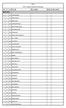 ROUND 2 2 1 33 TENNESSEE 2 2 34 TAMPA BAY 2 3 35 OAKLAND 2 4 36 JACKSONVILLE 2 5 37 NEW YORK JETS 2 6 38 WASHINGTON 2 7 39 CHICAGO 2 8 40 NEW YORK GIANTS 2 9 41 ST. LOUIS 2 10 42 ATLANTA 2 11 43 CLEVELAND
2011 AMERICAN CONFERENCE. East Division W L T Pct. Pts. OP New England# 13 3 0.813 513 342. Washington 5 11 0.313 288 367 North Division
 2011 New England# 13 3 0.813 513 342 New York Giants 9 7 0.563 394 400 New York Jets 8 8 0.500 377 363 Philadelphia 8 8 0.500 396 328 Miami 6 10 0.375 329 313 Dallas 8 8 0.500 369 347 Buffalo 6 10 0.375
SACKS-CHAMPIONSHIPS-GAMES WON ALL-TIME RECORDS TEAM RECORDS
 SACKS-CHAMPIONSHIPS-GAMES WON TEAM RECORDS CHAMPIONSHIPS Most Seasons League Champion 13 Green Bay, 1929-1931, 1936, 1939, 1944, 1961-62, 1965-67, 1996, 2010 9 Chi. Bears, 1921, 1932-33, 1940-41, 1943,
CANADA UNITED STATES MONTREAL TORONTO BOSTON NEW YORK CITY PHILADELPHIA WASHINGTON, D.C. CHICAGO SALT LAKE CITY DENVER COLUMBUS SAN JOSE KANSAS CITY
 VANCOUVER SEATTLE CANADA PORTLAND MONTREAL TORONTO BOSTON SAN JOSE SALT LAKE CITY DENVER KANSAS CITY CHICAGO COLUMBUS NEW YORK CITY PHILADELPHIA WASHINGTON, D.C. LOS ANGELES ATLANTA DALLAS UNITED STATES
PROBATE LAW CASE SUMMARY
 Every month I summarize the most important probate cases in Michigan. Now I publish my summaries as a service to colleagues and friends. I hope you find these summaries useful and I am always interested
Yankee Stadium Party Suites
 Yankee Stadium Party Suites Party Suites A Renowned Host The New York Yankees are the most storied franchise in sports history, characterized by tradition, extraordinary achievements and championship moments.
inaugural opening 2007 3,270,210 2008 3,456,641 2009 3,609,048 2010 4,002,000 2011 5,468,951 2012 (projected) 6,000,000+
 The World s game in the USA The U.S. soccer community is currently at 65 million participants, including youth and adult players, fans, and volunteers. 14 million children between the ages of 6-17 play
-- Special Ebook -- Bookie Buster: Secret Systems Used by Pro Sports Gamblers Finally REVEALED!
 Special Ebook from Golden-Systems.com: Bookie Buster -- Special Ebook -- Bookie Buster: Secret Systems Used by Pro Sports Gamblers Finally REVEALED! By Frank Belanger http://www.golden-systems.com/ 2004
Financial Issues in Sport Chapter 1
 C H A P T E R 1 Financial Issues in Sport Chapter 1 Chapter Objectives Understand how important managing money is for anyone in the sport industry. Understand how math, strategy, and managerial skills
 Additional information >>> HERE
 The Effects of Atmospheric Conditions on Pitchers
 The Effects of Atmospheric Conditions on Rodney Paul Syracuse University Matt Filippi Syracuse University Greg Ackerman Syracuse University Zack Albright Syracuse University Andrew Weinbach Coastal Carolina
The econometrics of baseball: A statistical investigation
 The econometrics of baseball: A statistical investigation Mary Hilston Keener The University of Tampa The purpose of this paper is to use various baseball statistics available at the beginning of each
Statistics in Baseball. Ali Bachani Chris Gomsak Jeff Nitz
 Statistics in Baseball Ali Bachani Chris Gomsak Jeff Nitz EIS Mini-Paper Professor Adner October 7, 2013 2 Statistics in Baseball EIS Statistics in Baseball The Baseball Ecosystem... 3 An Unfair Game...
Data Management Summative MDM 4U1 Alex Bouma June 14, 2007. Sporting Cities Major League Locations
 Data Management Summative MDM 4U1 Alex Bouma June 14, 2007 Sporting Cities Major League Locations Table of Contents Title Page 1 Table of Contents...2 Introduction.3 Background.3 Results 5-11 Future Work...11
North American Sports Leagues Home TV-Market Rankings 2007-08
 North American Sports Leagues Home TV-Market Rankings 2007-08 Rank Designated Market Area (DMA) TV HHLDS NFL MLB NBA NHL 1 New York 7.392 2 2 2 3 2 Los Angeles 5.647 0 2 2 2 3 Chicago 3.469 1 2 1 1 4 Philadelphia
UP TO 40 % TEAMS AND PRODUCTS ALL PRODUCTS OFFICIALLY LICENSED
 UP TO 40 % PROFIT TEAMS AND PRODUCTS ALL PRODUCTS OFFICIALLY LICENSED SK BF V-07/15 NHL and the NHL Shield are registered trademarks of the National Hockey League. All NHL logos and marks and NHL team
The Most Affordable Cities For Individuals to Buy Health Insurance
 The Most Affordable Cities For Individuals to Buy Health Insurance Focusing on Health Insurance Solutions for Millions of Americans Copyright 2005, ehealthinsurance. All rights reserved. Introduction:
Understanding the Ratings Game. Connie Ledoux Book, Ph.D. [email protected] Presentation to NATOA Annual Conference New Orleans, 2009
 Understanding the Ratings Game Connie Ledoux Book, Ph.D. [email protected] Presentation to NATOA Annual Conference New Orleans, 2009 Pop Quiz Can you trust your gut instinct when it comes to television and
A STUDY OF HOME RUNS IN THE MAJOR LEAGUES
 A STUDY OF HOME RUNS IN THE MAJOR LEAGUES KEITH KNIGHT ALEX SCHUSTER Department of Statistics University of Toronto May, 1992 Abstract It is well-known that the rate of home runs varies significantly among
FACT BOOK Use these interesting facts and figures from around the world and the world of soccer to help inspire your soccer season.
 FACT BOOK Use these interesting facts and figures from around the world and the world of soccer to help inspire your soccer season. 1994 USA The Most Successful World Cup EVER! In 1994 the World Cup came
LIVE BETTING ULTRA RULES
 LIVE BETTING ULTRA RULES I. General Rules 1. Placement of wagers All wagers for Prematch Ultra and Live In Play Ultra must be placed online and are final once confirmed with the password. 2. Specificity
Solution Let us regress percentage of games versus total payroll.
 Assignment 3, MATH 2560, Due November 16th Question 1: all graphs and calculations have to be done using the computer The following table gives the 1999 payroll (rounded to the nearest million dolars)
Sports Betting Systems
 Sports Betting Systems Sports Betting Systems Fundamentals! Published By Brendan OHara & NicheMarketer.com 2008 You Have FULL Master Resell Rights To This Product. Table of Contents Part 1 - Fundamentals
Using Baseball Data as a Gentle Introduction to Teaching Linear Regression
 Creative Education, 2015, 6, 1477-1483 Published Online August 2015 in SciRes. http://www.scirp.org/journal/ce http://dx.doi.org/10.4236/ce.2015.614148 Using Baseball Data as a Gentle Introduction to Teaching
Trade Show Labor Rate Benchmarking Survey
 2011 Trade Show Labor Rate Benchmarking Survey EXHIBITOR COSTS IN 41 U.S. CITIES labor drayage audio visual exhibitor services eventmarketing.com eventmarketing.com Produced by in association with eventmarketing.com
The Sports Sales Combine Phoenix, AZ November 6-8, 2014
 Sports Business Solutions & The Phoenix Suns Present: The Sports Sales Combine Phoenix, AZ November 6-8, 2014 Participating Coaches: Matt Clark Manager, Membership Development San Diego Padres Matt currently
JOSH REDDICK V. OAKLAND ATHLETICS SIDE REPRESENTED: JOSH REDDICK TEAM 4
 JOSH REDDICK V. OAKLAND ATHLETICS SIDE REPRESENTED: JOSH REDDICK TEAM 4 Table of Contents I. Introduction...... 1 II. Josh Reddick... 1 A. Performance and Consistency... 1 B. Mental and Physical Health...
Zillow Negative Equity Report
 Overview The housing market is finally showing signs of life, with many metropolitan areas having hit the elusive bottom and seeing home value appreciation, however negative equity remains a drag on the
CONFERENCE USA SPORT FORMATS FOR 2013-14
 BASEBALL 2014 Teams (13): Charlotte, East Carolina, FIU, Florida Atlantic, Louisiana Tech, Marshall, Middle Tennessee, Old Dominion, Rice, Southern Miss, Tulane, UAB, UTSA Scheduling Format: Teams will
Good with a joystick? One university gives scholarships to video gamers
 Good with a joystick? One university gives scholarships to video gamers By Pittsburgh Post-Gazette, adapted by Newsela staff on 12.11.14 Word Count 932 Robert Morris University Illinois students Sondra
Columbus, OH is the Number One Sports Town in the U.S. Boston, Buffalo and Pittsburgh Also Leading Sports Cities
 FOR IMMEDIATE RELEASE Columbus, OH is the Number One Sports Town in the U.S. Boston, Buffalo and Pittsburgh Also Leading Sports Cities NEW YORK (October 1, 2008) Columbus, OH is the number one sports town
A Two-Stage Bayesian Model for Predicting Winners in Major League Baseball
 Journal of Data Science 2(2004), 61-73 A Two-Stage Bayesian Model for Predicting Winners in Major League Baseball Tae Young Yang 1 and Tim Swartz 2 1 Myongji University and 2 Simon Fraser University Abstract:
Welcome to. MiraCosta College. International Student Information. Your coastal community college in Oceanside and Cardiff-by-the-Sea, California
 Welcome to MiraCosta College International Student Information Your coastal community college in Oceanside and Cardiff-by-the-Sea, California Why do international students choose MiraCosta? Fast Facts
Becoming a Professional Strength and Conditioning Coach
 Becoming a Professional Strength and Conditioning Coach (Krause 2013) Sean Marohn M.S, CSCS, RSCC*D Minor League Strength and Conditioning Coordinator Cincinnati Reds OVERVIEW Where we started and where
Sales Fulfillment Invoicing Broadcast Traffic Management & League Reporting Contract & Proposal Generation
 Sponsorship Inventory Management and Business Intelligence Software for Professional Sports Teams Sales Fulfillment Invoicing Broadcast Traffic Management & League Reporting Contract & Proposal Generation
NFL Stadium Funding Information. Stadiums Opened Since 1997
 NFL Stadium Funding Information Stadiums Opened Since 1997 Total Private Funding Public Funding Year Project Total % of Total % of Stadium/Team Team Opened Cost Private Total Public Total San Francisco
Case3:14-cv-05349-JCS Document1 Filed12/05/14 Page1 of 35. SAMUEL KORNHAUSER, Esq., California Bar No. 083528 LAW OFFICES OF SAMUEL KORNHAUSER
 Case:-cv-0-JCS Document Filed/0/ Page of, Esq., California Bar No. 0 OF San Francisco, California Telephone: ( - Facsimile: ( - BRIAN DAVID, Esq., Illinois ARDC No. 0 OF BRIAN DAVID North LaSalle Street,
PRESS RELEASE. Home Prices Continue Upward Trend According to the S&P/Case-Shiller Home Price Indices
 Home Prices Continue Upward Trend According to the S&P/Case-Shiller Home Price Indices New York, August 25, 2015 today released the latest results for the S&P/Case-Shiller Home Price Indices, the leading
Estimating the Value of Major League Baseball Players
 Estimating the Value of Major League Baseball Players Brian Fields * East Carolina University Department of Economics Masters Paper July 26, 2001 Abstract This paper examines whether Major League Baseball
PRESS RELEASE. Home Prices Lose Momentum According to the S&P/Case-Shiller Home Price Indices
 Home Prices Lose Momentum According to the S&P/Case-Shiller Home Price Indices New York, February 25, 2014 Data through December 2013, released today by S&P Dow Jones Indices for its S&P/Case-Shiller 1
The Performance of Betting Lines for Predicting the Outcome of NFL Games
 The Performance of Betting Lines for Predicting the Outcome of NFL Games Greg Szalkowski and Michael L. Nelson Old Dominion University, Department of Computer Science Norfolk, VA 23529 arxiv:1211.4000v1
Coach Les Koenning, Jr. Executive Summary Resume
 Coach Les Koenning, Jr. Executive Summary Resume Les Koenning, Jr. Executive Summary Page 1 of 7 Les Koenning, Jr. P.O. Box 5327 MSU, MS 39762 Cell Phone: (662) 418-7347 [email protected] EXECUTIVE
The Housing Downturn in the United States 2009 First Quarter Update
 The Housing Downturn in the United States 2009 First Quarter Update May 2009 TABLE OF CONTENTS The Housing Downturn in the United States: 2009 First Quarter Update Introduction The Housing Downturn: National
ANDREW BAILEY v. THE OAKLAND ATHLETICS
 ANDREW BAILEY v. THE OAKLAND ATHLETICS REPRESENTATION FOR: THE OAKLAND ATHLETICS TEAM 36 Table of Contents Introduction... 1 Hierarchy of Pitcher in Major League Baseball... 2 Quality of Mr. Bailey s Contribution
Arizona Cardinals Yellow
 Arizona Cardinals Cardinal Red,, Blue 1996 through 2001 / 2000 Season 194 C Arizona Cardinals Red "Cardinal Red" Secondary Colors: 280 C Additional Colors: Black 6 C 116 C Additional Colors 2: 201 C 159
How To Calculate The Benefits From Hosting A Major League Team
 What Are the Benefits of Hosting a Major League Sports Franchise? By Jordan Rappaport and Chad Wilkerson Over the last few decades the number of U.S. metropolitan areas large enough to host a franchise
106.5 FM 1470 WLQR-AM WEEKDAY PROGRAMMING SCHEDULE
 Sports Radio 106.5 FM "The Ticket"/Talk Radio 1470 WLQR-AM WEEKDAY PROGRAMMING SCHEDULE Mon June 27 Local "The Bob Frantz Extravaganza" 3:00pm 5:00pm 106.5 Mon June 27 Local "Drive Time Show" w/mike Miller
 Claimant Claim Year Claim Number Claim Type Phase I Category Office of the Commissioner of Baseball 2004 156 J 2 Anaheim Angels 2004 156 W 2 Arizona Diamondbacks 2004 156 W 2 Atlanta Braves 2004 156 W
Exhibition & Event Industry Labor Rates Survey
 Exhibition & Event Industry Labor Rates Survey Event Labor and Material Handling Cost Averages in Over 40 North American Cities Special Report Produced by RESEARCH & CONSULTING Font: Ocean Sans MM 648
I. Oddset 2-Outcome means the version of Sports Action Oddset gameplay offering the choice between a Home Win or a Visitor Win.
 1. RULES AND REGULATIONS SPORTS ACTION ODDSET is governed by the Rules and Regulations Respecting Lotteries and Gaming of the British Columbia Lottery Corporation ( BCLC ) which include limitations of
2014 Super Bowl betting odds have Broncos tied with Patriots
 2014 Super Bowl betting odds have Broncos tied with Patriots By Mike Klis The Denver Post February 17, 2014 Understandably, the Broncos have lost some shine, at least in Las Vegas. A Super Bowl favorite
My Experience Working with the Philadelphia 76ers Sales Department
 My Experience Working with the Philadelphia 76ers Sales Department During my freshman year at Temple University, I was approached by the Center for Student Professional Development (CSPD) of an opportunity
ISyE 2028 Basic Statistical Methods - Fall 2015 Analysis of NFL Team Performance Against the Spread Betting Line
 ISyE 2028 Basic Statistical Methods - Fall 2015 Analysis of NFL Team Performance Against the Spread Betting Line Introduction Author: Jonathan Pang Sports betting, although controversial, is an extremely
PRESS RELEASE. Widespread Gains in Home Prices for February According to the S&P/Case-Shiller Home Price Indices
 Widespread Gains in Home Prices for February According to the S&P/Case-Shiller Home Price Indices New York, April 28, 2015 today released the latest results for the S&P/Case-Shiller Home Price Indices,
During the course of our research on NBA basketball, we found out a couple of interesting principles.
 After mining all the available NBA data for the last 15 years, we found the keys to a successful basketball betting system: If you follow this system exactly, you can expect to hit 90% of your NBA bets.
Additional details >>> HERE <<<
 Additional details >>> HERE http://dbvir.com/winningtip/pdx/nasl3500/
Additional information >>> HERE <<<
 Additional information >>> HERE http://urlzz.org/winningtip/pdx/palo1436/ Tags: how to best price adidas football boots
WELCOME TO EVEREST UNIVERSITY A GUIDE FOR INTERNATIONAL STUDENTS
 WELCOME TO EVEREST UNIVERSITY A GUIDE FOR INTERNATIONAL STUDENTS THE EVEREST EXPERIENCE SMALL CLASSES, PERSONAL ATTENTION EVEREST UNIVERSITY A GREAT START ON THE REST OF YOUR LIFE EXPERIENCED INSTRUCTORS
WELCOME TO EVEREST UNIVERSITY A GUIDE FOR INTERNATIONAL STUDENTS
 WELCOME TO EVEREST UNIVERSITY A GUIDE FOR INTERNATIONAL STUDENTS EVEREST UNIVERSITY A GREAT START ON THE REST OF YOUR LIFE FIND YOURSELF HERE Our goal is to prepare you for a rewarding career so you can
fname The Jay P. Weimar 79 Memorial Endowed Scholarship Scholarship Fund
 The Jay P. Weimar 79 Memorial Endowed Scholarship fname florida newspaper advertising and marketing executives Scholarship Fund Jumpstart Raffle tickets will be sold for a 50/50 drawing. You can purchase
NATIONAL BASKETBALL ASSOCIATION 2014-2015 National TV schedule As of Aug. 13, 2014
 Tuesday 10/28/14 8:00 PM Dallas San Antonio TNT Tuesday 10/28/14 10:30 PM Houston L.A. Lakers TNT Wednesda 10/29/14 8:00 PM Chicago New York ESPN Wednesda 10/29/14 10:30 PM Oklahoma City Portland ESPN
NO PURCHASE OR PAYMENT IS NECESSARY TO ENTER OR TO WIN. PURCHASE OF NATURAL GAS FROM GAS SOUTH DOES NOT INCREASE ODDS OF WINNING. ALL U.S.
 Gas South, LLC c/o Marketing P.O. Box 723728 Atlanta, GA 31139-9941 Gas South s Braves VIP Sweepstakes Official Rules Gas South, LLC (hereinafter referred to as Gas South ) will conduct a Braves VIP Sweepstakes
The Economic Consequences of Professional Sports Strikes and Lockouts: Revisited
 The Economic Consequences of Professional Sports Strikes and Lockouts: Revisited Robert A. Baade, Robert Baumann, and Victor Matheson April 2006 COLLEGE OF THE HOLY CROSS, DEPARTMENT OF ECONOMICS FACULTY
NIELSEN SPORTS INSIGHTS
 May 2012 NIELSEN SPORTS INSIGHTS The first quarter of 2012 continued to demonstrate the phenomenal drawing power of sports content. The NY Giants' Super Bowl win set yet another TV viewership record with
Surprising Streaks and Playoff Parity: Probability Problems in a Sports Context. Rick Cleary
 Surprising Streaks and Playoff Parity: Probability Problems in a Sports Context Abstract Rick Cleary Sporting events generate many interesting probability questions. In probability counterintuitive results
Loss Aversion, Team Relocations, and Major League Expansion
 Loss Aversion, Team Relocations, and Major League Expansion Brad R. Humphreys West Virginia University Li Zhou University of Alberta Abstract Professional sports teams receive large public subsidies for
ECONOMIC SNAPSHOT. A Summary of the San Diego Regional Economy UNEMPLOYMENT
 A Summary of the San Diego Regional Economy Brought to you by San Diego Regional EDC analyzes key economic metrics that are important to understanding the regional economy and San Diego s standing relative
TAMPA INTERNATIONAL AIRPORT
 Albany Southwest Airlines 73W 332 0900 1150 1,130 143...7 Albany Southwest Airlines 73W 1811 0900 1150 1,130 143 12345.. Albany Southwest Airlines 73W 6066 1110 1400 1,130 143...6. Atlanta Delta Air Lines
Baseball and Statistics: Rethinking Slugging Percentage. Tanner Mortensen. December 5, 2013
 Baseball and Statistics: Rethinking Slugging Percentage Tanner Mortensen December 5, 23 Abstract In baseball, slugging percentage represents power, speed, and the ability to generate hits. This statistic
U.S. Culture Series: American Sports. Scott Manley
 U.S. Culture Series: American Sports Scott Manley Sports in the U.S. Sports in the U.S. are an important part of the culture. The sporting culture is different from that of other countries, with a unique
PRESS RELEASE. Home Prices Grew at Twice the Rate of Inflation in 2014 According to the S&P/Case-Shiller Home Price Indices
 Home Prices Grew at Twice the Rate of Inflation in 2014 According to the S&P/Case-Shiller Home Price Indices New York, February 24, 2015 today released the latest results for the S&P/Case-Shiller Home
S&P/Case-Shiller Home Price Indices
 The Fourth Quarter Starts with Broad-based Declines in Home Prices According to the S&P/Case-Shiller Home Price Indices New York, December 27, 2011 Data through October 2011, released today by S&P Indices
District of Columbia State Data Center Quarterly Report Summer 2007
 District of Columbia State Data Center Quarterly Report Summer 2007 Commuting to Work: Bike? Walk? Drive? Introduction by Joy Phillips Robert Beasley In 2005, 45 percent of District residents drove to
Construction Initiative: Distribution of $24.8 Billion In Bonding Authority Initial Estimates for H.R. 4094
 Alabama Alaska Arizona Arkansas California SEA Allocation 208,207 Birmingham City 33,463 Mobile County 51,654 Montgomery County 21,960 QZABS 39,638 Total 354,922 SEA Allocation 47,418 Total 53,398 SEA
Detroit is proposing to be able to challenge all fouls, from offensive holding, any foul that takes place, they re proposing should be reviewable.
 Competition Committee Conference Call with NFL Executive Vice President of Football Operations Troy Vincent, Atlanta Falcons President & CEO and Competition Committee Chairman Rich McKay and St. Louis
www.tvk24.com Jan 2015
 Available Nationwide / 24-Hour Korean American Network www.tvk24.com Jan 2015 About the Networks Launched in 2005, Television Korea 24, Inc., ( TVK24 ) operates two networks, TVK and TVK2. TVK is the first
USA IN-PERSON VOTING OPPORTUNITIES 2010 SWEDISH ELECTION
 USA IN-PERSON VOTING OPPORTUNITIES 2010 SWEDISH ELECTION Anchorage, konsulat Wells Fargo Bank, 301 301 W. Northern Lights Blvd, 5th floor Anchorage, AK 99503 Telefon: +1 907 265 2926 Fax: +1 907 265 2068
KANTAR MEDIA RELEASES MARCH MADNESS ADVERTISING TRENDS REPORT
 For interview requests and queries: Bill Daddi Daddi Brand Communications 646-370-1341 917-620-3717 [email protected] KANTAR MEDIA RELEASES MARCH MADNESS ADVERTISING TRENDS REPORT Historical Advertising
22-Nov Duke -4.5 over Minnesota 89-71 Win 4 $400 22-Nov Oklahoma -3 over UTEP 68-61 Win 3 $300 7 $700 12 $940
 2012-2013 Doc's Sports College Basketball Complete Season Record By Game Daily Season To Date Date Game / pick Score W / L Units $$$ Units $$$ Units $$$ 17-Nov Milwaukee +6 over Davidson 73-68 Win 4 $400
THE 2013 ENTERTAINMENT, MEDIA & ADVERTISING MARKET RESEARCH HANDBOOK
 THE 2013 ENTERTAINMENT, MEDIA & ADVERTISING MARKET RESEARCH HANDBOOK th 13 Edition December 2012 362 pages ISBN# 1-57783-185-3 PART I: MARKET SUMMARY CONTENTS 1 MARKET ASSESSMENT: ADVERTISING 1.1 Advertising
National Bureau for Academic Accreditation And Education Quality Assurance PUBLIC HEALTH
 1 GEORGE WASHINGTON UNIVERSITY WASHINGTON DC B Athletic Training 1 MA B 1 BROWN UNIVERSITY PROVIDENCE RI B EAST TENNESSEE STATE UNIVERSITY JOHNSON CITY TN B 3 HUNTER COLLEGE NEW YORK NY B 4 UNIVERSITY
Atlanta Rankings 2014
 Atlanta Rankings Major National Magazine and Study Rankings BUSINESS FACILITIES Metro Business Rankings Lowest Cost of Doing Business 2. Orlando, FL 3. Charlotte, NC 4. San Antonio, TX 5. Tampa, FL 6.