
PreCourse Planning, Mini-Project Ideas. Environmental Science
|
|
|
- Horatio Dickerson
- 10 years ago
- Views:
Transcription
1 PreCourse Planning, Mini-Project Ideas Environmental Science Blackline Masters, Environmental Science Page 1

2 PreCourse Planning, Mini-Project Ideas Mini-Projects Mini-projects are designed to allow each student an opportunity to individualize his or her education by selecting a project of interest and to complete it for credit. These projects will allow the student an opportunity to take the study of biology and environmental science outside traditional classroom activities. Opportunities available in the community and other activities relevant to the coursework will be listed each grading period. (Note: As community activities will vary with the season and with the locale, it will be necessary for teachers to locate opportunities available in their local areas.) Remind students to discuss project choices with their parents before signing up for any projects especially those that involve some expense or travel. They should also discuss project choices with employers and coaches, if applicable. When specifying a due date, consider assigning an earlier due date for any contest entries in order to get these graded and mailed on time. Some mini-projects ideas: 1. Annual Louisiana Beach Sweep and Inland Waterway Clean-Up The Annual Louisiana Beach Sweep and Inland Waterway Cleanup is held the third Saturday in September in conjunction with the International Coastal Cleanup sponsored by the Ocean Conservancy ( and the Louisianan Department of Environmental Quality ( ). This project combines community service with the collection of relevant scientific data. Students will collect debris and while doing so, collect scientific data to be submitted to an international data bank. Be sure to make students aware of debris collection safety issues and recruit sufficient numbers of adult chaperones to act as monitors. 2. The Wild Things Youth Art Contest! Sponsored by the U.S. Fish and Wildlife Service Students help celebrate National Wildlife Refuge Week with artwork representing the plants, animals and landscapes of Louisiana. Entrants must be youth between the ages of 5 and 18. Art is categorized by age groups and is judged on both creative representations and accuracy of the subject(s). Artwork must represent native wildlife of Louisiana. This includes plants, animals, and landscapes and any combination of these. A resource list and an entry form are available on the refuge web site. Due date is early October. 3. Louisiana s Environmental Awareness Student Art & Language Art Contest Sponsored by the Louisiana Environmental Education Commission and Alcoa Foundation Students of ages 5-18 may participate in either or both visual and language arts contests. Entries highlight our state s environmental resources and natural treasures. Winning entries are published in a Louisiana Environmental Awareness calendar. Official entry forms and contest information are available from the Office of Environmental Education, P.O. Box 82980, Baton Rouge, LA The due date is generally late March. Blackline Masters, Environmental Science Page 1

3 PreCourse Planning, Mini-Project Ideas 4. Louisiana Observation of National Hunting and Fishing Day On a Saturday in late September, the Louisiana Department of Wildlife and Fisheries sponsors this national observation at several sites state-wide. This event is fun and educational for the whole family. It is free and open to the public. Participants can canoe, fish, and take part in archery, shooting, and falconry activities. They can also enjoy wild game dishes, learn about wetlands and wildlife, and collect biological and ecological resource materials. 5. Create a classroom/courtyard Louisiana Natives Study Area. With teacher approval, students develop a Louisiana native species garden, aquarium, or terrarium. Have students develop a plan, get it approved, develop the site, collect the organisms, care for the organisms, and maintain the habitat. Louisiana Dept. of Wildlife and Fisheries regulations and animal and human safety considerations are factors to be considered in the approval process. Students should be allowed to work in groups if the amount of work so warrants and if each student contracts for his/her contribution. 6. Have students complete a Book Report for literature (fiction or non-fiction) that includes environmental concepts or that profile individuals who have had an impact on environmental studies. Inform students that the book report will be based upon the ecology concepts and will not be a typical book report. 7. Allow students to design their own projects. Have individuals or small groups of students develop a project in which they are active in teaching/learning about biology or environmental studies in the community. Blackline Masters, Environmental Science Page 2

4 Unit 1, Activity 3, Split-Page Notetaking Sample Date: Topic: Split-Page Notetaking Big Ideas Supporting Information Blackline Masters, Environmental Science Page 3

5 Unit 1, Activity 3, Split-Page Notetaking, Teacher Sample Date: Big Ideas Step 1 Prepare the paper Step 2 Take notes Topic: Split-Page Notetaking Supporting Information Using an 8 ½ by 11- inch piece of notebook paper, draw a line from top to bottom approximately 2 to 3 inches from the left edge of the notepaper. Try to split the page into one third and two thirds. Label the columns: Label the left column, Big Ideas (or Key Terms ). Label the right column Supporting Information or Notes. During the lecture or reading assignment, record notes in the right-hand column. Write notes in short sentences, leaving out unnecessary words. Paraphrase information and abbreviate as much as possible. Write legibly. Step 3 Review the material As soon as possible after the lecture or reading session, review the material and process the information. (If something seems incomplete or confusing, review appropriate readings and ask questions during class.) Identify the Big Ideas (key concepts or terms). Record the Big Ideas in the left-hand column. Step 4 Prompt Recall/ Review Bend the paper so that the information in the right column is covered. Read each Big Idea and state (in your own words) the pertinent notes related to it. Check your answers for accuracy and completeness. Bend the paper so that the information in the left column is covered. Read the supporting notes and identify the Big Ideas or key concepts (or terms). Check your answers. Summarize your notes in your own words. Review your notes and summary frequently; everyday is best! Blackline Masters, Environmental Science Page 4

6 Unit 1, Activities 7 and 9, Investigation Analysis Format Investigation Analysis Name Period Date Investigation title: 1. This investigation includes Observation Literary survey Experimentation Description Classification Modeling Math relationships Role-playing Computer simulations Organizational tools [Indicate type(s)] Other specify 2. Technology used to enhance this investigation and/or presentation includes light microscope typewriter/word processor CD Rom internet resources digital camera video camera flex cam television DVD/player VHS/VCR calculator Other (Specify) 3. Identify appropriate safety measures associated with this activity. 4. The investigation s purpose/rationale is 5. Investigation abstract (Summarize the investigation findings in one concise paragraph on the back of this sheet.) Blackline Masters, Environmental Science Page 5
![type(s)] Other specify 2.](/docs-images/43/14075565/images/page_6.jpg "Technology used to enhance this investigation and/or presentation includes light microscope typewriter/word processor CD Rom internet resources digital camera video camera flex cam television")
7 Unit 1, Activities 7 and 9, Experimental Design Diagram EXPERIMENTAL DESIGN DIAGRAM Name Date Period Title: Purpose/rationale: Hypothesis: Independent Variable(IV): Levels of the Independent Variable (The levels of an Independent Variable are the quantities or forms of the experimental factor. For example, if the IV is an amount of water, the levels might be 50 ml, 100 ml, or 150 ml.) Number of Repeated Trials x Sample Size Dependent Variable: Constants: Control Group: Blackline Masters, Environmental Science Page 6

8 Unit 2, Activity 2, FYI: Owl Pellets Background Information: FYI: OWL PELLETS Predatory birds, such as owls, lack teeth to grind up food. Small prey are sometimes swallowed whole and larger prey are generally torn into small pieces. Digestive juices can break down the body tissues of the owl s prey; indigestible materials (such as feathers, fur, bones, and teeth), however, collect within a digestive structure known as the ventriculus or gizzard. Within the gizzard, the indigestible materials (which might also include beaks, claws, fish scales, and insect exoskeletons) are compressed, forming a bolus (or pellet). Once compressed, the pellet begins its movement back up the digestive system. It spends several hours within the proventriculus until it is expelled. While other predatory birds also produce pellets, owl pellets contain a greater concentration of indigested materials (as owls pluck their prey less, and owl digestive juices are less acidic than those of other birds of prey). Scientists take advantage of these adaptations by collecting owl pellets and examining their contents. Owls are not very selective eaters; therefore, their pellets can be used to estimate the diversity of available prey. The pellet contents are also a direct indicator of what the owl has fed on Information crucial for both owl and prey species management and protection. In this activity, pellets produced by Barn Owls (Tyto alba) will be examined. Barn Owl pellets have been selected because these owls swallow small birds and rodents whole, and the resulting pellets generally contain the complete skeletons of the prey species. References consulted: Investigation of NW v.se Owl Pellets, WARD'S Natural Science Establishment (1993) The Owl Pages Digestion in Owls Additional resource materials recommended for student use: "On Silent Wings: The Owls of Louisiana" published by the Louisiana Dept. of Wildlife and Fisheries Louisiana Conservationist KidWings Virtual Owl Pellet Dissection Blackline Masters, Environmental Science Page 7

9 Unit 2, Activity 2, FYI: Owl Pellets Blackline Masters, Environmental Science Page 8

10 Unit 2, Activity 2, FYI: Owl Pellets Lab Procedures PROCEDURES: BARN OWL PELLET Dissection 1. Read the background information. Also, read and discuss the procedures listed below. 2. As part of a class pre-lab discussion, complete sections 1 and 2 of an Investigation Analysis Format sheet. 3. Identify appropriate safety measures associated with this activity. Discuss these with your class and record them on section 3 of the Investigation Analysis Format sheet. 4. Familiarize yourself with your assigned individual job descriptions/responsibilities within your group. 5. Remove the Owl Pellet from the packet and place it on the plate. 6. Remove the dissecting needles, gloves, and Bone ID Sheet from the lab packet. 7. After putting on the gloves, begin the dissection by removing the aluminum foil. 8. Break the pellet into smaller portions so that more than one group member can dissect. 9. Using the dissecting needles (or your fingers), begin to loosen the hair of the pellet. As bones are recovered, carefully remove them. 10. As the bones are removed, have one group member place these on the appropriate locations on the Bone ID Sheet. 11. After all bones have been removed, one group member should collect all excess material and dispose of the wastes as instructed by the teacher. (Do not dispose of the bones until the group data table has been completed.) 12. On the Owl Pellet Lab Report, complete the pellet analysis, share the data with the class, and complete/ revise the vocabulary cards and the answers to the lab problems. (Each student will submit a completed lab report.) 13. Complete the Investigation Analysis Format Sheet. 14. Return this sheet to the resource folder. 15. Staple your Investigation Analysis Format Sheet to the front of your Owl Pellet Investigation Lab Report and submit your lab report on the date specified. Blackline Masters, Environmental Science Page 9

11 Unit 2, Activity 2, FYI: Owl Dissection Lab Report Purpose: OWL PELLET INVESTIGATION LAB REPORT Name Materials per group: One owl pellet Gloves Dissecting needles Folder containing the resource materials and Bone ID Sheet Paper towels Paper plate or large sheet of newsprint One set of instructions/lab report form per group member Procedures: Refer to the procedures distributed. Group's Data: (Alter the table as needed.) What my owl ate: Name of organism Number found % of total Class Data: Record the class totals for each of the prey species: Name of organism Number found % of total The data collected is: continuous discrete The best graph for this type of data is: bar line pie Blackline Masters, Environmental Science Page 10

12 Unit 2, Activity 2, FYI: Owl Dissection Lab Report Be sure to label the axes correctly and to use the appropriate type of graph. Graph: (title) Vocabulary: Define the terms on your vocabulary cards. Predator Prey Range Habitat Diversity Analysis of Data: Use your research and the class s data in completing the next section. 1. How often does a Barn Owl produce a pellet? (You may need to do a little research.) How many does it produce per year? 2. Assuming the pellet you studied was collected in Louisiana, how much food does the owl eat in one year? Blackline Masters, Environmental Science Page 11

13 Unit 2, Activity 2, FYI: Owl Dissection Lab Report 3. How accurately do you think information gained from pellet analysis reflects the kind and abundance of ALL the small animal populations in the owl's habitat? (Hint: Think about where/when the owls feed.) 4. How stable does this barn owl population seem to be? Justify your answer. FYI: Increased diversity=increased stability If a predator depends upon one prey type, then a decline in that particular prey will lead to a decline in the predator. If the prey is eradicated through disease or overhunting, the predator must relocate or die. If the predator feeds upon five prey types, a decline in one or two may cause some stress, but the predator may still feed on the remaining types. 5. Would a crash of the shrew population seriously affect the owl population studied? Explain. 6. Would a crash in the mole population seriously affect the owl population studied? Explain. 7. On the back of this sheet, construct a food web with the owl at the highest trophic level and with grass and seeds at the base. The intermediate levels included should only be prey found by your class. Label each organism with regard to its trophic level. Complete problem 8 on another sheet of paper you attach to this report. 8. Pretend you are an ornithologist working for the Louisiana Department of Wildlife and Fisheries. Compose a barn owl population summary to present to the state legislature with regard to this native species. Be sure to include their general characteristics, their habitat and range, your inference of the stability of the population (and justification of same), and a statement on the role and value of the barn owl to the ecosystems of which it is a part. Blackline Masters, Environmental Science Page 12

14 Unit 2, Activity 2, Owl Pellet Inquiry Exercise Does the location of the habitat affect the diet of Barn Owls? Purpose: Name Habitat: Southeast Northwest Hypothesis: Rationale: (In one or two well-researched sentences, explain the thinking behind your hypothesis.) IV: Location of habitat Levels of the IV Northwest Southeast Number of trials x Sample size Dependent variable: Constants: Control: Materials per group: One owl pellet (either from the Northwest or Southeast) Gloves Dissecting needles Folder containing the resource materials and Bone ID Sheet Paper towels Paper plate or large sheet of newsprint One set of instructions/lab report form per group member Procedures: Refer to the procedures distributed. Blackline Masters, Environmental Science Page 13

15 Unit 2, Activity 2, Owl Pellet Inquiry Exercise Group's Data: (Alter the table as needed.) What our owl ate: Name of organism Number found % of total Class Data: (Record the class totals for each of the prey species.) Northwest Southeast Organism Number % Number % The data collected is: continuous discrete The best graph for this type of data is: bar line pie Be sure to label the axes correctly and to use the appropriate type of graph. Graph: (title) Blackline Masters, Environmental Science Page 14

16 Unit 2, Activity 2, Owl Pellet Inquiry Exercise Vocabulary: Define the following terms on vocabulary cards: Predator, Prey, Range, Habitat, Diversity. Analysis of data: 9. Generally, how often does a Barn Owl produce a pellet? (You may need to do a little research.) How many does it produce per year? 10. Assuming the pellet from the southeast was collected in Louisiana, how much food does the owl eat in one year? 11. The skeletons in these pellets provide information about the small animal populations in habitats in the American Northwest and Southeast. How accurately do you think information gained from pellet analysis reflects the kind and abundance of ALL the small animal populations in the owl's habitat? (Hint: Think about where/when the owls feed.) Increased diversity=increased stability: If a predator depends upon one prey type then a decline in that particular prey will lead to a decline in the predator. If the prey is eradicated through disease or over-hunting, the predator must relocate or die. If the predator feeds upon five prey types, a decline in one or two may cause some stress, but the predator may still feed on the remaining types. 12. Which region had the greater diversity of prey? 13. Which region has the greater stability? 14. Would a crash of the shrew population seriously affect Barn Owls in either region? Explain. 15. Would a crash in the vole population seriously affect Barn Owls in either region? Explain. 16. Compare and contrast the pellets of Barn Owls of the Southeast and Northwest. Does location of the habitat affect the diet of Barn Owls? Explain. Blackline Masters, Environmental Science Page 15

17 Unit 2, Activity 2, Owl Pellet Inquiry Exercise 17. Construct a food web with the owl at the highest trophic level and with grass and seeds at the base. The intermediate levels included should only be prey found by your class. Label each organism with regard to its trophic level. 18. Assume that the pellets collected in the Southeast are from Louisiana. Pretend you are an ornithologist working for the Louisiana Department of Wildlife and Fisheries. Compose a barn owl population summary to present to the state legislature with regard to this native species. Be sure to include their general characteristics, their habitat and range, your inference of the stability of the population (and justification of same), and a statement on the role and value of the barn owl to the ecosystems of which it is a part. Blackline Masters, Environmental Science Page 16

18 Unit 3, Activity 1, Resources Renewable or Not? Opinionnaire Directions: Before each statement, indicate if you Strongly Agree (SA), Agree (A), Disagree (D), SD (Strongly disagree). In the space provided, briefly describe the reasons for your opinions. 1.If a resource is renewable, it will continue to exist forever. Reasoning: 2.People can use a renewable resource in a way that it cannot renew itself. Reasoning: 3.Once nonrenewable resources are used up, they are gone forever. Reasoning: 4.Many resources (renewable or not) can be recycled and reused. Reasoning: 5.When people recycle or reuse natural resources, they decrease demand on that resource and save energy. Reasoning: 6.Recycling saves wetlands. Reasoning: Blackline Masters, Environmental Science Page 17

19 Unit 3, Activity 2, We Need Thneeds! RAFT We need Thneeds! Your RAFT: Role: Public Relations Team of the Thneeds Corporation Audience: City Council (your classmates) Form: a public relations campaign Topic: Thneeds production is important to the economics and well-being of the community and can occur without environmental destruction Scenario: Through the efforts of the Lorax, action has been taken to establish a Truffula tree nursery to replant the area with young Truffula trees and to care for them. Through the efforts of the new city council, the city was able to secure a FEMA grant to restore the environment and help rebuild the city. Your team has been assigned to develop a public relations campaign to convince the city council that the Thneeds company (now under new management) is an important part of the community and will maintain environmental quality while continuing to make Thneeds. Your task: Your public relations campaign should describe how the new managers of the Truffula Tree Company are going to maintain environmental quality and at the same time make Thneeds. The campaign should include the following: 1. An accurate, informative, creative public relations booklet or video (Explain why making Thneeds is good for the city and how your company will protect the environment while doing so.) 2. A report in which your group states What social and economic implications will the actions suggested in your plan have on ensuring a quality environment? For example, who will pay for the environmental protection? Who will pay for the damage to the environment if these actions prove unsuccessful? What does the Truffula Tree Company provide the local economy? Who will provide Thneeds if the Truffula Company doesn t? 3. A presentation to the city council (your classmates) Blackline Masters, Environmental Science Page 18

20 Unit 4, Activity 1, Risk Perception Anticipation Guide Procedures: Before reading (or viewing the video): In the column marked Before, rank each of the activities listed according to its perceived risk. (Rank the most risky as 1.) After reading (or viewing the video): In the column marked After, rank each of the activities listed according to its perceived risk. (Rank the most risky as 1.) Then, in the space labeled Support, record information from the video or text that supports your response. Include numerical probabilities where possible. Risk Activity or Situation Before Reading/Viewing After Reading/Viewing Support (include a numerical probability) Bicycling Riding in a car Riding a motorcycle Staying in bed Swimming Traveling by plane Traveling by train Blackline Masters, Environmental Science Page 19

21 Unit 4, Activity 1, Risk Perception Anticipation Guide with Answers As students complete the anticipation guide: Before Reading (or viewing the video) -- Student answers will vary with their perceptions. After Reading (or viewing the video) Answers should be based upon the numerical probabilities stated in the reading or video. Support: The probabilities listed below are based upon the video. Remind students that risk varies with age and that odds fluctuate from year to year. Updated probabilities are available via the National Safety Council ( and other risk analysis sources. Risk Activity or Technology Bicycling Before Reading/Viewing Refer to the note above. After Reading/Viewing Refer to the note above. 1 in 150 Support (include a numerical probability) Riding in a car 1 in 150 Riding a motorcycle 1 in 25 Staying in bed 1 in 650 Traveling by bus 1 in 4 million Traveling by plane 1 in 140,000 Traveling by train 1 in 5 million Blackline Masters, Environmental Science Page 20
Butterflies and Plants Grades: K and up
 Butterflies and Plants Grades: K and up Purpose: To focus exploration on the butterfly life cycle and how that life cycle is related to plants in the garden. Students should be exposed to the 4 stages
Food Web Crasher. An introduction to food chains and food webs
 Food Web Crasher An introduction to food chains and food webs Activity Students create a physical food web and watch what happens when an aquatic nuisance species is introduced into the ecosystem. Grade
Creating Chains and Webs to Model Ecological Relationships
 Creating Chains and Webs to Model Ecological Relationships Overview This hands-on activity supports the HHMI short film The Guide and the 2015 Holiday Lectures on Science: Patterns and Processes in Ecology.
Introduction to Ecology
 Introduction to Ecology Ecology is the scientific study of the interactions between living organisms and their environment. Scientists who study ecology are called ecologists. Because our planet has many
-* -* -* -* reflecting. A~fion ~ynop i. Gl) ~ linking to real world
 Afion ynop i Students make food webs of their study site, then trace how a change in one population could affect other populations within the web. Session 1 1. Show a food web made by a team of ecologists.
Silent, Nighttime Hunters By Guy Belleranti
 By Guy Belleranti Owls are raptors, or birds of prey. They are carnivores who quickly and silently swoop down on their prey from above. Most raptors such as eagles, hawks and falcons are day hunters. They
Ecosystems and Food Webs
 Ecosystems and Food Webs How do AIS affect our lakes? Background Information All things on the planet both living and nonliving interact. An Ecosystem is defined as the set of elements, living and nonliving,
Format for Experiment Preparation and Write-Up
 Format for Experiment Preparation and Write-Up Scientists try to answer questions by applying consistent, logical reasoning to describe, explain, and predict observations; and by performing experiments
Science Grade 05 Unit 04 Exemplar Lesson 01: Types of Energy
 Grade 05 Unit 04 Exemplar Lesson 01: Types of Energy This lesson is one approach to teaching the State Standards associated with this unit. Districts are encouraged to customize this lesson by supplementing
Zoo Connections Curriculum
 Zoo Connections Curriculum We Like to Move It, Move It: Classifying animals by features 1 st grade Curriculum is aligned with the Mississippi Academic Framework. Lessons and support material are provided
A CONTENT STANDARD IS NOT MET UNLESS APPLICABLE CHARACTERISTICS OF SCIENCE ARE ALSO ADDRESSED AT THE SAME TIME.
 Environmental Science Curriculum The Georgia Performance Standards are designed to provide students with the knowledge and skills for proficiency in science. The Project 2061 s Benchmarks for Science Literacy
The Toledo Zoo Aviary
 The Toledo Zoo Aviary Look at the Birdie Bird Adaptations Lesson Learning Strategies Background Knowledge Vocabulary Comprehension Application/ Extension Problem Solution Guide Personal Clues Questions
Roots & Shoots Raptor Care EcoTeam Lesson 4: Predator/Prey Relationships
 Roots & Shoots Raptor Care EcoTeam Lesson 4: Predator/Prey Relationships Time needed 30 minutes for journal page. Project is ongoing. Cost None Weather requirement None Advance preparation Locate and contact
CONDUCT YOUR EXPERIMENT/COLLECT YOUR DATA AND RECORD YOUR RESULTS WRITE YOUR CONCLUSION
 CONDUCT YOUR EXPERIMENT/COLLECT YOUR DATA AND RECORD YOUR RESULTS WRITE YOUR CONCLUSION Due Date: February 9, 2010 Conducting Your Experiment Adapted with permission from www.sciencebuddies.org 1) Before
Dear Internship Candidate,
 Dear Internship Candidate, Thanks for your interest in becoming a part of the team here at the WNC Nature Center, a part of the City of Asheville's Parks, Recreation and Cultural Arts Department. With
Animal Adaptations Investigation (K-3)
 Animal Adaptations Investigation (K-3) At a glance Students explore the Zoo in search of animals that fit certain categories and discover their adaptations. Time requirement One Zoo visit of at least 60
Integration of Forestry & Wildlife Management
 Integration of Forestry & Wildlife Management By Ken Negray Regional Certification Manager, NewPage Corp & member of the KY SIC Committee Abstract: Kentucky SIC (Sustainable Forestry Initiative Implementation
Learning expeditions
 Learning expeditions Food webs How are all living things connected? Introduction: On this Expedition, your students will explore the question, How are all living things connected? by role playing different
3. Which relationship can correctly be inferred from the data presented in the graphs below?
 1. Recent evidence indicates that lakes in large areas of New York State are being affected by acid rain. The major effect of acid rain in the lakes is (1) an increase in game fish population levels (3)
Lesson 1. Objectives: ocus: Subjects:
 Lesson 1 The Web of Life Objectives: 1. Understand the concept of an ecosystem. 2. Understand the interdependence of members of an ecosystem. Subjects: 1. Ecology 2. Language 3. Art MATERIALS: Copies of
Sam Jamison Middle School Invention Convention
 Sam Jamison Middle School Invention Convention Dear Parent/Guardian: We are extremely excited this year to be able to offer our 6 th grade students the opportunity to experience an Invention Convention!
Infographics in the Classroom: Using Data Visualization to Engage in Scientific Practices
 Infographics in the Classroom: Using Data Visualization to Engage in Scientific Practices Activity 4: Graphing and Interpreting Data In Activity 4, the class will compare different ways to graph the exact
Prairie Food Chains & Webs Producers, Consumers & Decomposers
 Kansas Prairies s, s & Decomposers Science, Life Science, Reading, Math Materials Vocabulary worksheet Food Chain worksheet Overview To explore the organisms found on a prairie and identify the various
Grade 5. Ontario Provincial Curriculum-based Expectations Guideline Walking with Miskwaadesi and Walking with A`nó:wara By Subject/Strand
 Ontario Provincial Curriculum-based Expectations Guideline Walking with Miskwaadesi and Walking with A`nó:wara By Subject/Strand Turtle Island Conservation Ontario Teachers Resource Bundle 1 The Arts 1.1
RESTORATION & REVITALIZATION
 RESTORATION & REVITALIZATION Legal preservation has not proved to be sufficient to preserve natural communities. Restoration activities are diverse and includes revitalization of natural communities which
Open Wide! Look Inside! Teacher s Masters California Education and the Environment Initiative. Science Standard 1.2.d.
 1 Teacher s Masters California Education and the Environment Initiative Science Standard 1.2.d. Supports ELA Standard: Writing 1.1.2. Open Wide! Look Inside! California Education and the Environment Initiative
Sink or Float. Sandy Shores
 Sandy Shores Concepts Marine debris can be hazardous to animals living in the ocean or on the land. Marine debris is carried to the sandy shore from many different sources including wind, waves, tides,
Classroom Projects. Art Projects Math Projects Science Projects Language Arts/English Projects Classroom Activities School/Club Projects
 Classroom Projects TEACHER S NOTE: The following lesson plans can be used in any grade by altering the degree of difficulty you assign to the projects. Use what ideas you can from these lesson plans and
You are What You Eat
 You are What You Eat By: Tanja Schollmeier, marine biologist, School of Fisheries and Ocean Sciences, University of Alaska Fairbanks Grade level: 6-8th grade Context: This lesson emphasizes human impacts
FOUNDATION. Observing the way different shaped objects such as balls, blocks and tubes move.
 SCIENCE FOUNDATION Science Understanding The way objects move depends on a variety of factors, including their size and shape. (ACSSU005) Observing the way different shaped objects such as balls, blocks
Designing Possible Solutions: Oil Spill Clean-up
 1 Designing Possible Solutions: Oil Spill Clean-up Lesson Duration: 2 50-Minute Class Periods Lesson Overview: In session one, students are introduced to the negative effects of oil spills on the land,
Operation Oil Spill Clean Up Independent Investigation
 Name: Due Date: Class Period: Operation Oil Spill Clean Up Independent Investigation Offshore oil drilling and the use of supertankers for transporting oil pose the risk of oil spills. Oil spills can damage
Cooperative Grants Application Booklet. West Virginia Wildlife Diversity Program Wildlife Resources Section, WVDNR
 Cooperative Grants Application Booklet West Virginia Wildlife Diversity Program Wildlife Resources Section, WVDNR Revised October, 2010 F.Y.I. All proposals must be received by close of business on the
AP Biology Unit I: Ecological Interactions
 AP Biology Unit I: Ecological Interactions Essential knowledge 1.C.1: Speciation and extinction have occurred throughout the Earth s history. Species extinction rates are rapid at times of ecological stress.
SCIENCE PROJECT PAGE 1
 SCIENCE PROJECT PAGE 1 Introduction YES!!! It s that Science Fair time of year. No amount of groaning is going to make it go away. Just imagine the inquiry and organizational skills you ll learn and practice.
Appendix E. A Guide to Writing an Effective. Executive Summary. Navy and Marine Corps Public Health Center Environmental Programs
 Appendix E A Guide to Writing an Effective Executive Summary Navy and Marine Corps Public Health Center Environmental Programs MISSION Ensure Navy and Marine Corps readiness through leadership in prevention
Adopt an Ecosystem Project Grade Ten
 Ohio Standards Connection: Life Sciences Benchmark F Explain the structure and function of ecosystems and relate how ecosystems change over time. Indicator 15 Explain how living things interact with abiotic
STUDENT S PACKET FOR THE SCIENCE FAIR PROJECT
 STUDENT S PACKET FOR THE SCIENCE FAIR PROJECT SCIENCE PROJECT STEPS 1. Choose a topic. Be sure it interests you. Don t pick one because you think it will be easy. Talk it over with your parents and when
Materials and Resources:
 Keywords: class classification family genus invertebrates kingdom order phylum species 1. Engage: Introduction: Students investigate different questioning techniques through a classification game. Materials
Controlling Invasive Plants and Animals in our Community
 Controlling Invasive Plants and Animals in our Community PROVIDED BY THE WILDLIFE COMMITTEE What makes a plant or animal invasive? When a plant or animal from another region of the world (usually Europe
GRADE 5 SUPPLEMENT. Set A2 Number & Operations: Primes, Composites & Common Factors. Includes. Skills & Concepts
 GRADE 5 SUPPLEMENT Set A Number & Operations: Primes, Composites & Common Factors Includes Activity 1: Primes & Common Factors A.1 Activity : Factor Riddles A.5 Independent Worksheet 1: Prime or Composite?
www.irishseedsavers.ie Natural surface water on earth includes lakes, ponds, streams, rivers, estuaries, seas and oceans.
 www.irishseedsavers.ie POND LIFE FACT SHEET Natural surface water on earth includes lakes, ponds, streams, rivers, estuaries, seas and oceans. A pond is a small body of fresh water shallow enough for sunlight
Students will have an opportunity to examine a variety of fruit to discover that each has
 Botanical Garden Programs: Discovering Plants I. Introduction Students will have an opportunity to examine a variety of fruit to discover that each has seeds. Even cotton and some vegetables are considered
Introduction and Pretest
 Introduction and Pretest PREPARATION It s recommended that the students complete the five proofreading lessons in the Writer s Guide before beginning this unit. The pretest in this introduction to the
Science Grade 06 Unit 05 Exemplar Lesson 01: Advantages and Disadvantages of Energy Resources
 Grade 06 Unit 05 Exemplar Lesson 01: Advantages and Disadvantages of Energy Resources This lesson is one approach to teaching the State Standards associated with this unit. Districts are encouraged to
Ecology 1 Star. 1. Missing from the diagram of this ecosystem are the
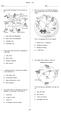 Name: ate: 1. Missing from the diagram of this ecosystem are the 5. ase your answer(s) to the following question(s) on the diagram below and on your knowledge of biology.. biotic factors and decomposers.
Quickwrite Questions: How did you learn the skill of note taking? How did this skill contribute to your success?
 Quickwrite Questions: How did you learn the skill of note taking? How did this skill contribute to your success? Cornell note taking stimulates critical thinking skills. Note taking helps students remember
Table of Contents Section 8: How Children Learn
 Table of Contents Section 8: How Children Learn This section provides educators with information about educational theories and objectives and how these apply to a unit of study on the West Eugene Wetlands.
GRADE SHEETS HIGH SCHOOL GRADE SHEET 1: BINDER (25 PTS) FRONT COVER SHEET (NAME, SCIENCE PROJECT, SUBJECT, PERIOD, AND TEACHER S NAME ) (25 PTS) DIVID
 YOUR SCIENCE PROJECT ORGANIZATION IS IMPORTANT FOR ANY SCIENTIFIC RESEARCH. YOU WILL KEEP ALL OF YOUR RESEARCH, DATA, AND CONCLUSIONS IN A BINDER WITH DIVIDERS SEPARATING 17 MAIN AREAS. YOUR BINDER SHOULD
China The Giant Panda
 China The Giant Panda China The Giant Panda Deep in a forest, a black-and-white bear sits peacefully. It chews the green leaves of a plant. The bear is alone, but there are others not too far away. Later,
Prairie Food Chains & Webs Producers, Consumers, & Decomposers
 Kansas Prairies Prairie Food Chains & Webs Producers, s, & Decomposers Life Science, Math, Reading, Science Materials Student Worksheet A: Vocabulary Student Worksheet B: Food Chain Overview To explore
Energy Flow in the Pond Teacher s Guide February 2011
 Energy Flow in the Pond Teacher s Guide February 2011 Grades: 6, 7 & 8 Time: 3 hours With the pond as a model, students explore how energy that originates from the sun keeps changing shape and form as
Previous Letterland at Tweetsie Railroad Motivation and reward Letterland at Tweetsie Curriculum Guides
 Previous Letterland at Tweetsie Railroad Each May since 2007, children from all over North Carolina (and Texas and Georgia) have come to Letterland at Tweetsie Railroad, where we have transformed our theme
Cherokee County School District Student Performance Standards Unit Guides - Science: Fifth Grade
 Characteristics of Science 1 Cherokee County School District Habits of Mind S5CS1. Students will be aware of the importance of curiosity, honesty, openness, and skepticism in science and will exhibit these
Cornell Note Taking System (For Lecture or Reading)
 Cornell Note Taking System (For Lecture or Reading) Taking good notes is one of several keys to academic success. There are several reasons why developing an effective technique of note taking is important.
Sec. 22a-1a page 1 (4-97)
 Department of Environmental Protection Sec. 22a-1a page 1 (4-97) TABLE OF CONTENTS Connecticut Environmental Policy Act Definitions... 22a-1a- 1 Determination of sponsoring agency.... 22a-1a- 2 Determination
Week 4 Lesson Plan. Pre-K. Animals in the Wild. Macmillan /McGraw-Hill. Extend. the Unit
 Lesson Plan Extend Unit the Unit Pre-K Animals in the Wild Alphabet Time.....................2-3 Book Time.........................-5 Retelling Puppets................... 6 Content Area......................7-8
What is a food chain?
 3 What is a food chain? Learning Intention Understand that plants and animals in a habitat are dependent on each other. National Curriculum Skills Science Interdependence of living organisms in those 2
Paper Airplanes & Scientific Methods
 Paper Airplanes 1 Name Paper Airplanes & Scientific Methods Scientific Inquiry refers to the many different ways in which scientists investigate the world. Scientific investigations are done to answer
Research-Based Lesson Planning and Delivery Guide
 Research-Based Lesson Planning and Delivery Guide Mini-Lesson Planning for Fact and Opinion Benchmark(s)/Standard(s): What is the next benchmark(s) on my course curriculum guide or FCIM calendar? LA.3.1.7.8;
Exercise 1: How to Record and Present Your Data Graphically Using Excel Dr. Chris Paradise, edited by Steven J. Price
 Biology 1 Exercise 1: How to Record and Present Your Data Graphically Using Excel Dr. Chris Paradise, edited by Steven J. Price Introduction In this world of high technology and information overload scientists
Environmental Science Overview
 Overview The standards establish the scientific inquiry skills and core content for all courses in DoDEA schools. The course of study provides students with a basic knowledge of the natural world that
Human Impact to Wetlands
 Human Impact to Wetlands Oregon State Standards 3.2 3.2P.1 3.3S.1 3.3S.2 3.3S.3. 4.2 4.2L.1 4.3 4.3S.1 4.3S.2 4.3S.3 5.1 5.1L.1 5.2 5.2L.1 5.3 5.3S.3 5.3S.2 5.3S.3 Vocabulary Wetland Riparian Biodiversity
INFORMATION FOR LEARNING: MAKING IT YOUR OWN
 INFORMATION FOR LEARNING: MAKING IT YOUR OWN Active listening: notetaking in lectures DCU Student Learning Resources Office of the Vice-President for Learning Innovation and Registrar 2 INFORMATION FOR
Introduction to Natural Resource Damage Assessment
 Introduction to Natural Resource Damage Assessment Topics Overview Legal: Laws and Regulations NRDA Process Scaling Injuries and Restoration Restoration in the Arctic Summary 2 1 Top Three Things to Know
T E A C H E R S N O T E S
 T E A C H E R S N O T E S Focus: Students explore energy: its sources, forms, and transformations. Students also consider the benefits of energy-efficient technologies and energy conservation. Learning
Elementary School Sea Turtle Lesson Plan Developed by Cathy Payne
 Elementary School Sea Turtle Lesson Plan Developed by Cathy Payne Background: Elementary school-aged children are very drawn to stories, both fiction and nonfiction, about sea turtles, but there are limited
Learning Menus. What are Learning Menus. Empowering students through CHOICE while ensuring adherence to important LEARNING GOALS
 Choice Menus Learning Menus Empowering students through CHOICE while ensuring adherence to important LEARNING GOALS What are Learning Menus Learning menus outline a variety of instructional options targeted
Food Chains (and webs) Flow of energy through an ecosystem Grade 5 Austin Carter, Dale Rucker, Allison Hursey
 Food Chains (and webs) Flow of energy through an ecosystem Grade 5 Austin Carter, Dale Rucker, Allison Hursey References: Columbus Public Schools Curriculum Guide- Grade 5 GK-12 Biological Science Lesson
COASTAL MONITORING & OBSERVATIONS LESSON PLAN Do You Have Change?
 Coastal Change Analysis Lesson Plan COASTAL MONITORING & OBSERVATIONS LESSON PLAN Do You Have Change? NOS Topic Coastal Monitoring and Observations Theme Coastal Change Analysis Links to Overview Essays
METRO REGIONAL GOVERNMENT Records Retention Schedule
 Organizational Placement: Schedule number: 2013-0003 Division: Natural Areas Program: Nature in Neighborhoods The Nature in Neighborhoods program is an inter-departmental collaboration with responsibilities
Analyzing Experimental Data
 Analyzing Experimental Data The information in this chapter is a short summary of some topics that are covered in depth in the book Students and Research written by Cothron, Giese, and Rezba. See the end
Lesson 6: Fisheries Management in the Open Ocean. Open Ocean
 !!! Open Ocean Concepts How does fishing equipment affect the amount of fish and bycatch caught in a fishery? How can we change the way we fish to use the ocean better? Standards Addressed HCPS 5. & 5.2
Endangered Species: What and Where?
 Endangered Species: What and Where? Summary: Students learn about North American endangered species through creation of a species book. Older students will locate endangered species on a map and explore
The Colorado River Delta
 The Colorado River Delta An Invaluable Resource for People and Wildlife the colorado river delta The Colorado River Delta and its waters support a rich and diverse treasure of plants and animals in an
OWL PELLETS, FOOD WEBS, AND PYRAMIDS
 OWL PELLETS, FOOD WEBS, AND PYRAMIDS INTRODUCTION The barred owl inhabits woodlands and swamps in the Eastern part of the United States. This owl is approximately 43-50 cm long with a wingspan of 99-110
PROCEDURE. See: Great Lakes Coastal Wetlands (http:// www.miseagrant.umich.edu/wetlands/index.html)
 Activity: Students review a selection of career profiles and play a lively classroom game to find out more about marine and aquatic science professionals. Grade Level: 4-8 Subjects: Science, social studies
How To Plan A Buffer Zone
 Backyard Buffers Protecting Habitat and Water Quality What is a buffer? A buffer (also called a riparian buffer area or zone) is the strip of natural vegetation along the bank of a stream, lake or other
j.b. NO. 2S1(~ A BILL FOR AN ACT
 j.b. NO. 2S1(~ A BILL FOR AN ACT RELATING TO PREDATORS. BE IT ENACTED BY THE LEGISLATURE OF THE STATE OF HAWAII: 1 SECTION 1. Section 183D-l, Hawaii Revised Statutes, is 2 amended by amending the definition
2.2 Interactions Among Species
 Key Terms ecological niche bog predator prey mutualism parasite ecological niche the way that an organism occupies a position in an ecosystem, including all the necessary biotic and abiotic factors 2.2
Water Clean- up Crew. Learn about water quality and how to solve different water quality problems. Time Needed 1 hour
 Water Clean- up Crew Learn about water quality and how to solve different water quality problems Time Needed 1 hour Ages 4 th to 6 th Season Any Materials aluminum trays, tape, tin foil, sponges, clay,
AP Environmental Science Syllabus
 Course Overview The following AP Environmental Science Syllabus will comply with all of the requirements and specifications provided by College Board aimed at preparing students for the AP exam given in
Lesson 2: Constructing Line Graphs and Bar Graphs
 Lesson 2: Constructing Line Graphs and Bar Graphs Selected Content Standards Benchmarks Assessed: D.1 Designing and conducting statistical experiments that involve the collection, representation, and analysis
a. a population. c. an ecosystem. b. a community. d. a species.
 Name: practice test Score: 0 / 35 (0%) [12 subjective questions not graded] The Biosphere Practice Test Multiple Choice Identify the letter of the choice that best completes the statement or answers the
Niles West High School STUDY SKILLS MANUAL
 Niles West High School STUDY SKILLS MANUAL Table of Contents Table of Contents Organizational Skills Study Habits Study Materials Doing Your Best Using the IRC Studying English Studying ESL Studying Foreign
5.1 Ecosystems, Energy, and Nutrients
 CHAPTER 5 ECOSYSTEMS 5.1 Ecosystems, Energy, and Nutrients Did anyone ever ask you the question: Where do you get your energy? Energy enters our world from the Sun but how does the Sun s energy become
Appendix A. The Marine Life Protection Act (MLPA)
 Appendix A. The Marine Life Protection Act (MLPA) THE PEOPLE OF THE STATE OF CALIFORNIA DO ENACT AS FOLLOWS: SECTION 1. Chapter 10.5 (commencing with Section 2850) is added to Division 3 of the Fish and
HOW TO DO A SCIENCE PROJECT Step-by-Step Suggestions and Help for Elementary Students, Teachers, and Parents Brevard Public Schools
 HOW TO DO A SCIENCE PROJECT Step-by-Step Suggestions and Help for Elementary Students, Teachers, and Parents Brevard Public Schools 1. Get an Idea for Your Project Find an area that interests you. You
East Baton Rouge Parish Schools Environmental Science YID 2015-2016. Table of Contents. Unit 1: Science and the Environment...2
 East Baton Rouge Parish Schools Environmental Science YID 2015-2016 Table of Contents Unit 1: Science and the Environment...2 Unit 2: Study of the Earth...5 Unit 3: Ecosystem Development, Biomes, and Biodiversity...7
RUTHERFORD HIGH SCHOOL Rutherford, New Jersey COURSE OUTLINE ENVIRONMENTAL SCIENCE
 RUTHERFORD HIGH SCHOOL Rutherford, New Jersey COURSE OUTLINE ENVIRONMENTAL SCIENCE I. INTRODUCTION Environmental Science introduces students to a broad view of the biosphere and the physical parameters
Scientific Inquiry: What is inquiry-based learning?
 Scientific Inquiry: What is inquiry-based learning? The National Science Education Standards explain the importance of inquiry-based learning: Students at all grade levels and in every domain of science
Ecology and Simpson s Diversity Index
 ACTIVITY BRIEF Ecology and Simpson s Diversity Index The science at work Ecologists, such as those working for the Environmental Agency, are interested in species diversity. This is because diversity is
Science Grade 7 Unit 01 & 02: Science Safety & Flow of Energy 2012 2013
 Science Grade 7 Unit 01 & 02: Science Safety & Flow of Energy 2012 2013 1 2 Using the diagram above of a grassland ecosystem, complete the following: Draw and label an energy pyramid to represent this
Dinosaur Hall Second Grade Dinosaur Lesson Teacher Pages Pre Visit On site Visit
 Dinosaur Hall Second Grade Dinosaur Lesson Teacher Pages Pre Visit Earth Sciences 3d. Students know that fossils provide evidence about the plants and animals that lived long ago and that scientists learn