
Destination Germany A Pocket Guide for International Students
|
|
|
- Helena Webster
- 10 years ago
- Views:
Transcription
1 Destination Germany A Pocket Guide for International Students

2 T h e bestprospectsforan internationalcareer: amaster sdegreeinberlin. NataliaGarzónArredondofromColombiastudied architectureattheuniversidadnacionalmedellínandisnow doinghermasterofscienceintheinternationalurban ManagementProgrammeoftheTechnischeUniversitätBerlin. Natalia was photographed next to the Oberbaum Bridge in Berlin.

3 Destination Germany A Pocket Guide for International Students 6th Edition

4 Publisher DAAD Deutscher Akademischer Austauschdienst German Academic Exchange Service Kennedyallee 50, Bonn (Germany) Section: Promotion of Study and Research in Germany Project Coordination Dr. Ursula Egyptien Gad, Esther Kirk, Katharina Kohm, Anne Münkel Text Dr. Dagmar Giersberg, Bonn Translation Robert Brambeer, Titisee-Neustadt Layout and Typesetting LPG Loewenstern Padberg GbR, Bonn Photo Credits Norbert Hüttermann, Düsseldorf Printed by msk marketingservice köln GmbH Print-run October ,000 DAAD This publication was funded by the Federal Foreign Office and is also available in German.

5 Destination Germany 3 Contents 5 Almost there 6 We want to help you! 8 What is the DAAD? 9 Studying in Germany 10 Planning and preparation 12 Types of universities, academic programmes and degrees 17 Admission requirements 22 Costs and financing 27 Applications 32 Visas and residence permits 35 Academic structures and requirements 44 Checklist: What can I do from home? 46 Checklist: What should I pack? 49 Student life in Germany 50 Tour of Germany 58 First bureaucratic steps 65 Help and advisers on location 74 Accommodation 81 Medical treatment 87 Money and banking 93 Internships 97 Jobs 101 Language 109 Telephone, internet, post

6 4 Destination Germany 116 Festivals and public holidays 120 Recreation 131 Going out 139 Weather and clothing 143 Eating and drinking 149 Shopping 154 Environmental protection 160 Equal rights and tolerance 163 Safety 165 Mobility and travel 176 Typical German? 182 University towns in Germany

7 Almost there 5 I think it s great you want to study in Germany. Thousands of young people around the world decide to study in Germany every year. Right now about 11 percent of all students at German universities are foreigners. That s more than 260,000! So there s really no reason to worry you are not alone. You probably have a lot of questions and this brochure will help you answer them. Inside you ll find a wide range of information about life in Germany. Speaking of advice, here s something that might help you. I recently made a few video clips with some friends of mine. In each one I answer questions that foreign students frequently have. If you re interested, you can watch them at But for now, I hope you enjoy reading this brochure. I wish you a good start in Germany!

8 Hi, my name is Michael. I m from the United States. I ve been studying in Germany for two years now. When I first got here, I had only planned on staying for six months. But I liked it so much here well, I hope you end up feeling the same way. We want to help you! Hello, my name is Taorang. I came to Germany from China about eighteen months ago. I was pretty nervous when I boarded the plane. But getting started was easier than I had expected. I d be happy to give you some advice.

9 And I m Max. I m pretty far along in a master s degree programme, in fact, I ve almost finished my last semester. But I clearly remember how I felt when I began. Everything was new and strange. I was happy there was someone around who I could always turn to for help. That s why I m here today to help you with your questions. Hello, my name s Julia. I come from a small town in northern Germany. I decided to attend university in the south a big step for me. And that s why I can imagine how you might feel out of place during your first few weeks in Germany. I ll tell you what helped me back then. Hi, I m Łukasz. I come from Poland. I ve been studying in Germany for six months and everything s going just fine. In the beginning you have to take care of some formalities, but that all worked out well for me. I ll tell you how.

10 8 Destination Germany What is the DAAD? The DAAD is a joint organisation of German universities and student bodies. Its task is to promote academic cooperation around the world, especially by supporting the exchange of students and researchers. You can find many other helpful hints, advice and links on our websites and We also encourage you to view our online videos on On foreign students report on their experiences in Germany. And please don t hesitate to contact us at the DAAD headquarters in Bonn or any of our branch offices and information centres around the world ( There you ll find many bro chures with more detailed information, for example, Studying in Germany A Practical Guide for International Students. Or simply submit your questions to us at in.germany.

11 9 Studying in Germany

12 10 Destination Germany Planning and preparation Michael: I found it very helpful to have a timeline so I could prepare for my stay in Germany. After all, there s a lot to think about. That s why it s good to know exactly what you have to do and when. I made a timeline and hung it up in my room. It helped me keep on top of things and I have never forgotten anything important. In the following you will find useful information about studying in Germany. For more detailed information, please refer to our brochure Studying in Germany A Practical Guide for International Students, available free of charge at all DAAD offices (for addresses, visit

13 Planning and preparation 11 Timeline 3 About one year before you travel to Germany Start gathering information about study opportunities in Germany Find out whether you meet the requirements for admission to university in Germany Is your secondary school leaving certificate sufficient? Do you have to pass a language test? Find out how you can finance your study visit 3 Six months before you arrive in Germany Decide on a degree programme and university Contact the International Office at the university of your choice 3 Four to five months before you begin your studies Submit your application for university admission (please note the application deadlines) 3 When you receive notification of university admission Apply for a room now, if you would like to live in a student hall of residence Submit your visa application now, should you require one Get confirmation of health insurance coverage, if your policy is recognised in Germany 3 One to two weeks before you arrive in Germany Make sure you have all the necessary documents Arrange accommodation for your first nights in Germany Make appointments by to see flats or rooms to let 3 Your trip to Germany!

14 12 Destination Germany Types of universities, academic programmes and degrees Łukasz: I remember quite well how I planned my study visit in Germany. The first thing I wondered was how I would ever find the right degree programme. There are so many universities and places to study in Germany. The possibilities are overwhelming. Then I asked a DAAD lecturer at my university for advice. Together we quickly found a good solution. Types of universities There are three types of universities in Germany: Universities with scientifically-oriented programmes Universities of applied sciences (Fachhochschulen) with practically-oriented programmes Colleges of art, film and music with artistic / design-oriented programmes. Around two-thirds of Germany s 2.4 million students are en rolled at a university. Most universities in Germany are publicly funded. In addition to these, there are more than 110 private universities, most of which are universities of applied sciences. The quality of instruction at public and private universities is comparably high. An overwhelming

15 Types of universities, programmes and degrees 13 Michael: When I began planning my stay in Germany, I wanted to study in a big city like Berlin, Hamburg, Cologne or Munich. But then I ended up in a smaller city. Today I m glad I made that decision. Life is much more relaxed here and definitely much cheaper. I got settled and started meeting people very quickly. majority of students choose to enrol at public university in Germany. Only six percent attend private universities which tend to charge high tuition fees. More than sixteen thousand degree programmes are offered at 394 nationally accredited universities (112 universities, 226 universities of applied sciences, 56 colleges of art and music) in more than 174 towns and cities in Germany (see map on p. 182). Degree programmes German universities offer degree programmes in all shapes and sizes. For instance, you can begin studying at a university after graduating from secondary school, or participate in an exchange programme offered by your home university to gain foreign experience for one or two semesters, or enter a master s or doctoral degree programme after completing your undergraduate studies.

16 14 Destination Germany There are also more than 1,000 international bachelor s, master s and doctoral programmes in Germany. These structured degree programmes are generally taught in English and provide students with intensive academic advising. More information: 3 Choosing a degree programme is not only a matter of deciding what subject you would like to study, but also which degree you wish to attain. You can pursue the following degrees in Germany: Bachelor s degree (BA, BSc, BSEng, etc.) First academic degree 6 to 8-semester basic course of study Master s degree (MA, MSc, MEng, etc.) Second academic degree 2 to 4-semester advanced course of study State examination State-conferred degree to students of law, medicine, veterinary medicine, dentistry, pharmaceutics and some teacher certification programmes Doctoral degree Post-graduate degree to students who have completed their master s degree or state examinations Approx. 4 to 10-semester programme with research work (dissertation), concludes with doctorate Taorang: Get some advice! There are people in your home country who can help you plan your study visit in Germany. In my case, I started collecting information at an education fair in China.

17

18 16 Destination Germany Need help making a decision? The following contacts and organisations are able to answer all your questions about studying in Germany: DAAD information centres (ICs) and DAAD branch offices ( DAAD-affiliated instructors and lecturers at universities around the world Goethe Institutes German embassies and consulates More information: 3 Upcoming education fairs around the world

19 Admission requirements 17 Admission requirements Taorang: Unfortunately, my school-leaving certificate from China didn t fulfil the requirements for university admission in Germany. And my German wasn t good enough either. So I enrolled in a foundation course (Studien kolleg) for one year in Germany, then I took the Feststellungsprüfung and passed! That allowed me to apply to a real degree programme. The courses at the Studienkolleg were great. I learned a lot and made my first friends in Germany there. Secondary school-leaving certificate Those who wish to study at a German university require a certificate called a Hochschulzugangsberechtigung. This is a school-leaving certificate which qualifies a student for university admission. Not all secondary school-leaving certificates qualify students for university study in Germany. The universities are solely responsible for deciding whether you can enrol. But as a rule, students who have received their school-leaving certificate in an EU country, Liechten - stein, Iceland, Norway or Switzerland, or at a German School abroad, need not take an additional examination to study in Germany. Different rules apply for artistic disciplines. To gain admission to an art / design programme, candidates usually have to pass an aptitude test and / or submit samples of their work for evaluation.

20 18 Destination Germany To find out whether your secondary school-leaving certificate meets German university admission requirements, visit 3www.daad.de/admission 3www.anabin.de The university you apply to is solely responsible for deciding whether you can enrol. Therefore, ask the International Office at the university of your choice about the specific admission requirements before you apply. If your school-leaving certificate is insufficient, you will have to take a qualification assessment examination in Germany called a Feststellungsprüfung. You can prepare for this exam by participating in a Studienkolleg (foundation course), offered by universities throughout Germany. These university foundation courses usually run for two semesters. One part of the examination assesses the student s language skills. However, to even take part in a foundation course, students require a basic understanding of German. More information: 3 Language skills Most degree programmes in Germany are taught in German. The exception to the rule are the international degree programmes, most of which are taught in English ( Julia: Apart from your certificates and grades, if you re still wondering whether you re ready to study in Germany, you can simply test yourself with the TestAS a test for foreign students. If you re interested, visit their website at

21 Admission requirements 19 Łukasz: My Polish school-leaving certificate was recognised in Germany which meant I only had to take a language test, the TestDaF, in Poland. The results were okay and that allowed me to enrol at university. A friend of mine got into an international degree programme in Germany. He didn t have to take a German test, rather an English test. Those who wish to enrol in a German-language degree programme usually have to provide proof of German proficiency. You can meet this requirement by passing one of two language examinations the German Language Test for the Admission of Foreign Study Applicants (DSH) or the TestDaF ( You need not take a German language test if: you have received an Abitur from a German-language secondary school, or you have passed the German Language Diploma (Level II) from the German Standing Conference of Ministers of Education and Cultural Affairs, the new Goethe Zertifikat C2: Großes Deutsches Sprachdiplom, or one of the following former certificates: Minor German Language Certificate, Major German Language Certificate or the Central Advanced Language Text of the Goethe-Institut. Some universities do not require applicants to prove their German skills if they only intend to study there for one or two semesters. More information: 3 Film 3: How much German do I need in Germany?
22
23
24 22 Destination Germany Costs and financing Michael: And what is it going to cost us? That s the first thing my parents asked me when I told them I wanted to study in Germany. They were relieved to learn that I didn t have to pay any tuition fees. And for the most part, life here is not as expensive as they had feared. When you study in Germany, you can expect the following costs: Semester contribution Tuition fees (if applicable) Health insurance Living expenses (accommodation, food, clothing, books, copies, telephone, etc.) Semester contribution All students in Germany are required to pay what is called a Semester - beitrag (semester contribution). This helps finance a number of student services, including the dining halls, student halls of residence, university sports facilities and administration. The semester contribution frequently includes a semester ticket. This ticket allows students to use all modes of public transportation in and around the city free of charge for six months. The cost of
25 Costs and financing 23 Expenses From Application to Enrolment Łukasz had to pay the following application and enrolment fees in Germany: copies and translations 30 application processing fee (via uni-assist) 43 semester contribution (including a semester ticket) 230 Total 303 the semester contribution varies from university to university, but usually ranges from 200 to 300 euros per semester. Tuition fees Most students in Germany are enrolled at publicly funded universities. These public institutions normally waive tuition fees for most bachelor s and many master s degree programmes. However, fees are charged for certain master s degree programmes sometimes more than 10,000 euros per semester (1/2 year). Some private universities also charge relatively high tuition fees. The cost of tuition says nothing about the quality of education in Germany. Tuition-free degree programmes offer very high quality. More information: 3
26 24 Destination Germany Health insurance All students must have health insurance coverage. If your health insurance policy from home is not recognised in Germany (see pp ) you will have to get insurance here. Insurance coverage is available to students for about 80 euros per month. Cost of living Compared to most of Europe, the cost of living in Germany is not very expensive. For example, the cost of food, accommodation, clothing, cultural activities, etc., is equivalent to the EU average. It s difficult to predict exactly how much money you will need in Germany. Generally speaking, life in smaller towns costs less than life in large metropolitan cities. Most students in Germany have an average of 865 euros per month at their disposal. Proof of financial resources All international students must verify they have about 8,000 euros at their disposal for one year. There are several forms of proof of financial resources that you may submit, such as your parents income statement or proof of assets, a security payment in Max: It s very important you have enough money to finance your stay in Germany before you arrive. To be allowed to study in Germany, you must prove that you have sufficient financial resources. The German authorities will ask to see a Finanzierungsnachweis (proof of financial resources) when you apply for an entry visa, or at the latest, when you apply for a residence permit.
27 Costs and financing 25 Monthly expenses Łukasz pays the following expenses every month: a room in a flat-share (including cost of utilities) 300 food 165 clothing 50 photocopies, office supplies and books 30 health insurance, doctor s fees and medicine 80 telephone, internet, television and radio 35 transportation and travel expenses 80 recreation, culture and sports 70 Total 810 Plus the semester contribution and possible tuition fees twice a year. a blocked account, a bank guarantee, a scholarship or a guarantee issued by someone you know who lives in Germany. The German embassy in your home country can tell you which types of proof it recognises. Please Note: Proof of financial resources is extremely important. Without it, you won t be allowed to study in Germany!
28 26 Destination Germany Scholarships Many institutions offer scholarships to international students. The DAAD scholarship database is the easiest way to look into funding opportunities ( European students are also eligible for other funding programmes, such as the ERASMUS programme ( 3www.study-in.de/student-life Film 1: How much does it cost to study in Germany? and Film 2: How much does it cost to live in Germany?
29 Applications 27 Applications Julia: There are several ways to apply for admission to a German university. The correct way for you depends on what subject you want to study and where you come from. For most subjects, you can submit your application directly to the International Office, or the Registrar s Office, or through uni-assist. I suggest enquiring at the International Office about how to apply for admission to your degree programme. There are two types of subjects at German universities: Subjects, for which admission is centrally restricted (numerus clausus or NC), because there are more applicants than available places at the university. These currently include Medicine, Pharmaceutics, Veterinary Medicine and Dentistry. Subjects, for which admission is unrestricted or only locally restricted (university-imposed numerus clausus).
30 28 Destination Germany Subjects with a centrally restricted admissions policy A nationally imposed numerus clausus applies to subjects for which there are far more applicants than available places at German universities. Candidates must meet special admission requirements to gain admission to degree programmes in these subjects. Depending on your country of origin and type of university entrance qualification, you must submit your application to one of two possible processing centres. The Foundation for University Admissions (Stiftung für Hochschulzulassung, processes applications from candidates who either: come from an EU member country, Liechtenstein, Iceland or Norway, or have received university entrance qualification in Germany or at a German School abroad. All other candidates should send their applications to uni-assist if the desired university is a member of the uni-assist organisation. What is uni-assist? uni-assist represents 150 member universities and supports international students who apply for admission to university in Germany. uni-assist checks whether your application is complete and informs you in advance if something is missing. If all requirements are met, uni-assist forwards your application to the uni versities of your choice. The university you apply to is solely responsible for deciding whether you can enrol. The advantage of using uni-assist is that you can apply to several universities at one time by submitting just one application. More information: 3
31 Applications 29 Taorang: When you apply, you have to submit lots of forms, certified copies and even translations. You should start collecting these documents in advance so you don t get stressed out later. Otherwise, applications should be sent directly to the university s admissions office. All other subjects For subjects with no admissions restriction, international applicants should submit their applications to either: the International Office or Registrar s Office at the university, or uni-assist. Application materials You can get an application form from the university of your choice, uni-assist, the DAAD website or Please Note: Your application will only be processed if all the necessary documents are included and the processing fees have been paid! Certified copies Certified copies are copies of original documents whose authenticity has been certified by a German authority. German diplomatic missions abroad, for example, can authenticate your copies.
32 30 Destination Germany Processing fees uni-assist: Depending on your country of origin, up to 68 euros for one or the first of several applications. Every additional application will cost 15 euros. Universities: Applicants may be charged processing fees depending on the university Foundation for University Ad missions: No processing fees Submission deadlines The deadline for submitting applications is usually several months before the next semester begins: Degree programmes beginning in the winter semester: end of May to 15 July Degree programmes beginning in the summer semester: beginning of December to 15 January Submission deadlines may vary at some universities. Therefore, be sure to ask about the exact dates in advance. Please Note: Your application will not be processed if you submit it too late! For more information, visit
33
34 32 Destination Germany Visas and residence permits Max: You may need a visa for Germany depending on where you come from and how long you wish to stay in Germany. Ask about visa requirements at the German embassy or consulate in your home country. They will help you with any questions you have about visa applications. Visa or no visa? The most important regulations at a glance: Citizens of an EU member country, Iceland, Liechtenstein, Norway or Switzerland only require a valid personal identification card to enter Germany Citizens from other countries require a visa if they wish to remain in Germany longer than 90 days: Citizens from Australia, Canada, Israel, Japan, New Zealand, South Korea and the United States may obtain a visa after arriving in Germany. The same applies for citizens of Andorra, Brazil, El Salvador, Honduras, Monaco and San Marino who do not wish to seek employment Citizens from all other countries must apply for a visa before travelling to Germany
35 Visas and residence permits 33 Special conditions apply if your stay does not exceed 90 days. In such cases, citizens from the following countries may enter Germany without a visa: Antigua and Barbuda, Argentina, Bahamas, Barbados, Brunei Darussalam, Chile, Costa Rica, El Salvador, Guatemala, Malaysia, Mauritius, Mexico, Nicaragua, Panama, Paraguay, Seychelles, Singapore, Saint Kitts and Nevis, Taiwan, Uruguay, Vatican City and Venezuela. These conditions also apply to citizens of Albania, Bosnia-Herzegovina, Macedonia, Montenegro and Serbia who hold biometric passports. More information: 3 Types of visas The visa you need primarily depends on whether you have already received your notification of admission from a German university. If you have not yet been admitted to a university or university foundation programme (Studienkolleg), you should apply for a study applicant visa (Visum zum Zweck der Studienbewerbung). If you have been admitted to a university or university foundation programme, you should apply for a student visa (Visum für den Aufenthalt zu Studienzwecken). Student visas are generally valid for three months, after which time you will have to apply for a residence permit at the Alien Registration Office in your city of residence in Germany (see pp ). Please Note: Do not enter the country as a tourist! Tourist visas cannot be automatically converted to study applicant visas or student visas. If you enter with a tourist visa, you will have to return to your home country and re-apply for a student visa!
36 34 Destination Germany Documents for visa application When you apply for a visa, you will have to provide the authorities with a number of additional documents, for example: Proof of health insurance coverage (see p ) Proof of financial resources (see pp ) Certificates of prior academic achievement, i.e. transcripts (if applicable) Certificate of German language knowledge or letter confirming planned participation in a language course in Germany Notification of admission from your German university (if applicable) University entrance qualification which is recognised in Germany (if applicable) Health certificate (required in some countries) Max: The German embassy or consulate can tell you exactly which documents you will need for your visa application.
37 Academic structures and requirements 35 Academic structures and requirements Julia: Every university and every subject is a little different and so are the degree programmes. But they still have much in common and knowing this can give you some initial orientation. One thing is for sure once you re in Germany, you ll quickly figure out everything. Institutes, seminars schools, faculties Every course of study is supervised by an institute or seminar at the university. Depending on the university, the institute or seminar may be located on one or more floors of the main building or could be housed in a separate building. This is where you will find the teaching staff in your course of study (professors, research assistants, etc.). The institutes often have their own subject-specific libraries, as well. Every subject has a departmental committee (Fachschaft) comprised of students who represent the interests of all the students in their department (see p. 71). Larger universities often bundle several disciplines into schools or faculties. For example, you might find the German Studies department in the Faculty of Philosophy or Dentistry in the School of Medicine.
38
39 Academic structures and requirements 37 Also keep in mind that only a few German universities have centralised campuses with facilities all in one place. In Germany, university buildings are dispersed throughout the city. Two semesters per year The academic year at German universities is divided into two se mes ters called the summer and winter semesters (also called spring and autumn semesters at some universities). A semester consists of two parts: the lecture period, during which all courses are held, and the non-lecture period (the semester breaks). The beginning of the lecture period depends on the type of university you attend. Universities: Summer semester (SS) April to September Winter semester (WS) October to March Universities of applied sciences: Summer semester March to August Winter semester September to February Important: There are some degree programmes that only begin in the winter semester. Course timetable University students in Germany rarely receive a fixed course timetable. There is a certain amount of flexibility in most degree programmes which allows students to select courses that personally interest them.
40 38 Destination Germany Taorang: When I first began studying in Germany, I was completely overwhelmed. I had to plan my course timetable myself. That was really stressful. I didn t know which courses or even how many I should choose. But luckily the students in the departmental committee helped me out. Now I think it s great that I can choose for myself what I want to learn. So-called study regulations describe the content of each degree programme and the academic achievement required for a degree. The study regulations are usually posted on the homepage of each department or institute. Study regulations only stipulate the general framework of the degree programme. For example, it specifies which modules (see p. 39) students must complete. Within a module, however, students may choose from several courses which focus on various topics. You can find out which courses are offered by which professors in the annotated course programme, called the Kommentiertes Vor le sungsverzeichnis (KVV). The KVV is posted on your institute s webpage. With the study regulations for your degree programme and the KVV, you will be able to plan your own course timetable. If you need help, your departmental committee will be happy to assist you. Universities also offer a number of introductory and orientation events for new students, mentor programmes and much more to help you get started (see pp ). Once you ve chosen the courses for your timetable, you generally have to register for them. Course registration can usually be done online.
41 Academic structures and requirements 39 Modules and credit points The bachelor s and master s degree programmes are made up of various modules. Modules are academic units comprised of several thematically related courses. Modules can take up to two semesters to complete and comprise six to ten hours of instruction a week. Students receive credit points for every module they complete. In order to receive an academic degree, students must receive a certain amount of points. Depending on the study regulations, students require 180 to 240 credit points for a bachelor s degree and 60 to 120 credit points for a master s degree. Max: If your home university does not recognise credit points, you can have your professor or lecturer certify that you attended the course and successfully completed all the academic work. Ask in advance whether your home university will allow ECTS credit points to count toward your degree. Credit points are a measure of academic achievement. One credit point is equivalent to 30 hours of work. These points are awarded according to the European Credit Transfer System (ECTS). Thanks to ECTS credit points, universities can more easily recognise academic achievement across national boundaries.
42 40 Destination Germany Courses There are several types of academic courses at German universities. Their relevance depends on your degree programme and university. The most important types of courses are lectures, seminars / courses, tutorials / practical sessions, revision courses and colloquiums. Lectures (Vorlesungen) are given by a professor on a particular topic Seminars (Seminare) and courses (Kurse) allow students to study and discuss topics in detail together and with their professors Tutorials (Tutorien) and practical sessions (Übungen) allow students to review topics discussed in a lecture or seminar in more detail Revision courses (Repetitorien) provide a revision of past academic work to help students prepare for an examination, for example Colloquiums (Kolloquien) are a discussion forum for students who are almost finished with their degree programme Some degree programmes also offer working or learning groups where students can revise the material discussed in class and prepare for examinations. Taorang: Terms like Module, Vorlesungen, Referate, Fachschaft and Seminar were all new to me in the beginning. If you re already familiar with them, getting started at the university is much easier. I think students in Germany are more independent. For me, it took some time getting used to. There s help everywhere all you have to do is ask for it.
43
44
45 Academic structures and requirements 43 Some universities offer additional online teaching modules. These modules supplement the other courses in the degree programmes. Types of examinations In some cases, credit points are awarded if students attend class on a regular basis. But usually students have to fulfil additional re - quirements for their credit points. There is a wide variety of course requirements, which include: Class minutes (written summary of the results of the past lesson) Written examinations In-class presentations on a particular subject Term papers on a particular subject Oral examinations
46 44 Destination Germany Checklist: What can I do from home? Michael: I have no idea how people used to plan their study visits abroad in the old days without internet! Now you can take care of so many things from home by writing a few s. I did so much research on the internet that, when I arrived, I was almost better acquainted with my new city than a lot of Germans. Accommodation Where will I live? (see pp ) Apply for a room in a student hall of residence Answer flat adverts and arrange appointments to view possible flats via Organise accommodation for your first nights in Germany (with help from the International Office)
47 Checklist 45 Advising Where can I get help quickly? (see pp ) Ask at the International Office at the university whether there are orientation events or mentor programmes available Ask us your questions on General orientation Where is what? Find out how to get from the airport or train station to your accommodation Find out where the International Office is, what the office hours are and how to get there
48 46 Destination Germany Checklist: What should I pack? Taorang: As I was packing for my trip to Germany, I was extremely worried I d forget something. Then I met with the DAAD lecturer at my university in China and together we made a checklist. That helped a lot. And don t worry, as long as you have your personal documents, you can buy everything else in Germany. Personal documents Passport, valid for the entire duration of your stay in Germany (or personal identification card for students from the EU, Iceland, Liechtenstein, Norway or Switzerland) Visa (if applicable, see pp ) Notification of admission or confirmation of application from your German university Proof of financial resources (see pp ) Originals with translations and certified copies (see p. 29): Secondary school-leaving certificate University diplomas (if applicable) Language test certificates (if applicable) Confirmation of health insurance coverage if recognised in Germany (see p. 82)
49 Checklist 47 Vaccination card (if applicable) International driving licence or certified translation of your national driving licence Other travel documents (plane ticket, etc.) Other useful items Prescription medicine Credit card or traveller s cheques Some cash in euros for your arrival Passport photos Telephone number and address of the International Office Address of your accommodation Electrical adapter (if necessary line voltage in Germany is 220 V)
50
51 49 Student life in Germany
52 50 Destination Germany Tour of Germany Michael: I ve been fascinated with Germany ever since I was five. I remember learning that the automobile was invented in Germany. For me, it s an exciting country with so many inventions and Nobel Prize winners. But I would have never guessed that Germany was such a beautiful country. I only discovered that once I came here. Germany lies at the centre of Europe. Its population is the largest in the European Union with approximately 80 million inhabitants. It shares a border with nine neighbours: Denmark to the north, the Netherlands and Belgium to the northwest, France and Luxem bourg to the west, Austria and Switzerland to the south, and the Czech Republic and Poland to the east. Germany is one of the European Union s founding members and works to promote closer integration among the countries of Europe.
53 Tour of Germany 51 Landscapes and cities The landscapes of Germany are diverse and beautiful. On the North and Baltic Seas, there are island chains with long sand dune beaches, swaths of heath and moorland. In the low mountains of central Germany a region praised for its beauty by the English and German Romanticists medieval castles are situated along forested valleys. And in the south, the Alps with their sparkling lakes rise above the lowlands. This is where the Zugspitze, the highest peak in Germany, towers at almost 3,000 metres above sea level. Almost half of Germany s inhabitants live in 76 cities with populations over 100,000. The largest German cities are Berlin (3.3 million), Hamburg (1.7 million) and Munich (1.3 million). UNESCO World Heritage Sites 38 landmarks and historic locations in Germany have been distinguished as UNESCO World Heritage Sites. These include: The cathedrals in Aachen, Cologne, Speyer and Trier Roman-period buildings, e.g. the limes Historic city centres, e.g. Bamberg, Lübeck, Regensburg, Stralsund and Wismar Castles and parks, e.g. Brühl, Dessau, Potsdam and Würzburg Former industrial complexes, e.g. the Zeche Zollverein in Essen and the Völklingen Ironworks The Bauhaus sites in Weimar and Dessau, the Luther memorial sites in Eisleben and Wittenberg, and the classical Weimar of Goethe and Schiller Entire landscapes, e.g. the Upper Middle Rhine Valley and the Wadden Sea along the North Sea For a complete list of UNESCO sites in Germany see welterbe-deutschland.
54
55 Tour of Germany 53 Metropolitan cities are not the only places worth visiting. Re gard less of size, university towns throughout Ger - many possess a rich history which is often reflected in their archi tec ture. Historic city cen - City portraits The German cities where most international students choose to live and study are presented in detail at tres and ancient city walls date back to the Middle Ages. Many towns have well-preserved half-timbered houses and long boulevards lined with spacious villas built during the Gründerzeit, the 19th-century period of German industrial expansion. No matter where you end up studying, you will find an abundance of cultural highlights in your town exhibitions, concerts, festivals, performances, trade fairs, sporting events, etc. (see pp ). Politics The Federal Republic of Germany (FRG) was founded in 1949 as a parliamentary democracy. Its constitution guarantees basic rights to all people, such as freedom of religion, freedom of expression and equality before the law (see p. 160). Following the reunification of East Germany (GDR) and West Germany (FRG) in October 1990, Berlin became the capital. Germany is comprised of 16 states (see map on p. 182). Each state has its own political sphere of jurisdiction, for example, in matters of culture and education. Germany s educational system is decentralised. All 16 states have their own university regulations and guidelines. The universities themselves are largely independent which explains why study regu la tions vary so often. Consequently, students should always ask about the specific study regulations at their university.
56 54 Destination Germany Economic strength Germany s economy is the largest in Europe and the fifth largest in the world. In 2011 German companies exported goods valued at one trillion euros. Germany s main exports are electro-technology, mechatronics, heavy machinery, automobiles, environmental technology, pharmaceuticals and chemicals. Consumers around the world regard the label Made in Germany as a seal of quality. Germany is home to many trusted and renowned market leaders, such as Mercedes-Benz, BMW, Audi, Bayer, Siemens, and many others. In the same way Germany fosters trade relations with partners around the world, German companies also work hard to promote international exchange of qualified professionals. Innovation and creativity Innovative ideas have strongly shaped Germany s past and will surely continue to do so in the future. Germany has produced a long list of revolutionary inventions, such as the automobile, the airbag, X-ray technology, Aspirin, the computer, the chip card and the MP3 data compression format. Science and research have a long tradition in Germany and are still highly valued today. The oldest German university was founded in Heidelberg in The list of German Nobel Prize recipients is quite impressive. There are almost 70 German laureates in the natural sciences and medicine alone. They include Wilhelm Conrad Röntgen, Robert Koch, Max Planck, Albert Einstein, Christiane Nüsslein-Volhard and Harald zur Hausen.
57
58 56 Destination Germany And Germany isn t called the land of poets and thinkers for nothing. In addition to such illustrious figures as Kant, Hegel, Adorno, Goethe, Heine, Brecht, Bach, Beethoven and Brahms, many contemporary German designers, artists, actors, musicians and athletes are famous around the world. Cosmopolitan Millions of immigrants have chosen to settle in Germany since the 1960s. Today Germany is home to 6.9 million people of im migrant descent, approximately 8.5 percent of the total population. Most of them have come from Turkey, Italy and Poland. People from all nations, cultures and religions live together in peace ful coexistence. Germany is a tol erant Land of Ideas and cosmopolitan country. Germany Land of Ideas is a programme initiated by the federal government that promotes the creative and innovative advancements by German institutions in the fields of science, business, art and culture. Visit the Land of Ideas at More information: 3
59 Famous Germans Jürgen Habermas Sebastian Vettel David Garrett Mesut Özil Heidi Klum Georg Baselitz Roland Emmerich Timo Boll Karl Lagerfeld Gerhard Richter Dirk Nowitzki Pope Benedict XVI Günter Grass Diane Kruger Max Raabe Franz Beckenbauer Armin Müller-Stahl
60 58 Destination Germany First bureaucratic steps Łukasz: Whew, paperwork has always stressed me out. And then German bureaucracy! In Poland Germans are known for being exact. That s why I wasn t looking forward to those first bureaucratic steps in Germany. But then one of the staff at the International Office told me exactly when and what I had to do and which documents I needed to take along. That made everything easy. Actually I was surprised at how friendly the German authorities were. After you arrive in Germany, there are several important things you have to take care of. The International Office can tell you exactly what to do. The most important tasks are: Find accommodation Get health insurance (if necessary) Enrol at university (matriculate) Register at your institute or seminar Register at the Resident Registration Office Apply for a residence permit (if necessary) It could save you time and effort if you dealt with these tasks in a certain order. For example, it would be ideal if you found accom - mo dation in Germany before you arrived. If that s not possible, the first item on your to-do list is to find a place to stay (see pp ).
61 First bureaucratic steps 59 It s important to have a permanent address in Germany for all the tasks that follow. It is also important to clarify your health insurance situation (see pp ). Without confirmation of health insurance coverage, you won t be able to enrol at university. Enrolment Before you can begin studying, you first have to enrol. This procedure is called enrolment or matriculation. Once you re officially en rolled, you are allowed to attend courses at university, take exam - inations and obtain an academic degree. You have to be enrolled to gain access to all the facilities at the university, such as the library, computer rooms, etc. Students usually have to enrol in person at the Office of Student Affairs (Studentensekretariat) at the university. International students may only enrol if they have received notifi ca - tion of admission from their German university. All accepted appli - cants receive a letter from the university confirming admission. The letter also includes information concerning the enrolment period. Please Note: The enrolment period is often quite short! You will need to provide a number of documents to enrol. The staff at the International Office and the Office of Student Affairs can tell you exactly what you need to bring along. The documents you definitely need include: Personal identification card or passport Notification of admission University entrance qualification (i.e. secondary school-leaving certificate): original or certified copy with a certified translation in German (see p. 29) Several passport photos
62
63 First bureaucratic steps 61 Confirmation of health insurance coverage by a public health insurance provider in Germany, or proof that your health insurance policy from your country of origin is recognised in Germany (see pp ) Certificate confirming that you have passed your German language tests (if applicable, see p. 19) Once you have enrolled, you will receive written confirmation of enrolment which also serves as your provisional student ID. With this confirmation of enrolment, you can now apply for a residence permit with the Alien Registration Office (see pp ). You will also receive an electronic transfer slip with which you must pay the semester contribution and possible tuition fees. As soon as the university has received your payment, it will send you your official student ID card by post. For information about how to open a bank account, see pp Along with the student ID card, every newly enrolled student re - ceives an account on the university server, address and pass - word. You will need this information to take advantage of your university s internet services, such as the electronic course prospectus, online registration for courses and exams, downloadable course material provided by your instructors, and much more. Student ID card Every student at university is issued a student ID card which allows the holder to use the library, dining hall, computer rooms, sports facilities, etc. You can frequently use your student ID as a ticket for public transportation in the university town (see pp ). Because students receive special discounts, card holders are eligible for concessions at cultural events, swimming pools, museums and trade fairs.
64 62 Destination Germany Please Note: Enrolment at German universities is only valid for one semester. For every additional semester, students are required to re-register and pay the semester contribution. The re-registration period for the upcoming semester is always at the end of the current semester. Whoever misses the deadline must pay additional ad - min istrative fees, and in the worst case, may be removed from the register altogether. The exact dates for re-registration are posted on the university s website. You can also obtain the dates from your International Office. Registering at your institute or seminar As soon as you are enrolled, you should register with your institute or seminar, which is responsible for your subject. Those who study more than one subject may have to register at several institutes. Students can register at the administrative office at their institute or seminar. Sometimes the institute issues students another ID card, for which they need a passport photo. With this identity card, students may use the facilities reserved for members of the institute, for example, the specialist library. Registering at the Resident Registration Office As soon as you have found accommodation, you should register with the local Resident Registration Office. In larger cities you can find it at the Municipal Office in the area of the city where you live. The staff at the International Office can give you the address. To register with the Resident Registration Office, you will need your: Passport (and visa, if you have one) or your personal identification card Tenancy agreement (if you have one) or confirmation of residence from your landlord
65 First bureaucratic steps 63 After filling out the registration form, you will be issued a print-out confirming that you have registered. Citizens from EU member countries, Iceland, Liechtenstein, Norway and Switzerland automatically receive a residence permit at the Resident Registration Office. In some cases, they may ask to see proof of financial re - sourc es (see pp ) and confirmation of health insurance coverage (see pp ). Max: Make sure you don t lose your confirmation of registration. Everyone who moves to another city in Germany must notify the Resident Registration Office of their change of address within one week. And that goes for everyone foreigners and Germans alike. Applying for a residence permit at the Alien Registration Office All international students who are NOT citizens of an EU member country or Iceland, Liechtenstein, Norway or Switzerland have to register with the Alien Registration Office after registering with the Resident Registration Office. The International Office can give you the address. In order to live in Germany legally, you require a residence permit issued by the Alien Registration Office. The permit is not free, however. Depending on how long you intend to stay, the application fee costs between 50 and 60 euros.
66 64 Destination Germany To apply for a residence permit, you will need the following documents: Confirmation of registration from the Resident Registration Office (see pp ) Confirmation of health insurance coverage (see pp ) Confirmation of enrolment from your German university, or your student ID card (see pp ) Proof of financial resources (if applicable, see pp ) Passport (and visa, if you have one) (see pp ) Health certificate (if required) If your documents are in order, you will receive a residence permit valid for a maximum of two years, which can be extended if necessary. More information: 3 Film 8: German bureaucracy a nightmare? and Film 10: What, where and how at the university?
67 Help and advisers on location 65 Help and advisers on location Łukasz: During my first few days in Germany, I had the feeling my head was full of question marks. Then I suddenly realised I wasn t the only one with questions. I was surrounded by new students who didn t know how university life worked either. New students arrive at university every semester from Germany and abroad. They all have questions. Nobody comes to university for the first time knowing exactly what to do. That s why there are contact partners and advising services everywhere. There are centres and offices at every university where students can go to ask questions or receive help with problems. International Office Akademisches Auslandsamt The most important contact for international students is the International Office, also called the Akademisches Auslandsamt (AAA) or Internationales Büro at some universities. Every German university has such an office for international affairs. In addition to promoting international university relations, the staff at the International Office help students plan their study visit in Germany and support foreign students already studying at their German university.
68 66 Destination Germany The International Office can give you all the information you re quire for your first days in Germany. For example, they can assist you with those initial bureaucratic steps like enrolment (see pp ) and finding accommodation (see pp ). Furthermore, the International Office organises an orientation event for new foreign students. This event includes information about planning one s studies. The invitation to the orientation event is usually included in the package along with the notification of admission to the university. You can find the address and office hours of the International Office on your university s website. Mentor programmes A number of German universities have launched mentor programmes which pair up new international students with more experienced German students. The mentors accompany their foreign guests to register with the German authorities, deal with practical problems of daily life and answer questions about studying at university. Mentors frequently contact their partners even before they arrive in Germany. Ask at the International Office whether your university has a mentor programme. Taorang: I was especially nervous about my first days in Germany. But actually it wasn t so bad. My university has a mentor programme for foreign students. My mentor, Anja, picked me up at the airport and accompanied me to my important appointments in the first days. It was great.
69
70
71 Help and advisers on location 69 Studentenwerk Another important contact is your university s Studentenwerk. The Studentenwerk organisation provides a number of services and assist - ance to students at German universities. They take care of matters of student social life, allocate rooms in student halls of residence and operate the university dining halls. The Studentenwerk provides special support to international students, as well. At many universities, the Studentenwerk offers special service packages to foreign students to help them get settled in faster. The number and types of services depend on the university you attend, but generally include: A room in a student hall of residence (see p. 75) Semester contribution and free semester ticket (see pp ) Cultural events and excursions Meal coupons for the dining hall Assistance with registering with a public or private health insurance provider (see pp ) At some universities, the Studentenwerk offers sport and language courses and rents out bicycles, computers, crockery and bedding. They can also arrange to have international students picked up from the airport on arrival. Depending on the services it provides, the package can cost be - tween 158 and 358 euros per month. Foreign students may receive the package for one or two semesters at most. Currently 29 out of 58 German Studentenwerk organisations offer service packages. There are only a limited number of service packages available. If you re interested in one, contact the Studenten werk at your university in Germany as soon as possible. More information: 3
72 70 Destination Germany Student council Like in other countries around the world, every German university has a group of elected students who represent the interests of the student body. Depending on the university, the student council is called AStA, UStA or StuRa. The student council ensures that the university offers a diverse se - lec tion of athletic, cul tur al and recreational programmes. It offers counselling in all matters of student life, such as finding accommodation or jobs. Sometimes it organises car-sharing opportunities for students travelling to other cities. Julia: When you contact the International Office or the Studentenwerk, you ll be dealing with university employees. Although they re extremely competent and helpful, you might also want to get additional advice from your fellow students. I suggest meeting the members of your student council, departmental committee and university groups. They can give you great advice about studying and daily life. They often organise orientation events for new students too. The student council at some universities offers German courses to international students and helps arrange language partnerships (see p. 107). Whenever you need help with anything related to university life, it s always a good idea to pay a visit to your student council!
73 Help and advisers on location 71 Departmental committees The departmental committee (Fachschaft) is a group of students who study a particular subject. They represent the interests and express the wishes of their fellow students to the faculty and admin is tration. The departmental committee can answer all questions concerning the specific degree programme and helps new students gain orientation at the university and in student life. At the beginning of the semester, the departmental committee usually organises information events for new students. Here you can learn how to plan your degree programme, create a course timetable, and much more. Professors and lecturers who work in the department often come to these meetings to introduce themselves. Not only are these meetings informative, but also ideal for getting to know new students who are also in your degree programme. Michael: There were times when I didn t quite understand what they were telling me. For instance, when I was at the departmental committee, they explained how to draw up a timetable. I thought I had figured it out. But when I got home, I realised I still had lots of questions. I was a little embarrassed to go back and ask again. But I went anyway. In fact, I was there five times. Those guys were so nice. They didn t think it was embarrassing or stupid at all.
74 72 Destination Germany International university groups There are student-run university groups at many universities which cater to the needs of foreign students. In addition to providing orientation for new arrivals, they organise parties, excursions and pub evenings even more opportunities to meet other students. Faculty advisers There is a faculty member in every department who offers academic advising to students. You can go to your faculty adviser with questions regarding the requirements of your degree programme, recog nition of academic achievement, etc. There is also an ERASMUS representative for each department, responsible for matters concerning the department s ERASMUS partnerships. If you are an ERASMUS student, do not hesitate to contact your ERASMUS representative if you have problems or questions. And last but not least, professors, lecturers, and teaching assistants hold office hours to answer concrete questions concerning courses. Every university instructor holds office hours just for this Max: In the beginning I didn t know how to approach my professors and teaching assistants. But there s a very simple rule for this. If you have a quick question, you can send your professor an or talk with him or her after the lesson. If your question is more involved, it s best to arrange a special meeting or sign up for an appointment during office hours.
75 Help and advisers on location 73 purpose once a week. If you wish to speak with your instructor, be sure to make an appointment, either by or by adding your name on the list attached to the office door. Schwarzes Brett Your Monday morning lecture has been moved to a different room or your professor s office hours have been cancelled next week this kind of information is usually posted at your institute or seminar on the main notice board, called the Schwarzes Brett. You can also find this information online on your institute s website. It s important to remember that students at German universities are expected to demonstrate a certain amount of self-reliance. Students must realise that they themselves are responsible for their learning process. In other words, although there are many places where students can receive help and advice, universities expect their students to make an effort to obtain information and ask questions if something is unclear. More information: 3 Film 9: Who can help me at the university?
76 74 Destination Germany Accommodation Taorang: I live in a student hall of residence. It s nice there. We all share the kitchen so there s always someone around to hang out with. I really enjoy that because I don t like being alone. I got my room here as part of the service package from the Studentenwerk. So that made it pretty easy. In contrast to other countries, students at German universities do not automatically receive rooms on campus. In fact, only a handful of German universities have a central campus. In most cases, student accommodation is not located on the university grounds. This means that students have to find accommodation by themselves. In some university towns, finding an affordable place to live is not always easy. That s why it s best to start looking for accom - mo dation as soon as possible. It would be ideal if you could find your accommodation even before you arrive in Germany. The biggest share of a student s monthly budget goes towards paying the rent. However, rental prices vary greatly and can range from 240 to 360 euros per month depending on the university town. Rental prices in metropolitan cities like Cologne, Hamburg, Munich, Düsseldorf and Frankfurt am Main are higher than the average. There are basically two types of accommodation for students a room in a student hall of residence or private accommodation.
77 Accommodation 75 Monthly expenditure for rent and utilities (average) Room in a student hall of residence 240 Room in a flat-share 280 One-person flat 360 Student halls of residence There are several student halls of residence in every university town. These are usually located throughout the city. The Studenten werk organisation provides more than 180,000 rooms in student halls of residence every year. Each hall of residence is unique in terms of location, size and furnishings. This also applies to the rooms which include singles, doubles and even small apartments. Rooms in student halls of residence are the most economical forms of accommodation. Because they re so popular among students, it s a good idea to apply for one well in advance. DAAD Halls of Residence Database On the DAAD website you can find the interactive DAAD Halls of Residence online Database, with detailed information on a large selection of student halls of residence in Germany. It provides assistance in finding a room in a student hall of residence and in completing the application process.
78 76 Destination Germany There s a very good chance your university s Studentwerk will allocate you a room if you submit your application early. It s best to apply for a room as soon as you receive notification of admission from your university. At some universities the International Office is responsible for allocating rooms at student halls of residence to foreign students. Private accommodation Like elsewhere in the world, the price and quality of private accommodation can vary enormously. In Germany you will find everything from empty rooms to fully furnished flats on the market. You can rent a room, for example in a flat-share. A flat-share (Wohn - gemeinschaft, or WG) is a living arrangement in which several people share the cost of living together in one flat. Each person has his or her own bedroom, but shares the kitchen, bathroom, possibly a living room and sometimes the cost of tele phone and internet (see pp ). Flat-shares are very popular among students. Łukasz: I live in a flat-share. My room is small, but my flatmates are super. I share the flat with three others two women, a German and a Turk, and a German man. We all get along quite well. Of course, we have our disagreements at times like when someone forgets to go shopping, or doesn t clean the bathroom or listens to music all night long. That s obvious. But for me, living in a flat-share is the best way to get to know people and practice speaking German.
79
80 78 Destination Germany Looking for rooms on the private market Landlords usually like to meet their future tenants before signing the contract. In other words, you probably won t be able to rent a private room until you arrive in Germany and show up in person. Nevertheless, you can start looking for a room or flat from your home country. Listings of free rooms and flats can be found in a variety of places. The International Office is one of the best places to start looking. The staff there can provide you with useful advice for your accommodation search to help you scout for possibilities from your home country and later, once you ve arrived in your German university town. They sometimes keep a list of addresses of landlords who let rooms and flats to international students. The Studentenwerk and the student council are also helpful contacts for flat hunters. They frequently organise accommodation finding services for students, i.e. they collect addresses of free accommodation. There are usually large notice boards near the student dining halls where students can seek and advertise places to live. Similar notice boards can also be found in the institutes and seminars. Local newspapers also print flat advertisements once or twice a week, usually on Wednesdays and Saturdays. If they have a website, you can also view these adverts online. City magazines and student newspapers also publish flat advertisements.
81 Accommodation 79 When you read the flat advertisements, you will come across several frequently used abbreviations. Here is a short key to help you decipher them. Abbreviations used in flat advertisements 2-Zi.-Whg two-room flat 2 ZKDB two rooms, kitchen, hall, bathroom K deposit + NK plus additional charges (costs for heating, electricity, gas, water and rubbish disposal) NR non-smoker WBS income support certificate required (official document certifying a tenant s financial hardship) Some online accommodation services specialise in rooms for students, e.g.: 3www.studenten-wg.de 3www.studenten-wohnung.de 3www.wg-gesucht.de These sites also allow flat seekers to post their own flat-wanted advertisements free of charge. Julia: If you hear somebody mention the word cold when referring to the price of a room or flat, it doesn t mean you have to freeze. For example, 200 euros cold means that the rent is 200 euros a month not including the cost of heating.
82 80 Destination Germany And the first nights? If you don t have any luck finding accommodation in Germany before you arrive, then you ll need a place to stay for your first nights here. The International Office can help you with this as well. At some universities, the Studentenwerk and student organisations offer international students temporary housing for their first nights in Germany. If this is not the case, then you always have the option of staying at a hotel, guest house (Pension) or a youth hostel. The tourist information office in your university town can arrange a room for you at a local hotel or guest house. And, of course, you can also reserve a room for yourself online. A youth hostel is usually less expensive than taking a room at a hotel or guest house. However, to stay at a youth hostel, you have to be a member in a national association of the International Youth Hostel Federation. If you re not already, you can become a member (for a small fee) at any youth hostel in Germany. More information:
83 Medical treatment 81 Medical treatment Max: As mentioned earlier, no German university will take you if you don t have proof of health insurance. That s why it s important you take care of this before you get here. You will need to show proof of coverage in order to enrol. Your health insurance provider in your home country or the International Office can help you further. Anyone who wishes to study in Germany must have health in - surance. It s possible that your health insurance policy at home will also cover costs of medical treatment in Germany. This is the case for public health insurance providers in the EU member states, Bosnia- Herzegovina, Iceland, Israel, Liechtenstein, Morocco, Macedonia, Montenegro, Norway, Switzerland, Serbia, Tunisia and Turkey. These are the countries with which Germany has signed a social security agreement. Those who hold a European Health Insurance Card (EHIC) are covered by their health insurance provider in Germany. Foreign private health insurance policies are occasionally recognised in Germany as well. If you are privately insured, ask your provider whether you ll also be covered in Germany. If your health insurance policy is recognised in Germany, you will need confirmation of health insurance coverage to enrol at university
84 82 Destination Germany (see pp ). For your information, if you are privately insured when you begin studying in Germany, you may not seek coverage with a public German health insurance provider for the entire duration of your studies. Insuring yourself in Germany If your insurance policy from home is not recognised here, you will have to insure yourself in Germany. The public health insurance providers are generally the least expensive and offer students especially affordable policies. Students pay the lowest monthly rate of about 80 euros per month at present. However, this rate is not available to those who have studied longer than 14 semesters or are older than 30 years. In such cases, students are usually required to pay a higher rate for health insurance starting at 160 euros per month. There are a number of public health insurance providers in Germany which offer coverage to international students. Ask the International Office about which provider you should choose. Julia: It seems impossible you can only enrol if you have health insurance. But you can only get health insurance at a student discount if you ve enrolled. So what do you do first? Go to a health insurance provider in Germany and register with them. When you show them your notification of admission, they will issue you a temporary policy at the special student rate. Once you ve enrolled, go back to the insurance company and show them your confirmation of enrolment (or send them a copy by post) in order to get your permanent policy.
85 Medical treatment 83 Public health insurance companies usually operate branch offices near the university which helps simplify the application process. At the doctor Medical treatment in Germany is very good. With its dense network of well-trained doctors, the German health care system is considered one of the best in the world. If you happen to need medical treat ment, there s probably no better place to receive it than in Germany. If you have a toothache, you go to the dentist. If you have other problems or pains, it s best to go to a general practitioner (GP), called a Hausarzt. A GP can assess whether an illness or injury ought to be treated by a specialist, in which case he or she writes a referral. With this referral slip in hand, the patient can go to a specialist. If the doctor writes a prescription for medication, the patient has to go to a pharmacy to obtain it (see pp ). Usually patients are re - quired to pay an additional 5 to 13 euros for prescription medication a surcharge for medication and the health insurance will pay the rest. This only applies to medication prescribed by the doctor. All other medication has to be paid in full by the patient. You can find a listing of all the GPs, dentists and medical specialists in your local Yellow Pages (the telephone book with branch listings, see Doctors hold office hours at various times. Many offices are closed on Wednesday afternoons. It s best to call before you visit and make an appointment. In urgent cases, you can go directly to the doctor s office without an appointment. However, you might have to wait a while before the doctor can see you.
86 84 Destination Germany Emergencies You can go to the hospital if you require urgent medical assistance in the middle of the night or at the weekend. If you are unable to get there yourself, you can dial the free-phone emergency number 112 and request an ambulance. If it s not terribly urgent, but you cannot wait until the doctor s office opens, you can take advantage of the Ärztlicher Bereitschaftsnotdienst (Medical Emergency Service). This is a GP who is on call to handle emergencies after normal office hours. You can call the emergency service from anywhere in Germany by dialing Taorang: Even if you have to go to the hospital, you don t have to worry about the cost. Health insurance covers most of it you only have to pay 10 euros for each day you spend in the hospital. When you re travelling on the Autobahn (motorway), keep an eye out for orange emergency telephones boxes at the roadside. You can use these to call for help if you have an accident or breakdown. To reach the nearest emergency telephone, follow the arrows on the kilometre markers or the black and white street posts. Medication You can only purchase medication in Germany at pharmacies. There are two categories of medication over-the-counter and prescription medicine. You can only receive prescription medicine if your doctor has written a prescription for it. The Medical Preparations Act in Germany is quite strict. Medication sold over the counter in some countries may require a prescription
87
88 86 Destination Germany from a doctor in Germany. Furthermore, some countries may allow the sale of certain medication which might not be approved for use in Germany. Most pharmacies in Germany are open Mondays to Fridays from 8:30 am to 6:30 pm, and frequently on Saturday mornings as well. Pharmacies are closed on Sundays. There are pharmacies in every city which offer emergency service after business hours and at weekends. You can find the addresses in your local newspaper in the section Apothekennotdienst (Pharmacy Emergency Service) and at every pharmacy. You can also obtain this information online at and More information: Michael: I was suffering from migraines during my first weeks in Germany. So I went to a supermarket to buy some headache tablets and couldn t find any! When I asked where they were, the lady looked at me in surprise and said At the pharmacy where else?
89 Money and banking 87 Money and banking Max: You should definitely open a bank account in Germany. It s the most practical way to pay for things, like your semester contribution or your rent. If you have a German bank account, you can withdraw money for free. It s definitely worth it. Most banks offer free current accounts to students. Just ask your International Office for more information. Germans pay in euros the common currency used by 17 European countries at present. You can find out what the current exchange rate is by visiting for example, which features an online exchange rate calculator. One euro is equivalent to 100 cents. You can pay in the following denominations: In coins: 1, 2, 5, 10, 20 and 50 cents, 1 and 2 euros In notes: 5, 10, 20, 50, 100, 200 and 500 euros Some smaller-sized shops and petrol stations might not accept large banknotes (100-, 200- or 500-euro notes). And at some stores the cashier might ask to see official identification (e.g. passport or personal identification card) if you choose to pay with very large notes.
90 88 Destination Germany Exchanging money and cashing in traveller s cheques You can exchange your foreign currency for euros at currency ex - change offices. These are usually located at airports and near railway stations. You can also change money at banks and savings banks. Although some may not exchange foreign currency into euros in cash, they do offer this service to their customers, i.e. for those who have an account at the bank. You can usually cash in traveller s cheques at most banks, savings banks and currency exchange offices in Germany. There are numerous cash machines located throughout cities all over Germany. At any time or day of the week, you can withdraw money from a cash machine with your credit card or debit card. Julia: Don t be surprised if all your coins look different every country in the euro zone is allowed to design the reverse side of its coins. That s why the backs look different! Opening a bank account If you re planning on staying longer than a couple of weeks in Germany, you should open a current account here. They are usually free of charge for students. And the formalities involved are not too complicated. There are far more advantages than disadvantages to having an account here. For example, you can withdraw money free of charge from cash machines in Germany. You can set up a standing order
91 Money and banking 89 for regular payments, for ex - ample your rent, which en - sures that the money is trans - ferred automatically and on time every month. For your health insurance, telephone bills and electric bills you can Bank hours Banks in Germany are generally open Mondays to Fridays from 9 am to 4 pm and are closed on weekends and public holidays (see p. 118). take advantage of direct debiting which allows the supplier to deduct the correct amount from your current account directly. This is also possible when you purchase items online. Please Note: Many German funding organisations do not transfer scholarship money to foreign accounts! And those who wish to take a part-time job definitely require a current account in Germany. You will find numerous bank branches in cities throughout Germany. There are also a number of online banks which offer the entire range of services via the internet from setting up the account to all necessary transactions. The International Office can help you select a bank which offers especially attractive conditions to students. Doing some internet research can also be helpful. Max: You can save yourself a lot of trouble if you ask the bank in advance which documents you should bring with you to open an account. I recently accompanied a friend of mine to the bank when she wanted to open an account. You can see the video at Film 2: How much does it cost to live in Germany?.
92 90 Destination Germany You can view a checklist concerning opening a bank account at It includes the most important questions you should ask when opening an account. You will require the following documents to open a current account: Passport or personal identification card Student ID or confirmation of enrolment or notification of admission from your university Confirmation of registration from the Resident Registration Office or Alien Registration Office The bank employee will also help you. Bank transactions such as transfers and setting up standing orders can be done online, or at specially marked bank machines in the bank or over the counter. Michael: My father told me that when he was in Germany years ago, he was amazed at how many people paid cash at stores and restaurants. Well that certainly has changed! Nowadays almost every larger store and restaurant accepts the EC card a bank debit card but many only accept them for purchases over a certain amount, like 15 euros. On the other hand, credit cards are hardly ever used for daily purchases. Debit cards and credit cards Once you ve opened a current account, you will be issued a debit card (EC card, sometimes called a Girocard or Maestro card) with which you can withdraw money from cash machines and print out your bank statements yourself.
93
94 92 Destination Germany You can use EC cards to pay at shops and restaurants. The shop or restaurant will either ask you to authorise payment with a PIN (personal identification number) or sign the receipt. All commonly used credit cards, i.e. MasterCard, Visa and American Express, are accepted in Germany. With a credit card, you can also withdraw money from cash machines, but credit card companies usually charge high fees for this service. If you already have a credit card and wish to use it for an extended period of time in Germany, you should notify your bank or credit card company in advance. More information: 3 Julia: An American friend of mine had her card frozen because she hadn t told her bank that she was going to Germany. When the transactions from Germany showed up on her account statement, the bank assumed that the card had been stolen. Whenever I use my credit card in a foreign country, they charge me extra fees for every transaction. So if you have a credit card, you ought to ask in advance how high the fees would be if you used it in Germany.
95 Internships 93 Internships Michael: During my semester break, I completed a four-week internship at a German company. I learned more there than I ever imagined. And it was so much fun to get involved in the practical side after all that theory at university. Even though I didn t earn any money, I did make a few good contacts. And maybe next summer, I can get a real job there for a few weeks. Many students in Germany take advantage of internships to gain professional experience and establish contacts during their education. A large number of degree programmes include mandatory internships. They are supervised by university professors or lecturers. For some degree programmes, applicants have to complete an internship before they can gain admission. An internship can last a couple of weeks to several months. Interns generally receive little or no pay for their training.
96 94 Destination Germany Finding an internship You can complete an internship at a company or institution. If you would like to complete an internship in Germany, you can obtain more information from the following: The Internship Office or Career Centre at your university The International Office International student organisations There are three major international student organisations which specialise in helping students find internships: AIESEC: World s largest international organisation for students in economics and business administration ELSA: European Law Students Association IAESTE: International Association for the Exchange of Students for Technical Experience (for students in engineering, natural sciences, agriculture and forestry) Internships are also offered at internship exchanges on the internet. You can find an overview of internship exchanges at org/praktikumsboersen. Student job exchanges on the internet frequently list internships, as well (see p. 98). Of course, you can also send a blind application to the company or institution of your choice.
97
98 96 Destination Germany Legal provisions Legally speaking, internships are considered regular employment even if they are unpaid. Depending on one s country of origin, international students are only allowed to work in Germany for a certain length of time and only under specific conditions. For students, to whom the 120-day rule applies (see p. 99), each day of an internship is subtracted from their 120-day credit. Those who want to complete an internship but have already worked the full 120 days in one year must apply for permission at the Alien Registration Office or Federal Employment Agency. There is, however, an important exception to this rule. It does not apply if the study regulations require the student to complete an internship. Mandatory internships require no prior permission and are not counted toward the 120-day employment credit allotted to students. For more information, visit
99 Jobs 97 Jobs Julia: A lot of my friends at the university have part-time jobs. They do many different things. I give private instruction to school kids. My friend Ruth works as a dog sitter. Peter delivers medication for a pharmacy. Susanne works at the cafeteria. Felix maintains the website for a small company. For most jobs, though, you need pretty good German skills. Many students in Germany work part-time during their studies to earn extra money and gain some experience on the labour market. Please Note: A part-time job can supplement your budget, but it certainly won t finance all of your living expenses. University jobs are a good way to earn money and gain academic experience. So-called Hiwis (pronounced HEE-VEES) are students who assist professors at their institute or seminar. Hiwis are student aids or academic assistants. Tutorial positions are frequently offered in many departments as well. Tutors help other students revise the material taught in lectures or seminars. Student jobs are also available at other university facilities such as libraries, dining halls and cafeterias. There are many job opportunities outside the university. A favourite among students is waiting tables at cafés or pubs. Other students assist guests at trade fairs, work as delivery drivers or cycle couriers,
100 98 Destination Germany clean buildings, babysit, deliver newspapers, work at copy shops, offices, supermarkets, moving companies, etc. The amount you can earn from a part-time job depends on the job and the city where you live. Students generally earn between 7,5 and 12 euros an hour for most part-time jobs. Job search If you re interested in a job at the university, you should ask about jobs as a student aid or academic assistant at the administrative office of your institute, or speak with your professors. One of the first places you should go is the job-finding service. This special service for students is offered at many universities by the Studentenwerk in cooperation with the Federal Employment Agency. You can find the address of the local branch of the Federal Employment Agency at Many job openings are advertised on the notice boards at the university, in libraries, supermarkets, etc. Job advertisements are also placed in regional daily newspapers. They are published on Wednesdays and more extensively on Satur - days. You can also view these listings online via the newspapers websites. There are also a number of job exchanges on the internet. Several of these are specialised in student jobs. Here are a few examples: 3www.berufsstart.stepstone.de 3www.connecticum.de/jobboerse 3www.jobsuma.de 3www.studentjob.de 3http://karriere.unicum.de
101 Jobs 99 Legal provisions There are explicit legal provisions regarding how much students may work. These regulations vary according to one s country of origin. Group 1 Students of an EU member country, Iceland, Liechtenstein, Norway or Switzerland are permitted to work as much as they would like without prior permission. They are subject to the same rules which apply to German students. However, they should not work longer than 20 hours per week. Otherwise they are required to pay into the social security system. Group 2 Students from Bulgaria, Croatia and Romania are subject to the same rules that apply to Group 3 until After 2014 they will also join Group 1. Group 3 Students from all other countries are only permitted to work 120 full days or 240 half days per year (voluntary internships included). Those who wish to work longer require permission from the Federal Employment Agency and the Alien Registration Office. Obtaining permission depends on the labour market in one s place of residence. The chance of receiving permission is less in regions with higher unemployment. Students in Group 3 may work longer than 120 days as a student aid or academic assistant. How ever, the Alien Registration Office must be notified in such cases nonetheless. Students in Group 3 are generally not permitted to work as self-employed workers or freelancers. Participants of language or foundation courses, who are not yet officially enrolled at university, may only take a part-time job with prior permission from the Alien Registration Office and the Federal Employment Agency and only during semester breaks.
102 100 Destination Germany Please Note: The labour laws pertaining to international students are very restrictive. Those who break them risk being expelled from the country. Important: A part-time job won t be sufficient to cover all of your living expenses! And depending on where you live, finding a parttime job may not be easy. More information: 3 Film 5: How do I find a job? Information on the Statutory Frameworks applicable to the Pursuit of Gainful Employment by Foreign Students, Academics and Scientists 3 During your studies > Jobbing Max: It s difficult to a find a part-time job that fits into your course timetable. After all, the reason you came to Germany was to study. A lot of jobs are only temporary which means you have to regularly look for new ones. To find a job, my advice is to take advantage of every opportunity that comes your way use the job-finding services for students, check the help-wanted ads on the Schwarzes Brett, the job ads in the daily newspapers and online job exchanges, and sometimes very helpful network. Tell everyone you know that you re looking for a job. Maybe somebody knows someone else who can help.
103 Language 101 Language Michael: It s actually quite practical lots of people in Germany can speak English very well. That doesn t mean you can talk to just anyone in English, but you ll generally find somebody who can help you. Nonetheless, I m very happy that I can speak German. It s a nice feeling to be able to understand and speak the language of my host country. German at university and in daily life The language level you need to qualify for admission to university depends on your degree programme and the university itself (see pp ). Students usually require no German language skills if they enrol in English-language degree programmes. However, to gain admission to such programmes, students need very good English skills. As for German-language degree programmes, students usually require better language proficiency especially speaking and writing skills for the humanities than for scientific subjects. In any case, your language level must be sufficient to understand lectures and participate in discussions in seminars. You have to be able to understand scientific texts. You should also be able to discuss scientific topics in an appropriate manner and explain and analyse them in written form.
104 102 Destination Germany But it s not all about studying. Even if you hardly need German at university like students in English-language degree programmes it s definitely worth learning the language of your host country. To feel at home in a foreign country, you need strong language skills. Knowing German can help you get settled into daily life faster, participate more intensively in German life and make friends much easier. Dialects Residents of the Rhineland speak differently than those in Bavaria. People in Berlin speak differently than people in Hamburg. Even villages in the same region sometimes have a different pronunciation and intonation. As a rule, courses at German universities are held in Hochdeutsch (High German). But even there, you might come across professors or fellow students who speak a dialect. Many people consciously cultivate their dialects because they are proud of the region where they grew up. Taorang: In the beginning I had a hard time understanding people in Germany. Although my German teacher in China was German, there was a lot I didn t understand at first. Even simple words that had never been a problem before. Then Anja, my student mentor during my first days here, told me there were many dialects in Germany. That s why German sounds a little different everywhere. Luckily, I got over the initial shock quickly. I just tried to understand as much as possible. And with each passing day, I understood a little more.
105
106 104 Destination Germany Indeed most people make an honest effort to speak Hochdeutsch to foreigners. However, there are many native speakers who are simply unaware that their German sounds different than the German on the CDs in the language books. There s no reason to panic you will quickly become familiar with the German spoken in your region. You have nothing to be ashamed of if you don t understand something right away or can t make yourself understood on the first attempt. Language courses There are many ways of learning or improving your German in Germany. Universities offer language courses parallel to their degree programmes. Students are frequently charged an additional fee to participate in such courses. There are numerous summer courses at universities throughout Germany which can help students improve their language skills for university study. They usually take place between June and September and offer German language courses at various levels. Students are required to pay a participation fee for summer courses as well. Online language courses Online language courses are a good alternative to conventional courses. Those offered by DUO ( for example, prepare students especially for studying in Germany at various language levels. There you will also find special language courses tailored to specific subjects.
107 Language 105 For more information on summer courses, visit: 3 Many German language courses are offered outside the university, for example, at the Goethe-Institut and private language schools. Fees are charged for these courses. A good place to look for German courses and language schools is the database operated by the German as a Foreign Language Association FaDaF ( Michael: When I first arrived, I was taken aback at how fast people spoke. Then I realised that when I speak English, people who know English really well sometimes don t understand me either. People keep telling me Hey, Michael, could you speak a little slower? Since then, I feel better about myself. If I don t get something at first, it doesn t necessarily mean that my German is really bad. It s just that some people speak really fast. Now I m not embarrassed anymore to ask, Könnten Sie das bitte langsam wiederholen?
108
109 Language 107 Language partnerships Taking a conventional language course is not the only way to learn German. Participating in a language partnership is an excellent and inexpensive alternative. In a language partnership, two people get together who want to learn the other s native language. They meet on a regular basis and practice speaking one language for a while, and then the other. At some universities, the International Office, international student organisations or the student council keep a list of names of people who are interested in starting language partnerships. Max: If you want to improve your German, a language partnership is a good method. For instance, I meet with a Czech girl once a week she practices her German with me, and then I practice Czech with her. It s so much more fun than a course. I found my language partner myself. It was easy I hung an advert on the notice board at my institute, in the dining hall and at the library. Testing your language level The levels of language courses in Germany follow the levels of the Common European Framework of Reference for Languages. There are six levels of proficiency from basic user (A1) to proficient user (C2). If you wish to assess how good your language ability is, you can test it yourself. The Goethe-Institut offers a short, free test on its website After completing the test, the assessment recommends which course is right for you.
110 108 Destination Germany If you wish to obtain a more accurate assessment and prove your ability with a certificate, you can take the online test OnDaF ( for a fee. This test can also tell you whether your language ability is sufficient for passing the TestDaF. More information: 3 3www.study-in.de/student-life Film 3: How much German do I need in Germany? Are you up for a fast course on the important words and sentences in German? 3www.study-in.de/student-life Film 4: German for beginners
111 Telephone, internet, post 109 Telephone, internet, post Michael: It s pretty easy to keep in touch with my family and friends back home. We text and each other. We chat online or Skype, or just phone. The only thing that complicates communication, though, is the time difference. Global telecommunication has rapidly advanced in recent years. At the same time, the cost of telephone and internet usage has decreased significantly. Therefore, it s not a problem to stay in contact with friends and family from home anymore. Smartphones and Mobiles Almost every student in Germany has a smartphone, or at least a mobile phone (Handy). Many use their mobiles from home instead of getting a landline. In most cases, international students are well advised to purchase a mobile phone card (SIM-Karte) from a German provider. Keeping in contact with friends and acquaintances in Germany is easier and more economical that way. If you use a foreign mobile phone card in Germany, you will have to pay much higher rates for texting and making calls.
112 110 Destination Germany There are basically two ways to obtain a mobile or smartphone either you can sign up for a contract or you can purchase a prepaid card. With a contract, you agree to pay a monthly base fee for a certain period of time. We urge you to check exactly how long the minimum term of contract is. If you sign a contract, you usually receive the latest smartphone on the market at a low price. And if you decide to prolong your contract, you can pick out a new model. If you decide to sign a mobile phone contract, make sure you understand the conditions and rates and don t forget to read the fine print. It doesn t hurt to ask about special rates for students either. Max: Finding out which provider offers the best smartphone, telephone and internet service can be a science in itself. Unfortunately, I can t tell you whether it s better to get a contract or a prepaid mobile. The competition is so stiff that there are new offers almost every day. On one hand, it means that phoning and surfing on the internet are becoming less and less expensive. But on the other hand, it can be hard finding the best offer among so many. You can purchase a prepaid card with or without a mobile. The advantage of prepaid cards is that you have no contractual obligations and have much more flexibility. With prepaid cards, you buy a certain amount of credit which is debited every time you surf the internet, phone or send a text message. When your card is empty, you can purchase more credit either online, by phone or by purchasing a card from a supermarket, drugstore or kiosk.
113 Telephone, internet, post 111 If you re someone who phones or surfs the web a lot, it would be cheaper to pay a fixed monthly fee (flat-rate contract) than paying for each service separately. The following websites can help you compare the various offers currently on the market: 3www.handytarife.de 3www.prepaid-vergleich-online.de In addition to contacting your student council for advice, it can be helpful to ask other foreign students who make international calls. Landlines If you don t want to rely solely on your mobile or smartphone, you can also get a landline at home. Similar to mobiles, home telephone service is offered by numerous phone companies at various prices. In contrast, when you get a landline you have no choice but to sign a contract with the phone company. Nowadays most landlines come with an internet connection. And fixed rates are becoming the norm. This means you pay the same amount every month no matter how long you call other landlines in Germany or surf the web. However, international calls are usually not included in this standard fixed rate. There are special offers which include calls to specific foreign countries at a slightly higher fixed rate. You should definitely compare prices and offers also for landline rates. It might also be worth asking whether students are eligible for a special rate. The following websites can help you: 3www.clever-telefonieren.de 3www.telefontarifrechner.de 3www.online-tarife.de
114 112 Destination Germany In addition, a very simple way to save money on international calls is to use call-by-call numbers. These are dialling codes which allow you to take advantage of especially inexpensive providers even when you have a telephone contract with another company. Before making a call, you simply choose the least expensive provider and dial its code. However, not every telephone company recognises call-by-call numbers. Before registering for a landline, ask the telephone company whether call-by-call is possible. To compare the least expensive call-by-call offers currently available, visit any of the following websites: 3www.billiger-telefonieren.de 3www.teltarif.de Public telephones are getting harder to find in Germany. You can still find coin-operated phones in Germany, and at airports, telephones are available which accept credit cards. Using a public telephone can be expensive and calls should be kept short, if possible. If you don t have your own phone and need to make a longer call or want to call internationally, we recommend going to a telephone café. There are a number of internet and telephone cafés in every German city. There you can buy phone cards or take advantage of special rates when making international calls. Finding a telephone number You can look up a landline or mobile phone number in Germany on the internet at
115
116 114 Destination Germany Internet Most student halls of residence and flat-shares have internet connection. If you have a PC or laptop, you can easily log on to the internet from your room via cable or WLAN. If your room does not have an internet connection, you have two options. Either you can register for an internet connection or get mobile internet access. In most cases, you need a landline for a standing internet connection. Therefore, select the best bargain that includes internet access and sign a contract with a telephone company (see p. 111). You can compare the best offers by visiting the websites listed above. There are several ways to obtain mobile internet access, e.g. using a SIM card or Surf Stick either with or without a contract. However, students in Germany can get by just fine without their own internet connection. For example, you could go to one of the many internet cafés in your university town. For a small fee, you can surf the web, chat and send s. Or you can use the computers at the university. There are many ways to gain free internet access at German universities. Students at some universities log on to the internet Julia: I don t have my own internet connection at home. But I don t mind. I m at the university most of the time anyway. From there I can log on to the internet from my laptop or use one of the university computers. Otherwise I can always use my smartphone.
117 Telephone, internet, post 115 from their laptops via campus-wide WLAN coverage. All students receive their personal login data when they enrol. And if you don t have your own laptop or tablet, don t worry. All universities provide computer workstations for students to use. Post In addition to these electronic modes of communication, the good old-fashioned postal delivery still exists in Germany. Deutsche Post is Germany s largest postal delivery company and sends letters and parcels from Germany to every corner of the world. You can take your letters and parcels to any post office, designated by a black postal horn on a yellow background. You can also drop your post into the yellow letter boxes situated at frequented areas throughout town. There is a timetable attached to every letter box, stating when the next pickup is scheduled. You can send small and large parcels from specially designated parcel stations (Packstationen). Incoming parcels can also be sent to a parcel station where you can pick them up. You can ask about postal fees for letters and parcels directly at the counter in the post office or online at The price depends on the size and weight of the item and the country of destination. Letters (up to 20 g) in Germany cost 58 cents and postcards cost 45 cents. You can purchase stamps at the post office, at the stamp vending machines outside, and on the internet at More information: 3
118 116 Destination Germany Festivals and public holidays Łukasz: I always imagined Germans as being hard-working and maybe a little boring. I never guessed they liked to party so much. If it s not a public holiday, then it s a birthday party, midsummer night s dance party, football championship celebration, or whatever! And if there s no reason to have a party, they ll find one! Germans like to celebrate. That s why there are festivals and public holidays all year round. They begin with the New Year s festivities. On New Year s Eve, friends usually get together at parties which have been planned months in advance. No matter how you celebrate New Year s Eve eating a nice meal with friends or having a party Germans set off fireworks on the streets at midnight to greet the New Year. Many public holidays in Germany have a religious (Christian) tradition. Of course, even non-believers like to celebrate them. The most important holiday of the year is Christmas when Christians celebrate the birth of Jesus Christ. In fact, Christmas is so important in Germany, that Germans have two Christmas Days (25 and 26 December)! On Christmas Eve (24 December), German families gather together, eat dinner and exchange presents around a decorated Christmas tree.
119 Festivals and public holidays 117 Friends frequently exchange presents at Christmas time too even if they don t get to see each other at Christmas. Christmas is arguably the one public holiday of the year, for which people prepare the longest. Supermarkets and shops begin selling choc olate Santas and Christmas biscuits at the beginning of autumn. And during the four weeks before Christmas called Advent everything revolves around Christmas. For example, Germans display Advent wreaths and Advent calendars to shorten the wait until Christmas Eve. Many people bake their own biscuits or make Christmas ornaments, go Christmas shopping and send each other Christmas cards. Christmas markets are set up in most cities during the Advent season. There you can buy gifts and drink delicious, hot Glühwein (mulled wine). The second most important public holiday of the year is Easter, at which time Christians mark the resurrection of Jesus Christ. Like Christmas, this public holiday is strongly anchored in family life but with a little less extravagance. In many families, Easter is mostly a holiday for children. Parents and grandparents hide Easter eggs in the garden or around the house for the children and the children have a great time finding them. In addition to these traditional, family-oriented public holidays, there are also celebrations shared by people of the same age for example, birthdays and the evening of May 1st when dance parties are held in towns and cities everywhere.
120 118 Destination Germany Public holidays There are a number of public holidays that are observed throughout Germany. Most businesses, agencies and public authorities, schools and universities are closed on these days like on Sundays. Some of these public holidays are observed on a certain day every year and others vary. New Year s Day (1 January) Good Friday (Friday before Easter) Easter Monday (following the first full-moon in spring) May Day (1 May) Ascension of Jesus (on a Thursday in May or June, forty days after Easter) Whitsun (about 50 days after Easter) German Unity Day (3 October) 1st and 2nd Christmas Day (25 and 26 December) There are also several holidays observed in only some German states. These include: Epiphany (6 January) Corpus Christi (on a Thursday in May or June) Ascension of Mary (15 August) Reformation Day (31 October) All Saints Day (1 November) Day of Prayer and Repentance (on a Wednesday in November) To find out which public holidays are observed in which German state, visit Regional holidays Every region in Germany has its own festivals. For example, in the wine producing regions like the Pfalz, Rhinegau, Baden and Mosel, numerous wine festivals are held from May to October every year.
121 Festivals and public holidays 119 Michael: My friends in the States keep asking whether I ve been to the Oktoberfest yet. I still haven t made it there, but I ve celebrated Carnival twice already. That was really awesome! In other regions especially in Bavaria and Franconia beer festivals are highly popular. The most famous beer festival in the world is the Oktoberfest in Munich. Many towns and cities hold fairs and festivals which feature pa rades of people wearing traditional costumes, theatre performances, historic arts and crafts markets, medieval tournaments, concerts and much more. Carnival is a very special festival celebrated in many regions of Ger many. Depending on the region, it may also be called Fasching or Fastnacht. People celebrate Carnival in February or March every year. During the course of several days, the world goes crazy between the cities of Mainz and Düsseldorf in the Rhineland. People dress up in costumes and party in the streets and pubs. Many towns and villages hold their own parades during Carnival with brightly decorated floats, music and dance groups. In southwest Germany, people celebrate Fastnacht in the old Alemannic tradition. Frightening characters wearing wooden masks and fantastic costumes roam through the towns and villages and make a terrible ruckus to drive away winter.
122 120 Destination Germany Recreation Michael: Since the moment I set foot in Germany, I don t think I ve ever been bored. Of course, I ve got a lot of course work to do for the university. In the evening, I usually go jogging with a neighbour from my dormitory. I sing with the university choir on Wednesday evenings and on the weekend, I often go to the movies or a concert. In both small and large towns, you ll find plenty of recreational activities where you live film, literature, art, music, sports, theatre, etc. Upcoming events are regularly advertised in the daily newspaper, city magazines and, of course, in the event calendar on your city s website. Universities also organise diverse event programmes for their students. To learn more, ask your student council or check for event announcements on the university notice board. Film Many students enjoy watching new films at their local cinemas. Practically every German city has large cinemas operated by major cinema chains, such as Cinestar, CinemaxX, UCI Kinowelt, Kinopolis or Cineplex. These multiplexes have several auditoriums and very large screens where the latest blockbusters are shown often
123 Recreation 121 in 3D. There are also smaller art-house cinemas which feature older or independent films. German audiences are used to watching foreign language films dubbed in German. However, some multiplexes and art-house cinemas show films in their original version. If you check the programme in your daily newspaper or on the internet, you might notice the abbreviation OV or OF following the film title. This means the film is shown in its original version. The abbreviation OmU (Original mit Untertiteln) signifies that the film is not dubbed, but is shown with German subtitles. In the summertime, people enjoy going to outdoor or open-air film showings. It can be lots of fun watching a film on top of a car park, in the city park or in a castle courtyard on a warm summer evening. If you d like to meet a German or international film star, you should travel to Berlin in February. That s where everybody who is anybody in the film business gathers to attend the Berlinale ( Berlin International Film Festival, There are other exciting film festivals in Germany, the most famous of which being the International Short Film Days in Oberhausen and the Hof International Film Festival. Ticket prices The admission fees at cinemas range between 4 and 12 euros. Many cinemas offer special concessions to students on certain days of the week. You just have to show your student ID card at the ticket counter.
124 122 Destination Germany Literature Literature has always played an important role in Germany. German and internationally renowned writers go on tour to book stores, antiquarian bookshops and libraries. They read from their newest works, speak with fans and sign books. Many pubs have small stages where poetry slams take place. At these events, amateur and professional poets have the chance to perform their poems to a live audience. The lit.cologne is a major international literature festival which takes place in Cologne every spring ( And every summer, Europe s largest poetry festival takes place in Berlin ( Germany is also a book-lover s paradise with two major book trade fairs in Leipzig in March ( and Frankfurt am Main in October ( Publishing houses showcase their newest products at the book fairs, which include lecture series, discussions and public readings. Sports There are a vast number of sports in Germany. No matter what sport you re interested in, you ll be able to find it here. Every university offers sports training courses in many disciplines, e.g. gymnastics, jogging, fencing, karate, volleyball, sailing, football, etc. A majority of the courses are free. Visit your university s website to view the current sports training programme. Inexpensive courses are offered by adult education centres (Volkshochschulen or VHS) in every larger-sized town and city. Another option is to join a sport club in your town. By paying a small monthly fee, you can join sport courses and train with a team and experience what it s like to play in a German sports club. In addition,
125
126
127 Recreation 125 there are a large number of fitness studios in every city which offer special deals to students. If you enjoy skiing or snowboarding, then the Alps are a great place to go. But there are also good skiing conditions in the Bavarian Forest, the Harz Mountains, the Black Forest, and the Thuringian Forest. You can rent your own skis, snowboard and shoes at the ski lodges. And for those who want to hit the slopes all year round, there are numerous indoor ski facilities throughout Germany. Water sports are also quite popular. There are numerous rowing and canoeing clubs. Most cities operate outdoor and indoor public swimming facilities, and in some cities, you can have fun at water resorts with water slides, wave machines and saunas. On hot days, Germans cool off at open-air public swimming pools, in lakes and at the sea. There is an enormous range of spectator sports in Germany, as well. For example, you can join thousands of football fans on their pilgrimage to the national football league (Bundesliga) games every weekend. Football isn t the only professional sport that gets people s adrenaline pumping. Formula 1 fans travel to the two famous race tracks in Germany the Hockenheimring and the Nürburgring. Others go to basketball, handball and ice hockey national league games, Taorang: Don t be surprised if you suddenly find yourself on a train with hundreds of chanting football fans wearing colourful scarves. The last time the German national football team played, my professor interrupted his own lecture to ask what the score was. Amazing!
128 126 Destination Germany attend table tennis tournaments, cheer on the runners in city marathons or watch the international ski-jumping competitions in Oberstdorf and Garmisch-Partenkirchen. Theatre, opera, musicals In contrast to other countries, theatre is not centred in one partic - ular city or region of Germany. Plays are produced everywhere from major cities like Berlin to small towns like Passau. The reason for this dates back to the 18th and 19th century when Germany was little more than a loose collection of principalities. Every prince and lord wanted to build his own royal theatre. Today there are almost 900 state, municipal and independent thea - tres in Germany. These include numerous opera houses, dance theatre companies, touring groups, improvisation theatres, puppet theatres and musical theatres. Their programmes feature a wide array of modern productions of the classics and world premieres. One can find opera houses in most larger-sized cities. In addition, the number of new musical theatres in Germany has kept pace with the growing number of musical fans. The best-known musicals are shown in Hamburg, Cologne, Berlin, Bochum, Stuttgart and Essen. Germany is home to a host of small-scaled productions that require less space, money and artistic personnel, such as political satire, comedy, chansons, puppet shows, pantomime and magic shows. A vibrant amateur theatre scene exists in many cities and universities. If you are interested in participating, look for announcements for cast ings in your local city magazine or on the university notice board.
129 Recreation 127 Music If you live in a large university town, you could probably attend a concert every day of the week if you wanted to in small and large concert halls, in pubs and bars, in churches and even at the market - place. The selection of musical genres is enormous every thing from house to blues, jazz to hip-hop, heavy metal to classical and pop to soul. And if you keep your eyes open, you ll find concerts which charge no admission fees. If you like to sing, then Germany is the perfect place for you. There are over 2 million active singers and some 50,000 choirs in Germany, many of which are church choirs which specialise in spir it ual music. But there are also a variety of other choirs and singing groups university choirs, chamber choirs, jazz and pop groups, barbershop quartets, etc. and all of them are constantly looking for new talent. Festivals A countless number of festivals are held in Germany every year, including theatre, opera, chamber music, jazz, pop and rock festivals. Many open-air festivals are held during the summer. Museums and galleries There are museums of every size and kind in Germany art mu - se ums, science and technology museums, archaeological museums and so on. There are also smaller museums based on specific themes, e.g., Beethoven, Brecht, wine, musical instruments, dolls, potato dumplings, beer coasters, etc. For an overview of German museums, visit Every large city in Germany organises a Museumsnacht (long muse - um night) once a year. This is a perfect and inexpensive opportunity for you to become acquainted with the variety of museums in
130 128 Destination Germany your city. Shuttle buses transport visitors to and from the museums, all of which are open until late into the night and feature special cultural programmes. If you are interested in modern art, you can tour the art galleries in larger-sized cities or take a trip to Kassel. That s where the documenta, the world s largest exhibition of contemporary art, takes place every five years for 100 days in the summer. The next documenta will take place in Meeting people All of these recreational activities provide opportunities to meet people. You can also meet people and make friends at pubs, cafés, bars and clubs (see pp ). Some departmental committees and student groups organise an event called a Stammtisch, an informal get-together at a pub or café on a regular basis. A Stammtisch is a good place to get to know your fellow students or make plans to do something together at a later date. Julia: It s not so hard to meet people at university. Most students, even Germans, feel just as insecure as you do in the beginning. They re usually happy if you make the first move and strike up a conversation for example while you re waiting to speak with your professor or queuing at the dining hall. At every university, students with similar interests and hobbies form their own groups. In addition to bands, orchestras, theatre
131
132 130 Destination Germany and sports groups, you will find a wide variety of student societies and political groups. By joining such a group, you will have more opportunities to meet people. Contact your student council for a list of student societies at your university. Many students are members of religious congregations in their university towns. These groups not only focus on issues of faith, but also organise excursions, parties, discussions and many other events for their members. You can find their contact info on your university s website. And finally, many international student organisations hold events which allow foreign students to meet and share experiences with one another.
133 Going out 131 Going out Łukasz: I enjoy going out. There are several really nice pubs here. And I ve already got my own Stammkneipe (local pub). It s right around the corner from where I live. I go there about three times a week. And now I know almost everyone who goes there especially the guys who also like playing table football. It s cool that you don t have to set a date or anything. There s always someone around you can talk to. Students in Germany like going out and do so frequently. Many enjoy spending an evening together at one of their favourite local pubs in their university town. In addition to restaurants and bistros which serve meals, there are countless establishments where you only get something to drink cafés, pubs, bars, clubs and, in the summer, beer gardens and beach bars. You can grab breakfast, eat a slice of cake and drink cold and hot beverages at cafés. You can choose from a large selection of coffee beverages, such as espresso, cappuccino, latte macchiato and café au lait not to mention hot chocolate and tea. Like most countries in the world, Germany also has its share of coffee shop franchises. If you happen to be a tea lover, we recommend going to a tea shop which exclusively serves tea and baked goodies.
134 132 Destination Germany Most pubs open around 6 or 7 pm every evening, and close at 1 am. Some bars and clubs are open even longer all night, in fact if they have a special permit. Max: Going to a club to dance and meet people is fine, but if you re interested in a good, inexpensive alternative, just go to the next university party. At every university, parties are always being organised by the student council, departmental committees and university groups during each semester. Paying the bill People pay their bills at cafés, pubs and bars in cash. Sometimes people pay as soon as they receive their drinks or wait until the meal is over and pay the entire bill at the end of the evening. When you go out in a group in Germany, each person usually pays for him or herself. Although there s only one bill, each person pays exactly what he or she has ordered which means the waiter has to calculate each person s bill individually. The bill at restaurants, cafés and pubs always includes VAT and service charges. Nevertheless, wherever orders are brought to one s Łukasz: At first I had no idea what the waitress meant when she asked me Do you want a coaster? Then she explained that she writes down which drinks each person orders on their beer coaster. When you re ready to leave, you pay for your coaster.
135
136 134 Destination Germany table, customers are expected to pay a small tip. For tips in Germany, the rule of thumb is about 5 to 10 % of the total. Speaking of tips, people do not leave the tip on the table, but pay it directly to the waiter. If you wish to give a tip, there are two ways to do so. Either you pay the total plus tip exactly and say Stimmt so meaning keep the change. Or, if you only have large notes, you can tell the waiter the amount you would like to pay (tip included), and he or she will give you change back. Michael: In the beginning I constantly mixed up du and Sie. But it s actually quite easy. You say du to students and people your age. You can also use du at bars and pubs. But you should definitely use the Sie form for people who are clearly older than you. It s sometimes better to be over-polite than impolite. Smoking Smoking in public buildings if allowed at all is restricted to specially designated areas. Smoking is no longer permitted in public transportation like buses and trains. The same applies to restaurants and bars, although separate rooms for smokers are frequently available. Smoking is still allowed outdoors, like in beer gardens, beach bars and in front of cafés. It is considered very impolite to smoke at the table while people are (still) eating. Furthermore, when a smoker is invited to someone s home, they should always ask if it s all right to smoke in their flat.
137 Going out 135 Punctuality Germans take punctuality seriously. It s considered impolite to keep someone waiting for more than five minutes. If you foresee that you ll be late for an appointment or date, you should call ahead or send a text message if you can. This is especially true if you ve arranged to meet someone at a certain place, such as a pub. However, if you ve been invited to someone s home, it s better not to come too early. Arriving five or ten minutes late is exactly right. Invitations Students in Germany love going out as much as they enjoy inviting friends over to their flat-share or student hall of residence, for example, to celebrate someone s birthday. However, Germans don t always need a special occasion to invite each other over. It s normal to invite friends for breakfast, tea or coffee, dinner or an evening of games or television. Of course, that doesn t mean the door is always open to every flatshare and apartment. If you would like to visit someone at home, it s always better to call ahead and ask if it s OK to drop by. Julia: A friend of mine from South America told me that she still doesn t know how to greet people, like at a party. Shake hands or not? A hug or rather a kiss on the cheek? Frankly, I think most Germans aren t sure either. There are people who hug everyone they know. Others only embrace their best friends. I think a handshake is sometimes too formal. But some people think it s cool. I think the most important thing is to respond in a friendly manner when someone says hello to you. The rest doesn t matter so much.
138
139
140 138 Destination Germany Michael: In Germany, movies on TV are always dubbed. It can be strange to hear your favourite actor speak in a totally different voice but for learning German, it s not bad. Students frequently invite each other over to cook and eat meals to - gether. Usually they make plans in advance as to who will bring and prepare what such as ingredients for a salad or an appetizer. Game evenings are also quite popular. People get together and play board games, such as Monopoly, Trivial Pursuit, Taboo, The Settlers of Catan, Activity and card games like Uno, Doppelkopf or poker as well. Watching TV with friends can also be a lot of fun. In Germany people watch their favourite comedy series or crime shows together. Or they watch football games. If going to the cinema is too expensive or you d rather see an older film, you can also meet with friends and watch a DVD together. More information: 3
141 Weather and clothing 139 Weather and clothing Taorang: The subject of weather is always on people s minds in Germany. At the bakery or on the bus everyone talks about the weather, or rather complains about it. I have no idea why. I think the weather in Germany is quite pleasant. Germany has a temperate climate, which means when viewed over the course of a whole year it s not very hot nor very cold, nor very dry nor very wet. Extreme temperatures and weather conditions are an exception. The moderate temperatures are due largely to the effects of the Gulf Stream. Four seasons There are four clearly distinct seasons of the year. In spring (March to May), the trees turn green and everything blooms. The summer months (June to August) are warm with temperatures frequently higher than 20 degrees Celsius. In autumn (September to November) the leaves turn bright orange and yellow and the weather gets windier. In winter (December to February) the temperature frequently falls below freezing (0 degrees Celsius). The weather in northern Germany is strongly influenced by the North Sea and the Baltic Sea. The maritime climate causes
142 140 Destination Germany temperatures to fluctuate less between winter and summer than in southern Germany. The more continental conditions cause much more snow to fall than at the coast. Radiators and air-conditioners Practically all flats and public buildings are fitted with radiators in Germany. The tenants in apartment buildings can simply regulate the temperature themselves. Most flats are not equipped with air-conditioners or ceiling fans. This is mostly due to the fact that there are only several weeks of very hot weather every year. Michael: Coming from the U.S., I was surprised that there were hardly any air conditioners in Germany! In the winter, the rooms at the university, in restaurants, cinemas and so on are kept at comfortable temperature with radiators. But in the summer, very few buildings are air-conditioned people usually open the windows. I haven t seen an apartment yet which has an air-conditioner. Clothing Because the climate in Germany is so temperate, there is no need to take special clothing with you. In the winter, you should have a warm jacket or coat, hat, gloves and sturdy shoes. In the summer, loose clothing and a light jacket is all you will need. There is no dress code at German universities or for recreational activities. Students wear whatever they like. Some like to dress
143 Weather and clothing 141 Julia: In Germany people say that there s no such thing as bad weather just bad clothing. This means that if you wear a water-proof jacket and good shoes and carry an umbrella, taking a walk in the rain can also be fun. stylishly, others like more comfortable clothing. Each person can decide for themselves what they d like to wear to their courses. Germans often regard clothing as an expression of their personality. Wearing bright colours or showing lots of skin has much to do with one s character. However, it would be inappropriate to judge a person s moral qualities by the way they dress.
144
145 Eating and drinking 143 Eating and drinking Michael: You want to go to Germany!?, a friend from home asked me. But they only eat weird sausages and sauerkraut. Go to Italy or France instead. Apart from the fact that I didn t come to Germany to eat, but to study, he was totally wrong! The food in Germany is super. You can find everything here your heart desires. And even the food at the student dining hall is pretty good. Internationally, German cuisine doesn t have the best reputation. People associate German food with hearty, heavy meals like pickled or salted pork, sauerbraten, sausage, sauerkraut and green cabbage. Of course, there are many traditional German restaurants which serve these time-honoured meals and other regional specialities. But one rarely finds them on the menus at the dining hall, student pubs or in flat-shares.
146 144 Destination Germany International cuisine In recent decades German cuisine has become lighter and increasingly international. Germany s top chefs are among the best in the world, ten of whom are three-star chefs. Two hundred and fiftyfive restaurants in Germany have received at least one of the highly coveted Michelin stars. In larger German cities there are restaurants that serve dishes from countries around the world. You will find a wide variety of ethnic cuisine here Chinese, Greek, Indian, Italian, Japanese, Korean, Moroccan, Mexican, Persian, Russian, Turkish, Thai, Viet namese from fancy restaurants to cheap snack bars and take away. Julia: I always buy fruit and vegetables at the weekly market. It s near my flat on the big marketplace in the middle of the city. They always sell fresh produce from the region. I also enjoy strolling past the market stalls and discovering which fruits and vegetables are coming into season. And by the way, one vegetable is only in season for 10 weeks every year, from mid April to the end of June asparagus! It comes in white and green varieties. You have to try it! Most large supermarkets are stocked with a wide selection of international foods. If you d like to prepare your favourite meal from your home country, you ll find almost everything you need at Asian, Italian, Russian and Turkish markets and other speciality shops.
147 Eating and drinking 145 Beer and wine Germany is famous for its beer. More than 1,300 breweries from gigantic, global corporations to neighbourhood micro-breweries produce around 5,000 different types of beer. Beer is brewed in accordance with the almost 500-year-old German Purity Law known throughout the world as having the highest standard of quality. There are many beer-mix beverages and non-alcoholic beers available as well. You can try them out at bars, restaurants or best of all in a beer garden. While beer is brewed everywhere in Germany, wine is only produced in the southern and middle regions of the country. The northernmost wine producing region in Europe is the Saale- Unstrut region in Saxony-Anhalt and Thuringia. Other well-known wine producing regions include Baden-Württemberg, Franconia, Rhineland and the Pfalz. Meals Germans enjoy eating! The main meals of the day are breakfast, lunch and dinner. For breakfast, Germans usually eat rolls and slices of bread topped with sliced meats, cheese, jam, honey or chocolate spread. Some people also like muesli, hard-boiled eggs or scrambled eggs and bacon. Traditionally, lunch was the only warm meal of the day. And for dinner, people ate Abendbrot, sliced bread with sliced meat and cheese, and occasionally a side salad. Nowadays more and more people in Germany eat a warm meal for dinner. Having coffee and cake in the afternoon is a popular tradition in Germany. If a family invites you over for coffee, you can also look for - ward to a piece of pastry, either homemade or from the local bakery.
148
149 Eating and drinking 147 Max: For me, the best thing about summer in Germany is barbecuing. Yesterday, for example, I met up with three friends. Each of us brought something to eat and drink. And then we spent the whole evening eating and talking. We cooked sausages, steak and corn on the cob. I d barbecue again tonight if someone s up for it! Dining hall and cafeteria Hungry students can get meals on campus, either at the cafeteria or the student dining hall (Mensa). You can meet with friends at the cafeteria for a cup of coffee and a snack while you wait for your next lecture. For larger meals, you should go to the student dining hall where they serve a wide variety of inexpensive dishes. For example, at lunch - time the dining hall offers a selection of meals which include a vege - tarian dish and salads. Some dining halls also serve special meals for Muslims and members of other religious denominations. Many dining halls offer a warm meal in the evening as well. The dining hall usually posts the menu for the upcoming week on the internet. You can find it on the website of your university or Studentenwerk. The prices vary depending on the dining hall and the meal. Generally speaking, a full lunch with an appetizer, main course and dessert costs around three euros.
150 148 Destination Germany Taorang: The Chinese have a completely different way of cooking than the Germans. They spend a lot of time chopping up and preparing the ingredients. The actually cooking, though, goes very quickly. For Germans, the preparation is fast it s the cooking that takes forever! The good thing is that while you re waiting for the food to finish cooking, you can pass the time with a cup of tea or a game of cards. Cooking for yourself Despite the enormous variety of meals and food offered by restaurants and snacks bars, and despite the tempting dishes served by the dining hall, many students enjoy cooking for themselves. Baking is also very popular in Germany. Many families get to - gether on Sunday afternoons for coffee and homemade cake. Some times they make waffles German bread If you asked Germans living abroad what they missed most from home, they would probably answer German bread. By this, they mean the variety of baked goods which are available in Germany. More than 300 kinds of bread and 1,200 types of pastries, rolls and pretzels are sold in German bakeries. or muffins. And in the weeks before Christmas (see pp ), many students bake biscuits with friends.
151 Shopping 149 Shopping Taorang: At first I was worried that I wouldn t have enough money. A lot of things are more expensive in Germany than in China. But if you keep your eyes open and shop around, you can find bargains everywhere and save a lot of money. Students rarely have so much money that they can afford every - thing they want that goes for both German and interna tion al students. Many try to earn extra money with part-time jobs (see pp ) and save as much as possible when they go shopping. You can save money by buying groceries at the large discount supermarket chains, such as Aldi, Lidl and Netto. You should also check for weekly specials and compare prices carefully. In this way, you can save a few euros here and there. You can find additional bargains offered by supermarkets, chemist s, department stores, and do-it-yourself stores on the internet at
152
153 Shopping 151 Saving with your student ID card Your student ID card can save you money as well. By showing your student ID at the theatre, cinema, swimming pool or museum, you can receive a concession rate on tickets. Public transport companies also offer reduced fares to students. Students pay less for newspaper subscriptions, computer software, mobile phone contracts (see pp ) and bank accounts (see pp ). If you re planning to travel outside of Germany, an International Student Identity Card (ISIC) can save you money on airline and railway tickets, admission fees to museums and theatres, and much more. You can purchase an ISIC for 12 euros from your student council or at specially licensed travel agencies in your university town ( Store hours Store hours vary from place to place. Shops located in the centre are usually open from 10 am to 8 pm on weekdays and on Saturdays until 4 pm, or 6 pm or 8 pm depending on where you live. Supermarkets are generally open longer, in some cases from 7 am to 10 pm. Almost all stores are closed on Sundays and public holidays (see p. 118). In larger cities, however, some markets and kiosks are open on Sundays where you can buy basic necessities. If everything is closed, then the petrol station could be your saving grace. You ll also find a number of bakeries that sell fresh bread, croissants, rolls, etc. on Sunday mornings.
154
155
156 154 Destination Germany Environmental protection Taorang: My German teacher always said, Germans take the environment seriously. I didn t quite realise how much until I came to Germany. A German friend of mine told me that home owners aren t even allowed to cut down a tree in their own garden without permission from the city. Crazy, isn t it? According to the most recent study published by the German Federal Environment Agency, Germans continue to be environmentally conscious and regard protecting the environment and climate to be the second-most important task of politics. People in Germany are concerned about the effects of climate change. As a result, many feel it is important to save energy and recycle as many reusable materials as possible. They make an effort to cycle instead of drive. They purchase electrical appliances which consume less energy. They install solar panels on the roofs of their houses. They try to save water and generate less waste.
157 Environmental protection 155 Recycling In Germany, household waste is separated before it enters the dust bin. In other words, you don t toss all types of waste into one bin. Every apartment building has several waste bins in different colours which designate the type of waste they hold. The colour coding depends on the city and region. These waste bins are regularly emptied by the municipal rubbish collection. You can refer to your city s rubbish or waste removal calendar to find out which bin is emptied on which day. You can usually download the calendar from your city s website as well. It will tell you where the waste collection containers are located in the city. The following types of rubbish are usually separated in Germany: Glass Paper Biodegradables (= organic waste, such as fruit rinds and vegetable peels, coffee grounds, egg shells, leftovers, etc.) Packaging (e.g. plastic bags, Tetrapak, tins) Residual waste Hazardous waste (e.g. chemicals, batteries, small electrical appliances, energy-saving light bulbs) Michael: During my first weeks here I got into trouble with the other students on my floor, because I didn t understand how seriously Germans take their trash. I just threw everything away in the big trash can and wondered why they kept pulling out my old magazines, plastic bags and tin cans. Then one evening they gave me an introduction to German waste separation. Pretty complicated.
158 156 Destination Germany Glass should be deposited into the glass recycling containers located throughout the city. The same applies for paper and cardboard, though you will often find paper bins inside apartment buildings, as well. There are also special containers for hazardous waste. For many people, deciding how to separate reusable resources is the most complicated task of all. The Gelbe Tonne (yellow recycling bin) is where you should deposit packaging and other consumables made of metal or plastic or combinations thereof, for instance, beverage cartons, tins, shampoo bottles, toothpaste tubes, etc. Larger supermarkets provide special waste bins for outer packaging, i.e. the packaging around a packaged product, like frozen pizza cartons. Businesses in Germany are required by law to take back extra packaging left by the consumer. Deposit on bottles and cans To prevent waste and promote recycling of reusable materials, con - sumers in Germany pay a small deposit on most beverage bottles and cans. The deposit is refunded when they bring the empty containers back to the supermarket. In addition to the more environmentally friendly reusable bottles, the deposit system also applies to disposable bottles and cans. Stores charge an 8- or 15-cent deposit on reusable bottles depending on their type and size. A 25-cent deposit is charged on all disposable bottles and cans. Therefore, it s worth your while to cash in your empty bottles and cans the next time you go to the supermarket.
159
160
161 Environmental protection 159 Saving energy In recent decades Germany has invested heavily into efforts to re - search and develop renewable energy technologies, such as wind and solar power. On an individual level, many Germans try to save energy at home and not only because of the rising price of electricity and gas. They turn the heating down when they ventilate their apartments and switch off electronic devices when they re not being used. Organic and environmentally friendly products Many Germans base their purchasing decisions on the environmental impact of the products, their carbon footprint and whether they ve been traded fairly on the market. These concerns apply to food, household appliances, stationery, clothing, shoes, etc. Foods which carry the German organic seal ( and the EU organic logo ( are very popular. Practically every supermarket chain now offers a wide assortment of organic products. German cities have also seen a large increase in organic supermarkets which sell environmentally friendly and sustainable products. Environmental standards play a large role in the purchasing decisions of many other products, such as household goods, stationery, toys, athletic equipment and electronic devices. The Blue Angel logo helps consumers choose products that are especially environment- and climate-friendly (
162 160 Destination Germany Equal rights and tolerance Michael: There are eight students from three different continents who live on my floor at the dormitory. Six different countries and four religions. We share one kitchen and that s where you can see how different we all are. Who cooks and eats what and when. Who would rather be left alone and who likes company. Who likes to share his things and who doesn t. It s important to respect one another and be tolerant otherwise you couldn t live in such close quarters with one another. Germany is a democratic country. It is proud of its constitution which protects the human dignity of its citizens and guarantees equal rights for all. People from all around the world live together in Germany many nationalities from every possible region and culture. Peaceful co - existence is only possible with tolerance.
163
164 162 Destination Germany German constitution, Basic Law, Article 3 (1) All persons shall be equal before the law. (2) Men and women have equal rights. [ ] (3) No person shall be favoured or disfavoured because of sex, parentage, race, language, homeland and origin, faith, or religious or political opinions. No person shall be disfavoured because of disability. Cultural differences Everyone who travels abroad for the first time experiences some degree of culture shock. Many cultural differences may strike you as charming, others less so. You might notice that people in Germany think, dress and interact differently than they do back home. As a foreign visitor, you have more to gain by trying to un der stand and accept these differences as unique to German culture. Misunderstandings do happen. If you are shocked by someone s words or actions, you might be experiencing culture shock. At mo - ments like these, it s better to ask the person directly why they re acting that way. Not only could this resolve the misunderstanding, but also teach you something about German mentality.
165 Safety 163 Safety Taorang: Here in Germany they say the police are your friends and servants. And it s really true. Just last week I got lost, so I approached a policeman. In my best German, I asked him the way, and he took the time to show me how to get there. He was so friendly. Compared to most countries in the world, Germany is a safe country. There is no reason to be overly worried about criminality. People move about freely through German country villages or large cities, day or night, without taking special safety precautions. Of course, Germany also has its share of crime. Therefore, you should not take any unnecessary risks like walking alone through dark streets or in the woods at night time. Police can help German police are trustworthy and provide reliable assistance. The police patrol German cities on foot, by bike, motorcycle and car. You can call the police free of charge from any telephone in Germany by dialling 110. You can also dial this number when you need help not only in dire emergencies. The police themselves recommend that people don t hesitate to call, because it s better to be safe than sorry.
166 164 Destination Germany If you re confronted with a dangerous or frightening situation, or you ve lost your wallet, or you discover that someone has stolen your bicycle calling the police is the right course of action! Other contact partners The police are not the only ones who can assist foreign students in emergencies. Almost every country in the world maintains an embassy or consulates in Germany. If you run into problems, you can personally contact an official representative from your home country. In addition, do not hesitate to contact the staff at the International Office with questions regarding personal safety or any related problems. More information: 3
167 Mobility and travel 165 Mobility and travel Łukasz: What I really like about living in Germany? You can get almost anywhere without a car. I can t afford to have my own car, but I love travelling. That s why I m glad there are so many ways of getting around Germany. The transportation system in Germany is closely interwoven. There are many ways to travel from place to place in cities and throughout the country. This makes it easy to take weekend trips to other cities, the countryside, the mountains or the sea, or even venture across the border and visit other countries in Europe. Cycling Cycling is a popular activity in Germany and especially among students. Not only is it good exercise and inexpensive, but it protects the environment and is extremely practical for getting around town. You ll find that taking a bike is often the fastest way to reach your destination you don t have to worry about finding a parking space, getting stuck in traffic or waiting for the next bus. In every city there are specially marked paths reserved for cyclists, called Radwege. There are numerous bicycle stands at public areas where you can park and lock your bike up. For Germans, bicycles are not only a means of transportation. Many people enjoy taking
168 166 Destination Germany Michael: Where I come from, hardly anyone rides a bike. And those who do are like professional cyclists training for the next Tour de France or something. You can imagine my surprise when I first came to Germany and discovered that almost everyone rides bikes. Bicycles aren t used as fitness equipment here, but rather as a means of transportation. And you can get into trouble if you don t watch out for bikers. In my first days here, I kept hearing bicycle bells behind me just because I was walking on the bike path Anyway, now I ve got my own bike and I love it. I m much more flexible and independent this way. weekend cycling tours together with family and friends into the countryside. Taxis Although rates vary from city to city, taxis are relatively expensive in Germany. Taxi companies charge between 1.50 and 3 euros per kilometre. They frequently charge a minimum fare of 2.50 to 3.50 euros, which the passenger has to pay no matter how short the journey is. This is why students rarely take taxis, and if they do, then in groups. If you and your friends agree to share the price of the fare, then a taxi might be an option especially if you ve missed the night bus or the last tram. Taxis wait at taxi stands in cities. You can also call a taxi or order one online ( to pick you up at a certain location. The telephone numbers of taxi companies are listed in the Yellow Pages (
169
170 168 Destination Germany Buses and local railway Residents in larger German cities use the bus and railway systems to get around town. There are different types of railway systems in Germany: the underground trains (U-Bahn), the suburban railway (S-Bahn) and trams (Straßenbahn). Info sheets, listing bus stops and tram stops, are available at public utility and transport companies, the railway station and the tourist information office. Timetables are posted at all bus stops and railway stations. Buses, trams and trains usually run more frequently during the week than on Saturdays, Sundays and public holidays (see p. 118). You can also view timetables and route maps by visiting your public utility website or downloading their respective app. You must buy a ticket before boarding most modes of public trans - portation. On buses, you can usually pay the fare directly to the driver. For U-Bahn and S-Bahn, ticket machines are generally located on the platform. There are also ticket machines at tram stops and railway stations. Sometimes the machines for local public transport only accept cash (and occasionally only coins). But there are many machines which also accept debit or credit cards. Or you can purchase tickets using your mobile or smartphone. You can also purchase tickets for local public transport from selected kiosks and newspaper stands. If you see the logo of the public transport company in the kiosk window, chances are that they sell tickets there. You often have to endorse your ticket before boarding or at the start of your journey. To do this, insert your ticket into the small ticket stamping machine located on the platform or near the doors of the bus or tram.
171 Mobility and travel 169 If you have a semester ticket (see p. 22), you need not buy another ticket. However, if a conductor asks to see your semester ticket, you have to show identification, such as a passport or personal identification card. Julia: If you want to take your bike onto a train or bus, you might have to pay extra even if you have a semester ticket. And if friends come to visit you and don t have a semester ticket, you should ask about special rates. It s usually more economical to buy a day ticket or weekend ticket than single tickets. There are also concessions for groups. If there is no semester ticket at your university, public transport com panies usually offer students especially low rates. Railway Travelling by rail is fast and comfortable. The Intercity Express trains (ICE) can travel up to 330 kilometres per hour. Tickets for ICE, Intercity (IC) and Eurocity (EC) trains usually cost more than for the slower Interregio-Express (IRE), Regionalexpress (RE), Regionalbahn (RB) trains and regional trams. Travelling by rail can be somewhat expensive, especially when you spontaneously decide to take a trip somewhere. You can save money by purchasing your ticket far in advance. You can buy tickets at the counter in the railway station, at ticket machines or on the internet ( Tickets are often less expensive if you book them online.
172
173 Mobility and travel 171 For those who travel by rail more frequently, it might be a good idea to invest in a BahnCard 25 or BahnCard 50. This card automatically reduces the price of your ticket by either 25 or 50 percent. There are a number of special offers available, as well. For example, the Schönes-Wochenende-Ticket (Good Weekend Ticket) is a group ticket where up to five people can travel on a Saturday or Sunday using local public transport (i.e. S-Bahn, RB, IRE, RE and many local transport systems) for the whole day for only 42 euros. Another great bargain is the Quer-durchs-Land-Ticket (Across the Country Ticket). You can travel anywhere in Germany on regional trains for just 44 eu - ros on any one day. You can also take four friends with you for an additional six eu ros per person. Travelling by coach Fare evasion Evading or dodging the fare (Schwarz fahren) means using public transport without a valid ticket. Whoever is caught fare dodging in Germany is fined a minimum of 40 euros. There are a number of coach companies in Germany which offer bus service between German cities and to European destinations. Coach travel is an inexpensive alternative to the German railway. You can search for bus connections and book tickets via Internet, for example, at
174 172 Destination Germany Airlines You can fly to destinations all over Europe and around the world from most German airports. There s a good chance of finding a bargain if you re flexible and book well in advance. You can purchase tickets either online or at a travel agency. Many airlines offer concession rates on long-distance flights to students, for example: 3www.billigflieger.de 3www.fluege.de Car-pooling Many students love car-pooling. The idea is very simple. A driver offers space in his or her car to other passengers who happen to be going the same way. All the passengers share the cost of petrol. Not only is car-pooling economical, but also environmentally friendly. And it s a great way to meet people. You can find car-pooling offers online at: 3www.mitfahrgelegenheit.de 3www.mitfahrzentrale.de The student council at many universities have a special notice board, called a Mitfahrerbrett, where people can offer or look for car-pools. Max: There are lots of ways to travel, aren t there? If you need help deciding which mode of transportation you should use when touring through Germany and Europe, check out the website It gives you a good overview. Well then, Gute Reise!
175 Mobility and travel 173 Driving a car in Germany Having a car at one s disposal is a luxury for most students. If you would like to drive a car in Germany, you need a valid driving licence. German authorities recognise all licenses issued by EU member states. Additional conditions may apply to drivers from outside the EU. For more information, contact the department of motor vehicles in your university town or the German Automobile Club website (ADAC) see > Info, Test & Rat > Ratgeber Verkehr > Führerschein > Ausländische Führer scheine. Please Note: If you are caught driving without a license, you will be heavily fined! For those who don t want to buy a car, but would like to drive every so often, car-sharing might be a good alternative. Car-sharing companies have a fleet of cars, parked at various locations in a city. If you drive a car, you should refrain from drinking alcohol. The legal blood alcohol content limit in Germany is 0.5 mg/ml. Drivers under the age of 21 are not allowed to drink any alcohol. Your licence can be immediately revoked if your blood alcohol content exceeds the legal limit. If you have an accident, you should always contact the police by calling the free-phone number 110. If you are involved in an accident or are a witness to one, you must stay at the scene of the accident until the police arrive.
176
177 Mobility and travel 175 Inexpensive lodging If you travel through Germany, you will need a place to stay. You can find affordable lodging at guest houses and youth hostels (see p. 80). However, if you are interested in a free, no-frills alternative, then you should look into hospitality networks. These are global networks devoted to international exchange. On their websites, you can find a free place to sleep (in other words, a couch), which in some cases, includes a personal city tour by your host or hostess. In this way, you can benefit from the hospitality of others without being obliged to put up guests yourself. The offers are available to all members of the network. Normally all you have to do to become a member is to register online. The largest hospitality network is More information: 3 Michael: I became a couch surfer a few months ago and I m thrilled. I ve met so many nice people and saved a lot of money. There s no other way I could have afforded seeing so many cities in Germany.
178 Max: I always find it interesting to hear what kind of image foreigners have of Germans. There are so many clichés. Lots of them are rather absurd. Others, I d say, yes, maybe Germans used to be like that. But there are only a few that somehow resemble Germans. Anyway, I think it s great you re coming to Germany then you can get your own impression of what Germans are like.
179 Typical German? 177 Typical German? Germans drink beer. Łukasz: Yes, it s true, a lot of men and women like drinking beer here. However, it s not very much different in Poland. The variety of beers is enormous Maibock, Kölsch, Alt, wheat beer, black beer, etc. But if you don t like beer or don t drink alcohol, you have plenty of alternatives. Germans eat sausage all the time Julia: That s complete nonsense. Many of my friends are vegetarians, and they certainly don t go hungry here. Once in a while I eat a curried sausage with chips. Yummy! But I also like eating pasta, curries, casseroles and salads. And when I make myself a slice of bread, I usually put cheese or ham on top.
180 178 Destination Germany Germans are punctual. Taorang: Yes and no. A friend and I arranged to get together, and when I showed up 15 minutes late, she was a little annoyed with me. She s always on time and can t stand waiting for people. But not all Germans are like that. A German friend of mine always comes at least 10 minutes late. For him it s totally normal. It would never occur to him to apologise for it. He always says, I m just a scatterbrain. A nice scatterbrain, if you ask me. Germans are hard-working. Łukasz: I don t know if that s always the case. When I look at the other students in my seminars, the Germans are not necessarily the hardest workers. But we have a German girl in our flatshare who s always revising and spending most of her time at the computer or in the library. When she works, she works 100 percent. But then again, I know a lot of other people who don t need much persuading to take a coffee break.
181 Typical German? 179 Germans are not very sociable. Michael: A friend of mine from Brazil found it hard to make friends in Germany. Now I understand what she meant. The people are very nice, but not overly emotional. And they keep very private details to themselves at least until they know you better. But friendship means a lot. Germans often make clear distinctions between friends and acquaintances. You can become an acquaintance quickly. But to become a real friend takes more time and trust. Once you ve become someone s friend, it s very special. I can totally depend on my German friends. Germans are serious and have no sense of humour. Taorang: Hmm. Well, as for me and my German friends, we re always laughing together. Sometimes we find different things funny. For example, a joke might crack me up that Germans don t think is very funny at all. Even if people look serious, you shouldn t hesitate to approach them. When I smile in a friendly way at someone, they generally smile back.
182 180 Destination Germany Germans love football. Michael: Oh yes, every UEFA and World Cup is proof of that. There are millions of football fans everywhere. People gather on the market place to watch the football live at a public viewing. The whole city centre is packed when the German national team is playing. And after they win a match, people drive their cars through town, waving flags and honking their horns all night long. Of course, there are a few people who have no interest in football whatsoever. A German friend of mine always rolls his eyes when someone starts talking about football. Germans adore their cars. Taorang: Hmm, that depends. Of all the students I know, only two have cars. And they re pretty old and aren t especially in good condition. On the other hand, I recently saw a man flip out when a cyclist lightly scraped his car with his handlebars. It only made a tiny scratch. I think the guy really loved his car and probably treats it to a car wash every Saturday.
183 Typical German? 181 Germans don t know how to party. Łukasz: I definitely disagree. There are so many parties at university there s always something going on. I sometimes can t decide which one to go to. Of course, there are party poopers here too, but no more than in other countries, I suppose. Germans love their bureaucracy. Michael: I know a lot of Germans who complain at how bureaucracy makes life more complicated. Or they get upset that many things have to be done in a certain way or that the authorities refuse to make any exceptions. In Germany, rules are rules and they apply to everyone. That makes a lot of things clearer. There are no secrets or tricks you have to know. You can depend on the rules. I think that s the reason why most things work well in Germany.
184 182 Destination Germany Flensburg Heide Schleswig- Holstein Elmshorn Lübeck Pinneberg Wedel Wilhelmshaven Bremerhaven Hamburg Emden Buxtehude Hamburg Leer Elsfleth Oldenburg Bremen Ottersberg Lüneburg Bremen Mecklenburg- Western Pomerania Vechta Hermannsburg Stendal Lower Saxony Brandenburg Hannover Osnabrück Braunschweig Wolfenbüttel Herford Hildesheim Bielefeld Münster Lemgo Hameln Wernigerode Bernburg Detmold Kleve Holzminden Hamm Clausthal-Zellerfeld Gelsenkirchen Köthen Bochum Paderborn Nordhausen Mülheim/Ruhr Dortmund Halle Duisburg Essen Witten-Herdecke Göttingen Krefeld Hagen Iserlohn Merseburg Kassel Düsseldorf Wuppertal Bad Sooden- Kiel Wismar Schwerin Stralsund Rostock Brandenburg Eberswalde Friedensau Magdeburg Dessau Neubrandenburg Potsdam Saxony- Anhalt Leipzig Saxony Greifswald Elstal Berlin Berlin Wildau Frankfurt/O. Cottbus Moritzburg Dresden Senftenberg Görlitz
185 Neuss North Rhine- Thuringia Allendorf Westphalia Weimar Mittweida Köln Hesse Erfurt Jena Aachen Brühl Gera Siegen St. Augustin Marburg Arnstadt Alfter Schmalkalden Bonn Gießen Zwickau Fulda Ilmenau Bad Honnef Hachenburg Vallendar Koblenz Idstein Friedberg Bad Homburg Hof Oberursel Frankfurt a.m. Coburg Rhineland- Offenbach Schweinfurt Palatinate Geisenheim Wiesbaden Aschaffenburg Bingen Bayreuth Trier Oestrich- Mainz Darmstadt Pfungstadt Würzburg Bamberg Weiden Winkel Worms Rüsselsheim Saarland Ludwigshafen Erlangen Kaiserslautern Mannheim Fürth Heidelberg Amberg Ansbach Saarbrücken Speyer Nürnberg Neuendettelsau Landau Heilbronn Karlsruhe Schwäbisch Hall Eichstätt Regensburg Offenburg Lahr Furtwangen Freiburg Weilheim- Bierbronnen Pforzheim Ludwigsburg Stuttgart Bad Liebenzell Calw Tübingen Rottenburg Albstadt- Sigmaringen Baden- Trossingen Württemberg Konstanz Aalen Esslingen Schwäbisch Gmünd Nürtingen Ingolstadt Reutlingen Bavaria Landshut Ulm Neu-Ulm Augsburg Riedlingen Freising Biberach München Erding Neubiberg Weingarten Ravensburg Isny Rosenheim Benediktbeuern Kempten Friedrichshafen Freiberg Chemnitz Deggendorf Passau Zittau University towns in Germany 183
186
Macromedia University Master of Arts (M.A.) Academic Information
 Macromedia University Master of Arts (M.A.) Academic Information 1. Master s Programmes 1.1. Programme Offer Macromedia University currently offers the programme Open Media M.A. with these tracks and/or
Leadership for Syria. Frequently Asked Questions Last updated 5 December 2014. Index. I. Basic Application Conditions
 Index I. Basic Application Conditions... 1 II. Courses of Study Degrees Offered... 3 III. Language Requirements... 5 Language proficiencies... 5 Language certificates... 6 IV. Application Requirements
VISA AND RESIDENCE PERMIT FOR GERMANY FOR INTERNATIONAL STUDENTS AND Ph.D. STUDENTS
 VISA AND RESIDENCE PERMIT FOR GERMANY FOR INTERNATIONAL STUDENTS AND Ph.D. STUDENTS Entry and visa obligation The entry regulations for the Federal Republic of Germany differ depending on the country of
Application Information for Candidates with Foreign Certificates: Applications for a Bachelor Program
 Application Information for Candidates with Foreign Certificates: Applications for a Bachelor Program Hochschule Geisenheim University is a member of the uni-assist association (Service Center for International
INSTITUTIONAL FACT SHEET
 INSTITUTIONAL FACT SHEET UNIVERSITY OF MANNHEIM Schloss 68131 Mannheim Germany INTERNATIONAL OFFICE University of Mannheim 68131 Mannheim Phone: +49 (0) 621 181 1151 www.uni-mannheim.de Fax: +49 (0) 621
Munich Business School University of Applied Sciences. EXCHANGE & STUDY ABROAD Programs. 4 Reasons to Study in Munich!
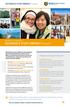 Munich Business School Information on our international EXCHANGE & STUDY ABROAD Programs Munich Business School (MBS) has educated leaders for the international business world since 1991. MBS is one of
KLU Fact Sheet 2014. International Office. Head of International Office. Ms. Ulrike Schneider
 International Office KLU Fact Sheet 2014 International Office Head of International Office Ms. Ulrike Schneider Associate Dean of International Affairs & Adjunct Professor of Management Prof. Matthias
Information for prospective students from abroad
 Information for prospective students from abroad LEGAL NOTICE Publisher Responsible for the content Editor Heinrich Heine University Düsseldorf Dr. Doris Hildesheim, Head of HHU Student Services HHU Student
Bachelor courses usually take six to eight semesters and master studies two to four semesters (including final thesis).
 Fachhochschule Dortmund General information for international applicants on studies University Applied s and 1. Structure studies With emphasis placed on practical experience, studies at Fachhochschule
International Programmes in Germany 2016. MA British Studies Humboldt University Berlin Berlin. E-mail [mailto:[email protected].
 DAAD Deutscher Akademischer Austauschdienst German Academic Exchange Service Home [//www.daad.de/en/index.html] / Information on Study and Research in Germany [//www.daad.de/deutschland/en/] / International
Call for Applicants (Non-Greek Nationals) PROGRAMME 2014-2015 DOCTORAL/POSTDOCTORAL RESEARCH IN GREECE
 HELLENIC REPUBLIC MINISTRY OF EDUCATION & RELIGIOUS AFFAIRS ------ STATE SCHOLARSHIPS FOUNDATION (Ι.Κ.Υ.) DIRECTORATE FOR SPECIAL PROGRAMMES, INTERNATIONAL SCHOLARSHIPS UNIT FOR FOREIGNERS AND CULTURAL
Information for international applicants (bachelor degrees)
 Campus Center Alsterterrasse 1, 20354 Hamburg, www.uni-hamburg.de/campuscenter Information for international applicants (bachelor degrees) Thank you for your interest in studying at Universität Hamburg!
2015 Spring Admission Guide for the Graduate School of Politics, Government, and Communication
 2015 Spring Admission Guide for the Graduate School of Politics, Government, and Communication Hankuk University of Foreign Studies Administrative Office of Graduate School, Graduate School Administration
Information for international applicants (Bachelor s degrees programs)
 Alsterterrasse 1 20354 Hamburg www.uni-hamburg.de/ib [email protected] Campus Center Information for international applicants (Bachelor s degrees programs) Thank you for your interest in
Study in Germany. Pathway programs to access German universities offer new alternatives to your portfolio. We will explain the necessary steps..
 Pathway programs to access German universities offer new alternatives to your portfolio. We will explain the necessary steps.. [email protected] Germany foreign students in Germany: 11 % foreign
European Higher Education Fair - 2014
 EU Public Diplomacy and Outreach in India and in the SAARC European Higher Education Fair - 2014 New Delhi - 30 November to 01 December Bengaluru - 03 December Kolkata - 05 December Students FAQs Answered
INFORMATION GUIDE FOR INTERNATIONAL DEGREE SEEKING STUDENTS
 INFORMATION GUIDE FOR INTERNATIONAL DEGREE SEEKING STUDENTS September 2014 1 1. GENERAL INFORMATION... 3 2. STUDYING IN HAGENBERG... 3 3. LIVING IN AUSTRIA... 3 4. STUDYING AS A REGULAR DEGREE SEEKING
Admission to UNICAMP. 1. The Undergraduate Program. 1.1. Regular students. 1.1.1 The vestibular examination. 1.1.2.
 Admission to UNICAMP 1. The Undergraduate Program 1.1. Regular students To enroll as a regular student in one of UNICAMP's undergraduate courses, foreign students have to pass the entrance examination
Last update June 2015 1
 International Center Admission to a master program at Christian- Albrechts - Universität zu Kiel 1. General information Application must be sent to the central administrative office Uni-ASSIST for every
International Call Services
 International Call Services Affordable rates for business calls. Wherever you are in the world. We ve got plenty to say when it comes to staying in touch when you re overseas. We have agreements with 443
STUDY IN GERMANY MEDICAL NATURAL SCIENCES PREPARATORY STUDY PROGRAM
 STUDY IN GERMANY MEDICAL NATURAL SCIENCES PREPARATORY STUDY PROGRAM THE PROGRAM MEDICAL NATURAL SCIENCES (MEDNAT) The preparatory Study Program Medical Natural Sciences (MedNat) combines natural sciences,
FACULTY OF PHILOLOGY UNIVERSITY OF BARCELONA
 Secretaria d Estudiants i Docència Gran Via de les Corts Catalanes, 585 08007 Barcelona Tel. +34 934 035 583/584 Fax +34 934 035 596 [email protected] www.ub.edu/filologia FACULTY OF PHILOLOGY UNIVERSITY
FAQ. Frequently Asked Questions
 Master of Arts International Business Administration FAQ Last update 18.05.2011 Frequently Asked Questions Questions regarding the course of studies Does the master s programme also begin in the summer
1 Prerequisites. 1.1 Academic qualifications
 Guidelines for Scholarships for Doctoral Students at the Academy of Mission at Hamburg University in the version of 2013, adopted by the Board on 25 February 2013 The Academy of Mission at Hamburg University
11/14_SRH/HS_PB_S_AppCompScience_www.Buerob.de. Fotos: SRH. This code connects your mobile phone directly to our website.
 This code connects your mobile phone directly to our website. 11/14_SRH/HS_PB_S_AppCompScience_www.Buerob.de Fotos: SRH SRH University Heidelberg Ludwig-Guttmann-Straße 6 Germany - 69123 Heidelberg Phone:
MBA Exchange Fact Sheet 2016/2017
 WHU - Otto Beisheim School of Management International Relations Office and post address WHU, International Relations, Campus Vallendar Burgplatz 2, 56179 Vallendar, Germany Fax: +49 261 6509 169 Düsseldorf
Study Scholarships for Foreign Graduates in the Fields of Fine Art, Film, Design/Visual Communication and Film DAAD
 DAAD Home / Information for Foreigners / Finding Scholarships / Scholarship Database [/deutschland/stipendium/datenbank/en/21148-scholarship-database/] Study Scholarships for Foreign Graduates in the Fields
Study Abroad Program. at Hof University of Applied Sciences. University details
 Study Abroad Program at Hof University of Applied Sciences University details Hochschule für Angewandte Wissenschaften Hof Hof University of Applied Sciences Alfons-Goppel-Platz 1 95028 Hof, Germany www.hof-university.de
MBA Exchange Fact Sheet 2015/2016
 WHU - Otto Beisheim School of Management International Relations office and post address WHU, International Relations, Campus Vallendar Burgplatz 2, 56179 Vallendar, Germany Fax: +49 261 6509 169 Düsseldorf
Information for international applicants (master's degrees)
 Campus Center Alsterterrasse 1, 20354 Hamburg, Germany www.uni-hamburg.de/campuscenter Information for international applicants (master's degrees) Thank you for your interest in studying at Universität
HUMBOLDT-UNIVERSITÄT ZU BERLIN Initial Counselling for Prospective International Students I. APPLICATION PROCEDURE INFORMATION 17.04.
 HUMBOLDT-UNIVERSITÄT ZU BERLIN Initial Counselling for Prospective International Students Foreign citizens with appropriate educational qualifications are offered initial counselling concerning courses
Study at U-ERRE. Mexico: Quick Facts.
 Study at U-ERRE Mexico: Quick Facts. 2 Mexico: Quick Facts Table of Content. Monterrey, Mexico.... 5 Universidad Regiomontana U-ERRE... 7 Did you Know?... 7 Programs at Universidad Regiomontana... 8 School
Bachelor of Arts (BA) in Aviation Management Worms University of Applied Sciences Worms
 DAAD Deutscher Akademischer Austauschdienst German Academic Exchange Service Home [//www.daad.de/en/index.html] / Information on Study and Research in [//www.daad.de/deutschland/en/] / International Programmes
VISA AND IMMIGRATION REGULATIONS FOR STUDYING IN GERMANY - VISA COUNTRIES. (as of October 2012)
 VISA AND IMMIGRATION REGULATIONS FOR STUDYING IN GERMANY - VISA COUNTRIES (as of October 2012) Table of Contents 1. Timing... 1 2. Who Needs to Apply for a Visa?... 1 3. Terminology: Visa Versus Residence
Call for Applications 2016-2017
 Call for Applications 2016-2017 1. The Stipendium Hungaricum Scholarship Programme... 3 1.1. Mission of the Programme...3 1.2. Available Scholarship Types...3 1.3. Provisions Covered by the Scholarship...4
BSc and MSc Exchange Fact Sheet 2015/2016
 WHU - Otto Beisheim School of Management International Relations office and post address WHU, International Relations, Campus Vallendar Burgplatz 2, 56179 Vallendar, Germany Fax: +49 261 6509 169 BSc and
Program in International and Comparative Business Law (International Exchange Program) Information Sheet 2015
 Program in International and Comparative Business Law (International Exchange Program) Information Sheet 2015 Name of University Exchange Program Website Exchange Program Contact Details Bucerius Law School
APPLICATION GUIDELINES JAPANESE GOVERNMENT (MONBUKAGAKUSHO:MEXT) SCHOLARSHIP FOR 2016
 APPLICATION GUIDELINES JAPANESE GOVERNMENT (MONBUKAGAKUSHO:MEXT) SCHOLARSHIP FOR 2016 (RESEARCH STUDENTS) The Ministry of Education, Culture, Sports, Science and Technology (MEXT) offers scholarships to
B.A. English studies
 B.A. English STUDIES Bachelor of Arts in English Studies English is a global language and the gateway to politics, business and culture worldwide. In our programme you will be exploring the language, literature,
Universidad Pública de Navarra Public University of Navarre International student guide www.unavarra.es
 Universidad Pública de Navarra Public University of Navarre International student guide www.unavarra.es Think UPna & Live UPna The city: Pamplona / Iruña UPNA: Teaching quality Undergraduate Studies Undergaduate
Information Sheet 2014 / 2015
 Information Sheet 2014 / 2015 About Singapore Management University Academic Calendar A premier university in Asia, the Singapore Management University (SMU) is internationally recognised for its world-class
Applying for a Schengen visa
 Applying for a Schengen visa If you have any questions about this information booklet, please contact the International Student Advisers on [email protected] or (0141) 330 2912.
Study in English while living in France
 Fact Sheet 2011-2012 Visiting address: 2, rue Robert d Arbrissel Phone : 00 33 299 54 63 63 3500 Rennes France Fax : 00 33 299 33 08 24 Web : www.esc-rennes.fr Postal address: 2, rue Robert d Arbrissel
MSc in Production & Operations Management (POM) at the HECTOR School Karlsruhe Institute of Technology Karlsruhe
 DAAD Deutscher Akademischer Austauschdienst German Academic Exchange Service Home [//www.daad.de/en/index.html] / Information on Study and Research in Germany [//www.daad.de/deutschland/en/] / International
Scholarships for University Students, PhD Students, University Teachers, Researchers and Artists from Abroad
 Scholarships for University Students, PhD Students, University Teachers, Researchers and Artists from Abroad In 2005, the National Scholarship Programme for the Supports of Mobility of University Students,
Engaged by faith, for humankind, in the entire world
 1 Engaged by faith, for humankind, in the entire world MHS - School of Mission and Theology MHS - School of Mission and Theology is a specialized university offering studies in Christian studies, Science
Interested Students Abroad
 To: From: Interested Students Abroad Kristi Larson Bedolla Associate Director Program for the Comparative Study of Societies Department of Sociology University of California, Berkeley Regards: International
Application Instructions for Students studying within the Degree Course Mannheim Master in Management
 Application Instructions for Students studying within the Degree Course Mannheim Master in Management Application Deadline 31 October 2015 for a Study Abroad period in Fall 2016 or Spring 2017 This document
In the name of Allah the compassionate the merciful. University of Khartoum The Graduate College Application and Registration Guide For the year 2016
 In the name of Allah the compassionate the merciful University of Khartoum The Graduate College Application and Registration Guide For the year 2016 Section - I Application guidelines and procedures 1.
ERASMUS programme (study exchange) manual
 1 Hamburg University of Applied Sciences International Office ERASMUS programme (study exchange) manual The EU's ERASMUS programme allows students to study for three to twelve months at a European partner
FREQUENTLY ASKED QUESTIONS
 https://erasmusmundus.univaq.it/mayanet Europe Group A: Honduras, El Salvador, Guatemala, Nicaragua Group B: Argentina, Brazil, Chile, Colombia, Costa Rica, Cuba, Mexico, Panama, Uruguay, Venezuela Erasmus
General Information on Application for International Students
 Burg Giebichenstein Kunsthochschule Halle / University of Art and Design Office of Student and Academic Affairs Contact for International Students: Teresa Falkenhagen [email protected] General
1. M.A. degree programme 2
 Hochschule Fulda - University of Applied Sciences Department of Social and Cultural Studies ICEUS Master of Arts Intercultural Communication and European Studies CONTENTS 1. M.A. degree programme 2 1.1.
PhD Program N790 (Doctoral Program of Applied Medical Science)
 PhD Program N790 (Doctoral Program of Applied Medical Science) www.muw.ac.at/n790 at the MEDICAL UNIVERSITY OF VIENNA (MUV) Starting October 007 For questions please contact Martin Janku Tel.: +4 (01)
Graduate Program in Japanese Language and Culture (Master s Program) Application Instructions
 Graduate Program in Japanese Language and Culture (Master s Program) Application Instructions For FY 2016 1. Objectives This program is designed to provide teachers of the Japanese-language working abroad
EUROPE PROGRAM 2016-17 REGISTRATION INFORMATION PROGRAM DATES - FALL 2016 TRAVEL INFORMATION
 EUROPE PROGRAM 2016-17 REGISTRATION INFORMATION PROGRAM DATES - FALL 2016 Beginning MONDAY, AUGUST 22 Arrive into: London, England, UK (Heathrow Airport) End SATURDAY, DECEMBER 10 Depart from: Rabat, Morocco
Admissions. Five Branches is interested in enrolling students. Visit Five Branches
 Admissions Five Branches is interested in enrolling students into the DAOM program who are dedicated to offering exceptional healthcare to the public and who have a strong desire to expand and enhance
METHODOLOGY for admission of international students to undergraduate and postgraduate studies in the academic year 2014-2015
 METHODOLOGY for admission of international students to undergraduate and postgraduate studies in the academic year 2014-2015 I. Preamble 1. Admission of international candidates to undergraduate and postgraduate
Ruprecht-Karls-Universität Heidelberg
 Ruprecht-Karls-Universität Heidelberg International Relations Office / International Students Office INFORMATION regarding the application for study programs with Germany-wide admissions restrictions for
Visa Information 2012
 Visa Information This document is intended to provide you with information on obtaining the correct visa to enter Australia to attend the Global Eco Asia-Pacific Tourism Conference however it is a guideline
Host University: Friedrich-Schiller-Universität
 Student s Name: Ruth Conlon UL Course: BA Psychology and Sociology Academic Year: 2014/ 2015 Semester: Autumn Host University: Friedrich-Schiller-Universität Host University Code: D JENA 01 1 P a g e Student
Thank you for your interest in applying to The University of the Ozarks
 Thank you for your interest in applying to The University of the Ozarks We are very happy that you are considering joining University of the Ozarks. We believe Ozarks is a unique institution, and a wonderful
Berlin International Summer School
 Berlin International Summer School Willkommen! Welcome! The University The Berlin School of Economics cordially invites international students to our International Summer School program. We look forward
Osnabrück University in Northwest Germany
 Osnabrück University in Northwest Germany Internationally renowned for research and teaching programs in the Humanities, Social Sciences, Natural Sciences, Law and Business High standards of research and
Rules governing masters studies at the Reykjavík University School of Law
 Rules governing masters studies at the Reykjavík University School of Law Article 1 Masters Degree in Law The Reykjavík University School of Law confers the academic title of Master of Legal Studies (
Regulations of the Graduate School of Communication Science of the Department 06 of the Westfälische Wilhelms University Muenster
 Regulations of the Graduate School of Communication Science of the Department 06 of the Westfälische Wilhelms University Muenster 1 Tasks and objectives 2 About the regulations 3 Structure of the Graduate
INFORMATION FOR INTERNATIONAL STUDENT APPLICANTS
 INFORMATION FOR INTERNATIONAL STUDENT APPLICANTS CONTENT Universität Heidelberg 4 Degree programmes and range of subjects 4 Study requirements 9 Proficiency in German 9 Recognition of school-leaving certificates
JAPANESE GOVERNMENT (MONBUKAGAKUSHO: MEXT) SCHOLARSHIP FOR 2016 YOUNG LEADERS PROGRAM (YLP) STUDENT (SCHOOL OF LOCAL GOVERNANCE)
 I OUTLINE JAPANESE GOVERNMENT (MONBUKAGAKUSHO: MEXT) SCHOLARSHIP FOR 2016 YOUNG LEADERS PROGRAM (YLP) STUDENT (SCHOOL OF LOCAL GOVERNANCE) 1. Objectives The Young Leaders' Program (YLP) aims to cultivate
Government of Ireland International Education Scholar & Ambassador Programme 2015/2016
 Government of Ireland International Education Scholar & Ambassador Programme 2015/2016 Call for Applications from Brazilian Undergraduate & Postgraduate Students Mary Immaculate College is delighted to
Information - International Office -
 Information - International Office - General Information for International Students 1. General description of the Bonn-Rhein-Sieg University of Applied Sciences and the location of the campuses in Sankt
International Degree Programs
 Study & Research in Germany International Degree Programs Many German universities offer courses leading to an international degree. The more than 400 courses presented in this category are designed to
Information for our international students who would like to start working in Germany. Interview with Holger Esen, bsu Bremen
 Information for our international students who would like to start working in Germany Interview with Holger Esen, bsu Bremen The bsu is unique on a nationwide scale: It is a joint institute of University
Student Exchange Programme Language Preparation Programme (SEP LPP) Frequently Asked Questions
 Student Exchange Programme Language Preparation Programme (SEP LPP) Frequently Asked Questions Regarding LPP What is the purpose of the French/German/Korean Language Preparation Programme (LPP)? The purpose
Guide for Exchange Students at Westfälische Hochschule BOCHOLT Campus
 Guide for Exchange Students at Westfälische Hochschule BOCHOLT Campus Westfälische Hochschule Office for international Students Room B4.0.04 Mrs. Regina Klauke Campus Bocholt Neidenburger Str. 43 Münsterstr.
The Subject Matters. Post-16 Subject Choices. Introduction. Do you know the course you want to study? Do you want to keep your options open?
 The Subject Matters Post-16 Subject Choices Introduction The AS and A Level subject choices you make when in Year 11 (or equivalent) can have a significant impact on the course options available to you
INFORMATION ABOUT ADMISSION REQUIREMENTS AND APPLICATION PROCEDURES
 INFORMATION ABOUT ADMISSION REQUIREMENTS AND APPLICATION PROCEDURES INTERNATIONAL APPLICANTS MSC IN EVENT MANAGEMENT Application deadline: 1 February 2016 Announcement for admission in 2016 will first
Frequently Asked Questions
 Frequently Asked Questions A. Program Information B. Applications C. Tuition Fees & Living Costs D. Living in Pforzheim A. Program Information Q: Is the MBA-IM a fulltime program? Is it possible to study
JAPANESE GOVERNMENT (MONBUKAGAKUSHO: MEXT) SCHOLARSHIP FOR 2015 YOUNG LEADERS' PROGRAM (YLP) IN BUSINESS ADMINISTRATION
 I OUTLINE JAPANESE GOVERNMENT (MONBUKAGAKUSHO: MEXT) SCHOLARSHIP FOR 2015 YOUNG LEADERS' PROGRAM (YLP) IN BUSINESS ADMINISTRATION 1. Objectives The Young Leaders' Program (YLP) aims to contribute to the
JAPANESE GOVERNMENT (MONBUKAGAKUSHO: MEXT) SCHOLARSHIP FOR 2014 YOUNG LEADERS PROGRAM (YLP) STUDENT (SCHOOL OF GOVERNMENT)
 I OUTLINE JAPANESE GOVERNMENT (MONBUKAGAKUSHO: MEXT) SCHOLARSHIP FOR 2014 YOUNG LEADERS PROGRAM (YLP) STUDENT (SCHOOL OF GOVERNMENT) 1. Objectives The Young Leaders' Program (YLP) aims to cultivate national
Università degli Studi di Bari
 Dipartimento amministrativo per la ricerca, la didattica e le relazioni esterne Area servizi innovativi per la didattica e gli studenti Tel. +39.080.5714834 +39.080.5714847 Settore III Mobilità internazionale
Master International Business & Consulting: International Strategic Management
 Hochschule für Wirtschaft und Recht Berlin Department of Business and Economics Master International Business & Consulting: International Strategic Management accredited by International Business & Consulting:
PORTABILITY OF SOCIAL SECURITY AND HEALTH CARE BENEFITS IN ITALY
 PORTABILITY OF SOCIAL SECURITY AND HEALTH CARE BENEFITS IN ITALY Johanna Avato Human Development Network Social Protection and Labor The World Bank Background study March 2008 The Italian Social Security
Erasmus Mundus Master in Membrane Engineering EM 3 E Third Call for Applications
 Erasmus Mundus Master in Membrane Engineering EM 3 E Third Call for Applications Master edition 2013-2015 Erasmus Mundus is a cooperation and mobility programme in the field of higher education, promoted
Guide of the national scholarship programme for international students, researchers and academic staff
 Page 1/9 Guide of the national scholarship programme for international students, researchers and academic staff PURPOSE, SCOPE, RESPONSIBILITY Valid from 1 January 2015 The purpose of this programme guide
Department of Law. School of Law and Economics
 Department of Law School of Law and Economics Department of Law Nineteen full professors, their staff and numerous renowned associate lecturers conduct research and teach about 1,100 students at the Department
Application Deadlines:
 Applications for Research and Taught Postgraduate Programmes (September 2016 Intake) Application Deadlines: Research Postgraduate Programme (Applications start in September) PhD (via HK PhD Fellowship
Frequently Asked Questions Global 30 Undergraduate Degree Programs in English
 Frequently Asked Questions Global 30 Undergraduate Degree Programs in English Admissions and Graduation... 1 Scholarship and Financial Aid... 5 Housing and Dormitory... 6 Study and Campus Life... 7 Career
INTERNATIONALISM MULTICULTURALISM PROFESSIONALISM BACHELOR OF INTERNATIONAL TEACHER EDUCATION
 INTERNATIONALISM MULTICULTURALISM PROFESSIONALISM BACHELOR OF INTERNATIONAL TEACHER EDUCATION TEACHING MEANS THE WORLD TO ME The Knowledge Society Internationalisation is changing the educational landscape,
UK hiking tourism. CH - Visitnorway.com
 UK hiking tourism CH - Visitnorway.com Contents 1. Executive Summary 3 2. Introduction 4 3. Research on the Internet: Phase 1 5 3.01: Tour operators: 5 3.02: Websites/forums: 5 3.03: Hiking/Outdoor magazines
Marco Polo Report: Seoul National University (SNU)
 Marco Polo Report: Seoul National University (SNU) Author: André Defrain Date: 25th February 2015 Seoul National University A. General Report: 1. Host institution and exact dates of semester abroad I studied
Information for applicants from Latin America and the Caribbean for study commencing in 2014
 Information for applicants from Latin America and the Caribbean for study commencing in 2014 Development Scholarships The Development Scholarships (NZDS) scheme offers the opportunity to people from targeted