
sensors ISSN
|
|
|
- Ashley McLaughlin
- 10 years ago
- Views:
Transcription
1 Sensors 2014, 14, ; doi: /s Article OPEN ACCESS sensors ISSN A Sensor Fusion Method for Tracking Vertical Velocity and Height Based on Inertial and Barometric Altimeter Measurements Angelo Maria Sabatini * and Vincenzo Genovese The BioRobotics Institute, Scuola Superiore Sant Anna, Viale Rinaldo Piaggio, Pontedera , Pisa, Italy; [email protected] * Author to whom correspondence should be addressed; [email protected]; Tel.: ; Fax: Received: 26 January 2014; in revised form: 8 July 2014 / Accepted: 21 July 2014 / Published: 24 July 2014 Abstract: A sensor fusion method was developed for vertical channel stabilization by fusing inertial measurements from an Inertial Measurement Unit (IMU) and pressure altitude measurements from a barometric altimeter integrated in the same device (baro-imu). An Extended Kalman Filter (EKF) estimated the quaternion from the sensor frame to the navigation frame; the sensed specific force was rotated into the navigation frame and compensated for gravity, yielding the vertical linear acceleration; finally, a complementary filter driven by the vertical linear acceleration and the measured pressure altitude produced estimates of height and vertical velocity. A method was also developed to condition the measured pressure altitude using a whitening filter, which helped to remove the short-term correlation due to environment-dependent pressure changes from raw pressure altitude. The sensor fusion method was implemented to work on-line using data from a wireless baro-imu and tested for the capability of tracking low-frequency small-amplitude vertical human-like motions that can be critical for stand-alone inertial sensor measurements. Validation tests were performed in different experimental conditions, namely no motion, free-fall motion, forced circular motion and squatting. Accurate on-line tracking of height and vertical velocity was achieved, giving confidence to the use of the sensor fusion method for tracking typical vertical human motions: velocity Root Mean Square Error (RMSE) was in the range m/s; height RMSE was in the range 5 68 cm, with statistically significant performance gains when the whitening filter was used by the sensor fusion method to track relatively high-frequency vertical motions.

2 Sensors 2014, Keywords: sensor fusion; inertial sensors; barometric altimeters; motion tracking; Kalman filtering 1. Introduction Sensor fusion methods combine data from disparate sources of information in a way that should give better performance than can be achieved when each source of information is used alone. The design of systems based on sensor fusion methods requires the availability of complementary sensors in order that the disadvantages of each sensor are overcome by the advantages of the others. An interesting application niche for sensor fusion methods the one investigated in this paper is motion tracking. Several sensor technologies are available for motion tracking, however none of them, taken alone, can be considered the absolute winner, especially when motion is to be tracked without restrictions in space and time [1], and cost and compliance issues tend to restrict the range of potential candidates for applications like human motion tracking in biomedicine and healthcare. Micro Electro-Mechanical System (MEMS) sensors are well suited for motion tracking in human-centric applications, such as pedestrian navigation and ambulatory human motion monitoring, in several regards (i.e., cost, form factor, power consumption) [2]. However their output signals are prone to noise and drift to the extent that good tracking of either orientation or position are difficult to achieve [3]: for instance, a tracking system relying on stand-alone measurements from MEMS inertial sensors suffers from integration drifts that may lead to positioning errors of 2 m after only 10 s of operation. It is customary to stabilize the position and orientation of MEMS inertial sensors using sensor fusion methods: GPS [4], ultra-wideband (UWB) radio [5], vision [6] are popular sensors that have been widely investigated for being integrated in inertial navigation systems. Barometric altimeters have also been proposed [5,7,8], in particular for stabilizing the position in the vertical direction (height tracking). Henceforth, the integration of a barometric altimeter with an Inertial Measurement Unit (IMU) embedding a tri-axial gyroscope and a tri-axial accelerometer is referred to as a baro-imu. Good portability and ready market availability of low-cost sensor devices with proprietary sensor fusion software are appealing advantages of baro-imu technology for several industrial, defense and research applications. Prospective applications can also be foreseen for human motion tracking, however custom sensor fusion software still needs to be developed. Barometric altimeters allow one to estimate the height of an object above a given reference level, e.g., the sea level from air pressure measurements A popularly used term for this height is pressure altitude. In the context of human-centric applications, barometric altimeters found use within multi-sensor pedestrian navigation systems and activity monitors, for improving performance of dead-reckoning algorithms or classifiers of human motion patterns: e.g., they were used to detect the moving styles of going up/down the stairs or in an elevator [9]; to determine the correct floor of a user in a multi-storey building [10]; to detect stair ascent-descent in ambulatory monitors designed for estimating the energy expenditure incurred during activities of daily living, including stair-walking [11,12]. More recently, it was proposed that the measured pressure altitude might help improving accelerometry-based fall detection systems [13 15]. However, rapid changes in pressure that are uncorrelated with altitude can

3 Sensors 2014, be generated, outdoors, by unpredictable atmospheric conditions, and, indoors, by opening/closing of windows or doors and by air conditioning systems [16]. The consequence is that barometric altimeters tend to be very noisy, and their accuracy is rather poor; when absolute altitude has to be estimated, the use of a reference barometric altimeter at a known and constant altitude has been proposed in the effort to obtain accurate measurements from a moving barometric altimeter (differential barometry) [16]. Oftentimes, a single barometric altimeter can be used for tracking relative changes in height [8], to which we adhere in this paper. Barometric pressure technology allowing for altitude changes such as those occurring, e.g., in transitions between sitting and standing or during falls to be measured with sufficient accuracy may thus represent a valuable add-on to inertial sensor-based activity monitors [17]. Two main approaches are pursued in the development of sensor fusion methods for motion tracking, namely tightly coupled and loosely coupled. The tightly coupled systems combine all sensor data into a single filter [5], while the loosely coupled systems revolve around different filtering modules for their operation [8]. In this paper we opted for the development of a loosely coupled sensor fusion method revolving around a two-stage cascade [8]. First, a filtering module consisting of a quaternion-based Extended Kalman Filter (EKF) estimated the attitude of the body frame using inertial sensors [18]; the estimated inclination allowed to rotate the specific force measured by the tri-axial accelerometer from the body frame to the navigation frame, in preparation for gravity compensation. Second, the estimated vertical linear acceleration and the output provided by the barometric altimeter fed another filtering module a complementary filter that estimated the vertical velocity and height in the navigation frame [19]. Different means of pre-processing the measured pressure altitude were also implemented and tested, namely M-point moving average filters cascaded or not with a whitening filter, whose design was inspired by our studies on stochastic approaches to the problem of modeling the noise in barometric altimeters [20]. The whitening filter attempted to remove the serial correlation of the noise due to environment-dependent short-term pressure changes that may affect short-time tracking accuracy, i.e., when the motions to be tracked last up to few minutes. One goal of this paper was to demonstrate the extent to which different methods of preprocessing noisy pressure altitude measurements can help to stabilize the integration of specific force measurements, leading to accurate estimates of vertical velocity and possibly height under conditions typical of human motions. The sensor fusion methods were applied to data from a wireless baro-imu of our own design. Several tests were performed in different experimental settings, namely no-motion, free-fall motion, forced circular motion and squatting. When possible, reference data were generated and used for performance assessment. Accurate tracking of height and vertical velocity was demonstrated: velocity Root Mean Square Error (RMSE) was in the range m/s; height RMSE was in the range 5 68 cm, with statistically significant performance gains when the whitening filter was used to track relatively high-frequency vertical motions. 2. Experimental Section 2.1. Algorithm Development Three reference frames were used in the experimental setup of this paper (Figure 1):
![known and constant altitude has been proposed in the effort to obtain accurate measurements from a moving barometric altimeter (differential barometry) [16].](/docs-images/51/13461455/images/page_3.jpg "Oftentimes, a single barometric altimeter can be used for tracking relative changes in height [8], to which we adhere in this paper.")
4 Sensors 2014, Navigation frame {n} this was a North East Down (NED) frame, in which the Earth s gravity was assumed known. The goal of the developed algorithm was to estimate the vertical velocity and height of the baro-imu case in {n}. Vertical meant locally aligned with the direction of the gravity acceleration at the origin of {n}. Sensor frame {s} this was the reference frame in which the inertial sensors provided their measurements. The axes of the sensor frame were aligned with the sensitive axes of the tri-axial gyro and the tri-axial accelerometer. Body frame {b} this was the reference frame of the rigid body to which the baro-imu case was fastened. {b}was related to{s}through a rigid transformation (rotation matrix and translation). Figure 1. The reference frames involved in the experimental set-up. The following notation was used to express the relation between two frames, for instance {n} and {b}: C nb and q nb = [(q nb ) T q nb 4 ] T denoted, respectively, the rotation matrix and the quaternion from {b} to {n} (q nb nb was the vector part and q 4 was the scalar part of q nb ), b n was the position of the origin of {b} O b relative to the origin of {n} O n, resolved in {n}. We assumed that, at the beginning of each experiment, O b O n. Moreover, the origin of {s} O s was where the barometric altimeter is located within the IMU case, which is actually very close to where the tri-axial accelerometer is also located. In this paper, {s} and {b} were coincident, except when the sensor unit was submitted to conditions of forced circular motion: in the latter case the orientation matrix from {s} to {b} was the identity matrix (at first approximation), while O s was displaced relative to O b by the lever-arm vector L. Figure 2 shows the block diagram of the developed sensor fusion method. Two filtering modules were cascaded: a filtering module (the quaternion-based EKF) computed the attitude of {b} relative to {n} using the inertial sensors of the sensor unit. The linear acceleration was then estimated by rotating the specific force measured by the tri-axial accelerometer from {b} to {n} and adding the gravity to it (gravity cancellation). The vertical component of the linear acceleration and the output from the barometric altimeter were then fed into the complementary filter, where estimates of the vertical velocity and height were finally produced and resolved in {n}.

5 Sensors 2014, Figure 2. Block diagram of the sensor fusion method for estimating vertical velocity and height using baro-imu sensor data Quaternion-Based EKF for Attitude Estimation The filtering algorithm for estimating the attitude of {b} relative to {n} is a modified version of the quaternion-based EKF developed in [21]. In the present implementation, the state vector x includes the quaternion q nb and the bias vector a b for self-compensation of accelerometer biases developing over time, for the statistical description of which a first-order Gauss-Markov model is assumed [22]. According to this model, a b is the realization of an exponentially time-correlated vector stochastic process whose components are statistically independent: a b = α a b + a v, (1) where α is the reciprocal of the correlation time constant τ, and a v is white Gaussian noise, with zero mean and covariance matrix a Σ = I 3 3 a σ 2 (I n n is the n n identity matrix). The quaternion kinematics equation can be written as follows: where: ω b nb d dt q nb = f(q nb, t) = 1 2 Ω ω nb b (t) q nb (2) Ω ω b nb = [ω nb b b ] ω nb (ω b nb ) T 0 (3) = [p q r] T is the angular velocity of {b} relative to {n} resolved in {b}, and: ω b nb is the skew-symmetric cross-product matrix. 0 r q = r 0 p (4) q p 0

6 Sensors 2014, We consider the following discrete-time process of the quaternion kinematics of Equation (2): q nb k = Φ k 1 q nb k 1 = exp T s 2 Ω(ω nb b nb (k 1)) q k 1 (5) where T s is the sampling interval. Moreover, the discrete-time model of Equation (1) can be written as follows: a b k = I 3 3 exp ( αt s ) b k 1 + w k 1 a where the covariance matrix of the process noise w k 1 The state transition equation is given by: q k nb a b k = F k 1 q nb k 1 a b k 1 a a is given by: a Q = I exp ( 2αT s) 2α q + w k 1 a = Φ k I 3 3 exp ( αt s ) q k 1 a w k (6) a σ 2 (7) nb b k 1 q + w k 1 a (8) w k 1 The gyro measurement noise v g is white Gaussian noise with zero mean and covariance matrix Σ g = I 3 3 σ 2 q g. The process noise component describes how v g enters the state model of w k 1 Equation (5) through the following quaternion-dependent linear transformation: and the matrix Ξ(q ) is given by: q w k 1 q a Since the process noise components w k 1 and w k 1 noise covariance matrix Q k 1 has the following structure: where: = T s 2 Ξ(q k 1 nb ) v g k 1 (9) Ξ(q ) = I 3 3 q 4 + [q ] q T (10) Q k 1 = (I 4 4 trace(m) M) σ g 2 T s are assumed to be uncorrelated, the process (11) a Q M = q nb (k k 1)(q nb (k k 1)) T + P q (k k 1). (12) q nb (k k 1) and P q (k k 1) denote, respectively, the expectation and the error state covariance matrix of the quaternion component of the state vector after propagation through Equation (8) [23]: x(k k 1) = F k 1 x(k 1 k 1) T P(k k 1) = F k 1 P(k 1 k 1)F k 1 + Q k 1 (13) We remember that the propagated state is denoted as x(k k 1), to mean that the accelerometer information available to the Kalman-based filter at time kt s is still to be used for computing x(k k), (update step). The specific force measured by the tri-axial accelerometer has the following expression (in the {b}-frame) [3]:

7 Sensors 2014, where: f b = C bn b n g n + ω nb b s b + ω b nb ω b nb s b, (14) C bn = I q 4 nb [q nb ] + 2[q nb ] 2. (15) In Equation (14) g n is the gravity acceleration resolved in {n}, ω nb b s b and ω b nb ω b nb are the tangential and centripetal acceleration, respectively. Equation (14) is valid under the assumption that the Coriolis acceleration is negligible. Accelerometer leveling is used to determine inclination, according to the following measurement equation: z k = h(q nb a k, b k ) = C bn q nb k ( g n a ) + b k + v f k, where the measurement noise v f k is white Gaussian noise with zero mean and covariance matrix R = I 3 3 σ 2 a. Accelerometer leveling is potentially undermined by the presence of non-gravitational n components of acceleration, which include the linear acceleration b and the components due to any rotational motion of the {s}-frame relative to the {n}-frame. Only for slow tracked motions, or when the lever-arm length is null, the specific force measurements can be safely used for state update in the EKF. Because of this, vector selection methods are usually employed to guard against the effects of fast motions. The method implemented in this paper looks at the innovation produced within the filter: ν k = f k b C bn q nb (k k 1) ( g n ) s b (16) a b(k k 1). (17) Anytime components of the innovation vector exceed in magnitude a properly specified threshold value λ g their rejection from the update step is obtained by setting the corresponding rows of the EKF measurement matrix H to zero: H(q nb, a b) = z x (18) = [ 2q nb 4 [g n ] 2([g n ][q nb ] 2[q nb ][g n ]) 2[q nb ]g n I 3 3 ], where use is made of q nb (k k 1) for computation. Let H a be the matrix resulting from this procedure of row-wise cancellation. The Kalman gain is computed according to the following equation: K = P(k k 1)H a T (H a P(k k 1)H a T + R) 1. (19) The update of the state vector and error state covariance matrix is given by: x(k k) = x(k k 1) + K ν k P(k k) = (I KH a )P(k k 1). (20) In order for the quaternion component of the state vector to represent a valid rotation, it is standard practice to submit the updated quaternion to brute-force normalization in preparation for the next iteration [23]: q nb (k k) = q nb (k k) q nb (21) (k k)

8 Sensors 2014, Complementary Filter for Vertical Velocity and Height Estimation To get the linear acceleration the specific force must be rotated from {b} to {n}: x a k = C nb f k b + g n, (22) where the unit-norm quaternion q nb (k k) is plugged into the expression of the rotation matrix: C nb = I 3 3 2q 4 nb [q nb ] + 2[q nb ] 2. (23) Upon rotation and gravity compensation, x a k can be submitted to single- and double-time integration to estimate velocity and position, respectively. This is the classical strap-down approach to inertial navigation [24]. Horizontal positioning, for which accurate heading estimation is also needed [25], is outside the scope of this paper. Here, only the vertical component x a k of the linear acceleration x a k is retained for further processing. The complementary filter can be implemented as suggested in [19]. The system s state c x includes two variables, the vertical position and the vertical velocity: c T s x k = x a k = 1 x a k 0 1 c x k T s/2 0 1 K c T s x k 1 + T s/2 1 υ k 1, (24) where x k = x p k x a k and υ k = T s x a k. x p k is the pressure altitude measured by the barometric altimeter at time t k = kt s and x a k is the vertical linear acceleration from Equation (22) at the same time instant. The gain K c of the complementary filter is given by: K c = 2σ w/σ v σ w /σ v (25) where σ w and σ v are the standard deviations of the noise in the linear acceleration x a k and in the pressure altitude x p k, respectively. The complementary filter has low-pass characteristics with time constant: τ = σ v σ w (26) The assumptions for the validity of the set of difference Equation (24) and optimality of the gain Equation (25) are the following: (a) the sampling interval is small enough that x k and x a k can be taken constant over the sampling interval; (b) the noise in the linear acceleration estimate and the noise in the pressure altitude measurement are mutually uncorrelated zero-mean white Gaussian noises. Short-time correlated fluctuations due to environment dependent pressure changes are present in the output signal from motionless barometric altimeters. It is this serial correlation that reduces the efficiency of, e.g., M-point moving average filters in smoothing noisy data from barometric altimeters. Recently, we have developed a stochastic method for barometric altimeter noise modeling using autoregressive moving average (ARMA) identification techniques [20]. The method was successful in identifying the short-time correlated noise component, whose effects are prominent for short-time tracking. Our idea was to use the learnt ARMA model parameters to design a whitening filter that would remove the serial correlation from the measured pressure altitude; for the experiments in this paper the whitening filter was designed with a DC gain A DC = 0.21, one pole at a frequency of about

9 Sensors 2014, Hz and one zero approximately two octave down. Accordingly, a unity-gain constraint was enforced at 25 Hz. In the block named Conditioning in Figure 2, we applied either a 4-point moving average filter (Method A) or a 4-point moving average filter cascaded with the whitening filter (Method B), and tested their effect on the tracking accuracy Sensor Hardware The experiments described in this paper were performed using a battery-powered wearable inertial measurement unit named Wearable Inertial Measurement Unit (WIMU), whose development is underway in our lab for applications in human motion ambulatory monitoring and assessment. The WIMU is endowed with a 32-bit ARM Cortex processor (NXP Semiconductors LPC1768) and a Bluetooth (BT) transceiver, which is currently implemented in a version for data communication with an Android-based smart-phone (Samsung Galaxy SII, GT-I9100). The WIMU sensors are a digital tri-axial gyro (InvenSense ITG-3200), a digital tri-axial accelerometer (Bosch BMA180), a digital tri-axial magnetic sensor (Honeywell HMC5843) and a digital pressure sensor (Bosch BMP085). Two wireless nodes, i.e., the smart-phone and a PC running MATLAB, communicated in a peer-to-peer mode within a Wireless Local Area Network (WLAN) via a User Datagram Protocol (UDP) connection, which allowed upload of 22-bytes sensor data packets at each sample time in the MATLAB workspace. The sensor fusion method was written and implemented in MATLAB to work in online conditions at the rate of 50 Hz. It is noted that, in order to perform gravity compensation, the specific force measured by the tri-axial accelerometer has to be projected along the vertical direction; heading estimation is not necessary to implement this procedure, hence our decision was not to use the magnetic sensor measurements available from the WIMU. The measurements by the BMP085 digital pressure sensor are noisy, including a significant amount of quantization noise due to a coarse resolution of about 1 Pa (corresponding to about 8.43 cm). The BMP085 was used in the ultra-low power mode (no oversampling was performed internally to the sensor). The ANSI C code by the sensor manufacturer was used to implement the compensation algorithm for pressure and temperature measurement using the integrated thermal sensor. The temperature was measured once per second, and this value was used for all pressure altitude measurements during the same period. The ANSI C code was ported to the ARM controller, together with the routine for calculating the altitude from calibrated pressure measurements using the barometric formula: h = p 0.19 (27) p o where h is expressed in m and p o = hpa is the standard pressure at sea level. Absolute altitude information cannot be easily obtained by barometric altimeters. Equation (27) still applies in cases where the pressure and the temperature differ from those of the standard: the relative change in pressure and the actual temperature determine the change in altitude regardless of altitude. In all our experiments the relative pressure altitude was computed by taking the average value of the absolute pressure altitude during a rest period of 1 s before the motion started; the absolute pressure altitude signals during each experimental trial were then detrended by subtracting this constant value

10 Sensors 2014, from them in the Conditioning block of Figure 2 (bias capture), yielding the height relative to the baro-imu initial position Experimental Validation The experimental validation of the proposed methods was based on submitting the baro-imu to different motion conditions, namely: No-motion, free-fall motion, forced circular motion and squatting. The motion conditions were tested by repeating each trial N times (N = 10). When reference data were available (i.e., no-motion, free-fall motion, forced circular motion), Root Mean Square values of the difference (Error) between estimated (y est ) and reference (y ref ) time functions of the variables of interest (i.e., height and vertical velocity) were computed for each trial, motion condition and sensor fusion method. For instance, in the case of no-motion and forced circular motion conditions we have: S RMSE = 1 S (y est(k) y ref (k)) 2 k=1 (28) where S was the number of samples available in each trial (S = 9000). As for the free-fall motion condition, the reference time functions were based on a free-fall model and were compared to estimated time functions of the variables of interest during the fall, see Section for details. The Bartlett test for equal variance was applied to RMSE values of each variable of interest produced by Method A and Method B in each motion condition (5% significance level). Finally, the paired-sample Wilcoxon signed rank test was applied to assess the RMSE performance between the two methods No-Motion The experiment consisted of taking the baro-imu at rest on top of a table while sensor data were acquired in a time interval lasting three minutes. The aim was to assess the effects of the short-time correlated pressure altitude fluctuations in the barometric altimeter output on the accuracy of height and vertical velocity estimation. Since the baro-imu was motionless, the reference height and velocity to be entered in the RMSE calculation were null Free-Fall Motion The free-fall motion consisted of letting the baro-imu fall from a known height H onto a soft mattress. The baro-imu was initially at rest on a shelf at the height of 1.53 m above the mattress (rest phase I). The experimenter gently grasped the baro-imu by hand and displaced it laterally trying to avoid any height change (rest phase II). The experimenter then released the baro-imu, which fell down until the first impact on the mattress took place (free-fall phase I). No care was taken in order that the orientation of the sensor case was fixed during the fall. Eventually the baro-imu rebounded to fall down again during the free-fall phase II. Finally, the baro-imu went to rest on the mattress (rest phase III).

11 Sensors 2014, During a free-fall motion the inertial frame vertical acceleration is equal to the gravity acceleration g (g = 9.81 m/s 2 ). Under the simplifying assumption of zero air resistance, the vertical velocity and position are therefore given by: for t in the interval [0, T fall ], where the impact time T fall is: v(t) = gt h(t) = 1 (29) 2 gt2 T fall = 2H g (30) Equation (29) was used to compute the reference time functions against which to compare the estimated height and vertical velocity during the free-fall phase prior to the first impact for RMSE calculation. Since the {s} and {b} frames were coincident in this case, the specific force in Equation (14) was zero during the free-fall phase: Forced Circular Motion f b = C bn b n g n = C bn (g n g n ) = 0. (31) The baro-imu was submitted to a nominally uniform circular motion. For carrying this experiment we used a mechanical platform consisting of a DC motor (3863A024C Faulhaber) with its axis of rotation perpendicular to gravity. A plastic rod was hinged on the motor axis and the baro-imu was fastened to the rod at a distance of L = 30 cm from the motor axis, with the axes of {s} parallel to the axes of {b}. The DC motor was controlled using a motion controller (MCDC3006S Faulhaber) that was interfaced to a PC via a standard RS232 port, yielding measured angular displacements relative to a zero position with the axes of {s} and {b} aligned with the axes of {n}. The origins of {n} and {b} were coincident at all times; the origin of {s} was shifted along the plastic rod by the lever arm L. Angular displacements were measured using the built-in incremental encoder and were delivered to the PC at a rate of 250 Hz (T = 4 ms). A Graphical User Interface (GUI) was written in MS Visual Basic 6.0 to allow the experimenter to set the speed of rotation at a given value ω o = 2πf o. Synchronization between baro-imu sensor and encoder signals was achieved by looking for the time instant when the measured angular rate exceeded a threshold λ in both signals (λ = 5 /s); encoder data alignment was performed using cubic interpolation. In our experimental set-up we have: (32) s b = [0 L 0] T b n = 0 b = [ω o 0 0] T ω nb In the case of a uniform circular motion, Equation (14) can be written: f b = 0 cosω o t sinω o t 0 + ω 2 o L = g sinω o t ω 2 o L (33) 0 sinω o t cosω o t g 0 g cosω o t

12 Sensors 2014, The linear acceleration of the origin of {s} resolved in {n} is thus given by: s n = 0 cosω o t sinω o t g sinω o t ω 2 o L + 0 = ω 2 o L cosω o t (34) 0 sinω o t cosω o t g cosω o t g ω 2 o L sinω o t yielding a harmonic motion law with displacement-time function: 0 s n = L cosω o t (35) L sinω o t The baro-imu height relative to its initial position was estimated using the interpolated angular displacements θ k from the incremental encoder and the known lever-arm length L: h k = L sinθ k (36) Finally, a central finite difference approximation was used to estimate the vertical velocity from the estimated height: h k = h k+1 h k 1 2T s (37) The computed height and vertical velocity were used as reference data for RMSE calculation. 3-min long trials were performed once for five values of motion frequency f o Squatting The final experiment was carried out as follows: a subject wore the baro-imu at the upper trunk level. Standing still from the upright posture, he was asked to perform a squat before coming to the initial posture. In this case, reference height and vertical velocity for RMSE calculation were not available; for comparative purposes, the method of vertical linear velocity estimation using inertial sensors described in [26], henceforth called the reference method, was implemented. Briefly, the reference method works as follows: the tri-axial accelerometer is used during periods of quasi-static activity to provide the initial conditions of orientation for the rotational mapping of the gravity vector through strap-down integration of the angular velocity during periods of dynamic activity. Vertical linear acceleration during periods of dynamic activity is then integrated. Because of integration drift errors, initial and end conditions of each period of dynamic activity, in terms of both the orientation and the vertical linear velocity, may differ from one another. The orientation computed using the tri-axial accelerometer and the nominally null linear velocity during the periods of quasi-static activity are used for estimating and correcting the integration drift error [26] Implementation Details The initial orientation of {b} relative to {n} was computed by leaving the baro-imu motionless for a rest period of about 1 s before starting to move. For instance, in the case of the squatting exercise, the subject was instructed to stand still before performing the squat. Initial conditions for the complementary filter were zero, either in height or velocity.

13 Sensors 2014, Gyro bias was estimated by taking the average of the tri-axial gyro output during the rest period, which was then removed from the measured angular rates p, q, r before running the sensor fusion method (bias capture) [18]. The in-field calibration of the tri-axial accelerometer was performed using the approach described in [27]. After applying the sensor fusion method to the datasets available for each experimental condition described in this paper, the values of the EKF parameters that we found appropriate for its use are reported in Table 1. Table 1. Parameter tuning. Process Noise Model Parameters σ g, /s 1 a σ, m/s 3 ( 10-4 ) 5 α, s 1 0 Measurement Noise Standard Deviations σ a, mg 10 σ w, mg 15 σ v, cm (Method A) 30 σ v, cm (Method B) 15 Threshold of the Vector Selection Method λ g, mg 150 The different values of the barometric altimeter noise standard deviation σ v depended on which filtering method was applied in the conditioning block (the smallest value was chosen in the case of Method B). Due to minute motions of the body where it was affixed, the apparent noisiness of the accelerometer was higher than in truly motionless conditions, hence the value of the standard deviation σ a was higher than values expected from bench calibration (for a typical MEMS accelerometer, 1 2 mg) [18]. The standard deviation σ w of the noise in the linear acceleration measurements was further increased to account for additional errors that may arise in, e.g., the strap-down rotation. In the present implementation, 9 ms were needed (on average) to run each iteration step of the sensor fusion method (EKF cycle of prediction and update, followed by strap-down rotation and complementary filtering), which included about 6 ms consumed for uploading the 22-bytes sensor data packets available at each sample time to the MATLAB workspace. 3. Results 3.1. No-Motion The RMSE values of height and vertical velocity were computed using the 9000 samples collected during the 3 min-long trials for each sensor fusion method, Table 2. In this and the following tables, asterisks indicate statistical significances of the paired-sample Wilcoxon signed rank test as follows: * p < 0.05, ** p < The Bartlett test rejected the null hypothesis of equal variance of the height

14 Sensors 2014, RMSE values produced by the two methods at the significance level 5%. We can conclude that Method B outperformed Method A in this motion condition. Table 2. RMSE statistics expressed as mean value ± standard deviation (SD) across N = 10 trials. Height RMSE, m Vertical Velocity RMSE, m/s Method A 0.40 ± 0.15 *** 0.07 ± 0.01 *** Method B 0.08 ± 0.03 *** 0.02 ± 0.01 *** A representative plot the height and vertical velocity time functions estimated with either method A or method B is given in Figure 3. It is noted that the vertical velocity estimates were drift-free, in a situation where the vertical linear acceleration estimates were substantially zero mean (the mean of vertical linear acceleration was about 2 mg, with standard deviation SD of about 2 mg). The bias B affecting the estimates of vertical velocity was about 0.01 m/s, on average, for either Method A or Method B). Figure 3. No-motion. (a) Height time functions are plotted in blue (Method A) and red (Method B); (b) Vertical velocity time functions are plotted in blue (Method A) and red (Method B). The reference height and vertical velocity are zero.

15 Sensors 2014, Free-Fall Motion For RMSE calculation the experimental time functions were compared with Equation (20) over the time interval [T start T end ]; by our definition, T start was the time instant when the norm of the specific force came to be equal to g/2 during the free-fall phase I, while T end was computed by adding the expression of Equation (30) to T start. The results of the RMSE analysis are reported in Table 3. In this motion condition the Bartlett test and the paired-sample Wilcoxon signed rank test failed to reach statistical significance, thus implying that the two methods were nearly equivalent. Table 3. RMSE statistics expressed as mean value ± standard deviation (SD) across N = 10 trials. Height RMSE, m Vertical velocity RMSE, m/s Method A 0.07 ± ± 0.05 Method B 0.05 ± ± 0.04 A representative plot of height and vertical velocity estimated using either Method A or Method B is given in Figure 4. As shown in Figure 4, the rebound of the WIMU took place during the acceleration signal hump observed at the end of each free-fall phase; at the end of the free-fall phase I the vertical velocity would change sign, before reverting again to the linear trend observed during the succeeding free-fall phase II. However, the velocity state at the output of the complementary filter does not change sign during the impact-related acceleration signal humps. The reason for the estimation errors growing so large after the first impact is unclear: sensor saturation was not observed in our experiments, maybe limitations in sensor bandwidth play a role. The height and vertical velocity estimated by the complementary filter after impacts were thus heavily biased downwards, and it took several seconds before the complementary filter recovered during the rest phase III. The recovery period after the first impact was about 8 s, consistent with the value of the time constant of the complementary filter see Equation (26). Actually, the behavior of the vertical velocity during the first rebound phase was very similar to the one showed in [28], where the tracking exercise came apparently to end just after the first impact. It is also noted that, in contrast with Method A, Method B was unable to accurately track the height during rest phase III. The reason is that the whitening filter may distort the motion-related low-frequency components in the signal produced by the barometric altimeter. In particular, the whitening filter adopted in this work has a DC gain of 0.21, which explains why the height was underestimated by Method B during rest phase III.
![Free-Fall Motion For RMSE calculation the experimental time functions were compared with Equation (20) over the time interval [T start T end ]; by our definition, T start was the time instant when](/docs-images/51/13461455/images/page_15.jpg "the norm of the specific force came to be equal to g/2 during the free-fall phase I, while T end was computed by adding the expression of Equation (30) to T start.")
16 Sensors 2014, Figure 4. Free-fall motion. (a) Height estimated by Method A (blue) and Method B (red) with superimposed the raw pressure altitude (black); (b) Vertical velocity estimated by Method A (blue) and Method B (red) with superimposed the vertical linear acceleration (black). (a) (b) 3.3. Forced Circular Motion The RMSE values of height and vertical velocity were computed using the 9000 samples collected during the 3 min-long trials for each value of motion frequency 𝑓𝑜 and sensor fusion method, Table 4. The Bartlett test reached statistical significance for height RMSE, while the paired-sample Wilcoxon signed rank test failed to reach statistical significance only for the height RMSE when 𝑓𝑜 = 1.25 Hz, in which case both methods performed poorly. Figure 5 shows representative plots of the estimated height and vertical velocity when the motion frequency is 0.5 Hz. As in the no-motion condition, it is noted that Method B outperformed Method A.

17 Sensors 2014, Method A Table 4. RMSE statistics expressed as mean value ± standard deviation (SD) across N = 10 trials. f o = 0.25 Hz f o = 0.5 Hz f o = 0.75 Hz f o = 1 Hz f o = 1.25 Hz Height RMSE, m 0.38 ± 0.17 ** 0.44 ± 0.24 ** 0.54 ± 0.29 ** 0.48 ± 0.22 *** 0.68 ± 0.19 *** Vertical velocity RSME, m/s 0.08 ± 0.01 ** 0.08 ± 0.01 ** 0.11 ± 0.02 ** 0.13 ± 0.02 *** 0.24 ± 0.06 *** Method B Height RMSE, m 0.15 ± 0.02 ** 0.10 ± 0.03 ** 0.09 ± 0.03 ** 0.10 ± 0.02 *** 0.68 ± 0.07 *** Vertical velocity RMSE, m/s 0.06 ± 0.01 ** 0.05 ± 0.01 ** 0.08 ± 0.02 ** 0.11 ± 0.02 *** 0.22 ± 0.06 *** Figure 5. Forced circular motion. Estimated (blue) and reference (red) height and vertical velocity time functions, with superimposed the difference error between estimated and reference time functions (black). Data are displayed in the time interval from 20 to 80 s for improved graphical readability. Method A 3.4. Squatting Method B Figure 6a shows a representative plot of the trunk vertical displacement estimated by either Method A or Method B with superimposed the raw data from the barometric altimeter. The trunk vertical velocity estimated by Method A, Method B and the reference method are plotted in Figure 6b for the same squat exercise as in Figure 6a. The maximum trunk vertical displacement from standing still to squat

18 Sensors 2014, position was measured by hand (approximately, 𝐻 = 0.60 m); the estimates produced by the sensor fusion methods were 0.86 ± 0.39 m (Method A) and 0.50 ± 0.11 (Method B). According to the results of the Bartlett test, the maximum trunk vertical displacement estimated by Method A had a higher variance compared with Method B. Moreover, a one-sample Wilcoxon signed rank test that the estimated maximum trunk vertical displacement comes from a distribution with median H failed at the 5% significance level for Method B. It is noted that, in contrast with Method A, Method B tended to underestimate the maximum trunk vertical displacement. The RMSE of the trunk vertical velocity was 0.14 ± 0.10 for both methods. Figure 6. Squatting motion. (a) Trunk vertical displacement estimated by Method A (blue) and Method B (red) with superimposed the raw pressure altitude (black); (b) Trunk vertical velocity estimated by Method A (blue) and Method B (red), with superimposed the estimate by the reference method (black). (a) (b) 4. Discussion One interesting point of discussion common to all experimental conditions in this paper is that the estimate of the vertical velocity is virtually drift-free. This is not obviously the case when vertical linear acceleration is submitted to single-time integration. Suppose that the accelerometer works without scale or offset errors; additionally, let us assume that the strap-down rotation is implemented without errors. Even under these ideal conditions, integration

19 Sensors 2014, of noisy acceleration data is not without errors: the variance of random-walk integration errors grows linearly with integration time and is proportional to the accelerometer measurement noise variance [3]. On the other hand, any uncompensated scale and offset errors give rise to linearly drifting velocity estimates; moreover, orientation errors are known to affect the accuracy of gravity cancellation to a great extent [29,30]. An interesting discussion concerning the effects of sensor and orientation errors on the accuracy of strap-down integration is reported in [31]. There, handling the nonlinearity involved in implementing the strap-down rotation is referred to as the umbrella problem. The probability density function of the rotated acceleration is not indeed a Gaussian shape, but looks like an umbrella, yielding a downward bias in the vertical linear acceleration estimate. Higher-order EKFs, namely the second-order EKFs investigated in [5] for their capability of modeling the nonlinearity involved in the strap-down rotation, were not considered for implementation at the current stage of our research. The bias error cannot be negligible when large orientation errors occur or when large horizontal accelerations are present. Orientation errors can grow large especially when fast motions are to be tracked. In particular, this difficulty may be due to limitations in the sampling rates, or the low reliability of accelerometer leveling. The free-fall and forced circular motion experiments were particularly challenging as for the reliability of leveling. In the case of free-fall motion, all specific force measurements were rejected by the vector selection method during the free-fall phases, when the specific force was nominally zero. Hence quaternion propagation and update were based only on the gyro measurements. In the case of forced circular motion, and especially with increases in the values of the frequency of motion, the proposed vector selection method rejected a progressively large proportion of specific force measurements along the Y-axis, which were dominated by the centripetal acceleration components; the specific force measurements along the other sensitivity axes passed the test and were thus used for leveling. It is noted that the height and vertical velocity RMSE values tended to increase for the highest values of the forced circular motion frequency, Table 4, where we observed a slight downward bias of few mg s in the vertical linear acceleration likely, an instance of the umbrella problem. Empirically, the accelerometer-bias compensation was instrumental in reducing the downward bias of the vertical linear acceleration, in line with the notion that adding a limited amount of pseudo-noise to components of the state vector may stabilize Kalman-based filters [32]. In our previous work, we demonstrated that gyro-bias compensation can help increasing the accuracy of orientation estimation according to the same principle of pseudo-noise injection, even when gyro-bias is not given time to change significantly, namely when the duration of the tracked motion does not exceed, say, few minutes [18]. Although it should be feasible and technically straightforward, we decided not to implement the gyro-bias compensation at the present stage of system development. An attractive feature of the complementary filter was that, thanks to the contribution of the barometric altimeter, drifts in the estimated variables of interest could be virtually eliminated, in the vertical velocity domain at least. The height and vertical velocity tracking accuracy of the complementary filter increased when the whitening filter was applied in the conditioning block in the case of no-motion and forced circular motion. This is due to the whitening filter acting to make the barometric altimeter noise white, a requisite for which the complementary filter is optimal [19]. However, the whitening filter introduced linear distortions of amplitude and phase on the pressure

20 Sensors 2014, altitude changes that were due to sensor motion. These distortions can explain the fact that, in contrast with Method A, Method B was unable to track accurately the height during the rest phase III in Figure 4a, and underestimated the maximum trunk vertical displacement in Figure 6a. One problem with using the whitening filter is related to where the unity-gain constraint is enforced. Since the correlated noise component occupies the low-frequency part of the spectrum, the whitening filter presents a typically high-pass frequency response, which tends to amplify uncorrelated noise unless the unity-gain constraint is moved from DC to higher frequencies. On the one hand, based on the ARMA model identification results, the 3 db corner frequency of the whitening filter is approximately 1 Hz, which makes distortionless tracking quite difficult for slow human motions in the vertical direction. On the other hand, the amplifying effect on the uncorrelated noise component due to a unity-gain constraint enforced at DC would require, approximately, a 25-fold increase in the length of the M-point moving average filter for achieving the same Signal-to-Noise ratio, which is unacceptable due to the amplitude and phase distortions introduced in the filtering chain. We conclude that, because of their limited measurement capabilities, barometric altimeters are critical components for doing accurate relative height tracking of human-like motions. It is believed that technological advancements may improve the picture in the near future [17]. For now, we have demonstrated that, although the whitening filter does not allow improving the tracking accuracy in free-fall and squatting conditions, the vertical velocity is estimated fairly well with both methods, even in comparison with the reference method, which is quoted to have a vertical velocity RMSE in the order of 0.1 m/s against ground-truth data from an optoelectronic motion analysis system [26]. Usually, when dealing with inertial sensing applications, dedrifting algorithms such as those implemented in the reference method are applied to estimates of velocity that are produced by time-integration of rotated acceleration data to improve accuracy [23,26]. By their nature, these methods work off-line, while the proposed sensor fusion method works on-line. It is worth noting that on-line tracking is mandatory for some possible applications of baro-inertial technology, such as pre-impact fall detection, which may require on-line estimation of vertical velocity to design efficient detectors [23,26]. In conclusion, we have verified that Method B outperformed Method A during no-motion and forced circular motion tests. The height and vertical velocity RMSE values and the variance of the height RMSE values were lower when the whitening filter was used, compared with when it was not inserted in the conditioning block. Method B and Method A were nearly equivalent during free-fall and squat tests, although the use of the whitening filter might lead to precise, yet inaccurate height estimates for low-frequency motions. We now compare the proposed sensor fusion methods with other methods reported in the literature on baro-imus that are customized for human motion tracking [5,8]. We are not aware of any research report using commercial baro-imus with proprietary sensor fusion software applied to human motion tracking. Robust and accurate tracking was claimed in [5] using an integrated UWB baro-imu sensor unit. In addition to the quaternion from the body frame to the navigation frame, height and vertical velocity of the tracked body and the bias of the inertial sensors, the sensor fusion method incorporated the barometric altimeter baseline in the state vector; this was done for better tracking the barometric altimeter measurement fluctuations as the atmospheric conditions change. In addition to the baro-imu measurements, UWB-based range measurements were considered in either an EKF or a second-order

21 Sensors 2014, EKF. One experimental scenario concerned normal height tracking in human motion: the motion to be tracked lasted about 85 s and consisted of vertical oscillations with peak-to-peak values of about two meters and frequencies of about 0.6 s. Given the presence of the UWB in the integrated solution, the results discussed in [5] cannot be directly compared to ours; however, it is instructive that the height RMSE went from 16 cm to 29 cm in the EKF solution during periods of UWB outage lasting ten seconds; the height RMSE went from 13 cm to 16 cm when the second-order EKF was tested using data from the same experiment as above. In [8] two experiments focusing on application to indoors height tracking of human-like motions were designed to test and analyze the performance of a sensor fusion method employing a two-state Kalman filter that combined strap-down rotated vertical acceleration and barometric altimeter output. A stationary reference barometer was also deployed in the effort to improve the accuracy of height estimates. A market-available baro-imu with proprietary EKF-based orientation algorithms was used for strap-down rotation; the two-state Kalman filter, to which the complementary filter implemented in this paper is identical when the gain K c is chosen as in Equation (25) [19], was set with a process noise standard deviation σ w = 0.8 mg and a measurement noise standard deviation σ v = 1 m (process and measurement noises were modeled as mutually uncorrelated additive white Gaussian noises). The sensor fusion methods of this paper failed with this tuning to produce accurate estimates of height; the reason, we believe, was that the reliability of the linear acceleration measurements was overestimated, while underrating the reliability of the barometric altimeter measurements. In the first experiment described in [8], which consisted of an 8-s up-and-down motion of approximately ±0.5 m followed by a 10-s up-down motion of approximately ±1 m, the height error was bounded by ±0.2 m after correcting for the drift in barometric altimeter reading by differential barometry. The second experiment, in which the integrated sensor was strapped to the chest, showed good accuracy and stability while walking up and down a staircase for about one minute. Common to [5,8] is that no data were reported as for the accuracy of vertical velocity and one replication of each experiment was taken without statistical tests. 5. Conclusions A loosely coupled filtering approach was developed in this paper for estimating the vertical velocity and height of a rigid body using baro-imu sensor data. The sensor fusion method was based on a quaternion-based EKF for attitude estimation and strap-down rotation of the sensed specific force using inertial sensors, followed by a complementary filter fed with the estimated vertical linear acceleration and the output from the barometric altimeter. For validation purposes the sensor fusion method was implemented in MATLAB using our WIMU system, consisting of a baro-imu paired via Bluetooth to a smart-phone, which was wirelessly interfaced to a PC running MATLAB via WiFi. Successful validation was achieved in different experimental conditions, which included no-motion, free-fall motion, forced circular motion and squatting. The porting of the sensor fusion method to the target WIMU controller is currently underway.
22 Sensors 2014, Acknowledgments This work was partly supported by the Italian Ministry of Education and Research (MIUR) through the relevant interest national project (PRIN) A quantitative and multi-factorial approach for estimating and preventing the risk of falls in the elderly people, and by the EC funded project I-DONT-FALL Integrated prevention and Detection solutions Tailored to the population and Risk Factors associated with FALLs (CIP-ICT-PSP ). The authors are grateful to Andrea Mannini and Gabriele Ligorio for useful discussions. Author Contributions A.M.S. developed the algorithms, performed data analysis and wrote the paper; V.G. was responsible for the WIMU hardware and firmware development, and conducted the experiments. Conflicts of Interest The authors declare no conflict of interest. References 1. Welch, G.F.; Foxlin, E. Motion tracking: No silver bullet, but a respectable arsenal. IEEE Comput. Graph. Appl. 2002, 22, Barbour, N.; Schmidt, G. Inertial sensor technology trends. IEEE Sens. J. 2001, 1, Sabatini, A.M. Inertial sensing in biomechanics: A Survey of Computational Techniques Bridging Motion Analysis and Personal Navigation. In Computational Intelligence for Movement Sciences, Neural Networks and Other Emerging Techniques; Begg, R., Palaniswami, M., Eds.; IGP Idea Group Publishing: Hershey, PA, USA, 2006; pp Wendel, J.; Meister, O.; Schlaile, C.; Trommer, G.F. An integrated GPS/MEMS-IMU navigation system for an autonomous helicopter. Aerospace Sci. Technol. 2006, 10, Zhang, M.; Vydhyanathan, A.; Young, A.; Luinge, H.J. Robust height tracking by proper accounting of nonlinearities in an integrated UWB/MEMS-based-IMU/baro system. In Proceedings of the 2012 IEEE/ION Position Location and Navigation Symposium (PLANS), Myrtle Beach, SC, USA, April 2012; pp Ligorio, G.; Sabatini, A.M. Extended Kalman filter-based methods for pose estimation using visual, magnetic and inertial sensors: Comparative analysis and performance evaluation. Sensors 2013, 13, Weimann, F.; Abwerzger, G.; Hofmann-Wellenhof, B. A pedestrian navigation system for urban and indoor environments. In Proceedings of the 20th International Technical Meeting Satellite Division of the Institute of Navigation, Fort Worth, TX, USA, September 2007; pp Tanigawa, M.; Luinge, H.J.; Schipper, L.J.; Slycke, P.J. Drift-Free dynamic height sensor using MEMS IMU aided by MEMS pressure sensor. In Proceedings of the 5th Workshop on Positioning, Navigation and Communication, Hannover, Germany, March 2008; pp
23 Sensors 2014, Sagawa, K.; Ishihara, T.; Ina, A.; Inooka, H. Classification of human moving patterns using air pressure and acceleration. In Proceedings of the 24th Annual Conference Industrial Electronics, Aachen, Germany, 31 August 4 September 1998; pp Retscher, G. Altitude Determination of a Pedestrian in a Multi-Storey Building. In Location Based Services and Telecartography; Gartner, G., Cartwright, W.E., Peterson, M.P., Eds.; Springer-Verlag: New York, NY, USA, 2007; pp Ohtaki, Y.; Susumago, M.; Suzuki, A.; Sagawa, K.; Nagatomi, R.; Inooka, H. Automatic classification of ambulatory movements and evaluation of energy consumptions utilizing accelerometers and a barometer. Microsyst. Technol. 2005, 11, Voleno, M.; Redmond, S.J.; Cerutti, S.; Lovell, N.H. Energy expenditure estimation using triaxial accelerometry and barometric pressure measurement. In Proceedings of the IEEE Engineering in Medical & Biology Society 32th Annual Conference, Buenos Aires, Argentina, 31 August 4 September 2010; pp Bianchi, F.; Redmond, S.J.; Narayanan, M.R.; Cerutti, S.; Lowell, N.H. Barometric pressure sensors and triaxial accelerometry-based falls event detection. IEEE Trans. Neural Syst. Rehab. Eng. 2010, 18, Salomon, R.; Lüder, M.; Gerald, B. ifall-a new embedded system for the detection of unexpected falls. In Proceedings of the 8th IEEE International Conferences on Pervasive Computing and Communications Workshops, Mannheim, Germany, 29 March 2 April 2010; pp Tolkiehn, M.; Atallah, L.; Lo, B.; Yang, A.Y. Direction sensitive fall detection using a triaxial accelerometer and a barometric pressure sensor. In Proceedings of the IEEE Engineering in Medicine & Biology Society 33th Annual Conferences, Boston, MA, USA, 30 August 3 September 2011; pp Parviainen, J.; Kantola, J.; Collin, J. Differential barometry in personal navigation. In Proceedings of the IEEE/ION Position, Location and Navigation Symposium, Monterey, CA, USA, 5 8 May 2008; pp Massé, F.; Bourke, A.K.; Chardonnens, J.; Paraschiv-Ionescu, A.; Aminian, K. Suitability of commercial barometric pressure sensors to distinguish sitting and standing activities for wearable monitoring. Med. Eng. Phys. 2014, in press. 18. Sabatini, A.M. Estimating three-dimensional orientation of human body parts by inertial/magnetic sensing. Sensors 2011, 11, Higgins, W.T. A comparison of complementary and Kalman filtering. IEEE Trans. Aero. Electr. Syst. 1975, 11, Sabatini, A.M.; Genovese, V. A stochastic approach to noise modeling in barometric altimeters. Sensors 2013, 13, Sabatini, A.M. Quaternion-Based extended Kalman filter for determining orientation by inertial and magnetic sensing. IEEE Trans. Biomed. Eng. 2006, 53, El-Diasty, M.; Pagiatakis, S. A rigorous temperature-dependent stochastic modelling and testing for MEMS-based inertial sensor errors. Sensors 2009, 9, Choukroun, D.; Bar-Itzhack, I.Y.; Oshman, Y. Novel quaternion Kalman filter. IEEE Trans. Aerosp. Electron. Syst. 2006, 41,
24 Sensors 2014, Weston, J.L.; Titterton, D.H. Modern inertial navigation technology and its application. Electron. Commun. Eng. J. 2000, 12, Foxlin, E. Pedestrian tracking with shoe-mounted inertial sensors. IEEE Comput. Graph. Appl. 2005, 25, Bourke, A.K.; O Donovan, K.J.; O Laighin, G. The identification of vertical velocity profiles using an inertial sensor to investigate pre-impact detection of falls. Med. Eng. Phys. 2008, 30, Lötters, J.C.; Schipper, J.; Veltink, P.H.; Olthuis, W.; Bergveld, P. Procedure for in-use calibration of triaxial accelerometers in medical applications. Sens. Actuators A Phys. 1998, 68, Wu, G.; Xue, S. Portable preimpact fall detector with inertial sensors. IEEE Trans. Neural Syst. Rehab. Eng. 2008, 16, Skog, I.; Händel, P.; Nilsson, J.O.; Rantakokko, J. Zero-Velocity detection An algorithm evaluation. IEEE Trans. Biomed. Eng. 2010, 57, Giansanti, D.; Macellari, V.; Maccioni, G.; Cappozzo, A. Is it feasible to reconstruct body segment 3-D position and orientation using accelerometric data? IEEE Trans. Biomed. Eng. 2003, 50, Zhang, M.; Hol, J.D.; Slot, L.; Luinge, H. Second order nonlinear uncertainty modeling in strapdown integration using MEMS IMUs. In Proceedings of the 14th International Conferences Information Fusion, Chicago, IL, USA, 5 8 July 2011; pp Maybeck, P.S. Stochastic Models, Estimation and Control; Academic Press: New York, NY, USA, by the authors; licensee MDPI, Basel, Switzerland. This article is an open access article distributed under the terms and conditions of the Creative Commons Attribution license (
Enhancing the SNR of the Fiber Optic Rotation Sensor using the LMS Algorithm
 1 Enhancing the SNR of the Fiber Optic Rotation Sensor using the LMS Algorithm Hani Mehrpouyan, Student Member, IEEE, Department of Electrical and Computer Engineering Queen s University, Kingston, Ontario,
Active Vibration Isolation of an Unbalanced Machine Spindle
 UCRL-CONF-206108 Active Vibration Isolation of an Unbalanced Machine Spindle D. J. Hopkins, P. Geraghty August 18, 2004 American Society of Precision Engineering Annual Conference Orlando, FL, United States
SOLID MECHANICS TUTORIAL MECHANISMS KINEMATICS - VELOCITY AND ACCELERATION DIAGRAMS
 SOLID MECHANICS TUTORIAL MECHANISMS KINEMATICS - VELOCITY AND ACCELERATION DIAGRAMS This work covers elements of the syllabus for the Engineering Council exams C105 Mechanical and Structural Engineering
Robot Perception Continued
 Robot Perception Continued 1 Visual Perception Visual Odometry Reconstruction Recognition CS 685 11 Range Sensing strategies Active range sensors Ultrasound Laser range sensor Slides adopted from Siegwart
Orbital Mechanics. Angular Momentum
 Orbital Mechanics The objects that orbit earth have only a few forces acting on them, the largest being the gravitational pull from the earth. The trajectories that satellites or rockets follow are largely
APPLIED MATHEMATICS ADVANCED LEVEL
 APPLIED MATHEMATICS ADVANCED LEVEL INTRODUCTION This syllabus serves to examine candidates knowledge and skills in introductory mathematical and statistical methods, and their applications. For applications
Basic Principles of Inertial Navigation. Seminar on inertial navigation systems Tampere University of Technology
 Basic Principles of Inertial Navigation Seminar on inertial navigation systems Tampere University of Technology 1 The five basic forms of navigation Pilotage, which essentially relies on recognizing landmarks
Technical Report. An introduction to inertial navigation. Oliver J. Woodman. Number 696. August 2007. Computer Laboratory
 Technical Report UCAM-CL-TR-696 ISSN 1476-2986 Number 696 Computer Laboratory An introduction to inertial navigation Oliver J. Woodman August 27 15 JJ Thomson Avenue Cambridge CB3 FD United Kingdom phone
Time Domain and Frequency Domain Techniques For Multi Shaker Time Waveform Replication
 Time Domain and Frequency Domain Techniques For Multi Shaker Time Waveform Replication Thomas Reilly Data Physics Corporation 1741 Technology Drive, Suite 260 San Jose, CA 95110 (408) 216-8440 This paper
KINEMATICS OF PARTICLES RELATIVE MOTION WITH RESPECT TO TRANSLATING AXES
 KINEMTICS OF PRTICLES RELTIVE MOTION WITH RESPECT TO TRNSLTING XES In the previous articles, we have described particle motion using coordinates with respect to fixed reference axes. The displacements,
FREE FALL. Introduction. Reference Young and Freedman, University Physics, 12 th Edition: Chapter 2, section 2.5
 Physics 161 FREE FALL Introduction This experiment is designed to study the motion of an object that is accelerated by the force of gravity. It also serves as an introduction to the data analysis capabilities
Effective Use of Android Sensors Based on Visualization of Sensor Information
 , pp.299-308 http://dx.doi.org/10.14257/ijmue.2015.10.9.31 Effective Use of Android Sensors Based on Visualization of Sensor Information Young Jae Lee Faculty of Smartmedia, Jeonju University, 303 Cheonjam-ro,
AP Series Autopilot System. AP-202 Data Sheet. March,2015. Chengdu Jouav Automation Tech Co.,L.t.d
 AP Series Autopilot System AP-202 Data Sheet March,2015 Chengdu Jouav Automation Tech Co.,L.t.d AP-202 autopilot,from Chengdu Jouav Automation Tech Co., Ltd, provides complete professional-level flight
VEHICLE TRACKING USING ACOUSTIC AND VIDEO SENSORS
 VEHICLE TRACKING USING ACOUSTIC AND VIDEO SENSORS Aswin C Sankaranayanan, Qinfen Zheng, Rama Chellappa University of Maryland College Park, MD - 277 {aswch, qinfen, rama}@cfar.umd.edu Volkan Cevher, James
State Newton's second law of motion for a particle, defining carefully each term used.
 5 Question 1. [Marks 28] An unmarked police car P is, travelling at the legal speed limit, v P, on a straight section of highway. At time t = 0, the police car is overtaken by a car C, which is speeding
TCOM 370 NOTES 99-4 BANDWIDTH, FREQUENCY RESPONSE, AND CAPACITY OF COMMUNICATION LINKS
 TCOM 370 NOTES 99-4 BANDWIDTH, FREQUENCY RESPONSE, AND CAPACITY OF COMMUNICATION LINKS 1. Bandwidth: The bandwidth of a communication link, or in general any system, was loosely defined as the width of
PRODUCT DATASHEET. J1939 Vehicle Inertia Monitor. Advanced Vehicle Inertial Measurement and Vibration Monitoring Device. fleet-genius.
 PRODUCT DATASHEET fleet-genius.com J1939 Vehicle Inertia Monitor Advanced Vehicle Inertial Measurement and Vibration Monitoring Device Prova s J1939 Vehicle Inertia Monitor (VIM) formulates moving vehicle
DCMS DC MOTOR SYSTEM User Manual
 DCMS DC MOTOR SYSTEM User Manual release 1.3 March 3, 2011 Disclaimer The developers of the DC Motor System (hardware and software) have used their best efforts in the development. The developers make
Making Accurate Voltage Noise and Current Noise Measurements on Operational Amplifiers Down to 0.1Hz
 Author: Don LaFontaine Making Accurate Voltage Noise and Current Noise Measurements on Operational Amplifiers Down to 0.1Hz Abstract Making accurate voltage and current noise measurements on op amps in
EDUMECH Mechatronic Instructional Systems. Ball on Beam System
 EDUMECH Mechatronic Instructional Systems Ball on Beam System Product of Shandor Motion Systems Written by Robert Hirsch Ph.D. 998-9 All Rights Reserved. 999 Shandor Motion Systems, Ball on Beam Instructional
Lock - in Amplifier and Applications
 Lock - in Amplifier and Applications What is a Lock in Amplifier? In a nut shell, what a lock-in amplifier does is measure the amplitude V o of a sinusoidal voltage, V in (t) = V o cos(ω o t) where ω o
The Design and Implementation of a Quadrotor Flight Controller Using the QUEST Algorithm
 The Design and Implementation of a Quadrotor Flight Controller Using the QUEST Algorithm Jacob Oursland Department of Mathematics and Computer Science South Dakota School of Mines and Technology Rapid
Frequency Response of Filters
 School of Engineering Department of Electrical and Computer Engineering 332:224 Principles of Electrical Engineering II Laboratory Experiment 2 Frequency Response of Filters 1 Introduction Objectives To
Lab 7: Rotational Motion
 Lab 7: Rotational Motion Equipment: DataStudio, rotary motion sensor mounted on 80 cm rod and heavy duty bench clamp (PASCO ME-9472), string with loop at one end and small white bead at the other end (125
3600 s 1 h. 24 h 1 day. 1 day
 Week 7 homework IMPORTANT NOTE ABOUT WEBASSIGN: In the WebAssign versions of these problems, various details have been changed, so that the answers will come out differently. The method to find the solution
CHAPTER 5 PREDICTIVE MODELING STUDIES TO DETERMINE THE CONVEYING VELOCITY OF PARTS ON VIBRATORY FEEDER
 93 CHAPTER 5 PREDICTIVE MODELING STUDIES TO DETERMINE THE CONVEYING VELOCITY OF PARTS ON VIBRATORY FEEDER 5.1 INTRODUCTION The development of an active trap based feeder for handling brakeliners was discussed
MTw Development Kit WIRELESS MOTION TRACKERS
 MTw Development Kit WIRELESS MOTION TRACKERS MTw Development Kit incorporates multiple wireless motion trackers (MTw) with the Awinda Station, dedicated software and a set of full body-click-in straps.
Using angular speed measurement with Hall effect sensors to observe grinding operation with flexible robot.
 Using angular speed measurement with Hall effect sensors to observe grinding operation with flexible robot. François Girardin 1, Farzad Rafieian 1, Zhaoheng Liu 1, Marc Thomas 1 and Bruce Hazel 2 1 Laboratoire
Simple Harmonic Motion
 Simple Harmonic Motion 1 Object To determine the period of motion of objects that are executing simple harmonic motion and to check the theoretical prediction of such periods. 2 Apparatus Assorted weights
Chapter 15, example problems:
 Chapter, example problems: (.0) Ultrasound imaging. (Frequenc > 0,000 Hz) v = 00 m/s. λ 00 m/s /.0 mm =.0 0 6 Hz. (Smaller wave length implies larger frequenc, since their product,
An inertial haptic interface for robotic applications
 An inertial haptic interface for robotic applications Students: Andrea Cirillo Pasquale Cirillo Advisor: Ing. Salvatore Pirozzi Altera Innovate Italy Design Contest 2012 Objective Build a Low Cost Interface
VELOCITY, ACCELERATION, FORCE
 VELOCITY, ACCELERATION, FORCE velocity Velocity v is a vector, with units of meters per second ( m s ). Velocity indicates the rate of change of the object s position ( r ); i.e., velocity tells you how
Physics 9e/Cutnell. correlated to the. College Board AP Physics 1 Course Objectives
 Physics 9e/Cutnell correlated to the College Board AP Physics 1 Course Objectives Big Idea 1: Objects and systems have properties such as mass and charge. Systems may have internal structure. Enduring
Performance Test Results of an Integrated GPS/MEMS Inertial Navigation Package
 Performance Test Results of an Integrated GPS/MEMS Inertial Navigation Package Alison K. Brown and Yan Lu, NAVSYS Corporation BIOGRAPHY Alison Brown is the President and Chief Executive Officer of NAVSYS
State Newton's second law of motion for a particle, defining carefully each term used.
 5 Question 1. [Marks 20] An unmarked police car P is, travelling at the legal speed limit, v P, on a straight section of highway. At time t = 0, the police car is overtaken by a car C, which is speeding
E190Q Lecture 5 Autonomous Robot Navigation
 E190Q Lecture 5 Autonomous Robot Navigation Instructor: Chris Clark Semester: Spring 2014 1 Figures courtesy of Siegwart & Nourbakhsh Control Structures Planning Based Control Prior Knowledge Operator
AUTOMATED, FULL LOAD MOTOR TESTING AT PRODUCTION SPEEDS
 AUTOMATED, FULL LOAD MOTOR TESTING AT PRODUCTION SPEEDS Abstract: Revolutionary test method coupled with innovative automation yields superior motor performance measurement data without sacrifice of production
Onboard electronics of UAVs
 AARMS Vol. 5, No. 2 (2006) 237 243 TECHNOLOGY Onboard electronics of UAVs ANTAL TURÓCZI, IMRE MAKKAY Department of Electronic Warfare, Miklós Zrínyi National Defence University, Budapest, Hungary Recent
Simple Linear Regression Inference
 Simple Linear Regression Inference 1 Inference requirements The Normality assumption of the stochastic term e is needed for inference even if it is not a OLS requirement. Therefore we have: Interpretation
Section 3. Sensor to ADC Design Example
 Section 3 Sensor to ADC Design Example 3-1 This section describes the design of a sensor to ADC system. The sensor measures temperature, and the measurement is interfaced into an ADC selected by the systems
MPC 4. Machinery Protection Card Type MPC 4 FEATURES. Continuous on-line Machinery Protection Card
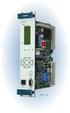 Machinery Protection Card Type FEATURES Continuous on-line Machinery Protection Card Real-time measurement and monitoring using state-of-the-art DSP techniques Fully VME-compatible slave interface Fully
Department of Electrical and Computer Engineering Ben-Gurion University of the Negev. LAB 1 - Introduction to USRP
 Department of Electrical and Computer Engineering Ben-Gurion University of the Negev LAB 1 - Introduction to USRP - 1-1 Introduction In this lab you will use software reconfigurable RF hardware from National
HP TouchPad Sensor Setup for Android
 HP TouchPad Sensor Setup for Android Coordinate System The Android device framework uses a 3-axis coordinate system to express data values. For the following HP TouchPad sensors, the coordinate system
MATRIX TECHNICAL NOTES
 200 WOOD AVENUE, MIDDLESEX, NJ 08846 PHONE (732) 469-9510 FAX (732) 469-0418 MATRIX TECHNICAL NOTES MTN-107 TEST SETUP FOR THE MEASUREMENT OF X-MOD, CTB, AND CSO USING A MEAN SQUARE CIRCUIT AS A DETECTOR
A smartphone based real-time daily activity monitoring system. Shumei Zhang Paul McCullagh Jing Zhang Tiezhong Yu
 A smartphone based real-time daily activity monitoring system Shumei Zhang Paul McCullagh Jing Zhang Tiezhong Yu Outline Contribution Background Methodology Experiments Contribution This paper proposes
The accelerometer designed and realized so far is intended for an. aerospace application. Detailed testing and analysis needs to be
 86 Chapter 4 Accelerometer Testing 4.1 Introduction The accelerometer designed and realized so far is intended for an aerospace application. Detailed testing and analysis needs to be conducted to qualify
NCSS Statistical Software Principal Components Regression. In ordinary least squares, the regression coefficients are estimated using the formula ( )
 Chapter 340 Principal Components Regression Introduction is a technique for analyzing multiple regression data that suffer from multicollinearity. When multicollinearity occurs, least squares estimates
THERMAL ANEMOMETRY ELECTRONICS, SOFTWARE AND ACCESSORIES
 TSI and TSI logo are registered trademarks of TSI Incorporated. SmartTune is a trademark of TSI Incorporated. THERMAL ANEMOMETRY ELECTRONICS, SOFTWARE AND ACCESSORIES IFA 300 Constant Temperature Anemometry
Solving Simultaneous Equations and Matrices
 Solving Simultaneous Equations and Matrices The following represents a systematic investigation for the steps used to solve two simultaneous linear equations in two unknowns. The motivation for considering
Journal of Engineering Science and Technology Review 2 (1) (2009) 76-81. Lecture Note
 Journal of Engineering Science and Technology Review 2 (1) (2009) 76-81 Lecture Note JOURNAL OF Engineering Science and Technology Review www.jestr.org Time of flight and range of the motion of a projectile
Probability and Random Variables. Generation of random variables (r.v.)
 Probability and Random Variables Method for generating random variables with a specified probability distribution function. Gaussian And Markov Processes Characterization of Stationary Random Process Linearly
CONTRIBUTIONS TO THE AUTOMATIC CONTROL OF AERIAL VEHICLES
 1 / 23 CONTRIBUTIONS TO THE AUTOMATIC CONTROL OF AERIAL VEHICLES MINH DUC HUA 1 1 INRIA Sophia Antipolis, AROBAS team I3S-CNRS Sophia Antipolis, CONDOR team Project ANR SCUAV Supervisors: Pascal MORIN,
Acceleration levels of dropped objects
 Acceleration levels of dropped objects cmyk Acceleration levels of dropped objects Introduction his paper is intended to provide an overview of drop shock testing, which is defined as the acceleration
Chapter 10 Rotational Motion. Copyright 2009 Pearson Education, Inc.
 Chapter 10 Rotational Motion Angular Quantities Units of Chapter 10 Vector Nature of Angular Quantities Constant Angular Acceleration Torque Rotational Dynamics; Torque and Rotational Inertia Solving Problems
Technical Datasheet Scalar Network Analyzer Model 8003-10 MHz to 40 GHz
 Technical Datasheet Scalar Network Analyzer Model 8003-10 MHz to 40 GHz The Giga-tronics Model 8003 Precision Scalar Network Analyzer combines a 90 db wide dynamic range with the accuracy and linearity
AP1 Oscillations. 1. Which of the following statements about a spring-block oscillator in simple harmonic motion about its equilibrium point is false?
 1. Which of the following statements about a spring-block oscillator in simple harmonic motion about its equilibrium point is false? (A) The displacement is directly related to the acceleration. (B) The
The Scientific Data Mining Process
 Chapter 4 The Scientific Data Mining Process When I use a word, Humpty Dumpty said, in rather a scornful tone, it means just what I choose it to mean neither more nor less. Lewis Carroll [87, p. 214] In
Sensor Fusion Mobile Platform Challenges and Future Directions Jim Steele VP of Engineering, Sensor Platforms, Inc.
 Sensor Fusion Mobile Platform Challenges and Future Directions Jim Steele VP of Engineering, Sensor Platforms, Inc. Copyright Khronos Group 2012 Page 104 Copyright Khronos Group 2012 Page 105 How Many
Columbia University Department of Physics QUALIFYING EXAMINATION
 Columbia University Department of Physics QUALIFYING EXAMINATION Monday, January 13, 2014 1:00PM to 3:00PM Classical Physics Section 1. Classical Mechanics Two hours are permitted for the completion of
A comparison of radio direction-finding technologies. Paul Denisowski, Applications Engineer Rohde & Schwarz
 A comparison of radio direction-finding technologies Paul Denisowski, Applications Engineer Rohde & Schwarz Topics General introduction to radiolocation Manual DF techniques Doppler DF Time difference
Optical Encoders. K. Craig 1. Actuators & Sensors in Mechatronics. Optical Encoders
 Any transducer that generates a coded reading of a measurement can be termed an encoder. Shaft Encoders are digital transducers that are used for measuring angular displacements and velocities. Relative
Force/position control of a robotic system for transcranial magnetic stimulation
 Force/position control of a robotic system for transcranial magnetic stimulation W.N. Wan Zakaria School of Mechanical and System Engineering Newcastle University Abstract To develop a force control scheme
11. Rotation Translational Motion: Rotational Motion:
 11. Rotation Translational Motion: Motion of the center of mass of an object from one position to another. All the motion discussed so far belongs to this category, except uniform circular motion. Rotational
ANALYZER BASICS WHAT IS AN FFT SPECTRUM ANALYZER? 2-1
 WHAT IS AN FFT SPECTRUM ANALYZER? ANALYZER BASICS The SR760 FFT Spectrum Analyzer takes a time varying input signal, like you would see on an oscilloscope trace, and computes its frequency spectrum. Fourier's
STMicroelectronics is pleased to present the. SENSational. Attend a FREE One-Day Technical Seminar Near YOU!
 SENSational STMicroelectronics is pleased to present the SENSational Seminar Attend a FREE One-Day Technical Seminar Near YOU! Seminar Sensors and the Internet of Things are changing the way we interact
ANALYTICAL METHODS FOR ENGINEERS
 UNIT 1: Unit code: QCF Level: 4 Credit value: 15 ANALYTICAL METHODS FOR ENGINEERS A/601/1401 OUTCOME - TRIGONOMETRIC METHODS TUTORIAL 1 SINUSOIDAL FUNCTION Be able to analyse and model engineering situations
Least-Squares Intersection of Lines
 Least-Squares Intersection of Lines Johannes Traa - UIUC 2013 This write-up derives the least-squares solution for the intersection of lines. In the general case, a set of lines will not intersect at a
PHY121 #8 Midterm I 3.06.2013
 PHY11 #8 Midterm I 3.06.013 AP Physics- Newton s Laws AP Exam Multiple Choice Questions #1 #4 1. When the frictionless system shown above is accelerated by an applied force of magnitude F, the tension
IP-S2 Compact+ 3D Mobile Mapping System
 IP-S2 Compact+ 3D Mobile Mapping System 3D scanning of road and roadside features Delivers high density point clouds and 360 spherical imagery High accuracy IMU options without export control Simple Map,
Intelligent Submersible Manipulator-Robot, Design, Modeling, Simulation and Motion Optimization for Maritime Robotic Research
 20th International Congress on Modelling and Simulation, Adelaide, Australia, 1 6 December 2013 www.mssanz.org.au/modsim2013 Intelligent Submersible Manipulator-Robot, Design, Modeling, Simulation and
How To Fuse A Point Cloud With A Laser And Image Data From A Pointcloud
 REAL TIME 3D FUSION OF IMAGERY AND MOBILE LIDAR Paul Mrstik, Vice President Technology Kresimir Kusevic, R&D Engineer Terrapoint Inc. 140-1 Antares Dr. Ottawa, Ontario K2E 8C4 Canada [email protected]
Impedance 50 (75 connectors via adapters)
 VECTOR NETWORK ANALYZER PLANAR TR1300/1 DATA SHEET Frequency range: 300 khz to 1.3 GHz Measured parameters: S11, S21 Dynamic range of transmission measurement magnitude: 130 db Measurement time per point:
Agilent AN 1316 Optimizing Spectrum Analyzer Amplitude Accuracy
 Agilent AN 1316 Optimizing Spectrum Analyzer Amplitude Accuracy Application Note RF & Microwave Spectrum Analyzers Table of Contents 3 3 4 4 5 7 8 8 13 13 14 16 16 Introduction Absolute versus relative
Epipolar Geometry. Readings: See Sections 10.1 and 15.6 of Forsyth and Ponce. Right Image. Left Image. e(p ) Epipolar Lines. e(q ) q R.
 Epipolar Geometry We consider two perspective images of a scene as taken from a stereo pair of cameras (or equivalently, assume the scene is rigid and imaged with a single camera from two different locations).
Jeff Thomas Tom Holmes Terri Hightower. Learn RF Spectrum Analysis Basics
 Jeff Thomas Tom Holmes Terri Hightower Learn RF Spectrum Analysis Basics Agenda Overview: Spectrum analysis and its measurements Theory of Operation: Spectrum analyzer hardware Frequency Specifications
PHASE ESTIMATION ALGORITHM FOR FREQUENCY HOPPED BINARY PSK AND DPSK WAVEFORMS WITH SMALL NUMBER OF REFERENCE SYMBOLS
 PHASE ESTIMATION ALGORITHM FOR FREQUENCY HOPPED BINARY PSK AND DPSK WAVEFORMS WITH SMALL NUM OF REFERENCE SYMBOLS Benjamin R. Wiederholt The MITRE Corporation Bedford, MA and Mario A. Blanco The MITRE
If you want to use an inertial measurement system...
 If you want to use an inertial measurement system...... which technical data you should analyse and compare before making your decision by Dr.-Ing. Edgar v. Hinueber, CEO imar Navigation GmbH Keywords:
Modelling, Extraction and Description of Intrinsic Cues of High Resolution Satellite Images: Independent Component Analysis based approaches
 Modelling, Extraction and Description of Intrinsic Cues of High Resolution Satellite Images: Independent Component Analysis based approaches PhD Thesis by Payam Birjandi Director: Prof. Mihai Datcu Problematic
The purposes of this experiment are to test Faraday's Law qualitatively and to test Lenz's Law.
 260 17-1 I. THEORY EXPERIMENT 17 QUALITATIVE STUDY OF INDUCED EMF Along the extended central axis of a bar magnet, the magnetic field vector B r, on the side nearer the North pole, points away from this
Carbon Dioxide and an Argon + Nitrogen Mixture. Measurement of C p /C v for Argon, Nitrogen, Stephen Lucas 05/11/10
 Carbon Dioxide and an Argon + Nitrogen Mixture Measurement of C p /C v for Argon, Nitrogen, Stephen Lucas 05/11/10 Measurement of C p /C v for Argon, Nitrogen, Carbon Dioxide and an Argon + Nitrogen Mixture
Integration of Inertial Measurements with GNSS -NovAtel SPAN Architecture-
 Integration of Inertial Measurements with GNSS -NovAtel SPAN Architecture- Sandy Kennedy, Jason Hamilton NovAtel Inc., Canada Edgar v. Hinueber imar GmbH, Germany Symposium Gyro Technology, Stuttgart 9/25
Magnetic Field of a Circular Coil Lab 12
 HB 11-26-07 Magnetic Field of a Circular Coil Lab 12 1 Magnetic Field of a Circular Coil Lab 12 Equipment- coil apparatus, BK Precision 2120B oscilloscope, Fluke multimeter, Wavetek FG3C function generator,
A PC-BASED TIME INTERVAL COUNTER WITH 200 PS RESOLUTION
 35'th Annual Precise Time and Time Interval (PTTI) Systems and Applications Meeting San Diego, December 2-4, 2003 A PC-BASED TIME INTERVAL COUNTER WITH 200 PS RESOLUTION Józef Kalisz and Ryszard Szplet
E X P E R I M E N T 8
 E X P E R I M E N T 8 Torque, Equilibrium & Center of Gravity Produced by the Physics Staff at Collin College Copyright Collin College Physics Department. All Rights Reserved. University Physics, Exp 8:
Taking the Mystery out of the Infamous Formula, "SNR = 6.02N + 1.76dB," and Why You Should Care. by Walt Kester
 ITRODUCTIO Taking the Mystery out of the Infamous Formula, "SR = 6.0 + 1.76dB," and Why You Should Care by Walt Kester MT-001 TUTORIAL You don't have to deal with ADCs or DACs for long before running across
Jitter Measurements in Serial Data Signals
 Jitter Measurements in Serial Data Signals Michael Schnecker, Product Manager LeCroy Corporation Introduction The increasing speed of serial data transmission systems places greater importance on measuring
INTRUSION PREVENTION AND EXPERT SYSTEMS
 INTRUSION PREVENTION AND EXPERT SYSTEMS By Avi Chesla [email protected] Introduction Over the past few years, the market has developed new expectations from the security industry, especially from the intrusion
Procon Engineering. Technical Document PELR 1002. TERMS and DEFINITIONS
 Procon Engineering Technical Document PELR 1002 TERMS and DEFINITIONS The following terms are widely used in the weighing industry. Informal comment on terms is in italics and is not part of the formal
USB 3.0 CDR Model White Paper Revision 0.5
 USB 3.0 CDR Model White Paper Revision 0.5 January 15, 2009 INTELLECTUAL PROPERTY DISCLAIMER THIS WHITE PAPER IS PROVIDED TO YOU AS IS WITH NO WARRANTIES WHATSOEVER, INCLUDING ANY WARRANTY OF MERCHANTABILITY,
A MOTION ACTIVITY MONITOR MONITOR POHYBOVÉ AKTIVITY
 A MOTION ACTIVITY MONITOR MONITOR POHYBOVÉ AKTIVITY Josef Marek, Ladislav Štěpánek 1 Summary: The paper deals with motion and vital activity monitoring of person in the case of dangerous environment (rescue
PCM Encoding and Decoding:
 PCM Encoding and Decoding: Aim: Introduction to PCM encoding and decoding. Introduction: PCM Encoding: The input to the PCM ENCODER module is an analog message. This must be constrained to a defined bandwidth
Vibrations can have an adverse effect on the accuracy of the end effector of a
 EGR 315 Design Project - 1 - Executive Summary Vibrations can have an adverse effect on the accuracy of the end effector of a multiple-link robot. The ability of the machine to move to precise points scattered
Harmonic oscillations of spiral springs Springs linked in parallel and in series
 .3.26 Related topics Spring constant, Hooke s Law, oscillations, limit of elasticity, parallel springs, serial springs, use of an interface. Principle and task The spring constant D is determined for different
Broadband Networks. Prof. Dr. Abhay Karandikar. Electrical Engineering Department. Indian Institute of Technology, Bombay. Lecture - 29.
 Broadband Networks Prof. Dr. Abhay Karandikar Electrical Engineering Department Indian Institute of Technology, Bombay Lecture - 29 Voice over IP So, today we will discuss about voice over IP and internet
AP Physics 1 and 2 Lab Investigations
 AP Physics 1 and 2 Lab Investigations Student Guide to Data Analysis New York, NY. College Board, Advanced Placement, Advanced Placement Program, AP, AP Central, and the acorn logo are registered trademarks
Physics 2A, Sec B00: Mechanics -- Winter 2011 Instructor: B. Grinstein Final Exam
 Physics 2A, Sec B00: Mechanics -- Winter 2011 Instructor: B. Grinstein Final Exam INSTRUCTIONS: Use a pencil #2 to fill your scantron. Write your code number and bubble it in under "EXAM NUMBER;" an entry
Static Environment Recognition Using Omni-camera from a Moving Vehicle
 Static Environment Recognition Using Omni-camera from a Moving Vehicle Teruko Yata, Chuck Thorpe Frank Dellaert The Robotics Institute Carnegie Mellon University Pittsburgh, PA 15213 USA College of Computing