
Maintenance and Service. The Alpha II Command Center YOUR ALARM COMPANY IS CALL BEFORE TEST
|
|
|
- Evangeline Clark
- 10 years ago
- Views:
Transcription
1 The Alpha II Command Center Your security system helps to secure life, property and investments against fire, theft and bodily harm. The Alpha II Command Center is an advanced digital arming station that offers a variety of features unavailable with any other system. Function, versatility and ease of operation make the Alpha II the ideal system for the home or office. With custom programming, the Alpha II is tailored to meet your individual needs. Each area of your property can be given its own Engligh language description which appears in the Alpha II display for easy identification. The command mode allows you to perform a variety of functions easily, in fact, only the touch of two or three keys is required to control almost every feature on the Alpha II Command Center. Four function keys allow common commands to be performed with the touch of just one key. Maintenance and Service The Alpha II Command Center requires very little maintenance, however, the system should be tested weekly to insure early detection of a need for service. A test schedule and maintenance program can be arranged with your alarm company. If a change in operation is noticed during normal use or testing call for service as soon as possible. Do not attempt to repair the control panel, arming stations or detectors yourself. YOUR ALARM COMPANY IS The Alpha II Command Center putting the control of your security system right at your fingertips. CALL BEFORE TEST 1

2 2

3 Fire Safety Residential fire is a leading cause of accidental death. Most fire related deaths occur at night when the occupants suffocate in their sleep from smoke and deadly gases, rather than from burns. To help reduce this risk, the following three-step program should be implemented: 1. Minimize fire hazards around the home. Smoking in bed, cleaning with flammable liquids such as gasoline, leaving children home alone, and unsafe Holiday decorations are some of the more common causes of household fire. 2. Install a fire warning system. The primary purpose of this system is to protect lives, not property, by giving the earliest possible warning of the danger. In the event of a fire, the alarm system will generate a loud intermittent tone distinctly different than a burglar alarm. 3. Plan and practice an escape plan. A fire alarm warning may be wasted unless the family has planned for a quick evacuation. Because there may be very little time between detection of a fire and the time it becomes deadly, it is important that every member of the family understand exactly what to do. DINING LIVING ROOM KITCHEN FIRE BED ROOM Possible escape routes through open windows marked with arrows. s BED ROOM BEDROOM BED ROOM BED ROOM s s BED ROOM TV ROOM BED ROOM s DR K BR LR s BR Primary and alternate escape routes should be established. Since stairwells and hallways may be blocked during a fire, exiting through a bedroom window at night should be an essential part of the escape plan. If the sleeping area is above the ground floor, install a means of safely descending outside the building if one does not already exist. In homes with more than one sleeping area a smoke detector (indicated by an inverted "s" in a circle) should be provided to protect each area. As part of this plan, all family members should arrange to meet at a predetermined location away form the house (such as a neighbors), to verify that all are accounted for. 3

4 In Case of Fire 1. The primary purpose of a fire warning system is to protect lives. In the event of a fire alarm, quickly leave the building and call the fire department from a neighbor's or public telephone. 2. If it is determined the alarm was accidentally tripped, the bell should be silenced, the detectors reset and your alarm company notified immediately of the situation. 4

5 Your Alpha II Command Center The Alpha II Command Center is an illuminated digital arming station that is the control center of your entire security system. The Alpha II does much more than just arm (turn-on) and disarm (turnoff) your security system; several system commands can be controlled by the Alpha II. A sixteen-character English language display keeps you informed of security conditions as well as storing alarm information for future reference. A built-in siren alerts you to different conditions which can require action. The Alpha II also includes four function keys which can perform virtually any system command (except arming commands) with the touch of one key. Zone Designation: Each area of your property is assigned to a specific zone with a number. A zone can be a single door (like the entrance door) or an entire room or area of your property (like the 2nd floor). All zones can be custom programmed by your alarm technician with an English word description for easy identification. There are three basic types of zones: Hour: A zone that remains armed all the time and is not disarmed from the Alpha II Command Center (fire, panic, duress, etc.) Zone Status The Alpha II Command Center's display panel indicates if the system is ready to arm or not. If the display shows READY TO ARM then the system can be armed by entering your personal passcode or any of the arming commands available to your system. If the display shows NOT READY TO ARM then the system has a faulted zone. To find out which zone is faulted, press any of the numbered keys on the Alpha II and the zone number or special zone description will appear in the display. Correcting the faulted zone will usually mean closing a door or window. 1. Perimeter: All exterior doors and windows of the building, forming the outside "wall of protection" around your building. 2. Interior: All interior forms of burglary protection (carpet mats, motion sensors, inside doors, etc.). 5

6 Arming (Turning-On) Your Security System Your security system can be armed in many different ways, depending on the arming command used. Arming commands are those commands used to arm the system. The most basic arming command is to arm the entire system. This is done by entering your personal passcode or by entering an arming COMMAND. There are several other variations of arming the system. For example: arm only the perimeter, arm only portions of the perimeter, etc. These arming functions and their respective commands are described later in this guide. Remember: To ARM your security system: Enter your personal passcode. or Enter an arming COMMAND. Your system may be programmed to send a "closing" report to the Central Station when arming. My system sends a closing report. My system does not send a closing report. Disarming (Turning-Off) Your Security System Your security system is disarmed by entering your personal passcode. When your system is armed, you must enter the premises through a designated entry delay door to prevent an immediate instant alarm condition. Opening the door starts an entry delay time and the Alpha II emits an intermittent "beep" tone to remind you to disarm the system. Enter your personal passcode before the delay time expires and the system will disarm. If you enter through a wrong door or fail to disarm the system before the entry delay expires, you will generate an immediate alarm. Remember: To DISARM your security system: Enter your personal passcode. Your system may be programmed to send an "opening" report to the Central Station when disarming. My system sends an opening report. My system does not send an opening report. 6

7 Silencing the Alarm The audible alarm has a specific period of time it sounds before automatically shutting off. If an alarm occurs and you want to silence it before the time expires, simply enter your personal passcode and the alarm will stop. To silence your Alpha II during a service alert, press COMMAND 4 to reset the alarm. To silence your security system: Enter your personal passcode for audible alarms. or Enter COMMAND 4 for service alerts. NOTE: Some installations are programmed so that the alarms cannot be silenced until the zone is restored to normal (non-alarm condition). Reporting an Alarm My system reports to a central station. My system does not report to a central station. Your security system automatically disconnects your telephone from its line when transmitting reports to the Central Station. This prevents alarm signals from being interrupted during transmission. Once the report has been completed the telephone line is restored to normal service. NOTE: If damage occurs to the telephone line and your telephone service is interrupted, reports will not be transmitted to the Central Station unless an alternate means of transmitting signals is installed in your system. My system can be silenced by entering my personal passcode. My system cannot be silenced unless the zone is returned to normal. 7

8 Alpha II Function Keys The Alpha II Command Center has four Function Keys (labeled A, B, C, and D) which can be used to perform system commands with the touch of one key. Your alarm technician programs the Function Keys and each key is listed below with its function. Function Key Command Function Performed Function Key A Function Key B Function Key C Function Key D COMMAND Bar The COMMAND bar is a multi-function key used for the following purposes: Initiating (entering into) system commands. Entering data or answering system prompts that appear on your Alpha II display. Exiting system commands. COMMAND Bar Security: Some systems require a security passcode be entered before the COMMAND bar can operate. My system requires a security passcode:. My system does not require a security passcode. To Unlock Command Bar: 1. Enter your security passcode. 2. Press COMMAND. Using a 6 digit security passcode automatically puts the system in the Command Mode and the COMMAND bar does not need to be pressed. 8

9 Alpha II Warning Signals The Alpha II Command Center contains a built-in siren used as an interior warning device. An additional bell or siren may also be mounted on the exterior of your premises to alert your neighbors of an emergency and to give the police an audible reference to help them locate the alarm. Several different warning signals can be emitted from the Alpha II to alert you when an event occurs (not all signals will be heard outside). Some of these tones are optional and can be selected by your alarm technician. 1. Burglary Signal: When a burglary zone is activated while the system is armed, the Alpha II emits a steady or pulsed high-pitched bell tone. The siren/bell (both interior and exterior) will ring for the length of time set by your alarm technician. Entering your personal passcode silences the burglary siren(s). The burglary alarm bell tone is: Steady Pulsed 2. Fire Signal: When a fire zone is activated (fire zones are armed 24 hours) the Alpha II emits a steady or pulsed highpitched bell tone. Evacuate all occupants and investigate for smoke or fire. Ensure that all occupants know the difference between the burglary signal and the fire signal. Entering your personal passcode silences the fire alarm. The fire alarm bell tone is: Steady Pulsed as a service alert, a continous buzz is emitted from the Alpha II until COMMAND 4 or a personal passcode is entered. 4. Entrance Warning: The Alpha II emits a soft intermittent beep tone during the entry delay period to remind you to disarm your security system. If the security system is not disarmed before the entry delay expires, an alarm signal is sent to the Central Station and the alarm siren sounds. When keys are pressed, the warning tone stops for a few seconds. 5. Watch Tone: When the Perimeter Watch Mode is activated, the Alpha II emits a brief tone to alert you when any perimeter zone is faulted. The tone sounds only when the door or window is opened. It does not sound again for that zone until the door or window is first closed and then reopened. The watch mode only functions when the system is disarmed. Any activity from a 24 hour zone will abort the Perimeter Watch Mode. 6. Keypad Encoding Tone: Pressing any key on the Alpha II Command Center sounds a muted beep tone, indicating that the entry is valid. 3. Trouble Signal: When a system trouble event occurs, such 9

10 Standard Alpha II Displays The Alpha II Command Center features alphanumeric, English language displays. These displays are the Alpha's way of communicating to you various security system conditions and instructions. Programmed into the Alpha II are standard displays that tell you if the system is armed, which zones are faulted, which zones need service, and several other conditions. If a series of events are taking place, each is displayed in sequence, giving you a complete disclosure of what is happening. In the sample standard displays which follow, "(custom text)" is programmed by your alarm technician and may contain additional expanded zone condition displays (see Expanded Zone Displays). ALARM (custom text) Indicates a zone is in alarm and shows the zone's custom display. This display alternates with an "expanded" zone condition display. ALARM CANCEL Indicates when a cancel report is in progress (for systems programmed for those reports). I have ; I do not have. Canceling an alarm report is done by entering your personal passcode while the alarm is in progress. ALL SECURE Indicates the security system is armed and ready to detect intruders. ENTRY (custom text) Indicates the entry delay is in progress and shows the custom text display of the zone which was entered. EXIT NOW This message alternates with the armed status display during exit delay. LISTEN Indicates when the Emergency Audio Reporting (E.A.R.) system is activated for "Listen-in" or "Look-in". The display alternates with alarm and any custom displays. NOT READY TO ARM Indicates that a zone is not in a normal condition (a zone is faulted). Pressing any numeric key lets the Alpha II display which zone is faulted. PERIMETR DELAYED Indicates only the perimeter protection is armed with entry/ exit delays enabled. Faulting any perimeter delay zone begins the entry delay time. PERIMETR INSTANT Indicates that only the perimeter protection is armed with no entry or exit delay time. Faulting any perimeter zone causes an instant alarm. PERIMETR PARTIAL Indicates that only part of the perimeter protection is armed. 10

11 READY TO ARM Indicates that all perimeter and interior zones are normal and ready to be armed. SERVICE AC FAIL Indicates AC power to the security system is interrupted. Check the plug-in transformer and circuit breaker. SERVICE COM FAIL * Display indicates a "failure to communicate" of the system to the Central Station. Entering a COMMAND 4 clears this display. SERVICE CPU FAIL * Display indicates a problem with the main processor of the security system. SERVICE LO BATRY * Indicates the security system is experiencing a low battery condition. SERVICE PHONE * This display indicates telephone line trouble. SERVICE ROM EROR * If this display appears, telephone your alarm company for repairs. * Contact your alarm company to determine if repairs are needed. SERVICE (custom text) Displays momentarily when a zone is in trouble (abnormally faulted). This display alternates with an "expanded" zone condition display showing the zone's identification number and its custom display. STATUS + Indicates a Status report has been transmitted to the Central Station. SYSTEM BUSY Displays when the security system is occupied with another task and a command cannot be performed at this time. SYSTEM COMMAND Displays when the COMMAND bar is pressed. Pressing a numbered key after COMMAND will activate the particular command function of that key. TEST + Indicates a test report has been transmitted to the Central Station. WATCH Display indicates the security system is in the Perimeter Watch Mode. * * Alternating display indicates the security system is set up with zones that are all armed 24-hours a day. Usually found on fire systems where all eight zones are used for fire. 11

12 Expanded Zone Displays Some of the standard Alpha II Command Center displays will also display expanded zone condition messages. The displays appear in a sequence of two (example below). ALARM WATERFLO ZN101S1 RISER#2 A B C D E F A. The type of fault or alarm condition existing on the zone or point. B. Custom text entered by your alarm technician to define the location of the condition. C. The Zone and point number that the alarm applies to. D. The current state of the point. O = Open M = Missing point S = Shorted X = Extra Point " " = (blank) Normal E. The Memory code. 1 = Alarm 5 = Alarm, & Missing 2 = Trouble 6 = Trouble, & Missing 3 = Alarm, & Trouble 7 = Alarm, Trouble, & Missing 4 = Missing F. Custom text entered by your alarm technician to further define the location of the condition. Alarm Condition Examples: ALARM WATERFLO Display indicates that water is ZN101S1 RISER#2 flowing to Riser #2 (fire sprink- **************** ler) connected to point 101. Trouble and Fault Condition Examples: FAULTED DOORS Display indicates point 201, the ZN20101 FRONT front door, is open. **************** SERVICE WINDOWS ZN301S1 KITCHEN Display indicates point 301, the window in the kitchen, needs **************** service (the wire is shorted). * A row of stars separates each condition. Zone points (ex.: ZN101) used in these status messages are for example purposes only. The zone number appearing on your system will reflect the zone number affected. 12

13 MultiLink Displays In addition to the Standard Alpha II Command Center displays, the systems programmed for the MultiLink R.F. system will also display these status messages. The status message appears in sequence of two displays (example below). SERVICE MULTLINK ZN101S2 597 MAIN A B C D E F A. The type of fault or alarm condition existing on the zone expansion point. B. Custom text entered by your alarm technician to define the location of the condition. C. The Zone and point number that the alarm applies to. Zone A = Odd number. Zone B = Even number. D. The current state of the point. O = Open M = Missing point S = Shorted X = Extra point " " = (blank) Normal E. The Memory code. 1 = Alarm 5 = Alarm, & Missing 2 = Trouble 6 = Trouble, & Missing 3 = Alarm, & Trouble 7 = Alarm, Trouble, & Missing 4 = Missing F. Custom text entered by your alarm technician to further define Alarm Zone A Example: ALARM MULTLINK ZN MAIN **************** Alarm Zone B Example: ALARM ZN21201 MULTLINK 129 PCFC **************** Phone Line Trouble Example: SERVICE MULTLINK ZN410S2 330 ERVG **************** Missing Point Example: SERVICE MULTLINK ZN605M VN **************** Display indicates an alarm or open conditon on Zone A of a MultiLink system located at 597 Main Street. Display indicates an alarm or open conditon on Zone B (ZN212) of a MultiLink sys-tem located at 129 Pacific Ave. Display indicates phone line trouble with the MultiLink system at 330 Erving. Display indicates a missing point on the MultiLink sys-tem at Van Ness. Zone expansion points (ex.: ZN101) used in these status messages are for example purposes only. The zone number appearing on your system will reflect the zone number affected. * A row of stars separates each condition. 13

14 Arm Your Entire System with Delays COMMAND 1 is used to arm the entire system, both perimeter and interior zones. Once you have entered COMMAND 1, the exit delay time starts. You now have a predetermined amount of time to exit the protected area before the system arms. During the exit period you may move through motion detectors or any protected area on your way to the exit door without causing an alarm. Enter your personal passcode to cancel COMMAND 1. NOTE: If you leave the building after the exit time expires, you may begin the entry delay, or initiate an alarm. If this happens, disarm your system by entering your personal passcode. If your system reports to a Central Station, you may need to call them if an alarm occurs. Application COMMAND 1 is useful in applications where you want your cleaning service, a serviceman or anyone to arm your system when they leave, but you don't want them to have the passcode to disarm the system. COMMAND 1 arms the system, but it will not disarm the system. COMMAND 1 To use COMMAND 1: 1. Ensure that all zones are secure. The display should show READY TO ARM. 2. Press the COMMAND bar. The display should show SYSTEM COMMAND. 3. Press the 1 key. The display now alternates between ALL SECURE and EXIT NOW After the exit delay expires, the display shortens to ALL SECURE. 4. To disarm your security system, enter your personal passcode before the delay time expires. 1 14

15 Arm the Perimeter without Delays COMMAND 2 is used to arm only the perimeter of your building, leaving the interior of the building disarmed. This command allows no exit or entry delay time through the perimeter, including the designated delay door. Although this command does not send a "Closing Report" to the Central Station, it will still send alarms. Enter your personal passcode to cancel COMMAND 2. Application This arming command is useful in residential systems at night when everyone is home and ready to retire for the evening. In commercial installations, this arming command is useful when you are working late and you want the perimeter of the building armed until you are ready to leave. COMMAND 2 To use COMMAND 2: 1. Ensure all perimeter zones are secure. (Interior zones are not armed with this command and may remain faulted while arming with COMMAND 2. All faulted zones will be shown in the display.) 2. Press the COMMAND bar. The display should show SYSTEM COMMAND. 3. Press the 2 key. The display now shows PERIMETR INSTANT. 4. To disarm your security system, enter your personal passcode. 2 15

16 Arm the Perimeter with Delays COMMAND 3 is used to arm only the perimeter of your building, leaving the interior of the building disarmed. Once you have entered COMMAND 3, the exit delay time starts. You now have a predetermined amount of time to leave before the perimeter arms. Although this command does not send a "Closing Report" to the Central Station, it will still send alarms. Enter your personal passcode to cancel COMMAND 3. Application This arming command is useful in residential systems when you are leaving, but members of your family, a babysitter or a pet are still inside the house. For commercial systems, use this command to re-arm your system when you are on the premises but not yet open for business. COMMAND 3 To use COMMAND 3: 1. Ensure all perimeter zones are secure. (Interior zones are not armed with this command and may remain faulted while arming with COMMAND 3. All faulted zones will be shown in the display.) 2. Press the COMMAND bar. The display should show SYSTEM COMMAND. 3. Press the 3 key. The display alternates between PERIMETR DELAYED and EXIT NOW After the exit delay expires, the display shortens to PERIMETR DELAYED when exit time expires. 4. To disarm your security system, enter your personal passcode. 3 16

17 Reset Trouble Sounder Reset Alarm Memory Display Display Clock COMMAND 4 performs several functions for your security system. Use this command to silence your Alpha II steady trouble tone during system trouble events or clear the alarm memory display of the Alpha II Command Center. Your security system may be programmed with an internal clock. To display the clock momentarily at the Alpha II Command Center, enter COMMAND 4. The display will show TEST= (time display). If the display shows TEST= without the time display, then your system is not programmed for clock displays. All other functions of COMMAND 4 are still available. COMMAND 4 To use COMMAND 4: 1. Ensure that your security system is disarmed. 2. Press the COMMAND bar. The display should show SYSTEM COMMAND. 3. Press the 4 key. The display should show TEST= (time display) momentarily. If the display shows TEST=, with no time display, your system is not programmed to indicate time of day. However, resetting the trouble sounder and clearing the alarm memory display still remain functional. 4 17

18 Transmit Test Report Testing the communication link between your security system and the Central Station is an important part in maintaining high level security for your property. The Alpha II Command Center minimizes the time and trouble of testing by allowing you to send a special test signal just by pressing three keys. Arming the system is not necessary; however, always call the Central Station before transmitting a test report. If the system is working properly, the Central Station sends a confirming signal which is shown in the display panel of the Alpha II Command Center. COMMAND 4 1 To use COMMAND 41: 1. Ensure that your security system is disarmed. 2. Press the COMMAND bar. The display should show SYSTEM COMMAND. 3. Press and release the 4 key. Now press and release the 1 key. The display shows TEST The display changes to TEST + when the signal is acknowledged by the Central Station. Press the COMMAND bar or any number key to clear the display after test. 5. If SERVICE COM FAIL is displayed at the Command Center, or if the acknowledgement signal is not received at the Central Station, enter your personal passcode to cancel the test. Call the telephone number of the Central Station and report a "failure to communicate." 18

19 Transmit System Status Report COMMAND 42 allows you to send a report to the Central Station indicating the current condition of your security system. This report is capable of telling the Central Station if your system or supervised sub-zone controls, are armed or disarmed, reports the condition of primary (AC) power and secondary (battery) power and indicates the condition of the protective zones (whether a zone is normal, in alarm, or in trouble). Always call the Central Station before beginning a Status Report. If the system is working properly, the Central Station sends a confirming signal which is shown in the display panel of the Alpha II Command Center. COMMAND 4 2 To use COMMAND 42: 1. Ensure that your security system is disarmed. 2. Press the COMMAND bar. The display should show SYSTEM COMMAND. 3. Press and release the 4 key. Now press and release the 2 key. The display shows TEST= (time display) then holds on STATUS. 4. The display changes to STATUS + when the signal is acknowledged by the Central Station. Press the COMMAND bar or any number key to clear the display after test. 5. If SERVICE COM FAIL is displayed at the Command Center, or if the acknowledgement signal is not received at the Central Station, enter your personal passcode to cancel the test. Call the telephone number of the Central Station and report a "failure to communicate."

20 Enable Remote Account Management Your security system has the ability to be managed remotely from the Central Station without having a serviceperson on the protected premises. By using COMMAND 43 you can enable remote account management from the Central Station. Remote account management from the Central Station is done with the aid of a specially equipped computer. Typical remote account management changes may include: personal passcode(s), entry/exit delay times, reset system clock/ calendar, add or delete system arming commands, etc. Before using COMMAND 43 follow the instructions below. To use COMMAND 43: 1. Ensure that your security system is disarmed. 2. Call the Central Station using this phone number. This number is designated for the Remote Account Manager. You must make the call using the telephone located:. COMMAND Identify yourself and your premises (account number, name, address, etc.) and advise the operator of the services you wish to have performed. 4. When the operator directs you, enter COMMAND 43 at your Alpha II keypad. Press the COMMAND bar. The display should show SYSTEM COMMAND. Now press and release the 4 key, then press and release the 3 key. The display should show SYSTEM PROGRAM. 5. The telephone line that the call was made from is not active when remote account management is in progress. You may hang up the telephone. 6. When remote account management is completed, the Alpha II display should return to what was originally shown. Your telephone line is restored to normal service. Local System Test

21 It is easy for you to test your security system without sending reports to the Central Station. This local system test is performed only when the security system is disarmed. To ensure that your security system is operating properly, test your system regularly. COMMAND 44 is used to test your security system. This command tests your Alpha II Command Center, the system's sounders (both interior and exterior), and the system's detection devices. No alarm reports are sent to the Central Station unless a 24-hour zone is faulted (e.g.: panic, fire or duress). (Contact your Central Station before you test your fire protection system because an alarm report may be transmitted.) To test individual detection devices, simply activate sensors and open protected doors and windows one-at-a-time. As detection devices are faulted, the Alpha II emits a brief tone and the display indicates which zone/point has been faulted. This verifies that the detection device is working properly. COMMAND 4 4 To use COMMAND 44: 1. Ensure that the security system is disarmed. 2. Press the COMMAND bar. The display should show SYSTEM COMMAND. 3. Press the 4 key then the 4 key again. The display panel now alternates a series of displays, testing all segments of the display panel. If alarm events have occured since the system was last armed, the display will also sequence through the zone numbers affected. 4. During the time the display panel is being tested, the sounders can be heard (both interior and exterior). To silence the sounders, press any numeric key on the Alpha II keypad. 5. When the display panel shows WALK you can begin testing detection devices. Open a door or a window, or activate a motion sensor and the Alpha II display will indicate the zone which you have faulted and will sound a brief tone with each activation. This verifies that individual devices are working properly. 6. To end the Local System Test simply press any numeric key on the Alpha II keypad
22 Adjust Clock COMMAND 45 is used to adjust the time display on your Alpha II Command Center. When you enter COMMAND 4 the Alpha clock is shown in the display momentarily. By entering COMMAND 45, the clock is displayed and may be adjusted with the Alpha II keypad. IMPORTANT: The time should be checked and adjusted at least once a month to insure accuracy. 24-Hour clock settings 1:00pm = 13:00 5:00pm = 17:00 9:00pm = 21:00 2:00pm = 14:00 6:00pm = 18:00 10:00pm = 22:00 3:00pm = 15:00 7:00pm = 19:00 11:00pm = 23:00 4:00pm = 16:00 8:00pm = 20:00 12:01am = 00:01 To use COMMAND 45: 1. Ensure that the security system is disarmed. 2. Press the COMMAND bar. The display should show SYSTEM COMMAND. COMMAND Press and release the 4 key, then press and release the 5 key. The display should show SET TIME=(time disply). To set a new time display, simply enter the desired time with the number keys on the Alpha II keypad. (Remember, the clock is set in military time standards, also known as the 24-hour clock. Enter four digits for a complete time setting.) The new time scrolls into the display from right to left, replacing the old display. For example, to set a time of 1:15 a.m. you would enter the following: Press the keys. The display shows SET TIME= 01: When the display is correct, press the COMMAND bar to enter the time and exit from this mode. If the COMMAND bar is not pressed, the new time will not be entered and the Alpha II will revert back to the original time displayed. If no keys are pressed for 20 seconds, the Alpha II automatically exits from this mode
23 Adjust Calendar Your security system has an internal calendar which it uses to schedule automatic test reports and other functions. This calendar can be programmed to run a weekly or monthly time schedule. If programmed for a weekly schedule, the display shows the day of the week followed by the number of the day (for example, MON 2). If programmed for a monthly schedule, the display shows the month, followed by the day of the month (for example, MAR 20). To use COMMAND 46: 1. Ensure that the security system is disarmed. 2. Press the COMMAND bar. The display should show SYSTEM COMMAND. 3. Press and release the 4 key, then press and release the 6 key. The display should show SET DATE=(date disply). To set a new date display, simply enter the desired date with the number keys on the Alpha II keypad. See the directions on right for month mode or day of the week mode display adjustments. 4. When the display is correct, press the COMMAND bar to exit from this mode. If the COMMAND bar is not pressed, the new date will not be entered and the Alpha II will revert back to the original date displayed. If no keys are pressed for 20 seconds, the Alpha II automatically exits from this mode. COMMAND 4 6 My system's calendar operates on a: day of the month schedule. day of the week schedule. Day of Month Schedule: EXAMPLE: To set a date of May 17, you would enter the following: Press the keys ("05" is the code for May, the fifth month of the year), then press the keys. The display shows SET DATE= MAY 17. Numerical entries to set month display 01 JAN 04 APR 07 JUL 10 OCT 02 FEB 05 MAY 08 AUG 11 NOV 03 MAR 06 JUN 09 SEP 12 DEC Day of Week Schedule: EXAMPLE: To set the day of week display for Friday, you would enter the following. Press the 6 key. The display shows SET DATE= FRI 6. Numerical entries to set day of week display 1 SUN 3 TUE 5 THU 7 SAT 2 MON 4 WED 6 FRI
24 Reset Detectors By using COMMAND 47, you are able to reset faulted detection devices from your Alpha II Command Center. Devices might include smoke detectors, shock sensors or a variety of other detection devices. Ask your alarm technician which detection zones you may reset from the Alpha II by entering COMMAND 47. NOTE: If you enter COMMAND 47 and the detector resets momentarily, but then returns to a faulted condition, the detector may be faulty or still in an alarm mode. Contact your alarm company and describe the problem in detail. Command 47 resets my: which are on Zone #. COMMAND 4 7 To use COMMAND 47: 1. Ensure security system is disarmed. 2. Press the COMMAND bar. The display should show SYSTEM COMMAND. 3. Press and release the 4 key. Now press and release the 7 key. The display shows RESET SENSORS for approximately 10 seconds
25 Display/Adjust Automatic Test Report Time Your security system can be programmed to send automatic test reports to the Central Station. The time and date of the next automatic test report can be displayed at the Alpha II Command Center by using COMMAND 48. While the time of the next automatic test is being displayed, you may change the time or date, if desired. Test report times should not be changed unless instructed to do so by your alarm company. Follow the instructions listed below. To use COMMAND 48: 1. Ensure the security system is disarmed. 2. Press the COMMAND bar. The display should show SYSTEM COMMAND. 3. Press and release the 4 key. Now press and release the 8 key. The display shows TIMER=(date/time disply). The first two digits are the day of the week or day of the month, depending on calendar programming (see COMMAND 46) and the remaining digits are the time. 4. To set a new date and time, simply enter the desired date and then the time with the number keys on the Alpha II Command Center. COMMAND 4 8 My system operates on a: Day of the month schedule. Day of the week schedule. EXAMPLE: The date (or day of the week) is entered first, followed by the time of day. To set a test time for Friday at 9:00 a.m., you would enter the following: Press the keys ("06" is the code for Friday), then press the keys. The display shows TIMER= 06/09=00. Numerical entries to set day of week display 01 SUN 03 TUE 05 THU 07 SAT 02 MON 04 WED 06 FRI 5. When the display is correct, press the COMMAND bar to exit from this mode. If the COMMAND bar is not pressed, the new test report time will not be entered and the Alpha II will revert back to the original test time displayed. If no keys are pressed for 20 seconds, the Alpha II automatically exits from this mode
26 Continuous Time Display When COMMAND 49 is entered at the Alpha II Command Center, the Alpha II displays the clock display continuously. To clear the clock display, press any numeric key or the COMMAND bar on the Alpha II Command Center. The display clears automatically when a higher priority display replaces the clock display or upon arming the system. COMMAND 4 9 To use COMMAND 49: 1. Press the COMMAND bar. The display should show SYSTEM COMMAND. 2. Press and release the 4 key. Now press and release the 9 key. The display should show the time. 3. To clear the display manually, press any numeric key or the COMMAND bar on the Alpha II keypad
27 Access Control Door Test COMMAND 51 is used to test the relays, doorstrikes, and annunciators, and shows the status of the zones associated with card readers in the Access Control System. COMMAND 51 can also be used to hold the door open, which allows you to come in and out of the door without the use of a card. COMMAND 51 requires a passcode beginning with the digit "8" that was programmed into your security system by your alarm technician. COMMAND 51 does not "time-out". You must use the COMMAND bar to exit after you have completed testing. Card Reader Operation: Under normal circumstances, after a card is read, the security system will do these three steps simultaneously: 1. Activate the door strike: Physically allows the door to be opened. 2. Activate an annunciator: A buzz indicates that the door strike has been activated (optimal). 3. Shunt the door zone: Allows you to open the door without sending an alarm. The door can be opened and shut within the time limits. COMMAND 5 1 To use COMMAND 51: 1. Press the COMMAND bar SYSTEM COMMAND 2. Press the 5 key SUB COMMAND 3. Press the 1 key ENTER YOUR COMBO 4. Enter Passcode beginning with the digit 8. Example: DOOR STATES RRRR NOTE: If you do not enter a passcode beginning with 8, the COMMAND 51 mode ends
28 The "R"s in this display stand for "Ready" and represent card readers A, B, C, and D, respectively. The display should show one of the six states listed below for each card reader location programmed in your system. The codes listed below can appear depending on the current status and system programming: R = Ready (Door zone is normal.) C = Closed (Strike is activated, door is closed.) S = Strike (The card has been read and the door strike/ buzz has been activated, however, no door zone is programmed in association with this card reader.) H = Hold (The door strike is locked open and the door zone is shunted until the associated number key is pressed again. See Hold Door Open.) O = Open (The door has been left open after the door strike/buzz time has expired and the door zone is shunted. A buzz may alert you if the door is left open too long.) X = Door not programmed. Testing Doors: 1. Press a corresponding Function Key to simulate reading of a card with a door strike activation. A = Card Reader A B = Card Reader B C = Card Reader C D = Card Reader D The display will change indicating the new status. Example: DOOR STATES CRRX 2. Press the COMMAND bar to exit COMMAND 51 mode. This mode does not "time-out", you must use the COMMAND bar to exit. Hold Door Open: While the door status display is showing (see step 4 previous page), press a number key corresponding to the door address. 1 = Card Reader A 2 = Card Reader B 3 = Card Reader C 4 = Card Reader D The display will change indicating the new status. Example: DOOR STATES HRRX To return the door status to its original display, press the corresponding number key again
29 Sked Functions The Skeds feature tells your security system to automatically initiate certain system tasks at scheduled times. Each Sked instructs your system to initiate a specific task like disabling Opening/ Closing Reports, controlling Relays, bypassing specified zones, etc. COMMAND 52 lets you review and/or change certain aspects of the Skeds feature in your security system. Each Sked is programmed with either a time and/or date (January 01 to December 31) or day(s) of the week (Sunday to Saturday). The time is specified by the exact hour and minute with a 24-hour clock. The day or date of execution can only be changed by your alarm technician. You can only use COMMAND 52 while your system is disarmed. COMMAND 52 will NOT operate while the system is Armed, Perimeter Armed, or during Entry or Exit Delays. Before you can use COMMAND 52, you must enter a passcode beginning with the digit "8" that was programmed into your security system by your alarm technician Please consult your alarm company before making any changes to the Skeds functions. COMMAND 5 2 Sked functions associated with each Alpha II Function Key (A, B, C, D): In the COMMAND 52 Mode, the function keys (A, B, C, D) are used for selecting functions related to the Skeds feature and are different from their normal operation. A Key = Active Skeds Review B Key = Bypass Holiday (Turn ON/OFF) C Key = Change Sked Time D Key = Day of Week Change To use COMMAND 52: 1. Press the COMMAND bar SYSTEM COMMAND 2. Press the 5 key SUB COMMAND 3. Press the 2 key ENTER YOUR COMBO 4. Enter Passcode beginning with the digit 8. Example: SKEDS FUNCTION?
30 5. When SKEDS FUNCTION? is displayed, you can either select a Sked function by pressing any one of the Alpha II Function keys, or you can exit the COMMAND 52 Mode by pressing the COMMAND bar. 6. If you enter into the COMMAND 52 Mode but do NOT press any keys, your security system will automatically exit the COMMAND 52 Mode after 30 seconds. A = Active Skeds Review In the COMMAND 52 Mode, pressing Function Key A lets you review "active" Skeds (working Skeds which can have their times changed). This function displays the Number and Type of each active Sked. There are two Sked Types: Type 1 (Date of Year) and Type 2 (Day of Week). You can review each Sked Type as it appears on the display of your Alpha II Command Center. After each active Sked has been displayed once, your security system automatically exits the "Active Skeds Review" function. To use Function A: 2. Press the A key SKEDS 101 = TYPE 1 3. Press the COMMAND bar to ADVANCE to next Sked. Display (example): SKEDS 102 = TYPE 1 4. Repeat Step 3 to display each Active Sked and its type. 5. Press the 0 (Zero) key to RETURN to first visible Sked. Display (example): SKEDS 101 = TYPE 1 6. After the last Sked has appeared on the display, SKEDS FUNCTION? will reappear automatically. NOTE: If at any time you want to QUIT and EXIT this function, Press function A key to exit the Active Skeds Review and return to SKEDS FUNCTION?. 7. Press the COMMAND bar to EXIT COMMAND If NO "active" Skeds have been programmed into the memory of your security system by your alarm technician, NO ACTIVE SKEDS will appear in the display. READY TO ARM 30
31 B = Bypass Holiday (Turn Holiday Bit ON/OFF) Pressing Function Key B lets you bypass (Turn-OFF) or activate (Turn-ON) the current day as a Holiday. Certain Skeds may be programmed into your security system by your alarm company to operate on specified days, except when those days fall on designated holidays. Holiday periods are programmed into your security system by your alarm company. However, you may decide that you want to bypass a scheduled holiday. Or, you may want to manually activate a holiday period. To do so, pressing Function Key B in the COMMAND 52 Mode lets you turn the Holiday Bit ON or OFF. Holiday Bit ON = Skeds recognizes this time as a holiday. Holiday Bit OFF = Skeds does not recognize this time as a holiday. This Function Key "toggles" the selection between ON and OFF, each time it is pressed. When the desired selection is showing in your Alpha II display, press the COMMAND Bar to enter the selection into the memory of your security system. At the same time, this causes your system to automatically exit the "Holiday Bypass" function. To bypass or activate Holiday Mode (Turn ON or OFF): 1. Press the B key HOLIDAY BIT OFF 2. Press the B key Example: HOLIDAY BIT ON 3. Press the COMMAND bar 4. Pressing the COMMAND bar in Step 3 turns the Holiday Mode ON, exits the "Bypass Holiday" function and returns to SKEDS FUNCTION?. 5. Press the COMMAND bar to EXIT COMMAND 52. READY TO ARM
32 C = Change Sked Times Pressing Function Key C lets you Review and/or Change Sked Times, Set Sked Intervals, and Disable Skeds. Certain Skeds may be programmed so that they can only be reviewed and/or changed by your alarm technician. All Sked Times operate on a 24-hour clock. Press Function Key C, SKED NUMBER = will appear in your display, requesting the Sked Number you wish to review and/or change. Press the COMMAND bar once to EXIT back to SKEDS FUNCTION? from the SKED NUMBER = display. To Change Sked Times: 1. Press the C key SKED NUMBER = 2. Enter desired 3-digit Sked Number Example: SKED NUMBER = Press the COMMAND bar 101 TIME 09 = As shown in the example of Step 3, this causes the Sked Number (101) and the current Time this sked is to take place (09:30) to appear in your display. 5. If you do NOT want to change a Sked time, go to Step 7, otherwise repeat Step 2 for each new Sked Time you want to review. To change a Sked Time, simply enter the new time* you wish to use, as shown below in Step Enter new 4-digit Sked Time Example: TIME 10 = Press the COMMAND bar SKED NUMBER = 8. Pressing the COMMAND bar (Step 7) enters the new Sked Time into the memory of your security system. If the COMMAND bar is not pressed, the new time will not be entered and the Alpha II will revert back to its original state. If no keys are pressed for 20 seconds, the Alpha II automatically exits from this mode. * You can also Set An Interval For Sked Time by choosing one of three options: Every Minute of the Hour Displayed, Every Minute of Every Hour, or Every Hour At A Specified Minute by pressing the A Function Key (see the following pages). 32
33 To Set Sked Interval For Every Minute of the Hour Displayed: 1. Press the C key SKED NUMBER = 2. Enter desired 3-digit Sked Number Example: SKED NUMBER = Press the COMMAND bar 201 TIME 15 = Enter the hour to be displayed Example: TIME 00 = Press the A key once 201 TIME 18 = * * NOTE: * * = Wild Card. To do "all or every" wherever this is entered. When this is entered in the minute position it means to do the Sked every minute of the hour. Entered in the hour position it means to do the Sked every hour at a specific time, etc. To Set Sked Interval For Every Minute of Every Hour: 1. Repeat Steps 1-5 under "To Set Sked Interval For Every Minute of the Hour Displayed." 2. Press the A key again Example: 201 TIME * * * * To Set Sked Interval For Every Hour at a Specified Minute: 1. Repeat Steps 1-3 under "To Set Sked Interval For Every Minute of the Hour Displayed." 2. Press the A key again Example: 201 TIME * * Press minute values Example: TIME * *
34 To Disable a Sked: Another option is to Disable the Sked selected (appearing in the display) with the B Function Key. 1. Press the C key SKED NUMBER = 2. Enter desired 3-digit Sked Number Example: SKED NUMBER = 301 To Exit the Review/Change Sked Times: 1. Press the COMMAND bar once SKED NUMBER = 2. Press the COMMAND bar again SKED FUNCTION? 3. Press the COMMAND bar once again READY TO ARM 3. Press the COMMAND bar 301 TIME 17 = Press the B key 301 TIME 25 = This entry will Disable the Sked selected (appearing in the display) with the time 25:00 hours since there can only be 24 hours in a day. 34
35 D = Day of Week Change Function Key D lets you change the Day of Week (DOW) feature. The Day of Week feature provides an electronic calendar for Skeds to follow when they are programmed to operate on a weekly schedule. This Day of Week setting is dedicated to the Skeds feature and should NOT be confused with the day of week setting involving COMMAND 46. In the COMMAND 52 Mode, the D key causes SKEDS DOW = DAY # to appear in your Alpha II display. In this Skeds function, the days of the week are coded by numbers (1-7), as follows: Numerical entries to set day of week display 1 = SUN 3 = TUE 5 = THU 7 = SAT 2 = MON 4 = WED 6 = FRI To reset the day of week, simply enter the code number for the day it is when you reset the calendar. To Set System Day of Week: 1. Press the D key Example: System is currently set on Saturday SKEDS DOW = SAT 7 2. Enter the code number for the desired Day of Week Example: You want Sunday, Press the 1 key. SKEDS DOW = SUN 1 3. You must press the COMMAND bar to enter a new Day of Week setting into the memory of your security system. If you do not touch the COMMAND bar for approximately 30 seconds after changing the Day of Week setting, your selection will revert back to the original setting and your system will automatically exit the Day of Week Change function. 4. Press the COMMAND bar to enter your new Day of Week selection. SKED FUNCTION? 5. Notice that when you press the COMMAND bar to enter your selection, your system automatically exits the Day of Week Change function. 6. Press the COMMAND bar to exit COMMAND 52 READY TO ARM
36 Access Control Functions In systems that combine security and Access Control, the COMMAND 53 feature lets you Add or Delete Access Cards and turn user access levels ON or OFF. With an Access Control system you can issue up to 255 user access cards. When a new access card is issued, the Add function lets you activate that access card in the memory of your security system. Similarly, when an access card is cancelled, the Delete function lets you deactivate that access card from the memory of your security system. The ability to turn user authorization levels ON or OFF gives you control over allowing or denying access to card holders at any of the seven authorization levels. To EXIT the COMMAND 53 Mode, press COMMAND when SETUP FUNCTION is displayed. You can only enter the COMMAND 53 Mode while your system is disarmed. Before you can use COMMAND 53, you must enter a passcode beginning with the digit "8" that was programmed into your security system by your alarm technician. COMMAND 5 3 Access Control Functions associated with each Alpha II Function Key (A, B, C, D): In the COMMAND 53 Mode, the Function Keys (A, C, D) are used for selecting functions related to the Access Control feature and are different from their normal operation, as explained below: A Key - Add (activate) a newly issued access card in the memory of your security system. B Key - N/A C Key - Turn authorization level (s) ON or OFF. D Key - Delete (deactivate) an access card from the memory of your security system
37 To use COMMAND 53: 1. Insure that your security system is disarmed. 2. Press the COMMAND bar SYSTEM COMMAND 3. Press the 5 key SUB COMMAND 4. Press the 3 key ENTER YOUR COMBO 5. Enter Passcode beginning with the digit 8 Example: SETUP FUNCTION A = Add Access Card The Add function allows you to issue Access Cards with up to four different authority levels, one authority level for each door where a Card Reader (A, B, C, D) is installed. To do so, you must have a copy of all of the User Numbers and their assigned authorization levels. User Numbers and their assigned authorization levels are programmed into your security system and documented by your alarm technician on a Program/Account Record Sheet. From this listing of User Numbers and assigned authorization levels, you can carefully select a User Number with authorization levels that meet the "access needs" of the user to whom the card is being issued. Once the appropriate User Number is selected, document the Access Card Serial Number and User's Name on the same line of the Program/Account Record Sheet as the selected User Number. Only Card Reader A can be used for activating a new access card in Step Enter Function key or to exit press COMMAND. This mode does not "time-out", you must use the COMMAND bar to exit. If you do not exit, certain alarm functions may not work properly. 37
38 To Add a Card: 1. Press the A key ADD CARD - 2. Enter 3-digit assigned Card User Number Example: ADD CARD Press COMMAND bar STROKE CARD Insert or present Card assigned number 103 in/at Card Reader A and remove. SETUP FUNCTION 5. Using Card, assigned number 103, with Card Reader A activates this access card in the memory of your security system. 6. If, at any point, after entering the Add Card function you do NOT press any keys for approximately 30 seconds, the COMMAND 53 Mode will display an error message ERROR ADDING and automatically returns to SETUP FUNCTION. 7. ERROR ADDING will also occur when an Access Card is already issued, when a user already has an Access Card assigned or when the Add Card process has taken too long. C =Change Levels (Turn ON/OFF) The authorization levels assigned to a user number are programmed into your security system by your alarm technician for each door in the Access Control system. Access Card serial numbers and associated user numbers are documented by your alarm technician on a Program/Account Record Sheet. To Change Levels (Turn ON/OFF): 1. Press the C key LEVELS The display LEVELS shows that all authorization levels are currently turned ON, as indicated by the number of each authorization level appearing in the display. 3. Press any number key on your keypad corresponding with an authorization level that you wish to turn OFF. For example, to turn OFF authorization level 3, see Step 4 below. 4. Example: Press the 3 key Example: LEVELS
39 5. The display LEVELS shows that all authorization levels are currently turned ON, EXCEPT Level 3, as indicated by the dash ( ) in place of the authorization level number for Level Press the COMMAND bar SETUP FUNCTION 7. To turn an authorization level ON again, simply repeat Steps 1-6. It should be noted that number keys 1-7 on your Alpha II keypad operate like ON/OFF toggle switches in the Levels ON/OFF function. NOTE: You may have certain Skeds (COMMAND 52) programmed in your security system by your alarm company to turn authorization levels ON or OFF at specified times automatically. If so, you can wait for the corresponding Sked to automatically turn ON any level you turned OFF. YES, my system uses Skeds to turn authorization levels ON/OFF. D = Delete A Card To Delete a Card: To delete an Access Card from your system, you do NOT need the card in your possession. 1. Press the D key DELETE CARD 2. Enter 3-digit assigned Card User Number Example: keys DELETE CARD Press the COMMAND bar SETUP FUNCTION 4. To exit the COMMAND 53 Mode, Press the COMMAND bar once again. 5. If, at any point, after entering the Delete Card function you do NOT press any keys for approximately 30 seconds, the COMMAND 53 Mode will display an error message ERROR DELETING and automatically returns to SETUP FUNCTION. 39
40 Relay Control Functions A security passcode is required to unlock this COMMAND The COMMAND 54 feature lets you perform two functions with relays in your security sytstem. First, you can check the status of relays (ON/OFF), and second, you can change (reverse) the status of these relays. In security systems with Access Control, the COMMAND 54 Mode identifies which relays are assigned to Access Control and which relays are NOT assigned to Access Control. If you have a system with Access Control, you can only check and/ or change the status of relays not assigned to Access Control (e.g.: turn unassigned relays ON or OFF). In security systems without Access Control, the COMMAND 54 Mode lets you check and/or change the status of all relays in the system (e.g.: it allows you to turn all relays ON or OFF). You can enter the COMMAND 54 Mode while your system is armed or disarmed, however, you can NOT enter the COMMAND 54 mode during an Entry or Exit Delay. Your security system may be programmed so that before you can use COMMAND 54, you must enter a passcode beginning with any digit from 1 to 8. COMMAND 5 4 In the COMMAND 54 Mode, relays assigned to Access Control are indicated by an "X " in the display. When a relay is in the "ON" mode, it is displayed by its identifying relay number (1 to 8). When a relay is in the "OFF" mode it is indicated by a dash ( ). Sample RELAYS X X 3 4 In the Sample display above, relays 1 and 2 are assigned to Access Control. Relays 3 and 4 are activated (ON) while relays 5, 6, 7, and 8 are deactivated (OFF). When you enter the COMMAND 54 Mode, the status of the relays will automatically appear in the Alpha II display. At this time you may change (reverse) the status (ON or OFF) of a relay by pressing the number key on the keypad corresponding with that relay number. For example, to reverse relay number 6, press key 6. The system stays in the COMMAND 54 Mode as long as you are pressing keys (except the COMMAND bar) on the keypad. To exit COMMAND 54, simply press the COMMAND bar, or wait approximately 30 seconds and the system will automatically exit for you
41 Relay Control Functions associated with each Alpha II Function Key (A, B, C, D): In the COMMAND 54 Mode, the Function Keys (A, B, C, D) are used for selecting functions related to the Relay Control feature and are different from their normal operation, as explained below. A Key All relays turned OFF (deactivated). B Key Back to original relay status (relays return to their status before you entered COMMAND 54). C Key Change all relays (reverse the status of each relay). D Key Depart back to COMMAND 54 original relay status and exits from the COMMAND 54 mode. To use COMMAND 54: 1. Press the COMMAND bar SYSTEM COMMAND 2. Press the 5 key SUB COMMAND 3. Press the 4 key 4. Do this step if required: ENTER YOUR COMBO Enter Passcode Example: RELAYS 6. You may now press other Function Keys to change the status of relay functions, if desired. 7. To enter any change(s), Press the COMMAND bar. READY TO ARM 8. Pressing the COMMAND bar does two things: It enters your changes into the system memory and it automatically exits the COMMAND 54 Mode. 41
42 Personal Passcode Change COMMAND 5 5 This COMMAND feature lets you conveniently change your personal passcode at any time, without assistance from your alarm company. Notes Before Beginning: It is recommended that you write down your old passcode and the new one. If the old passcode has 5 digits, then the new passcode must begin with the same first digit of the old passcode. If the old passcode has 6 digits, then the new passcode must begin with the same first two digits of the old passcode. For example, if the old passcode is , then the new passcode must start with the digits " 92." The new passcode must have the same number of digits as the old passcode (5 or 6 digits). For example, if the old passcode has 5 digits, then the new passcode must have 5 digits. The first and last digits of your new passcode can NOT be the same. Care should be given when entering a passcode containing the same digit in consecutive positions within the new passcode (i.e., "33" in ). When entering this type of passcode, it is easy to make mistakes. The last digit of the new passcode can NOT be a "0" or "9"
43 To Change Your Personal Passcode: 1. Ensure that your security system is Disarmed. READY TO ARM 2. Press the COMMAND bar SYSTEM COMMAND 3. Press the 5 key SUB COMMAND 4. Press the 5 key PROGRAM = COMBO 8. When the new passcode is entered again, the Alpha II confirms its acceptance as shown in Step Test the new passcode by using it to arm and disarm your system. Do NOT use Arming COMMANDS 1, 2, 3, or 8 to arm your system until you are certain that the new passcode is working properly. NOTE: An invalid passcode, invalid digits in the new passcode (e.g.: 0 or 9) as the last digit), or other invalid entries will cause ERROR to appear in your Alpha II display. When this happens, your security system automatically exits the COMMAND 55 Mode. To change your passcode, start again at Step Enter old passcode Example: COMBO = NOW NEW 6. Enter new passcode Example: COMBO = OK AGAIN 7. Enter new passcode again Example: PROGRAM =OK DONE 43
44 Fire Alarm Test Mode In security systems with 24-hour Fire protection, the COMMAND 58 Mode lets you test your fire alarm installation without assistance. Other than entering and exiting this test mode from the keypad of an Alpha II Command Center, all testing is performed at the initiating devices installed throughout the building; no other entries are required at the keypad. Upon completion of testing, you can EXIT the Test Mode by pressing the COMMAND bar and the 5 and 8 keys. Your security system is programmed so that before you can use COMMAND 58, you must enter a passcode beginning with any digit from 1 to 8. CAUTION: All Central Station reporting is suppressed while in the COMMAND 58 Test Mode, except Opening and Closing reports from independent zone controls. Call your Central Station before using this function. COMMAND 5 8 In the COMMAND 58 Test Mode, your security system will execute the following functions: Immediate 2-second audible alarm, indicating a successful detector test. Automatic smoke detector reset operation (Does not require manual entry of COMMAND 47). Central Station signal indications of test mode status and restoral to normal status following test mode. No unnecessary and repetitive alarm signals to the Central Station during test mode sequence. Alpha II display count provides running tally of each detector alarm response. Printed record of each alarm test response on local printer (if included with your system). Unless all zones are dedicated to fire alarm, you can only enter the COMMAND 58 Mode while your security system is disarmed. If you attempt to enter the COMMAND 58 Mode while your system is armed, C58 NOT ALLOWED will appear in your Alpha II display. The Function Keys do NOT operate in the COMMAND 58 Mode
45 To use COMMAND 58: 1. Press the COMMAND bar SYSTEM COMMAND 2. Press the 5 key SUB COMMAND 3. Press the 8 key ENTER YOUR COMBO 4. Enter Passcode Example: *FIRE TEST * Audible Watch Tone sounds (One Second Pulses) from the Alpha II Command Center while in Test Mode. 6. System transmits a signal to the Central Station, indicating start of the test mode. NO alarm signals will be transmitted to the Central Station while the system is in the COMMAND 58 Test Mode. 7. A Trouble Zone "F" signal is recorded on local printer (If a local printer is included with your system). NOTE: If NO initiating devices are tested or other system activity does NOT occur for a period of 15 minutes while in the COMMAND 58 Test Mode, your system will automatically exit this Test Mode and resume normal operation. Therefore, it is important to maintain continuous testing activities until all initiating devices in the system have been tested to avoid false transmission of alarm signals and possible misinterpretation by Central Station personnel. To test initiating devices in the COMMAND 58 Mode: IMPORTANT: As you test each initiating device, your system counts the individual points of protection only. Wait for the alarm annunciation to stop before testing the next device. If you do not wait, the device test count (number of individual points of protection tested) at the Alpha II display will be incorrect. 1. Manually test (place) initiating device in alarm condition (Perform test in accordance with established testing practices for such devices). Example: *FIRE TEST *0 0 0 NOTE: ALL types of Fire Alarm initiating devices can be tested in the COMMAND 58 mode, however, only smoke detectors require a 10-Second automatic reset operation. In the COMMAND 58 Mode, your system will automatically perform a 10-Second reset after each device tested regardless of the initiating device type. 45
46 Test initiating devices in the COMMAND 58 Mode (cont): 2. Listen for 2-second steady or pulsed alarm (depending on programming). The alarm time is approximate. 3. After test, wait for 10-second sensor reset (reset time is approximate). Example: RESET SENSORS 4. After 10-Second reset, repeat Steps 1-3 for each initiating device in the system. Note that the Alpha II display will reflect each initiating device tested by number count after each sensor reset. Example: FIRE TEST After ALL initiating devices have been tested, the Alpha II display FIRE TEST *# # # will reflect the total number of initiating devices you have tested. Example: *FIRE TEST *125 CAUTION: ALL Central Station alarm and trouble signals are suppressed while in COMMAND 58 Test Mode (except Opening and Closing Reports initiated from independent zone controls). Therefore, it is strongly recommended that this feature NOT be used in systems requiring Duress, Holdup, or other 24- hour zone functions that would be affected by the signal suppression of this test mode. To exit the COMMAND 58 Test Mode: 1. Press the COMMAND bar * FIRE TEST * Press the 5 key * FIRE TEST * Press the 8 key READY TO ARM 4. System transmits a signal to the Central Station, indi-cating the Test Mode is terminated and the system has resumed normal operation. 5. A Restoral Zone "F" signal is recorded on a local printer (If a local printer is included with your system)
47 Perimeter Watch Mode COMMAND 6 is used to monitor the perimeter of your building when the system is disarmed. This is called the Perimeter Watch Mode. When in this mode, the Alpha II emits a short tone to alert you of entry or exit through the perimeter of your building. No alarms are generated by this mode except 24-hour alarms (fire, panic, etc.). There is no tone for interior movement. Application This command is useful in a residential system when you want to monitor entrances or exits in your home. In commercial installations, the Perimeter Watch Mode can be used as a door chime to alert you when a customer or delivery person has entered your business. COMMAND 6 To use COMMAND 6: 1. Press the COMMAND bar. The display should show SYSTEM COMMAND. 2. Press the 6 key. The display now shows WATCH. 3. To exit the Perimeter Watch Mode, press COMMAND, then 6 or arm the system. 6 47
48 Special Alert This Alpha II command is a manually operated and initiated alarm command. COMMAND 7 can be programmed to respond to a choice of numerious situations that may need immediate attention. This command may also be used to send a silent alarm to the Central Station without sounding an alarm signal on the premises. Check with your alarm company for the options they offer. COMMAND 7 To use COMMAND 7: 1. Press the COMMAND bar. The display should show SYSTEM COMMAND. 2. Press the 7 key. The display indicates which zone COMMAND 7 is programmed to report to the Central Station. If programmed as an invisible alarm, the display does not change from what was previously shown. 7 48
49 This page changed 11/12/90 Per Roger L. (see change bars.) This is the only change to date code 11/90. Partially Arm the Perimeter COMMAND 8 is used to arm the perimeter of your building while selected portions of the perimeter remain unarmed. Perimeter zones that are not secure (faulted) when COMMAND 8 is entered, are automatically bypassed and are not included in the system. COMMAND 8 does not arm the interior of your building. Exit delays are provided with this arming command. Although this command does not send a "Closing Report" to the Central Station, it will still send alarms. NOTE: Zones that have been bypassed (not armed with the system) cannot be armed again until the system has been disarmed, the zones returned to normal, and the system is armed again. Enter your personal passcode to cancel COMMAND 8. Application Use this arming command in residential systems to arm the front of your house while the interior and the rear perimeter doors are left unarmed, giving you freedom of movement between the house and patio. In commercial systems, when you need access to the large overhead doors to receive deliveries, using COMMAND 8 will allow you to keep the rest of your building armed. COMMAND 8 To use COMMAND 8: 1. Before arming with COMMAND 8, decide which zones are to be left disarmed. Fault the zones by leaving a door or window open. 2. Pressing any of the keys (except the COMMAND bar) will give you a zone description of all faulted zones in the Alpha II display. Check to ensure that only the desired zone(s) are left open. The zone(s) must remain open until after the exit delay time expires. 3. Press the COMMAND bar. The display should show SYSTEM COMMAND. 4. Press the 8 key. PERIMETR DELAYED is displayed then alternates between PERIMETR PARTIAL and EXIT NOW It shortens to PERIMETR PARTIAL when the system arms. Pressing any numbered key shows the custom display of faulted zones (both perimeter and interior). 5. When performing a COMMAND 8, and no zones are faulted, or if the zones return to normal before the exit delay time expires, the system is armed as in COMMAND To disarm, enter your personal passcode. 8 11/90 49
50 Police Alert By using COMMAND 9, you immediately send an emergency signal to the Central Station to summon the police. It can be programmed to sound an alarm on the premises if desired. COMMAND 9 To use COMMAND 9: 1. Press the COMMAND bar. The display should show SYSTEM COMMAND. 2. Press the 9 key. The display indicates which zone COMMAND 9 is programmed to report to the Central Station. If programmed as an invisible alarm, the display does not change from what was previously shown. 9 50
51 Duress Passcode A duress passcode is used to send a silent alarm signal to the Central Station simply by increasing the last digit of the passcode by one. For example, if the standard passcode is 12345, the duress passcode is The duress passcode arms or disarms the security system just like your personal passcode; however, as the system is armed or disarmed an alarm signal is transmitted to the Central Station. Application The duress passcode is used when someone threatens you and demands you to disarm your security system. By disarming (or arming) with a duress passcode, the Central Station is alerted of an alarm situation. 51
52 Selective Zone Shunting Selective Zone Shunting will be reported to the Central Station. Selective Zone Shunting will not be reported to the Central Station. The Alpha II Command Center makes it easy for you to have complete control of your security system. By using Selective Zone Shunting you have the ability to bypass zones you do not wish to arm, directly from the Alpha II. With the push of a button, the Alpha II displays which zones are going to be armed. If you don't want a particular zone to arm, simply push the same numbered key as that zone and it will not arm with the rest of the system. Application In a large office building or warehouse, Selective Zone Shunting enables you to arm only those areas that need to be kept secure. Areas where personnel are working can be kept disarmed until they are finished and the areas vacated. To arm all zones, simply disarm the unit and rearm using COMMAND 1 or your personal passcode. IMPORTANT: Do not attempt to shunt a zone annotated by an asterisk "*". If shunted, an alarm signal is be sent to the Central Station and a sounder may be activated. To use Selective Zone Shunting: 1. Ensure that all zones are secure. The Alpha II display should show READY TO ARM. 2. Start the system exit delay by entering your personal passcode or an arming command which provides exit delays. The display alternates between ALL SECURE and EXIT NOW. 3. While the system is in the exit delay mode, again press the COMMAND bar. The Alpha II will display all of the zones that may be shunted. CAUTION: You are in the exit delay mode and only have a limited amount of time in which to complete this operation. 4. To prevent a zone from being armed, press the key that corresponds with the number of that zone. For example, simply press the 4 key and it disappears from the display and zone 4 will not arm with the rest of the system. During the exit time, if you decide that you want one of the zones you have bypassed to be armed with the rest of the system, press the corresponding key and the zone reappears in the display. 52
53 Force Arming the System Force Arming will be reported to the Central Station. Force Arming will not be reported to the Central Station. Under normal conditions your Alpha II Command Center cannot be master armed while there is a faulted zone. Force arming allows you to arm the system with any zone faulted other than priority zones. (Priority zones are zones that must be normal when the system is armed.) Force arming arms only those zones that are ready to arm; any zone faulted at arming time is bypassed (not armed). When force arming, a trouble report is sent to the Central Station indicating that the system was force armed and which zone was faulted. A closing report is also sent by those systems that are programmed for opening and closing reports. Force arming can be programmed to apply to most arming commands as well as your personal passcode. Your alarm technician will check the boxes below to indicate which arming commands can force arm your system. I can force arm with my personal passcode. I can force arm with COMMAND To arm with zones faulted: 1. Enter your personal passcode or any arming command desired. The Alpha II emits a "beep" tone with each keytouch indicating that a zone is faulted. The display should show the custom text for the zone that is faulted. 2. After you have entered all the digits of the passcode or arming command, hold the last key. The display shows HOLD TO FORC ARM. Keep holding the key until the display changes to indicate armed status. 3. The arm status display alternates with a service display until the communication to the Central Station is complete. NOTE: If the fault is restored (returned to normal) while arming, the zone will be armed. If the fault is restored after arming, swinger shunt determines whether or not the zone will be armed with the rest of the system. A faulted zone will be armed with the rest of the system if restored. A faulted zone will not be armed with the rest of the system if restored. I am allowed to have a maximum of zones faulted when force arming. 53
54 Security System Glossary As security system technology has evolved, a special jargon has developed. Some terms widely used within the industry are these: Arm and Disarm Your security system is always "on" 24 hours a day. This allows for 24-hour fire detection and police alert (optional). When you enter your personal passcode into the arming station keypad, you are arming or disarming your "burglar" protection. When the burglar protection is armed, intruders will be detected and initiate an alarm condition. When the burglar protection is disarmed, the security system will not detect intruders. Arming Station A device used to switch the security system's burglar detection "on" or "off." An arming station can be a keyswitch or a digital keypad. Digital keypad arming stations display system status on a display panel and sound warnings with a buzzer or siren. This type of arming station may also control many other functions of the security system. Bypass The process of deliberately not including certain zones of protection when arming the security system. Central Station A facility where trained personnel monitor your security system 24 hours a day. Your security system contacts the Central Station during alarm conditions, thus enabling Central Station personnel to dispatch the proper authorities. Closing Report A signal to the Central Station indicating that the system has just been armed. This report is normally used by commercial accounts to indicate that the business is now closed. Entry Delay A predetermined amount of time provided by the security system so you can enter an armed building through a delay door. Once the delay door is opened, the entry delay time begins. If the security system is not disarmed before the delay time expires, the system goes into alarm. Exit Delay A predetermined amount of time provided by the security system so you can leave the armed building. Once the system is armed, the exit time begins. You must exit the building before the exit delay time expires. Faulted Zone If a zone is not normal (a door or window is open), that zone is considered "faulted." Force Arm A zone that is faulted can be left out of the security system when arming. This is described as "force arming." Force arming reduces the level of security and should be used with discretion. Master Arm An arming command that arms all of the detection system, interior zones and perimeter zones. Opening Report A signal to the Central Station indicating that the system has been disarmed. This report is normally used by commercial accounts to indicate that the business is open. Perimeter Arm An arming command that arms only the perimeter of your building. Shunt See "Bypass". Zone Each area of your building is assigned to a specific zone. A zone can be a single door or an entire room or area of your building (like the 2nd floor). Most zones are either Perimeter Zones, Interior Zones or Fire (24 hour) Zones. 54
55 C 11/90 D1252A D1252 User's Guide C 11/90 2/89 55
National Security Systems Inc (800)457-1999. Security System User's Guide
 National Security Systems Inc (800)457-1999 Security System User's Guide Security System Glossary As security system technology has evolved, a special jargon has developed. Some terms widely used within
Security System User's Guide
 Security System User's Guide Security System Glossary As security system technology has evolved, a special jargon has developed. Some terms widely used within the industry are these: Arm and Disarm Your
User s Guide. Security Systems D220
 User s Guide Security Systems D220 Table of Contents About This User s Guide... 3 Introduction... 3 Security System Basics... 4 Controlled Points... 5 24-Hour Points... 6 Keypad Keys... 6 Keypad Lights...
Security System. User's Guide. Keypad
 Security System EN User's Guide Keypad Security System User's Guide This system includes a telephone line seizure feature. The system can be programmed to communicate with a central monitoring station
D1260/D1260B. Keypad. National Security Systems Inc (800)457-1999. Owner's Manual
 D1260/D1260B EN Owner's Manual Keypad National Security Systems Inc (800)457-1999 D1260/D1260B Owner's Manual This system includes a telephone line seizure feature. The system may be programmed to communicate
Security System User s Guide
 Security System User s Guide Table of Contents Introduction Command Center Function Keys Security System Basics Your Custom Display View Faulted or Bypassed Points Warning Displays and Tones Fire Alarms
User s Guide. Security Systems
 User s Guide Security Systems National Security Systems Inc (800)457-1999 2 Table of Contents About This Users Guide... 4 Introduction... 4 Security System Basics... 5 Controlled Points... 6 24-Hour Points...
User s Guide. Security Systems
 User s Guide Security Systems 2 Table of Contents About This Users Guide... 4 Introduction... 4 Security System Basics... 5 Controlled Points... 6 24-Hour Points... 7 Keypad Keys... 7 Keypad Tones... 8
616, 626, 636 & 646 Keypads
 616, 626, 636 & 646 Keypads User s Manual TABLE OF CONTENTS 1.0 BASIC OPERATION...2 2.0 ACCESS CODES...4 3.0 ARMING & DISARMING...6 4.0 PANIC ZONES...13 5.0 KEY ACCESS PROGRAMMING.14 6.0 ADDITIONAL FEATURES...15
SECURITY SYSTEM NOTES
 SECURITY SYSTEM NOTES Installing/Service Company For Service Call Central Station Duress Code FUNCTION CODES Function Code Controls Function EMERGENCY ACTIVATION KEYS (check if enabled) Fire Auxiliary
SECURITY SYSTEM NOTES
 SECURITY SYSTEM NOTES Installing/Service Company For Service Call Central Station Duress Code FUNCTION CODES Function Code Controls Function This system is is not partitioned. EMERGENCY ACTIVATION KEYS
NetworX NX-6V2. LED Keypad User Manual
 NetworX NX-6V2 LED Keypad User Manual POWER Light is on when AC power is present; flashes to indicate a low battery condition. ARMED Light is on when armed; off when disarmed; flashes to indicate a previous
NetworX Series. NX- 4/8 Code Pad. User Manual (Australian Version)
 NetworX Series NX- 4/8 Code Pad User Manual (Australian Version) Table Of Contents Code Pad Diagram... Inside Front Glossary of Terms...2 Understanding the Code Pad lights...3 Code Pad Tones...4 Fully
Security System. User Guide for the LED Command Center
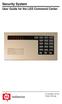 Security System User Guide for the LED Command Center MY SECURITY COMPANY IS: CALL BEFORE TEST: THIS SECURITY SYSTEM IS CONNECTED TO TELEPHONE NUMBER: THE SECURITY CONTROL PANEL IS CONNECTED TO THE PHONE
SECURITY SYSTEM NOTES. Security System Configuration
 Installing / Service Company: For Service Call: SECURITY SYSTEM NOTES Security System Configuration Master Code: Auxiliary Code(s) 2 3 4 5 6 "Quick Arm" Digit: Exit Delay Time Auxiliary Exit Delay Time
SPECIAL CODES AUXILIARY CODES SYSTEM NOTES
 Installing/Service Company Monitoring Center SPECIAL CODES Master Code Duress Code AUXILIARY CODES "Quick Arm" " Chime" 08 02 09 03 10 04 11 05 12 06 13 07 14 SYSTEM NOTES Exit Delay Time Entry Delay Time
HILLS Series LED Code Pad User Manual
 HILLS Series LED Code Pad User Manual Not all features may be available on your system Check with your installer to find out which features are programmed Page 2 TABLE OF CONTENTS Code Pad Diagrams...2
FIRST ALERT INSTRUCTION MANUAL FOR FA 270 KEYPADS SECURITY SYSTEM
 FIRST ALERT INSTRUCTION MANUAL FOR FA 270 KEYPADS SECURITY SYSTEM Page 0 Table of Contents Introduction 1 System Basics.. 1 Burglary Protection.. 1 Fire Protection.. 1 Security Codes. 1 Zones and Partitions
SECURITY SYSTEM NOTES. EMERGENCY ACTIVATION KEYS (check if enabled) PROGRAMMED FUNCTIONS
 SECURITY SYSTEM NOTES Installing/Service Company For Service Call Installation Date / / Central Station Duress Code EMERGENCY ACTIVATION KEYS (check if enabled) Fire Auxiliary Emergency Police PROGRAMMED
SECURITY SYSTEM NOTES SPECIAL CODES AUXILIARY ARM / DISARM CODES ENTRY / EXIT DELAY TIMES ZONE DESCRIPTIONS
 SECURITY SYSTEM NOTES Installing/Service Company For Service Call SPECIAL CODES Master Code Duress Code "Quick Arm" Digit "Chime" Digit "Entry-Guard" Digit AUXILIARY ARM / DISARM CODES 02 12 22 03 13 23
Destiny 4100. Destiny 4100. Owners Manual
 Destiny 4100 Destiny 4100 Owners Manual TABLE OF CONTENTS INTRODUCTION Control Panel...3 Detection Devices...3 Telephone Keypads...3 GLOSSARY... 4-5 LOCAL PHONE ACCESS Using Your Telephones As Keypads...6
Users Guide to Keypad Functions
 Users Guide to Keypad Functions MANUAL NO. 700-175-01J ISSUED JAN 2002 VERSION 1.41 Summary of Operation A rm/ disarm [#] + [USER CODE] Quick Quick Quick Panic Fire Medical Away Arm Stay Arm Stay Arm &
SECURITY SYSTEM NOTES SPECIAL CODES. Security System Configuration
 Installing / Service Company: SECURITY SYSTEM NOTES For Service Call: Master Code SPECIAL CODES Duress Code Security System Configuration Auxiliary Code(s) Quick Arm" Digit: 2 9 3 10 4 11 5 12 6 13 7 14
Security System Owner s Manual
 Security System Owner s Manual National Security Systems Inc (800)457-1999 What You Need to Know Before using this manual, you should become familiar with the Security System User s Guide. The User s
HILLS Series LED Code Pad User Manual
 HILLS Series LED Code Pad User Manual Not all features may be available on your system Check with your installer to find out which features are programmed Page 2 TABLE OF CONTENTS Code Pad Diagrams...2
Using your LED Plus keypad
 Using your LED Plus keypad System 238 System 2316 System 238i System 2316i Part Number 5-051-372-00 Rev B Thank you for purchasing this C&K alarm system Your system is one of the most powerful and advanced
Understanding the Code Pad lights...4. Code Pad tones...5. Fully arming the system On MODE...6. Fully arming the system - Quick Arm MODE...
 TABLE OF CONTENTS...Glossary of terms...2...code Pad Diagram...3 Understanding the Code Pad lights...4 Code Pad tones...5 Fully arming the system On MODE...6 Fully arming the system - Quick Arm MODE...6
User Guide for the DS7060 Control/Communicator
 DS7060 User Guide Copyright 1996-97 Detection Systems, Inc. User Guide for the DS7060 Control/Communicator Copyright 1996-97 Detection Systems, Inc. Detection Systems, Inc., 130 Perinton Parkway, Fairport,
Security System. User s Guide
 Security System User s Guide 1 2 Table of Contents Introduction... 7 About This Users Guide... 7 Using the Command Center... 9 Command Center Function Keys... 9 COMMAND... 9 ENT/YES... 9 ESC/MENU... 9
IDS. Users Guide to Keypad Functions S E C U R I T Y MANUAL NO. 700-171-01B ISSUED AUG 2002 VERSION 1.18
 INHEP DIGITAL IDS S E C U R I T Y Users Guide to Keypad Functions MANUAL NO. 700-171-01B ISSUED AUG 2002 VERSION 1.18 Summary of Operation A rm/ disarm [#] + [USER CODE] Quick Quick Quick Away Arm Stay
S I E R R A PRODUCT INFORMATION GUIDE FOR HOME SECURITY. SIERRA Page 1
 S I E R R A PRODUCT INFORMATION GUIDE FOR HOME SECURITY SIERRA Page 1 C O N T E N T S USING YOUR SIERRA SYSTEM: Turning On/Off Home Arming Instant Home Arming Quick Exit Mode Chime Mode SPECIAL FUNCTIONS:
INSTRUCTION MANUAL PC255O
 INSTRUCTION MANUAL PC255O Canadian Department of Communications Notice NOTICE: The Canadian Department of Communications label identifies certified equipment. This certification means that the equipment
www.ealarm.com.my P/N 5-051-371-00 Rev D
 System 236 System 236i P/N 5-051-371-00 Rev D Thank you for purchasing this C&K alarm system Your system is one of the most powerful and advanced alarm systems on the market today, designed to provide
SCORPION. micron security products
 SCORPION 4120 6020 & 8020 USER INSTRUCTIONS Thank you for purchasing a Quality Micron Security Alarm Controller. Micron product is manufactured to exacting quality standards. We understand the importance
POWER POWER ABC DEF GHI JKL ABC DEF GHI JKL COMMAND YZ COMMAND POWER ABC DEF GHI JKL COMMAND YZ USER'S GUIDE
 POWER POWER POWER ABC DEF GHI JKL ABC DEF GHI JKL MNO PQR STU VWX MNO PQR STU VWX YZ COMMAND YZ COMMAND ABC DEF GHI JKL MNO PQR STU VWX COMMAND YZ USER'S GUIDE Security Command User's Guide for 9XR Command
642 LCD Keypad User Manual
 642 LCD Keypad User Manual TABLE OF CONTENTS Introduction...3 Legend... 3 Basic Operation...5 Keypad Indicator Lights... 5 Visual Feedback... 5 Auditory Feedback... 6 Info List... 7 Access Codes...8 User
INSTRUCTION MANUAL LCD-6OO SECURITY STATION
 INSTRUCTION MANUAL 1993 Digital Security Controls Ltd. 1645 Flint Road, Downsview, Ontario, Canada M3J 2J6 Printed in Canada 29000144 R1 LCD-6OO SECURITY STATION Table of Contents Introduction 1 About
VISTA-50P VISTA-50PUL
 S e c u r i t y S y s t e m User's Manual VISTA-50P VISTA-50PUL N5943-6 7/95 TABLE OF CONTENTS SYSTEM OVERVIEW... 3 A Partitioned System... 3 Zones... 3 Fire Protection... 4 Burglary Protection... 4 Alarms...
Using Your. Security System With Icon Keypad S5020, S5021, S5022
 Using Your Security System With Icon Keypad S5020, S5021, S5022 Contents 1 Overview Your Security System... 1 How Your Security System Works... 2 Your System's Programming... 3 Getting Used to Your System...
GC2 Panel User Guide
 GC2 Panel User Guide ENGLISH (International) WIRELESS SECURITY SYSTEM WARNING: OWNER S I NSTRUCTION NOTICE Not to be removed by anyone except occupant THIS PAGE INTENTIONALLY LEFT BLANK CONTENTS System
Using Your. Security System. With LED Keypad S5030, S5031, S5032
 Using Your Security System With LED Keypad S5030, S5031, S5032 Contents 1 Overview Your Security System... 1 How Your Security System Works... 2 Your System's Programming... 3 Getting Used to Your System...
VISTA-128FBP VISTA-250FBP Commercial Fire and Burglary Partitioned Security Systems with Scheduling
 VISTA-128FBP VISTA-250FBP Commercial Fire and Burglary Partitioned Security Systems with Scheduling User Guide K0377V2 7/09 Rev. C 2 TABLE OF CONTENTS SYSTEM OVERVIEW... 5 General... 5 A Partitioned System...
SECURITY SYSTEM NOTES AREA LISTINGS SPECIAL CODES ENTRY / EXIT DELAY TIMES ARM / DISARM CODES ZONE DESCRIPTIONS
 SECURITY SYSTEM NOTES Installing/Service Company For Service Call Area 1 Area 2 Area 3 AREA LISTINGS SPECIAL CODES "Quick Arm" Digit "Partial Arm" Digit "Chime" Digit ENTRY / EXIT DELAY TIMES Exit Delay
USER S MANUAL. SMDC-16 Digital Control Communicator and SMPC-32 Personal Control
 SMDC-16 USER S MANUAL SMDC-16 Digital Control Communicator and SMPC-32 Personal Control Table of Contents General Descriptions Page Description of Your Alarm System 3 Description of Keypads 3 Keypad Maintenance
3 6HFXULW\6\VWHP 8VHU*XLGH K4333 9/99 AWAY BYPASS STAY ALARM FIRE ARMED OFF AWAY STAY READY MAX TEST BYPASS INSTANT CODE CHIME
 ARMED READY OFF AWAY STAY MAX TEST BYPASS INSTANT CODE CHIME READY ARMED READY NIGHT NO AC PHONE TEST NOT READY CHIME BAT CHECK INSTANT CANCELED OFF AWAY STAY MAX TEST BYPASS INSTANT CODE CHIME READY 3
XR6/XR10 User s Guide
 XR6/XR10 User s Guide Silencing an Alarm All/Perimeter and Home/Away Systems 1. While the alarm bell or siren is sounding, enter your user code. The keypad displays DISARM SILENCE. 2. Press the SELECT
IDS X-Series User Manual 700-398-01D Issued July 2012
 1 2 Contents 1. Introduction to the IDS X-Series Panels... 7 2. Before Operating Your Alarm System... 7 3. Understanding the Keypad LEDs... 8 3.1 Viewing Data on an LED Keypad... 12 3.1.1 LED Status Indicators...
SECURITY SYSTEM NOTES SPECIAL CODES ENTRY / EXIT DELAY TIMES ARM / DISARM CODES
 SECURITY SYSTEM NOTES Installing/Service Company For Service Call SPECIAL CODES "Chime" Digit 1 "Partial Arm" Digit 2 "Quick Arm" Digit 3 ENTRY / EXIT DELAY TIMES Exit Delay Time Entry Delay Time Secondary
FA701 Series. User s Guide. K6249-2V2 5/09 Rev. A
 FA701 Series TouchCenter Keypads User s Guide K6249-2V2 5/09 Rev. A Table of Contents ABOUT THE TOUCHCENTER... 5 Introduction... 5 2 The TouchCenter Interface... 5 Navigating through the TouchCenter...
DESTINY OWNER S MANUAL
 DESTINY OWNER S MANUAL DESTINY You have made a wise decision to protect your family and property with the DESTINY Security System. The DESTINY has been designed to provide you with a maximum level of security
PowerWave-8. Users Operating and Programming Guide Version 8.64. 8 zone Control panel Communicator
 ELECTRONIC ENGINEERING LTD. PowerWave-8 8 zone Control panel Communicator Users Operating and Programming Guide Version 8.64 P/N 7101261 Rev. C N.A July 2002 2 Contents Introduction...5 Meet the Crow Alarm
SCORPION Z16040C Alarm Controller User Instructions
 SCORPION Z16040C Alarm Controller User Instructions Thank you for choosing to purchase this micron security alarm controller. Micron product is manufactured to exacting quality standards. We understand
EVO48 EVO192. User Guide
 EVO48 EVO192 User Guide We hope this product performs to your complete satisfaction. Should you have any questions or comments, please visit www.paradox.com and send us your comments. Table of Contents
VISTA-100. Commercial Fire and Burglary 8VHU*XLGH. Partitioned Security System. N6020-2 Rev B 4/99 FIRE FIRE PULL
 VISTA-100 Commercial Fire and Burglary Partitioned Security System 8VHU*XLGH FIRE FIRE * PULL N6020-2 Rev B 4/99 TABLE OF CONTENTS SYSTEM OVERVIEW... 3 A Partitioned System... 3 Zones... 3 Fire Protection...
INSTRUCTION MANUAL DSC 1550
 INSTRUCTION MANUAL DSC 1550 A WORD ABOUT YOUR SYSTEM The PC1550 Security System has been designed to give you the greatest possible flexibility and convenience. Read this manual carefully and become familiar
NetworX Series. NX-148E LCD Keypad. User Manual
 NetworX Series NX-148E LCD Keypad User Manual TABLE OF CONTENTS I. GLOSSARY OF TERMS... 3 II. UNDERSTANDING THE LIGHTS... 4 III. KEYPAD FUNCTIONS... 5 ARMING YOUR SYSTEM IN THE AWAY MODE... 5 MAKING YOUR
5HDG\*XDUG5 6HFXULW\6\VWHP 8VHU*XLGH K5481-1 8/00 OFF AWAY STAY AUX
 5HDG\*XDUG5 6HFXULW\6\VWHP OFF AWAY STAY AUX 8VHU*XLGH K5481-1 8/00 7$%/(2)&217(176 SYSTEM OVERVIEW...3 Features...3 General Operation...4 Quick View of System Functions...6 About the Master Keypad...7
XT30/XT50 U S E R G U I D E
 XT30/XT50 USER GUIDE Silencing an Alarm When the alarm bell or siren is sounding, enter your user code or present your card to a keypad or reader during the Status List display. All/Perimeter or Home/Sleep/Away
Solution 16 plus. User Guide Security System
 Solution 16 plus EN Security System Copyright Notice Unless otherwise indicated, this publication is the copyright of Bosch Security Systems Pty Ltd ( Bosch ). All rights are reserved.you may download
Wireless Security System
 Wireless Security System 2GIG-CNTRL2 (2GIG-CP2) User s Guide WARNING: Owner s Instruction Notice Not to be removed by anyone except occupant The Go!Control Security System Congratulations on your ownership
TABLE OF CONTENTS HOW TO AVOID FALSE ALARMS... 2
 TABLE OF CONTENTS HOW TO AVOID FALSE ALARMS... 2 THE BRINK S HOME SECURITY SYSTEM Equipment in the Standard Systems... 3 Optional Equipment... 4 Optional Features... 5 Description of the Keypad... 6 OPERATING
Accenta/Optima. User Guide. Servicing Organisation (Installer) name: Telephone Number: Date of Installation: Account Number: Honeywell Security
 Accenta/Optima User Guide ZONE 1 2 3 4 5 6 7 8 9 Chime Omit Prog PA 0 1 2 3 4 5 6 7 8 9 CHIME OMIT RESET PROG SET Accenta + TA PA DAY POWER PA! " # $ % & 0 1 2 3 5 6 7 8 Chime Omit Reset Prog 4 9 Set PA
Solution-16 Operators Manual ISSUE 1.60
 Solution-16 Operators Manual ISSUE 1.60 !"#$%&"'()*+ Operators Manual Copyright 2002 by, SYDNEY, AUSTRALIA Document Part Number MA880O DOCUMENT ISSUE 1.60 Printed 22 March 2002 This documentation is provided
System Manager s Manual
 LCD Keypad DGP2-641B / DGP2-641RB DGP2-641 / DGP2-641R System Manager s Manual Also includes Operating Instructions Table of Contents Introduction... 1 Legend... 1 Basic Operation... 1 Auditory Feedback
Silencing an Alarm Note: Area Systems What to do when a trouble tone is sounding
 Silencing an Alarm When the alarm bell or siren is sounding, enter your user code or present your card to a keypad or reader during the Status List display. IS THIS A FALSE ALARM? YES NO or CANCEL VERIFY
MANUAL. FA142C Security System. N7229 1V2 Rev B 4/99
 USER'S MANUAL FA142C Security System N7229 1V2 Rev B 4/99 SYSTEM OVERVIEW...3 General...3 Keypads...3 Zones...3 Burglary Protection...4 Fire Protection...4 Alarms...4 Memory of Alarm...4 Phone Access &
Lynx Plus Series Security System
 Lynx Plus Series Security System User Guide ARMED READY ESCAPE ADD OFF AWAY RECORD LIGHTS ON 1 2 3 VOLUME TEST PLAY 4 5 6 BYPASS 7 8 9 STAY DELETE AUX SELECT LIGHTS OFF 0 CODE CHIME STATUS NO DELAY FUNCTION
User's Manual 5120XM N8031 6/96
 Fire and Burglary System User's Manual 5120XM N8031 6/96 SYSTEM OVERVIEW...3 General...3 Zones...3 Fire & Emergency Protection...3 Burglary Protection...4 Alarms...4 Memory of Alarm...4 ABOUT THE KEYPADS...5
USER GUIDE SERIES 4250 AUDIO ALARM CONFIRMATION SYSTEM CONTROL UNIT
 USER GUIDE SERIES 4250 AUDIO ALARM CONFIRMATION SYSTEM CONTROL UNIT CONTENTS Page INTRODUCTION... 2 Security conditions... 3 Full Set (Fully armed)... 3 Part Set (Partially armed)... 3 Unset (Disarmed)...
How To Use A Keypad On A Iphone Or Ipad (Awn) With A Security System On A Powerline (Apl) With An Alarm System On It (Aldeen) And A Power Button On It
 WARNING This manual contains information on limitations regarding product use and function and information on the limitations as to liability of the manufacturer. The entire manual should be carefully
Elite 8D/Lite Version 8 Zone Controller. Arrowhead Alarm Products Ltd. Operating Guide. Proudly Designed and Manufactured in New Zealand
 Elite 8D/Lite Version 8 Zone Controller 8 Arrowhead Alarm Products Ltd Operating Guide 1 Proudly Designed and Manufactured in New Zealand 2 CONTENTS Page No. INTRODUCTION 4 About your Alarm 4 OPERATING
Wireless Security System
 Wireless Security System 2GIG-CP2 User s Guide WARNING: Owner s Instruction Notice Not to be removed by anyone except occupant The Go!Control Security System Congratulations on your ownership of a Go!Control
ADEMCO VISTA SERIES VISTA-20P / VISTA-20PSIA VISTA-15P / VISTA-15PSIA Security Systems
 ADEMCO VISTA SERIES VISTA-20P / VISTA-20PSIA VISTA-15P / VISTA-15PSIA Security Systems User Guide K5309-1V4 10/04 Rev. A IMPORTANT! PROPER INTRUSION PROTECTION For proper intrusion coverage, sensors should
INSTRUCTION MANUAL PC5OO WITH PC5OORK KEYPAD
 INSTRUCTION MANUAL PC5OO WITH PC5OORK KEYPAD TABLE OF CONTENTS SYSTEM INFORMATION 2 INTRODUCTION 3 Test Your System Regularly...3 Important Notice...3 Glossary...3 BASIC OPERATION 4 Arming Your System...4
Fire System. User's Guide
 Fire System EN User's Guide Fire System User s Guide Important Information Important Information Telephone Line Seizure: Might prevent you from using your telephone to send or receive calls. This control
Power864. User s Guide. Now classified in accordance with ANSI/SIA CP-01-2000 (SIA-FAR)
 WARNING This manual contains information on limitations regarding product use and function and information on the limitations as to liability of the manufacturer. The entire manual should be carefully
READY ARMED 2 AWAY 1 OFF 3 STAY B 5 TEST 6 C D MAX BYPASS 9 CHIME # 8 CODE INSTANT READY I I I I I I FA560 K4855V1 3/00
 ARMED MAX INSTANT READY READY R BYPASS R R )$& )$&&1 6HFXULW\6\VWHP A 1 OFF 2 AWAY 3 STAY B 4 5 TEST 6 C D 7 * FA560 8 CODE 0 9 CHIME # I I I I I I HEAT COOL BYPASS ACTIVE 8VHU*XLGH K4855V1 3/00 TABLE
Security System. User's Manual VISTA-20BAY. N7527-4 03/98 File No: S1632 SINCE 1946
 Security System User's Manual VISTA-20BAY SINCE 1946 N7527-4 03/98 File No: S1632 TABLE OF CONTENTS System Overview...4 General Information...4 Zones...4 Burglary Protection...4 Security Codes...5 Fire
Your Ademco. Fir&Burglar Alarm System. LogiCenter INTRODUCTION: 1. _- ALARM DEVICE MANUFACTURING CO.
 Your Ademco LogiCenter Fir&Burglar Alarm System i INTRODUCTION: Your LogiCenter is designed to alert you in the event of either a forced entry into a protected area or signal an alarm if a fire alarm condition
MONITOR ISM / AFx Multi-Tenant Security System User Guide V1.3
 MONITOR ISM / AFx Multi-Tenant Security System User Guide V.3 Multi-Tenant Security System User Guide Welcome New Users! There are two types of suite security keypads. Follow the instructions in the proceeding
User's Manual VIA-30PSE, VISTA-10SE. N7229V2 Rev B. 1/97
 Security System User's Manual VIA-30PSE, VISTA-10SE N7229V2 Rev B. 1/97 SYSTEM OVERVIEW...3 General...3 Zones...3 Burglary Protection...3 Chime Feature...3 Alarms...4 Fire Protection...4 Memory of Alarm...4
ADEMCO VISTA SERIES VISTA-20P / VISTA-20PSIA VISTA-15P / VISTA-15PSIA Security Systems
 ADEMCO VISTA SERIES VISTA-20P / VISTA-20PSIA VISTA-15P / VISTA-15PSIA Security Systems User Guide K5309-1V7 3/15 Rev A IMPORTANT! PROPER INTRUSION PROTECTION For proper intrusion coverage, sensors should
LYNX Touch Security System
 LYNX Touch Security System User Guide 1:35 2 PM October 26, 2011 72 Mostly Sunny 68 F F Feels Like 71 Security Messages Automation 5-Day Forecast News Traffic 800-10615 1/12 Rev. A LYNX Touch L5100 Series
GE Concord 4 Quick User Guide
 GE Concord 4 Quick User Guide GE Concord 4 Quick User Guide Page 1 Before Calling Is the keypad beeping? Press *. This will silence the beeping and let you know where the trouble is. Is there a flashing
tattletale User Guide Consumer unit version 2.48 1 P a g e
 tattletale User Guide Consumer unit version 2.48 1 P a g e Contents Basic 1... 4 Base Unit Features... 4 Initial Setup... 4 Arming... 5 Disarming... 5 Quiet Button... 5 Settings... 5 Settings 2... 6 Quick
HARDWIRED CONTROL PANELS
 USER GUIDE 9651 HARDWIRED CONTROL PANELS Contents 1. Introduction...3 The Alarm System...3 The Keypad...3 About This Guide...5 2. Everyday Operation...6 How Do I Know if the System is Working?...6 Setting
TABLE OF CONTENTS HOW TO AVOID FALSE ALARMS... 1
 TABLE OF CONTENTS HOW TO AVOID FALSE ALARMS... 1 THE BRINK S HOME SECURITY SYSTEM Equipment in the Standard Systems... 2 Optional Equipment... 3 Description of the Keypad... 5 OPERATING THE BRINK S SYSTEM
First Alert N8600 2/97
 USER'S MANUAL FA145C Security System First Alert N8600 2/97 SYSTEM OVERVIEW... 3 General... 3 Zones... 3 Burglary Protection... 3 Chime Feature... 3 Alarms... 4 Fire Protection... 4 Memory of Alarm...
6HFXULW\6\VWHPV 8VHU V*XLGH K5309-1V1 8/01
 9,67$39,67$3&1 9,67$39,67$3&1 6HFXULW\6\VWHPV 8VHU V*XLGH K5309-1V1 8/01 1 IMPORTANT! PROPER INTRUSION PROTECTION For proper intrusion coverage, sensors should be located at every possible point of entry
LYNX Touch Security System
 LYNX Touch Security System User Guide 800-10615V1 12/12 Rev. A LYNX Touch L5100 Series Your Honeywell security system is designed for use with devices manufactured or approved by Honeywell for use with
Control/Communicator Installation Manual
 DAS NETWORX NX-8 Control/Communicator Installation Manual Page General Description... 2 Ordering Information... 2 Option Definitions... 2 Programming the LED Code Pads... 4 Programming the NX-8... 8 Types
CONTENTS 4. HOW TO UNSET THE PANEL...7
 Pi-8 USER MANUAL CONTENTS 1. THE KEYPAD AND ITS OPERATION...3 1.1 DESCRIPTION OF THE KEYPAD LEDS... 3 1.1.1 READY LED (RED)...3 1.1.2 TAMPER LED (RED)...3 1.1.3 POWER LED (GREEN)...3 1.1.4 CIRCUIT LEDs
SECURITY & MONITORING QUICK GUIDE
 SECURITY & MONITORING QUICK GUIDE Now that you have your security system installed, use it regularly. Regular usage will increase your comfort with operating the system and reduce the likelihood of false
SPECIAL CONTROL BUTTON FUNCTIONS
 Operating Guide 1 2 3 CONTENTS Page No. OPERATING YOUR ALARM 5 General Information 5 Arming the Alarm 5 Disarming the Alarm 6 Arming in Stay Mode 7 Disarming Stay Mode 8 Bypassing Zones 8 Manual Panic,
XT30/XT50. User s Guide
 XT30/XT50 User s Guide Silencing an Alarm When the alarm bell or siren is sounding, enter your user code or present your card to a keypad or reader during the Status List display. All/Perimeter or Home/Sleep/Away
Maintenance Manual PC6010. WARNING This manual contains information on limitations regarding product use and function
 WARNING This manual contains information on limitations regarding product use and function and information on the limitations as to liability of the manufacturer. The entire manual should be carefully
Enhanced. Commercial Burglary Partitioned Security System with Scheduling. User Guide. K4970-1V3 4/09 Rev. B FA560 3 STAY 2 AWAY 1 OFF 5 TEST 9 CHIME
 BS/ESC N/Y SHIFT ARMED READY A D S SPACE R B E T C F X ENTER ARMED READY MAX INSTANT READY R BYPASS FA1660C Enhanced Commercial Burglary Partitioned Security System with Scheduling 4 1 5 FA560 6 7 8 9
USER'S MANUAL. N7527-1V2 Rev B 4/99
 USER'S MANUAL FA162C Security System N7527-1V2 Rev B 4/99 2 SYSTEM OVERVIEW... 4 General... 4 A Partitioned System... 4 Zones... 4 Burglary Protection... 5 Security Codes... 5 Fire Protection... 6 Alarms...
LYNX Touch L7000 Series Security System
 LYNX Touch L7000 Series Security System User Guide 800-16084 12/13 Rev. A LYNX Touch L7000 Series Your Honeywell security system is designed for use with devices manufactured or approved by Honeywell for