
ANXIETY, STRESS, TENSION
|
|
|
- Calvin Lawrence
- 10 years ago
- Views:
Transcription
1 The list of conditions mentioned below is not exhaustive but outlines those most commonly encountered by our teachers. If there is ever any doubt or cause for concern, refer the student to a Doctor or if they have the go ahead to exercise and you are unfamiliar with the condition, consult a more experienced teacher. To get a more in-depth account of each condition go to conditions or other specialist websites. As taught on the course, guide the student not to push or go beyond their capability. Assess each case separately as conditions vary between each individual. There is no one formula for all so always look at the person as described in the checklist. ADDICTION If you feel able to help the person within a yoga setting then concentrate on stable grounded poses such as standing poses, (no one legged poses to start with) Setu Bandha, shoulder balance if they are able to do it. When teaching backbends, keep them grounded, working with the breath. Asanas that require more focus on balance, such as full arm balance and inverted poses such as sirsasana should not be done unless you know them well. Breathing should be simple and cued throughout the class as a way to keep them focused. Suggested pranayama techniques would be: Anuloma viloma (alternate nostril breath) and Viloma. Strong boundaries are very important when teaching anyone with an addiction and you will need outside support for both them and you, and also a deep understanding of the nature of addiction on an emotional, psychological and physical level. ANOREXIA As well as the student being very thin there is usually a coating of soft downy hair across their back. The condition is more common in women, especially teenagers who have poor self-image. Can be a cry for help due to an emotional cause. When teaching these students you need an awareness of the symptoms of the condition. Consider teaching a shorter class as their strength and stamina is compromised due to lack of nourishment and they will be deficient in nutrients so structure the class carefully. They should not hold the asanas for too long and need to go gently, even if they want to do more. They need to strengthen but not exert and they are likely to have some osteoporosis. If possible, seek the advice of their practitioner. ANXIETY, STRESS, TENSION There are different approaches but would suggest starting with a gentle warm up before bringing them into the slower more grounded movements. Work to get a sense of flow, moving with the breath. You would need to ground them before introducing breathing practices and even then possibly not be too specific until you can see that they are more settled. They would benefit from a gentle practice and asanas that calm and tonify the nervous system i.e. forward bends are useful. Folding the legs into the chest and

2 breathing, child pose and dog pose, leaning forward, resting the head on a support, standing poses, gentle twists, tadasana, arms swing, supine twists, walking footprints, shoulder stand and savasana are all helpful. ASTHMA Asthma is an inflammatory disease of the airways. One of the main symptoms is difficulty in exhaling. The small airways in the lungs (Bronchioles) get blocked. Symptoms include breathlessness, chest tightness, wheezing, coughing and gasping for air. This all depends on the severity of the attack. Attacks can come on from exercise. Usually the student will have their inhaler with them (never give them somebody else's). If symptoms come on they will also automatically place themselves in a position where they can get more air, which is usually sitting leaning slightly forward, which counteracts the desire to gasp for breath. Generally be aware that their thoracic area might be tight so concentrate on spinal alignment - asanas that release and lengthen. Compressive poses can be tricky, especially shoulder stand, which can restrict the breath if they do not have enough length in the spine. Get them to focus on breathing into the back of the body and teach them how to quietly breathe before introducing other pranayama techniques such as kapalabhati and viloma on the exhalation. Standing poses, which open the chest, and shoulder exercises are helpful. ARTHRITIS Lists five distinct groups of arthritis: Inflammatory arthritis Degenerative or mechanical arthritis Soft tissue, musculoskeletal pain Back pain Connective tissue disease See Spinal Conditions document for further information on Arthritis Osteoarthritis is a degenerative condition of the joints, wear and tear of the cartilage covering the end of the bones. Objective is to promote gentle movement that increases the blood flow to the joint and synovial fluid. The sufferer might find it painful at first. If pain subsides then it is fine to continue, if the pain gets worse leave it. Releasing with the breath is important as most arthritis sufferers get into the habit of holding their breath thus reinforcing tension in the muscles. Never strain or put unnecessary weight through the joint. Rheumatoid arthritis is an autoimmune disease that attacks the joints. Inflammation occurs around the capsule in synovial joints. This leads to the destruction of articular cartilage and ankylosis around the joint. This can be seen by the distortions at the ends of the bones i.e. hands and feet. The neck is particularly vulnerable so no weight bearing asanas as they could cause paralysis. If there is a flare up then go more gently, focusing on gentle movement and the breath. Always try to get advice from their doctor as several conditions can ape true rheumatoid arthritis, including viral conditions of the joints that burn themselves out. Treatment is strong drugs to control the inflammation. Focus should be on correcting alignment and faulty movement patterns. The breath is a useful tool for pain relief and management.

3 Arthritic hips - onset usually in middle age and student will complain of pain in the groin which progresses into limited movement in the joint. External rotation tends to make it worse so adapt accordingly, supporting the leg when doing sitting poses is helpful and not holding for too long. Monitor when doing Trikonasana and Vrksasana and always work within a pain-free range of movement. Inverted poses provide relief as they are non-weight bearing and release the hips. One leg down in Sarvangasana is especially helpful. Doing supine poses after inverted asanas makes it easier to lengthen through the leg on the affected side. Arthritic neck - limited mobility in certain movements, muscular stiffness and accompanying pain. Check range of movement, correct overall alignment of the spine and monitor asanas such as Trikonasana where the head is laterally rotated and unsupported, adapting as necessary. Headstand is contraindicated. (Some students who have been doing yoga for years and know how to do it correctly taking the weight through the upper body and arms may do it at their own risk and if you feel comfortable giving it to them as their teacher). Shoulder stand should be avoided if the student is not able to lengthen through the mid and upper spine and neck. Practising Setu Bandha (supine, lifting pelvis up with knees bent, feet flat would be a good way to introduce lengthening and releasing the neck). Kneeling or sitting to a support with the sitting bones anchored and arms resting in front, resting the forehead on the arms or a pillow, allowing the neck to be long and quiet. Standing arm swings and all arm positions can help. Gentle kneeling and sitting twists and gentle rotations lying supine with the head on a soft support can be good. Cat and Dog poses are also helpful to work on shoulder, upper back and neck placement, with the head hanging down in dog pose to relieve the neck. Psoriatic arthritis is another form of arthritis associated with the skin disease psoriasis. Treat similarly to osteoarthritis and as appropriate to the sufferer. BAD CIRCULATION Sun salute, inverted poses and exercises which stretch the feet. Legs up the wall may not be good for piles and vulva varicosity but can be useful for legs if they are slanted, at an angle to the wall. See varicose veins, piles, prolapse. BLOOD PRESSURE 1. High blood pressure - avoid going all the way forward in Uttanasana and forward bends. It is better not to let the head be too much lower than heart. Do dog to a support, and keep neck long, but not all the way down unless the student is on medication and their blood pressure is under control. 2. Low blood pressure - a sign of this is feeling dizzy after coming up from forward bends. Sink the heels down and come up very slowly or with use of a support. COLITIS Standing poses, breathing and lengthening the spine Vajrasana; Supta Virasana; Badda Konasana; Padmasana and Matsyasana. Inverted variations are not recommended if there is a flare up.

4 CONSTIPATION Shoulder balance, head balance, quieter poses such as Janu Sirsasana, twists with the emphasis on grounding and releasing tension within the organs. Rocking whilst in Dhanurasana (bow pose) is suggested in some texts. Supta virasana to supports or the floor is also uselful. CRAMP All poses will help with this. Re: foot cramp, sitting on heels with toes tucked under, or tying heels together in Vajrasana. In front bends, lengthen and exhale relaxing the lower abdomen, especially in Kurmasana. If the student keeps cramping beyond the norm refer them to a Practitioner. CYSTITIS Suggestions if there is a flare up: Lie on the back with knees bent to lengthen the lower back and feel the breath low in the abdomen. Same position with a pillow under the pelvis gets the same effect with a gentle backbending movement. Baddha Konasana lying on the back with feet raised on a cushion. A supported shoulder stand extending the hips away can bring relief but not held for too long. Occasionally the infection could reach the kidneys in inverted poses. DEPRESSION Standing poses, emphasising stretching up as well as grounding. It is best to plan a general class, focusing on flowing movements. Not too many forward bends. Some suggestions are: Sun Salute; Headstands; Backbends; Viloma on the in breath; Kapalabhati and possibly, Khumbhaka. DIABETES Yoga can make a huge difference in some cases if approached slowly and carefully (N.B. insulin requirements can be changed if yoga is practiced regularly so warn the student this might happen). Stress and tension can be part of the condition so do standing poses prone back bends, sitting poses, breathing and relaxation. There is a chance of tiny hemorrhages behind the eye and in some cases a detached retina, so do not do inverted poses unless otherwise advised by their doctor. DIZZINESS There are many possible reasons for this. If it is not due to the early symptoms of a cold, tiredness, stress, anxiety or lack of eating, then ask your student to check with their Doctor as it could be blood pressure or a middle ear infection. Reduce tension in the neck and shoulders and go slowly. Cow and eagle arms are useful. Always take care when moving from lying to standing poses, with Uttanasana and Sun Salute. Make sure they come up slowly out of forward bends and are well anchored. EMOTIONAL PROBLEMS: grief, weeping Keep them focused and grounded. If not extreme and beyond the remit of a class, include simple asanas. Balance poses should be done with the support of a wall or chair or omitted completely if the student is very upset. Once they are more focused and able to move more freely then start to draw their attention to the breath. Use your discretion with

5 inverted poses. Suggestions of asanas to include would be: Setu Bandha, standing poses, simple sitting poses, Vajrasana, Virasana with arms up, Maha Mudra, Padmasana, Viloma on the in breath, buzzing breath (unless very distressed) and keep the eyes open for breathing. EPILEPSY Fits and loss of consciousness: Petit Mal - fleeting loss of consciousness or Grand Mal if more severe. Ask them if they get an aura before an attack and follow first aid procedures. When there are no symptoms a general class should be fine if you keep an eye on them, watching their responses. Teaching them to listen to their body responding accordingly would be a main focus. Do not end class with savasana as exercise followed by lying them down flat can bring on a fit in some patients, so quieten them down slowly at the end of the class/practice and end with sitting. Savasana can be done separately after breathing. Keep breathing simple and do not retain the breath. Sometimes doing shoulder balance at the beginning of a class/practice reduces the occasion of Petit Mal for the rest of the session so in a severely affected young student this may be worth trying. Be careful with the pushing up backbends as these can be too strong. EYE PROBLEMS Eyes can quieten during relaxation and breathing if the gaze is turned downwards beneath the eyelids, reducing strain in the muscle around the eyes. A rice bag over the eyes in Savasana can help relax them. Be very careful if there is any history of high blood pressure or detached retina. Avoid pushing up into back arches or anything that would increase pressure behind the eyes as this could cause hemorrhaging behind the retina. Inverted poses would be contraindicated and any pose where the head is lower than the heart in some cases. After a cataract operation allow 6 weeks at least before doing any inverted poses. Sometimes people have a one-off detached retina so each case has to be evaluated individually. Sanmukhi (fingers to face) mudra; rice bags to eyes; trataka (gazing at a fixed point); sitali and nadhi sodhama breathing. FEET & ANKLES Foot sprains - rest then build up muscles Stress fractures caused by over use and repetitive action. An incomplete fracture. Evidenced by swelling and pain. Common in runners. Fallen/dropped arches exercises and foot supports. Bone spurs & bunions - walking barefoot, using toe separators, and toe loops in tadasana, squat and badda konasana Sesamoiditis - a form of tendonitis due to two small bones embedded in the tendon beneath the big toe joint in the ball of the foot. Inflammation of the tendon, often caused by high heels. High arches and supranation of the foot are symptomatic. Plantarfasciitis fascia underneath the foot. Pronation is more likely. Affect the heel and underside of the foot separation of the tendon from the calcaneous heel bone - takes a v. long time to heel. Not a lot we can do! Useful poses are: Tadasana; Vrksasana; Garudasana; Prasaritta Padottanasana; squatting; kneeling (with toes away and toes under); standing toe exercises; Pete Blackaby rocking side to side move with the toes tucked under; Sarvangasana (extending heels away and keeping feet straight); supine leg stretches; sitting poses and sun salute.

6 Always focus on the legs in inverted poses and sitting poses, extending the heels away and keeping the feet straight. Toe exercises in standing and sitting. FUSED VERTEBRA Sometimes vertebrae are fused in surgery to solve disc problems. This can leave a stiff area of the spine with more mobile areas either side taking the strain. Concentrate on poses that keep all the spinal and abdominal muscles strong and supportive and avoid those which might jar or strain the spine. If poses are done with care yoga can be very helpful for these pupils. What they can do will depend on how much yoga they have done before the operation. FYBROMYALGIA A form of inflammatory arthritis which also affects the central nervous system. Symptoms are widespread muscular pain. Has physical and psychological roots and can be stress related. See ARTHRITIS. HERNIAS Most common hernias are: Inguinal protrusion of the bowel through muscle wall at groin level. Usually affects men Femoral protrusion of the bowel into groin at top of the thigh. Affects women more than men Umbilical protrusion of intestine near navel. Common in infants Epigastric protrusion of the intestine between the navel and sternum Hiatus Hernia protrusion of the stomach through the diaphragm Diaphragmatic protrusion of the intestine through the diaphragm Do sun salute moving on the out breath, emphasising the release. Each case will vary depending upon level of experience and body awareness. Asanas that might be affected: Urdhva Dhanurasana, deep twists, stronger asanas such as Bakasana. Avoid strong back arches and postures likely to put pressure on the front line of the body. Avoid pigeon for inguinal and femoral hernia and compressive poses such as going forward in gomukhasana, lotus and virasana. Take care when going in and out of shoulder stand and make use of props to ease effort. HERNIATED DISC (slipped disc) see Spinal Conditions document Take advice from the Practitioner that is treating them as to where the disc is bulging and which movements should be avoided (contraindicated). Usually it is side flexion, forward bending and extensions depending upon whether it is in the chronic or acute phase. Suggestions (bearing in mind that every case is different): Gentle supine breathing with legs resting on a support until back feels quieter. Always check if they are comfortable adjusting position with pillow support if necessary and not keeping them too long in one position. Supine with legs bent, feet on floor, one leg folded in to focus on releasing around hip joint and hamstrings. A gentle approach to all asanas is required, not going too far and staying within comfort zone. Possibly also a shorter class if acute. Never over-stretch i.e. lying supine with one leg up will be painful so keep knees bent.

7 Standing in trikonasana etc. watch carefully, gently supporting with your hands. Ensure back heel is well anchored and weighted, sensing the connection of length from the hip down to the heel. If student gets immediate pain after a pose it is unlikely to be a disc (usually these cause delayed pain) - it is more likely to be from a facet joint. Bring them out of the pose and into a position where they can rest. When not acute and the condition is being managed, head balance can be done being careful on the going up and the coming down. It is advisable to support the student. Shoulder stand can gradually be introduced progressing them from Setu Bandha, to feet on a wall or chair. Forward bends - Janu Sirsasana, Uttanasana and Paschimottanasana - gradually reintroduce making sure that they are moving from the pelvis with a gentle support of the abdominals with the breath, initiating from the lengthening of the hamstrings, feeling the sit-bones of the pelvis on the floor and the length through the spine. Add support where needed. Do not do if in doubt. You could consider teaching the student a more natural forward flexion whilst sitting in a chair using a support in front if necessary. Extensions should be introduced gradually. This could be done from standing, whilst lying prone or by doing a gentle cat introducing how to move correctly without compressing into the lumbar area. Deeper backbends would come in much later when fully recovered and when they have a deeper understanding of where to ground and support. Pigeon preparation can also be helpful if done quietly and gently. HIP REPLACEMENTS Avoid medial movement e.g. cow legs. All movements become a bit restricted but regaining ROM may depend on how the muscles were pre operation. To help loosen the hips stand on one foot on a book or step & swing other leg to and fro. Stand with one foot on a chair and twist - parivritta parsva konasana. HYPERMOBILITY There is a range of hypermobility from mild to extreme (Ehlers-Danlos syndrome a disorder of the connective tissue causing increased range of hypermobility in the joints). Hypermobility in dancers and gymnasts has its advantages and disadvantages. Always work to strengthen and support the joint, not allowing them to over stretch around an already over-flexible joint. Work on grounding, and finding the anchor points within each pose. INCONTINENCE/weak pelvic floor Under the advice of a practitioner, work on the breath introducing the use of the pelvic floor where appropriate. All poses that extend the hip joints, lengthen the lumbar spine and help lengthen a sway back are useful. Draw the pelvic floor in and up gradually on the exhalation in asanas such as Baddha Konasana, Supta Virasana, Padmasana, Tadasana, Vrkasana, Navasana, Bakasana, inverted poses and supine poses. Include these muscles in Kapalabhati, on each beat of the exhalation. Practice the Kegel exercises. INJURIES Muscles: muscles can spasm, tear, and there can be bleeding within a muscle after a tear or an impact. For first aid cool with ice pack if poss.- SEEK MEDICAL ADVICE- after a tear a regenerated muscle will contain scar tissue which is not

8 elastic and will leave the area vulnerable to future strains. To prevent formation of scar tissue muscle needs to be stretched gently- get advice from a Physiotherapist. Remember to make use of RICE: rest, ice, compress and elevate. Stiffness and soreness: Yoga pupils can initially feel stiff after a practice. This is normal if those muscles have not been used to working. Always ensure that there is an appropriate warm up into the more challenging poses followed by counter-poses and winding down. If the stiffness or soreness continues then seek advice from a Practitioner. Sprain: This can happen when a joint is forced beyond its normal range of movement, and ligament fibres are damaged. If possible, cool with ice and seek medical advice. Depending upon the severity of the sprain, work within a pain-free zone. Objective is to strengthen the muscles around the joint preferably with the advice of a Physiotherapist or other related practitioner. See RICE above. Strain: A pain felt in class could well be the overstraining/over stretching of a ligament or muscle. In this case the muscles around the ligament tighten and feel painful. Treat as per sprain. See RICE above. Rupture: refers to torn tendon. Seek medical advice. INFLAMMATION Work around the area and leave inflamed area alone. If there is pain and swelling refer them to a practitioner. INSOMNIA If unable to sleep in the night, get out of bed, do quiet supine leg stretches, followed by a gentle supine twist, and then Dog pose, Viloma pausing on the out breath, and a gentle Ujayii breath and then go back to bed. Before going to bed it can be helpful to do sitting poses such as Janu Sirsasana, Marichyasana, Sarvangasana and Savasana. INSTABILITY Emotional, agitation, stress. See EMOTIONAL PROBLEMS IRRITABLE BOWEL SYNDROME See COLITIS KNEES Housemaid's Knee pre-patellar bursitis inflammation. Employ RICE. Chondromalacia* of the patella: wear and tear of inside of cartilage (*abnormal appearing/deteriorating cartilage) Cartilage, meniscus tears, & small chips of bone loose in the knee joint. Medial and lateral meniscus wear and tear with age. Arthroscopy and knee replacements prevent a return to previous range of movement. Cruciate ligament tears - be careful, build up muscles around the knee joint and seek medical advice.

9 Pain in the back of the knee - often due to meniscus problems causing synovial fluid build up and stiffening of joint action Bakers cyst - a synovial fluid-filled bursa at the junction of the calf and hamstring muscles. Arthritis or meniscal tear or even bony fragments can irritate and cause Baker s cyst. Ligament strains RICE (rest ice compression & elevation) Knock knees can result in pronation of feet. Brought about via the mechanical axes of lower limb - GENU VARUM (bow legs) or GENU VALGAM (knock knees) Inverted poses are good as they take the weight off the joint. Improving the alignment and the relationship of the pelvis, knees and feet is a priority. Knee joint should not be compressed or compromised in any way i.e. no twisting/rotation of the muscle fibres in the leg. Try to find asanas that keep the legs long in variations i.e. Sarvangasana with one leg down & really lengthening the upper leg away. Sitting with long legs helps, working on mobilizing the pelvis whilst supine or inverted as many problems in knees are due to stiff hips. Watch position of feet in pushing up into back arches & squats etc. Bad position can cause bad knees. Lying supine with legs up wall is helpful. Strengthening of the quadriceps and other muscles around the knee is often necessary once the condition allows it. KYPHOSIS Excessively rounded upper back, also known as dowager s hump. Sitting twists are useful. Arm exercises are useful, also Cat and prone back arches. Place a cushion under the hips in prone back arches, then think about lengthening, NOT coming up. Use a door, arms above the head, looped over the top of the door to encourage lengthening. The objective is to gently help the thoracic spine become more mobile. LORDOSIS Exaggerated lumbar curve at back of the waist. All poses done with attention to elongating the spine and breathing, using the abdominal muscles on the outbreath, will help. Postures to help lengthen the psoas muscle e.g. supta virasana and lunges. Keep awareness of the tail tucking under. Experiment with cat and dog poses, emphasising the direction of the sitting bones. Tight hamstrings decrease lordosis. LOWER BACK PAIN Be very careful if in an acute stage. Best to stay lying on the floor with legs supported and breathing deeply & gently. All supine poses with props done gently, pigeon preparation, kneeling/ sitting forward to a support, simplified standing poses with supports, squatting (with support if necessary) gentle locust or cobra, sitting against a wall with back and thighs supported. Physio balls can help. ME (myalgic encephalomyelitis) or CHRONIC FATIGUE SYNDROME Muscle pain and inflammation of brain and spinal cord often caused by a viral infection, hormones, psychiatric problems, stress etc. Sufferers have very little energy. A very tricky one to deal with. A balanced all round programme of asana and breathing can help. Very important not to let them overdo and strain in each asana and to rest in between postures. This is a complicated condition with a psychological element. Probably ok if they will practise, but otherwise we can be of little help.

10 MENSTRUAL PROBLEMS If heavy bleeding, fibroids or painful endometriosis, avoid inverted poses or backbends. For P.M.T. - good strong practice, standing poses, head balance, shoulder balance, back arches and related sequences. For Menopause - practice all the more! MIGRAINE Lie supine with a tennis ball under the neck, between the shoulder blades, or place a roll under the spine. Lengthen forward to a support and rest the head and neck. Dog pose is helpful in releasing the neck and upper back. Try to release with face mudra (kechari). Rice bags over the eyes in savasana can be helpful. MS: MULTIPLE SCLEROSIS A very variable disease and balance is usually a problem. Sometimes there is no feeling in the lower limbs.yoga can be great, but because M.S. sufferers may tire easily they need gentle stabilizing poses that work the full range of movement, and plenty of breathing. Balancing (with props if necessary) and working both sides of the body evenly whenever possible. Teachers can help with gentle hands on, as reassurance. Shoulder balance as a restorative pose is useful. Breathing techniques should be stimulating as well as relaxing: lion, kapalabhati, nadi sodhama, khumbhaka. NB as with rheumatoid arthritis there are many muscular syndromes that ape M.S. Make sure they have been diagnosed by a doctor and are not self -diagnosed. OSTEOPOROSIS see Spinal Conditions document Keep mobile and moving. Sun salute, standing poses and all weight bearing exercises that strengthen the bones are useful. However if someone has severe osteoporosis be very careful as even gentle touching could fracture bones, especially the ribs. Teach breathing gently. No head stand. Encourage upright weight-bearing exercise to help make more bone, but be careful of the vertebrae, ribs and neck and take extra care with inverteds and twists. PARKINSON'S DISEASE A progressive disorder of the central nervous system, which affects muscular movement. Sufferers are often characterized by a forward head position, rounding of the shoulders and upper back and a forward trunk position with increased bending at the hips and knees. Gentle yoga asanas and quiet breathing can help hugely. PELVIC INFLAMMATORY DISEASE- SEE COLITIS PILES Take care with front bends, bakasana and squatting. Always exhale and draw the pelvic floor in and up. Practise mulabandha, navasana poses and inverted poses, engaging the pelvic floor muscles. Pay attention to postural alignment. Be sure to engage the pelvic floor while sitting and doing the breathing techniques. See also PROLAPSE. PREGNANCY

11 Much depends on how much yoga the student has done already. Common sense needs to be your guide. Best to avoid teaching them during the first 12 weeks, unless they are regular dedicated pupils and do not let them do any jerky or strong twisting or abdominal compression movements. Pregnancy and birth require strong muscles so pregnant women benefit from standing poses. All poses need to make more space for the baby i.e. elongate the spine, and many poses can be adapted to aid & strengthen them. The ligaments become more lax during pregnancy so do not overindulge them (ligaments) or it can be a problem!! Good posture, using the pelvic floor, feet/leg exercises to avoid varicose veins etc. Adapting postures for labour and, almost most important of all, deep breathing are all invaluable. Kapalabhati is contraindicated. PROLAPSE/ stress incontinence Tadasana to help them to stand correctly if they are standing badly then do not let them stay long to start with or it can aggravate the problem - lie them down instead. Once tadasana can be done well then it is good for the problem. Be careful with standing twists as they can compress digestive organs and too much pressure on these can cause problems. Inverted poses should be good for this condition use the pelvic floor muscles in inverteds poses. Gentle sitting forward bends can be OK but no downwards pressure to be exerted so avoid positions like squatting and baddha konasana and be careful with sitting twists. Avoid positions which put any extra pressure on the abdominal cavity. Kapalabhati is contraindicated. See also PILES. POLYMYALGIA RHEUMATICIA An inflammatory condition that causes stiffness and painful muscles of the neck, shoulders, thighs and hips. Polymyalgia rheumatica (PMR) is sometimes associated with painful inflammation of the arteries of the skull. This is called giant cell arteritis, or temporal arteritis, and needs prompt treatment, as there is a risk of damage to the arteries of the eyes. Must seek medical attention. Usually affects older people. SACROLUMBAR JOINT- pain The lumbar spine does not move much in standing twists. If movement is forced lower down it is more likely to hurt the sacrolumbar joint. Be very careful with forward bends and supine twists keep the knees close into the chest. SACROILLIAC JOINT pain Can ache and be inflamed at times, requiring supine rest or the muscles can go into spasm. Pigeon preparation can help but keep upright rather than lying long. Note: as per sacrolumbar joint in forward bends and supine twists. SCIATICA see Spinal Conditions document Can be helped by adaptations of poses such dog, setu bandha, supta virasana, using phisio balls (2/3rd inflated). Pigeon preparation is particularly helpful as it stretches the piriformis muscle, through which the sciatic nerve passes (in not all, but many cases) Avoid forward bends and twists. Use of physio balls can help. SCOLIOSIS see Spinal Conditions document Spine has a lateral curvature, often related to the pelvis or uneven length of legs. Lengthening the spine is important - the curve may or may not lessen, but keeping the

12 muscles working evenly on both sides of it is important. Forward bend to a support is very helpful. SINUSITIS Head balance, dog pose, full arm balance and shoulder balance can help drain blocked sinuses. Salute to the sun can also help- in fact all yoga probably helps - just have handkerchiefs at the ready! SPONDYLOLISTHESIS An instability around L5 due to bilateral defects in the pars interarticularis where the vertebra slips forwards on the sacrum causing lower back pain, numbness and tingling sensation radiating down the legs. In standing poses watch carefully and help by ensuring the back heel is really well anchored and weighted, so they can lengthen the pelvic & lower back area. Avoid pushing up back arches unless the student can really lengthen the spine - better to do setu bandha from the floor, but with all back arches they must really be lengthening the sacrum. SHOULDERS General: supine arm stretches and supine twists; kneeling/sitting to a support with sitting bones anchored and arms resting in front; cat & dog pose; standing arm swings and all arm positions; shoulder balance for those who can; kneeling/sitting twists. Lying with a roll or soft tennis ball beneath the spine at the relevant point can help alleviate symptoms. Rolling to and fro on a physio-ball. Frozen shoulder: inflammation and spasm of muscles around shoulder joint so gentle movements to encourage release. Gentle arm swings as possible and as per stiff shoulders. Arm exercises lying on the back can be helpful. Eventually the shoulder will thaw but taking the arms up or behind the back can be very tricky. Avoid reverse Namaste & cow arms until the shoulder has begun to loosen. Circling the shoulders (like gentle swimming) or singly when in uttanasana can be helpful as the shoulder is in gravity. Dog pose to open the shoulder girdle. When in supine twist use props to help open the shoulder. Common on left side of the body as it can be emotionally related. More common in women, and can recur. Disclocating shoulder: this can be caused by some stiffness elsewhere disguised by flexibility in shoulders. Do basic yoga exercises, keeping attentive to the shoulder blades and spine. Do not try to put back into place if this occurs in class send to A&E. Tendonitis: inflamed tendon, small tears in its protective sheath from overuse or after an injury. Rest if inflamed. Bursitis: inflammation of the bursa within the joint capsule. Rotator cuff injuries: rest first then strengthen appropriate muscles. Requires physiotherapist advice. Trapped nerve: in shoulder (may always feel numb) Strengthen muscles and make sure they are getting doctor s advice. Golfers and tennis elbow: inflammation of tendons & muscles around the elbow joint. Outside pain is tennis elbow. Inside pain is golfer s elbow. Caused by over use. Rest is important.

13 In general, cow arms, eagle arms, Namaste both in front and reverse, standing poses, dog pose, supine arm exercises kneeling to a support, table pose and setu bandha are all helpful in opening the shoulders and upper back. STRESS FRACTURE An incomplete fracture of the vertebrae or the bones in the foot. Usually caused by over use or repetitive action. Common in runners. Leave until fully healed. THYROID problems In shoulder stand this gland is flushed through with blood and stimulated. However if a student has a thyroid problem they need to go into shoulder stand very slowly, using props to help them to avoid creating tension in the neck. Their neck must be able to lengthen first so approach via feet on the wall, a chair or feet on your chest. Approach shoulder stand slowly. Kapalabhati is contraindicated. VARICOSE VEINS/Swollen ankles Sun Salute, foot exercises, especially Vajrasana with the toes tucked under to help the venous return from the sole of the foot to the heart. Inverted poses. Slanting the legs up to the wall, not too upright, is helpful. Elevate the legs and do not compress for any length of time. Kneeling and Dog pose help to encourage the valves in the veins to work better. WRISTS & FINGERS If just stiff, all hand, arm and gentle hand weight bearing exercises can help but if it is tendonitis or RSI (repetitive strain injury) or carpal tunnel syndrome then the area needs rest for the inflammation to subside. Gentle fist rotations circling the opposite way and then the same way are useful. For strained ligaments employ RICE, (rest, ice, compression, elevation) then facilitate gentle movements. Raise wrist(s) on a folded yoga mat during asanas to ease pressure. Ganglion not usually painful but can be. If fluid filled it will probably eventually burst so not always necessary to avoid weight bearing through the wrists. Encourage use of the forearms and resting through the elbows in Dog, Cat, Plank, if there is pain in the wrist.

by Ellen Saltonstall and Dr. Loren Fishman
 10 Yoga Poses for Low Back Pain Prevention by Ellen Saltonstall and Dr. Loren Fishman Introduction This series of poses is designed to prevent future back pain and also to relieve back pain that you may
HELPFUL HINTS FOR A HEALTHY BACK
 HELPFUL HINTS FOR A HEALTHY BACK 1. Standing and Walking For correct posture, balance your head above your shoulders, eyes straight ahead, everything else falls into place. Try to point toes straight ahead
Injury Prevention for the Back and Neck
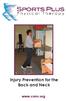 Injury Prevention for the Back and Neck www.csmr.org We have created this brochure to provide you with information regarding: Common Causes of Back and Neck Injuries and Pain Tips for Avoiding Neck and
Range of Motion. A guide for you after spinal cord injury. Spinal Cord Injury Rehabilitation Program
 Range of Motion A guide for you after spinal cord injury Spinal Cord Injury Rehabilitation Program This booklet has been written by the health care providers who provide care to people who have a spinal
Yoga practice and Rheumatoid Arthritis a case study by Hilla Arnon
 Yoga practice and Rheumatoid Arthritis a case study by Hilla Arnon What is Rheumatoid Arthritis (RA) Rheumatoid Arthritis is an autoimmune disease in which the body's immune system attacks cells and tissues
How To Stretch Your Body
 Exercise Module A New Leaf Choices for Healthy Living University of North Carolina at Chapel Hill 2007 Center for Health Promotion and Disease Prevention Physical Activity Exercises for Keeping Active
CHAPTER 3: BACK & ABDOMINAL STRETCHES. Standing Quad Stretch Athletic Edge - www.athleticedge.biz - (650) 815-6552
 CHAPTER : BACK & ABDOMINAL STRETCHES Standing Quad Stretch ) Stand and grasp right ankle with same hand, use a wall or chair to Lower maintain Back balance with left hand. Maintain an upright Stretches
Info. from the nurses of the Medical Service. LOWER BACK PAIN Exercise guide
 Info. from the nurses of the Medical Service LOWER BACK PAIN Exercise guide GS/ME 03/2009 EXERCISE GUIDE One of the core messages for people suffering with lower back pain is to REMAIN ACTIVE. This leaflet
Lower Back Pain An Educational Guide
 Lower Back Pain An Educational Guide A publication from the Center of Pain Medicine and Physiatric Rehabilitation 2002 Medical Parkway Ste 150 1630 Main St Ste 215 Annapolis, MD 21401 Chester, MD 21619
Fact sheet Exercises for older adults undergoing rehabilitation
 Fact sheet Exercises for older adults undergoing rehabilitation Flexibility refers to the amount of movement possible around a joint and is necessary for normal activities of daily living such as stretching,
Rehabilitation after shoulder dislocation
 Physiotherapy Department Rehabilitation after shoulder dislocation Information for patients This information leaflet gives you advice on rehabilitation after your shoulder dislocation. It is not a substitute
EGOSCUE CLINIC PAIN/POSTURE STRETCHES 1. Standing Arm Circles: Helps Restore Upper Body Strength
 EGOSCUE CLINIC PAIN/POSTURE STRETCHES 1. Standing Arm Circles: Helps Restore Upper Body Strength Two sets of 40 repetitions each. Stand with your feet pointed straight and hip-width apart. Place your fingertips
Psoas Syndrome. The pain is worse from continued standing and from twisting at the waist without moving the feet.
 Psoas Syndrome The iliopsoas muscle is a major body mover but seldom considered as a source of pain. Chronic lower back pain involving the hips, legs, or thoracic regions can often be traced to an iliopsoas
Exercises for Low Back Injury Prevention
 DIVISION OF AGRICULTURE RESEARCH & EXTENSION University of Arkansas System Family and Consumer Sciences Increasing Physical Activity as We Age Exercises for Low Back Injury Prevention FSFCS38 Lisa Washburn,
Exercise 1: Knee to Chest. Exercise 2: Pelvic Tilt. Exercise 3: Hip Rolling. Starting Position: Lie on your back on a table or firm surface.
 Exercise 1: Knee to Chest Starting Position: Lie on your back on a table or firm surface. Action: Clasp your hands behind the thigh and pull it towards your chest. Keep the opposite leg flat on the surface
stretches and exercises
 stretches and exercises The enclosed sheets contain stretches and exercises which can be used to delay and minimise the development of contractures and deformities occurring in children with Duchenne muscular
KNEE EXERCISE PROGRAM
 KNEE PROGRAM INTRODUCT ION Welcome to your knee exercise program. The exercises in the program are designed to improve your knee stability and strength of the muscles around your knee and hip. The strength
Sciatica Yuliya Mutsa PTA 236
 Sciatica Yuliya Mutsa PTA 236 Sciatica is a common type of pain affecting the sciatic nerve, which extends from the lower back all the way through the back of the thigh and down through the leg. Depending
Elbow Injuries and Disorders
 Elbow Injuries and Disorders Introduction Your elbow joint is made up of bone, cartilage, ligaments and fluid. Muscles and tendons help the elbow joint move. There are many injuries and disorders that
Back Safety and Lifting
 Back Safety and Lifting Structure of the Back: Spine The spine is the part of the back that supports the trunk and head. It protects the spinal cord as well as giving flexibility to the body. Vertebrae
BACK PAIN: WHAT YOU SHOULD KNOW
 BACK PAIN: WHAT YOU SHOULD KNOW Diane Metzer LOWER BACK PAIN Nearly everyone at some point has back pain that interferes with work, recreation and routine daily activities. Four out of five adults experience
PERFORMANCE RUNNING. Piriformis Syndrome
 Piriformis Syndrome Have you started to experience pain in your hip or down your leg while beginning or advancing your fitness program? This pain may be stemming from the piriformis muscle in your hip.
Lumbar/Core Strength and Stability Exercises
 Athletic Medicine Lumbar/Core Strength and Stability Exercises Introduction Low back pain can be the result of many different things. Pain can be triggered by some combination of overuse, muscle strain,
COMMON OVERUSE INJURIES ATTRIBUTED TO CYCLING, AND WAYS TO MINIMIZE THESE INJURIES
 COMMON OVERUSE INJURIES ATTRIBUTED TO CYCLING, AND WAYS TO MINIMIZE THESE INJURIES Listed are a few of the most common overuse injuries associated with cycling long distances. 1. Cervical and upper back
What Are Bursitis and Tendinitis?
 Bursitis and tendinitis are both common conditions that cause swelling around muscles and bones. They occur most often in the shoulder, elbow, wrist, hip, knee, or ankle. A bursa is a small, fluid-filled
Mike s Top Ten Tips for Reducing Back Pain
 Mike s Top Ten Tips for Reducing Back Pain The following article explains ways of preventing, reducing or eliminating back pain. I have found them to be very useful to myself, my clients and my patients.
CORRECTIVE CHIROPRACTIC EXERCISES
 CORRECTIVE CHIROPRACTIC EXERCISES J O W E T T & M O U L T O N C h i r o p r a c t o r s introduction This booklet, presented by Jowett and Moulton Chiropractors, is designed to provide you with a general
Rule of Thumb: think do I need to stabilise, strengthen or mobilise?
 Remedial/Rehabilitation - Spine General advice Do not work with any condition that you do not feel comfortable with - if in doubt, refer to a specialist and work under their guidance Work out susceptibility/what
Lower Back Pain HealthshareHull Information for Guided Patient Management
 HealthshareHull Information for Guided Patient Management Index Introduction 2 Lumbar spine anatomy 2 What is lower back pain? 3 Conditions that may be causing your back pain 3 When should I see my doctor?
Avoid The Dreaded Back Injury by Proper Lifting Techniques
 Avoid The Dreaded Back Injury by Proper Lifting Techniques If you ve ever strained your back while lifting something, you ll know the importance of lifting safely. Agenda Introduction About the Back The
Yoga Routine. Khun Reinhard. (www.khunreinhard.com)
 Yoga Routine by Khun Reinhard (www.khunreinhard.com) Yoga-Routine Khun Reinhard - 2 - December 2013 Introduction This yoga routine has been taught by the author of this paper over many years to more than
Stretching in the Office
 Stretching in the Office Legs: Quads, Hamstrings, IT band, Hip flexors, Gluts, Calves Quads: Standing @ desk maintaining upright posture, grab one leg @ a time by foot or ankle and bring it towards backside
Healing (and Preventing) Wrist Injuries
 { asana solutions } Healing (and Preventing) Wrist Injuries Proper alignment of the hands and balanced muscle tone in the forearms can protect vulnerable wrists. By doug keller Few things put the brakes
What are Core Muscles?... 2. A Healthy Lumbar Spine...3. What is Low Back Pain?...4. Rehabilitation...6. Stages of Rehabilitation...
 Table of Contents What are Core Muscles?... 2 A Healthy Lumbar Spine...3 What is Low Back Pain?...4 Rehabilitation...6 Stages of Rehabilitation...7 Pain Management....................... 8 Heat/Ice What
Self-mobilization methods
 Self-mobilization methods 5 Muscle energy techniques, as outlined in previous chapters, provide us with an excellent series of methods for relaxation and stretching of specific tight, shortened, contracted
SHOULDER PULL DOWNS. To learn efficient use of the shoulder blades and arms while maintaining a neutral spine position.
 SHOULDER INTRODUCT ION Welcome to your shoulder exercise program The exercises in the program are designed to improve your shoulder mobility, posture and the control of the muscles in your neck and shoulder
 More information >>> HERE
 Spinal Exercise Program/Core Stabilization Program Adapted from The Spine in Sports: Robert G. Watkins
 Spinal Exercise Program/Core Stabilization Program Adapted from The Spine in Sports: Robert G. Watkins Below is a description of a Core Stability Program, designed to improve the strength and coordination
How to Get and Keep a Healthy Back. Amy Eisenson, B.S. Exercise Physiologist
 How to Get and Keep a Healthy Back Amy Eisenson, B.S. Exercise Physiologist Lesson Objectives Statistics of Back Pain Anatomy of the Spine Causes of Back Pain Four Work Factors Core Muscles Connection
Operating Instructions
 Operating Instructions Table of Contents IMPORTANT INFORMATION 1-2 1 The backrack TM 3-6 Introduction 3 What does it do? 4 How do I use it? 5 How often should I use it? 6 2 Getting On 7-10 3 Basic Exercises
For Deep Pressure Massage
 T H E R A C A N E O W N E R S M A N U A L For Deep Pressure Massage Thera Cane is a self massager used to apply pressure to sore muscles. The unique design of the Thera Cane lets you apply deep pressure
Self Management Program. Ankle Sprains. Improving Care. Improving Business.
 Ankle Sprains Improving Care. Improving Business. What is an ankle sprain? Ligaments attach to the ankle bones and allow for normal movement and help prevent too much motion within the joint. Ankle sprains
Pre - Operative Rehabilitation Program for Anterior Cruciate Ligament Reconstruction
 Pre - Operative Rehabilitation Program for Anterior Cruciate Ligament Reconstruction This protocol is designed to assist you with your preparation for surgery and should be followed under the direction
Sit stand desks and musculo skeletal health. Katharine Metters
 Sit stand desks and musculo skeletal health Katharine Metters Topics Sitting Standing Movement and activity Work and human change Sitting uses less energy Sitting provides support for the body to reduce
STRESS. Health & Wellness The Newsletter About Achieving and Maintaining Optimal Well-being UNDERSTANDING AND YOUR BODY. www.neorthopt.
 Health & Wellness The Newsletter About Achieving and Maintaining Optimal Well-being UNDERSTANDING STRESS AND YOUR BODY Life s demands create stress and although some stress may be good, too much can cause
COMPUTER-RELATED MUSCLE, TENDON, AND JOINT INJURIES
 CHAPTER ELEVEN COMPUTER-RELATED MUSCLE, TENDON, AND JOINT INJURIES To reduce the risk of pain in your neck and shoulders, stay within these recommended ranges of movement: Neck Flexion: 0 o -15 o (bending
INTRODUCTION TO POSITIONING. MODULE 3: Positioning and Carrying
 MODULE 3: Positioning and Carrying Blankets, pillows and towels, sandbags, carpet on the floor, a doll with floppy limbs that can be positioned i.e. not a hard plastic doll, display materials. Icebreaker
Closed Automobile Insurance Third Party Liability Bodily Injury Claim Study in Ontario
 Page 1 Closed Automobile Insurance Third Party Liability Bodily Injury Claim Study in Ontario Injury Descriptions Developed from Newfoundland claim study injury definitions No injury Death Psychological
Cervical Exercise: How important is it? What can be done? The Backbone of Spine Treatment. North American Spine Society Public Education Series
 Cervical Exercise: The Backbone of Spine Treatment How important is it? What can be done? North American Spine Society Public Education Series Important: If you have had an accident that started your neck
Sports Injury Treatment
 Sports Injury Treatment Participating in a variety of sports is fun and healthy for children and adults. However, it's critical that before you participate in any sport, you are aware of the precautions
Spine Conditioning Program Purpose of Program
 Prepared for: Prepared by: OrthoInfo Purpose of Program After an injury or surgery, an exercise conditioning program will help you return to daily activities and enjoy a more active, healthy lifestyle.
he American Physical Therapy Association would like to share a secret with you. It can help you do more with less effort breathe easier feel great.
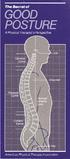 The Secret... T he American Physical Therapy Association would like to share a secret with you. It can help you do more with less effort breathe easier feel great. The secret is about good posture, which
McMaster Spikeyball Therapy Drills
 BODY BLOCKS In sequencing Breathing and Tempo Flexibility / Mobility and Proprioception (feel) Upper body segment Middle body segment Lower body segment Extension / Static Posture Office / Computer Travel
Why Back Safety is Important
 Back Safety Why Back Safety is Important Back injuries are considered by OSHA (the Occupational Safety and Health Administration) as the nation's #1 workplace safety problem. Back Injuries are often: Very
Exercises for older people
 Exercise for older people Exercises for older people Sitting Getting started If you ve not done much physical activity for a while, you may want to get the all-clear from a GP before starting. For the
Functional rehab after breast reconstruction surgery
 Functional rehab after breast reconstruction surgery UHN A guide for women who had DIEP, latissimus dorsi with a tissue expander or implant, or two-stage implant based breast reconstruction surgery Read
Pelvic Girdle Pain (PGP) Fact Sheet
 Pelvic Girdle Pain (PGP) Fact Sheet Physiotherapy PGP describes pain that is experienced in the front (symphysis pubis joint) and/or back (sacroiliac joints) of your pelvis. This is a common problem, affecting
The Eight Principles of Movement
 The Eight Principles of Movement At Functional Synergy we follow eight principles of movement to help maintain focus and ease. Based on the natural concepts of anatomy, physiology, and kinesiology, they
X-Plain Neck Exercises Reference Summary
 X-Plain Neck Exercises Reference Summary Introduction Exercising your neck can make it stronger, more flexible and reduce neck pain that is caused by stress and fatigue. This reference summary describes
Back Owner s Manual A Guide to the Care of the Low Back
 Back Owner s Manual A Guide to the Care of the Low Back A Healthy Back Keeps You Moving Forward If back pain has you feeling down, you re not alone. Low back pain affects many of us. That s because we
Myofit Massage Therapy Stretches for Cycling
 Guidelines for Stretching Always assume the stretch start position and comfortably apply the stretch as directed. Think Yoga - gently and slowly, no ballistic actions or bouncing at joint end range. Once
Knee Conditioning Program. Purpose of Program
 Prepared for: Prepared by: OrthoInfo Purpose of Program After an injury or surgery, an exercise conditioning program will help you return to daily activities and enjoy a more active, healthy lifestyle.
SPINE SURGERY - LUMBAR DECOMPRESSION
 SPINE SURGERY - LUMBAR DECOMPRESSION Information Leaflet Your Health. Our Priority. Page 2 of 7 Introduction This booklet has been compiled by the physiotherapy department to help you understand lumbar
 Full version is >>> HERE
 Patient Guide. Sacroiliac Joint Pain
 Patient Guide Sacroiliac Joint Pain Anatomy Where is the Sacroiliac Joint? The sacroiliac joint (SIJ) is located at the bottom end of your spine, where the "tailbone" (sacrum) joins the pelvis (ilium).
A Patient s Guide to Diffuse Idiopathic Skeletal Hyperostosis (DISH)
 A Patient s Guide to Diffuse Idiopathic Skeletal Hyperostosis (DISH) Introduction Diffuse Idiopathic Skeletal Hyperostosis (DISH) is a phenomenon that more commonly affects older males. It is associated
INSTRUCTIONAL MATERIALS: REFERENCES: a. PAEC School Safety Manual b. Any locally produced Back Injury pamphlet TRAINING AIDS:
 LESSON TOPIC: AVERAGE TIME: BACK INJURY PREVENTION 30 Minutes INSTRUCTIONAL MATERIALS: REFERENCES: a. PAEC School Safety Manual b. Any locally produced Back Injury pamphlet TRAINING AIDS: a. Handout #1
ISOMETRIC EXERCISE HELPS REVERSE JOINT STIFFNESS, BUILDS MUSCLE, AND BOOSTS OVERALL FITNESS.
 ISOMETRIC EXERCISE HELPS REVERSE JOINT STIFFNESS, BUILDS MUSCLE, AND BOOSTS OVERALL FITNESS. By Askari A. Kazmi KazmisBioscienceLabs exercise helps reverse joint stiffness, builds muscle, and boosts overall
Qigong. Ba Duan Jin. The Eight Pieces of Brocade
 Qigong Ba Duan Jin The Eight Pieces of Brocade by Col and g Hamilton Yiheyuan Martial Arts Contents Page Introduction 2 Preparation 2 1. Hold up the Sky 3 2. The Archer 4 3. Join Heaven and Earth 5 4a.
General Guidelines. Neck Stretch: Side. Neck Stretch: Forward. Shoulder Rolls. Side Stretch
 Stretching Exercises General Guidelines Perform stretching exercises at least 2 3 days per week and preferably more Hold each stretch for 15 20 seconds Relax and breathe normally Stretching is most effective
Basic Stretch Programme 3. Exercise Circuit 4
 Basic Stretch Programme 3 Exercise Circuit 4 2 1 Calves Stand approximately 1 metre away from wall with legs straight and heels on floor. Step and lean forward and slowly push hips towards wall. Should
A Stretch-Break Program for Your Workplace! www.healthyworkplaceweek.ca
 www.healthyworkplaceweek.ca A Stretch-Break Program for Your Workplace! Why is stretching at work important? Sitting at a desk or computer; or standing at your work station for extended periods of time
Yoga Teacher Training Home Study Course. Part 3b. Teaching and Practicing Sun Salutations
 Yoga Teacher Training Home Study Course Part 3b Teaching and Practicing Sun Salutations Sun Salutations (Surya Namaskar) A sun salutation is a graceful sequence of positions performed as one continuous
Hand Injuries and Disorders
 Hand Injuries and Disorders Introduction Each of your hands has 27 bones, 15 joints and approximately 20 muscles. There are many common problems that can affect your hands. Hand problems can be caused
A small roller with a big effect. The mini roller for massaging, strengthening, stretching and warming up
 A small roller with a big effect The mini roller for massaging, strengthening, stretching and warming up Suva Preventative products P. O Box, 6002 Lucerne Enquiries Tel. 041 419 58 51 Orders www.suva.ch/waswo
Introduction: Anatomy of the spine and lower back:
 Castleknock GAA club member and Chartered Physiotherapist, James Sherry MISCP, has prepared an informative article on the common causes of back pain and how best it can be treated. To book a physiotherapy
What is Separation of the Abdominal Muscles after Childbirth (also known as Divarication of Rectus Abdominis)?
 What is Separation of the Abdominal Muscles after Childbirth (also known as Divarication of Rectus Abdominis)? Following your pregnancy and the birth of your baby your abdominal (tummy) muscles may have
Neck Pain HealthshareHull Information for Guided Patient Management
 HealthshareHull Information for Guided Patient Management Index Introduction 2 The neck (cervical spine) anatomy 2 What are the common types of neck pain? 3 What are the common symptoms associated with
Physical & Occupational Therapy
 In this section you will find our recommendations for exercises and everyday activities around your home. We hope that by following our guidelines your healing process will go faster and there will be
.org. Plantar Fasciitis and Bone Spurs. Anatomy. Cause
 Plantar Fasciitis and Bone Spurs Page ( 1 ) Plantar fasciitis (fashee-eye-tiss) is the most common cause of pain on the bottom of the heel. Approximately 2 million patients are treated for this condition
ACL RECONSTRUCTION POST-OPERATIVE REHABILITATION PROGRAMME
 ACL RECONSTRUCTION POST-OPERATIVE REHABILITATION PROGRAMME ABOUT THE OPERATION The aim of your operation is to reconstruct the Anterior Cruciate Ligament (ACL) to restore knee joint stability. A graft,
Preventing Falls. Strength and balance exercises for healthy ageing
 Preventing Falls Strength and balance exercises for healthy ageing Exercise should be comfortable and fun. To get the most out of your home exercise book, join a class for older people to check your exercises
Caring for your body. Antenatal exercises
 Caring for your body Antenatal exercises Antenatal Exercises FROM EARLY PREGNANCY TO DELIVERY INTRODUCTION.................................................3 DEEP BREATHING & FOOT AND ANKLE EXERCISES..................4
Yoga for Healthy Digestion
 Yoga for Healthy Digestion By Margaux Permutt CDA Annual Meeting 2015 Vocabulary Words Yoga- Means "Union" the object being to unite body and breath, mind and body. Yoga is an ancient practice from India
A Patient s Guide to Post-Operative Physiotherapy. Following Anterior Cruciate Ligament Reconstruction of the Knee
 A Patient s Guide to Post-Operative Physiotherapy Following Anterior Cruciate Ligament Reconstruction of the Knee Introduction The anterior cruciate ligament (ACL) is one of the main supporting ligaments
THORACIC OUTLET SYNDROME
 THORACIC OUTLET SYNDROME The Problem The term thoracic outlet syndrome is used to describe a condition of compression of the nerves and/or blood vessels in the region around the neck and collarbone, called
Preventing & Treating Low Back Pain
 Preventing & Treating Low Back Pain An Introduction to Low Back Pain Low back pain is the number two reason that Americans see a health care practitioner second only to colds and flu. While most people
A proper warm-up is important before any athletic performance with the goal of preparing the athlete both mentally and physically for exercise and
 A proper warm-up is important before any athletic performance with the goal of preparing the athlete both mentally and physically for exercise and competition. A warm-up is designed to prepare an athlete
Sheet 1A. Treating short/tight muscles using MET. Pectorals. Upper trapezius. Levator scapula
 Sheet 1A Treating short/tight muscles using MET Pectorals Once daily lie at edge of bed holding a half-kilo can, arm out sideways. Raise arm and hold for 10 seconds, then allow arm to hang down, stretching
Easy Yogic Breathing for a Restful Sleep
 YOGA POSES Enliven your days with the benefits of yoga. Discover physical and breathing poses to complement your mood, calm your mind and achieve balance in your body. Easy Yogic Breathing for a Restful
Cast removal what to expect #3 Patient Information Leaflet
 Cast removal what to expect #3 Patient Information Leaflet SM466 Now your cast is off, self help is the key! Follow the advice given to you by your doctor and the staff in the clinic. Your skin will be
Arthritis of the hip. Normal hip In an x-ray of a normal hip, the articular cartilage (the area labeled normal joint space ) is clearly visible.
 Arthritis of the hip Arthritis of the hip is a condition in which the smooth gliding surfaces of your hip joint (articular cartilage) have become damaged. This usually results in pain, stiffness, and reduced
.org. Herniated Disk in the Lower Back. Anatomy. Description
 Herniated Disk in the Lower Back Page ( 1 ) Sometimes called a slipped or ruptured disk, a herniated disk most often occurs in your lower back. It is one of the most common causes of low back pain, as
Strength Training HEALTHY BONES, HEALTHY HEART
 Strength Training HEALTHY BONES, HEALTHY HEART No matter what your age, strength training can improve your bone health and your balance. As we age, our bones lose both tissue and strength. This condition
Body Mechanics for Mammography Technologists
 Body Mechanics for Mammography Technologists Diane Rinella RT(R)(M)(BD)RDMS(BR)CDT Objectives Recognize causes and risk factors for Musculoskeletal Disorders (MSDs) for mammography technologists Understand
Information on the Chiropractic Care of Lower Back Pain
 Chiropractic Care of Lower Back Pain Lower back pain is probably the most common condition seen the the Chiropractic office. Each month it is estimated that up to one third of persons experience some type
Herniated Lumbar Disc
 Herniated Lumbar Disc North American Spine Society Public Education Series What Is a Herniated Disc? The spine is made up of a series of connected bones called vertebrae. The disc is a combination of strong
TIPS and EXERCISES for your knee stiffness. and pain
 TIPS and EXERCISES for your knee stiffness and pain KNEE EXERCISES Range of motion exercise 3 Knee bending exercises 3 Knee straightening exercises 5 STRENGTHENING EXERCISES 6 AEROBIC EXERCISE 10 ADDITIONAL
Cardiac Rehab Program: Stretching Exercises
 Cardiac Rehab Program: Stretching Exercises Walk around the room, step side to side, ride a bike or walk on a treadmill for at least 5 minutes to warm up before doing these stretches. Stretch warm muscles