
The Agency Effects on Investment, Risk Management and Capital Structure
|
|
|
- Godwin Craig
- 10 years ago
- Views:
Transcription
1 The Agency Effects on Investment, Risk Management and Capital Structure Worawat Margsiri University of Wisconsin Madison I thank my dissertation advisor Antonio Mello for invaluable guidance. Any errors remain my own.

2 The Agency Effects on Investment, Risk Management and Capital Structure Abstract The paper explores the interactions between investment and risk management decisions. Recognizing that the firm s investment opportunity is a real option, we show that under the first-best scenario, when the asset value is high, the firm employs a high risk strategy to enhance the value of its investment option, but when the asset value is low, the firm uses a low risk strategy to protect its tax benefits and to reduce the costs of financial distress. Therefore, the optimal risk management policy is dynamic and must be determined jointly with the investment policy. We also demonstrate how the joint decision of these policies affects the optimal capital structure of the firm. However, implementing the first-best policies can be difficult in reality because of principal-agency conflicts. A firm managed by equityholders tends to suffer from too much risk and underinvestment problem. On the other hand, a firm operated by managers is likely to suffer from too little risk and overinvestment problem. We show that a managerial compensation package that is made up of fixed salary and equity ownership can be used to motivate the managers to implement the investment and risk management strategies that are similar to those under the first-best scenario.

3 1 Introduction Why do firms manage risk? Considerable literature on risk management asserts that reducing risk allows firms to enjoy higher tax benefits and lower expected costs of financial distress. 1 On the other hand, real option literature argues that the value of a firm is a combination of the value of its assets in place and the value of its growth options, and that reducing risk by lowering the volatility of the assets may decrease the value of the growth options. This suggests that the optimal risk management policy must be determined jointly with the investment policy and must trade off the marginal costs of increasing and reducing risk. In reality, the optimal investment and risk management policies may not be implemented because of principal-agency conflicts. One such conflict is between equityholders and debtholders. Equityholders have incentives to pursue high-risk strategies at the expense of debtholders because their losses are limited, but their upside gains are not. Furthermore, they may underinvest in the growth options if they pay the investment costs but do not fully benefit from the exercise of the growth options. Another conflict that may arise is between equityholders and managers. Managers may have incentives to take on too little risk to reduce the probability that they lose their compensation. Moreover, they may want to overinvest in the growth options if their compensation increases when the firm invests. The agency costs associated with these conflicts can be significant and must be accounted for in order to assess the value created by the investment and risk management policies. In this paper, we construct a continuous-time model of a levered firm with flexibility to manage risk. The firm has an asset in place, the value of which follows a random process, but the volatility of the asset can be altered between a low and a high level by the agents who control the firm without any costs. Furthermore, the firm has a growth option to scale up the value of its current asset. The growth option offers investment flexibility in that the firm can wait for the value of the asset to reach a sufficiently high level before it invests (or exercise the growth option). The costs of investment and interest payments are 1 Smith and Stulz (1985) explain that the convexity of the U.S. tax rates could be another reason why firms hedge. However, Graham and Rogers (1999) do not find empirical support for it. 1

4 fully financed by equityholders by additional equity issuance. The equityholders wealth is tied to the firm s asset, and when business is bad, that is, when the asset value falls to a low level, the equityholders might not be able to service debt. In such a case, the firm defaults. However, even when the equityholders wealth is enough to finance debt, the agents who control the firm may decide to put the firm into default if they find that it is in their interest to do so. When the firm defaults, the growth option, the tax benefits, and part of the asset in place are lost. We assume that the board of directors of the firm controls the financing policy by choosing the amount of debt principal to maximize the firm value at the initial date, anticipating the actions of the agents controlling the firm. The model is then used to investigate the investment and risk management policies when the firm is managed under three different scenarios. First, we consider the first-best case in which the firm is assumed to be managed by the agents whose objective is to maximize the total firm value. We show that when the value of the asset in place becomes low, the first-best risk management strategy switches from a high to a low risk level to increase the value of the tax benefits and to reduce the expected bankruptcy costs and switches back to a high risk level again when the asset value becomes high in order to increase the value of the growth option. When the firm is controlled by agents who have different objectives, the investment and risk management policies employed may be different from those in the first-best scenario. The controlling agents may underinvest in the growth option by exercising the option slower than the agents in the first-best case or overinvest by exercising the option faster. Furthermore, they may take too much risk by switching from a high to a low risk strategy slower than the agent in the first-best case or take too little risk by switching faster. We then consider a case in which the firm is managed by equityholders whose objective is to maximize the value of the firm s equity. We show that the equityholders have incentives to pursue the highest risk strategy and, except when the size of the growth option is small, underinvest in the growth option. 2

5 Consequently, the firm incurs the agency costs. Finally, we consider a situation in which the firm is managed by risk-neutral managers whose objective is to maximize their own compensation. The managerial compensation is made up of fixed payments and ownership in the firm s equity. The fixed payments which is determined exogenously in our model increase when the growth option is exercised but are lost when the firm defaults. The amount of equity ownership granted to the managers is chosen by the board of directors to maximize the total firm value at the initial date. Because of this compensation structure, the managers have incentives to overinvest in the growth option because their payments not only increase but also become more secure once the option is exercised. They also have incentives to pursue a low risk strategy to reduce the probability of losing their fixed payments. However, managerial equity ownership reduces the incentives to overinvest because overinvestment destroys the equity value, and by extension, their own compensation. Moreover, the ownership also gives the managers incentives to take on higher risk. Although the optimal amount of managerial equity ownership may not simultaneously solve the conflict between the investment and risk management policies, we show that it may significantly reduce the agency costs. Our paper makes three contributions to the corporate investment and risk management literature. First, using a real option framework, we show how the first-best investment and risk management policies are jointly determined in a dynamic fashion. Although, the relation between investment and risk management policies is also explored in Froot, Scharfstein, and Stein (1993), their model is static and cannot capture the dynamic nature of the investment and risk management policies. Morellec and Smith (2003) explore the interactions between the investment and hedging policies in a dynamic model, but their setting is different from ours. They consider the situation in which underinvestment occurs because the firm does not have enough cash flows to invest in profitable projects. Hence, cash flows volatility induces suboptimal investment decisions, and hedging adds value insofar as it ensures that the firm has enough funds for profitable investments. Under this setting, their model does not consider 3

6 the trade off between increasing and reducing risk that is the basis of our model. Thus, the first-best risk management policy in their model does not change the risk level ex post in response to the changes in the value of the asset. The second contribution of our paper is that we link the choices of the investment and risk management policies with the firm s financing decision. Under the first-best scenario, when the growth option is large, the firm may want to keep its risk high to protect the value of the options, and thus it tends to have low leverage. On the other hand, when the growth option is small, the firm may want to forgo the value of the option and protect the value of the tax benefits and reduce the bankruptcy costs by reducing risk, so it tends to have high leverage. The negative relation between the size of the growth option and leverage is suggested in Barclay, Morellec, and Smith (2003). Our model complements theirs by offering a different explanation for this relation. In their model, debt reduces free cash flows available for investment, and hence the more the growth options the firm has, the lower is its optimal leverage. However, in our model, debt does not directly limit the firm s investment capacity because the equityholders finance the investment, but when the firm has small amount of debt, it is because it takes on high risk to keep the value of the growth option high. Several other works study the effects of either the investment or the risk management policies on the optimal capital structure, but few consider the effects of both policies on the financing policy. For example, Mauer and Triantis (1994), Mauer and Ott (2000) explore the interactions of investment and financing decisions, while Leland (1998) studies the relation between risk management and financing strategies. Only Morellac and Smith (2003) study the effects of the hedging and financing policies on the investment policy. Because of the different setting, they argue that, given the number of growth opportunities, the firm with higher debt level usually have lower agency costs associated with free cash flows and thus have weaker tendency to hedge to control these costs. In contrast, in our model, high leverage is associated with large hedging. 4

7 Our third contribution is that we show how managerial equity ownership can be used to motivate risk-neutral managers to implement the investment and risk management policies that are closer to those in the first-best case. Other papers that discuss the relation between managerial equity ownership and risk management usually treat the level of ownership as exogenous. For example Smith and Stulz (1985) and Stulz (1996) argue that if the managers have large concentrated equity ownership, the volatility of their wealth tends to be highly correlated with the volatility of the firm, so the risk-averse managers have incentives to reduce the volatility of their wealth by engaging in hedging activities. In our model, the level of managerial equity ownership is determined endogenously to counter the mangers incentives to overinvest and to take on too little risk. 2 Our paper proceeds as follows: Section 2 describes the basic model of a levered firm in the first-best and the equity value maximization cases. Section 3 compares the base case numerical results under those two scenarios. Section 4 presents comparative statics results for some important parameters. Section 5 describes the model when managers have control over the firm. Section 6 discusses the base case numerical results under this scenario. Section 7 presents the related comparative statics. Section 8 discusses the model s empirical implications. Finally, Section 9 concludes. 2 Basic Model 2.1 Basic Assumptions In this section, we present a basic model of a levered firm that has a growth option to expand its asset in place and the flexibility to change a volatility level of its asset. The value of the asset in place V evolves according to dv V =(μ δ)dt + σdz, (1) 2 For papers that explore empirical evidence of the distortion in the investment and risk management decisons, see Geczy, Minton, and Schrand (1997), Parrino, Poteshman, and Weisbach (2000), and Carpenter (2000), for example. 5

8 where μ is the total expected rate of returns, δ is the payout rate to security holders, σ is the volatility rate, and dz is the increment of a standard Brownian motion. We assume that a continuously compounded risk-free rate exists and is constant at the rate r. The value of the asset in place can be seen as a net present value of cash flows generated by the firm s operations and is the only state variable in our model. The firmhasanoptiontoscaleupthecurrentassetinplacebyθ > 0 percent, so after the exercise of the option, the value of the asset is (1 + θ)v. In order to exercise the growth option, fixed investment costs i, which are borne by existing equityholders, must be paid. We assume that i = θv 0, where V 0 is a deterministic initial firm value. Under this setting, real option theory asserts that it is optimal to wait for the value of the asset to reach a threshold that is strictly greater than the investment costs. We use V G to denote the level of asset in place at which the growth option is exercised, and F (V ) to denote the value of the growth option. In line with the continuous-time corporate investment literature, we define overinvestment as a situation in which V G is lower than the optimal exercise level, and underinvestment as a situation in which it is higher. In this context, underinvesting is the same as delaying investment until the asset value passes the first-best level. Similarly, overinvesting is equivalent to investing before the asset value reaches the first-best level. The firm is financed with both debt and equity. Debt in our model is a perpetual bond with a face value of P and a continuous coupon payments rate c. 3 We assume that the coupon payments must be financed by selling additional equity. However, the equityholders are cash constrained. Specifically, we assume that when business is bad or V < V 0, their wealth is proportional to the current asset value. We denote this proportion as λ. If the value of the asset falls so low that λv <cp,the firm is forced to default. But when business is good or V V 0, the equityholders can always finance both the coupon payments and the investment costs. The firm is taxed at the rate τ, soateachinstance,anettaxshieldisτcp.to simplify the analysis, we assume that the firm receives full tax benefits when it is solvent, and that losses 3 Debt in our model can be modified to account for finite maturity. However, this would not change the direction of our results. For simplicity, we do not pursue this approach here. For models of debts with finite maturity, see Leland (1998), for example. 6

9 cannot be carried forward. We denote the value of the tax benefits as TB(V ) and the market value of the debt as D(V ). When the firm defaults, the control of the firm is turned over to the debtholders. Furthermore, the value of the growth option, the tax benefits, and part of the existing asset are lost. We let V B denote the level of asset in place at which the firm defaults and let 0 < ξ < 1 denote the proportion of the firm value that is lost in the event of default. We use BC(V ) to denote the expected bankruptcy costs. Similarly to Leland (1998), we allow the firm to switch the volatility rate of its underlying asset σ infinitely often between a low and a high level, denoted by σ L and σ H, respectively. Specifically, the firm starts at time t =0with σ H but can switch to σ L when the asset value falls below a threshold, and it can switch back to σ H again when the asset value is higher than that threshold. 4 We denote the level of the asset in place when the firm switches the risk level by V S. Risk management policy is represented in ourmodelbythechoiceofv S. If the firm chooses V S equal to V G, it always uses the low risk level and is considered to be passive in risk management, but if the firm chooses V S equal to V B,italwaysusesthe high risk level until it defaults. If the firm chooses V S in between V B and V G, then it is considered to be actively managing risk. Throughout the paper, we assume that V B V S V G. The total firm value v(v ) is equal to the value of the asset in place v(v ), plus the value of the growth option F (V ), plus the value of the tax benefits TB(V ), and minus the value of the bankruptcy costs BC(V ). The equity value E(V ) is the value of the firm v(v ) minus the value of the debt D(V ). 4 Note that other configurations of risk strategies are possible. For example, one strategy is that the firm starts with the low risk level and switches to the high risk level when the asset value falls below a threshold and switch back to the low risk level again when the asset value becomes higher than that threshold. However, such a strategy is inferior to the present strategy in that the value of the growth option and the tax benefits will be lower,while the expected bankruptcy costs will be higher. We therefore do not consider it here. 7

10 2.2 The Value of the Firm and the Equity After the Investment We start by stating a standard risk-neutral valuation of a time-independent contingent claim whose price depends on a single state variable and apply the methodology to value F (V ), TB(V ), BC(V ), andd(v ), both before and after the investment is made. Once these value functions are derived, we can obtain the firm and the equity values at time t =0, for arbitrary V B, V S,andV G. We then show how the choice variables are chosen to maximize the firm and the equity values. Since the value functions in this paper are all dependent on one state variable V, in our notation, when there is no confusion, we drop the dependency of the value functions on V. For example, we write F instead of F (V ). In general, the value of any time-independent claim Y that is a function of a single state variable V must satisfy the differential equation 1 2 σ2 V 2 Y VV +(r δ)vy V ry + CF =0, (2) where CF is the constant rate of cash flow accumulated to the claim. The general solution of Equation (2) is Y = CF r + A 1 V γ 1 + A2 V γ 2, (3) where A 1 and A 2 are constants to be determined, and γ 1 > 1 and γ 2 < 0 are the quadratic roots of the equation 1 2 σ2 γ(γ 1) + (r δ)γ r =0. (4) We first derive the value functions after the growth option is exercised, and then work backward to obtain the value functions before the exercise. Throughout the paper, we use a subscript 1 with the value functions and the choice variables to indicate that the growth option has already been exercised, and 0 to indicate that it has not. Therefore, for the choice variables, V B1, V denote the asset values after the exercise of the growth option at which the firm defaults and switches the risk level, respectively, and TB 1, BC 1, D 1, E 1,and 8

11 v 1 denote the values after the exercise of the growth option of the tax benefits, the expected bankruptcy costs, the firm s debt, the firm s equity, and the total firm value, respectively. When the growth option is exercised, the value of the asset in place V is scaled up by θ percent, so the notion V 1 is equivalent to (1 + θ)v. A: The Value of the Tax Benefits After the Investment (TB 1 ) The value of the tax benefits after the exercise of the growth option TB 1 must satisfy Equation (2) with the general solution as given in Equation (3). To get a closed-form solution, we need to solve for the coefficient A 1 and A 2 in Equation (3). However, recall that when V 1 is below V, the volatility rate is σ L,andwhenV 1 is above V, the volatility is σ H. Therefore, we have four coefficients to solve for: A 1 and A 2 when V 1 is above V,andthosewhenV 1 is below V. Similarly, there are four quadratic roots: γ 1 and γ 2 when V 1 is above V, and those when V 1 is below V.Thecoefficients are solved for by using the boundary and smooth-pasting conditions lim TB 1(V 1 ) = τcp V 1 r, (5) TB 1 (V σ L ) = TB 1 (V σ H ), (6) TB 1 (V 1 σ L ) = TB 1(V 1 σ H ), and (7) V 1 V1=V V 1 V1=V TB 1 (V B1 ) = 0. (8) Equation (5) says that when the value of the asset in place V 1 is very high, the probability that the firm defaults is virtually zero; therefore, the value of the tax benefits is just the net present value of the tax shield. When V 1 reaches V from above, the firm switches from σ H to σ L.Asaresult,wehavethe value-matching condition as shown by Equation (6), which states that the values of the tax benefits before and after the switching must be equal at V. Furthermore, we also have the smooth-pasting condition in Equation (7), which states that the first derivative of TB 1 before and after the switching must also match at V 5. Finally, we have the boundary condition at the default level, as shown in Equation (8), which 5 For detailed discussions of the smooth-pasting conditions, see Chapter 4 of Dixit and Pindyck (1994). 9

12 states that when V 1 reaches V B1,thefirm defaults, and the value of the tax benefits becomes zero. In general, we have to solve for four coefficients. However, Equation (5) implies that the coefficient A 1 in Equation (3) when V 1 is above V must be zero; otherwise TB 1 would explode as V 1 approaches infinity. 6 Consequently, we are left with three unknown coefficients that can be solved for by using Equations (6)-(8). The closed-form solution for these coefficients is given in Appendix A. B: The Value of the Expected Bankruptcy Costs After the Investment (BC 1 ) Similar to TB 1, the expected bankruptcy costs after the exercise of the growth option BC 1 must satisfy Equation (2) and have the general solution as given in Equation (3). However, they have a different set of boundary and smooth-pasting conditions. These are lim V 1 BC 1(V 1 ) = 0, (9) BC 1 (V σ L ) = BC 1 (V σ H ), (10) BC 1 (V 1 σ L ) = BC 1(V 1 σ H ), and (11) V 1 V1 =V V 1 V1 =V BC 1 (V B1 ) = ξv B1. (12) Equation (9) recognizes that when V 1 approaches infinity, the probability of default approaches zero, and the expected bankruptcy costs become zero. Equations (10) and (11) are the value-matching and smooth-pasting conditions at V, similar to those of TB 1. Equation (12) is the boundary condition at V B1, which states that the bankruptcy costs when the firm defaults are proportional to the asset value. Using a similar argument as in the case of TB 1, we know that the coefficient A 1 in Equation (3) when V 1 is above V must be zero, otherwise BC 1 blows up as V 1 approaches infinity, so we solve for three coefficients using Equations (10)-(12). The closed-form solution for BC 1 is given in Appendix B. 6 Recall that γ 1 > 1, soasv 1, A 1 V γ

13 C: The Value of the Debt After the Investment (D 1 ) Because of the assumption that debt is permanent, its market value is not dependent on time. Therefore, D 1 also satisfies Equation (2) with the general solution given in Equation (3). The related boundary and smooth-pasting conditions are lim V 1 D 1(V 1 ) = cp r, (13) D 1 (V σ L ) = D 1 (V σ H ), (14) D 1 (V 1 σ L ) = D 1(V 1 σ H ), and (15) V 1 V1 =V V 1 V1 =V D 1 (V B1 ) = (1 ξ)v B1. (16) Equation (13) states that when V 1 approaches infinity, the value of the debt equals the net present value of the coupon payments. Equations (14) and (15) are the corresponding value-matching and smoothpasting conditions at V. Equation (16) is the boundary condition at V B1. It recognizes that debtholders claims take priority over shareholders claims in the event of default, and that debtholders obtain the remaining asset after the bankruptcy costs have been paid (the absolute priority rule.) As before, we know that the coefficient A 1 when V 1 lies above V must be zero and solve for the remaining coefficient using Equations (14)-(16). The closed-form solution for D 1 is given in Appendix C. NowthatwehavederivedthevaluefunctionsTB 1, BC 1,andD 1,thetotalfirmvalueaftertheexercise of the growth option is v 1 = V 1 + TB 1 BC 1, (17) and the value of the equity after the exercise of the growth option is E 1 = v 1 D 1. (18) 11

14 2.3 The Value of the Firm and the Value of the Equity Before the Investment We are now ready to derive the value of the firm and the value of the equity before the exercise of the growth option. For the choice variables, we use V B0, V,andV G to denote the asset values before the exercise of the growth option at which the firm defaults, switches the risk level, and exercises the option, respectively, and we use F, TB 0, BC 0, D 0, E 0,andv 0 to denote the value before the investment of the growth option, the tax benefits, the expected bankruptcy costs, the firm s debt, the firm s equity, and the total firm, respectively. A. The Value of the Growth Option (F ) The value of the growth option F must satisfy Equation (2) with the general solution as given in Equation (3). As before, because the firm can switch between σ L and σ H, we solve for four coefficients: A 1 and A 2 when V is above V and those when V is below V. The four corresponding quadratic roots are the same as before. The coefficients can be solved for by using the boundary and smooth-pasting conditions F (V G ) = θv G i, (19) F (V σ L ) = F (V σ H ), (20) F (V σ L ) = F (V σ H), and (21) V V =V V V =V F (V B0 ) = 0. (22) Equation (19) is the boundary condition at the point of the exercise V G ; it states that, at V G,thevalue of the growth option equals the increase in the value of the asset in place, minus the investment costs. Equations (20) and (21) are the usual value-matching and smooth-pasting conditions at V. Equation (22) is the boundary condition at V B0 ; it recognizes that the value of the growth option becomes zero when the firm defaults. Equations (19)-(22) are used to obtain the solutions for the four coefficients, which is shown in Appendix D. 12

15 B: The Value of the Tax Benefits Before the Investment (TB 0 ) TB 0 must also follow Equation (2) with the general solution as given in Equation (3). We solve for the coefficients in Equation (3) using the boundary and smooth-pasting conditions TB 0 (V G ) = TB 1 (V G ), (23) TB 0 (V σ L ) = TB 0 (V σ H ), (24) TB 0 (V σ L ) = TB 0(V σ H ), and (25) V V =V V V =V TB 0 (V B0 ) = 0. (26) The preceding conditions are similar to those for TB 1, except for the boundary condition at V G.This condition requires that the values of the tax benefits before and after the exercise must be equal, as shown in Equation (23). Equations (24) and (25) are the value-matching and the smoothness condition at V, and Equation (26) is the boundary condition at V B0. The four equations are used to solve for the four coefficients. The solution is given in Appendix E. C: The Value of the Expected Bankruptcy Costs Before the Investment (BC 0 ) Following the same approach that we employed for BC 1,wesolveforBC 0 using the conditions BC 0 (V G ) = BC 1 (V G ), (27) BC 0 (V σ L ) = BC 0 (V σ H ), (28) BC 0 (V σ L ) = BC 0(V σ H ), and (29) V V =V V V =V BC 0 (V B0 ) = ξv B0. (30) Equation (27) is the boundary condition at V G, which equates the value of the expected bankruptcy costs before and after the investment. Equations (28) and (29) are the value-matching and smooth-pasting conditions at V. Equation (30) is the boundary condition at V B0. Appendix F shows the solution to the coefficients of BC 0. 13

16 D: The Value of the Debt Before the Investment (D 0 ) The value function of the debt before the exercise of the growth option D 0 is derived similarly to D 1, but with the boundary and smooth-pasting conditions D 0 (V G ) = D 1 (V G ), (31) D 0 (V σ L ) = D 0 (V σ H ), (32) D 0 (V σ L ) = D 0(V σ H ), and (33) V V =V V V =V D 0 (V B ) = (1 ξ)v B0. (34) The boundary condition at V G is given in Equation (31). The value-matching and smooth-pasting conditions at V are shown in Equations (32) and (33). The boundary condition at V B0 are given in Equation (34). The closed-form solution of D 0 is given in Appendix G. The total firm value before the exercise of the growth option is v 0 = V + F + TB 0 BC 0, (35) and the value of the equity before the exercise of the growth option is E 0 = v 0 D 0. (36) 2.4 Investment and Risk Management Policies Equipped with the closed-form solutions for the value of the firm v 0 and the value of the equity E 0,wenow analyze the investment and risk management policies before and after the exercise of the growth option, as well as the optimal level of debt. First, consider a case in which the firm is managed by the agents whose objective is to maximize the total firm value (the first-best case). The agents choose X =(V B0, V B1, V, V, V G ) to maximize the total firm value given that the equityholders commit to finance the coupon payments and the investment costs. Then, we consider a case in which the firm is managed by 14

17 equityholders, who choose X to maximize the equity value instead of the total firm value (the equity value maximization case). In both cases, we assume that the debt level is determined ex ante to maximize the total firm value. A: The First-Best Case The optimal level of debt principal P and the optimal choice of X when the firm operates under the first-best scenario are determined by the maximization problem max P,X v 0(V,P,X) V =V0 (37) subject to the equityholders wealth constraints V B0 cp, and (38) λ(1 + θ) V B1 cp λ, (39) and subject to the non-negativity constraints for the equity values E 1 and E 0 0. (40) The wealth constraints in Equation (38) and (39) always bind in the first-best case. The intuition behind this is that whenever the firm defaults, it incurs the costs of ξv B,soiftherearenofinancial constraints, the firm never defaults and chooses V B0 and V B1 =0. Because these constraints are greater than 0, they always bind. Furthermore, after the growth option is exercised, there is no investment opportunity left, so the first-best risk strategy always uses the lowest-risk strategy by setting V =. This is because, without the growth option, increasing risk always reduces the value of the tax benefits and increases the expected bankruptcy costs; hence, the firm employs the lowest-risk strategy. Unfortunately, other variables must be solved for numerically, and the results are analyzed in the next section. 15

18 B: The Equity Value Maximization Case When the firm is operated by equityholders, the optimal choice of debt principal P is determined by max P v 0(V,P,X) V =V0 (41) subject to a set of the optimality constraint, which guarantee that X maximizes the equity value at time t =0 X arg max E 0 (V,P,X) V =V0, (42) and subject to the wealth constraints, and the non-negativity constraints for the equity values as defined in Equations (38)-(40). Only the expression for V B1 can be solved for analytically, and is given by The term the term cp λ(1+θ) γ 2L γ 2L 1 ½ µ cp V B1 =max λ(1 + θ), γ 2L (1 τ)cp γ 2L 1 r ¾. (43) in equation (43) is the level of the asset at which the wealth constraints bind, while is the endogenous default level that the equityholders choose. Recall that the ³ (1 τ)cp r equityholders finance the coupon payments, so if the asset value is very low, they will find it in their interest to stop financing the obligation. The default level V B1 is the higher level of the two. Other variables must be solved for numerically and are analyzed in the next section. 16

19 3 Base Case: First-Best versus Equity Value Maximization This section presents the numerical results. Base case parameters are as follows: Initial asset value: V 0 = 100 Growth-option scaling factor: θ = 50% Payout rate: δ =6% Coupon rate: c =6% Risk-free rate: r =4% Wealth constraint: λ = 10% Bankruptcy costs: ξ = 25% Tax rate: τ = 20% High risk level: σ H = 30% Low risk level: σ L = 20% At time t =0, the initial value of the asset in place V 0 is 100. The firm has an option to expand the asset by θ =50percent. The initial fixed investment costs are i = θv 0 =50. The payout rate δ and the coupon rate c are assumed to be 6 percent, while the risk-free rate r is 4 percent. The equityholders wealth constraint parameter λ =10percent. When the firm defaults, it loses a fraction ξ =25percent of the asset value. The corporate tax rate τ is assumed to be 20 percent. The high risk level σ H =30 percent, and the low risk level σ L =20percent. The tax rate, the bankruptcy costs, and the risk levels are chosen such that they are comparable to those used in other studies on corporate investment, such as Leland (1998) and Morellec (2003). The value of ξ is the upper limit of the estimates by Andrade and Kaplan (1998). The tax rate τ represents personal tax advantages to equity returns. The range of the volatility levels is not unusual for Standard and Poor s 500 firms. Table 1 reports the choice variables, the value functions, and other quantities of interest in the first-best 17

20 and the equity value maximization cases. LR is the leverage ratio (the ratio between the market value of thedebtandthetotalfirm value). YS is the yield spread of the firm s debt over the risk-free rate. AC stands for the agency costs as defined by the percentage difference between firm value under the first-best and under the equity value maximization scenarios. For comparison, we include both the cases in which the firm has flexibility to manage risk and when it does not. Panel A shows the results when the firm has flexibility to switch the risk level between σ H =0.30 and σ L =0.20, while Panel B shows the results when the firm has no risk flexibility and is committed to maintaining the low risk level at all times, that is, σ H = σ L = The Firm with Risk Flexibility First-Best Case. First, focus on the firm with risk flexibility under the first-best scenario, as shown in the first row in Panel A of Table 1. Before the growth option is exercised, if the asset value falls below V B0 =30.1, the equityholders wealth is not sufficient to finance the coupon payments, and the firm is forced to default. When the firm is solvent, it pursues the low-risk strategy when the asset value is lower than V =82.8 and switches to the high-risk strategy when the asset value is above that level. When the asset value reaches V G = 298.7, thefirm exercises the growth option, after which it switches to the low-risk level immediately, as indicated by V =. Because of the exercise of the growth option, the firm becomes larger, so the default level now falls to V B1 =20.0. The option value, the tax benefits, the expected bankruptcy costs, and the total firm value are 18.4, 8.2, 1.4, and125.2, respectively. Notice that the growth option and the tax benefits constitute a significant part of the firm value, while the expected bankruptcy costs are relatively small. The leverage ratio is 36percent,andtheyieldspreadis67.4 basis points. To understand how the first-best risk-switching point V is determined, firstrecognizehowthechoice of V affects firm risk. When the firm sets V at a high level, it switches from the high- to the low-risk 18

21 strategy relatively fast, implying that, on average, firm risk is low, and vice versa. The optimal V is chosen such that the marginal costs of increasing risk are equal to the marginal costs of reducing risk. The marginal costs of increasing risk are (1) thedecreaseinthevalueofthetaxbenefits, (2) the increase in the expected bankruptcy costs, and (3) thedecreaseinthevalueofthegrowthoptiondue to a higher probability that the growth option may be lost if the firm defaults. On the other hand, the marginal costs of reducing risk are the decrease in the value of the growth option. When the value of the asset is low, the marginal costs of increasing risk outweigh the marginal costs of reducing risk, so the firm chooses the low-risk strategy. However, when the asset value becomes sufficiently high, the marginal costs of increasing risk become low, while the marginal costs of reducing risk are high. In this case, it is optimal to switch to the high risk-strategy. The first-best risk management in our model is similar in spirit to the risk strategies that Stulz (1996) suggests: firms with low credit rating that may face financial distress should hedge to reduce the probability of costly lower-tail outcomes, but firms with good credit rating should consider reducing hedges and increasing bets on financial markets where it has a comparative advantage. Equity Value Maximization Case. Now we turn to the case in which the firm is managed by equityholders, as shown in the second row in Panel A of Table 1. Before the growth option is exercised, the firm defaults when the asset value falls below V B0 =21.7, which is the level that the wealth constraints bind. However, when the firm is solvent, it always maintains the high-risk strategy and never switches to the low risk level, that is, it chooses V B0 = V =21.7. The growth option is exercised when the asset value reaches V G = After that point on, the firm continues to maintain the high-risk strategy since V =. It defaults when the wealth constraints bind at V B1 =14.4. The option value, the tax benefits, the expected bankruptcy costs, and the total firm value are 19.5, 5.4, 1.34, and 123.6, respectively. The leverage ratio is 25 percent, and the yield spread is basis points. The agency costs are 1.3 percent. 19
22 That the equityholders always maintains the high-risk level should not be surprising given that in a levered firm, the equityholders payoff function is convex in the value of the asset, so they have incentives to choose the high-risk strategy. Notice also that the firm under the equity value maximization case underinvests in the growth option, as indicated by the fact that V G in this case is higher than that in the first-best case. Underinvestment occurs because the equityholders pay the investment costs, but do not fully benefit from the exercise of the option. Next, observe that the leverage ratio LR is significantly higher under the first-best case than under the equity value maximization case, reflecting that the firm in the first-best scenario operates with lower risk than the firm under the equity value maximization scenario. Despite the higher debt level, the yield spread YS is significantly lower in the first-best case, confirming that the use of risk management allows the firm to enjoy not only higher tax benefits but also lower risk at the same time. Observe also that the difference between the values of the tax benefits under the first-best and the equity value maximization cases is a major part of the agency costs, while the difference in the expected bankruptcy costs contribute only minimally to the overall agency costs. Perhaps more surprising is that the difference in the option values does not generate larger agency costs, despite the fact that firm risk is much higher in the equity value maximization case. To understand this, recall that although higher firm risk increases the value of the real option, it also increases the probability that the growth option is lost as well. Consequently, the increase in the total option value due to an increase in firm risk is attenuated. 3.2 The Firm with No Risk Flexibility For comparison, in Panel B of Table 1, we include the results of a case in which the firm has no flexibility to manage risk by committing to maintaining the low-risk strategy at all times. V B0 is 37.4 in the first-best case and 36.8 in the equity maximization case, both are the levels at which the wealth constraints bind. However, after the exercise, V B1 in the first-best case is 15.5, which is the point at which the constraints 20
23 bind, but V B1 in the equity value maximization case is 31.1, which is the endogenous default level. V G in the first-best and the equity value maximization cases are and 234.7, respectively. Both are lower than those in Panel A. The value of the option, the tax benefits, the bankruptcy cost, and the total firm value in the first-best case are 14.9, 10.2, 1.7, and 123.4, respectively, while those in the equity value maximization case are 14.9, 10.0, 1.7, and123.3, respectively. The results confirm that when the firm commits to using the low-risk strategy, the option value and the option exercise level are depressed. However, lower risk results in higher tax benefits and lower default costs. In the present example, the increase in the tax benefits and the reduction of the default costs are smaller than the decrease in the option value, so the total firmvalueinbothcasesislower. 4 Comparative Statics: First-Best and Equity Value Maximization In Figures 1-3, we show how the changes in the parameters of interest affect the growth option exercise level V G, the risk-switching point before the exercise of the option V, the default level before the exercise of the option V B0, the leverage ratio LR, the yield spread YS, and the agency costs AC. The dashed lines denote the results under the first-best scenario, and the solid lines denote the results under the equity value maximization scenario. Unless otherwise noted, all parameters are base case configuration. 4.1 Option Scaling Factor θ Figure 1 shows how the main results change when we vary the growth option scaling factor θ from 0.1 to 1.0. In Panel A, V G in the first-best and the equity value maximization cases crosses at θ =0.13. This means that when θ is small, the equityholders overinvest in the growth option, but when θ is large, they 21
24 underinvest in the growth option. Moreover, the first-best V G is not monotonic in θ. To understand this, we need to recognize the interaction between the investment and risk management strategies. First, consider how the investment decision affects firm risk. When the firm exercises the growth option, other things remaining constant, firm risk will be lower. This is because the firm s asset becomes larger, but the amount of debt principal remains the same after the exercise, so default probability decreases. When θ is small, the firm does not gain much from exercising the option early, so it waits for the value of the asset to reach a higher level before exercising the option. However, when θ is large, the firm can reduce a lot of default probability by exercising the option early, so they choose lower V G than when θ is small. This explains why the first-best V G decreases with θ for the value of θ between 0.1 to Next, consider the effect of the risk strategy on the investment policy. Other things remaining constant, the value of the growth option and the option exercise level increase with firm risk. As θ increases, firm risk increases, so does V G. This explains why the first-best V G increases with θ for the value of θ between 0.25 to 1.0. In the equity value maximization case, V G monotonically increases with θ. This is because equityholders in a levered firm do not fully benefit from a reduction of risk, so for a small θ, they do not have incentives to wait for the asset value to reach a sufficiently high level before exercising the option. InPanelB,thefirst-best V declines with θ, indicating that firm risk increases with θ. Whenθ is small, the value of the growth option is a small part of the total firm value, so the marginal costs of increasing risk are high, while the marginal costs of reducing risk are low. Hence, the first-best risk management policy chooses relatively high V.Butwhenθ is large, the option value has a large share in the total firm value, so the marginal costs of reducing risk is high, while the marginal costs of increasing risk become low. Thus, the first-best risk management policy chooses relatively low V. On the other hand, under the equity value maximization scenario, the equityholders always prefer the high risk level. Therefore, regardless of the level of θ, they always maintain the high risk strategy until the firm defaults, that is, V = V B0. 22
25 Panel C shows V B0 as a decreasing function of θ. The default level in both cases is the level at which the equityholders wealth constraints bind, so it is proportional to the firm debt principal. Panel D shows that the leverage ratio declines with θ in both cases because, as θ increases, firm risk increases. The difference in the leverage ratio under the two scenarios becomes smaller as θ increases because the firm in the first-best case lowers V to increase firm risk. In Panel E,the yield spread in both cases declines with θ because exercising the option reduces default probability. Therefore, the higher θ is, the less risky is the firm s debt. Panel F shows that the agency costs are a decreasing function of θ. Thisisbecause,asθ becomes larger, the difference between firm risk in the first-best and the equity value maximization cases becomes smaller. This result contrasts with that of Mauer and Ott (2000). In their model, the firm does not have flexibility to change the risk level, so as θ gets larger, the agency costs are higher, because of the option s larger share in the total firm value. Our result highlights the fact that the agency costs induced by the difference in the risk strategies may be more important than those created by the difference in the investment policies; hence models that do not incorporate risk flexibility may significantly miscalculate the agency costs. 4.2 High Risk Level σ H Figure 2 shows how the base case results change when the high risk level σ H is varied from 0.2 to 0.4, while σ L is kept constant. When σ H =0.2, thefirm has no flexibility to manage risk, and the choices of V and V are irrelevant. A higher σ H implies higher flexibility to manage risk. However, as noted in Leland (1998), it can also result in a more serious problem of asset substitution. Panel A shows that V G in the first-best and in the equity value maximization cases increases with σ H. This is because higher firm risk results in a higher value of the growth option and a higher V G.Noticealso that the equityholders always underinvest in the growth option. In Panel B, the first-best V decreases with σ H because as σ H gets larger, the marginal costs of 23
26 reducing risk become larger than the marginal costs of increasing risk, so the first-best risk management policy increases firm risk by lowering V. Regardless of the level of σ H, the equityholders always maintain the high-risk strategy until the firm defaults by choosing V = V B0. Panel C shows that the default level V B0 decreases with σ H in both cases; it reflects the firm debt level because the wealth constraints bind. Panel D shows the leverage ratio as a decreasing function of σ H. The leverage ratio in the two cases diverges as σ H increases. Under the first-best scenario, as σ H increases, the firm gradually increases risk by lowering V, so the leverage ratio falls slowly. However, the firm in the equity value maximization case never switches from σ H to σ L,whichmakefirm risk increase very fast. Consequently, the leverage ratio under the equity value maximization case decreases more sharply. As shown in Panel E, as σ H increases, the yield spread under the equity value maximization case increases sharply in response to the increase in firm risk, while the yield spread in the first-best case remains relatively constant. Panel F plots the agency costs as a function of σ H. Similar to Leland (1998), the agency costs tend to increase with σ H. At σ H =0.2, thefirm does not have risk flexibility; the leverage ratio in the two cases coincides, and the risk-switching points are irrelevant. However, the firm under the equity value maximization still suffers from the problem of underinvestment, but the agency costs are very low at 0.1 percent. As σ H increases, firm risk under the two scenarios diverges, and hence, the agency costs increase. The difference between the result in this paper and that in Leland (1998) is that in the agency costs in our model is not monotonic in σ H. This is because the value of the growth option increases with σ H,offsetting the costs of high volatility. Observe that when σ H 0.34, the agency costs slightly decrease. 4.3 Payout Rate δ In Figure 3, we show how the comparative statics results change as we vary the payout rate δ from 0.01 to Recall that when δ is small, the growth rate of the asset in place, the value of the growth option, 24
27 and the exercise level are high, and vice versa. Consequently, in Panel A, we observe that V G under the first-best and the equity value maximization cases decreases with δ. Furthermore, observe that the equityholders slightly underinvest in the growth option. InPanelB,thefirst-best V declines with δ, indicating that firm risk increases with δ. When δ is small, the marginal costs of increasing risk are high, while the marginal costs of reducing risk are low; hence the firm keeps firm risk low by choosing high V. But when δ is large, the marginal costs of increasing risk are low, while the marginal costs of reducing risk are high, so the firm chooses low V. In the equity value maximization case, regardless of the level of δ, the equityholders always maintain the highest risk level, that is, V = V B0. In Panel C, V B0 declines with δ, and because the wealth constraints bind, V B0 in the two cases is proportional to the firm s debt. Panel D shows that the leverage ratio decreases with δ, but the difference between the two cases narrows as δ becomes larger, reflecting that the difference in firm risk in the two cases gets smaller as δ increases. In Panel E, the yield spread in both cases increases with δ, suggesting that the debt becomes more risky as δ becomes larger. Panel F reveals that the agency costs decline with δ, primarily because the difference in firm risk in the two cases declines with δ. 5 Managerial Compensation Maximization In this section, we explore the case in which the firm is controlled by managers who have incentives to maximize their own compensation. The managers are assumed to receive a continuous stream of fixed payments α 0, which increases by η 0 percent when the firm exercises the option. They lose the fixed payments altogether when the firm defaults. Further, the managers also own a percentage 0 β 1 of the firm s equity. Thus, the managers compensation, denoted as MC, is made up of the present value of 25
28 their fixed payments, denoted as MP, and their ownership in the firm s equity. Similar to the preceding section, we use a subscript 1 to denote the value functions after the growth option is exercised and 0 for those after the exercise. A: The Value of the Managers Fixed Payments After the Investment (MP 1 ) The value of the managers fixed payments after the exercise of the growth option MP 1 must satisfy Equation (2) with the general solution as given in Equation (3). The relevant boundary and smoothpasting conditions are lim V 1 MP 1(V 1 ) = α(1 + η), (44) r MP 1 (V σ L ) = MP 1 (V σ H ), (45) MP 1 (V 1 σ L ) = MP 1(V 1 σ H ), and (46) V 1 V1 =V V 1 V1 =V MP 1 (V B1 ) = 0. (47) Equation (44) recognizes that when the value of the asset in place gets very large, the value of managerial fixedpaymentsisequaltothepresentvalueoftheirfixed payments. Equations (45) and (46) are the valuematching and smooth-pasting conditions at the risk-switching point. Equation (47) recognizes that the managers fixed payments are lost when the firm defaults. The closed-form solution for MP 1,shownin Appendix H, is derived using the preceding conditions. Since the value of managerial payments is the managers claim to the firm, the value of the equity is equal to the value of the firm, minus the value of the debt, and minus the value of the managers fixed payments. Therefore, the managers compensation after the exercise of the growth option is given by MC 1 = MP 1 + β(v 1 D 1 MP 1 ) = (1 β)mp 1 + βe 1. (48) 26
29 B: The Value of the Managers Fixed Payments Before the Investment (MP 0 ) The value of the managers fixed payments before the exercise of the growth option MP 0 can be solved for using the boundary and smooth-pasting conditions MP 0 (V G ) = MP 1 (V G ), (49) MP 0 (V σ L ) = MP 0 (V σ H ), (50) MP 0 (V σ L ) = MP 0(V σ H ), and (51) V V =V V V =V MP 0 (V B0 ) = 0. (52) Equation (49) is the boundary condition at V G, which indicates that the value of the managers fixed payments before and after the exercise of the growth option must match at V G. Equations (50) and (51) are the value-matching and smooth-pasting conditions at V, and Equation (52) is the boundary condition at V B0. The closed-form solution of MP 0 is given in Appendix I. Finally, the value of the managers compensation before the growth option is exercised is given by MC 0 = MP 0 β(v 0 D 0 MP 0 ) = (1 β)mp 0 + βe 0. (53) 5.1 Managerial Compensation Maximization Case When the firm is operated by managers, whose objective is to maximize their own compensation, the ex ante optimal level of debt principal P and the managerial equity ownership β are determined by the maximization problem max P,β v 0(V,P,β,X) V =V0 (54) 27
30 subject to a set of optimality constraints, which guarantee that X =(V B0,V B1,V,V,V G ) maximizes the managerial compensation X arg max MC 0 (V,P,β,X) V =V0, (55) and subject to a set of wealth constraints, and non-negativity constraints for equity as definedinequations (38)-(40). An expression for V B1 can be solved for analytically and is given by ½ µ cp V B1 =max λ(1 + θ), γ 2L (1 τ)cp γ 2L 1 r ¾ α(1 + η)(1 β). (56) βr Equation (56) states that the default level after the option is exercised is the higher of the asset level at which the wealth constraints bind and the endogenous default level that the managers choose. Similar to the equity value maximization case, the level of the asset that the wealth constraints bind is However, the endogenous default level is now γ 2L γ 2L 1 ³ (1 τ)cp r α(1+η)(1 β) βr cp λ(1+θ)., which is strictly lower than that under the equity value maximization case if α > 0 and β > 0. The endogenous default level indicates that the managers have incentives to postpone default longer than the equityholders since the managers obtain fixed payments as long as the firm is solvent. However, because they are partly shareholders, if the asset value falls sufficiently low, they may stop financing the firm and let it defaults. Other variables must be solved numerically; they are analyzed in the next section. 6 Base Case: Managerial Compensation Maximization Before we present the numerical results, a discussion of the managers incentives is in order. In our model, the managers have incentives to overinvest in the growth option because of two reasons: first, their fixed payments increase when the firm exercises the growth option, and second, their fixed payments are more secure after the exercise of the growth option due to a reduction in default probability. Without the ownership in the firm s equity, the managers have incentives to exercise the option immediately and to switch to the low-risk level as soon as possible to reduce the probability of losing their fixed payments. In this situation, the managers interests are completely aligned with those of the debtholders. 28
31 The managerial equity ownership in the firm s equity plays two important roles. First, it reduces the managerial incentives to overinvest because overinvestment destroys the equity value, and by extension, their own compensation. Second, the equity ownership gives the managers incentives to take on high risk because the value of the equity that they own increases with firm risk. As the level of ownership increases, the managers interests become more aligned with those of the equityholders. When the ownership is determined optimally ex ante, it can significantly reduce the agency costs, but it may not completely resolve the conflict of interest of the managers; it may still has to trade off the marginal costs of increasing and reducing risk. We now turn to the numerical results under the managerial compensation maximization scenario. For the base case, we assume that the managers fixed payments α are 0.10 but increase by η =25percent when the growth option is exercised. We firstdiscussthecaseinwhichthefirm has flexibility to manage riskandthendiscussthecaseinwhichthefirm commits to maintaining risk at the lowest level at all times. 6.1 The Firm with Risk Flexibility Panel A of Table 2 shows that, before the option is exercised, the firm defaults when the asset value falls below V B0 =29.1, which is the level at which the wealth constraints bind. The managers use the low-risk strategy when the asset value is lower than V =72.9 and switch to the high-risk strategy when the value is higher. Observe that V is slightly lower than that in the first-best case, implying that firm risk is higher. As a result, the optimal leverage is slightly lower at 34.8 percent, andtheyieldspreadisslightlyhigherat69.2 basis points. When the asset value reaches V G = 264.9, the managers exercise the growth option. Notice that V G is lower than that in the first-best case, indicating that the managers overinvest in the growth option. After the exercise, the managers switch to the low risk level immediately, which is indicated by V =, and the firm goes into default when the asset value falls to V B1 =19.4. Before and after the exercise, the wealth constraints bind, so V B0 and V B1 are proportional to the debt level, which is slightly lower than that in the 29
32 first-best case due to lower leverage. The option value, the tax benefits, the expected bankruptcy costs, and the total firm value are 18.5, 7.9, 1.3, and 125.1, respectively. Although the choice variables chosen by the managers still differ from those in the first-best scenario, the differences are relatively small, so the agency costs are low at 0.1 percent. The optimal β, whichgives the managers the incentives to implement the aforementioned policies, is 7 percent. 6.2 The Firm with No Risk Flexibility In Panel B of Table 2, we report the results when the firm has no flexibility to manage risk and is committed to the low-risk strategy at all times. The default level before the exercise of the growth option V B0 = 37.4, which is the level at which the wealth constraints bind, and the option exercise level V G is After the option is exercised, the firm defaults at V B1 =24.9. This is an endogenous default level that is chosen by the managers, which is higher than the level at which the wealth constraints bind. The option value, the tax benefits, the expected bankruptcy costs, and the total firm value are 14.9, 10.2, 1.7, and 123.4, respectively. Not surprisingly, the total firm value is lower than that in the preceding case. However, the optimal β increases significantly to 16.5 percent. Recall that the optimal β in Panel A must simultaneously solve the managers overinvestment problem and reduce their tendency to take too little risk. The level of β that completely eliminates the overinvestment problem will make the managers take on too much risk, so the optimal β cannot be that high. But in the case in which the managers do not have risk flexibility, the optimal β becomes larger to completely eliminate the managers incentives to overinvest. One would expect that in this case the firm s investment policy should coincide with that in the first-best case. However, observe that V G in this case is lower than that in the first-best case, indicating that the overinvestment problem still exists. To understand this, recall that the higher β is, the more the managers behave like the equityholders, and the higher is the endogenous default level. If the managers were to implement the first-best option exercise policy, β must be higher than 16.5 percent, which would increase V B0 and 30
33 decrease the total firm value. This example shows that, even when the firm does not manage risk, the optimal β may still need to find a balance between the investment and default policies. The result that the firm with no flexibility to manage risk may have higher managerial equity ownership is consistent with empirical findings by Tufano (1996) and Schrand and Unal (1998); these authors report that hedging increases with the level of managerial ownership in the firm. Smith and Stulz (1985) and Stulz (1996) explain this relation by arguing that if the managers have large concentrated equity ownership, the volatility of their compensation tends to be highly correlated with the volatility of the firm. If the managers are risk averse, they will reduce the volatility of their compensation by engaging in hedging activities. The explanation of our model differs from that of Smith and Stulz (1985) in that the ownership is not given exogenously but is determined endogenously to motivate the managers to implement the best possible risk management and investment strategies. 7 Comparative Statics: Managerial Compensation Maximization Figures 4-6 show how the changes in the parameter values affect the growth option exercise level V G,the risk-switching point before the exercise of the option V, the default level before the exercise of the option V B0, the leverage ratio LR, the managerial equity ownership β, and the agency costs AC. The dashed lines denote the results under the first-best scenario, and the solid ones denote the results under the managerial compensation maximization scenario. Unless otherwise noted, all parameters are base case configuration. 7.1 Option Scaling Factor θ Figure 4 shows the changes in the base case results when the growth option scaling factor θ is varied from 0.1 to 1.0. In Panel A, observe that when θ is lower than 0.13, the managers exercise the option immediately. After the exercise, they employ the lowest-risk level. As such, the firm enjoys high tax benefits and low expected bankruptcy costs, but has no growth option. Although it is possible to motivate 31
34 the mangers to delay the exercise by giving them larger ownership in the firm s equity, such a level of ownership induces them to take on too much risk. Because the size of the growth option is small, it is optimal to let the managers destroy the value of the growth option and keep low risk. When θ is above 0.13, V G increases with θ, because the value of the option becomes a significant part of the total firm value, so it is optimal to give the managers large enough ownership in the firm s equity so that they choose higher V G. However, notice that V G in the managerial compensation maximization case is lower than that of the first-best case, indicating the overinvestment problem. InPanelB,forsmallθ, V in the managerial compensation maximization case is lower than that in the first-best case, indicating that the firm under the control of the managers has much higher risk than the firm under the first-best scenario. The difference between V in the two cases becomes smaller as θ becomes larger. In Panel C, V B0 initially increases but finally decreases with θ, and because the wealth constraints binds, it is proportional to the firm s debt. InPanelD,forθ < 0.13, the leverage ratio is very high because the firm gives up the growth option and takes on very low risk. However, for θ 0.13, leverage becomes much lower and is very similar to that in the first-best case. In Panel E, for θ < 0.13, theoptimalβ is low because it is optimal to gives the managers small ownership in the firm s equity so that they exercises the option immediately. However, for θ 0.13, the optimal β initially decreases in order to reduce the incentives of the managers to delay the investment and take on high risk. But as θ becomes larger, the optimal β increases in order to motivate the managers to delay the exercise of the growth option and take on higher risk. In Panel F, for θ < 0.13, the agency costs are relatively high because the managers destroy the growth option by exercising the option immediately. For θ 0.13, the agency costs decreases with θ because the investment and risk management policies under the two scenarios converge as θ increases. In any case, the highest agency costs are only 0.8 percent, indicating that the firm value under the managerial 32
35 compensation maximization scenario is very close to that under the first-best scenario. 7.2 High Risk Level σ H In Figure 5, we vary the high risk level σ H from 0.2 to 0.4, keeping σ L constant. Panel A shows that the managers increase V G as σ H increases. However, V G under the managerial compensation maximization case is lower than that in the first-best case, indicating the overinvestment problem. InPanelB,foralowvalueofσ H, V in the managerial compensation maximization case increases with σ H, but for a high value of σ H,itdecreaseswithσ H.Foraverylowσ H,thefirm chooses very low V to increase the option value. As σ H increases, the marginal costs of bearing risk become high, so the firm increase V to reduce firm risk. However, as σ H becomes much larger, the value of the growth option increases significantly, and the marginal costs of bearing risk become low, so the managers lower V to increase risk. Panel C shows that V B0 is a decreasing function of θ. Because the wealth constraints bind, V B0 reflects the leverage ratio. Panel D shows that the leverage ratio in the managerial compensation maximization case is very similar to that in the first-best case, suggesting that the firm in both scenarios has similar risk. In Panel E, for a low σ H,theoptimalβ is high. This is because there is little room for the managers to influence firm risk, so the only role the optimal β plays in this situation is to motivate the managers to exercise the option optimally, so it needs to be high to counter the overinvestment problem. As σ H gets larger, the marginal costs of increasing risk are larger than the marginal costs of reducing risk, so the optimal β decreases to motivate the managers to lower firm risk. However, as σ H becomes very large, increasing risk becomes less costly, so the optimal β increases. Panel F shows that the agency costs are generally very low; the highest are only 0.22 percent. A small discrete jump at σ H =0.22 occurs because, for lower σ H, the managers behave like equityholders 33
36 by choosing V = V B1, but for higher σ H, the managers behave like the agents in the first-best scenario by choosing V =. This creates a divergence between firm risk in the first-best and in the managerial compensation maximization case, which results in relatively high agency costs. 7.3 Payout Rate δ In Figure 6, δ is varied from 0.01 to Panel A shows that the managers decrease V G when δ increases. Observe that they overinvest in the growth option, as V G in the managerial compensation maximization case is lower than that in the first-case. However, overinvestment decreases with δ. In Panel B, V declines with δ in both cases, but in the managerial compensation maximization case, V islowerthaninthefirst-best case, indicating that the firm controlled by the managers has higher risk. In Panel C, the default threshold V B0 declines with δ in both cases. Because it is the level at which the wealth constraints bind, it reflects the debt level. In Panel D, leverage declines with δ in both cases, reflecting decreasing firm risk. However, the leverage in the managerial compensation maximization case is slightly lower than that in the first-best case. In Panel E, the optimal β increases with δ. When δ is low, the optimal β is also low to motivate the managers to take on low risk. When δ is high, it is optimal for the firm to take on high risk, so the optimal β is also high. In Panel F, the agency costs initially increase with δ for a low δ, but eventually declines with δ for a high δ. However, the agency costs are very low in general, with the highest being only 0.12 percent. 7.4 Managerial Equity Ownership β In Figure 7, we assume that the managerial equity ownership β is determined exogenously by factors outside our model and then explore how V G, V, V B0, the leverage ratio LR, the yield spread YS,and the agency costs AC change in response to the changes in β. 34
37 Panel A shows that when β is lower than 20 percent, the managers overinvest in the growth option. However, as β increases, the managers incentives to overinvest decrease, as shown by an increase in V G. When β increases beyond 20 percent, the mangers behave like equityholders and underinvest in the growth option. InPanelB,whenβ is 0, the managers choice of V is 0. Thisisbecausewhenβ is very low, the managers have incentives to exercise the option very quickly and thus destroy the value of the growth option, so the firm s debt level must be low to make the managers compensation sensitive to a change in the firm value. In this case, when β is 0, the optimal leverage should also be 0. Since the firm has virtually no debt, it has no default risk. The managers in such a firm choose V =0in order to increase the value of the growth option and their own compensation. When β is between 0 and 5 percent, the managers incentives to overinvest become weaker, so it is now optimal to let the firm take on higher debt to take advantage of tax benefits. However, higher debt brings higher default probability, so the managers increase V in order to protect his own fixed payments. When β is between 5 and 23 percent, the managers interests are more aligned with those of the equityholders. Consequently, they lower V to increase firm risk. However, they still use risk management since V >V B0. When β is above 23 percent, the managers stop using risk management altogether and always maintain the high risk strategy, that is, they choose V = V B0. Panel C shows V B0 as a function of β. The default level is proportional to the firm s leverage because the wealth constraints bind in both cases. In Panel D, the leverage ratio under the managerial compensation maximization case is 0 when β is 0. When β is between 0 and 5 percent, it increases with β. When β is between 5 and 23 percent, leverage decreases with β, reflecting that the managers employ an increasingly risky strategy. A small downward jump in leverage at β =11percent is caused by the 35
38 change in the V from to V B1. When β is above 23 percent, the managers have incentives to take on so much risk that if default risk is to be optimally contained, leverage must be reduced much further. As a result, the firm will have little tax benefits. In this case, it is better to increase leverage to keep the tax benefits high, and let the managers choose the highest risk strategy, that is, let them choose V = V B0. Because the managers cannot choose a more risky strategy than this, the debt level indirectly controls the managers ability to increase risk. The optimal leverage ratio is 25 percent and remain constant at this level until β =1. In Panel E, for β close to 0, the yield spread increases sharply with β due to a sharp increase in leverage. The spread increases more gradually as β approaches 11 percent. It then decreases slightly when β is between 11 and 23 percent. When β is higher than 23 percent, the yield spread remains stable at about 100 basis point. Panel F shows that the agency costs are lowest when β is determined optimally at 7 percent and that they may increase substantially when β is not optimally chosen. Notice that the agency costs under the current parameter setting are much higher when β is very small than when it is very large. 7.5 Empirical Implication Our model offers some important empirical implications that are related to corporate investment and risk management. First, the model suggests that, except for firms that are managed by equityholders, the larger the size of the growth option, the higher is firm risk. This is because when the size of the growth option is large, it has a large share in the total firm value, and it is optimal to keep firm risk relatively high to protect the value of the option. Our results thus suggest that empirical tests of the determinants of hedging may want to consider the size of the growth option as one of the explanatory variables. Furthermore, our model predicts that there should be a positive relation between the riskiness of the firm s asset and the value of the underlying assets, that is, when the asset value is high, the firm may want to keep its risk high, and vice versa. Although Stulz (1996) suggests a similar relation, he suggests that 36
39 firms should increase risk by taking bets in financial markets only when they have comparative advantage. However, in our model, firms increases risk by changing the volatility of the underlying asset to increase the value of the option to expand. In this respect, the positive relation between volatility of the firm s asset and the value the assets should be robust empirically even among firms that do not have any comparative advantage but have the flexibility to change the riskiness of their operation. Next, the model indicates that the larger the size of the growth option, the smaller is the firm s leverage. This negative relation is suggested also in Barclay, Morellec, and Smith (2003). Our model complements theirs in that it expands the condition under which the relation holds. In their model, debt causes underinvestment because it reduces free cash flow available for investment. Hence, the more the growth options firms have, the higher are the underivestment costs of debt. Therefore, the optimal amount of debt declines with the number of the growth options. On the other hand, our model suggests that even if firms can raise enough cash for investment by issuing additional equity without any costs, the negative relation between the size of the growth option and debt level still exists because firms with large growth option tend to have high risk, which depresses the optimal level of debt. Finally, our model highlights the role of managerial equity ownership to counter mangers incentives to overinvest. Controlling for risk, we expect to find firms with potentially severe problem of overinvestment to have higher level of managerial equity ownership. Although, the model can generate the results that are consistent with the findings by Tufano (1996) and Schrand and Unal (1998) that hedging increases with managerial equity ownership, it demonstrates that the relation between firm risk and managerial equity ownership can be non-linear and cautions against a simple linear regression test for such a relation. 8 Conclusion The risk management literature contends that firms can increase their value by reducing risk. However, if they do so by reducing the volatility of their underlying asset, they may reduce the value of their growth 37
40 options. Therefore, the first-best risk management policy must trade off the marginal costs of increasing and reducing risk. However, the first-best investment and risk management policies might not be implemented because of principal-agency conflicts. Two conflicts that usually arise are equityholder-debtholder and managerequityholder conflicts. These conflicts may lead to suboptimal investment and risk management policies and therefore create significant agency costs. In this paper, we construct a continuous-time model of a firm that has a growth option and flexibility to change the risk of its underlying asset and show that the first-best risk management policy switches from a high to a low risk strategy when the asset value is low and switches back to a high risk strategy whentheassetvalueishigh. Theoptimalcapitalstructure is shown to be jointly determined with the investment and risk management polices. When equityholders control the firm, they tend to underinvest in the growth option and maintain a high risk level. As a result, the firm under this scenario may suffer from significant agency costs. Our comparative statics show that the agency costs tend to be high when the option scaling factor is small, the maximum level of risk the firm can take on is high, or the payout rate is low. When managers control the firm, they may overinvest in the growth option to increase their own compensation and may reduce firm risk to the lowest level to lower the probability of losing their job. Our model shows that a compensation package of fixed payments and managerial equity ownership can be used to motivate the managers to implement the policies that are close to those under the first-best case, and thus the agency costs can be significantly reduced. 38
41 Appendix A Value of the Tax Benefits After the Investment (TB 1 ) The quadratic roots of Equation (4) in the case that σ = σ H are s (r γ 1H = 1 (r δ) δ) 2 σ 2 + H σ 2 1 H 2 s (r γ 2H = 1 (r δ) δ) 2 σ 2 H σ 2 1 H 2 and in the case that σ = σ L,theyare γ 1L = 1 2 γ 2L = 1 2 (r δ) σ 2 L (r δ) σ 2 L s (r δ) + σ 2 1 L 2 s (r δ) 1 2 σ 2 L r σ 2, H + 2r σ 2, H + 2r σ 2, L + 2r σ 2. L Applying the general solution to Equations (6)-(8) yields γ 1L a 1L V γ 1L 1 τcp r a 1L V γ 1L + a 1L V γ 1L B1 + a 2L V γ 2L = a 2H V γ 2H, + γ 2L a 2L V γ 2L 1 = γ 2H a 2H V γ 2H 1, + a 2LV γ 2L B1 = 0. Solving for a =(a 1L,a 2L,a 2H ) yields a 1L a 2L a 2H = Θ τcp r, where Θ = V γ 1L γ 1L V γ 1L V γ 1L B1 V γ 2L γ 2L V γ 2L V γ 2H γ 2H V γ 2H V γ 2L B
42 The value of the tax benefits after the investment is τcp r + a 2H V γ 2H TB 1 = τcp r + a 1L V γ 1L + a2l V γ 2L. for V>V, for V V. B Value of the Bankruptcy Costs After the Investment (BC 1 ) Applying the general solution to Equations (10)-(12) yields γ 1L b 1L V γ 1L 1 b 1L V γ 1L + b 2L V γ 2L = b 2H V γ 2H, + γ 2L b 2L V γ 2L 1 = γ 2H b 2H V γ 2H 1, b 1L V γ 1L B1 + b 2LV γ 2L B1 = ξv B1. Solving for b =(b 1L,b 2L,b 2H ) yields b 1L b 2L b 2H = Θ τcp r. The value of the tax benefits after the investment is b 2H V γ 2H BC 1 = b 1L V γ 1L + b2l V γ 2L for V>V, for V V. C Value of the Debt After the Investment (D 1 ) Applying the general solution to Equations (14)-(16) yields γ 1L c 1L V γ 1L 1 c 1L V γ 1L + c 2L V γ 2L = c 2H V γ 2H, + γ 2L c 2L V γ 2L 1 = γ 2H c 2H V γ 2H 1, cp r + c 1LV γ 1L B1 + c 2LV γ 2L B1 = (1 ξ)v B1. 40
43 Solving for c =(c 1L,c 2L,c 2H ) yields c 1L c 2L c 2H = Θ cp r. The value of the debt after the investment is cp r D 1 = + c 2HV γ 2H + c 1LV γ 1L + c2l V γ 2L cp r for V>V, for V V. D Value of the Growth Option (F ) Applying the general solution to Equations (19)-(22) yields γ 1L d 1L V γ 1L 1 d 1H V γ 1H G d 1L V γ 1H + d 2H V γ 2H G = θ(v G V 0 ), + d 2L V γ 2L = d 1H V γ 1H + d 2H V γ 2H, + γ 2L d 2L V γ 2L 1 = γ 1H d 1H V γ 1H 1 + γ 2H d 2H V γ 2H 1, d 1L V γ 1L B0 + d 2LV γ 2L B0 = 0. Solving for d =(d 1L,d 2L,d 1H,d 2H ) yields d 1L d 2L = Ω 1 d 1H d 2H θ(v G V 0 ) 0 0 0, where Ω = 0 0 V γ 1H G V γ 1L S γ 1L V γ 1L S V γ 1L B V γ 2L S γ 2L V γ 2L S V γ 1H S γ 1H V γ 1H S V γ 2H G V γ 2H S γ 2H V γ 2H S V γ 2L B
44 The value of the growth option is θ(v I) F = d 1H V γ 1H + d2h V γ 2H for V V G, for V V<V G, d 1L V γ 1L + d2l V γ 2L for V B0 V<V. E Value of the Tax Benefits Before the Investment (TB 0 ) Applying the general solution to Equations (23)-(26) yields τcp r + e 1H V γ 1H G + e 2H V γ 2H G = TB 1 (V G ), γ 1L e 1L V γ 1L 1 τcp r e 1L V γ 1L + e 2L V γ 2L = e 1H V γ 1H + e 2H V γ 2H, + γ 2L e 2L V γ 2L 1 = γ 1H e 1H V γ 1H 1 + γ 2H e 2H V γ 2H 1, + e 1L V γ 1L B0 + e 2LV γ 2L B0 = 0. Solving for e =(e 1L,e 2L,e 1H,e 2H ) yields e 1L e 2L e 1H e 2H = Ω 1 τcp r TB 1 (V G ) 0 0 τcp r. The value of the tax benefits is TB 0 = TB 1 τcp r + e 1H V γ 1H + e2h V γ 2H for V V G, for V V<V G, τcp r + e 1L V γ 1L + e2l V γ 2L for V B0 V<V. 42
45 F Value of the Bankruptcy Costs Before the Investment (BC 0 ) Applying the general solution to Equations (27)-(30) yields γ 1L f 1L V γ 1L 1 f 1H V γ 1H G f 1L V γ 1L + f 2H V γ 2H G = BC 1 (V G ), + f 2L V γ 2L = f 1H V γ 1H + f 2H V γ 2H, + γ 2L f 2L V γ 2L 1 = γ 1H f 1H V γ 1H 1 + γ 2H f 2H V γ 2H 1, f 1L V γ 1L B0 + f 2LV γ 2L B0 = ξv B0. Solving for f =(f 1L,f 2L,f 1H,f 2H ) yields f 1L f 2L f 1H f 2H = Ω 1 BC 1 (V G ) 0 0 ξv B. The value of the bankruptcy costs is BC 1 BC 1 = f 1H V γ 1H + f2h V γ 2H for V V G, for V V<V G, f 1L V γ 1L + f2l V γ 2L for V B0 V<V. G Value of the Debt Before the Investment (D 0 ) Applying the general solution to Equations (31)-(34) yields cp r + g 1HV γ 1H G + g 2H V γ 2H G = D 1 (V G ), γ 1L g 1L V γ 1L 1 g 1L V γ 1L + g 2L V γ 2L = g 1H V γ 1H + g 2H V γ 2H, + γ 2L g 2L V γ 2L 1 = γ 1H g 1H V γ 1H 1 + γ 2H g 2H V γ 2H 1, cp r + g 1LV γ 1L B0 + g 2LV γ 2L B0 = (1 ξ)v B0. 43
46 Solving for g =(g 1L,g 2L,g 1H,g 2H ) yields g 1L g 2L g 1H g 2H = Ω 1 D 1 (V G ) 0 0 (1 ξ)v B0. The value of the debt is D 0 = D 1, cp r + g 1HV γ 1H + g2h V γ 2H, cp r + g 1LV γ 1L + g2l V γ 2L for V V G, for V V<V G, for V B0 V<V. H Value of the Managers Fixed Payments After the Investment (MP 1 ) Applying the general solution to Equations (45)-(47) yields γ 1L h 1L V γ 1L 1 α(1 + η) r h 1L V γ 1L + h 1L V γ 1L B1 + h 2L V γ 2L = h 2H V γ 2H, + γ 2L h 2L V γ 2L 1 = γ 2H h 2H V γ 2H 1, + h 2LV γ 2L B1 = ξv B1. Solving for h =(h 1L,h 2L,h 2H ) yields h 1L h 2L h 2H = Θ τcp r. The value of the tax benefits after the investment is α(1+η) r + h 2H V γ 2H, BC 1 = + h 1L V γ 1L + h2l V γ 2L α(1+η) r for V>V, for V V. 44
47 I Value of the Managers Fixed Payments Before the Investment (MP 0 ) Applying the general solution to Equations (49)-(52) yields α r + i 1HV γ 1H G + i 2H V γ 2H G = MP 1 (V G ), γ 1L i 1L V γ 1L 1 S i 1L V γ 1L S + i 2L V γ 2L S = i 1H V γ 1H S + i 2H V γ 2H S, + γ 2L i 2L V γ 2L 1 S = γ 1H i 1H V γ 1H 1 S + γ 2H i 2H V γ 2H 1 S, α r + i 1LV γ 1L B + i 2L V γ 2L B = 0. Solving for i =(i 1L,i 2L,i 1H,i 2H ) yields i 1L i 2L i 1H i 2H = Ω 1 MP 1 (V G ) The value of the managers fixed payments is MP 1, MP 0 = α r + i 1HV γ 1H + i2h V γ 2H, α r + i 1LV γ 1L + i2l V γ 2L for V V G, for V V<V G, for V B0 V<V. 45
48 References [1] Andrade, G., and S. Kaplan, 1998, How Costly Is Financial (Not Economic) Distress? Evidence From Highly Leveraged Transactions That Became Distressed, Journal of Finance. [2] Barclay, M. J., E. Morellec C. W. Smith, 2003, On the Debt Capacity of Growth Options, Working Paper, University of Rochester. [3] Carpenter, J., 2000, Does Option Compensation Increase Managerial Risk Appetite? Journal of Finance 55, [4] Dixit, A. and R. Pindyck, 1994, Investment Under Uncertainty, Princeton, NJ: Princeton University Press. [5] Froot, K., D Scharfstein, and J. Stein, 1993, Risk Management: Coordinating Corporate Investment and Financing Policies, Journal of Finance 48, [6] Geczy, C., B. A. Minton, and C. Schrand, 1997, Why Firms Use Currency Derivatives, Journal of Finance 52, [7] Graham, J. R., and D. A. Rogers, 1999, Is Corporate Hedging Consistent with Value Maximization? An Empirical Analysis, Working Paper, Fuqua School of Business, Duke University [8] Leland, H. E., Agency Costs, Risk Management, and Capital Structure, Journal of Finance 53, [9] Mauer, D., and S. H. Ott, 2000, Agency Costs, Underinvestment, and Optimal Capital Structure, Project Flexibility, Agency, and Competition, Oxford, UK: Oxford University Press. [10] Mauer, D., and A. Triantis, 1994, Interactions of Corporate Financing and Investment Decisions, Journal of Finance 49,
49 [11] Morellec, E., 2003, Can Managerial Discretion Explain Observed Leverage Ratios? Forthcoming Review of Financial Studies. [12] Morellec, E., and C. W. Smith Jr., 2003, Investment Policy, Financial Policies, and the Control of Agency Conflicts, Working Paper, University of Rochester. [13] Myers, S., 1977, Determinants of Corporate Borrowing, Journal of Financial Economics 5, [14] Parrino R., A. Poteshman, and M. Weisbach, 2002, Measuring Investment Distortions when Risk- Averse Managers Decide Whether to Undertake Projects, Working Paper, University of Texas-Austin. [15] Schrand, C.,and H. Unal, 1998, Hedging and Coordinated Risk Management: Evidence from Thrift Conversions, Journal of Finance 53, [16] Smith, C. W., and R. Stulz, 1985, The Determinants of Firms Hedging Policies, Journal of Financial and Quantitative Analysis 20, [17] Stulz, R., 1996, Rethinking Risk Management, Journal of Applied Corporate Finance 9, [18] Tufano, P., 1996, Who Manages Risk? An Empirical Examination of Risk Management Practices in the Gold Mining Industry, Journal of Finance 51,
Risk Management in Corporate Financial Policy. Worawat Margsiri (Fordham University) and Antonio S. Mello (University of Wisconsin-Madison)
 DBJ Discussion Paper Series, No.1101 Risk Management in Corporate Financial Policy Worawat Margsiri (Fordham University) and Antonio S. Mello (University of Wisconsin-Madison) July 2011 Discussion Papers
Asymmetry and the Cost of Capital
 Asymmetry and the Cost of Capital Javier García Sánchez, IAE Business School Lorenzo Preve, IAE Business School Virginia Sarria Allende, IAE Business School Abstract The expected cost of capital is a crucial
LECTURE 10.1 Default risk in Merton s model
 LECTURE 10.1 Default risk in Merton s model Adriana Breccia March 12, 2012 1 1 MERTON S MODEL 1.1 Introduction Credit risk is the risk of suffering a financial loss due to the decline in the creditworthiness
Asset liquidity, capital structure, and secured debt $
 Journal of Financial Economics 61 (1) 17 6 Asset liquidity, capital structure, and secured debt $ Erwan Morellec* William E. Simon Graduate School of Business Administration, University of Rochester, Rochester,
Contingent Convertible Debt and Capital Structure Decisions
 Contingent Convertible Debt and Capital Structure Decisions Boris Albul, Dwight Jaffee, Alexei Tchistyi CCBs are gaining attention from both, regulators and market participants Contingent Convertible Bond
How credit analysts view and use the financial statements
 How credit analysts view and use the financial statements Introduction Traditionally it is viewed that equity investment is high risk and bond investment low risk. Bondholders look at companies for creditworthiness,
Capital Structure. Itay Goldstein. Wharton School, University of Pennsylvania
 Capital Structure Itay Goldstein Wharton School, University of Pennsylvania 1 Debt and Equity There are two main types of financing: debt and equity. Consider a two-period world with dates 0 and 1. At
2.5 Debt negotiation models and optimal capital structure
 2.5 Debt negotiation models and optimal capital structure The option-based approach gives the prices of equity and bonds in a given capital structure. Instead of the static choice of capital structure,
Options: Valuation and (No) Arbitrage
 Prof. Alex Shapiro Lecture Notes 15 Options: Valuation and (No) Arbitrage I. Readings and Suggested Practice Problems II. Introduction: Objectives and Notation III. No Arbitrage Pricing Bound IV. The Binomial
t = 1 2 3 1. Calculate the implied interest rates and graph the term structure of interest rates. t = 1 2 3 X t = 100 100 100 t = 1 2 3
 MØA 155 PROBLEM SET: Summarizing Exercise 1. Present Value [3] You are given the following prices P t today for receiving risk free payments t periods from now. t = 1 2 3 P t = 0.95 0.9 0.85 1. Calculate
Does Black-Scholes framework for Option Pricing use Constant Volatilities and Interest Rates? New Solution for a New Problem
 Does Black-Scholes framework for Option Pricing use Constant Volatilities and Interest Rates? New Solution for a New Problem Gagan Deep Singh Assistant Vice President Genpact Smart Decision Services Financial
Tutorial: Structural Models of the Firm
 Tutorial: Structural Models of the Firm Peter Ritchken Case Western Reserve University February 16, 2015 Peter Ritchken, Case Western Reserve University Tutorial: Structural Models of the Firm 1/61 Tutorial:
Chapter 17 Corporate Capital Structure Foundations (Sections 17.1 and 17.2. Skim section 17.3.)
 Chapter 17 Corporate Capital Structure Foundations (Sections 17.1 and 17.2. Skim section 17.3.) The primary focus of the next two chapters will be to examine the debt/equity choice by firms. In particular,
DUKE UNIVERSITY Fuqua School of Business. FINANCE 351 - CORPORATE FINANCE Problem Set #7 Prof. Simon Gervais Fall 2011 Term 2.
 DUKE UNIVERSITY Fuqua School of Business FINANCE 351 - CORPORATE FINANCE Problem Set #7 Prof. Simon Gervais Fall 2011 Term 2 Questions 1. Suppose the corporate tax rate is 40%, and investors pay a tax
The Assumptions and Math Behind WACC and APV Calculations
 The Assumptions and Math Behind WACC and APV Calculations Richard Stanton U.C. Berkeley Mark S. Seasholes U.C. Berkeley This Version October 27, 2005 Abstract We outline the math and assumptions behind
Dynamic Risk Management: Theory and Evidence
 Dynamic Risk Management: Theory and Evidence Frank Fehle and Sergey Tsyplakov September 2, 2003 Frank Fehle is at Barclays Global Investors and the University of South Carolina; E-Mail: [email protected];
The Term Structure of Lease Rates with Endogenous Default Triggers and Tenant Capital Structure: Theory and Evidence
 The Term Structure of Lease Rates with Endogenous Default Triggers and Tenant Capital Structure: Theory and Evidence Sumit Agarwal, Brent W. Ambrose Hongming Huang, and Yildiray Yildirim Abstract This
Life Cycle Asset Allocation A Suitable Approach for Defined Contribution Pension Plans
 Life Cycle Asset Allocation A Suitable Approach for Defined Contribution Pension Plans Challenges for defined contribution plans While Eastern Europe is a prominent example of the importance of defined
Chapter 7. . 1. component of the convertible can be estimated as 1100-796.15 = 303.85.
 Chapter 7 7-1 Income bonds do share some characteristics with preferred stock. The primary difference is that interest paid on income bonds is tax deductible while preferred dividends are not. Income bondholders
Supply Chain Coordination with Financial Constraints and Bankruptcy Costs
 Submitted to Management Science manuscript Supply Chain Coordination with Financial Constraints and Bankruptcy Costs Panos Kouvelis, Wenhui Zhao Olin Business School, Washington University, St. Louis,
Ch. 18: Taxes + Bankruptcy cost
 Ch. 18: Taxes + Bankruptcy cost If MM1 holds, then Financial Management has little (if any) impact on value of the firm: If markets are perfect, transaction cost (TAC) and bankruptcy cost are zero, no
Financial Development and Macroeconomic Stability
 Financial Development and Macroeconomic Stability Vincenzo Quadrini University of Southern California Urban Jermann Wharton School of the University of Pennsylvania January 31, 2005 VERY PRELIMINARY AND
Article from: Risk Management. June 2009 Issue 16
 Article from: Risk Management June 2009 Issue 16 CHAIRSPERSON S Risk quantification CORNER Structural Credit Risk Modeling: Merton and Beyond By Yu Wang The past two years have seen global financial markets
Using derivatives to hedge interest rate risk: A student exercise
 ABSTRACT Using derivatives to hedge interest rate risk: A student exercise Jeff Donaldson University of Tampa Donald Flagg University of Tampa In a world of fluctuating asset prices, many firms find the
TPPE17 Corporate Finance 1(5) SOLUTIONS RE-EXAMS 2014 II + III
 TPPE17 Corporate Finance 1(5) SOLUTIONS RE-EXAMS 2014 II III Instructions 1. Only one problem should be treated on each sheet of paper and only one side of the sheet should be used. 2. The solutions folder
UNC Charlotte Ph.D. in Business Administration Comprehensive Exam Day 2. January 27, 2011
 UNC Charlotte Ph.D. in Business Administration Comprehensive Exam Day 2 January 27, 2011 Directions: Today s exam consists of 6 questions. Please answer each question. This exam begins at 11:00am on Thursday,
DISCUSSION OF OPTIMAL DEBT SERVICE: STRAIGHT
 Gunther Friedl * DISCUSSION OF OPTIMAL DEBT SERVICE: STRAIGHT VS. CONVERTIBLE DEBT 1 MOTIVATION AND OBJECTIVE OF THE PAPER Corporate bond default plays a significant role in today s business environment.
1.1 Some General Relations (for the no dividend case)
 1 American Options Most traded stock options and futures options are of American-type while most index options are of European-type. The central issue is when to exercise? From the holder point of view,
LECTURE 15: AMERICAN OPTIONS
 LECTURE 15: AMERICAN OPTIONS 1. Introduction All of the options that we have considered thus far have been of the European variety: exercise is permitted only at the termination of the contract. These
Online Appendix: Corporate Cash Holdings and Credit Line Usage
 Online Appendix: Corporate Cash Holdings and Credit Line Usage 1 Introduction This is an online appendix to accompany the paper titled Corporate Cash Holdings and Credit Line Usage. 2 The Benchmark Model
Chapter 17 Does Debt Policy Matter?
 Chapter 17 Does Debt Policy Matter? Multiple Choice Questions 1. When a firm has no debt, then such a firm is known as: (I) an unlevered firm (II) a levered firm (III) an all-equity firm D) I and III only
Copyright 2009 Pearson Education Canada
 The consequence of failing to adjust the discount rate for the risk implicit in projects is that the firm will accept high-risk projects, which usually have higher IRR due to their high-risk nature, and
Lecture notes on Moral Hazard, i.e. the Hidden Action Principle-Agent Model
 Lecture notes on Moral Hazard, i.e. the Hidden Action Principle-Agent Model Allan Collard-Wexler April 19, 2012 Co-Written with John Asker and Vasiliki Skreta 1 Reading for next week: Make Versus Buy in
FIN 413 Corporate Finance. Capital Structure, Taxes, and Bankruptcy
 FIN 413 Corporate Finance Capital Structure, Taxes, and Bankruptcy Evgeny Lyandres Fall 2003 1 Relaxing the M-M Assumptions E D T Interest payments to bondholders are deductible for tax purposes while
Midterm Exam:Answer Sheet
 Econ 497 Barry W. Ickes Spring 2007 Midterm Exam:Answer Sheet 1. (25%) Consider a portfolio, c, comprised of a risk-free and risky asset, with returns given by r f and E(r p ), respectively. Let y be the
Cost of Capital, Valuation and Strategic Financial Decision Making
 Cost of Capital, Valuation and Strategic Financial Decision Making By Dr. Valerio Poti, - Examiner in Professional 2 Stage Strategic Corporate Finance The financial crisis that hit financial markets in
Moral Hazard. Itay Goldstein. Wharton School, University of Pennsylvania
 Moral Hazard Itay Goldstein Wharton School, University of Pennsylvania 1 Principal-Agent Problem Basic problem in corporate finance: separation of ownership and control: o The owners of the firm are typically
Tax-adjusted discount rates with investor taxes and risky debt
 Tax-adjusted discount rates with investor taxes and risky debt Ian A Cooper and Kjell G Nyborg October 2004 Abstract This paper derives tax-adjusted discount rate formulas with Miles-Ezzell leverage policy,
Financial Market Microstructure Theory
 The Microstructure of Financial Markets, de Jong and Rindi (2009) Financial Market Microstructure Theory Based on de Jong and Rindi, Chapters 2 5 Frank de Jong Tilburg University 1 Determinants of the
Private Equity Fund Valuation and Systematic Risk
 An Equilibrium Approach and Empirical Evidence Axel Buchner 1, Christoph Kaserer 2, Niklas Wagner 3 Santa Clara University, March 3th 29 1 Munich University of Technology 2 Munich University of Technology
Schooling, Political Participation, and the Economy. (Online Supplementary Appendix: Not for Publication)
 Schooling, Political Participation, and the Economy Online Supplementary Appendix: Not for Publication) Filipe R. Campante Davin Chor July 200 Abstract In this online appendix, we present the proofs for
FIN-40008 FINANCIAL INSTRUMENTS SPRING 2008. Options
 FIN-40008 FINANCIAL INSTRUMENTS SPRING 2008 Options These notes describe the payoffs to European and American put and call options the so-called plain vanilla options. We consider the payoffs to these
Human Capital, Bankruptcy and Capital Structure
 Human Capital, Bankruptcy and Capital Structure Jonathan B. Berk University of California, Berkeley, and NBER Richard Stanton University of California, Berkeley and Josef Zechner Vienna University of Economics
Discount Rates and Tax
 Discount Rates and Tax Ian A Cooper and Kjell G Nyborg London Business School First version: March 1998 This version: August 2004 Abstract This note summarises the relationships between values, rates of
Equity Valuation. Lecture Notes # 8. 3 Choice of the Appropriate Discount Rate 2. 4 Future Cash Flows: the Dividend Discount Model (DDM) 3
 Equity Valuation Lecture Notes # 8 Contents About Valuation 2 2 Present-Values 2 3 Choice of the Appropriate Discount Rate 2 4 Future Cash Flows: the Dividend Discount Model (DDM) 3 5 The Two-Stage Dividend-Growth
Cost of Capital and Project Valuation
 Cost of Capital and Project Valuation 1 Background Firm organization There are four types: sole proprietorships partnerships limited liability companies corporations Each organizational form has different
2. Information Economics
 2. Information Economics In General Equilibrium Theory all agents had full information regarding any variable of interest (prices, commodities, state of nature, cost function, preferences, etc.) In many
WACC and a Generalized Tax Code
 WACC and a Generalized Tax Code Sven Husmann, Lutz Kruschwitz and Andreas Löffler version from 10/06/2001 ISSN 0949 9962 Abstract We extend the WACC approach to a tax system having a firm income tax and
Introduction to Options. Derivatives
 Introduction to Options Econ 422: Investment, Capital & Finance University of Washington Summer 2010 August 18, 2010 Derivatives A derivative is a security whose payoff or value depends on (is derived
CHAPTER 1: INTRODUCTION, BACKGROUND, AND MOTIVATION. Over the last decades, risk analysis and corporate risk management activities have
 Chapter 1 INTRODUCTION, BACKGROUND, AND MOTIVATION 1.1 INTRODUCTION Over the last decades, risk analysis and corporate risk management activities have become very important elements for both financial
E. V. Bulyatkin CAPITAL STRUCTURE
 E. V. Bulyatkin Graduate Student Edinburgh University Business School CAPITAL STRUCTURE Abstract. This paper aims to analyze the current capital structure of Lufthansa in order to increase market value
Stock Price Dynamics, Dividends and Option Prices with Volatility Feedback
 Stock Price Dynamics, Dividends and Option Prices with Volatility Feedback Juho Kanniainen Tampere University of Technology New Thinking in Finance 12 Feb. 2014, London Based on J. Kanniainen and R. Piche,
Current Accounts in Open Economies Obstfeld and Rogoff, Chapter 2
 Current Accounts in Open Economies Obstfeld and Rogoff, Chapter 2 1 Consumption with many periods 1.1 Finite horizon of T Optimization problem maximize U t = u (c t ) + β (c t+1 ) + β 2 u (c t+2 ) +...
Economics of Insurance
 Economics of Insurance In this last lecture, we cover most topics of Economics of Information within a single application. Through this, you will see how the differential informational assumptions allow
TOPIC 6: CAPITAL STRUCTURE AND THE MARKET FOR CORPORATE CONTROL
 TOPIC 6: CAPITAL STRUCTURE AND THE MARKET FOR CORPORATE CONTROL 1. Introduction 2. The free rider problem In a classical paper, Grossman and Hart (Bell J., 1980), show that there is a fundamental problem
Options Pricing. This is sometimes referred to as the intrinsic value of the option.
 Options Pricing We will use the example of a call option in discussing the pricing issue. Later, we will turn our attention to the Put-Call Parity Relationship. I. Preliminary Material Recall the payoff
The Term Structure of Interest Rates, Spot Rates, and Yield to Maturity
 Chapter 5 How to Value Bonds and Stocks 5A-1 Appendix 5A The Term Structure of Interest Rates, Spot Rates, and Yield to Maturity In the main body of this chapter, we have assumed that the interest rate
The Cost of Capital and Optimal Financing Policy in a. Dynamic Setting
 The Cost of Capital and Optimal Financing Policy in a Dynamic Setting February 18, 2014 Abstract This paper revisits the Modigliani-Miller propositions on the optimal financing policy and cost of capital
Likewise, the payoff of the better-of-two note may be decomposed as follows: Price of gold (US$/oz) 375 400 425 450 475 500 525 550 575 600 Oil price
 Exchange Options Consider the Double Index Bull (DIB) note, which is suited to investors who believe that two indices will rally over a given term. The note typically pays no coupons and has a redemption
CHAPTER 12 RISK, COST OF CAPITAL, AND CAPITAL BUDGETING
 CHAPTER 12 RISK, COST OF CAPITAL, AND CAPITAL BUDGETING Answers to Concepts Review and Critical Thinking Questions 1. No. The cost of capital depends on the risk of the project, not the source of the money.
How To Calculate Financial Leverage Ratio
 What Do Short-Term Liquidity Ratios Measure? What Is Working Capital? HOCK international - 2004 1 HOCK international - 2004 2 How Is the Current Ratio Calculated? How Is the Quick Ratio Calculated? HOCK
1 Portfolio mean and variance
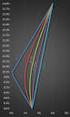 Copyright c 2005 by Karl Sigman Portfolio mean and variance Here we study the performance of a one-period investment X 0 > 0 (dollars) shared among several different assets. Our criterion for measuring
Fundamentals Level Skills Module, Paper F9
 Answers Fundamentals Level Skills Module, Paper F9 Financial Management June 2008 Answers 1 (a) Calculation of weighted average cost of capital (WACC) Cost of equity Cost of equity using capital asset
CHAPTER 22: FUTURES MARKETS
 CHAPTER 22: FUTURES MARKETS PROBLEM SETS 1. There is little hedging or speculative demand for cement futures, since cement prices are fairly stable and predictable. The trading activity necessary to support
Problem 1 (Issuance and Repurchase in a Modigliani-Miller World)
 Problem 1 (Issuance and Repurchase in a Modigliani-Miller World) A rm has outstanding debt with a market value of $100 million. The rm also has 15 million shares outstanding with a market value of $10
CAPITAL STRUCTURE [Chapter 15 and Chapter 16]
![CAPITAL STRUCTURE [Chapter 15 and Chapter 16]](/thumbs/34/17057255.jpg "CAPITAL STRUCTURE [Chapter 15 and Chapter 16]") Capital Structure [CHAP. 15 & 16] -1 CAPITAL STRUCTURE [Chapter 15 and Chapter 16] CONTENTS I. Introduction II. Capital Structure & Firm Value WITHOUT Taxes III. Capital Structure & Firm Value WITH Corporate
Capital Structure [CHAP. 15 & 16] -1 CAPITAL STRUCTURE [Chapter 15 and Chapter 16] CONTENTS I. Introduction II. Capital Structure & Firm Value WITHOUT Taxes III. Capital Structure & Firm Value WITH Corporate
Capital Structure and Ownership Structure: A Review of Literature
 [The Journal of Online Education, New York, January 2009] Capital Structure and Ownership Structure: A Review of Literature by BOODHOO Roshan ASc Finance, BBA (Hons) Finance, BSc (Hons) Banking & International
DETERMINING THE VALUE OF EMPLOYEE STOCK OPTIONS. Report Produced for the Ontario Teachers Pension Plan John Hull and Alan White August 2002
 DETERMINING THE VALUE OF EMPLOYEE STOCK OPTIONS 1. Background Report Produced for the Ontario Teachers Pension Plan John Hull and Alan White August 2002 It is now becoming increasingly accepted that companies
The Determinants and the Value of Cash Holdings: Evidence. from French firms
 The Determinants and the Value of Cash Holdings: Evidence from French firms Khaoula SADDOUR Cahier de recherche n 2006-6 Abstract: This paper investigates the determinants of the cash holdings of French
Online Appendix Feedback Effects, Asymmetric Trading, and the Limits to Arbitrage
 Online Appendix Feedback Effects, Asymmetric Trading, and the Limits to Arbitrage Alex Edmans LBS, NBER, CEPR, and ECGI Itay Goldstein Wharton Wei Jiang Columbia May 8, 05 A Proofs of Propositions and
Risk/Arbitrage Strategies: An Application to Stock Option Portfolio Management
 Risk/Arbitrage Strategies: An Application to Stock Option Portfolio Management Vincenzo Bochicchio, Niklaus Bühlmann, Stephane Junod and Hans-Fredo List Swiss Reinsurance Company Mythenquai 50/60, CH-8022
THE FINANCING DECISIONS BY FIRMS: IMPACT OF CAPITAL STRUCTURE CHOICE ON VALUE
 IX. THE FINANCING DECISIONS BY FIRMS: IMPACT OF CAPITAL STRUCTURE CHOICE ON VALUE The capital structure of a firm is defined to be the menu of the firm's liabilities (i.e, the "right-hand side" of the
Lecture 3: Growth with Overlapping Generations (Acemoglu 2009, Chapter 9, adapted from Zilibotti)
 Lecture 3: Growth with Overlapping Generations (Acemoglu 2009, Chapter 9, adapted from Zilibotti) Kjetil Storesletten September 10, 2013 Kjetil Storesletten () Lecture 3 September 10, 2013 1 / 44 Growth
How to Value Employee Stock Options
 John Hull and Alan White One of the arguments often used against expensing employee stock options is that calculating their fair value at the time they are granted is very difficult. This article presents
Review of Basic Options Concepts and Terminology
 Review of Basic Options Concepts and Terminology March 24, 2005 1 Introduction The purchase of an options contract gives the buyer the right to buy call options contract or sell put options contract some
Optimal Consumption with Stochastic Income: Deviations from Certainty Equivalence
 Optimal Consumption with Stochastic Income: Deviations from Certainty Equivalence Zeldes, QJE 1989 Background (Not in Paper) Income Uncertainty dates back to even earlier years, with the seminal work of
Martingale Pricing Applied to Options, Forwards and Futures
 IEOR E4706: Financial Engineering: Discrete-Time Asset Pricing Fall 2005 c 2005 by Martin Haugh Martingale Pricing Applied to Options, Forwards and Futures We now apply martingale pricing theory to the
Chapter 11 Options. Main Issues. Introduction to Options. Use of Options. Properties of Option Prices. Valuation Models of Options.
 Chapter 11 Options Road Map Part A Introduction to finance. Part B Valuation of assets, given discount rates. Part C Determination of risk-adjusted discount rate. Part D Introduction to derivatives. Forwards
The cost of capital. A reading prepared by Pamela Peterson Drake. 1. Introduction
 The cost of capital A reading prepared by Pamela Peterson Drake O U T L I N E 1. Introduction... 1 2. Determining the proportions of each source of capital that will be raised... 3 3. Estimating the marginal
Chapter 7: Capital Structure: An Overview of the Financing Decision
 Chapter 7: Capital Structure: An Overview of the Financing Decision 1. Income bonds are similar to preferred stock in several ways. Payment of interest on income bonds depends on the availability of sufficient