
The Distally Based Lesser Saphenous Venofasciocutaneous Flap for Ankle and Heel Reconstruction
|
|
|
- Kevin Harmon
- 10 years ago
- Views:
Transcription
1 The Distally Based Lesser Saphenous Venofasciocutaneous Flap for Ankle and Heel Reconstruction Shao-Liang Chen, M.D., Tim-Mo Chen, M.D., Trong-Duo Chou, M.D., Shyi-Gen Chen, M.D., and Hsian-Jenn Wang, M.D. Taiwan, Republic of China Finding an appropriate soft-tissue grafting material to close a wound located over the ankle and heel can be a difficult task. The distally based lesser saphenous venofasciocutaneous flap mobilized from the posterior aspect of the upper leg, used as an island pedicle skin flap, can be useful for this purpose. The vascular supply to the flap is derived from the retrograde perfusion of the accompanying arteries of the lesser saphenous vein. These arteries descend along both sides of the lesser saphenous vein to the distal third of the leg, either terminating or anastomosing with the septocutaneous perforators of the peroneal artery. Between February of 1999 and March of 2001, four variants of this flap were applied in 21 individuals, including 11 fasciocutaneous, five fascial, three sensory, and two fasciomyocutaneous flaps. Skin defects among all patients were combined with bone, joint, and/or tendon exposure. The authors found that the flap was reliable and technically simple to design and execute. This one-stage procedure not only preserves the major arteries and the sural nerve of the injured leg, but it also has proved valuable for covering a weight-bearing heel and filling a deep defect, because it potentially provides protective sensation and a well-vascularized muscle fragment. When conventional local flaps are inadequate, this flap should be considered for its reliability and low associated morbidity. (Plast. Reconstr. Surg. 110: 1664, 2002.) The loss of soft tissue at the level of the ankle and heel, with the exposure of tendon or bone, represents a challenging reconstructive problem because of the lack of locally available tissue, relatively poor circulation of the skin, and weight-bearing requirement of the region. Therapeutic options include local, regional, and free flaps. Each of these methods, however, has some drawbacks limiting its clinical application. A local flap 1 as a surgical solution may not be possible either because of inadequate tissue available to be moved from areas adjacent to the defect or because of limited flap mobilization. An inferiorly based soleus muscle flap 2 is associated with limitations of bulkiness and unreliability owing to the flap s variable vascular anatomy distally. Reversed septocutaneous flaps 3 6 such as the peroneal artery flap, anterior tibial artery flap, and posterior tibial artery flap are other options. When using such flaps, however, a major artery is killed and an already injured lower leg might be jeopardized. Microsurgery 7 9 can be used to remedy these problems, but such a technique requires a microvascular surgical team and appropriate equipment. Since Masquelet et al. 10 first described the concept of the distally based neurocutaneous island flap supplied by the vascular axis around the sural nerve, similar flaps have been reported subsequently and shown to be appropriate for the reconstruction of medium-to-large defects of the ankle and heel. In most of these reports, attention was focused only on the accompanying arteries of the sural nerve. In Nakajima et al. s anatomical study, 15 the lesser saphenous vein also exhibited its own accompanying arteries giving off several cutaneous perforators during the suprafascial course of the vein. The distally based lesser saphenous venofasciocutaneous flap was From the Division of Plastic and Reconstructive Surgery, Tri-Service General Hospital, Taipei. Received for publication November 26, Parts of this report were given as an oral presentation at the Annual Meeting of the Republic of China Association of Plastic and Reconstructive Surgery, Taipei, December 18, DOI: /01.PRS

2 Vol. 110, No. 7 / ANKLE AND HEEL FLAP RECONSTRUCTION 1665 developed by using these accompanying arteries as vascular relays. We used this flap to treat 21 patients, and the experience obtained from the management of these cases formed the basis of this report. SURGICAL ANATOMY The accompanying arteries of the lesser saphenous vein derive from the median superficial sural artery and consist of two vessels. 15 They descend along both sides of the lesser saphenous vein. In the upper half of the leg, the anatomical relationship between the lesser saphenous vein and the sural nerve is such that each runs independently in different layers (Fig. 1, above). The lesser saphenous vein with its accompanying arteries pierces the deep fascia at the upper fourth of the leg and then runs above the deep fascia. The sural nerve with its accompanying arteries courses under the deep FIG. 1.(Above) In the upper half of the leg, the lesser saphenous vein and the sural nerve run independently in different layers. (Below, left) In the lower half of the leg, the lesser saphenous vein and the sural nerve run close together above the deep fascia. (Below, right) After retracting the lesser saphenous vein, one of the accompanying arteries of the lesser saphenous vein joins the accompanying artery of the sural nerve at the midpoint of the leg and becomes the common accompanying artery of the lesser saphenous vein and the sural nerve. LSV, lesser saphenous vein; SN, sural nerve; DF, deep fascia; accompanying arteries (arrowheads); CAA, common accompanying artery.

3 1666 PLASTIC AND RECONSTRUCTIVE SURGERY, December 2002 fascia until it reaches the midpoint of the leg, where it penetrates the deep fascia. In the lower half of the leg, both the sural nerve and the lesser saphenous vein course closely to each other above the deep fascia (Fig. 1, below, left). One of the two accompanying arteries of the lesser saphenous vein, joining the accompanying artery of the sural nerve at the midpoint of the leg, becomes the common accompanying artery of the lesser saphenous vein and the sural nerve (Fig. 1, below, right). The other accompanying artery is solely located on the opposite side of the lesser saphenous vein. These arteries give off branches not only to the venous wall but also to the overlying skin for the entire length of the vein. In Le Fourn et al. s anatomical study, 16 the authors reported a constant relationship between the gastrocnemius muscles and the vascular axis of the sural nerve. At least one or two constant and direct perforators arose from the lower third of the gastrocnemius muscles, near the intergastrocnemius groove, to the neurovascular axis. Hence, a distally based gastrocnemius muscle flap can be raised and revascularized by the reverse flow of the accompanying arteries around the lesser saphenous vein and the sural nerve. In the distal third of the leg, the accompanying arteries of the lesser saphenous vein anastomose with the septocutaneous perforators of the peroneal artery, either directly or through the interlacing suprafascia network. 10,11,14,15 There exist from three to five peroneal septocutaneous perforators in this region, with the major one typically located about 5 cm above the tip of the lateral malleolus, which is considered to be the potential pivot point for the distally based lesser saphenous venofasciocutaneous flap. OPERATIVE TECHNIQUE The surgical maneuver of the distally based lesser saphenous venofasciocutaneous flap is similar to that of the distally based superficial sural artery flap, which has been well described in previous publications With the patient in a prone position, the flap can be raised anywhere in the posterior aspect of the leg, corresponding to the long suprafascial course of the lesser saphenous vein. A skin marking, with its size determined by the defect to be repaired, is made along the center line of the posterior aspect of the leg, at the location of the axis of the lesser saphenous vein and the sural nerve. The width of the flap is basically designed not to extend forward beyond the medial and lateral midaxial lines of the leg. The pivot point is also marked on the site of 5 cm above the tip of the lateral malleolus. With the aid of tourniquet control and loupe magnification, the operation is performed with the patient under spinal or general anesthesia. The fascial pedicle will be taken through a zigzag skin incision. The subdermal layer is dissected to expose the lesser saphenous vein, accompanying superficial sural vessels, and sural nerve. Sparing the sural nerve, the subcutaneous fascial pedicle is raised, for a width of 3 cm, to include the lesser saphenous vein and accompanying vessels. At the proximal margin of the skin flap, the vein and its accompanying arteries are ligated and divided. The flap and its vascular pedicle are then elevated, with the deep fascia, toward the pivot point of the lower leg, where the flap can easily be made to reach the defect without tension and the reverse blood flow can be preserved. The tourniquet is then released, and the integrity of the vascular flow to the flap is ascertained. If a thin flap is preferred, such as for resurfacing the exposed Achilles tendon, or if a linear scar of the posterior calf is required, a flap of fascia alone can be raised safely and covered with a split-thickness skin graft. If an innervated flap is needed for weight-bearing heel coverage, the lateral sural nerve must be meticulously dissected and sectioned proximally to obtain enough length for neurorrhaphy, after which the lateral sural nerve is coapted to the common sural nerve at the recipient site. If a muscle flap is needed for filling a deep defect of the ankle or heel, a skin island and the gastrocnemius muscles can be harvested on the middle part of the calf, corresponding to the lower part of the gastrocnemius muscles. The elevated flap is rotated 180 degrees and transferred to the defect either through a skin tunnel or by a direct incision on the skin bridge. The donor-site defect can be closed directly when the width of the flap is less than 4 cm. A larger donor-site defect must be covered with a split-thickness skin graft. PATIENTS AND METHODS Between February of 1999 and March of 2001, we treated 21 individuals who had suffered soft-tissue defects over the ankle and heel using four variants of the distally based lesser

4 Vol. 110, No. 7 / ANKLE AND HEEL FLAP RECONSTRUCTION 1667 saphenous venofasciocutaneous flap. These patients clinical data are summarized in Table I. Malignant melanoma, trauma, chronic ulcer, and painful scar were the preexisting conditions that necessitated subsequent reconstruction. For all patients, grafting was contraindicated because of the exposure of tendons and/or bones at the wound site. The patients included 15 men and six women, ranging in age from 22 to 70 years. The donor tissue variants included 11 fasciocutaneous, five fascial, three sensory, and two fasciomyocutaneous flaps. Thirteen recipient sites were situated in ankle areas, five in non-weight-bearing heel locations, and three in weight-bearing heel locations. The size of the flap ranged from 4.5 4cmto11 8 cm. The donor defects were resurfaced with split-thickness skin graft for 15 patients and were closed primarily for the remaining six patients. Patients who received different variants of the flap are presented in Figures 2 through 5. RESULTS Nineteen flaps survived fully. Two flaps that developed distal margin necrosis were treated successfully with a subsequent split-thickness skin graft. All patients became ambulatory on completion of wound healing. No ulceration was found in either the weight-bearing or nonweight-bearing flaps. For three patients with weight-bearing heel defects, the innervated flaps were sensitive to light touch, and all of the static two-point discrimination thresholds were greater than 20 mm after a 1-year follow-up. Case 1 CASE REPORTS A 70-year-old man revealed a malignant melanoma over the posterior aspect of the left heel. After wide tumor resection, a teardrop-shaped distally based lesser saphenous venofasciocutaneous flap, 3.5 cm in radius, was elevated. The flap was completely viable after surgery, and the contour of the heel was nicely restored (Fig. 2). Case 12 A 23-year-old man sustained open comminuted fractures of the distal tibia and fibula in a motor vehicle accident. After débridement and external fixation of the fractured bones, there was a large-tissue loss with exposure of tendons and bones over the anterior aspect of the left ankle. The defect was covered with a distally based fascial flap, 11 8 cm in size, and a split-thickness skin graft. However, a few days later partial necrosis of the distal part of the flap was noted. An additional 2 weeks later, the necrotic tissue was excised and the defect was covered with another skin graft (Fig. 3). Case 17 A 25-year-old man suffered from repetitive ulceration and scar contracture of a previous skin graft over the plantar aspect of the right heel. After scar revision, a distally based sensory flap, 10 5 cm in size, was raised for reconstruction of the weight-bearing heel. The lateral sural TABLE I Patient Summary Case Age/Sex (years) Mechanism Site of Defect Type of Flap Size of Flap (cm) Complication 1 70/M Melanoma Posterior heel Fasciocutaneous 3.5 (radius) No 2 38/M Trauma Lateral malleolus Fasciocutaneous 5 4 No 3 43/F Chronic ulcer Lateral malleolus Fasciocutaneous 6 4 No 4 23/M Trauma Anterior ankle Fasciocutaneous 8 4 No 5 28/M Trauma Medial malleolus Fasciocutaneous 5 3 No 6 45/F Trauma Achilles tendon Fasciocutaneous 7 5 No 7 56/F Chronic ulcer Medial malleolus Fasciocutaneous 6 5 Partial loss of distal flap 8 40/M Trauma Posterior heel Fasciocutaneous 9 6 No 9 63/M Pressure sore Lateral malleolus Fasciocutaneous 6 4 No 10 22/F Trauma Anterior ankle Fasciocutaneous 7 4 No 11 65/M Melanoma Posterior heel Fasciocutaneous 9 5 No 12 23/M Trauma Anterior ankle Fascia 11 8 Partial loss of distal flap 13 58/F Trauma Lateral malleolus Fascia 7 5 No 14 35/M Trauma Lateral malleolus Fascia 6 4 No 15 45/M Chronic ulcer Achilles tendon Fascia 9 6 No 16 36/F Trauma Medial malleolus Fascia 8 5 No 17 25/M Painful scar Weight-bearing heel Sensory 10 5 No 18 30/M Painful scar Weight-bearing heel Sensory 8 6 No 19 43/M Trauma Weight-bearing heel Sensory 8 4 No 20 56/M Chronic ulcer Lateral calcaneus Fasciomyocutaneous No 21 52/M Trauma Medial calcaneus Fasciomyocutaneous 7 4 No M, male; F, female.

5 1668 PLASTIC AND RECONSTRUCTIVE SURGERY, December 2002 FIG. 2.(Above, left) A malignant melanoma over the posterior aspect of the left heel. (Above, center) After wide resection of the tumor, a teardrop-shaped distally based lesser saphenous venofasciocutaneous flap is elevated. Preservation of the sural nerve ( ) can be clearly observed. (Above, right) View at 1-year follow-up. (Below) The contour of the heel has been nicely restored. nerve was reinnervated by coaptation to the common sural nerve in the area of the heel. The patient was allowed to bear weight fully on the injured heel 8 weeks postoperatively. Flap viability was good and there was no functional problem while walking. At the 12-month follow-up examination, this innervated flap was sensitive to light touch and its static two-point discrimination threshold was greater than 20 mm (Fig. 4). Case 20 A 56-year-old man suffered from chronic ulcer with osteomyelitis over the lateral aspect of the right calcaneus. After débridements, there was some soft-tissue loss and a noted bony defect. A distally based fasciomyocutaneous flap, cm in size, was harvested and the muscle fragment was used to fill the bony cavity. Subsequently, the patient s postoperative course was uneventful (Fig. 5). DISCUSSION The distally based neuroskin island flap supplied by the accompanying arteries of the sural nerve is reliable for distal leg and ankle reconstruction, but its main disadvantage is the need to sacrifice the sural nerve with the consequent complaint of paresthesia at the lateral part of the foot. Another limitation is that the skin portion of the flap is confined to the region distal to the midpoint of the leg where the sural nerve penetrates the deep fascia. On the contrary, the distally based lesser saphenous venofasciocutanous flap can preserve the sural nerve, and the skin portion of the flap, which is nourished through venocutanous perforators

6 Vol. 110, No. 7 / ANKLE AND HEEL FLAP RECONSTRUCTION 1669 FIG. 3.(Above, left) After external fixation of the open comminuted fractures of the distal tibia and fibula, there was a soft-tissue loss with exposure of tendons and bones. (Above, right) A distally based flap of fascia alone was raised and the sural nerve ( ) was preserved. (Below, left) The defect was covered with the fascial flap and meshed skin graft. (Below, right) View at 1-year follow-up. from the accompanying arteries of the lesser saphenous vein, can be freely located within the suprafascial course of the lesser saphenous vein from the upper fourth of the leg to the lateral malleolus. The venous drainage of this flap passes through the suprafascial venous networks of the superficial sural vein, lesser saphenous vein, and septocutaneous veins of the peroneal vein. The ideal replacement for the plantar aspect

7 1670 PLASTIC AND RECONSTRUCTIVE SURGERY, December 2002 FIG. 4.(Above, left) A postinjury hypertrophic scar with repetitive ulceration was noted over the plantar aspect of the right heel. (Above, right) A distally based sensory flap was elevated with the lateral sural nerve (arrowhead). (Below, left) Immediately after the operation, the weightbearing heel was restored with the flap and the lateral sural nerve was coapted to the common sural nerve at the heel. (Below, right) At the 1-year follow-up examination, there seemed to be no functional problem while walking and the innervated flap was sensitive to light touch. The static two-point discrimination threshold was greater than 20 mm.

8 Vol. 110, No. 7 / ANKLE AND HEEL FLAP RECONSTRUCTION 1671 FIG. 5.(Above, left) A chronic ulcer with osteomyelitis over the lateral aspect of the right calcaneus. (Above, right) After surgical débridements, a distally based fasciomyocutaneous flap was harvested. (Below, left) The fragment of the gastrocnemius muscle was used to obliterate the bony cavity. GM, gastrocnemius muscle. (Below, right) View at 1-month follow-up. of the heel should provide anatomical contour, durable skin, protective sensibility, and relative soft-tissue fixation to the underlying structures that can stand the stress of ambulation. An innervated distally based lesser saphenous venofasciocutaneous flap can be used to reconstruct a weight-bearing heel with protective sensation. Furthermore, the skin flap can re-

9 1672 PLASTIC AND RECONSTRUCTIVE SURGERY, December 2002 duce shearing force to a minimum, and it provides a good contour because the flap itself is thin. Another important consideration is whether or not the sural nerve should be included in the fasciomyocutaneous flap. Le Fourn et al. maintained that the sural nerve should be included to preserve the perforators between the lower third of the gastrocnemius muscles and the neurovascular axis. However, from our experience, there seems to be no need to sacrifice the sural nerve during elevation of the fasciomyocutaneous flap. Instead, the sural nerve can be preserved with minimal destruction of the arterial networks because the lesser saphenous vein and the sural nerve run closely in the same layer and have a common accompanying artery in the lower half of the leg. The distally based lesser saphenous venofasciocutaneous island flap is a new flap concept that depends on a nonobvious blood supply. The advantages of this flap are as follows: 1. The blood supply is constant and reliable, and the elevation of the flap is easy and quick. 2. Major arteries and the sural nerve are not killed. Therefore, this flap can be used on a traumatized leg with damaged major arteries and the sensation of the lateral aspect of the foot can be preserved. 3. This flap can be elevated in all parts of the posterior aspect of the leg and can reach as far as the heel pad and dorsal aspect of the ankle. 4. The procedure is a single-stage operation without the need for microsurgical techniques. 5. The flap potentially provides protective sensation for weight-bearing heel coverage. 6. The well-vascularized fasciomyocutaneous flap seems to be a good alternative to free muscle flaps for obliterating dead space and preventing infection. We believe that this new flap has special characteristics that may be suitable for reconstructing soft-tissue defects of the ankle and heel. Shao-Liang Chen, M.D. Division of Plastic and Reconstructive Surgery Tri-Service General Hospital 3F, No 25, Alley 4, Lane 154, Yung-Chun Street Taipei 100, Taiwan, R.O.C. [email protected] REFERENCES 1. McCraw, J. B. Selection of alternative local flaps in the leg and foot. Clin. Plast. Surg. 6: 227, Fayman, M. S., Orak, F., Hugo, B., and Berson, S. D. The distally based split soleus muscle flap. Br. J. Plast. Surg. 40: 20, Yoshimura, M., Imura, S., Shimamura, K., Yamauchi, S., and Nomura, S. Peroneal flap for reconstruction in the extremity: Preliminary report. Plast. Reconstr. Surg. 74: 402, Wee, J. T. K. Reconstruction of the lower leg and foot with the reverse-pedicled anterior tibial flap: Preliminary report of a new fasciocutaneous flap. Br. J. Plast. Surg. 39: 327, Hong, G., Steffens, K., and Wang, F. B. Reconstruction of the lower leg and foot with reverse pedicled posterior tibial fasciocutaneous flap. Br. J. Plast. Surg. 42: 512, Liu, K., Li, Z., Lin, Y., and Cao, Y. The reverse-flow posterior tibial island flap: Anatomic study and 72 clinical cases. Plast. Reconstr. Surg. 86: 312, Swartz, W. N., and Mears, D. C. The role of free-tissue transfers in lower extremity reconstruction. Plast. Reconstr. Surg. 76: 364, Noever, G., Bruser, P., and Kohler, L. Reconstruction of heel and sole defects by free flaps. Plast. Reconstr. Surg. 78: 345, Stevenson, T. R., and Mathes, S. J. Management of foot injuries with free-muscle flaps. Plast. Reconstr. Surg. 78: 665, Masquelet, A. C., Romana, M. C., and Wolf, G. Skin island flaps supplied by the vascular axis of the sensitive superficial nerves: Anatomic study and clinical experience in the leg. Plast. Reconstr. Surg. 89: 1115, Hasegawa, M., Torii, S., Katoh, H., and Esaki, S. The distally based superficial sural artery flap. Plast. Reconstr. Surg. 93: 1012, Rajacic, N., Darweesh, M., Jayakrishnan, K., Gang, R. K., and Kojic, S. The distally based superficial sural flap for reconstruction of the lower leg and foot. Br. J. Plast. Surg. 49: 383, Hyakusoku, H., Tonegawa, H., and Fumiiri, M. Heel coverage with a T-shaped distally based sural island fasciocutaneous flap. Plast. Reconstr. Surg. 93: 872, Yilmaz, M., Karatas, O., and Barutcu, A. The distally based superficial sural artery island flap: Clinical experience and modifications. Plast. Reconstr. Surg. 102: 2358, Nakajima, H., Imanishi, N., Fukuzumi, S., et al. Accompanying arteries of the lesser saphenous vein and sural nerve: Anatomic study and its clinical applications. Plast. Reconstr. Surg. 103: 104, Le Fourn, B., Caye, N., and Pannier, M. Distally based sural fascio-muscular flap: Anatomic study and application for filling leg or foot defects. Plast. Reconstr. Surg. 107: 67, Jeng, S. F., and Wei, F. C. Distally based sural island flap for foot and ankle reconstruction. Plast. Reconstr. Surg. 99: 744, Jeng, S. F., Wei, F. C., and Kuo, Y. R. Salvage of the distal foot using the distally based sural island flap. Ann. Plast. Surg. 43: 499, Coert, J. H., and Dellon, A. L. Clinical implications of the surgical anatomy of the sural nerve. Plast. Reconstr. Surg. 94: 850, 1994.

Heel Pain Syndromes DELLON INSTITUTES FOR PERIPHERAL NERVE SURGERY
 Heel Pain s 5 3333 N CALVERT ST, SUITE 370, BALTIMORE, MD 21218 T410 467 5400 F410 366 9826 delloninstitutes.com your complaints are Pain, numbness or burning in your heel. The timing of this pain and
Abdominal Pedicle Flaps To The Hand And Forearm John C. Kelleher M.D., F.A.C.S.
 Abdominal Pedicle Flaps To The Hand And Forearm John C. Kelleher M.D., F.A.C.S. Global-HELP Publications Chapter Eight: TECHNICAL REQUIREMENTS FOR FORMATION OF A TUBED PEDICLE FLAP Creating a tube pedicle
Anatomic Percutaneous Ankle Reconstruction of Lateral Ligaments (A Percutaneous Anti ROLL)
 Anatomic Percutaneous Ankle Reconstruction of Lateral Ligaments (A Percutaneous Anti ROLL) Mark Glazebrook James Stone Masato Takao Stephane Guillo Introduction Ankle stabilization is required when a patient
Chapter 21. How to do fasciotomy. neighboring structures
 Chapter 21 FRACTURES OF THE TIBIA AND FIBULA KEY FIGURES: Calf anatomy How to do fasciotomy Gastrocnemius and neighboring structures Longstanding open fracture Gastrocnemius flap Fractures of the tibia
The Reusable V-Y Advancement Gluteus Maximus Fasciocutaneous Flap in Management of Sacral Pressure Sores
 Egypt, J. Plast. Reconstr. Surg., Vol. 37, No. 1, January: 5-, 2013 The Reusable V-Y Advancement Gluteus aximus asciocutaneous lap in anagement of Sacral Pressure Sores YASSER EL HAWARY,.D. The Department
Ankle Block. Indications The ankle block is suitable for the following: Orthopedic and podiatry surgical procedures of the distal foot.
 Ankle Block The ankle block is a common peripheral nerve block. It is useful for procedures of the foot and toes, as long as a tourniquet is not required above the ankle. It is a safe and effective technique.
Extremity Trauma. William Schecter, MD
 Extremity Trauma William Schecter, MD Approach to the Evaluation of the Patient with an Extremity Injury Blood Supply Skeleton Neurologic Function Risk for Compartment Syndrome? Coverage (Skin and Soft
Syndesmosis Injuries
 Syndesmosis Injuries Dr. Alex Rabinovich Outline Anatomy Injury types and classification Treatment options Nonoperative vs. Operative Indications for operative Operative technique Postoperative management
The role of microsurgical free flaps in distal tibia, ankle and foot reconstruction
 223 EEXOT Volume 59, (4):223-229, 2008 The role of microsurgical free flaps in distal tibia, ankle and foot reconstruction A 6 year experience N.I. KARMIRIS, S.Α. VOURTSIS, C.M. ASSIMOMITIS, P.K. SPYRIOUNIS
Knowledge of vascular anatomy of the foot RECONSTRUCTIVE
 RECONSTRUCTIVE Angiosomes of the Foot and Ankle and Clinical Implications for Limb Salvage: Reconstruction, Incisions, and Revascularization Christopher E. Attinger, M.D. Karen Kim Evans, M.D. Erwin Bulan,
Practical Considerations for Perforator Flap Thinning Procedures Revisited
 Practical Considerations for Perforator Flap Thinning Procedures Revisited Theddeus OH Prasetyono, Kristaninta Bangun, Frank B Buchari, Putri Rezkini Division of Plastic Surgery, Department of Surgery,
Posttraumatic medial ankle instability
 Posttraumatic medial ankle instability Alexej Barg, Markus Knupp, Beat Hintermann Orthopaedic Department University Hospital of Basel, Switzerland Clinic of Orthopaedic Surgery, Kantonsspital Baselland
Malleolar fractures Anna Ekman, Lena Brauer
 Malleolar fractures Anna Ekman, Lena Brauer How to use this handout? The left column is the information as given during the lecture. The column at the right gives you space to make personal notes. Learning
Minimally Invasive Spine Surgery
 Chapter 1 Minimally Invasive Spine Surgery 1 H.M. Mayer Primum non nocere First do no harm In the long history of surgery it always has been a basic principle to restrict the iatrogenic trauma done to
MODIFIED STRAYER GASTROCNEMIUS RECESSION: A Technique Guide for the Supine Positioned Patient
 C H A P T E R 4 5 MODIFIED STRAYER GASTROCNEMIUS RECESSION: A Technique Guide for the Supine Positioned Patient M. Jay Groves, IV, DPM Gastrosoleal equinus is a common deforming force on the foot and ankle.
.org. Ankle Fractures (Broken Ankle) Anatomy
 Ankle Fractures (Broken Ankle) Page ( 1 ) A broken ankle is also known as an ankle fracture. This means that one or more of the bones that make up the ankle joint are broken. A fractured ankle can range
OPEN ACCESS ATLAS OF OTOLARYNGOLOGY, HEAD & NECK OPERATIVE SURGERY
 OPEN ACCESS ATLAS OF OTOLARYNGOLOGY, HEAD & NECK OPERATIVE SURGERY NASOLABIAL FLAP FOR ORAL CAVITY RECONSTRUCTION Harry Wright, Scott Stephan, James Netterville Designed as a true myocutaneous flap pedicled
Integumentary System Individual Exercises
 Integumentary System Individual Exercises 1. A physician performs an incision and drainage of a subcutaneous abscess in his office for a particularly uncooperative established patient. How should this
Chapter 33. Nerve Physiology
 Chapter 33 NERVE AND VASCULAR INJURIES OF THE HAND KEY FIGURES: Digital nerve location on finger Epineurial repair Nerves and blood vessels of the hand and fingers usually are quite delicate, and some
Achilles Tendon Repair, Operative Technique
 *smith&nephew ANKLE TECHNIQUE GUIDE Achilles Tendon Repair, Operative Technique Prepared in Consultation with: C. Niek van Dijk, MD, PhD KNEE HIP SHOULDER EXTREMITIES Achilles Tendon Repair, Operative
How To Harvest Fat From The Infratemporal Fossila
 Techniques in Cosmetic Surgery Harvesting Fat from the Infratemporal Fossa Bahman Guyuron, M.D., and Kevin Rose, M.D. Cleveland, Ohio As part of forehead rejuvenation and surgical treatment of migraine
Diabetic Foot Ulcers and Pressure Ulcers. Laurie Duckett D.O. Plastic and Reconstructive Surgeon Oklahoma State University Center for Health Sciences
 Diabetic Foot Ulcers and Pressure Ulcers Laurie Duckett D.O. Plastic and Reconstructive Surgeon Oklahoma State University Center for Health Sciences Lecture Objectives Identify risk factors Initiate appropriate
Chapter 5. Objectives. Normal Ankle Range of Motion. Lateral Ankle Sprains. Lateral Ankle Sprains. Assessment of Lateral Ankle Sprains
 Objectives Chapter 5 Assessment of Ankle & Lower Leg Injuries Review the following components of injury assessment related to the ankle and lower leg Stress tests Special tests Normal Ankle Range of Motion
TransFx External Fixation System Large and Intermediate Surgical Technique
 TransFx External Fixation System Large and Intermediate Surgical Technique TransFx External Fixation System Large and Intermediate Surgical Technique 1 Surgical Technique For TransFx External Fixation
ADVANCEMENTS IN PLANTAR FASCIA SURGERY
 C H A P T E R 3 3 ADVANCEMENTS IN PLANTAR FASCIA SURGERY James L. Bouchard, DPM Andrea Cass, DPM INTRODUCTION It has been estimated that 90% of patients with plantar fasciitis and heel spur syndrome get
Chapter 7. Expose the Injured Area
 Chapter 7 GUNSHOT WOUNDS KEY FIGURES: Entrance/exit wounds This chapter describes how to treat the external, surface wounds caused by a bullet. The evaluation for underlying injury related to gunshot wounds
ANTERIOR LUMBAR INTERBODY FUSION (ALIF) Basic Anatomical Landmarks: Anterior Lumbar Spine
 (ALIF) Anterior In human anatomy, referring to the front surface of the body or the position of one structure relative to another Lumbar Relating to the loins or the section of the back and sides between
Lesions, and Masses, and Tumors Oh My!!
 Lesions, and Masses, and Tumors Oh My!! Presented by: Susan Ward, CPC, CPC-H, CPC-I, CPCD, CEMC, CPRC 1 1 CPT GUIDELINES Agenda CPT DEFINITIONS OP REPORT CASES 2 Definitions Cyst - a closed sac having
PHYSICAL EXAMINATION OF THE FOOT AND ANKLE
 PHYSICAL EXAMINATION OF THE FOOT AND ANKLE Presenter Dr. Richard Coughlin AOFAS Lecture Series OBJECTIVES 1. ASSESS 2. DIAGNOSE 3. TREAT HISTORY TAKING Take a HISTORY What is the patient s chief complaint?
Reconstruction of Various Moderate-Size Foot Defects with the Medial Plantar Flap
 ARAŞTIRMA / RESEARCH REPORT İnönü Üniversitesi Tıp Fakültesi Dergisi 2011;18(4):222-7. Reconstruction of Various Moderate-Size Foot Defects with the Medial Plantar Flap Celalettin Sever*, Yalçın Külahçı*
Spinal Arthrodesis Group Exercises
 Spinal Arthrodesis Group Exercises 1. Two surgeons work together to perform an arthrodesis. Dr. Bonet, a general surgeon, makes the anterior incision to gain access to the spine for the arthrodesis procedure.
Joint Pain: Wrist, Knee, Shoulder, Ankle, Elbow, TMJ
 Joint Pain: Wrist, Knee, Shoulder, Ankle, Elbow, TMJ 6 3333 N CALVERT ST, SUITE 370, BALTIMORE, MD 21218 T410 467 5400 F410 366 9826 delloninstitutes.com your complaints are Your wrist hurts when you bend
Provided by the American Venous Forum: veinforum.org
 CHAPTER 17 SURGICAL THERAPY FOR DEEP VALVE INCOMPETENCE Original author: Seshadri Raju Abstracted by Gary W. Lemmon Introduction Deep vein valvular incompetence happens when the valves in the veins (tubes
INJURIES OF THE HAND AND WRIST By Derya Dincer, M.D.
 05/05/2007 INJURIES OF THE HAND AND WRIST By Derya Dincer, M.D. Hand injuries, especially the fractures of metacarpals and phalanges, are the most common fractures in the skeletal system. Hand injuries
Venous Reflux Disease and Current Treatments VN20-87-A 01/06
 Venous Reflux Disease and Current Treatments Leg Vein Anatomy Your legs are made up of a network of veins and vessels that carry blood back to the heart The venous system is comprised of: Deep veins Veins
Acute Ankle Injuries, Part 1: Office Evaluation and Management
 t June 08, 2009 Each acute ankle injury commonly seen in the office has associated with it a mechanism by which it can be injured, trademark symptoms that the patient experiences during the injury, and
Wound and Skin Assessment. Mary Carvalho RN, BSN, MBA Clinical Coordinator Johnson Creek Wound and Edema Center
 Wound and Skin Assessment Mary Carvalho RN, BSN, MBA Clinical Coordinator Johnson Creek Wound and Edema Center Skin The largest Organ Weighs between 6 and 8 pounds Covers over 20 square feet Thickness
Plantar Fascia Release
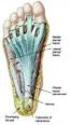 Plantar Fascia Release Introduction Plantar fasciitis is a common condition that causes pain around the heel. It may be severe enough to affect regular activities. If other treatments are unsuccessful,
Lateral Ankle Instability Repair using TWINFIX Ti 3.5 mm Suture Anchors
 *smith&nephew ANKLE TECHNIQUE GUIDE Lateral Ankle Instability Repair using TWINFIX Ti 3.5 mm Suture Anchors Prepared in Consultation with: James Calder, MD KNEE HIP SHOULDER EXTREMITIES Lateral Ankle Instability
The Petrylaw Lawsuits Settlements and Injury Settlement Report
 The Petrylaw Lawsuits Settlements and Injury Settlement Report UPPER ER-LEG INJURIES How Minnesota Juries Decide the Value of Pain and Suffering in Upper-Leg Injury Cases The Petrylaw Lawsuits Settlements
13 Adductor Muscle Group Excision
 Malawer Chapter 13 21/02/2001 15:36 Page 243 13 Adductor Muscle Group Excision Martin Malawer and Paul Sugarbaker OVERVIEW The adductor muscle group is the second most common site for high- and low-grade
Groin Pain Syndromes
 Groin Pain s 4 3333 N CALVERT ST, SUITE 370, BALTIMORE, MD 21218 T410 467 5400 F410 366 9826 delloninstitutes.com your compaints are Pain, numbness or burning in the lower abdominal wall, and/or the pubic
Minimally Invasive Hip Replacement through the Direct Lateral Approach
 Surgical Technique INNOVATIONS IN MINIMALLY INVASIVE JOINT SURGERY Minimally Invasive Hip Replacement through the Direct Lateral Approach *smith&nephew Introduction Prosthetic replacement of the hip joint
Chapter 35. Volar forearm fasciotomy incisions Hand/dorsal forearm fasciotomy incisions Finger fasciotomy incisions
 Chapter 35 HAND CRUSH INJURY AND COMPARTMENT SYNDROME KEY FIGURES: Volar forearm fasciotomy incisions Hand/dorsal forearm fasciotomy incisions Finger fasciotomy incisions The previous chapters about the
Breast Reconstruction Options. Department of Plastic Surgery #290 Santa Clara Homestead Campus
 Breast Reconstruction Options Department of Plastic Surgery #290 Santa Clara Homestead Campus Importance of Breast Reconstruction As successes in treating breast cancer have grown, more women have been
Y O U R S U R G E O N S. choice of. implants F O R Y O U R S U R G E R Y
 Y O U R S U R G E O N S choice of implants F O R Y O U R S U R G E R Y Y O U R S U R G E O N S choice of implants F O R Y O U R S U R G E R Y Your Surgeon Has Chosen the C 2 a-taper Acetabular System The
114 - CHEST WALL CONTOURING IN FEMALE-TO-MALE TRANSSEXUALS: OUR EXPERIENCE AND ALGORYTHM
 114 - CHEST WALL CONTOURING IN FEMALE-TO-MALE TRANSSEXUALS: OUR EXPERIENCE AND ALGORYTHM VITTORIO RAMELLA (1) - GIOVANNI PAPA (1) - LUIGI TROISI (1) - FEDERICO CESARE NOVATI (1) - ALBERTO FRANCHI (1) -
Wound Classification Name That Wound Sheridan, WY June 8 th 2013
 Initial Wound Care Consult Sheridan, WY June 8 th, 2013 History Physical Examination Detailed examination of the wound Photographs Cultures Procedures TCOM ABI Debridement Management Decisions A Detailed
3. Be able to perform a detailed clinical examination of the forearm and wrist.
 Patient Care: 1. Demonstrate appropriate evaluation and treatment of patients with hand/wrist surgery problems in the emergency room and as part of the inpatient consultation service, including application
Neglected Wound/Poor Wound Care
 Chapter 18 CHRONIC WOUNDS KEY FIGURES: Open wound Wound covered with skin graft Chronic wounds are open wounds that for some reason simply will not heal. They may be present for months or even years. Often,
George E. Quill, Jr., M.D. Louisville Orthopaedic Clinic Louisville, KY
 George E. Quill, Jr., M.D. Louisville Orthopaedic Clinic Louisville, KY The Ankle Sprain That Won t Get Better With springtime in Louisville upon us, the primary care physician and the orthopaedist alike
Endoscopic Plantar Fasciotomy
 Endoscopic Plantar Fasciotomy Introduction Plantar fasciitis is a common condition that causes pain centralized around the heel. It may be severe enough to affect regular activities. Health care providers
Clarification of Medicare Benefits Schedule rules for the Transport Accident Commission and WorkSafe Victoria
 Clarification of Medicare Benefits Schedule rules for the Transport Accident Commission and WorkSafe Victoria MAY 2013 When paying the reasonable costs of medical services, the TAC and WorkSafe pay in
Calcaneus (Heel Bone) Fractures
 Copyright 2010 American Academy of Orthopaedic Surgeons Calcaneus (Heel Bone) Fractures Fractures of the heel bone, or calcaneus, can be disabling injuries. They most often occur during high-energy collisions
Pressure Ulcers Assessing and Staging. Anne Pirzadeh RN CWOCN University of Colorado Hospital June 2010
 Pressure Ulcers Assessing and Staging Anne Pirzadeh RN CWOCN University of Colorado Hospital June 2010 Never Events: Pressure Ulcers Pressure Ulcer Codes: MD documentation of pressure ulcers determines
(Immediate) Primary Versus Delayed Reconstruction of Human and Animal Bite
 Egypt, J. Plast. Reconstr. Surg., Vol. 35, No. 2, July: 267-271, 2011 (Immediate) Primary Versus Delayed Reconstruction of Human and Animal Bite SAMY ELEOWA, M.D.; AHMED TAHA, M.D.; MOUSTAFA MEKY, M.D.
Vascular Access. Chapter 3
 Vascular Access Chapter 3 Vascular Access Introduction Obtaining vascular access in infants and children can be difficult even under optimal conditions. Attempting emergent access in a hypotensive, struggling
How To Know If You Can Recover From A Knee Injury
 David R. Cooper, M.D. www.thekneecenter.com Wilkes-Barre, Pa. Knee Joint- Anatomy Is not a pure hinge Ligaments are balanced Mechanism of injury determines what structures get damaged Medial meniscus tears
Structure & Function of the Ankle and Foot. A complicated model of simplicity that you really think little about until you have a problem with one.
 Structure & Function of the Ankle and Foot A complicated model of simplicity that you really think little about until you have a problem with one. The Foot and Ankle Terminology Plantar flexion Dorsi flexion
Position Statement: Pressure Ulcer Staging
 Position Statement: Pressure Ulcer Staging Statement of Position The Wound, Ostomy and Continence Nurses (WOCN) Society supports the use of the National Pressure Ulcer Advisory Panel Staging System (NPUAP).
Rehabilitation Guidelines for Achilles Tendon Repair
 UW HEALTH SPORTS REHABILITATION Rehabilitation Guidelines for Achilles Tendon Repair The Achilles tendon is the strongest and thickest tendon in the body. It attaches the calf muscles (soleus and gastrocnemius)
5 Upper eyelid blepharoplasty
 5 Upper eyelid blepharoplasty INSTRUMENTS Marking pen No. 15 scalpel blade Blade handle Castroviejo needle holder Castroviejo calipers 0.5 fixation forceps Westcott scissors 6-0 prolene suture Bovie cautery
AOBP with thanks to: Dawn Dillinger, DO Kyle Bodley, DO
 AOBP with thanks to: Dawn Dillinger, DO Kyle Bodley, DO Common maneuvers in some sports that can increase risk for injury Jumping Pivoting while running Sudden stopping while running Maneuvering a ball
Your Practice Online
 P R E S E N T S Your Practice Online Disclaimer This information is an educational resource only and should not be used to make a decision on Knee replacement or arthritis management. All decisions about
INTERNATIONAL MEDICAL COLLEGE
 INTERNATIONAL MEDICAL COLLEGE Joint Degree Master Program: Implantology and Dental Surgery (M.Sc.) Basic modules: List of individual modules Basic Module 1 Basic principles of general and dental medicine
Nursing Interventions Rationale Expected Outcomes
 Plan of Nursing Care: Care of the Elderly Patient With a Fractured Hip Nursing Diagnosis: Acute pain related to fracture, soft tissue damage, muscle spasm, and surgery Goal: Relief of pain 1Assess type
X-Plain Inguinal Hernia Repair Reference Summary
 X-Plain Inguinal Hernia Repair Reference Summary Introduction Hernias are common conditions that affect men and women of all ages. Your doctor may recommend a hernia operation. The decision whether or
(English) NEXUS SPINE SPACER SYSTEM
 (English) NEXUS SPINE SPACER SYSTEM INDICATIONS FOR USE NEXUS Spine Spacer System, a GEO Structure is indicated for use in the thoraco-lumbar spine (i.e., T1 to L5) to replace a diseased vertebral body
Outline. The Agony of the Foot: Disclosure. Plantar Fasciitis. Top 5 Foot and Ankle Problems in Primary Care. Daniel Thuillier, M.D.
 The Agony of the Foot: Top 5 Foot and Ankle Problems in Primary Care Daniel Thuillier, M.D. Assistant Professor of Clinical Orthopaedics University of California San Francisco Plantar Fasciitis Achilles
There has been a renewed interest in upper
 SPECIAL TOPIC An Algorithmic Approach to Upper Arm Contouring Eric A. Appelt, M.D. Jeffrey E. Janis, M.D. Rod. J. Rohrich, M.D. Dallas, Texas Summary: There has been a renewed interest in upper arm contouring
CPME Memorandum Proper Logging of Surgical Procedures November 15, 2012
 For the procedure codes listed below, the program director must review each entry to determine proper usage. 1.13 other osseous digital procedure not listed above 2.3.10 other first ray procedure not listed
Clinical Privileges Profile Plastic Surgery. Indu & Raj Soin Medical Center
 Printed Name Clinical Privileges Profile Plastic Surgery Indu & Raj Soin Medical Center Applicant: Check off the Requested box for each privilege requested. Applicants have the burden of producing information
How To Stage A Pressure Ulcer
 WOCN Society Position Statement: Pressure Ulcer Staging Originated By: Wound Committee Date Completed: 1996 Reviewed/Revised: July 2006 Revised: August 2007 Reviewed/Revised: April 2011 Definition of Pressure
LUMBAR LAMINECTOMY AND DISCECTOMY. Basic Anatomical Landmarks: Posterior View Lumbar Spine
 Lumbar Relating to the loins or the section of the back and sides between the ribs and the pelvis. In the spinal column, the last five vertebrae (from superior to inferior, L1-L5) Laminectomy Surgical
Rehabilitation Guidelines for Lateral Ankle Reconstruction
 UW HEALTH SPORTS REHABILITATION Rehabilitation Guidelines for Lateral Ankle Reconstruction The ankle is a very complex joint. There are actually three joints that make up the ankle complex: the tibiotalar
ABThera Open Abdomen Negative Pressure Therapy for Active Abdominal Therapy. Case Series
 ABThera Open Abdomen Negative Pressure Therapy for Active Abdominal Therapy Case Series Summary of Cases: USER EXPERIENCE The ABThera OA NPT system was found by surgeons to be a convenient and effective
7/11/2011. Pressure Ulcers. Moisture-NOT Pressure. Wounds NOT Caused by Pressure
 Assessment and Documentation of Pressure Ulcers Jeri Ann Lundgren, RN, BSN, PHN, CWS, CWCN Pathway Health Services July 19, 2011 Training Objectives Describe etiologies of pressure ulcers Discuss how to
www.ghadialisurgery.com
 P R E S E N T S Dr. Mufa T. Ghadiali is skilled in all aspects of General Surgery. His General Surgery Services include: General Surgery Advanced Laparoscopic Surgery Surgical Oncology Gastrointestinal
The Hand Exam: Tips and Tricks
 The Hand Exam: Tips and Tricks Nikki Strauss Schroeder, MD Assistant Clinical Professor, UCSF Department of Orthopaedic Surgery November 4, 2013 Outline Surface Anatomy Hand Anatomy Exam Management of
APPENDIX 1: INTERDISCIPLINARY APPROACH TO PREVENTION AND MANAGEMENT OF DIABETIC FOOT COMPLICATIONS
 APPENDIX 1: INTERDISCIPLINARY APPROACH TO PREVENTION AND MANAGEMENT OF DIABETIC FOOT COMPLICATIONS Template: Regional Foot Programs should develop a list of available health professionals in the following
X-Plain Varicose Veins Reference Summary
 X-Plain Varicose Veins Reference Summary Introduction Varicose veins are very common, in both women and men. Varicose veins can be painful and unattractive. Vein doctors use non-invasive ultrasound imaging
.org. Plantar Fasciitis and Bone Spurs. Anatomy. Cause
 Plantar Fasciitis and Bone Spurs Page ( 1 ) Plantar fasciitis (fashee-eye-tiss) is the most common cause of pain on the bottom of the heel. Approximately 2 million patients are treated for this condition
Lip Cancer: Treatment & Reconstruction
 Lip Cancer: Treatment & Reconstruction GBMC - Head & Neck Cancer Grand Rounds Elizabeth E. Redd, M.D. With the assistance of Ira Papel, M.D. Patrick Byrne, M.D. Lip Cancer: Treatment & Reconstruction Anatomic
Council on Podiatric Medical Education
 CPME MEMORANDUM November 15, 2012 TO: Program Directors and Residents FROM: Council on Podiatric Medical Education SUBJECT: By conference call in October 2012, members of the Council's Residency Review
Semmelweis University Department of Traumatology Dr. Gál Tamás
 Semmelweis University Department of Traumatology Dr. Gál Tamás Anatomy Ankle injuries DIRECT INDIRECT Vertical Compression (Tibia plafond Pilon) AO 43-A,B,C Suppination (adduction + inversion) AO 44-A
Suffering from varicose veins? Patient Information. ELVeS Radial Minimally invasive laser therapy of venous insufficiency
 Suffering from varicose veins? Patient Information ELVeS Radial Minimally invasive laser therapy of venous insufficiency Do you suffer from heavy legs or visible veins? This makes diseases of the veins
Negative Pressure Wound Therapy Incorporating Early Exercise Therapy in Hand Surgery: Bag-type Negative Pressure Wound Therapy
 2013 67 4 271 276 Negative Pressure Wound Therapy Incorporating Early Exercise Therapy in Hand Surgery: ag-type Negative Pressure Wound Therapy * 272 67 4 14 15 17 ugust 2013 ag-type Negative Pressure
Foot and Ankle Technique Guide Proximal Inter-Phalangeal (PIP) Fusion
 Surgical Technique Foot and Ankle Technique Guide Proximal Inter-Phalangeal (PIP) Fusion Prepared in consultation with: Phinit Phisitkul, MD Department of Orthopedics and Rehabilitation University of Iowa
Calcaneal Fracture and Rehabilitation
 1 Surgical Indications and Considerations Calcaneal Fracture and Rehabilitation Anatomic Considerations: The calcaneus articulates with the talus superiorly at the subtalar joint. The three articulating
The Abdominal Wall And Hernias. Stanley Kurek, DO, FACS Associate Professor of Surgery UTMCK
 The Abdominal Wall And Hernias Stanley Kurek, DO, FACS Associate Professor of Surgery UTMCK The Abdominal Wall The structure of the abdominal wall is similar in principle to the thoracic wall. There are
The Anatomy of the Greater Occipital Nerve: Implications for the Etiology of Migraine Headaches
 Cosmetic The Anatomy of the Greater Occipital Nerve: Implications for the Etiology of Migraine Headaches Scott W. Mosser, M.D., Bahman Guyuron, M.D., Jeffrey E. Janis, M.D., and Rod J. Rohrich, M.D. Cleveland,
ANTERIOR CERVICAL DISCECTOMY AND FUSION. Basic Anatomical Landmarks: Anterior Cervical Spine
 Anterior In the human anatomy, referring to the front surface of the body or position of one structure relative to another Cervical Relating to the neck, in the spine relating to the first seven vertebrae
Get the Facts, Be Informed, Make YOUR Best Decision. Pelvic Organ Prolapse
 Pelvic Organ Prolapse ETHICON Women s Health & Urology, a division of ETHICON, INC., a Johnson & Johnson company, is dedicated to providing innovative solutions for common women s health problems and to
Integra. Subtalar MBA and bioblock Implant SURGICAL TECHNIQUE
 Integra Subtalar MBA and bioblock Implant SURGICAL TECHNIQUE Table of contents Introduction Description... 2 Indications... 2 Contraindications... 2 Surgical Technique Step 1: Incision and Dissection...3
Titanium Wire with Barb and Needle. For canthal tendon procedures.
 Titanium Wire with Barb and Needle. For canthal tendon procedures. Technique Guide Instruments and implants approved by the AO Foundation Table of Contents Introduction Titanium Wire with Barb and Needle
Non-surgical treatment of severe varicose veins
 Non-surgical treatment of severe varicose veins Yasu Harasaki UCHSC Department of Surgery General Surgery Grand Rounds March 19, 2007 Definition Dilated, palpable, subcutaneous veins generally >3mm in