
Exotic Parasite Sickens Canadian Businessmen By Xavier Onnasis
|
|
|
- Marjory Barnett
- 10 years ago
- Views:
Transcription
1 Science Olympiad 2010 Disease Detectives You will be presented with 3 different case studies. Please fill in the answer sheet. Nonprogrammable calculators are allowed. No other resources are permitted. Time allotted to event: 50 minutes. Case #1: Infectious Disease Outbreak On May 20, 1996, the following article appeared on the front page of the Toronto Sun: Exotic Parasite Sickens Canadian Businessmen By Xavier Onnasis TORONTO Public health officials today confirmed that three Canadian businessmen, two from Toronto and one from Ottawa, were diagnosed with cyclosporiasis, a parasitic disease seen only in tropical countries and overseas travelers. The three men, who had recently traveled to the United States, became seriously ill with diarrhea over the weekend (May 16-18). One of the men was hospitalized at Princess Margaret Hospital when he collapsed due to severe dehydration. Dr. Richard Schabas, Ontario s Chief Medical Officer, reported that cyclosporiasis was exceedingly rare in North American and that much was still unknown about this disease. Cyclosporiasis is caused by the microorganism Cyclospora cayetanensis. Cyclospora infects the small bowel and usually causes watery diarrhea, with frequent, sometimes explosive, bowel movements. Symptoms can include bloating, increased gas, stomach cramps, nausea, loss of appetite, and profound weight loss. The illness is diagnosed by examining stool specimens in the laboratory. Dr. Schabas declined to identify a source of infection for the three businessmen but indicated that the parasite is transmitted through contaminated food or water but not by direct person-to-person spread. The time between exposure to the parasite and becoming sick is usually about 7 days. Dr. Schabas reported that all three men had attended a meeting in Texas on May He said Ontario Health Department staff would be investigating leads locally and in Texas. Additional information about Cyclospora: Cyclospora is spread by ingesting something that has been contaminated with stool containing the parasite (i.e., the fecal-oral route). Cyclospora needs time (days or weeks), however, after being passed in a bowel movement to become infectious. (The parasite, which is passed in the stool as an oocyst, must change forms and sporulate to become infectious.). As a result, food or water contaminated with unsporulated oocysts shortly before consumption should not cause infection. In addition, exposure of the parasite to temperatures less than 20ºC for 24 hours or above 60ºC for 1 hour inactivates the oocysts. No documented outbreaks have been associated with cooked or commercially frozen foods. 1
2 Additional information about this outbreak investigation: The chief medical officer of the Ontario Health Department notified the Texas Department of Health (TDH) about the Cyclospora infections in the three Canadian businessmen. The businessmen had attended a meeting at a private club in Houston, Texas on May A total of 28 people had attended the Houston business meeting. Participants came from three U.S. states and Canada. Meals served during the meeting were prepared at the restaurant operated by the private club. Rumors among restaurant staff suggested that other attendees at the meeting had also become ill. TDH, the Houston Health & Human Services Department, and the Centers of Disease Control and Prevention (CDC) initiated an epidemiologic investigation to identify the source of the cyclosporiasis outbreak. Information collected during the epidemiologic investigation: Of the 27 meeting attendees who were interviewed, 16 (59%) met the case definition for cyclosporiasis. Onsets of illness occurred from May 14 through May 19. Patient # Date of onset of illness 1 5/14 2 5/15 3 5/15 4 5/16 5 5/16 6 5/16 7 5/16 8 5/16 9 5/ / / / / / / /19 Investigators questioned both ill and well meeting attendees about travel history and food and water exposures during the meeting. Twenty-four meeting attendees provided information on foods eaten during the meeting. (Four attendees, including three cases, did not provide the information.) Investigators examined the occurrence of illness among people who ate different food items. Twelve (92%) of 13 attendees who ate the berry dessert became ill. Only one (9%) of 11 attendees who did not eat the berry dessert became ill. The relative risk for eating berries was 10.2 (p-value <0.0001). No other exposures were associated with illness. 2
3 Case #2 Environmental Risks to Health Box 1 3
4 Results are described on the next page. BBRS/worker refers to the group living near a BBRS with a person working at the BBRS living in the home. BBRS refers to people living near a BBRS but not having a worker in the home. Worker refers to the group living away from a BBRS and having a person who works at a BBRS living in the home. Control refers to people living away from a BBRS and not having a person who works at a BBRS living in the home. Controls lived in the same block as those in the worker group. 4


5 The case is modified from a case prepared by Nancy V. Hicks, PhD and revised by Steven Markowitz, MD, 1991; revised Case #3 Nutrition challenges in a resource-limited world As the world s population increases, adequate nutrition for all will become an even greater challenge than it is today. Today, nutritional challenges are common in some areas of the world, and are of great concern in refugee settlements such as the Bhutanese settlements in Nepal. The World Food Program of Nepal reported recently on the nutritional status of children in these refugee camps. Note the information in the table on malnutrition and micronutrient deficiencies. 5
6 6


7 Disease Detectives 2010 Science Olympiad UW-Oshkosh Regional Tournament March 6, 2010 Division C Team # School: Student 1 Name: Student 2 Name: Hosted by Science Outreach
8 Disease Detectives Regional 2010 Division C Exam Directions: Read the following scenarios and answer the questions that follow. Questions are matching, multiple choice, or short answer. The number in parenthesis indicates the point value for each question. 1. Match the following terms on the left with the definitions on the right. Each term will have only one answer. (15) A. Relative risk n B. Attack rate g C. Odds ratio j a) An animate, living insect or animal that is involved with transmission of the disease agent. b) Disease or infectious agent that is habitually present in a community, geographic area, or population group. c) More cases of a particular disease than expected in a given area or among a specialized group of people over a particular period of time. D. Line list h d) Occurrence of a disease clearly in excess of normal expectancy. E. Epidemic curve l e) An inanimate object that is laden with disease-causing agents. F. Vector a f) Study that follows a group of subjects who received a specific exposure in order to examine the differences in incidence of a specific disease or other outcome of interest. G. Fomite e g) The rate that a group experienced an outcome or illness. H. Cohort f h) Chart of information about each case. I. Case-control m i) An epidemic that spans a wide geographic area. J. Endemic b j) Measure of association between frequency of exposure and frequency of outcome (formula is AD/BC). K. Outbreak c k) Occurrence of an illness or illnesses in a population. L. Epidemic d l) A histogram showing the course of a disease or outbreak. M. Pandemic i m) Study that compares individuals who have a disease with individuals who do not have the disease in order to examine differences in exposures or risk factors for the disease N. Mortality o n) Ratio of the risk of disease or death among the exposed to the risk among the unexposed. O. Morbidity k o) Occurrence of death in a population. 2. In 1965, 400 soldiers were exposed to radiation from a bomb explosion. A total of 50 solders were 25 yards away, 100 solders were 1000 yards away, 200 solders were 2000 yards away, and 75 soldiers were 5000 yards away when the bomb exploded. A disease detective wants to determine the effect of this radiation exposure and these soldiers developing cancer. What data analysis would you perform? (1) a. Odds ratio b. Attack rate c. Relative risk d. Risk ratio e. Incidence rate 2 Page Total
9 Disease Detectives Regional 2010 Division C Exam A disease detective is examining the relationship between consuming alcohol within 2 hours of driving a car and having a car accident. Table 1: Car accident and alcohol consumption. 3. Complete Table 1 using the following data from the study. Of the people in this study, Car Accident a total of 150 people did not drink and were YES NO not involved in a car accident. 40 people did consume alcohol, but did not get into a car Drinking YES accident. 80 people drank alcohol and got Alcohol into a car accident, and 90 people did not consume alcohol, but did get into a car accident. Note, all shaded boxes must be completed for full credit. (9) NO Which of the following type of study would you conduct to examine this relationship? (1) a. Case control d. Quasi-experimental b. Cohort e. Cross-sectional c. Ecologic 5. Using the data in Table 1, calculate the measure of association for consumption of alcohol within 2 hours of driving a car and having an accident. (2) OR = (80*150)/(40*90) = 3.3 On the morning of Thursday, March 4th, the local hospital emergency room reports that several patients were seen in the emergency room with gastroenteritis. All the patients attended a birthday party (held Tuesday, March 2 nd ) hosted by a mutual friend at their home. A total of 55 guests attended the birthday party dinner; however only 35 guests became sick. Dates of onset in these cases ranged from March 3 rd to March 5 th. Onset of illness in all cases was characterized chiefly by abdominal pain and nausea. Some patients experienced diarrhea and/or vomiting. At least one ill person reported a fever >99.5º (37.5ºC). 6. Is this an outbreak? (1) a. Yes, because the guests are all related and only 35 reported symptoms. b. Yes, because the occurrence of two or more cases of a similar illness resulting from the ingestion of a common food constitutes an outbreak. c. Yes, because the guests experienced different symptoms. d. No, because the guests are all related. e. No, because the guests experienced different symptoms. 7. Assuming that exposure took place during the birthday party held at 5pm on March 2 nd, give the range of incubation periods for these 35 cases. (3) a. Shortest Incubation Period March 2 nd -March 3 rd = <1 day b. Longest Incubation Period March 2 nd March 5 th = 3 days c. Incubation Range Less than 1 day to 3 days 8. What are the components that make a good case definition? (1) a. Person, place and time b. Clinical criteria, place, and time c. Identifying information, clinical criteria, time, person, place, and risk factors d. Clinical criteria, person, place, and time e. Person, place, time, and possible cause 3 Page Total
10 Disease Detectives Regional 2010 Division C Exam A local catering company catered the birthday party, however guests did bring the cut fruit tray and the cake. The various foods consumed at the dinner party appear in Table In Table 2, complete the shaded squares. Each square is worth 0.5 points. (15) Table 2: Food consumption information of guests from the birthday dinner party held March 2 nd. Food / Drinks Persons who ATE Foods Persons who did NOT eat foods Ill Well Total % Ill Ill Well Total % Ill Odds Ratio Hot turkey Hot beef Buns Veggies Dips Baked beans Chips Pickles Cut fruits Tuna noodle salad Cake Refer to Table 2. What food is most likely the source of the illness experienced? (1) a. Hot turkey d. Cake b. Tuna noodle salad e. Hot beef c. Cut fruits 11. Refer to Table 2. Which of the following food items had the greatest percentage of people getting sick? (1) a. Chips d. Hot beef b. Pickles e. Cake c. Dips 12. Stool specimen from ill birthday party attendees were submitted to the state lab. Four specimen tested positive for Norovirus and negative for enteric bacteria. The stool specimen from the catering food worker was negative for both Norovirus and enteric bacteria. What intervention measure would you suggest? (1) a. Wear gloves only when handling raw meat b. Never wear gloves c. Use good personal hygiene during food preparations d. Use the same cutting board and knife for raw meats and vegetables e. Thaw raw meat on the counter at room temperature 4 Page Total
11 Disease Detectives Regional 2010 Division C Exam 13. Match the following infectious diseases with the causative type of biological agent. Each disease will have only one answer, but some answers may be used more than once, while other answers may not be used at all. (8) A. Cryptosporidiosis d a) Bacteria B. Encephalitis f b) Viruses C. Schistosomiasis e c) Fungi D. Strep throat a d) Protozoa E. Ringworm c e) Helminths F. Amebiasis d f) Arthropods G. Candidiasis c H. Salmonellosis a Table 3: Mortality by Selected Age Groups, Males and Females, United States, Age Males Females Total Population # Deaths Population # Deaths Population # Deaths ,518,680 9,706 9,959,789 3,889 20,478,469 13, ,663,992 14,964 10,063,772 5,009 20,727,694 19, ,222,486 28,602 19,650,112 12,698 39,872,598 41, Using Table 3, calculate the age-specific death rates: (3) a age group 13,595/20,478,469 x 100,000 = b age group 19,973/20,727,694 x 100,000 = 96.4 c age group 41,300/39,872,598 x 100,000 = Using Table 3, calculate age and sex specific death rates: (6) a. Males aged ,706/10,518,680 x 100,000 = b. Males aged ,964/10,663,992 x 100,000 = c. Males aged ,602/29,222,486 x 100,000 = d. Females aged ,889/9,959,789 x 100,000 = e. Females aged ,009/10,063,772 x 100,000 = 49.8 f. Females aged ,698/19,650,112 x 100,000 = What can you infer from the age-specific death rates (calculated above)? (1) a. Death rates decrease with age b. Death rates increase with age c. Death rates are based on population d. Death rates are affected by smoking not age. e. Death rates are not associated with age 16. For which gender group is the death rate highest? (1) a. Male b. Female c. Male and Female are equal 5 Page Total
12 Disease Detectives Regional 2010 Division C Exam 17. Table 3 lists the 10 leading causes of death in 2007 and the leading causes of death in In 1900, chronic lower respiratory diseases, diabetes, Alzheimer s disease, and septicemia were not among the 10 leading causes of death. How do you account for these changes? (1) a. Chronic conditions have Table 3: Leading causes of death and rates for those causes replaced acute infectious in 2007 and 1900, United States. diseases Cause of Death Rate per 100,000 Population b. Aging of the general population All Diseases ,719.1 c. Changes in the fatal course of Disease of the heart a disease Malignant neoplasms d. A and B Cerebrovascular diseases e. B and C Chronic lower respiratory 42.9 Not in top Among the 10 leading causes of death in 1900 were: influenza and pneumonia (202.2 per 100,000 Rank 1), tuberculosis (194.4 per 100,000 Rank 2), gastroenteritis (142.7 per 100,000 Rank 3), and Diptheria (40.3 per 100,000 Rank 10). (This data is not provided in Table 3). With the exception of influenza and pneumonia, these are no longer among the 10 leading causes of death. What is an explanation for this trend? (1) a. More food and water contamination events b. Preventative and curative practices c. Aging population d. Increased exposure to sunlight e. Increased number of hospitals 19. The population of Metroville was 3,187,463 on June 30, During the period January 1 through December 31, 2008, a total of 4,367 city residents were infected with HIV. During the same year, 768 new cases of HIV were reported, and 67 residents died as a result of HIV/AIDS. What is the prevalence per 100,000 population? (1) a. 2.1 per 100,000 population d per 100,000 population b. 5.7 per 100,000 population e per 100,000 population c per 100,000 population 20. Using the information in the previous question, what is the incidence per 100,000 population? (1) a. 2.1 per 100,000 population d per 100,000 population b. 5.7 per 100,000 population e per 100,000 population c per 100,000 population 21. Match the following infectious diseases with the causative type of biological agent. Each disease will have only one answer, but some answers may be used more than once, while other answers may not be used at all. (7) A. Cryptosporidiosis d a) Bacteria B. Encephalitis f b) Viruses C. Schistosomiasis e c) Fungi D. Strep throat a d) Protozoa E. Ringworm c e) Helminths F. Amebiasis d f) Arthropods G. Candidiasis c diseases Accidents Alzheimer s disease 24.8 Not in top 10 Diabetes mellitus 23.5 Not in top 10 Influenza and pneumonia Nephritis Septicemia 11.6 Not in top 10 6 Page Total
13 Disease Detectives Regional 2010 Division C Exam Lead is a common, potent, pervasive, environmental contaminant. Exposure to lead is a preventable risk in all areas of the United States. Lead exposure has been associated with decreased cognitive function, developmental delays, and behavior problems in children. The Centers for Disease Control and Prevention (CDC), has established a blood lead level (BLL) of 10 micrograms per deciliter (µg/dl) as the threshold for action (further testing and monitoring, and removal of lead source). Lead toxicity has been well-established, with evidence of harmful effects found in children whose blood lead levels exceed 10 µg/dl. A recent study suggested that a child is estimated to lose 2 IQ points for each 10 µg/dl increase in blood lead level. Eliminating elevated blood lead levels Figure 2: Data from the CDC indicate substantial yearly (EBLLs) among children is one of the 2010 decreases in the percentage of children tested in the US with US National health objectives. Data from EBLLs the CDC indicate substantial yearly decreases in the percentage of children tested in the US with EBLLs is shown in Figure Which of the following is/are commonly associated with childhood lead poisoning? (1) a. Newer housing d. All of the above b. Lead based paints e. None of the above c. Access to medical care 23. Lead has been found in which of the following? (1) a. Toys b. Pottery (homemade) pots and dishes c. Candy wrappers d. A and C only e. A, B and C 24. In Figure 2, the percentage of children tested in the US with EBLLs has decreased over the past 10 years. To what may this decrease be attributed to? (1) a. Increased screening and testing of at risk children b. Increased use of lead based paints in homes c. Increased access to health care d. Increased use of lead in candy wrappers e. Increased screening of children from other countries 25. In Figure 2, the 1997 percentage of children tested with EBLLs in California was much higher than the percentage of children in Wisconsin. A possible explanation for this is that: (1) a. California is more populated than Wisconsin b. California has a larger geographic area than Wisconsin c. California tested more children than Wisconsin d. California has a greater number of pre-1950 housing units than Wisconsin does e. California does not collect a blood sample by the capillary method, but Wisconsin does 7 Page Total
14 Obesity is defined as a body mass index (BMI) of 30 or greater. BMI is calculated from a person's weight and height and provides a reasonable indicator of body fatness and weight categories that may lead to health problems. Obesity is a major risk factor for cardiovascular disease, certain types of cancer, and type 2 diabetes. During the past 20 years there has been a dramatic increase in obesity in the United States. The following questions are based on the data shown in Figure 3. Disease Detectives Regional 2010 Division C Exam Figure 3: Obesity trends among US adults 1990, 1999, and The data shown below were collected through the CDC's Behavioral Risk Factor Surveillance System (BRFSS). 26. In 1990, ten states had a prevalence of obesity less than 10%. Five of these states were: (5) a. Washington, New Mexico b. California, Minnesota c. Montana, New York d. Utah, Virginia e. Colorado, Massachusetts 27. In 1999, there were three states with a prevalence of obesity less than 15%. They were: (3) a. Montana b. Colorado c. Arizona 28. In 2008, six states had a prevalence of obesity equal to or greater than 30%. They were: (6) a. Alabama b. Mississippi c. Oklahoma d. South Carolina e. Tennessee f. West Virginia 8 Page Total
Norovirus Outbreak Among Residents of an Assisted Living Facility, Houston County, Alabama 2010 (AL1003NRV 35a)
 Norovirus Outbreak Among Residents of an Assisted Living Facility, Houston County, Alabama 2010 (AL1003NRV 35a) Introduction On March 9, 2010, Public Health Area (PHA) 10 surveillance nurse contacted the
Exercise Answers. Exercise 3.1 1. B 2. C 3. A 4. B 5. A
 Exercise Answers Exercise 3.1 1. B 2. C 3. A 4. B 5. A Exercise 3.2 1. A; denominator is size of population at start of study, numerator is number of deaths among that population. 2. B; denominator is
A Multistate Outbreak of Cyclosporiasis A Classroom Case Study
 A Multistate Outbreak of Cyclosporiasis A Classroom Case Study INSTRUCTOR S VERSION Original investigators: Barbara L. Herwaldt, MD, MPH 1, Marta-Louise Ackers, MD 1, Michael J. Beach, PhD 1, and the Cyclospora
THE A, B, C S OF HEPATITIS. Matt Eidem, M.D. Digestive Health Associates of Texas 1600 Coit Road Suite #301 Plano, Texas 75075 (972) 867-0019
 THE A, B, C S OF HEPATITIS Matt Eidem, M.D. Digestive Health Associates of Texas 1600 Coit Road Suite #301 Plano, Texas 75075 (972) 867-0019 WHAT IS HEPATITIS? Hepatitis means inflammation of the liver
Personal Injury TYPES OF HOLIDAY ILLNESSES. www.simpsonmillar.co.uk Telephone 0844 858 3200
 TYPES OF HOLIDAY ILLNESSES Whilst on holiday many different contractable illnesses exist, the list below contains the most common. This list is by no means exhaustive and if you have suffered from an illness
The high school's nurse reported no notable illnesses among the students.
 GASTROENTERITIS OUTBREAK ATTRIBUTED TO CLOSTRIDIUM PERFRINGENS TYPE A ENTEROTOXIN MIAMI COUNTY, KANSAS FEBRUARY 2006 FINAL REPORT DATE April 10, 2006 OUTBREAK INVESTIGATORS Christine Godfrey, Public Health
Management of Norovirus Infection Outbreaks in Hospitals and Nursing Homes Noroviruses are a group of viruses that cause acute gastroenteritis in
 Management of Norovirus Infection Outbreaks in Hospitals and Nursing Homes Noroviruses are a group of viruses that cause acute gastroenteritis in humans. Norovirus was recently approved as the official
QUICK QUIZ ANSWERS. 3. Some foodborne pathogens can also be spread by water, from person-to-person, and from animal-to-person. A. True B.
 QUICK QUIZ ANSWERS MODULE 1 1. An outbreak is an increase in the number of cases of a particular disease greater than is expected for a given time and place. ANSWER:. An outbreak is two or more cases of
Saint Louis Encephalitis (SLE)
 Saint Louis Encephalitis (SLE) Saint Louis Encephalitis is a Class B Disease and must be reported to the state within one business day. St. Louis Encephalitis (SLE), a flavivirus, was first recognized
Competency 1 Describe the role of epidemiology in public health
 The Northwest Center for Public Health Practice (NWCPHP) has developed competency-based epidemiology training materials for public health professionals in practice. Epidemiology is broadly accepted as
THIS IS AN OFFICIAL NH DHHS HEALTH ALERT
 THIS IS AN OFFICIAL NH DHHS HEALTH ALERT Distributed by the NH Health Alert Network [email protected] December 11, 2014; 1030 EST (10:30 AM EST) NH-HAN 20141211 Start of Norovirus Season in New Hampshire
Saint Louis Encephalitis (SLE)
 Encephalitis, SLE Annual Report 24 Saint Louis Encephalitis (SLE) Saint Louis Encephalitis is a Class B Disease and must be reported to the state within one business day. St. Louis Encephalitis (SLE),
SCRIPT NUMBER 88 FOOD POISONING (ONE SPEAKER)
 SCRIPT NUMBER 88 FOOD POISONING (ONE SPEAKER) PROGRAM NAME: HEALTH NUGGETS PROGRAM TITLE: FOOD POISONING PROGRAM NUMBER: 88 SUBJECT: CAUSES, DIAGNOSIS, TREATMENT, PREVENTION OF FOOD POISONING KEY WORDS:
Principles of Disease and Epidemiology. Copyright 2010 Pearson Education, Inc.
 Principles of Disease and Epidemiology Pathology, Infection, and Disease Disease: An abnormal state in which the body is not functioning normally Pathology: The study of disease Etiology: The study of
Online Communicable Disease Reporting Handbook For Schools, Child-care Centers & Camps
 Online Communicable Disease Reporting Handbook For Schools, Child-care Centers & Camps More Information On Our Website https://www.accesskent.com/health/commdisease/school_daycare.htm Kent County Health
Professional Food Manager Certification Training Version 4.0
 Professional Food Manager Certification Training Version 4.0 Food Safety Center for Public Health Education Developed by the NSF Center for Public Health Education v Table of Contents Chapter 1 Introduction
Trends in Asthma Morbidity and Mortality
 Trends in Asthma Morbidity and Mortality American Lung Association Epidemiology and Statistics Unit Research and Health Education Division September 2012 Table of Contents Asthma Mortality, 1999-2009 Asthma
Establishing Effective Public Health Partnerships Homer C. Emery, Ph.D. 1
 Establishing Effective Public Health Partnerships Homer C. Emery, Ph.D. 1 Abstract Prior to President Nixon s creation of the Environmental Protection Agency (EPA) in 1970, public water systems were regulated
What Is. Norovirus? Learning how to control the spread of norovirus. Web Sites
 Web Sites Centers for Disease Control and Prevention (CDC) http://www.cdc.gov/norovirus/index.html Your Local Health Department http://www.azdhs.gov/diro/lhliaison/countymap.htm What Is Ocument dn Norovirus?
Viral Hepatitis A, B, and C
 Viral Hepatitis A, B, and C What is Hepatitis? Hepatitis means inflammation of the liver Elizabeth A. Bancroft, MD, SM Acute Communicable Disease Control County of Los Angeles Department of Public Health
State Health Assessment Health Priority Status Report Update. June 29, 2015 Presented by UIC SPH and IDPH
 State Health Assessment Health Priority Status Report Update June 29, 2015 Presented by UIC SPH and IDPH 1 Health Priority Presentation Objectives 1. Explain context of how this discussion fits into our
Division of Epidemiology, Environmental and Occupational Health Consumer and Environmental Health Services
 Division of Epidemiology, Environmental and Occupational Health Consumer and Environmental Health Services FACTS Cryptosporidium in Drinking Water What Is Cryptosporidium? 3 Why Is Cryptosporidium a Concern
Key Facts about Influenza (Flu) & Flu Vaccine
 Key Facts about Influenza (Flu) & Flu Vaccine mouths or noses of people who are nearby. Less often, a person might also get flu by touching a surface or object that has flu virus on it and then touching
Addendum to the Epi-Aid Trip Report: Elk River Chemical Spill, West Virginia, January 16 31, 2014 (Epi-Aid 2014-023)
 Date: August 18, 2014 From: Mary Anne Duncan, DVM, MPH, Epidemiologist and Assessment of Chemical Exposures (ACE) Program Coordinator, Division of Toxicology and Human Health Sciences, Agency for Toxic
Selected Health Status Indicators DALLAS COUNTY. Jointly produced to assist those seeking to improve health care in rural Alabama
 Selected Health Status Indicators DALLAS COUNTY Jointly produced to assist those seeking to improve health care in rural Alabama By The Office of Primary Care and Rural Health, Alabama Department of Public
IN THE CIRCUIT COURT OF COOK COUNTY, ILLINOIS LAW DIVISION, THIRD DISTRICT
 IN THE CIRCUIT COURT OF COOK COUNTY, ILLINOIS LAW DIVISION, THIRD DISTRICT STACEY WESCOTT and BRIAN PETERSON, as Parents and Next Friends of SOPHIA PETERSON, a minor Plaintiffs, v. Case No.: ORGANICLIFE,
How To Plan Healthy People 2020
 Healthy California 2020 Initiative: Consensus Building on Top Priority Areas for CDPH Public Health Advisory Committee April 30, 2010 Introducing the CDPH Decision Framework Responding to public health
Likelihood of Cancer
 Suggested Grade Levels: 9 and up Likelihood of Cancer Possible Subject Area(s): Social Studies, Health, and Science Math Skills: reading and interpreting pie charts; calculating and understanding percentages
Food Safety Is Top Priority
 In this chapter, find answers to the following questions: Why is food safety a top priority?... (page 2) What is a foodborne illness and foodborne outbreak?... (page 2) Foodborne Illness... (page 2) Foodborne
FREQUENTLY ASKED QUESTIONS ABOUT PERTUSSIS (WHOOPING COUGH)
 FREQUENTLY ASKED QUESTIONS ABOUT PERTUSSIS (WHOOPING COUGH) What is pertussis? General Questions About Pertussis Pertussis, or whooping cough, is a contagious illness that is spread when an infected person
Yes, Tuberculosis is a serious problem all over the world. Between 6 and 10 million in South Africa are infected by the TB germ.
 What is TB? Do many people get tuberculosis (TB)? Yes, Tuberculosis is a serious problem all over the world. Between 6 and 10 million in South Africa are infected by the TB germ. It is infectious, so it
2 P age. Babies from Birth to Age 2
 Contents Babies from Birth to Age 2... 2 Vaccines give parents the power... 2 Vaccines are recommended throughout our lives... 3 Talk to your doctor... 3 Vaccines are very safe... 3 Whooping Cough (Pertussis)...
C. difficile Infections
 C. difficile Infections Introduction C. difficile is a type of bacteria that can cause diarrhea and infection of the colon. This bacterium is more likely to infect patients at hospitals and other healthcare
Indices of Morbidity and Mortality. Sukon Kanchanaraksa, PhD Johns Hopkins University
 This work is licensed under a Creative Commons Attribution-NonCommercial-ShareAlike License. Your use of this material constitutes acceptance of that license and the conditions of use of materials on this
Frequently asked questions about whooping cough (pertussis)
 Frequently asked questions about whooping cough (pertussis) About whooping cough What is whooping cough? Whooping cough is a highly contagious illness caused by bacteria. It mainly affects the respiratory
The Health Academy e-learning COURSES
 Health Information in Tomorrow s World The Health Academy e-learning COURSES Courses Developed 1 1. All the Way to the Blood Bank Around the world, AIDS is shattering young people's opportunities for healthy
SUMMARY- REPORT on CAUSES of DEATH: 2001-03 in INDIA
 SUMMARY- REPORT on CAUSES of DEATH: 2001-03 in INDIA Background: Long-term mortality measurement by cause, gender and geographic area has been the requirement of every country. With this in view, Medical
What actually is the immune system? What is it made up of?
 This is a radio interview with Ken Sell, M.D., scientific director of the National Institute of Allergy and Infectious Diseases, National Institutes of Health (NIH), and Co-Chairman of the NIH Working
Summary of infectious disease epidemiology course
 Summary of infectious disease epidemiology course Mads Kamper-Jørgensen Associate professor, University of Copenhagen, [email protected] Public health science 3 December 2013 Slide number 1 Aim Possess knowledge
The Hepatitis B virus (HBV)
 The Hepatitis B virus (HBV) There are 400 million people in the world who live with chronic hepatitis B, including France. Most people don t even know they are infected. But there are several important
FOOD POISONING. Information Leaflet. Your Health. Our Priority. Infection Prevention Stepping Hill Hospital
 FOOD POISONING Information Leaflet Your Health. Our Priority. Page 2 of 5 What is Food Poisoning? Food poisoning is an illness that occurs after eating or drinking anything that is contaminated. Usually
How To Care For A Sick Person
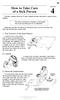 39 How to Take Care of a Sick Person Sickness weakens the body. To gain strength and get well quickly, special care is needed. Medicines are often not necessary. But good care is always important. The
The Epidemiology of Hepatitis A, B, and C
 The Epidemiology of Hepatitis A, B, and C Jamie Berkes M.D. University of Illinois at Chicago [email protected] Epidemiology: Definitions The study of the incidence and prevalence of diseases in large populations
Worksheet: Firearm Availability and Unintentional Firearm Deaths
 Worksheet: Firearm Availability and Unintentional Firearm Deaths Name: Date: / / 1. How might the possibility that... where there are more guns parents care less about their children s welfare.... influence
Nutrition for Family Living
 Susan Nitzke, Nutrition Specialist; [email protected] Sherry Tanumihardjo, Nutrition Specialist; [email protected] Amy Rettammel, Outreach Specialist; [email protected] Betsy Kelley,
THE BURDEN OF NOROVIRUSES IN HEALTHCARE AND THE ROLE OF HIGH TOUCH SURFACES. Ben Lopman, MSc PhD
 THE BURDEN OF NOROVIRUSES IN HEALTHCARE AND THE ROLE OF HIGH TOUCH SURFACES Ben Lopman, MSc PhD Outline The burden of norovirus gastroenteritis In the community In healthcare settings Examples demonstrating
TRAFFIC SAFETY FACTS. Alcohol-Impaired Driving. 2009 Data
 TRAFFIC SAFETY FACTS 2009 Data Alcohol-Impaired Driving DOT HS 811 385 In 2009, there were 10,839 fatalities in crashes involving a driver with a BAC of.08 or higher 32 percent of total traffic fatalities
Childhood Diseases and potential risks during pregnancy: (All information available on the March of Dimes Web Site.) http://www.modimes.
 Childhood Diseases and potential risks during pregnancy: (All information available on the March of Dimes Web Site.) http://www.modimes.org/ Fifth disease (erythema infectiosum) is a common, mild, childhood
TRACKS INFECTIOUS DISEASE EPIDEMIOLOGY
 Dr. Shruti Mehta, Director The development of antibiotics, improved access to safe food, clean water, sewage disposal and vaccines has led to dramatic progress in controlling infectious diseases. Despite
Traffic Safety Facts 2008 Data
 Traffic Safety Facts 2008 Data Alcohol-Impaired Driving DOT HS 811 155 In 2008, there were 11,773 fatalities in crashes involving a driver with a BAC of.08 or higher 32 percent of total traffic fatalities
IN THE CIRCUIT COURT OF THE NINTH JUDICAL CIRCUIT IN AND FOR ORANGE COUNTY FLORIDA. Case No.
 IN THE CIRCUIT COURT OF THE NINTH JUDICAL CIRCUIT IN AND FOR ORANGE COUNTY FLORIDA SUZANNE MATTEIS, Plaintiff, DARDEN CORPORATION, a Florida Corporation. v. Case No. COMPLAINT FOR DAMAGES FOR PERSONAL
http://www.who.int/csr/disease/avian_influenza/phase/en 4 http://new.paho.org/hq/index.php?option=com_content&task=view&id=1283&itemid=569
 Food and Agriculture Organization of the United Nations International Food Safety Authorities Network (INFOSAN) (Update) 30 April 2009 INFOSAN Information Note No. 2/2009 Human-animal interface aspects
Adapted from a presentation by Sharon Canclini, R.N., MS, FCN Harris College of Nursing and Health Sciences Texas Christian University
 Adapted from a presentation by Sharon Canclini, R.N., MS, FCN Harris College of Nursing and Health Sciences Texas Christian University What is a Pandemic? A pandemic is basically a global epidemic an epidemic
COMMUNICABLE DISEASE
 Public Health Activities & Services Inventory Technical Notes COMMUNICABLE DISEASE CLINICAL SERVICES, SURVEILLANCE AND CONTROL In 2014, decision was made to adopt number of national public health activities
english facts about hepatitis A, B and C
 english facts about hepatitis A, B and C What is hepatitis? Hepatitis means inflammation of the liver. Many viruses can cause liver inflammation, including the hepatitis A, B and C viruses. Some people
The American Cancer Society Cancer Prevention Study I: 12-Year Followup
 Chapter 3 The American Cancer Society Cancer Prevention Study I: 12-Year Followup of 1 Million Men and Women David M. Burns, Thomas G. Shanks, Won Choi, Michael J. Thun, Clark W. Heath, Jr., and Lawrence
Part 4 Burden of disease: DALYs
 Part Burden of disease:. Broad cause composition 0 5. The age distribution of burden of disease 6. Leading causes of burden of disease 7. The disease and injury burden for women 6 8. The growing burden
A Passage to India: Establishing a Cardiac Rehabilitation program in India s south-east
 A Passage to India: Establishing a Cardiac Rehabilitation program in India s south-east Kathryn Kelly Clinical Nurse Consultant, Cardiac Rehabilitation Coordinator The Royal Melbourne Hospital India 1,025,000,000
Bloodborne Pathogens. San Diego Unified School District Nursing & Wellness Program August 2013
 Bloodborne Pathogens San Diego Unified School District Nursing & Wellness Program August 2013 Why Another In-service?? Cal/OSHA mandates that employees with occupational exposure are informed at the time
Burden of Obesity, Diabetes and Heart Disease in New Hampshire, 2013 Update
 Burden of Obesity, Diabetes and Heart Disease in New Hampshire, 2013 Update Background Overweight and obesity have greatly increased among all age groups and regardless of income and education. Contributing
King County City Health Profile Vashon Island
 King County City Health Profile Vashon Island West Seattle North Highline Burien SeaTac/Tukwila Vashon Island Des Moines/Normandy Park Kent-West East Federal Way Fed Way-Dash Point/Woodmont December, 212
The Impact of Alcohol
 Alcohol and Tobacco Smoking cigarettes and drinking alcohol are behaviors that often begin in adolescence. Although tobacco companies are prohibited from advertising, promoting, or marketing their products
OSHA & Workers Compensation Requirements Recording Workplace Injuries & Illness
 Human Resources 30-71 7/15/91 3/25/02 1 of 7 OSHA & Workers Compensation Requirements Recording Workplace Injuries & Illness VPSI, Inc. is subject to the record-keeping requirements of the Occupational
Ch 14: Principles of Disease and Epidemiology
 Ch 14: Principles of Disease and Epidemiology Learning Objectives Define pathology, etiology, infection, and disease Explain the difference between normal, transient, and opportunistic microbes Compare
BASIC INFORMATION ABOUT HIV, HEPATITIS B and C, and TUBERCULOSIS Adapted from the CDC
 BASIC INFORMATION ABOUT HIV, HEPATITIS B and C, and TUBERCULOSIS Adapted from the CDC HIV What are HIV and AIDS? HIV stands for Human Immunodeficiency Virus. This is the virus that causes AIDS. HIV is
DOT HS 811 870 December 2013
 TRAFFIC SAFETY FACTS 2012 Data DOT HS 811 870 December 2013 Alcohol-Impaired Driving Drivers are considered to be alcohol-impaired when their blood alcohol concentration (BAC) is.08 grams per deciliter
Frequently Asked Questions: Ai-Detox
 What is Ai-Detox? Frequently Asked Questions: Ai-Detox Ai-Detox is a Chinese herbal medicinal formula, produced using state of the art biotechnology, which ensures the utmost standards in quality and safety.
www.hepinfo.ie Are you Hep C aware? awareness information support prevention To find out more visit
 Are you Hep C aware? awareness information support prevention To find out more visit www.hepinfo.ie What is Hepatitis C? Hepatitis C is a viral infection that affects the liver, causing it to become inflamed
9. Substance Abuse. pg 166-169: Self-reported alcohol consumption. pg 170-171: Childhood experience of living with someone who used drugs
 9. pg 166-169: Self-reported alcohol consumption pg 170-171: Childhood experience of living with someone who used drugs pg 172-173: Hospitalizations related to alcohol and substance abuse pg 174-179: Accidental
TO: FROM: DATE: RE: Mid-Year Updates Note: NCQA Benchmarks & Thresholds 2014
 TO: Interested Organizations FROM: Patrick Dahill, Assistant Vice President, Policy DATE: July 25, 2014 RE: 2014 Accreditation Benchmarks and Thresholds Mid-Year Update This document reports national benchmarks
COMMONWEALTH of VIRGINIA Department of Health
 COMMONWEALTH of VIRGINIA Department of Health MARISSA J. LEVINE, MD, MPH, FAAFP PO BOX 2448 TTY 7-1-1 OR STATE HEALTH COMMISSIONER RICHMOND, VA 23218 1-800-828-1120 Dear Colleague: Emerging Infections
Evidence-Based Practice for Public Health Identified Knowledge Domains of Public Health
 1 Biostatistics Statistical Methods & Theory Evidence-Based Practice for Public Health Identified Knowledge Domains of Public Health General Public Health Epidemiology Risk Assessment Population-Based
Hepatitis C Infections in Oregon September 2014
 Public Health Division Hepatitis C Infections in Oregon September 214 Chronic HCV in Oregon Since 25, when positive laboratory results for HCV infection became reportable in Oregon, 47,252 persons with
Clean-Up in Aisle 5. Noroviruses are a group of viruses that cause FOOD PROTECTION CONNECTION
 FOOD PROTECTION CONNECTION 1 HOUR SAN Clean-Up in Aisle 5 by Melissa Vaccaro, MS, CHO Noroviruses are a group of viruses that cause acute gastroenteritis in humans. You may hear people refer to this as
*Elevated Blood Lead Level 10 µg/dl. Objectives. Why Is Lead Poisoning Still An Issue? Childhood Lead Poisoning Prevention Program
 A Full Picture Of Lead Case Management Efforts In Los Angeles County Los Angeles County Department of Public Health Maternal, Child & Adolescent Health Programs Childhood Lead Poisoning Prevention Program
Instruction in accordance with 43 Para. 1 of the German Infection Protection Act (IfSG)
 Instruction in accordance with 43 Para. 1 of the German Infection Protection Act (IfSG) Who requires instruction? Before starting work in the food industry, the following persons require instruction and
Lung Cancer and Exposure to Ionizing Radiation
 Lung Cancer and Exposure to Ionizing Radiation Summary: Studies conducted at the Los Alamos National Laboratory and other nuclear facilities suggest an increased likelihood of developing lung cancer for
Norwalk-Like Viruses Decontamination Guidelines for Environmental Services
 Norwalk-Like Viruses Decontamination Guidelines for Environmental Services This document has been developed in accordance with current applicable infection control and regulatory guidelines. It is intended
FIVE KEYS TO SAFER FOOD MANUAL
 FIVE KEYS TO SAFER FOOD MANUAL DEPARTMENT OF FOOD SAFETY, ZOONOSES AND FOODBORNE DISEASES FIVE KEYS TO SAFER FOOD MANUAL DEPARTMENT OF FOOD SAFETY, ZOONOSES AND FOODBORNE DISEASES INTRODUCTION Food safety
WHAT DOES DYSMETABOLIC SYNDROME MEAN?
 ! WHAT DOES DYSMETABOLIC SYNDROME MEAN? Dysmetabolic syndrome (also referred to as syndrome X, insulin resistance syndrome, and metabolic syndrome ) is a condition in which a group of risk factors for
Hepatitis A. What I need to know about. National Digestive Diseases Information Clearinghouse NATIONAL INSTITUTES OF HEALTH
 What I need to know about Hepatitis A U.S. Department of Health and Human Services NATIONAL INSTITUTES OF HEALTH National Digestive Diseases Information Clearinghouse What I need to know about Hepatitis
Traffic Safety Facts Research Note
 1 Traffic Safety Facts Research Note DOT HS 811 218 November 2009 Fatal Crashes Involving Summary Fatalities from crashes involving young drivers have accounted for just under one-fifth of all fatalities
HEPATITIS WEB STUDY Acute Hepatitis C Virus Infection: Epidemiology, Clinical Features, and Diagnosis
 HEPATITIS WEB STUDY Acute C Virus Infection: Epidemiology, Clinical Features, and Diagnosis H. Nina Kim, MD Assistant Professor of Medicine Division of Infectious Diseases University of Washington School
Gail Bennett, RN, MSN, CIC
 Gail Bennett, RN, MSN, CIC The occurrence of more cases of disease than expected in a given area or among a specific group of people over a particular period of time Cases above your usual endemic rate
Research and Statistics Note
 Office of Policy Office of Research, Evaluation, and Statistics Research and Statistics Note No. 2001-02 October 2001 Follow-up of Former Drug Addict and Alcoholic Beneficiaries * Introduction In 1996,
Using Family History to Improve Your Health Web Quest Abstract
 Web Quest Abstract Students explore the Using Family History to Improve Your Health module on the Genetic Science Learning Center website to complete a web quest. Learning Objectives Chronic diseases such
Master of Public Health (MPH) SC 542
 Master of Public Health (MPH) SC 542 1. Objectives This proposed Master of Public Health (MPH) programme aims to provide an in depth knowledge of public health. It is designed for students who intend to