
2011 Indiana Forest Health Highlights
|
|
|
- William Carter
- 10 years ago
- Views:
Transcription

1 2011 Indiana Forest Health Highlights 1. Indiana s Forest Resources Approximately one of five acres in Indiana 4.7 million acres (including reserved or lowproductivity land) is covered in forest. Forest land increased from million acres in 1967, to million acres in 1998, to million acres in Private forest land is 84% and public forest land is 16% of all forest land. Indiana has surprisingly diverse forests, encompassing northern maple / beech / birch types to southern bald cypress swamps, and dominated by oak-hickory type in south central Indiana. More than 85 different tree species grow in Indiana forests. Hardwoods occupied nearly 97 percent of this area, with the remainder classified as softwoods or nonstocked. Reflecting the effect of past glaciations, forests exist in large consolidated blocks chiefly in the hilly southern part of the state. In the northern two-thirds of the state, forests generally occupy scattered woodlots, wetlands, and riparian corridors. Indiana forest areas. Growing Stock Volume The total growing-stock volume on forest land has increased 7.7% since The net volume of growing-stock (trees with a DBH greater than or equal to 5 inches) on forest land in 2009 totaled 9.7 billion cubic feet, almost four times the 2.5 billion cubic feet estimated during the 1950 inventory. Page 1 of 11

2 Forest Products Indiana ranks 9 th nationally in total lumber production and 3 rd in hardwood lumber production. Indiana forests contribute over $16 billion annually to Indiana s economy. In 2008, Indiana s primary wood-using industry included 155 sawmills, 8 veneer mills, one handle plants, and 21 mills producing other products. Direct employment within the industry accounted for over 35,000 people and indirectly, the industry supports around 90,000 jobs. Forest-based manufacturing provided $2.4 billion in value-added, $7 billion in value of shipments, and a payroll of $1.2 billion to Indiana's economy in More than two-thirds of the 68.4 million cubic feet of industrial roundwood harvested in 2008 came from south-central and southwestern Indiana. Saw logs accounted for 90 percent of the total harvest, with other minor products primarily veneer logs, pulpwood, handles, and cooperage making up the rest. 2. State Forest Health Issues An Overview The 2011 growing season s major forest health problems are emerald ash borer and oak decline in both white oak and the red oak group. Other health problems include the heavy rains and flooding in May and June. The storms that brought the rain also included wind damage from tornados and resulted in increased foliage diseases. Following the wet spring, the summer brought extensive period of high temperatures between 90 and 100+F. A new and increasing concern is the mortality of Norway and Blue Spruce trees. The recurring forest health issues are gypsy moth management, oak wilt in northwestern Indiana, yellow poplar mortality in southern Indiana, butternut canker, ash yellows, white pine root decline (Procera root rot), aging pine plantations and aging hardwood forests. Other future forest pests of concern (but not yet encountered) for Indiana in 2011 continue include the exotic pests Thousand Cankers Disease of Black Walnut, Sudden Oak Death, Asian Longhorned Beetle, Hemlock Woolly Adelgid, Beech Bark Disease and Red Bay Wilt. Also of concern are Invasive plants that have potential to affect and are affecting Indiana forest regeneration and biodiversity. One forest pest epidemic, forest tent caterpillar, which caused extensive defoliation and resulted in extensive forest mortality in south eastern Indiana5-8 years ago, has increased the regeneration of tree-of-heaven to the detriment of native species. The kudzu eradication program continues to eradicate locations in southern Indiana and is moving kudzu to the Ohio River and eventually out of Indiana. 3. Exotic Insect Pests of Indiana Forests Two exotic major insects of concern - Gypsy moth and Emerald Ash Borer - continue to dominate the state resources for monitoring and management activities. 1. Emerald Ash Borer - Agrilus planipennis Fairmaire Page 2 of 11


3 Emerald ash borer (EAB) is an exotic beetle native to Asia that was discovered in southeastern Michigan near Detroit in the summer of 2002 and in northeast Indiana in June of The adult beetles feed on ash foliage but cause little damage. The larvae (the immature stage) feed on the inner bark of ash trees disrupting the tree's ability to transport water and nutrients killing the tree. Quarantine: In 2011, EAB was detected in 11 new counties Boone, Clay, Clinton, Dearborn, Fulton, Hancock, Howard, Jasper, Johnson, Lake and Rush. Seven of these counties are in the generally infested area of northern IN. Visual survey (6), purple panel trap (3), aerial/ground survey (1) and landowner detection (1) detected EAB in the 11 counties. Currently, 54 of the 92 Indiana counties are under quarantine or have EAB in the county. EAB is not present in 5 of the 54 counties. Indiana s EAB quarantine is under review to determine the need to continue it and how to modify it if continued. Survey: The 2011 survey utilized 4 field personnel, 2 from DNR and 2 USDA/APHIS to set 443 purple panel traps at high risk sites (campgrounds, sawmills, firewood dealers, tree services, and organic dumps) in uninfested counties outside of the generally infested area. DNR nursery inspectors set 16 traps at high risk sites in uninfested counties in the generally infested area in addition to doing visual survey for infested trees. Five of the purple panel traps detected EAB of which, 3 were new county detections. The aerial survey was conducted to map new locations and expansion of the mortality over and around the areas that have obvious and extensive ash mortality. There are five areas in northern Indiana (Huntington/Wabash Counties, Allen/Adams/Wells Counties, Pigeon River (LaGrange County), Carmel/Fishers/Indianapolis, and Winchester) and one two areas in southern Indiana (Orange/Lawrence/Washington Counties and Floyd/Harrison Counties). The survey detected approximately 14,147 acres of additional mortality with greater than 5 trees/acre dead. The majority of mortality is in Huntington/Wabash Counties followed by Page 3 of 11

4 Orange/Lawrence/Washington Counties. Mortality increased significantly from 2010 in Carmel/Fishers/Indianapolis and Winchester infested areas. For 2012, ash mortality is expected to increase in the above areas with most of the increase in Hamilton/Marion county as EAB is expected to be detected farther south in Marion county. EAB mortality is also expected to increase along the Wabash River west of the Huntington/Wabash infestation. Increased ash mortality is also expected in northwestern counties under Lake Michigan as initial reports of ash mortality were received in 2011 from this area. Also, expect to detect EAB in the remaining uninfested counties of south eastern Indiana. For south western Indiana, anticipate the detection of EAB in one or two locations, but not widespread. Hardin Ridge SLAM Project: The project identified 127 ash trees in the core area which were injected with Tree-Age (Emamectin benzoate) in the spring. The Hoosier National Forest staff surveyed the forest service land in the project area around the core area identifying the ash trees to use in future management action lethal trees or sink trees. The information on injected trees, ash trees in the project area, and positive EAB trees was analyzed by the Michigan SLAM project staff that provided a spread model to guide management plans for the project area. The spread model indicated spread was likely to move to the west and southwest and purple panel traps were placed by DNR surveyors outside the project boundaries. Additional traps were placed to the north to monitor a boy scout camp and a state campground. One trap south and one trap west outside of project area in the adjacent 160 grid cells detected EAB. One trap near the Boy Scout camp and inside the project area was positive. This is the first detection of EAB outside of the core area of the project site. The information from 2011 will be used to guide management plans for 2012 which include the treatment of ash trees outside the core area with Tree-Age, creation of sink trees, delimit trapping in the core area to monitor treatment, and detection trapping around the project area. Information and web links may be found at the IDNR Division of Entomology and Plant Pathology EAB website: In addition, the website has an interactive web map showing the known EAB locations in Indiana. Purdue University also maintains an EAB website: 2. Gypsy Moth Lymantria dispar The 2011 Cooperative Gypsy Moth Survey completed its 24 th year. The survey is part of the Slow-The-Spread (STS) Program and uses the STS protocol for its design and operation dividing the state into three zones - the STS Evaluation Zone, the STS Action Zone, and the State Area. The survey design used fixed 5K & 3K, fixed 2K and rotating 3K, respectively, for the three zones. Across all zones, the survey set 13,337 traps all referenced by GPS. All or parts of counties in south central and south east Indiana were not included in the state area detection grid survey, however, traps were set in state campgrounds. This was done for economic reasons and because of negative trap catches in previous years. There are plans to survey these counties in Page 4 of 11

5 The survey detected 19,150 moths from 34 counties ranging from 1 to 3,767 moths per county (Figure 1). This year s moth catch is 8,765 fewer than last year s 27,915. Positive traps occurred in 34 counties - 30 in the STS zones and 4 in the State Area. The majority of the moth catch was in the Evaluation Zone. The Evaluation Zone, which includes the quarantined counties of Steuben, LaGrange, Elkhart, Noble, St. Joseph, Porter, Allen, LaPorte, and DeKalb (Figure 3), detected 95.4% of the moths (18,271 of 19,150). The northern third of the state falls in the Action Zone, which is below the Evaluation Zone under STS protocol. The Action Zone detected 4.5% of the moths (872 of 19,150). The majority of the Action Zone moth catch occurred in the northern and eastern parts, adjacent to the Evaluation Zone. The State Area detected 0.1% of the moths (7 of 19,150). 10 moth line 2007 to 2011 Number of male gypsy moths caught in the three survey areas from 2009 to Year STS Evaluation Area STS Action Area State Area Total , , ,202 11, , ,637 5, ,517 The moth line projected from the 2011 survey receded slightly north due to the reduced moth catch Since the survey began in 1972, 418,290 moths have been caught in 90 of the 92 counties. Gypsy moth has not been detected in Dubois and Sullivan Counties since surveys began in Page 5 of 11

6 Btk (Bacillus thuringiensis kurstaki) treatments were conducted on 6 sites totaling 2,852 acres in three counties. Five sites were treated at 25 BIU/acre with two applications and one site was treated at 25 BIU/acre with one application for a total of 4,145 treated acres. Mating Disruption treatment occurred in 10 counties on 8 sites totaling 27 individual blocks and 25,115 acres using pheromone flakes (Disrupt II, Hercon) at 6gm/acre, with the exception of two sites treated at 15gm/acre. Aerial surveys detected no defoliation from Gypsy Moth in The last time surveys detected defoliation from Gypsy Moth was in 2009 when 70 acres of defoliation occurred in 2 counties. Treatments for 2012 are being reviewed with seven mating disruption sites and one Btk site proposed. All sites are in the North and Northwest portions of Indiana. There are nine counties along the northern border under state and federal gypsy moth quarantine. Page 6 of 11

7 3. Secondary Exotic Insect Pests of Concern a. Pine Shoot Beetle - Tomicus piniperda- The USDA/Aphis survey detected Pine Shoot Beetle (PSB) in Clay and Scott Counties in PSB occurs in 71 of the state s 92 counties. With PSB present in ¾ of the state, the decision was made to remove the state PSB Quarantine and quarantine all of Indiana under the USDA PSB quarantine. b. Granulate (Asian) Ambrosia Beetle - Xylosandrus crassiusculus - Populations of granulate ambrosia beetle are active in the state. No active surveying was conducted on this pest in Damage from granulate ambrosia beetles (X. crassiusculus) and the black stem borer (Xylosandrus germanus) were found in the state. During EAB investigations we found tooth pick like frass in tulip poplar and white oak trees. c. Exotic Bark Beetle: Early Detection Rapid Response (EDRR) Survey - This survey was not conducted in Indiana in 2010 and d. Hemlock Woolley Adelgid - Adelges tsugae - Hemlock Woolly Adelgid was not detected or reported in 2010 by nursery inspectors or DNR staff that monitors the native population of eastern hemlock as part of their duties. e. Light Brown Apple Moth (LBAM) - Epiphyas postvittana - No survey was conducted in Indiana is currently scheduled to survey for LBAM in 2012 in conjunction with other CAPS related surveys. To date we have had no reports or confirmations of LBAM in Indiana. f. Asian Long-horned Beetle - Anoplophora glabripennis ALB was detected east of Cincinnati Ohio in This detection increased the concern for detection of ALB in Indiana. Survey of high risk sites (campgrounds and industrial areas) and of absentee forest landowners based on ALB infested zip codes was conducted. ALB was not detected and surveys will continue in Non-Indigenous Plant Pathogens 1. Sudden Oak Death - Phytophthora ramorum The Division of Entomology and Plant Pathology Nursery Inspectors annually survey nurseries for this disease. The purpose is early detection of Phytophthora ramorum (Pr) in vegetation before infection centers become fully established and more difficult to eradicate. In 2011 as in 2010, two SOD surveys were conducted. One survey involved the annual foliage sampling and the second survey sampled water sources using rhododendron leaf bait in the spring and fall. Twenty nurseries were surveyed in 2011 sampling foliage of host plants. A total of 400 total samples were submitted for testing to Purdue Plant Pest Diagnostic Lab and all samples were negative for P. ramorum. The nursery water source on the ten nurseries sampled in 2010 was repeated in 2011 using rhododendron leaf bait and submitted to Purdue Plant Pest Diagnostic Lab. Due to the late awarding of farm bill grant funds, the fall survey sample will be done in 2011 and the spring survey sample will be done in The water filtration method used in 2010 was not used in this survey. To date, no results have been reported. Page 7 of 11

8 2. Dutch Elm Disease - Ophiostoma ulmi (syn. Ceratocystis ulmi) This disease occurs across the state and continues to kill American elm in the urban and rural forests. The amount of mortality has lessened in recent years. However it is common to find dead elm when reports of dead ash are made by landowners who think they have emerald ash borer. 3. Oak Wilt - Ceratocystis fagacearum Oak wilt is present in 62 counties and no new county records occurred in Oak wilt is common in the woodlots of northwestern Indiana in the Kankakee River basin. In other infested counties, especially southern Indiana, oak wilt is spotty and difficult to separate from oak decline symptoms. In all situations, mortality occurs to red and black oak in small spots, less than 1 acre, consisting of sapling to saw timber size trees totaling less than 10 trees per spot, usually 1-5 trees. Oak wilt in white oak has not been detected in any of the reported spots. Extent of oak wilt in Indiana in 2011 Oak wilt is predicted to continue as a minor and localized concern in Indiana, with the exception of the sand ridge areas of northwestern Indiana where it is commonly found in black oak stands. (Correction: to Forest Health Highlights which incorrectly reported 63 counties with oak wilt. It should have stated 62 counties. The 2010 map incorrectly included Sullivan County. Sullivan County has not positive confirmation of oak wilt.) 4. Butternut Canker - Sirococcus clavigignenti-juglandacearum As in prior years no surveys were conducted in 2011 as the disease is present throughout the state. The Hardwood Tree Improvement Cooperative at Purdue University continues to locate and collect plant material from butternut trees for a breeding program to save the species. 5. Beech Bark Disease Disease complex of Cryptococcus fagisuga Lind and Nectria coccinea var. faginata Lohman No surveys for this disease were conducted in No reports of trees with the scale or canker and no beech mortality were received. To date this disease is not present in Indiana and is expected to first occur in northern Indiana because of its presence along Lake Michigan in the Lower Peninsula of Michigan and the recent detection in Wisconsin in counties along Lake Michigan. The concern is the possibility that infected/infested material (firewood) is brought into Indiana. 6. Red Bay Wilt Raffaelea lauricola and Redbay Ambrosia Beetle, Xyleborus glabratus - Risk to Indiana Sassafras and Spicebush Page 8 of 11

9 This forest pest complex is not known to be present in Indiana. No surveys were conducted in 2011 and no reports of dying sassafras or spicebush were received. 7. Dogwood Anthracnose Discula destructiva Surveys were not conducted in 2011 and no reports of the disease were received even though the spring weather had heavy rains and cool temperatures. Dogwood anthracnose is present throughout the state and is common in southern Indiana forests. 5. Native Insect and Disease Concerns 1. Forest Tent Caterpillar Malacosoma disstria The south eastern Indiana forests defoliated between 2003 and 2006 are recovering from the defoliation and subsequent mortality. However, foresters report that regeneration in forests that experienced heavy mortality is being overtaken by Tree-of-Heaven. There were no other reports of FTC in White Pine Root Decline - Verticicladiella procera Procera Root Rot (White Pine Root Decline) is an annual killer of white pine windbreak, ornamental and Christmas trees. No survey was conducted in 2011 but mortality occurs in all areas of the state as landowners continue to call each year about their dying white pines. 3. Anthracnose Apiognomonia spp. The cool and wet spring brought more sycamore anthracnose defoliation in 2011 than in Anthracnose. Oaks, maples and ash also suffered from anthracnose. 4. White Oak Mortality Reports of white oak dying continued in 2011 primarily from forested areas of south central Indiana. However, in 2011 additional reports were received for black and red oak across the state. For both oak groups, Hypoxylon canker is more common than in prior years. Armillaria root rot and Two-lined Chestnut borer are also involved. Besides the weather impacts and their role in oak mortality, additional sampling for Phytophthora spp. may be warranted to determine if they are involved. 5. Looper Complex Linden Looper Erannis tiliaria and Half Winged Geometer Phigalia titea Aerial surveys were completed in 2011 and no noticeable defoliation was noted. 7. Bacterial Leaf Scorch (BLS) Xylella fastidosa A bacterial leaf scorch survey was not conducted in Spruce Needle Cast Survey - Rhizosphaera, Stigmina and Setomelanomma Page 9 of 11

10 The Division of Entomology & Plant Pathology nursery inspector conducted an informal survey to provide some information for the decline of Colorado blue spruce in southern Indiana in A small sample of 15 trees with symptoms of needle cast were collected from both landscape and nursery locations. Rhizosphaera was present on all but one sample. A few of the samples had both Rhizosphaera and Stigmina fungi. One sample from Monroe County contained Rhizosphaera, Stigmina and Setomelanomma all on the same branch. Interestingly these trees that had all 3 diseases were 8-10 feet tall, in an old nursery and displayed very few symptoms of needle cast and little needle drop. Trees that displayed the poorest health did not have Setomelanoma, but had a combination of Rhizosphaera and Stigmina. There was also one tree that had severe spruce spider mite injury and another that apparently died from bark beetle activity. Purdue University Plant Pest Diagnostic Lab reported seeing additional spruce samples with Setomelanomma during Setomelanomma also known as SNEED or Sudden Needle Drop may not always cause sudden needle drop. The dramatic spruce decline in the Monroe County area may be the result of Rhizosphaera and Stigmina; however no one has tested Koch Postulate with Stigmina to prove that it is truly a pathogen. We only know that it is often associated with declining blue spruce trees. The survey conducted during 2011 utilized a small sample size and only provide some insight into the spruce decline in southern Indiana. Additional samples will be collected in 2012 and the trees that were positive for all three diseases will be monitored for needle drop and the possible increased presence of Setomelanomma. A 6. bacterial Weather-Related leaf scorch survey Issues was in not Indiana conducted Forests in Ozone Damage: This survey was not conducted in Reduced funding in the Forest Health Monitoring program resulted in this survey being dropped. Weather Late and Wet Spring followed by Summer Heat: The graph below shows the Page 10 of 11

11 maximum, minimum temperatures and average weekly rainfall during the growing season. The spring had periods of heavy rain in April into May and again from late May through June. This was followed reduced rain and hot temperatures July to mid August. Rainfall from April through late June except for mid May was averaging 0.5 with several weeks about 2.0. This created flooding throughout the state and delayed planting of field crops. High temperatures in the 90 s were continuous through July into August. This resulted in drought conditions for some areas of the state but was not like last year s drought conditions. 7. Invasive Plant Species Kudzu - Pueraria lobata - an Asian native invasive vine is located throughout Indiana but is predominately in southern Indiana. Currently there are 133 known sites totaling acres. Additional sites that need confirmation were reported in Crawford, Clark, Lawrence, Martin and Posey Counties. Currently, 69.2% of the sites are less than one acre. Kudzu Treatment Status 2011 All shaded counties have kudzu Counties in yellow are nearly eradicated and in monitoring stage Counties in red have on going treatment programs Herbicide applications were conducted at 41 kudzu sites totaling 51.1 acres in 14 counties. Sites were treated with a combination of clopyralid, glyphosate and metsulfuron. Metsulfuron was used as tool for the first time with the project in order to kill remaining re-growth a sites that had 5 years of previous treatment. Currently, the eradication effort has achieved at least 90% suppression at 62% of the known kudzu sites and 32% of the treated kudzu sites were in monitoring stage and nearly eradicated. REPORT PREPARED BY: Philip T. Marshall, Forest Health Specialist, Division of Forestry; State Entomologist, Division of Entomology & Plant Pathology Page 11 of 11

A DISCOVERY REGARDING THE DEATH OF ASH TREES IN THE PLYMOUTH AREA
 A DISCOVERY REGARDING THE DEATH OF ASH TREES IN THE PLYMOUTH AREA As you are probably aware, we have seen a significant amount of dying ash trees in the Plymouth, Canton, Northville area. This prompted
Wildfire Damage Assessment for the 2011 Southeast Complex Fires
 Wildfire Damage Assessment for the 2011 Southeast Complex Fires Chip Bates & Mark McClure, Forest Health Management Background: On March 24, 2011, multiple wildfires began across southeast Georgia. Strong,
Tree Integrated Pest Management. Dan Nortman Virginia Cooperative Extension, York County
 Tree Integrated Pest Management Dan Nortman Virginia Cooperative Extension, York County IPM Refresher Definition: The use of a combination of appropriate pest control tactics to reduce pest population
Advanced Intelligence Report Tree & Shrub Insect Control: Protecting Trees from Emerald Ash Borer
 Advanced Intelligence Report Treating For Emerald Ash Borer With Bayer Advanced Tree and Shrub Insect Control Soil Drench Dr. Bruce Stewart, Bayer Advanced Consumer Products Emerald Ash Borer (EAB) is
Managing Black Walnut
 Managing Black Walnut Mel Baughman Professor Emeritus University of Minnesota Lenny Farlee Extension Forester Purdue University Why Grow Black Walnut? Wood Products Rich, brown color Novelty items Lumber
Symptoms Include: Stippled, bronzed or bleached appearance of leaves
 Common Tree Pests & Diseases Of Central Texas Lara Schuman City of Austin Urban Forestry Program Stress and Trees City life can be stressful, and trees feel stress too. Common urban tree issues include:
Subd. 4. Public nuisances defined. A shade tree pest, as defined by section XXX.02, occurring within a defined control zone is a public nuisance.
 LEAGUE OF MINNESOTA CITIES SAMPLE SHADE TREE PEST ORDINANCE SECTION ###.01: SHADE TREE PEST CONTROL. Subd. 1. Declaration of policy. The health of the trees in the city is threatened by shade tree pests,
1 ASIAN LONGHORNED BEETLE OUTBREAK
 1 THE REGIONAL MUNICIPALITY OF YORK REPORT NO. 10 OF THE REGIONAL COMMISSIONER OF TRANSPORTATION AND WORKS For Consideration by The Council of The Regional Municipality of York on October 16, 2003 1 ASIAN
APHIS-PPQPPQ Center for Plant Health, Science and Technology Buzzards Bay, MA
 Scott Myers, Entomologist USDA-APHIS APHIS-PPQPPQ Center for Plant Health, Science and Technology Buzzards Bay, MA Background USDA Animal and Plant Health Inspection Service (APHIS) Plant Protection and
APPENDIX A PEST AND DISEASE PHOTO CHART
 APPENDIX A PEST AND DISEASE PHOTO CHART This photographic appendix is designed to ease identification of disease and insect pest problems. Two photographs are provided for each pest, which are grouped
Alaska Forest Pest Control Supplemental Information. Category Twelve
 Alaska Forest Pest Control Supplemental Information Category Twelve In general, applicators who apply pesticides to property other than their own, or act as a pesticide consultant must obtain certification
Objectives. EAB Symptoms 8/18/14. Emerald Ash Borer: A Threat to Colorado s Community Forests. 1- to 2-Year Life Cycle.
 8/18/14 Emerald Ash Borer: A Threat to Colorado s Community Forests Objectives Introduce EAB Pest origins and biology Current impacts Threat to Colorado Keith Wood Community Forestry Program Manager Colorado
Division of Forestry
 Guidelines for Managing Sites with Ash To Address the Threat of Emerald Ash Borer On Forestry-Administered Lands BACKGROUND The ash genus (Fraxinus) in Minnesota comprises some 900 million trees and is
AN ORDINANCE RELATING TO THE CONTROL AND PREVENTION PROGRAM OF SHADE TREE DISEASES AND SHADE TREE PESTS WITHIN THE CITY OF OAK PARK HEIGHTS.
 1302 AN ORDINANCE RELATING TO THE CONTROL AND PREVENTION PROGRAM OF SHADE TREE DISEASES AND SHADE TREE PESTS WITHIN THE CITY OF OAK PARK HEIGHTS. THE CITY COUNCIL OF THE CITY OF OAK PARK HEIGHTS, WASHINGTON
Chapter 1b - Priority Map Development
 North Carolina s Forest Resources Assessment A statewide analysis of the past, current and projected future conditions of North Carolina s forest resources 2010 Chapter 1b - Priority Map Development This
A Visual Guide to Detecting Emerald Ash Borer Damage
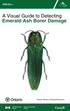 cfs.nrcan.gc.ca A Visual Guide to Detecting Emerald Ash Borer Damage Ontario Ministry of Natural Resources Library and Archives Canada Cataloguing in Publication A visual guide to detecting emerald ash
The Basics of Tree Pruning
 The Basics of Tree Pruning By John Ball, Forest Health Specialist and Aaron Kiesz, Urban and Community Forestry Specialist Until the end of the 19 th century, trees were not a common sight in many parts
Forest Insect Pests and Diseases
 Forest Insect Pests and Diseases Forest insect pests The forest is home to an abundant diversity of organisms, including insects. The study of forest insects is called forest entomology. Many insects play
Asian Longhorned Beetle Control Program
 United States Department of Agriculture Animal and Plant Health Inspection Service Asian Longhorned Beetle Control Program Environmental Assessment, December 1996 United States Department of Agriculture
Diagnosing Disorders of Trees
 148 Appendix A Diagnosing Disorders of Trees Diagnosing tree problems can be difficult. Symptoms and signs can be subtle or only visible using special techniques, important information can be missing,
Why Fruit Trees Die D. B. Meador, Extension Specialist (retired) University of Illinois
 Why Fruit Trees Die D. B. Meador, Extension Specialist (retired) University of Illinois Occasionally, fruit trees decline and often die. Diseases affecting the leaves, fruit, and twigs of fruit trees usually
Hard Decisions Ahead With Ash Trees
 Hard Decisions Ahead With Ash Trees By: Stanton Gill, Extension Specialist in IPM and Entomology for Greenhouses and Nurseries Central Maryland Research and Education Center University of Maryland Protect
Report to Lake Shastina Property Owners Association on Dead and Dying Trees Around Zen Mountain
 Report to Lake Shastina Property Owners Association on Dead and Dying Trees Around Zen Mountain by John Kessler, CA Registered Professional Forester #2494 Issue of Concern Residents of Lake Shastina have
Forest Preserve District of Cook County OFFICE OF PUBLIC INFORMATION www.fpdcc.com
 Forest Preserve District of Cook County FAQ: Ash Tree Removal Strategy to Respond to Emerald Ash Borer Infestation What Is the Issue? The Forest Preserve District of Cook County (FPDCC) has been removing
What you need to know about the management of. the Emerald Ash. Borer (EAB) Guidelines for hiring tree care services to manage urban trees
 What you need to know about the management of the Emerald Ash Borer (EAB) Guidelines for hiring tree care services to manage urban trees What is an Emerald Ash Borer? This booklet has been designed for
Brenda Librecz, General Manager, Parks, Forestry and Recreation
 STAFF REPORT ACTION REQUIRED Forest Health Care Invasive Exotic Pests Date: December 17, 2007 To: From: Wards: Parks and Environment Committee Brenda Librecz, General Manager, Parks, Forestry and Recreation
MINNESOTA DEPARTMENT OF NATURAL RESOURCES. Division of Forestry
 MINNESOTA DEPARTMENT OF NATURAL RESOURCES Division of Forestry Other major programs: Private Forest Management Urban and Community Forestry Insect and Disease Management Urban and Community Forestry
Karen J. English Graphic and Web Designer. Please click the thumbnails on the following pages to view larger versions of the images.
 Karen J. English Graphic and Web Designer Please click the thumbnails on the following pages to view larger versions of the images. graphic design: small pieces graphic design: large pieces web design
Christmas Trees Pseudotsuga menziesil (Douglas-fir), Abies grandis (Grand fir), Abies procera
 Christmas Trees Pseudotsuga menziesil (Douglas-fir), Abies grandis (Grand fir), Abies procera (Noble fir) (Pinaceae) Fast Facts: Acres in Washington: 25,000 acres Number of growers: 300 Value of Production
Cooperative Agricultural Pest Survey Annual Accomplishment Report FY 2008
 Cooperative Agricultural Pest Survey Annual Accomplishment Report FY 2008 State: Rhode Island Year: 2008 Agency: RI Department of Environmental Management, Division of Agriculture & Resource Marketing
INSECT MANAGEMENT (Roberts & McPherson)
 INSECT MANAGEMENT (Roberts & McPherson) A number of insect pests are capable of severely damaging soybeans. However, it is important to realize that soybeans can withstand considerable insect damage at
Local Option Income Taxes. Indiana s
 On Local Government Local Option Income Taxes and the Property Tax Caps Larry DeBoer Purdue University October 2013 Indiana s Local Option Income Taxes CAGIT: County Adjusted Gross Income Tax (1973) COIT:
Integrated Pest Management
 Chapter 2 Integrated Pest Management In This Chapter Keywords After learning the information in this chapter, you will be able to: 1. Define Integrated Pest Management (IPM). 2. List and describe the 5
Help Stop Insect and Disease Invasions
 Help Stop Insect and Disease Invasions BULLETIN 56 No. Dr. James R. Fazio, Editor $3.00 In our western mountains, vast acreages of forests are turning brown as bark beetles spread across the once-green
Asian Longhorned Beetle infestations have been found in North America. What is being done to stop ALB?
 Asian Longhorned Beetle infestations have been found in North America. What is being done to stop ALB? 1 Steps to Eradicate ALB from North America: 1) The USDA regulates the import of wood packing material,
FORESTED VEGETATION. forests by restoring forests at lower. Prevent invasive plants from establishing after disturbances
 FORESTED VEGETATION Type of strategy Protect General cold adaptation upland and approach subalpine forests by restoring forests at lower Specific adaptation action Thin dry forests to densities low enough
Questions and Answers about the Emerald Ash Borer in Colorado
 Questions and Answers about the Emerald Ash Borer in Colorado What is the emerald ash borer? The emerald ash borer is a type of beetle that develops under the bark of ash trees. Its scientific name is
VIRGINIA. SUMMARY OF PLANT PROTECTION LAWS AND REGULATIONS Updated March, 2014
 VIRGINIA VA - 1 of 5 SUMMARY OF PLANT PROTECTION LAWS AND REGULATIONS Updated March, 2014 Virginia Department of Agriculture and Consumer Services Division of Consumer Protection Office of Plant Industry
GENERAL WATERING & CARE GUIDE
 GENERAL WATERING & CARE GUIDE Between 30-60 percent of water applied to lawns and gardens is never absorbed by the plants. Water is often wasted because it is applied too quickly and runs off, evaporates
Indiana Department of Homeland Security July 2007 Statewide Amateur Radio Emergency Communications Test
 8OM 8OM 6 M 40 M 2 M 440 6 M FM ECHO LINK LOCAL NET CHECK-IN S Adams Yes Allen Bartholomew 7 Benton Blackford Boone Brown Carroll Cass Clark Clay Clinton Crawford Daviess Dearborn Decatur Dekalb Delaware
Invasive Species Coming to America. By Land, Sea, and Air..
 Invasive Species Coming to America. By Land, Sea, and Air.. Randy Westbrooks, Ph.D. Invasive Species Prevention Specialist U.S. Geological Survey, Whiteville, North Carolina USA [email protected]
What is a pest? How Insects Become Pests. How do insects become pests? Problems with Pesticides. What is most commonly used to control insect pests?
 What is a pest? How Insects Become Pests How do insects become pests? Introduction outside of native range Becomes disease vector Plant or animal (inclu. human) disease vector Host shift in native insect
Planting and Tree Care for Roxborough Park. Keith Worley, Forester ISA Certified Arborist
 Planting and Tree Care for Roxborough Park Keith Worley, Forester ISA Certified Arborist Where We Live: High elevation at the edge of Mountains and Plains. Harsh climates with: High winds. Drought periods
Invasive Species Management and Control: Asian longhorn beetle (Anoplophora glabripennis)
 Invasive Species Management and Control: Asian longhorn beetle (Anoplophora glabripennis) 1.0 INTEGRATED MANAGEMENT 2.0 PREVENTATIVE MEASURES 3.0 PREDICTION AND MONITORING 4.0 PHYSICAL CONTROL 5.0 CHEMICAL
Units of Measure and Conversion Factors for Forest Products
 Units of Measure and Conversion Factors for Forest Products Bulletin #7103 Knowledge of the common units of wood measurement is important to people who are involved in marketing forest products. These
The Pennsylvania Observer
 The Pennsylvania Observer August 3, 2009 July 2009 - Pennsylvania Weather Recap Written by: Dan DePodwin After a cool month of June, some hoped July would bring usual summertime warmth to the state of
Oak Wilt Identification and Management
 Oak Wilt Identification and Management Introduction Oak wilt, the most damaging disease of oak trees in lowa, has killed many forest and landscape oaks in the Eastern and Central United States. Oak wilt
Insects That Kill Trees. Diane G. Alston Extension Entomologist Utah State University 2004 Professional Tree Care Workshops
 Insects That Kill Trees Diane G. Alston Extension Entomologist Utah State University 2004 Professional Tree Care Workshops Topics Introduction websites, IPM strategies Ips bark beetles Tree borers flatheaded,
EMERALD ASH BORER PREPAREDNESS PLAN for the STATE of TEXAS
 EMERALD ASH BORER PREPAREDNESS PLAN for the STATE of TEXAS Prepared by: Robert Crocker and Allison Olofson TEXAS DEPARTMENT OF AGRICULTURE Ronald Billings TEXAS A&M FOREST SERVICE Kelly Simon TEXAS PARKS
Spruce problem diagnosis for yard trees
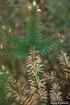 Spruce problem diagnosis for yard trees KEY Effect on tree Kills tree Other damage No damage Size of tree Seedling Sapling to pole Pole and larger By Jana Albers and Mike Albers, DNR-Forestry URL = http://files.dnr.state.mn.us/assistance/backyard/treecare/forest_health/whitesprucediagnosis.pdf
Construction Damage to Trees
 Construction Damage to Trees When a building site is cleared, several large, well-established trees are often left to enhance the aesthetic value of the property. However, within about 2-8 years after
Systemic Insecticide Technology for Tree Care
 Systemic Insecticide Technology for Tree Care Dan Herms Department of Entomology The Ohio State University Ohio Agricultural Research and Development Center Wooster [email protected] Landscapes are diverse
EMERGING THREATS TO IOWA S FORESTS, COMMUNITIES, WOOD INDUSTRY, & ECONOMY
 EMERGING THREATS TO IOWA S FORESTS, COMMUNITIES, WOOD INDUSTRY, & ECONOMY Emerald Ash Borer 1 Background Emerald Ash Borer (Agrilus planipennis) is a small green invasive wood boring beetle that attacks
Post-Wildfire Clean-Up and Response in Houston Toad Habitat Best Management Practices
 Post-Wildfire Clean-Up and Response in Houston Toad Habitat Best Management Practices Purpose The purpose of this document is to provide guidance and recommendations for minimizing potential impacts to
Cloud Mountain Farm Center 6906 Goodwin Rd., Everson, WA 98247 (360)966-5859 voice, (360)966-0921 fax, www.cloudmountainfarmcenter.
 Disease and Pest Management in the Home Orchard Fruit trees have been grown in home orchards for centuries. The goal of many gardeners today is to have fresh fruit from their own trees with a minimum of
Are My. Pine Trees. Ready To Thin?
 Are My Pine Trees Ready To Thin? ARE MY PINE TREES READY TO THIN? One question private forest landowners ask most frequently is, Are my pine trees ready to thin? There is no definite answer to this question,
Florida Division of Forestry
 Florida Division of Forestry Cooperative Forestry Assistance CHARLES H. BRONSON Commissioner of Agriculture James R. Karels Director, Division of Forestry Landowner Assistance Programs of the Florida Division
Cherokee Chief Plena Rubra Fragrant Cloud
 INTRODUCTION The natural range of dogwoods extends from Maine to the Gulf of Mexico. The trees color cities and countrysides white with dazzling displays in the early spring. Although they are most spectacular
TREE NOTES. CALIFORNIA DEPARTMENT OF FORESTRY AND FIRE PROTECTION Arnold Schwarzenegger Governor State of California. Dale T.
 TREE NOTES CALIFORNIA DEPARTMENT OF FORESTRY AND FIRE PROTECTION Arnold Schwarzenegger Governor State of California Dale T. Geldert Director NUMBER: 30 February 2005 Mike Chrisman Secretary for Resources
NYS DEC s Regulation of Invasive Species Management Programs
 NYS DEC s Regulation of Invasive Species Management Programs John W. Bennett - Pesticide Program Manager NYSDEC Region 5 Presentation Goals NYS DEC Jurisdiction Application/Permit Requirements Required
Tree Diversity Activity
 Tree Diversity Activity A Classroom Activity from The National Arbor Day Foundation You and your class may have participated recently in the Vote for America s National Tree, an historic opportunity for
3. Which relationship can correctly be inferred from the data presented in the graphs below?
 1. Recent evidence indicates that lakes in large areas of New York State are being affected by acid rain. The major effect of acid rain in the lakes is (1) an increase in game fish population levels (3)
EPA Reg. No. 33657-16-59639 (Except California and New York)
 Supplemental Label EPA Reg. No. 33657-16-59639 (Except California and New York) SAFARI 20 SG INSECTICIDE FOR UPDATED ORNAMENTAL PLANT APPLICATIONS AND TRUNK SPRAY IN TREES AND LARGE SHRUBS DIRECTIONS FOR
Oaks represent the major shade trees of Texas and are also important components of
 GARDENING FACT SHEET Harris County Cooperative Extension 3033 Bear Creek Drive, Houston, Texas 77084 281.855.5600 http://harris-tx.tamu.edu/hort Major Oak Diseases and their Control by Jerral D. Johnson
Management of the Giant Northern Termite
 Agnote Management of the Giant Northern Termite (Mastotermes darwiniensis) B. M. Thistleton, M. J. Neal and E. S. C. Smith, Plant Industries, Darwin No: I58 July 2013 INTRODUCTION Termites are small, secretive
MEMBERSHIP DIRECTORY. Indiana Association of Area Agencies on Aging. Indiana Association of Area Agencies on Aging
 Indiana Association of Area Agencies on Aging For Hoosiers of All Ages and Abilities... There s No Place Like Home MEMBERSHIP DIRECTORY 2007 Indiana Association of Area Agencies on Aging 9302 North Meridian
2012 Indiana Forest Products Price Report and Trend Analysis
 PURDUE EXTENSION 2012 Indiana Forest Products Price Report and Trend Analysis William L. Hoover, Professor of Forestry, Department of Forestry and Natural Resources, Purdue University, and Greg Preston,
Tree Assessment Report Prepared for: Dr. Peter Giarrizzo 18 Franklin Place Pelham NY 10803
 Pelham Board of Education Tree Assessment Report Prepared for: Dr. Peter Giarrizzo 18 Franklin Place Pelham NY 10803 Prepared by: Ken Almstead, Certified Arborist NY 0335 Tree Risk Assessor Qualification
THE OFFERING MANAGEMENT OVERVIEW
 LOGAN TIMBERLANDS LOGAN TIMBERLANDS THE OFFERING AFM Land Sales (AFMLS) invites interested parties to submit offers to purchase an investment grade, Appalachian hardwood property totaling 88,333± acres
San Diego County Agriculture How Sustainable and Resilient are We?
 San Diego County Agriculture How Sustainable and Resilient are We? Karen Melvin Deputy Agricultural Commissioner/ Sealer The San Diego County Department of Agriculture, Weights and Measures Thriving Ag,
Trees and Reliable Electric Service. Answers to Questions About Tree Pruning and Electric Power. We re connected to you by more than power lines.
 Trees and Reliable Electric Service Answers to Questions About Tree Pruning and Electric Power We re connected to you by more than power lines. How is Line Clearance Done? Pepco s tree contractor will
IPM: from Integrated Pest Management to Intelligent Pest Management
 IPM: from Integrated Pest Management to Intelligent Pest Management About the author: Joe Boggs Assistant Professor The Ohio State University Extension and OSU Department of Entomology E-mail: [email protected]
This leaflet gives advice on sensible precautions to help avoid the problem and the first steps to take if damage still occurs.
 PROTECTING YOUR HOME FROM SUBSIDENCE DAMAGE The shortage of rain experienced by much of the country during recent years has caused an increase in the amount of damage to buildings by subsidence. In extreme
What Are Those Plants Worth?
 Agricultural Extension Service The University of Tennessee What Are Those Plants Worth? SP614 Stephen Garton Assistant Professor Plant Sciences Larry Tankersley Extension Associate Forestry, Wildlife &
Why hire an arborist?
 Why hire an arborist? Spring is fast approaching and that means gardens to attend and flowers to plant, but what about your trees? Now is the best time to hire an arborist to maintain your trees before
Indiana Solid Waste Management Districts & Household Hazardous Waste Services Providers
 Indiana Solid Waste Management Districts & Household Hazardous Waste Services Providers This list contains contact information for local solid waste management districts and household hazardous waste service
2. Trade in forest commodities
 5 2. Trade in forest commodities The volume of wood products in international trade increased 125 percent between 1992 and 2008 (FAO, 2010b). Some examples of the changes in volume of exports of particular
Tree Landscape Planting
 City of Pierre Tree Landscape Planting The value of Woody Plant Landscaping Locally Adapted Species List Tips for Successful Planting Pierre Ordinances Public Needs to Know Community Tree Statistics: Trees
Project on the Eradication of the Weed Wedelia trilobata from Niue. Pest Management in the Pacific Programme
 Project on the Eradication of the Weed Wedelia trilobata from Niue Pest Management in the Pacific Programme (Component 7: Cook Islands, Niue and Tokelau) Progress Report INTRODUCTION Wedelia trilobata
Background research on the topic of urban forestry is intended to
 overview urban forestry Urban Forestry Background research on the topic of urban forestry is intended to help guide the task of integrating trees and urban forestry goals and aspirations into the Portland