
FALLS PREVENTION & RISK ASSESSMENTS
|
|
|
- Chrystal Pearson
- 10 years ago
- Views:
Transcription

1 FALLS PREVENTION & RISK ASSESSMENTS Created With Support From: Buffalo Rehab Group Physical Therapy PC Continuing Care Division of Catholic Health System s Senior Services D Youville College, Occupational Therapy Department Geriatric Center of WNY Learning Partners UB Department of Rehabilitation Science
2 TABLE OF CONTENTS ACTIVITIES SPECIFIC BALANCE CONFIDENCE (ABC) SCALE BERG BALANCE SCALE (BBS) FIVE TIMES SIT TO STAND.. 9 MODIFIED MULTI DIRECTIONAL.. 10 UPPER EXTREMITY REACH TEST SINGLE LEG STANCE (SLS) 11 TIMED UP AND GO (TUG) 12 VESTIBULAR SCREENING
3 THE ACTIVITIES-SPECIFIC BALANCE CONFIDENCE (ABC) SCALE* Administration: The ABC can be self-administered or administered via personal or telephone interview. Larger typeset should be used for self-administration, while an enlarged version of the rating scale on an index card will facilitate in-person interviews. Regardless of method of administration, each respondent should be queried concerning their understanding of instructions, and probed regarding difficulty answering specific items. Instructions to Participants: For each of the following, please indicate your level of confidence in doing the activity without losing your balance or becoming unsteady by choosing one of the percentage points on the scale from 0% to 100%. If you do not currently do the activity in question, try and imagine how confident you would be if you had to do the activity. If you normally use a walking aid to do the activity or hold onto someone, rate your confidence as if you were using these supports. If you have any questions about answering any of these items, please ask the administrator. Instructions for Scoring: The ABC is an 11-point scale and ratings should consist of whole numbers (0-100) for each item. Total the ratings (possible range = ) and divide by 16 to get each subject s ABC score. If a subject qualifies his/her response to items #2, #9, #11, #14 or #15 (different ratings for up vs. down or onto vs. off ), solicit separate ratings and use the lowest confidence of the two (as this will limit the entire activity, for instance the likelihood of using the stairs.) 80% = high level of physical functioning 50-80% = moderate level of physical functioning < 50% = low level of physical functioning Myers AM (1998) < 67% = older adults at risk for falling; predictive of future fall LaJoie Y (2004) References 1. Powell, LE & Myers AM. The Activities-specific Balance Confidence (ABC) Scale. J Gerontol Med Sci 1995; 50(1): M Myers AM, Fletcher PC, Myers AN, Sherk W. Discriminative and evaluative properties of the ABC Scale. J Gerontol A Biol Sci Med Sci. 1998;53:M287-M Lajoie Y, Gallagher SP. Predicting falls within the elderly community: comparison of postural sway, reaction time, the Berg balance scale and ABC scale for comparing fallers and non-fallers. Arch Gerontol Geriatr. 2004;38:
4 NAME DATE ACTIVITIES-SPECIFIC BALANCE CONFIDENCE (ABC) SCALE For each of the following, please indicate your level of confidence in doing the activity without losing your balance or becoming unsteady by choosing one of the percentage points on the scale from 0% to 100%. If you do not currently do the activity in question, try and imagine how confident you would be if you had to do the activity. If you normally use a walking aid to do the activity or you hold on to someone, rate your confidence as if you were using these supports. If you have any questions about answering any of these items, please ask the therapist. For each of the following activities, please indicate your level of self-confidence by choosing a corresponding number from the following scale: 0% % No completely confidence confident How confident are you that you will not lose your balance or become unsteady when you walk around the house? % walk up or down stairs? % bend over and pick up a slipper from the front of a closet? % reach for a small can off a shelf at eye level? % stand on tip toes and reach for something above your head? % stand on a chair and reach for something? % sweep the floor? % walk outside the house to a car parked in the driveway? % get into or out of a car? % walk across a parking lot to a mall? % walk up or down a ramp? % walk in a crowded mall where people rapidly walk past you? % are bumped into by people as you walk through the mall? % step onto or off of an escalator while you are holding onto a railing? % step onto or off of an escalator while holding onto parcels such that you cannot hold onto the railing? % walk outside on icy sidewalks? % 4
5 BERG BALANCE SCALE (BBS)* Name Location Date Rater ITEM DESCRIPTION SCORE (0-4) 1. Sitting to standing 2. Standing unsupported 3. Sitting unsupported 4. Standing to sitting 5. Transfers 6. Standing with eyes closed 7. Standing with feet together 8. Reaching forward with outstretched arm 9. Retrieving object from floor 10. Turning to look behind 11. Turning 360 degrees 12. Placing alternate foot on stool 13. Standing with one foot in front 14. Standing on one foot TOTAL GENERAL INSTRUCTIONS Please demonstrate each task and/or give instructions as written. When scoring, please record the lowest response category that applies for each item. In most items, the subject is asked to maintain a given position for specific time. Progressively more points are deducted if the time or distance requirements are not met, if the subject's performance warrants supervision, or if the subject touches an external support or receives assistance from the examiner. Subjects should understand that they must maintain their balance while attempting the tasks. The choices of which leg to stand on or how far to reach are left to the subject. Poor judgment will adversely influence the performance and the scoring. Equipment required for testing are a stopwatch or watch with a second hand, and a ruler or other indicator of 2, 5 and 10 inches (5, 12.5 and 25 cm). Chairs used during testing should be of reasonable height. Either a step or a stool (of average step height) may be used for item #12. *references at end 5
6 1. SITTING TO STANDING INSTRUCTIONS: Please stand up. Try not to use your hands for support. ( ) 4 able to stand without using hands and stabilize independently ( ) 3 able to stand independently using hands ( ) 2 able to stand using hands after several tries ( ) 1 needs minimal aid to stand or to stabilize ( ) 0 needs moderate or maximal assist to stand 2. STANDING UNSUPPORTED INSTRUCTIONS: Please stand for two minutes without holding onto any support. ( ) 4 able to stand safely 2 minutes ( ) 3 able to stand 2 minutes with supervision ( ) 2 able to stand 30 seconds unsupported ( ) 1 needs several tries to stand 30 seconds unsupported ( ) 0 unable to stand 30 seconds unassisted If a subject is able to stand 2 minutes unsupported, score full points for sitting unsupported. Proceed to item #4. 3. SITTING WITH BACK UNSUPPORTED BUT FEET SUPPORTED ON FLOOR OR ON A STOOL INSTRUCTIONS: Please sit with arms folded for 2 minutes. ( ) 4 able to sit safely and securely 2 minutes ( ) 3 able to sit 2 minutes under supervision ( ) 2 able to sit 30 seconds ( ) 1 able to sit 10 seconds ( ) 0 unable to sit without support 10 seconds 4. STANDING TO SITTING INSTRUCTIONS: Please sit down. ( ) 4 sits safely with minimal use of hands ( ) 3 controls descent by using hands ( ) 2 uses back of legs against chair to control descent ( ) 1 sits independently but has uncontrolled descent ( ) 0 needs assistance to sit 5. TRANSFERS INSTRUCTIONS: Arrange chairs(s) for a pivot transfer. Ask subject to transfer one way toward a seat with armrests and one way toward a seat without armrests. You may use two chairs (one with and one without armrests) or a bed and a chair. ( ) 4 able to transfer safely with minor use of hands ( ) 3 able to transfer safely definite need of hands ( ) 2 able to transfer with verbal cueing and/or supervision ( ) 1 needs one person to assist ( ) 0 needs two people to assist or supervise to be safe 6
7 6. STANDING UNSUPPORTED WITH EYES CLOSED INSTRUCTIONS: Please close your eyes and stand still for 10 seconds. ( ) 4 able to stand 10 seconds safely ( ) 3 able to stand 10 seconds with supervision ( ) 2 able to stand 3 seconds ( ) 1 unable to keep eyes closed 3 seconds but stays steady ( ) 0 needs help to keep from falling 7. STANDING UNSUPPORTED WITH FEET TOGETHER INSTRUCTIONS: Place your feet together and stand without holding. ( ) 4 able to place feet together independently and stand 1 minute safely ( ) 3 able to place feet together independently and stand for 1 minute with supervision ( ) 2 able to place feet together independently and to hold for 30 seconds ( ) 1 needs help to attain position but able to stand 15 seconds feet together ( ) 0 needs help to attain position and unable to hold for 15 seconds 8. REACHING FORWARD WITH OUTSTRETCHED ARM WHILE STANDING INSTRUCTIONS: Lift arm to 90 degrees. Stretch out your fingers and reach forward as far as you can. (Examiner places a ruler at end of fingertips when arm is at 90 degrees. Fingers should not touch the ruler while reaching forward. The recorded measure is the distance forward that the fingers reach while the subject is in the most forward lean position. When possible, ask subject to use both arms when reaching to avoid rotation of the trunk.) ( ) 4 can reach forward confidently >25 cm (10 inches) ( ) 3 can reach forward >12.5 cm safely (5 inches) ( ) 2 can reach forward >5 cm safely (2 inches) ( ) 1 reaches forward but needs supervision ( ) 0 loses balance while trying/ requires external support 9. PICK UP OBJECT FROM THE FLOOR FROM A STANDING POSITION INSTRUCTIONS: Pick up the shoe/slipper which is placed in front of your feet. ( ) 4 able to pick up slipper safely and easily ( ) 3 able to pick up slipper but needs supervision ( ) 2 unable to pick up but reaches 2-5cm (1-2 inches) from slipper and keeps balance independently ( ) 1 unable to pick up and needs supervision while trying ( ) 0 unable to try/needs assist to keep from losing balance or falling 10. TURNING TO LOOK BEHIND OVER LEFT AND RIGHT SHOULDERS WHILE STANDING INSTRUCTIONS: Turn to look directly behind you over toward left shoulder. Repeat to the right. Examiner may pick an object to look at directly behind the subject to encourage a better twist turn. ( ) 4 looks behind from both sides and weight shifts well ( ) 3 looks behind one side only other side shows less weight shift ( ) 2 turns sideways only but maintains balance ( ) 1 needs supervision when turning ( ) 0 needs assist to keep from losing balance or falling 7
8 11. TURN 360 DEGREES INSTRUCTIONS: Turn completely around in a full circle. Pause. Then turn a full circle in the other direction. ( ) 4 able to turn 360 degrees safely in 4 seconds or less ( ) 3 able to turn 360 degrees safely one side only in 4 seconds or less ( ) 2 able to turn 360 degrees safely but slowly ( ) 1 needs close supervision or verbal cueing ( ) 0 needs assistance while turning 12. PLACING ALTERNATE FOOT ON STEP OR STOOL WHILE STANDING UNSUPPORTED INSTRUCTIONS: Place each foot alternately on the step/stool. Continue until each foot has touched the step/stool four times. ( ) 4 able to stand independently and safely and complete 8 steps in 20 seconds ( ) 3 able to stand independently and complete 8 steps >20 seconds ( ) 2 able to complete 4 steps without aid with supervision ( ) 1 able to complete >2 steps needs minimal assist ( ) 0 needs assistance to keep from falling/unable to try 13. STANDING UNSUPPORTED ONE FOOT IN FRONT INSTRUCTIONS: (DEMONSTRATE TO SUBJECT) Place one foot directly in front of the other. If you feel that you cannot place your foot directly in front, try to step far enough ahead that the heel of your forward foot is ahead of the toes of the other foot. (To score 3 points, the length of the step should exceed the length of the other foot and the width of the stance should approximate the subject's normal stride width) ( ) 4 able to place foot tandem independently and hold 30 seconds ( ) 3 able to place foot ahead of other independently and hold 30 seconds ( ) 2 able to take small step independently and hold 30 seconds ( ) 1 needs help to step but can hold 15 seconds ( ) 0 loses balance while stepping or standing 14. STANDING ON ONE LEG INSTRUCTIONS: Stand on one leg as long as you can without holding onto any support. ( ) 4 able to lift leg independently and hold >10 seconds ( ) 3 able to lift leg independently and hold 5-10 seconds ( ) 2 able to lift leg independently and hold = or >3 seconds ( ) 1 tries to lift leg unable to hold 3 seconds but remains standing independently ( ) 0 unable to try or needs assist to prevent fall ( ) TOTAL SCORE (Maximum = 56) *References 1. Wood-Dauphinee S, Berg K, Bravo G, Williams JI: The Balance Scale: Responding to clinically meaningful changes. Canadian Journal of Rehabilitation 10: 35-50, Berg K, Wood-Dauphinee S, Williams JI: The Balance Scale: Reliability assessment for elderly residents and patients with an acute stroke. Scand J Rehab Med 27:27-36, Berg K, Maki B, Williams JI, Holliday P, Wood-Dauphinee S: A comparison of clinical and laboratory measures of postural balance in an elderly population. Arch Phys Med Rehabil 73: , Berg K, Wood-Dauphinee S, Williams JI, Maki, B: Measuring balance in the elderly: validation of an instrument. Can. J. Pub. Health July/August supplement 2:S7-11, Berg K, Wood-Dauphinee S, Williams JI, Gayton D: Measuring balance in the elderly: preliminary development of an instrument. Physiotherapy Canada 41: ,
9 FIVE TIME SIT TO STAND (FTSTS) Have your patient sit in a standard height chair (43-47cm) with back against chair, arms crossed on chest for entire test, feet comfortable per patient. Instructions - Stand up and sit down 5 times as quickly and safely as you can, when I say GO. - Inform your patient to stand up completely between repetitions. - Timing begins at GO and ends when the patient completes the 5 th trial in standing. Equipment - Standard height chair - Stop watch or watch with a second hand Norms year olds 11.4 seconds year olds 12.6 seconds year olds 14.8 seconds Reference 1. Whitney, S. L., Wrisley, D. M., Marchetti, G. F., Gee, M. A., Redfern, M. S. Furman, J. M., Clinical measurement of sit-to-stand performance in people with balance disorders: Validity of data for the five-time sit-to-stand test. Physical Therapy 85(10), ,
10 MODIFIED MULTI-DIRECTIONAL UPPER EXTREMITY REACH TEST BRG-SG # Physical and Occupational therapists are often looking for quick, reliable, portable, inexpensive, and clinically relevant ways to evaluate and document the quality characteristics and magnitude of functional movement. It has been argued that measuring limits of stability during a dynamic balance task (such as reaching from a standing position) may assist a therapist in assessing balance skill and falls risk 1,2. Additional research has conveyed the added value of assessing multidirectional upper extremity reach ability 3,4,5. Others have cautioned against the use of reach measurements in independently determining risk of falling and frailty in older persons 6,7,8,9. Perhaps the best use of this type of assessment tool is to employ it as part of a multi-faceted examination process, correlating its results to skilled observation of the movement, knowledge of pathomechanics, and knowledge of function in other body systems. Then, clinical judgments may be made to prioritize what tissue-level or functional component-level insufficiencies may exist that consequently limit an individual s balance control while reaching. Knowing what may be causing abnormal or inefficient motion may directly lead to formulation of intervention plans and/or referral for services that would be most efficacious in modifying such deficits. In our modified test procedures: - a standard reach target was measured at 40-inches from floor. It was felt that this height lessens the potential impact of impaired UE motion, and encourages multiple joints and motion segments to become involved in task completion. - excursion distances were measured to outstretched fingertips, estimated to within ½ inch. - safety was considered with standard clinical guarding techniques utilized at all times. - learning and fear-avoidance effects were minimized by offering participants a practice trial followed by recording the average of two test trials. Demonstration was also offered for learning as needed. - results of Right vs. Left direction of movement were recorded in each test condition to lend insight into mechanical deficits that could elude detection by qualitative observation alone. - Four testing positions were utilized to encourage movement and drive of the center of mass through the three cardinal planes (as well as backward weight shifting). o Bilateral Stance with 2-handed Anterior Reach o Bilateral Stance with 1-handed Lateral Reach o Bilateral Stance with 2-handed Crossbody Rotational Reach o Bilateral Stance with 1-handed Posterior Rotational Reach References for Reach Testing: (1) Duncan PW ; Weiner DK ; Chandler J ; Studenski S Functional reach: a new clinical measure of balance. J Gerontol 1990 Nov; 45(6): M192-7 ; (2) Duncan PW ; Studenski S ; Chandler J ; Prescott B. Functional reach: predictive validity in a sample of elderly male veterans. J Gerontol May;47(3):M93-8. ; ( 3) Brauer S ; Burns Y ; Galley P Lateral reach: a clinical measure of medio-lateral postural stability. Physiotherapy Res Int 1999; 4(2): 81-8 ; (4) DeWaard BP ; Bentrup BR ; Hollman JH ; Brasseur JE Relationship of the functional reach and lateral reach tests in elderly females. J Geriatr Phys Ther 2002; 25(3): 4-9 ; (5) Newton RA Validity of the multi-directional reach test: a practical measure for limits of stability in older adults. J Gerontol A Biol Sci Med Sci 2001 Apr; 56(4): ; (6) Behrman AL ; Light KE ; Flynn SM ; Thigpen MT Is the functional reach test useful for identifying falls risk among individuals with Parkinson's disease? Arch Phys Med Rehabil 2002 Apr; 83(4): ; (7) Rockwood K ; Awalt E ; Carver D ; MacKnight C Feasibility and measurement properties of the functional reach and the timed up and go tests in the Canadian study of health and aging. J Gerontol A Biol Sci Med Sci 2000 Feb; 55(2): M70-3 ; (8) Jonsson E ; Henriksson M ; Hirschfeld H, Stockholm, Sweden. Does the functional reach test reflect stability limits in elderly people? J Rehabil Med 2003 Jan; 35(1): ; ( 9) Wernick-Robinson M ; Krebs DE ; Giorgetti MM Functional reach: does it really measure dynamic balance? Arch Phys Med Rehabil 1999 Mar; 80(3): # = a Buffalo Rehab Group Physical Therapy, PC and Stall Geriatrics, LLC collaborative effort
11 SINGLE LEG STANCE (EYES OPEN) Equipment - Stop watch Start position - Subject stands erect on firm surface with arms folded across chest and the head facing straight ahead; ideally shoe is off Test - Once standing in the start position, keeping eyes open, the subject is asked to raise one leg based on preference of subject and keep the leg raised as long as possible without touching the other leg, without uncrossing arms, or using any support for balance. Time - Timer starts once foot is lifted off floor; Timer is stopped when the subject's raised foot either touches the floor, makes contact with other leg or moves his/her stance foot to create a new base of support, or if the arms move out of the test position. Age appropriate norms for SLS are as follows: y/o (mean= 27.0 sec; limits of 95%) y/o (mean= 17.2 sec; limits of 95%) y/o (mean= 8.5 sec; limits of 95%) Reference 1. Bohannon RW Top Geriatric Rehabilitation, 2006 Jan-Mar; 22(1): 70-7 (31 ref) 11
12 TIMED UP AND GO (TUG) Tips - The patient starts in a standard chair with arms, wearing his/her customary walking shoes, and using his/her usual walking aid. - No physical assistance is given. - The patient starts with his/her back against the chair, his/her arms resting on the arm rests, and his/her walking aid at hand. Instructions - Patient is instructed that, on the word GO he/she is to get up walk at a comfortable and safe pace to a line on the floor 3 meters away, turn, return to the chair, and sit down again. - Timing starts with the word GO and ends when the subject sits down. Equipment: - Standard chair with arms - Stop watch or watch with second hand - 3 meters walking space - Tape mark at the 3 meter mark Age Adjusted Norms Mean (95% confidence intervals) for 3 age groups are: y/o (mean= 8.1 ( ) seconds) y/o (mean= 9.2 ( ) seconds) y/o (mean= 11.3 ( seconds) Patients whose performance exceeds the upper limit of reported confidence intervals can be considered to have worse than average performance. This is what would determine relative risk level: Yes if outside of high end of 95% CI No if within or under 95% CI Reference 1. Bohannon, Richard W, Journal of Geriatric Physical Therapy,
13 VESTIBULAR SCREENING/SUPPLEMENTAL NEUROLOGICAL BRG-SG # In a comprehensive multi-system screening process for falls risk, several markers of possible cardiovascular, neurological, sensory, and/or vestibular involvement may be encountered. These indicators may be in either the participant self-assessment or in clinician-directed physical performance screening procedures. The examining clinician may be given the option to utilize some or all of these supplemental screens at their discretion following completion of the basic home safety, medical review, and gross motor examinations. Examples of yellow flags in a falls risk assessment that would lead to additional screening being recommended include: - lightheadedness/ dizziness/ nausea reported - intolerance to changes in body and/or head position - disequilibrium in gait/ ataxic gait/ shuffling gait - recent visual changes/ visual changes with head movement - recent hearing changes - history of loss of consciousness - migraine-type headache linked to dizziness or visual change Additional screens to choose from may include: - finger to nose test for Dysmetria (=cerebellar dysfunction) - oculomotor test for cranial nerve function (observing for smoothness of pursuit of tracking through visual field) - peripheral field of vision testing - mechanical screening of cervical spine and temporomandibular joint (TMJ) - seated vestibulo-ocular reflex (VOR) screen (horizontal and vertical head drive) - post-stimulus observation of nystagmus (i.e. : head shake/ spinning in chair) - positional testing for benign paroxysmal positional vertigo (BPPV) NOTE: Screening procedures described are meant solely to indicate possible involvement and dysfunction of a particular body system, but are not designed or intended to adequately formulate a diagnosis or intervention strategy. Such clinical decision-making should be undertaken by the clinical specialist best suited to diagnose and treat the given set of symptoms or conditions. NOTE: See schematic on next page for a recommended triage strategy based on falls prevention additional screen findings # = a Buffalo Rehab Group Physical Therapy, PC and Stall Geriatrics, LLC collaborative effort
14 VESTIBULAR SCREENING/SUPPLEMENTAL NEUROLOGICAL BRG-SG # (+) dizziness/ lightheadedness with headache (+) loss of consciousness or frequent dizziness/ lightheadedness PCP/ Cardiology Red Flags: PCP/ Neurology 1. constitutional symptoms 2. abnormal vital signs (orthostatic hypotension/ dysrhythmia) 3. (+) CNS signs (dysmetria/ undiagnosed CVA/ tremor/ cranial n. or spinal cord lesion) 4. (+) vertebral-basilar artery screening 5. (+) cardiopulmonary distress (+) dizziness/ lightheadedness with anxiety, exertion, or change in body position - OK to proceed if absence of red flags - If (+) C-spine or TMJ Examination? then If (+) visual field loss or visual acuity change then (+) visual-perceptual (ie: low light/ bifocals/ prisms) PCP/ Physiatry/ Physical Therapy/ Chiropractic Opthamology If (+) recent or undiagnosed hearing loss/ then Suspicion of infectious disease If (+) Positional Vertigo Screen/ then (+) Vestibulo-Ocular Reflex (VOR) abnormality/ Audiology PCP/ ENT Vestibular Rehabilitation (+) post-stimulus nystagmus or symptom/ (+) gait and balance dysfunction # = a Buffalo Rehab Group Physical Therapy, PC and Stall Geriatrics, LLC collaborative effort
Functional Assessments for Geriatric Clients
 Disability Schemes Functional Assessments for Geriatric Clients Ann Medley, PT, PhD Texas Woman s s University School of Physical Therapy International Classification of Functioning, Disability, and Health
MEASUREMENT SCALES USED IN ELDERLY CARE FUNCTIONAL INDEPENDENCE MEASURE AND FUNCTIONAL ASSESSMENT MEASURE
 FUNCTIONAL INDEPENDENCE MEASURE AND FUNCTIONAL ASSESSMENT MEASURE Functional Independence Measure The Functional Independence Measure (FIM) scale assesses physical and cognitive disability. This scale
ARE THE USE OF MEDICARE G CODES MAKING YOU SPIN?
 1 2 3 4 5 6 7 8 ARE THE USE F MEDICARE G CDES MAKING YU SPIN? HERE ARE SME ANSWERS: VESTIBULAR REHABILITATIN SPECIAL INTEREST GRUP Functional Limitation Reporting Kenda Fuller, PT South Valley Physical
BESTest Balance Evaluation Systems Test Fay Horak PhD Copyright 2008
 BESTest Balance Evaluation Systems Test Fay Horak PhD Copyright 2008 TEST NUMBER/SUBJECT CODE DATE EXAMINER NAME EXAMINER Instructions for BESTest 1. Subjects should be tested with flat heeled shoes or
ABOUT THE FUNCTIONAL FITNESS TEST: ABOUT THE AUTHORS:
 The Interactive Health Partner Wellness Program addresses fall prevention with assessments and outcomes tracking in an easy to use, comprehensive online system. Website: www.interactivehealthpartner.com
CAPTURE Collaboration and Proactive Teamwork Used to Reduce. Best Practices in Safe Transfers and Mobility to Decrease Fall Risk
 CAPTURE Collaboration and Proactive Teamwork Used to Reduce Falls Best Practices in Safe Transfers and Mobility to Decrease Fall Risk August 20, 2013 10 a.m. CST Dawn M. Venema, PT, PhD Jill Hassel, DPT
Vestibular Assessment
 Oculomotor Examination A. Tests performed in room light Vestibular Assessment 1. Spontaneous nystagmus 2. Gaze holding nystagmus 3. Skew deviation 4. Vergence 5. Decreased vestibular ocular reflex i. Head
Exercises for older people
 Exercise for older people Exercises for older people Sitting Getting started If you ve not done much physical activity for a while, you may want to get the all-clear from a GP before starting. For the
Range of Motion. A guide for you after spinal cord injury. Spinal Cord Injury Rehabilitation Program
 Range of Motion A guide for you after spinal cord injury Spinal Cord Injury Rehabilitation Program This booklet has been written by the health care providers who provide care to people who have a spinal
or [email protected]
 INTRODUCTION The consequences of postural dyscontrol are pervasive and have a significant impact on activities of daily living, community mobility and social, work and leisure pursuits. The Community Balance
Physiotherapy Database Exercises for people with Spinal Cord Injury
 Physiotherapy Database Exercises for people with Spinal Cord Injury Compiled by the physiotherapists associated with the following Sydney (Australian) spinal units : Last Generated on Mon Mar 29 16:57:20
Do s and Don ts with Low Back Pain
 Do s and Don ts with Low Back Pain Sitting Sit as little as possible and then only for short periods. Place a supportive towel roll at the belt line of the back especially when sitting in a car. When getting
This document fully describes the 30 Day Flexibility Challenge and allows you to keep a record of your improvements in flexibility.
 Welcome to the StretchTowel 30 Day Flexibility Challenge! You can Be More Flexible in 30 days by following our stretching program for 10 minutes a day. The best part is that you can stretch using the StretchTowel
The Human Balance System
 PO BOX 13305 PORTLAND, OR 97213 FAX: (503) 229-8064 (800) 837-8428 [email protected] WWW.VESTIBULAR.ORG The Human Balance System A Complex Coordination of Central and Peripheral Systems By the Vestibular
Fact sheet Exercises for older adults undergoing rehabilitation
 Fact sheet Exercises for older adults undergoing rehabilitation Flexibility refers to the amount of movement possible around a joint and is necessary for normal activities of daily living such as stretching,
Cardiac Rehab Program: Stretching Exercises
 Cardiac Rehab Program: Stretching Exercises Walk around the room, step side to side, ride a bike or walk on a treadmill for at least 5 minutes to warm up before doing these stretches. Stretch warm muscles
Otago Exercise Program
 Otago Exercise Program Edited Version Exercise Booklet Created by: Genesee County Coalition Supported by a grant from the Health Foundation for Western and Central New York Otago Exercise Program to Prevent
Preventing Overuse Injuries at Work
 Preventing Overuse Injuries at Work The Optimal Office Work Station Use an adjustable chair with good lumbar support. Keep your feet flat on a supportive surface (floor or foot rest). Your knees should
How To Stretch Your Body
 Exercise Module A New Leaf Choices for Healthy Living University of North Carolina at Chapel Hill 2007 Center for Health Promotion and Disease Prevention Physical Activity Exercises for Keeping Active
total hip replacement
 total hip replacement EXCERCISE BOOKLET patient s name: date of surgery: physical therapist: www.jointpain.md Get Up and Go Joint Program Philosophy: With the development of newer and more sophisticated
Lower Body Strength/Balance Exercises
 Compliments of (Medical Group Name & Phone # to be inserted here) Lower Body Strength/Balance Exercises Hip Flexion Strengthens thigh and hip muscles. Use ankle weights, if you are ready to. Stand to the
Standing with legs slightly apart, inhale and expand chest and shoulders; exhale and draw in chest and shoulders.
 ILLUSTRATED EXERCISE #4 PAGE 1 2012 Bringing the Body to the Stage and Screen and Beyond by Annette Lust 1 Standing with legs slightly apart, inhale and expand chest and shoulders; exhale and draw in chest
ANKLE STRENGTHENING INTRODUCTION EXERCISES SAFETY
 ANKLE STRENGTHENING INTRODUCTION Welcome to your Ankle Strengthening exercise program. The exercises in the program are designed to improve your ankle strength, fitness, balance and dynamic control. The
Balance and Vestibular Center Programs to treat dizziness and reduce your risk of falling
 Balance and Vestibular Center Programs to treat dizziness and reduce your risk of falling Helping you overcome dizziness and vertigo Most people will experience dizziness at some point in their lives.
Rehabilitation. Rehabilitation. Walking after Total Knee Replacement. Continuous Passive Motion Device
 Walking after Total Knee Replacement After your TKR, continue using your walker or crutches until your surgeons tells you it is okay to stop using them. When turning with a walker or crutches DO NOT PIVOT
Preparing for the Washington State Criminal Justice Training Commission Physical Ability Test
 Preparing for the Washington State Criminal Justice Training Commission Physical Ability Test Whereas many training routines can be used to improve performance in the Physical Ability Test (PAT), participants
HELPFUL HINTS FOR A HEALTHY BACK
 HELPFUL HINTS FOR A HEALTHY BACK 1. Standing and Walking For correct posture, balance your head above your shoulders, eyes straight ahead, everything else falls into place. Try to point toes straight ahead
Exercise 1: Knee to Chest. Exercise 2: Pelvic Tilt. Exercise 3: Hip Rolling. Starting Position: Lie on your back on a table or firm surface.
 Exercise 1: Knee to Chest Starting Position: Lie on your back on a table or firm surface. Action: Clasp your hands behind the thigh and pull it towards your chest. Keep the opposite leg flat on the surface
Rehabilitation. Rehabilitation. Walkers, Crutches, Canes
 Walkers, Crutches, Canes These devices provide support through your arms to limit the amount of weight on your operated hip. Initially, after a total hip replacement you will use a walker to get around.
ACL Reconstruction Rehabilitation
 ACL Reconstruction Rehabilitation The following exercises are commonly used for rehabilitation following ACL reconstruction surgery. However, each knee surgery is unique and each person s condition is
Passive Range of Motion Exercises
 Exercise and ALS The physical or occupational therapist will make recommendations for exercise based upon each patient s specific needs and abilities. Strengthening exercises are not generally recommended
Strength Training HEALTHY BONES, HEALTHY HEART
 Strength Training HEALTHY BONES, HEALTHY HEART No matter what your age, strength training can improve your bone health and your balance. As we age, our bones lose both tissue and strength. This condition
Vestibular Rehabilitation
 PO BOX 13305 PORTLAND, OR 97213 FAX: (503) 229-8064 (800) 837-8428 [email protected] WWW.VESTIBULAR.ORG Vestibular Rehabilitation An Effective, Evidence-Based Treatment By Anne Shumway-Cook, PT, PhD;
Dizziness and Vertigo
 Dizziness and Vertigo Introduction When you are dizzy, you may feel lightheaded or lose your balance. If you also feel that the room is spinning, you may have vertigo. Vertigo is a type of severe dizziness.
BALANCE AND VESTIBULAR REHABILITATION THERAPY MANUAL
 BALANCE AND VESTIBULAR REHABILITATION THERAPY MANUAL Copyright AMERICAN HEARING & BALANCE CENTERS, INC., 2010 2010 Revision 3.01 TABLE OF CONTENTS Description Page Five Indications For Therapy... 1 Treatments
Cardiovascular rehabilitation home exercise programme
 Cardiovascular rehabilitation home exercise programme To get the most benefit from the cardiovascular rehabilitation programme we recommend that you do some form of exercise on the days you are not attending
SHOULDER PULL DOWNS. To learn efficient use of the shoulder blades and arms while maintaining a neutral spine position.
 SHOULDER INTRODUCT ION Welcome to your shoulder exercise program The exercises in the program are designed to improve your shoulder mobility, posture and the control of the muscles in your neck and shoulder
MOON SHOULDER GROUP. Rotator Cuff Home Exercise Program. MOON Shoulder Group
 MOON Shoulder Group For information regarding the MOON Shoulder Group, talk to your doctor or contact: Rosemary Sanders 1215 21 st Avenue South 6100 Medical Center East Vanderbilt University Medical Center
Welcome to your LOW BACK PAIN treatment guide
 Welcome to your LOW BACK PAIN treatment guide You are receiving this guide because you have recently experienced low back pain. Back pain is one of the most common musculoskeletal problems treated in medicine
ROTATOR CUFF HOME EXERCISE PROGRAM
 ROTATOR CUFF HOME EXERCISE PROGRAM Contact us! Vanderbilt Sports Medicine Medical Center East, South Tower, Suite 3200 1215 21st Avenue South Nashville, TN 37232-8828 For more information on this and other
Otago Exercise Program Activity Booklet
 Head Movements Stand up tall and look ahead. Slowly turn your head as far as you can to the right. Slowly turn your head as far as you can to the left. Repeat five times to each side. 44 Neck Movements
Rotator Cuff Home Exercise Program MOON SHOULDER GROUP
 Rotator Cuff Home Exercise Program MOON SHOULDER GROUP Introduction The MOON Shoulder group is a Multi-center Orthopaedic Outcomes Network. In other words, it is a group of doctors from around the country
General Guidelines. Neck Stretch: Side. Neck Stretch: Forward. Shoulder Rolls. Side Stretch
 Stretching Exercises General Guidelines Perform stretching exercises at least 2 3 days per week and preferably more Hold each stretch for 15 20 seconds Relax and breathe normally Stretching is most effective
MVA Accident Information
 In this Report MVA Accident Information... 1 Vehicle Information... 3 Vehicular and Patient Relationship.. 4 Facts about the Patient before the MVA Accident... 4 Facts about the Patient during this MVA
Coding and Documentation in Practice
 Coding and Documentation in Practice Great Exam Documentation By: Kathy Mills Chang Kathy Mills Chang is a Certified Medical Compliance Expert, Reimbursement Consultant, Medicare Specialist, and a Documentation
Post-Concussion Syndrome
 Post-Concussion Syndrome Anatomy of the injury: The brain is a soft delicate structure encased in our skull, which protects it from external damage. It is suspended within the skull in a liquid called
Follow-up Form B3: Evaluation Form Unified Parkinson s Disease Rating Scale (UPDRS 1 ) Motor Exam
 phone: (206) 543-8637; fax: (206) 616-5927 e-mail: [email protected] website: www.alz.washington.edu NACC Uniform Data Set (UDS) Follow-up Form B3: Evaluation Form Unified Parkinson s Disease Rating
HOPE EXERCISE RECOVERY RESOURCES RELATIONSHIPS INFORMATION REHABILITATION PREVENTION SELF ADVOCACY RELATIONSHIPS MOVEMENT. A Stroke Recovery Guide
 INFORMATION REHABILITATION PREVENTION SELF ADVOCACY RECOVERY HOPE A Stroke Recovery Guide RELATIONSHIPS MOVEMENT RESOURCES RELATIONSHIPS EXERCISE www.stroke.org CHAPTER FOUR Movement and Exercise Moving
CHAPTER 3: BACK & ABDOMINAL STRETCHES. Standing Quad Stretch Athletic Edge - www.athleticedge.biz - (650) 815-6552
 CHAPTER : BACK & ABDOMINAL STRETCHES Standing Quad Stretch ) Stand and grasp right ankle with same hand, use a wall or chair to Lower maintain Back balance with left hand. Maintain an upright Stretches
Routine For: OT - General Guidelines/Energy Conservation (Caregiver)
 GENERAL GUIDELINES - 9 Tips for Exercise: Body Mechanics for Helper - To protect back, stay as upright as possible and keep head in line with trunk. - Always position yourself as close as possible to the
UNIVERSAL FITNESS NETWORK, Inc. 2315 West Monica Dunlap, IL 61525 (309)-360-5615 [email protected] FACTS ABOUT THE PHYSICAL FITNESS ASSESSMENT TESTS
 UNIVERSAL FITNESS NETWORK, Inc. 2315 West Monica Dunlap, IL 61525 (309)-360-5615 [email protected] FACTS ABOUT THE PHYSICAL FITNESS ASSESSMENT TESTS Universal Fitness Network, Inc. specializes in physical
Physical & Occupational Therapy
 In this section you will find our recommendations for exercises and everyday activities around your home. We hope that by following our guidelines your healing process will go faster and there will be
Info. from the nurses of the Medical Service. LOWER BACK PAIN Exercise guide
 Info. from the nurses of the Medical Service LOWER BACK PAIN Exercise guide GS/ME 03/2009 EXERCISE GUIDE One of the core messages for people suffering with lower back pain is to REMAIN ACTIVE. This leaflet
Trunk Strengthening and Muscle and Coordination Exercises for Lower Limb Amputees
 Trunk Strengthening and Muscle and Coordination Exercises for Lower Limb Amputees Part One: Trunk Strengthening Trunk Extension Needed: Sturdy chair or stool, Theraband, and a Theraball if necessary. Sit
First Year. PT7040- Clinical Skills and Examination II
 First Year Summer PT7010 Anatomical Dissection for Physical Therapists This is a dissection-based, radiographic anatomical study of the spine, lower extremity, and upper extremity as related to physical
EGOSCUE CLINIC PAIN/POSTURE STRETCHES 1. Standing Arm Circles: Helps Restore Upper Body Strength
 EGOSCUE CLINIC PAIN/POSTURE STRETCHES 1. Standing Arm Circles: Helps Restore Upper Body Strength Two sets of 40 repetitions each. Stand with your feet pointed straight and hip-width apart. Place your fingertips
TOTAL KNEE REPLACEMENT
 PENN ORTHOPAEDICS TOTAL KNEE REPLACEMENT Home Exercise Program PENN ORTHOPAEDICS TOTAL KNEE REPLACEMENT HOME EXERCISE PROGRAM To get the best results from your surgery, it is important that you do your
Gait with Assistive Devices
 Gait with Assistive Devices Review Last Lecture Weak dorsiflexors? Vaulting? Hip hiking? Weak hip abductors? Hip circumduction? Ataxic gait? Antalgic gait? Explain the line of gravity Ambulation with Assistive
SAMPLE WORKOUT Full Body
 SAMPLE WORKOUT Full Body Perform each exercise: 30 secs each x 2 rounds or 2-3 sets of 8-12 reps Monday & Wednesday or Tuesday & Thursday Standing Squat Muscles: glutes (butt), quadriceps (thigh) Stand
EXERCISE DESCRIPTIONS PHASE I Routine #1
 EXERCISE DESCRIPTIONS PHASE I Routine #1 Hip Mobility Exercise: Forward Out-In Movement: Raise leg out to the side, and rotate around to the front. Keep shin/thigh angle at 90 degrees. Exercise: Backward
EXERCISE INSTRUCTIONS 1
 EXERCISE INSTRUCTIONS 1 Contents ANKLE TOUCHES... 4 BACK EXTENSIONS... 4 BACK REVERSE FLYES... 4 BALL ROLL... 4 BASKETBALL SQUATS... 4 BEAR CRAWL... 4 BICEP CURL (Resistance Band)... 4 BOXING JABS... 5
The 11+ A complete warm-up program
 The 11+ A complete warm-up program Part 1 & 3 A A }6m Part 2 B A: Running B: Jog back B! FIELD SET-UP A: Running exercise B: Jog back The course is made up of 6 pairs of parallel cones, approx. 5-6m apart.
Vestibular Rehabilitation Therapy (Rationale) Adaptation Guidelines. Substitution guidelines. Habituation exercise guidelines. Substitution guidelines
 Vestibular Rehabilitation Therapy Outline: Rationale for the effect of exercises Framework for exercise prescription Exercise progression Preferred prescription patterns Case study General treatment guidelines
The Role of Physical Therapy in Post Concussion Management. Non Disclosure
 The Role of Physical Therapy in Post Concussion Management. Cook Children s Sports Medicine Symposium Ryan Blankenship, PT, SCS Non Disclosure No conflicts of interest. 1 Course Objectives Participants
Safe Lifting and Carrying
 PART 1 Basic Lifts Proper lifting and handling will help protect against injury and make your job easier. It takes training and practice to do it right. The following are basic steps in safe lifting and
The Rehab Professional s Role in Dining for Persons with Dementia. By: Bonnie Saunders PT, MPA, CDP
 The Rehab Professional s Role in Dining for Persons with Dementia By: Bonnie Saunders PT, MPA, CDP There have been many advances that have brought about an increased understanding of the etiologies and
Injury Prevention for the Back and Neck
 Injury Prevention for the Back and Neck www.csmr.org We have created this brochure to provide you with information regarding: Common Causes of Back and Neck Injuries and Pain Tips for Avoiding Neck and
STANDARD OPERATING PROCEDURES (SOP) FOR COMPUTER WORK, DESK TOP
 STANDARD OPERATING PROCEDURES (SOP) FOR COMPUTER WORK, DESK TOP General Guidelines-Best Practices: The following guidelines are applicable to office workers who sit at a desk and/or work on computers.
Basic Stretch Programme 3. Exercise Circuit 4
 Basic Stretch Programme 3 Exercise Circuit 4 2 1 Calves Stand approximately 1 metre away from wall with legs straight and heels on floor. Step and lean forward and slowly push hips towards wall. Should
JTF 2 Pre-Selection Physical Fitness Testing
 JTF 2 Pre-Selection Physical Fitness Testing 1. General. This evaluation is used to predict a member s physical capability and their readiness to apply for JTF 2. 2. On top of these physical standards,
INTRODUCTION TO POSITIONING. MODULE 3: Positioning and Carrying
 MODULE 3: Positioning and Carrying Blankets, pillows and towels, sandbags, carpet on the floor, a doll with floppy limbs that can be positioned i.e. not a hard plastic doll, display materials. Icebreaker
Vestibular Rehabilitation Therapy. Melissa Nelson
 Vestibular Rehabilitation Therapy Melissa Nelson What is Vestibular Rehabilitation Therapy (VRT)? VRT is an exercise-based program designed to promote CNS compensation for inner ear deficits. The goal
Range of Motion Exercises
 Range of Motion Exercises Range of motion (ROM) exercises are done to preserve flexibility and mobility of the joints on which they are performed. These exercises reduce stiffness and will prevent or at
he American Physical Therapy Association would like to share a secret with you. It can help you do more with less effort breathe easier feel great.
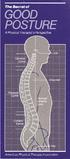 The Secret... T he American Physical Therapy Association would like to share a secret with you. It can help you do more with less effort breathe easier feel great. The secret is about good posture, which
Assisting Students Who Use Wheelchairs:
 Quick-Guide Extra Assisting Students Who Use Wheelchairs: Guidelines for School Personnel Michael F. Giangreco, Irene McEwen, Timothy Fox, and Deborah Lisi-Baker Quick-Guides to Inclusion 3: Ideas for
March 7th. Smartnet &PNCR. Expanded Hammersmith Functional Motor Scale for SMA (HFMSE) PNCR Network for SMA
 PNCR Network for SMA March 7th Expanded Hammersmith Functional Motor Scale for SMA (HFMSE) 2009 Add-on module presented by PNCR - Expanded Hammersmith Functional Motor Scale (HFMSE) Smartnet &PNCR Hammersmith
adj., departing from the norm, not concentric, utilizing negative resistance for better client outcomes
 Why Eccentrics? What is it? Eccentric adj., departing from the norm, not concentric, utilizing negative resistance for better client outcomes Eccentrics is a type of muscle contraction that occurs as the
Preventing Falls. Strength and balance exercises for healthy ageing
 Preventing Falls Strength and balance exercises for healthy ageing Exercise should be comfortable and fun. To get the most out of your home exercise book, join a class for older people to check your exercises
TOTAL HIP REPLACEMENT
 PENN ORTHOPAEDICS TOTAL HIP REPLACEMENT Home Exercise Program Maintain Your 3 HIP PRECAUTIONS! The purpose of your hip precautions is to allow for the best healing and the most successful outcomes from
Elderly Mobility Scale (EMS)
 Elderly Mobility Scale (EMS) Summary: Measures: Scale of assessment of mobility. Description: The EMS is a 20 point validated assessment tool for the assessment of frail elderly subjects (Smith 1994).
Can you do this in less than 12 seconds? YES NO
 Why is falling a problem for farmers over 55? The risk of falling and being injured from a fall increases as people age. Preventing falls in older people is important because falls often result in serious
Senior pets are not unlike senior citizens.
 P ro c e d u re s P ro G E R I A T R I C S / R E H A B I L I T A T I O N Peer Reviewed Christine Jurek, DVM, CCRT, & Laurie McCauley, DVM, CCRT TOPS Veterinary Rehab, Grayslake, Illinois Physical Rehabilitation
An Effective Exercise Prescription for Ataxia. Polly Swingle, PT The Recovery Project, LLC www.therecoveryproject.net 734-953-1745
 An Effective Exercise Prescription for Ataxia Polly Swingle, PT The Recovery Project, LLC www.therecoveryproject.net 734-953-1745 1 Are you Functional? Sit to stand from a chair without the use of your
Ensure that the chair you use is sturdy and stable. Wear comfortable clothes and supportive footwear.
 Page 1 Safety Ensure that the chair you use is sturdy and stable. Wear comfortable clothes and supportive footwear. Prepare a space and have your exercise band and a glass of water (for afterwards) ready
Clasp hands behind hips and stretch arms down towards floor. Roll shoulder back to open chest. Do not let back arch. Power Skips
 Warm Up Exercises Jump Rope Ankle Bounces Jumping Jacks Using a fast twirl, rapidly jump up and down using spring in the feet and ankles, not in knees. V-Jumps Rapidly jump up and down using spring in
Injuries from lifting, loading, pulling or pushing can happen to anyone in any industry. It is important to be aware of the risks in your workplace.
 Workplace safety: lifting One of the biggest concerns in the workplace is lifting and loading. When you lift something, the load on your spine increases and your spine can only bear so much before it is
http://intranet.urmc-sh.rochester.edu/policy/smhpolicies/section10/10-22.pdf
 APPENDIX B Patient Care Lifting Guidelines Patient handling, including lifting, transferring, and repositioning, is covered by SMH Policy 10.22 Minimal Lift for Patient Handling, which can be found at:
Functional Treatment Ideas
 I n t e r n a t i o n a l C l i n i c a l E d u c a t o r s, i n c. Functional Treatment Ideas and Strategies In Adult Hemiplegia s e c o n d e d i t i o n By Jan Davis, MS, OTR/L Video Registration No.
ACL Reconstruction Rehabilitation Program
 ACL Reconstruction Rehabilitation Program 1. Introduction to Rehabilitation 2. The Keys to Successful Rehabilitation 3. Stage 1 (to the end of week 1) 4. Stage 2 (to the end of week 2) 5. Stage 3 (to the
Learn the steps to identify pediatric muscle weakness and signs of neuromuscular disease.
 Learn the steps to identify pediatric muscle weakness and signs of neuromuscular disease. Guide for therapists/specialists Questions and comments to: [email protected] Surveillance and Referral
Proposed Treatment for Vestibular Dysfunction in Dogs By Margaret Kraeling, DPT, CCRT
 Proposed Treatment for Vestibular Dysfunction in Dogs By Margaret Kraeling, DPT, CCRT Vestibular dysfunction in the dog can be a disturbing condition for owners, as well as somewhat confounding for the
Exercises for the Hip
 Exercises for the Hip Gluteal Sets: Lie on your back, tighten buttocks and hold for 3-5 seconds. Repeat 20 times. Supine Hip ER/IR: Lie on your back with legs straight. Gently rotate knees out and in limited
BEACH VOLLEYBALL TRAINING PROGRAM
 2008 ELITE PERFORMANCE ATHLETE CONDITIONING BEACH VOLLEYBALL TRAINING PROGRAM Team BC 2008 Steve Van Schubert, CAT(C), CSCS Training Schedule General Outline Phase 1 2 Weeks Phase 2 3 Weeks Phase 3 3 Weeks
No Equipment Agility/Core/Strength Program for Full Body No Equip Trainer: Rick Coe
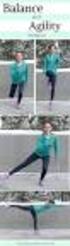 No Equipment Agility/Core/Strength Program for Full Body No Equip Trainer: Rick Coe Introduction Program designed to be performed in a circuit. Perform exercises in sequence without rest 2-3 times. Increase
Rehabilitation after lumbar discectomy, microdiscectomy and decompressive laminectomy. Information for patients
 Rehabilitation after lumbar discectomy, microdiscectomy and decompressive laminectomy Information for patients You have just had surgery on your lumbar spine. Below are some common questions with answers,
KNEE EXERCISE PROGRAM
 KNEE PROGRAM INTRODUCT ION Welcome to your knee exercise program. The exercises in the program are designed to improve your knee stability and strength of the muscles around your knee and hip. The strength
Instructions & Forms for Submitting Claims to Medicare
 Instructions & Forms for Submitting Claims to Medicare The Centers for Medicare and Medicaid services have issued a national coverage policy for the WalkAide. CMS will cover patients who have a diagnosis
A guide for employees
 A guide for employees This booklet has been developed as a guide to assist in the prevention of muscular discomfort and strain that can sometimes be associated with computer use. The information provided
Patient Information. and Physical Activity Diary. Wythenshawe Hospital Cardiac Rehabilitation. Name:... The ticker club Registered Charity No.
 Wythenshawe Hospital Cardiac Rehabilitation Patient Information Remember : Lifelong regular physical activity - 0 minutes, five times per week is important for your general health. I feel so much better
Advise and Do s and Don ts for low back pain
 Advise and Do s and Don ts for low back pain ADVISE : Wear lumbar belt. Do hot fomentation (with hot moist towel/hot water bottle) thrice a day. Keeps a towel roll under your lower back while doing exercise,