
Falcon 9 Launch Vehicle Payload User s Guide
|
|
|
- Belinda Casey
- 10 years ago
- Views:
Transcription
1 Falcon 9 Launch Vehicle Payload User s Guide R e v 1 Approved for Public Release. Cleared for Open Publication by Office of Security Review. 09-S-0347 Space Exploration Technologies Corporation

2 Table of Contents Table of Contents 2 1. Introduction Revision History Purpose Company Description Falcon Program Overview Mission Management Key Customer Advantages Reliability Pricing 7 2. Vehicle Overview Falcon 9 Launch Vehicles Structure and Propulsion Avionics, Guidance/Navigation/Control, Flight Termination Systems Vehicle Axes/Attitude Definitions Facilities Overview Headquarters Hawthorne, CA Space Launch Complex 40, Cape Canaveral Air Force Station, Florida Space Launch Complex 4 East, Vandenberg Air Force Base (VAFB), California U.S. Army Kwajalein Atoll, Marshall Islands Test Facility Central Texas Government Outreach and Legal Affairs Washington, DC General Performance Capability Performance Capability Low Earth Orbit Polar Sun Synchronous C3 Escape Velocity Geosynchronous Transfer Orbit (Cape Canaveral) Geosynchronous Transfer Orbit (Kwajalein) Geosynchronous Transfer Orbit (Delta Velocity To Go) [Cape] Geosynchronous Transfer Orbit (Delta Velocity To Go) [Kwajalein] Sample Mission Profiles Mass Properties Separation Accuracy Mission Accuracy Data 29 SCM Rev. 1 Copyright SpaceX

3 5. General Payload Information Payload Fairing General Description Falcon 9 Fairing Payload Separation Collision Avoidance Payload Environments Transportation Environments Humidity, Cleanliness and Thermal Control Launch and Flight Environments Payload Interfaces Falcon 9 Payload Attach Fittings Test Fittings and Fitcheck Policy Electrical Interfaces Payload Integration Integration Schedule Documentation Requirements Standard Services Non standard Services Launch Operations Launch Control Organization Spacecraft Transport to Launch Site Processing Services and Equipment Plans and Schedules Mission Integration Plan Launch Vehicle Schedules Safety Safety Requirements Hazardous Systems and Operations Waivers Payload Questionnaire Quick Reference List of Figures List of Tables List of Acronyms 64 SCM Rev. 1 Copyright SpaceX

4 1. Introduction 1.1. Revision History This is the first publicly available version of the Falcon 9 Launch Vehicle User's Guide Purpose The Falcon 9 User s Guide is a planning document provided for potential and current customers of Space Exploration Technologies (SpaceX). This document is not intended for detailed design use. Data for detailed design purposes will be exchanged directly between a SpaceX Mission Manager and the Payload Provider. This User's Guide highlights the Falcon 9 Block 2 launch vehicle and launch service. The Block 2 launch vehicle offers improved mass to orbit performance when compared to the Falcon 9 Block 1. Specific differences between Block 1 and Block 2 will be identified, when appropriate. Performance and environments information are based upon Falcon 9 requirements and analyses, but are not yet validated by flight data Company Description In an era when most technology based products follow a path of ever increasing capability and reliability while simultaneously reducing costs, today s launch vehicles are little changed from those of 40 years ago. SpaceX is changing this paradigm with a family of launch vehicles which will ultimately reduce the cost and increase the reliability of access to space. Coupled with the newly emerging market for private and commercial space transport, this new model will reignite humanity's efforts to explore and develop space. SpaceX was founded on the philosophy that simplicity, reliability, and low cost are closely coupled. We approach all elements of launch services with a focus on simplicity to both increase reliability and lower cost. The SpaceX corporate structure is flat and business processes are lean, resulting in both fast decision making and delivery. SpaceX products are designed to require low infrastructure facilities (production and launch) with low maintenance overhead, while vehicle design teams are co located with production and quality assurance staff to tighten the critical feedback loop. The result is highly producible and low cost designs with quality imbedded. To better understand how SpaceX can achieve low cost without sacrificing reliability, please see the Frequently Asked Questions at Established in 2002 by Elon Musk, the founder of PayPal and the Zip2 Corporation, SpaceX has already developed a light lift launch vehicle, the Falcon 1, nearly completed development of the Falcon 9, and developed state of the art testing and launch locations. In addition, NASA has selected the SpaceX Falcon 9 launch vehicle and Dragon spacecraft for the International Space Station (ISS) Cargo Resupply Services (CRS) contract award. The contract is for a guaranteed minimum of 20,000 kg to be carried to the International Space Station. The firm contracted value is $1.6 billion and NASA may elect to order additional missions for a cumulative total contract value of up to $3.1 billion. SpaceX is on sound financial footing as we move towards volume commercial launches. SCM Rev. 1 Copyright SpaceX

5 Our design and manufacturing facilities are conveniently located near the Los Angeles International airport. This location also allows the company to leverage the deep and rich aerospace talent pool available in Southern California. The SpaceX state of the art propulsion and structural test facilities are located in Central Texas Falcon Program Overview Drawing upon a rich history of prior launch vehicle and engine programs, SpaceX is privately developing the Falcon family of rockets from the ground up, including main and upper stage engines, the cryogenic tank structure, avionics, guidance & control software and ground support equipment. With the Falcon 1, Falcon 1e, Falcon 9 and Falcon 9 Heavy launch vehicles, SpaceX is able to offer a full spectrum of light, medium and heavy lift launch capabilities to our customers. We are able to deliver spacecraft into any inclination and altitude, from low Earth orbit (LEO) to geosynchronous orbit (GEO) to planetary missions. The Falcon 9 and Falcon 9 Heavy are the only US launch vehicles with true engine out reliability. They are also designed such that all stages are reusable, making them the world's first fully reusable launch vehicles. The Dragon crew and cargo capsule, in conjunction with our Falcon 9, have been selected by NASA to provide efficient and reliable transport of cargo and potentially crew to the International Space Station (ISS) and other LEO destinations Mission Management To facilitate and streamline communication, each customer works with a single SpaceX contact, a Mission Manager. The Mission Manager works closely with the customer, SpaceX technical execution staff and all associated licensing agencies in order to achieve a successful mission. Specifically, the SpaceX Mission Manager is responsible for coordinating mission integration analysis and documentation deliverables, planning integration meetings and reports, and coordinating all integration and test activities associated with the mission. The Mission Manager will also facilitate customer insight during the launch campaign. Though the launch operations team is ultimately responsible for customer hardware and associated Ground Support Equipment (GSE), the Mission Manager will coordinate all launch site activities to ensure customer satisfaction during this critical phase Key Customer Advantages Reliability The vast majority of launch vehicle failures in the past two decades can be attributed to three causes: engine, avionics and stage separation failures. An analysis by Aerospace Corporation 1 showed that 91% of known failures can be attributed to those subsystems. 1 A hard copy of this reference can be made available upon request. SCM Rev. 1 Copyright SpaceX

6 With this in mind, Falcon 9 launch vehicles are designed for high reliability starting at the architectural level and incorporate the flight proven design and features of the Falcon 1 launch vehicle. Some of the significant contributors to reliability include: Robust design margins Falcon 9 is designed with the goal of carrying humans into space aboard the SpaceX Dragon capsule. This goal drives the initial design of Falcon 9 through the incorporation of increased factors of safety (1.4 versus the traditional 1.25 for uncrewed flight). Payload customers using the Falcon 9 can take advantage of this increased design robustness. The first and second stages are also designed to be recovered and reused, and therefore, must have significantly higher margins than an expendable stage. This also provides a unique opportunity to examine recovered hardware and assess design and material selection in order to continually improve Falcon 9. Propulsion and separation event design The heart of Falcon 9 propulsion is the Merlin 1C liquid propellant rocket engine. The Merlin engine features a robust, reliable turbopump design incorporating a single shaft for both the liquid oxygen and fuel pumps, and a gas generator cycle versus the more complex staged combustion. The regeneratively cooled thrust chamber uses a milled copper alloy liner chamber that provides large margins on heat flux. In addition, the pintle injector was selected for its inherent combustion stability. As a part of our launch operations, we hold the first stage after ignition and monitor engine prior to release to watch engine trends. If an off nominal condition exists, an autonomous abort is conducted. This helps prevent an engine performance issue from causing a failure in flight. Falcon 9 makes use of ten Merlin 1C engines on each vehicle (nine on the first stage, one on the second stage) resulting in high volume engine production, which results in much higher quality through process control. Flying ten engines on each mission also builds substantial heritage quickly. Importantly, by employing nine first stage engines, SpaceX debuts the world s first Evolved Expendable Launch Vehicle (EELV) class launch vehicle with engine out capability through much of first stage flight. With the qualification and first flight units in build and several domestic and international purchased flights currently manifested, Falcon 9 is an ideal workhorse for payload customers. SpaceX has also minimized the number of stages (2) to minimize separation events. The separation system between the first and second stages does not incorporate electroexplosive devices, instead relying upon a pneumatic release and separation system that allows for acceptance testing of the actual flight hardware. This is not possible with a traditional explosive based separation system. Failure mode minimization SpaceX minimized the number of failure modes by minimizing the number of separate subsystems. The first stage thrust vector control (TVC) system makes use of pressurized SCM Rev. 1 Copyright SpaceX

7 rocket grade kerosene (RP 1). The engine pulls from the high pressure RP 1 side of the pump to power the TVC. This eliminates the separate hydraulic system. In addition it eliminates the failure mode associated with running out of pressurized fluid. Also, the avionics and guidance/navigation/control systems are designed with single fault tolerance, supporting the ability of Falcon 9 to be human rated. Rigorous testing In addition to SpaceX s unique design decisions, Falcon 9 will undergo an exhaustive series of tests from the component to the vehicle system level. This includes component level qualification and workmanship testing, structures load and proof testing, flight system and propulsion subsystem level testing, full first and second stage testing up to full system testing, including stage static firings at the test and launch sites (as appropriate). In addition to testing environmental extremes (plus margin), all hardware is tested to account for off nominal conditions. For example, both stage and fairing separation tests require testing for off nominal cases with respect to geometrical misalignment, anomalous pyro timing and sequencing. A major contributor to a reliable system is its operations. To support robust launch operations, the SpaceX launch countdown is fully automated with thousands of checks made prior to vehicle release. After first stage ignition, the vehicle is not released until the first stage engines are confirmed to be operating normally. A safe shutdown is executed, should any off nominal conditions be detected. Falcon 9 benefits from the design and operations concepts established for and proven with the successful Falcon 1 program Pricing The standard price per launch for Falcon 9 Launch Vehicles can be found here 2. Pricing includes range, standard payload integration and third party liability insurance. Please see Section 5.4 for a description of the standard services. Non standard services are also available. If nonstandard services are required, please identify these in the Payload Questionnaire found in Section 8 of this Guide. 2 SCM Rev. 1 Copyright SpaceX

8 2. Vehicle Overview 2.1. Falcon 9 Launch Vehicles Falcon 9 Launch Vehicles are designed to provide breakthrough advances in reliability, cost, and time to launch. The primary design driver is, and will remain, reliability. SpaceX recognizes that nothing is more important than getting a customer s payload safely to its intended destination. The initial flights of the Falcon 9, currently planned in 2009 and 2010, use the Falcon 9 Block 1. Beginning in late 2010/early 2011, SpaceX will begin launching the Falcon 9 Block 2. Block 2 features increased engine thrust, decreased launch vehicle dry mass, and increased propellant load combined with lessons learned from the flights of the Falcon 9 Block 1. This results in increased mass to orbit performance for the Falcon 9 Block 2 when compared with Block 1 performance. This performance is shown in the Falcon 9 performance tables presented later in this document Structure and Propulsion Like Falcon 1, Falcon 9 is a two stage, liquid oxygen (LOX) and rocket grade kerosene (RP 1) powered launch vehicle. It uses the same Merlin engines, structural architecture (with a wider diameter), and launch control system. The Falcon 9 propellant tank walls and domes are made from an aluminum lithium alloy. SpaceX uses an all friction stir welded tank, the highest strength and most reliable welding technique available. Like Falcon 1, the Falcon 9 interstage, which connects the upper and lower stages, is a carbon fiber aluminum core composite structure. The separation system is a larger version of the pneumatic pushers used on Falcon 1. Nine SpaceX Merlin engines power the Falcon 9 first stage with 125,000 lbf sea level thrust per engine, for a total thrust on liftoff of just over 1.1 million lbf. After engine start, Falcon 9 is held down until all vehicle systems are verified as functioning normally before release for liftoff. The second stage tank of Falcon 9 is simply a shorter version of the first stage tank and uses most of the same tooling, material and manufacturing techniques. This results in significant cost savings in vehicle production. A single Merlin engine powers the Falcon 9 upper stage with an expansion ratio of 117:1 and a nominal burn time of 345 seconds. For added reliability of restart, the engine has dual redundant pyrophoric igniters (TEA TEB). The Falcon 9 fairing is 17 ft (5.2 m) in diameter Avionics, Guidance/Navigation/Control, Flight Termination Systems Falcon 9 vehicle avionics features a single fault tolerant architecture and has been designed with a view towards human rating requirements in order to allow future qualification for SCM Rev. 1 Copyright SpaceX

9 crewed launch capability. Avionics include rugged flight computers, GPS receivers, inertial measurement units, SpaceX designed and manufactured controllers for vehicle control (propulsion, valve, pressurization, separation, and payload interfaces), and a C Band transponder for Range Safety tracking. Falcon 9 transmits telemetry from both the first and second stages, even after separation of the stages. S band transmitters are used to transmit telemetry and video to the ground. The guidance and navigation algorithms for Falcon 9 launch vehicles have been heavily influenced by the algorithms used on other launch vehicles, including Falcon 1. The guidance system takes into account the loss of an engine during first stage burn and adjusts the targeted trajectory accordingly. This mix of explicit and perturbation guidance schemes was selected in order to generate a smooth, computationally simple trajectory while maintaining orbital insertion accuracies. The Falcon 9 launch vehicle is equipped with a standard flight termination system. This system includes two redundant strings of command receiver and encoder, batteries, safe and arm devices, and ordnance in the event of an anomaly in flight. SCM Rev. 1 Copyright SpaceX

10 Table 2 1 Falcon 9 Launch Vehicle (Block 2) Dimensions and Characteristics Characteristic Stage 1 Stage 2 Structure Length 180 feet [55m] (both stages with fairing & interstage) Diameter 12 feet [3.66m] Type LOX tank monococque; Fuel Monococque tank stringer and ring frame Material Aluminum lithium Aluminum lithium Propulsion Engine Type Liquid, gas generator Liquid, gas generator Engine Manufacturer SpaceX SpaceX Engine Designation Merlin 1C Merlin Vacuum Number of engines 9 1 Propellant Liquid oxygen/kerosene (RP 1) Liquid oxygen/kerosene (RP 1) Thrust 1,125,000 lbf (sea level) [5MN] 100,000 lbf (vacuum) [445kN] Propellant feed system Turbopump Turbopump Throttle capability No Yes (60 100%) Restart capability No Yes 2 restarts Tank pressurization Heated helium Heated helium Thrust Vector Control Pitch, Yaw Gimbaled engines Gimbaled engine Roll Gimbaled engines Turbine exhaust duct (gimbal) Reaction Control System Propellant Not applicable Monomethyl hydrazine, nitrogen tetroxide Thrusters Not applicable Draco (4) Thrust Not applicable 90 lbf [400N] each Staging Nominal burn time 170 sec 354 sec Shutdown process Commanded shutdown Commanded shutdown Stage separation system Pneumatically actuated mechanical collets Not applicable SCM Rev. 1 Copyright SpaceX

11 2.2. Vehicle Axes/Attitude Definitions True North (10 deg app.) Positive Clocking Angle +Z (0 deg) Notes Vehicle as seen from above Vehicle coordinate frame as shown, with the X axis being the vehicle longitudinal axis, positive forward. This coordinate frame is aligned with the Erector S Band 60 deg 9 6 Q IV 3 UHF 300 deg Fairing Split Line deg C Band 270 deg C Band 90 deg Q I 8 5 Q III 2 +Y UHF 120 deg 7 4 Q II 1 S Band 240 deg Transporter / Errector TAA 3C (Telemetry ) FPS 16 (Radar ) FTS Transmitter JD Missile Tracking Annex Figure 2 1 Falcon 9 launch vehicle layout and coordinate system SCM Rev. 1 Copyright SpaceX

12 3. Facilities Overview 3.1. Headquarters Hawthorne, CA SpaceX headquarters are conveniently located in Hawthorne, CA, a few miles inland from Los Angeles International Airport (LAX). The 550,000+ square foot (5.1 hectares) design and manufacturing facility ranks among the largest manufacturing facilities in California. Two complete Falcon 9s will fit end to end along the short length of the building. For production, there are three Falcon 1 lines, three parallel Falcon 9 lines, nearly two dozen Merlin engine assembly stations, and Dragon capsule production areas. Potential customers are encouraged to arrange a tour when in the Los Angeles area. Map and Directions. Figure 3 1 Hawthorne, California Headquarters 3.2. Space Launch Complex 40, Cape Canaveral Air Force Station, Florida SpaceX has a Falcon 9 launch site on Cape Canaveral Air Force Station (CCAFS). The launch site is Space Launch Complex 40 (SLC 40), former home of the Titan IV heavy lift rockets. SpaceX facilities at SLC 40 include a hangar, propellant/pressurant storage and supply areas, launch pad, and lightning towers. Adjacent to the launch complex is the SpaceX administrative office facility. SpaceX launch operations are managed from the Launch Control Center, located at the south entrance to CCAFS. A general layout of the launch facilities is presented in the following figures. Figure 3 2 Launch Complex 40 at Cape Canaveral Air Force Station (CCAFS), Florida SCM Rev. 1 Copyright SpaceX

13 Figure 3 3 Space Launch Complex 40 Instrumentation Bay location SCM Rev. 1 Copyright SpaceX

14 Figure 3 4 Space Launch Complex 40 Hangar layout SCM Rev. 1 Copyright SpaceX

15 3.3. Space Launch Complex 4 East, Vandenberg Air Force Base (VAFB), California SpaceX plans to establish a launch facility at Vandenberg Air Force Base (VAFB) in central California to meet customer needs for polar and sun synchronous capability. SpaceX s headquarters, manufacturing and production facility is located in the Los Angeles area, within driving distance or a short flight to VAFB. SpaceX has previously worked with the Range at VAFB on Falcon 1 facilities, including conducting a static fire at SLC 3 West in The candidate launch site, pending discussions with the U.S. Air Force, would be at Space Launch Complex 4 East (SLC 4E). The design of the Falcon 9 launch site at VAFB will mirror the facilities and operations implemented at the Cape Canaveral launch site. Figure 3 5 SLC 4 East, VAFB SCM Rev. 1 Copyright SpaceX

16 3.4. U.S. Army Kwajalein Atoll, Marshall Islands SpaceX has an operational Falcon 1 launch site at the Kwajalein Atoll, about 2500 miles southwest of Hawaii. The Falcon 1 launch facilities are situated on Omelek Island, part of the Ronald Reagan Ballistic Missile Defense Test Site (RTS) at United States Army Kwajalein Atoll (USAKA). The location and a general layout of the launch facility are presented in Figure 3 6. SpaceX is evaluating establishing a launch facility for Falcon 9 at Kwajalein that would provide superior performance to geosynchronous transfer orbit as well as high inclination orbits. Figure 3 6 Falcon 1 launch site, Kwajalein Atoll SCM Rev. 1 Copyright SpaceX

17 3.5. Test Facility Central Texas Structural and propulsion tests are conducted at the rapidly growing and expanding test site located in McGregor, Texas, just west of Waco. Conveniently located 2 hours from both Austin and Dallas, the site is staffed with test engineers, technicians and management personnel. During preparation and testing, the site also plays host to personnel from the California headquarters who supplement the Texas team. Figure 3 7 SpaceX s Texas Test Facility 3.6. Government Outreach and Legal Affairs Washington, DC SpaceX s government outreach and licensing team is located in Washington, DC. SCM Rev. 1 Copyright SpaceX

18 4. General Performance Capability 4.1. Performance Capability The Falcon 9 launch vehicle performance presented in the following tables and figures is for the Block 2 (see paragraph for details). The performance shown is the maximum capability of the Falcon 9 Block 2 with margin withheld by SpaceX to ensure mission success. Please note typical payloads in the Falcon 9 class typically below lbs (6800 kg). Potential customers should contact SpaceX if they contemplate flying extra heavy payloads or using most of the listed performance of the Falcon 9. For reference, the following is a list of tables and figures in this section: Section 4.1 List of Figures Figure 4 1 Falcon 9 Block 2 Performance to Low Earth Orbit (Cape Canaveral) Figure 4 2 Falcon 9 Block 2 Performance Circular Polar Orbit Figure 4 3 Falcon 9 Block 2 Performance Sun Synchronous Orbit Figure 4 4 Falcon 9 Block 2 Performance Escape Velocity (Cape Canaveral) Figure 4 5 Falcon 9 Block 2 Performance to Geosynchronous Transfer Orbit Figure 4 6 Falcon 9 Block 2 Performance to Geosynchronous Transfer Orbit (Kwajalein) Figure 4 7 Geosynchronous Transfer Orbit (Delta Velocity to Go) from Cape Figure 4 8 Geosynchronous Transfer Orbit (Delta Velocity to Go) from Kwaj Figure 4 9 Falcon 9 Sample Flight Profile, Geosynchronous Transfer Orbit Mission Section 4.1 List of Tables Table 4 1 Falcon 9 Block 2 Performance to Low Earth Orbit (Cape Canaveral) Table 4 2 Falcon 9 Block 2 Performance Circular Polar Orbit Table 4 3 Falcon 9 Block 2 Performance Sun Synchronous Orbit Table 4 4 Falcon 9 Block 2 Performance Escape Velocity (Cape Canaveral) Table 4 5 Falcon 9 Block 2 Performance to Geosynchronous Transfer Orbit Table 4 6 Falcon 9 Block 2 Performance to Geosynchronous Transfer Orbit (Kwajalein) Table 4 7 Geosynchronous Transfer Orbit (Delta Velocity to Go) from Cape Table 4 8 Geosynchronous Transfer Orbit (Delta Velocity to Go) from Kwaj Table 4 9 Falcon 9 Sample Flight Timeline, Geosynchronous Transfer Orbit Mission SCM Rev. 1 Copyright SpaceX

19 Low Earth Orbit Payload Mass (kg) Circular Altitude (km) 51.6 deg 38 deg 28.5 deg Figure 4 1 Falcon 9 Block 2 Performance to Low Earth Orbit (Cape Canaveral) Circular Orbit Altitude (km) Table 4 1 Falcon 9 Block 2 Performance to Low Earth Orbit (Cape Canaveral) Payload Mass (kg) Inclination (degrees) Payload Mass (kg) Inclination (degrees) Circular Orbit Altitude (km) SCM Rev. 1 Copyright SpaceX

20 Polar Payload Mass (kg) Circular Altitude (km) 60 deg 70 deg 80 deg 90 deg Figure 4 2 Falcon 9 Block 2 Performance Circular Polar Orbit Table 4 2 Falcon 9 Block 2 Performance Circular Polar Orbit Circular Orbit Altitude (km) Circular Orbit Altitude (km) Payload Mass (kg) Inclination (degrees) Payload Mass (kg) Inclination (degrees) SCM Rev. 1 Copyright SpaceX

21 Sun Synchronous Payload Mass (kg) Circular Orbit Altitude (km) Figure 4 3 Falcon 9 Block 2 Performance Sun Synchronous Orbit Table 4 3 Falcon 9 Block 2 Performance Sun Synchronous Orbit Circular Orbit Altitude (km) Inclination (degrees) Payload Mass (kg) Circular Orbit Altitude (km) Inclination (degrees) Payload Mass (kg) SCM Rev. 1 Copyright SpaceX
22 C3 Escape Velocity Payload Mass (kg) C3 (km^2/s^2) Figure 4 4 Falcon 9 Block 2 Performance Escape Velocity (Cape Canaveral) Table 4 4 Falcon 9 Block 2 Performance Escape Velocity (Cape Canaveral) C3 (km^2/s^2) Payload Mass (kg) Escape Energy Performance Cape Canaveral C3 (km^2/s^ 2) Payload Mass (kg) Escape Energy Performance Cape Canaveral SCM Rev. 1 Copyright SpaceX
23 Geosynchronous Transfer Orbit (Cape Canaveral) Payload Mass (kg) Inclination 23 deg inclination 21 deg inclination 19 deg inclination 17 deg inclination 15 deg inclination Apogee Altitude (km) with 185 km perigee (Cape Canaveral) Figure 4 5 Falcon 9 Block 2 Performance to Geosynchronous Transfer Orbit Table 4 5 Falcon 9 Block 2 Performance to Geosynchronous Transfer Orbit Orbit Altitude (km) Payload Mass (kg) Inclination (deg) SCM Rev. 1 Copyright SpaceX
24 Geosynchronous Transfer Orbit (Kwajalein) Payload Mass (kg) deg inclination 5 deg inclination 0 deg inclination Apogee Altitude (km) with 185 km perigee (Kwajalein) Figure 4 6 Falcon 9 Block 2 Performance to Geosynchronous Transfer Orbit (Kwajalein) Table 4 6 Falcon 9 Block 2 Performance to Geosynchronous Transfer Orbit (Kwajalein) Payload Mass (kg) Orbit Altitude (km) 9 Inclination (deg) SCM Rev. 1 Copyright SpaceX
25 Geosynchronous Transfer Orbit (Delta-Velocity To Go) [Cape] Payload Mass (kg) Delta V to GEO (meters/sec) from Cape Canaveral F9 without delta V mission kit (Cape) F9 with delta V mission kit (Cape) Figure 4 7 Geosynchronous Transfer Orbit (Delta Velocity to Go) from Cape Table 4 7 Geosynchronous Transfer Orbit (Delta Velocity to Go) from Cape Without delta-v mission kit Delta-V to Payload Mass GSO (m/s) (kg) With delta-v mission kit Delta-V to Payload Mass GSO (m/s) (kg) SCM Rev. 1 Copyright SpaceX
26 Geosynchronous Transfer Orbit (Delta-Velocity To Go) [Kwajalein] Payload Mass (kg) Delta V to GEO (meters/sec) from Kwajalein F9 without delta V mission kit (Kwaj) F9 with delta V mission kit (Kwaj) Figure 4 8 Geosynchronous Transfer Orbit (Delta Velocity to Go) from Kwaj Table 4 8 Geosynchronous Transfer Orbit (Delta Velocity to Go) from Kwaj Without delta-v mission kit Delta-V to Payload Mass GSO (m/s) (kg) With delta-v mission kit Delta-V to Payload Mass GSO (m/s) (kg) SCM Rev. 1 Copyright SpaceX
27 4.2. Sample Mission Profiles Each mission is unique in its flight profile. However, a typical flight profile for a maximum capability geosynchronous transfer orbit mission (including a delta V mission kit) is shown in the Figure 4 9, below, and in Table 4 9. Fairing Separation T sec Stage Separation T sec Coast T sec 2 nd Stage Engine Start #2 T sec Payload Sep T sec 2 nd Stage Engine Start #1 T sec 2 nd Stage Engine CutOff #1 T sec 2 nd Stage Engine CutOff #2 T sec RCS Burn T sec Main Engine CutOff T sec 2 engine shutdown T sec Liftoff (Cape Canaveral) T=0.0 sec Figure 4 9 Falcon 9 Sample Flight Profile, Geosynchronous Transfer Orbit Mission SCM Rev. 1 Copyright SpaceX
28 Table 4 9 Falcon 9 Sample Flight Timeline, Geosynchronous Transfer Orbit Mission Time After Liftoff Event (seconds) 0.0 Liftoff from Cape Canaveral 7.5 Initial Pitch Kick 55.0 Begin gravity turn 76.0 Max Q Release angle of attack restrictions Shutdown 2 engines for acceleration limit Main Engine Cut Off Stage 1/Stage 2 separation Second stage engine start # Payload fairing jettison Second stage engine cut off # Second stage engine start # Second stage engine cut off # Reaction Control System ignition (apogee kick) Reaction Control System cut off Payload separation (T+ 5hrs, 49 min) SCM Rev. 1 Copyright SpaceX
29 4.3. Mass Properties Falcon 9 can accommodate typical payloads with mass from lbs ( kg). For these payloads, the maximum allowable center of gravity lateral offset is less than 5 inches (12.7 cm) for non spin stabilized missions and 0.5 inches (1.25 cm) for spin stabilized missions. The maximum center of gravity offset from the mechanical interface on top of the second stage payload adapter is 120 inches (305 cm) Separation Accuracy Prior to separation, Falcon 9 can point the upper stage/payload to any desired attitude and minimize all rotation rates. Attitude errors will be no greater than 1.4 degrees about each axis. Attitude rotation rates will be less than 0.2 degree/sec in pitch and yaw, and 0.25 degree/sec in roll. For spin stabilized missions, prior to separation, Falcon 9 points the upper stage/payload to the desired attitude and provides a spin about the longitudinal axis. The spin axis orientation will be accurate to within 1.75 degrees, assuming a maximum 0.5 inches payload center of gravity offset as mentioned in Section Mission Accuracy Data As a liquid propellant vehicle with restart capability, Falcon 9 provides the flexibility required for payload insertion into orbit with higher eccentricity and for deploying multiple payloads into slightly different orbits. Until verified by actual operations, SpaceX expects to achieve the following minimum target orbital insertion accuracy: Low Earth Orbit Perigee ±10 km Apogee ±10 km Inclination ±0.1 deg Right Ascension of Ascending Node ±0.15 deg Geosynchronous Transfer Orbit Perigee ±7.4 km Apogee ±130 km Inclination ±0.1 deg Right Ascension of Ascending Node ±0.75 deg Argument of Perigee ±0.3 deg SCM Rev. 1 Copyright SpaceX
30 5. General Payload Information 5.1. Payload Fairing General Description The Falcon 9 fairing is 17 ft (5.22 m) in diameter and can accommodate a combination of up to three access doors or radio frequency (RF) windows in the cylindrical portion. The standard payload fairing door is a maximum of 24 inches (61 cm) in size. Combinations of acoustic surfaces are used inside the payload fairing to help achieve the acoustic environment Falcon 9 Fairing MECHANICAL MATING PLANE TO LAUNCH VEHICLE ADAPTER / SEPARATION SYSTEM Figure 5 1 Falcon 9 standard fairing and dynamic envelope*, meters [inches] *Dynamic envelope (shown as PAYLOAD VOLUME above) indicates the volume that the spacecraft can move within. SCM Rev. 1 Copyright SpaceX
31 Payload Separation Payload separation is a typically a timed event (usually in reference to completion of an engine event and associated coast period) issued by the Falcon 9 flight computer. The Falcon 9 second stage can hold a stable attitude for payload separation or can spin up to a maximum of 5 rotations per minute (RPM) (non standard service). The launch vehicle can provide a signal to the payload at separation to initiate payload powerup. Alternate configurations for separation signals (break wires, separation switches monitored directly by the payload or other configurations) can be accommodated as options Collision Avoidance As a standard service, a Collision Avoidance Maneuver (CAM) analysis can be completed, performance permitting Payload Environments Falcon 9 launch vehicles use liquid propellant with a single staging event, low thrust to weight, and low dynamic pressure flight. The environments presented below are intended to reflect typical mission levels; mission specific analyses are to be performed and documented in the Interface Control Document (ICD) per payload needs. Specific individual environments are defined in the following sections. Throughout pre flight and flight operations, various environmental contributions may vary in importance. Certain events, such as pyrotechnic firings and stage burnout, add specific quasistatic or dynamic loads for specified durations, which may or may not need to be added to other environments experienced at the same time Transportation Environments SpaceX is in the process of quantifying the transportation environments that a spacecraft will encounter while being transported from the payload processing facility (if processed outside of the SpaceX Hangar at SLC 40) to the hangar and from the hangar to vertical on the launch pad. This transportation segment will be primarily accomplished by wheeled vehicle (payload transporter from a customer selected payload processing facility and on the transporter erector to the launch pad) when launching from Cape Canaveral. Future launches from the Kwajalein Atoll location will also require shipment from the main island of Kwajalein across to the Falcon 9 launch site island via ship. SCM Rev. 1 Copyright SpaceX
32 Humidity, Cleanliness and Thermal Control Payload environments during various processing phases are: In hangar, encapsulated: Temperature: 70⁰ F ± 5⁰ F Humidity: 50% ± 5% Cleanliness: Class 10,000 Flow rate: 1,000 cfm During rollout (& transport from Payload Processing Facility [PPF])*: Temperature: 70⁰ F ± 5⁰ F Humidity: 50% ± 5% Cleanliness: Class 10,000 Flow rate: 1,000 cfm On pad payload environmental control system (horizontal or vertical): Temperature: any setting between 50⁰ F and 85 ⁰ F ± 5⁰ F Humidity: any setting between 20% and 50% ± 5% Cleanliness: Class 5,000 Flow rate: Variable from 1000 to 4500 cfm *Conditioned air will be disconnected for a short duration when the erector arrives at the pad and the fairing umbilical is switched over to the pad air conditioning supply Launch and Flight Environments This section provides details on the maximum predicted environments (MPE) the payload will experience during Falcon 9 launch vehicle ground operations, integration, flight, and initial orbital operations Design Load Factors During flight, the payload will experience a range of axial and lateral accelerations. Axial acceleration is determined by the vehicle thrust history and drag, while maximum lateral acceleration is primarily determined by wind gusts, engine gimbal maneuvers, first stage engine shutdowns, and other short duration events. Falcon 9 Design Load Factors are shown using the envelope plotted in Figure 5 2. The design load factors provided here are expected to be conservative for payloads with the following basic characteristics: a fundamental bending mode greater than 10 Hz, a fundamental axial mode greater than 25 Hz, and a mass between 3,000 and 20,000 lbs ( kg). A positive axial value indicates a compressive net center of gravity acceleration, while a negative value indicates tension. Actual spacecraft loads, accelerations, and deflections are a function of both the launch vehicle and payload structural dynamic properties and can only be accurately determined via a coupled loads analysis. SCM Rev. 1 Copyright SpaceX
33 7-0.5, 6 0.5, , , , 4 2, AXIAL (G) , , , , , -2 2, LATERAL (G) Figure 5 2 Falcon 9 Design Load Factors Shock Environment There are four events during flight that are characterized as shock loads: 1) Vehicle hold down release at lift off 2) 2 nd stage separation 3) Fairing separation 4) Payload release and separation Of the shock events, (1) and (2) are negligible for the payload relative to (3) and (4) due to the large distance and number of joints over which shocks (1) and (2) will travel and dissipate. Maximum shock loading (3) and (4) is measured and scaled for various preloads required for the payload fairing and payload separation systems. The resulting maximum shock environment predicted at payload interface for payload fairing separation and payload separation (for a 937 mm clampband separation system) is shown in Figure 5 3. Actual shock from the payload specific separation system requires selection of a separation system and the associated payload mass properties. SCM Rev. 1 Copyright SpaceX
34 Figure 5 3 Falcon 9 shock response at payload interface Acoustic Environment During flight, the payload will be subjected to a varying acoustic environment. Levels are highest at lift off and during transonic flight, due to aerodynamic excitation. The environment shown in Figure 5 4 does not include margin for qualification or for acceptance testing. This is the maximum predicted acoustic environment. SCM Rev. 1 Copyright SpaceX
35 Figure 5 4 Falcon 9 acoustic environment requirement (OASPL=139.6 db) Table 5 1 Falcon 9 acoustic environment F9 Maximum Predicted Acoustic Octave Center Environment (OASPL = Frequency (Hz) db) SCM Rev. 1 Copyright SpaceX
36 Sine Vibration Environment SpaceX recommends deriving a payload specific sine vibration environment curve based upon a coupled loads analysis if significant flight history is not available. Actual spacecraft loads, accelerations, and displacements are a function of both the launch vehicle and payload structural dynamic properties and can only be accurately determined via a coupled loads analysis. The SpaceX approach for Falcon 9 is to use results from coupled loads analysis to derive a shock response spectrum on the vibration levels at the payload interface. For a given modal damping value, a smoothed envelope of peak responses is created that is used to produce a sinevibration input curve. Sine Vibration Derivation Methodology: Perform shock response spectrum (SRS) analysis on vibration levels at launch vehicle/spacecraft interface o Use measured historical data, if available o Use results from coupled loads analysis, if no measured data available o Requires analyst to assume damping (Q) Divide peak response values at each frequency by Q Determine a smoothed envelope of peak responses to produced sine vibration input curve Minimize over testing by response limiting and notching input base motions o Limit peak acceleration and interface forces/moments using Coupled Loads Analysis CLA results o Limit critical component accelerations SpaceX can convert Craig Bampton and Data Recovery Matrices (DRM s) from Metric to US Standard Inch Pound Second (IPS). SpaceX prefers to have the payload math models in IPS units, but can accept SI units Radio Frequency (RF) Environment Payload customers must ensure that spacecraft materials or components sensitive to an RF environment are compatible with both the launch pad environment and the RF environment during flight. The spacecraft RF characteristics should satisfy the limitations shown in Figure 5 6. SCM Rev. 1 Copyright SpaceX
37 Function Table 5 2 Falcon 9 Launch vehicle RF system characteristics Command Destruct Source Stg 1 Launch Radar Radar Vehicle Transponder Transponder Telem Stg 2 Launch Vehicle Telem Rate Receive Transmit Receive Transmit Transmit Band UHF C Band C Band S Band S Band Frequency (MHz) Power Output N/A 400W peak N/A 10W 20W Modulation Pulse Pulse PCM/FM PCM/FM Data Rate 2000 pps 3000 pps 1.8 Mbps 1.8 Mbps Function Source Stage 1 Launch Vehicle Video Stage 2 Launch Vehicle Video GPS L1 Recovery Iridium Recovery Iridium Telecommand Rate Transmit Transmit Receive Receive Transmit Receive Band S Band S Band L Band L Band L Band S Band Frequency (MHz) Power Output 5W 10W N/A N/A Modulation FM/NTSC FM/NTSC BPSK/DSSS QPSK QPSK PM/PSK/PCM Data Rate NTSC NTSC 10 Mbps 2.4 kbps 2.4 kbps 2 kbps SCM Rev. 1 Copyright SpaceX
38 E Field Limit Freq (MHz) (dbμv/m) Figure 5 5 Falcon 9 Worst Case Radiated Environment SCM Rev. 1 Copyright SpaceX
39 E Field Limit Freq (MHz) (dbμv/m) Figure 5 6 Allowable Payload Radiated Emissions for Falcon 9 RF Susceptibility SCM Rev. 1 Copyright SpaceX
40 Fairing Internal Pressure Environment Payload fairing internal pressure decay rates are limited to 0.4 psi/sec (2.76 kpa/sec), except for a transonic spike to 0.9 psi/sec (6.2 kpa/sec) Payload Temperature Exposure During Flight The Falcon 9 payload fairing is a composite structure consisting of a 1 inch (2.5 cm) thick aluminum honeycomb core surrounded by carbon fiber face sheet plies. The emissivity of the payload fairing is approximately 0.9. Based upon this emissivity, the payload fairing inner wall temperature is bounded as shown in Figure 5 7. The curve is truncated at 250 seconds, although the approximate time of payload fairing jettison for a geosynchronous transfer orbit mission from Cape Canaveral is earlier, at 200 seconds. Payload fairing jettison timing is determined by customer requirements. Figure 5 7 Maximum Payload Fairing Temperature Seen By Payload 5.3. Payload Interfaces Falcon 9 will provide the pyrotechnic impulses necessary to initiate separation events. The launch vehicle will also provide a signal to the payload at separation to initiate payload powerup. Alternate configurations for separation signals (break wires, separation switches monitored directly by the payload, or other configurations) can be accommodated as options. The standard payload fairing provides up to 3 access doors, 24 (61 cm) in height, for prelaunch access. These doors are not designed for emergency access into the payload fairing once the launch vehicle is on the pad. Under nominal operating conditions, all processing that requires access to the payload must be complete prior to fairing installation. In the event of a spacecraft SCM Rev. 1 Copyright SpaceX
41 propellant system failure that requires contingency propellant offload, the standard concept of operations for Falcon 9 is to return the launch vehicle to the hangar Falcon 9 Payload Attach Fittings Falcon 9 launch vehicles do not baseline a specific separation system. Customers have the option to provide the payload adapter and separation system to interface directly with a payload adapter attachment location provided as a standard service by SpaceX. Alternatively, SpaceX can supply the payload adapter and separation system as a non standard service. The Falcon 9 Payload Interface Ring is used in the 5.2 m (17 ft) fairing configuration. This simple interface is provided for customers with medium and intermediate class payloads that prefer to provide their own launch vehicle adapter/separation system. A diagram of the Falcon 9 payload interface, which consists of a 1575 mm diameter bolt pattern, follows in Figure 5 8. SpaceX has experience integrating numerous commercially available and internally developed payload separation systems. A Marmon clamp system was flown on the first Falcon 1 demonstration flight 1 and a LightBand system from Planetary Systems Corporation was employed on the second Falcon 1 demonstration flight. Additionally, SpaceX is currently developing a low shock tension band separation system for the Falcon 9, which uses a nonpyrotechnic release mechanism. SCM Rev. 1 Copyright SpaceX
42 Figure 5 8 Falcon 9 Payload Interface Ring (Note: units are in inches) SCM Rev. 1 Copyright SpaceX
43 Test Fittings and Fitcheck Policy A mechanical fit check (including electrical connector locations) may be conducted with the spacecraft or a representative spacecraft using a mechanical template. This is typically done prior to shipment of the spacecraft to the launch site. SpaceX personnel will be available to conduct this activity at the SpaceX facility. Specific requirements for the fit check will be taken in to consideration during the integration process with the SpaceX Mission Manager Electrical Interfaces Payload electrical ground support equipment (EGSE) is located in Room B 9 (see Figure 3 3) beneath the launch pad deck at SLC 40. This room is 8x28 feet in size and 8 feet tall. It is adjacent to Room B 10. An interface panel would be installed between rooms B 9 and B 10 to provide a minimum of: Six unbalanced transistor transistor logic (TTL) circuits terminated with BNC connectors Six balanced RS 422 circuits terminated with Trompeter RL 75C connectors Six RS 232 circuits terminated with DB25 Male connectors Six Ethernet circuits terminated with RJ 45 jacks The customer typically provides a 20 foot cable to interface between the spacecraft to EGSE room wiring junction box and the spacecraft EGSE. SpaceX will connect the cable to the junction box. SpaceX can provide this interface cable as a non standard service. Wiring between the spacecraft umbilical junction box on the erector and the spacecraft electrical ground support equipment (EGSE) in Room B 10 consists of: 80 conductors of 18 AWG copper wiring 24 conductors of 22 AWG copper wiring 24 conductors of 12 AWG copper wiring 12 RG 6 Coax cables 5 Cat 6 Ethernet cables Cable length between the EGSE interface box in room B 10 and the erector quick disconnect is 175 feet, and from the quick disconnect to the spacecraft is approximately 180 feet. The wiring given above is the wiring run up to the top of the tower. The maximum amount of conductors to the spacecraft is limited by the quick disconnect connector at the vehicle skin and using the ICD worksheet the customer needs to select which of the listed conductors to use. Spacecraft electrical signals are carried from the erector junction box to the second stage umbilical plate. At the umbilical plate, the spacecraft umbilical is mated to a dedicated spacecraft electrical connector. SpaceX has the ability to modify the electrical connector to provide different combinations of current, total pins, or coax capability. For example, the spacecraft umbilical could be configured to provide: 120 signal contacts wire size 22 AWG, 4 amp current, or SCM Rev. 1 Copyright SpaceX
44 24 signal contacts wire sizes 12 AWG, 17 amps current There are no standard provisions for an electrical umbilical through the payload fairing to mate with the payload. From the umbilical plate, the payload harness(es) are routed along the exterior of the second stage propellant tanks. Tunnel covers provide protection during ground operations and flight. The payload electrical harnesses are then routed back inside the Falcon 9 along the payload adapter. Electrical harnesses are mated to the spacecraft using SpaceX or customer supplied electrical connectors. The Falcon 9 electrical interface to the spacecraft itself is typically one or two in flight disconnect connectors that include a breakwire ground. SpaceX provides Deutsch in flight disconnect(s) as a standard payload electrical interface. The connector designations for the 37 pin in flight disconnect are: D8174 E37 0SN 1A (Payload side) D8179 E37 0PN 1A (Launch Vehicle side) Connectivity between the payload EGSE, located in the Instrumentation Bay below the launch pad, and the payload is provided by an electrical umbilical. This umbilical is routed up the erector and mates to the payload dedicated electrical connector on the second stage umbilical plate. SCM Rev. 1 Copyright SpaceX
45 Figure 5 9 Spacecraft to Launch Vehicle/Launch Pad Electrical Architecture Figure 5 10 Spacecraft umbilical to Falcon 9 second stage connection SCM Rev. 1 Copyright SpaceX
46 5.4. Payload Integration While SpaceX does not require the payload to be at the launch site until two weeks prior to launch, the Payload Processing Facility (PPF) will be made available for payload operations for up to 3 weeks prior to launch at each of our sites. Additional time in the processing facility may be available as a non standard service. Figure 5 11 SLC 40 Payload Processing Clean Area in Hangar The PPF is a designated Clean Area within the hangar. A 33 ft tall clean area curtain provides separation from the launch vehicle side of the hangar, while allowing the 34 ft bridge cranes access to the entire hangar. An additional heating, ventilation and air conditioning (HVAC) system keeps the PPF at Class 100,000 or better. All payload activities including equipment unload, unpacking/packing, payload checkout and hypergolic fueling may be performed in this area. SpaceX will monitor relative humidity, temperature and cleanliness in the payload processing facility, with the exception of periods when the satellite is mated to the second stage and during launch vehicle maneuvering on the pad. As a non standard service, SpaceX will help arrange the use of AstroTech facilities near CCAFS for payload processing Integration Schedule At approximately launch minus 18 days, the integration process begins (see Figure 5 14) and includes the following: The payload is vertically integrated onto the payload adapter The payload and adapter are then installed on the breakover fixture, rotated horizontally and encapsulated by the fairing in the PPF (NOTE: SpaceX has the capability to encapsulate a payload in either a vertical or horizontal position using an SCM Rev. 1 Copyright SpaceX
47 encapsulation breakover fixture. However, if encapsulation occurs in the SpaceX hangar at the launch site, it must be performed horizontally.) The encapsulated payload is then moved horizontally to the launch vehicle/launch complex Once inside the hangar at the launch complex, the encapsulated payload assembly is mechanically mated to the launch vehicle Electrical umbilicals between the second stage and the payload are mated and the payload is connected to electrical ground support equipment (if required) Following electrical interface verification, the entire launch vehicle is lifted onto the erector The Falcon 9 launch vehicle is transported to the pad on the erector Final connections between ground support equipment, the launch mount, and Falcon 9 are made o While on the pad, the vehicle goes vertical for necessary checkouts. o There is no access to the payload while Falcon 9 is vertical. Access to the payload while the vehicle is outside of the Hangar on the launch pad requires special accommodations and is a non standard service. Falcon 9 is launched SCM Rev. 1 Copyright SpaceX
48 Figure 5 12 Falcon 9 Payload Encapsulation Figure 5 13 Encapsulated Payload Mate to Falcon 9 2 nd Stage SCM Rev. 1 Copyright SpaceX
49 Falcon 9 Launch Operations L-16 Days L-15 Days L-14 Days L-10 Days L-7 Days L-6 Days L-4 Days L-3 Days L-2 Days L-1 Days Launch Vehicle Ops LV Stages Arrive Stage Functionals Stage Leak checks Stage Mate LV Functional Check LV Simflight FTS Health Check Payload Mate to Vehicle Rollout to Pad LV to Pad Integrated Checks Range Comm Checks FTS Checks Final Ordnance Connect Erect LV Align Vehicle TVC Checkout LV Propellant Load Launch Postlaunch Safing Launch Pad Equipment Checkout Erector Hydraulics Checkouts Final Propellant Top-off L-1 Pad Checkouts Final Pad Preps Ground Ops Mission Rehearsal Launch Readiness Review Range Launch Readiness Review Launch Payload Arrival Payload Mate to Adaptor Payload Checkout and Fueling Payload Encapsulation Payload Transfer to Integration Facility Payload Umbilical Connect Payload Ops NOTE: Payload Checkout and Fueling typically will occur before mating to the adapter Figure 5 14 Nominal Launch Operations Flow SCM Rev. 1 Copyright SpaceX
50 Documentation Requirements The payload customer is responsible for generating their own range, range safety, and Federal Aviation Administration (FAA) documentation. However, SpaceX will facilitate the required discussions and will coordinate submittals with the appropriate organizations. At a minimum, the following documents must be provided: Program introduction to the range Spacecraft design overview with graphics Safety documentation including: hazard analyses and reports, vehicle break up models (debris data) and detailed design and test information for all hazardous systems (batteries, pressurized systems or other hazardous or safety critical materials, propellant data) Launch site operations plan and detailed procedures (Note: hazardous procedures must be approved by range safety) Interface verification statement Application for a payload determination (for non US Government payloads only) Environmental statement In addition to these documents, input is required to support development of the ICD, launch countdown procedures, and the Launch Readiness Review (LRR) package Standard Services As part of any standard launch service, SpaceX provides the following: Personnel, services, hardware, equipment, documentation, reviews, analyses and facilities necessary to support mission planning, launcher production, mission and payload integration and launch One (1) preliminary coupled loads analysis and one (1) verification couple loads analysis ElectroMagnetic Compatibility (EMC) assessment One (1) flight set of electrical connectors Class 100,000 cleanroom integration space for the spacecraft for up to four weeks prior to the scheduled launch date on the launch range with additional and adjacent square feet for ground support equipment (GSE) and personnel Certified mechanical GSE to support physical mating of the spacecraft to the payload adapter, encapsulate the fairing and integrate the encapsulated system onto the second stage Conditioned air into the fairing A combination of up to three (3) payload access doors or RF windows in the fairing A mission simulation test exercising operational readiness, vehicle equipment and ground systems A Mission Dress Rehearsal, similar to the mission simulation test, for key launch team members SCM Rev. 1 Copyright SpaceX
51 Process the launch vehicle, integrate and encapsulate the payload, and test electrical and signal interfaces with the spacecraft at the launch range Provide all range and safety interfaces (per AFSPCMAN ) document templates for the spacecraft provider Facilitate the range and range safety integration process Launch the spacecraft into the specified orbit within the specified environmental constraints Perform a Collision Avoidance Maneuver (as required) Support post flight analysis and generate a report documenting separation from the launch vehicle, the spacecraft insertion orbit and confirmation that environments met requirements Generate all mission required licensing including FAA and the State Department Non standard Services Add a GN 2 purge Class 10,000 cleanroom processing and air in the fairing Visibly clean Level 1 Accommodation for spacecraft fueling in payload processing facility ElectroMagnetic Compatibility integrated power on testing Facilitate the use of AstroTech for payload processing Spin stabilization to rates as high as 5 rpm (dependent upon payload mass properties) Other non standard services can be provided on a case by case basis. For more information or inquiries about a specific non standard service, contact SpaceX or include the information in the Payload Questionnaire found in Section 8 of this guide. SCM Rev. 1 Copyright SpaceX
52 6. Launch Operations Initial launches of the Falcon 9 will occur from SLC 40 at Cape Canaveral Air Force Station (CCAFS) in Florida. SLC 40 was previously used by the US Air Force for Titan III and Titan IV launches. Launch azimuths from SLC 40 support mid inclination and geosynchronous transfer orbit missions. In addition, SpaceX has developed operational launch facilities at Omelek Island on the Reagan Test Site (RTS) for Falcon 1 launches to a wide range of orbital inclinations. Additional details on the launch sites are provided in Section 3. Future plans include establishing Falcon 9 launch sites at Vandenberg Air Force Base (VAFB), California and at the US Army Reagan Test Site on Kwajalein Atoll in the Central Pacific. The candidate launch site at VAFB, pending discussions with the US Air Force, would be at Space Launch Complex 4 East (SLC 4E). The design of the Falcon 9 launch site at VAFB will mirror the facilities and operations implemented at the Cape Canaveral launch site. SpaceX makes pre launch operations as simple and streamlined as possible. SpaceX allows the payload to be brought to the launch site as late as 2 weeks prior to launch. For customer convenience, SpaceX can provide a clean area (<100k cleanliness) within the hangar at SLC 40. This capability provides for non hazardous spacecraft processing for up to 4 weeks as a standard service. Hazardous fueling operations can also be performed in the hangar as a nonstandard service. Alternatively, SpaceX can facilitate payload processing, including hazardous operations, at AstroTech's payload processing facility in Florida as a non standard service. If a spacecraft is processed at a facility other than SLC 40, SpaceX will provide environmentallycontrolled transportation from that facility to the hangar at the launch complex. Once the satellite standalone checkouts are completed, and fairing encapsulation, integration to the launch vehicle can be completed in approximately 24 hours. SpaceX has the capability to encapsulate a payload in either a vertical or horizontal position using an encapsulation breakover fixture. However, if encapsulation occurs in the SpaceX hangar at the launch site, it must be performed horizontally. The payload is mated to the payload adapter in the vertical configuration and then lifted onto the breakover fixture. Fairing encapsulation can then occur in this configuration vertically, or the breakover fixture can be rotated horizontally prior to encapsulation. Once fully encapsulated and horizontal, the Environmental Control System (ECS) is connected and the encapsulated system is integrated to the second stage. Post mate checkouts are conducted and followed by a Flight Readiness Review (FRR). Once the FRR is complete, preparations are made for vehicle roll out to the pad. The erector is brought into the north end of the hangar and the entire launch vehicle is lifted and placed onto the erector. Environmental control is maintained by connecting to the portable ECS. Then, the T 0 umbilical quick disconnects QDs are mated. A weather briefing is held, and after clearance is received, the vehicle is rolled out to the pad. After rollout is complete, the portable ECS is SCM Rev. 1 Copyright SpaceX
53 replaced with the payload air conditioning system that functions through liftoff, maintaining environmental control. The vehicle is now ready to go vertical. Figure 6 1 Falcon 9 on the erector Note that the integrated payload and launcher go vertical within 6 days of the lift off, however the capability exists to easily return to horizontal, if necessary. Once the vehicle is vertical a series of vehicle and range checks confirm operation of the launch system. Twenty four hours prior to lift off, SpaceX confirms launch readiness with the range at the Launch Readiness Review (LRR) Launch Control Organization SpaceX uses the organizational concepts established and demonstrated on Falcon 1 launches as the basis for Falcon 9 missions. The main decision making components of the launch control organization are shown in the table below. Note that these are not all the stations participating in the launch, merely those that have input to the decision making process. SCM Rev. 1 Copyright SpaceX
54 Table 6 1 Launch Control Organization Position Abbrev. Responsible Organization Mission Director MD SpaceX standard Customer non standard service Missile Flight Control Officer or Flight Safety Officer MFCO/FSO Launch Range Operations Safety Manager or OSM/GSO Launch Range Ground Safety Officer Launch Director LD SpaceX Payload Director PM Payload Customer Flow Director (Pad Operations) FD SpaceX The launch control organization and its lines of decision making are shown in the figure below. Please note that this organization is somewhat dependent on the mission and customer. The payload manager or his/her representative will sit at the Payload Station in the SpaceX Launch Control Center (LCC). Solid lines Decision Tree Dashed Lines Communications Paths Figure 6 2 Launch Control Organization SCM Rev. 1 Copyright SpaceX
55 6.2. Spacecraft Transport to Launch Site There are two locations for the customer to bring in the payload and associated equipment at Cape Canaveral; the Shuttle Landing Facility and the CCAFS Skid Strip. Upon arrival of the spacecraft at either location, SpaceX will arrange, as a standard service, for the spacecraft container and all associated test/support equipment to be offloaded from the plane and transported to the hangar at SpaceX s SLC 40. This service can also be provided by AstroTech, which SpaceX will facilitate as a non standard service Processing Services and Equipment The services and equipment provided for satellite processing in the cleanroom area inside the SpaceX hangar at SLC 40 are outlined in Table 6 2. SpaceX baselines a Class 100,000 clean room facility for payload processing. Table 6 2 Services and equipment for satellite processing Capability Space Launch Complex 40 Clean Room Dimensions (H x D x W) (ft) 47 x 75 x 75 Class 100,000 Temperature ( F) / 15 Humidity (% RH) Overhead Crane Hook height (ft) 34 Capacity (ton) 20 (2 total) Lift rate (m/min) <3.0 Electrical (grounding per MIL STD 1542) 110V AC 208V AC Office Space Desks Ethernet/Internet Shop Air Security Locking Facility Launch Site Badges Communications Area Warning System Paging System Administrative Phone TBD TBD TBD TBD Yes Yes Yes Yes Yes Yes SCM Rev. 1 Copyright SpaceX
56 Fueling Spacecraft fueling is not provided as a standard service in the SpaceX payload processing area for the Falcon 9 launch vehicle family. Please contact SpaceX if this non standard service is required Electrical Power Supply The electrical power supplied in the payload processing area is shown in Table 6 2. The Payload Provider shall provide the necessary cables to interface GSE to payload processing room power. The Payload Provider shall also define the power requirements for the payload in the launch vehicle ICD Payload Monitoring and Control Space TBD Launch Control Center The SpaceX Launch Control Center (LCC) is located at CCAFS. This facility, as illustrated in Figure 6 3, is equipped with fiber optic connections to the launch site and a connection into CCAFS s main data system. This allows easy data transfers between the LCC, the pad, and the range, along with required external users and agencies. The LCC has a primary control room, a support room, a smaller auxiliary support room, and a conference room. The primary room has fourteen consoles, the support room has eleven consoles, and the auxiliary room has eight. SpaceX console design is modular, expandable, and completely modern. SpaceX uses standard computer and display systems with software designed for industrial system control. Consoles also include fully functional voice communications capabilities, including voice nets, voice over IP integration with remote sites, and IP phones. Video viewing and control is provided using the video over IP systems. SpaceX launch console systems are currently in use at our Texas Test Facility and our Kwajalein launch control centers. SCM Rev. 1 Copyright SpaceX
57 Choice of 2 more consoles in these areas Figure 6 3 SpaceX Launch Control Center (Cape Canaveral) Administrative Customer administrative offices are currently under construction will be located within SpaceX s Falcon Support Building at SLC Plans and Schedules The launch vehicle to payload interfaces, payload environmental conditions, and general capabilities are described in this guide. SpaceX will supply a single point of contact from contract award through launch your Mission Manager. The Mission Manager will assess the launch vehicle capabilities and payload requirements throughout the integration process. This process is accomplished by teleconferences, integration meetings and mission unique design reviews (as required). The result of this process is documented in the Launch Vehicle to Spacecraft ICD the master document for any SpaceX mission. Following signature approval of the ICD, configuration control is maintained by SpaceX. SpaceX also coordinates all aspects of SCM Rev. 1 Copyright SpaceX
58 the launch vehicle production, range and range safety integration, and all mission required licensing. The Mission Manager facilitates these interfaces for the Payload Provider. Once the payload arrives at the launch site, the physical accommodation for the spacecraft is turned over to the Payload Integration Manager part of the operations crew. The Mission Manager will continue to manage the customer interface at the launch site. SCM Rev. 1 Copyright SpaceX
59 Mission Integration Plan Table 6 3 Standard Launch Integration Process Launch 18 months or more Launch 6 months Launch 4 months Launch 3 months Launch 4 6 weeks Launch 2 4 weeks Launch 8 9 days Launch 7 days Launch 1 day Launch + 4 hours (depends upon length of Falcon 9 flight) Launch + 4 weeks Contract signing and authority to proceed Estimated payload mass, volume, mission, operations and interface requirements Safety information (Safety Program Plan; Design information: battery, ordnance, propellants, and operations) Mission analysis summary provided to the Customer within 30 days of contract Final payload design, including: mass, volume, structural characteristics, mission, operations, and interface requirements Payload to provide test verified structural dynamic model Payload readiness review for Range Safety Launch site operations plan Hazard analyses Verification Review of Payload test data verifying compatibility with Falcon 9 environments Coupled payload and Falcon 9 loads analysis completed Confirm payload interfaces as built are compatible with Falcon 9 Mission safety approval System Readiness Review (SRR) Pre shipment review (per stage; prior to shipment to the launch site) have occurred or are about to occur Verify launch site, Range, Regulatory agencies, launch vehicle, payload, people and paper are all in place and ready to begin launch campaign Payload arrival at launch location Payload encapsulation and mate to Launch Vehicle Flight Readiness Review (FRR) Review of LV and payload checkouts in Hangar. Confirmation of readiness to proceed with Vehicle rollout Launch Readiness Review (LRR) Launch Post Launch Reports Quick look Post Launch Report Final Report SCM Rev. 1 Copyright SpaceX
60 Launch Vehicle Schedules Falcon 9 missions and associated operations have been designed for minimal complexity and minimal time at the pad. The payload will be integrated horizontally to the launcher approximately 7 days prior to launch. Once integrated, the vehicle is moved to the pad and is erected using the Falcon 9 Launch Vehicle erector. Final system close out, fueling and testing is then completed. Twenty four hours prior to launch, the Launch Readiness Review (LRR) is held. Once the launch approval is given, the 24 hour countdown begins. SCM Rev. 1 Copyright SpaceX
61 7. Safety 7.1. Safety Requirements Falcon 9 customers are required to meet AFSPCMAN Range User's Manual requirements in the design and operation of their flight and ground systems. These requirements encompass mechanical design, electrical design, fluid and pressurant systems, lifting and handling systems, ordnance and RF systems, ground support equipment, and other design and operational features. SpaceX can assist the customer in determining which requirements pertain to the customers systems, and can also assist in completing required documentation Hazardous Systems and Operations Most ranges consider hazardous systems or operations to include ordnance operations, pressurized systems that operate below a 4 to 1 safety factor, lifting operations, operations or systems that include toxic or hazardous materials, high power RF systems, laser systems, as well as a variety of other systems and operations. The details of the system design and its operation will determine whether the system or its operation are considered hazardous. Typically, additional precautions are required for operating systems that are considered hazardous, these will be determined during the safety approval process with SpaceX and the launch range. All hazardous operations will require procedures that are approved by both SpaceX and the launch range prior to execution. Ordnance operations, in particular, require coordination to provide reduced RF environments, cleared areas, safety support, and other requirements Waivers For systems or operations that do not meet safety requirements but are believed to be acceptable for ground operations and launch, a waiver is typically produced for approval by the launch range safety authority. Waivers are a last resort solution and require considerable coordination. They should not be considered a standard practice. SpaceX will assist the customer in determining whether an issue should be elevated to require a waiver as the integration process evolves. SCM Rev. 1 Copyright SpaceX
62 8. Payload Questionnaire Completion of the following Payload Questionnaire is necessary for use in evaluating the compatibility of any new payload with Falcon 9 launch vehicles. If you are considering using Falcon 9 launch vehicles, please complete as much of the questionnaire provided below and return it to: SpaceX ATTN: Lauren Dreyer 1 Rocket Rd. Hawthorne, CA [email protected] Note: SpaceX will treat all customer supplied data as proprietary information and will not disclose or retransmit any part of the information contained herein to any outside entity without the expressed written consent of your organization. SCM Rev. 1 Copyright SpaceX
63 Payload Information Payload Name/Title/Acronym Payload Contractor or Sponsor Points of Contact and Contact Information Payload Mission Information Desired Launch Date/Timeframe Mission Timeline Description Launch Window Constraints Item Stowed Configuration Tolerance Center of Gravity (mm) Moment of Inertia (kg.mm 2 ) Product of Inertia (kg.mm 2 ) X ± Y ± Z ± I XX ± I YY ± I ZZ ± I XY ± I YZ ± I XZ ±
64 Payload Trajectory Requirements Parameter Value SI Units Desired Orbit Apogee km Accuracy Desired Orbit Perigee Accuracy Desired Orbit Inclination Accuracy Desired Right Ascension of Ascending Node Accuracy Desired Argument of Perigee Accuracy km km km deg deg deg deg deg deg Payload Orbital Injection Conditions Maximum Allowable Tip Off Rate Desired Spin Up Rate SI Units deg/sec rpm Pointing Requirement (Please Specify) Maximum Allowable Pointing Error deg Payload Mass Properties Spacecraft Mass (Maximum) SI Units kg Spacecraft Coordinate System Payload Mechanical Interface Spacecraft Height (Maximum) Spacecraft Diameter (Maximum) SI Units mm mm Fairing Access Door Location Preference Mechanical Attachment Bolt Circle Diameter mm
65 Do you have a Spacecraft Separation System? If so, provide details here: Note: SpaceX can design/provide the Spacecraft Separation System if desired. Payload Thermal Environment Pre launch Temperature Range C Pre launch Allowable Water Vapor in Air Maximum Pre launch Gas Impingement Velocity SI Units grains/lb dry air m/sec Maximum Ascent Heat Flux W/m 2 Maximum Free Molecular Heat Flux W/m 2 Maximum Fairing Ascent Depressurization Rate mbar/sec Payload Contamination Control Desired Payload Processing Capabilities Desired Fairing Air Cleanliness SI Units Class Class Payload Dynamic Environment Maximum Allowable Acoustic Sound Pressure Level Maximum Allowable Sine Vibration Maximum Allowable Shock Maximum Lateral Acceleration Maximum Axial Acceleration Fundamental Frequency Lateral Fundamental Frequency Longitudinal SI Units db OASPL Grms g g g Hz Hz
66 Additional Data: 1. Please provide a description of the payload testing planned during payload processing at the launch site, as well as any testing planned while encapsulated. Please describe each test in terms of personnel required, duration of test, tools/gse required, and any possible safety concerns that should be considered. 2. Please describe any safety issues associated with the spacecraft. 3. Please describe the propulsion systems to be used on the spacecraft. 4. Please describe the pressure vessels to be used on the spacecraft. 5. Please describe the power systems (batteries, solar cells, etc).
67 6. Please describe the RF systems to be used on the spacecraft. Please detail each RF transmitter or receiver, its function, frequency, sensitivity, power output, and bandwidth. 7. Please provide the spacecraft allowable or test acoustic profile, random vibration spectrum, shock spectrum, and sine vibration curve. 8. Please provide Dimensional Drawings and/or CAD models of the spacecraft if available. These drawings/models should include the spacecraft separation system. Rather than attaching to this PDF, if you prefer to send these via , please submit to 9. Please describe any security concerns or requirements you have. 10. Please describe any additional spacecraft requirements that we should be made aware of.
68 9. Quick Reference 9.1. List of Figures Figure 2 1 Falcon 9 launch vehicle layout and coordinate system Figure 3 1 Hawthorne, California Headquarters Figure 3 2 Launch Complex 40 at Cape Canaveral Air Force Station (CCAFS), Florida Figure 3 3 Space Launch Complex 40 Instrumentation Bay location Figure 3 4 Space Launch Complex 40 Hangar layout Figure 3 5 SLC 4 East, VAFB Figure 3 6 Falcon 1 launch site, Kwajalein Atoll Figure 3 7 SpaceX s Texas Test Facility Figure 4 1 Falcon 9 Block 2 Performance to Low Earth Orbit (Cape Canaveral) Figure 4 2 Falcon 9 Block 2 Performance Circular Polar Orbit Figure 4 3 Falcon 9 Block 2 Performance Sun Synchronous Orbit Figure 4 4 Falcon 9 Block 2 Performance Escape Velocity (Cape Canaveral) Figure 4 5 Falcon 9 Block 2 Performance to Geosynchronous Transfer Orbit Figure 4 6 Falcon 9 Block 2 Performance to Geosynchronous Transfer Orbit (Kwajalein) Figure 4 7 Geosynchronous Transfer Orbit (Delta Velocity To Go) from Cape Figure 4 8 Geosynchronous Transfer Orbit (Delta Velocity To Go) from Kwaj Figure 4 9 Falcon 9 Sample Flight Profile, Geosynchronous Transfer Orbit Mission Figure 5 1 Falcon 9 standard fairing and dynamic envelope*, meters [inches] Figure 5 2 Falcon 9 Design Load Factors Figure 5 3 Falcon 9 shock response at payload interface Figure 5 4 Falcon 9 acoustic environment requirement (OASPL=139.6 db) Figure 5 5 Falcon 9 Worst Case Radiated Environment Figure 5 6 Allowable Payload Radiated Emissions for Falcon 9 RF Susceptibility Figure 5 7 Maximum Payload Fairing Temperature Seen By Payload Figure 5 8 Falcon 9 Payload Interface Ring (Note: units are in inches) Figure 5 9 Spacecraft to Launch Vehicle/Launch Pad Electrical Architecture Figure 5 10 Spacecraft umbilical to Falcon 9 second stage connection Figure 5 11 SLC 40 Payload Processing Clean Area in Hangar Figure 5 12 Falcon 9 Payload Encapsulation Figure 5 13 Encapsulated Payload Mate to Falcon 9 2 nd Stage Figure 5 14 Nominal Launch Operations Flow Figure 6 1 Falcon 9 on the erector Figure 6 2 Launch Control Organization Figure 6 3 SpaceX Launch Control Center (Cape Canaveral) SCM Rev. 1 Copyright SpaceX
69 9.2. List of Tables Table 2 1 Falcon 9 Launch Vehicle (Block 2) Dimensions and Characteristics Table 4 1 Falcon 9 Block 2 Performance to Low Earth Orbit (Cape Canaveral) Table 4 2 Falcon 9 Block 2 Performance Circular Polar Orbit Table 4 3 Falcon 9 Block 2 Performance Sun Synchronous Orbit Table 4 4 Falcon 9 Block 2 Performance Escape Velocity (Cape Canaveral) Table 4 5 Falcon 9 Block 2 Performance to Geosynchronous Transfer Orbit Table 4 6 Falcon 9 Block 2 Performance to Geosynchronous Transfer Orbit (Kwajalein) Table 4 7 Geosynchronous Transfer Orbit (Delta Velocity To Go) from Cape Table 4 8 Geosynchronous Transfer Orbit (Delta Velocity To Go) from Kwaj Table 4 9 Falcon 9 Sample Flight Timeline, Geosynchronous Transfer Orbit Mission Table 5 1 Falcon 9 acoustic environment Table 5 2 Falcon 9 Launch vehicle RF system characteristics Table 6 1 Launch Control Organization Table 6 2 Services and equipment for satellite processing Table 6 3 Standard Launch Integration Process List of Acronyms AWG... American Wire Gauge CAM... Collision Avoidance Maneuver CCAFS... Cape Canaveral Air Force Station CLA... Coupled Loads Analysis CVCM... Collected Volatile Condensable Mass/Material DRM... Data Recovery Matrices FAA... Federal Aviation Administration FRR... Flight Readiness Review GN 2... Gaseous Nitrogen GPS... Global Positioning System GSE... Ground Support Equipment ICD... Interface Control Document IPS... Inch Pound Second LRR... Launch Readiness Review LV... Launch Vehicle MPE... Maximum Predicted Environments Max Q... Maximum Dynamic Pressure OASPL...Overall Sound Pressure Level PPF... Payload Processing Facility QD... Quick Disconnect RF... Radio Frequency SCM Rev. 1 Copyright SpaceX
70 RPM... Rotations per Minute RTS... Reagan Test Sit SC... Spacecraft SI... International System of Units SLC... Space Launch Complex SpaceX... Space Exploration Technologies SPL... Sound Pressure Level SRR... System Readiness Review VC... Visibly Clean TML... Total Mass Loss TTL... Transistor Transistor Logic US... United States SCM Rev. 1 Copyright SpaceX
NASA ISS Research Academy and Pre-Application Meeting. Erin Beck Mission Integrator [email protected] August 4, 2010
 NASA ISS Research Academy and Pre-Application Meeting Erin Beck Mission Integrator [email protected] SpaceX Overview Founded in mid-2002 with the singular goal of providing highly reliable, low cost
SpaceLoft XL Sub-Orbital Launch Vehicle
 SpaceLoft XL Sub-Orbital Launch Vehicle The SpaceLoft XL is UP Aerospace s workhorse space launch vehicle -- ideal for significant-size payloads and multiple, simultaneous-customer operations. SpaceLoft
SpaceX Overview Tom Markusic Director, McGregor Rocket Development Facility 27 July, 2010. SpaceX
 SpaceX Overview Tom Markusic Director, McGregor Rocket Development Facility 27 July, 2010 SpaceX Vehicles Falcon 1 Falcon 9 Dragon Spacecraft 2 SpaceX Overview Founded in mid-2002 with the singular goal
System Engineering: A Traditional Discipline in a Non-traditional Organization
 System Engineering: A Traditional Discipline in a Non-traditional Organization Corporate Overview Founded with the singular goal of providing highly reliable space transportation Tech-style Organization
Atlas Emergency Detection System (EDS)
 Atlas Emergency Detection System (EDS) Jeff A. Patton 1 United Launch Alliance, Littleton, Colorado, 80127-7005 [Abstract] The Atlas Expendable Launch Vehicle Program has been studying safe abort requirements
Space Shuttle Mission SPACE SHUTTLE SYSTEM. Operation. Luca d Agostino, Dipartimento di Ingegneria Aerospaziale, Università di Pisa, 2010/11.
 Space Shuttle Mission SPACE SHUTTLE SYSTEM Operation SPACE SHUTTLE SYSTEM Operation The flight plan and operation of the Space Shuttle differs markedly from that of the now-familiar launch procedures and
Overview of the Orbiting Carbon Observatory (OCO) Mishap Investigation Results For Public Release
 Overview of the Orbiting Carbon Observatory (OCO) Mishap Investigation Results For Public Release SUMMARY The Orbiting Carbon Observatory was a National Aeronautics and Space Administration satellite mission
History of the Titan Centaur Launch Vehicle
 History of the Titan Centaur Launch Vehicle The Centaur program began in 1958 with its first successful flight on 27 November 1963. The unique Centaur design is the first liquid oxygen and liquid hydrogen
Genetic Algorithm Optimization of a Cost Competitive Hybrid Rocket Booster
 Genetic Algorithm Optimization of a Cost Competitive Rocket Booster George Story NASA MSFC Huntsville, Al www.nasa.gov Overview attributes are typically touted as to why hybrids should be pursued. Handling,
Forces on the Rocket. Rocket Dynamics. Equation of Motion: F = Ma
 Rocket Dynamics orces on the Rockets - Drag Rocket Stability Rocket Equation Specific Impulse Rocket otors Thrust orces on the Rocket Equation of otion: = a orces at through the Center of ass Center of
Section 4: The Basics of Satellite Orbits
 Section 4: The Basics of Satellite Orbits MOTION IN SPACE VS. MOTION IN THE ATMOSPHERE The motion of objects in the atmosphere differs in three important ways from the motion of objects in space. First,
Revision history. Version Date Action. 1.0 Oct 1, 2015 Initial release. Moonspike - Feasibility Study - October 2015 - Page 1 of 35
 Revision history Version Date Action 1.0 Oct 1, 2015 Initial release Moonspike - Feasibility Study - October 2015 - Page 1 of 35 1 Table of Contents 1 Table of Contents... 2 2 Acronyms & Terms... 3 3 Document
ROYAL CANADIAN AIR CADETS PROFICIENCY LEVEL TWO INSTRUCTIONAL GUIDE SECTION 6 EO C240.03 IDENTIFY PARTS OF A ROCKET PREPARATION
 ROYAL CANADIAN AIR CADETS PROFICIENCY LEVEL TWO INSTRUCTIONAL GUIDE SECTION 6 EO C240.03 IDENTIFY PARTS OF A ROCKET Total Time: 30 min PREPARATION PRE-LESSON INSTRUCTIONS Resources needed for the delivery
NASA Independent Review Team Orb 3 Accident Investigation Report
 National Aeronautics and Space Administration NASA Independent Review Team Orb 3 Accident Investigation Report Executive Summary Date of Event: October 28, 2014 Date of Report: October 9, 2015 1 NASA Independent
RS platforms. Fabio Dell Acqua - Gruppo di Telerilevamento
 RS platforms Platform vs. instrument Sensor Platform Instrument The remote sensor can be ideally represented as an instrument carried by a platform Platforms Remote Sensing: Ground-based air-borne space-borne
Network Design. Yiannos Mylonas
 Network Design Yiannos Mylonas Physical Topologies There are two parts to the topology definition: the physical topology, which is the actual layout of the wire (media), and the logical topology, which
Saturn V Stage I (S-IC) Overview
 Saturn V Stage I (S-IC) Overview Objectives Become familiar with the Saturn V Stage I (S-IC) major structural components: Forward Skirt Oxidizer Tank Intertank Fuel Tank Thrust Structure Gain a general
Current Probes. User Manual
 Current Probes User Manual ETS-Lindgren L.P. reserves the right to make changes to any product described herein in order to improve function, design, or for any other reason. Nothing contained herein shall
Analysis on the Long-term Orbital Evolution and Maintenance of KOMPSAT-2
 Analysis on the Long-term Orbital Evolution and Maintenance of KOMPSAT-2 Ok-Chul Jung 1 Korea Aerospace Research Institute (KARI), 45 Eoeun-dong, Daejeon, South Korea, 305-333 Jung-Hoon Shin 2 Korea Advanced
Penn State University Physics 211 ORBITAL MECHANICS 1
 ORBITAL MECHANICS 1 PURPOSE The purpose of this laboratory project is to calculate, verify and then simulate various satellite orbit scenarios for an artificial satellite orbiting the earth. First, there
AS COMPETITION PAPER 2008
 AS COMPETITION PAPER 28 Name School Town & County Total Mark/5 Time Allowed: One hour Attempt as many questions as you can. Write your answers on this question paper. Marks allocated for each question
Technologies for Re-entry Vehicles. SHEFEX and REX FreeFlyer, DLR s Re-Entry Program. Hendrik Weihs. Folie 1. Vortrag > Autor > Dokumentname > Datum
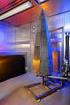 Technologies for Re-entry Vehicles SHEFEX and REX FreeFlyer, DLR s Re-Entry Program Hendrik Weihs Folie 1 DLR`s Re-Entry Program, Why? Re-entry or return technology respectively, is a strategic key competence
How Long Do You Need To Achieve Your Scientific Objectives?
 How Long Do You Need To Achieve Your Scientific Objectives? Time seconds minutes days/weeks months Drop Towers/Drop Tubes KC-135 Parabolic Flights Balloons* Sounding Rockets Alternate Carriers* Shuttle
TrueAlarm Fire Alarm Systems
 TrueAlarm Systems UL, ULC, CSFM Listed; FM Approved* Network Annunciators; es Features Provides a dedicated local area network (LAN) for connection of a TrueSite workstation server to remote clients: es
State Newton's second law of motion for a particle, defining carefully each term used.
 5 Question 1. [Marks 28] An unmarked police car P is, travelling at the legal speed limit, v P, on a straight section of highway. At time t = 0, the police car is overtaken by a car C, which is speeding
Aeration Air & Digester Gas Flow Metering Using Thermal Mass Technology. HWEA 2011 Conference Craig S. Johnson
 Aeration Air & Digester Gas Flow Metering Using Thermal Mass Technology HWEA 2011 Conference Craig S. Johnson Presentation Overview Introduction Aeration Air & Digester gas challenges Gas flow metering
5-port 10/100Base-TX Industrial Switch (314500) User s Guide
 5-port 10/100Base-TX Industrial Switch (314500) User s Guide COPYRIGHT All rights reserved. No part of this publication may be reproduced, stored in a retrieval system, or transmitted in any form or by
AMS 2000, ALTITUDE ALERT SYSTEM
 PRODUCT P/N: 8900 REV M Shadin Avionics 6831 Oxford Street St. Louis Park, MN 55426 USA Sales: (800)-328-0584 Technical Support: (800)-388-2849 www.shadin.com MANUAL P/N: IN8900A Rev M P/N 8900 Page i
BB-18 Black Body High Vacuum System Technical Description
 BB-18 Black Body High Vacuum System Technical Description The BB-18 Black Body is versatile and is programmed for use as a fixed cold target at 80 K or variable target, at 80 K- 350 K no extra cost. The
Physics 2A, Sec B00: Mechanics -- Winter 2011 Instructor: B. Grinstein Final Exam
 Physics 2A, Sec B00: Mechanics -- Winter 2011 Instructor: B. Grinstein Final Exam INSTRUCTIONS: Use a pencil #2 to fill your scantron. Write your code number and bubble it in under "EXAM NUMBER;" an entry
TOPO Trajectory Operations Officer
 ISS Live! was developed at NASA s Johnson Space Center (JSC) under NASA Contracts NNJ14RA02C and NNJ11HA14C wherein the U.S. Government retains certain rights. Console Handbook TOPO Trajectory Operations
Launch Vehicle Mission Capability Enhancement through Global Positioning System Metric Tracking
 Launch Vehicle Mission Capability Enhancement through Global Positioning System Metric Tracking Theodore C. Moore United Launch Alliance 12257 S. Wadsworth Blvd1 MS T5009 Littleton, CO 80125 303-977-6973
Lecture L17 - Orbit Transfers and Interplanetary Trajectories
 S. Widnall, J. Peraire 16.07 Dynamics Fall 008 Version.0 Lecture L17 - Orbit Transfers and Interplanetary Trajectories In this lecture, we will consider how to transfer from one orbit, to another or to
8-port 10/100Base-TX +2-port 100Base-FX Switch. User s Guide
 8-port 10/100Base-TX +2-port 100Base-FX Switch User s Guide COPYRIGHT All rights reserved. No part of this publication may be reproduced, stored in a retrieval system, or transmitted in any form or by
CAT VIII WORKING DRAFT
 Category VIII Military Aircraft and Associated Equipment A. End Items, Systems, Accessories, Attachments, Equipment, Parts and Components 1. Fighter, bomber, attack, or specialized fixed or rotary wing
Information regarding the Lockheed F-104 Starfighter F-104 LN-3. An article published in the Zipper Magazine #48. December-2001. Theo N.M.M.
 Information regarding the Lockheed F-104 Starfighter F-104 LN-3 An article published in the Zipper Magazine #48 December-2001 Author: Country: Website: Email: Theo N.M.M. Stoelinga The Netherlands http://www.xs4all.nl/~chair
SpaceX SES-8 Mission Press Kit
 SpaceX SES-8 Mission Press Kit CONTENTS 3 Mission Overview 5 Mission Timeline 6 Falcon 9 Overview 10 SpaceX Facilities 12 SpaceX Overview 14 SpaceX Leadership 16 SES Overview 18 Fact Sheet SPACEX MEDIA
VIETNAM ACADEMY OF SCIENCE AND TECHNOLOGY VIETNAM NATIONAL SATELLITE CENTER CUBESAT PICO DRAGON. Presenter Name: Do Xuan Phong
 VIETNAM ACADEMY OF SCIENCE AND TECHNOLOGY VIETNAM NATIONAL SATELLITE CENTER CUBESAT PICO DRAGON Presenter Name: Do Xuan Phong Co-authors: Vu Viet Phuong, Truong Xuan Hung, Le Xuan Huy, Bui Nam Duong, Do
SpaceX Hyperloop Pod Competition
 SpaceX Hyperloop Pod Competition Rules and Requirements August 20, 2015 CONTENTS 1 Introduction... 2 2 General Rules... 3 3 Preliminary Design Briefing... 4 4 Final Design Package... 5 5 Design Weekend...
Alternative Linear Motion Systems. Iron Core Linear Motors
 Alternative Linear Motion Systems ME EN 7960 Precision Machine Design Topic 5 ME EN 7960 Precision Machine Design Alternative Linear Motion Systems 5-1 Iron Core Linear Motors Provide actuation forces
Satellites and Space Stations
 Satellites and Space Stations A satellite is an object or a body that revolves around another object, which is usually much larger in mass. Natural satellites include the planets, which revolve around
INSTALLATION AND OPERATING INSTRUCTIONS For Model GL1 Gate Locks
 Securitron Magnalock Corp. www.securitron.com ASSA ABLOY, the global leader Tel 800.624.5625 [email protected] in door opening solutions INSTALLATION AND OPERATING INSTRUCTIONS For Model GL1 Gate
Fluid Mechanics Prof. S. K. Som Department of Mechanical Engineering Indian Institute of Technology, Kharagpur
 Fluid Mechanics Prof. S. K. Som Department of Mechanical Engineering Indian Institute of Technology, Kharagpur Lecture - 20 Conservation Equations in Fluid Flow Part VIII Good morning. I welcome you all
QR12 (1.22 ) Diameter Optical Encoder
 Improving the Quality of Life through the Power in Light QPhase QR12 (1.22 ) Diameter Optical Encoder Design Features: Low profile assembled height of Bearing design simplifies encoder attachment Resolutions
STEREO Guidance & Control
 STEREO Guidance & Control J. Courtney Ray [email protected] J. C. Ray 98/11/19 1 STEREO G&C Requirements Baseline System Software Some Analysis J. C. Ray 98/11/19 2 G&C Requirements - Drivers Spacecraft
Research RF Sputtering Packages
 Research RF Sputtering Packages Shown with 3" Polaris Adjustable Position Source with Tilt and Shutter 300 or 600 Watt Low Cost Packages for Those With Limited Budgets Desiring Full Capability 13.56 MHz
SERIES ASM NEOPRENE/EPMD FLANGED SINGLE SPHERE CONNECTOR CONNECTORS. Pressures to 225 PSIG (15.51 barg) Temperatures to 230ºF (110ºC)
 APPLICATIONS Process Industry Weak Acids Alkalies Compressed Air Pulp & Paper MODELS ASM - Flanged Connection OPTIONS Control Rods Oil & Gas Water & Waste Pump suction & discharge Sea water Chemical lines
June VV 05. Sentinel-2A LOGOTYPE COMPLET (SYMBOLE ET TYPOGRAPHIE) 294C
 LOGOTYPE TONS MONOCHROME 294C June 2015 VV 05 LOGOTYPE COMPLET (SYMBOLE ET TYPOGRAPHIE) FIFTH VEGA LAUNCH FROM THE GUIANA SPACE CENTER, AT THE SERVICE OF EUROPE'S COPERNICUS PROGRAM On the fifth Vega mission
with Electronic Assistant
 TECHNICAL DATASHEET #TDAX100200 BLDC Motor Drive Drives a 12V, 24V or 48V BLDC motor Bidirectional, up to 25A Smooth speed control using Hall Sensors CAN (SAE J1939) with Electronic Assistant Features:
Lessons Learned during the Refurbishment and Testing of an Observatory after Longterm
 Lessons Learned during the Refurbishment and Testing of an Observatory after Longterm Storage GSFC 2015 John Hawk, Sharon Peabody, and Richard Stavely NASA Goddard Space Flight Center Background The Triana
Robotic Collision Sensor and/ Axial Compliance Device Protector
 NEW 2005 CATALOG Robotic Collision Sensor and/ Axial Compliance Device Protector PROTECTOR Product Description The Protector is a collision sensor, or crash protection device, designed to prevent costly
GMC 2013: Piping Misalignment and Vibration Related Fatigue Failures
 GMC 2013: Piping Misalignment and Vibration Related Fatigue Failures www.betamachinery.com Authors/Presenters: Gary Maxwell, General Manager, BETA Machinery Analysis Brian Howes, Chief Engineer, BETA Machinery
NASA and Flowserve Collaboration Launches New Valve Technology
 NASA and Flowserve Collaboration Launches New Valve Technology At the Stennis Space Center near Bay Saint Louis, Mississippi, NASA engineers had a problem. At the Stennis Space Center near Bay Saint Louis,
The entire document shall be read and understood before proceeding with a test. ISTA 3B 2013 - Page 1 of 35
 Packaged-Products for Less-Than-Truckload (LTL) Shipment ISTA 3 Series General Simulation Performance Test PROCEDURE VERSION DATE Last TECHNICAL Change: NOVEMBER 2012 Last EDITORIAL Change: JANUARY 2013
Interaction of Energy and Matter Gravity Measurement: Using Doppler Shifts to Measure Mass Concentration TEACHER GUIDE
 Interaction of Energy and Matter Gravity Measurement: Using Doppler Shifts to Measure Mass Concentration TEACHER GUIDE EMR and the Dawn Mission Electromagnetic radiation (EMR) will play a major role in
Cellular Wireless Antennas
 Cellular Wireless Antennas A Technical Brief GarrettCom Inc., November 2010 Overview The Cellular Wireless Antenna Technical brief is provided to assist with the design and deployment of the DX940 Cellular
Orbital Mechanics and Space Geometry
 Orbital Mechanics and Space Geometry AERO4701 Space Engineering 3 Week 2 Overview First Hour Co-ordinate Systems and Frames of Reference (Review) Kepler s equations, Orbital Elements Second Hour Orbit
2. Orbits. FER-Zagreb, Satellite communication systems 2011/12
 2. Orbits Topics Orbit types Kepler and Newton laws Coverage area Influence of Earth 1 Orbit types According to inclination angle Equatorial Polar Inclinational orbit According to shape Circular orbit
Assessment Specifications for Remotely Piloted Aircraft Systems, Class 1 AS-RPAS1
 AMC Civil Aviation Authority The Netherlands Assessment Specifications for Remotely Piloted Aircraft Systems, Class 1 AS-RPAS1 Version 1.1 1 December 2014-1 - CONTENTS (general layout) AS RPAS1 REMOTELY
Falcon 9 Launch Vehicle NAFCOM Cost Estimates. August 2011 NASA Associate Deputy Administrator for Policy
 Falcon 9 Launch Vehicle NAFCOM Cost Estimates August 2011 NASA Associate Deputy Administrator for Policy 1 Falcon 9 Launch Vehicle NAFCOM Cost Estimate The objective of the analysis was to estimate the
Three Channel Optical Incremental Encoder Modules Technical Data
 Three Channel Optical Incremental Encoder Modules Technical Data HEDS-9040 HEDS-9140 Features Two Channel Quadrature Output with Index Pulse Resolution Up to 2000 CPR Counts Per Revolution Low Cost Easy
The Quality Connection. High Performance Cable Solutions for the World of Semiconductors
 The Quality Connection High Performance Cable Solutions for the World of Semiconductors 2 Total Flexibility for Applications with the Toughest Requirements LEONI is your long-term, reliable partner supplying
The Quality Connection. High Performance Cable Solutions for the World of Semiconductors
 The Quality Connection High Performance Cable Solutions for the World of Semiconductors 2 Total Flexibility for Applications with the Toughest Requirements LEONI is your long-term, reliable partner supplying
EVALUAT ING ACADEMIC READINESS FOR APPRENTICESHIP TRAINING Revised for ACCESS TO APPRENTICESHIP
 EVALUAT ING ACADEMIC READINESS FOR APPRENTICESHIP TRAINING for ACCESS TO APPRENTICESHIP SCIENCE SKILLS SIMPLE MACHINES & MECHANICAL ADVANTAGE AN ACADEMIC SKILLS MANUAL for The Construction Trades: Mechanical
Orbital Mechanics. Angular Momentum
 Orbital Mechanics The objects that orbit earth have only a few forces acting on them, the largest being the gravitational pull from the earth. The trajectories that satellites or rockets follow are largely
Experiences in positioning and sensor network applications with Ultra Wide Band technology
 Experiences in positioning and sensor network applications with Ultra Wide Band technology WAMS LANGATTOMUUDESTA UUTTA BISNESTÄ Timo Lehikoinen VTT Technical Research Centre of Finland 10/14/2013 2 Contents
The 2013 MAVEN Mission To Mars. Bruce Jakosky MAVEN Principal Investigator University of Colorado
 The 2013 MAVEN Mission To Mars Bruce Jakosky MAVEN Principal Investigator University of Colorado Summary of MAVEN Status We ve been developing MAVEN since 2003; now under 3 months to launch! All science
AMFA-27 AMFA-29. Operator s Manual & Installation Instructions. Rev. 2.5
 AMFA-27 AMFA-29 Operator s Manual & Installation Instructions Rev. 2.5 Date: 17 July, 2010 Permanently-connected, utility Interactive, single-phase, inverters Model AMFA-27 WIND TURBINE INVERTER (240 VAC
TEAM AMERICA ROCKETRY CHALLENGE 2016 RULES
 COPYRIGHT 20. ALL RIGHTS RESERVED FED. SUPPLY CLASS NONE TEAM AMERICA ROCKETRY CHALLENGE 2016 RULES DATE. www.aia-nas.org ISSUE DATE: SEPTEMBER 2002 DATE: MAY 9, 20 THIRD ANGLE PROJECTION CUSTODIAN NATIONAL
Elements of Physics Motion, Force, and Gravity Teacher s Guide
 Teacher s Guide Grade Level: 9 12 Curriculum Focus: Physical Science Lesson Duration: Three class periods Program Description Examine Isaac Newton's laws of motion, the four fundamental forces of the universe,
NAVICOM DYNAMICS RTK BASE STATION INSTALLATION AND COMMISSIONING INSTRUCTIONS
 NAVICOM DYNAMICS RTK BASE STATION INSTALLATION AND COMMISSIONING INSTRUCTIONS 1. Locate a suitable position inside the building to install the Base Station enclosure where mains power (240V AC) is available
Space Flight Project Work Breakdown Structure
 APPENDIX G. (WBS) Space Flight Project Work Breakdown Structure G.1 Introduction G.1.1 The Project Work Breakdown Structure (WBS) is a key element of project management. The purpose of a WBS is to divide
TOTALLY SOLID STATE NON-DIRECTIONAL RADIO BEACONS 190-535 khz
 TOTALLY SOLID STATE NON-DIRECTIONAL RADIO S 190-535 khz This family of radio transmitters has been developed as extremely efficient, highly reliable Non Directional Beacons. ND2000A/4000A» MODULAR CONSTRUCTION»
Basic Principles of Inertial Navigation. Seminar on inertial navigation systems Tampere University of Technology
 Basic Principles of Inertial Navigation Seminar on inertial navigation systems Tampere University of Technology 1 The five basic forms of navigation Pilotage, which essentially relies on recognizing landmarks
Mobile Communications: Satellite Systems
 Mobile Communications: Satellite Systems Mobile Communication: Satellite Systems - Jochen Schiller http://www.jochenschiller.de 1 History of satellite communication 1945 Arthur C. Clarke publishes an essay
26 3213.13 Diesel Engine Driven Generators Page 1 of 6
 Last Update: December 8, 2014 A. Description of System Consultant s Handbook Page 1 of 6 1. Provide a diesel engine driven electric generating unit, factory assembled, tested and certified to operate at
ACRS 2.0 User Manual 1
 ACRS 2.0 User Manual 1 FCC Regulatory Information This device complies with part 15 of the FCC Rules. Operation is subject to the following two conditions: (1) This device may not cause harmful interference,
Fleet Ballistic Missile Eastern Range Operations Supporting Navy Testing and Deployment
 Fleet Ballistic Missile Eastern Range Operations Supporting Navy Testing and Deployment Lockheed Martin Space Systems Company Test & Support Systems Engineering Pier Road, Hanger Y Mail Drop: MRL 156 Cape
CO 2 41.2 MPa (abs) 20 C
 comp_02 A CO 2 cartridge is used to propel a small rocket cart. Compressed CO 2, stored at a pressure of 41.2 MPa (abs) and a temperature of 20 C, is expanded through a smoothly contoured converging nozzle
Can Hubble be Moved to the International Space Station? 1
 Can Hubble be Moved to the International Space Station? 1 On January 16, NASA Administrator Sean O Keefe informed scientists and engineers at the Goddard Space Flight Center (GSFC) that plans to service
A science class experience that is out of this world. Robert Benkoczi, PhD Optimization Research Group University of Lethbridge
 A science class experience that is out of this world Robert Benkoczi, PhD Optimization Research Group University of Lethbridge SWATCA 2015 Summary Optimization Research Group Funcube project and reception
Agilent X/P/K281C Adapters
 Agilent X/P/K281C Adapters Including Options 006, 012, 013, 106 Operating and Service Manual Contents 1 Introduction 7 Product Overview 8 Options 8 Instruments Covered by Manual 10 2 Installation 11 Initial
Telephone- and leased line modem for industrial applications TD-36
 Telephone- and leased line modem for industrial applications TD-36 Modem for industrial PSTN- and leased line applications The TD-36 is an analogue V.34 PSTN modem as well as an industrial 2-wire leased
Synthetic Sensing: Proximity / Distance Sensors
 Synthetic Sensing: Proximity / Distance Sensors MediaRobotics Lab, February 2010 Proximity detection is dependent on the object of interest. One size does not fit all For non-contact distance measurement,
G U I D E T O A P P L I E D O R B I T A L M E C H A N I C S F O R K E R B A L S P A C E P R O G R A M
 G U I D E T O A P P L I E D O R B I T A L M E C H A N I C S F O R K E R B A L S P A C E P R O G R A M CONTENTS Foreword... 2 Forces... 3 Circular Orbits... 8 Energy... 10 Angular Momentum... 13 FOREWORD
F N A) 330 N 0.31 B) 310 N 0.33 C) 250 N 0.27 D) 290 N 0.30 E) 370 N 0.26
 Physics 23 Exam 2 Spring 2010 Dr. Alward Page 1 1. A 250-N force is directed horizontally as shown to push a 29-kg box up an inclined plane at a constant speed. Determine the magnitude of the normal force,
Low Voltage Switchboards The Best Technical Solution for Your Ship
 The Best Technical Solution for Your Ship Wärtsilä SAM Electronics Optimal Power Distribution The uninterrupted supply of power to systems and consumers onboard modern ships is an extremly important matter.
LevelOne IFE-0500 4-Port PoE + 1-Port TP Industrial Fast Ethernet Switch User Manual
 LevelOne IFE-0500 4-Port PoE + 1-Port TP Industrial Fast Ethernet Switch User Manual Ver. 1.0.0-0711 1 FCC Warning This Equipment has been tested and found to comply with the limits for a Class-A digital
Selecting and Sizing Ball Screw Drives
 Selecting and Sizing Ball Screw Drives Jeff G. Johnson, Product Engineer Thomson Industries, Inc. Wood Dale, IL 540-633-3549 www.thomsonlinear.com [email protected] Fig 1: Ball screw drive is a
Perle 10/100 Ethernet Media Converters
 Perle 10/100 Ethernet Media Converters Installation Guide S-110-XXXXXX S-110-XXXXXX-XT P/N 5500302-16 (Rev B) Overview This document contains instructions necessary for the installation and operation of
Active Vibration Isolation of an Unbalanced Machine Spindle
 UCRL-CONF-206108 Active Vibration Isolation of an Unbalanced Machine Spindle D. J. Hopkins, P. Geraghty August 18, 2004 American Society of Precision Engineering Annual Conference Orlando, FL, United States
102 26-m Antenna Subnet Telecommunications Interfaces
 DSMS Telecommunications Link Design Handbook 26-m Antenna Subnet Telecommunications Interfaces Effective November 30, 2000 Document Owner: Approved by: Released by: [Signature on file in TMOD Library]
The µtorque Momentum-Exchange Tether Experiment
 The µtorque Momentum-Exchange Tether Experiment Robert P. Hoyt Tethers Unlimited, Inc., 19011 36 h Ave. W., Suite F, Lynnwood, WA 98036-5752 (425) 744-0400 [email protected] Abstract. Long, high-strength
Satellite technology
 Satellite technology Overview What is a satellite? The key elements of orbital position Satellite manufacturers and design The components of a satellite: payload and bus Digital versus analogue How do
Engineering & Testing Services. Hydraulic Fitting Design and Hydro-Mechanical Testing
 Engineering & Testing Services Hydraulic Fitting Design and Hydro-Mechanical Testing Aerofit, Inc. APT Laboratory 1425 South Acacia Avenue Fullerton, CA 92831 Main: 714-521-5060 Fax: 714-535-9862 Our Company
Satellite Communications
 Satellite Communications Department of Electrical Engineering Faculty of Engineering Chiangmai University Origin of Satellite Communications Arthur C. Clark (1945) British Science fiction writer propose
Development of the Induction Motor for Machine Tool Spindles and Servo Amplifier SANMOTION S
 New Products Introduction Development of the Induction Motor for Machine Tool Spindles and Servo Amplifier SANMOTION S Takashi Sekiguchi Masahiro Kidou Yuusuke Shimura Yuji Ide Masahisa Koyama Michio Kitahara
From Single to Formation Flying CubeSats: An Update of the Delfi Programme
 From Single to Formation Flying CubeSats: An Update of the Delfi Programme Jian Guo, Jasper Bouwmeester & Eberhard Gill 1 Outline Introduction Delfi-C 3 Mission Delfi-n3Xt Mission Lessons Learned DelFFi