
Funding Primary Health Care in the Baltic Sea Area
|
|
|
- Corey Lloyd
- 10 years ago
- Views:
Transcription
1 Blekinge Centre of Competence - education, research and development in interaction Funding Primary Health Care in the Baltic Sea Area Differences, similarities, and challenges in funding Primary Health Care to achieve the objectives of ImPrim Joint Transnational Synthesis Report for ImPrim countries Jens Wilkens Blekinge Centre of Competence Blekinge County Council Sweden 2011

2 2

3 3 Contents CONTENTS... 3 ACKNOWLEDGMENTS... 5 ABBREVIATIONS... 5 ABSTRACT... 6 OBJECTIVES WITH THIS REPORT... 7 HEALTH SYSTEMS PERFORMANCE IN THE BALTIC SEA REGION COUNTRIES... 8 GENERAL HEALTH STATUS... 8 EQUITY IN HEALTH STATUS... 9 PHC AND OTHER HEALTH SYSTEMS PERFORMANCE INDICATORS... 9 Waiting time Financial access and protection Citizens judgement about care DIFFERENCES IN RESOURCES AND PRIORITIES FOR HEALTH SERVICES AND PHC Public financial resources for Health Financial resources for PHC and organisational differences of services HUMAN AND INFRASTRUCTURE RESOURCES AVAILABLE IN PHC ORGANISATION OF SERVICES IN PRIMARY HEALTH CARE Estonia Finland Latvia Lithuania Sweden Russia Belarus PRODUCTION OF SERVICES IN PRIMARY HEALTH CARE PURCHASING PRIMARY HEALTH CARE BASIC PAYMENT METHODS Estonia Finland Latvia Lithuania Sweden Russia Belarus SALARIES/PAYMENT OF STAFF WEIGHTS AND ADJUSTMENTS OF CAPITATION THE ROLE OF THE NURSE RATIONAL USE OF MEDICINES ECONOMIC INCENTIVES FOR PATIENTS CONCLUSIONS AND RECOMMENDATIONS Suggestions for more studies REFERENCES ImPrim - Improvement of public health by promotion of equitably distributed high quality primary health care systems

4 4

5 5 Acknowledgments This paper is the product of discussions and information presented at a number of seminars during the first year of the ImPrim project. The author would like to thank several people for their valuable contributions, including Dace Dimza-Jones, Arnoldas Jurgutis, Aigars Miezitis, Kristine Thorell, Eva-Lena Strandberg, Ingvar Ovhed, Liis Roovali, and Paula Vainiomäki. Abbreviations ACG BSR CNI EU FM GDP ImPrim MD GP PC PHC OECD OOPS WHO Adjusted Clinical Groups Baltic Sea Region Care Needs Index European Union Family Medicine Gross Domestic Product Improvement of public health by promotion of equitably distributed high quality primary health care systems Medical Doctor General Practitioner Primary Care Primary Health Care Organisation for Economic Co-operation and Development Out Of Pocket Payments World Health Organization ImPrim - Improvement of public health by promotion of equitably distributed high quality primary health care systems

6 6 Abstract There are substantial health differences between the countries of the Baltic Sea region. While the gap between Scandinavian and Baltic countries among basic health status indicators is slowly closing in, some crucial differences remain. These are notably the health status in Russia, which has not significantly improved like the economy after the socio-economic stress in the early 90 s, but also the differences between men and women, which still prevails also in the Baltic countries. This report concludes that the last two decades of efforts in reforms of our health systems, on both sides of the Baltic Sea, to increase efficiency and promote preventive services, have not generally created equity problems. With specific exceptions, all residents of the Baltic Sea region countries are still generally enjoying publically funded services. However, we still lack some evidence about how the last years reforms have affected equity in access and utility of PHC specifically. The report also concludes that the differences in financial resources between countries in our region do not necessarily mean anything for the differences in providing services. Countries with more limited resources, or countries prioritising health less than other, still seem to have good accessibility to services. Instead reforms to strengthen PHC are about needed prioritisation of PHC, and development of the content and increase of the scope of services in PHC. There are large differences, within and between our countries, in how we pay providers for PHC services. In all countries different forms of indicators packages and performance measurements have developed quickly, and are increasingly used for reimbursement. Even though all our countries have increased education of nurses (in numbers or length of education) over the last two decades, the reimbursement systems and the legal frameworks for nurses professional role are still not facilitating a more rational use of qualified staff beside the GP. Practically all benchmarking of production is done relative the GP, not the nurse, e.g. number of patients per GP in capitation schemes.

7 7 Objectives with this report In the project description the long term objectives to which ImPrim aims to contribute are listed as follows; Prioritise resources into Primary Health Care (PHC) Create incentives for quality, access and equity. Support a geographically equal distribution of services. Support links to the social sector. Support the use of other professions than Medical Doctors (MD), like nurses and occupational therapists. Create incentives for prevention. One of three lines of work in ImPrim is to develop Instruments for improved funding of Primary Care and contains the development and pilot implementation of performance indicators and reimbursement changes in selected parts of the partner countries. This Synthesis report is written to provide a summary view of the current situation about financial resources and purchasing mechanisms in Primary Health Care in the countries taking part in the ImPrim project. The report also function as background material and support to other specific outputs of the ImPrim project, most specifically Transnationally valid incentive payment scheme attracting health professionals to PHC and increasing performance of PHC particularly towards disease preventions and health promotion in the community. It is the hope of the authors that the report will also provide relevant information and perspectives, to everybody interested in the development of an equitable and high quality Primary Health Care in our part of Europe. ImPrim - Improvement of public health by promotion of equitably distributed high quality primary health care systems

8 8 Health systems performance in the Baltic sea region countries General health status The countries of the Baltic Sea region are often divided in the former Eastern European countries on one side, and the Western European countries on the other. While this split becomes more and more obsolete with the rapid development in especially the Baltic countries, basic health status indicators still show a substantial difference. Life expectancy has increased steadily in Nordic countries for decades, and continues to do so. At the break-up of the Soviet Union and the socialist regimes, social protection systems and life-styles very radically changed, which had severe consequences for the population of the countries. These years in the 1990 s created a wide gap which has not yet closed. Graph 1. Life expectancy at birth, in years, male and female. i Russia Belarus Latvia Lithuania Estonia Poland Denmark The large differences in life expectancy compared to the Nordic countries are slowly closing for the Baltic countries but remain for especially Russia. However, the difference between men and women still prevail on the eastern side of the Baltic Sea, with more than 10 years difference in all countries except Poland. Also maternal and child health indicators show a gap which has stubbornly remained in the old east European countries, with child mortality and maternal mortality being much higher than in Nordic countries. Finland Germany Sweden EU-10 Male Female EU-15

9 9 Graph 2. Maternal mortality ii and estimated probability of dying under 1 and 5 years iii Infant mortality Under 5 mortality Maternal mortality Belarus Russia Latvia Poland Estonia Lithuania Finland Sweden EU 15 EU 10 Equity in health status Generally health status is strongly correlated with education and wealth or income. With the relatively lower health status on the eastern side of the Baltic Sea, the equity of health is an important aspect when organising PHC, because with increased equity, vulnerable groups in the society can still gain health, although the average health status is slow in progress. A Finish-Baltic study has shown that the socio-economic pattern of health is very similar in the three Baltic States to other Western European countries. The study measures how health relates to education with the argument that education better represents the long term chances of a wealthy life and therefore is a better indicator of wealth than single year income data. Self-reported indicators of perceived health, diagnosis and symptoms were used to study how health relates to educational level. The same pattern of better health status among well educated in the Baltic states as in Finland was shown. One of the main conclusions is that policies and strategies to support equity in health should not differ between the countries because the problem is similar. In other words, successful measures taken to solve socio-economic differences in health are likely to be successful all around the Baltic Sea, i.e. common strategies and reforms are likely to be effective. Using the three self reported indictors referred to above, the study finds that the perceived differences in health between men and women are not at all as evident as suggested by the large differences in health between men and women which are shown in life expectancy data. iv PHC and other health systems performance indicators Most models for assessment of health services and health systems recognize other dimensions of performance than medical results. In the WHO health systems framework the two major non-medical objectives are financial protection and responsiveness to people s non-medical expectations. i This report focuses on the PHC ability to respond to people s needs and expectations in terms of physical and financial accessibility to services. Results from surveys of the general satisfaction of PHC services from Estonia, Latvia and Sweden are also presented. i For a description of these non-medical objectives, and measurement methodology, see the WHO World Health Report ImPrim - Improvement of public health by promotion of equitably distributed high quality primary health care systems

10 10 Waiting time Accessibility to PHC services is an important aspect of the responsiveness of the system to population expectations. It is also of utter importance in the struggle to make PHC the natural entry point to the health system. With relatively low accessibility in PHC, people will seek help elsewhere in the health system. Its thereby not only an objective in itself, its also a means to make the general health system more efficient. There is certainly a correlation between physical and financial accessibility. If waiting time is long, or distance to a health center is long, the individual ability to pay for services or travel can make a large difference. Only physical accessibility also has different dimensions and can be measured in different ways. Below waiting time for planned visits to PHC is described and compared. A recent Estonian study shows that 3% of the patients had to wait more than a week for their PHC visit in 2008, while the corresponding number in 2005 was 1%. v An even more recent study in Lithuania revealed common problems in access of PHC offices. Half of patients were not able to see the doctor the same day, which is seen as a bad result in the study. The reasons reported are that doctors spend too much time doing paperwork, and the lack of a supporting electronic registration system. vi Even though the survey data for Estonia shows increasing waiting times for both GP visits and other specialist visits between 2005 and 2008, and half of the patients have to wait more than a day in Lithuania, the waiting time is well below corresponding Swedish numbers. By Swedish standards, the accessibility is very good. Sweden has had a strong focus on reducing waiting time for the last decade. It has been both from the aspect of whether a welfare state can allow people to wait for months (even years sometimes) for relatively simple surgery, but also a shift in policies to a more patient oriented system. A political target, recently even regulated by law, is a maximum waiting time for a non-acute visit to a GP of seven days (with access to a teleconsultation within one day). This has become the primary indicator used for assessing access to PHC, and performance measured by this indicator has increased rapidly over the last decade and now shows that 10% wait more than 7 days (2009), although with regional variation (5 to 17% between the 21 regions, with local differences to different clinics even larger). vii Finland has similar accessibility goals like Sweden, although the time limits differ somewhat. After contact with a municipality PHC office, a planned non-acute visit in Finland should be given within three days according to the national regulations, which is more ambitious than the Swedish seven days target. viii In April 2008, 37% of Finns had to wait for more than two weeks for a non-acute GP appointment, up from 25% in September The numbers for Estonia and Lithuania above are based on responses in a population survey, while the Swedish numbers are based on administrative records, and therefore not directly comparable (with for example approximately 10% in the Estonian survey answering they don t know how long they waited). The comparison is further complicated because the availability of service for the individual is also dependent on how accessible the alternatives are, e.g. visit to a nurse or a narrow specialist without referral. The former is perhaps easier in Sweden, the latter perhaps easier in Estonia. Also, home visits, which are much more generously provided in some countries than others, are not included. Nevertheless, the data presented above is an indicator of the relative advantages for Baltic countries in terms of availability of the health system. It is very clear that the health system performance of non-medical expectations in terms of physical accessibility is much higher in the Baltic States. More specifically, the results from the studies also show that the two countries are providing PHC more accessibly, especially given that home visits by MDs are more frequent than in Sweden and Finland. Financial access and protection An important health system performance objective is to protect the population from economic consequences of a need for health services, usually called financial protection. The analysis of financial protection requires household expenditure surveys and is not done regularly. Most expenditure for the patient is incurred in in-

11 11 patient facilities and on drugs, and studies which seperate only PHC spending are not conducted. Few studies are done with country comparisons but in a study from 2003 with data from surveys of different years, the Baltic Sea countries, Finland and Sweden are included. The percentages of the population experiencing catastrophic health expenditure are highest in Lithuania and Latvia. The problem is limited compared to many low income countries, but Latvia and Lithuania show much higher numbers than high income countries in the region, while numbers in Estonia, Finland and Sweden are lower. The problem of catastrophic expenditures is strongly correlated with out of pocket payments (OOPS) in the health sector. But typically the OOPS is induced in in-patient facilities and when the patient is in need of drugs. It is not necessarily a problem in the PHC. On the contrary, when the health system cannot prevent catastrophic expenditures and financial barriers to health, an accessible PHC of high quality is even more important, since it becomes the most available service (see also Graph 3 below which displays the typical situation of PHC being the most accessible). Catastrophic expenditure as a measurement of financial protection does not necessarily capture everybody in need, simply because some people probably refrain from using care when in need, thus spending no money at all. Equity in access and utility are equally important performance measurements of the health system. An Estonian study has clearly documented how accessibility due to financial constraints differs between various types of care (see graph 3). Not surprising, and shown in most studies, specialist care has larger problems with financial barriers. Most problems has dentistry, but that is because of the explicit policy that it s not included in the publicly funded health package (more than to a very limited extent). Because people have to pay for it themselves, it also shows the largest inequality, and is clearly more accessible to the higher income groups. Graph 3 shows how much more accessible PHC is in Estonia, and displays a very typical pattern. From 2004 to 2008, access barriers to primary and dental care declined on average, but unfortunately the inequalities between wealthy and poor remained. ix Graph 3. Proportion of people who report access barriers to health care during last 12 months by income quintile, ImPrim - Improvement of public health by promotion of equitably distributed high quality primary health care systems

12 12 The pattern for Latvia is very similar. In 2005, 30% of the population did not access the health services they needed and lower income groups were less likely to access necessary services than higher income groups. Among the reasons for not seeking care, 56% of non-users reported financial constraints, but for the poorest quintile, this number was over 70%, compared to only 25% of people in the richest quintile. But for the two lowest quintiles (i.e. 40 % of the population with lowest income), pharmaceuticals represents more than 80% of spending. In other words, PHC services are unlikely to be a problem, but drugs are not financially available. x Similarly low numbers of patients (2-7 %) who did not seek PHC due to cost barriers are shown in the recent Lithuanian study. Citizens judgement about care In Sweden a yearly survey is conducted about the population s perception about health care services. Of patients visiting PHC centers the confidence for the care provided at is 63%, slightly up from earlier years. The equivalent number for hospitals is 75%. xi In Estonia a similar population survey of the population s perception of care shows an increase in satisfaction with PHC services, from 74 % rating it good or reasonably good in 2005 and 80 % in The numbers are not comparable due to differences in survey design. But also in Estonia the ratings of hospital care are higher, with 92 % rating the services good or reasonably good in both 2005 and xii This is certainly a challenge, and especially troublesome in the efforts to move patient flows from hospital to primary care. Even if both Swedes and Estonians seem to trust hospital services more, it is not an international phenomenon, and should be able to change. Similar surveys in Great Britain show the opposite, with larger confidence in PHC than in hospital services. A very recent Lithuanian survey also show high satisfaction with PHC, although its not related to other types of care or time period. xiii Differences in resources and priorities for health services and PHC Public financial resources for Health There are still large differences in wealth between the countries around the Baltic Sea. Obviously the differences in available resources of the societies at large, affects what is used for health services. But there are also large differences in how much of the available resources are spent on health services and large differences in how these resources are used. A common tax policy in most Central and Eastern European countries since the 90s have been to keep taxation of both corporations and workforce low enough to attract investments and encourage entrepreneurship, e.g. corporate taxes are moderate and income taxes are relatively flat, compared to both Scandinavian countries and Western European countries at large. As a consequence, public revenue as share of the overall economy is relatively low. This obviously affects how much publically available resources there are to spend. This report does not elaborate on the choices made in fiscal policy, but simply concludes that some of the difference in available public funding comes from general government policy which we can not do much about. Looking at health specifically, the priorities in public spending also explain some of the differences in health spending between the countries of the region. There is generally a higher share of public spending devoted to health in the old EU countries, compared to the new EU countries. Graph 4 below, which includes all administrative levels of the public sector, shows this difference and also presents the change between 1995 and can represent the point in time when the recession after independence reached its low-point, while 2008 is the latest year available with internationally available data. Latvia and Belarus are the only two countries which spend less on health, relative other public spending, today compared to Perhaps most remarkable is that this difference has grown larger since the Baltic countries and its neighbours hit rock bottom of the recession in the early 90 s. Public reforms since then have disfavoured health at the benefit of other sectors of public responsibility.

13 13 Graph 4. Public expenditure on health as share (%) of total public spending, by country. xiv Belarus Latvia Russia Poland Estonia Finland Lithuania Sw eden Denmark Norw ay Germany Old EU members New EU members Financial resources for PHC and organisational differences of services There is no internationally comparable data on how much is spent in PHC specifically. This is mainly due to that there is no commonly accepted definition of what PHC services comprise exactly, even though there is a consensus about what PHC is conceptually. Even if we limit the comparison to services provided by MDs specialised in general medicine (General Practitioners, GPs) and nurses in their offices, it would not hold because many narrow specialists provide services which are certainly primary. In some countries PHC units are built up around paediatricians and internists, and ancillary staff do very different things in the countries. An approximate delineation is to look at how much is spent in hospitals, and how much is spent in ambulatory institutions. Internationally comparable data is available from WHO and OECD. Graph 5 presents these two types of institutions and their share of total public (all levels of government) spending on health. The data ii does not only reveal some differences in spending, but also raise important questions about the differences in how services are organised. First, there is a vague east-west difference although not very big, with a larger share spent on hospitals in most eastern countries of the region, with Sweden as a clear outlier to the general pattern (se discussion in next paragraph). In addition to its smaller GDP per capita, its smaller general public resources, and its lower priorities to health, which all add up to less money spent on health by government institutions providing ambulatory, or out-patient services, on the Eastern side of the Baltic Sea region, out-patient facilities are also neglected by a low priority as compared to other types of facilities. Of course, if private funding is added to the picture its looks different. In lack of publicly funded alternatives, people tend to compensate by their own priorities, and many private clinics which are funded by out-of-pocket or insurance are in the form of outpatient facilities and do provide an important complement to publicly funded services. But these privately funded alternatives are not accessible to all patients, geographically or financially. In addition their services are not necessarily aligned with public health priorities and in the governments efforts to develop more effective health systems based on qualitative and equitable PHC. ii This is based on a classification of providers. Consequently out-patient services in hospitals are included in hospitals. The Ambulatory Care Providers include; Offices of physicians and dentists as well as other health professionals, larger centres thereof, and Laboratory services centres (if not part of a hospital). The category Other includes; Nursing and residential care facilities, all sales of Medical goods and Pharmaceuticals (if not consumed in hospitals), and administrative organisations in health. Note that Medical goods and Pharmaceuticals are typically paid for by patient in out-patient settings. The exception is Germany. The large share of Other for Germany is mainly explained by higher spending on pharmaceuticals, an effect of the insurance system, which reimburses drugs in out-patient clinics. Germany also reports higher costs of administration. ImPrim - Improvement of public health by promotion of equitably distributed high quality primary health care systems

14 14 Graph 5. Public expenditure by main types of institutional provider of health, by country. xv 100% 90% 80% 70% 60% 50% 40% 30% 20% Other types of care providers Hospitals Ambulatory care providers 10% 0% Germany Finland Poland Norway Lithuania Denmark Estonia Latvia Sverige The most severe shortcoming of the data in Graph 5 is that it only represents spending by type of institution. It does not say anything about what type of service is provided, or how it s organised. Countries with large amounts spent on out-patient facilities can have relatively more of complementing narrow specialists services in these, and even beds (e.g. Finland). Even though this is also qualified as PHC, other countries have a purer GPs type of service in their out-patient facilities, and other specialists are linked to out-patient departments in hospitals. Other differences are in ancillary services. For example Sweden has a relatively well developed, and relatively cost-effective, telephone consultation system, which costs are taken by the central regional administration, and which takes a lot of burden off facilities. Anyone can call free of charge and talk to a qualified nurse as a first point of service. This reduces a large number of visits and saves both GP visits and emergency hospital visits, the latter especially outside office hours. In Sweden the number of consultation calls to qualified nurses outnumbers the number of visits to PHC facilities. There are also large differences in which services are provided in nursing facilities, recorded as Other in Graph 5. Human and infrastructure resources available in PHC When comparing human resources between the countries, the data clearly tells us that the problem of staffing is not a resource difference between those countries with financial resources and those with less funding for health. The health systems in the three Baltic States and the Nordic countries have comparable numbers of medical doctors, although the number of nurses is much lower in the Baltic states. Russia and Belarus stand out being well equipped with medical doctors. We can also conclude that a smaller proportion of the doctors are GPs in Russia and Belarus. Production data (see below) also tells us they meet the patients more often than in the Nordic countries.

15 15 Graph 6. Human resources in health and number of GPs xvi Physicians per Nurses per GPs share of physicians 0,4 0,35 0,3 0,25 0,2 0,15 0,1 0, Belarus Russia Lithuania Sweden Germany Denmark Estonia Latvia Finland The availability of staff in PHC facilities in the Baltic Sea region has several dimensions. Each country works with its regional differences in its own way. In some countries there is an element of market adjustment working, e.g. the decentralised Swedish system in effect gives 21 regions which compete for staff, and salaries are considerably higher in rural and less attractive areas. This does however not give an automatic relative advantage for GPs over other specialists, like in the Baltic countries, where the strong independence given to GPs by the privatization is partly intended to make the GPs role more attractive. In Finland, the municipalities have been given increased possibilities in deciding about the salary level of the primary care physicians. Instead of market solutions, administrative reforms have been implemented in Belarus and Russia to increase the attractiveness of GPs. In Belarus it is compulsory to serve in a work place allotted after graduation for two years. In addition, salaries are considerably higher in rural areas. In Russia official salaries have been increased more in PHC than in other fields, especially after the national so called Health reform starting in This has however been done across all specialties working in PHC broadly, i.e. internal medicine specialist working in policlinics have also been given the same raise, which does not favor the GP function of the system, only PHC over hospitals. Especially the number of medical staff in Russia and Belarus, but also the diverse picture we get when comparing the Baltic and Nordic countries, show that its not necessarily low numbers of doctors and nurses that is the problem, but how they are organized, and what they do. In terms physical resources we can conclude that post-soviet countries still have enormous amounts of beds and buildings, i.e. there are still abundance in resources in terms of buildings and non-medical equipment. The number of beds is still, even though drastically decreased, almost twice as high in the three Baltic countries, compared to Sweden. xvii This is not necessarily a supply of beds which is less efficient; the drastic decrease in Sweden the last 20 years is for example strongly criticized domestically. But it shows that long term, there are still room for maneuver in terms of restructuring the health systems and prioritize differently. This paper does not attempt to compare the number or size of facilities in PHC, and they differ much in structure for a purposeful comparison. ImPrim - Improvement of public health by promotion of equitably distributed high quality primary health care systems

16 16 Organisation of services in Primary Health Care Estonia In Estonia the health care provisions is decentralized and health care providers are autonomous since All family doctors are private entrepreneurs or salaried employees of private companies restricted to provide only primary care services. Estonia is probably unique in the sense that it s the only country of the former Soviet republics that has reached a total functional reconstruction of PHC by having 100 % of the doctors licensed as specialists in family medicine and a free listing system covering the entire population (with Latvia close behind). xviii Finland In Finland 348 municipalities with their elected councils (median size less than 6000 people) are responsible for health promotion and prevention, medical care, medical rehabilitation and dental care and secondary specialist services. The 1972 Primary health Care Act created a newly-built network of primary health care centres, within which multidisciplinary teams provide primary curative, preventive and public health services to their assigned population, with nurses having an essential role in the health centres, especially in maternal and child care. Similar to Sweden, a personal doctor system was introduced in 1980s to focus on continuity and family care. This system improved access to GPs. Health centres provide most preventive services, including maternal, child and school health care. However, there is a need to improve continuity across levels of care, which a new law under implementation has as one of its objectives. Private sector patients can claim a predefined amount per visit or treatment from the national insurance institute KELA towards their private medical costs (including dentistry) if they choose to be treated in the more expensive private sector. xix In Finland, the choice of patients is given increased attention. A new law from 2011 gives patients the right to choose their own PHC the municipality, and if possible, their own doctor. Specialised services can be provided also outside the patients home town, funded by the district/region of residence. The PHC centre where the patient is listed still has a coordinating responsibility for the care given, which focuses the responsibility of the health system to the PHC level. xx Latvia In 1993 Latvia municipal governments were delegated the responsibilities for financing and provision of primary care services, while specialized services remained the responsibility of the state. In 1998 the State Compulsory Health Insurance Agency (SCHIA) was established. SCHIA distributes the tax-financed budget to regional funds, which purchase health care for their populations with the exception of tertiary care, which is purchased by SCHIA directly. A model of PHC based on the establishment of single or joint family doctor practices was approved by the Ministry of Health in These practices are staffed by general practitioners and nurses and doctors assistants with private practices as independent contractors being increasingly common. Lithuania Lithuania has the most heterogeneous system of organising PHC. Programmes of training and retraining of general practitioners and nurses were started in But service delivery is still organised in both privately or publically owned primary health care centres which take the form of either general practitioner s offices, or traditional polyclinics. Both forms of health centres can be owned by the municipality or privately. From 1997 Lithuanian has a free listing system for its residents. Sweden In Sweden PHC is organised in health centres, or group practises staffed with predominantly GPs and nurses specialised in general medicine. Traditionally these have been owned by the regions with a traditional input based funding, although private practices under a special scheme has always existed. Similarly to Finland, the

17 17 major changes started in the 80s with a free listing choice given to patients. In some reform minded regions provision of PHC has been increasingly contracted out over the years. The share of PHC services which is contracted out to private providers varies greatly from 4,6 % (Dalarna region) to 47,8 % (Stockholm region). xxi The rest is provided by facilities owned by the regional authority. But also the publically owned facilities are increasingly (and in some regions fully) reimbursed for their services in exactly the same way and also these public clinics are responsible for making ends meet. They employ their staff and make investments independently. Hence, they are equally exposed to the same market as the private providers. Recently, but some regions moving earlier, a next step has been taken with the choice of provider law. The name is somewhat misguiding because the major change with this law is the right of free establishment of the provider. While establishment earlier was up to public procurement, establishment is now free, although each provider also has to compete for their patients, i.e. their revenue. There is an important conceptual difference from public procurement on behalf of the population now patients decide who will provide the service, it s not about presenting a good offer to public officials, but rather to the patients. Regions with an input based budgeting and centrally planned investments in the publically owned facilities still exist, although they are now forced, by national law, to contract private providers which are interested in their region. Russia In Russia the structure of health care services has not changed much since Soviet era. There are a number of forms for first contact health care providers. In rural areas there are health posts or feltsher stations offer immunization, basic health checks and routine examinations as well as prenatal and newborn care. Health centres cover a larger rural population and offer a bigger range of primary care services. In urban areas, policlinics house a number of specialists providing primary and secondary care without any distinct boundaries. Efforts to introduce general medicine has not been lacking. In 1992 a three-year post graduate training program for general practitioners was introduced. Extensive international support was also given to Russia, just like the Baltics, to re-educate large number of MDs. But the restructuring of the delivery system did not take place and the newly trained doctors continued to work as before. A substantial change, at least in cities and larger towns, has been the emergence of private alternatives, ranging from small scale dentistry to hospitals, including a variety of different health centres, many similar in structure to policlinics and some including GPs. But Russia is a large country with great diversity. In some regions, or part of regions, changes have been fundamental, some of which is described in the coming chapters. Belarus This general description of Russian PHC organisation can partly also represent Belarus. The difference is mainly that large re-educational efforts have not taken place and private providers are few, and their prices are strictly regulated. Also here, different pilots have developed and some GPs are practising in policlinics. Production of services in Primary Health Care As been mentioned already, financial resources do not predetermine what is offered in the health system. The average number of visits to both in-patient and out-patient services is in fact negatively correlated with financial resources in the Baltic Sea region. The differences are in almost all types of care, including home visits. This shows several things. First, accessibility to some types of care is much better, and the public offer is much more generous, in the Baltic States than in the Nordic countries. For example the standard number of post-natal nurses and doctors visits. The more generous offer in number of visits to new mothers is not necessarily better from an evidence based medicine point of view, but certainly more service minded. But the numbers also show that there is scope for further reform, and efficiency gains, in the Baltic States, and even more so in Russia and Belarus. ImPrim - Improvement of public health by promotion of equitably distributed high quality primary health care systems

18 18 Graph 7. Production of visits by main function of care for the Baltic Sea region countries. xxii Out-patient contacts per person per year In-patient care admissions per people Sweden Denmark Finland Latvia Poland Lithuania Estonia Russia Belarus EU 15 EU 10 Purchasing Primary Health Care Basic Payment methods Most forms of payment for PHC around the Baltic Sea are based on some kind of combination of capitation and fee for services. From a cost containment perspective capitation is superior, and just as good as traditional input based systems when facilities were part of an administration and simply only paid to exist, regardless of activity. If listing is free for the patient, capitation can also be seen as favourable for responsiveness to the populations non-medical expectations since a costumer-friendly approach generates more listed patients and thereby income. A pure fee for service payment on the other hand is promoting productivity (as measured in its simplest form) and accessibility for the population, while cost-containment is difficult. There is still, and will probably perhaps never be, any consensus globally about what the right mix of these two would be. All changes in the mix have to be carefully monitored and evaluated, and can never be seen as the final solution. Increasingly, internationally and in our region, quality aspects and aspects of longer term outcomes of performance are added to these two basic types of payment. But none of the countries in the region has embarked on giving GPs or PHC clinics a more extended population responsibility, like fund-holding for secondary care introduced in Great Britain. iii Estonia In 2001, the Estonian Health insurance Fund attained its present status as a public independent legal body. Its responsibilities include contracting health care providers, paying for health services, reimbursing drug expenditure as well as paying for sick leave and maternity benefits. The all independent GP clinics are reimbursed under a framework negotiated with the Estonian Society of Family Doctors about for example which services are reimbursed by a fee for service. The bulk of reimbursement is a capitation which makes up, on average, 73% of a clinic s revenue. But it s only after 1200 listed patients capitation is variable. For GPs with fewer patients listed, the same capitation is given to cover fixed costs. 10% is a basic allowance which is the same fixed amount for all contracts. There is also an additional fixed payment if the clinic is more than 20 km from a hospital, and an additional for clinics with more than 40 km distance. A maximum of 32% of the capitation based payment can be received in addition as fee for service. A quality bonus system was introduced in 2005 which is voluntary but now includes more than 90 % of the GPs. Earlier a diploma in family medicine gave an extra payment, but from 2003 this is instead a basic requirement for the contract. iii With some marginal exceptions, e.g. partial funding for specific drugs and services in some Swedish regions.

19 19 Finland Finland has a very traditional reimbursement system for PHC, at least for the clinics run by the municipalities, which is the majority. The funding is in-put based with yearly budget adjustments to cover for costs, which also means autonomy for each single clinic is limited. Given the very small areas and small number of population covered in each municipality, and the usually small number of clinics (except in cities), each health administration is very closely related to the services and its patients. Public revenue funding these clinics is collected partly locally and partly nationally. GP visits cost 11 per visit for the patient with an annual 33 ceiling, while hospital outpatient treatment is 22 per visit. After a patient has spent 590 per year on public medical services (all kinds), all treatment and medications thereafter are free. Latvia Latvian GP offices receive on an average 10 % of the revenue from the insurance fund in the form of a fixed amount allowance payment for establishing and running the practice of a GP practice. 21% of revenues is for keeping nurses (one or two per GP) in the office. The capitation part is 46 %. The remaining 21 % are various performance payments based on the number of visits for certain groups, meeting quality targets (5,4 %), and providing secondary services. These are average numbers and vary greatly, but there is a strong incentive to both list patients and admit them, with the fixed allowance being only 10 % of total income. In its general description the reimbursement scheme is rather similar to the Estonian. Lithuania In Lithuania the territorial sickness funds contract service providers on behalf of their resident population. Lithuania still has a wide mix of legal and administrative forms of PHC providers. Public and private GP offices are listing approximately 70 % of the population, and public and private policlinics the remaining population. Payment is based on an age adjusted capitation. On average, a capitation fee represents 82 % of the total payment to PHC facilities. The remaining 18% is performance based with fee for service and a list of quality indicators. Sweden Reforms have been extensive in Sweden the last 20 years in how providers are paid for services, especially with the choice of care law implemented in Swedish PHC recently. The law stipulates a free right to establish a PHC clinic after basic requirements are met, and a free right to choose provider for the patient. All clinics in the same region are reimbursed according to the same rules. All regions practice a mix of capitation and fee for service models, although the share of capitation varies widely (approximately 40% in Stockholm, and up to almost full reimbursement by capitation in some regions). Also the type of capitation varies widely (see example under weights and adjustments of capitation below). The share and type of capitation and fee for service does not only differ between regions, it has differed considerably over time as well. Marginal bonus payments for treatment targets and coverage are practiced, but variation among the regions is large. Russia It is difficult to make a comprehensive description of how PHC services are paid for in Russia. There is a listing and capitation system by which the regional branches of the health insurance fund, and the insurance companies contracted, pay policlinics and rural health centres typically by how many live in the catchment area, and the volume of work carried out or its quality is not reflected. But local and regional initiatives to develop various systems of pay for performance have been many. And the federal government s engagement with ear-marked funds for specific purposes (e.g. pay-raise for staff in PHC) has in practise kept elements of input-based payments. This is further reinforced by the lack of autonomy of the policlinics from the regional administration. Any reimbursement scheme has difficulties to influence performance if staff, salaries and equipment is planned outside the health facility. Russia stands out with some regions practicing negative bonuses. Instead of extra payments for meeting targets, economic sanctions are used when clinics don t meet targets. ImPrim - Improvement of public health by promotion of equitably distributed high quality primary health care systems

20 20 Belarus For Belarus the situation is similar in all relevant aspects, although with the important difference that the traditional integrated system of administration and funding has been kept intact and relatively few attempts have been made in regions or districts to change the way services are funded. The capitation of PHC is perhaps less effective in Belarus since it s paid directly from local budgets which gives soft budgets in the sense that deficit of a specific facility can be directly covered by the administration. Salaries/Payment of staff In all countries around the Baltic Sea there is a strong link between the reimbursement system and how GPs are paid their salary. In Finland, GPs are paid a combination of a basic salary (approx 60%), a capitation payment (20%), fee-for-service (15%) and local allowances (5%). But also those not participating in that system usually have some kind of performance based supplementary income. In Latvia and Estonia, the PHC offices are typically owned by the GP, who is an individual entrepreneur. Hence, the reimbursement scheme of a capitation payment, based on the number of listed patients and their age structure, the fee for service, the compensation for practice in low density area, and the other elements, directly decides the salary of the staff. In Lithuania and Sweden the picture is very mixed, and all dependent on the contractual form of the clinic. In principle each individual health care institution sets its own wage policy under the framework of collective agreements with unions. In both countries, it is common with individual incentive schemes for staff, also in bigger GP offices or policlinics. Obviously, for individual practices, the arrangement is similar to the Latvian and Estonian standard. In Belarus there is a wide range of different types of bonuses for employees in the health sector, which are initiated centrally and which are relatively easy to implement because all staff are salaried and budgeting is input based. For example are doctors paid significant extra money for working in rural areas. There are however no available evaluations of how effective these bonuses are. Also in Russia a range of different bonuses apply for staff of various categories and duty stations, but is based on a monthly salary which is difficult to influence by performance of the individual doctor. Weights and adjustments of capitation Generally its increasingly recognized that a more sophisticated system than only age and sex is required to achieve a targeted system which promotes care to those most in need. There is however a trade-off between being precise in paying for the greatest need on one hand, and having a system which is transparent enough to make the rules easily understood by providers, and administratively cost-effective. For example, a disease burden related payment like the ACG (see below) implemented in the Skåne and Västra Götaland regions of Sweden requires a rather comprehensive information system while with a much simpler system with only a few performance related indicators, important aspects of care might lose attention. Just like the mix of capitation and fee for service, it is not possible to say which adjustments in the capitation rate are most effective. It all depends on context and specific objectives in each particular country or region. This becomes especially true for bonus payments, because we want the incentives to target specific objectives, based on country or regional specific problems. In table 1 below the number of age groups vary from three in Estonia, to seven in Lithuania.

21 21 Table 1. Age adjustment and age weights in the Baltic Sea region countries xxiii Country Age groups and weight Estonia 0-2 years 2 69 years 70 - years Points/weights n/a n/a n/a Latvia 0-1 years 1-7 years years years >65 years years Points/weights 5,24 2,46 1,17 0,53 0,92 1,40 Lithuania 0-1 years 1-4 years 5-6 years 7-17 years years years 65 - years Points/weights Sweden (Blekinge) 0-6 years 7-39 years years years 75 - years Points/weights 1,00/261 0,40/104 1,00/261 2,00/523 2,50/654 (not available, n/a) There are alternative approaches which have been implemented in various ways. One starting point is the socioeconomic situation of the catchment area. Much discussed, and on the agenda for implementation in several Swedish regions, is the so called Care Needs Index (CNI), including socioeconomic factors (although of course adjustable in numbers and scope). The following are used in the Skåne region; 1. Degree of unemployment 2. Proportion of children below 5 years 3. Proportion of children born outside EU 4. Single parents with children below 17 years 5. Single people over 65 years 6. Moved last year 7. Low educational level The socio-economic adjustment was abandoned by the Stockholm region with the implementation of choice of provider and the fee for service part of reimbursement was increased, with the argument that patients with greater need will visit their GPs more often and therefore will GPs with an office in these areas be better paid when the fee for service share increases. Evaluations of this policy still show ambiguity to whether this holds true in practice. An alternative capitation is to look at the actual disease burden in the catchment area, for which professor Barbara Starfield at the Johns Hopkins university has developed a system called Adjusted Clinical groups (ACG). A version of this has been implemented in the Skåne region, and is discussed in several other regions in Sweden. This system is based on the diagnosis of the individuals and describes the disease burden in a defined population and built around seven dimensions; 1. Diagnosis 2. Duration of sickness 3. Degree of difficulty and diagnostic security 4. Cause of illness 5. Need of specialist care 6. Age of individuals ImPrim - Improvement of public health by promotion of equitably distributed high quality primary health care systems
22 22 Note that both ACG and CNI are essentially capitation models with in-built weights and adjustments. When used with no fee-for service element, there is no direct out-put based payment. Similar to the DRG system for hospital services, there is a risk for gliding diagnosis, because patients with a severe disease burden generate more revenue. It also requires, like all sophisticated payment schemes, an advanced information system. In the Skåne region (1,1 million people, second largest in Sweden) the capitation is based to 80 % on ACG and 20 % on CNI. The role of the nurse One of the main aims of the ImPrim project is to increase the use of the nurse in PHC, by means of working more independently and provide a wider scope of services. The anticipated gains are both increased efficiency of the health systems and a potentially more responsive health care which can meet a wider spectra of needs from the patients. In all countries of the region there are legal impediments to a broadening of the scope of nurses. Similar to the slow development of legal reforms and clinical guidelines, few examples are available of reimbursement systems encouraging nurses to be the first line of services. This is on the other hand not unique to the Baltic Sea region, but a much neglected field globally. Measures taken in the BSR region are for example a 15 hours per week requirement for nurses to work independently with patients in Estonia, and an extra payment in Latvia for GP offices which employ an extra nurse. What has changed considerably the last couple of decades is the academic education. All countries of the region, except Russia and Belarus, have a specialization in PHC for nurses, with a distinct role in the medical profession. iv The length of nurses education has also generally increased in most countries. In all the countries of the region, although much more limited in Russia and Belarus, nurses provide independent services, although the scope and scale of these services varies. For the most part, the responsibilities and tasks of the nurse seem to be determined by traditions and administrative measures (e.g. medical guidelines or employment of district nurses). In spite of the increasing autonomy and independent responsibility of the PHC offices, the payment schemes still provide little incentives to increase the use of nurses in our countries. The more autonomous PHC offices are, the more important is the incentives in the payment structure. In principle, a pure capitation system encourages use of nurses because the workload of the relatively more expensive doctor can be reduced. But also in systems based primarily on capitation, benchmarking is always around the number of listed people per GP. Sometimes payment is even directly linked to the number of patients listed per GP. To promote the use of nurses when payment is based primarily on fee for service, the system of reimbursement needs to be based either purely on the service (e.g. vaccination regardless of which profession provides it), or explicitly pay for nurses appointments. Rational use of medicines There is a clear boarder-line in the liability of costs between Finland and Sweden on one hand, and the Baltic countries, and Russia and Belarus even more, on the other. While drugs are included in the publicly subsidized system in the Nordic countries, the patient has to pay the lion share themselves in the on the Eastern side of the Baltic Sea. Because drugs is a large part of the total burden of funding for the health system, this has implications on both the incentives of use, efficiency and financial protection aspects. There is one commonality however; the costs for drugs are not taken by the subscriber, the doctor. While drugs is a free utility for the patient and the care provider in both PHC and hospitals in Scandinavia, in the Baltic states the cost is burdening the patient of PHC services and shared by provider and patient of care in hospitals (with differences between countries and diagnosis). This creates a relative disincentive for patients to use PHC in Baltic countries, even if it might be a justified cost containment policy. Not surprisingly Sweden has had, a constant increase of costs for drugs for several years. This increase slowed down a few years ago, due to strong cost-effectiveness requirements on each individual drug, imposed by the drug committees. In PHC, a small bonus payment exists in some regions for doctors and/or clinics following iv Although not necessarily in Family Medicine, but community health or health promotion.
23 23 medical guidelines of prescriptions. For example, prescription of antibiotics is discouraged by a bonus payment for low levels of prescriptions for certain diagnosis. Economic incentives for patients In addition to the supply side incentives of health care providers, there is a demand side in the form of an incentive structure for the patients to choose PHC over other forms of care. There are many dimensions to this. For example is accessibility a factor in choosing care provider, and administrative rules like a referral requirement for specialist care is common. Of course the quality of care, or at least the perceived quality of care plays a large role. All countries of our region, again with the exception of Russia and Belarus, have tried to build in incentives to use PHC over other forms of care by differentiating the patient fee. The obvious difficulty is the problems of financial accessibility and financial protection of the patients. v In the following section the most significant features of patient fees and drugs subsidies for the countries of our region are compared. Table 2. Patient fees in PHC and secondary level of care (all numbers in approximate Euros) xxiii Patient fee for PHC Patient fee for specialist Ceiling amount per year Referral needed to subsidized specialist care Estonia 0 3 No For some specialists Finland 11 Depends on first contact 33 Yes, with several exceptions Latvia 2,3 n/a 210 n/a Lithuania depending No Yes on specialist Sweden Yes, in most counties (not available, n/a) In Estonia the GP is the first line of service for all types of contacts except visits to psychiatrists, ophthalmologists, gynaecologists and dentists. There is no patient fee for GP or nurse visits, but a fee approximately 3 Euros for out-patient specialist visits and home visits. Finland has an 11 Euros patient fee in municipal PHC clinics, with a yearly limit of three payments, i.e. 33 Euros, after which service is free of charge. But many people also have access to PHC through their employment, which is free of charge. Access to specialized care in the municipal system requires referral from either a municipal or a private physician. But referral is not necessary when patient pay directly, and a small public subsidy to the private clinic is still paid. Also, the rather large system of occupational PHC provision (mid- and large sized work places have their own out-patient med facilities) can refer to hospitals. This limits the gate-keeping function. There is also some differentiation in fees to make people use services during office hours. The decentralized Finish systems with each small municipality responsible for its own citizens should in theory work as a kind of fund holding system, and thereby promote health prevention through good PHC. The providers of secondary services charge the municipalities on a fee-for-service base, which leads to difficulties in containing costs. Latvia has a small patient fee equivalent to 2,3 Euros for visits to the GP. This is however a very small fee, and substantially less than in Sweden and Finland also compared to income levels. The ceiling on patient fees is 210 Euros (Ls 150) per year after which the patient is exempt from any additional fees. However, the exemption only applies to services, there is no ceiling for drugs and over-the-counter drugs and a significant number of prescription drugs for outpatient use are covered fully by the patient (although with important exceptions like diabetes, cancer and mental disorders. Even though the policy of having an fee ceiling at Ls v In many countries, especially low income countries with a large proportion of the population living in poverty, patient fees are much criticised as a strong factor of exclusion. What is clear is that it should not be seen as a revenue base for health, since when it becomes an important source of revenue, the amounts are likely to cause difficulties for the patient. It is instead a means of steering the patient flow to a rational level of care. ImPrim - Improvement of public health by promotion of equitably distributed high quality primary health care systems
24 per person per year is intended to protect people with low income (which it does certainly), it is high enough to mainly benefits higher income households. In 2006, the average annual per capita fees for the three lowest income quintiles of the population was less than half of Ls 150 and hence very few of the poor would be eligible to benefit from this policy. This means patients with low income refrain from health services much earlier then when they hit the ceiling of fees. Lithuania has no fee on PHC visits. With its diverse system of a mix of GP offices and policlinics, it also means many visits to specialists are free. On the other hand, there is a strong gate keeping effect in that rreferrals are required for planned admissions to hospitals, in which case they are also free of charge. In the absence of a referral the patient pays a substantial part of the cost for the inpatient services, in principle the same amount which the State Patient Fund pays to the hospital. Russia and Belarus are kept outside the table 2 above. These two countries are fundamentally different in that they have kept the Soviet legacy of officially free health service in their respective constitution. However, because all services totally free for everybody does not work anywhere, there are of course rationing mechanisms anyway, typically in the form of various fees for extra services. But PHC services (not drugs) are for the most part de facto free of charge, which gives incentives to choose to visit policlinics over hospitals. But this is only as long as drugs is not needed. Significant co-payments exist for pharmaceuticals, with full cost covered by the patient in PHC and a very imprecise practice in hospitals. This means both these countries have kept significant disincentives for PHC built into the system because as soon as drugs are the main part of treatment, PHC is funded directly by the patient and self-referral to hospitals is easy. There is an interest in strengthening the gate keeping role of PHC to make the system more efficient. But the political, and commendable, aim of maintaining universal access to health services free at the point of service has made constructive reforms difficult and besides pilot-based attempts there are no immediate plans to change the system. In Sweden the exact amount to be paid by the patient varies, but most regions have for a very long time practiced a half price policy for GP visits. The amount of less than 20 Euros does not prevent many people from visiting their doctor, but can possibly partly explain the relatively few visits made per person per year, especially given that telephone counselling is free of charge. Self-referral has in addition been made increasingly difficult in most regions, although the option of showing up with a cold at the hospital emergency and pay 40 Euros is always available. While most decisions about funding and organisation of care is taken by the regions in Sweden, the ceiling amount for each individual is fixed for the country. Two different ceiling are used, one for services and one for drugs, each of approximately 200 Euros. Conclusions and recommendations Ever since the Alma-Ata declaration in 1978, PHC has mostly been described as an approach, a standpoint of community based services to the population with close access, not as a specific type of care. This is still the case with the revitalization of PHC with the 2008 WHO World Health Report. While there are good reasons to organize basic, accessible health services in many different ways in different countries, it is still difficult to make comparisons of PHC systems between countries because of the differences in definitions of PHC. This affects not only the availability of comparable data, but also complicates meaningful comparisons. We can conclude that the last two decades of efforts in reforms of funding and organization of our health systems, on both sides of the Baltic Sea, to increase efficiency and promote preventive services, have not generally created equity problems. With specific exceptions, residents of the Baltic Sea countries are still generally enjoying publically funded services. However, we still lack some evidence about how the last years reforms have affected equity in access and utility of PHC specifically. When for example a Latvian survey shows that 45 % of Latvians state lack of money as an explanation for not seeking care, this is predominantly specialized services in hospitals. There is however evidence from Estonia which supports the commonly made assumption, that PHC is more equitable than other types of care. Hence, emphasis on PHC provides more possibilities to provide good services to the entire population.
25 25 We can also conclude that the differences in financial resources between our countries do not necessarily mean anything for the differences in providing services. Both staff resources and patient contacts are at least as many in countries with less financial resources. Instead reforms to strengthen PHC are about developing the content and increasing the scope of services in PHC. When looking at how PHC services are funded and purchased in our countries, and how well these purchasing systems support the ambitions we have in PHC, there are several aspects missing, which are valid for all our countries; The PHC systems of our region are accessible. Countries which earlier had great problems with accessibility (Sweden mostly), have improved. And countries on the Eastern side of the Baltic Sea have not deteriorated notably, and still provide very good accessibility. But all measurements of this which we have, both administrative and survey data, are measuring accessibility among those who seek care. Public health promotion which we want PHC to perform, does not necessarily reach those who are in most need for it. Performance indicators for larger coverage of the population, to reach those who don t seek care, are suggested in the indicator framework produced by the ImPrim project. xxiv We can also conclude that our countries are not giving PHC offices, or its GPs, any economic responsibility beyond the PHC services. There are small elements of fund holding for ancillary services in some Swedish regions, and on municipality/district level in Finland. Instead bonus or performance payments are developing in all our countries. All our countries have increased education of nurses (in numbers or length of education) over the last two decades. The reimbursement systems of PHC, as well as the legal frameworks for their professional role, are however still not facilitating a more rational use of qualified staff beside the GP. Practically all benchmarking of production is done relative the GP, not the nurse, e.g. number of patients per GP in capitation schemes. The role of the nurse can still be much developed, with increased responsibilities, and increased incentives to make use of their competence. The changes in the mix of capitation, fee for service, and bonus or performance payments of different kinds, is theoretically a search for an optimal way of reimbursing services in PHC. We will however never reach the end. It is very important that we keep looking for improvements in how we create incentives for the change we are aiming for, and that we do not see any implementation of change as an attempt for the final solution. Suggestions for more studies It is suggested to further explore which reforms have the possibility to change the role of the nurse. It would be beneficial to answer whether we need more financial incentives to stimulate the use of nurses, in addition to educational, legal, and administrational changes. And if so, how these incentives should designed. Developing PHC is also about developing the care pathways for patients, and how the system interacts between the different levels of care. This includes referral systems and case management, how the gatekeeping ability of PHC can be strengthened, but also a developed home care, for the benefit of patients and the cost-effectiveness of the health system. ImPrim - Improvement of public health by promotion of equitably distributed high quality primary health care systems
26 26 References i WHO Health For All Database, latest years available ( ii Maternal mortality per live births. WHO Health For All Database, latest years available ( iii Per 1000 live births. WHO Health For All Database, latest years available ( iv Helasoja et al. The sociodemographic patterning of health in Estonia, Latvia, Lithuania and Finland. Eur J Public Health Feb;16(1):8-20. v Income-related inequality in health care financing and utilization in Estonia since 2000 Andres Vork et all, 2010 vi Jankauskienė D.. Pacientų ir sveikatos priežūros paslaugų teikėjų apklausos įžvalgos ir rekomendacijos. Tarpinė sutarties vykdymo ataskaita II, vii SKL, Swedish Association of Local Authorities and Regions viii ix Income-related inequality in health care financing and utilization in Estonia since 2000 Andres Vork et all, 2010 x Ke Xu et al. Access to health care and the financial burden of out-of-pocket health payments in Latvia, WHO. xi Vårdbarometern, April 2010 from 2009 survey (Swedish Association of Local Authorities and Regions, SKL xii Elanike hinnangud tervisele ja arstiabile, 2005 and 2008 [Population satisfaction with health and health care, 2005]. Tallinn, Estonian Health Insurance Fund and Ministry of Social Affairs, 2005 and xiii Jankauskienė D.. Pacientų ir sveikatos priežūros paslaugų teikėjų apklausos įžvalgos ir rekomendacijos. Tarpinė sutarties vykdymo ataskaita II, xiv WHO Health For All Database, latest years available ( xv For Latvia and Lithuania; For all other countries; xvi WHO Health For All Database, latest years available ( xvii WHO Health For All Database, latest years available ( xviii Håkansson A, Ovhed I, Jurgutis A, Kalda R, Ticmane G. Family medicine in the Baltic countries. Scand J Prim Health Care. 2008;26:67-9 xix The Finnish Health Care System: A Value-Based Perspective. Juha Teperi, Michael E. Porter, Lauri Vuorenkoski and Jennifer F. Baron xx xxi SKL, Swedish Association of Local Authorities and Regions xxii WHO Health For All Database, latest years available ( xxiii Presentations in ImPrim seminars, Riga, 1-2 December 2010, and 6-7 June xxiv Jurgutis A. et al. Operational System of Evidence Based and Widely Recognized Quality Indicators for PHC Performance
27
28 ImPrim - Improvement of public health by promotion of equitably distributed high quality primary health care systems ImPrim contributes to the cooperative action Fight health inequalities through the improvement of primary health care and is one of the flagship projects included in the EU Strategy for the Baltic Sea Region Action Plan. Primary Health Care (PHC) is the level of care nearest to the community. The ImPrim project aims to promote equitably distributed high quality primary health care services in the Baltic Sea region. Visit the ImPrim website at
Snapshot Report on Russia s Healthcare Infrastructure Industry
 Snapshot Report on Russia s Healthcare Infrastructure Industry According to UK Trade & Investment report, Russia will spend US$ 15bn in next 2 years to modernize its healthcare system. (Source: UK Trade
Background Briefing. Hungary s Healthcare System
 Background Briefing Hungary s Healthcare System By Shannon C. Ferguson and Ben Irvine (2003) In the aftermath of communist rule, Hungary transformed its healthcare system from centralised Semashko state
What can China learn from Hungarian healthcare reform?
 Student Research Projects/Outputs No.031 What can China learn from Hungarian healthcare reform? Stephanie XU MBA 2009 China Europe International Business School 699, Hong Feng Road Pudong, Shanghai People
Health at a Glance: Europe 2014
 Health at a Glance: Europe 2014 (joint publication of the OECD and the European Commission) Released on December 3, 2014 http://www.oecd.org/health/health-at-a-glance-europe-23056088.htm Table of Contents
THE ORGANISATION AND FINANCING OF HEALTH CARE SYSTEM IN LATVIA
 THE ORGANISATION AND FINANCING OF HEALTH CARE SYSTEM IN LATVIA Eriks Mikitis Ministry of Health of the Republic of Latvia Department of Health Care Director General facts, financial resources Ministry
Adult Education Survey 2006, European comparison
 Education 2009 Adult Education Survey 2006, European comparison Adults in the Nordic countries actively participate in education and training Persons aged 25 to 64 who live in the Nordic countries (Finland,
knowledge of the specificity of the quality of nursing care in the field.
 Lectio praecursoria NATALJA ISTOMINA PhD thesis Quality of abdominal surgical nursing care Learned Custos Professor Helena Leino-Kilpi, my esteemed Opponent Professor Hannele Turunen, Ladies and Gentlemen!
UTILISATION IN OECD COUNTRIES
 INEQUALITIES IN HEALTH CARE UTILISATION IN OECD COUNTRIES Marion Devaux, OECD Health Division EU Expert Group Meeting on Social Determinants and Health Inequalities, 21-Jan-2013 1 Equity OECD framework
Costs of Maternal Health Care Serv ices in Masaka District, Uganda. Executive Summary. Special Initiatives Report 16
 Costs of Maternal Health Care Serv ices in Masaka District, Uganda Special Initiatives Report 16 Cambridge, MA Lexington, MA Hadley, MA Bethesda, MD Washington, DC Chicago, IL Cairo, Egypt Johannesburg,
4/17/2015. Health Insurance. The Framework. The importance of health care. the role of government, and reasons for the costs increase
 Health Insurance PhD. Anto Bajo Faculty of Economics and Business, University of Zagreb The Framework The importance of healthcare, the role of government, and reasons for the costs increase Financing
3. Financing. 3.1 Section summary. 3.2 Health expenditure
 3. Financing 3.1 Section summary Malaysia s public health system is financed mainly through general revenue and taxation collected by the federal government, while the private sector is funded through
The Australian Healthcare System
 The Australian Healthcare System Professor Richard Osborne, BSc, PhD Chair of Public Health Deakin University Research that informs this presentation Chronic disease self-management Evaluation methods
APPENDIX C HONG KONG S CURRENT HEALTHCARE FINANCING ARRANGEMENTS. Public and Private Healthcare Expenditures
 APPENDIX C HONG KONG S CURRENT HEALTHCARE FINANCING ARRANGEMENTS and Healthcare Expenditures C.1 Apart from the dedication of our healthcare professionals, the current healthcare system is also the cumulative
Brief description, overall objective and project objectives with indicators
 H Indonesia: Improving Health in Nusa Tenggara Timur Ex post evaluation report OECD sector 12230 / Basic health infrastructure BMZ project ID 1998 65 049, 1998 70 122, 2001 253 Project executing agency
MediClever Internal Analysis
 1/19 MediClever Internal Analysis UK Healthcare System Draft November 11, 2005 2/19 T.O.C. 1. Executive Summary... 4 2. UK Background... 5 2.1. Demographics... 5 2.2. Politics... 5 2.3. Economics... 6
HEALTHCARE FINANCING REFORM: THE CASE in TURKEY. Prof. Ahmet Burcin YERELI. [email protected]. Department of Public Finance,
 HEALTHCARE FINANCING REFORM: THE CASE in TURKEY Prof. Ahmet Burcin YERELI [email protected] Department of Public Finance, Faculty of Economics and Administrative Sciences, Hacettepe University Research
HiT summary. Spain. Health Systems in Transition. Introduction. Observatory. Government and recent political history. Population
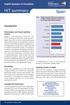 Health Systems in Transition HiT summary European Observatory on Health Systems and Policies Spain Fig.1 Health care expenditure as a proportion of GDP in Spain, selected countries and EU average, 2003,
NATIONAL HEALTH ACCOUNTS:
 THE REPUBLIC OF UGANDA MINISTRY OF HEALTH NATIONAL HEALTH ACCOUNTS: KEY MESSAGES (FY2010/11 & 2011/12) NATIIONAL HEALTH ACCOUNTS: KEY MESSAGES Introduction The overall purpose of the National Health Accounts
3. The first stage public consultation conducted from March to June 2008 aimed at consulting the public on
 EXECUTIVE SUMMARY The Government published the Healthcare Reform Consultation Document Your Health, Your Life (the Consultation Document ) on 13 March 2008 to initiate the public consultation on healthcare
COUNTRY UPDATE ORGANISATION OF THE HEALTH CARE SYSTEM IN AUSTRALIA
 COUNTRY UPDATE ORGANISATION OF THE HEALTH CARE SYSTEM IN AUSTRALIA 1. Organisation Briefly outline the structural provision of health care. The Australian health system is complex, with many types and
Regional Inequality in Healthcare in China
 Regional Inequality in Healthcare in China QIAN Jiwei* Regional inequality in healthcare in China is particularly wide. Since 2007, the central government has increased earmarked healthcare transfers to
Health Policy, Administration and Expenditure
 Submission to the Parliament of Australia Senate Community Affairs Committee Enquiry into Health Policy, Administration and Expenditure September 2014 Introduction The Australian Women s Health Network
HOSPITAL SUBSECTOR ANALYSIS
 HOSPITAL SUBSECTOR ANALYSIS Fourth Health Sector Development Project (RRP MON 41243) A. Introduction 1. The health status of the people of Mongolia has generally improved over the years, and significant
INEQUALITIES IN HEALTH CARE SERVICES UTILISATION IN OECD COUNTRIES
 INEQUALITIES IN HEALTH CARE SERVICES UTILISATION IN OECD COUNTRIES Marion Devaux, OECD Health Division 2014 QICSS International Conference on Social Policy and Health Inequalities, Montreal, 9-May-2014
Quality in and Equality of Access to Healthcare Services
 Quality in and Equality of Access to Healthcare Services Executive Summary European Commission Directorate-General for Employment, Social Affairs and Equal Opportunities Manuscript completed in March 2008
Comparison of Healthcare Systems in Selected Economies Part I
 APPENDIX D COMPARISON WITH OVERSEAS ECONOMIES HEALTHCARE FINANCING ARRANGEMENTS Table D.1 Comparison of Healthcare Systems in Selected Economies Part I Predominant funding source Hong Kong Australia Canada
SWECARE FOUNDATION. Uniting the Swedish health care sector for increased international competitiveness
 SWECARE FOUNDATION Uniting the Swedish health care sector for increased international competitiveness SWEDEN IN BRIEF Population: approx. 9 800 000 (2015) GDP/capita: approx. EUR 43 300 (2015) Unemployment
The family physician system reform in small cities in I.R. Iran
 Evaluating Impact: Turning Promises into Evidence The family physician system reform in small cities in I.R. Iran Masoud Abolhallaj, Abbas Vosoogh, Arash Rashidian, Alireza Delavari Cairo, January 2008
Islamic Republic of Afghanistan Ministry of Public Health. Contents. Health Financing Policy 2012 2020
 Islamic Republic of Afghanistan Ministry of Public Health Contents Health Financing Policy 2012 2020 Table of Content 1. Introduction 1 1.1 Brief County Profile 1 1.2 Health Status Data 1 1.3 Sources
Methods of financing health care
 International Social Security Association Fifteenth International Conference of Social Security Actuaries and Statisticians Helsinki, Finland, 23-25 May 2007 Methods of financing health care Finnish national
Colombia REACHING THE POOR WITH HEALTH SERVICES. Using Proxy-Means Testing to Expand Health Insurance for the Poor. Differences between Rich and Poor
 REACHING THE POOR WITH HEALTH SERVICES 27 Colombia Using Proxy-Means Testing to Expand Health Insurance for the Poor Colombia s poor now stand a chance of holding off financial catastrophe when felled
OECD Reviews of Health Systems Mexico
 OECD Reviews of Health Systems Mexico Summary in English The health status of the Mexican population has experienced marked progress over the past few decades and the authorities have attempted to improve
Introduction of a national health insurance scheme
 International Social Security Association Meeting of Directors of Social Security Organizations in the English-speaking Caribbean Tortola, British Virgin Islands, 4-6 July 2005 Introduction of a national
HEALTH CARE DELIVERY IN BRITAIN AND GERMANY: TOWARDS CONVERGENCE?
 HEALTH CARE DELIVERY IN BRITAIN AND GERMANY: TOWARDS CONVERGENCE? Background: Two different health care systems Generally speaking, the British and the German health care systems differ not only with respect
How To Understand Medical Service Regulation In Japanese
 Overview of Medical Service Regime in Japan 75 years or older 10% copayment (Those with income comparable to current workforce have a copayment of 30%) 70 to 74 years old 20% copayment* (Those with income
INTERNATIONAL PRIVATE PHYSICAL THERAPY ASSOCIATION DATA SURVEY
 INTERNATIONAL PRIVATE PHYSICAL THERAPY ASSOCIATION DATA SURVEY May 215 International Private Physical Therapy Association (IPPTA) IPPTA Focus Private Practitioner Business Education Benchmarking for Member
State of Arkansas Department of Insurance
 State of Arkansas Department of Insurance Consideration of the Basic Health Plan in Arkansas May 31, 2012 Purpose The Arkansas Insurance Department requested that PCG develop a report describing the potential
Mapping of Health Care Providers in Ireland to the Provider Classification (ICHA HP) within the System of Health Accounts.
 Mapping of Health Care Providers in Ireland to the Provider Classification (ICHA HP) within the System of Health Accounts December 2015 Mapping of the Health Care Providers in Ireland to the SHA Provider
Swe den Structure, delive ry, administration He althcare Financing Me chanisms and Health Expenditures Quality of Bene fits, C hoice, Access
 Sweden Single payer, universal healthcare system, with 21 county councils as the primary payer (reimburser) Administration of healthcare plan is decentralized in the hands of the county councils Central
Synopsis of Healthcare Financing Studies
 Synopsis of Healthcare Financing Studies Introduction (DHA) is a set of descriptive account that traces all the financial resources that flow through Hong Kong s health system over time. It is compiled
COUNTRY CASE STUDY HEALTH INSURANCE IN SOUTH AFRICA. Prepared by: Vimbayi Mutyambizi Health Economics Unit, University of Cape Town
 COUNTRY CASE STUDY HEALTH INSURANCE IN SOUTH AFRICA Prepared by: Vimbayi Mutyambizi Health Economics Unit, University of Cape Town Preparation of this material was funded through a grant from the Rockefeller
Social health protection : Comparison between Belgium and Thailand. Thomas Rousseau COOPAMI-NIHDI
 Social health protection : Comparison between Belgium and Thailand Thomas Rousseau COOPAMI-NIHDI 3.11.2014 Overview 1. Comparison between Belgium and Thailand 2. The Belgium system more in detail Overview
VOLUNTARY HEALTH INSURANCE AS A METHOD OF HEALTH CARE FINANCING IN EUROPEAN COUNTRIES
 VOLUNTARY HEALTH INSURANCE AS A METHOD OF HEALTH CARE FINANCING IN EUROPEAN COUNTRIES Marta Borda Department of Insurance, Wroclaw University of Economics Komandorska St. No. 118/120, 53-345 Wroclaw, Poland
Surprisingly Australia is a civilized and developed country! We have universal health care (more or less)!
 Surprisingly Australia is a civilized and developed country! We have universal health care (more or less)! s About 21 million people live in a country of 7,692,024 square kilometers So we seem to have
Restructuring Regional Health Systems In Russia Patricio V. Marquez and Nadezhda Lebedeva 1
 Restructuring Regional Health Systems In Russia Patricio V. Marquez and Nadezhda Lebedeva 1 Key Messages The delivery of health services in Russia is a federal, regional and municipal responsibility. Reform
Primary care is the first point of contact for individuals and families in a continuing healthcare process.
 APPENDIX C HONG KONG S CURRENT PRIVATE HEALTHCARE SECTOR An Overview of Hong Kong s Healthcare System C.1 Hong Kong s healthcare delivery system is characterized by its dual public and private healthcare
Evolution of informal employment in the Dominican Republic
 NOTES O N FORMALIZATION Evolution of informal employment in the Dominican Republic According to official estimates, between 2005 and 2010, informal employment fell from 58,6% to 47,9% as a proportion of
Healthcare systems an international review: an overview
 Nephrol Dial Transplant (1999) 14 [Suppl 6]: 3-9 IMephrology Dialysis Transplantation Healthcare systems an international review: an overview N. Lameire, P. Joffe 1 and M. Wiedemann 2 University Hospital,
WELFARE STATES AND PUBLIC HEALTH: AN INTERNATIONAL COMPARISON. Peter Abrahamson University of Copenhagen [email protected]
 WELFARE STATES AND PUBLIC HEALTH: AN INTERNATIONAL COMPARISON Peter Abrahamson University of Copenhagen [email protected] ECLAC,Santiago de Chile, Chile,November 3, 2008 Structure of presentation 1. Health
Full report - Women in the labour market
 Full report - Women in the labour market Coverage: UK Date: 25 September 2013 Geographical Area: UK Theme: Labour Market Key points The key points are: Rising employment for women and falling employment
Private Health Insurance Options in Egypt Discussion with EISA Chairman and senior staff
 Private Health Insurance Options in Egypt Discussion with EISA Chairman and senior staff Ibrahim Shehata April 27, 2006 Background Health expenditure is dominated by household direct out-ofpocket payments
The State of Oral Health in Europe. Professor Kenneth Eaton Chair of the Platform for Better Oral Health in Europe
 The State of Oral Health in Europe Professor Kenneth Eaton Chair of the Platform for Better Oral Health in Europe 1 TOPICS TO BE COVERED What is the Platform? Its aims and work The report (State of Oral
A Journey to Improve Canada s Healthcare System
 A Journey to Improve Canada s Healthcare System The Quest Can a public/private hospital system coexist and thrive and improve Canada s system? The Journey Visited Australia and New Zealand to find out
Center for Medicare and Medicaid Innovation
 Center for Medicare and Medicaid Innovation Summary: Establishes within the Centers for Medicare and Medicaid Services (CMS) a Center for Medicare & Medicaid Innovation (CMI). The purpose of the Center
Young Italians difficulties in finding work threaten to undermine investment in education.
 Education at a Glance: OECD Indicators is the authoritative source for accurate and relevant information on the state of education around the world. It provides data on the structure, finances, and performance
NATIONAL HEALTH INSURANCE HEALTHCARE FOR ALL SOUTH AFRICANS
 NATIONAL HEALTH INSURANCE HEALTHCARE FOR ALL SOUTH AFRICANS The plan for National Health Insurance National Health Insurance is a way of providing good healthcare for all by sharing the money available
IMPROVING DENTAL CARE AND ORAL HEALTH A CALL TO ACTION. February 2014 Gateway reference: 01173
 1 IMPROVING DENTAL CARE AND ORAL HEALTH A CALL TO ACTION February 2014 Gateway reference: 01173 2 Background NHS dental services are provided in primary care and community settings, and in hospitals for
Health Financing in Vietnam: Policy development and impacts
 Health Financing in Vietnam: Policy development and impacts Björn Ekman Department of Clinical Sciences Lund University, Sweden Sydney 17 September, 2008 Outline of Presentation Part A: Health financing
Health Care Systems: Efficiency and Policy Settings
 Health Care Systems: Efficiency and Policy Settings Summary in English People in OECD countries are healthier than ever before, as shown by longer life expectancy and lower mortality for diseases such
Comparative Health Care Systems. Folland et al Chapters 22
 Comparative Health Care Systems. Folland et al Chapters 22 Chris Auld Economics 317 March 23, 2012 Health Care Systems. There are many different forms of health care delivery in place in different countries.
Thinking of introducing social health insurance? Ten questions
 Thinking of introducing social health insurance? Ten questions Ole Doetinchem, Guy Carrin and David Evans World Health Report (2010) Background Paper, 26 HEALTH SYSTEMS FINANCING The path to universal
APPENDIX B HONG KONG S CURRENT HEALTHCARE SYSTEM. Introduction
 APPENDIX B HONG KONG S CURRENT HEALTHCARE SYSTEM Introduction B.1 Over the years, Hong Kong has developed a highly efficient healthcare system and achieved impressive health outcomes for its population.
United 2020: Measuring Impact
 United 2020: Measuring Impact Health The Institute for Urban Policy Research At The University of Texas at Dallas Kristine Lykens, PhD United 2020: Measuring Impact Health Overview In the Dallas area,
The Future European Constitution
 Flash Eurobarometer European Commission The Future European Constitution Fieldwork : January 2004 Publication : February 2004 Flash Eurobarometer 159 - TNS Sofres / EOS Gallup Europe This survey was requested
Registered Nurses. Population
 The Registered Nurse Population Findings from the 2008 National Sample Survey of Registered Nurses September 2010 U.S. Department of Health and Human Services Health Resources and Services Administration
Child and adolescent psychiatry in Iceland
 Child and adolescent psychiatry in Iceland Report from a brief study tour Anders Milton, B.Sc., MD, Ph.D. David Eberhard, MD, Ph.D. Summary Aim of the study In Iceland the prescription and consumption
UHI Explained. Frequently asked questions on the proposed new model of Universal Health Insurance
 UHI Explained Frequently asked questions on the proposed new model of Universal Health Insurance Overview of Universal Health Insurance What kind of health system does Ireland currently have? At the moment
Commission on the Future of Health and Social Care in England. The UK private health market
 Commission on the Future of Health and Social Care in England The UK private health market The NHS may dominate the provision of health care in England, but that still leaves the country with a significant
MYANMAR HEALTH CARE SYSTEM
 MYANMAR HEALTH CARE SYSTEM M yanmar health care system evolves with changing political and administrative system and relative roles played by the key providers are also changing although the Ministry of
Consultation: Two proposals for registered nurse prescribing
 Consultation: Two proposals for registered nurse prescribing Submission Form Please read and refer to the consultation document Two proposals for registered nurse prescribing available on the Nursing Council
China s 12th Five-Year Plan: Healthcare sector
 China s 12th Five-Year Plan: Healthcare sector May 2011 KPMG CHINA One of the guiding principles of the 12th Five-Year Plan (5YP) is inclusive growth : helping ensure that the benefits of the country s
Public / private mix in health care financing
 Public / private mix in health care financing Dominique Polton Director of strategy, research and statistics National Health Insurance, France Couverture Public / private mix in health care financing 1.
Comparisons of Health Expenditure in 3 Pacific Island Countries using National Health Accounts
 Comparisons of Health Expenditure in 3 Pacific Island Countries using National Health Accounts Hopkins Sandra* Irava Wayne. ** Kei Tin Yiu*** *Dr Sandra Hopkins PhD Director, Centre for International Health,
Australia s primary health care system: Focussing on prevention & management of disease
 Australia s primary health care system: Focussing on prevention & management of disease Lou Andreatta PSM Assistant Secretary, Primary Care Financing Branch Australian Department of Health and Ageing Recife,
THE MANAGEMENT OF SICKNESS ABSENCE BY NHS TRUSTS IN WALES
 THE MANAGEMENT OF SICKNESS ABSENCE BY NHS TRUSTS IN WALES Report by Auditor General for Wales, presented to the National Assembly on 30 January 2004 Executive Summary 1 The health and well being of the
NERI Quarterly Economic Facts Summer 2012. 4 Distribution of Income and Wealth
 4 Distribution of Income and Wealth 53 54 Indicator 4.1 Income per capita in the EU Indicator defined National income (GDP) in per capita (per head of population) terms expressed in Euro and adjusted for
Capacity Building in the New Member States and Accession Countries on Further Climate Change Action Post-2012
 Capacity Building in the New Member States and Accession Countries on Further Climate Change Action Post-2012 (Service Contract N o 070402/2004/395810/MAR/C2) 29 November 2007 Almost all New Members States
RUNNING HEAD: Healthcare, A Comparison: Brazil and the United States. A Comparison of Healthcare between Brazil and the United States.
 Healthcare 1 RUNNING HEAD: Healthcare, A Comparison: Brazil and the United States A Comparison of Healthcare between Brazil and the United States Carly Paterson University at Buffalo Healthcare 2 There
COUNTRY REPORT: CAMBODIA Sophal Oum, MD, MTH, DrPH, Deputy Director-General for Health
 COUNTRY REPORT: CAMBODIA Sophal Oum, MD, MTH, DrPH, Deputy Director-General for Health I. ESTABLISHED PROFESSIONAL QUALIFICATIONS IN HEALTH, 2003 Sector Medical Service, Nursing, First Aid Medical Service
Itella Information survey: Invoicing in 16 European countries
 Itella Information survey: Invoicing in 16 European countries A quantitative study based on comparative surveys of 9 037 consumers and 4 765 invoice decision-makers from enterprises in 16 countries regarding
Finland Population: Fertility rate: GDP per capita: Children under 6 years: Female labour force participation:
 Finland Population: 5.21 m. Fertility rate: 1.7. GDP per capita: USD 26 500. Children under 6 years: 399 889. Female labour force participation: 72% of women (15-64 years) are employed, 18.2% of whom are
Public Consultation on the White Paper on Universal Health Insurance
 Public Consultation on the White Paper on Universal Health Insurance The information collected from the submissions made through this consultation process will be used for the purposes of informing the
Improving Emergency Care in England
 Improving Emergency Care in England REPORT BY THE COMPTROLLER AND AUDITOR GENERAL HC 1075 Session 2003-2004: 13 October 2004 LONDON: The Stationery Office 11.25 Ordered by the House of Commons to be printed
Conditions for Development of the Private Health Insurance in Poland. Lukasz Jasinski. Maria Curie Skłodowska University, Lublin, Poland
 Journal of US-China Public Administration, February 2015, Vol. 12, No. 2, 153-165 doi: 10.17265/1548-6591/2015.02.008 D DAVID PUBLISHING Conditions for Development of the Private Health Insurance in Poland
The practice of medicine comprises prevention, diagnosis and treatment of disease.
 English for Medical Students aktualizované texty o systému zdravotnictví ve Velké Británii MUDr Sylva Dolenská Lesson 16 Hospital Care The practice of medicine comprises prevention, diagnosis and treatment
The healthcare in Poland
 The healthcare in Poland The Health Care system in Poland A group of people and institutions established to provide the healthcare for the population. Polish health care system is based on an insurance