
TRAINERS GUIDELINE FOR MEDICAL ASSISTANTS TRAINING
|
|
|
- Pamela Horn
- 10 years ago
- Views:
Transcription
1 TRAINERS GUIDELINE FOR MEDICAL ASSISTANTS TRAINING Developed by Centre for Medical Education (CME) Directorate General of Health Service Dhaka Supported by World Health Organization under BAN HRH Programme December 2008

2 Foreword Medical Assistants play a very vital role in the primary health care services. It is time felt need to provide training for them to update their knowledge, acquiring skills and developing positive attitude for delivering effective services. Keeping these in mind, this initiative for developing trainers guideline for medical assistants training will properly serve the purposes. I congratulate all who were involved in designing and developing the trainers guideline for medical assistants training, particularly the Director, Centre for Medical Education (CME), My special thanks to CME, TTU, DGHS & WHO for technical & financial support. Professor M A Faiz Director General of Health Services DGHS, Mohakhali, Dhaka

3 Preface Medical Assistants are providing health care services at the primary health care level. It is the first level of contact point with the patients and health care providers. Medical Assistants need to be trained properly so that they can serve the people. Trainers guideline for Medical Assistants training has been developed through a participatory approach by a team of experts and medical educationists. This guideline will serve a uniform guideline to the trainers to train the medical assistants. This Trainers Guideline for Medical Assistants Training will be reviewed and updated time to time to make it more user friendly. My sincere thanks to Dr. Mainuddin Ahmed Chowdhury, Director, Centre for Medical Education (CME) for his supports. I like to thanks Dr. Md. Humayun Kabir Talukder, Associate Professor, CME, Co-ordinator of Working Group for his continuous technical assistance and co-ordination to prepare this guideline. My special thanks to WHO for technical and financial support. Lastly, I would like to extend my deep and sincere gratitude to all technical persons, faculty members and others computer & secretarial support staff of CME & TTU who shared their expertise and worked hard to produce this valuable document. Prof. Dr. Hosne-Ara Tahmin ADG (Admin) & Line Director, IST DGHS, Mohakhali, Dhaka

4 Acknowledgement This is indeed a pleasant responsibility to bring out this Trainers Guideline for Medical Assistants Training which has been developed through a participatory approach by a team of experts and medical educationists. I would like to express my deep gratitude to Prof. M A Faiz, Director General of Health Services, Prof Dr. Hosne-Ara Tahmin, ADG (Admin), & Line Director, IST, DGHS, & Prof. Dr. Khondhaker Md. Shefyetullah, Director of Medical Education and HMPD, DGHS, under their leadership the plan of developing the Trainers Guideline for Medical Assistants Training has been materialized, and they provided immense support and encouragement to finish the work. My sincere thanks are extended to Dr. Duangvadee Sungkhobol, WR, WHO, Bangladesh & Dr. Khaled M Hassan, Consultant (HRH), WHO for financial & technical support which enabled us to do the job. I am grateful to all the resource persons from different institutes, organizations specially the faculty of TTU & DGHS and Center for Medical Education (CME), who devoted their immense effort, time and hard work to develop this guideline. My special thanks to Dr. Md. Humayun Kabir Talukder, Associate Professor, Teaching Methodology, CME, Working Coordinator for his continuous efforts without which it would not be possible to complete this work. My sincere thanks to all other members of CME and TTU, IST- DGHS who were directly or indirectly involved in preparation of this Trainers Guideline for Medical Assistants Training. Dr. Mainuddin Ahmed Chowdhury Director Centre for Medical Education, (CME) 4

5 List of Contributors 1. Prof. Hosne-Ara Tahmin, ADG, Admin and LD, IST, DGHS, Mohakhali, Dhaka 2. Dr. Mainuddin Ahmed Chowdhury, Director, CME, Mohakhali,Dhaka 3. Prof, Shamsun Nahar Begum, Professor, Teaching Methodology, CME, Dhaka 4. Prof. Mahmuda Begum, Professor, Cur.Develop & Evaluation, CME, Dhaka 5. Prof. Monsur Khalil, CME, Dhaka 6. Dr. Md. Abul Monsur Khan, DD, PM-IST, DGHS. 7. Dr. Saizuddin Ahmed, DD MA, DGHS 8. Dr. Md. Humayun Kabir Talukder, Working Co-ordinator, & Associate Professor, Teaching Methodology, CME, Dhaka 9. Dr. Mohammad Faruque, Assoc. Professor. Cur Develop & Evaluation, CME, Dhaka 10. Dr. AKM Asaduzzaman, Asst Professor, CME, Dhaka 11. Dr. Ashraf Uddin Ahmed, Asst Professor, CME, Dhaka 12. Dr. Iqbal Ahmed, DPM, TTU, DGHS 13. Dr. Moksed Ali, DPM, TTU, DGHS 14. Dr. S.A.J. Md. Musa, DPM, TTU, DGHS 15. Dr. Tahmina Nargis, Research Associate, CME, Dhaka 16. Dr. Tabassum Ferdous Khan, Lecturer, CME, Dhaka 17. Dr. AN Md. Joynal Abedin, DPM, IST, DGHS 18. Dr. AZM Abul Fazal, DPM, IST, DGHS 19. Dr. Kazi Khairul Alam, Lecturer, CME, Dhaka Computer Compose Kohinoor Akhter, CME 5

6 TABLE OF CONTENTS Lesson Topic Page Lesson-1 Basic Concepts of Training and Education 7 Lesson -2 Health, Nutrition & Population Sector Program (HNPSP) Concept 12 Lesson -3 Safe Maternity, Emergency Obstetric Care, Antenatal, Natal & Postnatal Care 13 Lesson -4 Cough, Respiratory Distress 14 Lesson -5 Diarrhoea, Fever, Malnutrition & Anaemia 15 Lesson -6 Comprehensive Care of Children Below 2 Months Age 16 Lesson -7 Neonatal Care 17 Lesson -8 Lesson -9 Lesson -10 EPI-Preventable diseases, Vaccines, Immunization, School Health Program, Primary management of common emergencies, dyspnoea, common diseases of mouth, teeth and ear. Family Planning Methods, Hormone, Condom, IUCD and Sterilization Lesson -11 Food & Nutrition, Vitamins & Minerals 22 Lesson -12 Prevention and Control of RTI/STD/AIDS, and Health Care of Adolescent 23 Lesson -13 Leprosy and TB (Based on National Leprosy & TB Control Program) 24 Lesson -14 Malaria, Dengue, Filaria, Kala-azar and Worm Infestation 25 Lesson -15 Disaster Management in Health Sector 26 Lesson -16 Diagnosis, Management and Prevention of Arsenicosis 27 Lesson -17 Government Service: General Rules and Terms 28 Lesson -18 Attitudinal & Behavioral Change Communications 29 Lesson -19 Maintenance of Register and Forms 30 Annexure TOT program schedule for medical assistants training 31 6

7 Lesson -1 Basic concepts of Training and Education Introduction: The purpose of this session is to introduce the participants to the board concepts of Training and Education. Training and education are very important for human resource development. Efficient and potential health manpower in the health sector is crucial for achieving the goals of MGD. Training helps in the development of potential capabilities of health personnel in different aspects, particularly in operational management. Objectives: At the end of this session the participants will be able to: define training and education; highlight the training needs; identify basic difference between training and education; describe learning with its basic principles, characteristics and major domains; mention the key roles of a trainer; describe the facilitation technique. Time: 120 Mins. Topics covered: 1. Training and education; 2. Importance of training and education; 3. Difference between training and education; 4. Learning with its basic principles, characteristics and major domains; 5. Teaching and steps of training plan / programme; 6. Key roles of a trainer / facilitator; 7. Facilitation skills 8. Review, session evaluation and feedback. 7

8 Elaborated steps: STEPS I. Ice -Breaking 05 Mins FACILITATOR'S NOTE Introduce yourself Conduct an ice-breaking which can play important role to create interest and involve the participants in the session. II. III. IV. Discussion on Training 20 mins Discussion: Basic difference between Training and Education 10 mins Discussion on the Following 20 mins 1. Who need training? 2. Why need training? Distribute a piece of paper Ask the participant to write what they understand by "Training". Every participant will read what they have written on the paper. Invite discussion/comments on that topic. After discussion sum up that has come from their own definition. Notice that almost all the key concepts they have covered and finally conclude with the conventional accepted definition of "Training" "Training is a disciplined and systematic process of improving knowledge, skill and or changing attitude according to desired objectives" Ask the participants to find out the basic difference between training and education Encourage discussion and try to figure out the differences based on individual and their subjective opinions. Stress on finding out key words and invite their opinion. After discussion facilitator will clarify the basic difference as follows: Training is mainly skill building process but education is mainly knowledge building process (Also refer to the handout) Ask the participants - Who need training? Encourage the participants to share their ideas. Write answer on the board. After appreciating the participants for expressing their ideas, it should be concluded that training is required for pre-service & in-service workers when they are not able to perform their job properly. Ask the participants, " Why need training? Encourage them to give their ideas/opinions. After discussion conclude that training is needed to improve the knowledge and skills of employees and /or change of attitude if required. Now, ask the participants, when they did organize training for their employees? The contribution from the participants should be 8

9 written on the board and finally conclude that. training is needed when the working capabilities (performance)of the employees of any organization is below desired level due to lack of knowledge & skill or change of attitude V. Discussion on Learning with Its Following Concepts 20 mins. - Domains of Learning - Basic Principles of Learning - Basic Characteristics of Learning VI. Discusion on Following - 20 mins - Teaching Distribute a piece of paper to each of the participants. Ask the participants to mention what is learning? Now request the participants to read what they have written (Every participants has to read one after another). After discussion finally conclude that, "Learning is a process resulting in some modification of the way of thinking, feeling and doing of the learner" Generate discussion on domains of learning. Show the picture of human structure and explain the three main domains according to their concern After explanation and discussion it may be concluded that there are three major domains of learning, namely: - Cognitive (knowledge) - Affective (emotional) - Psychomotor (practical) Ask the participants, what are the basic principles of learning? Encourage the participants to answer the question Take the information on principles of learning from interested participants After discussion conclude that following are the basic principle of learning. a) Learning is individual b) Motivation is the key c) Relevance of learning should be clear d) Feedback to learner is important Ask the participants what are the basic characteristics of learning? Take the opinion from the participants summarize the basic characteristics of learning After discussion with the participants summarize the basic characteristics of learning. Ask the participants what is teaching? Write the answer on the board/flipchart. After discussion conclude that Teaching is interaction between teacher and student in order 9

10 to bring expected change in the behaviour - Steps of Designing a Training Programme / Plan - Major Roles of a Trainer VII. Exercise / Group Work on Selected Questions and Presentation - 20 mins. VIII. Review, Session Evaluation and Feedback - 05 mins Ask the participants to raise their hand how many of them used to design training program If some body is found who already designed training/program. Ask them how did they do that? After discussion, show the typical design/training plan and explain its major steps namely: planning, preparation and presentation. Ask the participants what are the important roles of a trainer? Appreciate the correct answer. After discussion highlight that following are the roles of a trainer- - Learning specialist: designing, developing, conducting and evaluating learning experiences. - Administrator: arranging, coordinating and maintaining support activities. - Career development specialist: assisting employees in career planning and helping them in implementing their plan. - Researcher: facilitating or conducting research on all aspects of training. Group members have to exercise on the supplied questionnaire and after discussion among the group members, they have to develop transparency / flip chart for presentation. One member from each group should present the group work for five minutes After completion of presentation of all groups, there should be discussion on the presentations for 15 minutes Facilitator will review the subjects which have been already discussed in this session. Ask the following questions to evaluate this season: 1. What is training and how does it differ from education? 2. Who, Why and When need Training? 3. What is learning? Discuss its domains. Encourage the participants to answer the questions. Try to involve most of the participants. Distribute hand out Conclude session with writing remarks. 10

11 Difference Between Education and Training EDUCATION 1. Education is a continuous process pertaining to bring in desired behavior changes 2. It is mainly a knowledge building process. TRAINING 1. Training is a disciplined and systematic process of improving knowledge, skills and changing attitudes, according to desired objective. 2. It is mainly a skill building process. 3. It may or may not bring in effective behavioral changes after a definite course of time. 3. It usually brings in effective behavioral changes after a definite course of time. 4. Usually the duration is longer. 4. Usually the duration is shorter. 5. Educational curriculum is usually designed according to the need of the country. 5. Training curriculum is designed according to the need of the specific organization or program. 6. It may or may not be in-service (there is exception) It is usually in - service (there is exception) 11

12 Lesson -2 Health Nutrition and Population Sector Program (HNPSP) Concept Objectives: At the end of the session, the participants will be able to explain the background and aims of HNPSP indicate the priority targets of the HNPSP activities describe the different activities of HNPSP Transparency, OHP, Handout, Manual, Marker, Chalk & Duster Time : 1 hour Sl Contents Methods/Media Time 1 Introduction, Objectives of the session, Review of existing knowledge Brief presentation 05 minutes 2. Background, goal of HNPSP and the main Discussion, asking activities of HNPSP question & answer 3. Programs of the HNPSP Discussion, question & answer 4. Elements of Essential Health Care Package. Discussion & Various levels of health care services presentation 20 minutes 15 minutes 15 minutes 5. Session evaluation Question/answer 05 minutes 12

13 Lesson -3 Safe Maternity, Emergency Obstetric Care, Antenatal, Natal & Postnatal Care Objectives : At the end of the session learners will be able to - describe the essential conditions of safe maternity define ANC and state the objectives of antenatal care estimate the EDD (expected date of delivery) and identify and explain the sign and symptoms of at risk pregnancy describe the different aspects of emergency obstetric care. describe the causes of maternal mortality and state where such cases should be referred describe safe maternity and post natal care Transparency, OHP, Handout, Manual, Marker pens, Chalk board, Chalk and duster, Poster Time : 1 hour Sl Contents Methods/Media Time 1 Introduction, Objectives of the session, Review Brief presentation 05 minutes of existing knowledge 2. Essential conditions of safe maternity Discussion, 10 minutes transparency projection 3. Antenatal care and it's objectives. Discussion Discussion, 10 minutes about postnatal care transparency projection 4. Estimation of EDD (expected date of delivery). Discussion, 10 minutes Signs and symptoms of at risk pregnancy transparency projection 5. Different aspects of emergency obstetric care Discussion, 10 minutes transparency projection 6. Causes of maternal mortality and referral of Discussion, 10 minutes such cases. transparency projection 7. Session evaluation Question-answer 05 minutes 13

14 Lesson -4 Cough, Respiratory Distress Objectives : At the end of the session learner will be able to - mention common pediatric dangers between 2 months to 5 years of age identify common pediatric danger signs evaluate the given chart to determine health conditions of children between 2 months to 5 years of age state the age related normal respiratory rate state the signs and symptoms of respiratory distress decide when to refer a case of cough or respiratory distress to hospital Transparency, OHP, Handout, Manual, Marker pens, Chalk board, Chalk and Duster, Video cassette recordings of cough or respiratory distress Time : 1 hour Sl Contents Methods/Media Time 1 Introduction, Objectives of the session, Review Brief presentation 05 minutes of existing knowledge 2. Identification of the danger signs in children Discussion, Questions 10 minutes between 2 months to 5 years of age 3. Evaluation of chart to assess the health condition of children between 2 months to 5 years of age Discussion, Questions 10 minutes 4. Signs and symptoms of different stages of respiratory distress. Age related normal respiratory rate. Discussion, Questions 10 minutes 5. Manifestations of pneumonia Discussion, Questions 10 minutes 6. Referral of a patient of respiratory distress Discussion, Questions 10 minutes 7. Session evaluation Questions 5 minutes 14

15 Lesson -5 Diarrhoea, fever, malnutrition & anaemia Objectives : At the end of the session learner will be able to - define diarrhoea and mention its types determine the severity of dehydration of a patient of diarrhoea describe the management of diarrrhoea according to the severity of dehydration describe the essential components for prevention of diarrhoea mention the types of fever describe the primary management of malaria and other types of fever diagnose patients of high fever (hyperpyrexia) and rapidly refer them to hospital classify malnutrition and anaemia according to severity OHP Transparency, Marker pens, easel board, easel paper, Chalk board, Chalk and Duster Time : 1 hour Sl Contents Methods/Media Time 1 Introduction, Objectives of the session, Review Brief presentation 05 minutes of existing knowledge 2. Definition of diarrhea and its types. Discussion, Questions 10 minutes Determination of the severity of dehydration in a diarrhoea patient. 3. Management of diarrhoea according to severity Discussion, Questions 10 minutes of dehydration 4. Classification of fever. Identification of a Discussion, Questions 10 minutes patient with hyperpyrexia. 5. Providing primary management of malaria and Discussion, Questions 10 minutes other fever. 6. Definition and causes of anaemia. Clinical Questions 10 minutes features & management of anaemia 7. Session evaluation Questions 05 minutes 15

16 Lesson -6 Comprehensive Care of Children Below 2 Months Age Objectives : At the end of the session learner will be able to - determine ailments of children below 2 months of age provide primary care identify sick children and can rapidly refer them to hospital describe immediate care of the newborns describe care of newborns during the initial 6 hours up to 28 days of birth describe asphyxia mention the steps, take preparation and perform resuscitation of the newborn Hand out, Guidebook, OHP Transparency, Easel paper, Chalk board & Marker pens Time: 1 hours 30 minutes Sl Contents Methods/Media Time 1 Introduction, Objectives of the session, Review Brief presentation 05 minutes of existing knowledge 2. Diagnosing skill and primary care for children Discussion, Questions 10 minutes under 2 months of age 3. Identification sick children and rapid referral to Discussion, Questions 10 minutes hospital and immediate care to the new born 4. Care of children during the initial 6 hours to 28 Discussion, Questions 15 minutes days of age. 5. Physical examination of the newborn Discussion, Questions 15minutes 6. Asphyxias and preparation for resuscitation of Discussion, Questions 15 minutes the newborn 7. Steps of resuscitation of the newborn Discussion, Questions 15 minutes 8. Session evaluation Questions 5 minutes 16

17 Lesson -7 Neonatal Care Objectives : At the end of the session, the learners will be able to explain the neo-natal care within 6 hrs after birth and between 6 hrs to 28 days describe the steps of the neo-natal resuscitation describe the care of the neonate after resuscitation. Teaching Guides, Transparency, Clip-chart, Hand Out Time -1 hour Sl Contents Methods/ Media Time 1 Introduction, Objectives of the session, Review of Existing knowledge Brief presentation 05 minutes 2. Neo-natal care within 6 hours of the birth Brief presentation, question & answer session 3. Neo-natal care between 6 hours to 28 days after birth Brief presentation, question & answer session 4. Steps of neo-natal resuscitation Brief presentation, question & answer session 5. Neonatal care after the resuscitation Brief presentation, question & answer session 10 minutes 15 minutes 15 minutes 10 minutes 6. Session evaluation Question & answer 05 minutes 17

18 Lesson -8 EPI-Preventable diseases, Vaccines, Immunization, School Health Program Objectives: At the end of the session learner would be able to - mention the transmission, clinical manifestation, complications and prevention of EPI-preventable diseases state the EPI-schedule for children and women state the procedure of vaccine preservation and technique of vaccination mention the side effects & complications of vaccination & its management describe the role of field workers in the hazards of vaccination, define of AEFI and how AEFI can be recognized including its prevention recognize AFP, neo-natal tetanus & measles and mention the role of field workers mention the health services under school health program & describe the strategies Handout, Guide book, Easel paper (Training supportive), OHP Marker, Transparency Time: 2 hours Sl Contents Methods/Media Time 1 Introduction, Objectives of the session, Review Brief presentation 05 minutes of Existing knowledge 2. Transmission, clinical manifestation, Discussion, question 20 minutes complications and prevention of EPI- answer preventable diseases 3. Immunization schedule in the EPI-program Discussion, question 10 minutes answer 4. Vaccination Technique, Maintenance of cold Discussion, 20 minutes chain transparency 5. Hazards of immunization and their Discussion, question 15 minutes management 6. Role of field workers in diagnosing these diseases AFP, neonatal tetanus, measles and various stages of disease process answer Discussion, question answer 15 minutes 7. Roles of health worker in recognizing AEFI Discussion, question 15 minutes including its prevention. answer 8. School health program, strategies of health Discussion, question 15 minutes education in school answer 9. Session evaluation Question-answer 05 minutes 18

19 Lesson -9 2 Primary Management of Common Emergencies, Dyspnoea, Common Diseases of Mouth, Teeth and Ear Objectives : At the end of the session learner will be able to - define primary health care, describe its importance, mention the functions of the primary health care provider and make provisional diagnosis of common diseases provide limited curative care of pains, explain the reasons for referral to appropriate place describe initial management of dog bite and snake bite. provide initial management of respiratory distress and explain reasons for referral to hospital. provide counseling for care of mouth and teeth. explain primary treatment of common diseases of eye and ear provide initial treatment of injury and if needed refer to hospital and explain the reasons for such referral provide primary care to burn patients and if needed can refer to health complexes /hospitals and explain reasons for referral for such decisions describe primary management of drowning perform primary treatment of above-mentioned conditions and if needed can refer them to health complex /hospitals and explain reasons for such decision. define injuries and describe it types, differentiate between injuries and state magnitude of injury in the world describe injury related morbidity mortality, and their prevention in Bangladesh OHP Transparency, Marker pens, Easel paper, Chalk board & Chalk and Duster Time: 1 hour 19

20 Sl Contents Methods/Media Time 1 Introduction, Objectives of the session, Review of existing knowledge Brief presentation 05 minutes 2. Primary health care, Treatment for pain & necessary referral 3. Primary care for dog bite, snake bite, poisoning, skin diseases (scabies, impetigo, eczema) 4. Primary care for dyspnoea. Reason for referral to hospital 5. Counseling for oral and dental health care. Primary management of common eye and ear diseases 6. Primary management of injuries referral to health complex/hospital 7. Primary care to burn patients and referral to health complex/ hospital with proper explanation Discussion, Questions Discussion, Questions Discussion, Questions Discussion Questions Discussion, Questions Discussion, Questions 20 minutes 5 minutes 5 minutes 5 minutes 5 minutes 5 minutes 8. Primary management of drowning Discussion, Questions 5 minutes 9. Session evaluation Questions 5 minutes 20

21 Lesson -10 Family Planning Methods: Hormone, Condom, IUCD and Sterilization Objectives : At the end of the session learner will be able to - explain family planning & contraceptive methods classify the contraceptive methods, mention the side effects and complications of hormonal methods of contraception explain the mode of action of IUCD, and mention complications of IUCD mention the advantages and disadvantages of condoms select women for permanent sterilization & describe the advantages and disadvantages of tubectomy OHP Transparency, Marker, Easel paper, Chalk board, Chalk and duster, Handout, Guide book, Family planning materials Time : 1 hours 30 Minutes Sl Contents Methods/Media Time 1 Introduction, Objectives of the session, Review Brief presentation 05 minutes of Existing knowledge 2. Definition of contraception & family planning, Discussion, Questions 15 minutes classification of contraceptive methods 3. Hormonal methods of family planning, side Discussion, Questions 15 minutes effects and complications of hormonal methods 4. Advantages & disadvantages of hormonal Discussion, Questions 15 minutes methods of family planning 5. Various methods of family planning Discussion, Questions 10 minutes 6. Mode of action and complications of IUCD, Discussion, Questions 15 minutes advantages & disadvantages of condoms 7. Selection criteria for permanent sterilization, Discussion, Questions 10 minutes advantages & advantages of tubectomy 8. Session evaluation Questions 5 minutes 21
22 Lesson -11 Food & Nutrition, Vitamins & Minerals Objectives : At the end of the session learner will be able to - define calorie, list the functions, nutritive values of various foods and major problems due to malnutrition and government programs for the prevention of malnutrition. describe the clinical manifestation of kwashiorkor and marasmus, clinical features of iron deficiency anemia and its prevention, Vitamin - A deficiency diseases and it prevention. explain the advantages of breast feeding, demonstrate appropriate techniques of effective breast feeding. OHP Transparency, Marker, Easel paper, Chalk board, Chalk and duster, Handout, Guide book, Family planning materials Time :1 hour Sl Contents Methods/Media Time 1 Introduction, Objectives of the session, Review of Existing knowledge Brief presentation 05 minutes 2. Definition of food, nurtrition, calorie, functions of foods, major types of malnutrition, Government program on the prevention of nutritional problems in Bangladesh 3. Principal features of kwashiorkor and marasmus, clinical features of iron deficiency anemia and its prevention, vitamin A deficiency disordered and its preventions, Importance of Zinc in the health, Iodine deficiency disorders including its prevention. 4. Advantages of breast feeding, Techniques of effective breast feeding. Discussion, Questions Discussion, Questions Discussion, Questions 20 minutes 15 minutes 15 minutes 5. Session evaluation Questions 5 minutes 22
23 Lesson -12 Prevention and Control of RTI/STD/AIDS, and Health Care of Adolescent Objectives : At the end of the session learner will be able to - define and enumerate sexually transmitted diseases. mention the causative agents and prevention of gonorrhea and syphilis. explain AIDS, its signs, symptoms, modes of transmission and prevention define adolescence, mention physical changes and explain adolescent care explain reproductive health care measures to be adopted during adolescence state elements of reproductive health care mention the complications of child birth in early motherhood explain the risks and methods of unsafe abortion, counsel against unsafe abortion OHP Transparency, Marker pens, Black board, Easel pen, Easel paper, Hand out, Guidebook, Transparency Time : 1 hours 30 minutes Sl Contents Methods/Media Time 1 Introduction, Objectives of the session, Review Brief presentation 05 minutes of existing knowledge 2. Sexually transmitted diseases (STD). Discussion, Questions 10 minutes 3. Mode of transmission, symptoms and Discussion, Questions 15 minutes prevention of AIDS. 4. Definition of adolescence & adolescent care. Discussion, Questions 15 minutes Physical changes during adolescence. 5. Reproductive health care measure that could be Discussion, Questions 10minutes adopted during adolescence. 6. Elements of reproductive health care, Discussion, Questions 10minutes complications of child birth during adolescence 7. Unsafe abortion, methods of unsafe abortion Discussion, Questions 10minutes and its complications 8. Danger of unsafe abortion Discussion, Questions 10minutes 9. Session evaluation Questions 5 minutes 23
24 Lesson -13 Leprosy and TB (Based on National leprosy & TB Control Program) Objectives : At the end of the session learner will be able to - define leprosy, mention the etiology, signs, symptoms and transmission of leprosy. explain the role of health workers in the management of leprosy. define tuberculosis, describe the etiology and transmission of tuberculosis describe the clinical manifestations of Tuberculosis, explain DOTS. follow-up, manage and refer TB-Patients having side effects of anti tubercular drugs explain the role & responsibilities of health workers in the management of TB. OHP Transparency, Marker pens, Black board, Easel pen, Easel paper, Hand out, Guidebook, Transparency Time : 1 hour Sl Contents Methods/Media Time 1 Introduction, Objectives of the session, Review Brief presentation 05 minutes of existing knowledge 2. Features of leprosy including the treatment Discussion, Questions 10 minutes 3. Role of health workers in the management of leprosy Discussion, Questions 10 minutes 4. Definition, etiology, transmission and management of tuberculosis, DOTS Discussion, Questions 10 minutes 5. Follow-up of patient, referral of patients due to side effects of anti TB drugs under DOTS 6. Role and responsibilities of health workers on the management of TB patients Discussion, Questions Discussion, Questions 10 minutes 10 minutes 7. Session evaluation Questions 5 minutes 24
25 Lesson -14 Malaria, Dengue, Filaria, Kala-azar and Worm infestation Objectives : At the end of the session learner will be able to - define and classify malaria, mention clinical features, prevention, referral of patients and the malaria control programmes in Bangladesh define & classify dengue, mention clinical features, treatment & prevention of dengue define filaria, mention its causes, signs, symptoms and measure for its eradication define kala-azar, mention its causes, distribution, signs & symptoms of the condition define worm-infestation; mention the types, signs, symptoms and complications participate in worm infestation prevention and control program actively. OHP Transparency, Marker pens, Easel board, Easel paper and marker, Chalk board, Chalk and duster, Materials for collection of blood film, Flow chart Time : 2 hours Sl Contents Methods/Media Time 1 Introduction, Objectives of the session, Review Brief presentation 05 minutes of existing knowledge 2. Malaria, its different types, signs and symptoms diagnosis, treatment and referral and malaria control programme in Bangladesh Discussion, OHP Transparencies 20 minutes 4. Measures for prevention of malaria, and proper techniques for collection and prevention of blood films 5. Dengue fever, its types, signs and symptoms, diagnosis, treatment and prevention 6. Filaria, causes, signs and symptoms and diagnosis and eradication of the condition 7. Kala-azar, causes, distribution in Bangladesh, signs and symptoms and treatment 8. Worm infestation signs and symptoms, and complications, prevention and control of worm -infestation Discussion, OHP Transparencies projectors Discussion, Questions Discussion, OHP Transparencies Discussion, OHP Transparencies projectors Discussion, OHP Transparencies questions 15 minutes 15minutes 15minutes 15minutes 20minutes 9. Session evaluation Questions 5 minutes 25
26 Lesson -15 Disaster Management in Health Sector Objectives : At the end of the session learner will be able to - mention the types of disaster. explain the problems due to natural disaster describe the health problems due to natural disaster explain the problems due to man made and other disasters describe the health programs for after disaster explain the responsibility of health worker-to combate the disaster. OHP Transparency, Easel board, Easel paper, Marker, Chalk and duster, Guide book Time : 1 hour Sl Contents Methods/Media Time 1 Introduction, Objectives of the session, Review of existing knowledge Brief presentation 05 minutes 2. Disaster definition and types and problems Discussion, OHP 15 minutes arise due to natural disaster Transparencies 3. Health problems due to the natural disaster Discussion, Questions 15 minutes 4. Problems due to man made and natural disaster Discussion, OHP 10 minutes Transparencies projectors 5. Roles of health workers in combating various Discussion, Questions 10 minutes types of disaster 6. Session evaluation Questions 5 minutes 26
27 Lesson -16 Diagnosis, Management and Prevention of Arsenicosis Objective: At the end of the session the trainees will be able to - define arsenicosis motivate the people regarding sign symptom and treatment of arsenicosis take measure for the treatment, referral and prevention of arsenicosis participate actively at the steps taken for the solution of arsenic problem. OHP, transparency, marker, easel board, easel paper, chalk board, chalk & duster handout, guidebook. Time : 1 hour Sl Contents Methods/Media Time 1 Introduction, Objectives of the session, Review of existing knowledge Brief presentation 05 minutes 2 Will be able to define arsenicosis Discussion and Presentation through transparency 3 Sign, symptoms and treatment of arsenicosis. Discussion and OHP presentation 15 minutes 15 minutes 4 Prevention of arsenicosis and referral of arsenicesis patients Discussion and OHP presentation 10 minutes 5 Steps of preparation of arsenic solution Discussion and OHP 10 minutes presentation 6. Session evaluation Questions Answers 5 minutes 27
28 Lesson -17 Government Service: General Rules and Terms Objective : At the end of the session the trainees will be able to mention the general rules and essential terms of service. explain the importance of applied rules of service. apply the rules of service. explain the way to lead the subordinate OHP, transparency, marker, easel board, easel paper, chalk board, chalk & duster, handout, guidebook. Time : 1 hour Sl. Contents Methods/Media Time 1. Introduction, Objectives of the session, Review of existing knowledge Brief presentation 05 minutes 2 General rules of service and essential terms. Discussion and OHP presentation 20 minutes 3 Application of rules of service. Discussion and OHP presentation 15 minutes 4 Control of the subordinates according to rules. Discussion and OHP presentation 15 minutes 5 Session evaluation Questions Answers 5 minutes 28
29 Lesson -18 Attitudinal & behavioral change Communications Health education and its necessity. Communication & Counseling. Objective: At the end of the session the participants will be able to define health education and its importance define communication. describe the methods and media of communication. explain advantages and disadvantages of one-way & two-way communication. Easel paper, Easel board, O.H.P transparency & Marker, Flip paper Time: 1 hour Lesson Paln: No Contents Methods/Media Time 1. Introduction, Objectives of the Brief presentation 05 mins session, Review of Existing knowledge 2 Definition of health education and its necessity & importance 3. Definition of Communication Methods & Medias of Communication 4. One-way & two-way methods, their Advantages & disadvantages Discussion, O.H.P presentation Discussion, O.H.P presentation Discussion, Question & Answer 20 mins 20 mins 10 mins 5. Session evaluation Discussion, Question & Answer 05 mins 29
30 Lesson -19 Maintenance of Register and Forms Objectives : At the end of the session the participant will be able to. describe the importance of the maintenance of register and forms. mention the methods & procedure of recording & preservation of different records. Transparency, O.H.P Handout, Manual, Marker, chalk board, chalk & Duster different table, chart. Time 1 hour No Contents Methods/Media Time 1. Introduction, Objectives of the session, Review of Existing knowledge 2. Importance of Collection & recording of Medical records 3. Methods & process of preservation of Medical records Brief presentation Discussion, Question/Answer Discussion, Question/Answer 05 minutes 20 minutes 20 minutes 4. Training evaluation Question/Answer 10 minutes 5. Session evaluation Question/Answer 05 minutes 30
31 Annexure TOT Program Schedule for Medical Assistants Training Time Session Presenter Day I Inaugural Session Registration and Opening Session Basic Concepts of Training and Education Health, Nutrition & Population Sector Program (HNPSP) Concept Tea break Safe Maternity, Emergency Obstetric Care, Antenatal, Natal & Postnatal Care Cough, Respiratory Distress Lunch and prayer Break Diarrhoea, Fever, Malnutrition & Anaemia Tea Break Comprehensive Care of Children Below 2 Months Age Day II Neonatal Care EPI-Preventable diseases, Vaccines, Immunization, School Health Program Tea Break Primary management of common emergencies, dyspnoea, common diseases of mouth, teeth and ear Family Planning Methods, Hormone, Condom, IUCD and Sterilization Lunch and prayer Break Food & Nutrition, Vitamins & Minerals Tea Break Prevention and Control of RTI/STD/AIDS, and Health Care of Adolescent Day III Leprosy and TB (Based on National Leprosy & TB Control Program) Malaria, Dengue, Filaria, Kala-azar & Worm Infestation Tea Break Disaster Management in Health Sector Diagnosis, Management and Prevention of Arsenicosis Lunch and prayer break Government Service: General Rules and Terms Attitudinal & Behavioral Change Communications Tea Break Maintenance of Register and Forms Closing Session & Certificate Giving 31
Pre-service and In-service Capacity Building: Lessons Learned from Integrated Management of Childhood Illness (IMCI)
 Pre-service and In-service Capacity Building: Lessons Learned from Integrated Management of Childhood Illness (IMCI) Dr Wilson Were Medical Officer Child Health Services 1 IAEA International Symposium
cambodia Maternal, Newborn AND Child Health and Nutrition
 cambodia Maternal, Newborn AND Child Health and Nutrition situation Between 2000 and 2010, Cambodia has made significant progress in improving the health of its children. The infant mortality rate has
COUNTRY REPORT: CAMBODIA Sophal Oum, MD, MTH, DrPH, Deputy Director-General for Health
 COUNTRY REPORT: CAMBODIA Sophal Oum, MD, MTH, DrPH, Deputy Director-General for Health I. ESTABLISHED PROFESSIONAL QUALIFICATIONS IN HEALTH, 2003 Sector Medical Service, Nursing, First Aid Medical Service
Bachelor s degree in Nursing (Midwifery)
 Tbilisi State Medical University Faculty of Physical Medicine and Rehabilitation The first level of academic higher education Bachelor s degree in Nursing (Midwifery) TBILISI 2012 Name of qualification
Connection with other policy areas and (How does it fit/support wider early years work and partnerships)
 Illness such as gastroenteritis and upper respiratory tract infections, along with injuries caused by accidents in the home, are the leading causes of attendances at Accident & Emergency and hospitalisation
Module 7 Expanded Programme of Immunization (EPI)
 Module 7 Expanded Programme of Immunization (EPI) (including Vitamin A, Tetanus Toxoid and Growth Monitoring) CONTENTS 7.1 What are the tools used for data collection?....................................2
Improving mental health care through ehealth-grand Challenges Canada Grant
 Improving mental health care for young adults in Badakshan Province of Afghanistan using ehealth Survey Questionnaire for Facility based Health Providers To be conducted with Health Providers in both Intervention
Human Capital Development & Education Program Proposal
 Human Capital Development & Education Program Proposal Cardiology & Cardiovascular Surgery Emergency Medicine Respiratory Medicine Infection Control HMIS 1 (15 Courses) Module 1/2 1/15 Course Title : Management
Brief Overview of MIRA Channel (Women Mobile Lifeline Channel)
 Brief Overview of MIRA Channel (Women Mobile Lifeline Channel) MIRA Channel or Women Mobile Lifeline Channel - is an integrated mobile phone channel to provide healthcare information and services to rural
Frequently asked questions
 Frequently asked questions 1. What is the Integrated School Health Programme (ISHP)? Government is strengthening school health services in the country in support of children s health throughout their school
NEW YORK STATE TEACHER CERTIFICATION EXAMINATIONS
 NEW YORK STATE TEACHER CERTIFICATION EXAMINATIONS TEST DESIGN AND FRAMEWORK September 2014 Authorized for Distribution by the New York State Education Department This test design and framework document
TB CARE EARLY DETECTION AND PREVENTION OF TUBERCULOSIS (TB) IN CHILDREN. Risk factors in children acquiring TB:
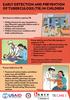 EARLY DETECTION AND PREVENTION OF TUBERCULOSIS (TB) IN CHILDREN Risk factors in children acquiring TB: Children living in the same household as a lung TB patient (especially children under 5) Children
HSE HR Circular 007/2010 26 th April, 2010.
 Office of the National Director of Human Resources Health Service Executive Dr. Steevens Hospital Dublin 8 All Queries to: [email protected]; Tel: 045 880454 [email protected]; Tel: 045 882561 / 01
MATARA. Geographic location 4 (2006-07) Distribution of population by wealth quintiles (%), 2006-07 27.3 21.4 12.9 23.7 14.8. Source: DHS 2006-07
 Ministry of Health MATARA DEMOGRAPHICS Total population 822, (28) L and area (Sq. Km) 1,27 (26) under-five (%) 9.2 (26-7) 1 Females in reproductive age group (%) 2 5.1 (26-7) 1 Estimated housing units
EmONC Training Curricula Comparison
 EmONC Training Curricula Comparison The purpose of this guide is to provide a quick resource for trainers and course administrators to decide which EmONC curriculum is most applicable to their training
Nursing and midwifery actions at the three levels of public health practice
 Nursing and midwifery actions at the three levels of public health practice Improving health and wellbeing at individual, community and population levels June 2013 You may re-use the text of this document
MATERNAL AND CHILD HEALTH
 MATERNAL AND CHILD HEALTH 9 George Kichamu, Jones N. Abisi, and Lydia Karimurio This chapter presents findings from key areas in maternal and child health namely, antenatal, postnatal and delivery care,
Be it enacted by the People of the State of Illinois,
 AN ACT concerning education. Be it enacted by the People of the State of Illinois, represented in the General Assembly: Section 5. The School Code is amended by changing Section 27-9.1 as follows: (105
Georgia Quality Core Curriculum for Health Scope and Sequence for Grades K-5 DISEASE PREVENTION
 Scope and Sequence for Grades K-5 Page 1 of 6 ALCOHOL, TOBACCO AND OTHER DRUGS DISEASE PREVENTION FAMILY LIVING GROWTH AND DEVELOPMENT K 1. Medicine 2. Poison and unknown substances 3. Hand washing 4.
Objectives. What is undernutrition? What is undernutrition? What does undernutrition look like?
 Objectives Basics Jean-Pierre Habicht, MD, PhD Professor Division of Nutritional Sciences Cornell University Types and causes Determinants Consequences Global occurrence and progress Way forward What is
Multiple Choice Questions
 C hapter 13 WHY DO WE FALL ILL Multiple Choice Questions 1. Which one of the following is not a viral disease? (a) Dengue (b) AIDS (c) Typhoid (d) Influenza 2. Which one of the following is not a bacterial
WOOD COUNTY SCHOOL OF PRACTICAL NURSING. Medical/Surgical Nursing: Reproductive
 WOOD COUNTY SCHOOL OF PRACTICAL NURSING Medical/Surgical Nursing: Reproductive Time: 19 Hours Theory; 1 Hour Pharmacology IV, (1 Diet Therapy - Integrated.) Placement: Nursing IV. Instructor: Toni Tennant,
 This is one of a series of flipcharts on these topics : Ante Natal Care, Post Natal Care, Child Health, Child Nutrition, Family Spacing, HIV&AIDS, Tuberculosis, Malaria Tuberculosis About the flipchart
Public health functions to be exercised by NHS England. Variation to the 2013-14 agreement
 Public health functions to be exercised by NHS England Variation to the 2013-14 agreement April 2013 You may re-use the text of this document (not including logos) free of charge in any format or medium,
Information on Measles and Whooping Cough: Vaccination and Disease
 Information on Measles and Whooping Cough: Vaccination and Disease Vaccine s Mechanism of Action Vaccines expose the recipient to a small amount of an weakened organism. Through this exposure, the body
Improving Clinical Management of Newborns at Hospitals to Reduce Neonatal Deaths
 Improving Clinical Management of Newborns at Hospitals to Reduce Neonatal Deaths Bridging the Research-Policy Divide Australian National University (ANU) Canberra BUN Sreng Department of Communicable Disease
EVERY MONGOLIAN CHILD HAS THE RIGHT ÒO HEALTHY GROWTH
 ÞÍÈÑÅÔ IECD project, Health and Nutrition, UNICEF EVERY MONGOLIAN CHILD HAS THE RIGHT ÒO HEALTHY GROWTH FACTS AND FIGURES Inside: Infant and Under-Five Mortality Child Malnutrition Vitamin A Deficiency
Pakistan Demographic and Health Survey 2006-07
 Education Most Pakistani Women Lack Any Education Only one in three ever-married women ages 15-49 in Pakistan has any education. Most women never learn how to read. The new Demographic and Health Survey
Addiction Counseling Competencies. Rating Forms
 Addiction Counseling Competencies Forms Addiction Counseling Competencies Supervisors and counselor educators have expressed a desire for a tool to assess counselor competence in the Addiction Counseling
AREAS OF FOCUS POLICY STATEMENTS
 ENGLISH (EN) AREAS OF FOCUS POLICY STATEMENTS With respect to the areas of focus policy statements, The Rotary Foundation notes that 1. The goals of the Foundation are to increase efficiency in grant processing
BE SURE. BE SAFE. VACCINATE.
 DON T GET OR GIVE THE FLU THIS YEAR THANK YOU Vaccination is the only protection. www.immunisation.ie BE SURE. BE SAFE. VACCINATE. FLU VACCINE 2013-2014 Healthcare workers prevent the spread of flu and
UTAH COUNTY JOB DESCRIPTION
 UTAH COUNTY JOB DESCRIPTION CLASS TITLE: PUBLIC HEALTH NURSE I/II/III FLSA STATUS: EXEMPT SUPERVISORY STATUS: I - NONE II - NONE III - LEAD EFFECTIVE DATE: 6/14/2008 DEPARTMENT: HEALTH JOB SUMMARY Performs
Commissioning fact sheet for clinical commissioning groups
 Commissioning fact sheet for clinical groups July 2012 This fact sheet sets out the services to be commissioned by clinical groups (CCGs) from April 2013. It also sets out the complementary services to
III CHAPTER 2. Antenatal Care. Ornella Lincetto, Seipati Mothebesoane-Anoh, Patricia Gomez, Stephen Munjanja
 CHAPTER 2 III Antenatal Care Ornella Lincetto, Seipati Mothebesoane-Anoh, Patricia Gomez, Stephen Munjanja Antenatal care (ANC) coverage is a success story in Africa, since over two-thirds of pregnant
Safe & Unsafe. abortion
 Safe & Unsafe Facts About abortion WHAT IS THE DIFFERENCE BETWEEN UNSAFE AND SAFE ABORTION? What is unsafe abortion? Unsafe abortion is a procedure for terminating an unplanned pregnancy either by a person
Overview of the Health System in Ghana
 Chapter 2 Overview of the Health System in Ghana The health care system in Ghana is confronted with the formidable task of improving and guaranteeing the health and well-being of the Ghanaian people. The
Family and Community Health Nursing
 Family and Community Health Nursing 1. Course Title: Family and Community Health Nursing 2. Course Number: (402) 3. Credit Hours: Total of (6) credits: Theory (3) credits. Clinical (3) credits. 4. Course
6.63.2.1 ISSUING AGENCY:
 TITLE 6 PRIMARY AND SECONDARY EDUCATION CHAPTER 63 SCHOOL PERSONNEL - LICENSURE REQUIREMENTS FOR ANCILLARY AND SUPPORT PERSONNEL PART 2 LICENSURE FOR SCHOOL NURSES, GRADES PRE K-12 6.63.2.1 ISSUING AGENCY:
Population and Public Health
 Population and Public Health Population and Public Health strives to enhance health and well-being through population approaches that focus on: Communicable Disease Prevention, Treatment and Control Primary
SUB EARLY CHILDHOOD CARE & EDUCATION B.A. 1st year Paper I (Theory) COURSE TITLE : CHILD DEVELOPMENT (BASIC COURSE) COURSE CONTENT
 Unit : I Unit : II Unit : SUB EARLY CHILDHOOD CARE & EDUCATION B.A. 1st year Paper I (Theory) COURSE TITLE : CHILD DEVELOPMENT (BASIC COURSE) COURSE CONTENT The field of Child Development and basic concepts
Child Abuse and Neglect AAP Policy Recommendations
 Child Abuse and Neglect AAP Policy Recommendations When Inflicted Skin Injuries Constitute Child Abuse Committee on Child Abuse and Neglect PEDIATRICS Vol. 110 No. 3 September 2002, pp. 644-645 Recommendations
MASTER OF PUBLIC HEALTH School of Health Sciences, Yashwantrao Chavan Maharashtra Open University, Nashik
 1. CONCEPTS OF HEALTH AND DISEASE 1.1 Introduction to Public Health 1.1.1 History of Public Health, History of Medicine 1.1.2 Preventive Medicine and curative Medicine 1.1.3 Changing concepts in public
Preventive Care Services Health Care Reform The following benefits are effective beginning the first plan year on or after Sept.
 Coding Summary for Providers NOTE THE FOLLOWING: The purpose of this document is to provide a quick reference of the applicable codes for UnitedHealthcare plans that cover preventive care services in accordance
Unplanned teenage pregnancy prevention. Introduction
 1 Unplanned teenage pregnancy prevention Introduction Unplanned Teenage pregnancy is becoming a serious problem in many countries, including Thailand. It creates many related impacts such as health, economic,
Position Statement on Breastfeeding
 ABN 64 005 081 523 RTO 21659 Applies to All ABA staff and volunteers Position statement The Australian Breastfeeding Association (ABA) endorses the following statement from the Joint WHO/ UNICEF Meeting
Child and Maternal Nutrition in Bangladesh
 Child and Maternal Nutrition in Bangladesh KEY STATISTICS Nutrition % of the population Malnutrition, in children (birth to 59 months) Wasting (weight-for-height) 17.4 2 Stunting (height-for-age) 43.2
James Smith Community Health Nursing Program
 James Smith Community Health Nursing Program The Nursing Program endeavors to deliver the best quality health care to the Band Membership in a holistic manner, respecting the individual s personality,
Interpersonal Communication Skills for Differential Diagnosis of Fever in Children
 Interpersonal Communication Skills for Differential Diagnosis of Fever in Children National Master Trainer TOT Guide for training District Trainers Uganda July, 2013 TOT Guide Page 2 About this TOT Guide
Classification of Health Expenditures by Function
 Health Budget Tracking System Classification of Health Expenditures by Function RTI 5875-001-003 Prepared for Data for Decision Making Project United States Agency for International Development DPI-5991-A-00-1052-00
HEALTH CARE REFORM. Preventive Care. BlueCross BlueShield of South Carolina and BlueChoice HealthPlan of South Carolina
 HEALTH CARE REFORM Preventive Care BlueCross BlueShield of South Carolina and BlueChoice HealthPlan of South Carolina Preventive Care There was a time when an apple a day was the best preventive care advice
Program Specification for Master Degree Dermatology
 Cairo University Faculty of Medicine Program Specification for Master Degree Dermatology Program type: Single Department offering the program: Department of Dermatology Program code: DERM 800 Total credit
Dual elimination of mother-to-child transmission (MTCT) of HIV and syphilis
 Training Course in Sexual and Reproductive Health Research 2014 Module: Principles and Practice of Sexually Transmitted Infections Prevention and Care Dual elimination of mother-to-child transmission (MTCT)
ICD-10 Readiness for Public Health
 ICD-10 Readiness for Public Health Debbie Widener Sr. Implementation & Training specialist Sonali Luniya, PhD VP, Customer Experience ICD-10 Webinar: Goals ICD-10 Overview and Impacts ICD-9 vs. ICD-10
College of Nursing Degree: PhD
 College of Nursing No Name Title Degree year 1 Kareem fatah Aziz Impact of a health education program on PhD 2009 knowledge of female nursing staff and students regarding breast cancer prevention and early
UTAH COUNTY JOB DESCRIPTION
 UTAH COUNTY JOB DESCRIPTION CLASS TITLE: PUBLIC HEALTH NURSE I/II/III FLSA STATUS: EXEMPT SUPERVISORY STATUS: I - NONE II - NONE III - LEAD EFFECTIVE DATE: 8/25/2015 (REVISED 3/30/2015 VERSION) DEPARTMENT:
GSCE CHILD DEVELOPMENT: REVISION TIPS!
 GSCE CHILD DEVELOPMENT: REVISION TIPS! Assessment. There is a choice between two levels of entry: Foundation and Higher. At Foundation level (paper 1) the grades available are G to C and the Higher level
CHILD HEALTH POLICY AND PLAN
 PAPUA NEW GUINEA CHILD HEALTH POLICY AND PLAN 2009-2020 CONTENTS CONTENTS...3 FOREWORD...7 ACKNOWLEDGEMENT...8 ABBREVIATIONS...9 EXECUTIVE SUMMARY...11 VOLUME I CHILD HEALTH POLICY 2009...13 CHAPTER 1.
General RID Curriculum
 General RID Curriculum The goal of all Reproductive Infectious Diseases (RID) fellowships is to produce welltrained, academically-focused specialists in RID. After completion of a 2-3 year fellowship experience
Providing health care
 82 CHAPTER 10 Providing health care In any community, people become ill and require access to health care facilities and treatment. The problem may be physical, such as diarrhoea, fever or injury, or mental,
Preventive Health Care for Children in a Medical Home
 INSTRUCTOR S GUIDE Preventive Health Care for Children in a Medical Home First Edition, 2006 California Childcare Health Program Administered by the University of California, San Francisco School of Nursing,
Swine Health. Beth Ferry MSU Extension Pork Educator
 Swine Health Beth Ferry MSU Extension Pork Educator What Affects Pig Health? Resources Environment Nutrition Management Animal Care What is your job? Good Observation Key to managing health, production
SOCIAL MARKETING EVIDENCE BASE Methodology and Findings
 SOCIAL MARKETING EVIDENCE BASE Methodology and Findings Overview PSI and several other global health organizations use social marketing to encourage healthy behaviors, increase health impact, and make
SUMMARY TABLE OF FINDINGS Sudan Household Health Survey (SHHS) and Millennium Development Goals (MDG) indicators, Sudan, 2006
 SUMMARY TABLE OF FINDINGS Sudan Household Health Survey (SHHS) and Millennium Development Goals (MDG) indicators, Sudan, 2006 Topic CHILD MORTALITY Child mortality SHHS indicator number MDG indicator number
In implementing the budget, the department will be organized into five major divisions with the following functions:
 Phyllis Murdock, Director Public Health Department Summary Mission Statement The mission of the Public Health Department is to protect the public through promoting individual, community, and environmental
IV. Counseling Cue Cards. ICAP International Center for AIDS Care and Treatment Mailman School of Public Health Columbia University
 IV. Counseling Cue Cards ICAP International Center for AIDS Care and Treatment Mailman School of Public Health Columbia University How to Use These Counseling Cue Cards ABOUT THE CUE CARDS This set of
COMMITTEE ON THE RIGHTS OF THE CHILD. Twenty- Second Session CONSIDERATION OF REPORTS SUBMITTED BY STATES PARTIES UNDER ARTICLE 44 OF THE CONVENTION
 UNITED NATIONS CRC Convention on the Rights of the Child Distr. GENERAL CRC/C/15/Add.111 10 November 1999 Original: ENGLISH COMMITTEE ON THE RIGHTS OF THE CHILD Twenty- Second Session CONSIDERATION OF
Course on Scientific Investigation Level-I. Time Table
 Course on Scientific Investigation Level-I Module-VII: (3 days) Medical Jurisprudence Module Title: Medical Jurisprudence Duration: 3 days Training Faculty: CDTS offices/guest Group: SI/ASI. faculty Aim:
Iowa s Maternal Health, Child Health and Family Planning Business Plan
 Iowa s Maternal Health, Child Health and Family Planning Business Plan CHILD HEALTH Who we are... A public-private partnership that... Promotes access to regular preventive health care services for children
Epidemiology 521. Epidemiology of Maternal and Child Health Problems. Winter / Spring, 2010
 Extended MPH Degree Program School of Public Health Department of Epidemiology University of Washington Epidemiology 521 Epidemiology of Maternal and Child Health Problems Winter / Spring, 2010 Instructor:
Preventing unsafe abortion
 Preventing unsafe abortion Fact sheet N 388 March 2014 Key facts Around 22 million unsafe abortions are estimated to take place worldwide each year, almost all in developing countries. Deaths due to unsafe
Maternal and Neonatal Health in Bangladesh
 Maternal and Neonatal Health in Bangladesh KEY STATISTICS Basic data Maternal mortality ratio (deaths per 100,000 births) 320* Neonatal mortality rate (deaths per 1,000 births) 37 Births for women aged
The National Survey of Children s Health 2011-2012 The Child
 The National Survey of Children s 11-12 The Child The National Survey of Children s measures children s health status, their health care, and their activities in and outside of school. Taken together,
Health care reform update
 Preventive services coverage Kaiser Foundation Health Plan of the Northwest has always offered broad, affordable coverage options that encourage members to seek care before a health condition becomes serious.
TUBERCULOSIS (TB) SCREENING GUIDELINES FOR RESIDENTIAL FACILITIES AND DRUG
 TUBERCULOSIS (TB) SCREENING GUIDELINES FOR RESIDENTIAL FACILITIES AND DRUG Tx CENTERS Tuberculosis Control Program Health and Human Services Agency San Diego County INTRODUCTION Reducing TB disease requires
Pregnancy and Tuberculosis. Information for clinicians
 Pregnancy and Tuberculosis Information for clinicians When to suspect Tuberculosis (TB)? Who is at risk of TB during pregnancy? Recent research suggests that new mothers are at an increased risk of TB
CENTRAL OBJECTIVES: -
 D.Y. PATIL DEEMED UNIVERSITY COLLEGE OF NURSING PIMPRI, PUNE-8 COURSE OUT LINE COURSE :-CLINICAL SPECIALTY I (MEDICAL SURGICAL NURSING) PLACEMENT :-IST year M.Sc. Nursing MARKS : - 75+25 (External + Internal)
Maharashtra University of Health Sciences, Nashik
 Additional List of for Academic Year 2011-12 under the Master of Physiotherapy (Post Graduate) Master of Physiotherapy in Cardiovascular & Respiratory Sciences 1 The effect of six weeks of walking training
Aetna Life Insurance Company
 Aetna Life Insurance Company Hartford, Connecticut 06156 Amendment Policyholder: Group Policy No.: Effective Date: UNIVERSITY OF PENNSYLVANIA POSTDOCTORAL INSURANCE PLAN GP-861472 This Amendment is effective
SRI LANKA SRI LANKA 187
 SRI LANKA 187 List of Country Indicators Selected Demographic Indicators Selected demographic indicators Child Mortality and Nutritional Status Neonatal, infant and under-five mortality rates: trends Distribution
Certificate Course in Woman & Child Nutrition
 Certificate Course in Woman & Child Nutrition The aims and objectives of this course are: Section 1 Understand various stages throughout lifecycle of women Describe Nutritional requirements throughout
Nursing Program Specification تىصيف انبش بيج انذساس نكهيت انت شيض جبيعت حهىا
 j وحذة ض ب انجىدة - 2011 2010 University, Nursing Program Specification, Faculty of Nursing, Helwan Nursing Program Specification تىصيف انبش بيج انذساس نكهيت انت شيض جبيعت حهىا 0202 0 ىرج سلى ( 01 ) تىصيف
INTEGRATED MANAGEMENT OF CHILDHOOD ILLNESS (IMCI) Planning, Implementing and Evaluating Pre-Service Training
 INTEGRATED MANAGEMENT OF CHILDHOOD ILLNESS (IMCI) Planning, Implementing and Evaluating Pre-Service Training WORKING DRAFT: AUGUST 2001 Department of Child and Adolescent Health and Development (CAH) Family
Seattle. Health Services
 Health Services Has a district health services (HSV) coordinator Requires each school to have an HSV coordinator Requires schools to provide the following health services when needed: Administration of
American Academy of Pediatrics Section on Breastfeeding. Ten Steps to Support Parents Choice to Breastfeed Their Baby
 American Academy of Pediatrics Section on Breastfeeding 1 2 3 4 5 6 7 8 9 10 Ten Steps to Support Parents Choice to Breastfeed Their Baby This practice enthusiastically supports parents plans to breastfeed
IS HERE OPEN ENROLLMENT EMPLOYEE BENEFITS TIME TO MAKE YOUR BENEFIT CHOICES. BAYADA Home Health Care Employee Benefits
 2015 OPEN ENROLLMENT IS HERE EMPLOYEE BENEFITS TIME TO MAKE YOUR BENEFIT CHOICES BAYADA Home Health Care values the contributions of our employees. In appreciation of your dedicated service, BAYADA Home
Moi University Academic Calendar 2012/2015 (ISO 9001:2008 Certified)
 Moi University Academic Calendar 2012/2015 (ISO 9001:2008 Certified) 388 School of Nursing SCHOOL OF NURSING Contact: Dean, School of Nursing College of Health Sciences, Moi University P.O. Box 4606 30100,
PROGRAM FOR LICENSING ASSESSMENTS FOR COLORADO EDUCATORS (PLACE ) OBJECTIVES FIELD 031: HEALTH
 PROGRAM FOR LICENSING ASSESSMENTS FOR COLORADO EDUCATORS (PLACE ) OBJECTIVES Subareas Physical Health Mental Health Social Health Community Health PHYSICAL HEALTH Understand the stages of physical growth
Position Classification Standard for Medical Technical Assistant Series, GS-0650
 Position Classification Standard for Medical Technical Assistant Series, GS-0650 Table of Contents SERIES DEFINITION... 2 INCLUSIONS... 2 EXCLUSIONS... 2 SPECIALIZATIONS AND TITLE STRUCTURE... 2 EXPLANATORY
Chapter 4. Priority areas in health research. Section 1 Burden of disease 1998 in low- and middle-income and in high-income countries
 Chapter 4 Priority areas in health research Section 1 Burden of disease 1998 in low- and middle-income and in high-income countries Section 2 Recommendation of priority research areas from various approaches
Sinoe County Health Team
 Clinician Job Announcements Sinoe County Health Team based in Greenville, Liberia is recruiting for over 30 new positions throughout the County Health Team clinics in Sinoe County. Registered Nurses (RN)
Preventable mortality and morbidity of children under 5 years of age as a human rights concern
 Preventable mortality and morbidity of children under 5 years of age as a human rights concern 1. Has your government developed a national policy/strategy/action plan aimed at reducing mortality and morbidity
Program Specification for Master Degree in: Child & Adolescent Psychiatry
 Cairo University Faculty of Medicine Program Specification for Master Degree in: Child & Adolescent Psychiatry Program type: single Program code: CHIPS 817 Department offering the program: Department of
Preventive Care Coverage Wondering what preventive care your plan covers?
 STAYING WELL Regence BlueCross BlueShield of Oregon is an Independent Licensee of the Blue Cross and Blue Shield Association Preventive Care Coverage Wondering what preventive care your plan covers? Our
Application Form. New application Change my current plan/deductible. Add spouse/partner/dependents Reinstatement
 Application Form Important: Please make sure all the information required on this health insurance application has been provided. Best Doctors Insurance Limited reserves the right to contact the if a question