
Gastric Sleeve Resection
|
|
|
- Aubrey Flowers
- 10 years ago
- Views:
Transcription
1 Huntington VA Medical Center 1540 Spring Valley Drive Huntington, WV or Extensions 3356, 2391 or 2328 Gastric Sleeve Resection Gastric sleeve resection is a restrictive type of laparoscopic bariatric surgery which reduces the size of your stomach. With gastric sleeve resection more than half of the stomach (the greater curvature) is surgically removed. A new stomach if formed. It is about the size and shape of a banana and has a volume of 3-6 ounces ( cc). This part of the surgery can not be reversed. There is no intestinal bypass, only stomach reduction. The stomach functions normally so most food items can be eaten but in small amounts. Other names for the surgery are sleeve gastrectomy, vertical sleeve gastrectomy, and tube gastrectomy. Advantages of this surgery no foreign objects are placed in the body, all nutrients are absorbed, no dumping syndrome occurs because the lower part of the stomach (pylorus) which connects to the small intestine is preserved, and the portion of the stomach that produces hormones (ghrelin) which stimulate hunger is removed. For about six (6) weeks after surgery, you will need to follow a liquid or semi-liquid diet to provide healing time. You must follow specific dietary instructions once solid foods can be used. You will only be able to eat a small quantity of food at a time to avoid stretching the stomach. All food must be chewed thoroughly. You can not eat and drink at the same time. You must avoid lying down too soon after you eat. What are the side effects and risks of GSR? The most common side effects are sore and swollen abdomen, vomiting, nausea, reflux, diarrhea and constipation. There are some risks associated with general abdominal surgery as bleeding, pain, pneumonia, infection, pulmonary embolism, heart attack or stroke. Possible problems with the gastric sleeve resection are a fistula or leaking of the sleeve. Questions? Call the Bariatric Surgery Specialty Nurse at the Huntington VAMC or Extension 2106

2 Nutrition and Food Services Bariatric Surgery Instructions Huntington VA Medical Center 1540 Spring Valley Drive Huntington, WV or Extensions 3356, 2391 or The day before surgery you must only use a clear liquid diet. You will drink magnesium citrate that evening for surgery preparation. You should not eat or drink anything after midnight. 2. You will need to report to the Huntington walk-in Nutrition Clinic in either the Green or Blue Team Primary Care areas for pre-surgery diet instruction. A scheduled appointment is not required. The ambassador desk located on the ground floor once you enter the revolving glass doors can provide directions to the clinic. 3. Immediately after surgery, you will be NPO or have nothing by mouth, including ice chips. You will not be allowed to eat or drink anything until a special test is done the morning after your surgery. If there are no problems, a clear liquid diet (Stage 1) is ordered by the surgeon. Your portions will be very small, no more than 2-3 ounces. 4. You will be discharged on the Post Bariatric Stage 1, clear liquid diet with protein powder provided by the Huntington VAMC. 5. It is required that you telephone the Huntington outpatient (PACT) dietitian each week after your surgery for diet progression from one stage to the next. See the checklist on the next page for sample points of discussion extension 3356, 2391, or It is important to have routine follow-up sessions with the registered dietitian at the same time as the Bariatric Clinic. If you have an appointment at the Huntington VAMC, use the walk-in Nutrition Clinic as listed above in #2. If you have a CVT- Telehealth appointment from your local facility, the Huntington registered dietitian will be available. 7. If you are enrolled in Myhealthevet, you can send a "secure" message to Nutrition at the Huntington VAMC with any questions or concerns. A registered dietitian will reply electronically.

3 1. Current Weight 2. Home Blood Sugar Bariatric Telephone Call Checklist Please be prepared to provide this information to the dietitian. 3. GI status: Nausea? Vomiting? Reflux? 4. Hydration: Total ounces of fluid Types of fluid 5. Diet Stage: 6. Protein Intake Name of Supplement Content per serving: Grams of protein Grams of carbohydrate Calories Total grams protein per day 7. Nutritional supplements MVI with minerals Chewable or tablet? Calcium Calcium with vitamin D Vitamin B12 Iron (begin week 5) 8. Bowel routine Frequency Discomfort? Bowel changes 9. Physical activity 10. Any concerns? 11. Local follow up appts? Notes:

4 Gastric Sleeve Resection Diet Huntington VA Medical Center 1540 Spring Valley Drive Huntington, WV or Extensions 3356, 2391 or 2328 With the gastric sleeve resection, you will need to make changes in your lifestyle and eating habits. You must eat smaller portions and make good choices, avoiding high calorie food and beverages. Although you feel full faster and longer with a smaller stomach, this does not eliminate the emotional desire to eat. Your long-term goal is volume restriction while consuming a nutritionally balanced diet. Weight loss varies with each individual but is usually from 1 to 3 pounds per week during the first year. After you have lost weight, you may be able to take less medicine. Check with your doctor on how to adjust all of your medications. NUTRITION RECOMMENDATIONS Gastric sleeve resection removes over half of your stomach. With the smaller stomach ( cc s) you will feel full faster and learn to reduce the amount you eat. No surgery is without risk. Potential complications include nausea, vomiting, dehydration, diarrhea, excessive gas, lactose intolerance, constipation, gallstones, mineral and vitamin deficiency, protein calorie malnutrition, hair loss. Following instructions provided by the bariatric team will keep these problems to a minimum. Learning new eating habits is essential. You will advance through 4 stages to a final low fat, low calorie, high protein diet which you should follow permanently. The amount of weight you lose will depend on how committed you are to the required lifestyle changes. Advancing from one diet or stage to the next depends on the rate that you heal from surgery. It is important that you move from one stage to the next only when directed by the registered dietitian or surgeon.

5 OUTPATIENT POST BARIATRIC DIET SUMMARY Post Bariatric Diet Stage Protein Supplement Daily Vitamins and Mineral Supplements Week 1 and Week 2 Stage 1 - clear liquids Portion size: 2-3 ounces Minimum of 60 grams from protein supplement 2 adult or 4 children's chewable complete multivitamins with minerals Chewable calcium antacid or chewable calcium tablet = 1500 mg Vitamin B12 sublingual tablet, 500 micrograms Week 3 and Week 4 Stage 2 - full liquids Portion size: 2-4 ounces Minimum of 60 grams from protein supplement 2 adult or 4 children's chewable complete multivitamins with minerals Chewable calcium antacid or chewable calcium tablet = 1500 mg Vitamin B12 sublingual tablet, 500 micrograms Week 5 and Week 6 Stage 3 - pureed Portion size: 2-4 ounces Do not drink minutes after eating grams protein from food or combination food and supplement 2 adult tablets - multivitamin with minerals Calcium citrate tablets with vitamin D = minimum of 1500 mg calcium, 600 units vitamin D Vitamin B12 tablet, sublingual 500 micrograms Elemental iron tablet, 27 milligrams or Elemental iron tablet, milligrams for menstruating female Week 7 and Week 8 Stage 4 - soft Portion size: 4-6 ounces Do not drink minutes after eating grams protein from food or combination food and supplement 2 adult tablets - multivitamin with minerals Calcium citrate tablets with vitamin D = minimum of 1500 mg calcium, 600 units vitamin D Vitamin B12 tablet, sublingual 500 micrograms Elemental iron tablet, 27 milligrams or Elemental iron tablet, milligrams for menstruating female Week 9 and Lifelong Maintenance - High protein, low fat, Low calorie Portion size: 4-6 ounces grams protein from food or combination food and supplement 2 adult tablets - multivitamin with minerals Calcium citrate tablets with vitamin D = minimum of 1500 mg calcium, 600 units vitamin D Vitamin B12 tablet, sublingual 500 micrograms Elemental iron tablet, 27 milligrams or Elemental iron tablet, milligrams for menstruating female

6 GASTRIC SLEEVE RESECTION DIET BASICS Avoid overeating. It is usually best to eat 6 small meals per day. Do not skip meals. Drink most of your fluids between your meals. Avoid constant nibbling. Chew all food thoroughly. Eat and drink very slowly. Right after your surgery, it should take minutes to eat about 2 tablespoons of food. You will advance but still should take 30 minutes for each meal. Stay hydrated. Drink at least 8 cups (64 ounces) of water or sugar free liquids daily. Drink only 1/4-1/3 cup at a time due to the pouch size. Do not use alcohol, beer, high sugar products, caffeine, or carbonated beverages. Listen to your smaller stomach. Stop drinking and eating if you feel full. Pushing yourself to eat more will cause the stomach to stretch. Monitor portions. Measure amounts carefully. Use measuring spoons and measuring cups. Remember your stomach can only hold a few tablespoons at a time after surgery. Eventually it will hold about 1/2 to 1 cup. Medicine cup = 2 ounces Measuring spoons: Measuring Cups: 2 tablespoons = 1 ounce 1/4 cup = 2 ounces 1 tablespoon = 1/2 ounce 1/2 cup = 4 ounces 1 teaspoon = 1/3 ounce 3/4 cup = 6 ounces 1 cup = 8 ounces Avoid foods or liquids with added sugar or fat. Do not add sugar, cream, or fats to any of your foods or liquids. These foods can lead to nausea and weight gain. Have a high protein food with each meal. You will need grams of protein daily. It may be necessary to use a protein supplement. Take nutrition supplements (vitamins and minerals) as advised. Set up a schedule for taking your supplements and medications. Introduce one new food at a time. If you do not tolerate a food, wait at least one week before trying it again. Foods that are dry, sticky, gummy, or stringy in texture, with hard skins, nuts and seeds may present the biggest problems. Each person has different foods that work best for them. Avoid foods, called "trigger" foods, which you have craved and eaten in excess before.

7 GASTRIC SLEEVE RESECTION DIET BASICS, CONTINUED Substitute lactase-treated milk or calcium-fortified soy milk if you cannot tolerate regular milk. You may need to take lactase pills with dairy to help digest the lactose. They are available in a drug store. Ask your dietitian or pharmacist. It is best to avoid chewing gum. If you do chose to use gum, do not swallow it. HIGH FAT FOODS TO AVOID Fat seems to be difficult to digest after bariatric surgery. Too much fat slows the emptying of the stomach and causes reflux (back-up of food and stomach acid into the esophagus). Eating high fat foods may cause cramping, diarrhea, nausea and vomiting. In addition, these foods are high in calories and may prevent you from reaching your goal weight. Whole milk and whole milk dairy products Butter, margarine Oils, shortening, lard Cream cheese, sour cream Mayonnaise and regular salad dressings Olives, nuts High fat meats as bacon, sausage, hot dogs, luncheon meats, canned meats Fried foods Gravy, Sauces Potato chips and other ''fried snacks" Donuts, pastries, icing Ice Cream Restaurant meals HIGH PROTEIN IS REQUIRED It is important to have protein in your diet after the surgery and with each stage of the gastric sleeve resection diet. to heal your incision and new stomach pouch to keep your muscle mass while you are losing weight. to prevent poor healing, hair loss, and a feeling of low energy The amount of protein you will eat or drink is measured in grams. Your total protein depends on your body size, nutritional status, and possible need for increased protein. You should consume grams of protein each day. Protein Supplements You will need a protein supplement after surgery to add at least 60 grams of protein daily. A whey protein powder is the best one to use. Read the product label and purchase one that has the following in one serving: grams of protein no more than 100 calories 5 grams or less of total carbohydrates

8 Protein Foods Since you will be eating only small amounts of food at a time after surgery, you need to use high protein foods first at each meal, before you eat other foods. Choose lean or low fat, lower calorie sources to prevent unwanted weight gain. The Nutrition Facts section on the food label provides information on the calories and grams of protein and fat in one serving. Prepare all foods without added fat. Food/Beverage Serving Size Protein Calories Meat, Fish, Poultry Shrimp, boiled 6 large 7 g 33 Peanut Butter 2 tbsp 8.5 g 190 Baby food meat (plain) 1 jar (2.5oz) 9-11 g Ground turkey (97% lean) 2 oz 11 g 60 Salmon, baked 2 oz 12 g 115 Roast 2 oz 12 g 130 Baked ham 2 oz 13 g 100 Tuna, in water ¼ cup 14 g 45 Perch, flounder, sole, haddock (baked) 2 oz 14 g 65 Lean ground sirloin 2 oz 14 g 150 Tilapia 2 oz 15 g 72 Lobster 2oz 15 g 80 Chicken, dark, without skin 2 oz 15 g 115 Corned Beef 2 oz 15 g 140 Turkey, dark meat without skin 2 oz 16 g 92 Spare ribs 2 oz 16 g 224 Turkey, light meat without skin 2 oz 17 g 80 Pork chop 2 oz 17 g 109 Chicken, white, without skin 2 oz 19 g 90 Milk, Cheese, Yogurt Egg white 1 egg white 3 g 20 Tofu ¼ cup 5 g 95 Yogurt, light ¾ - 1cup 5-9 g Vanilla soymilk, non-fat 1 cup 6 g 70 Skim mozzarella 1 oz 6 g 80 Fat free American cheese 1 slice 7 g 35 Fat free or low fat cottage cheese ¼ cup 7 g 40 Egg substitute ¼ cup 7 g 50 Egg, large size 1 egg 7 g 65 Skim milk 1 cup / 8oz 8 g 90 Fat free cheddar, shredded ¼ cup 9 g 35 Non-fat dry milk ¼ cup 11 g 110 Greek yogurt, non-fat ¾ - 1 cup 18-22g

9 Protein Foods, continued Starches Mashed potatoes ¼ cup 1 g 50 Baked potato, no skin ½ small 1.5 g 65 potato Beans/lentils ¼ cup 4 g 60 Fat free refried beans ¼ cup 4.5 g 68 Barley ¼ cup 6.5 g 50 Edamame, shelled ¼ cup 8 g 95 Soups Broth ½ cup 1.5 g 25 Low fat creamed soup 1 cup 6-9 g 90 Chicken noodle soup 1 cup 4-6 g Bean, Pea, or Lentil soup 1 cup 6-9 g Minestrone soup 1 cup 5 g 100 Key: oz = ounce 1 oz = 2 tablespoons 2 oz = ¼ cup 3 oz = ⅓ cup 4 oz = ½ cup 6 oz = 3/4 cup 8 oz = 1 cup g = grams

10 SUPPLEMENTS Taking vitamins and minerals is required after gastric sleeve resection surgery and for the rest of your life. Without daily vitamin and mineral supplements, you could develop nutritional deficiencies with severe side effects. 1. Take a multivitamin with minerals daily. a. Before surgery and for the first month after surgery, take 2 adult or 4 children s chewable complete multivitamins with minerals or a liquid product. b. After 1 month, 2 adult tablets/capsules may be used. c. Avoid time-released supplements and enteric coating on tablets or capsules. 2. Vitamin B-12 is required. a. 500 micrograms as sublingual tablet once a day or b micrograms injection once a month. 3. Take extra calcium with vitamin D. a. Before surgery and for the first month after surgery take chewable calcium antacids or chewable calcium with vitamin D = 1500 milligrams of elemental calcium. b. After 1 month, change to calcium citrate with vitamin D. Take enough tablets to provide at least 1500 mg of calcium and 600 international units of vitamin D. c. Take the calcium and vitamin D two hours before or after the multivitamin/mineral supplement. 4. After one month, begin an iron pill daily with 27 milligrams of elemental iron. For menstruating females, a larger dose ( mg) is recommended. 5. Additional thiamine, folic acid, vitamin C, vitamin D and magnesium may be necessary. Your provider will tell you if one of these is needed and how much to take. 6. Do not take any fiber pills or powders or laxatives without permission from your physician. 7. Do not take over the counter medicines or herbal products unless approved by your physician.

11 GASTRIC SLEEVE RESECTION - STAGE 1 - CLEAR LIQUIDS - 2 weeks Stage 1 is the first diet ordered after surgery. Clear liquids will be started after an upper GI series test with gastrografin contrast shows that is safe for you to begin drinking. You may not feel hungry but need to drink liquids to prevent dehydration. Signs of dehydration include thirst or dry mouth, headache, feeling dizzy, muscle cramps, and small amount or dark colored urine. Sip liquids slowly. Gulping liquids may cause pain, nausea and vomiting. It is best to avoid using a straw as this adds air to your pouch and can cause discomfort. Pay attention to your feeling of fullness. Drink 64 ounces (8 cups) of water or sugar/caffeine free, non-carbonated beverages, every day. You should only drink 2-3 ounces at a time due to size of your stomach pouch. You will be on clear liquids for 2 weeks. You must use a protein supplement daily to add 60 grams of protein. An unflavored protein powder can be added to 1/3 cup of the clear liquid beverages or if flavored can be mixed with 1/3 cup of skim milk. Take chewable forms of the multivitamin/mineral tablet and calcium. STAGE 1 CLEAR LIQUIDS - 2 weeks Food Group Choose Do not Use Beverages Water Sugar free, non-carbonated flavored waters Sugar free fruit drinks, ades Caffeine free coffee or tea Carbonated beverages Sports Drinks Sweetened fruit drinks, ades Regular coffee or tea Caffeine Alcohol or beer Fruit Diluted fruit juice Full strength fruit juice Other fruits Meat None All meat and meat products Meat Alternate/Protein Milk Miscellaneous Protein powder Small amount of skim milk if needed to mix with flavored protein powder Sugar substitute Sugar free gelatin Sugar free popsicles Soups/Broth Clear beef, chicken, or vegetable broth Starches None All Vegetables None All All other milk and milk products Sugar, honey, syrups Regular gelatin or popsicles All solid food Cream soups

12 GASTRIC SLEEVE RESECTION - STAGE 2 FULL LIQUIDS - 2 weeks Stage 2 prevents dehydration and provides protein for healing. 1. You will be on Stage 2 full liquids for 2 weeks. 2. Use six small feedings and no more than 1/2 cup (4 ounces) each feeding. 3. Introduce one new item at a time to see how your stomach will tolerate it. 4. Stop eating when you begin to feel full. 5. Drink 64 ounces (8 cups) of water or sugar free beverages every day. You should only drink 1/4-1/3 cup at a time due to size of your stomach pouch. Sip liquids slowly. 6. If you cannot tolerate milk, use lactase-treated milk and lactase enzyme products. 7. Continue the chewable vitamin and mineral supplements and calcium. STAGE 2 FULL LILQUID Food Group Choose Do Not Use Beverages Water Sugar free, non-carbonated flavored waters Sugar free fruit drinks, ades Caffeine-free coffee or tea Carbonated beverages Sports Drinks Sweetened fruit drinks, ades Regular coffee or tea Caffeine Alcohol or beer Fruit Diluted fruit juice All fruit Meat Meat Alternate/Protein Milk/Milk Products Protein powder Low fat soy milk 1 % or skim milk Lactase-treated milk Non-fat dry milk powder Low carbohydrate or sugar free instant breakfast powder mixed with non-fat milk Sugar free hot chocolate Sugar free ice cream Sugar free pudding Non-fat blended yogurt made with sugar substitute Full strength fruit juices All meats and meat products Whole, 2 % milk, Cheese Sweetened condensed milk Chocolate milk Regular hot chocolate Regular milkshakes Regular ice cream, sherbet Regular pudding Regular yogurt Miscellaneous Soups Sugar substitute Sugar free gelatin Sugar free popsicles Spices Low fat strained cream soups made with skim milk Chicken, beef or vegetable broth Sugar, honey, syrups Regular gelatin Regular popsicles Sorbet Regular soups Starches Very smooth cooked cereal as cream of Dry cereal, breads, crackers, wheat, farina, grits, oatmeal potatoes, pasta, rice Vegetables Tomato or vegetable juice cocktail All solid vegetables

13 GASTRIC SLEEVE RESECTION - STAGE 3 - PUREED- 2 weeks All foods must be blended or pureed to the consistency of smooth applesauce. All foods should be cooked without added fat. Spices and herbs as tolerated may be added to flavor the food. For homemade: cut cooked food into small pieces and place in blender or food processor. Add liquid as fat free broth, non-fat milk, or fat free gravy and mix until smooth. If you cannot tolerate milk, use lactase-treated milk and lactase enzyme products. 1. Stage 2 - Pureed is used for 2 weeks. 2. Eat protein food first. 3. Eat very slowly and chew food well. 4. Only eat 4-8 tablespoons (1/4 cup to 1/2 cup) of pureed food at each meal. 5. Stop eating as soon as you feel full. 6. Eat six (6) small meals daily. 7. Add new food gradually, one at a time. 8. Drink 64 ounces (8 cups) of water or sugar free beverages between meals. You should only drink 1/4-1/3 cup at a time due to size of your stomach pouch. Sip liquids slowly. 9. Do not drink liquids 15 minutes before a meal and wait minutes after a meal or snack to sip liquids. 10. You can begin taking a tablet form of multivitamin/mineral supplement. calcium citrate with vitamin D, vitamin B12 and elemental iron.

14 STAGE 3 PUREED - 2 weeks Food Group Choose Do Not Use Beverages Water Sugar free, non-carbonated flavored waters Sugar free fruit drinks, ades Caffeine-free coffee or tea Carbonated beverages Sports Drinks Sweetened fruit drinks, ades Regular coffee or tea Caffeine Fruit Meat Meat Alternate/Protein Milk/Milk Products Miscellaneous Soups Pureed no sugar added canned fruit No sugar added applesauce Diluted fruit juice Eggs, egg substitute Pureed low fat chicken, turkey, pork, beef, veal, lamb, seafood Pureed legumes, lentils Smooth peanut butter Low fat soy milk, Tofu Whey protein 1 % or skim milk Lactase-treated milk Non-fat dry milk powder Low carbohydrate or sugar free instant breakfast powder mixed with non-fat milk Sugar free hot chocolate Sugar free ice cream Sugar free pudding Non-fat blended yogurt made with sugar substitute Low fat cottage or ricotta cheese Fat free sour cream Sugar substitute Sugar free gelatin Sugar free popsicles Spices and mild herbs Low fat strained cream soups made with skim milk Chicken, beef or vegetable broth Alcohol or beer Solid fruit Full strength fruit juice Raw fruit Fruit skin or seeds Fried or high fat meats Crunchy peanut butter Nuts Whole, 2 % milk, Sweetened condensed milk Chocolate milk Regular hot chocolate Regular milkshakes Regular ice cream, sherbet Regular pudding Regular yogurt All other cheeses Regular sour cream Sugar, honey, syrups Regular gelatin Regular popsicles Sorbet Mayonnaise Salad dressings Popcorn Regular soups Starches Vegetables Very smooth cooked cereal as cream of wheat, farina, grits, oatmeal Pureed cooked rice, noodles, pasta Tomato or vegetable juice cocktail Mashed white or sweet potatoes Pureed, cooked vegetables Dry cereal, Bran Breads, crackers whole grains Raw or fresh vegetables Vegetables with seeds Corn

15 GASTRIC SLEEVE RESECTION - STAGE 4 SOFT- 2 weeks The soft diet includes solid foods that can be mashed with a fork. All foods must be prepared without added fat. This stage begins six weeks following your surgery. 1. You will be on Stage 4- Soft for 2 weeks. 2. Eat protein food first. 3. Eat very slowly. 4. Take small bites (about the size of a dime) and chew food well. 5. Only eat 1/2-3/4 cup (4-6 ounces) of food at each meal. 6. Stop eating as soon as you feel full. 7. Eat 4 6 small meals daily. 8. Add new food gradually, one at a time. 9. Drink 64 ounces (8 cups) of water or sugar free beverages every day. You should only drink 1/4-1/3 cup at a time due to size of your stomach pouch. Sip liquids slowly. 10. Do not drink liquids 15 minutes before a meal and wait 15 to 30 minutes after meals. 11. Take your multivitamin/mineral supplement, calcium citrate with vitamin D, vitamin B12 and elemental iron.

16 STAGE 4 SOFT - FOOD/BEVERAGES Food Group Choose Do Not Use Beverages Water Sugar free, non-carbonated flavored waters Sugar free fruit drinks, ades Caffeine-free coffee or tea Carbonated beverages Sports Drinks Sweetened fruit drinks, ades Regular coffee or tea,caffeine Alcohol or beer Desserts Sugar free products Cakes, candy, cookies, Fats Fruit Meat/Meat Alternates Milk/Milk Products Non-fat margarine Fat free gravies, sauces Fat free mayonnaise Fat free cream cheese Lite or unsweetened canned fruit Diluted fruit juice Lean meats chicken, turkey, pork, beef, veal, lamb, fish, shellfish, Eggs, egg substitute Tofu and soy protein products, low fat soy milk Dried beans cooked without fat Reduced fat smooth peanut butter Whey protein 1 % or skim milk Lactase-treated milk Non-fat dry milk powder Low carbohydrate or sugar free instant breakfast powder mixed with non-fat milk Sugar free hot chocolate Sugar free ice cream Sugar free pudding Non-fat blended yogurt made with sugar substitute Low fat cottage or ricotta cheese Low fat mild cheese Low fat sour cream Sugar substitutes Sugar free gelatin Sugar free popsicles Spices Herbs doughnuts Regular mayonnaise or salad dressings Regular cream cheese Full strength fruit juice Canned or frozen fruits in syrup Fruit with peel or seeds Dried fruits Fried or high fat meat Highly seasoned meat Spiced meats Fried eggs Raw eggs Chunky peanut butter Whole, 2 % milk, Sweetened condensed milk Chocolate milk Regular hot chocolate Regular milkshakes Regular ice cream, sherbet Sorbet Regular pudding Regular yogurt Regular cottage cheese Strong flavored cheese Regular sour cream Miscellaneous Sugar, honey, syrups Sugar alcohols Regular gelatin Regular popsicles Sorbet Coconut Pickles Snacks Low fat crackers Popcorn, nuts, seeds Soups Starches/Breads Vegetables Low fat cream soups made with skim milk Vegetable soup Cooked cereal oatmeal, cream of wheat, farina, grits, cream of rice Unsweetened dry cereal Pasta, rice (if tolerated) Toasted white bread Low fat crackers Tomato or vegetable juice cocktail Soft cooked fresh, canned or frozen vegetables Creamed corn Cooked white or sweet potatoes without skin High fat soups Presweetened or sugar coated cereals Bran, whole grain cereals Whole grain breads Bread with nuts or seeds Whole kernel corn Raw vegetables Fried vegetables

17 GASTRIC SLEEVE RESECTION- REGULAR DIET Eight (8) weeks after your surgery, you will have progressed to a low fat, high protein diet with regular texture foods, including raw fruits and vegetables. Eating a sensible low fat and low calorie diet with controlled portions will help you to continue to lose weight and sustain your weight loss once you have reached goal. 1. Eat slowly and chew foods well. 2. If you experience nausea or abdominal discomfort, you may have eaten too quickly or too much. 3. Stop eating when feeling full. 4. Continue 4 to 6 small meals with 1/2-3/4 cup (4-6 ounces) of food at each meal. 5. Use moist, tender lean meats. 6. Eat a variety of low fat food for nutritional balance. 7. Eat protein with every meal and use grams of protein daily. 8. Trim all fat from the meat before cooking. 9. Use low fat cooking methods: bake, broil, grill, roast, sauté, stir-fry in fat free broth, microwave, or steam. 10. Add new foods one at a time. If you do not tolerate a particular food well, wait about 1 week before trying it again. If you still do not tolerate the particular food, avoid it. 11. Avoid high fat foods, fried foods, sauces and concentrated sweets. 12. Add raw fruits and raw vegetables as tolerated. 13. Maintain adequate fluid intake with 8 cups (64 ounces) daily. It is still best to avoid carbonated beverages, fruit juices, caffeine and alcohol Spices and herbs can enhance the flavor of food without adding fat. 15. Continue tablet form of the multivitamins with mineral, calcium citrate with vitamin D, vitamin B-12 and iron. Questions? Call the Primary Care PACT Registered Dietitian at the Huntington VAMC or Extension 3356, 2391 or 2328

18 REFERENCES Bariatric Nutrition: Suggestions for Surgical Weight Loss Patient, Article in Press, Surgery for Obesity and Related Diseases, American Society for Metabolic and Bariatric Surgery, 3/08 Bariatric Sub-unit of the Weight Management Dietetic Practice Group, The American Dietetic Association Center for Surgical Weight Control, Suite 101, 1115 Twentieth Street, Huntington. West Virginia Criteria and Standards for Bariatric Surgery, VHA Handbook , Department of Veterans Affairs, Veterans Health Administration Nutrition Guidelines for Bariatric Surgery Patients, Nutrition and Food Service, Clinical Resources, Clinical Practice Guidelines, March 2010 with revisions, vaww.nutrition.va.gov Patient Education Material for Bariatric Surgery, Clinical Nutrition, Nutrition and Food Services Intranet, United States Department of Veterans Affairs, vaww.nutrition.va.gov NUTRITION RESOURCES Academy of Nutrition and Dietetics Veterans Health Administration Weight Management Program My HealtheVet Gateway to Veteran s Health and Wellness Food and Nutrition Information Center - National Heart Lung and Blood Institute, Obesity Education Initiative National Institute of Diabetes and Digestive and Kidney Disease, NIH free site for nutritional content of foods The VAMC is not responsible for the availability or content of these external sites, nor does the VAMC endorse, warrant or guarantee the products, services, or information offered at these sites, references or facilities. 7/09 3/13 revised 3/13

Bariatric Surgery: Step III Diet
 Bariatric Surgery: Step III Diet This diet is blended foods with one new solid food added daily. The portions are very small to help prevent vomiting. Warning: This diet does not have enough calories,
MEAL PLANNING FOR MECHANICAL SOFT DIET
 MEAL PLANNING FOR MECHANICAL SOFT DIET Definition of Terms Calories Protein Blenderized Pureed Units of energy. A nutrient used by your body for growth and repair. The best sources are milk, meats, fish,
Meal Planning for a Mushy Soft Diet After Laparoscopic Myotomy
 Meal Planning for a Mushy Soft Diet After Laparoscopic Myotomy Name: Date: Dietitian: Telephone: Why is it necessary to follow this diet? This diet is necessary for individuals who have had some types
Days 1 and 2: Bariatric Clear Liquids
 Gastric Bypass Diet Days 1 and 2: Bariatric Clear Liquids Duration: 2 days Food consistency: Bariatric clear liquids, which includes clear, non-carbonated, noncalorie, caffeine-free liquids such as: o
Meal Planning for a Mushy Soft Diet After Nissen Fundoplication
 Meal Planning for a Mushy Soft Diet After Nissen Fundoplication Name: Date: Dietitian: Telephone: Questions? CALL YOUR DIETITIAN! Patient Food and Nutrition Services University of Michigan Hospital 1500
Healthy Eating During Pregnancy
 Healthy Eating During Pregnancy Pregnancy is a time of great change. Your body is changing to allow your baby to grow and develop. Good nutrition will help you meet the extra demands of pregnancy while
Bariatric Care Center Adjustable Gastric Band Post-Op Diet
 Bariatric Care Center Adjustable Gastric Band Post-Op Diet Nothing by Mouth (Night of Surgery) Clear Liquids (DAYS 1-3) Starts the day after surgery Clear liquids must be plain or sugar-free. In general,
Lap-Band Instructions Post-op Diet
 Lap-Band Instructions Post-op Diet Now That I ve Had Surgery, What Do I Eat Liquid Diet *(1-2 weeks post-op) The goal during this phase is to protect the small stomach pouch. Only liquids can be tolerated
Low Fat Diet after Cardiac Surgery With or Without Chyle Leak
 Low Fat Diet after Cardiac Surgery With or Without Chyle Leak What is chyle? Chyle (sounds like kyle) is a milky white fluid that contains protein, fat, cholesterol, lymphocytes, and electrolytes. It is
Nutritional Guidelines for Roux-en-Y, Sleeve Gastrectomy and Duodenal Switch. Gastric Restrictive Procedures. Phase III Regular Consistency
 Nutritional Guidelines for Roux-en-Y, Sleeve Gastrectomy and Duodenal Switch Gastric Restrictive Procedures Phase III Regular Consistency The University of Chicago Hospitals Center for the Surgical Treatment
Bariatric Care Center Gastric Bypass Post-Op Diet
 Bariatric Care Center Gastric Bypass Post-Op Diet Nothing by Mouth (Night of Surgery) Clear Liquids (DAYS 1-7) Starts the day after surgery Clear liquids must be plain or sugar-free. In general, clear
NUTRITION RECOMMENDATIONS BEFORE BARIATRIC SURGERY
 NUTRITION RECOMMENDATIONS BEFORE BARIATRIC SURGERY Committing to bariatric surgery requires that you prepare ahead of time by eating a healthy diet and ensuring adequate levels of physical activity. Pre-surgery
Bariatric Care Center Gastric Bypass & Sleeve Gastrectomy Post-Op Diet
 Bariatric Care Center Gastric Bypass & Sleeve Gastrectomy Post-Op Diet Nothing by Mouth (Night of Surgery) Clear Liquids (Days 1-3) Starts the day after surgery Clear liquids must be plain or sugar-free.
Nutrition Guidelines after Gastric Bypass, Gastric Band & Gastric Sleeve Surgery
 Nutrition Guidelines after Gastric Bypass, Gastric Band & Gastric Sleeve Surgery The information in this packet will help guide you immediately after your surgery and for the months and years to come.
Basic Eating Guidelines after Laparoscopic Adjustable Gastric Band Surgery
 University of Minnesota Medical Center, Fairview Basic Eating Guidelines after Laparoscopic Adjustable Gastric Band Surgery Dr. Ikramuddin, Dr. Kellogg and Dr. Leslie If you are deaf or hard of hearing,
LAPAROSCOPIC GASTRIC SLEEVE POST-SURGERY DIET GUIDELINES
 LAPAROSCOPIC GASTRIC SLEEVE POST-SURGERY DIET GUIDELINES Laparoscopic Sleeve Gastrectomy reduces the size of the stomach by approximately 75%. The procedure is restrictive, meaning it will limit the amount
Nutrition Guidelines. for. Weight Loss Surgery
 Nutrition Guidelines for Weight Loss Surgery 1 Why should I follow these recommendations? 1. To help prevent nutritional deficiencies as a result of decreased intake of food and malabsorption of nutrients
Nutrition Guidelines for Diabetes
 Nutrition Guidelines for Diabetes Eating healthy foods and keeping a healthy body weight are very important parts of a diabetes treatment plan. A healthy diet and weight helps to keep your blood sugar
Duke Center for Metabolic and Weight Loss Surgery Pre-op Nutrition Questionnaire
 Duke Center for Metabolic and Weight Loss Surgery Pre-op Nutrition Questionnaire Name Date How long have you been considering weight loss surgery? Which procedure are you interested in having? Gastric
Nutrition Information from My Plate Guidelines
 Nutrition Information from My Plate Guidelines Note: This information was compiled from the website: http://www.choosemyplate.gov/ for participants in the 4-H Food Prep Contest 1/12/16. The information
Carbohydrate Counting for Patients with Diabetes. Lauren Dorman, MS RD CDE Registered Dietitian & Certified Diabetes Educator
 Carbohydrate Counting for Patients with Diabetes Lauren Dorman, MS RD CDE Registered Dietitian & Certified Diabetes Educator Program Purpose To increase knowledge of carbohydrate counting skills for nurses
Recommended Dietary Guidelines for Sleeve Gastrectomy
 Recommended Dietary Guidelines for Sleeve Gastrectomy Similar to any weight loss operation, patients undergoing sleeve gastrectomy should undergo a thorough preoperative nutrition assessment and instruction
Diet Guidelines after Laparoscopic Gastric Bypass
 University of Minnesota Medical Center, Fairview Diet Guidelines after Laparoscopic Gastric Bypass Dr. Andrade, Dr. Ikramuddin, Dr. Kellogg and Dr. Leslie If you are deaf or hard of hearing, please let
Diet Guidelines for Duodenal Switch
 University of Minnesota Medical Center, Fairview Diet Guidelines for Duodenal Switch Dr. Andrade, Dr. Buchwald, Dr. Ikramuddin, Dr. Kellogg and Dr. Leslie If you are deaf or hard of hearing, please let
EMBRACE Your Journey Nutrition During Treatment
 Nutrition is an important part of your cancer treatment. As you prepare for treatment, it is important to focus on eating a well-balanced diet so that your body is as healthy as it can be. When your body
Eat More, Weigh Less?
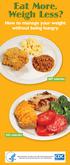 Eat More, Weigh Less? How to manage your weight without being hungry 607 calories 293 calories Department of Health and Human Services Centers for Disease Control and Prevention Can you weigh less without
GASTRIC BYPASS SURGERY DIET STAGES 1-5
 1 GASTRIC BYPASS SURGERY DIET STAGES 1-5 Name: Date: Dietitian: Phone: Revision 06/16/2013 2 SIX STEPS TO SUCCESS The first year after surgery is a critical time that must be dedicated to changing old
Gastric Sleeve Guide A Pocket Guide for Any Gastric Sleeve Surgery Candidate
 Gastric Sleeve Guide A Pocket Guide for Any Gastric Sleeve Surgery Candidate What is Gastric Sleeve Surgery? A gastric sleeve, also known as a sleeve gastrectomy, reduces the stomach to approximately 25%
Ready, Set, Start Counting!
 Ready, Set, Start Counting! Carbohydrate Counting a Tool to Help Manage Your Blood Glucose When you have diabetes, keeping your blood glucose in a healthy range will help you feel your best today and in
Making Healthy Food Choices. Section 2: Module 5
 Making Healthy Food Choices Section 2: Module 5 1 Nutrition For Health What is healthy Tips on planning meals Making a shopping list/ Bulk orders Using WIC foods Cook and freeze What foods to choose How
How To Eat Without Getting Sick
 Level 2 Dysphagia Mechanically Altered* This diet consists of foods that are moist, soft-textured and easily formed into a bolus. All foods on Level 1 are. Meats and other select foods may be ground or
Resources for Carbohydrate Counting
 Resources for Carbohydrate Counting The Diabetes Carbohydrate and Fat Gram Guide By LeaAnn Holzmeister, RD, CDE American Diabetes Association See contact information below The Doctor s Pocket Calorie,
Diet Guidelines for Gastric Bypass and Vertical-banded Gastroplasty
 University of Minnesota Medical Center, Fairview Diet Guidelines for Gastric Bypass and Vertical-banded Gastroplasty Dr. Buchwald If you are deaf or hard of hearing, please let us know. We provide many
SLEEVE GASTRECTOMY DIET STAGES 1-5. Name: Date: Dietitian: Phone: Revision 06/16/2013
 1 SLEEVE GASTRECTOMY DIET STAGES 1-5 Name: Date: Dietitian: Phone: Revision 06/16/2013 2 SIX STEPS TO SUCCESS The first year after surgery is a critical time that must be dedicated to changing old behavior
Maintaining Nutrition as We Age
 SS-207-06 For more information, visit the Ohio Department of Aging web site at: http://www.goldenbuckeye.com and Ohio State University Extension s Aging in Ohio web site at: http://www.hec.ohio-state.edu/famlife/aging
Bariatric Surgery at Toronto Western Hospital Diet Guidelines
 Bariatric Surgery at Toronto Western Hospital Diet Guidelines Adapted from Eating for Health after Gastric Bypass Surgery: Information for patients having bariatric surgery Recovery Guidelines at a Glance
Post Op Diet Instructions, After Surgery
 New Image Bariatric Surgical Associates John L Coon, MD FACS POST OP DIET #2 (GASTRIC SLEEVE MUSHY FOODS) Your surgeons and staff at New Image Bariatric Surgical Associates are well aware that that many
PROTEIN. What is protein?
 PROTEIN What is protein? Protein is the basic building block for the human body. It is made up of amino acids and helps build muscles, blood, hair, skin, nails and internal organs. Next to water, protein
CALORIE NEEDS Minimum: Current weight (lb) x 20 = number of calories for males Current weight ( lb) x 15 = number of calories for females
 NUTRITION CONDITIONING GOALS FOR ATHLETES Leslie Bonci, M.P.H., R.D. (412)432-3674 or email: [email protected] Director- Sports Medicine Nutrition University of Pittsburgh Medical Center Health System
Healthy Eating for Diabetes
 Healthy Eating for Diabetes What is diabetes and why is it important to manage it? Diabetes occurs when there is too much glucose in the blood. Learning how to manage your diabetes will help you feel better
Heart Healthy Diet: Tips for Lowering Cholesterol and Fat in Your Diet
 Heart Healthy Diet: Tips for Lowering Cholesterol and Fat in Your Diet Cholesterol Saturated Fats Polyunsaturated and Mono-unsaturated Fats This fat-like substance is needed for good health. However, high
DIABETES & HEALTHY EATING
 DIABETES & HEALTHY EATING Food gives you the energy you need for healthy living. Your body changes most of the food you eat into a sugar called glucose. (glucose) Insulin helps your cells get the sugar
Frequently Asked Questions: Gastric Bypass Surgery at CMC
 Frequently Asked Questions: Gastric Bypass Surgery at CMC Please feel free to talk with any member of the Obesity Treatment Center team at Catholic Medical Center regarding any questions, concerns or comments
Gastrointestinal (GI) Modified Diet for Malabsorption
 Gastrointestinal (GI) Modified Diet for Malabsorption Malabsorption of the gastrointestinal (GI) tract may occur when sections of the small intestine have been removed due to disease, surgical problems
SLEEVE GASTRECTOMY DIETS TO FOLLOW AT HOME. Full Liquid Diet
 SLEEVE GASTRECTOMY DIETS TO FOLLOW AT HOME Full Liquid Diet You will begin this liquid diet once you come home from the hospital. Follow this liquid diet for 2 weeks, until you come in for your 2 week
GUIDELINES FOR CONSISTENCY MODIFICATIONS OF FOODS AND LIQUIDS
 GUIDELINES FOR CONSISTENCY MODIFICATIONS OF FOODS AND LIQUIDS 1. Alterations to the consistency of foods and/ or liquids presented to the individual are made in accordance with the recommendation of an
My Diabetic Meal Plan during Pregnancy
 My Diabetic Meal Plan during Pregnancy When you have diabetes and are pregnant, you need to eat small meals and snacks throughout the day to help control your blood sugar. This also helps you get in enough
Dietary Guidelines For Gastric Sleeve Surgery
 Dietary Guidelines For Gastric Sleeve Surgery *The images contained in this handout are sample images for instructional purposes only with the expectation that patients are better able to understand and
Nutrition and Chronic Kidney Disease
 Nutrition and Chronic Kidney Disease I have been told I have early kidney failure. What does this mean? What can I expect? This means that your kidneys are not doing as good a job as they should to help
SOLID FATS AND ADDED SUGARS (SoFAS) Know the Limits
 COOPERATIVE EXTENSION SERVICE UNIVERSITY OF KENTUCKY COLLEGE OF AGRICULTURE, LEXINGTON, KY, 40546 NEP-207B SOLID FATS AND ADDED SUGARS (SoFAS) Know the Limits The U.S. Department of Agriculture s Dietary
Carbohydrate Counting for Pediatric Patients With Type 1 Diabetes. Review Date 4/08 K-0591
 Carbohydrate Counting for Pediatric Patients With Type 1 Diabetes Review Date 4/08 K-0591 Program Purpose To increase knowledge of carbohydrate counting and insulin management skills for those caring for
Carbohydrate Counting for Patients With Diabetes. Review Date 4/08 D-0503
 Carbohydrate Counting for Patients With Diabetes Review Date 4/08 D-0503 Program Objectives At the end of the session you will know how to: Define carbohydrate counting Identify the relationship between
Diet for Oral Surgery/Wired Jaw
 Diet for Oral Surgery/Wired Jaw After oral surgery no chewing is allowed for a period of 4-8 weeks. During this time you will need a blenderized or liquid diet. This pamphlet will help you to get adequate
A guide to eating and drinking with a Gastric Band
 The London Bariatric Group A guide to eating and drinking with a Gastric Band Information for patients and carers A practical guide to changes in eating and drinking after adjustable gastric band surgery
Canada s Food Guide Jeopardy
 Canada s Food Guide Jeopardy Drafted: July 2008 Revised: December 2012 Eating Well with Canada s Food Guide Veg & Fruit Grain Products Milk & Alternatives Meat & Alternatives Physical Activity Miscellaneous
Appendix A Food Sources of Vitamins and Minerals
 Appendix A Food Sources of Vitamins and Minerals Appendix A 229 Appendix A Food Sources of Vitamins and Minerals Vitamin A (Retinol) Food Amount IU* Liver 3 oz 45,400 Crab 2 cup,680 Egg medium 590 Fats
POSTOPERATIVE INSTRUCTIONS FOR WEIGHT LOSS SURGERY
 THE MOUNT SINAI SCHOOL OF MEDICINE DANIEL M. HERRON, MD, FACS SUBHASH KINI, MD, FRCS Section of Bariatric Surgery Division of Laparoscopic Surgery Department of Surgery Division of Laparoscopic Surgery
100 Gram Fat Diet for 72 hour Fecal Fat Collection
 100 Gram Fat Diet for 72 hour Fecal Fat Collection The fecal fat test will help find out if you have steatorrhea (that is, excess fat in bowel movements due to the body not being able to absorb fat). To
GENERAL INFORMATION FOR GASTRIC BYPASS SURGERY
 GENERAL INFORMATION FOR GASTRIC BYPASS SURGERY The first few months after surgery can be a challenge, and every patient will have a different experience. You may have little or no appetite for several
A Guide to Reducing Dietary Sodium Intake
 Salt and High Blood Pressure A Guide to Reducing Dietary Sodium Intake A Look at the DASH eating plan My Plate Basics Sodium is a mineral element most commonly found in salt (sodium chloride) Sodium occurs
Blenderized & Pureed Recipes
 Blenderized & Pureed Recipes While you are having difficulty chewing or swallowing, use these recipes for preparing pureed meals. Use the recipes as a base for developing your own recipes. Be creative!
Eating Well with Diabetes. Cassie Vanderwall UW Health Nutrition Registered Dietitian Certified Personal Trainer Certified Diabetes Educator
 Eating Well with Diabetes Cassie Vanderwall UW Health Nutrition Registered Dietitian Certified Personal Trainer Certified Diabetes Educator Outline What is Diabetes? Diabetes Self-Management Eating Well
Will the cholesterol in my diet raise my blood cholesterol?
 Healthy eating for your heart What does heart healthy eating mean to me? Heart healthy eating is an important part of a healthy lifestyle. Heart healthy eating, along with regular physical activity and
Registered Trade Mark
 2008 High Energy, High Protein, Low Fiber Guidelines Registered Trade Mark High Energy, High Protein, Low Fibre Guidelines Eating well, even though you may not feel hungry, is an important part of taking
High blood sugars caused by steroids
 High blood sugars caused by steroids Your blood sugars are high because you are taking a medication called steroids. Steroids are used to: decrease swelling decrease the natural response of your immune
HIGH FIBER DIET. (Article - Web Site) August 20, 2003
 HIGH FIBER DIET (Article - Web Site) August 20, 2003 Dietary fiber, found mainly in fruits, vegetables, whole grains and legumes, is probably best known for its ability to prevent or relieve constipation.
WELCOME TO KENNEDY BARIATRICS
 DR. COLLEEN I. KENNEDY, MD, FACS, FASMBS General & Bariatric Surgery Phone: (214) 775-1356 Fax: (214) 613-2231 WELCOME TO KENNEDY BARIATRICS OUR LOCATIONS BUMC-DALLAS BAYLOR-PLANO PRESBYTERIAN-ROCKWALL
Diabetes 101. Lifestyle Recommendations to Manage Diabetes. Cassie Vanderwall. Licensed, Registered Dietitian Certified Personal Trainer
 Diabetes 101 Lifestyle Recommendations to Manage Diabetes Cassie Vanderwall Licensed, Registered Dietitian Certified Personal Trainer Diabetes 101- Outline What is Diabetes? What can I do to control Diabetes?
The Cornell Weight Loss Surgery Program: Dietary Guidelines for Laparoscopic Adjustable Gastric Band
 The Cornell Weight Loss Surgery Program: Dietary Guidelines for Laparoscopic Adjustable Gastric Band Liz Goldenberg MPH, RD Jaimie Sherry MS, RD, CDN 212-746-5294 www.cornellwls.com m Lap Band Basics *
30 % The Food Guide Pyramid T F A O F T O C A L
 The Food Guide Pyramid L I M I T F A O F 30 % S T O T C A L O R I E United States Center for Home and Department of Nutrition Policy Garden Bulletin Agriculture and Promotion Number 252 What s in this
Healthy Eating for Diabetes
 Healthy Eating for Diabetes What is diabetes? Diabetes is when your blood sugar (glucose) levels are higher than normal. For some people, this is because the insulin in their body doesn t work as well
gestational diabetes my pregnancy, my baby, and me
 gestational diabetes my pregnancy, my baby, and me What is Gestational Diabetes? Gestational diabetes occurs when your body cannot make adequate use of sugar in the blood. It is first found during pregnancy.
We want you to have the best results possible while doing our detox. If your goal is weight loss, then eating the right foods and exercising
 Detox Menu Guide We want you to have the best results possible while doing our detox. If your goal is weight loss, then eating the right foods and exercising moderately will help boost your results and
Fertile Food Can you eat your way to pregnancy? Tracy Cherry, RD, CDN University of Rochester Women s Lifestyle Center
 Fertile Food Can you eat your way to pregnancy? Tracy Cherry, RD, CDN University of Rochester Women s Lifestyle Center Fertility Food Folklore Almonds a fertility symbol throughout the ages. The aroma
How to Increase Volume in Your Meals
 How to Increase Volume in Your Meals By adding certain types of food to your diet and drinking more water, you can actually increase the amount of food you eat, while staying within your fat gram and calorie
Healthy Foods for my School
 yum, yum, yum, yum, yum, yum, yum, yum, yum, yum, yum, yum, yum, yum, yum, yum, yum, yum, yum, yum, yum, Healthy Foods for my School Nutrition Standards for Saskatchewan Schools Schools are an ideal place
A guide to eating and drinking after Gastric Bypass
 The London Bariatric Group A guide to eating and drinking after Gastric Bypass Information for patients and carers A practical guide to changes in eating and drinking after gastric bypass surgery Contents:
Eating Low-Fat on a Budget. Shop Smart: Save Money at the Grocery Store
 Eating Low-Fat on a Budget Following a low-fat diet can help lower your risk of heart disease, cancer, diabetes and stroke. Eating low fat usually means eating fewer calories. High calorie intake may lead
Nutrition after chemotherapy and radiation for head and neck cancer
 Nutrition after chemotherapy and radiation for head and neck cancer Good nutrition is important while you are recovering from the side effects of your treatment for head and neck cancer. You may have:
Save Time and Money at the Grocery Store
 Save Time and Money at the Grocery Store Plan a Grocery List Making a list helps you recall items you need and also saves you time. Organize your list according to the layout of the grocery store. For
YOUR DIET AFTER WEIGHT-LOSS SURGERY
 YOUR DIET AFTER WEIGHT-LOSS SURGERY Your Diet After Weight-Loss Surgery Now that you have completed your weight-loss surgery, it is important for you to follow a healthy diet plan. As a general rule, adequate
Participant Group Nutrition Education outline: Get the Skinny on Milk
 Participant Group Nutrition Education outline: Get the Skinny on Milk Lesson Plan adapted from California WIC This group NE outline uses a facilitated discussion format, including a tasting activity. Select
Heart healthy diet: 8 steps to prevent heart disease
 Heart healthy diet: 8 steps to prevent heart disease Changing your eating habits can be tough. Start with these eight strategies to kick start your way toward a heart healthy diet. By Mayo Clinic Staff
Laparoscopic Sleeve Gastrectomy Pre-op and Post-op Instructions
 Laparoscopic Sleeve Gastrectomy Pre-op and Post-op Instructions Medication Guidelines Prior to Surgery 1. Beginning 1 week before surgery, do not take any aspirin, or any other type of blood thinners,
When you have diabetes be careful about what you eat to help you control your blood sugar.
 PART 5 INTRO TO EATING WITH DIABETES When you have diabetes be careful about what you eat to help you control your blood sugar. Foods are in three main groups: Carbohydrates (Carbs) Higher Carbohydrates
Healthy Eating After 50
 National Institute on Aging AgePage Healthy Eating After 50 Food just doesn t taste the same anymore. I can t get out to go shopping. I m just not that hungry. Sound familiar? These are a few common reasons
# Starch # Fat # Fruit # Free Foods. # Other Carbohydrates # Fast Foods # Vegetable. # Meat and Meat Substitutes
 FCS8750 Healthy Meal lans 1 Linda B. Bobroff 2 What Is a Meal lan? A meal plan is a guide to help you plan daily meals and snacks. It allows you to eat foods that you enjoy and that provide a good balance
A Beginner s Guide to Carbohydrate Counting
 A Beginner s Guide to Carbohydrate Counting This slide show explains: What foods contain carbohydrates How much of these foods you can eat Where to look up the carb content of foods Pia has a Bachelors
Your liver shrinkage diet prior to surgery (Diet Option)
 Your liver shrinkage diet prior to surgery (Diet Option) Introduction All people who need obesity surgery have a large fatty liver, which causes difficultly for the laparoscopic surgery. Therefore, before
Nutrition Management After Bariatric Surgery
 Nutrition Management After Bariatric Surgery Federal Bureau of Prisons Clinical Practice Guidelines October 2013 Clinical guidelines are made available to the public for informational purposes only. The
Eating for life with a gastric band
 Eating for life with a gastric band This information leaflet should only be used from at least 6 weeks after your band placement and when you are tolerating normal textured food. A reminder on how the
Guidelines for Offering Healthy Foods at Meetings, Seminars and Catered Events
 Guidelines for Offering Healthy Foods at Meetings, Seminars and Catered Events Guidelines for Offering Healthy Foods at Meetings, Seminars and Catered Events The School of Public Health at the University
Eating Well with. Canada s Food Guide
 Eating Well with Canada s Food Guide Recommended Number of Food Guide Servings per Day Children Teens Adults Age in Years Sex 2-3 4-8 9-13 14-18 19-50 51+ Girls and Boys Females Males Females Males Females
Calcium and Vitamin D: Important at Every Age
 Calcium and Vitamin D: Important at Every Age National Institutes of Health Osteoporosis and Related Bone Diseases ~ National Resource Center 2 AMS Circle Bethesda, MD 20892-3676 Tel: (800) 624-BONE or
February 2006. 23 Best Foods for Athletes
 23 Best Foods for Athletes February 2006 1. Beans Legumes a. Excellent source of fiber (important for keeping blood sugar and cholesterol levels under control). b. High in protein and a good source of