
Reduced data products in the ESO Phase 3 archive (Status: 15 May 2015)
|
|
|
- Calvin Shelton
- 10 years ago
- Views:
Transcription
1 Reduced data products in the ESO Phase 3 archive (Status: 15 May 2015) The ESO Phase 3 archive provides access to reduced and calibrated data products. All those data are stored in standard formats. The data are either provided by external users such as the ESO Public Survey (see Table 1) consortia and the ESO Large Programme teams or produced by ESO using science grade reduction pipelines. Here we give an overview of the types of data currently provided. For details see the ESO Science Data Product Standard and the release descriptions provided for each data collection ( releases.html). The VISTA and VST public imaging surveys provide reduced, photometrically and astrometrically calibrated images. The VISTA/VIRCAM and VST/OmegaCAM instruments with their mosaic CCDs produce non-contiguous images of the sky in a single exposure. The gaps between the single detectors of OmegaCAM are much smaller than those of VIRCAM. Those non-contiguous images (also called pawprints ) are stored in multi-extension FITS files, where each extension corresponds to one of the 16 (VIRCAM) or 32 (OmegaCAM) images produced by the single detector chips. The building blocks of the VISTA surveys are the tile images. The tile is a combined image of the field of view with no gaps (see Fig. 1,2). Tile images resulting from the coaddition of several individual images are termed as deep tiles. Tile images are provided as single-extension FITS fits. The VST surveys follow a similar approach of combining multiple exposures. However, the resulting contiguous images are either re-gridded as single-extension tile images (e.g. KiDS) or stored as multi-extension FITS files (e.g. ATLAS, VPHAS+). The tabular data of sources extracted from imaging data products are named source lists. Typically, each image has a corresponding single-band source list. Ancillary data products are associated to scientific data products without being directly searchable via the query interface. For imaging data, weight maps giving the statistical significance of each pixel are associated to the images (see Fig. 2, right panel; Fig. 3, upper right panel). Other optional data products sometimes associated to imaging data are gain maps specifying the number of electrons that contributed to each pixel value of the image or masks to mark corrupted regions of the image (Fig. 3, lower panel). These ancillary data are stored in separate FITS files and automatically delivered together with the selected science files for download. The public spectroscopic surveys at the VLT and the NTT provide one-dimensional reduced and wavelength calibrated spectra in FITS binary table format (Fig. 4). Information associated to science spectra is stored within separate columns of the same FITS-file as the science spectra themselves. Each data array (i.e. wavelength, flux, error, quality...) is provided in a single cell of the one row contained in the binary table. Reduced spectra of selected instruments are also produced in house by ESO using science grade pipelines. Until now archival data from UVES, XSHOOTER, HARPS and FLAMES/GIRAFFE have been reprocessed and published. Newly obtained spectra are automatically reduced shortly after the observation. They are immediately accessible to the PI and released to the public after the proprietary period. Catalogues in general consist of sources extracted and band-merged from imaging data products. They can be queried for single or multiple sources via the Phase 3 catalogue query interface by performing a cone or box search. Alternatively, the catalogues can also be downloaded partly or as a whole. Simple catalogues are stored in one single binary table. Larger catalogues are stored in multiple files. Each data file contains the extracted band-merged catalogue of one corresponding survey tile (see Fig. 5, lower panel). Besides the multi-band source catalogues a variety of other types of catalogues are provided. Those include light curve catalogues, catalogues of variable objects (see Fig. 5, upper panel) or spectroscopic parameters of celestial objects.

2 Table 1: Types of reduced data products provided by the ESO Public Surveys (April 2015). Survey tile pawprint single-band 1D spectra multi-band/high level images images source lists catalogues VHS X X X X VIKING X X X X UltraVISTA X X X VIDEO X X X X VVV X X X VMC X X X X KiDS X X X VPHAS+ X X ATLAS X X PESSTO X X X Gaia-ESO X X Figure 1: Contiguous tile, formed by combination of six overlapping pawprints taken with VIRCAM (VISTA/VIRCAM User Manual, VIS-MAN-ESO ).

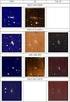
3 Figure 2: Examples for data products from VISTA surveys: Tile image (left panel) and associated weightmap (right panel) obtained with VIRCAM in the course of the VMC Public Survey. Since the tile image has been combined from several overlapping pawprints, the signal-to-noise per pixel is not homogeneous across the area.

4 Figure 3: Examples for data products from VST surveys: Tile image (upper left panel), associated weightmap (upper right panel) and associated mask (lower panel) obtained with OmegaCAM in the course of the KiDS Public Survey. The mask marks excluded regions of the image.

5 FLUX (adu) ADP T14_11_ fits(FLUX_1-1) WAVE (nm) Figure 4: Examples for 1D spectra: NIR spectra of the supernova SN 2012ec (Barbarino et al. 2015, MNRAS, 448, 2312) taken with SOFI in the course of the PESSTO Public Survey (left panel). Optical spectrum of a star in an open cluster taken with GIRAFFE in the course of the Gaia-ESO Public Survey (right panel).

6 Figure 5: Examples for high-level scientific catalogues: Light curves of classical Cepheids observed with VIRCAM in the course of the VMC survey (upper panel, Ripepi et al. 2012, MNRAS, 424, 1807). The VMC catalogues published via Phase 3 contain light curves of all objects in different bands, the properties of variable sources as well as the properties of known Cepheids in the observed fields. Lower panel: Two-colour diagram constructed from a multi-band tile catalogue of the VIKING Public Survey (VIKING catalogue DR1, Release description). In addition to the calibrated photometry in the different bands the catalogue contains more information like the shape of the sources. Here point-like stellar sources are plotted in blue, while extended sources are plotted in red.

How To Process Data From A Casu.Com Computer System
 CASU Processing: Overview and Updates for the VVV Survey Nicholas Walton Eduardo Gonalez-Solares, Simon Hodgkin, Mike Irwin (Institute of Astronomy) Pipeline Processing Summary Data organization (check
Description of the Dark Energy Survey for Astronomers
 Description of the Dark Energy Survey for Astronomers May 1, 2012 Abstract The Dark Energy Survey (DES) will use 525 nights on the CTIO Blanco 4-meter telescope with the new Dark Energy Camera built by
This work was done in collaboration with the Centre de Données astronomiques de Strasbourg (CDS) and in particular with F. X. Pineau.
 Chapter 5 Database and website This work was done in collaboration with the Centre de Données astronomiques de Strasbourg (CDS) and in particular with F. X. Pineau. 5.1 Introduction The X-shooter Spectral
Detecting and measuring faint point sources with a CCD
 Detecting and measuring faint point sources with a CCD Herbert Raab a,b a Astronomical ociety of Linz, ternwarteweg 5, A-400 Linz, Austria b Herbert Raab, chönbergstr. 3/1, A-400 Linz, Austria; [email protected]
Extraction Heights for STIS Echelle Spectra
 Instrument Science Report STIS 98-09 Extraction Heights for STIS Echelle Spectra Claus Leitherer and Ralph Bohlin March 1998 ABSTRACT The optimum extraction height (h) for STIS echelle spectra of 7 pixels
Summary of Data Management Principles Dark Energy Survey V2.1, 7/16/15
 Summary of Data Management Principles Dark Energy Survey V2.1, 7/16/15 This Summary of Data Management Principles (DMP) has been prepared at the request of the DOE Office of High Energy Physics, in support
ING LA PALMA TECHNICAL NOTE No. 130. Investigation of Low Fringing Detectors on the ISIS Spectrograph.
 ING LA PALMA TECHNICAL NOTE No. 130 Investigation of Low Fringing Detectors on the ISIS Spectrograph. Simon Tulloch (ING) June 2005 Investigation of Low Fringing Detectors on the ISIS Spectrograph. 1.
AST 4723 Lab 3: Data Archives and Image Viewers
 AST 4723 Lab 3: Data Archives and Image Viewers Objective: The purpose of the lab this week is for you to learn how to acquire images from online archives, display images using a standard image viewer
Lecture 5b: Data Mining. Peter Wheatley
 Lecture 5b: Data Mining Peter Wheatley Data archives Most astronomical data now available via archives Raw data and high-level products usually available Data reduction software often specific to individual
Efficient data reduction and analysis of DECam images using multicore architecture Poor man s approach to Big data
 Efficient data reduction and analysis of DECam images using multicore architecture Poor man s approach to Big data Instituto de Astrofísica Pontificia Universidad Católica de Chile Thomas Puzia, Maren
LSST Data Management System Applications Layer Simulated Data Needs Description: Simulation Needs for DC3
 LSST Data Management System Applications Layer Simulated Data Needs Description: Simulation Needs for DC3 Draft 25 September 2008 A joint document from the LSST Data Management Team and Image Simulation
The Virtual Observatory: What is it and how can it help me? Enrique Solano LAEFF / INTA Spanish Virtual Observatory
 The Virtual Observatory: What is it and how can it help me? Enrique Solano LAEFF / INTA Spanish Virtual Observatory Astronomy in the XXI century The Internet revolution (the dot com boom ) has transformed
Fig.1. The DAWN spacecraft
 Introduction Optical calibration of the DAWN framing cameras G. Abraham,G. Kovacs, B. Nagy Department of Mechatronics, Optics and Engineering Informatics Budapest University of Technology and Economics
J-PAS: low-resolution (R 50) spectroscopy over 8000 deg 2
 J-PAS: low-resolution (R 50) spectroscopy over 8000 deg 2 C. López-Sanjuan J. Cenarro, L. A. Díaz-García, J. Varela, K. Viironen, & the J-PAS team Centro de Estudio de Física del Cosmos de Aragón 10th
Electromagnetic Radiation (EMR) and Remote Sensing
 Electromagnetic Radiation (EMR) and Remote Sensing 1 Atmosphere Anything missing in between? Electromagnetic Radiation (EMR) is radiated by atomic particles at the source (the Sun), propagates through
Data analysis of L2-L3 products
 Data analysis of L2-L3 products Emmanuel Gangler UBP Clermont-Ferrand (France) Emmanuel Gangler BIDS 14 1/13 Data management is a pillar of the project : L3 Telescope Caméra Data Management Outreach L1
The NuSTAR Data Analysis Software Guide
 The NuSTAR Data Analysis Software Guide M. Perri, S. Puccetti, N. Spagnuolo (ASI Science Data Center) & A. Davis, K. Forster, B. Grefenstette, F. Harrison, K. Madsen (California Institute of Technology)
SPIRE Pipeline Data Products and Visualization Tools in HIPE
 25 th 29 th Jan 2010 SPIRE Pipeline Data Products and Visualization Tools in HIPE (NHSC/IPAC) page 1 List of Topics Overview of SPIRE Pipeline Data Processing and SPIRE Pipeline Data Product Levels Demo
ASKAP Science Data Archive: Users and Requirements CSIRO ASTRONOMY AND SPACE SCIENCE (CASS)
 ASKAP Science Data Archive: Users and Requirements CSIRO ASTRONOMY AND SPACE SCIENCE (CASS) Jessica Chapman, Data Workshop March 2013 ASKAP Science Data Archive Talk outline Data flow in brief Some radio
Galaxy Survey data analysis using SDSS-III as an example
 Galaxy Survey data analysis using SDSS-III as an example Will Percival (University of Portsmouth) showing work by the BOSS galaxy clustering working group" Cosmology from Spectroscopic Galaxy Surveys"
Organization of VizieR's Catalogs Archival
 Organization of VizieR's Catalogs Archival Organization of VizieR's Catalogs Archival Table of Contents Foreword...2 Environment applied to VizieR archives...3 The archive... 3 The producer...3 The user...3
IAG - Universidade de São Paulo LaboratórioNacional de Astrofísica MCTI European Southern Observatory
 CUBES Cassegrain Ultraviolet Brazil-ESO Spectrograph IAG - Universidade de São Paulo LaboratórioNacional de Astrofísica MCTI European Southern Observatory Outline: Consortium: IAG-USP, LNA/MCTI Brief Description
How To Set Up A Rov-Dfd (Rov Zero Point) Du)
 DU640 Radial Velocity Zero-Point Software Requirement Specifications prepared by: approved by: reference: issue: 4 revision: 1 date: 28-03-2008 status: Issued G. Jasniewicz, F. Crifo, D. Hestroffer, A.
Supervised Classification workflow in ENVI 4.8 using WorldView-2 imagery
 Supervised Classification workflow in ENVI 4.8 using WorldView-2 imagery WorldView-2 is the first commercial high-resolution satellite to provide eight spectral sensors in the visible to near-infrared
EA-ARC ALMA ARCHIVE DATA USER GUIDEBOOK
 EA-ARC ALMA ARCHIVE DATA USER GUIDEBOOK Prepared by James O. Chibueze NAOJ Chile Observatory Purpose of this handbook: This handbook is aimed at providing fundamental information on how and where to access
Specifying Plasma Deposited Hard Coated Optical Thin Film Filters. Alluxa Engineering Staff
 Specifying Plasma Deposited Hard Coated Optical Thin Film Filters. Alluxa Engineering Staff December 2012 Specifying Advanced Plasma Deposited Hard Coated Optical Bandpass and Dichroic Filters. Introduction
QUALITY CONTROL OF THE IUE FINAL ARCHIVE
 QUALITY CONTROL OF THE IUE FINAL ARCHIVE N. Loiseau 1, E. Solano 1,M.Barylak 2 1 INSA/ESA IUE Observatory, Apdo. 50727, Villafranca del Castillo, 28080 Madrid (Spain). 2 ESA IUE Observatory, Apdo. 50727,
Spectrophotometry of Ap Stars
 Spectrophotometry of Ap Stars ASTRA Status Report Barry Smalley Astrophysics Group Keele University Staffordshire United Kingdom [email protected] What is Spectrophotometry? Spectroscopy through a wide
Kepler Data and Tools. Kepler Science Conference II November 5, 2013
 Kepler Data and Tools Kepler Science Conference II November 5, 2013 Agenda Current and legacy data products (S. Thompson) Kepler Science Center tools (M. Still) MAST Kepler Archive (S. Fleming) NASA Exoplanet
Using Photometric Data to Derive an HR Diagram for a Star Cluster
 Using Photometric Data to Derive an HR Diagram for a Star Cluster In In this Activity, we will investigate: 1. How to use photometric data for an open cluster to derive an H-R Diagram for the stars and
This document is intended as a quick reference guide for processing meteor data using UFO Analyzer.
 2013 UKMON TABLE OF CONTENTS INTRODUCTION...3 INSTALLING UFO ANALYSER...3 CREATING A PROFILE...4 Add source directory (see Annex A):...4 Set location and ID information...5 Define the camera setup...5
COOKBOOK. for. Aristarchos Transient Spectrometer (ATS)
 NATIONAL OBSERVATORY OF ATHENS Institute for Astronomy, Astrophysics, Space Applications and Remote Sensing HELMOS OBSERVATORY COOKBOOK for Aristarchos Transient Spectrometer (ATS) P. Boumis, J. Meaburn,
Towards the Detection and Characterization of Smaller Transiting Planets
 Towards the Detection and Characterization of Smaller Transiting Planets David W. Latham 27 July 2007 Kepler MISSION CONCEPT Kepler Mission is optimized for finding habitable planets ( 10 to 0.5 M )
PMCS - WBS with Definition
 02C Data Management Construction This WBS element provides the complete LSST Data Management System (DMS). The DMS has these main responsibilities in the LSST system: Process the incoming stream of images
High Resolution Spatial Electroluminescence Imaging of Photovoltaic Modules
 High Resolution Spatial Electroluminescence Imaging of Photovoltaic Modules Abstract J.L. Crozier, E.E. van Dyk, F.J. Vorster Nelson Mandela Metropolitan University Electroluminescence (EL) is a useful
Improved predictive modeling of white LEDs with accurate luminescence simulation and practical inputs
 Improved predictive modeling of white LEDs with accurate luminescence simulation and practical inputs TracePro Opto-Mechanical Design Software s Fluorescence Property Utility TracePro s Fluorescence Property
SSO Transmission Grating Spectrograph (TGS) User s Guide
 SSO Transmission Grating Spectrograph (TGS) User s Guide The Rigel TGS User s Guide available online explains how a transmission grating spectrograph (TGS) works and how efficient they are. Please refer
Autoguiding. Today and Tomorrow. Tom Krajci Astrokolkhoz (АСТРОКОЛХОЗ) Observatory, Cloudcroft, NM Elevation 9,440ft
 Autoguiding Today and Tomorrow. Tom Krajci Astrokolkhoz (АСТРОКОЛХОЗ) Observatory, Cloudcroft, NM Elevation 9,440ft Overview Traditional autoguiding Faster correction methods Abandoning autoguiding Optical
Quick look tool for long-slit spectroscopy
 Quick look tool for long-slit spectroscopy K. Geissler & I. Saviane April 24, 2006 1 Introduction The Quick look tool for long-slit spectroscopy will allow you to take a first look at your data directly
Speckle Imaging with the SOAR and the Very Large Telescopes
 Speckle Imaging with the SOAR and the Very Large Telescopes Sridharan Rengaswamy, Julien. H. Girard and Guillaume Montagnier European Southern Observatory, Casilla 19001, Vitacura, Santiago, Chile ABSTRACT
Astrophysics with Terabyte Datasets. Alex Szalay, JHU and Jim Gray, Microsoft Research
 Astrophysics with Terabyte Datasets Alex Szalay, JHU and Jim Gray, Microsoft Research Living in an Exponential World Astronomers have a few hundred TB now 1 pixel (byte) / sq arc second ~ 4TB Multi-spectral,
From big ideas to big data: a life in astrophysics. Janet Drew, School of Physics Astronomy & Mathematics
 From big ideas to big data: a life in astrophysics Janet Drew, School of Physics Astronomy & Mathematics Life isn t a career....quoting Jane Campion, Film Director and only female Palme d Or winner so
1 Introduction. Name: 1.1 Spectral Classification of Stars. PHYS-1050 Hertzsprung-Russell Diagram Solutions Spring 2013
 Name: 1 Introduction Read through this information before proceeding on with the lab. 1.1 Spectral Classification of Stars 1.1.1 Types of Spectra Astronomers are very interested in spectra graphs of intensity
Calculation of Minimum Distances. Minimum Distance to Means. Σi i = 1
 Minimum Distance to Means Similar to Parallelepiped classifier, but instead of bounding areas, the user supplies spectral class means in n-dimensional space and the algorithm calculates the distance between
Measuring the Doppler Shift of a Kepler Star with a Planet
 Measuring the Doppler Shift of a Kepler Star with a Planet 1 Introduction The Doppler shift of a spectrum reveals the line of sight component of the velocity vector ( radial velocity ) of the object. Doppler
1051-232 Imaging Systems Laboratory II. Laboratory 4: Basic Lens Design in OSLO April 2 & 4, 2002
 05-232 Imaging Systems Laboratory II Laboratory 4: Basic Lens Design in OSLO April 2 & 4, 2002 Abstract: For designing the optics of an imaging system, one of the main types of tools used today is optical
Hubble Diagram S George Djorgovski. Encyclopedia of Astronomy & Astrophysics P. Murdin
 eaa.iop.org DOI: 10.1888/0333750888/2132 Hubble Diagram S George Djorgovski From Encyclopedia of Astronomy & Astrophysics P. Murdin IOP Publishing Ltd 2006 ISBN: 0333750888 Institute of Physics Publishing
2 Absorbing Solar Energy
 2 Absorbing Solar Energy 2.1 Air Mass and the Solar Spectrum Now that we have introduced the solar cell, it is time to introduce the source of the energy the sun. The sun has many properties that could
White Paper. "See" what is important
 Bear this in mind when selecting a book scanner "See" what is important Books, magazines and historical documents come in hugely different colors, shapes and sizes; for libraries, archives and museums,
GAIA Science and Mission
 GAIA Science and Mission Nicholas Walton Institute of Astronomy The University of Cambridge p1 Outline Gaia high level science drivers Example science objectives Gaia mission overview Gaia data analysis
Fundamentals of modern UV-visible spectroscopy. Presentation Materials
 Fundamentals of modern UV-visible spectroscopy Presentation Materials The Electromagnetic Spectrum E = hν ν = c / λ 1 Electronic Transitions in Formaldehyde 2 Electronic Transitions and Spectra of Atoms
About Coffee and Refractometers 2008-2010 Voice Systems Technology, Inc. (VST)
 About Coffee and Refractometers 2008-200 Voice Systems Technology, Inc. (VST) www.mojotogo.us.0 Coffee and Refractive Index Refractive Index measurements have been used for process control in the food
A reduction pipeline for the polarimeter of the IAG
 A reduction pipeline for the polarimeter of the IAG Edgar A. Ramírez December 18, 2015 Abstract: This is an informal documentation for an interactive data language (idl) reduction pipeline (version 16.1)
Resolution for Color photography
 Resolution for Color photography Paul M. Hubel a and Markus Bautsch b a Foveon, Inc., 282 San Tomas Expressway, Santa Clara, CA, USA 955; b Stiftung Warentest, Luetzowplatz -3, D-785 Berlin-Tiergarten,
Chemometric Analysis for Spectroscopy
 Chemometric Analysis for Spectroscopy Bridging the Gap between the State and Measurement of a Chemical System by Dongsheng Bu, PhD, Principal Scientist, CAMO Software Inc. Chemometrics is the use of mathematical
Assessments of LEDs IESNA LM-79, LM-80 & LM-82
 Assessments of LEDs IESNA LM-79, LM-80 & LM-82 by Rolf S. Bergman Consultant 4/30/2012 1 ALA M Outline of Presentation Background Information EPA Energy Star specifications NVLAP Accreditation IESNA Technical
Planning Observations
 Lab 6: Eclipsing Binary Stars (Due: 2008 Apr 23) Binary Stars Binary stars are systems in which two stars orbit each other under their mutual gravitational interaction. It is commonly claimed that most
Activity: Multiwavelength Bingo
 ctivity: Multiwavelength background: lmost everything that we know about distant objects in the Universe comes from studying the light that is emitted or reflected by them. The entire range of energies
Spectroscopy Using the Tracker Video Analysis Program
 Spectroscopy Using the Tracker Video Analysis Program Douglas Brown Cabrillo College Aptos CA 95003 [email protected] Spectroscopy has important applications in many fields and deserves more attention