
WT/TPR/S/283 Brazil - 8 -
|
|
|
- Madeleine Walsh
- 10 years ago
- Views:
Transcription
1 - 8 - SUMMARY 1. Brazil weathered the global economic crisis well, supported by strong domestic and foreign demand and sound macroeconomic policies. Brazil has also contributed to global economic recovery by substantially increasing imports. Solid economic growth and active incomes policies have allowed Brazil to make progress towards reducing poverty, unemployment, and income inequality. 2. Further action is required to address long-standing structural shortcomings affecting the Brazilian economy's competitiveness, such as inadequate infrastructure, insufficient access to credit, and high taxes. The Government has taken measures to deal with these problems but in its quest to support sectors affected by a loss of competitiveness it has also adopted some measures that may have a restrictive impact on trade. Given the size and importance of Brazil s economy, it is important for it to continue to open its market to trade and investment flows and for its policies be conducive to growth. Economic environment 3. The Brazilian economy recorded a strong performance during most of the period, with real GDP growth averaging 3.6% a year, albeit with important fluctuations. Growth benefitted from strong domestic demand and favourable external conditions, including vigorous demand and high international prices for Brazilian commodities, which boosted the country's terms of trade. Growth was supported by sound macroeconomic policies, focused on achieving a primary fiscal surplus and strict inflation targets, and a floating exchange rate regime, which contributed to consolidate macroeconomic stability. Helped by an appreciating currency, and despite strong domestic demand growth, inflation has been kept under control, generally within the band of fluctuation allowed by the inflation-targeting policy. Sustained economic growth over almost a decade and active income policies have allowed Brazil to make important progress towards reducing poverty and income inequality, while employment figures have improved. 4. Since the second half of 2011, however, growth has decelerated significantly and the average real growth rate for 2012 was just 0.9%. This loss of dynamism may be partly attributed to the appreciation of the Brazilian real and the global economic slowdown, but it also reflects long-standing structural problems affecting the Brazilian economy's competitiveness such as inadequate infrastructure, insufficient access to credit, and a very high tax burden. To address these problems, the Government has adopted measures aimed at removing infrastructure bottlenecks, expanding concessions and private-public sector partnerships, and reducing the tax burden on certain manufacturing industries. However, to support sectors affected by a loss of competitiveness, the Government has also taken some measures that have a restrictive impact on trade, including increasing tariffs temporarily, and using preferential margins for domestic goods and services in government procurement, and has increased export credits. The authorities have also taken measures to increase the availability of credit and the low level of financial intermediation. In mid-2011 the Central Bank lowered the policy interest rate (SELIC) to recordlow levels by Brazilian standards. On the fiscal side, the Government was able to provide stimulus while maintaining a primary surplus throughout the review period. 5. The period under review was particularly dynamic for Brazil s foreign trade. Exports increased at an average rate of 8.6% between 2007 and 2012, reflecting strong external demand for its commodities. Mining and agricultural exports accounted for most of this growth, increasing at annual averages of 15.4% and 12.3%, respectively. Exports of manufactured products increased at an annual average rate of only 1.8%, and their share in overall merchandise exports decreased significantly, from 46.6% in 2007 to 33.8% in The share of primary products increased from 50.1% to 62.7%, due in particular to the strong performance of mining commodities. 6. Import growth outpaced exports during the period under review, expanding at an annual rate of 13.1% between 2007 and 2012 and causing the trade surplus to shrink. Brazil's trade deficit in the manufacturing sector increased sharply, with imports of manufactured products growing at an average annual rate of 16.2% during the period, and accounting for 73.1% of total imports in Brazil's structural deficit in the services trade balance also widened during the review period, largely on account of higher payments for leasing capital equipment, travel, and transportation. After years of consecutive surpluses, Brazil's current account plunged into a deficit

2 - 9 - in 2008; the deficit has persisted, and was around 2.4% of GDP in However, large capital inflows, especially foreign direct investment (FDI), have more than offset the current account deficit. In mid-2012, Brazil was the world's sixth largest recipient of FDI. 7. The review period was marked by a strengthening of Brazilian trade ties with Asia, in particular with China. Nevertheless, the European Union remained Brazil's major trade partner, as both an export destination and a source of imports. Trade and investment policy framework 8. Brazil attaches particular importance to its participation in the multilateral trading system, considering it fundamental to attaining its development objectives based on sustainable and socially inclusive economic growth. The Plano Brasil Maior enunciates and develops a number of industrial, technological, and foreign trade policies to underpin its development objectives. 9. Brazil is one of the WTO's most active participants, individually, and within the BRICS group of leading emerging economies. Brazil remains committed to strengthening the multilateral trade system and to the successful conclusion of the Doha Development Agenda (DDA), where it has presented, independently and together with other delegations, a number of proposals related to, inter alia, agriculture, trade in services, intellectual property rights, and trade rules. Brazil did not ratify the Fourth Protocol on telecommunications and is undertaking domestic procedures to ratify fully the Fifth Protocol on financial services. From October to 2008 to October 2012, Brazil initiated three complaints under the WTO dispute settlement mechanism. 10. One of Brazil's policy aims is to strengthen regional economic integration. Brazil is a founding member of the Southern Common Market (MERCOSUR), and as such it has subscribed to preferential trade agreements with the Plurinational State of Bolivia, Chile, Colombia, Cuba, Ecuador, Mexico, Peru, and the Bolivarian Republic of Venezuela. Together with its MERCOSUR partners, Brazil also has preferential trade agreements currently in force with India and Israel, and three further agreements pending entry into force. Additionally, it has bilateral preferential agreements under LAIA with Guyana and Suriname. The European Union and MERCOSUR have re-launched negotiations in order to create a Bi-regional Free Trade Agreement. 11. Foreign investors in Brazil receive the same legal treatment as local investors in most economic sectors, following Constitutional amendments passed in 1995, which prohibit all forms of discrimination not explicitly foreseen in the law. However, foreign investment is restricted in health, mass media, and telecommunications, aerospace industry, rural property, maritime and air transport. The Federal Government seeks to promote private investment, particularly in transport infrastructure, energy, aeronautics, and other technology-intensive sectors, in order to overcome production bottlenecks, spur competitiveness, and uphold economic growth. The investment incentives offered to investors generally consist of tax exemptions and low-cost financing; normally, they do not distinguish between domestic and foreign investors. Trade policy by measure 12. During the review period, Brazil took further steps to simplify and modernize its customs procedures. Import declarations are processed according to a risk-assessment method that provides for four channels. Over 85% of all import declarations are processed through the green channel. This percentage has increased since the last Review of Brazil. 13. Brazil's 2012 applied MFN customs tariff is entirely ad valorem, with rates ranging from zero to 55%. The simple average MFN tariff applied in 2012 was 11.7%, up from 11.5% in Some 8% of tariff lines were duty free in 2012, about the same percentage as in The average applied tariff for the manufacturing sector is 12%, higher than for agriculture. Brazil bound its entire tariff during the Uruguay Round at rates between 0% and 55% for agricultural products (WTO definition), and from 0% to 35% for non-agricultural products. Besides customs tariffs, imports are subject to a number of internal taxes. The application of these taxes varies depending on the product type, the competent sub-federal authority, and the importer's tax regime status, thus rendering Brazil's tax system complex.

3 Brazil maintains a system of automatic and non-automatic licences for imports of various products, regardless of their origin. Licences are non-transferrable and valid for 90 days. Non-automatic import licences are issued by some 16 agencies; the statutory timeframe for the processing of requests is 60 calendar days. The importation of some products may require licences from more than one entity. Refusals to grant a licence may be appealed before the relevant licensing agency. Some agencies may levy a fee for the import licence; according to the authorities, these fees reflect the cost of services rendered. Non-automatic licensing is also used in the administration of duty and tax concessions to benefit from such concessions, imports must undergo a "similarity exam", to ascertain that no equivalent domestic production exists. 15. Brazil is a significant user of trade remedies, particularly anti-dumping (AD) measures: during the review period, the number of new cases varied significantly from year to year, but with the exception of 2009 was above historical trends. In the first nine months of 2012, Brazil initiated 47 new investigations, exceeding the previous record of 40 in There were 83 anti-dumping measures in place in mid-2012, up from 63 reported in the last review, for October During the review period Brazil took a number of steps to strengthen trade defence. These included implementing changes to certain practices, such as anti-circumvention, and to the regulatory framework, for instance, passing new legislation providing for more stringent application of provisional measures. 16. Most technical regulations enacted in Brazil are based on international standards; whenever this is not the case, they are based on performance criteria. A period of six months is typically allowed between the publication of the measure and its entry into force. Proposed technical regulations considered to have trade effects are forwarded to the WTO for Members' comments. The recommended period for review and revision of technical regulations is four years. Brazil's sanitary and phytosanitary system is based on risk analysis that generally takes account of import origin and product characteristics. The conclusions of pest risk analyses are notified, as a draft for comments, to the pertinent authority of the country of origin and to the WTO. The importation of any product subject to sanitary and phytosanitary controls requires a non-automatic licence. 17. Brazilian law provides for the application of an export tax of 30%, which may be decreased or increased to up to 150% in order to address foreign exchange or trade policy objectives. In practice, the export tax is zero-rated, except on raw hides and skins, cigarettes, and arms and ammunition. During the review period, Brazil the rates applied on these products remained unchanged. 18. Brazil maintains a policy of export promotion through a number of programmes to enhance the competitiveness of export-oriented companies, in particular small-scale enterprises, and increase exports. Since the last Review of Brazil, several export support programmes have been modified or expanded, and some new ones have been introduced. A number of finance, insurance, and guarantee schemes offering attractive interest rates and other conditions are available to exporters. Among the main instruments are the Export Financing Programme (PROEX) and the export credit schemes under the BNDES-EXIM programme. The latter are geared to promote exports with local value added, and the stated conditions for participation often include domesticcontent/production thresholds. According to the Brazilian authorities these conditions only apply for securing automatic eligibility for financing. 19. Brazil's competition legislation provides for a rule of reason approach in the consideration of all concentrations and anti-competitive practices. Brazil's competition regime was overhauled during the period under review and a new competition policy entered into force in May The main changes comprise a significant institutional restructuring, a switch from ex post to ex ante control of mergers and acquisitions, and amendments regarding the scope of prohibited conduct and sanctions. In the new Law, the non-exhaustive list of potentially anti-competitive practices has been refined and expanded with a reference to the abusive use of intellectual property rights. The compulsory licensing of intellectual property rights has been included among both the possible remedies for conditional clearance of mergers and the possible penalties for anti-competitive conduct. The existing leniency programme was strengthened. The criteria for the notification of mergers were also modified with the introduction of a cumulative criterion based on the Brazilian turnover of two of the merging parties in the previous year. This is expected to reduce the number of transactions subject to notification. Changes were also made to the basis on which fines for infractions of competition law are to be calculated; as a result, the deterrence effect of these sanctions may be reduced.

4 Incentives and government assistance are available at the federal and sub-federal levels. Incentive programmes may be regional, aimed at developing research, or targeted at specific sectors. Specific programmes are in place for the automotive, information technology, aeronautics, and petroleum industries. The range of support measures includes: loans; tax incentives; financial contributions; long-term and equity financing; accelerated depreciation; guarantees; grants; and credit insurance. Incentives granted in the context of certain programmes promoting information technology and telecommunications are linked to Basic Productive Process (PPB) criteria, which are product-specific and stipulate which stages of the respective manufacturing process must be carried out in Brazil. 21. Brazil maintains a policy of free-trade zones for imports and exports, by which fiscal and other incentives are granted to promote production in, and the development and regional integration of, border areas in the north region. Eight free-trade zones have been created. The main FTZ is the Manaus Free Trade Zone (ZFM), in the Amazon region. Companies established in the ZFM are granted tax exemptions by the federal and state governments. One of the main requirements for the concession of these benefits is observing PPB criteria; there are also a number of environmental and social requirements. All imports to the ZFM require a licence. Incentives under the ZFM programme will be in force until One of the Brazilian authorities' key concerns remains the availability and cost of credit. In this respect, the authorities consider that their policy of targeting credit is necessary to correct a market failure. To this end, Brazil maintains several official credit programmes aimed at different sectors and types of producers. The national development bank BNDES is the main institution providing credit or acting as a financial intermediary and guarantor. Credit takes the form of medium and long-term loans made available at attractive interest rates. The BNDES "equalizes" interest rates, that is, covers the difference between the agreed rate and the relevant market interest rate. 23. Brazil is not a party to the Agreement on Government Procurement. Brazil's procurement system is decentralized and tendering procedures are generally used. Brazil's Tendering Law allows for preferences for goods and services produced in Brazil, or produced or supplied by Brazilian companies or by companies that invest in technology development in Brazil, in the case of equivalent offers. Small businesses may benefit from preferential measures that may include quotas, preference margins of up to 10% as well as tendering procedures restricted to small companies. A revision to the Tendering Law introduced in 2010 significantly altered Brazil's procurement legislation to make the granting of preferences a permanent feature of the regime: preferential margins of up to 25% may be granted for goods and services produced nationally and in accordance with Brazilian technical standards. 24. Brazil's intellectual property legislation covers all the major aspects mentioned in the TRIPS Agreement. In some areas, including copyright, Brazil grants rights that exceed the minimum terms laid down in the Agreement. There have been no substantial legislative modifications on intellectual property matters since 2009, except those that introduced the requirements for the registration of layout designs of integrated circuits and computer software. In April 2012, Brazil started a Pilot Programme of Priority Examination of "Green Patents", which fast-tracks patent applications filed in Brazil via the Paris Convention for the Protection of Industrial Property by either residents or non-residents, with application date starting from 2 January Trade policy by sector 25. Brazil's agriculture sector plays an important role in its economy, particularly as a source of exports and employment. During the review period, the agri-business sector played a crucial role in sustaining Brazil's trade surplus. Agri-food exports reached a record level of US$95.8 billion in Using the WTO definition of agriculture, the average MFN tariff in 2012 was 10.1%. Groups of products facing a tariff higher than the average include: dairy products (18.6%), sugar and confectionary (16.7%), beverages, spirits and tobacco (16.5%), and coffee and tea (13.7%), while imports of cotton (7.4%) oil seeds, fats and oils and their products (7.8%), and animals and animal products (7.9%), are subject to tariffs lower than the average. 26. Brazil s level of support to its agricultural producers is relatively low compared with other countries, but it maintains several domestic support measures, including preferential credit lines

5 and price support mechanisms. During the review period, new programmes were created to finance farmers, including the Medium-Scale Agricultural Producer Support Programme (PRONAMP) and the Low Carbon Agriculture Programme (Programa ABC). Official rural credit disbursements continued to rise, as well as key support programmes such as PRONAF. Brazil maintains a policy of mandatory bank reserve requirements to be allocated to finance agricultural activities. Since November 2008, the required rate of mandatory resources has been increased twice, bringing it to 34% of demand deposits from 25%. The provision of credit at fixed interest rates is the main policy instrument for the support of family farming in Brazil. 27. Brazil operates several programmes based on minimum price guarantees, which support the production of a wide range of commodities, including corn, rice, cotton, and wheat. These schemes account for more than half of transfers granted to farmers. Among them, the Policy of Guaranteed Minimum Prices (PGPM) remains an important pillar of Brazilian agricultural policy. The PGPM is aimed at supporting producers when market prices fall to levels deemed harmful to their income stability. The policy is implemented through two types of schemes: commercialization instruments, which may involve the direct purchase of products, and credit lines to finance the storage of goods covered by minimum price guarantees. 28. Brazil has a highly diversified manufacturing sector. During the review years, however, the sector lost dynamism due to an erosion of competiveness, which translated into rising imports and slow-growing exports. Imports of manufactured products have been increasing their market share and capturing a significant part of the growth in consumption, and the manufacturing sector's trade balance registered a record deficit of US$81.3 billion in In an effort to reverse this situation, the Government has strengthened the importance given to industrial policy, partly through two comprehensive nationwide plans, the Productive Development Policy ( ) and the Plano Brasil Maior ( ). The instruments used to promote the manufacturing sector under these plans include credit lines under favourable conditions, public procurement, fiscal incentives, and border measures. 29. Under the Plano Brasil Maior, the Government adopted significant fiscal incentives to help the domestic auto industry recover from the effects of the global crisis. Between December 2011 and December 2012, tax breaks were offered for companies producing vehicles with more than 65% of regional content. As From 1 January 2013, the automotive sector's fiscal regime was superseded by the INOVAR-AUTO programme. Companies eligible for the programme may benefit from an Industrial Products Tax reduction of up to 30%. In order to qualify for the programme, vehicle manufacturers must comply with energy-efficiency requirements and with certain domestic manufacturing or investment conditions. 30. Brazil's regulatory framework for oil and gas exploration and production (E&P) was amended in 2010 with a view to allowing for increased State participation. Exclusive rights were granted to state-controlled PETROBRAS in designated geographic blocks, and a production-sharing regime was introduced for strategic blocks and blocks located in the "pre-salt" polygon. Oil and gas E&P activities remain subject to local-content conditions. In 2009, Brazil adopted a new Gas Law introducing tendering for concessions in the downstream segment of the natural gas subsector. 31. Brazil is nearly self-sufficient in primary energy production; petroleum production has been expanding steadily, posting a 20.5% increase from 2007 to Notwithstanding the growing domestic demand, Brazil became a net exporter of crude oil for the first time in 2007 and has significantly expanded its oil trade surplus since then. Nevertheless, Brazil's dependency on imports of refined petroleum products has increased due to insufficient refining capacity. Brazil relies on substantial imports of natural gas, although domestic production increased by 41% between 2007 and PETROBRAS has maintained its dominant position in the production, refining, distribution, and retail market of petroleum and petroleum products, accounting for some 90% of the country's total oil production and 98% of total refining capacity. Brazil remains the world's second-largest producer of ethanol. In 2012, the BNDES launched two new programmes offering credit at attractive conditions to the ethanol sector. 32. Private-sector participation in the electricity market has been expanding through Government auctions and concessions, but state-owned companies still play an important role. The regulatory framework for the electricity sector was revamped in early 2013, with the passage of a new law, which now regulates the concessions of generation, transmission, and distribution of electricity. The new law extended the regime of concessions for electricity generation and the

6 system of quotas, only once, for a period of up to 30 years. The extension is contingent upon the generator's acceptance of certain conditions, including the remuneration tariffs to be applied, a guaranteed supply quota allocation, and quality standards. Quotas will be allocated through contracts. 33. The Brazilian financial system weathered the global economic crisis well, thanks to an adequate policy response and built-in financial buffers. Brazil is committed to implementing Basel III gradually and, since Brazilian current capital requirements exceed those set by Basel III, its adoption is not expected to imply a significant capitalization effort for the financial system. The establishment of new foreign financial institutions requires approval by Presidential Decree. In practice, the establishment of new foreign financial institutions has been allowed, and 17% of assets are in the hands of foreign banks. 34. Acknowledging that the high cost and scarce access to credits was a systemic issue of the Brazilian economy, the authorities have continued to promote an increase in the degree of financial intermediation and a reduction in interest rates spreads. They have promoted financial inclusion by, inter alia, improving distribution channels, increasing transparency, and adapting the regulation of financial services for low income customers. This has resulted in an increase of the degree of financial intermediation: the credit to GDP ratio rose from 25% in 2003 to more than 50% in The role of state banks in medium- and long-term financing continues to be very important, directly or through interest rate equalization initiatives. The decline in interest rate spreads has played an important role in increasing financial deepening. The average interest rate spread, considering the credit portfolio as a whole, dropped by almost 10 percentage points during the period under review. However, although average interest rate spreads were lowered, at over 24 percentage points in 2012, they remain wide. 35. Recent changes to the telecommunications legislation have allowed telecommunication operators more flexibility to offer converged services in line with the international trend and the development of new technologies. The sector regulator, ANATEL, controls the prices of fixed telephony services provided under a concession (public regime). It also sets interconnection prices for services provided under the public regime, while interconnection prices for services under the private regime are freely negotiated, but must be notified to ANATEL. There are no restrictions on foreign ownership in telecommunication companies. A cap on foreign investment in cable TV services was removed in In June 2012, ANATEL auctioned radio spectrum for commercial mobile services, requiring winning bidders to commit to purchase goods, equipment, systems, and data networks with national technology, and to ensure that, after five years, 50% of the equipment, telecommunications systems, and networks would be produced locally and 20% with technology developed in Brazil. 36. Concessions for the provision of Brazilian-based regular air transport services are granted only to Brazilian companies with headquarters in Brazil, managed exclusively by Brazilians, and in which 80% of voting rights are in Brazilian hands. Domestic public air transport services are reserved to Brazilian companies. During the review period, the Brazilian Government granted concessions for the operation of three of the main international airports, and two more are in the process of receiving such concessions. As regards maritime transport, cargos of government entities and enterprises, and goods benefitting from fiscal or credit programmes must be transported by Brazilian-flag vessels, unless a waiver is granted on a reciprocity basis. Exports of crude oil extracted in Brazil must also be transported in Brazilian-flag vessels. Cabotage is reserved for Brazilian-flag vessels operated by Brazilian shipping companies, unless this restriction is waived under certain conditions. A federal tax (AFRMM) is levied on import cargos; the resources are used to provide credits at attractive rates to Brazilian shipping companies and Brazilian shipbuilders. No public ports are operated under private concessions.

SUMMARY (1) ECONOMIC ENVIRONMENT
 Page vii SUMMARY 1. The UAE's trade regime is open, with low tariffs and few non-tariff barriers to trade. The UAE's openness was instrumental to achieving the solid growth registered prior to the global
I. What is the DCFTA?
 DEEP AND COMPREHENSIVE FREE TRADE AREA EU-MOLDOVA I. What is the DCFTA? Argumentaire The Deep and Comprehensive Free Trade Area (DCFTA) is an arrangement between the EU and the Republic of Moldova that
The FDI regime in Brazil has been fairly open during the last decades. Except in specific situations in the legislation or as a manner to circumvent
 The FDI regime in Brazil has been fairly open during the last decades. Except in specific situations in the legislation or as a manner to circumvent FDI limitations, there is no distinction between established
LEGAL REGIMES GOVERNING FOREIGN DIRECT INVESTMENT (FDI) IN HOST COUNTRIES
 LEGAL REGIMES GOVERNING FOREIGN DIRECT INVESTMENT (FDI) IN HOST COUNTRIES SRIJANEE BHATTACHARYYA SLAUGHTER AND MAY Type: Published: Last Updated: Keywords: Legal Guide November 2012 November 2012 Foreign
Brief on Sri Lanka s Position on the Key Issues of the Hong Kong Ministerial Declaration
 Brief on Sri Lanka s Position on the Key Issues of the Hong Kong Ministerial Declaration While Sri Lanka shares most of the characteristics and concerns of a typical low income developing country it has
How To Improve The Economy Of Indonesia
 - 7 - SUMMARY Economic Environment 1. Since its previous review in 2007, Indonesia has made steady economic progress with an average annual real GDP growth rate of 5.9%. GDP per capita almost doubled to
PANAMA. 1. General trends
 Economic Survey of Latin America and the Caribbean 2014 1 PANAMA 1. General trends The Panamanian economy continued on its growth path of recent years, posting an 8.4% expansion in 2013, thanks in large
PROTOCOL ON THE ACCESSION OF THE PEOPLE'S REPUBLIC OF CHINA
 PROTOCOL ON THE ACCESSION OF THE PEOPLE'S REPUBLIC OF CHINA Preamble The World Trade Organization ("WTO"), pursuant to the approval of the Ministerial Conference of the WTO accorded under Article XII of
Outlines of the Trans-Pacific Partnership Agreement
 Page 1 of 5 Outlines of the Trans-Pacific Partnership Agreement ENHANCING TRADE AND INVESTMENT, SUPPORTING JOBS, ECONOMIC GROWTH AND DEVELOPMENT: OUTLINES OF THE TRANS-PACIFIC PARTNERSHIP AGREEMENT On
Third Quarter 2015 Earnings Conference Call. 21 August 2015
 Third Quarter 2015 Earnings Conference Call 21 August 2015 Safe Harbor Statement & Disclosures The earnings call and accompanying material include forward-looking comments and information concerning the
Telecommunications Regulation. DOMINICAN REPUBLIC Pellerano & Herrera
 Telecommunications Regulation DOMINICAN REPUBLIC Pellerano & Herrera CONTACT INFORMATION Luis Rafael Pellerano Pellerano & Herrera 10 John F. Kennedy Avenue 809-735-2205 [email protected] 1. What is
TRADE DYNAMICS IN ZIMBABWE: 1980-2012
 TRADE DYNAMICS IN ZIMBABWE: 1980-2012 Talknice Saungweme Great Zimbabwe University Box 1235 Masvingo, Zimbabwe E-mail: [email protected] ABSTRACT Zimbabwe in 1980, when it became independent from
STATEMENT BY THE PERMANENT REPRESENTATIVE OF BOLIVARIAN REPUBLIC OF VENEZUELA AMBASSADOR JORGE VALERO
 STATEMENT BY THE PERMANENT REPRESENTATIVE OF BOLIVARIAN REPUBLIC OF VENEZUELA AMBASSADOR JORGE VALERO SOUTH CONFERENCE 2015 AND THE SOUTH: PREPARING FOR A YEAR OF UNCERTAINTY AND INTERNATIONAL SUMMITS
Evolution of informal employment in the Dominican Republic
 NOTES O N FORMALIZATION Evolution of informal employment in the Dominican Republic According to official estimates, between 2005 and 2010, informal employment fell from 58,6% to 47,9% as a proportion of
The Macroeconomic Situation and Monetary Policy in Russia. Ladies and Gentlemen,
 The Money and Banking Conference Monetary Policy under Uncertainty Dr. Sergey Ignatiev Chairman of the Bank of Russia (The 4 th of June 2007, Central Bank of Argentina, Buenos Aires) The Macroeconomic
SIERRA LEONE UPDATES FROM THE INSTANBUL PRIORITY AREAS OF ACTION
 SIERRA LEONE UPDATES FROM THE INSTANBUL PRIORITY AREAS OF ACTION 1 OUTLINE OF PRESENTATION Recent Developments Istanbul Priority Areas of Action Poverty Levels Agenda for Prosperity Challenges Conclusion
Negotiation of a Free Trade Agreement between Hong Kong and the Association of Southeast Asian Nations. Consultation Document
 Negotiation of a Free Trade Agreement between Hong Kong and the Association of Southeast Asian Nations Consultation Document INTRODUCTION The Government of the Hong Kong Special Administrative Region will
MODEL SCHEDULE OF WTO COMMITMENTS FOR INVESTMENT BANKING, TRADING, AND ASSET MANAGEMENT Explanatory Memorandum
 March 8, 2005 MODEL SCHEDULE OF WTO COMMITMENTS FOR INVESTMENT BANKING, TRADING, AND ASSET MANAGEMENT Explanatory Memorandum I. INTRODUCTION Internationally active securities companies are working together
Mexico Trade and Economic Overview (June 2015)
 Mexico Trade and Economic Overview (June 2015) 1. Economic performance The Mexican economy is highly concentrated in services, accounting for 62% of GDP, then industry 34% and agriculture only 4%. Mexico
ANNUAL REPORT ON DISCRIMINATION IN FOREIGN GOVERNMENT PROCUREMENT April 30, 2001
 ANNUAL REPORT ON DISCRIMINATION IN FOREIGN GOVERNMENT PROCUREMENT April 30, 2001 I. Introduction A longstanding objective of U.S. trade policy has been to open opportunities for U.S. suppliers to compete
First Quarter 2015 Earnings Conference Call. 20 February 2015
 First Quarter 2015 Earnings Conference Call 20 February 2015 Safe Harbor Statement & Disclosures The earnings call and accompanying material include forward-looking comments and information concerning
August 2000. A Review of the Development of Competition in the Industrial and Commercial Gas Supply Market
 August 2000 A Review of the Development of Competition in the Industrial and Commercial Gas Supply Market Executive summary This document explains the conclusions of Ofgem s 1999 review of the development
CHAPTER 13 TELECOMMUNICATIONS. commercial mobile services means public telecommunications services supplied through mobile wireless means;
 CHAPTER 13 TELECOMMUNICATIONS Article 13.1: Definitions For the purposes of this Chapter: commercial mobile services means public telecommunications services supplied through mobile wireless means; cost-oriented
WORLD TRADE ORGANIZATION
 WORLD TRADE ORGANIZATION Negotiating Group on Market Access TN/MA/W/18/Add.6 28 January 2005 (05-0371) Original: English U.S. PROPOSAL ON NEGOTIATING NTBS RELATED TO THE AUTOMOBILE SECTOR Communication
REPORT OF THE SUPERVISORY BOARD ON OPERATION IN 2013 AND ORIENTATION FOR 2014
 JSC BANK FOR FOREIGN TRADE OF VIET NAM Address: 198 Tran Quang Khai St, Ha No Business Registration No. 0100112437 (8 th revision dated 1 st August, 2013) SOCIALIST REPUBLIC OF VIETNAM Independence - Freedom
CUBAN FOREIGN INVESTMENT LEGISLATION
 CUBAN FOREIGN INVESTMENT LEGISLATION Decree Law 50 of 1982 ( Decree Law 50 ) was Cuba s first foreign investment act authorizing the formation of international joint-ventures with foreign investors. In
Kazan Federal University
 Kazan Federal University The Russian agricultural sector and WTO: advantages and disadvantages Doctor of Economic Sciences, Head of the Banking Chair Vagizova Venera Doctor of Economic Sciences Labedeva
FREE TRADE AGREEMENT BETWEEN ROMANIA AND BOSNIA AND HERZEGOVINA
 FREE TRADE AGREEMENT BETWEEN ROMANIA AND BOSNIA AND HERZEGOVINA PREAMBLE Romania and Bosnia and Herzegovina (hereinafter called the Parties ), Reaffirming their commitment to pluralistic democracy based
Differentiated IP Regimes for Environmental & Climate Technologies. Keith Maskus ICCG ICARUS International Workshop Venice, May 20, 2011
 Differentiated IP Regimes for Environmental & Climate Technologies Keith Maskus ICCG ICARUS International Workshop Venice, May 20, 2011 Background Critical needs for new mitigation and adaptation technologies.
TURKEY CORPORATE TAX (KURUMLAR VERGISI) The basic rate of corporation tax for resident and non-resident companies in Turkey is 20%.
 TURKEY CORPORATE TAX (KURUMLAR VERGISI) The basic rate of corporation tax for resident and non-resident companies in Turkey is 20%. Corporations in Turkey can be regarded as either limited or unlimited
THE CODE. On Taxes and Other Obligatory Payments
 THE CODE of the Republic of Kazakhstan On Taxes and Other Obligatory Payments TO THE BUDGET (THE TAX CODE) Effective January 1, 2015 Developed by ITIC in cooperation with the Information Bulletin of the
6 Quality of Public Finances Revenues and Expenditures
 6 Quality of Public Finances Revenues and Expenditures 6.1 The Government s Strategy In 2003, the Czech government launched a public finance reform focusing on fiscal consolidation and elimination of the
World Textiles Trade and the WTO
 ITMF 2014 ANNUAL CONFERENCE Beijing, China, 16-18 October 2014 World Textiles Trade and the WTO Speech by WTO DDG Xiaozhun Yi Distinguished participants, Ladies and gentlemen, 1. It is a great honour and
PERU TRADE BARRIERS FREE TRADE NEGOTIATIONS
 PERU TRADE BARRIERS The U.S. trade deficit with Peru was $1.6 billion in 2004, an increase of $895 million from $710 million in 2003. U.S. goods exports in 2004 were $2.1 billion, up 23.4 percent from
Summary. Developing with Jobs
 Do not publish or DiStribute before 00:01 Gmt on tuesday 27 may 2014 Summary Developing with Jobs World of Work Report 2014 Developing with jobs Executive Summary INTERNATIONAL LABOUR ORGANIZATION RESEARCH
INTERNATIONAL CONVENTION ON THE HARMONIZATION OF FRONTIER CONTROLS OF GOODS
 ECE/TRANS/55 ECONOMIC COMMISSION FOR EUROPE INLAND TRANSPORT COMMITTEE INTERNATIONAL CONVENTION ON THE HARMONIZATION OF FRONTIER CONTROLS OF GOODS Done at Geneva on 21 October 1982 UNITED NATIONS INTERNATIONAL
Pilot Free Trade Zone Shanghai
 Pilot Free Trade Zone Shanghai Shanghai s first Free Trade zone was launched in September 2013, targeted to make Shanghai an international trade and finance hub. It was established on the strategic decision
URUGUAY. 1. General trends
 Economic Survey of Latin America and the Caribbean 2014 1 URUGUAY 1. General trends In 2013, Uruguay s level of economic activity increased by 4.4% compared with 2012, according to the country s physical
Economic Overview. East Asia managed to weather the global recession by relying on export-oriented
 Economic Overview Economic growth remains strong in East Asia and retains healthy momentum thanks to strong commodity prices and increases in exports. leads the region in growth and its GDP is expected
Naturally, these difficult external conditions have affected the Mexican economy. I would stress in particular three developments in this regard:
 REMARKS BY MR. JAVIER GUZMÁN CALAFELL, DEPUTY GOVERNOR AT THE BANCO DE MÉXICO, ON THE MEXICAN ECONOMY IN AN ADVERSE EXTERNAL ENVIRONMENT: CHALLENGES AND POLICY RESPONSE, SANTANDER MEXICO DAY 2016, Mexico
CHAPTER 2 : TRADE IN GOODS. Except as otherwise provided, this Chapter applies to the trade in goods between the Parties.
 CHAPTER 2 : TRADE IN GOODS ARTICLE 2.1 : SCOPE AND COVERAGE Except as otherwise provided, this Chapter applies to the trade in goods between the Parties. ARTICLE 2.2 : DEFINITIONS For the purpose of this
THE ROLE OF THE CENTRAL BANK OF SUDAN IN DEVELOPMENT FINANCING
 THE ROLE OF THE CENTRAL BANK OF SUDAN IN DEVELOPMENT FINANCING The Central Bank of Sudan commenced business in 1960. Its role, like that of other central banks, is set to include the achievement of monetary
ACT ON COLLECTIVE INVESTMENT
 ACT ON COLLECTIVE INVESTMENT The full wording of Act No. 594/2003 Coll. on collective investment, as amended by Act No. 635/2003 Coll., Act No. 747/2004 Coll., Act No. 213/2006 Coll., Act No. 209/2007
Telecommunications Regulation. SOUTH AFRICA Bowman Gilfillan
 Telecommunications Regulation SOUTH AFRICA Bowman Gilfillan CONTACT INFORMATION Daniel Pretorius Bowman Gilfillan 165 West Street, Sandton P.O. Box 785812 Johannesburg, 2146 +27116699381 [email protected]
U.S. Agriculture and International Trade
 Curriculum Guide I. Goals and Objectives A. Understand the importance of exports and imports to agriculture and how risk management is affected. B. Understand factors causing exports to change. C. Understand
Side-by-side Comparison of the 2014 and 2015 TPA Bills
 Side-by-side Comparison of the 2014 and 2015 TPA Bills ***Prepared by Ways and Means Committee Democratic Staff*** A comparison of the Bipartisan Congressional Trade Priorities Act of 2014 (Baucus-Hatch-Camp)
Competition policy and Law in Nepal.
 Rajib Gautam Under Secretary (Law) Ministry of Local Development Nepal. Competition is a key to survival in any market driven economy. Where markets operate freely and effectively, competition can be expected
Recommendation for a COUNCIL RECOMMENDATION. on the 2015 National Reform Programme of Portugal
 EUROPEAN COMMISSION Brussels, 13.5.2015 COM(2015) 271 final Recommendation for a COUNCIL RECOMMENDATION on the 2015 National Reform Programme of Portugal and delivering a Council opinion on the 2015 Stability
(14-3238) Page: 1/7 TRENDS IN DOMESTIC SUPPORT MARKET PRICE SUPPORT COMMUNICATION FROM THE UNITED STATES OF AMERICA
 3 June 2014 (14-3238) Page: 1/7 Committee on Agriculture Original: English TRENDS IN DOMESTIC SUPPORT MARKET PRICE SUPPORT COMMUNICATION FROM THE UNITED STATES OF AMERICA 1 OVERVIEW 1.1. WTO Members have
Fifty years of Australia s trade
 Fifty years of Australia s trade Introduction This edition of Australia s Composition of Trade marks the publication s 50th anniversary. In recognition of this milestone, this article analyses changes
The first round of TPP negotiations was held in Melbourne in March 2010.
 AN INTRODUCTION History The Trans-Pacific Partnership (TPP) builds from the Trans-Pacific Strategic Economic Partnership Agreement (P4) between Brunei, Chile, New Zealand and Singapore which entered into
SANITARY AND PHYTOSANITARY MEASURES (SPS)
 TEXTUAL PROPOSAL SANITARY AND PHYTOSANITARY MEASURES (SPS) Article 1 Scope and coverage This Chapter applies to all SPS measures that may, directly or indirectly, affect trade between the Parties. This
 Central Banks and the Development Agenda The CBN Experience Sadiq Usman 1 Presentation Outline 2 Slide Introduction Brief on Nigeria The recent Banking Crisis CBN Developmental Activities CBN Interventions
Lex Mundi Telecommunications Regulation Multi-Jurisdictional Survey
 Lex Mundi Telecommunications Regulation Multi-Jurisdictional Survey CONTACT INFORMATION António Lobo Xavier Morais Leitão Galvão Teles Soares Silva Rua Castilho, 165 1070-050 Lisboa Portugal (+351) 226
How To Understand The Relationship Between Free Trade And Meat Production In Mexico
 FREE TRADE AND MEXICO S MEAT SECTOR September 27, 2012 Contents I. Trade Agreements signed by Mexico II. Benefits of Foreign Trade III. External Challenges of Foreign Trade IV. Foreign Trade and the Mexican
14. Corporate Tax and Depreciation
 14. Corporate Tax and Depreciation Corporate income tax is levied on income from the worldwide operations of Czech tax residents and on Czech-source income of Czech tax non-residents. Czech tax residents
Agreement setting up a free trade area between the Arab Mediterranean countries
 Agreement setting up a free trade area between the Arab Mediterranean countries The government of the Kingdom of Morocco, the government of the Kingdom of Jordan, the government of the Republic of Tunisia
BACKGROUND 1 FOREIGN AFFAIRS COUNCIL - TRADE ISSUES Thursday 8 May in Brussels
 Brussels, 5 May 2014 BACKGROUND 1 FOREIGN AFFAIRS COUNCIL - TRADE ISSUES Thursday 8 May in Brussels The Council will take note of progress on the remaining technical issues to be resolved on a comprehensive
Namibia. Koep & Partners. Introduction
 Koep & Partners Introduction Key legislation and regulatory structure Once largely ignored by international oil and gas companies, has in recent times been called one of the last frontiers of oil and gas
A Trade Agenda that Gets Results
 A Trade Agenda that Gets Results Annex to the Canadian Chamber of Commerce Election Platform June 2015 A Trade Agenda that Gets Results The Canadian Chamber of Commerce 1 Canada s next government should
New VAT Regime: Circular 37 Impact on Foreign Logistics and Shipping Industry
 New VAT Regime: Circular 37 Impact on Foreign Logistics and Shipping Industry 1. Background and Impact On 24 th May 2013, the Ministry of Finance and the State Administration of Taxation issued a new VAT
I. World trade developments
 I. World trade developments World merchandise exports stagnated in value terms in 2012 while exports of commercial services increased by 2 per cent. Key developments in 2012: a snapshot Trade data List
DEVELOPING COUNTRIES. How the WTO deals with the special needs of an increasingly important group. 1. Overview. Chapter 6
 Chapter 6 DEVELOPING COUNTRIES How the WTO deals with the special needs of an increasingly important group 1. Overview About two thirds of the WTO s around 150 members are developing countries. They play
ACT ON LIABILITY FOR NUCLEAR DAMAGE
 ACT ON LIABILITY FOR NUCLEAR DAMAGE Published in the Official Gazette of the Republic of Slovenia - International Treaties, No. 77/2010 UNOFFICIAL TRANSLATION I. GENERAL PROVISIONS Article 1 (Contents)
THE GREAT DEPRESSION OF FINLAND 1990-1993: causes and consequences. Jaakko Kiander Labour Institute for Economic Research
 THE GREAT DEPRESSION OF FINLAND 1990-1993: causes and consequences Jaakko Kiander Labour Institute for Economic Research CONTENTS Causes background The crisis Consequences Role of economic policy Banking
GHANA S IMF PROGRAM - THE RISK OF FISCAL CONSOLIDATION WITHOUT STRONG FISCAL POLICY RULES. Commentary
 GHANA S IMF PROGRAM - THE RISK OF FISCAL CONSOLIDATION WITHOUT STRONG FISCAL POLICY RULES Introduction Commentary Mohammed Amin Adam, PhD Africa Centre for Energy Policy Following macroeconomic challenges
Main trends in industry in 2014 and thoughts on future developments. (April 2015)
 Main trends in industry in 2014 and thoughts on future developments (April 2015) Development of the industrial sector in 2014 After two years of recession, industrial production returned to growth in 2014.
NATIONAL TREATMENT PRINCIPLE
 Chapter 2 NATIONAL TREATMENT PRINCIPLE 1. OVERVIEW OF RULES National treatment (GATT Article III) stands alongside MFN treatment as one of the central principles of the WTO Agreement. Under the national
AGREEMENT BETWEEN THE GOVERNMENT OF THE ITALIAN REPUBLIC AND THE GOVERNMENT OF ON THE PROMOTION AND PROTECTION OF INVESTMENTS
 AGREEMENT BETWEEN THE GOVERNMENT OF THE ITALIAN REPUBLIC AND THE GOVERNMENT OF ON THE PROMOTION AND PROTECTION OF INVESTMENTS The Government of the Italian Republic and the Government of the..., hereafter
Cambodia Tax Profile. kpmg.com.kh
 Cambodia Tax Profile kpmg.com.kh Content 1 2 Tax Profile Income Tax Treaties for the Avoidance of Double Taxation 6 Indirect Tax (e.g. VAT/GST) 7 8 Personal Taxation Other Taxes 9 11 Free Trade Agreements
Budget 2014 26 February 2014
 1 Budget 2014 Budget 2014 26 February 2014 The Minister of Finance, Mr Pravin Gordhan, today announced a revised consolidated net tax revenue estimate for 2014/2015 of R997,7 billion and a slightly reduced
UNITED REPUBLIC OF TANZANIA TANZANIA INVESTMENT CENTRE INVESTMENT CLIMATE AND OPPORTUNITIES IN TANZANIA
 UNITED REPUBLIC OF TANZANIA TANZANIA INVESTMENT CENTRE INVESTMENT CLIMATE AND OPPORTUNITIES IN TANZANIA PRESENTATION TO THE CDM WORKSHOP DAR ES SALAAM INTERNATIONAL CONFERENCE CENTRE 21 ST JANUARY,2008
ASSESSMENT OF THE BILL ON THE 2015 BUDGET OF THE REPUBLIC OF SERBIA. Executive Summary
 Republic of Serbia FISCAL COUNCIL ASSESSMENT OF THE BILL ON THE 2015 BUDGET OF THE REPUBLIC OF SERBIA Executive Summary The 2015 Budget Bill envisages a deficit at the central government level in the amount
Third Quarter 2014 Earnings Conference Call. 13 August 2014
 Third Quarter 2014 Earnings Conference Call 13 August 2014 Safe Harbor Statement & Disclosures The earnings call and accompanying material include forward-looking comments and information concerning the
FOREIGN INVESTMENT: A LATIN AMERICAN LEGAL FRAMEWORK COMPARISON
 FOREIGN INVESTMENT: A LATIN AMERICAN LEGAL FRAMEWORK COMPARISON Considering that a friendly regulatory framework regarding Foreign Direct Investment (FDI) constitutes an extremely important factor in its
Exports to major trading partners and duties faced
 Japan Part A.1 Tariffs and imports: Summary and duty ranges Summary Total Ag Non-Ag WTO member since 1995 Simple average final bound 6.1 28.4 2.7 Binding coverage: Total 99.6 Simple average MFN applied
Exports to major trading partners and duties faced
 Korea, Republic of Part A.1 Tariffs and imports: Summary and duty ranges Summary Total Ag Non-Ag WTO member since 1995 Simple average final bound 17.0 59.3 10.1 Binding coverage: Total 94.5 Simple average
BAHAMAS. 1. General trends
 Economic Survey of Latin America and the Caribbean 2014 1 BAHAMAS 1. General trends Growth in the Bahamian economy slowed in 2013 to 0.7%, down from 1.0% in 2012, dampened by a decline in stopover tourism,
BIODIESEL THE NEW FUEL FROM BRAZIL NATIONAL BIODIESEL PRODUCTION & USE PROGRAM
 BIODIESEL THE NEW FUEL FROM BRAZIL NATIONAL BIODIESEL PRODUCTION & USE PROGRAM BIODIESEL: THE NEW FUEL FROM BRAZIL The Brazilian Government has just authorized the commercial use of a new fuel. Brazil
The Economic Impact of a U.S. Slowdown on the Americas
 Issue Brief March 2008 Center for Economic and Policy Research 1611 Connecticut Ave, NW Suite 400 Washington, DC 20009 tel: 202-293-5380 fax:: 202-588-1356 www.cepr.net The Economic Impact of a U.S. Slowdown
Response to the Energy White Paper Issues Paper PREPARED BY EMC ENGINEERING FOR THE AUSTRALIAN GOVERNMENT DEPARTMENT OF INDUSTRY
 Response to the Energy White Paper Issues Paper PREPARED BY EMC ENGINEERING FOR THE AUSTRALIAN GOVERNMENT DEPARTMENT OF INDUSTRY i P a g e www.energym adeclean.com CONTENTS
REPUBLIC OF KENYA COUNTY GOVERNMENT OF LAIKIPIA MEDIUM TERM DEBT MANAGEMENT STRATEGY 2013/14-2017/18
 REPUBLIC OF KENYA COUNTY GOVERNMENT OF LAIKIPIA MEDIUM TERM DEBT MANAGEMENT STRATEGY 2013/14-2017/18 COUNTY EXECUTIVE MEMBER, FINANCE, PLANNING AND COUNTY DEVELOPMENT LAIKIPIA COUNTY February 2014 i EXECUTIVE
D R Ž E L J K O V A Š K O D R G O R D A N A R O K V I Ć U N I V E R Z I T Y B A N J A L U K A F A C U L T Y O F A G R I C U L T U R E
 Trade arrangements and their impact on food sector development in Balkan Region Countries / candidate countries. D R Ž E L J K O V A Š K O D R G O R D A N A R O K V I Ć U N I V E R Z I T Y B A N J A L
INDIAN LAW ON FDI. September,2013. Presented by : Sandeep Singh. Assisted by : RichikaSoni& KamaalDhillon
 INDIAN LAW ON FDI September,2013 Presented by : Sandeep Singh Assisted by : RichikaSoni& KamaalDhillon EVOLUTION OF FDI POLICY IN INDIA 1947 The Year of Indian Independence First phase (1948-1969): Cautious
TAXATION AND FOREIGN EXCHANGE
 This appendix contains a summary of laws and regulations in respect of taxation and foreign exchange in Hong Kong and the PRC. I. TAXATION IN THE PRC 1. Taxes Applicable to Joint-Stock Limited Companies
OHIO. The European Union. Why the EU Matters for the Buckeye State. Indiana University. European Union Center
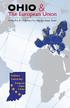 OHIO & The European Union Why the EU Matters for the Buckeye State Indiana University European Union Center Table of Contents Why does the EU Matter? 1 Ohio s Trade with the EU 2 The EU s Investments in
United Nations Convention on the Assignment of Receivables in International Trade
 United Nations Convention on the Assignment of Receivables in International Trade UNITED NATIONS UNITED NATIONS CONVENTION ON THE ASSIGNMENT OF RECEIVABLES IN INTERNATIONAL TRADE UNITED NATIONS New York,