
THE CARPET PRIMER THE CARPET AND RUG INSTITUTE
|
|
|
- Pierce Clarke
- 10 years ago
- Views:
Transcription
1 THE CARPET PRIMER THE CARPET AND RUG INSTITUTE

2 ISBN Copyright(c) 2003 update by the Carpet and Rug Institute. All rights reserved. Copyright(c) 2001 update by the Carpet and Rug Institute. All rights reserved. Copyright(c) 1997 update by the Carpet and Rug Institute. All rights reserved. Copyright(c) 1995 by the Carpet and Rug Institute. All rights reserved. All rights reserved. No part of this publication may be reproduced, stored in a retrieval system, or transmitted, in any form or by any means, electronic, mechanical, photocopying, recording, or otherwise, without the prior written permission of the publisher. Printed in the United States of America. The Carpet and Rug Institute 310 Holiday Avenue P. O. Box 2048 Dalton, GA Telephone:

3 TABLE OF CONTENTS INTRODUCTION SECTION 1: CARPET CONSTRUCTION Figure 1.1 Typical Cut Pile Carpet Profile Figure 1.2 Typical Loop Pile Carpet with Attached Cushion Pile Fibers and Yarns Fiber/Yarn Types and Characteristics Natural Fibers Synthetic Fibers Figure 1.3 Fiber/Yarn Production Yarn Production BCF Processing Staple Yarn Processing The Heat-Setting Process Yarn Size Yarn Designation Systems and Methods of Computation Coloration Techniques Pre-Dyeing Methods Solution-Dyed Fibers Stock Dyeing Yarn Dyeing Skein Dyeing Space Dyeing Knit-de-knit Warp-sheet Printing Multicolor Skein Dyeing Post-Dyeing Methods Continuous Dyeing Beck Dyeing Printing Carpet Fabric Construction Tufting Figure 1.4 The Tufting Process... Figure 1.5 Carpet Face Styles Weaving Figure 1.6 Woven Carpet Knitting Needlepunching Bonding Carpet Fabric Construction, Special Characteristics Six-Foot Carpet and Modular Tiles Entrance Mats Area Rugs New Manufacturing Technology for Carpet Construction Finishing Techniques Protective Treatment Backing Systems Backing Systems, Components and Typical Compounds Moisture Barrier Backing Systems Shearing

4 SECTION 2: CARPET SPECIFICATION Aesthetic Considerations Functional Considerations Carpet's Value in New Construction and Renovations Thermal Insulation or Temperature Control Figure 2.1 Thermal Resistance of Common Materials Acoustics Schools Ergonomics Safety Maintenance Less Costly Specifications Case Study Construction Specifications Important Factors Density Pile Density Formulas Gauge Additional Factors and Summary Performance Specifications Performance Specifications for Custom Orders Specification Requirements or Inclusions Installations Specifying Testing Procedures and Criteria Government Specifications and Regulations Residential Carpet in FHA Market Flammability Requirements Pill Test Figure 2.2 Pill Test Flooring Radiant Panel Test Figure 2.3 Flooring Radiant Panel Test The Americans with Disabilities Act Figure 2.4 Thickness and Changes in Level Common Test Methods Used for Finished Commercial Carpet Specifying for Acoustics Understanding Acoustical Measurement and Test Terminology Sound Absorption Sound Transmission Impact Noise Acoustical Test Programs Airborne Sound Reduction (Test Program A) Figure 2.5 Test A-1 Commercial Carpet Laid Directly on Concrete Figure 2.6 Test A-2 Carpet over 40 oz/sy Hair Cushion Figure 2.7 Test A-3 40 oz/sy Carpet with Various Cushion Types Impact Sound Insulation (Test Program B) Figure 2.8 Impact Noise Testing Facility Figure 2.9 Sound Pressure Level (Decibels) Figure 2.10 Carpet Key Figure 2.11 Test B-1 Concrete Slab Floor-Ceiling Assembly Figure 2.12 Test B-2 Wood Joist Floor-Ceiling Assembly Conclusion Specifying for Static Control Specifying for Good Indoor Air Quality Typical Carpet IAQ Specification Understanding "Use-Life" Costs Floor Covering Installation Cost Comparison in School Facilities Warranties Timeline for a Quality Specification

5 SECTION 3: CARPET INSTALLATION Considerations for Installation Installation Case Study Installation Methods Stretch-In Installation Using Stretch-In Installation Selecting a Carpet Cushion Preparing Seams Glue-Down Carpet Installation Reasons for Direct Glue-Down Installation Reasons for Specifying Double Glue-Down Installation Seams Field Applied Adhesives Pre-Applied Adhesives Alternative Installation Systems Installing Carpet Over Carpet Installing Patterned Carpet Characteristics of Patterned Carpet Patterned Carpet Construction Pattern Variations Pattern Bow Figure 3.1 Measurement of Pattern Bow Bias or "Skew" Diagonal Difference Method Figure 3.2 Measuring Diagonal Difference T-Square Method Figure 3.3 T-Square Method Repeat Variation Figure 3.4 Measuring Repeat Variation Length Trueness to Edge Pattern Selection Are There Industry Standards? Installing Carpet on Stairs Installation and Indoor Air Quality Ventilation/Installation Guidelines SECTION 4: CARPET MAINTENANCE Maintenance and Indoor Air Quality Planning the Carpet Maintenance Program Preventive Maintenance Entrance Mats Color as a Factor Scheduled Maintenance Vacuuming Schedules Areas of Special Consideration Vacuuming Equipment Spot Removal Detergent Solutions Extraction Cleaning Carpet Cleaning Methods Maintenance Case Study: Medical Center Carpet vs VCT: Maintenance Cost Analysis

6 SECTION 5: CARPET AND THE ENVIRONMENT Indoor Air Quality Carpet's Role in the Indoor Environment Common Factors that Impact IAQ Testing for Good IAQ The Goal How the Programs Work Carpet Cushion Adhesives The Criteria Carpet Installation Guidelines Maintenance Guidelines Minimizing Airborne Allergens Using an Effective Vacuum Cleaner Summary Reduce, Reuse, Recycle Manufacturing's Environmental Role Post Consumer Carpet Encouraging Recycling with Specification SECTION 6: GLOSSARY PHOTO CREDITS

7 INTRODUCTION As a successful designer, specifier, facility manager or end-user, it is important to make the most informed carpet decisions to create a visually pleasing and long-lasting environment. The Carpet & Rug Institute's Carpet Primer details the fundamentals of carpet how it is made, specified, installed, and maintained the basic technical knowledge you need to make sound carpet decisions. Also included is carpet's role in environmental issues, especially indoor air quality and recycling. The Carpet and Rug Institute (CRI) is the national trade association, representing the carpet and rug industry. Headquartered in Dalton, Georgia, the Institute's membership consists of manufacturers representing 90% of all carpet produced in the United States, and suppliers of raw materials and services to the industry. There is continued coordination with other segments of the industry, such as distributors, retailers, and installers. The Carpet Primer may be used as a comprehensive resource for carpet specifiers and users, or as a training manual for those just entering the industry. It will be revised periodically to provide the most up-to-date information available. If you have any questions or comments regarding this resource, or to obtain a listing of other CRI publications available, please contact the CRI at or refer to the website T HE U NITED S TATES C ARPET I NDUSTRY 240 MANUFACTURING PLANTS LOCATED IN 21 STATES C ARPET M ANUF A CTURING P R OCESSES NEEDLEPUNCHED 7% OTHERS 1% WOVEN 2% TUFTED 90% Industry shipments (1999) totaled 1.9 billion square yards (17.1 billion square feet). The United States supplies 45 percent of the world s carpet. Approximately 70 percent of the country s carpet is produced in and around Dalton, Georgia. Of the total carpet market, approximately 74 percent is residential; 26 percent is commercial. Most carpet today 90 percent is tufted, the process that grew out of the chenille bedspread industry. A NNU AL F IBER C ONSUMPTION 3.5 BILLION POUNDS Polyester 7% Wool.4% Olefin 36% Nylon 57% The largest manufacturer alone uses over 2 million pounds of fiber per day!

8 SECTION 1 CARPET CONSTRUCTION It is important to understand carpet construction in order to apply the variables that affect performance of a specific installation. Tufted carpet consists of the following components: the face yarn, which can be cut pile, loop pile, or a combination of cut and loop pile; primary backing fabric; a bonding compound, usually SB latex, but may be polyurethane, PVC, or fabric; and (often) a secondary backing fabric. The development of the broadloom tufting machine and the introduction of synthetic carpet yarns in the early 1950s transformed the American carpet industry from low-volume production of woven luxury products to mass production of highquality and comfortable, yet popularly priced, goods. The explosive growth of carpet sales in the United States in the ensuing years paralleled the continual development of tufting technology, the proliferation of high-speed tufting machines, and the development of synthetic carpet fibers and alternative backing systems. As a result, today s carpet is both better and less expensive. Figures 1.1 and 1.2 illustrate how these elements are combined to form carpet. Figure 1.1 TYPICAL CUT PILE CARPET PROFILE Tuft Primary Backing Fabric Adhesive Compound Secondary Backing Fabric Figure 1.2 TYPICAL LOOP PILE CARPET WITH ATTACHED CUSHION OR SPECIALTY BACK Primary Polypropylene Backing 1-1 Attached Cushion

9 PILE FIBERS AND YARNS Almost all carpet produced in the United States is manufactured from one of six pile fibers: nylon, olefin (polypropylene), acrylic, polyester, wool, or cotton. The major fibers for commercial carpet are nylon, olefin, and wool. Each fiber s variations influence where it is most functional. Modifications of the fiber shape developed by individual fiber producers can alter fiber characteristics and performance within each generic type. Synthetic fibers comprise 99 percent of the face fiber market for carpets. Historically, wool was the most prevalent fiber in the carpet industry, but as the market exploded in the 1960s, synthetic fibers were developed that provided a high quality, durable product in a more affordable price range. Fiber FIBER/YARN TYPES AND CHARACTERISTICS Definition and Characteristics Characteristics in Carpet NYLON (Polyamide) OLEFIN (Polypropylene) ACRYLIC POLYESTER (Polyethylene Terephthalate) WOOL COTTON Fiber-forming substance of any long-chain, synthetic polyamide having recurring amide groups as an integral part of the polymer chain. Available as Nylon 6 or Nylon 6,6 Offered as BCF or staple, both used for residential and commercial applications Can be a solution-dyed fiber or yarn Extensively used for commercial carpet and accounts for 60% of all carpet face fibers Fiber-forming substance of any long-chain, synthetic polymer composed of at least 85% by weight of ethylene, propylene, or other olefin units Offered as BCF (or staple for needlepunch carpet) Solution-dyed fiber or yarn Can be engineered for outdoor applications Accounts for 33% of all carpet face fibers Fiber-forming substance of any long-chain, synthetic polymer composed of at least 85% by weight of acrylonitrile units One of the first synthetic fibers used in carpet Used in bath mats, rugs Sometimes used in blends with other fibers in carpet Always used in staple yarn form Made from terephthalic acid and ethylene glycol Offered in BCF, but mainly in staple form Used in residential and some low traffic commercial applications Natural fiber from sheep Inherent resilient property Natural fiber from cotton plant Used in various area rugs, such as bath mats 1-2 Durable, resilient Abrasion-resistant Versatile in coloration possibilities Wet-cleaning friendly Excellent colorfastness Excellent color clarity Resists fading Generates low levels of static electricity Chemical, moisture and stain-resistant Favorably priced Wool-like characteristics Excellent bulk and cover Seldom used in commercial carpet Excellent color clarity Excellent colorfastness Resistant to water-soluble stains Noted for luxurious hand Luxurious hand Durable Scaly character of fiber scatters light and reduces visible soil Largely self-extinguishing when burned; will char rather than melt or drip Soft hand Seldom used in broadloom

10 Pile yarn or fibers represent up to 85 percent of the total material cost of the carpet, making this the primary cost factor. Fiber selection will also affect end-use performance. Manufacturers are a valuable resource in determining the fiber most appropriate to the application and the budget. NATURAL FIBERS Wool and cotton are the predominant natural (animal and plant) fibers used in carpet production today. Cotton is used primarily for rugs and bath mats. Although wool represents less than one percent of the fiber used to make carpet today, some still perceive it to be the premier fiber. It is often more expensive by virtue of the low production of wool worldwide. New Zealand, Argentina, China, and Britain are the major woolproducing centers. Sisal, jute, coir, and hemp fibers also are used in rugs. Figure 1.3 SYNTHETIC FIBERS Synthetic fibers are formed by a process in which molten polymer is extruded or forced through tiny holes in a spinneret, or metal plate. After the filaments emerge from the spinneret, they are cooled, drawn, and texturized, to add bulk and cover. Synthetic fibers can be extruded in different shapes or cross sections, such as round, trilobal, pentalobal, octalobal or square, depending on the design and shape of the spinneret holes. These cross-sectional shapes can affect many properties of carpet, including luster, bulkiness, texture retention, and soil-hiding abilities. Fiber manufacturers may mix additives with the melted polymer prior to or during extrusion to produce various properties. Such additives may be a color pigment to produce solution-dyed color, or delustering, additives to produce whiter and less transparent fibers with a more natural look. After fiber extrusion, post-treatments, including drawing and annealing (heating/cooling), increase tensile strength and generally enhance the fiber s physical properties. The filament bundle then goes FIBER/YARN PRODUCTION 1-3

11 through a crimping or texturing process that converts straight filaments to ones with a repeating kinked, curled, or saw-tooth configuration. YARN PRODUCTION A single strand of yarn looks like a simple thing, but a series of complicated processes must occur to produce it. Bulked continuous filament, or BCF, is produced in yarn form, but staple fiber (short lengths of fiber) goes through several processes to convert it into yarn ready for tufting. If the intended end use for the yarn is cut pile carpet, twisting of individual yarns and combining of yarn ends is normally required. Following twisting, the yarn is heat set to ensure twist stability. STAPLE YARN PROCESSING Staple fibers may be converted into spun yarns by textile yarn spinning processes. When staple fiber is produced, large bundles of fiber called tow are extruded. After a crimping process, the tow is cut into fiber lengths of four to eight inches. BCF PROCESSING Bulked continuous filament or BCF yarns are synthetic fiber formed into yarn bundles of a given number of filaments. These are subsequently texturized to give bulk and resilience in the finished carpet. The extruded BCF product, containing the proper number of filaments for the desired yarn denier, is wound directly onto take-up packages. Additional processing may include air entangling or twisting and heat-setting. Air-entangled yarns are yarn ends that are passed through an air jet to mingle the filaments, creating a cohesive yarn bundle. Air entangling of colored yarns yields a heather-effect yarn often used in loop construction commercial carpets. Staple fiber is spun into yarn and requires three critical preparation steps blending, carding and drafting prior to the spinning process. Blending carefully mixes staple fiber from different bales to ensure that the fibers intermingle in a way that yarn streaking will not occur during subsequent dyeing operations. Carding aligns the fibers and puts them in a continuous sliver (rope-like) configuration. Drafting has three main functions it blends fibers, assures uniformity of weight per unit length, places them in a parallel form, and continues to decrease the weight per unit length of the total fiber bundle, making it easier to spin into the final yarn. After spinning, which reduces the sliver down to the desired yarn size, the yarn is plied and twisted to provide various effects. 1-4

12 THE HEAT-SETTING PROCESS Yarn twist in either BCF or staple yarns can be an important factor in the look and performance of carpet. In a cut pile carpet, a high twist will result in a friezé, a medium twist will produce a saxony, and a low twist with little or no heat setting will produce a velour or saxony plush fabric. After twisting, the yarn to be used in cut pile and some loop construction carpet is wound onto yarn cones to prepare it for the heat-setting process to stabilize the yarn twist. YARN SIZE Yarn size, in addition to fiber type, is often explicitly specified in contract carpet. The carpet industry in the United States has two yarn numbering systems primarily used to define yarn size or linear density. They are 1) cotton count and 2) denier. The former is used for spun yarns, and the latter for BCF yarns. Internationally, the Tex system is commonly used for designation of linear density. Heat-setting creates a memory in the yarn by application of extreme heat. This stabilization of the yarn configuration is a major benefit in cut pile carpet. Modern yarn production uses one of two commonly used systems of continuous heat-setting: Suessen and Superba. The Suessen uses dry heat, reaching temperatures over 425 o F for nylon yarns. The Superba uses steam and lower temperatures to heat the yarn. YARN DESIGNATION SYSTEMS AND METHODS OF COMPUTATION COUNT SYSTEM COTTON COUNT The number of 840-yard skeins in one pound An indirect yarn count system The larger the numeric cotton count, the finer the yarn The number of plies is indicated by an integer following the slash mark DENIER The weight in grams of 9000 meters of yarn Direct yarn count system The larger the numeric denier, the thicker the yarn Used to define the size of yarn, fiber, filament, or strands The number of plies is indicated by an integer following the x. TEX/DECITEX [DTEX = 10 TEX] Tex is a widely used international measurement Weight in grams per kilometer (1000 meters) of yarn, fiber, filament, or strands Direct yarn count system Multiply denier by to convert to dtex Multiply dtex by 0.9 to convert to denier CONVERSION To visualize a size relationship between spun yarns designated in cotton count and continuous filament yarns designated in denier: Divide 5315 by cotton count or denier to convert to yarn count of other system EXAMPLE A cotton yarn count of 3.00/2cc = two single strands each of 3.00cc ply twisted together Total structure = approx. 1.50cc 3.0/1 A denier yarn system of 1350x3 = three 1350 denier single yarns cabled or plied together Total structure = approx denier 1350den 1350den 1350den 3.0/1 3.00/2 1350x denier x = 5777 dtex 5315 cotton count = denier cc = 3543 denier 5315 denier = cotton count denier = 1.77cc 1-5

13 COLORATION TECHNIQUES Color is one of the most important aesthetic properties of carpet. It plays a major part in the visual appeal that makes carpet a highly desirable decorating element. Because the dye methods can provide enhancements for performance, such as colorfastness, specifiers should be familiar with the major methods of color application to select the appropriate carpet for a given application. Because of the variety of shapes (round, trilobal, pentagonal, octagonal, hollow, etc.) of synthetic fibers, fibers take dyestuffs differently and may provide varying performance characteristics in coloration. Fibers of the same generic type can be treated or modified so that their affinity for certain dyes is changed, producing a multicolored or two-toned effect. Coloration for tufted carpet is attained at two possible times in the manufacturing process either by dyeing the fiber or yarn before the fabric is tufted (pre-dyeing), or by dyeing the tufted fabric (or greige goods) before the application of the secondary backing and the finishing process (post-dyeing). Most woven carpet is made with pre-dyed yarns, although some are post-dyed via printing. PRE-DYEING METHODS Pre-dyeing is done before the actual formation of the carpet. There are several methods of pre-dyeing: solution dyeing, stock dyeing, and yarn dyeing. In most pre-dyeing methods (other than solutiondyeing, in which the color pigment is actually extruded with the fiber), the process of getting the color into the fiber is an exhaustion process. This means that when the yarn is placed in the dye bath, the dye is exhausted, or transferred, into the fiber. 1. Solution-Dyed Fibers Solution-dyed yarns and fibers are pre-colored by the fiber manufacturer by introducing pigments into the molten polymer before extrusion into fiber. Solution-dyed fibers have outstanding faderesistance and color fastness. Some solution-dyed fibers for outdoor use are stabilized with ultraviolet inhibitors. Some are solution-dyed for interior use. Solution-dyed nylon continues to increase in use. Olefin yarns are almost always solution-dyed. 2. Stock Dyeing Stock dyeing is the application of color to staple fibers before conversion into spun yarn. This method of dyeing is probably the oldest method of coloring yarns, yet is still in use today for dyeing nylon and wool. Other fibers, such as acrylic and polyester, also can be dyed in this manner. In stock dyeing, bulk staple fiber is placed in a large kettle and a prepared dye liquor is forced through the fiber. The dyeing is continued until the dyestuff has been completely transferred or exhausted from the bath onto the fiber. The kettle is drained, the fiber rinsed and then centrifuged to remove excess water. After dyeing and baling, the fiber is ready to go to the yarn mill for spinning into yarn. Stock dyeing is a valuable styling device for contract carpet designers because combining stockdyed fibers of various colors produces heather blends and Berber effects. Large contract orders are possible, because blending dye batches during conversion to spun yarn can make large yarn lots. 3.Yarn Dyeing Several different techniques are used to apply color to undyed yarn: a. Skein Dyeing Yarn is wound into large skeins resembling oversized hand-knitting skeins and is dyed in this form. Almost any yarn or fiber type, except olefin, may be dyed this way if the yarn has sufficient strength to withstand skein winding and back-winding onto cones. The method is applicable to spun yarns, bulked continuous filament yarns, heat-set yarns, and nonheat-set yarns of many fiber types. Skein dyeing is especially suited to small volume production of custom colorations, although a high labor cost is involved. Solid-color, skein-dyed yarns are primarily used in woven carpet and for accent colors in tufted graphic styles. b. Space Dyeing Space dyeing, primarily for nylon BCF, produces segments of different colors along the length of the yarn. The three most frequently used techniques are knit-de-knit, warp-sheet printing, and multicolor skein dyeing. Various continuous space-dye methods are used (Superba and Belmont are examples). 1-6

14 Knit-de-knit With this technique, a circular knitting machine forms the yarn into a tube or sock that is printed on both sides, usually in diagonal and horizontal stripes. The printed tube (or sock) is steamed, dried, de-knitted or unraveled, and wound onto cones. Most knit-de-knit yarns are printed with multiple colors, and print overlaps yield additional colors, producing a random multicolor look with relatively short segments of color. Knit-de-knit yarns often are found in loop style and contract carpet. Manufacturers can easily incorporate custom or accent colors into the knit-de-knit dyeing technique. Warp-sheet Printing With this method, a sheet of yarn is supplied from a standard tufting-type creel. A computer controlled printer applies a color in various lengths along the yarn axis. The fully relaxed yarn sheet is then steamed, rinsed, dried, and wound back onto cones. This method allows complete randomization of color spacing and length, provides excellent color clarity, and is well-suited for both loop and cut/loop carpet. In general, spacings are longer than in knit-de-knit. Multicolor Skein Dyeing A modified skein dyeing process dyes various portions of the skein different colors, resulting in a yarn with varied colored segments along its length. The rather long color bands are less random than those achieved by other space-dyeing methods, but are used to advantage in multicolor cut and loop styles. POST-DYEING METHODS There are several post-dyeing methods used after the carpet is constructed. Piece dyeing is the application of color from an aqueous dyebath onto unfinished carpet, or greige goods (pronounced gray goods), consisting only of primary backing tufted with undyed yarns. Beck dyeing, a form of piece dyeing, handles batches of 12-foot-wide griege goods of approximately 150 running yards in a dye beck or large vat. 1. Continuous Dyeing Continuous dyeing is an economical process of dyeing almost unlimited quantities of 12-footwide carpet, sewn end to end. This process may be used for solid and multicolor carpet with variations in the yarns or equipment used. Continuous dyeing typically utilizes a dye applicator that distributes the dye evenly across the full width of the carpet as it moves in open width form under the applicator, injecting color into the carpet. For solid dyeing, only one applicator is used; for a multicolored effect, a series of applicators is used. There are numerous techniques and variations in the continuous dyeing process, but most continuous dye ranges include the dye process and the finishing process. Other dyeing methods, such as package dyeing or prismatic space dyeing, are used less commonly in carpet manufacturing. 1-7

15 The general process for continuous dyeing: 1. Staging, or Preparation: Rolls of undyed goods are sewn end-to-end to give ample linear footage to ensure a continuous carpet production line through the very large dye range. 2. Pre-Conditioning: Wets the carpet with water or wetting chemicals. 3. Dye Application: Dye liquors are applied by single applicators for solid color effect or by multiple applicators for multicoloration. 4. Steaming: Provides the energy necessary to exhaust the dye liquor into the fiber. 5. Washing: Removes all residual dyestuffs and chemicals. Beck dyeing generally is used for solid colors. However, two or more colors can be produced in tweed, Moresque, or stripe patterns in a carpet from a single dyebath by using fibers of modified and/or altered dye affinity. Selection of fiber dye variants and appropriate dye-stuffs can produce both tone-on-tone and contrasting (cross-dye) colors. 3. Printing Carpet printing uses machinery that essentially is enlarged, modified textile printing equipment. Flatbed and rotary screen printers are common. Printed carpet is available in a wide variety of patterns or textures that can simulate woven patterns at a much lower cost. 6. Drying: Dries the carpet prior to applying the back coating and secondary backing. 2. Beck Dyeing When dyeing in becks, or large, specialized stainless steel tanks, the carpet is moved in and out of the dye bath by a motorized reel, usually in rope form. The movement process provides maximum color uniformity, or level dyeing in dyer s jargon. Rinsing and drying follow. Jet printing machinery has color jets arranged in rows across the width of the carpet. The closely spaced jets may be opened or closed by computer-controlled valves as the carpet moves below them. Controlled patterns are produced without direct machine contact as the jets squirt color onto the carpet surface, but do not crush the pile. Computer-controlled jet printing allows for rapid pattern changes and can achieve almost any type of patterning effects. Jet printing frequently is used for area rug styling. 1-8

16 CARPET FABRIC CONSTRUCTION The primary carpet fabric construction methods include tufting, weaving, knitting, needlepunching, and bonding. TUFTING Over 90% of carpet produced is tufted, the most prevalent carpet construction method. Tufting machines are similar to giant sewing machines, using hundreds of threaded needles in a row across the width of the machine. Today s machines are increasingly complex and sophisticated, providing a wide variety of styles and constructions. The creel, located in front of the tufter, may be racks of many yarn cones or multiple large spools, referred to as beams, and containing many individual strands of yarn. From the creel, the yarns are passed overhead through guide tubes to puller rolls. The speed of the puller rolls controls the amount of yarn supplied to the tufter and, along with other factors, determines the carpet s pile height. The eyed needles, which number up to 2,000 for very fine gauge machines, insert the yarn into a primary backing fabric supplied from a roll of Figure 1.4 THE TUFTING PROCESS material located in front of the machine. Spiked rolls on the front and back of the tufting machines feed the backing through the machine. Below the needle plate are loopers, devices shaped like inverted hockey sticks, timed with the needles to catch the yarn and hold it to form loops. If a cut pile is called for, a looper and knife combination is used to cut the loops. For cut-loop combinations, a special looper and conventional cutting knife are used. Tufting has reached a high degree of specialization, utilizing a variety of patterning devices, many of which are computer-controlled. Stepping, or zigzag 1-9

17 Figure 1.5 CARPET FACE STYLES Level Loop Pile: Loops are the same height, creating an informal look. This carpet generally lasts a long time in high traffic areas. Many of today s popular berber styles are level loop styles with flecks of a darker color on a lighter background. Multi-level Loop Pile: Two to three different loop heights create interesting, dimensional effects. This is a durable, casual look. moving, needle bars, and individually controlled needles greatly expand patterning possibilities. Such patterned carpet is frequently referred to as a graphics pattern. Other advanced tufting techniques are loop over loop and loop over cut (LOC) machines. Plush: This rich-looking cut pile is deep and luxurious, with a smooth, level surface that creates a formal atmosphere. Saxony: This top-selling cut pile carpet has a smooth, level finish. Pile yarns have more twist so the yarn ends are visible, creating a less formal look. Footprints are minimized. Friezé: In this cut pile, the yarns are extremely twisted, forming a curly textured surface. This informal look also minimizes foot prints and vacuum marks. COMMON TUFTING TERMS GAUGE The density or the positioning of yarns as defined by the distance between two adjacent needle points. Normally referred to in fractions of an inch, e.g., 1/8 gauge has needles 1/8 of an inch apart. Also used in knitting. STITCHES PER INCH The carpet face weight and density are influenced by the number of stitches per inch. The number of yarn tufts per running inch of a single tuft row in tufted carpet. PILE THICKNESS OR TUFT HEIGHT Generally measured from surface of the primary backing to the top of tufted yarn. Adjustments in this property can affect the pile yarn weight. There are standard laboratory methods for determining pile thickness (for loop pile carpets) and tuft height (for cut pile carpets). Cut and loop pile: A combination of cut and looped yarns provides a variety of surface textures, including sculptured effects. The crisp definition hides wear, making this carpet ideal for high-traffic areas. After completion of tufting, the unbacked tufted carpet is dyed (if precolored yarns were not used) then followed by a finishing step to add an adhesive compound backing and, usually, a secondary backing material. Tufted carpet styles range from loop, cut pile, and combinations of both in solids, tweeds, stripes, and patterns from the most simple to the exotic and complex. The designer has an endless variety of carpet choices due to advances in tufting technology, coloration options, and finishing techniques. 1-10

18 WEAVING While there are several methods of weaving and several types of looms, there are basic similarities to all. In general, woven carpet is formed by the interweaving of warp and weft yarns. The warp yarns are wound from parallel or heavy beams that unwind slowly as weaving progresses. Two main types of warp yarns form the carpet back: chain and stuffer. Chain yarns provide structure and stability while stuffer warp yarns increase bulk and stiffness of the fabric. The face yarns of woven carpet are also pre-dyed warp yarns that are normally fed into the loom from a yarn creel. The warp yarns run through a heddle, a series of vertical wires, each having an eye in the center through which the yarn is threaded. The heddle controls the action of the warp yarns. The wires are mounted on two frames that rise alternately to form a space or shed. Figure 1.6 WOVEN CARPET Tuft Weft Warp TERM ROWS OR WIRES PER INCH COMMON WEAVING TERMS DEFINITION The number of tufts per inch in the length of the woven carpet. Expressed in whole numbers. Number varies among different weaves The face of the carpet is formed with warp yarns moving into the loom from yarn creels. These pile yarns are looped over wires that lie at right angles to the warp yarns that are then bound with a yarn known as the weft, which is shot through the shed with a shuttle or other means. When a cut pile carpet is desired, wires with a knife blade at one end are used. PITCH WARP WEFT SHOT FRAMES The number of warp yarns or yarn ends per unit across the width of the carpet. Similar to gauge in tufted carpet. Yarn s beam running lengthwise in the carpet supplied and passing alternatively over and under the weft yarns. The yarns thrown by the shuttle through the warp yarns from selvage to selvage. The number of filling "weft yarns" shuttled across the carpet in relation to each row of pile tufts. A two-shot construction is one in which two weft yarns have been carried through the wires or rows. Racks at back of the Wilton loom holding spools from which yarns are fed into the loom. Each frame holds a separate color; thus, a 3-frame Wilton has three colors in the design. KNITTING A carpet knitting machine, known as a double needle bar knitter, has a row arrangement of hundreds of latch needles that move in an up-and-down motion in conjunction with yarn guide bars. Yarn guide tubes are attached to a guide bar that passes the yarns between and about the needles, thus laying down the pile face yarns and weft backing yarns. Separate sets of guide bars control each of the yarns knitting, backing and face yarns. Additional bars may be used for color and design variety. Knitted carpet is used mainly for commercial loop construction and is sometimes referred to as woven interlock. It often is used in school applications. 1-11

19 NEEDLEPUNCHING In the needlepunching process, several webs of staple fibers are superimposed to create a thick, loose batting. The batting is then tacked, or lightly needled, to reduce its thickness before it is fed into the machine. As the batting is fed into the machine, it passes between two plates. The stationary lower plate contains many holes, while the upper plate, or headboard, contains several rows of barbed needles. The batting passes between the plates and the headboard moves up and down, passing the barbed needles through the fibers. As the needles pass through the fibers, they carry fiber ends from the top of the batting to the bottom, and when they are withdrawn, vice versa. The needles are passed repeatedly through the batting as it moves through the machine to form the carpet. BONDING Fusion bonded carpet is produced by implanting the pile yarn directly into a liquid polymer, usually PVC, which fastens it directly to the backing. This results in very little buried yarn compared to other processes. The yarns can be closely packed, producing very high densities suitable for high-use areas. This process is used most frequently to produce carpet to be cut into carpet tiles or modules. Fusion bonded carpet may be loop construction, but most often is a cut pile product, made by a two-back process, slicing apart two simultaneously made carpets that are mirror images. Needlepunch carpet is used mainly for outdoor applications and may include uses like entrance mats, marine uses, wall coverings and automotive applications. Surface patterning creates a large number of design possibilities. 1-12

20 TYPE/DESCRIPTION CARPET FABRIC CONSTRUCTION TUFTING SPECIAL CHARACTERISTICS 600-2,000 rows of pile yarn simultaneously stitched through carrier fabric (primary backing) Cut Pile Carpet pile surface with all of the yarn tufts of the same height Most prevalent method for carpet fabric production (over 90%) Textural flexibility achieved with varying colors, surface textures, using various types of yarns, etc. Custom tufting available for specially designed carpet orders Patterned effects created in the cut pile constructions by using different colors of yarns Geometric designs created with a pattern attachment called a shifting needle bar Loop Pile Cut and Loop Level loop Multilevel loop A combination of cut and loop pile All loops same height from row to row A patterning attachment is used to achieve different pile heights in a pattern repeat Varying levels of pile height and pile textures create surface interest Colored pile yarns and backing yarns woven simultaneously into finished product Velvet Carpet Wilton Carpet Axminster Carpet Carpet made on velvet loom; is cut or loop, level or multilevel pile Carpet made on Wilton loom; can have various pile heights (level or multilevel) and can have loop or cut pile Carpet made on Axminster loom; cut pile only; most are single-level cut pile, but can be multilevel as well Warp-knitted yarn fabricated on face and back simultaneously. Pile, backing and stitching yarns are looped together by three sets of needles Web of fibers moves through machine. Barbed felting needles penetrate and entangle fibers into durable felt-like fabrics Yarns are implanted into vinyl or thermoplastic coated backing WEAVING KNITTING Primarily used in commercial installations Heavy, firm hand; high strength Often used in hospitality settings Simplest loom of the three Dominated by solid colors, but multicolor and multi-texture effects are becoming more widespread Service quality is achieved with pile density (high pile density is achieved by specifying high pitch or a heavy yarn weight) Capable of intricate patterning, styling and coloration versatility Withstands heavy traffic; used mostly in commercial applications and area rugs Weaving process contributes to durability, strength, firmness, and flexibility (bends all ways) Offers wide range of patterns and colors Withstands heavy traffic; used mostly in commercial applications and area rugs Weaving process contributes to durability, strength, firmness, and flexibility (bends only horizontally) Similar to woven carpet, but less stiff; bends horizontally only Most is solid colored or tweed Quality depends on the amount of pile yarn and strength of attachment of the face, chain, and backing yarns; quantity of yarn depends on the gauge and stitches per inch warpwise, which are related to the yarn size NEEDLEPUNCHING BONDING Usually made with a solution-dyed polypropylene Diverse range of designs-ribs, sculptured designs, and patterns Only used in glue-down installations Often die-cut for modules (tiles) Cut pile produced by slitting two parallel sheets of face-to-face carpet 1-13

21 SIX-FOOT CARPET AND MODULAR TILES Six-foot-wide carpet is increasing in use and is available in many designs, with a variety of backcoat systems created to accommodate performance needs. This narrow carpet roll is often a benefit in high-rise buildings, where transporting a 12-foot roll is difficult, heavy, or expensive. The narrow width can also be a cost saver for hallways and other narrow spaces. However, careful planning is needed to avoid too many seams. Most six-foot goods have a hard backing of PVC or amorphus resins. Raised access flooring with attached cushion carpet or carpet modules is often utilized with the growing use of electronic cabling in facilities. Manufacturers offer low-profile (2 5/8-inch) systems with varied configurations, using as little of the vertical space as 2 1/2 inches a real value when the ceiling height is only eight feet. Different sized configurations and greater depths accommodate extensive wiring and even duct work for HVAC systems. These systems also use six-foot broadloom carpet or tiles (18- to 36-inch squares). Continually changing configurations of open-plan office systems have advanced the use of carpet tile, or modules, for increased functional benefits, distinctive designs for pleasing aesthetics, the facilitation of removal and installation, and/or flexibility in design and replacement to change work and high-traffic areas. Modular tiles come in a variety of styling and construction options, offering anti-soiling and/or anti-static options. The possibility of rotating the tiles where heavy traffic or soiling occurs is an alternative to complete broadloom replacement Modular tiles are installed with standard adhesives, releasable adhesives, and mill-applied peel-and-stick adhesives. In many facilities, modular tile installation is easier and offers less downtime and productivity loss than traditional carpet installation. The system divider panels and office furniture do not have to be removed from the area, but simply lifted with a jack system while the tiles are installed underneath. An entire office area can often be recarpeted in one overnight shift rather than disrupting an office for days. This minimal disruption of business may circumvent the extra cost of the product and installation. Modular tile backings include those made with polyvinyl chloride (PVC), amorphous resins, and polyurethane cushion. The hard backs (PVC and amorphous resin) offer dimensional stability and seam and edge integrity for easy pattern matching. PVC backings continue to be used most often for modular tiles. There are also hard-back alternatives to PVC backings, primarily made of other polymeric compounds and amorphous resins, offering similar benefits. Comfort underfoot and added stability are the principal benefits of polyurethane cushioned tiles.
22 ENTRANCE MATS Manufacturers now provide a variety of constructions of entry mats and systems to avoid tracking in exterior soils and further abusing interior floor coverings. Some products are extremely dense pile, often with deep surface patterning that acts as a brush for shoes. The pile of most mats is olefin or solution-dyed nylon, while backs may be PVC or rubber. Some manufacturers are creating a system with multiple mats. The first is usually a rubber or molded plastic mat with shoe scrapers molded into the mat. A second mat may be inside the doorway and is a tufted, deep, cut pile carpet that continues to brush the shoes. A third tufted mat may extend into the building for 10 to 15 feet to pick up the maximum amount of tracked-in soil and moisture. 1-15
23 AREA RUGS The design freedom that comes with area rugs is a medley of wonderful patterns, textures, colors, constructions, and sizes to enhance and blend with any décor. Accent or area rugs are most often used to create a visual, decorating focal point, to soften hard surfaces, to provide walking/standing comfort, or to diminish noise. Custom-designed rugs are another alternative available for personalized design treatment. Options are infinite for selecting colors and patterns for any interior design. Rugs can depict a company logo or a corporate look, or they can mirror architectural details or duplicate other design elements from wall coverings, fabric, or art. These rugs are seldom permanently installed (they are loose-laid), but still offer many of the functional benefits of wall-to-wall carpet comfort, insulation, safety, and noise reduction. In a commercial atmosphere, rugs can be removed or turned back with relative ease to permit ready access to the subfloor in installations where access is important. Construction can be woven, tufted, hand-gun tufted, or pieced from tufted broadloom carpet. The most common fibers used are nylon, olefin, and wool. 1-16
24 NEW MANUFACTURING TECHNOLOGY FOR CARPET CONSTRUCTION Computers have revolutionized the way carpet is made today. Developments in the design studio and in new tufting and weaving equipment have made great advances, expanding color and patterning capabilities and increasing the speed of manufacturing. Computer-aided design (CAD) product simulation programs have made carpet design possibilities virtually limitless. Designers can visualize carpet down to the fiber type on-screen and can print realistic color outputs to save time and money in making strike-offs. The most recent CAD innovation demonstrates how products will look in a specific setting by digitally displaying the carpet on the floor of a scanned, photographed room. This can save the carpet manufacturer a significant amount of time running expensive machinery to perfect an end product. Additionally, designers or sales representatives in the field can work with mills on color or pattern changes by downloading graphics via a modem. Salespeople can also use these graphic programs to show customers specific designs in different colors. Technology also is revitalizing the weaving looms. Traditional looms that used to have Jacquard pattern devices, an apparatus that uses perforated cards as a mechanism to activate the color selection to be raised to the pile surface, are now computerized with electronic Jacquard systems. Like servo motors on tufters, electronic Jacquard systems control many primary functions and make weaving faster and more economical. For most mills, these technological advances exist only on a machine-to-machine basis. Systems are being developed to network all manufacturing operations, from design to shipping. On these automated systems, specifications will be programmed into a central computer, running one order after another with no time lapse. The new, totally automated mill will significantly increase the speed of production and provide more efficient customer service. Current computerized tufting machines produce such precise patterns that today s tufted carpet and rugs rival woven products in complexity of pattern, number of colors, and construction. Computerized servo motors, systems that control mechanical functions via computer signals, create greater efficiencies, decrease human error, and allow for more design flexibility. Automated yarn threading decreases production time and increases color flexibility. Innovations, such as computerized shifting mechanisms and cloth drives, can place yarn almost anywhere on the carpet, allowing for virtually unlimited patterning possibilities. 1-17
25 FINISHING TECHNIQUES Once the carpet face has been constructed and dyed, it must go through a series of steps to make sure the finished product looks and performs to specifications. One of the following finishing techniques completes the manufacturing process: (1) lamination of fabric secondary backing, (2) application of synthetic foam, attached cushion, (3) coating with a synthetic latex, vinyl or other polymer. For a complete list of backing systems used with various constructions methods, see page PROTECTIVE TREATMENT Safeguarding and preserving carpet appearance is achieved with protective treatments. The most common treatments used in the carpet industry are fluorochemicals that protect against soiling and staining agents. During the 1970s, topically applied fluorochemical treatments were introduced to protect carpet fibers, typically nylon and polyester. Fluorochemicals retard soiling and staining by coating the carpet fibers with a low surface energy, film-forming polymer. This coating resists wetting from oil, a common component of most soils and many staining agents. This coating also resists water and waterborne soils. Fluorochemicals function by not allowing soils to stick to the fiber surface; therefore, when the fibers are cleaned, the soil is released. Stain-resist treatments (stain blockers) on nylon have had a significant impact on carpet for residential use. Unprotected nylon carpets are readily stained by foods containing acid dye colorants. To retard staining, stain-resist treatments are used in conjunction with fluorochemicals to produce a protective system. Stain-resist treatments act like colorless dyes that block or provide a barrier mechanism against many common food stains. For maximum barrier effect, the stain-resist treatment needs to be applied on or near the fiber surface and not forced into the core of the fiber. Almost all nylon for residential usage in the U.S. has an applied stain-resist protector and some commercial carpet has this protection, as well. Typically, commercial environments are much harsher than residential ones, so the protective treatment must be extremely durable and/or easily rejuvenated. It should be noted, however, that these treatments are enhancements; they do not make the carpet stain proof. For example, carpet treated with a stain-resistant finish is still subject to stains if the spot is not removed promptly and properly. Chemical treatments also are not a substitute for the preventive measures of vacuuming and extraction cleaning. To avoid using cleaning agents that might react with the finish or may void the manufacturer s warranties, follow the manufacturer s recommendations for spotting and deep-cleaning methods. Fluorochemicals function at relatively low add-on levels so they provide a protective barrier without impacting other desirable fiber properties such as hand, luster, or shade. Fluorochemical chemistry has advanced to provide treatments that offer good durability to traffic, cleaning, and abrasion resistance. Some incorporate a built-in antistatic element as well. Fluorochemical treatment of carpet is most commonly done by mill-applied topical foam application and can be applied to all carpet constructions and most fiber types. 1-18
26 BACKING SYSTEMS Commercial carpet backing systems are more numerous and varied than those for residential use. Each fulfills a specific function. Backing systems consist of three possible elements: 1) the primary backing, 2) the applied bonding adhesive and 3) the secondary backing or cushion/hard back. In the most common system, the yarn is secured into the primary backing by the synthetic latex or vinyl, and a secondary backing (or cushion) is attached to provide further pile-yarn stability and to add dimensional stability to the carpet structure. See Carpet Profiles (Figures 1.1, 1.2) in the beginning of this section. In tufted carpet, the primary backing is usually woven, slit film polypropylene fabric, although some polypropylene and polyester nonwovens also are used for special applications. A secondary fabric backing, a woven scrim polypropylene, may be applied. Synthetic backings are resistant to moisture shrinkage. Tufted carpet backings, consisting only of a chemical backing without an added secondary backing, are called unitary backings. They are appropriate only for glue-down installations. Styrene butadiene latex is the most frequently used backing and laminating compound, although other compounds, such as polyvinyl chloride, amorphous resin, ethylene vinyl acetate, polyethylene, and polyurethane, are used. Natural latex is used only on small, washable rugs. The choice of laminating material influences many of the physical properties of the carpet, including dimensional stability, tuft-bind, minimum pilling and fuzzing, adhesion of secondary backing, durability, and resistance to edge ravel. In woven and knitted carpet, backing fabric and pile yarns are combined during the fabric formation process. A variety of backing or construction yarns have been used in weaving: jute, linen, cotton, Construction Method Tufted Woven Bonded Needlepunched CARPET BACKING SYSTEMS Typical Backing Fabrics and/or Backing Components Primary: woven polypropylene slit film non-woven, polypropylene or polyester Secondary: woven leno weave polypropylene non-woven polypropylene, or polyester woven jute, seldom used now fiberglass reinforcement Construction yarns may include: cotton jute polypropylene polyester viscose rayon blends or combinations Fiberglass matting (None typically used) 1-19 Typical Backcoating Chemical Compounds synthetic SBR latex polyurethane polyvinyl acetate ethylene vinyl acetate polyvinyl chloride amorphous resins or thermoplastic polyolefin Similar materials as tufted, but usually thinner coatings polyvinyl chloride SBR latex acrylics ethylene vinyl acetate SBR latex foam
27 kraftcord, rayon, polyester and polypropylene. Today, polypropylene yarns are primarily used. They are moisture resistant for warp, filling, and stuffer yarns. Some needlepunched carpet may contain a supporting scrim fabric into which the base fibers are needled during needlepunching. However, most have neither a primary nor secondary backing. Moisture Barrier Backing Systems Backing systems with moisture barriers from the base of the pile yarn to the floor prevent spills from penetrating the backing and seeping into the sub-floor. This type of backing, usually PVC or an alternative hard back, can be on either broadloom or carpet tile. Moisture barriers may be valuable in healthcare environments, where spills are inevitable and cleaning is frequent. The moisture barrier of the carpet itself and the sealing techniques for the seams may provide lower long-term maintenance costs. When using moisture barriers, attention to floor preparation is important before installation to assure that moisture vapor emissions in the sub-floor are not excessive. See Installation Section 3. New backing systems that are designed to provide enhanced performance are now available. Some alleviate the previous problems of distortion of patterns bowing and skewing with stability in the tufting process. These backings sometimes contain a combination of woven and nonwoven backings. Other options are newly developed latex-backed products that offer a softer hand to the backing, creating a new ease in installation, with less damage to walls and baseboards, along with increased strength and other physical properties. Some of these backings also provide water impervious qualities that enhance the softness and strength. The carpet-backing arena is developing quickly. Specifiers should stay in contact with carpet manufacturers for the latest in backing technology innovations. 1-20
28 SHEARING After drying and backing, a cut pile carpet surface may be uneven. In order to clean up the surface of the carpet, it will pass through a shearing unit, resulting in a clean, groomed surface. The shearing heads brush the carpet pile to make it both erect and uniform, and then pass it through a series of rotary knives or blades that shear, or cut off, the fiber tips at a precise height. Multiple-head shears have a double set of hard bristle or nylon brushes and two, three or more shear blades per unit. The shear head action is like a rotary blade lawnmower. The shear also is used for tip, or random shearing, an effect that creates a textured look. When a tipsheared carpet is specified, the carpet is tufted as a multi-level loop carpet. Loops significantly longer than the others are formed for subsequent cutting by the shear. The cut fiber tips showing on the surface against the loop pile background give darker, or shaded, cut areas and surface interest to the carpet. Tip shearing can be an integral part of the carpet design or pattern. Pattern effects also can be achieved with a pattern shear. In pattern shearing, carpet rides along a rotating, hard rubber composition belt that carries a raised design. As the carpet rides along the raised portions of the design, the shear cuts a level surface, creating a high-low, three-dimensional appearance to the carpet. 1-21
29 SECTION 2 CARPET SPECIFICATION Certain issues must be addressed to specify carpet, regardless of the installation site. Most of the critical decisions made during specification, including those for installation and maintenance, will determine the life cycle of the carpet. The specifier should determine the expectation for the carpet and what the most important selection criteria are. A proper specification covers the key technical aspects from sub-floor preparation, to choosing the proper cushion and method of installation, to post-installation cleanup none of these can be overlooked in a successful installation. Consider the following basic issues to create a carpet specification: Aesthetics: color, texture, design/pattern, luster, appearance or the look Business type: hospitality, retail, office, etc. Desired ambiance Color selection parameters Flexible and functional Restricted: must match or blend with other furnishings Dark or bright ambient lighting Nature of lighting: fluorescent, incandescent, etc. Psychological/motivational factors Functional considerations: value, acoustics, ergonomics, safety, thermal insulation, low maintenance costs, flammability, static propensity, indoor air quality, life-cycle value Appearance: durability, wearability, cleanability, installability, color retention and fastness, texture retention, appearance retention Primary end-use considerations: Traffic levels and patterns Wheeled traffic and ADA requirements Nature of regional soil Projected life span Projected quality of maintenance Government or building code requirements AESTHETIC CONSIDERATIONS Carpet is widely recognized for its excellent first impression of beauty, prestige, and dignity in any business or facility. Well-chosen carpet dramatically enhances the feeling of quality and distinction in interior design, a major consideration for hotels, restaurants, and corporate buildings. Carpet also has the ability to de-institutionalize a building, creating a homelike factor in improved patient and staff morale in healthcare facilities and in student and 2-1
30 teacher attitudes in schools. Carpet gives inhabitants a psychological uplift. Carpet is available in a wide array of colors, patterns, textures, and constructions to complete every décor. Running lines from manufacturers are more extensive than ever. Advanced computer and machine technology makes custom-designed carpet available in quick turnaround time and at moderate prices to pull together custom logos or corporate looks. Sophistication or playfulness either extreme is possible with today s carpet. Color plays a key role in the performance of carpet, even though technological advances, such as soilretardant improvements, may increase the flexibility of using more shades in applications. For more heavily trafficked areas, mid-tone colors, heavy patterns, tweeds, and heathers perform better. Also, consider the color of the local soil or the unique soil produced within a facility. Texture includes a wide variety of choices: level loop, cut pile saxonies and velvets for a plush look; combination cut and loops, multilevel loops, tip-sheared patterns for a more casual look. The ideal specification provides a balance between the desired aesthetic and the functional needs of a particular installation. FUNCTIONAL CONSIDERATIONS CARPET S VALUE IN NEW CONSTRUCTION AND RENOVATIONS The overall cost of a quality commercial carpet installation the use-life cost (capital costs, maintenance costs) makes carpet an attractive alternative to other types of floor covering. Major mortgage companies accept the total installed cost of carpet in long-term financing of all kinds, just as they do hardwood, tile, or other hard surfaces. The U.S. Department of Housing and Urban Development (HUD) and the Federal Housing Authority (FHA) include carpet that meets or exceeds minimum federal specifications. Savings in actual construction costs are significant when initial building plans call for carpet, because it is unnecessary to install finished sub-flooring materials prior to carpet installation. Refurbishing floors in older buildings can cost less with carpet too. For example, if badly worn wood floors were ceramic tiled, they would have to be resurfaced entirely. Normally, they would be resurfaced with plywood or other underlay material before the hard surface tile could be installed. By specifying a carpet installation with separate cushion, bad areas can simply be patched for leveling. This prevents premature, localized wear on the carpet, avoiding the need for total resurfacing. In general, as long as subfloors are sound, there s no need for total resurfacing. Carpet can be installed also over some resilient tile floors, a solution that can alleviate the challenge of removing asbestos-containing flooring. Loose tiles are simply replaced, and chipped areas leveled with a compatible patching compound. The carpet is installed over a separate cushion or a carpet with attached cushion, or appropriate backing system can be adhered directly to the hard surface floor. For further information on carpet installation, refer to How to Specify Commercial Carpet Installation, and CRI-104, Standard for Installation of Commercial Carpet. 2-2
31 THERMAL INSULATION OR TEMPERATURE CONTROL The pile construction of carpet is an efficient thermal insulator, reducing energy consumption and cost for heat and air conditioning. The surface temperature of carpet is usually higher than cold, hard surfaces, reducing coldness at foot and ankle levels. Additionally, carpet helps to sustain empty building temperatures over weekends and other nonuse periods, reducing the absorption of heat by cold floor surfaces. Because carpet insulates, it extends the usable workspace in elementary school classrooms to the floor, allowing children to work or play on the carpet in comfort as they do at home. Thermal tests to determine the thermal resistance or R-value of carpet alone and carpet with cushion combinations have shown R-values range from 0.5 to 4.0. The R-value represents a resistance to heat flow; thus, the higher the R-value of a material, the better the insulation value of that material. The table below gives the typical R-values for some common materials based upon equivalent one-inch-thick specimens. Figure 2.1 Thermal Resistance of Common Materials ACOUSTICS Carpet controls noise by reducing ambient sound and surface noise up to 70 percent, and by reducing impact sound transmission from floor to floor. Carpet absorbs ten times more airborne noise than any other floor covering and as much as most other types of standard acoustical materials. It virtually eliminates floor impact noises at the source. Carpet, the only material that serves the dual role as an acoustical material and as a floor covering, provides even more substantial savings and greater planning flexibility for acoustical treatment. In actuality, the cost of carpet should be compared to the costs of other floor materials plus an equivalent acoustical treatment. For more accoustical information, see page SCHOOLS In a school setting, carpet is not only a floor covering, it is also a super sound absorber, reducing airborne noise and impact sounds more than any other floor covering. In addition, carpet means the classroom will not need as much acoustical protection on the ceiling. A quieter school environment is definitely more conducive to listening and learning. R-value (Hr - ft. 2 - o F/BTU) per inch Copper 0.10 Concrete 1.25 Plywood 2.4 Carpet 3.2 Fiberglass insulation Carpet is a good insulator relative to concrete and plywood, common flooring materials. A study conducted by the Georgia Institute of Technology and by Dynatech, Inc., has found a direct proportionality between total thickness of the test sample and the corresponding R-value for that sample. Test results show the contribution of any component of the carpet pile or cushion to the total R-value is more dependent on the thickness of the component rather than the fiber and/or yarn type. The study concluded, in all cases, carpet was found to provide insulation value for any installation on a floor surface exposed to outside temperatures. In extreme climates, the dollar value of this insulation effect can be significant. 2-3
32 ERGONOMICS Carpet reduces floor fatigue. It feels better underfoot than a hard, unyielding surface, a characteristic important to salespersons, teachers, nurses, and food servers, all of whom spend many hours on their feet during a workday. Carpet heightens morale and increases productivity by helping reduce fatigue. SAFETY The National Safety Council reports that falls cause most indoor injuries. By contrast, carpet reduces the incidence of slips and falls in what might otherwise be high accident areas. Carpet also cushions when falls do occur, translating into enhanced comfort and savings in medical costs, workman s compensation, and insurance claims. Carpet reduces reflected glare that might be annoying or distracting, especially to the elderly or those with vision problems. MAINTENANCE LESS COSTLY Specifiers know maintenance and cleaning factors of a building will often equal the capital cost of the building. Carpet offers an advantage when compared to hard surface flooring because maintenance is easier and less costly. Carpet generally requires only regular vacuuming and periodic deep cleaning, while hard surfaces require a scheduleof mopping, buffing, stripping, and rewaxing, all of which are more costly. For a detailed study comparison of carpet versus other materials for an office building, see Section 4. SPECIFICATIONS CASE STUDY Situation: A new football/sporting and concert event stadium What carpet should be specified to address the following performance needs? Designed as an interior space, rather than a stadium, it is essential that carpet retain an executive look. Carpet must sustain concert goers, football fans, conventioneers, and the abuse of extreme high traffic. Carpet must resist stains and spills, daily and frequent occurrences. What could be specified to ensure a high-performance carpet for this situation? (sample) Tufted loop-pile carpet with custom-designed pattern to help hide spots or spills 100 percent solution-dyed nylon; 3-ply yarn to provide excellent stain-resistance and color fastness Width density: 1/8 gauge Length density: 8 rows/inch Pile height finished:.156 inches Pile yarn weight finished: 28 oz./sq. yd. Average pile yarn density (APYD) = 6462 Unitary backing plus secondary polypropylene scrim to help meet high-traffic demand Glue-down installation with low-emission adhesive CRI IAQ Testing Program Label for both carpet and adhesives Installation adhering to Standard for Installation of Commercial Carpet, CRI-104 Regular maintenance as defined by manufacturer 2-4
33 There are two types of carpet specifications: 1) construction and 2) performance. CONSTRUCTION SPECIFICATIONS These specifications tell the manufacturer in very precise terms how the carpet is to be made (look, size, weight, and manufacturing of raw materials and processes) without directly stipulating performance needs or end-use requirements. A construction specification should include the following: Construction type: tufted, woven, knitted, needlepunched, bonded Construction materials: fiber (fiber type, size), backing (type, weight), and adhesives Construction methods: yarn manufacturing, fabric formation (gauge, pile height and texture, density, total weight), coloration techniques (dyeing methods), finishing and treatments Product characteristics: texture, color/design, size/type, and functional enhancements Common errors in construction specifications are either to under- or overspecify. When too many minor details are included, the tendency is to specify beyond the capabilities of the manufacturer or to limit the flexibility of new technology. The specification for yarn size might be too large for a particular gauge, or the yarn size, gauge, stitch, pile height and weight might be impossible to create in the specified combination. There also is a tendency to perceive that more is better more pile weight, more plies, more rows, etc. mean better durability. Each of these does play a role, but the more perception may not relate to better performance or product. Some believe that with current manufacturing technology and anticipated technological developments, many standard terms may not apply today. For example, air-entangled yarns are really not plied; therefore, twist per inch does not have the same meaning as for a twisted yarn. Scrolling, shifting, eccentric, or pattern-tufting machines provide mixed gauges and stitches, and, with overtufting, even changing gauges. Construction specifications should describe the overall formation of a product but not be so detailed they limit the manufacturer from making a quality product. IMPORTANT FACTORS One of the most important, and often most misunderstood, factors in a construction specification is density. Density is simply the index of how much yarn is packed into a given volume or area. The larger the density value, the more compact the pile, which yields a firm walking surface. (See the chart on the following page for commonly used density formulas.) Density The density of the pile yarn is an important determinant of carpet performance, especially for high-traffic environments. With synthetic fibers, it is almost impossible to wear out the face fiber, regardless of weight. However, crushing can occur if the density is too low. Specify a minimum average pile density consistent with expected traffic conditions. In cut pile carpets, yarn twist must also be adjusted to provide improved appearance retention. In most cases, heavier weight, higher density carpets can provide improved aesthetics and longer effective life. Specifiers usually add a few extra ounces to pile weight specification for only modest additional cost. Density is influenced by many factors, such as stitches per inch, yarn thickness, gauge, and tuft height. Gauge is more a function of yarn size: a fat or larger size can be tufted at a wider gauge, or smaller yarns at a tighter gauge, and receive the same density rating. Understanding the various factors affecting density creates a better chance of specifying the best carpet performance for a given budget. Stating relative density specification for pile carpet can be done several ways. Average Pile Yarn Density (APYD) is the most common and useful decision tool used in conjunction with other carpet specifications. APYD is determined by pile weight (specified in finished ounces per square yard), pile thickness, or tuft height. Pile thickness and tuft height are laboratory means of determining what is commonly known as pile height. Pile height is sometimes measured with a small ruler or dipstick; However, these make only rough determinations and should not be considered accurate. 2-5
34 Generally, the higher the APYD value, the better the expected carpet performance, once other important factors are considered. The average pile yarn density method is most often used. The figure below also shows a useful empirical formula to determine APYD and other density measurements. Commercial carpet will normally exceed 4500, while high demand usage may require an APYD over Other factors indirectly help determine density, such as the number of tufted rows across a unit width of carpet and the number of stitches per unit length of each tuft row. 1. Average Pile Yarn Density = 36 x w t (or T) PILE DENSITY FORMULAS Where: w = pile yarn weight in ounces/sq. yard t = pile thickness in inches as determined by ASTM D 418 for loop styles T = tuft height in inches as determined by ASTM D 5823 for cut pile styles. Note: This formula is the most commonly used. Values are usually between1000 and Example: A 32-ounce-per-square-yard carpet with a 1/4-inch pile thickness has a calculated APYD = Weight Density = 36 x w 2 t (or T) Note: This approach places a greater emphasis on the pile yarn weight, less on pile measurement. Example: A 32-ounce-per-square-yard carpet with a 1/4-inch pile thickness has a calculated Weight Density = 147, Pile Density Index = Yarn Denier x rows/inch x stitches/inch Note: This approach results in a very large number. It is independant of pile thickness. Example: A 1/8-gauge product with 6.5 stitches per inch made from 2600 denier has a calculated Pile Density Index = 135, Kilotex Rating (Canadian Method) = Yarn tex number x tufts/100 cm 2 100,000 or Yarn denier x pile ends/sq. inch 58,070 Note: This approach is similar to Pile Density Index, but converts all units to metric values, and is used primarily in the Canadian market. Example: A 1/8-gauge product with 9.5 stitches per inch made from a 2300 denier pile yarn has a calculated pile density = 6.02 Ktex/cm 2. (To obtain pile ends per square inch, double the tufts per square inch.) 2-6
35 Gauge In tufted carpet, gauge, or the reciprocal of the number of tuft rows per inch of width, is often detailed. For example, a 1/8-gauge carpet has eight tuft rows per inch of width and a 5/32-gauge carpet has 6.4 rows per inch of width. Yarn size and pile thickness, and other factors, have a direct effect on pile density. For woven carpet, the equivalent of gauge can be obtained by dividing the pitch (number of ends of yarn in 27 inches of width) by 27 inches. TUFTED CONSTRUCTION GAUGES Gauge TuftRows Per Inch 5/ /8 8 1/ / /16 16 The number of stitches (tufts) per running inch of carpet is usually specified directly for tufted carpet, but is called rows per inch for woven carpet. The numerical product of tuft rows per inch of width multiplied by stitches per running inch is the number of tufts per square inch, or tuft density. ADDITIONAL FACTORS Other factors that affect carpet performance include yarn size and characteristics. Yarn twist and proper heat setting are of utmost importance for cut pile styles. A low twist, or poorly heat-set yarn in a cut pile carpet, will tend to mat, tangle, and appear worn. Other determinants often written into construction specifications are the backing systems used, the type of fiber, whether the yarn is spun or continuous filament, and the dye method used. Although not considered descriptive of quality or performance, total finished carpet weight is sometimes included in specifications. It should not be confused with pile yarn weight. Total finished weight includes all backing materials, latex, foams, topical finishes, and face yarns. Like pile yarn weight, total finished carpet weight is expressed in ounces per square yard or per square foot. It is primarily used as an indication of roll weights, for determining trucking costs. Construction specifications can be proprietary, identifying a specific carpet by grade, name, and manufacturer. An or equal specification also could identify a specific grade, listing its construction factors so that other manufacturers can bid for the order competitively. In this case, the usual procedure is to approve or equals in advance of the actual bidding. Then you can turn your full attention to price and delivery information when bids are analyzed. SUMMARY Avoid overspecification. As new technologies emerge, construction specifications will become less important, especially as an estimate of performance. Appearance is simply an aesthetic choice, while appearance retention truly is a performance issue. Therefore, specifications containing performance factors will be more important in the future. 2-7
36 PERFORMANCE SPECIFICATIONS Necessary performance attributes are listed in the performance specifications, telling the manufacturer how the carpet must perform without detailing how it must be made. Specifying performance, rather than construction, takes the difficult pressures off the specifier to provide accurate details and is safer for the specifier not familiar with the latest carpet technology and materials. A typical performance specification for carpet might include the following: Functionality factors, such as: Tuftbind Delamination resistance Colorfastness light, crocking (rubbing off) Electrostatic properties Moisture penetration Performance Appearance Retention Rating Indoor Air Quality Emissions Requirements complying with CRI Indoor Air Quality Program criteria (green label) Safety/Regulatory Requirements, such as flammability The creative factors pattern, color, and texture that are properly and exclusively the province of the carpet designer or decorator on the job, are also major contributing factors in the specification. PERFORMANCE SPECIFICATIONS FOR CUSTOM ORDERS Keep in mind that specifying performance for special order or custom-made carpet rather than for in-stock grades can create unanticipated delays. Not only must the manufacturer have time to develop the basic construction of custom orders, trial samples must be performance tested. The time involved may run considerably longer than typical specifying and bidding periods allow. 2-8 SPECIFICATION REQUIREMENTS OR INCLUSIONS Whether written for construction or performance, carpet specifications should incorporate requirements governing the following items: Installation procedures and materials. (Follow manufacturer s recommendations and/or Standard for Installation of Commercial Carpet, CRI-104 or Standard for Installation of Residential Carpet, CRI-105.) Qualifications of the installation contractor (Floor Covering Installation Board certified, or certified by the manufacturer) and CRI Seal of Approval status Type of installation (stretch-in, glue-down, or alternative methods) Cushion type and weight Certification that materials meet federal, state, and local government ordinances for flammability and ADA requirements Delivery and installation schedules Carpet maintenance (request manufacturer maintenance instructions or maintenance contract) Government specifications and regulations Special installation instructions for patterns, unusual shapes, borders, etc. Warranties Guidelines for IAQ during installation INSTALLATIONS Two of the most important factors in completing the specification are stipulating installation procedures and cushion requirements. The two main types of commercial carpet installation methods are glue-down and stretch-in. In some cases other types of installations may be used, such as double glue-down and alternative-type methods. Several factors go into determining installation type, including: The load and nature of the traffic (direct glue-down generally is specified where rolling equipment and heavy traffic is expected). Necessity to do a partial installation (such as when the workplace is occupied). Type and condition of the sub-floor. Especially important for glue-down installation on concrete slabs. See section 3 for installation guidelines.
37 SPECIFYING TESTING PROCEDURES AND CRITERIA Typical resources for testing procedures and criteria are American Society for Testing and Materials (ASTM), American Association of Textile Chemists and Colorists (AATCC), National Fire Protection Association (NFPA), Building/Fire Codes, Federal Test Methods (FTM) and the Carpet and Rug Institute (CRI). Resources for government test requirements include (Federal) GSA, FHA, DOD, and DOE. Other requirements may include state and local, as well as in-house, client-based requirements. GOVERNMENT SPECIFICATIONS AND REGULATIONS When specifying carpet for use by a government entity, special requirements need to be included. As a major user of carpet, the federal government publishes standards regarding carpet performance and use through two federal agencies: the General Services Administration (GSA) and the Department of Housing and Urban Development (HUD). Government Specifications and Regulations When specifying carpet for government facilities, various government agencies may have specific requirements.these may be: GSA is the agency responsible for many government purchases, including interior furnishings. Other agencies, such as the Army Corps of Engineers and the U.S. Navy, may act as design/construction managers for Department of Defense agencies. The current GSA Technical Requirements for Carpet, Carpet Tile and Carpet Cushion should be referenced. HUD oversees the Federal Housing Administration (FHA). Residential Carpet in FHA Market Since the mid-1960s, the FHA has permitted the inclusion of carpet in federally-insured mortgages. A manufacturer wanting to offer carpet in the FHA market must participate in a carpet certification program adopted by HUD in The program, outlined in HUD bulletin UM-44e, requires all carpet to be certified by a HUDapproved administrator. To be eligible for the certification, each quality of carpet must be tested by an administrator-approved independent or the manufacturer s laboratory at pre-established intervals. Copies of GSA Technical Requirements for Carpet, Carpet Tile and Carpet Cushion and UM-44e documents can be obtained from the respective government agencies. FHA standards provide for minimum carpet qualities for residences. Whenever possible, consideration should be given to selecting carpet appropriate for the expected traffic, often a better grade than an FHA minimum. General Services Administration (GSA) Carpet Technical Requirements Department of Housing and Urban Development (HUD) Carpet Certification Program, for the FHA market described in HUD Bulletin UM-44e Textile Fabric Products Identification Act (Federal Trade Commission) Consumer Product Safety Commission (CPSC): FF1-70, 16 CFR 1630 Flammability requirement for all carpet (Federal Fabric Flammability Act) Regional or local regulations for flammability for regulated areas flooring and radiant panel test method for carpet installed in corridors ASTM E-648 or NFPA-253 Americans with Disabilities Act (ADA) section 4.5 Ground and Floor Surfaces 2-9
38 FLAMMABILITY REQUIREMENTS All carpet and rugs 4 ft. X 6 ft. (122 cm x 183 cm) or larger must meet the requirements of FF1-70 (flammable fabrics) as found in 16 CFR 1630 (Code of Federal Regulations). This requirement, under the jurisdiction of the Consumer Product Safety Commission (CPSC), helps protect consumers and users against a small-ignition-source fire occurrence. Pill Test The test method, known as the pill test, involves subjecting a 9 in. x 9 in. (23 cm x 23 cm) specimen, which has been dried in an oven, to the flame from a standard igniting source in the form of a methenamine tablet. The tablet, or pill, is placed on top of the pile in the center of the specimen and ignited with a match, providing a standardized flame source for a period of about two minutes. If the flame is spread by the carpet more than three inches from the point of ignition, the specimen fails; and if more than one specimen of eight fails, the style of carpet cannot be legally manufactured for sale. The burden of compliance with FF1-70 rests with the carpet manufacturer. Flooring Radiant Panel Test The flooring radiant panel test method evaluates the tendency of a floor system to spread flame when exposed to the radiant heating of a gas-fired radiant panel. The method determines a material s critical radiant flux, or the minimum radiant energy necessary to sustain flame propagation of the flooring system (measured in watts per square centimeter). The flooring radiant panel apparatus involves a 100 cm x 20 cm (39 in. x 8 in.) sample mounted horizontally on the floor of the test chamber. The specimen receives the radiant energy exposure from an air-gas fueled radiant panel mounted above the specimen. The gas-fired radiant panel generates a radiant heat-energy exposure along the length of the specimen, ranging from a maximum of approximately 1.1 watts per square centimeter immediately under the radiant panel, to approximately 0.1 watts per square centimeter at the far end of the test specimen. A gas-fired pilot burner is used to initiate flaming of the sample. Flooring Radiant Panel Test Figure 2.3 Pill Test Figure 2.2 Side View Radiating surface Pilot Flame Carpet Sample Top View Methenamine Pill 9" (23 cm) diameter carpet sample Steel plate with 8" (20 1 / 2 cm) diameter hole Side View of Chamber The test is continued until the specimen ceases to burn. The distance the flooring system burned is noted. The level of radiant heat-energy exposure is noted at the point the flooring system self-extinguished. This measurement is reported as the End View of Chamber sample s critical radiant flux, or the minimum energy necessary to sustain flame propagation. 2-10
39 Following are CRI recommended critical radiant flux class limits for specific installations where automatic sprinkler protection is not provided: Class I 0.45 watts per square centimeter within exits and access to exits (corridors) of health care facilities (hospitals, nursing homes, etc.) and new construction of detention and correctional facilities. Class II 0.22 watts per square centimeter within exits and access to exits (corridors) of day care centers, existing detention and correctional facilities, hotels, dormitories, and apartment buildings. The higher level of critical radiant flux recommended within health care occupancies is established based on the assumption that nonambulatory occupants (patients) require a higher level of protection than where occupants are mobile and rapid escape is possible. The flooring radiant panel concept is used in the Basic Building Code of Building Officials and Code Administrators International, Inc. (BOCA); the Standard Building Code of Southern Building Code Congress International, Inc. (SBCC); the Life Safety Code of the National Fire Protection Association (NFPA); and the Uniform Fire Code of the International Conference of Building Officials (ICBO). The test method also has been accepted by the American Society for Testing and Materials (ASTM) and the National Fire Protection Association (NFPA) and is identified as ASTM E-648 and NFPA.253, respectively. It is used by virtually all federal agencies. The flooring radiant panel test method is applicable to carpet installed in commercial building corridors and has no application to room installations. THE AMERICANS WITH DISABILITIES ACT This act (ADA) became effective January 26, 1992, and is intended to ensure people with disabilities have access to employment, public accommodations, government services, transportation, telecommunications and commercial facilities. In section 4.5 of the ADA, reference is made to carpet as follows: Ground and floor surfaces along accessible routes and in accessible rooms, and spaces, including floors, walks, ramps, stairs and curb ramps, shall be stable, firm, slip-resistant, and shall comply with general requirements of ground and floor surfaces. The carpet shall be securely attached; have a firm cushion pad or backing, or no cushion or pad; and have a level loop, textured loop, level cut pile, or level cut/uncut pile texture. The maximum pile thickness shall be 1/2 inch (13 mm). Exposed edges of carpet shall be fastened to floor surfaces and have trim along the entire length of the exposed edge. Carpet Pile Thickness 1/2" max. 13mm Changes in level up to 1/4 inch (6 mm) may be vertical and without edge treatment. Changes in level between 1/4 inch and 1/2 inch (6 mm and 13 mm) shall be beveled with a slope no greater than 1:2. Changes in level greater than 1/2 inch (13 mm) shall be accomplished by means of a ramp. Changes In Level up to 1/4" 1/4" max. 6.5mm Figure 2.4 Changes In Level Between 1/4" and 1/2" 2 1 1/4" to 1/2" mm 2-11
40 COMMON TEST METHODS USED FOR FINISHED COMMERCIAL CARPET Characteristic Test Method/Explanation Suggested Requirement Average Pile Yarn Weight (ounces/square yard) ASTM* D5848 METHOD OF TESTING MASS PER UNIT AREA: Chemically dissolves parts of the finished carpet sample to determine the pile mass or weight. Pile mass or weight includes the pile yarn, both above the primary backing and the amount hidden or buried below the backing. As specified Tufts Per Square Inch Pile Thickness/Tuft Height Average Pile Yarn Density (See Table 2.1) Tuft Bind Determine the gauge and multiply by the stitches per inch (SPI). ASTM D-5793 offers instructions on counting the binding sites per unit length or width. ASTM D-418 METHOD OF TESTING PILE YARN FLOOR COVERING CONSTRUCTION: Determine pile thickness for level-loop carpet. Tuft height for cut pile carpet should be determined by ASTM D-5823, Tuft Height for Pile Floor Coverings. Accurate laboratory determination of height is important for the average pile yarn density determinations. CALCULATION: Measures the amount of pile fiber by weight in a given area of carpet space. Typically calculated in ounces per cubic yard. Important element in equating quality of carpet to wearability, resilience and appearance retention. ASTM D-1335 TEST METHOD FOR TUFT BIND OF PILE FLOOR COVERINGS: The amount of force required to pull a single carpet from its primary backing. Determines the ability of the tufted carpet to withstand zippering and snags. As specified As specified As specified 10.0 lbs. of force for loop pile only [minimum average value] Delamination Strength of Secondary Backing ASTM D-3936 TEST METHOD FOR DELAMINATION STRENGTH OF SECONDARY BACKING OF PILE FLOOR COVERINGS: Measures the amount of force required to strip the secondary backing from the primary carpet structure. Measured in pounds of force per inch width. Its importance is to predict the secondary delaminating due to flexing caused by traffic or heavy rolling objects. 2.5 pounds of force per inch is the minimum average value Colorfastness to Crocking Colorfastness to Light Electrostatic Propensity COLORFASTNESS TO CROCKING: CARPET - AATCC-165 CROCKMETER METHOD: Transfer of colorant from the surface of a carpet ot another surface by rubbing. The transference of color is graded against a standardized scale ranging from 5 (no color transference) to 1 (severe transference). COLORFASTNESS TO LIGHT: WATER - COOLED XENON - ARC LAMP,CONTINUOUS LIGHT AATCC-16, OPTION E: Accelerated fading test using a xenon light source. After specified exposure, the specimen is graded for color loss using a 5 (no color change) to 1 (severe change) scale. AATCC-134 ELECTROSTATIC PROPENSITY OF CARPETS: Assesses the static-generating propensity of carpets developed when a person walks across them by laboratory simulation of conditions that may be met in practice. Static generation is dependent upon humidity condition, therefore, testing is performed at 20 percent relative humidity. Results are expressed as kilovolts (kv). The threshold of human sensitivity is 3.5 kv, but sensitive areas may require that a lower kv product be specified. Rating of 4 minimum, wet and dry, using AATCC color transference scale Rating of 4 minimum after 40 AATCC fading units using AATCC gray scale for color change Less than 3.5 kv for general commercial areas Surface Flammability Critical Radiant Flux*** Tile Size And Thickness Dimensional Stability Flammability FF 1-70 AS FOUND IN 16 CFR 1630 AND ALSO ASTM D-2859: This small-scale ignition test is required of all carpet for sale in the U.S.. Methenamine tablet is used as an ignition source. ASTM E-648, CRITICAL RADIANT FLUX OF FLOOR COVERING SYSTEMS USING A RADIANT HEAT ENERGY SOURCE: Depending upon occupancy use and local, state or other building or fire codes, carpets for commercial use may require flooring radiant panel test classification (class I or II). Class I is considered to be a minimum rating of 0.45 watts per sq. cm or greater. Most codes require flooring radiant panel testing only for carpet to be installed in corridors and exit-way areas. Additional Requirements For Modular Carpet Physical Measurement Machine-made Textile Floor Coverings - Determination of Dimensional Changes in Varying Moisture Conditions ISO 2551 (Aachen Test) Requirement For Indoor Air Quality All carpet must meet this standard, per federal regulation Applicable local, state and federal requirements Typical tolerances are in the range of five thousandths of an inch (5 mils, inch) Within1/32inchofstateddimensional specifications +/- 0.2% maximum CRI IAQ Testing Program Label CRI IAQ TESTING PROGRAM LABEL: Assesses emission rates of carpet product types to meet program criteria. When using carpet cushion or adhesive, include CRI IAQ label Total volatile organic compounds criteria not to exceed 0.5 mg/m2*hr *ASTM standard test methods are available from the American Society for Testing and Materials, 1916 Race Street, Philadelphia, PA 19103,Telephone:
41 SPECIFYING FOR ACOUSTICS Carpet is an outstanding sound absorptive material. When properly selected, carpet absorbs airborne noise as efficiently as many specialized acoustical materials. Impact sound transmission to rooms below is an acoustical advantage that becomes obvious as soon as carpet is installed over a hard-surface floor. The pronounced hush is striking. No other acoustical material performs the dual role of a floor covering and a versatile acoustical aid. However, it is important to understand the acoustical values of particular carpet constructions and the combinations of specific carpet cushions. This information will assist the specifier in selecting the appropriate combination for a specific purpose. UNDERSTANDING ACOUSTICAL MEASUREMENT AND TEST TERMINOLOGY Sound Absorption Sound absorption coefficients, the fraction of incident sound energy that is absorbed by a material, usually vary strongly with frequency. Noise Reduction Coefficient (NRC) is used to grade the effectiveness of a material employed for sound control. Small samples can be measured by the impedance tube method while larger specimens can be measured by the reverberation room method. Reverberation room coefficients are usually provided as a single number, (NRC). This is the average of the coefficients at 250, 500, 1000, and 2000 Hz (from low- to high-pitched sounds.) Sound Transmission Transmission through walls, floors, and other barriers is much greater for low frequency sounds than for high frequency sounds. Impact Noise To evaluate transmission of impact sound through a floor, a standard tapping machine is used with five hammers striking the floor at a total rate of ten times a second. Sound pressure in 16 frequency bands (or levels) is measured in a reverberation room below the floor and used to calculate a single figure impact installation class (IIC), ASTM standard E-992. (A deficiency of the tapping machine is that footfalls generate annoying, low frequency sounds that are difficult to measure because the wavelength of the sound is so long compared to the test room dimensions.) Impact Noise Rating (INR) is a single figure rating of the sound insulation provided by a floor-ceiling assembly from an impact noise. Sound levels are measured in an isolated room beneath the ceiling with a standard tapping machine on the floor above, i.e., floor-ceiling assembly. The data is related to a minimum standard of zero INR. Assemblies rating less than zero (minus INR) are deemed unsatisfactory. Assemblies rating more than zero (plus INR) are deemed superior. The INR criterion was developed by HUD as a minimum standard for multifamily dwellings (FHA Guide #750 Impact Noise Control in Multifamily Dwellings ). The IIC rating system differs from INR, not in the test procedure, but in the numerical scale applied. IIC rates floor-ceiling assemblies with positive numbers only in ascending degrees of efficiency. The larger the rating, the greater the sound insulation. As a rule of thumb, INR rating can be transposed to IIC ratings simply by adding 51 to the plus or minus INR number. However, the transposition is not accurate in every case and should serve only as an estimate. Sound transmission is measured between two reverberation rooms for at least 16 standard frequency bands. For convenience in comparison of different constructions, the sound transmission class (STC) rating condenses sound transmission information into a single number according to ASTM E-413. STC is fairly accurate for human speech; however, for low frequency sound such as a motor, fan, or even music with strong bass, the perceived sound may be greater than that indicated by STC. 2-13
42 ACOUSTICAL TEST PROGRAMS A comprehensive test program has established distinct acoustical characteristics of carpet. A summary of the laboratory test studies follows. Airborne Sound Reduction (Test Program A) The first program was conducted to determine whether carpet is capable of significant sound absorption of airborne sound. Various representative carpet and carpet systems were tested in accordance with ASTM C-423 Sound Absorption of Acoustical materials in Reverberation Rooms. Standard sound absorption measurements were made with and without various types of cushion underlay. The results showed that much of the carpet tested in combination with 40 oz/sy hair jute cushions had NRCs equal to many acceptable special absorption materials, i.e., NRCs from Individual test series, A-1, A-2, and A-3, resulted in data that supported the distinct advantage offered by carpet and carpet assemblies in the absorption of sounds. Test Series A-1 Carpet was placed directly on the concrete floor of the test chamber. Figure 2.5 Test Variables Pile Weight Pile Height Surface NRC oz/sy inches Identical construction, loop.30 different manufacturers loop loop.30 Identical construction, loop.30 different pile surfaces cut.35 Pile weight/height cut-nylon.50 relationships in cut-acrylic.50 cut pile carpet cut-wool.55 Increasing pile weight/height loop.30 relationships in woven wool, loop.40 loop pile carpet loop.40 Increasing pile weight (pile loop-nylon.25 height constant) in tufted loop-wool.35 loop pile carpet loop-wool.30 Varying pile height (pile.125 loop.15 weight constant) loop pile.187 loop.20 with regular back.250 loop.25 Varying pile height (pile.437 loop.35 weight constant) loop pile.187 loop.25 with foam back.250 loop loop loop Increasing pile weight while increasing or holding pile height constant in a loop pile construction resulted in sound absorption topping out because the surface does not change in absorptivity at higher frequencies. 6. Increasing pile height while holding pile weight constant in loop pile fabrics results in improvements in absorption. Loop pile carpets average NRC values of.20 to Foam-backed loop construction resulted in an increased NRC value compared to conventional secondary backed carpet. Test Series A-2 Carpet was placed over a 40 ounce per square yard hair cushion on the concrete floor to determine the sound absorption benefits of cushion under carpet. Figure 2.6 Pile Weight oz/sy Pile Height inches T E S T A - 1 Commercial Carpet Laid Directly on Concrete Test Series A-3 Observations: A-1 1. Carpet tested in this program was laid directly on concrete, had NRCs ranging between.15 and It was found that when manufacturers met identical specifications, their fabrics have the same NRCs. However, the sound absorption coefficients at individual frequencies varied somewhat. 3. Cut pile carpet, because it provides more fuzz, provides a greater NRC than loop pile construction in otherwise identical specifications. 4. As pile weight and/or pile height increases in cut pile construction, the NRC may not change substantially. T E S T A - 2 Carpet over 40 oz/sy Hair Cushion Surface loop1 cut2 cut3 NRC Without Cushion NRC With Cushion Note: 40 oz/sy hair cushion, NRC woven wool - 2tufted nylon - 3tufted wool Observations: A-2 1. As a general rule, the more permeable the carpet backing, the more sound energy can penetrate into the cushion and the higher the resulting NRC. 2. In this test, installing carpet over a 40 ounce per square yard hair cushion can increase the NRC by.10 to.20. The purpose of this series of tests was to discover to what effect various weights and types of cushions have on NRC when tested with a control carpet. The test carpet was a 40 ounce per square yard pile weight, a.390 inch pile height with a loop pile construction typical of many commercial carpets. Figure 2.7 T E S T A oz/sy Carpet with Various Cushion Types Cushion Weight oz/sy Cushion Material NRC 32 hair hair hair hair hair jute hair jute hair jute /8 inch foam rubber sponge rubber /8 inch sponge rubber.50 Note: 40 oz/sy tufted wool, 0.39 inch pile height, loop pile control carpet on bare floor. NRC =.35 Observations: A-3 1. For acoustical purposes, permeability was the most critical construction factor. The more permeable hair, hair-jute, and foam rubber cushions tend to produce higher NRCs than the less permeable, rubber-coated, hair-jute and sponger rubber cushions, weight for weight. 2. A sponge rubber cushion bonded to carpet was tested and produced an NRC of only.30. This indicated that some permeability caused by air spaces between layers of carpet and cushion would cause a variance in the NRC factor. 3. Carpet over cushion gives better NRC values than carpet over concrete. Cushion with higher weight and thickness improves NRC.
43 Impact Sound Insulation (Test Program B) Two series of impact noise transmission tests were made to determine the Impact Noise Rating (INR) of carpet and cushion combinations. In order to measure the ability of a floor covering to insulate a floor-ceiling assembly from transmitting Figure 2.8 Impact Noise Testing Facility impact noise, a standard means of generating measured impacts is used. The method employs an ISO R-140 Tapping Machine on the test floor of the floorceiling assembly. See Figure 2.8. The resulting sound levels are measured by means of a microphone located in an isolated room below. The results are reported as an Impact Noise Rating (INR) or as an Impact Insulation Class (IIC). Impact Sound Transmission data is measured in a series of continuous 1/3 octave frequency bands over a range of 100 to 3,150 hertz. FHA s Guide #750 recommends a minimum standard noise curve. Any flooring achieving this standard curve isolation has a minimum zero Impact Noise Rating (INR). If the measured impact noise value falls above the standard noise curve, the construction has a minus (or less satisfactory) INR number. If below the curve, the construction has a plus (or superior) INR number. See Figure 2.9. Figure 2.10 Carpet * Type tufted tufted tufted tufted tufted woven tufted woven Figure 2.9 Sound Pressure Level (Decibels) Test B-1 The impact noise transmission of several carpet cushion and cushion types was conducted on a concrete slab floor-ceiling assembly. Following are the carpet construction details used in this series of tests. Following are the test results of the above carpets on a concrete slab floor-ceiling assembly CARPET KEY Surface H-L loop loop cut cut loop loop loop loop Pile Wt. oz/sq yd Pile Ht. inches *with attached 3/16 inch sponge rubber cushion Fiber Content wool olefin nylon acrylic wool wool wool wool 2-15 Observations: B-1 1. In the carpet test without cushion, carpet with the greater pile weights scored the highest INR. 2. In the carpet test with cushion, the order of efficiency shifted. Sponge rubber cushion, which had the lowest NRC characteristic, scored the highest INR. 3. In these tests, weight for weight, foam rubber cushion delivered the larger INR number. 4. Cushion materials, in general, add significantly to increased INR values. Figure 2.11 Carpet Bare Floor Test Series B-2 Carpet samples 6 and 8 were selected and tested on a standard wood joist floor-ceiling assembly with a 5/8 inch tongue and groove plywood subfloor. Figure 2.12 Carpet Bare Floor T E S T B - 1 Concrete Slab Floor-Ceiling Assembly Cushion - none none none none none none none attached 3/16 inch sponge rubber 40 oz/sy yd hair-jute polyurethane foam 44 oz/sy yd sponge rubber 31 oz/sy yd 3/8 inch foam rubber 80 oz/sy yd sponge rubber TEST B-2 Wood Joist Floor-Ceiling Assembly Cushion - attached 3/16 inch sponge rubber 40 oz/sy yd hair-jute polyurethane foam 44 oz/sy yd sponge rubber 31 oz/sy yd 3/8 inch foam rubber 80 oz/sy yd sponge rubber INR (Impact Noise Rating) INR (Impact Noise Rating) IIC (Impact Insulation Class) IIC (Impact Insulation Class) Observations: B-2 1. Impact Noise Ratings were all lower than that found in Test Series B-1. Various cushion/carpet combinations yielded substantially lower INR values for wood joist floors than for concrete floors. 2. Test Series B-1 has already shown that as pile weight increases, the INR increases. The assumption is also true with wood joist construction, but probably with lower relative ratings. CONCLUSION Carpet is highly effective in controlling noise in buildings by absorbing airborne sound, reducing surface noise generation, and reducing impact sound transmission to rooms below. Properly specified carpet/cushion combinations have proven to handle the vast majority of sound absorption requirements in architectural spaces. Specifying for critical areas, such as theaters, broadcast studios, and open plan office areas, may require full details of impact insulation properties and noise absorption characteristics.
44 SPECIFYING FOR STATIC CONTROL Electrostatic Propensity and Electrostatic Discharge Commercial carpets are often installed where electrostatic properties may be of concern. There are usually two aspects of this concern. The first involves the threshold of human static discharge sensitivity. The second involves electronic sensitivity. When static shock and human comfort is predicted to be a concern, it is advisable to specify a permanent built-in static control system. It has been found that carpet that has been tested by the American Association of Textile Chemists and Colorists (AATCC) Test Method 134 and does not exceed a 3.5 kilovolt level is usually acceptable for general commercial areas. For more critical commercial areas, a 2.0 kv is an accepted upper limit. The AATCC Test Method 134, Electrostatic Propensity of Carpets, is a laboratory simulation that assesses the static-generating tendency developed when a person walks across a carpeted area. Static generation is dependent upon humidity conditions; therefore, all testing is performed in highly controlled test chambers at 20% (2% relative humidity. A specification for a selected maximum kv level of performance will satisfy the majority of commercial carpet applications. As carpet is considered for use in evolving and increasingly high technology applications or electronic offices, a new specification characteristic has become a key consideration. The miniaturization of electronic devices has made them even more susceptible to electrostatic discharge damage. The Electrostatic Discharge Association suggests that appropriate floorings, of any type, must also be static dissipative in addition to being low in their kv performance levels. They have developed a commonly used test method, ESD-S7.1 to measure dissipation and characterize floor coverings. An additional characteristic that may also be incorporated into an ESD performance specification is the static decay rate. It is suggested that Federal Test Method 4046 (101C) or NFPA 45-a be used for product evaluations. Carpet performance may be engineered, through the introduction of conductive filaments and other techniques, to meet specified static propensity requirements as well as specified resistive and charge decay rates. 2-16
45 SPECIFYING FOR GOOD INDOOR AIR QUALITY Currently, no federal laws or regulations govern IAQ in commercial or institutional buildings; but the federal government encourages builders, designers, and manufacturers to adopt standards to ensure good indoor air quality (IAQ). Although many factors affect IAQ, one proactive way to ensure good air quality is to specify low-emitting indoor furnishings, building supplies, and surfaces. The Carpet and Rug Institute has developed three indoor air quality testing programs that will minimize the potential of emissions from new carpet installations. The programs cover carpet, carpet cushion, and floor covering adhesive products, identifying products that have been tested and meet stringent indoor air quality requirements. A fourth program is for vacuum cleaners, tested for dust containment, soil removal, and carpet appearance retention. In the testing programs for carpet, separate carpet cushion, and floor covering adhesives for carpet installations, samples are collected from the manufacturer s production process. Each sample is tested individually for chemical emissions by an independent laboratory, using highly sophisticated, dynamic, INDOOR AIR QUALITY CARPET TESTING PROGRAM FOR MORE INFORMATION The Carpet and Rug Institute / product type environmental chamber technology. Products are retested on an on-going basis to ensure the required emission levels are not exceeded. When specifying carpet and cushion or adhesives, choose a product that bears CRI s Indoor Air Quality Testing Program label for assurance that they are lowemitting products, and the low emissions will have minimal impact on the indoor environment. When considering installation measures that will protect the indoor environment, specify that installation contractors follow Standard for Installation of Commercial Carpet, CRI-104. For protection of the investment and for good IAQ measures, specify a well-planned and executed maintenance program (following the recommendations of the carpet manufacturer), including the regular use of vacuum cleaners bearing the CRI Indoor Air Quality Testing Program label. This will ensure that regular vacuuming will contain the dust to minimize dust going back into the air, remove adequate soil, and protect the carpet s appearance. It is advisable to require commonsense guidelines for installation and a maintenance regimen to ensure good IAQ. Refer to section 4 for cleaning guidelines and section 3 for proper installation procedures. TYPICAL CARPET IAQ SPECIFICATION Must comply with the requirements in the CRI Indoor Air Quality Carpet Testing Program. Not to exceed following emissions factor measured at the 24-hour test period: a. Total Volatile Organic Compounds 0.5mg/m 2 -hr b. Formaldehyde 0.05 mg/m 2 -hr c. 4- Phenylcyclohexene (4-PC) 0.05 mg/m 2 -hr d. Styrene 0.4 mg/m 2 -hr Product from current production must be retested on a quarterly basis to ensure continuing compliance with the test program requirements. 2-17
46 UNDERSTANDING USE LIFE COSTS The common perception is that carpet costs more than vinyl composition tile flooring. Actually, the reverse is true: over time, carpet is less expensive. For an accurate assessment of use costs, the analysis should be based on the total use life or use costs. The life-cycle of the floor covering system, also referred to as the use-life, should be the actual years the product is used rather than indicating when the product is worn out. (Floor coverings may be removed because of aesthetic renovation or during scheduled refurbishment of the facility.) Total use-life costs should include: The initial installed cost of the product The length of the use-life (in terms of durability and appearance retention) Maintenance expenses (including labor, equipment, and equipment maintenance costs) The removal costs It is recognized that equipment and repair costs on hard surface cleaning equipment are higher than on carpet maintenance equipment because of the higher-speed moving parts. The CRI has analyzed several studies (IICRC 2002 Life Cycle Cost Analysis), comparing all the factors in school situations where wear is constant and hard. The comparisons differentiate between areas that are medium traffic areas and heavy traffic areas and cover a 22-year time frame. All factors are taken into consideration and are figured with conservative labor and materials costs on maintenance per square foot. FLOOR COVERING INSTALLATION COST COMPARISON IN SCHOOL FACILITIES Per Square Foot LIGHT TO MEDIUM TRAFFIC AREAS CARPET VCT Materials plus Installation at year 0 (start) $ 2.11 $ 0.89 Carpet Removal Cost after 11 years $ 0.22 $ 0 Carpet Reinstalled (Materials plus installation) after 11 years $ 2.53 $ 0 (20% inflation?) Cost of Floor Covering System for 22 years $ 4.86 $ 0.89 Cost of Cleaning and Maintenance for 22 years $12.20 $23.81 TOTAL LIFE COST FOR 22 YEARS $17.06 $ % HEAVY TRAFFIC AREAS Per Square Foot CARPET VCT Materials plus Installation at year 0 (start) $ 2.11 $ 0.89 Carpet Removal Cost after 11 years $ 0.22* $ 0 Carpet Reinstalled (Materials plus installation) after 11 years $ 2.53** $ 0 Cost of Floor Covering System for 22 years $ 4.86 $ 0.89 Cost of Cleaning and Maintenance for 22 years $13.43 $37.93 TOTAL LIFE COST FOR 22 YEARS $18.29 $ % *$0.22 sq. ft. is about $2.00 per sq. yd. Many contractors install commercial carpet for $0.40 per square foot or $3.60 per yard. **20% for inflation is figured in here. Even at 100% it wouldn t make that much difference in the conclusion drawn from this study. 2-18
47 WARRANTIES Warranties are commonly offered by manufacturers as an assurance to end users of long-term satisfaction and product performance. They are often listed as part of the specification. Common items typically covered by warranties are wear (loss from fiber abrasion), static propensity, tuft bind, edge ravel, dimensional stability, staining, and other unspecified latent defects. In most cases, warranties are limited to a specific number of years, but with some items, such as static, the warranty is, in effect, for the life of the product. Review warranties carefully to determine the obligations of the end-user and the manufacturer. TIMELINE FOR A QUALITY SPECIFICATION The following timeline will be an effective guide whether the installation is for a new facility or a replacement of carpet in an existing facility. 120 days before occupancy: Write specifications for carpet and installation Request proposals 90 days before occupancy: Review proposals Check references of carpet companies and installation contractors under consideration Select company; place order Prepare maintenance plan under the guidance of the carpet manufacturer 60 days before occupancy: Confirm that order was placed with mill; confirm shipment date from mill Schedule delivery, arranging for holding site Confirm installation date 30 days before occupancy: Check correctness of shipment: carpet style, color, pattern and dye lot Check for manufacturing defects (Note: manufacturers will not replace carpet that has been installed) Complete all other construction prior to installation to protect new carpet and check the sub-floor for moisture content Have carpet installed observing CRI-104/105 guidelines for installation Ventilate during installation to protect indoor air quality Have representative come to review punch list 2-19
48 SECTION 3 CARPET INSTALLATION The process of installing new carpet is one of the most important factors in assuring that the chosen carpet looks good in the facility and wears well. CRI advises specifiers to use the services of an installation contractor who will install the carpet in accordance with Standard for Installation of Commercial Carpet, CRI-104. Companies authorized to display CRI s Seal of Approval and/or certified by the Floor Covering Installation Board (FCIB) have pledged in writing to adhere to these standards. Using products that display the CRI Indoor Air Quality Testing Program label (low-emitting adhesives, moldings, base materials, cushions, etc.) and following proper installation procedures are also necessary to ensure good indoor air quality. The installation must be properly planned, estimated and coordinated. The plan must include accurate measurements, show seam placement, and detail areas requiring special considerations, such as unusual room shapes, closets, borders, etc. A. Specifiers will: 1. Provide drawings with approved location of seams, edge moldings, carpet direction and accessories (adhesives, cushion, etc.). B. The general contractor will: 1. Provide an appropriate surface upon which to install carpets, including confirmation of concrete moisture and alkali conditions, cleanliness, surface quality and floor levelness. 2. Provide for appropriate room temperatures 48 hours prior to installation (65 to 95 F) and for appropriate temperatures and ventilation during and 48 to 72 hours after installation. C. The installation contractor will: 1. Use qualified labor and specified tools and accessories. 2. Provide accuracy of measurement. 3. Coordinate with the general contractor all applicable details, including the installation date, delivery, storage, security, and insurance. Regardless of the installation method, it is the specifier s responsibility to ensure proper transitions where the carpet edge meets other flooring surfaces. 3-1
49 Trim moldings designed to protect the carpet edge at the point of transition should be specified. The height of each flooring surface at transitions should be considered to ensure proper safety, performance, and appearance. CRI s Seal of Approval is designed to identify companies that have met the program criteria and maintain a higher standard. Companies authorized to display the Seal are required to uphold the Basic Principles of Consumer Satisfaction, comply with the Code of Conduct, and test key personnel on their awareness of the industry installation standards. THE CARPET & RUG SE AL OF INSTITUTE APPROVA L CONSIDERATIONS FOR INSTALLATION The condition of the sub-floor is important because uneven places will be apparent through the carpet, so the surface must be a smooth plane. Each subfloor requires special care to make it suitable for carpet and to enable proper adhesion. The general contractor or building owner is responsible for preparing the floor to receive carpet. When installing using an adhesive on concrete, the concrete should be cured, clean, dry, and free of curing or parting agents or other contaminants that may interfere with the adhesive bond. Vacuuming prior to installation is recommended to remove excess dust in the installation area. The general contractor or owner is responsible for providing written moisture vapor emission test results and alkali data to the flooring contractor prior to installation. Wood and other hard surface floors should be free of wax, oil, or paint when the glue-down method is used. Sanded and new wood floors should be sealed to provide good adhesion. Exercise caution when dealing with sheet and tile goods underneath that may contain asbestos. Adhere to government regulations. INSTALLATION CASE STUDY Situation: Challenges: Solution: After eight years, the corporate headquarters of the world s leading provider of managed services underwent a carpet replacement project. Had to avoid shutting down busy operations. Difficult installation logistics; needed to avoid: removal of complicated telecommunications systems dismantling whole floors of furniture systems unhooking and reconnecting computer systems costly moving expenses Installers, certified to use special patented equipment, were able to raise furnishings off the floor to allow the old carpet to be removed and new carpet tiles to be installed underneath. Carpet was installed overnight to avoid disrupting operations. Results: When workers returned for work the next morning, new carpet was in place and work stations remained undisturbed; total dismantlement and removal of furnishings was avoided completely. Business continued as usual, despite renovations. Installation time was cut drastically. Total replacement cost was reduced significantly. 3-2
50 INSTALLATION METHODS The two predominant methods of installation are stretch-in and glue-down. It is important that specifiers be familiar with the values and requirements of each method in order to give appropriate instructions in the specification. 1. STRETCH-IN INSTALLATION In stretch-in installations, the carpet is stretched using a power stretcher over a separate cushion and held tightly in place with tack strips mounted around the edge of the room. To get the required tension in any size area, use of a power stretcher is required. This stretch-in method is most commonly used in residential installations but can be a part of many commercial installations. Using Stretch-In Installation Some advantages of the stretch-in method are: Ease in pattern matching Can be used over floors unsuitable for glue-down Corrective measures, such as seam repair, may be easier to perform Removal costs are usually less than the removal of an adhered installation Stretch-in installations should be avoided: On ramps and inclines Where office systems furniture and moveable partitions are utilized Where heavy rolling traffic is likely When carpet has a unitary backing or other backing systems designed only for glue-down installation Here are the keys to successful stretch-in installations: Sufficient tension applied and maintained on the carpet Cushion selection that meets the carpet manufacturer s requirements of thickness and density Carpet seams correctly trimmed, edges properly secured or sealed with the required seam adhesive, and seam placement conforming to approved shop drawings Proper environmental conditions maintained before, during, and after installation Tack strip is the most widely used fastening device to maintain tension. It should be a minimum of 1 inch (25 mm) wide and 1/4 inch (6.4 mm) thick. There are several types of tack strip, each with a specific use. For example, commercial strip with three rows of pins is used when dimensions exceed 30 feet. Alternately, double stripping, using two rows of standard strip, may be used. Regardless of the anchoring method, the strip must be installed with pins facing the wall, leaving a space between the wall and strip (gully) slightly less than the thickness of the carpet, but no more than 3/8 inch (9 mm). 3-3
51 Selecting a Carpet Cushion The appropriate carpet cushion or pad provides additional resilience, acoustical and thermal insulation qualities, comfort underfoot, and can extend the life of the carpet. Other advantages of cushion are: Increased thermal insulation (R-value) Enhanced underfoot comfort, acoustical properties (i.e., higher noise reduction coefficients and higher impact noise ratings) Select cushion according to the carpet manufacturer s requirements for thickness and density. Cushion for commercial installations should not exceed 3/8 inch (9 mm) in thickness; for residential installations, cushion thickness should not exceed 7/16 inches. Some residential carpet, such as Berber, requires less thickness (3/8 inches). There are five categories of carpet cushion: Fiber. Three types are 1) natural (animal hair or jute), 2) synthetic (nylon, polypropylene, or polyester), and 3) resinated recycled textile fiber (recycled synthetic fiber). Rubber. Two types are flat and rippled. Prime Polyurethane Foam. Three types are conventional, grafted, and densified prime urethane. Bonded Foam. Made from combining shredded pieces of polyurethane through a fusion process into a single sheet of material. Mechanically Frothed Polyurethane Foam. Polyurethane foam cushioning is applied to a sheet of nonwoven material, forming a carpet cushion product with a higher density and firmer feel. Each cushion is made for various support levels and performance standards. Each cushion category is made for light, heavy, and extra heavy traffic areas. Cushion should be specified according to traffic requirements. Contact the carpet manufacturer for specific cushion requirements to prevent problems resulting from improper cushion selection. These problems can include accelerated loss of appearance, wrinkling, buckling, and separation of the carpet backing or seams. Improper cushion selection may also void applicable warranties. 3-4
52 Preparing Seams Successful seaming for stretch-in installations depends on proper placement of seams, as well as adequate edge securing to ensure seam integrity and to prevent fiber loss, fuzzing, raveling and delamination at the seam. Seams may be held in place after edge securing by hot-melt tape, tape and latex, hand sewing, or other methods. Reasons For Specifying Direct Glue-Down Installation Functions well for rolling traffic and ramp areas Provides more durable seams since there is no vertical flexing Minimizes carpet buckling in buildings that have HVAC systems turned off for extended periods of time Practically eliminates incidences of seam peaking Creates no restrictions for area size Offers intricate border and inlay possibilities Usually is less expensive Reasons For Specifying Double Glue- Down Installation Combines the stability of direct glue-down carpet with the cushioning benefits of a separate cushion, stretch-in installation Improves carpet appearance retention, foot comfort and overall performance Simplifies carpet bordering and inlaying Functions well for wheeled traffic areas Creates no restrictions for size of area Seams Seams should be prepared according to the carpet manufacturer s recommendations, using appropriate seam cutting tools. Seam edges should be protected with the appropriate seam adhesive to prevent fraying and raveling, unless otherwise directed by the manufacturer s recommendations. 2. GLUE-DOWN CARPET INSTALLATION The most widely used method of installing carpet in commercial areas is with adhesives. Carpet with or without an attached cushion or separate cushion can be installed in this way. There are two basic types of adhesive methods: direct glue-down and double glue-down. In direct glue-down (carpet may be with or without an attached cushion), an adhesive is used to bond the carpet to the floor. Double glue-down is a method whereby carpet cushion is first adhered to the floor, and then the carpet is adhered to the cushion. 3-5
53 Field Applied Adhesives The specified amount of adhesive must be applied to the floor to obtain the required 100 percent adhesive transfer onto the carpet back. The quantity applied is controlled by the size of notches in the installer s trowel. If too little adhesive is used, the long-term integrity of the bond will be compromised. For the purposes of improved indoor air quality, low-emitting adhesives (adhesives without a solvent base) are available. Specify adhesives with CRI s IAQ label, which means they have very low emissions. When coupled with CRI guidelines for ventilation, these low-emitting adhesives will improve indoor air quality conditions, both for the installer and the building occupants. When field applied glue-down installations are used, allowing traffic too soon can cause installation failure. Traffic should be restricted for a minimum of 24 to 48 hours to allow proper adhesive cure. However, some manufacturers recommend restricting traffic for an extended period. ALTERNATIVE INSTALLATION SYSTEMS There are new, more flexible developments in installation systems in both commercial and residential carpet installations. One such system uses technology based on the mechanical bonding interaction of hook tape on the floor and a loop scrim on the carpet s backing. The hooks and loops become engaged, creating a bond to hold the carpet in place. Another system has a dry adhesive applied to a scrim that is then rolled onto the floor. The carpet is applied directly to the scrim. Both of these installation systems are used in areas where access to the sub-floor is necessary. The carpet can be peeled up without harming the sub-floor or damaging the carpet. These installation systems also reduce emissions and odors associated with the application of wet adhesives. INSTALLING CARPET OVER CARPET Carpet contractors are sometimes asked to install new carpet over old. Unless it s the manufacturer s specific recommendation, carpet should not be installed over existing carpet. Effective stretching is retarded by the drag of the old carpet pile. In addition, flexing of the old carpet pile under traffic stretches the new carpet and creates bubbles. The new carpet traps existing oil, bacteria and contamination that may be present in the old carpet. To facilitate move-in, protect the installation from rolling traffic by using sheets of hardboard or plywood in the affected areas. Craft or rosin paper can be used to protect installations from soil and/or light traffic but never use plastic sheeting, as the curing of the adhesive will be adversely affected, resulting in the growth of mold or mildew. Finally, the additional layer of carpet may result in the new carpet system not meeting fire and building code. Exposure to water from cleaning or other sources should be restricted for a minimum of 30 days after installation. Pre-Applied Adhesives Some broadloom carpet and carpet modules are available with systems of pre-applied adhesives. Installation should be in accordance with specific manufacturer s recommendations. 3-6
54 INSTALLING PATTERNED CARPET Patterned carpet adds a dramatic visual impact in interior areas and offers unlimited design possibilities. In addition to pleasing aesthetics, patterns offer the benefit of hiding soil. For these reasons, patterned carpet is growing in popularity for residential and commercial use. It does, however, present a challenge to the installer. CHARACTERISTICS OF PATTERNED CARPET A successful patterned carpet installation requires everyone involved with the carpet selection and installation process to understand the carpet s characteristics. After all, the client will always expect a finished project with the pattern straight, square, aligned with all walls, and seams matched. In other words, perfect. However, carpet is a textile, subject to inevitable processing variations. And these variations are more critical when patterns are introduced. Most manufacturers provide established tolerances and specific installation instructions for their patterned goods. However, most do not guarantee an exact pattern match. Skilled, responsible, and competent craftsmen experienced in the installation of patterned carpet can effectively make adjustments within the manufacturer s tolerances and provide a successful installation. These tolerances must be clearly understood, communicated, and agreed upon by all parties prior to the specification, bid, purchase, and installation. Remember, additional carpet must be allowed for pattern match. Numerous factors affect an acceptable pattern match on the job site: the method of installation, the condition and levelness of the sub-floor, and the carpet backing system selected. As part of the selection and specification process, realistic levels of expectation must be clearly established between all parties before the carpet is installed. Every step in the installation of patterned carpet requires more time and expertise. Installation often requires the use of power stretchers and additional staffing that affect the cost of installation. 3-7
55 PATTERNED CARPET CONSTRUCTION It is important to have specific knowledge about the product and the process of manufacturing. Here is a brief overview of how patterned carpets are created: Using pre-colored or pre-dyed yarns, patterns are created in any of these construction methods: Woven Axminster Wilton Velvet Knitted Tufted-graphics or various computer-controlled techniques. Patterns can also be produced after the carpet is woven or tufted using undyed yarns with the pattern applied afterward a post-dyeing method. Those commonly used are: Screen Printing flat and rotary. Injection Dyed computer controlled processes where colorant is injected into the carpet pile. Regardless of the method of construction, slight variations in yarn tensions, yarn feed, and so on, can create changes in pattern configuration. Patterns created by the tufting process, tufted graphics, as well as screen printed and injectiondyed carpet, require processing and finishing after the pattern is created. The subsequent finishing processes affect the size, straightness, and squareness of the pattern. PATTERN VARIATIONS Pattern variation can be characterized by four conditions found in patterned carpet. The possible existence of all these variations must be considered when specifying and bidding any project where broadloom patterned carpet is to be installed. All patterned carpets are subject to these conditions: Pattern bow Bias Repeat variation Trueness of edge Variations in pattern are normally described by the measurement of these four conditions, performed on a single uninstalled breadth of carpet, as described here: Pattern Bow To measure, stretch a string across the width of the carpet from match point on one side to the corresponding match point on the opposite side. These reference points (illustrated as point A and B in Figure 3.1) should be as close to the selvage as possible. Measure the distance of greatest separation between the string and the pattern line. Uncorrected pattern bow is visible on the floor as wavy or crooked pattern lines when viewed across seams. A Figure 3.1 Pattern Bow Bias or Skew This describes the squareness of the pattern and is measured using one of these methods: Diagonal Difference Method Step 1: Take the same two pattern points previously identified in the pattern bow measurement and mark with masking tape or white chalk. Call these points A and B. Step 2: Using a steel tape, measure exactly nine feet from these points parallel to the selvage, allowing the steel tape to follow the same length pattern line. These points should also be marked with tape or white chalk. Call these points C and D. Step 3: Measure diagonally from A to C and from B to D as indicated in Figure 3.2. If diagonals are equal, the pattern is perfectly square. The degree of inequality indicates severity of bias. 9' Measurement of Pattern Bow (Width) and Trueness of Edge (Length) Diagonal Difference Method D BD AC C 9' B Figure A B
56 T-Square Method Step 1: Using a four-foot T-square or long carpenter square, align the short edge of the square along one selvage edge. Step 2: Making sure the square s short side is perfectly parallel to the carpet pattern, place one end of a white chalk line at the corner of the square. Step 3: Pull the chalk line tight, making sure it stays parallel to the long side of the square. Step 4: Follow the pattern and line across the carpet width. The difference between the pattern and line will be the amount of skew or bias. On a job site, uncorrected bias is visible as the pattern runs parallel with two opposing walls and runs into or away from the other two walls. T-Square Method Skew 1 1 / 2" in 12' Width Figure 3.3 Repeat Variation (Length) This length is sometimes referred to as pattern run off and is determined by a direct measurement method: Step 1: Determine specified length pattern repeat in inches. Step 2: Divide this number into 144 inches. This usually results in a whole number. If not, round up to the next highest whole number. (Example: if a carpet is specified as an 18-inch match, determine the number of repeats in 12 feet-144 inches-by dividing 144 by 18, which equals 8.) Use this whole number and go to step 3. Step 3: Measure the distance covered by this number of repeats in numerous places through the dyelot. (See figure 3.4.) Step 4: Use these numbers to sequence cuts, working from longest repeat (largest number) gradually down to the shortest repeat within the dyelot. Width pattern repeat variation can be determined in the same manner. From an installation standpoint, this is important only on end-to-end or cross seams. Repeat Variation Figure 3.4 T-Square 1 1 / 2" 8 REPEATS Length 12' 3-9
57 Trueness to Edge To measure, stretch a string, or white chalk line, at least 40 feet long (or as specified by the manufacturer) near the selvage of the carpet. Both ends of the tightly stretched string should be on the same point in the pattern. Trueness of edge is the maximum separation or distance between the string and the pattern line. (See Figure 3.1.) Uncorrected variation in edge trueness is visible on the job site as wavy or serpentine pattern lines when looking down the length of the carpet. PATTERN SELECTION When selecting patterns, it is wise to remember: Large patterns tend to decrease the apparent size of the room. Large expanses of floor space generally require larger and bolder patterns. When placed in a large room, such as a ballroom, smaller patterns tend to lose definition and will have the appearance of tweed. Smaller patterns are best used in smaller areas and where there are fewer seams. The larger the pattern, the easier it is to match and install. Patterns with a high degree of linearity, such as plaids or stripes, present more difficult installation challenges. ARE THERE INDUSTRY STANDARDS? No, and because there are no industry standards for pattern variation, the carpet manufacturer is responsible for providing written specifications for the degree of variations expected, the degree of installed mismatch (if any) considered acceptable, and any guarantees or warranties of pattern match offered. When planning the installation, remember: Although exact pattern match is usually not guaranteed, manufacturers will provide tolerances and specific installation instructions. The installation method selected may influence the degree of pattern adjustment that can be realistically expected. The amount of adjustment possible will vary with the backing system selected. Pattern adjustment during the installation is possible and expected. Relaxing carpet by unrolling it in a room for 24 hours under controlled conditions as directed by Standard for Installation of Commercial Carpet, CRI-104 (available from CRI, P. O. Box 2048, Dalton, GA or call [800] ) will help facilitate adjustment for pattern variations. Power stretchers and stay nails are commonly required, even in glue-down installations. Time requirements, thus labor costs, will not be the same as installation costs of plain goods. 3-10
58 INSTALLING CARPET ON STAIRS Carpet on stairs is subject to severe stress from intense traffic; therefore, carpet construction and installation must be carefully considered. Carpet can be installed on stairs by the stretch-in method or by using adhesives. If carpet is to extend over the nosing, it must be rounded to a radius of 3/4 inch to 1 inch (2 cm to 2.5 cm) to prevent sharp stair edges from cutting carpet and/or pad. Protective stair nosing materials of vinyl, wood, rubber, metal, etc., are widely available and recommended where appropriate. Carpet installed on stair nosing generally is not covered by manufacturers warranties. INSTALLATION AND INDOOR AIR QUALITY Proper installation procedures are critical to carpet performance and will help protect the quality of the indoor air. The installer must follow the installation guidelines set forth by the manufacturer and/or the minimum guidelines set forth in CRI s Standard for Installation of Commercial/Residential Carpet, CRI-104 and CRI-105. VENTILATION/INSTALLATION GUIDELINES When installing carpet or any other renovation material, it is wise to follow common sense, fresh-air ventilation guidelines. Ventilate with fresh air (open doors or windows and use fans) during removal, installation, and for approximately 48 hours following. Vacuum the old carpet before removal to minimize the amount of airborne dust particles. Vacuum the floor after the old carpet and cushion have been removed. The installer should follow the installation guidelines (CRI 104 and 105) published by the Carpet and Rug Institute. Persons who are sensitive to low levels of odors and emissions may want to avoid the area during the removal and installation process. 3-11
59 SECTION 4 CARPET MAINTENANCE A consistent and thorough maintenance plan, plus a plan to address unusual spills, is absolutely necessary, regardless of the type of floor covering used. Regular maintenance prolongs the floor covering s life, maintains its appearance, and makes a minimal impact on indoor air quality. Carpet maintenance is critical to ensure carpet wears well, keeps its good appearance, and has a long use-life. MAINTENANCE AND INDOOR AIR QUALITY The key factor to preserving appearance and providing good IAQ in a healthy environment is proper and regular maintenance, coupled with controlled humidity. Cleaning floor surfaces should not be based on appearance alone. Health is a vital reason for an effective cleaning and maintenance program. Modern carpet fibers and constructions are engineered to hide soil. Therefore, preventive, frequent vacuuming and extraction cleaning are key factors in preserving the appearance of the carpet and the health of the facility. Preventive maintenance keeps out external contaminants and works to reduce indoor contaminants before they become a concern. Carpet provides an extra benefit because it acts as a filter and holds contaminants, keeping them out of the breathing zone until they can be removed. Even properly specified and installed carpet can ugly quicker than normal or appear worn-out if not maintained adequately. Unless carpet is vacuumed regularly and periodically cleaned, dirt builds up, abrades the fibers and begins to spread. The carpet loses its initial appearance and resilience, tending to crush and mat down, making it appear worn out, even if there is no real pile loss. 4-1
60 PLANNING THE CARPET MAINTENANCE PROGRAM This step is essential to guard against soil buildup, particularly in high-traffic commercial installations. Get maintenance guidelines from the carpet supplier during specification planning, and state them in the carpet specifications. The success of the maintenance plan hinges on the quality and frequency of vacuuming and deep cleaning. Essential to an effective program are: preventive measures. regular vacuuming and prompt spot cleaning. scheduled extraction cleanings. Identify in advance the most likely areas for soiling and spilling. Specify maintenance schedules and spot-cleaning procedures for these areas, as well as the remainder of the carpeted area. Heavy-traffic areas, such as entrances and lobbies, require the most substantial carpet and are the major focus of the cleaning program, with vacuuming needed once a day or more. The objective of the maintenance plan is retaining the highest appearance level of the carpet at the budgeted cost. After the plan is in use for a while, re-evaluate and make adjustments. Many carpet cleaning equipment suppliers and companies can help you develop a maintenance plan. The carpet supplier can recommend a reliable source. The time spent developing an effective maintenance program will result in a longer use-life for the carpet. PREVENTIVE MAINTENANCE Several steps can be taken to minimize soil deposited on the carpet. Entrance Mats Installing entrance mats in all entrances to collect dirt before it is tracked inside is essential. Entrance mats can be made of stiff bristles, from part of the carpet used inside, or specially made for entrances in commercial settings. They should be cleaned frequently to limit soil tracking inside. Carpet elevators even when the entrance lobby is not carpeted so dirt stays in the elevator. Get at least two sets of entrance mats or removable carpet because they take such heavy abuse; one set is kept in place while the other is cleaned. Color as a Factor Carpet color contributes significantly to minimizing the appearance of dirt, particularly for high-traffic areas. Today s stain-resistant technologies make lighter colors a viable option, colors that match local soil or darker colors that hide soil are better for higher traffic commercial installations. Lighter colors are best used where soiling rates are lower. Patterns and heather tones help hide soil. 4-2
61 SCHEDULED MAINTENANCE A regular program of scheduled maintenance is vital to good facilities management. Vacuuming Schedules Of all the carpet maintenance procedures, vacuuming requires the most time and attention and is the most effective. Inspect carpet for spots during vacuuming. Remove the spots as soon as possible. The longer they remain on the carpet, the more difficult spills are to remove and may become permanent stains. Here is a guide for a minimal vacuuming schedule in commercial facilities: High traffic - vacuum daily Medium Traffic - vacuum twice weekly Light traffic - vacuum weekly Areas of Special Consideration In commercial environments, three areas require special maintenance considerations. Wipe-off regions Areas at entrances where the bulk of tracked-in soil is deposited. The average wipe-off region in carpeted areas is six (6) feet by fifteen (15) feet. Hard surface floor coverings trap very little soil. Oily soil from parking lots (often the most difficult of all soils to remove) and dry soil from sidewalks can be contained by using entry mats. Removing oily soils in wipe-off regions prevents them from getting onto carpet or hard surfaces. Wipe-off regions also include carpet within fifteen (15) feet of hard surface flooring, including concrete sidewalks. Deeper inside a building, finish and dust from hard surfaces are tracked onto adjacent carpeted surfaces. Finish from hard surface floors attracts other dry soil, leading to diminished appearance level. Once these wipe-off regions are filled with soil, they are an additional source of soil. Placing a heavy emphasis on identifying and maintaining these areas prevents this soil from spreading throughout the building. To reduce soil throughout the facility, use entry mats at all entrances. Maintenance of these mats is vital. If they become saturated with soil, it is tracked inside the building. Ideally, entry mats should be the same approximate size as the wipe-off areas, or at least large enough to take two steps before reaching other floor surfaces. Congested channels Areas where foot traffic is narrowed through a concentrated area: doorways, elevators, stairs, pivot areas, and areas in front of vending machines and copiers. Concentrated channels average from three (3) feet on either side of doorways to ten (10) feet in front of elevators. Stairs usually contain an abundance of soil and must receive additional maintenance considerations. Traffic lanes Areas with the largest amount of foot traffic. In most work places, these areas include aisles between desks, corridors, tracts near drinking fountains and pencil sharpeners, cafeteria lines, entrances, and break areas. Identify these areas in advance of soiling. Vacuum even when soil is not visible to prevent soil buildup. Focus maintenance on places where obvious soil will be tracked. In the final analysis, the schedule must be based on the individual installation and its traffic load and soiling rate. For example, soil may accumulate so rapidly at entrances (wipe-off areas) that carpet at those locations will require several thorough vacuum passes. In rooms entered directly from an uncarpeted corridor, even light traffic may cause heavy soiling, and the carpet must be vacuumed several times a week. Experience will indicate if frequent vacuuming is needed. Vacuuming Equipment Well-functioning vacuum cleaning equipment is essential for a maintenance program, to provide maximum efficiency. A wide range of highly efficient equipment is available. Two types of machines may be required. First, a heavy-duty, wide-track machine is recommended for large open areas. Because of its size, maintenance time can be measurably reduced, with obvious savings in labor costs. Large industrial vacuums need powerful suction, a high-efficiency filter bag, and an adjustable cylindrical brush to remove imbedded soil. Backpack machines are effective and easy to maneuver. Choose a vacuum cleaner that bears the CRI IAQ Testing Program label, meaning it has been tested and: Removes soil. Contains dust within the filtration bag and the machine itself, keeping it out of the air. Doesn t damage the carpet and helps keep its appearance looking good. 4-3
62 A second machine, an industrialized version of the domestic upright vacuum cleaner, belongs in every maintenance program. It, too, should have adjustable brushing action, an enclosed high-efficiency filter bag, and powerful suction or airflow. It should also have a hose and wand attachment for cleaning under heavy furniture not normally moved. Otherwise, a canister vacuum, preferably with a power head, is needed for hard-to-reach places. Spot Removal Identification and immediate action are the keys to effective spot removal. To minimize time and effort, try to determine what caused a spot to begin treatment without guesswork. In most installations, spot identification may be difficult, because the possibilities are unlimited. A hospital drug dispensing area or a food service area, for example, is susceptible to hundreds of spotting and staining agents. Employees must report spills immediately and identify the spilled material. Hand-held spotting vacs may be very valuable for removing spills. Their ease of use encourages employees to address spills quickly. Clean spills as quickly as possible, just as you would on a hard surface floor. The longer a spill remains, the more difficult it will be to remove and the more likely it will cause permanent discoloration. An alert staff and a well-stocked spot removal kit are essential parts of a good carpet maintenance program. Carpet manufacturers can supply or recommend spot removal instructions and packaged kits containing explicit directions for removing spots of all types. The CRI s spot removal guide, which gives recipes for specific spot removals, is a helpful resource. Always test a cleaning agent to determine its effect on the carpet dye and fibers and the spot before applying larger amounts. Place a small amount of the proper agent on the spot. Gently blot, not rub, with clean, white paper toweling or cloth. Continue until all of the spot is removed or no more can be removed before using the next agent. Always rinse all cleaning agents from the carpet with a small amount of water. Completely remove both cleaning agent and water to avoid more soiling and moisture problems. Detergent Solutions Cleaning carpet with harsh detergents can be risky. Do not use detergents with optical brighteners that may cause the dye to bleed, become faded, and ultimately yellow. The ph of the cleaning solution is an important factor to consider. The safest method to test the ph detergent solutions is with a simple test kit available wherever aquarium or swimming pool supplies are sold. Detergent solutions to be used on wool should have a neutral or slightly acidic ph. Natural fibers absorb moisture and are apt to be somewhat more vulnerable to chemical damage from acids or alkalis. Man-made fibers absorb less moisture. Detergents that are alkaline in nature, between 7.0 and higher, cut grease and suspend soil better and can be used satisfactorily on manmade fibers but should be tested on each color. Whether neutral or alkaline, some detergents leave a sticky residue that will cause rapid resoiling on the face of the carpet. The better detergents will dry to a crisp flake easily removed by vacuuming. To test a detergent for residue, place one-half cup of diluted solution in a glass pie plate and allow all the liquid to evaporate. If the residue feels waxy or sticky, the detergent has a high resoiling potential and should be avoided. Extraction Cleaning Always include a periodic, scheduled extraction cleaning to remove accumulated soil and grime not removed by vacuuming or spot removal and to refresh the appearance of carpet. Five major methods are used in the maintenance and cleaning of carpet, including absorbent compound, absorbent pad, dry foam, hot water extraction, and rotary shampoo. Absorbent compound and absorbent pad are interim methods that should be followed with extraction method. These various cleaning methods may be used separately or in combination for maintaining traffic areas and for overall cleaning. Always get the manufacturer s recommendations of preferred cleaning methods to prevent invalidation of applicable warranties. The keys to effective carpet cleaning are to develop a regular maintenance schedule and to have qualified individuals perform the cleaning. 4-4
63 CARPET CLEANING METHODS Absorbent Compound (Dry Extraction) is a minimum-moisture cleaning method, which is appropriate for all types of carpet. This method consists of applying a dry absorbent cleaning compound to the carpet pile and working the powder through the pile with agitation. The compound attaches to soil particles and is removed through vacuum cleaning. In heavily soiled areas, a pre-conditioner may be applied prior to the application of the absorbent compound for more effective cleaning results.this method should be followed with a periodic extraction method. Absorbent Pad (Rotary Bonnet) is recognized as minimum-moisture cleaning method, used periodically in combination with an extraction method.this method involves the use of a cotton/rayon/polypropylene absorbent spin pad. A pre-conditioner is applied to heavily soiled areas. A cleaning solution is applied to the carpet pile and mechanically agitated.the cleaning solution and attached soil particles are absorbed by the rotating absorbent pad. Dry Foam method uses a cleaning solution that has been aerated before it is applied to the carpet. The solution is whipped into a foam and applied to the pile fiber using a reel type brush action employed by a dry foam application machine. Once the foam application is completed, suspended soils and excess foam are extracted by wet vacuuming. Some dry foam machines have their own extraction capabilities, while others require an additional wet vacuuming step to remove suspended soil and the cleaning agent. This method is considered a low-moisture method. Hot Water Extraction (Steam Cleaning) can be used on all types of carpet. Hot water extraction employs a method of injecting hot water and cleaning solutions with high water pressures. The quantity of solution injection must match the vacuum extraction capability. The solution, soil, and residual moisture must be thoroughly extracted immediately to avoid over wetting the carpet and to reduce drying time. Rotary Shampoo method can be used on most types of carpet. The shampoo solution is injected through specially designed brushes. Some rotary shampoo systems contain their own extraction capabilities. Others require a separate wet vacuum step to remove suspended soils and the cleaning solution. Most rotary shampoo solutions dry to a crystalline residue that holds the soil in suspension. This residue and soil is removed by dry vacuuming. MAINTENANCE CASE STUDY: MEDICAL CENTER Situation: The maintenance staff is responsible for the total care and maintenance of the carpet throughout the entire hospital and three adjoining support buildings for a medical center. Carpet was installed in most lobby areas, entryways, the cafeteria, the lab, all office and support staff areas, and some hallways and patient rooms. The facility was undergoing massive expansion and renovation with new carpet in many areas. Challenges: Comprehensive planned maintenance program wanted on new carpet upon installation Existing carpet showing yellowish bleach areas throughout kidney dialysis treatment area Existing carpet showing premature wear and discoloration in high-traffic areas Existing cleaning equipment overwhelmed by complex nature of soiling problems Carpet uglied out due to soil and spots in food service and vending areas Facilities manager wanted to remotivate maintenance technicians Solutions: Complete high performance hot water extraction cleaning of entire facility with high-powered portable carpet cleaning machine with auxiliary heating system Designed planned maintenance program to use existing self-contained walk behind extraction equipment as part of interim surface extraction maintenance program Conducted IICRC Certification training classes in carpet care for all maintenance personnel responsible for implementation of carpet care program Developed daily and weekly maintenance plan specified for each area Designed and implemented vacuuming plan, spot and spill removal plan, and interim surface hot water extraction cleaning plan for all areas Designed and implemented restorative/deep hot water extraction cleaning program for all carpets for maximum extraction of soil, bacteria, pollutants,and allergens to improve indoor air quality Changed cleaning solutions for kidney dialysis areas to non-chlorinated bleach disinfectant Results: Marked appearance, texture improvement of existing carpets Many in maintenance staff now IICRC Certified as carpet cleaning technicians Removed many spots in food service, vending, and lobby areas that were not coming out Spots easier to remove when handled sooner Drying time for restorative/deep hot water extraction cleaning less than 90 minutes Noticeable reduction in carpet soiling and cleaning residues as experienced in past with other cleaning systems/methods 4-5
64 SCHOOLS FLOOR MAINTENANCE School Schedule 36 Weeks Labor $9.76/hr. (16.3 /minute; ref. CM survey, May 01) Light-to-Medium Traffic e.g. Conference rooms, teacher offices, break areas, auditoriums, limited access areas, media centers, administrative office areas, classrooms used part-time. School Year Total Minutes Per 1000 Sq. Ft. Cost Per School Year $/Sq. Ft. CARPET Frequency/ Minutes/ School Year 1000 Sq. Ft. Vacuuming* 180 (daily) $ Spot Removal** 72 (2x wk) $ Rinse Cleaning*** 2 (Oc., May) $ Deep Cleaning**** 3 (Aug., Dec., Mar.) $ Chemical Cost $ TOTAL 3384 $ * Anticipates thoroughly vacuuming 3x weekly and entry/high traffic vacuuming 2x weekly. Failure to accomplish vacuuming routinely, especially in entry areas, is a major mistake that leads to soil buildup in all areas, and ultimately in diminished flooring investment life. In other words, maintain 5% of the building area well and you can cut maintenance time in the other 95% by 1 / 3 to 1 / 2. ** Worst case, failure to spot clean carpet only results in unsightly appearance; not slip-fall hazards. This schedule provides 24 minutes per week per 1000 sf. Most of this probably will be done as needed for major problems, or once a week. It envisions time for light cleaning in entry areas and is almost as much time as it takes for a rinse cleaning. *** Interim maintenance cleaning (hot water rinse) no only maintains aesthetics, it also extends the investment use-life, while prolonging the interval between deep cleanings. **** Carpet is the largest horizontal surface in a building and the collection point for everything that falls out of the air. To use appearance as the criteria for cleaning intervals for any floor covering is not only foolish, but it may be downright unhealthy. Further, more frequent cleaning prolongs flooring investment life. School Year Total Minutes Per 1000 Sq. Ft. Cost Per School Year $/Sq. Ft. VCT Frequency/ Minutes/ School Year 1000 Sq. Ft. Dust Mopping *180 (daily) $ Spot Mopping **180 (daily) $ Wet Mopping 108 (3x wk) 30*** 3240 $ Spray Buffing 18 (EO-wk) 30**** 540 $ Scrub/Recoat 2 (Dec., Mar.) NOTE $ Strip/Refinish 1 (Aug.) NOTE $ Chemical Cost NOTE3 $ TOTAL 5726 $ * Based on 36-wk/5-day school year. Gritty soil, if not removed daily, will damage VCT finish, causing the need for increased frequency for Spray Buffing, Scrub/Recoat or Strip/Refinish. Unlike carpet, particles on hard flooring have no place to go, thus abrading the hard finish, not to mention the adverse effect on IEQ. ** Spot mopping is a band-aid on the problem, rather than a cure. It must be performed when spills occur, first to avoid slip-fall hazards, and second, before soiling can be tracked to larger areas. *** There are 4 categories of wet mopping, depending on how aggressive the technician needs to be. This number assumes light soiling and 2000 square feet per hour (1000 in 30 minutes). **** The speed here depends on the equipment used; e.g. a 175-rpm machine, which most in-house custodians use, produces about 1250 sf per hour, whereas a 1500-rpm burnisher produces about 3000 sf/hr. This figure assumes about 2000 sf/hr., which may be optimistic. ***** If the above schedules for dust, spot and wet mopping aren t maintained, plan to considerably increase the need for Spray Buffing, Scrub/Recoat or Strip/Refinish. 4-6
65 CARPET SCHOOLS FLOOR MAINTENANCE School Schedule 36 Weeks Labor $9.76/hr.* (16.3 per minute) Heavy Traffic e.g. Corridors, student break areas, classrooms, wipe-off regions, Cafeterias, congested channels, principal passage routes. School Year Frequency/ Minutes/ Total Minutes Cost Per School Year $/Sq. Ft. School Year 1000 Sq. Ft. Per 1000 Sq. Ft. Vacuuming 180 (daily) ** $ Spot Removal 180 (daily) $ Rinse Cleaning 2 (Oc., May) $ Deep Cleaning*** 3 (Aug., Dec., Mar.) $ Chemical Cost $ TOTAL 3720 $ * Labor rate of $9.76 derived from Cleaning Management Magazine, May 01 industry survey. ** (Ref. notes under moderate soil schedule above) Realistically, most vacuuming will be concentrated in entry and channelized traffic flow areas. Time is largely dependent on the amount of furniture present and the width of the vacuum head. *** Although the frequency of cleaning remains the same as for light-to-medium traffic areas, time spent cleaning is increased by 25%. School Year Total Minutes Per 1000 Sq. Ft. Cost Per School Year $/Sq. Ft. VCT Frequency/ Minutes/ School Year 1000 Sq. Ft. Dust Mopping 180 (daily) $ Spot Mopping 180 (2x wk +)* $ Wet Mopping 108 (3x wk) 45** 4860 $ Spray Buffing*** 36 (1x wk) NOTE $ Scrub/Recoat 5 (Sp, Nv, Fb, Ap) NOTE2 120**** 600 $ Strip/Refinish 1 (July) NOTE $ Chemical Cost NOTE4 $ TOTAL 10,368 $1.724 * Quick response to spills on hard surfaces is essential because they don t absorb moisture like carpet. In addition to spreading the residue, there are safety (slip-fall) issues to consider. ** Although the number of wet moppings is the same as light-to-moderate traffic, time has been increased from 30 to 45 minutes. Otherwise, we just move the dirt around, which increases the need for Scrub and Recoat or even refinishing. *** Spray buffing is not a cleaning procedure. Absent the scrub/recoat procedure that follows, floors gradually turn brown as soil particles are fused with finish. (See Note1 at end). 4-7
66 NOTES NOTE 1 Typically, Spray Buffing or Burnishing rates for VCT subjected to heavy traffic are: 175-rpm buffer 1250 square feet per hour or 1000 sf in 48 minutes 1500-rpm burnisher 3000 square feet per hour or 1000 sf in 20 minutes Few custodial workers have high-speed burnishing equipment available, and therefore, 48 minutes is the more realistic figure to use. NOTE 2 Typically, scrub and recoat rates are: 500 sf/hr for light soil 400 sf/hr for medium soil 300 sf/hr for heavy soil Further, the procedure typically involves: 1. Equipment preparation 2. Dust mopping 3. Neutral chemical application 4. Light scrubbing with an appropriate rotary unit and pad rinses to remove suspended soil and chemical 6. Application of finish 7. Optional buffing to restore gloss To accomplish all this correctly in 30 minutes is optimistic. Chemical and equipment manufacturers often provide unrealistic projections that simply will not hold up to scrutiny in the field. This figure, for the sake of argument, uses the highest rate of 500 sf/hr for this involved procedure (i.e. 2 hours per 1000 sf). NOTE 3 Realistic refinishing rates are on the order of sf/hr. Even with automatic equipment, it is difficult to achieve more than sf/hr, despite equipment manufacturers claims to the contrary. Procedures typically involve: 1. Equipment preparation 2. Area preparation moving furniture, file cabinets, etc. completely out of the area. 3. Dust mopping, sweeping, and / or vacuuming to ensure maximum particle soil removal. 4. Aggressive chemical stripper application 5. Scrubbing with an appropriate rotary unit and pad while detailing edges and corners. 6. At least 3 rinses to remove suspended soil, dissolved finish and chemical. 7. A neutralizing rinse to allow proper bonding of new finish. 8. Application of finish; drying, application of two more coats of finish followed by drying. 9. Post project clean up. Bottom line, it s a very involved project that requires multiple personnel and a lot of time. The figure used here, for the sake of argument, represents a very optimistic 200 sf/hr or about 5 hours for 1000 sf. NOTE 4 Chemical costs vary widely depending how cleaners and finishes are purchased and how carefully their use is controlled. One company we consulted with is paying $400 for a 55-gal drum of preconditioner, the primary carpet cleaning chemical. $7.27 per gallon 128 ounces x 12 ounces per gallon = 0.68 x 3 gallons/1000 sf = $ sf = per sf. This figure does not include spotters or interim maintenance cleaners. Light-to-moderate traffic x 1.5 = Heavy traffic x 2 = Floor finish costs $60 5 gal = $12/gal sf coverage x 1.5 (using finish to burnish, recoat, refinish) = 1.5 per sf. Stripping solution is around 0.2 per sf. Total chemical cost is at least $ Light-to-moderate traffic - $0.017 x 1.5 = Heavy traffic - $0.017 x 2 = If we double both of these costs, we come up with a comparison of $0.004 (carpet) versus $0.034 (VCT), which is roughly eight times more for hard surfaces. 4-8
67 SECTION 5 THE ENVIRONMENT INDOOR AIR QUALITY The Occupational Safety and Health Administration (OSHA) estimates about 30 percent of commercial buildings (1.4 million) in the United States may have indoor air quality (IAQ) problems. Specific chemical and biological contaminants can affect occupants comfort and health. In many cases, poor indoor air quality is the result of inadequate ventilation and chemical emissions from multiple indoor sources. Many factors affect IAQ, including outdoor air quality. Commercial buildings are self-contained environments, usually connected to the much larger environment by a mechanical heating, ventilation, and air conditioning (HVAC) system. If the outdoor air is polluted, as is the case in many areas, indoor air will also be polluted. Good IAQ depends on solid building design, effective building operations and maintenance programs, and the appropriate selection of low-emitting interior products. The United States Environmental Protection Agency (EPA) emphasizes the importance of source reduction measures, such as specifying low-emitting products and performing effective and frequent cleaning for the maintenance of acceptable indoor air quality. Responsible manufacturers are following the EPA s recommendations by scrutinizing products that emit chemicals when used indoors and by developing ways to further reduce product emissions. Through diligent efforts to scrutinize their products, carpet manufacturers have continually tested carpet to learn about its role in indoor air quality. CARPET S ROLE IN THE INDOOR ENVIRONMENT Scientific research studies, including those done by the EPA and independent laboratories, have concluded that carpet is one of the lowest emitters of volatile organic compounds (VOCs) in the indoor environment. All man-made products impact indoor air. Other products, such as paint, wall coverings, and other floor coverings, emit VOC levels up to ten times higher. 5-1
68 In many cases, poor indoor air quality is the result of inadequate ventilation and chemical emissions from multiple indoor sources. Emissions sometimes linger in the environment for many weeks or months. With common-sense ventilation, the minimal VOC emissions and the nonhazardous odor from new carpet dissipates within the first 48 to 72 hours after installation. The carpet industry takes all allegations regarding the safety of carpet seriously and has worked closely with the EPA, the Consumer Products Safety Commission (CPSC), and academic and independent laboratories to evaluate carpet s role in the indoor environment. To date, in no case has scientific, peer-reviewed evidence been presented that links adverse human health effects to chemical emissions from carpet. There are misconceptions about the effects new carpet emissions may have on the indoor environment. A study completed in 1994 by ENVIRON, an independent research company, assessing the risk of any emissions, states that no cancer or health risks were identified that would be considered of public health concern. The study also stated, there are no human safety concerns with contaminates of, or emissions from, carpet. Researchers have found no scientific link between new carpet and any health hazard. Dr. Alan Hedge, professor of Environmental Analysis at Cornell University, reported, concentrations of VOCs in carpet emissions are substantially below any known thresholds for toxicity effects orders of magnitude lower than those known to produce effects a hundred, a thousand, ten thousand times lower than any known effects. New carpet emissions should not create health problems for people any people. COMMON FACTORS THAT IMPACT IAQ Activities (work activities like cleaning Outdoor air quality Pets or using correction fluids or carbonless Inadequate or contaminated paper; personal activities like smoking air handling units or wearing fragrances) Finishes (paint, varnish, Furnishings (furniture, draperies, floor coverings) INDOOR AIR QUALITY Excess moisture due to roof or plumbing Technology (photocopiers leaks or uncontrolled and laser printers) relative humidity vinyl wall coverings) People (exhalation, body odor, disease) Inadequate cleaning practices 5-2
69 TESTING FOR GOOD IAQ Today, indoor air quality is an important environmental consideration for many Americans. It is important to know how to identify lowemitting products and installation supplies to preserve the environment. We spend 90 percent of our time indoors at home and at work often in energy-efficient buildings that lack sufficient fresh air ventilation. The quality of the outside air, activities in the building, and the presence of people impact these self-contained environments. Many new construction products, surface finishes, interior furnishings, floor coverings, and renovating and cleaning agents play roles in the quality of indoor air. Even though researchers have told us new carpet is one of the lowest emitters, responsible carpet manufacturers have been proactive in their efforts to scrutinize their products and develop ways to further reduce product emissions. In the public interest, the CRI has developed three indoor IAQ testing programs to minimize the potential of emissions from new installations. The programs cover carpet, carpet cushion, and floor covering adhesive products. The Goal The goal of these programs is to help consumers make better buying decisions by identifying products that are tested and meet stringent indoor IAQ requirements. How the Programs Work Samples of carpet, carpet cushion, and floor covering adhesives are collected from the manufacturer s production process for testing. Each sample is individually tested for chemical emissions by an independent laboratory, using highlysophisticated environmental chamber technology. The test procedure follows a methodology approved by the Environmental Protection Agency (EPA) and the American Society for Testing and Materials (ASTM-D-5116). The volatile organic compound (VOC) emissions are identified and quantified as though the products were in an authentic building situation. Products are retested on an ongoing basis to ensure that required emission levels are not exceeded. Carpet Carpet products are tested for total volatile organic compounds, formaldehyde (to show it is not used in manufacturing), 4-PC (4-phenylcyclohexene), and styrene. INDOOR AIR QUALITY CARPET TESTING PROGRAM FOR MORE INFORMATION The Carpet and Rug Institute / product type Cushion Separate cushion products are tested for total volatile organic compounds, BHT (butylated hydroxytoluene), formaldehyde, and 4-PC. Adhesives The carpet/floor covering adhesive program is a test similar to the carpet and cushion tests. The criteria take into account that adhesives are a wet substrate when applied during installation. Adhesives are tested for total volatile organic compounds, formaldehyde, and 2-ethyl-1-hexanol. This program also covers accessory adhesive products like seam sealers. The Criteria Products that meet the emission criteria are allowed to display the IAQ green label. If these products exceed the emission criteria, the manufacturer is advised and requested to make process or formulation changes to reduce emissions. After the product modification, the manufacturer may resubmit the product for additional testing. Products that do not meet the test criteria will not be allowed to bear the label. In each of these programs, the authorized label displayed on the product contains an identification number assigned specifically to the individual manufacturer for each product that meets the criteria. It is also important to remember that with most products, adequate ventilation will lower concentrations and minimize the impact on IAQ. Regular and effective cleaning also enhances good air quality. To determine whether a product has met program criteria, phone CRI at
70 ,. CARPET INSTALLATION GUIDELINES When installing carpet or any other renovation material, it is wise to follow common-sense, fresh-air ventilation guidelines. Ventilate with fresh air (open doors or windows and use fans) during removal, installation, and for approximately 48 hours following. Vacuum the old carpet before removal to minimize the amount of airborne dust particles. Vacuum the floor after the old carpet and cushion have been removed. The installer should follow the installation guidelines (CRI-104 and CRI-105) published by the Carpet and Rug Institute. Persons who are sensitive to low levels of odors and emissions may want to avoid the area during the removal and installation process. MAINTENANCE GUIDELINES To provide a healthy indoor environment, two elements are most important: humidity control and proper maintenance of all surfaces and operating systems. It is common knowledge that indoor air problems exist primarily when there is excess moisture and an inadequately maintained facility. Mold and mildew cannot grow without excess moisture and dirt. Therefore, it is critical that buildings have properly-controlled relative humidity at 60 percent or below, and a good, scheduled maintenance program to clean all surfaces. Proper maintenance of carpet will extend its lifespan, keep its fresh appearance, and keep the indoor environment cleaner. Because dust and allergens tend to remain on carpet, cleaning will protect the carpet investment and will help keep the environment cleaner. Vacuum regularly with a well functioning vacuum cleaner that features a powerful airflow, a high-efficiency filtration and internally-housed vacuum bag, and correct brush height adjustment. Remove spills quickly to minimize staining. Use CRI s Spot Removal Chart to determine an appropriate removal solution, and use it according to instructions. Have carpet extraction-cleaned before it shows any signs of soiling, preferably by a professional cleaning service. MINIMIZING AIRBORNE ALLERGENS An extra benefit is that carpet acts as a filter that keeps dust and allergens on carpet until it is vacuumed and cleaned away. Studies have shown that dust is not easily re-suspended in a carpeted room by foot traffic and air circulation. This is a definite benefit for persons with allergies. 5-4 USING AN EFFECTIVE VACUUM CLEANER Vacuuming substantially reduces the quantity of dust and dustmite allergens. CRI suggests that the vacuum cleaner, whether a home or commercial model, have powerful air flow, adjustable brushes, an enclosed vacuum bag and that a high-filtration, disposable bag (less than 1 micron filtration) be used. The high-efficiency bag is essential to hold vacuumed dirt in the bag instead of blowing it back into the room. Frequent changing of the filtration bag is important to increase efficiency. In addition, high traffic areas should be vacuumed often. Any vacuum cleaner chosen should bear the CRI Indoor Air Quality Vacuum Cleaner Testing Program label. This label identifies vacuum cleaners that have been tested and meet the criteria for three tasks: dust containment, soil removal, and carpet appearance retention. This choice will assure that when used regularly, good cleaning is taking place without damaging the quality of indoor air. These guidelines for a vacuum cleaner apply whether the surface is hard surface or carpet. The program includes vacuum cleaners for residential and commercial environments. It also includes vacuums of all types: upright, canister, backpack, walk-behind, and built-in systems. SUMMARY Carpet is made of the same compounds found in clothing polyester, nylon, and olefin fibers, latex (synthetic rubber, as in underwear elastic) and polypropylene backing. Carpet is an environmentally responsible product that has been used confidently for many years by millions of people for comfort and beauty. Not only does carpet have low emissions that dissipate quickly, it actually holds contaminants so they can easily be extracted and not recirculated into the breathing zone. It should be pointed out, however, indoor air quality involves more than just carpet. It involves all interior products, such as paint, cleaning materials, ventilation and air conditioning ducts, furnishings, draperies, adequate cleaning, and humidity control. To accurately assess indoor air quality, a specifier must take the holistic approach and consider all of these impacting factors.
71 REDUCE, REUSE, RECYCLE Carpet mills are very conscious of protecting the environment and the footprints their companies leave for future generations. To reduce the footprint, water, energy fuels, and raw materials are constantly monitored to determine areas where efficiencies can be found and usage can be reduced. The companies are also researching and developing new products that utilize less virgin material and more recycled material, and perform well over a longer period of time. Each of these efforts adds value to the environment and value for the purchaser and user of the carpet product. The carpet and rug industry recognizes the need to continue to minimize the effect of industrial waste and post-consumer carpet products on existing landfills. Although more efficient manufacturing is reducing excess carpet waste, the industry has found creative uses for carpet by-products like carpet trim and yarn scraps to avoid the use of local landfills. MANUFACTURING S ENVIRONMENTAL ROLE Carpet manufacturers are striving to minimize the quantities of natural and energy resources used in day-to-day operations. Mills are reducing waste, reusing and recycling raw materials, packaging materials, and by-products. Individual companies are pursuing environmental efforts at different points in the manufacturing process. Many of the following efforts are industrywide, but some are small pilot programs. Advanced monitoring systems and processes in the mills help conserve water, electricity, and other fuels. As an example, new developments in dyeing techniques require less water. In some mills, dye materials are removed from wastewater; the wastewater is monitored, reprocessed, and reintroduced into the manufacturing system. To reduce electrical energy use, mills are purchasing more efficient lighting, heat and air systems, and monitoring equipment. Individual companies are engaged in a variety of recycling and reuse efforts, including: Fiber and yarn that cannot be reused in manufacturing is often sent to yarn vendors to be sold for crafts and other end uses. Excess carpet is cut into mats and sold. Waste carpet trimmings, backing, and yarn often are sold to recycling plants to be processed into carpet cushion, furniture battings and cushions, concrete filler, fence posts, road underlayment, parking stops, plastic lumber and furniture, and automotive parts. Waste polypropylene carpet backing is sold for use as geo-textiles for soil retention and sod reinforcement, reused to wrap carpet rolls, and recovered for re-extrusion into other molded or extruded items. Polyethylene packaging, used to wrap carpet rolls, is converted into plastic wrap or plastic trash bags, or is used in molded automotive parts. Other material used in the manufacturing process, such as cardboard, paper, aluminum, wooden pallets, fuel drums, batteries, yarn cones, roll cores, liquid containers, raw material packaging, and scrap metal are either reused or recycled. 5-5
72 POST CONSUMER CARPET Because the collection, sorting, and transporting of used carpet is such a challenge, the tasks are being addressed by carpet companies and fiber companies and individual entrepreneurs. Collection sites are developing, and efficient means are increasing to separate carpet components and recover valuable polymers. The industry is working toward recycling these materials into new carpet fiber and carpet components, such as carpet cushions and backings. There are currently components being used in other end-use products as well as new carpet. Such products are marine lumber, outdoor furniture, molded plastics for underhood automotive casings, and many other extruded plastics. The industry is working toward recycling these materials into new carpet fiber. Some companies are refurbishing used carpet modules, and others recycling returned carpet when a new installation goes in. Currently, the only fiber that is derived from other recycled materials is polyester made from plastic beverage bottles. (Polyester is used primarily in residential carpet.) Many companies use a small percentage of recycled nylon in new nylon carpet. ENCOURAGING RECYCLING WITH SPECIFICATION As a specifier, you may wish to encourage the reuse or recycling of old commercial carpet when you specify a new installation. It is important that this be coordinated with the building owner, the construction contractor, the installation contractor, and the reclamation company. Many carpet manufacturers can assist in the planning with their individual recycling/reuse programs. It is important to have the carpet and cushion removed in large pieces, rolled tightly, and packed neatly in a container or truck trailer, often supplied by the reclamation agency. (The container/trailer should be kept locked or supervised.) Deposit only clean and dry used carpet in containers. (Clean is defined as carpet free from demolition debris or asbestos contamination, garbage, and tack strips.) A committee of industry experts developed a carpet component identification system that can be stamped or bar-coded onto the back of carpet. In the future, this identification system will make the sorting of fiber and backing compounds much easier and more efficient. The committee is in place for sharing technology that is hoped to accelerate the recycling of used carpet back into raw materials a closed loop recycling system. 5-6
73 GLOSSARY A B A-B ACRYLIC - A manufactured fiber in which the fiberforming substance is any long-chain synthetic polymer composed of at least 85 percent by weight of acrylonitrile units, only available as a staple. Spun yarns from acrylic exhibit aesthetics similar to wool. ADHESIVE - A substance that dries to a film capable of holding materials together by surface attachment. ANTIMICROBIAL CARPET - Carpet chemically treated to reduce the growth of common bacteria, fungi, yeast, mold and mildew. ANTISTATIC - The ability of a carpet system to dissipate an electrostatic charge before it reaches the threshold of human sensitivity. APPEARANCE RETENTION RATING - The ARR refers to the appearance change due to foot traffic (determined by simulated traffic testing, which may be Vetterman Drum, Hexapod, or Contract Walker Tests). The CRI appearance grading scales are often used to aid in the assessment of surface appearance change. ATTACHED CUSHION - A cushioning material, such as foam, rubber, polyurethane, etc., permanently bonded to the backing fabric side of a carpet to provide additional dimensional stability, thickness and padding. AVERAGE PILE YARN WEIGHT - Mass per unit area of the pile yarn, including buried portions of the pile yarn. In the U.S., it is usually expressed as ounces per square yard. AXMINSTER CARPET - Carpet woven on an Axminster loom. Pile tufts are individually inserted from varied colored yarns arranged on spools, making possible complex patterns with many colors and patterns like Oriental design carpet and rugs. BACKING - Materials (fabrics, yarns, or chemical compounds) in a carpet other than the pile yarns. 1. Primary back - In tufting, a woven or nonwoven fabric in which the pile yarn is inserted by the tufting needles. Usually, woven or nonwoven polypropylene for carpet, and often, cotton duck for scatter rugs. 2. Secondary back - Fabric laminated to the back of carpet to reinforce and increase dimensional stability. Usually woven jute or woven or nonwoven polypropylene. 3. Backings of woven carpet are the construction yarns, comprising chain warp, stuffer warp and shot or fill, which are interwoven with the face yarn during carpet fabric formation. BALUSTER (Banister) - One of a set of small upright pillars or banisters that support a handrail (balustrade) on a stairway. BCF - See Bulked Continuous Filament BEAM - Large, horizontal cylinders or spools. Warp yarns are wound on beams and located on line in back of the weaving or tufting operation. BECK DYEING - A batch or piece-dyeing method whereby griege carpet is dyed in a large vessel or tank containing a cylindrical reel to advance or rotate the carpet in the dye solution. BERBER - A carpet constructed with thick yarns having randomly-spaced flecks of color against a background of a base color. This term currently refers to a variety of loop pile carpet styles. BINDING - A band or strip sewn over a carpet edge to protect, strengthen, or decorate the edge. BLEEDING - Transfer of fiber dyes from carpet or other fabrics by a liquid, usually water, with subsequent re-depositing on other fibers. BLEND - A mixture of two or more fibers or yarns. BOBBIN - A spool-like device made of various materials, shapes, and constructions, with a head at one or both ends and a hole through its length, or barrel, for placement on a spindle or skewer. It is used to hold yarn for spinning, weaving, or sewing. 6-1
74 B C B-C BODY - The compact, solid, firm, or full feel of a fabric. BONDED CARPET - See Fusion Bonding. BONDED POLYURETHANE CUSHION - A carpet cushion made from polyurethane trim, generated from polyurethane foam product manufacture, which has been granulated and bonded to form a porous foam material and fabricated into foam sheets. Frequently used as a residential cushion. Also called rebond cushion. BONNET CLEANING - Floor-cleaning method, using absorbent pad and a rotary floor machine. BRAIDED - Reversible oval or round rugs produced from braided strips of new or used material. BREAKING STRENGTH - The ability or capacity of a material to withstand the ultimate tensile load or force required before it breaks. BROADLOOM - A term used to denote carpet produced in widths wider than six feet. BUCKLING - A condition of wrinkling, bubbling, or ridging of carpet following installation. In a stretch-in installation, it may be due to improper stretching. In a glue-down installation, it may be caused by insufficient or improper adhesive. Changes in humidity and temperature sometimes affect the severity. Buckling also results from a manufacturing defect, such as delamination. BULKED CONTINUOUS FILAMENT (BCF) - Continuous strands of synthetic fiber formed into yarn bundles of a given number of filaments and texturized to increase bulk and cover. Texturizing changes the straight filaments into kinked or curled configurations. BULLNOSE - The colloquial name for Step Return. BURLING - A hand-tailoring operation to remove any knots and loose ends, insert missing tufts of surface yarns. A repair operation on worn or damaged carpet is called reburling. CARPET - All textile fabrics used as floor coverings and not designated as rugs. CARPET CUSHION - A term used to describe any kind of material placed under carpet to provide softness and adequate support when it is walked upon. Carpet cushion provides a softer feel underfoot. It usually provides added acoustical benefits and longer wear life for the carpet. In some cases, the carpet cushion is attached to the carpet when it is manufactured. Also referred to as padding or underlay, although carpet cushion is the preferred term. CARPET MODULES - carpet packaged as squares, generally 18" X 18" (457 x 457 mm) with or without attached cushion backing. Also referred to as carpet tiles. CELLULOSE - A carbohydrate of complex molecular structure that forms the basic framework of plant cells and walls. Used as a basic raw material in making rayon. CHAIN - In weaving: 1. The binder warp yarn that works over and under the filling yarns of the carpet; 2. Axminster loom refers to the endless chain that carries the tube frames; 3. Dobby loom refers to the endless chain of pattern selector bars. CHAIN BINDERS - Yarns running warpwise (lengthwise) in the back of a woven or woven interlock carpet, binding construction yarns. CHENILLE - A pile fabric woven by the insertion of a prepared weft row of surface yarn tufts in a fur or caterpillar form through very fine but strong cotton catcher warp yarns and over a heavy woolen backing yarn. The forerunner of rugs and carpet, chenille bedspreads were made with this method, using thick cotton yarns in a cotton fabric. COMBINATION - A term that refers to yarns or fabrics: 1. A combination yarn is composed of two or more yarns having the same or different fibers or twists; e.g., one yarn may have a high twist and the other, little or not twist. 2. A combination fabric is one that uses the above yarns. 6-2 COLORFASTNESS - Resistance of a material to change in any of its color characteristics, to transfer its color to adjacent materials, or both, as a result of its exposure to conditions or elements that might be encountered in use, storage, or processing. Dye stuff, fiber type, and dyeing method influence the ability of colored carpet and fabrics to withstand the effects of color-destroying agents.
75 C COMMERCIAL MATCHING - Matching of colors within acceptable tolerances mutually agreed upon by the buyer and seller. CROCKING - Term used to describe excess color rubbing off as the result of improper dye penetration, fixation or selection. C CONTRACT WALKER TEST - People are contracted to walk a certain number of footsteps on carpet to determine the carpet s performance with a specific amount of traffic. CONSTRUCTION - Carpet construction is defined by stating the manufacturing method (tufted, woven, etc.) and the final arrangement of materials achieved by following specifications. CONTINUOUS DYEING - Process of dyeing carpet in a continuous production line, as opposed to piece dyeing in separate or batch lots. Continuous dyeing equipment flows on dyestuff, as distinguished from submerging carpet, as in separate dye becks. CONTINUOUS FILAMENT - Continuous strands of synthetic fibers extruded in yarn form without the need for the spinning, which all natural fibers require for yarn and synthetic staple fibers formation. COTTON FIBER - A unicellular, natural fiber composed of cellulose. The fibers clothe the seeds of an erect, freely branching tropical plant (cotton plant). In carpet, its use is primarily for warp yarns in woven carpet. Today, it is seldom used as a face fiber, other than in rugs. COUNT - 1. A number identifying yarn size or weight per unit length or vice versa, depending on the particular system being used. 2. Count of fabric is indicated by the number of warp ends and filling ends per inch. COVER - Degree to which the underlying structure is concealed by the face yarn. CREEL - A rack or framework designed to hold yarns so that ends can be unwound smoothly and evenly without tangling, feeds a tufting machine, a warper or a dye range. CROSS-DYED - Multicolored effects produced in a fabric with fibers of different dye affinities. CROSS SEAMS - Seams used to join the ends of carpet together. CROSS SECTION - The shape of an individual filament or fiber when cut at right angles to its axis. Manufactured fibers used for carpet may have various shapes, including round, trilobal, and pentalobal, as well as hollow varieties. CRUSH BANDS - Widthwise marks in a roll of carpet due to flattening of the pile from compression. Usually a temporary condition, also called role crush. CRUSHING - Loss of tuft definition due to entanglement and compression of the pile yarns or fibers. CUSHION-BACK CARPET - A carpet having a cushioning lining, padding or underlay material as an integral part of its backing. Same as attached-cushion carpet. CUSTOM TUFTED - Carpet or rugs in which pile yarns are manually tufted with hand machines or by narrow-width tufting machines. CUT - A length of carpet cut from a full roll to fill an order. CUT PILE - A fabric in which the face is composed of cut ends of pile yarn. CUT AND LOOP PILE - A fabric in which the face is composed of a combination of cut ends of pile yarns and loops. CREELING - The process of mounting yarn packages on the yarn package holder of the creel. CRIMP - In fiber, a nonlinear configuration, such as a sawtooth, zigzag or random curl, relative to the fiber axis. In woven fabrics, nonlinear yarn configurations caused by three-dimensional displacements, such as the zigzagging of warp yarn over fill yarn. Most synthetic fibers, both staple and filament, used in carpet are crimped. Fiber crimp increases bulk and cover and facilitates interlocking of staple fibers in spun yarns. 6-3
76 D DEAD YARN - The pile yarn in a Wilton carpet that remains hidden in the backing structure when not forming a pile tuft. DEEP DYE FIBERS - Modified synthetic fibers with increased dye affinity relative to regular dye fibers. By combining deep dye fibers with regular dye fibers, a twocolor or two-toned effect can be achieved within one dye bath. DELAMINATION - Separation of the secondary backing or attached cushion from the primary backing of the carpet. DELAMINATION STRENGTH - Force required to remove secondary backing adhered to a finished carpet. DELUSTERED FIBERS - Synthetic fibers that have the brightness or reflectivity reduced, usually by the incorporation of a fraction of a percent of white pigment, such as titanium dioxide. Fiber producers designations include dull, semi-dull and semi-bright, whereas bright fibers are nondelustered. DENIER - A yarn-count unit system for expressing linear density, equal to the weight in grams per 9,000 meters of yarn, filament, fiber or other textile strand. Denier is a direct numbering system the higher the denier, the larger the yarn or fiber. DENSITY/AVERAGE PILE YARN - The weight of pile yarn in a unit volume of carpet expressed in ounces per cubic yard is given by the formula: D= W x 36 t in which D is density, W is pile yarn weight in ounces per square yard, and t is pile thickness in inches. DIFFERENTIAL DYEING FIBERS - Fibers of the same generic type, either natural or man-made, treated or modified so that their affinity for certain dyes becomes changed, thus creating a multicolored effect when dyed. DIMENSIONAL STABILITY - Ability of a fabric to retain its original size and shape; may be brought about by chemical treatment or mechanical means; e.g., a secondary backing adds dimensional stability to carpet. DIRECT GLUE-DOWN - An installation method whereby carpet is adhered to the floor. DOBBY - A carpet loom device that selects the rotation in which one or more of a group of harnesses are raised over a filling shot. Can float on end over as many filling shots as desired. Produces geometric patterns in woven carpet. DOMESTIC - Carpet made in the United States. DOPE DYED FIBER - See Solution Dyed Fiber. DOUBLE BACK - Woven or nonwoven fabric laminated to the back of carpet with latex or other adhesive. Double-backed carpet has enhanced dimensional stability and strength. See Secondary Backing. DOUBLE GLUE-DOWN - An installation method whereby carpet cushion is first adhered to the floor, with an adhesive, and then carpet is adhered to the cushion with an adhesive. DROP MATCH - A pattern in printed, high-low, cut loop or figured carpet that repeats diagonally. Each corresponding pattern element drops down a certain distance, usually a half pattern repeat in length, instead of simply repeating horizontally across the width as in set match. DRY EXTRACTION (ABSORBENT) CLEANING - A carpet cleaning method consisting of absorbent granules impregnated with dry cleaning fluids, detergents, and other cleaners. The dry powder is sprinkled on the carpet, worked into the pile with a brush, left to adsorb soil for a short time, and then removed with the absorbed soil by vacuuming. DRY FOAM SHAMPOO - A carpet-cleaning method, using a detergent solution containing only a small amount of water. Generated foam is mechanically worked into the surface of the carpet, and loose soil is removed by vacuuming. DRY ROT - A condition caused by attack by microorganisms on fibers, textiles, carpets or other materials, characterized by loss of strength and integrity. Attack on carpet backings permits carpet to break and tear easily. Natural materials, such as jute, are susceptible, whereas polypropylene and most other synthetics are resistant. DUTCHMAN - A colloquial name for a narrow strip seamed onto standard-width carpet to fit oddly dimensioned areas. Proper planning will minimize the need for this practice. D 6-4
77 D F D-F DYE BECK - A large vat for piece dyeing carpet by immersions in aqueous solutions of dyes and chemicals. Fitted with a reel for circulating carpet in and out of the dye liquor, inlets for steam and water, drains and temperature controls. DYE - A highly-colored substance capable of permanent physical or chemical attachment to textile fibers; coloration of fibers occurs upon attachment of small quantities. Most dyes are applied from water solutions or dispersions. Referred to as dyestuffs. DYE LOTS - Lots of carpet dyed in one batch of solution, or in a single continuous operation. DYEING - Coloring fibers, yarns, fabrics, carpet or other materials by addition or incorporation of small amounts (usually one percent or less) of highly-colored materials known as dyes and pigments. DYESTUFF - A highly-colored substance capable of permanent or chemical attachment to textile fibers. Coloration of fibers occurs upon attachment of small amounts. Most dyes are applied from water solutions or dispersions. E ELECTROSTATIC FLOCKING - A method used for producing flocked fabrics, including flocked carpet. Flocking consists of attaching short lengths of fibers to fabric substrates with adhesives. In electrostatic flocking, precision-cut fibers are aligned in an electrostatic field perpendicular to the substrate, thus creating a plush-like surface. ELECTROSTATIC PROPENSITY - The ability to produce and accumulate an electrical charge. Carpets are normally tested for this property with AATCC Test Method 134, with the results expressed as kilovolt (kv) rating. END - 1. An individual strand of yarn in tufted carpet. 2. An individual warp yarn in woven carpet. 3. A roll end, a short length of carpet or a remnant. EXTENDED LENGTH - The length of pile yarn in one running inch of one tuft row in tufted carpet. Sometimes called take-up. FACE SEAMS - Sewn or cemented seams made without turning the carpet over or face down. They are used during installations when back seaming is impossible. FACE WEIGHT - See Average Pile Yarn Weight. FADE-OMETER - A laboratory device, developed by Atlas Electric Devices, Chicago, Illinois, for determining the effects of light on the properties of yarns, fibers, fabrics, carpet, plastic and other materials. It uses a standard light source, either carbon-arc or xenon, to simulate approximately the spectrum of sunlight. Generally used for measuring fade resistance of carpet colors, which are rated according to the number of units exposure required to produce visible loss of color. FADING - Loss of color. Caused by actinic radiation, such as sunlight or artificial light; atmospheric gases, including ozone, nitric oxide and hydrogen sulfide; cleaning and bleaching chemicals, such as sodium hypo chlorite and other household and industrial products; chlorine chemicals for swimming pools; and other factors. FELTING - A nonwoven fabric formation process comprising entanglement of fibers by mechanical or other means. The end product is called felt. Felts made by needle entanglement of solution dyed fibers, such as polypropylene, are used as outdoor carpet. Unlike weaving and tufting, felting does not employ yarns, but converts fiber directly to fabric. FIBER - Substance, either natural or man-made, that forms the basic element of fabrics and other textile structures. Further characterized as having a high ratio of its length to its thickness. Useful textile fibers have high tensile strengths, flexibility and resistance to heat, light, chemicals and abrasives. FIBER CUSHION - Carpet cushion made of needlefelted animal hair, jute, other fibers or fiber blends. Some are rubberized and may have one or two rubber faces. FILAMENT - A single continuous strand of natural or synthetic fiber. FILLER - A low-cost material used for extending rubber, plastic or other polymers. Fillers are generally powders of very small particle size. Carpet latex laminating compounds and foams may contain large amounts of fillers. The most common filler in carpet latex is finely powdered calcium carbonate, often called whiting, produced by grinding limestone. 6-5
78 F FILLING YARN - A weaving term meaning any yarn running across the width of the fabric perpendicular to the warp yarns. In woven carpet, filling yarns are part of the group of construction yarns that also include chain and stuffer warp and form the backing. Woven carpet filling and chain warp yarns interlace to secure the pile yarns. Filling and other construction yarns usually are cotton, polypropylene, jute, polyester, fiberglass or similar materials. FILM YARN - Yarn produced by slitting extruded films into narrow strips. Slit-film, polypropylene yarns are woven into fabrics used as primary backings in tufted carpets. FILTRATION SOILING - A localized stain that results from airborne dust and pollutant accumulation where airflow is restricted or channeled over or through carpet pile. It is usually most evident along baseboards, stairs, doors, ventilation ducts, and draperies. FINISHING - A collective term denoting final processing of carpet and textiles subsequent to tufting, weaving and dyeing. Carpet finishing processes include shearing, brushing, application of secondary backing, application of attached foam cushion, application of soil retardant and antistatic chemicals, back beating, steaming and others. FLOCKED CARPET - Carpet composed of short, chopped fiber or flock that is adhered, usually by electrostatic processes, to a base fabric, resulting in a short pile material with a velvety texture. See Electrostatic Flocking. FLOORING RADIANT PANEL - Laboratory testing device for measuring the critical radiant flux of horizontal mounted floor covering systems exposed to a flaming ignition source in a graded radiant heat energy environment. FLUFFING - Appearance on carpet surface of loose fiber fragments left during manufacture; not a defect, but a characteristic that disappears after carpet use and vacuuming. Sometimes called fuzzing or shedding. FLUOROCARBON FINISH - A polymeric finish applied to the pile fiber of carpet to impart soil/stain resistance and oil/water repellency. Commonly used on nylon face fiber carpets, but seldom on other fibers. FRAMES - Racks at back of the Wilton loom holding spools from which yarns are fed into the loom. Each frame holds a separate color; thus, a 3-frame Wilton has three colors in the design. FRIEZE - A cut pile carpet made of highly twisted yarns normally plied and heat-set. A kinked or curled yarn effect is achieved. The hand-twisted pile yarn results in excellent durability. FULL ROLL - A length of carpet; roll goods are usually approximately 100-feet long; also called a shipping roll by carpet manufacturers. Shipping roll standards vary and may be as short as 30 feet, depending upon carpet thickness and manufacturers quality criteria. In the United States, almost all roll goods are 12 or 15 feet wide, with 12 feet predominant. FUSION BONDED - A method of creating a carpet pile construction by attaching loops or lengths of yarn to a supporting adhesive material, usually PVC, to form either cut- or loop-pile structures. FUZZING - Hairy effect on fabric surface caused by fibers slipping out of yarn in either service or wet cleaning. It is sometimes correctable by shearing. Carpet of continuous filament yarn is fuzzed by filament snagging and breaking. G GAGE OR GAUGE - The distance between two needle points expressed in fraction of an inch. Applies to both knitting and tufting. GAUGE/PITCH - The number of ends of surface yarn counting across the width of carpet. In woven carpet, pitch is the number of ends of yarn in 27 inches of width; e.g., 216 divided by 27 = 8 ends per inch. In tufted carpet, gauge also means the number of ends of surface yarn per inch counting across the carpet; e.g., 1/8 gauge = 8 ends per inch. To convert gauge to pitch, multiply ends per inch by 27; e.g., 1/10 gauge is equivalent to 270 pitch, or 10 ends per inch x 27. 1/8 gauge is eight ends of yarn per inch x 27 = 216 pitch. GAUGE WIRE - A standing wire used with an extra filling yarn to control the height of the pile on a carpetweaving loom. GLUE-DOWN - An installation method whereby the carpet is adhered to the floor with an adhesive. This method is used extensively in commercial installations. GREIGE GOODS - (Usually pronounced gray goods ) Undyed carpet or other textile materials. F-G FREE FORM - A floor area bound by walls and of irregular shape. Sometimes called form-fit area. 6-6
79 G GRINNING - Visibility of carpet backing through the face, often between two adjoining tuft rows. May be caused by low pile yarn weight, off-gauge tufting machine parts, tuft row deflection, inadequate blooming of pile yarn or installation over sharp curves, such as stair nosings. GROUND COLOR - The background color against which the top colors create the pattern or figure in the design. GULLY - The distance between the strip and the wall. It should always be slightly less than the thickness of the carpet. H HAND - The tactile aesthetic qualities of carpet and textiles. Factors determining how carpet feels to the hand include pile weight, stiffness, lubricants, fiber type and denier, density, backing and latex. HARNESS - Part of a weaving loom, comprising the frames holding the heddles, through which the warp yarns pass. It is used to raise and lower them to form the shed in which the shuttle moves to insert fill yarn. HEATHER - A multicolor effect provided by blending fibers of different colors prior to spinning carpet yarn. HEAT SETTING - Process for stabilization of carpet yarns by exposure to either moist or dry heat. Conventional autoclave heat setting treats yarns in relaxed skein configuration with pressurized steam, usually at temperatures in the F range. Suessen is a continuous heat-setting system in which yarn is wound around conveyor ropes that pass through the setting chamber filled with superheated steam. Superba is a continuous heat-setting system in which yarns are in a relaxed coil configuration on a moving conveyor belt that passes through a setting chamber where heat and steam are applied under pressure. The principal benefits are twist retention in plied yarns in cut pile carpet and general stabilization of yarn configuration. HEAT-SET YARN - Carpet yarns thermally stabilized to a final crimp or twist configuration so as to reduce loss of twist and bulk in service. HEDDLE - Part of a weaving loom comprising one of the sets of parallel wires, blades, or cords (often with eyelets in their centers through which warp yarns pass) that with their mounting compose the harness used to guide warp threads and raise and lower them in weaving. HEDDLE FRAME - The part of the weaving loom in which the heddles are mounted. HEXAPOD DRUM TESTER - A rotatable drum (12-inch diameter) designed to subject carpet samples to simulated trafficking with the incorporation of a metal tumbler with six attached polyurethane studs or cleats. Carpet sample(s) lining the inside circumference of the rotating drum are subjected to the tumblers rolling randomly on the pile surface for a specified number of revolutions. HIGH DENSITY - Materials or structures having above-average weight per unit volume. HIGH DENSITY FOAM - Attached carpet cushion made from compounded natural and/or synthetic latex foam, having a minimum density of 17 pounds per cubic foot and a minimum weight of 38 ounces per square yard. HIGH LOW - Multi-level carpet style combining high and low loop pile areas or high cut pile and low loop areas. The latter is also called a cut and loop style. HOT MELT ADHESIVE - Thermo plastic adhesive material sometimes used for laminating secondary backing to tufted carpet. Hot melt adhesives are compounded from thermoplastic polymers and plastics. They may be melted and solidified repeatedly by application of heat. HOT-MELT SEAMING TAPE - Tape precoated with a thermoplastic adhesive used for joining or seaming two sections of carpet. HOT WATER EXTRACTION - A popular cleaning process that has hot water and detergent sprayed onto the carpet and immediately removed, along with suspended soils, by a vacuum system. I INDENTATION - A small impression in carpet, usually under heavy furniture or objects, that may recover, depending on the force exerted on the floor, room temperature, type of carpet fiber, etc. INDOOR/OUTDOOR CARPET - A term synonymous with outdoor carpet. G-I INDOOR AIR QUALITY - Term used to describe the purity and quality of the air breathed by the occupants of a building. 6-7
80 J L J-L JACQUARD - An apparatus for a carpet-weaving loom that produces patterns from colored yarns. The pattern information is contained on perforated cards. The holes in the cards activate the mechanism that selects the color to be raised to the pile surface. Wilton looms have jacquard pattern devices. JERKER BAR - Part of a tufting machine comprising a movable guide or eyeboard through which the pile yarns are threaded. It controls tension on the pile yarns on their path to the tufting needles, removing slack on the upstroke of the needle bar and contributing to yarn feed control. JUTE - A natural cellulosic fiber made from certain plants of the linden family, which grow in warm climates, such as those found in India and Bangladesh. Jute yarns are used for woven carpet construction (backing) yarns. Woven jute fabrics may be used in tufted carpet as secondary backing. K KNEE KICKER - A carpet installation tool consisting of a pinned plate connected to a short section of metal tubing. The end opposite the plate has a padded cushion that the installer strikes with his/her knee to position carpet, which is gripped by the pinned plate. In general, adequate stretching of carpet installations cannot be achieved with knee kickers. A power stretcher should always be used for stretching carpet during installation. KNITTED CARPET - Carpet produced in a fabric formation or process by interlacing yarns in a series of connected loops. As in weaving, pile and backing are produced simultaneously. Multiple sets of needles interlace pile, backing and stitching yarns in one operation. Only a small portion of all carpet is knitted. LATEX - A compound, consisting of synthetic rubber, used to coat the back of carpet or rugs to adhere carpet components and secondary backing to one another. Most carpet latex consists of styrene-butadiene synthetic latex (SBLatex) compounded with powered fillers, such as calcium carbonate. LENO WEAVE - A woven fabric construction in which paired warp yarns twist around one another between fill yarn picks. It is similar to woven gauze bandage construction. Leno construction renders the yarns relatively immobile within the fabric, making possible very open weaves that are relatively stable. Woven polypropylene secondary backings for tufted carpets are generally of Leno weave construction. LEVEL LOOP - A carpet construction in which the yarn on the face of the carpet forms a loop anchored into the carpet back. The pile loops are of substantially the same height and uncut, making a smooth and level surface. LOOM - A machine that produces woven fabrics. In weaving, lengthwise yarns (warp) are interlaced with weft yarns (fill) by the shuttle or other devices, such as gripper or rapier. LOOP PILE - Carpet style having a pile surface consisting of uncut loops. May be woven or tufted. Also called round wire in woven carpet terminology. LOW ROWS - A quality defect sometimes found in carpet made up of rows of tufts having pile heights below specification. LUSTER - Brightness or reflectivity of fibers, yarns, carpet or fabrics. Synthetic fibers are produced in various luster classifications, including bright, semi-bright, semidull and dull. Bright fibers usually are clear (have no white pigment), whereas the delustered fibers have small amounts of white pigments, such as titanium dioxide. In addition to delustering agents, fiber luster is dependent upon the fiber s cross-sectional shapes. Luster of finished carpet also depends upon yarn heat-setting methods, dyeing and finishing. In high-traffic, commercial areas, duller carpet is often preferred for soil-hiding ability. 6-8
81 M MARKERS - Colored yarns woven into the backs of woven carpets to aid installers in achieving correct pattern match and pile direction. MATCH, SET, OR DROP - Pattern match designates the arrangement and dimensions of the repeating units making up the design of patterned carpet, including woven patterns, prints, tufted high-lows and others. A typical pattern repeat might be 36 inches wide by 24 inches long. In set match, this rectangular pattern unit is arranged in parallel rows across the carpet width. In a half-drop pattern, the start of each pattern repeat unit is transposed to the midpoint of the side of the adjacent unit. In an example, each adjacent unit starts 12 inches down the side of the neighboring one. In quarter drop match, each unit in the example would start 6 inches past the neighboring pattern unit s starting point. Thus, pattern repeat units in drop match repeat diagonally across the width, and in set match, they repeat straight across the width perpendicularly to the length. Pattern repeat dimensions and match are significant to specifiers and purchasing agents because they influence the amount of excess carpet (over measured area) needed in multiple width installations. MATTING - Severe pile crush combined with entanglement of fibers and tufts. MENDING - Hand repair of carpet after tufting and weaving to replace missing tufts, remove knots and loose ends, etc. METALLIC FIBER - Synthetic fiber made of metal, metal-coated plastic, or plastic-coated metal is sometimes used in small amounts in carpet to dissipate static electricity, thus preventing shock. MILL END - A short piece of carpet roll goods having a length less than that of a full shipping roll or short roll but more than a remnant. Quality standards differ among mills, but a mill end length specification of 9 to 20 feet is typical. MITER JOINT - A junction of two pieces of carpet (or other material) at an angle. Most miter joints involve pieces at right angles to one another with their ends cut at 45 degrees to form the joint. MODULES (TILES) - Carpet packaged as squares, generally 18 inches by 18 inches (457 x 457 mm) or 36 square, with or without attached cushion backing. Also referred to as carpet tiles. MOLDING - A wooden or plastic strip attached to the bottom of a baseboard or wall to cover the joint between wall and floor. It is also metal- or vinyl-formed strips used to cover raw edges of carpet at doorways or where carpet abuts another type of floor covering. MONOFILAMENT - A single, continuous strand of synthetic polymer in the form of a filament large and strong enough to be used as a textile yarn. MORESQUE - A distinctive textural appearance given to carpet by the use of yarns that have been twisted with other yarns of different colors or shades. Moresque yarns thus have a barber pole appearance. Moresque carpet in suitable colors is a good soil hider in high-traffic areas. MULTIFILAMENT - Synthetic yarns composed of a multiplicity of continuous fiber strands extruded together, usually from the multiple holes of a single spinneret. Multifilament carpet yarns are texturized to increase bulk and cover, and are called bulked continuous filament yarns or BCF yarns. N M-N NAP - Carpet or rug pile surface and direction of the pile. NARROW CARPET - Woven carpet less than six feet wide, as distinguished from broadloom. NEEDLE - 1. Tufting - An eyed needle that inserts yarns into primary backing to form tufts. 2. Needlepunching - Barbed felting needles that entangle and compress fibrous fleeces into needled felts, such as those used for outdoor carpet. 3. Knitting - Hooked needles that form the loops of knitted fabric. 4. Axminster Weave - An eyed needle that delivers filling yarn across the loom through the warp yarn shed. NEEDLE LOOM - A machine for producing needled felt fabrics, also called needle-punched fabrics, which are sometimes used as outdoor carpet. The needle loom converts fiber directly to fabric by entangling and compressing fiber batts or webs with barbed felting needles. Additional explanation is found under Needlepunch Carpet. (NOTE: Needle Loom also denotes a certain narrow weaving loom used in tape production having a needle instead of a shuttle as the fill insertion device.) 6-9
82 N NEEDLEPUNCH CARPET - Carpet produced by mechanically binding with barbed needles a fiber web or fleece. Needlepunched carpet is normally made with solution-dyed polypropylene and is often used as an outdoor carpet, although its usage in other applications is quite broad. NONWOVEN - A fabric manufactured directly from fibers or filaments, or from a web of fibers, without the yarn preparation needed for weaving, knitting or tufting. NOSING - The front dividing line of a step, where the top of a riser joins the front of a tread. NYLON - Synthetic thermoplastic of the polyamide family widely used as a carpet face yarn in either BCF or staple yarn form. Two chemical types, nylon-6,6 and nylon-6, are used in carpet. Nylon-6,6 is polyhexamethylene adipamide and nylon-6 is polycaprolactam. O 100 PERCENT TRANSFER - The full coverage of the carpet floor adhesive into the carpet backing, including the recesses of the carpet back, while maintaining full coverage of the floor. OILY YARN - Yarn containing excessive oil on its surface, usually from excessive oiling of rings on spinning and twisting machines. Although not visible during carpet production, it may appear as soiled or dark lines of yarn when the carpet is in service. OLEFIN FIBER - A manufactured fiber consisting of a long chain, synthetic polymer composed of at least 85 percent by weight of ethylene, propylene or other olefin units. Polypropylene is used in carpet as both backing and pile fiber. See Polypropylene. OPEN-TIME - The interval between spreading adhesive on a substrate and the placement of a floor covering material into the adhesive for bonding. ORIENTAL RUGS - Hand-woven rugs made in the Middle East and the Orient. Also may refer to the typical designs, but made elsewhere. OUTDOOR CARPET - Carpet that may be used outdoors without rapid fading or deterioration. The principal requirements are resistance to sunlight and water. Most outdoor carpet pile yarns are solution-dyed polypropylene containing ultraviolet stabilization additives. Coating and backing materials are synthetics that are water and rot resistant. OZONE FADING - The fading of a dyed carpet, especially those containing blue dyestuffs, caused by atmospheric ozone (O 3 ). High humidity and temperatures accelerate the fading effects. P PACKAGE DYED - Yarn dyed while wound on perforated tubes or wire forms. The package dye machine forces dye liquor through the yarn on the dye package. PADDING - See Carpet Cushion. PATCHING - Process of repairing holes, cracks, breaches, etc., in a floor surface prior to installation of carpet. PATTERN - Artistic, decorative design on the surface of carpet. It may be printed, woven with colored yarns or sculptured in multiple pile heights. PATTERN STREAKS - Visually apparent streaking in patterned carpet, resulting from linear juxtaposition of pattern elements in one direction. It is usually most visible in the length direction. It is not a carpet defect, but is inherent in certain designs. Contract specifiers should view rolls of carpet laid out on a floor to evaluate geometric or other busy patterns for this characteristic that may be objectionable in long corridors and other large areas, but not visible in small rooms. PICKS PER INCH - In woven carpet and fabric, the number of insertions per inch of length. PIECE DYED - Carpet dyed by immersion into an aqueous dye bath. PIGMENT - Highly colored, insoluble, powdered substance used to impart color to other materials. White pigments, e.g., titanium dioxide, are dispersed in fiberforming polymers to produce delustered (semi-dull and dull) fibers. PIGMENTED YARNS - See Solution-Dyed Fiber. N-P PILE - The visible wear surface of carpet consisting of yarn tufts in loop and/or cut configuration. Sometimes called face or nap. PILE CRUSH - Loss of pile thickness by compression and blending of tufts caused by traffic and heavy furniture. The tufts collapse into the air space between them. It may be irreversible if the yarn has inadequate resilience and/or the pile has insufficient density for the traffic load. 6-10
83 P PILE DENSITY - See Density. PILE (OR TUFT) LENGTH - The length of the extended tufts measured from the primary backing top surface to their tips. Pile tufts should be gently extended, but not stretched, during this measurement. PILE REVERSAL - An irreversible, localized change in the orientation of the pile of a carpet. The phenomenon has different names in different countries. In the U.S. it is often referred to as watermarking, pooling, highlighting and shading. PILE SETTING - Carpet cleaning term for the process of erecting the damp and disheveled pile after shampooing by means of a pile brush or pile-lifting machine. PILE WIRE - A metal strip on a carpet-weaving loom on which the pile tufts are formed. PILE YARN - The yarn that forms the tufts of the carpet. Also called face yarn. PILE YARN WEIGHT - See Average Pile Yarn Weight. PILLING - A condition of the carpet face (which may occur from heavy traffic) in which fibers from different tufts become entangled with one another, forming hard masses of fibers and tangled tufts. Pills may be cut off with scissors. PILL TEST - Flammability test for carpet to determine its ease of ignition by a small incendiary source, e.g., methenamine timed burning tablet. Federal regulations require all carpet sold to pass this small-scale ignition test (FF1-70). PITCH - See Gage/Gauge. PLIED YARN - A yarn composed of two or more single yarns twisted together. Many 2-ply yarns are used in carpet. In cut pile carpet, e.g., Saxony, plied yarns must be heat-set to prevent untwisting under traffic. Multiple, continuous-filament yarns made by fiber producers are sometimes air-entangled rather than twisted together. PLUSH FINISH - A smooth textured carpet surface in which individual tufts are only minimally visible, and the overall visual effect is that of a single level of fiber ends. This finish is normally achieved only on cut pile carpet produced from non-heat-set singles spun yarns by brushing and shearing. Sometimes called velvet-plush. PLY - 1. A single-end component in a plied yarn. 2. The number that tells how many single ends have been ply-twisted together to form a plied yarn, e.g., 2-ply or 3-ply. POLYESTER - A fiber-forming, thermo-plastic synthetic polymer. Nearly all polyester carpet fiber is staple, and the yarns are spun yarns. Polyester for carpet is made from terephthalic acid and ethylene glycol and is known chemically as polyethylene terephthalate (P.E.T.). POLYMERS - High molecular weight, chemical compounds formed by repeated linking of smaller chemical units called monomers. Polymers from which fibers are made are long chain molecules in which the monomers are linked end-to-end linearly. Synthetic polymers used for carpet fiber include nylon-6,6 and nylon-6 (polyamides), polyester, polypropylene and polyacrylonitrile (acrylics). In popular terminology, polymers are also called plastics or resins. POLYPROPYLENE - A synthetic, thermo-plastic polymer used for molded items, sheets, films, and fibers. The Federal Trade Commission (U.S. Government) classification is olefin. The polymer is made by stereospecific polymerization of propylene. Most polypropylene carpet fiber is solution dyed and sometimes contains ultraviolet stabilizers for outdoor use. The carpet fiber is available as both bulked continuous-filament yarns and staple for spun yarn production. Slit-film polypropylene is used in woven carpet backing. POOLING - See Pile Reversal. POWER STRETCHER - A carpet installation tool used to stretch carpet for installation on tack strip. It consists of a pinned plate that grips the carpet, tubular extensions, a padded end that is used to brace against an opposing wall or other structure, and a lever system that multiplies the installer s applied stretching force. PRIMARY BACKING - A component of tufted carpet, consisting of woven or nonwoven fabric, into which pile yarn tufts are inserted by the tufting needles. It is the carrier fabric for the pile yarn and should not be confused with secondary backing, which is a reinforcing fabric laminated to the back of tufted carpet subsequent to the tufting process. Most primary backing is either woven or nonwoven polypropylene. Some synthetic primary backings have nylon fiber attached to their upper surfaces to make them union dyeable with nylon pile yarns. P 6-11
84 P PRIME POLYURETHANE CUSHION - Separate carpet cushion made from virgin polyurethane foam. The sheet of foam is cut from large loaves. As opposed to prime cushion, rebonded polyurethane is made from recovered scrap. PRINTED CARPET - Carpet having colored patterns applied by methods analogous to those used for printing flat textiles and paper. These include flatbed screen printing, employing woven fabric screens, rotary screen printing with perforated, sheet steel screens, Stalwart printing employing sponge rubber pattern elements on wooden rollers and modern, computer programmed jet printing. PUCKERING - An installation defect in carpet seams in which one side is longer than the adjoining carpet edge. The excess carpet gathers into wrinkles or pleats at the seam. PVC - Polyvinyl Chloride, a material used as a secondary backing on carpet modules (tiles) and some six-foot wide rolled carpet. Q QUARTER - A woven carpet term used to designate the width of narrow carpet. It is one quarter of a yard, or nine inches. At one time, most woven carpet was made on narrow looms. Widths such as 27 inches and 36 inches were commonly called three-quarter and fourquarter carpet, respectively. QUARTER TURN - The joining of two cuts at a 90- degree angle to each other. QUARTER DROP-MATCH - See Match. QUARTER-ROUND - Wooden or plastic molding having a cross section comprising a 90-degree arc of a circle. It is used at joints between walls and floors, or between larger moldings and floors. R RADIANT PANEL - See Flooring Radiant Panel. RANDOM SHEARED - A carpet texture created by shearing either level loop or high-low loop carpet lightly so that only the higher loops are sheared. The sheared areas are less reflective than the unsheared loops, which appear brighter and lighter in color. Random shearing of high-low loop carpet produces a texture somewhat similar to cut and loop. REBOND - See Bonded Polyurethane Cushion. REED - Part of a carpet-weaving loom consisting of thin strips of metal with spaces between them through which warp yarns pass. The motion of the reed pushes fill yarn tightly into the fabric. REED MARKS - Woven fabric (or woven carpet) defects, consisting of lengthwise streaks caused by rubbing of reed elements against warp yarns. REMNANT - A short piece of carpet roll goods, usually less than nine feet long. REPEAT - The dimensions of the basic pattern unit in any type of patterned carpet, including printed, woven, high-low tufted loop, cut and loop, etc. See Match for further discussion. RESILIENCE - Ability of carpet pile or cushion to recover original thickness after being subjected to compressive forces or crushing under traffic. RESIST PRINTING - A technique for producing colored patterns wherein carpet is first printed with colorless chemicals that alter the dye affinity of the printed areas. The printed areas in nylon carpet, for example, may be altered to be light dyeing and/or cationic dyeable, relative to the un-treated, regular, aciddyeable nylon. Subsequent piece dyeing in a dye beck with appropriately selected dyestuffs produces a colored pattern. In this fashion, numerous colorways may be produced from a single print run. RESTRETCH - A carpet installation term used to describe carpet stretching performed subsequent to original installation to remove wrinkles, bubbles, or loose fit. Most restretching is caused by failure of the installer to adequately stretch the carpet during original installation. Restretching should be performed with power stretchers and not with knee kickers. This is true of all stretching operations in overpad, tack strip installations. RISER - The vertical or front surface of a step, rising from the back of a tread. ROLL CRUSH - See Crushbands. P-R ROTARY BRUSHING - A carpet cleaning technique in which a detergent solution is worked into the pile by a motor-driven rotating brush. Loosened soil and spent solution is often subsequently removed by vacuum. ROUND WIRE OR LOOPED PILE - A Wilton or velvet carpet woven with the pile yarn uncut. See Loop Pile. 6-12
85 R ROVING - An intermediate stage in the production of spun yarns consisting of a loose assembly of staple fibers with little or no twist. Roving is smaller than sliver but larger than yarn. ROWS OR WIRES - In woven carpet this is the number of pile yarn tufts per running inch lengthwise. Called rows in Axminster and wires in Wilton and velvet carpet. Analogous to stitches per inch in tufted carpet. RUBBER - A term sometimes applied to carpet cushion made from rubber (foam or sponge), and used for both separate and attached cushion. RUG - Carpet cut into room or area dimensions and loose laid. Also small floor coverings not installed or attached at wall base. S SAXONY - A cut pile carpet texture consisting of heatset plied yarns in a relatively dense, erect configuration, with well-defined individual tuft tips. Tip definition is more pronounced than in singles plush. SBR - (styrene-butadiene latex) A synthetic adhesive that is combined with a filler substance and used as a back coating, or a laminating adhesive in carpet manufacture. SCALE DRAWING - A drawing, such as a building blueprint, having its measurements in fixed proportion to the actual dimensions of the room, floor or building depicted. A typical scale might be one quarter inch to the foot. On such a drawing, each quarter inch of linear dimension represents one foot of linear dimension in the actual structure. SCRIBING - An installation term for the method of transferring the exact irregularities of a wall, floor or other surface onto a piece of carpet by a tracing technique. The carpet is then cut to fit exactly. SCULPTURED - Any carpet pattern formed from high and low pile areas, such as high-low loop or cut and loop. SEAM ADHESIVE - A specifically formulated adhesive for securing cut edges of carpet to be seamed. Specialized adhesive products are necessary for either glue-down or stretch-in over a cushion installation, which will help prevent raveling and delaminating at seam edges. SEAM SEALING - Procedure of coating or buttering the trimmed edges of two carpet breadths to be joined with a continuous bead of seam adhesive in order to secure and prevent fraying, raveling, and delamination at the seam. SEAMING TAPE - Fabric tape used for joining two sections of carpet. Hot melt tape is precoated with a thermoplastic adhesive. Adhesives are applied separately to other tapes. SEAMS - In a carpet installation, the line formed by joining the edge of two pieces of carpet by the use of various seaming tapes, hand sewing or other techniques. See Back Seams; Face Seams; Cross Seams; Side Seams. SECONDARY BACKING - Woven or nonwoven fabric reinforcement laminated to the back of tufted carpet, usually with latex adhesive, to enhance dimensional stability, strength, stretch resistance, lay-flat stiffness and hand. Most secondary backings are woven jute, woven polypropylene or nonwoven polypropylene. The term is sometimes used in a broader sense to include attached cushion and other polymeric back coatings. Because secondary backing is visible, whereas primary backing is concealed under the pile yarn in finished carpet, most dealers and installers refer to the secondary backing as simply backing. SECONDS - Off-quality, defective or substandard carpet normally sold at substantial price discounts as seconds or imperfects by manufacturers. SELF-TONE - A pattern of two or more shades of the same color. When two shades are used in a pattern or design, it is called two-tone. SELVAGE - The lengthwise, factory-finished edge portion of a carpet. SERGING - A method of finishing edges of area rugs cut from roll goods by use of heavy, colored yarn sewn around the edges in a close, overcast stitch. SET OR DROP-MATCH - See Match. R-S SEWING POLE - Any piece of wood or other material, more or less rounded, over which carpet may be laid in order to facilitate sewing and other related operations. Most installers prefer a wooden pole about four inches in diameter that has been slightly flattened on one side. SHADING - A change in the appearance of a carpet due to localized distortions in the orientation of the fibers, tufts or loops. Shading is not a change in color or hue, but a difference in light reflection. Sometimes referred to as temporary shading, tracking or pile reversal. See Pile Reversal. 6-13
86 SHAG - A carpet texture characterized by long pile tufts laid over in random directions in such a manner that the sides of the yarn form the traffic surface. Modern shags are made from plied, heat-set yarns and are either cut pile or cut and loop styles. SHEARING - Carpet manufacturing process for producing a smooth carpet face, removing fuzz or creating random sheared textures. Carpet shears have many steel blades mounted on rotating cylinders that cut fibers on carpet surfaces in a manner analogous to a lawn mower cutting grass. Depth of shearing may be indicated by a modifying word, e.g., defuzz and tip shear suggest a shallow cut of the sheer, whereas a full shear would imply a deep cut as used for producing mirrorfinished plush. SHOE MOLDING - Wood or plastic strip with one corner edge rounded slightly. It is used to conceal joints between walls and floors, or between larger moldings and floors. SHORT ROLL - A length of carpet roll goods shorter than a full shipping roll and longer than a remnant. Depending on carpet mill quality standards, it may be from 20 to 40 feet long. Shorts are usually sold by carpet mills at substantial discounts from first quality, full roll mill prices, but higher than second quality prices. SHOT - A weaving term for fill yarn, the yarn inserted at right angles to the warp across the fabric width. In woven carpet, it is the number of picks of fill yarn per row of pile tufts. SHUTTLE - Part of a weaving loom that carries fill yarn back and forth across the fabric width. In conventional looms, it contains a spool of fill yarn called a bobbin. SIDE MATCH - A term related to color, describing the difference in shade or contrast of two or more carpets of the same color from within the same production unit or from different production units. SIDE SEAMS - Seams running the length of the carpet. Sometimes called length seams. SKEIN-DYED YARN - Pile yarn dyed while in the form of large, loosely wound skeins. SLIVER - An intermediate stage in the production of spun yarns from staple fiber. It is a large, soft, untwisted strand or rope of fibers produced by carding or pin drafting. SOIL RESIST TREATMENT - Application of a chemical agent that gives low surface energy properties to carpet face fiber to inhibit wetting of the fibers by oil or water-based materials. Treatments are usually fluorochemically based. SOIL RETARDANT - A chemical finish applied to fibers or carpet and fabric surfaces that inhibits attachment of soil. SOLUTION-DYED FIBER - Synthetic fiber colored by pigments dispersed in the polymer melt or solution prior to extrusion into fiber. Sometimes referred to as dope dyed or spun dyed. SPACE DYED - Yarn dyed two or more colors that alternate along the length, creating a random-colored or mottled effect. SPINNING - A term for yarn or fiber production. To the fiber manufacturer, spinning is synonymous with extrusion of polymer through the small holes of the spinneret into synthetic fiber. To the conventional textile yarn mill, spinning is the conversion of staple fiber into spun yarn. SPONGE CUSHION - Carpet cushion of rubber foam material that is chemically blown to form a cushion product. SPROUTING - Emergence of long pile tufts above the normal pile surface. The condition is often correctable by cutting the sprouted tufts even with the pile with a pair of scissors or knife before or after installation. SPUN-DYED FIBER - See Solution-Dyed Fiber. STAIN - Foreign material (soil, liquids, etc.) that is not removed from carpet by standard cleaning methods. STAIN-RESIST TREATMENT - Chemical treatment, primarily for nylon carpet, to minimize stains from food colors. STAIR NOSING - Material used to cover the nose of a stair when stairway is not upholstered. Commonly used to demarcate the edge of a stair in restaurants, theaters, etc. STAPLE FIBER - Short lengths of fiber that may be converted into spun yarns by textile yarn spinning processes. Also called staple. Staple may also be converted directly into nonwoven fabrics, such as needlepunched carpet. For carpet yarns spun on the common, modified worsted systems, most staple is six to eight inches long. S 6-14
87 S STATIC SHOCK - Discharge of electrostatic potential from carpet to person to conductive ground, e.g., a doorknob. Shoe friction against carpet fiber causes production of electrostatic charge. Various static control systems and finishes are used for contract carpet to dissipate static charge before it builds to the human sensitivity threshold. STAY TACKING - A carpet installation term for temporary nailing or tacking to hold the stretch until the entire installation is stretched over and fastened onto the tack strip. This is an important technique in contract installations too large to stretch in one step. It is also used in adhesive installation of patterned carpet to aid in installation. STEP RETURN - A term for that part of a staircase tread that extends over the riser. Also known as a bullnose or extended nosing. STIFFNESS - Resistance of material, such as carpet, to bending. STITCH LENGTH - Total length of yarn from which a tuft is made. It is numerically equal to twice the pile height plus the associated backstitch behind the primary backing. STITCHES - Stitches per inch. Number of yarn tufts per running inch of a single tuft row in tufted carpet. STOCK-DYED YARN - Colored spun yarn produced from fibers dyed in staple form. The term does not encompass yarns spun from solution-dyed staple. STOP MARKS - Widthwise, mechanical pile imperfections in tufted carpet. Usually caused by improper stop and start techniques by the machine operator. STREAK - Any lengthwise, narrow, visible defect in carpet. A single pile end having different dye affinity from the others may cause dye streaks. Other streaks may be yarn defects, such as tight twist, stretched yarn or yarns larger or smaller than the others. STRETCH - A carpet installation term for the amount of elongation of carpet when it is stretched over cushion onto a tack strip, generally 1 to 2 percent. STRETCH-IN - An installation procedure where carpet is placed over separate cushion and is secured in place, under tension, utilizing tack strips. STUFFER - A backing yarn in woven carpet. Stuffers are normally large warp yarns (lengthwise yarns) that increase weight, strength, hand, stiffness and stability. SUESSEN HEATSETTING - Dry-heat method of twist setting, using a continuous heat setting range by exposing the twisted yarn to extreme dry heat, up to 420 degrees F (206 degrees C). SUPERBA HEATSETTING - Wet-heat method of twist setting BCF yarns (primarily) with heat up to 270 degrees F (118 degrees C) and with slight pressure. SWATCH - A small carpet sample. Carpet specifiers should retain swatches to verify color, texture, weight and other quality factors when carpet is delivered. T TACK STRIP - Wood or metal strips fastened to the floor near the walls of a room that contain either two or three rows of pins angled toward the walls on which the carpet backing is stretched and secured in a stretch-in installation. Sometimes referred to as tackless strip. TAK DYEING - A continuous dyeing process for producing random, multicolor patterns, which are usually less sharply defined than printed patterns. Colored dye liquor is applied to the carpet in a controlled pattern of droplets. TEMPLATE - A paper or cardboard pattern used by installers as a guide for cutting carpet for areas having complicated or unusual shapes. TENSILE STRENGTH - The greatest stretching force a yarn, fabric or carpet can bear without breaking. TEXTILE FLOORCOVERING MATERIAL - General description used for carpet, rugs, etc. S-T TEXTURE - Visual and tactile surface characteristics of carpet pile, including such aesthetic and structural elements as high-low or cut and loop patterning, yarn twist, pile erectness or lay-over, harshness or softness to the touch, luster, and yarn dimensions. THERMAL CONDUCTIVITY - Ability of a material to transmit heat. Good insulators, including some carpet, have high thermal resistance (R-value) and low thermal conductivity. THREE-QUARTER CARPET - A woven carpet term for narrow goods, 27 inches wide. THRESHOLD - The raised board beneath a door. Also known as sill or saddle. 6-15
88 T U T- W TILES (Modules) - Carpet packaged as squares, generally 18 inches by 18 inches (457 x 457 mm) or 36 square, with or without attached cushion backing. Also referred to as carpet tiles or carpet modules. TIP SHEARING - Light, shallow shearing to add surface interest to carpet texture or to clean up and defuzz during carpet finishing. TONE ON TONE - A carpet pattern made by using two or more shades of the same color. TOP COLORS - In printed or woven colored patterns, top colors are the ones forming the pattern elements, as distinguished from background or ground colors. TOTAL WEIGHT - Weight per square yard of the total carpet pile, yarn, primary and secondary backings and coatings. TRAFFIC - The passing back and forth of persons over a given carpet surface area. TREAD - The upper horizontal part of a step. TROWEL - Hand implement used for metering and spreading adhesive to the floor or other substrate. TUFT BIND - The force required to pull a tuft from the carpet. TUFTED CARPET - Carpet manufactured by the tufting process, which comprises insertion of pile tufts by a row of eyed needles, which penetrate a primary backing fabric, thus forming tufts from the yarn threaded through the eyes of the tufting needles. TUFTS - The cut or uncut loops of a pile fabric. TWIST - The number of turns about its axis per unit length observed in a yarn. Twist direction is either right or left handed, also called Z-twist or S-twist. Carpet yarns usually have rather low twists, in the 2.5 to 6.0 turns-per-inch (TPI) range, with the majority in the 3.5 to 5.0 TPI range. TWISTED YARN CARPET - Carpet having a pile texture created with tightly twisted yarns in which the ply twist is substantially greater than the singles twist, causing the yarn to curl. Most twist styles are cut pile, and the unbalanced, hard twist causes a nubby texture. See Frieze. TWO-TONE - A design or pattern obtained by using two shades of the same color. UNDERLAY - See Carpet Cushion. UNITARY CARPET - Carpet used for glue-down installations that has an application of high-quality, backcoating latex to increase tuft bind performance properties without the addition of a secondary backing. V VELVET CARPET - Carpet woven on a velvet loom. Velvet carpet is typically cut pile or level loop in solid or tweed colorings, though textured and patterned effects are possible. VELVET FINISH - A smooth surface texture on dense plush carpet. VETTERMANN DRUM TESTER - A rotatable drum tester (28.75-inch diameter) designed to subject carpet samples to simulated trafficking with the incorporation of a steel ball, with 14 rubber studs, rolling randomly inside the drum on the pile surface for a specified number of revolutions. VINYL - A colloquial term for the synthetic polymer, polyvinyl chloride (PVC). VINYL PLASTICIZER - A substance incorporated into vinyl to increase its flexibility, workability, or distensibility (capable of being extended). W WARP - A weaving term for yarns that run lengthwise in woven fabrics and carpets. Warp yarns are usually delivered to the loom from a beam, a large spool with hundreds of ends of yarn wound on it, mounted behind the loom. Woven carpets usually have three sets of warp yarns, which may be wound on three loom beams. These include stuffer warp for lengthwise strength and stiffness, pile warp, which forms the carpet surface tufts, and chain warp, which interlaces with fill yarn to lock the structure together. WARP PILE - In woven carpet, the pile formed by the warp yarns. See Warp. WATERMARKING - See Pile Reversal. 6-16
89 W Y W-Y WEAVING - A fabric formation process used for manufacturing carpet in which yarns are interlaced to form cloth. The weaving loom interlaces lengthwise (warp) and widthwise (filling) yarns. Carpet weaves are complex, often involving several sets of warp and filling yarns. See Axminster, Wilton and Velvet. WEFT - Yarn that runs widthwise in woven cloth or carpet, interlacing with the warp yarns. See Filling Yarn. WILTON CARPET - Carpet woven on a loom with a Jacquard mechanism, which utilizes a series of punched cards to select pile height and yarn color. The Wilton loom can produce carpet with complex multicolor patterns and highly textured pile surfaces of multilevel cut and looped yarns. YARN - A continuous strand composed of fibers or filaments and used in tufting, weaving and knitting to form carpet and other fabrics. Carpet yarn is often plied and may be either spun or continuous filament. YARN DYEING - Applying color to yarns before tufting or weaving it into carpet. Examples are space dyeing, skein dyeing, and package dyeing. YARN PLY - The number of single yarns twisted together to form a plied yarn. YARN SIZE - Same as yarn count. See Count. WIRE HEIGHT - In woven carpet, the height of the pile tuft is determined by the wire height. See Wires. WIRES - Component of a carpet-weaving loom on which the pile tufts are formed. Round wires produce loop pile carpet, and flat wires with sharp blades produce cut pile (plush) textures. WOOLEN SYSTEM YARN - Spun yarn, composed of any natural or synthetic fiber, manufactured by the woolen system spinning process. Compared to worstedsystem or parallel-spun yarns, which are common to most tufted carpet, woolen yarns are soft, bulky and hairy. Staple for woolen spinning is short, in the 3.5 to 5.5 inch range. WORSTED YARN - Spun yarn, composed of any natural or synthetic fiber, manufactured by the worsted, or parallel spinning process. Most yarns for tufted carpet are parallel spun. Staple for worsted spinning is long, often in the 6- to 8-inch range. In worsted yarns, the fibers are relatively parallel, and the yarns are relatively smooth and compact in structure. WOVEN BACKING - A tufted carpet term for primary or secondary backing manufactured by the weaving process. Secondary backings are usually woven jute or woven polypropylene. Primary backings are usually woven (or nonwoven) polypropylene. WOVEN CARPET - Carpet produced on a loom through a weaving process by which the lengthwise (warp) yarns and widthwise (weft or filling) yarns are interlaced to form the fabric. Carpet weaves such as Wilton, Axminster and velvet are complex, often involving several sets of warp and filling yarns for the pile and backing. 6-17
90 Our thanks to the following CRI member companies for use of their photography. Advanced Adhesive Technology, Inc. BASF Beaulieu of America The Dixie Group J&J Industries Mannington Commercial Miele, Inc. Milliken Para-Chem Shaw Industries, Inc. Textile Rubber & Chemical Co.
Selecting a Carpet and Pad
 extension.usu.edu Smart Shopping for Home Furnishings Selecting a Carpet and Pad Dr. Leona Hawks Home Furnishings & Housing Specialist 1987 HI 05 Shopping for carpet? Carpet as a flooring material is comfortable
CARPET101. & The Commercial Specification. IIDA Course No. 4328 AIA Course No. 00M-99
 Welcome & The Commercial Specification IIDA Course No. 4328 AIA Course No. 00M-99 Objectives This educational forum outlines criteria to be examined in achieving carpet specifications that meet aesthetic
Dispersion of Synthetic Fibers in Wet-Lay Nonwovens
 Dispersion of Synthetic Fibers in Wet-Lay Nonwovens This article was written by James M. Keith, retired Director of Technical Services for MiniFIBERS, and published in the Tappi Journal, Vol. 77, No. 6,
Yarns. Definition of Yarn. Classification: * Types of Yarn. Yarns may be: In addition, Filament yarns may be: From fibers to yarns
 Yarns From fibers to yarns Definition of Yarn A yarn is a constructed assemblage of textile fibers which acts as a unit in fabric formation. Classification: Yarns may be: Staple or Filament Single or Plied
Windsor. Carpet Care Guide. White Paper
 Windsor Carpet Care Guide White Paper How carpet is produced Carpets are produced from fibers that can be made from either natural or synthetic materials. Natural materials, such as wool, cotton, and jute
ENTRANCE MATS & GRIDS
 152 Rollins Avenue #102 Rockville, MD 20852 800-762-9010 240-780-3309 (f) http://www.americanfloormats.com ENTRANCE MATS & GRIDS PART I - GENERAL 1.01 Summary A. This section includes the following types
10 Ways to Prolong the Life of your Carpet
 10 Ways to Prolong the Life of your Carpet Clean Carpet Lasts Longer Your carpets represent a sizable investment. It would make sense to take measures that would extend their life. Today's carpet is designed
Maintenance and Cleaning Tips MULTICO
 Maintenance and Cleaning Tips MULTICO Dear Carpet Layer, Dear Customer, 1.0 Preliminary Remarks You have made an excellent choice. tretford Multico meets highest standards. The use of solution-dyed polyamide
Carpet Western Australia
 Carpet Western Australia The Offer Product In excess of 35 ranges covering all styles & fibers. Over 500 colours with more available through Special Orders Quotation Service 30 In Home Consultants (Carpet
a versatile specie a variety of uses
 a versatile specie For thousands of years, sheep have been among the most efficient of all the domestic animals. They thrive in extreme conditions of climate and habitat. They produce wool, used for varieties
DESSO CARPET TILES / BROADLOOM CLEANING AND MAINTENANCE
 DESSO CARPET TILES / BROADLOOM CLEANING AND MAINTENANCE 1. PRIOR TO INSTALLATION 1.1 Anti-Soil Treatment An anti-soil treatment is a protective soil resistant treatment added to fibre or yarn at the time
Choosing The Proper Short Cut Fiber for Your Nonwoven Web
 Choosing The Proper Short Cut Fiber for Your Nonwoven Web ABSTRACT You have decided that your web needs a synthetic fiber. There are three important factors that have to be considered: generic type, diameter,
WEAVING TECHNOLOGY II
 WEAVING TECHNOLOGY II Secondary Motions of Weaving Prof.Dr. Emel Önder Ass.Prof.Dr.Ömer Berk Berkalp Other Loom Mechanisms A series of other mechanisms is used in the interest of productivity and quality.
Chapter 6: Fibers. Fibers. Fibers. Fibers. Fabric. Types of Fibers. Chapter 6. Kendall/Hunt 1
 Chapter 6: Wherever he steps, whatever he touches, whatever he leaves even unconsciously, will serve as silent witness against him. Not only his fingerprints or his footprints, but his hair, the fibers
09 00 03 GENERAL PROVISIONS
 09 00 03 GENERAL PROVISIONS A. For renovation projects, consider the building s character and existing finishes. All material patches should blend as closely as possible. Some buildings on campus have
EXCLUSIONS CARPET WARRANTY AND CARPET CHARACTERISTIC EXCLUSIONS
 EXCLUSIONS CARPET WARRANTY AND CARPET CHARACTERISTIC EXCLUSIONS UNLESS THE WARRANTY FOR YOUR KARASTAN PRODUCT LISTED IN THIS WARRANTY BROCHURE SPECIFICALLY AND EXPRESSLY COVERS ANY ITEM LISTED BELOW, ALL
Specifications, Product Testing and Terminology
 Specifications, Product Testing and Terminology The following synopsis provides a review of various material and final product testing, which is performed on our products, as well as, many of our competitors.
INSTALLATION INSTRUCTION
 Table of contents and general rules The backing is an important part of a carpet; both during daily use and when the carpet has to be fitted. These installation instructions are based on the backing types
Introduction: Consumables - Part of the Identification System
 Consumables - The Basics A presentation from: Introduction: Consumables - Part of the Identification System You have spent many hours researching, selecting, and getting approval for your new data collection
CARPET CARE PROGRAM. Dustbane Products Limited
 CARPET CARE PROGRAM Dustbane Products Limited Sick Building Syndrome Carpets and Mats play a major role with respect to indoor air quality and have come under increased attack for contributing to Sick
Table of Contents PRODUCTS. DYE SUB POP UP CANOPIES P. 3-4 Dye Sublimated Canopy... Attract Customers, Increase Brand Awareness & Say it in Color!
 PRODUCTCATALOG Table of Contents PRODUCTS DYE SUB POP UP CANOPIES P. 3-4 Dye Sublimated Canopy... Attract Customers, Increase Brand Awareness & Say it in Color! TEARDROP BANNERS P. 9-10 Ideal for both
How To Get A Warranty From Shaw Industries
 FLOORING SHAW INDUSTRIES LIMITED TEN-YEAR CARPET QUALITY ASSURANCE WARRANTY We at Shaw Industries are so confident of the quality of our Home Foundations carpets that we provide you with this Limited Ten-Year
Importance of chemical ph to carpet fiber...1. The major types of carpet fiber...3. Indoor air quality... 5. Preventive maintenance...
 Carpet care program Table of contents Importance of chemical ph to carpet fiber......1 The major types of carpet fiber...3 Indoor air quality... 5 Preventive maintenance...6 Carpet cleaning methods......10
Foam Firmness Measurements IFD For Most Furniture And Bedding Applications
 INTOUCH is a regular publication of the Polyurethane Foam Association. It covers topics of interest to users of flexible polyurethane foam and is designed as a quick reference e for background information
How to Install Hardwood Flooring Over a Sub Floor
 How to Install Hardwood Flooring Over a Sub Floor Installation Preparation Instructions Read the entire instructions before starting your project. 1) INSPECT EACH PLANK (see fig. a) Wood is a natural product
Ingeo Fibre Apparel Product Guidelines. Fiber to Fabric. 1. Introduction to Ingeo fibers 2. Fiber to yarn 3. yarn to fabric
 Ingeo Fibre Apparel Product Guidelines Fiber to Fabric 1. Introduction to Ingeo fibers 2. Fiber to yarn 3. yarn to fabric Apparel Products 1. Introduction to Ingeo fibers Ingeo fibre The only synthetic
How To Buy A Masland Carpet
 BROADLOOM WARRANTY GUIDE Congratulations on purchasing your new Masland carpet. It is made with the finest materials to enhance the beauty of your home or business. With proper care, you can enjoy it for
RESIDENTIAL HARDWOOD WARRANTIES
 RESIDENTIAL HARDWOOD WARRANTIES Limited Warranties for Prefinished Solid and Engineered Hardwood Floors Manufacturing Defects Century Flooring* ("Century") hereby warrants to the original buyer ("Buyer"),
Limited Warranties STAINMASTER Carpet. stainmaster.com
 Warranties STAINMASTER Carpet stainmaster.com H67427 Rev. 5/10 Printed in USA Warranties At A Glance To determine which limited warranties apply to the STAINMASTER carpet you purchased, locate the brand
Australian/New Zealand Standard
 AS/NZS 3733:1995 Australian/New Zealand Standard Textile floor coverings Cleaning maintenance of residential and commercial carpeting AS/NZS 3733:1995 This Joint Australian/New Zealand Standard was prepared
Heavy traffic areas which begin to show soiling can be cleaned without cleaning the entire carpet by using:
 CLEANING CAUTION: Carpets with jute backing should not be overwet as it may cause the carpet to shrink. Low moisture methods such as Host and Whittaker have proven to be successful. Heavy traffic areas
PORTICO CARPET WARRANTY BROCHURE
 PORTICO CARPET WARRANTY BROCHURE Congratulations on your selection of Portico by Mohawk carpet. The Portico brand is part of the Mohawk family of brands, which includes some of the most prestigious names
CARPET WARRANTY GUIDE
 CARPET WARRANTY GUIDE CARPET IDENTIFICATION & WARRANTY SPECIFICATIONS You have purchased a Quest: Carpet product name: Carpet type: Warranty period: Date of purchase: Place of purchase: PAGE 1 QUEST FOR
Determining the Right Molding Process for Part Design
 Determining the Right Molding Process for Part Design How RIM Molding Advantages Compare with Traditional Production Technologies Page 2 Introduction This White Paper details the part production processes
Grand Mesa Plus LAMINATE - WIRE BRUSHED. GAGVGM81012A Prairie. GAGVGM80012NA Colorado. GAGVGM84012A Pecan Rustic. GAGVGM85012A Saddle Walnut
 MARCH 2015 Grand Mesa Plus LAMINATE - WIRE BRUSHED Specifications 12.3mm 6.5 wide x 47-13/16 long 19.42 sf/ctn 48 ctn/plt Triple Plate Embossing Wire Brushed Texture Micro-Bevel & Waxed Edges Warranty
Wool processing is the multi step process
 Wool Dyeing process Wool processing is the multi step process Wool processing is the multi step process of turning raw wool into finished product. The basic steps Scouring Drying Carding or Combing Spinning
800-457-2369 www.portabledisplaybooths.com
 We look forward to working with you to design a Trade Show Exhibit Booth, Graphics & Promotional Items that will make your Trade Show experience a SUCCESS! Miriam & Makara 800-457-2369 www.portabledisplaybooths.com
On-Demand Printing Technologies
 On-Demand Printing Technologies Executive Summary Some of the most popular choices for on-demand label printing are dot matrix, ink jet, laser and thermal printing From a cost perspective, thermal printers
Chapter 6:Textiles & Production. Chapter 6.1: Textiles & Fashion Chapter 6.2: Making Textiles
 Chapter 6:Textiles & Production Chapter 6.1: Textiles & Fashion Chapter 6.2: Making Textiles Key Terms Fabrics Fibers Yarns Natural Fibers Filament Manufactured Fibers Denier Fabrics & Fibers Fabrics are
Secondary Containment Comparison ATI Ultra COAT vs HDPE
 When choosing a secondary containment system it must be chosen based on its ability to withstand long term contact with the natural elements (weather), whatever the tanks hold (unrefined oil, fuels, acids,
Wet Vs Dry Carpet Cleaning
 Wet Vs Dry Carpet Cleaning Everything you ll ever need to know Totally Dry The Specialist Dry Carpet and Upholstery Cleaners Call Now 01484 290249 Contents 1 Types of Carpet 4 Carpet: The Dirty Secret
Foundation Experts, LLC Specializes in Foundation Repair and Waterproofing
 1 Most basements show some signs of leaking and cracking. Through the years, problems with water, poor soils, grading, drainage and possible settling affect the integrity of a basement. Being able to recognize
Wire, cable and pipe extrusion
 Marking, coding and systems solutions Wire, cable and pipe extrusion We know the unique challenges you face on your production lines More than any other industry, wire, cable or pipe production demands
Development COMMERCIAL CARPET TILE. Lifetime Commercial Warranty. 18oz/sy - Solution Dyed Twisted Polypropylene JUNE 2014.
 JUNE 2014 - Development COMMERCIAL CARPET TILE Dense 1/12th Gauge 18oz/sy Twisted Yarn Solution Dyed Polypropylene Heavy Commercial Backing PVC Free Backing Class I ASTM E648 Lifetime Commercial Warranty
Guide Specification SECTION 09 68 16 SHEET CARPETING PART 1 - GENERAL 1.1 SUMMARY. A. This Section includes broadloom carpet. 1.
 SECTION 09 68 16 SHEET CARPETING PART 1 - GENERAL 1.1 SUMMARY A. This Section includes broadloom carpet. 1.2 STANDARDS A. Except as modified by governing codes and by the Contract Documents, comply with
HARDWOOD WARRANTIES Limited Warranty for Prefinished Solid, Engineered, and Longstrip Floors Manufacturing Defects Finish Warranty
 HARDWOOD WARRANTIES Limited Warranty for Prefinished Solid, Engineered, and Longstrip Floors Manufacturing Defects Mohawk* ("Mohawk") hereby warrants to the original buyer ("Buyer"), the goods to be free
PRO PANELS. 1-800-525-4159 www.propanels.com. the artist s choice in display designed by artists, for artists. voice: 214-350-5765 fax: 214-350-7372
 PRO PANELS by MD Enterprises the artist s choice in display designed by artists, for artists 1-800-525-4159 www.propanels.com voice: 214-350-5765 fax: 214-350-7372 MD Enterprises 1-800-525-4159 voice:
Installation System. Existing Resilient Sheet Floors
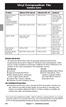 Vinyl Composition Tile Installation System Product Adhesive/Full Spread Adhesive/Tile-On Comment Imperial Texture MultiColor RAVE Stonetex Companion Square Feature Tile/Strips ARTEFFECTS SAFETY ZONE Vinyl
7.5 There are a number of different types of synthetic surface available. These fall generally under one of the following headings:
 7 Types of Pitch Surface 7.1 There are essentially two main groups of pitch surface: natural grass and synthetic turf. Within each, there are several different types. As these guidelines are aimed predominantly
Shaw Premium Touch Limited Life of the Home Cushion Warranty
 Shaw Premium Touch Limited Life of the Home Cushion Warranty Who is covered This warranty protects you, the original purchaser, if you have purchased a Shaw Premium Touch cushion for your own residential
LASER PRINTING PROBLEM SOLVER
 LASER PRINTING PROBLEM SOLVER Controllng Moisture Die Cutting & Sheeting Adhesive Contamination Laser Compatible Materials General Tips Other Common Problems Laser Label printing problems are primarily
High Capacity Hot Air Dryer
 High Capacity Hot Air Dryer MADE IN AUSTRIA autumn 2015 www.zimmer-austria.com page 1 Hot air dryer type: Compact HC The modular construction of the high efficiency and powerful hot air nozzle dryer is
How To Work With Beads. By Rowan
 R O W A N How To Work With Beads By Rowan HOW TO WORK WITH BEADS Adding beads to a knitted or crocheted design gives it a really special touch especially when the beads added are as stunning as those in
SECTION 10680 MediaStation Model 125 Electric Lateral Files (ELF)
 SECTION 10680 MediaStation Model 125 Electric Lateral Files (ELF) PART 1-GENERAL 1.01 RELATED WORK SPECIFIED IN OTHER SECTIONS A. Electrical connections see electrical specifications. 1.02 SUBMITTALS A.
The corrugated box: A profile and introduction
 The corrugated box: A profile and introduction 1 More than just a plain brown box Ninety to ninety-five percent of U.S. manufactured goods are shipped to consumers in corrugated containers. In fact, more
ELEVATOR TRAVELING CABLE - DESIGN EVOLUTION
 ELEVATOR TRAVELING CABLE - DESIGN EVOLUTION by Richard Laney Introduction Elevator traveling cable is a vital link between the elevator car and controller. In conventional elevators, all power and signal
The bog jacket is a garment crafted from a
 Weaver s Wisdom by Lynette Ausland Eads Weaving is one of the most enjoyable and universal of all the fiber arts. In this column, we blend historical perspectives with contemporary techniques and equipment
HIGH PERFORMANCE PRE-APPLIED SYSTEM FOR BLIND SIDE & BELOW GRADE WATERPROOFING APPLICATIONS
 BSW HIGH PERFORMANCE PRE-APPLIED SYSTEM FOR BLIND SIDE & BELOW GRADE WATERPROOFING APPLICATIONS BSW is a fully reinforced Pre-Applied system membrane designed for horizontal and vertical external blind-side
ENGINEERING SPECIFICATION PULTRUDED DYNARAIL FIBERGLASS LADDER & LADDER CAGES
 ENGINEERING SPECIFICATION PULTRUDED DYNARAIL FIBERGLASS LADDER & LADDER CAGES PART 1 - GENERAL 1.1 SCOPE OF WORK SECTION 06610 FIBERGLASS REINFORCED PLASTICS (FRP) FABRICATIONS PULTRUDED SQUARE TUBE LADDER
Selecting Vinyl Flooring
 extension.usu.edu Smart Shopping for Home Furnishings Selecting Vinyl Flooring Dr. Leona Hawks Home Furnishings & Housing Specialist 1987 HI 03 Shopping for vinyl? There are many different varieties of
Roofing Systems. There are many different systems, each with it's own special requirements and benefits. Browse through all the options below.
 Roofing Systems There are many different systems, each with it's own special requirements and benefits. Browse through all the options below. BUR (Built-Up Roofing) Built-Up-Roofing, BUR is a roof that
Welding of Plastics. Amit Mukund Joshi. (B.E Mechanical, A.M.I.Prod.E)
 Welding of Plastics Amit Mukund Joshi (B.E Mechanical, A.M.I.Prod.E) Introduction Mechanical fasteners, adhesives, and welding processes can all be employed to form joints between engineering plastics.
The length of this warranty varies by product. Please see product sample or your retailer for duration of this warranty on specific products.
 RESIDENTIAL ENGINEERED HARDWOOD LIMITED WARRANTY Limited Warranties for Q Wood Brand Locking Engineered Hardwood Floors with Opulux Performance Enhanced Finish Manufacturing Defects Q Wood by Quick Step
A Guide to Thermoform Processing of Polypropylene. Introduction
 A Guide to Thermoform Processing of Polypropylene Introduction Thermoforming is the process of heating plastic sheet to a pliable state and forming it into shape. Thermoforming offers processing advantages
GENERAL CARPET CARE MAINTENANCE - VACUUMING
 GENERAL CARPET CARE MAINTENANCE - VACUUMING FELTEX CARPETS, EXPERIENCE WHEN CARRYING OUT VACUUMING TRIALS OVER A PERIOD OF YEARS, SUPPORTS THE RECOMMENDATIONS OF CONSUMER MAGAZINES THAT UPRIGHT VACUUM
glass & Glazing Products
 glass & Glazing Products WallMaker Create an unlimited variety of bright, beautiful and secure interior environments with the easy-to-install Stylmark WallMaker glass wall system. This versatile system
Columbia flooring will resist fading from exposure to sunlight or artificial light.
 LIMITED LIFETIME WARRANTY AND MAINTENANCE FOR RESIDENTIAL USE Columbia is so confident in the design and durability of our Columbia flooring products and accessories, that we back them with a Limited Lifetime
IMPORTANT SAFETY RULES TO FOLLOW
 WARNING FLOOR & CARPET CLEANER Any piece of equipment can be dangerous if not operated properly. YOU are responsible for the safe operation of this equipment. The operator must carefully read and follow
Materials. Estimating Steel. Players. Materials. Shop Drawings. Detailing Process. Standard shapes. Fabricated members, Built-up sections
 Materials Standard shapes W sections, C channels, Structural T, Angles, Pipes, Tubes, Rods and Plates Fabricated members, Built-up sections Adding plates to beam flanges, Stiffeners to beam webs Built
SEWING MAINTENANCE CHECKLIST
 SEWING MAINTENANCE CHECKLIST Many Retail, Brand-name Marketing, Mail Order and Sourcing Companies are visiting existing and potential Contractor sewing facilities and evaluating their sewing capabilities
Vinyl Composition Tile Installation System
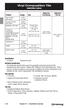 Vinyl Composition Tile Installation System Product Gauge Size Vinyl No-Wax (Dry Back) Urethane No-Wax (Dry Back) 0.045" (1.1 mm) 0.080" (2.0 mm) IMPERIAL TEXTURE 0.094" (2.4 mm) STONETEX ChromaSpin COMPANION
Forensics Lab Identification of Fibers
 Forensics Lab Identification of Fibers Name Per Due Date Background Information Fibers, strands of thread that make up yarn and cloth, are all around us. You encounter a wide variety of fibers every day.
Keeping your Carpet Beautiful
 Keeping your Carpet Beautiful Shedding Most carpets retain some loose fibers after they are installed. These fibers often appear as balls of fluff on the surface of your carpet or in your vaccum cleaner.
Flocking of textiles. Flocked shirt 13. flocking drying cleaning. adhesive. application. creation
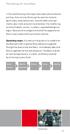 Flocking of textiles > The motif flocking is the high-class alternative to textile printing. One not only flocks sports wear for schools, sport clubs, associations etc., but also fabrics for garments,
Hamilton Form Company, Ltd Custom Designs, Flexible Solutions
 Hamilton Form Company, Ltd Custom Designs, Flexible Solutions 1 IFC 2 CUSTOM DESIGNS, FLEXIBLE SOLUTIONS Hamilton Form has been designing and building custom steel forms for the precast industry since
Carpet Maintenance Guidelines
 Carpet Maintenance Guidelines Table of Contents I. Fibres 1 II. Vacuuming 2 III. Cleaning Frequency 3 IV. Maintenance Plans 4 V. Interim Cleaning 4 VI. Restorative Cleaning 4 VII. Drying 4 VIII. Preventative
CARPET MAINTENANCE & CLEANING MANUAL. A Tarkett Company THE ULTIMATE FLOORING EXPERIENCE
 CARPET MAINTENANCE & CLEANING MANUAL A Tarkett Company THE ULTIMATE FLOORING EXPERIENCE Extending the life of your investment 75 years of carpet experience A carpet s life will be governed by many factors,
Industrial Attachment Tapes X-Series. Value, Performance. & Quality. Simply X.
 3M Industrial Attachment Tapes X- Value, Performance & Quality Simply X. 3M has made it easy to select a high-quality tape for my attachment and assembly needs. Simply X. Your application. OUR TAPE. We
Built to Last. Built for Beauty. Good. Solid. Logix. TM
 Built to Last. Built for Beauty. Good. Solid. Logix. TM Quality, Value and Service Introducing LOGIX Insulated Concrete Forms. Based on the simple concept of interlocking blocks, LOGIX ICF gives you a
ABSeam Panel Overview and Installation Instructions
 82 Garden Spot Road Ephrata, PA 17522 717-445-6885 35 Ridge Road Newville, PA 17241 717-776-5951 ABSeam Panel Overview and Installation Instructions Applications: The ABSeam panel is an architectural panel
BUILD A TABLETOP LOOM
 BUILD A TABLETOP LOOM From 1" x 2" stock (actual 3/4" x 1"1/2) cut: 4 pieces 15" long 4 pieces 5"1/2 long Use the above to make 2 frames for the front and back of the loom. From 1" x 4" stock (actual 3/4"
Guide Specifications for Maple Flooring Systems
 Guide Specifications for Maple Flooring Systems MFMA Guide Specification for Resilient Pre-Engineered Fixed Panel System Purpose This Guide Specification is designed to assist in the production of actual
#25 The Basics of Lightweight Conveyor Belting
 #25 The Basics of Lightweight Conveyor Belting The overall belting market share for lightweight conveyor belting has increased modestly over the past couple of decades. The primary reasons for the increase
Chapter 5 POWDER-BASED RAPID PROTOTYPING SYSTEMS
 Chapter 5 POWDER-BASED RAPID PROTOTYPING SYSTEMS 5.1 3D SYSTEMS SELECTIVE LASER SINTERING (SLS) 5.1.1 Company 3D Systems Corporation was founded by Charles W. Hull and Raymond S. Freed in 1986. The founding
Denco Sales Aspire Catalog
 Denco Sales Aspire Catalog This catalog is a product reference guide. For more detailed information, inventory availability, pricing, data sheets, printing profiles and more click here to go to the Denco
first look at GigaCrete s revolutionary new New Construction GigaHouse GigaHouse Utilizing GigaPanel
 first look at GigaCrete s revolutionary new New Construction GigaHouse GigaHouse Utilizing GigaPanel What is GigaCrete GigaCrete is a family of products based on low carbon footprint Green ceramic binders
All around Digital Direct Printing
 All around Digital Direct Printing Flags / Promotional textiles Homedeco / Bedlinnen Clothing / Corporate Identity Fashion / Swim Wear Processes in Digital Printing Pre-treatment Print Dye-Fixation Wet
Minor Cracks in Horizontal Surfaces
 Cracks, chips and broken or flaking areas in concrete are not only unsightly, they can lead to further deterioration of the surface. The result is a costly replacement project as opposed to a simple repair.
T R A N S F E R A B L E F U L LY
 HSTOPS A WALL OF WATER 22 FT. HIG! F U L LY T R A N S F E R A B L E RESISTS10 PSI ! 1 F U L LY T R A N S F E R A B L E HSTOPS A WALL OF WATER 22 FT. HIG RESISTS10 PSI Guaranteed To Stop Water Even Under
TABLE OF CONTENTS INTERIOR BANNER DISPLAYS 2-4 LIGHT BOX DISPLAYS 5 EXTERIOR SIGN DISPLAYS 6 HARDWARE 7-9
 DISPLAY CATALOG TABLE OF CONTENTS 2-4 LIGHT BOX DISPLAYS 5 EXTERIOR SIGN DISPLAYS 6 7-9 Whether you need a small yard sign or an oversized banner display, look to Signs and Graphics by FedEx Office to
Foam Injection Molding:
 Foam Injection Molding: Unique Process Solutions for Light Weighting Automotive Plastic Parts Steve Braig President & CEO Trexel, Inc. AGENDA Technology Overview > Chemical Foaming > Physical Foaming Foamed
FIBERS POLYMERS YARNS FIBERS STAPLE FIBERS SHORT CUT FIBERS CONTRACT MANUFACTURING
 FIBERS POLYMERS YARNS FIBERS STAPLE FIBERS SHORT CUT FIBERS CONTRACT MANUFACTURING STAPLE FIBERS Barnet is one of the largest global traders and producers of synthetic fibers in both staple and continuous
DUPONT PERFORMANCE POLYMERS Joint Design: A Critical Factor in Strong Bonds GENERAL GUIDELINES FOR ULTRASONIC, VIBRATION AND SPIN WELDING
 DUPONT PERFORMANCE POLYMERS Joint Design: A Critical Factor in Strong Bonds GENERAL GUIDELINES FOR ULTRASONIC, VIBRATION AND SPIN WELDING Introduction Welding techniques for assembling parts molded with
CARPET CARE TRAINING MANUAL
 CARPET CARE TRAINING MANUAL CARPET CARE BY ENVIRO ED A Complete Training Service FOR INDUSTRY, BUSINESS, HEALTH CARE, AND EDUCATION FACILITIES CARPET MATERIALS AND CONSTRUCTION PREFACE Carpet is a fabric
Time for Tea Collection
 Time for Tea Collection F70264 Time for Tea Collection Project Instructions Apron Luncheon Mats & Napkins Coaster Drip Catcher Tea Cozy Click on Photo for Project Instructions Frame & Fabric Mat Tea Pot
4.3.5 - Breakaway Walls
 4.3.5 - Breakaway Walls Elevation of a structure on a properly designed foundation reduces the potential for water damage from flooding. When the space below the lowest elevated floor is maintained free
GreenGuard Housewrap Installation Guide
 000768PACBPHW_Flashing Bro 5/23/03 2:52 PM Page 1 For the most current product information, go to www.green-guard.com. Pactiv Building Products believes the information and recommendations herein to be