
xmatters (IT) engine FOR CA SERVICE DESK MANAGER
|
|
|
- Edwina Horton
- 10 years ago
- Views:
Transcription
1 xmatters (IT) engine FOR CA SERVICE DESK MANAGER

2 This manual provides information about xmatters. Every effort has been made to make it as complete and accurate as possible; however, the information it contains is subject to change without notice and does not represent a commitment on the part of xmatters. No part of this document may be reproduced by any means without the prior written consent of xmatters. Friday, January 30, 2015 Copyright All rights reserved. xmatters, xmatters, xmatters Java Client, xmatters mobile access, xmatters integration agent, xmatters lite, xmatters workgroup, xmatters enterprise, xmatters service provider, xmatters On-Demand, and xmatters Notification Server are trademarks of xmatters, inc. All other products and brand names are trademarks of their respective companies. Contacting xmatters You can visit the xmatters Web site at: From this site, you can obtain information about the company, products, support, and other helpful tips. You can also visit the Customer Support Site from the main web page. In this protected area, you will find current product releases, patches, release notes, a product knowledge base, trouble ticket submission areas and other tools provided by xmatters, inc. Corporate Headquarters Alcosta Blvd, Suite 425 San Ramon, CA Telephone: Facsimile: Client Assistance: International: and press 2 US/CAN Toll Free: XMATTRS ( ) EMEA: +44 (0) Australia/APJ Support: opt 2 Customer Support Site: This integration was designed and tested on an unmodified version of CA Service Desk Manager, and this document describes how to configure xmatters to integrate with the default installation. If you have customized or altered your instance of CA SDM, this integration may need to be modified for your deployment. Please note that these integration changes are not part of the services offered by xmatters Technical Support, but can be performed through xmatters s Professional Services department. For more information, contact your xmatters Sales representative. Proprietary and Confidential 2014 xmatters, inc

3 Table of Contents Chapter 1: Introduction Integration Summary Benefits Integration Architecture System Requirements Operating Systems Conventions and Terminology Conventions Terminology 3 Chapter 2: Installation and Configuration Installing the integration Installing the integration services Installing the integration script Installing voice files Configuring CA Service Desk Manager Configuring a notification method Configuring CA SDM to use managed login Configuring a contact for system notifications Configuring xmatters Importing Event Domains and scripts Configuring the default User Adding the Web Service Users Subscribing to Alerts Configuring data load Data load configuration files Data priority and sources Data load process Data load notification and logging 21 Chapter 3: Integration Validation Validating User and Group Data Load Triggering a notification Responding to a notification Viewing response results 27 Chapter 4: Optimizing and Extending the Integration 29 i

4 4.1 Manually configuring xmatters Configuring the Event Domain Purging temporary files Customizing the handling of temporary files Response choices Adding annotation messages Changing and adding response choices Delivery Annotations Altering the duration of events FYI Notifications Filtering and suppression Configuring SSL Using self-signed certificates Importing certificates Updating HTTP to HTTPS Optional Configuration Optimizing the data load integration Mapping user roles Changing data load default values Changing user device mapping Phone numbers and country code mapping Specifying longer lists of users or groups to include/exclude Uninstalling 43 ii

5 Chapter 1: Introduction Chapter 1: Introduction Welcome to xmatters (IT) engine for CA Service Desk Manager. This document describes how to install and configure the xmatters (IT) engine for CA Service Desk Manager software integration. The intended audience for this document is experienced consultants, system administrators and other technical readers. About xmatters xmatters is an interactive alerting application, designed to capture and enrich important events, to route those events to the right person on any communication device, and to give that person the ability to solve, escalate, or enlist others to resolve the events remotely. xmatters allows you to take critical business information and contact the right people via voice phone, SMS, twoway pagers, instant message, and . Through integration modules, xmatters can become the voice and interface of an automation engine or intelligent application (the management system, such as CA Service Desk Manager). When CA SDM detects something that requires attention, xmatters places phone calls, sends pages, messages, or s to the appropriate personnel, vendors or customers. xmatters is also persistent, escalating through multiple devices and personnel until someone accepts responsibility or resolves the problem. Once contacted, xmatters gives the notified person instant two-way communication with CA Service Desk Manager. Responses are executed immediately on CA SDM, enabling remote resolution of the event. 1.1 Integration Summary This integration supports ticket notifications (from CA SDM to xmatters) through an included shell script. It also supports inbound actions (from xmatters to CA SDM). This integration also provides a way to load Group and User data from CA SDM into an xmatters deployment. You may need to modify the configuration described in this document to suit your particular business requirements and adjust it to suit your expected loads. For example, the default integration features automatic status annotations to the original event; in a high-volume production system, this can significantly affect performance. Consider your expected volume of injected events and your server capacity when designing your own integration with xmatters Benefits With the xmatters integration, the appropriate technician can be notified directly via voice, , pager, BlackBerry, or other device. Information about the failure will be presented to the event resolver and decisions can be made in real-time. Once a response is selected on the recipient s remote device, xmatters will update the CA SDM ticket in real-time. The benefit is that this process is immediate significantly faster than the time required for staff to notice the failures or malfunctions, determine who is on call, and manually notify the right person. In addition, the ability to take simple actions on the event from any device gives the event resolver a quick way to deal with many issues and communicate to other team members the current state of the event. During the process, every notification, response, and action is logged in xmatters. In addition, xmatters automatically annotates the original CA SDM ticket with status information. The xmatters product features a self-service web user interface to allow accurate assignment of responsible personnel for each ticket. 1


6 1.1.2 Integration Architecture The following diagram illustrates the high-level architecture and components of this integration: Events injected into xmatters from CA SDM are based on notifications that would have been sent from CA SDM through other methods. As part of the integration, a custom Notification Method must be created in CA SDM. This Notification Method runs a wrapper shell script that executes APClient.bin. When the APXML messages reaches the xmatters integration agent, the integration agent parses a notification file that is created as part of the Notification Method to extract NX_NTF fields which are sent as event tokens to xmatters. A CA SDM administrator or contact can then select the "xmatters Notification Method" as the notification method for Low, Medium, High, or Emergency notifications for specific CA SDM Contacts. The content of the notifications is based on the HTML content defined by CA SDM users; an xmatters banner is added to the top of the content. Responses for the integration are dynamic, and based on a query back to CA SDM when the APXML messages reach the integration agent. A web service call (getvalidtransitions) looks up the configured Transitions based on the type and current status of the ticket for which the notification was generated. Response handling is performed via web service calls back to CA SDM. The integration updates the state of the ticket to the next transition state. Authentication can be done either through providing a username/password or through creating a managed session which requires a policy to be configured in CA SDM (this is the preferred method). Impersonation is also supported. The integration also performs a batch data load. Contact records are extracted from CA SDM and then pushed to xmatters via the web service interface. This process is run by a script installed locally to CA SDM. 1.2 System Requirements The following products must be installed and operating correctly prior to integration. xmatters: xmatters xmatters integration agent (must be installed on the CA Service Desk Manager server) CA SDM: CA Service Desk Manager Chapter 1: Introduction 2

7 1.2.1 Operating Systems The following component versions are supported by this integration. Integration Component Version xmatters 5.1 patch 002 On-Demand (validated) xmatters integration agent (validated) CA Service Desk Manager 12.9 For more information about the supported operating systems for xmatters, refer to the xmatters installation and administration guide and xmatters integration agent guide. 1.3 Conventions and Terminology This section describes how styles are used in the document, and provides a list of definitions Conventions Some instructions appear in the following format: MENU > OPTION; for example, File > Open means click the File menu, and then click the Open menu option. Words in bold typically reference text that appears on the screen. Words in monospace font represent the following: text that must be typed into the computer directory and file names code samples Directory paths Except where explicitly stated, the directory paths in this document are listed in Windows format. Linux users must substitute the given paths with the Linux equivalents. The xmatters installation folder is referred to throughout the documentation as <xmhome>. On Windows systems, the default is C:\Program Files\xMatters On Linux systems, the default is /opt/xmatters The xmatters integration agent installation folder is referred to throughout the documentation as <IAHOME>. On Windows systems, the default is C:\Program Files\xmatters\integrationagent. On Linux systems, the default is /opt/xmatters/integrationagent Terminology The following terms are used through the xmatters documentation. Chapter 1: Introduction 3

8 Documentation terminology Term Event Management system Device User Group Meaning An event refers to any situation or item of interest detected by the management system, and which requires attention. Event is also used to refer to the incident or situation as it progresses through the xmatters system, from injection to notification to resolution. Each event must generate at least one alert or notification. Event can also be a generic term used to refer to an incident, change request, message, or other specific item within the management system. Whenever possible, these situations are referred to using the management system's preferred terminology (i.e., ticket), but can also collectively be called events. A management system is any sort of IT service management software with which xmatters can combine; i.e., a synonym for CA SDM. The medium through which a recipient is contacted by xmatters; i.e., , pager, phone, BlackBerry, etc. In xmatters, people who can receive notifications are called "Users". Each person in the xmatters system is defined by a set of User details, including ID number, user name, login password, and so on. Groups are used to collect and organize Users and Devices into notification schedules. For a complete explanation of Groups in xmatters, see the xmatters user guide. Chapter 1: Introduction 4

9 Chapter 2: Installation and Configuration This chapter provides information about installing the xmatters (IT) engine for CA Service Desk Manager integration. This chapter also contains complete instructions on how to configure xmatters, CA SDM, and the integration components. 2.1 Installing the integration This section describes the installation process for the xmatters (IT) engine for CA Service Desk Manager integration. Note that this integration comprises two separate integration services: one for events associated with incoming tickets from CA SDM, and another for batch data load operations. Components This integration includes the following components that must be modified for each deployment: Component Name caservicedesk.xml, casddataload.xml, configuration.js xmattersdataload, xmattersdataload.bat conf/deduplicator-filter.xml Description The JavaScript and XML service configuration files that defines the integration services on the integration agent. Note that this integration includes two versions of configuration.js: one for the notification integration service, and one for the data load integration service. Command scripts used to launch the xmatters data load. The filtering mechanism used to suppress duplicate messages. The filter checks the values of certain parameters within injected events; if they are all the same within a specified timeframe, only the first message will be sent through to xmatters. You can customize these settings by adding or removing predicates in the filter, changing the suppression period or the number of messages that are compared by the integration agent. For more information about this feature, see "Filtering and suppression" on page Installing the integration services To install the integration services, you must perform the following steps: Copy the folder containing the integration components into the integration agent; this process is similar to patching the application, where instead of copying files and folders one by one, you copy the contents of a single folder directly into the integration agent folder (<IAHOME>). The folder structure is identical to the existing integration agent installation, so copying the folder's contents automatically installs the required files to their appropriate locations. Copying these files will not overwrite any existing integrations. Modify the integration agent's IAConfig.xml file to include the paths for the new integration services. Modify the variables in the configuration.js files associated with the integration services. If you have more than one integration agent providing the CA SDM service, repeat the following steps for each one. Note: If you have already installed an existing integration, ensure that you back up the deduplicator-filter.xml file (if one exists) in the <IAHOME>\conf folder before you install this integration. Chapter 2: Installation and Configuration 5

10 To install the integration service: 1. Copy all of the contents of the \components\integration-agent folder from the extracted integration archive to the <IAHOME> folder. 2. If you backed up an existing deduplicator file as indicated in the note above, merge the contents of your backup with the newly installed <IAHOME>\conf\deduplicator-filter.xml file: open both files in a text editor, and then copy the <filter> node from the backup file into the new deduplicator file after the last </filter> node. Save and close the file. 3. Open the IAConfig.xml file found in <IAHOME>\conf and add the following line to the service-configs section: <path>caservicedesk-1-6-1/caservicedesk-1-6-1/caservicedesk.xml</path> <path>caservicedesk-1-6-1/casddataload-1-6-1/casddataload.xml</path> 4. Open the configuration.js file (now located in <IAHOME>\integrationservices\caservicedesk \caservicedesk-1-6-1\ folder, and set the values for the following variables: Variable SERVICE_DESK_URL SERVICE_DESK_USER SERVICE_DESK_PASSWORD_FILE DEDUPLICATOR_FILTER DELETE_EXISTING_EVENTS Description The URL of the CA SDM web service. The user name of the CA SDM web service user used to access the web services. Location of the file containing the web service user's password; for instructions on how to set the password for this user, see "Installing the integration services", below. The name of the filter used to suppress duplicate notifications for this integration. For more information, see "Filtering and suppression" on page 38. Sends a "delete" prior to creating the new event, which will clear any existing events for the incident ID. 5. Open the configuration.js file (now located in the <IAHOME>\integrationservices\caservicedesk \casddataload folder, and set the values for the following variables: Variable SERVICE_DESK_URL SERVICE_DESK_USER SERVICE_DESK_PASSWORD_FILE SEND_SYNC_SUMMARY XMATTERS_ADMINISTRATOR Description The URL to the CA SDM web services. The user name of the CA SDM web service user used to access the web services. Location of the file containing the web services user's password; for instructions on how to set the password for this user, see "Installing the integration services", below. Determines whether the data load summary should be sent to the xmatters Administrator. The xmatters User to whom you want to send the data load summary. 6. Save and close the file. 7. Restart the integration agent. On Windows, the integration agent runs as a Windows Service; on Linux, it runs as a daemon. Chapter 2: Installation and Configuration 6

11 Setting web services user password This integration includes an encrypted file, located in the <IAHOME>\conf folder, that stores the password for the web services user required for the management system. You will need to update the file with the correct password for the SERVICE_DESK_USER variable specified in the caservicedesk-1-6-1\configuration.js and casddataload \configuration.js files. Password file name: caservicedesk.pwd stores the password for the SERVICE_DESK_USER user used by the caservicedesk integration service. If you change the name of this file, you must also update the configuration.js files to point to the correct password file. Note that this file is used for both integration services (caservicedesk and casddataload-1-6-1). If you want to use a different login for each integration service, create a new password file or copy and rename the existing PWD file. Edit the configuration.js file of the integration service you want to use, and change the SERVICE_DESK_PASSWORD_FILE variable to point to the new password file. To specify a web service user password: 1. Open a command prompt, and then navigate to <IAHOME>\bin. 2. Run the following command, where <new_password> is the password for the web services user specified in the configuration.js file, <old_password> is the existing password (the default value for a newly installed integration is "password"), and <filename> is the name of the password file (caservicedesk.pwd). iapassword.bat --new <new_password> --old <old_password> --file conf/<filename>.pwd Installing the integration script Each integration service has a pair of operating-system-specific integration scripts (xmattersintegration and xmattersintegration.bat) that are used as a bridge between CA SDM and the event integration service. Configuring the integration script These scripts assume that the integration agent has been installed to the default <IAHOME> folder listed in "Directory paths" on page 3. If the integration agent has been installed in a different location, the script files should be updated to reflect the installation path of your integration agent, specifically the apclient.bin.exe file. Note also that a change in CA SDM also requires that any paths in these script do not contain spaces. This is a common issue on Windows systems, where the default installation path includes the "Program Files (x86)" folder. In this case, you will need to replace all paths in the xmattersintegration.bat file with their "8dot3" formatted equivalents. To determine the 8dot3 version of a folder name, run the following command in its parent folder: dir /x This command will produce a directory listing of the folder's contents in 8dot3 format. For example, the Program Files (x86) folder is often represented as PROGRA~2. Use these folder names when configuring your integration script as described in the following steps. To configure the integration script: 1. For Windows systems, determine the "8dot3" representation of the path to your <IAHOME> folder. For example, to determine the 8dot3 representation of the default integration agent installation folder should resemble the following: c:\progra~2\xmatters\integr~1 Chapter 2: Installation and Configuration 7

12 2. Open the <CA SDM>\bin\xmattersintegration.bat (or xmattersintegration file on Linux systems) file in a text editor. 3. Edit the following lines to replace the paths with the location of your integration agent's bin folder. IF EXIST "C:\Program Files (x86)\xmatters\integrationagent\bin\" ( SET IAHOME=C:\Program Files (x86)\xmatters\integrationagent Note that on Windows systems, this involves replacing both instances of C:\program files (x86) \xmatters\integrationagent with the 8dot3 representation. For example, to use the path shown earlier, you would edit the lines as follows: IF EXIST "c:\progra~2\xmatters\integr~1\bin\" ( SET IAHOME=c:\progra~2\xmatters\integr~1 4. Save and close the xmattersintegration.bat file. Note that some versions of the integration script contains two sets of similar lines; for example: IF EXIST "C:\Program Files\AlarmPointSystems\IntegrationAgent\" ( SET IAHOME=C:\Program Files\AlarmPointSystems\IntegrationAgent ) IF EXIST "C:\Program Files (x86)\xmatters\integrationagent\bin\" ( SET IAHOME=C:\Program Files (x86)\xmatters\integrationagent ) It is recommended that you replace both sets of the lines with a single set as identified in the steps above. Installing the integration script To simplify the command path for the xmatters Notification Method that will be created in CA SDM, it is recommended that you copy the integration script files to the CA SDM server. To install the integration script, do one of the following: On Windows systems, copy the components\integration-agent\integrationservices\caservicedesk \caservicedesk-1-6-1\xmattersIntegration.bat file from the extracted integration archive to the <CA SDM Install Folder>\Service Desk\bin folder. (On Windows systems, the default CA SDM installation location is C:\Program Files\CA\Service Desk Manager.) On Linux systems, copy the components/integration-agent/integrationservices/caservicedesk /caservicedesk-1-6-1/xmattersIntegration file from the extracted integration archive to the <CA SDM Install Folder>/Service Desk/bin folder. Note that while each of the integration services has its own version of the integration script, you only need to install the script for the caservicedesk integration service into the CA SDM bin folder Installing voice files These files must be installed into any xmatters deployment running a voice Device Engine. For more information, refer to the xmatters installation and administration guide. This integration provides two sets of English voice files; one for the notification integration, and one for the data load portion. To install the voice files: 1. Determine the value of the File Identifier associated with your Company. To find your Company's File Identifier, log into the xmatters web user interface as the Super Administrator, and view the target Company's Details page (Admin tab > Companies > Company name). 2. Copy the contents of the \components\xmatters\vox\ folder from the extracted integration archive to the following node installs folder: Chapter 2: Installation and Configuration 8

13 <xmhome>\node\phone-engine\datastore\<file_identifier>\ For example, if you were installing the integration for the Default Company on an out-of-the-box deployment, the installation paths for the voice files would be as follows: <xmhome>\node\phone-engine\datastore\1\caservicedesk-1-6-1\recordings\english\phrases <xmhome>\node\phone-engine\datastore\1\casddataload-1-6-1\recordings\english\phrases Note that if this is the first custom Event Domain you have created, the <FILE_IDENTIFIER> directory will not have been created yet. You can create it manually or log into xmatters and use the web user interface to add a new voice recording. If the Phone Device Engine is running, xmatters will create the directory structure and place the new voice recording in it. 2.2 Configuring CA Service Desk Manager Configuring CA SDM to combine with xmatters requires the following steps: Configure a new notification method to notify Users via xmatters. Optionally, configure CA SDM to use managed login and allow impersonations (recommended). Note that you may also want to perform periodic maintenance on the CA SDM temporary files, as described in "Purging temporary files" on page Configuring a notification method To configure a notification method for this integration, create a new notification for xmatters, and then set CA SDM to use the new notification method. To configure a notification method: 1. In the CA Service Desk Manager Web Client interface, click the Administration tab, expand Notifications, and then click Notification Methods. 2. Click Create New. 3. In the Create New Notification Method dialog box, enter the following information: Symbol: xmatters Write to File: Yes Supports SMTP: No Record Status: Active Description: Notify via xmatters 4. In the Notification method field, type the command appropriate for your operating system: Windows: launchit.exe -b xmattersintegration.bat Linux: launchit -b xmattersintegration 5. Set the xmatters notification method for contacts. CA SDM will now use the xmatters to notify users. 6. Configure the notification rules in CA SDM. For more information on how to automatically notify key personnel about ticket activities and events, refer to the CA Service Desk Manager Administration Guide. Chapter 2: Installation and Configuration 9

14 2.2.2 Configuring CA SDM to use managed login It is recommended that you configure CA Service Desk Manager to support managed login so that interactions from xmatters to CA SDM can be executed by impersonating the user responding to the notification. Note: Note that this requires each CA SDM user who you want to receive notifications from xmatters to have the Impersonate check box selected. The Managed Login functionality in CA SDM performs the user authentication by locating the defined security policy through the plain text policy code, finding the policyholder's public key associated with the policy, decrypting the encrypted policy code, matching decrypted content with the policy code, and finally, opening a session with a back-end server. To configure Managed Login on CA SDM, please refer to the CA Service Desk Manager Technical Reference Guide on how to create the Manager Certificate for use in this process. Note: Ensure that you create a copy of the Manager Certificate file and store it in a location outside the CA SDM subdirectory. Upgrading CA Service Desk Manager will overwrite the Manager Certificate. Once the Manager Certificate has been created, open the caservicedesk-1-6-1\caservicedesk \configuration.js file and ensure that the ACCESS_POLICY_FILE_PATH matches the location of the Manager Certificate (ending in a forward slash) and the ACCESS_POLICY matches the name of the Manager Certificate (with no file extension). The values in the configuration.js file are the default values that are applicable if you are following the CA Service Desk Manager Technical Reference Guide. If the integration is not being configured to use managed login, the MANAGED_LOGIN and ENABLE_IMPERSONATE variables should be set to false. In this case, the SERVICE_DESK_USER will be used to update the tickets from xmatters responses. The managed login functionality applies only to the notification integration; the data load service does not use managed login Configuring a contact for system notifications If you are configuring the integration to use managed login as described in "Configuring CA SDM to use managed login" on page 10, it is recommended that you configure a separate CA SDM contact to use for xmatters system notifications (such as delivery notifications). You can use any Access Type that has Functional Access for issue_mgr set to "Modify" in the CA SDM Security and Role Management details. For more information, refer to your CA SDM documentation. To configure the contact: 1. In the CA SDM interface, click the Administration tab, expand Security and Role Management, then click Contacts. 2. Click Create New. 3. In the Create New Contact dialog box, enter the following information: Last Name: xmatters User ID: xmatters Access Type: Administration Status: Active 4. Click Save. Note: If you enter a different User ID, you must also update the update the ANNOTATION_USER value in the <IAHOME>\integrationservices\caservicedesk-1-6-1\caservicedesk-1-6-1\configuration.js file. Chapter 2: Installation and Configuration 10

15 2.3 Configuring xmatters Configuring xmatters to combine with CA Service Desk Manager requires the following steps: Import the Event Domains (one for the notification service and another for data load), and configure the integration service and Event Domain Constants for each Configure the default User Add or configure a Web Services User for each integration service Create a Subscription (optional) Importing Event Domains and scripts The integration package includes two XML files that were created using the xmatters "Export Integration" feature; this greatly simplifies the xmatters configuration process by enabling you to create the integration Event Domain, configure the predicates and Event Domain Constants, and import the integration script package in a single step. To import the Event Domain packages: 1. Log in to xmatters as a Company Administrator, and click the Developer tab. 2. On the Event Domains page, click Import New. 3. On the Import Integration page, click Browse, and then locate the \components\xmatters\event-domain\xm-ca- ServiceDesk.xml file extracted from the integration archive. 4. Click Open, and then click Upload. 5. On the Import Integration page, click Browse, and then locate the \components\xmatters\event-domain\xm-ca- ServiceDesk-DL.xml file extracted from the integration archive. 6. Click Open, and then click Upload. xmatters imports the integration configuration settings and displays the new "caservicedesk-1-6-1" and "casddataload-1-6-1" Event Domains. xmatters also creates the predicates for the Event Domains, and assigns common values as defaults. For more information about the created predicates, and instructions on how to modify them, see "Defining Event Domain predicates" on page 32. Defining the integration service For the installation to be successful, the integration service names must match the names specified in the caservicedesk.xml and casddataload.xml files installed on the integration agent. To define an Integration Service: 1. In xmatters, on the Event Domains page, click the caservicedesk Event Domain. 2. On the Event Domain Details page, in the Integration Services area, click Add New. 3. Enter the following information into the form: Name: caservicedesk Description: CA Service Desk Integration Service Path: Not required. 4. Click Save. 5. On the Event Domains page, click the casddataload Event Domain. 6. On the Event Domain Details page, in the Integration Services area, click Add New. 7. Enter the following information into the form: Name: casddataload Description: CA Service Desk Data Load Integration Service Chapter 2: Installation and Configuration 11

16 Path: Not required. 8. Click Save. Specifying connection parameters Once you have imported the Event Domain packages and configured the Integration Services, you must specify an xmatters address that is reachable from within a notification so that responses can be processed, and other values for the Event Domain Constants. Note: A known issue in xmatters version 5.0 requires that all Event Domain Constants be defined in UPPERCASE. To specify the connection constants: 1. On the Event Domains page, in the Domains menu, click Event Domain Constants. 2. In the Event Domain drop-down list, select caservicedesk-1-6-1, and then click Continue. xmatters displays the pre-configured Event Domain Constants for the integration: 3. In the Event Domain Constants list, specify the correct values for the following constants (click the name of a constant to edit its value and description). 4. Repeat the above steps for the casddataload Event Domain Constants. Event Domain Constants Constant Name Default Value Description XMATTERSURL Used to specify the address of the xmatters web server. The links provided in notification content use this value to locate the xmatters web server which would process the response. For these links to work, this address must be reachable from the Device where the User will receive the notification; normally, this is the IP address or fully-qualified host name of the xmatters web server. BESPUSHURL Used to specify the address of the BES device server. MAINLOGO /static/images/logos/xmatters_ .gif Specifies the location of the xmatters logo displayed in notifications. The following constants are used by the casddataload integration service only; they are used in a message that is sent to a user of the integration if, while processing the user's response to a notification, the integration encounters a serious error that indicates there may be a problem with the configuration of the integration. ERRORCONTACT xmatters/ca Service Desk Integration Team Adminstrator or Admin Group for the xmatters for CA Service Desk integration. ERORCONTACT [email protected] address for the error contact group. ERRORCONTACTPHONE Phone number for the error contact group. Note: For more information about the Event Domain Constants included in the integration and how to configure them to suit your deployment, see "Defining Event Domain Constants" on page 29. Chapter 2: Installation and Configuration 12

17 2.3.2 Configuring the default User By default, this integration uses a default demonstration User named bsmith. Follow the steps below to ensure that this User has a virtual two-way text phone Device. To configure the default User: 1. In xmatters, click the Users tab. 2. On the Find Users page, click S. 3. In the list of returned Users, click Smith, Bob. 4. In the Common Tasks pane, click User Devices. 5. Verify that a virtual text phone Device exists. 6. Click Reorder, and set the virtual text phone to be the first Device in the list. 7. Click Save. Note: If this user is missing, create a User with the User ID bsmith, and add a virtual text phone Device. For more information and instructions on how to perform these tasks, refer to the xmatters user guide Adding the Web Service Users This integration requires a Web Service User for the CA SDM events to be injected to xmatters using web services, and a separate Web Services User for the data load portion of the integration. The following steps describe how to configure the default Web Service User, IAUser, for the event injection, and how to add another Web Service User for data load. To set up Web Service Users: 1. In xmatters, click the Users tab, and then click Find Web Service Users. 2. On the Find Web Service Users page, click All. 3. In the returned search results, click IA_User. 4. On the Details for IA_User page, select all of the web services in the Denied Web Services list (Ctrl-click to select more than one, or select one and press Ctrl-A to select them all), and then click Add. 5. Click Save. 6. In the Web Service Users menu on the left side of the screen, click Add Web Service User. 7. Fill in the fields to create a new Web Service User. Remember the User ID and password you assign to this User. 8. Select all of the web services in the Denied Web Services list (Ctrl-click to select more than one, or select one and press Ctrl-A to select them all), and then click Add. 9. Click Save Subscribing to Alerts You can use the Subscriptions feature in xmatters to subscribe to CA SDM tickets that match specific criteria. For example, you could configure a subscription that would send an informational notification to a specific User each time an event entered the system that was of "Immediate" urgency, or whenever an event's status was changed to "Resolved". These notifications, and their responses, do not affect the normal progression of an event through the system. To allow Users to subscribe to specific criteria on injected events, you must configure the Subscription using the following steps: Define a Subscription Domain Create a Subscription Chapter 2: Installation and Configuration 13

18 Create a Fail-Safe Group Defining a Subscription Domain The Subscription Domain is the reference point of the optional Subscription panel and allows you to control who can create Subscriptions, how recipients can respond to Subscription notifications, and which Event Domain predicates can be used to create a Subscription. You must create a Subscription Domain before you can create Subscriptions. Note: For more information about the predicates used by this integration, see "Defining Event Domain predicates" on page 32. To create a Subscription Domain: 1. On the Developer tab, in the Developer menu, click Subscription Domains. 2. On the Subscription Domains page, click Add New. 3. In the Event Domain drop-down list, select caservicedesk-1-6-1, and then click Continue. 4. On the Subscription Domain Details page, in the Name field, type CA Service Desk. 5. Select the One-Way check box. For this integration, responses are dynamically created for each notification; this makes defining precise response choices very difficult. It is recommended that you create only One-Way Subscriptions for this integration. 6. Click Continue. 7. On the Select Appropriate Predicates page, add all of the predicates to the Applied Predicates list, and then click Continue. 8. On the Select Roles page, specify the Roles you want to be able to create Subscriptions on the Domain, and then click Save. For more information about working with Event and Subscription Domains, see the xmatters installation and administration guide. Creating a subscription You can use the subscriptions feature in xmatters to subscribe to CA SDM events that match specific criteria. For example, you could configure a subscription that would send an informational notification to a specific user each time an event entered the system that was of "Immediate" urgency, or whenever an event's status was changed to "Resolved". These notifications, and their responses, do not affect the normal progression of an event through the system. To create a Subscription: 1. Do one of the following: In xmatters 5.x, on the Alerts tab, in the Alerts menu, click My Subscribed Alerts. Select the CA Service Desk subscription domain, and click the Add New link. In xmatters On-Demand, click your user name to open your profile page, click Subscriptions. Click the Add New button (the plus symbol), and then select CA Service Desk. 2. On the Subscription Details page, specify a name for the subscription, and set the subscription criteria using the tabs. 3. When you are satisfied with the criteria, click Save to create the subscription. Creating a fail-safe Group If an event is submitted to xmatters when the fail-safe functionality is enabled, and there is no Device or User that matches the event, xmatters sends the notification to the fail-safe recipient. The fail-safe recipient is typically a Group, but can be configured as a User. Chapter 2: Installation and Configuration 14

19 To create a fail-safe Group: 1. In xmatters, click the Groups tab. 2. Create a new Group named CA Service Desk FailSafe, with at least one User as a Team member to receive notifications. For more information about creating Groups and Teams, see the xmatters user guide. Note: If you want to use an existing Group or a different Group name, modify the value for the failsafegroup Event Domain Constant, as explained in "Configuring the Event Domain" on page Configuring data load This integration supports one-way batch loading (adding and updating only) of Groups, Users, and Devices from CA SDM into xmatters. To configure the data load according to your desired business behavior, modify the included configuration files; the following sections provide an overview of the configuration options Data load configuration files The data load configuration files are installed to <IAHOME>\integrationservices\caservicedesk \casddataload-1-6-1\ as described in "Installing the integration services" on page 5, and consist of the following files: configuration.js: defines the default values for objects loaded into xmatters, allows the configuration of filters that use CA SDM contact attributes to determine which contacts are transferred to xmatters, and controls the logging of data load result. datasynclist.js: defines whether the data load will update existing objects or only add new objects, and specifies the list of included or excluded objects (referred to as the "sync list"). These files define the default values that control the behavior of data load operations and determine which users and groups are transferred from CA SDM to xmatters; you can modify the behavior of the data load process by specifying the parameters in the following tables. Data load settings: configuration.js file The following settings can be modified or adjusted in the configuration.js file: Variable Description Default SERVICE_DESK_URL SERVICE_DESK_USER SERVICE_DESK_PASSWORD_ FILE Connection information and credentials used to access the CA SDM web services that support the integration; for more information, see "Installing the integration services" on page 5. SEND_SYNC_SUMMARY DATA_LOAD_EXCEPTION_LOG_ MESSAGE Determines whether the data load summary should be sent to the User specified in XMATTERS_ ADMINISTRATOR Note that this summary is written to the integration agent logs. Defines the message that is written to the integration agent log file when a data load operation terminates abnormally due to an error. true "Data Load operation terminated with exception" Chapter 2: Installation and Configuration 15

20 Variable Description Default XMATTERS_ADMINISTRATOR WHERE_CLAUSE_USERS WHERE_CLAUSE_GROUPS WHERE_CLAUSE_GROUP_ MEMBERS ATTRIBUTES_CNT_OBJECT ATTRIBUTES_GRPMEM_OBJECT ATTRIBUTES_CONTACT_ROLES DEFAULT_USER_FIRST_NAME DEFAULT_SUPERVISOR The xmatters User ID to which you want to send the data load summary. Selects a subset of CA SDM users for transfer to xmatters. Selects a subset of CA SDM groups for transfer to xmatters. Selects the CA SDM users who are members of a specified group. This clause must be changed if WHERE_ CLAUSE_USERS is altered. Determine which attributes are retrieved when contacts, group members and contact roles are selected from CA SDM. Determines the first name of any users created in xmatters when the corresponding CA SDM Contact does not have a first name. The xmatters User ID of the default supervisor for Users and Groups in xmatters. companyadmin Selects only active CA SDM Contacts whose Contact type is one of Analyst, Help Desk, Manager, Operator or Technician. Selects only active CA SDM Contacts whose Contact type is Group. Selects members of the specified group that are active CA SDM Contacts whose Contact type is one of Analyst, Help Desk, Manager, Operator or Technician. "Undefined" companyadmin DEFAULT_XMATTERS_ROLES The default Roles assigned to Users in xmatters. Standard User MAP_USER_ROLES DEFAULT_USER_SITE DEFAULT_PROVIDER_ DEFAULT_PROVIDER_TEXT If this variable is false, all xmatters Users will be assigned the Role or Roles defined by DEFAULT_ XMATTERS_ROLES, irrespective of what CA SDM Contact Type the individual users have. If true, the xmatters Roles assigned to individual Users will be based on their types inca SDM and the role mappings defined by the rolemap variable. Determines the Site to which any new xmatters User should belong. Specifies the default user service provider for devices, Specifies the default user service provider for text devices. false Default Site (x)matters Gateway (x)matters SMS Gateway Chapter 2: Installation and Configuration 16

21 Variable Description Default DEFAULT_PROVIDER_VOICE EXTERNALLY_OWN_USERS EXTERNALLY_OWN_GROUPS WEB_LOGIN_TYPE WEB_LOGIN_LDAP_DOMAIN rolemap countrycodes Specifies the default user service provider for voice devices. Determines whether Users created in xmatters should be marked as "Externally Owned". Determines whether Groups created in xmatters should be marked as "Externally Owned". Specifies the method of web login to use for Users created in xmatters; possible values are "NATIVE" (uses xmatters web login credentials) or "LDAP". Specifies the LDAP domain to use if WEB_ LOGIN_TYPE is set to "LDAP". If MAP_USER_ROLES is set to true, this setting specifies how to map CA SDM support groups functional roles to xmatters Roles. Associates international country dialing prefixes with ISO alpha-2 codes required by xmatters. (x)matters Voice Gateway false false NATIVE company.com The default mapping converts a dialing code of "1" to the country code "US" Data load settings: datasynclist.js file The following settings can be modified or adjusted in the datasynclist.js file; for more information about these settings and how they interrelate, see the following section, "Data load process": Variable SYNC_ACTION USER_SEED_ONLY GROUP_SEED_ONLY synclist Description Defines whether the Users and Groups specified in the synclist parameter (defined below) should be included or excluded in the data load. If set to true, user objects will be added to xmatters only when they are initially loaded, and not updated. If set to false, any modifications to the object in CA SDM will be synchronized with the object in xmatters, overwriting any changes that may have been made to the object in xmatters. If set to true, group objects will be added to xmatters only when they are initially loaded, and not updated. If set to false, any modifications to the object in CA SDM will be synchronized with the object in xmatters, overwriting any changes that may have been made to the object in xmatters. Note that the update process will preserve existing xmatters Team information, such as type and rotation settings, and the rotation order and delay settings for existing members. An XML document defining user and group names that should be excluded or included, as explained in the following sections. Note: The list of users must not exceed 50 entries, due to a limitation in CA SDM. Similarly, the list of groups must also not exceed 50 entries. For more information and strategies on handling larger lists, see "Specifying longer lists of users or groups to include/exclude" on page 43. Chapter 2: Installation and Configuration 17
22 2.4.2 Data priority and sources The data load integration service uses the following rules for creating and updating the individual properties of Users, Groups, and Teams in xmatters: 1. New objects are created from a combination of CA SDM object information and configured defaults provided by the integration service file. 2. When an object in CA SDM is changed and the corresponding User or Group in xmatters is updated via the batch data load: Any properties that are populated with information from CA SDM will be updated based on CA SDM information even if the property has been changed in xmatters. Any properties that are populated with configured defaults will not be updated, and any changes in xmatters will be preserved. The following tables describe the source for the data used to populate the fields Users, Groups and Devices in xmatters. User data The data for user details in xmatters that is obtained from CA SDM is provided by the XM_CTM_People_WS web service which exposes fields belonging to CTM:People. xmatters Field Active User ID First Name Last Name User Devices Roles User Site Supervisors Externally Owned Web Login Type LDAP Domain Source CA SDM: deleteflag CA SDM: userid CA SDM: first_name (or configuration file if not found) CA SDM: last_name CA SDM Configuration file OR CA SDM user roles Configuration file Configuration file Configuration file Configuration file Configuration file Group data The data for group details in xmatters that is obtained from CA SDM is provided by the CA Unicenter web service. xmatters Field Group Name Active Externally Owned Source CA SDM: last_name CA SDM: deleteflag Configuration file Chapter 2: Installation and Configuration 18
23 User Devices The data for device details in xmatters is provided by the CA Unicenter web service. Note: For these Devices to be loaded, you may need to add the Device Names into xmatters. For more information about adding Device Types and Device Names, see the xmatters installation and administration guide. xmatters Device Name xmatters Device Type CA SDM Field Work _address Pager p _address Work Phone Voice phone_number Home Phone Voice alt_phone SMS Phone Text Phone beeper_phone Other Phone Voice fax_phone The data load integration service supports phone numbers with the following formats: Local 7-digit numbers: , digit numbers: , (212) , digit numbers preceeded by a 1: , 1 (212) The non-digit separators can be any number of non-digit characters, including white space, brackets, dashes, or periods; i.e., " (", ")", "-", "."', etc Note: Phone extensions are not supported in any form. The default integration behavior is to map the dialing prefix 1 to the Country Code Override "US". To change this, or to add additional mappings, see "Phone numbers and country code mapping" on page Data load process The data load integration transfers user and group information between CA SDM and xmatters via batch data load when a CA SDM user manually initiates the process. You must run the xmattersdataload script as described in "Validating User and Group Data Load" on page 23. This instructs the integration to retrieve lists of qualifying users and groups from CA SDM and transfer them to xmatters. The following sections explain the data load process in more detail. Batch user data load The USER_SEED_ONLY variable determines how users are treated when loading them into xmatters: If the USER_SEED_ONLY variable is set to true: If (User ID does not exist in xmatters) AND (User meets Batch Qualification criteria) AND [(User ID is not in excluded list) OR (User ID is in included list)]: New User is created in xmatters User information is populated User Devices are added to xmatters Chapter 2: Installation and Configuration 19
24 IF (User ID already exists in xmatters): No changes are made to any Users or Devices If the USER_SEED_ONLY variable is set to false: If (User ID does not exist in xmatters) AND (User meets Batch Qualification criteria) AND [(User ID is not in excluded list) OR (User ID is in included list)]: New User is created in xmatters User information is populated User Devices are added to xmatters IF (User ID already exists in xmatters): Usage notes: User information is updated User Devices are added to match settings in CA SDM The integration is not able to change the User ID of xmatters Users. If a Login ID of a user in CA SDM is changed, the resulting update to xmatters will create a new User and leave the original xmatters User unchanged. Batch group data load The GROUP_SEED_ONLY variable determines how users are treated when loading them into xmatters: If the GROUP_SEED_ONLY variable is set to true: If (Group name does not exist in xmatters) AND (Group meets Batch Qualification criteria) AND [(Group name is not in excluded list) OR (Group name is in included list)]: New Group is created in xmatters Group attributes are added Coverage is created Team is created IF (Group name already exists in xmatters): No changes are made If the GROUP_SEED_ONLY variable is set to false: If (Group name does not exist in xmatters) AND (Group meets Batch Qualification criteria) AND [(Group name is not in excluded list) OR (Group name is in included list)]: New Group is created in xmatters Group attributes are added Coverage is created Team is created IF (Group name already exists in xmatters): Notes: Group attributes are updated Team membership is updated (see "Team data load" on page 21) Group Coverage is not updated Group updates may modify team memberships, but will maintain existing xmatters Team information, such as type and rotation settings, and the rotation order and delay settings for existing members. Chapter 2: Installation and Configuration 20
25 If a CA SDM group has no members at the time it is transferred to xmatters, a Group will be created with a Coverage and a Team, but the Team will have no members. Renaming Groups via data load is not supported: if you change the name of a CA SDM group after the group has been transferred to xmatters, subsequent synchronization will create a new Group in xmatters matching the new name of the CA SDM group. The data load will not modify the original xmatters Group, and the new Group will not have any Coverages that may have been added to the original Group. Team data load Team membership is updated in xmatters only as part of a batch update of CA SDM Support groups; the following sections are included to provide detail on the process. If the GROUP_SEED_ONLY variable is set to true: If (Group name does not exist in xmatters): New Team will be created in xmatters with the name "<GroupName> - Default Team" The Team is associated with a default 24x7 Coverage New Team will comprise only those Users in xmatters who are members of the group in CA SDM AND for whom "Assignment Availability" equals "Yes" IF (Group name already exists in xmatters): No changes are made If the GROUP_SEED_ONLY variable is set to false: If (Group name does not exist in xmatters): New Team will be created in xmatters with the name "<GroupName> - Default Team" The Team is associated with a default 24x7 Coverage New Team will comprise only those Users in xmatters who are members of the group in CA SDM AND for whom "Assignment Availability" equals "Yes" IF (Group name already exists in xmatters) AND ("<GroupName> - Default Team" already exists in xmatters): Team with the name "<GroupName> - Default Team" will be updated The Team is not associated with any Coverage Team will comprise only those Users in xmatters who are members of the group in CA SDM AND for whom "Assignment Availability" equals "Yes" Rotation and escalation settings, and ordering of existing team members in xmatters will be reset IF (Group name already exists in xmatters) AND ("<GroupName> - Default Team" does not exist in xmatters): New Team will be created in xmatters with the name "<GroupName> - Default Team" The Team is not associated with any Coverage New Team will comprise only those Users in xmatters who are members of the group in CA SDM AND for whom "Assignment Availability" equals "Yes" Data load notification and logging Following each data load operation, a summary of successful, successful with warning, and failed actions is written to the integration agent logs. You can also use the XMATTERS_ADMINISTRATOR and SEND_SYNC_SUMMARY variables in the configuration.js file to send a notification containing the summary to a User or Group within xmatters. Note that the summary notification is FYI-only. No user responses to the notification are supported and the integration does not support any annotations from the recipients of the notification or from xmatters concerning the delivery of the notification. Chapter 2: Installation and Configuration 21
26 If the data load operation terminates before completion, a message is written to the integration agent logs indicating what has happened. The contents of this string can be configured via the DATA_LOAD_EXCEPTION_LOG_MESSAGE in the configuration.js. In this case, a summary notification is also sent to the configured xmatters User or Group. Chapter 2: Installation and Configuration 22
27 Chapter 3: Integration Validation Chapter 3: Integration Validation After configuring xmatters and CA SDM, you can validate that communication is properly configured. It is recommended that you start the components in the following order: CA SDM xmatters integration agent xmatters Consult the respective user manuals for details on starting these applications. The following sections will test the combination of xmatters and CA SDM for notification delivery and response, and data load configuration. 3.1 Validating User and Group Data Load The following tests the communication between CA SDM and xmatters to ensure that the data load is properly configured. Note: For this example, it is recommended that you set the Device s User Service Provider to use virtual . This will help when troubleshooting problems in later testing. To test the User load: 1. Review the contents of integrationservices\caservicedesk-1-6-1\casddataload \dataSyncList.js and the value of WHERE_CLAUSE_USERS in integrationservices\caservicedesk-1-6-1\casddataload-1-6-1\configuration.js. The default configuration will only process updates to active CA SDM Contacts that have specific contact types. 2. In CA SDM, create a new active user that meets the criteria of the configuration files, and assign them an address. 3. Update the synchronization lists (as described in "Configuring data load" on page 15) to include and add the User ID of the user you created in step 2. This will limit the test to only the user you added. 4. Navigate to the <IAHOME>\integrationservices\caservicedesk-1-6-1\casddataload folder, and confirm that the value of IAHOME in the xmattersdataload or xmattersdataload.bat file (depending on your platform) is correct. If you installed the integration agent to a location other than the default installation folder, you will need to specify is location within the file. 5. Run one of the following commands: Windows: xmattersdataload.bat load Linux: xmattersdataload load 6. Log in to xmatters, and confirm that the user has been added, and has an Device with the correct address. 23

28 For additional information on the data load process, consult the integration agent's AlarmPoint.txt file, which includes a summary detailing any failures or warnings and their reasons. 3.2 Triggering a notification To trigger a notification, create a new ticket or incident in CA SDM, and assign it to "Bob Smith", or a User that exists in both CA Service Desk Manager and xmatters. 3.3 Responding to a notification This section describes how to respond to a notification from xmatters. In the following example, the notification is received via the xmatters mobile app on an Android phone, but the process is similar for all devices. To respond to a notification: 1. When the notification arrives, the mobile app uses the subject of the notification as a push message to let the user know that a new alert is available: 24

29 Chapter 3: Integration Validation 2. When the user opens the mobile app, they can see the new alert waiting in their inbox: 3. The user can open the alert to see its contents and the details of the problem: 4. To respond to the notification, the user scrolls down to view the available options, and then clicks a response choice: 25

30 5. On some systems, the user can also choose to add a comment or annotation to the response. Note that these annotations are visible only in the event's Log report in xmatters, and not sent back to CA SDM. 6. When the user submits their response, the app will update the event in CA SDM: 26

31 Chapter 3: Integration Validation 3.4 Viewing response results To view the results of the response, view the ticket in CA SDM. In the following example, the "Assignee" field has been updated to the name of the responding User, the "Status" has been updated to "Acknowledged", and the "Incident Activity Log List" has been updated with additional entries to show the changes resulting from the User's response: 27

32 28
33 Chapter 4: Optimizing and Extending the Integration This section describes some of the available methods you can use to optimize or extend the xmatters (IT) engine for CA Service Desk Manager integration. 4.1 Manually configuring xmatters This integration includes an exported version of the xmatters Event Domain that includes event domain constants and predicates. If you do not want to use this to create and configure the required event domain, the following sections describe how to manually configure xmatters Configuring the Event Domain By default this integration is set up to use the Event Domains caservicedesk and "casddataload-1-6-1"; it is strongly recommended that you use these default Event Domains. Note: The xmatters web server must be running to perform this portion of the integration. To define the Event Domains: 1. Sign on to xmatters as a Company Administrator, and click the Developer tab. 2. In the Developer menu on the left side of the screen, click Event Domains. 3. On the Event Domains page, click Add New. 4. Enter the following information into the form: Name: caservicedesk Description: CA SDM Integration Script Package: CA Service Desk 5. Click Save. 6. On the Event Domains page, click Add New. 7. Enter the following information into the form: Name: casddataload Description: CA SDM Data Load Integration Script Package: CA Service Desk Manager Data Load 8. Click Save Once you have defined the Event Domain, you can add the integration service, as described in "Defining the integration service" on page 11, and the Event Domain predicates, as described in "Defining Event Domain predicates" on page 32. Defining Event Domain Constants Company Administrators and Developers can create Event Domain Constants that will be available in scripting for all event objects associated with an Event Domain. This integration uses Event Domain Constants to define custom values for the integration script package. Note that while the constants listed in this section are present in both of the integration's Event Domains, most of them will have no impact on the behavior of the data load integration as it sends only FYI notifications. The integration script package uses the names of the constants defined in the table below to look up the values; it is strongly recommended that you use the names specified, or speak to an xmatters client assistance representative before changing these values. Chapter 4: Optimizing and Extending the Integration 29
34 Note: The values for the XMATTERS and BESPUSHURL constants should be modified to specify the address of the xmatters web server (to enable the HMTL response options) and the BES device server. To add an Event Domain Constant: 1. In xmatters, click the Developer tab, and then, in the menu on the left side of the screen, click Event Domain Constants. 2. In the Event Domain drop-down list, select caservicedesk On the Event Domain Constants page, click Add New. 4. Define a Constant Name, Value, and Description for the new constant, according to the table below. Note that Event Domain Constant names in xmatters version 5.0 MUST be defined in uppercase. 5. Click Save. 6. Repeat the above steps for each of the constants you want to add. Note that if the constants are not defined in the web user interface, the scripts will use the values listed in the Default Values column of the following table. Note: Shaded rows indicate mandatory settings that are specific to your deployment. You must change the default settings to match your instance. Constant Name Default Value Description XMATTERSURL Used to specify the address of the xmatters web server. The links provided in notification content use the XMATTERSURL constant value to locate the xmatters web server which would process the response. For these links to work, this address must be reachable from the Device where the User will receive the notification; normally, this is the IP address or fully-qualified host name of the xmatters web server. Populates the $main.xmatters_url variable. BESPUSHURL Used to specify the address of the BES device server. Populates the $main.bes_pushurl parameter. FORCEFYI disable Force notifications to be informational only (FYI), rather than requiring responses; this overrides the fyi behaviour specified on the injected event. Possible values: disable: Nothing is forced. on: Notifications are forced to be FYI. off: Notifications are forced not to be FYI. Populates the force_fyi parameter. Chapter 4: Optimizing and Extending the Integration 30
35 Constant Name Default Value Description FAILSAFEGROUP CA Service Desk FailSafe The fail-safe recipient to notify, typically a group. The fail-safe group identifies the recipient that will be notified if an event is injected to xmatters and no subscriptions exist that match the event. Set this constant if you want to change the failsafe group from CA Service Desk FailSafe to another group defined in xmatters. FAILSAFE enabled Controls fail-safe functionality, notifying the fail-safe recipient via under certain circumstances; possible values are: enabled: Notify if no subscriptions match or no notifiable recipients. for-subscriptions: Notify if subscription functionality is enabled AND no subscriptions match. for-recipients: Notify if no notifiable recipients. disabled: Disable fail-safe functionality. Populates the $fail_safe parameter. OVERRIDETIMEFRAMES false Override Recipients Device Timeframes. Populates the $override_timeframes parameter. USEEMERGENCYDEVICES false Force the use of emergency Devices. Populates the $use_emergency_devices parameter. TRACKDELIVERY true Track when each Device is delivered to. Setting this to false may give a performance advantage, but you lose any information about whether a delivery was successful or not. Populates the $track_delivery parameter. ANNOTATE true Enables submission of annotations back to the management system. Populates the $main.annotate parameter. SUBSCRIPTIONANNOTATE true Enables submission of Subscription annotations back to the management system. Populates the $main.subscription_annotate parameter. TRACKSUBSCRIPTIONDELIVERY true Track when each Device is delivered to for Subscriptions. Populates the $track_subscriptiondelivery parameter. Chapter 4: Optimizing and Extending the Integration 31
36 Constant Name Default Value Description TIMEOUT Amount of time (in seconds) the event is allowed to run before timing out seconds = 72 hours. Populates the $main.timeout parameter. MAXINVALIDRESPONSES 3 Specifies the maximum number of invalid responses allowed before notification is no longer requeued. Populates the $main.maxinvalidresponses parameter. ENABLEHTML true Enables HTML functionality. Populates the $main.enable_html_ parameter. USELOGO true Set this if you want the logo displayed within HTML notifications. Populates the $main.use_logo parameter. MAINLOGO /static/images/logos /xmatters_ .gif Indicates the location of the image that will be displayed in HTML notification. USEURLALIAS false Indicates how Response Choices are presented to xmatters to ensure that the user is authenticated in the correct company so the notification can be updated.; set to true for xmatters On-Demand integrations. DEBUG false Indicates whether to use the debug level for logging messages. Populates the $main.debug variable. ENABLESUBSCRIPTIONS true Indicates whether to enable processing of Subscriptions on incoming events. The following constants are used in a message that is sent to a user of the integration if, while processing the user's response to a notification, the integration encounters a serious error that indicates there may be a problem with the configuration of the integration. ERRORCONTACT ERORCONTACT ERRORCONTACTPHONE Adminstrator or Admin Group for the xmatters for CA Service Desk integration. address for the error contact group. Phone number for the error contact group. Defining Event Domain predicates This section describes how to add and configure the default Event Domain predicates used by this integration. You can also use the following steps to add other predicates that you consider important and which you plan to add to the integration. Chapter 4: Optimizing and Extending the Integration 32
37 To define the Event Domain predicates: 1. In xmatters, click the Developer tab. 2. On the Event Domains page, click caservicedesk On the Event Domain Details page, click the Add New link beside the Predicates heading. 4. Add the following predicates to the Event Domain: Predicate Type Important Description Event Domain predicates assignee_name Text Name of the User to which the event was assigned. impact List The perceived impact of the event, as defined in CA SDM; default values are: 1-Entire organization 2-Multiple Groups 3-Single Group 4-Small Group 5-One person requestor_name Text Name of the User who submitted the request. priority List The severity of the event as defined in CA SDM; default values are: None status List The status of the event in CA SDM; default values are the same as those defined in "Response choices" on page 35. urgency List The urgency assigned to the event in CA SDM; default values are: 1-When Possible 2-Soon 3-Quickly 4-Very Quickly 5-Immediate ticket_factory List The type of ticket created in CA SDM; default values are: chg iss in cr pr subject text The subject of the notification. Chapter 4: Optimizing and Extending the Integration 33
38 Data Load predicates The "casddataload-1-6-1" Event Domain contains the following default predicates: Predicate Type Important Description Event Domain predicates has_errors List Indicates whether the data load encountered any errors; possible values are "true" and "false". Note that the has_errors and has_warnings predicates are provided to enable administrators and other Users to create subscriptions in xmatters that will notify them about data load errors or warnings. has_warnings List Indicates whether the data load encountered any warnings; possible values are "true" and "false". Note: For more information about predicates and how they work in xmatters, see the xmatters installation and administration guide. 4.2 Purging temporary files This integration relies on temporary files created by CA SDM to store notification data that will be sent to the integration agent. Files generated for the xmatters integration are not needed after the incident has been injected to the integration agent, but the temporary files are not automatically deleted. If these files are not purged occasionally, injections into xmatters may be delayed while CA SDM searches for the next available file name; for example, after restarting CA SDM. By default, these files are stored in the temp folder on the CA SDM server, and are named sequentially, e.g. c:\temp\1, c:\temp\2, etc. The integration (as of version 1.4) creates a folder into which it moves the notification files after they have been processed. This folder is named "xmatters", and is located within the original file location. For example, if CA SDM creates a notification file called C:\temp\1, the integration renames the file and moves it to c:\temp\xmatters\1.<date>, where <date> is the current date and time in a "yymmddhhmmss" format. (The directory and filename scheme can be customized by editing the caservicedesk.js integration script. This process is intended to reduce the delay presently encountered after CA SDM is restarted, before notifications are sent to the integration agent. It is recommended that you occasionally purge the files from the temp\xmatters folder to reduce congestion of the CA SDM server's file system Customizing the handling of temporary files The temporary file handling feature can be disabled or configured by modifying the following sections within the caservicedesk.js integration script. // markprocessed() will attempt to move the parsed notification file to a subdirectory called xmatters. // This is bound by file system access so if you don't want this feature just comment out fileparser.markprocessed(). fileparser.setcopyafterprocessing(false); fileparser.markprocessed(); //fileparser.markprocessed('<custom directory>'); // If you want a different directory, use full qualified path. Chapter 4: Optimizing and Extending the Integration 34
39 //fileparser.markprocessed('<custom directory>', '<custom filename>'); // If you want to control directory and file name. If setcopyafterprocessing is set to "true", then the integration will put a copy of the CA SDM temporary file into the xmatters folder after processing; otherwise, the file will be moved. If you want the file to be moved to a folder other than %temp%\xmatters, then specifiy the desired location by setting the "fileparser.markprocessed('<custom directory>');" parameter. For example: fileparser.markprocessed('c:\deleteme'); If you edit the script to specify "fileparser.markprocessed('<custom directory>', '<custom filename>');", then the files will be moved to a custom folder and will be renamed. Note that this will cause the previous notification files to be overwritten, and so it will effectively prevent the hard drive from filling up with temporary files (since each file will replace the previous one when it is moved and renamed.) For example: fileparser.markprocessed('c:\deleteme', 'latest-notification-file.txt'); 4.3 Response choices This integration allows recipients to respond to notifications with several default choices, some of which are injected back to the CA SDM server, updating the original incident. Users notified on Devices also have the ability to respond with an extra annotation message which will be logged in the original CA SDM incident. Note that the configuration options described in this section apply only to the caservicedesk integration service; the data load portion of this integration does not support response choices. The response choices presented on a notification will vary according to the ticket type that the notification represents, and the current status of the incident. xmatters presents the response choices that would be available in the ticket if the user were to perform the update directly in CA SDM. Which the exception of "Ignore" and "Annotate", response choices are essentially ticket statuses and will update the status of the ticket to the specified response choice. CA SDM also adds an activity log entry to the ticket with details of who changed the status, and from which Device. "Ignore" and "Annotate" do not modify the ticket status; they only update the activity log. For short text (SMS) and non-html Devices, the responder must respond with the response code as spaces in the statuses would cause the response handler to take the text after the first word as annotation text. Note: To remove the "Ignore" option, edit the configuration.js file in a text editor, and set the ADD_IGNORE_RESPONSE option to false. The following is a list of the default response choices available with the integration and their associated actions on the xmatters event and the CA SDM incident. For a definition of the job control terms, see the list below the table. Default response choices Response Response Code Job Control Ignore IGN Notify next, delink responder. Acknowledge ACK Delink all except responder. Analysis Complete PRBANCOMP Delivered Approval In Progress APP Delink all except responder. Approved (Request/Incident/Problem) PRBAPP Delink all except responder. Chapter 4: Optimizing and Extending the Integration 35
40 Response Response Code Job Control Approved (Change) APR Delink all except responder. Avoided AVOID Notify next, delink responder. Awaiting End User Response AEUR Delink all except responder. Awaiting Vendor AWTVNDR Delink all except responder. Backed Out BACK Delink all except responder. Cancelled CNCL Delink all. Close Requested CLREQ Delink all except responder. Closed CL Delink all. Closed Unresolved CLNRSLV Delink all. Customer Hold CSTHLD Delink all except responder. Fix In Progress FIP Delink all except responder. Fixed FXD Delink all except responder. Hold HLD Delink all except responder. Implementation in Progress IMPL Delink all except responder. Implemented IMPD Delink all. In Progress WIP Delink all except responder. Known Error KE Delink all. Not Approved NOAP Delink all. Open OP Delink all except responder. Pending Change PNDCHG Delink all except responder. Problem Closed PC Delink all. Problem Fixed PF Delink all except responder. Problem Open PO Delink all except responder. Reject Solution REJSAP Delink all except responder. Rejected (Request/Incident/Problem) PRBREJ Delink all except responder. Rejected (Change) REJ Delink all except responder. Researching RSCH Delink all except responder. Resolved RE Delink all except responder. RFC RFC Delink all except responder. Chapter 4: Optimizing and Extending the Integration 36
41 Response Response Code Job Control SA-Abandon SAABND Delink all. SA-Resolved SARES Delink all. Scheduled SCHDLD Delink all except responder. Suspended SUSPEND Delink all except responder. Vendor Hold VNDHLD Delink all except responder. Verification in Progress VRFY Delink all except responder. Verify Solution VERSOL Delink all. Job control definitions The job controls defined in the above table are implemented as follows: Delivered: marks the notification as delivered. Notify next: notifies the next recipient in the Group according to the defined escalation in xmatters. Delink responder: marks the notification as delivered. Stops any further action on the notification for the Responder ONLY. Delink all except responder: marks the notification as delivered, and stops any further action on the notification for all recipients of the notification EXCEPT for the responder. Delink all: marks the notification as delivered, stops any further action on the notification for all recipients, and terminates the event in xmatters The job control defined for each response choice is the default configuration for this integration; for more information about job control, and how to modify these actions in the scripts, see the xmatters Online Developer's Guide Adding annotation messages Two-way Device notifications (not FYI) can add extra annotations that will be added to the CA SDM incident. To add an extra annotation, respond to an notification with the following format in the subject line: RESPONSE <Choice> <Message> <Choice> can be any of the response choices listed in the table above, and <Message> can be any content you want to add as the annotation Changing and adding response choices You can change the response choices by adding new statuses and transitions in CA SDM. For each new status you add, you must update the Response Handler section in the Action Script to handle the new response choice. A new ELSE-IF block must be inserted into the handler to capture the response code that will be returned by the notification response. If the status change is to be reflected in CA SDM, the first call must be to sendexternalservicerequest. Subsequent calls are for job control and can be configured as required using the job control descriptions above. Response script ELSE-IF ( $token == "newstatus" ) ### New Status CALL sendexternalservicerequest CALL sendapdelinkallexceptresponderresponse Chapter 4: Optimizing and Extending the Integration 37
42 4.4 Delivery Annotations This integration extensively annotates the originating CA SDM ticket for each Device to which a notification is delivered, but this may not be desirable in all environments. To prevent the delivery annotation of an incident, change the "annotatedelivery" Event Domain Constant to false. For more information, see "Configuring the Event Domain" on page Altering the duration of events You can modify the amount of time xmatters will send out notifications for a particular event before it times out by changing the timeout Event Domain Constant. This constant stores the number of seconds the notifications will be allowed to continue before timing out. For example, if you wanted to change the event duration to two hours, you could change the value for the timeout constant to For more information about working with Event Domain Constants, see "Configuring the Event Domain" on page FYI Notifications You can make all notifications informational only (i.e., the user is not offered any response choices) by modifying the Event Domain Constants, as described in "Configuring the Event Domain" on page 29. Setting the forcefyi Event Domain Constant to "on" makes all normal and Subscription notifications one-way (FYI). 4.7 Filtering and suppression The xmatters integration agent's Portable Filtering and Suppression Module is a built-in module that maintains a rolling record of previously injected events, and allows for the suppression of duplicates (also referred to as "deduplication"). This helps avoid disruption of traffic due to inadvertent loads that can result when, for example, improperly configured management systems inject duplicated events. The deduplicator-filter.xml file is installed in the <IAHOME>\conf folder and is configured to suppress duplicate events for 30 minutes (up to a maximum of 100 events in that period). This filter can be modified to extend the time period over which an event is considered to be a duplicate, the number of events in that period and the tokens that are used to determine what makes the event unique. For example, to add REQUESTOR_NAME to the tokens, open the deduplicator-filter.xml file in a text editor and add the following line to the <predicates> collection: <predicate>requestor_name</predicate> Save the file and restart the integration agent for the changes to take effect. Note: To see a complete list of predicates available in the integration, reviewing the Event Data in the Event Summary Report in the xmatters web user interface. 4.8 Configuring SSL This integration supports SSL communication between the integration agent and CA SDM and between the integration agent and xmatters. Chapter 4: Optimizing and Extending the Integration 38
43 4.8.1 Using self-signed certificates The SSL support has been configured out of the box to support self-signed certificates. This is not recommended for production systems due to security reasons, unless you are aware and accepting of the security implications of self-signed certificates. To modify the SSL configuration: 1. Open the <IAHOME>\integrationservices\caservicedesk-1-6-1\lib\lib_1_2_ 6\javascript\webservices\wsutil.js file and modify the ACCEPT_ANY_CERTIFICATE variable as follows: Set to true to use SSL but trust any certificate (including self-signed ones). Set to false to accept only Certificate Authority (CA) certified certificates (recommended in production environments) Importing certificates The next step required to enable SSL support is to import the certificate used by the CA SDM web server to the cacerts keystore of the Java Virtual Machine (JVM) bundled with the integration agent. Using the keytool executable located at <IAHOME>\jre\bin, execute the following command on the integration agent to import the certificate, replacing the variables with the appropriate values as described in the list below: keytool -import -alias <your.alias> -file <path>/<certificate>.cer -keystore <dir>/jre/lib/security/cacerts -storepass <password> <your.alias>: an identifier for the certificate within the keystore; for example, you can use the string "caservicedesk-1-6-1". <path>: path to the certificate <certificate>: the certificate s file name <dir>: the directory in which the integration agent is installed. <password>: the password for the cacerts keystore; the default password is "changeit". If you want to configure SSL support between the integration agent and xmatters, use the above command to import the trusted certificate for xmatters into the integration agent keystore (for information on setting up SSL in xmatters, consult the xmatters Community site at Updating HTTP to HTTPS The configuration of HTTPS requires changes to three files. Each integration service has its own copies of these files, which are in the following locations within the integrationservices/caservicedesk-1-6-1/ folder: caservicedesk-1-6-1: caservicedesk-1-6-1/configuration.js lib/lib_1_2_6/javascript/webservices/wsutil.js lib/lib_1_2_6/javascript/xmatters/xmattersws.js casddataload-1-6-1: casddataload-1-6-1/configuration.js lib/lib_1_2_6/javascript/webservices/wsutil.js lib/lib_1_2_6/javascript/xmatters/xmattersws.js In the remainder of this section these files will be referred to by name without their path; the instructions can be applied to either or both of the integration services. The next step is to update the SERVICE_DESK_URL in the configuration.js file to use the HTTPS protocol instead of HTTP. Chapter 4: Optimizing and Extending the Integration 39
44 The modified value should resemble the following: var SERVICE_DESK_URL = " Note: For trusted certificates, "localhost" should be replaced with the COMMON NAME (CN) specified in the certificate and the port should be set to the port specified in the SSL configuration for CA SDM. To configure the integration agent to use HTTPS when communicating with xmatters: 1. In a text editor, open the <IAHOME>\conf\IAConfig.xml file. 2. Modify the URL for the <primary-servers> and <secondary-servers> elements to use the HTTPS protocol instead of HTTP; the section should resemble the following: <primary-servers> <!-- 0 or more URL elements that specify the primary location of each xmatters server's RegisterIntegrationAgent Web Service. The URLs must begin with either or and cannot have a query or fragment component. The URLs must be resolvable from this IA. +--> <url> </primary-servers> <!-- These servers are assumed to be connected to the same xmatters database, which can be different than the primary servers' database. +--> <secondary-servers> <!-- 0 or more URL elements that specify the secondary location of each xmatters server's RegisterIntegrationAgent Web Service. The URLs must begin with either or and cannot have a query or fragment component. The URLs must be resolvable from this IA. +--> <url> </secondary-servers> Note: For trusted certificates, "localhost" should be replaced with the COMMON NAME (CN) specified in the certificate and the port should be set to the port specified in the SSL configuration for the xmatters server. 3. Modify the value for the <service-gateway> element to use SSL; note that the service-gateway host IP must be resolvable from the xmatters servers: <service-gateway ssl="true" host="localhost" port="8081"/> 4. Restart the integration agent Optional Configuration The following scenarios illustrate the common configuration options available when using SSL. Scenario 1 CA SDM certificate: CA-certified xmatters certificate: CA-certified In wsutil.js, set the variable ACCEPT_ANY_CERTIFICATE to false. This will ensure ALL communication between the integration agent and CA SDM and the integration agent and xmatters uses the appropriate CA certified certificates Chapter 4: Optimizing and Extending the Integration 40
45 Scenario 2 CA SDM certificate: CA-certified xmatters certificate: self-signed In wsutil.js, set the variable ACCEPT_ANY_CERTIFICATE to false. In xmatterws.js, add the following line at the end of the init() method: this.accept_any_certificate = true; This will allow communication between the integration agent and xmatters to use self-signed certificates while maintaining more complete security between the integration agent and CA SDM. Scenario 3 CA SDM certificate: self-signed xmatters certificate: CA-certified In wsutil.js, set the variable ACCEPT_ANY_CERTIFICATE to true. In xmatterws.js, add the following line at the end of the init() method: this.accept_any_certificate = false; This will allow communication between the integration agent and CA SDM to use self-signed certificates while maintaining more complete security between the integration agent and xmatters. Scenario 4 CA SDM certificate: self-signed xmatters certificate: self-signed In wsutil.js, set the variable ACCEPT_ANY_CERTIFICATE to true. This will allow ALL communication between the integration agent and CA SDM and between the integration agent and xmatters to use self-signed certificates. 4.9 Optimizing the data load integration The following sections identify some of the ways you can adjust or modify the behavior of the data load integration to best suit your deployment. Note that the data load integration has its own Event Domain, integration service, and script package. These must be installed using the instructions in the Installation and Configuration chapter, or manually installed as described in "Manually configuring xmatters" on page Mapping user roles The default behavior of the data load integration is to assign the Role defined in the configuration.js file to all xmatters Users that it creates. For example, the default file uses the following code to assign the "Standard User" Role to all new xmatters Users: var DEFAULT_XMATTERS_ROLES = ["Standard User"]; To assign a different Role, or to assign multiple Roles to all new or updated Users, you can modify the value of DEFAULT_ XMATTERS_ROLES to include a comma-delimited list: var DEFAULT_XMATTERS_ROLES = ["Role 1", "Role 2]; Chapter 4: Optimizing and Extending the Integration 41
46 The integration also supports the more flexible assignment of xmatters Roles based on the roles associated with CA SDM users. To map CA SDM roles to xmatters Roles: 1. In the configuration.js file, modify the value of the MAP_USER_ROLES variable to true; i.e.: var MAP_USER_ROLES = true; 2. In the rolemap section, edit the rolemap lines to reflect the mapping you want to implement; e.g.: 1 var rolemap = []; 2 rolemap["service Desk Manager"] = ["Group Supervisor", "Person Supervisor"]; 3 rolemap["ca SDM Role"] = ["xmatters Role 1", "xmatters Role 2"]; Note how line 3, above, allows you to map a single CA SDM role to multiple Roles in xmatters. Any number of these one to many mappings can be specified, but the configuration does not allow you to assign multiple CA SDM roles to a single xmatters Role in a single rolemap entry. Note: Lines 2 and 3 can be modified, removed, or added to as needed, but do not remove or modify Line Changing data load default values The dataload integration service sets the values of some of the properties of xmatters Users, Groups, and Devices to hardcoded defaults. For example, Users are assigned by default to the "US/Pacific" time zone, and to the "Default Company". The default values for any xmatters properties that are assigned in this way are defined in integrationservices\caservicedesk-1-6-1\casddataload-1-6-1\configuration.js and assigned to the associated xmatters object in the files and functions indicated below. Object Integration Service File Function Details User processusers.js makeuserforaddupdate() Sets User properties after a new User objects is created by calling new User() Device processusers.js makeuserforaddupdate() Sets property values for Devices other than Voice and Pager phonenumber.js setvoicephoneorpager() Sets property values for Voice and Pager Devices Group processgroups.js makegroupforaddupdate() Sets Group properties after a new Group is created by calling new Group() Team processgroups.js makegroupforaddupdate() Sets the property values for the Team created for Group objects Team Member processgroups.js makegroupforaddupdate() Sets the properties for Team members after new GroupMember() is called Changing user device mapping The makeuserforaddupdate() function within the processusers.js file examines the "udsobject" object that describes the user details in CA SDM, and maps the user devices to xmatters. The code that does this for a given device is a code block that typically resembles the following: casddeviceinfo = udsobject. _address; syncdevice = new Device(user.targetName, "Work "); syncdevice.isdelete = isempty(casddeviceinfo); syncdevice.address = casddeviceinfo; syncdevice.externallyowned = user.externallyowned; Chapter 4: Optimizing and Extending the Integration 42
47 user.devices.add(syncdevice); To change the mappings between devices in CA SDM and Devices in xmatters, including a change to the name of the xmatters Device, add to or edit the relevant code block for the Device as needed Phone numbers and country code mapping The code in setvoicephoneorpager() in phonenumber.js maps the information in a phone number attribute in CA SDM to the phone number fields used by xmatters. It handles typical cases for 7-, 10-, and 11-digit North American phone numbers using simple regular expressions. In the case of 11-digit numbers using a leading '1' as a long-distance dialing prefix, the prefix is mapped to an ISO two-character country code that xmatters requires. The mapping from dialing prefix to Country Code Override is defined by the countrycodes variable in the configuration.js file: var countrycodes = <countrycodes> <country> <dialingprefix>1</dialingprefix> <ISO_3166_1>US</ISO_3166_1> </country> </countrycodes> You can extend the default configuration by adding <country> elements to the above definition. Note that each <country> element defines a one-to-one mapping. If more than one mapping uses the same dialing prefix (e.g., US and CA are both associated with the dialing prefix "1", the integration will use the first mapping it finds Specifying longer lists of users or groups to include/exclude As described in "Data load configuration files" on page 15, the data load integration allows lists of users and groups to be excluded or included in the data load. However, if the list of users (or list of groups) contains more than approximately 50 entries, the resulting SOAP request to CA SDM will likely fail. An alternative method to limiting the lists is to add a parameter to the "WHERE_CLAUSE_USERS" variable in the configuration.js file; for example: "... AND (notify_method = 12345)"; A clause similar to the above would cause users to be included only if their CA SDM user record included the "xmatters" notification method. Note: Your CA SDM database administrator would need to identify the actual clause that identifies applicable user records. Alternately, some clients elect to add a custom element to their CA SDM user interface. For example, a check box can be added to set a database flag in the user record, and the above "where" clause can then be modified to include or exclude user records according to this flag. You can engage an xmatters client services representative to assist in implementing the appropriate customization Uninstalling For instructions on removing an xmatters deployment, refer to the xmatters installation and administration guide. Chapter 4: Optimizing and Extending the Integration 43
48 44
49
xmatters (IT) engine for Ca ServiCe desk Manager
 xmatters (IT) engine for CA Service Desk Manager This manual provides information about xmatters. Every effort has been made to make it as complete and accurate as possible; however, the information it
xmatters On-Demand FOR CA SERVICE DESK MANAGER
 xmatters On-Demand FOR CA SERVICE DESK MANAGER This manual provides information about xmatters. Every effort has been made to make it as complete and accurate as possible; however, the information it contains
xmatters (IT) engine FOR CA WORKLOAD AUTOMATION AE (FORMERLY CA AUTOSYS)
 xmatters (IT) engine FOR CA WORKLOAD AUTOMATION AE (FORMERLY CA AUTOSYS) This manual provides information about xmatters. Every effort has been made to make it as complete and accurate as possible; however,
IBM Campaign Version-independent Integration with IBM Engage Version 1 Release 3 April 8, 2016. Integration Guide IBM
 IBM Campaign Version-independent Integration with IBM Engage Version 1 Release 3 April 8, 2016 Integration Guide IBM Note Before using this information and the product it supports, read the information
Copyright 2012 Trend Micro Incorporated. All rights reserved.
 Trend Micro Incorporated reserves the right to make changes to this document and to the products described herein without notice. Before installing and using the software, please review the readme files,
fåíéêåéí=péêîéê=^çãáåáëíê~íçêûë=dìáçé
 fåíéêåéí=péêîéê=^çãáåáëíê~íçêûë=dìáçé Internet Server FileXpress Internet Server Administrator s Guide Version 7.2.1 Version 7.2.2 Created on 29 May, 2014 2014 Attachmate Corporation and its licensors.
AlarmPoint Adapter for BMC Remedy AR System by AlarmPoint Systems
 AlarmPoint Adapter for BMC Remedy AR System by AlarmPoint Systems User Guide Supporting AlarmPoint Adapter for BMC Remedy AR System by AlarmPoint Systems November 30, 2007 Contacting BMC Software You can
NETWRIX EVENT LOG MANAGER
 NETWRIX EVENT LOG MANAGER ADMINISTRATOR S GUIDE Product Version: 4.0 July/2012. Legal Notice The information in this publication is furnished for information use only, and does not constitute a commitment
WebSpy Vantage Ultimate 2.2 Web Module Administrators Guide
 WebSpy Vantage Ultimate 2.2 Web Module Administrators Guide This document is intended to help you get started using WebSpy Vantage Ultimate and the Web Module. For more detailed information, please see
How To Install Caarcserve Backup Patch Manager 27.3.2.2 (Carcserver) On A Pc Or Mac Or Mac (Or Mac)
 CA ARCserve Backup Patch Manager for Windows User Guide r16 This Documentation, which includes embedded help systems and electronically distributed materials, (hereinafter referred to as the Documentation
IBM Campaign and IBM Silverpop Engage Version 1 Release 2 August 31, 2015. Integration Guide IBM
 IBM Campaign and IBM Silverpop Engage Version 1 Release 2 August 31, 2015 Integration Guide IBM Note Before using this information and the product it supports, read the information in Notices on page 93.
Sophos for Microsoft SharePoint startup guide
 Sophos for Microsoft SharePoint startup guide Product version: 2.0 Document date: March 2011 Contents 1 About this guide...3 2 About Sophos for Microsoft SharePoint...3 3 System requirements...3 4 Planning
SC-T35/SC-T45/SC-T46/SC-T47 ViewSonic Device Manager User Guide
 SC-T35/SC-T45/SC-T46/SC-T47 ViewSonic Device Manager User Guide Copyright and Trademark Statements 2014 ViewSonic Computer Corp. All rights reserved. This document contains proprietary information that
NETWRIX USER ACTIVITY VIDEO REPORTER
 NETWRIX USER ACTIVITY VIDEO REPORTER ADMINISTRATOR S GUIDE Product Version: 1.0 January 2013. Legal Notice The information in this publication is furnished for information use only, and does not constitute
CA Spectrum and CA Service Desk
 CA Spectrum and CA Service Desk Integration Guide CA Spectrum 9.4 / CA Service Desk r12 and later This Documentation, which includes embedded help systems and electronically distributed materials, (hereinafter
xmatters (alarmpoint) for IBM Tivoli Change and Configuration Management Database
 xmatters (alarmpoint) for IBM Tivoli Change and Configuration Management Database This manual provides information about xmatters. Every effort has been made to make it as complete and accurate as possible;
Copyright 2013 Trend Micro Incorporated. All rights reserved.
 Trend Micro Incorporated reserves the right to make changes to this document and to the products described herein without notice. Before installing and using the software, please review the readme files,
How To Login To The Mft Internet Server (Mft) On A Pc Or Macbook Or Macintosh (Macintosh) With A Password Protected (Macbook) Or Ipad (Macro) (For Macintosh) (Macros
 TIBCO MFT Internet Server User Guide Software Release 7.2.4 October 2014 Important Information SOME TIBCO SOFTWARE EMBEDS OR BUNDLES OTHER TIBCO SOFTWARE. USE OF SUCH EMBEDDED OR BUNDLED TIBCO SOFTWARE
Spectrum Technology Platform. Version 9.0. Administration Guide
 Spectrum Technology Platform Version 9.0 Administration Guide Contents Chapter 1: Getting Started...7 Starting and Stopping the Server...8 Installing the Client Tools...8 Starting the Client Tools...9
enicq 5 System Administrator s Guide
 Vermont Oxford Network enicq 5 Documentation enicq 5 System Administrator s Guide Release 2.0 Published November 2014 2014 Vermont Oxford Network. All Rights Reserved. enicq 5 System Administrator s Guide
Dell KACE K1000 System Management Appliance Version 5.4. Service Desk Administrator Guide
 Dell KACE K1000 System Management Appliance Version 5.4 Service Desk Administrator Guide October 2012 2004-2012 Dell Inc. All rights reserved. Reproduction of these materials in any manner whatsoever without
Manual POLICY PATROL SECURE FILE TRANSFER
 Manual POLICY PATROL SECURE FILE TRANSFER MANUAL Policy Patrol Secure File Transfer This manual, and the software described in this manual, are copyrighted. No part of this manual or the described software
FileMaker Server 14. FileMaker Server Help
 FileMaker Server 14 FileMaker Server Help 2007 2015 FileMaker, Inc. All Rights Reserved. FileMaker, Inc. 5201 Patrick Henry Drive Santa Clara, California 95054 FileMaker and FileMaker Go are trademarks
POLICY PATROL MFT. Manual
 POLICY PATROL MFT Manual MANUAL Policy Patrol MFT This manual, and the software described in this manual, are copyrighted. No part of this manual or the described software may be copied, reproduced, translated
Portal Administration. Administrator Guide
 Portal Administration Administrator Guide Portal Administration Guide Documentation version: 1.0 Legal Notice Legal Notice Copyright 2013 Symantec Corporation. All rights reserved. Symantec, the Symantec
Integration Client Guide
 Integration Client Guide 2015 Bomgar Corporation. All rights reserved worldwide. BOMGAR and the BOMGAR logo are trademarks of Bomgar Corporation; other trademarks shown are the property of their respective
TIBCO Spotfire Automation Services 6.5. Installation and Deployment Manual
 TIBCO Spotfire Automation Services 6.5 Installation and Deployment Manual Revision date: 17 April 2014 Important Information SOME TIBCO SOFTWARE EMBEDS OR BUNDLES OTHER TIBCO SOFTWARE. USE OF SUCH EMBEDDED
www.novell.com/documentation Jobs Guide Identity Manager 4.0.1 February 10, 2012
 www.novell.com/documentation Jobs Guide Identity Manager 4.0.1 February 10, 2012 Legal Notices Novell, Inc. makes no representations or warranties with respect to the contents or use of this documentation,
VMware Mirage Web Manager Guide
 Mirage 5.1 This document supports the version of each product listed and supports all subsequent versions until the document is replaced by a new edition. To check for more recent editions of this document,
CA Performance Center
 CA Performance Center Single Sign-On User Guide 2.4 This Documentation, which includes embedded help systems and electronically distributed materials, (hereinafter referred to as the Documentation ) is
www.novell.com/documentation Policy Guide Access Manager 3.1 SP5 January 2013
 www.novell.com/documentation Policy Guide Access Manager 3.1 SP5 January 2013 Legal Notices Novell, Inc., makes no representations or warranties with respect to the contents or use of this documentation,
Cloud. Hosted Exchange Administration Manual
 Cloud Hosted Exchange Administration Manual Table of Contents Table of Contents... 1 Table of Figures... 4 1 Preface... 6 2 Telesystem Hosted Exchange Administrative Portal... 7 3 Hosted Exchange Service...
WatchDox Administrator's Guide. Application Version 3.7.5
 Application Version 3.7.5 Confidentiality This document contains confidential material that is proprietary WatchDox. The information and ideas herein may not be disclosed to any unauthorized individuals
PORTAL ADMINISTRATION
 1 Portal Administration User s Guide PORTAL ADMINISTRATION GUIDE Page 1 2 Portal Administration User s Guide Table of Contents Introduction...5 Core Portal Framework Concepts...5 Key Items...5 Layouts...5
BlackBerry Enterprise Service 10. Version: 10.2. Configuration Guide
 BlackBerry Enterprise Service 10 Version: 10.2 Configuration Guide Published: 2015-02-27 SWD-20150227164548686 Contents 1 Introduction...7 About this guide...8 What is BlackBerry Enterprise Service 10?...9
HP Service Manager. Software Version: 9.40 For the supported Windows and Linux operating systems. Application Setup help topics for printing
 HP Service Manager Software Version: 9.40 For the supported Windows and Linux operating systems Application Setup help topics for printing Document Release Date: December 2014 Software Release Date: December
www.novell.com/documentation Administration Guide Novell Filr 1.0.1 May 2014
 www.novell.com/documentation Administration Guide Novell Filr 1.0.1 May 2014 Legal Notices Novell, Inc., makes no representations or warranties with respect to the contents or use of this documentation,
Installation Guide. Tech Excel January 2009
 Installation Guide Tech Excel January 2009 Copyright 1998-2009 TechExcel, Inc. All Rights Reserved. TechExcel, Inc., TechExcel, ServiceWise, AssetWise, FormWise, KnowledgeWise, ProjectPlan, DownloadPlus,
Fixes for CrossTec ResQDesk
 Fixes for CrossTec ResQDesk Fixes in CrossTec ResQDesk 5.00.0006 December 2, 2014 Resolved issue where the list of Operators on Category was not saving correctly when adding multiple Operators. Fixed issue
WatchDox SharePoint Beta Guide. Application Version 1.0.0
 Application Version 1.0.0 Confidentiality This document contains confidential material that is proprietary WatchDox. The information and ideas herein may not be disclosed to any unauthorized individuals
HDA Integration Guide. Help Desk Authority 9.0
 HDA Integration Guide Help Desk Authority 9.0 2011ScriptLogic Corporation ALL RIGHTS RESERVED. ScriptLogic, the ScriptLogic logo and Point,Click,Done! are trademarks and registered trademarks of ScriptLogic
Installation Guide ARGUS Symphony 1.6 and Business App Toolkit. 6/13/2014 2014 ARGUS Software, Inc.
 ARGUS Symphony 1.6 and Business App Toolkit 6/13/2014 2014 ARGUS Software, Inc. Installation Guide for ARGUS Symphony 1.600.0 6/13/2014 Published by: ARGUS Software, Inc. 3050 Post Oak Boulevard Suite
Manual Password Depot Server 8
 Manual Password Depot Server 8 Table of Contents Introduction 4 Installation and running 6 Installation as Windows service or as Windows application... 6 Control Panel... 6 Control Panel 8 Control Panel...
Audit Management Reference
 www.novell.com/documentation Audit Management Reference ZENworks 11 Support Pack 3 February 2014 Legal Notices Novell, Inc., makes no representations or warranties with respect to the contents or use of
TIBCO Spotfire Web Player 6.0. Installation and Configuration Manual
 TIBCO Spotfire Web Player 6.0 Installation and Configuration Manual Revision date: 12 November 2013 Important Information SOME TIBCO SOFTWARE EMBEDS OR BUNDLES OTHER TIBCO SOFTWARE. USE OF SUCH EMBEDDED
FileMaker Server 13. FileMaker Server Help
 FileMaker Server 13 FileMaker Server Help 2010-2013 FileMaker, Inc. All Rights Reserved. FileMaker, Inc. 5201 Patrick Henry Drive Santa Clara, California 95054 FileMaker and Bento are trademarks of FileMaker,
KeyAdvantage System DMS Integration. Software User Manual
 KeyAdvantage System DMS Integration Software User Manual ii Copyright Disclaimer Trademarks and patents Intended use EMC Directive Regulatory 2013 United Technologies Corporation. All rights reserved.
FileMaker Server 11. FileMaker Server Help
 FileMaker Server 11 FileMaker Server Help 2010 FileMaker, Inc. All Rights Reserved. FileMaker, Inc. 5201 Patrick Henry Drive Santa Clara, California 95054 FileMaker is a trademark of FileMaker, Inc. registered
FOR WINDOWS FILE SERVERS
 Quest ChangeAuditor FOR WINDOWS FILE SERVERS 5.1 User Guide Copyright Quest Software, Inc. 2010. All rights reserved. This guide contains proprietary information protected by copyright. The software described
HOW TO SILENTLY INSTALL CLOUD LINK REMOTELY WITHOUT SUPERVISION
 HOW TO SILENTLY INSTALL CLOUD LINK REMOTELY WITHOUT SUPERVISION Version 1.1 / Last updated November 2012 INTRODUCTION The Cloud Link for Windows client software is packaged as an MSI (Microsoft Installer)
Project management integrated into Outlook
 Project management integrated into Outlook InLoox PM 7.x off-line operation An InLoox Whitepaper Published: October 2011 Copyright: 2011 InLoox GmbH. You can find up-to-date information at http://www.inloox.com
Backup and Restore FAQ
 Backup and Restore FAQ Topic 50210 Backup and Restore Web, Data, and Email Security Solutions 11-Mar-2014 Applies to: Web Filter, Web Security, Web Security Gateway, and Web Security Gateway Anywhere,
http://docs.trendmicro.com/en-us/smb/hosted-email-security.aspx
 Trend Micro Incorporated reserves the right to make changes to this document and to the product described herein without notice. Before installing and using the product, review the readme files, release
Adeptia Suite LDAP Integration Guide
 Adeptia Suite LDAP Integration Guide Version 6.2 Release Date February 24, 2015 343 West Erie, Suite 440 Chicago, IL 60654, USA Phone: (312) 229-1727 x111 Fax: (312) 229-1736 DOCUMENT INFORMATION Adeptia
Mobile Device Management Version 8. Last updated: 17-10-14
 Mobile Device Management Version 8 Last updated: 17-10-14 Copyright 2013, 2X Ltd. http://www.2x.com E mail: [email protected] Information in this document is subject to change without notice. Companies names
FileMaker Server 12. FileMaker Server Help
 FileMaker Server 12 FileMaker Server Help 2010-2012 FileMaker, Inc. All Rights Reserved. FileMaker, Inc. 5201 Patrick Henry Drive Santa Clara, California 95054 FileMaker is a trademark of FileMaker, Inc.
Installation Guide. Version 1.5. May 2015 Edition 2002-2015 ICS Learning Group
 Installation Guide Version 1.5 May 2015 Edition 2002-2015 ICS Learning Group 1 Disclaimer ICS Learning Group makes no representations or warranties with respect to the contents or use of this manual, and
Management Center. Installation and Upgrade Guide. Version 8 FR4
 Management Center Installation and Upgrade Guide Version 8 FR4 APPSENSE MANAGEMENT CENTER INSTALLATION AND UPGRADE GUIDE ii AppSense Limited, 2012 All rights reserved. part of this document may be produced
Sophos Mobile Control Installation guide. Product version: 3.5
 Sophos Mobile Control Installation guide Product version: 3.5 Document date: July 2013 Contents 1 Introduction...3 2 The Sophos Mobile Control server...4 3 Set up Sophos Mobile Control...10 4 External
IBM WebSphere Application Server Version 7.0
 IBM WebSphere Application Server Version 7.0 Centralized Installation Manager for IBM WebSphere Application Server Network Deployment Version 7.0 Note: Before using this information, be sure to read the
Using Logon Agent for Transparent User Identification
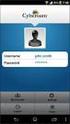 Using Logon Agent for Transparent User Identification Websense Logon Agent (also called Authentication Server) identifies users in real time, as they log on to domains. Logon Agent works with the Websense
Implementation notes on Integration of Avaya Aura Application Enablement Services with Microsoft Lync 2010 Server.
 Implementation notes on Integration of Avaya Aura Application Enablement Services with Microsoft Lync 2010 Server. Introduction The Avaya Aura Application Enablement Services Integration for Microsoft
TREENO ELECTRONIC DOCUMENT MANAGEMENT. Administration Guide
 TREENO ELECTRONIC DOCUMENT MANAGEMENT Administration Guide October 2012 Contents Introduction... 8 About This Guide... 9 About Treeno... 9 Managing Security... 10 Treeno Security Overview... 10 Administrator
Getting Started Guide
 BlackBerry Web Services For Microsoft.NET developers Version: 10.2 Getting Started Guide Published: 2013-12-02 SWD-20131202165812789 Contents 1 Overview: BlackBerry Enterprise Service 10... 5 2 Overview:
ECAT SWE Exchange Customer Administration Tool Web Interface User Guide Version 6.7
 ECAT SWE Exchange Customer Administration Tool SWE - Exchange Customer Administration Tool (ECAT) Table of Contents About this Guide... 3 Audience and Purpose... 3 What is in this Guide?... 3 CA.mail Website...
Vector HelpDesk - Administrator s Guide
 Vector HelpDesk - Administrator s Guide Vector HelpDesk - Administrator s Guide Configuring and Maintaining Vector HelpDesk version 5.6 Vector HelpDesk - Administrator s Guide Copyright Vector Networks
LifeSize Control Installation Guide
 LifeSize Control Installation Guide April 2005 Part Number 132-00001-001, Version 1.0 Copyright Notice Copyright 2005 LifeSize Communications. All rights reserved. LifeSize Communications has made every
HP IMC Firewall Manager
 HP IMC Firewall Manager Configuration Guide Part number: 5998-2267 Document version: 6PW102-20120420 Legal and notice information Copyright 2012 Hewlett-Packard Development Company, L.P. No part of this
Administration Guide. BlackBerry Enterprise Service 12. Version 12.0
 Administration Guide BlackBerry Enterprise Service 12 Version 12.0 Published: 2015-01-16 SWD-20150116150104141 Contents Introduction... 9 About this guide...10 What is BES12?...11 Key features of BES12...
NETWRIX EVENT LOG MANAGER
 NETWRIX EVENT LOG MANAGER QUICK-START GUIDE FOR THE ENTERPRISE EDITION Product Version: 4.0 July/2012. Legal Notice The information in this publication is furnished for information use only, and does not
HP Operations Manager Software for Windows Integration Guide
 HP Operations Manager Software for Windows Integration Guide This guide documents the facilities to integrate EnterpriseSCHEDULE into HP Operations Manager Software for Windows (formerly known as HP OpenView
IT Service Desk Manual Ver. 2.0. Document Prepared By: IT Department. Page 1 of 12
 Document Prepared By: Page 1 of 12 INDEX 1. Introduction. 3 2. Home Page..... 4 2.1 My Request Summary..... 4 2.2 Announcement....... 5 2.3 Submit your Request...... 5 2.4 Report a Problem...... 6 2.5
Sage 200 Web Time & Expenses Guide
 Sage 200 Web Time & Expenses Guide Sage (UK) Limited Copyright Statement Sage (UK) Limited, 2006. All rights reserved If this documentation includes advice or information relating to any matter other than
SonicWALL SSL VPN 3.5: Virtual Assist
 SonicWALL SSL VPN 3.5: Virtual Assist Document Scope This document describes how to use the SonicWALL Virtual Assist add-on for SonicWALL SSL VPN security appliances. This document contains the following
BlackBerry Enterprise Service 10. Universal Device Service Version: 10.2. Administration Guide
 BlackBerry Enterprise Service 10 Universal Service Version: 10.2 Administration Guide Published: 2015-02-24 SWD-20150223125016631 Contents 1 Introduction...9 About this guide...10 What is BlackBerry
Sophos Mobile Control Administrator guide. Product version: 3
 Sophos Mobile Control Administrator guide Product version: 3 Document date: January 2013 Contents 1 About Sophos Mobile Control...4 2 About the Sophos Mobile Control web console...7 3 Key steps for managing
HP A-IMC Firewall Manager
 HP A-IMC Firewall Manager Configuration Guide Part number: 5998-2267 Document version: 6PW101-20110805 Legal and notice information Copyright 2011 Hewlett-Packard Development Company, L.P. No part of this
Lepide Software. LepideAuditor for File Server [CONFIGURATION GUIDE] This guide informs How to configure settings for first time usage of the software
![Lepide Software. LepideAuditor for File Server [CONFIGURATION GUIDE] This guide informs How to configure settings for first time usage of the software](/thumbs/33/16328811.jpg "Lepide Software. LepideAuditor for File Server [CONFIGURATION GUIDE] This guide informs How to configure settings for first time usage of the software") Lepide Software LepideAuditor for File Server [CONFIGURATION GUIDE] This guide informs How to configure settings for first time usage of the software Lepide Software Private Limited, All Rights Reserved
Lepide Software LepideAuditor for File Server [CONFIGURATION GUIDE] This guide informs How to configure settings for first time usage of the software Lepide Software Private Limited, All Rights Reserved
CA Nimsoft Monitor. Probe Guide for CA ServiceDesk Gateway. casdgtw v2.4 series
 CA Nimsoft Monitor Probe Guide for CA ServiceDesk Gateway casdgtw v2.4 series Copyright Notice This online help system (the "System") is for your informational purposes only and is subject to change or
Managing users. Account sources. Chapter 1
 Chapter 1 Managing users The Users page in Cloud Manager lists all of the user accounts in the Centrify identity platform. This includes all of the users you create in the Centrify for Mobile user service
Installation and Configuration Guide
 Entrust Managed Services PKI Auto-enrollment Server 7.0 Installation and Configuration Guide Document issue: 1.0 Date of Issue: July 2009 Copyright 2009 Entrust. All rights reserved. Entrust is a trademark
Enterprise Toolbar User s Guide. Revised March 2015
 Revised March 2015 Copyright Notice Trademarks Copyright 2007 DSCI, LLC All rights reserved. Any technical documentation that is made available by DSCI, LLC is proprietary and confidential and is considered
Sage 200 CRM 2015 Implementation Guide
 Sage 200 CRM 2015 Implementation Guide Copyright statement Sage (UK) Limited and Sage Hibernia Limited, 2015. All rights reserved. If this documentation includes advice or information relating to any matter
Netwrix Auditor. Administrator's Guide. Version: 7.1 10/30/2015
 Netwrix Auditor Administrator's Guide Version: 7.1 10/30/2015 Legal Notice The information in this publication is furnished for information use only, and does not constitute a commitment from Netwrix Corporation
Server Installation Guide ZENworks Patch Management 6.4 SP2
 Server Installation Guide ZENworks Patch Management 6.4 SP2 02_016N 6.4SP2 Server Installation Guide - 2 - Notices Version Information ZENworks Patch Management Server Installation Guide - ZENworks Patch
WatchDox for Windows User Guide. Version 3.9.0
 Version 3.9.0 Notice Confidentiality This document contains confidential material that is proprietary WatchDox. The information and ideas herein may not be disclosed to any unauthorized individuals or
FileMaker Server 10 Help
 FileMaker Server 10 Help 2007-2009 FileMaker, Inc. All Rights Reserved. FileMaker, Inc. 5201 Patrick Henry Drive Santa Clara, California 95054 FileMaker, the file folder logo, Bento and the Bento logo
Configuring, Customizing, and Troubleshooting Outlook Express
 3 Configuring, Customizing, and Troubleshooting Outlook Express............................................... Terms you ll need to understand: Outlook Express Newsgroups Address book Email Preview pane
http://www.trendmicro.com/download
 Trend Micro Incorporated reserves the right to make changes to this document and to the products described herein without notice. Before installing and using the software, please review the readme files,
Attix5 Pro Server Edition
 Attix5 Pro Server Edition V7.0.3 User Manual for Linux and Unix operating systems Your guide to protecting data with Attix5 Pro Server Edition. Copyright notice and proprietary information All rights reserved.
Chapter 10 Encryption Service
 Chapter 10 Encryption Service The Encryption Service feature works in tandem with Dell SonicWALL Email Security as a Software-as-a-Service (SaaS), which provides secure data mail delivery solutions. The
Chapter 1: How to Register a UNIX Host in a One-Way Trust Domain Environment 3
 Contents Chapter 1: How to Register a UNIX Host in a One-Way Trust Domain Environment 3 Introduction... 3 How to Register a UNIX Host in a One-Way Trust Domain Environment... 4 Creating a Windows Agentless
Table of Contents INTRODUCTION... 2 HOME PAGE... 3. Announcements... 7 Personalize & Change Password... 8 Reminders... 9 SERVICE CATALOG...
 Table of Contents INTRODUCTION... 2 HOME PAGE... 3 Announcements... 7 Personalize & Change Password... 8 Reminders... 9 SERVICE CATALOG... 11 Raising a Service Request... 12 Edit the Service Request...
Use Enterprise SSO as the Credential Server for Protected Sites
 Webthority HOW TO Use Enterprise SSO as the Credential Server for Protected Sites This document describes how to integrate Webthority with Enterprise SSO version 8.0.2 or 8.0.3. Webthority can be configured
Administration Guide for the System Center Cloud Services Process Pack
 Administration Guide for the System Center Cloud Services Process Pack Microsoft Corporation Published: May 7, 2012 Author Kathy Vinatieri Applies To System Center Cloud Services Process Pack This document
NetBackup Backup, Archive, and Restore Getting Started Guide
 NetBackup Backup, Archive, and Restore Getting Started Guide UNIX, Windows, and Linux Release 6.5 Veritas NetBackup Backup, Archive, and Restore Getting Started Guide Copyright 2007 Symantec Corporation.
Manual POLICY PATROL SIGNATURES FOR OUTLOOK, GOOGLE APPS & OFFICE 365
 Manual POLICY PATROL SIGNATURES FOR OUTLOOK, GOOGLE APPS & OFFICE 365 MANUAL Policy Patrol Signatures This manual, and the software described in this manual, are copyrighted. No part of this manual or
Forms Printer User Guide
 Forms Printer User Guide Version 10.51 for Dynamics GP 10 Forms Printer Build Version: 10.51.102 System Requirements Microsoft Dynamics GP 10 SP2 or greater Microsoft SQL Server 2005 or Higher Reporting
CA Spectrum. Microsoft MOM and SCOM Integration Guide. Release 9.4
 CA Spectrum Microsoft MOM and SCOM Integration Guide Release 9.4 This Documentation, which includes embedded help systems and electronically distributed materials, (hereinafter referred to as the Documentation