
Rehabilitation after injury and the need for coordination
|
|
|
- Frederica Mosley
- 10 years ago
- Views:
Transcription
1 527 Rehabilitation after injury and the need for coordination H. Hetherington and R. J. Earlam The Royal London Hospital, London, UK The outcome of treatment after injury can be measured using the general terms of mortality and morbidity, Mortality is an all-or-none phenomenon, but morbidity is a graded response to injury and its medical treatment, varying from complete return to normality at one end of the scale to total dependence on other people requiring residence in an institution at the other end. The words disability (the individual's response) and handicap (society's reaction) specify the morbidity. Rehabilitation affects these two outcomes of disability and handicap and is a complex process involving the patient, carers and a team of specialists. 'The rehabilitation team is comprised of professionals each with specialist skills who aim to rehabilitate the individual as far as possible back to his former health and independence. All aspects of an individual's life are treated, including the physical, functional, psychological and social. The team operates in a number of ways according to the setting and treatment approaches used. The rehabilitation process should remain consistent throughout and focus on the patient's strengths and deficits. The key to effective rehabilitation is good organization with a comprehensive team approach working towards common goals and aims. Whether the patient is located in an acute hospital, rehabilitation unit, nursing home or in his own house, rehabilitation must be continuous. It is a mistake to believe that the rehabilitation process can only exist in a special centre; it must start in the acute hospital and be maintained even when at home, although its intensity may vary at different stages. It is suggested that coordination of this continuous process should be done by a rehabilitation coordinator, who must commence work early in the acute phase after the initial injury. Monitoring the amount of disability and the effectiveness of the rehabilitation process is essential and is best performed using the Functional Independence Measure. This simple scale can help to assess progress by nurses, doctors, therapists, and carers. It must be made part of the therapeutic process and utilized to fix goals. It can also act as the outcome measure to assess the cost effectiveness of rehabilitation after injury. Injury, 1994, Vol. 25, , September Introduction The effects of major trauma are devastating. Not only does the individual suffer an immediate deterioration in health from which it may take months or years to recover but the family also have to cope with the subsequent stress and uncertainty. If the patient is the main wage earner, the family will suffer a drop in income compounded by increased travel costs to hospital and medical expenses. If 1994 Butterworth-Heinemann Ltd /94/ the patient returns home, family routines must then be reorganized. Relatives may have to give up their work to adopt a caring role further worsening their financial situation and few are able to cope with a dependent relative 24 h a day. The Office of Population Censuses and Surveys (1991) has estimated that there are over 6 million people (14 per cent of the total in the adult population) in the UK who suffer significant disabilities. However there is little information concerning the amount of disability that is specifically due to injuries, especially multiple injuries, but there are some data about injury mortality and the effects of head and orthopaedic injuries. No details are obtainable from injury registries about the number of people with injuries being admitted to hospitals in the UK, nor about the actual long-term disability which results, because these data do not exist. It is clear that in general terms mortality could be reduced further by improving medical care, and morbidity reduced more if adequate rehabilitation was provided. The purpose of this article is to discuss the rehabilitation options available for the badly injured patient and the need for a coordinated approach to rehabilitation. Defining disability and rehabilitation In 1980 the World Health Organization defined impairment, disability and handicap (WHO, 1980). Impairment is the preferred term for describing the original injury or pathology and the causes may be physical or psychological, involving any or all parts of the body. Disability is a restriction of ability or inability to perform everyday activities involving self-care, household activities, leisure and work. Disability is essentially the individual's own response to impairment, i.e. a part of morbidity. It is important to be clear about the distinction between disability and handicap since these words in this context are often mistaken and confusingly used as synonyms. At its simplest, the word handicap is concerned with the patient's relationship with other people, life roles and the individual's place in society. The individual himself may be handicapped by an impairment or by a disability, and additionally society may handicap the individual by its attitudes, politics and economics. Such definitions provide a useful basis for classifying the consequences of traumatic injury, but measurement of these three terms is both difficult and controversial. The International Classification of Disease (WHO, 1977) and the Abbreviated Injury Scale

2 528 Injury: International Journal of the Care of the Injured (1994) Vol. 25/No. 8 scoring system (American Association for the Advancement of Automotive Medicine, 1990) can be used to describe the type and severity of impairment due to injury. Disability can be measured in terms of the ability to perform tasks, but there is no agreement on the best method. Handicap, which also entails measuring society's response to the disabled, is affected by so many factors that it is almost impossible to find a method that is valid, reliable and repeatable (Wade, 1992). Efforts to demonstrate the efficacy of rehabilitation have also been hampered by the lack of an agreed definition of the word, that is simple and easy to understand. The overall aim of rehabilitation is to limit disability and thereby reduce handicap. Wade (1992) has clearly defined the aims of rehabilitation as 'a) to maximise the patient's role fulfilment and his independence in his environment, all within the limitations imposed by the underlying pathology and impairments and by the availability of resources; and b) to help the person to make the best adaptation possible to any difference between roles achieved and roles desired.' The rehabilitation process Rehabilitation must be seen as a continuous process from the pre-hospital phase when the doctor, paramedic or ambulance crew strive to prevent any further deterioration in the patient's health after injury, through the acute hospital phase and into the community. Rehabilitation should commence early after the accident and should be provided by a team and not just one person. The team consists of nursing and medical staff, dieticians, personnel from occupational therapy, physiotherapy, speech therapy, social workers, and may also include a psychiatrist and psychologist. The organization of such teams varies according to their treatment approach and the setting in which they work. The patient and family must be included because their motivation, support and contributions help in setting the goals of treatment. The process of rehabilitation should remain consistent, beginning with an assessment of the patient's disabilities and then establishing a plan with overall goals and aims of treatment. Rehabilitation aims to facilitate recovery, maintain the patient's current condition and prevent deterioration. Throughout therapy, the patient's progress should be regularly evaluated to provide evidence of changed strengths and weaknesses for the development of new goals. Team roles The type and amount of treatment from each of the different professionals varies according to the patient's diagnoses, stage of recovery, age and rehabilitation setting. The doctor usually assumes responsibility for the patient's overall care and treatment. Decisions taken in theatre by surgeons can affect the progress of rehabilitation. Physiotherapists provide specialized respiratory therapy, maintain and develop a range of movement and muscle strength including coordination and mobility. Occupational therapists focus on functional skills such as self-care activities, progressing on to the more complex tasks involved in the areas of household, leisure and work skills. Speech therapists provide alternative means of communication, develop speech and language abilities and include swallowing advice and therapy. The psychologist provides cognitive evaluations and helps to establish behaviour therapy programmes when required. Nursing staff may reinforce these therapy programmes and are responsible for bowel and bladder training. The psychiatrist and his team provide support for the mentally ill patient who may have tried to commit suicide or who is suffering from neurosis or psychosis. The essence of a good team is one in which the overlapping grey areas of shared abilities and skills between members are acknowledged and used constructively. Rehabilitation Coordinator There is a need for someone to coordinate the efforts of the team to arrange optimum rehabilitation for every injured patient and ensure that goals are met through consistent treatment by the whole team. It would seem sensible for this same person to be responsible for the measurement of disability, using the Functional Independence Measure (FIM). That does not necessarily mean that all the different elements of the assessment should be done by the same therapist because parts are more appropriately done by nurses, physiotherapists, occupational therapists, psychologists or social workers. But the coordination must be under one person's control and the goal setting can be part of a consensus agreement. The different places where rehabilitation takes place are in the acute hospital, in a secondary hospital, a rehabilitation centre, a nursing home or in the community. It is suggested that the disabilities are monitored using FIM at various times during recovery: (1) within 3 days of arrival of admission; (ii) weekly in the acute hospital; (iii) before discharge, (iv) at 3 months, and (v) at 6 months after the initial injury. It would appear unnecessary for a rehabilitation coordinator to have a medical qualification but training in one of the therapy disciplines or nursing would be an advantage since close cooperation with the whole of the team as well as the patient and relatives is essential. The philosophy behind the use of a rehabilitation coordinator is that one person in the acute hospital assumes responsibility for the continued interest in the injured patient even though he may be in some other geographical location. Lessons gained from good follow up can improve the standards of care in the acute phase of treatment. The following are considered to be the essential components of a rehabilitation coordinator's job: In the acute hospital (a) Improve the present uncoordinated referral system for the therapy services; (b) coordinate therapy in the acute bed by good communication systems, regular meetings, handovers and sharing of information; (c) develop and implement rehabilitation policies for the hospital; (d) establish a designated multidisciplinary team for injury patients; (e) perform and monitor regular use of FIM assessments; (f) plan treatment with agreed goals in the acute hospital. On discharge (g) Find the appropriate setting for transfer or discharge from the acute hospital; (h) perform an assessment and arrange treatment plans

3 Hetherington and Earlam: Rehabilitation after injury 529 prior to discharge for the patient to take with him on transfer to his next hospital or centre without delay; (i) coordinate timing and content of discharge reports medical, nursing, therapists and planned rehabilitation; (j) establish a data base of all available specialist centres for rehabilitation in the district where the patient comes from. Follow up (k) Improve referral systems to rehabilitation centres or community care; (1) establish and maintain continuing care by GP or community; (m) continue 3 and 6 monthly FIM assessments for research purposes as well as practical care; (n) establish a central point where patients and their carers can refer to if they experience problems after discharge from the acute hospital; (o) maintain a follow-up service to remedy problems after discharge due to inadequacies of provision in the community. Rehabilitation settings Rehabilitation in the acute hospital For most major injury patients, rehabilitation begins in the intensive care or injury unit where the immediate priority is saving lives; but the prevention of secondary complications such as contractures, oedema, infections, ulcers, thrombosis and emboli is also part of rehabilitation because the development of deformities adds to the original injuries and can seriously affect recovery. Close attention must be paid to nutritional needs to prevent weakness and malnutrition (Meguid et al., 1990). Patients in coma require specific programmes based on sensory stimulation designed to regain consciousness and to promote consistent responses. In the acute hospital such rehabilitation is usually provided in the patient's ward because he or she is usually too seriously ill for moving to the physiotherapy department or gym. In the UK, in-patient rehabilitation teams are organized either according to specialty (e.g. orthopaedic or neurosurgery) or according to ward specialty (e.g. Intensive Care Unit or injury unit) and the consultant in charge of a single specialty usually assumes responsibility for the patient and directs treatment. But this is not a practical solution when the multiply injured are under the care of different specialist teams. Confusion between the teams involved will be inevitable unless communication is good. In the USA, the role of the injury surgeon is to combine all these specialties and act as leader, assuming full responsiblity for patient care and establishing the goals of therapy for the team. This avoids the problems encountered in the UK where, although one doctor may assume responsibility for the patient, he does not have any authority over the treatment prescribed by other consultant teams for the patient's other injuries. It is essential to have flexible coordination of the treatment and rehabilitation goals especially when the rehabilitative therapy for one injury is contraindicated by another. In such circumstances written and verbal reporting between all the members of the team must be good. The role of a rehabilitation coordinator such as that adopted by the injury surgeon in the USA is one that cannot be underestimated in terms of obtaining effective rehabilitation. Out-patient rehabilitation Patients continue to receive medical treatment and rehabilitation in hospital until they no longer require daily nursing care and are sufficiently independent and safe in mobilizing and self-care skills to be discharged. If necessary the patient can then continue therapy on an out-patient basis or may receive therapy at home from the community services. In addition, for the less-able patient, community nursing and social services can help in the'pro vision of additional support (home helps and meals on wheels) and in arranging adaptations and equipment for the home. The recent changes in community care have yet to be absorbed and translated into better treatment, but serve to emphasize that coordination is extremely important. Rehabilitation wards and units Patients whose condition prohibits them from returning home without further rehabilitation may be transferred to a rehabilitation ward or unit. Funding for such units is scarce and beds so limited that each has its own selective admission criteria. The full effect of both the purchaser/ provider split and fund-holding GPs on the decision whether to buy rehabilitation has not yet been assessed. The goal of rehabilitation units or wards is to increase the patient's independence (a) in the home self-care skills and housework; (b) in the community - shopping and travelling skills; (c) at work; and (d) with leisure.activities. By retraining, education and adapting, they enable the patient to become as independent as possible given the limitations of their condition. Therapy is provided each weekday with the evenings free for recreational activities which may be supervised. A rehabilitation co-ordinator is often employed in such units to lead the team and organize treatment programmes but the role is frequently adopted by the consultant in charge. Patients remain in the unit full time until ready for discharge. Often rehabilitation units have flats or bungalows into which patients can move in preperation for discharge once they have reached a suitable level of independence. Then patients may go home for weekends in the period leading up to discharge to enable a more gradual readjustment to home life for both the patient and his family. There are no NHS or private rehabilitation centres specifically for trauma in the UK, but in the south east of England, RAF Headley Court is an outstanding institution specializing in rehabilitation for any type of trauma. Originally a manor house built in the 19th century it has been developed and expanded for all members of the armed services with-about 96 per cent of the patients being military personnel. Treatment intensity is high, aiming at a rapid recovery with 5 h therapy each weekday and an average length of stay of 27 days. The young, well motivated patients aged 19 to 35 years tolerate this intensive regimen with which they rehabilitate back to full health in half the time that it would take in the NHS. This unit is funded by the Ministry of Defence, not the NHS, and costs are unavailable. Nursing homes Patients showing minimal progress may eventually be transferred to a nursing home where rehabilitation aims to reduce the deterioration in physical and mental health which can develop in the severely disabled. These patients usually require more nursing care than it would be

4 530 Injury: International Journal of the Care of the Injured (1994) Vol. 25/No. 8 reasonable or possible to expect a family at home to provide. Rehabilitation effectiveness There are no recommended nor established guidelines for the amount or type of rehabilitation required for each condition. There has been a general acceptance of the usefulness of the 'team' in rehabilitation but there has been very little research into the organization and effectiveness of such teams and their approaches to treatment. The lack of an agreed, standard rehabilitation measurement for recording the progress of patients from disability to ability through treatment also makes analysis difficult. The rehabilitation process should remain consistent but the lack of a definitive rehabilitation strategy is confirmed by the wide variation in both the intensity and type of rehabilitation offered to patients in the UK. For example, as an in-patient in one hospital the amputee may be sent for special amputee rehabilitation classes in the gym for 4 h a day while in another hospital he may only receive conventional physiotherapy for 2 h daily or less. The Health of the Nation report states 'rehabilitation is an integral part of medical practice' and goes on to say, 'it is a designated specialty in its own right providing services aimed at the restoration of optimum functioning following illness or injury irrespective of the cause.' (Department of Health, 1991). Rehabilitation then, would appear to be an accepted part of medical practice and the need for it established. However a Royal College of Physicians (RCP) report (1990) on health services for disabled people found that 48 per cent of NHS health districts did not provide any consultant sessions for the assessment and rehabilitation of disabled people, 56 per cent had no units for the young disabled and 73 per cent had no special services for head injuries. Amputees were even worse off, with 81 per cent of health districts lacking special services for them (RCP, 1990). There is little evidence of what is an appropriate amount of therapy for any particular diagnosis. In the USA Diagnosis Related Group-exempt rehabilitation units are required by federally mandated guidelines to provide at least 3 h of rehabilitation per day. Most reimbursement is paid on the basis of coding the original injury and then combining patients into 'comparable' diagnostic related groups for costs, so this is an attempt to pay equitably for rehabilitation regardless of diagnosis. The Buffalo Hospital rehabilitation unit in New York State is a good example; it caters for neurological, neurosurgical and orthopaedic patients and provides 3 h of rehabilitation each day with self-care activities continued beyond these times in a residential unit. In the UK most of the information about the amount of therapy provided in a course of rehabilitation has been provided by studies on patients who have had a stroke, with figures varying from an average of 62 min (Tinson, 1989) to 45 min per day (Wade et al., 1984). There is no such information for injured patients in the UK. The matter is complex because the measurement of how much rehabilitation is effective is dependent on the type and severity of the disability, its prognosis and many other factors. Spontaneous recovery must also be accounted for in any analysis. The question of whether rehabilitation after injury is worthwhile needs further research. A study of severely brain injured patients compared two groups, one of which received rehabilitation and the other did not. The rehabilitated group were more seriously injured but had better outcomes and lower costs than the other group (Aronow, 1987). The value of treating the most severely multiply injured patients has been investigated in another study (Kivioja et al., 1990). Patients defined as having injuries to at least four body regions with a mean Injury Severity Score (ISS) of 39 (seriously injured) were followed up for between 5 and 20 years after trauma. Of these patients, 91 per cent managed at home without outside help and 72 per cent had been able to return to work, demonstrating that the effort certainly appears worthwhile (Kivioja et al., 1990). Evidence already exists to support the need for early rehabilitation of head-injured patients, the benefit of which is seen in a shorter length of stay in acute hospital rehabilitation (Cope and Hall, 1982). Only when rehabilitation costs have been established and the outcome measures agreed can cost-effectiveness be accurately assessed. The words 'cost-effective' must mean that added costs achieve worthwhile benefits and not that reduced costs produce minimum benefit. The median cost of an injured patient coming to the Royal London Hospital by helicopter and treated for a median stay of 10 days is about These costs include the total hospital costs, nursing, therapy and medical fees but exclude pre-hospital treatment and transport. There are almost no other published costs for trauma in the UK so data have to be extrapolated from USA figures where costing systems are established by private health insurance. In 1990 the calculated average rehabilitation unit charges were $500 per day (Parfenchuck et al., 1990). In 1991, the total medical cost of care for a moderate brain injury alone in the year after injury was $ but a severe brain injury with additional abdominal and thoracic injury increased this figure to $ (Seigal et al., 1991). These costs included ongoing rehabilitative therapy and additional expenses for the multiply injured. Cost-effective treatment models for head-injured patients are being evaluated in the USA by the National Institute for Disability and Rehabilitation Research Model Systems Program (Thomas, 1988). The cost of major injury There is controversy over the true cost of a young adult dying after injury because there are different methods of calculating the financial costs to the individual's family, dependants and society. The figures given by the Ministry of Transport and the Department of Health vary between and Similarly the costs of those patients who survive are controversial, with the sum made up of the acute hospital medical bills, the subsequent care at home or in an institution and costs of short- or long-term disability. Acknowledgements Helen Hetherington was employed as a research occupational therapist at the Royal London Hospital helping with injured patients brought in by the Helicopter Emergency Service. During this time Miss Margaret Ellis, head of occupational therapy, Miss Brenda Samuels, head of physiotherapy, and numerous members of staff in the hospital have provided invaluable help and advice. The authors would also like to thank Dr Derek Wade of the Rivermead Rehabilitation Centre in Oxford whose book and work have been such a stimulus.

5 Hetherington and Earlam: Rehabilitation after injury 531 References American Association for the Advancement of Automotive Medicine (1990) The Abbreviated Injury Scale, 1990 Revision. Des Plaines, IL: American Association for the Advancement of Automotive Medicine. Aronow H. U. (1987) Rehabilitation effectiveness with severe brain injury: translating research into policy. /. Head Inj. Rehabil. 2, 24. Cope D. N. and Hall K. (1982) Head injury rehabilitation: benefit of early intervention. Arch. Phys. Med. Rehabil. 63, 433. Department of Health (1991) The Health of the Nation - A Consultative Document for Health in England. London: HMSO. Kivioja A. H., Myllynen P. J. and Rokkanen P. U. (1990) Is the treatment of the most severely injured patients worth the effort? A follow up examination 5 to 20 years after severe multiple injury. /. Trauma 30, 480. Meguid M. M., Campos A. C. and Hammond W. G. (1990) Nutritional support in surgical practice: Part I. Am. }. Surg 159,345. Office of Population Censuses and Surveys (1991) The prevalence of disability among adults, In: Department of Health. The Health of the Nation A Consultative Document for Health in England. London: HMSO. Parfenchuck T. A., Parziale J. R., Liberman J. R. et al. (1990) The evolution of an acute care hospital unit to a DRG-exempt rehabilitation unit. Am. ]. Phys. Med. Rehabil. 69, 11. Royal College of Physicians Report (Nov. 1990) on health services for disabled people. In: Department of Health. The Health of the Nation A Consultative Document for Health in England. London: HMSO. Seigal J. H., Gens D. R., Mamantov T. et al. (1991) Effect of associated injuries and blood volume replacement on death, rehabilitation needs, and disability in blunt traumatic brain injury. Crit. Care Med. 19, Thomas J. P. (1988) The evolution of model systems of care in traumatic brain injury. /. Head Trauma Rehabil. 3, 1. Tinson D. J. (1989) How stroke patients spend their days. Int. Disabil. Studies 11, 45. Wade D. T. (1992) Stroke: rehabilitation and long term care. Lancet 339, 791. Wade D. T., Skilbeck C. E., Langton-Hewer R. and Wood V. A. (1984) Therapy after stroke: amounts, determinants and effects. Int. Rehabil. Med. 6, 105. World Health Organization (1977) International Statistical Classification of Diseases, Injuries and Causes of Death, 9th Revision. Geneva: World Health Organization. World Health Organization (1980) The International Classification of Impairment, Disability and Handicap. Geneva: WHO. Paper accepted 28 May Requests for reprints should be addressed to: Mr R. Earlam, Consultant Surgeon, The Royal London Hospital Trust, Whitechapel, London El IBB, UK.

Good Samaritan Inpatient Rehabilitation Program
 Good Samaritan Inpatient Rehabilitation Program Living at your full potential. Welcome When people are sick or injured, our goal is their maximum recovery. We help people live to their full potential.
SECTION B THE SERVICES COMMUNITY STROKE REHABILITATION SPECIFICATION 20XX/YY
 SECTION B THE SERVICES COMMUNITY STROKE REHABILITATION SPECIFICATION 20XX/YY SECTION B PART 1 - SERVICE SPECIFICATIONS Service specification number Service Commissioner Lead Provider Lead Period Date of
REHABILITATION MEDICINE by PROFESSOR ANTHONY WARD
 REHABILITATION MEDICINE by PROFESSOR ANTHONY WARD What is Rehabilitation Medicine? Rehabilitation Medicine (RM) is the medical specialty with rehabilitation as its primary strategy. It provides services
Patient s Handbook. Provincial Rehabilitation Unit ONE ISLAND HEALTH SYSTEM ONE ISLAND FUTURE 11HPE41-30364
 Patient s Handbook Provincial Rehabilitation Unit ONE ISLAND FUTURE ONE ISLAND HEALTH SYSTEM 11HPE41-30364 REHABILITATION EQUIPMENT USED ON UNIT 7 During a patient s stay on Unit 7, various pieces of
ISSUED BY: TITLE: ISSUED BY: TITLE: President
 CLINICAL PRACTICE GUIDELINE PROFESSIONAL PRACTICE TITLE: Stroke Care Rehabilitation Unit DATE OF ISSUE: 2005, 05 PAGE 1 OF 7 NUMBER: CPG 20-3 SUPERCEDES: New ISSUED BY: TITLE: Chief of Medical Staff ISSUED
Rehabilitation Network Strategy 2014 2017. Final Version 30 th June 2014
 Rehabilitation Network Strategy 2014 2017 Final Version 30 th June 2014 Contents Foreword 3 Introduction Our Strategy 4 Overview of the Cheshire and Merseyside Rehabilitation Network 6 Analysis of our
SAM KARAS ACUTE REHABILITATION CENTER
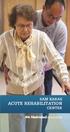 SAM KARAS ACUTE REHABILITATION CENTER 1 MEDICAL CARE Sam Karas Acute Rehabilitation The Sam Karas Acute Rehabilitation Center is a comprehensive and interdisciplinary inpatient unit. Medical care is directed
Health Professionals who Support People Living with Dementia
 Clinical Access and Redesign Unit Health Professionals who Support People Living with Dementia (in alphabetical order) Health Professional Description Role in care of people with dementia Dieticians and
Manifesto for Acquired Brain Injury Rehabilitation
 Manifesto for Acquired Brain Injury Rehabilitation For further information please contact: Chloë Hayward UKABIF Executive Director PO Box 355 Plymouth PL3 4WD Tel: 01752 601318 Email: [email protected]
Intermediate care and reablement
 Factsheet 76 May 2015 About this factsheet This factsheet explains intermediate care, a term that includes reablement. It consists of a range of integrated services that can be offered on a short term
Acute Rehabilitation Center
 Acute Rehabilitation Center Acute Rehabilitation Courtyard Our Center Community Westview Hospital's Acute Rehabilitation Center and programs are specially designed to meet the needs of our patients and
HEAD INJURY; THE REHABILITATION PATHWAY. Professor Graham Powell. Professor of Clinical and Neuropsychology
 HEAD INJURY; THE REHABILITATION PATHWAY by Professor Graham Powell Professor of Clinical and Neuropsychology The management of head injury will broadly flow along a pathway from Accident and Emergency
IMPROVING YOUR EXPERIENCE
 Comments trom the Aberdeen City Joint Futures Brain Injury Group The Aberdeen City Joint Futures Brain Injury Group is made up of representatives from health (acute services, rehabilitation and community),
Provincial Rehabilitation Unit. Patient Handbook
 Provincial Rehabilitation Unit Patient Handbook ONE ISLAND FUTURE ONE ISLAND HEALTH SYSTEM Welcome to Unit 7, the Provincial Rehabilitation Unit. This specialized 20 bed unit is staffed by an interdisciplinary
Rehabilitation. Day Programs
 Rehabilitation Day Programs Healthe Care is the hospital division of Healthe. As the largest privately owned network of private hospitals in Australia, we take pride in delivering premium care to our valued
Rehabilitation Where You Recover. Inpatient Rehabilitation Services at Albany Medical Center
 Rehabilitation Where You Recover Inpatient Rehabilitation Services at Albany Medical Center You're Here and So Are We As the region s only academic medical center, Albany Medical Center offers a number
REHABILITATION SERVICES
 REHABILITATION SERVICES Table of Contents GENERAL... 2 TERMS AND ABBREVIATIONS... 2 PRIOR AUTHORIZATION REQUIREMENTS FOR MEDICAID REIMBURSEMENT OF INPATIENT REHABILITATION SERVICES (Updated 4/1/11)...
REHABILITATION. begins right here
 REHABILITATION begins right here Select Rehabilitation Hospital of Denton offers you a new direction in medical rehabilitation. Our 44-bed, state-of-the-science hospital offers unparalleled treatment to
How To Run An Acquired Brain Injury Program
 ` Acquired Brain Injury Program Regional Rehabilitation Centre at the Hamilton General Hospital Table of Contents Page Introduction... 3-4 Acquired Brain Injury Program Philosophy... 3 Vision... 3 Service
Community Rehabilitation Beds. Questions and Answers
 Patient Information Leaflet Community Rehabilitation Beds Questions and Answers Produced by: Community Rehabilitation Date: March 2014 Review due date: March 2017 1 PARTNERSHIP IN CARE INDEPENDENT NURSING
The practice of medicine comprises prevention, diagnosis and treatment of disease.
 English for Medical Students aktualizované texty o systému zdravotnictví ve Velké Británii MUDr Sylva Dolenská Lesson 16 Hospital Care The practice of medicine comprises prevention, diagnosis and treatment
Shepherd Center is a world-renowned provider of comprehensive, specialized rehabilitation for people with spinal cord injury, brain injury or stroke.
 Shepherd Center is a world-renowned provider of comprehensive, specialized rehabilitation for people with spinal cord injury, brain injury or stroke. Table of Contents 1 HOPE is HERE 2 Why choose Shepherd
Brief, Evidence Based Review of Inpatient/Residential rehabilitation for adults with moderate to severe TBI
 Brief, Evidence Based Review of Inpatient/Residential rehabilitation for adults with moderate to severe TBI Reviewer Peter Larking Date Report Completed 7 October 2011 Important Note: This brief report
How To Cover Occupational Therapy
 Guidelines for Medical Necessity Determination for Occupational Therapy These Guidelines for Medical Necessity Determination (Guidelines) identify the clinical information MassHealth needs to determine
Rehabilitation. Care
 Rehabilitation Care Bruyère Continuing Care is the champion of well-being for aging Canadians and those requiring Continuing Care, helping them to become and remain as healthy and independent as possible
Discharge Information Information for patients This leaflet is intended to help you, your carer, relatives and friends understand and prepare for
 Discharge Information Information for patients This leaflet is intended to help you, your carer, relatives and friends understand and prepare for your discharge or transfer from hospital. Healthcare professionals
PARTNERSHIP HEALTHPLAN OF CALIFORNIA POLICY / PROCEDURE:
 PARTNERSHIP HEALTHPLAN OF CALIFORNIA POLICY/PROCEDURE Policy Number: MCUP3003 (previously UP100303) Reviewing Entities: Credentialing IQI P & T QUAC Approving Entities: BOARD CEO COMPLIANCE FINANCE PAC
Restorative Care Unit
 INFORMATION BOOKLET Restorative Care Unit Digby General Hospital 75 Warwick Street Digby, Nova Scotia B0V 1A0 Phone: 902-245-2502 Ext. 3337 Fax: 902-245-1305 Mandate & Philosophy The Restorative Care Program
Research Summary. Towards Earlier Discharge, Better Outcomes, Lower Cost: Stroke Rehabilitation in Ireland. September 2014
 Towards Earlier Discharge, Better Outcomes, Lower Cost: Stroke Rehabilitation in Ireland September 2014 Research Summary Report prepared for the Irish Heart Foundation by the Economic and Social Research
Cheshire and Merseyside Rehabilitation Network Referral Criteria
 Cheshire and Merseyside Rehabilitation Network Referral Criteria Date Approved: September 2014 Effective From: September 2014 Review Date: August 2015 1. Rehabilitation Definition Rehabilitation is an
STANDARDS. for the provision of. Inpatient Adult Rehabilitation Medicine Services. Public and Private Hospitals
 Australasian Faculty of Rehabilitation Medicine STANDARDS for the provision of Inpatient Adult Rehabilitation Medicine Services in Public and Private Hospitals 2011 Telephone (02) 9256 5420 145 Macquarie
Guidelines for the Operation of Burn Centers
 C h a p t e r 1 4 Guidelines for the Operation of Burn Centers............................................................. Each year in the United States, burn injuries result in more than 500,000 hospital
Effective Approaches in Urgent and Emergency Care. Priorities within Acute Hospitals
 Effective Approaches in Urgent and Emergency Care Paper 1 Priorities within Acute Hospitals When people are taken to hospital as an emergency, they want prompt, safe and effective treatment that alleviates
National Stroke Association s Guide to Choosing Stroke Rehabilitation Services
 National Stroke Association s Guide to Choosing Stroke Rehabilitation Services Rehabilitation, often referred to as rehab, is an important part of stroke recovery. Through rehab, you: Re-learn basic skills
Admission to Inpatient Rehabilitation (Rehab) Services
 Family Caregiver Guide Admission to Inpatient Rehabilitation (Rehab) Services What Is Rehab? Your family member may have been referred to rehab after being in a hospital due to acute (current) illness,
UW Hospital and Clinics (UWHC) Acute Rehabilitation served 358 individuals between January 2011 and December 2011.
 Program Facts Program Facts The Program provides injury/illness-specific programs that offer patients care needed to regain the abilities to perform daily tasks, restore basic life skills, reclaim cognitive
Profile: Kessler Patients
 Profile: Kessler Patients 65 Breakthrough Years Kessler Institute has pioneered the course of medical rehabilitation since 1948. Today, as the nation s largest single rehabilitation hospital, we continue
Quality and Safety Programme Fractured neck of femur services
 Quality and Safety Programme Fractured neck of femur services London quality standards February 2013 1 Introduction The case for change for fractured neck of femur services in London demonstrates that
Redford Court, Liverpool
 Redford Court, Liverpool BIRT - the charity leading brain injury rehabilitation across the UK Registered Charity Nos. 800797-1 in England and Wales and SCO43579 in Scotland We aim to provide the best quality
Key Terms. Chapter 38. Disability, p. 640. Rehabilitation, p. 640. Rehab (cont) p. 640. Rehab. (cont), p. 640
 Key Terms Chapter 38 Rehabilitation & Restorative Care Activities of daily living (ADL s) Disability Rehabilitation Restorative aide Restorative nursing care Disability, p. 640 Is any loss, absent, or
Dedicated Stroke Interprofessional Rehab Team. Mixed Rehab Unit. Dedicated Rehab Unit
 Outpatient & Community I n p a t I e n t Stroke Rehab Definition Framework Institutional Setting Inpatient Rehab in Acute Care or Rehab Hospitals* Acute Care Integrated Specialized Units Transitional Care
Your local specialist mental health services
 Your local specialist mental health services Primary Care Liaison Service B&NES Primary Care Mental Health Liaison service is a short-term support service to help people with mental health difficulties
Medical Rehabilitation. Rehabilitation Unit
 Medical Rehabilitation Rehabilitation Unit Medical Rehabilitation The purpose of this handout is to give you information about University Hospital s Rehabilitation Unit (2 North or 2N). It will explain:
Pediatric and Adolescent Brain Injury Rehabilitation Program
 Pediatric and Adolescent Brain Injury Rehabilitation Program Services Provided Physical Therapy Vision Therapy Educational Therapy Behavioral Intervention Speech-Language Pathology Secondary Education
Stroke Rehab Across the Continuum of Care in Quinte Region
 Stroke Rehab Across the Continuum of Care in Quinte Region Adrienne Bell Smith Manager of Rehab Therapies QHC Karen Brown Manger Client Services, Hospital Access South East CCAC Disclosure of Potential
Neurorehabilitation Strategy Briefing Document and Position Paper
 Neurorehabilitation Strategy Briefing Document and Position Paper Background What is neurorehabilitation? The World Health Organisation defines neurorehabilitation as: A problem-solving process in which
by Argyrios Stampas, MD, Carolin Dohle, MD, and Elizabeth Dominick, PT, DPT, NCS
 by Argyrios Stampas, MD, Carolin Dohle, MD, and Elizabeth Dominick, PT, DPT, NCS Therapist Jennifer Metz (right) helps a patient use a body-weight support treadmill system. Up and Moving Blending dedication
National Clinical Programmes
 National Clinical Programmes Section 3 Background information on the National Clinical Programmes Mission, Vision and Objectives July 2011 V0. 6_ 4 th July, 2011 1 National Clinical Programmes: Mission
Specialist brain injury services. Rehabilitation Transitional medical care Community support Special education
 Specialist brain injury services Rehabilitation Transitional medical care Community support Special education I don t know where we d be without the support we ve had from the staff at The Children s Trust.
Careers in Health and Social Care Jane Saunders, Head of Recruitment Faculty of Health and Wellbeing
 Careers in Health and Social Care Jane Saunders, Head of Recruitment Faculty of Health and Wellbeing Points to consider Technology or caring focus Scrutinise entry criteria On line prospectus Open Days
Q: Rehabilitation Nursing
 Q: Rehabilitation Nursing Alberta Licensed Practical Nurses Competency Profile 163 Priority: One Competency: Q-1 Apply the Rehabilitation Process Q-1-1 Q-1-2 Q-1-3 Q-1-4 Q-1-5 Q-1-6 Demonstrate knowledge
Rehabilitation Services within Essex Cancer Network for people with Brain & CNS tumours
 Rehabilitation Services within Essex Cancer Network for people with Brain & CNS tumours The NICE IOG for people with Brain & other CNS tumours (2006) states that patients with such tumours should have
ADULT HEALTH AND WELLBEING LONG-TERM NEUROLOGICAL CONDITIONS
 ADULT HEALTH AND WELLBEING LONG-TERM NEUROLOGICAL CONDITIONS i. Summary The National Service Framework for long-term neurological conditions categorises neurological conditions as: Sudden-onset conditions
Mental Health and Substance Abuse Reporting Requirements Section 425 of P.A. 154 of 2005
 Mental Health and Substance Abuse Reporting Requirements Section 425 of P.A. 154 of 2005 By April 1, 2006, the Department, in conjunction with the Department of Corrections, shall report the following
REHABILITATION FACILITIES
 Approved by Governor Date: 10/5/92 REHABILITATION FACILITIES I. DEFINITIONS A. Medical Rehabilitation Services: Medical/Physical Rehabilitation is the medical management of physical disability using all
Community health care services Alternatives to acute admission & Facilitated discharge options. Directory
 Community health care services Alternatives to acute admission & Facilitated discharge options Directory Introduction The purpose of this directory is to provide primary and secondary health and social
The road to recovery. The support available to help you with your recovery after stroke
 The road to recovery The road to recovery The support available to help you with your recovery after stroke We re for life after stroke Introduction Need to talk? Call our confidential Stroke Helpline
Stakeholder s Report. 2525 SW 75 th Ave Miami, Florida 33155 305.262.6800 www.westgablesrehabhospital.com
 212 Stakeholder s Report 2525 SW 75 th Ave Miami, Florida 33155 35.262.68 www.westgablesrehabhospital.com PROFILE REPORT For more than 25 years, West Gables Rehabilitation Hospital has made a mission of
Mobile Rehabilitation Team St Vincent s Style. Dr Shari Parker Rehabilitation Physician
 Mobile Rehabilitation Team St Vincent s Style Dr Shari Parker Rehabilitation Physician Drivers for Change 1. Pressure on beds, bed blocks 2. Evidence for Early Rehabilitation 3. The problem of Deconditioning
Policy and Procedure Manual
 Policy and Procedure Manual Resident Assessment (RA) Table of Contents RA-01 RA-02 RA-03 RA-04 RA-05 RA-06 RA-07 RA-08 RA-09 RA-10 RA-11 RA-12 RA-13 Admission. History, Physicals and Routine Health Care
AMERICAN BURN ASSOCIATION BURN CENTER VERIFICATION REVIEW PROGRAM Verificatoin Criterea EFFECTIVE JANUARY 1, 2015. Criterion. Level (1 or 2) Number
 Criterion AMERICAN BURN ASSOCIATION BURN CENTER VERIFICATION REVIEW PROGRAM Criterion Level (1 or 2) Number Criterion BURN CENTER ADMINISTRATION 1. The burn center hospital is currently accredited by The
Expert Witness Services for Personal Injury Lawyers
 Advanced Assessments Ltd Expert witnesses and Psychologists A Member of the Strategic Enterprise Group 180 Piccadilly, London, W1J 9HP T: 0845 130 5717 Expert Witness Services for Personal Injury Lawyers
Career Options for Direct Service Workers in Maine
 Career Options for Direct Service Workers in Maine Maine s Career Options in the field of Direct Service Work (Specialized Content) Homemaker Homemakers assist individuals with household or personal care
How To Live With A Brain Injury
 Goole Neuro-Rehabilitation Centre We aim to provide the best quality neurobehavioural rehabilitation for people with complex and challenging needs after brain injury. Ultimately, we want to enable service
INPATIENT REHABILITATION GUIDE
 INPATIENT REHABILITATION GUIDE ON THE COVER Bayfront s rehabilitation team has helped thousands take a first step for the second time. WELCOME TO BAYFRONT REHABILITATION CENTER Often, a successful ending
Improving access to psychological therapies for people with severe and enduring mental health problems: rehabilitation psychiatrists perspectives
 Improving access to psychological therapies for people with severe and enduring mental health problems: rehabilitation psychiatrists perspectives Dr Helen Killaspy Reader and honorary consultant in rehabilitation
Inpatient Rehabilitation Facilities (IRFs) [Preauthorization Required]
![Inpatient Rehabilitation Facilities (IRFs) [Preauthorization Required]](/thumbs/25/4903617.jpg "Inpatient Rehabilitation Facilities (IRFs) [Preauthorization Required]") Inpatient Rehabilitation Facilities (IRFs) [Preauthorization Required] Medical Policy: MP-ME-05-09 Original Effective Date: February 18, 2009 Reviewed: April 22, 2011 Revised: This policy applies to products
Inpatient Rehabilitation Facilities (IRFs) [Preauthorization Required] Medical Policy: MP-ME-05-09 Original Effective Date: February 18, 2009 Reviewed: April 22, 2011 Revised: This policy applies to products
KAISER FOUNDATION REHABILITATION CENTER
 KAISER FOUNDATION REHABILITATION CENTER Referral Video Script THE KAISER FOUNDATION REHABILITATION CENTER A Kaiser Permanente National Center of Excellence 60 Years of Providing Hope and Rebuilding Lives
The diagnosis of dementia for people living in care homes. Frequently Asked Questions by GPs
 The diagnosis of dementia for people living in care homes Frequently Asked Questions by GPs A discussion document jointly prepared by Maggie Keeble, GP with special interest in palliative care and older
GENERAL ADMISSION CRITERIA INPATIENT REHABILITATION PROGRAMS
 Originator: Case Management Original Date: 9/94 Review/Revision: 6/96, 2/98, 1/01, 4/02, 8/04, 3/06, 03/10, 3/11, 3/13 Stakeholders: Case Management, Medical Staff, Nursing, Inpatient Therapy GENERAL ADMISSION
OCCUPATIONAL THERAPY
 OCCUPATIONAL THERAPY This document is subject to change. Please check our web site for updates. This provider manual outlines policy and claims submission guidelines for claims submitted to the North Dakota
Neurodegenerative diseases Includes multiple sclerosis, Parkinson s disease, postpolio syndrome, rheumatoid arthritis, lupus
 TIRR Memorial Hermann is a nationally recognized rehabilitation hospital that returns lives interrupted by neurological illness, trauma or other debilitating conditions back to independence. Some of the
During military mission in Afghanistan injured Estonian soldiers rehabilitation
 During military mission in Afghanistan injured Estonian soldiers rehabilitation Annelii Nikitina (Physiatrist) Triin Rohumäe (Physiotherapist) East-Tallinn Central Hospital Birth of military rehab in Estonia
Good end of life care in care homes
 My Home Life Research Briefing No.6 This briefing sets out the key findings of a research review on good end of life care in care homes undertaken by Caroline Nicholson, in 2006, as part of the My Home
Acute care toolkit 2
 Acute care toolkit 2 High-quality acute care October 2011 Consultant physicians are at the forefront of delivering care to patients presenting to hospital with medical emergencies. Delivering this care
Doncaster Community Health Team for Learning Disabilities. Information for families and carers. RDaSH. Learning Disability Services
 Doncaster Community Health Team for Learning Disabilities. Information for families and carers RDaSH Learning Disability Services Useful contact numbers General enquiries: 01302 796467 Duty nurse number:
General Hospital Information
 Inpatient Programs General Hospital Information General Information The Melbourne Clinic is a purpose built psychiatric hospital established in 1975, intially privately owned by a group of psychiatrists
Patient Information Guide. Getting you Back to Better. 859.426.2400 www.vrhgateway.com
 Patient Information Guide Getting you Back to Better 859.426.2400 www.vrhgateway.com The Gateway Difference Gateway Rehabilitation Hospital provides expert care to help patients get back to better after
Southwark Clinical Commissioning Group Lambeth Clinical Commissioning Group
 Getting the Vision Right: A multi-disciplinary approach to providing integrated care for respiratory patients Dr Noel Baxter, GP NHS Southwark CCG Dr Irem Patel, Integrated Consultant Respiratory Physician
The Field of Counseling. Veterans Administration one of the most honorable places to practice counseling is with the
 Gainful Employment Information The Field of Counseling Job Outlook Veterans Administration one of the most honorable places to practice counseling is with the VA. Over recent years, the Veteran s Administration
Commissioning Support for London. Stroke rehabilitation guide: supporting London commissioners to commission quality services in 2010/11
 Commissioning Support for London Stroke rehabilitation guide: supporting London commissioners to commission quality services in 2010/11 Contents Executive summary 4 1 Introduction 7 1.1 Healthcare for
ABI REHABILITATION SCOPE OF SERVICES
 ABI REHABILITATION SCOPE OF SERVICES OVERVIEW ABI Rehabilitation New Zealand Ltd (ABI-NZ) is a private company formed in 1996 to provide a comprehensive range rehabilitation services for people with traumatic
Hamilton Health Sciences Acquired Brain Injury Program
 Overview of Program The Acquired Brain Injury (ABI) Program at the Regional Rehabilitation Centre, Hamilton General Hospital serve the rehabilitation needs of adults with acquired brain injuries and their
Mental Health Services
 Mental Health Services At Maitland Private Hospital our team of professionals are committed to providing comprehensive assessment, treatment and support of people experiencing mental health issues. Located
Stroke rehabilitation
 Costing report Stroke rehabilitation Published: June 2013 http://guidance.nice.org.uk/cg162 This costing report accompanies the clinical guideline: Stroke rehabilitation (available online at http://guidance.nice.org.uk/cg162).
Policy and Procedure Manual
 Policy and Procedure Manual Resident Assessment (RA) Table of Contents RA-01 RA-02 RA-03 RA-04 RA-05 RA-06 RA-07 RA-08 RA-09 RA-10 RA-11 RA-12 Physical Health Services Dental Services Initial Nursing Summary
CALVARY HEALTH CARE SYDNEY DAY REHABILITATION UNIT (DRU) JEREMEY HORNE
 CALVARY HEALTH CARE SYDNEY DAY REHABILITATION UNIT (DRU) JEREMEY HORNE DAY REHABILITATION UNIT OVERVIEW What is a DRU Minimum requirements Calvary Day Rehabilitation Admission Criteria Type of Patients
Occupational therapy after stroke
 Stroke Helpline: 0303 3033 100 Website: stroke.org.uk Occupational therapy after stroke After a stroke, you are likely to need help to regain your abilities, learn new skills and cope with any remaining
REGION KRONOBERG. Revised by: Management Team. Authorised by: Gunilla Lindstedt Head of Operations Date: 22 April 2016. Produced by: Management Team
 Guide to the Rehabilitation Clinic, Växjö Postal address Street address Tel. +46 (0)470-59 22 50. Box 1223 Rehabilitation Clinic Email [email protected] SE-351 12 Växjö, Sweden J F Liedholms
Contents. Overview Treatments Inpatient Services Day Programs The Clinic What are the Costs? How to Get Started How to Find Us
 Lakeside Clinic Contents Overview Treatments Inpatient Services Day Programs The Clinic What are the Costs? How to Get Started How to Find Us Overview At some point in their lives, as many as one-in-five
Complex Outpatient. Injury. Rehab. Integrated, evidence-based rehab that supports a timely return to home, life, work or school
 Complex Outpatient Injury Rehab Integrated, evidence-based rehab that supports a timely return to home, life, work or school Toronto Rehabilitation Institute At Toronto Rehab, our goal is to advance rehabilitation
Measuring quality along care pathways
 Measuring quality along care pathways Sarah Jonas, Clinical Fellow, The King s Fund Veena Raleigh, Senior Fellow, The King s Fund Catherine Foot, Senior Fellow, The King s Fund James Mountford, Director
Follow-up information from the November 12 provider training call
 Follow-up information from the November 12 provider training call Criteria I. Multiple Therapy Disciplines 1. Clarification regarding the use of group therapies in IRFs. Answer: CMS has not yet established
Behavioral Health Psychological/Neuropsychological Testing Guidelines
 Behavioral Health Psychological/Neuropsychological Testing Guidelines Psychological testing (procedural code 96101) and Neuropsychological Testing (procedural code 96118) involve the culturally and linguistically
THE ACQUIRED BRAIN INJURY STRATEGY FOR GRAMPIAN.
 THE ACQUIRED BRAIN INJURY STRATEGY FOR GRAMPIAN. 2011-2016 * 1 January 2011. Contents 1. Executive Summary 2. Progress and Developments since Grampian BI Strategy 2004-2010 3. Definitions and Epidemiology