
International Relations (PIM09)
|
|
|
- Emery James
- 10 years ago
- Views:
Transcription
1 Graduate Institute of Political and International Studies University of Reading, International Relations (PIM09) Module Handbook Course Convenors: Dr Adam Humphreys & Dr Burak Kadercan

2 International Relations Course Aims To introduce students to the principal concepts and theories associated with the academic discipline of international relations; To enable students to gain an understanding of the major issues and debates in contemporary world politics and the relevance of international relations theory to these questions; To strengthen students critical and analytical skills through engagement with a diverse literature (theoretical, historical and empirical); the giving of oral presentations and participation in seminar discussions; and the writing of essays and exams; To provide the analytic and intellectual basis for further academic research in international relations or for careers which require a sound understanding of international relations. Organization of Teaching The course is organized on the basis of weekly two-hour seminars in the Autumn and Spring terms. There are no lectures. The seminars will consist of student presentations followed by discussion of the week s topic led by the course convenors. Course Requirements 1. Students must attend all seminars and have completed the required reading for each seminar. Students are also expected to engage the further reading, especially for topics on which they are making presentations and on which they intend to write essays. 2. Students should expect to make at least one presentation each term (topics to be allocated by the course convenors). Presentations should be minutes long and address one of the questions set for the week. All presentations must be accompanied by a one-page handout, which summarizes the main points of the presentation. 3. Students will also write two 3500-word essays: the first will be due 11 December 2013 and the second essay will be due 19 March Students will also submit a 500-word essay proposal on 13 November Students will also sit a three-hour final exam. Readings For the first part of the module, we will regularly use two volumes: 2

3 Tim Dunne, Milja Kurki, and Steve Smith, eds., International Relations Theories: Discipline and Diversity (Oxford: Oxford University Press, 2007). Chris Reus-Smit and Duncan Snidal (eds.) Oxford Handbook of International Relations (Oxford: Oxford University Press, 2008) (available online via University of Reading library). Students should ensure they have access to these volumes, either by purchasing their own copies, by borrowing them from the course collection, or by ensuring that they can access them online. A detailed reading list for each topic can be found below. Articles are normally in the library or can be accessed electronically through the university's electronic journals portal. Course Assessment Final assessment for the course is calculated on the following basis: Two long essays 50% Final exam 50% Essays must be submitted by the deadline; late work will be penalized in accordance with Department and University regulations. The final exam will be a closed-book three-hour examination in which candidates will have to answer three questions. Essay Topics In Autumn term, students must write an essay on ONE of the following: 1. How, if at all, does anarchy shape world politics? 2. Is co-operation amongst states possible? Explain. 3. In what sense is international politics a social realm? 4. What impact do norms have on world politics? 5. Is justice possible in international relations? 6. Do mainstream theories of international relations serve to legitimate inequality? In Spring term, students must write an essay on ONE of the following: 1. How do territoriality and nationalism play into our understanding of sovereignty in the modern state system? 2. Can the threat of use of force be considered an essential component of diplomacy? Elaborate. 3. "The UN is what great powers make of it". Evaluate this claim in the context of the UN's track record in Syria. 3

4 4. Where does Huntington's "clash of civilizations" thesis stand vis-à-vis neorealism and constructivism? 5. What is the relationship between globalization and environmental challenges such as global warming? Is globalization helping us better cope with these challenges, making no difference, or making things worse? Why? Seminars Autumn Term Week 1 Week 2 Introductory Lecture Business meeting International Relations Theory: Week 3 Week 4 Week 5 Week 6 Week 7 Week 8 Week 9 Classical realism and modern realisms Classical liberalism and modern liberalisms The English School Constructivism Normative theory and the just war tradition Critical theory and Marxism Post-structuralism, post-colonialism, and feminism Spring Term International Order and its Institutions: Week 1 Week 2 Week 3 Week 4 Sovereignty Hierarchy in International Politics The rule of law in international politics The UN and international organizations Challenges to Contemporary International Order: Week 5 Week 6 Week 7 Week 8 Week 9 Globalization Culture and "The Clash of Civilizations" The use of force International cooperation and the environment Nationalism and Self-determination 4

5 Autumn Term Week 1 Lecture: "Why International Relations Theory?" Required readings (helpful to read in roughly this order): Reus-Smit & Snidal, 'Between Utopia and Reality: The Practical Discourses of International Relations', in Reus-Smit & Snidal (eds.), Oxford Handbook of International Relations (2008), ch.1, sections 2-5. Keohane, 'Big Questions in the Study of World Politics', in Reus-Smit & Snidal (eds.), Oxford Handbook of International Relations (2008), ch.42. Nau, 'Scholarship and Policy-Making: Who Speaks Truth to Whom?', in Reus-Smit & Snidal (eds.), Oxford Handbook of International Relations (2008), ch.36. Week 2 Introductory Meeting Required readings (helpful to read in roughly this order): Smith, 'Introduction: Diversity and Disciplinarity in International Relations Theory', in Dunne, Kurki & Smith (eds.) International Relations Theories: Discipline and Diversity (2007), ch.1. Lake, 'The State and International Relations', in Reus-Smit & Snidal (eds.), Oxford Handbook of International Relations (2008), ch.2. Barnett & Sikkink, 'From International Relations to Global Society', in Reus-Smit & Snidal (eds.), Oxford Handbook of International Relations (2008), ch.3. Darby, 'A Disabling Discipline', in Reus-Smit & Snidal (eds.), Oxford Handbook of International Relations (2008), ch.5. PART I: International Relations Theory Week 3 Classical realism and modern realisms 1) Why, according to classical realists, is international politics dominated by power? 2) Why do neorealists make anarchy their central concept? 3) How relevant is realism today? Required readings (helpful to read in roughly this order): Wohlforth, William, 'Realism', in Reus-Smit & Snidal (eds.), The Oxford Handbook of International Relations (2008), ch.7. Lebow, Classical Realism, in Dunne, Kurki & Smith (eds.), International Relations Theories: Discipline and Diversity (2007), ch.3. Mearsheimer, Structural Realism, in Dunne, Kurki & Smith (eds.), International Relations Theories: Discipline and Diversity (2007), ch.4. Morgenthau, Hans, Politics Among Nations: The Struggle for Power and Peace, 5 th ed. (1973), Part I (=chs.1-2, pp.3-24). Legro, Jeffrey & Andrew Moravcsik, Is Anybody Still a Realist? International Security, Vol.24, No.2, Fall 1999, pp.5-55 [see also discussion in International Security, Vol. 25, No. 1, Summer 2000, pp ]. 5

6 Waltz, Kenneth, 'Structural Realism after the Cold War', International Security, Vol. 25, No. 1, Summer 2000, pp Further reading: Beitz, Charles, Political Theory and International Relations (1979). Brooks, Stephen, Duelling Realisms, International Organization, Vol. 51, No. 3, 1997, pp Carr, E. H., The Twenty Years Crisis, : An Introduction to the Study of International Relations (2001, with intro by Michael Cox). Copeland, Dale, The Origins of Major War (2000). Cox, Michael, Tim Dunne & Kenneth Booth (eds.), The Eighty Years Crisis: International Relations (1998). Donnelly, Jack, Realism and International Relations (2000). Doyle, Michael, Ways of War and Peace (1997), esp. Intro. and Part 1. Gilpin, Robert, War and Change in World Politics (1981). Guilhot, Nicolas (ed.), The Invention of International Relations Theory: Realism, the Rockefeller Foundation and the 1954 Conference on Theory (2011). Guzzini, Stefano, Realism in International Relations and International Political Economy: The Continuing Story of a Death Foretold (1998). Hadfield, Amelia, British Foreign Policy, National Identity, and Neoclassical Realism (2010). Haslam, Jonathan, No Virtue Like Necessity: Realist Thought in International Relations since Machiavelli (2002). Jervis, Robert, 'Realism in the Study of World Politics', International Organization, Vol. 52, No. 4, 1998, pp Johnson Bagby, The Use and Abuse of Thucydides in International Relations International Organization, Vol. 48, No. 1, Winter 1994, pp Keohane, Robert (ed.), Neorealism and its Critics (1986). Koskenniemi, Martti, 'Carl Schmitt, Hans Morgenthau, and the Image of Law in International Relations', in Michael Byers (ed.), The Role of Law in International Politics (Oxford: Oxford University Press, 2001). Lebow, Ned, The Tragic Vision of Politics: Ethics, Interests and Orders (2003). Lobell, Steven et al (eds.) Neoclassical Realism, the State, and Foreign Policy (2009). Malcolm, Noel, Hobbes s Theory of International Relations, in Malcolm, Aspects of Hobbes (2002). Mearsheimer, John, The False Promise of International Institutions, International Security, Vol. 19, No. 3, Winter , pp.5-49 [see also the subsequent debate in International Security, Vol. 20, No. 1]. Mearsheimer, John, The Tragedy of Great Power Politics (2001), esp. chs. 1, 2, 10. Milner, Helen, The Assumption of Anarchy in International Relations Theory: A Critique, Review of International Studies, vol. 17, no.1 (1991). Niebuhr, Reinhold, Moral Man and Immoral Society (1932), esp. ch.4. Rose, Gideon, 'Neoclassical Realism and Theories of Foreign Policy', World Politics, Vol.51, No. 1, Oct 1998, pp Rosenberg, Justin, The Empire of Civil Society (1994). Schweller, Randall, Managing the Rise of Great Powers: Theory and History, in Johnston & Ross (eds.), Engaging China: The Management of an Emerging Power (1999). Schweller, Randall & David Priess, 'A Tale of Two Realisms: Expanding the Institutions Debate', Mershon International Studies Review, Vol. 41, No. 1, May 1997, pp Schweller, Randall & William C. Wohlforth, 'Power Test: Evaluating Realism in 6

7 Response to the End of the Cold War', Security Studies, Vol. 9, No. 3, 2000, pp Shimko, Keith, Realism, Neorealism and American Liberalism, Review of Politics, Vol. 54, No. 2, Spring Smith, Michael, Realist Thought from Weber to Kissinger (1986). Taliaferro, Jeffrey et al (eds.), The Challenge of Grand Strategy: The Great Powers and the Broken Balance between the World Wars (2013). Toje, Asle and Barbara Kunz, Neoclassical Realism in European Politics: Bringing Power Back In (2012). Walker, R B J, 'Realism, Change, and International Political Theory', International Studies Quarterly, Vol. 31, No. 1, March 1987, pp Walt, Stephen, The Origins of Alliances (1987). Waltz, Kenneth, Theory of International Politics (1979). Wight, Martin, Power Politics (1979). Williams, Michael, The Realist Tradition and the Limits of International Relations (2005). Williams, Michael, Realism Reconsidered: The Legacy of Hans Morgenthau in International Relations (2007). Wohlforth, 'The Stability of a Unipolar World', International Security, Vol. 24, No. 1, Summer 1999, pp Wohlforth, 'Unipolarity, Status Competition and Great Power War', World Politics, Vol. 61, No. 1, Jan 2009, pp Week 4 Classical liberalism and modern liberalisms 1) What, if anything, unites the various strands of liberal theory in International Relations? 2) How do (neoliberal) institutionalists explain cooperation? 3) Is Moravcsik right to claim that his approach effectively supersedes realism? Required Reading (helpful to read roughly in this order): Zacher, Mark and Richard Matthew, 'Liberal International Theory: Common Threats, Divergent Strands', in Kegley (ed.), Controversies in International Relations Theory: The Neorealist-Neoliberal Debate (1995). Stein, Neoliberal Institutionalism, in Reus-Smit & Snidal (eds.), Oxford Handbook of International Relations (2008), ch.11. Richardson, The Ethics of Neoliberal Institutionalism, in Reus-Smit & Snidal (eds.), Oxford Handbook of International Relations (2008), ch.12. Moravcsik, The New Liberalism, in Reus-Smit & Snidal (eds.), Oxford Handbook of International Relations (2008), ch.13. Abbott, Kenneth and Duncan Snidal, 'Why States Act through Formal International Organizations', Journal of Conflict Resolution, Vol. 42, No. 1, Feb 1998, pp Keohane, Robert, Power and Governance in a Partially Globalized World (2002), chs.2-3. Further reading: Angell, Norman, The Great Illusion: A Study of the Relation of Military Power to National Advantage (1912). Ashworth, Lucian, Creating International Studies: Angell, Mitrany and the Liberal Tradition (1995). 7

8 Baldwin, David (ed.), Neorealism and Neoliberalism: The Contemporary Debate (1995), esp. chs. by Baldwin, Stein, Axelrod & Keohane, and Milner. Barnett, Michael and Martha Finnemore, Rules for the World: International Organizations in Global Politics (2004). Brown, Michael, Sean Lynn-Jones and Steven Miller (eds.), Debating the Democratic Peace (1996). Doyle, Michael, Kant, Liberal Legacies and Foreign Affairs, Philosophy and Public Affairs, vol. 12, nos. 3 & 4 (Summer & Fall 1983). Doyle, Michael, Ways of War and Peace (1997), Part II. Drezner, Daniel, All Politics is Global (2007). Gruber, Lloyd, Ruling the World: Power Politics and the Rise of Supranational Institutions (2000). Hoffman, Stanley, Liberalism and International Affairs, in Hoffman, Janus and Minerva: Essays in the Theory and Practice of International Politics (1987), pp Keohane, Robert, After Hegemony: Cooperation and Discord in the World Political Economy (1984). Keohane, Robert and Joseph Nye, Power and Interdependence, 4 th ed. (2011). Koremenos, Barbara et al, 'The Rational Design of International Institutions', International Organization, Vol. 55, No. 4, 2001, pp Long, David, 'The Harvard School of Liberal International Theory: A Case for Closure', Millennium: Journal of International Studies, Vol. 24, No. 3,1995, pp Milner, Helen, International Theories of Co-operation among Nations: Strengths and Weaknesses, World Politics, Vol. 44, No. 3, April 1992, pp Moravcsik, Andrew, Taking Preferences Seriously: A Liberal Theory of International Politics, International Organization, Vol. 51, No. 4, 1997, pp Richardson, James, 'Contending Liberalisms: Past and Present', European Journal of International Relations, Vol. 3, No. 1, Russett, Bruce, Grasping the Democratic Peace: Principles for a Post Cold War World (1993). Powell, Robert, 'Absolute and Relative Gains in International Relations Theory', American Political Science Review, Vol. 85, 1991, pp Powell, Robert, 'Anarchy in International Relations: The Neoliberal-Neorealist Debate', International Organization, Vol. 48, 1994, pp Simpson, Gerry, Two Liberalisms, European Journal of International Law, Vol. 12, No. 3, Simpson, Gerry, The Ethics of the New Liberalism, in Reus-Smit & Snidal (eds.), Oxford Handbook of International Relations (2008), ch.14. Smith, M.J., Liberalism and International Reform, in Nardin & Mapel (eds.), Traditions of International Ethics (1992). Week 5 The English School 1) Is the English School closer to realism or liberalism? 2) What role do institutions play in English School thought? How do they differ from neoliberal institutionalist understandings of the role of institutions? 3) What are the main differences between pluralists and solidarists within the English School? Required Reading (helpful to read in roughly this order): Dunne, Tim, The English School, in Reus-Smit & Snidal (eds.), Oxford Handbook of 8

9 International Relations (2008), ch.15. Cochran, Molly, The Ethics of the English School, in Reus-Smit & Snidal (eds.), Oxford Handbook of International Relations (2008), ch.16. Bull, Hedley, The Anarchical Society: A Study of Order in World Politics, 3 rd ed. (2002), Forewords by Hurrell and Hoffmann, Introduction, and Ch.1. Hurrell, Andrew, On Global Order: Power, Values, and the constitution of International Society (2007), esp. chs.2-3. Recommended readings: Alderson, Kai and Hurrell, Andrew (eds.), Hedley Bull and International Society (2000). Armstrong, David, Revolution and World Order: The Revolutionary State in International Society (1993). Bellamy, Alex (ed.), The English School and its Critics (2004). Brown, Chris, International Theory and International Society: The Viability of the Middle Way? Review of International Studies, Vol. 21, No. 2, 1995, pp Bull, Hedley and Adam Watson (eds.), The Expansion of International Society (1985). Butterfield, Herbert and Martin Wight, Diplomatic Investigations (1966). Buzan, Barry, From International System to International Society: Structural Realism and Regime Theory Meet the English School, International Organization, Vol. 47, No. 3, 1993, pp Buzan, Barry, From International to World Society? English School Theory and the Social Structure of Globalization (2004) Buzan, Barry, and Little, Richard, International systems in world history: remaking the study of International Relations (2000). Clark, Ian, Legitimacy in International Society (2005). Clark, Ian, International Legitimacy and World Society (2007). Cochran, Molly, Charting the Ethics of the English School: What Good is there in a Middle-Ground Ethics, International Studies Quarterly, Vol. 53, 2009, pp Dunne, Tim, 'The Social Construction of International Society', European Journal of International Relations, Vol. 1, No. 3, 1995, pp Dunne, Tim, Inventing international society: a history of the English school (1998). Fawn, Rick & Jeremy Larkins (eds.), International Society after the Cold War: Anarchy and Order Reconsidered (1996). Griffith, Martin, Order and International Society: The Real Realism, Review of International Studies Vol. 18 (1992). Gong, Gerrit, The Standard of Civilization in International Society (1984). Hall, Ian, Still the English Patient? Closures and Inventions in the English School, International Affairs, vol. 77, no. 4 (2001) pp Jackson, Robert, The Global Covenant: Human Conduct In a World of States (2000). Keene, Edward, Beyond the Anarchical Society: Grotius, Colonialism and Order in World Politics (2002). Linklater, Andrew and Hidemi Suganami, The English School of International Relations: A Contemporary Reassessment (2006). Little, Richard, The English School s Contribution to the Study of International Relations, European Journal of International Relations, Vol. 6, 2000, pp Reus-Smit, Christian, 'Imagining Society: Constructivism and the English School', British Journal of Politics and International Relations, Vol. 4, No. 3, 2002, pp Vincent, John, The Hobbesian Tradition in Twentieth-Century International Thought, Millennium: Journal of International Studies, Vol. 10, No. 1, 1981, pp Vincent, John, Human Rights and International Relations (1986). 9

10 Watson, Adam, The Evolution of International Society (1992). Wheeler, Nick, Pluralist and Solidarist Conceptions of International Society: Bull and Vincent on Humanitarian Intervention, Millennium: Journal of International Studies, Vol. 21, No. 3, 1992, pp Wheeler, Nick, Saving Strangers: Humanitarian Intervention in International Society (2000). Wight, Martin, Systems of States (1977). Wight, Martin, International Theory: Three Traditions (1991). Week 6 Constructivism 1) What is the significance of the claim that anarchy is what states make of it? 2) Do norms matter in international relations? If so, how? 3) What are the limits of a constructivist analysis of international relations? Required Reading (helpful to read in roughly this order): Fierke, K. M., Constructivism, in Dunne, Kurki & Smith (eds.), International Relations Theories: Discipline and Diversity (2007), ch.9. Wendt, Alexander, 'Anarchy is What States Make of It: The Social Construction of Power Politics', International Organization, Vol. 46, No. 2, 1992, pp Price, Richard & Nina Tannenwald, Norms and Deterrence: The Nuclear and Chemical Weapons Taboos, in Katzenstein (ed.), The Culture of National Security: Norms and Identity in World Politics (1996), ch.4. Finnemore, Martha, Constructing Norms of Humanitarian Intervention, in Katzenstein (ed.), The Culture of National Security: Norms and Identity in World Politics (1996), ch.5. Price, Richard, The Ethics of Constructivism, in Reus-Smit & Snidal (eds.), Oxford Handbook of International Relations (2008), ch.18. Risse, Thomas, '"Let's Argue!": Communicative Action in World Politics', International Organization, Vol. 54, No. 1 (Winter, 2000), pp Further reading: Adler, Emanuel, Seizing the Middle Ground: Constructivism in World Politics, European Journal of International Relations, Vol. 3, No. 3, 1997, pp Andrews, Bruce, Social Rules and the State as a Social Actor, World Politics, Vol. 27, No. 4 (1975). Barkin, J. Samuel and Bruce Cronin, The State and the Nation: Changing Norms and the Rules of Sovereignty in International Relations, International Organization, Vol. 48, No. 1 (1994). Biersteker, Thomas, and Weber, Cynthia (eds.), State Sovereignty as Social Construct (1996). Checkel, Jeffrey, The Constructivist Turn in International Relations Theory, World Politics, Vol. 50, No. 2, 1998, pp Checkel, Jeffrey (ed.), International Institutions and Socialization in Europe (2007). Crawford, Neta, Argument and Change in World Politics (2003). Fierke, K.M., Multiple Identities, Interfacing Games: The Social Construction of Western Action in Bosnia, European Journal of International Relations, Vol. 2, No. 4, 1996, pp Fierke, K.M. and Knud Erik Jorgensen, Constructing International Relations: The Next Generation (2001), esp. introduction and chapters 1, 3 or 6. Fierke, K.M. and Antje Wiener, Constructing Institutional Interests: NATO and the EU Enlargement, Journal of European Public Policy, Vol. 6, No. 3 (1999), pp

11 Finnemore, Martha, National Interests and International Society (1996). Finnemore, Martha and Kathryn Sikkink, International Norm Dynamics and Political Change, International Organization, Vol. 52, No. 4 (1998). Foot, Rosemary, Rights Beyond Borders: The Global Community and the Struggle for Human Rights in China (2000). Forum on Alexander Wendt s Social Theory of International Politics, Review of International Studies, Vol. 26, No. 1, 2000, pp Guzzini, Stefano, 'A Reconstruction of Constructivism in International Relations European Journal of International Relations, Vol. 6, No. 2, 2000, pp Guzzini, Stefano and Anna Leander (eds.), Constructivism in International Relations: Alexander Wendt and His Critics (2006). Hopf, Ted, The Promise of Constructivism in International Relations Theory, International Security, Vol. 23, No. 1, 1998, pp Klotz, Audie, Norms Reconstituting Interests: Global Racial Equality and U.S. Sanctions Against South Africa, International Organization, Vol. 49, No. 3, 1995, pp Kratochwil, Freidrich, Rules, Norms, and Decisions: On the Conditions of Practical and Legal Reasoning in International Relations and Domestic Affairs (1989). Kratochwil, Friedrich, Constructing a New Orthodoxy? Wendt s Social Theory of International Politics and the Constructivist Challenge Millennium: Journal of International Studies, Vol. 29, No. 1, 2000, pp Kratochwil, Friedrich, How Do Norms Matter? in Michael Byers (ed.), The Role of Law in International Politics: Essays in International Relations and International Law (2000), ch. 3. Kratochwil, Friedrich and John Ruggie, International Organisation: A State of the Art on an Art of the State, International Organization, Vol. 40, No. 4, Onuf, Nicholas, World of our Making? Rules and Rule in International Relations (1989). Palan, Roland, A World of their Making: An Evaluation of the Constructivist Critique in International Relations, Review of International Studies, Vol. 26, No. 4 (2000). Price, Richard, The Chemical Weapons Taboo (1997). Price, Richard, Reversing the Gunsights: Transnational Civil Society targets Landmines, International Organization, Vol. 52, No. 3 (1998). Price, Richard and Chris Reus-Smit, Dangerous Liaisons: Critical International Theory and Constructivism, European Journal of International Relations, Vol. 4, No. 3, Reus-Smit, Christian, The Moral Purpose of the State (1999). Risse-Kappen, Thomas, Collective Identity in a Democratic Community: The Case of NATO, in Katzenstein (ed.), The Culture of National Security (1996), ch.10. Risse-Kappen, Thomas, Steve Ropp, and Kathryn Sikkink, The Power of Human Rights: International Norms and Domestic Change (1999). Ruggie, John, Constructing the World Polity: Essays on International Institutionalization (1998), especially chapters 1, 2, 3, and 7. Sending, Ole, Constitution, Choice and Change: Problems with the Logic of Appropriateness and its Use in Constructivist Theory, European Journal of International Relations, Vol. 8, No. 4, 2002, pp Sikkink, Kathryn (2011) The Justice Cascade: How Human Rights Prosecutions Are Changing World Politics. Tannenwald, Nina, The Nuclear Taboo: The United States and the non-use of nuclear weapons since 1945 (2007). Weldes, Jutta, Constructing National Interests, European Journal of International Relations, Vol. 2, No. 3, 1996, pp Wendt, A. (1999) Social Theory of International Politics (Cambridge: Cambridge University 11

12 Press) Wiener, Antje, The Invisible Constitution of World Politics: Contested Norms and International Encounters (2008). Wiener, Antje, Enacting Meaning in Use: Qualitative Research on Norms in International Relations, Review of International Studies, Vol. 35, No. 1 (2009). Zehfuss, Maja, Constructivism and Identity: A Dangerous Liaison, European Journal of International Relations, Vol. 7, No. 3, Zehfuss, Maja, Constructivism in International Relations: The Politics of Reality (2002). Week 7 Normative theory and the just war tradition 1) What is the place of ethics within International Relations theory? 2) What does 'justice' entail in the international context? 3) When can the use of force be considered just? Required reading (helpful to read in roughly this order): Hurrell, Andrew, Norms and Ethics in International Relations in Carlsnaes, Risse and Simmons (eds.), Handbook of International Relations (2002). Nardin, Terry, International Ethics, in Reus-Smit & Snidal (eds.), Oxford Handbook of International Relations (2008), ch.34. Brown, Chris, 'International Relations as Political Theory', in Dunne, Kurki & Smith (eds.), International Relations Theories: Discipline and Diversity Price, Richard, Moral Limit and Possibility in World Politics, International Organization, Vol. 62, No. 2, 2008, pp Beitz, Charles, Cosmopolitan Ideals and National Sentiment, Journal of Philosophy, Vol. 80, No. 10, Part 1, 1983: Walzer, Michael, Arguing about War (2004), esp. Part I. Bellamy, Alex, Is the War on Terror Just? International Relations, Vol. 19, No. 3, September 2005, pp Recommended reading: Atack, Iain, The Ethics of Peace and War (2005). Beardsworth, Richard, Cosmopolitanism and International Relations Theory (2011). Beitz, Charles, Political Theory and International Relations (1999, with a new afterword). Bell, Duncan (ed.), Ethics and World Politics (2010). Bellamy, Alex, Just Wars: From Cicero to Iraq (2006). Boucher, David, The Limits of Ethics in International Relations (2009). Brown, Chris, International Relations Theory: New Normative Approaches (1992). Brown, Chris, Sovereignty, Rights and Justice: International Political Theory Today (2002). Caney, Simon, Justice Beyond Borders: A Global Political Theory (2005). Cochran, Molly, Normative Theory in International Relations: A Pragmatic Approach (1999). Crawford, Neta, Just War Theory and the U. S. Counterterror War, Perspectives on Politics, Vol. 1, No. 1, March 2003, pp Elshtain, Jean, Just War against Terror: The Burden of American Power in a Violent World (2003). Evans, Mark, Just War Theory: A Reappraisal (2005). Foot, Rosemary, John Gaddis, Andrew Hurrell (eds.), Order and Justice in International Relations (2003). Frost, Mervyn, Towards a Normative Theory of International relations, (1986). 12

13 Frost, Mervyn, Ethics in International Relations (1996). Forsythe, David, Human Rights in International Relations (2006), Part 1. Grotius, Hugo, On the Law of War and Peace (2012, ed. Stephen Neff). Hurrell, Andrew, On Global Order: Power, Values and the Constitution of International Society (2007), Chapter 12. Hutchings, Kim, International Political Theory: Rethinking Ethics in a Global Era (1999). Johnson, James, Just War Tradition and the Restraint of War: A Moral and Historical Inquiry (1981). Johnson, James, Morality and Contemporary Warfare (2001). Lang, Tony, Albert Pierce and Joel Rosenthal (eds.), Ethics and the Future of Conflict: Lessons from the 1990s (2004). Linklater, Andrew, Men and Citizens in the Theory of International Relations (1990). McMahan, Jeff, Just Cause for War Ethics & International Affairs, Vol. 19, No. 3, December 2005, pp Nardin, Terry, Law, Morality and the Relations of States (1983). Nardin and Mapel (eds.) Traditions of International Ethics (1993). O Donovan, Oliver, The Just War Revisited (2003). O Neill, Onora, Bounded and Cosmopolitan Justice, Review of International Studies, Vol. 26, No.5, (Special Issue), 2000, pp Pogge, Thomas, World Poverty and Human Rights (2002). Price, Richard (ed.), Moral Limit and Possibility in World Politics (2008). Rawls, John, The Law of Peoples (1999). Reed, Charles and David Ryall (eds.), The Price of Peace: Just War in the 21 st Century (2007). Rengger, Nick, 'A City which sustains all Things? Communitarianism and International Society', Millennium: Journal of International Studies, Vol. 21, No. 3, 1992, pp Rengger, N., Political Theory, Modernity and Post-Modernity: beyond Enlightenment and Critique (1995). Rengger, Nicholas, On the Just War Tradition in the Twenty-First Century, International Affairs, Vol. 78, No. 2, 2002 pp Tuck, Richard, The Rights of War and Peace: Political Thought and the International Order from Grotius to Kant (1999). Sandel, Michael, Liberalism and the Limits of Justice (1982). Shue, Henry, Basic Rights: Subsistence, Affluence and American Foreign Policy (1980). Vincent, R.J., Human Rights and International Relations (Cambridge University Press, 1986). Walker, R.B.J., Inside/Outside: International Relations as Political Theory (1992). Walzer, Michael, The Moral Standing of States: A Response to 4 Critics, Philosophy and Public Affairs, Vol. 9, No. 3, 1980, pp Walzer, Michael, Thick and Thin: Moral Arguments at Home and Abroad (1994). Walzer, Michael, Just and Unjust Wars 4 th ed. (Basic Books, 2006). Week 8 Critical Theory and Marxism 1) What is the significance of Cox s claim that theory is always 'for someone and for some purpose'? 2) What do Marxist approaches bring to International Relations that mainstream approaches miss? 3) How can critical theory contribute to the transformation of world politics? Required reading (helpful to read in roughly this order): 13

14 Robert Cox, Social Forces, States and World Orders: Beyond International Relations Theory, Millennium: Journal of International Studies, Vol. 10, No.2, 1981, pp [reprinted in Keohane (ed.), Neorealism and its Critics (1986)]. Rupert, Marxism and Critical Theory, in Dunne, Kurki & Smith (eds.), International Relations Theories: Discipline and Diversity (2007), ch.8. Shapcott, Critical Theory, in Reus-Smit & Snidal (eds.), Oxford Handbook of International Relations (2008), ch.19. Eckersley, The Ethics of Critical Theory, in Reus-Smit & Snidal (eds.), Oxford Handbook of International Relations (2008), ch.20. Linklater, Andrew, 'The Question of the Next Stage in International Relations Theory: A Critical Theoretic Approach', Millennium: Journal of International Studies, Vol. 21, No.1, 1992, pp Linklater, Andrew, The Transformation of Political Community: Ethical Foundations of the Post- Westphalian World (1998), esp. ch. 3 ( The Dialogic Ethic and the Transformation of Political Community ). Recommended reading: Budd, Adrian, Gramsci s Marxism and international relations, International Socialism, Issue 114, Cox, Robert, Gramsci, Hegemony and International Relations: An Essay in Method, Millennium: Journal of International Studies, Vol. 12, No. 2, 1983, pp 'Critical International Relations Theory after 25 Years', Special Issue of Review of International Studies, Vol. 33, April Fluck, Matthew, The Best There Is? Communication, Objectivity and the Future of Critical International Relations Theory, European Journal of International Relations, OnlineFirst (2012). Gale, Fred, '"Cave! Hic dragones": a neo-gramscian deconstruction and reconstruction of international regime theory', Review of International Political Economy, Vol. 5, No. 2, Germain, Randall and Michael Kenny Engaging Gramsci: International Relations Theory and the New Gramscians, Review of International Studies, vol. 24, no. 1, Gill Stephen, 'Globalisation, Market Civilisation and Disciplinary Neoliberalism', Millennium: Journal of International Studies, vol. 24, no. 3, Gill, Stephen, Power and Resistance in the New World Order (2003). Gill, Stephen, Global Crises and the Crisis of Global Leadership (2011). Gilpin, Robert, The Political Economy of International Relations (1987), ch. 2 ('Three Ideologies of Political Economy'). Hoffman, Mark, Critical Theory and the Inter-Paradigm Debate, Millennium: Journal of International Studies, Vol. 16, No. 2, 1987, pp Jahn, Beate, One Step Forwards, Two Steps Back: Critical Theory as the Latest Edition of Liberal Idealism, Millennium: Journal of International Studies, Vol. 27, No. 3, 1998, pp Linklater, Andrew, Men and Citizens in the Theory of International Relations, 2 nd edn (1990). Linklater, Andrew, Beyond Realism and Marxism: Critical Theory and International Relations (1990). Linklater, Andrew, 'The Transformation of Political Community: E. H. Carr, Critical Theory and International Relations', Review of International Studies, Vol. 23, No. 3, 1997, pp

15 Morton, Adam, Social Forces in the Struggle over Hegemony: Neo-Gramscian Perspectives in International Political Economy, Rethinking Marxism, vol. 15, no. 2, Murphy, Craig, Understanding IR: Understanding Gramsci, Review of International Studies, vol. 24, no. 3, Neufeld, Mark, The Restructuring of International Relations Theory (1995). Polanyi, Karl, The Great Transformation: The Political and Economic Origins of Our Time (2001). Price, R. & Reus-Smit, C., Dangerous Liaisons: Critical International Theory and Constructivism, European Journal of International Relations, Vol. 4, No. 3, 1998, pp Rosenberg, Justin, The Empire of Civil Society (1994). Teschke, Benno, The Myth of 1648: Class, Geopolitics and the Making of Modern International Relations (2003). Wallerstein, Immanuel, The Capitalist World Economy (1979). Weber, Martin, The critical social theory of the Frankfurt School, and the social turn in IR, Review of International Studies, vol. 31, no.1, 2005, pp Wyn Jones, R. (ed.) Critical Theory and World Politics (2001). Week 9 Post-structuralism, post-colonialism and feminism 1) What lies at the heart of the post-structuralist critique of mainstream International Relations? 2) How is colonialism still relevant to the study of in world politics? 3) Why is feminism necessary in International Relations? Required reading (helpful to read in roughly this order) Post-structuralism: Campbell, David, Poststructuralism, in Dunne, Kurki & Smith (eds.), International Relations Theories: Discipline and Diversity (2007), ch.11. Zehfuss, Maja, 'Forget September 11', Third World Quarterly, Vol. 24, No. 3, 2003, pp Brown, Chris, '"Turtles All the Way Down": Antifoundationalism, Critical Theory, and International Relations', Millennium: Journal of International Studies, Vol. 23, No. 2, 1994, pp Lawler, Peter, The Ethics of Postmodernism, in Reus-Smit & Snidal (eds.), Oxford Handbook of International Relations (2008), ch. 22. Post-colonialism: Grovogui, Siba, Postcolonialism, in Dunne, Kurki & Smith (eds.), International Relations Theories: Discipline and Diversity (2007), ch.12. Barkawi, Tarak & Mark Laffey, 'The Postcolonial Moment in Security Studies', Review of International Studies, Vol. 32, 2006, pp Feminism: Tickner, Ann and Laura Sjoberg, Feminism, in Dunne, Kurki & Smith (eds.), International Relations Theories: Discipline and Diversity (2007), ch.10. Tickner, Ann, You Just Don t Understand: Troubled Engagements between Feminists and International Relations Theorists, International Studies Quarterly, Vol. 41, No. 4 (1997), pp [see also the debate in Vol. 42, No. 1 (1998)]. 15

16 Recommended readings Ashley, Richard, Untying the Sovereign State: A Double Reading of the Anarchy Problematique, Millennium, Vol. 17, No. 2 (1988). Baines, Erin K., Gender Research in Violently Divided Societies: Methods and Ethics of International Researchers in Rwanda, in Porter (ed.), Researching Conflict in Africa: Insights and Experiences (2005), pp Barkawi, Tarak & Mark Laffey, 'The Imperial Peace: Democracy, Force and Globalization', European Journal of International Relations, Vol. 5, No. 4, 1999, pp Bartelson, Jens, A Genealogy of Sovereignty (1995). Bleiker, Roland, Popular Dissent, Human Agency and Global Politics (2000). Brigg, M., Post-Development, Foucault and the Colonisation of Metaphor, Third World Quarterly, Vol. 23, No. 2, 2002, pp Burke, Anthony, Postmodernism, in Reus-Smit & Snidal (eds.), Oxford Handbook of International Relations (2008), ch.21. Campbell, David, Writing Security: US Foreign policy and the politics of identity (1992). Campbell, David, National Reconstruction: Violence, Identity, and Justice in Bosnia (1998). Chakrabarty, Dipesh, Provincializing Europe: Postcolonial Thought and Historical Difference (2000). Coulter, Chris, Female Fighters in the Sierra Leone War: Challenging the Assumptions? Feminist Review, Vol. 88, 2008, pp Craven, M, The Decolonization of International Law: State Succession and the Law of Treaties (2007). Darby, Phillip, Pursuing the Political: A Postcolonial Rethinking of Relations International Millennium: Journal of International Studies, Vol. 33, No. 1, 2004, pp Der Derian, James, On Diplomacy: A Genealogy of Western Estrangement (1987). Edkins, Jenny, Poststructuralism and International Relations: Bringing the Political Back In (1999). Edkins, Jenny, Whose Hunger? Concepts of Famine, Practices of Aid (2000). Enloe, Cynthia, Bananas, Beaches and Bases: Making Feminist Sense of International Politics (1990). Enloe, Cynthia, Maneuvers: The International Politics of Militarizing Women s Lives (2000). Fanon, F, The Wretched of the Earth (1967). 'Forum: Edward W. Said and International Relations', Millennium: Journal of International Studies, Vol. 36, No. 1, Dec George, Jim, Discourses of Global Politics: A Critical (Re) Introduction to International Relations (1994). Goss, J, Postcolonialism: Subverting Whose Empire? Third World Quarterly, Vol. 17, No. 2, 1996, pp Hansen, Lene, Security as Practice: Discourse Analysis and the Bosnian War (2006). Hardt, M & A Negri, Empire (2001). Hardt, M & A Negri, Multitude (2005). Hobson, John, The Eurocentric Conception of World Politics: Western International Relations Theory, (2012). Inayatullah, Naeem and David Blaney, International Relations and the Problem of Difference (2004). Jones, Branwen (ed.), Decolonizing International Relations (2006). Maggio, J, Can the Subaltern Be Heard? Political Theory, Translation, Representation, and Gayatri Chakravorty Spivak Alternatives, Vol. 32, No. 4, 2007, pp

17 Mehta, P B Empire and Moral Identity, Ethics and International Affairs, Vol. 17, No. 2, 2003, pp Mgbeoji, I, The Civilised Self and the Barbaric Other: Imperial Delusions of Order and the Challenges of Human Security, Third World Quarterly, Vol. 27, No. 5, 2006, pp Nandy, A, The Intimate Enemy: Loss and Recovery of Self Under Colonialism (1983). Nesiah, V. Resistance in the Age of Empire: Occupied Discourse Pending Investigation Third World Quarterly, Vol. 27, No. 5, 2006, pp Pahuja, S, The Postcoloniality of International Law Harvard International Law Journal, Vol. 46, No. 2, 2005, pp Rengger, Nicholas, Political Theory, Modernity and Postmodernity: Beyond Enlightenment and Critique (1995). Robinson, A & S Tormey, 'Resisting Global Justice: Disrupting the Colonial Emancipatory Logic of the West', Third World Quarterly, Vol. 30, 2009, pp Said, Edward, Orientalism: Western Conceptions of the Orient (1978). Shepherd, Laura, Loud Voices Behind the Wall: Gender Violence and the Violent Reproduction of the International, Millennium: Journal of International Studies, Vol.34, No.2, February 2006, pp Shepherd, Laura J. (ed.), Gender Matters in Global Politics: A Feminist Introduction to International Relations (2010). Sjoberg, Laura and Caron Gentry, Mothers, Monsters, and Whores: Women s Violence in Global Politics (2007). Spivak, Gayatri, 'Can the Subaltern Speak?', in Nelson & Grossberg (eds.), Marxism and the Interpretation of Culture (1988). Sylvester, Christine, Development Studies and Postcolonial Studies: Disparate Tales of the Third World, Third World Quarterly, Vol. 20, No. 4, 1999, pp Sylvester, Christine Feminist International Relations: An Unfinished Journey (2001). True, Jacqui, The Ethics of Feminism, in in Reus-Smit & Snidal (eds.), Oxford Handbook of International Relations (2008), ch.24, Turshen, M. and C. Twagiramariya, What Women Do in Wartime: Gender and Conflict in Africa (1998). Vucetic, Srdjan, The Anglosphere: A Genealogy of a Racialized Identity in International Relations (2011). Walker, R. B. J. (1993) Inside/Outside: International Relations as Political Theory (Cambridge: Cambridge University Press). Whitworth, Sandra, Feminism, in Reus-Smit & Snidal (eds.), Oxford Handbook of International Relations (2008), ch.23. Williams, A, The Postcolonial Flaneur and Other Fellow-Travellers: Conceits for a Narrative of Redemption, Third World Quarterly, Vol. 18, No. 5, 1997, pp

18 Spring Term PART II: International Order and its Institutions Week 1 Sovereignty 1) Can there be 'International Relations' without sovereignty? 2) Does state sovereignty protect or undermine international order? Required Reading: Thomas Hobbes, Leviathan. Part II, chapters 17 and 18. Jean-Jacques Rousseau, On the Social Contract. Book I, chapters 3, 6, 7, 8; Book II, chaps. 1, 2, 4, 5, 6. Carl Schmitt, Concept of the Political. Krasner, Stephen, Sovereignty: Organized Hypocrisy (Princeton University Press 1999), chapter 1. Biersteker, Thomas, and Cynthia Weber (eds.), State Sovereignty as Social Construct (Cambridge: Cambridge University Press, 1996), chapter 1. Robert H. Jackson, Sovereignty in World Politics: A Glance at the Conceptual and Historical Landscape, Political Studies, 47/3 (1999) Further Reading: Ayoob, Mohammed, Humanitarian Intervention and State Sovereignty, The International Journal of Human Rights, 6/1 (2002) Barkin, J. Samuel, The Evolution of the Constitution of Sovereignty and the Emergence of Human Rights Norms, Millennium, 27/2 (1998) Bartelson, Jens, A Genealogy of Sovereignty (CUP, 1995). Biersteker, Thomas and Cynthia Weber (eds.), State Sovereignty as Social Construct (Cambridge: Cambridge University Press, 1996) Clapham, Christopher, Degrees of Statehood, Review of International Studies, 24/2 (1998) Donelly, Jack, Human Rights: A New Standard of Civilization?, International Affairs, 74/1 (1998) Gong, Gerrit W., The Standard of Civilization in International Society (Oxford: Clarendon Press, 1984). Keohane, Robert, Political authority after intervention: gradations in sovereignty, in Robert Keohane and J.L Holzgrefe (eds.), Humanitarian Intervention: ethical, legal, and political dilemmas (CUP 2003). Kingsbury, Benedict, Sovereignty and Inequality, European Journal of International Law, 9/4 (1998) Thomson, Janice E., State Sovereignty in International Relations: Bridging the Gap Between Theory and Theoretical Research, International Studies Quarterly, 39/2 (1995) Walker, Robert, State Sovereignty and the Articulation of Political Space/Time, Millennium, 20/3 (1991) Wheeler, Nicholas J., The Humanitarian Responsibilities of Sovereignty: Explaining the Development of a New Norm of Military Intervention for Humanitarian Purposes in International Society, in JenniferWelsh (ed.), Humanitarian Intervention and International Relations (Oxford: Oxford University Press, 2004), 18

19 Williams, David, Aid and Sovereignty: Quasi-States and the International Financial Institutions, Review of International Studies, 24/4 (2000) Zacher, Mark W., The Territorial Integrity Norm: International Boundaries and the Use of Force, International Organization, 55/2 (2001) Zaum, Dominik, The Sovereignty Paradox: The Norms and Politics of International Statebuilding (OUP 2007), esp. chapter 1. Week 2 Hierarchy in International Politics 1) Is hierarchy in international relations a predominantly social concept? 2) Does hierarchy pose a fundamental challenge to an international order of sovereign states? Required Reading: Lake, David, Escape from the State-of-Nature: Authority and Hierarchy in World Politics, International Security Vol. 32, No. 1 (Summer 2007) Krisch, Nico, 'Great Powers and the Security Council', in Vaughan Lowe, Afam Roberts, Jennifer Welsh, and Dominik Zaum (eds.), The United Nations Security Council and War: The Evolution of Thought and Practice since Oxford: OUP, 2008). Simpson, Gerry, Great Powers and Outlaw States: Unequal Sovereigns in the International Legal Order (Cambridge: CUP, 2003), chapters 1 and 3. Further Reading: Clark, Ian, The Hierarchy of States: Reform and Resistance in the International Order (New York: Cambridge University Press, 1989) Donnelly, Jack, Sovereign Inequalities and Hierarchy in Anarchy: American Power and International Society European Journal of International Relations 12/2 (2006) Dunne, Tim Society and Hierarchy in International Relations International Relations 17/3 (2003) Gong, Gerrit, The Standard of Civilization in International Society (Oxford: Clarendon Press, 1984) Hobson, John M., and J. C. Sharman 'The Enduring Place of Hierarchy in World Politics: Tracing the Social Logics of Hierarchy and Political Change European Journal of International Relations 11/1 (2006) Keene, Edward, A case study of the construction of international hierarchy: British Treaty-Making against the Slave Trade in the Early Nineteenth Century, International Organization, 61/2 (2007) Krisch, Nico, More equal than the rest: Hierarchy, equality, and US dominance in international law, in Michael Byers and Georg Nolte (eds.), United States Hegemony and the Foundations of International Law (Cambridge: CUP, 2003) Lake, David, Anarchy, Hierarchy and the Variety of International Relations, International Organization, 50, 1 (Winter 1996) Wendt, Alexander and Daniel Friedheim, Hierarchy under Anarchy: Informal Empire and the East German State, International Organization, Vol. 49, No. 4 (Autumn 1995) Wight, Martin, Systems of States (Leicester: Leicester University Press, 1977) 19

20 Week 3 The Role of Law in International Politics 1) Why do most states obey most law most of the time? 2) Does law tame power, or is it a source of power, in international relations? Required Reading: Bull Hedley, The Anarchical Society (1995), chapter on International law and international order. Hugo Grotius, Higgins, Rosalyn, Problems and Processes: International Law and How We Use It (1995), chapters 1, 2, and 3 Reus-Smit, Christian, The Politics of International Law (Cambridge: CUP, 2004), chapter 2. Recommended Reading: Allott, Philip, The Concept of International Law, in Michael Byers (ed.), The Role of Law in International Politics: Essays in International Relations and International Law (2000), Cassese, Antonio, International Law (2001) D Amato, Anthony, Is International Las Really Law? Northwestern University Law Review, 79, Franck, Thomas, The Power of Legitimacy among Nations (1990), especially first two chapters Goldstein, Judith, Robert Keohane, and Anne Marie Slaughter, Legalization and World Politics (2001). [See also the review of this book by Finnemore and Toope in International Organization 55/3 (2001)] Hart, H.L.A., The concept of law (1961), esp. final chapter. Joyner, Christopher, International Law is, as International Relations Theory does? American Journal of International Law 100/1 (2006), Koskenniemi, Martti, The Gentle Civilizer of Nations: The Rise and Fall of International Law (2001). Lowe, Vaughan, International Law (2007). Reus-Smit, Christian (ed.), The Politics of International Law (Cambridge: CUP, 2004) Slaughter-Burley, Anne-Marie, International Law and International Relations Theory: A Dual Agenda, American Journal of International Law 87/2 (1993), Week 4 The UN and International Organisations 1) Which theoretical approach can best explain the role of international organizations in the contemporary international order? 2) Is the United Nations an effective or ineffective organisation for the purpose of maintaining international peace and security? Required Reading: Barnett, Michael N. and Martha Finnemore, The Politics, Power, and Pathologies of International Organizations, International Organization vol.53, no. 4 (Autumn 1999), Claude, Inis L., Peace and Security: Prospective Roles for the Two United Nations, Global Governance, vol. 2, no. 3, (Sept.-Dec. 1996). 20

21 Lowe, Vaughan et.al., Introduction, in Vaughan Lowe, Adam Roberts, Jennifer Welsh, and Dominik Zaum (eds.), The United Nations Security Council and War: The Evolution of Thought and Practice since 1945 (2008). Recommended Reading: Baehr, Peter; Leon Gordenker, The United Nations in the 1990s (Macmillan: 1994) Bailey, S; Sam Daws, The United Nations: A Concise Political Guide (Macmillan: 1995) Barnett, Michael and Martha Finnemore, Rules for the World: International Organizations and Global Politics (Ithaca: Cornell University Press, 2004). Claude, I.L., Swords into Plowshares (McGraw-Hill, 1984) Claude, Inis L., Peace and Security: Prospective Roles for the Two United Nations, Global Governance, vol. 2, no. 3, (Sept.-Dec. 1996). Claude, Inis L., Collective Legitimization as a Political Function of the United Nations, International Organization vol.20, no. 3 (summer 1966), pp Goulding, M., The Evolution of United Nations Peacekeeping, International Affairs (July 1993) Howard, M., The Historical Development of the UN s Role in International Security in Roberts, A. & Kingsbury, B., United Nations, Divided World (1983) Karns, Margaret, and Karen Mingst, International Organizations: The Politics and Processes of Global Governance (2009). Krasno, Jean E., Founding the United Nations: An Evolutionary Process, in Jean E. Krasno (ed.), The United Nations: Confronting the Challenges of Global Society (Boulder: Lynne Rienner, 2004), pp Lowe, Vaughan, Adam Roberts, Jennifer Welsh, and Dominik Zaum (eds.),the United Nations Security Council and War: The Evolution of Thought and Practice since 1945 (Oxford: OUP, 2008), especially chapters 2, 5, and 10. Mayall, J. (ed.), The New Interventionism (Cambridge: 1996) Murphy, Craig, Global Governance: Poorly Done and Poorly Understood, International Affairs, Vol.76/4 (2000). Roberts, Adam and Dominik Zaum, Selective Security: War and the UN Security Council Since 1945, Adelphi Paper (London: Routledge and IISS, 2008). Rosenau, James, Governance, Order, and Change in world Politics, in James Rosenau and Ernst-Otto Czempiel (eds.), Governance without government: order and change in world politics (Cambridge: CUP, 1992). Roberts, A., From San Francisco to Sarajevo, The UN and the Use of Force, Survival (1993) Roberts, Adam and Benedict Kingsbury, United Nations, Divided World (Oxford: 1983) Schlesinger, Stephen C., Act of Creation: The Founding of the United Nations (Cambridge MA: Westview, 2003). Simma, B (ed.), The Charter of the United Nations: A Commentary (Oxford: 1995) Tharoor, S., Should UN Peacekeeping Go Back to Basics? Survival (1995) Weiss, T., Forsythe, D. & Coate, R., The United Nations and Changing World Politics, 3 rd edn. (Westview: 2001, or more recent editions), chapters 1-4. PART III: Challenges to Contemporary International Order Week 5 Globalisation 1) How has globalisation affected the role of the state in international society? 21
22 2) Has globalization only benefitted the already powerful? Required Reading: Evans, Peter, The Eclipse of the State?, World Politics 50 (October 1997). Scholte, Jan Aart, Globalization: A Critical Introduction (2000), introduction, chaps. 1 and 3. Woods, Ngaire (ed.), The Political Economy of Globalisation (2000), eps.ch.1 Recommended Reading: Barber, Benjamin (1995) Jihad vs. McWorld: How Globalization and Tribalism are Reshaping the World (New York: Crown). Beeson, Mark (2007) Regionalism, and Globalization in East Asia: Politics, Security, and Economic Development (New York: Palgrave Macmillan) Bhagwati, Jagdish (2004) In Defense of Globalization (New York: Oxford University Press). Clark, Ian (1999) Globalization and International Relations Theory (New York: Oxford University Press). Collier, Paul (2007) The Bottom Billion: Why the Poorest Countries are Failing and What Can Be Done About It (New York: Oxford University Press). Held, David (ed.), Global Transformations (1999) Hirst, P. and Thompson, G. Globalization in Question (2 nd edition, 2005). Landes, David S. (1998) The Wealth and Poverty of Nations: Why Some are So Rich and Some So Poor (New York: W.W. Norton). Rivoli, Pietra (2009) The Travels of a T-Shirt In the Global Economy: An Economist Explains the Markets, Power, and Politics of World Trade, 2nd ed. (Hoboken, NJ: Wiley). Scholte, Jan Aart, Globalization: A Critical Introduction (2000). Steger, Manfred (2009) Globalization: A Very Short Introduction (New York: Oxford University Press). Steger, Manfred (2009) Globalisms: The Great Ideological Struggle of the Twenty-First Century, 3rd ed. (Lanham, MD: Rowan & Littlefield). Stiglitz, Joseph E. (2002) Globalization and Its Discontents (New York: W.W. Norton). Week 6 Culture and the Clash of Civilisations 1) Is the clash of civilizations an overstated claim? If so, why? If not, why not? 2) To what extent do relations between the West and the Islamic world suggest that culture is a cause of conflict in world politics? Required Readings: Baylis, Smith, and Owens, chapter 24. Huntington, The Clash of Civilizations and the Remaking of World Order (Simon & Schuster, 1996). Huntington, S. The Clash of Civilizations? Foreign Affairs, 72(3), Summer (to be read as a summative and digestible version of, and not as a substitute for, the book). Further Readings: 22
23 Agnew, John; Stuart Corbridge, Mastering Space: Hegemony, Territory and International Political Economy (Routledge, 1995) Axford, Barrie, The Global System: Economics, Politics and Culture (Polity, 1995) Watson, A. European International Society and its Expansion in Bull, Hedley; Adam Watson (eds.), The Expansion of International Society (1984) Howard, M. The Military Factor in European Expansion in Bull, Hedley; Adam Watson (eds.), The Expansion of International Society (1984). Esposito, John, The Islamic Threat: Myth or Reality? (Oxford, 1996) Frank, Thomas, Is Personal Freedom a Western Value? American Journal of International Law (October 1997) Fukuyama, Francis, The End of History and the Last Man (Penguin, 1992) Gerges, Fawaz, America and Political Islam: Clash of Cultures or Clash of Interests? (Cambridge, 1999) Halliday, Fred, The Clash of Civilizations and the Remaking of World Order (book review), New Statesman, 4 April Halliday, Fred, Islam and the Myth of Confrontation: Religion and Politics in the Middle East (Tauris, 1996) Hasenclever, A.; V. Rittberger, Does Religion Make a Difference? Theoretical Approaches to the Impact of Faith on Political Conflict, Millennium: Journal of International Studies, vol. 29, no. 3 (2000) Huntington, Samuel, The Clash of Civilizations? vol. 72, no. 3 Foreign Affairs (Summer 1993); see also following issue (vol. 72, no. 4) for responses Huntington, Samuel, The Clash of Civilizations and the Remaking of World Order (Simon & Schuster, 1996) Mazrui, A.A., Islamic and Western Values, Foreign Affairs, vol. 76, no. 5 (Sept/Oct 1997) Midlarsky, M.I., Democracy and Islam: Implications for Civilizational Conflict and the Democratic Peace, International Studies Quarterly (September 1998) Piscatori, John, Islam in a World of Nation-States (Cambridge, 1986) Said, Edward, Orientalism: Western Conceptions of the Orient (Penguin, 1995) Sardar, Ziauddin, Postmodernism and the Other: The New Imperialism of Western Culture (Pluto Press, 1997) Week 7 Violence and the use of force 1) Why have the rules restricting the use of force by states been increasingly undermined? 2) How new are new wars? Required Reading: Gray, Christine, International Law and the Use of Force, 3rd ed. (Oxford: OUP, 2008), chapters 2, 4, and 6. Kaldor, Mary, New and Old Wars: Organised Violence in a Global Era (1999), esp. chapters 2 and 4. Kalyvas, Stathis, New and Old Civil Wars: A Valid Distinction? World Politics 54/1 (2001). Roberts, Adam, Law and the Use of Force after Iraq, Survival, vol.45, no.2 (summer 2003), pp
24 Further Reading: Bellamy, Alex and Paul Williams, Who's Keeping the Peace? Regionalization and Contemporary Peace Operations, International Security Vol. 29/4 (Spring 2005), pp Berdal, Mats, Beyond greed and grievance and not too soon, Review of International Studies, 31 (2005), Cockayne, James, and Adam Lupel, Rethinking the Relationship between Peace Operations and Organized Crime, International Peacekeeping, Vol.16/1 (20099). See also the case studies in this special issue. Gray, Christine, The Charter Limitations on the Use of Force: Theory and Practice, in Vaughan Lowe, Adam Roberts, Jennifer Welsh, and Dominik Zaum (eds.), The United Nations Security Council and War: The Evolution of Thought and Practice since 1945 (Oxford: OUP, 2008), pp Howard, Michael Temperamenta Belli: Can War be Controlled?, in Michael Howard, Restraints on War, OUP, 1979, pp Lowe, Vaughan, International Law (Oxford: OUP, 2007), chapter 8. Morris, Justin with Hilaire McCoubrey, Law, Politics, and the Use of Force, in Baylis, Wirtz, Cohen, Gray (eds), Strategy in the Contemporary World, 2002, pp Reus-Smit, Christian, The Politics of International Law (Cambridge: CUP, 2004), chapters 3 and 8. Walzer Michael, Just and Unjust Wars, Penguin, Welsh, Jennifer, The Security Council and Humanitarian Intervention, in Vaughan Lowe, Adam Roberts, Jennifer Welsh, and Dominik Zaum (eds.), The United Nations Security Council and War: The Evolution of Thought and Practice since 1945 (Oxford: OUP, 2008), pp Week 8 International Cooperation and the Environment 1) Little or no progress has been made in the past 40 years in addressing the most pressing problems of the environment. Do you agree or disagree and why? 2) What particular challenges does the study of international environmental issues pose for international relations theory? Required Reading: M. Beeson and N. Bisley, Issues in 21 st Century World Politics, chapter 3 by Neil Carter. J. Baylis, S. Smith and P. Owens, Globalization of World Politics, 4th Ed. (2008), chapter by J. Vogler. T. Salmon and M. Imber (Eds) Issues in International Relations (2008), chapters by Brown and Kutting, also Imber. Further Reading: Hurrell, A. and Kingsbury, B. (eds), The International Politics of the Environment (Oxford: 1992) Pickering, K.T. and Owen, L.A., An Introduction to Global Environmental Issues (Routledge: 1997) P. Christoff, Post-Kyoto, Post Bush? Towards and effective climate change coalition 24
25 of the willing International Affairs, 82, 5, September B. Darkin and C. Paskal, The geopolitics of climate change International Affairs, 82, 4, September M. Betshill and H. Bulkery, Cities and multi-level governance of global climate change, Global Governance, 12, 2006, pp M. Lisowski, The two level game; Bush s decision to repudiate the Kyoto Protocol Environmental Politics,11, 4, 2002, Multiple authors, International Affairs, 77, 2, 2001, Special Issue on Climate Change. Rice, C. Promoting the national interest, Foreign Affairs, 79, 1, L. D. Danny Harvey, Climate and Global Environmental Change, Jacoby, Prinn & Schmalensee, Kyoto s unfinished business, Foreign Affairs, 77, 4, 1998, pp Rowlands, International fairness in global climate change Environmental Politics. 6, 3, UN sites in administration of the global commons include: the gateway into entire UN site. the website of the international sea-bed authority. is the website of the intergovernmental panel on climate change is the website of the framework convention secretariat administration of Kyoto protocol etc. NGO sites include; Week 9 Nationalism self-determination vs. Sovereignty 1) In what ways has the idea of national self-determination shaped international relations? 2) Does it stand in contradiction to the principle of the sovereign state? Required Readings: Chapter 2, `Self-Determination ; John Stuart Mill, Of nationality, as connected with representative government, Representative Government, Chapter XVI in: Utilitarianism, On Liberty and Considerations on Representative Government, J.M. Dent & Sons ltd, 1972; John Bayliss, et.al (eds), The Globalisation of World Politics. Chapter 21. James Mayall, Nationalism and International Society, CUP 1990, Chapter 4; Rosalyn Higgins, Problems and Process. International Law and How We Use It. Clarendon Press, Oxford, 1994, Chapter 7, `Self-Determination. Further Readings: Bishai, Linda S. Forgetting Ourselves : Secession and the (Im)possibility of Territorial Identity (Lexington Books, 2004) Brown and Ainley, Michael E., Ethnic Conflict and International Society (Princeton, 1993), esp. Posen, Barry, The Security Dilemma and Ethnic Conflict 25
26 Brown and Ainley, Michael E., Nationalism and Ethnic Conflict (MIT: 1997) Clark, Donald; Williamson (ed.), Robert, Self-Determination: International Perspectives (Macmillan: 1996) Alfred Cobban, The Nation State and National Self-Determination, Fontana, 1969, Part II The Theory, pp ; Gurr, Ted Robert, Peoples Against States: Ethnopolitical Conflict and the Changing World System, International Studies Quarterly, vol. 38 (1994) Halperin, Morton, et al., Self-Determination in the New World Order (Carnegie Endowment, 1993) Heraclides, Alexis, The Self-Determination of Minorities in International Politics (Cass: 1991) Higgins, Rosalyn, Problems and Process: International Law and How We Use It (Clarendon: 1994), Chapter 7 ( Self-determination ) Hobsbawm, E.J., Nations and Nationalism since 1780 (Cambridge: 1992) Hutchinson, John; Anthony Smith (eds.), Nationalism (Oxford, 1994) Ignatieff, Michael, Blood and Belonging: Journeys into the New Nationalism (Vintage, 1994), esp Introduction. International Affairs, July 1996: special issue on ethnicity and international relations Elie Kedourie, Nationalism, Fourth Expanded Edition, Blackwell, Margaret Moore (Ed.), National Self-Determination and Secession. OUP, 1998 Mayall, James, Nationalism and International Society (Cambridge, 1990) McWhinney, Edward, The United Nations and a New World Order for a New Millennium: Self- Determination, State Succession and Humanitarian Intervention (Kluwer, 2000) Mortimer, Edward; Robert Fine (eds.), People, Nation and State (Tauris, 1999) Schöpflin, George, Nations, Identity, Power: The New Politics of Europe (Hurst, 2000) Shehadi, Kemal, Ethnic Self-Determination and the Break-up of States, Adelphi Paper no. 283 (Oxford/IISS, 1993) Smith, A., Nations and Nationalism in a Global Era (1995) 26
POLS 5203: International Relations Theory Monday 5:00-7:40@WALEED-CP61 Professor Ezzedine Choukri FISHERE [email protected]
 POLS 5203: International Relations Theory Monday 5:00-7:40@WALEED-CP61 Professor Ezzedine Choukri FISHERE [email protected] Office hours: Monday and Thursday @ HUSS 2015 12:00-1:00 (Or by appointment)
Political Science 5020-101 PRO-SEMINAR IN INTERNATIONAL RELATIONS THEORY Fall 2007 Tuesday 6:15-9:00 pm OLC 1131
 1 Political Science 5020-101 PRO-SEMINAR IN INTERNATIONAL RELATIONS THEORY Fall 2007 Tuesday 6:15-9:00 pm OLC 1131 Dr. Ryan Office: OLC 2055 Phone: 262-6348 E-mail: [email protected] Website: http://www.pscj.appstate.edu/faculty/ryan.html
Theories of International Relations POLM013
 Theories of International Relations POLM013 View Online [1]Baylis J., Smith S., and Owens P., Eds., The globalization of world politics: an introduction to international relations. Oxford, United Kingdom:
THEORIES OF INTERNATIONAL RELATIONS Graduate Seminar Winter 2009
 THEORIES OF INTERNATIONAL RELATIONS Graduate Seminar Winter 2009 Political Science 745 Winter 2009 Thursday 3:30-6:18 Derby Hall 2078 Prof. Alexander Thompson Derby Hall 2139 [email protected] Office
POL 140-A INTERNATIONAL RELATIONS. Fall 2009. Instructor: Dr. Gilbert Gagné Office: N 102 Tel: 822-9600, ext. 2439
 POL 140-A INTERNATIONAL RELATIONS Fall 2009 Tuesday - Thursday 8:30-10:00 Bishop Williams Hall Instructor: Dr. Gilbert Gagné Office: N 102 Tel: 822-9600, ext. 2439 Office Hours: Tuesday 14:30-17:00 E-mail:
DIU - Dubrovnik International University Theories of International Relations - Syllabus. Course Objectives
 DIU - Dubrovnik International University Theories of International Relations - Syllabus Course Objectives To become familiar with the theoretical and historical background of international politics. To
THEORIES OF INTERNATIONAL RELATIONS
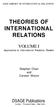 SAGE LIBRARY OF INTERNATIONAL RELATIONS THEORIES OF INTERNATIONAL RELATIONS VOLUME I Approaches to International Relations: Realism Stephen Chan and Cerwyn Moore DSAGE Publications London Thousand Oaks
Political Science 857 Fall 2011 Tuesday 2-4 PM 422 North Hall
 THEORIES OF INTERNATIONAL RELATIONS Political Science 857 Fall 2011 Tuesday 2-4 PM 422 North Hall Mark Copelovitch Assistant Professor 306 North Hall [email protected] Office hours: Wednesday 10-12
Yale University Department of Political Science. Syllabus INTERNATIONAL RELATIONS THEORY (Seminar)
 Yale University Department of Political Science Syllabus INTERNATIONAL RELATIONS THEORY (Seminar) Nuno P. Monteiro Class: Tuesdays 3:30 5:20 Political Science 155 / 654 Office hours: Rosenkranz #226, Wednesdays
A GENERAL INTERNATIONAL RELATIONS READING LIST FOR PHD COMPREHENSIVE EXAMS (Revised October 2013)
 1 A GENERAL INTERNATIONAL RELATIONS READING LIST FOR PHD COMPREHENSIVE EXAMS (Revised October 2013) The doctoral written comprehensive examination in International Relations consists of a threepart, three-hour
International Relations Theory in the Cyber Age 17.445/17.446 Spring 2014
 Spring 2014 Professor Nazli Choucri Department of Political Science MIT-E53-493 617-253-6198 [email protected] Organization & Contents PART I STRUCTURE & PROCESS in INTERNATIONAL RELATIONS Some Fundamentals
English School of International Relations Theory Archived Papers
 English School of International Relations Theory Archived Papers If you would like a copy of any of the following papers, please contact Dr Jason Ralph, School of Politics and International Studies, University
International Relations: Theory and Practice IGA-101
 Syllabus Spring 2008 The Harvard Kennedy School International Relations: Theory and Practice IGA-101 Class Time: Monday & Wednesday, 1:10pm 2:30pm Location: Land (Belfer Building, 4 th floor) The first
THEORIES AND ISSUES IN INTERNATIONAL RELATIONS
 University of Warwick Department of Politics and International Studies THEORIES AND ISSUES IN INTERNATIONAL RELATIONS Module PO926 2012-13 Module Director: Dr Nick Vaughan-Williams Room: B1.10 E-mail:
Yale University Department of Political Science. Syllabus INTERNATIONAL RELATIONS GRADUATE FIELD SEMINAR
 Yale University Department of Political Science Syllabus INTERNATIONAL RELATIONS GRADUATE FIELD SEMINAR Nuno P. Monteiro Office: Rosenkranz 226, Tuesdays 1:00 3:00pm [email protected] Class: Rosenkranz
RPOS 370: International Relations Theory
 RPOS 370: International Relations Theory Professor: Bryan R. Early Class Times: MWF 11:30-12:25 Room: Humanities Building, Room 137 Email: [email protected] Office Hours: Uptown, Humanities Building B16
National Security and International Relations
 National Security and International Relations School of International Studies Jawaharlal Nehru University Winter Semester 2014 MA Optional Course Course No: IS 557N Happymon Jacob, Ph.D. Room - 236, SIS,
INAF 100 International Institutions and Human Rights
 INAF 100 International Institutions and Human Rights Erik Voeten Peter F. Krogh Associate Professor of Geopolitics and Global Justice Office: ICC 702 Phone: 202-6877927 E-mail: [email protected] Class:
The Globalization of World Politics
 The Globalization of World Politics An introduction to international relations Second Edition Edited by John Baylis and Steve Smith OXFORD UNIVERSITY PRESS Detailed contents Introduction i From international
Contemporary Security Studies
 SUB Hamburg B/120487 Contemporary Security Studies THIRD EDITION Edited by Alan Collins OXFORD UNIVERSITY PRESS Notes on Contributors List of Figures List of Tables List of Boxes Guided Tour of Learning
MARTHA FINNEMORE. CURRENT POSITION University Professor of Political Science and International Affairs George Washington University
 MARTHA FINNEMORE Department of Political Science and Elliott School of International Affairs The George Washington University Washington, DC 20052 (202) 994-8617 [email protected] http://home.gwu.edu/~finnemor/
University of Victoria Summer 2015 Department of Political Science. POLI 340 International Studies
 University of Victoria Summer 2015 Department of Political Science POLI 340 International Studies Times & Locations: Tuesdays and Thursdays, 8:30-10:20; Clearihue A308 Fridays, 9:30-10:20; Cornett B111
Grading Breakdown: Class Participation: 10% Literature Critiques: 30% (10% each) Oral Presentation: 10% Research Paper: 50%
 International Relations GOVT 540-002, Spring 2014 George Mason University Department of Public and International Affairs Wednesdays 7:20-10:00 PM in Robinson Hall A206 Professor: Joseph Kochanek (email:
Political Science 361: History of International Political Thought Mondays and Wednesdays from 9:30-10:45 a.m. Lubar N-116 Spring 2016
 Political Science 361: History of International Political Thought Mondays and Wednesdays from 9:30-10:45 a.m. Lubar N-116 Spring 2016 Instructor: Dr. Kristin Trenholm Office: Bolton Hall Room 630 Office
PSCI 4800A Advanced International Relations Theory Monday 14:35 17:25 Please confirm location on Carleton Central
 Carleton University Fall 2011 Fall 2011 Department of Political Science PSCI 4800A Advanced International Relations Theory Monday 14:35 17:25 Please confirm location on Carleton Central Instructor: Hans-Martin
PAI2017 INTERNATIONAL RELATIONS. Convenor: Dr Dan Bulley
 Queens University of Belfast School of Politics, International Studies and Philosophy PAI2017 INTERNATIONAL RELATIONS Convenor: Dr Dan Bulley Spring Semester 2010-2011 Module Convenor: Dr Dan Bulley Room
Political Science 1300: Global Politics Spring 2014
 Political Science 1300: Global Politics Spring 2014 Online No classroom component Instructor: Kathleen Powers Email: [email protected] Office Hours: Thurs 10:00am-12:00pm; in person AND Gchat; also available
Theories of International Relations
 MSc International Relations Theory 2014-15 IR436 Theories of International Relations Course Convenor Dr Jonathan Agensky Room: CLM 4.08 e-mail: [email protected] tel: 020 7955 7400 Office hours: Tuesdays
Zhang Xiaoming School of International Studies Peking University
 Zhang Xiaoming School of International Studies Peking University IRT was introduced into China from the West, especially from the US. The Chinese IR community started the learning process by importing
Introduction to International Relations Political Science 5 A. Gurowitz-rev 1
 Fall 2015 Office Hours: 780 Barrows, T and TH 10:00-11:00 e-mail: [email protected] GSIs: Paul Martorelli-Head GSI Quinlan Bowman Melissa Carlson Nirvikar Jassal Deirdre Martin James Tate Jessica Ward
PSC 544 International Relations Theory
 PSC 544 International Relations Theory Course Syllabus Spring 2012 Classroom: 502 Park Hall Class schedule: Tuesday 12:30-3:20 p.m. Office hours: TR 11a.m.-noon Department of Political Science University
The Study of Conflict in Political Science and International Relations. Stefan Wolff
 The Study of Conflict in Political Science and International Relations Stefan Wolff The Study of Conflict in the Social Sciences Conflict as a social phenomenon of competition between actors with incompatible
Contending Theories of International Relations
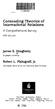 A 362352 Contending Theories of International Relations A Comprehensive Survey Fifth Edition James E. Dougherty St. Joseph's University Robert L. Pfaltzgraff, Jr. The Fletcher School of Law and Diplomacy,
International Relations, Principal Theories
 International Relations, Principal Theories Anne-Marie Slaughter TABLE OF CONTENTS A. Introduction... 1 B. Realism... 2 C. Institutionalism... 8 D. Liberalism... 14 E. Constructivism... 19 F. The English
SCHOOL OF GLOBAL STUDIES DEPARTMENT OF INTERNATIONAL RELATIONS. Taught Masters programmes
 SCHOOL OF GLOBAL STUDIES DEPARTMENT OF INTERNATIONAL RELATIONS Taught Masters programmes What s special about studying in the Department of International Relations at Sussex? With a history that spans
Why there is International Theory now
 International Theory (2009), 1:1, 1 14 & Cambridge University Press, 2009 doi:10.1017/s1752971909000062 Why there is International Theory now DUNCAN SNIDAL 1 * and ALEXANDER WENDT 2 * 1 Department of Political
Introduction to International Relations Fall 2011 46.121.216
 Introduction to International Relations Fall 2011 46.121.216 T/Th 9:30-10:45 AM Ike Sharpless Office Hours: by appointment (617) 913-4969 (cell) South Campus, Coburn 303 [email protected] Course Description:
Comprehensive Exam International Relations, January 2014
 Comprehensive Exam International Relations, January 2014 Instructions: Answer one (1) question from each set of questions. The exam is closed book and closed note, and lasts six hours (unless you have
May 2009 syllabus. Syllabus revised October 2009. For first examinations in May 2011
 This is an edited version of the subject guide, for use with extended essay candidates. Assessment details for the subject are not included: please refer to the assessment criteria in the Extended Essay
Professor W B Walker. *Defence Studies (distance-learning course) International Political Thought International Security Studies
 School of International Relations Head of School Degree Programmes Graduate Diploma: M.Litt.: M.Phil.: Professor W B Walker *Defence Studies (distance-learning course) International Political Thought International
Harvard Kennedy School of Government Religion and World politics: Connections and Collisions (HKS: IGA: 121)(HDS: 2861)
 Harvard Kennedy School of Government Religion and World politics: Connections and Collisions (HKS: IGA: 121)(HDS: 2861) Spring 2015 Monday/Wednesday (4:10-5:25) Littauer230 Professor J. Bryan Hehir Office:
International Public Policy Review
 International Public Policy Review A Critical Investigation of the IR Theories that Underpin the Debate on Humanitarian Intervention Liam James Spalding IPPR 2012/2013 International Public Policy Review
Theories of International Relations
 MSc International Relations Theory 2015-16 IR436 Theories of International Relations Course Convenor Dr George Lawson Room: CLM 5.12 e-mail: [email protected] tel: 020 7955 6028 Office hours: Autumn Term:
How To Teach Feminism And International Relations
 Florida International University Department of International Relations and Geography Feminism and International Relations INR 5088 Instructor: Elisabeth Prügl, Ph.D. Fall 2006 Office: DM 431c Thu 14:00-16:45
First Semester Compulsory Courses
 First Semester Compulsory Courses CODE TITLE UNITS POL 101 Introduction to Pol Sci. 3 POL 102 Nigerian Constitutional Development 3 SOC 111 Introduction to Sociology 4 PSY 100 Introduction to Psychology
Regulations and Course Information. Department of Political Science McMaster University 2013-2014 CONTENTS:
 M.A. DEGREE in INTERNATIONAL RELATIONS Regulations and Course Information Department of Political Science McMaster University 2013-2014 CONTENTS: I. Degree Requirements a. Global Politics Stream b. Global
JAWAHARLAL NEHRU UNIVERSITY School of International Studies जव हरल ल न हर वव ववद य
 जव हरल ल न हर वव ववद य JAWAHARLAL NEHRU UNIVERSITY School of International Studies M.A. IN POLITICS (INTERNATIONAL STUDIES): MONSOON SEMESTER 2015 IS 402 N: Theory of International Relations Course Teacher:
Introduction to Modern Political Theory
 Introduction to Modern Political Theory Government 1615 Professor: Jason Frank Spring 2014 307 White Hall MWF 11:15-12:05 5-6759 / [email protected] GSH 64 Office Hours: W 2-4 Kevin Duong Will Pennington
INTERNATIONAL RELATIONS COMPREHENSIVE EXAMINATION WINTER 2015
 Instructions INTERNATIONAL RELATIONS COMPREHENSIVE EXAMINATION WINTER 2015 Please answer one question from each section. The examination will last six hours; you should spend approximately two hours on
PEACE OR WAR? EMPIRE, US FOREIGN POLICY, AND BUILDING A PEACEFUL WORLD
 1 PEACE OR WAR? EMPIRE, US FOREIGN POLICY, AND BUILDING A PEACEFUL WORLD Course Description: Professor Charles Derber This course seeks to give students a new perspective on American society, as well as
We do not study international relations for aesthetic reasons, since world politics
 Big Questions in the Study of World Politics Robert O. Keohane, June 2007 1 We do not study international relations for aesthetic reasons, since world politics is not beautiful. If we sought scientific
Standards Addressed by The Choices Program
 Standards Addressed by The Choices Program National Standards for the Social Studies National Standards for Social Studies are available online at cnets.iste.org/currstands. Strand I: Culture and Cultural
POLITICAL SCIENCE. Department of Law and Politics. BACHELOR OF ARTS (General) POLITICAL SCIENCE. Please refer to the general regulations
 FACULTY PROFESSOR(S) R. M. Myers, B.A. (Hons), M. A., Ph.D. (Toronto) ASSOCIATE PROFESSOR(S) D. A. Jackson, B.A. (Hons), M.A. (Toronto) ASSISTANT PROFESSOR(S) N. Cruickshank, B.A. (Hons), M.A. (Wilfrid
WAYNE GABARDI Doctor of Philosophy in Political Science Curriculum Vitae
 WAYNE GABARDI Doctor of Philosophy in Political Science Curriculum Vitae Campus Box 8073 Pocatello, Idaho 83209-8073 208.282.4536 Dept Office: 208.282.2211 FAX: 208 282.4833 Email: [email protected] PERSONAL
Theory of Complex Interdependence: A Comparative Analysis of Realist and Neoliberal Thoughts
 International Journal of Business and Social Science Vol. 6, No. 2; February 2015 Theory of Complex Interdependence: A Comparative Analysis of Realist and Neoliberal Thoughts Waheeda Rana PhD Scholar at
How To Learn About Politics At Sacred Heart University
 SACRED HEART UNIVERSITY UNDERGRADUATE CATALOG 2012-2013 POLITICAL SCIENCE The Political Science major seeks to awaken in students an appreciation and an understanding of politics and government in the
Department Political Science School Loyola Schools. Course No. PoS 53 Course Title Qualitative Methods in the Social Sciences No.
 Department Political Science School Course No. PoS 53 Course Title Qualitative Methods in the Social Sciences The course is an introduction to research techniques, methodology, and epistemology. It raises
Major in Political Science, Field I: United States National Politics Major in Political Science, Field II: International Relations
 FACULTY: Angela Bos, Chair Kent Kille Matthew Krain Jeffrey Lantis Michele Leiby Eric Moskowitz Boubacar N Diaye Bas van Doorn (on leave Spring 2016) Mark Weaver POLITICAL SCIENCE Political Science is
INTERNATIONAL RELATIONS Pol 3835 sec. 2 Fall 2008 * 3 Credits Blegen Hall, Room 10 Tuesday, 6:20-8:50
 INTERNATIONAL RELATIONS Pol 3835 sec. 2 Fall 2008 * 3 Credits Blegen Hall, Room 10 Tuesday, 6:20-8:50 Instructor: TA: Mr. Isaac Kamola Mr. Denis Kennedy Email: [email protected] Email: [email protected]
Brief Biographical Sketch
 Department of Political Science University of California, Davis Davis, California 95616 (530) 752-2262 E-mail: [email protected] Present Position Brief Biographical Sketch Miroslav Nincic Professor of
The School of Policy, Government, and International Affairs (SPGIA) GOVT 322 002 CRN 75997 International Relations Theory. Overview.
 The School of Policy, Government, and International Affairs (SPGIA) GOVT 322 002 CRN 75997 International Relations Theory Fall 2014 Wednesday 7:20 pm 10:00 pm in Planetary Hall room 206 Instructor: Prof.
International political theory
 International political theory K. Hutchings IR3083, 2790083 2011 Undergraduate study in Economics, Management, Finance and the Social Sciences This is an extract from a subject guide for an undergraduate
Instructor: Clifton W. Sherrill Office: Kadena, Japan (Education Bldg. Rm. 220A)
 IR6652: Theory and Ideology in International Relations Term 4, 2015-16 14 March 15 May 2016 3 Credit Hours Location: Camp Humphreys, Education Center Meeting Times and Dates: 0900-1800: Apr. 9-10; Apr.
Political Science. 222 2014-2016 Haigazian University
 Political Science Coordinator: Maximilian Felsch, Ph.D. The Faculty of Social and Behavioral Sciences offers the Bachelor of Arts (B.A.) degree in Political Science. On completion of the degree in Political
Political Science 61 Introduction to International Relations Tufts University Fall Semester 2012
 Political Science 61 Introduction to International Relations Tufts University Fall Semester 2012 Professor Taliaferro Block D + Tues. and Thurs. 10:30-11:45 a.m. Packard Hall 112 and a Recitation (see
Constructing Norms of Humanitarian Intervention
 Constructing Norms of Humanitarian Intervention M ARTHA FINNEMORE OVERVIEW Finnemore argues that realist and liberal theories have not provided good explanations for the increase in humanitarian interventions
International Relations (214) Tutorial Guidelines & Reading List
 International Relations (214) Tutorial Guidelines & Reading List This document details the specific topics we will examine, gives you specific guidelines on what to read, and offers an introductory outline
INTERNATIONAL RELATIONS
 INTERNATIONAL RELATIONS ACADEMIC YEAR: DEGREE COURSE YEAR: 1º SEMESTER 2º SEMESTER CATEGORY: CORE COMPULSORY OPTIONAL NO. OF CREDITS (ECTS): 6 LANGUAGE: English TUTORIALS: FORMAT: PREREQUISITES: 1- SUBJECT
Modern Political Thought
 Professor Andrew Poe MW 10-11:20 in Webster 217 Office Hours: Wednesdays, 3-5PM in 202 Clark House Email: [email protected] Phone: 413.542.5459 Political Science 335 Modern Political Thought -Introduction-
LEGON CENTRE FOR INTERNATIONAL AFFAIRS & DIPLOMACY (LECIAD)
 LEGON CENTRE FOR INTERNATIONAL AFFAIRS & DIPLOMACY (LECIAD) Introduction: PHD PROGRAMME The PhD programme in International Affairs aims to offer students firm grasp of the classical and contemporary theories
MA PROGRAM IN MILITARY STRATEGIC STUDIES INTRODUCTION
 MA PROGRAM IN MILITARY STRATEGIC STUDIES INTRODUCTION WHAT IS MSS The interdisciplinary Military Strategic Studies program is concerned with understanding, analyzing and explaining the military dimension
m a s t e r o f s c i e n c e i n
 m a s t e r o f s c i e n c e i n Global affairs The M.S. in Global Affairs is the flagship graduate program of the Center for Global Affairs (CGA), ranked by the Foreign Policy Association in 2010 and
Economic Bases of Power: The Study of Political Economy of National Security
 Course Time: Th 2:00-5:00pm Email: [email protected] Course Location: SED205 Office: Political Science 303 Office Hours: Tuesdays 3-5 Economic Bases of Power: The Study of Political Economy of National Security
Original Group Gap Analysis Report
 Original Group Gap Analysis Report Year 11 Levels of Progress Analysis 2014-2015 Spring This document was created using the Transition Matrices Report Generator Copyright Dr Stuart Atkinson - 2014 - All
How To Study Political Science At Pcj.Edu
 Political Science Courses-1 American Politics POL 110/American Government Examines the strengths and weaknesses, problems and promise of representative democracy in the United States. Surveys the relationships
International exchanges of ideas about taxation, c. 1750-1914
 29 October 2004 Holger Nehring/Florian Schui Minutes of the Workshop International exchanges of ideas about taxation, c. 1750-1914 18 October 2004, Saltmarsh Rooms, King s College, Cambridge The workshop,
Are Skill Selective Immigration Policies Just?
 Are Skill Selective Immigration Policies Just? Douglas MacKay c 2014 Douglas MacKay Are Skill Selective Immigration Policies Just? Many high income countries have skill selective immigration policies,
POLI 575 Honours Seminar in International Relations Culture and Identity in World Politics Fall 2008 Tuesdays, 2:05-4:55 PM, Leacock 424
 McGILL UNIVERSITY Department of Political Science POLI 575 Honours Seminar in International Relations Culture and Identity in World Politics Fall 2008 Tuesdays, 2:05-4:55 PM, Leacock 424 Professor Vincent
INR 3333 Introduction to International Security Fall 2013 Online Section 01CA
 INR 3333 Introduction to International Security Fall 2013 Online Section 01CA Instructor: Dr. Laura Sjoberg Email: [email protected] Skype: laurasjoberg Phone: 352.575.8603 (do NOT call after midnight) Office:
SCHOOL OF HISTORY, PHILOSOPHY, POLITICAL SCIENCE AND INTERNATIONAL RELATIONS
 SCHOOL OF HISTORY, PHILOSOPHY, POLITICAL SCIENCE AND INTERNATIONAL RELATIONS POLITICAL SCIENCE AND INTERNATIONAL RELATIONS PROGRAMME 2009 TRIMESTERS 1 & 2 INTP586: APPROACHES TO INTERNATIONAL RELATIONS
International Relations / International Studies / European Studies
 International Relations / International Studies / European Studies Degree Courses BA International Relations and Politics 166 BA International Relations and Modern History 167 BA International Studies
PS 321 ~ Introduction to Political Economy
 PS 321 ~ Introduction to Political Economy Instructor: Dr. Geoff Kennedy Office: PLC 819 Phone: 541-346-8976 Email: [email protected] Course Description: This course introduces students to the study
POLIS UNDERGRADUATE LECTURE LIST 2015-16
 Page 1 POLIS UNDERGRADUATE LECTURE LIST 2015-16 This lecture list is static but is regularly updated; check the date in the footer (you may need to clear your browser to see the newest version). The list
When students complete the Master of Arts in Political Science program, they should have:
 Political Science (M.A.) Political Science Admission Criteria and Degree Requirements The JMU graduate school requires that prospective students submit official transcripts of all undergraduate and graduate
Introduction to International Relations
 Introduction to International Relations Ivan Savic Political Science S1601.002 Office Hrs: Tue & Thur. 4-6pm IAB 729 Summer 2004 Phone: (212) 961-1660 Tue. & Thur. 6:15-9:25pm Email: [email protected]
Political Theories of International Relations
 A Political Theories of International Relations From Thucydides to the Present DAVID BOUCHER Oxford University Press 1998 DETAILED CONTENTS INTRODUCTION 1. The Character of the Political Theory of International
Political Science Courses
 Political Science Courses CPO 2002 INTRODUCTION TO COMPARATIVE POLITICS (3) Introduction to politics in different states; comparison and analysis of representative European and non-western political systems.
SOCIAL THEORY. Sociology 3140-001 University of Utah, Fall 2014 M/W/F 10:45-11:35 BEH S 110 [THIS IS TENTATIVE SYLLABUS IT IS SUBJECT TO CHANGE]
![SOCIAL THEORY. Sociology 3140-001 University of Utah, Fall 2014 M/W/F 10:45-11:35 BEH S 110 [THIS IS TENTATIVE SYLLABUS IT IS SUBJECT TO CHANGE]](/thumbs/40/21858568.jpg "SOCIAL THEORY. Sociology 3140-001 University of Utah, Fall 2014 M/W/F 10:45-11:35 BEH S 110 [THIS IS TENTATIVE SYLLABUS IT IS SUBJECT TO CHANGE]") SOCIAL THEORY Sociology 3140-001 University of Utah, Fall 2014 M/W/F 10:45-11:35 BEH S 110 [THIS IS TENTATIVE SYLLABUS IT IS SUBJECT TO CHANGE] Instructor: Marcel Paret, [email protected] Office hours:
SOCIAL THEORY Sociology 3140-001 University of Utah, Fall 2014 M/W/F 10:45-11:35 BEH S 110 [THIS IS TENTATIVE SYLLABUS IT IS SUBJECT TO CHANGE] Instructor: Marcel Paret, [email protected] Office hours:
WHY STATES FOLLOW THE RULES: TOWARD A POSITIONAL THEORY OF ADHERENCE TO INTERNATIONAL LEGAL REGIMES
 WHY STATES FOLLOW THE RULES: TOWARD A POSITIONAL THEORY OF ADHERENCE TO INTERNATIONAL LEGAL REGIMES SARAH ELIZABETH KREPS* ANTHONY CLARK AREND** INTRODUCTION There is not and never will be a field theory
: INTRODUCTION TO EUROPEAN HISTORY
 Course Title Course Code : INTRODUCTION TO EUROPEAN HISTORY : HST114 Recommended Study Year* : Year 1 No. of Credits/Term : 3 Mode of Tuition Class Contact Hours Category in Major Prog. Prerequisites Co-requisites
INR4990/5065: The Causes of War. Instructor: Dr. Jacob Shively TR 11:00 12:15, 71/133
 INR4990/5065: The Causes of War Spring 2016 (Section 12306 & 12307) Instructor: Dr. Jacob Shively TR 11:00 12:15, 71/133 E-mail: [email protected] Office Phone: 850-474-3008 Office and Office Hours: Bldg
HIS 13 Introduction to Modern European History
 HIS 13 Introduction to Modern European History Basic Information Instructor Name Home Institution Email Office Hours Naum G. Katz Carnegie Mellon University [email protected] by Appointment Course Description
Jacob Shively 40 Rockwood Rd. Pensacola, FL 32514 Phone: (317) 507-0291 E-mail: [email protected]
 Jacob Shively 40 Rockwood Rd. Pensacola, FL 32514 Phone: (317) 507-0291 E-mail: [email protected] EDUCATION Ph.D. Political Science, Indiana University, Bloomington. May 2014. DISSERTATION: Lost Ambition:
Double Master s Degree Program in International Relations between The University of Haifa and The University of Warsaw
 Double Master s Degree Program in International Relations between The University of Haifa and The University of Warsaw Beginning in October 2015, students at the University of Haifa will have an opportunity
This page intentionally left blank
 This page intentionally left blank The English School of International Relations What is the English School of International Relations and why is there an accelerating growth of interest in it? Linklater
Graduate Courses. 713 PERFORMANCE CRITICISM (3). Introduction to the critical analysis and interpretation of performance events.
 Graduate Courses 700 INTRODUCTION TO RESEARCH AND THEORY IN COMMUNICATION STUDIES I (3). Prerequisite, admission to graduate program or permission of the chair. Considers theory and philosophy in the study
Introduction Still critical after all these years? The past, present and future of Critical Theory in International Relations
 Review of International Studies (2007), 33, 3 24 doi:10.1017/s0260210507007371 Copyright British International Studies Association Introduction Still critical after all these years? The past, present and