
Political Science 857 Fall 2011 Tuesday 2-4 PM 422 North Hall
|
|
|
- Victor Flowers
- 9 years ago
- Views:
Transcription
1 THEORIES OF INTERNATIONAL RELATIONS Political Science 857 Fall 2011 Tuesday 2-4 PM 422 North Hall Mark Copelovitch Assistant Professor 306 North Hall Office hours: Wednesday Course overview This course is a graduate-level review of the subfield of international relations within political science. It is intended primarily for first-year doctoral students in Political Science, although more advanced graduate students are also welcome. The primary purpose is to understand the development of the field, and to understand and be able to evaluate the main theoretical approaches in the sub-discipline. The course covers many of what have come to be known as classic works in the field, as well as some more recent theoretical and empirical applications. While it is not designed as a research course, it is useful preparation for more specialized courses of study emphasizing IR research. Another important purpose is to prepare PhD students in Political Science for the preliminary examination in international relations. Throughout the course, we will focus primarily on alternative theoretical approaches and perspectives, although we will also explore some empirical work. Our goal will be to engage, discuss, and wrestle with the following questions: What do the authors want to explain? What are the critical concepts? How are cause and effect observed? What kind of research design is employed? From what theoretical perspective does the argument originate? With whom are the authors engaged in debate? Course requirements 1. Participation (1/3 of total grade): All students should come to class having done the readings and prepared to discuss them in depth each week. I will circulate discussion questions prior to class to guide your reading and organize class discussion. 2. Reading response papers (1/3 of total grade): Each student will be required to write seven short response papers (no more than 2 pages) based on the weekly readings or some subset thereof. A copy of the essay should be ed to me by noon the day before class (Monday). The papers should not just re-present the readings, but rather must analyze, compare, and/or critique the quality of the theory and/or evidence, as appropriate.

2 3. Oral examination (1/3 of total grade): Each student will be required to take a 30-minute oral examination with me during the last two scheduled weeks of class. I will ask you to identify three topics in which you would like to be examined. We will make arrangements for the exact timing of this exam later in the semester. Readings Nearly all of the articles are available online, either through public sources or UW s library. Books that I recommend you purchase are marked on the syllabus with **; we will be reading substantial portions of these books and/or they are classics that should be part of any IR scholar s library. Readings indicated with ## are smaller portions of books; I will make.pdfs of these readings available on LearnUW. For each reading, we will summarize the argument, discuss its contribution to IR, and probe the argument and evidence for strengths and weaknesses. The following questions are examples of the sorts of questions that can guide your reading of each piece and will shape our discussion: What is the question or puzzle? What is the argument? What are the explicit or implicit assumptions? Who are the relevant actors? What are their preferences and interests and where do they come from? At what level of analysis is the argument? Where does the argument fit into the theoretical landscape of IR and who would disagree? What is the relative importance of agency versus structure? What evidence is provided in support of the argument and is it convincing?

3 September 6 Introduction and overview of the field Brian Schmidt, On the History and Historiography of International Relations, in Handbook of International Relations, Walter Carlsnaes, Beth Simmons, and Thomas Risse, eds. London: Sage, Ole Weaver, The Sociology of a Not So International Discipline: American and European Developments in International Relations. International Organization 52(4): Peter Katzenstein, Robert Keohane, and Stephen Krasner International Organization and the Study of World Politics. International Organization 52(4): September 13 Classic approaches to world politics Thucydides, The Peloponnesian War (Book I, 1-88; Book II, 1-65; Book III, 36-50; Book V ; Book VI, 6-32). Kant, To Perpetual Peace: A Philosophical Sketch. Hans Morgenthau, Politics Among Nations: The Struggle for Power and Peace, 3-13 (Ch. I, and pp (Ch. XV). E.H. Carr, The Twenty Years Crisis. London: MacMillan. Introduction and Chapters 1, 5-8. ##Kenneth N. Waltz, Man, the State, and War, chapter 1 (Introduction). September 20 Neorealism: structure, power, and anarchy [Lisa Martin] **Robert O. Keohane, ed., Neorealism and its Critics, chs. 1-7, 9, 10. **Robert Gilpin, War and Change in International Politics. pp. 9-49, Jeff Legro and Andrew Moravcsik, Is Anybody Still a Realist? International Security, Vol. 24, No. 2 (Fall 1999), pp. 5-55, and the correspondence, Brother Can You Spare a Paradigm (Or Was Anybody Ever a Realist), International Security (Vol. 25 (2000), September 27 Neoliberalism: cooperation and regime theory

4 Robert Jervis, Cooperation Under the Security Dilemma, World Politics, vol. 30 #2, pp **Robert Axelrod, The Evolution of Cooperation. New York: Basic Books. Chs. 1-4 (3-87). Keohane, After Hegemony, Chs. 1, 4-7 (5-17, ) Joseph Grieco, Anarchy and the Limits of Cooperation, International Organization 42: John J. Mearsheimer, The False Promise of International Institutions, International Security, Vol. 19, No. 3 (Winter 1994/95), pp October 4 Domestic politics: interests and institutions Andrew Moravcsik, Taking Preferences Seriously: A Liberal Theory of International Politics, International Organization, vol. 51(4): Jeffry Frieden, Actors and Preferences in International Relations, in Lake and Powell, eds., Strategic Choice and International Relations. Andrew Moravcsik, The New Liberalism, in The Oxford Handbook of International Relations, ed. Christian Reus-Smit and Duncan Snidal ( Robert Putnam Diplomacy and Domestic Politics: The Logic of Two-Level Games. International Organization 42(3): Ronald Rogowski, Institutions as Constraints on Strategic Choice, in Lake and Powell, eds., Strategic Choice and International Relations, Lisa Martin Democratic Commitments: Legislatures and International Commitments. Chs. 2 (21-52) & 7 ( ). October 11 Domestic politics: democracy, peace, and conflict [Jon Pevehouse] James Fearon, "Domestic Political Audiences and the Escalation of International Disputes," American Political Science Review 88(3): Kenneth Schultz, Do Domestic Institutions Constrain or Inform? Contrasting Two Institutional Perspectives on Democracy and War. International Organization, 53(2):

5 Sebastian Rosato, The Flawed Logic of Democratic Peace Theory. American Political Science Review 97: Edward D. Mansfield and Jon C. Pevehouse Democratization and International Organizations. International Organization 60(1): Erik Gartzke, The Capitalist Peace. American Journal of Political Science 51(1): Jessica Weeks, Autocratic Audience Costs: Regime Type and Signaling Resolve. International Organization 62(1): October 18: International institutions: design, effects, and compliance George Downs, David Rocke, and Peter Barsoom Is the Good News About Compliance Good News About Cooperation International Organization 50(3): Barbara Koremenos, Charles Lipson, and Duncan Snidal, The Rational Design of International Institutions. International Organization (Autumn 2001): Helen Milner and Peter Rosendorff The Optimal Design of International Trade Institutions; Uncertainty and Escape. International Organization 55: Jana von Stein Do Treaties Constrain or Screen? Selection Bias and Treaty Compliance. American Political Science Review 99(4): Beth A. Simmons and Daniel J. Hopkins, The Constraining Power of International Treaties: Theory and Methods. American Political Science Review 99(4): October 25: Constructivism I: international society **Hedley Bull, The Anarchical Society: A Study of Order in World Politics. New York: Columbia University Press, Chapters 1-3. **Alexander Wendt, Social Theory of International Politics. Cambridge: Cambridge University Press, Chapters 1-6. Ian Hurd, Legitimacy and Authority in International Politics, International Organization 59(1): Michael Barnett and Raymond Duvall, Power in International Relations, International Organization 59(1): November 3: Constructivism II: norms and communication

6 Thomas Risse, Let s Argue: Communicative Action in World Politics. International Organization 54: Ian Johnston Treating International Institutions as Social Environments. International Studies Quarterly 45(4): Martha Finnemore and Kathryn Sikkink International Norm Dynamics and Political Change. International Organization 52(4): Nina Tannenwald, The Nuclear Taboo: The United States and the Normative Basis of Nuclear Non-use. International Organization 53: Jennifer Mitzen, Reading Habermas in Anarchy: Multilateral Diplomacy and Global Public Spheres. American Political Science Review 99(3): November 10 Bargaining, conflict, and cooperation James D. Fearon, Rationalist Explanations for War. International Organization 49(3): David A. Lake Anarchy, Hierarchy, and the Variety of International Relations. International Organization 50(1): James D. Fearon Bargaining, Enforcement, and International Cooperation. International Organization 52(2): Andrew Kydd, Trust Building, Trust Breaking: the Dilemma of NATO Enlargement. International Organization, 55(4): Branislav L. Slantchev The Power to Hurt: Costly Conflict with Completely Informed States. American Political Science Review 47(1): Jack S. Levy Prospect Theory, Rational Choice, and International Relations. International Studies Quarterly 41(1): November 25 Civil wars, ethnic conflict, and terror James Fearon and David Laitin, Ethnicity, Insurgency, and Civil War. American Political Science Review 97(1): Andrew Kydd and Barbara Walter, Strategies of Terrorism. International Security 31(1):

7 Lars-Erik Cederman and Luc Girardin, Beyond Fractionalization: Mapping Ethnicity Onto Nationalist Insurgencies. American Political Science Review 101: Jeremy Weinstein and Macartan Humphreys, Who Fights? The Determinants of Participation in Civil Wars. American Journal of Political Science 52(2): Kenneth Schultz, The Enforcement Problem in Coercive Bargaining: Interstate Conflict over Rebel Support in Civil Wars. International Organization 64(2): November 25 International trade and globalization Rogowski, Ronald Political Cleavages and Changing Exposure to Trade." American Political Science Review 81(4): Joanne S. Gowa and Edward D. Mansfield Power Politics and International Trade, American Political Science Review 87(2): Peter Alexis Gourevitch, The Second Image Reversed: The International Sources of Domestic Politics. International Organization 32(4): Jeffry Frieden Invested Interests: The Politics of National Economic Policies in a World of International Finance. International Organization 45:4 (Autumn), pp Layna Mosley International Financial Markets and National Welfare States. International Organization 54: 4 (Autumn), pp December 1 Moving forward: theory testing and synthesis James Fearon and Alexander Wendt Rationalism vs. Constructivism: A Skeptical View, in Handbook of International Relations, Peter Katzenstein and Rudra Sil Eclectic Theorizing in the Study and Practice of International Relations. In Reus-Smit and Snidal, eds., Oxford Handbook of International Relations, pp Oxford University Press. December 8 and 15: oral examinations to be scheduled

THEORIES OF INTERNATIONAL RELATIONS Graduate Seminar Winter 2009
 THEORIES OF INTERNATIONAL RELATIONS Graduate Seminar Winter 2009 Political Science 745 Winter 2009 Thursday 3:30-6:18 Derby Hall 2078 Prof. Alexander Thompson Derby Hall 2139 [email protected] Office
Yale University Department of Political Science. Syllabus INTERNATIONAL RELATIONS THEORY (Seminar)
 Yale University Department of Political Science Syllabus INTERNATIONAL RELATIONS THEORY (Seminar) Nuno P. Monteiro Class: Tuesdays 3:30 5:20 Political Science 155 / 654 Office hours: Rosenkranz #226, Wednesdays
RPOS 370: International Relations Theory
 RPOS 370: International Relations Theory Professor: Bryan R. Early Class Times: MWF 11:30-12:25 Room: Humanities Building, Room 137 Email: [email protected] Office Hours: Uptown, Humanities Building B16
Political Science 5020-101 PRO-SEMINAR IN INTERNATIONAL RELATIONS THEORY Fall 2007 Tuesday 6:15-9:00 pm OLC 1131
 1 Political Science 5020-101 PRO-SEMINAR IN INTERNATIONAL RELATIONS THEORY Fall 2007 Tuesday 6:15-9:00 pm OLC 1131 Dr. Ryan Office: OLC 2055 Phone: 262-6348 E-mail: [email protected] Website: http://www.pscj.appstate.edu/faculty/ryan.html
Grading Breakdown: Class Participation: 10% Literature Critiques: 30% (10% each) Oral Presentation: 10% Research Paper: 50%
 International Relations GOVT 540-002, Spring 2014 George Mason University Department of Public and International Affairs Wednesdays 7:20-10:00 PM in Robinson Hall A206 Professor: Joseph Kochanek (email:
Yale University Department of Political Science. Syllabus INTERNATIONAL RELATIONS GRADUATE FIELD SEMINAR
 Yale University Department of Political Science Syllabus INTERNATIONAL RELATIONS GRADUATE FIELD SEMINAR Nuno P. Monteiro Office: Rosenkranz 226, Tuesdays 1:00 3:00pm [email protected] Class: Rosenkranz
POLS 5203: International Relations Theory Monday 5:00-7:40@WALEED-CP61 Professor Ezzedine Choukri FISHERE [email protected]
 POLS 5203: International Relations Theory Monday 5:00-7:40@WALEED-CP61 Professor Ezzedine Choukri FISHERE [email protected] Office hours: Monday and Thursday @ HUSS 2015 12:00-1:00 (Or by appointment)
International Relations Theory in the Cyber Age 17.445/17.446 Spring 2014
 Spring 2014 Professor Nazli Choucri Department of Political Science MIT-E53-493 617-253-6198 [email protected] Organization & Contents PART I STRUCTURE & PROCESS in INTERNATIONAL RELATIONS Some Fundamentals
Political Science 361: History of International Political Thought Mondays and Wednesdays from 9:30-10:45 a.m. Lubar N-116 Spring 2016
 Political Science 361: History of International Political Thought Mondays and Wednesdays from 9:30-10:45 a.m. Lubar N-116 Spring 2016 Instructor: Dr. Kristin Trenholm Office: Bolton Hall Room 630 Office
PSC 544 International Relations Theory
 PSC 544 International Relations Theory Course Syllabus Spring 2012 Classroom: 502 Park Hall Class schedule: Tuesday 12:30-3:20 p.m. Office hours: TR 11a.m.-noon Department of Political Science University
DIU - Dubrovnik International University Theories of International Relations - Syllabus. Course Objectives
 DIU - Dubrovnik International University Theories of International Relations - Syllabus Course Objectives To become familiar with the theoretical and historical background of international politics. To
International Relations, Principal Theories
 International Relations, Principal Theories Anne-Marie Slaughter TABLE OF CONTENTS A. Introduction... 1 B. Realism... 2 C. Institutionalism... 8 D. Liberalism... 14 E. Constructivism... 19 F. The English
Political Science 1300: Global Politics Spring 2014
 Political Science 1300: Global Politics Spring 2014 Online No classroom component Instructor: Kathleen Powers Email: [email protected] Office Hours: Thurs 10:00am-12:00pm; in person AND Gchat; also available
The MIT Press is collaborating with JSTOR to digitize, preserve and extend access to International Organization. http://www.jstor.
 Anarchy in International Relations Theory: The Neorealist-Neoliberal Debate Neorealism and its Critics. by Robert O. Keohane; Neorealism and Neoliberalism: The Contemporary Debate. by David A. Baldwin
International Relations: Theory and Practice IGA-101
 Syllabus Spring 2008 The Harvard Kennedy School International Relations: Theory and Practice IGA-101 Class Time: Monday & Wednesday, 1:10pm 2:30pm Location: Land (Belfer Building, 4 th floor) The first
Introduction to International Relations Political Science 5 A. Gurowitz-rev 1
 Fall 2015 Office Hours: 780 Barrows, T and TH 10:00-11:00 e-mail: [email protected] GSIs: Paul Martorelli-Head GSI Quinlan Bowman Melissa Carlson Nirvikar Jassal Deirdre Martin James Tate Jessica Ward
POL 140-A INTERNATIONAL RELATIONS. Fall 2009. Instructor: Dr. Gilbert Gagné Office: N 102 Tel: 822-9600, ext. 2439
 POL 140-A INTERNATIONAL RELATIONS Fall 2009 Tuesday - Thursday 8:30-10:00 Bishop Williams Hall Instructor: Dr. Gilbert Gagné Office: N 102 Tel: 822-9600, ext. 2439 Office Hours: Tuesday 14:30-17:00 E-mail:
Comprehensive Exam International Relations, January 2014
 Comprehensive Exam International Relations, January 2014 Instructions: Answer one (1) question from each set of questions. The exam is closed book and closed note, and lasts six hours (unless you have
INTERNATIONAL RELATIONS READING LIST Princeton University
 INTERNATIONAL RELATIONS READING LIST Princeton University DEFINITIONS, APPROACHES, METHODS Achen, Christopher. When is a State with Bureaucratic Politics Representable as a Unitary Actor? (Unpublished
Introduction. Bargaining - whether over arms control, the terms of a peace settlement, exchange rate
 Bargaining in International Relations Introduction Bargaining - whether over arms control, the terms of a peace settlement, exchange rate coordination, alliances, or trade agreements - is a central feature
Professor Alex Grigorescu Tel: (773) 508-3059. 326-B Coffey Hall by appointment
 Professor Alex Grigorescu Tel: (773) 508-3059 Department of Political Science e-mail: [email protected] Loyola University Chicago Online office hours: 326-B Coffey Hall by appointment PLSC 102: International
INTRODUCTION TO INTERNATIONAL RELATIONS Political Science 2100 Course Syllabus
 POLS 2100-001 Second Summer Session 2014 INTRODUCTION TO INTERNATIONAL RELATIONS Political Science 2100 Course Syllabus Summer Term Second Session 2014 Section 001 Orson Spencer Hall (OSH) 130 day & day,
We do not study international relations for aesthetic reasons, since world politics
 Big Questions in the Study of World Politics Robert O. Keohane, June 2007 1 We do not study international relations for aesthetic reasons, since world politics is not beautiful. If we sought scientific
Political Science 103: Introduction to International Relations Spring 2014 Tuesday/ Thursday 2:30-3:45 Bascom Hall 272
 Political Science 103: Introduction to International Relations Spring 2014 Tuesday/ Thursday 2:30-3:45 Bascom Hall 272 Instructor: Lisa Martin Office: North Hall 417 Office hours: Monday 12-1, Tuesday
The Study of Conflict in Political Science and International Relations. Stefan Wolff
 The Study of Conflict in Political Science and International Relations Stefan Wolff The Study of Conflict in the Social Sciences Conflict as a social phenomenon of competition between actors with incompatible
INTERNATIONAL RELATIONS COMPREHENSIVE EXAMINATION WINTER 2015
 Instructions INTERNATIONAL RELATIONS COMPREHENSIVE EXAMINATION WINTER 2015 Please answer one question from each section. The examination will last six hours; you should spend approximately two hours on
Theory of Complex Interdependence: A Comparative Analysis of Realist and Neoliberal Thoughts
 International Journal of Business and Social Science Vol. 6, No. 2; February 2015 Theory of Complex Interdependence: A Comparative Analysis of Realist and Neoliberal Thoughts Waheeda Rana PhD Scholar at
INAF 100 International Institutions and Human Rights
 INAF 100 International Institutions and Human Rights Erik Voeten Peter F. Krogh Associate Professor of Geopolitics and Global Justice Office: ICC 702 Phone: 202-6877927 E-mail: [email protected] Class:
National Security and International Relations
 National Security and International Relations School of International Studies Jawaharlal Nehru University Winter Semester 2014 MA Optional Course Course No: IS 557N Happymon Jacob, Ph.D. Room - 236, SIS,
A GENERAL INTERNATIONAL RELATIONS READING LIST FOR PHD COMPREHENSIVE EXAMS (Revised October 2013)
 1 A GENERAL INTERNATIONAL RELATIONS READING LIST FOR PHD COMPREHENSIVE EXAMS (Revised October 2013) The doctoral written comprehensive examination in International Relations consists of a threepart, three-hour
Zhang Xiaoming School of International Studies Peking University
 Zhang Xiaoming School of International Studies Peking University IRT was introduced into China from the West, especially from the US. The Chinese IR community started the learning process by importing
Contemporary Security Studies
 SUB Hamburg B/120487 Contemporary Security Studies THIRD EDITION Edited by Alan Collins OXFORD UNIVERSITY PRESS Notes on Contributors List of Figures List of Tables List of Boxes Guided Tour of Learning
Contending Theories of International Relations
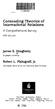 A 362352 Contending Theories of International Relations A Comprehensive Survey Fifth Edition James E. Dougherty St. Joseph's University Robert L. Pfaltzgraff, Jr. The Fletcher School of Law and Diplomacy,
POLI441: International Political Economy: International Trade
 POLI441: International Political Economy: International Trade Winter Semester 2016, Tuesdays and Thursdays 8:35 9:55 am ENGMD 279 Prof. Krzysztof J. Pelc Office: Leacock 521 E-mail: [email protected] Office
Course Description. Course Objectives. <> Sociology 710: Intermediate Social Theory Fall 2004 W 2:00-4:30 17 Newcomb Hall
 Sociology 710: Intermediate Social Theory Fall 2004 W 2:00-4:30 17 Newcomb Hall Professor Kevin Fox Gotham, Ph.D. Sociology: 220 Newcomb Hall Office Hours: M and F, 4-5:00 and by appointment. Phone:
Instructor: Clifton W. Sherrill Office: Kadena, Japan (Education Bldg. Rm. 220A)
 IR6652: Theory and Ideology in International Relations Term 4, 2015-16 14 March 15 May 2016 3 Credit Hours Location: Camp Humphreys, Education Center Meeting Times and Dates: 0900-1800: Apr. 9-10; Apr.
Introduction to International Relations
 Introduction to International Relations Ivan Savic Political Science S1601.002 Office Hrs: Tue & Thur. 4-6pm IAB 729 Summer 2004 Phone: (212) 961-1660 Tue. & Thur. 6:15-9:25pm Email: [email protected]
Why there is International Theory now
 International Theory (2009), 1:1, 1 14 & Cambridge University Press, 2009 doi:10.1017/s1752971909000062 Why there is International Theory now DUNCAN SNIDAL 1 * and ALEXANDER WENDT 2 * 1 Department of Political
Political Science 61 Introduction to International Relations Tufts University Fall Semester 2012
 Political Science 61 Introduction to International Relations Tufts University Fall Semester 2012 Professor Taliaferro Block D + Tues. and Thurs. 10:30-11:45 a.m. Packard Hall 112 and a Recitation (see
MARTHA FINNEMORE. CURRENT POSITION University Professor of Political Science and International Affairs George Washington University
 MARTHA FINNEMORE Department of Political Science and Elliott School of International Affairs The George Washington University Washington, DC 20052 (202) 994-8617 [email protected] http://home.gwu.edu/~finnemor/
INTERNATIONAL RELATIONS
 INTERNATIONAL RELATIONS ACADEMIC YEAR: DEGREE COURSE YEAR: 1º SEMESTER 2º SEMESTER CATEGORY: CORE COMPULSORY OPTIONAL NO. OF CREDITS (ECTS): 6 LANGUAGE: English TUTORIALS: FORMAT: PREREQUISITES: 1- SUBJECT
RUTGERS UNIVERSITY DEPARTMENT OF POLITICAL SCIENCE INTRODUCTION TO INTERNATIONAL RELATIONS
 RUTGERS UNIVERSITY DEPARTMENT OF POLITICAL SCIENCE INTRODUCTION TO INTERNATIONAL RELATIONS SYLLABUS - SPRING 2014 Course: 790:102:12 Instructor: Cristina Gherasimov Class Meetings: M/W 7:15-8:35 pm, FS-AUD
Research Papers in Political Science: 14 Points PROF. ALEXANDER B. DOWNES IAFF 3180/PSC 2990 OCTOBER 24, 2012
 Research Papers in Political Science: 14 Points PROF. ALEXANDER B. DOWNES IAFF 3180/PSC 2990 OCTOBER 24, 2012 1. Clear Statement of Question Readers get impatient if you don t tell them what you re doing
Department Political Science School Loyola Schools. Course No. PoS 53 Course Title Qualitative Methods in the Social Sciences No.
 Department Political Science School Course No. PoS 53 Course Title Qualitative Methods in the Social Sciences The course is an introduction to research techniques, methodology, and epistemology. It raises
It is useful, but not necessary, for students to have some background in economic principles and international relations.
 INTERNATIONAL POLITICAL ECONOMY, POLS 30260.01 Fall 2011 Class time: Mondays and Wednesdays, 1:30-2:45, Office Hours: Office Hours: Mondays and Wednesdays, 11.00 AM -12.00 PM, Tuesdays, 2.00-3.00 PM, and
The American school of IPE
 Review of International Political Economy 16:1 February 2009: 6 33 The American school of IPE Daniel Maliniak 1 and Michael J. Tierney 2 1 University of California San Diego, San Diego, CA, USA 2 College
Political Science 349/449: Political Science Research Methods
 Political Science 349/449: Political Science Research Methods Fall 2008 Kelly M. McMann Email Address: [email protected] Case Western Reserve University Phone Number: 216-368-5565 Department of Political
-------------------------------------------------------------------------------- Course Description Readings Course Requirements Research Paper
 Course Syllabus Political Science 301 American Government and Politics Winter 2011 Course Description Readings Course Requirements Research Paper Instructor: Richard Gelm, Ph.D University of La Verne Dept.
How To Read The Works Of Karl Marx And Other Modern Thinkers
 Social Theory Honors Section Sociology 475 Professor Cameron Macdonald T-Th 2:30-3:45 8135 Social Science Social Science 6112 Office Hours, Tuesdays, noon 2:00 COURSE DESCRIPTION In this course we will
Role theory in International Relations
 Role theory in International Relations Talk given at Tsinghua University, Beijing Department of International Relations #1 Outline 1. The theoretical argument 2. Role theory: between IR + Foreign Policy
Alexander Wendt, Social Theory of International Politics
 Alexander Wendt, Social Theory of International Politics, (Cambridge: Cambridge University Press, 1999), Chs 1 (partial), 3, 4, 6. (pp. 22-44, 92-190, 246-312) Chapter 1, beginning at page 22, A map of
POL 585: Graduate Seminar on International Political Economy. Prof. Helen V. Milner Robertson 431 258-0181 [email protected]
 POL 585: Graduate Seminar on International Political Economy Spring 2010 Monday 1:30-4:30. Prof. Helen V. Milner Robertson 431 258-0181 [email protected] This course is an advanced graduate colloquium
Modern Political Thought
 Professor Andrew Poe MW 10-11:20 in Webster 217 Office Hours: Wednesdays, 3-5PM in 202 Clark House Email: [email protected] Phone: 413.542.5459 Political Science 335 Modern Political Thought -Introduction-
Politics 554 International Security Studies. Princeton University Spring Semester, 2010 Thursdays, 1:30 4:15 p.m. 105 Bobst
 Politics 554 International Security Studies Princeton University Spring Semester, 2010 Thursdays, 1:30 4:15 p.m. 105 Bobst Instructor: Jacob N. Shapiro Office: 032 Corwin [email protected] Office Hours:
Kyle Haynes (Forthcoming, 2016) Diversionary Conflict: Demonizing Enemies or Demonstrating Competence?" Conflict Management & Peace Science
 Kyle Haynes Webster University Department of History, Politics, and IR St. Louis, MO 63119 [email protected] 434-987-1218 www.kyle-haynes.weebly.com EMPLOYMENT Webster University: St. Louis, MO
AP United States Government and Politics Miss Samuel Email: [email protected]
 Course Overview/Description AP United States Government and Politics Miss Samuel Email: [email protected] AP government and Politics is a semester long course that examines the formal and informal
INR4990/5065: The Causes of War. Instructor: Dr. Jacob Shively TR 11:00 12:15, 71/133
 INR4990/5065: The Causes of War Spring 2016 (Section 12306 & 12307) Instructor: Dr. Jacob Shively TR 11:00 12:15, 71/133 E-mail: [email protected] Office Phone: 850-474-3008 Office and Office Hours: Bldg
English School of International Relations Theory Archived Papers
 English School of International Relations Theory Archived Papers If you would like a copy of any of the following papers, please contact Dr Jason Ralph, School of Politics and International Studies, University
SCHOOL OF POLITICAL STUDIES
 1 SCHOOL OF POLITICAL STUDIES UNIVERSITY OF OTTAWA POL 3111 A INTERNATIONAL ORGANIZATIONS Spring 2010 Lecture: Monday 13:00-16:00 Room: LMX 219 Lecture: Wednesday 13:00-16:00 Instructor: Ivaylo Grouev
Yale University Department of Political Science. Syllabus THE PHILOSOPHY, HISTORY, AND SOCIOLOGY OF INTERNATIONAL RELATIONS (Seminar)
 Yale University Department of Political Science Syllabus THE PHILOSOPHY, HISTORY, AND SOCIOLOGY OF INTERNATIONAL RELATIONS (Seminar) Nuno P. Monteiro Office: Rosenkranz 226, Tuesdays 2:00 4:00 [email protected]
First Semester Compulsory Courses
 First Semester Compulsory Courses CODE TITLE UNITS POL 101 Introduction to Pol Sci. 3 POL 102 Nigerian Constitutional Development 3 SOC 111 Introduction to Sociology 4 PSY 100 Introduction to Psychology
Emilie Marie Hafner-Burton
 Emilie Marie Hafner-Burton Princeton University Woodrow Wilson School of Public and International Affairs Department of Politics Princeton, NJ 08544 USA (609) 258.5931 [email protected] http://www.princeton.edu/~ehafner/
Fall 2008 USP 584/684 NEGOTIATION IN THE PUBLIC SECTOR URB 270 - Mondays, 5:30-9:10 p.m.
 Fall 2008 USP 584/684 NEGOTIATION IN THE PUBLIC SECTOR URB 270 - Mondays, 5:30-9:10 p.m. Professor Connie Ozawa Urban Center 370R; x 5-5126; [email protected] Office Hours: Tuesdays, 11:00-1:00 p.m., or by
Syllabus for GOVT 006: Introduction to International Relations Summer 2013
 Syllabus for GOVT 006: Introduction to International Relations Summer 2013 Course Information Instructor Information Office Hours MTWRF Paul Musgrave 10:30 AM - 11 AM daily June 3 July 5 [email protected]
26:790:538 Global Environmental Issues
 26:790:538 Global Environmental Issues Professor: Gabriela Kütting Office: Hill Hall 725 Email: [email protected] Tuesdays 2.00 4.40 pm Office Hours: Tuesdays/Thursdays 11.30-12.30 or by arrangement
WHY STATES FOLLOW THE RULES: TOWARD A POSITIONAL THEORY OF ADHERENCE TO INTERNATIONAL LEGAL REGIMES
 WHY STATES FOLLOW THE RULES: TOWARD A POSITIONAL THEORY OF ADHERENCE TO INTERNATIONAL LEGAL REGIMES SARAH ELIZABETH KREPS* ANTHONY CLARK AREND** INTRODUCTION There is not and never will be a field theory
GUIDE TO WRITING YOUR RESEARCH PAPER Ashley Leeds Rice University
 GUIDE TO WRITING YOUR RESEARCH PAPER Ashley Leeds Rice University Here are some basic tips to help you in writing your research paper. The guide is divided into six sections covering distinct aspects of
SOCIOLOGY 523: QUALITATIVE METHODS
 SOCIOLOGY 523: QUALITATIVE METHODS Professor Jennifer Sherman Spring 2016 Wednesdays, 2:50-5:20pm, Wilson-Short 201 Email: [email protected] Office: 215 Wilson-Short Office Phone: 509-335-4163 Office
Unifying Epistemologies by Combining World, Description and Observer
 Unifying Epistemologies by Combining World, Description and Observer Stuart Umpleby Research Program in Social and Organizational Learning The George Washington University Washington, DC [email protected]
Cases, Numbers, Models: International Relations Research. Methods
 Cases, Numbers, Models: International Relations Research Methods edited by Detlef F. Sprinz and Yael Wolinsky REVISED, November 2002 2 Contents List of Tables 4 List of Graphs 5 1 Introduction: Methodology
Economic Bases of Power: The Study of Political Economy of National Security
 Course Time: Th 2:00-5:00pm Email: [email protected] Course Location: SED205 Office: Political Science 303 Office Hours: Tuesdays 3-5 Economic Bases of Power: The Study of Political Economy of National Security
Global Political Economy
 Global Political Economy American University School of International Service (SIS) SIS 589, Spring 2011, Tue 8:30-11:10 am (EQB 205) Prof. Matthias Matthijs E-mail: [email protected] Office: SIS 225
BAHAR LEVENTOĞLU. 294B Gross Hall Phone: (919) 660-4314 Department of Political Science Fax: (919) 660-4330
 BAHAR LEVENTOĞLU 294B Gross Hall Phone: (919) 660-4314 Department of Political Science Fax: (919) 660-4330 Duke University [email protected] Durham, NC 27708-0204 http://people.duke.edu/~bl38 Academic
The School of Policy, Government, and International Affairs (SPGIA) GOVT 322 002 CRN 75997 International Relations Theory. Overview.
 The School of Policy, Government, and International Affairs (SPGIA) GOVT 322 002 CRN 75997 International Relations Theory Fall 2014 Wednesday 7:20 pm 10:00 pm in Planetary Hall room 206 Instructor: Prof.
Instructor: Clifton W. Sherrill Office: Kadena, Japan (Education Bldg. Rm. 220A)
 IR6601: Research Methods in International Relations Term 3, 2015-2016: 4 January 6 March, 2016 3 Credit Hours Location: Kadena AB, Education Center Meeting Time: 1800-2100 Tuesday / Thursday Instructor:
Introduction to International Politics PLSC 212 Winter 2016
 Introduction to International Politics PLSC 212 Winter 2016 Professor: Nitya Singh Section/CRN: 23014 - PLSC 212 Email: [email protected] Class Timing: 12:30 1:45 Mon/Wed Office Hours: Mon/Wed 1:45
Political Science 108. Economics 118. Introduction to Political Economy
 Political Science 108. Economics 118. Introduction to Political Economy Prof. Alexandre Debs Harkness 327 Office Hours: M 11 1 [email protected] TA Jinhee Jo Harkness 315A Office Hours: Tue.
DEMOCRACY AND LIBERTY
 DEMOCRACY AND LIBERTY SAMPLE SYLLABUS YASCHA MOUNK Description: The citizens of democracies take pride in their countries, believing them to be beacons of liberty. In other parts of the world, activists,
POLSC653: INTERNATIONAL POLITICS OF MIDDLE EAST Kansas State University Fall 2015 T TH 9:30 10:45 am, Willard 115
 Dr. Sabri Ciftci Waters Hall 222 Phone: 785 532 3514 Email: [email protected] POLSC653: INTERNATIONAL POLITICS OF MIDDLE EAST Kansas State University Fall 2015 T TH 9:30 10:45 am, Willard 115 Office Hours:
Introduction to International Relations Fall 2011 46.121.216
 Introduction to International Relations Fall 2011 46.121.216 T/Th 9:30-10:45 AM Ike Sharpless Office Hours: by appointment (617) 913-4969 (cell) South Campus, Coburn 303 [email protected] Course Description:
OPERATIONS MANAGEMENT
 HARVARD UNIVERSITY JOHN F. KENNEDY SCHOOL OF GOVERNMENT Cambridge, Massachusetts 02138 OPERATIONS MANAGEMENT STM-301 SYLLABUS Spring 2008 M/W 1:10 p.m.--2:30 p.m. Room: RG-20 Course Objectives and Overview
INTERNATIONAL RELATIONS Pol 3835 sec. 2 Fall 2008 * 3 Credits Blegen Hall, Room 10 Tuesday, 6:20-8:50
 INTERNATIONAL RELATIONS Pol 3835 sec. 2 Fall 2008 * 3 Credits Blegen Hall, Room 10 Tuesday, 6:20-8:50 Instructor: TA: Mr. Isaac Kamola Mr. Denis Kennedy Email: [email protected] Email: [email protected]
PS 321 ~ Introduction to Political Economy
 PS 321 ~ Introduction to Political Economy Instructor: Dr. Geoff Kennedy Office: PLC 819 Phone: 541-346-8976 Email: [email protected] Course Description: This course introduces students to the study
Class on Hedley Bull. 1. Some general points about Bull s view
 Class on Hedley Bull 1. Some general points about Bull s view A central claim in Bull s argument is that anarchy understood as interaction between and among agents, whether individuals or states, in the
Double Master s Degree Program in International Relations between The University of Haifa and The University of Warsaw
 Double Master s Degree Program in International Relations between The University of Haifa and The University of Warsaw Beginning in October 2015, students at the University of Haifa will have an opportunity
Assistant Professor, Political Science, George Washington University, beginning August 2013.
 Yonatan Lupu Princeton University Robertson Hall, Room 447A Princeton, NJ 08544 Phone: (703) 725-6588 [email protected] http://dss.ucsd.edu/ ylupu/ Academic Positions Assistant Professor, Political Science,
Programme specification. SOAS, University of London
 Programme specification SOAS, University of London The following information forms the programme specification at SOAS, University of London. It gives definitive information relating to a programme of
Georgia Institute of Technology School of History, Technology, and Society HTS 1031 EUROPE SINCE THE RENAISSANCE
 Georgia Institute of Technology School of History, Technology, and Society HTS 1031 EUROPE SINCE THE RENAISSANCE Instructor: Prof. Nikolay Koposov Tuesdays and Thursdays 12:05 1:25 D.M. Smith 207 Office
PADM 596: Research Methods for Public Managers Spring 2016
 PADM 596: Research Methods for Public Managers Spring 2016 Instructor: Shane Day Time: Thursdays, 4:00pm - 6:30pm Location: Dane Smith Hall 134 Office: Social Sciences 3006 Phone: (505) 750-4884 Email:
CHAPTER 13: International Law, Norms, and Human Rights
 CHAPTER 13: International Law, Norms, and Human Rights MULTIPLE CHOICE 1. Why did the former Secretary General of the United Nations, Kofi Annan, state that the US invasion of Iraq in 2003 was illegal?
Political Science. 222 2014-2016 Haigazian University
 Political Science Coordinator: Maximilian Felsch, Ph.D. The Faculty of Social and Behavioral Sciences offers the Bachelor of Arts (B.A.) degree in Political Science. On completion of the degree in Political
MA in Sociology. Assessment Plan*
 MA in Sociology Assessment Plan* Submitted by The Graduate Assessment Committee: November, 2008 Sharon K. Araji, Chair Submitted to The Dean of the College of Liberal Arts and Sciences UC Denver * The
This page intentionally left blank
 This page intentionally left blank Democracy and Coercive Diplomacy Kenneth Schultz explores the effects of democratic politics on the use and success of coercive diplomacy. He argues that open political
Email: [email protected] [email protected]
 ,, 136, 176 71 Email: [email protected] [email protected],,,, 2012-., Department of Politics, The University of Sheffield, UK, 2013-. Royal Society of Edinburgh Visiting Research Fellow, The Handa Centre
INTL 4770: Domestic Politics and International Relations (Special Topics in IR)
 INTL 4770: Domestic Politics and International Relations (Special Topics in IR) the public policy, foreign or domestic, in which a man believes, is the logical extension of the philosophy which governs