
ASSOCIATION NEWS 25 ISTA Introduces Seed Analyst Training Programme. RULES DEVELOPMENT 39 ISTA Method Validation
|
|
|
- Curtis Wilkinson
- 10 years ago
- Views:
Transcription
1 Seed Testing INTERNATIONAL ISTA News Bulletin No. 133 April The 28 th ISTA Congress 2007, Iguaçu Falls, Brazil COVER ARTICLE 5 The final Congress Programme 14 Overview of documents related to the current Situation and the future Development of the International Seed Testing Association (ISTA) 18 Project to amalgamate the ISTA Rules and Annexes nears completion 19 Revision of Chapter 17 Background information ASSOCIATION NEWS 25 ISTA Introduces Seed Analyst Training Programme RULES DEVELOPMENT 39 ISTA Method Validation ACCREDITATION years of ISTA Accreditation Programme

2 Seed Testing INTERNATIONAL EDITORIAL Dear Reader, Seed Testing INTERNATIONAL No. 133, April 2007 EDITOR-IN-CHIEF Dr. Michael Muschick CO-EDITOR Ms. Patricia Raubo ADMINISTRATION Dr. Bettina Kahlert (Technical Committees) Ms. Martina Rösch (Accreditation) ADDRESS International Seed Testing Association (ISTA) ISTA Secretariat Zürichstrasse 50 P.O. Box Bassersdorf CH-Switzerland Phone: Fax: Internet: NEXT ISSUE Deadline for article submission: Juli 15, 2007 Publication date, No. 134: October 2007 No of copies: 2500 OTHER ISTA PUBLICATIONS For information and orders of other ISTA Publications, please contact the ISTA Secretariat at the above address, or visit our website at I think it will not surprise you, that the cover article of this issue again is focusing on the 28 th ISTA Congress in Iguaçu Falls, Brazil. Please find herein a final overview of all documents that will be dealt with at the Ordinary Meeting on May 11, 2007, the abstracts of the presentations to be given by the lead speakers at the Seed Symposium, as well as a number of important documents itself. This will allow you to transparently follow all the important issues that will be decided at the Congress, even if you do not have the possibility to come to Brazil. However, not coming to Brazil will mean that you are missing an outstanding event. Already today we know that nearly 1000 seed analysts and scientists from around 40 different countries of the world will meet at this important gathering to discuss about developments in seed science and technology and make important decisions for the further development of our Association and on modifications to the ISTA International Rules for Seed Testing. Training and education was, is and always will be one of the most important tasks for mankind and not only for seed analysts. In this issue of Seed Testing International you will find a first set of information on a new business activity of the Association the ISTA Seed Analyst Training Programme. This programme is focusing on the basic and advanced education of persons determined to become seed analysts and should be another tool towards uniformity in seed testing, harmonising the performance of seed analysts world wide. More than this you will also find an overview of ISTA training workshops offered in different parts of the world, where you can enlarge your technical skills and meet interesting seed analysts from other countries or even other parts of the world. As usual we try to give you a more detailed insight view on our member countries. This issue provides you with interesting information on Ghana and Thailand, describing the situation of the seed industry in these countries. We hope that we can awake your interest for these countries and maybe not only from the aspect of seed. In closing allow me to come back to the 28 th ISTA Congress. With the Congress another triennium ends and with this also a new Executive Committee will be elected during the Ordinary Meeting held at the Congress. Following the ISTA Constitution, the current first Vice-President of ISTA takes over presidency then and becomes ISTA President for the upcoming three year period. For the first time in the history of ISTA we will have a female President and we wholeheartedly welcome Dr. Katalin Ertsey from Hungary as new President, and wish her all the best for her presidency. On the other hand, this is also the right time to say thank to our outgoing President, Pieter Oosterveld, who has directed the affairs of the Association in an excellent way over the last three years and has brought ISTA forward. Pieter has been very active and vigorous in so many different areas, but the Memorandum of Understanding with FAO, enhancing the reputation of our Association tremendously, was clearly one of the highlights during his presidency. This issue is publishing the last President s Report of Pieter and a first interview with our incoming President Katalin. I finally wish you an interesting reading of this issue of Seed Testing International and hope to welcome you personally at the 28 th ISTA Congress in Iguaçu Falls, Brazil. Yours sincerely, Michael Muschick

3 CONTENT Interview with incoming President 5 Find all relevant documents and the final programme for the ISTA Congress 2007 in Iguaçu Falls, Brazil 25 The ISTA Seed Analyst Training Programme 40 Conductivity testing for oilseed rape seeds 61 Workshop Reports PRESIDENT S REPORT 2 (My last) President s Report 3 Interview with incoming President COVER ARTICLE 5 The final Congress Programme 14 Overview of documents related to the current Situation and the future Development of the International Seed Testing Association (ISTA) 15 Abstracts of presentations to be given by lead speakers at the 28 th ISTA Seed Symposium 17 Draft ISTA Strategy 18 Project to amalgamate the ISTA Rules and Annexes nears completion 19 Revision of Chapter 17 Background information 23 Draft Rules of Order for the Ordinary Meeting ASSOCIATION NEWS 25 ISTA Introduces Seed Analyst Training Programme 27 Seed Industry Situation in Thailand 28 The Ghana Seed Industrie 29 In Memory of Dr. Friedrich Keding 30 Tragic Death of Deon Erdey RULES DEVELOPMENT 33 Report on Tropical Species Method Validation 35 Rape seed validation study 39 ISTA Method Validation 40 Conductivity testing for oilseed rape seeds 42 Five Year Review of Official Methods Introduced in 2001 to Chapter 7, ISTA International Rules for Seed Testing ACCREDITATION years of ISTA Accreditation Programme 50 News from the ISTA Proficiency Test Committee th accredited laboratory of ISTA SEED SCIENCE 53 Seed size, shape and colour as computer imaging markers of germination quality TRAINING AND EDUCATION 58 Workshop Announcements 61 ISTA Workshop Reports 65 Calendar Seed Testing International No. 133 April

4 PRESIDENT S REPORT (My last) President s Report By Pieter Oosterveld, ISTA President ing performed by governmental institutes could be the basis for the issuance of ISTA Certificates. The seed industry expressed the wish not only to be acknowledged by ISTA, but also to get a better position in the structure of the Association. ISTA recognised that laboratories of seed companies had developed and achieved a high level of technical competence. However, the technical competence was not the key item of the discussion. Moreover the word independency formed the threshold for decisions. Nowadays, the results of the discussion of that period are clear. ISTA successfully found a good balance between government and seed industry. The input of the technicians of seed company laboratories is significant, the accreditation of seed company laboratories is possible and a success and all accredited laboratories are authorised to issuing ISTA Certificates. Equal in quality and qualification. The role of ISTA for governments as well as for the global seed industry is still an important one. Seed testing laboratories worldwide can rely on ISTA methods, laboratories do not need to invest in their own methodology. Combined in ISTA, our work is much more efficient. Communication about quality between account managers of seed companies is easy going, just referring to the fact that the seed has been tested according to ISTA Rules, simply understandable for everybody. ISTA was and is recognised by international organisations such as FAO, ISF (International Seed Federation), OECD, UPOV and many others. Good relations with these organisations remain very important for the further development of our Association. ISTA is more international than it has ever been. Many new countries joined the Association recently and many more showed their interest in doing so. Today 76 countries are member of ISTA. ISTA has 176 member laboratories and 102 of these laboratories are accredited by ISTA. ISTA started making rules and publi- In 1979 NAK, the Dutch General Inspection for agricultural seeds and seed potatoes became member of ISTA. For NAK as well as for me personally this was a historical event. Before that time, the governmental institute RPVZ at Wageningen performed the seed testing of all the seed lots to be exported from the Netherlands for which an ISTA Certificate was required. By decision of the Minister, a reorganisation of RPVZ took place including the transfer of the routine testing of agricultural seeds to NAK. My first ISTA Congress was the one held 1989 in Edinburgh, the capital of Scotland. Already the first congress touched me. I met many people with a real passion and dedication for seeds and seed testing. Uniformity in seed testing was not just a slogan, but reality, as it is today. During the congress in Buenos Aires in 1992, some ISTA members invited me to be candidate for the Executive Committee. I was elected as member-at-large and a fascinating period of my life started. As a member of the Executive Committee I participated in a number of interesting and quite tough discussions. In the mid nineties of the past century, ISTA struggled with its position and image. ISTA was founded by governmental institutes for seed testing. The majority of the ISTA membership felt that only seed testcations. These activities still are the core business of the Association. As a member of the Executive Committee, I personally focussed mainly on the general policy of the Association. This for the benefit of the overall Association and to facilitate the work of the Technical Committees and the development of ISTA International Rules for Seed Testing. I am proud of the Association for which so many people work on a voluntary basis, but in the meantime in a very professional way. I just want to summarise ISTA s successes: the ISTA International Rules for Seed Testing are famous and widely applied, the ISTA Certificate is worldwide accepted, the accreditation programme is a great success, the proficiency testing programme is unique, the scientific journal Seed Science and Technology is much appreciated the magazine Seed Testing International demonstrates a professional Association the ISTA workshops are famous I thank the members of the Executive Committee for all the work and enthusiasm. We had long and intensive meetings. We made clear decisions and we agreed upon proposals to be presented to the Ordinary Meeting. In this report, I will not go into detail on the proposals that have been sent out to the ISTA membership for discussion and decision during the upcoming Ordinary Meeting in Brazil, May However, once again I thank the colleagues in the Executive Committee for the tremendous work and the pleasant and friendly way of co-operation. The work of the Secretariat has become more and more important over the past decades. ISTA has improved the decision making process by organising Annual Meetings. The meetings need to be well documented. Volunteers that actively contribute to ISTA activities work at their home institutes more and more under time pressure. Therefore, support of the ISTA 2 Seed Testing International No. 133 April 2007

5 PRESIDENT S REPORT Interview Interview Secretariat is more than welcome and needed. ISTA members, and also nonmembers, have a lot of questions to be answered. The accreditation and proficiency testing programme need a professional organisation. And not to forget the representation at international organisations which is very important for us. During my time as President of the Association, I closely observed the work of the Secretariat and I am really impressed about all the work that is done in a professional and dedicated way. I thank the ISTA staff, under the leadership of the Secretary General Michael Muschick, for this. I know that ISTA members prefer not to increase membership fees. However, when ISTA wants this Association to continue its excellent work for the sake of governments and seed industry, we must realise that a professional staff is required. And such good things do cost money. A good alternative for increasing fees is to extend ISTA membership, countries, laboratories and persons. We all can contribute to that by telling everybody what ISTA stands for: Uniformity in seed testing, worldwide more than ever! In Brazil, Mrs. Dr. Katalin Ertsey will take over the presidency of ISTA for the next triennium. Katalin has a long time experience in seed testing and in ISTA as well. Since 1992 she is member of the Executive Committee and active as member of a number of Technical Committees. I am confident that she will lead the Association in a dedicated and professional way. I thank the ISTA members for the confidence I received as President of ISTA. It has been a real pleasure for me to serve this Association. I hope to meet you all in Brazil. Thank you all for the kind co-operation and friendship! Your President, Pieter Oosterveld Dr. Katalin Ertsey will be the 23 rd President of the International Seed Testing Association when she takes over the ISTA presidency from Pieter Oosterveld at the upcoming ISTA Congress in Brazil this May. For that reason although she is not at all an unfamiliar figure in the Association s circle we would like to introduce our next President, her goals and aspirations. We will talk about her objectives and plans for the upcoming triennium. You are working actively in the seed sector since 30 years. Did you choose this profession consciously or it came by chance? The correct answer for this question is; both. After graduating from the University of Horticulture in Budapest one of the oldest universities with horticultural faculty in Europe I was looking for a job which is specified enough. It was important for me that the location would be relatively close by and had an effective importance in Hungarian agriculture. So I engaged myself in work in the National Seed Inspection. At the beginning I worked as a seed analyst in the purity lab. After I had been working in the laboratory for two years I decided to leave the Institution for another possibility with higher latitude. At that time as fate would have it unfortunately, my boss A. Barthodeisky, Chair of the ISTA Flower Seed Committee and member of the ISTA Executive Committee suffered a heart attack. So I had to take over his responsibilities at the ISTA Germination Workshop to be held in Wageningen. It was a significant experience for me and I immediately saw seed testing becoming an absolutely exciting aspect for me. At the ISTA Workshop I met experts such as Bernard Schmidt from Germany or at the time the young Hans Arne Jensen etc. With this new experience and after a very impressive study tour in Enkhuizen I realised new opportunities lies in seed technology and research. How did your career continue after this period? The next 8 10 years was a time of hard work for me and I gained vast experience. I became the leader of the central Germination Laboratory. There were more than seed samples yearly. Among the samples there were all kind of crops from cereals to flower as well as forest seeds too. In the 1980 s Hungary was the largest hybrid seed corn producer in Europe (the production area of hybrid seed corn was ha). So we introduced the cold test as a compulsory vigour test in our national system. Due to this work I met two excellent representatives of seed science from the previous generation such as Maria Kietreiber and Franz Fiala from Vienna and also started my correspondence with John Hampton. I did a post-graduation on Seed Production and Technology and I visited a lot of countries in Europe to study their seed testing systems/procedures. During this period my daughter was born and my son later. When did your connection with ISTA become closer? In 1989 there were two important events in my life. I fulfilled the requirements of a World Bank project and got a scholarship to Iowa State University, US for two months. In the frame of this programme I got acquainted with the work of the Iowa State University s Seed Centre. There I discovered new technologies and the pos- Seed Testing International No. 133 April

6 PRESIDENT S REPORT Interview sibility of computerization in seed testing including the use of informatics in seed schemes. I gained much knowledge about maize and soy been seed production and its testing procedures. In the same year I took part in my first ISTA Congress, which was held in Edinburgh. In the next year 1990 I presented my first lecture at an ISTA Workshop in No vosibirsk (the former Soviet Union). And in Scotland you already participated as a designated voting member of Hungary. Is this correct? That is right. In the meantime I became the head of the Seed Testing Department of our Institution. I was responsible for all seed sampling and testing activities of the ISTA Laboratory and the nine National Seed Testing Laboratories working in Hungary as well. Tell us about your role and activities as a member in the Executive Committee of ISTA? I am a member of the ISTA Executive Committee since the 23 rd Congress which was held in Buenos Aires in Whoever follows up the developments of ISTA in the last 15 years will know that a new period has started then for our Association. The need of unavoidable changes occurred. Generational changes came to pass. At this congress the need of introducing a quality assurance system raised up at first on official level. Moreover the question of harmonization between state and private labs had occurred too. One other significant arose How the Association established in 1924 would sustain in the globalization process? In case of the above mentioned question the Executive Committee newly elected at that congress took the first steps. Among the members of the new Executive Committee were the two reformer Presidents Norbert Leist and Pieter Oosterveld. All of us decided that the new trend had to be the line of the development. We have committed ourselves to progress. I was proud to be member of this kind of progressive team. The results had certified our efforts. We have developed our accreditation system. Nowadays this system is an existing valuable model. Furthermore there are 100 laboratories that work according to this system today. After a very serious preparatory work we have let to introduce the company labs accredited according to the ISTA meth- ods. In these days the numbers of these labs are increasing permanently. With the introducing of the new Chapter 8 into the ISTA Rules we took the first steps because of our seed testing system and our most valuable product the ISTA Rules could involve the new results of scientific and technological researches. According to your opinion what is your most important result during in the last 15 years? I have not only personal results. All achieved goals are based on teamwork in ISTA and at home as well. But of course there are some results which make me proud. It was a very busy time for me not only in my ISTA life but in my home job as well. I graduated in 1985 and in 1995 I completed my PhD. In 1994 I took over the responsibility on the Hungarian Seed Certification Scheme including field inspection, post control and OECD relations. It was the preparation time for my country to enter the EU. During my leadership the sector prepared to the EU joining I was delegated more times as an expert into the Hungarian Delegation to Brussels. As an expert I worked in the legal harmonization of professional questions. In 2004 when Hungary was jointed to the EU we I mean Hungary organized the 27 th ISTA Congress in Budapest with a very high number of participants. This congress will be important in the history of ISTA because of the members accepted here the full member participation of private/company laboratories in our Association. My colleagues organized three times (in the years 1997, 2003 and 2004.) successful workshops in Budapest too. I hope that in my new role I did support the work of the Executive Committee with my knowledge and experience. What goals do you want to achieve during your presidency? As I mentioned earlier we live in a reformation period nowadays. Most of its element is over but there are some unfinished questions. First I would like to settle these open processes. These topics are the following: Modernizing the presidency in shortening the number of officers. Simplification of the use of the different ISTA Certificates. Better coordination of Technical Committees. Finding those motivation tools to help raising the participation in our work. Help to follow that process that started with Chapter 8. Due to the new structure the ISTA Rules are able to incorporate the newest results of the seed science and methodology. Realising the previous initiative in accordance to yearly scientific meetings. It would be useful that not only in the year of a Congress colleagues would be discussing appearing scientific questions; continuity would be very desireable. Increasing our activity both in the Central African and the Asian areas. I hope I will be able to support all this work with my experiences. To achieve these goals you will need a lot of energy! As I know your number of tasks at home are increasing too. Yes you are right but as I have mentioned earlier I can work only in teams. I have excellent colleagues whom I can share my tasks. During the last years the ISTA Secretariat has worked on a very high level under the leadership of the ISTA Secretary General Michael Muschick, who is pre paring his work very well. All Executive Committee members have respective professional calling. So we can share the tasks. It is true that my present job at home is wider than before. In 2006 I became an EOQ Quality Manager and Auditor (European Organization for Quality) too. Nowadays in the newly organized Hungarian Central Agricultural Office I am the head of the Directorate of Plant Production and Horticulture. Our tasks are the following; the Variety Registration including DUS and VCU tests, the Certification and Marketing Control of Seed and Reproductive Propagating Material. We are responsible for the UPOV, CPVO, OECD, ISTA and EU relations too. The team of the Directorate is highly educated and experienced. Of course everybody has its own responsibility. I have some free energy as well as my children are grown up. My daughter who follows my profession is assistant at the university and has her own family. My son will pass the university in the next semester and my husband supports me as he did it before all the time. So I think I will be strong enough to achieve my goals and I hope that my renewable resources will remain really renewable in the future. Thank you. 4 Seed Testing International No. 133 April 2007

7 COVER ARTICLE May 5 11, 2007 Iguassu Falls, Brazil Seed Testing International No. 133 April

8 COVER ARTICLE Cover Article SATURDAY, MAY 5, 2007 Technical Committee Meetings (Day 1) Meeting Room 07:30 21:00 Registration at Rafain Palace Hotel 08:00-09:00 Bulking and Sampling Committee Meeting Iguaçu I 09:00-10:00 Flower Seed Committee Meeting Iguaçu II 10:00-10:30 Coffee Break 10:30-11:30 Forest Tree and Shrub Seed Committee Meeting Itanhegá I 10:30-11:30 Advanced Technologies Committee Meeting Itaguá I 11:30-12:30 Germination Committee Meeting Iguaçu I 12:30-13:30 Lunch 13:30 14:30 Moisture Committee Meeting Iguaçu II 14:30 15:30 Nomenclature Committee Meeting Itaguá I 15:30 16:00 Coffee Break 16:00 17:00 Proficiency Test Committee Meeting Iguaçu I SUNDAY, MAY 6, 2007 Technical Committee Meetings (Day 2) Meeting Room 07:30 21:00 Registration at Rafain Palace Hotel 08:00-09:00 Purity Committee Meeting Iguaçu I 09:00 10:00 Seed Health Committee Meeting Iguaçu II 10:00-10:20 Coffee Break 10:20-11:10 Statistics Committee Meeting Itaguá I 11:10 12:10 Seed Storage Committee Meeting Iguaçu I 12:10 13:10 Lunch 13:10 14:10 Tetrazolium Committee Meeting Iguaçu II 14:10 15:10 Seed Vigour Committee Meeting Itaguá I 15:10 15:30 Coffee Break 15:30 16:30 Variety Committee Meeting Iguaçu I 16:30 17:30 GMO Task Force Meeting Iguaçu II 18:30 20:00 Opening Ceremony Opening address by the President of ISTA, Ir. Pieter Oosterveld and the Secretary General of ISTA, Dr. Michael Muschick Opening address by the President ABRATES, Dr. Silmar Peske Officiation of opening of the Congress by the Ministry of Agriculture of Brazil Presentation of the global seed industry by the Secretary General of ISF, Dr. Bernard Le Buanec Expocenter 20:00 Welcome Cocktail 6 Seed Testing International No. 133 April 2007

9 COVER ARTICLE Cover Article MONDAY, MAY 7, 2007 Seed Symposium (Day 1) 07:00 21:00 Registration at Rafain Palace Hotel 08:00 08:20 Welcome and Presentation of ISTA by the President of ISTA, Ir. Pieter Oosterveld 08:20 08:30 Opening Seed Symposium by the ISTA Seed Symposium Convenor, Dr. Alison Powell 08:30 10:00 SESSION 1 DIVERSITY WITHIN AND AMONG SEED LOTS AND SPECIES Chair and lead speaker: Michael Kruse, University of Hohenheim, Stuttgart, Germany Meeting Room Expocenter (ALL DAY) A Bayesian approach for adventitious presence (AP) semiquantitative testing in conventional seed lots by Jean Louis Laffont, and Kirk Remund, Pioneer Génétique, Aussonne, France Physiological quality evaluation of annual ryegrass seeds from the soil seed bank by Ana Laura Pereira Amato, Manoel de Souza Maia, Leandro Sebastião Caetano, Silvia Bristotti Simeoni and Leandro de Conto, Universidade Federal de Pelotas, Pelotas, Brazil The impact of provenance, season and seed differences on the seed longevity of nine Australian native species by Jitka Kochanek, Kathryn J. Steadman, Robin J. Probert and Steve W. Adkins; University of Queensland, Brisbane, Australia 10:00-10:30 Coffee Break 10:30 11:30 SESSION 1 continuation Oil content a factor in seed moisture testing? by Harry Nijënstein, Innoseeds BV, Vlijmen, The Netherlands Removal of green seeded soybean from seed lots by processing by Jose Franca-Neto, Francisco Krzyzanowski, Patricia Brumatti, Gilda Padua & Costa Nilton, Embrapa Soybean, Londrina, Brazil Testing moisture content of nut-enclosed tropical seeds by Joseph Ahenda, KEPHIS-NSQCS, Nakuru, Kenya 11:30 12:30 POSTER SESSION 1 12:30 13:30 Lunch Seed Testing International No. 133 April

10 COVER ARTICLE Cover Article MONDAY, MAY 7, 2007 Seed Symposium (Day 1) 13:30 15:00 SESSION 2 PROBLEMS ASSOCIATED WITH THE DOMESTICATION AND USE OF NON-CROP SPECIES Chair and lead speaker: Mirian Eira, Embrapa, Brasilia, Brazil Meeting Room EXPOCENTER (ALL DAY) Desiccation tolerance and germination behaviour of nikau (Rhopalostylis sapida Wendl. et Drude) an endemic New Zealand palm by Craig McGill, Heather Outred, Chris Wood, Kay Kitchen & David Fountain, Institute of Natural Resources, PN433, Palmerston North, New Zeeland Development of dormancy breaking treatments to enable germination testing of seeds of medicinal plants grown in Iran by Mohammad Khajeh-Hosseini, L. Tabrizi, G. Aziz & M. Jahan, University of Ferdowsi, Mashhad, Iran Seed longevity of Hosta sieboldiana and H. albomarginata by Kojiri Suzuki, Tokyo University of Agriculture, Tokyo, Japan 15:00 15:30 Coffee Break 15:30 16:30 SESSION 2 continuation Pattern of radiographic images of Ginko biloba (L.) seeds by Adriana R. Salinas, Roque Mario Craviotto, Carina del Valle Gallo, Sabina Andrea Feerrari & Miriam Raquel Arango, Faculty of Agricultural Sciences, Zavall, Argentina Standardization of seed testing procedures in four medicinal plants by Kota Meena Kumari, Rohini, R. Ankaiah, Vilas A. Tonapi & K. Rajeswari, ANGRAU, Andhra Pradesh, India 16:30 18:00 SESSION 3 DIVERSITY IN CONTAMINATING ORGANISMS Chair and lead speaker: Gary Harman, Cornell University, Geneva NY, United States Development of immunochemical and PCR Methods for qualitative detection of Tilletia species in organic seeds by Thomas Kellerer, Monika Sedlmeier, Frank Rabenstein and Berta Killermann, Bayerische Landesanstalt für Landwirtschaft, Freising, Germany Inoculum thresholds for Dreschlera in organic barley and oat seed by Guro Brodal & Birgitte Henriksen, Norwegian Institute for Agricultural and Environmental Research, Ås, Norway Soft electron treatment for the management of pulse beetle, Callosobruchus maculates F. and its effect on seed DNA and germination of Adzuki bean, Vigna angularis by Venkatarami P. Reddy, Setsuko Todoriki, Akihiro Miyanoshita, Taro Imamura and Toru Hayashi, Indian Institute of Horticultural Research, Bangalore, India 8 Seed Testing International No. 133 April 2007

11 COVER ARTICLE Cover Article TUESDAY, MAY 8, 2007 Seed Symposium (Day 2) 08:00 08:30 Presentation about the Brazilian Seed Industry by the Executive Director of COODETEC, Dr. Ivo Marcos 08:30 09:30 SESSION 3 continuation Healthy and vigorous seeds for sustainable farming by Steven P.C. Groot, Ruud W. van den Bulk, W. Joost van den Burg, Henk Jalink & Jan M. van der Wolf, Plant Research International, Wageningen, The Netherlands Meeting Room EXPOCENTER (ALL DAY) Potential of Bacillus amyloliquefaciens for control of seed-borne pathogens on yellow cosmos and French marigold by Wen-Shi Wu, Y. L. Li and H. C. Wu, Dept. of Horticulture, Taipei, ROC, Taiwan Effect of fungicide seed treatments on germination and vigour of maize seed during storage by Veloshinie V. Govender, Delphin D.S. Kandolo, Terry T.A.S. Aveling and Quenton Q. Kritzinger, University of Pretoria, Pretoria, South Africa 09:30 10:00 SESSION 4 SEED DEVELOPMENT, DORMANCY AND GERMINATION: PHYSIOLOGY AND METHODS (ISSS collaborative session) Chair and lead speaker: Roberto Benech-Arnold, University of Buenos Aires, Buenos Aires, Argentina 10:00 10:30 Coffee Break 10:30 12:30 SESSION 4 continuation The awakening of the quiescent seed during germination as revealed by proteomics by Julie Catusse, Juliane Meinhard, Claudette Job, Uwe Fischer & Dominique Job, CNRS/Bayer CropScience Joint Laboratory, Lyon, France Physiological quality assessment using biochemical tests involving biotinylated proteins by Marie-Hélène Wagner, Claudette Job, Sylvie Ducournau, Marie-Claire Gatineau & Dominique Job, GEVES-SNES, Beaucouzé Cedex, France Genomic regions associated to rice seed germination and vigour by Gaspar Malone, Silmar T. Peske, Paulo Dejalma Zimmer, Guilherme Fiss and Patricia Vinholes, Laboratorio de Biosementes, Pelotas, Brazil Dormancy breaking improvement for cereal seed germination testing by Sylvie Ducournau, Benoit Mériaux, Günther Müller, Philippe Garreau & Joël Léchappé, GEVES-SNES, Beaucouzé Cedex, France Screening for physical dormancy in Millennium Seed Bank Project collections by Natasha S. Ali, Darren P.M. McCabe, Katie Lowe & Robin J. Probert, Seed Conservation Department, West Sussex, United Kingdom Seedling emergence of tucumã (Astrocaryum aculeatum G. Meyer-Arecaceae) as a function of moisture content of the seeds and heat pretreatment by Patrícia Nazário and Sidney Alberto do Nascimento Ferreira, Instituto Nacional de Pesquisas da Amazônia, Manaus/AM, Brazil 12:30 13:30 Lunch Seed Testing International No. 133 April

12 COVER ARTICLE Cover Article TUESDAY, MAY 8, 2007 Seed Symposium (Day 2) 13:30 15:00 SESSION 5 VIGOUR AND INVIGORATION Chair and lead speaker: Kent Bradford, Seed Biotechnology Center, Davis CA, United States Meeting Room EXPOCENTER (ALL DAY) Controlled deterioration test predicts vigour and field emergence in pepper seed lots by Hulya Ilbi, Suleyman Kavak & Benian Eser, Ege University, Izmir, Turkey A trait-led investigation of seed vigour using natural genetic variation in Brassica oleracea by William Finch-Savage, Katharine Dent & Guy Barker, Warwick HRI, Warwick, United Kingdom Length of the lag period of germination and metabolic repair explain vigour differences in seed lots of maize (Zea mays) by Stan Matthews and Mohammad Khajeh-Hosseini, University of Aberdeen, Aberdeen, United Kingdom 15:00 15:30 Coffee Break 15:30 16:30 SESSION 5 continuation Conductivity testing of Brassica seed lots: does seed moisture content affect results? by Conrad Leeks, Bruce McKenzie and John Hampton, Lincoln University, Canterbury, New Zealand Radish seed vigour and plant field performance by Julio Marcos-Filho and Ana Lucia Pereira Kikuti, USP/ESALQ, Piracicaba/SP, Brazil Mean germination time of seed lots of pepper (Capsicum annuum L) predicts size and uniformity of seedlings in germination tests and transplant modules by Ibrahim Demir, Sýtký Ermis and Kazým Mavi, University of Ankara, Ankara, Turkey 16:30 17:30 POSTER SESSION 2 10 Seed Testing International No. 133 April 2007

13 COVER ARTICLE Cover Article WEDNESDAY, MAY 9, 2007 Seed Symposium (Day 3) 08:30 10:00 SESSION 6 SEED STORAGE AND GENETIC CONSERVATION Chair and lead speaker: Hugh W. Pritchard, Seed Conservation Department, Royal Botanic Gardens Kew, United Kingdom Meeting Room EXPOCENTER (ALL DAY) The impact of maternal vegetative stress on seed longevity by Jitka Kochanek, Kathryn J. Steadman, Robin J. Probert and Steve W. Adkins, University of Queensland, Brisbane, Australia Desiccation and low temperature sensitivity in seeds of Garcinia gummi-gutta, a tropical dormant recalcitrant species by Geeta Pandey and Arun A.N. Kumar, Institute of Wood Science and Technology, Bangalore, India Desiccation-sensitive seeds and possibilities for seed storage of a tropical tree species from the Amazon by Yêda M.B.C. Arruda & Isolde D.K. Ferraz, Instituto Nacional de Pesquisas da Amazônia, Manaus, Brazil 10:00 10:30 Coffee Break 10:30 11:30 SESSION 6 continuation Thermal and moisture content effects on storability and seed dormancy releasing of Brachiaria brizantha (Hochst. ex A. Rich.) Stapf by Francisco Nahum Cavalcante Filho & Roberto Usberti, Plant Protection Agency, Campinas, Brazil Evaluating maize seed deterioration and longevity during storage under various relative humidity conditions at simulated tropical storage temperature by Isaac Oludayo Daniel, University of Agriculture, Abeokuta, Nigeria Stationary drying of soybean seeds using drying air with variations in relative humidity by Alexandre Levien, Leopoldo Baudet & Silmar T. Peske, UFPEL, Pelotas, Brazil 11:30 12:00 Symposium Conclusion 12:00 13:00 Lunch 13:00 13:30 Editorial Board Meeting (Seed Science and Technology) 13:30 14:00 Audit Programme Session 14:00 15:00 Ordinary Meeting Preparation Strategy Document 08/2007/OM Draft ISTA Strategy 15:00 15:30 Coffee break 15:30 18:00 Rules Committee Session (Rules Proposals 2007 discussion) Document 05/2007/OM Proposed Changes to the ISTA International Rules for Seed Testing Document 05A/2007/OM Proposed Changes to the ISTA List of Stabilized Plant Names Document 06/2007/OM Method Validation Reports on Proposed Changes to the ISTA International Rules for Seed Testing 19:30 OFFICIAL DINNER Seed Testing International No. 133 April

14 COVER ARTICLE Cover Article THURSDAY, MAY 10, 2007 Technical Committee Presentations Meeting Room 07:30 18:00 Registration at Rafain Palace Hotel 08:30 08:45 Opening Technical Committee Presentations EXPOCENTER 08:45 09:15 Bulking and Sampling Committee Presentation (ALL DAY) 09:15 09:45 Purity Committee Presentation 09:45 10:15 Germination Committee Presentation 10:15 10:45 Coffee Break 10:45 11:15 Tetrazolium Committee Presentation 11:15 11:45 Vigour Committee Presentation 11:45 12:15 Moisture Committee Presentation 12:15 12:30 Editorial Board Presentation 12:30 13:30 Lunch 13:30 14:00 Statistics Committee Presentation 14:00 14:30 Seed Health Committee Presentation 14:30 15:00 Proficiency Test Committee Presentation 15:00 15:30 Variety Committee Presentation 15:30 16:00 Coffee Break 16:00 17:00 GMO Task Force Presentation 17:00 17:30 Flower Seed Committee Presentation 17:30 18:00 Forest Tree and Shrub Seed Committee Presentation 18:00 18:15 Nomenclature Committee Presentation 18:15 18:45 Seed Storage Committee Presentation 18:45 19:00 Advanced Technologies Committee Presentation 12 Seed Testing International No. 133 April 2007

15 COVER ARTICLE Cover Article FRIDAY, MAY 11, 2007 Ordinary Meeting 08:30 10:00 1. Call to order Document 10/2007/OM Draft Rules of Order for the Ordinary Meeting Meeting Room EXPOCENTER (ALL DAY) 2. President s address 3. Roll call of Designated Members entitled to vote 4. Reading and acceptance of Minutes Document 02/2007/OM Draft Minutes of the Ordinary Meeting Report of the Executive Committee Document 03/2007/OM Activity Reports 2006 of all ISTA Bodies (page 4 7) 6. Report of the Secretary General Document 03/2007/OM Activity Reports 2006 of all ISTA Bodies (page 8 11 and 20 34) 10:00 10:30 Coffee Break 10:30 12:30 7. Election of Officers and Members-at-large of the Executive Committee 8. Fixation of Annual Subscriptions Document 04/2007/OM Proposal for the Membership Fees :30 13:30 Lunch 13:30 15:00 9. Constitution changes Document 07/2007/OM Proposed Changes to the ISTA Constitution 10. Consideration and Adoption of the proposed Rules Changes 2007 Document 05/2007/OM Proposed Changes to the ISTA International Rules for Seed Testing Document 05A/2007/OM Proposed Changes to the ISTA List of Stabilized Plant Names Document 06/2007/OM Method Validation Reports on Proposed Changes to the ISTA International Rules for Seed Testing 11. Consideration and Adoption of Reports Document 03/2007/OM Activity Reports 2006 of all ISTA Bodies (page 12 16, and 35 91) 15:00 15:30 Coffee Break 15:30 18: Announcement of the place and the date of the next Ordinary Meeting 13. Any other business raised by a Member, of which notice in writing has been received by the Secretary General two month prior to the date of the of the meeting 14. Any other business raised by consent of the Executive Committee Document 08/2007/OM Draft ISTA Strategy Document 11/2007/OM Discussion paper on the price of the ISTA Certificates Document 09/2007/OM Draft ISTA Position Paper on Quantifying and Reporting Uncertainty of Measurement in Seed Testing 15. Discharge of the Executive Committee 16. Installation of new Officers 17. President s closing address 18. Adjournment Seed Testing International No. 133 April

16 COVER ARTICLE Cover Article Overview of documents related to the current Situation and the future Development of the International Seed Testing Association (ISTA) For the Ordinary Meeting to be held at the 28 th ISTA Congress in Iguaçu Falls, Brazil, during which decisions regarding the further development of the International Seed Testing Association will be made, 12 Documents have been prepared providing full information on the development in areas of the International Seed Testing Association and all main motions that will be discussed and decided on during the Ordinary Meeting. All these documents are publicly available and can be downloaded free of charge from the ISTA Website ( These documents are Document 01/2007/OM Agenda of the Ordinary Meeting 2007 Document 02/2007/OM Draft Minutes of the Ordinary Meeting 2006 Document 03/2007/OM Activity Report 2006 of all ISTA Bodies In this report information regarding the development of the Association, the financial situation and the activities of each single ISTA Committee and Task Force can be found. Document 04/2007/OM Proposal for the Membership Fees 2008 Document 05/2007/OM Proposed Changes to the ISTA International Rules for Seed Testing In this document you will find all proposed enlargements and changes to the ISTA International Rules for Seed Testing which have been approved by the corresponding ISTA Technical Committee, endorsed by ISTA Executive Committee and to be presented to the Government representatives for a final vote. Document 05A/2007/OM Proposed changes to the Stabilised List of Plant Names. Document 06/2007/OM Method Validation Reports on Proposed Changes to the ISTA International Rules for Seed Testing In this document you will find validation data regarding the proposed rules changes in a scientific paper style. Document 07/2007/OM Proposed Changes to the ISTA Constitution Document 08/2007/OM Draft ISTA Strategy This document lays down the ISTA Strategy for the coming years. It is also published in this issue of Seed Testing International. Document 09/2007/OM Draft ISTA Position Paper on Quantifying and Reporting Uncertainty of Measurement in Seed Testing Document 10/2007/OM Draft Rules of Order for the Ordinary Meeting Document 11/2007/OM Discussion Paper on the price of the ISTA Certificates 14 Seed Testing International No. 133 April 2007

17 COVER ARTICLE Cover Article Abstracts of presentations to be given by lead speakers at the 28th ISTA Seed Symposium Iguassu Falls, Brazil, 7 9 May 2007 Session 1 DIVERSITY WITHIN AND AMONG SEED LOTS AND SPECIES M. Kruse Institute of Plant Breeding, Seed Science and Population Genetics, University of Hohenheim, Stuttgart 70593, Germany Biological diversity is a characteristic trait of nature and as such indispensable for its future. However, diversity in seed lots is an ambivalent trait. Without diversity there would be no need for seed testing, but since seed lots are diverse, there are consequent problems and efforts in seed testing. Particularly relevant for seed sampling is that we still do not know how diverse seed lots in general really are. Thus, our sampling rules reflect our assumptions or apprehensions and not scientific evidence. By including GM testing into the seed testing portfolio we restarted investigating the varietal diversity in seed lots and its origins. The discussion about the traits for varietal purity assessments lead into a splendid diversity of opinions. The aim of the key note will be, to highlight recent scientific results in these areas and to introduce in a stimulating manner the diversity of presentations of this session. Session 2 SEEDS OF DIVERSE NON-CROP SPECIES IN BRAZIL Mirian T. S. Eira Embrapa, Brasilia, Distrito Federal, Brazil. More than ten thousand years ago, when man shifted his lifestyle from hunting and gathering to agriculture, societies began the process of domesticating and selecting varieties of plants to meet their food, clothing and health needs. For a long period of time, these needs were met by a small variety of species. In the 20 th Century, agriculture underwent major transformations and new species are now being studied which have great potential for exploitation. With more than 50,000 species, Brazil has one of the richest floras in the world nearly 19% of the world flora. Brazil s forests and other ecosystems are also an invaluable source of medicinal plants for many human diseases. Several problems that can arise while producing and dealing with seeds of non-crop species will be discussed, including the importance of some knowledge of the biology of the species and how to deal with those seeds in seed testing laboratories. Session 3 PLANT PRODUCTIVITY ENHANCEMENT BY BIOLOGICAL SEED TREATMENTS Gary E. Harman Cornell University, Geneva, New York 14456, USA Biological seed treatments are becoming used increasingly frequently. Among the most commonly used organisms are nitrogen-fixing bacteria such as Rhizobium and related genera, Bacillus species and fungi in the genus Trichoderma. All of these, especially the most effective ones, must be considered as obligate (Rhizobium and related spp.) or opportunistic (Bacillus and Trichodema spp.) plant symbionts. The most effective strains of all of these organisms are excellent root colonists in many cases seed treatments are delivery systems to roots, and enhanced plant performance frequently occurs for the life of at least annual crops due to the symbiosis established between the plant and the root. While the largest (but by no means only) effects of Rhizobium spp. are due to nitrogen fixation, Bacillus and Trichoderma spp. have other modes of action. In general, as seed protectants these organisms are less effective than chemical pesticides but their beneficial effects last for months, and not just days or weeks. They have direct effects upon other microorganisms through antibiosis and parasitic modes of action. However, they also have dramatic effects upon plant growth and development and upon induced systemic resistance. The biocontrol effects of these microbes probably occur more as consequence of induced resistance than the direct effects upon other microbes. The same organisms also may directly increase plant growth and nutrient use efficiency, especially nitrogen. They now have been shown to dramatically affect the plant proteome and to alter plant gene expression. The summation of all these effects result in improved plant performance and can be utilized to understand basic plant physiology and crop yield. Beyond this, biocontrol Seed Testing International No. 133 April

18 COVER ARTICLE Cover Article Session 3 agents can be used to reduce seed-borne pathogens and to protect planted seeds from soilborne pathogens. For the former, chemical fungicides may be more effective than biologicals. However, biocontrol agents do have activity and may be useful in organic agriculture. Additionally, fungi in the genus Muscodor produce antimicrobial volatiles that may be useful in seedborne or soilborne pathogen control. There also are indirect effects. For example, Trichoderma spp. can enhance germination and vigor of poor quality seeds, perhaps by scavenging volatiles produced during germination. Trichoderma spp. thus can partially alleviate the effects of hot water seed treatment used to eradicate soilborne bacteria, and thus can provide an important component of seed-borne pathogen control. Session 4 PHYSIOLOGICAL, MOLECULAR AND ENVIRONMENTAL ASPECTS OF THE CONTROL OF SEED DORMANCY IN GRAIN CROPS Roberto L. Benech-Arnold IFEVA-Cátedra de Cerealicultura, Facultad de Agronomía. University of Buenos Aires, Av. San Martín 4453, Buenos Aires, Argentina. In this paper we comment on some aspects of the environmental and hormonal control of dormancy in grain crops, using sorghum and barley as model systems. The relationship between the temperature experienced by the crop during grain development, and velocity of dormancy release after physiological maturity, has been quantified and is discussed in terms of its predictive value. The antagonism ABA/GAs in the imposition and expression of dormancy is especially dealt with. We investigated the nature of the differential sensitivity to ABA displayed by embryos from sorghum varieties with contrasting dormancy and concluded that a disruption in the ABA signalling pathway is most likely behind the reduced sensitivity to ABA displayed by embryos from varieties with low dormancy. Regulation of GA de novo synthesis upon imbibition in grains with different dormancy has been investigated through expression analysis of the genes that codify for all the enzymes involved in GA biosynthesis. The significance of these findings to seed production and testing will be discussed Session 5 DIVERSITY IN SEED VIGOUR AND INVIGORATION Kent J. Bradford Seed Biotechnology Center, One Shields Ave., University of California, Davis, CA , USA. Of the types of diversity among seeds, both within and between seed lots, variation in vigour is perhaps the most ubiquitous. It is virtually inevitable that even among seeds that are all viable, there will be differences in their rates of germination, in their sensitivity to environmental stresses and in their susceptibility to pathogens. Among the causes of such variation are genetic and developmental factors, level of dormancy, and seed age. A consequence of the inherent diversity in vigour has been the development of technologies that attempt to both improve seed vigour and reduce the variation in performance among seeds in a seed lot. Such invigoration techniques, including seed priming, can have both positive and negative effects on the uniformity of seed performance, and the effects can differ in the short term versus after storage. Approaches to quantifying the effects of seed invigoration on seed diversity will be discussed. Session 6 SEED STORAGE: FROM FIRST PRINCIPLES TO APPLICATION Hugh W. Pritchard Seed Conservation Departmen, Royal Botanic Gardens Kew, Wakehurst Place, UK Globally, millions of seed accessions are stored longerterm for genetic resources conservation and each year thousands of collections are processed for shorter-term storage, primarily for use in the seed trade. Such disparate end uses determine which conditions are selected for storage. However, whilst international recommendations exist for seed vigour assessment using ageing tests at high moisture content (e.g. ISTA) and for long-term seed banking (e.g. FAO), only general storage guidelines are available for species that constitute the bulk of the seed trade. Consequently, it is likely that seed quality is being lost, and capital depreciating, faster than necessary. There are general rules for seed responses to storage conditions spanning > 100 C and >200 MPa that have been developed from studies on > 50 species. I will show how these first principles can be applied to most of our seed storage needs and provide some insight into the relations between controlled deterioration, accelerated ageing, seed banking and cryopreservation. 16 Seed Testing International No. 133 April 2007

19 COVER ARTICLE Cover Article Draft ISTA Strategy This document was prepared by the ISTA Executive Committee to be submitted as proposal to the ISTA Ordinary Meeting 2007 for voting by the nominated ISTA Designated Members voting on behalf of their respective Government. It is submitted to all ISTA Designated Authorities, ISTA Members and ISTA Observer Organisations for information two months prior to the ISTA Ordinary Meeting. It will be discussed and voted on at the Ordinary Meeting 2007 to be held on Friday, May 11, 2007 at the Rafain Hotel, Iguaçu Falls, Parana, Brazil under the Agenda point 14. Any other business raised by consent of the Executive Committee. ISTA is the independent international association for seed testing Vision Uniformity in Seed Testing world wide Mission ISTA achieves its vision by producing internationally agreed rules for seed sampling and testing, accrediting laboratories, and providing international seed analysis certificates, training and dissemination of seed science and technology knowledge to facilitate seed trading nationally and internationally. Some headlines in the development of ISTA over the past ten years ISTA continued its role as the international association for seed science and technology and seed testing; ISTA membership increased from 64 countries (April 1994) to 76 countries and from 136 laboratories to 171 laboratories; ISTA opened its membership for seed company and private seed testing laboratories; ISTA has added method validation as an important part of method development; ISTA reviewed the referee tests system and transformed it into a proficiency test system, including clear and transparent standards for the required performance; ISTA introduced an accreditation standard for seed testing laboratories that meets the standards of internationally accepted accreditation, including an audit procedure that guarantees a worldwide uniform application of the standard; ISTA decided to open the accreditation system for seed company laboratories, including the issuance of the ISTA international certificates; ISTA has enhanced the decision-making process by introducing annual meetings; ISTA professionalised its internal organisation, including the introduction of modern office tools and techniques for communication; ISTA strengthened the relation and collaboration with international operating organisations and associations; ISTA and FAO concluded upon a Memorandum of Understanding for future co-operation. Considerations The increasing interest in ISTA and its activities indicates the importance of ISTA as a service provider for governments, international organisations, and the national and international seed trade. In a time of globalisation, seed industries in many countries have entered into the international market. Governments want to support the seed industry and seek for co-operation with internationally operating associations such as ISTA. The ISTA Rules and the accreditation standard, are of increasing value for the goal of uniformity in seed testing. More and more, companies are doing business on the basis of bilateral agreements, including reference to the ISTA Rules and methods. In conclusion The work of ISTA is very much appreciated and valuable for governments, international organisations and the seed industry. ISTA should continue its work and the development of the association. ISTA will help its members to make substantial and lasting improvements in their performance and to build an association that can attract, excite and retain excellent people and laboratories. To achieve this, the following Strategy has been developed: 1. Method development Method development is an important activity for ISTA. The respective technical committees play a leading role in these activities. ISTA will make a study of the process of method development in order to examine whether the current structure needs changes. Important issues for the study are: the adjustment of the work to market demands, the availability of experts, financial aspects, etc. The association will continue to organise annual meetings in order to facilitate contacts between the experts. Contacts between experts, either as members of committees or as individuals, are important for the exchange of information and ideas. The association will continue to give support to the activities of the committees by supplying assistance from the secretariat. 2. Method validation Method validation is an important element of method development and recognition. ISTA is restructuring its method validation system to increase efficiency and better meet today s market needs. Methods developed by any person or laboratory can be submitted to ISTA for validation. A business plan will be elaborated. 3. Certificates The ISTA certificate is a valuable document, providing a lot of information about quality of the seed involved. The association will examine how to increase the usefulness of ISTA certificates. Advantages and disadvantages of changing the wording from ISTA Certificates to ISTA Seed Testing Reports will be explored. 4. Accreditation The accreditation programme of ISTA Seed Testing International No. 133 April

20 COVER ARTICLE Cover Article is very well accepted. Worldwide around 100 laboratories have been accredited. The performance of the laboratories has improved. The ISTA audits are very well received by most of the laboratories. The association sees the accreditation standard as an important part of the ISTA work. The basic principles of the audit procedures will remain untouched. However as before, comments and advice of auditees will be continuously subject to discussion and consideration in order to remain as effective and efficient as possible. The audits on the recently agreed performance based approach for testing on specified traits will continuously be reviewed, in order to find the best way to assure the quality of the laboratory. cially for workshops in areas where seed testing is still in an early stage of development. ISTA realises that a professional approach to training programmes and workshops is needed. In response to the expressed wish for ISTA training, the association is developing a seed analyst training system. The association will explore the possibilities of distance learning programmes. 6. Publications and Products ISTA s publications and products are of great value to members to improve their performance and are also sold to nonmembers. The association is investigating ways to increase sales and reduce costs. Electronic publishing and distribution will be investigated. 7. Seed Science ISTA seed symposia have to compete with more specialised congresses and sympo- 5. Training ISTA will continue to organise workshops. ISTA wants to extend the collaboration with other organisations, espesia. Nevertheless, part of the core business of ISTA is seed science. Therefore, the association will redefine the aim and structure of its symposia. The executive committee will seek cooperation with other associations that are active in the field of seed science. Furthermore the executive committee is considering other avenues for expanding seed science. 8. International recognition and cooperate governance ISTA is a well-known international association. However, the association feels that not all governments, institutes, organisations and seed companies are aware of the benefits and possibilities ISTA can offer them. ISTA wants to show its value to all those who are working in the seed science and seed testing area. ISTA will start a campaign to enhance international recognition. Project to amalgamate the ISTA Rules and Annexes nears completion Update from Steve Jones and John Hampton, Chair and Vice-Chair of the ISTA Rules Committee The 2007 ISTA meeting is a major milestone for the project to amalgamate the rules with the annexes. The process of editorially merging the brown (Rules) and white (Annexes) sections of the ISTA Rules started in 2004 and will be completed at the 2007 meeting. Another seven editorially merged chapters have become available, namely Chapters 3, 5, 10, 11, 12, 13 and 14. In addition there is a major revision of Chapter 9 which will require a vote. That only leaves a revised introduction to be presented in 2008 and then the renumbering of two chapters. The final process should be completed during 2008 so that by January 2009 a fully revised and updated version of the ISTA Rules can be re-issued. The aim of this project was to merge the Rules and Annexes to avoid duplication and improve clarity. It was also an opportunity to adopt a generic style for the chapters and to check, review and improve the text. The format of each revised Chapter will be: Object Definitions General principles Apparatus (equipment) Procedures (including retesting) Calculation and expression of results Followed by any: Tables, maintaining current numbers, e.g. Table 2A, 5A Detailed methods, e.g a, 7-001b, 8.6.A.1, 8.6.A.2 Tolerance tables Reminder of the overall process The process was divided into two stages: Stage one Editorial merger Verification by the ISTA scrutiny team of ex-ista Executive Members (Doug Ashton and Simon Cooper) that editorial only changes were made. Any major changes, amendments, alterations still required a voting proposal. Equally, there is nothing to vote on if the changes are editorial only. Stage two (if required) Major changes, amendments, alterations. These require a rules change and voting proposal. Chapters with major changes are only re-printed once the changes have been accepted at a voting meeting. The table gives an overview of the project with both planned and completed actions. We would like to thank all the people who have made this project a success, especially the scrutiny team and TCOM chairs, who have managed to fit this extra work into their already busy committee workloads. For any information about the Rules mergers or suggestions for Rules proposals please contact Steve Jones at steve.jones@ niab.com 18 Seed Testing International No. 133 April 2007

21 COVER ARTICLE Cover Article Project overview with planned and completed actions OLD Chapter Actions Committee Responsible for progress NEW Chapter Target voting meeting Rules and Executive Introduction and methods for Rules Changes By : Introduction Editorial and revision, separate out and no longer a Chapter Rules and Accreditation 1: Certificates Move from 17 to become Chapter 1 by : Sampling Editorial and revision Sampling 2: Sampling Completed in : Purity Editorial and revision Purity 3: Purity : Other Seeds by Number No changes Paper colour only Rules 4: Other Seeds by Number Completed in : Germination Editorial and revision Germination 5: Germination : Tetrazolium Editorial and revision TZ 6: Tetrazolium Completed in : Seed Health Editorial only Seed Health 7: Seed Health Completed in : Verification of Species and Cultivars Editorial and revision Varieties 8: Verification of Species and Cultivars Completed in : Moisture Content Editorial and revision Moisture 9: Moisture Content : Weight Determination Editorial only Rules 10: Weight Determination : Coated Seed Revision and split between Chapters 2, 3, 4 and 5 Sampling, Purity and Germination 11: Coated Seed : Excised Embryo Editorial only Forest Trees and Shrubs 12: Excised Embryo : Weighed Replicate Editorial only Germination 13: Weighed Replicate : X-ray Editorial only Rules 14: X-ray : Seed Vigour Editorial only Vigour 15: Seed Vigour Completed in : Tolerances Editorial only Rules 16: Tolerances By : Certificates Move to Chapter 1. Editorial and revision by 2008 Appendix A: Make into Chapter 17. Editorial only Appendix B: Bulk Containers Make into Chapter 18. Editorial only Rules Revised Chapter 17 becomes Chapter 1 By 2008 Rules 17: Size Grading By 2008 Rules 18: Bulk Containers By 2008 Appendix C: Seed Cleaning Remove from rules Rules Completed in 2004 Appendix D: Heterogeneity Moved to Chapter 2 Sampling Completed in 2005 Revision of Chapter 17 Background information By Joël Léchappé, GEVES-SNES, Martina Rösch, ISTA Accreditation Department ISTA ECOM Working Group on Revision of Chapter 17: Joël Léchappé (WG Leader), José Manuel Chávez Bravo, Susan Maxon, Michael Muschick, Rita Zecchinelli ISTA Rules Committee: Steve Jones (Chair), John Hampton (Vice-Chair) Advisory Group: Martina Rösch, Gerhard Schuon, ISTA Accreditation Department Introduction As part of the amalgamation of the ISTA Rules brown and white pages, a project which is planned to be finalised by 2008, the ISTA Executive Committee has worked on a Rules proposal for the revision of Chapter 17. The ISTA ECOM focused its work on two items: The editorial merger of the two current parts, and change to the types of ISTA Certificates (currently Orange, Green and Blue) to fit better with the needs of the seed industry. The editorial merger was performed by Steve Jones, Chair of the Rules Committee and John Hampton, Vice-Chair of the Rules Committee. The scrutiny team, Doug Ashton and Simon Cooper, confirmed that the changes were editorial only. An important question is whether ISTA needs to retain both the Orange and Green Seed Lot Certificates. In 2006 at the ISTA Annual Meeting, a proposal to delete the Green Certificate and to continue with only one ISTA Seed Lot Certificate, i.e. the ISTA Orange Certificate was discussed. The comments of the participants at this meeting have been taken into account when drafting the proposal for the new Chapter 17, which is to be voted on at the ISTA Ordinary Meeting The background and the proposed solutions are presented and discussed. Seed Testing International No. 133 April
22 COVER ARTICLE Cover Article Sales of Green International Certificates Until 2004, the average number of Green Certificates purchased by the ISTA member laboratories was around 1000 copies per year. In 2005 and 2006 the number increased considerably as some laboratories issued Green Certificates on behalf of a laboratory in another country instead of the laboratory which sampled the lot issuing an Orange Certificate. In fact the Green Certificate substituted for the Orange Certificate. Over 90% of the Green Certificates were issued in Europe, less than 10% were issued in Africa. The Green Certificate seems to have no relevance in Asia, the Pacific and the Americas. ISTA Certificates There are currently three types of ISTA Seed Analysis Certificates, the ISTA Orange International Seed Lot Certificate (OIC), the ISTA Green International Seed Lot Certificate (GIC) and the ISTA Blue International Seed Sample Certificate (BIC). The ISTA Orange and Green Certificate both refer to the seed lot. This means that the laboratory which analyses the sample is also responsible for sampling. The results of the tested sample reflect the quality of the entire seed lot at the time of sampling. In contrast, the ISTA Blue Certificate refers only to the sample as submitted by the applicant. The testing laboratory does not assume any responsibility for the sampling, and the test results reflect the quality only of that sample. The difference between the Orange and the Green Certificate is that for the Orange Certificate, sampling and testing is under ISTA Rules Proposal In order to simplify the procedure of issuing ISTA Certificates and to remove inconsistencies between the ISTA Rules and the ISTA Accreditation Standard, the ISTA ECOM proposes that there will be only one kind of seed lot certificate which would cover all seed trade situations. As a consequence, the ISTA Green Certificate would be deleted, and the results that are based on analyses on samples tested and sampled according to the ISTA Rules be reported on Orange Certificates. Also it proposes to delete the requirethe responsibility of the same laboratory. For the Green Certificate, sampling is under the responsibility of a different laboratory in another country. The ISTA Rules consider the Orange Certificate and the Green Certificate are equivalent. Current situation The ISTA Accreditation Standard allows laboratories to subcontract part of their work to other laboratories. Subcontracting may include sampling and/or testing. Responsibility for the subcontracted work rests with the laboratory which issues the ISTA Certificate. Upon the next revision of the Accreditation Standard, the laboratory will need to select a subcontractor which must hold a valid ISTA accreditation for the test in question. The ISTA Green Certificate is a special form of subcontracting where several preconditions must be fulfilled. The two laborato- ries must be in different countries and one laboratory is in charge of sampling the lot and the other laboratory is in charge of analysing the sample. Both need to be ISTA accredited for the part of work they are performing. Under these circumstances, several scenarios are possible: Situation 1 Sampling and testing by two different laboratories within the same country Lab 2 subcontracts sampling to Lab 1. Lab 2 issues an Orange Certificate. A Green Certificate cannot be issued because the two laboratories are in the same country. 20 Seed Testing International No. 133 April 2007
23 COVER ARTICLE Cover Article Situation 2 Sampling and testing by two different laboratories in different countries Lab 1 sends the sample to Lab 2 which performs the analyses and issues a GIC. Issuance of an Orange Certificate is not possible as the analysing laboratory is not in the country where the lot is located (ISTA Rules ). Across borders a Green Certificate must be issued though the situation is basically the same as if the two laboratories were in the same country. Situation 3 Subcontracting within the same country Lab 1 draws the sample and sends it to Lab 2. Lab 1 receives the results from Lab 2 and issues an Orange Certificate. Situation 4 Subcontracting across borders Lab 1 draws a sample and sends it to Lab 2. Lab 2 reports the results to Lab 1 so that Lab 1 reports the results on an ISTA Certificate. Currently there is no possibility for such a case for two reasons. An Orange Certificate cannot be issued as testing does not occur in the country where the lot is located. Lab 1 cannot issue a Green Certificate as it would have to be issued by Lab 2 which analysed the sample. This situation is not addressed by the ISTA Rules and the ISTA Accreditation Standard. Seed Testing International No. 133 April
24 COVER ARTICLE Cover Article Situation 5 Sampling in another country In some situations, it might be desirable that a sample is drawn by a laboratory from another country. This might occur in countries where there is no ISTA accredited laboratory. However, this situation is not covered by the ISTA Rules as an Orange Certificate cannot be issued as testing does not occur in the country where the lot is located. ment that samples must be tested in the country where the lot is located. At first glance this may seem to be a threat for ISTA member laboratories in countries where the analyses are more expensive than in other countries. On closer examination, one may realise that this may already occur, as there is currently the possibility to have a Green Certificate issued by a laboratory in another country. The responsibility of the sampling, testing and/or issuing laboratories and the responsibility of the countries was also questioned. The responsibilities are of two kinds, the technical responsibility and the contractual liability. The first refers to the ISTA Rules requirements, the second refers to common law of the countries concerned which will be applied in priority, namely the rules of contractual civil liability. The deletion of the Green Certificate will not change the responsibilities as they are in the current Rules (2007). However, the proposed Chapter 17 clarifies the responsibilities. Prospect What would change? There are several benefits associated with the deletion of the ISTA Green Certificates: 1. Sampling and analyses performed by two different laboratories will always be reported on the same type of certificate. There will no longer be a distinction between the two activities performed in two different countries. 2. There will be no need for laboratories to keep two types of Certificates in stock. 3. Subcontracting is already a valid option for when a laboratory needs to have another accredited laboratory perform part of their work. Orange Certificates may then be issued and fit the expectations of the customers. 4. Orange and Green Certificates are considered as equivalent in the ISTA Rules and by the seed sector. On both Certificates, one or several ISTA accredited laboratories are responsible for sampling and testing. It is a requirement that the applicant must give their approval for any kind of subcontracting (see ISTA Accreditation Standard 3.11). It will still be transparent which laboratory did the sampling and which laboratory did the analyses as the sampling and testing laboratories both have to be reported on the Certificate. 5. Deletion of the Green Certificate and the requirement that lots must be tested in the country where they are located will facilitate the export of seeds from countries where currently no ISTA accredited lab exists in respect of the national regulations as it is at present. Conclusion The ISTA ECOM proposes to move from three to two kinds of certificates: The Orange Seed Lot Certificate and the Blue Seed Sample Certificate. The unique Orange Seed Lot Certificate combining the present Orange and Green Certificates guarantees: The same quality of analysis as it has always been, with the Accreditation scheme, the Rules and the Proficiency Test Programme; Transparency with the audits ensuring the traceability of sampling, testing and issuance of Orange Certificates; Technical responsibilities of the laboratories defined in accordance with the Accreditation Standard, the Rules and the subcontracting policy; Contractual liability which remains under national and international laws. Additional improvements of Chapter 17, such as clarifying the validity of certificates (ISTA Rules, 17.6) will be further studied depending on the decision of the Ordinary Meeting in Iguaçu, Brazil. 22 Seed Testing International No. 133 April 2007
25 COVER ARTICLE Cover Article Draft Rules of Order for the Ordinary Meeting This document was prepared by the ISTA Executive Committee to be submitted as proposal to the ISTA Ordinary Meeting 2007 for voting by the nominated ISTA Designated Members voting on behalf of their respective Government. It is submitted to all ISTA Designated Authorities, ISTA Members and ISTA Observer Organisations for information two months prior to the ISTA Ordinary Meeting. It will be discussed and voted on at the Ordinary Meeting 2007 to be held on Friday, May 11, 2007 at the Rafain Hotel, Iguaçu Falls, Parana, Brazil under the Agenda point 1. Call to Order. 1 Definition The term Rules of Order within ISTA refers to written procedures formally adopted by the ISTA Executive Committee. Such rules relate to the orderly transaction of business in meetings of the Association and to the duties of Officers in that connection. The object of the Rules of Order is to facilitate the smooth functioning of the Ordinary Meeting and to provide a firm basis for resolving questions of procedures that may arise. 2 Quorum for the ISTA Ordinary Meeting The definition of the quorum for the ISTA Ordinary Meeting is laid down in the ISTA Constitution. 3 Order of Business The order of business for the ISTA Ordinary Meeting is defined in the ISTA Constitution. 4 Voting The voting regarding motions in the Ordinary Meeting is defined in the ISTA Constitution. 5 Motions 5.1 Main motions A main motion is a motion whose introduction brings business before the Ordinary Meeting. Main motions are brought to the attention of the Ordinary Meeting in written form. All ISTA members and ISTA Designated Authorities must receive main motions in writing latest two months before the date of the Ordinary Meeting. Main motions must be submitted to the ISTA Secretariat latest three months before the date of the Ordinary Meeting. Main motions can be brought forward either by a Member of the Association, an ISTA Designated Authority or the ISTA Executive Committee. 5.2 Rules Proposals Rules Proposals are main motions submitted from the ISTA Executive Committee to the Ordinary Meeting and handled as described in Subsidiary Motions Subsidiary motions assist the Ordinary Meeting in treating or disposing of a main motion. Subsidiary Motions are always applied to a main motion while it is pending, to aid in treating or disposing of it. The adoption of one of them always does something to the main motion. Subsidiary motions can be applied to any main motion. Subsidiary motions can be brought forward either by a Member of the Association, a Technical Committee Chair, an ISTA Designated Authority or the ISTA Executive Committee. Listing of subsidiary motions: 1) If an embarrassing main motion has been brought before the Ordinary Meeting, a Member of the Association, a Technical Committee Chair, an ISTA Designated Authority or the ISTA Executive Committee participating in the meeting can propose to dispose of this question without bringing it to a direct vote, by moving to Postpone Indefinitely. 2) If a main motion might be more suitable or acceptable in an altered form, a proposal to change its wording (either to clarify or, within limits, to modify the meaning) before the main motion is voted on can be introduced by moving to Amend. This is not applicable for moves to modify the ISTA Constitution. 3) But it may be that much time would be required to amend the main motion properly, or that additional information is needed, so that it would be better to turn the main motion over to a committee for study or redrafting before the Ordinary Meeting considers it further. Such action can be proposed by moving to Commit the main question. 4) If the Ordinary Meeting might prefer to consider the main motion later in the same meeting or at another meeting, this can be proposed by moving to postpone to a certain time. 5) If it is desired to continue consideration of a motion but debate is consuming too much time, any person participating in the meeting can move to place a limit in the debate. On the other hand if special circumstances make it advisable to permit more or longer speeches than under the usual rules, a motion to do so can be made. Such modifications of the normal limits of debate on a pending motion are proposed by means of the motion to limit or extend debate. 6) If it is desired to close debate and amendment of a pending motion so that it will come to an immediate vote, this can be proposed by moving the previous question. 7) If there is reason for the Ordinary Meeting to lay the main motion aside temporarily without setting a time for resuming its consideration, but with the provision that it can be taken up again whenever a majority so decides, this can be proposed by the motion to lay on the table. Seed Testing International No. 133 April
26 COVER ARTICLE Cover Article 6 Handling of motions 1) The President states the question on the motion. Only, when the President has stated the question, the motion is pending. It is then open to debate. Neither the submission of the main motion in written form to the ISTA Secretariat nor the mentioning of the main motion by person in the Ordinary Meetings places it before the Ordinary Meeting. Any person participating in an Ordinary Meeting of ISTA has the right to speak in debate. 2) Only one question can be considered at a time. Once a motion is before the Ordinary Meeting, it must be adopted or rejected by a vote of the Ordinary Meeting, or the Ordinary Meeting must take action disposing of the question in some other way, before any other business can be brought up. 3) When the debate appears to have closed, the President may ask Are you ready for the question and is putting the question. If no one then rises to claim the floor, the President stated the question and is calling for a vote. The exact wording the President uses in putting the question is definitive, provided nobody claims erroneous putting of the question by the President before the vote. 4) The voting delegate will vote on the motion. The vote on a motion is taken by a show of the voting cards. In putting the question, the President calls first for the affirmative vote, and all who wish to vote in favour of the motion so indicate. The President must always call for the negative vote, no matter how nearly unanimous the affirmative vote may appear. 5) The President will announce the result of the voting to the Ordinary Meeting. The President announces the result of the vote immediately after putting the question, that is, immediately after pausing to permit response to the call for the negative vote. 7 Officers For the smooth conduct of business during the Ordinary Meeting three Officers are nominated: 1) The ISTA President The ISTA President conducts the Ordinary Meeting and sees that the rules are observed. 2) The ISTA 1 st Vice President If the President for any reason vacates the chair or is absent, the 1 st Vice President takes the chair. 3) The ISTA Secretary General The Secretary General makes a written record of what is done, called the minutes of the Ordinary Meeting. 7.1 Duties of the President 1) To open the meeting at the appointed time by taking the chair and calling the meeting to order. 2) To announce in proper sequence the business that comes before the Ordinary Meeting. 3) To state and to put to vote all questions that legitimately come before the Ordinary Meeting as motions or that otherwise arise in the course of proceedings, and to announce the result of each vote or, if a motion that is not in order is made, to rule it out of order. 4) To protect the Ordinary Meeting from obviously frivolous or dilatory motions by refusing to recognize them. 5) To enforce the rules relating to debate and those relating to order and decorum within the Ordinary Meeting. 6) To expedite business in every way compatible with the rights of members. 7) To decide all questions of order, subject to appeal unless, when in doubt, the President prefers initially to submit such a question to the Ordinary Meeting for decision. 8) To respond to inquiries of members relating to these Rules of Order or factual information bearing on the business of the Ordinary Meeting. 9) To declare the meeting adjourned when the Ordinary Meeting so votes or, where applicable, at the time prescribed in the programme, or at any time in the event of a sudden emergency affecting the safety of those present. 7.2 Duties of the Secretary General 1) To keep a record of all the proceeding of the Association. 2) To keep on file all Committee reports. 3) To keep the Association s official membership roll. 4) To make the minutes and records available to members. 5) To notify Officers, committee members, and delegates of their election or appointment. 6) To furnish delegates with credentials. 7) To maintain record books in which the bylaws, special rules of order, standing rules, and minutes are entered, with any amendments to these documents properly recorded. 8) To send out to the membership a notice of each meeting and to conduct the general correspondence of the organisation. 9) To prepare, prior to each meeting, an order of business for the use of the President. 10) In the absence of the President and 1 st Vice President, to call the meeting to order and preside. 24 Seed Testing International No. 133 April 2007
27 ASSOCIATION NEWS ASSOCIATION NEWS ((Artikeltitel)) ISTA Introduces Seed Analyst Training Programme By John Hampton ECOM Seed Analyst Training Working Group Chair Working Group: Silmar Peske, Susan Maxon, Steve Jones, Joseph Ahenda, Michael Muschick Introduction ISTA s strategy includes the development of a seed analyst training programme. The Executive Committee Working Group on Seed Analyst Training has been working for three years to achieve this goal. The Working Group s proposal to establish a training programme has now been accepted by the Executive Committee. Background The ISTA Secretariat has for many years received requests from members for seed analyst training. In part response, ISTA, through its Technical Committees, and with recent support from FAO, has increased the number of training workshops provided annually. However these workshops, while excellent, can not provide the training required to allow a person wanting a career in seed testing to develop from a beginner to a qualified seed analyst. This requires a substantial time investment (up to three years of on-thejob training). ISTA does not have the resources (staff/ time/funding) to become directly involved as a seed analyst training provider on an international basis, and for this reason has decided to introduce a system of ISTA Contracted Seed Analyst Training Providers. ISTA Contracted Seed Analyst Training Providers An ISTA Contracted Seed Analyst Training Provider is a training provider approved by the ISTA Seed Analyst Training Committee (which was established in 2006) and is the holder of a current Contract for Service from ISTA. The training provider may be an individual laboratory, a company or a governmental organisation provided that: the training programme is operated from an ISTA Accredited Seed Testing Laboratory the training staff includes at least one ISTA Personal Member the training course content is based on the ISTA Rules and meets or exceeds the requirements for the ISTA Certificate of Proficiency in Seed Testing at the Standard or Advanced levels. trainees are examined in such a way that they can demonstrate their mastery (theory and practical) for the various sections of the training course. the training course content and examination system is approved by the ISTA Seed Analyst Training Committee. the required Contract for Service Fee (CHF 300) and annual contract fee (CHF 600) have been paid to ISTA. The process for application to become an ISTA Contracted Seed Analyst Training Provider is provided in Flow Diagram 1. Successful applicants will be named as an ISTA Contracted Seed Analyst Training Provider on the ISTA website and in Seed Testing International. ISTA Certificate of Proficiency in Seed Testing Trainees who successfully complete their training at Standard Level and/or Advanced Level will be awarded the ISTA Certificate of Proficiency in Seed Testing (at the appropriate level) from the ISTA Secretariat. The Secretariat will maintain a database for all Certificate holders (see Flow Diagram 2). Standard and Advanced Levels Standard Level The training course must be based as a minimum on Chapters 2 (Sampling), 3 (The Purity Analysis), 4 (Determination of Other Seeds by Number) and 5 (Germination Testing) of the ISTA Rules, and should additionally include Seed Biology and Seed Quality. The training period should be not less than 15 months. Advanced Level The training course must be based as a minimum on Chapters 6 (Biochemical Test for Viability), 9 (Determination of Moisture Content), 10 (Weight Determination), 15 (Seed Vigour Testing) and 17 (Certificates) of the ISTA Rules, and additionally include The Seed Laboratory Quality System. The training period should be not less than 15 months. Further Information Potential ISTA Contracted Seed Analyst Training Providers should contact the ISTA Secretariat for further information on the requirements of the programme. Future Developments The ISTA Seed Analyst Training Committee will also be working to develop a system for ISTA official recognition of short term (e.g. one week to one month) training provided by ISTA laboratories and others, based on the ISTA Rules. Note that this recognition will be different from that needed for the award of the ISTA Certificate of Proficiency in Seed Testing. Seed Testing International No. 133 April
28 ASSOCIATION NEWS ISTA Introduces Seed Analyst Training Programme Flow Diagram 1 Process for Application to Become an ISTA Contracted Seed Analyst Training Provider Training Provider applies to ISTA Secretariat RESUBMIT Application passed to ISTA Seed Analyst Training Committee (SATC) SATC reviews application ACCEPT SATC informs Secretariat who informs Applicant DECLINE Applicant informed of reasons for nonacceptance. May submit revised application Secretariat prepares Contract for Service and account and sends to Applicant Applicant returns signed Contract for Service and pays account Secretariat announces approval of Applicant as an ISTA Contracted Seed Analyst Training Provider Flow Diagram 2 Process for Award of the ISTA Certificate of Proficiency in Seed ISTA Contracted Seed Analyst Training Provider notifies Secretariat of individuals who have successfully completed training, and provides summary of mastery demonstrations RESUBMIT Information passed to SATC for review ACCEPT SATC notifies Secretariat of successful individuals NOT ACCEPT SATC requires more information Secretariat issues ISTA Certificate of Proficiency in Seed Testing (Standard Level and /or Advanced Level) to successful individuals Secretariat enters this information into ISTA Certificate of Proficiency in Seed Testing database 26 Seed Testing International No. 133 April 2007
29 ASSOCIATION NEWS Seed Industry Situation in Thailand Seed Industry Situation in Thailand Thailand has approximately 26.4 million hectares of arable land suitable for cultivation. Under this area about 11.5 million hectares is cultivated for rice, soybeans, mungbean, maize, peanut, vegetable and other crops. By Amornrat Tanasubpaiboon Chiatai Company 70 Moo. 6 Petkasem Road, Omnoi, Samutsakron [email protected] Comparing the seed production situation to the total seed need requirements, it shows that quite a large volume of the seed supply comes from informal sources which might be farm saved seed and grain used as seed. Farmers seed resources needed to be studied and understood in order to apply an appropriate strategy to encourage the use of good quality seed. Public seed sources alone cannot entirely meet seed demand for overall planting throughout the country. This requires the stimulation of both the formal and informal seed production sectors. Alternative seed sources beside government production ought to be activated in many aspects, such as encouraging farmers to collect seed under the right procedures, educating seed producers to perform suitable practices for seed production, increasing the role of private companies, etc. In Thailand, the public seed sector plays a main role in seed production especially in self-pollinated crops. Annual seed production is about 60,000 tons, mainly in rice, soybean, mungbean and peanut. The Seed Division, Department of Agricultural Extension alone produces almost 80 percent of this amount. Thailand becomes one of the primary market players for vegetable seed in South East Asia, since many Thai vegetable seed companies are getting a more vital role in trading. Vegetables are commonly sold as fresh, or as processed, with its added value. Recently, the export of vegetable seed from Thailand shows the strong growth. Therefore the vegetable seed trade is seen as an area of great potential for the significant income for the country. A vegetable seed is an important source since its quality has a major impact on the yield. However, producing high quality seed is quite a challenge since it requires carefully controlled environmental factors, as well as combining the most desirable traits from various different varieties. Seed production requires much more time and technology than simply growing plants for fresh market. Thailand provides the ideal climate and conditions for tropical vegetables. Seed production in this region will ensure that farmers can grow high-quality crops. Farmers working in tandem with a seed company generally enjoy a higher income than conventional farmers because they often receive support from the seed companies they work for. The seed company assists the farmer in terms of supplying technical know-how, subsidies, and regular supervision throughout the production process. On a practical level, risk during the production process is shared between the farmer and the seed company, unlike conventional farming where the farmer alone has to accept such risks. It is generally accepted that the more complex production process should lead to satisfactory profit for the producers. The vegetable seed business in Thailand can be classified in two types: companies, such as the Chia Tai Seed Company and the East West seed company, having research activities on plant breeding, seed production and seed multiplication for domestic selling and exporting; testing hybrid lines from foreign countries and import for domestic sales. companies, such as the TSA company and Known You Seed Company, importing parental lines as well as seed production technology from foreign countries; employing skilled farmers to be sub-contractors to grow vegetable seed by using techniques of hand pollination for crops such as tomato and cantaloupe; all of the hybrid seed produced by these companies are exported back to the foreign mother seed company under an agreement that it cannot be sold without the patent. There are currently about 50 exporters for vegetable seed from Thailand. The leading exporter at the moment is Chia Tai Co Ltd, which last year generated 148 million baht (US$ 3.32 million) from the export, which is a 13.2% of the market share. The local seed unit of Monsanto, Monsanto Seeds (Thailand) earned 127 million baht (11.3% of the market share) from exports of vegetable. Followed by Seminis Vegetable Seeds (Thailand) Co., Ltd, which achieved export sales of 104 million baht (9.2% of the market share). Other major players include Hsin Seeds Co., Ltd, Adams Enterprises Co., Ltd, Sakata Siam Seeds Co., Ltd, TSA Co., Ltd. Known You Seed Co. (Thailand) Ltd, and Novartis (MPL) Co., Ltd. However, Thailand is facing a problem to produce good quality vegetable seed because of the unsuitable climatic conditions such as the shortage of 4 months vernalization period and maintenance lower than 18 C for initiating flowering in some Crucifer and Amaryllidaceae crops. Some vegetable seed, such as coriander, can be produced in Thailand, but the seed quality will be rather poor because of the high humidity during the harvesting period of coriander seed. This causes fungal infection on the seed coat. Seed production in Thailand has not received much support from the government because its export value is considered to be small when compared with other major food export items, such as shrimp, tuna, rice, fruits and vegetables. According to our source the Board of Investment has provided the subsidies to some 10 seed companies in the country. Overall, vegetable seed could offer great potential in terms of providing high boundaries. Exports have been growing and prevailed over the import. Thailand fortunately offers the ideal environment for developing high quality vegetable seeds, and we expect sales to further expand in the future. Seed Testing International No. 133 April
30 ASSOCIATION NEWS The Ghana Seed Industrie The Ghana Seed Industry By Joseph Hackman Bussum, Linda Esther Quaicoe and L. L. Delimini Ghana s national seed programme dates back to the late 1950s and has undergone immense transformation including a massive privatization drive since But the reality at the moment is that a well-developed and costeffective seed industry is still not in place to meet the agricultural needs of the country. The government introduced a policy of increasing production per unit area, through farmer use of high quality seed alongside with the use of other inputs such as fertilizer. This strong emphasis signaled the need to restructure the country s various agricultural programmes, particularly the seed industry. Present Structure of the Ghana Seed Industry The seed industry is composed of the public and private sectors. The Ministry of Food and Agriculture (MOFA) is responsible for initiation of policies which streamline the development of the national seed programme. Various oversight, control and coordinating agencies have been established by MOFA. These include National Seed Committee (NSC), Variety Release Sub-Committee (VRC), National Seed Service (NSS) and the Ghana Seed Inspection Division for control and coordination. The public sector has the mandate for research, breeding and foundation seed production; seed quality control; policy formulation and co-ordination. The role of the public sector in the seed industry is supportive and regulatory and restricted to policy formulation, research, breeder and foundation seed production, quality control and training. The private sector concentrates on the commercialisation of the production and marketing functions. The strategy is to increase the availability of the whole range of planting materials including cereals and legume seeds and vegetative propagated materials (cassava, yam and sweet potato). The private sector is free to set its own prices without any subsidized competition. It also participates in the formulation of policy. Varietal Development, Evaluation and Release The development of new varieties of crops is done by the Agricultural Research Institutes and the Universities and in future commercial seed enterprises may participate. The Research Institutes are responsible for the evaluation of new varieties according to procedures approved by the NSC. Breeders are responsible for the maintenance of released varieties and breeding stocks. The research institutions in Ghana include the Crops Research Institute (CRI), Savannah Agricultural Research Institute (SARI) and the Universities are responsible for research, varietal development, improvement, release of varieties and produce breeder seeds (planting material) and supply to Grains and Legumes Development Board (GLDB). The Private Seed Sector The private seed sector has been given the mandate of production, marketing and distribution of certified seed to farmers and other seed users in the country. Registered seed growers purchase foundation seed from the GLDB and produce certified seed which then sold to farmers or seed dealers. Some of the registered seed growers sell direct to seed dealers who are also dealers in other agro-inputs. Seed growers on the average operate on small-scale basis. For maize and rice, the minimum size to qualify for registration is 4 ha. For other crops the average size is lower and erratic. The Government has divested itself from production and marketing of seeds of food crops. The only public seed production and supply activities are seen in Cocoa Research Institute, Oil Palm Research Institute and Forestry Department. Government continues to provide these services in view of the roles of the mandate crops in the national export drive, the specialised nature of plant breeding and limited coverage involved. The GSID registers prospective seed grower and dealers. Presently each grower pays a yearly fee of twenty thousand Cedis. Seed Growers Associations As a measure to develop a viable, vibrant and sustainable private seed sector, the sector was encouraged and assisted to develop seed growers and dealers association. To this effect, five seed growers associations have been formed. The associations are Northern, Upper West & Upper East (NEW), Ashanti & Brong-Ahafo (ABA), Eastern & Greater Accra, and Central and Western Regions. Each association has its own membership requirements which part and parcel of the group s constitution. The objectives of these associations are to offer members an opportunity to share ideas, and in some cases resources, and to serve as a lobby group to protect their interests. Further, the association serves as a means for channelling important external resources and training to members. Currently there are about 240 growers and 400 dealers throughout the country. Although, majority of the growers belongs to the associations, it is not mandatory. Seed Testing Although ISTA procedures are adhered to in seed testing, the GSID does not belong to any international seed testing or regulatory organisation. Only a small fraction of seeds of the mandate crops including maize, rice, cowpea and soybean is certified. The bulk of seeds of these crops are either not certified or is quality declared. Since 2000, vegetative propagated planting material of cassava and sweetpotato is also certified. Over 2500 seed samples of various crops including maize, cowpea, soybean, and exotic and locally produced vegetable seeds are tested yearly. At present there is no charge for certification of seeds. Seed testing, being an integral part of Seed Certification is under the mandate and is part and parcel of the operations of GSID. The GLDB and the CRI have testing facilities but these are used for internal seed quality control only. Since the restructuring of the seed industry, seed testing activities have been improved greatly. The National Seed Testing Laboratory and the six satellite laboratories have been provided with the requisite equipment and human resource capacity has been developed. It is therefore imperative to accredit these laboratories to relevant organisation such as ISTA to harmonise seed testing procedures with other seed testing laboratories in the subregion. 28 Seed Testing International No. 133 April 2007
31 ASSOCIATION NEWS Obituaries In Memory of Dr. Friedrich Keding By Berta Killermann, ISTA Member and Head of the Seed Testing Station in Freising, Germany. The former Head of the Seed Testing Station in Freising, Germany, Dr. rer. nat. Friedrich Keding, Captain Lieutenant, A.D. and State Administrator, died on December 8, 2006, at the age of 95 years, after having lived a rewarding and fulfilling life. Dr. Keding was born on August 23, 1911 in Lahr, District Offenburg, Germany. He grew up on the family farm in Schmakentin near Wismar, Mecklenburg- Western Pomerania. He attended the humanistic Grammar School in Wismar, from where he graduated in During the following years, he completed his agricultural apprenticeship in several large agricultural farms in Mecklenburg. Between 1933 and 1936, Dr. Keding studied agriculture at the Technical University in Munich and continued his graduate studies in botanies between 1936 and He received his Ph.D. (Doctor of Natural Sciences) in Subsequently, Dr. Keding took full responsibility for the management of the family farm. During World War II and the post-war years, Dr. Keding suffered severe personal losses. Since he had lost the family farm, he moved to Munich, were he had studied previously. His wish was to become a teacher at an agricultural school in Bavaria. As an agricultural assistant, Dr. Keding entered the civil service in 1945 at the Department of Agriculture in Pfarrkirchen, Lower Bavaria. During his assistantship, he was appointed scientist at the Division of Seed Testing in the then Bavarian State Research Center for Plant Production (Bayerische Landesanstalt für Pflanzenbau) in Munich, and was appointed agricultural assessor in In 1954 Dr. Keding was appointed Head of the Seed Testing Station in Munich as successor to Dr. Merl. The Seed Testing Station in Munich had at that time an unique position, since between 1953 and 1968 it was one of the four German Certification Agencies for imported seeds, then mainly clover, along with Hohenheim, Münster, and Hamburg. In 1962, the new building of the State Research Center in Munich was constructed and Dr. Keding took the opportunity to implement the latest techniques and equipment in the Seed Testing Laboratory. This made the Munich Seed Testing Station a state-of-the-art institution. He was Head of the Seed Testing Station for almost two decades, until his retirement in In addition to leading the Seed Testing Station between 1954 and 1958, Dr. Keding acted as chair of the seed testing workgroup in the Association of German Agricultural Analyzing and Research Centers (VDLUFA, Verband Deutscher Landwirtschaftlicher Untersuchungs- und Forschungsanstalten). Between , he held the office of the second Chairman. Right from the beginning of his career, he dedicated his time and rendered expertise and outstanding organizational skills to ISTA (International Seed Testing Association), at first as a member of the board, and later as Vice-President. For several work periods, he was also active as a member in various Technical Committees, where his contribution and advice had always been valued. In many meetings, his sense of humor eased serious discussions and his ideas contributed to the solving of many problems. Outsiders often wondered how his work methods accorded with his status of a civil servant. For two decades, he was the expert responsible for the German version of the ISTA Rules. The 1965 International Congress in Seed Testing in Munich, for which he was responsible for. It was an unforgettable highlight in the history of seed testing not only for Dr. Keding, but also for the numerous participants from all over the world. Over 300 participants from 37 countries attended the Congress and 87 presentations were held at this event. Prominent international organizations, such as FAO, ISF, ISO, EWG, OECD and EPPO, as well as AOSA, VDLUFA and other seed related associations were represented. President of ISTA at that time was Dr. Oren L. Justice, USA. Dr. Keding opened the Congress with his presentation on the topic Agriculture and Seeds in the Federal Republic of Germany. Seed Testing International No. 133 April
32 ASSOCIATION NEWS Obituaries This congress was a great scientific success, and for Germany, a political milestone in the postwar history of seed testing. The newly issued regulations of 1966 were adopted at this congress. Dr. Keding presented his knowledge and professional experience in numerous publications. He also passed them on to many governmental interns in all continents, and thereby prepared the ground for new and progressive seed testing stations. Dr. Keding was the in charge of the project concerning the founding of the Seed Testing Station in Tunis and his ideas and suggestions created the basis for the newly equipped ISTA-Station in Ankara. His humane nature and intriguing personality won him many friends in Germany and throughout the world. His advice, his experience, and his judgment were always well appreciated among his colleagues. Because of his understanding of the practical implementation of governmental seed regulations, he also enjoyed great respect and appreciation from the members of the seed industry. Dr. Keding is well known to all who are working in the area of seed testing and plant breeding. His name is on many certifications for seed lots, both in Germany and abroad. The expertise, his personal engagement, together with a clear view for essentials, as well as his language abilities, made Dr. Keding not only a known expert in Germany, but also won him international acceptance as an outstanding personality. It was a great joy and a special honor that Dr. Keding came to Freising in 2002 to celebrate together with us the anniversary 125 Years Seed Testing in Bavaria. His merits for the national and international seed testing developments were given proper appreciation during the festive colloquium speech. The colleagues from the Institute for Crop Science and Plant Breeding, especially the working groups for seed testing and seed research, the Seed Testing section in VDLUFA, the Association of German Agricultural Analyzing and Research Centers, as well as ISTA (International Association for Seed Testing) express their sadness at the passing of Dr. Keding. He was a very much respected figure and will be truly missed by all who knew him. Tragic Death of Deon Erdey By David Mycock University of Witwatersrand, Department of Animal, Plant and Environmental Sciences, Johannesburg, South Africa. Deon Erdey, a Senior Tutor of the School of Biological and Conservation Sciences in Durban, died tragically on Friday, January 26 th, when a very large part of a tree fell onto his car. Deon had been with the University of KwaZulu- Natal, Durban, South Africa since his undergraduate days, and, after completing his M.Sc. degree in the 1990s, lived in London before deciding to return to Durban to undertake doctoral studies. Right from the earliest phase of his post-graduate days, Deon showed his talent as a dedicated mentor of undergraduates, which was the consistent hallmark of his career then, and later, when he took up the position of Senior Tutor. Deon was virtually without parallel in his caring attitude to students, to whom his door was never closed. His organisational skills, reliability and untiring devotion to his work made Deon an invaluable member of staff, and a mainstay to his colleagues. His loss to the research team, which focuses on plant germplasm conservation headed by Professor Patricia Berjak, also leaves a gaping void. Deon was unstinting with his assistance to students in the laboratory, as well as to Honours and M.Sc. students with whom he was involved in formal and informal supervision. Associated with these exemplary human qualities were a delightful sense of humour and a love of life. Deon made sterling contributions to the work of both the Seed Storage and Seed Moisture Committees of the ISTA and had been actively involved in developing the new Rules Chapter and in writing an ISTA Handbook. He also wrote articles for Seed Testing International and had a paper accepted for 28 th Congress in Brazil. Deon was also well respected and liked among the international group of scientists whose work is primarily focused on aspects of desiccation-sensitivity and tolerance of seeds and vegetative plant tissues. Here his latest contribution in January of this year was at the triennial Desiccation Workshop, where he presented the compilation of results on the screening of South African seeds as part of the work of the Plant Germplasm Research Group, in conjunction with the Millennium Seed Bank, Kew, and the Darwin Initiative. It is difficult to find the words to express how acutely Deon s loss will be felt both within and outside his professional sphere. 30 Seed Testing International No. 133 April 2007
33 ACCREDITATION ISTA Membership Changes New ISTA Members Status February, 2007 AM Armenia AMAM0001 Dr. Ruzanna Sadoyan Agricultural Reform Support Project Implementation Unit State Institution Strenghtening the Seed and Sapling Market 54B Komitas street, 0014 Yerevan Phone: (0) Fax: (0) CH Switzerland CHAM0005 Mr. Albert Gysin Fenaco Sämereienzentrum Niderfeld Schaffhauserstrasse Winterthur Phone: Fax: [email protected] DE Germany DEAM0007 Mrs. Dietmar Brauer, Norddeutsche Pflanzenzucht Hans-Georg Lembke KG (NPZ-Lembke) Hohenlieth, Holtsee Phone: Fax: [email protected] ES Spain ESDL0104 Mr. Grigorio Montero Gonzalez, INIA Ctra. de la Coruña, Km. 7, Madrid Phone: Fax: [email protected] FR France FRML0600/FRPM0601 Personal member: Ms. Nathalie Danezan Syngenta Seeds SAS La Grangette Lombez Phone: Fax: [email protected] FRML0700/FRPM0701 Personal member: Ms. Hortense Faucher Pioneer Genetique S.A.R.L. Aussonne Seed Quality Laboratory Chemi de l enseigure Aussonne Phone: Fax: [email protected] FRPM0004 Ms. Christelle Forzy, Syngenta Seeds SAS Route de Francescas Nerac Phone: Fax: [email protected] GB United Kingdom GBAM0002 Mrs. Krystina Littlewood Chemtura Europe Ltd. Crop Protection R & D Brooklands Farm Cheltenham Road, Evesham Worcestershire WR11 2LS Phone: Fax: [email protected] GBPM0002 Dr. Peter Garth Gosling Forestry Commission Research Agency Alice Holt Lodge Wrecclesham Farnham, Surrey GU10 4LH Phone: Fax: [email protected] IL Israel ILAM0001 Mrs. Ronit Kohen Official Seed Testing Laboratory The Volcani Center Agriculture Research Organisation P.O.Box 6 Bet Dagan Phone: Fax: [email protected] IN India INML1500/INPM1501 M/s Shriram Bioseed Genetics India Ltd Survey No. 65, Gundlapochampally Medchal Mandal, RR District Andhra Predesh Phone: Fax: [email protected] Personal member: Mr. Shekhar Chandra Sati IR Iran IRAM0001 Mr. Ebrahim Ahmadi Dept. of Seed and Plant Impr. Agricultural Research Center of Gorgan and Gonbad Shimi Karbaran. CO 5th Azar Avenue, P.O.Box Across bannk mellat-gorgan Phone: Fax: [email protected] NO Norway NOAM0002 Dr. Guro Brodal Bioforsk-Norwegian Institute for Agricultural and Environment Research Plant Health and Plant Protection Div. Hogskolevejen Åas Phone: [email protected] TH Thailand THPM0002 Director Chairit Damrongkiat Bureau of Rice Seed Rice Department Quality Control Group 2143/1 Paholyothin Road Chatuchak, Bangkok Phone: Fax: [email protected] UG Uganda UGAM0001 Mrs. Josephine A. Okot Victoria Seeds Ltd. Ceral, Legume, Oil and Vegetable Seed 6th Street, Industrial Area P.O.Box 11913, Plot 201 Kampala Phone: Fax: [email protected] UGML0200/UGPM0201 Chemiphar (U) Ltd. P.O. Box Kampala Phone: Fax: [email protected] Personal member: Mr. Winnie Kiwanuka US United States USAM0004 Mr. John Lawyer Lawyer Nursery, Inc. 950 Highway 200 West Plains, Montana Phone: Fax: [email protected] USAM0005 Mr. Kent J. Bradford Seed Biotechnology Center University of CA Plant Reproductive Biology Extension Center Drive Davis Phone: Fax: [email protected] ZA South Africa ZADL0101 Ms. Chantal Arendse Official Seed Testing Station Directorate-Plant Production Systems Room 368, Harvest House Private Bag X250 Pretoria 0001 Phone: Fax: [email protected] Seed Testing International No. 133 April
34 ACCREDITATION ISTA Membership Changes Membership Mutations Status February, 2007 AT Austria ATDM0301 Personal member: Mrs. Charlotte Leonhardt (formerly: Mr. Leopold Girsch) Austrian Agency for Health and Food Safety Institute for Seed Spargelfeldstrasse Vienna Phone: Fax: BE Belgium BEML0400 Personal member: Dr. Elizabeth Bates (formerly: Dr. Henk Joos) Bayer BioScience N.V. Technologie Park 38, 9052 Gent Phone: Fax: [email protected] DK Denmark DKML0400 Personal member: Ms. Inger Hedegaard Madsen (formerly: Ms. Anna Lise Holleuffer) DLF-Trifolium A/S Hadstenvej 20, 8900 Randers Phone: Fax: [email protected] DKML0700 Ms. Mariann Lindemose (formerly Ms. Dorrit Andersen) L. Dæhnfeldt A/S, Quality Laboratory Fraugde-kaerbevej 94 A, 5220 Odense Phone: Fax: [email protected] JP Japan JPDL0201 Personal member: Dr. Yasunobu Ohkawa (formerly: Dr. Kazutoshi Okuno) National Institute of Agrobiological Sciences-NIAS Genebank Kannondai Tsukuba, Ibaraki Phone: Fax: [email protected] JPDL0301 Personal members: Mr. Hirofumi Kugita (formerly: Dir. Mr. Tadashi Shiota) Livestock Production and Feed Division Agri. Production Bureau, MAFF Kasumigaseki Chiyoda-ku, Tokyo Phone: Fax: JPDL0401 Personal members: Dr. Motoaki Okuma (formerly: Dr. Kiyoshi Tanaka) Forestry and Forest Products, Research Institute Independent Admin. Institution Inashiki-gun, Matsunosato 1 Kukisaki-cho, Ibaraki Phone: , Fax: NL Netherlands NLML0601 Personal member: Mr. Marcel Wolbrink (Former: Mr. Wout Bouter) Barenbrug Holland B.V. Seed Testing Laboratory Stationsstraat 40 P.O. Box AD Oosterhout Nijmegen Phone: Fax: [email protected] TW Taiwan TWDL0101 Personal member: Mr. Han-Ching Hsu (Former:Mr. Wen-Deh Chen) Agriculture and Food Agency Council of Agriculture, Executive Yuan 8 Kuan-Hwa Road Chung-Hsin Village Nantou Phone: Fax: [email protected] US United States USML0401 Personal member: Mr. Drew Johnson (formerly: Mr. Tim Loeffler) Seminis Vegetable Seeds, Inc Camino del Sol Oxnard, CA Phone: Fax: [email protected] AU Australia AUDL1000 Casco Agritech Casco Australia Pty Limited 214 McDougall Street P.O. Box 549 Toowoomba QLD Phone: Fax: [email protected] Personal member: Mrs. Diana Jane Ball DK Denmark DKML0200 DLF-Trifolium A/S Stensøvej 1, 4900 Nakskov Phone: Fax: [email protected] Personal member: Ms. Pernille H. Jensen EE Estonia EEDL0102 Mr. Roland Nymann Estonian Plant Production Inspectorate 2 Teaduse Str Saku, Harjumaa Phone: Fax: [email protected] GB United Kingdom GBDL0200 Forestry Commission Research Agency Alice Holt Lodge Wrecclesham Farnham, Surrey GU10 4LH Phone: Fax: [email protected] Personal member: Dr. Peter Garth Gosling KP D.P.R. of Korea KPDL0100 Pyongyang Vegetable Research Institute Jangchon-Dong, Sadong District Pyongyang Phone: Fax: Personal member: Dr. Chang Bok Hong PL Poland PLDL0400 Plant Protection and Seeds Service Seed Testing Station ul. Kolowa Kraków, PL-Poland Phone: Fax: [email protected] Personal member: Mrs. Danuta Szust SE Sweden SEDL0201 Dir. Jan Hyttring Statens Jordbruksverk Utsädesenheten (Swedish Board of Agriculture) Onsjövagen Box 83, Svalöv Phone: Fax: [email protected] TH Thailand THDL0200 Bureau of Rice Seed Rice Department Quality Control Group 2143/1 Phaholyothin Road Chatuchak, Bangkok Phone: Fax: [email protected] Personal member: Chulhathep Pongsroypech ZA South Africa ZAML0200 Sakata-Mayford Seed Testing Laboratory Mayford Seeds (Pty) Ltd Teesdale Farm, Renosterspruit P.O. Box Lanseria Phone: Fax: [email protected] Personal members: Ms. Anel Labuschagne and Ms. Jane K. Skhosana Membership Cancellations Status February, Seed Testing International No. 133 April 2007
35 RULES DEVELOPMENT RULES DEVELOPMENT ((Artikeltitel)) Report on Tropical Species Method Validation By Joseph Ahenda ISTA Executive Committee Member National Seed Quality Control Service (NSQCS) P.O Box Nakuru-Kenya Introduction During the 27 th ISTA Congress in Budapest it was decided to establish an ISTA Task Force on Tropical Seeds. The objectives are to identify: the needs for introduction of new tropical species into the ISTA Rules the need for training in testing tropical species other constraints for testing tropical species relevant to ISTA Among the tropical crop species proposed for the exercise from Africa region are: Cleome gynandra Spider plant Solanum nigrum Black nightshade Physalis peruviana Cape gooseberry Passiflora edulis Passion fruit Carica papaya Pawpaw Bupleurum rotundifolium Bupleurum Zantedeschia spp. Arum lily During the Purity Workshop held at Nakuru, Kenya on th July 2006, Seed Testing Laboratories from Africa agreed to participate in a series of ring tests on the proposed tropical species. The ring tests would help in developing test methods for these species for inclusion into the ISTA Rules. Kenya s Seed Testing Laboratory (National Seed Quality Control Service KE01) was appointed to coordinate the tests. The tests carried out were Purity analysis, Other Seed Determination, and Germination The participating laboratories (countries) selected the species to work on as follows: Countries Laboratory Crop selected Kenya National Seed Quality Control Service (NSQCS) Cleome gynandra, Solanum nigrum, Physalis peruviana, Passiflora edulis, Carica papaya, Zantedeschia sp, Bupleurum rotundifolium. Kenya Simlaw Seeds Company Cleome gynandra, Solanum nigrum, Cleome gynandra, Passiflora edulis, Carica papaya, Bupleurum rotundifolium, Zantedeschia spp. Kenya Moi University Cleome gynandra, Solanum nigrum, Zambia Seed Control and Certification Institute Seed Testing Station (SCCI) Cleome gynandra, Solanum nigrum, Uganda National seed certification services (NSCS) Cleome gynandra, Carica papaya, Zantedeschia spp, Solanum nigrum, Physalis peruviana, Passiflora edulis South Sudan South Sudan Wau Seed Testing Lab, Ministry of Agriculture, Government of South Sudan Yei Seed Testing Lab., Ministry of Agriculture and Forestry, Government of South Sudan Cleome gynandra Cleome gynandra. Botswana Botswana Seed Testing laboratory Solanum nigrum Malawi Chitedze Seed Testing Laboratory Bupleurum rotundifolium Seed Testing International No. 133 April
36 RULES DEVELOPMENT Report on Tropical Species Method Validation Proposed Test Methods Proposed methods Species Purity Germination viability Cleome gynandra PSD NO. 10 TP: C; 7, 21 days Solanum nigrum PSD NO. 10 TP: C; 7, 14 days Physalis peruviana PSD NO. 10 TP: C; 7, 21 days Passiflora edulis PSD NO. 10 Sand: C; 7, 14 days Carica papaya PSD NO. 10 Sand: C; 7, 28 days Bupleurum rotundifolium PSD NO. 15 TP: C; 7, 28 days; KNO 3 ; pre-chill Zantedeschia spp. PSD NO. 10 TP: C; 7, 42 days Moisture Grind, low const. temp. oven method Grind, low const. temp. oven method Grind, low const. temp. oven method Grind, low const. temp. oven method Cut into pieces, dry at high const. temp. oven method Grind, low const. temp. oven method Grind, low const. temp. oven method Other methods, please specify Test Execution The samples were prepared in three rounds as follows: Round 1 Round 2 Round 3 i. Solanum nigrum Passiflora edulis Physalis peruviana ii. Cleome gynandra Carica papaya Zantedeschia spp iii. Bupleurum rotundifolium Each species was prepared in three lots/ samples. Round 1 has been concluded. Every laboratory was given test instructions on execution and reporting of the tests, including deadlines for submitting results. Current Position 1. Results analysis for round 1 is on going. 2. Results for round 2 is are being awaited 3. Samples for round 3 under preparation ISTA Online 34 Seed Testing International No. 133 April 2007
37 RULES DEVELOPMENT Rape seed validation study Rape seed validation study Comparison of germination with and without KNO 3 Anders Lomholt ISTA Germination Working Group Leader Danish Plant Directorate Skovbrynet Kgl. Lyngby, Denmark [email protected] Summary The aim of the present study was to investigate the effect of KNO 3 on germination of Brassica napus. Thirteen laboratories were invited to participate and results from ten laboratories could be used for the statistical analysis. The validation study showed an improvement of KNO 3 on germination speed, number of normal seedlings and ease of evaluation. Introduction For many years, the Danish Plant Directorate has used KNO 3 for germination of rape seed (Brassica napus) when national certificates are issued. Practical experiences from this germination have shown a much better seedling development, which eases the evaluation. The KNO 3 treatment possibly also has an effect on breakage of dormancy as with other species. In the present set of ISTA Rules (Table 5A) KNO 3 is already an included recommendation for other Brassica species, but for some unknown reason rape seed (Brassica napus) is not one of them. The aim of this validation study was to investigate if KNO 3 really improves germination and eases evaluation, whereby uniformity between laboratories could be improved. Experimental plan The samples were selected, mixed, divided and packed using ISTA s Rules for proficiency tests. The main components of the study were: Three seed lots +/- KNO 3 (one concentration) +/- pre-chilling 10 participating laboratories Germination temperature followed the laboratories normal practice The study involved 3 seed lots of rape (Brassica napus) with a germination percent ranging from 85 % to 95 %. Each laboratory was provided with seed to germinate all four experimental combinations (+/- KNO 3 and +/- pre-chilling) plus enough seed to repeat each of the tests if necessary. The seed had to be germinated on germination paper soaked in a 0,2 % solution of KNO 3 or demineralised water, depending on the experimental treatment. 400 seeds were tested in replicates of up to 100. The 400 seeds for each germination test were obtained at random from the seed provided. The pre-chilling was conducted at 10 C for 3 days. In order to allow for simultaneous evaluation, all treatments were germinated at the same time. This required that the pre-chilling was started three days in advance of the germination. Each participating laboratory was allowed to use their preferred temperature for germination. ISTA has two recommended temperatures, however, to get the most realistic evaluation each laboratory was allowed to use either of the two recommended temperatures. Evaluation The main aim of the experiment was to compare the following treatments: No pre-chilling and demineralised germination water Pre-chilled and demineralised germination water No pre-chilling and 0,2 % solution of KNO 3 as germination water Pre-chilled and 0,2 % solution of KNO 3 as germination water The three seed lots and 10 participating laboratories were chosen to ensure results, reflecting a broad range of evaluation technique and results. Positive results could then support the use of KNO 3 under many different laboratory conditions and a wider range of seed quality. The evaluation of germinated seedlings and ungerminated seeds were carried out according to the ISTA Rules. Evaluations were carried out after 5 days (first count) Seed Testing International No. 133 April
38 RULES DEVELOPMENT Rape seed validation study and 7 days (second count). Extension of the germination period was not an option in the study even though ISTA allows for extended germination period. Evaluations of the four different experimental treatments were conducted at the same time, to allow for a comparison of the ease by which evaluation is done. This implied that the setup for germination was also done at the same time. The participants were asked to give the character A if the combination of treatment and seed lot was easy to evaluate. If it was very difficult to judge the seedlings, the character E should be given. The letter in between were also used for intermediate results. An example of the evaluation sheets is shown at the end of the article. Participants were asked to evaluate the seedlings and to report the germination result obtained on the recording sheets. They were also asked to complete the testing and return completed recording sheets within 5 weeks from receiving the samples. Statistics The results of the validation study was cumulated by the Danish Plant Directorate (Anders Lomholt) and analysed in close cooperation with ISTA s Statistical and Germination Committee (Sylvain Grégoire, Ronald Don, Michael Kruse, Günter Müller and Kirk Remond). Z-scores were calculated for all laboratories and experimental treatments. The z-score values were used to identify outliers and each laboratory performance in the validation study. A mixed effects ANOVA model was used, considering that there was a binomial response variable. Laboratory and seed lots were used as random effects in the model and treatment as the only fixed effect in the model. The ANOVA analysis was used to identify any significant difference between treatments. Results The ANOVA overall significance test indicates which treatments are different and has different letters if there is significance. Below is given tables of treatment means including the letters indicating significant differences. Comments to results Figure 1 to 3 shows a significant difference between the seed that were grown in KNO 3 and those not grown in the KNO 3 solution. The data also showed a trend that the KNO 3 treatment was enhanced by pre-chilling, but there were no statistical significance to support this trend. The positive effect of KNO 3 was particular visible at the first count (see graph 1 and 2). Here the absolute differences were far greater than at the final count. The statistical significance between treatments was, however, of similar magnitude at the first count and the final count. The Figure 1 Differences between treatments after the first count. Source Nparm DF DFDen F Ratio Prob > F Treatment ,8164 0,0011 Level Least Sq Mean Prechill and KN0 3 A 88,85 KNO3 A B 86,80 Prechill and Water B C 82,22 Water C 78,01 Levels not connected by same letter are significantly different. Figure 2 Differences between treatments in the normal seedling after the final count. Source Nparm DF DFDen F Ratio Prob > F Treatment ,6758 0,0004 Level Least Sq Mean KNO 3 A 93,22 Prechill and KN0 3 A 92,81 Water B 91,82 Prechill and Water B 91,41 Levels not connected by same letter are significantly different. Figure 3 Differences between treatments in the abnormal seedling after the final count. Source Nparm DF DFDen F Ratio Prob > F Treatment ,8043 0,0012 Level Least Sq Mean Prechill and Water A 5,46 Water A B 4,83 Prechill and KN0 3 B C 4,61 KNO 3 C 3,87 Levels not connected by same letter are significantly different. There were no significant differences in evaluations of either dead or fresh ungerminated seeds. 36 Seed Testing International No. 133 April 2007
39 RULES DEVELOPMENT Rape seed validation study reason for this difference was a much greater difference between laboratories at the first count, meaning a larger experimental error. The improvement of germination at the final count was 1 2 percent by using KNO 3. Even though the difference was significant the absolute values were very small. This implies none or very slight nutritious effects of KNO 3 on the rape seed. The slight increase in normal seedling at the final count when using KNO 3 seems to come from the fraction of abnormal seedling, which has a significant decrease. The positive effect of KNO 3 was equally visible on any of the three seed lots (see graph 2). All three seed lots had highest number of normal seedling using KNO 3 both at the first and final count. The character Ease of evaluation introduced for this study showed quite a bit of variation. Perhaps because it was the first time the laboratories used the character or perhaps because it was difficult to quantify the ease of evaluation. In graph 3, the letters (A to E) are transformed into numbers (1 to 5, where 1 = A and 5 = E). The graph shows an average value for the participating laboratories and the picture is clear that KNO 3 makes it much easier to evaluate the seedlings. Graph 1 and 2 showed that it was possible to judge many more seedlings at the first count as normal, when they had been KNO 3 treated. This implies that they were more developed, a fact that was supported by the analysists observations. The more developed a seedling is, the easier it is to evaluate. Conclusions The positive effects of KNO 3 treatment on rape seed germination are: a slightly increased germination percentage more normal seedling and fewer abnormal eases evaluation of the seedling Graph 1 Graph 2 Graph 3 Comparison of treatments. Number of seedlings at the first and final count. Effect of treatment on different seed lots with different germination percentage. Evaluation of seedling in three seed lots after using four treatments. Low number means easy evaluation. Participating laboratories DKDL0100, LTDL0100, FIDL0100 ILDL0100, GBDL0400, PLDL0600 NODL0100, EEDL0100, LVDL0100 SEDL0200 Seed Testing International No. 133 April
40 RULES DEVELOPMENT Rape seed validation study Recording Sheet for RAPE SEED VALIDATION STUDY: Comparison of Germination at using KNO 3 and prechilling Laboratory Name ISTA code. Seed Lot A Demineralised germination water Germination Media Germination temperature.. Replicate Normal seedlings First count Normal seedlings - Second count Abnormal Seedlings Fresh Dead Number of days to first count.days and second count. Evaluation character.. (Use letters from A to E) Remarks Seed Lot A Prechilled & demineralised germination water Germination Media Germination temperature.. Replicate Normal seedlings First count Normal seedlings - Second count Abnormal Seedlings Fresh Dead Number of days to first count.days and second count. Evaluation character.. (Use letters from A to E) Remarks 38 Seed Testing International No. 133 April 2007
41 RULES DEVELOPMENT ISTA Method Validation ISTA Method Validation John Hampton, ECOM Method Validation Working Group Chair Introduction Method Validation was introduced to ISTA in 2000 by Jim Sheppard as Chair of the Seed Health Committee, and in 2002 the ECOM decided that this process should apply for all seed quality testing. The Method Validation Working Group was established to develop the ISTA Method Validation Programme which came into force on January 1, The ISTA Method Validation Programme document can now be downloaded from the ISTA website. Method Validation Method validation for ISTA is a critical examination of a seed quality test to ensure that the description of the method is clear and complete, and the procedure gives accurate, reproducible and repeatable results. The requirements have been previously discussed (see Seed Testing International No 130, October 2005) and are presented in full in ISTA Method Validation. However in brief, method validation in ISTA is a five step process: e.g. modification to dormancy breaking for Hordeum vulgare by the addition of KN0 3 as a further option, thereby improving the method replace an existing method in the Rules which has become outmoded by one which offers improved performance e.g. replacing the agar plate test method for a seed-borne fungal pathogen by a method using molecular markers (hypothetical example) extend a test method to include a new species e.g. addition of Crambe abyssinica to Table 5A. method selection and development validation through comparative testing review of comparative test results and preparation of a Method Validation Report approval of validation status by the TCOM and preparation of an ISTA Rules Proposal acceptance by the ISTA membership (by vote at an Ordinary Meeting) and publication of the validated method in the ISTA Rules. When is Method Validation Required? From this year, method validation will be required: for a test method where none currently exists in the Rules e.g. a seed health test for the detection of Xanthomonas axonopodis pv. phaseoli (common blight) on bean (Phaseolus vulgaris). No method existed previously. (This validated method was accepted into the Rules in 2006) where more than one test method is in common use, but none are currently in the Rules e.g. accelerated ageing vigour testing for Brassica spp. has been proposed, but one group of laboratories uses 41 C/72h while another group of laboratories considers that 42 C/48h gives more consistent results (hypothetical example) where changing some aspect of a method al ready in the Rules will improve the method Method Validation Advisory Group While the Seed Health Committee has now been using Method Validation for six years, the process is new to most other TCOMs. For this reason the ECOM has approved the establishment of a Method Validation Advisory Group to support the TCOMs by: answering questions from TCOMS about the ISTA Method Validation process assisting TCOM chairs with deciding which type of method validation is required for specific test method proposals advising Test Organisers on the preparation of Test Plans organising editorial services for draft Test Reports and Method Validation Reports. For the period, the members of the Method Validation Advisory Group will be Valerie Cockerell, Steve Jones, Anne Bulow-Olsen, Rita Zecchinelli and John Hampton. All enquiries on ISTA Method Validation should be to the Secretariat. Acknowledgements Steve Jones, Rita Zecchinelli, Michael Muschick and Martina Roesch (ECOM Method Validation Working Group members) for their contributions over the past few years; TCOM Chairs for their constructive comments on the document drafts. Seed Testing International No. 133 April
42 RULES DEVELOPMENT Conductivity testing for oilseed rape seeds Conductivity testing for oilseed rape seeds By M.Hélène Wagner and Sylvie Ducournau Conductivity testing of seeds is an indirect method of detecting vigour. It is a simple test that is reliable, accurate, rapid to perform, physiologically informative and relatively inexpensive (Pandey, 1992). The bulk conductivity test for garden pea was introduced into the ISTA Rules in 2002 (ISTA, 2007). With the aim of making the test more generally applicable, the ISTA Vigour Committee has been trying to extend it to other species since then. The French Seed Testing Station has participated in this aim by testing the most cultivated species in French production: wheat, maize, rapeseed, sunflower, and lucerne. These species were also chosen because of their different storage tis- sues: oil crops, starchy ones and legumes, and because they represent different kind of botanical seeds: achene, caryopsis and single seed. Among them, oilseed rape is the most reliable species for conductivity (Wagner et al., 2004). The conductivity procedure for this species was based on the validated test for peas in the ISTA rules, with 4 replicates of 100 seeds, each soaked in 50 ml water for 16h at 20 C. Twenty rapseed samples, analysed twice in one laboratory, gave conductivity data that was highly repeatable (Fig. 1). When these samples were tested in two laboratories (Fig. 2), the correlation between the results for the two laboratories was also high. Therefore, on the basis of these results, a series of comparative tests were set up in 2005 between six laboratories (DK, FR [2 labs], IT, NZ, TK) where conductivity tests were carried out on six samples at three separate times. The data for the replicates of each seed lot tested within each laboratory showed only 1.4% results out the range μs.cm-1.g-1 (Fig. 3). Two-way analysis of variance was completed for the data (Tables 1 2). The mean conductivity values for the six lots ranged from 68.4 to 75.6 μs.cm-1.g-1 in Run 1, from 67.6 to 80.5 μs.cm-1.g-1 in Run 2 and from 61.2 to 81.6 μs.cm-1.g-1 in Run 3 (Table 1). There was a good repeatability of the test in 3 laboratories (labs 2, 4, Figure 1 Correlation between two runs of conductivity testing on 20 samples in one lab Figure 2 Correlation of conductivity results on 20 samples between two labs Figure 3 Distribution of the 432 data obtained with the whole comparative test (4 replicates, 6 samples, 6 labs and three runs). Two points from lab 1, one from lab 6 and three from lab 3 are out the major group. 40 Seed Testing International No. 133 April 2007
43 RULES DEVELOPMENT Conductivity testing for oilseed rape seeds Table 1: Comparison of mean conductivity from six laboratories in each test run Lab Mean Run a 73.3 a 75.6 b 70.2 a 69.7 a 68.4 c 71.7 a Run a 70.4 a 80.5 a 71.1 a 67.6 a 72.4 b 72.4 a Run b 72.6 a 76.3 b 68.1 a 67.9 a 81.6 a 71.3 a Mean 68.8 d 72.1 c 77.5 a 69.8 d 68.4 d 74.1 b In each column, values followed by different letters are significantly different p 0.05 Table 2: Comparison of seed lots and laboratory mean conductivity readings Laboratory Lot Mean A 58.5 (1) 62.3 (1) 69.8 (3) 61.1 (1) 58.9 (1) 63.0 (1) 62.3 c B 80.4 (6) 89.0 (6) 95.7 (6) 86.0 (6) 84.5 (6) 88.6 (6) 87.4 a C 60.9 (2) 65.2 (2) 68.6 (1) 62.6 (3) 64.0 (3) 68.1 (3) 64.9 c D 75.0 (5) 76.4 (5) 82.6 (5) 75.2 (5) 71.5 (5) 81.6 (5) 77.1 b E 74.1 (4) 74.2 (4) 79.4 (4) 72.5 (4) 71.4 (4) 78.2 (4) 74.9 b F 64.0 (3) 65.6 (3) 68.7 (2) 61.3 (2) 60.0 (2) 65.3 (2) 64.1 c Mean 68.8 d 72.1 c 77.5 a 69.8 d 68.4 d 74.1 b In each column the number in brackets is the rank order of the seed lot with 1= the highest vigour seed lot and 6 = the lowest vigour seed lot. Means by lab or by lot followed by different letters are significantly different p ) with no significant differences between the mean conductivity for each of the test runs. Lab 6 had the least repeatable results between the 3 runs and lab 1 and lab 3 showed a significant difference in one run (run 3 for lab 1 and run 2 for lab 3). There were significant differences in the overall mean conductivity readings between the labs with lab 3 tending to have higher values than the others. Differences between other labs were significant but fell within the range of 5 μs.cm-1 which is the tolerance for the water used in the test (ISTA, 2007). Nevertheless, the ranking of the seed lots from low vigour (high conductivity) to high vigour (low conductivity) was consistent between laboratories (Table 2). The worst seed lot was B with an overall conductivity of 87.4 μs.cm-1.g-1, then lots D and E around 75 μs.cm-1.g-1. At the top of the ranking, A was the highest vigour seed lot for 5 laboratories. There were some little inversion between rank 2 and 3 for lots C and F. However, these lots had very close mean conductivity values that were not very different from A. Conclusion The method proposed for measuring conductivity of oilseed rape seed gives repeatable data within laboratories and the lab- oratories consistently identify the same seed lots as having high or low vigour. Small differences observed in the overall means of the different laboratories may have resulted from the method used. The water volume used (50ml) is only just enough to cover the meter cell (see photo) and failure to cover the cell adequately during reading could be responsible for variations in readings. Adding more water to ensure the cell is covered is feasible but more seeds would need to be used to keep an electrolyte concentration sufficient for measurement. An alternative method could be to use a constant cell of 0.1 cm-1 to increase the sensitivity of the conductivity meter. Data will be discussed by the Vigour Committee to consider a standardized method. Acknowledgements Thank you to Emanuela Casarini (IT), Benoit Mériaux (FR), Anders Lombolt (DK), John Hampton (NZ), Hulya Ilbi (TK) for participating in the working group, to Marc Lemaire for seed sampling, and to Céline Herbert for checking seed moisture content. We are grateful to Dr Alison Powell for reviewing this paper, to the AMSOL association for providing seeds and to the Region of Pays de la Loire for funding. References ISTA, International Rules for Seed Testing. Chapter 15, Edition 2007, ISTA, Bassersdorf. Matthews S. and Powell A., Electrical conductivity vigour test : physiological basis and use. Seed Testing International 131: Pandey D.K.,1992. Conductivity Testing of Seeds. In Seed Analysis, Ed. H.F. Linskens and J.F. Jackson, Springer-Verlag, New-York : Wagner M. Hélène, Préveaux Anne, Moizan Elise, Ducournau Sylvie, Vigour testing: towards an extended use of the conductivity test. 27 th I.S.T.A. Seed Symposium, Budapest, Hungary, May 2004, oral communication. Seed Testing International No. 133 April
44 RULES DEVELOPMENT Five Year Review of Official Methods Introduced in 2001 to Chapter 7, ISTA International Rules for Seed Testing Five Year Review of Official Methods Introduced in 2001 to Chapter 7, ISTA International Rules for Seed Testing ISTA Seed Health Committee (ISTA SHC) Report By Valerie Cockerell and Harrie Koenraadt Chair and Members of the ISTA Seed Health Committee. Introduction The ISTA Seed Health Method Validation Programme requires that methods approved as Official Methods should be reviewed after 5 years to ensure their continuing effectiveness and suitability. Official Seed Health Testing Methods are found in the International Rules for Seed Testing, Annexe to Chapter 7, Seed Health Testing Methods. There are 12 ISTA Official Seed Health Testing Meth- ods that were approved in 2001 (listed in Table 1) and were therefore due for review in No formal requests for changes or withdrawal of any of these methods have been submitted to the ISTA Secretariat or the ISTA SHC since As part of the review process a questionnaire was sent to all ISTA Member Laboratories and a copy was posted on the ISTA website for other interested bodies to respond. Table 1 The twelve ISTA Official Seed Health Testing Methods to be reviewed in 2006 Method No. Pathogen Host Botrytis cinera Helianthus annuus Leptosphaeria maculans Brassicaceae Ascochyta pisi Pisum sativum Colletotrichum lindemuthianum Phaseolus vulgaris Botrytis cinerea Linum usitatissimum Caloscypa fulgens Picea engelmannii and Picea glauca Fusarium moniliforme var. subglutinans Pinus taeda and Pinus elliottii Drechslera oryzae Oryza sativa Pyricularia oryzae Oryza sativa Alternaria padwickii Oryza sativa Ustilago nuda Hordeum vulgare Septoria nodorum Triticum aestivum The Questionnaire A copy of the questionnaire sent to ISTA Member Laboratories and posted on the ISTA website for 10 weeks (July 7, 2006 September 15, 2006) is attached in Annexe 1. The Questionnaire was sent by e- mail to all ISTA Member Laboratories. Summary of Results Fourteen laboratories, from Europe (11), Asia (2) and USA (1), returned a completed questionnaire to the ISTA Secretariat. Thirteen were ISTA Member Laboratories. Table 2. shows the number of respondent laboratories using the individual methods and whether the laboratories consider the methods either fit for purpose or not fit for purpose. 42 Seed Testing International No. 133 April 2007
45 RULES DEVELOPMENT Five Year Review of Official Methods Introduced in 2001 to Chapter 7, ISTA International Rules for Seed Testing Two Methods (7-008 and 7-009) were not used by any of the respondents. Both methods are used to detect pathogens on tree seed. Method was considered not fit for purpose by four laboratories and a further seven methods were each considered not fit for purpose by one laboratory. Three laboratories took the opportunity to specify why they considered a method not fit for purpose, others made comments when asked in Question 2 what further improvements were required (Table 3). Off the responses from the three laboratories Method was not considered fit for purpose by all three laboratories because of the use of the chemical lactophenol. Phenol is toxic and is not permitted for use in some countries. One laboratory felt Method (Botrytis cinerea/linum usitatissimum) is inappropriate as two other pathogens of L. usitatissimum were tested using a different method (7-017 and 7-018). Suggestions by respondents for further improvements to methods are summarised in Table 3. Table 2 Number of respondent laboratories using individual methods and whether they consider them fit for purpose. Method Pathogen No. of labs using method Fit for purpose? Botrytis cinerea/ Helianthus annuus Leptosphaeria maculans/ Brassicaceae Yes Ascochyta pisi/pisum sativum Colletotrichum lindemuthianum/ Phaseolus vulgaris Botrytis cinerea/ Linum usitatissimum Caloscypa fulgens/ Picea engelmannii and Picea glauca Fusarium moniliforme var. subglutinansl Pinus taeda and Pinus elliottii Drechslera oryzae/ Oryza sativa Pyricularia oryzae/ Oryza sativa Alternaria padwickii/ Oryza sativa Ustilago nuda/hordeum vulgare Septoria nodorum/triticum aestivum No Table 3 Suggested further improvements to methods and average priority given by laboratories (Number of laboratories in brackets). Method No. Pathogen Desired improvement Average priority for improvement Botrytis cinerea/ Helianthus annuus Reagents (replace 3% malt agar) Alternative filter paper (Whatman No.1 to specific). Medium (2) Low (1) Leptosphaeria maculans/ Brassicaceae Ascochyta pisi Pisum sativum Colletotrichum lindemuthianum/ Phaseolus vulgaris Botrytis cinerea/ Linum usitatissimum Drechslera oryzae/ Oryza sativa Pyricularia oryzae/ Oryza sativa Alternaria padwickii/ Oryza sativa Ustilago nuda/ Hordeum vulgare Septoria nodorum/ Triticum aestivum Alternative to 2,4D. Alternative filter paper (Whatman No.1 to specific). Specificity, Sensitivity and Reproducibility. Add other pea pathogens (M.pinodes and P. medicaginis var pinodella) Reagents Specificity, Sensitivity and Reproducibility. Alignment of methods 7-017, and all pathogens of L. usitatissimum. Specificity, Sensitivity and Reproducibility. Reagents Specificity, Sensitivity and Reproducibility. Reagents Specificity, Sensitivity and Reproducibility. Reagents Replace lactophenol Use funnel containing glycerol: water 2:1 to aid cleaning of embryos. Add use of trypan blue. Add Microdochium nivale and Fusarium spp. Include complementary methods (e.g. luminous blotter test or freezing blotter method) Low-Medium (3) Low (1) High (1) High (2) Low (1) High (1) Medium (3) High (1) Low (1) High (1) Low (1) High (1) Low (1) High (6) High (1) Low (1) Medium (1) Low (1) Seed Testing International No. 133 April
46 RULES DEVELOPMENT Five Year Review of Official Methods Introduced in 2001 to Chapter 7, ISTA International Rules for Seed Testing Question three on the questionnaire asked whether there was a need to respond to a technological change in one or more of the methods. No laboratory said there was a need for a response to technological change for any method listed. All methods in Chapter 7 have a statement about the methods suitability for testing treated seed. Even so there has been a lot of discussion and questions to the SHC as to whether methods in Chapter 7 can be used for testing treated seed. The question was therefore asked whether the Methods under review are used for treated seeds and whether the statement about treated seed in the method sheet is clear. Four laboratories did not test treated seed (other than method where it is permitted), three laboratories used methods on treated seed (except method because of diffusion of treatment into NaOH). Three laboratories thought that the seed treatment statement in methods used is clear, whereas three others thought improvements could be made as it was not always clear with the following comments made: Seed treatment statement clear but ambiguity may result through use of word should It would be better if methods of treatment meant in the Rules would be clearly indicated, for instance, chemical, hot water, steam, etc. The statement is not clear; it should be better explained on a case by case manner. Four laboratories made no comment on Question four. ries. Approximately fifty ISTA Member Laboratories are known to perform seed health tests in chapter 7 of the ISTA Rules. An estimated response rate from ISTA Member Laboratories is therefore approximately 26 %. Although the response rate was poor the responses did support the view that methods were fit for purpose. With the exception of Methods and which were not used by any responding laboratories all other methods under review were considered fit for purpose by a majority of the respondent laboratories using them. Method was the only method which was considered not fit for purpose by more than one laboratory. The SHC was aware of the problems some laboratories were having with the use of lactophenol and a SHC Working Group is gathering data to support replacing lactophenol with water. Similarly, work has been done by a SHC Working Group to provide data to support the withdrawal of 2,4D in Method It is understandable that where a number of fungal pathogens require to be detected on the same seed sample that laboratories would want to do this in the most cost effective manner. Comments on Methods 7-005, and fell in to this category where additional pathogens were requested or in the case of the method was considered not fit for purpose as two other pathogens of L. usitatissimum were tested using a different method (7-017 and 7-018). It is assumed (as no evidence was provided) by the laboratory that Botrytis cinerea (7-007) could be tested using the same method used in and It is possible to have pathogen combinations on one method sheet, however before they can be added evidence must be presented to the ISTA SHC Method Validation Programme. Only after the validation procedure has been followed, the requested changes approved by the SHC and accepted by ISTA Member countries is it possible to add additional pathogens to a method sheet. It is important to ensure that methods are robust and where possible substrates and chemicals (reagents) are widely available and cost effective. One laboratory thought that the substrate specification in Methods and was too specific. Validation of methods is normally conducted through multi-laboratory comparative testing and where substrates Discussion As no formal requests for changes or withdrawal of any of the 12 methods under review were submitted to the ISTA Secretariat or the ISTA SHC since 2001, it could be argued that ISTA Laboratories considered the methods fit for purpose. However the SHC was aware through comments from SHC Members and questions to auditors from ISTA Accredited Laboratories that various laboratories were not entirely happy with all methods. The review was therefore intended to give all Seed Health Laboratories the opportunity to contribute to the five year review of Methods approved in Thirteen of the fourteen responses were received from ISTA Member Laboratohave the potential to influence the test results a standard is specified in the test plan. Repeatability and reproducibility is therefore based on substrates used in the comparative test. Translation of the substrates used in the comparative test to the method sheet will be based on whether they may influence the test result. If yes then a method sheet should provide a specific specification of the substrate that may influence the results, the specification is important and an equivalent product may be used if a lab can provide evidence that the substrate being used gives the same test results. Other suggestions include the need for improvement to specificity, sensitivity and reproducibility in methods 7-004, 7-006, 7-010, and No further details were given by the laboratory making this request other than it should be given a high priority. Similarly one laboratory considered that there was a need to improve reagents being used in methods 7-003, 7-006, 7-010, and although this was regarded as low priority. No comments were received for Methods and The SHC is aware that there are six laboratories accredited for tree seed health methods and no complaints regarding the methods have been received since In addition to the comments made by the respondent laboratories, the SHC has noted that many of these methods require editorial review due to: changes in taxonomy; errors in original printing; and references to areas within the ISTA Rules that are no longer appropriate due to updating of the Rules. Some methods also require to be brought in to line with the SHC policy of only providing a maximum sub-sample size for the method. The number of seeds to be tested is dependant on customer requirements; the reason for testing and the economic impact in any given scenario. The SHC is aware that some laboratories like to have guidance on required sample size and they will endeavour to provide this through their Seed Health Testing Handbook which is being drafted at present. SHC Proposales for 2008 ISTA Rules As a result of the review and in particular comments received via the Questionnaires the SHC makes the following proposals for each Method. 44 Seed Testing International No. 133 April 2007
47 RULES DEVELOPMENT Five Year Review of Official Methods Introduced in 2001 to Chapter 7, ISTA International Rules for Seed Testing SHC Proposales for 2008 ISTA Rules Method Method Method Method Method Method Method Method Method Method Method Method Botrytis cinerea / Helianthus annuus 1. Accept Method with new review date (2011). 2. Propose new wording for sample preparation section. 3. Propose addition of or equivalent after (Whatman No.1). 4. SHC to determine whether new Working Group necessary to re-evaluate use of 3% malt agar. Leptosphaeria maculans / Brassicaceae 1. Accept Method with new review date (2011). 2. Propose new wording for sample preparation section. 3. SHC Phoma Working Group to submit validation data for alternative to current 2,4D method. Ascochyta pisi / Pisum sativum 1. Accept Method with new review date (2011). 2. Propose new wording for sample preparation section. 3. SHC to support current Working Group Leader (Dr Henrik Hansen) with work looking at addition of further pathogens. Colletotrichum lindemuthianum / Phaseolus vulgaris 1. Accept Method with new review date (2011). 2. Propose new wording for sample preparation section. Botrytis cinerea / Linum usitatissimum 1. Accept Method with new review date (2011). 2. Propose new wording for sample preparation section. 3. SHC to establish working group to look at alignment of method with methods and Caloscypa fulgens / Picea engelmannii and Picea glauca 1. Accept Method with new review date (2011). 2. Propose new wording for sample preparation section. Fusarium moniliforme var. subglutinansl Pinus taeda and Pinus elliottii 1. Accept Method with new review date (2011). 2. Propose new wording for sample preparation section. Drechslera oryzae / Oryza sativa 1. Accept Method with new review date (2011). 2. Propose new wording for sample preparation section. Pyricularia oryzae / Oryza sativa 1. Accept Method with new review date (2011). 2. Propose new wording for sample preparation section. Alternaria padwickii / Oryza sativa 1. Accept Method with new review date (2011). 2. Propose new wording for sample preparation section. Ustilago nuda / Hordeum vulgare 1. Accept Method with new review date (2011). 2. Propose new wording for sample preparation section and point SHC to support work of SHC Working Group Ustilago nuda in their work to provide evidence for an alternative to lactophenol. Septoria nodorum / Triticum aestivum 1. Accept Method with new review date (2011). 2. Propose new wording for sample preparation section. 3. SHC to consider amalgamating newly proposed M. nivale method sheet with Method Sheet Seed Treatment Review and revise seed treatment statements in all methods where necessary. General Editing All methods will be subject to editing of errors, correction of taxonomy and updated formatting where necessary. Seed Testing International No. 133 April
48 RULES DEVELOPMENT Five Year Review of Official Methods Introduced in 2001 to Chapter 7, ISTA International Rules for Seed Testing Appendix 1 INTERNATIONAL SEED TESTING ASSOCIATION SEED HEALTH COMMITTEE METHOD REVIEW QUESTIONAIRRE: MAY Name of laboratory: Address of laboratory: Country: 2. Contact person: Name: address: Fax number: Phone number: 1a. Please indicate in the table below which ISTA Official method(s) your laboratory use? 1b. Are the methods suitable for the purpose they are used for? Please indicate in table below yes or no. Table 1a & 1b Method No. Pathogen Please Tick ( ) method used Botrytis cinera/ Helianthus annuus Fit for purpose? Yes/No Leptosphaeria maculans/ Brassicaceae Ascochyta pisi/pisum sativum Colletotrichum lindemuthianum/ Phaseolus vulgaris Botrytis cinerea/ Linum usitatissimum Caloscypa fulgens/ Picea engelmannii and Picea glauca Fusarium moniliforme var. subglutinansl Pinus taeda and Pinus elliottii Drechslera oryzae/ Oryza sativa Pyricularia oryzae/ Oryza sativa Alternaria padwickii/ Oryza sativa Ustilago nuda/hordeum vulgare Septoria nodorum/ Triticum aestivum 1c. If NO please specify for each method why you consider the method not to be suitable. Page 8 of 9 46 Seed Testing International No. 133 April 2007
49 RULES DEVELOPMENT Five Year Review of Official Methods Introduced in 2001 to Chapter 7, ISTA International Rules for Seed Testing Appendix 1 2. What further improvement do you think is necessary? Use table. Table 2 Method No. Pathogen Key word for desired improvement* Botrytis cinera/ Helianthus annuus Priority for improvement** Leptosphaeria maculans/ Brassicaceae Ascochyta pisi/pisum sativum Colletotrichum lindemuthianum/ Phaseolus vulgaris Botrytis cinerea/ Linum usitatissimum Caloscypa fulgens/ Picea engelmannii and Picea glauca Fusarium moniliforme var. subglutinansl Pinus taeda and Pinus elliottii Drechslera oryzae/ Oryza sativa Pyricularia oryzae/ Oryza sativa Alternaria padwickii/ Oryza sativa Ustilago nuda/hordeum vulgare Septoria nodorum/ Triticum aestivum * Key words could be specificity, sensitivity, reproducibility, alternative reagents etc. ** High or low priority 3. Is there a need to respond to a technological change in one or more methods? If yes explain in a few words. 4. Are the methods used for treated seeds and is the statement about treated seed clear? Please note no method modification will be made as a result of this review. A method will either be accepted for a further five years or recommended for withdrawal due to the evidence submitted. Method modifications can only be approved if a full collaborative test has been submitted to the Method Validation Programme and approved by the SHC or depending on the modification when a convincing argument and supporting documentation have been supplied and approved by the SHC. PLEASE RETURN TO THE ISTA SECRETARIAT BY 31 AUGUST 2006 (extended to 15 September) YOUR HELP WITH THIS REVIEW IS MUCH APPRECIATED. Page 9 of 9 Seed Testing International No. 133 April
50 ACCREDITATION ACCREDITATION ((Artikeltitel)) 10 years of ISTA Accreditation Programme: where it all started By Gerhard Schuon ISTA Accreditation Department Seed moving in international trade as the raison d être for ISTA continues to be a major commodity throughout the more than eighty years since the association was founded. Sowing seed of poor quality is still considered one of the greatest hazards in agriculture. While the motto of ISTA, uniformity in seed testing, is unquestionably an approach to minimise that risk, the means to strive for this goal have seen some refinement through the years. More than once changes were fuelled by trends and practices in international trade. The ISTA Rules have been the association s corner stone in trying to reach an internationally harmonised understanding of how seeds are to be evaluated for their trading and ultimately planting value. Since defining rules does not necessarily mean that they are adhered to or understood in the same way, a routine comparative test as a method of checking if Member Laboratories work on a comparable level was introduced in the 50s: the ISTA Referee Test. Similarly, training workshops have, from the beginning, been an effective tool in promoting uniform application of the testing protocols. The ISTA Rules were continuously further developed to include new methods, new species and to accommodate findings and requirements from seed science, seed trade, the seed industry and regulators. Evidently, the large number of parties involved, potentially conflicting interests and regionally diverging perceptions of the required extent of regulatory control created an environment of increasing complexity. In the late 80s the term quality assurance gained ground in the ISTA community, although the concept had already been part of what could be framed best practice in seed testing and that was advocated by the ISTA Rules. The authorisation protocol was a compilation of general requirements for seed testing laboratories, based on the ISO Guide 25 and EN It was distributed to ISTA Member Laboratories together with a questionnaire and the authorised stations were asked to formally renew their commitment to practices according to the ISTA Rules. Information gathered from the questionnaire and broad consultations lead to a QA Task Force, established by the ISTA ECOM in The way of and the criteria for authorising seed testing laboratories to issue ISTA Certificates were reviewed and consensus on some issues was reached: the need to achieve consistency with international terminology used in conformity assessments and quality assurance the need to further develop the criteria compiled in the authorisation protocol to a fully fledged accreditation standard the need to provide guidance to laboratories during a transition period the need to open the association to members from outside the traditional governmental seed regulatory environment At that time the term accreditation used within ISTA was understood in its general meaning, originating from diplomatic language. Personal members of the Association were accredited by their Government (or one of its bodies) to ISTA in order to vote on behalf of their country. The term accredited station obviously referred to a laboratory with a person designated as a voting member. With increasing standardisation in many aspects of trade, particularly for industrial goods, and with the advent of conformity assessments as means of providing confidence in quality assurance systems, accreditation was more and more understood as a formal recognition of technical competence. ISTA adopted the terminology that started to become established in the testing and certification community and membership agreed to amend the ISTA Constitution to accommodate the neces- sary changes. The ISTA Congress 1995 in Copenhagen saw the decision for a system replacing the authorisation to issue ISTA Certificates with formal laboratory accreditation. From that time a clear distinction between different member categories was made; while voting is carried out by personal members that are designated by their respective national authorities, accreditation is granted to member laboratories, not individuals. At the same time the Association was opened to nongovernmental members. The ISTA Seed Testing Laboratory Accreditation Standard evolved from the authorisation protocol was circulated in May The implementation schedule had provisions for a transition phase to facilitate a smooth changeover. The first ISTA audit was carried out in December 1996, accreditation was granted July 1997 to the seed testing laboratory of the Thüringer Landesanstalt für Landwirtschaft in Jena, Germany. At the time of the ISTA Congress in Angers in 2001, a total number of 81 laboratories had undergone an ISTA audit and only member bodies accredited under the provisions of the new scheme were authorised to issue ISTA Certificates. From there the number of accredited laboratories has slowly, but steadily increased reaching 100 with the NCVESC Seed Testing Laboratory in Hanoi, Vietnam in June 2006: Looking at the number of applications for accreditation, this trend does not seem to fade. Accreditation is considered a valid hallmark of analytical excellence and in seed testing accreditation means ISTA Accreditation. 48 Seed Testing International No. 133 April 2007
51 ACCREDITATION Membership Changes Laboratories Re-accredited ISTA Member Laboratories Status AR01 Laboratorio Central de Análisis de Semillas Instituto Nacional de Semillas Paseo Colón 922, 4 Piso 1063 Buenos Aires AR-ARGENTINA Phone: Fax: [email protected] AT04 Pioneer Hi-Bred Seed Quality Laboratory 7111 Parndorf AT-AUSTRIA Phone: Fax: [email protected] CZ03 Central Institute for Supervising and Testing in Agriculture, Department of Seed Testing Za opravnou Praha 5-Motol CZ-CZECH REPUBLIC Phone: Fax: [email protected] DE04 Landwirtschaftliches Technologiezentrum Augustenberg (LTZ), Referat 23 Saatgutuntersuchung und An gewandte Botanik Nesslerstrasse Karlsruhe DE-GERMANY Phone: Fax: [email protected] DE05 LHL, LUFA Kassel Am Versuchsfeld Kassel DE-GERMANY Phone: Fax: [email protected] DK01 Danish Plant Directorate Skovbrynet Kgs. Lyngby DK-DENMARK Phone: Fax: [email protected] DK07 L. Daehnfeldt A/S Quality Laboratory Fraugde-Kaervevej 94 A 5220 Odense DK-DENMARK Phone: Fax: [email protected] FI01 Finnish Food Safety Authority EVIRA Seed Testing and Organic Production Tampereentie 51 P.O. Box Loimaa FI-FINLAND Phone: Fax: [email protected] FR02 G.E.V.E.S. Station Nationale d Essais de Semences rue Georges Morel B.P Beaucouzé Cedex FR-FRANCE Phone: Fax: [email protected] GB01 Official Seed Testing Station for England and Wales NIAB Huntingdon Road Cambridge CB3 0LE GB-UNITED KINGDOM Phone: Fax: [email protected] IN04 Advanta India Limited Seed Testing Laboratory 405, 4/F, A Wing Carlton Tower, No.1 Airport Rd Bangalore IN-INDIA Phone: Fax: [email protected] LU01 Administration des Services Techniques de l Agriculture Division des Laboratoires de Contrôle et d Essais B.P. 75 L-9001 Ettelbruck LU-LUXEMBOURG Phone: Fax: [email protected] NL03 Seed Testing Station NAK Randweg 14 P.O. Box BC Emmeloord NL-NETHERLANDS Phone: Fax: [email protected] PL05 Plant Protection and Seeds Service Seed Testing Station Poznan ul. Grunwaldzka 250B Poznan PL-POLAND Phone: Fax: [email protected] US06 Mid-West Seed Services, Inc nd Avenue Brookings, SD US-UNITED STATES Phone: Fax: [email protected] YU01 Jugoinspekt Beograd (Zavod Topcider) Seed Testing Laboratory Teodora Drajzera 11 P.O. Box Beograd YU-SERBIA Phone: Fax: [email protected] YU02 National Seed Testing Laboratory Maksima Gorkog Novi Sad YU-SERBIA Phone: Fax: [email protected] YU03 Institut za kukuruz Zemun Polje Maize Research Institute Seed Testing Laboratory Slobodana Bajica Beograd-Zemun YU-SERBIA Phone: Fax: [email protected] CA10 20/20 Seed Labs Inc. # Avenue Nisku, Alberta T9E 7N5 CA-CANADA Phone: Fax: [email protected] IN12 Nuziveedu Seeds Limited Seed Testing Laboratory Survey no: 183, Kompally Quthbullapur Mandal Secunderabad IN-INDIA Phone: Fax: [email protected] Newly accredited ISTA Member Status Seed Testing International No. 133 April
52 ACCREDITATION Membership Changes Laboratories News from the ISTA Proficiency Test Committee Termination of Accreditation Status DK02 DLF Trifolium A/S Stensøvej Nakskov DK-DENMARK Phone: Fax: [email protected] PL04 Plant Protection and Seeds Service Seed Testing Station ul. Kolowa Kraków PL-POLAND Phone: Fax: [email protected] News from the ISTA Proficiency Test Committee By Günter Müller, ISTA Proficiency Test Committee Chair Thüringer Landesanstalt für Landwirtschaft TLL, Jena, Germany, [email protected] Martina Rösch, ISTA Accreditation Department ISTA Secretariat, Bassersdorf, Switzerland, [email protected] Summary of the Proficiency Test Rounds from 2004 until 2007 The ISTA Proficiency Test Committee Members have organised nine proficiency test rounds since the Congress in Budapest, Hungary in Five of them are already finalised and the results were reported to the participating laboratories by the ISTA Secretariat. Each test round included a germination test, four rounds included a purity test and identification of other seeds added (OSD) and one round included a moisture determination. The test round on Medicago sativa is being prepared by the test leader and it will be dispatched in June The rounds 05-1, Cynodon dactylon and 05-3, Capsicum annuum were exempt from rating because of large heterogeneity between the samples or seedling infection caused by bacterial or fungal infection. The Phaseolus vulgaris is being evaluated by the Secretariat and the Panicum maximum test round is being analysed by the participants. Deadline for reporting results is May 2 nd, The majority of the accredited laboratories performed well and got A and B in-round ratings in most test rounds and only few of them scored C and BMP ratings. Only the test round on Beta vulgaris was fairly difficult to perform and caused some problems in germination testing. Sixteen percent of all accredited laboratories got a BMP rating. Some laboratories that participate on a voluntary basis are less experienced in seed testing and may want to bench-mark themselves with the more experienced laboratories. Therefore their results were poorer and they got less A in-round ratings and more BMP s. For them the ISTA Profi- Figure 1 In-round ratings in germination for accredited laboratories since Figure 2 In-round ratings in other seed determination for accredited laboratories since Figure 3 In-round ratings in moisture determination for accredited laboratories since Seed Testing International No. 133 April 2007
53 ACCREDITATION News from the ISTA Proficiency Test Committee Table 1: Proposed ISTA Proficiency Test Programme Plan Round Dispatch Date Species Tests* 08-1 February 2008 Lolium multiflorum P, G, OSD, M, TZ, OIC 08-2 June 2008 Zea mays Portulaca oleracea G P, G, OSD 08-3 October 2008 Daucus carota P, G, OSD 09-1 February 2009 Hordeum vulgare P, G, OSD, TC 09-2 June 2009 Linum usitatissimum P, G, OSD 09-3 October 2009 Oryza sativa P, G, OSD, OIC 10-1 February 2010 Arostis sp. P, G, OSD 10-2 June 2010 Medicago lupulina P, G, OSD, TZ, OIC 10-3 October 2010 Vicia faba G, M Seed Science and Technology Subscription 2007 P = Purity, G = Germination, OSD = Other Seed Determination, M = Moisture; TZ = Tetrazolium, OIC = Test rounds including reporting on an Orange Seed Lot Certificate ciency Test Programme is a very important tool to improve their performance. Besides this regular PT test rounds, the Flower Seed Committee provided samples of a flower species, i.e. Zinnia sp. as part of PT test round The Vigour Test Committee organized the second conductivity test round on Pisum sativum. ISTA Proficiency Test Programme Plan 2008 until 2010 The ISTA Proficiency Test Committee plans to organise nine proficiency test rounds until Lolium multiflorum, Hordeum vulgare and Medicago lupulina will include viability testing (Topographical Testrazolium Test). From three samples the participating laboratory will be asked to issue an example of an ISTA Certificate. Moisture content determination will be included in two test rounds on Lolium multiflorum and Vicia faba seed. Vicia faba is a species that requires grinding. In June 2008, a flower species, i.e. Portulaca oleracea will be included in order to also cover flower species. Seed Science and Technology (SST) is one of the leading international journals featuring original papers and review articles in all areas of seed production, sampling, testing, storing, processing and distribution. SST is published by the International Seed Testing Association in three issues per volume and year with approximately 800 pages. Pricing for Individuals: Print Vol. 35 Subscription: CHF (approx. US$ /EUR ) Online Subscription: CHF (approx. US$ /EUR ) Online & Print Subscription: CHF (approx. US$ /EUR ) Pricing for Institutions: Print Vol. 35 Subscription: CHF (approx. US$ /EUR ) Figure 4 In-round ratings in germination for voluntary participants since Online Subscription: CHF 1' (approx. US$ 1'008.00/EUR ) Online & Print Subscription: CHF 1' (approx. US$ 1'278.00/EUR ) CHF = Swiss Francs Figure 5 In-round ratings in other seed determination for voluntary participants since Figure 6 In-round ratings in moisture determination for voluntary participants since Single Paper Download (Pay-per-View) All papers may be downloaded individually for a fee of US$ per paper. Back issues from volume are also available for download including all future issues of Seed Science and Technology. For further details, visit Seed Testing International No. 133 April
54 ACCREDITATION We are proud to become the 100th accredited laboratory of ISTA We are proud to become the 100 th accredited laboratory of ISTA By Dr. Tran Dinh Nhat Dung ISTA Member and Head of NCVESC Seed Testing Laboratory, Hanoi, Vietnam. The National Seed Testing Laboratory of the National Centre for Variety Evaluation and Seed Certification (NCVESC) in Vietnam has been accredited by ISTA in June We are proud to become the 100 th ISTA Accredited Laboratory, a result of our 25 years of experience and effort in seed testing. This laboratory was established in 1980 and was the first governmental laboratory in seed testing in Vietnam with the staffing of 6 technicians and some equipment in the initial stage. During the 25 years of development with supports of the Government and several international organizations such as UNDP/FAO with the Project VIE86/002 in and the Danish Government (Danida) with the ASPS Programme in , the number of staff has currently been increased to 12 and the laboratory has been equipped with the modern instruments for research on seed testing including seed health. Particularly, we received the equipment for PCR and electrophoresis techniques for determination of the varietal purity. Vietnam is a small country with an agriculture-based economy. Food crops, therefore, are very important in the country. Every year, the laboratory tests more 52 than 2000 seed samples of different crops grown in Vietnam such as rice, maize, soybean, groundnut, legumes and vegetables. A great challenge in seed testing performance is ensuring the professional competence of our staff up to the international level. Being aware of this difficulty and with the support of various international projects, we have procured an international consultant, Mr. Heinz Schmid a former general secretary of ISTA, to develop the quality assurance system for the laboratory and to train the auditors for quality management based on the ISO 9001, ISO and the ISTA Accreditation Standard. With the support of Mr. Schmid, we discussed all the matters related to the technical issues and the quality system at the laboratory. Meanwhile, the laboratory has participated in the ISTA Proficiency Programme to compare our testing results with the results of other laboratories in the world. Since 2004, our laboratory has became a member of ISTA and participated in the ISTA Proficiency Testing Programme. We have sent members of our laboratory also to the ISTA annual meetings to learn more international experiences in technical issues. With the results in proficiency tests and the progress in running the quality system, we applied for ISTA accreditation in August The auditors visited the laboratory in February 2006 for assessment of the quality system and the technical processes operated in the laboratory including sampling and testing procedures. After the audit, we carried out 14 follow-up corrective actions according to the report of the auditors. The report of these corrective actions were accepted by the ISTA auditors and the Executive Committee. The laboratory received the ISTA Accreditation Certificate in June 2006 for the crops that are commonly grown in Vietnam such as cereal, maize, legumes and vegetables. The laboratory now can serve as a training focal point for other seed laboratories within the country and it is a real milestone in the development of the national seed certification system as well as in the seed quality assurance in Vietnam. One of the most important aspects in the process of the ISTA Accreditation is, from my point of view, the exchange of experiences in seed testing between the laboratories participating in the ISTA Proficiency Test Programme that helps ensuring the competence of the staff and maintaining the quality system according to the ISTA Accreditation Standard. I hope more small-sized laboratories will be accredited by ISTA in the future because they play a very important role in the development of seed quality assurance in a country, especially in developing countries, where the economy is generally based on agriculture. Dr. Dung with ISTA certificate, Consultant Heinz Schmid (left), Danida Advisers (right) and laboratory leader staff (left). Seed Testing International No. 133 April 2007
55 SEED SCIENCE Seed size, shape and colour as computer imaging markers of germination quality By Antonio Dell Aquila, Senior Scientist Institute of Plant Genetics, National Research Council, Bari, Italy Introduction In the two last decades, new techniques based on machine vision systems have been developed to assist researchers and analysts in seed quality testing and sorting, in order to try to overcome some of the operational limitations of the standard methods of testing (AOSA, 2002; ISTA, 2005). Various methods use CCD-cameras and flat bed scanners to acquire seed images, high power computers, and fast image analysis software packages that allow rapid data processing and storage of data on hard disk (Chen and Sun, 1991). These outcomes suggest computerised image analysis is a promising technique as an approach to studying seed biology, with further potential in seed quality testing procedures. This paper is not intended as an overview of a wide range of applications of image analysis techniques on plant product evaluation, carried out in different laboratories; the author suggests a previous review article (Dell Aquila, 2006a) in this respect. Rather, this paper focuses on our experiences in the development of a computerised image analysis system to study seed morphology, germination and radicle growth. The study of seed germination using computer imaging For most seeds imbibition is generally a triphasic process (Bewley, 1997), with a rapid initial water uptake (Phase I) followed by a lag-phase with little change in water content (Phase II), which is to be considered of primary importance in initiating radicle emergence (Phase III). The completion of the second phase is usually marked by the protrusion of the radicle tip from the seed coat, and the result is often called visible germination. As pointed out by Prusinkiewicz (2004), in terms of plant spatial models, any biological process may be treated as a continuum starting from a static phase, represented by a plant form at a particular point in time, to a developmental phase, which is described by a sequence of forms as a result of growth. Seeds have a three-dimensional (3-D) shape, while captured images displayed on monitor or on a printed page are in two-dimensional (2-D) format (Loomis et al., 1999). Germination can be described as a continuum model by introducing growth parameters defining seed shape and size changes, and so their descriptors could be computed to produce growth patterns and rates with curvature and inflection points (Silk, 1984; Coen et al., 2004). The colour density of the seed coat is also regarded as a relevant image analysis parameter to define physical and physiological features of crop species. Some species produce heterogeneously coloured seeds with different degrees of hardness, the change being due to different maturation on the mother plant and dispersal strategy on the soil (Matilla et al., 2005). Colour density distribution in a seed population can depend on chemical composition and metabolism. Lipid peroxidation and the production of free radicals may be the main cause of seed deterioration. In addition, non-enzymatic reactions, such Amadori and Maillard reactions, reduce sugars or protein amino groups with the final production of polymeric brown products (McDonald, 1999). This effect has been shown in legumes, where the colour change can be quite heteroge- Seed Testing International No. 133 April
56 SEED SCIENCE Seed size, shape and colour as computer imaging markers of germination quality neous within a seed population, and seeds that maintain their original colour at full maturity tend to preserve high vigour (Priestley, 1986). The extraction of computed data of colour component density of the individual seed can give additional information on the variation in a seed population heterogeneity in terms of germination quality. Development of an image analysis system A machine vision system was developed in the laboratory of image analysis of the Institute of Plant Genetics of the National Research Council (IGV-CNR, Bari, Italy). A thermostatic chamber was designed to include a CCD-camera, a timerdependent lighting system and a holder for the Petri dish containing polymerised agarose (0.1% w/v) where the seeds are placed. Time-lapse images of 9 12 seeds for ten-twelve replicates were captured every hour. The computer unit was standardised using a full colour CCD-camera, a commercial imaging board, a 55 mm telecentric lens, a computer Pentium IV in XP MS Windows environments and the image analysis software package Image- Pro-Plus TM (Media Cybernetics, USA). The sequence of time-lapse captured seed images can represent an image print of seed swelling and growth. The most studied seeds were those of Brassica genera because their morphology and shape were suitable for 2-D measurements, assuming that each seed approximates a sphere and that linear expansion is similar along both dimensions (Dell Aquila et al., 2000; Dell Aquila, 2003; 2004a; 2004b; 2005). A database of image analysis parameters was developed at the IGV-CNR: digital seed images of several crop species and their corresponding sequence animations together with data extracted from a 2-D imaging system have been recently published on the web site: for educational and training purposes. Image analysis markers for seed quality testing and sorting As an example, we report data on lentil (Lens culinaris Medick.) seed imaging during the imbibition process (Fig. 1). Since the seed can be compared to a 2-D object changing size and shape, image segmentation was carried out to streamline the process of object contour identification 54 (i.e. the silhouette) and to overcome the shadow effect which could interfere with the Red-Green-Blue (RGB) colour component intensity, when the image was acquired with full colour option (Fig. 1A-B). The swelling process could be monitored by measuring the increase in seed size by area, perimeter, width and length, values which may be correlated with those of the corresponding fresh weight increase. The slope of linear regression between seed area and fresh weight increase suggested that seed area was the most sensitive image analysis parameter in monitoring seed imbibition (Dell Aquila, 2004a), as it is shown also in Figure 1C. The timecourse of the increase in area of a selected lentil seed resembled the triphasic curve of water uptake: a first phase of rapid increase was completed at 6h, followed by a second phase of little apparent area change, whose completion was reached at 15h. A rapid increase in area values characterised the beginning of the third phase, Figure 1 Computational lentil seed imaging coinciding with visible radicle growth. In a sample of seeds having 100 % germination a large variation in timing of the second phase contributed to distinct area increase curves, which provided useful information on single seed performance within a seed population. This trend was more evident in seeds with poor germination following deterioration during storage: as expected, non viable seeds did not show the last phase of area increase (Dell Aquila et al., 2000). When the imbibition process was monitored by a seed shape factor, such as roundness, (calculated with the formula: Perimeter 2 /4π Area) a first phase of non apparent shape change from the start of imbibition to radicle emergence was followed by a second phase of rapid increase, which corresponded to the last phase of seed area increase (Fig. 1C). Time recording of the second or the first inflection point of seed size or shape change descriptor curves, respectively, may provide an objective assessment A, CCD-camera captured images; B, corresponding seed image silhouettes following segmentation processing; C, time-courses of increase (reported in percentage based on dry seed) in area, perimeter, length, width and roundness factor (black, green, blue, brown and red line, respectively; G, germination start); D, linear regression lines of seed area and roundness factor with radicle length; E and F, RGB index signal at the end of Phase II (14h) and at the start of radicle protrusion (15h), respectively; BG, background (adapted from Dell Aquila, 2004a; 2006c). Seed Testing International No. 133 April 2007
57 SEED SCIENCE Seed size, shape and colour as computer imaging markers of germination quality of germination completion, in physiological terms, and the start of a visible germination, in agronomic terms. The reliability of measurements and the sensitivity of seed area were tested under several environmental controlled conditions modifying the germination process. Exposure of broccoli seeds to 2MPa NaCl treatment during imbibition at 25 C led to an increasing reduction in germination (Dell Aquila, 2003). When seeds were transferred to NaCl, the increase in area slowed down; upon stress removal a remarkable increase in seed area was detected during the first hour of water imbibition. These findings suggest that rapid image processing and recording of seed size may represent an innovative technique for an accurate determination of any variation in seed hydration status. Also the effect of different temperature regimes on the germination of broccoli (Brassica oleracea L.) and radish (Raphanus sativus L.) seeds has been monitored by image analysis system (Dell Aquila 2005). Obviously, low and high temperatures delayed the last phase of rapid area increase corresponding to radicle tip protrusion, while the extent of the two first phases of area increase changed with a shift in the temperature up and down. In addition, indirect measurement of radicle growth has been provided by measuring the rate of increase in area and roundness factor in seed images acquired with a CCD-camera. These image analysis parameters may be correlated with the corresponding radicle elongation rate in a single germinated seed, when visible germination is usually recorded in a germination test (Fig.1D). This type of correlation was also established in Brassica, radish, lettuce (Lactuca sativa L.), pepper (Capsicum annuum L.), tomato (Lycopersicon esculentum L.) and carrot (Daucus carota subsp. Sativa) seeds (Dell Aquila, 2004a; 2004b). In the image analysis laboratory of the IGV-CNR, experiments are in progress to define a new method of testing seed germination and radicle growth patterns by RGB colour component index. Since all visible colours can be represented with varying combinations of these primaries (Fairchild, 1998), the characterization of colour content can be made by a distribution histogram, constructed by counting the number of pixels for each component. Figure 2 Medium RGB index in sorting lentil seeds under controlled deterioration (14.4 % seed moisture content, 40 C and 51 d of storage) A and B, lentil seed images at the beginning and at the end of deterioration, respectively; C and D, corresponding histograms of seed number distribution on the basis of medium RGB index, with the border lines marking the separation between the unaged and aged seed samples. LQ seeds and HQ seeds denote low quality and high quality seeds; E and F, seed number distribution and germination percentage, respectively, in sorted fractions during deterioration. FI = black, FII = blue, FIII = red (adapted from Dell Aquila, 2006b). As an example, in lentil seeds (Fig.1E-F), radicle tip emergence and growth may be monitored by RGB signal, which increases from (corresponding to black colour of the background) to (corresponding to colour of the radicle close to white) values, as germination proceeds (Dell Aquila, 2006c). Individual seeds within a lot frequently have a range of colours due to differences in seed coat composition. Progressive seed coat browning may indicate decreasing seed quality and may represent a useful tool in sorting good quality seeds. The new computer imaging technique may be extended to the analysis of Red-Green- Blue colour components of 2-D seed images, acquired with a flat-bed scanner connected to a computer unit. The method is based on measuring the medium RGB index of a single seed, which is then broken up into different fractions each having a different RGB range (Dell Aquila, 2006b). Lentil seeds, which were deteriorated under controlled conditions of moisture content and temperature (Fig.2A-B), were sorted in three fractions with distinct germination quality over the entire period of ageing. The borders of the three fractions (Fig. 2C-D) were chosen from the unaged Seed Testing International No. 133 April
58 SEED SCIENCE Seed size, shape and colour as computer imaging markers of germination quality seed lot so that two sub-samples with high and medium colour density contained the majority of seeds with high germination percentage. The other sub-sample, with low colour densit,y included the remaining seeds having low germination percentage, according to the method used in sorting cabbage seeds with a chlorophyll fluorescence marker (Dell Aquila et al., 2002). The seed distribution associated with germination percentage, as obtained by RGB marker sorting, changed gradually from unaged to aged seed fractions (Fig 2E-F). Potential application of image analysis to seed bank management and seed research Computational methods may assist seed biologists in the processing of raw data (usually images) and in the extraction of useful information (measurements). Data sets are necessary to develop a new generation of integrated databases in which bio-morphological, chemical and molecular data can be managed for the development of mathematical models to describe and predict seed germination, tolerance to environmental stresses and longevity. In this context, automated machine vision systems have advanced features with reduced costs for the use in seed quality test upgrades in a seed bank, where viability of crop species seed accessions and their wild parents have to be routinely tested (Sackville-Hamilton and Chorlton, 1997). The development of new techniques would also provide:1) operative image analysis system design which includes automation control and new software tools, 2) combined integration with non-invasive methods that utilise sophisticated image detectors, such as X-ray scanning, nuclear magnetic resonance (NMR) micro-imaging and the more recent computerised tomography (Chen and Sun, 1991; Dell Aquila, 2007). In physiological terms, image analysis can be regarded as a new approach to the study of the germination performance of individual seeds in a seed population. Little effort has been made to design experiments which investigate biological performance of individual seeds, and to avoid results in which the variation between replicates reflects random sampling or experimental error. In this context, Steere et al. (1981) reported the measurement of the electrical conductivity of the AOSA (2002). Rules for testing seeds Bewley, J. D. (1977). Seed germination and dormancy. The Plant Cell, 9, Brown, R.F. and Mayer, D.G. (1988). Representing cumulative germination. 2. The use of the Weibull function and other empirically derived curves. Annals of Botany, 61, Chen, P. and Sun, Z. (1991). A review of non-destructive methods for quality evaluation and sorting of agricultural products. Journal of Agricultural Engineering Research, 49, Coen, E., Rolland-Lagan, A-G., Matthews, M., Bangham, J.A., and Prusinkiewicz, P. (2004). The genetics of geometry. Proceedings of National Academy of Science, 101, Dell Aquila, A. (2003). Image analysis as a tool to study deteriorated cabbage (Brassica oleracea L.) seed imbibition under salt stress conditions. Seed Science and Technology, 31, Dell Aquila, A. (2004a). Application of a computer-aided image analysis system to evaluate seed germination under different environmental conditions. Italian Journal of Agronomy, 8, Dell Aquila, A. (2004b). Cabbage, lentil, pepper and tomato seed germination monitored by an image analysis system. Seed Science and Technology, 32, Dell Aquila, A.(2005). The use of image analysis to monitor the germination of seeds of broccoli (Brassica oleracea) and radish (Raphanus sativus). Annals of Applied Biology, 146, Dell Aquila, A. (2006a). Computerised seed imaging: a new tool to evaluate germination quality. Communications in Biometry and Crop Science, 1, Dell Aquila, A. (2006b). Red-Green-Blue (RGB) colour density as a non-destructive marker in sorting deteriorated lentil (Lens culinaris) seeds. Seed Science and Technology, 34, Dell Aquila, A. (2006c). Application of computerised image analysis in monitoring seed germination quality. Bibliotheca Fragmenta Agronomica, 11, Dell Aquila, A. (2007). Pepper seed germination assessed by combined X-radiography and computer aided imaging analysis. Biologia Plantarum, in press. Dell Aquila, A., van der Shoor, R. and Jalink, A. (2002). Application of chlorophyll fluorescence in sorting controlled deteriorated white cabbage (Brasica olleachates from individual seeds of soybean (Glycine max L.), bushbean (Macroptilium atropurpureum Urban) and cotton (Gossypium spp.), and Still and Bradford (1997) developed a method to study endo-β-mannanase activity in individual tomato seeds to relate it to germination rates. Theoretically, a high vigour seed lot should be homogeneous and produce a very narrow distribution of physiological and biochemical responses. When immaturity, storage environments or pathogen contamination influence the quality of a seed lot, individual seeds are not affected to the same extent resulting in the production of a wide spectrum of quality, possibly with distinct sub-populations. Image analysis is a promising tool to investigate the imbibition process in individual seeds and discern any variation from seed to seed within a population, and to provide new markers for the study of vigour distribution within a seed sample during deterioration. Mathematical approaches have been widely developed to describe cumulative germination of a seed sample (Brown and Mayer, 1988). Among these, polynomial models have been introduced to explain a seed sample composition in one or more sub-groups, in which the probability of a seed germinating in the time unit is uniform within a sub-group. Experimental evidence of the variability inherent to a deteriorated seed sample may be produced by RGB index because it may identify seed sub-groups with different seed distribution and germination quality. Computer imaging science allows development of accurate modelling and prediction in different forms: statistical elaboration of computational data for a single seed or a population of seeds, 2-D and 3- D graphing imaging, image sequence animation and virtual simulation. The future perspective is to combine seed size, shape and colour markers with germination parameters obtained by traditional methods to provide upgraded information on the germination quality of a specific seed lot. Acknowledgements The present research work was performed with the contribution n. 82 from the Institute of Plant Genetics-National Research Council (Bari, Italy). References 56 Seed Testing International No. 133 April 2007
59 SEED SCIENCE Seed size, shape and colour as computer imaging markers of germination quality eracea L.) seeds. Seed Science and Technology, 30, Dell Aquila, A., van Eck, J. W. and van der Hijden, G.W.A.M. (2000). The application of image analysis in monitoring the imbibition process of white cabbage (Brassica oleracea L.) seeds. Seed Science Research, 10, Fairchild, M. D. (1998). Color Appearance Models. Addison-Wesley, Reading, MA. ISTA (2005). International rules for seed testing. International Seed Testing Association, Zurich. Loomis, J. J., Fujimura, K., McDonald, M., James, D. and Bennett, M. (1999). Using computer graphics for three-dimensional seed cataloguing. Seed Science and Technology, 27, Matilla, A., Gallardo, M. and Puga-Hermida, M. I. (2005). Structural, physiological and molecular aspects of heterogeneity in seeds: a review. Seed Science Research, 15, McDonald, M. B. (1999). Seed deterioration: physiology, repair and assessment. Seed Science and Technology, 27, Priestley, D.A. (1986). Morphological, structural, and biochemical changes associated with seed aging. In Seed Aging. pp , Comstock Publishing Associates, Ithaca and London. Prusinkiewicz, P. (2004). Modelling plant growth and development. Current Opinion in Plant Biology, 7, Sackville-Hamilton, N. R., and Chorlton, K.H. (1997). Regeneration of accessions in seed colections: a decision guide. In Handbook for Genebanks (ed. J. Engels) N 5, IPGRI, Rome. Silk, W. K. (1984). Quantitative descriptions of development. Annual Review of Plant Physiology, 35, Steere, W.C., Levengood, W.C. and Bondie, J. M. (1981). An electronic analyser for evaluating seed germination and vigour. Seed Science and Technology, 9, Still, D.W. and Bradford, K.J. (1997) Endo-β-mannase activity from individual tomato endosperm caps and radicle tips in relation to germination rates. Plant Physiology, 113, ISTA Handbook on Seedling Evaluation Edition 2006 By the ISTA Germination Committee Editor: R. Don Price: CHF * (approx. US$ /EUR ) Amendments 2006 Price: CHF 74.00* (approx.us$ 61.00/EUR 47.00) CHF = Swiss France * (50% off for ISTA Members) plus shipping costs Note: All ISTA Personal Members are entitled to one free Seeding Evaluation Update * ISTA Members can purchase additional publication copies at the reduced member price (50% off). To order, contact the ISTA Secretariat or visit Seed Testing International No. 133 April
60 TRAINING AND EDUCATION ANNOUNCEMENT ISTA Flower Seed Testing Workshop The ISTA Flower Seed Committee (FSC) and Ente Nazionale Sementi Elette (ENSE) invite you to their Workshop on Flower Seed Testing, to be held in Tavazzano (Italy) from 5 8 June The aim of the workshop is to present lectures and to organise practical work on Purity, Germination an Tetrazolium tests for Flower Seed. It will include also a questioning session and discussion on ring test results to be organised among participants. Working language will be English. Date 5 8 June 2007 Location ENSE Laboratory, Tavazzano (LO) Italy Local organiser Rita Zecchinelli and Fabio Ferrari ENSE Laboratorio Analisi Sementi Via Emilia, km Tavazzano (LO) Tel , Fax [email protected] Workshop content purity test for flower species (1 day) germination test for flower species (1 day) TZ test for flower species (1 day) ISTA Flower Seed Committee activities ISTA Handbook on Flower Seed Testing Seed collection Quality Assurance Other items Presentation and discussion of the results of a ring test between participants. Discussion on any question raised by participants on all aspects of Flower Seed Testing. Lecturers Zita Ripka OMMI, Hungary (ISTA FSC Chair) Maria Rosaria Mannino SNES, France (ISTA Purity Committee Chair) Stephanie Krämer LUFA Augustenberg (ISTA Tetrazolium Chair) Rita Zecchinelli ENSE, Italy (ISTA FSC Vice-chair) Fabio Ferrari ENSE, Italy Registration Number of participants: 20 Registration deadline: April 30, 2007 Payment deadline: May 15, 2007 Registration fee: 240 Euro (ISTA Members) 360 Euro (Non ISTA Members) The registration fee includes participation, supporting material and literature, lunches and refreshments, daily travel hotel/laboratory, official dinner. Pre-workshop activities A ring test on purity and germination test will be organised prior to the workshop. It is voluntary and will be organised among participants who registered before March 15, After the registration deadline, participants will receive samples to be tested in their respective laboratories prior the workshop; deadline for submitting the test results back to the workshop organiser is May 15, Test results will be discussed during the workshop. Acommodation Accommodation has been reserved in Lodi, at Hotel Anelli The hotel is located near Lodi Railway Station and near the centre of the town. Albergo Anelli S.A.S. di Cremascoli Luigia Viale Vignati Lodi Tel Fax [email protected] Hotels are located in front of Lodi Railway Station, near the centre of the town. Lodi is a small, nice and quite town not far from Milano (about 30 minutes by train); the distance to ENSE laboratory is about 10 km. Prices (breakfast included) Single room: Euro 72 Double room (1 person): Euro 78 Double room (2 persons): Euro Seed Testing International No. 133 April 2007
61 TRAINING AND EDUCATION ISTA Workshop Announcements ISTA Workshop on Seed Vigour Izmir, Turkey, 4 6 September, 2007 ANNOUNCEMENT Date 4 6 September 2007 Location Ege University, Seed Technology Centre, Izmir, Turkey. Local organiser Dr. Hulya Ilbi Centre for Seed Technology and Department of Horticulture, Ege University Izmir, Turkey Workshop content Lectures Background to seed vigour Importance of seed vigour in crop production Two ISTA validated vigour tests: Accelerated ageing test for Glycine max Conductivity test for Pisum sativum Controlled deterioration test for small seeded vegetables Cold test for maize Rate of germination as a vigour assessment Precision in vigour testing Tolerances Registration Number of participants: 20 Registration deadline: June 15, 2007 Registration fee: 300 Euro (ISTA Members) 450 Euro (Non ISTA Members) The registration fee includes workshop material, official workshop dinner, daily breaks and lunches. Registration form and full details are available on Contact For queries and registrations of accommodation and workshop: Dr. Hulya Ilbi Ege University, Faculty of Agriculture Department of Horticulture, Bornova Izmir, Turkey Phone: Fax: [email protected] or [email protected] Practical work Conductivity test, carry out stages in the accelerated ageing and controlled deterioration tests and assess results from accelerated ageing, controlled deterioration, and rate of germination tests. Question and answer session Lecturers Dr. Alison Powell Chair of the Vigour Committee, University of Aberdeen Dr. Stan Matthews University of Aberdeen Dr. Hulya Ilbi Department of Horticulture, Ege University, Izmir, Turkey Seed Testing International No. 133 April
62 TRAINING AND EDUCATION ISTA Workshop Announcements ANNOUNCEMENT ISTA Workshop on Seed Sampling of Agricultural Seeds NAK, Emmeloord, The Netherlands, September, 2007 Date September 2007 Location NAK, Emmeloord, The Netherlands. Local organiser Dutch General Inspection Service for Agricultural seed and seed potatoes Randweg 14 P.O. Box BC Emmeloord The Netherlands Workshop content Lectures Principles of sampling ISTA Handbook on Seed Sampling Conditions automatic samplers Training aspects for samplers Audit elements licensed samplers Practical work Sampling of cereals and various grass species in bags, big bags, boxes as well as automatic sampling. Further species of interest asked for by participants (if available). Lecturers Max Soepboer Vice-Chairman, ISTA Bulking and Sampling Committee Registration Number of participants: Registration deadline: June 1, 2007 Registration fee: 450 Euro (ISTA Members) 675 Euro (Non ISTA Members) Hotel available for 65 Euro/night Contact For queries and registrations of accommodation and workshop: Max Soepboer or Mrs. Inge van Bruggen Phone: +31 (0) Fax: +31 (0) Half day excursion to picturesque Giethoorn, Venice of The Netherlands. Preliminary Registration for the ISTA Seed Sampling Workshop I am interested in the ISTA Workshop on Seed Sampling and wish to register provisionally: Preliminary registration before June 1. Name First Name Company/Institution Address Phone # Fax # Position at work ISTA Membership status: (Please tick boxes) ISTA Laboratory Member Technical Committee Member Non-Member Discussion forum (Please use an additional page for answering): What species are you specially interested in? Would you like to present special items? Are you skilled seed sampling or did you start your training recently? Returning this preliminary registration does not include any obligation on your part. You simply manifest your interest and allow the organisers to plan the workshop better. Persons having returned this preliminary registration will automatically receive the second announcement. 60 Seed Testing International No. 133 April 2007
63 TRAINING AND EDUCATION ISTA Workshop on Varietal and Hybrid Determination by IEF ISTA Workshop on Varietal and Hybrid Determination by IEF Karlsruhe, Germany, August, 2006 By Gillian Liddle Scottish Agricultural Science Agency, Edinburgh, Scotland The workshop on Varietal and Hybrid Determination by Iso Electric Focusing was hosted by LUFA Augustenberg in Karlsruhe, Germany. It was organised by Mr. Rainer Knoblauch, chair of the ISTA Variety Committee and coordinated by Branislava Opra of the ISTA Secretariat. The lectures and practical work were organised by Mr. Rainer Knoblauch and Prof. Dr. Norbert Leist. Support was given by Mr. Simon Klauke and Dr. Andrea Jonitz from LUFA Augustenberg. The aim of the workshop was to train participants in the use of Iso Electric Focusing for variety testing of storage proteins. Technical experts from Romania, Italy, Austria and the United Kingdom attended the workshop. They all had experience in different methods of varietal identification but were eager to learn about IEF. The workshop consisted of both theory and practical work and it was opened by Prof. Dr. Norbert Leist who first welcomed the participants and then proceeded with an interesting historical account of LUFA Augustenberg and the city of Karlsruhe. Prof. Dr. Norbert Leist was responsible for the theory sessions which included objectives of variety testing, evaluation of the gels, a presentation of ISTA, IEF method development, statistics and tolerances and quality control in the lab. The lectures were all very interesting and informative and participants were able to ask questions at any time throughout. The lecture on IEF method development included several pages of possible problems and what the causes of these may be. This, I am sure, may prove extremely useful when participants return to their laboratories and attempt to carry out the method. Mr. Rainer Knoblauch and Mr. Simon Klauke were responsible for the practical sessions which involved the use of 5 different species: Zea mays, Helianthus anuus, Triticum aestivum, Pisum sativum and Lycopersicum esculentum. IEF can be used for verification of species, varieties, hybridity and origin and seeds can be tested as single seeds or bulk samples, depending on several factors. In general, a high number of single seeds are used for identification of impure seed lots and bulk samples are used for verification of seed variety of pure seed lots or to test processed seeds e.g. flour. The first workshop practical was the sample preparation of Zea mays. This enabled the participants to see the 3 sample preparation machines (Kataskapts) which LUFA Augustenberg had developed. The machines were designed to eliminate the problem of manual preparation of the samples which can take approximately 2 hours. As it is not possible to process seed samples ranging in size from 15 mm to 1mm, it was necessary to develop 3 different sized machines to deal with grains between 5 and 15 mm, 2 and 5 mm and smaller than 2 mm. The practical sessions Isoelectric focusing in ultrathin layer, UTILEFproved invaluable as they enabled the participants to do everything by themselves under supervision. We prepared samples, prepared gels, started the run, fixed, stained, destained and finally were able to evaluate the gels. It was an opportunity to practice the method over several days and find out potential problems which could possibly occur later in our own laboratories. It was not all work during our time in Germany as on the first evening, participants were taken for dinner to a local brewery and then for a city walk around Karlsruhe. We were also taken on an excursion to the beautiful ancient city of Heidelberg. During the closing session of the workshop participants received ISTA Certificates of attendance and a CD which included the lecture notes, laboratory protocols and their results. The workshop was very successful and offered valuable information. We would like to thank everyone who made it possible and special thanks to Prof. Dr. Norbert Leist, Mr. Rainer Knoblauch and Mr. Simon Klauke for their generosity and for all their help. The lecturers also kindly offered their help after the workshop via , if any questions arose at a later date. Seed Testing International No. 133 April
64 TRAINING AND EDUCATION ISTA/APSA/FAO Training Course on Seed Quality Testing ISTA/APSA/FAO Training Course on Seed Quality Testing Jakarta, Indonesia, November 20 24, 2006 By Fadhilah, Dina, and A. Riyadi Wastra Development Agency for Seed Quality Testing of Food and Horticulture Crops, Ministry of Agriculture, Official Seed Testing Station, Republic of Indonesia Good-quality seed is the basic of any agricultural production. This first input in the cropping process, bearing genetic yield potential and other varietals characteristic, allows a homogenous and vigorous start for the plant growing. In fact, absence of quality seed makes the farmer s investment and input such as fertilizers, pesticides and irrigation practically of no use. Thus, the entire economy of farmers is shattered. Seed quality is an essential tool for trade and usually subject to bilateral and multilateral agreements at local, regional and international levels of the seed market. This Training Course, organized by ISTA, APSA and FAO, took place from 20 th to 24 th November 2006 at the premises of the Development Agency for Seed ing, seed identification, germination testing and evaluation, calculation and reporting of results, identification of special species, seed collection, systematic use of the GRIN system, evaluation of abnormal seedlings in mono- and di-cotyledons, use of tolerance tables, calculation and reporting of hard and fresh seed, tetrazolium testing for the determination of ungerminated seed, viability, germination and vigor, moisture testing, and the ISTA accreditation standard, quality assurance in the laboratory with special attention to the staff and the equipment. Tested species were Oryza sativa, Triticum aestivum, Lactuca sativa, Brassica sp., Rumex sp., Avena sp., Vigna unguiculata, and Cucumis sativus. The training course lectures were given by Prof. Dr. Norbert Leist from LUFA Augustenberg, Karlsruhe, Germany, and his assistant, Mrs. Karin Rastetter. Due to the very interesting topics, participants actively followed the training sessions. The course was a good opportunity for participants to improve their knowledge and skills in seed testing by practicing the seed testing techniques. They could discuss on their experience and laboratory problems and correct and harmonize the interpretation of the ISTA Rules. Participants were impressed with the high quality of equipment available in Quality of Food and Horticulture Crops (BPMBTPH), Ministry of Agricultural, Bogor, Indonesia. It was attended by 20 participants who came from Philippine, Thailand, India, and Indonesia. The aim of this course was to provide hand-on experience to technicians and seed testing technologist, and straightened cooperation and information exchange in the region. The training included topics such as the seed and laboratory sampling, purity testthe BPMBTPH, as well as with the organization provided by the enthusiastic staff, what all make this workshop an unforgettable event. During the official dinner, participants enjoyed Indonesian dancing Jaipong, the traditional dancing from the West Java, and had the international singing afterwards, thus the relationship among the participants was enhanced. The highlight of the training course was the visit to a rice production plant where the sampling of the seed lot could be exercised. Participants went homes with some new knowledge to be introduced in their respective countries and implemented in their daily laboratory work. The local organizers would like to thank to the ISTA lecturers and to FAO and APSA support which facilitated this successful workshop. 62 Seed Testing International No. 133 April 2007
65 TRAINING AND EDUCATION ISTA Forest Tree and Shrub Seed Testing Seminar ISTA Forest Tree and Shrub Seed Testing Seminar Verona, Italy, September 11 15, 2006 By Zdenka Prochazkova, Fabio Gorian and D. George Edwards The fourth ISTA Forest Tree and Shrub Seed Testing Meeting was held in Verona, Italy, from September 11 15, The previous meeting took place in Prague, the Czech Republic, in Local organisation was courtesy of Corpo Forestale dello Stato, Ufficio Territoriale per la Biodiversitá, Centro Nazionale per lo Studio e la Conservazione della Biodiversitá Forestale (CNBF) in Peri. A team of local organisers was led by Dr. Fabio Gorian, and the ISTA accredited laboratory (ITML06) in Peri. The venue was the beautiful old castle Castelvecchio ( Old Castle ) in the heart of Verona. Four warm and sunny days of late summer welcomed the participants. Thirty one participants from 12 countries had the opportunity to improve and share their knowledge on germination, tetrazolium and purity tests. For most of them this was their first ISTA-arranged meeting. The meeting began on Monday, September 11, with a visit to Bosco della Fontana near Mantua, about 30 km south of Verona. Bosco della Fontana is the last piece of native forest on the entire Veneto plain. The rest of the countryside has been deforested for agriculture, and many vineyards. A team of scientists and foresters are dedicated not only to maintaining the woodland, but are working to bring it back to its original, natural state. We visited the ancient palazzo, in the centre of the forest, the home of the original owners, which still has major portions of its interior, decorative frescoes on the walls. Recently the palazzo has been used as a research centre by Bosco della Fontana. Our return journey was via Mantua, to visit the Palazzo Te, built by Giulio Romano, Raphael s best pupil, between 1525 and The first indoor day of the seminar (on Tuesday) started with a presentation of the ISTA FTS Committee activities followed by a germination session led by Zdenka Prochazkova, chair of the FTS Committee. After a theoretical part devoted to the ISTA Germination Chapter and the Seedling Evaluation Handbook, the participants evaluated the germination of Larix, Robinia, Betula and Abies. The discussion focused on topics such as the weighed replicates method and determination of normal and abnormal seedlings. The germination session included a presentation by Fabio Gorian entitled Qualitative testing on particle sizes of Larix decidua Mill. seeds. In the afternoon the meeting continued with the first part of the Tetrazolium session. Under the guidance of Steffi Krämer, chair of the TEZ Committee, we prepared seeds of the above four species for tetrazolium evaluation. As well, Steffi demonstrated the application of vacuum treatment used to draw tetrazolium solution into dry (not pre-soaked) seeds. The following day (Wednesday) was Seed Testing International No. 133 April
66 TRAINING AND EDUCATION ISTA Forest Tree and Shrub Seed Testing Seminar dedicated entirely to tetrazolium testing. Prof. Norbert Leist, former ISTA President and one of the previous chairs of the ISTA TEZ Committee, gave three lectures. He presented a history of the development of biochemical determination of seed viability, and then about the chemistry of tetrazolium salts and the biochemistry of tetrazolium reduction. The third presentation was devoted to the biochemical principles of tetrazolium testing and dealt with the application of this method to forest tree and shrub seeds. After this theoretical part the participants evaluated viability of seeds prepared on Tuesday. Steffi Krämer explained and showed details related to the evaluation of viable and dead seeds. Everybody very much appreciated her enormous effort, knowledge and experience that she shared with the participants. This exhaustive day ended with an excellent social dinner and a fantastic view over an illuminated Verona. The next day, Thursday, we went to Peri, to visit the National Centre of Forest Biodiversity, managed by the Italian Forestry National Corps. We had the opportunity to see the tree seed extraction plant, an adjacent nursery, a molecular biological laboratory and the first Italian ISTA-Accredited Laboratory, ITML06, for testing quality of forest tree and shrub seeds. The day closed with a very interesting visit to a local wine producer combined with testing of excellent Italian wines. The last day of the seminar was focused entirely on Purity testing. The first part of this session was lead by Rita Zecchinelli, leader of the Italian national laboratory and ISTA Accredited Laboratory ITML03 and member of the ISTA Executive Committee. She spoke about and illustrated the ISTA Rules on Purity. The second part of the final session was lead by George Edwards, a member of the FTS Committee. His presentation was in reference to a former presentation he made in Crete three years before during an IUFRO meeting. With the help of numerous macrophotographs he illustrated the reasons for moving some species from one PSD to another. In particular he reviewed in detail PSD 47 and 51. A brief but heartfelt, farewell ceremony capped the week of the meeting and concluded this seminar. Acknowledgements Special thanks from of all of the participants go to the local organisers, especially Dr. Fabio Gorian and Dr. Sergio Pasquini; Dr. Nicola Montebelli, Mrs. Silvana Mattei and Mr. Loris Biondi. 64 Seed Testing International No. 133 April 2007
67 CALENDAR CALENDAR April ISTA Variety Workshop (Pelotas, Brazil) 30 April 3 May ISTA Tetrazolium and Germination Workshop on Tropical and Subtropical Seed (Curitiba, Brazil) May 1 3 ISTA Workshop on Statistical Aspects of GMO Detection (Iguaçu, Brazil) 1 3 ISTA Vigour Testing Workshop (Cascauel, Brazil) th ISTA Congress (Iguaçu Falls, Brazil) ISF Congress (Christchurch, New Zealand) April th ISTA Seed Health Symposium (Kruger National Park, South Africa) May ISF Congress (Prague, Czech Republic) June ISTA Annual Meeting (Bologna, Italy) September 4 6 ISTA Workshop on Seed Vigour (Izmir, Turkey) 9 13 Seed Ecology II Conference (Perth, Australia) ISTA Workshop on Seed Sampling of Agricultural Seeds (NAK, Emmeloord, The Netherlands) Seed Testing International No. 133 April
68 Seed Testing INTERNATIONAL ISTA News Bulletin No. 133 April 2007 International Seed Testing Association (ISTA) ISTA Secretariat Zürichstrasse 50 PO Box 308 CH-8303 Bassersdorf Switzerland 2 Phone: Fax: [email protected]
It s our people that make the difference
 It s our people that make the difference 2 CONTENTS Welcome page 2 About KeyGene page 3 Personal & Professional page 4 KeyGene offers page 11 KeyGene Learning Academy page 13 Keep in Touch page 14 3 WELCOME
Foundation 1869 Tharandt Germany Important Items 1875 Graz / Austria 1888 German Seed Testing Association 1898 Technical procedures for seed testing
 Foundation 1869 Tharandt Germany Important Items 1875 Graz / Austria 1888 German Seed Testing Association 1898 Technical procedures for seed testing in Germany 1906 Hamburg/Germany 1. Internat. Seed Test.
COMMISSION IMPLEMENTING DECISION
 20.3.2014 Official Journal of the European Union L 82/29 COMMISSION IMPLEMENTING DECISION of 18 March 2014 on the organisation of a temporary experiment providing for certain derogations for the marketing
Norwegian Financial Mechanism Memorandum of Understanding Hungary MEMORANDUM OF UNDERSTANDING
 MEMORANDUM OF UNDERSTANDING ON THE IMPLEMENTATION OF THE NORWEGIAN FINANCIAL MECHANISM 2009 2014 between THE REPUBLIC OF HUNGARY hereinafter referred to as the Beneficiary State and THE KINGDOM OF NORWAY,
Environmental Monitoring
 Environmental Monitoring For the import of oilseed rape from event T45 (ACS-BNØØ8-2) for food, feed and industrial uses 1. Introduction Authorisation holders have the obligation to implement, if appropriate,
A Degree in Science is:
 A Degree in Science is: Intellectually stimulating Can lead to a variety of careers: Scientific Research (with opportunities for working with animals) Teaching Science-related jobs Advisory Sales Patents..
Curriculum Policy of the Graduate School of Agricultural Science, Graduate Program
 Curriculum Policy of the Graduate School of Agricultural Science, Graduate Program Agricultural Science plans to conserve natural and artificial ecosystems and its ideal of "Sustainable coexistence science"
How To Organize An Efpp Conference
 11th Conference European Foundation for Plant Pathology Healthy plants healthy people 8-13 September 2014 Kraków, POLAND www.efpp11-krakow.pl www.efpp2014-cracow.pl EFPP Conferences 1990 founding the EFPP
Passion for Grass. Great in Grass. The Royal Barenbrug Group. Group Board. Europe North America South America Australasia Asia Africa
 The Royal Barenbrug Group The Royal Barenbrug Group Group Board Operating companies Europe North America South America Australasia Asia Africa Operating companies Research locations Research LOCATIONS
Speech by Ms Tanja Gönner, Chair of the GIZ Management Board, at the 2014 annual press conference. Achieving results at the highest level
 Speech by Ms Tanja Gönner, Chair of the GIZ Management Board, at the 2014 annual press conference Achieving results at the highest level Good morning, State Secretary, Good morning, ladies and gentlemen,
Providing Safe and Effective Pest Management Solutions for Specialty Crop Growers
 2008 Year in Review Providing Safe and Effective Pest Management Solutions for Specialty Crop Growers 2008 IR-4 Accomplishments IR-4 Data Led To... Food Use In 2008 the US Environmental Protection Agency
QUESTIONS AND ANSWERS ABOUT THE EDQM ACTIVITIES
 QUESTIONS AND ANSWERS ABOUT THE EDQM ACTIVITIES Why are Pharmacopoeias so important in a globalised world? Pharmacopoeias have historically provided collections of medical recipes intended to ensure accurate
Interview with Hugh McLaughlin and Helen Scholar, editors of Social Work Education: The International Journal
 Interview with Hugh McLaughlin and Helen Scholar, editors of Social Work Education: The International Journal As new editors of Social Work Education: The International Journal tell us a bit about yourselves
COMMISSION STAFF WORKING DOCUMENT EXECUTIVE SUMMARY OF THE IMPACT ASSESSMENT. Accompanying the document. Proposal for a
 EUROPEAN COMMISSION Brussels, 6.5.2013 SWD(2013) 163 final COMMISSION STAFF WORKING DOCUMENT EXECUTIVE SUMMARY OF THE IMPACT ASSESSMENT Accompanying the document Proposal for a REGULATION OF THE EUROPEAN
Legume Scholars Program. Nomination Package. November 2014. Deadline for Submissions 19 December 2014
 Legume Scholars Program Nomination Package November 204 Deadline for Submissions 9 December 204 Materials Included:. Request for Nominations for Legume Scholars Program 2. Checklist for Submitting Nominations
Double Masters Degree in Field Vegetable Production and Supply Systems (VegSys) a collaboration between LUH and WU
 Double Masters Degree in Field Vegetable Production and Supply Systems (VegSys) a collaboration between LUH and WU The program offers a new specialisation in field vegetable production and supply systems
H103: General Engineering
 H103: General Engineering Undergraduate BEng 2016 Essentials UCAS code Degree Professional accreditation Mode of study Duration Location A-Level International Baccalaureate Department(s) Website Email
EUROPEAN STUDIES IN TURKEY: PRESENT STATE AND PROPOSALS FOR THE FUTURE
 EUROPEAN STUDIES IN TURKEY: PRESENT STATE AND PROPOSALS FOR THE FUTURE European studies in Turkey have gone through intensive development in the last few years, especially after the Helsinki summit. Today
"Fingerprinting" Vegetables DNA-based Marker Assisted Selection
 "Fingerprinting" Vegetables DNA-based Marker Assisted Selection Faster, Cheaper, More Reliable; These are some of the goals that vegetable breeders at seed companies and public institutions desire for
EU decision making and negotiation techniques
 Regional School of Public Administration Workshop on EU decision making and negotiation techniques Danilovgrad (Montenegro), 5-8 June 2012 PROVISIONAL PROGRAMME Background Although in different stages,
Tailoring solutions for a region of diversity Global Press Conference 2013
 Tailoring solutions for a region of diversity Global Press Conference 2013 Vincent Gros Senior Vice President, BASF Crop Protection Europe, CIS, Central Asia, Africa and Middle East October 2 nd, 2013
4 The ISTA Secretariat archives: management tool and historical record
 Seed Testing INTERNATIONAL ISTA News Bulletin No. 142 October 2011 4 The ISTA Secretariat archives 44 Automated single counts of radicle emergence Feature ARTICLE 4 The ISTA Secretariat archives: management
Agriculture, Food Security and Climate Change A Triple Win?
 Agriculture, Food Security and Climate Change A Triple Win? Dr. Andrew Steer Special Envoy for Climate Change The World Bank Group Your Royal Highnesses, Excellencies, Ladies and Gentlemen, Let me begin
How To Help The World Coffee Sector
 ICC 105 19 Rev. 1 16 October 2012 Original: English E International Coffee Council 109 th Session 24 28 September 2012 London, United Kingdom Strategic action plan for the International Coffee Organization
How To Become A Master In International Communication
 Joint Master International Communication Joint Master International Communication Six universities across Europe, all specialising in communication and public relations in international professional contexts,
ISO 19600: The development
 1 Baltzer Science Publishers ISO 19600: The development of a global standard on compliance management By Sylvie Bleker and Dick Hortensius* It has been a traditional complaint of the global compliance
DRAFT FINAL REPORT. Second Global Forum on International Quality Assurance, Accreditation and the Recognition of Qualifications ED/2005/RP/H/1
 Distribution: Limited ED/2005/RP/H/1 Original: English UNITED NATIONS EDUCATIONAL, SCIENTIFIC AND CULTURAL ORGANIZATION DRAFT FINAL REPORT Second Global Forum on International Quality Assurance, Accreditation
The Royal Palm Plaza Hotel Resort, Campinas, São Paulo, Brazil
 The Royal Palm Plaza Hotel Resort, Campinas, São Paulo, Brazil 9 th IWCSPP The International Working Conference on Stored Product Protection, a conference which is held every four years in countries at
TEXAS A&M PLANT BREEDING BULLETIN
 TEXAS A&M PLANT BREEDING BULLETIN October 2015 Our Mission: Educate and develop Plant Breeders worldwide Our Vision: Alleviate hunger and poverty through genetic improvement of plants A group of 54 graduate
Sustainable cocoa. Together with farmers, Cargill is making sustainable cocoa and chocolate a reality.
 Sustainable cocoa Building a transparent and sustainable supply chain Cargill Cocoa & Chocolate Together with farmers, Cargill is making sustainable cocoa and chocolate a reality. Committed to sustainability
Diverse proposals exist to include micro organisms in the group of so called biostimulants.
 Minutes of the The 6th International Symposium Plant Protection and Plant Health in Europe Micro organisms as agents between fertilization and plant protection 13 14 May 2014 Braunschweig, Germany The
At Department of Continuing Education University of Oxford United Kingdom
 At Department of Continuing Education University of Oxford United Kingdom in association with Benefits The Asian Higher Education Leadership Programme is an initiative to address the need of leadership
DkIT B.Sc. in Veterinary Nursing
 Frequently Asked Questions How many places are on the course? DkIT B.Sc. in Veterinary Nursing 35 in total: 25 Leaving Certificate students, 5 mature students and 5 from FETAC Level 5 and 6 courses are
TRAINING AND DIALOGUE PROGRAMS
 TRAINING AND DIALOGUE PROGRAMS GENERAL INFORMATION ON AGROBIOTECHNOLOGY FOR SUSTAINABLE AGRICULTURE 集 団 研 修 持 続 可 能 な 農 業 のためのアグロバイオテクノロジー JFY 2013
Integrated Pest Management
 Chapter 2 Integrated Pest Management In This Chapter Keywords After learning the information in this chapter, you will be able to: 1. Define Integrated Pest Management (IPM). 2. List and describe the 5
COMMISSION IMPLEMENTING REGULATION (EU) No /.. of XXX
 Ref. Ares(2013)222755-20/02/2013 EUROPEAN COMMISSION Brussels, XXX SANCO/12462/2011 Rev. 2 (POOL/E1/2011/12462/12462R2- EN.doc) [ ](2012) XXX draft COMMISSION IMPLEMENTING REGULATION (EU) No /.. of XXX
Master in EU Studies Online
 Centre international de formation européenne European Online Academy Master in EU Studies Online EU Expertise for Professionals Interdisciplinary Studies Professional Insight into Europe E-Learning Intensive
RESPIRO Conference on Socially Responsible Procurement
 RESPIRO Conference on Socially Responsible Procurement 3-4 December 2007, Lille, France Final Invitation and Programme Endorsed by: RESPIRO Responsibility in Procurement Welcome On behalf of the City of
THE INTERNATIONAL FEDERATION OF PURCHASING AND SUPPLY MANAGEMENT. Your global network of procurement professionals
 THE INTERNATIONAL FEDERATION OF PURCHASING AND SUPPLY MANAGEMENT Your global network of procurement professionals A Global Network Do you want to reach a market of 250,000 procurement professionals internationally?
Qualified Persons in the Pharmaceutical Industry Code of Practice 2009, updated August 2015
 Qualified Persons in the Pharmaceutical Industry Code of Practice 2009, updated August 2015 *QP Code of Practice 2008 updated Aug15 Page 1 of 13 Code of Practice for Qualified Persons 1. INTRODUCTION 2.
Draft on plant reproductive materials
 Draft on plant reproductive materials Plant reproductive material (PRM) is a fundamental input for the productivity, the diversity, and the health and quality of agriculture and food production. Forests
INTERNATIONAL EDUCATION, QUALIFICATION AND CERTIFICATION SYSTEMS IN WELDING
 L.Quintino a R.Ferraz b I. Fernandes c a TU Lisbon (Portugal), EWF-IAB/IIW Chief Executive b ISQ (Portugal), IAB Chief Executive c ISQ (Portugal), EWF-IAB/IIW System Manager ABSTRACT Welding technology
UEBT. Biodiversity Barometer
 UEBT Biodiversity Barometer 2009-2015 1 Biodiversity in the mind of consumers? To get insight in the actual understanding of biodiversity, UEBT asks respondents about the meaning of biodiversity through
OECD review of the secondary school modernisation programme in Portugal
 ISSN 2072-7925 OECD review of the secondary school modernisation programme in Portugal CELE Exchange 2010/1 OECD 2010 OECD review of the secondary school modernisation programme in Portugal By Alastair
Speaker Summary Note
 2020 CONFERENCE MAY 2014 Session: Speaker: Speaker Summary Note Building Resilience by Innovating and Investing in Agricultural Systems Mark Rosegrant Director, Environment and Production Technology Division
Report of a Peer Learning Activity in Limassol, Cyprus 17 21 October 2010. School Leadership for learning
 EUROPEAN COMMISSION Directorate-General for Education and Culture Life Long Learning: policy and programmes School Education; Comenius Education and Training 2020 programme Thematic Working Group 'Teacher
Humidtropics Kiboga/Kyankwanzi Soybean production training
 Humidtropics Kiboga/Kyankwanzi Soybean production training Makerere University and Humidtropics collaboration Soybean Seed production Training of Kiboga-Kyankwanzi platform members in Soybean Seed Production
Tools for Sustainable Biobased Projects
 Tools for Sustainable Biobased Projects International biobased and bioenergy project development tools This factsheet presents the insights, tools and guidance materials that have been developed in the
MASTER OF EUROPEAN POLITICS AND POLICIES
 MASTER OF EUROPEAN POLITICS AND POLICIES Interested in a career in the ever-growing field of European public administration and European organizations? Then the Master of European Politics and Policies
DOE Office of Biological & Environmental Research: Biofuels Strategic Plan
 DOE Office of Biological & Environmental Research: Biofuels Strategic Plan I. Current Situation The vast majority of liquid transportation fuel used in the United States is derived from fossil fuels. In
STATUTE OF THE POLISH ACCREDITATION COMMITTEE
 Annex to Resolution No. 1/2015 of the Polish Accreditation Committee of 23 February 2015 STATUTE OF THE POLISH ACCREDITATION COMMITTEE 1. 1. The Polish Accreditation Committee, hereafter referred to as
Trace Elements in the Environment: Contamination Cleanup to Phytoproducts REFRESHER COURSE June 11-17, 2010 Istanbul-Turkey
 Organisers Istanbul University, Faculty of Science, Department of Biology: Assoc. Prof. Dr. Gulriz Baycu Assist. Prof. Dr. Ergul Cetin Dr. Hakan Ozden Dr. Nihal Goren-Saglam Erciyes University, Faculty
MEMORANDUM. The Establishment of the Center for Integrated Animal Genomics (CIAG) at Iowa State University
 Consent MEMORANDUM To: From: Subject: Board of Regents Board Office The Establishment of the Center for Integrated Animal Genomics (CIAG) at Iowa State University Date: September 9, 2002 Recommended Action:
INTERNATIONAL WELDING QUALIFICATION AND CERTIFICATION SYSTEMS FOR PERSONS AND COMPANIES
 INTERNATIONAL WELDING QUALIFICATION AND CERTIFICATION SYSTEMS FOR PERSONS AND COMPANIES Author, Germán Hernández, IAB Chairman and IIW Director CESOL Spanish Association of Welding and Joining Technologies.
Doctoral Programs. the globally networked management school
 Doctoral Programs the globally networked management school Accreditation Accreditation is the review of the quality of higher education institutions and programs. Why is accreditation important? It is
ONE HEALTH (INFECTIOUS DISEASES) POSTGRADUATE COURSES
 ONE HEALTH (INFECTIOUS DISEASES) POSTGRADUATE COURSES 2015-16 FIND GLOBAL SOLUTIONS TO GLOBAL PROBLEMS If you want to make a difference to global health and welfare, there s no better place to develop
The Gran Canaria Declaration. calling for a. Global Program for Plant Conservation
 The Gran Canaria Declaration calling for a Global Program for Plant Conservation The Gran Canaria Declaration calling for a Global Program for Plant Conservation Plants are universally recognized as a
Your MBA for the 21 st Century
 Your MBA for the 21 st Century The Henley Flexible Executive MBA EFMD Nespresso Can you seize 21 st century opportunities with 20 th century approaches? Pure factual knowledge no longer suffices in the
EXECUTIVE SUMMER COURSE CORPORATE COMMUNICATION 2013
 ROTTERDAM SCHOOL OF MANAGEMENT ERASMUS UNIVERSITY EXECUTIVE SUMMER COURSE CORPORATE COMMUNICATION 2013 The business school that thinks and lives in the future EXECUTIVE SUMMER COURSE Course outline The
Science 2016/17. courses
 Science 2016/17 courses SCIENCE We offer a range of science and maths courses that will equip you with the skills and knowledge to pursue a variety of career paths in the physical and chemical engineering
Computerised Systems in Analytical Laboratories
 ECA Certified Computer Validation Manager Course* New EU Annex 11 and Chapter 4 Requirements will be covered Computerised Systems in Analytical Laboratories Foto: DRK The Electronic Analytical GMP : Integrating
Higher Education Review. A handbook for QAA subscribers and providers with access to funding from HEFCE undergoing review in 2014-15
 Higher Education Review A handbook for QAA subscribers and providers with access to funding from HEFCE undergoing review in 2014-15 June 2014 Contents Higher Education Review: Summary... 1 Part 1: Introduction
Internship Opportunities Spring/Summer 2016
 Internship Opportunities Spring/Summer 2016 Stone Barns Center for Food and Agriculture operates an innovative nonprofit farm and education center, and works to create a healthy, resilient food system.
International Conference of the Korean Society for Molecular and Cellular Biology
 International Conference of the Korean Society for Molecular and Cellular Biology Oct. 21 (Tue) ~ 23 (Thu), 2014 Korean Society for Molecular and Cellular Biology www.visitkorea.or.kr www.ksmcb.or.kr October
Chief Executive and Principal
 Chief Executive and Principal Starting school year 2015 2016 Internationally JSD Essentials British 1 Chief Executive and Principal Starting school year 2015 2016 The British School in The Netherlands
Symposium report. The recruitment and retention of nurses in adult social care
 Symposium report The recruitment and retention of nurses in adult social care Overview 1. Social care employers providing nursing care services have been raising concerns about nursing recruitment and
Opportunities for Environmental Research in Brazil
 Opportunities for Environmental Research in Brazil ADRIANA M. M. PIRES Research and Development Head at Embrapa Environment [email protected] http://www.cnpma.embrapa.br /brazil WHY HAVING PROJECTS
Stakeholders meeting. Ethical protocols and standards for research in Social Sciences today
 Stakeholders meeting organised by the Scientific Committee for the Social Sciences Ethical protocols and standards for research in Social Sciences today Date: Thursday 11 June 2015, from 10.00 to 17.00
2 CHAPTER 1 Introduction
 Introduction 1 Tropical tree seed handling continuously develops. Scientific research and less advanced, yet persistent practical progress bring about new knowledge and experience on tropical species.
Post Graduate Diploma Program
 Post Graduate Diploma Program in ENERGY MANAGEMENT and AUDIT JADAVPUR UNIVERSITY KOLKATA INDIA Table of Contents Aim and Scope of the Program Course Structure Course Content Faculties & Facilities Admission
Tempus IV International Joint Master programme on Material and Energy Flows management
 Tempus IV International Joint Master programme on Material and Energy Flows management Project number: 544364-TEMPUS-1-2013-DE-TEMPUS-JPHES Tempus International Joint Master programme on Material and Energy
International Non-profit Association Association Européenne de Logistique, European Logistics Association in English, ELA in abbreviated form STATUTES
 International Non-profit Association Association Européenne de Logistique, European Logistics Association in English, ELA in abbreviated form STATUTES Article 1. Name and location: The name of the Association
A promising future. TRM benefits
 A promising future! 2 A promising future It is with pleasure that we offer you this brochure about Team Resource Management (TRM) as developed by the EUROCONTROL TRM User Group. Over the last few years,
Business & Management
 Business & Management Third Level Courses Certificate in Front Line Management Higher Certificate in Business in Social Media Marketing Higher Certificate in Business Bachelor of Business (Hons) Higher
MMSA VICE PRESIDENT FOR INTERNAL AFFAIRS CANDIDATE MOTIVATIONAL LETTER & PLAN OF ACTION
 Gerd Xuereb MMSA VICE PRESIDENT FOR INTERNAL AFFAIRS CANDIDATE MOTIVATIONAL LETTER & PLAN OF ACTION Leadership THAT LISTENS MOTIVATIONAL LETTER Dear fellow medical students, An organisation, no matter
www.ulster.ac.uk/es PgDip/MSc Environmental Toxicology and Pollution Monitoring
 PgDip/MSc Environmental Toxicology and Pollution Monitoring PgDip/MSc Environmental Toxicology and Pollution Monitoring The Programme: This programme provides advanced training in environmental toxicology,
Institute of International Business Relations. Less theory more focus on application
 Institute of International Business Relations Less theory more focus on application IBR Institute of International Business Relations Stay ahead join IBR IBR Institute of International Business Relations
UKCPA - A Review of the Current Pharmaceutical Facility
 Modernising Pharmacy Careers Review of Post-Registration Career Development Discussion Paper PRO FORMA FOR CAPTURING RESPONSES TO STAKEHOLDER QUESTIONS Please complete and return to: [email protected]
BREEDING CANOLA IN CANADA FOR A CHANGING MARKET
 BREEDING CANOLA IN CANADA FOR A CHANGING MARKET Greg Buzza Advanta Seeds, Winnipeg, Canada. The plant breeders aim is to produce a variety, a cultivar, a hybrid, or in other words a product. This product
Report on. Formation of Asia Pacific Paediatric Nurses Association
 Report on Formation of Asia Pacific Paediatric Nurses Association 10 th September 2012 Preparatory Phase Steering Committee At the 13 th Asian Pacific Congress of Pediatrics (APCP) and 3 rd Asian Pacific
Fellowship Applications / Nominations
 Ratified May 1989 Last reviewed Feb 2015 Review due Feb 2016 Fellowship Applications / Nominations Policy Fellowship of Speech Pathology Australia is one of the highest public professional honours the
Monitoring, Evaluation and Learning Plan
 Monitoring, Evaluation and Learning Plan Cap-Net International Network for Capacity Building in Sustainable Water Management November 2009 The purpose of this document is to improve learning from the Cap-Net
MINISTRY OF AGRICULTURE OF HUNGARY DEPARTMENT FOR EU AND FAO AFFAIRS
 MINISTRY OF AGRICULTURE OF HUNGARY DEPARTMENT FOR EU AND FAO AFFAIRS DRAFT SCENARIO Knowledge Exchange and Coordination Workshop on Agricultural Biotechnology Organisers: Gödöllő, 27-29 October 2015 Ministry
How To Become A Dba In Thailand
 Supol s Doctorate 1. My Background My academic track record and experience has been a source of personal pride and achievement. I had done well in high school as a result of hard work, good teachers and
Dear Global Trade Matters Members,
 Dear Global Trade Matters Members, Global Trade Matters Egypt s leading private sector think thank for Economic and Political reform is proud to announce its 2015 Calendar of Events and Special Initiatives.
Corporate Governance Statement
 Corporate Governance Statement The Board of Directors of Sandon Capital Investments Limited (Sandon or the Company) is responsible for the corporate governance of the Company. The Board guides and monitors
UNIVERSITY MEDICAL CENTRE PATIENT PARTICIPATION GROUP ANNUAL REPORT & ACTION PLAN 2012-13
 UNIVERSITY MEDICAL CENTRE PATIENT PARTICIPATION GROUP ANNUAL REPORT & ACTION PLAN 2012-13 Introduction & Recruitment of the Patient Participation Group Review on how and why the Patient group was established:
AGRONOMY (NEW REGULATION)
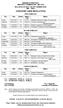 AGRONOMY (NEW REGULATION) Friday 08.05.2015 F.N STA 611 Statistical Methods & Design of Experiments Saturday 09.05.2015 F.N COM 615 Computer Applications for Monday 11.05.2015 F.N AGR 611 Modern Concepts
The Royal Society of Chemistry. Pan Africa Chemistry Network
 The Royal Society of Chemistry Pan Africa Chemistry Network We connect the global community to build capacity and enable excellence in the chemical sciences across Africa.. About us The Royal Society of
UPBM CURRICULAR BROCHURE
 UPBM CURRICULAR BROCHURE Undergraduate Program in Biology and Medicine Contents Academic Year 2015-16 About the Undergraduate Program in Biology and Medicine...pg. 1 Undergraduate Majors...pg. 2-3 Getting
Advanta Limited Q2 CY 14 Earnings Conference Call. July 28, 2014
 Advanta Limited Q2 CY 14 Earnings Conference Call ANALYST: MANAGEMENT: MR. NITIN AGARWAL-ANALYST-IDFC SECURITIES MR. CLAUDIO TORRES- CEO - ADVANTA LIMITED MR. MANOJ GUPTA- GROUP CFO- ADVANTA LIMITED Page