
WAYS OF REDUCING ACCIDENTS ON SOUTH AFRICAN ROADS
|
|
|
- Sophia Carpenter
- 10 years ago
- Views:
Transcription
1 WAYS OF REDUCING ACCIDENTS ON SOUTH AFRICAN ROADS I.O. JUNGU-OMARA and M.J.W.A. VANDERSCHUREN University of Cape Town, Department of Civil Engineering Private Bag X3, Rondebosch, 7701 ABSTRACT Road accidents claim between 13,000 and 14,000 lives annually in South Africa. Many victims are jaywalking pedestrians, often under the influence of alcohol or drugs. Motorists are involved in fatal accidents due to various human, vehicle and road factors. With the annual increase in vehicle ownership and use, the question is how to lower the fatality rate in South Africa? In order to substantially lower the fatality rate on South African roads, stringent speed enforcement should be implemented and measures adopted to bring amenities closer to informal settlements prone to jaywalking; coupled with education, enforcement and engineering. Fine-tuning the annual reduction of road fatalities involves enforcement to reduce vehicles prone to tyre bursts and engineering techniques to minimise road sections that are wet, slippery or have sharp bends. 1. INTRODUCTION Road carnage in South Africa is caused by human, vehicle and road factors. In order to reduce the number and severity of accidents on South African roads, contributing factors need to be identified. Ways of reducing fatalities and the severity of road accidents can be adopted from international practices. Education of the public about the importance of adhering to traffic rules and regulations in conjunction with enforcement and engineering should form the basis of ways of reducing the fatality rate. International experiences and several South African sources provide information to estimate the potential decrease in annual road fatalities 2. FACTORS CAUSING ROAD ACCIDENTS There were fatal road accidents in South Africa during 2002 [1]. The main contributory factors to fatal accidents in December 2002 were categorised as follows: human factors 78%, road factors 12% and vehicle factors 10% [6]. 2.1 Human Factors Human factors are the main causes of road fatalities in South Africa. An individual s ability to hear, see, evaluate and react to information influences traffic safety [3]. Information that a driver is subjected to includes: on-coming traffic, adjacent vehicles and pedestrians or bystanders, and vehicles behind or in front of the driver. Human factors that reduce a driver s ability to safely interact with this information include: speeding, alcohol or drug Proceedings of the 25 th Southern African Transport Conference (SATC 2006) July 2006 ISBN Number: Pretoria, South Africa Produced by: Document Transformation Technologies cc Conference organised by: Conference Planners

2 abuse and fatigue. Other aspects of human behaviour that influence the road safety risk are: jaywalking, age, gender, and the violation of traffic rules and regulations. In order to lower the fatality rate most substantially, the major contributory factors need to be identified. Between 2001 and 2003, the highest number of fatalities occurred in December. The festive season in December is characterised by excessive consumption of alcohol, speeding and long distance travel. Table 1 shows human, vehicle and road factors with their respective percentage contribution to the national fatality rate in December These statistics allude to the fact that the South African fatality rate is not purely influenced by one contributory factor (see Table 1). Lowering the national fatality rate entails identifying the top tier of contributory factors and determining ways of reducing these factors. In December 2002, the main contributory human factors were: jaywalking 47% and speeding 30% (see Table 1). As stated earlier, in December 2002, human factors constituted 78% overall. National road safety campaigns should therefore, primarily focus on lowering the occurrence of jaywalking, alcohol or drug abuse and speeding. Jaywalking is when pedestrians cross roads at undesignated crossings with motorists not anticipating their presence, collisions result out of inevitability. Jaywalking also involves pedestrians under the influence of alcohol or drugs that cross or walk along side high mobility routes. Informal settlements next to highways are characterised by high pedestrian travel. Residents of these settlements often need to access amenities (e.g. shops, access to public transport, etc) on the other side of highways [5]. The direct desire lines are across highways as detours via pedestrian bridges are very long. This land use is inappropriate, as high mobility routes should not have direct vehicular or pedestrian access. Speeding occurs when motorists do not adhere to stipulated speed limits. Inertia keeps the driver and fellow passengers moving forward at the same speed as prior to the collision, after the vehicle is stationary due to an accident. Therefore, higher travel speeds increase the impact and severity of the accident. Head-on collisions result in all the occupants of both vehicles being subjected to the impact of the combined speeds. 2.2 Vehicle Factors Aspects of vehicles that increase the likelihood of accidents when travelling are vehicle factors. These factors include: unroadworthy vehicles, worn-out tyres, wrong air pressure, overloading of vehicles, faulty brakes and vehicle lights. In December 2002, the main contributory vehicle factors were: tyre bursts 56% and brakes 19% (see Table 1). In these cases, drivers have little control over vehicle factors and accidents are almost inevitable. Tyres are designed to carry certain vehicle loads under specific tyre pressures. Worn-out tyres have reduced wall thicknesses, increasing the likelihood of tyre bursts under vehicle loads. Long distance travel heats up tyres increasing internal air pressure but this increase is magnified depending on the vehicle load. Overloading of vehicles greatly increases the likelihood of tyre bursts, especially on long distance trips without regular stops. When the tyre bursts and the vehicle is in motion, the weight of the vehicle, passengers and goods are transferred onto the burst tyre, will often result in overturning, especially if the brakes are applied simultaneously.

3 Table 1. Adjusted contributory factors to fatal accidents for December Human Factors Urban Rural Total Group % Group % Unknown 0 0 Pedestrian: Jaywalking Speed Overtaking Turn in front Disregard of traffic signals/ stop signs Following too close Driver-alcohol suspected Pedestrian: alcohol suspected Fatigue Subtotal Vehicle Factors Urban Rural Total Group % Group % Unknown 0 0 Overload Brakes Tyre burst Tyres smooth Lights Subtotal Road Factors Urban Rural Total Group % Group % Unknown 0 0 Poor visibility Poor street lighting Sharp bend Blind rise/corner Poor road surface Road wet/slippery Poor/defective road signs Narrow road Road works Subtotal Total Source: Festive season report on road accidents, NDOT, 2003 Malfunctioning brakes prevent drivers from avoiding colliding with adjacent vehicles, bystanders, objects or pedestrians. When brakes are not functioning, the use of hand brakes will often result in overturning of the vehicle due to inertia. Accidents are almost inevitable due to malfunctioning brakes, as hooting may not move objects out of the path of collision in time.

4 2.3 Road Factors Finally, road factors increase the likelihood of accidents when travelling. Road factors include: road surface type, slippery roads, poor visibility or inadequate street lighting, sharp curves, inadequate road fencing and sight distance. In December 2002, the main contributory road factors were: poor visibility 34%, sharp bends 17% and slippery roads 17% (see Table 1). Poor visibility is due to sections of road having inadequate street lighting or dense fog. Inter visibility is reduced between vehicles making accidents almost inevitable as perception-reaction time is limited. Sharp bends require low travel speeds in order to avoid driving off the road at a tangent. When faced with a sharp bend at certain travel speeds, motorists struggle to keep vehicles on the road as the vehicle tends to travel straight. This tangential vehicular movement results in accidents with adjacent surroundings or overturning. Slippery road sections prevent motorists from avoiding collisions with adjacent vehicles, bystanders or objects. At a certain speed, drivers feel in control of the vehicle but slippery roads prevent the vehicle from stopping in time. 3. STATISTICAL MODEL TO ESTIMATE ACCIDENT REDUCTION In order to substantially lower the fatality rate, measures need to be determined that will reduce the top tier of human, vehicle and road factors. As stated earlier, in December 2002, human factors comprised 78% of the fatality rate. Nationally efforts should focus on lowering the main contributory human factors i.e. jaywalking, alcohol or drug abuse and speeding. Lowering the occurrence of jaywalking in South Africa involves preventing human settlements close to freeways. Theoretically, these high mobility routes should not allow direct pedestrian or vehicular access. Building high concrete walls does not remove surrounding trip attractions that make residents walk alongside or cross freeways. In the event when informal settlements crop up next to freeways, a study should be done to determine [5]: How pedestrians get involved in accidents adjacent to freeways, What trip attractions give residents incentive to walk alongside or cross freeways, What measures would bring these trip attractions closer to informal settlements, removing the need to walk alongside or cross these high mobility routes and The effectiveness of implementing these measures. The author strongly feels that this approach would yield a 90% reduction in pedestrian fatalities. This reduction rate was assumed as the average pedestrian, sober or not, would have no reason to cross these high mobility routes or walk alongside but allows for a one in ten chance of the odd jaywalker. Nationally, this would mean reducing pedestrian fatalities from 348 to 17 in December 2002 (see Table 1). Speeding is the second main contributory factor to fatalities in South Africa. Educating the public about the dangers of speeding should be done using signboards and road safety campaigns via the media. Currently 40% of South African drivers exceed the 120km/h speed limit, 80% the 100km/h limit and 90% the 60km/h limit [1]. It can be stated that 40% of motorists on rural roads

5 exceed the speed limit and 80-90% of motorists on urban roads. Speed is a contributory factor in 75% of accidents on South African roads and the higher the speed, the greater the impact [1]. Higher travel speeds increase the number and severity of accidents. This explains why, although fewer drivers exceed the speed limit on rural roads, there are more fatal accidents on rural roads. This highlights the need for more traffic police to be assigned to urban roads and for very costly fines to speed limit violators on rural roads. Due to shortage of traffic police, 90% of urban roads can be fitted with speed cameras. By law, the speed limit is exceeded when one travels 10% over the stipulated limit i.e. 66km/h in urban areas and 132km/h on roads in rural areas. Speed enforcement by traffic police would keep motorists within the speed limit i.e. 6km/h speed reduction in urban areas and 12km/h in rural areas (in research done by the CSIR (1980 s) it was found that a reduction of 1km/h could lead to a reduction of 9 fatal and 120 total crashes per month). A unit change in urban speed limits resulted in a change in fatalities in South Africa from 0.6% to 4.0% [4]. These South African fatality rates reflect a varying range. It was decided to use a conservative rate of 3.5%. The decrease in fatalities in determined as follows: Urban 60km/h: 6km/h x 0.9 x 3.5/100 = 0.19 Urban 100km/h: 10km/h x 0.8 x 3.5/100 = 0.28 Rural 120km/h: 12km/h x 0.4 x 3.5/100 = 0.17 Total = 0.64 Table 1 indicates that 221 fatalities were due to speed in December 2002 with 30 in urban areas and 191 in rural areas. These decreases in fatality rates were applied to the number of fatalities shown in Table 1 as shown in Table 2. Enforcement should involve the use of speed cameras and violators paying spot fines or have their vehicles impounded until the fine is settled. Speed enforcement should also involve the use of Intelligent Speed Adaptation (ISA) in public transport vehicles and motorists apprehended travelling at 160 km/h. These motorists should have their drivers licences being tagged electronically; indicating the number of speed limit violations and above a certain number it is nullified. This approach should be adopted throughout the year, and not merely over the festive season. Table 2. Estimated reduction in fatalities nationally during December Reduction in average travel speeds Urban roads (60 km/h) Urban roads (100 km/h) Rural roads 6 km/h 10 km/h 12 km/h Decrease in fatality rate Number of fatal accidents Number of fatal accidents reduced In order to primarily lower the fatality rate nationally, these measures should be adopted to reduce jaywalking and speeding. Secondary measures should seek to lower vehicle and road factors.

6 Preventative measures should be taken to avoid vehicles factors e.g. routine checks on the functionality of brakes, tyres, lights, indicators and overall vehicle roadworthiness. Tyre bursts often result in vehicles overturning, head-on collisions, sideswipes and headrear accidents. The public should be educated via the media about how load rating causes tyre bursts. Motorists should also be educated about the importance of regular stops on long-distance trips. Drivers (especially long distance public transport drivers) should be made aware that regular stops prevent overheating of tyres, thus minimising the chance of tyre bursts. It can be assumed that public education could reduce one out of five possible tyre bursts i.e. a 20% reduction of fatal accidents. This reduction rate in fatalities is assumed because four out of every five drivers simply want to get to their destination as soon as possible. Traffic police should also ensure that overloaded vehicles are not permitted to undertake long-distance trips. It can also be assumed that stringent traffic-law enforcement reduces one out of every five possible tyre bursts i.e. a 20% reduction of fatal accidents. This reduction rate in fatalities is assumed because the shortage of traffic police would only stop one out of five overloaded vehicles along high mobility routes during the peak hours only. Education and enforcement collectively adds up to a 40% reduction rate of fatalities. Under this assumption, this would translate to 21 tyre bursts out of 52 being prevented due to public education and stringent traffic-law enforcement. Every driver is aware of the safety risk of travelling with faulty brakes, but not all ensure that they are in proper working condition. It is hard for traffic police to check whether brakes are in a proper working condition because it requires heavy, specialised equipment that is fixed into roadworthy testing stations. Corruption in roadworthy testing stations put vehicles with faulty brakes on South African roads. Given the various problems associated with trying to curb faulty brakes, it can be assumed that public education, traffic-law enforcement and testing of vehicle roadworthiness will reduce one out of 10 accidents due to faulty brakes i.e. a 10% reduction of fatal accidents. This reduction rate in fatalities is assumed because traffic police never check for faulty brakes and probably one out of ten motorists would immediately fix their faulty brakes once detected. This translates into two accidents due to faulty brakes being avoided nationally in December Educating the public and engineering solutions are required to mitigate road factors i.e. poor visibility, sharp bends and slippery roads. Poor visibility hinders motorists from making the necessary manoeuvres preventing road accidents. Accidents caused due to misty weather or inadequate street lighting can be avoided by improving visibility i.e. increasing light intensity. If the level of light is raised from 1 to 2cd/m 2, the incidence of nighttime accidents can be reduced by up to 65% [3]. This assumes that all fatal accidents after dark are due to motorists not having adequate lighting. It does not take into account other factors that cause accidents at night (e.g. driver fatigue, alcohol or drug abuse, speed, etc). The author assumes fatal accidents that occur after dark are purely because of inadequate lighting due to objects suddenly appearing in front of a moving vehicle. This usually occurs where roads with animals in the vicinity are not fenced off or when pedestrians jaywalk at night. Fencing off the roads will eliminate wild and domestic animals being hit by vehicles. The author assumes that one out of 20 fatal accidents after dark are due to animals suddenly appearing in front of vehicles and pedestrians jaywalking. In December 2002, 40 accidents were caused by poor visibility. Increasing light intensity from 1 to 2cd/m 2 would thus prevent two fatal accidents due to

7 poor visibility. However, more research is required to determine the actual reduction in fatality rates due to purely poor visibility be improved as other factors could be at play e.g. fatigue. Traffic engineers can identify sharp bends but these road sections cannot be re-aligned, as it is not cost effective. Travel speeds on sharp bends should be reduced to safe speeds in relation to available stopping sight distance. Traffic engineers can apply various speed reduction measures to ensure motorists reduce their travel speeds. In addition, adequate road signage would make the sharp bends more visible. It can be assumed that the right speed reduction measures can lead to three out of five motorists lowering their speeds. This would ensure a 60% reduction of fatal accidents i.e. 12 fatal accidents would have been prevented nationally in December This reduction rate in fatalities is assumed because two out of every five drivers could be under the influence of alcohol or drugs, extremely tired or simply risk takers. Traffic engineers can also identify slippery road sections. These road sections can have a layer of single or double seal applied to increase skid resistance. It can be assumed that increased skid resistance would reduce fatal accidents caused by slippery roads by 80% ie.16 fatal accidents would have been avoided nationally in December This reduction rate in fatalities is assumed because there is a one out of five chance that accidents at these road sections are due other human or vehicle factor. Table 3 is a summary of the estimated reductions in fatalities nationally in December This table shows that in order to substantially lower the national fatality rate, measures to reduce jaywalking and speeding need to be implemented. Fine-tuning the reduction in fatalities involves applying measures to lower the occurrence of tyre bursts, malfunctioning of vehicle brakes, poor visibility, sharp bends and slippery road sections. Table 3. Reduction in number of fatal accidents nationally in December Contributory Fatal Reduction in Measure factors accidents fatalities Jaywalking Study to reduce crossing of freeways Speeding Education and enforcement Tyre bursts Education and enforcement Vehicle brakes 19 2 Education and enforcement Poor visibility 40 2 Fencing off roads Sharp bends Speed reduction measures Slippery roads Apply a layer of single or double seal Total Between 16h00-16h59 on Fridays is when the highest number of accidents (i.e. fatal, serious, slight injury and damage-only) occurs in the Western Cape [2]. It is assumed that alcohol and/or drug abuse is one of the major causes as the weekend drinking spree starts and mental exhaustion is highest. This could explain the high accident rates. The author assumes that if traffic police set up roadblocks on Fridays from 12h00 until 18h00, two out of five accidents could be prevented. This denotes that accidents would be avoided annually. This reduction rate in fatalities is assumed because three out of every five drunken or extremely tired drivers will not get apprehended due to the various travel routes used. This approach in the Western Cape should be used in all other provinces after it is established when most accidents occur in other provinces.

8 Studies suggest that truck-driver fatigue may be a contributing factor in at least 30 to 40% of all heavy-truck accidents [1]. Conversely, educating the public (especially heavyduty truck drivers) about the importance of resting periodically during long-distance trips and the provision of shower facilities at filling stations along national routes can reduce heavy-truck accidents by 30-40% vehicles with Gross Vehicle Mass (GVM)> 3 500kg were involved in accidents during 2001 [2]. This constitutes 7% of all accidents in Cape Town. Public education in terms of driver fatigue could prevent accidents. This notion should be applied nationally to reduce the incidences of heavy-truck accidents in all the other provinces. Western Cape statistics (derived from do not indicate which vehicle factors cause accidents. The type of vehicle involved in the majority of accidents simply reflects that the likelihood of a particular vehicle type having an accident increases, as it comprises a larger percentage of vehicle types. According to Table 4, mini-bus taxis have more accidents than heavy trucks (GVM>3500kg) due to more frequent public transport trips made, even if heavy trucks make up a larger percentage of vehicle types. Motorcars make up the largest percentage of vehicle types. The probability of this vehicle type being involved in accidents would therefore be very high as shown in the accident statistics in Table 4. Generally, lighter vehicle types are involved in more accidents due to higher travel speeds and more vehiclekilometres travelled. Motorcycles have the same accident risk as motorcars although they constitute a lower percentage (see Table 4). This could be due to higher acceleration capabilities of motorcycles and lack of dedicated lanes for this vehicle type. Vehicle type Table 4. Types and number of registered vehicles involved in accidents (Cape Town; 2001). No. of vehicles involved in accidents % No. of registered vehicles Risk per registered vehicle type Motor car/ station wagon Light delivery vehicle Combi/ Mini bus GVM >3500 kg Unknown Motor cycle Bus Other Articulated trucks Total Source: Cape Town metropolitan council website All vehicles are registered, which does not necessarily mean that all are roadworthy at the time of the accident. This is because vehicle roadworthiness is only tested when vehicles change owners. It can be assumed that buses and trucks are in a better roadworthy condition than taxis. This assumption was made as buses and trucks are run by commercial firms unlike taxis owned by individuals that perceive upkeep and vehicle maintenance as unrecoverable costs. The risk per registered vehicle type is a reflection of driver behaviour among vehicle types. Generally, drivers of mini-bus taxis have very little regard for traffic rules and regulations. This is reflected in Table 4, with combi/ mini-bus taxis having the highest accident rate or risk per vehicle type.
![stations along national routes can reduce heavy-truck accidents by 30-40%. 5 274 vehicles with Gross Vehicle Mass (GVM)> 3 500kg were involved in accidents during 2001 [2].](/docs-images/54/10667419/images/page_8.jpg "This constitutes 7% of all accidents in Cape Town. Public education in terms of driver fatigue could prevent 1 582-2 110 accidents.")
9 Furthermore, government should legislate to fit semi-open ISA in all mini-bus taxis and buses. This is vital as speed is a factor in 75% of all accidents. As seen earlier, stringent traffic law enforcement is estimated to reduce the fatality rate by 28% in urban areas and 17% in rural areas. The author assumes that the reduction in fatality rates is applicable in urban areas of the Western Cape and to all the accident rates. These measures would prevent mini-bus taxis, vehicles with a gross mass greater than 3 500kg, 390 buses and 339 articulated trucks from being involved in accidents in This approach should be adopted in all the other provinces as part of the national model. The fatality rate is highest after dark [2]. If the level of light is raised from 1 to 2cd/m 2, the incidence of night accidents can be reduced by up to 65% [4]. As mentioned earlier, other factors contribute to accidents after dark. The author assumes that one out of 20 fatal accidents after dark are due to animals suddenly appearing in front of vehicles and jaywalking. Therefore, increasing the light intensity by 1cd/m 2 would prevent six fatal accidents, 18 serious accidents and 522 of all accidents after dark. It is assumed that one out of every 20 accidents after dark is due to animals because most wild animals are deep in the bush, far away from the nearest road with the odd domestic animal not in its kraal. More accidents occur on dry rather than wet roads [2]. It can be said that most of the time it is not raining (i.e. roads are dry), explaining the high frequency of accidents on dry roads. Reducing the risk of accidents on any road surface type involves addressing various human, vehicle and road factors. The Western Cape accident statistics could not be used to develop a national model to estimate decreases in the fatality rate, but were used to complement the national model. Road safety audits should be carried out at the worst known road sections and intersections in accordance with the South African Road Safety Manual. Proper data collection by the SAPS and traffic police in conjunction with further research by national and provincial authorities would accurately quantify the decrease in the fatality rate due to these measures. 4. ANNUAL NATIONAL MODEL AND COST ESTIMATES Table 5 shows the unit cost of fatal and serious accidents in the Western Cape. It is assumed that the unit cost of accidents in the Western Cape does not vary substantially with national unit costs. Table 5. Unit costs (R) of accidents in South Africa (2001) [2]. Severity Drivers/Passengers Pedestrian All Fatal Serious Table 1 shows the various contributory factors of road fatalities in December It is assumed that this worst-case scenario gives a representative percentage split between the various contributory factors annually. This analogy has been used to estimate the percentage split between the various contributory factors annually, as shown in Table 6. This table only takes into account the top tier of contributory factors. The statistical model used in Table 3 was derived from accident statistics in December The author strongly feels that the established worst-case scenario is representative of annual trends related to causing and preventing accidents. In light of this, it was decided to use reduction rates estimated for December 2002 annually, as shown in Table 6.

10 Table 5 is incorporated into Table 6 to determine the annual cost savings due to fatalities reduced. These cost savings are considered theoretical because the likelihood of the relevant transport authorities or government annually implementing the various measures is not definite. The author strongly believes that the likelihood of the relevant transport or government authorities to implement the various measures to reduce pedestrian fatalities is 25%, speeding 35%, faulty brakes 5%, tyre bursts 10%, poor visibility 5%, 10% for sharp bends and wet/ slippery roads. These percentages were chosen because of the current enforcement of speed, disuse of worn-out tyres and engineering measures continually adopted to address sharp bends, poor visibility and wet/ slippery roads. It is envisaged that likelihood of the relevant government or transport authorities to adopt measures to bring amenities closer to informal settlements prone to pedestrian fatalities is 25%. Table 6 indicates the viability in implementing the various measures and cost savings thereof. Table 6. Annual Cost savings due to estimated accident reductions in South Africa [2]. Fatal 2004 % Reduction Theoretical Fatal reduced 2004 % Likelihood to implement Estimated Fatal reduced 2004 Theoretical Costs saved 2004 Estimated Costs saved 2004 Human Factors % % % R Millions R Millions Pedestrian: Jaywalking R 784 R 196 Speed R 562 R 197 Subtotal R R 393 Vehicle Factors Brakes R 14 R 1 Tyre burst R 180 R 18 Subtotal R 194 R 19 Road Factors Poor visibility R 15 R 1 Sharp bend R 92 R 9 Road wet/slippery R 123 R 12 Subtotal R 231 R 22 Total R R 434 Theoretical cost savings are derived from implementing the various proposed measures while estimated costs take into account the likelihood of various government and transport authorities actually applying these measures.

11 5. CONCLUSIONS In South Africa, pedestrians are more prone to road fatalities than motorists. In order to substantially lower the fatality rate on South African roads, measures need to be implemented to reduce pedestrian fatalities, speeding and alcohol abuse among pedestrians and motorists. Table 6 justifies the annual implementation of measures to reduce speeding and jaywalking in order to lower the national road fatality rate. December was the month with the highest number of fatal accidents from 2001 to Applying measures that reduce pedestrian fatalities, speeding and alcohol abuse in December, should also be practiced throughout the year to lower the national fatality rate. Fine-tuning the reduction of fatalities in South Africa involves adopting measures to reduce the occurrence of: Vehicles prone to tyre bursts or have faulty brakes Road sections with poor visibility, sharp bends or are slippery Table 6 indicates that fine-tuning the annual reduction of road fatalities involves enforcement to reduce vehicles prone to tyre bursts and engineering techniques to minimise road sections that are wet/ slippery roads or have sharp bends. More research is required to validate some of the assumptions made in reducing fatality rates caused by human, vehicle and road factors. Improved data collection among traffic police can be a source of valid accident statistics needed to quantify fatality rate reductions due to various measures and techniques proposed. 6. REFERENCES [1] Arrive Alive website, (2004). Arrive Alive. Accessed 24 th February [2] Cape Town metropolitan council website, (2003). reports/pdf/traffic.pdf, Cape Town metropolitan council, Cape Town, Accessed 29 th October [3] Department of Transport, (2003). Festive season report on road accidents, Department of Transport, Pretoria, [4] Fieldwick R., (1981). The relationship between rural speed limit and accident rate, National Institute for Transport and Road Research, CSIR, Pretoria, [5] Gauteng Department of Public Transport, Roads and Works, (2001). Diepsloot land use and transportation assessment, Department of Transport, Johannesburg, [6] UNIARC Symposium, (2003). Un-roadworthy vehicles and road traffic accidents, National Department of Transport, U.N.I.A.R.C., Durban, 2003.

A RELATIONSHIP BETWEEN ACCIDENT TYPES AND CAUSES
 A RELATIONSHIP BETWEEN ACCIDENT TYPES AND CAUSES L VOGEL and UC J BESTERU Department of Civil Engineering, University of Stellenbosch, Private Bag X1 MATIELAND 7602 ABSTRACT A study was done on a road
Level 2 Award in Safe Driving at Work
 Level 2 Award in Safe Driving at Work Student notes (sample) www.britsafe.org Membership Training Qualifications Audit and Consultancy Audit and Policy Consultancy and Opinion Policy Awards and Opinion
Contributory factors to road accidents
 Contributory factors to road accidents Jonathan Mosedale, Andrew Purdy and Eddie Clarkson, Transport Statistics: Road Safety, Department for Transport Introduction The STATS19 national system of collection
STATISTICS OF FATAL AND INJURY ROAD ACCIDENTS IN LITHUANIA,
 Vilnius 215 STATISTICS OF FATAL AND INJURY ROAD ACCIDENTS IN LITHUANIA, 211 214 TABLE OF CONTENTS INTRODUCTION... 9 GENERAL INFORMATION... 1 1. VEHICLE FLEET... 11 1.1. Number of vehicles, 1995 214...
The partnership has selected three intersections where enforcement, education, and engineering initiatives are being implemented to improve safety:
 Hamilton-Finn Suite 310 Tel. (403) 207-6000 Road Safety 3016 5th Avenue N.E. Fax. (403) 273-3440 Consultants Ltd. Calgary, Alberta dawatt.dawatt.com www.hamiltonfinn.ca January 19, 2005 Mr. Don Szarko,
Speeding. Probability of death at different impact speeds
 Speeding CRASH FACTSHEET 2012 CRASH STATISTICS FOR THE YEAR ENDED 31 DECEMBER 2011 Prepared by the Ministry of Transport In this fact sheet speeding is defined as driving too fast for the conditions. The
Safety-conscious Drivers Prevent Crashes. Defensive Driving: Managing Visibility, Time and Space. Improve Your Defensive Driving Skills
 Defensive Driving: Managing Visibility, Time and Space Motor vehicle travel is the primary means of travel in the United States. With all the benefits that come along with mobility, there are thousands
Characteristics of High Injury Severity Crashes on 80 110 km/h Rural Roads in South Australia
 Characteristics of High Injury Crashes on 80 110 km/h Rural Roads in South Australia, J. R. R. Centre for Automotive Safety Research, University of Adelaide, SOUTH AUSTRALIA, 5005 email: [email protected]
FMCSA Webinar Nov.18th to Examine Large Truck Crash Fatalities Involving Pedestrians & Bicyclists. New Technology for Better Fleet Management
 In This Issue: FMCSA Webinar Nov.18th to Examine Large Truck Crash Fatalities Involving Pedestrians & Bicyclists Help Prevent Roadway Accidents involving Pedestrians How to Steer Clear of Accidents with
Road Safety Authority Provisional Review of Road Crashes 2013
 A review of 2013 fatal collision statistics December 31 st 2013 The following report summarises the main trends that have emerged in 2013. This has been prepared by the Road Safety Authority following
THE INFLUENCE OF POLICY ON CRASH RATE OF LONG COMBINATION VEHICLES
 THE INFLUENCE OF POLICY ON CRASH RATE OF LONG COMBINATION VEHICLES John Woodrooffe 1, Darryl Anderson 2 and Lloyd Ash 3 1 University of Michigan Transportation Research Institute. 2 Alberta Transportation.
the Ministry of Transport is attributed as the source of the material
 Disclaimer All reasonable endeavours are made to ensure the accuracy of the information in this report. However, the information is provided without warranties of any kind including accuracy, completeness,
Put the Brakes on Speeding
 Put the Brakes on Speeding The risks of driving too fast The costs and consequences Tips to maintain a safe speed Speed kills There s no doubt about it driving over the speed limit is dangerous. It puts
the Ministry of Transport is attributed as the source of the material
 Disclaimer All reasonable endeavours are made to ensure the accuracy of the information in this report. However, the information is provided without warranties of any kind including accuracy, completeness,
Motor Vehicle Collisions in Eastern Ontario. Supplement to the Eastern Ontario Health Unit Injury Report
 Motor Vehicle Collisions in Eastern Ontario Supplement to the Eastern Ontario Health Unit Injury Report September 8, 2009 For more information: Eastern Ontario Health Unit www.eohu.ca Bureau de santé de
Deaths/injuries in motor vehicle crashes per million hours spent travelling, July 2008 June 2012 (All ages) Mode of travel
 Cyclists CRASH STATISTICS FOR THE YEAR ENDED 31 DECEMBER 212 Prepared by the Ministry of Transport CRASH FACTSHEET November 213 Cyclists have a number of risk factors that do not affect car drivers. The
Code of Conduct for Commercial Drivers
 Code of Conduct for Commercial Drivers RoadDriver 2011 Safe Use of Vehicles Watch your Speed Drive within the speed limit at all times. You should drive at speeds that are safe for the conditions, recognising
A Review of Serious Casualty Motorcycle Crashes in Tasmania
 A Review of Serious Casualty Motorcycle Crashes in Tasmania D epart ment of Infrastructure, Energy and Resources A Review of Serious Casualty Motorcycle Crashes in Tasmania Traffic and Infrastructure Branch
Atlanta, Georgia Road Test
 1. When driving your car Into traffic from a parked position, you should: A. Sound your horn and pull Into the other lane. B. Signal and proceed when safe. C. Signal other traffic and pull directly into
Bicycle Safety Enforcement Action Guidelines
 Introduction Bicycle Safety Enforcement Action Guidelines People ride bicycles for many different reasons: fitness, recreation, or for transportation. Regardless of the reason for riding, bicyclists young
Legislation and Enforcement
 Legislation and Enforcement Legislation and Enforcement INTRODUCTION 6.1 To cultivate a considerate and responsible driving culture, enforcement and public education have to go hand-in-hand. Apart from
Chapter 4 DEFENSIVE DRIVING
 Chapter 4 DEFENSIVE DRIVING Chapter 4 Table of Contents Chapter 4 DEFENSIVE DRIVING... 4-1 DEFENSIVE DRIVING... 4-3 Positioning The Bus... 4-3 When Making a Turn at an Intersection... 4-3 Making the perfect
Rural Road Safety Policy in Korea: Lesson Learned
 Regional Seminar on Safe, Climate Adaptive and Disaster Resilient Transport for Sustainable Development Nov. 17 th, Seoul Rural Road Safety Policy in Korea: Lesson Learned Sangjin HAN Korea Transport Institute
USING THE MOBILE PHONE WHILE DRIVING. Using a mobile phone while driving can significantly impair a driver s:
 USING THE MOBILE PHONE WHILE DRIVING Is it dangerous to use the phone while driving? Driving is a complex task, requiring drivers to use and coordinate a number of skills. Any lapse in concentration increases
A Scientific Study "ETAC" European Truck Accident Causation
 A Scientific Study "ETAC" European Truck Accident Causation Executive Summary and Recommendations 1 Introduction 1.1 The project and its objectives Currently, only limited statistics are available regarding
Analysis of Accidents by Older Drivers in Japan
 Analysis of Accidents by Older Drivers in Japan Kazumoto Morita 1, Michiaki Sekine 1 1 National Traffic Safety and Environment Laboratory, Japan Abstract Since Japan is a rapidly aging society, ensuring
How To Know If A Motorcyclist Is Safe
 Motorcyclists CRASH FACTSHEET November 2013 CRASH STATISTICS FOR THE YEAR ENDED 31 DECEMBER 2012 Prepared by the Ministry of Transport In 2012, 50 motorcyclists 1 died and a further 1,138 were injured
OREGON TRAFFIC ACCIDENT AND INSURANCE REPORT
 DMV OREGON TRAFFIC ACCIDENT AND INSURANCE REPORT Tear this sheet off your report, read and carefully follow the directions. ONLY drivers involved in an accident resulting in any of the following MUST file
The State Government recognises. areas, and regulates bicycle
 cycling & THE LAW rules introduction for roads The State Government recognises The cycling South Australian as a legitimate Road Traffic form of Act including transport the Australian and an increasingly
chapter 3 basic driving skills
 chapter 3 basic driving skills When curving to the left, keep the front wheels close to the right edge of the lane to keep your driver s side rear wheels out of the next lane of traffic. Curve ahead slow
HIGHWAY DESIGN REPORT. Appendix 4. Proposed Design Principles for City Passings
 HIGHWAY DESIGN REPORT Appendix 4 Proposed Design Principles for City Passings June 2000 Contents Page 1 Introduction 2 1.1 Purpose 2 1.2 Definition of city passing 2 1.3 Safety Problems 2 1.4 Planning
SAFE CYCLING GUIDE. 7th Edition
 SAFE CYCLING GUIDE 7th Edition BEFORE SETTING OUT A Check tire pressure B Check that the chain does not slip C Check the brakes D Check lights and reflectors: 1 A WELL-MAINTAINED BICYCLE is key 3 4 5 Adjust
GENERAL KNOWLEDGE PRACTICE TEST
 GENERAL KNOWLEDGE PRACTICE TEST 1. Driving under the influence of any drug that makes you drive unsafely is: a. Permitted if it is prescribed by a doctor b. Against the law c. Permitted if it is a diet
Oxfordshire Local Transport Plan 2011-2030 Revised April 2012. Objective 3 Reduce casualties and the dangers associated with travel
 6. Road Safety Objective 3 Reduce casualties and the dangers associated with travel Road safety continues to be a core priority both nationally and locally reflecting the very high human and other costs
DMV. OREGON TRAFFIC ACCIDENT AND INSURANCE REPORT Tear this sheet off your report, read and carefully follow the directions.
 OREGON TRAFFIC ACCIDENT AND INSURANCE REPORT Tear this sheet off your report, read and carefully follow the directions. ONLY drivers involved in an accident resulting in any of the following MUST file
What Every Driver Must Know Review Assignment
 What Every Driver Must Know Review Assignment 1. Who is the Michigan Secretary of State? What services does the Secretary of State office offer? What days and hours is your local Secretary of State branch
PRAIRIE ROSE SCHOOL DIVISION SECTION E: SUPPORT SERVICES (PART 3: TRANSPORTATION)
 EMJ ACCIDENTS INVOLVING SCHOOL BUSES File EMJ The Bus Driver shall immediately verbally inform the Supervisor of Operations who shall call the police to the scene of all accidents involving the school
City of Philadelphia Vehicle Crash Report Form Supervisor review instruction sheet
 City of Philadelphia Vehicle Crash Report Form Supervisor review instruction sheet This document provides instructions for completing a review of the Vehicle Crash Report Form. A thorough review of the
How To Understand The Safety Of A Motorcycle
 Disclaimer All reasonable endeavours are made to ensure the accuracy of the information in this report. However, the information is provided without warranties of any kind including accuracy, completeness,
SAFE CYCLING GUIDE. 6th Edition
 SAFE CYCLING GUIDE 6th Edition BEFORE SETTING OUT A WELL-MAINTAINED BICYCLE is key A Check tire pressure B Check that the chain does not slip C Check the brakes D Check lights and reflectors: 3 4 1 5 2
SAFE Streets for CHICAGO
 Overview Each day, hundreds of thousands of Chicagoans walk or drive in the city. Ensuring their safety is the City s top priority. Over the past several years, Chicago has developed many successful strategies
SAFETY PROCESS. Martin Small
 SAFETY PROCESS Martin Small With a broad transport policy background including extensive work in the maritime sector, Martin Small has been working in road safety for five years, in a variety of roles
How To Improve Safety
 Collision Diagrams Collision diagrams are used to display and identify similar accident patterns. They provide information on the type and number of accidents; including conditions such as time of day,
Accident configurations and injuries for bicyclists based on the German In-Depth Accident Study. Chiara Orsi
 Accident configurations and injuries for bicyclists based on the German In-Depth Accident Study Chiara Orsi Centre of Study and Research on Road Safety University of Pavia State of the art Vulnerable road
School Bus Accident Report
 School Bus Accident Report Regardless of severity, the following School Bus Accident Report must be submitted by a school division whenever a school bus is involved in an accident. This report can be submitted
PEDESTRIAN AND BICYCLE ACCIDENT DATA. Irene Isaksson-Hellman If Insurance Company P&C Ltd.
 PEDESTRIAN AND BICYCLE ACCIDENT DATA Irene Isaksson-Hellman If Insurance Company P&C Ltd. Vulnerable road users 2 Number Number Official accident statistics 45 35 4 3 35 25 3 25 2 2 15 15 1 1 5 5 5 4 5
ROAD SAFETY GUIDELINES FOR TAH ROAD INFRASTRUCTURE SAFETY MANAGEMENT
 I. GENERAL ROAD SAFETY GUIDELINES FOR TAH ROAD INFRASTRUCTURE SAFETY MANAGEMENT ANNEX III B i. The setting up and implementing of appropriate management procedures is an essential tool for improving the
ITARDAInstitute for Traffic Accident
 ITARDAInstitute for Traffic Accident Research and Data Analysis ( 財 ) 交 通 事 故 総 合 分 析 センター ITARDA INFORMATION No. 2011 88APRIL Fatality rate (%) 0 2 4 6 Head-on 0.70% Rear-end 4.7% Rear-end 0.70% Crossing
ON THE WAY TOWARDS ZERO ACCIDENTS
 VOLVO TRUCKS. DRIVING PROGRESS ON THE WAY TOWARDS ZERO ACCIDENTS Volvo Trucks and Traffic Safety www.volvotrucks.com RSP 20100110001 English. Printed in Sweden. An automobile conveys and is driven by people.
TO PREVENT SPEED VIOLATIONS AND TO PROVIDE TRAFFIC SAFETY WITH MICROPROCESSOR-BASED AUTOMATIC VEHICLE SPEED CONTROL SYSTEM
 TO PREVENT SPEED VIOLATIONS AND TO PROVIDE TRAFFIC SAFETY WITH MICROPROCESSOR-BASED AUTOMATIC VEHICLE SPEED CONTROL SYSTEM Hasbi APAYDIN Şükrü KİTİŞ Dumlupınar University Simav Vacational High School,
School Bus Accident Report Form
 School Bus Accident Report Form Regardless of severity, a School Bus Accident Report Form must be submitted by a school division whenever a school bus is involved in an accident. Please complete the following
DEFENSIVE DRIVING. It s an Attitude
 DEFENSIVE DRIVING It s an Attitude RLI Design Professionals Design Professionals Learning Event DPLE 155 July 15, 2015 RLI Design Professionals RLI Design Professionals is a Registered Provider with The
general, accidents caused by misjudging
 Unit 3: The Effect of Natural Forces on your Vehicle Page 1 of 11 Purpose: Acquaint the student with some of the natural forces acting on a vehicle while stopping, maneuvering, and during a crash. Explain
Traffic Safety Basic Facts 2012
 Accident Causation National accident databases mostly focus on crash circumstances so in-depth investigations are required to provide a more detailed analysis of causation. This Fact Sheet presents basic
How To Prevent Accidents At Work
 2 Preventing vehicle accidents Construction work is considered to be one of the most hazardous industrial activities in the EU. The rate of injury in the construction industry is higher than in other industries.
Texas Drivers License
 Sample Tests & Material to help prepare for the Texas Drivers License Test This document was compiled by Adriana Diesen for her personal use and later adopted by Shell Outpost Houston. It contains the
FATAL ROAD ACCIDENTS OF HEAVY GOODS VEHICLES IN FINLAND
 TRANSBALTICA 2011 The 7 th International Conference May 5 6, 2011, Vilnius, Lithuania Selected papers ISSN 2029-2376 print / ISSN 2029-2384 online ISBN 978-9955-28-840-4 http://transbaltica.vgtu.ltt Vilnius
For further information contact: Alberta Transportation Office of Traffic Safety Main Floor, Twin Atria Building 4999 98 Avenue Edmonton, Alberta T6B
 Alberta Traffic Collision Statistics 2013 Alberta Traffic Collision Statistics 2013 For further information contact: Alberta Transportation Office of Traffic Safety Main Floor, Twin Atria Building 4999
Professional Truck Driver Training Course Syllabus
 Professional Truck Driver Training Course Syllabus The curriculum standards of this course incorporate the curricular recommendations of the U. S. Department of Transportation s Federal Highway Administration
Accidents with Pedestrians and Cyclists in Germany Findings and Measures
 Accidents with Pedestrians and Cyclists in Germany Findings and Measures Siegfried Brockmann Unfallforschung der Versicherer (UDV) May 7th, Geneva 2 Content 2 Accident situation in Germany based on National
Defensive Driving While Towing a Trailer By Elizabeth Koncki, Maryland Department of Agriculture
 Defensive Driving While Towing a Trailer By Elizabeth Koncki, Maryland Department of Agriculture Many of you have heard the term defensive driving, but maybe you may have not been taught the method or
TEST ON Driving Safely Among Bicyclists and Pedestrians
 TEST ON Driving Safely Among Bicyclists and Pedestrians Next you will take a 16 question test about driving safely among bicyclists and pedestrians. Please take out a sheet of paper to mark down and score
How To Know If A Cyclist Is Safe
 ATSB ROAD SAFETY REPORT July 2006 Deaths of cyclists due to road crashes ATSB ROAD SAFETY REPORT July 2006 Deaths of cyclists due to road crashes Published by: Australian Transport Safety Bureau Postal
HEAVY VEHICLE ACCIDENT FACTORS
 HEAVY VEHICLE ACCIDENT FACTORS Michel Gothié Laboratoire Régional de Lyon, CETE de Lyon, 25, Av. F.Mitterrand case n 1 69674 BRON cedex France [email protected] Abstract A general study
Young drivers where and when are they unsafe: analysis of road accidents in Great Britain 2000 2006
 Young drivers where and when are they unsafe: analysis of road accidents in Great Britain 2000 2006 Original research by Email: [email protected] August 2008 Copyright the IAM Motoring Trust Extracts
15-Passenger Van Safety Awareness Program. Environmental Health & Safety Department 570-662-4906
 15-Passenger Van Safety Awareness Program Environmental Health & Safety Department 570-662-4906 Course Objective The objective of this presentation is to increase the safety awareness of passenger van
Accident Investigation Codes
 Accident Investigation Codes Accident Codes after 7/1/2000 1-Weather Conditions 1 Fog, Smog, Smoke 2 Sleet, Hail, Freezing Rain, Drizzle 3 Blowing Snow 4 Severe Crosswinds, Windy 5 Clear 6 Cloudy 7 Rain
Cycle Safety. Some tips on safer cycling. Údarás Um Shábháilteacht Ar Bhóithre Road Safety Authority
 Cycle Safety Some tips on safer cycling Údarás Um Shábháilteacht Ar Bhóithre Road Safety Authority Be safe For further information on safe cycling, please look at the Rules of the Road website at www.rulesoftheroad.ie
Pedestrian and Bicycle Crash Data Analysis: 2005-2010
 MICHIGAN DEPARTMENT OF TRANSPORTATION Pedestrian and Bicycle Crash Data Analysis: 2005-2010 FINAL REPORT Prepared by: T.Y. Lin International and Western Michigan University 4/3/2012 TABLE OF CONTENTS List
AHIS Road safety project Student Council THINK!
 AHIS Road safety project Student Council 2013 THINK! Today, we drive safer cars on safer roads; decades of advertisements and public information campaigns have made most of us safer drivers. Improvements
POLICE TRAFFIC CRASH INVESTIGATION Identify and report on causative and/or related events in a traffic crash
 1 of 7 level: 6 credit: 20 planned review date: April 2006 sub-field: purpose: entry information: accreditation option: moderation option: Police This unit standard is intended for sworn or warranted police
Tips for Safer Driving
 Fleet Management Fleet Management Introduction Improvements in technology will continue to help bring auto accident numbers down, but the bottom line remains that most car accidents are the result of human
PREVENTABILITY OF MOTOR VEHICLE COLLISIONS
 PREVENTABILITY OF MOTOR VEHICLE COLLISIONS Management and fleet supervisors should establish standards for defensive driving in any type of fleet safety program. The overall performance of the drivers
Safety Evidence for Bicycling
 Photo: Boegh (Flickr) Cycling in Cities Research Program School of Population & Public Health The University of British Columbia Faculty of Health Sciences Simon Fraser University Driving near bicyclists
COMMONWEALTH OF PUERTO RICO OFFICE OF THE COMMISSIONER OF INSURANCE RULE 71
 COMMONWEALTH OF PUERTO RICO OFFICE OF THE COMMISSIONER OF INSURANCE RULE 71 SYSTEM FOR THE INITIAL DETERMINATION OF LIABILITY UNDER COMPULSORY MOTOR VEHICLE LIABILITY INSURANCE SECTION 1. LEGAL BASIS This
Goals & Objectives. Chapter 9. Transportation
 Goals & Objectives Chapter 9 Transportation Transportation MISSION STATEMENT: TO PROVIDE A TRANSPORTATION NETWORK CAPABLE OF MOVING PEOPLE AND GOODS EFFICIENTLY AND SAFELY. T he transportation system
Motorcycle and Scooter crashes Recorded by NSW Police from January to December 2011
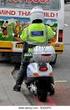 Motorcycle and Scooter crashes Recorded by NSW Police from January to December 2011 Data supplied by the Centre for Road Safety, Transport for NSW Analysis completed by the Survive The Ride Association
DRIVING TEST POSSIBLE QUESTIONS & ANSWERS.
 DRIVING TEST POSSIBLE QUESTIONS & ANSWERS. Question 1. What shape and colour is a warning sign? Diamond Shape - Yellow and Black Question 2. When should you not drive? While under the influence of alcohol,
DOT HS 809 360 October 2001
 U.S. Department of Transportation National Highway Traffic Safety Administration DOT HS 809 360 October 2001 Technical Report This document is available to the public from the National Technical Information
STOP ROAD CARNAGE NOW!
 THE INSTITUTION OF ENGINEERS OF IRELAND STOP ROAD CARNAGE NOW! SUBMISSION TO MR SEAMUS BRENNAN TD MINISTER FOR TRANSPORT December 2002 STOP ROAD CARNAGE NOW IEI SUBMISSION ON ROAD SAFETY PG. 01 1. STOP
Basic facts Cycling accidents in Poland Conclusions. Bicycle safety. Aleksander Buczyński [email protected]. Zielone Mazowsze www.zm.org.
 Bicycle safety Aleksander Buczyński [email protected] Zielone Mazowsze www.zm.org.pl September 2011 Why analyse cycling accidents? Difference between perceived and real danger Safety campaigns Understanding
Going SoloTM. A resource for parents of P-plate drivers
 Going SoloTM A resource for parents of P-plate drivers P Going Solo a resource for parents of P-plate drivers, has been produced by the Monash University Accident Research Centre (MUARC) with the support
INSTRUCTOR S GUIDE. Stay on the Right Track Highway-Railway Crossing Awareness Training for Newly Licensed Drivers
 INSTRUCTOR S GUIDE Stay on the Right Track Highway-Railway Crossing Awareness Training for Newly Licensed Drivers WHAT WE DO Operation Lifesaver is a nationwide, non-profit public information and education
Road Traffic Management Strategy STRATEGIES OF THE FINNISH TRANSPORT AGENCY
 Road Traffic Management Strategy 03 2010 STRATEGIES OF THE FINNISH TRANSPORT AGENCY Road Traffic Management Strategy Strategies of the Finnish Transport Agency 3/2010 Finnish Transport Agency Helsinki
TRAFFIC VOLUME AND ACCIDENT STUDIES ON NH-22 BETWEEN SOLAN AND SHIMLA, INDIA
 TRAFFIC VOLUME AND ACCIDENT STUDIES ON NH-22 BETWEEN SOLAN AND SHIMLA, INDIA Rajiv Ganguly, PhD Ashok Kumar Gupta, PhD Mudit Mishra, M.Tech Department of Civil Engineering, Jaypee University of Information
UNEP recommendations to KURA on Improving Safety and Reducing Congestion on UN Avenue (7 October 2009; revised 23 November 2009)
 UNEP recommendations to KURA on Improving Safety and Reducing Congestion on UN Avenue (7 October 2009; revised 23 November 2009) UN Avenue extends for 2 km between Limuru Road and Ruaka Road (Runda Roundabout).
For further information contact: Alberta Transportation Office of Traffic Safety Main Floor, Twin Atria Building 4999 98 Avenue Edmonton, Alberta T6B
 Alberta Traffic Collision Statistics 2012 Alberta Traffic Collision Statistics 2012 For further information contact: Alberta Transportation Office of Traffic Safety Main Floor, Twin Atria Building 4999
A Guide to Accident Prevention on Motorcycles
 A Guide to Accident Prevention on Motorcycles SEE me now? Always ride with your dipped headlight on DAY AND NIGHT Avoiding the 5 most common motorcycle accidents... 1 Collisions at Junctions... These can
Bicycle Safety Quiz Answers Parental Responsibilities
 Bicycle riding is a great way to get into shape and enjoy the outdoors. To remain safe on Illinois roads, it is important to follow the same traffic safety laws that govern vehicle drivers. No amount of
R T M C. Ref No: Enquiries: Tel: Fax: E-mail: 13/2R P H Plaatjies 012 999 5296 086 695 2952 [email protected] TRAFFIC OFFICER S CAREER INFORMATION
 R T M C Ref No: Enquiries: Tel: Fax: E-mail: 13/2R P H Plaatjies 012 999 5296 086 695 2952 [email protected] TRAFFIC OFFICER S CAREER INFORMATION 1. WHY IS THE CAREER OF TRAFFIC OFFICER S SO IMPORTANT?
Northern Territory ROAD TRANSPORT FATIGUE MANAGEMENT
 Northern Territory Code of Practice Northern Territory Northern Territory Code of Practice Contents 1 Background 4 2 Operator Duty of Care Responsibilities 5 3 Codes of Practice 6 4 Who should use the
Relative risk of fatal crash by blood alcohol level. 0 10 20 30 40 50 60 70 80 90 100 110 120 130 140 150 BAC (mg/100ml)
 Alcohol/drugs CRASH FACTSHEET November 2013 CRASH STATISTICS FOR THE YEAR ENDED 31 DECEMBER 2012 Prepared by the Ministry of Transport In 2012 driver alcohol/drugs were a contributing factor 1 in 82 fatal
Bicycle riding is a great way to get into shape
 Bicycle riding is a great way to get into shape and have fun. To remain safe on Illinois roads, it is important to follow the same traffic safety laws that govern vehicle drivers. No amount of bicycle
Model Fleet Safety Program Short
 TM Model Fleet Safety Program Short CORPORATE HEADQUARTERS 518 EAST BROAD STREET COLUMBUS, OHIO 43215 614.464.5000 STATEAUTO.COM TM Disclaimer: The information contained in this publication was obtained
Reported road accidents involving young car drivers: Great Britain 2011
 Reported road accidents involving young car drivers: Great Britain 211 Road Accident Statistics Factsheet No. 1 August 212 Introduction This factsheet presents summary information relating to the casualties
Motor Vehicle Fatalities Accepted by the Workers Compensation Board
 Motor Vehicle Fatalities Accepted by the Workers Compensation Board Year to date, numbers as of January 1, 2008 to December 31, 2008 The fatalities listed represent motor vehicle fatalities that have been
DRIVER KNOWLEDGE TEST QUESTIONS CLASS C (CAR) LICENCE
 DRIVER KNOWLEDGE TEST QUESTIONS CLASS C (CAR) LICENCE ICAC1 - ICAC What will happen if you are caught cheating on the knowledge test? - You will not be allowed to take another test for 6 weeks. - You will
Trends in Transit Bus Accidents and Promising Collision Countermeasures
 Trends in Transit Bus Accidents and Promising Collision Countermeasures Trends in Transit Bus Accidents and Promising Collision Countermeasures C. Y. David Yang, Noblis Abstract This article presents information