
How To Understand The History Of The Empire
|
|
|
- Beverly Cobb
- 5 years ago
- Views:
Transcription
1 Maps in time from 1900 to 2000 Throughout the 20th century, the expansion and retreat of empires changed the face of the world. These changes are colour coded to identify the colonial administration of territories. Independent countries and those that no longer administer overseas territories are shown in beige. Colour is used to represent the following countries and former empires: 1

2 Table of Contents Maps in time from 1900 to Geopolitical changes from 1900 to Geopolitical changes from 1914 to Geopolitical changes from 1918 to Geopolitical changes from 1930 to Geopolitical changes from 1939 to Geopolitical changes from 1945 to Geopolitical changes from 1950 to Geopolitical changes from 1960 to Geopolitical changes from 1970 to Geopolitical changes from 1980 to Geopolitical changes from 1990 to Resource links Allied labour force End of the Ottoman Empire Interwar British Empire 1920s and 1930s Interwar economy Middle East 1920s to 1940s Soviet expansionism Channel Tunnel 1930s Interwar air defence 1930s Unemployment relief Civil aviation Britain at war Battle of the Atlantic The Desert War Battle of Stalingrad Strategic bombing Invasion of Italy Eastern Front Normandy landings Victory in Europe War in the Far East Falkland Islands

3 Maps in time from 1900 to 2000 Geopolitical changes from 1900 to 1914 At the beginning of the 20th century imperialism by western powers was at its height. Although the British and French Empires dominated the globe, other empires were in decline - the Spanish Empire had already diminished, and the Ottoman Empire was under pressure from independence movements within its own borders, especially in the Balkans. Africa Nigeria: In 1901 Nigeria loses its independence and becomes a British protectorate. Swaziland: In 1902, after the second Boer War, the Transvaal no longer governs Swaziland and it becomes a British protectorate. Burundi and Rwanda: In 1903 Burundi is formally annexed and administered by Germany. Although nominally part of the German colony of German East 3

4 Africa since the 1890s, from 1911 Rwanda is administered directly by the German colonial authorities. Seychelles: In 1903 the Seychelles becomes a British Crown Colony in its own right. It had previously been part of the British Crown Colony of Mauritius. Nyasaland: In 1907 British Central Africa is renamed Nyasaland. Union of South Africa: In 1910 the Union of South Africa is created from the British colonies of Cape Colony, Natal, Orange Free State and Transvaal. The new state has dominion status. Comoros Islands: In 1912 the Comoros Islands are formally annexed by France and made into a French colony, having been a French protectorate since the 1840s. Naj'd: The Naj d, stronghold of the Wahhabi movement, is conquered from the Ottoman Empire between 1899 and 1912 by the Wahhabi leader, Ibn Saud. Saud conquers Riyadh in 1902 and is master of the Naj'd by On the eve of the First World War, Saud conquers the Al-Ahsa region from the Ottoman Turks and extends control over other areas. Italian North Africa: Between 1912 and 1913, following the fighting between Italy and the Ottoman Empire over Tripoli, Italy steadily increased its control over the region. British East Africa: In 1894 British East Africa becomes a British protectorate. It was originally a commercial venture by the British East Africa Company. After the addition of various provinces the area is renamed Uganda in

5 Asia and Australasia Australia: In 1901 Australia gains dominion status from Britain and becomes a self-governing colony. Philippines: In 1901, following negotiations at the end of the Spanish- American War, the Philippines are occupied by the US. Siam: In 1907 Siam gives up claims to parts of Cambodia. In 1909 Siam surrenders the dominion of Kedah, Perlis, Kelantan, and Terengganu to Britain. These areas are absorbed into the British colony of Malaya. Siam maintains its independence despite colonisation of the surrounding areas. Korea: In 1910 Korea is annexed by Japan. This follows the Russo-Japanese war and occupation by Japan. Mongolia: In 1911 Mongolia declares its independence from Imperial China. Tibet: From the late 18th century Tibet was effectively part of China, despite much personal autonomy exercised by Tibetan local authorities. In 1913 Tibet proclaims its independence, a declaration that is not recognised by the Chinese 5

6 government. The central Chinese government collapses after 1913, and the civil and Japanese wars of the 1930s and 1940s prevent action being taken to restore Chinese authority. Significantly, China did not renounce any claim to Tibet. In 1950 Communist China invades to re-establish central control despite the nominal independence of Tibet from Chinese affairs for 37 years. Nauru Island: In 1914 the German colony, Nauru Island, is captured by Australia. Paulau Island: In 1914 the Germany colony, Paulau (also spelt Pelew), is occupied by Japan. The Americas Columbia: In 1903 Panama breaks away from Columbia and forms an independent state. Cuba: In 1902, following the defeat of Spanish forces in the Spanish- American War, Cuba gains independence from Spain. Nicaragua: In 1912 America occupies the independent state of Nicaragua. American intervention is officially to support the government in a civil war. Eastern Europe and the Ottoman Empire Albania: During the 19th century much of ethnic Albania territory had been ceded by the Ottoman Empire to the bordering Slavic states. In 1912 uprisings in the Balkan region led to the foundation of Albania as an independent state. In 1913 the surrounding states of Montenegro, Serbia and Greece seize large parts of Albania. Macedonia: Between 1912 and 1913 Serbia seizes large parts of Macedonia during the widespread fighting in the Balkans region. Ottoman Empire: Between 1912 and 1913 the Ottoman Empire loses nearly all European territory to Bulgaria, Serbia, Greece and Albania. 6

7 Geopolitical changes from 1914 to 1918 The First World War significantly changed the imperial structure. The defeated powers - the German Empire, the Austro-Hungarian Empire, and the Ottoman Empire - were dismantled. At the same time independence movements in various Russian territories caused the collapse of the Russian Empire. The peace settlement in Europe created new states that would influence international relations for decades to come. Africa Togoland: In 1914 British and French forces expel the Germans from Togoland. In 1916, following the successful invasion by British and French forces in 1914, the British and French divide the colony of Togoland. South West Africa: In 1915 the Union of South Africa occupies the German colony, German South West Africa. German East Africa: In 1916 Belgium forces occupy Burundi. 7

8 German East Africa: Between 1916 and 1918 Belgian and British Imperial Forces occupy German East Africa. Australasia Papua: In 1914 Australia captures the German colony of New Guinea and renames it Papua. Caroline Islands: In 1914 Japan invades the German colony on the Caroline Islands. Marshall Islands: In 1914 Japan occupies the German colony of the Marshall Islands Samoan Islands: In 1914 New Zealand seizes German Samoa. Gilbert and Ellice Islands: In 1916 the British protectorate of the Gilbert Islands joins the British protectorate of the Ellice Islands. The result is the crown colony of the Gilbert and Ellice Islands. The Caribbean Haiti: In 1915, following an uprising and the death of the dictator Guillaume Sam, America invades and occupies Haiti. Dominican Republic: America occupies the Dominican Republic in West Indies: In 1917, because of their strategic position alongside the approach to the Panama Canal, Denmark sells the Danish West Indies (islands of St John, St Croix and St Thomas) to America for $25 million and they become the US Virgin Islands. Eastern Europe and Scandinavia Ukraine: Following the collapse of Russia after the 1917 revolution, the Ukraine declares itself independent. Czechoslovakia: In 1918 the regions of the Czech lands and Slovakia declare their independence from the Austro-Hungarian Empire and form the Republic of Czechoslovakia. Poland: In 1918 Poland declares its independence from Germany and the Russian Empire. 8

9 Finland: In 1917 the province of Finland declares its independence from the Russian Empire. Bessarabia: To avoid being occupied by Soviet forces, the region of Bessarabia votes to be transferred from the collapsing Russian empire to Romania in North Africa and the Middle East Egypt: In 1914 the British declare Egypt, previously a province of the Ottoman Empire, a British protectorate. Italian North Africa: In 1914 Italy completed the annexation of Libya and renamed it Italian North Africa. Qatar: Control shifts from the Ottoman Empire to Britain in

10 Geopolitical changes from 1918 to 1930 League of Nations mandates in the post-war period marked the full reach of the British and French Empires. The Russian Empire, now under Communist rule, regained control of various states that had claimed independence in the immediate aftermath of the Russian revolution. Communist Russia would go on to be a key player in global politics until almost the end of the 20th century. Africa Cameroon: In 1919 the German colony is divided into British and French Cameroon. Tanganyika: In 1919 the areas not taken by Belgium (which controlled Rwanda and Burundi) are removed from German control. These are administered by Britain as Tanganyika for the League of Nations, and afterwards for the United Nations. Ruanda-Urundi: In 1919 the League of Nations granted the Rwandan region as a mandate to Belgium. It is renamed Ruanda-Urundi. 10

11 Kenya: In 1920 the regions of British East Africa that were not incorporated into Uganda are renamed Kenya. South West Africa: In 1920 the League of Nations grants South Africa the mandate to administer South West Africa. Rhodesia: In 1923 the British government takes over administration of the British South Africa Companies territories that formed the region of Rhodesia. Southern Rhodesia becomes a self-governing colony and Northern Rhodesia becomes a protectorate. Europe Austro-Hungarian Empire: After the collapse of the Hapsburg regime at the end of the First World War, the empire is broken up into Austria (1918), Hungary (1918), Czechoslovakia (1918), Yugoslavia and Poland (1919). Baltic States: In 1918 Latvia, Estonia and Lithuania declare their independence. In 1919 Memel is created from parts of East Prussia, and in 1920 their borders are set by treaty. 11

12 Ukraine: Fighting between Poland and the Ukraine during 1918 and 1919 resulted in Poland gaining territory. In the aftermath of the fighting the Ukraine suffers another revolution and is incorporated into the USSR in Balkans: Between 1918 and 1920 the state of Yugoslavia is formed from parts of Serbia and the Austro-Hungarian and Ottoman Empires. Austria: In 1919, with the collapse of the Austro-Hungarian Empire, the treaty of St-Germain sets the borders for the state of Austria. Germany: In 1919 Germany's colonial possessions are confiscated at Versailles. Alsace and Lorraine are returned to France, and West Prussia (including Poznan and Danzig) and parts of Upper Silesia are given to Poland. In the peace terms, direct votes resulted in the transfer of Eupen, Malmedy, and Moresnet to Belgium, and North Schleswig to Denmark. The Saar is placed under French administration for 15 years. Germany is demilitarised and the Rhineland occupied by Allied forces. France: In 1919 France regains Alsace and Lorraine from Germany and gains control of the coal-mining region of the Saarland for 15 years under the Versailles Treaty. Belgium: In 1919 Belgium gains the Eupen, Malmedy and Moresnet regions from Germany under the Versailles Treaty. Denmark: In 1919 Denmark gains North Schleswig from Germany under the Versailles Treaty. Memel: In 1919 Memel is created from parts of East Prussia and Germany. Poland: Poland is resurrected by the Treaty of Versailles in The Treaty of Riga in 1921 returns former Polish territory incorporated in Prussia/Germany and Russia since the 18th century. In order to allow access to the sea for trade, the 'Polish Corridor' is established across parts of eastern Germany, leaving the city of Danzig and province of East Prussia isolated from the rest of Germany. Finland: In 1920 Russia recognises Finnish independence in the Treaty of Tartu. 12

13 Hungary: In 1920 borders of the new state of Hungary (formed from parts of the Austro Hungarian Empire) are formalised by the treaty of Trianon. Ireland: In 1922 Britain grants the southern counties of Ireland dominion status. They are renamed the Irish Free State. North Africa, the Middle East and the Ottomans Armenia: In 1918 Armenia declares independence from Russian and Ottoman influence. In 1920 both Turkey and the USSR invade Armenia, forcing it to hand back all former Ottoman territory. Remaining parts of Armenia are absorbed by the USSR. Azerbaijan: In 1918 Azerbaijan declares independence from the Russian Empire, but in 1920 is over-run by Soviet forces and absorbed as a Soviet Socialist Republic. Georgia: In 1918 Georgia declares itself independent from the Russian Empire. In 1921 it is invaded by the Red Army and absorbed as a Soviet Socialist Republic. Yemen: In 1918, after the collapse of Ottoman authority in the region, the Kingdom of Yemen is created from northern Yemen. Kuwait: Following the collapse of the Ottoman Empire in 1919, the Ottoman protectorate, Kuwait, is taken under British protection. Palestine: In 1920, after the collapse of the Ottoman Empire, Palestine is made into a League of Nations mandate to be administered by Britain. Syria: In 1920 the League of Nations hands over the Levant region of the former Ottoman Empire. France administers the region as Greater Syria. Trans-Jordan: In 1920, after the collapse of the Ottoman Empire, the Trans- Jordan region is made into a League of Nations mandate to be administered by Britain. Turkey: Between 1920 and 1922, following the collapse of the Ottoman Empire and internal protest at the terms of the initial peace settlement, a nationalist movement led by Kemal Ataturk deposes the rump Ottoman regime. Following the 1922 Chanak crisis, the boundaries of modern day Turkey are set with the 1923 Treaty of Lausanne. 13

14 Saudi Arabia: Between 1924 and 1925 Ibn Saud seizes the Hejaz region Mesopotamia: In 1921 the British Mandate of Mesopotamia is created from the Ottoman provinces of Basra and Baghdad. The Ottoman province of Mosul is added in Egypt: In 1922 Egypt gains independence from Britain. Lebanon: In 1926 Lebanon is formed from the French Mandate of Greater Syria and made into a French colony. Italian North Africa: In 1927 Libya, the Italian colony in North Africa, is split into Italian Cyrenaica and Italian Tripolitania. 14

15 Geopolitical changes from 1930 to 1939 Changes to the British Empire began to take place during this period. The dominions of Canada, Ireland and South Africa moved towards independence, but remained within the British Commonwealth. Germany, Italy and Japan were expanding powers, and began to annex surrounding territory or overseas possessions. They went on to form the Axis Powers in the Second World War. Africa South Africa: As part of the Statute of Westminster in 1931, the Union of South Africa and its League of Nations mandated territory, South West Africa, effectively gain independence from Britain. East Africa: In 1936 the existing Italian colonies of Italian Somaliland, Eritrea and the newly occupied Abyssinia, merge to form Italian East Africa. 15

16 America Canada: The 1931 Statute of Westminster recognises Canadian independence and forms the basis for later negotiations over the legal position of British Dominions. Nicaragua: In 1933 the US ceases to occupy Nicaragua and allows it to function as an independent state. Haiti: In 1934 the US ends its occupation of Haiti, allowing it to function as an independent state again. Asia and Australasia Manchuria: In 1931, following the Mukden incident, Japan invades and occupies Manchuria. Burma: The British governed Burma through their Indian colonial administration until 1937, when it becomes a self-governing British colony. 16

17 Phoenix Islands: In 1937 the existing British colony on the Phoenix Islands is added to the British Crown colony of the Gilbert and Ellice Islands. Europe Turkey: During 1936 Turkey resumes control of the areas on either side of the Dardanelles (previously de-militarised at the end of the First World War). Ireland: In 1937 the Irish Free State renames itself Eire and begins to negotiate its dominion status. Austria: In 1938, following pressure from Germany to admit Nazi Party members into the government, the government in Austria collapses. Germany absorbs Austria into the Third Reich - the 'Anschluss'. Czechoslovakia: Czechoslovakia is forced to cede Sudetenland to Germany as part of the 1938 Munich agreement. This is due to intense pressure from Germany, the threat of war, and the failure of Britain and France to oppose German aggression. Memel: In 1939, although nominally an autonomous region of Lithuania, Memel is annexed by Germany. Albania: In 1939 Italy invades and annexes Albania. 17

18 Geopolitical changes from 1939 to 1945 The Second World War put pressure on old colonial powers in the Far East. Japan overran British, French and Dutch Empire territory. In the aftermath of war Germany was partitioned, Japan lost its Empire, and Eastern Europe fell under Communist control. An ideological partition of much of the world was imminent. Africa and the Middle East Italian East Africa: In 1941 the British expel Italy from Italian East Africa. Eritrea and Ethiopia become part of a federated government. Libya: In 1943 British and Imperial troops expel Italian and German forces. Tripolitania and Cyrenaica are governed by Britain and France governs the Fezzen region. Lebanon: In 1943, following fighting between the Vichy French authorities controlling the region and Britain and its Allies, Lebanon, (supported by Britain) declares itself independent from France. 18

19 Asia and Australasia Thailand: In 1939 Siam renames itself Thailand, but reverts back to its former name in Australia: In 1942 Australia ratifies the 1931 Statute of Westminster. It becomes fully independent from Britain, but remains within the Commonwealth. Marshall Islands: Between 1943 and 1944 American forces capture the Japanese mandated territory of the Marshall Islands. Palau Island: In 1944 American forces capture the Japanese mandated territory of Palau Also known as Pelew Island. Caroline Islands: In 1944 the Caroline Islands are captured from Japan by American forces. 19

20 Europe Baltic States: In 1939, as part of the secret agreement to partition Poland, the USSR invades Latvia, Lithuania and Estonia, and annexes them in Bessarabia: In 1940 the USSR, backed by Germany, demands evacuation of Romanian forces and civil bodies from Bessarabia. Romania withdrew from Bessarabia allowing the USSR to split it between the Moldavian Soviet Socialist Republic (SSR) and the Ukrainian SSR. Iceland: Following occupation by the British and Americans, in 1944 Iceland declares itself independent of Denmark. 20

21 Geopolitical changes from 1945 to 1950 India, Australia, and New Zealand gain independence from Britain, who relinquish mandates in Palestine and the Trans-Jordan. The Dutch preserve their Far Eastern Empire until 1949, with France managing to retain it until the mid 1950s. Africa and the Middle East South West Africa: In 1945 the Union of South Africa refuses to surrender its mandate to the United Nations and annexes South West Africa, also known as Namibia. Syria: In 1946 Syria gains independence from France. Italian Somaliland: In 1949 Britain requests to administer Italian Somaliland as a United Nations trust territory. Israel and Palestine: In 1948 when the British mandate for Palestine comes to an end, fighting breaks out over the establishment of a Palestinian or Jewish state. Surrounding Arab states invade in support of the Palestinians. Jewish forces hold them off until the establishment of a United Nations backed ceasefire. Israel is created. The Gaza strip is occupied by Egypt until Jordan: In 1948 the British mandate for Palestine and the Trans-Jordan comes to an end. Jordan is created from the former Trans-Jordan. 21
22 Asia and Australasia Japan: After Japan's defeat in 1945, all Japanese colonies and League of Nations mandated territories are placed under the control of the United Nations. The UN asks members of the victorious Allied powers to administer the mandates until they are able to function as independent states. Malaya: In 1946 British Malaya is renamed the Federation of Malaya. Philippines: In 1946 the Philippines gain independence from America. Pakistan: As part of the 1947 agreement for Indian independence, Pakistan is created as an independent state. India: In 1947 India gains its independence from Britain but is forced to agree to the creation of the separate Muslim state of Pakistan. New Zealand: In 1947 New Zealand gains independence from Britain with the ratification of the 1931 Statute of Westminster. 22
23 Marshall Islands: In 1947 the United Nations asks America to administer the Marshall Islands. Caroline Islands: In 1947 the United Nations asks America to administer the Caroline Islands. Nauru Island: In 1947 the United Nations asks Britain, Australia and New Zealand to act as co-trustees of the Nauru Island. Palau Island: In 1947 the United Nations asks America to administer the Palau Island. Korea: In 1948 Korea is divided into North and South due to disagreements between the USSR and America over its future. Burma: In 1948 Burma gains its independence from Britain and is renamed the Union of Burma. Ceylon: In 1948 Ceylon gains its independence from Britain. French Indo-China: In 1948 Laos gains independence from France. China: In 1949, following the Chinese civil war, Taiwan splits from Communist China and retains the name of the Republic of China. Mainland China becomes the People's Republic of China. Indonesia: In 1949 the Dutch East Indies gains its independence and is renamed Indonesia. New Guinea: In 1949 the Australian mandate of Papua is combined with New Guinea to form Papua New Guinea. Thailand: In 1949 Siam adopts the name Thailand once again. 23
24 Europe Poland: The 1945 Potsdam conference moves the Polish border with Russia to the western border of the Oder-Neisse River in Germany (the approximate line suggested by Curzon at the end of the First World War). Germany: As part of the 1945 Potsdam negotiations and post war settlement, Poland absorbs East Prussia. Italy: After Italy's defeat in 1945, Italian colonies are taken over by the United Nations, and Italy ceases to be a colonial power. Memel: In 1946 the USSR annexes Memel. Balkans: In 1946 Yugoslavia is created from Serbia, Croatia, Bosnia and Herzegovina, Macedonia, Slovenia and Montenegro. Memel: In 1948 Memel becomes part of the Lithuanian SSR. Ireland: In 1948 Eire formally breaks with Britain and renames itself the Republic of Ireland. 24
25 25
26 Geopolitical changes from 1950 to 1960 The struggle for independence from Britain continued, notably in Kenya and Malaya. Some states in the French African and Far Eastern Empire became independent, but conflict continued in Vietnam and Algeria. The bulk of African decolonisation did not occur until the 1960s. Africa and the Middle East Palestine: In 1950 Jordan annexed the Palestinian area of the West Bank (having occupied it in 1948 in an attempt to destroy the new state of Israel). Libya: In 1951 Libya gains independence from the British and French post-war administration. Morocco: In 1956 Spanish Morocco gains independence from Spain, and French Morocco gains independence from France. They combine to form Morocco. Sudan: In 1956 Sudan gains independence from Egypt and Britain. 26
27 Tunisia: In 1956 Tunisia gains independence from France. Ghana: In 1956 British Togoland was offered independence but instead voted to join the Gold Coast. In 1957 after gaining independence from Britain, the Gold Coast is renamed Ghana. French Equatorial Africa: In 1958 France grants independence to the Central African Republic. Madagascar: In 1958 Madagascar gains independence from France and is renamed the Malagasy Republic. Guinea: In 1958 Guinea gains its independence from France. Asia French Indo-China: In 1953 Cambodia gains independence from France. In 1954 Vietnam gains independence from France and is divided into the communist controlled North Vietnam and the Republic of South Vietnam. Malaya: In 1957 the Federation of Malaya gains independence from Britain. China: In 1959 the independent region of Tibet is annexed by communist China. Europe Belgium: De-colonisation of the 1950s and 1960s brings an end to the Belgium overseas empire. 27
28 Geopolitical changes from 1960 to 1970 Independence was achieved by many former British colonies and the vast reach of the British Empire finally came to an end. Former British and Dutch possessions in the Far East also gained independence, as did the French African Empire. Only a few areas remained under imperial control. The only remaining empire of size was the communist Russian Empire, which effectively controlled a number of Eastern European Warsaw Pact states, such as Poland and East Germany. 28
29 Africa Congo: In 1960 Belgium Congo is granted independence from Belgium and renamed the Republic of Congo. In 1966 the name is changed to the Democratic Republic of Congo to distinguish it from the former French Middle Congo. British Somaliland: In 1960 British Somaliland gains independence from Britain. It merges with Italian Somaliland to form Somalia. Chad: In 1960 Chad is granted independence from France. Republic of Congo: In 1960 the Middle Congo was granted independence from France and renamed the Republic of Congo. Gabon: In 1960 Gabon is granted independence from France. Italian Somaliland: In 1960 Italian Somaliland gains independence from its status as a UN trust territory administered by Britain and merges with British Somaliland to form Somalia. 29
30 French West Africa: In 1960 Dahomey, the Ivory Coast, Mali, Mauritania, Niger, Senegal and the Upper Volta gain independence from France. Dahomey is known as Benin from Nigeria: In 1960 Nigeria gains independence from Britain. Sierra Leone: In 1961 Sierra Leone gains independence from Britain. Algeria: In 1961 Algeria gains independence from France. Tanzania: In 1961 Tanganyika gains independence from Britain, followed by Zanzibar in The two countries merge in 1964 to form Tanzania. Burundi: In 1962 Burundi gains independence from Belgium. Eritrea: In 1962 Eritrea is annexed by Ethiopia. This ends the federated government of the two states. Rwanda: In 1962 Ruanda-Urundi gains independence from Belgium and is renamed Rwanda. Uganda: In 1962 Uganda gains independence from Britain. Kenya: In 1963 Kenya gains independence from Britain. Zambia: In 1964 Northern Rhodesia gains independence from Britain and is renamed Zambia. Malawi: In 1964 Nyasaland gains independence from Britain and is renamed Malawi. Gambia: In 1965 Gambia gains independence from Britain. Southern Rhodesia: In 1965 Southern Rhodesia declares itself independent from Britain. Lesotho: In 1966 Basutoland gains independence from Britain and is renamed Lesotho. Botswana: In 1966 Bechuanaland gains its independence from Britain and is renamed Botswana. 30
31 Swaziland: In 1968 Swaziland gains independence from Britain. Morocco: In 1969 Morocco gains Ifni from Spain. The Americas Jamaica: In 1962 Jamaica gains independence from Britain. Windward Islands: In 1962 Trinidad and Tobago gain independence from Britain. In 1966 Barbados gains independence from Britain. Guyana: In 1966 British Guiana gains independence from Britain and is renamed Guyana. Asia and Australasia Samoa: In 1962 Western Samoa gains independence from New Zealand. Malaysia: In 1963 Singapore declares itself independent of Britain. The Federation of Malaya, British North Borneo, Sarawak and Singapore combine to form Malaysia. In 1965 Singapore withdraws from Malaysia and becomes independent. New Guinea: In 1962 Netherlands New Guinea is handed over to the United Nations and renamed West New Guinea. In 1963 West New Guinea is handed over to Indonesia and renamed West Irian. In 1969 West Irian is formally annexed by Indonesia. Nauru Island: In 1968 Nauru Island gains independence from the UN sponsored trusteeship of Britain, Australia and New Zealand. The Indian Ocean Maldives: In 1965 the Maldives gain independence from Britain. Chagos Islands: In 1965 the Chagos Islands split from Britain's Mauritius colony to form the British Indian Ocean Territory. Mauritius: In 1968 Mauritius gains independence from Britain. The Mediterranean Malta: In 1964 Malta gains independence from Britain. 31
32 Cyprus: In 1960 Cyprus gains independence from Britain. The Middle East Kuwait: In 1961 Kuwait gains independence from Britain. Yemen: In 1962 the Kingdom of Yemen is renamed North Yemen (or the Yemen Arab Republic). In 1967 Yemen gains independence from Britain and becomes the Republic of South Yemen. Israel: In 1967 During the Six-Day War, Israel captures and holds the West Bank, Gaza Strip, Sinai Peninsula and Golan Heights from Jordan, Egypt and Syria. 32
33 Geopolitical changes from 1970 to 1980 Portugal (in purple), formerly one of the larger remaining western colonial powers, now lost its colonies through independence movements. By 1980 the remaining British colonial possessions and dependencies in the Persian Gulf also gained independence. The only colonial expansion was the USSR s invasion of Afghanistan. Ideological divisions between communist and capitalist (or democratic) states remained and showed no sign of weakening. Africa Zaire: In 1971 the Democratic Republic of Congo is renamed Zaire. Guinea-Bissau: In 1973 Portuguese Guinea gains independence from Portugal and is renamed Guinea-Bissau. Angola: In 1974 Portuguese West Africa is granted independence by Portugal and renamed Angola. Cape Verde Islands: In 1975 the Cape Verde Islands are granted independence by Portugal. They become the Republic of the Cape Verde Islands. Comoros Islands: In 1975 the Comoros Islands declare independence from France as the Islamic Federal Republic of the Comoros. The Island of Mayotte doesn't agree to independence and remains a French colony. Also known as the Union of Comoros from Western Sahara: In 1975 Spanish Morocco is granted independence and renamed Western Sahara. The new state is immediately annexed by Mauritania and Morocco. Mozambique: In 1975 Mozambique gains independence from Portugal. Sao Tome and Principe: In 1975 Sao Tome and Principe gain independence from Portugal. Seychelles: in 1976 the Seychelles gain independence from Britain. Djibouti: In 1977 Djibouti gains independence from France. 33
34 Asia and Australasia Fiji: In 1970 Fiji gains independence from Britain. Bangladesh: In 1971 East Pakistan declares independence from Pakistan and is renamed Bangladesh. Sri Lanka: In 1972 Ceylon is renamed Sri Lanka. East Timor: In 1975 Portuguese Timor declares independence from Portugal and is renamed East Timor. East Timor is immediately invaded and annexed by Indonesia. Papua New Guinea: In 1975 Papua New Guinea gains independence from Australia. Vietnam: The Vietnam War ended in 1975, and North and South Vietnam were formally reunified in Solomon Islands: In 1978 the Solomon Islands gain independence from Britain. Ellice Islands: In 1978 the Ellice Islands gain independence from Britain and are renamed Tuvalu. Caroline Islands: In 1979 the Caroline Islands elect to form the Federated Sates of Micronesia. Palau, the Marshall Islands, and the Northern Mariana Islands choose not to participate. Gilbert Islands: In 1979 the Gilbert Islands gain independence from Britain and are renamed Kiribati. Marshall Islands: In 1979 the Marshall Islands gain independence from America and are renamed the Republic of the Marshall Islands. 34
35 The Americas Bahamas: In 1973 the Bahamas gain independence from Britain. Belize: In 1973 British Honduras is renamed Belize. Windward Islands: In 1974 Grenada gains independence from Britain and in 1978 Dominica becomes independent. St Lucia, St. Vincent and the Grenadines gain independence from Britain in Dutch Guiana: In 1975 Dutch Guiana gains independence from the Netherlands and is renamed Suriname. 35
36 The Middle East and the Mediterranean Yemen: In 1970 the Republic of South Yemen is renamed the People's Republic of South Yemen. Persian Gulf: In 1971 Bahrain ceases to be a British protectorate. Qatar and Oman gain independence from Britain and Oman is renamed the Sultanate of Oman. In 1972, when British treaty arrangements with the Trucial Sheikhdoms end, the United Arab Emirates (UAE) is created. Cyprus: In 1974 Turkey invades Cyprus and partitions it into Turkish Northern Cyprus and the Greek Republic of Cyprus. Afghanistan: In 1979 Afghanistan is invaded by the USSR. Iran: In 1979, following the revolution and the deposing of the Shah, Iran is renamed the Islamic Republic of Iran. 36
37 Geopolitical changes from 1980 to 1990 The Communist Bloc fell in the late 1980s and early 1990s. Soviet decolonisation began with the Soviet withdrawal from Afghanistan. The breakup of Soviet influence and dissolution of the world s last empire would come to fruition in the decade ahead. Africa and the Middle East Zimbabwe: In 1980 Southern Rhodesia is renamed Zimbabwe. Burkina Faso: In 1984 Upper Volta renames itself Burkina Faso. Afghanistan: In 1988, after years of fighting, USSR forces withdraw from Afghanistan. Asia and Australasia New Hebrides: In 1980 Britain grants independence to the New Hebrides and they are renamed Vanuatu. 37
38 Brunei: In 1984 Brunei gains independence from Britain. Union of Myanmar: In 1989 Burma renames itself the Union of Myanmar. The Caribbean Leeward Islands: In 1981 Antigua and Barbuda gain independence from Britain. The islands of St Kitts and Nevis become independent in Belize: In 1981 Belize gains independence from Britain. 38
39 Geopolitical changes from 1990 to 2000 In the early 1990s a mass of regions previously incorporated into the USSR as Soviet Socialist Republics, gained their independence. The end of empires and colonial rule does not mean that all states are now independent - Britain, France, Holland, Portugal, Spain, Denmark, Norway, and the United States all still retain minor overseas possessions. Independence movements continue for many countries in the 21st century. Africa Namibia: In 1990 South West Africa gains independence from South Africa and is renamed Namibia. Ethiopia: In 1993 Eritrea declares its independence from Ethiopia. Congo: In 1997 Zaire is renamed the Democratic Republic of Congo. Asia and Australasia Palau Island: In 1994 Palau Island, previously held in trust for the United Nations by America, gains independence. Samoa: In 1997 Western Samoa is renamed Samoa. China: In 1997 the sovereignty of Hong Kong is transferred from Britain to the People's Republic of China. In 1999 Macau transfers from Portugal to the People's Republic of China. 39
40 Europe and Russia Germany: Former communist-controlled East Germany is absorbed into the Federal Republic of Germany (West Germany) in 1990, and Germany is reunited. USSR: In 1991 Kazakhstan, Kyrgyzstan, Tajikistan, Turkmenistan and Uzbekistan declare themselves independent from the USSR. USSR: In 1991 Armenia, Azerbaijan and Georgia declare independence from the USSR. USSR: In 1991 Belarus, Moldova and the Ukraine declare independence from the USSR Baltic States: In 1991 Latvia, Estonia and Lithuania declare independence from the USSR. Yugoslavia: In 1992 Yugoslavia divides into constituent republics and provinces: Serbia, Croatia, Bosnia and Herzegovina, Macedonia, Slovenia and Montenegro. 40
41 Czechoslovakia: In 1993 Czechoslovakia splits to form the Czech republic and the Republic of Slovakia. The Middle East Yemen: In 1990 North Yemen and the People's Republic of South Yemen combine to form the Republic of Yemen. Kuwait: In 1990 Kuwait is invaded and annexed by Iraq. In 1991 it is liberated from Iraqi occupation by United Nations forces. 41
42 Resource links Allied labour force 1918 During the First World War soldiers on the western front depended on over 300,000 men to load and unload railway wagons, build barracks, camps, roads and fortifications. Workers included prisoners of war and Indian, South African and Chinese labourers. The groups formed a forgotten army whose unglamorous work was essential to ensure the maintenance of the war effort. Images Places visited by E. Pearson in 1918 northern France. It was after the establishment of the British Labour Directive to support progress of war by projects, such as building light railways graph showing the percentage of labour companies investigated by Pearson s report. Different classes of labour groups are divided mostly by nationality or race. End of the Ottoman Empire As a defeated power, the Ottoman Empire had no official say in the initial Paris peace treaties after the First World War. In the Treaty of Sevres, the victorious powers divided the Ottoman Empire, Armenia, Yemen and what would become Saudi Arabia, and gave them their independence. Izmir was awarded to Greece, Britain supervised mandates in Palestine and Mesopotamia, and France supervised a mandate in Syria. The Ottoman government s compliance with the Treaty resulted in it being overthrown by the nationalist general, Mustafa Kemal. Kemal proclaimed Turkey to be a republic and went on to defeat Greek forces and re-take Izmir. Kemal and his army then defeated Armenian forces, integrating southern Armenia into Turkey. The 1923 Treaty of Lausanne accepted the realities of Turkish military power and formally recognised Kemal s conquests. Images 42
43 Interwar British Empire 1920s and 1930s Although the British Empire achieved its greatest geographical reach in the interwar period, it was also forced to deal with unprecedented strains, as increased territory led to additional border defence issues. Longstanding concerns also remained, such as the north-western frontier of India, shown below. In southern and eastern Africa the growing presence of white settler communities led to economic development, but also increased tensions in relations with indigenous populations. Map showing 1917 boundary of the Ottoman Empire which was dismantled in the post-war treaties of Sèvres (1920) and Lausanne (1923) to form Turkey, Syria, and Iraq. Armenian territory within the Ottoman Empire was granted independence by the first treaty but subsumed by Turkey in the second. Modern post-soviet Armenia occupies area in the South Caucasus seized by Russia in the 1870s map showing proposed post-war redistribution of Ottoman and Arabian territory on the principal of national/ethnic self-determination a central tenet of the League of Nations. Syria, Jordan and Iraq were formed within the area shown as Arab Countries out of mandates granted to Britain and France; attempts to create an independent Kurdistan, and an adjacent Assyrian Christian enclave (marked E on map), came to nothing map of Turkish frontier in Europe after the Treaty of Lausanne, which redefined peace terms imposed at Sevres. Greece lost Eastern Thrace and Ionia, and Turkey became an independent republic. Images White settlers established coffee plantations in Kenya s central Highlands and by 1927 coffee had become the colony s largest export. 43
44 Interwar economy Although British economy benefited from an immediate post-war boom, it was followed by a harsh recession. The gradual return to economic growth is shown in the first document, and gives a snapshot of the economic situation in 1923 and 1924 during the period of recovery. The Wall Street crash of 1929 was followed by a world depression, during which various countries increased trade controls. The second document gives details of the trade situation from 1931 to 1933, when both imports and exports diminished. Waziristan, the north-western frontier of British India along the Afghan border, was a constant security concern. The map reflects various military options to achieve total or partial control. Images Graph showing fluctuations in British trade and industry between with comment on the trade prospects of Britain and Empire. Table listing the countries with which the UK had an adverse balance of trade in Middle East 1920s to 1940s After the end of the First World War, the Ottoman Empire was divided by the victorious powers, giving Britain an informal empire in the Middle East. It was based on League of Nations mandates in Palestine and Mesopotamia (modern Iraq). A significant British presence was maintained to secure oil supplies, air routes and British influence, but Iraq gained independence in Jewish emigration to Palestine from Europe caused tensions with the Arabic speaking population. The 1936 Arab revolt challenged British rule. Throughout the 1930s and 1940s attempts were made to reach a compromise. The proposal shown here is from Images 44
45 Soviet expansionism British concerns about Soviet power predated the Cold War. Soviet and British interests in Persia were balanced uneasily during the interwar period. The Central Asian map demonstrates concerns by the British in During the Second World War, the Allies negotiated with the USSR on the future shape of post-war Europe. Map of Arabia appended to memorandum on the proposed formation of Kingdom of Mesopotamia. Formerly part of the Ottoman Empire, the region was entrusted to Britain under a League of Nations mandate. A 1932 map of Persian oil fields showing pipelines, railways and a refinery. Oil had been discovered in 1908 and the Anglo-Persian Oil Company set up in The Persian government cancelled the company s concession in After 25 years of fruitless negotiation for Jewish-Arab co-operation, a map dated December 1943 proposes a scheme for the partition of Palestine. The attached report reflects a note of dissent that the planned land redistribution heavily favoured Jews and would incite Arab revolt. Images 1925 map of Persia (modern Iran) and surrounding regions showing the expansion of Soviet Russia in the direction of Persia, which turns to Britain for support. Britain s response is equivocal citing present world conditions and available resources. February 1944 map showing eastern boundaries of Poland. The orange line denotes the Curzon Line, originally proposed in 1919.The Curzon Line was exploited by Stalin at the end of Second World War to demand more territorial gains for Soviet Union. 45
46 Channel Tunnel 1930s A tunnel under the English Channel linking Britain and France had been seriously considered since the 19th century. Proposals put forward in 1930 are set out here. The impact on British trade and industry was a matter of contention, as was the question of whether public or private money should finance the tunnel. Interwar air defence 1930s Hitler s rise to power and increasing international tension led the government to reconsider plans for Britain s air defence. By the mid-1930s Germany and her allies were considered a serious threat. The total cost of upgrading existing defences, including anti-aircraft batteries, searchlights and fighter aircraft, was estimated at to exceed 7 million. The documents shown here are part of the plans considered by Cabinet to create the equipment and infrastructure to defend Britain against air attack. Images A 1930 report on building a tunnel between England and France concluded it was technically feasible and could be funded by private enterprise without government assistance. The National Farmers Union (NFU) viewed the proposed Channel Tunnel with concern, fearing damage to Britain s agricultural interests from increased competition from mainland Europe. Images Stage one plans for reorientation of Britain s air defence system in Until 1934 Britain s air defence had only provided for the possibility of attack from France. With the rise of Nazi Germany and the changing international situation, Britain s air defence necessitated reassessment. Plans for stages one and two for the reorientation of Britain s air defence system initially covered the eastern approaches to London, later moving up the east coast to Teesside. Awareness of the importance of air defence is reflected 46
47 Unemployment relief 1932 In the initial post-war recession of 1920 the government attempted to reduce unemployment by creating public works programmes. In 1932, in response to the worsening economic situation following the Wall Street crash, the plans were re-considered. It was felt that the benefits of public works were outweighed by the costs. As a result, government directed spending towards the re-equipment and reorganisation of the industrial and agricultural sectors. The government considered the option for the settlement of unemployed labourers on the land as smallholders. The second image shows a model bungalow for labourers. in the sharp increase in anti-aircraft defence including guns and searchlights in stage two. The final stage of the reoriented air defence system. A 20 mile-wide buffer zone (pink) reserves space for fighter intercept activity outside the area covered by anti-aircraft guns. By 1932 Britain ranked world fifth for front-line air strength with 742 aircraft, while Japan had a projected force of Despite the statement that no German Air Force existed, a secret German Air Combat School had been established in the USSR in 1925, while covert aircraft production facilities existed in several countries. Images Government relief schemes to tackle increasing unemployment between 1924 and 1931 proved to be too costly for large-scale implementation. Design for a poultry keeper s bungalow that formed part of a scheme to establish smallholdings for unemployed workers. 47
48 Civil aviation Government subsidies for commercial air transport were maintained throughout the interwar period. Air routes and their role in imperial communications were considered to be strategically crucial for Britain and her colonies and possessions. In the first paper, the Secretary of State for Air asks the Cabinet to consider existing subsidy levels and the possible contribution from colonies (such as Australia) in subsidies. The second paper discusses the creation of a major air transport airport at Heathrow as part of the war effort, although it is acknowledged that after the war it would become London s main civil airport. Images Map showing routes of Imperial Airways in The UK government subsidised aviation technology and supported the growth of commercial flight routes linking Britain both with distant colonies and areas of increasing political significance, such as the Middle East. Plans for developing Heathrow as the main London air terminal were drawn up in 1944 when a private aerodrome came under the control of the Air Ministry for development as an air force transfer base. Although Heathrow was never used as a military base, the runway configuration followed the standard RAF A -shaped layout, which can still be seen today. Britain at war The Second World War transformed Britain. Having faced defeat when the Germans over-ran much of Europe in 1940, Britain then acquired allies in Russia and America. After successfully defending itself against sea and air attacks, the whole country was effectively mobilised to manufacture armaments and launch forces into theatres of war worldwide. Images Full conscription was reintroduced for men between the ages of 18 and 41 in The maximum age rose to 51 in 1942, with conscription for women introduced from Workers in certain key occupations were exempted. 48
49 A critical part of the war effort focused on increased food production due to the disruption of imports by enemy action. The area of land under cultivation was greatly increased and thousands of women joined the Women s Land Army, taking on the work of men serving in the armed forces. British industry switched to a war footing, with factories producing tanks, ships and aircraft as well as artillery and anti-aircraft weapons. Clothing and petrol (as well as food) were rationed, and many consumer items became almost impossible to obtain. Food rationing was introduced in January 1940 and was not completely lifted until The graph compares pre-war and wartime consumption of certain commodities. The aerial bombardment of Britain necessitated a variety of air-raid shelters for the civilian population. Experiments were conducted to test the resilience of shelters and building structures. Battle of the Atlantic The Battle of the Atlantic was the longest campaign of the Second World War, and was mainly fought by British and Canadian navies against the German navy - in particular the German U-boats. The battle ran throughout the war and ranged across the Atlantic, also spilling over into the Caribbean and Indian Ocean. Its outcome dictated Britain s ability to continue the war and the Allies eventual liberation of Europe. The documents below show the statistical information and diagrams that were prepared to illustrate to the Cabinet who had the upper hand - the Allies or the Germans. 49
50 The Desert War 1942 Fighting in the North African desert provided Britain with its first chance to strike back against Axis forces on land. The British soon defeated the Italian forces, but the German Africa Korps proved a tougher opponent as the fighting raged across hundreds of miles of desert. After the Anglo-American invasion of French North Africa, and the British and Imperial forces victory at El Alamein, the Allies started an advance that expelled the Axis forces from North Africa. Images Part of a weekly resume tracking the naval, military and air situation shows merchant shipping losses for Britain and the Allies between September 1939 and October The weekly resume reveals the sharp decline in losses suffered by British and Allied merchant shipping in the closing months of the war. Images A map of the El Alamein area where Allied forces beat back Axis troops forcing them westwards. Battle of Stalingrad 1942 The city of Stalingrad was the site of a fierce battle between German and Soviet forces, and was arguably the key turning point in the Second World War. Lying on the River Volga and blocking German access to the Caspian Sea and the natural resources of the Caucasus, Stalingrad was attacked by German forces in September The Germans came close to taking the city, but the Soviet army resisted. As winter approached, German support lines became increasingly stretched. A major Soviet counter-attack in November cut off the German 6th Army around Stalingrad from its supply lines and the rest of the German forces. The 6th Army held out until January, when it surrendered after having suffered huge losses. Over one million German troops were killed, injured or taken prisoner during the Stalingrad offensive. It was the first major defeat for Hitler s army on the Eastern Front. 50
51 Strategic bombing The strategic bombing offensive by Britain and America against Germany during the Second World War was wide ranging, and few areas of Germany escaped bombardment. After the fall of France in late 1940, the British began attacking German cities at night. The Americans began daylight raids in 1942.The pictures below show post-attack damage assessment photographs and images taken from Allied aircraft during air raids. Images By November 1942 the German front line stretched southwest from Leningrad towards Stalingrad where the battle for the city had begun. This was a battle of huge strategic and psychological importance for both sides. Bitter fighting took place for possession of Stalingrad located on the west bank of the River Volga. Eventually, the German 6th Army was surrounded and forced to surrender. Of nearly 400,000 prisoners taken, fewer than 10,000 survived to return to Germany. Images Bomber Command Summary. Arial view of night-time raid on Kassel on August 1942 showing blazing incendiary fires in city centre. Bomber Command Summary. Arial view of 30lb phosphorous incendiary bombs being released on Nuremburg on August Bomber Command summary. Arial view of bomb-damaged Hanover on 8-9 October 1943 when 900 acres were devastated. Bomber Command summary. Arial view of bomb-damaged Düsseldorf on 3-4 October 1943 when industrial and transport centres were targeted. 51
52 Invasion of Italy Although the Red Army had engaged the majority of German forces in Russia and Eastern Europe, the fighting in Italy was still severe. Anglo-American forces (including British Imperial Forces and various free contingents such as the Poles) slowly forced their way through a succession of German defensive lines, often in atrocious weather conditions. Images The invasion of Italy began on 10 July 1943 with Allied landings on the southeastern coast of Sicily. On 3 September 1943 General Eisenhower ordered forces onto the Italian mainland between Catona and Reggio Calabria. Large-scale landings took place on 9 September in the Bay of Salerno. Monte Cassino was the focus for an Allied assault in a drive to break the German Winter Line (Gustav Line) and seize Rome. The map shows the position during the first battle that lasted from 24 January to 11 February Eastern Front 1944 In mid-1944 Soviet forces launched their major counter-attack against the German army -Operation Bagration. The first map shows the situation in spring 1944, with German forces still deep inside the Soviet Union. The second map shows the transformation six months later, when Soviet thrusts north of the Pripet Marshes and deep into occupied Poland had pushed back Axis forces. Hungary and the German occupied Baltic States were now threatened. In four months Soviet forces were advancing into the German heartlands of western and eastern Prussia. Images 52
53 Normandy landings 1944 On the morning of 6 June 1944, 6,500 vehicles with air support from over 12,000 aircraft landed Allied troops on the beaches of Normandy. By the end of the day five bridgeheads had been established, and within a week these had been combined into a single bridgehead. After heavy fighting around Caen and in the dense field and hedge patchwork of the Norman bocage, the Allies broke out of Normandy in early August. After this the Allied advance was rapid; the Loire was reached on 11 August and Paris fell eight days later. By March 1944 the Germans had been pushed back east of Ostrov in northern Russia while Soviet troops had cut major supply routes in the south By October 1944 the Russian front line had forced German forces to the Baltic coast, while Soviet troops were within ten miles of Budapest. Images The position of German forces along the coast of northern France and the Low Countries on 6 June (D-Day) when Allied amphibious landings began. Weather and tide conditions were crucial to success with the operation being delayed by one day due to storms. One week after D-Day, intense fighting by Allied troops had established a bridgehead south and west of Bayeux. Victory in Europe 1945 By the 15 December 1944 the Allies were at the German border. One month later, Hitler s failed winter offensive in the Ardennes was contained, and by March 1945 the Allies were crossing the Rhine into the centre of Germany. In the east, the Germans conquered Poland, Slovakia and Hungary, and had begun advancing on Berlin. On 25 April Allied and Soviet troops met on the Elbe and five days later, while Soviet troops occupied the Reichstag, Hitler 53
54 committed suicide. On 8 May 1945 the remnants of the German leadership formally surrendered. Images Map for the naval, military and air resume for April 1945,showing Soviet troops encircling Berlin. Allied forces had advanced north of Bologna, broken through to the Danube and were nearing Hamburg. The German surrender to Allied and Soviet forces began on 5 May in Holland and north-western Germany. It was completed three days later, bringing about victory in Europe. War in the Far East The Japanese attack in the Far East (against American and British colonies) finally brought America into the war, but almost stretched the British to breaking point. Within a year the Japanese over-ran a huge area of southeastern Asia. They were only held back at the Indian border, in New Guinea, the Coral Sea and at Midway Island. In late 1942 the Allies began limited moves to push back the Japanese. By 1944 the offensive was gaining momentum, and by the summer of 1945 the Allies were poised to invade mainland Japan. Images The Japanese Order of Battle for April 1944,showing the distribution and concentration of Japanese forces in the Far East at this stage of the war. Map of Burma in April The tide of war in the Far East turns. Allied troops push Japanese forces south through Burma, reversing the threat to colonial Assam and Bengal. Mandalay was liberated on 20 March.By 3 May Rangoon had been captured, but the Japanese continued to fight. 54
55 Falkland Islands 1955 The British first claimed the Falkland Islands in the South Atlantic in Despite counter-claims by the Spanish and later Argentinean governments, the British settled the islands in the 19th century. The Islands provided coaling stations for the Royal Navy in the 19th and 20th centuries, and were a valuable way-station for administering the British presence in Antarctica. In 1982 Britain and Argentina fought a war over the sovereignty of the islands, which the British won. The Japanese loss of tiny Saipan in June 1944 was pivotal. After three weeks fighting, only 921 of the original 30,000 Japanese troops surrendered. The rest died in battle. Images The Falkland Islands had an important strategic role in both world wars and is one of Britain s few remaining overseas territories. Map shows the position of the Falklands in relation to Antarctica an area protected by international treaty. 55
Proforma Cost for international UN Volunteers for UN Partner Agencies for 2016. International UN Volunteers (12 months)
 Proforma Cost for international UN Volunteers for UN Partner Agencies for 2016 Country Of Assignment International UN Volunteers (12 months) International UN Youth Volunteers (12 months) University Volunteers
Bangladesh Visa fees for foreign nationals
 Bangladesh Visa fees for foreign nationals No. All fees in US $ 1. Afghanistan 5.00 5.00 10.00 2. Albania 2.00 2.00 3.00 3. Algeria 1.00 1.00 2.00 4. Angola 11.00 11.00 22.00 5. Argentina 21.00 21.00 42.00
OFFICIAL NAMES OF THE UNITED NATIONS MEMBERSHIP
 OFFICIAL NAMES OF THE UNITED NATIONS MEMBERSHIP Islamic Republic of Afghanistan Republic of Albania People s Democratic Republic of Algeria Principality of Andorra Republic of Angola Antigua and Barbuda
Action required The Committee is requested to take note of the position of 2010 11 income and expenditure as of 30 September 2010.
 INTERNATIONAL LABOUR OFFICE Governing Body 309th Session, Geneva, November 2010 Programme, Financial and Administrative Committee GB.309/PFA/1 PFA FOR INFORMATION FIRST ITEM ON THE AGENDA Programme and
מדינת ישראל. Tourist Visa Table
 Updated 22/06/2016 מדינת ישראל Tourist Visa Table Tourist visa exemption is applied to national and official passports only, and not to other travel documents. Exe = exempted Req = required Press the first
UNHCR, United Nations High Commissioner for Refugees
 Belgium 22 Jul 1953 r 08 Apr 1969 a Belize 27 Jun 1990 a 27 Jun 1990 a Benin 04 Apr 1962 s 06 Jul 1970 a Bolivia 09 Feb 1982 a 09 Feb 1982 a Bosnia and Herzegovina 01 Sep 1993 s 01 Sep 1993 s Botswana
States Parties to the 1951 Convention relating to the Status of Refugees and the 1967 Protocol
 States Parties to the 1951 Convention relating to the Status of Refugees and the 1967 Protocol Date of entry into force: 22 April 1954 (Convention) 4 October 1967 (Protocol) As of 1 October 2008 Total
Countries Ranked by Per Capita Income A. IBRD Only 1 Category iv (over $7,185)
 Page 1 of 5 Note: This OP 3.10, Annex C replaces the version dated September 2013. The revised terms are effective for all loans that are approved on or after July 1, 2014. Countries Ranked by Per Capita
INTERNATIONAL AIR SERVICES TRANSIT AGREEMENT SIGNED AT CHICAGO ON 7 DECEMBER 1944
 State INTERNATIONAL AIR SERVICES TRANSIT AGREEMENT SIGNED AT CHICAGO ON 7 DECEMBER 1944 Entry into force: The Agreement entered into force on 30 January 1945. Status: 130 Parties. This list is based on
Time Warner Cable Date: 03/03/2014. Phone Product Management. BCP Standard International Rates
 Afghanistan $1.070 $1.100 Afghanistan Albania $1.040 $1.230 Albania Algeria $0.490 $0.560 Algeria Andorra $0.460 $0.750 Andorra Angola $1.440 $1.520 Angola Anguilla $0.570 $0.690 Anguilla Antarctica $3.010
Migration and Remittances: Top Countries
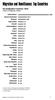 Migration and Remittances: Top Countries Top Immigration Countries a, 010 number of immigrants, millions United States b Russian Federation b Germany b Saudi Arabia b Canada b United Kingdom b Spain b
Entrance Visas in Brazil (Updated on July 08, 2014)
 Ministry of External Relations Immigration Division Padip Holders of diplomatic passports Pasof Holders of official or service passports Entrance Visas in Brazil (Updated on July 08, 2014) Caption Vitem
EMERGENCIES 911 ABROAD
 EMERGENCIES 911 ABROAD If you re in an emergency situation abroad, you ll need to know how to contact the police, an ambulance, or even the fire department. Not every county uses 911 as its emergency contact
AFR EUR MENA NAC SACA SEA WP
 250000 200000 Millions (USD) 150000 100000 50000 0 AFR EUR MENA NAC SACA SEA WP India China USA Russian Federation Brazil Germany Pakistan Japan Indonesia Mexico Bangladesh Egypt France Italy Turkey Thailand
Outsource International Ltd
 Providing global technology solutions for: Carriers Systems Integrators Resellers Outsource Manufacturers International Ltd Government agencies Financial sector Global Technology Solutions Providing global
LIST OF RESOLUTIONS ADOPTED BY THE GENERAL ASSEMBLY AT ITS SIXTY-EIGHTH SESSION ON THE RECOMMENDATION OF THE THIRD COMMITTEE
 LIST OF AT THE LEVEL OF THE THIRD COMMITTEE ITEM 27: SOCIAL DEVELOPMENT ITEM 27 (a) Implementation of the outcome of the World Summit for Social Development and of the twenty-fourth special session of
Lebara Unlimited Plan
 AFGHANISTAN $0.05 $0.19 ALBANIA $0.35 $0.43 ALGERIA $0.28 $0.38 AMERICAN SAMOA $0.15 $0.15 ANDORRA $0.07 $0.44 ANGOLA $0.25 $0.35 ANGUILLA $0.33 $0.33 ANTARCTICA $1.39 $0.00 ANTIGUA AND BARBUDA $0.25 $0.25
Per Minute Rate Unlimited North America
 AT&T U-verse Calling Calling Rates Rates do not include taxes, fees, surcharges. Call destinations and rates are subject to change. An additional per minute rate for international calls terminating on
TWC Phone Service International Rate Table Comparison
 Afghanistan $0.35 $0.35 Included* Included* $1.07 $1.10 Albania $0.15 $0.24 $1.04 $1.23 $1.04 $1.23 Algeria $0.17 $0.36 $0.49 $0.56 $0.49 $0.56 Andorra $0.05 $0.22 $0.46 $0.75 $0.46 $0.75 Angola $0.18
Guidelines for DBA Coverage for Direct and Host Country Contracts
 Guidelines for DBA Coverage for Direct and Host Country Contracts An Additional Help document for ADS Chapter 302 New Reference: 06/14/2007 Responsible Office: OAA/P File Name: 302sap_061407_cd48 BACKGROUND:
Citizens of the following nationalities are exempted from holding a visa when crossing the external borders of the SCHENGEN area:
 WEB SUMMIT BULLETIN VISA The VISA requirement to cross the external borders of the SCHENGEN area it is one of the most important procedural steps for all those participants in the next Web Summit that
International Talk & Text
 International Talk & Text Use your voice plan minutes to call landlines in over 50 countries, including Mexico, Canada and the Dominican Republic Unlimited text messaging to any cell phone in over 200
KYOTO PROTOCOL STATUS OF RATIFICATION
 KYOTO PROTOCOL STATUS OF RATIFICATION Notes: R = Ratification At = Acceptance Ap = Approval Ac = Accession 1. ALBANIA ----- 01/04/05 (Ac) 30/06/05 2. ALGERIA ---- 16/02/05 (Ac) 17/05/05 3. ANTIGUA AND
VoIP Phone Calling Rates
 Afghanistan Default $0.52 Albania Default $0.24 Albania Mobile $0.71 Algeria Default $0.17 Algeria Mobile $0.86 Andorra Default $0.09 Andorra Mobile $0.48 Angola Default $0.21 Angola Mobile $0.24 Anguilla
Dial 00-800-0010, when prompted to enter calling number, enter 800-544-6666 American Samoa 1-800-544-6666 Number can be dialed directly Angola 0199
 National Financial Services International Calling Instructions Albania 00-800-0010 Dial 00-800-0010, when prompted to enter American Samoa 1-800-544-6666 Number can be dialed directly Angola 0199 Dial
INDEX FOR RISK MANAGEMENT RESULTS 2015
 INDEX FOR RISK MANAGEMENT RESULTS 2015 INFORM 2015 INFORM MEASURES THE RISK OF HUMANITARIAN CRISES AND DISASTERS IN 191 COUNTRIES COUNTRY RISK 3 YR TREND Afghanistan 7.88 æ Albania 2.61 à Algeria 4.64
FDI performance and potential rankings. Astrit Sulstarova Division on Investment and Enterprise UNCTAD
 FDI performance and potential rankings Astrit Sulstarova Division on Investment and Enterprise UNCTAD FDI perfomance index The Inward FDI Performance Index ranks countries by the FDI they receive relative
Entrance Visas in Brazil (Updated on November, 24, 2015)
 Ministry of External Relations Immigration Division Padip Holders of diplomatic passports Pasof Holders of official or service passports Entrance Visas in Brazil (Updated on November, 24, 2015) Caption
LOCAL: INTRALATA RATES: COLLECT: PER CALL SERVICE CHARGE: $.75; PER MINUTE CHARGE: $.07 DEBIT: PER CALL SERVICE CHARGE: $.60; PER MINUTE CHARGE: $.
 RATE INFORMATION SHEET LOCAL: (COLLECT: PER CALL SERVICE CHARGE: $.75; CALL RATE $.25 unlimited (~otal $1.00) DEBIT: $.80 INTRALATA RATES: COLLECT: PER CALL SERVICE CHARGE: $.75; PER MINUTE CHARGE: $.07
LIST OF PAYMENT FOR VISA AND SECURITY BOND PAYMENT FOR VISA ( RM )
 LIST OF AND COUNTRY FOR Afghanistan 20 2000 Albania 20 2000 Algeria 20 2000 Angola 20 1500 Antigua and Bermuda - 2000 Argentina 20 2700 Armenia 20 2000 Australia - 1500 Austria ( Vienna ) 20 1500 Azerbaijan*
GLOBAL. 2014 Country Well-Being Rankings. D Social (% thriving) E Financial (% thriving) F Community (% thriving) G Physical (% thriving)
 0 0 GLOBAL 0 Country Rankings 0 0 0 0 0 0 0 0 0 0 0 0 0 0 0 0 0 : >0.0% 0.% 0.0% 0.% 0.0% 0.% 0.0% 0.0% A Country s global rank B in three or more elements of well-being C (% thriving) D (% thriving) E
Mineral Industry Surveys
 4 Mineral Industry Surveys For information contact: Robert L. Virta, Asbestos Commodity Specialist U.S. Geological Survey 989 National Center Reston, VA 20192 Telephone: 703-648-7726, Fax: (703) 648-7757
(b) the details of those who have been given asylum of other country, country-wise during the last three years
 Annexure Table indicating country-wise data on asylum seekers (LS Starred Q No. 232 for answer on 5.8.2015 on Political Asylum ) S.No. Name of Country (a) the total number of Indians who have sought political
INDEX FOR RISK MANAGEMENT
 INDEX FOR RISK MANAGEMENT RESULTS 2016 WELCOME Welcome to the INFORM (Index for Risk Management) 2016 global results report. INFORM is a way to understand and measure the risk of humanitarian crises and
Eligibility List 2015
 The Global Fund adopted an allocation-based approach for funding programs against HIV/AIDS, TB and malaria in 2013. The Global Fund policy states that countries can receive allocation only if their components
CONVENTION FOR THE SUPPRESSION OF UNLAWFUL SEIZURE OF AIRCRAFT SIGNED AT THE HAGUE ON 16 DECEMBER 1970
 CONVENTION FOR THE SUPPRESSION OF UNLAWFUL SEIZURE OF AIRCRAFT SIGNED AT THE HAGUE ON 16 DECEMBER 1970 Entry into force: The Convention entered into force on 14 October 1971. Status: 185 Parties. This
Cisco Global Cloud Index Supplement: Cloud Readiness Regional Details
 White Paper Cisco Global Cloud Index Supplement: Cloud Readiness Regional Details What You Will Learn The Cisco Global Cloud Index is an ongoing effort to forecast the growth of global data center and
These are our call rates from your home phone line to:
 Call rates These are our call rates from your home phone line to: International calls Information Services Operator Services Satellite calls You can find local, national and directory services call rates
JAMAICAN IMMIGRATION DEPARTMENT VISA REQUIREMENTS FOR JAMAICANS TRAVELLING OVERSEAS AND FOREIGNERS COMING TO JAMAICA
 JAMAICAN IMMIGRATION DEPARTMENT VISA REQUIREMENTS FOR JAMAICANS TRAVELLING OVERSEAS AND FOREIGNERS COMING TO JAMAICA COUNTRY ENTRY VISA Foreigners coming to Jamaica AFGHANISTAN Prior to arrival (pta) ALBANIA
What Can I Do With the Data?
 Profile of GMAT Testing: Report Five-Year Summary, TY2011 TY2015 November 2015 Globally, nearly 1.3 million Graduate Management Admission Test (GMAT ) exams have been taken over the past five years by
Consolidated International Banking Statistics in Japan
 Total (Transfer Consolidated cross-border claims in all currencies and local claims in non-local currencies Up to and including one year Maturities Over one year up to two years Over two years Public Sector
Gäller från 2015-06-01
 Alla priser är i kronor per minut inklusive moms. Vissa specialnummer/nät i en del destinationer har annat pris än standardpriserna nedan. Var i världen man ringer från har ingen betydelse på priset, bara
1.1 LIST OF DAILY MAXIMUM AMOUNT PER COUNTRY WHICH IS DEEMED TO BEEN EXPENDED
 1 SUBSISTENCE ALLOWANCE FOREIGN TRAVEL 1.1 LIST OF DAILY MAXIMUM AMOUNT PER COUNTRY WHICH IS DEEMED TO BEEN EXPENDED Albania Euro 97 Algeria Euro 112 Angola US $ 322 Antigua and Barbuda US $ 220 Argentina
Appendix A. Crisis Indicators and Infrastructure Lending
 Appendix A. Crisis Indicators and Infrastructure Lending APPENDIX A Table A.1. Crisis Indicators (Case Study Countries) Country % as Share of GDP Share of in Bank Crisis Severity Score (principal factor
Global Online Business Intelligence Masterfile
 Size of Universe Cost Source Min Order Quantity 5,000 Update Frequency 6,074,363 Names USD 150.00 /M Addresses (Business Addresses Only) USD 175.00 /M Addresses (Named Executives) USD 150.00 /M Addresses
New Technologies and services - Cable Television
 New Technologies and services - Cable Television WORLD: AFRICA provide service Angola Benin Botswana Burkina Faso Burundi applications. Cameroon The relevant licence must be obtained. Cape Verde Central
On-Net to On-Net Per. * Billed in 60 second increments. 1 Formerly found in Section 30.7.4
 1 The international usage rates below apply to Dial-1 calls from the U.S. Mainland, Hawaii, Puerto Rico, and the U.S. Virgin Islands. FONCARD international service is available from the U.S. Mainland,
Withholding Tax Rates 2016*
 Withholding Tax Rates 2016* International Tax Updated March 2016 Jurisdiction Dividends Interest Royalties Notes Albania 15% 15% 15% Algeria 15% 10% 24% Andorra 0% 0% 5% Angola 10% 15% 10% Anguilla 0%
Contact Centers Worldwide
 A Contact Centers Worldwide Country Tel.no. Supported lang. Contact Center Albania Algeria 852 665 00 +46 10 71 66160 Angola 89900 +34 91 339 2121 (Port) and Portuguese +34 913394044 +34 913394023 (Por)
Fiscal Rules and Fiscal Responsibility Frameworks for Growth in Emerging and Low-Income Countries
 Fiscal Affairs Department Effects of Good Government, by Ambrogio Lorenzetti, Siena, Italy, 1338-39 Fiscal Rules and Fiscal Responsibility Frameworks for Growth in Emerging and Low-Income Countries Martine
Standard Virgin Mobile Rates
 Standard Virgin Mobile National Out of Bundle * National Landlines National Mobiles National Texts Data per MB Calls to UPC Customer Care (1908) Voicemail 10c per text 1c per MB International ** UK Landlines
International Fuel Prices 2012/2013
 International Fuel Prices 212/213 8 th Edition Published by International Fuel Prices 212/213 8 th Edition Disclaimer Findings, interpretation and conclusions expressed in this document are based on the
New Zealand =============================== Standard Courier NZD$5.00 Rural Delivery Courier NZD $5.00 + $4.50 = $9.50. Australia (Zona A)
 New Zealand =============================== Standard Courier NZD$5.00 Rural Delivery Courier NZD $5.00 + $4.50 = $9.50 Australia (Zona A) Option 1: Airmail economy - 2-6 working days, no tracking NZD $11.50
SPRINT CALL HOME PREPAID CALLING CARD
 Domestic Dial-1 Calling Dollar Increments Price Per Unit $10 and $20 $0.59 The same per minute rates apply when the card is refreshed. International Calling The cost per call is based on a $0.59 cost per
Fall 2015 International Student Enrollment
 Fall 2015 International Student Enrollment Prepared by The Office of International Affairs Nova Southeastern University Nova Southeastern University International Student Statistics Fall 2015 International
CONVENTION ON INTERNATIONAL CIVIL AVIATION SIGNED AT CHICAGO ON 7 DECEMBER 1944
 State CONVENTION ON INTERNATIONAL CIVIL AVIATION SIGNED AT CHICAGO ON 7 DECEMBER 1944 Entry into force: The Convention entered into force on 4 April 1947. Status: 191 parties. This list is based on information
INSTRUCTIONS FOR COMPLETING THE USAID/TDA DEFENSE BASE ACT (DBA) APPLICATION
 INSTRUCTIONS FOR COMPLETING THE USAID/TDA DEFENSE BASE ACT (DBA) APPLICATION Full Name of Insured or Company and Complete Mailing Address: This is whoever has the contract with USAID. Generally, it is
Ensure that the HRTWS is included in the Declaration of the Post-2015 Development Agenda
 Ensure that the HRTWS is included in the Declaration of the Post-2015 Development Agenda SOCIAL MEDIA STRATEGY SHEET Join us for a weeklong Twitter campaign (Monday 27 April- Friday 1 May) Campaign background:
Only available to Business Complete customers who disconnect their Local service with MCI.
 Long Distance Complete for Business International Calling Plan Only available to Business Complete customers who disconnect their Local service with MCI. Discounted rates 24 hours a day, 7 days a week
International calls Standard rates without a calling plan
 If you don t select or already have a call plan, the standard call charges from UK landlines to international landlines across the world are shown below. To save money on international calls as well as
World Health Organization (WHO) estimates of tuberculosis incidence by country, 2014
 World Health Organization (WHO) estimates of tuberculosis incidence by country, 2014 Definition of high incidence With reference to the National Institute for Health and Clinical Excellence (NICE) recommendations
PAY MONTHLY ADDITIONAL SERVICES TERMS AND CONDITIONS
 4GEE PHONE PLANS ADDITIONAL SERVICES (ALL STANDARD 12 & 24 MONTH PLANS INCLUDING SIM ONLY PLANS) The following add-ons are available on your plan. We reserve the right to change the add-ons available to
Poorest Countries of the World: Projections upto 2018
 Poorest Countries of the World: Projections upto 2018 By Dunya News http://www.dunyanews.tv Author: Anis uddin Shiekh ([email protected]) December 2013 Copyright Dunya News 1 Introduction Poverty
JAMAICA IMMIGRATION UNIT
 AFGHANISTAN pta ALBANIA poe ALGERIA - pta ANDORRA poe ANGOLA pta ANTIGUA & BARBUDA ARGENTINA 30 days 30 days ARMENIA - poe pta AUSTRALIA AUSTRIA 90 days pta (Schengen AZERBAIJAN - poe pta BAHAMAS BAHRAIN
The International Call Rates for the following retired plans can be found in this document:
 Retired International Call Charges The International Call s for the following retired plans can be found in this document: 1. Small Business Classic Standard International Call s 2. Small Business Classic
The World Market for Medical, Surgical, or Laboratory Sterilizers: A 2013 Global Trade Perspective
 Brochure More information from http://www.researchandmarkets.com/reports/2389480/ The World Market for Medical, Surgical, or Laboratory Sterilizers: A 2013 Global Trade Perspective Description: This report
Adobe Creative Cloud Availability
 Adobe Availability Countries/Regions for teams for teams United States Afghanistan Albania Algeria Andorra Angola Anguilla Antigua & Barbuda Argentina Armenia Aruba Australia Austria Azerbaijan Bahamas
ISO is the world s largest developer of voluntary international
 The ISO Survey 2005 ISO and The ISO Survey ISO is the world s largest developer of voluntary international standards for business, government and society. Its portfolio at the beginning of June 2006 comprised
TRANSFERS FROM AN OVERSEAS PENSION SCHEME
 PENSIONS PROFILE DECEMBER 2011 TRANSFERS FROM AN OVERSEAS PENSION SCHEME = Summary A simplified guide to the process: 1. Individual requests transfer from their overseas pension scheme to their UK registered
VISA REQUIREMENTS FOR ALL COUNTRIES
 COUNTRY VISA REQUIRED REMARKS Afghanistan Islamic State of Afghanistan Albania Republic of Albania Business/Vacation Yes Visa not required for visits of up to thirty (30) days. Algeria Democratic and Popular
Senate Committee: Education and Employment. QUESTION ON NOTICE Budget Estimates 2015-2016
 Senate Committee: Education and Employment QUESTION ON NOTICE Budget Estimates 2015-2016 Outcome: Higher Education Research and International Department of Education and Training Question No. SQ15-000549
CONVENTION ON OFFENCES AND CERTAIN OTHER ACTS COMMITTED ON BOARD AIRCRAFT SIGNED AT TOKYO ON 14 SEPTEMBER 1963
 CONVENTION ON OFFENCES AND CERTAIN OTHER ACTS COMMITTED ON BOARD AIRCRAFT SIGNED AT TOKYO ON 14 SEPTEMBER 1963 Entry into force: Convention entered into force on 4 December 1969. Status: 186 Parties. State
Euler Hermes Country Risk Ratings JUNE 2014 REVIEW
 Euler Hermes Risk s Afghanistan D High Albania D High Algeria C Medium American Samoa A Low Andorra AA Low Angola C Sensitive Anguilla BB Low Antarctica AA Low Antigua & Barbuda C Sensitive Argentina D
Euler Hermes Country Risk Ratings SEPTEMBER 2014 REVIEW
 Euler Hermes Risk s Afghanistan D 4 (High) Albania D 4 (High) Algeria C 2 (Medium) American Samoa A 1 (Low) Andorra AA 1 (Low) Angola C 3 (Sensitive) Anguilla BB 1 (Low) Antarctica AA 1 (Low) Antigua &
Euler Hermes Country Risk Ratings JUNE 2016 REVIEW
 Euler Hermes Risk s Afghanistan D 4 (High) Albania D 4 (High) Algeria C 2 (Medium) American Samoa A 1 (Low) Andorra AA 1 (Low) Angola C 3 (Sensitive) Anguilla BB 1 (Low) Antarctica AA 1 (Low) Antigua &
Introducing Clinical Trials Insurance Services Ltd
 Introducing Clinical Trials Insurance Services Ltd Important Staff Richard Kelly Managing Director Richard joined CTIS in 2006 having previously managed the Pharmaceutical wholesale division at Heath Lambert
CONTENTS THE UNITED NATIONS' HIGH COMMISSIONER FOR REFUGEES (UNHCR)
 CONTENTS HIGH COMMISSIONER FOR REFUGEES (UNHCR) 1. INTRODUCTION...2 2. UNHCR HANDBOOK...2 3. CONTACT WITH UNHCR...2 4. UNHCR DATABASE...3 5. UNHCR HEADQUARTERS...3 ANNEX A. LIST OF STATES PARTY TO THE
MCI Business Complete Unlimited
 MCI Business Complete Unlimited Only available in areas where MCI offers Local Service and customers must be enrolled in corresponding MCI Business Complete Local Product to receive benefits of this plan.
World Health organization/ International Society of Hypertension (WH0/ISH) risk prediction charts
 World Health organization/ International Society of Hypertension (WH0/ISH) risk prediction charts (charts in colour) 2 1. Introduction 2. Instructions on how to use WHO/ISH (World Health Organization/International
DOMESTIC INTERSTATE DIRECT DIAL RATES INTERNATIONAL DIRECT DIAL RATES
 DOMESTIC INTERSTATE DIRECT DIAL RATES INTERNATIONAL DIRECT DIAL RATES RGTS offers several different rate plans for direct dialed domestic interstate calls, which are described on pages 2 through 5, below.
THE ADVANTAGES OF A UK INTERNATIONAL HOLDING COMPANY
 THE ADVANTAGES OF A UK INTERNATIONAL HOLDING COMPANY Ideal Characteristics for the Location of an International Holding Company Laurence Binge +44 (0)1372 471117 [email protected] www.woolford.co.uk
SCALES OF ASSESSMENTS AND CURRENCY OF MEMBER STATES CONTRIBUTIONS FOR 2016-2017 OUTLINE
 38th Session, Paris, 2015 38 C 38 C/37 26 August 2015 Original: English Item 9.3 of the provisional agenda SCALES OF ASSESSMENTS AND CURRENCY OF MEMBER STATES CONTRIBUTIONS FOR 2016-2017 OUTLINE Source:
questvoice - VoIP Traiffs v1.1 September 2013
 questvoice - VoIP Traiffs v1.1 September 2013 The following is a list of basic, standard tariffs for all questvoice VoIP and SIP services. We are able to tailor a tariff to your business's needs - please
Global Dialing Comment. Telephone Type. AT&T Direct Number. Access Type. Dial-In Number. Country. Albania Toll-Free 00-800-0010 888-426-6840
 Below is a list of Global Access Numbers, in order by country. If a Country has an AT&T Direct Number, the audio conference requires two-stage dialing. First, dial the AT&T Direct Number. Second, dial
Technical & Trade School Lines World Report
 Brochure More information from http://www.researchandmarkets.com/reports/1836899/ Technical & Trade School Lines World Report Description: TECHNICAL & TRADE SCHOOL LINES WORLD REPORT The Technical & Trade
How Much Does a Standard Broadband Talk Call Cost
 International Tariff Guide for Residential Customers Prices from February 23 rd 2015 Notes 15.97p call set-up fee applies to Standard BT international rate calls made with Unlimited Weekend Calls, Unlimited
CONVENTION FOR THE UNIFICATION OF CERTAIN RULES FOR INTERNATIONAL CARRIAGE BY AIR DONE AT MONTREAL ON 28 MAY 1999
 State CONVENTION FOR THE UNIFICATION OF CERTAIN RULES FOR INTERNATIONAL CARRIAGE BY AIR DONE AT MONTREAL ON 28 MAY 1999 Entry into force: The Convention entered into force on 4 November 2003*. Status:
Global Hotel Review (Media Version)
 United Kingdom United States Blue Fin Building 735 East Main Street 110 Southwark Street Hendersonville London SE1 0TA TN 37075 Phone: +44 (0)20 7922 1930 Phone: +1 (615) 824 8664 Fax: +44 (0)20 7922 1931
Global Hotel Review (Media Version)
 United Kingdom United States Blue Fin Building 735 East Main Street 110 Southwark Street Hendersonville London SE1 0TA TN 37075 Phone: +44 (0)20 7922 1930 Phone: +1 (615) 824 8664 Fax: +44 (0)20 7922 1931
CORRELATES OF CORRUPTION
 CORRELATES OF CORRUPTION BO ROTHSTEIN SÖREN HOLMBERG WORKING PAPER SERIES 2011:12 QOG THE QUALITY OF GOVERNMENT INSTITUTE Department of Political Science University of Gothenburg Box 711, SE 405 30 GÖTEBORG
Vodafone Mobile Postpaid Tariff: Consumer
 General Tariff information Service Provider Name Qatar Q.S.C License Public Mobile Telecommunications Networks and Services License Tariff Number CPP 1.1 Service Name Postpaid Tariff Type Consumer Tariff
LESOTHO VISAS CAN BE ACQUIRED AT THE FOLLOWING PLACES IN SOUTH AFRICA IF REQUIRED:
 LIST OF COUNTRIES WHOSE CITIZENS REQUIRE/DO T REQUIRE VISAS TO ENTER THE KINGDOM OF LESOTHO 1. The ENTRY against a country s name means its citizens always require a Visa to enter Lesotho 2. The ENTRY
List of Agreements on Mutual Visa Exemption. Between the People s Republic of China and Foreign Countries
 List of Agreements on Mutual Visa Exemption Between the People s Republic of China and Foreign Countries (In alphabetical order of foreign countries) Last Update: May 9, 2015 No. Foreign Country Passport
How To Calculate The Lorenz Curve
 FACT SHEET 1. Overview 1.1 Developed by an Italian statistician Corrado in the 1910s, is commonly used to indicate income inequality in a society. is a number which has a value between zero and one. As
Expression of Interest in Research Grant Applications
 INTERNATIONAL CENTRE FOR GENETIC ENGINEERING AND BIOTECHNOLOGY THE ACADEMY OF SCIENCES FOR THE DEVELOPING WORLD UNITED NATIONS EDUCATIONAL, SCIENTIFIC AND CULTURAL ORGANIZATION ICGEB-TWAS-UNESCO/IBSP Joint
HEALTHIEST COUNTRIES 1 to 40
 BLOOMBERG RANKINGS THE WORLD'S HEALTHIEST COUNTRIES HEALTHIEST COUNTRIES 1 to 40 1 Singapore 89.45% 92.52% 3.07% 2 Italy 89.07 94.61 5.54 3 Australia 88.33 93.19 4.86 4 Switzerland 88.29 93.47 5.17 5 Japan
Population below the poverty line Rural % Population below $1 a day % Urban % Urban % Survey year. National %
 2.7 International the the Afghanistan.................... Albania 2002 29.6 19.8 25.4...... 2002 a
Directory & Mailing List Publisher Lines World Report
 Brochure More information from http://www.researchandmarkets.com/reports/1836438/ Directory & Mailing List Publisher Lines World Report Description: DIRECTORY & MAILING LIST PUBLISHER LINES WORLD REPORT