
How To Stage A Pressure Ulcer
|
|
|
- Shawn Palmer
- 5 years ago
- Views:
Transcription
1 WOCN Society Position Statement: Pressure Ulcer Staging Originated By: Wound Committee Date Completed: 1996 Reviewed/Revised: July 2006 Revised: August 2007 Reviewed/Revised: April 2011 Definition of Pressure Ulcer: Pressure ulcers are localized injury to the skin and/or underlying tissue usually over a bony prominence (e.g., the sacrum, trochanter, ischium, or heel), as a result of pressure, or pressure in combination with shear and/or friction. In 2009, the National Pressure Ulcer Advisory Panel (NPUAP/EPUAP) defined a pressure ulcer as localized injury to the skin and/or underlying tissue usually over a bony prominence, as a result of pressure, or pressure in combination with shear. Friction generates shear and when friction is high, the shear is also high, so the inclusion of shear presumes the presence of friction (L. Edsberg, personal communication February, 2010; WOCN, 2010, p. 1). Statement of Position: The Wound, Ostomy and Continence Nurses Society (WOCN) supports the use of the National Pressure Ulcer Advisory Panel Staging System (NPUAP, 2007; NPUAP-EPUAP, 2009; WOCN, 2010). Purpose of Statement: WOCN supports universally recognized terminology and descriptors in the staging of pressure ulcers. WOCN recognizes the importance of staging in the management of acute and chronic pressure ulcers. Accurate assessment, reassessment and documentation are critical for providing evidence of healing, failure to heal or deterioration. Effective communication regarding pressure ulcer staging requires the use of accurate and universally recognized terminology and descriptors. 1

2 History: A number of systems have been developed over the years for the classification or staging of pressure ulcers. The staging system currently recommended by WOCN is based on the NPUAP updated staging system (NPUAP, 2007; NPUAP-EPUAP, 2009). Supportive Statements: 1. Staging of pressure ulcers is only one dimension of comprehensive pressure ulcer assessment and documentation. 2. Education should be provided by wound care experts to other medical, nursing and lay personnel (including Medicare surveyors, regulatory agencies and third party payers) about the appropriate implementation of the NPUAP Staging System. 3. The use of descriptors is needed to accurately convey the true state of the pressure ulcer in addition to documenting the stage. 4. Pressure ulcer staging requires knowledge of the skin and underlying structures and tissues. 5. Assigning a stage is based on visual inspection and classification of the stage is based on visible tissue loss (NPUAP-EPUAP, 2009). 6. Accuracy of pressure ulcer staging may vary depending on the proficiency of the evaluator. Conclusions: It is within the scope of practice of registered nurses to identify skin alterations as pressure ulcers and stage them (Patton, 2010). Recommendations: 1. Pressure ulcers should be staged according to the NPUAP staging system (NPUAP 2007; NPUAP-EPUAP, 2009). a. Suspected Deep Tissue Injury Purple or maroon localized area of discolored intact skin or blood-filled blister due to damage of underlying soft tissue from pressure and/or shear. The area may be preceded by tissue found to be painful, firm, mushy, boggy, warmer or cooler as compared to adjacent tissue. Deep tissue injury may be difficult to detect in individuals with dark skin tones. Evolution may include a thin blister over a dark wound bed. The wound may 2

3 further evolve and become covered by thin eschar. Evolution may be rapid, exposing additional layers of tissue even with optimal treatment. b. Stage I Intact skin with non-blanchable redness of a localized area usually over a bony prominence. Darkly pigmented skin may not have visible blanching; its color may differ from the surrounding area. The area may be painful, firm, soft, warmer or cooler as compared to adjacent tissue. Stage I may be difficult to detect in individuals with dark skin tones. May indicate at risk persons (a heralding sign of risk). c. Stage II Partial thickness loss of dermis presented as a shallow open ulcer with a red pink wound bed, without slough. May also present as an intact or open/ruptured serumfilled blister. Presents as a shiny or dry shallow ulcer without slough or bruising.* This stage should not be used to describe skin tears, tape burns, perineal dermatitis, maceration or excoriation. *Bruising indicates suspected deep tissue injury d. Stage III Full thickness tissue loss. Subcutaneous fat may be visible but bone, tendon or muscle is not exposed. Slough may be present but does not obscure the depth of tissue loss. May include undermining and tunneling. The depth of a Stage III pressure ulcer varies by anatomical location. The bridge of the nose, ear, occiput and malleolus do not have subcutaneous tissue and Stage III ulcers can be shallow. In contrast, areas of significant adiposity can develop extremely deep Stage III pressure ulcers. Bone/tendon is not visible or directly palpable. e. Stage IV Full thickness tissue loss with exposed bone, tendon or muscle. Slough or eschar may be present on some parts of the wound bed. Often include undermining and tunneling. The depth of a Stage IV pressure ulcer varies by anatomical location. The bridge of the nose, ear, occiput and malleolus do not have subcutaneous tissue and these ulcers can be shallow. Stage IV ulcers can extend into muscle and/or supporting 3

4 structures (e.g., fascia, tendon or joint capsule) making osteomyelitis possible. Exposed bone/tendon is visible or directly palpable. f. Unstageable Full thickness tissue loss in which the base of the ulcer is covered by slough (yellow, tan, gray, green, or brown) and/or eschar (tan, brown, or black) in the wound bed. Until enough slough and/or eschar is removed to expose the base of the wound, the true depth, and therefore stage, cannot be determined. Stable (dry, adherent, intact without erythema or fluctuance) eschar on the heel serves as the body s natural (biological) cover and should not be removed. 2. Staging of Healing Pressure Ulcers The staging system, as recommended by the NPUAP and WOCN, does not support down-staging or reverse staging of granulating pressure ulcers. Downstaging or reverse staging of granulating pressure ulcers, is not appropriate, because the full-thickness repair process involves replacement of the lost normal tissue with granulation tissue (NPUAP, 2000). For example, a granulating Stage IV pressure ulcer should not be down-staged to a Stage III, because a Stage III pressure ulcer, by definition, is one with exposed subcutaneous tissue. Therefore, a granulating Stage IV pressure ulcer is most appropriately classified as a granulating Stage IV or healing Stage IV. If the Stage IV pressure ulcer is completely healed, it can be classified as a healed Stage IV, which conveys the pressure ulcer is now filled with granulation tissue and resurfaced with epithelium. When the original depth of the pressure ulcer is unknown and it is resurfaced, the stage cannot be determined by observation. However, when the pressure ulcer is resurfaced, with contracted scar tissue present, the healed pressure ulcer should be described as evidence of a resurfaced full-thickness pressure ulcer or evidence of a resurfaced pressure ulcer of undetermined full-thickness depth. 3. Staging of Pressure Ulcers Totally or Partially Covered with Slough or Eschar Pressure ulcers totally or partially covered with slough or eschar cannot be staged until the deepest viable tissue layer or identifiable structure is exposed, because the deepest viable tissue layer is unknown. It is appropriate to document the size, location and appearance of the ulcer as well as the status of the surrounding tissue, and to document staging cannot be completed until the pressure ulcer base is visible. Pressure ulcers partially covered with necrotic tissue, but with identifiable muscle, bone or supporting structures (e.g., tendon, joint capsule) visible in the pressure 4

5 ulcer base, can be staged as a Stage IV with necrotic tissue because the exposed tissue clearly indicates the ulcer meets the criteria for the most severe pressure ulcer stage. In contrast, a pressure ulcer partially covered with necrotic tissue with viable subcutaneous tissue visible in the pressure ulcer base cannot be staged, because pressure ulcers penetrating only to the subcutaneous tissue are appropriately classified as a Stage III, and debridement of the remaining necrotic tissue may reveal an area of greater depth such as exposed muscle or bone, indicating the pressure ulcer s true depth is Stage IV. 4. The pressure ulcer staging system should not be used for classification of other types of wounds. 5. Pressure ulcers on mucous membranes (associated with a history of a medical device in use at the location of the ulcer) should not be staged using the pressure ulcer staging system and should be labeled as mucosal pressure ulcers without a stage identified (Black et al., 2010; NPUAP-EPUAP, 2009). References Black, J., Baharestani, M., Conner-Kerr, T., Edsberg, L., Langemo, D., Posthauer, M., & Spahn, J. Mucosal pressure ulcers. An NPUAP Position Statement. Retrieved January 3, 2011 from National Pressure Ulcer Advisory Panel (NPUAP). (2000). The facts about reverse staging in 2000: The NPUAP position statement. Retrieved January 3, 2011 from National Pressure Ulcer Advisory Panel (NPUAP). (2007). Updated Pressure Ulcer Stages. Retrieved January 3, 2011 from National Pressure Ulcer Advisory Panel (NPUAP) and European Ulcer Advisory Panel (EPUAP). (2009). Prevention and treatment of pressure ulcers: Clinical practice guideline. Washington, DC: National Pressure Ulcer Advisory Panel. Patton, R. (2010). Is diagnosis of pressure ulcers within an RN's scope of practice? American Nurse Today, 5, 20. Wound, Ostomy and Continence Nurses Society (WOCN). (2010). Guideline for Prevention and Management of Pressure Ulcers. Mt. Laurel, NJ: Author. Approved by the WOCN Society Board of Directors: April 19,

Position Statement: Pressure Ulcer Staging
 Position Statement: Pressure Ulcer Staging Statement of Position The Wound, Ostomy and Continence Nurses (WOCN) Society supports the use of the National Pressure Ulcer Advisory Panel Staging System (NPUAP).
7/11/2011. Pressure Ulcers. Moisture-NOT Pressure. Wounds NOT Caused by Pressure
 Assessment and Documentation of Pressure Ulcers Jeri Ann Lundgren, RN, BSN, PHN, CWS, CWCN Pathway Health Services July 19, 2011 Training Objectives Describe etiologies of pressure ulcers Discuss how to
OASIS-C Integument Assessment: Not for Wimps! Part I: Pressure Ulcers
 OASIS-C Integument Assessment: Not for Wimps! Part I: Pressure Ulcers Presented by: Rhonda Will, RN, BS, COS-C, HCS-D Assistant Director, OASIS Competency Institute 243 King Street, Suite 246 Northampton,
Pressure Ulcers Assessing and Staging. Anne Pirzadeh RN CWOCN University of Colorado Hospital June 2010
 Pressure Ulcers Assessing and Staging Anne Pirzadeh RN CWOCN University of Colorado Hospital June 2010 Never Events: Pressure Ulcers Pressure Ulcer Codes: MD documentation of pressure ulcers determines
Wound, Ostomy and Continence Nurses Society s Guidance on OASIS-C1 Integumentary Items: Best Practice for Clinicians
 Wound, Ostomy and Continence Nurses Society s Guidance on OASIS-C1 Integumentary Items: Best Practice for Clinicians Acknowledgments Wound, Ostomy and Continence Nurses Society s Guidance on OASIS-C1 Integumentary
WOUND OSTOMY CONTINENCE NURSES SOCIETY GUIDANCE ON OASIS-C INTEGUMENTARY ITEMS
 Wound Ostomy Continence Nurses Society Guidance on OASIS-C Integumentary Items WOCN OASIS Taskforce Members: Ben Peirce (Chairperson), RN, BA, CWOCN, COS-C Dianne Mackey, BSN, RN, PHN, CWOCN Laurie McNichol,
Pressure Ulcers in Neonatal Patients. Rene Amaya, MD Pediatric Specialists of Houston Infectious Disease/Wound Care
 Pressure Ulcers in Neonatal Patients Rene Amaya, MD Pediatric Specialists of Houston Infectious Disease/Wound Care Objectives Review skin anatomy and understand why neonatal skin is at increased risk for
Pressure Injury Prevention and Management Policy
 Pressure Injury Prevention and Management Policy Owner (initiating the document): Dr Amanda Ling Contact name and number: Rachel Dennis (Ph: 9222 2197) Version: 1.5 Approved by: Professor Bryant Stokes,
PRESSURE ULCER GUIDELINES FOR TOPICAL TREATMENT
 PRESSURE ULCER GUIDELINES FOR TOPICAL TREATMENT The following are suggested guidelines for treatment of pressure ulcers using products from Swiss-American Products, Inc. and are intended to supplement
Objectives- Participants will:
 Pressure Ulcer Staging Elizabeth A. Ayello PhD, RN, ACNS-BC, CWON, ETN, MAPWCA, FAAN Clinical Editor, Advances in Skin and Wound Care Faculty, Excelsior College School of Nursing Co-Director and Course
SECTION M: SKIN CONDITIONS. M0100: Determination of Pressure Ulcer Risk. Item Rationale Health-related Quality of Life.
 SECTION M: SKIN CONDITIONS Intent: The items in this section document the risk, presence, appearance, and change of pressure ulcers. This section also notes other skin ulcers, wounds, or lesions, and documents
Pressure Ulcers Risk Management and Treatment
 Pressure Ulcers Risk Management and Treatment Objectives State reasons why individuals initiate lawsuits. Define strategies to reduce the risk of litigation. Determine appropriate treatment for the patient.
Skin & Wound Care Prevention & Treatment. By Candy Houk, RN Skin & Wound Program Manager
 Skin & Wound Care Prevention & Treatment By Candy Houk, RN Skin & Wound Program Manager OBJECTIVES Classify Stage 1 and 2 pressure ulcers Recognize suspected Stage 3, 4, DTI, and unstageable pressure ulcers
Wound and Skin Assessment. Mary Carvalho RN, BSN, MBA Clinical Coordinator Johnson Creek Wound and Edema Center
 Wound and Skin Assessment Mary Carvalho RN, BSN, MBA Clinical Coordinator Johnson Creek Wound and Edema Center Skin The largest Organ Weighs between 6 and 8 pounds Covers over 20 square feet Thickness
Wound Classification Name That Wound Sheridan, WY June 8 th 2013
 Initial Wound Care Consult Sheridan, WY June 8 th, 2013 History Physical Examination Detailed examination of the wound Photographs Cultures Procedures TCOM ABI Debridement Management Decisions A Detailed
Pressure Ulcer Passport
 Pressure Ulcer Passport Information for patients This is a record of the treatment you are receiving for your pressure ulcer injury. Please bring it with you to all your healthcare appointments. This will
PERFORMANCE MEASURE TECHNICAL SPECIFICATIONS
 PERFORMANCE MEASURE TECHNICAL SPECIFICATIONS 1. Rate of Emergency Department Visits The number of visits experienced by PACE participants to acute care hospital Emergency Departments, urgent care clinics,
9/20/2013. Webinar Guidelines. September 26, 2013 12-1:00 pm ET. 1 hour presentation by Dr. Elizabeth Ayello including a discussion period at the end.
 Medicaid Redesign Team Gold STAMP Project Webinar Staging, Measuring and Documenting Pressure Ulcers September 26, 2013 12-1:00 pm ET This project is funded through a Memorandum of Understanding with the
How To Prevent Pressure Ulcer
 Pressure ulcers prevention and treatment A Coloplast quick guide Table of Contents Pressure ulcers prevention and treatment... 3 What is a pressure ulcer?... 4 How do pressure ulcers occur?... 5 Who develops
REGION D MEDICARE GROUP 2 PRESSURE REDUCING SUPPORT SUFACE. Documentation Checklist Local Coverage Determination (LCD)
 REGION D MEDICARE GROUP 2 PRESSURE REDUCING SUPPORT SUFACE Documentation Checklist Local Coverage Determination (LCD) Disclaimer: The ROHO Group gathered these documents from various sources as an educational
Skin/Wound Referral Resource
 Skin/Wound Referral Resource This resource was designed by the University of Michigan Health System Multidisciplinary Pressure Ulcer Prevention Committee for nursing and physician use. This document s
Identifying Hard to Detect Pressure Ulcers in Individuals
 Identifying Hard to Detect Pressure Ulcers in Individuals with Dark Skin Tones Sheila Carter, MSN, RN FNP BC, CWON, CFCN Pam Damron, MSN, RN, CWON Patricia Moore, RN, ASN, CWCN Jennifer Vandiver, RN, BSN,
S O S TOOLKIT FOR PRESSURE ULCER PREVENTION AND TREATMENT SAV E O KL A HOMA S S K I N A SYSTEMS APPROACH TO QUALITY IMPROVEMENT IN HEALTH CARE
 S O S SAV E O KL A HOMA S S K I N A SYSTEMS APPROACH TO QUALITY IMPROVEMENT IN HEALTH CARE TOOLKIT FOR PRESSURE ULCER PREVENTION AND TREATMENT S K I N A Systems Approach to Quality Improvement in Health
Pressure injuries prevention and treatment
 After 30 years in wound care, we at Coloplast believe that absorption is the key to better healing. Our Biatain portfolio brings superior absorption to daily wound care needs, making Biatain the simple
Introduction Suggested Citation
 Introduction This Quick Reference Guide summarizes evidence-based guidelines on pressure ulcer prevention and treatment. It was developed as a 4-year collaborative effort between the European Pressure
Diabetic Foot Ulcers and Pressure Ulcers. Laurie Duckett D.O. Plastic and Reconstructive Surgeon Oklahoma State University Center for Health Sciences
 Diabetic Foot Ulcers and Pressure Ulcers Laurie Duckett D.O. Plastic and Reconstructive Surgeon Oklahoma State University Center for Health Sciences Lecture Objectives Identify risk factors Initiate appropriate
5 Pressure Ulcer Classification
 5 Pressure Ulcer Classification Carol Dealey and Christina Lindholm Introduction Pressure ulcer classification is a method of determining the severity of a pressure ulcer. A classification system describes
WOUND MANAGEMENT PROTOCOLS WOUND CLEANSING: REMOVING WOUND DEBRIS FROM WOUND BASE
 WOUND MANAGEMENT PROTOCOLS PURPOSE: Provide nursing personnel with simple guidance regarding appropriate dressing selection in the absence of wound specialist expertise Identify appropriate interventions
Wound Healing. Healing is a matter of time, but it is sometimes also a matter of opportunity. Hippocrates
 C HAPTER 9 Wound Healing Healing is a matter of time, but it is sometimes also a matter of opportunity. Hippocrates As the above quote suggests, conduct regular and systematic wound assessments, and seize
Pressure Reducing Support Surfaces - Group 2 (L33642)
 Pressure Reducing Support Surfaces - Group 2 (L33642) Contractor Information Contractor Name Contract Number Contract Type NHIC, Corp. 16003 DME MAC LCD Information LCD ID L33642 Original ICD-9 LCD ID
Unraveling the Pressure Ulcer and Wound Care Sections of OASIS-C
 Special Feature Unraveling the Pressure Ulcer and Wound Care Sections of OASIS-C by Clay E. Collins, RN, BSN, CWOCN, CFCN, CWS It s finally here! The long-awaited OASIS-C data collection tool for home
Health Care Protocol: Pressure Ulcer Prevention and Treatment Protocol. Protocol Reviewed with No Recommended Changes (March 2014):
 Health Care Protocol: Pressure Ulcer Prevention and Treatment Protocol Protocol Reviewed with No Recommended Changes (March 2014): The ICSI Pressure Ulcer Prevention and Treatment Protocol were scheduled
FUNCTIONS OF THE SKIN
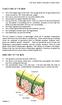 FUNCTIONS OF THE SKIN Skin is the largest organ of the body. The average adult has 18 square feet of skin which account for 16% of the total body weight. Skin acts as a physical barrier for you to the
APPLICATION OF DRY DRESSING
 G-100 APPLICATION OF DRY DRESSING PURPOSE To aid in the management of a wound with minimal drainage. To protect the wound from injury, prevent introduction of bacteria, reduce discomfort, and assist with
Common Pathology Diagnoses: ICD-9 to ICD-10 Mapping
 PERFORMANCE THAT MATTERS NUMBER OF CODES 14,000 69,000 ICD-9 DIAGNOSIS CODES ICD-10 DIAGNOSIS CODES CODE STRUCTURE ICD-9-CM CODE FORMAT ICD-10-CM CODE FORMAT X X X X X X X X X X X X CATEGORY ETIOLOGY,
Wound Care: The Basics
 Wound Care: The Basics Suzann Williams-Rosenthal, RN, MSN, WOC, GNP Norma Branham, RN, MSN, WOC, GNP University of Virginia May, 2010 What Type of Wound is it? How long has it been there? Acute-generally
Reducing Hospital. of Pressure Damage. Spread the Learning and celebrate the successes
 Reducing Hospital Acquired Pressure Ulcers Prevention & Management of Pressure Damage Spread the Learning and celebrate the successes Prevalence & Cost Prevalence ranges from 10% to 18% in the UK (Clark
Wound Assessment. Michelle Moore RN, MSN, WCC Wound Care Education Institute
 Michelle Moore RN, MSN, WCC Wound Care Education Institute WOUND ASSESSMENT Michelle Moore RN, MSN, WCC Wound Care Education Institute www.wcei.net Objectives: Upon completion of this program, the participant
The Role of Modern Wound Dressings in Stage I Pressure Ulcers and Patients at Risk of Pressure Ulcer Formation
 The Role of Modern Wound Dressings in Stage I Pressure Ulcers and Patients at Risk of Pressure Ulcer Formation Helen Shaw, BSc (Hons), ConvaTec Research and Development Rachel Mathison, Msc, BSc (Hons),
The Role of Modern Wound Dressings in Stage I Pressure Ulcers and Patients at Risk of Pressure Ulcer Formation
 The Role of Modern Wound Dressings in Stage I Pressure Ulcers and Patients at Risk of Pressure Ulcer Formation Helen Shaw, BSc (Hons), ConvaTec Research and Development Rachel Mathison, Msc, BSc (Hons),
Illinois Department of Public Health STATEMENT OF DEFICIENCIES AND PLAN OF CORRECTION. Statement of LICENSURE Violations
 (X1) PROVER/SUPPLIER/CLIA ENTIFICATION NUMBER: (X3) SURVEY D NAME OF PROVER OR SUPPLIER (X4) SUMMARY REGULATORY OR LSC ENTIFYING INFORMATION) PROVER'S PLAN OF CORRECTION Final Observations Statement of
HCPCS AMERIGEL HYDROGEL DRESSINGS CODING GUIDANCE FOR:
 HCPCS CODING GUIDANCE FOR: AMERIGEL HYDROGEL DRESSINGS FORM 1500 MUST HAVE THE FOLLOWING: APPROPRIATE HCPCS CODE APPROPRIATE A MODIFIER ACCURATE POS = 12 The Centers for Medicare and Medicaid Services
Beverlin Allen, PhD, RN, MSN, ARNP
 Pressure Ulcers & Nutritional Deficits in Elderly Long-Term Care Patients: Effects of a Comprehensive Nutritional Protocol on Pressure Ulcer Healing, Length of Hospital Stay & Health Care Charges Beverlin
Silicone pressure-reducing pads for the prevention and treatment of pressure ulcers
 S46 Product focus Silicone pressure-reducing pads for the prevention and treatment of pressure ulcers Abstract Pressure ulcers, a key quality of care indicator, cause emotional distress to the patient,
A REVIEW OF PRESSURE ULCERS
 A REVIEW OF PRESSURE ULCERS VIGILANCE, ASSESSMENT, PREVENTION AND TREATMENT Brijesh Patadia, MD* Eliot Mostow, MD, MPH PRESENTATION OVERVIEW Introduction of Subject Statistics Pressure Sore Staging Pictures
NURSING POLICY: S-101 Skin Care Protocol: Prevention and Treatment of Pressure Ulcers and Non- Pressure Related Wounds: Adults and Pediatrics
 NURSING POLICY: S-101 Skin Care Protocol: Prevention and Treatment of Pressure Ulcers and Non- Pressure Related Wounds: Adults and Pediatrics Date Written: 3/1981 Date Reviewed/Revised: 11/2012 Page 1
7/30/2012. Increased incidence of chronic diseases due
 Dianne Rudolph, DNP, GNP bc, CWOCN Discuss management of wound care in older adults with focus on lower extremity ulcers Identify key aspects of prevention Explain basic principles of wound management
TERM ABRIEVIATION DEFINITION PICTURE/DIAGRAM
 Abrasion Wearing away of the skin through some mechanical process (friction or trauma) Abscess Localized collection of pus in any part of the body. Acute Wound Albumin A wound induced by surgery or trauma
Pressure Ulcers: Facility Assessment Checklists
 Pressure Ulcers: Facility Assessment Checklists This is a series of self-assessment checklists for nursing home staff to use to assess processes related to managing pressure ulcers in the facility, in
Pressure Ulcer Prevention
 A Reference Guide for Community Health Care Teams To be used in conjunction with the; Nottingham CityCare Partnership Policy for the Prevention of Pressure Ulcers Useful links Pressure Ulcer Prevention
OASIS-C Integument Assessment: Not for Wimps! Part II: Stasis Ulcers and Surgical Wounds
 OASIS-C Integument Assessment: Not for Wimps! Part II: Stasis Ulcers and Surgical Wounds Presented by: Rhonda Will, RN, BS, COS-C, HCS-D Assistant Director, OASIS Competency Institute 243 King Street,
RENFREW VICTORIA HOSPITAL SKIN AND WOUND CARE PROGRAM TRAINING RISK ASSESSMENT OF SKIN BREAKDOWN AND TREATMENT OF WOUNDS AND PRESSURE ULCERS
 RENFREW VICTORIA HOSPITAL SKIN AND WOUND CARE PROGRAM TRAINING RISK ASSESSMENT OF SKIN BREAKDOWN AND TREATMENT OF WOUNDS AND PRESSURE ULCERS SELF-LEARNING MODULE For Registered Nurses and Registered Practical
Prevention and Treatment of Pressure Ulcers: Quick Reference Guide
 Prevention and Treatment of Pressure Ulcers: Quick Reference Guide PAN PACIFIC Pressure Injury Alliance NPUAP/EPUAP/PPPIA Copyright National Pressure Ulcer Advisory Panel, European Pressure Ulcer Advisory
NPUAP PRESSURE ULCER ROOT CAUSE ANALYSIS (RCA) TEMPLATE
 Purpose: The development of a facility acquired pressure ulcer brings with it both a financial impact to an institution and a performance or quality of care impact that may be reportable to state or government
NURSING DOCUMENTATION
 NURSING DOCUMENTATION OBJECTIVES 1. The learner will be able to state 2 components of documentation that meet the 2. The learner will be able to identify 4 characteristics of a complete skin assessment
Wound Management A Nurse s Guide
 VEA Bringing Learning to Life Program Support Notes Wound Management A Nurse s Guide Health Care 20 mins Teacher Notes by Tracey MacFadyen, Registered nurse is RN. Clinical Nurse Educator Produced by VEA
Management of Burns. The burns patient has the same priorities as all other trauma patients.
 Management of Burns The burns patient has the same priorities as all other trauma patients. Assess: - Airway - Breathing: beware of inhalation and rapid airway compromise - Circulation: fluid replacement
OASIS-C to OASIS-C1 Crosswalk Guide
 OASIS-C to OASIS-C1 Crosswalk Guide Developed by Strategic Healthcare Programs www.shpdata.com Includes ICD-9 Coding errors mean returned claims, delayed payments, and hours of re-work and the coming transition
Pressure Ulcer Grading and POVA Referral Procedure
 Pressure Ulcer Grading and POVA Referral Procedure Version Number: 1 Page 1/13 -Contents- Page 1. Introduction 3 2. Aim 3 3. Procedure 3 4. Responsibilities 4 5. Implementation and Training 4 6. Equality
Objectives. Why is this important? 5/1/2012. By: Rhonda Trexler, BS RN COS-C CCP
 By: Rhonda Trexler, BS RN COS-C CCP Objectives Verbalize the ability to determine if a surgical wound exists when documenting in OASIS-C Describe would healing phases related to wounds healing by primary
Traumatic Primary Eyelid and Facial Laceration Repair. Riva Lee Asbell Philadelphia, PA
 Traumatic Primary Eyelid and Facial Laceration Repair Riva Lee Asbell Philadelphia, PA I INTRODUCTION I always have to work a little harder when coding for traumatic eyelid and facial repairs. There is
DERMABOND Portfolio 2012 LACERATION REPAIR REIMBURSEMENT GUIDE
 2012 LACERATION REPAIR REIMBURSEMENT GUIDE ETHICON, INC. IS PLEASED TO PROVIDE THIS LACERATION REPAIR REIMBURSEMENT GUIDE AS A RESOURCE FOR HEALTHCARE PROVIDERS. This guide is intended for informational
EPIDEMIOLOGY COMPLICATIONS FROM PRESSURE ULCERS
 CHAPTER 30 PRESSURE ULCERS EPIDEMIOLOGY COMPLICATIONS FROM PRESSURE ULCERS RISK FACTORS AND RISK-ASSESSMENT SCALES PREVENTION MANAGEMENT ANNOTATED REFERENCES Pressure ulcers are a serious and common problem
Two main classes: Epithelial Connective (synovial) Epithelial. Cutaneous Mucous Serous
 Two main classes: Epithelial Connective (synovial) Epithelial Cutaneous Mucous Serous Epithelial Membranes = sheet of epithelia + connective tissue base 1. Cutaneous membrane: outer skin layer (stratified
Treating Pressure Ulcers: When, How and What to expect when using MEDIHONEY and the primary topical intervention
 Treating Pressure Ulcers: When, How and What to expect when using MEDIHONEY and the primary topical intervention Presenter: Peg Manochi, RN, BSN, WCC, CWCN Clinical Field Specialist Derma Sciences, Clinical
Wound Care Management
 Rule Category: Billing ` Ref: No: 2012-BR-0007 Version Control: Version No. 3.0 Effective Date: 08 December 2012 Revision Date: August 2015 Wound Care Management Adjudication Rule Table of content Abstract
CORRECTED COPY Department of Veterans Affairs VHA HANDBOOK 1180.02
 CORRECTED COPY Department of Veterans Affairs VHA HANDBOOK 1180.02 Veterans Health Administration Transmittal Sheet Washington, DC 20420 July 1, 2011 PREVENTION OF PRESSURE ULCERS 1. REASONS FOR ISSUE.
Skin Care Educational Pocket Guide
 Skin Care Educational Pocket Guide Moisture-Associated Skin Damage Moisture-Associated Skin Damage is the injury to the skin by repeated or sustained exposure to moisture. Intertriginous dermatitis Incontinence-associated
Outcome-Based Pathways WOUND CARE
 Outcome-Based Pathways WOUND CARE Overview, Guidelines and Glossary Table of Contents Overview... 2 Outcome-Based Pathway Structure... 3 Guidelines for Use... 5 Outcome Terminology... 8 Pathway Stoppage
Understand nurse aide skills needed to promote skin integrity.
 Unit B Resident Care Skills Essential Standard NA5.00 Understand nurse aide s role in providing residents hygiene, grooming, and skin care. Indicator Understand nurse aide skills needed to promote skin
Final Consensus Statement
 Final Consensus Statement Abstract An expert panel was established to formulate a consensus statement on Skin Changes At Life s End (SCALE). The panel consists of 18 internationally recognized key opinion
An Overview of Skin and Pressure Area Management In Adults with Spinal Cord Injuries
 Rural Spinal Cord Injury Project A collaborative project between: Prince Henry & Prince of Wales Hospital Royal North Shore Hospital Royal Rehabilitation Centre Sydney June 2005 Spinal Cord Injuries Australia
Managing cavity wounds Journal of Community Nursing March 1998 Author: Rosemary Pudner
 Managing cavity wounds Journal of Community Nursing March 1998 Author: Rosemary Pudner It has been seen in recent years, that an increasing number of patients are being discharged early into the community,
Pressure Ulcer Prevention and Management Guidelines
 A Whittington Hospital Nursing Management Policy Pressure Ulcer Prevention and Management Guidelines Date: July 2003 Review: July 2006 Author: Deborah Rogers - Assistant Director of Nursing (Surgery) Pauline
Health Authority Abu Dhabi
 Health Authority Abu Dhabi Document Title: HAAD Standard for Provision of Long-Term Care in healthcare facilities in the Emirate of Abu Dhabi Document Ref. Number: HAAD/LTHC/SD/1.3 Version 1.3 Approval
Evaluating muscle injuries and residuals of shell fragment and gunshot wounds
 Evaluating muscle injuries and residuals of shell fragment and gunshot wounds Training conducted by: Michael Fishman and Sandrine Fisher 1 Objectives To become familiar with the application of the rating
How To Know What A Pressure Ulcer Is
 Pressure Ulcers ecourse: Module 2 Quiz I 1. Blck, brown or tn tissue tht dheres firmly to the wound bed or ulcer edges nd my be either firmer or softer thn surrounding tissue is:. Eschr b. Slough c. Grnultion
WHAT IS INCONTINENCE?
 CNA Workbook WHAT IS INCONTINENCE? Incontinence is the inability to control the flow of urine or feces from your body. Approximately 26 million Americans are incontinent. Many people don t report it because
Best Practice Statement
 WUK BPS Best Practice Statement Care of the Older Person s Skin 2 0 1 2 SECOND EDITION Dry, vulnerable skin Pressure ulcers Moisture-related skin damage Skin tears Skin changes at life s end BEST PRACTICE
NSQHS Standard 8 Pressure Injury
 NSQHS Standard 8 Pressure Injury Definitions sheet Pressure Injury Audit Tools Definitions The following definitions and examples apply to the Pressure Injury Audit Tools: 1. Pressure Injury Equipment
Pressure Injury Prevention and Management
 Policy Professional Leadership, Education and Research Branch ACT Health Pressure Injury Prevention and Management Policy Statement This policy provides for a comprehensive, coordinated and systematic
PRESSURE ULCER PREVENTION prevalence and incidence in context
 international GUIDELINES PRESSURE ULCER PREVENTION prevalence and incidence in context a consensus document international GUIDELINES MANAGING EDITOR: Lisa MacGregor HEAD OF WOUND CARE: Suzie Calne EDITORIAL
Negative pressure wound therapy for treating pressure ulcers (Review)
 Negative pressure wound therapy for treating pressure ulcers (Review) Dumville JC, Webster J, Evans D, Land L This is a reprint of a Cochrane review, prepared and maintained by The Cochrane Collaboration
PROCEDURE FOR PRESSURE ULCER PREVENTION AND MANAGEMENT
 PROCEDURE FOR PRESSURE ULCER PREVENTION AND MANAGEMENT First Issued Issue Version Purpose of Issue/Description of Change Planned Review Date One To outline evidence based practice for the Prevention and
Consent for Laser/Light Based Treatment
 Consent for Laser/Light Based Treatment I authorize Dr. Linda Cook to oversee laser/intense pulsed light cosmetic dermatology treatments on me, including but not limited to deep tissue heating, soft tissue
Skin Care In Bladder And Bowel Dysfunction Wendy Ness Colorectal Nurse Specialist
 Skin Care In Bladder And Bowel Dysfunction Wendy Ness Colorectal Nurse Specialist Function Of The Skin Healthy skin serves several purposes it protects the internal organs physically, chemically and biologically
Pressure Ulcers in the ICU Incidence, Risk Factors & Prevention
 Congress of the Critical Care Society of South Africa Sun City, 10-12 July 2015 Pressure Ulcers in the ICU Incidence, Risk Factors & Prevention Stijn BLOT Dept. of Internal Medicine Faculty of Medicine
Nurse Education: Pressure Ulcer Prevention and Treatment Manual
 Nurse Education: Pressure Ulcer Prevention and Treatment Manual Instructions for Facilitator Training is an essential component to a successful pressure ulcer prevention and treatment program. This training
Working together to prevent pressure ulcers (prevention and pressure-relieving devices)
 Working together to prevent pressure ulcers (prevention and pressure-relieving devices) Understanding NICE guidance information for people at risk of pressure ulcers, their carers, and the public Draft
Prudence As A Defense
 Prudence As A Defense Legal Aspects of WOC Nursing Practice Disclosure Dr. Sullivan has listed no financial interest or arrangement that would be considered a conflict of interest for this conference.
The development of hospital-acquired pressure ulcers is a great concern in health
 Skin and Wound Care Evidence-Based Prevention of Pressure Ulcers in the Intensive Care Unit KAREN L. COOPER, RN, MSN, CCRN, CNS, WOCN The development of stage III or IV pressure ulcers is currently considered
Magnet Recognition and the Role of the Wound, Ostomy and Continence Nurse FACT SHEET
 Magnet Recognition and the Role of the Wound, Ostomy and Continence Nurse Originated By: WOCN Professional Practice Committee Date Completed: May 4, 2012 FACT SHEET The Wound, Ostomy and Continence Nurses