
LIBERATOR SERVICE MANUAL
|
|
|
- Dwain Booker
- 10 years ago
- Views:
Transcription
1 LIBERATOR G4 SERVICE MANUAL

2

3 Preface I SERVICE MANUAL LIBERATOR SERIES G4 LIB20, LIB30, LIB37, LIB45, LIB60 CAIRE, Inc Sandy Plains Industrial Parkway Suite 316 Marietta, GA Customer/Technical Service: United States Phone: Fax : Asia, Australia, Pacific Rim Phone: Fax: Europe Phone: Fax: Abbreviations FCV Flow Control Valve PRV Primary Relief Valve LED Light Emitting Diode QDV Quick Disconnect Valve LOX Liquid Oxygen RMA Return Materials Authorization LPM Liters Per Minute RP Repair Procedure NER Normal Evaporation Rate RR Removal and Replacement POI Patient Operating Instructions SRV Secondary Relief Valve N2 Nitrogen Gas O2 Oxygen Gas TF Top Fill SF Side Fill DF Dual Fill PTFE Polytetrafluoroethylene ( Teflon ) Definition of Terms WARNING Description of a condition that can result in personal injury or death. CAUTION Description of a condition that can result in equipment or component damage. NOTE A statement containing information important enough to emphasize or repeat. (ITEM) Item numbers used throughout this manual are shown on the illustrations beginning on page 34. Disclaimer This manual is intended for use by experienced personnel only. No attempt should be made to fill or maintain this equipment until both this manual and the Patient Operating Instruction booklet have been read and fully understood. PN Rev L - 1 -

4

5 Table of Contents II I. Preface II. Table of Contents III. Equipment Description IV. Specifications V. Safety VI. Theory of Operation VII. Unpacking and Setup VIII. Operation IX. Routine Maintenance X. Troubleshooting (Table of Contents) Troubleshooting Chart Repair Procedures Service Tools/Equipment/Supplies XI. Parts Price List Ordering Information XII. Restocking Policy XIII. Notes PN Rev L - 3 -

6 III Equipment Description FIGURE 1: Liberator Components The CAIRE Liberator is the stationary component of the Liberator/Portable supplementary oxygen system. The Liberator incorporates a stainless steel cryogenic container with the valves, plumbing, and associated hardware required to deliver gaseous oxygen to the patient at near ambient temperature. The Liberator is comprised of four major assemblies, grouped according to function. 1. Cryogenic Container This assembly is a double walled, vacuum insulated dewar for storing liquid oxygen (LOX) at approximately -180 C (-300 F). The inner vessel is designed to safely hold liquid oxygen and is protected from over pressurization by the primary relief valve. Vacuum insulation between the inner and outer vessel keeps outside heat from causing the cold liquid inside to evaporate. 2. Breathing Circuit This circuit consists of the manifold assembly, fixed orifice rotary flow control valve (FCV), breathing coil, and warming coil. It withdraws liquid oxygen from the cryogenic container, warms it to near ambient temperature, and regulates the flow of oxygen gas to the patient. Any water that condenses on the cold coils is routed into the condensate bottle. An economizer regulator is utilized to conserve LOX by drawing oxygen head gas into the breathing circuit. 3. Shroud Assembly The shroud assembly houses and protects the breathing circuit and liquid level meter. Labels listing safety information and patient operating instructions are affixed to the side of the shroud. 4. Liquid Level Meter This system uses a capacitance probe and an electronic (LED) readout to measure and display the LOX level by pressing the onboard operate button. An optional roller base can be provided to help move the Liberator. * For Top Fill or Dual Models Only PN Rev L

7 Specifications (Nominal Values) IV LIBERATOR 20 LIBERATOR 30 Liberator 37 LIBERATOR 45 LIBERATOR 60 Capacity kg (lbs) LOX 24,6 (52) 34,0 (75) 41,7 (92) 50,8 (112) 65,3(144) Liquid Liters 21,6 31,2 38,3 46,6 60,0 Gaseous Liters Selectable Flow Rates Liters Per Minute (LPM): Off 0,25 0,50 0,75 1,0 1,5 2,0 2,5 3,0 4,0 5,0 6,0 8, Flow Rate Accuracy ± 0,1 liter per minute or ±10% of flow setting, whichever is greater Hours of 2 LPM Standard Fill Connections Side Side Side Side Side Top Top Top Top Top Operating Pressure (Economizer Regulator) Bar (PSIG) 1,4 (20) 1,4 (20) 1,4 (20) 1,4 (20) 1,4 (20) Primary Relief Valve Setting Bar (PSIG) 1,6 (23) 1,6 (23) 1,6 (23) 1,6 (23) 1,6 (23) Secondary Relief Valve Setting Bar (PSIG) 2,1 (30) 2,1 (30) 2,1 (30) 2,1 (30) 2,1 (30) Normal Evaporation Rate kg (lbs) per day 0,68 (1.5) 0,68 (1.5) 0,68 (1.5) 0,68 (1.5) 0,73 (1.6) Filling Time (Fast Fill Technique) Warm minutes Cold minutes Height cm (in) 62,2 (24.5) 74,9 (29.5) 83,2 (32.75) 94,0 (37) 99,1 (39) Diameter cm (in) 35,6 (14) 35,6 (14) 35,6 (14) 35,6 (14) 40,6 (16) Weight Empty kg (lbs) 17,6 (39) 20,4 (45) 22,7 (50) 24,9 (55) 29,9 (66) Full kg (lbs) 41,3 (91) 54,4 (120) 64,4 (142) 75,7 (167) 95,3 (210) Fill Connector Types Side Mounted Rotary Coupling Top Mounted Rotary Coupling Top Mounted Push Coupling PN Rev L - 5 -

8 V Safety Oxygen, as it exists at standard atmospheric pressure and temperature, is a colorless, odorless, and tasteless gas. Oxygen constitutes 21% of the atmosphere, by volume. Aside from its well-documented ability to sustain life, oxygen also supports combustion, even though it is nonflammable. Many substances which will burn in air, burn at a faster rate and at a higher temperature in an oxygen enriched atmosphere. Other materials that do not burn in air will burn as oxygen concentration increases. Additionally, many greases and liquid solvents become extremely hazardous materials when placed in an oxygen-enriched environment. In its liquid form, oxygen is still odorless and tasteless, but is pale blue in color. At an operating pressure of 1,4 bar (20 psig), the temperature of liquid oxygen is about -173 C (-280 F). Skin exposed to such a low temperature can become severely frostbitten. These hazards require certain safety precautions to be taken when working with or around gaseous and/or liquid oxygen: 1. Never permit combustible substances such as greases, oils, solvents, or other compounds not oxygen compatible to contact any component of the unit exposed to higher-thanatmospheric concentrations of gaseous or liquid oxygen. This especially applies to tubing, fittings, and valves. 2. Keep oxygen equipment away from open flames or electrical appliances such as heaters, stoves, toasters, and other devices with heating elements. 3. Never permit smoking in an area where oxygen equipment is repaired, filled, or used. 4. Always wear goggles, a face shield, and insulated gloves when working with or around liquid oxygen. While CAIRE, Inc. equipment is designed and built to the most rigid standards, no piece of mechanical equipment can ever be made 100% foolproof. Strict compliance with proper safety practices is necessary when using any Liberator unit. We recommend that our distributors emphasize safety and safe handling practices to their employees and customers. While safety features have been designed into the unit and safe operations are anticipated, it is necessary that all distributor personnel carefully read and fully understand WARNINGS, CAUTIONS, and NOTES throughout the manual. Periodic review of this information is recommended. CAUTION: The Liberator should be moved by utilizing the roller base or hand truck. Do not roll units on their side or edge as insulation damage can occur. The Liberator must be used, stored, and transported in a vertical position. Do not lay, store, or ship on its side. WARNING: Excess accumulation of oxygen creates an oxygen-enriched atmosphere (defined by the Compressed Gas Association as an oxygen concentration above 23%). In an oxygen-enriched atmosphere, flammable items may burn vigorously and may explode. Certain items considered noncombustible in air may burn rapidly in such an environment. Keep all organic materials and other flammable substances away from possible contact with oxygen; particularly oil, grease, kerosene, cloth, wood, paint, tar, coal dust, and dirt which may contain oil or grease. DO NOT permit smoking or open flame in any area where oxygen is stored, handled, or used. Failure to comply with this warning may result in serious personal injury. WARNING: In the event a unit is dropped, tipped over, or unreasonably abused, immediately, but cautiously, raise the container to its normal vertical position. If substantial container damage has occurred, remove the liquid oxygen from the vessel in a safe manner (RP23). Purge the unit with an inert gas (nitrogen) and promptly return it to CAIRE for inspection. The container should be prominently marked CONTAINER DROPPED, INSPECT FOR DAMAGE. Failure to comply with these procedures may result in personal injury and can seriously damage the container. WARNING: Personnel must remove liquid oxygen and depressurize the unit before removing parts or loosening fittings from a unit. Failure to do so may result in personal injury from the extreme cold of liquid oxygen and/or the pressure in the vessel. WARNING: During transfer of liquid oxygen, components will become extremely cold. Care should be used to avoid any contact with these components, as serious frostbite may result. WARNING: During transfer of liquid oxygen gas blowoff from the vent valve creates a loud horn-like noise. Ear protection is recommended. WARNING: Keep filled unit upright at all times. Tip over of filled unit may result in liquid oxygen leakage and/or an oxygen-enriched atmosphere. WARNING: Only use replacement equipment which is compatible with liquid oxygen and has been cleaned for oxygen use. Do not use regulators, fittings, hoses, etc. which have been previously used in non-oxygen service PN Rev L

9 Theory of Operation VI Filling FIGURE 3: Temperature vs. Saturation Pressure The Liberator is filled by connecting a pre-purged transfer line with a fill adapter from a larger liquid oxygen source to the Liberator side fill or top fill QDV. The Liberator vent valve is then opened. The pressure differential between the Liberator and source tank forces liquid oxygen through the transfer line and into the Liberator inner vessel. There will be some oxygen vaporized during filling. This gas is discharged through the vent valve. When the Liberator is full, liquid oxygen is expelled. Disconnecting the fill adapter from the Liberator QDV and closing the Liberator vent valve terminates the fill process. FIGURE 2: Filling There are two conditions which can seriously affect the overall efficiency and operation of the system: 1. Saturation pressure of the liquid oxygen in the fill source is substantially higher than the Liberator operating pressure (oversaturated). 2. Saturation pressure of the liquid oxygen in the fill source is substantially lower than the Liberator operating pressure (undersaturated). For example, when a Liberator is filled from a liquid source saturated at 6,9 bar (100 psig), larger transfer losses will occur. This is because the Liberator is designed to operate at 1,4 bar (20 psig), and the liquid it is filled with is saturated at a much higher pressure and at its correspondingly higher temperature. It is necessary for this liquid to reach equilibrium at a lower pressure and temperature before the relief valve will close and the Liberator will operate properly. Saturation Pressure The saturation point of a liquid is a steady-state condition where the liquid has absorbed the maximum amount of heat possible. A liquid can be at its saturation point at a number of different pressures and temperatures, but each specific saturation pressure has a corresponding saturation temperature and vice-versa (see Figure 3). This means that the final temperature of your liquid oxygen is dependent upon the pressure at which it is transferred from the storage system to the Liberator. For the purposes of this manual, we will speak in terms of saturation pressure, since it is easier to control than temperature. Treat saturation temperature as a dependent variable of saturation pressure. In order to become saturated at 1,4 bar (20 psig), the liquid oxygen must release enough heat for its temperature to be lowered to that temperature corresponding to a pressure of 1,4 bar (20 psig), as shown in the graph. The temperature is lowered through boiling. All of the gas generated by this boiling is vented through the relief valve and/or primary relief valve and is lost. If the saturation pressure of the liquid oxygen in the filling vessel is lower than the normal operating pressure of the Liberator, oxygen vaporization within the dewar works to raise the system pressure to the required 1,4 bar (20 psig). This may require as long as a day. The time required for saturation to 1,4 bar (20 psig) depends on the initial liquid saturation pressure. PN Rev L - 7 -

10 VI Theory of Operation WARNING: Low oxygen flow rates to the patient may result if the Liberator is filled with under-saturated liquid oxygen. WARNING: The vent valve orifice does not guarantee properly saturated LOX. The filling source tank must have a minimum 1,6 bar (23 psi) to transfill into the Liberator or low saturation will occur in the Liberator. To minimize the effect of undersaturated liquid in the Liberator, a fixed orifice has been installed in the outlet of the vent valve. This orifice regulates the back pressure in the unit during the fill process, resulting in improved saturation pressures in the Liberator. Operation If the flow control valve and vent valve are closed with LOX in the unit, then the pressure in the inner vessel will remain near the primary relief valve setting of 1,6 bar (23 psig). In the Liberator, as in all vacuum-insulated cryogenic containers, some liquid (oxygen in this case) is always evaporating into a gas. The rate of generation of this gas, with the flow control valve closed, is called the normal evaporation rate (NER). This gas is lost through the primary relief valve. FIGURE 4: Operation Above 1,4 Bar (20PSI) When the flow control valve is at any setting other than off, and the economizer valve is open (presure over 1,4 bar (20 psig), see Figure 4), gaseous oxygen is forced from the head space in the inner vessel, through the economizer valve, to the breathing coil. This process conserves or economizes liquid oxygen by withdrawing the head gas first, instead of allowing it to escape through the relief valve. While flowing through the breathing coil, the cold gaseous oxygen is warmed to near-ambient temperature before being metered and dispensed by the flow control valve. Whenever gas is removed from the space above the liquid oxygen (head space), the inner vessel internal pressure begins to drop slightly. When the pressure drops to 1,4 bar (20 psig), the economizer valve closes,(see Figure 5) forcing liquid oxygen up the withdrawal tube and through the warming coil where it becomes gas. The gas then flows through the bypass tee to the breathing coil, the flow control valve, and then the patient. As the pressure in the container increases over 1,4 bar (20 psig), the economizer valve opens, and the cycle repeats, maintaining constant oxygen flow, at the selected flow rate, to the patient. FIGURE 5: Operation Below 1,4 Bar (20PSI) PN Rev L

11 Theory of Operation VI Liquid Level Measurement FIGURE 6: Liquid Level Meter Circuit Liberators are equipped with a unique liquid level measurement system. This system measures the level of liquid oxygen inside the unit with a capacitance probe and displays that liquid level on the level meter s LEDs. The liquid level probe consists of two concentric stainless steel cylinders extending inside the inner vessel. As the liquid oxygen level rises, the capacitance of this assembly goes up. The level meter then displays the liquid level in the cylinder based on a calibration relating capacitance to fill level. The higher the liquid level in the dewar, the more LEDs are activated, beginning at the leftmost LED. Electrical connection between the level meter and the probe is made via a single conductor JST connector. This male plug is attached to its female counterpart extending from the probe, creating a watertight connection. A single ground wire is connected from the meter to a male spade terminal on the mounting bracket. The meter is powered by an internal battery offering battery life of 5 years or more at 30 cycles per day. The meter has a low battery (LOW BATT) indicator which signals the need for battery replacement. The meter battery is covered under a 2-year limited warranty. If battery failure occurs within 2 years of the Liberator shipment date, contact CAIRE, Inc. customer service for a replacement meter. If the meter battery is no longer under warranty, the CR2032 coin cell battery can be replaced (RP5). Replacement batteries can be found at most hardware stores or they can be ordered through CAIRE customer service. The new level meter improves upon the previous meter by integrating all components within its casing, simplifying removal and replacement (RP4). Even more importantly, there is a much improved calibration procedure requiring no additional tools and a range of error reporting codes which can be read directly from the LEDs to report calibration errors. These can be found in the calibration procedure (RP7). NOTE: Tampering with meter battery housing will void the battery s 2-year warranty. PN Rev L - 9 -

12 VII Unpacking and Setup Unpacking FIGURE 7: Flow Control Knob 1. Inspect carton for shipping damage. Report any damage to freight company before signing bill of lading. 2. Check description on carton against your order. 3. Unpack unit, including condensation bottle and bracket, POI, FCV extension, and humidifier elbow kit. 4. Set aside packing materials in case unit must be returned to the factory. Setup 1. Install condensation bottle bracket by squeezing bracket ends together and inserting into slot in handling ring directly below FCV outlet. 2. Install condensation bottle on bracket located below shroud. Remove cap from bottle. Put condensation hose inside bottle. 3. Install FCV extension by screwing it into the side of the FCV to 45 N-cm (4 in-lb). 4. Install humidifier elbow (if applicable) by screwing it into the side of the FCV extension. 5. Visually inspect the Liberator for damage from improper handling. Note any dents in the container, cracks in the shroud, missing or loose hardware, and bent quick disconnect valves or humidifier adapters. 6. Check for smooth operation of the flow control selector, making sure that a positive detent is felt at all settings. The flow control knob should be secure and properly aligned. 7. Check the vent valve for smooth operation. 8. If possible, connect a portable unit to the Liberator to check for smooth coupling, and to make sure the portable unit is in proper alignment with the Liberator when mated. c. Remove flow rate decal number disc (Item 2). d. Remove locking pin (Item 65) from its storage position on flow lock plate (Item 3) and place in underside of hole corresponding to maximum allowable flow rate. e. Replace flow lock plate (Item 3), number disc (Item 2) and knob. Tighten screws (Item 4) to N-cm (4 6 in-lbs). Verify flow lock is at correct position. FIGURE 8: Lock Plate Layout 9. Verify operation of the level meter by depressing the operate button. LEDs will light, displaying the level of liquid oxygen. If the unit is empty, only the leftmost LED should light. If it does not, or if other erroneous indications are given, refer to the Troubleshooting Section (Section X). 10.Check all labels for damage and wipe away any dust on unit with a clean, dry, lint-free cloth. 11.If desired, the flow control knob (Item 1) can be adjusted so it will not exceed maximum prescribed flow rate. CAUTION: Always ship, store, or transport a Liberator, empty or full, in an upright position, properly secured to prevent damage. DO NOT ROLL UNITS TO TRANSPORT Transport a. Remove FCV knob by firmly grasping the knob and pulling away from the base unit. b. Remove two phillips head screws (Item 4) from flow lock plate (Item 3) and remove plate PN Rev L Specifically designed roller bases are available for moving Liberators short distances on smooth surfaces. Hand trucks can also be utilized for Liberator transport.

13 Operation VIII Liberator 20, 30, 37, 45 and 60 units may be moved about or transported in a vehicle while full without damage; however, they should not be dropped or handled roughly in order to prevent necktube damage. Filling NOTE: The fill source should have the correct fitting (5/8 x 45 male flare) to connect to transfer line. 1. Fill Source Preparation a. Ensure the source contains a sufficient amount of liquid oxygen to completely fill the Liberator (approximately 120% of Liberator volume). b. Ensure the liquid oxygen in the fill source is saturated at 2,4-4,1 bar (35-60 psig). 3,4 bar (50 psig) is optimal. WARNING: Fill source must be in a well ventilated area to prevent developement of an oxygen enriched atmosphere. WARNING: Wear insulated gloves and eye protection whenever working with liquid oxygen. 2. Fill Procedure a. Required Equipment: Fill source as outlined above Liquid oxygen transfer line Male transfer line adapter for side fill Liberators Female transfer line adapter for top fill Liberators Liberator vent valve wrench Eye protection Pressure Gauge Insulated gloves b. If refilling a partially filled Liberator, verify flow rates are within tolerance specifications before filling. c. Verify that liquid level meter is operating properly. The LED display should indicate approximate level in unit. The low battery LED should not be lit. NOTE: If flow rates are out of specifications or liquid level meter operates improperly, refer to Troubleshooting section (Section X). d. Connect transfer line to fill source. Connect proper transfer line adapter to transfer line. e. Fully open liquid valve on fill source. i. Connect transfer hose fill adapter to a securely mounted mating QDV. -ORii.Push adapter poppet against the side of a Liberator unit or other unpainted stainless steel surface. g. Wipe reservoir fill connector with lint free rag if moist. NOTE: Purge the transfer line any time fill source valve has been closed. h. Weigh unit as required by local and federal standards. i. Fully open Liberator vent valve. j. Connect transfer line to Liberator to begin fill. k. Connect a pressure gauge to oxygen outlet and open the flow control valve to 2 LPM or greater. l. While filling, throttle the vent valve with the vent valve wrench as needed to keep pressure at approximately 1,4 bar (20 psi). An alternate method is to attach a flow meter to the oxygen outlet, set the flow control valve to 2 LPM, and then throttle the vent valve to maintain a flow of 2 LPM. This is equivalent to using a pressure gauge. m. When liquid spurts from vent outlet, disconnect transfer line. n. Close Liberator vent valve immediately after removing transfer line. p. Disconnect pressure gauge (or flow meter) from oxygen outlet and turn off FCV. CAUTION: Do not allow excessive venting of liquid oxygen through the vent valve. Prolonged exposure may freeze the valve in the open position. q. Replace protective cover on QDV adapter and hang adapter and transfer line using hook provided. r. Verify that all flow rates are within tolerance specification and that the liquid level meter indicates full. NOTE: The liquid level indicating system is accurate only after the vent valve is closed, and the oxygen has stabilized for five minutes. f. Purge transfer line for a minimum of 5 seconds ensuring gas is safely piped away from operator: PN Rev L

14 VIII Operation Liquid Level Measurement As noted in the Theory of Operation (Section 6), Generation 4 Liberators are equipped with new liquid level meters. In order to obtain a liquid level reading, the technician or end-user should depress the green operate button on the face of the meter (note that the button has been moved onto the meter from its previous position). This will cause the LEDs to quickly flash from right to left around the meter s perimeter to indicate button activation. The LEDs will then light from the left to the right, signifying the liquid level in the cylinder (1 LED for empty, 8 for full). If you feel the meter is giving incorrect measurements, reference (RP7) to calibrate the meter. TABLE 1: Recommended Disinfectant Solutions Name Producer Website Microbac Forte Wex-Cide Bodie Chemie Hamburg Wexford Labs, Inc. Vesphene IIse Steris Corp. Note: The above solutions are recommendations only and there may be a number of other effective solutions. Cleaning and Disinfection To insure proper functioning and end-user safety, all Liberator units should be cleaned whenever dirt or grime is visually apparant. The unit should be disenfected according to any applicable local regulations or the home healthcare distributor s own decontamination schedule. Preparation Prior to cleaning or disinfection, the unit should be completely purged of LOX. The technician should wear appropriate safety gear and prepare mild solutions of glass cleaner or Simple Green (available at and disinfectant respectively. If at any time either solution becomes visibly dirty or cloudy, it should be switched out for fresh solution. Cleaning 1. Inspect through air holes in shroud to see if any debris has accumulated beneath shroud. If it has, remove debris using long tongs or tweezers. 2. Wipe off the exterior of the unit with the cleaning solution using a lint-free cloth. The cloth should be damp but not dripping. Be as thorough as possible. 3. Discard the cleaning cloth. 4. Wipe off excess cleaning solution and dry thoroughly with a lint-free cloth. Discard the cloth. Disinfection Disinfection should be performed in accordance with the home healthcare provider s own validated procedures and/or in accordance with local regulations. Table 1 shows disinfectants which have proven to be compatible with materials used in the construction of the Liberator base unit. Table 2 shows actual material content of the Liberator base unit to assist the home healthcare distributor in establishing its own disinfection protocol. Table 3 lists a selection of common disinfectant chemicals and their compatibility with Liberator base units. Disinfectant Agent End of Life TABLE 2: Liberator Material Content Part Shroud Breathing Coil Vaporizer Coil Dewar Valves Aldehyde Quanternary Ammonium Compound Sauerstoffabspalter Alcohol Amine Derivatives Phenol ph: Basic (alkaline) Cleaners Ether/Ester based products Material Polycarbonate T3003 Aluminum T3003 Aluminum Stainless Steel T6061 Aluminum TABLE 3: Common Disinfectant Chemicals Compatible with Generation 4 Liberators Yes Yes No *Yes - Ethanol based cleaner (only when all O2 has been purged) Yes Yes Yes At the end of the unit s service life, all Liberator units must be returned to a recycling facility in compliance with the Waste Electrical and Electronic Equipment Directive (WEEE), or other applicable codes and regulations. No PN Rev L

15 Maintenance (Schedule A, Biennial) IX There are two schedules for routine maintenance which the home health care distributor may follow. These schedules allow the distributor maximum flexibility while assuring that equipment is operating properly.the healthcare distributor may follow either Schedule A or Schedule B, or a combination of the two schedules. Schedule A Biennial A. Introduction Routine maintenance is a series of steps used to assure that equipment is functioning properly. 1. If a unit fails a given test, one of two things may be done: a. Refer to Troubleshooting section (Section X) of this manual. -orb. Return the unit to CAIRE, Inc. for repair. 2. Schedule Maximum of two years between routine maintenance testing. Unit should be tested whenever a problem is suspected. B. Procedure Follow the steps in order listed. If the unit fails any step, refer to Troubleshooting section (Section X) of this manual. 1. Visual Inspection: a. Remove any LOX prior to maintenance (RP23). b. Look for damaged or missing parts. c. Verify the meter reads empty (one LED), the low battery LED is not lit, and no error codes appear on the meter. 2. Component Test: a. Remove shroud (RP2). b. Pressurize to 1,7 bar (25 psig) (RP13) and check that PRV opens. c. Pressurize to 2,3 bar (34 psig) (RP13) and check that SRV opens. d. Recalibrate meter (RP7). e. Test pressure retention (RP15). f. Replace shroud (RP2). 3. Flow Test: a. Fill with approximately 7kg (15 lbs) of properly saturated LOX. b. Set FCV to maximum setting and run for one hour minimum. c. Check all flow settings according to Table 4 and verify pressure stays above 1,24 bar (18 psig). 4. Check Efficiency of Unit: a. Set FCV to zero and allow unit to warm up (10-15 min). b. Inspect unit for cold or sweaty condition and for excessive venting from relief valve (some venting is normal). c. If either condition is observed, conduct NER test (RP32). 5. Prepare for Use: TABLE 4: Flow Test Acceptable Ranges FCV Setting LPM OFF 0 0,25 0,15 to 0,35 0,50 0,40 to 0,60 0,75 0,65 to 0,85 1,00 0,90 to 1,10 1,50 1,35 to 1,65 2,00 1,80 to 2,20 2,50 2,25 to 2,75 3,00 2,70 to 3,30 3,50 3,15 to 3,85 4,00 3,60 to 4,40 5,00 4,50 to 5,50 6,00 5,40 to 6,60 8,00 7,20 to 8,80 10,0 9,00 to 11,0 12,0 10,8 to 13,2 15,0 13,5 to 16,5 a. Empty contents (RP23). b. Allow unit to sit until warm (2-4 hours). c. Clean and/or disinfect outside of unit following instruction set forth in the Operation section (Section VIII). PN Rev L

16 IX Maintenance (Schedule B, Continuous) Schedule B Continuous A. Introduction Continuous maintenance is a set of tests and inspections done periodically to ensure equipment is functioning properly. It can be performed by drivers or other personnel while the equipment is in service. 1. If a unit fails a given test, it should be taken out of service and sent to the Repair Center/ Department for further inspection. 2. Schedule Checks should be made when the driver sees the patient and when moving equipment between patients. B. Procedure These inspections/tests should be done by the driver as part of the Standard Fill Procedure every time the reservoir is filled. 1. Visually inspect for: a. Broken shrouds b. Cold sweaty bottles (vacuum problem) c. QDV deformation 2. Check prescription flow rate(s) using an Erie liter meter (± 0,25 LPM). 3. Check the liquid level meter. Push operate button before fill and verify that the battery is not low, there are no error codes, and the meter reading is within one LED of the values shown in Table 5. After filling, verify that the meter reads full. TABLE 5: Unit Weight (kg) vs. Meter Reading Model LED Min Max Min Max Min Max Min Max Min Max 1 17,6 20,6 20,4 24,7 22,7 27,9 24,9 31,3 29,9 38,1 2 20,6 23,5 24,7 28,9 27,9 33,1 31,3 37,6 38,1 46,3 3 23,5 26,5 28,9 33,2 33,1 38,3 37,6 44,0 46,3 54,4 4 26,5 29,5 33,2 37,4 38,3 43,6 44,0 50,3 54,4 62,6 5 29,5 32,4 37,4 41,7 43,6 48,8 50,3 56,7 62,6 70,8 6 32,4 35,4 41,7 45,9 48,8 54,0 56,7 63,0 70,8 79,0 7 35,4 38,3 45,9 50,2 54,0 59,2 63,0 69,4 79,0 87,1 8 38,3 41,3 50,2 54,4 59,2 64,4 69,4 75,7 87,1 95,3 These inspections/ tests should be done between patients 1. Visually inspect for: a. Broken shrouds/ flow control knobs b. Cold sweaty bottle or excessive venting from relief valve (vacuum problem). Some venting from relief valve is normal. c. QDV deformation d. Inspect under shroud (without removal) for any visible dirt or contaminants. e. Inspect drain tube for visible dirt. Clean with a 6 cotton swab to remove dirt. 2. Verify that the meter battery is not low, there are no error codes, and the meter is within one LED of the table. If the unit is empty, verify the meter reads empty, then fill with approximately 7kg (15 lbs) of liquid oxygen and verify using the chart. 3. Set FCV to maximum flow rate for one hour. Check all flow settings according to Table 4 and verify pressure remains above 1,24 bar (18 psig). TABLE 6: Flow Test Ranges FCV Setting LPM OFF 0 0,25 0,15 to 0,35 0,50 0,40 to 0,60 0,75 0,65 to 0,85 1,00 0,90 to 1,10 1,50 1,35 to 1,65 2,00 1,80 to 2,20 2,50 2,25 to 2,75 3,00 2,70 to 3,30 3,50 3,15 to 3,85 4,00 3,60 to 4,40 5,00 4,50 to 5,50 6,00 5,40 to 6,60 8,00 7,20 to 8,80 10,0 9,00 to 11,0 12,0 10,8 to 13,2 15,0 13,5 to 16,5 4. If the unit fails one of the above tests, return it to the Repair Center or CAIRE. If unit passes all tests, clean outside of the unit with household glass cleaner and lint-free cloth, being careful not to get cleaner inside valves as this could lead to malfunction PN Rev L

17 Troubleshooting/Repair Procedures X Table of Contents A. Introduction 15 B. Troubleshooting Charts C. Repair Procedures RP1 General 18 RP2 Shroud Assembly RR 18 RP3 Condensation Bottle Bracket RR 18 RP4 Liquid Level Meter RR 18 RP5 Liquid Level Meter Battery RR 19 RP6 Liquid Level Meter Calibration 19 RP7 G4 Meter Troubleshooting 20 RP8 Manifold Capacitance Test 20 RP9 Manifold Assembly RR 20 RP10 Resolder Feed-thru Wire 21 RP11 Manifold Harness Assembly RR 21 RP12 Clean/Dry Probe & Dewar 21 RP13 Relief Valve Test 22 RP14 Relief Valve RR 22 RP15 Pressure Retention Test 23 RP16 Plumbing Leak Test 23 RP17 Warming and Breathing Coil Assembly RR 24 RP18 Vent Valve RR 24 RP19 Twist Lock QDV Lip Seal RR 24 RP20 Twist Lock QDV Poppet Assembly RR 25 RP21 Push-on QDV Assembly RR 25 RP22 Push-on Portable Pop-Off Assembly 25 RP23 Empty Unit 26 RP24 Warm Unit 26 RP25 Flow Rate Test 27 RP26 Operating Pressure Test 27 RP27 Flow Meter Verification 27 RP28 Economizer Regulator RR 28 RP29 Economizer Regualtor Adjustment 28 RP30 Flow Control Valve (FCV) RR 28 RP31 Dewar RR 29 RP32 Normal Evaporation Rate (NER) Test 29 D. Service Tools / Fixtures / Equipment / Supplies 30 Introduction 1. These procedures are designed to be performed only by qualified personnel with proper equipment. 2. Any failure during routine maintenance checks will refer you to this section. See troubleshooting chart for appropriate procedure. PN Rev L

18 XI Troubleshooting Chart PN Rev L

19 Troubleshooting Chart XI To use the Troubleshooting Chart: Start at the upper left corner. The top line shows the steps of routine maintenance. Unless otherwise noted by the arrows, the flow through the chart is down or to the right. PN Rev L

20 XII Repair Procedures RP1 General The following procedures have been carefully prepared to allow proper removal and replacement of defective components and should be used in conjunction with the Troubleshooting Chart and the tests in this section. WARNING: Make sure the unit is empty and vent valve is open before replacing any component, except shroud assembly components or Lip Seals. WARNING: The technician s hands, tools, and clothing should be free of all oils and greases. WARNING: Parts that are welded in place must not be replaced in the field. Should these parts fail, return complete assembly or sub-assembly to factory for repair. DO NOT use solder or silver solder to repair broken welds. WARNING: The manufacturer of fluorolubricant warns users not to allow fluorolubricant to contaminate tobacco products. Wash fluorolubricant from hands before smoking. WARNING: Do not use glue type thread locking compounds or unapproved sealants on any repairs. CAUTION: When replacing components, make sure the new part is oriented exactly the same as the original part prior to installation. CAUTION: Some components require a specific amount of torque when assembling. Follow torque requirements where specified. NOTE: All replacement parts must be factory approved, cleaned for oxygen service, and stored in sealed plastic bags. The repair area must be clean and separate from other areas. Room air should be filtered, and free from dust, soot, and other contaminants. NOTE: When replacing components with pipe threads, use PTFE tape thread sealant. Apply two rounds of PTFE tape to threads near end of component, avoiding first thread. NOTE: When assembling new compression fittings, tighten 1/8", 1/4" and 1/2" nuts eight flats past finger tight and 3/16" nuts five flats past finger tight. When reassembling previously used compression fittings, tighten nuts one to two flats past finger tight. RP2 Shroud Assembly RR (Figure 9) a. Remove humidifier adapter (Item 26) and FCV extension (Item 25) from FCV (Item 24). b. Remove shroud mounting screw (Item 13). c. Remove shroud (Item 7) by lifting up and moving sideways to clear the QDV on side fill models, or by lifting straight up top fill models. d. To replace shroud assembly, reverse above procedure. Torque FCV Extension (Item 25) onto FCV to 45 N-m (4 in-lb). RP3 Condensation Bottle Bracket RR a. Remove condensate drain tube (Item 58) from bottle (Item 56) and remove bottle from bracket (Item 57). b. Remove condensate bottle bracket (Item 57) squeezing legs together and pulling straight down. c. To replace bracket, reverse above procedure. RP4 Liquid Level Meter RR a. Remove shroud (See RP2). b. Remove two screws attaching liquid level meter to the bracket being careful not to pull on the meter wires. c. Detach JST connector (red signal wire) and spade connector (black ground wire). d. To replace meter, screw new meter into place using the top set of holes on the meter and reattach wires. e. Calibrate meter per RP6. RP5 Liquid Level Meter Battery RR NOTE: Tampering with meter battery housing will void the battery s 2-year warranty. If meter battery failure occures while the battery is under warranty, contact customer service to obtain a replacement meter. If meter battery is no longer under warranty, the CR2032 coin cell battery may be replaced following the steps below. a. Remove liquid level meter (See RP4). b. Using a pair of pliers, grasp the battery cover on the back of the meter. Twist counter-clockwise and pull the cover away from the meter, removing the battery cover. c. Slide the tip of a flathead jeweler s screwdriver beside the battery and carefully pry out the battery PN Rev L

21 Repair Procedures XII d. Insert new battery with the positive terminal facing up. e. Apply a thin coating of fluorolubricant to the o-ring. f. Replace battery cover by pushing it into the back of the level meter s case, ensuring the o-ring seals evenly and without kinks to restore the air-tight seal. FIGURE 9: Shroud Assembly b. Within 3 sec, press and hold the operate button. LED 1 and LED 8 will begin alternately flashing to signify that calibration mode has been entered. If an error occurs, the calibration value will not be saved. c. Proceed to next step within 45 seconds. Calibrate Empty Capacitance a. Press and hold calibrate button for 3 sec to record empty capacitance reading (LED 1 will flash for 3 sec). b. LED 1 will flash to signify successful calibration. If an error occurs, certain LEDs will flash, signifying a specific error code and the calibration value will not be saved. (See Table 8 for a list of error codes.) Calibrate Full Capacitance RP6 Liquid Level Meter Calibration (Figure 10) WARNING: You must first calibrate the empty side, and then calibrate the full side. Calibration is required to ensure accurate meter readings and should be done whenever an error in level readings is suspected or when the meter has been replaced. If a calibration procedure is unsuccessful, the calibration value will not be saved and an error code will be displayed on the LEDs (See Table 7). To calibrate, first enter calibration mode before performing either full or empty calibration. NOTE: In order to obtain an accurate calibration, you must calibrate both empty and full capacitance. For the full capacitance part of the calibration, you can choose either of the two procedures. FIGURE 10: Liquid Level Meter There are two full capacitance procedures available. Procedure 1 is quite accurate and quicker to perform since it does not require you to fill the dewar. Procedure 2 is even more accurate, but requires the dewar be vent-full with LOX. To start either procedure, calibration mode must first be entered. There is no need to perform both procedures for any given calibration. NOTE: Please use only one of the following calibration methods. TABLE 7: Capacitance Span LED Settings Model LED Setting Liberator 20 LED 2 Liberator 30 LED 3 Liberator 37 LED 3 Liberator 45 LED 7 Liberator 60 LED 5 Procedure 1: Capacitance Simulated Full Method a. Press the operate button 3 times within a 5 sec period of entering calibration mode. One of the LEDs will light continuously. b. Press the calibrate button until the correct LED is continuously lit (See Table 7). c. Press the operate button to save the calibration. If an error occurs, the calibration value will not be saved. Procedure 2: Fill Method Enter Calibration Mode a. Press and hold the hidden calibrate button. While still holding, continue to step B. a. Enter calibration mode on a vent full unit with properly saturated LOX. If unit has just been filled, allow it to stabilize before continuing. b. Press and hold operate button for 3 sec. LED 8 will flash as the meter stores calibration value. If successful LED 8 will flash again and calibration mode will exit. If an error occurs, the calibration value will not be saved. PN Rev L
22 XII Repair Procedures RP 7 G4 Meter Error Codes (Figure 11) FIGURE 11: Calibration Errors The table below identifies the error codes that one is likely to come across. TABLE 8: Calibration Errors LEDs Name Reason Notes Solution 2,3 Low Cap Empty capacitance less than 100 PF When calibrating empty Check for loose connectinos and recalibrate 6,7 High Cap Empty capacitance greater than 300 PF When calibrating empty Remove moisture and debris from probe 1,4 Low Span Span less than 30 PF When calibrating full Empty unit and recalibrate 5,8 High Span Span greater than 80 PF When calibrating full Empty unit and recalibrate 1,3,5,7 Range The new full cap value is less than empty cap value When calibrating full Empty unit and recalibrate TABLE 9: Operation Errors LEDs Name Reason Notes Solution 2,4,6 High Cap Reading is 120 PF above calibrated full value Moisture/ Debris on probe Remove moisture and debris from probe and recalibrate Low Batt, 2,4,6 Bad Cal Allow span cal setting to time out w/o pressing green button New meter revision fixed Recalibrate 1,3,5,7 Low Cap Cap reading is 5 PF or greater less than calibrated empty value Moisture in harness; added with new meter rev (on all telemetry meters) Completely dry harness assembly and recalibrate PN Rev L
23 Repair Procedures XII FIGURE 12: Manifold Capacitance Test Setup b. Capacitance Test: 1. Remove shroud assembly (See RP2). 2. Disconnect the wires leading from the manifold harness assembly to the level meter by disconnecting the JST connector, which is zip-tied to the bracket. 3. Connect JST connector on capacitance meter adapter to manifold harness assembly (Item 29). 4. Connect alligator clip to manifold bracket. 5. Read manifold capacitance and compare to the acceptable ranges found in Table 10. If it does not meet specifications, call Technical Support. TABLE 10: Manifold Capacitance Specifications Model Low Limit (pf) High Limit (pf) Liberator Liberator Liberator Liberator Liberator RP9 Manifold Assembly RR (Figure 13 ) NOTE: Make sure unit is empty and at room temperature before testing. WARNING: Before removing manifold assembly, Liberator must be empty, warm and vent valve open. RP8 Manifold Capacitance Test (Figure 12) a. Capacitance Meter Set-Up: 1. Connect capacitance meter adapter to capacitance meter according to Figure Turn on capacitance meter and select 200 pf range. 3. Move zero adjustment on the front of the meter until the display reads zero. a. Remove shroud assembly (See RP 2). b. Disconnect compression fitting (Item 34E) from top of economizer valve (Item 35). Also disconnect compression fittings on the sides of the economizer valve (Item 35). c. Disconnect compression fitting from liquid withdrawal port (Item D) being careful not to kink vaporizer coil or internal PTFE tube. d. Disconnect compression fitting (Item 34F) from FCV (Item 24). e. If desired follow RP17 to remove coils from the top of the Liberator in order to make manifold removal easier. f. Remove the three bolts (Item 31) that run through the FCV bracket (Item 39) and through the manifold plate into the top of the dewar. g. Remove two remaining manifold mounting bolts (Item 31, not visible in Figure 12), while holding manifold in place. h. Lift manifold assembly straight up to remove. i. Place dewar cap on dewar opening. j. To replace manifold assembly, reverse above procedure. Apply small amount of fluorolubricant to O-ring (Item 50) before assembly. Torque manifold mounting screws (Item 31) to N-m ( in-lbs) using cross-tightening method. PN Rev L
24 XII Repair Procedures RP10 Resolder Feed-thru Wire (Figure 14) a Remove manifold assembly (See RP9). b. Strip approximately 1/8 of insulation from feed-thru wire (Item A) if necessary. c. Remove strain relief material holding the signal wire against the capacitance probe. d. Apply small amount of Stay-Clean flux to tinned area of probe (Item B) using a cotton swab. e. Resolder feed-thru wire (Item A) to tinned area of probe (Item B). Add small amount of lead-free solid wire solder if necessary. f. Clean flux residue with distilled water and cotton swab. Dry thoroughly. g. Replace manifold following listed procedure (RP9). RP11 Manifold Harness Assembly RR (Figure 13) FIGURE 13: Manifold Assembly FIGURE 14: Feed-thru Wire a. Remove manifold assembly (See RP9). b. Remove strain relief material holding signal wire against the capacitance probe. c. Unsolder feed-thru wire (Item A) from probe (Item B). d. Loosen feed-thru nut (Item C) and remove harness. e. To replace manifold harness, reverse above procedure. Tighten feed-thru nut (Item C) 1 to 2 flats past finger tight. f. Solder feed-thru wire (Item A) following resolder procedure (See RP10). Replace manifold assembly (See RP9). RP12 Clean/Dry Probe and Dewar Procedure 1: a. Empty dewar per RP23. b. Warm dewar per RP24. c. If all moisture is not removed, continue with Procedure 2. Procedure 2: a. Remove manifold assembly (See RP9). b. Blow off probe assembly with clean, dry nitrogen gas. c. Blow out inside of dewar with clean, dry nitrogen gas until inside is clean and dry. d. Replace manifold assembly (See RP9). CAUTION: Be careful not to bend or damage manifold assembly or dewar neck tube PN Rev L
25 Repair Procedures XII FIGURE 15: Relief Valve Test Set-up RP13 Relief Valve Test (Figure 15) NOTE: Liberator should be empty and warm before testing. a. Remove shroud (See RP2). b. Assemble pressure gauge (Item A) and adapter (Item B) (use PTFE tape). c. Connect gauge assembly to humidifier adapter (Item 26) on FCV outlet. Open FCV (Item 24) to 6 LPM setting. d. Assemble oxygen regulator and pneumatic hose (Item C) with DISS fittings and male pneumatic test adapter (Item D). Connect assembly to oxygen gas source. e. Connect male pneumatic test adapter (Item D) to Liberator QDV (Item 15). f. Increase pressure to 1,7 bar (25 psig). PRV (Item 62) should open (audible venting and/or bubbling of leak test solution). g. Hold PRV (Item 62) closed and increase pressure to 2.3bar (34 psig). SRV (Item 28) should open (audible venting and/or bubbling of leak test solution). h. Decrease pressure to 1,3 bar (19 psig). Test relief valve with leak test solution. A minimal amount of leakage (bubbling) is acceptable. If leakage is questionable, run pressure retention test before changing relief valve (RP15). FIGURE 16: Primary Relief Valve RP14 Relief Valve RR WARNING: Liberator must be empty and vented before starting procedure. FIGURE 17: Secondary Relief Valve Primary (Figure 16) a. Remove shroud (See RP2). b. Unscrew PRV (Item 62) from the economizer regulator (Item 35). c. To replace PRV (Item 62), reverse above procedure. Tighten the PRV approximately degrees clockwise after the PRV body contacts the economizer regulator (minimum of N-cm [20-30 in-lbs]). Secondary (Figure 17) a. Remove shroud (See RP2). b. Unscrew SRV (Item 28) from FCV (Item 24). c. To replace SRV (Item 28), apply Teflon tape to the threads, staying back one thread from the end of the RV. d. Tighten SRV to be leak free, approximately one turn from finger tight. PN Rev L
26 XII Repair Procedures RP15 Pressure Retention Test (Figure 18) WARNING: Liberator must be empty and vented before starting procedure. a. Assemble pressure gauge (Item A) and adapter assembly (Item B) (use PTFE tape). b. Connect gauge assembly to humidifier adapter (Item 26) on FCV outlet. Open FCV (Item 24) to 6 LPM setting. c. Assemble oxygen regulator, pneumatic hose (Item C) with DISS fittings and male pneumatic test adapter (Item D). Connect assembly to oxygen gas source. d. Connect male pneumatic test adapter (Item D) to Liberator QDV (Item 15). e. Increase pressure to 1,4 bar (20 psig). f. Disconnect male pneumatic test adapter (Item D) from QDV (Item 15). g. Turn FCV valve (Item 24) to Off setting. h. Allow unit to sit undisturbed for 60 minutes. i. Turn FCV valve (Item 24) to 6 LPM setting. j. If pressure gauge (Item A) indicates less than 1,24 bar (18 psig), unit fails test. h. Close FCV (Item 24) by turning to Off position. Remove pressure gauge assembly from humidifier adapter (Item 26). i. Disconnect pneumatic adapter (Item D) from QDV (Item 15). j. Leak test QDV poppet and FCV outlet. k. Repair all leaks by following appropriate repair procedures. FIGURE 18: Plumbing Tests Set-up RP16 Plumbing Leak Test (Figure 18) NOTE: Liberator should be empty and warm before testing. a. Remove shroud (See RP2). b. Assemble pressure gauge (Item A) and adapter assembly (Item B) (use PTFE tape). c. Connect gauge assembly to humidifier adapter (Item 26) on FCV outlet. Open FCV (Item 24) to 6 LPM setting. d. Assemble oxygen regulator, pneumatic hose (Item C) with DISS fittings and male pneumatic test adapter (Item D). Connect assembly to oxygen gas source. e. Connect male pneumatic test adapter (Item D) to Liberator QDV (Item 15). f. Increase pressure to 1,3 bar (19 psig). g. Leak test all connections, joints, and valves with leak test solution. NOTE: PRV and SRV may leak slowly. Repair all other leaks first and retest for pressure retention before changing relief valves PN Rev L
27 Repair Procedures XII FIGURE 19: Coil and Vent Assemblies RP18 Vent Valve RR (Figure 19) a Remove shroud (See RP2). NOTE: Valve must be properly aligned to allow access to handle through hole in shroud. b. Remove vent valve (Item 41) by unthreading valve nut while supporting the valve to prevent it from turning. NOTE: Ensure static seal (Item 67) is not damaged and is in its proper place. c. Replace vent valve (Item 41), tighten vent valve nut to N-m (45 50 ft-lbs). Support the valve to prevent it from turning when tightening valve. d. Replace shroud (See RP2). RP19 Twist Lock QDV Lip Seal RR (Figure 20) NOTE: Lip seal may be changed on a full Liberator (Side Fill Only). a. Insert lip seal tool into Liberator female QDV (Item 15). Engage tabs on tool with slots in retaining ring (Item 87). RP17 Warming and Breathing Coil Assembly RR (Figure 19) WARNING: Liberator must be empty and vented before starting procedure. a. Remove shroud (See RP2). b. Disconnect breathing coil (Item 49) by unscrewing the tube nuts (Item 34) at the FCV (Item 24) and at the economizer (Item 35). c. Disconnect warming coil (Item 45) by unscrewing the tube nuts (Item 34) at the economizer (Item 35) and at the manifold. d. Disconnect coils by snipping zip-ties (Item B) that hold them to the top of the Liberator. e. Remove warming and breathing coil assemblies by slightly bending them outwards and pulling them up and over the top of the Liberator. f. To replace coil assembly, reverse above procedure. b. Use wrench on hex end of tool. Push in on tool while turning to engage tabs on tool with slots in retaining ring (Item 87). Turn tool clockwise to loosen retaining ring (Item 87). Remove the ring. c. Remove lip seal (Item 88) from QDV (Item 15). Jeweler s screwdriver may be used if necessary, but seating surfaces must not be damaged. d. Apply thin film of fluorolubricant to new lip seal (Item 88). e. Place retaining ring (Item 87) and new lip seal (Item 88) on tool. f. Install retaining ring (Item 87) in QDV body (Item15) by turning tool counter-clockwise while pushing in on tool. Torque retaining ring (Item 87) to N-cm (20-25 in-lbs). PN Rev L
28 XII Repair Procedure RP20 Twist-Lock QDV Poppet Assembly RR (Figure 20) WARNING: Liberator must be empty and vented before starting procedure. a. Remove shroud (See RP2). b. Loosen nut (Item C) by holding QDV body (Item 15) with a wrench and turning nut (Item C) clockwise. c. Disassemble QDV by pulling QDV body (Item 15) off and then pulling the hex coupler (Item 89) and O-ring (Item 16) out of the fill tube. d. Apply thin film of fluorolubricant to O-ring (Item 16) and replace entire poppet assembly (Item 14). e. Reassemble QDV, matching alignment marks on valve body and fill tube. f. Torque nut (Item C) to N-m (45-50 ft-lbs) while holding valve body (Item 15). g. Replace shroud (See RP2). FIGURE 20: Side Fill (Twist Lock) QDV Assembly g. Replace poppet, retaining ring, and static seal. h. Push QDV back on to fill tube (Item D) and torque nut to N-m (45-50 ft-lbs) while holding valve body to fasten QDV in place. i. Place pop-off sleeve over QDV. j. Reassemble pop-off assembly to unit, ensuring spring-to-pin engagement into pop-off sleeve groove. k. Replace shroud (See RP2). RP22 Push-on Portable Pop-Off Assembly RR (Figure 21) a. Remove shroud (See RP2). b. Remove two screws (Item 37) and washers (Item 38) from pop-off assembly (Item 27) and remove pop-off assembly. c. Detach spring from bracket (Item 39) and from pop-off assembly. d. Disassemble as necessary to replace pop-off assembly parts. e. Reattach pop-off assembly to unit being sure the pins at the bottom of the pop-off lever slide into the groove at the base of the pop-off sleeve. f. Reverse the remainder of the procedure to reinstall. FIGURE 21: Top Fill (Push-on) QDV Assembly RP21 Push-on QDV Assembly RR (Figure 21) WARNING: Liberator must be empty and vented before starting this procedure. a. Remove shroud (See RP2). b. Remove pop-off assembly (See RP22). c. Remove pop-off sleeve (Item 21) from QDV (Item 11). d. Remove the top fill QDV by turning the QDV nut (Item D) clockwise while holding the QDV (Item 11) with a wrench. e. Pull the QDV straight up and off of the fill tube (Item D). Use rubber mallet to lightly knock upward if required. If replacing entire QDV (recommended) skip to step h. f. Remove the static seal (Item 67) and poppet retaining ring (Item 66) while holding poppet (Item 17) in place PN Rev L
29 Repair Procedure XII FIGURE 22: Emptying Unit RP23 Empty Unit (Figure 22) WARNING: Make sure open end of transfer line remains inside cryogenic container. Wear insulated gloves and eye protection when using this procedure. DO NOT reuse liquid oxygen. a. Place one end of the transfer line (Item A) into a suitable cryogenic container such as an empty, clean Liberator dewar. Connect a male transfer line adapter (Item B) to the other end of the line. NOTE: Female transfer line adapter should be substituted for item B in top fill version. b. Connect the adapter to the Liberator QDV (Item 15), keeping the vent valve (Item 41) closed. c. Liquid oxygen will be discharged from the open end of the transfer line into the empty container. Continue process until Liberator is empty. d. If Liberator has no pressure, pressurize with the following procedure. 1. Connect regulator (Item C) to oxygen gas source. FIGURE 23: Warming Unit 2. Connect pneumatic hose (Item D) to regulator and Liberator DISS Fitting (Item E). 3. Adjust regulator (Item C) to supply up to 1,4 bar (20 psig). 4. Set Liberator FCV (Item 24) to 6 LPM setting. 5. Continue until Liberator is empty. RP24 Warm Unit (Figure 23) a. Liberator may be allowed to sit (FCV off, vent closed) a minimum of 48 hours after emptying. b. To warm a Liberator more quickly: 1. Connect regulator (Item C) to oxygen or nitrogen gas source. 2. Connect pneumatic hose (Item D) to regulator (Item C) and male pneumatic adapter (Item F). 3. Adjust regulator to 1,4 bar (20 psig). Open vent valve (Item 41) to allow slow venting. 4. Allow Liberator to vent for 1-1/2 hours minimum after vent valve (Item 41) defrosts. PN Rev L
30 XII Repair Procedures RP25 Flow Rate Test (Figure 24) FIGURE 24: Flow and Pressure Tests NOTE: For flow rate test Liberator needs to be at least 1/4 to 1/2 full of properly saturated liquid oxygen. NOTE: Be careful to allow for accuracy tolerances of flow meter. Table 4 does not account for these tolerances. a. Connect FCV (Item 24) outlet to flow meter (Item G) inlet with respiratory tubing. Make sure flow meter outlet is open and unobstructed and flow meter (Item G) is properly positioned. b. Unit should operate for 1-1/2 hours minimum (overnight is optimum). Test flow rate at each FCV (Item 24) position. Record all flow rates. c. Flow rates must be nominal values within tolerances listed in Table 4 or unit fails flow rate test. RP26 Operating Pressure Test (Figure 24) NOTE: If testing operating pressure because of improper flow rates, test pressure immediately after flow rate test. a. Assemble pressure gauge (Item H) and adapter (Item J) (use PTFE tape). b. Connect gauge assembly to DISS fitting on FCV outlet. Open FCV (Item 24) to 6 LPM setting. c. Read operating pressure on pressure gauge (Item H). d. Operating pressure must be 1,2-1,5 bar (18-22 psig) or unit fails test. RP27 Flow Meter Verification a. Flow meter accuracy is best verified by a calibration laboratory. Equipment should indicate liter per minute oxygen gas at atmospheric pressure and 21 C (70 F). b. Flow meter accuracy may also be tested by comparison to one or more new, unused, calibrated flow meters. This method will increase confidence in accuracy of readings, but not necessarily verify accuracy PN Rev L TABLE 11: Flow Test Acceptable Ranges FCV Setting LPM OFF 0 0,25 0,15 to 0,35 0,50 0,40 to 0,60 0,75 0,65 to 0,85 1,00 0,90 to 1,10 1,50 1,35 to 1,65 2,00 1,80 to 2,20 2,50 2,25 to 2,75 3,00 2,70 to 3,30 3,50 3,15 to 3,85 4,00 3,60 to 4,40 5,00 4,50 to 5,50 6,00 5,40 to 6,60 8,00 7,20 to 8,80 10,0 9,00 to 11,0 12,0 10,8 to 13,2 15,0 13,5 to 16,5
31 Repair Procedures XII FIGURE 25: Economizer Regulator RP28 Economizer Regulator RR (Figure 25) WARNING: Liberator must be empty and vented before starting this procedure. a. Remove shroud (See RP2). b. Loosen the three compression fitting nuts (Item 34) at the economizer regulator (Item 35). Move coils (on the sides) and economizer tube (Item D) away from the economizer regulator (Item 35). c. Follow RP29 to ensure proper settings on the replacement regulator. d. Reverse remainder of procedure to install new properly adjusted regulator. RP29 Economizer Regulator Adjustment (Figure 26) a. Follow steps a and b of RP28 to remove economizer regulator. WARNING: Liberator must be empty and vented before starting this procedure. b. Connect the oxygen pressure source to the inlet of the economizer regulator (Item 35) as shown in Figure 25. The inlet is the side attached to the economizer tube (Item D, Figure 25). FIGURE 26: Economizer Test Setup c. Open the pressure source valve. Adjust the pressure source regulator to 1,6 bar (23 psig). The economizer regulator should be set to open at 1,48 bar (21.5 psig) and close at 1,41 bar (20.5 psig). d. Slowly open valve (Item B) just enough to allow some gas to escape. e. Pressure gauge (Item A) will indicate the setting of the economizer regulator. The setting is modulated by turning the threaded rod inside the locking nut (Item C). f. Loosen the locking nut allowing the threaded rod to be turned. g. Turn the threaded rod using an allen wrench to modulate the economizer setting. The economizer regulator should be set to open at 1,48 bar (21.5 psig) and close at 1,41 bar (20.5 psig). h. Tighten lock nut to secure threaded rod into place. i. Reverse steps a and b of RP28 to reinstall regulator. PN Rev L
32 XII Repair Procedures RP30 Flow Control Valve RR (Figure 27) WARNING: Liberator must be empty and vented before starting this procedure. NOTE: Special care should be taken in aligning the FCV in order to ensure that it lines up properly with the shroud. a. Remove shroud (See RP2). b. Loosen compression fitting nut (Item 34) at connection of breathing coil (Item 49) and FCV assembly. Disconnect FCV assembly (Item 24) from coil. c. Remove the FCV knob (Item 1) by grasping firmly and pulling upwards. d. Unscrew the two screws (Item 4) holding the lock plate (Item 3) and decal (Item 2) to the FCV (Item 24) and remove lock plate and decal. e. Unscrew SRV (Item 28) from FCV (Item 24). f. Replace the FCV (Item 24), by reversing the above procedure. FIGURE 27: Flow Control Valve d. Remove dewar cap from the new dewar and place the cap on old dewar. e. Clean/dry both the probe and dewar following procedure in section VIII. f. Connect the manifold assembly with coils to the new dewar; be sure to follow the manifold assembly replacement procedure (See RP9). Do not replace shroud. g. Replace condensate bottle (Item 56), bracket (Item 57) and drain tube (Item 58). h. Scribe part number and serial number on new dewar handle. Make part number and serial number on old dewar illegible. i. Calibrate meter by following RP7. RP32 Normal Evaporation Rate Test a. Fill the unit with correct amount of properly saturated liquid oxygen shown in Table 12. Values are approximate. TABLE 12: NER Filling Key Model Empty kg (lb) Lox kg (1b) Total kg (lb) Lib 20 17,6 (39) 12,3 (27) 29,9 (66) Lib 30 20,4 (45) 18,2 (40) 38,6 (85) Lib 37 22,7 (50) 21,3 (47) 44,0 (97) Lib 45 24,9 (55) 25,0 (55) 49,9 (110) Lib 60 29,9 (66) 24,5 (54) 54,4 (120) b. Allow unit to sit undisturbed for a minimum of 12 hours with the FCV in Off position and the vent closed. NOTE: Scale must be accurate to ± 0.02 kg (0.05 lbs). c. Weigh unit. Record weight and time. d. Allow unit to sit undisturbed for a minimum of 24 hours. e. Weigh unit. Record weight and time. f. Calculate liquid loss rate (NER) using the following formula: RP31 Dewar RR WARNING: Liberator must be empty and vented before starting this procedure. a. Remove shroud (See RP2). b. Remove manifold assembly and coils (See RP9). c. Remove condensate bottle (Item 56), drain tube (Item 55) and bracket (Item 54) following RP PN Rev L Weight lost (kg or lbs) NER = x 24 hours/day Elapsed time in hrs. Example 0.63 kg NER = x 24 hours/day 25.5 hrs. NER = 0,59 kg/day g. If NER is more than 0,9 kg/day (2 lbs/day) for a Liberator, the dealer may want to send the unit to CAIRE, Inc. for reevacuation. If NER is more than 2,3 kg/day (5 lbs/day) the dealer should remove the unit from service and have the unit re-vacuumed.
33 Service Tools/Equipment/Supplies XIII Required Tools 1. Hex Wrenches (various sizes) 2. Flat Blade Screwdriver 3. 5/16 Nut Driver 4. Open End Wrenches (1/2 to 1-1/8 ) 5. Side Cutters 6. Pliers 7. Torque Driver/Wrenches: N-cm (10-15 in-lbs) N-cm (20-25 in-lbs) N-cm (60-80 in-lbs) N-cm ( in-lbs) N-m (45-50 ft-lbs) 8. Jeweler s Screwdriver Required Fixtures/Equipment 1. Capacitance Meter 2. Soldering Iron 3. Oxygen Regulator 4. Pressure Gauge 5. Pressure Gauge Adapter 6. Flowmeter Gas Source (High Pressure bottle) Liquid Source 9. N2 Gas or Clean, Dry Compressed Air Source 10. Tubing (02 compatible) 11. Lip Seal Service Tool 12. Male Pneumatic Test Adapter 13. LO2 Transfer Line 14. Transfer Line Adapter with Filter 15. Dewar Cap 16. Vent Valve Wrench 17. Scale 0-70 kg (0-150 lbs), 0.02 kg (0.05 lb) increments Required Supplies 1. Stay-Clean Flux 2. Cotton Swabs 3. Lead-free Solder 4. Distilled Water 5. Household Glass Cleaner 6. Lint-Free Cloth 7. PTFE Tape 8. Fluorolubricant 9. Leak Detection Fluid Cleaner 1. Simple Green available at Tools and Accessories available from Caire Part No Description Female Top Fill Pneumatic Test Adapter Female Top Fill Transfer Line Adapter CA CA AC Fluorolubricant Leak Detection Fluid (gallon) Erie "Liter Meter" Male Side Fill Pneumatic Test Adapter Male Side Fill Transfer Line Adapter w/filter CA Transfer Line Adapter Cover Pressure Gauge Adapter CA Replacement Filter/Male Transfer Line Adapter Jeweler's Screwdriver Vent Valve Wrench Capacitance Meter Dewar Cap bar (0-60 psig) Pressure Gauge Transfer Line Swivel Connector bar (0-45 psig) Oxygen Regulator Hand Truck w/stair Climber Pneumatic Hose with DISS Fittings Liquid Oxygen Transfer Line 2 m (6 ft) Lip Seal Service Tool CA CA CA bar (150 psi) Relief Valve Assembly TEFLON Tape 10.3 bar (150 psi) Relief Valve only Tandem Tee Kit Super Flex Liquid Oxygen Transfer Line 6' Dual Fill Head Tee Service Manual Conversion Kit TF to SF Conversion Kit SF to Dual Conversion Kit TF to Dual Conversion Kit SF to TF G4 Capacitance Meter Adaptor Kit For a complete list of accessories, see catalog # PN Rev L
34 XIV Parts Price List Contact Customer Service or visit to obtain your parts price list PN Rev L
35 Ordering Information XV Ordering Information The following steps should be used when ordering a new Liberator or replacement parts for an existing unit: 1. Compile a list of all equipment and replacement parts to be ordered. NOTE: Use the following numbers to order a complete unit. Model (0 15 LPM) Side Fill Top Fill Dual Fill L L L L L For European Part Numbers, please call +44(0) For Asia Part Numbers, please call Fill out a purchase order containing the following information: a. Purchase order number. b. Name and address of billing location. c. Name and address of shipping location. d. Quantity, part number, description, and unit cost for each item ordered. 3. Telephone or fax CAIRE, Inc. at one of the numbers listed below to begin immediate processing of the order: USA Toll Free Phone: Toll Free Fax: CAIRE ( ) 888 WE CAIRE (To place an order): ( ) Phone: Fax: Asia, Australia, Pacific Rim Phone: Fax: Europe Phone: +44(0) Fax: +44(0) Mail or fax the completed purchase order for confirmation to: CAIRE, Inc Sandy Plains Industrial Parkway Suite 316 Marietta, GA CAIRE, Inc. Unit 2, Maxdata Cantre Downmill Rd. Bracknell, Berkshire RG12 1Qs United Kingdom All new equipment will be shipped either prepaid, F.O.B. Canton, Georgia, or collect via your specified carrier. All replacement parts will be sent by UPS prepaid, and the shipping charges for equipment and parts will be added to the final invoice. Payment for replacement parts are located on CAIRE, Inc. s, invoice with payment date indicated. All shipments will originate from Canton, Georgia. If a particular carrier or method of shipment is desired, specify when placing order. For additional ordering and contact information, visit PN Rev L
36 XVI Restocking Policy When a Liberator is received, it should be inspected immediately, as outlined in Section VII, Unpacking and Setup Instructions. If a problem with the unit should be encountered, reference should be made to the Troubleshooting Chart in Section X, page If these procedures do not provide a solution for the problem, the following steps should be taken: 1. Call CAIRE, Inc. Customer Service. State the problem with the unit. If it is determined that the problem cannot be solved by the distributor, a Return Material Authorization (RMA) number will be assigned to the unit or part(s). If a Purchase Order Number is to be referenced, please give this number to the Customer Service Representative at that time. 2. Carefully package the parts, or repack the unit in its original shipping container, precisely as shipped. 3. Write the Return Authorization Number on the top of the shipping container. 4. Return the unit or parts by professional carrier to: CAIRE, Inc Airport Drive Ball Ground, GA CAIRE, Inc. Unit 2, Maxdata Centre Downmill Rd. Bracknell, Berkshire RG12 1QS United Kingdom All equipment returned to CAIRE, Inc. must be shipped prepaid. When the defective item(s) is received at CAIRE, Inc., it will be serviced and returned to the distributor as soon as possible. A copy of the Repair Cost Sheet will be enclosed giving a detailed listing of any maintenance performed. Restocking Policy If it becomes necessary to cancel an order with CAIRE, Inc. after the shipment has been received, use the following Restock Policy procedure: 1. Notify the Customer Service Department at CAIRE, Inc. using the toll-free number. When contacting Customer Service personnel, it will be necessary to relay the following information: a. State the quantity and description of equipment to be returned. b. Give the Serial Number of each unit to be returned. c. State the equipment purchase date. 2. A RMA number will be issued in the name of the distributor by CAIRE, Inc. for the equipment to be returned. When the equipment is shipped to the factory, the RMA number must appear on the packing slip. 3. All equipment must be returned prepaid to: CAIRE, Inc Airport Drive Ball Ground, GA CAIRE, Inc. Unit 2, Maxdata Centre Downmill Rd. Bracknell, Berkshire RG12 1QS United Kingdom 4. Finally, a Credit Memo, minus a 15% restocking fee, will be issued to the distributor when all equipment has been received, inspected, and restocked by CAIRE, Inc. Return of Unused Non-Defective Merchandise CAIRE, Inc., at its discretion, charges a 15% restocking fee for unused non-defective merchandise that is returned. An RMA number must be obtained from CAIRE, Inc. Customer Service prior to return of any goods. Merchandise cannot be returned for credit after sixty (60) days. Customer to pay all freight charges. Tracking capability and insurance on all returned goods is advised. CAIRE, Inc. will not be responsible for misdirected shipments PN Rev L
37 Notes XVII PN Rev L
38 XVII Notes PN Rev L
39 Chart Industries, Inc. Caire, Inc., BioMedical Group 1800 Sandy Plains Industrial Parkway, Suite 316 Marietta, GA Ph Toll Free Fax w w w. c a i r e m e d i c a l. c o m Chart BioMedical, Ltd. Unit 2, Maxdata Centre Downmill Road, Bracknell Berks RG12 1QS, United Kingdom Ph +44(0) Fax +44(0) Copyright 2008 Ref Rev L
3. SEISCO PARTS & SERVICE REMOVAL AND REPAIR GUIDE
 4 3. SEISCO PARTS & SERVICE REMOVAL AND REPAIR GUIDE A. Changing the Control Board B. Replacing a Heating Element C. Thermistor Replacement D. High Limit Switch Replacement E. Level Detector Replacement
INSPECTION, MAINTENANCE AND RECHARGE SERVICE MANUAL P/N 16303
 WATER MIST HAND PORTABLE FIRE EXTINGUISHERS Model B270 ¾ Gallon Model B272 2 ½ Gallon INSPECTION, MAINTENANCE AND RECHARGE SERVICE MANUAL P/N 6303 All fire extinguishers should be installed, inspected
Failure to comply with the following cautions and warnings could cause equipment damage and personal injury.
 1.0 IMPORTANT RECEIVING INSTRUCTIONS Visually inspect all components for shipping damage. Shipping Damage is not covered by warranty. If shipping damage is found, notify carrier at once. The carrier is
http://waterheatertimer.org/troubleshoot-rheem-tankless-water-heater.html
 http://waterheatertimer.org/troubleshoot-rheem-tankless-water-heater.html TECHNICAL SERVICE DEPARTMENT Removal, Cleaning, & Reinstallation of the Burner Assembly For models 74 & GT199 Required tools -
ATS Overhead Table Shelf System INSTRUCTION MANUAL
 ATS Overhead Table Shelf System INSTRUCTION MANUAL ATS Overhead Table Shelf System Instruction Manual Warranty Newport Corporation warrants this product to be free of defects in material and workmanship
Air-Oxygen Blender. Service Manual. Model No. PM5200 Series PM5300 Series (shown)
 Service Manual Model No. PM5200 Series PM5300 Series (shown) SAVE THESE INSTRUCTIONS 300 Held Drive Tel: (+001) 610-262-6090 Northampton, PA 18067 USA Fax: (+001) 610-262-6080 www.precisionmedical.com
BUILT-IN DISHWASHER INSTALLATION INSTRUCTIONS
 BUILT-IN DISHWASHER INSTALLATION INSTRUCTIONS PLEASE READ COMPLETE INSTRUCTIONS BEFORE YOU BEGIN LEAVE INSTALLATION INSTRUCTIONS AND USER'S GUIDE WITH OWNER ALL ELECTRIC WIRING AND PLUMBING MUST BE DONE
STORED PRESSURE STAINLESS STEEL
 STORED PRESSURE STAINLESS STEEL WATER FIRE EXTINGUISHERS Model 240-2-1/2 Gallon OWNER'S SERVICE MANUAL NO. 05601 INSPECTION, MAINTENANCE AND RECHARGE All fire extinguishers should be installed, inspected
Powers Controls TH 192 HC Heating/Cooling Room Thermostat
 Powers Controls TH 192 HC Heating/Cooling Room Thermostat Technical Instructions Document No. 155-066P25 TH 192-2 50 60 70 80 70 TH0356R1 60 80 POWERS Description The TH 192 HC thermostats are proportional
Cleaning Instructions for Burner, Pilot Assembly, and Emitter Screen Series: 220000-450000
 Cleaning Instructions for Burner, Pilot Assembly, and Emitter Screen Series: 220000-450000 10 mm open end wrench 12 mm open end wrench 9/16 open end wrench 5/8 open end wrench 11/16 open end wrench 9/16
Refrigerant Charging Unit ICOGD. 020AH1000 Operating Manual. FR.8.2.4-09 İ-COLD 12.03.2014 Rev. 00
 E Refrigerant Charging Unit ICOGD 020AH1000 Operating Manual FR.8.2.4-09 İ-COLD 12.03.2014 Rev. 00 Contents Technical Specifications... 20 Safety... 21 A/C System... 22 Components... 23 Control Panel...
USER MANUAL. 10 GPM Small Single Line Cryogenic Coupling
 JC Carter LLC LNG Couplings USER MANUAL 10 GPM Small Single Line Cryogenic Coupling Models 50E722 Nozzle and 50E721 Receptacle User s Manual and Installation Guide! Warning: Read the User s Manual and
Failure to comply with the following cautions and warnings could cause equipment damage and personal injury.
 1.0 IMPORTANT RECEIVING INSTRUCTIONS Visually inspect all components for shipping damage. Shipping Damage is not covered by warranty. If shipping damage is found, notify carrier at once. The carrier is
Hot, Warm and Cold Mineral Water Cooler [Models Cool18, Cool25, Cool36, Cool50, Cool75, Cool100]
![Hot, Warm and Cold Mineral Water Cooler [Models Cool18, Cool25, Cool36, Cool50, Cool75, Cool100]](/thumbs/26/7741864.jpg "Hot, Warm and Cold Mineral Water Cooler [Models Cool18, Cool25, Cool36, Cool50, Cool75, Cool100]") Hot, Warm and Cold Mineral Water Cooler [Models Cool18, Cool25, Cool36, Cool50, Cool75, Cool100] PLEASE READ BEFORE INSTALLATION TO PREVENT DAMAGE TO THE COOLER HOT WATER TANK STEAM EXAUST VENT (CAUTION!)
Hot, Warm and Cold Mineral Water Cooler [Models Cool18, Cool25, Cool36, Cool50, Cool75, Cool100] PLEASE READ BEFORE INSTALLATION TO PREVENT DAMAGE TO THE COOLER HOT WATER TANK STEAM EXAUST VENT (CAUTION!)
PBX Series Quick Fit Connector Bimetallic Steam Traps
 6262100/6 IM-P626-01 ST Issue 6 PBX Series Quick Fit Connector Bimetallic Steam Traps Installation and Maintenance Instructions 1. Safety information 2. General product information 3. Installation 4. Commissioning
Cleaning Instructions for Burner, Pilot Assembly, and Emitter Screen. Series: 150000 200605 LP Gas
 Cleaning Instructions for Burner, Pilot Assembly, and Emitter Screen Series: 150000 200605 LP Gas Tools needed Bottle brush Non-abrasive scouring pad Small utility brush Heavy-duty pipe cleaners Air hose
Figure 2 The fan and shroud also needs to be removed for access to the four a/c compressor bolts and removal of the compressor from the top.
 Here are some pictures to show what s required when replacing the A/C compressor, expansion valve and receiver/drier on a 2001 Volvo V70. Even if you don t replace these A/C parts these pictures can help
Cleaning Instructions, Pilot Replacement and Valve Change. Model No.: 233010 Natural Gas
 Cleaning Instructions, Pilot Replacement and Valve Change Model No.: 233010 Natural Gas 8mm open-end wrench 9mm open-end wrench 10mm open-end wrench 12mm open-end wrench 13mm open-end wrench Phillips screw
Overview PARTS LIST. B. Lever mounting base C. Flush handle assembly D. Grey/Blue float stop E. Grey float (Full Flush) F. Flush valve washer
 Overview READ ENTIRE INSTRUCTIONS BEFORE STARTING INSTALLATION PARTS LIST A. Flush valve B. Lever mounting base C. Flush handle assembly D. Grey/Blue float stop E. Grey float (Full Flush) F. Flush valve
Fuel Injection Pump, Rotary (005-014)
 Fuel Injection Pump, Rotary View Related Topic Page 1 of 30 Fuel Injection Pump, Rotary (005-014) Table of Contents Summary General Information Preparatory Steps Remove Front Gear Train Rear Gear Train
SALEEN SPEEDLAB SERIES VI STANDARD SC UPGRADE KIT
 SALEEN SPEEDLAB SERIES VI STANDARD SC UPGRADE KIT INSTALLATION MANUAL: 2005 MUSTANG 4.6 3V MANUAL P/N: 10-8002-C14338C SUPERCHARGER KIT P/N: 10-1607-B14083* Saleen Performance, Inc. 1225 East Maple Rd.,
orlando OWNER S MANUAL
 orlando OWNER S MANUAL 2 Assembling & operating manual Orlando 30 mbar - PORTABLE GAS BARBECUE 1. 2. 3. Improper installation, adjustment, alteration, service or maintenance can injury or property damage.
Failure to comply with the following cautions and warnings could cause equipment damage and personal injury.
 1.0 IMPPORTANT RECEIVING INSTRUCTIONS Visually inspect all components for shipping damage. Shipping Damage is not covered by warranty. If shipping damage is found, notify carrier at once. The carrier is
Please keep this manual for f uture reference.
 GAS WATER/AGUA Congratulations! You've just purchased a new Marey Portable tankless water heater and will soon begin to enjoy the benefits of going tankless. Take the time to thoroughly read and understand
PRODUCT: WASHER / WASHER-DRYER COMBO MODEL: AW 120 / AW 122 / AW 125 AWD 120 / AWD 121 / AWD 129
 PRODUCT: WASHER / WASHER-DRYER COMBO MODEL: The information included in this Splendide Repair Manual may change without notice. Please see our web site www.splendide.com/service/docs.html for updates,
NITROUS TRANSFER PUMP INSTRUCTIONS
 NITROUS TRANSFER PUMP INSTRUCTIONS SAFETY TIPS Never directly inhale nitrous oxide. When inhaled in large quantities, nitrous oxide can cause respiratory ailments or in extreme cases, death by suffocation.
Service Guide 12/27/03 TESTING, SERVICE & REPAIR GUIDE (For SH Space Heating Models & RA Water Heating Models)
 TESTING, SERVICE & REPAIR GUIDE (For SH Space Heating Models & RA Water Heating Models) WARNING - HIGH VOLTAGE AC electrical circuits are connected to this heater. Do not attempt any service work on the
CARING FOR YOUR WATER HEATER
 http://waterheatertimer.org/troubleshoot-rheem-tankless-water-heater.html Water Heater Inspections CARING FOR YOUR WATER HEATER Venting System (Direct Vent Only) The venting system should be inspected
Owner s Guide and Installation Manual. Vancouver Model Name. 21321, 21328 Model No. English Español
 For Your Records and Warranty Assistance For reference, also attach your receipt or a copy of your receipt to the manual. Vancouver Model Name 21321, 21328 Model No. Type A Models Owner s Guide and Installation
Powers Controls Free Energy Band TH 193 HC Heating/Cooling Room Thermostat
 Document No. 155-068P25 TH 193-4 Powers Controls Free Energy Band TH 193 HC Heating/Cooling Room Thermostat 50 60 70 80 70 TH0356R1 60 80 POWERS Description The TH 193 HC thermostats are proportional dual
TABLE OF CONTENTS. SECTION 1 General Information: Pg 2 Description of Operation
 GTRDD SERIES HEATLESS DRYER INSTALLATION, OPERATION & MAINTENANCE MANUAL TABLE OF CONTENTS SECTION 1 General Information: Pg 2 Description of Operation SECTION 2 Safety Instructions: Pg 3 Installation
INSTALLATION INSTRUCTIONS Fan Coil Replacement Coil Kit EBX & EBXX
 Fan Coil Replacement Coil Kit EBX & EBXX These instructions must be read and understood completely before attempting installation. These instructions covers the installation of replacement coil kit into
UB1 AIR CONDITIONING UNIT INSTALLATION INSTRUCTIONS
 UB1 AIR CONDITIONING UNIT INSTALLATION INSTRUCTIONS INSTALLATION INSTRUCTIONS: Carefully read these instructions before installing your new air-conditioner. AUSTRALIAN AUTOMOTIVE AIR AL00500054E 1 Table
ROTOR LOADER OWNER S MANUAL
 ROTOR LOADER OWNER S MANUAL ROTOR LOADER OWNER S MANUAL WARNING IMPORTANT SAFETY INSTRUCTIONS AND GUIDELINES. Misuse of paintball equipment may cause serious injury or death. QUICK SET-UP GUIDE BATTERY
OPERATING INSTRUCTIONS. Shortening Filter Model No. 99-A, 102-A, & 107-A Series LIMITED WARRANTY PRODUCT SPECIFICATION
 OPERATING INSTRUCTIONS Shortening Filter Model No. 99-A, 102-A, & 107-A Series TABLE OF CONTENTS PAGE Installation... 2 Operating... 3 Cleaning... 5 Parts List... 6 & 7 Troubleshooting... 8 LIMITED WARRANTY
Portable Air Conditioner. OWNER S MANUAL Read these instructions before use. Model: MF08CESWW. Voltage rating: 115V~60Hz Power rating : 800W
 MODE ALARM Portable Air Conditioner OWNER S MANUAL Read these instructions before use 8 Model: MF08CESWW Voltage rating: 115V~60Hz Power rating : 800W Customer Support : 1-800-474-2147 For product inquiries
2006 HEADSHOK Service Video #1
 LEFTY SPEED DLR DAMPING CARTRIDGE This document explains how to properly remove, disassemble, inspect, reassemble and reinstall the Lefty Speed DLR2 damping cartridge. It is a document to be used in conjunction
IMPORTANT SAFETY RULES TO FOLLOW
 WARNING FLOOR & CARPET CLEANER Any piece of equipment can be dangerous if not operated properly. YOU are responsible for the safe operation of this equipment. The operator must carefully read and follow
BASYS INSTALLATION INSTRUCTIONS FOR ELECTRONIC CAPACITANCE SENSING LAVATORY FAUCETS EFX-3XX Pedestal, Sensor Activated Lavatory Faucets
 BASYS INSTALLATION INSTRUCTIONS FOR ELECTRONIC CAPACITANCE SENSING LAVATORY FAUCETS EFX-3XX Pedestal, Sensor Activated Lavatory Faucets Any Application. Any Environment. Code No: 0816407 Rev. 4 (07/12)
MODEL G300 BRAKE BLEEDER
 MODEL G300 BRAKE BLEEDER Installation, Operation & Repair Parts Information Branick Industries, Inc. 4245 Main Avenue P.O. Box 1937 Fargo, North Dakota 58103 REV060616 P/N: 81-0035G 1 THIS PAGE INTENTIONALLY
Navico-Northstar 2kW JRC Radar Package, Scanner Cable Removal and Replacement
 Navico-Northstar 2kW JRC Radar Package, Scanner Cable Removal and Replacement This work instruction describes the methods and means for which to remove and reinstall optional scanner cable configurations
RI-215A Operator s Manual. Part Number: 71-0045RK Revision 0 Released: 10/3/05
 RI-215A Operator s Manual Part Number: 71-0045RK Revision 0 Released: 10/3/05 Warranty RKI Instruments, Inc., warrants gas alarm equipment sold by us to be free from defects in materials and workmanship,
Turbocharger system components, servicing
 21-1 Turbocharger system components, servicing Engine codes: AAZ, 1Z, AHU Observe rules of cleanliness Page 21-10 Turbocharger hoses and lines, connecting Page 21-11 WARNING! Do not re-use any fasteners
National- Spencer Inc.
 9-27-2010 National- Spencer Inc. 19.2V HEAVY DUTY GREASE GUN PRODUCT SPECIFICATION Charger Input Power 110 VAC Battery Output Power 19.2V Battery Capacity 1500 MAH Battery Pack Charge Time 1 Hour Maximum
NewAir AC-10100E / AC-10100H Portable Air Conditioner Owner s Manual PLEASE READ AND SAVE THESE INSTRUCTIONS
 NewAir AC-10100E / AC-10100H Portable Air Conditioner Owner s Manual PLEASE READ AND SAVE THESE INSTRUCTIONS ELECTRICAL SAFETY This appliance is for indoor use only. Always turn off the unit and unplug
Float and Thermostatic Traps Series H, C and X
 Hoffman Specialty Installation & Maintenance Instructions HS-(E) and Thermostatic Traps Series H, C and X Series C & NPT Series C NPT Series X NPT Series C NPT Series H Ratings Maximum Max. Operating NPT
Cooling system components, removing and installing
 Engine BHW Cooling system components, removing and installing Page 1 / 24 19-1 Cooling system components, removing and installing Warning! When doing any repair work, especially in the engine compartment,
Portable Air Conditioner
 Portable Air Conditioner Owner's Manual Model:3 in 1 12,000 Btu/h Series 3 Please read this owner s manual carefully before operation and retain it for future reference. CONTENTS 1. SUMMARY...1 2. PORTABLE
OEM Manual MODEL 2350 ELECTRONIC DUAL CYLINDER SCALE
 OEM Manual MODEL 2350 ELECTRONIC DUAL CYLINDER SCALE Scaletron Industries, Ltd. Bedminster Industrial Park 53 Apple Tree Lane P.O. Box 365 Plumsteadville, PA 18949 USA Toll Free: 1-800-257-5911 (USA &
81000 Series Aluminum Gate Valve Installation and Repair Manual
 High Vacuum Valves Leader in Quality and Value 81000 Series Aluminum Gate Valve Installation and Repair Manual Dear Customer, Thank you for choosing HVA as your vacuum valve supplier. Your valve will give
Your safety and the safety of others are very important.
 NATURAL GAS TO PROPANE CONVERSION KIT 090 INSTALLATION INSTRUCTIONS FOR ALTITUDES 0 -,00 FT. ONLY PROPANE CONVERSION KIT SAFETY... INSTALLATION REQUIREMENTS... Tools and Parts... LP Gas Requirements...
Portable Air Conditioner. OWNER S MANUAL Read these instructions before use. Model: MN12CES / MN10CESWW
 Portable Air Conditioner OWNER S MANUAL Read these instructions before use 8 Model: MN12CES / MN10CESWW Voltage rating: 120V~60Hz Power rating : 1100W (MN12CES) Power rating : 900W (MN10CESWW) Customer
SCREAMIN' EAGLE "HEAVY BREATHER" PERFORMANCE AIR CLEANER KIT
 REV. 05-04- SCREAMIN' EAGLE "HEAVY BREATHER" PERFORMANCE AIR CLEANER KIT GENERAL Kit Numbers 95-08B, 9006-09B, 876-0A Models For model fitment information, see the P&A Retail Catalog or the Parts and Accessories
ROUGHNECK II Pumpless Drain
 SERVICE BULLETIN SB4027 Rev. I 1/11 For Used Oil Only ROUGHNECK II Pumpless Drain Model #4110-022 FOR USED OIL ONLY (Black) For Antifreeze Only Model #4110-023 FOR USED ANTIFREEZE ONLY (Green) Patent #
TECHNICAL DATA. Dry 122a. November 12, 2013
 Dry 122a 1. PRODUCT DESCRIPTION The Viking is a quick-opening device. When installed with the required external Anti-flood Device, the assembly is designed to increase the operating speed of Viking Model
Name of Equipment Silver King Model SKMCD1P/C1. This equipment chapter is to be inserted in the appropriate section of the Equipment Manual.
 Name of Equipment Silver King Model SKMCD1P/C1 This equipment chapter is to be inserted in the appropriate section of the Equipment Manual. Manufactured exclusively for McDonald s By Silver King Refrigeration,
Portable Air Conditioner. OWNER S MANUAL Read these instructions before use. Model: MM14CCS. Voltage rating: 115V~60Hz Power rating : 1400W
 Portable Air Conditioner OWNER S MANUAL Read these instructions before use Model: MM14CCS Customer Support : 1-800-474-2147 Voltage rating: 115V~60Hz Power rating : 1400W For product inquiries or support
el-720 Carbon Dioxide Gas Leak Detector User s Guide
 el-720 Carbon Dioxide Gas Leak Detector User s Guide Congratulations on the purchase of the AccuTools el-720 Carbon Dioxide Gas Leak Detector, the most technologically advanced instrument of its kind.
! WARNING. McDonnell & Miller Installation & Maintenance Instructions MM-217(I) Series 150S and 157S (Snap Switch, All Models except 157S-RB-P)
 Series 150S and 157S (Snap Switch, All Models except 157S-RB-P) Low Water Cut-Off/Pump Controllers For Steam Boilers and Other Level Control Applications McDonnell & Miller Installation & Maintenance Instructions
Bench Autoclave. Standard Operating Procedure. For Installation, Use and Maintenance
 Bench Autoclave Standard Operating Procedure For Installation, Use and Maintenance 1. Introduction This SOP is intended for use with the following model, in a laboratory context: Type: Nuve Bench Top Steam
OPL BASIC. Dosing System for Professional Laundry machines. Contents
 OPL BASIC Dosing System for Professional Laundry machines Contents 1 Getting Started. Page 2 2 Installation. Page 4 3 Set Up & Operation. Page 8 4 Maintenance & Accessories. Page 10 5 Troubleshooting Page
Volkswagen Jetta, Golf, GTI 1999, 2000 Brake System 47 Brakes - Hydraulic Components (Page GR-47)
 47 Brakes - Hydraulic Components (Page GR-47) FS III front brake calipers, servicing Front brake caliper piston, removing and installing FN 3 front brake calipers, servicing Front caliper piston, removing
POSEIDON 2-29, 2-25 & 2-22 POSEIDON 2-29, 2-25 & 2-22 XT
 POSEION 2-29, 2-25 & 2-22 POSEION 2-29, 2-25 & 2-22 XT Repair Manual Index A. Safety precautions 3 B. Technical data 4 C. Structure 5-6. Service / Repair 7-23 E. Tools 24 F. Function 25-26 G. Electric
01-3 6820-11 6820-11 AIR CONDITIONER GENERAL 1. SPECIFICATIONS AIR CONDITIONER REXTON 2010.01
 682011 013 GENERAL 1. SPECIFICATIONS 682011 014 682011 2. REPAIR INSTRUCTIONS 1) Precautions for Working with R134a R12 refrigerant and R134a refrigerant are not compatible. These refrigerants must never
INSTALL/REMOVAL INSTRUCTIONS: WINDOW REGULATOR
 REMOVAL/INSTALL OF WINDOW REGULATOR (741-306) Honda Accord 2003 07 General Tech Tips: Use painter s tape rather than duct tape to secure window. It will not damage paint or leave sticky residue. A plastic
KUSTER ELECTRONIC GAUGES
 Kuster Company 2900 E. 29th Street Long Beach, CA USA 90806 Telephone 562-595-0661 Fax 562-426-7897 E-Mail [email protected] KUSTER ELECTRONIC GAUGES K8 EMR 25, K8 EMR 39, K4 EMR ¾, K4 EMR ¾ QUARTZ SERVICE
Trillium 40 Axis Spring Tensioner Wire Replacement Instructions
 Trillium 40 Axis Spring Tensioner Wire Replacement Instructions 1 Overview The objective is to replace the broken axis spring tensioner wire. This requires the following tasks: 1. Remove the seismometer
Compressed Gas Cylinder Program
 Department of Environmental Health & Safety Procedures Compressed Gas Cylinder Program March 2010 Compressed Gas Cylinder Program Page 1 of 8 Table of Contents I. Introduction II. III. IV. Policy Scope
USER MANUAL. Bottom Loading Bottled Water Dispenser SAVE THIS MANUAL FOR FUTURE USE. Model # 900172
 Model # 900172: Page 1 USER MANUAL Bottom Loading Bottled Water Dispenser Model # 900172 TO REDUCE THE RISK OF INJURY AND PROPERTY DAMAGE, USER MUST READ THIS MANUAL BEFORE ASSEMBLING, INSTALLING & OPERATING
Select Radiators Installation Guide
 Select Radiators Installation Guide Table of Contents Informational Symbols...3 Before You Begin...4 Select Rough-In... 5 Connection Installation...6 Optional Piping Arrangements...7 Conventional Wall
Water Tec of Tucson Water Systems
 Water Tec of Tucson Water Systems Water Filter Owner s Manual Water Tec of Tucson www.water-tec.com 4601 S. 3 RD Avenue Tucson, AZ 85714 (520) 790-1512 Fax (520) 745-0549 1 MAIN COMPONENTS Your water treatment
ASK THE EXPERT: Burner Troubleshooting Information & Maintenance
 ASK THE EXPERT: Burner Troubleshooting Information & Maintenance The burner is the heart of your BBQ. It is subject to a number of conditions that can cause damage, and lead to potential safety issues.
Installation Instructions 4508 4508S
 SYMPHONY Spread Lavatory Faucet with Speed Connect Drain Congratulations on purchasing your American Standard faucet with Speed Connect drain, a feature found only on American Standard faucets. Speed Connect
ENGINE FUEL FUEL FILTER... FUEL HEATER... INJECTOR... SUPPLY PUMP... COMMON RAIL... FUEL PRESSURE LIMITTER...
 FUEL FILTER............................ FUEL HEATER.......................... INJECTOR.............................. SUPPLY PUMP.......................... COMMON RAIL.......................... FUEL PRESSURE
Oxy-Fuel Gas Welding. Given a functional oxy-fuel gas unit, instruction and demonstration of use, each student will be able to:
 I. Competencies Oxy-Fuel Gas Welding Given a functional oxy-fuel gas unit, instruction and demonstration of use, each student will be able to: A. Identify the major parts of the oxy-fuel gas unit. B. Pass
Volkswagen Golf 5 2004-> VW Rabbit GTI 2006->
 Стр. 1 из 24 Volkswagen Golf 5 2004-> VW Rabbit GTI 2006-> 19-1 Cooling system components Warning! Hot steam may escape when opening expansion tank. Wear protective goggles and protective clothing to prevent
VOYAGER 570G. 744A Sprayer Control
 VOYAGER 570G 744A Sprayer Control U S E R M A N U A L U S E R M A N U A L Table of Contents CHAPTER 1 - INTRODUCTION...1 SYSTEM CONFIGURATIONS...1 KIT CONTENTS...3 CONTROL HOUSING ASSEMBLY...5 CHAPTER
Solstice/Sky Water Pump Replacement
 Solstice/Sky Water Pump Replacement The water pump on the Solstice/Sky is starting to need replacement on some vehicles. This guide will help in replacing the water pump while the engine is still in the
GNOME PELLET E.I. Pellet Heater Owner's Manual Installation and Operating Instructions. Please read this entire manual before installation.
 Pellet Heater Owner's Manual Installation and Operating Instructions Please read this entire manual before installation. Save these instructions. SAFETY NOTICE HEATER MUST BE PROPERLY INSTALLED AND MAINTAINED
Cooling system components, removing and installing
 Page 1 of 34 19-1 Cooling system components, removing and installing WARNING! The cooling system is pressurized when the engine is warm. When opening the expansion tank, wear gloves and other appropriate
Quick Start Guide See Inside for Use and Safety Information
 3 rd Generation Personal 3D Printer Quick Start Guide See Inside for Use and Safety Information The USB Mass Storage Device Contains the User Guide and Quick Start Guide in other Languages Congratulations
SCREAMIN' EAGLE "HEAVY BREATHER" PERFORMANCE AIR CLEANER KIT
 REV. 2015-04-23 SCREAMIN' EAGLE "HEAVY BREATHER" PERFORMANCE AIR CLEANER KIT GENERAL Kit Numbers 29299-08, 29098-09 Models For model fitment information, see the P&A Retail Catalog or the Parts and Accessories
TROUBLESHOOTING FLOW CHART
 TROUBLESHOOTING FLOW CHART Revised and updated on January 16, 2003, by Tony Leger and Automation Lab Technology. FACScan(FC)\FACSort(FST) FACScalibur (FCB) Fluidics/Pneumatics troubleshooting guide DCM
OWNER S MANUAL FORCE 10 MARINE COMPANY 23080 HAMILTON ROAD RICHMOND, BC CANADA V6V 1C9 TEL: (604) 522-0233 FAX: (604) 522-9608
 Electric Water Heater OWNER S MANUAL FORCE 10 MARINE COMPANY 23080 HAMILTON ROAD RICHMOND, BC CANADA V6V 1C9 TEL: (604) 522-0233 FAX: (604) 522-9608 If your water Heater is Damaged or you have questions
Installation and User Instructions Unvented Electric Storage Water Heater Models: S10UNV, S15UNV.
 Installation and User Instructions Unvented Electric Storage Water Heater Models: S10UNV, S15UNV. MULTIPOINT Please read and understand these instructions before starting work. Please leave this leaflet
CHROME FRONT BRAKE MASTER CYLINDER KIT
 -J075 REV. 009-0-0 CHROME FRONT BRAKE MASTER CYLINDER KIT GENERAL Kit Number 5-99D, 5-99D Models These Chrome Master Cylinder Kits are designed to replace the original equipment front brake master cylinder
Owners & Installation Manual for the Sheridan, Mountainair, Pine Valley and Old Forge Ceiling Fan Family
 Owners & Installation Manual for the Sheridan, Mountainair, Pine Valley and Old Forge Ceiling Fan Family Part of the Kiva Lighting Family Custom Lighting and Fans Since 1992 1312 12th St NW Albuquerque,
Installation Instructions 6028.801
 DAZZLE Installation Instructions 08.80 Spread Lavatory Faucet with Speed Connect Drain* Congratulations on purchasing your American Standard faucet with Speed Connect drain, a feature found only on American
For exploded diagram and part number information, refer to the Spare Parts Catalog available on our website at www.rockshox.com.
 For exploded diagram and part number information, refer to the Spare Parts Catalog available on our website at www.rockshox.com. 2 0 0 5 D U K E A I R X C / S L / R A C E S E R V I C E G U I D E Information
Oil and Coolant Circulating Heating System. Model - OCSM
 Oil and Coolant Circulating Heating System Model - OCSM Installation & Operation Manual 216280-000 REV 2 Identifying Your System The HOTSTART heating system is designed to heat fluids for use in marine
DANGER DANGER. General Information. Safety Is Your Responsibility. Ordering Parts. Contact Information
 Safety Safety Is Your Responsibility DANGER To avoid personal injury or death, carefully read and understand all instructions pertaining to the Anthony Liftgates product. Do not attempt to install, operate,
WARNING: FAILURE TO FOLLOW THESE RULES MAY RESULT IN SERIOUS PERSONAL INJURY CAUTION: INSTALLATION LOCATION:
 Revision Level: 01 Revision Date: 07/07/2011 Please read all instructions carefully to help ensure a correct and SAFE installation of your Second Wind Ultraviolet Germicidal Air Purifier. Failure to do
Portable Air Conditioner. OWNER S MANUAL Read these instructions before use. Model: MM14CHCSCS
 Portable Air Conditioner OWNER S MANUAL Read these instructions before use Model: MM14CHCSCS Voltage rating: 120V~60Hz Power rating : 1400W(Cooling) Power rating : 1350W(Heating) Customer Support : 1-800-474-21477
National Optical & Scientific Instrument Inc. 11113 Landmark 35 Drive San Antonio, Texas 78233 Phone (210) 590-9010 Fax (210) 590-1104
 National Optical & Scientific Instrument Inc. 11113 Landmark 35 Drive San Antonio, Texas 78233 Phone (210) 590-9010 Fax (210) 590-1104 INSTRUCTIONS FOR STEREOSCOPIC MICROSCOPES MODEL NUMBERS 400 400TL
3620 W 11th Streetб Houston, TX 77008 Telephone: 713-635-6291 Email: [email protected] Website: www.kellogg-american.com
 Unpackaging & Handling Be sure to carefully inspect the unit before accepting the shipment. If any damage has occurred document it with the trucking company immediately. Contact your Kellogg Distributor
Before repairing your toilet, you must determine
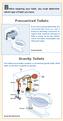 Before repairing your toilet, you must determine which type of toilet you have. Pressurized Toilets If you have a pressurized toilet, it is recommended that you call a licensed plumbing contractor to repair
Troubleshooting Guide for Dispenser Model #900172
 Troubleshooting Guide for Dispenser Model #900172 Q. The cold water is room temperature. A. There is a cold water thermostat control mounted to the back of the majority of our appliances. Simply unplug
FOR THE FOLLOWING MODELS: EE-8075W EE-8075O EE-8075R EE-8075BK
 FIREPLACE HEATER FOR THE FOLLOWING MODELS: EE-8075W EE-8075O EE-8075R EE-8075BK If you have any questions about the operation of your fireplace heater, please contact Crane Customer Care. Toll Free: 888-599-0992
INSTALLATION AND OPERATIONS GUIDE FOR GRAND CANYON GAS LOG SYSTEMS
 INSTALLATION AND OPERATIONS GUIDE FOR GRAND CANYON GAS LOG SYSTEMS Installation and service must be provided by a qualified installer, service agency or gas supplier Grand Canyon Gas Logs, logs are made
SECTION G2: CABLE PROCESSOR MODULE MAINTENANCE
 SECTION G2: CABLE PROCESSOR MODULE MAINTENANCE Cable Processor Module overview WARNING! When tipping the Cable Processor Module back, (after removing the toggle arm pin), use extreme caution not to drop