
Plan Review Construction Guidelines For Retail Food Facilities
|
|
|
- Hugo Riley
- 10 years ago
- Views:
Transcription
1 Plan Review Construction Guidelines For Retail Food Facilities Environmental Health Division 2120 Diamond Blvd. Ste. 200 Concord, CA (925) (925) Fax Contra Costa Health Services Revised 7/9/13

2 Table of Contents SECTION 1... The Plan Review Team Contact Information... 2 SECTION 2:... The Plan Review Process Introduction... 4 Plans and Fees... 5 Plan Submittal... 5 Processing Plans... 9 Construction Inspections... 9 SECTION 3:... Summary of the Plan Review Process Steps 1 through SECTION 4:... Construction and Equipment Requirements Floors Floor Installation Diagrams Walls and Ceilings Conduit and Piping SECTION 5 Equipment General Requirements Mechanical Ventilation for Cooking Equipment Refrigeration and Freezer Units Ice Machines Customer Self-Serve Equipment SECTION 6 Sinks Dishwashing Machines Indirect Waste Drainage Waste Disposal Water Supply and Sewage Disposal i

3 SECTION 7 Janitorial Facilities Backflow Prevention Hot Water Supply SECTION 8 Doors Windows Lighting Signs SECTION 9 Shelving Storage Restrooms Employee Change/Storage Rooms SECTION 10:... Miscellaneous Enclosed Facility Vermin Exclusion Areas of Multiple Uses Grease Traps and Grease Interceptors SECTION 11:... Forms Room Finish Schedule Hood Worksheet Hot Water Demand Worksheet Hourly Hot Water Demand Table Hot Water Demand for Tankless / Instantaneous Water Heaters Plan Check Submittal Quick Checklist Incidental Pre-Packaged Retail Food Facility Quick Checklist ii

4 Section 1 The Plan Review Staff 1

5 CONTACT INFORMATION Plan Review Jerry Kothe, EHS II (925) Sue Orsouphakheth, EHS II (925) Bryan Narcisse, EHS II (925) Phuong Nguyen, EHS II (925) Martin Sum, EHS II (925) Licensed Health Care Facilities Lela Jones, Senior Clerk (925) Administrative Support Roberto Rodriguez Supervisor (925)

6 Section 2 The Plan Review Process Introduction Plans and Fees Plan Submittal Processing Plans Construction Inspections 3

7 INTRODUCTION A properly designed food establishment promotes good food safety and sanitation practices. This is accomplished by preventing vermin entry and harborage; providing for ease of maintenance and cleaning; reducing the opportunity for cross-contamination of food, equipment, and utensils; encouraging good hand washing habits; ensuring effective temperature controls for potentially hazardous foods during holding, storage, cooking, and cooling operations; and encouraging other safe food handling practices. An operator should not only consider the minimum requirements of the Health & Safety Code when designing a food establishment, but also the specific needs associated with the planned retail food operation. Also recognize that code requirements are minimum standards and may not ensure the best possible conditions for your business. Properly designed and equipped facilities are easier to maintain, last longer before expensive repairs or equipment replacements are needed, and allow greater flexibility should the facility need to expand or change its operation in the future. Also take into consideration that quality materials and good workmanship are significant factors in constructing a food establishment. A facility operator should strive not just to meet code requirements, but should take a genuine interest in providing a facility that promotes good food safety and sanitation practices. For example, rather than plan a kitchen hand-sink location as an afterthought (i.e., wherever it fits when all other equipment is taken into account), an operator should consider the critical importance of proper hand washing in preventing disease: Find the best location for the sink considering employee accessibility, opportunities for contaminating hands (e.g. handling raw food products, cleaning vegetables, handling, and keeping the sink from being used improperly). These plan review and construction requirements are intended to assist those constructing, remodeling, altering, changing equipment, or making repairs to a food establishment. Details are provided on determining when plans are necessary, required information and format for plan review submittal, review of plans by Environmental Health Division (EHD), construction standards, and required construction inspections. Please note that nothing contained in this handout precludes compliance with applicable laws or regulations. 4

8 PLANS AND FEES Plans are required for the following: New construction or new food facilities Remodeling Plans may be required for the following: Minor remodeling Equipment installation or replacement Change in the type of food service Change of ownership Re-opening a food establishment that has been closed for more than 90 days Remodeling is any construction or alteration to an existing establishment. This includes installation of equipment, major repairs, or work that alters the facility s configuration or method of operation. A remodel does not include the installation of a food establishment in a new structure, an empty space in an existing building, a space that was not formerly a food establishment, or a food establishment from which all equipment and interior structures have been removed. These situations are considered new construction. Any required plan review fees are to be paid at the time of plan submittal. The current fee schedule is available from EHD and is also on the website. PLAN SUBMITTAL One (1) initial set of plans must be submitted, four (4) sets of plans are required for revised and/or final plans. Plans must be approved by EHD and as required by other agencies (e.g., local building department, fire department, planning department, sewer district, etc.) prior to construction. Construction prior to plan approval will result in significant fines and/or other penalties. Construction may include grading. Grading cannot start if a septic system is involved. Plans may be prepared by an architect, draftsman, contractor, or the facility operator, but all plans must be drawn in a professional manner and demonstrate compliance with applicable regulations. The service of a professional experienced in food establishment design is recommended. Plans must be clearly drawn to scale 1/4 = 1 (recommended) using non-erasable ink or print (no pencil) and contain all of the following information (where applicable): 5

9 A B C D E F G H I J K L M Dining Area Wait Station Kitchen Area Dish machine Area Janitorial Station Employee Locker Room Restroom Storeroom Office Trash Enclosure Hot Water Demand Worksheet Mechanical Exhaust Ventilation Worksheet Tankless Water Heater Worksheet Floor sink Floor Drain Hose Bibb Each piece of equipment is numbered to correspond with the equipment checklist 1. Scale used and north arrow. 2. Name and address of facility. 3. Name, mailing address, and phone number of facility owner, contractor, person preparing the plans, and contact person. 4. Site layout including location of any outside wash-down areas, dumpsters, and waste storage receptacles (e.g., garbage, rubbish, grease, etc.). 5. Floor plan showing the locations of the following (whether existing or proposed): Food receiving, preparation, display, and storage areas. Utensil washing and utensil storage areas (including disposable items). Dry goods storage (paper goods, linen, food, backup, misc. items). Employee changing/locker rooms (including locations where employees store personal belongings). Janitorial supply/equipment storage areas (including janitorial sink, floor mat washing, chemical storage). Restrooms (customer, employee, off-site) Plumbing layout including the location of overhead sewer lines, plumbing fixtures, hose bibs, water heaters, water treatment devices, dipper wells, floor sinks, funnel drains, floor drains, grease traps, grease interceptors, anti-siphon and backflow prevention devices, and chemical feeder systems. (Detail any cut-outs used to accommodate indirect waste receptacles and plumbing in outside refuse areas). Electrical layout including the location of electrical outlets, panels, lights, and control boxes. Indicate light intensity (in foot-candles) and lights with shatterproof covers. Wait stations 6

10 Customer self-serve areas including buffets, bulk food sales, beverage counters, salad bars, condiment bars, displays, etc. Manager s or chef s office All equipment including but not limited to tables, shelves, food processing devices, water heaters, ice machines, ice bins, salad bars, display cases, customer self-serve units, beverage machines, condiment stations, stoves, refrigerators, bars, freezers, sinks, dishwashers, cabinets, counters, wait stations, plumbing fixtures, ovens, sneeze-guards, serving lines, produce foggers, steam tables, exhaust hoods, bulk food containers/dispensers, indirect waste receptacles, air curtains, heat lamps, lockers, and water treatment devices. Runs of conduit and piping located outside of walls, floor, or ceilings. Entryway and delivery doors, French doors, other doors. Indicate self-closing doors and doors protected by an air curtain. Pass-through windows, openable windows. Indicate windows with screens. Interior garbage and other waste storage areas. Remodel plans must identify all proposed changes, including those to existing structures, room finishes, fixtures, plumbing fixtures, counters, cabinets, and equipment. Also include floor plan showing existing facility. 6. Equipment specifications demonstrating compliance with applicable NSF and Health & Safety Code standards for the intended use. Include manufacturer s specifications (cut-sheets) numbered to correspond to the designations shown on the plans. For equipment not listed by NSF (or custom built units), sufficient information must be provided to show compliance with applicable NSF standards. Include name, address, and phone number of custom fabricators. Underwriters Laboratories (UL Sanitation) and ETL Testing Laboratories listing are acceptable if it demonstrates compliance with the appropriate NSF standards. 7. Equipment schedule showing make and model number. 8. Equipment elevations (specify casters or 6-inch or higher legs meeting NSF standards, or 4-inch or higher integrally coved base), distances to walls and other equipment, and method of installation. This information must clearly demonstrate that inspection and cleaning operations around and underneath equipment can be readily accomplished. If casters are less than 6 inches in height, the equipment must be readily movable by one person. 9. Scale cross-sectional details for any sneeze-guard protection used. 10. Cross-sectional details for the discharge to any indirect waste receptacles. Include the location of any overlying equipment above the receptacle. 11. Mechanical ventilation details for hood systems over cooking equipment and high-temperature dishwashing machines. Provide the following information: Duct details extending to the roof fans, including all elbows and cleanouts. Location of all air diffusers in the kitchen and surrounding areas, including make-up air; specifications on the type of diffuser. Front and side elevations showing hood overhang. Indicate the inner rims of any gutter(s). Show any sidewalls or tapered side panels. 7

11 Overhead view showing the equipment covered by an outline of the hood (use inner rims of gutters), each make-up air diffuser, exhaust and make-up air ducts, and exhaust and make-up air fan units on the roof. Spacing between pieces of equipment and from nearby walls. Complete and return a Hood Worksheet for each ventilation system. See the handout, Requirements for Hood Plans, for complete details. 12. Finish schedule for walls, floors, and ceilings in each room or area, including inside walk-in refrigerator and freezer units. Specify the types of materials and sheen (e.g., semi-gloss only). Provide the following information: Include details/samples for any accent finishes. Indicate the type of base and method of coving the wall/floor and toe-kick/floor junctures; show scale-coving cross-sections at these junctures (including floor mounted mop sinks or basins). Provide installation details where dissimilar floor materials are joined. Show the exact location of slip-resistant floors that are abrasive or have raised tread patterns. (These floors are only allowed in traffic areas and not underneath equipment). 13. Submit labeled samples of wall, floor, and ceiling finishes. Include color scheme, accent tiles, and floor cove pieces. (Manufacturer s specification sheet for the proposed finishes may be required.) 14. Provide details on the finishes in dumpster and other outside waste storage areas. 15. Number of proposed employees, seating capacity, and square footage. 16. Method of water supply and sewage disposal. 17. Copy of proposed menu or description of foods/beverages sold. (Include information if facility will be used as a commissary for catering or food vehicles.) 18. For health care facilities, skilled nursing facilities, and hospitals, include a copy of the HACCP plan. 19. Provide a detailed plan for the proper cleaning of any equipment intended for a clean-in-place cleaning method. 20. Provide a detailed plan for the cooling of large quantities of food, where applicable. 21. If remodeling a restroom at an existing facility, include details on how approved restroom facilities will be provided during the construction. Chemical toilet facilities are not approved for this purpose. 8

12 PROCESSING PLANS Allow EHD twenty (20) working days to review the plans. After the plans are approved and stamped by EHD, one copy will be retained by this agency and three copies made available for the applicant. A copy of the approved plans and any plan approval letters (including any approved amendments) must be kept at the job site during construction until final construction approval. You can check the status of your plans on our website: ANY SUBSEQUENT ALTERATION OF APPROVED PLANS MUST BE APPROVED IN WRITING BY EHD PRIOR TO COMMENCING WORK. CONSTRUCTION INSPECTIONS It is advised that you contact EHD at regular intervals to schedule construction progress inspections, or if any questions arise about the project. The contractor and applicant are responsible for scheduling the following inspections: Pre-final inspection: When work is approximately 80-90% complete with plumbing, room finishes, rough ventilation, and rough equipment installed. Final inspection: When all work is completed, including hot water supply, ventilation, refrigeration, lighting, and cleaning. Inspection appointments must be made directly with an inspector at least four working days in advance. Inspections will not be conducted if the required building permits are not on site. EHD must issue a final construction approval before opening or using new or remodeled areas, including stocking with food items. During remodel work, if the business remains open, sufficient protective measures must be taken to prevent the contamination of food, food contact surfaces and equipment. Failure to do so will result in closure of the establishment until remodeling activities are completed. 9

13 Section 3 Summary of the Plan Review Process Application, Plans and Plan Review Fee Review of Plans Construction Pre-Final Inspections Final Inspection Permit Issuance *SPECIAL NOTE for water wells and septic users Other useful handouts available from EHD website 10

14 The California Health & Safety Code requires a valid health permit to operate a retail food establishment. These establishments include restaurants, bars, markets, supermarkets, bakeries, cafeterias, soup kitchens, coffee houses, liquor stores, butcher shops, commissaries, candy stores, snack bars, delicatessens, licensed health care facilities, skilled nursing facilities, hospitals, mobile food vehicles, food carts, or any fixed facility where food is sold or given away at the retail level. The law contains minimum standards concerning facility design and construction, equipment specifications, and food handling. These requirements are intended to make sure the consumers food supply is pure, safe, unadulterated, and held and prepared under sanitary conditions and that food establishments are clean, free from vermin and insects, and kept in a state of good repair. This handout is a summary of Contra Costa County s requirements and is meant as a guideline to use in obtaining a permit to operate a food establishment. It is subject to change without notice. While intended primarily for new construction or extensive remodeling projects, it also serves as a helpful guide for existing retail establishments, since structural and equipment requirements also apply to currently operating facilities. The following is a chronological summary of the plan review process: STEP 1: APPLICATION, PLANS, AND PLAN REVIEW FEE Submit completed permit application, one (1) initial set of plans, equipment specification sheets, other required materials, and the applicable plan check fee. Please note that inadequate plans will not be approved and may delay the issuance of an operating permit. STEP 2: REVIEW OF PLANS Environmental Health Division (EHD) has twenty (20) working days to review, reject, or approve plans for each submittal or resubmittal. The plans will be reviewed for compliance with applicable requirements. If the plans are not approved, you will be notified as to the changes and/or additional information required in order to receive approval. Construction can commence once the plans are approved and you have received a building permit from the local building department. Also obtain any other required approvals, including local planning, fire, and sewer authorities. STEP 3: CONSTRUCTION PRE-FINAL INSPECTIONS During construction, EHD will conduct at least one pre-final inspection. The contractor and applicant are responsible for scheduling all required inspections. Construction inspections will not be scheduled if the appropriate building permits are not on site. A pre-final inspection must be scheduled when room finishes are completed and plumbing, ventilation, and equipment are in place. Schedule this inspection at least four working days in advance. 11

15 STEP 4: FINAL INSPECTION Upon completion of construction and before opening, a final inspection will be conducted to verify that compliance with all requirements has been accomplished. A final inspection must be scheduled when 100 percent of the construction is completed, including all finishing work and utility hook-ups. Schedule this inspection at least four working days in advance. It is recommended that you allow sufficient time between the final inspection and the facility s projected opening date should any corrective work be necessary. STEP 5: PERMIT ISSUANCE Once construction is completed to the satisfaction of EHD, a permit to operate will be issued upon payment of the permit fee and any outstanding plan check balance. Operating without a valid health permit will subject the business to substantial penalties and may be required to close. *Special note for water wells and septic system users For establishments served by an onsite well and/or septic system, the issuance of a final small public water system permit and/or septic system permit will be required prior to the issuance of a permit to operate. In those cases where a well and/or septic system will be used, it is highly recommended that the feasibility of water supply and sewage disposal be verified by EHD before initiating the plan review process. Other useful handouts available from EHD website: How to Apply for a Small Public Water System Permit (if the establishment will be served by a well) How to Apply for a Well Permit How to Apply for a Septic System Permit (if the facility will be served by a septic system) California Conference for Directors of Environmental Health (CCDEH) Guidelines 12

16 Section 4 Construction and Equipment Requirements Floors General Coving Details of Integral Coved Floor Base Sheet Vinyl Floor Tile Floor Floor Drains Anti-slipping Agents Dissimilar Materials Metal Coving in Walk-In Units Grout Pest Control Grease Trap Covers Bars Floor Installation Diagrams Walls and Ceilings General Wet Areas Flame-resistance Acoustical Ceiling Tiles Suspended Ceilings Bars Conduit and Piping 13

17 FLOORS General Appropriate floor, wall, and ceiling finishes promote good sanitation. Sanitation is an important component of public health protection. Disease outbreaks have been linked to harmful micro-organisms growing on finishes. The easier it is to monitor and clean these finishes, the more likely it is that the task will get done regularly and properly. This is important, since failure to keep a food facility clean is a major cause of vermin (rodent and insect) infestations. Additionally, a leading cause of workers compensation injuries is slips and falls. Keeping floors clean and dry, and also proper footwear for employees, can help reduce these types of costly accidents. Except in areas used exclusively for dining or point-of-sale, floors must be smooth, durable, nonabsorbent, impervious to water, grease, and acid, and of easily cleanable construction. Acceptable floor materials include the following: Quarry tile, ceramic tile Sealed curbed concrete Seamless poured epoxy minimum 3/16-inch thick. (Note: Seamless poured epoxy is not a paint.) Commercial-grade sheet vinyl (no felt backing) at least inches thick, with heat-welded seams, may be suitable for some applications if also consistent with manufacturer s specifications. Where sheet vinyl is used as the floor material, a cove backing (cove stick) must be used at the wall/floor and toe kick/floor junctures. Vinyl composition tile (VCT) with vinyl or rubber-base coving is not recommended and will only be considered in those areas where coving (as described below) is not required. Carpet and wood are only allowed in areas used exclusively for dining or point-of-sale. Coving Coving is the floor material found at the base of walls (wall/floor junctures) and equipment toe-kicks (toe kick/floor junctures). Toe-kicks include the bases of counters, cabinets, salad bars, and other floormounted equipment (including floor-mounted mop sinks) that is not placed on approved legs or casters. In most areas of a food establishment, it is required that the floor material extends integrally up the walls and toe-kicks as the coving. (Top-set coving is not allowed in any area requiring integral coving.) For example, in the following areas the floor material must extend integrally up the walls and toe-kicks at least 4-inches with a minimum 3/8-inch radius at the wall/floor and toe-kick/floor junctures: (the foot of the cove base has to extend out to ¼ ). See Floor Diagrams in Section 11 Forms. Food preparation, storage, handling, and packaging areas Utensil washing and storage areas Interior waste disposal areas (garbage, refuse, grease) 14

18 Restrooms Hand washing areas Janitorial facilities Walk-in refrigerator and freezer units (inside and outside) Bars (employee side) Customer self-serve areas where non-individually prepackaged foods or beverages are sold or dispensed (e.g., salad bars, buffets, bulk food sales, beverage stations) Employee change and storage areas Wait stations Integral coving is not required in areas used exclusively for dining, point-of-sale, or the storage of utensils or foods contained in the original un-opened containers. In un-opened container storage areas, it is recommended that integral coving still be provided for both sanitary reasons and because it allows the operator more options should future storage needs or use of these areas change. Food preparation includes the making of ice, combining of ingredients to make beverages, partitioning, packaging, washing produce, and cooking operations, and that utensils include kitchen equipment, disposable utensils, and take-out containers. For example, an area used to store opened boxes of takeout drink cups must have finishes appropriate for a utensil storage area. Floor Drains Floor drains are required in, but not limited to the following areas: Where floors are water-flushed for cleaning (e.g., kitchens generating grease, meat or fish handling areas, produce trimming areas, refuse disposal areas, dishwashing areas, bars). Where pressure spray methods are used for cleaning. Where Type I hoods without built-in cleaning systems are in use. Where floor drains are provided, the floor surface must have a slope of at least 1:50 to the drains. As a general rule, provide one floor drain in approximately the center of each area 30 feet in diameter (or less). An additional 4-foot x 4-foot depression may be required around the floor drain, depending on the slope of the floor and/or the slope toward the drain this depression should not be in a traffic area where it might cause a tripping hazard. The drains are to be located for ease of inspection and maintenance. They must not be located inside walk-in refrigerator or freezer units, in food or utensil storage rooms, inside or underneath cabinets or counters, or in inaccessible locations. Floor drain grates must be provided and installed flush with the surrounding floor. Regardless of the establishment, the floor construction must not allow the accumulation of standing water, grease, or food debris or pose any sort of slipping or tripping hazard. 15

19 Anti-slipping Agents Anti-slipping floor agents, such as abrasives or raised tread patterns, are restricted to traffic areas only. These floors must slope to a floor drain. Flooring in non-traffic areas, under equipment, and at the wall/floor and toe-kick/floor junctures, must be smooth. If the degree of roughness in traffic areas is deemed excessive, high-pressure hot water cleaning systems (with floor drains) will be required. Dissimilar Materials Where dissimilar floor and/or coving materials are joined, this juncture must be easily cleanable, durable, and have a smooth integral transition. Do not top set coving material on top of another material. Metal Coving in Walk-in Units Where metal coving is installed inside walk-in refrigerator or freezer units, the coving must be installed in a smooth transition with a minimum 3/8-inch radius at the wall/floor junctures (exception for prepackage food facilities). Grout Where floor grout is used, an acceptable grout additive must be included with the grout to make it resistant to grease, oil, acid, and water. Acceptable additives include epoxy, silicone, and polyurethane. Pest Control For pest control purposes, particularly in storage areas, consider providing a 12-inch wide white-colored stripe on the floor at the wall/floor junctures. This is a useful aid to monitoring for rodents and other pests. Grease Trap Covers When a grease trap is installed in a traffic area, the grease trap lid must be installed flush with the floor. The cover must also be readily accessible for inspection and cleaning. 16

20 Floor Installation Diagrams Quarry Tile Cove base Quarry Tile Cove base installed flush with the floor Quarry Tile Cove base keyed in integral to the concrete floor Floor Materials for Retail Food Facilities 17

21 top set tile Quarry Tile Cove base Incorrect top set installation Cove Base Cabinet toe-kick Sheet Vinyl Floor Correct installation 18
22 WALLS AND CEILINGS General Durable, easily cleanable finishes are better able to withstand repeated cleaning operations. Lightcolored wall and ceiling finishes are recommended as a means of monitoring sanitation by readily revealing dirt, grease, rodent rub marks, and insect excrement or vomitus. Walls and ceilings are required to be smooth, durable, nonabsorbent, and easily cleanable in all rooms or areas except those used exclusively for: Bars serving only alcoholic beverages (not including the area around sinks or the backside of the bar structure employee side) Dining Offices Storage of food in original unopened containers Point-of-sale for individually prepackaged items Acceptable wall and ceiling finishes include the following: Gloss, semi-gloss enamel, or epoxy paint on an acceptable smooth surface (e.g., no plaster texture, or orange peel finish). FRP paneling Stainless steel Smooth ceramic tile For ceilings, smooth washable vinyl ceiling tiles are also acceptable. Exposed brick, unsmoothed concrete block, plaster-textured paint, rough concrete, Marlite, varnished wood, wood paneling, murals, exposed open rafters, exposed studs, and fissured ceiling tiles are not acceptable finishes. Wet Areas Certain finishes, particularly paint, are unsuitable for areas subject to excessive moisture (e.g., dishwashing areas, around janitorial sinks, bar sinks, etc.). The walls above, behind, and around sinks in dishwashing areas and other locations subject to moisture must be covered with durable waterproof materials (e.g., FRP, stainless steel, ceramic tile). Other requirements include: Around hand-sinks the waterproof materials must extend from the top of the coved base (wall/floor or toe-kick/floor junctures) to at least 3 feet above the backsplash. Walls at/near other sinks must have a waterproof finish extending from the cove base to at least 8 feet above the floor. This includes utensil sinks, janitorial sinks or basins, and food preparation sinks. 19
23 Walls in dishwashing areas and produce trimming areas must have a waterproof finish extending to at least 8 feet above the floor. Walls in areas where floors are cleaned using high-pressure sprayers must have a waterproof finish extending to at least 8 feet above the floor. Walls in restrooms around plumbing fixtures (e.g., toilets, urinals, sinks) must have a waterproof finish extending to at least 4 feet above the floor. In any area, the greatest applicable height requirement for a waterproof finish will apply. The finishes above the waterproof finish must meet all other applicable requirements. Flame-Resistant Wall Material Local fire departments may have additional requirements regarding the type of wall material around cooking equipment. Typically, a stainless steel or ceramic tile finish is required. Contact the fire department for details. Bars Areas used exclusively for the preparation and serving of alcoholic beverages are not required to have smooth or durable finishes for the walls and ceiling, but areas around bar sinks and areas used for other types of food service (including other beverages) will be required to have finishes as described in the Wet Areas section. This usually includes the entire employee side (and underneath the overhang) of the actual bar structure. CONDUIT AND PIPING All plumbing, electrical, and gas lines must be installed within the walls, floors, and ceiling to the greatest extent possible. This requirement is intended to facilitate cleaning and eliminate vermin harborage. Where this is not possible, all runs must be spaced at least one inch off the walls and ceilings and at least 6 inches above the floor. Conduit and spacers must be constructed and installed to be durable and easily cleanable. Minimize horizontal runs of conduit and piping wherever possible. Other requirements include: Where conduit or pipes enter a wall, ceiling, or floor, the opening around the lines must be tightly sealed and made smooth, durable, and easily cleanable. Multiple runs of clusters outside walls must be encased in approved runways or other approved sealed enclosures. Conduit or pipelines must not be installed where they could become a tripping hazard (e.g., across aisles, traffic areas, etc.). Overhead sewer lines are not allowed over areas where food, utensils, equipment, or clean linens may be present. Exposed flexible type conduit is not allowed on the outside of walls or ceilings unless the conduit has a smooth easily cleanable surface. 20
24 The exterior of ventilation ducts installed in areas requiring a smooth, easily cleanable ceiling finish must be smooth and easily cleanable. 21
25 Section 5 Equipment General Requirements Standards Installation Elevations Acceptability of Intended Use Counters and Cabinets Backflow Prevention for Carbonators Copper and Copper Alloys Live Shellfish Tanks Built-In Temperature Measuring Devices Produce Foggers / Misters Energy Efficiency Mechanical Ventilation for Cooking Equipment Mechanical Ventilation Sample Diagram General Hood Materials Canopy-Type Hoods Non-Canopy Type (Ventilator) Hoods Make-Up Air Short-Circuiting Hood Systems Fire Extinguishing Systems Grease Filters / Extractors for Type I Hoods Ducts Caster and Quick Disconnects Wood Burning Ovens Multiple-Stack Conveyor-Type Ovens Conveyor-Type Dishwashers Hood Overhang 22
26 Clearances UL Listed Hoods Performance Testing Exempt Cooking Equipment Improved Hood Performance Refrigeration and Freezer Units General Additional Requirements for Walk-In Units Condensate Merchandisers Espresso Machines Ice Machines Customer Self-Service Equipment Sneeze Guard Guidelines Cafeteria Service Self-Service at Both Sides Self-Serve Container for Ready-To-Eat Foods Equipment Approved for Self-Serve Soda Dispensers Push Button Type Approved Lever Type 23
27 EQUIPMENT GENERAL REQUIREMENTS Standards Equipment must be commercial-grade and comply with applicable NSF and Health & Safety Code standards. Underwriters Laboratories (UL Sanitation) and ETL Testing Laboratories listing are also acceptable if it demonstrates compliance with applicable ANSI standards. Residential equipment is not allowed. Equipment must be made of nontoxic, non-corrodible materials, and be constructed, installed and maintained to be easily cleanable and exclude vermin. The design and installation must also allow ease of cleaning under and around the equipment and adjacent surfaces. Installation Equipment is to be sealed to adjacent walls and equipment or suitably away from adjacent walls and equipment so as to facilitate cleaning of the equipment and surrounding surfaces. Provide at least 6- inches of space between the equipment and adjacent wall to allow for ease of inspection and cleaning (minimum 6-inches). These spacing requirements can be reduced if the equipment is on casters. If casters are used, allow enough space for ease of inspection. Elevations Equipment must be placed on easily cleanable casters (readily movable by one person), 6-inch or higher legs meeting NSF standards, or be completely sealed in position on a 4-inch or higher integrally coved base or curb. Casters are the recommended means of insuring sanitation for cooking and many other types of equipment. Casters less than 6-inches in height can only be used if the equipment is readily movable by one person. With gas-fired equipment, casters require the use of appropriate heavy-duty quickdisconnect gas lines (with safety tether). Some fire departments do not allow cooking equipment to be placed on casters. Check with the local fire department for further information. Tabletop mounted equipment must be on at least 4-inch high legs, be readily movable (i.e., maximum weight of 80 pounds), or be sealed to the surface in an approved manner. Acceptability of Intended Use Equipment listed by NSF may not be suitable for the intended use. For example, some NSF listed hot dog warmers are not designed to protect the product from customer contamination. These units are meant for serving by an employee rather than for customer self-service. Another example is merchandiser refrigerators, which are for use on display floors, not in kitchens. Always verify with EHD that equipment is acceptable for the intended use by submitting manufacturer s equipment specification sheets. 24
28 Counters and Cabinets Counters and cabinets are considered pieces of equipment and must comply with applicable NSF and Health & Safety Code standards. They must be designed for durability, ease of cleaning, and to exclude vermin harborage. The most common construction materials are stainless steel or plastic-laminate. Laminated units must be fully plastic-laminated inside and out, including the underside of counter tops. It is recommended that cabinets with interior laminate finishes be a light-color to aid in monitoring for pests. Counters or cabinets constructed of painted or varnished wood are not approved for the food preparation areas. Such units must be placed on 6-inch or higher legs, casters, or an integrally coved 4-inch or higher base. Backflow Prevention for Carbonators The potable water supply connected to beverage machine carbonators must be protected by a listed, properly installed reduced pressure backflow prevention device. Copper and Copper Alloys Copper and copper alloys may not be in contact with low ph materials (e.g., carbonated water), except when used in the brewing of beer. Live Shellfish Tanks Tanks used to keep live molluscan shellfish intended for human consumption must be provided with an approved treatment and filtration system. This system must ensure the bacteriological quality of the water is kept within acceptable limits at all times (i.e., no detectable levels of coliform bacteria). The system must include the following: Filtration Treatment (e.g., UV light) Refrigeration (to keep the water below 45 F) Pump An operating plan that includes routine maintenance procedures and regular (at least monthly) independent testing of the water for coliform bacteria. Each species of molluscan shellfish must have its own separate tank and filtration/treatment system that is not interconnected with any other species of shellfish or other tank, including those used for fish. A HACCP plan shall be submitted. Built-in Temperature Measuring Devices Built-in or permanently affixed temperature measuring devices are required inside equipment used to hold hot or cold potentially hazardous foods. For a refrigeration unit, this device must be located in the warmest part of the unit. 25
29 Produce Foggers/Misters Produce foggers/misters must be designed and installed so as to be easily cleaned and sanitized. New reservoirs for holding the water are prohibited as of July Energy Efficiency Energy costs are a major expense for most retail food operations. The following websites contain information that may help you reduce energy costs: MECHANICAL VENTILATION FOR COOKING EQUIPMENT General Mechanical Ventilation System Sample Diagram Proper ventilation of cooking equipment provides for employee comfort; protects equipment, finishes, and food from excess heat or moisture, which can cause their deterioration; and removes moisture and grease which can encourage insect infestations and result in slip and fall injuries. Where large amounts of grease vapors are produced, the mechanical ventilation system serves to remove grease from the air stream preventing its accumulation in the duct system. This reduces the risk of grease fires. 26
30 Mechanical ventilation hood systems are required above all high-temperature dishwashing machines (except under-counter models) and cooking equipment, including ranges, griddles, broilers, steam jacketed kettles, ovens, large popcorn machines, deep fryers, barbecues, rotisseries, and any equipment that produces cooking odors, steam, grease, heat, or vapors. Requirements for mechanical ventilation systems include: Ventilation systems must be constructed and installed in accordance with the locally adopted Uniform Mechanical Code (UMC). Joints and seams are to be tightly sealed and easily cleanable. Riveted seams are not acceptable. Any penetrations of the hood canopy or duct must be done using UL-listed materials and methods. Grease troughs not associated with the filter bank are not recommended, but when provided they must slope to an approved drip pan. Grease troughs and drip pans must be easily cleanable. Food heating or warming devices (e.g., cheese-melters, plate warmers) and shelving that are installed above other equipment beneath an exhaust hood may create an air flow obstruction to the proper ventilation of the cooking equipment for which the hood was designed. The installation of these devices is subject to evaluation and approval, and must be considered as part of the ventilation design. Hoods less than one foot from walls or ceilings must be flashed solidly with approved materials. Ventilation must be to the outside (e.g., no ventless or ductless hoods). Hood Materials Hoods constructed of stainless steel must have a thickness of No. 22 gauge. If copper is used, the copper sheet is to have a weight of at least 24 ounces per square foot. Galvanized or painted materials are not acceptable hood materials. Canopy-type Hoods The lower lip of canopy-type hoods must be no more than 4 feet above cooking surfaces and at least 6½ feet above the floor. The hood must overhang or extend a horizontal distance not less than 6-inches beyond the outer edges of cooking surfaces on all open sides as measured from the inside edge of the hood. Greater than 6-inch overhang is often required depending on the type of equipment used. For example, some ovens may require a 3 foot overhang; char broilers require at least a 12-inch overhang. See the handout, Requirements for Hood Plans, for specific overhang requirements. Non-canopy-type (Ventilator) Hoods Non-canopy hoods may be approved if they are engineered and constructed so as to comply with the minimum exhaust air velocity requirements and comply with manufacturers specifications. Shielding at the ends of the hood may be necessary to prevent interference from cross drafts. These types of hoods are not suitable for certain types of cooking equipment such as char broilers, ovens, or ranges. 27
31 Make-up Air Filtered make-up air must be provided at least equal to that amount which is mechanically exhausted. For example, a hood exhaust system drawing 3000 cubic feet of air per minute (cfm) must have a make-up air source providing 3000 cfm. Windows and doors are not to be used for the purpose of providing makeup air. The location and design of make-up air diffusers must also take into account preventing crossdrafts or other interferences with the hood operation. A single interlocking switch is required for operating the hood exhaust and its make-up air source. Make-up air diffusers must facilitate the functioning of the exhaust hood system. Four-way diffusers are not allowed less than 10 feet from any hood system unless the air stream does not blow directly toward the hood. It is recommended that diffusers closer than 10 feet from hood systems be the perforated type. Short-circuiting Hood Systems Short-circuiting hood systems or other types where the make-up air discharges inside the hood canopy or capture zone will not be approved. Fire Extinguishing Systems Fire extinguishing systems may be required by local fire or building departments. They must be installed so as to allow easy cleaning of the hood and duct systems. Horizontal piping or conduit within the hood is prohibited. The fire department may have requirements for the minimum separation between deep fat fryers and open-flame cooking equipment. Grease Filters/Extractors for Type I Hoods Hoods with grease filters are required to use baffle-type filters with the baffle slats oriented perpendicular to the floor. Mesh-type filters are not allowed. Filter handles are required for hoods with grease filters unless the filters are designed for in-place cleaning. Other types of grease removal systems will be evaluated on a case-by-case basis. Other requirements include: The distance between the bottom edge of the filter and the cooking surface must be at least 2 feet, except for exposed fire or charcoal char broilers where the minimum distance must be 3½ feet. Baffle filters must be installed at an angle of degrees from the horizontal. Hoods must provide air velocity in the range of the filter s rated capacity. The allowable range is typically feet per minute (fpm) with 300 fpm the recommended velocity for most filters. Other proposed velocities will be evaluated on a case-by-case basis. Grease filters must always be in place and the fire suppression system fully functional when cooking equipment is turned on. 28
32 Ducts Ducts for Type I hoods must be sized so the velocity of exhausted air is no greater than 2500 fpm. There must be at least one duct per 12 lineal feet of hood length, or fraction thereof. For example, a 14 foot long hood would be required to have at least 2 ducts. Ducts must terminate outside the building in an approved manner. Ductless/ventless hood systems are not allowed. Caster and Quick-Disconnects Heavy Duty Quick-Disconnect Flexible Gas Line with Keeper Chain If allowed by the local fire department, it is recommended that approved 6-inch high casters with approved tether devices be provided for cooking equipment to facilitate cleaning operations. When casters are used, approved heavy-duty, quick-disconnect, flexible gas lines must be provided. Casters must allow for ready inspection and maintenance operations. If casters are not intended for use, detail the means for installing equipment that will allow for ease of inspection and maintenance. Wood Burning Ovens Wood burning ovens require a separate ventilation system with a Type I canopy hood. The hood must overhang the front of the oven at least 18-inches and sides of the door at least 6 inches. The minimum distance from the top of the oven-duct to the filter is to be at least 12-inches. Multiple-Stack Conveyor-type Ovens For multiple-stack conveyor-type ovens, the hood must overhang the conveyor belt apparatus at least 6- inches. The hood must overhang the oven openings and side doors by at least 12-inches. 29
33 Conveyor-type Dishwashers If pant-leg hoods are to be used for conveyor-type dishwashers, the hood overhang at the dirty dish end must be at least 6-inches with an exhaust rate of at least 300 cfm, and at the clean dish end at least 10- inches with an exhaust rate of at least 500 cfm. Hood Overhang In designing hoods with at least the minimum required overhang, take into account not only the actual size of the equipment under the hood, but also cleaning and installation requirements of the equipment (i.e., piping, gas lines, quick-disconnect lines, valves, wiring, etc.) which may make the effective size of equipment greater than the dimensions specified by the manufacturer. Minimum hood overhangs range from 6-inches up to several feet depending on the type of equipment. See the handout, Requirements for Hood Plans, for complete details on hood overhang requirements. In general, increasing hood overhang improves hood performance. Clearances Unless on casters, provide at least 6-inches of clearance between pieces of equipment under the hood and between the equipment and walls. When sizing hood overhang, take these clearances into consideration so the minimum overhang requirements will be met. Reduced clearances may be allowed if adequate methods for cleaning and inspection are provided (e.g., casters). UL Listed Hoods If the hood system is calculated based on a UL listing rather than Uniform Mechanical Code (UMC) requirements, provide documentation (i.e., UL placard) that the specific model of hood is UL-listed for ventilation. Documentation is subject to verification and must include the model specific UL criteria including exhaust volume, filter airflow rates, hood overhang (which may be greater than UMC), make-up air, duct details, and any equipment or other limitations. Where the UL exhaust rate differs substantially from the UMC rate, EHD reserves the right to require the higher rate. Performance Testing The installation, including air flow, filter velocities, grease channel slopes, etc., must be approved by EHD before a hood is placed into service. EHD will require a hood balance report (including make-up air) from a licensed mechanical contractor as part of the inspection process. The system must also pass an EHD field evaluation before approval will be considered. Exempt Cooking Equipment Typically, EHD will only consider an exemption from mechanical ventilation for the following cooking equipment: 30
34 Equipment with a maximum temperature of 250ºF (thermostatically controlled). Electric convection ovens (12 kilowatts or less) used for baking bread only. A single piece of equipment (e.g., ovens) weighing 80 pounds or less, isolated from a cook line and that does not produce excessive grease, soot, or vapors. Any piece of equipment causing sanitation or other problems will require proper mechanical ventilation. Building or fire departments may still require mechanical ventilation, even if exempted by a State or Local Health Department. Improved Hood Performance With some additionally planning, you can significantly increase the performance of your hood system, by doing the following: Placing equipment as close to the back wall as possible. Using tapered side panels or sidewalls. Increasing hood overhang. Avoiding using island-type hood systems. Not installing any four-way diffusers near a hood system. Proper placement and design of air diffusers. In addition to improving hood performance, energy efficiency can also be greatly improved with careful planning and design. For further information on improving hood performance visit the following websites:
35 REFRIGERATION AND FREEZER UNITS General Refrigerator and freezer units must be adequate in size and cooling capacity to accommodate the storage needs of the establishment. These needs should also take into account the cooling and thawing of potentially hazardous foods, and catering capacity, where applicable. To prevent the growth of harmful bacteria, refrigerators and freezers must be able to maintain proper temperatures under all operating conditions. These include repeated opening of doors during peak use and high ambient temperatures resulting from proximity to cooking equipment. The ability to maintain proper temperature also helps prolong the shelf life and flavor of foods, particularly perishable products. An excess of capacity is recommended, as it is sometimes difficult to predict the long-term storage needs of a food business. Other requirements include: Capable of operating so as to maintain refrigerated foods at or below 41ºF and frozen foods in a frozen state at all times. Most frozen food processors recommend their products be kept at temperatures well below freezing (32ºF). Ice or passive cooling methods alone are not approved methods for keeping potentially hazardous foods cold. Constructed for commercial use with smooth, nonabsorbent, and easily cleanable surfaces. Residential refrigerator or freezer units are not allowed. Provided with shatterproof light-covers and accurate, readily visible thermometers (placed in the warmest part of the unit). Provided with commercial-grade non-corrodible metal or plastic shelving that allows for air circulation and ease of cleaning. Condensate waste must drain to an evaporator or to the sanitary sewer via an indirect waste receptacle (i.e., floor-sink or funnel drain with at least a one-inch air gap). Condensate waste may not drain to the ground or into storm sewer drainage system. Located inside in an approved area of the building. Cooling coils and related electrical, drainage, and refrigerant lines must be installed in a safe and easily cleanable manner. Drainage and refrigerant lines must be constructed of nontoxic materials or properly insulated and covered with an approved, easily cleanable, nontoxic material. Provided with readily visible, built-in or permanently affixed thermometers located in the warmest part of the unit. Additional Requirements for Walk-in Units Unless all items are in the original unopened containers, the floor material must extend integrally up the walls (outside) at least 4 inches with a minimum 3/8-inch radius at the wall/floor junctures when planning to use an NSF unit make certain it is one provided with an acceptable floor as described above. Except in warehouses, the top of walk-in units must be flashed or provided with a barrier to nearby walls and ceilings. Where flashing is installed, a means of access for inspection and 32
36 cleaning must be provided. The areas on top of a walk-in unit may not be used for storage, including in warehouses. Floor drains, floor sinks, and funnel drains must be located outside walk-in units. Refrigeration or freezer units that do not open directly into the establishment are not allowed. This applies to existing units as well they are not grandfathered in. Merchandisers Merchandisers are approved for prepackaged foods only and are can be used only in display sales areas. They are not to be used in kitchens, food preparation areas, or storage areas. Please note that some merchandiser units are not approved by the manufacturer for use with potentially hazardous foods. Espresso Machines Where an espresso machines is used, an adequately sized refrigerator must be provided nearby for the storage of dairy products. ICE MACHINES Ice machines are considered food preparation equipment. They must be located inside the building near a hand washing sink, and in an easily cleanable, well-lit, and well-ventilated area. They must drain to the sewer via readily accessible indirect waste receptacles (i.e., floor sink or funnel drain). Surrounding wall, floor, and ceiling finishes must be smooth, durable, nonabsorbent, and easily cleanable. The walls and ceiling must also be light-colored. The surrounding floor material must extend integrally up the walls at least 4 inches with a minimum 3/8-inch radius at the wall/floor junctures. Ice machines located outside or other unapproved locations are not grandfathered in. CUSTOMER SELF-SERVE EQUIPMENT Customer self-serve equipment includes salad bars, buffets, bulk-food dispensers, self-serve beverage units, unpackaged pastry cases, etc. Displays and service of unpackaged foods, utensils, and food contact surfaces must be protected from contamination during all anticipated operating conditions. This includes shielding so as to intercept a direct line between the customer s mouth and the food, utensils, and food contact surfaces. Another option is display or dispensing from approved, sealed, self-serve dispensers. Other requirements include: Customer self-serve containers must be designed to minimize the degree of customer handling and exposure. Approved sneeze guards must protect utensils, food preparation equipment, and food preparation areas at cafeterias, buffets, salad bars, etc. Self-serve machines that dispense ice or beverages must be designed with extended angled levers or push buttons. 33
37 Typically, customer self-serve areas are considered food-preparation areas and must have acceptable wall, floor, and ceiling finishes, and suitable equipment meeting applicable NSF and Health & Safety Code standards. Self-serve counters must have legs, casters, or an integrally coved base. Where lids are proposed for protection rather than sneeze guards, the lids themselves must function as approved sneeze guards during all anticipated operating conditions. Sneeze-guards must be constructed to NSF standards (e.g., no exposed, painted, or varnished wood can be used). CAFETERIA SERVICE For lower table heights, the vertical guard should be higher and the horizontal guard should be widened. 34
38 SELF-SERVICE AT BOTH SIDES The elimination of tray slides increases the service opening by allowing closer customer contact. SELF-SERVE CONTAINER FOR READY-TO-EAT FOODS The container must have a securely attached tight-fitting lid. 35
39 Equipment Approved for Self-Service Soda Dispensers Section of California Retail Food Code requires that food be protected from contamination while being served. The self-service beverage dispensing equipment or mechanism and filling device of consumer self-service beverage dispensing equipment shall be designed to prevent contact with the lipcontact surface of glasses or cups that are to be refilled. Two methods of sanitary self-service dispensing of soda have been approved and found to be in full compliance with the requirements of California Retail Food Code. Push Button Type The customer places the container under a nozzle and presses a button to dispense product. container does not contact the dispenser in the lip contact surface during the filling. The Approved Lever Type The customer places the container under a nozzle and pushes a specially designed lever behind the nozzle with the container to begin dispensing. The lever is designed to extend down the length of the container, coming in contact with a spot well below the lip contact surface. Lip Contact Surface 6-Inch Minimum Extended Lever 36
40 Section 6 Sinks Food Preparation Sink Utensil Washing Sink Hand Washing Sink Dish Machines General High-Temperature Dishwashing Machines Indirect Waste Drainage Indirect Connection Floor Sink Indirect Connection Funnel Drain Side View Indirect Connection Funnel Drain Dipper Wells Waste Disposal General Interior Refuse Disposal Rooms Exterior Refuse Disposal Areas Refuse Can Washing Water Supply and Sewage Disposal 37
41 SINKS Food Preparation Sink A separate stainless steel sink must be provided in establishments where food preparation occurs or could occur (e.g., washing or trimming produce, soaking food, washing meat, thawing food under running water, etc.). The sink must have at least one compartment and either an integral stainless steel drainboard or be part of an integral stainless steel worktable. This sink is to be situated in a manner protected from potential sources of cross-contamination. For example, the food preparation sink must not be located next to the janitorial sink unless separated by an approved waterproof partition. Other requirements include: Food preparation sinks must drain to the sanitary sewer via an indirect waste receptacle (i.e., floor sink or funnel drain). When a food preparation sink is installed adjacent to a wall, a stainless steel, FRP, or ceramic tile backsplash, extending up the wall at least 8 feet from the top of the cove base, is to be installed. Additional food preparation sinks may be required depending on the type of operation. For example, the use of different food preparation sinks may be required for produce and raw meat items; a separate food preparation sink just for raw seafood is required in a sushi bar. Separate areas within a large facility are required to have their own food preparation sink(s). Preparing meat or produce items off-site does not preclude the requirement for a food preparation sink if these items are handled at a facility. Food preparation sinks are not to be used for hand washing, utensil washing, the disposal of mop water or other wastes, or any other unapproved purpose. A minimum of 18 x 18 x 12 deep with an integral drain board or adjacent table at least 18 x18 in length and width. Utensil Washing Sink The proper washing of utensils consists of a three-step process. After scraping off food debris, the utensils are cleaned in warm, soapy water; then rinsed clean of soap; and finally, the utensils are sanitized by soaking in warm sanitizer solution. After the sanitizing step, the utensils are then air-dried. Where any utensils are used (e.g., customer multi-use, kitchen, serving, beverage machine heads or taps, etc.) a stainless steel 3-compartment sink with dual integral drain-boards is required. Each sink compartment accommodates one of the washing steps described above. Even facilities that only make coffee (coffee pot) or sell unpackaged jerky (serving tongs) or make ice (scoop) have utensils that need to be regularly washed in a sanitary manner. In these establishments, a 3-compartment sink is also required. Please note that plastic NSF-listed utensil sinks are not allowed. Other requirements include: For most establishments, the minimum size of each compartment is to be at least 17-inches x 17- inches x 12-inches deep; however, the sink and drain-boards must be sized to accommodate the largest utensil at the facility. 38
42 The minimum size of a compartment in a bar sink is 10-inches x 14-inches x 10-inches deep with minimum 18-inch long drain-boards. Plastic bar sinks are not allowed. For facilities using equipment intended to be cleaned in place, a detailed plan for the proper cleaning of this equipment must be provided for EHD review and approval. Utensil sinks must drain to the sanitary sewer via an indirect waste receptacle (i.e., floor sink or funnel drain). When a utensil sink is installed next to a wall, a stainless steel, FRP, or ceramic tile backsplash, extending up the wall at least 8-feet from the top of the cove base, is required Each compartment is to be provided with hot and cold water via a premixing faucet. The faucet must be long enough to reach each compartment. A bar sink may require a fourth compartment or quick funnel drain for the disposal of ice waste. Each drain-board is to be at least as big as the largest sink compartment. Separate areas within a large facility may be required to have their own 3-compartment utensil sink(s). Utensil washing sinks are not to be used for hand washing, food preparation, the disposal of mop water or other wastes, or any other unapproved purpose. Hand Washing Sink Proper hand washing is a critical component of safe food handling. Improper hand washing is one of the leading causes of food-borne illness outbreaks. Select sink locations that encourage hand washing by being readily accessible and conveniently located. The ability of customers to witness hand washing (e.g., in front areas) can promote a positive sanitation image for a facility. Other requirements include: Hand washing sinks (lavatory) must be provided in each area where food is handled or prepared, and in each utensil washing area. They must be sufficient in number and conveniently located so as to readily facilitate hand washing. Depending on the size and layout, some rooms or areas may need multiple hand washing sinks to realistically encourage good hand washing habits. As a general rule hand washing sinks should be no more than feet travel distance from a workstation in the same room or area. Soap and sanitary towels must be provided in permanently installed, enclosed, single-service dispensers located by each hand washing sink. Separate hand washing sinks must be installed within each area where food is prepared (e.g., deli, meat department, bakery, etc.) and each satellite area of a restaurant (e.g., sushi bar, oyster bar, bar, serving line, wait station, utensil washing, etc.). When a hand washing sink is installed adjacent to a wall, a stainless steel, FRP, or ceramic tile backsplash extending above the hand washing sink at least 3 feet, is to be provided if not an integral part of the sink. Each sink is to be provided with hot and cold water via a pre-mixing faucet. Hand washing sinks installed less than 2 feet from food or utensil related areas must be separated by an approved partition at least 6-inches in height. 39
43 Hand washing sinks are not to be used for utensil washing, food preparation, the disposal of mop water or other wastes, or any other unapproved purpose. DISHMACHINES General The following are general requirements for dish machines: Dish machines must be provided with thermometers and pressure gauges to indicate the temperature and water pressures of the wash, rinse, and sanitizing cycles if these have operating ranges specified by the manufacturer or listing agency. Dish machines that use the water supply pressure for the final rinse must have a pressure regulator. Dish machines with an internal or built-in air-gap may be directly connected to the sewer immediately downstream from a floor sink or floor drain, or they may be drained to an approved indirect waste receptacle (i.e., floor sink or funnel drain). Machines that are designed for a chemical sanitizer (e.g., chlorine rinse) must be capable of maintaining the rinse at the temperature and sanitizer level specified by the manufacturer. Dish machines using chlorine sanitizer must be able to maintain a level of free chlorine of at least 50 ppm in the sanitizer solution or the level specified by the manufacturer, whichever level is greater. Machines are to have two integral stainless steel drain-boards or dish tables, one for clean utensils and one for dirty utensils. These are to be sloped and drain to an approved waste receptor. For under-counter dish machines, there must be two comparable stainless steel drain boards adjacent to the machines (the drain-boards of an adjacent utensil sink may be used). Under-counter dish machines must be placed on 6-inch legs. Casters with flexible plumbing and electrical connections may be considered for approval if the unit is readily movable by one person. Plastic skids are not an acceptable substitute for legs or casters. Drain-boards must be large enough to adequately store all utensils above the floor at all times or additional approved shelving, racks, or dish tables must be provided in the dish machine area for this purpose. Drain boards must be of adequate size, design, and location so that clean and soiled utensils are kept segregated. Typically each drain board should be large enough to accommodate two 20-inch dish racks. Garbage disposals may be installed in drain boards if installed in the dirty utensil drain board and the drain board is large enough to accommodate the disposal cone in addition to the minimum drain-board size. Garbage disposals may not be installed under a required sink compartment. A 3-compartment sink with its own dual integral drain boards is also required in addition to any dish machine. A sink drain-board cannot be shared with a dish machine drain-board. Shared drain-boards may be considered on a case-by-case basis if additional space, such as stainless steel dish racks, dish tables, or slant shelves, is provided immediately adjacent to the dishwashing area. 40
44 Water supply and waste lines must be adequately sized and consistent with manufacturer s specifications. A pre-rinse unit or pre-rinse sink is required. It may be possible in some cases to use the utensil sink as the pre-rinse sink. Dish machines must operate within the parameters specified by the manufacturer or listing agency, including water pressure and water temperature. A data plate containing these parameters must be permanently affixed to the unit by the manufacturer. High-temperature Dishwashing Machines Dish machines that are designed for a hot water sanitizing rinse must be provided with a booster heater that is capable of maintaining a minimum final rinse water temperature of 180ºF at the manifold. The machines (except for under counter units) must be provided with mechanical ventilation and make-up air. Except for conveyor-type dish machines provided with approved eyebrow hoods, hoods over these units must extend at least 12-inches beyond the edge of the machine so that opening the doors will not release steam or vapors into the facility. INDIRECT WASTE DRAINAGE 41
45 42
46 To prevent sewage contamination, condensate and liquid waste from food preparation equipment and sinks, utensil sinks, dishwashers, dipper wells, drainable steam tables, ice machines, beverage machines, refrigeration condensers, and similar equipment must be drained by readily accessible indirect drainage into a floor sink or funnel drain. Other requirements include: Unless otherwise required by the local building department, floor sinks must be installed flush with the floor surface. If raised above the floor, a smooth, easily cleanable, continuous coved base must be provided around the floor sink, extending integrally from the floor up to the lip of the sink with a minimum 3/8-inch radius at the floor sink/floor juncture. Seamless poured epoxy floor material (not paint) may be used for this purpose. Runs of piping outside of walls, floor, and ceilings must comply with the section addressing conduit and piping. Floor sinks and funnel drains must be located so that they are readily accessible for inspection and cleaning. When located under equipment, they must be located under the front edge or accessible side edge of the equipment (e.g., half-exposed). The minimum distance between the floor sink and overlying equipment is to be at least 6-inches. Readily accessible means direct access without the need to move equipment or remove a panel, door, or similar obstruction. Overflow from indirect waste receptacles must be prevented from flowing into inaccessible areas (e.g., cabinets, under display cases, etc.). 43
47 Cut-outs may be allowed for indirect waste receptacles if the cut-out is at the front or accessible side edge, and separated (walled off) from the rest of the counter/cabinet, and the toe kick surrounding the waste receptacle is integrally coved in an approved manner. Floor sinks located in traffic areas must be covered with an approved grate. Floor drains are not to be used in lieu of floor sinks. Discharge pipes must terminate at least one inch above the rim of the indirect waste receptacle (air gap). Contact the local building department regarding the location of indirect waste receptacles in relation to grease traps or grease interceptors. Obtain local building department approval for installation of funnel drains. Pumps may not be used for condensate or other indirect waste drainage. Dipper Wells A cold running water dipper well must be provided if scoops or other utensils are used for serving potentially hazardous food (e.g., ice cream, rice, mashed potatoes, beans, etc.), and the utensil will be intermittently stored in water or at room temperature without cleaning and sanitizing between each use. Dipper wells must be installed near where the utensil will be used. Dipper wells must drain to the sanitary sewer via a readily accessible indirect waste receptacle (i.e., floor sink or funnel drain). The dipper well faucet must terminate at least one inch above the rim of the dipper well. WASTE DISPOSAL General General requirements for waste disposal include: An area must be provided for storage of all anticipated wastes (e.g., garbage, rubbish, cardboard, grease cast off materials). The area is to have finishes comparable to food preparation areas (e.g., smooth, durable and easily cleanable). Outside trash storage areas are to be located as far as possible from delivery and customer-entry doors. Adequate watertight, nonabsorbent, rodent-proof containers with tight-fitting lids are to be provided for garbage disposal. Interior Refuse Disposal Rooms Requirements for interior refuse disposal areas include: Floors are to be smooth, durable, grease-resistant, nonabsorbent, coved, easily cleanable, and sloped to a floor drain. The drain must discharge to the sanitary sewer. Walls and ceiling are to be durable, easily cleanable, impervious to grease and moisture, and capable of withstanding impacts. This area is to be well ventilated. 44
48 A hot and cold running water supply is to be provided through a pre-mixing valve or combination faucet protected against backflow. A drain to the sanitary sewer must be provided. Exterior Refuse Disposal Areas Floor and other surfaces within an exterior refuse disposal area must be durable and easily cleanable. For newly constructed exterior disposal areas or existing disposal areas serving a food facility for the first time, a hot and cold water supply and drain to the sanitary sewer is required unless prohibited by the local sewer authority. Covered trash enclosures may also be required by the local sewer authority. Note: No waste of any kind may discharge to the ground surface or storm water drainage system. Substantial fines can result from these types of violations. Refuse Can Washing A suitable facility for washing garbage cans or other refuse containers is required if these types of containers are cleaned on site. WATER SUPPLY AND SEWAGE DISPOSAL All liquid waste must be discharged to a public sewer system or an approved septic system. Liquid waste drainage to the sewer system or septic tank must be gravity; pumps for this use are not allowed. An approved, adequate, protected, pressurized, potable supply of hot and cold water is to be provided at all times. 45
49 Section 7 Janitorial Facilities Backflow Prevention Hot Water Supply 46
50 JANITORIAL FACILITIES Each food establishment must be provided with at least one of the following to be used exclusively for general cleaning purposes and the disposal of mop bucket and other cleaning waste: One-compartment nonporous janitorial sink. A curbed area (basin) that is properly sloped to a drain. All curbed surfaces are to be of smooth, durable, nonporous, and easily cleanable construction. Where rubber floor mats are used a curbed janitorial area is required. Other requirements include: Janitorial sinks or curbed areas must be supplied with hot and cold running water through a premixing faucet. An approved method of backflow prevention is required on the faucet (atmospheric vacuum breaker). Janitorial facilities must be large enough to accommodate all cleaning supplies and equipment. These items are to be stored here and not in restrooms, food storage or preparation areas, utensil washing or storage areas, or employee change/storage areas. Janitorial facilities must be separate from food and utensil areas. If a janitorial sink or curbed area is located in a food or utensil area, it must be separated by an approved moisture-resistant partition (or wall) at least 5 feet in height. Establishments washing floor mats must have facilities to clean the mats and drain the wastewater to the sanitary sewer system. Janitorial sinks or curbed areas are not to be used for hand washing, utensil washing, food preparation, or any other unapproved purpose. Warehouses where ceilings are greater than 10 feet will not require a ceiling over the janitorial room. Due to the characteristic use of janitorial facilities, it is recommended that care be given to providing wellventilated areas and selecting extremely durable finish materials for the floor and walls. These should be chosen to withstand repeated moisture and impacts, in addition to being easily cleanable. BACKFLOW PREVENTION General requirements for backflow prevention include: An approved backflow prevention device is to be provided upstream of any potential hazard to the potable water supply. This includes threaded water outlets, hose bibs, janitorial sinks, dishwashers, sprayers, etc. Chemical feeders connected to the potable water supply must be protected against backflow and back-siphonage. 47
51 HOT WATER SUPPLY A water heater must be provided, capable of consistently supplying hot water (at least 120ºF) to all sinks, lavatories, dishwashing machines, etc. In sizing the heater, the peak hour demands for all fixtures are added together to determine the minimum recovery rate necessary. For situations where the water heater is located more than 60 feet from a fixture to be served, a re-circulation pump must be provided to insure that water of adequate temperature can be rapidly provided (on demand). Other requirements include: Use the Calculating Hot Water Demand check sheet for sizing water heaters. Electric water heaters with more than one heating element must be sized based on the use of simultaneous heating elements. When multiple water heaters are connected, they must be connected in parallel, not in series. A minimum 10-gallon water heater is required for establishments handling/selling only prepackaged food items. If located inside the establishment, the water heater must be placed on approved legs at least 6-inches high or a minimum 4-inch high integrally coved platform. The water heater must be capable of heating water to 140ºF if a high temperature dish machine with a 40ºF booster heater is used. Shared water heaters are not allowed. 48
52 Section 8 Doors Delivery Doors Customer Entry Doors Windows General Pass-Through Windows Standards Lighting General Requirements Shatter-Proof Covers Signs 49
53 DOORS General Exterior doors must be self-closing (except for large cargo doors used exclusively for delivery) and well fitted to prevent the entrance of insects and vermin. To prevent rodent entry, eliminate gaps large enough to accommodate a pencil s thickness. Delivery Doors Delivery doors must open outward. They must be provided with an overhead air curtain or when required by EHD to exclude insects. The air curtain must provide a downward-outward flow not less than 8-inches wide at the nozzle and an airflow not less than 1600 feet per minute across the entire opening at a point measured 3 feet above the floor. The air curtain must turn on automatically when the door is opened. Large cargo-type doors must not open directly into a food preparation area. Cargo-type doors that open into a food warehouse may only be open during deliveries. An air curtain is not meant to allow doors to remain open when the doors are not in use. Customer Entry Doors Entrance doors leading to the outside should open outward and must be self-closing. WINDOWS General All windows must be tight fitting. Openable windows must be covered with 16 or finer mesh screen. Pass-through Windows Pass-through window service openings shall be limited to 216 square inches each. The service openings shall not be closer together than 18 inches. Each opening shall be provided with a solid or screened window, equipped with a self-closing device. Screening shall be at least 16 mesh per square inch. Passthrough windows of up to 432 square inches are approved if equipped with an air curtain device. The counter surface of the service openings shall be smooth and easily cleanable. If an air curtain is used, it must produce at least an 8-inch wide airflow across the entire window opening, with an air velocity of at least 600 feet per minute (as measured 3 feet below the air curtain). Window openings must be kept closed when not passing items through. 50
54 LIGHTING General Requirements Light of at least 20 foot-candle (ftc) intensity must be provided during hours of operation in the kitchen, other food handling areas, customer self-serve areas, restrooms, utensil washing and storage areas, and inside reach-in and under-counter refrigeration units. Light of at least 50 ftc intensity must be provided in areas where employees use knives, grinders, slicers, saws, or similar type equipment, and in all areas during cleaning operations. Other areas (including walk-in refrigerator and freezer units) may operate with a light intensity of at least 10 ftc. Shatter-proof Covers Shatter-proof light covers are to be provided in areas where food is prepared, stored (except those areas used exclusively for the storage of food in the original unopened containers), or where utensils are washed. SIGNS Food establishments are required to maintain the following signage: Hand-washing: Signs directing employees to wash their hands must be posted in restrooms and at all other hand washing sinks. No Smoking: Must be placed in food preparation, food storage, and utensil cleaning and utensil storage areas. Other signs as necessary for food safety and sanitation (e.g., National Pollutant Discharge Elimination System posters). Sign informing the customer that the most recent inspection report is available on-site for review. If a facility has sit-down dining, it is recommended to post a choking first aid sign in a location readily accessible to employees. 51
55 Section 9 Shelving Storage General Calculating Storage Space Needs Restrooms Employee Change / Storage Areas 52
56 SHELVING General requirements for shelving include: All shelving must be commercial-grade metal, plastic, or fully plastic-laminated. Varnished or painted wood is not approved in food processing. In warehouses where food is stored in large unopened bulk shipping containers, pallets for such items may be approved by EHD if a functional forklift or pallet jack is kept on site and the floor underneath and around the pallets is kept clean. Shelves installed on a wall must have at least one inch of open space between the back edge of the shelf and the wall, or the back edge of the shelf must be sealed to the wall with silicone sealant. The lowest shelf must be at least 6-inches above the floor with a clear unobstructed area below. All shelves located below a counter top or work area must be set back at least 2-inches from the drip line of the surface above. Inspectors may require shelving used only for the display of prepackaged food items to comply with these requirements if sanitation problems are observed or anticipated. STORAGE General The lack of adequate storage or improperly designed or located storage is a major cause of sanitation problems in food establishments. Storage design must facilitate cleaning operations, eliminate vermin/insect harborage, and prevent interference with food facility operations. Particular care must be taken to assure that adequate storage space is provided. Adequate and suitable space must be provided for the storage of food, beverages, utensils, linens, etc. In addition to working storage and refrigerator/freezer storage, additional backup storage must be provided. In calculating backup storage, only aisle space and floor area where shelving, cabinets or other storage facilities are located will be considered. Floor area where desks, ladders, or where other items not storage related may be placed, are not to be used in calculating storage area. Working storage includes cabinets or shelves over or underneath food handling/preparation areas. Other requirements include: Adequate and suitable space, separate from food and utensils, is to be provided for the storage of soiled and clean linens. A room, area, shelving, or cabinet separated from food preparation, food storage, utensil washing and utensil storage areas is to be provided for storing all cleaning equipment, cleaning supplies, and poisonous substances. Typically, the janitorial sink area is a good location to store these items. If located in a food preparation area, poisonous substances are to be stored in a separate approved enclosure (e.g., cabinet). 53
57 All food, except those stored in the original large unopened bulk containers are to be stored at least 6-inches above the floor. Large containers of bulk foods in original unopened containers may be stored on dollies or pallets less that 6-inches high if these are easily cleanable and readily movable and a functional forklift or pallet jack is kept on site. Storage areas or rooms must open up into the establishment. Remote food or utensil storage outside of the establishment is not allowed. Calculating Storage Space Needs In addition to working storage and refrigerator/freezer storage, backup storage must be provided. General guidelines for calculating the minimum required storage: Provide backup storage shelving equivalent to 25% of all kitchen space or one square foot of shelving per customer seat, whichever is greater (minimum 144 square foot of approved shelving). Provide sufficient approved shelving dispersed throughout the kitchen or other storage area(s). Bars or bar areas must have at least 72 square feet of backup storage shelving. Establishments selling only prepackaged products must have an area or room at least 30 square feet in size, with at least 72 square feet of approved shelving. Each separate department in a supermarket or other large food establishment must have its own backup storage meeting these requirements. These formulas are most applicable to smaller establishments. Larger facilities will require significantly more storage space. RESTROOMS Toilet facilities, convenient for use by employees, must be provided within the facility. Employees must be able to properly wash their hands before leaving the toilet facilities. The number of toilet facilities (including handicapped) is to be in accordance with local building and plumbing codes. Other requirements include: Customer toilet facilities must be located so customers do not have to pass through food preparation, food storage, or utensil washing areas. Hand washing sinks must be provided within or immediately adjacent to each toilet room. The lavatory must be provided with warm (100ºF) and cold running water via a pre-mixing faucet. Soap and hand towels must be provided from permanently mounted enclosed, single-service dispensers. Toilet tissue is to be provided in permanently mounted, enclosed dispensers located at each toilet. Signs directing employees to wash their hands after using toilet facilities must be conspicuously posted. Restrooms are to be provided with tight-fitting, self-closing doors. 54
58 Toilet rooms are to be provided with ventilation to outside air. If adequate ventilation cannot be provided by a screened window (openable) or airshaft, then mechanical ventilation that is integrally controlled by the light switch is to be provided. Public toilet facilities must be provided in each food establishment with more than 20,000 square feet of floor space. Separate men and women s toilet facilities must be provided in these facilities. Regardless of the size of the food establishment, public toilet facilities are required in all food establishments located in new buildings constructed after January 1, 2004, if food or beverage is consumed on the premises. A vestibule is recommended if an employee restroom opens up into an area where food is prepared or stored, or where utensils are washed or stored. Toilet rooms are not to be used for the storage of food, utensils, equipment, or employee belongings. EMPLOYEE CHANGE/STORAGE AREAS A room, enclosure, or designated area (at least 4 feet x 5 feet recommended) is to be provided where employees may change and store their outer garments and personal belongings. This could include lockers, shelves, coat hooks, or cabinets. A larger change room or an additional space may be required depending on the total number of employees. This area is to be separated from toilets, food storage, food preparation areas, utensil washing, utensil storage areas, and cleaning equipment/supply storage areas. Such rooms, areas, or enclosures are to be used for no other purpose. Where lockers are used, they must be mounted on an integrally coved base (see floor section of this handout), wall-mounted at least 6-inches above the floor, or on approved minimum 6-inch high legs. If on legs less than 6-inches apart, no more than four lockers may be installed in a row. 55
59 Section 10 Miscellaneous Enclosed Facility Vermin Exclusion Areas of Multiple Uses Grease Traps and Grease Interceptors 56
60 ENCLOSED FACILITY Food establishments must be fully enclosed. Walk-in refrigeration and freezer units, storage areas, must open directly into the establishment. Outside areas used exclusively for dining are allowed if separated from an enclosed facility. VERMIN EXCLUSION Since rodents and insects can spread many diseases by contaminating food or utensils, particular care must be taken to exclude vermin from a facility and eliminate areas that might provide harborage. Suitable equipment elevations, spacing conduit from walls, sealing conduit chases, full vermin-proof enclosure, well-organized storage, etc., all contribute to an integrated pest control program. Approved flytraps must be located at least 3 feet horizontally from food, food handling areas, food equipment, or utensils. Flytraps that do not retain the insects are not allowed (i.e., no bug zapper-type units). AREAS OF MULTIPLE USES The finishes in any area are to comply with requirements for the most stringent use intended. For example, a room used for utensil washing and the storage of unopened food containers would have to comply with the requirements applicable to utensil washing areas. GREASE TRAPS AND GREASE INTERCEPTORS Contact the local building department or sewer agency for requirements as to the sizing, installation, and location of grease traps and grease inceptors. Grease traps and grease interceptors must be readily accessible for inspection and cleaning. When installed inside the building, the top of the grease trap must be flush with the surrounding floor and not pose a tripping hazard. Note: If at all possible, it is recommended grease traps or interceptors are located somewhere outside the food facility and away from public traffic for easy access to pump and repair. 57
61 Section 11 Forms A-1 Room Finish Schedule A-2 Hood Worksheet A-3 Hot Water Demand Worksheet A-4 Hourly Hot Water Demand Table A-5 Hot Water Demand for Tankless Instantaneous Water Heaters A-6 Plan Check Submittal Quick Checklist A-7 Incidental Pre-Packaged Retail Food Facility Quick Checklist 58
62 ROOM FINISH SCHEDULE FACILITY NAME: ADDRESS: ROOM OR AREA FLOOR FLOOR BASE OR COVE (1) WALLS CEILING REMARKS KITCHEN & FOOD PREP AREAS FOOD SERVICE AREA (FRONT COUNTER) STORAGE ROOM CLOTHING CHANGEROOM DISHWASHING JANITORIAL MEN S RESTROOM WOMEN S RESTROOM SELF-SERVICE AREAS WAITRESS STATIONS (1) Indicate if the floor material is to extend up walls and toekicks at least 4 with a minimum 3/8 radius at the wall/floor and toekick/floor juncture. 59
63 HOOD WORKSHEET ENVIRONMENTAL HEALTH DIVISION 2120 Diamond Blvd., Suite 200 Concord, CA Phone: (925) Fax: (925) FACILITY NAME: ADDRESS: PREPARED BY: COMPANY: DATE: A: COOKING EQUIPMENT & HOOD: Fill in cooking equipment & hood dimensions in feet in overhead view. Wall Inner rim of front of gutter B: CFM C: FILTERS Casters & quick disconnects strongly recommended! Specified? Yes No Hood long enough to allow 6 on sides of equipment? Yes No Hood wide enough to allow 6 in front & back of equipment? Yes No Canopy lip 6.5 above floor & 4 above cooking surface? Yes No Canopy free of exposed horizontal electrical & Ansul lines? Yes No Hood material; (e.g., stainless steel) (cannot be galvanized) Yes No What kind of hood? Type I Type II Make: Model: Hood opening: ft x ft = sq ft x Q factor from CMC = CFM (length) (width) Other formula? = CFM H x W x sq ft = sq ft (Filter Size) (# of Filters) (usable area per filter) (total filter area) CFM sq ft (total filter area) = fpm
64 Baffle filter ideal fpm = 300; should be Yes No Horizontal slot filter ideal fpm = 1000; should be Yes No NA Fpm can be < or > above if this is a LISTED hood. Yes No Total of filter widths must be < hood length. Yes No D: DUCT Duct dimensions: x = 144 = sq ft Hood >12 ft. long shows >1 exhaust outlet to main duct? Yes No NA CFM sq ft = fpm Fpm must be no greater than Yes No NA F: STATIC PRESSURE & EXHAUST FAN No. of elbows: Cleanout at each elbow? Yes No NA Static Pressure (SP): Exhaust Fan Make: Model: H.P: UL 762 Restaurant Application specified for Type I? Yes No Easily pulls CFM at SP? Yes No G: FILTERED MAKE-UP AIR CFM 2000 CFM = (Exhaust) (max. per diffuser recommended) Next higher whole number = Diffusers recommended Make-up air fan Make: Model: H.P: Static Pressure (SP): Supplies % of exhaust CFM at SP? Yes No Make-up air on roof 10 ft. from exhaust? Yes No Make up air diffusers from 10 ft. hood canopy? Yes No Exhaust & make-up air interlocked? Yes No Contact the Bay Area Air Quality Management District links for additional ventilation requirements for charbroilers
65 ENVIRONMENTAL HEALTH DIVISION 2120 Diamond Blvd., Suite 200 Concord, CA Phone: (925) Fax: (925) HOT WATER DEMAND FACILITY NAME: ADDRESS: DATE: Fixtures Utensil / 3-Compartment Sinks No. Units Length (in) Width (in) Length (ft) Width (ft) GPH No. Compartments equals Total GPH Mop Sinks Dump Sinks Outdoor Trash Area Hand Sinks Food Preparation Sinks Hand-spray / Pre-rinse Units Employee Shower Clothes Washer Automatic Utensil Washing Machine* Additional Utensil / 3-Compartment Sinks Total GPH (gallons per hour) Sizing Requirements for Storage Water Heaters (Not Instantaneous Water Heaters): Facilities with multi-service eating utensils, heavy use (serving 3 meals a day) Facilities with multi-service eating utensils, moderated use Facilities with single service eating utensils or don t use utensils at all 100% GPH required 90% GPH required 80% GPH required Total GPH x % (see sizing requirements above) GPH required Computing the BTU input (Gas Water Heaters): GPH required x 60º Rise x 11 = BTU input of water heater GPH required x 80º Rise x 11 = BTU input of water heater (if a 180º rinse automatic utensil washing machine with a 40º rise booster is used) Formula for Electric Water Heaters: GPH required x (.149) = KW input required (60º rise) GPH required x (.2) = KW input (80º rise, if a 180º rinse automatic utensil washing machine with a 40º rise booster is used) *NSF International or other nationally recognized testing laboratories are used to determine the minimum GPH hot water demand required for automatic utensil washing machines. Hot Water Demand Calculator is available on
66 HOURLY HOT WATER DEMAND TABLE Utensil Sinks 18 x x 24 Others 14 gallons per compartment 25 gallons per compartment Calculate based on compartment use Custom sink sizes can be calculated using the following formula: Length (ft.) X Width (ft.) X Depth (ft.) X 7.5 = gallons per compartment Bar Sinks Hand Sinks 6 gallons per compartment 5 gallons per sink Dishwashing Pre-rinse Units Hand spray type Others Dishwashers Food Preparation Sinks 45 gallons refer to manufacturer s specifications refer to manufacturer s specifications 5 gallons per sink Clothes Washers 9 12 lb. washers 16 lb. washers Others Employee Shower Janitorial Sinks / Garbage Can Wash Facilities Other Fixtures 45 gallons 60 gallons refer to manufacturer s specifications 20 gallons per shower 15 gallons per sink refer to manufacturer s specifications Instantaneous Water Heaters: Instantaneous water heaters are not acceptable for use as the source of hot water for handsinks. Instantaneous water heaters for an entire facility must be sized to provide hot water of at least 120F at a rate of at least 2 gpm to each sink (except hand sinks and food preparation sinks must receive at least ½ gpm). NSF listings are used to determine the minimum GPM hot water demand for automatic dishwashers. Use 100% of the calculated gallons per hour hot water demand. For additional information on sizing and installation of water heaters see Guidelines for Sizing Water Heaters available on the CCDEH website:
67 ENVIRONMENTAL HEALTH DIVISION 2120 Diamond Blvd., Suite 200 Concord, CA Phone: (925) Fax: (925) HOT WATER DEMAND FOR TANKLESS / INSTANTANEOUS WATER HEATERS FACILITY NAME: ADDRESS: DATE: FIXTURE SERVED NO. UNITS GPM TOTAL GPM Utensil / 3-Compartment Sinks X 2 = Mop Sinks X 2 = Outdoor Trash Area X 2 = Hand Sinks X 0.5 = Food Preparation Sinks X 0.5 = Hand Spray / Pre-rinse Units X 2 = Employee Shower X 2 = Clothes Washer X 2 = Automatic Utensil Washing Machine* X = Computing the BTU input (Gas Water Heaters): TOTAL GPM (gallons per minute) = TOTAL GPH (gallons per hour) (Total GPM x 60) = GPH required x 60º Rise x 11 = BTU input of water heater GPH required x 80º Rise x 11 = BTU input of water heater (if a 180º rinse automatic utensil washing machine with a 40º rise booster is used) Formula for Electric Water Heaters: GPH required x (.149) = KW input required (60º rise) GPH required x (.2) = KW input (80º rise, if a 180º rinse automatic utensil washing machine with a 40º rise booster is used) *NSF International or other nationally recognized testing laboratories are used to determine the minimum GPM hot water demand required for automatic utensil washing machines. Hot Water Demand for Tankless / Instantaneous Water Heaters Calculator is available on
68 Plan Check Submittal Quick Checklist Below are some common items, which are typically missing or inadequately detailed that may delay plan review and approval. This checklist is not all inclusive and is subject to change without notice. Refer to the appropriate state laws and CCDEH construction guidelines for additional requirements and details. We provide pre-design consultation on a first come, first serve basis, Monday through Friday 9:00 a.m. to 12:00 p.m., 30 minutes maximum, no appointment needed. For a complete description of applicable requirements, please refer to Environmental Health Division Construction Guide for Retail Food Facilities. You can download a copy at or call (925) Yes Sheet # N/A Plan Layout Initially one (1) complete set of plans (accurate, clear, drawn to scale, ¼ per 1 recommended, and must be designated for construction only). Four (4) complete set will be required for revised and/or final approval. Clearly designate/describe all areas, including kitchens, storerooms, bars, wait-stations, customer selfserve stations, garbage/refuse storage, utensil washing, display floors, employee locker areas, chemical storage, janitorial, and offices. Yes Sheet # N/A Finishes Finish Schedule: Wall and ceiling finishes and materials described for each area, including walk-in units and restrooms. Finish Samples: Floor, wall and ceiling samples provided (including integral cove bases). (Note: Foot of cove pieces must be at least ¼ long.) Provide scale cross-section drawings of all integral cove bases (including at counter toe-kicks). Yes Sheet # N/A Equipment Equipment cut-sheets/manufacturer specification sheets for all equipment showing conformance with applicable NSF standards. Number cut-sheets/manufacturer specification sheets to correspond with equipment numbers designated on plans. Clearly show locations of all equipment. 24 For unlisted equipment, sufficient details to determine ANSI/NSF equivalency. 24 Elevations for all equipment (e.g., 6 legs, casters, cove base). Do not show casters less than 6 high unless 24 equipment can be readily moved. Food preparation sink required (except in prepackaged food only facilities). A typical retail food facility would 38 need a utensil (three compartment sinks), food preparation, mop/janitorial and hand washing sinks. Yes Guide Sheet # N/A Lighting Pg# Submit lighting plan. Light of at least 20 foot candles (ftc) intensity must be provided during hours of operation in the kitchen, other food handling areas, customer self-serve areas, restrooms, utensil washing and storage areas, and inside reach in and under-counter refrigeration units. Light of at least 50 ftc intensity 51 must be provided in areas where employees use knives, grinders, slicers, saws, or similar type equipment, and in all areas during cleaning operations. Shatter-proof covers or bulbs indicated where required. 51 Yes Sheet # N/A Water Heater Yes Water heater size, location, recover rate (BTU s or kilowatts), and if floor mounted, approved installation (e.g., 6 legs). Provide cut sheet. Hot water demand calculation. See handout Hot Water Demand Worksheet. Sheet # N/A Trash Enclosure or Area Guide Pg# 5 5 Guide Pg# Guide Pg# 24 Guide Pg# 48 Forms Location and construction shown of trash areas. Easily cleanable and durable floors, walls, and ceilings. 44 Show drainage and hot/cold plumbing details. Must be approved potable water. 41 Water heater minimum 10 gallon tank with 2.24 kw (show location, cut sheet if tankless minimum kw, or 79,200 BTU s) 48 Drain to sanitary sewer. 41 Guide Pg#
69 Yes Guide Sheet # N/A Ventilation Pg# Hood details and completed hood worksheet for cooking equipment and non-under-counter hightemperature dishwashing machines. See Plan Check Guideline. 26 UL placard or equal for UL or equal listed hoods. Documentations is subject to verification and must include the model specific UL criteria, including exhaust volume, filter airflow rates, hood overhang (which may be 30 greater than UMC), make-up air, duct details, and any equipment or other limitations. Submit room ventilated plans. Restrooms provided with ventilation. 55 Six inch or more hood overhang, depending on equipment installed. Note: Ductless hoods, short circulating hood systems, or other unapproved types will not be 27 approved Yes Guide Sheet # N/A Storage Pg# Provide backup food/beverage storage shelving equivalent to 25% of all kitchen space or one square foot of floor shelving per customer seat, whichever is greater (minimum 144 square feet of approved shelving). 53 Yes Provide sufficient approved shelving dispersed throughout the kitchen or other storage area(s). 53 Bars or bar areas must have at least 72 square feet of backup storage shelving. 54 Each separate department in a supermarket or other large food establishments must have its own backup storage meeting these requirements. 54 Provide adequate storage facilities for non-food items (e.g., utensils, dishes, paper products, and linens.) Note: Establishments selling only prepackaged products must have an area or room at least square feet in size, with at least 72 square feet of approved shelving. Guide Pg# Submit plumbing plans. 6 Indirect waste receptacles with minimum 1 air gap (floor-sinks/funnel drains) shown for utensil sinks, prep 41 sinks, walk-in condensers, beverage units, ice machines, etc. Indirect waste receptacles readily accessible for inspection and cleaning. 41 Location of all floor drains. Traffic areas slope to floor drains at least 1:50 where floor drains installed. Note: Floor drain required in kitchens with Type I hood systems, utensil washing areas, meat or fish 43 handling areas, produce trimming areas, bars. Hot and cold water with pre-mixing faucet provided to each sink. Faucet sprout reaches each sink 39 compartment of multi-compartment sinks. Hand sink(s) in each food and/or beverage handling area and utensil washing area. Sheet # N/A Plumbing/Indirect Waste Yes Sheet # N/A Janitorial Facilities Yes Mop sink or basin must be installed to prevent contamination of food, food preparations surfaces, utensils or equipment. Large enough to wash floor mats if these are used at the facility. Provide cut sheet. Note: Hot and cold running water through pre-mixing faucet and approved back flow prevention. Sheet # N/A Vermin Control Yes Exterior hinged doors self-closing. 50 Delivery doors protected by approved automatically activated air curtain. 50 Openable windows screened (minimum 16 mesh). 50 No gaps, holes, harborage, or entryways for vermin (including underneath doors). 50 Sheet # N/A Grease Traps/Interceptors Yes Show location. Sheet # N/A Miscellaneous Guide Pg# 47 Guide Pg# Guide Pg# Must be accessible for inspection and cleaning. 57 Note: Shall not be located in food handling area unless flush with the floor. Guide Pg# Any facility on septic system or well must be approved by the Land Use program. 5
70 Incidental Prepackaged Retail Food Facility Quick Checklist An Incidental Retail Food Market means incidental to a main nonfood business operation, for the sale of prepackaged candy, gum, peanuts, chips, or similar confectionary, and non-potentially hazardous food and beverages with less than one hundred square feet of floor space (including aisles, walk areas, and storage) devoted to the incidental activity. (Article , Contra Costa County Ordinance). No food packaging is permitted and no unpackaged foods or beverages are permitted. Plans may be submitted and reviewed at the counter by the assigned desk duty E.H.S., Monday through Friday between 9:00 a.m. to 12:00 p.m. Plans will be taken in on a first come first serve basis. Plans will be approved only if all the necessary requirements are submitted at that time, which include, but are not limited to, the following: YES Sheet # YES Sheet # YES Sheet # YES Sheet # YES Sheet # N/A N/A N/A N/A N/A Guide Plan Layout Pg # Initially one (1) complete set of plans (accurate, clear, drawn to scale, ¼ per 1 recommended, and must be designated for construction only). Four (4) complete set will be required for revised and/or final approval. 5 Clearly designate/describe all areas, including restrooms, display floors, employee locker areas, chemical storage, janitorial, and offices. 5 Guide Finishes Pg # Employee restroom(s) 54 Employee lockers, employee change and/or storage area. 55 Mop sink area 47 Food storage area 53 Submit labeled samples of floors, walls, ceilings, integral cove base, and easily cleanable finishes. 14 Guide Plumbing and Ventilation Pg # Submit plumbing plan. 6 Submit ventilation plan. 55 Approved restroom ventilation. 55 Lighting Submit lighting plan. Must include ft candles. Light of at least 20 foot candles (ftc) intensity must be provided during hours of operation. Equipment and Vermin Control Guide Pg # Provide manufacturer specification sheets for mop sink, locker(s), water heater (10 gallons min. if tank type), shelving, (e.g., refrigerators, freezers, etc.). 24 Vermin control requirements (e.g., rodent proof, self-closing exterior doors, 16 mesh window screens) Guide Pg # Date: Approved Date: Denied REHS Signature: Print Name Telephone (925) Plans that are complete and approved will be stamped at the front desk. Please call for final inspection when 100% of the construction is completed. Schedule this inspection at least 4 working days in advance. Please note that written approval for a health permit must be obtained prior to stocking food items or opening for business. The applicable permit fees and any outstanding plan check balance must be paid upon billing to receive a permit.
FLOOR MATERIALS FOR RETAIL FOOD FACILITIES
 FLOOR MATERIALS FOR RETAIL FOOD FACILITIES General Appropriate floor, wall, and ceiling finishes promote good sanitation. Sanitation is an important component of public health protection. Disease outbreaks
SINKS / DISHMACHINES. Food Preparation Sink
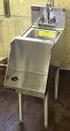 ENVIRONMENTAL HEALTH DIVISION 2120 Diamond Blvd., Suite 200 Concord, CA 94520 Phone: (925) 692-2500 Fax: (925) 692-2505 www.cchealth.org/eh/ SINKS / DISHMACHINES Food Preparation Sink A separate stainless
New or Remodeled Food Service Establishment Checklist**
 ToTo Protect and Promote the Health and the Environment of the People of Kittitas County New or Remodeled Food Service Establishment Checklist** **Some items may not be required for limited food service
TARRANT COUNTY PUBLIC HEALTH DEPARTMENT 817-321-4960 fax 817-321-4961 FOOD ESTABLISHMENT REVIEW APPLICATION
 TARRANT COUNTY PUBLIC HEALTH DEPARTMENT 817-321-4960 fax 817-321-4961 FOOD ESTABLISHMENT REVIEW APPLICATION Date: NEW REMODEL Name of Establishment: Category: Restaurant Institution Daycare Retail Market
Montgomery County Health Department Mobile Food Guidelines. Definitions
 Montgomery County Health Department Mobile Food Guidelines Definitions Commissary A permitted food establishment to which a mobile unit returns on a daily basis for such tasks as discarding liquid and/or
STARTING A FOOD BUSINESS GUIDE
 STARTING A FOOD BUSINESS A HELPFUL GUIDE To assist those who are planning to open a food business in Columbus or Worthington Developed by the Food Protection Program at Columbus Public Health Updated April
General Information on Starting a Restaurant Business in Alabama
 General Information on Starting a Restaurant Business in Alabama This information is intended to give a general idea and overview of Health Department construction requirements for starting a retail food
FOOD ESTABLISHMENT PERMIT APPLICATION FOR NEW, REMODEL OR CHANGE OF OWNERSHIP
 Health & Community Services San Juan County P.O. Box 607 145 Rhone, Friday Harbor, WA 98250 Phone: (360) 378-4474 Fax: (360) 378-7036 FOOD ESTABLISHMENT PERMIT APPLICATION FOR NEW, REMODEL OR CHANGE OF
Guidelines for New or Remodeled Food and Drink Establishments
 Guidelines for New or Remodeled Food and Drink Establishments Section I. Plans and Permit Applications New: Before construction of a fixed food and drink establishment, you must apply for a Food Establishment
COMMERCIAL COOKING HOODS, VENTILATION & FIRE SUPPRESSION SYSTEM GUIDELINES AND PROCEDURES
 COMMERCIAL COOKING HOODS, VENTILATION & FIRE SUPPRESSION SYSTEM GUIDELINES AND PROCEDURES These guidelines are to be used for ALL commercial cooking hoods, ventilation systems and related fire suppression
GUIDELINE FOR THE DESIGN, CONSTRUCTION AND RECONSTRUCTION OF A FOOD HANDLING ESTABLISHMENT
 GUIDELINE FOR THE DESIGN, CONSTRUCTION AND RECONSTRUCTION OF A FOOD HANDLING ESTABLISHMENT This guideline provides general information to anyone proposing to construct a new food handling establishment,
APPLICATION FOR FITOUT OR PLAN ASSESSMENT UNDER THE FOOD ACT 2001
 Health Protection Service Howard Florey Centenary House, 25 Mulley Street, Holder ACT 2611 Locked Bag 5005, Weston Creek ACT 2611 Phone: (02) 6205 1700 Fax: (02) 6205 1705 Website: www.health.act.gov.au
BUCKS COUNTY DEPARTMENT OF HEALTH PLAN REVIEW APPLICATION FOR FOOD FACILITIES
 BUCKS COUNTY DEPARTMENT OF HEALTH PLAN REVIEW APPLICATION FOR FOOD FACILITIES GENERAL INFORMATION: The Bucks County Department of Health Rules and Regulations for Conducting and Operating Food Facilities
CALIFORNIA PLAN CHECK GUIDE FOR RETAIL FOOD FACILITIES
 CALIFORNIA PLAN CHECK GUIDE FOR RETAIL FOOD FACILITIES Solano County Department of Resource Management Environmental Health Division 675 Texas St., Ste. 5500 Fairfield, CA 94533 Revised March 2010 TABLE
Florida s Cottage Food Industry and Beyond
 Florida s Cottage Food Industry and Beyond The 2012 Educational Program Committee is pleased to share conference educational materials with you under the condition that they are used without alteration
Subpart 1. Installation. All plumbing systems must be. installed and tested according to this chapter and chapter 4715,
 4658.4500 PLUMBING SYSTEMS; NEW CONSTRUCTION. Subpart 1. Installation. All plumbing systems must be installed and tested according to this chapter and chapter 4715, the Minnesota Plumbing Code. Subp. 2.
CONSTRUCTION PLAN APPROVAL PROCEDURES FOR FOOD FACILITIES
 COUNTY OF RIVERSIDE DEPARTMENT OF ENVIRONMENTAL HEALTH CONSTRUCTION PLAN APPROVAL PROCEDURES FOR FOOD FACILITIES FLOOR PLAN Rev. (9/13-H) TABLE OF CONTENTS Cover Sheet 1 Environmental Health Offices 3
KITCHEN AND BATH REMODELING BUILDING PERMIT REQUIREMENTS
 St. Louis County Department of Public Works Division of Code Enforcement KITCHEN AND BATH REMODELING BUILDING PERMIT REQUIREMENTS This guideline is intended to provide the homeowner/contractor with the
FOOD ESTABLISHMENT REQUIREMENTS
 FOOD ESTABLISHMENT REQUIREMENTS 1. Three-compartment sink with dual drainboards A sink with at least three compartments shall be provided for manually washing, rinsing and sanitizing equipment. And shall
Commercial Kitchen Fire Safety
 Commercial Kitchen Fire Safety Commercial grade kitchens are a common feature found in many churches today, as religious institutions are providing meals for daycares, soup kitchens, meals on wheels and
GUIDELINES FOR OPERATORS OF MOBILE FOOD BUSINESSES: DESIGN, CONSTRUCTION
 Southern Drive, Busselton WA 6280 All Correspondence to: The Chief Executive Officer, Locked Bag 1, Busselton WA 6280 Ph: (08) 9781 0444 Fax: (08) 9752 4958 Email: [email protected] Web: www.busselton.wa.gov.au
Inspection Item COMMENTS
 APPENDIX 9 AFFORDABLE HOUSING PROGRAM INSPECTION CHECKLIST Participating Jurisdiction: Homeowner Name: Assisted Property Address: Date of Physical Inspection of Property: Total Square Footage of Property:
Address of food business: 17-27 Orford Place, Norwich, NR1 3QA Date of Inspection: 25 September 2014 Date of revisit: 8 th April 2015
 Public Protection (food & safety) Food Premises Inspection Report Name of Business: Pizza Hut Address of food business: 17-27 Orford Place, Norwich, NR1 3QA Date of Inspection: 25 September 2014 Date of
Chapter 5 Water, Plumbing, and Waste
 Chapter 5 Water, Plumbing, and Waste Parts 5-1 WATER 5-2 PLUMBING SYSTEM 5-3 MOBILE WATER TANK AND MOBILE FOOD ESTABLISHMENT WATER TANK 5-4 SEWAGE, OTHER LIQUID WASTE, AND RAINWATER 5-5 REFUSE, RECYCLABLES,
FORT WORTH CODE COMPLIANCE DEPARTMENT CONSUMER HEALTH DIVISION PLAN REVIEW FOR FOOD ESTABLISHMENTS & PERMITTING REQUIREMENTS
 FORT WORTH CODE COMPLIANCE DEPARTMENT CONSUMER HEALTH DIVISION PLAN REVIEW FOR FOOD ESTABLISHMENTS & PERMITTING REQUIREMENTS Section 16-114 Submission of Plans: When a food establishment is newly constructed
TEMPORARY EVENT APPLICATION
 www.camdencounty.com TEMPORARY EVENT APPLICATION Dear Special Event Participant: Enclosed is a copy of the Requirements for Temporary Food Service Operation and Special Event Fact Sheet. To obtain approval
The following guide to food establishment design is
 PART 2, Suggested Guide to Food Establishment Design determining the extent of necessary hand contact by food preparation workers during the preparation and serving stages; ensuring that all food items
TYPICAL FIRE SAFETY INSPECTION VIOLATIONS
 TYPICAL FIRE SAFETY INSPECTION VIOLATIONS The following is a list of typical violations often found by inspectors and a generic solution. You can use this list to improve the safety of your facility, to
Important Information for Vendors at Temporary Events
 Important Information for Vendors at Temporary Events As a food vendor, you are responsible for ensuring that your operation complies with the Colorado Retail Food Establishment Rules and Regulations.
A GUIDE TO OPENING A FOOD PREMISES
 A GUIDE TO OPENING A FOOD PREMISES Introduction Everyone who intends to operate a food premises must notify the health unit where their business will be located. The protection of food is an important
PLAN REVIEW AND APPROVAL FOR FOOD ESTABLISHMENTS PLUMBING REQUIREMENTS FOR FOOD ESTABLISHMENT PREMISES
 PLAN REVIEW AND APPROVAL FOR FOOD ESTABLISHMENTS PLUMBING REQUIREMENTS FOR FOOD ESTABLISHMENT PREMISES Health Systems Protection Rev. 07/2006 35-05-20/06/07/18 OFFICE OF FOOD PROTECTION 417 FEDERAL ST
SECTION 11 78 13 MORTUARY REFRIGERATORS
 PART 1 - GENERAL 1.1 DESCRIPTION SECTION 11 78 13 MORTUARY REFRIGERATORS SPEC WRITER NOTE: Delete between //---// if not applicable to project. Also delete any other item or paragraph not applicable in
KITCHEN HOODS GUIDELINES
 KITCHEN HOODS GUIDELINES City of Palo Alto Building Inspection Division 285 Hamilton Ave. Inspection Request: 650 329-2496 Revision Date:6/27/12 General Requirements/Checklist for: Commercial Codes Enforced:
city of edmonds development information
 #B17 city of edmonds development information Commercial Kitchen Hood & Hood Fire Suppression System Permit Submittal Requirements PERMIT REQUIRED: CODES: FEES: A Commercial Kitchen Hood Mechanical Permit
Food delivery & storage
 screen 1 Food delivery & storage 7. Rubbish bags in the way of deliveries This screen shows a delivery scene with a number of potential hazards to food safety. As a starting point students are encouraged
Hygiene Standards for all Food Businesses
 Hygiene Standards for all Food Businesses Food hygiene laws are not simply a list of rules. They are intended to let food business operators assess the risks to food safety in their business and apply
Plumbing Code Sections For Commercial Food Facilities
 Plumbing Code Sections For Commercial Food Facilities SCOPE The following list of requirements summarizes the plumbing issues that are commonly addressed in commercial retail food facilities by health
Minimum Housing and Health Standards
 APPENDIX M.O. 57/2012 Minimum Housing and Health Standards Original version July 20, 1999. Revisions to Part lll, Housing Premises, sections 3 and 4, June 30, 2012 (all revisions are bolded and underlined).
SANITATION AND PEST CONTROL INSPECTION REPORT INSPECTOR: BUSINESS NAME:
 SANITATION AND PEST CONTROL INSPECTION REPORT INSPECTOR: BUSINESS NAME: A. EXTERIOR AREAS 1. Evidence of pest activity 2. Pest harborage 3. Adequate garbage handling 4. Adequate garbage container design
Plumbing Code in Commercial Kitchens
 Plumbing Code in Commercial Kitchens City of Concord Code Administration 225-8580 Dan Clark Plumbing Inspector Tedd Evans, Chief Building Inspector Code References from the 2009 edition of the International
SOUTH CAROLINA. Downloaded January 2011
 SOUTH CAROLINA Downloaded January 2011 1401. General (II) B. When meals are catered to a facility, such meals shall be obtained from a meal service establishment graded by the Department, pursuant to R.61
STEPS NECESSARY FOR APPROVAL TO OPERATE A FOOD SERVICE ESTABLISHMENT
 STEPS NECESSARY FOR APPROVAL TO OPERATE A FOOD SERVICE ESTABLISHMENT 1. Submit completed application to this office at least 21 days prior to commencing operation. The application will NOT be considered
MISSISSIPPI. Downloaded January 2011
 MISSISSIPPI Downloaded January 2011 101.08 Dietitian. The term dietitian shall mean a person who is licensed as a dietitian in the State of Mississippi, or a Registered Dietitian exempted from licensure
Plumbing Installations. A homeowner guide to the City of Winnipeg plumbing requirements for a single-family dwelling
 Plumbing Installations A homeowner guide to the City of Winnipeg plumbing requirements for a single-family dwelling February 2001 contents General Information 3 Inspection 4 New Drain and Vent Installations
County of San Diego. Food Facility Plan Review Guide
 County of San Diego Food Facility Plan Review Guide County of San Diego Department of Environmental Health Food and Housing Division Plan Check Division 5500 Overland Avenue San Diego CA 92123 (858) 505-6660
Permit Application for Mobile Food Truck
 Date Received / / Office Use Only By: Date Approved / / By: Comp # Element Type: Entered By: Annual Permit Fee: Check #: Receipt #: AMANDA #: Permit Application for Mobile Food Truck NOTE: This application
Article 11 Laundry and Dry Cleaning
 Article 11 Laundry and Dry Cleaning 41101. General Provisions. 41102. Construction Permit. 41103. Sanitary Permit. 41104. Materials and Construction of Physical Facilities. 41105. Sanitary Facilities Plumbing.
FACILITIES DESIGN ASSESSMENT AND PERMITTING QUESTIONNAIRE: (For use by all food risk categories 1-3 or higher)
 FACILITIES DESIGN ASSESSMENT AND PERMITTING QUESTIONNAIRE: (For use by all food risk categories 1-3 or higher) TO BE COMPLETED BY THE OWNER/OPERATOR AND SUBMITTED TO THE SNHD ENVIRONMENTAL HEALTH DIVISION
General Fire Code Requirements Within Commercial Tenant Spaces
 FIRE DEPARTMENT in cooperation with Scope: General Fire Code Requirements Within Commercial Tenant Spaces This handout is designed to assist owners, architects, contractors and others in understanding
PRE-ASSEMBLED INSTALLATION INSTRUCTIONS FOR PACB SERIES COAL FIRED OVENS
 PRE-ASSEMBLED INSTALLATION INSTRUCTIONS FOR PACB SERIES COAL FIRED OVENS OVENS MANUFACTURED BY: EARTHSTONE OVENS-6717 SAN FERNANDO RD GLENDALE CA 91201 TELEPHONE: 800-840-4915 818-553-1134 FAX: 818-553-1133
#9. EFFECTIVE CLEANING, MAINTENANCE, AND PEST CONTROL PROGRAMS FOR YOUR HACCP PLAN
 #9. EFFECTIVE CLEANING, MAINTENANCE, AND PEST CONTROL PROGRAMS FOR YOUR HACCP PLAN by O. Peter Snyder, Jr., Ph.D. Hospitality Institute of Technology and Management In past articles, I have discussed supplier
Plumbing Installations A homeowner guide to the City of Winnipeg plumbing requirements for a single-family dwelling
 PLANNING, PROPERTY AND DEVELOPMENT DEPARTMENT Plumbing Installations A homeowner guide to the City of Winnipeg plumbing requirements for a single-family dwelling October 2014 contents General Information
SOUTH CAROLINA DEPARTMENT OF AGRICULTURE FOOD SAFETY DIVISION GUIDELINES FOR FOOD PROCESSORS (REVISED)
 SOUTH CAROLINA DEPARTMENT OF AGRICULTURE FOOD SAFETY DIVISION GUIDELINES FOR FOOD PROCESSORS 2013 (REVISED) SOUTH CAROLINA DEPARTMENT OF AGRICULTURE PRODUCT TO PRODUCTION GETTING STARTED FROM SCRATCH If
PUBLIC RESTROOMS, DESIGN INTENT
 PUBLIC RESTROOMS, DESIGN INTENT 1.01 STRUCTURAL A. Where feasible, metal stud partitions will be constructed on a 6 high concrete curb. 1.02 MECHANICAL A. Restrooms will have a minimum of 15 air changes
Chapter 8 Water and Sewage Systems
 Chapter 8 Water and Sewage Systems Proper sanitary controls pertaining to the water supply system and sewage and liquid waste disposal systems are necessary in all types of food establishments to prevent
PLUMBING & CROSS-CONNECTION CONTROL
 PLUMBING & CROSS-CONNECTION CONTROL. MODULE 4 VII. Typical Retail Food Service Cross-Connections VIII. Air Gaps and Air Breaks for Drains and Waste IX. Grease Interceptors VII. TYPICAL RETAIL FOOD SERVICE
Application for Organizers of Community Events
 Kern County Environmental Health Division Application for Organizers of Community Events EVENT ORGANIZERS AND ENVIRONMENTAL HEALTH WORKING TOGETHER The Kern County Public Health Services Department, Environmental
VENDOR APPLICATION FOR TEMPORARY FOOD EVENTS
 VENDOR APPLICATION FOR TEMPORARY FOOD EVENTS All vendors must complete and submit to Event Coordinator for each event in the Tri-County area. If no menu and no equipment change are occurring from one event
FOG PRETREATMENT INFORMATION. New London Public Utilities F.O.G. Program 120 Broad Street New London, CT 06320
 FOG PRETREATMENT INFORMATION 1 New London Public Utilities F.O.G. Program 120 Broad Street New London, CT 06320 Kathryn Willis Program Coordinator Phone: 860-447-5222 Introduction This information package
CONSTRUCTION GUIDEBOOK FOR WHOLESALE FOOD FACILITIES
 CONSTRUCTION GUIDEBOOK FOR WHOLESALE FOOD FACILITIES Regional Wholesale Food Processor Committee May 2011 (Second Edition) Construction Guidebook for Wholesale Food Facilities - RWFPC CONSTRUCTION GUIDEBOOK
Food Service Operation/Retail Food Establishment Plan Review Application
 CHRISTOPHER S. SMITH, RS, MA HEALTH COMMISSIONER DAVID BEYERS, MD MEDICAL DIRECTOR CITY OF PORTSMOUTH HEALTH DEPARTMENT 605 WASHINGTON STREET PORTSMOUTH, OH 45662 BOARD MEMBERS JIM KALB, PRESIDENT TIMOTHY
Applications for building permits will not be reviewed until all of the required information has been submitted.
 NOTICE: Applications for building permits will not be reviewed until all of the required information has been submitted. Once all items are submitted a minimum of ten (10) working days are required to
Land Use and Environmental Service Agency (Code Enforcement) NC Plumbing Code. Table of Contents
 Chapter 1 Administration Chapter 3 General Regulations Chapter 5 Water Heaters Chapter 7 Sanitary Drainage Chapter 9 Vents Chapter 11 Storm Drainage Policy Statements Table of Contents Chapter 2 Definitions
MY HOME IN A HOUSING BLOCK A GUIDE FOR RESIDENTS
 MY HOME IN A HOUSING BLOCK A GUIDE FOR RESIDENTS -KESKUSTA One half of Finns live in housing blocks, which is a safe and comfortable way to live. Welcome a board! Buildings and the Finnish climate There
RFQ # PR5006805 Replace Kitchen Equipment in the CGR
 RFQ # PR5006805 Replace Kitchen Equipment in the CGR GENERAL The Consulate General of the United States of America has a requirement to furnish and install new kitchen equipment at the Consul General s
Low risk includes facilities that sell or give away non potentially hazardous food in original manufacturer packaging and do not offer samples.
 Planning, Building &Environmental Services 1195 Third Street, Suite 210 Napa, CA 94559 www.co.napa.ca.us Main: (707) 253-4471 Fax: (707) 253-4545 PERMIT APPLICATION AND REQUIREMENTS FOR FOOD VENDORS AT
STARTING A NEW FOOD BUSINESS? GUIDELINES FOR OPENING A CLASS 3 FOOD BUSINESS
 STARTING A NEW FOOD BUSINESS? GUIDELINES FOR OPENING A CLASS 3 FOOD BUSINESS Updated: July 2010 Contents Procedure for opening a new Food Business... 2 Basic Records... 3 Summary - Construction and Fitout
Element D Services Plumbing
 PART 1 - GENERAL 1.01 OVERVIEW A. This section addresses domestic cold, hot and hot water return distribution systems within and to five feet beyond building perimeter. PART 2 - DESIGN CRITERIA 2.01 GENERAL
Arapahoe County Residential Water Heater Installation and Inspection Guide
 Arapahoe County Residential Water Heater Installation and Inspection Guide The attached handout is designed to be a general permit submittal and inspection guide covering most installation instances, however
U.S. Department of Housing and Urban Development Office of Public and Indian Housing. A Good Place to Live!
 U.S. Department of Housing and Urban Development Office of Public and Indian Housing A Good Place to Live! Introduction Having a good place to live is important. Through your Public Housing Agency (or
RECOMMENDED PROGRAM FOR WELL AND SEPTIC SYSTEM REAL ESTATE TRANSACTION INSPECTIONS
 Contra Costa Environmental Health 2120 Diamond Blvd., Suite 200 Concord, CA 94520 Phone: (925) 692-2500 Fax: (925) 692-2504 www.cchealth.org/eh/ RECOMMENDED PROGRAM FOR WELL AND SEPTIC SYSTEM REAL ESTATE
ELECTRICAL CONTRACTORS THE UNIVERSITY OF TENNESSEE KNOXVILLE, TENNESSEE SECTION 16050 PAGE 1
 KNOXVILLE, TENNESSEE SECTION 16050 PAGE 1 PART 1 - GENERAL 1.01 RELATED DOCUMENTS: SECTION 16050 A. Drawings and general provisions of Contract, including General and Supplementary Conditions and Division-1
What to Expect From the Examination. How to Study the Plumbing Codes
 Texas State Board of Plumbing Examiners Plumbing Inspector Examination Review Course The following Examination Review Course is designed to assist an applicant in preparing for the Plumbing Inspector examination.
Mobile Food Vending Units
 Mobile Food Vending Units FOOD HANDLING PERMIT Before starting the operation of a mobile food vending unit, outside of a special event, the operator must hold a valid food handling permit issued by Alberta
PRIOR TO STARTING CONSTRUCTION.
 FOOD OR BEVERAGE FACILITY PLANS AND SPECIFICATIONS REQUIRED INVENTORY Establishment Name: FLOOR PLANS/BLUEPRINTS Equipment location ROOM FINISH SCHEDULE Walls, floors, ceiling EQUIPMENT LISTING Manufacturer
R432. Health, Health Systems Improvement, Licensing. R432-5. Nursing Facility Construction. R432-5-1. Legal Authority. R432-5-2. Purpose.
 R432. Health, Health Systems Improvement, Licensing. R432-5. Nursing Facility Construction. R432-5-1. Legal Authority. This rule is promulgated pursuant to Title 26, Chapter 21. R432-5-2. Purpose. The
MOBILE FOOD A GUIDE TO PERMITTING IN ALBUQUERQUE
 MOBILE FOOD A GUIDE TO PERMITTING IN ALBUQUERQUE PAVE THE WAY FOR SUCCESS WHAT YOU NEED TO KNOW TO PERMIT AND OPERATE A MOBILE FOOD UNIT IN ALBUQERQUE. PERMITS AND FEES Mobile food units are required to
MARICOPA COUNTY ENVIRONMENTAL HEALTH CODE
 MARICOPA COUNTY ENVIRONMENTAL HEALTH CODE CHAPTER II SEWAGE AND WASTES SECTION 6 CHEMICAL TOILETS, PORTABLE RESTROOM UNITS, PORTABLE WASTE HOLDING TANKS REGULATION 1. Definitions a. "Chemical toilet" means
Guideline on Emergency Action Plans for Food Establishments: Sewage Backup
 Guideline on Emergency Action Plans for Food Establishments: Sewage Backup A sewage backup refers to the overflow of sewage from equipment or plumbing facilities within a food establishment. A sewage backup
Does Part of My Basement Floor Have to Be Removed to Install. Where Does the Water from the Sump Pump Go?...Page 5
 PROTECTIVE PLUMBING - WHAT IS IT? TABLE OF CONTENTS Protective Plumbing What is it?...page 1 What is Foundation Drainage?...Page 2 What is a Sump Pumping System?...Page 4 Does Part of My Basement Floor
Building Condition Assessment Report
 Building Condition Assessment Report Asset C3c - Oak Terrace Cottage 121 Address Riverview Lands, 2601 Lougheed Highway, Coquitlam, BC. V5C 4J2 Construction Year Size (Gross Floor Area) 1920. 2,553 Sq.Ft.
Good Hygiene Practices for Catering at Outdoor Events
 Good Hygiene Practices for Catering at Outdoor Events The following pages of advice are based on the requirements of Regulation (EC) 852/2004 on the Hygiene of Foodstuffs The Food Hygiene (England) Regulations
Brian Coppock, Regional Compliance Officer. Office of Statewide Health Planning and Development Facilities Development Division
 Brian Coppock, Regional Compliance Officer Office of Statewide Health Planning and Development Facilities Development Division CHAPTER 6 WATER SUPPLY AND DISTRIBUTION 601.0 Hot and Cold Water Required.
FOOD ESTABLISHMENT GUIDE FOR DESIGN, INSTALLATION, AND CONSTRUCTION RECOMMENDATIONS
 FOOD ESTABLISHMENT GUIDE FOR DESIGN, INSTALLATION, AND CONSTRUCTION RECOMMENDATIONS PART 9 - HOT WATER SUPPLY REQUIREMENTS The hot water supply shall be sufficient to satisfy the continuous and peak hot
FOOD SERVICE FACILITIES Best Management Practices Stormwater Management Program City of Bluff City P.O. Box 70, Bluff City, TN 37618 423-538-7144
 FOOD SERVICE FACILITIES Best Management Practices Stormwater Management Program City of Bluff City P.O. Box 70, Bluff City, TN 37618 423-538-7144 This document may be printed and used for reference by
Name Of Occupancy Date. Yes No Describe
 FIRE PREVENTION INSPECTION CHECKLIST For Class A Occupancy (For Assembly Buildings, Bars, Restaurants, Gyms, Churches, Arenas, Theatres or wherever people gather) Name Of Occupancy Date Physical Address
Guide to Care and Maintenance
 Village of Mount Prospect Guide to Care and Maintenance of Your Apartment Sponsored ed by: y: Village of Mount Prospect Envir nvironmental Health Division with the assistance of The Concerened ened Owners
Facility Self Evaluation Report
 Facility Self Evaluation Report Facility Name: Registration Number Location: Date of Inspection Process Type (Check all that are applicable) Fresh Frozen /Semi-Preserved Salt/Dried Ready-to-eat Pickled,
Plumbing Code in Commercial Kitchens. NH BOA May 9, 2012
 Plumbing Code in Commercial Kitchens NH BOA May 9, 2012 Main Topics Grease Interceptors Indirect Waste Receptors Cleaning Chemical Dispensers Thermal Expansion IPC - Chapter 10 Traps Interceptors Separators
Renovation instructions
 1(13) Renovation instructions The purpose of these instructions is to inform you of the things to consider when renovating an apartment. You can avoid many possible problems and additional costs following
Why is my air conditioner dripping on my customers?
 De-Mystifying HVAC Why is my air conditioner dripping on my customers? By Ron Prager One of the most frequent emergency service requests is a call for an air conditioner leaking water into the store. These
GUIDANCE DOCUMENT FOR SIZING AND INSTALLATION OF GREASE TRAPS AND INTERCEPTORS
 GUIDANCE DOCUMENT FOR SIZING AND INSTALLATION OF GREASE TRAPS AND INTERCEPTORS Fort Worth Water Department, Pretreatment Services Division, (817)871-8305 A. Introduction: Part I: Guidance for Grease Trap
Top 10+ Mistakes of DWV plumbing design
 Top 10+ Mistakes of DWV plumbing design Listed below are the some of the most frequently missed items, noticed by our inspectors, at plumbing rough-in when non-plumbers attempt plumbing design. Most of