
3.0 Home Security and Surveillance Systems...
|
|
|
- Rhoda Welch
- 10 years ago
- Views:
Transcription
1 3 3.0 Home Security and Surveillance Systems Terms you ll need to understand: Remote access Bypass mode Quad ANSI/TIA/EIA-570 Video switchers Passive infrared sensor Charge coupled device (CCD) Zone layout Hard-wired RJ-31x Glass break sensor Camera resolution Lux rating CCTV Techniques you ll need to master: Connecting a quad switcher to a VCR and cameras Planning the installation of a smoke detector Identifying the location of a glass break detector Planning a security system zone layout Selecting locations for keypads Evaluating a wireless and hard-wired security system Selecting a proper password for a monitoring station Comparing the light sensitivity levels of various brands of surveillance cameras Identifying the components contained in a security control panel
2 128 Chapter... 3 A home security and surveillance system is an essential part of any modern automated home. The basic design of a security system begins with analyzing the needs of the inhabitants, surveying existing technology and hardware, reviewing system costs, considering monitoring choices, and finally planning the installation. In addition to perimeter and interior protection offered by a security system, surveillance monitoring includes features that enable the inhabitants to observe environmental conditions inside and outside the home when at home or away. In a home surveillance system, video cameras and display systems are considered by most contractors to be optional items. Subject to the homeowner s choice, surveillance equipment can function independently from the basic features included in home security monitoring. This chapter provides the information you will need to know as a home integrator for designing, integrating, and installing a home security and surveillance system. Design Considerations The design of a security and surveillance system should provide for the protection of the entire perimeter of a home as well as visual- and audio-based surveillance monitoring. Security system sensors are available that are designed to detect sound, window and door intrusion, air movement, body heat, motion, and other conditions that indicate an intruder is present. A good security system design should consider the best plan for existing homes as well as new construction. It should also consider the lifestyle of all the inhabitants, the location of valuables or any items to be protected, how the system is to be controlled, adequate smoke and fire alerting sensors, and the type of emergency response required. The design choices are numerous and varied due to advances in home security technology and the wide availability of compact, low-cost video surveillance systems. Wireless Security Systems Wireless home security systems use battery-powered radio transmitters and receivers to connect the various components such as cameras, sensors, area motion detectors, sirens, central controllers, smoke/fire detectors, keypads, and video displays. These types of security systems are usually available at a local hardware store or on the Internet and are often designed
3 Home Security and Surveillance Systems 129 for do-it-yourself installation. The basic advantages of wireless security systems are Wireless systems are easy to install They avoid the expensive and timeconsuming task of installing new wires in the walls of existing homes. Wireless systems enable you to take the components with you when moving to a new location. Wireless sensors are designed to transmit a unique identification code to a controller The controller learns the identity of each sensor and links it to an appropriate zone. Each sensor also transmits status information such as battery voltage, condition of the sensor switch, and other diagnostic messages. Some homeowner-installed wireless security systems can be set up to record a voice message and to call programmed numbers in the event of an alarm This saves the cost of a professional monitoring service. Wireless sensors, motion detectors, and video cameras can often be installed in locations that are not accessible for wired equipment. The basic disadvantages of wireless security systems are Wireless system design specifications can limit the distance between sensors, cameras, and the central controller. Wireless systems can be vulnerable to electromagnetic interference (EMI) in some locations. They require periodic replacement of batteries. Most professional builders recommend wireless systems as a last choice. Hard-wired Security and Surveillance Systems Hard-wired security and surveillance systems use wires installed inside the walls, attics, crawl spaces, and underground to connect the sensors to a central controller. Surveillance cameras or microphones are also wired to speakers, video switchers, and video display monitors. A hard-wired system design normally uses power from the home AC power wiring as the primary source. A rechargeable battery pack is used by the controller for backup during power outages. The main components of a hard-wired system are similar to a wireless system but without the radio receiver and transmitter components. They include a central control panel, sensors, one or more keypads, motion
4 130 Chapter... 3 detectors, smoke and fire sensors, cameras, camera switchers, video displays, and sirens. The advantages for a hard-wired security system are Hard-wired security systems are considered by most contractors to be more reliable than wireless systems. Hard-wired systems are usually installed by a professional security system contractor with warranties and maintenance support. Hard-wired systems avoid the problem of EMI and radio range limitations inherent in some wireless security systems. The hard-wired components are usually less visible and more aesthetically pleasing than wireless components. Hard-wired systems do not depend on batteries except for power failure backup protection. The disadvantages of a hard-wired security system are Hard-wired systems are more expensive than wireless systems. Hard-wired systems are usually leased from the company that installs the system. Unlike a wireless system, the hard-wired system remains an integral part of the home. The components are not capable of being moved to another home when the owner relocates. Problems can arise in the installation of sensors in existing homes where some areas are not accessible for pulling wires inside the walls. Remote Access Systems A remote access system provides the capability to monitor and control a home security system from a location away from the home. A telephone call to the home followed by a key number code allows the caller to obtain status information concerning environmental and alarm system condition. Remote systems can also be programmed to call a specific phone number when certain environmental conditions exceed an established threshold. A special synthesized voice response system provides the caller with an audible report. The caller, with proper coded inputs, can also perform all the same control functions from a distant location that are available on the keypad in the home. Features of remote access systems vary among vendors, but most systems have features similar to those listed here: Monitoring and reporting temperature inside and outside the home Reporting on any sensors that have exceeded preset thresholds
5 Home Security and Surveillance Systems 131 Reporting on the date and time of any alarm conditions that existed Monitoring loud noises that exceed a set time interval using a built-in microphone in the home security system Reporting the status of smoke alarms or heat sensors Fire Detection Systems Fire detection sensors are available in two categories called heat detectors and smoke detectors. They operate on a principle of detecting heat rise or smoke in the home and can be either hard-wired with voltage supplied by the AC power wiring or battery operated. Most fire detectors currently available are powered by 9-volt DC transistor radio batteries, 120-volt AC power wiring, or 120-volt AC power with battery backup. Wired-in smoke detectors connected to a fire or security system are usually powered by DC from the security panel. This gives the detectors a natural battery backup in the event of a power failure. Common voltages are 6v, 12v, and 24v DC with 12v DC being the most common. Some 120v AC units have the capability to interconnect so that when one unit activates, it causes the audible alarm in the other units to sound. Units can also be purchased that have a relay output for connection to any security system control panel or wireless transmitter. The most common types available in hardware stores operate as independent sensors that are battery powered, are not connected to the security system, and have their own audible alarm sounder. Heat sensors operate using a different technology from smoke detectors. The basic design features of each type are summarized in the following paragraph. Heat Sensors and Smoke Detectors Heat sensors are designed to detect a rapid rise in temperature. They also have a feature that sets off an alarm when a fixed temperature is reached. Smoke detectors do not react to heat but use one of two common sensor designs to detect smoke. An ionization type of detector forms an electrical path inside a small chamber with a very small amount of radioactive material. When smoke enters the chamber, the particles attach themselves to the ions and change the electrical current flow. A photoelectric type of detector works by using a photoelectric cell and a light source. The light does not usually reach the photoelectric cell, but when smoke is present the light is dispersed and reaches the photoelectric cell, triggering the alarm. The main difference between the two types is photoelectric types are more sensitive to large particles and ionization types are more sensitive to small particles.
6 132 Chapter... 3 Modern home design should include at least one of each type. Smoke and heat detectors should be located in each sleeping area and on each story of the home and placed on the ceiling or on the wall 6'' 12'' from the ceiling. Remember that heat and smoke detectors operate on different types of technology. Heat detectors react to abrupt changes and go into an alarm condition when a temperature changes rapidly or reaches a fixed value. Smoke alarms do not react to heat but go into an alarm condition when smoke enters the sensor area. The two main types of smoke detectors are ionization and photoelectric. Environmental Monitoring Environmental monitoring can be incorporated into the design of a home security and surveillance system to monitor the status of specific conditions. This might be applicable to rural homes, vineyard owners, farmers, fruit growers, and ranchers. Environment monitoring includes the tracking and measurement of external as well as internal parameters. The following are examples of the types of environmental data that can be monitored with existing sensor systems: Inside and outside temperatures Barometric pressure Frost alarm Minimum and maximum temperature memory Temperature trend indicator Humidity Emergency Response Systems An emergency response system is a valuable optional enhancement to a home security system. A large number of designs are available from which to choose, depending on the personal needs of members of the household. A personal emergency response system is usually designed for elderly or disabled individuals living alone who need to contact a doctor or relatives in an emergency with a minimal number of actions. Systems are available incorporating some or all of the following physical and functional features: Emergency response requests These are initiated by the user using a miniature wireless radio transmitter with a built-in help button carried or worn as a pendant by the user. Transmitters are lightweight, batterypowered devices activated by pressing one or two buttons.
7 Home Security and Surveillance Systems 133 A receiver console connected to the telephone This receives radio signals from the user s transmitter and dials an emergency response center number. An emergency response center This is similar to an alarm monitoring service except the personnel in an emergency response center are experienced medical response personnel. Temperature Sensors Temperature sensors are used as one component of an environmental monitoring and security system mentioned earlier. They are normally used to monitor high and low temperature values in vacation homes, water pipes, furnace and heating vents, outside farm buildings, computer equipment, utility rooms, or areas that might sustain damage with extreme temperature swings. Temperature sensors are often integrated with a central controller that includes a display, a keypad, and an automatic telephone dialer that can alert the homeowner or monitoring center when temperature limits are exceeded. Temperature sensors use a variety of electronic designs and components to measure temperature, including both analog and digital signal outputs that change value with a change in temperature and operate remote switches or active alarms. Location Considerations when Designing a Security or Fire Alarm System Each component of a home security and surveillance system is designed to be used in a specific location. Window sensors have requirements that are different from door sensor requirements, and smoke and heat detectors each have special location requirements. Computer systems can be integrated with control protocols such as X10 and CEBus to operate and manage security systems. In the following paragraphs, you will discover how smoke detectors work and where they are located. Also covered are the functional design requirements for various types of home security system components. Home Utility Outlet Specifications Home security systems require a number of utility outlets to support the installation of sensors, sirens, controllers, surveillance cameras, security lights, and motion detectors throughout the home. New construction provides the
8 134 Chapter... 3 opportunity to install structured wiring outlets in all rooms of the home. This includes 120v AC power outlets, Category 5 UTP cable outlets, #22-gauge two-pair wiring for sensors, and RG-6 coaxial cable outlets. Cohesion with Existing Home Systems The security system should have sensors located in areas where components of existing home systems require monitoring or protection from theft. Heat sensors are the most common type of sensor for monitoring components of the heating, ventilation, and air conditioning (HVAC) system. They are mounted near the furnace to monitor rapid changes in temperature that could warn of a possible fire. Security systems area often designed to be integrated with the home computer system. Computer interfaces are used with X10 and CEBus protocols to monitor and control interior and exterior security system components. Safety and Code Regulations The safety and code regulations for installing and locating fire alarms, sensors, and smoke detectors are usually governed by local building codes. The local codes are enforced by a fire marshal who conducts inspections of public places and sets the standard for local residential inspections. Smoke Detector Installation and Location Requirements On the national level, codes and standards have been published that establish the requirement for fire detection equipment installation. As an example, a home must have at least one smoke detector installed to meet National Fire Protection Association (NFPA) Rule 72 and Underwriters Laboratories, Inc. (UL) 985 standards. The UL 985 standard covers household fire warning system control units intended to be installed in accordance with the National Fire Alarm Code (ANSI/NFPA 72) and the National Electrical Code (ANSI/NFPA 70). ANSI/NFPA 72 is the standard document that defines the spacing for smoke detectors, which is typically 30 feet when installed on a smooth ceiling. Existing Home Environments Existing home environments require new wire and cabling to support security system components where hard-wired systems are installed. Wireless systems are popular for existing home environments because of the convenience of locating sensors without the need to install additional wiring in the walls.
9 Home Security and Surveillance Systems 135 Smoke Alarm Requirements Smoke alarm requirements are not the same for every home. They vary according to local municipal standards and the age of a specific dwelling. For homes built prior to 1979, battery-powered smoke alarms are permissible. As to smoke alarm placement, requirements also vary according to the age of the dwelling. New Home Construction Environments New home construction facilitates the location of hard-wired security system wiring and components during the early phase of the construction. Structured wiring in new homes supports most of the needs of a well-planned multizone security system. Phone lines, coaxial cable, and Category 5 cable are components of a structured wiring installation. They provide the basis for integrating the security system with the computer network and other home automation systems. The exception is the wiring for door, window, and motion detector sensors. Inexpensive two-conductor wire must be installed in the interiors of walls between the controller location and each sensor. In addition, two-pair #22- gauge wire must be installed for all low-voltage powered sensors such as motion detectors. One pair is used for power and the other pair is used for signaling. Smoke Alarms in New Home Construction For all new home construction, fire alarm sensors must be powered by the home AC power electrical wiring. Although this overcomes the problem of neglecting to replace batteries on a periodic basis, there remains the problem of power outages that would also disable a fire warning sensor that uses the home wiring as a power source. Sensors can be purchased with integrated battery powered backups. For homes built prior to 1979, battery-powered smoke alarms are permissible. In newer dwellings, alarms must be powered by the electrical wiring. The problem with battery units is that people often neglect battery replacement. On the other hand, what good are wired-in smoke alarms if you have an electrical fire accompanied by a power outage? The safest arrangement, therefore, is to install wired-in alarms equipped with battery backup. This type of integrated alarm can be obtained at most hardware stores and is required for homes built as of As to smoke alarm placement, requirements also vary according to the age of the dwelling. In older homes, most municipalities require alarms in the following locations: within close proximity to all bedroom entrances, on each story of a multilevel home, and in basements. The latest standards, enacted in 1993, require that there be an additional alarm in each bedroom. Another practical location, although not required, is the garage.
10 136 Chapter... 3 Equipment Functionality and Specifications Each component of a home security and surveillance system has a specific function to perform. The basic security system includes a control panel connected by cables to sensors at various locations throughout the home. A perimeter protection system must include sensors at every opening, including doors, windows, garage doors and windows, and doors to crawl spaces. A keypad is the device that provides a control interface for the residents to arm and disarm the system using a programmed access code and also to monitor the status of the system. Door Functional Design Specifications Doors are protected by installing small magnetic switches inside the frame. Figure 3.1 illustrates the location of the magnetic switch. A magnet is installed in the top of the door that keeps the switch contacts open as long as the door remains closed. An alarm is caused when this switch is disturbed by opening the door. The magnetic switch completes a circuit that is connected to the control panel. Recessed mounted models use magnets that are fitted into drilled holes, and when properly installed, recessed mounted magnetic switches are hard to notice and blend in well with the door. Figure 3.1 Magnetic door switch. Window Functional Design Specifications A perimeter security system must include a glass protection system because magnetic switches do not protect against an intruder entering through a broken window. Glass protection systems are available in two categories: vibration
11 Home Security and Surveillance Systems 137 and acoustical. The vibration system is mounted on the glass or on a nearby wall and detects movement of the glass. Acoustical systems, or sound discriminators, sense the sound of breaking glass. The unit can be tuned to react only to the specific frequency of glass breaking, typically 4KHz 6KHz, or it can react to any loud noise. Some manufacturers have combined vibration and sound detectors into one unit that does not activate unless both are detected. These units can be used where the normal conditions would cause a single technology detector to generate false alarms. Control Panel Functional Design Specifications The control panel shown in Figure 3.2 is an enclosure that contains all the electronic components, wire termination points, backup battery packs, and telephone termination wiring. Figure 3.2 Control panel. Each sensor receives power and is managed from the control panel. It monitors the health and operating status of the total system and sends a signal to the siren when an alarm condition exists. The panel should be mounted in a location that is out of plain view and near a 120v AC outlet where a plug-in transformer can be used to supply low-voltage power to the total system. If a phone line is planned for connection to an external monitoring facility, access to the location where the phone line enters the home must be considered when locating the control panel. Preferred locations are utility rooms, basements, and closets. Keypad Functional Design Specifications The best location for a keypad is an area that is both convenient to the family users and secure for the system. The homeowner must ultimately determine how many keypads are desired and where they are to be located in the home. Typically, keypads are placed at the main entry/exit door, in the master bedroom, or in the main hallway of the home. In a multilevel home, keypads are commonly placed on each level.
12 138 Chapter... 3 Physical Devices The six major physical components of a home security and surveillance system are described in this section. Although some designs include additional components for enhanced performance or custom installations, the physical devices described here are considered the basic building blocks for a security and surveillance system that will provide adequate protection from intrusion. The essential physical assemblies include Keypads Sensors Security panels Cameras Monitors Switchers Keypads The keypad is the device used by the home residents to initiate commands for control options and observe the status of the security system. As shown in Figure 3.3, it usually contains an alphanumeric keypad and LED displays that indicate the status of the alarm system. Figure 3.3 Keypad. The keypad is used to arm and disarm the system and often includes a panic switch by which the alarm can be triggered instantly in an emergency situation. The alarm can be silenced by the owner by entering the correct coded sequence of numbers on the numerical keypad. The keypad is typically installed inside the home near a door that is most frequently used by the residents. A programmed delay is included as a feature of most systems to enable the users to enter and disarm the system within a fixed delay period (normally seconds). The same fixed delay is also used to allow the user to arm the system and exit the home within the fixed delay period. Keypads can also be used to bypass certain areas. The bypass function is used to arm the system but disable selected zones or motion detectors inside the home when the family is present. Residents often desire to secure the perimeter area of doors and windows after retiring for the evening but need to bypass interior area motion detection sensors that are activated only when the home is not occupied.
13 Home Security and Surveillance Systems 139 Sensors Sensors are designed to protect both the perimeter and the open spaces inside the home. As mentioned earlier, perimeter devices primarily protect doors and windows. The most common perimeter sensors are magnetic door switches, window vibration detectors, and window acoustical detectors. Space protection sensors called motion detectors cover interior rooms and hallways and can detect an intruder who has been able to defeat a perimeter device. Exterior motion detectors and motion-activated security lights are also used. The following paragraphs describe the types of sensors required in basic home security and surveillance systems. Door Switches Door switches work on a basic principle of a two-part magnetic switch. A switch that is sensitive to a magnetic field is mounted on the fixed structure (frame), and wires from the switch are routed through the wall to the control panel. A magnet is mounted on the door in a position where it is in close proximity to the switch when the door is closed; this also keeps the switch closed. Opening the door moves the magnet away from the switch and causes the switch to open, which is sensed by the central control panel and activates an alarm. Magnetic switches are available as normally open (NO) or normally closed (NC) to accommodate different wiring designs and controller options. Window Acoustic and Vibration Detectors As you learned earlier, window sensors are used to detect the sound of breaking glass. Large glass doors such as patio doors are usually protected by magnetic switches. Windows in the home can also be protected by magnetic switches if they can be opened; however, glass break detectors are recommended by most home security contractors to protect against an intruder entering through a broken window. Glass break detectors are available in either vibration type or acoustical type. The vibration type is mounted on the glass or on a nearby wall. Security system magnetic switches are designed for both normally closed (NC) and normally open (NO) options. An NC switch opens when the magnet is moved near the switch, and an NO switch closes when the magnet is moved in close proximity to the switch. This enables magnetic sensor-type switches to be used with various types of security system designs. Sensor door switches wired in parallel use NO contacts so that any closure of the contacts in the circuit activate an alarm condition. Series circuits use NC magnetic switches where any opening of a switch results in an open condition for the circuit, which triggers an alarm condition by the controller.
14 140 Chapter... 3 Motion Detectors Motion detectors work by detecting the changes in the infrared energy in an area. Because these devices do not emit any energy, they are called passive infrared (PIR) detectors. PIR detectors use a lens mechanism in the sensor housing to detect a change in infrared energy across the horizontal sectors covered by the sensor. This type of detector is insensitive to stationary objects but reacts to rapid changes that occur laterally across the field of view. They are the most common and economical type of motion detectors and are available in standard, pet-friendly, and harsh-environment (outdoor) models. An example of a motion detector for interior use is shown in Figure 3.4. Figure 3.4 Motion detector. Security Panels Security panels provide several functions to coordinate the operation and management of a security system. They can include an integrated keypad or LED indicators. Most designs include a power transformer for converting the AC voltage to a DC voltage for the sensor loop and contain a rechargeable battery for backup if the commercial power fails. A terminal strip provides for the connection of the wiring that connects all the sensors to the controller as well as the external telephone line. Most designs include a printed circuit board containing all the electronics and a microprocessor. It also connects to and controls the siren that is activated when an alarm condition exists. Security panels are known by numerous names, such as central control box, control panel, alarm panel, and interface panel. They all perform similar functions including controlling and monitoring sensor status, providing power to the system, connecting the telephone line to the monitoring station, and handling the programmable options for the system.
15 Home Security and Surveillance Systems 141 Cameras Surveillance systems for the home use video cameras that convert the image into a video composite or S-video signal for display on a video monitor. The best type of camera for home systems uses charged coupled device (CCD) technology. These cameras have high resolutions, low operating light, less temperature dependence, and high reliability. A typical CCD camera used in video surveillance systems is illustrated in Figure 3.5. Figure 3.5 Video surveillance camera. Camera Resolution and Sensitivity The two important specifications for cameras are the light sensitivity rating and the number of lines of resolution. The resolution of a camera is a measurement of the horizontal lines it is capable of generating. Most standard TVs and VCRs have a resolution of fewer than 300 lines, but video monitors can have a resolution as high as 800 lines. Surveillance cameras come in a range of costs and are available with lines of resolution. Higher resolutions make distinguishing fine details and recognizing people at a distance easier. The amount of light required to obtain a reasonable image is called the lux rating. 1 lux is approximately the light from one candle measured from 1 meter. Typical camera ratings range between 0.5 and 1.0 lux. Monitors Monitors are cathode-ray tube display systems similar to computer display systems. They are used to display video information processed by the camera. Coaxial cable is used to connect the camera to the monitor that can be located in any area selected by the user. Monitors do not have a TV tuner and usually have better video resolution than standard television receivers. They can also be connected to programmable switchers that receive input from several cameras and show multiple images on a single monitor. Closed circuit TV (CCTV) monitors are available for black-and-white or color display depending on the resolution and camera selection. Black-andwhite monitors have resolutions in the range of lines, whereas color monitors are available with lines. CCTV monitors are designed for extended 24-hour-per-day operation.
16 142 Chapter... 3 Video surveillance systems for both home and commercial business use are referred to as closed circuit TV (CCTV) systems. The name is derived from the type of the system used for transmission over a closed circuit or private transmission circuit rather than a standard television broadcast system. CCTV is also used in a wide variety of applications for schools, business video conferencing, retail store surveillance, and gambling casinos. Switchers Switchers are devices used with multiple camera systems. Although primarily used in commercial building security and surveillance systems, they can be scaled to fit the needs of a home security system. They enable several cameras to be used with a single monitor. The switcher can be programmed to cycle through all the cameras in a surveillance system or dwell on each camera for a specified length of time, usually in the range of 1 60 seconds. Exterior sensors can detect movement and cause cameras to start recording the image on a VCR. Quads are special devices that enable the viewer to simultaneously record and monitor four cameras. It does this by splitting your screen into four sections. The normal configuration for connecting a quad switcher with a sensor and a VCR is shown in Figure 3.6, which illustrates the connections between a quad, a monitor, and four surveillance cameras. The monitor can view all four images at the same time. Video Monitor Sensor Video Cameras VCR Figure 3.6 Quad camera switcher.
17 Home Security and Surveillance Systems 143 Configuration and Settings The next section examines the location and configuration settings for each type of sensor and the video surveillance components. You will discover the features and requirements for planning zone layouts, setting up passwords, locating keypads, as well as locating video surveillance cameras. Zone Layout Home security and surveillance systems are usually designed with certain areas of the home designated as zones. A zone can include interior motion detectors or certain rooms or hallways. The use of zones has several purposes. It enables the user to arm only portions of the system, such as the perimeter doors and windows, while bypassing the interior motion detectors when retiring for the night. When leaving the home, all zones, including the interior, can be armed as required. A zoned security system layout is also used by the external monitoring service to know which sensor in a designated zone is causing the alarm. If a sensor were to be reported as just sensor 3 zone 5, this could mean just about anywhere at first. But if the sensor were reported as sensor 3 zone 5 perimeter, this would give the operator a better understanding that the violated area is on the outside of the premises. Another reason for using a zoned security system layout is the ease of troubleshooting if a sensor is reported as a bad sensor. For example, if a bad sensor is reported as being in zone 3 perimeter, there is no need to troubleshoot sensors that are located in the interior of the system. Passwords Passwords are used as a confirmation tool by most professional alarm monitoring service companies. They are used to avoid a police response when a false alarm situation has been triggered accidentally while still ensuring that the homeowner is safe. The passwords are known only by the residents and the monitoring station personnel. When an alarm condition is received from the home at the monitoring center, the person on duty calls for a police response to the home. However, this occurs only if the alarm is not reset in a predefined length of time. If the alarm is reset at the keypad with the correct code by the owner prior to the time limit, the monitoring station simply calls the subscriber and asks for a password. The password response has two agreed upon formats: One password is used by the homeowner to indicate the alarm condition was accidental and no action need be taken by the monitoring station.
18 144 Chapter... 3 Another secret password is used if the owner is in peril or possibly held hostage by a burglar. This password, when passed after an alarm condition has been reset, results in a police response. This is the option used if the homeowner is asked to respond to the monitoring station phone call by an intruder who (hopefully) does not know the distinction between the two passwords. Passwords are used only if the monitoring station needs to authenticate the cause of an alarm condition when the residents are at home. Law enforcement agencies can penalize homeowners for excessive false alarms. Common sense should guide the selection of a security system password used with a monitoring service. Never use family or pet names, birth dates, street names, or any word found in the dictionary. The preferred password should include both letters and numbers, and a password should be memorized and never be written down. Numeric keypad codes should also avoid the use of birth dates or home address numbers. Keypad Locations Keypads are located by most contractors on the inside wall near the door most often used by the occupants. They are also frequently located in the bedroom to provide easy access by the users when retiring or arising. Keypads used for home security perimeter protection are not recommended for outside mounting because this would allow tampering, vandalism, or attempts by an intruder to search for a correct code. Some exceptions to this rule are applications such as exterior security gates and gated community entrances. Sensor Locations Sensors perform all the functions required for detecting and reporting an intrusion in the area they are designed to protect. Window and door sensors are installed on the door or window frame. Window sensors can be protected by either a magnetic switch that detects an opening of the window frame or other types mounted on the window to detect the sound or vibration of broken glass. Interior surveillance cameras and motion detectors are usually wall mounted and are used to protect open areas where an intruder might be able to defeat the perimeter security system sensors. Exterior surveillance cameras and security lighting systems should be located in areas near the front, side, and rear entrances to detect intruders before they reach the perimeter security sensors. Motion Detector Locations Motion detectors are usually mounted in the corner of a room. This enables the PIR type of motion detector to cover a 90 field. As illustrated in Figure 3.7, they are sensitive to movement across the sensor field of view.
19 Home Security and Surveillance Systems 145 Sensor Most Sensitive To Motion Across Field Of View Figure 3.7 PIR sensor field of view. Window Sensor Location The location of a window sensor can vary with different types of windows. Vibration detectors are mounted on the glass, whereas acoustical window sensors are typically mounted on an adjacent wall, as illustrated in Figure 3.8. Figure 3.8 Glass break sensor location.
20 146 Chapter... 3 Camera Locations Surveillance cameras can be mounted outside the home to provide recognition of someone wishing to enter the security perimeter area, such as a front door or driveway gate. They should be located where no blind spots exist or where it is not practical to use other types of sensors. Cameras can be mounted on any surface area of the home or garage where coverage is required as long as the area is illuminated sufficiently at all times after dark. They are often used in the interior of the home to monitor a child s playroom or nursery. Although not usually a problem in a residential application, certain legal implications are involved in using video surveillance cameras. They are not to be used where there is a reasonable expectation of privacy by individuals who are not aware that they are in a location where a camera is installed. This obviously does not apply to a person breaking into a business or home. Surveillance cameras can be used in most exterior residential locations; however, you should remember that a surveillance camera cannot be located where there is a reasonable expectation of privacy. Exterior Security Lighting Systems Exterior lighting is often used to illuminate dark areas or areas to be protected using motion detection sensors that activate security lighting to deter an intruder. Dark areas surrounding the home where there are trees or shrubs are specific areas that need to be illuminated with security lighting systems. Motion detector-activated lights are also popular for exterior lighting. The most common and reasonably priced style is the two-floodlight design with the motion sensor mounted beneath them. The dual-lamp type exterior security lighting system is shown in Figure 3.9. Figure 3.9 Motion detector light. Exterior security lighting should be used near landscaped areas around the home, such as shrubs, bushes, foliage, and trees. Security lighting systems used during dark hours avoid the problem of allowing an intruder to enter the area surrounding a home and attempt entry while unobserved in a dark area.
21 Home Security and Surveillance Systems 147 Device Connectivity Connecting all components of a security system requires compliance with national and local building and fire codes. Each internal and external interface involves selecting and identifying the correct type of wire, coaxial cable, and termination points. Low-Voltage Wire Connectivity Security system wiring is rated as low-voltage, limited energy circuit wiring by the local building codes in most states. Almost any gauge wire can be used for connecting sensors to the main control panel, but #22-gauge is the smallest gauge wire recommended for any home security wiring. Quad wire is a type of security wire that is used by many installers; it contains four wires enclosed in a plastic sheath and is used for interconnecting security system components. As indicated earlier, some types of smoke detectors and heat detectors receive power from the home AC power wiring. They are not classified as lowvoltage devices and must be wired in accordance with high-voltage wiring in compliance with local electrical building codes. Although almost any gauge wire can be used for connecting sensors to the main control panel, #22-gauge is the smallest gauge wire that should be used for wiring home security systems. Wireless System Connectivity Wireless systems provide the easiest and most economical method for connecting components in a home security system. Each sensor in a wireless security system provides its own power using internal batteries. When a sensor detects an intrusion, it transmits the information to a control panel using radio transmissions to signal an alarm condition to a central controller. Telephone The telephone line is used by a security system to automatically call a central monitoring facility when an alarm condition exists. The alarm system controller box must be connected to the phone line with an RJ-31x phone jack. This connector takes priority when an alarm is triggered, disconnects the home phones, and dials the number of the monitoring service. This prevents a burglar from taking the phone off the hook to prevent the system
22 148 Chapter... 3 from dialing out. The proper wiring connection for an RJ-31x connector is described later in this chapter in the section Installation Plans. Coaxial Cabling Coaxial cable is used to transport video signals between video cameras and monitors in home video surveillance systems. The quality of the video signal is affected if poor-quality cable or the wrong type of cable is used. Structured wiring standards recommend the use of RG-6 coaxial cable and F-type connectors for connecting cameras and monitors. Termination Points The main termination points for a home security system are contained in the control panel. All the sensors installed throughout the home are connected with low-voltage wiring and routed through walls to the central controller termination strip. The telephone line also has a termination point where it enters the control panel enclosure. An RJ-11 telephone jack is retrofitted with a RJ-31x jack. The four telephone wires are then terminated on the controller main connection bus with the other external cabling harness. In-house Services Several types of security and surveillance services are available to residential users that have been previously used only in larger commercial business systems. Smaller, scaled-down types of home video surveillance and monitoring systems provide an economical option for homeowners. Two types of systems that provide internal services to residential users are discussed in the following paragraphs. Video Surveillance and Monitoring Services Video surveillance and monitoring is a type of service that allows viewing of selected areas on the exterior and interior of the home to be made available to the residents. Identification of visitors can be verified using video cameras and monitors before opening a gate or front door. Interior video surveillance and monitoring cameras can be used to observe infants in a nursery or small children in a playroom area. Hidden cameras can be linked to a VHS recorder to record the identity of any intruder who might have eluded the security system sensors.
23 Home Security and Surveillance Systems 149 Alarm Types Alarm sounders not only attract the attention of others outside the home, but also create a sufficiently high level of sound to discourage an intruder. Various types of sirens, horns, buzzers, klaxons, and bells are used to attract attention when an alarm condition is activated. Different types have varying levels of volume for various locations. Older alarm systems used bells typically mounted on an outside wall. Today bells are rarely used except in commercial buildings for fire alarms. They have been replaced in home security systems by solid-state electronic sirens, such as those shown in Figure These sirens provide a higher level of sound output as well as a variety of tones and sound pitch. Figure 3.10 Electronic siren. Interior sounders installed in concealed areas in the home operating at maximum sound levels are designed to frighten an intruder into making a fast exit because the sound masks any opportunity to hear an outside approaching police siren. Interior sirens are available from several vendors that operate at sound levels in the 110dB 120dB range, which is near the threshold of pain. Smoke Alarms A smoke alarm is designed to alert the residents of a home that a fire is either in progress or in the initial stage. Smoke alarms have built-in sounders designed to awaken the occupants of a home and alert them of the danger. Many areas now have building codes that require all smoke alarms installed in the home to sound the alarm if any single unit is activated. Most smoke alarms have a test button that checks the sounder as well as verifies that the battery is operational. External Services External security and surveillance services are available from private companies which are connected by dial-up phone service to the home security system. Another type of service is available for residents who want to check on the status of the security system when they are away.
24 150 Chapter... 3 External Alarm Monitoring Service Professional alarm monitoring companies provide 24-hour service for residential security systems for a monthly fee. Monitoring service attendants have a computer system and display with a database containing information about each subscriber. As discussed previously, security systems are designed to send a digital message via phone lines to a central monitoring facility. The attendants contact police or a private armed response guard to go to the location where the alarm was activated. Customized response scenarios are established with the owner and the monitoring service for the use of passwords to verify the identity of the resident when an alarm is triggered. Each monitoring service offers a set of response options discussed earlier to verify false alarms or special distress code word if an intruder forces the resident to cancel an alarm. Remote Access External access to the home security system by means of telephone lines is called remote access. Remote access can be designed into a system that permits the user to call from a remote site and set system parameters or obtain voice-synthesized status messages concerning any sensor that has detected a value outside programmed values such as heat, cold, water leakage, loud noises, alarm history, or other custom features. Industry Standards for Home Security and Surveillance Systems You will need to know the key standards and codes involved in the installation and configuration of home security and surveillance systems. Installers use these standards when configuring the security system component location and cabling plan. Although numerous standards are available for guidance, local building codes are the final authority when seeking inspection approvals during the construction phase. The National Electrical Code Two sections of the National Electrical Code (NEC) describe requirements for security and surveillance systems. NEC Article 725 describes class 1, 2, and 3; remote control; signaling; and power-limited circuits, and NEC article 760 describes fire protective signaling systems.
25 Home Security and Surveillance Systems 151 The local building codes are the final authority for determining construction and installation requirements for wiring, smoke detector location, and connectivity. The Telecommunications Industry Association and the Electronic Industries Alliance The ANSI/TIA/EIA standards organizations have only recently addressed the need for residential security standards. In 2002, work was completed by the Telecommunications Industry Association (TIA) 42.2 working group on ANSI/TIA/EIA-570A Addendum 1, which covers residential alarm and security cabling. A summary of the important points covered in this standard are as follows: Security system wiring should be installed while the building is under construction and prior to dry wall installation. All low-voltage wire runs that are run parallel to AC power cables should be separated by at least 12''. All wiring must terminate in an alarm or a control panel grounded to a true earth ground. An RJ-31x jack is required for connection between the off-premise telephone line and the alarm panel to provide priority for the alarm system. Home run wiring is required from all sensors/detectors to the control panel. Passive sensors need only two wires, and active sensors require four wires. 22-gauge or larger wire should be used for connecting sensors to the control panel. When security wires are crossed with power wiring, they must cross over at a 90 angle. Video surveillance systems require RG-59 or RG-6 coaxial cable with 95% copper braid. The ANSI/TIA/EIA 570A addendum for security cabling, points out that the location of sensors and cabling devices must align with the requirements of the National Fire Protection Association, the National Electrical Code, and the National Fire Alarm Code. The ANSI/TIA/EIA 570A standard requires at least 12'' of separation between parallel runs of security wire and AC power wiring. You should also remember that, when security wire and cabling is crossed with AC power wires, the crossover must be at a 90 angle.
26 152 Chapter... 3 Underwriters Laboratories The Underwriters Laboratories (UL) is a nonprofit organization that has established standards for all components of security systems and their installation. If the product has the UL label, the device meets or exceeds UL s requirements. Installation Plans Installation planning should follow the guidelines mentioned earlier in ANSI/TIA/EIA-570A Amendment 1 and NEC articles 725 and 760. Important requirements are summarized in this section for RJ-31x jacks, motion detectors, and video surveillance systems. Installing an RJ-31x Telephone Jack A special type of telephone jack called an RJ-31x is required with all security systems that use a central alarm monitoring service. The home central monitoring panel sends a message to the monitoring station when the alarm is activated. If the telephone line is in use when an alarm message starts or a phone instrument is left off the hook, there needs to be a way to clear the line and override all other call activity. Otherwise, the alarm message could be seriously delayed or blocked completely. Most security systems are wired to the phone line using an RJ-31x phone jack. This 8-pin telephone jack is specially designed to seize the phone line and send the alarm message. As indicated in Figure 3.11, the RJ-31x jack must be installed between telecommunications equipment in the home and the demarcation point where the phone line enters the home. Customer Premises Equipment and Wiring Network Service Provider s Facilities Telephone Line Network Demarcation Point Telephone RJ-31x Jack Unused RJ-11 Jack Alarm Dialing Equipment Answering System Fax Machine Computer Telephone Unused RJ-11 Jack Telephone Figure 3.11 RJ-31x jack location.
27 Home Security and Surveillance Systems 153 All alarm systems that use the telephone lines in a home to aromatically dial a central monitoring station must have an RJ-31x jack installed. This enables the alarm system to seize the phone line when an alarm condition exists. Installing Motion Detectors Motion detectors should be installed in open areas that cannot be protected by window or door sensors. These detectors require two wires for 12v 16v DC and two wires for the alarm circuit. Care should be taken if pets are to remain in the area when the system is alarmed, although special motion detectors are available that avoid false alarms caused by pets. Camera and Switching Equipment Installation Video surveillance cameras can be installed using the supplied mounting hardware facing the area of interest. For outdoor use, a location should be selected where the full view of the area can be observed within the field of view of the camera. RG-6 cable and F-type coaxial connector hardware is used to run the cable from the camera to the monitor or switching equipment. If the camera has a motorized scan feature, be sure to allow for full coverage of the area. Surveillance System Monitor Installation Monitors can be mounted in a location convenient to the user. For observing front gates or entrances to the home, such as a front door, a small monitor should be located near the entrance used most frequently by visitors. Maintenance Plans and Procedures The final step of an actual installation is to test the system to ensure that it is working properly. When you document the testing procedures, include which devices you tested, how you tested each device, the results from the tests, who tested them, and the date the tests were performed. Always test the system and each individual device to ensure that all devices are working properly. Troubleshooting can be made a lot easier by keeping good, detailed notes on what the problem is, what the system or device is doing, and what you did to correct the problem. If you or another installer run into the same problem later, fixing it the second time around will be easier if you documented exactly what you did the first time.
28 154 Chapter... 3 Exam Prep Questions Question 1 What is the name of the device that allows four surveillance camera images to be viewed on a monitor at the same time? A. A video splitter B. A modulator C. A quad switcher D. A photoelectric sensor Answer C is correct. A quad switcher is designed to provide simultaneous viewing of four cameras on one monitor using a split-screen display. Answer A is incorrect because a video splitter is used with TV antenna systems and is not an active component required with four-camera surveillance systems. Answer B is incorrect because a modulator is not required for viewing images. Answer D is incorrect because a photoelectric sensor is used to monitor ambient light conditions for security systems and is not required as a component in a video surveillance system. Question 2 Which type of jack is required to be installed to allow the security system to seize the line when an alarm condition exists? A. RJ-11x B. RJ-45 C. RJ-12 D. RJ-31x Answer D is the correct answer. The RJ-31x jack is used to disconnect all the phones in the home when an alarm condition is initiated. This enables the alarm panel to have priority over all uses of the phone when it needs to call the outside monitoring facility. Answers A and C are incorrect because both types of RJ-11 jacks are used for standard telephone four-wire connections and are not applicable to security system connections. Answer B is incorrect because RJ-45 connectors are used for four-pair UTP cabling in local area network networks and are not required for security system applications.
29 Home Security and Surveillance Systems 155 Question 3 Which TIA/EIA standard describes the requirements for residential security system cabling? A. 568-A B. 568-B C. 570-A Addendum 1 D. 570-A Addendum 3 Answer C is correct. Addendum 1 to 570-A is the standard that references residential security system cabling. In 2002, Addendum 1 to the 570-A standard was released covering residential security system wiring. Answers A and B are incorrect because the 568-A and B standards cover commercial building telecommunications wiring standards. Answer D is incorrect because Addendum 3 to the 570-A standard is applicable to whole home audio cabling for residences and is not used to specify security system wiring. Question 4 What is the term used to describe the amount of light required to obtain a reasonable image with a surveillance video camera? A. Lux rating B. Candlepower rating C. Resolution D. Pixels Answer A is correct. Video surveillance cameras are usually designed to work in low-light conditions and are rated in lux. 1 lux is approximately the light from one candle measured from 1 meter. Typical camera ratings range between 0.5 and 1.0 lux. Answer B is incorrect because the candlepower rating is the measure of light intensity and is not a specification parameter used with video cameras. Answers C and D are incorrect because resolution and pixels are terms relating to video imagery quality and are not applicable to light measurement for a video surveillance camera.
30 156 Chapter... 3 Question 5 How many wires are normally required for connecting a passive sensor to the control panel? A. 1 B. 4 C. 2 D. 3 The correct answer is C. A passive sensor requires two wires because no power is applied to a passive security system sensor. An active sensor requires four wires because, by definition, an active sensor requires a power source. Answers A, B, and D are incorrect because they each represent the incorrect number of wires required to connect a passive sensor to a control panel. Question 6 Which type of sensor is used for door installations? A. PIR B. Contact sensor C. Active D. Magnetic switch Answer D is the correct answer. Magnetic switches are used for doors because of their low cost and capability to be hidden. Question 7 Which types of cable are used when installing video surveillance components? A. RG-6 and RG-58 B. RG-8 and RG-59 C. RG-59 and RG-6 D. RG-59 and RG-58 Answer C is correct. RG-6 and RG-59 are both 75-ohm types of cable. RG-6 is a higher grade used for low loss applications, whereas RG-59 is satisfactory for short runs. RG-8 and RG-58 are rated at 50 ohms of impedance
31 Home Security and Surveillance Systems 157 and are not compatible with most CCTV equipment impedances of 75 ohms, making answers A, B, and D incorrect. Question 8 What is the minimum separation required between security wiring and AC power wiring when they are installed in parallel wire runs? A. 18'' B. 2 feet C. 6'' D. 12'' Answer D is correct. The ANSI/TIA/EIA-570-A Amendment 1 standard indicates the minimum spacing for security and power wiring is 12'' when installed in parallel runs. Answers A and B are incorrect because any spacing between security wiring and power wiring in excess of 12'' would be in excess of the minimum requirement. Answer C is incorrect because the answer is less than the minimum spacing of 12'' required between power wiring and security wiring. Question 9 Which type of residential location is typically classified as a perimeter security location when designing a security system? (Select two.) A. Windows B. Basements C. Driveways D. Doors Answers A and D are correct. The sensors typically connected to a single monitoring circuit that surrounds the perimeter of a residence are placed on the doors and windows. This provides protection for any opening in the primary structure. Answer B is incorrect because the basement is not normally included as a perimeter protected area but would use interior motion detectors. Answer C is incorrect because driveways are normally protected by exterior surveillance monitors such as video surveillance or motion detector systems.
32 158 Chapter... 3 Question 10 Which of the following is true regarding the use and installation of smoke detectors? (Select all that apply.) A. For all new residential construction, battery-powered smoke detectors are acceptable for some locations. B. For all new home construction, fire alarm sensors must be powered by the home AC power electrical wiring. C. For homes built prior to 1979, battery-powered smoke alarms are permissible. D. Smoke detectors must be installed near windows and doors to provide alerts for escape routes in case of fire. Answers B and C are correct. The NFPA rule 72 requires smoke detectors for new residential construction to be powered by AC wiring as the primary power source of power with battery power used only as a backup source in case of a power failure. Answer C is correct because battery-powered smoke detectors are permitted for homes built prior to Answer A is incorrect because the NFPA rules make no allowance for smoke detectors powered by batteries in specific locations in new residential construction. Answer D is incorrect because smoke detectors are designed to alert the residents of a potential fire condition. Smoke detectors are not designed to aid in locating an escape route from the home in case of fire.
33 Home Security and Surveillance Systems 159 Need to Know More? Cumming, Neil. Security: A Guide to Security System Design and Equipment Selection and Installation, Second Edition. St. Louis: Butterworth-Heinemann, (This book includes additional information on selecting the best components and installing home security systems.) Traister, John E. and Terry Kennedy. Low Voltage Wiring: Security/Fire Alarm Systems, Third Edition. New York: McGraw-Hill Professional, (This book describes the basic principles involved in planning the low-voltage wiring layout for a home security system.) Trimmer, William H. Understanding and Servicing Alarm Systems, Third Edition. St. Louis: Butterworth-Heinemann, (This book is written for the installer. It will help those employed in the home security industry gain additional knowledge relating to various types of security systems.)
Understanding Alarm Systems
 Understanding Alarm Systems A false alarm occurs when an alarm signal designed to elicit an immediate emergency Law Enforcement, Fire, or Medical response is activated, when in fact no emergency exists.
FIRST ALERT INSTRUCTION MANUAL FOR FA 270 KEYPADS SECURITY SYSTEM
 FIRST ALERT INSTRUCTION MANUAL FOR FA 270 KEYPADS SECURITY SYSTEM Page 0 Table of Contents Introduction 1 System Basics.. 1 Burglary Protection.. 1 Fire Protection.. 1 Security Codes. 1 Zones and Partitions
SECTION 13850 DETECTION AND ALARM
 SECTION 13850 DETECTION AND ALARM PART 1 GENERAL 1.01 SUMMARY A. Section Includes 1. Control Panel 2 Associated Equipment B. Products Installed But Not Supplied Under This Section 1. Section 16140 - Wiring
Keys to understanding your alarm system
 Keys to understanding your alarm system This section is designed to allow you to familiarize yourself with most of the security system devices that may be installed or proposed to be installed in your
INTRUSION ALARM SYSTEM
 INTRUSION ALARM SYSTEM Case studies reveal most burglars are deterred by the mere presence of an alarm system. Burglars attack unprotected premises considerably more often than ones protected by alarm
GC2 Panel User Guide
 GC2 Panel User Guide ENGLISH (International) WIRELESS SECURITY SYSTEM WARNING: OWNER S I NSTRUCTION NOTICE Not to be removed by anyone except occupant THIS PAGE INTENTIONALLY LEFT BLANK CONTENTS System
Wireless Alarm system s manual
 MOUNTVIEW TECH AUSTRALIA PTY LTD Wireless Alarm system s manual ADS A180 Series ADS Security 1/11/2011 1. Before You Begin For your safety and the safety of others, and to ensure that you get the most
Users Guide to Keypad Functions
 Users Guide to Keypad Functions MANUAL NO. 700-175-01J ISSUED JAN 2002 VERSION 1.41 Summary of Operation A rm/ disarm [#] + [USER CODE] Quick Quick Quick Panic Fire Medical Away Arm Stay Arm Stay Arm &
www.ealarm.com.my P/N 5-051-371-00 Rev D
 System 236 System 236i P/N 5-051-371-00 Rev D Thank you for purchasing this C&K alarm system Your system is one of the most powerful and advanced alarm systems on the market today, designed to provide
BURGLAR ALARM SYSTEMS BURGLAR ALARM SYSTEMS BURGLAR ALARM SYSTEM EURO ALARM WIRELESS BURGLAR ALARM SYSTEM OASIS
 BURGLAR ALARM SYSTEMS BURGLAR ALARM SYSTEMS BURGLAR ALARM SYSTEM EURO ALARM WIRELESS BURGLAR ALARM SYSTEM OASIS BURGLAR ALARM SYSTEM EURO ALARM Six zones with the following connection capabilities: One
PRODUCT WARRANTY. Page 20
 PRODUCT WARRANTY Manufactured equipment is warranted to be free from defects in material and workmanship for a period of twelve (12) months from date of manufacture as indicated by the date stamp and/or
Security System 8000. Owner s Manual
 Security System 8000 Owner s Manual Contents Introduction... Safety Procedures... Safety Planning... Fire Protection... System Operation... Sensors... Wireless System Keypad (Wireless Remote Transmitter)...
Using your LED Plus keypad
 Using your LED Plus keypad System 238 System 2316 System 238i System 2316i Part Number 5-051-372-00 Rev B Thank you for purchasing this C&K alarm system Your system is one of the most powerful and advanced
Overview. Components of an alarm system Technology behind the equipment Communication Platforms Industry Terminology False Alarm Tips DSC products
 Basic Security 101 Overview Components of an alarm system Technology behind the equipment Communication Platforms Industry Terminology False Alarm Tips DSC products Components of an Alarm System Main Control
National Security Systems Inc (800)457-1999. Security System User's Guide
 National Security Systems Inc (800)457-1999 Security System User's Guide Security System Glossary As security system technology has evolved, a special jargon has developed. Some terms widely used within
INSTRUCTION MANUAL PC255O
 INSTRUCTION MANUAL PC255O Canadian Department of Communications Notice NOTICE: The Canadian Department of Communications label identifies certified equipment. This certification means that the equipment
GSM ALARM SYSTEM USER MANUAL
 GSM ALARM SYSTEM USER MANUAL 1. Instruction The alarm system is based on GSM network. With a GSM SIM card, it can be used wherever you want and no need to connect any wire, which is convenient and easy
Wireless Security System
 Wireless Security System 2GIG-CNTRL2 (2GIG-CP2) User s Guide WARNING: Owner s Instruction Notice Not to be removed by anyone except occupant The Go!Control Security System Congratulations on your ownership
TABLE OF CONTENTS HOW TO AVOID FALSE ALARMS... 2
 TABLE OF CONTENTS HOW TO AVOID FALSE ALARMS... 2 THE BRINK S HOME SECURITY SYSTEM Equipment in the Standard Systems... 3 Optional Equipment... 4 Optional Features... 5 Description of the Keypad... 6 OPERATING
TABLE OF CONTENTS HOW TO AVOID FALSE ALARMS... 1
 TABLE OF CONTENTS HOW TO AVOID FALSE ALARMS... 1 THE BRINK S HOME SECURITY SYSTEM Equipment in the Standard Systems... 2 Optional Equipment... 3 Description of the Keypad... 5 OPERATING THE BRINK S SYSTEM
S100. GSM House Alarm System. Http://www.GSMalarmsystem.com
 S100 GSM House Alarm System Http://www.GSMalarmsystem.com 1. Brief introduction The GSM Alarm System is a new security protection solution special for home, house and office and other applications. It
User s Guide. Security Systems D220
 User s Guide Security Systems D220 Table of Contents About This User s Guide... 3 Introduction... 3 Security System Basics... 4 Controlled Points... 5 24-Hour Points... 6 Keypad Keys... 6 Keypad Lights...
User Guide for the DS7060 Control/Communicator
 DS7060 User Guide Copyright 1996-97 Detection Systems, Inc. User Guide for the DS7060 Control/Communicator Copyright 1996-97 Detection Systems, Inc. Detection Systems, Inc., 130 Perinton Parkway, Fairport,
NESS D16. 16 Zone Control Panel and Dialler OWNER S MANUAL
 NESS D16 16 Zone Control Panel and Dialler OWNER S MANUAL REVISION 2, JULY 2001 Ness Security Products Pty Ltd Quality Endorsed Company ISO9001 LIC.No. QEC2074 NSW Head Office only WWW.NESS.COM.AU Australia
Destiny 4100. Destiny 4100. Owners Manual
 Destiny 4100 Destiny 4100 Owners Manual TABLE OF CONTENTS INTRODUCTION Control Panel...3 Detection Devices...3 Telephone Keypads...3 GLOSSARY... 4-5 LOCAL PHONE ACCESS Using Your Telephones As Keypads...6
IDS. Users Guide to Keypad Functions S E C U R I T Y MANUAL NO. 700-171-01B ISSUED AUG 2002 VERSION 1.18
 INHEP DIGITAL IDS S E C U R I T Y Users Guide to Keypad Functions MANUAL NO. 700-171-01B ISSUED AUG 2002 VERSION 1.18 Summary of Operation A rm/ disarm [#] + [USER CODE] Quick Quick Quick Away Arm Stay
The Buhl Electric Secure Home. Brought to you by Buhl Electric. Security Packages and Options
 The Buhl Electric Secure Home Brought to you by Buhl Electric Security Packages and Options Contents Why do I Need a Security System... 4 What Are the Advantages of a Hard-Wired Security System... 4 Security
Crime Central Station Burglary Alarm Systems
 Page 1 of 10 Scope Crime Central Station Burglary Alarm Systems This criteria is intended to provide Loss Control Representatives with specific guidelines and information for evaluating central station
securıty HOME home protection 101
 securıty HOME home protection 101 Do I really need a security system? Yes, you do! There is always the sonal electronic sentry, able to see and risk of fire, theft, or home intrusion. hear trouble. It
about your house How to Lock Out Crime: Home Security Alarms
 about your house CE 66C How to Lock Out Crime: Home Security Alarms If you are like most Canadians, you are concerned about the safety of your home and your community. One particular type of crime that
Security System. User's Guide. Keypad
 Security System EN User's Guide Keypad Security System User's Guide This system includes a telephone line seizure feature. The system can be programmed to communicate with a central monitoring station
NetworX Series. NX- 4/8 Code Pad. User Manual (Australian Version)
 NetworX Series NX- 4/8 Code Pad User Manual (Australian Version) Table Of Contents Code Pad Diagram... Inside Front Glossary of Terms...2 Understanding the Code Pad lights...3 Code Pad Tones...4 Fully
S I E R R A PRODUCT INFORMATION GUIDE FOR HOME SECURITY. SIERRA Page 1
 S I E R R A PRODUCT INFORMATION GUIDE FOR HOME SECURITY SIERRA Page 1 C O N T E N T S USING YOUR SIERRA SYSTEM: Turning On/Off Home Arming Instant Home Arming Quick Exit Mode Chime Mode SPECIAL FUNCTIONS:
HILLS Series LED Code Pad User Manual
 HILLS Series LED Code Pad User Manual Not all features may be available on your system Check with your installer to find out which features are programmed Page 2 TABLE OF CONTENTS Code Pad Diagrams...2
Elite 8D/Lite Version 8 Zone Controller. Arrowhead Alarm Products Ltd. Operating Guide. Proudly Designed and Manufactured in New Zealand
 Elite 8D/Lite Version 8 Zone Controller 8 Arrowhead Alarm Products Ltd Operating Guide 1 Proudly Designed and Manufactured in New Zealand 2 CONTENTS Page No. INTRODUCTION 4 About your Alarm 4 OPERATING
D24 ALARM CONTROL PANEL USER S MANUAL REVISION 1.1 A$12.00 INC GST
 D24 ALARM CONTROL PANEL USER S MANUAL REVISION 1.1 A$12.00 INC GST Ness Security Products Pty Ltd Quality Endorsed Company ISO9001 LIC.No. QEC2074 NSW Head Office only WWW.NESS.COM.AU Australia s largest
Personal Assistance System Owner's Guide
 Owner's Guide PSC07 READ THIS FIRST This equipment generates and uses radio frequency energy, and if not installed and used properly, that is, in strict accordance with the manufacturers instructions,
SECURITY SYSTEM NOTES SPECIAL CODES. Security System Configuration
 Installing / Service Company: SECURITY SYSTEM NOTES For Service Call: Master Code SPECIAL CODES Duress Code Security System Configuration Auxiliary Code(s) Quick Arm" Digit: 2 9 3 10 4 11 5 12 6 13 7 14
HILLS Series LED Code Pad User Manual
 HILLS Series LED Code Pad User Manual Not all features may be available on your system Check with your installer to find out which features are programmed Page 2 TABLE OF CONTENTS Code Pad Diagrams...2
SECURITY SYSTEM NOTES. Security System Configuration
 Installing / Service Company: For Service Call: SECURITY SYSTEM NOTES Security System Configuration Master Code: Auxiliary Code(s) 2 3 4 5 6 "Quick Arm" Digit: Exit Delay Time Auxiliary Exit Delay Time
Solution Ultima ICP-CC488 Home security you can rely on
 Solution Ultima ICP-CC488 Home security you can rely on Keeping your home and family safe doesn t need to be complicated. That s why we ve made the Ultima security system so easy to use all it takes is
OHIO BOARD OF BUILDING STANDARDS. Smoke Alarms and Fire Safety
 OHIO BOARD OF BUILDING STANDARDS Smoke Alarms and Fire Safety Updated January 2016 2 UNDERSTANDING THE TERMINOLOGY Detector. An initiation device suitable for connection to a circuit that has a sensor
SPECIAL CODES AUXILIARY CODES SYSTEM NOTES
 Installing/Service Company Monitoring Center SPECIAL CODES Master Code Duress Code AUXILIARY CODES "Quick Arm" " Chime" 08 02 09 03 10 04 11 05 12 06 13 07 14 SYSTEM NOTES Exit Delay Time Entry Delay Time
SECURITY SYSTEM NOTES
 SECURITY SYSTEM NOTES Installing/Service Company For Service Call Central Station Duress Code FUNCTION CODES Function Code Controls Function This system is is not partitioned. EMERGENCY ACTIVATION KEYS
616, 626, 636 & 646 Keypads
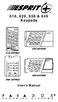 616, 626, 636 & 646 Keypads User s Manual TABLE OF CONTENTS 1.0 BASIC OPERATION...2 2.0 ACCESS CODES...4 3.0 ARMING & DISARMING...6 4.0 PANIC ZONES...13 5.0 KEY ACCESS PROGRAMMING.14 6.0 ADDITIONAL FEATURES...15
GSM Home Alarm System User Manual. http://www.usmartbuy.com
 GSM Home Alarm System User Manual http://www.usmartbuy.com 1 1. Factory default Normally, all sensors in the big box have been coded (learnt) to the control host Operation Password: 0000 Long-Distance
Firmware version: 1.10 Issue: 7 AUTODIALER GD30.2. Instruction Manual
 Firmware version: 1.10 Issue: 7 AUTODIALER GD30.2 Instruction Manual Firmware version: 2.0.1 Issue: 0.6 Version of the GPRS transmitters configurator: 1.3.6.3 Date of issue: 07.03.2012 TABLE OF CONTENTS
Wireless Security System
 Wireless Security System 2GIG-CP2 User s Guide WARNING: Owner s Instruction Notice Not to be removed by anyone except occupant The Go!Control Security System Congratulations on your ownership of a Go!Control
Your Canadian Security Specialists. Eddie D Orazio
 Your Canadian Security Specialists Eddie D Orazio Commercial Sales Structured Security Systems Toll Free: 1-888-693-1118 Tel: 905-640-0069 Fax: 905-576-2836 Mobile: 905-424-0050 [email protected]
NetworX NX-6V2. LED Keypad User Manual
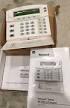 NetworX NX-6V2 LED Keypad User Manual POWER Light is on when AC power is present; flashes to indicate a low battery condition. ARMED Light is on when armed; off when disarmed; flashes to indicate a previous
Understanding the Code Pad lights...4. Code Pad tones...5. Fully arming the system On MODE...6. Fully arming the system - Quick Arm MODE...
 TABLE OF CONTENTS...Glossary of terms...2...code Pad Diagram...3 Understanding the Code Pad lights...4 Code Pad tones...5 Fully arming the system On MODE...6 Fully arming the system - Quick Arm MODE...6
DC-8706K Auto Dial Alarm System
 DC-8706K Auto Dial Alarm System User Guide Basic Contents: 1x the host unit; 1x wireless door (window) magnet; 1x wireless infrared detector; 2x remote control; 1x siren; 1x phone core; 1x AC to DC power
WIRELESS ALARM SYSTEM WITH TELEPHONE AUTO DIALER
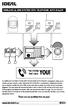 BAT.LOW AC WIRELESS ALARM SYSTEM WITH TELEPHONE AUTO DIALER THE SYSTEM THAT CALLS YOU! Our WIRELESS ALARM SYSTEM WITH TELEPHONE AUTO DIALER is designed to allow you to create your own security system.
IDS X-Series User Manual 700-398-01D Issued July 2012
 1 2 Contents 1. Introduction to the IDS X-Series Panels... 7 2. Before Operating Your Alarm System... 7 3. Understanding the Keypad LEDs... 8 3.1 Viewing Data on an LED Keypad... 12 3.1.1 LED Status Indicators...
Residential & Commercial Alarm Systems by Gross Security, LLC
 151 Main Street, Suite, 1, Get these great features with a landline or cellular alarm system from Gross Security, LLC Alarm system prices include installation Base system includes one hour of training
SERIES ͲΝΒΣΞ ΒΟΘΖ Swann 2013
 SERIES Swann 2013 Home Protection that s Advanced & Easy Doorways Windows Garages Sheds Potential Entry Points Blind Spots ALARM SENSOR A typical home layout with suggested mounting points for alarms www.swann.com
Six-defense zone Display Alarm System. User Manual
 Six-defense zone Display Alarm System User Manual Feature 1. Anti-interfere function. When someone interferes it with same frequency, the control unit will activate siren to alarm. 2. Support anti-decode
Home Security Alarm System
 Home Security Alarm System User Manual (ALM-S02) Read manual carefully before use. PiSector Inc., USA www.pisector.com Thank you for purchasing this home security alarm system. For your safety and better
securıty HOME home protection 101
 securıty HOME home protection 101 Do I really need a security system? Yes, you do! There is always the risk of fire, theft, or home intrusion. Whether at home during the day, asleep at night, or away,
Total Protection Alarm System
 www.skylinkhome.com Total Protection Alarm System MODEL: SC-10 101A073-001 AUG, 2005. CUSTOMER SERVICE 17 Sheard Avenue, Brampton, Ontario, Canada L6Y 1J3 Tel : (800) 304-1187 Fax : (800) 286-1320 Email
Using Your. Security System. With LED Keypad S5030, S5031, S5032
 Using Your Security System With LED Keypad S5030, S5031, S5032 Contents 1 Overview Your Security System... 1 How Your Security System Works... 2 Your System's Programming... 3 Getting Used to Your System...
SECURITY SYSTEM NOTES
 SECURITY SYSTEM NOTES Installing/Service Company For Service Call Central Station Duress Code FUNCTION CODES Function Code Controls Function EMERGENCY ACTIVATION KEYS (check if enabled) Fire Auxiliary
Solution Ultima ICP-CC488 Home security you can rely on
 Solution Ultima ICP-CC488 Home security you can rely on Keeping your home and family safe doesn t need to be complicated. That s why we ve made the Ultima security system so easy to use all it takes is
NC State University Design and Construction Guidelines Division 26 Fire Alarm Systems
 NC State University Design and Construction Guidelines Division 26 Fire Alarm Systems 1.0 Purpose A. The following guideline provides the minimum standards and requirements for fire alarm systems. 2.0
System off. Easy Series Intrusion Control Panel Making security easy featuring wlsn* * wireless Local SecurityNetwork
 System off Easy Series Intrusion Control Panel Making security easy featuring wlsn* * wireless Local SecurityNetwork 2 Security comes first You naturally want to provide the best possible protection for
ABB Stotz-Kontakt GmbH ABB safe&smart Project planning of security systems
 ABB Stotz-Kontakt GmbH ABB safe&smart Project planning of security systems Content Introduction Preventing unauthorized access by perimeter surveillance Monitoring unauthorized access by indoor surveillance
Using Your. Security System With Icon Keypad S5020, S5021, S5022
 Using Your Security System With Icon Keypad S5020, S5021, S5022 Contents 1 Overview Your Security System... 1 How Your Security System Works... 2 Your System's Programming... 3 Getting Used to Your System...
PROFESSIONAL HOME ALARM SYSTEM. Important! Please read these instructions carefully.
 WIRELESS AUTODIAL HOME ALARM SYSTEM AM2000 Instructions for use Important! Please read these instructions carefully. IMPORTANT 1 IDENTIFICATION PLEASE CONTACT BEFORE RETURNING THIS PRODUCT TO THE RETAILER
DESTINY OWNER S MANUAL
 DESTINY OWNER S MANUAL DESTINY You have made a wise decision to protect your family and property with the DESTINY Security System. The DESTINY has been designed to provide you with a maximum level of security
ERS-2400B. PERS-2400B Personal Emergency Reporting System
 PERS-2400B Personal Emergency Reporting System ERS-2400B Durability and Versatility for Emergency Reporting Solutions Create a customized and comprehensive Personal Emergency Reporting System with the
INTRODUCTION. Underwriter's Laboratories (UL) Listing. Home Automation, Inc. 1
 Home Automation, Inc. 1 INTRODUCTION Thank you for purchasing your new Omni automation system. You are about to enjoy a new feeling of security, peace of mind, and convenience. We at Home Automation, Inc.
Emergency Dialer DIAL-ALERT MODEL: AD-105. www.skylinkhome.com
 www.skylinkhome.com Emergency Dialer TM DIAL-ALERT MODEL: AD-105 If you would like to order Skylink s products or have difficulty getting them to work or download information and user manual, please :
D1260/D1260B. Keypad. National Security Systems Inc (800)457-1999. Owner's Manual
 D1260/D1260B EN Owner's Manual Keypad National Security Systems Inc (800)457-1999 D1260/D1260B Owner's Manual This system includes a telephone line seizure feature. The system may be programmed to communicate
WIRELESS HOME ALARM SYSTEM (WHA1)
 WIRELESS HOME ALARM SYSTEM (WHA1) IMPORTANT : PLEASE READ THIS MANUAL CAREFULLY BEFORE ATTEMPTING TO INSTALL AND OPERATE THIS ALARM SYSTEM. SAFETY Please note: Before you start to install this alarm, we
Your Ademco. Fir&Burglar Alarm System. LogiCenter INTRODUCTION: 1. _- ALARM DEVICE MANUFACTURING CO.
 Your Ademco LogiCenter Fir&Burglar Alarm System i INTRODUCTION: Your LogiCenter is designed to alert you in the event of either a forced entry into a protected area or signal an alarm if a fire alarm condition
System off. Easy Series Intrusion Control Panel Making security easy now featuring wlsn* * wireless Local SecurityNetwork
 System off Easy Series Intrusion Control Panel Making security easy now featuring wlsn* * wireless Local SecurityNetwork Security comes first You naturally want to provide the best possible protection
Intruder Alarm System
 Intruder Alarm System GSM & PSTN Wireless and Wired Touch Model 2013-01 V1.0.0 Statment This equipment must be installed and used in strict accordance with the instructions given in this user documentation.
GE Concord 4 Quick User Guide
 GE Concord 4 Quick User Guide GE Concord 4 Quick User Guide Page 1 Before Calling Is the keypad beeping? Press *. This will silence the beeping and let you know where the trouble is. Is there a flashing
User's Manual 5120XM N8031 6/96
 Fire and Burglary System User's Manual 5120XM N8031 6/96 SYSTEM OVERVIEW...3 General...3 Zones...3 Fire & Emergency Protection...3 Burglary Protection...4 Alarms...4 Memory of Alarm...4 ABOUT THE KEYPADS...5
Contents TABLE OF. List of Illustrations... IX. Preface... XV. Chapter 1: How the Burglar Breaks into Your Home... 1
 TABLE OF Contents List of Illustrations................................. IX Preface........................................... XV Why You Should Read This Book Burglars Kill Every Security System Can Be
City of Bettendorf Fire Alarm System Requirements
 City of Bettendorf Fire Alarm System Requirements Section 907 of the 2009 Edition of the International Fire Code (IFC) and Section 10-7-3 of the Municipal Code provide fire alarm requirements. IFC Section
USER S MANUAL. SMDC-16 Digital Control Communicator and SMPC-32 Personal Control
 SMDC-16 USER S MANUAL SMDC-16 Digital Control Communicator and SMPC-32 Personal Control Table of Contents General Descriptions Page Description of Your Alarm System 3 Description of Keypads 3 Keypad Maintenance
Wireless Home Security Alarm System AM 500
 Wireless Home Security Alarm System AM 500 12 MONTH GUARANTEE Installation & Operating Instructions INTRODUCTION The AM500 is a simple self-contained alarm system. It protects the home by sounding a siren
GSM Alarm System User Manual
 GSM Alarm System User Manual For a better understanding of this product, please read this user manual thoroughly before using it. Quick Guider After getting this alarm system, you need to do the following
WIRELESS ALARM SYSTEM WITH TELEPHONE AUTO DIALER
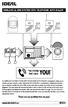 BAT.LOW AC WIRELESS ALARM SYSTEM WITH TELEPHONE AUTO DIALER THE SYSTEM THAT CALLS YOU! Our WIRELESS ALARM SYSTEM WITH TELEPHONE AUTO DIALER is designed to allow you to create your own security system.
TX GSM SMS Auto-dial Alarm System. Installation and User Manual
 TX GSM SMS Auto-dial Alarm System Installation and User Manual Product Features: 1. 16 wireless zones, 3 wired zones alarm system, suitable for small to medium size offices and homes. 2. The system uses
Understanding Emergency Power Off (EPO)
 Understanding Emergency Power Off (EPO) White Paper #22 Executive Summary Emergency Power Off (EPO) is the capability to power down a piece of electronic equipment or an entire installation from a single
Electronic Security. For Financial Institutions
 A partner you can bank on Our bank was growing. New branches. New card processing center. We wanted to tie access control, alarm monitoring and video surveillance into one system we could monitor from
CONTENTS 4. HOW TO UNSET THE PANEL...7
 Pi-8 USER MANUAL CONTENTS 1. THE KEYPAD AND ITS OPERATION...3 1.1 DESCRIPTION OF THE KEYPAD LEDS... 3 1.1.1 READY LED (RED)...3 1.1.2 TAMPER LED (RED)...3 1.1.3 POWER LED (GREEN)...3 1.1.4 CIRCUIT LEDs
Security Systems. Scenarios
 Security Systems While the basic functionality of a home security system is to alert the appropriate person of an unauthorized entry to your home, there are many other features which should be considered.
SMART SENSOR COLLECTION
 TEMPERATURE SENSOR This sensor measures temperature in degrees Celsius or Fahrenheit. It works with all SensorHawk base units (SensorHawk-2, SensorHawk-8 and SensorHawk8/20) as well as the SecurityHawk-8
Solution 880 Operators Manual ISSUE 1.10
 Solution 880 Operators Manual ISSUE 1.10 Solution 880 Operators Manual Copyright 2001 by, SYDNEY, AUSTRALIA Document Part Number MA408O DOCUMENT ISSUE 1.10 Printed 25 May 2001 This documentation is provided
Consumer Information. FCC Notice
 Consumer Information FCC Notice This equipment has been tested and found to comply with the limits for a Class B digital device, pursuant to Part 15 of the FCC Rules. These limits are designed to provide
SECURITY SYSTEM NOTES SPECIAL CODES AUXILIARY ARM / DISARM CODES ENTRY / EXIT DELAY TIMES ZONE DESCRIPTIONS
 SECURITY SYSTEM NOTES Installing/Service Company For Service Call SPECIAL CODES Master Code Duress Code "Quick Arm" Digit "Chime" Digit "Entry-Guard" Digit AUXILIARY ARM / DISARM CODES 02 12 22 03 13 23
Wireless Home Security System Product Manual (Model #80355)
 Wireless Home Security System Product Manual (Model #80355) Installation Instructions During set-up, if no key is pressed for 15 seconds it will come out of the setup mode and you will have to start over.
HomeSafe-Basic VT-PS99E. User s Manual. PSTN Home Alarm System. Page: 1 / 15
 HomeSafe-Basic VT-PS99E User s Manual PSTN Home Alarm System Page: 1 / 15 Table of Contents 1. Product Overview:... 3 2. Main Functions & Features... 3 3. For Your Safety... 4 4. VT-PS99E Characteristics...
System off. Easy Series Intrusion Control Panel Making security easy featuring RADION wireless peripherals
 System off Easy Series Intrusion Control Panel Making security easy featuring RADION wireless peripherals 2 Security comes first You naturally want to provide the best possible protection for your home
Home & Office Security, Personal Alarms & Safety Products
 Home & Office Security, Personal Alarms & Safety Products Safe is Smart Easy Installation Wireless Alarms No Monthly Fees Standalone Alarms Standalone Alarms from SABRE are a great solution to help protect
SECURITY SYSTEM NOTES. EMERGENCY ACTIVATION KEYS (check if enabled) PROGRAMMED FUNCTIONS
 SECURITY SYSTEM NOTES Installing/Service Company For Service Call Installation Date / / Central Station Duress Code EMERGENCY ACTIVATION KEYS (check if enabled) Fire Auxiliary Emergency Police PROGRAMMED