
Vampyrum spectrum (Spectral Bat)
|
|
|
- Kathryn Foster
- 9 years ago
- Views:
Transcription
1 Vampyrum spectrum (Spectral Bat) Family: Phyllostomidae (Leaf-nosed Bats) Order: Chiroptera (Bats) Class: Mammalia (Mammals) Fig. 1. Spectral bat, Vampyrum spectrum. [ downloaded 16 March 2015] TRAITS. The carnivorous bat Vampyrum spectrum, commonly known as the spectral bat or the false vampire bat, is the largest known species of bat found in the new world (Altringham, 2011). Although the sexual dimorphism tends towards the males being larger, the average wingspan is 60-92cm and the average length of the body is cm, and weight between g (Greenhall, 1968). These bats have dark brown or russet coat with fine short fur along their bodies. The fur of their underbody is even shorter in a greyish brown. The ears are characteristically long and curved (Fig. 1), their claws rounded (Fig. 2), snout thin and long with sharp incisors, and the animal has no tail. Like other bats, they have a thin skin membrane from forelimbs to their body and back to the hind limbs. The noseleaf of the spectral bat is large with a
2 size of around 17mm long and steeply curved. A noseleaf is a leaf shaped ornament found on the nose of most bats in the families Phyllostomidae, Rhinolophidae and Megadermatidae and is believed to be responsible for the focus and direction of the animal s echolocation which is transmitted through its nose. Another defining feature of Vampyrum spectrum is not only its large size (Fig. 3) but also its dental formula which sums to 34 teeth, with four upper and four lower incisors (Greenhall, 1968). DISTRIBUTION. These bats are native to and generally well spread over northern and central Brazil, Trinidad, Guyana, southern Mexico and Suriname (Nowak, 1999). Vampyrum spectrum can be observed in forested areas below the elevation of 1,650m. No migratory patterns for this bat are observed as the seasonal climates are fairly consistent throughout the year. HABITAT AND ACTIVITY. The habitat of Vampyrum spectrum is Neotropical forests, including evergreen forests, forest edges and some woodlands however they can be seen in great densities at riparian (riverside) zones and seen sometimes in the territories of humans (Wikipedia, 2015; Nowak, 1999). The favoured home of this species of bat is typically inside hollow trees or on the branches of trees (Nowak, 1999). At around dusk the bats appear from their roosts and begin foraging where it searches for insects, small birds, rodents and sometimes other bats (Altringham, 2011). FOOD AND FEEDING. A fair share of the time spent outside of the bat s roost is dedicated to foraging. Beginning at dusk Vampyrum spectrum leaves its roost and begins seeking food. Previously it was thought that this species of bat also fed primarily on blood much like the true vampire bat Diaemus youngi, it was also believed that they may eat fruit as well as flesh however during captivity fruit was refused by the bats over a five year period (Greenhall, 1968). These carnivorous bats feed primarily on small vertebrates in the form of rodents, small birds, other bats and sometimes insects (Altringham, 2011). Prey selection is highly based on the availability of the species; the bat can switch between types of prey. They fly low and very slowly and typically cover an area of about 3 hectares of its home range in a single session which can take between 1 4 hours to do. The morphology of the bat s wing allows it to not only lift off with large prey but they can also fly into cluttered spaces with high manoeuverability (Nowak, 1999). Similar to related species, the spectral bat also uses echolocation while flying and hunting however, scent is used more often. In doing so birds with stronger odours are usually preferred by the bat (Altringham, 2011). POPULATION ECOLOGY. The widely dispersed, decreasing population of Vampyrum spectrum stretches across several regions in various countries. The overall population of this bat is reasonably large, but their population density per area is low (Nowak, 1999). These bats usually reside in clusters of 3-5 members inclusive of a mate and an offspring which can remain with them until maturity (2-3 years) (Vehrencamp et al., 1977). Adults tend to roost and remain in the same tree for an extended period of time, in some cases over a year (Vehrencamp et al., 1977). The regional populations of Vampyrum spectrum are not largely affected by any external factors other than environmental disturbances by humans. Furthermore their populations do not increase with any obvious external or ecological factors as they seem to consistently produce a single offspring per year. With very large home ranges and a slow hunting/stalking time over a 3.2 hectare area, there is no significant competition for food or mates. Furthermore, due to the conditions at which the spectral bat hunts, there is a large abundance of nocturnal insects and small vertebrates from which the animal can select with not many other nocturnal predators
3 available to compete (Vehrencamp et al., 1977). The population influence of predation on the Vampyrum spectrum population is negligible as not many predators are able to chase or capture these evasive creatures other than the occasional snake or owl. REPRODUCTION. The breeding season is unknown however suspected times of birth are between May July and live young are produced, typical of mammals (Greenhall, 1968). The gestation period as well as juvenile growth and behaviour are unknown. These bats however are known for their formation of a monogamous pair which can extend throughout the entirety of their life and selection of a mate is suspected to be determined by the female. Each pair gives birth to one offspring annually which has led to the assumption that the breeding interval of the species is once per year. Of the known species of bat only two exhibit male parental care and of those, Vampyrum spectrum is included (Crichton et al., 2000). This is suspected to increase the odds of the survival of the female as well as male parental care allows for the female reproductive cycle to resume much faster as compared to if she were the sole provider for the offspring (Crichton et al., 2000). Both mature parents play a significant role in the care of the offspring in that they both return to the roost with food for the young and pay particular interest in the offspring until maturity (Nowak, 1999). Individuals of this species have been known to live up to five and a half years long when in captivity (Greenhall, 1968). BEHAVIOUR. Little is known about the behaviour of juvenile members of the Vampyrum spectrum populations other than they are cared for by both parents and remain in their care for about 2 years (Nowak, 1999). These bats are not faced with many predation problems based on location and time of activity. The bat s roost is fairly secured primarily due to the location of their roost above the reach of most predators. Foraging starting at dusk and only spends a maximum of 4 hours away from their roost; during this time juveniles are open to tree dwelling predators such as snakes and wild cats as well as larger birds of prey such as owls (Greenhall, 1968). With these considerations the spectral bat has no specifically designed anti-predatory activity due to the low account of predators available. Males have been observed enclosing their young and female within their wings throughout the duration of their roost (Nowak, 1999). Vampyrum spectrum communicates amongst its species via visual, chemical, tactile and even auditory means while their designated modes of perception are tactile, chemical and echolocation (Greenhall, 1968). APPLIED ECOLOGY. Vampyrum spectrum has been listed by the IUCN as Near Threatened, it is however considered endangered in both Bolivia and Mexico and are usually found in protected areas making it illegal to hunt or capture them. Due to the species dispersal pattern being very wide, it is difficult to study or estimate their numbers. For the same reason the species is prone to a population decrease from human activity. There is no published evidence stating how this species affects humans (ICUN, 2015). REFERENCES Altringham, J. D. (2011). Bats: From Evolution to Conservation. Oxford University press Google books. Web. 10 Mar Crichton, E. G. Krutzsch, Philip H. (2000). Reproductive biology of bats. Academic Press, Google books. Web. 11 Mar Greenhall, A. (1968). Notes on the behavior of the false vampire bat. Journal of Mammalogy, Accessed Mar ICUN (2015). Vampyrum spectrum. downloaded 16 Mar 2015.
4 Nowak, R. M. (1999). Walker s Mammals of the Word, Volume 1. JHU press. Google books. Web. 11 Mar Vehrencamp, S. L., Stiles, F. G., and Bradbury, J. W. (1977). Journal of Mammalogy. Accessed Wikipedia, Spectral Bat. downloaded 15 Mar Author: Ahmad Khan Posted online: 2015 Fig. 2. A spectral bat captured. [ downloaded 16 March 2015]
5 Fig. 3. Captured spectral bat s wingspan being displayed. [ downloaded 16 March 2015] For educational use only - copyright of images remains with original source
Structures of animals
 Structures of animals Name: All animals have been designed with different parts, which we call structures, that make up their bodies. Each of these structures is important as it is used to perform a specific
Crotophaga ani (Smooth-billed Ani)
 Crotophaga ani (Smooth-billed Ani) Family: Cuculidae (Cuckoos and Anis) Order: Cuculiformes (Cuckoos, Anis and Turacos) Class: Aves (Birds) Fig. 1. Smooth-billed ani, Crotophaga ani. [http://www.hoteltinamu.com/wp-content/uploads/crotophaga-ani-garrapatero-piquiliso-smooth-billed-ani-
Name That Adaptation. Background: Link to the Plan Read Section 5 (Whooping Crane Ecology and Biology) in the Management Plan
 Summary Students will explore structural, physiological, and behavioral adaptations of whooping cranes. Objectives: Students will be able to: Define an adaptation Describe several whooping crane adaptations
A Method of Population Estimation: Mark & Recapture
 Biology 103 A Method of Population Estimation: Mark & Recapture Objectives: 1. Learn one method used by wildlife biologists to estimate population size of wild animals. 2. Learn how sampling size effects
Grade 5 Standard 5 Unit Test Heredity. 1. In what way will a kitten always be like its parents? The kitten will...
 Grade 5 Standard 5 Unit Test Heredity Multiple Choice 1. In what way will a kitten always be like its parents? The kitten will... A. be the same color. B. learn the same things. C. have the same body structures.
Silent, Nighttime Hunters By Guy Belleranti
 By Guy Belleranti Owls are raptors, or birds of prey. They are carnivores who quickly and silently swoop down on their prey from above. Most raptors such as eagles, hawks and falcons are day hunters. They
World Oceans Day at ZSL Whipsnade Zoo
 World Oceans Day at ZSL Whipsnade Zoo Teachers notes KS 1 & KS 2 This booklet will help you to focus your self guided trail on ocean animals, looking at the adaptations of the species and focusing in on
Owls. Choose words from the list at the end of the page to fill in the blank spaces.
 Owls Choose words from the list at the end of the page to fill in the blank spaces. Owls are _ of prey. A bird of prey is one that catches its food in its Owls hunt for their at night. A bird that hunts
Title: Create A New Animal. Grade Level: 3 rd -5 th. Subject: Biology. Time: 60-90 minutes
 Title: Create A New Animal Grade Level: 3 rd -5 th Subject: Biology Time: 60-90 minutes Objective: Students will better understand physical adaptations of certain animals, and how those adaptations increase
Unique reproductive strategies have developed to ensure maximum reproductive success.
 Animal Reproductive Strategies The ultimate goal of each species is to produce the maximum number of surviving offspring using the least amount of energy. This is called the reproductive effort. Asexual
Practice Questions 1: Evolution
 Practice Questions 1: Evolution 1. Which concept is best illustrated in the flowchart below? A. natural selection B. genetic manipulation C. dynamic equilibrium D. material cycles 2. The diagram below
14.1. Every organism has a habitat and a niche. A habitat differs from a niche. Interactions in Ecosystems CHAPTER 14.
 SECTION 14.1 HABITAT AND NICHE Study Guide KEY CONCEPT Every organism has a habitat and a niche. VOCABULARY habitat ecological niche competitive exclusion ecological equivalent A habitat differs from a
Rain Forests. America's. Web of Life. Rain Forest Ecology. Prince William Network's OVERVIEW OBJECTIVES SUBJECTS
 Rain Forest Ecology National Science Education Standards Standard C: Life Sciences Populations and ecosystems. Standard C: Life Sciences Diversity and adaptation of organisms. Standard F: Science in Personal
Grade 8 English Language Arts 59B Reading and Responding Lesson 23
 GRADE 8 English Language Arts Reading and Responding: Lesson 23 Read aloud to the students the material that is printed in boldface type inside the boxes. Information in regular type inside the boxes and
Nutrition and Zoo Animals
 Nutrition and Zoo Animals Nutrition All animals need nutrition to survive. Nutrition can have a large effect on basic health as well as physical and mental development, ability to reproduce, emotions and
Level Topic Basic Intermediate Advanced Open. What is a typical How common is sexchanging clownfish family like? father)?
 Examples of potential biology topics in Finding Nemo (Pixar Animation Studios 2003, G). Clownfish mating What are other complex Can you compare and What is a typical How common is sexchanging in fish?
PLANET EARTH: Seasonal Forests
 PLANET EARTH: Seasonal Forests Teacher s Guide Grade Level: 6-8 Running Time: 42 minutes Program Description Investigate temperate forests and find some of the most elusive creatures and welladapted plant
Ecology - scientific study of how individuals interact with their environment 34.1
 Biology 1407 Exam 4 Notes - Ecology Ch.35-36 Ecology - scientific study of how individuals interact with their environment 34.1 - organisms have adapted to - evolved in - a particular set of conditions;
Extinction; Lecture-8
 I. introduction Definition Current extinction Genetic drift Extinction; Lecture-8 II. 3 types of extinction 1. background 2. mass 3. stochastic III. 5 periods of mass IV. human caused 1. on land and in
A guide to living with Urban Coyotes
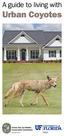 A guide to living with Urban Coyotes Living with coyotes ThinkStock Coyotes are found throughout Florida. This adaptable animal belongs to the dog family and resembles a small German shepherd. In Florida,
Manatee Anatomy and Physiology
 Manatee Anatomy and Physiology Grade level: Elementary 5 Subject Area: Biology, Anatomy and Physiology, Marine Biology Duration: Teach: 15 minutes, Activity: 20 minutes, Discussion: 20 minutes. Setting:
Animal Adaptations -- Vocabulary
 Section 1 Objectives o Children will understand what animal adaptations are. o Children will be able to explain why animal adaptations are important. o Children will be able to explain different types
WEATHER, CLIMATE AND ADAPTATIONS OF ANIMALS TO CLIMATE
 7 WEATHER, CLIMATE AND ADAPTATIONS OF ANIMALS TO CLIMATE TEXTBOOK QUESTIONS AND ANSWERS Q.1. Why weather changes so frequently? Ans. All changes in the weather are caused by the sun. The movement of the
Grade Level Content Expectations addressed: Activities: Schedule of Field Trip Activities at the Detroit Zoo 8:15 am Board Bus at School
 Title: Comparing and Contrasting Ecosystem Biodiversity Submitted by: Tracy Ortiz Email: [email protected] School: Coffey K-8 Educational Learning Community Date: May 12, 2010 Target Grade: 6 Duration:
Tiger Activity Time. Level 1 tiger cubs. 1. What colours does a tiger have on its body? red white blue black. green orange brown
 Terrific Tigers Learn more about the gers at ZSL London Zoo 1. Level: Key Stage 2 2. Includes: Acvity sheets (true or false, word scramble, word search, colouring acvity, adaptaon labelling, enclosure
Wolf Communication. Olfactory Communication
 Wolf Communication Wolves communicate in many ways employing vocalisation, body language, eye contact, touching and scent. At any one time, many of the signals are read simultaneously, giving a far greater
Animals and Adaptation
 Animals and Adaptation From: http://www.learninghaven.com/science/articles/animals_and_adaptation.htm In order for animals to survive, they need to be able to adapt. In this lesson we will look at the
Fishy Adaptations. Adapted from: Fashion a Fish in Project Wild Aquatic Education Activity Guide. The Council for Environmental Education, 1992
 Fishy Adaptations Adapted from: Fashion a Fish in Project Wild Aquatic Education Activity Guide. The Council for Environmental Education, 1992 Physical Structure Grade Level: Basic Duration: 45 minutes
Lesson Overview. Biodiversity. Lesson Overview. 6.3 Biodiversity
 Lesson Overview 6.3 6.3 Objectives Define biodiversity and explain its value. Identify current threats to biodiversity. Describe how biodiversity can be preserved. THINK ABOUT IT From multicolored coral
Patterns of Bat Fatality at Wind Development Facilities. Edward B. Arnett, Bat Conservation International
 Patterns of Bat Fatality at Wind Development Facilities Edward B. Arnett, Bat Conservation International Biological Diversity: over 1,100 species identified >one-quarter of the world s mammals Broad and
www.irishseedsavers.ie Natural surface water on earth includes lakes, ponds, streams, rivers, estuaries, seas and oceans.
 www.irishseedsavers.ie POND LIFE FACT SHEET Natural surface water on earth includes lakes, ponds, streams, rivers, estuaries, seas and oceans. A pond is a small body of fresh water shallow enough for sunlight
A Most Colorful Mammal by Guy Belleranti
 Name: In the tropical rainforests of western Africa lives a mammal with a most colorful face and rump. This mammal is the mandrill, the world's largest monkey. The skin on a male mandrill's face has a
Key Idea 2: Ecosystems
 Key Idea 2: Ecosystems Ecosystems An ecosystem is a living community of plants and animals sharing an environment with non-living elements such as climate and soil. An example of a small scale ecosystem
Worksheet: The theory of natural selection
 Worksheet: The theory of natural selection Senior Phase Grade 7-9 Learning area: Natural Science Strand: Life and living Theme: Biodiversity, change and continuity Specific Aim 1: Acquiring knowledge of
What activities do you think an organism would use bioluminescence for?
 Relationships for Survival: The Role of Bioluminescence overview In these activities, students will focus on ecological relationships and investigate the many ways that species might interact using bioluminescence.
Population Ecology. Life History Traits as Evolutionary Adaptations
 Population Ecology An Overview of Population Ecology Population ecology is the study of factors that affect population: Density Growth A population is a group of individuals of a single species that occupy
feet that are used for hunting prey and to defend against predators at the nest.
 Anatomy of Owls: Function of Wing Feathers: o Primary Feathers propel an owl into flight. o Secondary Feathers keep an owl in flight through gliding. o On both the primary and secondary feathers, there
Smithsonian Books, 2001. 1 Groves, Colin P. Primate Taxonomy. Smithsonian Series in Comparative Evolutionary Biology. Washington, D.C.
 Primates at Woodland Park Zoo Pre-visit Information for Teachers If you are planning a field trip to the zoo and wish to have your students focus on or study primates during their zoo visit, this pre-visit
Town of Richmond Hill Beaver Management Policy Summary
 Town of Richmond Hill Beaver Management Policy Summary Above Left: Tree damage from beaver. Above Right: Beaver dam in stream - notice the water level above and below the dam! Below: Beaver swimming. Town
Name Class Date. Adapting to the Environment Adaptations and Survival
 CHAPTER 3 4 SECTIN Adapting to the Environment Adaptations and Survival EFRE YU READ After you read this section, you should be able to answer these questions: What adaptations help animals survive? What
Ecology 1 Star. 1. Missing from the diagram of this ecosystem are the
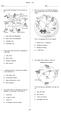 Name: ate: 1. Missing from the diagram of this ecosystem are the 5. ase your answer(s) to the following question(s) on the diagram below and on your knowledge of biology.. biotic factors and decomposers.
Animal Adaptations Investigation (K-3)
 Animal Adaptations Investigation (K-3) At a glance Students explore the Zoo in search of animals that fit certain categories and discover their adaptations. Time requirement One Zoo visit of at least 60
Monitoring the Critically Endangered Bird Species (White-shouldered Ibis) in Western Siem Pang Important Bird and Biodiversity Area (IBA)
 Monitoring the Critically Endangered Bird Species (White-shouldered Ibis) in Western Siem Pang Important Bird and Biodiversity Area (IBA) Transboundary Biodiversity Landscapes (TBLs) Knowledge Meeting
Emerald Tree Boa: Emerald Tree Boas are bright green to blend in with their habitat. They are part of the boa family and are constrictors.
 Anaconda: The anaconda lives in the swamps and rivers. Anacondas can also climb trees. Adults can get as big as 20 feet long. Anacondas are good swimmers. They have scales and can swim quickly. They kill
POLICY ON THE RELOCATION OF WILDLIFE
 State of New Jersey Department of Environmental Protection Mail Code 501-03 Division of Fish and Wildlife PO Box 420 / 501 East State Street Trenton, NJ 08625-0420 POLICY ON THE RELOCATION OF WILDLIFE
2. Identify each using the letters below using BD for the Bald Eagle, G for the Golden Eagle, H for the Harpy Eagle, and BT for the Bateleur Eagle.
 Eagle Quest Name SITE: American Eagle Foundation 1. How many species of eagles are found on Earth? 2. Identify each using the letters below using BD for the Bald Eagle, G for the Golden Eagle, H for the
6. Evolution and Domestication of Wolves
 6. Evolution and Domestication of Wolves Wolf Evolution Scientists are not absolutely certain how and where the wolf evolved. By examining fossil bones, especially skulls, of animals that lived millions
Introduction to Animals
 Introduction to Animals Unity and Diversity of Life Q: What characteristics and traits define animals? 25.1 What is an animal? WHAT I KNOW SAMPLE ANSWER: Animals are different from other living things
Sullivan s Island Bird Banding and Environmental Education Program. Sarah Harper Díaz, MA and Jennifer Tyrrell, MS
 Sullivan s Island Bird Banding and Environmental Education Program Sarah Harper Díaz, MA and Jennifer Tyrrell, MS I. Introduction The Sullivan s Island Bird Banding and Environmental Education Program
Can You Tell a 'Gator From a Croc? by Guy Belleranti
 Can You Tell a 'Gator From a Croc? Look closely at the reptiles pictured below. Can you tell which one is the crocodile and which is the alligator? Many people confuse crocodiles and alligators, and it's
A walk on the wild side
 Animals are amazing so use your visit to find out more by reading the information boards around the Zoo and completing the activities in the booklet. You can complete the activities in any order so start
EEB 2208: LECTURE TOPIC 6 EXTINCTION PATTERNS. 1. How can you tell if something is extinct? Reading for this lecture Primack: Chapter 8
 Reading for this lecture Primack: Chapter 8 EEB 2208: LECTURE TOPIC 6 EXTINCTION PATTERNS 1. How can you tell if something is extinct? A) UNFORTUNATELY, ONE CAN T VERY EASILY (AT LEAST NOT FOR CERTAIN)
Kakapo Recovery Plan 1996-2005
 Kakapo Recovery Plan 1996-2005 Threatened Species Recovery Plan No.21 Kakapo Management Group Department of Conservation P.O. Box 10-420 Wellington New Zealand CONTENTS 1. Background 5 2. Distribution
Experience in Bat Mitigation: Guidance for Ecologists and Developers
 Experience in Bat Mitigation: Guidance for Ecologists and Developers 1. Aims of this note: To help ecological consultants to assess their skills and experience levels before applying for a EPS mitigation
Grassland Food Webs: Teacher Notes
 Grassland Food Webs: Teacher Notes Alan Henderson ecosystem Objectives After completing this activity students will be able to: Create a food web and identify producers and consumers. Assign organisms
nucleus cytoplasm membrane wall A cell is the smallest unit that makes up living and nonliving things.
 1 In nature there are living things and nonliving things. Living things depend on three basic life processes: nutrition, sensitivity and reproduction. Living things are made up of cells. 1. Match the two
Pandas in Peril. Game created by Amber Neilson, Education Coordinator Sequoia Park Zoo; SequoiaParkZoo.net
 Pandas in Peril Game created by Amber Neilson, Education Coordinator Sequoia Park Zoo; SequoiaParkZoo.net Goal: To introduce players to the many challenges of the lives of Red pandas. Grades: 2+ (reading
THE TROPICAL HOUSE RAINFOREST TEACHER'S NOTES
 THE TROPICAL HOUSE RAINFOREST TEACHER'S NOTES TEACHER'S NOTES THE TROPICAL HOUSE (Area 3 on map) INTRODUCTION to the RAINFOREST. There are three main rainforest areas: - 1. Central and South America 2.
Exhibit Inquiry. Rainforest. Aug 11
 Exhibit Inquiry Exhibit Inquiry Have students look for the following exhibits related to living things during their visit to the Ontario Science Centre: Where to go: (Level 6) What it's about: Tropical
Adaptation. A Wildwood KS2 Teachers Pack and Activity Sheets. Wolf Skull
 Adaptation A Wildwood KS2 Teachers Pack and Activity Sheets Wolf Skull Teachers Guidance Notes 1 This teachers resource pack is designed to support the National Curriculum KS2 topic of adaptation. Adaptations
English Language Arts Book 3
 English Language Arts Grade 6 Sample Test 2005 Name TIPS FOR TAKING THE SAMPLE TEST Here are some suggestions to help you do your best: Be sure to read carefully all the directions in the test book. Plan
Panda bears can't do some things that other bears do including walking on their hind legs and roaring.
 Giant Pandas Research and Lessons Hopefully, you'll be able to find answers/information for the mini-books from books you check out from the library. However, if you aren't able to get any books about
Dinosaur Time-line. What other animals lived then? How long ago did the dinosaurs live? Did dinosaurs live at the same time as people?
 Dinosaur Time-line How long ago did the dinosaurs live? The Age of Dinosaurs began nearly 250 million years ago, but the first true dinosaurs appeared closer to 220 million years ago. Some dinosaurs evolved
These pages build on Units 2B & C and introduce predator-prey relationships and food chains.
 Unit 4B Habitats Teaching Notes These pages build on Units 2B & C and introduce predator-prey relationships and food chains. Curriculum, resource and other links Sc1 & Sc2 Resources Associated with this
Questions and Answers about Bats
 Questions and Answers about Bats Students from across the United States sent in these questions during the May 17 webcast of BatsLIVE and experts provided the following responses. The May 17 webcast may
Living with Foxes and Skunks Goose Hunting: CWS
 Ministry of Natural Resources and Forestry Living with Foxes and Skunks Goose Hunting: CWS November 19 th, 2015 Town of Tecumseh Kathryn Markham, A/Management Biologist Steven Rowswell, A/Wildlife Technician
CATS and WILDLIFE HOW YOU CAN PROTECT BOTH
 CATS and WILDLIFE HOW YOU CAN PROTECT BOTH Where is your cat right now? Could it be harming native wildlife? Is it roaming in your neighbour s yard? Is it crossing a busy road? Could it be returned to
ON THE RELOCATIO Division of
 New Jersey Department off Environmental Protection Division of Fish and Wildlife Mail l Code 501-03 PO Box 4200 / 501 East State St Trenton, NJ 08625-0420 POLICY ON THE RELOCATIO ON OF WILDLIFE As the
BEECH MAST RESPONSE 2014
 BEECH MAST RESPONSE 2014 Heavy seeding in our native forests this year will drive high rodent and stoat numbers that prey on endangered birds. Battle for our Birds is a predator control response to protect
Biology 170: Exam 3. Multiple choice (2 pts each). Mark (bubble-in) the correct answer on your scantron.
 Name Biology 170: Exam 3 Multiple choice (2 pts each). Mark (bubble-in) the correct answer on your scantron. 1. All of the following are unique (only found in) mammalian characters, EXCEPT: a. Hair b.
Cambridge International Examinations Cambridge Primary Checkpoint
 Cambridge International Examinations Cambridge Primary Checkpoint ENGLISH 0844/01 Paper 1 For Examination from 2014 SPECIMEN PAPER 1 hour Candidates answer on the Question Paper. No Additional Materials
The Mountain Ecosystem by Kimberly M. Hutmacher
 A habitat is where a plant or animal lives and grows. A habitat is part of an ecosystem where lots of different plants and animals live. Mountains, with their many levels are an ecosystem containing many
CHAPTER 20 COMMUNITY ECOLOGY
 CHAPTER 20 COMMUNITY ECOLOGY MULTIPLE CHOICE 1. The relationship between a predator and its prey is best illustrated by a. a snake eating a bird. c. a lion eating a zebra. b. a fox eating a mouse. d. a
Process 3.5. A Pour it down the sink. B Pour it back into its original container. C Dispose of it as directed by his teacher.
 Process 3.5 Biology EOI sample test questions Objective numbers correspond to the State Priority Academic Student Skills (PASS) standards and objectives. This number is also referenced with the local objective
FOX FACT SHEET. KINGDOM: Animalia. PHYLUM: Chordata. CLASS: Mammalia. ORDER: Carnivora. FAMILY: Canidae. TRIBE: Vulpini
 FOX FACT SHEET TRIBE: Vulpini A fox is a member of any of 27 species of small omnivorous canids. The animal most commonly called a fox in the Western world is the Red Fox (Vulpes vulpes), although different
4THE UNIVERSITY OF THE STATE OF NEW YORK
 4THE UNIVERSITY OF THE STATE OF NEW YORK GRADE 4 ELEMENTARY-LEVEL SCIENCE TEST WRITTEN TEST JUNE 6, 2011 Student Name School Name Print your name and the name of your school on the lines above. The test
Ecology Symbiotic Relationships
 Ecology Symbiotic Relationships Overview of the Co-evolution and Relationships Exhibited Among Community Members What does Symbiosis mean? How do we define Symbiosis? Symbiosis in the broadest sense is
ENDANGERED AND THREATENED
 ENDANGERED AND THREATENED Understand how species in the Sonoran Desert Region may become endangered or threatened and what is being done to protect them. ARIZONA SCIENCE STANDARDS SC03-S4C3-03&04, SC08-S1C3-07,
Great Horned Owl (Bubo virginianus)
 Great Horned Owl (Bubo virginianus) Range: The Great Horned Owl is found in North and South America from northern Alaska and Canada through Mexico to the tropical rainforest to Tierra del Fuego. It is
Lesson 3: Fish Life Cycle
 Lesson 3: Fish Life Cycle Activity: Diagram fish life cycle. Grade level: 4-8 Subjects: Science, social studies Setting: Classroom Duration: 50 minutes Key Terms: Fry, life cycle, life history, spawn,
Burrowing Owls in the Pacific Northwest
 Burrowing Owls in the Pacific Northwest Athene cunicularia ESRM 350 Autumn 2014 Laurel Peelle Overview 1) Introducing the Oddball Owl 2) Burrowing Owl Population Status 3) Why the Decline? 4) Conservation
Food Chains (and webs) Flow of energy through an ecosystem Grade 5 Austin Carter, Dale Rucker, Allison Hursey
 Food Chains (and webs) Flow of energy through an ecosystem Grade 5 Austin Carter, Dale Rucker, Allison Hursey References: Columbus Public Schools Curriculum Guide- Grade 5 GK-12 Biological Science Lesson
Numbat (Myrmecobius fasciatus)
 The numbat What is a numbat? A numbat is a small marsupial found only in Australia. It has pale fur below and coarse reddishbrown fur above which is darkest on the rump. There are four to eleven prominent
Activity 12 Zoos: Past and Present
 Activity 12 Zoos: Past and Present Objective & Overview: Through surveys and research, students will learn about the evolution of zoos, from menageries to educational and conservation institutions. Teacher
Climate change leads to range shift of Willy Wagtails to previously uncolonised Tasmania
 Cygnus (2012) 1:244-252 DOI 19627551, 20656107, 21152642 RESEARCH ARTICLE Climate change leads to range shift of Willy Wagtails to previously uncolonised Tasmania Michelle Fraser Raynuka Narayanan Margaret
MARCH OF THE PENGUINS
 MARCH OF THE PENGUINS S C I E N C E M O V I E N I G H T The Academic Support Center @ Daytona State College (Science 127 Page 1 of 33) The Academic Support Center @ Daytona State College (Science 127 Page
Is That Mammal a Carnivore, Herbivore or Omnivore?
 Name: Is That Mammal a Carnivore, by Guy Belleranti A mammal can be a carnivore (meat eater), herbivore (plant eater) or omnivore (meat and plant eater). By looking at the teeth, eye position and feet
Introduction and Pretest
 Introduction and Pretest PREPARATION It s recommended that the students complete the five proofreading lessons in the Writer s Guide before beginning this unit. The pretest in this introduction to the
The interface between wild boar and extensive pig production:
 The interface between wild boar and extensive pig production: implications for the spread of ASF in Eastern Europe Sergei Khomenko, PhD Disease ecology & wildlife Specialist, FAO HQ Epidemiological cycle
Who Glows there? Bioluminescence of Fireflies, Mushrooms, and Jellyfish
 Who Glows there? Bioluminescence of Fireflies, Mushrooms, and Jellyfish Glenna Smith Anthony Todd Background: Most people think of fireflies when it comes to bioluminescent or glowin-the-dark organisms,
Desert Communities Third Grade Core: Standard 2 Objective 2 Describe the interactions between living and nonliving things in a small environment.
 Desert Communities Third Grade Core: Standard 2 Objective 2 Describe the interactions between living and nonliving things in a small environment. (Discovering Deserts NatureScope: page 40, 43, 44) Objective:
Species-of-the-Week. Blanding s Turtle (Emydoidea blandingii) Species of Special Concern in Michigan
 Species-of-the-Week Blanding s Turtle (Emydoidea blandingii) Habitat Productive & clean shallow water (soft substrates) = ponds, marshes, swamps, bogs, wet prairies, slow rivers Spring & summer = terrestrial
Turkey Habitat. Welcome to the. Who Are Turkeys? Turkey Classification
 Welcome to the Turkey Turkey Classification Class: Aves Order: Galliformes Family: Phasianidae Genus: Meleagris Species: gallopavo Subspecies (Southern U.S.): osceloa Who Are Turkeys? The wild turkey is
China The Giant Panda
 China The Giant Panda China The Giant Panda Deep in a forest, a black-and-white bear sits peacefully. It chews the green leaves of a plant. The bear is alone, but there are others not too far away. Later,
Life in the Bay Getting to know the Bay s plants and animals
 Life in the Bay Getting to know the Bay s plants and animals Over erview iew In this activity students will become acquainted with a plant or animal that lives in the San Francisco Bay. Students will research
Task 3 Reading into Writing: Endangered Animals
 At a glance Level: ISE II Task 3 Reading into Writing: Endangered Animals Focus: Task 3 Reading into writing Aims: To read information about endangered animals, to answer questions about the information