
NAZI CONCENTRATION CAMPS
|
|
|
- Pierce Page
- 9 years ago
- Views:
Transcription
1 NAZI CONCENTRATION CAMPS Deportation from the Westerbork transit camp. The Netherlands, US Holocaust Memorial Museum Between 1933 and 1945, Nazi Germany established about 20,000 camps to imprison its many millions of victims. These camps were used for a range of purposes including forced-labor camps, transit camps which served as temporary way stations, and extermination camps built primarily or exclusively for mass murder. From its rise to power in 1933, the Nazi regime built a series of detention facilities to imprison and eliminate so-called "enemies of the state." Most prisoners in the early concentration camps were German Communists, Socialists, Social Democrats, Roma (Gypsies), Jehovah's Witnesses, homosexuals, and persons accused of "asocial" or socially deviant behavior. These facilities were called concentration camps because those imprisoned there were physically concentrated in one location. After Germany's annexation of Austria in March 1938, the Nazis arrested German and Austrian Jews and imprisoned them in the Dachau, Buchenwald, and Sachsenhausen concentration camps, all located in Germany. After the violent Kristallnacht ("Night of Broken Glass") pogroms in November 1938, the Nazis conducted mass arrests of adult male Jews and incarcerated them in camps for brief periods.

2 FORCED-LABOR AND PRISONER-OF-WAR CAMPS Following the German invasion of Poland in September 1939, the Nazis opened forced-labor camps where thousands of prisoners died from exhaustion, starvation, and exposure. SS units guarded the camps. During World War II, the Nazi camp system expanded rapidly. In some camps, Nazi doctors performed medical experiments on prisoners. Following the June 1941 German invasion of the Soviet Union, the Nazis increased the number of prisoner-of-war (POW) camps. Some new camps were built at existing concentration camp complexes (such as Auschwitz) in occupied Poland. The camp at Lublin, later known as Majdanek, was established in the autumn of 1941 as a POW camp and became a concentration camp in Thousands of Soviet POWs were shot or gassed there. KILLING CENTERS To facilitate the "Final Solution" (the genocide or mass destruction of the Jews), the Nazis established killing centers in Poland, the country with the largest Jewish population. The killing centers were designed for efficient mass murder. Chelmno, the first killing center, opened in December Jews and Roma were gassed in mobile gas vans there. In 1942, the Nazis opened the Belzec, Sobibor, and Treblinka killing centers to systematically murder the Jews of the Generalgouvernement (the territory in the interior of occupied Poland). The Nazis constructed gas chambers (rooms that filled with poison gas to kill those inside) to increase killing efficiency and to make the process more impersonal for the perpetrators. At the Auschwitz camp complex, the Birkenau killing center had four gas chambers. During the height of deportations to the camp, up to 6,000 Jews were gassed there each day. Jews in Nazi-occupied lands often were first deported to transit camps such as Westerbork in the Netherlands, or Drancy in France, en route to the killing centers in occupied Poland. The transit camps were usually the last stop before deportation to an extermination camp. Millions of people were imprisoned and abused in the various types of Nazi camps. Under SS management, the Germans and their collaborators murdered more than three million Jews in the killing centers alone. Only a small fraction of those imprisoned in Nazi camps survived. BUCHENWALD Together with its many satellite camps, Buchenwald was one of the largest concentration camps established within the old German borders of The camp was constructed in 1937 in a wooded area on the northern slopes of the Ettersberg, about five miles northwest of Weimar in east-central Germany. Before the Nazi takeover of power, Weimar was best known as the home of leading literary figure Johann Wolfgang von Goethe, a product of German liberal tradition in the

3 eighteenth and early nineteenth centuries, and as the birthplace of German constitutional democracy in 1919, the Weimar Republic. During the Nazi regime, "Weimar" became associated with the Buchenwald concentration camp. SS authorities opened Buchenwald for male prisoners in July Women were not part of the Buchenwald camp system until late 1943 or early Prisoners were confined in the northern part of the camp in an area known as the main camp, while SS guard barracks and the camp administration compound were located in the southern part. An electrified barbed-wire fence, watchtowers, and a chain of sentries outfitted with automatic machine guns, surrounded the main camp.the detention area, also known as the Bunker, was located at the entrance to the main camp. The SS often shot prisoners in the stables and hanged other prisoners in the crematorium area. Most of the early inmates at Buchenwald were political prisoners. However, in 1938, in the aftermath of Kristallnacht, German SS and police sent almost 10,000 Jews to Buchenwald where the camp authorities subjected them to extraordinarily cruel treatment upon arrival. 255 of them died as a result of their initial mistreatment at the camp. Jews and political prisoners were not the only groups within the Buchenwald prisoner population, although the politicals, given their long-term presence at the site, played an important role in the camp's prisoner infrastructure. The SS also interned recidivist criminals, Jehovah's Witnesses, Roma and Sinti (Gypsies), and German military deserters at Buchenwald. Buchenwald was one of the only concentration camps that held so-called work-shy individuals, persons whom the regime incarcerated as asocials because they could not, or would not, find gainful employment. In the camp's later stages, the SS also incarcerated prisoners-of-war of various nations (including the United States), resistance fighters, prominent former government officials of German-occupied countries, and foreign forced laborers. Beginning in 1941, a number of physicians and scientists carried out a varied program of medical experimentation on prisoners at Buchenwald in special barracks in the northern part of the main camp. Medical experiments aimed at testing the efficacy of vaccines and treatments against contagious diseases such as typhus, typhoid, cholera, and diphtheria resulted in hundreds of deaths. In 1944, Danish physician Dr. Carl Vaernet began a series of experiments that he claimed would "cure" homosexual inmates through hormonal transplants. Also in 1944, camp officials established a "special compound" for prominent German political prisoners near the camp administration building in Buchenwald. In August 1944, the SS staff murdered Ernst Thälmann, chairman of the Communist Party of Germany before Hitler's rise to power in 1933, in Buchenwald after holding him there for several years.

4 Buchenwald: Forced Labor and Subcamps During World War II, the Buchenwald camp system became an important source of forced labor. The prisoner population expanded rapidly, reaching 112,000 by February The camp authorities deployed Buchenwald prisoners in the German Equipment Works (Deutsche-Ausrüstungs-Werke; DAW), an enterprise owned and operated by the SS; in camp workshops; and in the camp's stone quarry. In February 1942, the Gustloff firm established a subcamp of Buchenwald to support its armaments works, and in March 1943 opened a large munitions plant adjacent to the camp. A rail siding completed in 1943 connected the camp with the freight yards in Weimar, facilitating the shipment of war supplies. Buchenwald administered at least 88 subcamps located across Germany, from Düsseldorf in the Rhineland to the border with the Protectorate of Bohemia and Moravia in the east. SS authorities and firm executives (both state-owned and private) deployed prisoners in the satellite camps, mostly in armaments factories, in stone quarries, and on construction projects. Periodically, the SS staff conducted selections throughout the Buchenwald camp system and dispatched those too weak or disabled to work to so-called euthanasia facilities such as Bernburg, where euthanasia operatives gasse them as part of Operation 14f13, the extension of euthanasia killing operations to ill and exhausted concentration camp prisoners. SS physicians or orderlies killed, by phenol injection, other prisoners unable to work. AUSCHWITZ On April 27, 1940, Heinrich Himmler ordered the construction of a new camp near Oswiecim, Poland (about 37 miles or 60 km west of Krakow). The Auschwitz Concentration Camp ("Auschwitz" is the German spelling of "Oswiecim") quickly became the largest Nazi concentration and death camp. By the time of its liberation, Auschwitz had grown to include three large camps and 45 sub-camps. Auschwitz I (or "the Main Camp") was the original camp. This camp housed prisoners, was the location of medical experiments, and the site of Block 11 (a place of severe torture) and the Black Wall (a place of execution). At the entrance of Auschwitz I stood the infamous sign that stated "Arbeit Macht Frei" ("work makes one free"). Auschwitz I also housed the Nazi staff that ran the entire camp complex. Auschwitz II (or "Birkenau") was completed in early Birkenau was built approximately 1.9 miles (3 km) away from Auschwitz I and was the real killing center of the Auschwitz death camp. It was in Birkenau where the dreaded selections were carried out on the ramp and where the sophisticated and camouflaged gas chambers laid in waiting. Birkenau, much larger than Auschwitz I, housed the most prisoners and included areas for women and Gypsies. Auschwitz III (or "Buna-Monowitz") was built last as "housing" for the forced laborers at the Buna synthetic rubber factory in Monowitz. The 45 other sub-camps also housed prisoners that were used for forced labor. Arrival and Selection

5 Jews, Gypsies (Roma), homosexuals, criminals, and prisoners of war were gathered, stuffed into cattle cars on trains, and sent to Auschwitz. When the trains stopped at Auschwitz II: Birkenau, the newly arrived were told to leave all their belongings on board and were then forced to disembark from the train and gather upon the railway platform, known as "the ramp." Families, who had disembarked together, were quickly and brutally split up as an SS officer, usually a Nazi doctor, ordered each individual into one of two lines. Most women, children, older men, and those that looked unfit or unhealthy were sent to the left; while most young men and others that looked strong enough to do hard labor were sent to the right. Unbeknownst to the people in the two lines, the left line meant immediate death at the gas chambers and the right meant that they would become a prisoner of the camp. (Most of the prisoners would later die from starvation, exposure, forced labor, and/or torture.) Once the selections had been concluded, a select group of Auschwitz prisoners (part of "Kanada") gathered up all the belongings that had been left on the train and sorted them into huge piles, which were then stored in warehouses. These items (including clothing, eye glasses, medicine, shoes, books, pictures, jewelry, and prayer shawls) would periodically be bundled and shipped back to Germany. Gas Chambers and Crematoria at Auschwitz The people who were sent to the left, which was the majority of those who arrived at Auschwitz, were never told that they had been chosen for death. The entire mass murder system depended on keeping this secret from its victims. If the victims had known they were headed to their death, they would most definitely have fought back. But they didn't know, so the victims latched onto the hope that the Nazis wanted them to believe. Having been told that they were going to be sent to work, the masses of victims believed it when they were told they first needed to be disinfected and have showers. The victims were ushered into an ante-room, where they were told to remove all their clothing. Completely naked, these men, women, and children were then ushered into a large room that looked like a big shower room (there were even fake shower heads on the walls). When the doors shut, a Nazi would pour Zyklon-B pellets into an opening (in the roof or through a window) which would turn into poison gas once it contacted air. The gas killed quickly, but it was not instantaneous. Victims, finally realizing that this was not a shower room, clambered over each other, trying to find a pocket of breathable air. Others would claw at the doors until their fingers bled. Once everyone in the room was dead, special prisoners assigned this horrible task (Sonderkommandos) would air out the room and then remove the bodies. The bodies would be searched for gold and then placed into the crematoria. Although Auschwitz I did have a gas chamber, the majority of the mass murdering occurred in Auschwitz II: Birkenau's four main gas chambers, each of which had its own crematorium. Each of these gas chambers could murder about 6,000 people a day. Life in the Auschwitz Concentration Camp

6 Those that had been sent to the right during the selection process on the ramp went through a dehumanizing process that turned them into camp prisoners. All of their clothes and any remaining personal belongings were taken from them and their hair was shorn completely off. They were given striped prison outfits and a pair of shoes, all of which were usually the wrong size. They were then registered, had their arms tattooed with a number, and transferred to one of Auschwitz's camps for forced labor. The new arrivals were then thrown into the cruel, hard, unfair, horrific world of camp life. Within their first week at Auschwitz, most new prisoners had discovered the fate of their loved ones that had been sent to the left. Some of the new prisoners never recovered from this news. In the barracks, prisoners slept cramped together with three prisoners per wooden bunk. Toilets in the barracks consisted of a bucket, which had usually overflowed by morning. In the morning, all prisoners would be assembled outside for roll call (Appell). Standing outside for hours at roll call, whether in intense heat or below freezing temperatures, was itself a torture. After roll call, the prisoners would be marched to the place where they were to work for the day. While some prisoners worked inside factories, others worked outside doing hard labor. After hours of hard work, the prisoners would be marched back to camp for another roll call. Food was scarce and usually consisted of a bowl of soup and some bread. The limited amount of food and extremely hard labor was intentionally meant to work and starve the prisoners to death.

INTRODUCTION TO THE HOLOCAUST
 INTRODUCTION TO THE HOLOCAUST Jews from Subcarpathian Rus undergo a selection on the ramp at Auschwitz-Birkenau. (Credit: US Holocaust Memorial Museum, courtesy of Yad Vashem) The Holocaust was the systematic,
Methodological Considerations
 Methodological Considerations 10 Guidelines to evaluate materials to use when teaching about the Holocaust. Chadron Conference United States Holocaust Memorial Museum Rationale for Teaching the Holocaust
Inspiring Jewish Journeys. Lodz. Lublin (Majdanek) Journey. Tarnow. Poland. Square Synagogue. (Auschwitz-Birkenau) September 2016
 Inspiring Jewish s Warsaw Lodz Lublin (Majdanek) Tarnow Lincoln Square Synagogue Krakow (Auschwitz-Birkenau) September 2016 Sunday Depart USA Monday Arrive in Warsaw Okopowa Street Jewish Cemetery Visit
A Hollow Shell. 10 th Grade Exemplar Essay: Response to Literature
 10 th Grade Exemplar Essay: Response to Literature Introduction orients the reader. Writer provides a perceptive analysis of the text that integrates summary. Writer links credible evidence to the thesis
Deadly Medicine: Creating the Master Race
 Deadly Medicine: Creating the Master Race March 13 to July 19, 2009 The mentally handicapped and the mentally ill are a cost factor. In Nazi Germany those that were deemed incurable were registered with
CHILDREN OF THE HOLOCAUST
 CHILDREN OF THE HOLOCAUST Who Were They? They were young, they had dreams, but they faced a world turned upside down. The events of the Holocaust stole the dreams and childhoods of many. Many were forced
Learning from the Holocaust. VISITING KRAKOW and AUSCHWITZ-BIRKENAU
 Learning from the Holocaust VISITING KRAKOW and AUSCHWITZ-BIRKENAU Contents Preparing to visit Auschwitz-Birkenau...2 Why go to Auschwitz-Birkenau?...3 Oswiecim...3 Death Camps and Auschwitz-Birkenau...4
Nazi Ideas about Race and Religion
 Nazi Ideas about Race and Religion Nazi Germany This icon indicates the slide contains activities created in Flash. These activities are not editable. 1 of 25 For more detailed instructions, see the Getting
Surviving Hitler: A Boy in the Nazi Death Camps Answer Key Acknowledgements 1. Who is this story about? Jack Mandelbaum
 Surviving Hitler: A Boy in the Nazi Death Camps Answer Key Acknowledgements 1. Who is this story about? Jack Mandelbaum Introduction 2. How did Andrea Warren first learn the truth about the Holocaust?
HUNGARIAN JEWISH WOMEN IN THE WALLDORF CAMP, AUGUST. Apart from the large, well-known concentration camps, hundreds of small labor
 19/11/02 KZ WALLDORF CAMP entry: Revision One-1 Word Count 899 HUNGARIAN JEWISH WOMEN IN THE WALLDORF CAMP, AUGUST NOVEMBER 1944 Apart from the large, well-known concentration camps, hundreds of small
Man s Search For Meaning
 Man s Search For Meaning Fourth Edition By Viktor E. Frankl Organizational Patterns This book is divided into two parts. Part One is called Experiences in a Concentration Camp and Part Two is called Logotherapy
HOMOSEXUALS UNITED STATES HOLOCAUST MEMORIAL MUSEUM
 HOMOSEXUALS UNITED STATES HOLOCAUST MEMORIAL MUSEUM As part of the Nazis attempt to purify German society and propagate an Aryan master race, they condemned homosexuals as socially aberrant. Soon after
The Treaty of Versailles
 Payback For WWI The Treaty of Versailles The Treaty of Versailles After WWI, the League of Nations made Germany sign the Treaty of Versailles. Germany didn t have any choice whether to sign it or not.
Armin T. Wegner. Intellectual, Doctor in Law, Photographer, Writer, Poet, Civil Rights Defender, and Eyewitness to the Armenian Genocide
 Armin T. Wegner Intellectual, Doctor in Law, Photographer, Writer, Poet, Civil Rights Defender, and Eyewitness to the Armenian Genocide The photos of Armin T. Wegner are among the few that capture the
Young Europeans Commemorating the Roma Genocide
 Young Europeans Commemorating the Roma Genocide 1. Short details: Dates: 30.07.-04.08.2013 (including travel, 4 program days) Place: Krakow, Auschwitz (Poland) Participants: 300 young Roma and non-roma
Adolf Hitler. The man that did the unthinkable
 Adolf Hitler The man that did the unthinkable Hitler s Childhood Born on April 20 th 1889 His hometown is the Austrian town of Braunau His Mother was a housemaid while his father was an Austrian Custom
THE "FINAL SOLUTION" THE WANNSEE CONFERENCE AND THE NÜRNBERG LAWS
 THE "FINAL SOLUTION" THE WANNSEE CONFERENCE AND THE NÜRNBERG LAWS Compiled by Campbell M Gold From Various Sources (This material has disturbing content) The Wannsee Conference On January 20, 1942, fifteen
They came at 12 noon because they knew it was the main meal of the day, and everyone would be in their homes at that time.
 Abraham Judah Samet Age: 77 Birthplace: Debrecen, Hungary Birthdate: February 5, 1938 Religious Identity: Jewish Holocaust Story: My story starts in 1944 when the Germans invaded Hungary, Eichmann came
Amnesty International What Is A Fair Trial?
 Amnesty International What Is A Trial? Introduction A fair trial is a right that all the people of the world are entitled to according to the Universal Declaration on Human Rights. But what makes a trial
Night chronicles Elie s loss of innocence, his confrontations with evil, and his questioning of God s existence.
 Reading-Discussion-Study Guide for Night by Elie Wiesel (2006 Updated Edition) Reading 002- Professor Gair Night chronicles Elie s loss of innocence, his confrontations with evil, and his questioning of
Introduction to the Holocaust, Analyzing Propaganda from the Exhibit
 State of Deception: The Power of Nazi Propaganda LESSON 1 Introduction to the Holocaust, Analyzing Propaganda from the Exhibit Lesson Overview: Lesson 1 is designed to prepare your students for a visit
HISTORY OF THE HOLOCAUST: AN OVERVIEW
 HISTORY OF THE HOLOCAUST: AN OVERVIEW On January 20, 1942, an extraordinary 90-minute meeting took place in a lakeside villa in the wealthy Wannsee district of Berlin. Fifteen high-ranking Nazi party and
PUSD High Frequency Word List
 PUSD High Frequency Word List For Reading and Spelling Grades K-5 High Frequency or instant words are important because: 1. You can t read a sentence or a paragraph without knowing at least the most common.
AN ASSEMBLY FOR HOLOCAUST MEMORIAL DAY 2016
 AN ASSEMBLY FOR HOLOCAUST MEMORIAL DAY 2016 This assembly has been designed for any secondary aged students (ages 11-18) and ideally would take place on 27 January Holocaust Memorial Day. We recommend
Daniel s Story by Carol Matas
 Daniel s Story by Carol Matas TABLE of CONTENTS Teachers Resources: Introduction...................................................... 2 Suggestions for Using the Unit.......................................
When they came for me, there was no one left to speak up.
 When they came for me, there was no one left to speak up. A Lesson Plan from the Education Department of the The National World War II Museum The National World War II Museum 945 Magazine Street New Orleans,
7. The Holocaust by Bullets
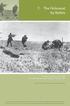 7. The Holocaust by Bullets A German policeman aims his rifle at a woman and her child, Ivangorod, Ukraine, 1942. Photo Credit: United States Holocaust Memorial Museum The views or opinions expressed in
How To Teach An African Frank Introduction To History
 Teachers Manual Anne Frank Introductory Lesson The lesson contains the following activities: > Mind map > Film clip with an > Time line Teachers in the upper classes of elementary schools and lower classes
CITIZENSHIP PETITION: CANDIDATE INFORMATION SHEET
 CITIZENSHIP PETITION: CANDIDATE INFORMATION SHEET Please provide the following information to assist us in completing the necessary petition and application forms for the U.S. Citizenship and Immigration
List of Contents. Foreword Acknowledgements. Introduction 1
 Foreword Acknowledgements List of Contents Introduction 1 About this book 1 Research on antisemitism some aspects of the state of the art 19 How I became a researcher on antisemitism 32 Part One) Antisemitism
WORLD WAR 2 Political and economic conditions in Europe and throughout the world after World War 1 led directly to World War 2:
 Political and economic conditions in Europe and throughout the world after World War 1 led directly to World War 2: 1. The Treaty of Versailles, ending World War 1, was particularly harsh on Germany and
Social Studies. Directions: Complete the following questions using the link listed below.
 Social Studies Name: Directions: Complete the following questions using the link listed below. Questions 1-8: http://www.biography.com/people/adolf-hitler-9340144 (Pages 1-2) Questions 9-17: http://www.history.com/topics/world-war-ii/adolf-hitler
Anti-Jewish Regulations: 1933-1945
 Anti-Jewish Regulations: 1933-1945 Adolf Hitler became Chancellor of Germany on January 30, 1933. The Nazi regime ruled almost entirely by executive order, with the tacit consent of the Reichstag. During
GERMAN DEMOCRATIC REPUBLIC
 Water Power 10PF 35PF 50PF 70PF Perforated 14 1/2 x 14 Postal Uniforms Perforated 12 1/2 x 13 BLOCK OF 4 BLOCK OF 4 National People's Army Free German Youth 20PF + LABEL 20PF East Thalmann Park Opening
The Leisten Family and the Holocaust
 Chapter 4 The Leisten Family and the Holocaust My wife Judi Leisten Bort was told as a child that many of her father s relatives were lost in the Holocaust, or Shoah as it is called in Hebrew. But she
STUDY GUIDE: JEANNINE BURK
 STUDY GUIDE: JEANNINE BURK BACKGROUND Jeannine Burk (Rasalowicz) was born in Brussels, Belgium, on September 15, 1939, two weeks after Hitler invaded Poland and World War II began. The Jewish people had
"Auschwitz and the Holocaust in the context of teaching remembrance in Europe"
 "Auschwitz and the Holocaust in the context of teaching remembrance in Europe" 10 October 2010 (Sunday) European workshop for teachers Cracow - Auschwitz-Birkenau (Poland) 10-16 October 2010 Arrivals of
Rebellion Against Police Violence. Towards Community Defense, Dual Power and Revolution
 Rebellion Against Police Violence Towards Community Defense, Dual Power and Revolution Introduction The murder of Mike Brown at the hands of a police officer in Ferguson, MO evoked rage among the people,
The Holocaust WHY IT MATTERS NOW
 The Holocaust MAIN IDEA WHY IT MATTERS NOW Terms & Names During the Holocaust, the Nazis systematically executed 6 million Jews and 5 million other non-aryans. After the atrocities of the Holocaust, agencies
AUSCHWITZ-BIRKENAU THE PAST AND THE PRESENT - 1 -
 AUSCHWITZ-BIRKENAU THE PAST AND THE PRESENT - 1 - CONTENTS: BEFORE AUSCHWITZ 3 NAZI IDEOLOGY 3 OUTBREAK OF WORLD WAR II 3 NAZI CONCENTRATION CAMPS 4 AUSCHWITZ 1940-1945. AN OUTLINE HISTORY OF THE CAMP
Escape from Colditz Rules Summary and Clarifications Game Maj. P. R. Reid, M.B.E., M.C. Summary by Daniel U. Thibault <
 Rules Summary and Clarifications Game Maj. P. R. Reid, M.B.E., M.C. Summary by Daniel U. Thibault 2-6 players, 12? years and up INTRODUCTION Escape from Colditz is a great game,
POINT UNIVERSITY CAMPUS SECURITY Emergency Response Plan
 POINT UNIVERSITY CAMPUS SECURITY Emergency Response Plan Introduction The Point University Emergency Response Plan establishes guidelines for campus-wide communication, service coordination and safety
Afrikan Black Coalition: Prison Divest!
 Afrikan Black Coalition: Prison Divest! Before the abolition of slavery there was no real prison system in the United States. The Fugitive Slave Acts were a pair of federal laws that allowed for the capture
How accurate is it to say that the Black Power movements of the 1960s achieved nothing for Black Americans?
 How accurate is it to say that the Black Power movements of the 1960s achieved nothing for Black Americans? An answer given a mark in Level 5 of the published mark scheme In the 1960s different Black Power
Nanking Lesson Plan. Central Historical Question: What happened during the Japanese invasion of Nanking?
 Lesson Plan Central Historical Question: What happened during the Japanese invasion of? Materials: PowerPoint Documents A-C Sourcing Organizer Corroboration Organizer Plan of Instruction: 1. Explain that
BURUNDI: SUSPECTED MASS GRAVES OF VICTIMS OF 11 DECEMBER VIOLENCE
 BURUNDI: SUSPECTED MASS GRAVES OF VICTIMS OF 11 DECEMBER VIOLENCE AI INDEX: AFR 16/3337/2016 29 JANUARY 2016 New satellite images, video footage, and witness accounts analyzed by Amnesty International
READERS COMPANION TO THE DIARY OF ANNE FRANK The Anne Frank Center USA
 READERS COMPANION TO THE DIARY OF ANNE FRANK Introduction Wednesday, April 5, 1944...I Finally realized that I must do my schoolwork to keep from being ignorant, to get on in life, to become a journalist,
The Polish Experience During World War II
 The Polish Experience During World War II Meg Heubeck- UVA Center for Politics Polish Perspectives How does fear affect one s acceptance of authority? Poland and its neighbors during WWII Emily Grannis-
F.A.C.E. INVESTIGATION REPORT
 F.A.C.E. INVESTIGATION REPORT Fatality Assessment and Control Evaluation Project FACE #94-NJ-009-01 Foreman Crushed to Death After Being Caught in a Screw Conveyor New Jersey Department of Health and Senior
EXAMPLE CIS CITIZENSHIP INTERVIEW/TEST
 EXAMPLE CIS CITIZENSHIP INTERVIEW/TEST This exercise shows how a typical CIS interview/test might be conducted. The purpose of this sample is to give citizenship applicants an idea of the general steps
LESSON THREE: THE PREPOSITION
 LESSON THREE: THE PREPOSITION Prepositions are words used to show relationships between other words in a sentence. A preposition is never used alone in a sentence; it is used to introduce a prepositional
AJR. The Association of Jewish Refugees. Kathryn Williams Social Worker for Middle of England & Wales
 AJR The Association of Jewish Refugees Kathryn Williams Social Worker for Middle of England & Wales History of AJR Membership All Jewish victims of Nazi persecution Their spouses Their children ( second
Preparing for Group and Student Tours
 Preparing for Group and Student Tours Mission Statement Holocaust Museum Houston is dedicated to educating people about the Holocaust, remembering the 6 million Jews and other innocent victims and honoring
There are ten mistakes in this account. Underline them and correct them. were dead. Aramis told him that his mother was alive.
 1The Bastille, Paris There are ten mistakes in this account. Underline them and correct them. It was a cool autumn night in 1660. Aramis went to the Bastille prison and told the guard of the prison that
In 1939, Jack Mandelbaum s family
 by Andrea Warren Reading Level (Lexile) 820L Format/Length Chapter book, 146 pages Picture Support Some photographs with captions Language Register Biographical, historical Content Load Historical, World
Lesson Plan #8 The Holocaust. Classroom description: Approximately 25 students of various genders and abilities
 Lesson Plan #8 The Holocaust Subject: Social Studies Grade Level: 7-11 Classroom description: Approximately 25 students of various genders and abilities Topic: The Holocaust Amount of Time Allowed for
Students of Saint Patrick School, Carlisle, Pennsylvania USA Teacher: Noreen Dempsey
 The was a tragic event. So many Jews died just because of their religion. They obviously did not deserve the harsh treatment. Today we look back and reflect on the. Students of Saint Patrick School, Carlisle,
Stalag VIIIB Lamsdorf and the Death March
 Stalag VIIIB Lamsdorf and the Death March September 2013 A poignant and fascinating tour to honor the brave men of the Commonwealth and other allied countries who endured imprisonment at one of the largest
Gold Coast s Elmina Castle, a Dutch-Ghanaian monument Text and photographs by drs (Msc) Dirk Teeuwen
 Gold Coast s Elmina Castle, a Dutch-Ghanaian monument Text and photographs by drs (Msc) Dirk Teeuwen Photographs are not available. See text on page 6 and 10 P.1 Elmina Castle from the east; Elmina Castle
A Guide to Transcribing and Editing Oral History Interviews
 A Guide to Transcribing and Editing Oral History Interviews Table of Contents Section I: Section II: Section III: APPENDIX: The United States Holocaust Memorial Museum Oral History Collection Creating
German initiated battle in western europe that attempted to push back the allied advance that was un. Sample letter requesting financial assistance
 German initiated battle in western europe that attempted to push back the allied advance that was un. Sample letter requesting financial assistance from employer. German initiated battle in western europe
You re One in Seven Billion!
 You re One in Seven Billion! We ve all heard the expression, You re one in a million!. With the ever-growing number of people on the planet, it might be more accurate to say, You re one in seven billion!
Drawing Strength: The Art of the Holocaust Part II
 FSU Holocaust Institute for Educators Drawing Strength: The Art of the Holocaust Part II Dr. David Gussak Asst. Professor, Art Education/Art Therapy Humor Jacques Ochs The SS Guard Ferdekopf 1944 Mechelen
Chapter 8 C E N T R A L A M E R I C A A N D T H E C A R I B B E A N
 Chapter 8 C E N T R A L A M E R I C A A N D T H E C A R I B B E A N Dictator A ruler who has complete power over the government Communist In a communist economy the government owns all large businesses
Bible for Children. presents THE FIRST EASTER
 Bible for Children presents THE FIRST EASTER Written by: Edward Hughes Illustrated by: Janie Forest Adapted by: Lyn Doerksen Produced by: Bible for Children www.m1914.org 2007 Bible for Children, Inc.
Fry Phrases Set 1. TeacherHelpForParents.com help for all areas of your child s education
 Set 1 The people Write it down By the water Who will make it? You and I What will they do? He called me. We had their dog. What did they say? When would you go? No way A number of people One or two How
Kino, Juana and Coyotito
 1 Kino, Juana and Coyotito K ino woke up early in the morning. The stars were still shining in the sky. The cockerels were beginning to crow 1 and the pigs were looking for something to eat. Outside the
Remember the Alamo. The Changing Border of the Southwest
 Remember the Alamo The Changing Border of the Southwest Interact: What do you think this picture shows? In the year 1820, the new country of the United States and the newer country of Mexico had a lot
Hazel Goes Cook: an Extraordinary Businesswoman A
 Hazel Goes Cook Hazel Goes Cook: an Extraordinary Businesswoman A lthough she was born in a century when women rarely worked outside the home and didn t have the right to vote, Hazel Goes Cook was a leader
GONZAGA-IN-FLORENCE SYLLABUS Course: THE HOLOCAUST (HIST 330) Credits: 3 Credits Instructor: Dr. Olga Baranova, Ph.D
 GONZAGA-IN-FLORENCE SYLLABUS Course: THE HOLOCAUST (HIST 330) Credits: 3 Credits Instructor: Dr. Olga Baranova, Ph.D Study Abroad, 502 E. Boone Ave, Spokane, WA 99258-0085 (800) 440-5391 www.gonzaga.edu/studyabroad
SWC Annual Status Report on the Worldwide Investigation and Prosecution of Nazi War Criminals
 SWC Annual Status Report on the Worldwide Investigation and Prosecution of Nazi War Criminals INVESTIGATION AND PROSECUTION REPORT CARD As part of this year s annual status report, we have given grades
THE VIENNA PROJECT: HIGHLIGHTS OF THE WIENER RINGSTRAβE
 Site 1: Resselpark 1040 Wien Resselpark represents the memory of the many homosexual men were arrested here. Public baths, parks and public toilets were the main meeting places for these men, who lived
The Name of Yahweh is a Strong Tower
 The Name of Yahweh is a Strong Tower by Rev. John Cortright The book of Proverbs offers a tremendous metaphor describing the strength and safety in the name of Yahweh. Proverbs 18:10 The name of the LORD
RUNNING FROM GIANTS LESSON PLANS. Margareta Ackerman, PhD.
 RUNNING FROM GIANTS LESSON PLANS Margareta Ackerman, PhD. Introduction The following lesson plans are designed to assist teaching Running from Giants in the classroom, while allowing the flexibility to
YEAR 1: Kings, Queens and Leaders (6 lessons)
 YEAR 1: Kings, Queens and Leaders (6 lessons) Contents Include: The United Kingdom and the Union Jack Kings and Queens The Magna Carta Charles I Parliament The Prime Minister Suggested Teacher Resources:
The Norwood Builder and Other Stories
 MACMILLAN READERS INTERMEDIATE LEVEL SIR ARTHUR CONAN DOYLE The Norwood Builder and Other Stories Retold by F H Cornish MACMILLAN THE NORWOOD BU ILDER 1 The Most Unhappy Man T he case which I call The
AP EUROPEAN HISTORY 2006 SCORING GUIDELINES. Question 7
 AP EUROPEAN HISTORY 2006 SCORING GUIDELINES Question 7 Considering the period 1933 to 1945, analyze the economic, diplomatic, and military reasons for Germany s defeat in the Second World War. 9 6: Stronger
Kilkenny Castle Trail Background Information
 Kilkenny Castle Trail Background Information When Strongbow and the other Norman knights came to Kilkenny in 1172, the high ground beside the river was chosen as an ideal site on which to build a wooden
CHAPTER 13 SECTION 2
 CHAPTER 13 SECTION 2 Post-Civil War cities grew rapidly Urban population tripled from 1870 to 1900 NYC 800,000 in 1870 3.5 million in 1900 Chicago 109,000 to 1.6 million during the same period There were
MUSEUM ACCESSIBILITY GUIDE
 MUSEUM ACCESSIBILITY GUIDE UNITED STA TES HOLOCAUST MEMORIAL MUSEUM PHOTO CREDITS: COVER: (FROM TOP) TIMOTHY HURSLEY, NORMAN MCGRATH; THIS PAGE: (TOP LEFT) CARL COX, (OTHERS) USHMM MUSEUM ACCESSIBILITY
Created by Paul Hallett
 The Cuban Missile Crisis was a confrontation during the Cold War between the Soviet Union and the United States regarding the deployment of nuclear missiles in Cuba. The missiles had been placed to protect
This cartoon by Eric Godal (1899-1969) appeared in Ken magazine on April 7, 1938. It was published just days after the Roosevelt administration
 This cartoon by Eric Godal (1899-1969) appeared in Ken magazine on April 7, 1938. It was published just days after the Roosevelt administration announced that it was inviting 33 countries to send representatives
Holocaust Learning Trunk Project
 Holocaust Learning Trunk Project Teaching guide 2012-2013 Introduction Table of Contents What is the Holocaust Learning Trunk Project?... 6 Core objectives:... 6 How does this relate to the Common Core?...
The Invention of Hugo Cabret: Part I Chapters 1-6
 The Invention of Hugo Cabret: Part I Chapters 1-6 Complete. Review 1. Why did Hugo take his uncle's checks? A. He had to make it seem like his uncle was still around. B. The train inspector wanted Hugo
Anne Frank Remembered, by Miep Gies
 Reading Guide for Anne Frank Remembered, by Miep Gies To check your comprehension, answer the following questions during or after reading. Prologue 1. What was the author s motivation in writing this account?
PUBLIC OPINION ON THE MANDATORY DEATH PENALTY IN TRINIDAD A SUMMARY OF THE MAIN FINDINGS OF A SURVEY. Roger Hood and Florence Seemungal
 PUBLIC OPINION ON THE MANDATORY DEATH PENALTY IN TRINIDAD A SUMMARY OF THE MAIN FINDINGS OF A SURVEY Roger Hood and Florence Seemungal A Report for the Death Penalty Project and the Rights Advocacy Project
ANNUAL REPORT ON THE HOLOCAUST VICTIMS INSURANCE ACT, FOR THE YEARS 2006 AND 2007 BY THE MARYLAND INSURANCE ADMINISTRATION
 ANNUAL REPORT ON THE HOLOCAUST VICTIMS INSURANCE ACT, CHAPTER 117 OF THE LAWS OF 1999, FOR THE YEARS 2006 AND 2007 BY THE MARYLAND INSURANCE ADMINISTRATION I INTRODUCTION During the 1999 Session, the Maryland
Ron Beal. A Canadian POW story Interviewed on November 22, 2011. By Richard Laramie
 Ron Beal A Canadian POW story Interviewed on November 22, 2011 By Richard Laramie Ron Beal enlistment photo Ron Beal enlisted because he was part of the regiment already as a bugler and it was expected
Rescue during the Holocaust
 Miep Gies Born 15th February 1909 in Vienna, Austria What did she do? Miep moved to the Netherlands in 1920 after suffering from illness in Austria. She was cared for by a Dutch family and decided to stay.
Bible for Children. presents THE MAN OF FIRE
 Bible for Children presents THE MAN OF FIRE Written by: Edward Hughes Illustrated by: Lazarus Adapted by: E. Frischbutter Produced by: Bible for Children www.m1914.org 2007 Bible for Children, Inc. License:
Terrorist or freedom fighter or..?
 Learning outcomes Students will practice arguing and understanding views which are not necessarily their own Students will gain an understanding of how history can judge events in a different way from
TEACHER S KEY SESSION 1. THE WORLD BEFORE THE GREAT WAR. PRETASK. 3. Pre- listening.
 TEACHER S KEY SESSION 1. THE WORLD BEFORE THE GREAT WAR. PRETASK 3. Pre- listening. 1. Before 1914, the nations of Europe were involved in a race to obtain overseas colonies all over the world, mainly
Internship Overview EX 1. years now. And during this time I have learned a great deal about project management and leadership.
 Internship Overview EX 1 Student Name I have been taking classes towards earning my bachelors in Operations Management for three years now. And during this time I have learned a great deal about project