
Design Guide. solutions. Proven. in engineering. Issue 5
|
|
|
- Jacob Pitts
- 9 years ago
- Views:
Transcription
1 Design Guide solutions Proven in engineering Issue 5

2 anochrome group of companies Head Office: Wood Lane, Fordhouses, Wolverhampton WV10 8HN Tel: Fax: Anochrome Limited Reservoir Place, Walsall, West Midlands WS2 9RZ Tel: Fax: Farnborough Metal Finishing Limited Unit 7, Lawrence Way, York Town Industrial Estate, Camberley, Surrey GU15 3DL Tel: Fax: Anochrome Technologies Limited Wood Lane, Fordhouses, Wolverhampton WV10 8HN Tel: Fax: Inlex Locking Limited Wood Lane, Fordhouses, Wolverhampton WV10 8HN Tel: Fax: BG Plating Limited Abberley Street, Smethwick, West Midlands B66 2QL Tel: Fax: New Tech Finishing Limited Commercial Road, Bloxwich, West Midlands WS2 7NQ Tel: Fax: Anocote Limited Czech Republic branch o.s. Areál CKD c.p. 626, PO Box 61, Hradec Králové Czech Republic Tel: Fax: Wolverhampton Electro Plating Limited Wood Lane, Fordhouses, Wolverhampton WV10 8HN Tel: Fax:

3 design guide contents Surface Finishing Technology Page 1 Page 2 Page 3 Pages 4 & 5 Page 6 Page 7 Page 8 Page 9 Page 10 Page 11 Page 12 QUALITY Design Quality Advanced Product Quality Planning Surface Coatings Introduction Coatings - Protection Mechanisms Processing Conditions Recess Blockage Control of Toxic Heavy Metals Future Restrictions Environmental Impact Surface Coating Data Corrosion Protection and Prevention Conversion or Passivation Coatings Alloys Galvanic Series of Metals and Alloys Accelerated Corrosion Testing Coating Application Economy, Feasibility Hydrogen Embrittlement Zinc Electroplating Zinc Alloys Zinc Nickel Zinc Iron Mechanical Plating Tin Bright Nickel Chromium Mixed Metal Coatings Pages 13 & 14 Organic Coatings Page 15 Page 16 Page 17 Geomet Phosphating Specialist Coatings Zinc Flake Coatings Page 18 Magni 560/565 Thread Locking & Sealing Page 25 Page 26 Page 27 Pages 28 & 29 Pages 30 & 31 Pages 32 & 33 Page 34 Rimlex Page 35 Page 36 Torque Tension Control Page 42 Page 43 Page 44 Page 45 Lubricity of Coating Types of Coating Performance Enhancing Lubricants and Waxes Dry Film Lubricants Re-use of Fasteners Coating Lubricity Effect On Typical Torque and Tension Values Re-use Performance Graphs Typical Performance Data Guide to Coefficients of Friction Useful Information Page 47 Products and Services Self Locking Fasteners Definition of Terms Prevailing Torque Pre-applied Adhesives Pre-applied Thread Sealants Pre-applied Lubricants and Waxes Dry Film Lubricants RFI/EMC Shielding Optical Sorting & Crack Detection Page 39 Defect Free Contamination Free Conversion Factors Page 19 Delta-Protekt Deltacoll Page 20 Brake Disc Coating Page 48 Register of Trade Names Consultancy Services Testing Facilities Page 21 Zinc Flake or Organic Coatings on Larger Components Application of Paints and Lacquers

4

5 Quality Design Quality Each company in the Anochrome Group is dedicated to a policy of continuous improvement in the quality of its operation and in the excellence of the products and services it supplies to customers. Achieving the highest levels of quality and competitiveness requires a well-defined and well-executed approach to continuous improvement to be incorporated into all aspects of the Anochrome Group operations and activities. It is one of our continuous improvement objectives to facilitate effective design of products and processes that meet or exceed customer or market expectations. This objective can only be achieved through building quality into our products and services and into the processes through which they are produced. Therefore, Anochrome Group Quality systems place strong emphasis on design quality aimed at problem prevention, utilising Advanced Quality Planning and Quality Function Deployment Techniques. Advanced Product Quality Planning The Group operates an Advanced Quality Planning system that should enable problem jobs to be identified before production. To ensure this happens, we need the complete co-operation from you, our customers, to liaise with us at an early stage and give full details of components, quantities and finishes to enable us to appreciate your requirements and ensure that our operators, process plant and test equipment can satisfy your requirements. 1

6 Surface Finishing Technology Surface Coatings Introduction Surface coatings have been in use by man for hundreds of years and electroplating began in In the last 50 years, development has substantially increased the type and performance of coatings such that to give technical details of those commonly available for general use would require a complete reference book. The component material may be chosen for its machineability, forging, forming and strength properties etc. Subsequent surface coating of the component material provides protection for an extended working life. This enables, for instance, zinc diecastings or plastic to be used for door handles, with protection from corrosion, UV light, erosion, abrasion and decoration provided by the coating. The usual properties required from coatings are shown in Table A, with the properties of the possible coatings highlighted. A coating often imparts more than one property and mixtures of coatings, i.e. one layer upon another, can be used to give different performance characteristics at the same time. Anochrome Group is developing coatings and application methods continually to address specific concerns, problems or corrosion needs. COATINGS - Protection Mechanisms The protection provided by a coating to the base material relies upon the integrity of the coating and its freedom from faults, cracks, scratches and pores. The attraction of a sacrificial coating is that it gives protection inspite of coating faults (some caused by assembly) but without these faults (flaws) the performance would be considerably improved. This is why racked (jigged) parts invariably give better performance when compared with the same finishes applied to parts in bulk. Anochrome Group endeavours to use robust coatings to withstand the rigours of modern requirements; but, it should be recognised that extra operations, such as sorting, patching, packing, transporting, vibratory feeding or other rough handling can reduce the performance, especially with larger components. It has been found that lubricated coatings give more damage resistance. Processing Conditions Being sub-contract coaters, we endeavour to process any components sent in by customers over a wide range of sizes and finishes. This means that our equipment, jigs, dryers, etc. need to cover a wide range of component geometry and, in some cases, they are not ideal for some sizes or types of components; but, due to economics, are used for expediency. We use the latest techniques to ensure satisfactory processing. However, due to the vast range of parts, problems do sometimes occur. Problems can also occur from mixtures in work sent for processing. These include swarf, malformed parts, offcuts, etc. which can catch in our equipment, damage it or get transferred into other work and cause contamination. We realise that mixed work is a big problem to our customers and we try hard to reduce any mixing caused by us, by careful design of equipment and continued training of our personnel. However we cannot be 100% successful (and nor is any bulk processer). We get work trapped and caught in barrels, containers, baskets, conveyors and dryers and although we take steps to stop cross contamination, it does occur. The expectations of customers and manufacturers for defect free suppliers are constantly increasing due to the widespread adoption of automatic assembly. The only way that suppliers can live up to these expectations is to have them automatically sorted to remove all contaminants (see page 39). Automatic sorting is available from Anochrome Group at extra cost. Analysis of the results from the work that we optically sort (page 39) shows that mixtures from normally processed work typically varies between 20 and 300 p.p.m. Often, these non-conforming parts can come from any processes in the manufacturing supply chain. Recess Blockage Coating parts with recesses or blind holes (e.g. recessed drive features) can give problems due to excess material in the recess and also lack of or thin coatings in the recess. Electroplated coatings do not usually give problems when barrel plated, although larger recessed parts rack plated can give problems due to the recess acting as a cup, or an air trap. It should be remembered that with barrel electroplating, the recess - especially if it is deep - will only receive a less than average coating thickness, which can give early corrosion failure. Zinc flake and organic coatings applied by dip-spin give recess fill, as a proportion of the recessed parts can act as cups and hold excess material. Steps are taken to reorientate the parts after dipping to try to throw out any excess material, by using special plant and reduced loads. The success of the process cannot be guaranteed so it is not possible to ensure the absence of recess fill with dip-spin application. When recess fill does occur, its effect can be variable according to the type of recess and the material. Pozidrive recesses are affected more by infill than other forms of recess, as a small amount of excess material reduces the driver penetration and causes drive failure at low torques. Other types of recess (torx, hexagon or slotted) are not so sensitive and some parts that visibly show recess fill can be driven satisfactorily. The dimensions of fasteners have a bearing on the ease that recess fill can be prevented. The smaller the recess, the more prone it is to blockage and the longer the fastener, the easier it is to reorientate so the lesser the recess fill. Other methods of coating can be used to prevent recess fill, which we recommend should be used for critical fasteners. We are constantly developing new application techniques and modified processes. Please contact our Technical Department to discuss the best ways to overcome any infill problems that you have or foresee. 2

7 Surface Finishing Technology Control of Toxic Heavy Metals In September 2000, the European Union issued an END OF LIFE VEHICLE DIRECTIVE (ELV) (2000/53/EC) which is designed to ensure the recycling of scrap motor vehicles. To assist in this, the Directive limits the use of toxic heavy metals in motor vehicles. This covers lead, cadmium, mercury and hexavalent chromium. In metal finishing, cadmium was mostly phased out for vehicles by about Lead is only present in galvanising. Hexavalent chromium was the main constituent in passivates (conversion coatings) used on zinc plating and in inhibitors. The ELV originally allowed 2 gm of hexavalent chromium per motor vehicle (from July 2003). This was changed, however, in June A revision was made, abandoning the 2003 requirement and requiring a total ban in the use of hexavalent chromium for all motor vehicles (less than 3.5 tonnes in weight) sold after July The Directive allows a trace of hexavalent chromium, provided it is not introduced intentionally. The parameters considered to arrive at the environmental "scores" quoted on table A are as below:- 1. Raw material production methods. 2. Coating processing techniques. 3. Water solvent usage and treatment. 4. Energy usage. 5. Advantages, corrosion protection of coating. 6. Any disposal problems at end of life. The effective banning of hexavalent chromium is causing important changes in the coatings used by the Finishing Industry. Hexavalent chromium was an effective, cheap, passivating material that had good self healing properties on damaged films. It could be used in weak solutions to give effective films with short immersion times. The hexavalent chromium free replacements usually make use of trivalent chromium, which is regarded as a non-toxic compound of chromium. In some respects, they are not as effective as the previous materials, but techniques have been discovered, often using added sealants to extend their performance to be above that of the old system. Details of these are given in the appropriate sections. Future Restrictions Whilst no controls are mandatory for nickel at present (except for use in jewellery) it is expected that nickel will be the next metal that will be regarded as toxic and will need to be controlled. Environmental Impact Anochrome Group has been monitoring the environmental effects of its products for some time. Some companies within the Group have attained ISO (The Environmental Standard). From mid 2004, legislation demands that most finishing companies (with more than 30m 3 volume of treatment solutions) must be permitted under IPPC (Integrated Pollution Prevention and Control) Regulations. Under these Regulations, all bought in materials, emissions, water used and waste products have to be accounted for, their use justified and improvements formulated. To assess the true Environmental Impact of a coating and its application, the environmental advantages of the coating must be investigated, as well as the disadvantage to the environment of obtaining the raw materials and application processes used. A zinc coating on steel can more than double the useful life of a component - with larger increases with higher thicknesses. 3

8 Surface Finishing Technology Table A Corrosion Chromium Chromium Relative Temperature Potential Overpainting COATING Colour Resistance Hexavalent Trivalent Cost Resistance Conductivity for Adhesion s/s hrs. Content Content C Hyd. emb. Small Large per m 2 per m 2 Parts Parts ELECTROPLATING Zinc Chromate Yellow 72w 144r 180mg 200mg 1 60 Good Yes Good Good Zinc Hexavalent Clear Silver 8w 72r 10mg 30mg 1 80 Good Yes Good Good Zinc Trivalent Clear Silver 8w 96r FREE 60mg Good Yes Good Good Zinc Trivalent Blue Silver-blue 48w 120r FREE 60mg Good Yes Good Good Zinc Trivalent Heavy Iridescent 72w 144r FREE 180mg Fair Yes Fair Fair Zinc Trivalent Seal Silver 96w 384r FREE 60mg Fair Yes Fair Poor Zinc Black Passivate Black 24w 96r 400mg 1600mg 3 60 Poor Yes Fair Poor Zinc Trivalent Black Black 120w 240r FREE mg Poor Yes Fair Poor Zinc Olive Drab Green-brown 120w 240r 400mg 600mg Fair Yes Poor Poor Zinc Nickel Chromate Yellow-brown 480w 720r 200mg 200mg Fair Yes Good Fair Zinc Nickel Trivalent Clear Matt-silver 360w 600r FREE 60mg Good Yes Good Good Zinc Iron Trivalent Black Black 240w 480r FREE 60mg Fair Yes Fair Good Tin Silver FREE Very good Yes N/A Decorative Chromium Silver-metallic 72+ FREE Good Yes Poor Poor (Bright nickel chromium) MECHANICAL Zinc Trivalent Heavy Iridescent 48w 120r FREE 180mg Fair No Good N/A Almac (Zinc-Al) Matt-silver 200w 480r FREE Fair No Good N/A Inverplex (Zinc-Tin) Matt-silver 72w 240r FREE Very good No Good N/A MACuGuard LM (Zinc-Al) Matt-silver 240w 480r FREE Very good No N/T N/A MISCELLANEOUS Dry Film Lubricants Clear,grey,black Variable FREE Poor No Poor N/A Phosphate-Manganese Grey 24+ FREE Poor Yes Bad N/A Phosphate-Zinc Grey 24+ FREE Poor Yes Good Good ORGANIC Autophoretic Paint (Rack) Black 600r FREE Insulator No Poor Poor E-Cote Polyseal (Bulk) Black 72r FREE Insulator No Good N/A E-Cote + Seal (Bulk) Black 120r FREE Insulator No Poor Poor Cathodic E-Cote (Bulk) Black 240r FREE Insulator No Poor N/A Cathodic Electrocoat (Rack) Black 240r FREE Insulator Slight Good Good Xylan (Bulk) Black, blue 144+r FREE Insulator No Good N/A Xylan (Spray) As required 240+r FREE Insulator No N/A N/A Spray Painting As required As required No ZINC FLAKE Dacromet Silver-grey r 112mg 500mg Fair No Good N/T Geomet Silver-grey r FREE Fair No Good Bad Delta Tone (& Seal) Silver-grey r FREE Poor No Poor N/T Delta Protekt Silver-grey 840r FREE Poor No Fair N/T Dorrltech (on Zn Flake) Silver-cream 1000r 80mg N.T Poor No Poor N/T Magni 555 Magni 565 Silver-grey 840r FREE Poor No Poor N/T Dorrltech (on Zn plate) Silver-cream 1000r 200mg N.T Poor No N/T N/T Magni 550 Magni 560 (on Zn plate) Silver-grey 840r FREE Poor No Good N/T 4

9 Damage Other 1 Page Resistance Comments Information in Location Guide Properties of Coatings EXPLANATIONS Good Traditional finish 5 S 9-10 W A B F Good Traditional finish 5 S 9-10 W A B F Good New finish 5 S 9-10 W A B F Good New finish 5 S 9-10 W A B F Fair New finish 5 S 9-10 W Good Preferred finish 4 S 9-10 W Poor 5 S 9-10 B F Fair Dip-spin 5 SB 9-10 F Fair 5 S 9-10 W A B F Fair Good with Al 4 S 9-10 B Good Good with Al 4 S 9-10 B Fair Dip-spin 3 SB 9-10 F Poor Ductile conducting 1 B 11 F usually used on aluminium Good Good wearing 3 B 11 F Decorative Fair Also similar finishes 3 S 10 W to zinc electroplating Good Ductile coating 2 S 12 W Good Good conductivity 3 S 12 W Good Excellent for aluminium 2 S 12 W contact. Good ductility Corrosion Resistance accelerated salt spray test to ASTM B117. Temperature Resistance C maximum temperature recommended in use. Conductivity gives a measure of whether a current will flow under low voltage conditions. Overpainting Small where a small area is painted such as a bolt head. Overpainting Large where a large area is painted such as a pressing over 4 sq. cm area. Damage Resistance the likelihood of damage to the coating on vibratory feeding or aggressive assembly. LOCATION KEY A Anochrome Ltd At Anochrome Technologies Ltd B BGPlating Ltd Good 1B 5F 43 I Fair With oil 3 BF 15 B Fair Undercoat 3 B 15 A B F I N Farnborough Metal Finishing Ltd Inlex Locking Ltd New Tech Finishing Ltd Fair Not recommended 1 B 14 N for fasteners Fair For recessed parts 2 B 13 W B Fair As above 2 BF 13 W Fair New process 1 BF 14 W Fair For large components 1 B 14 B Good 3 BF 13 W 4 BF N At Properties depend 2 5 B 21 At upon material W Wolverhampton Electro Plating Ltd Cz Anocote Ltd Czech Republic 1 KEY TO OTHER INFORMATION S is sacrificial coating. B is barrier coating. ENVIRONMENTAL IMPACT (See page 3) 1 low impact - advantageous. Good Replaced by 3 S 17 B W Cz N Geomet Good Good with Al 3 SF 17 B W Cz Good Replaced by 4 BFS 19 W Cz Delta Protekt Good 4 BFS 19 W Cz Good Replaced by 4 BFS 18 W Cz Magni 565 Good Good with Al 4 BFS 18 W Cz Good Replaced by 4 BFS 18 W Cz Magni 560 Good Ductile coating 4 BFS 18 W Cz 5 high impact. F Friction control incorporated in finish. Bold denotes preferred finish N/T denotes not tested. N/A denotes not applicable. w white corrosion product. r rust. 5

10 Surface Finishing Technology Corrosion Protection & Prevention All coatings whether metallic or non metallic, when applied to steel and other metals, provide a protective barrier envelope for the prevention of corrosion of the underlying metal or alloy. Non-metallic coatings (paints, lacquers, oils and waxes, etc.) are electrically non-conductive and relatively inert. When uniformly applied, protection is provided so long as the surface film is not damaged. In contrast, metallic coatings are conductive and have a more active role in the prevention and control of corrosion. The Galvanic Series of metals and alloys indicates the behaviour to be expected when dissimilar metals are in contact, including where metallic coatings are applied to other metal surfaces and where they are to be used in applications where the surface is wetted. For example, where steel is protected by coatings which are inherently more corrosion resistant (more noble) the protection is maintained so long as the coating envelope is complete. At points of surface damage, pin-holes and porosity accelerated local attack on the underlying metal can be expected, as with nickel/chromium coatings on steel components. Conversion or Passivate Coatings To further enhance the corrosion resistance of zinc, the surface can be given a conversion coating with, usually, a chromium bearing solution. These coatings often contain hexavalent chromium which is a material that is controlled under the EEC End of Life Vehicles Legislation. In most cases the hexavalent chromium can be replaced with trivalent chromium (which is considered harmless) but to the detriment of the corrosive resistance. This can be reinstated by the Leach-Seal process (JS 500 ) or lacquers. The colours obtained are clear, yellow to iridescent, opaque, olive drab or black. Alloys A zinc coating can be modified by using a special solution to deposit an alloy. In some instances these alloys slow the rate of corrosion as they alter the magnitude of the current that flows due to the reduced potential. See further details Page 9. Galvanic Series of Metals and Alloys in Sea Water (abridged) Fault in Coating Water Droplet Ref. La Que and Cox, Proc. Amer. Soc. Test Mat 40, 670 (1940) Zinc Coating Steel ILLUSTRATION OF ZINC SACRIFICIAL PROTECTION Corrosive Attack Conversely, surface coatings of the less noble metals such as Al, Cd, Zn, Zn-Al (Zn Flake) are not only protective as an envelope but in addition actively prevent base metal corrosion wherever local damage to the coatings occurs. This action is known as sacrificial protection because the surface film corrodes preferentially, albeit slowly, to the underlying steel. This phenomenon occurs in normal environments but under some circumstances, the sacrificial protection does not occur, e.g. zinc on steel at temperatures above 85 C. Metallic coatings on metals, other than steel, have different effects depending upon the position of the metals in the galvanic series. This is why, for example, some coatings performance badly in contact with aluminium. Platinum, Gold Silver Titanium Stainless Steel Nickel and Nickel Alloys Copper, Bronze Brass Iron, Steel Cast Iron Aluminium Alloys Cadmium Zinc Alloys Zinc flake coatings Zinc Magnesium Cathodic (noble) Barrier protection of steel Sacrificial and barrier protection of steel The Galvanic Series can also be an important consideration in the design of assemblies to be used wholly or intermittently in wet service conditions in which dissimilar metal contacts occur. The degree to which this factor may affect a particular assembly can depend upon other aspects also and expert advice is often justifiable. There are beneficial influences of using specific coatings to prevent or diminish contact corrosion, e.g. zinc and zinc flake are suitable coatings which, when applied to steel and stainless steel, can protect connecting surfaces. In such circumstances, brass, nickel and copper coatings would accelerate aluminium corrosion. Anodic (corrodible) Published standard electrode potential tables are obtained from thermodynamic data. They are seldom used to predict the degree or nature of the corrosion reaction occurring. Excellent advice on bimetallic corrosion is given in BS PD 6484 Commentary on corrosion at bimetallic contacts and its alleviation. 6

11 Surface Finishing Technology Accelerated Corrosion Testing Coating Application These are used to give some idea as to the relative performance of different coatings. They are also used as a quick test for quality control purposes. (Though now some advanced coatings are lasting for hours in accelerated tests, they are not so quick!) The most commonly used test is the 5% Neutral Salt Spray Test (to BS 7479, ISO 3768 or ASTM B117). This test is used by most of the world for assessing the performance of many coatings (though not nickel chromium). See performance figures in Table B below. Other tests used include: A.S.S. Acetic Acid Salt Spray BS 7479 ISO C.A.S.S. Copper Accelerated Acetic Acid Salt Spray BS 7479, ISO A fairly aggressive test used mostly for nickel chromium coatings. C.O.R.R. Corrode Cote BS 7479, ISO Used as above. Kesternich A test using sulphur dioxide. Cyclic Tests (Climatic Tests) To try to bring accelerated testing to give results more comparable with actual corrosion, many Original Equipment Manufacturers and other users have produced testing sequences which often use a combination of salt spray, humidity, drying periods, high (and sometimes low) temperatures. Parts are often subjected to a number of cycles. No standard test has yet been adopted but this situation is likely to change in the near future. The usual failure point under accelerated testing is considered to be the appearance of a minimum of 1 sq.mm of base metal corrosion (for zinc coatings, the appearance of white corrosion also has to be considered). There is no correlation between the different accelerated tests and it is difficult to compare tests with actual performance in use, as the exposure in the environment varies considerably from place to place and year to year. Approximate comparisons can be taken from Table B below: TABLE B. APPROXIMATE SALT SPRAY AND LIFE IN VARIOUS ENVIRONMENTS Coatings can normally be applied in a number of ways, depending generally on the size, shape and configuration of the component. Small components can usually be coated in bulk, whereas large components need to be individually jigged, racked or hung on frames to enable satisfactory coating. Electroplated coatings applied in bulk are coated in barrels which are roughly cylindrical, horizontal and are immersed in cleaning solutions and plating solutions, entry of the solution being through many small holes in the sides. The barrels rotate in use giving a tumbling action which re-orientates the work. Special devices feed current into the work, from rectifiers, to allow the electroplating to take place. Large work is suspended on jigs, or wires, or hooks, in order to be plated. Non-electrolytic processes are applied in baskets for bulk coating or hung on hangers or jigs, if large. The baskets often spin to throw off excess coating. Spray application can also be used, this process in some cases is preferred for large parts and its particular attributes can be useful for other parts that exhibit problems in coating by immersion, e.g. flat washers or blind rivets. Economy, Feasibility Due to the range of finishes available, and the idiosyncrasies of processing methods, engineers should discuss with us, early on in the design process to optimise the cost effectiveness of the desired product. According to part configuration, the coating cost can vary by up to a factor of ten depending on the process method used. The LUBRICITY of all coatings supplied can be modified to conform to appropriate specifications. COATING THICKNESS microns w.c.p. 1 5% S/S TEST TIMES TO 1ST APPEARANCE OF RUST hrs. rust hrs. under car exposure industrial Environment rural marine Zinc and yellow mths. 1 yr. 1-5 yrs. 9 mths. passivate Zinc, no passivate Zinc Nickel yrs. 2 yrs. 3-8 yrs. 1+ yrs. Cadmium 4 and yellow 7.5 NONE mths. 6 mths. 4 yrs. 1 yrs. passivate Zinc Flake 5 Class A 5-7 Trace yrs. min. 18 mths. 2-4 yrs. 18 mths. Class B 8-10 Trace yrs. min. 30 mths. 30 mths. Galvanised yrs yrs. - Sheradised Notes: 1. w.c.p. White Corrosion Product. 2. Cadmium does not give w.c.p. 3. Unaffected by thermal shock at 120 C. 4.Due to legislative restrictions, cadmium is no longer available. Zinc flake or zinc alloys, in a number of cases, are good substitutes. Please discuss with us which coating is an appropriate alternative. 5.Other zinc flake coatings can be expected to perform similarly, or better, under these conditions. 7

12 Surface Finishing Technology Hydrogen Embrittlement All components made from steel which are subject to chemical or electro-chemical treatments in the course of the coating process may absorb hydrogen which is evolved during these processes. This absorbed hydrogen could cause premature failure if the component is made from higher tensile steel. We should like to remind customers of the risk of hydrogen embrittlement of parts made from higher tensile steel and that baking treatments cannot be guaranteed to remove all hydrogen embrittlement. Parts are usually considered to be at risk if they have a tensile strength equal to or greater than 1050 MPa, 1000 N/mm 2 or 65 tons/sq.in. (T class imperial fasteners and above) or have a hardness greater than 320 v.p.n. (10.9 fasteners and above). Baking parts after coating will minimise the risk of failure, but this process can never be assumed to be 100% effective. Embrittled parts usually fail when in use under stresses well below their normal failure level and most embrittle failures occur in a relatively short time after assembly, say between a few minutes and up to eight weeks. Although many studies have taken place into hydrogen embrittled failures, the exact reasons for the phenomenon have not been explained. Warning The following points should be considered when specifying electroplated finishes on higher tensile parts: 1. Susceptible parts subject to an embrittling process can never be guaranteed to be completely free from embrittlement, even after extensive baking treatments (ref. ISO 4042; BS 7371 Pt.1: Ford WSS- M99A3-A: Rover RES 21.HT.91; etc.). 2. The removal of phosphate from higher tensile parts before hardening heat treatment can reduce the risk of embrittlement (mandatory requirement for 12.9 grade fasteners and above). 3. The risk of embrittlement increases with increasing tensile strength. 4. The risk of failure due to embrittlement increases with the use of higher tensile loads. 5. Changing the coating already applied to fasteners, i.e. stripping and replating, can be a high risk area that we will only undertake under certain circumstances. Discussion with the customer and end user is essential. The higher the tensile strength, the more susceptible to embrittlement a component becomes, but also the presence of phosphate (not removed prior to heat treatment) and tramp elements can alter this susceptibility considerably. If hydrogen embrittlement is identified as a problem, the use of a nonembrittling coating such as zinc flake or mechanical zinc should be considered. Specifications 6. The use of non-embrittling processes such as mechanical plating, Zinc Flake or Xylan coating, should be considered for susceptible work (See Table A). 7. There is a slight possibility that work mechanically plated and used within six hours of processing can exhibit early failure due to transient embrittlement. This transient embrittlement dissipates completely after six hours. If use is envisaged within six hours of processing, please discuss with us. 8. Due to these risks and the availability of risk free processes, it is Most electroplating specifications give procedures to minimise the risk of embrittlement of high tensile parts. See the table below: not our policy to electroplate 12.9 grade fasteners and above, and we would encourage you - our customer - to follow this course of action also. If it is still required that we should electroplate 12.9 grade and above, we will do so only provided we receive USUAL REQUIREMENTS TO LIMIT HYDROGEN EMBRITTLEMENT written acknowledgement that you understand and Parts heat treated or cold TENSILE STRENGTH OF PART accept these risks. We would also point out that most worked to a surface hardness of Fasteners property classes Process Requirements Clean parts to remove phosphate coating prior to hardening heat treatment Use special wet cleaning methods Use abrasive cleaning methods 320HV to 390HV 9.8, 10.9 Advisory Advisory - 390HV and above 12.9 and above Mandatory Forbidden Mandatory OEM s forbid the electroplating of fasteners of grade 12.9 and above. 9. It should be noted that de-embrittlement by the baking process becomes less efficient when high thicknesses of zinc are applied due to the porosity of the deposit becoming significantly less with higher thicknesses. Some specifications acknowledge this and expect thick coatings Electroplate Allowed (say>12µm) to be applied in two stages with a baking Only allowed under process after the application of 5-8 µm. special circumstances Very strongly advised. Use non-electroplated coatings Advised Mandatory with Auto. Manufacturers. Baking times (at C) if electroplated 4-12 hours hours (or longer) Note: Phosphating can cause hydrogen embrittlement but it is generally considered that this disappears if the components are not used for 48 hours after processing otherwise a de-embrittlement baking of a minimum of 2 hours at 115 C is recommended. 8

13 Surface Finishing Technology Zinc Electroplating Zinc Nickel Widely used by industry in general, and automotive manufacturers in particular, electrodeposited zinc gives sacrificial protection to the underlying iron or steel, that is the zinc corrodes in preference to the substrate. This has the additional benefit that steel exposed at cut or abraded areas will not easily rust. Bright zinc gives reasonable protection at fairly low thicknesses, typically 8 µ, so is ideal for small components such as machine screws with fine threads. The corrosion resistance of zinc can be improved by a post plating dip called a passivate (or more correctly, a conversion coating). This applies a thin coating on the zinc surface that usually contains hexavalent chromium. The types of solutions used have been extended recently because of the ELV Directives (see page 3) requirement for hexavalent chromium free coatings. The new trivalent passivates developed fall into two categories a clear (light) coating or an iridescent (light green, or heavyweight) coating which requires heated solutions and long immersion times. These coatings can be improved by using a seal (often including a lubricant) which will extend the corrosion performance, such as the Zinklad system from MacDermid plc. The previously used leach and seal coatings (such as JS500 ) do not work very well with trivalent passivates, so new seals have been developed for this application. The performance of zinc coatings (and others) is often assessed using neutral salt spray testing. The typical performances from the common zinc based finishes are as below. The performance from vat plated coatings is also given, as due to the absence of damage after passivation, these coatings perform better than bulk (barrel) plated coatings. Neutral Salt Spray Resistance BS 7479 (ASTM B117) ISO 3768 DIN µ Zinc thickness: Salt Spray (hrs) Barrel Vat Passivate Coating Zinc Zinc Typical WITH Cr6+ Corrosion Rust Corrosion Rust Specifications Clear chromate (blue bright) Ford S304 Yellow chromate Ford S309, GME Rover RES 21 ZS01, BMW S ZN Black chromate Ford S74, S421 Olive drab Ford S414 Passivate Coating Zinc Zinc Typical WITHOUT Cr6+ Corrosion Rust Corrosion Rust Specifications Trivalent clear Trivalent blue GMW 3044 Trivalent blue + seal GMW 3044, MG RES 21 ZS 01 Trivalent iridescent (heavy) GMW 3044, BMW GS ZnT, TRW TS A (279A) Trivalent iridescent + seal Ford S437, GMW 3044, TRW TS B (279B) Trivalent black* *Dip spin top coat. Preferred finishes shown in bold Zinc Alloys Zinc can be deposited electrolytically with small amounts of cobalt, nickel, iron or manganese to give increased corrosion resistance above that of the pure zinc coating. The solutions have to be closely controlled to ensure the correct concentration of alloying element in the coating, otherwise the coating may be no better than pure zinc. The alloy is able to reduce the rate of corrosion as the electrode potential of the alloy under normal atmospheric corrosion conditions is less than that of pure zinc. This coating can be produced from acid or alkali solutions, the most popular now becoming the alkali as it is easier to control, is more ductile, gives a more consistent alloy and more even thickness than the acid solution. There are two ranges of alkaline solution used that give nickel contents of from 5-10% or 10-15%. It has been shown that the latter concentration of nickel gives better corrosion performance causing this solution to be favoured by most specifiers. This type of solution is used by the Anochrome Group. The Group is a major supplier of barrel plated parts in this finish. The ELV Directive has also affected this finish such that chromate finishes are declining in use and are being replaced by trivalent passivates or organic top coats for black finishes. Zinc-nickel (10-15% nickel) 8 µm thickness. Neutral salt spray performance: Salt Spray (hrs) Passivate Coating Cr6+ White Rust Red Rust Chromate iridescent Yes Clear iridescent Yes Black chromate Yes Clear trivalent Free The coating is suitable for parts that are formed or crimped after plating, the zinc nickel giving good corrosion protection (sacrificial) even if forming is severe enough to cause cracking of the deposit. The zinc-nickel coating, with passivate, has better heat resistance than other passivate coatings, giving no real reduction in protection even after heating to 120 C. This ensures that use in engine bays and in contact with hot oil does not reduce corrosion resistance. When a silver coating is required, enhanced corrosion resistance can be obtained by using the seals or lacquers used on zinc electro plating. The zinc nickel solution used has the following advantages over zinc electro plating. 1. Higher corrosion resistance (at least 300% better for the same thickness). 2. Good temperature stability. Not significantly affected by temperatures of 120 C. 3. Good ductility and also good sacrificial protection if cracks in the coating occur due to excessive metal movement. The coating is specifically useful for: a) Fine threads. b) Hose ends, etc. that are crimped after electro plating. c) Pipe brackets that are reformed after electro plating. d) It has been proved to be good in contact with aluminium and is used as a cadmium replacement in many areas. The coating is not usually fully bright like bright zinc coatings, but is a matt silver in colour when supplied with a trivalent clear passivate. Many automobile companies specify zinc nickel, such as:- Ford, Toyota, Opel, Audi VW, Honda, BMW, Nissan, etc. Note: It is expected that the use of nickel may be controlled in the near future, by European Legislation. 9

14 Surface Finishing Technology Testing It is important that all alloy coatings are supplied with the correct amount of alloying metal, which can now be tested non-destructively using X-ray fluorescence techniques. The equipment also determines thickness to an accuracy of ± 5% which is better than any other means of non-destructive testing. Anochrome Group has purchased XRF equipment to ensure the quality of its production. Zinc Iron This coating is increasing in popularity due to its good performance, without any expensive alloying element. The plating solution has been improved recently to be easier to control and give a more consistent finish. Using a hexavalent chromium based passivate, a good black is obtained without using silver, making the black more cost effective. Trivalent passivates giving clear finishes have proved to be better than hexavalents, but the trivalent black needs a dip-spin top coat (on bulk processed work) to give an acceptable finish. Zinc iron ( % Fe) 8 µm thickness. Typical neutral salt spray performance: Salt Spray (hrs) Passivate Coating Cr6+ White Rust Red Rust Black chromate Yes Clear trivalent Free Black trivalent Free Other Zinc Alloys The performance of the zinc cobalt alloy has been superseded by other alloys or zinc electro plating with seal, so its use is severely limited. The zinc manganese has not yet been developed to give a viable industrial solution. Chromating of Diecastings This process is carried out, both as an undercoat for subsequent painting and as a corrosion resistant finish in its own right. As companies endeavour to improve the quality and useful life of their components, the dull appearance and early unsightly corrosion of previously untreated diecastings are becoming unacceptable and the demand for a cost effective protection, such as chromating, is growing rapidly. The normal coating supplied can give in excess of 200 hrs. salt spray resistance (BS 7479) from a bright clean zinc chromate conversion coating. Due to controls on hexavalent chromium, this process is not preferred. Other processes are available using trivalent chromium but coatings with zinc flake or cathodic electrocoat (giving a black finish) are beginning to be popular alternatives. Mechanical Plating Mechanical plating can be used to apply zinc, tin or aluminium coatings, either singly or in combination. It is, essentially, a cold welding concept that applies the coating using mechanical energy, at room temperature, without giving any lasting hydrogen embrittlement. The components to be coated are placed into a tumbling barrel containing glass beads reagents and catalysts, which activate and prepare the surface. The coating to be applied is added, in metallic powder form and glass beads of varying sizes cold weld the coating on to the activated surface of the component. To meet specific torque tension requirements, a lubricant, in powder form, can be added during the plating process. Passivates are then applied, prior to drying the parts. Mechanical zinc can be chromated to give a variety of colours, bright, yellow, dark green or black, with varying degrees of corrosion protection. Refer to sections on zinc for corrosion protection data or can be used as an undercoat to enhance the performance of organic coatings. Advantages - No residual hydrogen embrittlement. - Uniform coating-galling reduced for threaded components. - Porous substrates can be coated satisfactorily. - Ideal for sintered components, which normally require surface preparation to stop ingress of aqueous solutions into pores. - Cost effective replacement for galvanising removing problem of threads having to be re-rolled, after coating, to remove excess build ups. - Useful for thick coatings, cost effective compared to electroplating, since mechanical plating thickness is essentially independent of process time. - It is possible to plate some metal components in a pre-assembled state. Where metal assemblies incorporate plastic or rubber these are unaffected in the plating process - only the metal is plated. - Less harmful to the environment. Virtually no metal residues are discarded. NOTE Mechanically plated parts can suffer from transient embrittlement if used within 6 hours of coating. This phenomenon dissipates completely within 6 hours or after 1 hour de-embrittlement. Normal size of component coated: Up to 200 mm in length or 0.5 kg in weight. It is not possible to coat large items in this process since they cannot be tumbled in barrels. 10

15 Surface Finishing Technology Tin Tin coating of various substrates is carried out for a number of reasons. These include: - Corrosion resistance - Improving wetability for brazing - Improving adhesion of solders - Increasing electrical conductivity - Tin is non-toxic Note: Tin is anodic to steel, so it cannot be used as a sacrificially protective coating. corrosion resistance of the two layers. This corrosion resistance is further increased by top coating the bright nickel deposit with a thin layer of chromium. The chromium thickness of 0.5 microns adds to the overall corrosion resistance, anti tarnish properties, the abrasion resistance and enhances the cosmetic appeal of the mirror bright finish. Typical thickness of nickel deposits: 1. Decorative bright nickel 5 µm 8 µm 2. Duplex nickel deposits for exterior use 35 µm min 3. Dull nickel deposits for reclamation work 50 µm + Tin coating can be carried out in three principal ways: a) "hot tin dipping" which is used extensively for food stuffs utensils. b) tin electroplating which is used for large or intricately shaped components. c) mechanical. Tin electroplating, carried out by Farnborough Metal Finishing, can be applied to steel, copper or aluminium substrates. Aluminium is first plated with a layer of sulphamate nickel, which ensures a high level of ductility of the tin deposit, and excellent adhesion. The company processes components up to 4m x 600mm in size, and the tin solution used produces a semi bright deposit for engineering applications. Bright Nickel Chromium Nickel can be applied directly to many base metals using either a barrel technique, for small pressings and fasteners, or by rack plating on larger components. Nickel can be applied as a fully bright deposit, a semi bright deposit or a dull deposit. It has a high mechanical strength and its hardness is increased with brighter deposits. Nickel is used extensively throughout industry in the fully bright condition for various decorative applications where the smooth, bright, cosmetic finish is important. Industrial uses of the dull nickel deposits are for build up of worn or over-machined parts, where ductility and machineability are important. Semi bright nickel deposits are used with a bright nickel top coat to give duplex coatings of increased corrosion resistance. Nickel protects steel from corrosion by creating a barrier layer. With the duplex coatings, of semi bright nickel underneath a fully bright deposit of nickel, the structural differences of the two layers makes the bright layer anodic to the semi bright layer and increases the overall 11

16 Surface Finishing Technology Mixed Metal Coatings Mixed Metal Coatings can be supplied with specific advantages such as ductility or high corrosion resistance, especially under certain environments or in contact with other metals. These include Zinc-Tin, Almac and MACuGuard LM. Inverplex Coatings Inverplex is a mixed coating of zinc and tin that has better conductivity (and corrosion resistance) than zinc. It may be supplied passivated and is used for earthing screws. Almac Coatings Almac coatings are combinations of aluminium and zinc which give substantially increased corrosion resistance compared with zinc. They are more ductile than zinc and are very advantageous when used in contact with aluminium. MACuGuard LM MACuGuard LM is an innovative mechanical plating process that will deposit a true zinc-aluminium alloy coating. The alloy consists of 18-25% aluminium, 75-82% zinc and is particularly suitable for reducing galvanic corrosion between steel fasteners and aluminium components. The MACuGuard LM mechanical plating process incorporates a simple additive system that is capable of being used as a single deposit or layered with other metals. The deposit will accept hexavalent and trivalent chromium based conversion coatings for extended corrosion resistance. Top coat enhancements include a range of dip spin coatings as well as a trivalent based lubricated black organic coating, offering very high corrosion resistance along with an excellent cosmetic black finish. Zinc-Aluminium Alloy (18-25% Al) True Alloy Powder High Deposit Efficiency Exceptional Contact Corrosion Protection Up to 750 Hours in Neutral Salt Spray with trivalent based passivate and top coat Excellent Black top coat available Excellent performance in contact with aluminium 12

17 Surface Finishing Technology Organic Coatings Organic coatings can be supplied, which consist of a coloured pigment bonded with a heat curing polymer. PTFE or molybdenum disulphide can also be included to give controlled lubricity. These coatings give: 1. A coloured coating 2. An insulated coating 3. Good corrosion resistance 4. In some cases high temperature resistance 5. Controlled lubricity, if required 6. High wear resistance 7. No risk of hydrogen embrittlement They can be applied by dipping and centrifuging off excess material, by spraying or dip coating. Typical applications are: Machine screws Self tappers Thread-forming screws Door hinge pins Automotive clutch-brake pedal assemblies Automotive disc-brake callipers and pistons Suspension units Clips and bracketing on domestic appliances Splines For lubricative coatings, the amount and type of lubricant can be varied to give µ values between 0.08 to 0.20 (see page 44). Note Tightness may be experienced with small threaded fasteners having fine threads, e.g. below M5. This need not necessarily inhibit assembly, however. Blind holes should be avoided wherever possible. Components with flat surfaces, such as plain flat washers, may give rise to sticking, but can be for example Xylan or Deltaseal coated by using specialist processes or methods. A range of proprietary processes are used to enable the supply of a coating to satisfy customer requirements and be able to be applied using the most economic method. These coatings range from Xylan, Deltaseal, Emralon, Molykote and Molydag, E- Cote Polyseal and others as specified. Xylan Xylan is an organic coating formulated to give good corrosion resistance with controlled torque-tension characteristics. It contains P.T.F.E. which is perhaps the most hard wearing and toughest member of the fluorocarbon family, and a resin polymer binder, the function of the latter being to aid adhesion to the substrate and to promote corrosion resistance. Other Xylan products giving different properties can be used by arrangement. Typical specifications are: Rover RES 21 FB 03 Ford WSD M21 P10 (S303, S306, S407) General Motors GM 6001M, GM 6003M, GME 00255A BS 7371 Pt. 10 E-Cote Polyseal Used principally for the corrosion protection of small steel components, E-Cote is an organic coating. The total finish consisting of a phosphate base, one layer of a stoved resin and an oil being used to extend corrosion resistance. The coating is a top coat supplied in black, other colours are available. The coating is electrophoretically applied, in bulk, giving very good coating uniformity. Features: Uniformity of coating thickness is better than other processes, i.e. NO RECESS FILL. Initial corrosion resistance is superior to that of conventional electroplated finishes e.g. 72 hours neutral salt spray resistance for E-Cote without oil and gives no white corrosion. 120 hours neutral salt spray resistance for E-Cote with oil finish. No toxicity dangers. Gives a matt finish with a sub-gloss less than 35%. Particularly suited to small steel components, especially those having a high carbon content, such as threaded fasteners, springs and clips, etc., with the exception of plain, flat washers which can adhere to one another. Provides barrier protection against corrosion and undercutting, once initial corrosion eventually takes place. No formation of galvanic cells, and subsequent accelerated corrosion, as with sacrificial types of plated finish. As the coating is non-conducting, it can be used to advantage for mixed metal joints. E-Cote is mainly used as an organic coating that does not block recesses (such as pozidrive or torx drive features). It is also used, because of this attribute, as an alternative to Xylan etc, as a black topcoat for other finishes, also extending corrosion resistance. A development of E-Cote includes a special sealant which is applied before curing. This product enhances corrosion resistance to 120 hrs and gives torque tension controls. It satisfies Ford S424. Xylan is available in a number of colours, black and blue being the most commonly supplied, although other colours are also available from stock. On steel, Xylan is usually applied as a double coating on to a phosphate pre-treatment. The standard Xylan used by Anochrome is Xylan 5230 which has a torque-tension relationship which conforms to Ford specifications SZ600A and WZ100, WZ101, RES 30 FP 105 and BS 7371 Pt. ll. 13

18 Surface Finishing Technology Autophoretic Coating This finish, gives a black latex based, highly corrosion resistant, hard coating to ferrous components and is ideally suited to cold rolled steel pressings. The coating is applied by immersion and is instigated by the presence of ferrous ions on the surface of the part being coated. This ensures a very even deposit, even inside tubes and deep recesses, and gives a ductile deposit that can remain intact even after a crimping operation. A further advantage of the process is that it is cured at only 100 C which means that quite often assembled parts containing rubber seals or bonded rubber, can be effectively coated in the assembled condition, providing excellent corrosion resistance as well as an attractive black appearance. Autophoretic 800 series gives a good black paint finish, providing exceptional hardness (6H) good ductility, zero to tee bend without flaking, with high corrosion resistance (>600hrs N.S.S.). The Autophoretic process is environmentally friendly due to the waterbased paint system it uses. Zero Volatile Organic Components (VOC) means elimination of air pollution. The Autophoretic process does not cause embrittlement of higher tensile parts. Specifications Autophoretic - Ford Motor Co. ESB - M2P133 - A 800 Series ESB - M64J27 - A - General Motors Grade B - Rover RES 22 OF 02/03/04 - Chrysler PS Jaguar JMS/ Type B - Jaguar JMS/ Type B Electrophoretic Coating This modern method of paint application relies upon the effect of electrophoresis and involves the migration of colloidal particles in a solution such as a water-based paint under the action of an applied controlled electric field. Under certain conditions, the particles adhere to the electrode to which they are attracted and it is this property that has been utilised as a method of applying protective and decorative coatings. The advantages of electrophoretic deposition are: 1. Controlled thickness. 2. Elimination of runs and snags. 3. Good coverage of sharp corners. 4. Penetration between spot-welded surfaces. 5. Hardness of coating after stoving. 6. Suitable for steel and most non-ferrous metals. E-coat cathodic paint is a cost effective coating that is easily applied to many metals, giving good corrosion resistance and appearance. Although colours can be supplied, we only offer a semi-gloss black. The cost of the coating is similar to zinc plating so it is the lowest priced rugged black finish available for steel, zinc and aluminium. The process can also be applied to small parts in bulk. 14

19 Surface Finishing Technology Phosphating Three types of phosphating are in general use, as below: Iron - Low coating weight. Used as primer for painting Phosphate Less than 400 mg/m 2. Zinc - Coating weight Used with oil as an Phosphate gm/m 2. anticorrosive finish and as undercoat for paints and Xylan. Manganese - Coating weight Used with oil for running in Phosphate 8-20 gm/m 2. of parts and close control of torque /tension on characteristics fasteners (eg. cylinder head bolts). Zinc- - Coating weight Used as fine crystalline Calcium 8-20 gm/m 2. undercoat. Good for organics, Phosphate zinc flakes and E-Cote. Note: Other coating types exist, including zinc phosphate modified with iron, nickel and/or manganese. Zinc remains the main metal constituent, therefore these are not included in order to avoid confusion. Phosphate coatings are conversion processes formed by reacting the base metal with the appropriate phosphate salt, the thickness controlled by the solution formulation, its temperature and immersion time. Crystals are formed on the metal surface, the grain size of the crystals being important to give consistent corrosion and torque tension performance. All solutions in use by the Anochrome Group contain grain refiners for this control. Although phosphate alone does not give corrosion protection, its absorption properties allow it to be used with oils to give high levels of protection. Zinc Phosphate Zinc Phosphate is applied at Anochrome Limited and W.E.P., the former using it as an undercoat for oil and W.E.P. using it as an undercoat for E-Cote, Xylan, Delta Protekt, Magni and some other finishes. Manganese Phosphate Manganese Phosphate is usually used as a running in or bedding down coating for moving parts, or as a torque controlling coating giving very small variations of torque tension performance over a batch of fasteners and also giving small variation on re-use. This coating is applied at B.G. Plating Ltd, its most important application being on cylinder head bolts which are tightened using torque sensing apparatus that tightens to yield. The coating is supplied to close tolerances and the presence of contaminants that affect the tightening process, are carefully monitored. Specialist Coatings In some instances, the standard zinc coatings do not give the performance required for certain applications and mixed or duplex coatings have been devised to satisfy these cases. These coatings are outlined below, further information can be obtained from Anochrome Group Technical Department. Finigard Finigard is a series of specialist passivate coatings developed by Chemetal that are applied to zinc coatings to enhance the corrosion resistance above that of standard zinc and chromate passivate. The coatings contain hexavalent chromium. These coatings give: Vastly increased damage and abrasion resistance. Heat resistance the coating will give 200 hours salt spray resistance to w.c.p. (BS 7479) after a thermal shock of 120 C for one hour. Corrosion resistance up to 300 hours to w.c.p. without thermal shock. A colour choice of gold, clear or black. Leach Sealants A process range which converts a zinc and yellow passivated coating to a clear zinc colour and imparts superior corrosion resistance. The salt spray performance (BS 7479) is in excess of 200 hours to white corrosion, with more than 100 hours after thermal shock for one hour at 120 C. JS500 and PS100 both offer this excellent leach sealant enhancement. These coatings contain Hexavalent Chromium and are not as effective on Hexavalent Chromium free systems. Zinc Undercoats Zinc coatings, both electro plated or mechanically applied, and zinc flake coatings can be used as undercoats for subsequent finishes such as Xylan or E-Cote. These undercoats can be used to enhance the corrosion resistance of both coatings and also give the coating some sacrificial protection properties. 15

20 Surface Finishing Technology Zinc Flake Coatings Some 20 years ago this group of coatings was in its early stages. The Zinc Flake Coating was developed to give an improved corrosion resistant coating compared to electro plated zinc and also give other advantages especially when applied to small parts and in particular fasteners. The coatings consist predominantly of zinc flakes, in some cases mixed with a small proportion of aluminium flakes. It is important in the formulation of these materials to use flakes and not zinc powder or dust, as the presence of the flakes with the correct drying and curing procedure allow a dense coating to be formed with the flakes lying parallel to the substrate surface which greatly improves the protective performance of the coating. The flakes are bound together using a matrix that can be organic or inorganic, this varies with the particular materials used. The coatings are conductive so are sacrificial to steel (page 6). They are often used with a top coat that can improve corrosion and give barrier protection, but in this case the total coating may not be conductive. The performance advantages of zinc flake coatings are:- Excellent resistance to atmospheric corrosion. Limited white rust (zinc corrosion products) or other corrosion products in service. Neutral salt spray corrosion resistance exceeds that of many other common surface finishes, e.g. electro and mechanically plated zinc and sheradising. Resistance to many mild chemicals and solvents including petrol and brake fluids. No hydrogen embrittlement. It is a non-electrolytic process. Usually electrically conductive. Galvanic protection by the zinc-rich coating ensures satisfactory performance at bimetallic contacts with steel, aluminium, zinc and cadmium in most situations. Complex shapes, recesses and holes are coated with suitable equipment. Low thicknesses can give corrosion resistance equivalent to much higher thicknesses of conventional coatings. The coating process for zinc flake coating in bulk is as follows:- (a) Cleaning to remove dirt, lubricants and oxide scale. (b) Dip-spin procedure components in baskets are immersed in the zinc flake liquid material. After wetting the work, basket is drained and spun at high speed to remove excess liquid. Maximum component size approx. 150mm x 20mm dia. or 0.5 kg. weight. Dip-drain procedure components are loaded on to jigs. The jigs are lowered into the zinc flake liquid. Subsequently the coated parts are drained and spun to remove excess liquid. Maximum component size 1100 x 500 mm or 30 kg. weight. Spray components such as brake discs are placed on jigs and are spray coated to provide corrosion protection and a pleasing cosmetic appearance (see page 20). (c) The parts are then dried and cured by passing through an oven at a time and temperature commensurate with the coating being applied. (d) Stages (b) and (c) are then repeated for dip-spin coatings. Typical parts zinc flake coated are:- Threaded fasteners particularly strength grades 10.9 and Pressings, springs, clips as required for vehicles, domestic appliances and on buildings. High tensile steel (particularly above 1000 N/mm 2 ) and case hardened parts requiring surface protection without possible hydrogen embrittlement. Sintered and cast steel and iron components. Parts of complex shape and with holes and recesses. Compound assemblies e.g. lock parts and hose connectors. Note: Items which have predominantly flat or nesting surfaces may not always be suitable for zinc flake coating and initial trials should be arranged. In some instances a small change in design can make items suitable. Washers are most effectively treated as captive assemblies with screws (i.e. sems). Thread Fit and Assembly Zinc flake coatings have thicknesses in the range of 5-12 microns and in contrast to electroplated coatings the coating is thicker at thread roots and in recesses, and thinner at crests and edges. Tightness to thread inspection gauges will be experienced with fine threads at M4 (6 UN, 4BA) and below although in most situations this will not inhibit assembly into tapped holes and standard nuts. This phenomenon of dip-spin applied zinc flake coatings being thicker in recesses can ensure that recessed parts or complicated pressing with folds, etc. will have far better corrosion resistance than when electroplated due to the electroplated coatings being thin in shielded areas. In some cases, however, this recess build up with dip spin applied zinc flake coatings can be a major problem. Environmental Considerations Compared with zinc electroplate, the environmental advantages and disadvantages of this type of coating are as below:- Advantages: Corrosion resistance is good compared with amount of material used. Low water usage. Less total energy used. Disadvantages: Some materials have toxic substances. Some materials solvent based. These points are taken into consideration to give an environmental assessment. Zinc Flake Coating Suppliers The use of zinc flake coatings by major OEM s worldwide has increased substantially due to the requirements for prolonged corrosion resistance and for fasteners, reproducible tightening performance. Anochrome Group can supply coating materials sourced from the three major suppliers in this area, who are: - Dacral, suppliers of Geomet ; - Doerken, suppliers of Delta Seal and Delta Protekt ; - Magni, suppliers of Magni 560 and Magni 565. Please see further sections for more specific details of these products. 16

21 Surface Finishing Technology Geomet Geomet is the newly developed water based zinc flake coating to replace Dacromet. It has been developed by the combined resources of the Dacral Group of companies who are based in France, USA and Japan. Geomet is known and accepted worldwide, with specifications from all major OEM s around the world. Appearance The coating is silver-grey in appearance and can be top coated with coloured organic coatings. Performance Data Geomet can be considered as giving four-way corrosion protection. Barrier Protection: Overlapping zinc and aluminium flakes provide an excellent barrier between the steel substrate and the corrosive media. Galvanic Protection: Zinc corrodes to protect the steel. Passivation: Metal oxides slow down the corrosion reaction of zinc and steel to provide three times greater corrosion protection than pure zinc. Self-Repairing: Zinc oxides and carbonates migrate to the damaged area of the coating to actively repair the coating and restore barrier protection. This enables thin coatings to give corrosion resistance from 600 to over 1000 hours. Key Advantages Excellent cosmetic appearance. Excellent cohesion of material. Excellent adhesion to substrate. Consistent T/T relationship. Compatible with plastic and adhesive patches. Excellent salt spray test performance (exceeds 600 hours). Ability to take additional or specialist top coats when required. Electrically conductive for grounding applications (no insulating top coat). Thin film approx 5-7 µm deposit allowing use on smaller diameter with reduced risk of in-fill and thread tolerance issues (no need to undersize standard thread size. No issue with torque relaxation or slip-stick. Low VOC. Does not require thermal oxidisers. Compatible with mating parts also coated in Geomet 500. Cost effective. Spray coating (bulk) available for small diameters (M3-M6 without recess fill). No hydrogen embrittlement. Water based. Excellent bi-metallic protection (especially with aluminium). Material Types Geomet is available as three similar materials. These are: Geomet 500 Specifically designed for coating fasteners and small parts to give corrosion resistance of 600 hrs and controlled lubrication (a typical coefficient of friction of 0.15). This can be modified by the addition of a surface lubricant. This is a direct replacement for Dacromet 500. Geomet 321 This process can be used on pressings, fasteners and large parts. It is usually supplied where corrosion resistance of 720 hrs+ is required and it has a sealant top coat which can be luricated if this is required. Geomet 720 This material is used to give high salt spray performance, with low thicknesses, up to 1500 hours NSS may be achieved. Application Methods Geomet parts require thorough cleaning prior to application; but, unlike other zinc flake coatings, they do not require phosphating. Application is in one of three ways: 1. Bulk application by dipping in a basket and centrifuging off excess coating. This process is always carried out twice to give a more even coating and remove touch marks. 2. Jig and dip application for large or delicate parts, with spin to accelerate the removal of excess coatings. 3. Spray using conventional, electrostatic or automatic spraying techniques. This process can be used for partial coating of large parts, e.g. disc brakes and also even coating of recessed parts that could otherwise be subject to recess blockage. After any of the above means of application, the components must be heated to 300 C to cure the coating. Component Base Materials Geomet was formulated to give excellent corrosion resistance to ferrous and steel components. It can be used on other base metals where it can have advantages, these include stainless steel to resist galling and crevice corrosion and aluminium to help bimetallic problems. It is not suitable for use on copper or brass. Environmental Impact Water based zinc flake coatings do not need to use any extra solvents for thinning or equipment cleaning, and are therefore the most environmentally friendly of all the zinc flake coatings. Its ability to give good corrosion resistance with thin films also reduces its environmental impact. Specifications BMW GS ZnS3 Ford S438 GM 3359 LRES 22.ZS05 17
22 Surface Finishing Technology Magni Processes These zinc flake based processes have been developed by The Magni Group Inc. in the USA and have been adopted for use worldwide. One of their materials, Dorrltech, has been widely accepted and is now being replaced by the following coatings, as appropriate. Magni 565 Series High-Performance Fastener Coating Systems Magni 565 is an entirely chromium free process that combines an inorganic zinc-rich basecoat with an aluminium-pigmented organic topcoat. This duplex technology offers advantages of both sacrificial and barrier corrosion protection and is engineered to provide exceptional bi-metallic corrosion resistance with reduced whiting. Unlike conventional plating processes, the non-electrolytically applied coating eliminates the concern of hydrogen embrittlement. In addition to superior corrosion protection, Magni 565 was engineered with integrated lubricants to eliminate the need for sealers or post coating lubricants. Appearance Magni 565 and 560 are silver in colour and are aesthetically appealing. Performance Data Salt Spray (ASTM B117) 840 hours K-Factor (USCAR torque/tension): 0.17 ±.03 DIN 946 friction coefficient: 0.13 ±.03 Humidity/Adhesion (GM4465P/GM9071P): Pass Typical Film Build: 15µm WSS-M21P37-A1 (Ford Motor Co.) (S439) VCS 5737, 19 (Volvo) TL233 (VW) GMW3359 (General Motors) PS (Daimler Chrysler) DX (Delphi) TS Class A (TRW) P91 (Arvin Meritor) Specifications Magni 560 Series Magni 560 is an aluminium rich topcoat over electroplated zinc. Key Advantages Superior corrosion resistance. Consistent friction performance. Excellent mechanical resistance. Superior bimetallic corrosion protection. The ability to be applied via dip/spin or spray. Low cost alternative to cadmium, zinc alloys and stainless steel. WSS-M21P40-A1/A2 (Ford Motor Co.) (S440) GMW4707 (General Motors) VCS 5737, 29 (Volvo) Specifications Key Advantages Environmentally sound chromium free process. Protects against atmospheric corrosion. Provides exceptional galvanic corrosion protection against aluminium and other soft metals. Resists electrolytic and chemical perforation. Resistant to automotive fuels and fluids. Non-electrolytically applied zinc-rich coating. Does not contribute to hydrogen embittlement. Recommended for male and female threaded fasteners. Can be applied to both nut and bolt without the fear of galling or other assembly problems. Suitable for fasteners M6 and greater. 18
23 Surface Finishing Technology Delta-Protekt Coatings This group of coatings has been developed by Ewald Doerken AG. The coating is a highly corrosion resistant finish that consists of a zinc flake bottom layer with a pigmented top coat that can be coloured and/or lubricated. The application is by dip spin, dip drain or spray, ensuring even coverage on intricate parts. Appearance Specifications Specifications for Delta-Protekt and Deltaseal coatings are:- GM Opel GMW 3359 B.S Pt. 11 Rover RES 21.ZS.05 Ford S442 A cosmetically pleasing silver grey appearance. DELTA-PROTEKT KL100 This is the part of the coating that gives:- 1. Corrosion resistance. 2. Galvanic protection to steel items. It is a direct replacement for the Deltatone process. The coating can be considered to be a paint that will flow all around an item when it is submerged. For small parts coated in bulk, excess coating is removed by centrifuge which ensures a relatively even coating (more even than an electroplated coating). The coating is cured by heating to approx. 200 C when it becomes a compact dry silver grey barrier that will resist corrosion as a barrier coating and, due to the high density of zinc flakes will act as a conductive and, therefore, sacrificial coating to steel. DELTACOLL Deltacoll is a chromate free seal for zinc/zinc alloy electroplate or phosphate - applied to enhance the corrosion resistance and/or appearance of the underlying coating. The material is approved by GM under Specification No. B and is used to reinstate corrosion resistance when non hexavalent chromium passivates are specified. Under these circumstances, a corrosion resistance to white corrosion product in excess of 120 hours salt spray can be obtained on a clear zinc and trivalent passivate. Deltacoll is also available in black. DELTA-PROTEKT VH300 / VH301GZ / VH302GZ The Delta-Protekt coating is enhanced in appearance and also in corrosion resistance by the application of a clear top coat by special arrangement. The top coats also provide torque tension control to give desired coefficient of friction ranges. Delta-Protekt and Deltaseal are low temperature curing products so they are ideal for thin sectioned components, such as clips and springs, where avoidance of heat treatment tempering is critical. The Delta-Protekt system is suitable for iron and steel base material. Performance Data Corrosion resistances possible from these coatings vary from 240 to 840 hrs. neutral salt spray to ASTM B117 or BS Key Advantages A non-electrolytically applied zinc flake material. A thin film. A barrier protection from top coat. Coating process does not induce hydrogen embrittlement. Good bimetallic corrosion performance in contact with aluminium. 19
24 Surface Finishing Technology Brake Disc Coating Our spraying processes have been developed with the most up-to-date technology, through the utilisation of computers and robots. This precise method of processing has been specially developed for large components, in particular full or part coating of brake discs in a variety of zinc flake coatings or paint specifications, to the high standards required within the Global Automotive Industry. Spray coating brake discs using robotics provides us with the ability to selectively coat only the parts of the disc which may need surface protection, such as the top hat, vents or outer diameter and so on. The robotics avoid applying paint on to the brake pathway, so the need to use expensive masking arrangement is eliminated. We can spray water or solvent based organic or inorganic paints with many different colour choices enabling specifying engineers and stylists to achieve the correct cosmetic finish. When corrosion protection is required, we offer a range of paints that can provide low neutral salt spray, up to 500 hours neutral salt spray dependent upon paint type and film thickness deposited. Specifications Visteon/Ford ES 4S AA & WSD-M21P13-A1/A2 Visteon/Jaguar ES 4S AA Triplex/Toyota TSH 7700G-B MG Rover RES 21.ZS.05-A Lotus LO2/43922 Current materials being used: Dacromet 320 Geomet 360 Xylan 1424 Silver Black Other colours available Coating Materials Colours Coating Styles Partially coated Fully coated 20
25 Surface Finishing Technology Zinc Flake or Organic Coatings on Larger Components As well as the coating methods covered previously, Anochrome Group use both conventional and some innovative methods for coating work that is too large for bulk coating, or where damage or recess blockage may occur if unsuitable handling methods are used. Our facilities can handle small batch work through to the highest automotive volumes. Our expertise allows us to coat a wide range of materials. Applications are wide, such as brake discs, bridge tie bars, complex assemblies, i.e. lock mechanisms, tubes and other manipulated assemblies in addition to the less sophisticated forgings and pressings. Auto Spray This plant has been specifically designed to apply organic or inorganic finishes to high volume, small parts. It can accept items which will fit within a 250mm sided cube, or a maximum of 350mm diameter, if flat. Robotic spraying and heat curing methods are computer controlled; so that once an item has been completed to a client s satisfaction, exact patterns may be repeated for all subsequent batches. Tumble Spray This is a method of applying a complete coat, without build up, to such items as small washers, eyelets, buckles, nuts and bolts. The finish can be used to give moderate corrosion protection, or to match client s specific colour requirements. Application of Paints and Lacquers to metals and plastics Paints and lacquers can be applied by a number of techniques: 1. Dip drain. 2. Flow coat. 3. Spray. The Group s facilities enable the optimum means of coating to be selected for a wide range of components. Spray coating is adopted when a high quality finish is required, or larger parts require coats without any hint of runs or globules. Very high coating thicknesses can be applied by using multiple coats or applying techniques to give thicknesses up to 50 microns in one application. This can be used to give extensive corrosion resistance in hostile environments. Recent new types of sprayed coatings applied have been a textured paint and a high performing polyurethane paint for plastics to withstand the rigours of kitchen use, including dishwasher service. The variety of coating plants installed enables equipment to be utilised that can economically coat single items or thousands to consistently high quality at processing speeds commensurate with the quantity and delivery requirements. The wide range of drying and curing facilities, in most cases with a conveyorised feed, allows a large variety of paints to be applied to most base materials available from ferrous and non-ferrous to plastics and wood. It is a very effective method of coating parts with organic systems, without any danger of recess fill. 21
26 22 Notes
27 pre-applied technology thread locking & sealing 23
28 24 Notes
29 Thread Locking & Sealing Inlex Locking Limited A comprehensive range of metal finishing and thread locking and sealant products for today s high-tech fastening applications. Lubricants have been added to the range of pre-applied dry to touch patch systems available. An induction hardening facility for fasteners ranging from M5-M12 is also available. Automatic inspection of fasteners is also a speciality. Quality Achievements Inlex Locking Ltd has achieved many industry approvals and is currently approved to ISO/TS as a base standard. Locking Methods Threadlocking is used to prevent fasteners becoming loose under conditions of vibration or no load. There are two basic concepts for threadlocking, the jamming action of a wedge of material (a prevailing torque patch) or the chemical locking action of an adhesive (a microencapsulated adhesive patch). Prevailing Torque Features Metallic and non-metallic prevailing torque features are available that can be produced to specification or to individual engineering requirements. Pre-applied Adhesives Lubricants and Waxes Pre-applied to threads, lubricants and waxes are available and used as anti-squeal aids during high speed assembly operations, they also improve performance of thread cutting and thread forming screws. In providing reduced installation torques, these features are important when considering thread forming product and specialised torque tension requirements. Optical Sorting and Crack Detection Automatic removal of contaminants and non-conforming parts from high volume headed fastener components. Induction Hardening Patented machinery for induction hardening fastener threads either through hardening, or zone hardening leaving the cores of the heat treated fastener unaffected. This gives thread forming screws the ability to retain core toughness, but with hard threads to meet the most punishing applications of thread forming screws. Specialised zone heat treatment provides - wear resistant areas - thread forming features Our range of metal finishes and pre-applied lubricants can be applied to hardened screws to provide in-place corrosion resistance and controlled installation and prevailing torques. Adhesives with the additional ability to seal provide an effective in-place chemical lock for applications where high breakloose figures are required. Sealants Non-curing sealants will effectively fill all axial tolerances, ensuring a positive seal at pressures up to 150 bar and at working temperatures up to 150 C. These products are inert to most liquids, gases and vapours. Pre-applied Gaskets A range of materials are available enabling effective gasket sealing of mating components. Materials can be accurately pre-applied to metal and plastic substrates. 25
30 Thread Locking & Sealing Basic Types of Self-Locking Fasteners Prevailing Torque Features Material additive fasteners work by wedging the fastener into close proximity with the mating thread, causing a metal-to-metal drag in the circumferential direction directly opposite to the material locking device.the material used to produce the wedge customarily is an engineered plastic. A metal wedge can be used for highly demanding applications. The sketch below shows what happens when a plastic wedge is added making the fastener a prevailing torque-type. Note how the plastic forces the opposite side of the male threaded fastener to wedge tightly against the previously open thread spaces. The material additive, usually in the form of a patch, pellet, or strip on the fastener itself, tends to fill the open thread spaces between two coaxially oriented parts. The longer the plastic additive the greater the fastener assembly locking torque due to engaging more threads of the locking device. Also, the length of the plastic strip assists in situations where various degrees of engagements are required for adjustment purposes. Once the design engineer specifies the fastener material (tensile strength), the acceptable limits of the installation torque and the required prevailing off torque, the locking fastener engineer determines what type of additive and how much must be applied to achieve the desired results. So that our engineers can do this, you, our customer, must specify the answers to the following questions. How Prevailing Torque Features Work The shape of the torque feature is critical. The dimensions are designed to ensure a lead-in and to provide a uniformly gradual development of locking torque as the mating threads impress their thread form in the prevailing torque feature material. The mating threaded hole should be chamfered to avoid patch material from being stripped away during installation. 1. Mating threads engage the prevailing torque feature. 2. The prevailing torque feature compresses (A), completely filling in all axial tolerances between the male and female threads. 3. This action enforces a strong metal-to-metal contact between the thread flanks opposite the locking patch (B). RED ESLOK PATCH A Prevailing Torque feature a. From which material is the bolt manufactured and what is its strength grade? b. What is the acceptable on-torque (installation torque)? The answer should always be lower than the maximum torque of an automatic tool if used to install the fastener and must always be lower than the torque required to achieve clamp load. B Increased metal to metal contact c. What is the intended assembly torque for the fastener? This is usually the torque required to give a clamp load equivalent to 75-85% of the proof load of the fastener. To assist in establishing these requirements, commercial, military and automotive standards are available-see specification tables on Page
31 Thread Locking & Sealing Adhesive Features This type of feature involves two possible methods of application, preapplied and applied-in-place. These features offer lower assembly torque than that achievable from prevailing torque type fasteners. Additionally, high breakaway torques are achieved due to the solid fill from the adhesive coating after full cure. Both pre-applied (micro-encapsulated) and applied-in-place (liquid) chemical adhesives offer the locking reliability characteristics of most other self-locking fastener types. In-place chemical application, however, of liquid chemical additives offer just one-time use and additional assembly time is required to coat the fastener with the additive. Downtime, application errors and contamination of other assembly parts are all inherent risks with inplace application of liquid chemical additive fasteners. The adhesives are usually an anaerobic type, or a two part epoxy, with the material positioned in a band around the threads and dry to the touch. When the fastener is rotated against its mating part, the capsules of adhesive burst, releasing the material in and around the thread flanks, which then cures and forms the locking bond. Since the adhesive coating is pre-applied, the assembly time for these fasteners is substantially less than for applied-in-place coatings. The bond also is more consistent. Multiple reuse of a pre-applied chemical locking fastener is not recommended, since the relocking action depends upon the amount of reusable adhesive left on the bolt after the first installation. Most engineers design for a maximum of one installation before the bolt must be recoated, or replaced. Definitions Terms commonly used to describe self locking performance: Prevailing Torque The torque necessary to rotate the bolt screw or stud in a mating threaded component while in motion and with no axial load. Breakloose Torque The torque necessary to effect reverse rotation of the bolt, screw or stud when in tension. Breakaway Torque The torque necessary to effect reverse rotation of the bolt, screw or stud when not in tension. Clamping Force The clamping force is that force which is applied by the bearing face of the fastener against a mating component after application of a tightening torque. Clamping Load The tensile load induced in the fastener by application of a tightening torque. Tightening Torque (or Seating Torque or Installation Torque) N.B. Pneumatic installation tools depend upon air pressure and volume to achieve a given desired tightening torque. Prevailing torque features may cause stalling if the air pressure and volume is insufficient for continuous run-down under prevailing torque conditions. The torque required to induce a clamping load in the fastener. Note: Testing is usually carried out at 75% of proof load. Torque/Tension (or Torque/Clamping load) The torque required to give an induced load/tension in the fastener. 27
32 Thread Locking & Sealing Prevailing Torque Features FEATURE Eslok Nylon 180 (Red) (prevailing torque) Eslok 360 (Sealant- purple red) (prevailing torque) Stripsert (prevailing torque) CHARACTERISTICS A red nylon 11 material that is heat bonded to fastener threads. Suitable for a wide range of fastener products. Meets the requirements of high prevailing off torques with high re-use abilities. The Eslok locking feature solves problems at temperatures up to 150 C. It has a high resistance to vibration and its locking material, controlled application process and strong bonding combine to provide the most versatile self locking fastener available. The Eslok patch coverage provides a feather-edge lead in (180 max) and progresses to a full depth of material giving a nominal 90 circumferential cover. A molybdenum disulphide loaded nylon 11 to reduce thread galling but provide a positive locking and extremely high pressure seal. The Stripsert vibration resistant prevailing torque feature is tried and universally accepted. Over 25 years of use and thousands of proven applications attest to this feature s wide acceptance. This insert type is available in a wide range of sizes from miniature eyeglass screws to fasteners for the heaviest highway equipment. CHART REF: Page 29 Page 29 Page 29 Inlex-Insert (prevailing torque) The Inlex-Insert requires no locking rings or other separate locking device. An integral plastic self-locking element extends through the insert wall, providing locking action for both internal and external threads. The torque developed by the Inlex-Insert locking element provides almost twice as much torque on the outside as on the inside diameter. Thus, unintentional rotation after installation is limited. The Inlex-Insert meets all MIL-I requirements. Page 29 Note: Air powered tool speeds may require adjustment to suit patch material & application criteria. High air gun speeds may produce thread galling which can impair product performance. 28
33 Thread Locking & Sealing Prevailing Torque Features FOR EXTERNAL THREAD FORMS AND INTERNAL AND EXTERNAL SELF LOCKING THREADED INSERT. PRODUCT ESLOK 180 ESLOK 360 STRIPSERT STRIPSERT STRIPSERT INLEX-INSERT MATERIAL PLASTIC MOLYBDENUM PLASTIC FLUOROCARBON COPPER PLASTIC NYLON 11 & NYLON 11 NYLON 66 NYLON COLOUR RED PURPLE RED GREEN BLUE COPPER IMPERIAL-BLACK METRIC-GREEN TEMPERATURE RANGE C REUSABILITY SEE TABLE SEE TABLE SEE TABLE SEE TABLE NO MIL SPECIFICATIONS SEE NOTE A SEE NOTE C SEE NOTE A SEE NOTE A N/A SEE NOTE B PATCH STYLE-LENGTH-STD 4-6 PITCHES 3-4 PITCHES DIA DIA DIA SPEC. SHEET ON PART LIFE-AMBIENT TEMP. INDEFINITE INDEFINITE INDEFINITE INDEFINITE INDEFINITE INDEFINITE Table: extract from BS 7715: 1994 MAXIMUM TIGHTENING TORQUE Nm 4.6 TO 5.8 INCL. 8.8 & 10.9 MIN. P/T DIA MAX. PREVAILING MAX.PREVAILING REMOVAL (Nm) (PROPERTY CLASSES) TORQUE (Nm) TORQUE (Nm) 1st 5th M M M M These materials are able to meet the requirements of: NOTE A IFI 124 ) IFI 524 ) ESLOK FORD WA 970 ) STRIPSERT ROVER RES 22 FP 02 ROVER LRES 22 FP 02 MIL-F NAS 1283 JAGUAR JES 22 FP 02 BS7715 : 1994 NOTE B NOTE C MIL-I MIL-N VARITY PERKINS PMS. P.I.07 29
34 Thread Locking & Sealing Pre-Applied Adhesives FEATURE CHARACTERISTICS CHART REF: Scotchgrip Scotchgrip 2353 is a specially formulated two part epoxy system in a micro-encapsulated form. Inert and dry 2353 (blue) to touch until activated during assembly, it provides a high resistance to loosening by virtue of the high (high strength breakloose/breakaway torques and subsequent prevailing off torque. Scotchgrip achieves full adhesive medium temp strength after 24 hours cure at ambient temperature. The high strength locking and sealing performance of adhesive) 2353 makes it suitable for all fastening applications up to 150 C. This product can be applied to a variety of materials such as brass, steel, copper and plastic. Scotchgrip 2353 can be applied to most engineering surface finishes. Scotchgrip 2353 has very good sealing properties, impervious to most commonly used chemicals and liquids such as water, oil, grease etc. Scotchgrip Scotchgrip 2510 is specifically designed to operate at elevated temperatures up to 200 C (orange) Scotchgrip 2510 is a two part epoxy system in micro-encapsulated form. Inert and dry to touch until activated (high strength during assembly, it provides high strength/high temperature performances achieving full adhesive strength high temp after 72 hours cure at ambient temperature. adhesive) Scotchgrip 2510 has very good sealing properties, impervious to most commonly used chemicals and liquids such as water, oil, grease etc. Page 31 Page 31 Precote 80 (pink) (high strength medium temp adhesive) Precote 30 (yellow) (low strength medium temp adhesive) Precote 80 is a dry to touch, micro-encapsulated thread precoating system with an acrylate base. The dry film is non-tacky, solvent free and is harmless from both a physiological and toxicological point of view. Its characteristics as a high strength locking and sealing element become effective after the capsules are ruptured during assembly with the mating threads. Precote 30 is a micro-encapsulated thread precoating system with an acrylate base. The dry film is non-tacky, solvent-free and is harmless from the physiological and toxicological point of view. Its characteristics as a sealing and locking element with medium strength become effective on assembly, after the capsules are ruptured by shear and/or pressure stress. Page 31 Page 31 Note: Air powered tool speeds may require adjustment to suit patch material & application criteria. High air gun speeds may produce thread galling which can impair product performance. 30
35 Thread Locking & Sealing Pre-Applied Adhesives PRE-APPLIED MICRO ENCAPSULATED ADHESIVES FOR IMPROVED BREAK LOOSE AND/OR SEALING PERFORMANCE ON MALE THREADED COMPONENTS PRODUCT SCOTCHGRIP SCOTCHGRIP PRECOTE PRECOTE PRODUCT NUMBER/NAME MATERIAL EPOXY RESIN EPOXY RESIN ACRYLIC ACRYLIC COLOUR BLUE ORANGE PINK YELLOW SEALING CAPACITY BAR > 200 > 200 > 200 > 200 TEMPERATURE RANGE C PERFORMANCE DATA SEE TABLE SEE TABLE SEE TABLE SEE TABLE SPECIFICATIONS SEE NOTE A SEE NOTE C SEE NOTE A SEE NOTE B PATCH STYLE-LENGTH-STD. 1 DIA 1 DIA 1 DIA 1 DIA ON PART LIFE-AMBIENT TEMP. > 2 YEARS > 2 YEARS > 4 YEARS > 4 YEARS Table: extract from BS 7795: 1995 Thread size Breakaway torque Nm Maximum Minimum M6 x M8 x M10 x M12 x M14 x M16 x NOTE: All pre-applied adhesives and sealants perform to BS 7371 Part 2 NOTE: Performance values are based upon adhesive area for a distance of one nominal screw diameter assembled into a steel nut. NOTE: Reusability is not recommended with micro-encapsulated adhesives. These materials are able to meet the requirements of: NOTE A FORD WX200 & WX201 ROVER RES 22 FP 01 LRES 22 FP 01 IFI 125/525 GM 6175M CAT 1E 2486 FORD WSS M11P45-A1 FORD ESS M11P24-A2 FORD ESA M2G200-A PERKINS PMS. P.1.05 BS7795 : 1995 NOTE B NOTE C WSS-M18 P12-A WX201 PERKINS PMS. P.1.02 ROVER FORD WSK M2G354-A1/A9 FORD WX200 LRES 22 FP 01 JES 22 FP 01 PERKINS PMS. P.1.06 BS7795 :
36 Thread Locking & Sealing Pre-Applied Thread Sealants FEATURE Microseal 204 CHARACTERISTICS Microseal 204 is a water-based environmentally friendly PTFE pre-applied sealant. Microseal 204 has excellent performance qualities providing instant sealing upon installation. Microseal 204 can be applied to ferrous and non-ferrous metallic thread forms and has an operating temperature range of -50 C to +150 C. Components can be re-adjusted after installation, whilst maintaining their sealing ability. Microseal 204 inhibits corrosion of mating parts due to its sealing action. Disassembly is therefore improved compared to other conventional methods. CHART REF: Page 33 Driseal 506 Driseal 506 is a thread sealing product which can be used on parallel and tapered threads. Page 33 Precote 5 Precote 5 is a film-forming dispersion with non-reactive mineral solids for coating threaded parts. It is a non-toxic and safe precoating for threaded parts like screws, studs, plugs and pipe threads, sealing against gases and liquids. A special inhibitor avoids corrosion on brass fittings. Page 33 Thread Lubricants & Waxes FEATURE Wax 624 (brown) (lubricant) CHARACTERISTICS A flexible wax which helps ease the installation of standard and non-standard threaded fasteners especially on automatic assembly lines. Usually applied to thread only. Reduces installation squeal. CHART REF: Page 33 Torque Tip 28 (lubricant) A dry, highly lubricative water based film developed specially for thread forming screws. Non-toxic colours available for identification. Page 33 32
37 Thread Locking & Sealing Pre-Applied Sealants Suitable for parallel or tapered threads. Pre-Applied Lubricants and Waxes For improved torque tension relationships reducing frictional co-efficients PRODUCT MICROSEAL DRI-SEAL PRECOTE WAX TORQUE TIP PRODUCT NUMBER/NAME MATERIAL PTFE AQUEOUS PTFE AQUEOUS SEALANT WITH PE HYDRO CARBON PTFE COLOUR GREEN LIGHT BLUE WHITE BROWN YELLOW SEALING CAPACITY BAR > 150 > 150 > 50 NO N/A TEMPERATURE RANGE C REUSABILITY YES YES YES NO YES INSTALLATION TORQUE LOW LOW LOW - - SPECIFICATIONS SEE NOTE A SEE NOTE B SEE NOTE B SEE NOTE C SEE NOTE D PATCH STYLE-LENGTH-STD. 1 DIA 1 DIA 1 DIA - - TORQUE TENSION RELATIONSHIP ON PART LIFE-AMBIENT TEMP. SEE GRAPH SEE GRAPH SEE GRAPH.08/.12.1/1.2 > 2 YEARS > 2 YEARS > 2 YEARS > 1 YEARS > 2 YEARS Refer to BS Spec Extract of Table These materials are able to meet the requirements of: NOTE A GM FORD WSK M4G328-A1 NOTE B NOTE C NOTE D FORD WSS-M18P12-A FORD ESE M4G208-A2 WX201 RES 22FP03 FORD SKM 7 C 955 2A ESB M 7 C 53 A2 ROVER FORD WSD-M21 P19-A8 & A9 33
38 Thread Locking & Sealing Rimlex System Sealant Rimlex is a peripheral seal which can be applied to inserts, the underhead bearing surfaces of fasteners, and other components. Rimlex can replace copper, aluminium and other more expensive sealing washers. The product is an organic based material which is flexible, and when components are assembled, Rimlex is forced into gaps between mating surfaces and forms a seal. Different grades of the material exhibit various properties, but fuel, oil, brake fluid and antifreeze resistant sealants are available. Some varieties exhibit excellent re-use capabilities, and even when under torsional pressure, will seal after 12 or more re-uses. This product is especially suitable for rivnuts/tubes and can be readily applied to aluminium, zinc and its alloys, nickel, organic coatings and stainless steel. Rimlex does not alter torque tension characteristics of threaded components and torque relaxation is less than 15% over 24 hours. Although the product would normally be applied in a manner similar to an 'O' ring, complex shapes can also be followed, so it could be used in many gasket applications. Rimlex is inert, non hazardous, and will resist paint stoving temperatures, so it may be applied to body component assemblies prior to finishing. Rimlex applications are being used by Ford, Jaguar and Rover on various body and engine components. As with other thread locking and sealing products, the colour denotes the type of material employed. Product Application Type Colour Temp. Range Shore Hardness End Users and Approvals Rimlex B Torsional/Compressive Blue -40 up to A scale Ford WSDM4G365A, Perkins PMS P.1.13, Rover RES 22 FP05, JCB, Toyota, Haldex, Eaton Transmissions (pending approval) Rimlex Y Torsional Yellow -40 up to B scale Ford WSDM4G365A1, Perkins PMS P.A. 14, Rover RES 22 FP05, Cummins Engine Co. Rimlex R Compressive/Rivet Red -40 up to A scale Pending approval Rimlex LS1 Compressive/Rivet/Gasket Black or White -40 up to A scale Mercedes Benz Rimlex Ultratemp Compressive/Rivet Orange/Red -40 up to A scale Rimlex C Conductive Gasket Beige -50 up to A scale Rimlex B Rimlex Y Rimlex R Rimlex LS1 Rimlex Ultratemp Rimlex C Has been specifically designed for use on inserts and rivets and as a reusable pre-applied sealing system for fastener and plug applications. The material is resistant to most automotive oils, antifreeze and transmission fluids (ATF upto 120 C). Slightly harder than Rimlex B. Has high re-use capabilities and exceptional chemical resistance. A resilient, modified, polyurethane sealer with exceptional chemical resistance to most automotive fluids. Has been specifically designed as a quick polymerising compound that remains permanently flexible and waterproof after curing. Unlike silicon containing sealants, it can be overpainted. Rimlex LS1 has important low slump characteristics that allows its use as a gap filling compound. Ideal as a lip gasket for enclosures and large weather assemblies. Has been specifically designed for high temperature applications. The material is an RTV silicon with excellent gap filling properties. The material is resistant to most automotive fluids. Ideal for electronic enclosures where maximum EMC shielding performance is required. Rimlex C can be produced in a single or double height form, with bead diameters from mm. The gasket is a silicon thixotropic material filled with silver plated aluminium particles. The gasket material has a resistance of 1.0 ohm cm 2 maximum. Typically milliohms cm 2. N.B. The interface geometry of mating components is critical to correct functioning of Rimlex. The mating hole should be chamfered and/or engineered to ensure Rimlex material is not stripped or cut away during installation. 34
39 Specialist Coatings Dry Film Lubricants In harsh environments, such as vacuum and extreme pressure situations, conventional lubricants, i.e. oil or grease are not always suitable. Corrosion Resistant Coatings available are produced by many of the major suppliers, including Whitford, - Xylan. Acheson - Molydag & Emralon, Dow Corning - Molykote as well as specialist coatings from worldwide sources such as Ipcote, Copon, & Suncorite finishes. The coatings provide: 1. Colour identification 2. Electrical insulation 3. Good corrosion resistance up to 1000 hrs nss 4. In some cases high temperature resistance up to 400 C 5. Controlled lubricity, from 0.02 up to High wear resistance 7. No risk of hydrogen embrittlement and can be applied by spray, or by dipping and centrifuging off excess material. These finishes may include, solid or dry film lubricants which are now available and are made from a combination of materials including a polymer resin which are loaded with a lubricating pigment such as: Molybdenum disulphide (MoS2) Graphite PTFE (Teflon) Coatings available, dependent upon your precise requirements and specification, include: Everlube 620, 620C Xylan 1010, 1070, 1415, 8810, 5230 plus many others Molykote 3400, 7405, 7409, Molydag 321R Kal-Gard F.A. On site test facilities include: Salt spray / fog test chamber Bueller mount making for cross sectioning and polishing Micro-hardness testing Thickness tester XRF Torque tension testing Note: Tightness may be experienced with small threaded fasteners having fine threads, e.g. below M5. This need not necessarily inhibit assembly, however. Blind holes should be avoided wherever possible. Components with flat surfaces, such as plain flat washers, may give rise to sticking, but can be, for example, Xylan or Deltaseal coated by using specialist processes or methods. Typical specifications are: Rover RES 21 FB 03 Ford WSD M21 P10 (S303, S306, S407) General Motors GM 6001M, GM 6003M, GME 00255A 35
40 Specialist Coatings RFI / EMC ANOCOTE CN, ESD and Ag series provides a complete range of Electro Magnetic Compatible EMC coatings for all requirements, are air-drying systems which can be easily applied and are compatible with plastics commonly used for all sizes of electronic enclosures. The CN, ESD and Ag series will coat vertical and horizontal surfaces, giving excellent adhesion to substrates such as Polycarbonate, ABS, Polystyrene and ABS/PC blends. The CN and Ag series has been designed to give the highest degree of shielding, whilst providing excellent coverage. The Ag series is specially formulated for low ohms at very thin dry film thickness and therefore yield low corner-to-corner ohm readings. Range: Ag 1: Very high performing Silver coating. Ag 2: Conductive Silver coating for solvent sensitive plastics. Ag 3: Standard, yet economical. Silver loaded conductive coating. CN 1: Economical Silver plated Copper high performing coating. CN 2: Economical Nickel coating suited to larger enclosures. CN 4: Antistatic coating for specialist applications. CN 4c: Clear Antistatic coating for specialist applications. Physical Properties Ag110 Ag215 Ag315 Cn1 (CS30) Cn2 (Ni50) Cn4 (As1) Cn4 (CAS1) Paint Type Silver Silver Silver Silver Plated Nickel Antistatic Anitistatic Copper Sheet Resistance 0.03@25µm 0.035@25µm 0.05@25µm 0.1@30µm 0.5@50µm <10 <5x10 ohms square Adhesion Passes Yes Yes Yes Yes Yes Yes Yes ASTM D Diluent MEK Alcohol MEK MEK MEK MEK TBA Normal Coating 10µm 15µm 15µm 30µm 50µm 10µm 20µm UL Approval Yes Tba Yes - Yes - - Appearance Bright Silver Bright Silver Bright Silver Bright Copper Mid Grey Semi Matt Black Clear 82% EMC and RFI Shielding Radio Frequency Interference (RFI), Electromagnetic Interference (EMI) and Electrostatic Discharge (ESD) can all be combated efficiently and cost-effectively with a wide range of EMC shielding coatings, and as tests show, superior performance is achieved in shielding effectiveness, ease of application, and abrasion resistance. Coating Performance: Coating Pigment Solid Content Typical Applied Typical Applied *Approximate Correlation to Thickness Resistance Shielding Effectiveness Silver 45-60% 8-15µ 0.03@25µm >70db Silver/Copper 30% 25-35µm 0.1@30µm 40-50db Nickel 70% 40-50µm 0.5@50µm >40db *NOTE - Shielding effectiveness is dependent upon part design, as well as coating choice. 36
41 Optical Sorting & Crack Detection 37
42 38 Notes
43 Optical Sorting & Crack Detection Defect Free The use of this equipment enables work to be virtually defect free as far as dimensions are concerned, such that an extremely low number of defects in 1,000,000 can be obtained. Contamination Free A far less discriminatory method of automatic screening can be used that will remove contaminants from a batch by using a significant characteristic. Optical Sorting Machine With the increasing use of automatic assembly systems, it is essential to have good quality fasteners. The Optical Sorting Machine makes this possible by rejecting defective parts. The machine will also separate the accidental mixtures of work inevitable in any high volume plant production. The machine can check: Shank length Shank diameter Presence of a good thread 2-start threads Head diameter Head height Head recess (prices on request) Machine features: High speed Quick setting easy changeover Parts counted Batching facility Anti-jam mechanism Close tolerances Recess Checking Unit This is an attachment which can be set to separate a mixture of two different recesses. Alternatively, it can be set to reject parts with incomplete recesses at the same time as the dimensions of the shank are checked by the machine. Length Check Two individually adjustable length cells are provided. These are set on the screen relative to the component s ten-times enlarged shadow to give the required tolerances. When checking parts less than 20mm total length, extra length cells can be provided to check head height and shank length simultaneously. Diameter Check The shadow is set against the reference cell, then the two adjustable cells are set to give the required tolerance. Thread Check Two vertical lines of cells on the array are spaced so that the shadow of a blank or a thread of reduced height will fit between them. Therefore, any parts with threads missing or malformed threads can be rejected. Varying degrees of malformed thread can be detected by adjusting a sensitivity control. Crack Detecting Machine For fasteners which have recessed drive features and are susceptible to forging cracks in the head or flange. Anochrome Group provide a service which automatically checks for and removes non-conforming components. This high speed operation guarantees batch conformance at low cost. 2-Start Threads A vertical row of cells compares the leading and trailing edges of the thread shadow as it crosses the screen, rejecting parts which uncover the cells in a different sequence. Counting Facilities 6 figure counters are provided to indicate the total number of parts checked and the number of good parts selected. In addition to these counters, there is a 5 figure batch counter which stops the machine when a pre-set number of good parts has been counted. Typical forging cracks. 39
44 40 Notes
45 torque tension control friction coefficients 41
46 Torque Tension Control Coating Lubricity or Torque Tension Performance As efforts are made to use a fastener at its ultimate capacity, to economise on fastener size, strength and number used, the lubricity of the fastener assumes a great importance. The aim of any fastener engineer using a fastener in a normal tensile joint would be to be able to tighten similar fasteners to give a uniform known tension. The factors that control this are: 1. Accuracy of applying and monitoring the tightening torque. 2. Underhead dimensions, surface roughtness and lubricity performance of coating. 3. Conditions (and coating) of the surface the underhead is turning against. 4. The thread condition and coating lubricity. 5. The mating thread condition and coating. If the above information is known and all supplies of similar fasteners are consistent, the appropriate tightening torque can be measured with production parts or, if this is not possible, it can be computed and used to give the desired tension. The main criteria is that the variables outlined above are acceptably controlled. The specifications for the manufacture and mechanical performance of fasteners will usually control the fastener variability satisfactorily, e.g. ISO 68, ISO 724, ISO 898, ISO 965, ISO 6157 and the coating lubricity can be controlled by process control and testing according to test requirements such as BS 7371 Pt. 2 or ISO Lubricity of Coating This can be expressed in two ways, the Coefficient of Friction µ and the Torque Coefficient (K factor). The figures are not the same and it is important that they are not confused with each other. The coefficient of friction takes into account many more parameters to give a more accurate result. Torque = Torque (Nm) = T Coefficient K Induced load (kn) x Nominal diameter (mm) F.d The coefficient of friction is usually derived from the calculation in DIN 946 (or VDA 2230) and now reassessed as in ISO µ tot = T - P F 2 π 0.577d D b Where T is the tightening torque (Nm) F is the clamp force (kn) P is the pitch of the thread (mm) d 2 is basic pitch diameter of thread (mm) D b is effective diameter of bearing surface under nut or bolt head (mm) This is µ tot which is the sum of the effective coefficient of friction on the bearing surface (µ b ) (e.g. under the head of a bolt or the rubbing surface of a nut if the nut is turned) and in the thread (µ th ). These figures will vary as contact materials change. Coefficient of friction between bearing surfaces µ b = 2 T b D b F Where T b is torque to overcome bearing surface friction (Nm). Coefficient of friction between threads µ th = T th - P F π d 2 T th is torque required to overcome thread friction and induce tension F (kn). To monitor coating lubrication performance, it is customary and usually considered only necessary to consider µ tot. Sophisticated equipment is required to measure thread or bearing torque requirements separately which is useful to assess the effects of varying bearing surface or thread contact materials. Anochrome Group has purchased this type of equipment and has assessed the individual coefficients of friction for popular material combinations which are quoted in table on page 45. This can be used as a guide to compute tightening torques, but it should be considered that variations may occur. Changes to any of the parameters, or contamination of contacting surfaces, can significantly alter characteristics. Lubricated coatings fall into two categories: Types of Coating 1. Integral lubricated coatings - where the lubricant is part of the coating and is found distributed throughout the coating. 2. Surface lubrication - in this case, the lubricity is given by an impregnated surface coating or a wax or oil. In some cases, to give the required performance, both types of coatings are required, type 2 on top of type 1. The integral lubricated type is usually regarded as the better as it is easier to apply, does not require an extra coat, cannot be omitted, and its performance is more consistent in that on reuse, the coating will still be able to supply lubrication to the joint. Most zinc flake coatings have a lubricated top coat that means that part of the coating has integral lubrication properties (an exception is Geomet 500 which has lubricant throughout the coating (see page 17). Electroplated coatings and some other coatings are not normally supplied with an integral lubricant so surface lubricants are used. Specific top coat lubricants This type of material may be an oil, wax, lubricant impregnated polymer or silicated lubricant. (It should be noted that silicon is not used due to its contamination and other problems which have led to it being banned in a number of applications.) A number of materials have been developed to give required lubricity performance, coupled with, in some cases, increase in corrosion resistance. 42
47 Torque Tension Control Performance Enhancing Lubricants/Waxes These coatings are often more economical than the resin bonded dry film lubricants (see below) and can be applied to a large number of standard finishes. Typical lubricants/waxes that can be applied are: Rustarest - Oil Gleitmo Torque N Tension 11 or 15 A3 Wax Wax 47/60 In a number of cases, A3 wax has been used to give the lubricity performance of cadmium under high pressure applications. Also similar waxes have been used to ensure that self drilling screws can give their desired performance. In some instances, e.g. to dampen noise when inserting certain types of thread locking screw, the wax can be applied only to a portion of the thread of a fastener. (See Page 33). Corrosion Resistance The oils applied, though they have a disadvantage of being slightly wet, have the attraction that their mobility can enhance the corrosion resistance, particularly when components are damaged in assembly. This is not usually the case with waxes because as they are dry films, they can sometimes suffer damage, although Anochrome Group does not use any standard materials that will detract from the corrosion resistance of the original coating. Dry Film Lubricants The Engineer s demand for lower closely controlled friction coefficients, with no extruded material, has produced a requirement to eliminate molybdenum bearing greases and oils. The dry films used to replace these having the advantage of being tenaciously bonded to the surface giving improved reproducible performance over wide variations of temperature and under very adverse conditions. A major use of these materials is on stainless steel, to stop galling. If necessary, these coatings can be applied to local areas of components. In most cases these coatings will enhance corrosion resistance if applied as a top coat and also have corrosion resistance properties in their own right. These coatings can be applied in bulk, on parts up to 0.5 kg. wt. or 150 mm long. Longer parts can be spray coated. Re-use of Fasteners Interest is being shown in the torque tension performance of fasteners when they are re-used and our equipment has been used to investigate the change in performance during 10 re-use cycles. In these cases, the integral lubricants show a vast improvement over the surface type of torque tension control (See page 44). Further information on the torque tension performance of coatings can be obtained from the Technical Department. Torque Tension Performance Data Data for guidance is given on the following pages, but it should be noted that the actual component that is coated, its dimensions and the coating dimensions of mating parts can have a significant effect on the actual tightening performance. Most figures have been obtained from testing parts that conform to the ISO specification for coarse series of bolts and in many cases M10 flange fasteners have been used. Dry film lubricants usually consist of a resin, used to bond a dry lubricant on to the surface of a component. The lubricants used are, in the main, P.T.F.E., Molybdenum Disulphide or Graphite, either individually or combined, to impart any of the following attributes. Low coefficients of friction. Good performance under high surface pressure conditions. High temperature, low temperature performance. Reusability. A number of these lubricants are supplied as standard by the Anochrome Group, which include Torque Tip 28 (TT28), Molykote 321, Molydag 709, Molydal 1870 and other lubricants and blends according to the requirement of the part. The typical applications of these products are on: Turbo charger bolts. Carburettor parts. Lock parts. Hinge pins. Seat belt bolts and parts. Brake and clutch pivots. Bolts with special locking features. Clutch locking rings. High temperature nuts. Gearbox input shafts. Machine slides. Stainless steel threads. 43
48 Torque Tension Control COATING LUBRICITY EFFECT ON TYPICAL TORQUE AND TENSION VALUES M10 X 1.5 FASTENER µ= 0.08 µ= 0.10 µ= 0.11 µ= 0.16 µ= 0.17 µ= 0.30 BAND A Satisfies requirements mostly for Europe and some USA. DELTA PROTEKT + VH 301GZ GEOMET L ZINC with T n T 11 Lubrication XYLAN 5200 BAND B Satisfies requirements of mostly UK and some USA. GEOMET ML MAGNI 560 and 565 ZINC (S437) T n T 15 Lubrication XYLAN 5230 BAND C GEOMET 500 (DACROMET 500) DELTA PROTEKT + VH 302GZ INTEGRAL LUBRICANT TYPICAL - ZINC FLAKE RE-USE SURFACE LUBRICANT TYPICAL - ZINC ELECTROPLATE + LUBE RE-USE Clamp Force (N) Clamp Force (N) Input Torque (Nm) Input Torque (Nm) 44
49 Torque Tension Control Typical Performance Data for Coatings with Standard Lubrication TABLE 1. CLAMPING FORCE & APPLIED TORQUE-BOLTS AND NUTS (ISO METRIC FASTENERS) CLAMPING FORCE kn APPLIED TORQUE Nm PROPERTY CLASS PC 8.8/8 PC 9.8/9 PC 10.9/10 PC 12.9/12 8.8/8 9.8/9 10.9/ /12 MIN. MAX. MIN. MAX. MIN. MAX. MIN. MAX. M M M M M M M M M M M M M NOTE: The Clamping Forces specified are equal to 75% of the proof load of the property classes of bolts as given in ISO 898/1. The Applied Torque figures are test requirements and are not recommended for use as assembly data. Thread locking and sealing features generally perform to this table. Please contact Technical Sales for confirmation. This table complies with BS7371 Pt 2. Ford WZ100. Rover LRES 30.FP.105. Guide to Coefficients of Friction of Coated Fasteners Tightening Against Various Materials Typical µtot in Tests Underhead Typical µh against Thread Typical µth into Steel Aluminium Fastener Coating Mean Range Mild Cast Soft Hard Cast Zn Plate E-Coat PP MS Zn Plate Al Cast Cast Iron Geomet * Magni 560 & Delta Protekt + Delta Seal Silver GZ Zn Plate + TnT15 Lube (S437) * Zn Plate (no Lube) * Xylan NOTE: This table should be regarded as giving an appropriate indication of the effects of tightening into different materials on joint integrity. The actual fastener dimensions and condition of mating parts (e.g. with cutting oils, etc.) can affect these figures substantially. * Soft materials can give wide variation. Consider using washer under head. Polymer materials give variation according to manufacturer, pigment and cure condition. Unlubricated coatings can give wide variations. 45
50 46 Notes
51 useful data Torque 1 Kgf.m (Kpm) = lb.f ft 1 lb.f ft (lb.ft.) = kgfm 1 Nm = lb.f ft 1 lb.f ft. = Nm Tension 1 lb.f = 4.448N 1 ton.f = 9964N = 9.964kN 1 kn = ton.f Pressure & Stress 1 lb.f/ft 2 = kgf/m 2 1 N/m 2 = 1 Pascal (Pa) = x 10-4 lbf/in 2 1 bar = 14.7 p.s.i. = 760 mm Hg = Pa Heat 1 kilowatt (kw) = 3412 B.Th.U. (British Thermal Unit) 1 B.Th.U = Joules (J) = 252 calories (cal) Length 1 m = inches 1 Micron (µm) = 0.001mm = 10 4 Angstrom (Å) 1in = 25.4mm in (one thou) = µm or 2.54 Microns Area 1 Sq. m. = 1550 sq. in. = sq. ft. 1 hectare (ha) = 100 are (a) = sq. yd. = 2.47 acres Volume & Capacity 1 cubic metre = cub. yd. = cub. in. 1 litre (l) = 1 cub. dm. = UK gal = US gal 1 UK gallon = 4.54 litres 1 cu. ft. = 6.25 gal Mass 1 kg = lb. 1 g = oz. 1 tonne = 1000 kg. = ton 1 ton = 2240 lb. = kg. Energy 1 joule (J) = 1 Nm (Newton metre) = 1 Ws (Where s = distance) 1 erg = 1 dyne cm. = 10-7 J 1 kwh (kilowatt hour) = 3.6 x 10 6 Ws = 3.6 MJ Prefixes: Multiplying Factors mega M 10 6 = 1,000,000 kilo k 10 3 = 1,000 centi c 10-2 = 0.01 milli m 10-3 = micro µ 10-6 = nano n 10-9 = pico p = atto a = conversion factors 47
52 Register of Trade Names Consultancy Services Trade Name Almac Autophoretic Delta Protekt Deltacoll Deltaseal E-Cote Polyseal Eslok Finigard Geomet JS500 Magni 565/560 Microseal Molydal Precote PS100 Rimlex Scotchgrip Torque Tip 28 Xylan Zinklad Full Title of Company MacDermid plc Henkel Surface Technologies Ewald Doerken AG Ewald Doerken AG Ewald Doerken AG PPG McLean Fogg Chemetal Ltd. Dacral S.A. MacDermid plc The Magni Group Inc. Hylomar Molydal France Omnitechnik GmbH. MacDermid plc Inlex Locking Ltd. 3M s Corporation Inlex Locking Ltd. Whitford Plastics Ltd. MacDermid plc Anochrome Group is able to offer the services of their experts and equipment to give assistance, without prejudice, in the following areas: Fastener tightening Corrosion testing/advice Thickness testing Fastener Testing Anochrome Group has developed comprehensive, computer controlled, torque-tension system for testing fasteners and fastener finishes. The system is operated automatically and reproduces consistent tightening and removal cycles. Test data is stored in the computer s memory and can be down loaded into hard copies to provide a wide range of useful information such as: Torque-tension Prevailing torques (installation and removal) Torque and angle Angle and time Breakaway torque Breakloose torque Yield values Re-use data The information can be viewed numerically or graphically, or both. From this information appropriate friction coefficients can be calculated. The Torque Tension Laboratory (TT Lab) tests in accordance with BS 7371 Part 2 Specification for torque/clamping force relationship. In addition, the TT Lab can test fasteners to automotive specifications such as: Ford WZ 100, WZ 101 LRES 30.FP.105 Rover LRES 30.FP.105 Renault /--C Jaguar JFS BMW GS 90002/3 General Motors QT DIN 946 ISO Volvo STD Most fastener sizes can be accommodated. Corrosion Testing We can conduct tests for customers in suitable cases and also give advice an appropriate finishes and application methods. Thickness Testing We have the latest XRF testing equipment and are able to conduct tests using this non-destructive type of equipment that is acknowledged to be more accurate than any other non-destructive methods. For test programme quotations and consultancy fees, please contact our Technical/Sales Department on
53 ANOCHROME LTD Reservoir Place, Walsall, West Midlands WS2 9RZ. Tel Fax ANOCHROME TECHNOLOGIES LTD Wood Lane, Fordhouses, Wolverhampton WV10 8HN. Tel Fax BG PLATING LTD Abberley Street, Smethwick, West Midlands B66 2QL. Tel Fax FARNBOROUGH METAL FINISHING LTD Unit 7 Lawrence Way, York Town Ind. Est., Camberley, Surrey GU15 3DL. Tel Fax INLEX LOCKING LTD Wood Lane, Fordhouses, Wolverhampton WV10 8HN. Tel Fax NEW TECH FINISHING LTD Commercial Road, Bloxwich, West Midlands WS2 7NQ. Tel Fax WOLVERHAMPTON ELECTRO PLATING LTD Wood Lane, Fordhouses, Wolverhampton WV10 8HN. Tel Fax ANOCOTE LTD, Czech Republic branch o.s. Areál CKD c.p. 626, PO Box 61, Hradec Králové, Czech Republic. Tel Fax [email protected] for further information telephone
54 solutions Proven in engineering Wood Lane, Fordhouses, Wolverhampton WV10 8HN Tel: +44(0) Fax: +44(0)
ANOCHROME GROUP. HEXAVALENT CHROMIUM FREE FINISHES Presentation by Clive Pearce, B.Sc. MIMF
 ANOCHROME GROUP HEXAVALENT CHROMIUM FREE FINISHES Presentation by Clive Pearce, B.Sc. MIMF Apart from normal development of finishes, the main driver over the last 8 years has been the EEC directive for
Atomic Structure. Atoms consist of: Nucleus: Electrons Atom is electrically balanced equal electrons and protons. Protons Neutrons
 Basics of Corrosion Performance Metals Sacrificial anode manufacturer Specialize in aluminum alloy anodes All products made in the USA (Berks county, PA) ISO9001/2001 Certified Quality System Also traditional
Technical Paper. Corrosion Resistance of Bolt Coatings. Dmitry Zhmurkin, Ph.D. Tyco Electronics Harrisburg, PA. July 23, 2009
 Technical Paper Corrosion Resistance of Bolt Coatings Dmitry Zhmurkin, Ph.D. Tyco Electronics Harrisburg, PA July 23, 2009 Hot-Dip Galvanizing Batch hot-dip galvanizing has been the most commonly used
ZINCROLYTE VS DUPLEX 700
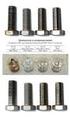 TEST REPORT Date: 03-05-2012 Reference: Duroc NV Corrosion Protection Moerelei 149 2610 Antwerp Belgium Written by: Ing. Martijn Wirken - [email protected] ZINCROLYTE VS DUPLEX 700 This document is not legally
Dissimilar Metal Corrosion
 PDHonline Course S118 (1 PDH) Dissimilar Metal Corrosion Instructor: D. Matthew Stuart, P.E., S.E., F.ASCE, F.SEI, SECB, MgtEng 2013 PDH Online PDH Center 5272 Meadow Estates Drive Fairfax, VA 22030-6658
Anodes and Misc Equipment
 Anodes and Misc Equipment Application: Platinised Titanium Anodes Platinised titanium anodes are recommended for use in the following electrolytic processes:- Precious metal electroplating - e.g. Au, Pt,
UNIT 4 METAL COATING PROCESSES
 UNIT 4 METAL COATING PROCESSES Structure 4.1 Introduction Objectives 4.2 Metal and Non-metal Coatings 4.2.1 Metallic Coatings 4.2.2 Non-Metallic Coatings 4.3 Electroforming 4.4 Galvanizing 4.5 Anodizing
EJOT Spiralform. The thread formers for metal. EJOT The Quality Connection
 EJOT Spiralform The thread formers for metal EJOT The Quality Connection Imprint Editor: EJOT GmbH & Co. KG Industrial Fasteners Division D 57319 Bad Berleburg Layout and Realisation: EJOT GmbH & Co. KG
CATHODIC PROTECTION SYSTEM DESIGN
 CATHODIC PROTECTION SYSTEM DESIGN Presented By DENIS L ROSSI P.E. CORROSION ENGINEER New England C P Inc. Corrosion Fundamentals What is corrosion? It is defined as the degradation or deterioration of
SOUTH HOLLAND METAL FINISHING SPECIFICATIONS AND PROCESSES - January 2011
 SOUTH HOLLAND METAL FINISHING SPECIFICATIONS AND PROCESSES - January 2011 South Holland Metal Finishing is ISO 9001:2008 accredited by NQA, and is accredited to ISO 17025 by the American Association for
PTFE Slide Bearings 04/10 149
 04/10 149 1.0 GENERAL INFORMATION In a wide range of applications, PTFE Slide bearings are superior to conventional expansion plates, rollers and rocker arm type supports. They support petrochemical plant,
LACLUSIENNE. Coatings and anticorrosion protection. www.laclusienne.com
 LACLUSIENNE C L U F I X Coatings and anticorrosion protection www.laclusienne.com Coatings and anticorrosion protection Every fundamental approach to corrosion must take into account the properties of
Presentation to CBM Thursday 13 th. March 2008. Experiences and Issues using Cr6-free Zinc Flake Coatings. Clive Pearce DACRAL UK REPRESENTATIVE
 Presentation to CBM Thursday 13 th. March 2008. Experiences and Issues using Cr6-free Zinc Flake Coatings Clive Pearce DACRAL UK REPRESENTATIVE Zinc Flake Water Based Coatings DACROMET and GEOMET Supplied
Surface Engineering Solutions Rebuild, Repair and Protect Industrial Equipment
 Surface Engineering Solutions Rebuild, Repair and Protect Industrial Equipment Whatever You Rebuild, Repair and Protect...... Find the Right Solution! Henkel's Solutions for all Surface Engineering Needs
An Ammonium-free, Acid. Zinc/Nickel (12-15% Ni) Process
 An Ammonium-free, Acid Zinc/Nickel (12-15% Ni) Process Requirements of an acid zinc/nickel process Technical requirements High plating speed (current efficiency up to 90 %) High thicknesses of deposits
Bolting Galvanized Steel
 Bolting Galvanized Steel This chapter gives information on the characteristics, advantages and economics of bolted galvanized structures and zinc coated fasteners, and offers comment on bolting procedures
Harsh Environment Connector Material Selection Guide
 Harsh Environment Connector Material Selection Guide Introduction To ensure robust and reliable system performance, harsh environment fiber optic (HEFO) connectors must meet certain requirements. To meet
Electroplating with Photoresist Masks
 Electroplating with Photoresist Masks Revised: 2014-01-17 Source: www.microchemicals.com/downloads/application_notes.html Electroplating - Basic Requirements on the Photoresist Electroplating with photoresist
North American Stainless
 North American Stainless Long Products Stainless Steel Grade Sheet 2205 UNS S2205 EN 1.4462 2304 UNS S2304 EN 1.4362 INTRODUCTION Types 2205 and 2304 are duplex stainless steel grades with a microstructure,
TIGER Drylac U.S.A., Inc. 3855 Swenson Avenue St Charles, IL T 800 243 8148 F 877 926 8148 [email protected] www.tiger-coatings.
 Product Data Sheet SERIES 69 - DRYZINC ZINC-RICH PRIMER (69/90500) Epoxy zinc-rich powder coating primer. Part of a two-coat TIGER Shield system. Designed to impart superior corrosion protection to steel
TECHNICAL SPECIFICATION FOR HIGH TENSION LINE HARDWARE AND ACCESSORIES FOR ACSR PANTHER & WOLF CONDUCTOR
 TECHNICAL SPECIFICATION FOR HIGH TENSION LINE HARDWARE AND ACCESSORIES FOR ACSR PANTHER & WOLF CONDUCTOR 1.1.0 SCOPE : This specification covers design, manufacture, testing at manufacture s works before
EXPERIMENT #9 CORROSION OF METALS
 EXPERIMENT #9 CORROSION OF METALS Objective The objective of this experiment is to measure the corrosion rate of two different metals and to show the effectiveness of the use of inhibitors to protect metals
more than you expect Threadlockers, sealants and adhesives
 Threadlockers, sealants and adhesives Threadlockers and thread sealants The threadlockers are used to prevent loosening in a joint. At the same time the cured adhesive keeps moisture and, for example corrosive
Rubber-to-Metal Bonding
 The Delta Rubber Thought Leadership Series Rubber-to-Metal Bonding Part Art, Part Science By Kevin Violette The Delta Rubber Company Automotive and industrial manufacturers are increasingly are turning
Metal Rescue Rust Remover Technical Data
 Technical Data Product Description Metal Rescue TM is an innovative new technology that efficiently removes rust without harming surrounding materials. It is a water-based, non-toxic solution that is biodegradable
Special coating Corrotect. Anti-corrosion protection for rolling bearings and precision components
 Special coating Corrotect Anti-corrosion protection for rolling bearings and precision components Special coating Corrotect Features Basic data on the Corrotect coating Rust is public enemy number 1 for
Engine Bearing Materials
 Engine Bearing Materials Dr. Dmitri Kopeliovich (Research & Development Manager) The durable operation of an engine bearing is achieved if its materials combine high strength (load capacity, wear resistance,
expectation as hot dip galvanizing?
 FREQUENTLY ASKED QUESTIONS ********************************* Q. 1.What exactly is Cold galvanizing? A. Cold galvanisation is an organic, single-component zinc coating of minimum 92% (weight) zinc in the
Anodizing Reference Guide
 Anodizing Reference Guide Type Thickness Type II Conventional coatings produced 1.8µ-25.4µ from sulfuric acid bath Type I A Conventional coatings produced 0.5µ-7.6µ (microns) from chromic acid bath Type
Specifications for Programs: 737, 747, 757, 767, 777, 787
 = Performed by GKN BAC 5000 AN General Sealing 6-262, 6-265, 6-267, 6-270 PSD for 787 Only: 6-242, 6-269, 6-271 PSD for 777 Only: 6-261,6-264, 6-266, 6-269, 6-271 BAC 5004 L Installation of Permanent Fasteners
Chapter 5 - Aircraft Welding
 Chapter 5 - Aircraft Welding Chapter 5 Section A Study Aid Questions Fill in the Blanks 1. There are 3 types of welding:, and, welding. 2. The oxy acetylene flame, with a temperature of Fahrenheit is produced
Handling Corrosive or Abrasive Liquids
 Handling Corrosive or Abrasive Liquids Defining abrasion and corrosion An abrasive liquid is one that has particles in it. Some, like inks, have very fine particles, while others, like some paints, contain
North American Stainless
 North American Stainless Flat Product Stainless Steel Grade Sheet 316 (S31600)/EN 1.4401 316L (S31603)/ EN 1.4404 INTRODUCTION NAS provides 316 and 316L SS, which are molybdenum-bearing austenitic stainless
COATED CARBIDE. TiN. Al 2 O 3
 COATED CARBIDE GENERAL INFORMATION CVD = Chemical Vapour Deposition coated grades GC2015, GC2025, GC2135, GC235, GC3005, GC3015, GC3020, GC3025, GC3115, GC4015, GC4025, GC4035, S05F, and CD1810. PVD =
Basic Properties and Application of Auto Enamels
 Basic Properties and Application of Auto Enamels Composition of Ceramic Automotive Glass Enamels Ceramic automotive glass colours are glass enamels that fire on to the glass during the bending process
North American Stainless
 North American Stainless Flat Products Stainless Steel Grade Sheet 310S (S31008)/ EN 1.4845 Introduction: SS310 is a highly alloyed austenitic stainless steel designed for elevated-temperature service.
Process Control For Phosphate Coating A new military specification for phosphate coatings...
 FOCUS: Pretreatment for Painting/Powder Coating Process Control For Phosphate Coating A new military specification for phosphate coatings... By JOSEPH T. MENKE Chemical Engineer U.S. Army Rock Island,
Houston Plating & Coatings
 Houston Plating & Coatings Electroless Nickel SBN QPQ TM Teflon Coating Polyurethane Multi-Coat Epoxy System Dry Film Lubricant Phosphate and Oil Xylan Fluoropolymer Molybdenum Disulfide Houston Plating
Metal Pre-Treatment. Information for industrialists, marketing. specialists, technical designers, managers and buyers...
 Metal Pre-Treatment British Surface Treatment Suppliers Association Information for industrialists, marketing specialists, technical designers, managers and buyers... Pre treatment Why use pre-treatment?
Stainless steel grade chart
 Stainless steel grade chart ATLAS STEELS METAL DISTRIBUTION Chemical analysis (%) specified C Si Mn P S Cr Mo Ni Other Austenitic stainless steels 253MA S30815 0.05 1.1-2.0 0.8 0.040 0.030 20.0-22.0 10.0-12.0
Chemical Surface Treatment of Stainless Steel
 www.damstahl.dk Damstahl - a member of the NEUMO Ehrenberg-Group Any manufacturing or handling of stainless steel implies the potential risk of weakening the corrosion resistance. Should this weakening
ULTRA 865HD HIGH PERFORMANCE MULTI PURPOSE GREASE
 ULTRA 865HD HIGH PERFORMANCE MULTI PURPOSE GREASE Contains penetrants, lubricants and greases All weather Water-resistant Penetrates like an oil, then cures to a thick, water-resistant grease Recommended
North American Stainless
 North American Stainless Long Products Stainless Steel Grade Sheet AISI 316 UNS S31600 EN 1.4401 AISI 316L UNS S31630 EN 1.4404 INTRODUCTION NAS provides 316 and 316L SS, which are molybdenum-bearing austenitic
PRODUCT PROFILE. ELECTROLOY in partnership with FCT Asia Pte Limited. in manufacturing. Nihon Superior Lead Free Solder Bar.
 PRODUCT PROFILE ELECTROLOY in partnership with FCT Asia Pte Limited in manufacturing Nihon Superior Lead Free Solder Bar SN100C Product Name Product Code LEAD FREE BAR LEAD FREE BAR ( TOP UP ALLOY ) SN100C
Scotch-Weld TM. Acrylic Adhesives. DP8405NS Green. Product Data Sheet. Date: March 2014 Supersedes: August 2013
 Scotch-Weld TM Product Data Sheet Acrylic Adhesives Date: Supersedes: August 2013 Product Description 3M TM Scotch-Weld Acrylic Adhesives are high performance, twopart acrylic adhesives that offer good
Problems in Welding of High Strength Aluminium Alloys
 Singapore Welding Society Newsletter, September 1999 Problems in Welding of High Strength Aluminium Alloys Wei Zhou Nanyang Technological University, Singapore E-mail: [email protected] Pure aluminium has
Aluminium as Construction Material in Ammonia Refrigeration Cycles
 Aluminium as Construction Material in Ammonia Refrigeration Cycles Experiences With Aluminium Compared to other metals, aluminium has only a brief history as an engineering material. While, about 150 years
A SHORT INTRODUCTION TO CORROSION AND ITS CONTROL
 A SHORT INTRODUCTION TO CORROSION AND ITS CONTROL CORROSION OF METALS AND ITS PREVENTION WHAT IS CORROSION Corrosion is the deterioration of materials by chemical interaction with their environment. The
Two most common lock nut groups: 1-Prevailing Torque Type Lock Nuts:
 Two most common lock nut groups: 1. PREVAILING TORQUE a design feature of the lock nut produces friction between threads of mated components thereby increasing the force needed to tighten as well as loosen
Arm rgalv. thermo diffusion galvanized coatings precision heavy duty corrosion and wear protection chrome and cadmium free cost effective
 Winner of EPA S (NPPR) 2006 MVP 2 Award (Most Valuable Pollution Prevention) a licensed applicator for: Arm rgalv thermo diffusion galvanized coatings precision heavy duty corrosion and wear protection
Welding. Module 19.2.1
 Welding Module 19.2.1 Hard Soldering Hard soldering is a general term for silver soldering and brazing. These are very similar thermal joining processes to soft soldering in as much that the parent metal
SCREEN PRINTING INSTRUCTIONS
 SCREEN PRINTING INSTRUCTIONS For Photo-Imageable Solder Masks and Idents Type 5600 Two Part Solder Masks and Idents Mega Electronics Ltd., Mega House, Grip Industrial Estate, Linton, Cambridge, ENGLAND
FEATURES AND BENEFITS OF DIFFERENT PLATINUM ALLOYS. Kris Vaithinathan and Richard Lanam Engelhard Corporation
 FEATURES AND BENEFITS OF DIFFERENT PLATINUM ALLOYS Kris Vaithinathan and Richard Lanam Engelhard Corporation Introduction There has been a significant increase in the world wide use of platinum for jewelry
ME 612 Metal Forming and Theory of Plasticity. 1. Introduction
 Metal Forming and Theory of Plasticity Yrd.Doç. e mail: [email protected] Makine Mühendisliği Bölümü Gebze Yüksek Teknoloji Enstitüsü In general, it is possible to evaluate metal forming operations
AMP INCORPORATED. Technical Report. The Tin Commandments: Guidelines For The Use Of Tin On Connector Contacts
 ... AMP INCORPORATED Technical Report The Tin Commandments: Guidelines For The Use Of Tin On Connector Contacts Copyright 2004 by Tyco Electronics Corporation. All rights reserved. TIN COMMANDMENTS TIN
FlyMe Environmental impact assessment MHI/ 24-1-2007 Page 1(6) 2 Description and assessment of the Production process
 Page 1(6) Fly Me CHAIR 1 Description and assessment of the Materials used in the Product 2 Description and assessment of the Production process 3 Description and assessment of the Surface Treatment Methods
SurTec 650 Tri-Chrome Passivation of Aluminum
 SurTec International GmbH - July 2011 SurTec International GmbH Content 1 Best Available Technologies 2 ONE Process Market Specific Parameter 3 Process Control/ Maintenance 4 Resource Load 5 Total Process
INDEPENDENTS AIL RET 2012
 RETAIL INDEPENDENTS 2012 Contents Introducing 2 new colours to the Hammerite range: Direct To Rust Metal Paint 4-5 Metalcare - Task Specific Products 6-7 Metalcare - Primers & Converters 8-9 Muted Clay
BUMAX. REYHER your partner for the BUMAX range
 BUMAX high-tensile stainless steel fasteners REYHER your partner for the BUMAX range Strongest stainless steel fasteners in the world BUMAX 88 and BUMAX ready for delivery from stock Wide range of BUMAX
TECHNICAL DATA SHEET DURO HARD CHROME PLATING PROCESS
 TECHNICAL DATA SHEET Duro hard chrome plating process is a high-speed bath which employs a special mixed soluble catalyst and has been developed to meet the modern hard chrome plating requirements. Its
Rollers. from the UK s largest roller manufacturer. Quality Performance Reliability
 Rollers from the UK s largest roller manufacturer Quality Performance Reliability 42 Index Gravity Rollers Light to Medium Duty 4 Heavy Duty 5 Plastic Rollers 6 Stainless Steel Rollers 7 Grooved Rollers
COATING & WRAPPING OF UNDERGROUND PIPING
 CONSTRUCTION STANDARD SPECIFICATION DOCUMENT NO :SEC-PJ-000-SPC-PI-008 TOTAL PAGES : 8 Page 1 of 8 CONTENTS 1. SCOPE 2. DEFINITION 3. CODES AND STANDARDS 4. MATERIALS Page 2 of 8 1. SCOPE This specification
Introduction to JIGS AND FIXTURES
 Introduction to JIGS AND FIXTURES Introduction The successful running of any mass production depends upon the interchangeability to facilitate easy assembly and reduction of unit cost. Mass production
Tableting Punch Performance Can Be Improved With Precision Coatings
 Tableting Punch Performance Can Be Improved With Precision Coatings by Arnold H. Deutchman, Ph. D. Director of Research and Development (614) 873-4529 X 114 [email protected] Mr. Dale C. Natoli
Lecture 9. Surface Treatment, Coating, Cleaning
 1 Lecture 9. Surface Treatment, Coating, Cleaning These processes are sometimes referred to as post-processing. They play a very important role in the appearance, function and life of the product. Broadly,
Araldite AV 170. Advanced Materials. One component epoxy adhesive. Structural Adhesives. Key properties. Description. Product data.
 Advanced Materials Araldite AV 170 Structural Adhesives Araldite AV 170 One component epoxy adhesive Key properties Cures at 140-180 C Heat resistant to 120 C Very good peel strength Good chemical resistance
Module 3 Machinability. Version 2 ME, IIT Kharagpur
 Module 3 Machinability Lesson 1 Cutting Tool Materials of common use Instructional Objectives At the end of this lesson, the students will be able to (i) Identify the needs and cite the chronological development
Structural Bolting. Notice the Grade 5 has a much smaller head configuration and a shorter shank then the A325 structural bolt. Rev.
 Structural Bolting ASTM A325 and ASTM A490 are the two U.S. standard structural bolts. When looking at the mechanical requirements of bolts it appears that an ASTM A325 and SAE J429 Grade 5 are identical
CAST IRON THE BASICS. Heatline - Cast Iron Radiators SMOOTH FLAT FILE TO REMOVE ANY SWARF. ONE TIME. ASSEMBLY. JOINTS SHOULD BE TIGHTENED.
 CAST IRON THE BASICS 1. DO NOT LIFT ON YOUR OWN. 2. ONLY LIFT THE RADIATOR VERTICALLY. 3. DO NOT LIFT MORE THAN 8/10 SECTIONS AT ANY ONE TIME. 4. POSITION THE RADIATOR BEFORE FINAL ASSEMBLY. 5. THIS PRODUCT
Surface treatment of aluminium extrusions
 Surface treatment of aluminium extrusions Contents Anodising 2 3 Lacquering 4 Mechanical/Chemical Surface Treatment 5 Other Surface Treatments 6 Contacts and Samples 7 In its natural state, aluminium has
North American Stainless
 North American Stainless Flat Products Stainless Steel Grade Sheet 304 (S30400)/ EN 1.4301 304L (S30403) / EN 1.4307 304H (S30409) Introduction: Types 304, 304L and 304H are the most versatile and widely
Copper Alloys COPPER ALLOYS. Weld Tech News VOL 1. NO. 8
 Copper Alloys Weld Tech News VOL 1. NO. 8 WELD TECH NEWS is a newsletter for welders working primarily in maintenance and repair. Each issue contains useful information on materials (cast irons, steels,
Temperature C 10 15 23 40. Cure time to reach hours - - - - LSS > 1MPa minutes 20 12 8 2
 Advanced Materials Araldite 2021 Structural Adhesives TECHNICAL DATA SHEET Araldite 2021 Two component toughened methacrylate adhesive system Key properties Rapid curing High peel strength Multi purpose
the runnerless types of molds are explained post molding operations are described the basic methods of applied decoration methods are examined
 Training Objectives After watching the video and reviewing this printed material, the viewer will gain knowledge and understanding of the various plastic finishing processes used in industry and their
Two component epoxy paste adhesive
 Advanced Materials Araldite 2015 Structural Adhesives TECHNICAL DATA SHEET Araldite 2015 Two component epoxy paste adhesive Key properties Toughened paste Ideal for bonding GRP, SMC and dissimilar substrates
Form 0.5 chair, 2805 and 2806
 Page 1(8) Form 0.5 chair, 2805 and 2806 1 Description and assessment of the Materials used in the Product 2 Description and assessment of the Production process 3 Description and assessment of the Surface
Great Automotive Designs Enabled By Advances in Adhesive Bonding
 Great Automotive Designs Enabled By Advances in Adhesive Bonding Mansour Mirdamadi and Greg Korchnak Dow Automotive Presentation Outline Classification of adhesive systems for body structure applications
White rust on galvanized and galvanized pre-painted steel. Technical Information
 Technical Information White rust on galvanised steel Prevention It is easier to prevent white rust than to cure it! Reasonable precautions to protect steel during both transport and storage can considerably
ALLOY C276 DATA SHEET
 ALLOY C276 DATA SHEET //// Alloy C276 (UNS designation N10276) is a nickel-molybdenum-chromium-iron-tungsten alloy known for its corrosion resistance in a wide range of aggressive media. It is one of the
Nickel Free Room Temperature Seal: an innovative and ecological process
 Nickel Free Room Temperature Seal: an innovative and ecological process 2015 ANODIZING CONFERENCE San Diego, California Prepared by: Marcello Rossi Italtecno Srl Italy NICKEL FREE ROOM TEMPERATURE SEAL:
Flocking of textiles. Flocked shirt 13. flocking drying cleaning. adhesive. application. creation
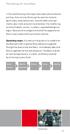 Flocking of textiles > The motif flocking is the high-class alternative to textile printing. One not only flocks sports wear for schools, sport clubs, associations etc., but also fabrics for garments,
North American Stainless
 Introduction: North American Stainless Flat Products Stainless Steel Grade Sheet 309S (S30908)/ EN1.4833 SS309 is a highly alloyed austenitic stainless steel used for its excellent oxidation resistance,
Are these noise cancelling devices needed to make your chiller quiet??
 Are these noise cancelling devices needed to make your chiller quiet?? Not on this chiller! Some sound barriers should never be broken. Government authorities recommend that exposure to loud noise over
Scotch-Weld TM. DP410 Off-White. Product Data Sheet. Product Description. Key Features Rapid cure at room temperature; cure rate may be accelerated
 Scotch-Weld TM Product Data Sheet DP410 Off-White Supersedes: October 2001 Product Description DP410 epoxy adhesive is a low flow, two-part epoxy based structural adhesive. It is designed for use where
Property Test/Standard Description. gloss (70-85) Flash point ISO 3679 Method 1. 212 F (100 C) calculated VOC-US/Hong Kong. US EPA method 24 (tested)
 Not approved 2063;2064 1,2 2063 ^(ValidationDate) 1 Product description This is a two component solvent free polyamine cured coating. It is a general purpose tank lining with good chemical resistance.
How To Run A Test Lab In Rourkela
 TESTING LABORATORY ROURKELA 1. Background: Keeping in view of the growing demand of quality of the products of the industries, Govt. has established Testing Laboratory, Rourkela, under the Directorate
SAND CAST CHILL CAST LM4 - TF
 1 This alloy conforms with British Standards 1490 and is similar to the obsolete specifications BS.L79 and D.T.D 424A. Castings may be in the cast (M) of fully heat treated (TF) conditions. CHEMICAL COMPOSITION
Saint Gobain Gyproc India Ltd. (Formerly India Gypsum Ltd.)
 Saint Gobain Gyproc India Ltd. (Formerly India Gypsum Ltd.) Gyproc Plasters The cracks in cement sand plaster are an inherent feature which cannot be completely prevented but can only be controlled and
The BASA Guide to the ISO 11600 Classification of Sealants for Building Construction
 The BASA Guide to the ISO 11600 Classification of Sealants for Building Construction SEALANTS IN BUILDING AND CONSTRUCTION Glazing Sealants (G) Construction Sealants (F) Class 25 Class 25LM Class 25 Class
SERIES NG 1800 STRUCTURAL STEELWORK
 MANUAL OF CONTRACT DOCUMENTS FOR HIGHWAY WORKS VOLUME 2 NOTES FOR GUIDANCE ON THE SPECIFICATION FOR HIGHWAY WORKS SERIES NG 1800 STRUCTURAL STEELWORK Contents Clause Title Page NG 1800 (08/14) General
SKF composite plain bearings. Compact and maintenance-free
 SKF composite plain bearings Compact and maintenance-free Contents The SKF brand now stands for more than ever before, and means more to you as a valued customer. While SKF maintains its leadership as
Cutting Tool Materials
 Training Objectives After watching the video and reviewing this printed material, the viewer will gain knowledge and understanding of cutting tool metallurgy and specific tool applications for various
Metals and Non-metals. Comparison of physical properties of metals and non metals
 Metals and Non-metals Comparison of physical properties of metals and non metals PHYSICAL PROPERTY METALS NON-METALS Physical State Metallic lustre (having a shining surface) Mostly solids (Liquid -mercury)
Alodine EC 2 The Principle of Protection
 White Paper Alodine EC 2 The Principle of Protection Providing cost effective protection and improvement for aluminum parts used in extreme environments Contact American Trim, LLC 1005 W. Grand Ave. Lima,
Casting. Training Objective
 Training Objective After watching the program and reviewing this printed material, the viewer will learn the essentials of the various metal casting processes used in industry today. The basic principles
Die casting Figure M2.3.1
 Die casting Die casting is a moulding process in which the molten metal is injected under high pressure and velocity into a split mould die. It is also called pressure die casting. The split mould used
CRN5-5 A-FGJ-G-E-HQQE 3x230/400 50HZ
 GRUNDFOS DATA BOOKLET CRN5-5 A-FGJ-G-E-HQQE 3x23/4 5HZ Grundfos Pump 96517184 Thank you for your interest in our products Please contact us for more information, or visit our website http://www.lenntech.com/grundfos/crn5/96517184/crn-5-5-a-fgj-g-e-hqqe.html