
PRO-46 ( ) A General Guide to Scanning Faxback Doc. # 3595
|
|
|
- Harry Holt
- 9 years ago
- Views:
Transcription
1 PRO-46 ( ) A General Guide to Scanning Faxback Doc. # 3595 BIRDIES Birdies are frequencies your scanner uses when it operates. These operating frequencies might interfere with broadcasts on the same frequencies. If you program one of these frequencies, you hear only noise on that frequency. Birdie Frequencies RECEPTION NOTES Reception of the frequencies covered by your scanner is mainly "line of sight." That means you usually cannot hear stations that are beyond the horizon. During the summer months, you might be able to hear stations in the range located several hundred or even thousands of miles away. This is because of summer atmospheric conditions. This type of reception is unpredictable but often very interesting. A GUIDE TO THE ACTION BANDS With a little investigation, you can find the active frequencies in your community. We can give you some general pointers on finding these frequencies and you can take it from there. Please use caution and common sense when you hear an emergency call. Never go to the scene of an emergency. It could be very dangerous. Find out if there is a local club that monitors your community's frequencies. Perhaps a local electronics repair shop that works on equipment similar to your scanner can give you frequencies used by local services. A volunteer police department or fire department employee can also be a good source for this information. As a general rule on VHF, most activity concentrates between and and between and Here you find local government, police, fire, and most other emergency services. If you are near major railroad tracks, listen between and for signals.

2 In some larger cities, there has been a move to the UHF bands for emergency services. Here, most of the activity is between and and between and In the UHF band, mobile units operate between and and between and A repeater picks up the mobile units' transmissions on one frequency, then rebroadcasts (or repeats) the transmission 5 lower, but at a higher power level, than the mobile units (that is, and ) This means that if you find an active frequency inside one of the mobile unit's frequency spreads, you can look 5 lower to find the repeater frequency. A system called trunked radio lets several services use the same set of frequencies in the 800 band without interference. Several frequencies are allocated to two or more services (like fire, police, and water departments). As each service transmits, a separate control signal activates other radios in the same service, so that only that service hears the transmission. The frequency is selected as soon as the unit begins to transmit, and could be any one of the allocated frequencies. One very useful service is the National Weather Service's continuous weather broadcasts. These broadcasts contain weather forecasts and data for the area around the station, plug bulletins on any threatening weather conditions. These stations use three frequencies: , , or In most areas of the country, you can receive on of these frequencies. TYPICAL BAND USAGE The following is a brief listing of the services typical of the bands received by your scanner. This listing can help you decide which ranges you would like to scan. Abbreviations Affiliate Radio System...MARS Amateur...Ham Automobile Emergency...Auto Emer. Broadcast Remote...BC. R. Bureau of Reclamation...Bur. Recl. Civil Air Patrol...CAP Department of Agriculture and Forestry...Agr. and For. Fire Department...F.D. Forest Products...For. Prod. Forestry Conservation...Fors. Cons. Government...Govt. Highway Maintenance...Hwy. Land Transportation...Land Tr. Local Government...L. Govt.

3 Manufacturers...Mfg. Military...MIL Mobile Telephone...Mob. Tel. Motion Picture...Mot. P. Motor Carrier...Buses. Trucks National Parks...Nat. Park Petroleum...Pet. Police...P.D. Power Utilities...Power Radio Paging...Page Railroad...R.R. Relay Press...Press State Police...St. P.D. Special Emergency...Sp. Emer Special Industry...Sp. Ind. Taxicab Radio...Taxi Telephone Maintenance...Tel. Maint. U.S. Costal and Geodetic Survey...U.S.C.G.S. U.S. Navy...USN U.S. Weather Bureau...U.S.W.B HAM For. Prod Aero Govt Sp. Ind Ind.(Pet., For. Cons., Bus., For. Prod.) Sp. Ind., For. Cons Govt Hwy., Sp. Emer., Bus Pet F.D Govt Bus Mob. Tel. & Page Bus Sp. Ind. & Bus Govt P.D., L.Govt Power Hwy. & Sp. Emer Govt P.D., L. Govt Govt St. P.D Sp. Ind. & Bus Mob. Tel. Page Trucks. Bus St. P.D., For. Cons P.D P.D. Hwy., Sp. Emer F.D.

4 L. Govt Govt St. Hwy Red Cross Sp. Ind. Sp. Emer Power For. Prod., Pet Govt Meter Amateur (Ham) Band BAND Air Navigation Aircraft BAND Govt HAM MARS MIL USN Bus HWY For. Cons Sp. Ind Bus Mob. Tel. (RCC) Taxi Mob. Tel. Page Sp. Ind. Mot. P Pet., For. Prod Power L. Govt Sp. Ind., Pet., Bus P.D., L. Govt.,St. P.D Sp. Emer. P.D P.D., L. Govt Hwy., P.D Marine Auto Emer Taxi Mob. Tel., Page Power,For.Prod.,Pet Mob. Tel. (RCC) P.D., L. Govt P.D. Hwy For. Cons Trucks R.R Marine Bur. Recl U.S.W.B U.S.W.B Indian Affairs

5 Bur. Recl U.S.W.B MIL Govt U.S.C.G.S Bur. Recl. Nat. Pk. Govt., Agr. & For F.A.A Ind., Data F.D., BC. R U.S.C.G.S Ind., Land Tr For. Cons Govt. Ind., Land Tr Bur. Recl., For. Cons., Ind., Dept. Ag. & For., Govt Nat. Park U.S.W.B U.S.C.G.S Mot. P., Pet., Bur. Recl., Press Relay BAND Govt HAM Remote Br Util For. Prod., Pet., Power, Tel. Maint Sp. Ind Taxi, Mot. Carrier, R.R Auto Club Motor Carr., R.R L. Govt, P.D., F.D Mob. Tel Remote Br P.D., F.D., Ind., Lan. Tr Domestic Public P.D., F.D Bus Taxi Bus Medical Bus P.D., F.D., Ind., Land Tr Bus Pub. Safety Ind., Land Tr. TV Bands for Special Communications T.V. Channel 14

6 T.V. Channel T.V. Channel T.V. Channel T.V. Channel T.V. Channel T.V. Channel 20 6 Segment is allocated for Channel Domestic Public, (Base, Mob.) Public Safety Reserve Pool A Pwr., Tel. Maint Sp. Ind Reserve Pool B Bus Taxi R.R., Motor Carrier, Auto Emer Pet., For. Prod., Mfg Domestic Public Public Safety Reserve Pool A Pwr., Tel. Maint Spec.Ind.(Mobile) Reserve Pool B Bus Taxi R.R., Motor Carrier, Auto Emer Pet., For. Prod. Mfg. These frequencies are subject to change and might vary some from area to area. For a more complete listing, refer to Radio Shack "Police Call Radio guide Including Fire and Emergency Services" available at your local Radio Shack. You might discover one of your regular stations on a frequency that is not listed. this could be what is known as an image. For example, if you suddenly find you hear the same broadcats on as you hear on , do a little math to see if it is an image. Take this unit's intermediate frequency of 10.7 and double it. Then, subtract it from the new frequency. If the answer is the regular frequency, you have tuned to an image. Occasionally, you might get interference on a weak or distant channel from a strong broadcast 21.7 (10.85 x 2) below the tuned frequency. This is rare and the image signal is usually cleared whenever a broadcast on the actual frequency is in progress.

7 PRO-46 ( ) A General Guide to Scanning Faxback Doc. # 3595 BIRDIES Birdies are frequencies your scanner uses when it operates. These operating frequencies might interfere with broadcasts on the same frequencies. If you program one of these frequencies, you hear only noise on that frequency. Birdie Frequencies RECEPTION NOTES Reception of the frequencies covered by your scanner is mainly "line of sight." That means you usually cannot hear stations that are beyond the horizon. During the summer months, you might be able to hear stations in the range located several hundred or even thousands of miles away. This is because of summer atmospheric conditions. This type of reception is unpredictable but often very interesting. A GUIDE TO THE ACTION BANDS With a little investigation, you can find the active frequencies in your community. We can give you some general pointers on finding these frequencies and you can take it from there. Please use caution and common sense when you hear an emergency call. Never go to the scene of an emergency. It could be very dangerous. Find out if there is a local club that monitors your community's frequencies. Perhaps a local electronics repair shop that works on equipment similar to your scanner can give you frequencies used by local services. A volunteer police department or fire department employee can also be a good source for this information. As a general rule on VHF, most activity concentrates between and and between and Here you find local government, police, fire, and most other emergency services. If you are near major railroad tracks, listen between and for signals.

8 In some larger cities, there has been a move to the UHF bands for emergency services. Here, most of the activity is between and and between and In the UHF band, mobile units operate between and and between and A repeater picks up the mobile units' transmissions on one frequency, then rebroadcasts (or repeats) the transmission 5 lower, but at a higher power level, than the mobile units (that is, and ) This means that if you find an active frequency inside one of the mobile unit's frequency spreads, you can look 5 lower to find the repeater frequency. A system called trunked radio lets several services use the same set of frequencies in the 800 band without interference. Several frequencies are allocated to two or more services (like fire, police, and water departments). As each service transmits, a separate control signal activates other radios in the same service, so that only that service hears the transmission. The frequency is selected as soon as the unit begins to transmit, and could be any one of the allocated frequencies. One very useful service is the National Weather Service's continuous weather broadcasts. These broadcasts contain weather forecasts and data for the area around the station, plug bulletins on any threatening weather conditions. These stations use three frequencies: , , or In most areas of the country, you can receive on of these frequencies. TYPICAL BAND USAGE The following is a brief listing of the services typical of the bands received by your scanner. This listing can help you decide which ranges you would like to scan. Abbreviations Affiliate Radio System...MARS Amateur...Ham Automobile Emergency...Auto Emer. Broadcast Remote...BC. R. Bureau of Reclamation...Bur. Recl. Civil Air Patrol...CAP Department of Agriculture and Forestry...Agr. and For. Fire Department...F.D. Forest Products...For. Prod. Forestry Conservation...Fors. Cons. Government...Govt. Highway Maintenance...Hwy. Land Transportation...Land Tr.

9 Local Government...L. Govt. Manufacturers...Mfg. Military...MIL Mobile Telephone...Mob. Tel. Motion Picture...Mot. P. Motor Carrier...Buses. Trucks National Parks...Nat. Park Petroleum...Pet. Police...P.D. Power Utilities...Power Radio Paging...Page Railroad...R.R. Relay Press...Press State Police...St. P.D. Special Emergency...Sp. Emer Special Industry...Sp. Ind. Taxicab Radio...Taxi Telephone Maintenance...Tel. Maint. U.S. Costal and Geodetic Survey...U.S.C.G.S. U.S. Navy...USN U.S. Weather Bureau...U.S.W.B HAM For. Prod Aero Govt Sp. Ind Ind.(Pet., For. Cons., Bus., For. Prod.) Sp. Ind., For. Cons Govt Hwy., Sp. Emer., Bus Pet F.D Govt Bus Mob. Tel. & Page Bus Sp. Ind. & Bus Govt P.D., L.Govt Power Hwy. & Sp. Emer Govt P.D., L. Govt Govt St. P.D Sp. Ind. & Bus Mob. Tel. Page Trucks. Bus St. P.D., For. Cons P.D P.D. Hwy., Sp. Emer.

10 F.D L. Govt Govt St. Hwy Red Cross Sp. Ind. Sp. Emer Power For. Prod., Pet Govt Meter Amateur (Ham) Band BAND Air Navigation Aircraft BAND Govt HAM MARS MIL USN Bus HWY For. Cons Sp. Ind Bus Mob. Tel. (RCC) Taxi Mob. Tel. Page Sp. Ind. Mot. P Pet., For. Prod Power L. Govt Sp. Ind., Pet., Bus P.D., L. Govt.,St. P.D Sp. Emer. P.D P.D., L. Govt Hwy., P.D Marine Auto Emer Taxi Mob. Tel., Page Power,For.Prod.,Pet Mob. Tel. (RCC) P.D., L. Govt P.D. Hwy For. Cons Trucks R.R Marine Bur. Recl U.S.W.B U.S.W.B.

11 Indian Affairs Bur. Recl U.S.W.B MIL Govt U.S.C.G.S Bur. Recl. Nat. Pk. Govt., Agr. & For F.A.A Ind., Data F.D., BC. R U.S.C.G.S Ind., Land Tr For. Cons Govt. Ind., Land Tr Bur. Recl., For. Cons., Ind., Dept. Ag. & For., Govt Nat. Park U.S.W.B U.S.C.G.S Mot. P., Pet., Bur. Recl., Press Relay BAND Govt HAM Remote Br Util For. Prod., Pet., Power, Tel. Maint Sp. Ind Taxi, Mot. Carrier, R.R Auto Club Motor Carr., R.R L. Govt, P.D., F.D Mob. Tel Remote Br P.D., F.D., Ind., Lan. Tr Domestic Public P.D., F.D Bus Taxi Bus Medical Bus P.D., F.D., Ind., Land Tr Bus Pub. Safety Ind., Land Tr. TV Bands for Special Communications

12 T.V. Channel T.V. Channel T.V. Channel T.V. Channel T.V. Channel T.V. Channel T.V. Channel 20 6 Segment is allocated for Channel Domestic Public, (Base, Mob.) Public Safety Reserve Pool A Pwr., Tel. Maint Sp. Ind Reserve Pool B Bus Taxi R.R., Motor Carrier, Auto Emer Pet., For. Prod., Mfg Domestic Public Public Safety Reserve Pool A Pwr., Tel. Maint Spec.Ind.(Mobile) Reserve Pool B Bus Taxi R.R., Motor Carrier, Auto Emer Pet., For. Prod. Mfg. These frequencies are subject to change and might vary some from area to area. For a more complete listing, refer to Radio Shack "Police Call Radio guide Including Fire and Emergency Services" available at your local Radio Shack. You might discover one of your regular stations on a frequency that is not listed. this could be what is known as an image. For example, if you suddenly find you hear the same broadcats on as you hear on , do a little math to see if it is an image. Take this unit's intermediate frequency of 10.7 and double it. Then, subtract it from the new frequency. If the answer is the regular frequency, you have tuned to an image. Occasionally, you might get interference on a weak or distant channel from a strong broadcast 21.7 (10.85 x 2) below the tuned frequency. This is rare and the image signal is usually cleared

13 whenever a broadcast on the actual frequency is in progress. PRO-46 ( ) Features Faxback Doc. # 8556 Your new Realistic PRO Channel Direct Entry Programmable Scanner lets you in on all the action! This scanner gives you direct access to over 30,000 exciting frequencies that include the police department, fire department, ambulance, amateur radio, and transportation services. You can select up to 100 channels for your scanner to scan and you can change your selection at any time. The secret to your scanner's ability to scan so many frequencies is its custom-designed microprocessor-a tiny, built-in computer. Your scanner also has these special features: 2-Second Scan Delay-delays the scanning mode for two seconds before moving to another channel so you can hear more replies. Memory Backup-keeps the channel frequencies stored in memory for up to 1 hour during power loss. Lock-Out Function-keeps channels you select from being scanned. Priority Channel-checks your most important channel every 2 seconds so you don't miss important calls on a channel you specify. Weather Band Key-scans the 7 preprogrammed weather frequencies to keep you informed of the most current weather conditions Ten Channel Storage Banks-let you store 10 channels in each of 10 banks to group frequencies so you can easily identify calls. Monitor Memories-let you temporarily save up to ten channels you locate during a frequency search. Frequency Search-scans through every available frequency to find interesting broadcasts. Your scanner can receive all of these bands: * (ham radio 10 m) * (VHF Lo) * (ham radio 6m) * (aircraft) * (government) * (ham radio 2m)

14 * (VHF Hi) * (ham radio and government) * (UHF Lo) * (UHF TV) * (UHF Hi) * (UHF Hi) * (UHF Hi) PRO-Series Direct Entry Programmable Scanners General Guide To Scanning Faxback Doc. # Birdies Birdies are frequencies your scanner uses when it operates. These operating frequencies might interfere with broadcasts on the same frequencies. If you program one of these frequencies, you hear only noise on that frequency. If the interference is not severe, you might be able to turn SQUELCH clockwise to cut out the birdie. The most common birdies to watch for are listed below. Birdie Frequencies: Reception Notes Reception of the frequencies covered by your scanner is mainly "line of sight". That means you usually cannot hear stations that are beyond the horizon. During the summer months you may be able to hear stations in the range located several hundred or even thousand of miles away. This is because of summer atmospheric conditions. This type of reception is unpredictable but often very interesting! One very useful service is the National Weather Service's continuous weather broadcast. These broadcasts contain weather forecasts and data for the areas around the station, plus bulletins on any threatening weather conditions. These stations use three frequencies , or In most areas of the country, you can receive one of these frequencies. A Guide To The Action Bands With the right frequencies programmed into your PRO-Series Scanner, you can monitor exciting events. With a little investigation, you can find

15 active frequencies in your community. We can give you some general pointers, and you can take it from there. Please use caution and common sense when you hear an emergency call. Never go to the scene of an emergency. It could be very dangerous. Find out if there is a local club that monitors your community's frequencies. Perhaps a local electronics repair shop that works on equipment similar to your scanner can give you frequencies used by local radio services. A volunteer police department or fire department can also be a good source for this information. As a general rule on VHF, most activity is concentrated between and and then again from to Here you find local government, police, fire and most such emergency services. If you are near a railroad yard or major railroad tracks, look around to for signals. In some larger cities, there has been a move to the UHF bands for emergency service. Here, most of the activity is between and and between and In the UHF band, frequencies between and and between and are used by mobile units and control stations associated with base and repeater units that operate 5 lower (that is, to and to ). This means that if you find an active frequency inside one of these spreads, you can look 5 lower (or higher) to find the base station/repeater for that service. Typical Band Usage The following is a brief listing of the typical services that use the bands you scanner can receive. This listing helps you decide which ranges you would like to scan. These frequencies are subject to change, and might vary from area to area. For a more complete listing refer to the Police Call Radio Guide available at you local RadioShack store. Abbreviations: Affiliate Radio System:... Mars Amateur:... Ham Automobile Emergency:... Auto Emer.

16 Broadcast Remote:... BC.R Bureau of Reclamation:... Bur.Recl. Civil Air Patrol:... CAP Department of Agriculture and Forestry:... Agr. And For. Fire Department:... F.D. Forest Products:... For.Prod. Forestry Conservation:... Fors.Cons. Government:... Govt. Highway Maintenance:... Hwy. Land Transportation:... Land Tr. Local Government:... L.Govt. Manufacturers:... Mfg. Military:... MIL Mobile Telephone :... Mob.Tel. Motion Picture:... Mot.P. Motor Carrier:... Buses.Trucks National Parks:... Nat.Park Petroleum:... Pet. Police:... P.D. Power Utilities:... Power Radio Paging:... Page Railroad:... R.R. Relay Press:... Press State Police:... St.P.D. Special Emergency:... Sp.Emer. Special Industry:... Sp.Ind. Taxicab Radio:... Taxi Telephone Maintenance:... Tel.Maint.

17 U.S. Coastal and Geodetic Survey:... U.S.C.G.S. U.S. Navy:... USN U.S. Weather Bureau:... U.S.W.B. ATTENTION: Your scanner may not be able to receive all frequencies and/or modes of reception that are contained within this document. For complete information of your scanner's capabilities, be sure to read your owner's manual completely. Guide To Frequencies National Weather Frequencies: 1) ) ) ) ) ) ) ) ) ) ) Ham Radio Frequencies Ham operators often transmit emergency information when other communication methods break down. The following chart shows some of the frequencies that Hams use. Wavelength (Meters) Frequency () 10-meter meter meter cm The following are the channels and frequencies of the Citizens Band: 1) ) ) ) ) ) ) ) ) ) ) ) ) ) ) ) ) ) ) ) ) ) ) ) ) ) ) ) ) ) ) ) ) ) ) )

18 19) ) ) ) Guide To The Action Bands United States Broadcast Bands In the United States, there are several broadcast bands. The standard AM and FM bands are probably the most well known. There are also four television audio broadcast bands-the lower three transmit on the VHF band and the fourth transmits on the UHF band. Frequency Range Allocation VHF Television VHF Television Standard FM VHF Television UHF Television International Broadcast Bands Several short-wave bands are allocated for international broadcasting because of the nature of propagation of high frequencies. The bands are sometimes identified according to the approximate wavelength of the signals in meters. Your scanner may receive the 11-meter band, from Typical Band Usage HF Band ( ): Mid Range: Meter Amateur Band: High Range: VHF Band ( ): Low range: Meter Amateur: FM-TV Audio Broadcast, Wide Band: FM Radio Broadcast, Wide Band:

19 Aircraft: U.S. Government: Meter Amateur: High Range: New Mobile Narrow Band: Meter Amateur: Military Aircraft: UHF Band ( GHz): Military Aircraft: U.S. Government: Meter Amateur: Low Range: FM-TV Audio Broadcast, Wide Band: Conventional Systems: Conventional/Trunked Systems: Trunked Systems: Public Safety: Common Carrier: Private Trunked: General Trunked: Primary Usage: As a general rule, most of the radio activity is concentrated on the following frequencies: VHF Band: 2-Meter Amateur Band: Government, police, and Fire: Emergency Services: Railroad:

20 UHF Band:.6 cm Amateur Band FM Repeaters: Land Mobile "Paired" Frequencies: Base Stations: Mobile Units: Repeater Units: Control Stations: NOTE: UHF remote control stations and mobile units typically operate at 5 higher than their associated base and relay repeater units. Specified Intervals Frequencies in different bands are accessible only at specific intervals. For Example: VHF, HAM, and Government: khz steps All Others: khz steps Aircraft: khz steps Note: Your scanner rounds the entered frequency to the nearest valid frequency. For example, if you try to enter , the scanner might accept this as Band Allocation To help you decide which frequency ranges to search, use the following listing of the typical services that use the frequencies your scanner receives. These frequencies are subject to change, and might vary from area to area. For a more complete listing, refer to the "Police-Call Radio Guide including Fire and Emergency Services", as well as "Beyond Police Call", "Aeronautical Directory", "Nautical Directory" and "Now you're Talking" texts available at your local RadioShack store. Abbreviations AIR:... Aircraft BIFC:... Boise (ID) Interagency Fire Cache BUS:... Business

21 CAP:... Civil Air Patrol CB:... Citizens Band CCA:... Common Carrier CSB:... Conventional Systems CTSB:... Conventional/Trunked Systems FIRE:... Fire Department HAM:... Amateur (HAM) Radio GOVT:... Federal Government GMR:... General Mobile Radio GTR:... General Trunked IND:... Industrial Services MARI:... Maritime Limited Coast MARS:... Military Affiliate Radio System MED:... Emergency/Medical Services MIL:... U.S. Military MOV:... Motion Picture/Video Industry NEW:... New Mobile Narrow NEWS:... Relay Press OIL:... Oil/Petroleum Industry POL:... Police Department PUB:... Public Services PSB:... Public Safety PTR:... Private Trunked ROAD:... Road & Highway Maintenance RTV:... Radio/TV Remote Broadcast Pickup TAXI:... Taxi Services TELBL:... Mobile Telephone TELC:... Cordless Telephones
22 TELM:... Telephone Maintenance TOW:... Tow Trucks TRAN:... Transportation Services TSB:... Trunked Systems TVn:... FM-TV Audio Broadcast USXX:... Government Classified UTIL:... Power & Water Utilities WTHR:... Weather High Frequency (HF)-(3-30 ): High Band - ( ): :... IND :... RTV 26.62:... CAP :... CB :... BUS 10-Meter Amateur Band - ( ): :... HAM Very High Frequency (VHF) - ( ): Low Band - ( in 5 khz steps): :... IND :... GOVT, MIL :... IND, PUB :... GOVT, MIL :... BUS, IND, PUB :... GOVT, MIL :... BUS, PUB, IND, TELM :... GOVT, MIL
23 36.250:... Oil spill clean up :... GOVT, MIL :... PUB, IND :... GOVT, MIL :... PUB :... GOVT, MIL, MARI :... POL :... IND :... TELM, IND, PUB :... TRAN :... POL, PUB :... GOVT, TELC :... PUB :... American Red Cross :... IND, PUB :... MIL, TELC 6-METER Amateur Band (50-54 ): :... HAM FM-TV Audio Broadcast, Wide Band (54-72 ): :... TV :... TV :... TV4 Land Mobile Service Band (72-76 ): FM-TV Audio Broadcast, Wide Band (76-88 ): :... TV :... TV6 FM Radio Broadcast, Wide Band ( ):
24 Aircraft Band ( ): :... AIR :... AIR emergency :... AIR U.S. GOVERNMENT BAND ( ): :... GOVT, MIL VHF-Hi BAND ( ): :... CAP, MARS, MIL :... MED :... TOW :... Oil spill clean up :... ROAD :... POL :... IND, BUS :... TELM :... TELB :... IND, TAXI :... BUS :... TELB :... IND, MOV :... IND, OIL, UTIL :... PUB, FIRE :... IND, BUS :... Oil spill clean up :... BUS :... MED, ROAD, POL, PUB :... OIL
25 :... MARI :... MED :... TOW :... IND, TAXI :... BUS :... TELB :... BUS, IND, OIL, TELM, UTIL :..... TELB :... POL, PUB, ROAD :... OIL :... TRAN :... OIL :... MARI, RTV :... GOVT, MIL, USXX :... WTHR :... GOVT, MIL, USXX :... MED :... GOVT, MIL, USXX :... MED :... GOVT, MIL, USXX :... GOVT, RTV, FIRE :... GOVT, BIFC :... WIRELESS MIKES :... GOVT :... WIRELESS MIKES :... GOVT, MIL, USXX :... BIFC :... GOVT, RTV, FIRE
26 :... GOVT :... WIRELESS MIKES :... GOVT, MIL :... BIFC :... PUB :... GOVT, PUB, WIRELESS MIKES :... MOV, NEWS, UTIL :... MIL :... MIL Medical/Crash Crews :... GOVT FM-TV Audio Broadcast, VHF Wide Band ( ): :... TV :... TV :... TV :... TV :... TV :... TV :... TV13 New Mobil Narrow Band ( ): :... NEW 1.3-Meter Amateur Band ( ): :... HAM MILITARY AIRCRAFT BAND ( ): :... Coast Guard Search & Rescue :... FAA Weather :... ARMY
27 :... EMERGENCY :... FAA FLIGHT SERVICE :... CIVILIAN TOWERS :... Coast Guard Air/Sea Rescue Ultra High Frequency (UHF)-(300-3 GHz) Military Aircraft Band ( ): :... FAA Traffic Control :... Air Force :... FAA Weather :... Air Force Traffic Control :... Coast Guard U.S. Government Band ( ): :... GOVT, USXX 70-cm Amateur Band ( ): :... HAM Low Band ( ): :... RTV :... IND, OIL, TELM, UTIL :... IND, TAXI, TRAN, TOW, NEWS :... PUB :... OIL :... TELB :... RTV :... BUS :... MED :... FIRE, POL, PUB
28 :... BUS :... BUS, IND :... IND, OIL, TELM, UTIL :... GMR :... BUS :... MED :... BUS FM-TV Audio Broadcast, UHF Wide Band ( ): (Channels in 6 steps): :... Channel :... Channel :... Channel :... Channel 69 Note: Some cities use the band for land/mobile service. Conventional Systems Band - Locally Assigned :... CSB Conventional/Trunked Systems Band - Locally Assigned :... CTSB Trunked Systems Band - Locally Assigned :... TSB Public Safety Band - Locally Assigned :... PSB Common Carrier :... CCA Private Trunked
29 :... PTR General Trunked :... GTR Frequency Conversion The tuning of a station can be expressed in frequency (khz or ) or in wavelength (meters). The following information can help you make the necessary conversions. 1 (million)=1,000 khz (thousand) To convert to khz, multiply by 1,000: 9.62 x 1000 = 9620 khz To convert from khz to, divide by 1, khz / 1000 = To convert to meters, divide 300 by the number of megahertz 300 / 7.1 = meters A Note on Image Reception Radios work by simple mathematics. For example, most tune to a frequency by mixing that frequency with another (local oscillator) frequency which is slightly different. This mixing process primarily gives us the two original frequencies, their sum, and their difference. Well, the radio's Intermediate Frequency (I.F.) filter normally passes either the sum or difference frequency, and this is then processed into the sound we hear. Because nothing is perfect, certain "harmonics" will also get through if they are strong enough. For example, if a radio's I.F. is 10.7, we might be able to tune to a frequency 21.4 (2 x I.F.) above (or below, depending on the radio's design) a strong signal and hear it! This is more evident in a double-conversion radio than a triple-conversion radio, because the triple-conversion radio's 1st intermediate frequency is quite high. This causes the image to be so far off frequency that it is easy to effectively filter it out. So remember that just because a radio doesn't receive something which
30 another does is not necessarily an indication of a problem. The one radio may simply not be "tricked" into picking up an image! This rejection of undesired signals is one reason that a triple-conversion receiver costs more than a similar dual-conversion model. You might be interested in finding more out about radio. One good location to start looking is your local public library. You might also wish to contact the A.R.R.L., as they are an excellent source of informative texts on the subject. Contact: Amateur Radio Relay League 225 Main St., Newington, CT USA (CD EB 2/22/00) PRO-46 ( ) Operation Faxback Doc. # 3597 SETTING VOLUME AND SQUELCH Follow these steps to set VOLUME and SQUELCH. 1. Turn VOLUME 1/4 turn clockwise and SQUELCH fully clockwise. 2. Slowly turn SQUELCH counterclockwise until you hear a hissing sound. 3. Slowly turn SQUELCH clockwise until the hissing stops. NOTE: If you want to listen to a weak or distant station, turn SQUELCH counterclockwise. You might hear hissing between transmissions. USING THE KEYLOCK Once your program your scanner, you can protect it from accidental program changes by turning on the keylock feature. In this mode, the only controls that operate are SCAN, MANUAL, LIGHT, VOLUME, and SQUELCH. To turn on the keylock, press K-LOCK until KEYLOCK appears on the display. To turn it off, press K-LOCK until KEYLOCK disappears. STORING FREQUENCIES Following these steps to store a frequency into a channel. 1. Press MANUAL. Enter the channel number you want to program. 2. Press PROG. PGM appears on the display to indicate the scanner is in the programming mode.
31 3. Enter a frequency. 4. Press ENTER to store the frequency. NOTES: If you made a mistake in Step 3, ERROR appears on the display and the scanner sounds three beeps. To clear the display, press CLEAR. Then proceed again from Step 3. the a Your scanner automatically rounds the entered frequency to nearest valid frequency. For example, if you try to enter frequency of , your scanner accepts it as Repeat Steps 1 through 4 to program more channels. NOTE: If you want to program the next channel in sequence, repeat Steps 2 through 4. SEARCHING FOR AND TEMPORARILY STORING ACTIVE FREQUENCIES Good references for active frequencies are Radio Shack's "Police Call Guide Including Fire and Emergency Services," "Official Aeronautical Frequency Directory," and "Maritime Frequency Directory." We update these directories every year, so be sure to get a current copy. If you do not have a reference to frequencies in your area, use a Limit or direct search to find a transmission. See also "A Guide to the Action Bands" in this manual. NOTE: Press DELAY if you want to make the scanner pause 2 seconds after a transmission ends before it proceeds to the next frequency. Limit Search Limit Search lets you search within a specific range of frequencies. - L- appears on the display during a limit search. 1. Press PROG, then LIMIT. 2. Enter the lower limit of the frequency range you want to search. 3. Press ENTER, then LIMIT. 4. Enter the upper limit of the frequency range. 5. Press ENTER, then LIMIT. 6. Press \/ to search from the upper to the lower limit or press /\ to search form the lower to the upper limit.
32 7. When the scanner stops on a transmission, press MONITOR to store the frequency in the current monitor memory, or press \/ or /\ to continue the search. Direct Search When you listen to a channel, you can search up or down from the currently displayed frequency. -d- appears on the display during a direct search. 1. Press MANUAL, the channel number and MANUAL, in sequence to select a frequency stored in a channel. 2. Press \/ or /\ to search up or down from the selected frequency. 3. When the scanner stops on a transmission, press MONITOR to store that frequency in the current monitor memory. Or press \/ or /\ to continue the search. MOVING A FREQUENCY FROM A MONITOR MEMORY TO A CHANNEL Follow these steps to move a frequency from a monitor memory to a channel. 1. Press MANUAL. 2. Enter the channel number you want to store the monitor frequency in; then press PROG. 3. Press MONITOR and enter the monitor memory number that has the frequency you want to store. 4. Press ENTER. The scanner stores the frequency in the selected channel. SCANNING THE CHANNELS To begin scanning, press SCAN. Your scanner scans through non-locked channels in the activated banks. Set SQUELCH so you do not hear the hissing sound between transmissions. PRO-46 ( ) Preparation Faxback Doc. # 3599 POWER SOURCES You can power your scanner from any of three sources: Internal battery power
33 Standard AC power (using an optional AC adapter [ ]) Vehicle battery power (using an optional DC adapter [ ]) USING BATTERIES You can operate your scanner from four AA batteries. For longest operation and best performance, we recommend alkaline batteries (Radio Shack Cat. No ). Or, you can use rechargeable nickel-cadmium batteries (Cat. No ). WARNING: The scanner has a built-in circuit that lets you recharge nickel-cadmium batteries inside the battery compartment. However, you must never use this circuit when you have installed non-rechargeable batteries in the scanner. To install batteries in your scanner, follow these steps. 1. Press down on the arrow and slide the cover in the direction of the arrow to remove the battery compartment cover. 2. Pull the ribbon to remove the battery holder from the compartment and remove any old batteries. 3. Install four AA batteries, as indicated by the polarity symbols (+ and -) marked on the battery holder. 4. Place the battery holder in the compartment so the holder's metal contacts line up with the metal contacts in the battery compartment. 5. Replace the battery compartment cover. You scanner beeps every 15 to 30 seconds when the batteries are low. When this happens, immediately replace or recharge all four. CONNECTING THE ANTENNA Follow these steps to attach the supplied flexible antenna to the connector on the top of your scanner. 1. Slip the slot in the antenna's connector over the protrusion on the jack. 2. Press down and rotate the antenna's base until it locks into place. Connecting an Optional Antenna The antenna connector on your scanner makes it easy to use your scanner with a variety of antennas. You can remove the supplied antenna, if you want, and attach a different one, such as an external mobile antenna or
34 outdoor base antenna. Your local Radio Shack store sells a variety of antennas. Use coaxial cable to connect an outdoor antenna. Always use 50-ohm coaxial cable, such as RG-58 or RG-8. For lengths over 50 feet, use RG8 low-loss dielectric coaxial cable. You will also need a BNC connector to connect an optional antenna (Cat. No or ). WARNING: When installing or removing an outdoor antenna, use extreme caution. If the antenna starts to fall, let it go! It could contact overhead power lines. If the antenna touches the power line, contact with the antenna, mast, cable, or guy wires can cause electrocution and death! Call the power company to remove the antenna. Do not attempt to do so yourself. CONNECTING AN EARPHONE/HEADPHONES For private listening, plug an earphone or headphones into the EARPHONE jack on top of your scanner. This automatically disconnects the internal speaker. We recommend Radio Shack's earphone (Cat. No ) or mono headphones (Cat. No ). Hearing Comfort and Your Health To protect your hearing, follow these guidelines when you use an earphone/headphones: Do not listen at extremely high volume levels. Extended highvolume listening can lead to permanent hearing loss. Set the volume to the lowest setting before you begin listening. After you begin listening, adjust the volume to a comfortable level. Once you set the volume, do not increase it. Over time, your ears adapt to the volume level, so a volume level that does not cause discomfort might still damage your hearing. Traffic Safety Do not wear headphones or an earphone while you drive a vehicle or ride a bicycle. This can create a traffic hazard and is illegal, in some areas. Even though some headphones and earphones are designed to let you hear some outside sounds when you listen at normal levels, they still present a traffic hazard. CONNECTING AN EXTENSION SPEAKER
35 In a noisy area, an extension speaker, such as Radio Shack's Cat. No , positioned in the right place, might provide more comfortable listening. Plug the speaker cable's 1/8-inch mini-plug into your scanner's EARPHONE jack. RESETTING THE SCANNER If the scanner's display locks up or does not work properly after you connect a power source, you might have to reset the scanner. CAUTION: This procedure clears all the information you have programmed into the scanner. Use this procedure only when you are sure your scanner is not working properly. 1. Turn off the scanner. 2. While you press and hold down the 2 and 9 keys, turn on the scanner. USING THE BELT CLIP You can use the supplied belt clip to make the scanner easier to use when you are on the go. Use the two supplied screws to attach the belt clip to the scanner. Then slide the belt clip over your belt or waistband. PRO-46 ( ) Special Features Faxback Doc. # 3596 DELAY Many agencies use a two-way radio system that might have a pause of several seconds between a query and a reply. To program a delay to keep from missing a reply on a specific channel, select the channel and press DELAY so DLY appears on the display. The scanner pauses for two seconds on a channel programmed with DELAY. LOCKING OUT CHANNELS You can increase the scanning speed by locking out channels that you have not yet programmed. Manually select the empty channel and press L/OUT so L/O appears on the display. This is also handy for locking out channels that have a continuous transmission, such as a weather channel. You can manually select locked-out channels. To remove the lock-out from a channel, manually select the channel and
36 press L/OUT so L/O disappears from the display. NOTE: There must be at least one active channel in each bank. You cannot lock out all channels. TURNING CHANNEL-STORAGE BANKS ON AND OFF You can turn each channel-storage bank on and off. When you turn off a bank, the scanner does not scan any of the 10 channels in the bank. While scanning, press the number key corresponding to the bank you want to turn on or off. If the memory bank indicator is on, the bank is turned of and the scanner scans all channels within that bank that are not locked out. If the indicator is off, the scanner does not scan any of the channels within that bank. You can manually select any channel in a bank, even if the bank is turned off. NOTE: You cannot turn off all banks. One bank is always active. PRIORITY You can scan through the programmed channels and still not miss an important or interesting call on a specific channel. To program a stored channel as the priority channel, press PROG, the desired channel number and then PRIORITY. You can only select one channel as the priority channel. To turn on the priority feature, press PRIORITY during scanning. The scanner now checks the priority channel every two seconds, and stays on the channel if there is activity. PRI appears on the display whenever the scanner is set to the priority channel. To turn off the priority feature, press PRIORITY until PRI disappears from the display. MANUALLY SELECTING A CHANNEL You can continuously monitor a specific channel without scanning. This is useful if you hear an emergency broadcast on a channel and do not want to miss any details - even though there might be periods of silence - or if you want to monitor a specific channel. To manually select a channel, press MANUAL. Enter the channel number, and press MANUAL again. Or, if your scanner is scanning and stops at the
37 desired channel, press MANUAL one time. Pressing MANUAL additional times causes your scanner to step through the channels. LISTENING TO THE WEATHER BAND The FCC (Federal Communications Commission) has allocated seven channels for use by the National Oceanic and Atmospheric Administration (NOAA). We have preprogrammed your scanner with all of the frequencies available to NOAA. To hear your local forecast and regional weather information, simply press WX. Your scanner begins scanning through the weather band, and WX appears on the display. Your scanner should stop within a few seconds, and you hear the local weather broadcast. If the broadcast is weak, you can press WX again to scan through the rest of the weather band. PRO-46 ( ) Specifications Faxback Doc. # 8557 Frequency Coverage: Ham (in 5 khz steps) VHF-Lo (in 5 khz steps) Ham (in 5 khz steps) Aircraft (in 12.5 khz steps) Government (in 5 khz steps) Ham (in 5 khz steps) VHF - Hi (in 5 khz steps) Government (in 12.5 khz steps) Ham (in 12.5 khz steps) UHF-Lo (in 12.5 khz steps) UHF-TV (in 12.5 khz steps) UHF-H (in 12.5 khz steps) (in 12.5 khz steps) (in 12.5 khz steps)
38 Channels of Operation...Any 100 channels in any band...combinations (10 channels x 10 banks)... and 10 monitor channels Sensitivity... (20 db S/N with 60 % modulation for AM:... 3 khz deviation for FM): microv microv microv microv microv Limit Search Speed/Band Search Speed...19 Steps/Sec. Scan Speed...14 Channels/Sec. Priority Sampling...2 Seconds Delay Time...2 Seconds IF Frequencies and 450 khz Audio Power mw Maximum Built-in Speaker...1-7/16-inch (36mm) 8-Ohm, Dynamic Type Power Requirement...+6 VDC, 4AA batteries,...or a suitable 9-volt adapter... (negative ground only) Dimensions...5 7/8 x 2 5/8 x 1 1/2 Inches (HWD)...(151 mm x 66mm x 37mm) Weight oz (220 g) PRO-46 ( ) Understanding Your Scanner Faxback Doc. # 3598 A LOOK AT THE DISPLAY The display has several indicators that show the scanner's current
39 operating mode. A quick look at the display will help you understand how to operate your scanner. MON - appears when you listen to a monitor memory. scan BANK - shows which channel-storage banks are turned on for the mode. See "Understanding Channel Storage Banks." KEYLOCK - appears when you lock the keypad. BATT. LO - appears when the battery is low. can assigned CH - digits that precede this indicator show which of the 100 channels the scanner has tuned to. P - appears when you listen to the priority channel. This P be moved around but cannot be eliminated. It can be to a channel which is not used. - digits that precede this indicator show which frequency the scanner is tuned to. SCAN - appears when you scan channels. MAN - appears when you manually select a channel. PGM - appears while you program frequencies into the scanner's channels. PRI - appears when you program a selected channel for priority. L/O - appears when you manually select a locked channel. been DLY - appears when you program a channel for a two-second delay before scanning or when you listen to a channel that has programmed with the delay feature. WX - appears when you scan the preprogrammed weather channels. /\ and \/ - indicate the search direction. SRCH - appears during a limit search. A LOOK AT THE KEYBOARD Your scanner's keys might seem confusing at first, but the following information should help you understand the key's functions. SCAN - scans through the programmed channels. L/OUT - lets you lock out a selected channel.
40 WX - scans through the preprogrammed weather channels. LIGHT - turns on the display light for 15 seconds. Press LIGHT again to turn off the light. K-LOCK - locks/unlocks the keypad to prevent accidental entries. MANUAL - stops scanning and lets you directly enter a channel number. PRIORITY - sets and turns on and off priority for a particular channel. MONITOR - accesses the 10 monitor memories. PROG - programs frequencies into channels. CLEAR - clears an incorrect entry. NUMBER KEYS - each key has a single-digit label and a range of numbers printed above it. The single digits refer to the number of a channel or frequency entered. The range of numbers (21-30, for example) shows the channels that make up a memory bank. See "Understand Channel-Storage Banks." DELAY - programs a two second delay for the selected channel. ENTER - enters frequencies into channels. LIMIT, /\, - search for active frequencies. and \/. - enters the decimal point necessary when programming frequencies. UNDERSTANDING CHANNEL-STORAGE BANKS Your scanner can store up to 110 frequencies. You store each frequency in either a permanent memory, called a channel, or a temporary memory, called a monitor. This scanner has 100 channels, and 10 monitor memories. CHANNEL-STORAGE BANKS To make it easier to identify and select the channels you want to listen to, channels are divided into 10 channel-storage banks of 10 channels each. Use each channel-storage bank to group frequencies, such as the police department, fire department, ambulance services, or aircraft. For example, the police might use four frequencies, one for each side of town. You could program the fire department into Channel 11 (Bank 2).
41 MONITOR MEMORIES The scanner also has 10 temporary monitor memories. Use these memories to temporarily store frequencies while you decide whether to save them into channels. this is handy for quickly storing an active frequency when you are searching through an entire band. When you are in the monitor mode, the 10 numbers at the top of the display indicate the 10 monitor memories. MON appears and the number indicates the currently active monitor memory. PRO-46 ( ) Using Other Power Sources Faxback Doc. # 3594 IMPORTANT INFORMATION ABOUT THE EXTERNAL POWER JACKS The scanner has two external power jacks - POWER and CHARGE. It is important that you understand the purpose of each jack before you connect any adapter to the scanner. The POWER jack powers the scanner and disconnects the internal batteries. You can use this jack with an external power source (AC or DC Adapter) regardless of the type of batteries you install. The CHARGE jack supplies power to operate the scanner and also charges the internal batteries. Use the CHARGE jack only when you install rechargeable nickel-cadmium batteries. WARNING: Never use the CHARGE jack with non-rechargeable batteries. If you try to recharge non-rechargeable batteries, they become very hot and could explode. USING AN AC POWER SOURCE To power the scanner from AC power, you need Radio Shack's AC adapter, Cat. No Plug the adapter's barrel plug into the scanner's POWER jack. Then plug the adapter's power module into a standard AC outlet. When you finish using the AC adapter, disconnect it from the AC outlet first. Then disconnect it from the scanner. NOTE: If you have installed rechargeable nickel-cadmium batteries in the scanner, you can connect the AC adapter to the CHARGE jack. This
42 powers the scanner and recharges the batteries at the same time. See "Charging Nickel-Cadmium Batteries." USING A DC ADAPTER NOTE: Mobile use of a scanner may be unlawful or require a permit in some areas. Check the laws in your area. You can power the scanner from your vehicle's battery power, provided the vehicle has a 12-volt, negative ground electrical system. To do so, you need Radio Shack's DC Universal Adapter, Cat. No A. 1. Connect the adapter's orange barrel-plug to the adapter's cable with the tip set to - (negative). 2. Set the adapter's voltage switch to 9V. 3. Insert the barrel plug into the scanner's POWER jack. 4. Plug the other end of the adapter into your vehicle's cigarettelighter socket. When you finish using the DC adapter, disconnect it from the cigarette lighter first. Then disconnect it from the scanner. NOTE: If the scanner does not operate properly when you use a DC adapter, unplug the adapter from the lighter socket and clean the socket to remove ashes and other debris. CHARGING NICKEL-CADMIUM BATTERIES The scanner has a built-in charging circuit that lets you recharge nickelcadmium batteries (Cat. No ) while they are in the scanner. To charge the batteries, simply connect an AC adapter (Cat. No ) or a DC Universal Adapter ( ) to the scanner's CHARGE jack. WARNING: Do not connect either adapter to the scanner's CHARGE jack if you have installed non-rechargeable batteries (standard, extralife, or alkaline). Non-rechargeable batteries become hot and can even explode if you try to recharge them. It takes about 10 to 18 hours to recharge batteries that are fully discharged. You can operate the scanner while recharging nickelcadmium batteries, but the charging time is lengthened. Charging Tips
43 Nickel-cadmium batteries last longer and deliver more power if you occasionally let them fully discharge. To do this, simply use the scanner until the low battery indicator appears on the display. Then fully charge the batteries CH VHF/UHF PORT SCANR Faxback Doc. # To order parts call or visit your local RadioShack store. Reference # Cat.No. Description NP Part # N4003A Q202 Q205 Q XSTR DTC114EK PRE BIASED 1TD TD0068 Q XSTR 2SC3704 CHIP 1TD TD0100 Q704 Q USE 1TD0760 1TD TD0120 Q XSTR 2SB815-B7 CHIP 1TD TD0136 Q701 Q702 Q703 Q XSTR 2SC3121 BIPOLAR MICR 1TD TD0144 Q XSTR RT1N141C-T12-1 1TD TD0210 Q707 Q XSTR 2SC3121-T5L 1TD TD0211 Q003 Q701 Q703 Q TRANSISTOR 2SC3124 NPN 1TD0215 Q AFTER DATE CODE 10A3 1TD0215 Q704 Q708 Q005 Q XSTR 2SA1162-Y SI LOW PWR 1TD TD XSTR 2SC2712-Y SI LOW PWR 1TD TD SD REPLACED BY 2SD1676 2TR1573 REPAIR BOARD A0000X AT ANTENNA RUBBER DUCKEY A A AN7805 CT702 CAP,TRIMMER CT PF C2012 CT001 CT002 CT CAP,TRIMMER 35PF C2013 CT CAP,TRIMMER CT PF C2014 L COIL,LB XN-3504X CA ANTENNA/CENTER ADJ CA3063 L COIL,LB607 CAN TYPE CA ANT/CENTER ADJ CA3064 L COIL,LF207 SMALL CAN TYPE CA ANTENNA/CENTER ADJ CA3071 L COIL,INDUCTOR.56UH CA3484 FT FILTER,CRYSTAL FL-177 CB0550 # CS0000X
44 CRYSTAL,OSCILLATOR 32KHZ CX0591 Y RESONATOR,CERAMIC YY-1022 CX COVER,BATTERY DB DIODE SI LLL4148 DD00005 D USE DD0111 DD DD0015 D003 D004 D011 D DIODE VARACTOR ISV201-4 DD0103 D017 D027 D701 D VARICAP DD0103 D018 D031 D DIODE 1SS184-TE85R SI DD0111 D000 D DD DIODE LED CHIP CL181YC-TS DD DD REPLACED BY 1N4003A DX0207 D DIODE 1SS85 DX DX1462 D007 D008 D022 D USE DD00005 DX1673 D DX DX2014 D001 D002 D012 D DIODE RLS135 TE11 DX3442 D019 D021 D023 D DX3442 D028 D029 D702 D DX3442 D DX WINDOW,DISPLAY PC 0.5T G SILK G CASE ASSY,BATTERY HB BATTERY HOLDER HB PLATE,SPRING KNOB HC BUSHING,KNOB HC NEOPRENE RUBBER HC CLIP,BELT HN SCREW FLAT HD M3X4 (2) HW J JACK,9.2 ANTENNA J FOR ANTENNA J0429 J USE J1304 J REPLACED BY J1304 J REPLACED BY J-1811 J TERMINAL,PCB SWP-A D0.6 J MFNI3 J0785 J JACK 18 PIN JK447 J J1097 J JACK,POWER/CHARGE J WITH BLACK CONNECTORS J1811 P PLUG 18P HEADER PG-125 JC JC KNOB,BLACK K K2756 Y KEYBOARD,RUBBER KE-009 KB KB PIN SIP LA1186N LA1600 DP LCD LB LB MANUAL,SERVICE MS XEROX COPY MU MX1881 IC205 IC IC,S-8054-HN-CB-T1 MX MX4005
45 IC201 IC REPLACED BY LA1186N MX REPLACED BY LA1600 MX REPLACED BY AN7805 MX IC,UC1489A HD40L4818A26H MX W/DATE CODE 1A4 MX IC,NJM2073M LINEAR 8 PIN MX P SURFACE MANT MX7379 IC IC, PLL2002A1 MX MX7622 IC IC, TLC271CP OP MX MX7811 IC IC,TK11806M BIPOL DC-DC C MX PIN SMD MX7813 IC002 IC IC TK11701M 8P SMD MX MX8443 IC IC,UC P FLAT PAC MX MX8444 IC IC,S AG-RJ-T1 B82 MX MX8446 VR POT,SEMI-FIXD 33KB RT-528 P0254 VR POT,VARIABLE SQUELCH 100K PA0388 VR POT,VARIABLE VOLUME 100KA PA0730 SW005 SW SWITCH,KEY TACT SK SPEAKER,SP-286 SP0344 AVAILABLE W0000X MUST REPAIR BOARD XB0000X PCB ASSY,KEY W/LCD XB0583 B PCB ASSY,IF XB4541 B PCB ASSY,800MHZ XB4542 B PCB ASSY,WINDOW XB CASE,LCD Z Z CASE,FRONT BLACK SILK Z CASE,REAR BLACK INSET Z CASE,TOP BLACK SILK Z5555
46
47
How To Use A Scanner On A Pc Or Macbook 2 (For Pc) With A Pager Or Ipa (For Macbook) With An Ipa 2 (Femalese) With The Pager 2 (Powerline) With
 PRO-2046 Programmable 100-Channel Mobile Scanner (200-0149) Introduction Your new RadioShack PRO-2046 Programmable 100-Channel Mobile Scanner lets you in on all the action! This scanner gives you direct
AE 55 H 50-Channel Portable Scanner
 AE 55 H 50-Channel Portable Scanner TEIL 3 SCAN MANUAL BAND LIGHT MON 1 2 3 4 5 6 7 8 9 CLEAR PGM DELAY L/OUT 0 E AE55H 50 KANAL SCANNER OWNER S MANUAL OWNER S MANUAL AE55H 50-Channel Portable Scanner
OPERATIONS MANUAL BC80 XLT SCANNER
 OPERATIONS MANUAL BC80 XLT SCANNER 34 Somerset Avenue Pleasantville, NJ 08232 (609) 272-0022 Fax (609) 272-0846 www.racingelectronics.com 2 3 Precautions Before you use this scanner, please read and observe
Portable Multiband Radio (120-0456A) Features Faxback Doc. # 56400
 (120-0456A) Features Faxback Doc. # 56400 Your RadioShack Portable Multiband Radio is an all-in-one radio system designed to provide high-quality sound. the multi-band tuner lets you listen to the radio,
CB Receive with Channel Display - you can scan CB transmissions, displaying the channel number as you scan them.
 PRO-2066 150-Channel Mobile Trunking Scanner (200-0195) Features Faxback Doc. # 49848 INTRODUCTION Your new RadioShack PRO-2066 150-Channel Mobile Trunking Scanner is one of a new generation of scanners
Portavision-50 AM/FM/TV1/TV2 Portable Radio (120-0687) Features Faxback Doc. #
 (120-0687) Features Faxback Doc. # Your Portavision-50 AM/FM/TV1/TV2 Portable Radio lets you hear your favorite television shows wherever you go. Set it on your desk, or take it with you in your car to
AM/FM Pocket Radio with Mono Earphone
 12-789.fm Page 1 Wednesday, July 7, 1999 11:13 AM Cat. No. 12-789 AM/FM Pocket Radio with Mono Earphone Your Radio Shack AM/FM Pocket Radio with Mono Earphone is designed for your active lifestyle. Its
AM/FM Aircraft Radio (120-0615) Features Faxback Doc. # 17253
 (120-0615) Features Faxback Doc. # 17253 The Radio Shack AM/FM Aircraft Radio is ideal for aviation enthusiasts - you can monitor transmissions between pilots and other planes or air traffic control facilities.
AM/FM Stereo Portable Radio (120-0732) Features Faxback Doc. # 19744
 (120-0732) Features Faxback Doc. # 19744 The Radio Shack AM/FM Stereo Portable Radio is a mini-stereo system that is perfect for your active lifestyle. The easy to use controls make it simple to select
DX-395. FM/AM/SW1/SW2 PLL Synthesized Receiver OWNER S MANUAL. Cat. No. 20-225. Please read before using this equipment.
 20-225.fm Page 1 Wednesday, August 4, 1999 10:07 AM Cat. No. 20-225 OWNER S MANUAL Please read before using this equipment. DX-395 FM/AM/SW1/SW2 PLL Synthesized Receiver 20-225.fm Page 2 Wednesday, August
Cat 20-527 PRO-97 1,000 Channel Triple Trunking Hand Held Scanner
 Cat 20-527 PRO-97 1,000 Channel Triple Trunking Hand Held Scanner Please read this user s guide before installing, setting up and using your new product www.radioshack.com Contents Thank you for purchasing
20-427 PRO-2054 300 channel mobile/base scanner
 20-427 PRO-2054 300 channel mobile/base scanner Please read this user s guide before installing, setting up and using your new product www.radioshack.com Thank you for purchasing your PRO-2054 300 channel
20-405 / PRO-405 User s Guide Desktop Radio Scanner
 20-405 / PRO-405 User s Guide Desktop Radio Scanner Thank you for purchasing your Desktop Radio Scanner from RadioShack. Please read this user s guide before installing, setting up, and using your new
AE 72 H. Scanning Receiver
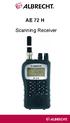 AE 72 H Scanning Receiver 1 AE72H Controls and Display Antenna (See Connecting the Antenna on Page 12) Headphone Jack Squelch Volume Display Keypad DC 6V Jack Power 2 Contents AE72H Controls and Display...2
Visit our Website at. www.bc780xlt.com BC780XLT. 500-Channel Trunk Tracking Scanner TRUNK TRACKER III
 Visit our Website at www.bc780xlt.com BC780XLT TRUNK TRACKER III 500-Channel Trunk Tracking Scanner Introduction The BC780XLT is a state-of-the-art radio with TrunkTracking and automatic scanning capabilities.
AM/FM VHF TV Pocket Radio (120-0617) Features Faxback Doc. # 18055
 (120-0617) Features Faxback Doc. # 18055 Your Radio Shack AM/FM VHF TV Pocket Radio gives you high-quality sound and is designed for your active lifestyle. You can listen to music, sports, news, or TV
AM/FM Portable Radio
 Cat. No. 12-798 OWNER S MANUAL Please read before using this equipment. AM/FM Portable Radio with Dual Time, Single Alarm FEATURES Your Optimus AM/FM Portable Radio is designed for your active lifestyle.
THE NEW GENERATION IN TECHNOLOGY. NI-3103A Alarm Clock w/fm Radio ipod & iphone Docking. Operating Instructions
 THE NEW GENERATION IN TECHNOLOGY NI-3103A Alarm Clock w/fm Radio ipod & iphone Docking Operating Instructions Table of Contents Important Safeguards... 3 Parts... 6 Controls... 6 To Set Up... 7 ipod/iphone
PR-D9W. GB Version 1
 PR-D9W Version 1 Table of contents Important safety instructions... 2-3 Introduction... 4 Controls... 5-8 Using your weather alert radio for the first time... 9 Operating your radio Search tuning AM/FM...
ER102. Emergency Crank Weather Radio Owner s Manual. www.midlandradio.com
 ER102 Emergency Crank Weather Radio Owner s Manual Table of Contents Welcome to the World of Midland Electronics Major ER102 Features ER102 Controls and Functions ER102 Power Sources - Built-in Rechargeble
SP1790JK 900MHz Wireless Indoor/Outdoor Speakers. User Manual INTRODUCTION FEATURES IMPORTANT SAFETY INFORMATION
 SP1790JK 900MHz Wireless Indoor/Outdoor Speakers INTRODUCTION This 900 MHz digital hybrid wireless speaker system uses the latest wireless technology that enables you to enjoy music and TV sound anywhere
3. Enter the first five digits of desired frequency (2 2 5 0 0 for 225.000 MHz).
 Simplified Directions 1. Install the batteries. 2. Turn the unit on (rotate volume knob clockwise). 3. Enter the first five digits of desired frequency (2 2 5 0 0 for 225.000 MHz). 4. Listen. Table of
ATS-505. GB Version 1
 ATS-505 GB Version 1 Control Locations Power/Sleep Power On/off/Alarm off/sleep function Display Switch between radio frequency and time while radio is power on Mode Mode set up (please see below mode
DAB1001. Wireless Digital Radio Interface. Installation & User Guide
 DAB1001 Wireless Digital Radio Interface Installation & User Guide Contents Contents... 2 Introduction... 3 Contents of Package... 4 Installation... 5 Product Overview... 5 Installation Procedure... 5
Radio BMR100 INSTRUCTION MANUAL. ENGLISH (Original instructions)
 ENGLISH (Original instructions) INSTRUCTION MANUAL Radio BMR00 WARNING: For your personal safety, READ and UNDERSTAND before using. SAVE THESE INSTRUCTIONS FOR FUTURE REFERENCE. Symbols The following show
900 MHz Lightweight Wireless Stereo Headphones
 33-1165.fm Page 1 Tuesday, August 10, 1999 10:50 AM Cat. No. 33-1165 OWNER S MANUAL Please read before using this equipment. 900 MHz Lightweight Wireless Stereo Headphones 33-1165.fm Page 2 Tuesday, August
AM/FM Emergency Weather Radio/Light With Hand Crank Back-Up Power
 VEC173 ONE YEAR LIMITED WARRANTY PROGRAM This limited warranty program is the only one that applies to this product, and it sets forth all the responsibilities of Vector Manufacturing, regarding this product.
Wireless Indoor/ Outdoor Thermometer
 Wireless Indoor/ Outdoor Thermometer Owner s Manual Please read before using this equipment. ˆ Contents FCC Information... 3 FCC Declaration of Conformity... 5 Preparation... 5 Installing Batteries...
INSTRUCTION MANUAL PLEASE READ ALL THE INSTRUCTIONS COMPLETELY BEFORE USE AND SAVE THIS MANUAL FOR FUTURE REFERENCE
 INSTRUCTION MANUAL PLEASE READ ALL THE INSTRUCTIONS COMPLETELY BEFORE USE Ver. 2.0 AND SAVE THIS MANUAL FOR FUTURE REFERENCE Table of Contents Unpacking... 3 About the CCRadio-EP... 4 Quick Start Guide...
Indoor/Outdoor Color Camera with Built-in 2.4 GHz Wireless Transmitter, plus X10 controlled power supply, and Video Receiver.
 Indoor/Outdoor Color Camera with Built-in 2.4 GHz Wireless Transmitter, plus X10 controlled power supply, and Video Receiver. OWNER'S MANUAL VR36A XC18A XM13A MODEL VK69A (INCLUDES XC18A CAMERA, XM13A
All Hazards Weather Alert Radio WR-100
 All Hazards Weather Alert Radio WR-100 Owner s Manual Quick Start Instructions: Please see pg. 5 for important buttons and controls 1. Place 3 AAA alkaline batteries (not supplied) into the compartment
Treasure Cove Metal Detector
 Treasure Cove Metal Detector Fortune Finder 1020 OWNER S MANUAL www.treasure-cove.com 805-658-2328 With your 1020 metal detector, you can hunt for coins, relics, jewelry, gold, and silver just about anywhere,
Color LCD TV with AM/FM Radio
 16-3054.auto.fm Page 1 Thursday, August 19, 1999 3:00 PM Color LCD TV with AM/FM Radio EAR VOLUME BRIGHT TV OFF RADIO Switch Built-In Telescoping Rod Antenna TUNING FM AM TUNING Dial FM VHF AM UHF Switch
METAL DETECTOR OWNER S MANUAL
 METAL DETECTOR OWNER S MANUAL WARNING: Read carefully and understand all ASSEMBLY AND OPERATION INSTRUCTIONS before operating. Failure to follow the safety rules and other basic safety precautions may
20-496 PRO-2096 Digital Trunking Mobile/Base Scanner
 20-496 PRO-2096 Digital Trunking Mobile/Base Scanner Please read this user s guide before installing, setting up and using your new product www.radioshack.com Contents Thank you for purchasing your Pro-2096
Comfort Contego User Manual
 Comfort Contego User Manual Please read the User Manual before using this product. Comfort Contego T900 Transmitter English Comfort Contego R900 Receiver DO NOT USE the COMFORT CONTEGO if you have a PACEMAKER
ir6 INSTRUCTION MANUAL COMMUNICATIONS RECEIVER
 INSTRUCTION MANUAL COMMUNICATIONS RECEIVER ir6 This device complies with Part 15 of the FCC Rules. Operation is subject to the following two conditions: (1) this device may not cause harmful interference,
AGES 8+ b e g g i n ʼ f o r t h e b e a t USER S GUIDE
 AGES 8+ b e g g i n ʼ f o r t h e b e a t USER S GUIDE Thank you for purchasing I-DOG. Be sure to read and follow all instructions carefully before using this product. Feed this robotic pooch your music
Important Safety Instructions
 PR-D7 GB Revision 1 Important Safety Instructions 1. Read these instructions. 2. Keep these instructions. 3. Heed all warnings. 4. Follow all instructions. 5. Do not use this apparatus near water. 6. Clean
All Hazards Weather Alert Radio
 All Hazards Weather Alert Radio WR-300 Owner s Manual Quick Start Instructions: Please see pg. 5 for important buttons and controls. 1. Place 4 AA batteries (not supplied) into the compartment on the underside
Operation Manual for Users
 Operation Manual for Users Model No.: FLTAMFMRCD!!!!!!!!!! ATTENTION!!!!!!!!!! THE RESET BUTTON MUST BE PRESSED TO ENSURE PROPER OPERATION. SEE INSTRUCTION MANUAL Table of Contents Table of Contents ---------------------------------------------------------------------------------------------
DR-83 90-Minute Digital Recorder
 DR-83 90-Minute Digital Recorder Owner s Manual Please read before using this equipment. ˆ Contents Features... 5 Preparation... 7 Installing Batteries... 7 Setting the Clock... 8 Connecting Earphones...
NAUTICO VHF MARINE RADIO OWNER'S MANUAL. www.midlandradio.com
 NAUTICO TM 3 VHF MARINE RADIO OWNER'S MANUAL TABLE OF CONTENTS 2 Introduction 3 Important Notice, FCC Licensing 4 LCD Display 5 Controls 5 Battery Installation 6 Installing the Belt Clip 6 Charging the
Repeaters what are they and how to use them
 Repeaters what are they and how to use them More hams use frequency-modulated (FM) voice than any other communications mode. Most hams have an FM rig of some type. They use it to keep in touch with their
MAINTENANCE & ADJUSTMENT
 MAINTENANCE & ADJUSTMENT Circuit Theory The concept of PLL system frequency synthesization is not of recent development, however, it has not been a long age since the digital theory has been couplet with
High Power Receiver CR-W400U Operating Instructions
 High Power Receiver CR-W400U Operating Instructions Please read these instructions carefully before using this product and save this manual for future use. Panasonic welcomes you to our ever growing family
Setting Up Your Digital-to-Analog Converter Box (Basic) FCC Consumer Facts
 Setting Up Your Digital-to-Analog Converter Box (Basic) This Fact Sheet describes the installation of a digital-to-analog converter box with your current antenna and analog TV. This guide will help you
Model: 308-1412 Manual DC: 080215 WIRELESS COLOR FORECAST STATION
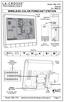 Model: 308-1412 Manual DC: 080215 WIRELESS COLOR FORECAST STATION FRONT VIEW SENSOR TX141TH-Bv2 LED TX Sensor Battery Cover Sensor Battery Compartment 2 AA Buttons Battery Compartment 3 AAA BACK VIEW Battery
Application Note Receiving HF Signals with a USRP Device Ettus Research
 Application Note Receiving HF Signals with a USRP Device Ettus Research Introduction The electromagnetic (EM) spectrum between 3 and 30 MHz is commonly referred to as the HF band. Due to the propagation
RADIO CONTROLLED DIGITAL CLOCK MODELS 88905 / 88906
 RADIO CONTROLLED DIGITAL CLOCK MODELS 88905 / 88906 QUICK SETUP GUIDE IMPORTANT! INSTALL BATTERIES IN THE OUTDOOR TRANSMITTER BEFORE INSTALLING BATTERIES IN THE RADIO-CONTROLLED CLOCK. ALKALINE BATTERIES
User Guide for the Wireless Headset (HS-11W) 9235346 Issue 1
 User Guide for the Wireless Headset (HS-11W) 9235346 Issue 1 DECLARATION OF CONFORMITY We, NOKIA CORPORATION declare under our sole responsibility that the product HS-11W is in conformity with the provisions
DX 2517. AM FM SSB CW PA Amateur Base Station Transceiver OWNER S MANUAL RX / TX 2 4 POWER NF CHANNEL MODE RF POWER OFF CAL OFF OFF CALIBRATE
 1 2 3 6 4050 ULA 6070 TI 80 90 100 9 DX 2517 2517 RX / TX 0 2 4 SWR WATTS SET 81012 22 1 010 3 2030 5 MOD 7 ON dbover 9 SIGNAL +20 +40+60 PA FM AM USB LSB CW POWER ON SWR NB / ANL R.BEEP +10KHz NF CHANNEL
INSTALLING A/C ADAPTER
 WS 6502 INTRODUCTION 1. SNOOZE/LIGHT BUTTON 2. BASE 3. ALM SET BUTTON 4. + / C/F BUTTON 5. HISTORY BUTTON 6. MODE BUTTON 7. CHANNEL BUTTON 8. - / RCC BUTTON 9. MAX/MIN BUTTON 10. BATTERY COMPARTMENT 11.
Fit Clip Plus Portable Media Player
 Fit Clip Plus Portable Media Player User Guide BL 8GB Thank you for purchasing a Fit Clip Plus Portable Media Player! To get the most out of your Fit Clip Plus, please read this entire user guide carefully.
Model 70A00-1. GSM Cellular Communications Center
 Home Automation, Inc. Model 70A00-1 GSM Cellular Communications Center Operation Manual Document Number 70I00-1 Rev A August, 2009 Contents Description... 1 Use with security systems...1 Everyday use...2
Contents. Product Code -------------------------------------------------------15. Page 1
 Contents Important Safety Instructions -------------------------------------2 BT HP01 --------------------------------------------------------------4 BT HP01 Anatomy ---------------------------------------------------5
AM/FM PLL Clock/Table Radio
 12-1632.fm Page 1 Wednesday, May 10, 2000 10:57 AM Cat. No. 12-1632 OWNER S MANUAL Please read before using this equipment. AM/FM PLL Clock/Table Radio 12-1632.fm Page 2 Wednesday, May 10, 2000 10:57 AM
WIRELESS ALARM SYSTEM WITH TELEPHONE AUTO DIALER
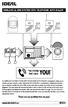 BAT.LOW AC WIRELESS ALARM SYSTEM WITH TELEPHONE AUTO DIALER THE SYSTEM THAT CALLS YOU! Our WIRELESS ALARM SYSTEM WITH TELEPHONE AUTO DIALER is designed to allow you to create your own security system.
Mini Hi-Fi Component System
 3-860-707-14(1) Mini Hi-Fi Component System Operating Instructions Owner s Record The model and serial numbers are located on the rear panel. Record the serial number in the space provided below. Refer
Gold Century GC-1023 Metal Detector
 Gold Century GC-1023 Metal Detector Discriminating Pin Pointing Metal Detector OWNER S MANUAL And Warranty With your GC-1023 metal detector, you can hunt for coins, relics, jewelry, gold, and silver just
Elite Edition Metal Detector
 Elite Edition Metal Detector LCD Display probable type of metal, Notch Setting ignores junk metal depth of the target, operating mode and low battery indication Headphone Jack connect headphones (not supplied).
Wireless Home Security System Product Manual (Model #80355)
 Wireless Home Security System Product Manual (Model #80355) Installation Instructions During set-up, if no key is pressed for 15 seconds it will come out of the setup mode and you will have to start over.
Digital Radio/DAB+/FM RDS digital clock radio with dual alarm Operating instruction
 381SE1D-A Digital Radio/DAB+/FM RDS digital clock radio with dual alarm Operating instruction GB Contents Controls... 2-3 Using the clock radio for the first time... 4 Operating your clock radio... 5 Selecting
R adio. Enhancing our youths competitive edge through merit badges
 R ADIO STEM-Based BOY SCOUTS OF AMERICA MERIT BADGE SERIES R adio Enhancing our youths competitive edge through merit badges Requirements 1. Explain what radio is. Then discuss the following: a. The differences
Single Day Alarm Clock with. Bluetooth and USB Play-through
 Single Day Alarm Clock with Bluetooth and USB Play-through MODEL : BSC 200 READ THIS INSTRUCTION MANUAL BEFORE OPERATING THE APPLIANCE. SAVE THIS MANUAL FOR FUTURE REFERENCE. TABLE OF CONTENTS IMPORTANT
Hear The Future...Now! SIEM-2T/SIEM-2R
 Hear The Future...Now! SIEM-2T/SIEM-2R UHF PLL Mono In Ear Monitoring System 856 59508-03 ATTENTION Please pay high attention to the following information. The guideline published by Occupational Safety
INSTRUCTION MANUAL PLEASE READ ALL THE INSTRUCTIONS COMPLETELY BEFORE USE AND SAVE THIS MANUAL FOR FUTURE REFERENCE
 INSTRUCTION MANUAL PLEASE READ ALL THE INSTRUCTIONS COMPLETELY BEFORE USE AND SAVE THIS MANUAL FOR FUTURE REFERENCE m Before Use Please read IMPORTANT SAFETY INSTRUCTIONS on page 10 before use. It is important
INSTRUCTION MANUAL RM-5750. AM/FM Digital Alarm Clock Radio
 INSTRUCTION MANUAL RM-5750 AM/FM Digital Alarm Clock Radio Fig. 1 CAUTION: THE APPARATUS SHALL NOT BE EX- POSED TO DRIPPING OR SPLASHING. NO OBJECTS FILLED WITH LIQUIDS, SUCH AS VASES, SHALL BE PLACED
ISS Minimalist Antenna
 ISS Minimalist Antenna The purpose of this project was to develop an antenna suggestion that would allow for a simple to duplicate, affordable antenna solution for reasonable access to signals transmitted
WIRELESS ALARM SYSTEM WITH TELEPHONE AUTO DIALER
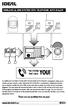 BAT.LOW AC WIRELESS ALARM SYSTEM WITH TELEPHONE AUTO DIALER THE SYSTEM THAT CALLS YOU! Our WIRELESS ALARM SYSTEM WITH TELEPHONE AUTO DIALER is designed to allow you to create your own security system.
Vehicle Tracking and Remote Data Acquisition System using Very High Frequency operated devices
 International Journal of Engineering Research and Development e-issn: 2278-067X, p-issn: 2278-800X, www.ijerd.com Volume 11, Issue 05 (May 2015), PP.64-68 Vehicle Tracking and Remote Data Acquisition System
Citizens Band (CB) radio spectrum use information and operation. Of 364
 Citizens Band (CB) radio spectrum use information and operation Of 364 Information statement Publication date: 6 December 2006 Contents Section Page 1 Regulatory and equipment information 1 2 CB operating
Controls. LCD Display. Tuning Up Time Set and Station Scan
 PR-D8 GB Revision 3 1 1 2 4 5 7 9 10 12 14 16 18 20 22 24 25 26 27 29 31 33 35 36 37 38 Controls Stereo Built-in Microphone (Left Channel) LCD Display Stereo Built-in Microphone (Right channel) Power/Auto
Weather Radio Alarm Clock
 1200093 User s Guide Weather Radio Alarm Clock Thank you for purchasing your Weather Radio Alarm Clock from RadioShack. Please read this user s guide before installing, setting up, and using your new weather
if11/s if21/s INSTRUCTION MANUAL VHF TRANSCEIVER UHF TRANSCEIVER
 INSTRUCTION MANUAL VHF TRANSCEIVER if11/s UHF TRANSCEIVER if21/s This device complies with Part 15 of the FCC rules. Operation is subject to the following two conditions: (1) This device may not cause
Radio Merit Badge Workbook
 Merit Badge Workbook This workbook can help you but you still need to read the merit badge pamphlet. The work space provided for each requirement should be used by the Scout to make notes for discussing
User Guide. Oricom UHF080 40 Channel UHF CB Radio Downloaded from www.cbradio.nl
 User Guide Oricom UHF080 40 Channel UHF CB Radio Downloaded from www.cbradio.nl Table of contents Important Information 4 Please read before installing or operating your Oricom Radio 4 Safety Warning 5
Western Washington Amateur Relay Association
 WWARA BAND PLANS NOTE: This document has exactly the same content as the Western Washington Amateur Relay Association Coordination Policies (Adopted June 3, 2004) but is easier to read. It was written
G e t t i n g. Know your radio. 1 external power connector. on /off switch. aerial
 G e t t i n g 1 external power connector Know your radio on /off switch aerial battery compartment Warning: See the Safety Notes on the back page. headphone connector Warning: Do not turn your radio on
Radio Interface Setup
 For getting started with Ham Radio Sound Card digital modes. Jeffrey Kopcak K8JTK Table of Contents Introduction... 3 Program versions... 3 Resources... 3 SignaLink... 3 Rigblaster... 3 Configuration...
Connections and Setup
 9242_14_Ch12_eng 6/11/07 9:36 AM Page 1 Connections and Setup HOW TO CONNECT YOUR SATELLITE RECEIVER Do you have a handful of cables and a head full of questions? This chapter is the perfect place to find
Digital Active Indoor Antenna SRT ANT 10 ECO
 Digital Active Indoor Antenna SRT ANT 10 ECO Picture similar User Manual Table of contents 1.0 INTRODUCTION 1 2.0 PACKAGE CONTENT 1 3.0 SAFETY NOTES 2 4.0 CONNECTING THE ANTENNA 2 1.0 INTRODUCTION Thank
DVB-T Dongle for VHF/UHF Reception. 2014 Trenton Computer Festival Mario Filippi N2HUN [email protected]
 DVB-T Dongle for VHF/UHF Reception 2014 Trenton Computer Festival Mario Filippi N2HUN [email protected] VHF/UHF Reception FM Broadcast: 88-108 MHz Police, Fire, EMS: ~ 150-155, 470, 500, 800 MHz Railroad,
New! Pomona expands their selection of RF cable assemblies and connectors. www.pomonaelectronics.com
 New! Pomona expands their selection of RF cable assemblies and connectors Introducing New RF cable assemblies and connectors RF cable assemblies and connectors are used for connection in communications,
REALISTIC Stereo Three AM/FM Radio (120-1451) Features Faxback Doc. # 18906
 REALISTIC Stereo Three AM/FM Radio (120-1451) Features Faxback Doc. # 18906 Your REALISTIC Stereo Three is a complete solid-state 3-piece FM/AM Stereo System. Its size and styling will fit well in any
Study of RF Spectrum Emissions in High Pressure Sodium and Metal Halide Lamps. Lawrence P. Glaister VE7IT, Automation Engineer.
 Study of RF Spectrum Emissions in High Pressure Sodium and Metal Halide Lamps Lawrence P. Glaister VE7IT, Automation Engineer May 2010 Abstract: This research was performed in collaboration with the City
7-Channel Portable SAME Weatheradio
 7-Channel Portable SAME Weatheradio with Alert Owner s Manual Please read before using this equipment. ˆ Contents Features... 5 How Your Radio Works... 6 Weather Alerts... 7 New Alert Types... 8 Understanding
User manual TAB-10C010-232
 User manual TAB-10C010-232 Congratulations on the purchase of your new tablet! This manual contains important safety and operating information in order to prevent accidents! Please read this manual thoroughly
WIRELESS MULTI-ZONE DIGITAL WEATHER CENTER. Model No. 91905 User s Manual
 WIRELESS MULTI-ZONE DIGITAL WEATHER CENTER Model No. 91905 User s Manual BASE STATION REMOTE SENSOR FEATURES AND SPECIFICATIONS BASE STATION Indoor / wireless outdoor temperature, C / F selectable Indoor
ENGLISH (Original instructions) Job Site DAB Radio BMR101. INSTRUCTION MANUAL IMPORTANT: Read Before Using.
 ENGLISH (Original instructions) Job Site DAB Radio BMR0 INSTRUCTION MANUAL IMPORTANT: Read Before Using. ENGLISH (Original instructions) Symbols The following show the symbols used for the equipment. Be
TV hearing aid BL-8008A BL-8008B. Manual
 TV hearing aid BL-8008A BL-8008B Manual A. Product instruction 1. What is TV hearing aid 2. Theory 3. Features 4. Functions 4.1 TV hearing aid function 4.2 Normal hearing aid function 4.3 Wired hearing
12-Volt 10-Amp Regulated Power Supply
 22-506.fm Page 1 Friday, August 6, 1999 12:55 PM Cat. No. 22-506 OWNER S MANUAL Please read before using this equipment. 12-Volt 10-Amp Regulated Power Supply 22-506.fm Page 2 Friday, August 6, 1999 12:55