
Mexico City Seismic Alert System
|
|
|
- Claude Fox
- 9 years ago
- Views:
Transcription
1 Mexico City Seismic Alert System J. M. Espinosa Aranda A. Jimdnez G. Ibarrola F. Alcantar A. Aguilar M. Inostroza S. Maldonado Fundaci6n Javier Barros Sierra, A.C. Centro de Instrumentaci6n y Registro Sismico, A.C. M6xico, D.F. INTRODUCTION The Seismic Alert System (SAS) for Mexico City has been operating as an experimental evaluation project since August, The aim of this project is to mitigate the effects of earthquakes generated in the Guerrero Gap. There is an advantage of 6 sec average for an early warning before a quake that occurs on the Guerrero coast strikes Mexico City, 32 km away. The system is designed to broadcast a universal alert for earthquakes in Guerrero above the threshold M > 6, and a limited alert for earthquakes with M _> 5. The warning radio receivers are installed in elementary schools, commercial radio stations, offices of Civil and Mexican government agencies, universities, public services, and housing complexes. The civil authorities have backed up the project by increasing the preparedness of the people, to ensure that if an earthquake occurs people are ready to get through it safely and respond effectively, even in the case of a false alert. The Michoacan earthquake of September 19, 1985 caused many deaths and severely damaged many buildings in Mexico City. On the other hand, the San Marcos and Guerrero gaps have the highest seismic risk in the Pacific Coast (Anderson et al., 1987, 1989a, 1989b), and if the major earthquake (M > 7) expected in these gaps takes place, the damage in Mexico City would be similar to that in the Michoacan earthquake (Anderson et al., 1993), because the seismic waves are enormously amplified at lake bed sites and even at hill zone sites (Ordaz et al., 1992). The idea of an earthquake warning system was proposed as early as 1868 by Cooper (Nakamura et al., 1988), and the UrEDAS warning system has been in service in Japan for more than 2 years (Nakamura and Saito, 1982). A model for a seismic computerized alert network (SCAN) (Heaton, 1985) was proposed to process this information automatically and initiate safeguard actions. More recently, an Earthquake Warning System has been installed in Taiwan (Lee et al., 1995a). Additionally, systems for rapid disaster response in the cities have been proposed and implemented. The Caltech-USGS Broadcast of Earthquakes (CUBE) sends to the emergency operation centers in California information about epicenter and magnitude and a map of the areas most likely to have sustained the worst damage. In Mexico, the Engineering Institute of the National University of Mexico (UNAM) operates the Seismotelemetric Information System of Mexico (SlSMEX) (Prince et al., 1973), an analog real time radio telemetry system where recordings of the remote events typically are made in the central installation on campus before the ground shaking arrives. SlSMEX was developed by the UNAM in a joint project with the United Nations Educational, Scientific and Cultural Organization (UNESCO, Paris) in This telemetry network was designed for strong motion recording. The system started to operate in 197 and has been operating continuously to date. The experience gained in the design, installation, operation and maintenance of SlSMEX has been used in the implementation of the Mexico City early warning Seismic Alert System. MEXICO CITY SEISMIC ALERT SYSTEM The Seismic Alert System for Mexico City has been operating as an experimental project since August, The aim of this project is to mitigate the effects of earthquakes generated in the Guerrero Gap. The velocity difference between seismic and radio waves gives an advantage of 6 sec average for an early warning before an earthquake strikes Mexico City. The Seismic Alert System (SAS) was designed in 1989 (Espinosa Aranda et al., 1989a). The system consists of four parts: the Seismic Detection System, a Dual Telecommunications System, a Central Control System, and a Radio Warning System for users. When an earthquake is detected by the field stations, warning messages are sent from the remote sites on the coast 42 Seismological Research Letters Volume 66, Number 6, November-December 1995

2 19.5 -[ J! / j, i J / i J / J t \ ~,. ('..+>>> ~, ! -. 9 } x.*.... \ ~ \..../ PUEBLA J 1 f... [ UJ Q P ~ GUERRERO GAP / i { / L ",.-... NORTH AMERICAN PLATE ' OAX/tCA 17 SAN MARCOS GAP i / COCOS PLATE T T SENSOR RELD STATION LONGITUDE ),a/' SEISMIC O RADIO REPEATER STAI]ON SEISMIC DETECTION AREA ~ ~ WARNING SIGNAL AREA VIllA AREA 9 Figure 1 Schematic array of the Seismic Alert System, covering the Guerrero and San Marcos Gap. of Guerrero to the central control system in Mexico City, where they are processed and evaluated, and if it is determined that the event is M1 (M > 6) or M a (6 > M _> 5), an encoded signal is broadcast to trigger the alerting radio receiver, which warns the community. Seismic Detection System The Seismic Detection System consists of 12 digital strong motion field stations distributed at approximately 25-km intervals along the Guerrero Coast. The source area covered is all the coast of the Guerrero state (Figure 1). The field station consists of sensors, a data acquisition board, a standard commercial IBM PC-compatible Laptop microcomputer, and a VHF radio transmitting system. The sensors are silicon piezoresistive triaxial accelerometers. The microcontroller based acquisition board samples 1 bit data at a 1 Hz sampling rate. The Laptop microcomputer does the data processing and stores the data in a standard 3.5" floppy disk. The VHF radio transmits the information of earthquakes detected to a Central Radio Relay Station located near Acapulco. Each SAS field station makes the local event detection and analysis to estimate its energy and growth rate on the site, and then the information is sent to the central control system, where it is compared with a function constructed from historical records to determine the magnitude of the event detected. If any other station sends an equivalent message corresponding to the same event, then the early warning alert is issued. This method has redundancy because there are several stations that can back up each other in case one station fails; experience has demonstrated that in a major earthquake several stations detect the event one after the other. The communication system sends information only when an event happens. Each field station detects any seismic event of interest for focal distances less than 1 km. Thus, the area covered by the system or window of acquisition is approximately 45 km long and 2 km wide. This fact has been considered in Seismological Research Letters Volume 66, Number 6, November-December

3 TABLE 1 Summary of Earthquakes Detected in the Capture Zone Magnitude M 1 M 2 M < 5 Event Total M_>6 M_>5 Not Confirmed Total designing the seismic trigger algorithm for the SAS. The seismic signal detector is of the Short Term Average/Long Term Average Ratio (STA/LTA) type. Each field station senses in real time the P and S phases of the seismic wave arrival, and the algorithm uses the average square input as a characteristic function for detection and energy magnitude evaluation. If the function exceeds a given threshold, then a P phase has been detected, and a second threshold is used to detect the S phase arrival (Espinosa Aranda et al., 1989b). The algorithm was tuned up with earthquakes M > 5. Data of the Guerrero Network (Anderson et al., 1989b) were used to calibrate the trigger algorithm. After detection and energy level evaluation with the first arrival of a signal, the field station determines if a message is to be sent to the Central Station in Mexico City. Once this message is sent, it is not reevaluated by the field station. Dual Telecommunications System The communication system is based on one VHF Central Radio Relay Station near Acapulco and three UHF Radio Relay Stations distributed along the route to Mexico City. To improve reliability, the SAS was designed to be redundant with two independent communication paths, sending the duplicated data through different radio frequencies. Additionally, every twelve hours each field station generates and transmits its own signal code to validate that it is operating and to verify the communication link. TABLE 2 Time Advantiages of Early Messages Issued as M~ Event Magnitude Early Warning Time (Anticipating time) Nov 9, May 14, sec May 14, sec May 15, sec Oct 24, sec" Sep 14, sec Sep 15, sec *evaluated as M 1, but issued as a supervision message. TABLE 3 Time Advantages of Early Messages Issued as M 2 Event Magnitude Early Warning Time (Anticipating time) Mar 31, sec Sep 1, sec May 22, sec Oct 29, sec Dec 1, sec Central Control System The central control system is also a redundant dual system. Each subsystem includes a 486 IBM PC-compatible computer, a radio receiver, and a radio transmitter. The central control system is located at the facilities of the Centro de Instrumentacion y Registro Sismico (CIRES) in Mexico City. The messages received from the field stations in Guerrero are processed and are considered valid only if an earthquake is detected by two or more stations. In order to generate an early warning signal to the public, two thresholds are defined: M1 (M _> 6) and M2 (6 > M _> 5). When an earthquake M1 or M2 is determined, a warning message is automatically broadcast by the UHF radio transmitter located in the central control station. In case of ambiguity between two stations with messages M] and Ms from two stations, the message with greater magnitude is the one that is broadcast. 44 Seismological Research Letters Volume 66, Number 6, November-December 1995

4 There are two warning signals that can be issued to the public: 9 a general alert that is issued to all the public when the event satisfies the M1 threshold. This triggers commercial radio stations, ClRES radio receivers, and digital receivers. 9 a restricted warning that is issued when the event is M~ and triggers all CIRES radio receivers installed except those corresponding to the commercial radio stations. Additionally, there are radio supervisory signals that are sent periodically by the central control station to the ClRES radio receivers that allow users to verify that their system is functioning properly. Radio Warning System When an early warning is issued by the central control system radio transmitter, the general public has three possible ways to receive this message. In other words, there are three different types of radio receivers: those made by CIRES, the standard commercial AM/FM radio receivers, and digital receivers. The custom radio receivers supplied by CIRES are currently installed in 31 elementary schools, 25 commercial radio stations, the offices of the XXXVI District of the Mexican army, the offices of the Mexican Power Generation Company (Comision Federal de Electricidad), the Mexico City subway transportation system (METRO), an office of the Mexico city government (Secretaria General de Obras), the Civil Disaster Management office (Proteccion Civil), the Central Agency for Disaster Prevention (CENAPRED), the police department of the state of Mexico (Direccion General de Seguridad Publica, Policia y Transito), the law enforcement task force (Procuraduria General de Justicia) and some universities like the UNAM and the Monterrey Institute of Technology; all of them contribute in funding the project. Also, there are 11 strong motion accelerometers from ClRES installed in Mexico City, which are triggered remotely with the early warning. This remote trigger of accelerographs is also done in other accelerograph networks installed in Mexico City by the UNAM and CENAPRED (Quaas, et al., 199). The early warning in standard commercial AM/FM radio receivers is sent by means of a ClRES receiver installed in the commercial radio stations that automatically triggers a previously recorded voice message which is broadcast to warn all the people who are listening to the radio at that moment. At present there are two types of CIRES radio receivers. One is installed only in the commercial radio stations and is set to warn when an event M1 is detected. The other is set to trigger when an event is M1 or Ma, and is installed in all other places. The digital receivers are at present under evaluation. They are commercial devices operating in a stand-by mode that can be activated using a digital signal. They are capable of detecting an encoded signal simultaneously sent with the normal broadcast, and they allow the remote turn-on of sirens or loudspeakers placed in streets, squares, and other selected public places. DETECTION RESULTS The system has detected and recorded, from August, 1991 to September 2, 1995, 292 events: 7 M >_ 6; 12 M >_ 5; 19 M < 5; and 254 with lower magnitude. The system was tuned to detect events M > 6, so the magnitude of events lower than M < 4 are not determined and are classified as EVENTNOT CONFIRMED. The system has had three technical failures, one of which generated the issuing of the public warning signal. The earthquakes detected within the area of the acquisition window or capture zone are: 7 as M > 6, 1 M _> 5, 16 M < 5; and 31 EVENTS NOT CONFIRMED as shown in Table 1. The first column indicates the magnitude reported by the Seismological Service of the UNAM, the following columns indicate how the system evaluated the events, M > 6, M > 5, M < 5, and EVENTNOTCONFIRMED. The last column shows the type of early warning issued, which could be M1, M 2 or no warning. The early warning times for earthquakes in the M~ and M 2 categories are given in Tables 2 and 3. The detection of earthquakes M1 has given time advantages ranging from 58 to 73.5 sec as shown in Table 2. The first four M 1 messages in Table 2 were issued to all users except the AM/FM radio commercial stations, which were connected in August 1, Also the first and fourth events were overestimated due to erroneous site factors, which were later corrected. The anticipation times in Tables 2 and 3 were calculated using the records of the Guerrero field stations and a record triggered by the early waming in Mexico City. The trigger of the Mexico City accelerometers is done with the early warning signal. The anticipation time of the event of November 9, 1992 was not calculated because we had no record in Mexico City of this event with which to compare. Table 3, with earthquakes in category M2. has fewer events because we do not have records in Mexico City to calculate the advantage time. The time advantages range from 3 to 7 sec. Figures 2, 3, 4 and 5 illustrate the system performance for the events of May 14, 1993, October 29, 1994, December 1, 1994 and September 14, Figure 2 shows records for an M2 alert on October 29, The map shows the location of the stations triggered. Below that, in real time, the figure shows the earthquake records gathered by the field stations, the time when the alert was on, and one of the earthquake accelerograms registered in Mexico City. For the two events on May 14, 1993, M 5.8 and M 6.2, two early warnings were issued, with advantages of 34 and 73.5 sec (Figure 3). The overhead time of the communication channel is typically 1 sec. Figure 4 shows the information for the M2 alert on Dec 1, 1994, and figure 5 shows the information for the successful M 7.3 warning on Sep 14, Seismological Research Letters Volume 66, Number 6, November-December

5 CENTRO DE INSTRUMENTACION Y REGISTRO SISMICO, AC SEISMIC ALERT SYSTEM EVENT RECORDED ON OCTOBER 29, 1994, IN GUERRERO, OT=1:44:8.6,M = 5.1 ~ 19 Me)dr _ Puebla ~... le 9 Recorder stations,k Epicenter:, Latitude ~ N, Longitude ~ W % I ~ " Long~ude "~::"(1) Pre-Nert Time = 1:44:21 ACCELERATION RECORD PENJAMO #5 E ~ Z ".8 Z (2) Alert Confirmation Time = 1:44:23 ACCELERATION RECORD JARDIN #6 Alert Seismic Function in Mexico City (3) OTA = 1:44:25 Seismic Alert Signal range 5~ M <6 =.3 - (4) Anticipate time AT-= 58sec ACCELERATION RECORD PLAZA INN O (9 r E O O.15 t -O.3 (5) Wave P arrival = 1:44:51 (6) Wave S anlval = 1:45:23 Time (sec) OT = Origin Time = 1:44:8.6. SSN, Geoflslca, UNAM M b= Magnitude o RIcht~, SSN, Geoflsica, UNAM (3) OTA = Operation Time Alert (4) AT = Wave S arrival - OTA N 9 Figure 2 Time diagram of Early Warning advantage in Mexico City, May 14, Seismo/ogica/ Research Letters Vo/ume 66, Number 6, November-December 1995

6 CENTRO DE INSTRUMENTACION Y REGISTRO SISMICO, AC SEISMIC ALERT SYSTEM EVENT RECORDED ON MAY 14, 1993, IN GUERRERO, OT = 21:9:39,M = 6. -o Richter ~ 17 J (1) T Alert 1 = 21:1:9 * Epicenters: 1st Latitude ~ N, Longitude ~ W 2nd. Latitude 16.4 ~ N, Longitude 98.7 ~ W "1()1 ' "~ "97 Lorotude \ (2) T Alert 2 = 21:12:49 ACCELERATION RECORD HUEHUETAN #12! i ACCELERATION Alert Seismic Function in Mexico City RECORD MARQUELIA #11 I AT = 65 sec I I Anticipate Time AT = 73.5 seo (5)'Is = 21:11:14 (4) Ts = 21:14:2.5 Illl I ACCI~IERATION RECORD TLATELOLCO (3) 21:11: OT = Origin Time 21:9:39, ~ 1,2: Seismic Alerts 3:,r162 "llatelol~ initial 4,5: Wave S ardval AT = Antlcipate'rlme = "Is - T Alert I i i i i l i! UNAM Time (sec) 9 Figure 3 Time diagram of Early Warning advantage in Mexico City, October 29, Seismo/ogica/ Research Letters Vo/ume 66, Number 6, November-December

7 CENTRO DE INSTRUMENTACION Y REGISTRO SISMICO, AC SEISMIC ALERT SYSTEM EVENT RECORDED ON DECEMBER 1, 1994, IN GUERRERO, OT=1:17:4.9,M =6.3 ~ 19 ~ MIC~loacan F:l~rder s~ltions, O -.3 (11 r E Epicenter: Latitude 18.2 ~ N, Longitude 11.56~ W -11 Lor~eud= :(1) Pre-Alert Time = 1:18:19 : (2) Alert Confirma','ion Time = 1:18:21.gg -97 ACCELERATION RECORD TETITLAN #3 ACCELERATION RECORD EL VEINTE #2 Alert Seismic Function in Mexico City (3) OTA=1:18:23 Seismic Alert Signal range 5'>< M <6 'a I I ~O.1 -.t [:= <).2 " (4) Anticipate Time ACCELERATION RECORD PLAZA INN ~--- AT = 34 sec ---1 (5) Wave P arrival = 1:18:29 i (6) Wave S arrival = 1:18:57 Time (sec) OT = Origin Time - 1:17:4.9, SSN, Geoflelce, UNAM M. = Magnitude o Richter. SSN, Geot~ UNAM (3) OTA = Ope~ Time Alert (4) AT = Wave S anlval - OTA N 9 Figure 4 Time diagram of Early Warning advantage in Mexico City, December 1, Seismo/ogica/ Research Letters Vo/ume 66, Number 6, November-December 1995

8 CENTRO DE INSTRUMENTACION Y REGISTRO SISMICO, AC SEISMIC ALERT SYSTEM EVENT RECORDED ON SEPTEMBER 14, 1995, IN GUERRERO, OT=8:4:35.8, M=7.3ORichter Flecorder stations ~ +: Epicenter: Latitude 17. ~ N, Longitude 99. ~ W I l.ongmde ACCELERATION RECORD MARQUELIA #11-1 "2 (1) Pre-Alert Time = 8:4:42 o <9 E " "1 " (2) Alert Confirmation Time = 8:4:46 ACCELERATION RECORD HUEHUETAN #12 Alert Seismic Function in Mexico City o (9 r E , (3) OTA = 8:4:47 Seismic Alert Signal rengem > 6 9 (4) Anticipation Time AT = 72 sec ACCELERATION RECORD CIRES, AC. (5) Wave P an'ivaj = 8:5:29 ' ~ I I V ~ I I ~ (6) Wave S arri 2 4O 6O, TUne (=~r OT = Origin Time - o8:o4:35.8, SSN. Geo~sica, UNAM M - Magnitude 7.3 ~ Richter, SSN, Geofisica, UNAM (3) OTA = OperaUon Time Alert (4) AT = Wave S arrival - OTA N.DRW 9 Figure 5 Time diagram of Early Warning advantage in Mexico City, September 14, Seismo/ogica/ Research Letters Vo/ume 66, Number 6, November-December

9 Incidents of System Problems During more than 45 months of operation of the early warning system, three problems have occurred. The first incident was a missed alarm during the October 24, :52 local time M 6.7 earthquake. The event was detected and evaluated correctly by the field stations, but the early warning message issued was of supervision instead of alert, due to a software error in the microcomputer of the Central Control System. As a result the AM/FM commercial radio stations did not send any message to the public. This error was corrected within the next eight hours. The second was a false alarm broadcast to the public on November 16, 1993, 19:2 local time. A battery failure in the supply system of one of the field stations generated noise in the accelerometers' output, which was detected as an earthquake by the STA/LTA detector. Due to this false warning, the Central Control System sent a message to the AM/FM stations, which was received by the public listening to the radio stations. In the third incident, on May 31, 1995, an M 4.6 earthquake struck along the Guerrero and Oaxaca coast at 6:49:47 local time, and a restricted early warning Ma was issued by CIRES. The signal was received in one commercial radio station where a wrong CIRES receiver, set to receive warnings M1 and Ma, was installed due to a human error. Although no warning was intended to be issued to the public, at that moment one of the most popular programs of news and reports in the city was on the air, and the chief reporter announced that a big earthquake was about to strike Mexico City. This caused some panic and anger, but no person was hurt or injured because of the false alarm. An M 7.3 earthquake on Sep 14, 1995 at 8:4:3, local time, was detected by the Seismic Alert System as M > 6. Six stations detected the event; the first one was Marquelia (station 11) at 8:4:43, and the second one was Huehuetan (station 12) at 8:4:47, which confirmed the event. The M1 message was issued to 42 AM/FM commercial radio stations, 3 elementary schools, the housing complex of El Rosario, and all other places where it is connected. The subway system used the early warning for stopping the trains 5 sec before the main shock. Three radio stations reported that the receivers didn't work because they were not connected yet. There were no casualties in Mexico City from this earthquake, but there were some minor injuries and minor damage in buildings. Four persons were killed and additional people were injured in the state of Guerrero where houses collapsed. The earthquake was felt by the people in the states of Guerrero, Oaxaca, Puebla, Veracruz, Tlaxcala, Jalisco and the state of Mexico. PERFORMANCE The system has been completed in parts. The first part, including communications from the accelerometer sensors to the Central Control System, was finished and put into operation in August, This part did not have redundancy at that time. The second part, including the alerting CIRES radio receivers, started operation in January, The third part incorporated the redundancy and was completed in December An earlier attempt to calculate the reliability of the system was made using the data derived from September, 1991 to July, 1993 (Jimenez et al., 1993). Evaluation is somewhat ambiguous, since there have been changes in hardware and software throughout the operation, both to correct bugs and to improve the system. Figure 6 shows a histogram of component failures (72 total) from August, 1991 to August, The common type of failures are due to power supplies, frequency shift in radios, radio interference, software errors, vandalism and mechanical failures due to hurricanes. The receivers installed for the general public were not considered in this calculation because their use and how they are connected is not under control of ClRES. Availability of the system and the histogram of failures Since the start of operation, the system has accumulated 72 failures. Of these, 68 were minor and only four affected the whole system. During those 48 months the system has been out of operation 136 hours for preventive and corrective maintenance purposes giving the factors of availability (A) and unavailability (U): 136 U = = (1) 2993 A = 1-U = (2) We consider this an acceptable level of availability, but obviously we seek to improve it. DISASTER PREVENTION AND THE EARLY WARNING SYSTEM The civil government authorities who sponsored the project have made considerable efforts to increase the preparedness of the people, to ensure that if an earthquake occurs, people are ready to get through it safely and to respond to it effectively. This effort is covered mainly by means of the Civil Disaster Management office from the Mexican government (Proteccion Civil), although volunteer groups, government agencies and individual citizens are also involved. Some of the programs that have been implemented are: Proteccion Civil have carried out a campaign for earthquake exercises of building evacuation in Mexico City. This campaign has been completed in some cases with the aid of the restricted early warning signal in public buildings, government offices, universities and hospitals. 5 Seismological Research Letters Volume 66, Number 6, November-December 1995

10 Nmber of lailm~ 25 2 jan apt92 mayago 92 sepdec92 jan apt 93 may ago 93 sepdec93 janapr94 mayago 94 sepdec94 Number of failures hlstogxam 9 Figure 6 Number of failures histogram. Ji) jan apt 95 may ago There is a program for issuing the early waming alert each two months for exercise purposes. City authorities printed and mailed 1,5, booklets to the population of Mexico City. This pamphlet describes briefly the early warning alert. A permanent program for earthquake exercises of evacuation for children is sponsored by the Secretariat of Public Education and is carried out in elementary schools. Radio spots are transmitted during the day by the commercial radio stations, reminding the people what to do if an earthquake strikes. A campaign trains volunteers as emergency managers. Also the community and several volunteer groups have become involved in the earthquake disaster prevention program, and some have asked for the installation of CIRES radio receivers. As an example, a program for providing the early warning alert to the housing complex of El Rosario with 2, inhabitants was started. This community is considered the biggest of its kind in Latin America. The first part of this program was completed May 31, 1995 and covers approximately 1, people. The system employs a ClRES radio receiver with accessories to voice an alert message on 32 high-power loudspeakers installed in the center of the complex. This project was carried out in cooperation with the municipal authority officials, the community representatives and the Civil Disaster Management Office (Proteccion Civil). DISCUSSION Improving earthquake magnitude determination is one of the most important tasks that is being carried out. Consider- able effort has been expended to enhance the detection algorithm by analyzing the existing data base of earthquakes in order to improve the detection and magnitude estimation of an incoming earthquake. Also improvements in hardware are planned to enhance the system architecture, making it more flexible. The failure histogram (Figure 6) shows that failures have diminished to a rate of one per four months. In order to detect an earthquake that lasts a few seconds, the system should have better factors of availability and reliability, but the cost could be very expensive. Extensive work is being done to enhance the security of the system hardware and software and to improve human performance. This includes writing system procedural, administrative, physical, personnel, and communications security controls. The radio communication system has had frequent problems with interference and noise due to the high degree of use of the radio spectrum in Mexico City, the most populous city in the world. Unfortunately, the radio link has been the best way to reach the field stations that are normally located in places otherwise not accessible. The use of fiber optics is not feasible due to the limited infrastructure of the Mexican communications system. Although there is a program to introduce fiber optics to link the more important cities in Mexico, the majority of the medium and small cities in our country cannot access it. Another problem is the limited coverage of seismically active areas that are of potential risk to Mexico City. At present the Seismic Detection System is only covering the Guerrero Gap, but there are other seismic risk areas along the Pacific Coast of Michoacan and Oaxaca, not covered by the current system, that can affect Mexico City. Also at present, the warning system only covers the Mexico City population Seismological Research Letters Volume 66, Number 6, November-December

11 but not other important cities that could be also affected, like Morelia, Guadalajara, Puebla, TIaxcala, Oaxaca and Toluca. The use of the new Mexican satellite Solidaridad I could become a solution of several of these problems. The messages could be transmitted via satellite from the field stations to the Central Control System in Mexico City, improving reliability in communications, reducing the number of relay stations and the intrinsic noise ofoperation. Also, it would be feasible to cover more seismic and volcanic risk areas, extending the use of the seismic early warning signals to more highly populated Mexican cities. The experience gained in the interaction with the community and their response to the early warnings has been very valuable. Contrary to some expectations, on November 16,1993, when a false alarm was issued to an estimated radio audience of 2,, people in rush hour 9:2 local time) in a city of 2 million people, common sense prevailed. Before that, an argument used against disseminating the early warning to the general public was that many people could die because of situations of panic in public places. Although some people were already trained for disaster situations when the false alarm triggered, the majority of the public was not. However, on November 16, nobody was injured or killed because of panic. Although there were efforts to distribute 1,5, pamphlets in a 2,, people city, many people were not reached by the information. There are many persons who had been through the traumatic experience of the 1985 Michoacan earthquake, but there are still many more people who ignore or do not know what to do when the early warning sounds and would not do anything to prevent or minimize the disaster. The most important objective ofthe Mexico City sponsoring authorities and CIRES is to improve reliability of the early warningseismic system. Carrying outa campaign of information about the concepts underlying the SASand understanding their strong points and limitations with a continuous program to train people will hopefully mitigate in the near future the undesirable but unavoidable effects of a severe earthquake. The government attitude is that of maintaining the early warning Alert System as a public service operating with a nonprofit organization such as CIRES. II ACKNOWLEDGMENTS The development ofthe SAS incorporates the constructive ideas given by so many people over such a long time span that mentioning all ofthem becomes virtually impossible. Special mention, however, is due to Emilio Rosenblueth for his comments. Bernardo Frontana, Gerardo Legaria, Humberto Rodriguez, Sergio Vifials, Daniel Ruiz, Fernando Hiriart, Raul Marsall, Luis Esteba, Roberto Meli and Miguel Madinaveitia, Antonio Uribe,Javier Espinoza. And thanks also to all the people who are involved in the project. We thank]. Anderson, W. K. Lee and an anonymous reviewer for their helpful and valuable comments on the manuscript. REFERENCES Anderson, L. R. Quaas, D. Almora, J. M. Velasco, E. Guevara, L. E. depavia, A. Gutierrez, and R. Vazquez (1987) Guerrero, Mexico Accelerograph Array: Summary of data collected in the year Instituto de Ingenieria UNAM and Institute of Geophysics UC San Diego, Report GAA-2, Seismological Laboratory, University of Nevada, Reno, Nevada and Instituto de Ingenieria, Universidad Nacional Autonoma de Mexico, Mexico, City. Anderson, j., R. Quaas, R. Vazquez, D. Almora, J. R. Humphrey, J. M. Velasco, R. Castro, C. Perez, B. Lopez, and R. Mejia o989a). Guerrero, Mexico Accelerograph Array: Summary of Data: July December 1987, Report GAA-8, Seismological Laboratory, University of Nevada, Reno, Nevada and Instituto de Ingenieria, Universidad Nacional Autonoma de Mexico, Mexico, City. Anderson, J., R. Quaas, R. Vazquez, D. Almora, J. R. Humphrey, J. M. Velasco, R. Castro, P. Perez, S. K. Singh, E. Nava, C. Perez, B. Lopez, R. Mejia, G. Castro 989b). Guerrero, Mexico Accelerograph Array: Summary of Data: 1988, Report GAA-9, Seismological Laboratory, University of Nevada, Reno, Nevada and Instituto de Ingenieria, Universidad Nacional Autonoma de Mexico, Mexico, City. Anderson,].,]. Brune,]. Prince, R. Quaas, S. K. Singh, D. Alrnora, P. Bodin, M. Onate, J. R. Vasquez, J. M. Velasco (1994). Guerrero, Mexico Accelerograph Array: Summary of Data: 1988, Geofisica Iruernactonal Ys, Bito Yasuhisa y Nakamura Yutaka (1986).Urgent Earthquake Detection And Alarm System, UrEDAS. Civil Engineering in ]apan/'86. Japan CONCLUSION Society of Civil Engineers, Espinosa-Aranda.]. M. 989a). Sistema de Control para el disparo de una alarma sismica. Memorias del XV Congreso Nacional de Ingenieria Civil. Mexico. Espinosa-Aranda,]. M. (1989b). Evaluaci6n de un algoritmo para detectar sisrnos de subducci6n. Memorias de los VIII y VII Congreso Nacional de Ingenieria Sismica e Ingenieria Estructural, Guerrero, Mexico. Fujiwara Toshiro, Nakamura Yutaka (198). New Automatic Stopping System During Earthquake (11), Proceedings of the Seventh World Conference on Earthquake Engineering, Istanbul, Turkey. Heaton, Thomas H., (985). A model for seismic computerized alert network, Science 228, Jimenez, A., Espinosa]. M., Alcantar F., Garcia. ]. (1993). Analisis de confiabilidad del Sistema de Alerta Sismica, X Congreso Nacional de Ingenieria Sismica, Puerto Vallarta, ]al, Mexico, pp FundaciOnJavierBarros Sierra, A.C Lee, W. H. K., Shin T. C. and Teng T. L. 995a). Design and Implementation of Earthquake Warning Warning Systems in Taiwan. IUGG. Centro de tnstrumensacton y Registro Sismico, A.C Anaxdgoras #814, CP 32, IASPEI XXI General Assembly, Boulder, CO. Lee, W. H. K., Shin T. C. and Teng T. L. 995b). A Prototype Earthquake Ciudad de Mexico, Mexico Warning System in Taiwan: Operation and Results. IUGG, IASPEI mar4l2dacilservidor.w2a1d.mx XXI General Assembly, Boulder, CO. ame~ahg~r~a~m~ ~ 52 Seismological Research Letters Volume 66, Number 6, November-December 1995

12 Lee, W. H. K., Stewart S. (1981). Principles and Applications of Microearthquake Networks. Advances in Geophysics supplement 2, Academic Press, San Francisco, USA. Nakamura Yutaka and Saito Akio (1982). Desarrollo Del Sistema De Pronta Deteccion y Alarma Del Sismo. Ferrocarriles Nacionales, Instituto de Tecnologia Ferroviaria: VI Simposio Sobre Ingenieria Sismica De Jap6n, Architectural Institute of Japan, Japan Society of Mechanical Engineers, the Japanese Society of Soil Mechanics and Foundation Engineering, Seismological Society of Japan. Nakamura Yutaka and B. Tucker (1988). Japan's earthquake warning system-should it be imported to California? California Geology41, Nakamura Yutaka (1985). Earthquake alarm system of the Japanese national railways. Journal of Railway Engineering Research 42, Num. 1, Ordaz, M. and Singh S. K. (1992). Source spectra and spectral attenuation of seismic waves from Mexican earthquakes, and evidence of amplification in the Hill Zone of Mexico City, Bull. Setsm. Soc. Am. 82. Prince, J., Rodriguez H., Jaworski E. Z., and Kilander G. A. (1973) A Strong Motion Radio Telemetry Network, Proc. V World Conference on Earthquake Engineering, Rome. Quaas, R., J. Anderson, S. K. Singh, J. M. Velasco, D. Almora, R. Vazquez, G. Castro, and P. Perez (199). Accelerograms from the Guerrero, Mexico Strong Motion Array for May 11 (M s = 4.9) and May 31 (M= 5.8), 199 Earthquakes, Report GAA-1, Seismological Laboratory, University of Nevada, Reno, Nevada and Instituto de Ingenieria, Universidad Nacional Autonoma de Mexico, Mexico, City. Seismological Research Letters Volume 66, Number 6, November-December

The Seismic Alert System of Mexico (SASMEX) and their Alert Signals broadcast Broadcast results Results Paper Title Line 1
 The Seismic Alert System of Mexico (SASMEX) and their Alert Signals broadcast Broadcast results Results Paper Title Line 1 J. M. Espinosa-Aranda, A. Cuéllar, G. Ibarrola, R. Islas & A. García, Centro de
Soil Dynamics and Earthquake Engineering
 Soil Dynamics and Earthquake Engineering 31 (2011) 154 162 Contents lists available at ScienceDirect Soil Dynamics and Earthquake Engineering journal homepage: www.elsevier.com/locate/soildyn The seismic
SEISMIC EARLY WARNING SYSTEM FOR A NUCLEAR POWER PLANT
 SEISMIC EARLY WARNING SYSTEM FOR A NUCLEAR POWER PLANT Martin WIELAND 1, Lothar GRIESSER 2 And Christoph KUENDIG 3 SUMMARY Reviews of several Soviet-built nuclear power plants have shown that most of them
UrEDAS, URGENT EARTHQUAKE DETECTION AND ALARM SYSTEM, NOW AND FUTURE
 3 th World Conference on Earthquake Engineering Vancouver, B.C., Canada August -6, 24 Paper No. 98 UrEDAS, URGENT EARTHQUAKE DETECTION AND ALARM SYSTEM, NOW AND FUTURE Yutaka NAKAMURA SUMMARY UrEDAS, Urgent
NATIONAL CIVIL PROTECTION SYSTEM ONEMI. Evolution Current Development Future Challenges
 NATIONAL CIVIL PROTECTION SYSTEM ONEMI Evolution Current Development Future Challenges CHILE 1 A nation exposed to all kind of hazards Volcanic Eruptions Wild Fires Tidal waves/ Tsunamis Quakes/ Earthquakes
AFAD DEPREM DAİRESİ BAŞKANLIĞI TÜRKİYE KUVVETLİ YER HAREKETİ ve ÖN HASAR TAHMİN SİSTEMLERİ ÇALIŞMA GRUBU. (Rapid Estimation Damage)
 (Rapid Estimation Damage) AFAD-RED SYSTEM The technological advances in seismic instrumentation and telecommunication permit the development of rapid estimation of earthquake losses in order to enhance
Magnitude 7.2 GUERRERO, MEXICO
 A powerful magnitude-7.2 earthquake shook central and southern Mexico on Friday. The earthquake occurred at a depth of 24 km (15 miles). Its epicenter was in the western state of Guerrero, near the seaside
CURRICULUM VITAE DAVID A. NOVELO PERSONAL INFORMATION EDUCATIONAL HISTORY SUMMARY OF EXPERIENCE AND SKILLS:
 PERSONAL INFORMATION Date of Birth: June 11, 1955. Place of Birth: Campeche, Mexico. Tel./Fax.: (Mexico): (525) 632 2650 E-mail: [email protected] EDUCATIONAL HISTORY CURRICULUM VITAE DAVID A. NOVELO
Email: [email protected]
 USE OF VIRTUAL INSTRUMENTS IN RADIO AND ATMOSPHERIC EXPERIMENTS P.N. VIJAYAKUMAR, THOMAS JOHN AND S.C. GARG RADIO AND ATMOSPHERIC SCIENCE DIVISION, NATIONAL PHYSICAL LABORATORY, NEW DELHI 110012, INDIA
Monitoring of Natural Hazards With the ImpactSentinel Alarming System An Intelligent Solution
 Monitoring of Natural Hazards With the ImpactSentinel Alarming System An Intelligent Solution ImpactSentinel Natural Hazard Sensors und Systems hazard signalization in protection fences overstress, shock
The main purpose of the study was to answer the three following questions:
 MEETING DATE: March 19, 2003 SUBJECT: Cellular Phones In The Subway RECOMMENDATION It is recommended that: 1. the Commission authorize staff to issue a Request for Expression of Interest (REOI) to determine
DC-8706K Auto Dial Alarm System
 DC-8706K Auto Dial Alarm System User Guide Basic Contents: 1x the host unit; 1x wireless door (window) magnet; 1x wireless infrared detector; 2x remote control; 1x siren; 1x phone core; 1x AC to DC power
DRAFT TSUNAMI WARNING INFORMATION DISSEMINATION PROTOCOL FOR TRINIDAD AND TOBAGO (CDEMA PARTICIPATING STATE)
 DRAFT TSUNAMI WARNING INFORMATION DISSEMINATION PROTOCOL FOR TRINIDAD AND TOBAGO (CDEMA PARTICIPATING STATE) ODPM 6/3/2011 CONTENTS 1. Acronyms 2. Standard operating procedures A: (SOP A): 3. Standard
Firmware version: 1.10 Issue: 7 AUTODIALER GD30.2. Instruction Manual
 Firmware version: 1.10 Issue: 7 AUTODIALER GD30.2 Instruction Manual Firmware version: 2.0.1 Issue: 0.6 Version of the GPRS transmitters configurator: 1.3.6.3 Date of issue: 07.03.2012 TABLE OF CONTENTS
WIRELESS INSTRUMENTATION TECHNOLOGY
 BS&B WIRELESS, L.L.C. BS&B WIRELESS, L.L.C. WIRELESS INSTRUMENTATION TECHNOLOGY Printed February 2004 BS&B WIRELESS, L.L.C. 7422-B East 46th Place, Tulsa, OK74145 Phone: 918-622-5950 Fax: 918-665-3904
Understanding Alarm Systems
 Understanding Alarm Systems A false alarm occurs when an alarm signal designed to elicit an immediate emergency Law Enforcement, Fire, or Medical response is activated, when in fact no emergency exists.
TRAINING SYSTEM AND INFORMATION NETWORK FOR EARTHQUAKE DISASTER MITIGATION
 TRAINING SYSTEM AND INFORMATION NETWORK FOR EARTHQUAKE DISASTER MITIGATION T. Saito 1, N. Hurukawa 2, T.Yokoi 2, T. Hara 2, B. Shibazaki 2, Y. Fujii 2, S. Koyama 2, T. Kashima 2 and T. Mukai 2 1 International
EBSA Power Distribution Application Paper
 Camilo Lopez Engineer ANDESwireless Ltda Eric Marske Product Manager ESTeem Wireless Modems Sam Amaral Latin American Sales Manager ESTeem Wireless Modems EBSA Controls and Monitors Power Distribution
ANNEX 9. PUBLIC INFORMATION AND WARNING
 ANNEX 9. PUBLIC INFORMATION AND WARNING Rapid dissemination of warning and emergency information about an imminent or occurring emergency is critical to protecting life, safety, and health during an emergency.
Programming Guide. http://www.reecominc.com. Model: R-1630C
 Programming Guide S.A.M.E Digital Weather / All Hazards Alert Radio CEA-2009-A Certified Alert Receiver Model: R-1630C Public Alert Certified Reecom Electronics Inc. http://www.reecominc.com Features:
Vehicle Tracking and Remote Data Acquisition System using Very High Frequency operated devices
 International Journal of Engineering Research and Development e-issn: 2278-067X, p-issn: 2278-800X, www.ijerd.com Volume 11, Issue 05 (May 2015), PP.64-68 Vehicle Tracking and Remote Data Acquisition System
SMIP2000 Seminar Proceedings COSMOS VIRTUAL STRONG MOTION DATA CENTER. Ralph Archuleta
 COSMOS VIRTUAL STRONG MOTION DATA CENTER Ralph Archuleta Institute for Crustal Studies & Department of Geological Sciences University of California, Santa Barbara ABSTRACT The COSMOS virtual data center
Diego Arturo Lopez-de Ortigosa. Place and date of Birthday: Mexico City, Mexico, August 3, 1937.
 CURRICULUM VITAE. Full name: Diego Arturo Lopez-de Ortigosa. Place and date of Birthday: Mexico City, Mexico, August 3, 1937. Status: Married. Personal address: Mariano Perusquia No. 203. Frac. San Angel.
FIRST ACTUAL P-WAVE ALARM SYSTEMS AND EXAMPLES OF DISASTER PREVENTION BY THEM
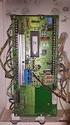 ABSTRACT : FIRST ACTUAL P-WAVE ALARM SYSTEMS AND EXAMPLES OF DISASTER PREVENTION BY THEM Yutaka Nakamura 1, 2 1 President, System and Data Research, Tokyo, Japan 2 Visiting Professor, Dept. of Built Environment,
Sismalog S t a n d - a l o n e S e i s m o g r a p h www.mae-srl.it
 S t a n d - a l o n e S e i s m o g r a p h www.mae-srl.it REVISIONE DATA 1.0 Febbraio 2013 Summary Chapter 1. FIELDS OF ACTION... 3 1.1 TERRITORIAL SEISMIC MONITORING... 3 1.2 DYNAMIC SURVEYS ON STRUCTURES...
Earthquake Early Warning System Notifications: Leveraging the Power of the Commercial Cellular Network
 Earthquake Early Warning System Notifications: Leveraging the Power of the Commercial Cellular Network Panelists: Mark Johnson Branch Chief, Earthquake and Tsunami Program, CalOES Brian Daly Director,
ANNEX B COMMUNICATIONS
 ANNEX B COMMUNICATIONS APPROVAL & IMPLEMENTATION Annex B Communications This emergency management plan is hereby approved. This plan is effective immediately and supersedes all previous editions. Jeff
Earthquakes. Earthquakes: Big Ideas. Earthquakes
 Earthquakes Earthquakes: Big Ideas Humans cannot eliminate natural hazards but can engage in activities that reduce their impacts by identifying high-risk locations, improving construction methods, and
The earthquake source
 Global seismology: The earthquake source Reading: Fowler p111-140 and Bolt Appendix G Earthquake location Earthquake focus: Latitude, longitude, depth Earthquake epicenter: Latitude, longitude Earthquakes
Coastal Areas emergency alert system FAQs
 Coastal Areas emergency alert system FAQs What is the Stinger? The Stinger Mobile Alert System was developed by a local business in partnership with Hastings Civil Defence and GNS science for use in the
Android based Alcohol detection system using Bluetooth technology
 For more Project details visit: http://www.projectsof8051.com/android-based-alcohol-detection-system-usingbluetooth-technology/ Code 1435 Project Title Android based Alcohol detection system using Bluetooth
ISTANBUL EARTHQUAKE RISK AND MITIGATION STUDIES
 ISTANBUL EARTHQUAKE RISK AND MITIGATION STUDIES O. Metin Ilkisik, M. Nilay Ergenc and Murat T. Turk Disaster Coordination Center, Istanbul Metropolitan Municipality, Istanbul, Turkey e-mail: [email protected]
Six-defense zone Display Alarm System. User Manual
 Six-defense zone Display Alarm System User Manual Feature 1. Anti-interfere function. When someone interferes it with same frequency, the control unit will activate siren to alarm. 2. Support anti-decode
ESF 02 - Communications Annex, 2015
 ESF 02 - Communications Annex, 2015 Table of contents I. Introduction... 3 A. Purpose... 3 B. Scope of Operations... 3 C. Specific Authorities and References... 4 II. Situation and Assumptions... 4 A.
IN DEFENSE OF OUR SCHOOLS
 IN DEFENSE OF OUR SCHOOLS WIRELESS ALERT SYSTEMS =============================================================== NARRATIVE: Install a wireless security alert/panic button system in the schools to instantly
Development of Emergent Alarm System using the Earthquake Early Warning by Japan Meteorological Agencyed from Microtremor Records
 Development of Emergent Alarm System using the Earthquake Early Warning by Japan Meteorological Agencyed from Microtremor Records K. Masaki Department of Urban Environment, Aichi Institute of Technology,
PSEG Site ESP Application Part 5, Emergency Plan
 SECTION 7 EMERGENCY COMMUNICATIONS 1.0 The Plan provides for establishing communications on a continuous (24 - hours per day) basis with the following organizations: 1) The State of New Jersey 2) The State
Telemetry system for cathodic protection equipment of underground metal pipelines
 RECOMMENDATION PCRA 009 June 2010 Rev. 0 Committee for Cathodic Protection and Associated Coatings Telemetry system for cathodic protection equipment of underground metal pipelines DISCLAIMER: The present
Interference Analysis
 Application Note Interference Analysis JD7105A Base Station Analyzer / JD7106A RF Analyzer Introduction This document presents an overview of signal interference in RF wireless networks as well as a brief
Original Research Articles
 Original Research Articles Researchers Mr.Ramchandra K. Gurav, Prof. Mahesh S. Kumbhar Department of Electronics & Telecommunication, Rajarambapu Institute of Technology, Sakharale, M.S., INDIA Email-
Teleprotection Schemes and Equipment. James W. Ebrecht Young Power Equipment Scottsdale, AZ
 * Teleprotection Schemes and Equipment James W. Ebrecht Young Power Equipment Scottsdale, AZ Teleprotection Schemes And Equipment ~ ~ Relay Relay Teleprotection Communications channel Teleprotection Protection
DECISION SUPPORT SYSTEM FOR SEISMIC RISKS
 DECISION SUPPORT SYSTEM FOR SEISMIC RISKS María J. Somodevilla [email protected] Angeles B. Priego [email protected] Esteban Castillo [email protected] Ivo H. Pineda [email protected] Darnes Vilariño
Using your LED Plus keypad
 Using your LED Plus keypad System 238 System 2316 System 238i System 2316i Part Number 5-051-372-00 Rev B Thank you for purchasing this C&K alarm system Your system is one of the most powerful and advanced
Log-Likelihood Ratio-based Relay Selection Algorithm in Wireless Network
 Recent Advances in Electrical Engineering and Electronic Devices Log-Likelihood Ratio-based Relay Selection Algorithm in Wireless Network Ahmed El-Mahdy and Ahmed Walid Faculty of Information Engineering
Demystifying Wireless for Real-World Measurement Applications
 Proceedings of the IMAC-XXVIII February 1 4, 2010, Jacksonville, Florida USA 2010 Society for Experimental Mechanics Inc. Demystifying Wireless for Real-World Measurement Applications Kurt Veggeberg, Business,
Magnitude 8.8 OFFSHORE MAULE, CHILE
 A great 8.8-magnitude struck central Chile early Saturday. The quake hit 200 miles (325 kilometers) southwest of the capital Santiago. The epicenter was just 70 miles (115 kilometers) from Concepcion,
Environmental Monitoring: Guide to Selecting Wireless Communication Solutions
 Environmental Monitoring: Guide to Selecting Wireless Communication Solutions By: Scott South Published in WaterWorld, January 2005 (Page 48) Rapidly growing demands for information and increased productivity
TX GSM SMS Auto-dial Alarm System. Installation and User Manual
 TX GSM SMS Auto-dial Alarm System Installation and User Manual Product Features: 1. 16 wireless zones, 3 wired zones alarm system, suitable for small to medium size offices and homes. 2. The system uses
Chapter 7 Earthquake Hazards Practice Exam and Study Guide
 Chapter 7 Earthquake Hazards Practice Exam and Study Guide 1. Select from the following list, all of the factors that affect the intensity of ground shaking. a. The magnitude of the earthquake b. Rather
Introduction Ericsson Handheld Telephone 1341-B
 Ericsson Handheld Telephone 1341-B 2 Contents General 5 The Mobile Telephone Network 6 Base Station and Cell 7 Radio Channels 7 Radio Coverage 8 Transmission Control and Communication 9 Quality Control
ADS Chapter 564 Security Communications
 ADS Chapter 564 Security Communications Document Quality Check Date: 10/02/2012 Partial Revision Date: 12/30/2011 Responsible Office: SEC/CTIS File Name: 564_100212 12/30/2011 Partial Revision Functional
Location management Need Frequency Location updating
 Lecture-16 Mobility Management Location management Need Frequency Location updating Fig 3.10 Location management in cellular network Mobility Management Paging messages Different paging schemes Transmission
SEISMIC RETROFITTING STRATEGIES FOR BRIDGES IN MODERATE EARTHQUAKE REGIONS
 SEISMIC RETROFITTING STRATEGIES FOR BRIDGES IN MODERATE EARTHQUAKE REGIONS ABSTRACT Ayaz H. Malik, P.E. Project Engineer New York State Department of Transportation Certain parts of the United States have
It also provides guidance for rapid alerting and warning to key officials and the general public of a potential or occurring emergency or disaster.
 Emergency Support Function #2 Communications ESF Coordinator: Information Technology Department Support Agencies: Tucson Fire Department Parks and Recreation Department Tucson Police Department Tucson
Bulletin of the Seismological Society of America, Vol. 83, No. 3, pp. 811-829, June 1993
 Bulletin of the Seismological Society of America, Vol. 83, No. 3, pp. 811-829, June 1993 ESTIMATION OF STRONG GROUND MOTIONS IN MEXICO CITY EXPECTED FOR LARGE EARTHQUAKES IN THE GUERRERO SEISMIC GAP BY
DEPARTMENT OF BUILDING INSPECTION City & County of San Francisco 1660 Mission Street, San Francisco, California 94103-2414
 DEPARTMENT OF BUILDING INSPECTION City & County of San Francisco 1660 Mission Street, San Francisco, California 94103-2414 ADMINISTRATIVE BULLETIN DRAFT # 13 NO. AB-058 DATE : January 8, 2008 SUBJECT :
EARTHQUAKES. Compressional Tensional Slip-strike
 Earthquakes-page 1 EARTHQUAKES Earthquakes occur along faults, planes of weakness in the crustal rocks. Although earthquakes can occur anywhere, they are most likely along crustal plate boundaries, such
Department of Commerce National Oceanic & Atmospheric Administration National Weather Service
 Department of Commerce National Oceanic & Atmospheric Administration National Weather Service NATIONAL WEATHER SERVICE WESTERN REGION SUPPLEMENT 17-2003 APPLICABLE TO NWSI 10-701 MARCH 16, 2015 Operations
GLOBAL COLLEGE OF ENGINEERING &TECHNOLOGY: YSR DIST. Unit VII Fiber Optics Engineering Physics
 Introduction Fiber optics deals with the light propagation through thin glass fibers. Fiber optics plays an important role in the field of communication to transmit voice, television and digital data signals
SOFTWARE FOR GENERATION OF SPECTRUM COMPATIBLE TIME HISTORY
 3 th World Conference on Earthquake Engineering Vancouver, B.C., Canada August -6, 24 Paper No. 296 SOFTWARE FOR GENERATION OF SPECTRUM COMPATIBLE TIME HISTORY ASHOK KUMAR SUMMARY One of the important
MEASUREMENT AND ANALYSIS OF RF EME LEVELS FROM MOBILE TELEPHONE BASE STATIONS LOCATED AT LEICHHARDT, NSW
 AUSTRALIAN RADIATION PROTECTION AND NUCLEAR SAFETY AGENCY A R P N S A Lower Plenty Road YALLAMBIE VIC 3085 Phone 61 3 9433 2211 Fax 61 3 9432 1835 E-mail: [email protected] Web: www.arpansa.gov.au
APPLICATION CASE OF THE END-TO-END RELAY TESTING USING GPS-SYNCHRONIZED SECONDARY INJECTION IN COMMUNICATION BASED PROTECTION SCHEMES
 APPLICATION CASE OF THE END-TO-END RELAY TESTING USING GPS-SYNCHRONIZED SECONDARY INJECTION IN COMMUNICATION BASED PROTECTION SCHEMES J. Ariza G. Ibarra Megger, USA CFE, Mexico Abstract This paper reviews
GSM ALARM SYSTEM USER MANUAL
 GSM ALARM SYSTEM USER MANUAL 1. Instruction The alarm system is based on GSM network. With a GSM SIM card, it can be used wherever you want and no need to connect any wire, which is convenient and easy
INTRODUCTION TO COMMUNICATION SYSTEMS AND TRANSMISSION MEDIA
 COMM.ENG INTRODUCTION TO COMMUNICATION SYSTEMS AND TRANSMISSION MEDIA 9/6/2014 LECTURES 1 Objectives To give a background on Communication system components and channels (media) A distinction between analogue
Curriculum Vitae Lic. José Rafael Pino Rusconi Chio +52 (998) 119 40 78 http://www.joserafaelpinorusconichio.com/ rpino67@hotmail.
 Curriculum Vitae Lic. José Rafael Pino Rusconi Chio +52 (998) 119 40 78 http://www.joserafaelpinorusconichio.com/ [email protected] Content 1) Professional summary... 1 2) Professional Experience....
Lessons learned from the tsunami disaster caused by the 2011 Great East Japan Earthquake and improvements in JMA's tsunami warning system
 Lessons learned from the tsunami disaster caused by the 2011 Great East Japan Earthquake and improvements in JMA's tsunami warning system October 2013 Japan Meteorological Agency Lessons learned from the
Sandia National Laboratories New Mexico Wind Resource Assessment Lee Ranch
 Sandia National Laboratories New Mexico Wind Resource Assessment Lee Ranch Data Summary and Transmittal for September December 2002 & Annual Analysis for January December 2002 Prepared for: Sandia National
Solution 1: Algorithm Positioning
 Model No: OEAFP Series All-Fiber Pipeline Security System Solutions Solution 1: Algorithm Positioning Application conditions Applicable for outdoor long-distance oil-gas pipeline security monitoring without
ADSL or Asymmetric Digital Subscriber Line. Backbone. Bandwidth. Bit. Bits Per Second or bps
 ADSL or Asymmetric Digital Subscriber Line Backbone Bandwidth Bit Commonly called DSL. Technology and equipment that allow high-speed communication across standard copper telephone wires. This can include
RECOMMENDATION ITU-R F.1113. (Question ITU-R 157/9) b) that systems using this mode of propagation are already in service for burst data transmission,
 Rec. ITU-R F.1113 1 RECOMMENDATION ITU-R F.1113 RADIO SYSTEMS EMPLOYING METEOR-BURST PROPAGATION (Question ITU-R 157/9) (1994) Rec. ITU-R F.1113 The ITU Radiocommunication Assembly, considering a) that
Electric utilities may vary in their application of end-to-end testing
 An Application Case of End-to-End Relay Testing of Communication-Based Protection Schemes Using GPS-Synchronized Secondary Injection Feature by J. Ariza, Megger USA G. Ibarra, CFE, Mexico Electric utilities
Girl Scouts Louisiana East Emergency Preparedness Patch program for Girl Scout Brownies Seniors
 Girl Scouts Louisiana East Emergency Preparedness Patch program for Girl Scout Brownies Seniors Are you ready if an emergency arrives? As Girl Scouts our motto is to Be Prepared but are you? The Emergency
1pcs. 1pcs. 2pcs 1pcs 1pcs 2pcs
 Home security alarm system LX-HS06 Instruction Brief introduction LX-HS06 is a set of entirely new English home security alarm system, it uses advanced MCU control and SMD technology. it innovate multiple
Iphone & Android App Smart GSM Home Alarm System
 Iphone & Android App Smart GSM Home Alarm System PST-GA242Q User Guide Version V14.3 Dear User, Thanks for selecting the intelligent alarm system. Please read through this guide before installation so
WHITE PAPER 2013 EDUCATION STUDY K-12 SCHOOL COMMUNICATIONS REPORT CARD 2013 NATIONWIDE EDUCATION STUDY
 K-12 SCHOOL COMMUNICATIONS REPORT CARD 2013 NATIONWIDE EDUCATION STUDY SURVEY PARTICIPANTS Motorola s 2013 study offers a valuable snapshot of the current state of communications in school districts across
Improved Warnings for Natural Hazards: A Prototype System for Southern California
 Improved Warnings for Natural Hazards: A Prototype System for Southern California Yehuda Bock Research Geodesist Scripps Institution of Oceanography University of California San Diego, La Jolla, Calif.
the amount of data will grow. It is projected by the industry that utilities will go from moving and managing 7 terabytes of data to 800 terabytes.
 Before the Department of Energy Washington, D.C. 20585 In the Matter of Implementing the National Broadband Plan by Studying the Communications Requirements of Electric Utilities To Inform Federal Smart
Universidad Nacional Autónoma de México. Grid Activities in Mexico
 Universidad Nacional Autónoma de México October 2009 Grid Activities in Mexico Former Grid activities EELA impact JRU-MX integration Future work Former experience on Grid GRAMA project (http://www.grama.org.mx/)
VEHICLE SECURITY SYSTEM G25/G20
 VEHICLE SECURITY SYSTEM G25/G20 Limited Lifetime Warranty This vehicle security system is warranted to the original purchaser, to be free from defects in material and workmanship. The manufacturer will
Seismic Risk Assessment Procedures for a System consisting of Distributed Facilities -Part three- Insurance Portfolio Analysis
 Seismic Risk Assessment Procedures for a System consisting of Distributed Facilities -Part three- Insurance Portfolio Analysis M. Achiwa & M. Sato Yasuda Risk Engineering Co., Ltd., Tokyo, Japan M. Mizutani
CHAPTER 3 AVI TRAVEL TIME DATA COLLECTION
 CHAPTER 3 AVI TRAVEL TIME DATA COLLECTION 3.1 - Introduction Travel time information is becoming more important for applications ranging from congestion measurement to real-time travel information. Several
Master in Science, specialty in Information Systems. ITESM. México, June 1984.
 LAURA CRUZ REYES Instituto Tecnológico de Cd. Madero División de Estudios de Posgrado e Investigación Juventino Rosas y Jesús Urueta Cd. Madero Tamaulipas México CP. 89440 Tel/Fax (52) 833 215 85 44 e-mail:
What we have forgotten about Earthquake Engineering.
 What we have forgotten about Earthquake Engineering. Perla R. Santa-Ana L. Universidad Nacional Autonoma de México, UNAM. Baez Santa Ana Ingenieros Consultores SA de CV Lucia G. Santa-Ana L. Universidad
WIRELESS BLACK BOX USING MEMS ACCELEROMETER AND GPS TRACKING FOR ACCIDENTAL MONITORING OF VEHICLES
 WIRELESS BLACK BOX USING MEMS ACCELEROMETER AND GPS TRACKING FOR ACCIDENTAL MONITORING OF VEHICLES PROJECT REFERENCE NO. : 37S0430 COLLEGE BRANCH GUIDE : S.G.BALEKUNDRI INSTITUTE OF TECHNOLOGY,BELGAUM
Wireless Auto-dial Intruder Alarm System
 Wireless Auto-dial Intruder Alarm System User Manual User s Manual Profile For a better understanding of this product, please read this user manual thoroughly before using it. Features and Function 1.
Overview ISDB-T for sound broadcasting Terrestrial Digital Radio in Japan. Shunji NAKAHARA. NHK (Japan Broadcasting Corporation)
 Overview ISDB-T for sound broadcasting Terrestrial Digital Radio in Japan Shunji NAKAHARA NHK (Japan Broadcasting Corporation) 2003/11/04 1 Contents Features of ISDB-T SB system Current status of digital