
DSO8000E SERIES HANDHELD OSCILLOSCOPE
|
|
|
- Stanley Wade
- 9 years ago
- Views:
Transcription
1 DSO8000E SERIES HANDHELD OSCILLOSCOPE USER S MANUAL 8072E/8102E/8152E/8202E (V1.0.1)

2 Contents Contents Contents... i Copyright Declaration... iii Chapter 1 Safety Tips General Safety Summary Safety Terms and Symbols Terms on Product Symbols on Product Product Scrapping... 2 Chapter 2 Overview Brief Introduction to DSO8000E Series Help System... 3 Chapter 3 Getting Started Guide Installation Functional Check Power on the oscilloscope Connect the oscilloscope Observe the waveform Probe Examination Safety Use of Probe Check Wizard Manual Probe Compensation Probe Attenuation Setting Self Calibration... 7 Chapter 4 Main Feature Description Oscilloscope Setup Trigger Data Acquisition Waveform Scaling and Positioning Waveform Measurement Chapter 5 Basic Operation DisplayArea XY Format Horizontal Controls Scan Mode Display (Roll Mode) Vertical Controls Math FFT Trigger Controls Menu and Option Buttons DSO8000E Series HandHeld Oscilloscope User Manual i

3 Contents SAVE/RECALL MEASURE UTILITY DISPLAY ACQUIRE CURSOR Fast Action Buttons AUTOSET Signal Connectors Chapter 6 Application Examples Example 1: Taking Simple Measurements Example 2: Taking Cursor Measurements Example 3: Analyzing Input Signals to Eliminate Random Noise Example 4: Capturing Single-shot Signal Example 5: Using X-Y Mode Example 6: Triggering on Pulse Width Example 7: Triggering on Video Signal Example 8: Using Slope Trigger to Capture Particular Slope Signal Example 9: Using Overtime Trigger to Measure Long Pulse Signal Example 10: Using Math Functions to Analyze Waveforms Example 11: Measuring Data Propagation Delay Example 12: Back light control Example 13: Auto shut down Chapter 7 Multimeter Chapter 8 Recorder Multimeter Trend Oscilloscope Trend Waveform Recorder Chapter 9 Waveform Generator Chapter 10 Troubleshooting Problem Settlement Chapter 11 Specifications Technical Specifications Accessories Chapter 12 General Care and Cleaning General Care Cleaning Chapter 13 Services and Support Appendix A Harmful and Poisonous Substances or Elements DSO8000E Series HandHeld Oscilloscope User Manual ii

4 Copyright Declaration Copyright Declaration All rights reserved; no part of this document may be reproduced or transmitted in any form or by any means, electronic or mechanical, without prior written permission from Qingdao Hantek Electronic Co., Ltd (hereinafter referred to as Hantek ). Hantek reserves all rights to modify this document without prior notice. Please contact Hantek for the latest version of this document before placing an order. Hantek has made every effort to ensure the accuracy of this document but does not guarantee the absence of errors. Moreover, Hantek assumes no responsibility in obtaining permission and authorization of any third party patent, copyright or product involved in relation to the use of this document. DSO8000E Series HandHeld Oscilloscope User Manual iii

5 Safety Tips 1.1 General Safety Summary Chapter 1 Safety Tips Read the following safety precautions to avoid injury and prevent damage to this product or any products connected to it. To evade potential hazards, use this product only as specified. Only qualified personnel should perform maintenance. Avoid fire or personal injury. Connect and disconnect properly. Connect a probe with the oscilloscope before it is connected to measured circuits; disconnect the probe from the oscilloscope after it is disconnected from measured circuits. Connect the probe in a right way. The probe ground lead is at ground potential. Do not connect the ground lead to an elevated voltage. Check all terminal ratings. To avoid fire or shock hazard, check all ratings and markings on the product. Refer to the product manual for detailed information about ratings before making connections to the product. Do not operate without covers. Do not operate this product with covers or panels removed. Avoid exposed circuitry. Do not touch exposed connections and components when power is present. Do not operate with suspected failures. If you suspect there is damage to this product, have it inspected by qualified service personnel. Assure good ventilation. Do not operate in wet/damp environments. Do not operate in an explosive atmosphere. Keep product surfaces clean and dry. 1.2 Safety Terms and Symbols The following terms may appear in this manual: WARNING. Warning statements point out conditions or practices that could result in injury or loss of life. CAUTION. Caution statements identify conditions or practices that could result in damage to this product or other property. DSO8000E Series HandHeld Oscilloscope User Manual 1

6 Safety Tips 1.3 Terms on Product The following terms may appear on the product: DANGER indicates an injury hazard immediately accessible as you read the marking. WARNING indicates an injury hazard not immediately accessible as you read the marking. CAUTION indicates a possible hazard to this product or other property. 1.4 Symbols on Product The following symbols may appear on the product: Protective Ground (Earth) Terminal Measurement Ground Terminal CAUTION Refer to Manual Measurement Input Terminal Mains Disconnected OFF (Power) Mains Connected ON (Power) High Voltage 1.5 Product Scrapping Device Recycling We need extract and utilize natural resources to produce this device. If you do not reclaim the device in a proper way, some substances it contains may become harmful or poisonous to environments or human bodies. To avoid them being released outside and to minimize the waste of natural resources, we suggest you reasonably call back this device to ensure proper recovery and recycling of most materials within it. DSO8000E Series HandHeld Oscilloscope User Manual 2

7 Overview Chapter 2 Overview 2.1 Brief Introduction to DSO8000E Series Model Channel Bandwidth Sample Rate LCD DSO8072E 2 70MHz 1GS/s 5.6 TFT DSO8102E 2 100MHz 1GS/s 5.6 TFT DSO8152E 2 150MHz 1GS/s 5.6 TFT DSO8202E 2 200MHz 1GS/s 5.6 TFT Table 2-1 Model List of DSO8000E Series DSO8000E Series oscilloscopes cover the bandwidths from 70MHz to 200MHz, and provide the real-time and equivalent sample rates respectively up to 1GSa/s and 25GSa/s. In addition, they have maximum 2M memory depth for better observation of the waveform details, and 5.6 inch color TFT LCD as well as WINDOWS-style interfaces and menus for easy operation. What s more, the plenty menu information and the easy-to-operate buttons allow you to gain information as much as possible in measurement; the multifunctional and powerful shortcut keys help you save a lot of time in operation; the Autoset function lets you detect sine and square waves automatically; the Probe Check Wizard guides you to adjust the probe compensation and set the Probe option attenuation factor. By using these the methods the oscilloscope provides (context-sensitive, hyperlinks, and an index), you may master all operations on the device in quite a short time so as to greatly improve your efficiency in production and development. 2.2 Help System This oscilloscope has a Help system with topics covering all of its features. You can use the Help system to display several kinds of information: General information about understanding and using the oscilloscope, such as Using the Menu System. Information about specific menus and controls, such as the Vertical Position Control. Advice to problems you may come across while using an oscilloscope, such as Reducing Noise. Keep pressing a Function Menu button(including SAVE/RECALL, MEAS, UTILITY, CURSOR, CH1, CH2, MATH, HORI and TRIG ) for 3s to turn on the help file for the function. DSO8000E Series HandHeld Oscilloscope User Manual 3

8 Getting Started Guide Chapter 3 Getting Started Guide 3.1 Installation To keep proper ventilation of the oscilloscope in operation, leave a space of more than 5cm away from the top and the two sides of the product. 3.2 Functional Check Follow the steps below to perform a quick functional check to your oscilloscope Power on the oscilloscope Press the ON/OFF button. The default Probe option attenuation setting is 10X. The default probe parameter Connect the oscilloscope Set the switch on the probe to 1X and connect the probe to Channel 1 on the oscilloscope. First, align the slot in the probe connector with the protuberance on the CH1 BNC and push to connect; then, turn to right to lock the probe in place; after that, connect the probe tip and reference lead to the PROBE COMP connectors. The Probe COMP: ~2V@1KHz. CH1 CH2 PROBE COMP DSO8000E Series HandHeld Oscilloscope User Manual 4

9 Getting Started Guide Observe the waveform Press the AUTO button and you should see within a few seconds a square wave of about 2V peak-to-peak at 1kHz in the display. Press the CH1 MENU button and remove Channel 1. Push the CH2 MENU button and repeat Step 2 and Step 3 to observe Channel Probe Examination Safety When using the probe, keep your fingers behind the guard on the probe body to avoid electric shock. Do not touch metallic portions of the probe head while it is connected to a voltage source. Connect the probe to the oscilloscope and connect the ground terminal to ground before you start any measurements. DSO8000E Series HandHeld Oscilloscope User Manual 5

10 Getting Started Guide Use of Probe Check Wizard Every time you connect a probe to an input channel, you should use the probe check wizard to verify that this probe is operating correctly. There are two ways to do this: 1) Use the vertical menu (for example, push the CH1 MENU button) to set the Probe option attenuation factor. 2) Press UTILITY key and turn to 3/5 page and then press the Probe CK key to use the Probe Check Wizard and configure the probe option attenuation factor properly following menu prompts. 3.4 Manual Probe Compensation Upon the first connection of a probe and an input channel, you should manually perform this adjustment to match the probe to the input channel. Uncompensated or miscompensated probes may lead to errors or faults in measurement. To adjust the probe compensation, follow the steps below. 1. Set the Probe option attenuation in the channel menu to 10X. Set the switch on the probe to 10X and connect the probe to Channel 1 on the oscilloscope. If you use the probe hook-tip, ensure it is firmly inserted onto the probe. Attach the probe tip to the PROBE COMP ~2V@1KHz connector and the reference lead to the PROBE COMP Ground connector. Display the channel and then press the AUTO button. 2. Check the shape of the displayed waveform. Compensated correctly Overcompensated Undercompensated 3. If necessary, use a nonmetallic screwdriver to adjust the variable capacity of your probe until the shape of the waveform turns to be the same as the above figure. Repeat this step as necessary. See the figure below for the way of adjustment. DSO8000E Series HandHeld Oscilloscope User Manual 6

11 Getting Started Guide 3.5 Probe Attenuation Setting Probes are of various attenuation factors which affect the vertical scale of the signal. The Probe Check function is used to verify if the Probe attenuation option matches the attenuation of the probe. As an alternative method to Probe Check, you can push a vertical menu button (such as the CH 1 MENU button) and select the Probe option that matches the attenuation factor of your probe. Make sure that the Attenuation switch on the probe matches the Probe option in the oscilloscope. Switch settings are 1X and 10X. When the Attenuation switch is set to 1X, the probe limits the bandwidth of the oscilloscope to 6MHz. To use the full bandwidth of the oscilloscope, be sure to set the switch to 10X. 3.6 Self Calibration The self calibration routine helps optimize the oscilloscope signal path for maximum measurement accuracy. You can run the routine at any time but should always run it if the ambient temperature changes by 5 or more. For a more accurate calibration, please power on the oscilloscope and wait for 20 minutes until it has adequately warmed up. To compensate the signal path, disconnect any probes or cables from the front-panel input connectors. Then, push the UTILITY button, select the Self Cal option and follow the directions on the screen.. DSO8000E Series HandHeld Oscilloscope User Manual 7

12 Main Feature Description Chapter 4 Main Feature Description This chapter provides some general information that you need to learn before using an oscilloscope. It contains: 1. Oscilloscope setup 2. Trigger 3. Data acquisition 4. Waveform scaling and positioning 5. Waveform measurement 4.1 Oscilloscope Setup While operating the oscilloscope, you may often use thr feature: Autoset. Autoset: This function can be used to adjust the horizontal and vertical scales of the oscilloscope automatically and set the trigger coupling, type, position, slope, level and mode, etc., to acquire a stable waveform display. 4.2 Trigger The trigger determines when the oscilloscope begins to acquire data and display a waveform. Once a trigger is properly set up, the oscilloscope can convert unstable displays or blank screens to meaningful waveforms. Here introduce some basic concepts about trigger. Trigger Source: The trigger can be generated with multiple sources. The most common one is the input channel (alternative between CH1 and CH2). Whether the input signal is displayed or not, it can trigger normal operations. Trigger Type: The oscilloscope has six types of triggers: Edge, Video, Pulse Width, Slope, Overtime and Alter. Edge Trigger uses the analog or digital test circuits for triggering. It happens when the input trigger source crosses a specified level in a specified direction. Video Trigger performs a field or line trigger through standard video signals. Pulse Width Trigger can trigger normal or abnormal pulses that meet trigger conditions. Slope Trigger uses the rise and fall times on the edge of signal for triggering. Overtime Trigger happens after the edge of signal reaches the set time. Alter Trigger, as a feature of analog oscilloscopes, gives stable displays of signals at DSO8000E Series HandHeld Oscilloscope User Manual 8

13 Main Feature Description two different frequencies. Mainly it uses a specific frequency to switch between two analog channels CH1 and CH2 so that the channels will generate alter trigger signals through the trigger circuitry. Trigger Mode: You can select the Auto or Normal mode to define how the oscilloscope acquires data when it does not detect a trigger condition. Auto Mode performs the acquisition freely in absence of valid trigger. It allows the generation of untriggered waveforms with the time base set to 80ms/div or slower. Normal Mode updates the displayed waveforms only when the oscilloscope detects a valid trigger condition. Before this update, the oscilloscope still displays the old waveforms. This mode shall be used when you want to only view the effectively triggered waveforms. In this mode, the oscilloscope displays waveforms only after the first trigger. To perform a single sequence acquisition, push the SINGLE SEQ button. Trigger Coupling: Trigger Coupling determines which part of the signal will be delivered to the trigger circuit. This can help to obtain a stable display of the waveform. To use trigger coupling, push the TRIG MENU button, select an Edge or Pulse trigger, and then select a Coupling option. Trigger Position: The horizontal position control establishes the time between the trigger position and the screen center. Slope and Level: The Slope and Level controls help to define the trigger. The Slope option determines whether the trigger point is on the rising or falling edge of a signal. To perform the trigger slope control, press the TRIG MENU button, select an Edge trigger, and use the Slope button to select rising or falling. The LEVEL button controls the trigger point is on which position of the edge. Trigger level can be adjusted vertically Rising Edge Falling Edge Trigger slope can be rising or falling 4.3 Data Acquisition When you acquire an analog signal, the oscilloscope will convert it into a digital one. There are two kinds of acquisition: Real-time acquisition and Equivalent acquisition. The real-time acquisition has three modes: Normal, Peak Detect, and Average. The acquisition rate is affected by the setting of time base. Normal: In this acquisition mode, the oscilloscope samples the signal in evenly spaced intervals to establish the waveform. This mode accurately represents signals in most time. However, it does not acquire rapid variations in the analog signal that may occur between two samples, which can result in aliasing and may cause narrow pulses to be missed. In such cases, you should use the Peak Detect mode to acquire data. Peak Detect: In this acquisition mode, the oscilloscope gets the maximum and minimum values of DSO8000E Series HandHeld Oscilloscope User Manual 9

14 Main Feature Description the input signal over each sample interval and uses these values to display the waveform. In this way, the oscilloscope can acquire and display those narrow pulses that may have otherwise been missed in Normal mode. However, noise will appear to be higher in this mode. Average: In this acquisition mode, the oscilloscope acquires several waveforms, averages them, and displays the resulting waveform. You can use this mode to reduce random noise. Equivalent Acquisition: This kind of acquisition can be utilized for periodic signals. In case the acquisition rate is too low when using the real-time acquisition, the oscilloscope will use a fixed rate to acquire data with a stationary tiny delay after each acquisition of a frame of data. After repeating this acquisition for N times, the oscilloscope will arrange the acquired N frames of data by time to make up a new frame of data. Then the waveform can be recovered. The number of times N is related to the equivalent acquisition rate. Time Base: The oscilloscope digitizes waveforms by acquiring the value of an input signal at discrete points. The time base helps to control how often the values are digitized. Use the TIME/DIV button to adjust the time base to a horizontal scale that suits your purpose. 4.4 Waveform Scaling and Positioning The display of waveforms on the screen can be changed by adjusting their scale and position. Once the scale changes, the waveform display will increase or decrease in size. Once the position changes, the waveform will move up, down, right, or left. The channel reference indicator (located on the left of the graticule) identifies each waveform on the screen. It points to the ground level of the waveform record. Vertical Scale and Position: The vertical position of a waveform can be changed by moving it up and down on the screen. To compare data, you may align a waveform over another. When you push the VOLTS button to change the vertical scale of a waveform, the waveform display will contract or expand vertically to the ground level. Horizontal Scale and Position: Pretrigger Information You can adjust the HORIZONTAL POSITION control to view waveform data before the trigger, after the trigger, or some of each. When you change the horizontal position of a waveform, you are actually changing the time between the trigger position and the screen center. For example, if you want to find out the cause of a glitch in your test circuit, you should trigger on the glitch and make the pretrigger period long enough to capture data before the glitch. Then you can analyze the pretrigger data and perhaps find the cause. You are allowed to change the horizontal scale of all the waveforms by clicking the TIME/DIV button. For example, you may want to see just one cycle of a waveform to measure the overshoot on its rising edge. The oscilloscope shows the horizontal scale as time per division in the scale readout. Since all active waveforms use the same time base, the oscilloscope only displays one value for all the active channels. DSO8000E Series HandHeld Oscilloscope User Manual 10

15 Main Feature Description 4.5 Waveform Measurement The oscilloscope displays graphs of voltage versus time and can help to measure the displayed waveform. There are several ways to take measurements, using the graticule, the cursors or performing an automatic measurement. Graticule: This method allows you to make a quick, visual estimate and take a simple measurement through the graticule divisions and the scale factor. For example, you can take simple measurements by counting the major and minor graticule divisions involved and multiplying by the scale factor. If you counted 6 major vertical graticule divisions between the minimum and maximum values of a waveform and knew you had a scale factor of 50mV/division, you could easily calculate your peak-to-peak voltage as follows: 6 divisions x 50mV/division = 300mV. Cursor: This method allows you to take measurements by moving the cursors. Cursors always appear in pairs and the displayed readouts are just their measured values. There are two kinds of cursors: Amplitude Cursor and Time Cursor. The amplitude cursor appear as a horizontal broken line, measuring the vertical parameters. The time cursor appear as a vertical broken line, measuring the horizontal parameters. When using cursors, please make sure to set the Source to the waveform that you want to measure on the screen. To use cursors, push the CURSOR button. Cursor Cursor Automatic Measurement: The oscilloscope performs all the calculations automatically in this mode. As this measurement uses the waveform record points, it is more precise than the graticule and cursor measurements. Automatic measurements show the measurement results by readouts which are periodically updated with the new data acquired by the oscilloscope. DSO8000E Series HandHeld Oscilloscope User Manual 11

16 Basic Operation Chapter 5 Basic Operation The front panel of the oscilloscope is divided into several functional areas. In this chapter we will give a quick overview of all control buttons on the front panel as well as the displayed information on the screen and relative testing operations. The figure below illustrates the front panel of the DSO8000E series digital oscilloscope. Front Panel of DSO8000E Series Description 1. LCD Display 2. F1~F5: Sets or switch options for the menu 3. Power light. 4. MEAS: Shows Measurement menu DSO8000E Series HandHeld Oscilloscope User Manual 12

17 Basic Operation 5. AUTORANGE: 6. MENU OFF: Turn on/off the menu 7. MENU: Turn on/off the menu 8. AUTO: Be used for auto setting under the oscilloscope operation mode 9. RUN/STOP: key for running or stopping the operation 10. Direction Keys 11. TRIG: Shows Trigger menu 12. LEVEL: Adjust the trigger level 13. TIME/DIV: Decrease or Increase the time base 14. POSITION: Adjust the horizontal trigger position 15. HORI: Shows Horizontal menu 16. VERTICAL: Adjust the signal vertical position 17. VOLTS: Decrease or Increase the voltage/div 18. Power key. 19. REF: Shows the REF menu 20. MATH: Shows the Math or REF menu 21. CH2: Shows the CH2 menu 22. CH1: Shows the CH1 menu 23. UTILITY: Shows Utility menu 24. SAVE RECALL: Shows SAVE or RECALL menu 25. RECORDER: 26. SCOPE/DMM: Switch DMM, Scope function or Waveform Generator function interface. 27. CURSOR: Shows Cursor menu 5.1 DisplayArea 1. Hantek logo 2. Display Format: : YT : Vectors : XY : Dots : Gray indicates auto persistence; Green means persistence display is enabled. When the icon is set to green, the time for persistence display will be shown behind it. DSO8000E Series HandHeld Oscilloscope User Manual 13

18 Basic Operation 3. Acquisition Mode: Normal, Peak Detect or Average 4. Trigger Status: The oscilloscope is acquiring pretriggered data. All pretriggered data have been acquired and the oscilloscope is ready to accept a trigger. T The oscilloscope has detected a trigger and is acquiring the posttrigger information. The oscilloscope works in auto mode and is acquiring waveforms in the absence of triggers. The oscilloscope is acquiring and displaying waveform data continuously in scan mode. S The oscilloscope has stopped acquiring waveform data. The oscilloscope has finished a single sequence acquisition. 5. Tool Icon: : If this icon lights up, it means the keyboard of the oscilloscope is locked by the host computer via USB control. : If this icon lights up, it means the USB disk has been connected. : This icon lights up only when the USB slave interface is connected with the computer. 6. Main Time Base Window 7. Display of window s position in data memory and data length. DSO8000E Series HandHeld Oscilloscope User Manual 14

19 Basic Operation 8. Window Time Base 9. Operating Menu shows different information for different function keys. 10. Trig Level. 11. Trigger Type: : Edge trigger on the rising edge. : Edge trigger on the falling edge. : Video trigger with line synchronization. : Video trigger with field synchronization. : Pulse Width trigger, positive polarity. : Pulse Width trigger, negative polarity. 12. Level Range. 13. Icon indicates whether the waveform is inverted or not M Bandwidth Limit. If this icon lights up, it means the bandwidth limit is enabled, otherwise disabled. 15. Icon indicates channel coupling. 16. Channel Marker 17. Window displays waveform XY Format The XY format is used to analyze phase differences, such as those represented by Lissajous patterns. The format plots the voltage on CH1 against the voltage on CH2, where CH1 is the horizontal axis and CH2 is the vertical axis. The oscilloscope uses the untriggered Normal acquisition mode and displays data as dots. The sampling rate is fixed at 1 MS/s. The oscilloscope can acquire waveforms in YT format at any sampling rate. You may view the same waveform in XY format. To perform this operation, stop the acquisition and change the display format to XY. The table below shows how to operate some controls in XY format. Controls CH1 VOLTS and VERTICAL POSITION controls CH2 VOLTS and VERTICAL POSITION controls Reference or Math Cursors Autoset (display format reset to YT) Time base controls Trigger controls Usable or not in XY format Set the horizontal scale and position Continuously set the vertical scale and position Unusable Unusable Unusable Unusable Unusable DSO8000E Series HandHeld Oscilloscope User Manual 15

20 Basic Operation 5.2 Horizontal Controls Use the horizontal controls to change the horizontal scale and position of waveforms. The horizontal position readout shows the time represented by the center of the screen, using the trigger time as zero. When you change the horizontal scale, the waveform will expand or contract to the screen center. The readout near the upper right of the screen shows the current horizontal position in second. M represents Main Time Base, and W indicates Window Time Base. The oscilloscope also has an arrow icon at the top of the graticule to indicate the horizontal position. 1. HORIZONTAL POSITION BAR: Used to control the trigger position against the screen center. 2. Each option in HORI MENU is described as follows. Options Settings Comments Double Win Set the Current window mode to single or double window. Window Ctrl Single Win Selects the major or minor window in dual-window mode. Major Win The window is highlighted once selected. Press this option Window Sel Minor Win button in single-window mode to enter the daul-window mode. Select this menu and click the up and down Arrow keys to HoldOff adjust the trigger holdoff time within the range of 100ns-10s. Reset Recover the horizontal trigger postion to the middle screen. This function is usable only in dual-window mode. It sets marks at some waveform record locations that users are Pre Mark interested in, and searches for these marks by right and left arrows. Then it positions the window to this mark for further observation. This function is usable only in dual-window mode. It sets marks at some waveform record locations that users are Next Mark interested in, and searches for these marks by right and left arrows. Then it positions the window to this mark for further observation. Set/Clear Set or Clear the current Mark. DSO8000E Series HandHeld Oscilloscope User Manual 16

21 Basic Operation Play/Stop This function is usable in dual-window mode. Push this menu button and auto move it from left to right at a specified speed. In the expanded window will display corresponding waveforms until it stops once reaching the rightmost side of the major scan window. Single-window Mode Dual-window Mode (Full Screen) Location of expanded window data in memory Major Window Minor Window (Expanded Window) 3.TIME/DIV: Used to change the horizontal time scale so as to magnify or compress the waveform horizontally. If the waveform acquisition is stopped (by using the RUN/STOP button), the TIME /DIV control will expand or compress the waveform. In dual-window mode, push button F1 to select major or minor window. When the major window is selected, the F1 button provides the same functions as it provides in single-mode window. When the minor window is selected, press TIME/DIV button to scale the waveform whose magnification is up to DSO8000E Series HandHeld Oscilloscope User Manual 17
22 Basic Operation Scan Mode Display (Roll Mode) With the TIME/DIV control set to 80ms/div or slower and the trigger mode set to Auto, the oscilloscope works in the scan acquisition mode. In this mode, the waveform display is updated from left to right without any trigger or horizontal position control. 5.3 Vertical Controls Vertical controls can be used to display and remove waveforms, adjust vertical scale and position, set input parameters and perform math calculations. Each channel has a separate vertical menu to set. See below for menu description. 1. VERTICAL POSITION Bar: Move the channel waveform up and down on the screen. In dual-window mode, move the waveforms in both windows at the same time in a same direction. Two channels correspond to two bars. 2. Menu (CH1, CH2): Display vertical menu options; turn on or off the display of channel waveforms. Coupling Options Settings Comments 20MHz Bandwidth Limit Volt/Div Probe Invert Reset DC AC GND Unlimited Limited Coarse Fine 1X 10X 100X 1000X Off On DC passes both DC and AC components of the input signal. AC blocks the DC component of the input signal and attenuates signals below 10Hz. Ground disconnects the input signal. Limits the bandwidth to reduce display noise; filters the signal to eliminate noise and other unnecessary HF components. Selects the resolution of the VOLTS bar. Coarse defines a sequence. Fine changes the resolution to small steps between the Coarse settings. Selects a value according to the probe attenuation factor so as to ensure correct vertical readouts. Reduce bandwidth to 6MHz when using a 1X probe. Inverts the waveform relative to the reference level. Set the channel vertical postion to the middle of the vertical screen, DSO8000E Series HandHeld Oscilloscope User Manual 18
23 Basic Operation Ground Coupling Used to display a zero-volt waveform. Internally, the channel input is connected with a zero-volt reference level. Fine Resolution In the fine resolution setting, the vertical scale readout displays the actual VOLTS setting. The vertical scale changes only after you adjust the VOLTS control and set to coarse. Remove Waveform Display To remove a waveform from the screen, first push the menu button to display the vertical menu, then push again to remove the waveform. A channel waveform which is unnecessary to be displayed can be used as a trigger source or for math operations. 3. VOLTS Control the oscilloscope to magnify or attenuate the source signal of the channel waveform. The vertical size of the display on the screen will change (increase or decrease) to the ground level. Also you may use the key F3 to switch between coarse and fine. 4. MATH MENU: Display the waveform math operations. See the table below for details. The MATH menu contains source options for all math operations. Operations Source Options Comments + CH1+CH2 Add Channel 1 to Channel 2. - CH1-CH2 Subtract the Channel 2 waveform from the Channel 1 waveform. CH2-CH1 Subtract the Channel 1 waveform from the Channel 2 waveform. X CH1XCH2 Multiply CH1 with CH2. / Position Scale FFT CH1/CH2 CH2/CH1 Window Source FFT zoom Vertical Base CH1 Dvided by CH2 CH2 Dvided by CH1 Set the Math channel s position. Set the Vertical Scale. Five types of window available for selection: Hanning, Flattop, Rectangular, Bartletta and Blackman CH1 CH2 Use the FFT Zoom button to adjust the window size. Scale: x1, x2, x5, x10. dbrms Vrms Note: All selected menus are highlighted in orange. DSO8000E Series HandHeld Oscilloscope User Manual 19
24 Basic Operation Math FFT This chapter elaborates how to use the Math FFT (Fast Fourier Transform). You can use the Math FFT mode to convert a time-domain (YT) signal into its frequency components (spectrum), and to observe the following types of signals: Analyze harmonics in power cords; Measure harmonic content and distortion in systems; Characterize noise in DC power supplies; Test impulse response of filters and systems; Analyze vibration. To use the Math FFT mode, perform the following tasks: Set the source (time-domain) waveform; Display the FFT spectrum; Choose a type of FFT window; Adjust the sample rate to display the fundamental frequency and harmonics without aliasing; Use zoom controls to magnify the spectrum; Use cursors to measure the spectrum Setting Time-domain Waveform It is necessary to set the time-domain (YT) waveform before using the FFT mode. Follow the steps below. 1. Push the AUTO button to display a YT waveform. 2. Click the Vertical Position key to vertically move the YT waveform to the center (zero division) so as to ensure the FFT will display a true DC value. 3. Click the Horizontal Position key to position the part of the YT waveform to be analyzed in the center eight divisions of the screen. The oscilloscope uses the 2048 center points of the time-domain waveform to calculate the FFT spectrum. 4. Click the VOLTS Key to ensure the entire waveform remains on the screen. If the entire waveform is invisible, the oscilloscope may display wrong FFT results by adding high-frequency components. 5. Click the TIME/DIV key to provide the resolution you need in the FFT spectrum. 6. If possible, set the oscilloscope to display multiple signal cycles. If you Click the TIME/DIV key to select a faster setting (fewer cycles), the FFT spectrum will display a larger frequency range and reduce the possibility of FFT aliasing. To set the FFT display, follow the steps below. 1. Push the M/R button; DSO8000E Series HandHeld Oscilloscope User Manual 20
25 Basic Operation 2. Set the Operation option to FFT; 3. Select the Math FFT Source channel. In many situations, the oscilloscope can also generate a useful FFT spectrum despite the YT waveform not being triggered. This is especially true if the signal is periodic or random (such as noise). Note: You should trigger and position transient or burst waveforms as close as possible to the screen center. Nyquist Frequency The highest frequency that any real-time digital oscilloscope can measure without errors is half of the sample rate, which is called the Nyquist frequency. Frequency information beyond the Nyquist frequency is undersampled which brings about the FFT aliasing. The math function can convert the center 2048 points of the time-domain waveform to an FFT spectrum. The resulting FFT spectrum contains 1024 points from DC (0Hz) to the Nyquist frequency. Usually, the screen compresses the FFT spectrum horizontally to 250 points, but you can use the FFT Zoom function to expand the FFT spectrum so that you can clearly view the frequency components at each of the 1024 data points in the FFT spectrum. Note: The oscilloscope s vertical response is a little bit larger than its bandwidth (70MHz, 100MHz, 150MHz or 200MHz, depending on the model; or 20MHz when the Bandwidth Limit option is set to Limited). Therefore, the FFT spectrum can display valid frequency information above the oscilloscope bandwidth. However, the amplitude information near or above the bandwidth will not be accurate Displaying FFT Spectrum Push the MATH MENU button to display the Math menu. Use the options to select the Source channel, the Window algorithm and the FFT Zoom factor. Only one FFT spectrum can be displayed at a time. Math FFT Options Settings Comments Source CH1, CH2 Choose a channel to be the FFT source. Window FFT Zoom Vertical Base Hanning, Rectangular, Blackman X1, X2, X5, X10 dbrms, Vrms Flattop, Bartlett, Select a type of the FFT window. For more information, refer to Section Change the horizontal magnification of the FFT display. For detailed information, refer to Section Set dbrms to be the vertical base; Set Vrms to be the vertical base DSO8000E Series HandHeld Oscilloscope User Manual 21
26 Basic Operation 1 Fundamental frequency component Frequency component Frequency at the center graticule line 2. Vertical scale in db per division (0dB=1V RMS ) 3. Horizontal scale in frequency per division 4. Sample rate in number of samples per second 5. FFT window type Selecting FFT Window Using windows can eliminate the spectral leakage in the FFT spectrum. The FFT algorithm assumes that the YT waveform repeats all the time. When the number of cycles is integral (1, 2, 3...), the YT waveform starts and ends at the same amplitude and there are no discontinuities in the signal shape. If the number of cycles is nonintegral, the YT waveform starts and ends at different amplitudes and transitions between the start and end points will cause discontinuities in the signal that introduces high-frequency transients. DSO8000E Series HandHeld Oscilloscope User Manual 22
27 Basic Operation Applying a window to the YT waveform changes the waveform so that the start and stop values are close to each other, which reduces the discontinuities. The Math FFT function has three FFT Window options. There is a trade-off between frequency resolution and amplitude accuracy for each type of window. You shall determine which one to choose according to the object you want to measure and the source signal characteristics. Window Measurement Characteristics Hanning Flattop Periodic Waveform Periodic Waveform Rectangular Pulse or Transient Waveform Better frequency, poorer amplitude accuracy than Flattop Better amplitude, poorer frequency accuracy than Hanning Special-purpose window applicable to discontinuous waveforms. This is actually the same as no windows. DSO8000E Series HandHeld Oscilloscope User Manual 23
28 Basic Operation Bartlett Blackman Best magnitude, worst frequency resolution. Single frequency waveforms, to Find higher order harmonics FFT Aliasing Problems occur when the time-domain waveform acquired by the oscilloscope contains frequency components higher than the Nyquist frequency. The frequency components above the Nyquist frequency will be undersampled and displayed as lower frequency components that fold back from the Nyquist frequency. These erroneous components are called aliases Eliminating Aliases To eliminate aliases, use the following methods. Click the TIME/DIV key to set a faster sample rate. Because the Nyquist frequency increases as you increase the sample rate, the aliased frequency components will be displayed correct. If too many frequency components appear on the screen, you may use the FFT Zoom option to magnify the FFT spectrum. If there is no need to observe the frequency components above 20MHz, set the Bandwidth Limit option to Limited. Filter the signal input from outside and limit the bandwidth of the source waveform to lower than the Nyquist frequency. Identify and ignore the aliased frequencies. Use zoom controls and cursors to magnify and measure the FFT spectrum Magnifying and Positioning FFT Spectrum You may scale the FFT spectrum and use cursors to measure it through the FFT Zoom option which enables the horizontal magnification. To vertically magnify the spectrum, use the vertical controls. Horizontal Zoom and Position You can use the FFT Zoom option to magnify the FFT spectrum horizontally without changing the sample rate. The available zoom factors are X1(default), X2, X5 and X10. When the zoom factor is set to X1 and the waveform is located at the center graticule, the left graticule line is at 0Hz and the right is at the Nyquist frequency. You magnifies the FFT spectrum to the center graticule line when you change the zoom factor. That is, the axis for horizontal magnification is the center graticule line. Click the Horizontal Position Key to move the FFT spectrum to the right. DSO8000E Series HandHeld Oscilloscope User Manual 24
29 Basic Operation Vertical Zoom and Position When the FFT spectrum is being displayed, the channel vertical keys become the zoom and position controls corresponding to their respective channels. The VOLTS key provides the following zoom factors: X1(default), X2, X5 and X10. The FFT spectrum is magnified vertically to the marker M (math waveform reference point on the left edge of the screen). Click the Vertical Position key to move up the spectrum Using Cursors to Measure FFT Spectrum You may use cursors to take two measurements on the FFT spectrum: amplitude (in db) and frequency (in Hz). Amplitude is referenced to 0db that equals 1VRMS here. You may use cursors to measure at any zoom factor. Push the CURSOR button, choose the Source option and then select Math. Press the Type option button to select between Amplitude and Frequency. Click the SELECT CURSOR option to choose a cursor. Then move Cursor S and Cursor E. Use the horizontal cursor to measure the amplitude and the vertical cursor to measure the frequency. Now the display at the DELTA menu is just the measured value, and the values at Cursor S and Cursor E. Delta is the absolute value of Cursor S minus Cursor E. Frequency Cursors Amplitude Cursors 5.4 Trigger Controls The trigger can be defined through the Trigger Menu. There are six types of trigger: Edge, Video, Pulse Width, Alter, Slope and Overtime. Refer to the following tables to find a different set of options for each type of trigger. TRIG MENU Push this button to display trigger menus. The edge trigger is in common use. See the table below for details. DSO8000E Series HandHeld Oscilloscope User Manual 25
30 Basic Operation TRIG Level It sets the amplitude level the signal must cross to cause an acquisition when using the Edge or Pulse Width trigger. TRIG MENU TRIG Level Options Settings Comments Trigger Type Edge Source Mode Coupling 50% CH1 CH2 EXT/5 Auto Normal Single AC DC Noise Reject HF Reject LF Reject By default the oscilloscope uses the edge trigger which triggers the oscilloscope on the rising or falling edge of the input signal when it crosses the trigger level (threshold). Select the input source as the trigger signal. CH1, CH2: No matter the waveform is displayed or not, a certain channel will be triggered. EXT/5: Same as EXT option, but attenuates the signal by a factor of 5 and allows a trigger level range of +6V to -6V. Select a trigger mode. By default, the oscilloscope uses the Auto mode. In this mode, the oscilloscope is forced to trigger when it does not detect a trigger within a certain amount of time based on the TIME/DIV setting. The oscilloscope goes into the scan mode at 80ms/div or slower time base settings. In the Normal mode, the oscilloscope updates the display only when it detects a valid trigger condition. New waveforms are not displayed until they replace old ones. Use this mode to just view valid triggered waveforms. Only after the first trigger does the display appear. Select the components of the trigger signal applied to the trigger circuitry. AC: Blocks DC components and attenuates signals below 10Hz. DC: Passes all components of the signal. Noise Reject: Attenuates the noise conponents. HF Reject: Attenuates the high-frequency components above 80kHz. LF Reject: Blocks DC components and attenuates the low-frequency components below 8kHz. Set the vertical trigger postion to the channel zero level postion. NOTE: Trigger coupling only affects the signal passed through the trigger system. It does not affect the bandwidth or coupling of the signal displayed on the screen. Video Trigger DSO8000E Series HandHeld Oscilloscope User Manual 26
31 Basic Operation Options Settings Comments Video Source Polarity Sync Standard CH1 CH2 EXT/5 Normal Inverted All Lines Line Number Odd Field Even Field All Fields NTSC PAL/SECAM With Video highlighted, an NTSC, PAL or SECAM standard video signal will be triggered. The trigger coupling is preset to AC. Select the input source as the trigger signal. Ext/5 use the signal applied to the EXT TRIG connector as the source. Normal: Triggers on the negative edge of the sync pulse. Inverted: Triggers on the positive edge of the sync pulse. Choose a proper video sync. When selecting Line Number for the Sync option, you may use the User Select it to specify a line number. Choose a video standard for sync and line number count. Note: When you choose Normal Polarity, the trigger always occurs on negative-going sync pulses. If the video signal contains positive-going sync pulses, use the Inverted Polarity option. Pulse Width Trigger You can use it to trigger on aberrant pulses. Options Settings Comments Pulse Source Polarity Mode Coupling When CH1 CH2 EXT/5 Positive, Negative Auto Normal Single AC DC Noise Reject HF Reject LF Reject = < > With Pulse highlighted, the trigger occurs on pulses that meet the trigger condition (defined by the Source, When and Set Pulse Width options). Select the input source as the trigger signal. EXT/5: Does not display the trigger signal and allows a trigger level range of +6V to -6V. Select the type of trigger. The Normal mode is best for most pulse width trigger applications. Select the components of the trigger signal applied to the trigger circuit. Select the trigger condition. Pulse Width 20ns to 10.0sec With Set Pulse Width highlighted, set the pulse width. 50% Trigger When: The pulse width of the source must be 5ns so that the oscilloscope can detect the pulse. DSO8000E Series HandHeld Oscilloscope User Manual 27
32 Basic Operation Triggers when pulse is less than width setting Triggers when pulse is greater than width setting Threshold level Triggers when pulse is not equal to width setting ±5% Triggers when pulse is equal to width setting ±5% Threshold level Tolerance = Trigger Point Tolerance =, : Within a ±5% tolerance, triggers the oscilloscope when the signal pulse width is equal to or not equal to the specified pulse width. <, >: Triggers the oscilloscope when the source signal pulse width is less than or greater than the specified pulse width. Slope Trigger: Judges trigger according to the time for rising or falling, more flexible and accurate than the Edge trigger. Options Settings Comments Slope Source Slope Mode Coupling Vertical When CH1 CH2 EXT/5 Rising Falling Auto Normal AC DC Noise Reject HF Reject LF Reject V1 V2 = < > Select the input source as the trigger signal. Select the slope type of signal. Select the type of trigger. The Normal mode is best for most pulse width trigger applications. Selects the components of the trigger signal applied to the trigger circuitry. Adjust the vertical window by setting two trigger levels. Select this option and press F3 to choose V1 or V2. Select the trigger condition. Time 20ns to 10.0sec With this option highlighted, set the time span. DSO8000E Series HandHeld Oscilloscope User Manual 28
33 Basic Operation Alter Trigger: As a feature of analog oscilloscopes, it gives stable displays of signals at two different frequencies. Mainly it uses a specific frequency to switch between two analog channels CH1 and CH2 so that the channels will generate Alter trigger signals through the trigger circuitry. Options Settings Comments Alter Mode Auto Normal Select the type of trigger. Channel CH1 Push an option such as CH1, select the channel trigger CH2 type and set the menu interface. Below list options in submenus. Alter Trigger allows CH1 and CH2 to select different trigger modes and to display waveforms on a same screen. That is both channels can choose the following four trigger modes. Type Edge Slope Rising Falling AC Coupling DC Select the components of the trigger signal applied to the Noise Reject trigger circuitry. HF Reject LF Reject Type Video Polarity Normal Inverted Standard NTSC PAL/SECAM All Lines Sync Line Number Odd Field Even Field Choose a proper video sync. When selecting Line Number for the Sync option, you may use the User Select it to specify a line number. All Fields Type Pulse Polarity Positive Negative When = < Select the trigger condition. > Set PW Pulse Width Set the pulse width. AC Coupling DC Selects the components of the trigger signal applied to the Noise Reject trigger circuitry. HF Reject LF Reject Type O.T. DSO8000E Series HandHeld Oscilloscope User Manual 29
34 Basic Operation Polarity positive Negative Overtime 20ns to 10.0sec Set the time span. AC Coupling DC Selects the components of the trigger signal applied to the Noise Reject trigger circuitry. HF Reject LF Reject Overtime Trigger: In Pulse Width trigger, you may sometimes be puzzled with the long time for trigger, as you do not need a complete pulse width to trigger the oscilloscope, but want the trigger occurs just upon the overtime point. This is called Overtime Trigger. Options Settings Comments Type Source Polarity Mode Overtime Coupling 50% O.T. CH1 CH2 Positive Negative Auto Normal AC DC Noise Reject HF Reject LF Reject Select the trigger source. Select to trigger on positive or negative pulses. Selects the components of the trigger signal applied to the trigger circuitry. Holdoff: To use Trigger Holdoff, push the HORI button and set the Holdoff Time option. The Trigger Holdoff function can be used to generate a stable display of complex waveforms (such as pulse trains). Holdoff is the time between when the oscilloscope detects one trigger and when it is ready to detect another. During the holdoff time, the oscilloscope will not trigger. For a pulse train, the holdoff time can be adjusted to let the oscilloscope trigger only on the first pulse in the train. Acquisition Interval Acquisition Interval Trigger Level Indicates Trigger Points Holdoff Holdoff DSO8000E Series HandHeld Oscilloscope User Manual 30
35 Basic Operation 5.5 Menu and Option Buttons As shown below, these four buttons at the front panel are used mainly to recall relative setup menus. SAVE/RECALL: Displays the Save/Recall menu for setups and waveforms. MEASURE: Displays the Measure menu. UTIILITY: Displays the Utility menu. CURSOR: Displays the Cursor menu SAVE/RECALL Press the SAVE/RECALL button to save or recall oscilloscope setups or waveforms. Options Settings Comments Wave Enter the Save Wave menu. Setup Enter the S/R Setup menu. CSV Enter the CSV menu. Default Recall default setup. Save Wave Save the screen picture. Options Settings Comments Wave Source CH1, CH2 Select a waveform display to store. Media USB Flash Select media. SD Location Save Save the source waveform to the selected reference location. Recall Display the reference waveform on the screen. Delete Delete waveform. Options Settings Comments Setup Source Local Store the current setups to the USB disk or the memory of the USB disk oscilloscope. Location 0 to 9 Specify the memory location in which to store the current waveform settings or from which to recall the waveform settings. Save Complete the saving operation. Recall Recall the oscilloscope settings stored in the location selected in the Setup field. Push the Default Setup button to initialize the oscilloscope to a known setup. DSO8000E Series HandHeld Oscilloscope User Manual 31
36 Basic Operation Options Settings Comments CSV Source CH1 CH2 Select a waveform channel to store. File List Open Close Open or Close File List. Save Save the source waveform to the selected location. Recall Display the reference waveform on the screen Delete Delete waveform MEASURE Push the MEAS button to perform auto measurements. There are 32 types of measurements and up to 4 types can be displayed on the screen. User can turn directions keys to select measurement item, or push Modify -> Type to select the measurement type. Press Modify button to select the measure source (CH1 or CH2) and measure type. Then press OK button to change successfully. Click the MEAS key then the following menu appears. Options Settings Comments Source CH1 CH2 Measurement Type Select the measure source. 1 Frequency Calculate the waveform frequency by measuring the first cycle. 2 Period Calculate the time of the first cycle. 3 Mean 4 Pk-Pk 5 CRMS 6 PRMS 7 Min 8 Max 9 Rising 10 Falling 11 + Width Calculate the arithmetic mean voltage over the entire waveform. Calculate the absolute difference between the greatest and the smallest peaks of the entire waveform. Calculate the Root Mean Square voltage over the entire waveform. Calculate the actual RMS measurement of the first complete cycle in the waveform. The most negative peak voltage measured over the entire waveform. The most positive peak voltage measured over the entire waveform. Measure the time between 10% and 90% of the first rising edge of the waveform. Measure the time between 90% and 10% of the first falling edge of the waveform. Measure the time between the first rising edge and the next falling edge at the waveform 50% level. DSO8000E Series HandHeld Oscilloscope User Manual 32
37 Basic Operation 12 - Width Measure the time between the first falling edge and the next rising edge at the waveform 50% level Duty Measure the first cycle waveform. Positive Duty Cycle is the ratio between positive pulse width and period Duty Measure the first cycle waveform. Negative Duty Cycle is the ratio between positive pulse width and period. 15 Base Measure the highest voltage over the entire waveform. 16 Top Measure the lowest voltage over the entire waveform. 17 Middle Measure the voltage of the 50% level from base to top. 18 Amplitude Voltage between Vtop and Vbase of a waveform. 19 Overshoot Defined as (Base - Min)/Amp x 100 %, Measured over the entire waveform. 20 Preshoot Defined as (Max - Top)/Amp x 100 %, Measured over the entire waveform. 21 PMean Calculate the arithmetic mean voltage over the first cycle in the waveform. 22 FOVShoot Defined as (Vmin-Vlow)/Vamp after the waveform falling. 23 RPREShoot Defined as (Vmin-Vlow)/Vamp before the waveform falling. 24 BWidth The duration of a burst measured over the entire waveform. 25 Delay 1-2 The time between the first rising edge of source 1 and the first rising edge of source Delay 1-2 The time between the first falling edge of source 1 and the first falling edge of source LFF The time between the first falling edge of source 1 and the last falling edge of source LFR The time between the first falling edge of source 1 and the last rising edge of source LRF The time between the first rising edge of source 1 and the last falling edge of source LRR The time between the first rising edge of source 1 and the last rising edge of source FFR The time between the first falling edge of source 1 and the first rising edge of source FRF The time between the first rising edge of source 1 and the first falling edge of source 2. Off Do not take any measurement. DSO8000E Series HandHeld Oscilloscope User Manual 33
38 Basic Operation The readouts in big font size on the menu are just results of the corresponding measurements. Taking Measurements: For a single waveform (or a waveform divided among multiple waveforms), up to 4 automatic measurements can be displayed at a time. The waveform channel must stay in an ON (displayed) state to facilitate the measurement. The automatic measurement can not be performed on reference or math waveforms, or in XY or Scan mode UTILITY Push the UTILITY key to display the Utility Menu as follows. Options Comments System Info Display the software and hardware versions, serial number and some other information about the oscilloscope. Update Insert a USB disk with upgrade program and the disk icon at the top left corner is highlighted. Press the Update Program button and the Software Upgrade dialog pops up. Self Cal Press this option and the Self Calibration dialog pops up. Press F6 to perform the self calibration. System Turn on/off sound, Change Language and interface, and Time Set Shutdown Set Action and Time Probe Ck Refer to Pass/Fail Pass/ Fail test Record Record and play back. Filter Set Filter function. Display Refer to Acquire Refer to DMM Tun on/off DMM fuction. Frequency Turn on/off frequency counter More.. Sys Status,System Features, Flash and Waveform Color. DSO8000E Series HandHeld Oscilloscope User Manual 34
39 Basic Operation Self Cal: The self calibration routine can optimize the precision of the oscilloscope to fit the ambient temperature. To maximize the precision, you should perform the self calibration once the ambient temperature changes by 5 or more. Follow the instructions on the screen. Tip: Press any menu button on the front panel to remove the status display and enter a corresponding menu DISPLAY The waveform display is affected by settings of the oscilloscope. A waveform can be measured once it is captured. The different styles to display a waveform on the screen give significant information about it. There are two modes to display waveforms Single-window and Dual-window. Refer to Horizontal Controls for more information. The DISPLAY menu. Type Options Settings Comments Persistency DSO Mode Contrast Grid Grid Intensity Refresh Rate Wave Bright Vectors Dots OFF 0.2S-8S selectable Infinite YT XY Dotted line Real line OFF Auto 50 Frames 40 Frames 30 Frames BL Keep 5s,10,30s,60s,Unlimited Menu Keep 5s,10,30s,60s,Unlimited Vectors fills up the space between adjacent sample points in the display; Dots only displays the sample points. Sets the time length to display each displayed sample point. YT format shows the vertical voltage in relation to time (horizontal scale); XY format displays a dot between CH1 and CH2 each time when a sample is acquired, where the voltage or current of CH1 determines the X coordinate of the dot (horizontal) and the voltage or current of CH2 determines the Y coordinate (vertical). For detailed information, refer to descriptions on XY format in the following text ranks adjustable. Off only displays the horizontal and vertical coordinates at the center graticule on the screen ranks adjustable ranks adjustable. DSO8000E Series HandHeld Oscilloscope User Manual 35
40 Basic Operation ACQUIRE Press UTILITY key to enter the Utility menu and turn to the page 4/5 and then Push the ACQUIRE key to set the acquisition parameter. Options Settings Comments Type Mode (Real Time) Averages (Real Time) LongMem (Real Time) Real Time Equ-Time Acquire waveforms by real-time digital technique. Rebuild waveforms by equivalent sample technique. Acquire and accurately display most waveforms. Normal Detect glitches and eliminate the possibility of Peak Detect aliasing. Average Reduce random or uncorrelated noise in signal display. The number of averages is selectable. 4, 8, 16, 32, 64, 128 Select the number of averages. 4K, 40K, 512K, 1M, 2M Select the memory depth for different board models. Normal: For the oscilloscope model with the bandwidth of 100MHz, the maximum sample rate is 1GS/s. For time base with insufficient sample rate, you may use the Sine Interpolation Algorithm to interpolate points between sampled points to produce a complete waveform record (4K by default). Normal Acquisition Intervals Sample Points Normal Mode Acquires a Single Sample Point in Each Interval Peak Detect: Use this mode to detect glitches within 10ns and to limit the possibility of aliasing. This mode is valid at the TIME/DIV setting of 4µs/div or slower. Once you set the TIME/DIV setting to 4µs/div or faster, the acquisition mode will change to Normal because the sample rate is fast enough that Peak Detect is unnecessary. The oscilloscope does not display a message to tell you that the mode has been changed to Normal. Average: Use this mode to reduce random or uncorrelated noise in the signal to be displayed. Acquire data in Normal mode and then average a great number of waveforms. Choose the number of acquisitions (4, 16, 64 or 128) to average for the waveform. Stopping the Acquisition: When you are running the acquisition, the waveform display is live. Stop the acquisition (press the RUN/STOP button) to freeze the display. In either mode, the DSO8000E Series HandHeld Oscilloscope User Manual 36
41 Basic Operation waveform display can be scaled or positioned by vertical and horizontal controls. Equivalent Acquisition: Just repeat the Normal acquisition. Use this mode to take a specific observation on repeatedly displayed periodic signals. You can get a resolution of 40ps, i.e. 25GSa/s sample rate, which is much higher than that obtained in real-time acquisition. The acquisition principle is as follows. Input repeated signals First Acquisition Second Acquisition Third Acquisition Fourth Acquisition As shown above, acquire input signals (cycle repeatable) for more than once at a slow sample rate, arrange the sample points by the time they appear, then recover waveforms CURSOR The Cursor Menu. Options Settings Comments Type Source Select Cursor Delta Off Voltage Time CH1 CH2 MATH REFA REFB S E Display the difference (delta) between the cursors. Select a measurement cursor and display it. Voltage measures amplitude while Time measures time and frequency. Select a waveform to take the cursor measurement. Use the readouts to show the measurement. S indicates Cursor 1. E indicates Cursor 2. A selected cursor is highlighted, which can be moved freely. Both cursors can be selected and moved at the same time. The box behind the cursor displays the location of the cursor. Display the measurement in the box under this option. Moving Cursors: Press the key F3 to select a cursor and move it with the Arrow key. Cursors can be moved only when the Cursor Menu is displayed. DSO8000E Series HandHeld Oscilloscope User Manual 37
42 Basic Operation Time Cursor Voltage Cursor 5.6 Fast Action Buttons AUTORANGE: Automatically set the oscilloscope controls to generate a usable display of the input signals in real time. AUTOSET: Automatically set the oscilloscope controls to generate a usable display of the input signals. Refer to the following table for relative content. RUN/STOP: Continuously acquire waveforms or stop the acquisition AUTOSET Autoset is one of the advantages digital oscilloscopes have. When you push the AUTO button, the oscilloscope will identify the type of waveform (sine or square wave) and adjust controls according to input signals so that it can accurately display the waveform of the input signal. Functions Acquire Mode Cursor Display Format Display Type Horizontal Position TIME/DIV Trigger Coupling Trigger Holdoff Settings Adjusted to Normal or Peak Detect Off Set to YT Set to Vectors for an FFT spectrum; otherwise, unchanged Adjusted Adjusted Adjusted to DC, Noise Reject or HF Reject Minimum DSO8000E Series HandHeld Oscilloscope User Manual 38
43 Basic Operation Trigger Level Set to 50% Trigger Mode Auto Trigger Source Adjusted Trigger Slope Adjusted Trigger Type Edge Trigger Video Sync Adjusted Trigger Video Standard Adjusted Vertical Bandwidth Full DC (if GND was chosen before); AC for the video signal; otherwise, Vertical Coupling unchanged VOLTS Adjusted The Autoset function examines all channels for signals and displays corresponding waveforms. Autoset determines the trigger source according to the following conditions. If multiply channels get signals, the oscilloscope will use the channel with the lowest frequency signal as the trigger source. If no signals are found, the oscilloscope will use the lowest-numbered channel displayed in Autoset as the trigger source. If no signals are found and no channels are displayed, the oscilloscope will display and use Channel 1 as the trigger source. Sine Wave: When you use the Autoset function and the oscilloscope determines that the signal is similar to a sine wave, the oscilloscope displays the following options. Sine Wave Options Multi-cycle Sine Single-cycle Sine Cancel Details Display multiple cycles that have appropriate vertical and horizontal scales. Set the horizontal scale to display about one cycle of the waveform. Let the oscilloscope recall the previous setup. Square Wave or Pulse: When you use the Autoset function and the oscilloscope determines that the signal is similar to a square wave or pulse, the oscilloscope displays the following options. Square Wave Options Multi-cycle Single-cycle Rising Falling Cancel Details Display multiple cycles that have appropriate vertical and horizontal scales. Set the horizontal scale to display about one cycle of the waveform. The oscilloscope displays Min, Mean and Positive Width automatic measurements. Display the rising edge. Display the falling edge. Let the oscilloscope recall the previous setup. DSO8000E Series HandHeld Oscilloscope User Manual 39
44 Basic Operation 5.7 Signal Connectors See the figure below to find the four signals connectors and a pair of metal electrodes at the bottom of the oscilloscope panel. CH1 OUTPUT EXT TRIG/SYNC CH2 PROBE COMP 1. CH1, CH2: Input connectors for waveform display, through which to connect and input the signal to be measured. 2. OUTPUT: Waveform output BNC connector. 3. EXT TRIG/SYNC: 1) Input connector for an external trigger source, though with to connect and input the external trigger signal. 2) Sync output connector for waveform signal. 4. Probe COMP: Voltage probe compensation output and ground, used to electrically match the probe to the oscilloscope input circuit. The probe compensation ground and BNC shields connect to earth ground and are considered to be ground terminals. To avoid damages, do not connect a voltage source to any of these ground terminals. DSO8000E Series HandHeld Oscilloscope User Manual 40
45 Application Examples Chapter 6 Application Examples This chapter unfolds a further description on main features of the oscilloscope by giving eleven simplified application examples for reference to help solve your own test problems. 1. Taking simple measurements Using AUTO Using the Measure menu to take auto measurements 2. Taking cursor measurements Measuring ring frequency and ring amplitude Measuring pulse width Measuring rise time 3. Analyzing input signals to eliminate random noise Observing a noisy signal Eliminating random noise 4. Capturing a single-shot signal 5. Using X-Y mode 6. Triggering on a pulse width 7. Triggering on a video signal Observing triggers on video fields and video lines 8. Using Slope Trigger to capture a particular slope signal 9. Using Overtime Trigger to measure a long pulse signal 10. Using math functions to analyze waveforms 11. Measuring data propagation delay 12. Back light control 13. Auto shut down 6.1 Example 1: Taking Simple Measurements When you want to observe an unknown signal in a certain circuit without having its amplitude and frequency parameters, you may use this function to take a fast measurement on the frequency, period and peak-to-peak amplitude of the signal. Follow the steps below. 1. Set the switch on the oscilloscope probe to 10X; 2. Push the CH1 MENU button and set the Probe option attenuation to 10X; 3. Connect the CH1 probe to the test point of the circuit; 4. Press the AUTO button. DSO8000E Series HandHeld Oscilloscope User Manual 41
46 Application Examples The oscilloscope will automatically set the waveform to a best display. If you want to further optimize the waveform display, you may manually adjust the vertical and horizontal controls until the waveform meets your particular requirement. Taking Auto Measurements The oscilloscope can display most signals by automatic measurements. To measure such parameters as the signal frequency, period, peak-to-peak amplitude, rise time and positive width, follow the steps below. 1. Push the MEAS button to see the Measure menu. 2. Select the first unspecified option (marked by red arrow), and then enter the submenu. 3. Select CH1 for the Source option. Then repeatedly select measure items in the Type menu. Push the back menu to go back to the measure interface. The corresponding box under the measure item shows the measurements. 4. Repeat Step 2 and Step 3. Then select other measure items. Totally 4 measure items can be displayed. Note: All readouts change with the measured signals. The figure below shows three measure items as an example. The boxes under them display the measurements in large fonts. DSO8000E Series HandHeld Oscilloscope User Manual 42
47 Application Examples 6.2 Example 2: Taking Cursor Measurements You can use the cursor to quickly measure the time and amplitude of a waveform. Measuring Ring Time (convertible to Frequency) and Amplitude on Rising Edge of Pulse To measure the ring time on the rising edge of the pulse, follow the steps below. 1. Push the CURSOR button to view the Cursor menu. 2. Push F1 the Type option button and select Time. 3. Push F2 the Source option button and select CH1. 4. Select a cursor. If S is selected, move Cursor S on the screen; if E is selected, move Cursor E; if both are selected, move them at the same time. 5. Put Cursor S on the first peak of the ring. 6. Put Cursor E on the second peak of the ring. 7. At Delta displays the measured time and at Cursor S an Cursor E display the positions of these two cursors. 8. Push the Type option button and select Voltage. 9. Put Cursor S on the highest peak of the ring. 10. Put Cursor E on the lowest point of the ring. The amplitude of the ring will be displayed at Delta. See figures below for better understanding. DSO8000E Series HandHeld Oscilloscope User Manual 43
48 Application Examples Measuring Pulse Width To analyze a pulse signal and to know its width, follow the steps below. 1. Push the CURSOR button to view the Cursor menu. 2. Push F1 the Type option button and select Time. 3. Push F2 the Source option button and select CH1. 4. Select a cursor. If S is selected, move Cursor S on the screen; if E is selected, move Cursor E; if both are selected, move them at the same time. 5. Place Cursor S on the rising edge of the pulse and Cursor E on the falling edge. 6. Thus at Delta displays the measured time and at Cursor S and Cursor E displays the time relative to the trigger. See the figure below for better understanding. DSO8000E Series HandHeld Oscilloscope User Manual 44
49 Application Examples Measuring Rise Time of Pulse You may need to measure the rise time of the pulse in many application environments, usually, to measure the rise time between the 10% and 90% levels of the pulse waveform. To do so, follow the steps below. 1. Click the TIME/DIV key to display the rising edge of the waveform. 2. Click the VOLTS and Vertical Position keys to adjust the waveform amplitude to about 5 divisions. 3. Push the CH1 MENU button. 4. Push the VOLTS option button and select Fine. Click the Vertical Position key to accurately separate the waveform into 5 divisions. 5. Click the Vertical Positon key to center the waveform. Position the waveform baseline to 2.5 divisions below the center graticule. 6. Press the CURSOR button. 7. Push the Type option button and select Time. Push the Source option button to select CH1. 8. Select Cursor S and place it at the 10% level of the waveform. 9. Select Cursor E and place it at the 90% level of the waveform. 10. The Delta readout in the Cursor Menu is the rise time of the pulse. See the figure below for better understanding. DSO8000E Series HandHeld Oscilloscope User Manual 45
50 Application Examples 5 divisions 6.3 Example 3: Analyzing Input Signals to Eliminate Random Noise In certain circumstances, to display a noisy signal on the oscilloscope and to get its details, you may follow the steps below to analyze this signal. Observing Noisy Signal 1. Enter the Acquire menu. 2. Push the Type option button and select Real Time. 3. Push the Peak Detect option button. 4. If necessary, enter the DISPLAY menu and set the Contrast option to view the noise more clearly. See the figure below for better understanding. DSO8000E Series HandHeld Oscilloscope User Manual 46
51 Application Examples Eliminating Random Noise 1. Enter the Acquire menu. 2. Push the Type option button and select Real Time. 3. Push the Average option button. 4. Push the Averages option button and adjust the number of running averages to watch the change in the waveform display. Note: Averaging reduces random noise and let you view the signal details more easily. See the figure below for better understanding 6.4 Example 4: Capturing Single-shot Signal You may refer to the following example to easily capture some aperiodic signals like pulses and glitches. DSO8000E Series HandHeld Oscilloscope User Manual 47
52 Application Examples To set for a single-shot acquisition, follow the steps below. 1. First, set up the oscilloscope probe and the attenuation factor of CH1. 2. Click the vertical VOLTS and horizontal TIME/DIV keys to a proper position for a better examination of the signal. 3. Enter the Acquire menu. 4. Push the Mode button to select Peak Detect. 5. Push the TRIG MENU button and select Rising for the Slope option. Then adjust the trigger level properly. 6. Select Single mode to start the acquisition. Using this feature can help you to capture occasional events more easily. This is an advantage of the HandHeld oscilloscope. 6.5 Example 5: Using X-Y Mode Viewing Phase Differences between Two Channel Signals For example, you need to measure the change in a phase across a circuit network. Connect the oscilloscope with circuitry and view the input and output of the circuit in XY mode. Follow the steps below. 1. First, prepare two oscilloscope probes and set the switches to 10X on both probes. 2. Push the CH1 MENU button and set the Probe option attenuation to 10X; push the CH2 MENU button and set the Probe option attenuation to 10X. 3. Connect the CH1 probe to the input of the network, and connect the CH2 probe to the output. 4. Push the AUTO button. DSO8000E Series HandHeld Oscilloscope User Manual 48
53 Application Examples 5. Click the VOLTS keys to display approximately the same amplitude signals on each channel. 6. Enter the Display menu. 7. Push the DSO Mode button and select XY. 8. Now the oscilloscope displays a Lissajous pattern to characterize the input and output of the circuit. 9. Click the VOLTS and Vertical Position keys to properly scale the waveform display. 10. Use the Lissajous's oscillographic method to observe and calculate the phase differences following the formula below. As sinθ=a/b or C/D, in which θ is the phase difference angle between channels and A, B, C, D represent what shown in the figure below, you can get the value of the phase difference angle by the formula: θ=±arcsin(a/b) or ±arcsin(c/d). If the principal axes of the ellipse are in the first and third quadrants, the phase difference angle should be in the first and fourth quadrants, i.e. within (0~π/2) or (3π/2~2π). If the principal axes of the ellipse are in the second and fourth quadrants, the phase difference angle should be in the second and third quadrants, i.e. within (π/2~π) or (π-3π/2). See the figure below for better understanding. Signal Horizontal Centering D A B C 6.6 Example 6: Triggering on Pulse Width Triggering on a Specific Pulse Width While testing the pulse width of a signal in a circuit, you may need to verify the pulse width is consistent with the theoretic value. Or even if the edge triggering shows that your signal has the same pulse width with the specific signal, you still doubt about the result. Then you can follow the steps below. 1. Set the Probe option attenuation to 10X. DSO8000E Series HandHeld Oscilloscope User Manual 49
54 Application Examples 2. Push the AUTO button to trigger a stable waveform display. 3. Push the Single Cycle option button in the Autoset menu and read out the signal pulse width. 4. Push the TRIG MENU button. 5. Select Pulse for the Type option; Select CH1 for the Source option; Click the TRIGGER LEVEL key to set the trigger level at the bottom of the signal. 6. Select the When option button and select =. 7. Push the Set Pulse Width option button. Set the pulse width to the value read out in Step Click the TRIGGER LEVEL key to set the pulse width to the value read out in Step Push the More option button and select Normal for the Mode option. Once triggering on normal pulses, the oscilloscope can give a stable waveform display. 10. When option is set to >, < or and there appear any aberrant pulses that meet the specified condition, the oscilloscope will trigger. For example, the signal contains such aberrant pulses as shown below, you may select or < to trigger on the pulse. As shown in the above figure, you can get a stable waveform display if inputting a square wave at the frequency of 1KHz, with pulse width set to 500μs. 6.7 Example 7: Triggering on Video Signal Assume that you are monitoring the video signals of a television to see if they are input normally, and the video signal is of an NTSC system. You can get a stable display by using the video trigger. Triggering on Video Fields To trigger on the video fields, follow the steps below. 1. Push the TRIG MENU button to see the Trigger menu. 2. Push F1 to select Video for the Type option. DSO8000E Series HandHeld Oscilloscope User Manual 50
55 Application Examples 3. Push the Source option button to select CH1; push the Polarity option button to select Normal; push the Standard option button to select NTSC. 4. Push the Sync option button to select Odd Field, Even Field or All Fields. 5. Push the Trigger Level button to adjust the trigger level and stabilize video signals. 6. Push the horizontal TIME/DIV and the Vertical Position keys to display on the screen a complete video signal triggering on a video field. The figure below shows a stable signal triggering on a video field. Triggering on Video Lines To trigger on the video lines, follow the steps below. 1. Push the TRIG MENU button to see the Trigger menu. 2. Select Video for the Type option. 3. Push the Source option button to select CH1; push the Polarity option button to select Normal; push the Standard option button to select NTSC; push the Sync option button to select Line Number. 4. Click the Trigger Level key to adjust the trigger level and stabilize video signals. 5. Adjust the line number (NTSC: lines). 6. Click the horizontal TIME/DIV and the vertical VOLTS keys to display on the screen a complete video signal triggering on a video line. See the figure below. DSO8000E Series HandHeld Oscilloscope User Manual 51
56 Application Examples 6.8 Example 8: Using Slope Trigger to Capture Particular Slope Signal In many occasions, we are not only concerned about the edge of the signal, but also want to know the rise and fall times of the signal. To better observe this kind of signals, we bring in the slope trigger. Follow the steps below. 1. Push the TRIG MENU button to see the Trigger menu. 2. Select Slope for the Type option. 3. Push the Source option button to select CH1; push the Slope option button to select Rising; push the Mode option button to select Auto; push the Coupling option button to select DC. 4. Click the Next Page button and select Vertical. Adjust V1 and V2 to proper locations. Select the When option button and set it to =. 5. Select Time and adjust the time until you get a stable display of waveforms. See the figure below. DSO8000E Series HandHeld Oscilloscope User Manual 52
57 Application Examples 6.9 Example 9: Using Overtime Trigger to Measure Long Pulse Signal It is not easy to observe some part of a long pulse signal by using the edge or pulse width trigger. In such case, you can use the overtime trigger by following steps. 1. Push the TRIG MENU button to see the Trigger menu. 2. Select O.T. for the Type option; push the Polarity option button to select Normal; push the Mode option button to select Auto; push the Coupling option button to select DC. 3. Click the Trigger Level key to adjust the trigger level and stabilize video signals. 4. Adjust the line number (NTSC: lines). 5. Clck the horizontal TIME/DIV and the vertical VOLTS keys to display on the screen a complete video signal triggering on a video line. See the figure below. DSO8000E Series HandHeld Oscilloscope User Manual 53
58 Application Examples Note: The difference between the overtime and the delay triggers is that the overtime trigger can identify the pulse you need according to your set time and trigger on any point of the pulse. In the other word, the overtime trigger occurs based on pulse identification. It is similar to the > mode of the pulse width trigger, but not the same Example 10: Using Math Functions to Analyze Waveforms Using math functions to analyze input waveforms is another advantage of the digital oscilloscope. For example, you want to get the instantaneous difference between two channel waveforms. By using the math function of the oscilloscope, you can get a better representation of the waveform on the screen. To observe this signal, follow the steps below. 1. Set the Probe option attenuation to 10X. 2. Open CH1 and CH2 at the same time, both with the attenuation of 10X. 3. Push the AUTO button to trigger a stable waveform. 4. Push the M/R MENU button to see the Math menu. 5. Push the Operation option button and select CH1+CH2. 6. Click the horizontal TIME/DIV and the vertical VOLTS keys to properly scale the waveform for easy check. In addition, the oscilloscope also supports the - and FFT functions. For a detailed analysis on FFT, refer to Chapter Math FFT. Note: You should compensate both probes before performing the math operation; otherwise, differences in probe compensation will appear as errors in the differential signal. As illustrated in the above figure, input a 1KHz sine wave from CH1 and a 1KHz square wave DSO8000E Series HandHeld Oscilloscope User Manual 54
59 Application Examples from CH2. Follow the above steps to set up the Math menu, and observe the subtracted waveform as shown in the figure below. Those in pink are added waveforms Example 11: Measuring Data Propagation Delay When you doubt that there appear instabilities in a serial data propagation control circuit, you can set the oscilloscope to measure the propagation delay between the enable signal and the transfer data. To set the propagation delay measurement, follow the steps below. 1. Connect two oscilloscope probes respectively to the CS (chip-select) pin and the DATA pin on the chip. 2. Set the Probe option attenuation to 10X for both probes. 3. Open CH1 and CH2 at the same time, both with the attenuation of 10X. 4. Push the AUTO button to trigger a stable waveform display. 5. Adjust the horizontal and vertical controls to optimize the waveform display. 6. Push the CURSOR button to view the Cursor menu. 7. Push the Type option button and select Time. 8. Select Cursor S and place it on the active edge of the enable signal. 9. Select Cursor E and place it on the data output transition (See the figure below). DSO8000E Series HandHeld Oscilloscope User Manual 55
60 Application Examples 10. Read the data propagation delay in the Delta readout. CH1 CH2 DATA CS CS DATA 6.12 Example 12: Back light control 1. Press the UTILITY button, entering the UTILITY menu. 2. Press F5 to page down. 3. After reaching the page four, then press F3 to enter the Display menu. 4. Press F5 button to page 3 of display menu, press F3. 5. Set backlight time using the direction button. DSO8000E Series HandHeld Oscilloscope User Manual 56
61 Application Examples 6.13 Example 13: Auto shut down 1. Press the UTILITY button, entering the UTILITY menu. 2. Press F5 to page down. 3. After reaching the page two, then press F3 to enter the Shutdown menu. 4. Press F1 button to select PowerOff, press F2 to select Time then set the time using the direction button. 5. Press F3 button to confirm. DSO8000E Series HandHeld Oscilloscope User Manual 57
62 Multimeter Chapter 7 Multimeter About this chapter This chapter provides an introduction to the multimeter functions of DSO8000E Series. The introduction gives guides to show how to use the menus and perform basic measurements. Connecting the Meter Use the 4-mm safety banana jack inputs for the Meter functions: 10A, ma, COM,V/Ω/C. Multimeter Operation Window Figure 7-1 Multimeter operation window Description 1) Measurement mode indictors: DC: Direct electric measurement AC: Alternating electric measurement 2)The symbol of Mutimeter current mode. 3) Manual/Auto range indictors, among which the MANUAL refers to measuring range in manual operation mode and Auto means the measuring range in automatic operation mode. 4) The reading value of measurement. 5) The bar graph indictor. 6) DC or AC Measurement mode control. 7) Absolute /relative magnitude measuring control: The sign expresses the absolute magnitude measuring control and represents the relative magnitude measuring control. 8) Manually or automatically measuring range control. DSO8000E Series HandHeld Oscilloscope User Manual 58
63 Multimeter 9) Measure type, including VOLT, A, OHM, DIODE, CON, CAP. Operating the Multimeter If you are in the oscilloscope window, press SCOPE/DMM key, the oscilloscope will switch to the multimeter mode window.then the screen will display the measure mode window that was in use the last time before you quit multimeter measure. When you switch to the multimeter measurement the first time, the default measure mode is DC voltage mode. Measuring Resistance Values To measure a resistance, do the following: 1) Press the F1 key to select OHM then resistance measurement window appears on the screen. 2) Insert the black lead into the COM banana jack input and the red lead into the V/O/C banana jack input. 3) Connect the red and black test leads to the resistor. The resistance value is shown on the screen in Ohm. Then, the screen will look like the following figure 7-2. Figure 7-2 Resistance Measurement Making a Diode Measurement To make a measurement on the diode, do the following: 1) Press the F1 key to select DIODE and a diode symbol appears at the top of the screen.. 2) Insert the black lead into the COM banana jack input and the red lead into the V/O/C banana jack input. 3) Connect the red and black leads to the diode and the voltage value of the diode is displayed on the screen in volt. Then, the screen will look like the following figure 7-3. DSO8000E Series HandHeld Oscilloscope User Manual 59
64 Multimeter Figure 7-3 Diode Measurement Making an On-off Measurement To perform an On-off test, do the following: 1) Press the F1 key to select CON and then On-off indictor appears on the top of the screen. 2) Insert the black lead into the COM banana jack input and the red lead into the V/O/C banana jack input. 3) Connect the red and black leads to the tested points. If the resistance value of the tested points is less than 30 Ω, you will hear beep sound from the test tool. Then, the screen will look like the following figure 7-4. Figure 7-4 On-off Measurement DSO8000E Series HandHeld Oscilloscope User Manual 60
65 Multimeter Making a Capacitance Measurement To measure a capacitance, do the following: 1) Press the F1 key to select CAP and a capacitor symbol appears on the top of the screen. 2) Insert the black lead into the COM banana jack input and the red lead into the V/O/C banana jack input. 3) Connect the red and black leads to the capacitor and the capacitance value is displayed on the screen in µf or nf. Then, the screen will look like the following figure 7-5. Figure 7-5 Capacitance Measurement Making a DC Voltage Measurement To measure a DC voltage, do the following: 1. Press the F1 key to select VOLT and DC appears at the top of the screen. 2. Insert the black lead into the COM banana jack input and the red lead into the V/O/C banana jack input. 3.Connect the red and black leads to the measured points and the voltage value of measured points is displayed on the screen. DSO8000E Series HandHeld Oscilloscope User Manual 61
66 Multimeter Then,the screen will look like the following figure 7-6. Figure 7-6 DC voltage Measurement Making an AC Voltage Measurement To measure the AC voltage, do the following: 1) Press the F1 key to select VOLT and DC appears on the screen. 2) Press the F2 key and AC appears on the screen. 3) Insert the black lead into the COM banana jack input and the red lead into the V/O/C banana jack input. 4) Connect the red and black leads to the measured points and the AC voltage value of measured points will be displayed on the screen. Then, the screen will look like the following figure 7-7. Figure 7-7 AC voltage Measurement DSO8000E Series HandHeld Oscilloscope User Manual 62
67 Multimeter Making a DC Current Measurement To measure a DC current which is less than 600 ma, do the following: 1) Press the F1 key to select A and then DC appears on the screen. The unit on the main reading screen is ma. Press F3 to switch the measurement between ma and 10A. 600mA is acquiescently. 2) Insert the black lead into the COM banana jack input and the red lead into the ma banana jack input. 3) Connect the red and black leads to the measured points and the DC current value of measured points will be displayed on the screen. Then, the screen will look like the following figure 7-8. Figure 7-8 DC current Measurement for 600 Measurement To measure a DC current which is larger than 600 ma, do the following: 1) Press the F1 key to select A and then DC appears on the screen. The unit on the main reading screen is ma. 2) Press F3 key to switch to 10A measurement, the unit on the main reading screen is A. 3) Insert the black lead into the COM banana jack input and the red lead into the 10A banana jack input. 4) Connect the red and black leads to the measured points and the DC current value of the measured points will be displayed on the screen. 5) Press F2 to return to 600 ma measurement. Then, the screen will look like the following figure 7-9. DSO8000E Series HandHeld Oscilloscope User Manual 63
68 Multimeter Making an AC Current Measurement Figure 7-9 DC Current Measurement for 10A To measure an AC current which is less than 600 ma, do the following: 1) Press the F1 key to select A and then DC appears on the screen. The unit on the main reading screen is ma,and ma will display on the bottom of the screen, press F2 to switch the measurement between ma and 10A. 600mA is acquiescently. 2) Press the F2 key once and AC will display on the bottom of the screen. 3) Insert the black lead into the COM banana jack input and the red lead into the ma banana jack input. 4) Connect the red and black leads to the measured points and the AC current value of measured points will be displayed on the screen. Then, the screen will look like the following figure Figure 7-10 AC Current Measurement for 600 ma DSO8000E Series HandHeld Oscilloscope User Manual 64
69 Multimeter To measure an AC current which is larger than 600 ma, do the following: 1) Press the F1 key to select A and then DC appears on the screen. The unit on the main reading screen is ma. 2) Press F3 key to switch to10a measurement, the unit on the main reading screen is A. 3) Press the F1 key once and AC will display on the bottom of the screen. 4) Insert the black lead into the COM banana jack input and the red lead into the 10A banana jack input. 5) Connect the red and black leads to the measured points and the AC current value of the measured points will be displayed on the screen. 6) Press F3 to return to 600 ma measurement. Then, the screen will look like the following figure Figure 7-11 AC Current Measurement for 10A Taking a Relative Measurement A currently measured result relative to the defined reference value is displayed in a relative measurement. The following example shows how to take a relative measurement. At first, it is required to acquire a reference value. 1) Press the OHM. 2) Insert the black lead into the COM banana jack input and the red lead into the V/O/C banana jack input. 3) Connect the red and black test leads to the resistor. The resistance value is shown on the screen in Ohm. 4) When the reading leveling off, press F2 key and then / is displayed on the top of the screen. The saved reference value is displayed beside. Then, the screen will look like the following figure DSO8000E Series HandHeld Oscilloscope User Manual 65
70 Multimeter Figure 7-12 Relative Measurement Selecting Automatic/Manual Range Adjustment The default range mode of the instrument is automatic range. Suppose you are using the DC voltage mode, to switch to the manual range, perform the following steps: 1) Press F3 key to enter the manual range mode and then Manual is displayed on the top of the screen. 2) Under the manual range mode, the measuring range is increased by a stage when pressing F4 key each time, and when reaching the highest stage, it jumps to the lowest stage by pressing F4 key once again. 3) Press F3 key to switch back to the automatic range mode and then Auto is displayed on the top of the screen. Attention: capacitance measurement without manual range mode. Then,the screen will look like the following figure Figure 7-13 The Manual Range Mode DSO8000E Series HandHeld Oscilloscope User Manual 66
71 Recorder Chapter 8 Recorder About this Chapter This chapter provides a step-by-step introduction to the recorder functions of DSO8000E series Handheld Digital Oscilloscope. The introduction gives basic examples to show how to use the menus and perform basic operations. The recorder mainly includes the following functions: Trend Plot: Trend plot is to save the measurements in the memory and then plot a graph of Scope or Meter measurements as a function of time. The maximal recording length of trend plot is 1.2M data points. Waveform Recorder: Record real time waveform without gap or space. That is to say every time the device can save all captured waveform data and then replay them. The maximal recording length of waveform recorder is 8M data points. DSO8000E Series HandHeld Oscilloscope User Manual 67
72 Recorder 8.1 Multimeter Trend 1. Current recorded time 2. The percentage of the current data in the whole memory 3. The parameter value of the recorded data at the moment 4. The real time 5. The sample time of the cursor point. 6. The parameter measurement value of the cursor point 7. Vertical scale 8. Vertical scale Multimeter Trend Function Menu Function Setting Instruction Restart Quilt the current data and start to record afresh. Sa Rate 10Sa 0.005Sa Set sampling rate DSO8000E Series HandHeld Oscilloscope User Manual 68
73 Recorder Display mode normal Display the recorded data up to the minute. All view Display all dots. Record Status Run Record data automatically Stop Stop record data 1/2 Enter the second page of the menu Manual Off Record data automatically On Record data manually. A Record presses a record. Return Return to the multimeter function state 2/2 Return to the first page. Multimeter trend application example Start trend function Operation steps: 1. Input a measured signal correctly. See chapter 7 Multimeter. 2. Press F4 or F5 to enter Trend at the multimeter main menu. Also user can press "RECORDER" button to enter the "Trend". The device will record the measurement value of the input port continuously and plot measurements over time. 3. Press F4 to stop or run recording data. 4. At the second page of the menu you can choose manual or auto mode to record the data. After select Manual as On, record data manually. A Record presses a record. Display the record data 5. Press F3 to choose data display mode. Normal mode: the screen displays the data up to the minute. The recorded data before saved in the memorizer. All view mode: the screen display all recorded data in the memorizer. 6. Data analysis: move cursor, analyzing data over time. Please press direction key to move cursor. 7. Press Return to exit trend. 8.2 Oscilloscope Trend Scope Trend Function Menu Option Setting Instruction Restart Quilt the current data and start to record afresh. Source Select the source CH1, CH2 Param Choose the parameter to be Mean, Pk-Pk, Frequency, Period, Minimum, Maximum DSO8000E Series HandHeld Oscilloscope User Manual 69
74 Recorder measured. Status Run Continue recording data Stop Stop or continue recording data 1/2 Enter the second page of the menu. Display Normal Display the data up to the minute View All Display all date in a compressing proportion Manual Off Record data automatically On Record data manually. A Record presses a record. Return Return to the oscilloscope interface 2/2 Return to the first page of the menu First choose a source and a measurement. You can choose the recorder functions from the waveform recorder main menu. To open the main menu, do the following: Press Recorder to open the recorder main menu. Scope Trend Application Example Operation steps: Open trend function 1. Input a signal to CH1 or CH2. 2. Press Recorder to enter the recorder main menu. 3. Press F2 to choose ScopeTrend. 4. Choose measured parameter and start recording the trend plot. 5. Press F4 to pause or continue recording data. Display recorded data 6. Press F5 to enter the second page of trend plot menu. 7. Press F1 to choose data display mode. Normal: the screen displays the data up to the minute. View All: the screen displays all data in the memory. 8. Data analysis: move cursor, analyzing data over time. 9. Press Return to exit trend plot. 8.3 Waveform Recorder Press Recorder to enter recorder main menu under scan time base, then press F2 to choose ScopeRec. Waveform Recorder Function Menu DSO8000E Series HandHeld Oscilloscope User Manual 70
75 Recorder Option Record Replay Return Instruction Record waveform without gap. Replay the recorded waveform. Exit waveform recorder function Waveform Recorder Saving Mode Function Menu Option Instruction Start Begin to record waveform Pause Stop to record waveform Restart Mode Continuous: Single: 1/2 Enter the second page of the menu. Save Choose a place to save record, including memory USB flash disk File List Open file list Return Exit the submenu and return to the waveform recorder main 2/2 Return to the first page of the menu Waveform Recorder Replaying Mode Function Menu Option Start Pause Restart Mode Instruction Pause playing waveform automatically, you can change the time base to observe the waveform in the memory. Continue playing waveform automatically, you can change the time base to observe the waveform in the memory. Replay the waveform Continuous: DSO8000E Series HandHeld Oscilloscope User Manual 71
76 Recorder Single: 1/3 Enter the second page of the menu. Recall Recall the waveform stored in the memory File List Open or close file list Unit Frame: When replaying the screen waveform updates the whole screen according to the time of sampling every frame data Point: When replaying, the screen waveform updates every dot from left to right. 2/3 Enter the third page of the menu. Prev Back the waveform and then play. Next Speed the playing of the waveform. Return Exit the replaying menu. 3/3 Return to the first page of the menu Waveform recorder application example Startup the waveform recorder function: 1. Press Recorder to open the main menu. 2. Press F3 to choose scoperec. 3. Press F1 to set the waveform recorder. Such as set Continuous and Single. 4. Press F1 to start recording data. The waveform will not move right and the recorded data saved to memory. The recorded time will be different according to the time base. You can pause or stop at any time. Waveform replay 5. Press F2 to replay waveform. You can replay the recorded waveform for several times and you can Prev or Next at any time. 6. Press F5 to exit the waveform recorder. DSO8000E Series HandHeld Oscilloscope User Manual 72
77 Waveform Generator Chapter 9 Waveform Generator DSO8000E Series oscilloscope is equipped with waveform generator function, with one channel of arbitrary waveform output, 8 Bits output, synchronized signal out puts. User can edit the waveform by the mouse or choose the regular waveforms such as Sine, Ramp, Square, Trapezia, DC, Exponent, AM/FM. Waveform Parameter Setup Select a wave type, and you can set the Parameters by the near key. Generate the Sine waveform To output a Sine Wave, please do the following steps: 1. Press F1 button to select "Sine". 2. Set the Wave Parameter: Frequency: Set the output wave frequency. Amplitude: Set the output wave amplitude. Offset: Set the output wave vertical level offset. Sync Out: Turn on or turn off synchronous output. OutPut: Select waveform output type, Continuous, single or trun off. EXT Trig: Turn on or turn off external trigger, rise edge or fall eage. Generate the Ramp waveform To output a Ramp Wave, please do the following steps: 1. Press F1 button to select "Ramp". 2. Set the Wave Parameter: Frequency: Set the output wave frequency. Amplitude: Set the output wave amplitude. Offset: Set the output wave vertical level offset. Duty: The duty of the output wave. Sync Out: Turn on or turn off synchronous output. OutPut: Select waveform output type, Continuous, single or trun off. EXT Trig: Turn on or turn off external trigger, rise edge or fall eage. Generate the Square waveform To output a Square Wave, please do the following Step: 1. Press F1 button to select "Square". DSO8000E Series HandHeld Oscilloscope User Manual 73
78 Waveform Generator 2. Set the Wave Parameter: Frequency: Set the output wave frequency. Amplitude: Set the output wave amplitude. Offset: Set the output wave vertical level offset. Duty: The duty of the output wave. Sync Out: Turn on or turn off synchronous output. OutPut: Select waveform output type, Continuous, single or trun off. EXT Trig: Turn on or turn off external trigger, rise edge or fall eage. Generate the Trapezia waveform To output a Trapezia wave, please do the following steps: 1. Press F2 button to select "Trap". 2. Set the Wave Parameter: Frequency: Set the output wave frequency. Amplitude: Set the output wave amplitude. Offset: Set the output wave vertical level offset. Duty: The duty of the output wave. Rise Duty: Set the output wave rise duty. High Duty: Set the output wave high duty. Fall Duty: Set the output wave fall duty. Sync Out: Turn on or turn off synchronous output. OutPut: Select waveform output type, Continuous, single or trun off. EXT Trig: Turn on or turn off external trigger, rise edge or fall eage. Generate the Exponent waveform To output an Exponent Waveform, please do the following steps: 1. Press F1 button to select the wave "Exp". 2. Set the Wave Parameters: Frequency: Set the output wave frequency. Amplitude: Set the output wave amplitude. Offset: Set the output wave vertical level offset. Phase: Set the output wave phase. Time: Set the ouput wave Tao param. Exp Type: Set the output wave slope. Sync Out: Turn on or turn off synchronous output. OutPut: Select waveform output type, Continuous, single or trun off. EXT Trig: Turn on or turn off external trigger, rise edge or fall eage. DSO8000E Series HandHeld Oscilloscope User Manual 74
79 Waveform Generator Generate the AM/FM waveform To output an AM/FM Wave, please do the following Steps: 1. Press F1 button to select "AM/FM Wave". 2. Set the Wave Parameter: Frequency: Set the output wave frequency. Amplitude: Set the output wave amplitude. Offset: Set the output wave vertical level offset. Depth: Set the output wave Depth. Type: Change the output wave "AM" into "FM" Max Freq: Set the output wave Max Frequency. FM: Change the output wave "AM" into "FM". Sync Out: Turn on or turn off synchronous output. OutPut: Select waveform output type, Continuous, single or trun off. EXT Trig: Turn on or turn off external trigger, rise edge or fall eage. Arb waveform Recall the saved.csv file. DSO8000E Series HandHeld Oscilloscope User Manual 75
80 Troubleshooting Chapter 10 Troubleshooting 10.1 Problem Settlement 1. If the oscilloscope does not start up at power on, follow these steps: 1) Check the power cord to verify it has been connected properly; 2) Check the power on/off button to ensure it has been pushed; 3) Then restart the oscilloscope. Contact your local distributor or directly keep touch with our Support department if the oscilloscope still can not be turned on normally. 2. If there is no display of waveforms on the screen when the oscilloscope is turned on, follow these steps: 1) Check the probe to assure its proper connection to the input BNC; 2) Check the channel switch (such as CH1, CH2 menu buttons) to make sure it has been turned on; 3) Check the input signal to verify it has been connected to the probe correctly; 4) Affirm that all measured circuits have signals to output; 5) Turn up the magnitude for DC signals with large magnitude; 6) In addition, you may press the Auto Measure button to perform an automatic detection of signals at first. Contact our Technical Support department in time if there is still no display of waveforms. 3. If the waveform of the input signal is distorted seriously, follow these steps: 1) Check the probe to assure its proper connection to the channel BNC; 2) Check the probe to assure its good connection to the measured object; 3) Check the probe to verify it has been well calibrated. Otherwise, refer to the content about calibration described in this manual. 4. If the waveform is rolling continuously on the screen but can not be triggered, follow these steps: 1) Check the trigger source to make sure it consistent with the input channel; 2) Check the trigger level to assure its correct adjustment. 3) Check the trigger mode to confirm it is a right choice for the input signal. The default trigger mode is edge trigger. However, it is not suitable for all kinds of input signals. DSO8000E Series HandHeld Oscilloscope User Manual 76
81 Specifications Chapter 11 Specifications 11.1 Technical Specifications All specifications herein mentioned apply to the DSO8000E series oscilloscopes. Before checking an oscilloscope to see if it complies with these specifications, make sure it meets the following conditions: The oscilloscope must have been operating continuously for twenty minutes under the specified operating temperature. The Do Self Cal operation must be performed through the Utility menu if the operating temperature changes by more than 5. The oscilloscope must be within the factory calibration interval. All specifications are guaranteed unless noted typical. Oscilloscope Specifications Horizontal Sample Rate Range Waveform Interpolation Record Length TIME/DIV Range Sample Rate and Delay Time Accuracy Delta Time Measurement Accuracy (Full Bandwidth) Position Range 1GS/s (sin x)/x Maximum 2M samples per single-channel; maximum 1M samples per dual-channel (4K, 40K, 512K, 1M optional) DSO8072E DSO8152E DSO8102E DSO8202E 4ns/div to 2Ks/div, in a 2, 4, 8 2ns/div to 2Ks/div, in a 2, 4, sequence 8 sequence ±50ppm over any 1ms time interval Single-shot, Normal mode ± (1 sample interval +100ppm reading + 0.6ns) >16 averages ± (1 sample interval + 100ppm reading + 0.4ns) Sample interval = s/div 200 DSO8072E DSO8102E 4ns/div to 8ns/div (-8div s/div) to 20ms 20ns/div to 80μs/div (-8div s/div) to 40ms 200μs/div to 2Ks/div (-8div s/div) to 2Ks DSO8152E DSO8202E 2ns/div to 10ns/div (-4div s/div) to 20ms DSO8000E Series HandHeld Oscilloscope User Manual 77
82 Specifications Vertical A/D Converter VOLTS Range Position Range Selectable Analog Bandwidth Limit, typical Low Frequency Response (-3db) Rise Time at BNC, typical DC Gain Accuracy DC Measurement Accuracy, Average Acquisition Mode Volts Measurement Repeatability, Average Acquisition Mode 8-bit resolution, each channel sampled simultaneously 2mV/div to 100V/div at input BNC ±400V(100V/div-20V/div) ±50V(10V/div-5V/div) ±40V(2V/div-500mV/div) ±2V(200mV/div-50mV/div) ±400mV(20mV/div-2mV/div) 20MHz 10Hz at BNC DSO8072E DSO8102E DSO8152E DSO8202E <5.0ns <3.5ns 2.3ns <1.8ns ±3% for Normal or Average acquisition mode, 100V/div to 10mV/div ±4% for Normal or Average acquisition mode, 5mV/div to 2mV/div Measurement Type: Average of 16 waveforms with vertical position at zero Accuracy: ± (3% reading + 0.1div + 1mV) when 10mV/div or greater is selected Measurement Type: Average of 16 waveforms with vertical position not at zero Accuracy: ± [3% (reading + vertical position) + 1% of vertical position + 0.2div] Add 2mV for settings from 2mV/div to 200mV/div; add 50mV for settings from 200mV/div to 5V/div Delta volts between any two averages of 16 waveforms acquired under same setup and ambient conditions Note: Bandwidth reduced to 6MHz when using a 1X probe. Trigger Coupling Sensitivity Trigger Sensitivity (Edge Trigger Type) DC Source CH1 CH2 DSO8072E DSO8102E 1div from DC to 10MHz; 1.5div from 10MHz to Full DSO8152E DSO8202E 1.5div from 10MHz to 100MHz; 2div from 100MHz to Full DSO8000E Series HandHeld Oscilloscope User Manual 78
83 Specifications EXT/5 1V from DC to Full 1V from DC to 100MHz; 1.75V from 100MHz to Full AC HF Reject Attenuates signals below 10Hz Attenuates signals above 80kHz Trigger Level Range Trigger Level Accuracy, typical (Accuracy is for signals having rise and fall times 20ns) Set Level to 50%, typical LF Reject Same as the DC-coupled limits for frequencies above 150kHz; attenuates signals below 150kHz Source Range CH1, CH2 ±8 divisions from center of screen EXT/5 ±6V Source Accuracy CH1, CH2 0.2div volts/div within ±4 divisions from center of screen EXT/5 ± (6% of setting + 200mV) Operates with input signals 50Hz Note: Bandwidth reduced to 6MHz when using a 1X probe. Video Trigger Type Source Range CH1, CH2 Peak-to-peak amplitude of 2 divisions EXT/5 2V Signal Formats and Supports NTSC, PAL and SECAM broadcast systems for any field or Field Rates, Video any line Trigger Type Holdoff Range 100ns to 10s Pulse Width Trigger Pulse Width Trigger Mode Pulse Width Trigger Point Pulse Width Range Trigger when < (Less than), > (Greater than), = (Equal), or (Not Equal); Positive pulse or Negative pulse Equal: The oscilloscope triggers when the trailing edge of the pulse crosses the trigger level. Not Equal: If the pulse is narrower than the specified width, the trigger point is the trailing edge. Otherwise, the oscilloscope triggers when a pulse continues longer than the time specified as the Pulse Width. Less than: The trigger point is the trailing edge. Greater than (also called overtime trigger): The oscilloscope triggers when a pulse continues longer than the time specified as the Pulse Width. Selectable from 20ns to 10s DSO8000E Series HandHeld Oscilloscope User Manual 79
84 Specifications Slope Trigger Trigger when < (Less than), > (Greater than), = (Equal), or (Not Equal); Slope Trigger Mode Positive slope or Negative slope Equal: The oscilloscope triggers when the waveform slope is equal to the set slope. Not Equal: The oscilloscope triggers when the waveform slope is not equal to the set slope. Slope Trigger Point Less than: The oscilloscope triggers when the waveform slope is less than the set slope. Greater than: The oscilloscope triggers when the waveform slope is greater than the set slope. Time Range Selectable from 20ns to 10s Overtime Trigger The leading edge: Rising edge or Falling edge; Time Setting: 20-10s Alter Trigger CH1 CH2 Internal Trigger: Edge, Pulse Width, Video, Slope Internal Trigger: Edge, Pulse Width, Video, Slope Trigger Frequency Counter Readout Resolution 6 digits Accuracy (typical) ±30ppm (including all frequency reference errors and ±1 count errors) Frequency Range AC coupled, from 4Hz minimum to rated bandwidth Pulse Width or Edge Trigger modes: all available trigger sources The Frequency Counter measures trigger source at all times, including when the oscilloscope acquisition pauses due to changes in the run status, or acquisition of a single shot event has completed. Pulse Width Trigger mode: The oscilloscope counts pulses of significant Signal Source magnitude inside the 1s measurement window that qualify as triggerable events, such as narrow pulses in a PWM pulse train if set to < mode and the width is set to a relatively small time. Edge Trigger mode: The oscilloscope counts all edges of sufficient magnitude and correct polarity. Video Trigger mode: The Frequency Counter does not work. Acquisition Acquisition Modes Normal, Peak Detect, and Average Single Sequence Acquisition Mode Acquisition Stop Time Normal, Peak Detect Upon single acquisition on all channels simultaneously After N acquisitions on all channels Average simultaneously, N can be set to 4, 8, 16, 32, 64 or 128 DSO8000E Series HandHeld Oscilloscope User Manual 80
85 Specifications Inputs Input Coupling Input Impedance, DC coupled Probe Attenuation Supported Probe Attenuation Factors Maximum Input Voltage DC, AC or GND 1MΩ±2% in parallel with 20pF±3pF 1X, 10X 1X, 10X, 100X, 1000X Overvoltage Category Maximum Voltage CAT I and CAT II 300V RMS (10 ), Installation Category CAT III 150V RMS (1 ) Measurements Cursors Automatic Measurements Voltage difference between cursors: V Time difference between cursors: T Reciprocal of T in Hertz (1/ΔT) Frequency, Period, Mean, Peak-to-peak, Cycle RMS, PRMS, Minimum, Maximum, Rise Time, Fall Time, + Width, - Width, + Duty, - Duty, Base, Top, Middle, Amplitude, Overshoot, Preshoot, Pmean, FOVShoot, RPREShoot, BWidth, Delay 1-2, Delay 1-2, LFF, LFR, LRF, LRR, FFR, EFRF General Specifications Display Display Type 5.6 Inch width TFT Display Display Resolution 480 (Vertical) X 640 (Horizontal) pixels Display Contrast Adjustable (16 gears) with the progress bar Probe Compensator Output Output Voltage, typical About 2Vpp into 1MΩ load Frequency, typical Power Supply 1kHz Switching Adatper AC Input: VAC RMS,1.5A MAX,50Hz/60Hz; DC Output:12V, 3000mA Power Consumption <30W Environmental Temperature Humidity Altitude Mechanical Size Operating: 32 to 122 (0 to 50 ) Nonoperating: -40 to (-40 to +71 ) +104 or below (+40 or below): 90% relative humidity 106 to 122 (+41 to 50 ): 60% relative humidity 3,000m (10,000 feet) 260 x 220 x 75(mm) DSO8000E Series HandHeld Oscilloscope User Manual 81
86 Specifications Weight 2.5 Kg Waveform Generator Frenquency Range DAC Clock Memory Depth Vertical Resolution Stability Amplitude Output Impedance Output Current System Bandwidth Harmonic Wave Distortion 1Hz(DC)~25MHz 2K~200MHz adjustable 4KSa 12 Bits <30ppm ±3.5V Max. 50 Ω 50mA Ipeak=50mA 25M -50dBc(1KHz), -40dBc(10KHz) Meter Mode Maximum Resolution DMM Testing Modes Maximum Input Voltage Maximum Input Current Input Impedance 6000 Counts Voltage, Current, Resistance, Capacitance, Diode & Continuity AC: 600V DC: 800V AC: 10A DC: 10A 10MΩ Meter Specification Range Accuracy Resolution DC Voltage 60.00mV(manual) 10uV 600.0mV 100uV 6.000V 1mV ±1%±3digit 60.00V 10mV 600.0V 100mV 800V 1V AC Voltage 60.00mV(manual) 10uV 600.0mV(manual) 100uV 6.000V ±1%±3digit 1mV 60.00V 10mV 600.0V 100mV DC Current 60.00mA ±1%±5digit 10uA 600.0mA 100uA 6.000A ±1.5%±5digit 1mA 10.00A 10mA AC Current 60.00mA ±1%±5digit 10uA 600.0mA 100uA 6.000A ±1.5%±5digit 1mA 10.00A 10mA DSO8000E Series HandHeld Oscilloscope User Manual 82
87 Specifications Resistance Ω 6.000K 1Ω 60.00K ±1%±3digit 10Ω 600.0K 100Ω 6.000M 1KΩ 60.00M ±1.5%±3digit 10KΩ Capacitance 40.00nF 10pF 400.0nF 100pF 4.000uF ±1%±5digit 1nF 40.00uF 10nF 400.0uF 100nF Attention: The smallest capacitance value that can be measured is 5nF. Diode 0V~2.0V On-off Test < 10Ω 11.2 Accessories All the following accessories are available by contacting your local HANTEK distributor. Standard Accessories Two passive probes A Power Adapter A USB cable Two Multimeter Probes A BNC to BNC Cable A Velcro Hanger A Replaceable BNC Head A CD DSO8000E Series HandHeld Oscilloscope User Manual 83
88 General Care and Cleaning Chapter 12 General Care and Cleaning 12.1 General Care Do not put or leave the device in a place where the LCD display will be exposed to direct sunlight for long periods of time. Note: To avoid damage to the oscilloscope or probes, do not expose them to sprays, liquids, or solvents Cleaning Examine the oscilloscope and probes as often as operating conditions require. To clean the exterior surface, perform the following steps: 1) Use a lint-free cloth to remove floating dust on the outside of the oscilloscope and probes. Take care to avoid scratching the glabrous display filter. 2) Use a soft cloth dampened with water to clean the oscilloscope. For more efficient cleaning, you may use an aqueous solution of 75% isopropyl alcohol. Note: To avoid damage to the surface of the oscilloscope or probes, do not use any corrosive or chemical cleaning agents. DSO8000E Series HandHeld Oscilloscope User Manual 84
89 Service and Support Chapter 13 Services and Support Thank you for choosing HANTEK. Please contact us through the following ways should you have any inquiry regarding our products. We shall do our best to help you. 1. Contact your local HANTEK distributor; 2. Contact your local HANTEK field office; 3. Contact HANTEK headquarters in China. Headquarters Qingdao Hantek Electronic Co., Ltd Address: 5/F, No.177 Zhuzhou Road (Huite Industry City), Qingdao, China Tel: / Fax: [email protected] Technical Support [email protected] [email protected] DSO8000E Series HandHeld Oscilloscope User Manual 85
90 Appendix Appendix A Harmful and Poisonous Substances or Elements Harmful and poisonous substances or elements 1 Component 2 Pb Hg Cd Cr(Vi) PBB PBDE Shell and Chassis X 0 0 X 0 0 Display Module X X Circuit Board X 0 0 X 0 0 Power Supply X 0 0 X 0 0 Electric Wire and Cable Assembly X Connector X 0 0 X 0 0 Fastener and Installed Hardware X 0 X X 0 0 Other Accessories (including probes) X 0 0 X 0 0 Others X means that at least the content of this poisonous and harmful substance in a homogeneous material of this component exceeds the limit specified in the SJ/T standard. 0 indicates that the content of this poisonous and harmful substance in all homogeneous materials of this component is refrained under the limit stated in the SJ/T standard. This component list contains components approved in the file Management Measures. DSO8000E Series HandHeld Oscilloscope User Manual 86
DSO-1062D/DSO-1102D/DSO-1202D different bandwidths. Digital Oscilloscope User Manual
 DSO-1062D/DSO-1102D/DSO-1202D different bandwidths Digital Oscilloscope User Manual Contents Contents Contents... i Copyright Declaration... iv Chapter 1 Safety Tips... 1 1.1 General Safety Summary...
User Manual. Digital Storage Oscilloscope DSO25 / DSO100. Version No.: V 1.6
 User Manual Digital Storage Oscilloscope DSO25 / DSO100 Version No.: V 1.6 I Declaration Copyright Eleshop. All rights reserved. Contents in this Manual are not allowed to copy, extract and translate before
User Manual. TDS 200-Series Digital Real-Time Oscilloscope 071-0398-03
 User Manual TDS 200-Series Digital Real-Time Oscilloscope 071-0398-03 This document supports firmware version FV:v1.00 and above. www.tektronix.com Copyright Tektronix, Inc. All rights reserved. Tektronix
UT4000. Series USER MANUAL. Digital Storage Oscilloscope
 UT4000 Series USER MANUAL Digital Storage Oscilloscope UT4000 Series Digital Storage Oscilloscope User Manual General Safety Rules This unit is designed and manufactured strictly in accordance with GB4793
User s Manual of OWON Colour Digital Storage Oscilloscope
 Copy Right in this Manual Lilliput Company. All rights have been reserved. The Lilliput s products are under the protection of the patent rights in America and other countries, including ones which have
User Manual. SDS1000DL/CNL/CML Series. Digital Storage Oscilloscope. Version No.: V 1.0. SIGLENT TECHNOLOGIES Co,.LTD
 User Manual SDS1000DL/CNL/CML Series Digital Storage Oscilloscope Version No.: V 1.0 SIGLENT TECHNOLOGIES Co,.LTD Declaration Copyright by Siglent Technologies Co,.Ltd. All rights reserved. Contents in
RIGOL Data Sheet. DS1000E, DS1000D Series Digital Oscilloscopes DS1102E, DS1052E, DS1102D, DS1052D. Product Overview. Applications. Easy to Use Design
 RIGOL Data Sheet DS1000E, DS1000D Series Digital Oscilloscopes DS1102E, DS1052E, DS1102D, DS1052D Product Overview DS1000E, DS1000D series are kinds of economical digital oscilloscope with high-performance.
U1602A Handheld Oscilloscopes, 20 MHz
 Products & Services Technical Support Buy Industries About Agilent United States Home >... > Oscilloscopes > U1600A Series handheld oscilloscopes (2 models) > U1602A Handheld Oscilloscopes, 20 MHz Product
Agilent Technologies 3000 Series Oscilloscopes
 Agilent Technologies 3000 Series Oscilloscopes Data Sheet The performance and features you need at the industry s lowest price Features: 60 to 200 MHz bandwidths 1 GSa/s maximum sample rate Large 15-cm
RIGOL. Quick Guide. DS1000CA Series Oscilloscope. Aug. 2011. RIGOL Technologies, Inc.
 Quick Guide DS1000CA Series Oscilloscope Aug. 2011 Technologies, Inc. Guaranty and Declaration Copyright 2011 Technologies, Inc. All Rights Reserved. Trademark Information is a registered trademark of
Table of Contents. SAFETY INSTRUCTION...6 Safety Symbols... 6 Safety Guidelines... 7 Power cord for the United Kingdom... 9
 TABLE OF CONTENTS Table of Contents SAFETY INSTRUCTION...6 Safety Symbols... 6 Safety Guidelines... 7 Power cord for the United Kingdom... 9 GETTING STARTED... 10 Main Features...10 Panel Overview...11
Lab 1: The Digital Oscilloscope
 PHYSICS 220 Physical Electronics Lab 1: The Digital Oscilloscope Object: To become familiar with the oscilloscope, a ubiquitous instrument for observing and measuring electronic signals. Apparatus: Tektronix
NEW PRODUCT ANNOUCEMENT
 URRllEN TECHNOLOGY NEW PRODUCT ANNOUCEMENT ADS1000CL+ / CML DSO Series 25MHz ~ 200MHz We are glad to introduce to our global customers our new series of Digital Storage Oscilloscope under ADS1000 CL+ &
RIGOL Data Sheet. DS1000E, DS1000D Series Digital Oscilloscopes DS1102E, DS1052E, DS1102D, DS1052D. Product Overview. Applications. Easy to Use Design
 RIGOL Data Sheet DS1000E, DS1000D Series Digital Oscilloscopes DS1102E, DS1052E, DS1102D, DS1052D Product Overview DS1000E, DS1000D series are kinds of economical digital oscilloscope with high-performance.
EXPERIMENT NUMBER 5 BASIC OSCILLOSCOPE OPERATIONS
 1 EXPERIMENT NUMBER 5 BASIC OSCILLOSCOPE OPERATIONS The oscilloscope is the most versatile and most important tool in this lab and is probably the best tool an electrical engineer uses. This outline guides
DataSheet. SHS800 Series Handheld Digital Oscilloscope SHS820/SHS815/SHS810/SHS806. Application Domain
 DataSheet SHS800 Series Handheld Digital Oscilloscope SHS820/SHS815/SHS810/SHS806 Application Domain Outdoor measure Circuit measure Wind power, PV power and other new energy equipment test Automotive
Table of Contents 1. USAGE PRECAUTIONS AND RECOMMENDATIONS...2 2. GENERAL DESCRIPTION AND FEATURES...7 3. FIRST TIME OPERATION...9
 Table of Contents Pages 1. USAGE PRECAUTIONS AND RECOMMENDATIONS...2 2. GENERAL DESCRIPTION AND FEATURES...7 3. FIRST TIME OPERATION...9 4. PANEL DESCRIPTION...12 5. OPERATION...17 6. BLOCK DIAGRAM...68
User s Guide DSO-2150 USB PC Based Digital Oscilloscope Operation Manual
 User s Guide DSO-2150 USB PC Based Digital Oscilloscope Operation Manual Certificate of Product Warranty This product s warranty, provided by our company, covers a period of 1 year form the date of purchase.
User Manual TDS3000 Series Digital Phosphor Oscilloscopes 071-0274-01
 User Manual TDS3000 Series Digital Phosphor Oscilloscopes 071-0274-01 This document supports firmware version 2.00 and above. Copyright Tektronix, Inc. All rights reserved. Tektronix products are covered
USER S MANUAL. Hantek6022BE. www.hantek.com V1.0.3
 USER S MANUAL Hantek6022BE V1.0.3 www.hantek.com Content General Safety Summary... 1 Chapter 1 Getting Start... 2 1.1 System Requirement... 3 1.2 Install Software... 4 1.3 Install Driver... 7 1.4 General
How To Test A Computer With A Powerline 2.5 (Powerline) And Powerline (Powerplant) (Powerboard) (Awn) (Ios) (Mini Computer) (Microphone) (Wireless) (
 SDS1000D Digital Storage Oscilloscope June 2011 SIGLENT Technologies Co., Ltd. Declaration Copyright SIGLENT Technologies Co.,Ltd. All rights reserved. Contents in this Manual are not allowed to copy,
MODEL INDEX ADS1152CA ADS1102CA ADS1062CA ADS1022C
 ADS1000C & CA Series DIGITAL STORAGE OSCILLOSCOPE 25MHz / 60MHz / 100MHz / 150MHz FEATURES 500MSa/s & 1GSa/s Sampling Rate 2 Channels 5.7in LCD Color USB Host/Device: Support USB Printer and USB Flash
DataSheet. SHS1000 Series Handheld Digital Oscilloscope SH1102/SHS1062. Features & Benefits
 DataSheet SHS1000 Series Handheld Digital Oscilloscope SH1102/SHS1062 Features & Benefits SHS1000 Series have 2 channels; provide functions as Oscilloscope, Multimeter and Recorder (TrendPlot and waveform
User s Guide DDS-3X25 USB ARBITRARY FUNCTION GENERATOR
 User s Guide DDS-3X25 USB ARBITRARY FUNCTION GENERATOR Content General safety summary...1 Introduction...2 Chapter 1 Getting started...3 System Requirements...4 Installing Hardware...5 Installing Software...8
Analogue/Digital Analogue and Differential Oscilloscopes
 Analogue/Digital Analogue and Differential Oscilloscopes Metrix oscilloscopes are designed to meet all your signal measurement and analysis needs, for production, laboratory, R&D or professional training
Figure 1: Multiple unsynchronized snapshots of the same sinusoidal signal.
 1 Oscilloscope Guide Introduction An oscilloscope is a device used to observe and measure time-dependent electronic signals. It is essentially an enhanced voltmeter which displays a graph of potential
How To Use A High Definition Oscilloscope
 PRELIMINARY High Definition Oscilloscopes HDO4000 and HDO6000 Key Features 12-bit ADC resolution, up to 15-bit with enhanced resolution 200 MHz, 350 MHz, 500 MHz, 1 GHz bandwidths Long Memory up to 250
AC Measurements Using the Oscilloscope and Multimeter by Mr. David Fritz
 AC Measurements Using the Oscilloscope and Multimeter by Mr. David Fritz 1 Sine wave with a DC offset f = frequency in Hz A = DC offset voltage (average voltage) B = Sine amplitude Vpp = 2B Vmax = A +
Beginners Guide to the TDS 210 and TDS 220 Oscilloscopes
 Beginners Guide to the TDS 210 and TDS 220 Oscilloscopes By David S. Lay P. Eng Foreword This guide contains information to help you become familiar with using digital oscilloscopes. You should work through
Oscilloscope, Function Generator, and Voltage Division
 1. Introduction Oscilloscope, Function Generator, and Voltage Division In this lab the student will learn to use the oscilloscope and function generator. The student will also verify the concept of voltage
DCM555 - Data Communications Lab 8 Time Division Multiplexing (TDM) Part 1 - T1/DS1 Signals
 DCM555 - Data Communications Lab 8 Time Division Multiplexing (TDM) Part 1 - T1/DS1 Signals Name: St. #: Section: (Note: Show all of your calculations, express your answer to the appropriate number of
ANALYZER BASICS WHAT IS AN FFT SPECTRUM ANALYZER? 2-1
 WHAT IS AN FFT SPECTRUM ANALYZER? ANALYZER BASICS The SR760 FFT Spectrum Analyzer takes a time varying input signal, like you would see on an oscilloscope trace, and computes its frequency spectrum. Fourier's
Agilent 54621A/22A/24A/41A/42A Oscilloscopes and Agilent 54621D/22D/41D/42D Mixed-Signal Oscilloscopes. User s Guide
 User s Guide Publication Number 54622-97036 September 2002 For Safety Information and Regulatory information, see the pages behind the Index. Copyright Agilent Technologies 2000-2002 All Rights Reserved
XYZs of Oscilloscopes
 Primer XYZs of Oscilloscopes Analog Oscilloscope Delay Line Vert Amp Amp Display Trigger Horiz Amp Digital Storage Oscilloscope Amp A/D DeMux Acquisition µp Display Memory Memory Display Digital Phosphor
Multi Channel software
 Multi Channel software User manual TiePie engineering Copyright c 2014 TiePie engineering. All rights reserved. Revision 1.05, February 2014 Despite the care taken for the compilation of this user manual,
DDX 7000 & 8003. Digital Partial Discharge Detectors FEATURES APPLICATIONS
 DDX 7000 & 8003 Digital Partial Discharge Detectors The HAEFELY HIPOTRONICS DDX Digital Partial Discharge Detector offers the high accuracy and flexibility of digital technology, plus the real-time display
Dash 18X / Dash 18 Data Acquisition Recorder
 75 Dash 18X / Dash 18 Data Acquisition Recorder QUICK START GUIDE Supports Recorder System Software Version 3.1 1. INTRODUCTION 2. GETTING STARTED 3. HARDWARE OVERVIEW 4. MENUS & BUTTONS 5. USING THE DASH
Dash 8Xe / Dash 8X Data Acquisition Recorder
 75 Dash 8Xe / Dash 8X Data Acquisition Recorder QUICK START GUIDE Supports Recorder System Software Version 2.0 1. INTRODUCTION 2. GETTING STARTED 3. HARDWARE OVERVIEW 4. MENUS & BUTTONS 5. USING THE DASH
FFT Spectrum Analyzers
 FFT Spectrum Analyzers SR760 and SR770 100 khz single-channel FFT spectrum analyzers SR760 & SR770 FFT Spectrum Analyzers DC to 100 khz bandwidth 90 db dynamic range Low-distortion source (SR770) Harmonic,
Technical Datasheet Scalar Network Analyzer Model 8003-10 MHz to 40 GHz
 Technical Datasheet Scalar Network Analyzer Model 8003-10 MHz to 40 GHz The Giga-tronics Model 8003 Precision Scalar Network Analyzer combines a 90 db wide dynamic range with the accuracy and linearity
Digital Storage Oscilloscopes TDS2000C Series Datasheet
 Digital Storage Oscilloscopes TDS2000C Series Datasheet USB 2.0 device port on the rear panel for easy connection to a PC or for direct printing to a PictBridge -compatible printer Includes National Instrument's
Handheld Digital Storage Oscilloscopes 2510 Series
 Data Sheet Handheld Digital Storage Oscilloscopes The handheld digital storage oscilloscopes provide floating measurement and recorder capabilities with a built-in digital multimeter (DMM), all in one
Embest DSO2300 USB Oscilloscope
 Embest DSO2300 USB Oscilloscope - 8-bit, 100Ms/s, 50MHz, 2-channel USB1.1/2.0 Compatible Digital Storage Oscilloscope - Multi-functions Including Logic Analyzer, Spectrum Analyzer (FFT), Record & Playback
LabVIEW Day 1 Basics. Vern Lindberg. 1 The Look of LabVIEW
 LabVIEW Day 1 Basics Vern Lindberg LabVIEW first shipped in 1986, with very basic objects in place. As it has grown (currently to Version 10.0) higher level objects such as Express VIs have entered, additional
Impedance 50 (75 connectors via adapters)
 VECTOR NETWORK ANALYZER PLANAR TR1300/1 DATA SHEET Frequency range: 300 khz to 1.3 GHz Measured parameters: S11, S21 Dynamic range of transmission measurement magnitude: 130 db Measurement time per point:
Building a Simulink model for real-time analysis V1.15.00. Copyright g.tec medical engineering GmbH
 g.tec medical engineering GmbH Sierningstrasse 14, A-4521 Schiedlberg Austria - Europe Tel.: (43)-7251-22240-0 Fax: (43)-7251-22240-39 [email protected], http://www.gtec.at Building a Simulink model for real-time
PicoScope 6000A/B Series
 PicoScope 6000A/B Series PC Oscilloscopes User's Guide -1 PicoScope 6000A/B Series User's Guide I Contents 1 Welcome...1 2 Introduction...2 1 Using this guide 2 Safety symbols 3 Safety warnings 4 FCC
DDX 7000 & 8003. Digital Partial Discharge Detectors FEATURES APPLICATIONS
 DDX 7000 & 8003 Digital Partial Discharge Detectors The HAEFELY HIPOTRONICS DDX Digital Partial Discharge Detector offers the high accuracy and flexibility of digital technology, plus the real-time display
Digital Storage Oscilloscope
 Digital Storage Oscilloscope GDS-1000 Series PROGRAMMING MANUAL GW INSTEK PART NO. October 2007 edition This manual contains proprietary information which is protected by copyright. All rights are reserved.
Agilent U1610/20A Handheld Digital Oscilloscope Quick Start Guide
 Agilent U1610/20A Handheld Digital Oscilloscope Quick Start Guide Verify that you received the following items in the shipment of your handheld scope: 1 Power cable 1 Li-Ion battery pack, 10.8 V (included
FREQUENCY RESPONSE ANALYZERS
 FREQUENCY RESPONSE ANALYZERS Dynamic Response Analyzers Servo analyzers When you need to stabilize feedback loops to measure hardware characteristics to measure system response BAFCO, INC. 717 Mearns Road
ECE 435 INTRODUCTION TO THE MICROWAVE NETWORK ANALYZER
 ECE 435 INTRODUCTION TO THE MICROWAVE NETWORK ANALYZER Latest revision: October 1999 Introduction A vector network analyzer (VNA) is a device capable of measuring both the magnitude and phase of a sinusoidal
RF Measurements Using a Modular Digitizer
 RF Measurements Using a Modular Digitizer Modern modular digitizers, like the Spectrum M4i series PCIe digitizers, offer greater bandwidth and higher resolution at any given bandwidth than ever before.
Spectrum Analyzer. Software Instruction Manual
 Spectrum Analyzer Software Instruction Manual 700 Chestnut Ridge Road Chestnut Ridge, NY, 10977-6499 Tel: (845) 425-4000 Fax: (845) 578 5985 teledynelecroy.com Spectrum Analyzer Software Instruction Manual
User Manual. CFG253 3 MHz Function Generator 070-8362-04
 User Manual CFG253 3 MHz Function Generator 070-8362-04 Copyright Tektronix, Inc. 1993. All rights reserved. Tektronix products are covered by U.S. and foreign patents, issued and pending. Information
PCM Encoding and Decoding:
 PCM Encoding and Decoding: Aim: Introduction to PCM encoding and decoding. Introduction: PCM Encoding: The input to the PCM ENCODER module is an analog message. This must be constrained to a defined bandwidth
200 MHz 2[4] Channel Digital Oscilloscope HMO2022 [HMO2024] 150 MHz 2[4] Channel Digital Oscilloscope HMO1522 [HMO1524]
![200 MHz 2[4] Channel Digital Oscilloscope HMO2022 [HMO2024] 150 MHz 2[4] Channel Digital Oscilloscope HMO1522 [HMO1524]](/thumbs/26/9035937.jpg "200 MHz 2[4] Channel Digital Oscilloscope HMO2022 [HMO2024] 150 MHz 2[4] Channel Digital Oscilloscope HMO1522 [HMO1524]") 200 MHz 2[4] Channel Digital Oscilloscope HMO2022 [HMO2024] 150 MHz 2[4] Channel Digital Oscilloscope HMO1522 [HMO1524] HMO2024 2 Channel Version HMO2022 Side view 8 Channel Logic Probe HO3508 R 2 GSa/s
200 MHz 2[4] Channel Digital Oscilloscope HMO2022 [HMO2024] 150 MHz 2[4] Channel Digital Oscilloscope HMO1522 [HMO1524] HMO2024 2 Channel Version HMO2022 Side view 8 Channel Logic Probe HO3508 R 2 GSa/s
MATRIX TECHNICAL NOTES
 200 WOOD AVENUE, MIDDLESEX, NJ 08846 PHONE (732) 469-9510 FAX (732) 469-0418 MATRIX TECHNICAL NOTES MTN-107 TEST SETUP FOR THE MEASUREMENT OF X-MOD, CTB, AND CSO USING A MEAN SQUARE CIRCUIT AS A DETECTOR
Digital Storage Oscilloscopes Models 2540B, 2542B, 2540B-GEN, 2542B-GEN
 Data Sheet Digital Storage Oscilloscopes Models 2540B, 2542B, 2540B-GEN, 2542B-GEN The 2540B, 2542B, 2540B-GEN, and 2542B-GEN dual channel 60 MHz and 100 MHz digital storage oscilloscopes deliver performance
Instruction Manual. 2in1 LAN Tester & Multimeter. Model: LA-1011
 Instruction Manual 2in1 LAN Tester & Multimeter Model: LA-1011 1 Contents Introduction... Features... Safety Precautions.. Meter Description... Electrical Specification... Operation.. AutoRanging Multimeter.
TDS5000B, TDS6000B, TDS/CSA7000B Series Acquisition Modes
 TDS5000B, TDS6000B, TDS/CSA7000B Series Acquisition Modes Tektronix oscilloscopes provide several different acquisition modes. While this gives the user great flexibility and choice, each mode is optimized
DL1620/DL1640/DL1640L
 DL1620/DL1640/DL1640L Digital Oscilloscope 8th Edition Product Registration Thank you for purchasing YOKOGAWA products. YOKOGAWA provides registered users with a variety of information and services. Please
ENGINEERING COMMITTEE Interface Practices Subcommittee AMERICAN NATIONAL STANDARD ANSI/SCTE 46 2007. Test Method for AC to DC Power Supplies
 ENGINEERING COMMITTEE Interface Practices Subcommittee AMERICAN NATIONAL STANDARD ANSI/SCTE 46 2007 Test Method for AC to DC Power Supplies NOTICE The Society of Cable Telecommunications Engineers (SCTE)
TESTS OF 1 MHZ SIGNAL SOURCE FOR SPECTRUM ANALYZER CALIBRATION 7/8/08 Sam Wetterlin
 TESTS OF 1 MHZ SIGNAL SOURCE FOR SPECTRUM ANALYZER CALIBRATION 7/8/08 Sam Wetterlin (Updated 7/19/08 to delete sine wave output) I constructed the 1 MHz square wave generator shown in the Appendix. This
TS1200 Intelligent Lead Free Soldering Station. Operation Manual
 TS1200 Intelligent Lead Free Soldering Station Operation Manual Thank you for purchasing an Intelligent Lead Free Soldering Station. It is designed for lead free soldering. Please read this manual before
Agilent InfiniiVision 3000 X-Series Oscilloscopes. User's Guide
 Agilent InfiniiVision 3000 X-Series Oscilloscopes User's Guide s1 Notices Agilent Technologies, Inc. 2005-2013 No part of this manual may be reproduced in any form or by any means (including electronic
ADINSTRUMENTS. making science easier. LabChart 7. Student Quick Reference Guide
 ADINSTRUMENTS making science easier LabChart 7 Student Quick Reference Guide How to use this guide The LabChart Student Quick Reference Guide is a resource for users of PowerLab systems in the classroom
T = 1 f. Phase. Measure of relative position in time within a single period of a signal For a periodic signal f(t), phase is fractional part t p
 Data Transmission Concepts and terminology Transmission terminology Transmission from transmitter to receiver goes over some transmission medium using electromagnetic waves Guided media. Waves are guided
Reading: HH Sections 4.11 4.13, 4.19 4.20 (pgs. 189-212, 222 224)
 6 OP AMPS II 6 Op Amps II In the previous lab, you explored several applications of op amps. In this exercise, you will look at some of their limitations. You will also examine the op amp integrator and
1. SAFETY INFORMATION
 RS-232 Sound Level Meter 72-860A INSTRUCTION MANUAL www.tenma.com 1. SAFETY INFORMATION Read the following safety information carefully before attempting to operate or service the meter. Use the meter
NI USB-5681 RF Power Meter Specifications
 NI USB-568 RF Power Meter Specifications General This document lists specifications for the NI USB-568 RF power meter. Minimum or maximum specifications are warranted under the following conditions: hour
Electrical Resonance
 Electrical Resonance (R-L-C series circuit) APPARATUS 1. R-L-C Circuit board 2. Signal generator 3. Oscilloscope Tektronix TDS1002 with two sets of leads (see Introduction to the Oscilloscope ) INTRODUCTION
PicoScope 3000 A and B Series
 PicoScope 3000 A and B Series PC Oscilloscopes and MSOs User's Guide PicoScope 3000 A and B Series PC Oscilloscopes and MSOs User's Guide I Contents 1 Welcome...1 2 Introduction...2 1 Safety symbols 2
User's Guide. True RMS Industrial Multimeter
 User's Guide 97650 True RMS Industrial Multimeter Ω C ã F ã 10A V µ 10A V ã ã ma A Introduction This meter measures AC/DC Voltage, AC/DC Current, Resistance, Capacitance, Frequency (electrical & electronic),
QUICK START GUIDE FOR DEMONSTRATION CIRCUIT 956 24-BIT DIFFERENTIAL ADC WITH I2C LTC2485 DESCRIPTION
 LTC2485 DESCRIPTION Demonstration circuit 956 features the LTC2485, a 24-Bit high performance Σ analog-to-digital converter (ADC). The LTC2485 features 2ppm linearity, 0.5µV offset, and 600nV RMS noise.
School of Electrical and Information Engineering. The Remote Laboratory System. Electrical and Information Engineering Project 2006.
 School of Electrical and Information Engineering The Remote Laboratory System Electrical and Information Engineering Project 2006 By Ben Loud Project Number: Supervisors: 2006A Jan Machotka Zorica Nedic
OX 7100 Series AR RA NT Y
 PORTABLE Oscilloscope OX 7100 Series W3 YEAR AR RA NT Y Isolated inputs: 600Vac, 850Vdc to ground and channel-to-channel Five complementary tools in one: Oscilloscope, Multimeter, FFT Analyzer, Harmonic
DAS202Tools v1.0.0 for DAS202 Operating Manual
 DAS202Tools v1.0.0 for DAS202 Operating Manual DAT102Tools 1.0.0 Manual Table of context 2 Table of Contents 1 General Information... 3 2 PC... Configuration Requirements 3 3 Software Installation... 3
LSR4300 Control Center Software
 LSR4300 Control Center Software User Guide Updated for version 2.0 software Table Of Contents Introduction...3 System Requirements...4 Installation...4 Launching The Software...5 Reference...7 Main Screen...7
AFG3000 Series Arbitrary/Function Generators Quick Start User Manual
 AFG3000 Series Arbitrary/Function Generators Quick Start User Manual www.tektronix.com 07-63-0 Copyright Tektronix, Inc. All rights reserved. Tektronix products are covered by U.S. and foreign patents,
Cisco Cable Radio Frequency (RF) FAQs
 Table of Contents Cable Radio Frequency (RF) FAQs...1 Questions...1...1 Related Information...8 i Cable Radio Frequency (RF) FAQs Questions How do I measure the upstream RF signal? How do I measure the
Lab 3: Introduction to Data Acquisition Cards
 Lab 3: Introduction to Data Acquisition Cards INTRODUCTION: In this lab, you will be building a VI to display the input measured on a channel. However, within your own VI you will use LabVIEW supplied
Department of Electrical and Computer Engineering Ben-Gurion University of the Negev. LAB 1 - Introduction to USRP
 Department of Electrical and Computer Engineering Ben-Gurion University of the Negev LAB 1 - Introduction to USRP - 1-1 Introduction In this lab you will use software reconfigurable RF hardware from National
Prepared by: Paul Lee ON Semiconductor http://onsemi.com
 Introduction to Analog Video Prepared by: Paul Lee ON Semiconductor APPLICATION NOTE Introduction Eventually all video signals being broadcasted or transmitted will be digital, but until then analog video
Current Probes. User Manual
 Current Probes User Manual ETS-Lindgren L.P. reserves the right to make changes to any product described herein in order to improve function, design, or for any other reason. Nothing contained herein shall
Daker DK 1, 2, 3 kva. Manuel d installation Installation manual. Part. LE05334AC-07/13-01 GF
 Daker DK 1, 2, 3 kva Manuel d installation Installation manual Part. LE05334AC-07/13-01 GF Daker DK 1, 2, 3 kva Index 1 Introduction 24 2 Conditions of use 24 3 LCD Panel 25 4 Installation 28 5 UPS communicator
Op Amp Circuit Collection
 Op Amp Circuit Collection Note: National Semiconductor recommends replacing 2N2920 and 2N3728 matched pairs with LM394 in all application circuits. Section 1 Basic Circuits Inverting Amplifier Difference
Fluke 192B/196B-C/199B-C
 Fluke 192B/196B-C/199B-C ScopeMeter Service Manual PN 4822 872 05391 September 2002, rev.1, Dec.07 2002 Fluke Corporation, All rights reserved. Printed in the Netherlands All product names are trademarks
Recommendations for TDR configuration for channel characterization by S-parameters. Pavel Zivny IEEE 802.3 100GCU Singapore, 2011/03 V1.
 Recommendations for TDR configuration for channel characterization by S-parameters Pavel Zivny IEEE 802.3 100GCU Singapore, 2011/03 V1.0 Agenda TDR/TDT measurement setup TDR/TDT measurement flow DUT electrical
Electronic Communications Committee (ECC) within the European Conference of Postal and Telecommunications Administrations (CEPT)
 Page 1 Electronic Communications Committee (ECC) within the European Conference of Postal and Telecommunications Administrations (CEPT) ECC RECOMMENDATION (06)01 Bandwidth measurements using FFT techniques
MPC 4. Machinery Protection Card Type MPC 4 FEATURES. Continuous on-line Machinery Protection Card
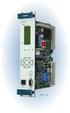 Machinery Protection Card Type FEATURES Continuous on-line Machinery Protection Card Real-time measurement and monitoring using state-of-the-art DSP techniques Fully VME-compatible slave interface Fully
Lab E1: Introduction to Circuits
 E1.1 Lab E1: Introduction to Circuits The purpose of the this lab is to introduce you to some basic instrumentation used in electrical circuits. You will learn to use a DC power supply, a digital multimeter
R&S ZNBT8 Vector Network Analyzer Specifications
 ZNBT8_dat-sw_en_3606-9727-22_v0200_cover.indd 1 Data Sheet 02.00 Test & Measurement R&S ZNBT8 Vector Network Analyzer Specifications 20.05.2014 08:39:42 CONTENTS Definitions... 3 Measurement range... 4
Software version 1.1 Document version 1.0
 Software version 1.1 Document version 1.0 1 RDNET PROTOCOL OVERVIEW... 2 1.1 Network description... 2 1.2 Connection topology... 2 2 SOFTWARE BASIC OPERATIONS... 3 2.1 Main View elements... 3 2.2 Scanning
Spectrum and Power Measurements Using the E6474A Wireless Network Optimization Platform
 Application Note Spectrum and Power Measurements Using the E6474A Wireless Network Optimization Platform By: Richard Komar Introduction With the rapid development of wireless technologies, it has become
Timing Errors and Jitter
 Timing Errors and Jitter Background Mike Story In a sampled (digital) system, samples have to be accurate in level and time. The digital system uses the two bits of information the signal was this big
Fast and Accurate Test of Mobile Phone Boards
 Products: R&S FSP Fast and Accurate Test of Mobile Phone Boards Short test times in conjunction with accurate and repeatable measurement results are essential when testing and calibrating mobile phones
PropScope USB Oscilloscope
 USB Oscilloscope v1.0 December 2009 Manual by Hanno Sander 3 Table of Contents ForeWord... Part I Welcome... 4 Part II Getting... Started 6 2.1 Installation... 7 2.2 8 Connect...
Model UT33A: OPERATING MANUAL Table of Contents (1)
 Table of Contents (1) Title Overview Unpacking Inspection Safety Information Rules For Safe Operation International Electrical Symbols The Meter structure Functional Buttons LCD Display Measurement Operation