
Antisocial Personality: Approaches to Treatment
|
|
|
- Margaret Welch
- 10 years ago
- Views:
Transcription
1 Antisocial Personality: Approaches to Treatment Alaska School on Addictions and Behavioral Health Anchorage, May. 2015, San Miguel de Allende, GTO, Mexico

2 The story of Dan Can antisocial people change? Yes, but we have to offer the resources and treatment antisocial people need It really DOES take a community Living with a legacy of poor social skills, a history of interpersonal disasters and a residue of psychological trauma

3 a model for three types of psychiatric / psychosocial disorders 1. Disorders primarily of brain chemistry / brain functioning: Schizophrenia, bi polar disorders, anxiety disorders, most depressions, dementia 2. Disorders primarily of self in relation to others: Personality disorders, addictions, family disorders, many aspects of trauma disorders & ADHD 3. Disorders primarily of self in relation to society: The antisocial disorders: amorals, impulsives and sadists

4 Unifying characteristics of antisocial disorders: the disorders of self in relation to society 1. acting out or acting on aggression neurotics act in / antisocials act out against rules, norms, expectations don t mess with me bully behavior 2. Getting over on power and control nobody tells me what to do I can get away with it grandiosity Uncomfortable when not in control Projects impotence: You re a loser

5 Unifying characteristics (con t) 3. Lack of concern / sensitivity for others arrogance my needs come first exploitive of others I didn t hurt anybody 4. Lack of self care looks vain and self absorbed, but doesn t take very good care of self often looks older than their age as they age poor emotional self care: loaded with grief

6 Unifying characteristics (con t) 5. Inability to self stimulate use environment to stimulate emotions have trouble self stimulating lets have some fun 6. Emotional deprivation Act feelings but are feeling repressed low on empathy

7 Unifying characteristics (con t) 7. Poor interpersonal relationships see relationships through mirror of manipulation Did I ever tell you about this old girl I used to live with superficial & glib in relationships with others particularly difficult relationships with opposite sex 8. Perception of self as victim, disowning responsibility low on guilt, high on remorse gets anxious if challenged about responsibility projects victimhood on to others, then denigrates them minimize violations of social norms spousal abuse difference of opinion stealing bad judgment

8 In a moment in time. Most antisocial people don t LOOK antisocial most of the time. At a party you probably couldn t pick the people who are on the antisocial spectrum. People on the antisocial spectrum often read others well and can be charming and engaging do impression management well We ALL exhibit antisocial behavior. The meaning of antisocial pathology comes in the PATTERN and the CONTEXT of the behavior

9 Differentiating antisocial behaviors and antisocial character structure Everybody, and especially addicted people, have sometimes behaved in an antisocial manner. Antisocial character structure is an engrained pattern of behavior, thinking, feeling and relating that consistently impacts how a person engages their world.

10 Commonality with addictive illness We see the outsides addicts antisocials inconsistency conning drug use emotional immaturity manipulating self centeredness lack of awareness getting over on others impression management drug use

11 Commonality with addictive illness and we lose sight of the insides that are driving those outsides and then just react to (and judge) the behavior It is important to recognize the insides, the drivers of the behavior, (but responding to the underside too early will make antisocial people very uncomfortable and they will run from treatment)

12 The undercover side of antisocials 1. Remarkably insecure, inadequate people 2. Filled with shame fears someone will find out / fears exposure of real self Hides self from self as well as from others 3. Have underdeveloped conscience and sense of social responsibility lo guilt, hi remorse 4. Highly anxious covers with acting out/on Anxious often gets changed to angry Loves to tell stories of how anxiety was mastered

13

14 Undercover side (con t) 5. Low on motivation for change stimulus for change has to come from the outside 6. Hard time sustaining motivation better on plans and wishes than action 7. Very immature, socially, interpersonally, educationally, spiritually

15 Why do you find antisocials in addiction treatment settings? 1. Because they use a lot of drugs 2. Because it beats going to jail 3. It helps cool things with spouses, employers 4. People see the drug use and assume drugs are the problem 5. Because they tend to have a high relapse rate 6. Because they often really do want to straighten up (and nobody else wants to treat them)

16 Why do antisocials have trouble in addiction treatment settings Have trouble with authority and following rules Are not in control Shame is activated by asking for help / being sick Being in treatment is not good for the image Hates feeling like a victim, a loser ( We admitted we are powerless ) Gets nervous when confronted with feelings, with behavior, with interpersonal interactions Unmotivated to do what is being asked If (s)he has a different agenda for being in treatment Sees life as manipulating, getting over on to get what (s)he wants antithetical to addiction recovery. Enjoys beating the system

17 What works in addictions treatment doesn t necessarily work with antisocials Confrontation Group sharing and identification Emotional expression Personal responsibility Accountability for behavior to others Self assessment Belonging and connecting with others Tapping hope and a desire to change

18 Some misimpressions of antisocials 1. They are all in jail 2. Antisocials are at the bottom of the barrel socially, economically, in employment 3. Mostly found among minorities 4. Are almost always men 5. Are all alike unified set of symptoms 6. Less susceptible to other psychiatric disorders 7. Are smarter than average 8. They outgrow antisocial behavior

19 Psychopaths, Sociopaths, Antisocials & Dyssocial Personality Diagnostic labels are culturally bound: psychopaths to sociopaths to antisocials to dyssocials Psychopaths versus sociopaths Antisocial (DSM 5) and dissocial (ICD 10) personality disorder Once we lump people in a category, we tend to assume everyone in that category has all the same characteristics

20 Antisocial people, below the façade, feel impotent and vulnerable They use anger as an empowering emotion to reduce the feelings of impotence and vulnerability Antisocial people are angry a lot of the time Confronting the anger head on often increases the sense of vulnerability thereby increasing the anger

21 We don t tend to like treating angry people Our emotional & behavioral responses to angry people Anxious people, sad people and angry people and psychiatric diagnoses Anger management needs to get below the symptom In treatment, managing overt versus covert versus passive aggressive anger
22 The Story of Beth Female antisocials may not look like male antisocials. They are not found with the same frequency in the criminal justice system They are less likely to be violent or threaten violence The antisocial behaviors may be different Most treatment paradigms for antisocials are oriented towards men Female antisocials are often misdiagnosed as borderline or histrionic personality disorders. Women who are antisocial may have a higher incidence of trauma disorders
23 The antisocial spectrum
24 A matrix for understanding the antisocial spectrum TYPES OF DISORDER AMORAL IMPULSIVE SADISTIC LEVEL OF IMPAIRMENT: TRAITS PATTERNS DISORDER PSYCHOTIC
25 Four levels of impairment with antisocials 1. Character trait disturbance Functions well in society Antisocial part may be hidden from others May be highly successful (by societal standards) While antisocial traits are present, there is some control over the trait May compensate for antisocial traits by doing well in some areas of life: Glib and engaging, May be overly generous to others, Active in community affairs, Good parent, Protective of children and elderly, May have lots of $$$$ Can learn from their mistakes & make changes
26 Bruce Carruth, Ph.D.
27 Implications for treatment Can self assess and critically judge their behavior (doesn t mean they want to change) Can access painful history and make connections to present behavior Have a capacity to connect with others Has access to feelings, though may displace the feeling (turn sadness or scare into anger) Can hear feedback (tho might not take it)
28 Four levels of impairment with antisocials 2. Character Pattern Disturbance Can t hide antisocial symptoms as well Less adaptable to change (symptoms more entrenched) Ego defense is more rigid, less insight More limited in interpersonal functioning Life is more defined by limited parts of personality Childhood wounds may limit adult functioning Recognizable developmental failures in childhood and adolescence
29 Implications for treatment Have a more pervasive history of impairment and trauma Repressed childhood trauma & childhood developmental failures Stronger focus on behavior in treatment, less on feelings and thoughts Longer time to develop the relationship and the ruptures in the relationship will be more severe Therapist has to carefully craft feedback In general, fewer strengths to build upon
30 4 levels of impairment (con t) 3. Antisocial Personality Disorder A pervasive pattern of rigid character structure that limits options in life. Failures in psychosocial development early in life set up a pattern of maladaptive coping, limited resources and skills and a poor sense of self. This inability to handle life maintains the trauma in adulthood Limited resources for staying out of trouble Don t learn from mistakes and keep shooting themselves in the foot.
31 Implications for treatment Almost always need a major conversion experience as a precursor to change: TC, church, cult Need strong boundaries to control behavior Major trauma in history that limits opportunities to go inside to access thoughts and feelings huge shame & underlying depression Limited recovery strengths Doesn t learn from mistakes so self evaluation has limited usefulness
32 4 levels of impairment (con t) 4. Psychotically disorganized antisocials Personality disordered people with periods of psychotic disorganization marked by dissociation, depersonalization, cognitive distortions, delusions and/or inability to control actions. Antisocial people aren t immune to psychotic illnesses, like schizophrenia, bipolar illness, major depressions. May be precipitated by antisocial condition (long periods of solitary confinement or heavy trauma) or may be simply co occurring These folks almost always end up in prison or forensic psychiatry units.
33 Prevalence of antisocial pathologies High Functioning character trait disturbance Character pattern disturbance Personality disorder Psychotic disorganization
34 Prevalence of antisocial pathologies High Functioning character trait disturbance (ongoing outpatient treatment) Character pattern disturbance (intensive outpt./tc treatment environment) + ongoing outpatient treatment) Personality disorder (long term intensive residential TC + ongoing psychotherapy & support Psychotic disorganization (long term institutionalization)
35 All antisocial adults were once children Often described as difficult to raise don t connect well with parents or sibs detached from family. Parental bonding cycle is interrupted lying, stealing, cheating and not following family rules difficult to console, distorted emotionality pigeonholed as the bad kid who creates chaos & drama Or, as with some high functioning Amorals, may have been the perfect kid, track star, president of the class, good grades Often, as children, especially those who develop impulsive antisocial patterns, have learning problems as children
36 Often, especially those with impulse disorders, have learning problems 3 characteristics of children who are later diagnosed as antisocial: torture animals set fires enuresis Parents are often left with where did we go wrong
37 Childhood diagnoses of antisocials 1. ADHD restless, inattentive, don t follow instruction or rules 2. Conduct disorders set fires, abuse animals and other children, low attention span 3. Oppositional defiant disorder oppositional, stubborn, negativistic, disobedient 4. Reactive attachment disorder aloof, emotionally detached, over or under react to emotional stimuli 5. Callous unemotional disorder not in DSM. Primary dynamics are aloofness, disdain, desire to inflict pain may look similar to but ARE NOT Asperger s Syndrome Asperger s.
38 Antisocial people wreak havoc with families How could we have two kids who turned out so great and one who turned out so bad Finding out who is at fault / the cycle of guilt and rescue Being so angry at the behavior of your child Multiple therapists / multiple diagnoses / multiple treatments. It gets really confusing and families become immune to treatment When amends aren t (or can t) be made Family shame
39 Growing up with an antisocial parent The legacy of children with an antisocial parent Carrying my parent s name My dad is in prison My mom is not a mom If I can t trust my parents,.. A life script of trying to be the opposite Not knowing what is normal How can I love a person who does so many bad things Addicted to excitement or conformity The legacy of shame
40 The story of Bob Untreated young antisocials become untreated old antisocials Antisocial behaviors morph over the years Less violence, more entrenched in beliefs, more trauma Life failures aggregate: criminal justice record, job history, health, relationships A 50 year old antisocial guy has lived 70 years A lifelong history of emotional isolation
41 Overlapping diagnoses with antisocial pathology in adults PTSD & related trauma disorders Narcissistic personality Borderline personality Histrionic personality Intermittent Explosive Disorder Anxiety disorder(s) Depressive disorder(s) And, of course, Addictive Illnesses
42 3 types of antisocial character Amoral Personality Amoral extroverts narcissistic / grandiose features Amoral introverts schizoid & paranoid features Antisocial Impulse Disorders Sadistic Antisocials
43 Amoral Antisocials Primacy of self needs over the needs of others, self centered Getting over on others keeping others one down Grandiosity that covers one downness and insecurity Competitiveness not losing is primary losing means having to get revenge Primary emotional dilemma is shame
44
45 Amoral Antisocials (con t) Has impulse control plans and plots and can delay gratification Often quite glib, superficial in relationships Focus is on image and impression management To understand amorals, watch The Sopranos. Tony is an amoral antisocial pattern disturbance Chris is an amoral/impulsive antisocial personality disorder
46 Extroverted (narcissistic) amoral antisocials Grandiose, projects shame Entitled, flaunts privilege May be arrogant, condescending of others but at same time, may show false humility Attracts trophy friends and mate Often high achievers, but cheats to get there High on impression management Needs others for validation Tony Soprano has a high functioning extroverted antisocial trait/pattern disturbance
47 Introverted (schizoid) amoral antisocials Loners, often little need for others, hides shame Deficits in social skills Often seems aloof and disdainful of others Highly sensitive to real or perceived shaming Outwardly non competitive, but losing really hurts Good plotters can carry a grudge for years Can have an active paranoid flavor Poor relationships with opposite sex The withdrawn murderer in Fargo was an introverted amoral APD
48 Impulsive antisocials Lack impulse control End up in social/health services in crisis Low feeling (except anxiety), feel through thrills and high risk: Let s have some fun! Often history of learning problems, school & social failures, low self esteem May be impulsively violent High tolerance for pain dissociates easily High risk for drug use, drug dependence Trouble explaining motivations low insight Low guilt, high remorse
49 Bruce Carruth, Ph.D.
50 Sadistic Antisocials Willingness / desire to inflict pain on others for personal satisfaction Lack of caring and empathy for others Low feeling tone, feel through the pain of others, may overreact with feelings Usually, but not always, history of pervasive childhood abuse and trauma Intense need to control and dominate Has little or no remorse for actions, justify and rationalize behavior (and believe it).
51 Sadistic Antisocials Sadism is about getting over on people (or animals) and getting a rush from inflicting pain or helplessness Not all sadistic people are antisocial, even though the specific behavior may be regarded as sadism. One culture may consider a specific behavior sadistic while another does not. Sadism almost always has an element of The Big Secret
52 The Big Secret If and when sadistic antisocials appear for treatment, they most likely will present with other problems, such as needing detox or presenting with marital/interpersonal or job problems, rarely for their sadistic behavior. As a result, their sadism go unrecognized and untreated.
53 Does treatment really make antisocials worse? YES, if people are treated with inappropriate treatment approaches YES, if treatment stops at confronting primary, primitive ego defenses of the person: Grandiosity and omnipotence arrogance and glibness getting over on / manipulativeness denial and dissociation projection
54 Does treatment really make antisocials worse? (con t) Therapy (and the treatment environment) has to support the severely wounded self as it emerges. Shame, degradation, vulnerability and exposure are difficult for the individual to tolerate. Antisocial people almost invariably have to get worse (exposure of wounded self) before they can get better. And the getting worse is hard for the treatment staff to tolerate
55
56 Some principles of therapy with antisocials 1. Focus is on doing, not talking behavioral orientation especially early in treatment 2. Focus is on outcomes of behavior, not the meaning of the behavior 3. Feelings don t count in the early treatment 4. Omnipotence and grandiosity have to be confronted. Can t let the antisocial person get over on you. 5. Have to build a greater capacity for personal responsibility 6. Have to build a stronger capacity to experience anxiety 7. Have to confront and refute client s fears of being used 8. Have to build a basic capacity for experiencing a conscience
57 Some principles of therapy with antisocials (con t) 9. Heavy confrontation only works in institutions and in movies 10. Have to confront the myth of the heroic outlaw. Robin Hood doesn t live in your treatment center 11. Therapist has to maintain authority without being authoritarian 12. The paradigms that are the basis for therapy with other personality disorders cause increased anxiety and acting out: insight = gaminess empathy = weakness / manipulation relatedness = intrusion trust = stupidness _ I m untrustworthy, why would I trust you?
58 A caveat about 12 Steps and antisocials The honesty, openness, connectedness, (and sometimes the shaming) in AA and other 12 Step programs can make people on the antisocial spectrum very anxious. To re regulate, antisocial people will begin to act out and may: violate confidentialities seduce people emotionally or sexually use well intentioned program members to manipulate others (or systems) borrow (and not repay) money sabotage other s abstinence and recovery NOT EVERYONE IS A SUITABLE CANDIDATE FOR 12 STEPS
59 The power of a contained environment in early treatment Most people in early treatment need the safety of a contained environment to be able to accept and process the confrontation The shame that emerges in the confrontation has to be managed Group support of people who have been there is important Treatment needs to consider where the person is (in the moment) on the antisocial triangle
60 The antisocial triangle Withdrawn Detached (on the inside) (on the outside) Defense sees self as victim denies responsibility placates, apologizes has to get revenge gets over (Some trigger occurs) Activates gets in trouble / manipulates reacts to environment creates excitement
61 The antisocial triangle TREATMENT Withdrawn Detached (on the inside) (on the outside) therapy is to engage / experience /contact Defense therapy is anxiety mgt / articulating fears Confrontation finding safety hearing feedback cons and manipulates creates triangles & chaos (Some trigger occurs) Activates therapy is awareness / coping skills / staying with / within self / relational
62 6 domains of treatment: Behavior control Cognitive disortions Affect regulation Interpersonal relationships Drug use and addiction Psychological trauma
63 The domains and phases of treatment Domains Behavior control Phases of Tx engagement cognitive reconstructive selfwork Cognitive distortions Affect regulation
64 Domains and Phases (continued) Domains Interpersonal relationships Phases of Tx engagement cognitive reconstructive selfwork Drug use & addiction Psychological trauma
65 The overall context for treatment of antisocial people The antisocial diagnosis recognizing antisocials when you see them being able to differentiate types of antisocials The level of impairment some folks look sicker than they are, others look a lot healthier than they really are The particular issues or domain of life we are addressing (addiction issues, coping skills, relationships ) The phase of treatment
66 Five levels of treatment contracts with antisocials: treatment engagement 1. forced contracts mandated treatment no choice 2. conditional contracts go to jail if you don t 3. low medical contracts conversion experiences (something outside of me has to fix me) 4. high medical contracts I ve got to change my life 5. growth contracts I want to be a better person
67
68 Getting started with treatment: Working with defense and resistance Cognitive filters: mini scripts, cognitive/perceptual distortions, beliefs/truths, stereotypes Coping behaviors: withdrawal, distraction, boredom, dominating, manipulating Interpersonal: using others, withdrawing, controlling others, arguing/polarizing, compliance Psychological: deflecting, retroflecting, projecting, introjecting, confluence,
69 The importance of loving / caring confrontation Behavior HAS to be confronted Never confront personhood or shame the person (you are a jerk!) a 4 step confrontation process 1. I care about you and your efforts 2. Here is what is going on (in behavioral terms) 3. Feedback from others (me) (impacts of behavior) 4. Here is what I (we) want you to do (corrective action)
70 The inpatient / residential experience Antisocial people with personality pattern disturbances or personality disorders can rarely move into recovery without a confined residential treatment experience. The residential experience allows behavior, ego defense and core schema to be challenged. Builds capacity for bonding & exposure of wounded self But 30 or 60 days isn t enough: The person needs to experience sustained safety, identification, emotional regulation & the beginnings of a new value system
71 The meaning of the conversion experience The meaning of having a safe community to step into: intensive AA/NA/CA based residential TC that transitions to community based 12 Step programs fundamentalist religions exotic spiritual practices certain military groups Give me some boundaries and a value system until I can develop my own As the person moves through recovery they may need to reject some of the dogmatism they have previously incorporated
72 Phase two: Cognitive/behavioral based change Confronting the antisocial schema watching the antisocial act out their world view in the treatment. Developing self support & managing anxiety Curative factors in individual and group treatment confrontation, questioning values, attaching and belonging, self exposure. Making connections between current functioning and history Managing the wounds as they appear: the bully kid, the invisible kid, exposing childhood trauma, not knowing how to handle support, supporting exposure of and managing the empty depression Managing self dynamics as they appear in treatment: shame, loneliness, feeling repression & especially, neediness/deprivation.
73 Limiting beliefs of antisocial people People will take advantage of me if given the chance I need to be in total control of my emotions If I want something, I can do whatever I need to do to get it Being controlled or dominated by others is intolerable I m better off alone We live in a jungle and the strong survive People are schmucks & deserve what they get (but not me)
74 3rd generation CBT DBT (Dialectical Behavior Therapy) An integrated conceptual and practice framework for change anchored in: an accepting, well bounded therapeutic alliance reality testing & feedback from client, therapist and group mindfulness distress tolerance emotional regulation interpersonal effectiveness DBT was originally developed for people with Borderline Personality Disorder ACT is another useful 3 G cognitive behavioral therapy
75 The existential depression Take away the shell and there is not much inside to embrace huge emptiness Meaninglessness a lifetime of being a screw up &/or a cover up The only way to get through the swamp is to go through it. Grieving the losses and what could have been SSRIs aren t particularly helpful except in serious depression Never tear someone down if you don t offer options to rebuild their sense of self Suicide risk Countertransferential dynamics of the depression
76 Phase 3: Reconstructive work Developing a capacity for conscience: learning to care about the needs of others Building new core schema, world views Continuing to support progress through the depression: being the nurturing parent Developing self control Developing / enhancing interpersonal, social, occupational skills Evolving self care: self soothing, self support, self assessment Developing an enlarged positive social, interpersonal, and familial support system: learning to accept & utilize support Living with (rather than running away from) the history of the old way
77 Building courage Antisocial people are not known for being courageous Bullies on the outside, anxious (weak) on the inside Courage as a psychological attribute bravery perseverance honesty (particularly self honesty) zest vitality belief in self You just don t know who you are dealing with
78 Phase 4: Developing Soul Allowing there to be a power greater than self: Belonging to: Family Community (for instance, AA & NA) Ethnic identity Spiritual identity Developing commitment putting both feet on the rug Moving from being an outcast to being a ci zen The spiritual search the search for meaning We build self in therapy, we build soul in belonging
79 Some specific treatment issues with antisocial subtypes Amorals Impulsives Sadists
80 Treating amoral personalities High functioning character trait disturbances Being the incorruptible, well bounded, interested parent. The interest is in the person, not the exploits Early in treatment have to respect that the person is sicker than they look. Narcissistic stance & schizoid withdrawal Boundaries of therapy are behaviorally based: Clean confrontations of behavior, never shaming
81 Treating amoral personalities (con t) Process of therapy is cognitive/behavioral and relational Working attachment through therapeutic relationship and AA sponsor or significant others Co opting the antisocial traits: charm, manipulativeness, resourcefulness, reading others, survival skills Conversion (immersion) in AA, spiritual program, treatment Managing the zero state, narcissistic depression that emerges when defenses are down
82 Treating amorals Character pattern disturbance Clear behavioral contracts therapy is about achieving behavioral tasks Have clear, forced contracts for treatment can t quit Boundaries and process of treatment is behaviorally based Goal is to keep person in treatment long enough to move up to character trait disturbance Therapy has to be a crucible to expose and contain the rage without resorting to violence Careful about using 12 step programs. Client will get anxious and manipulate others in AA to get over & reduce anxiety.
83 Treating amorals (con t) Personality disorders Treatment is a long term therapeutic community Treatment goal is to: Internalize behavioral controls and boundaries conversion experiences for new value / ethical system develop a sense of affiliation and connection with organizations and other people Institutional constraints have to be able to contain the acting out that is a result of anxiety generated in treatment Differentiate consequences from punishment!
84 Treating impulsive character structure Character trait disturbances set strong boundaries: show up and follow the rules increase capacity to delay gratification increase sense of control, internalize locus of control continued focus on assessing consequences of behavior supporting compliance / conforming behavior look for co occurring ADHD childhood or adult onset R/O other organic bases of impulse problems R/O trauma history that promotes impulsivity & outbursts
85 Treating impulsive character structure (con t) Character pattern disturbances behavioral constraints clear consequences / penalties for rule violations emphasis on responsibility for actions may need SSRI s to help control anxiety needs group support to control impulses
86 Character trait disturbances Clear behavioral contracts that define conditions of treatment and proscribed behaviors and people/places/things Treatment of choice is long term, intensive group that allows: identification & affiliation, confrontation & a holding community Early in treatment, the victimization defense has to be confronted: responsibility for acts Treatment has to ultimately address sadists own trauma Abuse in treatment settings activates the sadist s trauma which activates defense which activates sadistic behavior Aversive counter transference with sadists has to be managed. Clinical supervision is essential Treating sadists
87 Cycle of sadism trigger experiences internal (memories) or external (movies) remorse or withdrawal heavy ego defense Activates trauma hx affects/cognitions Acts out to re regulate Activates ego defense affect repression / thinking defense fantasy / withdrawal
88 Treating sadists Character pattern disturbances Confrontation in a contained environment No victimization, no excuses, no acting out Identification of sadism as problem & recognition of the need for treatment and recovery Confrontation of attempts to draw others into victimization defense Co managing treatment and punishment for sadistic acts Personality Disorder institutionalization & long term intense supervision
89 The difficult tri occurring disorders Antisocial character structure Addiction Psychological trauma
90 The symptoms of all three disorders overlap Chronic psychological / emotional withdrawnness Hyper reactivity to stimuli Underlying depression w/ surface anxiety (the anxious depression ) Huge fears of insides coming out, exploding,/being found out (exposed) highly defensive Feeling repression, low introspection Low trust (of insides and environment) High need for control
91 Treating tri occurring disorders Treatment requires a remarkable degree of safety, boundedness & consistency Safety occurs over time All 3 disorders have to be acknowledged, (tho any one may be the primary focus of treatment at a given time) Integrated treatment is mandatory sequential & parallel treatments don t work Relapse in one activates the others Growth and recovery from one facilitates recovery from the others
92 How can antisocial people change? 1. Change for antisocial people has to address a whole way of life. social system, family, occupation, sense of self, interpersonal relations, trauma recovery Antisocials love to marry histrionics, borderlines and other antisocials & then they are married to them and stuck 2. Confronting problems in the antisocial s life changes the problem but not the person. 3. Antisocials don t respond positively to traditional mental health / addictions treatment makes them nervous
93 Change process for antisocials (con t) 4. change doesn t come in once a week, individual therapy. Need more intensity & control higher functioning antisocials can benefit from outpatient therapy, lower functioning people need more intensive treatment & support 5. change agent system has to be consistent, firm, committed to long term change and must involve a change in core values and beliefs 6. religious conversion may be a primary change agent (see # 5, above)
94 Change process for antisocials (con t) 7. you can t punish an antisocial into good citizenship and behavior 8. at some time in treatment the core emptiness and fragility will emerge as a major depression 9. from this emptiness, a new sense of self can grow and flourish
95 Why Bother???
96 For more information Overheads are on website:
97
98
99
100
101
102
Understanding 5 High Conflict Personality Disorders
 Understanding 5 High Conflict Personality Disorders Bill Eddy, LCSW, Esq. Attorney, Mediator, Therapist, Author Family Law Institute March 19, 2013 - Minneapolis Copyright 2013 High Conflict Institute
Developing a Therapeutic Relationship with Clients with Personality Disorders. The Therapeutic Relationship. The Therapeutic Relationship 7/31/15&
 Developing a Therapeutic Relationship with Clients with Personality Disorders Jim Seckman, MAC, CACII, CCS The Therapeutic Relationship The therapeutic relationship, also called the therapeutic alliance,
Personality Difficulties
 Personality Difficulties The essential features of a personality disorder are impairments in personality (self and interpersonal) functioning and the presence of pathological personality traits. There
Compiled by Julie Ann Romero AS 91 Spring 2010
 Compiled by Julie Ann Romero AS 91 Spring 2010 Antisocial personality disorder is a psychiatric condition in which a person manipulates, exploits, or violates the rights of others. This behavior is often
Personality Disorders
 Personality Disorders Source: Linda Lebelle, Focus Adolescent Services A Personality Disorder is identified by a pervasive pattern of experience and behaviour that is abnormal with respect to any of the
Personality Disorders
 Personality s The Good, the Bad and the Really, Really Ugly: Borderline and other Cluster B Personality s BY CHRIS OKIISHI, MD! Long standing! Often life long! Developmental origins! Genetic origins! Resistant
Conceptual Models of Substance Use
 Conceptual Models of Substance Use Different causal factors emphasized Different interventions based on conceptual models 1 Developing a Conceptual Model What is the nature of the disorder? Why causes
What is a personality disorder?
 What is a personality disorder? What is a personality disorder? Everyone has personality traits that characterise them. These are the usual ways that a person thinks and behaves, which make each of us
Personality Disorders
 Personality Disorders Chapter 11 Personality Disorders: An Overview The Nature of Personality and Personality Disorders Enduring and relatively stable predispositions (i.e., ways of relating and thinking)
WHAT IS PTSD? A HANDOUT FROM THE NATIONAL CENTER FOR PTSD BY JESSICA HAMBLEN, PHD
 WHAT IS PTSD? A HANDOUT FROM THE NATIONAL CENTER FOR PTSD BY JESSICA HAMBLEN, PHD Posttraumatic Stress Disorder (PTSD) is an anxiety disorder that can occur following the experience or witnessing of a
Chapter 12 Personality Disorders
 The Nature of Personality Disorders Chapter 12 Personality Disorders Enduring patterns of perceiving, relating to, and thinking about the world and oneself Manifest across many life areas Are inflexible
Personality Disorders
 Abnormal Psychology Clinical Perspectives on Psychological Disorders 5e Personality Disorders Chapter 10 Personality Disorders Chapter 10 Personality trait An enduring pattern of perceiving, relating to,
Borderline Personality Disorder
 Borderline Personality Disorder What Is It, and How to Work More Effectively With People Who Have It State Public Defenders Conference September 2005 Ronald J Diamond M.D. Department of Psychiatry University
Personality disorder. Caring for a person who has a. Case study. What is a personality disorder?
 Caring for a person who has a Personality disorder Case study Kiara is a 23 year old woman who has been brought to the emergency department by her sister after taking an overdose of her antidepressant
Conduct Disorder: Treatment Recommendations. For Vermont Youth. From the. State Interagency Team
 Conduct Disorder: Treatment Recommendations For Vermont Youth From the State Interagency Team By Bill McMains, Medical Director, Vermont DDMHS Alice Maynard, Mental Health Quality Management Chief, Vermont
Disorders of trust and bonding
 Disorders of trust and bonding Avoidant Personality Disorder Avoid, stay safe Primary presenting symptom is avoidance of social and interpersonal interactions to diminish intense anxiety. Often comorbid
Borderline Personality Disorder and Treatment Options
 Borderline Personality Disorder and Treatment Options MELISSA BUDZINSKI, LCSW VICE PRESIDENT, CLINICAL SERVICES 2014 Horizon Mental Health Management, LLC. All rights reserved. Objectives Define Borderline
Personality Disorders
 LP 13BF personality disorders 1 Personality Disorders Personality disorders: Disorders characterized by deeply ingrained, Inflexible patterns of thinking, feeling, or relating to others or controlling
DSM-V: DISRUPTIVE BEHAVIORS, PERSONALITY DISORDERS AND V-CODES
 DSM-V: DISRUPTIVE BEHAVIORS, PERSONALITY DISORDERS AND V-CODES STEPHEN SOLTYS, MD PROFESSOR AND CHAIRMAN DEPARTMENT OF PSYCHIATRY SOUTHERN ILLINOIS UNIVERSITY SCHOOL OF MEDICINE DISCLOSURES No conflicts
2) Recurrent emotional abuse. 3) Contact sexual abuse. 4) An alcohol and/or drug abuser in the household. 5) An incarcerated household member
 Co Occurring Disorders and the on Children: Effectively Working with Families Affected by Substance Abuse and Mental Illness Definition (Co-Occurring also called Dual Dx) A professional diagnosis of addictive/substance
The Dance of Power Frustrating
 The Dance of Power Frustrating the DRAMA! Presented by: Josh Smith, LMSW, BCD Co Owner of The DBT Center of Michigan Owner of The DBT Center of Western Kentucky [email protected] Normal Personality
Antisocial personality disorder
 Page 1 of 7 Diseases and Conditions Antisocial personality disorder By Mayo Clinic Staff Antisocial personality disorder is a type of chronic mental condition in which a person's ways of thinking, perceiving
Anti-Social Personality Disorder
 Anti-Social Personality Disorder Definition Anti-Social Personality Disorder is a type of chronic mental condition in which a person's ways of thinking, perceiving situations and relating to others are
Personality Disorders (PD) Summary (print version)
 Personality Disorders (PD) Summary (print version) 1/ Definition A Personality Disorder is an abnormal, extreme and persistent variation from the normal (statistical) range of one or more personality attributes
Insecure Attachment and Reactive Attachment Disorder
 Attachment Disorders Insecure Attachment and Reactive Attachment Disorder When infants and young children have a loving caregiver consistently responding to their needs, they build a secure attachment.
Sue/Sue/Sue Understanding Abnormal Behavior, 9 th edition 2010 Cengage Learning CHAPTER EIGHT. Personality Disorders
 Sue/Sue/Sue Understanding Abnormal Behavior, 9 th edition 2010 Cengage Learning CHAPTER EIGHT Personality Disorders PERSONALITY DISORDERS Personality Disorder: Sue/Sue/Sue Understanding Abnormal Behavior,
Co-Occurring Substance Use and Mental Health Disorders. Joy Chudzynski, PsyD UCLA Integrated Substance Abuse Programs
 Co-Occurring Substance Use and Mental Health Disorders Joy Chudzynski, PsyD UCLA Integrated Substance Abuse Programs Introduction Overview of the evolving field of Co-Occurring Disorders Addiction and
Mental Health Needs Assessment Personality Disorder Prevalence and models of care
 Mental Health Needs Assessment Personality Disorder Prevalence and models of care Introduction and definitions Personality disorders are a complex group of conditions identified through how an individual
Towards Developing a Manual for Residential Treatment Centers to Support Individuals with an FASD and Their Families
 Towards Developing a Manual for Residential Treatment Centers to Support Individuals with an FASD and Their Families Presented By Dr. Pamela Gillen University of Colorado Anschutz Medical Campus and Dan
ce4less.com ce4less.com ce4less.com ce4less.com ce4less.com ce4less.com
 Borderline Personality Disorder: The Latest Assessment and Treatment Strategies Questions from chapter 1 1) The first written work on BPD described these clients as occupying a continuum between a) neurosis
GESTALT THERAPY. Theory of Personality. Gestalt. Gestalt Therapy. Quotation
 GESTALT THERAPY Psychology 460 Counseling and Interviewing Sheila K. Grant, Ph.D. Quotation "I am not in this world to live up to other people's expectations, nor do I feel that the world must live up
FACT SHEET. What is Trauma? TRAUMA-INFORMED CARE FOR WORKING WITH HOMELESS VETERANS
 FACT SHEET TRAUMA-INFORMED CARE FOR WORKING WITH HOMELESS VETERANS According to SAMHSA 1, trauma-informed care includes having a basic understanding of how trauma affects the life of individuals seeking
CHAPTER 6 Diagnosing and Identifying the Need for Trauma Treatment
 CHAPTER 6 Diagnosing and Identifying the Need for Trauma Treatment This chapter offers mental health professionals: information on diagnosing and identifying the need for trauma treatment guidance in determining
Borderline Personality Disorder
 Borderline Personality Disorder Borderline Personality Disorder Formerly called latent schizophrenia Added to DSM III (1980) as BPD most commonly diagnosed in females (75%) 70-75% have a history of at
Co-dependency. Fact Sheet on co-dependency from Mental Health America:
 Co-dependency Fact Sheet on co-dependency from Mental Health America: Co-dependency is a learned behavior that can be passed down from one generation to another. It is an emotional and behavioral condition
THE ABSENT MOTHER. The Psychological and Emotional Consequences of Childhood Abandonment and Neglect. Dr. Judith Arndell Clinical Psychologist
 THE ABSENT MOTHER. The Psychological and Emotional Consequences of Childhood Abandonment and Neglect Dr. Judith Arndell Clinical Psychologist The Psychological Parent The object of the child s deepest
Conducting Emotionally Difficult Conversations. John Banja, PhD Center For Ethics Emory University [email protected]
 Conducting Emotionally Difficult Conversations John Banja, PhD Center For Ethics Emory University [email protected] How To Break Bad News Robert Buckman (with contributions by Yvonne Kason). Baltimore:
From damage to disorder; working with personality difficulties in a forensic setting Julia Harrison Occupational Therapist - Adult Forensic Services
 From damage to disorder; working with personality difficulties in a forensic setting Julia Harrison Occupational Therapist - Adult Forensic Services Northumberland, Tyne and Wear NHS Foundation Trust From
Abnormal Psychology Practice Quiz #3
 Abnormal Psychology Practice Quiz #3 1. People with refuse to maintain a minimum, normal body weight, and have an intense fear of gaining weight. a. anorexia nirvana b. anorexia bulimia c. bulimia nervosa
Study Guide - Borderline Personality Disorder (DSM-IV-TR) 1
 Study Guide - Borderline Personality Disorder (DSM-IV-TR) 1 Pervasive pattern of instability of interpersonal relationships, selfimage, and affects, and marked impulsivity that begins by early adulthood
Bullying. Take Action Against. stealing money. switching seats in the classroom. spreading rumors. pushing & tripping
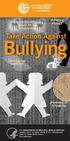 switching seats in the classroom stealing money Take Action Against Bullying spreading rumors pushing & tripping U.S. DEPARTMENT OF HEALTH & HUMAN SERVICES Substance Abuse and Mental Health Services Administration
Co-Occurring Disorders
 Presented by Pamela Messore LICSW, LCDP Co-Occurring Disorder - formerly Dual Diagnosis - was once a challenge to providers. Historically, clients were treated in separate modalities - even separate agencies.
Compensation Strategies for Common Challenges after Traumatic Brain Injury
 Compensation Strategies for Common Challenges after Traumatic Brain Injury Annette Pearson MS, LADC, CBIS Vinland National Center [email protected] 1 This is any one of us, with some area(s) of
Working Definitions APPRECIATION OF THE ROLE OF EARLY TRAUMA IN SEVERE PERSONALITY DISORDERS
 Working Definitions PERSONALITY TRAIT a stable, recurring pattern of human behavior - e.g. a tendency to joke in serious situations, hypersensitivity to criticism, talkativeness in groups. PERSONALITY
PYSCHOPATHY AND ANTISOCIAL PERSONALITY DISORDER. Lisann Nolte & Justine Paeschen
 PYSCHOPATHY AND ANTISOCIAL PERSONALITY DISORDER Lisann Nolte & Justine Paeschen PSYCHOPATHY THE PSYCHOPATH TEST http://www.youtube.com/watch?v=e_va2tl6czwth E PSYCHOPATH TEST - are you a psychopath? PSYCHOPATHY
Delusions are false beliefs that are not part of their real-life. The person keeps on believing his delusions even when other people prove that the be
 Schizophrenia Schizophrenia is a chronic, severe, and disabling brain disorder which affects the whole person s day-to-day actions, for example, thinking, feeling and behavior. It usually starts between
Depression Assessment & Treatment
 Depressive Symptoms? Administer depression screening tool: PSC Depression Assessment & Treatment Yes Positive screen Safety Screen (see Appendix): Administer every visit Neglect/Abuse? Thoughts of hurting
Treatment of Complex PTSD and Dissociative Disorders in Clinical Practice. Victor Welzant, Psy.D
 Treatment of Complex PTSD and Dissociative Disorders in Clinical Practice Victor Welzant, Psy.D Trauma Spectrum Peritraumatic reactions (dissociation, arousal, freezing, performance) Posttraumatic reactions
ANTISOCIAL PERSONALITY DISORDER
 ANTISOCIAL PERSONALITY DISORDER Antisocial personality disorder is a type of chronic mental illness in which your ways of thinking, perceiving situations and relating to others are dysfunctional. When
Post Traumatic Stress Disorder. Christy Hutton, PhD April 3, 2007
 Post Traumatic Stress Disorder Christy Hutton, PhD April 3, 2007 Trauma statistics 25-80% of women and 20+% of men have a history of sexual victimization. Girls in high income families are at greatest
PSYCHIATRIC EMERGENCY. Department of Psychiatry Pomeranian Medical University in Szczecin
 PSYCHIATRIC EMERGENCY Department of Psychiatry Pomeranian Medical University in Szczecin Sudden psychic disturbances including: - cognition - thought process - emotional area - psychomotor activity when
Co-Occurring Disorders
 Co-Occurring Disorders PACCT 2011 CAROLYN FRANZEN Learning Objectives List common examples of mental health problems associated with substance abuse disorders Describe risk factors that contribute to the
Domestic Violence, Mental Health and Substance Abuse
 Domestic Violence, Mental Health and Substance Abuse Sue Parry, PhD NYS Office for the Prevention of Domestic Violence Why does domestic violence (DV) have so many mental health effects? Put yourself in
A Review of Conduct Disorder. William U Borst. Troy State University at Phenix City
 A Review of 1 Running head: A REVIEW OF CONDUCT DISORDER A Review of Conduct Disorder William U Borst Troy State University at Phenix City A Review of 2 Abstract Conduct disorders are a complicated set
Substance Abuse and Sexual Violence:
 Substance Abuse and Sexual Violence: The Need for Integration When Treating Survivors Kelli Hood, M.A. Objective To understand the necessity for therapeutic strategies in clients with cooccurring Substance
Colorado Springs Office 3210 E. Woodmen Rd., #100 Colorado Springs, CO, 80920. Denver Office 837 Sherman St. Denver, CO 80203
 Colorado Springs Office 3210 E. Woodmen Rd., #100 Colorado Springs, CO, 80920 Denver Office 837 Sherman St. Denver, CO 80203 Welcome to my practice. I am honored that you are giving me the opportunity
Traumatic Stress. and Substance Use Problems
 Traumatic Stress and Substance Use Problems The relation between substance use and trauma Research demonstrates a strong link between exposure to traumatic events and substance use problems. Many people
Self Assessment: Substance Abuse
 Self Assessment: Substance Abuse Please respond TRUE (T) or FALSE (F) to the following items as they apply to you. Part 1 I use or have used alcohol or drugs for recreational purposes. I use alcohol despite
Winter 2013, SW 713-001, Thursdays 2:00 5:00 p.m., Room B684 SSWB
 1 Winter 2013, SW 713-001, Thursdays 2:00 5:00 p.m., Room B684 SSWB DIALECTICAL BEHAVIOR THERAPY SOCIAL WORK PRACTICE IN MENTAL HEALTH EMPERICALLY SUPPORTED TREATMENT FOR INDIVIDUALS WITH SEVERE EMOTION
FOCUSING-ORIENTED THERAPY AND COMPLEX TRAUMA TRAINING PROGRAM
 What is Focusing Oriented Therapy? Focusing-Oriented Therapy (FOT) is a body-centered and person-centered approach to healing, developed three decades ago at the University of Chicago by Dr. Eugene Gendlin.
Copyright Recovery Connection 1 RECOVERY CONNECTION
 1 Choosing a Quality Christian Alcohol and Drug Rehab Some people who seek alcohol and drug treatment arrive at the treatment facility longing for a renewed or a new connection with a spiritual power.
Attachment Theory: Understanding and Applying Attachment Style in Addiction Counseling. Denise Kagan, PhD Pavillon Psychologist
 Attachment Theory: Understanding and Applying Attachment Style in Addiction Counseling Denise Kagan, PhD Pavillon Psychologist Attachment Theory Mentalization and Attachment Studies Neurobiology of Attachment
THE EFFECTS OF FAMILY VIOLENCE ON CHILDREN. Where Does It Hurt?
 THE EFFECTS OF FAMILY VIOLENCE ON CHILDREN Where Does It Hurt? Child Abuse Hurts Us All Every child has the right to be nurtured and to be safe. According to: Family Violence in Canada: A Statistical Profile
Using coping statements to avoid common thinking traps
 Using coping statements to avoid common thinking traps Did you know that your thoughts affect how you see yourself and the world around you? You may look at a situation one way, even though there are many
DSM-5: A Comprehensive Overview
 1) The original DSM was published in a) 1942 b) 1952 c) 1962 d) 1972 DSM-5: A Comprehensive Overview 2) The DSM provides all the following EXCEPT a) Guidelines for the treatment of identified disorders
UNDERSTANDING CO-OCCURRING DISORDERS. Frances A. Campbell MSN, PMH CNS-BC, CARN Michael Beatty, LCSW, NCGC-1 Bridge To Hope November 18, 2015
 UNDERSTANDING CO-OCCURRING DISORDERS Frances A. Campbell MSN, PMH CNS-BC, CARN Michael Beatty, LCSW, NCGC-1 Bridge To Hope November 18, 2015 CO-OCCURRING DISORDERS What does it really mean CO-OCCURRING
Identifying and Treating Dual-Diagnosed Substance Use and Mental Health Disorders. Presented by: Carrie Terrill, LCDC
 Identifying and Treating Dual-Diagnosed Substance Use and Mental Health Disorders Presented by: Carrie Terrill, LCDC Overview What is Dual Diagnosis? How Common is Dual Diagnosis? What are Substance Use
Brief Review of Common Mental Illnesses and Treatment
 Brief Review of Common Mental Illnesses and Treatment Presentations to the Joint Subcommittee to Study Mental Health Services in the 21st Century September 9, 2014 Jack Barber, M.D. Medical Director Virginia
Definition of Terms. nn Mental Illness Facts and Statistics
 nn Mental Illness Facts and Statistics This section contains a brief overview of facts and statistics about mental illness in Australia as well as information that may be useful in countering common myths.
Washington State Regional Support Network (RSN)
 Access to Care Standards 11/25/03 Eligibility Requirements for Authorization of Services for Medicaid Adults & Medicaid Older Adults Please note: The following standards reflect the most restrictive authorization
It s helpful to watch the video Who is Slick on the slickrecovery.com website before completing this form.
 Recovery Worksheet The Voice of Addiction Worksheet How has my drug or alcohol use hurt key areas in my life? It s helpful to watch the video Who is on the slickrecovery.com website before completing this
Bipolar Disorder. When people with bipolar disorder feel very happy and "up," they are also much more active than usual. This is called mania.
 Bipolar Disorder Introduction Bipolar disorder is a serious mental disorder. People who have bipolar disorder feel very happy and energized some days, and very sad and depressed on other days. Abnormal
IMPACTS OF PROBLEM GAMBLING ON THE FAMILY. Presented by: Konnie Kirchner, LCSW, LISW, CCGC
 IMPACTS OF PROBLEM GAMBLING ON THE FAMILY Presented by: Konnie Kirchner, LCSW, LISW, CCGC Compulsive Gambler Rationalizes Grandiosity Justifies Anxiety Perfectionism Blames Pain Guilt Rigidity Dishonesty
ANTISOCIAL PERSONALITY DISORDER: IS IT TREATABLE? JESSICA YAKELEY PORTMAN CLINIC TAVISTOCK AND PORTMAN NHS FOUNDATION TRUST
 ANTISOCIAL PERSONALITY DISORDER: IS IT TREATABLE? JESSICA YAKELEY PORTMAN CLINIC TAVISTOCK AND PORTMAN NHS FOUNDATION TRUST ANTISOCIAL PERSONALITY DISORDER: IS IT TREATABLE? Why care about ASPD? Why care
Chapter 14. Psychological Disorders
 Chapter 14 Psychological Disorders We ve Come a Long Way Trepanning Ancient priests or medicine men cut holes into the skills of living persons, to release the demons. What is Abnormality Psychopathology
The Meaning of Mental Disorder and Impairment from a Young Person s Perspective. Professor Peter Hill London
 The Meaning of Mental Disorder and Impairment from a Young Person s Perspective Professor Peter Hill London Professor Peter Hill: Disclosures Advisory Lecturer Medice x x Flynn x x Janssen-Cilag x x Lilly
Psychiatric Issues and Defense Base Act Claims. Dr. Michael Hilton
 Psychiatric Issues and Defense Base Act Claims Dr. Michael Hilton Criteria for DSM-IVRPosttraumatic Stress Disorder with changes now in effect with DSM5 a. The person has been exposed to a traumatic event
Lisa Davies Consultant Forensic Psychologist Malta, October 2012
 Lisa Davies Consultant Forensic Psychologist Malta, October 2012 What is Borderline Personality Disorder How to treat BPD effectively Pink Elephants Principles of Dialectical Behaviour Therapy BPD is:
Dialectical Behaviour Therapy (DBT) for Borderline Personality Disorder
 Dialectical Behaviour Therapy (DBT) for Borderline Personality Disorder Dr. Kathy Fitch, Psychiatrist Janice Wingrave,, RPN, Clinical Supervisor Janice Wingrave,, RPN Clinical supervisor to comprehensive
Client Intake Information. Client Name: Home Phone: OK to leave message? Yes No. Office Phone: OK to leave message? Yes No
 : Chris Groff, JD, MA, Licensed Pastor Certified Sex Addiction Therapist Candidate 550 Bailey, Suite 235 Fort Worth, Texas 76107 Client Intake Information Client Name: Street Address: City: State: ZIP:
ANTISOCIAL PERSONALITY DISORDER BY: MACKENZIE
 ANTISOCIAL PERSONALITY DISORDER BY: MACKENZIE RESEARCH QUESTIONS Main: What is antisocial personality disorder? What are the symptoms of antisocial personality disorder? What are some everyday complications
Group Intended Participant Locations Cost Curriculum Length. Longmont & Boulder. Longmont & Boulder
 County Public Health ADDICTION RECOVERY CENTERS (ARC) www.countyarc.org We offer some of the best evidence-based outpatient treatment services for men, women, and teens in the State of Colorado. We offer
Dr. Elizabeth Gruber Dr. Dawn Moeller. California University of PA. ACCA Conference 2012
 Dr. Elizabeth Gruber Dr. Dawn Moeller California University of PA ACCA Conference 2012 http://www.youtube.com/watch?v=9rpisdwsotu Dissociative Identity Disorder- case presentation Diagnostic criteria Recognize
Psychiatrists should be aware of the signs of Asperger s Syndrome as they appear in adolescents and adults if diagnostic errors are to be avoided.
 INFORMATION SHEET Age Group: Sheet Title: Adults Depression or Mental Health Problems People with Asperger s Syndrome are particularly vulnerable to mental health problems such as anxiety and depression,
PhD. IN (Psychological and Educational Counseling)
 PhD. IN (Psychological and Educational Counseling) I. GENERAL RULES CONDITIONS: Plan Number 2012 1. This plan conforms to the regulations of the general frame of the programs of graduate studies. 2. Areas
The Schema Therapy model
 The Schema Therapy model Presented by Dr Christopher Lee [email protected] Schema Modes Moment to moment emotional states that reflect the current clusters of cognitions, emotions and behaviour
Schizoaffective Disorder
 FACT SHEET 10 What Is? Schizoaffective disorder is a psychiatric disorder that affects about 0.5 percent of the population (one person in every two hundred). Similar to schizophrenia, this disorder is
Personality Disorders
 Abnormal Psychology PSYCH 40111 s s: An Overview The Nature of Personality and s A personality is all the ways we have of acting, thinking, believing, and feeling that make each of us unique and different
Speaker notes from Indigo Daya at the Borderline Personality Disorder What Works Conference, 2014.
 Speaker notes from Indigo Daya at the Borderline Personality Disorder What Works Conference, 2014. 1 Talking about trauma can be difficult for everyone. The existence and scale of traumatic events can
Family Violence. Understanding the Issue. Equay-wuk (Women s Group) 16 Fourth Avenue P.O. Box 1781 Sioux Lookout ON P8T 1C4
 Equay-wuk (Women s Group) Family Violence Understanding the Issue 16 Fourth Avenue P.O. Box 1781 Sioux Lookout ON P8T 1C4 Phone: (807) 737-2214 Toll Free: 1-800-261-8294 Fax: (807) 737-2699 E-Mail: [email protected]
Diagnosis and Assessment of Personality Disorders
 Diagnosis and Assessment of Personality Disorders Michael B. First, M.D. Editor, DSM-IV Text and Criteria Department of Psychiatry, Columbia University What is a Personality Disorder? an enduring pattern
USVH Disease of the Week #1: Posttraumatic Stress Disorder (PTSD)
 USVH Disease of the Week #1: Posttraumatic Stress Disorder (PTSD) Effects of Traumatic Experiences A National Center for PTSD Fact Sheet By: Eve B. Carlson, Ph.D. and Josef Ruzek, Ph.D. When people find
THERASCRIBE INFORMATION
 THERASCRIBE INFORMATION TheraScribe is a professional counseling software program, designed by therapists to assist in the dayto-day recordkeeping and paperwork necessary to operate a private practice,
Addictions: Why Don t They Just Quit?
 Counseling Center of New Smyrna Beach 265 N. Causeway New Smyrna Beach FL 32169 Ph: 386-423-9161 Fax: 386-423-3094 Addictions: Why Don t They Just Quit? By Shane Porter One of the most frustrating issues
Psychotic Disorders. 1995-2013, The Patient Education Institute, Inc. www.x-plain.com mhff0101 Last reviewed: 01/10/2013 1
 Psychotic Disorders Introduction Psychotic disorders are severe mental disorders that cause abnormal thinking and perceptions. These disorders cause people to lose touch with reality. As a result, people
Harm Reduction Strategies to Address Anxiety and Trauma. Presented by Jodi K. Brightheart, MSW
 Harm Reduction Strategies to Address Anxiety and Trauma Presented by Jodi K. Brightheart, MSW What would you diagnose a client with the following symptoms? Frantic efforts to avoid being abandoned by friends
Depression in Older Persons
 Depression in Older Persons How common is depression in later life? Depression affects more than 6.5 million of the 35 million Americans aged 65 or older. Most people in this stage of life with depression
Welcome New Employees. Clinical Aspects of Mental Health, Developmental Disabilities, Addictive Diseases & Co-Occurring Disorders
 Welcome New Employees Clinical Aspects of Mental Health, Developmental Disabilities, Addictive Diseases & Co-Occurring Disorders After this presentation, you will be able to: Understand the term Serious
Age-Appropriate Reactions & Specific Interventions for Children & Adolescents Experiencing A Traumatic Incident
 The Florida Crisis Consortium is supported by the Florida Dep:ntment ofhealth. Age-Appropriate Reactions & Specific Interventions for Children & Adolescents Experiencing A Traumatic Incident The following
[KQ 804] FEBRUARY 2007 Sub. Code: 9105
![[KQ 804] FEBRUARY 2007 Sub. Code: 9105](/thumbs/26/8053833.jpg "[KQ 804] FEBRUARY 2007 Sub. Code: 9105") [KQ 804] FEBRUARY 2007 Sub. Code: 9105 (Revised Regulations) Theory : Two hours and forty minutes Q.P. Code: 419105 Maximum : 100 marks Theory : 80 marks M.C.Q. : Twenty minutes M.C.Q. : 20 marks 1. A
[KQ 804] FEBRUARY 2007 Sub. Code: 9105 (Revised Regulations) Theory : Two hours and forty minutes Q.P. Code: 419105 Maximum : 100 marks Theory : 80 marks M.C.Q. : Twenty minutes M.C.Q. : 20 marks 1. A