
Course Forensic Science. Unit II History
|
|
|
- Shana Henderson
- 10 years ago
- Views:
Transcription
1 Course Forensic Science Unit II History Essential Question What are some examples of careers in Forensic Science? TEKS (c) (4)(A)(B) Prior Student Learning History of Forensic Science Estimated Time 1 to 3 hours Careers in Forensic Science Rationale The profession of forensic science encompasses a wide range of activities, with work taking place in the field, the laboratory, and the courtroom. It is important to know the forensic science career options in order to make an informed decision about future employment and work relationships. Objectives The student will be able to: 1. Distinguish between forensic science and criminalistics in law, public safety, corrections, and security. 2. Identify the roles, functions, and responsibilities of forensic science professionals. 3. Explore and identify various fields of expertise in forensic science. 4. Discuss the different education and training requirements for the various careers in forensic science. Engage Have the students read an article about the CSI effect. (To find an article do an Internet search for the following: The CSI Effect Brian Dakss.) Use the article for a class discussion. Use the Discussion Rubric for assessment. Key Points I. Forensic science key terms A. Criminalistics (or Forensic Science) the application of science in collecting and analyzing physical evidence in criminal cases (court of law) B. Crime Scene Investigator processes crime scenes to collect and preserve physical evidence C. Forensic Photographer uses photographic techniques to document crime scenes and evidence, as well as provide image enhancements and exhibits for analysis and courtroom presentation D. Trace Evidence Examiner identifies and/or compares physical evidence through chemical, physical, and instrumental analysis E. Latent Print Examiner processes and examines latent fingerprints in criminal cases F. Forensic Serologist/Forensic Biologist processes, compares, and/or identifies biological evidence in criminal cases G. Forensic Toxicologist examines body fluids and organs to determine the presence of drugs and poisons H. Questioned Document Examiner studies the handwriting and typeface on questioned documents to determine their authenticity and/or origin I. Firearm Examiner examines firearms and discharged ammunition; also conducts distance determination and tool mark examination J. Forensic Entomologist studies insects to estimate the time of 1

2 death K. Forensic Computer Science collects and identifies data from computers and other digital devices L. Forensic Engineering concerned with failure analysis, accident reconstruction, and causes and origins of fires or explosions M. Forensic Odontology identifies and compares dental evidence in criminal cases N. Forensic Pathology a branch of medicine used for legal purposes and concerned with determining causes of death II. Careers in forensic science A. Forensic Scientists (also called criminalists, crime lab scientists, etc.) B. Criminologists or Criminal Profilers C. Crime Scene Investigators D. Medical Examiners E. Coroners F. Prosecutors (also called District Attorneys and Assistant District Attorneys) III. Qualifications for employment A. Forensic Scientists Bachelor of Science (BS) or higher in natural or physical science B. Criminologists BS or higher in sociology or psychology C. Crime Scene Investigators law enforcement officers with a certification, such as one from the International Association for Identification (IAI) D. Medical Examiners (ME) licensed pathologists possessing a Doctor of Medicine (MD) that have completed several years of internship in pathology E. Coroners equivalent to MEs in some jurisdictions; some are elected county officials who handle corpse and death investigation F. Prosecutors Doctor of Jurisprudence (JD) in criminal law IV. Programs and associations are listed on the American Academy of Forensic Sciences website at V. Certifications and accreditations A. American Society of Crime Laboratory Directors-Laboratory Accreditation Board (ASCLD-LAB) accredits crime laboratories B. International Organization for Standardization (ISO) or ISO certifies crime laboratories C. American Board of Criminalistics (ABC) certifies scientists D. American Society for Testing and Materials (ASTM) certifies materials used in testing VI. Duties A. Common duties shared by all positions 1. Data collection 2. Data analysis 2

3 3. Data interpretation 4. Court testimony B. Specialized duties 1. Forensic Scientists identify and/or compare physical evidence through chemical, physical, and instrumental analysis 2. Criminologists study criminal and behavioral psychology to aid in criminal investigations 3. Crime Scene Investigators collect and preserve physical evidence from crime scenes 4. Medical Examiners perform autopsies to identify the causes and manners of death 5. Coroners typically transport corpses from the crime scene to the morgue; some aid in death investigations 6. Prosecutors initiate arrests, indictments, and prosecution of criminals VII. Training A. College education B. Internship C. In-house training provided by the employing agency D. External training sponsored by federal and state agencies such as 1. FBI National Academy in Quantico, VA 2. Texas Department of Public Safety (TXDPS) E. Workshops provided by various associations during meetings Activities 1. Have the students select an assigned job title in forensic science. Discuss and/or research possible universities with forensic science programs. Have the students create a mock résumé of an experienced forensic professional (any previously discussed positions), including a list of education and training. Sample résumés may be viewed at Use the Résumé Rubric for assessment. 2. Have the student research current employment opportunities in forensic science as posted online at Have the student select a job vacancy and create an announcement poster for that particular position in forensic science. Use the Individual Work Rubric for assessment. Assessments Careers in Forensic Science Quiz and Key Discussion Rubric Individual Work Rubric Research Rubric Résumé Rubric Materials Careers in Forensic Science computer-based presentation Careers in Forensic Science Key Terms Computer with Internet access 3

4 Computers with word processing software, or posters and drawing materials Resources American Academy of Forensic Sciences Do an Internet search for the following: The CSI Effect Brian Dakss. Accommodations for Learning Differences For reinforcement, the students will match Key Terms to definitions using handouts prepared for them. Use the Individual Work Rubric for assessment. For enrichment, the student will research and write a report on the effect of crime TV shows on real-life juries. Use the Research Rubric for assessment. State Education Standards Texas Essential Knowledge and Skills for Career and Technical Education Forensic Science (One Credit). (4) The student explores the history, legal responsibilities, and career options for forensic science. The student is expected to: (A) distinguish between forensic science and criminalistics in law, public safety, corrections, and security; (B) identify roles, functions, and responsibilities of forensic science professionals; College and Career Readiness Standards Cross-Disciplinary Standards II. Foundational Skills C. Research across the curriculum 4. Evaluate the validity and reliability of sources. E. Technology 1. Use technology to gather information. 2. Use technology to organize, manage, and analyze information. 3. Use technology to communicate and display findings in a clear and coherent manner. 4. Use technology appropriately. 4

5 Careers in Forensic Science Key Terms 1. Criminalistics the application of science in collecting and analyzing physical evidence in criminal cases 2. Crime Scene Investigator processes crime scenes to collect and preserve physical evidence 3. Forensic Photographer uses photographic techniques to document crime scenes and evidence, as well as provide image enhancements and exhibits for analysis and courtroom presentation 4. Trace Evidence Examiner identifies and/or compares physical evidence through chemical, physical, and instrumental analysis 5. Latent Print Examiner processes and examines latent fingerprints in criminal cases 6. Forensic Serologist/Forensic Biologist processes, compares, and/or identifies biological evidence in criminal cases 7. Forensic Toxicologist examines bodily fluids and organs to determine the presence of drugs and poisons 8. Questioned Document Examiner studies the handwriting and typeface on questioned documents to determine their authenticity and/or origin 9. Firearm Examiner examines firearms and discharged ammunition; also conducts distance determination and tool mark examination 10. Forensic Entomologist studies insects to estimate the time of death 11. Forensic Computer Science collection and identification of data from computers and other digital devices 12. Forensic Engineering concerned with failure analysis, accident reconstruction, and causes and origins of fires or explosions 13. Forensic Odontology identification and comparison of dental evidence in criminal cases 14. Forensic Pathology a branch of medicine used for legal purposes and concerned with determining causes of death 5

6 Name Date Careers in Forensic Science Quiz 1) Forensic Pathology is a branch of medicine used for legal purposes and concerned with determining causes of death, examination of injuries due to crime and negligence, and examination of tissue samples relevant to crimes. a) True b) False 2) Medical Examiners are county-elected officials. a) True b) False 3) Criminalists are also known as Criminologists. a) True b) False 4) The ABC certifies forensic scientists. a) True b) False 5) Forensic Toxicologists analyze and identify drugs that are confiscated from criminals. a) True b) False 6) Who is concerned with failure analysis, accident reconstruction, and causes and origins of fires or explosions? a) Criminalist b) Document Examiner c) Forensic Engineer d) Forensic Ordontologist 7) What is the sub-discipline of forensic science that identifies and compares dental evidence such as bitemarks? a) Forensic odontology b) Forensic toxicology c) Forensic psychiatry d) Forensic anthropology 8) Who evaluates behavioral disorders and determines whether defendants are competent to stand trial? a) Criminalist b) Criminologist c) Toxicologist d) Document Examiner 9) What education is required to be a criminologist? 10) What two organizations are generally sought to certify or accredit crime laboratories? 6

7 Careers in Forensic Science Quiz Key 1) A 2) B 3) B 4) A 5) B 6) C 7) A 8) B 9) Bachelors of Science degree (or higher) in sociology or psychology 10) International Organization for Standardization (ISO): and American Society of Crime Laboratory Directors-Laboratory Accreditation Board (ASCLD-LAB) 7

8 Name Date Objectives 4 pts. Excellent 3 pts. Good Discussion Rubric 2 pts. Needs Some 1 pt. Needs Much N/A Pts. Participates in group discussion Encourages others to join the conversation Keeps the discussion progressing to achieve goals Shares thoughts actively while offering helpful recommendations to others Gives credit to others for their ideas Respects the opinions of others Involves others by asking questions or requesting input Expresses thoughts and ideas clearly and effectively Total Points (32 pts.) Comments: 8

9 Name Date Objectives Follows directions Student completed the work as directed, following the directions given, in order and to the level of quality indicated 4 pts. Excellent Individual Work Rubric 3 pts. Good 2 pts. Needs Some 1 pt. Needs Much N/A Pts. Time management Student used time wisely and remained on task 100% of the time Organization Student kept notes and materials in a neat, legible, and organized manner. Information was readily retrieved Evidence of learning Student documented information in his or her own words and can accurately answer questions related to the information retrieved *Research/Gathering information (if relevant) Student used a variety of methods and sources to gather information. Student took notes while gathering information Total Points (20 pts.) Comments: 9

10 Name Date Objectives 4 pts. Excellent Research Rubric 3 pts. Good 2 pts. Needs Some 1 pt. Needs Much N/A Pts. Question/goal Student identified and communicated a question or goal of the research Research/Gathering information (if relevant) Student used a variety of methods and sources to gather information. Student took notes while gathering information Conclusion/Summary Student drew insightful conclusions and observations from the information gathered. Information is organized in a logical manner Communication Student communicated the information gathered and summary or conclusions persuasively. Student demonstrated skill in the use of media used to communicate the results of research Reflection Student reflected on the importance of the research and its potential application Total Points (20 pts.) Comments: 10

11 Name Date Objectives 4 pts. Excellent 3 pts. Good Résumé Rubric 2 pts. Needs Some 1 pt. Needs Much N/A Pts. All and only important résumé parts are included. Order of résumé parts fits the applicant's assets and position. Résumé items highlight strengths of the applicant. White space, margins, and tabs used effectively and attractively. Strong action verbs are used. Information is clearly provided. Total Points (24 pts.) Comments: 11

Course Forensic Science. Unit II History
 Course Forensic Science Unit II History Essential Question What is legally and ethically expected of forensic scientists and Crime Scene Investigators? TEKS 130.295(c) (4)(C) Prior Student Learning History
Course Court Systems and Practices
 Course Court Systems and Practices Unit I Criminal Justice System Essential Question What are the history, structure, and function of the state and federal courts and criminal procedure? TEKS 130.296(c)
Forensic Science: Crime Scene Basics. T. Trimpe 2006 http://sciencespot.net
 Forensic Science: Crime Scene Basics T. Trimpe 2006 http://sciencespot.net Crime Scene Vocabulary CRIME SCENE: Any physical location in which a crime has occurred or is suspected of having occurred. PRIMARY
Careers for Biologists in the FORENSIC SCIENCES
 Careers for Biologists in the FORENSIC SCIENCES Sarah Seashols, PhD Department of Forensic Science Virginia Commonwealth University www.has.vcu.edu/forensics What is Forensic Science? ME SCENE DO NOT CROSS
What Can I Do With a Degree in ForSci?
 What Can I Do With a Degree in ForSci? 1 Forensic Science Career Fields Forensic Science Tech Career Forensic science techs work in crime labs to analyze the evidence collected from crime scenes. They
Forensic. Sciences. Forensic Sciences. Specialties. Programs. Career Pathways
 Forensic Sciences Specialties Programs Prof. R. E. Gaensslen Director of Graduate Studies Forensic Science University of Illinois - Chicago Career Pathways Forensic Sciences 1 The Hype... the TV version
CAREER: FORENSIC SCIENCE TECHNICIAN 1
 CAREER: FORENSIC SCIENCE TECHNICIAN 1 Career: Forensic Science Technician Mary C. Cartwright Middlesex Community College CRJ 111-52 Heloisa DaCunha November 29, 2012 CAREER: FORENSIC SCIENCE TECHNICIAN
Introduction to Forensic Science. So what is Forensic Science? Major Contributors. Chapter 1: Intro to FS
 Introduction to Forensic Science Chapter 1: Intro to FS So what is? In its broadest definition, forensic science is the application of science to criminal and civil laws. We will put emphasize on the applications
Forensic Test 1 Review: Mathieu Orfila (1738 1853) Father of Modern Toxicology 1814 wrote first treatise. (formal scientific work) Alphonse Bertillon
 Forensic Test 1 Review: Mathieu Orfila (1738 1853) Father of Modern Toxicology 1814 wrote first treatise. (formal scientific work) Alphonse Bertillon (1853 1914) Father of Criminal Investigation first
Course Law Enforcement I. Unit III United States Legal Systems
 Course Law Enforcement I Unit III United States Legal Systems Essential Question What is the difference between civil and criminal law? TEKS 130.293(c) (5)(E) Prior Student Learning State and Federal Court
GENERAL ASSEMBLY OF NORTH CAROLINA SESSION 2011 SESSION LAW 2011-19 HOUSE BILL 27
 GENERAL ASSEMBLY OF NORTH CAROLINA SESSION 2011 SESSION LAW 2011-19 HOUSE BILL 27 AN ACT TO (1) CREATE THE NORTH CAROLINA FORENSIC SCIENCE ADVISORY BOARD, (2) ENCOURAGE EFFORTS TO ELIMINATE SOURCES OF
Forensic Science Diploma
 Forensic Science Diploma Career Prospect There is a business and admin element to every employment sector, including energy, engineering, charities, finance, manufacturing, tourism, health, entertainment,
Course Forensic Science. Unit II History
 Course Forensic Science Unit II History Essential Question What role do pathologists and anthropologists play in Forensic Science? TEKS 130.295(c) (4)(D)(5)(A) Prior Student Learning History of Forensic
Description of the Forensic Science Major
 Majoring in.... Forensic Science Description of the Forensic Science Major What is forensic science? Forensic science is the application of science to support the law. What forensic science majors study?
In legal proceedings, a case is only as strong as its evidence.
 Careers in forensics: Analysis, evidence, and law POLICE LINE - DO NOT CROSS POLICE LINE - DO NOT CROSS POLICE Elka Maria Torpey Elka Maria Torpey is an economist in the Office of Occupational Statistics
AS FORENSIC SCIENCE ACADEMY
 TE AS FORENSIC SCIENCE ACADEMY TM "BETTER SCIENCE LEADS TO BETTER JUSTICE FOR ALL" I strongly feel the courses offered through the Texas Forensic Science Academy certificate program are a true benefit
Forensic Science : Course Syllabus Forensic Science : Secrets of the Dead
 Forensic Science : Course Syllabus Forensic Science : Secrets of the Dead COURSE DESCRIPTION: Fingerprints. Blood spatter. DNA analysis. The world of law enforcement is increasingly making use of the techniques
How To Become A Forensic Scientist
 A c a r e e r i n By Hall Dillon Blood spatters, spent shell casings, and forged signatures are the nuts and bolts of forensic science. Studying the messy details of crime, forensic scientists help identify
Forensic Science. Distance Learning Presentation For King Drew Magnet High School of Medicine and Science March 14, 2007
 Forensic Science Distance Learning Presentation For King Drew Magnet High School of Medicine and Science March 14, 2007 Dorothy Harris Forensic Course Developer Science Teacher and Department Chairman
How To Understand Forensic Science
 Forensic Science Lesson 1: CSI Basics What is Forensic Science? Forensic Science is the application of science to law. Locard s Exchange Principle states that with contact between two items there will
FORENSIC SCIENCE INSTITUTE COURSE DESCRIPTIONS 2015-2016
 FORENSIC SCIENCE INSTITUTE COURSE DESCRIPTIONS 2015-2016 FRSC 2503 Introduction to Forensic Science Introduction to Forensic Science is a survey course designed to acquaint the student with a comprehensive
FORENSIC SERVICES DEPARTMENT
 FORENSIC SERVICES DEPARTMENT GENERAL INFORMATION ON FORENSIC SCIENCE Forensic Drive Macleod 3085 Victoria Australia Telephone: (61 3) 9450 3444 Facsimile: (61 3) 9459 0477 Introduction The Forensic Services
FORENSIC SCIENTIST MICHIGAN CIVIL SERVICE COMMISSION JOB SPECIFICATION
 MICHIGAN CIVIL SERVICE COMMISSION JOB SPECIFICATION FORENSIC SCIENTIST JOB DESCRIPTION Employees in this job complete and oversee a variety of tests, analyses, identification, and classification of mechanical
TE AS FORENSIC SCIENCE ACADEMY TM
 TE AS FORENSIC SCIENCE ACADEMY TM "BETTER SCIENCE LEADS TO BETTER JUSTICE FOR ALL" I strongly feel the courses offered through the Texas Forensic Science Academy certificate program are a true benefit
Forensic Science The Basics
 Forensic Science The Basics Introduction to Forensic Science Chapter 1 Forensic science has engrained into society Television, books and movies reflect this Evidence analyzed includes DNA, drugs, witness
FORENSIC BEHAVIORAL SCIENCES What can I do with this degree?
 CRIMINALISTICS Crime Scene Reconstruction and Mapping Fingerprint Examination Firearm and Toolmark Identification Fire and Explosives Investigation Trace Evidence Collection DNA Collection and Testing
Introduction to Forensic Science and the Law. FBI Building Washington, DC
 FBI Building Washington, DC 1 Objectives You will understand: How crime labs in the United States are organized and what services they provide. The growth and development of forensic science through history.
II. The 18 th century in 1775, Carl W. Scheele, a Swedish chemist, devised the test for detecting arsenic in corpses.
 Course Forensic Science Unit II History Essential Question Who's Who in Forensic Science? TEKS 130.295(c) (4)(E)(F) Prior Student Learning none Estimated Time Two 45-min Lectures 45-min Timeline Activity
BASIC STANDARDS FOR FELLOWSHIP TRAINING IN FORENSIC PATHOLOGY. American Osteopathic Association and American Osteopathic College of Pathologists
 BASIC STANDARDS FOR FELLOWSHIP TRAINING IN FORENSIC PATHOLOGY American Osteopathic Association and American Osteopathic College of Pathologists COPT/92 BOT/93 REVISED, BOT 10/2014 BASIC STANDARDS FOR FELLOWSHIP
BAA Course: Forensic Science 11
 BAA Course: Forensic Science 11 District Name: Cowichan Valley District Number: 79 Developed by: Alanna Skene Date Developed: October 20, 2006 Schools Names: Principal s Name: Cowichan Secondary, Frances
Teacher s Guide - Feature Showcase. Forensic Science. Grades: 6-8 Content Area: Science
 Teacher s Guide - Feature Showcase Forensic Science Grades: 6-8 Content Area: Science Standards Alignment: McRel Level III; Nature of Science 13 National Standards: NS.5-8.6 Personal and Social Perspectives
The Committee for Public Counsel Services
 1 The Committee for Public Counsel Services Qualifications and Rates for: Investigators, Social Service Providers, and Expert Witnesses December 19, 2011 2 In Fiscal 2009, in response to the need for cost
Forensic Science Studies 35-3
 LOCALLY DEVELOPED COURSE OUTLINE Forensic Science Studies 35-3 Submitted By: Rocky View School Division No. 41 Submitted On: Aug. 20, 2014 Rocky View School Division No. 41 All Rights Reserved Page 1 of
FAYETTEVILLE STATE UNIVERSITY FAYETTEVILLE, NORTH CAROLINA FACULTY SENATE
 FAYETTEVILLE STATE UNIVERSITY FAYETTEVILLE, NORTH CAROLINA FACULTY SENATE ACADEMIC AFFAIRS COMMITTEE PROPOSAL PRESENTATION COVER SHEET (Proposal from College of Arts and Sciences) I. Proposal: Notification
Criminalists identify, compare, analyze, and interpret physical evidence.
 Criminalists CSI Currently the fictional character du jour, the CSI s job is anything but glamorous. They re responsible for collecting evidence like fibres, fingerprints, hair, or other particles from
Course Court Systems and Practices. Unit X Pre-trial
 Course Court Systems and Practices Unit X Pre-trial Essential Question What happens to a case between the time a person is arrested and the time they have their trial? TEKS 130.296(c) (1)(G) (4)(B)(E)
BAA Course Approval submission: Introduction to Forensic Science 1:
 BAA Course Approval submission: Introduction to Forensic Science 1: School District/Independent School Authority Name Chilliwack School District/Independent School Authority Number SD 33 Developed by E-Dynamics\FVDES\G.Porro
THE JOURNEY OF A FORENSIC SCIENTIST
 Basic (Ameture) Edition THE JOURNEY OF A FORENSIC SCIENTIST Simran Minhas INTRODUCTION 1 Have you ever wondered what a Forensic Scientist is? Have you ever even heard of a Forensic Scientist? Have you
Forensic Science. Three Certificate Programs in. Certificates in: Death Investigation Forensic Toxicology. Forensic Science
 Three Certificate Programs in Forensic Science Giving you investigative skills to broaden the scope of your job opportunities Certificates in: Death Investigation Forensic Toxicology Forensic Science Sponsored
In 2009, the nation s 411 publicly funded crime
 U.S. Department of Justice Office of Justice Programs Bureau of Justice Statistics Census of Publicly Funded Forensic Crime Laboratories, Matthew R. Durose, BJS Statistician Kelly A. Walsh, Research Associate,
CURRICULUM GUIDE. When this Forensics course has been completed successfully, students should be able to:
 CURRICULUM GUIDE NAME OF COURSE: FORENSICS COURSE NUMBER: SCI 40 WRITTEN / REVISED: SEPTEMBER, 2011 LEVEL OF COURSE: REPLACMENT NUMBER OF CREDITS: SIX (6) PREREQUISITES: BIOLOGY GRADE LEVELS OFFERED TO:
Forensic Science II: Course Syllabus Forensic Science II: More Secrets of the Dead
 Forensic Science II: Course Syllabus Forensic Science II: More Secrets of the Dead COURSE DESCRIPTION: Although the crime scene represents the first step in solving crimes through forensic science, the
Dudesville: A crime scene under the microscope. QUT Extreme Science
 Dudesville: A crime scene under the microscope QUT Extreme Science Glossary QUT Extreme Science DNA Chromatography Forensic Science Locard s Principle (Deoxyribonucleic acid) an extremely long macromolecule
SCOPE OF PRACTICE PGY-5
 The ACGME accredited one-year, full-time training program is offered to one applicant each academic year. Trainees are responsible under supervision for scene investigations, post-mortem external examinations,
COMMUNITY UNIT SCHOOL DISTRICT 200. Course Description
 Forensic Science High School Elective Course Description Forensic Science is a one semester high school level course that satisfies a CUSD200 graduation requirement in the area of science. Successful completion
Diablo Valley College Catalog 2014-2015
 ADJUS Obed Vazquez, Dean Social Sciences Division Faculty Office Building, Room 136 Possible career opportunities Law enforcement study prepares students for a career as a police officer, sheriff s deputy,
Regulating forensic science in the UK. Andrew Rennison M.Sc.
 Regulating forensic science in the UK Andrew Rennison M.Sc. Context United Kingdom of Great Britain and Northern Ireland (UK) - 3 criminal justice systems Crime Science England and Wales 43 police forces
How To Become A State Pol Forensic Tech Leader
 JOB DESCRIPTION MICHIGAN CIVIL SERVICE COMMISSION JOB SPECIFICATION STATE POLICE FORENSIC TECHNICAL LEADER Employees in this job function as statewide technical leaders within the Michigan State Police,
ILLINOIS DEPARTMENT OF CENTRAL MANAGEMENT SERVICES CLASS SPECIFICATION FORENSIC SCIENTIST SERIES
 ILLINOIS DEPARTMENT OF CENTRAL MANAGEMENT SERVICES CLASS SPECIFICATION FORENSIC SCIENTIST SERIES CLASS TITLE POSITION CODE EFFECTIVE FORENSIC SCIENTIST TRAINEE 15897 5/1/10 FORENSIC SCIENTIST I 15891 5/1/10
Georgia Perimeter College Common Course Outline
 Georgia Perimeter College Common Course Outline Course Abbreviation & Number: FRSC 2100 Course Title: Credit Hours: 3 Prerequisites: Co-requisites: Introduction to Forensic Science Exit or exemption from
Cuyahoga County Medical Examiner s Office. Dr. Thomas P. Gilson, M.D.
 Cuyahoga County Medical Examiner s Office Dr. Thomas P. Gilson, M.D. Overview Mission Current conditions Future considerations Mission Statement The Cuyahoga County Medical Examiner s Office is a public
How To Understand Forensics
 FORENSIC SCIENCE ELECTIVE CORE The Forensic Science Elective Core focuses on the analysis of evidence collection, the decomposition process, crime scenes, skeletal remains, toxicology, and document validity.
FORENSIC SCIENTIST MICHIGAN CIVIL SERVICE COMMISSION JOB SPECIFICATION
 MICHIGAN CIVIL SERVICE COMMISSION JOB SPECIFICATION FORENSIC SCIENTIST JOB DESCRIPTION Employees in this job complete and oversee a variety of tests, analyses, identification, and classification of mechanical
Forensic Investigations Anthropology. Luis A. Sanchez, M.D. - Chief Medical Examiner
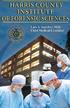 Luis A. Sanchez, M.D. - Chief Medical Examiner Luis Arturo Sanchez, M.D., was appointed Chief Medical Examiner of Harris County on January 1, 2003. Dr. Sanchez joined the Harris County Institute of Forensic
RUTHERFORD HIGH SCHOOL Rutherford, New Jersey COURSE OUTLINE FORENSIC SCIENCE
 RUTHERFORD HIGH SCHOOL Rutherford, New Jersey COURSE OUTLINE FORENSIC SCIENCE I. INTRODUCTION Forensic Science focuses on the analysis of evidence collection, the decomposition process, crime scenes, skeletal
How To Understand The Basics Of Forensic Science
 Forensic Science for the Criminal Justice World The Pennsylvania Innocence Project is proud to partner with the Center for Forensic Science Research and Education to present the first comprehensive academy
FORENSIC SCIENCE COURSE DESCRIPTION
 FORENSIC SCIENCE COURSE DESCRIPTION This course is an overview of how science is applied to solving crimes. Topics include history of forensic sciences, collecting of evidence, analyzing results and hands-on
Knowledge for a successful forensic chain provided by The Netherlands Forensic Institute. NFI Academy
 Knowledge for a successful forensic chain provided by The Netherlands Forensic Institute NFI Academy Welcome to the NFI Academy Key to the expertise of The Netherlands Forensic Institute In the context
Strengthening Forensic Science in the United States: A Path Forward
 Strengthening Forensic Science in the United States: A Path Forward American Society of Crime Laboratory Directors (ASCLD): Recognizes that the committee s recommendations pave the way for a significant
What Do Forensic Scientists Do?
 What Do Forensic Scientists Do? The forensic sciences form a vital part of the entire justice and regulatory system. Some of the different divisions, or disciplines, of forensic science have become identified
Introduction to Crime Scene Dynamics
 Chapter 1 Introduction to Crime Scene Dynamics OVERVIEW The development of the field of forensics has been a process steeped in science and research. On the other hand, the practice of crime scene investigation
Course Forensic Science. Unit IV Crime Scene Investigation
 Course Forensic Science Unit IV Crime Scene Investigation Essential Question What procedures are implemented at a crime scene and why are they important? TEKS 130.295(c) (1)(A)(B) (2)(F H) (3)(A F) (5)(A
American Academy of Forensic Sciences
 American Academy of Forensic Sciences Forensic Science Education Programs Accreditation Commission (FEPAC) ACCREDITATION STANDARDS Adopted by FEPAC May 16, 2003 Approved by the AAFS Board of Directors
Forensic Anthropology. Introduction
 Forensic Anthropology Introduction Introduction This course is Biological Anthropology We have covered many themes Primates Evolution Paleoanthropology Genetics Disease Life Cycle Variation Forensics We
Forensic Anthropology Introduction. Human Biology/Forensics B.M.C. Durfee High School
 Forensic Anthropology Introduction Human Biology/Forensics B.M.C. Durfee High School Objectives Describe Forensic Anthropology Describe the history of Forensic Anthropology Identify the three fields of
TRAVELING FORENSIC EDUCATION PROGRAM 2012-2013
 TRAVELING FORENSIC EDUCATION PROGRAM 2012-2013 INDEX -Program Overview Page 3 -Forensics Lab Total Experience Page 4 -Crime to Courtroom Workshop Page 4 -Impressions Workshop Page 5 -Blood & DNA Workshop
CURRICULUM VITAE Blaine M. Kern
 CURRICULUM VITAE Blaine M. Kern President/Laboratory Director Human Identification Technologies P.O. Box 608 Redlands, CA 92373-0201 Office: 909-557-1828 Fax: 909-557-1831 E-mail: [email protected] Updated
CLASS TITLE: CRIMINAL INVESTIGATOR II. LOCATION: Grand Junction, Colorado. PRIMARY PHYSICAL WORK ADDRESS: Grand Junction, CO
 CLASS TITLE: CRIMINAL INVESTIGATOR II STATE OF COLORADO invites applications for the position of: CBI Forensic Services Crime Scene Analyst, Grand Junction A residency waiver has been granted for this
American Academy of Forensic Sciences
 American Academy of Forensic Sciences Forensic Science Education Programs Accreditation Commission (FEPAC) ACCREDITATION STANDARDS Adopted by FEPAC May 16, 2003 Approved by the AAFS Board of Directors
Course Principles of GPA. Unit III Implementation of the Three Branches of Government
 Course Principles of GPA Unit III Implementation of the Three Branches of Government Essential Question What are the structure and functions of the executive branch of the government, including the constitutional
MASTER OF SCIENCE IN BIOMEDICAL FORENSIC SCIENCES
 Program Overview The M.S. in Biomedical Forensic Sciences trains individuals for a variety of disciplines applied to crime scene investigation and evidence analysis. The only program of its kind based
FORENSIC SCIENCE EDUCATION PROGRAMS ACCREDITATION COMMISSION. FEPAC Computing and Information Science Technology. Call for Comments September 2015
 FORENSIC SCIENCE EDUCATION PROGRAMS ACCREDITATION COMMISSION FEPAC Computing and Information Science Technology Call for Comments September 2015 Pursuant to the Forensic Science Education Programs Accreditation
Visible Proofs: Forensic Views of the Body. Erika Mills [email protected]
 Visible Proofs: Forensic Views of the Body Erika Mills [email protected] Objectives To increase familiarity with current forensic science techniques and their historical precursors To put past and modern
Summary of Qualifications: Education: Professional Experience: Kenneth R. Moses
 Summary of Qualifications: Kenneth Moses has over forty years of experience in forensic evidence. He established the Crime Scene Investigations Unit of the San Francisco Crime Laboratory in 1983 and was
The American Academy of Forensic Sciences
 The American Academy of Forensic Sciences 2012 Forensic Science Educational Conferences For Middle- and High School Science Teachers The American Academy of Forensic Sciences is pleased to present the
Somers Public Schools Somers, Connecticut 06071 Science Curriculum
 Survey in Forensics Grades 11 and 12 F.1 Teamwork and deductive reasoning play an important role in forensic science. Core Theme: Understanding forensic science. What is forensic science and why are teamwork
EXPERIENCED PROFESSIONAL CERTIFICATE IN Forensic Science
 Certificate Description This certificate provides professionals the opportunity to enhance specialized skills in Forensic Science. Arson Investigation CRJS 350 This course will explore criminal and scientific
How To Be A Forensic Investigator
 CLASS SPECIFICATION Class Code: 2226 Date Est: 10/1989 Last Rev: 04/2014 Last Title Chg: 04/2014 FLSA: Non-exempt Probation: 12 Months FORENSIC INVESTIGATOR II DEFINITION Under general supervision, performs
Forensic Science. Students will define and distinguish forensic science and criminalistics.
 St. Forensic Science Content Skills Assessment Big Ideas Core Tasks Students will apply the major concepts in biology, chemistry, and physics as the basis for solving crimes Students will recognize and
Overview of the NAS Report on Forensic Science in the U.S.
 Overview of the NAS Report on Forensic Science in the U.S. Forensic Science in Iowa: Impact of the National Academy of Sciences Report October 29, 2010 Brian Farrell Overview Issues with forensic science
*UNT Chemistry Building. *Dr. Teresa Golden is the Director of our Forensic Science Program at UNT
 BACHELOR OF SCIENCE WITH FORENSIC SCIENCE CERTIFICATION *UNT Chemistry Building The University of North Texas Forensic Science Program received its accreditation from the American Academy of Forensic Sciences
Should you wish to contact me: o Barry Fisher o (213) 989-5002 o [email protected]
 Physical Evidence: From the crime scene to the courtroom Should you wish to contact me: o Barry Fisher o (213) 989-5002 o [email protected] What is physical evidence? o Something legally submitted
Forensic Chemistry Curriculum
 SECTION 1 GENERAL STANDARDS. [Excerpt] Standard 4.3.1 General Curriculum Requirements The undergraduate program in forensic science shall offer a coherent curriculum that reflects the mission and goals
American Academy of Forensic Sciences
 American Academy of Forensic Sciences Forensic Science Education Programs Accreditation Commission (FEPAC) ACCREDITATION STANDARDS Adopted by FEPAC May 16, 2003 Approved by the AAFS Board of Directors
PASSAIC COUNTY TECHNICAL INSTITUTE WAYNE, NEW JERSEY FORENSIC SCIENCE I CURRICULUM JULY 2010
 PASSAIC COUNTY TECHNICAL INSTITUTE WAYNE, NEW JERSEY FORENSIC SCIENCE I CURRICULUM JULY 2010 1 FORENSIC SCIENCE I Course Description: Forensic Science is offered as a two-year course to students in grades
POLICE SCENE TECHNICIAN I POLICE SCENE TECHNICIAN II
 CITY OF ROSEVILLE POLICE SCENE TECHNICIAN I POLICE SCENE TECHNICIAN II DEFINITION To perform a variety of technical and specialized duties related to the investigation of crimes and traffic accidents;
FORENSIC SCIENCE What can I do with this major?
 FORENSIC SCIENCE What can I do with this major? AREAS EMPLOYERS STRATEGIES Many students specialize in forensic science at the graduate level. Some areas of specialization follow. CRIMINALISTICS Crime
Lawrence Police Department Administrative Policy. August 2013
 Lawrence Police Department Administrative Policy SUBJECT Competencies APPLIES TO All Personnel EFFECTIVE DATE REVISED DATE August 2013 APPROVED BY Chief of Police TOTAL PAGES 4 POLICY CHAPTER 10 Competencies
Minneapolis Police Department Crime Lab ASCLD/LAB ISO International Accreditation
 Minneapolis Police Department Crime Lab ASCLD/LAB ISO International Accreditation ASCLD/LAB ISO International Accreditation The American Society of Crime Laboratory Directors/Laboratory Accreditation Board
Forensic Science. The student will demonstrate the ability to explain the history and philosophy of forensic science.
 Forensic Science UNIT I: Introduction to Forensic Science and Human Body The student will demonstrate the ability to explain the history and philosophy of forensic science. a. Define forensic science or
INTRODUCTION FORENSIC SCIENCE AND THE LAW CHAPTER 1 OBJECTIVES
 INTRODUCTION TO FORENSIC SCIENCE AND THE LAW CHAPTER 1 OBJECTIVES Describe the organization of crime labs in the US and the services they provide Describe the Federal rules of evidence Frye standard and
DIABLO VALLEY COLLEGE CATALOG 2015-2016
 ADMINISTRATION OF JUSTICE ADJUS Obed Vazquez, Dean Social Sciences Division Faculty Office Building, Room 136 Possible career opportunities Law enforcement study prepares students for a career as a police
CRIME SCENE FORENSICS
 CRIME SCENE FORENSICS Description Crime Scene Forensics, which is a laboratory-based course, will promote and cultivate the development of student s scientific inquiry and scientific method skills, which
School of Physical and Geographical Sciences
 School of Physical and Geographical s 1 About Keele Dual or Single Honours Programs Study TWO subjects Beautiful, safe campus Strong sense of community Low cost of living Student Life union, societies,
From the Desk of Dr. John Allison- Professor and Director of Forensic Chemistry, TCNJ
 On the web: www.tcnj.edu/~csiewing Email: [email protected] March 2006 Issue #4 From the Desk of Dr. John Allison- Professor and Director of Forensic Chemistry, TCNJ I get many calls from people in the