
EXPERIENCED PROFESSIONAL CERTIFICATE IN Forensic Science
|
|
|
- Rosemary Jacobs
- 9 years ago
- Views:
Transcription
1 Certificate Description This certificate provides professionals the opportunity to enhance specialized skills in Forensic Science. Arson Investigation CRJS 350 This course will explore criminal and scientific investigation techniques associated with arson. Various arson causation theories and principles of incendiary fire analysis and detection along with social, psychological and environmental factors associated with arson will be explored. This course will assist students in identifying the origin and cause of suspicious fires. Demonstrate technical knowledge of methods used to conduct arson investigation Explain the ignition and burning process of different fuels Apply various scientific investigative techniques in arson investigation Analyze the legal foundation for conducting an incendiary fire investigation Identify and analyze the social, economic and psychological motives behind incendiary fires Evidence CRJS 355 This course examines the various types of evidence admissible by law, including real, demonstrative and documentary evidence. This course addresses the roles lay witnesses and expert evidence play in the legal setting as well as during a criminal trial. Explain and identify the difference between real, demonstrative, and circumstantial evidence Explain the concepts of impeachment, hearsay, privileges, and burdens of proof Analyze the Federal Rules of Evidence Analyze the Exclusionary Rule and its application to illegally seized evidence

2 Criminalistics CRJS 365 This course introduces the non-scientific student to the field of forensic science through an exploration of its applications to criminal investigations, and clear explanations of the techniques, abilities, and limitations of the modern crime laboratory. The course combines classroom lecture/discussion with practical laboratory exercises related to field forensics. Topics include the recognition, identification, collection/ preservation, individualization, and evaluation of physical evidence such as hairs, fibers, chemicals, blood, semen, glass, soil, fingerprints, documents, firearms, impression evidence, and serial number restoration. Students will document a crime scene by means of photography, notes, and scene sketching. To understand the roles and responsibilities of forensic scientists in the criminal justice and legal systems of the United States To understand the scope, scientific foundation, and techniques of a variety of the scientific disciplines practiced in crime laboratories Explain the importance of expert testimony and report writing Apply various analytical techniques used to examine physical evidence Aspects of Forensic Psychology CRJS 375 This course examines the aspects of human behavior directly related to the legal process and the professional practice of psychology in the context of forensic science. The course explores many aspects of the practice of forensic psychology including assessment, treatment, and consultation within the legal system that encompasses both criminal and civil law. The student will learn the many ways psychology can assist and influence the legal system. Finally, students will be introduced to various career opportunities in forensic psychology and will be exposed to a variety of professionals who work in the area of forensic science. Describe the roles and functions of police personnel, including investigation Discuss issues related to police discretion Evaluate law enforcement decisions using appropriate ethical and legal guidelines Identify and analyze characteristics of police subcultures and their effect on law enforcement Assess methods of planning contemporary homeland defense and security strategies Evaluate the effect of technology and law enforcement

3 Criminalistics II CRJS 406 Criminalistics II is part II of a two part series. This course introduces the non-scientific student to the field of forensic science through an exploration of its applications to criminal investigations, and clear explanations of the techniques, abilities, and limitations of the modern crime laboratory. The course combines classroom lecture/discussion with practical laboratory exercises related to the field of forensics. Topics include the recognition, identification, collection/preservation, individualization, and evaluation of physical evidence such as hairs, fibers, chemicals, blood, semen, glass, soil, fingerprints, documents, firearms, impression evidence, and serial number restoration. Students will document a crime scene by means of photography, notes, and scene sketching. Identify and describe the responsibilities associated with preservation of the crime scene Describe the various steps associated with the identification, collection, and preservation of evidence Apply various techniques to develop and preserve fingerprints Identifying the class and individual characteristics of physical evidence Apply various techniques using the casting method for preservation of evidence Apply course content to process a simulated crime scene Medicolegal Death Investigations CRJS 471 This course introduces the student to the field of medicolegal death investigation in the context of forensic science. In this course, students will learn jurisdiction established by the law to define the cause and manner of death, conduct a death scene investigation and techniques in establishing identity and post mortem interval. Students will obtain skills in notification of next of kin, interviewing witnesses, and interpreting crime scene photography. Define cause and manner of death and legal requirements based on receipt of a death certification Conduct and document a simulated death scene investigation Define forensic science, postmortem interval, body changes, relevant medical history, traumatic injury, postmortem lab tests, and features of an equivocal death scene investigation Apply techniques in establishing identity and notification procedures Compose a comprehensive death report from a simulated crime scene investigation

4 Introduction to Biometrics CRJS 472 This course provides students with an overview of the research and techniques used in the field of biometrics. Students will be exposed to various recognition patterns and techniques such as voice, facial expression, retina identification, fingerprint and other unique traits and identifying markers. Several important issues on the ethics and viability of biometrics in forensic science will be considered in this course. Demonstrate knowledge of basic biometrics concepts To understand, compare and contrast the legal considerations of the Fourth Amendment and rights to privacy in public and private settings To develop an understanding of the role of expert witnesses and preparation for trial testimony Explain challenges and benefits of biometrics in criminal investigations Apply various recognition techniques and database functions Cybercrimes CRJS 475 This hands-on introductory course provides students with the knowledge and skills necessary to begin a computer based investigation. The course begins with an overview of computer forensics and then proceeds to introduce forensics tools, concepts, and documentation of evidence/procedures. The course uses common and accepted incident Response Policies and Procedures for previewing and securing digital evidence. Topics include: the basics of computer evidence and basic forensic methodology. Explain the impact of the Internet and computer-related crimes to law enforcement Identify and explain challenges in maintaining and supporting law enforcement investigations in computer-related cases Analyze statutory and case law relating to the investigation and prosecution of computer crimes Analyze the legal implications of the First and Fourth Amendments as they relate to computer-related investigations

5 Forensic Biology CRJS 478 This introductory course exposes students to the areas of cellular biology, forensic serology, genetics, and human physiology as well as their applications within forensic science. Through lectures, readings, discussions and general exercises emphasizing the fundamentals of basic science within Forensic Biology, students will learn the principles of biological and biochemical processing in relationship to forensics. The course will afford students the opportunity to enhance their critical thinking and problem solving skills within the field of forensic science. This course includes a discussion of the various areas of forensic science where a biologist can specialize. Examine the three general stages of developmental history of modern forensic biology and learn to identify biological fluids including blood, semen, and saliva Identify and describe the major bones in the body and the process of bone formation and muscles on the skull and how these bones and muscles can be used to aid in the process of facial reconstruction Students will understand the structure and function of DNA, the process of DNA replication, the methods used to process and analyze DNA, and explain why one method is preferred over the others in the field of forensics Discuss and analyze the individualization of biological evidence using DNA profiling analysis and interpretation of results Apply critical thinking and problem solving skills in identifying how and when to apply forensic biology in criminal investigation

Forensic Science : Course Syllabus Forensic Science : Secrets of the Dead
 Forensic Science : Course Syllabus Forensic Science : Secrets of the Dead COURSE DESCRIPTION: Fingerprints. Blood spatter. DNA analysis. The world of law enforcement is increasingly making use of the techniques
MASTERS DEGREE IN CRIMINAL JUSTICE
 MASTERS DEGREE IN CRIMINAL JUSTICE Career Opportunities: Graduates of this program will gain the skills and knowledge that will enable them to qualify for mid to higher-level positions in Criminal Justice,
MASTER COURSE OUTLINE
 A. BIOL 1050 Introduction to Forensic Science B. COURSE DESCRIPTION: MASTER COURSE OUTLINE This introductory course will apply the principles and theories of biology, chemistry, etc. to the study of forensic
Willmar Public Schools Curriculum Map
 Subject Area Science Senior High Course Name Forensics Date June 2010 Timeline Content Standards Addressed Skills/Benchmarks Essential Questions Assessments 1-2 Introduction History and Development of
Georgia Perimeter College Common Course Outline
 Georgia Perimeter College Common Course Outline Course Abbreviation & Number: FRSC 2100 Course Title: Credit Hours: 3 Prerequisites: Co-requisites: Introduction to Forensic Science Exit or exemption from
Forensic Science. Course Designed by Professor James T. Spencer, Ph.D.
 PROJECT ADVANCE CHEMISTRY 113 Forensic Science Course Designed by Professor James T. Spencer, Ph.D. Syracuse University Dual Enrollment College Level Course Offered at Hasbrouck Heights High School E.
Master of Science in Forensics
 Master of Science in Forensics The Master of Science in Forensics provides students with an intensive and holistic criminalistics experience through a combination of didactic and practical educational
How To Understand Forensic Science
 Forensic Science Lesson 1: CSI Basics What is Forensic Science? Forensic Science is the application of science to law. Locard s Exchange Principle states that with contact between two items there will
FORENSIC SCIENCE INSTITUTE COURSE DESCRIPTIONS 2015-2016
 FORENSIC SCIENCE INSTITUTE COURSE DESCRIPTIONS 2015-2016 FRSC 2503 Introduction to Forensic Science Introduction to Forensic Science is a survey course designed to acquaint the student with a comprehensive
Introduction to Crime Scene Dynamics
 Chapter 1 Introduction to Crime Scene Dynamics OVERVIEW The development of the field of forensics has been a process steeped in science and research. On the other hand, the practice of crime scene investigation
BAA Course Approval submission: Introduction to Forensic Science 1:
 BAA Course Approval submission: Introduction to Forensic Science 1: School District/Independent School Authority Name Chilliwack School District/Independent School Authority Number SD 33 Developed by E-Dynamics\FVDES\G.Porro
Forensic Science. Distance Learning Presentation For King Drew Magnet High School of Medicine and Science March 14, 2007
 Forensic Science Distance Learning Presentation For King Drew Magnet High School of Medicine and Science March 14, 2007 Dorothy Harris Forensic Course Developer Science Teacher and Department Chairman
The College of Forensic Sciences at NAUSS: The pioneer of Forensics in the Arab world
 12 Arab Journal of Forensic Sciences and Forensic Medicine 2014; Volume 1 Issue (0), 12-16 Naif Arab University for Security Sciences Arab Journal of Forensic Sciences and Forensic Medicine www.nauss.edu.sa
ILLINOIS DEPARTMENT OF CENTRAL MANAGEMENT SERVICES CLASS SPECIFICATION FORENSIC SCIENTIST SERIES
 ILLINOIS DEPARTMENT OF CENTRAL MANAGEMENT SERVICES CLASS SPECIFICATION FORENSIC SCIENTIST SERIES CLASS TITLE POSITION CODE EFFECTIVE FORENSIC SCIENTIST TRAINEE 15897 5/1/10 FORENSIC SCIENTIST I 15891 5/1/10
Diablo Valley College Catalog 2014-2015
 ADJUS Obed Vazquez, Dean Social Sciences Division Faculty Office Building, Room 136 Possible career opportunities Law enforcement study prepares students for a career as a police officer, sheriff s deputy,
How To Understand The Basics Of Forensic Science
 Forensic Science for the Criminal Justice World The Pennsylvania Innocence Project is proud to partner with the Center for Forensic Science Research and Education to present the first comprehensive academy
FORENSIC SCIENCE COURSE DESCRIPTION
 FORENSIC SCIENCE COURSE DESCRIPTION This course is an overview of how science is applied to solving crimes. Topics include history of forensic sciences, collecting of evidence, analyzing results and hands-on
Law, Public Safety, Corrections and Security Career Cluster Forensic Science and Criminal Investigations Course Number: 43.45200
 Law, Public Safety, Corrections and Security Career Cluster Forensic Science and Criminal Investigations Course Number: 43.45200 Course Description: Forensic Science and Criminal Investigations is a course
Evidence Technician s School
 Evidence Technician s School Program Overview The Evidence Technician s School is designed to provide your Evidence Technician or Crime Scene Investigator with a sound foundation of the basic principles
FORENSIC SCIENTIST MICHIGAN CIVIL SERVICE COMMISSION JOB SPECIFICATION
 MICHIGAN CIVIL SERVICE COMMISSION JOB SPECIFICATION FORENSIC SCIENTIST JOB DESCRIPTION Employees in this job complete and oversee a variety of tests, analyses, identification, and classification of mechanical
AS FORENSIC SCIENCE ACADEMY
 TE AS FORENSIC SCIENCE ACADEMY TM "BETTER SCIENCE LEADS TO BETTER JUSTICE FOR ALL" I strongly feel the courses offered through the Texas Forensic Science Academy certificate program are a true benefit
DIABLO VALLEY COLLEGE CATALOG 2015-2016
 ADMINISTRATION OF JUSTICE ADJUS Obed Vazquez, Dean Social Sciences Division Faculty Office Building, Room 136 Possible career opportunities Law enforcement study prepares students for a career as a police
CAREER: FORENSIC SCIENCE TECHNICIAN 1
 CAREER: FORENSIC SCIENCE TECHNICIAN 1 Career: Forensic Science Technician Mary C. Cartwright Middlesex Community College CRJ 111-52 Heloisa DaCunha November 29, 2012 CAREER: FORENSIC SCIENCE TECHNICIAN
TE AS FORENSIC SCIENCE ACADEMY TM
 TE AS FORENSIC SCIENCE ACADEMY TM "BETTER SCIENCE LEADS TO BETTER JUSTICE FOR ALL" I strongly feel the courses offered through the Texas Forensic Science Academy certificate program are a true benefit
Criminal Investigation and Forensics
 PROGRAM CONCENTRATION: CAREER PATHWAY: COURSE TITLE: Public Safety Law and Justice Criminal Investigation and Forensics Prerequisites: Introduction to Law and Justice Law, Community Response and Policing
Introduction to Forensic Science. So what is Forensic Science? Major Contributors. Chapter 1: Intro to FS
 Introduction to Forensic Science Chapter 1: Intro to FS So what is? In its broadest definition, forensic science is the application of science to criminal and civil laws. We will put emphasize on the applications
How To Become A Forensic Scientist
 A c a r e e r i n By Hall Dillon Blood spatters, spent shell casings, and forged signatures are the nuts and bolts of forensic science. Studying the messy details of crime, forensic scientists help identify
CMJ 105 - INTRODUCTION TO FORENSIC SCIENCE Fall Syllabus 2015. 4:30 5:30 p.m.
 CMJ 105 - INTRODUCTION TO FORENSIC SCIENCE Fall Syllabus 2015 INSTRUCTOR INFORMATION Associate Professor David Striegel Guerrieri Hall, Room 202D Office Phone: 410-572-8755 Office Hours: Monday Tuesday
FORENSIC SCIENTIST MICHIGAN CIVIL SERVICE COMMISSION JOB SPECIFICATION
 MICHIGAN CIVIL SERVICE COMMISSION JOB SPECIFICATION FORENSIC SCIENTIST JOB DESCRIPTION Employees in this job complete and oversee a variety of tests, analyses, identification, and classification of mechanical
SAULT COLLEGE SAULT STE. MARIE, ONTARIO COURSE OUTLINE
 SAULT COLLEGE SAULT STE. MARIE, ONTARIO COURSE OUTLINE COURSE TITLE: Introduction to Applied Forensic Science CODE NO. : NRL 210 SEMESTER: 2 PROGRAM: AUTHOR: Natural Resources/Environmental Law Inspection
CRIME SCENE FORENSICS
 CRIME SCENE FORENSICS Description Crime Scene Forensics, which is a laboratory-based course, will promote and cultivate the development of student s scientific inquiry and scientific method skills, which
Forensic Science Studies 35-3
 LOCALLY DEVELOPED COURSE OUTLINE Forensic Science Studies 35-3 Submitted By: Rocky View School Division No. 41 Submitted On: Aug. 20, 2014 Rocky View School Division No. 41 All Rights Reserved Page 1 of
Description of the Forensic Science Major
 Majoring in.... Forensic Science Description of the Forensic Science Major What is forensic science? Forensic science is the application of science to support the law. What forensic science majors study?
Forensic Science Curriculum
 Forensic Science Curriculum The Georgia Performance Standards are designed to provide students with the knowledge and skills for proficiency in science. The Project 2061 s Benchmarks for Science Literacy
Forensic Science: Crime Scene Basics. T. Trimpe 2006 http://sciencespot.net
 Forensic Science: Crime Scene Basics T. Trimpe 2006 http://sciencespot.net Crime Scene Vocabulary CRIME SCENE: Any physical location in which a crime has occurred or is suspected of having occurred. PRIMARY
Forensic Science The Basics
 Forensic Science The Basics Introduction to Forensic Science Chapter 1 Forensic science has engrained into society Television, books and movies reflect this Evidence analyzed includes DNA, drugs, witness
Dudesville: A crime scene under the microscope. QUT Extreme Science
 Dudesville: A crime scene under the microscope QUT Extreme Science Glossary QUT Extreme Science DNA Chromatography Forensic Science Locard s Principle (Deoxyribonucleic acid) an extremely long macromolecule
Law, Public Safety, Corrections and Security Career Cluster Criminal Investigations Course Number: 43.45300
 Law, Public Safety, Corrections and Security Career Cluster Criminal Investigations Course Number: 43.45300 Course Description: This course is designed to provide students with an opportunity to explore
BAA Course: Forensic Science 11
 BAA Course: Forensic Science 11 District Name: Cowichan Valley District Number: 79 Developed by: Alanna Skene Date Developed: October 20, 2006 Schools Names: Principal s Name: Cowichan Secondary, Frances
This curriculum is part of the Educational Program of Studies of the Rahway Public Schools. ACKNOWLEDGMENTS
 CURRICULUM FOR FORENSIC SCIENCE CYCLE GRADE 7 This curriculum is part of the Educational Program of Studies of the Rahway Public Schools. ACKNOWLEDGMENTS Kevin Robinson, Program Supervisor of STEM The
YOUR CONTACT DETAILS (ADDRESS, PHONE, EMAIL etc.):
 Justice WA YOUR NAME: YOUR CONTACT DETAILS (ADDRESS, PHONE, EMAIL etc.): TODAY S DATE: INDICATE WHO IS COMPLETING THIS FORM: Defendant Family Member of Defendant (Relationship : ) Friend of Defendant Other:
RUTHERFORD HIGH SCHOOL Rutherford, New Jersey COURSE OUTLINE FORENSIC SCIENCE
 RUTHERFORD HIGH SCHOOL Rutherford, New Jersey COURSE OUTLINE FORENSIC SCIENCE I. INTRODUCTION Forensic Science focuses on the analysis of evidence collection, the decomposition process, crime scenes, skeletal
The American Academy of Forensic Sciences
 The American Academy of Forensic Sciences 2012 Forensic Science Educational Conferences For Middle- and High School Science Teachers The American Academy of Forensic Sciences is pleased to present the
How To Be A Forensic Investigator
 CLASS SPECIFICATION Class Code: 2226 Date Est: 10/1989 Last Rev: 04/2014 Last Title Chg: 04/2014 FLSA: Non-exempt Probation: 12 Months FORENSIC INVESTIGATOR II DEFINITION Under general supervision, performs
Rules and Procedures. Rule 312 August 23, 2001. Rule 312 - CRIME LABORATORY - EVIDENCE AND CRIME SCENES
 Rules and Procedures Rule 312 August 23, 2001 Rule 312 - CRIME LABORATORY - EVIDENCE AND CRIME SCENES Rule 312, Crime Laboratory - Evidence and Crime Scenes, is hereby re-issued to establish Police Department
How To Understand Forensics
 FORENSIC SCIENCE ELECTIVE CORE The Forensic Science Elective Core focuses on the analysis of evidence collection, the decomposition process, crime scenes, skeletal remains, toxicology, and document validity.
Lawrence Police Department Administrative Policy. August 2013
 Lawrence Police Department Administrative Policy SUBJECT Competencies APPLIES TO All Personnel EFFECTIVE DATE REVISED DATE August 2013 APPROVED BY Chief of Police TOTAL PAGES 4 POLICY CHAPTER 10 Competencies
Hi h School Standard: 1
 Forensic Science Content Standards and Objectives Forensic Science is an advanced level course that is an elective designed to provide students with hands-on experience in various aspects of a criminal
*UNT Chemistry Building. *Dr. Teresa Golden is the Director of our Forensic Science Program at UNT
 BACHELOR OF SCIENCE WITH FORENSIC SCIENCE CERTIFICATION *UNT Chemistry Building The University of North Texas Forensic Science Program received its accreditation from the American Academy of Forensic Sciences
Preserving Forensic Evidence. Preserving Forensic Evidence. at Crime Scenes. Preserving Forensic Evidence. Preserving Forensic Evidence
 Preserving Forensic Evidence Preserving Forensic Evidence at Crime Scenes Sgt. Steven J. Wohl Special Victims Unit Spokane Police Department Sgt. Mark Griffiths Major Crimes Unit It is critical to preserve
Visible Proofs: Forensic Views of the Body. Erika Mills [email protected]
 Visible Proofs: Forensic Views of the Body Erika Mills [email protected] Objectives To increase familiarity with current forensic science techniques and their historical precursors To put past and modern
Forensic Science. The student will demonstrate the ability to explain the history and philosophy of forensic science.
 Forensic Science UNIT I: Introduction to Forensic Science and Human Body The student will demonstrate the ability to explain the history and philosophy of forensic science. a. Define forensic science or
Forensic Test 1 Review: Mathieu Orfila (1738 1853) Father of Modern Toxicology 1814 wrote first treatise. (formal scientific work) Alphonse Bertillon
 Forensic Test 1 Review: Mathieu Orfila (1738 1853) Father of Modern Toxicology 1814 wrote first treatise. (formal scientific work) Alphonse Bertillon (1853 1914) Father of Criminal Investigation first
DEPARTMENT OF SOCIAL AND BEHAVORIAL SCIENCES
 122 / Department of Social and Behavioral Sciences DEPARTMENT OF SOCIAL AND BEHAVORIAL SCIENCES THE BACHELOR OF ARTS DEGREE IN CRIMINAL JUSTICE (CRIJ) The Bachelor of Arts in Criminal Justice is a four-year
Criminal Investigation CRJ141. Matthew McCarty
 Criminal Investigation CRJ141 Matthew McCarty Chapter 1 Criminal Investigation: An Overview CSI Effect The exaggerated depiction of how television forensic science operates, creating a phenomenon in which
Criminal Justice II, August 2013, Page 1 of 5
 Indiana Department of Education Academic Course Framework CRIMINAL JUSTICE II Criminal Justice II introduces students to concepts and practices in controlling traffic as well as forensic investigation
What Can I Do With a Degree in ForSci?
 What Can I Do With a Degree in ForSci? 1 Forensic Science Career Fields Forensic Science Tech Career Forensic science techs work in crime labs to analyze the evidence collected from crime scenes. They
Bio-Molecular Forensic Science Careers. Jack Ballantyne Department of Chemistry National Center for Forensic Science
 Bio-Molecular Forensic Science Careers Jack Ballantyne Department of Chemistry National Center for Forensic Science Bio-Molecular Forensic Science Biology (genetics, biochemistry and molecular biology)
Hoover City Schools Secondary Curriculum Science, 2006-07
 Course Information: Hoover City Schools Secondary Curriculum Science, 2006-0 Course Title: Forensic Science Grade Level: 2 Course Description: Making science relevant and pertinent to the interests and
Certificate of Completion Forensic Science. McLENNAN COMMUNITY COLLEGE
 Certificate of Completion Forensic Science McLENNAN COMMUNITY COLLEGE 2015-2016 Degree Description The objective of these criminal justice courses is to prepare students for careers in criminal justice
Should you wish to contact me: o Barry Fisher o (213) 989-5002 o [email protected]
 Physical Evidence: From the crime scene to the courtroom Should you wish to contact me: o Barry Fisher o (213) 989-5002 o [email protected] What is physical evidence? o Something legally submitted
Forensic Science. Three Certificate Programs in. Certificates in: Death Investigation Forensic Toxicology. Forensic Science
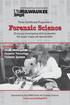 Three Certificate Programs in Forensic Science Giving you investigative skills to broaden the scope of your job opportunities Certificates in: Death Investigation Forensic Toxicology Forensic Science Sponsored
Introduction to Forensic Science and the Law. FBI Building Washington, DC
 FBI Building Washington, DC 1 Objectives You will understand: How crime labs in the United States are organized and what services they provide. The growth and development of forensic science through history.
DEPARTMENT OF SOCIAL AND BEHAVORIAL SCIENCES
 DEPARTMENT OF SOCIAL AND BEHAVORIAL SCIENCES THE BACHELOR OF ARTS DEGREE IN CRIMINAL JUSTICE (CRIJ) Mission The University strives to endow students with the skills necessary for critical knowledge, communication,
Engineering Forensics
 Engineering Forensics Inter-Faculty Bachelor of Forensic Science Forensic science is the study of evidence in criminal investigation for presentation in courts of law. Crime scene artifacts are frequently
TRAVELING FORENSIC EDUCATION PROGRAM 2012-2013
 TRAVELING FORENSIC EDUCATION PROGRAM 2012-2013 INDEX -Program Overview Page 3 -Forensics Lab Total Experience Page 4 -Crime to Courtroom Workshop Page 4 -Impressions Workshop Page 5 -Blood & DNA Workshop
LONDON METROPOLITAN UNIVERSITY Course Specification template
 LONDON METROPOLITAN UNIVERSITY Course Specification template The University s course specification template has been developed to fulfil three main functions; it shall act: as a source of information for
Community College of Philadelphia Department of Biology Forensic Biology - 104 2014 Syllabus
 Community College of Philadelphia Department of Biology Forensic Biology - 104 2014 Syllabus Course Reference Number (CRN): 17546 Course: BIOL 104 Section: 001 Credits: 4 Schedule: Class M 1:00pm 2:30pm
Forensic. Sciences. Forensic Sciences. Specialties. Programs. Career Pathways
 Forensic Sciences Specialties Programs Prof. R. E. Gaensslen Director of Graduate Studies Forensic Science University of Illinois - Chicago Career Pathways Forensic Sciences 1 The Hype... the TV version
FORENSIC SERVICES DEPARTMENT
 FORENSIC SERVICES DEPARTMENT GENERAL INFORMATION ON FORENSIC SCIENCE Forensic Drive Macleod 3085 Victoria Australia Telephone: (61 3) 9450 3444 Facsimile: (61 3) 9459 0477 Introduction The Forensic Services
In 2009, the nation s 411 publicly funded crime
 U.S. Department of Justice Office of Justice Programs Bureau of Justice Statistics Census of Publicly Funded Forensic Crime Laboratories, Matthew R. Durose, BJS Statistician Kelly A. Walsh, Research Associate,
PASSAIC COUNTY TECHNICAL INSTITUTE WAYNE, NEW JERSEY FORENSIC SCIENCE I CURRICULUM JULY 2010
 PASSAIC COUNTY TECHNICAL INSTITUTE WAYNE, NEW JERSEY FORENSIC SCIENCE I CURRICULUM JULY 2010 1 FORENSIC SCIENCE I Course Description: Forensic Science is offered as a two-year course to students in grades
LEN 221: Principles of Criminal Investigation Syllabus 3 lecture hours / 3 credits CATALOG DESCRIPTION
 1 LEN 221: Principles of Criminal Investigation Syllabus 3 lecture hours / 3 credits CATALOG DESCRIPTION Prerequisite: Undergraduate level RDG 099 Minimum Grade of P or Undergraduate level RDG 055 Minimum
Course Forensic Science. Unit II History
 Course Forensic Science Unit II History Essential Question What are some examples of careers in Forensic Science? TEKS 130.295(c) (4)(A)(B) Prior Student Learning History of Forensic Science Estimated
MASTER OF SCIENCE IN BIOMEDICAL FORENSIC SCIENCES
 Program Overview The M.S. in Biomedical Forensic Sciences trains individuals for a variety of disciplines applied to crime scene investigation and evidence analysis. The only program of its kind based
Teacher s Guide - Feature Showcase. Forensic Science. Grades: 6-8 Content Area: Science
 Teacher s Guide - Feature Showcase Forensic Science Grades: 6-8 Content Area: Science Standards Alignment: McRel Level III; Nature of Science 13 National Standards: NS.5-8.6 Personal and Social Perspectives
INTRODUCTION FORENSIC SCIENCE AND THE LAW CHAPTER 1 OBJECTIVES
 INTRODUCTION TO FORENSIC SCIENCE AND THE LAW CHAPTER 1 OBJECTIVES Describe the organization of crime labs in the US and the services they provide Describe the Federal rules of evidence Frye standard and
Goal to recognize, document and collect evidence at a crime scene
 Crime Scene Investigation and Evidence Collection Lecture Credits: Anthony (Bud) Bertino Goal to recognize, document and collect evidence at a crime scene Sherlock Holmes» Sir Arthur Conan Doyle in the
(A) demonstrate safe practices during laboratory and field investigations
 (1) The student, for at least 40% of instructional time, conducts laboratory and field investigations using safe, environmentally appropriate, and ethical practices. (A) demonstrate safe practices during
How To Become A State Pol Forensic Tech Leader
 JOB DESCRIPTION MICHIGAN CIVIL SERVICE COMMISSION JOB SPECIFICATION STATE POLICE FORENSIC TECHNICAL LEADER Employees in this job function as statewide technical leaders within the Michigan State Police,
DIGITAL FORENSICS SPECIALIZATION IN BACHELOR OF SCIENCE IN COMPUTING SCIENCE PROGRAM
 DIGITAL FORENSICS SPECIALIZATION IN BACHELOR OF SCIENCE IN COMPUTING SCIENCE PROGRAM Proposed Program Title: Bachelor of Science in Computing Science- Specialization in Digital Forensics Specialization
CRIME SCENE PROCEDURES II.
 CRIME SCENE PROCEDURES II. Contact at the Scene... 2 Preliminary Survey or Crime Scene Walk-Through... 3 Scene Search for Trace Evidence... 3 Scene Search for Biological Evidence... 4 Crime Scene Photography...
APPENDIX A: Comparable Colleges and Universities
 CANISIUS COLLEGE Location: Buffalo, New York Affiliation: Catholic, Jesuit John Carroll s parent school in Buffalo, New York, is obviously Catholic and Jesuit. Canisius offers a minor in forensic psychology
Strengthening Forensic Science in the United States: A Path Forward
 This PDF is available from The National Academies Press at Strengthening Forensic Science in the United States: A Path Forward ISBN 978-0-309-13135-3 Committee on Identifying the Needs of the Forensic
ANNEXURE IV RASHTRASANT TUKADOJI MAHARAJ NAGPUR UNIVERSITY, NAGPUR P.G. DIPLOMA IN FORENSIC SCIENCE AND RELATED LAW
 ANNEXURE IV RASHTRASANT TUKADOJI MAHARAJ NAGPUR UNIVERSITY, NAGPUR P.G. DIPLOMA IN FORENSIC SCIENCE AND RELATED LAW SCHEME OF EXAMINATION AND SYLLABUS 1 RASHTRASANT TUKADOJI MAHARAJ NAGPUR UNIVERSITY,
CRIMINAL JUSTICE. Major in Criminal Justice. Faculty
 CRIMINAL JUSTICE The Criminal program provides students with a comprehensive understanding of the criminal justice system, which consists of public and private police, courts and corrections. The course
DEPARTMENT OF CRIMINAL JUSTICE
 122 Department of Criminal Justice DEPARTMENT OF Mr. Mark Mills, Department Chairperson Assistant Professors: M. Mills, J. Phan, K. Treece, A. Trimble The Criminal Justice Program is dedicated to providing
Forensic Science Diploma
 Forensic Science Diploma Career Prospect There is a business and admin element to every employment sector, including energy, engineering, charities, finance, manufacturing, tourism, health, entertainment,
KEY NOTE ADDRESS ENTITLED THE ROLE OF FORENSIC SCIENCE IN CRIMINAL INVESTIGATION AND TRIALS DELIVERED TO
 KEY NOTE ADDRESS ENTITLED THE ROLE OF FORENSIC SCIENCE IN CRIMINAL INVESTIGATION AND TRIALS DELIVERED TO THE MEMBERS OF FORENSIC RESEARCH GROUP OF THE UNIVERSITY OF BENIN CITY, BENIN CITY AT THE INAUGURAL
Law Enforcement Consolidation Task Force FORENSIC SUBJECT MATTER EXPERTS TEAM REPORT
 FORENSIC SUBJECT MATTER EXPERTS TEAM REPORT NOVEMBER 2011 November 2011 CONTENTS EXECUTIVE SUMMARY... 1 BACKGROUND... 2 MISSION STATEMENTS... 2 MAJOR FORENSIC OR LABORATORY FUNCTIONS... 2 Florida Department
DNA & CRIME VICTIMS: WHAT VICTIMS NEED TO KNOW
 DNA & CRIME VICTIMS: WHAT VICTIMS NEED TO KNOW DNA & CRIME VICTIMS: What Victims Need to Know The increasing use of DNA evidence in criminal cases gives victims of crime new hope that offenders will be
In legal proceedings, a case is only as strong as its evidence.
 Careers in forensics: Analysis, evidence, and law POLICE LINE - DO NOT CROSS POLICE LINE - DO NOT CROSS POLICE Elka Maria Torpey Elka Maria Torpey is an economist in the Office of Occupational Statistics
ARIZONA CTE CAREER PREPARATION STANDARDS & MEASUREMENT CRITERIA LAW, PUBLIC SAFETY AND SECURITY, 43.0100
 LAW, PUBLIC SAFETY AND SECURITY, 43.0100 1.0 ANALYZE THE EVOLUTION OF LAW ENFORCEMENT 1.1 Investigate the historical beginnings of law enforcement 1.2 Compare and contrast past and present roles of law
The Nature of Evidence
 The Nature of Evidence Chapter 3 Mrs. Svedstrup What is Evidence? Legal definition: That which tends to support something or show that something is the case Relevance of evidence- admissibility of evidence
American Academy of Forensic Sciences
 American Academy of Forensic Sciences Forensic Science Education Programs Accreditation Commission (FEPAC) ACCREDITATION STANDARDS Adopted by FEPAC May 16, 2003 Approved by the AAFS Board of Directors