
Sodium Picosulfate, Magnesium Oxide, and Anhydrous Citric Acid (PREPOPIK) for Oral Solution
|
|
|
- Victor Dalton
- 10 years ago
- Views:
Transcription
1 Sodium Picosulfate, Magnesium Oxide, and Anhydrous Citric Acid (PREPOPIK) for Oral Solution National Drug Monograph June 2013 VA Pharmacy Benefits Management Services, Medical Advisory Panel, and VISN Pharmacist Executives The purpose of VA PBM Services drug monographs is to provide a comprehensive drug review for making formulary decisions. These documents will be updated when new clinical data warrant additional formulary discussion. Documents will be placed in the Archive section when the information is deemed to be no longer current. Executive Summary: - Sodium picosulfate, magnesium oxide, and anhydrous citric acid (SPS+Mg, PREPOPIK) powder for oral solution is a low-volume, dual-acting osmotic and stimulant laxative that was approved by the U.S. Food and Drug Administration on July 16, 2012 for cleansing the colon in adults preparing for colonoscopy. 1 - Sodium picosulfate is hydrolyzed by colonic bacteria to desacetylbisacodyl, the active metabolite of bisacodyl, while magnesium oxide and anhydrous citric acid react with water to form magnesium citrate. - SPS+Mg is supplied in powder packets for reconstitution with cold water immediately before use. The preferred dosing regimen is the Split Dose method which consists of one dose administered during the evening before the colonoscopy (with at least five 8-ounce drinks of clear liquids) followed by the second dose administered on the morning of the colonoscopy (with at least three 8-ounce drinks of clear liquids). The alternative dosing regimen is the Day Before method which consists of one dose administered during the afternoon before the colonoscopy (with five 8-ounce drinks of clear liquids) followed by the second dose 6 hours after the first dose on the evening before the colonoscopy (with three 8-ounce drinks of clear liquids). 2,3 - Contraindications, warnings, and precautions for SPS+Mg are similar to those for alternative bowel preparations. Electrolyte abnormalities such as hypermagnesemia have been noted in clinical studies. 2 SPS+Mg is contraindicated in patients with severely reduced renal function (creatinine clearance less than 30 ml/minute). Patients with renal insufficiency or patients taking medications that affect renal function concomitantly are at an increased risk for renal injury. 3 - The comparative efficacy of SPS+Mg versus 2L PEG-3350 and bisacodyl tablets was established in two U.S. clinical studies. In both studies, SPS+Mg was as effective as 2L PEG and bisacodyl tablets in cleansing the colon. In the study in which SPS+Mg was administered in the Split-Dose (preferred) regimen, it was superior to the control preparation in cleansing the colon. 4,5,6,7 - Tolerability of SPS+Mg was superior to 2L PEG-3350 and bisacodyl tablets bowel preparation kit in clinical studies. 2,6 Adverse reactions associated with SPS+Mg included nausea, vomiting, headache, and electrolyte disturbances and are similar to those of alternative bowel preparations. 2
2 - Studies for off-label use of SPS+Mg have shown that it is a treatment option for constipation, 8, 9,10,11,12,13,14,15,16,17 barium enema, CT colonography, and flexible sigmoidoscopy. - As with other bowel preparations, oral medication that is administered within 1 hour of the start of administration of SPS+Mg may be flushed from the gastrointestinal tract and the medication may not be absorbed. In addition, interactions may occur with medications that increase the risk for fluid and electrolyte disturbances, NSAIDs or other medications known to induce syndrome of inappropriate antidiuretic hormone secretion, and antibiotics which may reduce the efficacy of bowel preparation. 3,5,6,7,8,18 Conclusion: SPS+Mg for oral solution is a low-volume, dual-mechanism colon cleansing agent that exerts its laxative action by virtue of conversion of sodium picosulfate to desacetylbisacodyl, the active moiety of the stimulant laxative bisacodyl, and the formation of the osmotic laxative magnesium citrate. Extensive data and many years of non-u.s. clinical experience support the safety and efficacy of SPS+Mg as a bowel cleanser. When administered in the Split-Dose (preferred) regimen, SPS+Mg was shown to be superior to the 2L PEG-3350 and bisacodyl tablets; however, the effect size was small. In addition, SPS+Mg demonstrated improved tolerability compared to these alternative bowel preparations. Although improved tolerability may lead to improved patient compliance with bowel preparation and therefore increased colorectal cancer (CRC) screening and survival rates, 5,6,7 this has not been evaluated with SPS+Mg. SPS+Mg is a pregnancy category B drug. All other bowel preparations are pregnancy category C. It should be noted that SPS+Mg should not be used in renal insufficiency. 2,3 No studies directly comparing SPS+Mg with a combination of bisacodyl tablets plus magnesium citrate in terms of colon cleansing efficacy were available; however, due to mechanism of action, the bisacodyl tablets plus magnesium citrate combination may be expected to be interchangeable with SPS+Mg at equivalent doses and have a cost advantage. Further studies are needed to confirm the therapeutic equivalence of the combination of bisacodyl tablets plus magnesium citrate to SPS+Mg. The advantages of SPS+Mg are offset by the non-contract drug acquisition cost that is 2 to 750 times higher than alternative bowel preparation agents. Introduction Sodium picosulfate, magnesium oxide, and anhydrous citric acid (SPS+Mg, PREPOPIK TM, Ferring Pharmaceuticals) for oral solution is a low volume dual-acting osmotic and stimulant laxative that was approved by the U.S. Food and Drug Administration on July 16, 2012 for cleansing the colon in adults preparing for colonoscopy. 1 There are other low-volume dual-acting bowel preparations on the market such as HalfLytely TM (2L polyethylene glycol 3350; electrolytes and bisacodyl tablets). With 2L polyethylene glycol 3350; electrolytes and bisacodyl tablets, the powder preparation is dissolved in 2 liters (67.6 ounces) of water and consumed. The proposed benefit of SPS+Mg is that the powder preparation is only dissolved in 5 oz of water at two different times and supplemented with 40 ounces then 24 ounces of a clear liquid of choice. In 2012, colorectal cancer ranked third in terms of the number of new cases of cancer and was the third leading cause of cancer deaths among men and women despite having a high survival rate with early detection. 19 Screening colonoscopy is recommended in the general population every 10 years beginning at age 50 and in African American adults beginning at age More frequent screening is recommended when polyps or other abnormalities are found.
3 Patient compliance with screening recommendations for colorectal cancer remains low, in part because of difficulties with bowel preparation methods for colonoscopy. 2 Many patients cannot finish the relatively large volume (2 4 liters) of bowel preparation solution that is recommended, and reluctance to undergo bowel preparation remains a major deterrent for patients. Compliance could potentially be enhanced by improving the taste, decreasing the volume of bowel preparation solutions, and using a split-dose regimen. In a split-dose regimen, one-half to three-fourths of the product is administered on the day before the colonoscopy and the remainder on the day of the procedure. Better tolerability and improved visibility during colonoscopy have been noted with the split-dosing approach. 2,6,7,20 Inadequate colon cleansing can lead to longer procedures, failed colonoscopy attempts and need for repeat colonoscopies, and increase the cost of colonoscopy. The American Society for Gastrointestinal Endoscopy consensus document on bowel preparation for colonoscopy and the European Society of Gastrointestinal Endoscopy (ESGE) guidelines were reviewed for recommendations on bowel preparations. Both of these documents were last updated prior to approval of sodium picosulfate, magnesium oxide and citric acid on July 16, The European product Picolax (sodium picosulfate, magnesium oxide and citric acid) was found to be equally effective in terms of quality of preparation and more tolerable when compared with PEG. Conflicting results have been seen in comparisons between sodium phosphate and Picolax (sodium picosulfate, magnesium oxide and citric acid). 21 There is recommendation that sodium picosulphate preparations be used with caution in patients at risk of, or suffering from, hypervolemia, including those patients taking high-dose diuretics, those with congestive cardiac failure and advanced cirrhosis, and those with chronic kidney disease (evidence: grade 1C). 22 A systematic review/meta-analysis showed that a split-dose 4-L PEG bowel regimen was superior to other types of bowel preparations, and suggested that it be the standard to which other regimens are compared. 23 The purposes of this monograph are to (1) evaluate the available evidence of safety, tolerability, efficacy, cost, and other pharmaceutical issues that would be relevant to evaluating SPS+Mg for oral solution for possible addition to the VA National Formulary; (2) define its role in therapy; and (3) identify parameters for its rational use in the VA. Pharmacology/Pharmacokinetics SPS+Mg is a dual-acting stimulant and osmotic laxative. Sodium picosulfate, a prodrug, is hydrolyzed by bacteria in the colon to form an active metabolite, desacetylbisacodyl (bis-[phydroxy-phenyl]-pyridyl-2-methane, BHPM), which acts directly on the colonic mucosa to stimulate peristalsis. Desacetylbisacodyl, the active metabolite of bisacodyl, is water insoluble and minimally absorbed from the gastrointestinal tract. Desacetylbisacodyl / BHPM is responsible for the laxative action of both sodium picosulfate and bisacodyl. No studies directly comparing SPS+Mg and bisacodyl tablets plus magnesium citrate in terms of colon cleansing efficacy were found; however, the bisacodyl tablets plus magnesium citrate combination may be expected to be interchangeable with SPS+Mg at equivalent doses. To achieve complete evacuation of the intestine, the recommended adult dosage of bisacodyl is two to four coated tablets the night before the examination (up to 30 mg), followed by one suppository in the morning of the examination. A dose of two 5-mg bisacodyl tablets is considered to be the dosage equivalence to one packet of SPS+Mg powder. It is recommended that bisacodyl that is used for preparation of diagnostic procedures be used under medical

4 supervision. 24 Pharmacokinetic equivalencies are difficult to assess due to lack of information in the package insert. A chemical reaction among magnesium oxide, citric acid and water creates the osmotic agent magnesium citrate, which causes water to be retained within the gastrointestinal tract. 2,3,4 The stimulant laxative activity of sodium picosulfate together with the osmotic laxative activity of magnesium citrate produces a purgative effect which, when SPS+Mg is ingested with additional fluids, produces watery diarrhea. The onsets of action of SPS and bisacodyl are 6 to 12 hours, but when combined with magnesium citrate, the onset of action can be as short as 0.5 hours. Sodium picosulfate, magnesium oxide and anhydrous citric acid are excreted in the urine. The fraction of the absorbed sodium picosulfate dose excreted unchanged in urine is 0.19%. Thirteen out of 16 study subjects had plasma BHPM concentrations below the lower limit of quantification (0.1 ng/ml). After administration of 2 packets of SPS+Mg separated by 6 hours, sodium picosulfate reached a mean Cmax of 3.2 ng/ml at approximately 7 hours. The half-life of sodium picosulfate is 7.4 hours. Baseline uncorrected magnesium concentration reached a Cmax of approximately 1.9 meq/l at 10 hours and represented an increase of approximately 20% from the baseline. 2,3,4 In vitro studies have shown that sodium picosulfate did not inhibit the major CYP enzymes (CYP 1A2, 2B6, 2C8, 2C9, 2C19, 2D6 and 3A4/5) and is not an inducer of CYP1A2, CYP2B6 or CYP3A4/5. 2,3,4 Synonyms and Similar Foreign Products SPS+Mg or similar products have been available in non-u.s. countries for years. Those that have been studied are described in Table 1. Table 1: Foreign Products Containing SPS+Mg Powder for Oral Solution Trade Name Company Country Ingredients Strength (mg / g / g) PICO-SALAX Ferring Pharmaceuticals Canada SPS+Mg 10 / 3.5 / 12 PURG-ODAN Odan Laboratories Canada SPS+Mg 10 / 3.5 / 12 PICOSALAX Pharmaco (NZ) New Zealand SPS+Mg 10 / 3.5 / 12 PICOLAX Ferring Pharmaceuticals U.K. SPS+Mg 10 / 3.5 / 12 PICOPREP-3 Pharmatel Fresenius Kabi Pty Ltd, Pymble Australia SPS+Mg, Sodium picosulfate, magnesium oxide, citric acid; SPS+Mg, aspartame 10 / 3.5 / 12 The combination of SPS+Mg can also be achieved by combining sodium picosulfate with magnesium citrate. FDA Approved Indication(s) SPS+Mg (PREPOPIK) for oral solution was approved in July 2012 for cleansing of the colon as a preparation for colonoscopy in adults. 1,2,3

5 Potential Off-label Uses This section is not intended to promote any off-label uses. Off-label use should be evidencebased. See VA PBM-MAP and Center for Medication Safety s Guidance on Off-label Prescribing (available on the VA PBM Intranet site only). SPS+Mg has been studied for potential off-label uses including barium enema and constipation. 8,9,10,11,12,13,14,15,16,17 Barium enema - In an evaluator-blinded randomized clinical trial comparing three products the conventional cleansing enema, Pico-salax, and Golytely for barium enema bowel preparation, there was no significant difference in the efficacy (bowel cleanliness and barium coating) between the three regimens. The use of Pico-salax resulted in the most bowel openings compared to the cleansing enema and Golytely, however, Pico-salax was only significantly better than the cleansing enema. Pico-salax was shown to have significantly less vomiting when compared to Golytely and significantly less abdominal fullness when compared to the cleansing enema and Golytely. When compared to Pico-salax, Golytely was less acceptable in taste and amount of fluid intake. 8 - In a study comparing Picolax, Picolax with cleansing enema, and Citramag, all three treatments were equally tolerated. The quality of the bowel evacuation was significantly poorer in the cleansing enema group (P <0.01) and significantly better in the Picolax alone group (P <0.01). 9 - A comparison of Fleet Phospho-soda with Picolax showed no difference in fecal residue or in the bowel coating;, however, patients found Picolax to be significantly easier to take for reasons including better taste, less nausea, and less vomiting (P <0.01) A study comparing magnesium citrate to Picolax revealed that normal daily activities were inconvenienced significantly more by Picolax (P <0.01) but that magnesium citrate caused significantly more interruption of sleep (P <0.01) and more fecal residue and poorer overall bowel preparation (P <0.01) In a prospective, randomized three-arm trial comparing Picolax, Picolax following a 3-day low-residue diet, and Kleen-Prep (a polyethylene-glycol osmotic agent), the low residue diet added no benefit to Picolax preparation, which was adequate in 80% of patients. The Kleen- Prep arm failed to achieve adequate preparation in 46% of patients and caused increased nausea, abdominal bloating, and pain (P <0.01). 12 Constipation - Results from a pilot study on the efficacy of one half of a sachet of Picolax given every other day three times a week as a treatment for refractory constipation showed that the mean number of weekly complete spontaneous bowel movements increased from 0.5 to 2.4 times per week (P = 0.02). The ratio of patients who took rescue medication decreased significantly from 73% to 0% (P =0.008) Analysis of primary and secondary efficacy parameters indicated that, for a laxative effect in chronic constipation, bisacodyl and sodium picosulphate are equally effective at similar doses. Though both treatments were associated with more than a doubling of stool frequency from baseline values and a change in average stool consistency from moderately

6 hard / hard, to soft / well-formed, the change in mean number of stools from baseline was slightly greater in the sodium picosulphate group. 25 CT Colonography - Patients who were treated with Picolax retained significantly less fluid (P <0.0001) when compared with Citramag (magnesium carbonate g and citric acid g powder per sachet for oral solution, U.K.) for all segments combined. There was significantly more retained solid residue with Picolax (P =0.002) when compared to Citramag. The authors concluded that Picolax is a more suitable preparation for CT colonography than Citramag. 14 Flexible Sigmoidoscopy - A randomized controlled trial comparing Picolax to Klyx enemas (docusate sodium 240mg and sorbital 60g in 240mL) for flexible sigmoidoscopy found that there was no difference in efficacy between the two preparations, however, patients preferred Picolax A single blind, randomized trial comparing efficacy and acceptability of a single sachet of oral Picolax to a single phosphate enema for flexible sigmoidoscopy found that compliance with the single enema (84%) was higher than compliance with single sachet of Picolax (79%), that sleep disturbances were more frequent in the Picolax group, that 30% found the diet restriction required by Picolax to be difficult, and that the quality of preparation was better with the single enema than with one single sachet of Picolax In a randomized, controlled clinical trial comparing one sachet of oral sodium picosulphate and magnesium citrate powder for oral solution to a self-administered phosphate enema, the enema proved to be superior to sodium picosulphate and magnesium citrate in terms of bowel preparation for flexible sigmoidoscopy and incidence of associated adverse symptoms. Approximately 93% of bowel preparations were rated as adequate or better in the enema group as opposed to 74% in the sodium picosulphate and magnesium citrate group. Adverse symptoms occurred in 20% of patients using the enema and 52% of patients taking the sodium picosulphate and magnesium citrate. 17 Current VA National Formulary Alternatives The following items are formulary alternatives to SPS+Mg for bowel cleansing prior to colonoscopy: - Polyethylene glycol 3350 powder 255g and bisacodyl 5mg tablet bowel prep - HalfLytely TM (2L polyethylene glycol; bisacodyl; electrolytes) - GoLytely TM (4L polyethylene glycol 3350; electrolytes) - Bisacodyl TAB, EC plus magnesium citrate LIQUID, ORAL Dosage and Administration SPS+Mg is supplied as powder for reconstitution (2 packets per box). Each of the two packets contains 10 mg of sodium picosulfate, 3.5 grams of magnesium oxide, and 12.0 grams of anhydrous citric acid in 16.1 grams of powder. The contents of both packets constitute a complete bowel cleansing regimen. The powder must be reconstituted with cold water immediately before use and should not be prepared in advance. Directions for reconstitution of SPS+Mg powder are as follows :2,3
7 Fill the supplied dosing cup with cold water up to the lower (5-ounce or 0.15 L) line on the cup and add in the contents of one packet of SPS+Mg powder. Stir for 2 to 3 minutes. The reconstituted solution may become slightly warm as the powder dissolves. Administer after reconstitution There are two dosing regimens for the provider to consider based on colonoscopy scheduling, distance traveled, and other personal situations. Both regimens require administration of the medication at two separate dosing times: 26 The preferred dosing regimen is the Split Dose method which consists of two separate doses: The first dose is administered during the evening before the colonoscopy (5:00 to 9:00 PM) followed by five 8-ounce drinks (upper line on the dosing cup) of clear liquids before bed. The clear liquids should be consumed within 5 hours of taking the first dose. The second dose is administered the next day, on the morning of the colonoscopy, and is followed by at least three 8-ounce drinks of clear liquids. Again, the clear liquids should be consumed within 5 hours of the second dose and can be taken up until 2 hour before the time of the colonoscopy. The alternative dosing regimen is the Day Before method and it also consists of two separate doses: The first dose is administered during the afternoon or early evening (4:00 to 6:00 PM) before the colonoscopy followed by five 8-ounce drinks (upper line on the dosing cup) of clear liquids before the next dose (within 5 hours). The second dose is administered 6 hours after the first dose (10:00 PM to 12:00 AM) on the evening before the colonoscopy followed by three 8-ounce drinks of clear liquids before bed (within 5 hours). Additional dosing information includes the following 2,3 : Take the SPS+Mg Split-dosing or Day-before regimen exactly as instructed. A complete preparation requires 2 packets of SPS+Mg for oral solution taken separately and each followed by additional fluids as instructed. It is important to drink the additional prescribed amount of clear liquids after taking SPS+Mg to prevent dehydration. Examples of clear liquids include water, clear broth, apple juice, white cranberry juice, white grape juice, and ginger ale, plain jello (not red or purple) and frozen juice bars (not purple or red). Do not eat solid foods or drink milk while taking SPS+Mg. Do not take other laxatives while taking SPS+Mg. If bloating, distension, or stomach (abdominal) pain occur, temporarily stop taking or delay the second dose until the symptoms resolve and contact your healthcare provider. Stop taking sodium picosulfate, magnesium oxide and anhydrous citric acid SPS+Mg, and call the healthcare provider immediately if rash or hives appear after taking the first packet of powder as these could be signs of an allergic reaction.

8 Special considerations: 2,3 Because this is a magnesium-containing bowel preparation, caution should be used when prescribing SPS+Mg for patients with renal impairment or for patients who are taking medications that affect renal function. To prevent risk of renal injury, adequate hydration before, during and after the use of SPS+Mg should be emphasized. In patients with a creatinine clearance of less than 30 ml/min, accumulation of magnesium in the plasma could occur and the use of SPS+Mg should be avoided. No pharmacogenomics information is available at this time. The total volume of fluid recommended, including the 0.30 L (two 0.15-L doses) of diluted SPS+Mg fluid and 1.92 L of subsequent clear liquids, is about 2.22 L (1.35 L for the first dose and 0.87 L for the second dose of SPS+Mg). This volume is slightly more than that taken with HalfLytely (2L polyethylene glycol 3350; electrolytes and bisacodyl tablets) powder, which is dissolved in 2 L of water. Efficacy The consensus guidelines for the prescription and administration of oral bowel cleansing agents, produced by the British Society of Gastroenterology, state that sodium picosulphate and magnesium citrate produces the driest bowel with the lowest amount of watery residue when compared to Citramag and PEG preparations. The same guidelines advise that sodium picosulphate and magnesium citrate could be potentially advantageous for radiological investigation. 27 Evaluation of the colon-cleansing efficacy of SPS+Mg was assessed in 2 randomized, investigator-blinded, active-controlled, multicenter US trials for non-inferiority against the comparator 2 L of PEG-3350 and bisacodyl tablets. One trial evaluated a split-dose regimen and the other trial, a day-before regimen. These trials were conducted in 1,211 patients scheduled to undergo elective colonoscopy. 5,6,7 Efficacy Measures Responders on Aronchick Scale 2 : The primary efficacy endpoints in both pivotal trials were the proportion of patients with successful colon cleansing using the Aronchick Scale as assessed by blinded colonoscopists. Responders were defined as patients with an excellent or good rating on the Aronchick Scale. Table 2: Aronchick Scale Grade Description Excellent > 90% of mucosa seen, mostly liquid stool, minimal suctioning needed for adequate visualization Good > 90% of mucosa seen, mostly liquid stool, significant suctioning needed for adequate visualization Fair > 90% of mucosa seen, mixture of liquid and semisolid stool, could be suctioned and/or washed Inadequate < 90% of mucosa seen, mixture of semisolid and solid stool which could not be suctioned or washed Responders on Ottawa Scale (cleanliness) Error! Reference source not found. : The secondary efficacy variables in both pivotal trials used the Ottawa Scale to assess colon cleansing by colon segments. Responders for cleansing of the colon segments were defined as a rating of excellent, good, or fair on the Ottawa Scale.

9 Table 3: Ottawa Scale Grade Description 0 Excellent: Mucosal detail clearly visible. If fluid is present, it is clear. Almost no stool residue. 1 Good: Some turbid fluid or stool residue but mucosal detail still visible. Washing and suctioning not necessary 2 Fair: Turbid fluid or stool residue obscuring mucosal detail. However, mucosal detail becomes visible with suctioning. Washing not necessary. 3 Poor: Presence of stool obscuring mucosal detail and contour. However, with suctioning and washing, a reasonable view is obtained. 4 Inadequate: Solid stool obscuring mucosal detail and contour despite aggressive washing and suctioning. Satisfaction and Tolerability: Measured by the Subject Acceptability and Tolerability Questionnaire given to patients in the FE and FE trials. Dosing Regimens Split-dose Regimen: the first packetful of SPS+Mg powder dissolved in 5 ounces of water is taken the evening before colonoscopy (between 5:00-9:00PM) followed by five 8-ounce glasses of clear liquid and the second packetful the morning of colonoscopy (5 hours prior to but not more than 9 hours prior to colonoscopy) followed by three 8-ounce glasses of clear liquid. Day-before Regimen: Both SPS+Mg packetfuls are taken separately the day before colonoscopy; the first packet taken in the afternoon (between 4:00-6:00PM) followed by five-8 ounce glasses of clear liquid and the second packet taken in the late evening (6 hours later between 10:00 PM- 12:00 AM) followed by three 8-ounce glasses of clear liquid. Summary of Efficacy Findings A total of 604 patients were enrolled, randomized, and received either split-dosed SPS+Mg or 2 L of PEG-3350 in a phase 3 study investigating the efficacy, safety, and tolerability of each bowel preparation. Split-Dosing of SPS+Mg was superior to 2 L of PEG-3350 and bisacodyl tablets as measured by the Aronchick scale for overall cleansing of the colon, and by the Ottawa Scale for cleansing of the ascending, mid, and recto-sigmoid. The effect size for overall colon cleansing was relatively small (absolute difference of 9.8%) with an NNT (95% CI) of 11 (6 40). A total of 598 patients were enrolled, randomized, and received either day-before dosed SPS+Mg or 2 L of PEG-2250 in a phase 3 study investigating the efficacy, safety, and tolerability of each bowel preparation. Day-Before dosing of SPS+Mg was non-inferior to 2 L of PEG-3350 and bisacodyl tablets as measured by the Aronchick scale for overall cleansing of the colon, and by the Ottawa Scale for cleansing of the ascending, mid, and recto-sigmoid colon.

10 Table 4: Summary of SPS+Mg Trials Supporting FDA Approval Trial / Study Treatments Design Results Quality Data on File Split-dose FE Responder Rates Quality: Fair SPS+Mg 10mg- 3.5g-12g powder for solution 1 packet + 40 fluid ounces of liquid day before colonoscopy, and 1 packet + 24 fluid ounces of liquid day of colonoscopy PEG L + electrolytes solution and two 5- mg bisacodyl tablets given day before colonoscopy Randomized, investigatorblinded, activecontrolled, non-inferiority, multicenter US trial ITT (N = 304 vs. 297) PP (N = 277 vs. 274) Margin of noninferiority: Not reported 1-sided Treatment 97.5% SPS+Mg PEG+BIS* Difference CI ITT % 3.4 (84.2%) (74.4%) PP % 2.7 (84.8%) (75.5%) Responders = excellent or good rating on Aronchick Scale Primary endpoint (Aronchick scale): The lower bound of the 1-sided 97.5% confidence interval for the treatment difference was 3.4% in the ITT analysis set and 2.7% in the PP analysis set, satisfying criteria for noninferiority. The lower bound of the confidence interval was > 0%, thus establishing superiority of SPS+Mg in bowel cleansing. Secondary endpoint (Ottawa Scale): In both ITT and PP analysis sets, the noninferiority of SPS+Mg compared with 2L PEG-3350 and bisacodyl tablets in cleansing of the ascending, mid, and recto-sigmoid colon was established. The lower bound of the confidence interval was > 0%, thus establishing superiority of SPS+Mg in bowel cleansing of the ascending colon, mid colon, and recto-sigmoid colon in the ITT analysis, and the ascending and mid colon in the PP analysis. The superiority of SPS+Mg vs. 2L PEG-3350 and bisacodyl tablets was established for overall colon cleansing of the 3 colon sections ascending, mid, and recto-sigmoid, in the ITT analysis set. Secondary endpoint (Subject Acceptability and Tolerability Questionnaire): SPS+Mg was statistically significantly superior to 2L PEG-3350 and bisacodyl tablets based on subject ratings on all questions (P<0.001). For further data, see Tolerability section below.
11 Trial / Quality FE Quality: Fair Katz PO, Rex DK, Epstein M, Grandhi NK, Vanner S, et al. A dualaction, lowvolume bowel cleanser administered the day before colonoscopy: results from the SEE CLEAR II study. Am J Gastroenterol. 2013; 108: Study Treatments Design Results Day Before Prepopik TM 10mg- 3.5g-12g powder for solution 2 packets + total of 64 fluid ounces of liquid day before colonoscopy in divided doses PEG 2 L + two 5- mg bisacodyl tablets given day before colonoscopy Randomized, investigatorblinded, activecontrolled, non-inferiority, multicenter US trial ITT N = 294 vs. 260 PP N = 260 vs. 280 Margin of noninferiority: 9% Prepopik TM ITT 244 (83.0%) PP 216 (83.1%) PEG+BIS* 239 (79.7%) 222 (79.3%) 1-sided Treatment 97.5% Difference CI 3.3% % Responders = excellent or good rating using Aronchick Scale Primary endpoint (Aronchick scale): The lower bound of the 1-sided 97.5% confidence interval for the treatment difference was -2.9% in the ITT analysis set and -2.8% in the PP analysis set, demonstrating noninferiority of SPS+Mg to 2 L of PEG-3350 and bisacodyl tablets in both sets. However, the lower bound of the confidence interval was not > 0% and therefore superiority of SPS+Mg to 2L PEG-3350 and bisacodyl tablets was not established. Secondary endpoint (Ottawa Scale): In the ITT analysis set, the noninferiority of SPS+Mg compared to 2L PEG and bisacodyl tablets in overall colon cleansing and cleansing of the ascending, mid, and recto-sigmoid colon separately, was demonstrated. Secondary endpoint (Subject Acceptability and Tolerability Questionnaire): SPS+Mg was statistically significantly superior to 2L PEG-3350 and bisacodyl tablets based on subject ratings on all questions (P<0.0001). For furthers data, see Tolerability section below. *PEG + BIS, PEG 2 L + two 5mg bisacodyl tablets

12 Appendix: Clinical Trials (page 23). Safety SPS+Mg has been available for nearly 30 years outside of the U.S. with over 20 million doses being administered. Deaths and Other Serious Adverse Events The incidence of serious treatment-emergent adverse events (TEAEs) was 0.3% in the SPS+Mg group and 0.7% in the 2L PEG-3350 plus bisacodyl tablets group. Common Adverse Events After administration of SPS+Mg, gastrointestinal adverse reactions, including abdominal bloating, distension, abdominal pain/cramping, fecal urgency, and watery diarrhea are expected. During clinical trials, only gastrointestinal events that required medical intervention and met criteria for serious adverse events were specifically noted. The most common treatment-emergent adverse reactions reported during clinical trials in adult patients receiving either Split-Dose or Day-Before regimens are listed below in Table 5. 5,6,7,18 Table 5: Treatment-Emergent Adverse Events observed in > 1% of Patients using the Split-Dose Regimen and Day-Before Regimen* Study 1: Split-Dose Regimen Study 2: Day-Before Regimen 2L PEG L PEG-3350 Adverse Events SPS+Mg (N=305) n (% = n/n) and bisacodyl tablets (N=298) n (% = n/n) SPS+Mg (N=296) n (% = n/n) and bisacodyl tablets (N=302) n (% = n/n) Nausea 8 (2.6) 11 (3.7) 9 (3.0) 13 (4.3) Headache 5 (1.6) 5 (1.7) 8 (2.7) 5 (1.7) Vomiting 3 (1.6) 10 (3.4) 4 (1.4) 6 (2.0) * Abdominal bloating, distension, pain/cramping, and watery diarrhea not requiring an intervention were not tabulated. Orthostatic changes on the day of colonoscopy occurred in approximately 20% of patients in both SPS+Mg and 2L PEG-3340 and bisacodyl tablet arms during clinical trials of SPS+Mg. SPS+Mg was associated with numerically higher rates of abnormal electrolyte shifts and lower rates of high creatinine when compared to 2L of PEG + electrolytes plus two x 5-mg bisacodyl tablets as shown in Table 6.

13 Table 6: Electrolyte Shifts from Normal Baseline to Outside the Normal Range Study 2: Day-Before Study 1: Spilt-Dose Regimen Regimen Laboratory Sodium picosulfate, magnesium 2L PEG-3350 and bisacodyl tablets Sodium picosulfate, magnesium 2L PEG-3350 and bisacodyl tablets Parameter (direction of oxide, and anhydrous oxide, and anhydrous change) Visit citric acid citric acid n/n (%) n/n (%) Potassium Day of 19/260 (7.3) 11/268 (4.1) 13/274 (4.7) 13/271 (4.8) (low) colonoscopy hours 3/302 (1.0) 2/294 (0.7) 3/287 (1.0) 5/292 (1.7) Day 7 11/285 (3.9) 8/279 (2.9) 6/276 (2.2) 14/278 (5.0) Day 30 11/284 (3.9) 8/278 (2.9) 7/275 (2.5) 8/284 (2.8) Sodium (low) Day of 11/298 (3.7) 3/295 (1.0) 3/286 (1.0) 3/295 (1.0) colonoscopy hours 1/303 (0.3) 1/295 (0.3) 1/288 (0.3) 1/293 (0.3) Day 7 2/300 (0.7) 1/292 (0.3) 1/285 (0.4) 1/291 (0.3) Day 30 2/299 (0.7) 3/291 (1.0) 1/284 (0.4) 1/296 (0.3) Chloride (low) Day of 11/301 (3.7) 1/298 (0.3) 3/287 (1.0) 0/297 (0.0) colonoscopy hours 1/303 (0.3) 0/295 (0.0) 2/288 (0.7) 0/297 (0.0) Day 7 1/303 (0.3) 3/295 (1.0) 0/285 (0.0) 0/293 (0.0) Day 30 2/302 (0.7) 3/294 (1.0) 0/285 (0.0) 0/298 (0.0) Magnesium Day of 34/294 (11.6) 0/294 (0.0) 25/288 (8.7) 1/289 (0.4) (high) colonoscopy hours 0/303 (0.0) 0/295 (0.0) 0/288 (0.0) 0/293 (0.0) Day 7 0/297 (0.0) 1/291 (0.3) 1/286 (0.3) 1/285 (0.4) Day 30 1/296 (0.3) 2/290 (0.7) 0/286 (0.0) 0/290 (0.0) Calcium (low) Day of 2/292 (0.7) 1/286 (0.3) 0/276 (0.0) 2/282 (0.7) colonoscopy hours 0/303 (0.0) 0/295 (0.0) 0/288 (0.0) 0/293 (0.0) Day 7 0/293 (0.0) 1/283 (0.4) 0/274 (0.0) 0/278 (0.0) Day 30 0/292 (0.0) 1/282 (0.4) 0/274 (0.0) 1/283 (0.4) Creatinine Day of 5/260 (1.9) 13/268 (4.9) 12/266 (4.5) 16/270 (5.9) (high) colonoscopy hours 1/303 (0.3) 0/295 (0.0) 0/288 (0.0) 0/293 (0.0) Day 7 10/264 (0.4) 13/267 (4.8) 10/264 (3.8) 10/265 (3.8) Day 30 11/264 (4.2) 14/265 (5.3) 18/264 (6.8) 10/272 (3.7) egfr Day of 22/201 (10.0) 17/214 (7.9) 26/199 (13.1) 25/224 (11.2) (low) colonoscopy hours 76/303 (25.1) 72/295 (24.4) 82/288 (28.5) 62/293 (21.2) Day 7 22/223 (10.0) 17/213 (8.0) 11/198 (5.6) 28/219 (12.8) Day 30 24/223 (10.8) 21/211 (10.0) 21/199 (10.6) 24/224 (10.7) Other Adverse Events Other adverse events are further outlined in Table 7 below. 2

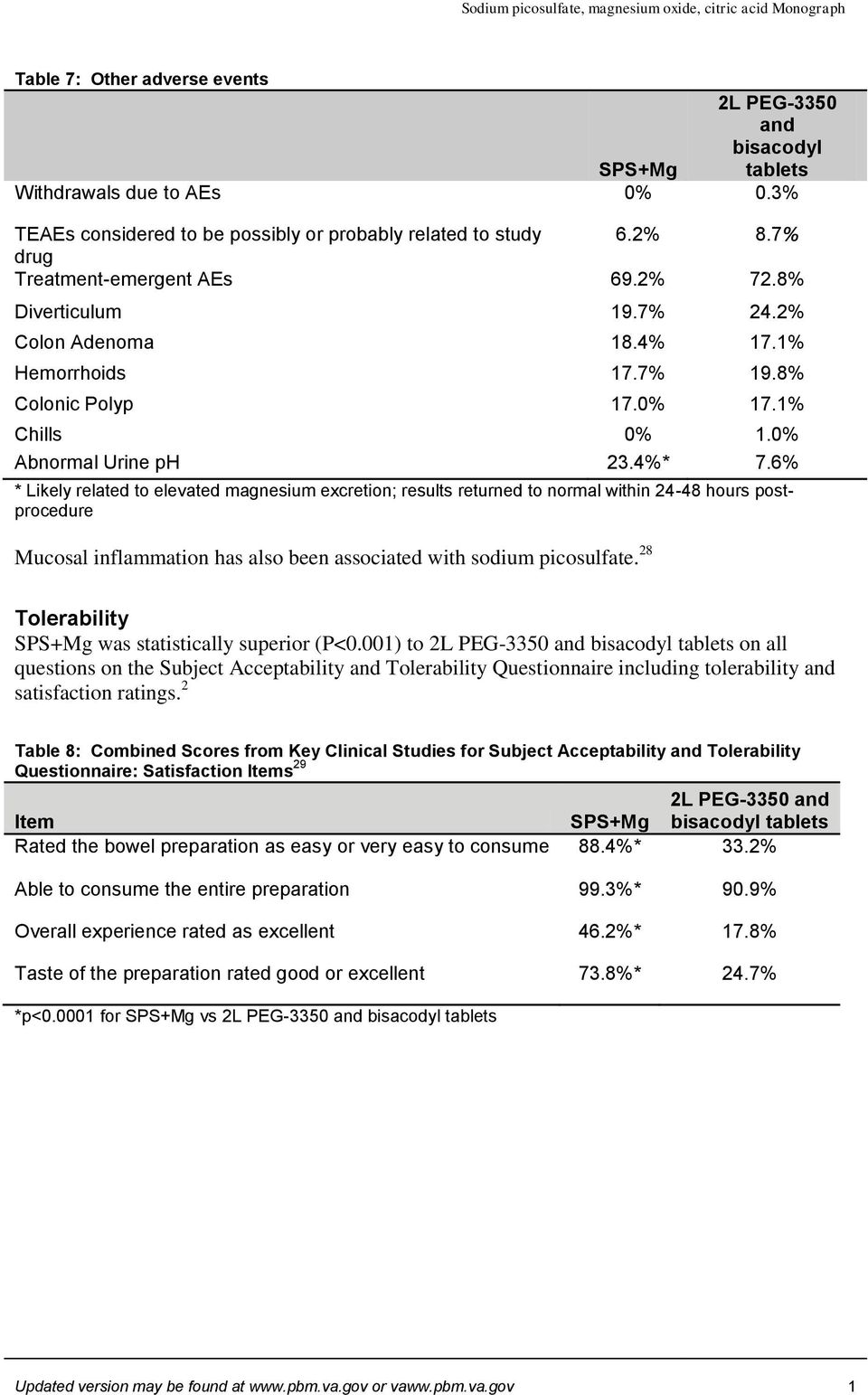
14 Table 7: Other adverse events 2L PEG-3350 and bisacodyl SPS+Mg tablets Withdrawals due to AEs 0% 0.3% TEAEs considered to be possibly or probably related to study 6.2% 8.7% drug Treatment-emergent AEs 69.2% 72.8% Diverticulum 19.7% 24.2% Colon Adenoma 18.4% 17.1% Hemorrhoids 17.7% 19.8% Colonic Polyp 17.0% 17.1% Chills 0% 1.0% Abnormal Urine ph 23.4%* 7.6% * Likely related to elevated magnesium excretion; results returned to normal within hours postprocedure Mucosal inflammation has also been associated with sodium picosulfate. 28 Tolerability SPS+Mg was statistically superior (P<0.001) to 2L PEG-3350 and bisacodyl tablets on all questions on the Subject Acceptability and Tolerability Questionnaire including tolerability and satisfaction ratings. 2 Table 8: Combined Scores from Key Clinical Studies for Subject Acceptability and Tolerability Questionnaire: Satisfaction Items 29 2L PEG-3350 and Item SPS+Mg bisacodyl tablets Rated the bowel preparation as easy or very easy to consume 88.4%* 33.2% Able to consume the entire preparation 99.3%* 90.9% Overall experience rated as excellent 46.2%* 17.8% Taste of the preparation rated good or excellent 73.8%* 24.7% *p< for SPS+Mg vs 2L PEG-3350 and bisacodyl tablets
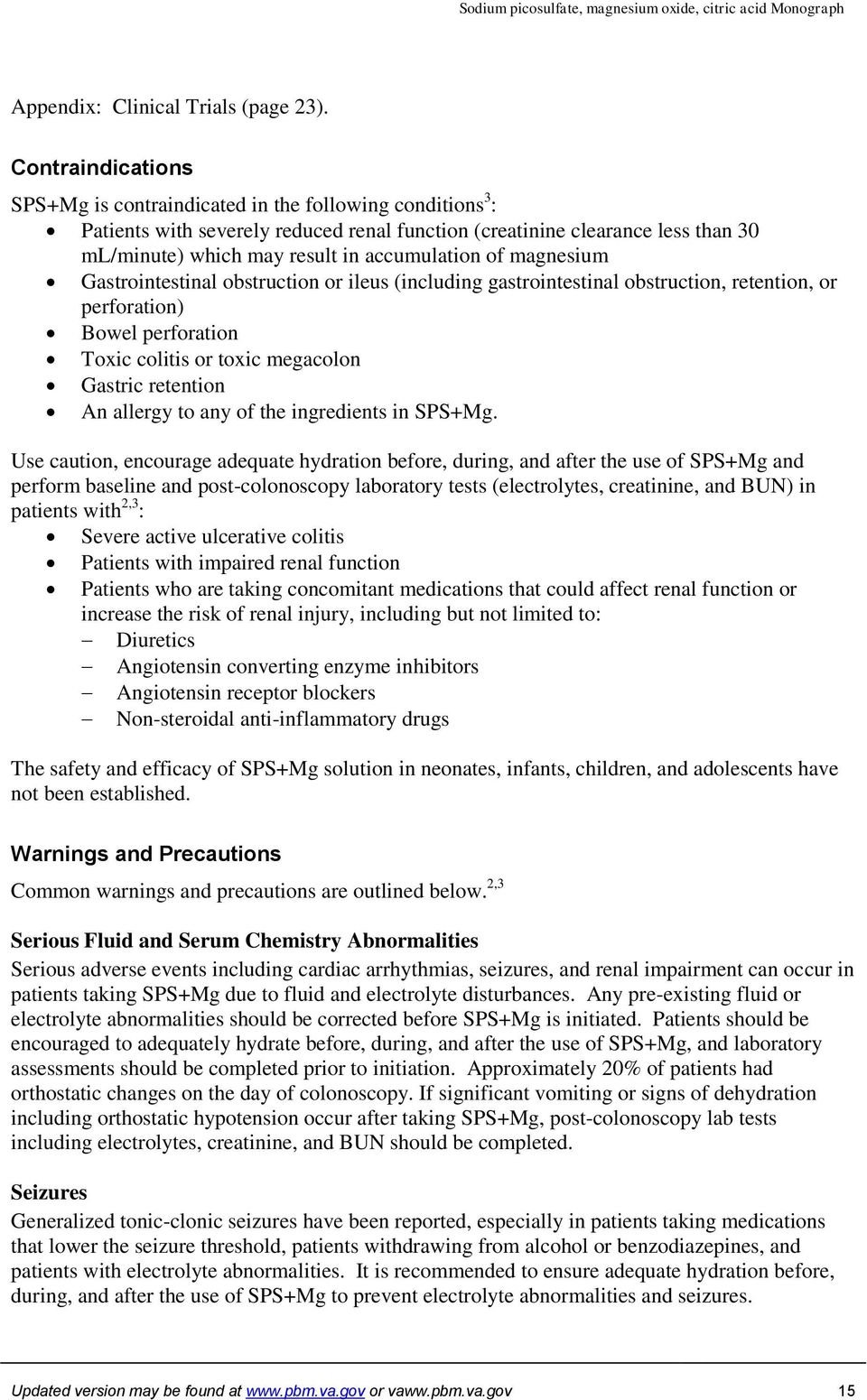
15 Appendix: Clinical Trials (page 23). Contraindications SPS+Mg is contraindicated in the following conditions 3 : Patients with severely reduced renal function (creatinine clearance less than 30 ml/minute) which may result in accumulation of magnesium Gastrointestinal obstruction or ileus (including gastrointestinal obstruction, retention, or perforation) Bowel perforation Toxic colitis or toxic megacolon Gastric retention An allergy to any of the ingredients in SPS+Mg. Use caution, encourage adequate hydration before, during, and after the use of SPS+Mg and perform baseline and post-colonoscopy laboratory tests (electrolytes, creatinine, and BUN) in patients with 2,3 : Severe active ulcerative colitis Patients with impaired renal function Patients who are taking concomitant medications that could affect renal function or increase the risk of renal injury, including but not limited to: Diuretics Angiotensin converting enzyme inhibitors Angiotensin receptor blockers Non-steroidal anti-inflammatory drugs The safety and efficacy of SPS+Mg solution in neonates, infants, children, and adolescents have not been established. Warnings and Precautions Common warnings and precautions are outlined below. 2,3 Serious Fluid and Serum Chemistry Abnormalities Serious adverse events including cardiac arrhythmias, seizures, and renal impairment can occur in patients taking SPS+Mg due to fluid and electrolyte disturbances. Any pre-existing fluid or electrolyte abnormalities should be corrected before SPS+Mg is initiated. Patients should be encouraged to adequately hydrate before, during, and after the use of SPS+Mg, and laboratory assessments should be completed prior to initiation. Approximately 20% of patients had orthostatic changes on the day of colonoscopy. If significant vomiting or signs of dehydration including orthostatic hypotension occur after taking SPS+Mg, post-colonoscopy lab tests including electrolytes, creatinine, and BUN should be completed. Seizures Generalized tonic-clonic seizures have been reported, especially in patients taking medications that lower the seizure threshold, patients withdrawing from alcohol or benzodiazepines, and patients with electrolyte abnormalities. It is recommended to ensure adequate hydration before, during, and after the use of SPS+Mg to prevent electrolyte abnormalities and seizures. 5
16 Use in Patients with Renal Impairment Patients with renal insufficiency and patients who are taking medications that affect renal function could be at increased risk of renal injury from SPS+Mg. Baseline and post-colonoscopy testing including electrolytes, creatinine, creatinine clearance, and BUN should occur. When creatinine clearance is < 30 ml/min, accumulation of magnesium in the plasma can occur. Cardiac Arrhythmias Rare but serious arrhythmias associated with the use of osmotic laxative products for bowel preparation have been reported. Pre- and post-colonoscopy EKGs may be considered in patients who are at increased risk for these serious cardiac arrhythmias including patients with prolonged QT, recent myocardial infarction, unstable angina, congestive heart failure, or cardiomyopathy. Colonic Mucosal Ulceration, Ischemic Colitis and Ulcerative Colitis The use of SPS+Mg along with any other stimulant laxative can increase the risk of colonic mucosal ulcerations, ischemic colitis, and ulcerative colitis especially in patients with known or suspected inflammatory bowel disease. Use in Patients with Significant Gastrointestinal Disease If suspected, diagnostic studies should be completed to rule out gastrointestinal obstruction or perforation before using SPS+Mg. Aspiration Patients with an impaired gag reflex and patients who often regurgitate should be observed during the administration of SPS+Mg to prevent aspiration. Not for Direct Ingestion SPS+Mg powder should not be ingested undissolved as this could increase the risk of electrolyte disturbances, dehydration, nausea, and vomiting. Special Populations Special populations that have been identified are outlined below. 2,3 Pregnancy SPS+Mg is in pregnancy category B. No adequate, well-controlled studies in pregnant women have been completed; therefore, SPS+Mg should only be used in pregnant women if clearly needed. PEG solutions, in pregnancy category C, have been used in pregnant women. Nursing Mothers It is unknown whether SPS+Mg is excreted in human milk. Caution should be used when SPS+Mg is administered to a nursing woman. Pediatric Patients The safety and efficacy of SPS+Mg has not been evaluated in pediatric patients. Geriatric Patients In controlled clinical trials with SPS+Mg, patients 65 years of age had a similar overall incidence of treatment-emergent adverse events as compared with patients < 65 years (73% vs. 71%). When SPS+Mg was compared with comparator agent in patients 65 years of age, to the 6

17 same, the proportion of patients with successful colon cleansing was greater in the SPS+Mg group (81.1% vs. 70.9%). Renal Insufficiency To prevent the risk of renal injury, adequate hydration before, during, and after the use of SPS+Mg should be recommended to patients with impaired renal function and patients taking medications that may affect renal function. Providers should perform pre- and post-colonoscopy laboratory tests to monitor electrolytes, creatinine, and BUN in these patients. In addition, patients with CrCl < 30mL/minute are at an increased risk of magnesium accumulation and should not be given SPS+Mg. Postmarketing Safety Experience Foreign spontaneous adverse event reports have been identified during use of formulations similar to SPS+Mg. 2,3 Allergic reactions: rash, urticarial, and purpura. Electrolyte abnormalities: Hypokalemia, hyponatremia, and hypermagnesemia. Gastrointestinal issues: Abdominal pain, diarrhea, fecal incontinence, proctalgia, reversible aphthoid ileal ulcers, and ischemic colitis. Neurologic issues: Generalized tonic-clonic seizures with and without hyponatremia in epileptic patients. Sentinel Events No data. Look-alike / Sound-alike (LA / SA) Error Risk Potential As part of a JCAHO standard, LASA names are assessed during the formulary selection of drugs. Based on clinical judgment and an evaluation of LASA information from three data sources (Lexi-Comp, First Databank, and ISMP Confused Drug Name List), the following drug names may cause LASA confusion: Table 9: Look-alike Sound-alike Names NME Drug Name Lexi-Comp First Data Bank ISMP Clinical Judgement Sodium Picosulfate, Magnesium Oxide, and Citric Acid None None None Sodium Sulfate, Potassium Sulfate, and Magnesium Sulfate (Suprep ) Magnesium Citrate Prepopik TM None None None Prepidil Pristiq 7

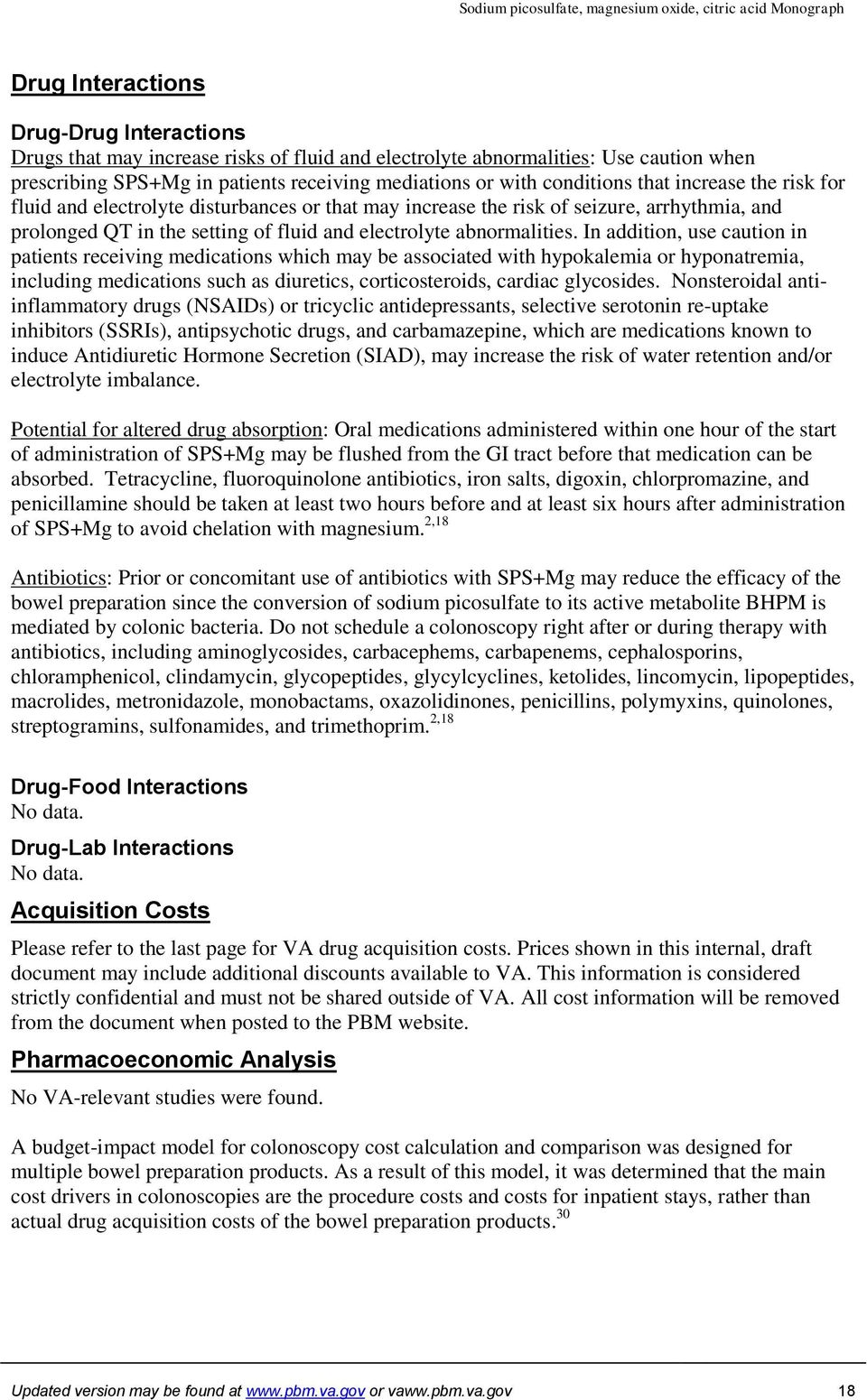
18 Drug Interactions Drug-Drug Interactions Drugs that may increase risks of fluid and electrolyte abnormalities: Use caution when prescribing SPS+Mg in patients receiving mediations or with conditions that increase the risk for fluid and electrolyte disturbances or that may increase the risk of seizure, arrhythmia, and prolonged QT in the setting of fluid and electrolyte abnormalities. In addition, use caution in patients receiving medications which may be associated with hypokalemia or hyponatremia, including medications such as diuretics, corticosteroids, cardiac glycosides. Nonsteroidal antiinflammatory drugs (NSAIDs) or tricyclic antidepressants, selective serotonin re-uptake inhibitors (SSRIs), antipsychotic drugs, and carbamazepine, which are medications known to induce Antidiuretic Hormone Secretion (SIAD), may increase the risk of water retention and/or electrolyte imbalance. Potential for altered drug absorption: Oral medications administered within one hour of the start of administration of SPS+Mg may be flushed from the GI tract before that medication can be absorbed. Tetracycline, fluoroquinolone antibiotics, iron salts, digoxin, chlorpromazine, and penicillamine should be taken at least two hours before and at least six hours after administration of SPS+Mg to avoid chelation with magnesium. 2,18 Antibiotics: Prior or concomitant use of antibiotics with SPS+Mg may reduce the efficacy of the bowel preparation since the conversion of sodium picosulfate to its active metabolite BHPM is mediated by colonic bacteria. Do not schedule a colonoscopy right after or during therapy with antibiotics, including aminoglycosides, carbacephems, carbapenems, cephalosporins, chloramphenicol, clindamycin, glycopeptides, glycylcyclines, ketolides, lincomycin, lipopeptides, macrolides, metronidazole, monobactams, oxazolidinones, penicillins, polymyxins, quinolones, streptogramins, sulfonamides, and trimethoprim. 2,18 Drug-Food Interactions No data. Drug-Lab Interactions No data. Acquisition Costs Please refer to the last page for VA drug acquisition costs. Prices shown in this internal, draft document may include additional discounts available to VA. This information is considered strictly confidential and must not be shared outside of VA. All cost information will be removed from the document when posted to the PBM website. Pharmacoeconomic Analysis No VA-relevant studies were found. A budget-impact model for colonoscopy cost calculation and comparison was designed for multiple bowel preparation products. As a result of this model, it was determined that the main cost drivers in colonoscopies are the procedure costs and costs for inpatient stays, rather than actual drug acquisition costs of the bowel preparation products. 30 8
19 Conclusions SPS+Mg for oral solution is a low-volume, dual-mechanism colon cleansing agent that exerts its laxative action by virtue of conversion of sodium picosulfate to desacetylbisacodyl, the active moiety of the stimulant laxative bisacodyl, and the formation of the osmotic laxative magnesium citrate. Extensive data and many years of non-u.s. clinical experience support the safety and efficacy of SPS+Mg as a bowel cleanser. When administered in the Split-Dose (preferred) regimen, SPS+Mg was shown to be superior to the 2L PEG-3350 and bisacodyl tablets; however, the effect size was small. In addition, SPS+Mg demonstrated improved tolerability compared to these alternative bowel preparations. Although improved tolerability may lead to improved patient compliance with bowel preparation and therefore increased colorectal cancer (CRC) screening and survival rates, 5,6,7 this has not been evaluated with SPS+Mg. SPS+Mg is a pregnancy category B drug. All other bowel preparations are pregnancy category C. It should be noted that SPS+Mg should not be used in renal insufficiency. 2,3 No studies directly comparing SPS+Mg with a combination of bisacodyl tablets plus magnesium citrate in terms of colon cleansing efficacy were available; however, due to mechanism of action, the bisacodyl tablets plus magnesium citrate combination may be expected to be interchangeable with SPS+Mg at equivalent doses and have a cost advantage. Further studies are needed to confirm the therapeutic equivalence of the combination of bisacodyl tablets plus magnesium citrate to SPS+Mg. The advantages of SPS+Mg are offset by the non-contract drug acquisition cost that is 2 to 750 times higher than alternative bowel preparation agents. Prepared June 2013 by Katie Simmons, Pharm.D. Pharmacy Resident; Ashley Wilhelm, Pharm.D. Pharmacy Resident; Teresa Hedrick, Pharm.D. Clinical Pharmacy Specialist (Louis A. Johnson VA Medical Center) Contact person: Francine Goodman, Pharm.D. BCPS, Clinical Pharmacy Specialist, VHA Pharmacy Benefits Management Services 9

20 Appendix: Clinical Trials A literature search was performed on PubMed/Medline (1966 to April 2013) using the search terms <sodium picosulfate, magnesium oxide and citric acid > or <Prepopik>. The search was limited to active-controlled studies performed in humans and published in English language. Trials evaluating Pico-salax, Picoprep, or Picolax (additional trade names marketed in Canada, the United Kingdom and other countries) were included. Reference lists of review articles and the manufacturer s AMCP dossier were searched for relevant clinical trials. All randomized controlled trials published in peer-reviewed journals were included. A total of 3 active controlled trials including 3 head-to-head trials were included in the evaluation. Updated version may be found at or vaww.pbm.va.gov 20

21 Pivotal Studies Citation Design Analysis type Setting Katz (2013) 5 Phase 3, randomized, multicenter, assessorblinded, noninferiority, head-tohead study in an outpatient setting JADAD: 3 Eligibility Criteria Inclusion Criteria: Age years At least 3 spontaneous bowel movements per week for 1 month before scheduled elective colonoscopy Exclusion Criteria: Acute surgical abdominal conditions; active inflammatory bowel disease; or colon disease Gastrointestinal disorders Uncontrolled angina and/or myocardial infarction within last 3 months, congestive heart failure or uncontrolled hypertension, renal insufficiency Interventions SPS+Mg 2L PEG-3350 and bisacodyl tablets Tx taken day before colonoscopy Patient Population Profile Efficacy Results Safety Results Mean age years; male %; white % (SPS+Mg 2L PEG-3350 and bisacodyl tablets) N R = 603 NI Analysis for % of Responders using Aronchick Scale at Visit 3 Analysis Set Statistic SPS+Mg n/n (%) Treatment Difference Intent-to- Treat Per Protocol N Responders, n (%) N Responders, n (%) (83.0) (83.1) 2L PEG and bisacodyl tablets (79.7) (79.3) 1-sided 97.5% CI Responder = Excellent, good, or fair rating; NI= noninferiority, SPS+Mg = Sodium picosulfate, magnesium oxide, and anhydrous citric acid NI Analysis for % of Responders by Colon Segment using Ottawa Scale at Visit 3 Population Intent-to- Treat Responders Per Protocol Responders Area of colon SPS+Mg n/n (%) Ascending 239/294 (81.3) Mid 274/294 (93.2) Recto- 271/294 sigmoid (92.2) Overall: 232/294 ascending, (78.9) mid, and rectosigmoid Ascending 211/260 (81.2) Mid 247/260 (95.0) Rectosigmoid 243/260 (93.5) 2L PEG and bisacodyl tablets 252/300 (84.0) 266/300 (88.7) 267/300 (89.0) 234/300 (78.0) 237/280 (84.6) 249/280 (88.9) 251/280 (89.6) Treatment Difference 1-sided 97.5% CI Responder = Excellent, good, or fair rating; NI= noninferiority, SPS+Mg = Sodium picosulfate, magnesium oxide, and anhydrous citric acid SPS+Mg N=269 n (%) 2L PEG-3350 and bisacodyl tablets N=302 n (%) Any ADR 33 (11.1) 29 (9.6) Nausea 9 (3.0) 12 (4.3) Vomiting 4 (1.4) 6 (2.0) Headache 8 (2.7) 5 (1.7) SPS+Mg = Sodium picosulfate, magnesium oxide, and anhydrous citric acid Author s conclusions (optional) Critique (optional) SPS+Mg was non-inferior to 2L PEG and bisacodyl tablets in overall cleansing of the colon in preparation for colonoscopy, as measured by the Aronchick Scale. SPS+Mg was non-inferior to to 2L PEG and bisacodyl tablets in cleansing the ascending, mid, and recto-sigmoid colon in preparation for colonoscopy as measured by the Ottawa Scale. No drug-related safety concerns or novel AEs were observed. Updated version may be found at or vaww.pbm.va.gov 21
22 Citation Design Analysis type Setting Eligibility Criteria History of colorectal surgery or upper GI surgery Interventions Patient Population Profile Efficacy Results Safety Results Author s conclusions (optional) Critique (optional) The results of this study demonstrated that SPS+Mg is a safe, efficacious, and welltolerated preparation for colonoscopy. The singleblinded design of this study allowed the patients so know which treatment they were receiving, creating the possibility of bias. Updated version may be found at or vaww.pbm.va.gov 22
23 Head-to-Head Studies Citation Design Analysis type Setting Renaut (2007) 31 Comparison of Fleet and Picoprep for colonoscopy SB RCT Setting The Oxford Clinic in New Zealand JADAD = 3 N R= Number randomized Eligibility Criteria Inclusion criteria: requiring colonoscopy Interventions Phospho-soda buffered saline (Fleet) group Sodium picosulphate/magnesium citrate (Picoprep) group Patient Population Profile Efficacy Results Safety Results No specific patient population data identified. N R = 73 Efficacy Adequate Inadequate Acceptable Yes No Fleet N = (78) 9 (22) 34 (82.9) 7 (17.1) Picoprep N = (93.7) 2 (6.3) 32 (100) 0 (0) P Headache Yes No Nausea Yes No Vomiting Yes No Fleet N = (43.9) 23 (56.1) 20 (48.8) 21 (51.2) 3 (7.3) 38 (92.7) Picoprep N = (56.3) 14 (43.7) 5 (15.6) 27 (84.4) 2 (6.3) 30 (93.7) P Author s conclusions (optional) Critique (optional) No significant difference in quality of the bowel preparation achieved, however, a significant number of patients found Picoprep more acceptable than Fleet. Also the number of patients suffering nausea was significantly less with Picoprep. Citation Design Analysis type Setting Manes (2013) 20 Efficacy and acceptability of sodium picosulphate/magnesium citrate versus low-volume PEG-ascorbic acid for colon cleansing: a randomized controlled trial SB RCT Hospital setting in Italy JADAD = 3 Eligibility Criteria Inclusion criteria: Adult outpatients, 18 to 85 years of age, undergoing elective colonoscopy from January to June 2011, provided informed written consent Excluson criteria: previous colonic resection, ileus, intestinal obstruction, toxic Interventions Picosulphate/ magnesium citrate Take 2 satchets diluted in a glass of water 5 hours apart, starting at 5pm day before colonoscopy. Drink 3 to 4 liters of clear liquid. Split dose prescribed for procedures after 12pm (half Patient Population Profile Pico PEG- / Mg AA Age Sex M M F 60 F 64 BMI (Kg/m 2 ) Efficacy Results N R = 293 Adequate colon cleansing (score >2) Boston Bowel Preparation Score (BBPS) score Pico / Mg 106/140 (75.7%) Left 6.8 Right 1.95 PEG- AA 111/145 (76.5%) Left 6.6 Right 1.96 All scores were comparable and Safety Results No or mild discomfort Willing to repeat same prep Pico / Mg 136/140 (97.1%) 137/140 (97.8%) PEG- AA P- 123/145 P< (84.8%) /145 (83.4%) P< Patients who received Picosulphate/magnesium citrate had significantly less bloating, belching, nausea, and vomiting, but significantly more hunger. Colonic cleansing was adequate in 89.7% of split dose regimen and 74% of Author s conclusions (optional) Critique (optional) Picosulphate/ magnesium citrate and low volume PEGascorbic acid are both effective and safe for colonic preparation. Picosulphate/ magnesium citrate is more tolerable and palatable. For low-volume regimens, a split schedule Updated version may be found at or vaww.pbm.va.gov 23
24 N R= Number randomized megacolon, severe heart failure (NYHA Class III or IV), acute cardiovascular disease, uncontrolled arterial hypertension (systolic pressure >170 mmhg, diastolic pressure >100mmHg, severe liver cirrhosis (Child- Pugh score C) or renal failure (CrCl <30mL/min), ascites, phenylketon-uria, glucose-6- phosphate dehydro-genase deficiency, pregnancy, breast feeding afternoon before and half morning of colonoscopy). PEG-ascorbic acid Drink 1 liter every two hours along with 1 liter of additional clear liquid starting at 5pm on the day before colonoscopy Split dose prescribed for procedures after 12pm (half afternoon before and half morning of colonoscopy). without significant difference. standard regimen (p=0.041). was associated with higher quality cleansing. Compliance of the patient is crucial to achieve effective bowel cleansing. Products associated with the best compliance, such as preparations that are low in volume and palatable, are likely to achieve the best results. Citation Design Analysis type Setting Mϋller (2007) 32 Comparison of sodium picosulfate with mannitol in preparation for colonoscopy SB RCT Eligibility Criteria Interventions Patient Population Profile Inclusion Mannitol Sodium criteria: Picosulfate Older than Age (16.19) 60.6 (16.6) 18 Exclusion criteria: Possibility of intestinal subocclusion, emergency colonoscopy, Mannitol group - 8 hours before the exam, patients were given 1 hour to consume 50 ml of 20% mannitol with 250 ml of orange flavored juice. Patients were Sex Men 23 Women 17 Men 21 Women 19 Efficacy Results N R = 80 There were no statistically significant differences between the groups as far as colon cleanliness, acceptance, or exam duration. Mannitol Sodium Picosulfate Safety Results There were no statistically significant differences between groups for nausea, vomiting, or abdominal pain. Mannitol Sodium Picosulfate Author s conclusions (optional) Critique (optional) The quality of colon preparation and collateral effects were similar, however, abdominal distension was more frequent in the mannitol group. Updated version may be found at or vaww.pbm.va.gov 24
25 Presence of foam Preparation of the colon Assessment of abdominal distension Sodium picosulfate, magnesium oxide, citric acid Monograph Hospital setting JADAD = 2 barium or ferrous sulphate in the past 7 days allowed to drink additional liquid up to 3 hours before the exam. Sodium picosulfate solution - Patients received three doses of one satchel diluted in one cup of water at 8 hour intervals. Patients were allowed to drink additional liquid up to 3 hours before the exam. Interrupted Poor Intermediate Good Excellent Yes No 6 (15%) 2 (5%) 6 (15%) 11 (28%) 15 (38%) 10 (28%) 24 (71%) 2 (5%) 2 (5%) 5 (12%) 19 (48%) 12 (30%) 10 (26%) 28 (74%) (55%) 4 (10%) 1 (2%) 1 (2%) 8 (20%) 4 (10%) 33 (82%) 1 (2%) 4 (10%) 2 (5%) 0 (0%) 0 (0%) While the quality between groups was similar, there was less abdominal distension in the sodium picosulfate group. N R= Number randomized No antiemetic drugs were allowed. Updated version may be found at or vaww.pbm.va.gov 25
26 References 1. Liscinsky, Morgan. 25 Jul FDA News Release. "FDA approves new colon-cleansing drug for colonoscopy prep." News & Events. U.S. Food and Drug Administration. Web. 25 Feb < Medical Information Department Supporting Formulary Consideration of: Prepopik TM (sodium picosulfate, magnesium oxide, and anhydrous citric acid) for Oral Solution. Prepopik TM (sodium picosulfate, magnesium oxide, anhydrous citric acid) Formulary Dossier. Submission of Clinical Economic Data. Parsippany, NJ 07054: Ferring Pharmaceuticals Inc., Prepopik TM package insert. Ferring Pharmaceuticals. Parsippany, NJ. Issued 07/12. drugsatfda_docs/label/2012/202535lbl.pdf 4. Ferring Pharmaceuticals Inc. 25 Jul Prepopik TM Medication Guide. U.S. Food and Drug Administration. Web. 25 Feb < 5. Katz PO, Rex DK, Epstein M, Grandhi NK, Vanner S, et al. A dual-action, low-volume bowel cleanser administered the day before colonoscopy: results from the SEE CLEAR II study. Am J Gastroenterol. 2013; 108: Data on File. FE A randomized, assessor-blinded, multi-center study investigating the efficacy, safety and tolerability of split-dose PREPOPIK for oral administration vs HalfLytely for colon cleansing in preparation for colonoscopy. Ferring Pharmaceuticals Inc Data on File. FE A randomized, assessor-blinded, multi-center study investigation the efficacy, safety and tolerability of day-before PREPOPIK for oral adminiatration vs HalfLytely for colon cleansing in preparation for colonoscopy. Ferring Pharmaceuticals Inc Lai, A.K., P.C. Kwok, S.W. Man, R.S. Lau, and S.C. Chan. "A blinded clinical trial comparing conventional cleansing enema, Pico-salax and Golytely for barium enema bowel preparation." Clinical Radiology (1996): Chakraverty, S, T Hughes, M.J. Keir, J.R. Hall, and J Rawlinson. "Preparation of the colon for double-contrast barium enema: comparison of Picolax, Picolax with cleansing enema and Citramag (2 sachets)--a randomized prospective trial." Clinical Radiology (1994): Macleod, A.J., K.A. Duncan, R.H. Pearson, and R.R. Bleakney. "A comparison of Fleet Phosphosoda with Picolax in the preparation of the colon for double contrast barium enema." Clinical Radiology (1998): Swarbrick, M.J., M.C. Collins, D.J. Moore, and K.D. McBride. "A comparative trial of magnesium citrate (Citramag) and Picolax for barium enema bowel preparation.." Clinical Radiology (1994): Hawkins, Stewart, Peter Bezuidenhout, Phillip Shorvon, and Andrew Hine. "Barium enema preparation: a study of low-residue diet, "Picolax." Australasian Radiology (1996): Chan, AO. "A pilot study on the efficacy of Picolax given as a four-week course for the treatment of refractory constipation.." Hong Kong Medical Journal (2012): Taylor, S.A., S Halligan, V Goh, S Morley, W Atkin, and C.I. Bartram. "Optimizing bowel preparation for multidetector row CT colonography: effect of Citramag and Picolax.." Clinical Radiology (2003): Hickson, D.E.G., J.G.C. Cox, R.G. Taylor, and J.R. Bennett. "Enema or Picolax as preparation for flexible sigmoidoscopy?." Postgraduate Medical Journal (1990): Updated version may be found at or vaww.pbm.va.gov
27 16. Atkin, Wendy S., Andrew Hart, Robert Edwards, et al. "Single blind, randomised trial of efficacy and acceptability of oral Picolax versus self administered phosphate enema in bowel preparation for flexible sigmoidoscopy screening." British Medical Journal (2000): Drew, P.J., M. Hughes, R. Hodson, et al. "The optimum bowel preparation for flexible sigmoidoscopy." Europan Journal of Surgical Oncology (1997): Sodium picosulfate; magnesium oxide; anhydrous citric acid. Clinical Pharmacology [Internet database]. Gold Standard, Inc., Available at: Accessed: April 8, National Center for Chronic Disease Prevention and Health Promotion. "Fast Facts About Colorectal Cancer." Colorectal (Colon) Cancer. Centers for Disease Control and Prevention, 05 Mar Web. < htm>. Accessed: 9 Apr Manes G, Amato A, Arena M, Pallotta S, Radaelli F, Masci E. Efficacy and acceptability of sodium picosulphate/magnesium citrate versus low-volume PEG-ascorbic acid for colon cleansing: a randomized controlled trial. Colorectal Dis Apr 13. [Epub ahead of print] 21. A Consensus Document for Bowel Preparation Before a Colonoscopy. Gastrointest Endosc 2006;63: Bowel preparation for colonoscopy: European Society of Gastrointestinal Endoscopy (ESGE) guideline. 23. Enestvedt BK, Tofani C, Laine LA, Tierney A, and Fennerty MB. 4-Liter split-dose polyethylene glycol is superior to other bowel preparations, based on systematic review and meta-analysis. Clin Gastroenterol Hepatol Nov;10(11): Epub 2012 Aug Bisacodyl package insert. Updated January Kienzle-Horn S, Vix JM, Schuijt C, Peil H, Jordan CC, and Kamm MA. Comparison of bisacodyl and sodium picosulphate in the treatment of chronic constipation. Curr Med Res Opin Apr;23(4): Flemming JA, Vanner SJ, Hookey LC. Split-dose picosulfate, magnesium oxide, and citric acid solution markedly enhances colon cleansing before colonoscopy: a randomized, controlled trial. Gastrointest Endosc. 2012;Mar;75(3): Epub 2011 Dec Connor A, Tolan D, Hughes S, Carr N, Tomson C. Consensus guidelines for the safe prescription and administration of oral bowel-cleansing agents. Gut Nov;61(11): Epub 2012 Jul Lawrance IC, Willert RP, Murray K. Bowel cleansing for colonoscopy: prospective randomized assessment of efficacy and of induced mucosal abnormality with three preparation agents. Endoscopy May;43(5): Epub 2011 May Data on File. Evaluation of the psychometric properties of the patient satisfaction survey in PREPOPIK clinical trials. Ferring Pharmaceuticals Inc Gruss HJ, Cockett A, Leicester RJ. Budget-impact model for colonoscopy cost calculation and comparison between 2 litre PEG+ASC and sodium picosulphate with magnesium citrate or sodium phosphate oral bowel cleansing agents. J Med Econ. 2012;15(4): Epub 2012 Apr Renaut, A.J., S Raniga, F.A. Frizelle, R.E. Perry, and L. Guilford. "A randomized controlled trial comparing the efficacy and acceptability of phospo-soda buffered saline (Fleet) with sodium picosulphate/magnesium citrate (Picoprep) in the preparation of patients for colonoscopy." Colorectal Disease (2008): Müller S, Francesconi CFM, Maguilnik I, Breyer HP. Randomized Clinical trial comparing sodium picosulfate with mannitol in the preparation for colonoscopy in hospitalized patients. Arq Gastroenterol. 2007;44(3): Updated version may be found at or vaww.pbm.va.gov
Medication Guide. Serious loss of body fluid (dehydration) and changes in blood salts (electrolytes) in your blood.
 Medication Guide MoviPrep (moo-vee-prěp) (PEG 3350, sodium sulfate, sodium chloride, potassium chloride, sodium ascorbate, and ascorbic acid for oral solution) Read this Medication Guide before you start
Colorectal Cancer Screening: Update on Bowel Preps
 Colorectal Cancer Screening: Update on Bowel Preps What we don t want What we want Frank Friedenberg, MD, MS (Epi) Professor, Gastroenterology t Temple University School of Medicine 5 Modified Aronchick
PHOSPHATE-SANDOZ Tablets (High dose phosphate supplement)
 1 PHOSPHATE-SANDOZ Tablets (High dose phosphate supplement) PHOSPHATE-SANDOZ PHOSPHATE-SANDOZ Tablets are a high dose phosphate supplement containing sodium phosphate monobasic. The CAS registry number
INFORMATION FOR PATIENT. WARNINGS Using more than one enema in 24 hours can be harmful.
 FLEET ENEMA, A SALINE LAXATIVE - ready-to-use squeeze bottle FLEET ENEMA EXTRA, A SALINE LAXATIVE - ready-to-use squeeze bottle FLEET PEDIA-LAX ENEMA, A SALINE LAXATIVE - ready-to-use squeeze bottle FLEET
Patients who fail to bring a driver/someone to stay with them for the night will have their procedure cancelled immediately.
 Preparing for your Colonoscopy You must have someone and/or a driver accompany you and stay with you for 24 hours after your procedure. Patients who fail to bring a driver/someone to stay with them for
Always take this medicine exactly as described in this leaflet or as your doctor, pharmacist or nurse have told you.
 leaflet: Information for the user Macrogol 4000 10 g powder for oral solution in sachet Macrogol 4000
Novartis Gilenya FDO Program Clinical Protocol and Highlights from Prescribing Information (PI)
 Novartis Gilenya FDO Program Clinical Protocol and Highlights from Prescribing Information (PI) Highlights from Prescribing Information - the link to the full text PI is as follows: http://www.pharma.us.novartis.com/product/pi/pdf/gilenya.pdf
Colorectal Cancer Screening
 Colorectal Cancer Screening Introduction Colorectal cancer (cancer of the large intestine) is the second most common cause of death from cancer in the United States, after lung cancer. However, colorectal
Please read the instructions 6 days before your colonoscopy.
 979-776-8440 Please read the instructions 6 days before your colonoscopy. COLONOSCOPY MIRALAX PREP SIX DAYS BEFORE THE COLONOSCOPY - Stop iron medications 6 days before your colonoscopy. - Stop taking
Medication Guide EQUETRO (ē-kwĕ-trō) (carbamazepine) Extended-Release Capsules
 Medication Guide EQUETRO (ē-kwĕ-trō) (carbamazepine) Extended-Release Capsules Read this Medication Guide before you start taking EQUETRO and each time you get a refill. There may be new information. This
How to prepare for your colonoscopy using bowel preparation Type 1 and type 2 diabetes / insulin treated diabetes management. (Morning appointment)
 South of Tyne Bowel Cancer Screening Programme How to prepare for your colonoscopy using bowel preparation Type 1 and type 2 diabetes / insulin treated diabetes management. (Morning appointment) June 2012
Nurse Initiated Medications Procedure
 1. Purpose This Procedure is performed as a means of ensuring the safe administration of therapeutic medication to patients in accordance with all legislative and regulatory requirements. 2. Application
How to prepare for your colonoscopy using bowel preparation Type 1 and type 2 diabetes - insulin treated diabetes management (Evening appointment)
 South of Tyne Bowel Cancer Screening Programme How to prepare for your colonoscopy using bowel preparation Type 1 and type 2 diabetes - insulin treated diabetes management (Evening appointment) December
Read all of this leaflet carefully before you start taking this medicine
 LAX-SACHETS 13.72g sachet, powder for oral solution Read all of this leaflet carefully before you start taking this medicine Keep this leaflet. You may need to read it again. If you have any further questions,
Patient Information Once Weekly FOSAMAX (FOSS-ah-max) (alendronate sodium) Tablets and Oral Solution
 Patient Information Once Weekly FOSAMAX (FOSS-ah-max) (alendronate sodium) Tablets and Oral Solution Read this information before you start taking FOSAMAX *. Also, read the leaflet each time you refill
Getting Ready for Your Colonoscopy (PEG) - APC
 Getting Ready for Your Colonoscopy (PEG) - APC To help you get ready for your procedure; we, the staff of the Ambulatory Procedure Center at UW Hospital have made this handout for you that has information
3% Sodium Chloride Injection, USP 5% Sodium Chloride Injection, USP
 PRESCRIBING INFORMATION 3% Sodium Chloride Injection, USP 5% Sodium Chloride Injection, USP IV Fluid and Electrolyte Replenisher Baxter Corporation Mississauga, Ontario L5N 0C2 Canada Date of Revision:
Teriflunomide is the active metabolite of Leflunomide, a drug employed since 1994 for the treatment of rheumatoid arthritis (Baselt, 2011).
 Page 1 of 10 ANALYTE NAME AND STRUCTURE TERIFLUNOMIDE Teriflunomide TRADE NAME Aubagio CATEGORY Antimetabolite TEST CODE PURPOSE Therapeutic Drug Monitoring GENERAL RELEVANCY BACKGROUND sclerosis. The
Package leaflet: Information for the patient. Laxido Orange, powder for oral solution
 Package leaflet: Information for the patient Laxido Orange, powder for oral solution Read all of this leaflet carefully before you start taking this medicine because it contains important information for
MEDICATION GUIDE KOMBIGLYZE XR (kom-be-glyze X-R) (saxagliptin and metformin HCl extended-release) tablets
 MEDICATION GUIDE KOMBIGLYZE XR (kom-be-glyze X-R) (saxagliptin and metformin HCl extended-release) tablets Read this Medication Guide carefully before you start taking KOMBIGLYZE XR and each time you get
Management of Constipation in Adults
 Hull and East Riding Prescribing Committee Management of Constipation in Adults Definition Constipation is defecation that is unsatisfactory because of infrequent stools, difficult stool passage, or seemingly
Colonoscopy or Upper GI Endoscopy
 Day Surgery Guide to your Colonoscopy or Upper GI Endoscopy Pre-Admission Phone Interview Date & Time: (you will be given the time of your procedure on this call) Date of Procedure: with Dr. Your Upcoming
Antibiotic-Associated Diarrhea, Clostridium difficile- Associated Diarrhea and Colitis
 Antibiotic-Associated Diarrhea, Clostridium difficile- Associated Diarrhea and Colitis ANTIBIOTIC-ASSOCIATED DIARRHEA Disturbance of the normal colonic microflora Leading to alterations in bacterial degradation
Nursing 113. Pharmacology Principles
 Nursing 113 Pharmacology Principles 1. The study of how drugs enter the body, reach the site of action, and are removed from the body is called a. pharmacotherapeutics b. pharmacology c. pharmacodynamics
X-ray (Radiography), Lower GI Tract
 Scan for mobile link. X-ray (Radiography), Lower GI Tract What is Lower GI Tract X-ray Radiography (Barium Enema)? Lower gastrointestinal (GI) tract radiography, also called a lower GI or barium enema,
GMMMG Interface Prescribing Subgroup. Shared Care Template
 GMMMG Interface Prescribing Subgroup Shared Care Template Shared Care Guideline for Selective Serotonin Reuptake Inhibitors (SSRIs) for the treatment of Obsessive Compulsive Disorder (OCD) and Body Dysmorphic
Safety Information Card for Xarelto Patients
 Safety Information Card for Xarelto Patients 15mg Simply Protecting More Patients 20mg Simply Protecting More Patients Keep this card with you at all times Present this card to every physician or dentist
How to prepare for your colonoscopy using MOVIPREP bowel preparation
 How to prepare for your colonoscopy using MOVIPREP bowel preparation Page 1 of 8 Introduction Your Doctor has recommended that you have a colonoscopy to examine your colon (large bowel). Colonoscopy -
MEDICATION GUIDE Savella (Sa-vel-la) (milnacipran HCl) Tablets
 MEDICATION GUIDE Savella (Sa-vel-la) (milnacipran HCl) Tablets Savella is not used to treat depression, but it acts like medicines that are used to treat depression (antidepressants) and other psychiatric
INITIATING ORAL AUBAGIO (teriflunomide) THERAPY
 FOR YOUR PATIENTS WITH RELAPSING FORMS OF MS INITIATING ORAL AUBAGIO (teriflunomide) THERAPY WARNING: HEPATOTOXICITY AND RISK OF TERATOGENICITY Severe liver injury including fatal liver failure has been
DULCOLAX Tablets and Suppositories Bisacodyl
 New Zealand Consumer Medicine Information DULCOLAX Tablets and Suppositories Bisacodyl What is in this leaflet This leaflet answers some common questions about DULCOLAX. It does not contain all available
Virtual or CT Colonography
 Virtual or CT Colonography CT Department Ground Floor, Lanesborough Wing Please contact the CT department on 020 8725 1730 to confirm your appointment. This information leaflet is for patients who are
PATIENT MEDICATION INFORMATION
 READ THIS FOR SAFE AND EFFECTIVE USE OF YOUR MEDICINE PATIENT MEDICATION INFORMATION Pr CYRAMZA ramucirumab Read this carefully before you receive CYRAMZA (pronounced "si ram - ze"). This leaflet is a
Ask Your Doctor if There May Be a SMARTER CHOICE
 If you have osteoarthritis, rheumatoid arthritis or ankylosing spondylitis, Could Your NSAID Pain Medicine Be Hurting Your Stomach? Ask Your Doctor if There May Be a SMARTER CHOICE 1 of 8 Making Smart
PPP 1. Continuation of a medication to ensure continuity of care
 PRESCRIBING POLICIES: 4.7 PHARMACIST AUTHORITY The College of Pharmacists of BC Professional Practice Policy (PPP) 58 Medication Management (Adapting a Prescription) became effective April 1, 2009. The
VISTARIL (hydroxyzine pamoate) Capsules and Oral Suspension
 VISTARIL (hydroxyzine pamoate) Capsules and Oral Suspension DESCRIPTION Hydroxyzine pamoate is designated chemically as 1-(p-chlorobenzhydryl) 4- [2-(2-hydroxyethoxy) ethyl] diethylenediamine salt of 1,1
How to do a Vitamin C (Ascorbate) Flush
 How to do a Vitamin C (Ascorbate) Flush Use only Beyond Health Vitamin C Buffered Powder, a 100% l-ascorbate, fully reduced, buffered mineral ascorbate form of vitamin C that contains the proper balance
Dehydration in Long Term Care: The Nurse s Role in Guiding the Interdisciplinary Team
 Dehydration in Long Term Care: The Nurse s Role in Guiding the Interdisciplinary Team Welcome to the Elizabeth McGown Training Institute Cell Phones and Pagers Please turn your cell phones off or turn
MEDICATION GUIDE JUXTAPID (JUKS-tuh-pid) (lomitapide) capsules
 MEDICATION GUIDE JUXTAPID (JUKS-tuh-pid) (lomitapide) capsules Read this Medication Guide before your treatment. What is the most important information I should know about JUXTAPID? JUXTAPID is available
Colonoscopy Preparation Instructions with PEG-3350 (TriLyte, Colyte, NuLytely or GoLytely)
 Colonoscopy Preparation Instructions with PEG-3350 (TriLyte, Colyte, NuLytely or GoLytely) IMPORTANT: For best results and to prevent the need to cancel or reschedule your colonoscopy: Only follow department
Acquired, Drug-Induced Long QT Syndrome
 Acquired, Drug-Induced Long QT Syndrome A Guide for Patients and Health Care Providers Sudden Arrhythmia Death Syndromes (SADS) Foundation 508 E. South Temple, Suite 202 Salt Lake City, Utah 84102 800-STOP
Share the important information in this Medication Guide with members of your household.
 MEDICATION GUIDE BUPRENORPHINE (BUE-pre-NOR-feen) Sublingual Tablets, CIII IMPORTANT: Keep buprenorphine sublingual tablets in a secure place away from children. Accidental use by a child is a medical
Maintenance of abstinence in alcohol dependence
 Shared Care Guideline for Prescription and monitoring of Acamprosate Calcium Author(s)/Originator(s): (please state author name and department) Dr Daly - Consultant Psychiatrist, Alcohol Services Dr Donnelly
NEW ZEALAND DATA SHEET NAPHCON-A Naphazoline hydrochloride and pheniramine maleate.
 NEW ZEALAND DATA SHEET NAPHCON-A Naphazoline hydrochloride and pheniramine maleate. PRESENTATION Eye Drops: NAPHCON-A Eye Drops are a combination of an antihistamine (pheniramine maleate) and a decongestant
EFFIMET 1000 XR Metformin Hydrochloride extended release tablet
 BRAND NAME: Effimet XR. THERAPEUTIC CATEGORY: Anti-Diabetic PHARMACOLOGIC CLASS: Biguanides EFFIMET 1000 XR Metformin Hydrochloride extended release tablet COMPOSITION AND PRESENTATION Composition Each
Review of Pharmacological Pain Management
 Review of Pharmacological Pain Management CHAMP Activities are possible with generous support from The Atlantic Philanthropies and The John A. Hartford Foundation The WHO Pain Ladder The World Health Organization
HYPERTENSION ASSOCIATED WITH RENAL DISEASES
 RENAL DISEASE v Patients with renal insufficiency should be encouraged to reduce dietary salt and protein intake. v Target blood pressure is less than 135-130/85 mmhg. If patients have urinary protein
How do Patients Take THE GIFT from Mother Earth, BEST FULVIC and Humic and Fulvic Based Supplements?
 How do Patients Take THE GIFT from Mother Earth, BEST FULVIC and Humic and Fulvic Based Supplements? Patients typically start taking THE GIFT from Mother Earth. THE GIFT from Mother Earth is a highly-concentrated
Controlling Pain Part 2: Types of Pain Medicines for Your Prostate Cancer
 Controlling Pain Part 2: Types of Pain Medicines for Your Prostate Cancer The following information is based on the general experiences of many prostate cancer patients. Your experience may be different.
U.S. Scientific Update Aricept 23 mg Tablets. Dr. Lynn Kramer President NeuroScience Product Creation Unit Eisai Inc.
 U.S. Scientific Update Aricept 23 mg Tablets Dr. Lynn Kramer President NeuroScience Product Creation Unit Eisai Inc. Unmet Need in Moderate to Severe Alzheimer s Disease (AD) Ongoing clinical deterioration
Dorset Cardiac Centre
 P a g e 1 Dorset Cardiac Centre Patients with Atrial Fibrillation/Flutter undergoing DC Cardioversion or Ablation procedures- Guidelines for Novel Oral Anti-coagulants (NOACS) licensed for this use February
Adjunctive psychosocial intervention. Conditions requiring dose reduction. Immediate, peak plasma concentration is reached within 1 hour.
 Shared Care Guideline for Prescription and monitoring of Naltrexone Hydrochloride in alcohol dependence Author(s)/Originator(s): (please state author name and department) Dr Daly - Consultant Psychiatrist,
Medication Guide TASIGNA (ta-sig-na) (nilotinib) Capsules
 Medication Guide TASIGNA (ta-sig-na) (nilotinib) Capsules Read this Medication Guide before you start taking Tasigna and each time you get a refill. There may be new information. This information does
FOR ORAL OR RECTAL ADMINISTRATION FOR THE PREVENTION AND TREATMENT OF PORTAL-SYSTEMIC ENCEPHALOPATHY
 FORM NO. 1360 VC3074 Rev.2/08 LACTULOSE SOLUTION, USP 10 g/15 ml FOR ORAL OR RECTAL ADMINISTRATION FOR THE PREVENTION AND TREATMENT OF PORTAL-SYSTEMIC ENCEPHALOPATHY Rx Only DESCRIPTION Lactulose is a
DVT/PE Management with Rivaroxaban (Xarelto)
 DVT/PE Management with Rivaroxaban (Xarelto) Rivaroxaban is FDA approved for the acute treatment of DVT and PE and reduction in risk of recurrence of DVT and PE. FDA approved indications: Non valvular
The author has no disclosures
 Mary Bradbury, PharmD, BCPS Clinical Pharmacy Specialist, Cardiac Surgery September 18, 2012 [email protected] This presentation will discuss unlabeled and investigational use of products The author
A. Ketorolac*** B. Naproxen C. Ibuprofen D. Celecoxib
 1. A man, 66 years of age, with a history of knee osteoarthritis (OA) is experiencing increasing pain at rest and with physical activity. He also has a history of depression and coronary artery disease.
See 17 for PATIENT COUNSELING INFORMATION. Revised: 3/2016 FULL PRESCRIBING INFORMATION: CONTENTS* WARNING: ADRENAL CRISIS IN THE SETTING OF SHOCK OR
 HIGHLIGHTS OF PRESCRIBING INFORMATION These highlights do not include all the information needed to use LYSODREN safely and effectively. See full prescribing information for LYSODREN. LYSODREN (mitotane)
Lung Pathway Group Pemetrexed and Cisplatin in Non-Small Cell Lung Cancer (NSCLC)
 Indication: NICE TA181 First line treatment option in advanced or metastatic non-squamous NSCLC (histology confirmed as adenocarcinoma or large cell carcinoma) Performance status 0-1 Regimen details: Pemetrexed
0.9% Sodium Chloride Injection, USP In VIAFLEX Plastic Container
 Page 1 of 8 PRESCRIBING INFORMATION 0.9% Sodium Chloride Injection, USP In VIAFLEX Plastic Container IV Fluid and Electrolyte Replenisher Baxter Corporation Mississauga, Ontario L5N 0C2 Canada Date of
Once is Enough - The Pharmacist's Role in Getting Bowel Preparation Right
 Once is Enough - The Pharmacist's Role in Getting Bowel Preparation Right ACTIVITY DESCRIPTION KM is a 57 year old male with a colorectal exam scheduled. He has no history of stomach problems and this
Clinical Study Synopsis
 Clinical Study Synopsis This Clinical Study Synopsis is provided for patients and healthcare professionals to increase the transparency of Bayer's clinical research. This document is not intended to replace
Clinical Study Synopsis
 Clinical Study Synopsis This Clinical Study Synopsis is provided for patients and healthcare professionals to increase the transparency of Bayer's clinical research. This document is not intended to replace
PROTOCOL SYNOPSIS Evaluation of long-term opioid efficacy for chronic pain
 P a g e 1 PROTOCOL SYNOPSIS Evaluation of long-term opioid efficacy for chronic pain Clinical Phase 4 Study Centers Study Period 25 U.S. sites identified and reviewed by the Steering Committee and Contract
Vibramycin Capsules Doxycycline hyclate capsules USP. Vibra-Tabs Film Coated Tablets Doxycycline hyclate tablets USP
 32 READ THIS FOR SAFE AND EFFECTIVE USE OF YOUR MEDICINE PATIENT MEDICATION INFORMATION Vibramycin Capsules Doxycycline hyclate capsules USP Vibra-Tabs Film Coated Tablets Doxycycline hyclate tablets USP
Patient Medication Guide Brochure
 Patient Medication Guide Brochure 1 MEDICATION GUIDE TASIGNA (ta-sig-na) (nilotinib) Capsules Read this Medication Guide before you start taking TASIGNA and each time you get a refill. There may be new
Colonoscopy Preparation - Standard
 Colonoscopy Preparation - Standard Please note: If your appointment is before 8 am please contact: 303.604.5000 Please read ALL the following information regarding your upcoming procedure (both front and
Kidney Disease WHAT IS KIDNEY DISEASE? TESTS TO DETECT OR DIAGNOSE KIDNEY DISEASE TREATMENT STRATEGIES FOR KIDNEY DISEASE
 Kidney Disease WHAT IS KIDNEY DISEASE? Kidney disease is when your kidneys are damaged and not functioning as they should. When kidney disease is not going away it is called chronic kidney disease or CKD.
Systematic Review of Treatment for Alcohol Dependence
 Systematic Review of Treatment for Alcohol Dependence ALCOHOL ARCUATE NUCLEUS in Hypothalamus, pituitary Beta-endorphin Dynorphin Kappa receptor Nucleus Enkephalins accumbens Delta receptor (+) Mu receptor
COLORECTAL CANCER SCREENING
 COLORECTAL CANCER SCREENING By Douglas K. Rex, M.D., FACG & Suthat Liangpunsakul, M.D. Division of Gastroenterology and Hepatology, Department of Medicine Indiana University School of Medicine Indianapolis,
PHENYLEPHRINE HYDROCHLORIDE INJECTION USP
 PRESCRIBING INFORMATION PHENYLEPHRINE HYDROCHLORIDE INJECTION USP 10 mg/ml Sandoz Canada Inc. Date of Preparation: September 1992 145 Jules-Léger Date of Revision : January 13, 2011 Boucherville, QC, Canada
Prior Authorization Guideline
 Prior Authorization Guideline Guideline: CSD - Suboxone Therapeutic Class: Central Nervous System Agents Therapeutic Sub-Class: Analgesics and Antipyretics (Opiate Partial Agonists) Client: County of San
A Phase 2 Study of Interferon Beta-1a (Avonex ) in Ulcerative Colitis
 A Phase 2 Study of (Avonex ) in Ulcerative Colitis - Study Results - ClinicalTrials.gov A Phase 2 Study of (Avonex ) in Ulcerative Colitis This study has been completed. Sponsor: Biogen Idec Information
Oral Zinc Supplementation as an Adjunct Therapy in the Management of Hepatic Encephalopathy: A Randomized Controlled Trial
 Oral Zinc Supplementation as an Adjunct Therapy in the Management of Hepatic Encephalopathy: A Randomized Controlled Trial Marcus R. Pereira A. Study Purpose Hepatic encephalopathy is a common complication
Daily Habits and Urinary Incontinence
 Effects of Daily Habits on the Bladder Many aspects of our daily life influence bladder and bowel function. Sometimes our daily habits may not be in the best interest of the bladder. A number of surprisingly
INR: RUPTURED ANEURYSM: POST EMBOLIZATION Patient Identification Page 1 of 5. Allergies: Weight: kg Diagnosis:
 Page 1 of 5 Allergies: Weight: kg Diagnosis: Service: Admission Admit to Inpatient Admit to Daypatient Place on Outpatient Observation Status Hospital Attending: Attending Physician Attending Provider:
Adverse Events in Clinical Trials: Definitions and Documentation
 Clinical and Translational Science Institute / CTSI at the University of California, San Francisco Welcome to Online Training for Clinical Research Coordinators Adverse Events in Clinical Trials: Definitions
National Chlamydia Screening Programme September 2012 PATIENT GROUP DIRECTION FOR THE ADMINISTRATION OF AZITHROMYCIN FOR CHLAMYDIA TRACHOMATIS
 PATIENT GROUP DIRECTION FOR THE ADMINISTRATION OF AZITHROMYCIN FOR CHLAMYDIA TRACHOMATIS Below is a template that can be used to produce a local patient group direction (PGD) for the administration of
Care of Gastrostomy Tubes for Adults with IDD in Community Settings: The Nurse s Role. Lillian Khalil, BSN, RN Volunteers of America, Chesapeake
 Care of Gastrostomy Tubes for Adults with IDD in Community Settings: The Nurse s Role Lillian Khalil, BSN, RN Volunteers of America, Chesapeake Objectives The participants will be able to identify the
2 DAY COLONOSCOPY PREP INSTRUCTIONS
 2 DAY COLONOSCOPY PREP INSTRUCTIONS Professional services provided by the physicians at Syracuse Gastroenterological Associates, PC and Community Memorial Hospital. Please report to: Community Memorial,
READ THIS FOR SAFE AND EFFECTIVE USE OF YOUR MEDICINE PATIENT MEDICATION INFORMATION. sacubitril/valsartan film-coated tablets
 READ THIS FOR SAFE AND EFFECTIVE USE OF YOUR MEDICINE PATIENT MEDICATION INFORMATION Pr ENTRESTO TM sacubitril/valsartan film-coated tablets Read this carefully before you start taking ENTRESTO TM and
(NON-PRESCRIPTION) LEAFLET: USER INFORMATION. CALTRATE VITAMIN D3 600mg/400 IU, film-coated tablet Calcium and Cholecalciferol
 (NON-PRESCRIPTION) LEAFLET: USER INFORMATION CALTRATE VITAMIN D3 600mg/400 IU, film-coated tablet Calcium and Cholecalciferol Read all of this leaflet carefully because it contains important information
Paxil/Paxil-CR (paroxetine)
 Generic name: Paroxetine Available strengths: 10 mg, 20 mg, 30 mg, 40 mg tablets; 10 mg/5 ml oral suspension; 12.5 mg, 25 mg, 37.5 mg controlled-release tablets (Paxil-CR) Available in generic: Yes, except
There is a risk of renal impairment in dehydrated children and adolescents.
 PACKAGE LEAFLET: INFORMATION FOR THE USER MELFEN 200mg FILM-COATED TABLETS MELFEN 400mg FILM-COATED TABLETS Ibuprofen Read all of this leaflet carefully before you start taking this medicine because it
Medication for the Treatment of Alcohol Use Disorder. Pocket Guide
 Medication for the Treatment of Alcohol Use Disorder Pocket Guide Medications are underused in the treatment of alcohol use disorder. According to the National Survey on Drug Use and Health, of the estimated
Medical management of CHF: A New Class of Medication. Al Timothy, M.D. Cardiovascular Institute of the South
 Medical management of CHF: A New Class of Medication Al Timothy, M.D. Cardiovascular Institute of the South Disclosures Speakers Bureau for Amgen Background Chronic systolic congestive heart failure remains
PACKAGE LEAFLET: INFORMATION FOR THE USER. ADRENALINE (TARTRATE) STEROP 1 mg/1 ml Solution for injection. Adrenaline (Levorenine, Epinephrine)
 PACKAGE LEAFLET: INFORMATION FOR THE USER ADRENALINE (TARTRATE) STEROP 1 mg/1 ml Solution for injection Adrenaline (Levorenine, Epinephrine) Read all of this leaflet carefully before you start using this
Clinical Algorithm & Preferred Medications to Treat Pain in Dialysis Patients
 Clinical Algorithm & Preferred Medications to Treat Pain in Dialysis Patients Developed by the Mid Atlantic Renal Coalition and the Kidney End of Life Coalition September 2009 This project was supported,
patient group direction
 DICLOFENAC v01 1/8 DICLOFENAC PGD Details Version 1.0 Legal category Staff grades Approved by POM Paramedic (Non-ECP) Nurse (Non-ECP) Emergency Care Practitioner (Paramedic) Emergency Care Practitioner
Acamprosate calcium APOLLO 91991 46 950 950
 Acamprosate calcium APOLLO 91991 46 950 950 Acamprosate calcium APOLLO 91991 46 950 950 Acamprosate calcium CAS Number : 77337-73-6 Molecular Weight : 400.48 g/mol Molecular Formula : 2C5H10NO4S.Ca Systematic
CHOC CHILDREN SUROLOGY CENTER. Constipation
 Constipation What is constipation? Constipation is a condition in which a person has uncomfortable or infrequent bowel movements. Generally, a person is considered to be constipated when bowel movements
Articles Presented. Journal Presentation. Dr Albert Lo. Dr Albert Lo
 * This presentation is prepared by the author in one s personal capacity for the purpose of academic exchange and does not represent the views of his/her organisations on the topic discussed. Journal Presentation
**Form 1: - Consultant Copy** Telephone Number: Fax Number: Email: Author: Dr Bernard Udeze Pharmacist: Claire Ault Date of issue July 2011
 Effective Shared Care Agreement for the treatment of Dementia in Alzheimer s Disease Donepezil tablets / orodispersible tablets (Aricept / Aricept Evess ) These forms (1 and 2) are to be completed by both
Essential Shared Care Agreement Drugs for Dementia
 Ref No. E040 Essential Shared Care Agreement Drugs for Dementia Please complete the following details: Patient s name, address, date of birth Consultant s contact details (p.3) And send One copy to: 1.
Interpretation of Laboratory Values
 Interpretation of Laboratory Values Konrad J. Dias PT, DPT, CCS Overview Electrolyte imbalances Renal Function Tests Complete Blood Count Coagulation Profile Fluid imbalance Sodium Electrolyte Imbalances
Evaluation of a Morphine Weaning Protocol in Pediatric Intensive Care Patients
 Evaluation of a Morphine Weaning Protocol in Pediatric Intensive Care Patients Jennifer Kuhns, Pharm.D. Pharmacy Practice Resident Children s Hospital of Michigan **The speaker has no actual or potential
What Is Clostridium Difficile (C. Diff)? CLOSTRIDIUM DIFFICILE (C. DIFF)
 What Is Clostridium Difficile (C. Diff)? Clostridium difficile, or C. diff for short, is an infection from a bacterium, or bug, that can grow in your intestines and cause bad GI symptoms. The main risk