
Early Warning for Geological Disasters
|
|
|
- Mervyn Cameron
- 10 years ago
- Views:
Transcription
1 Advanced Technologies in Earth Sciences Friedemann Wenzel Jochen Zschau Editors Early Warning for Geological Disasters Scientific Methods and Current Practice

2 Chapter 3 CISN ShakeAlert: An Earthquake Early Warning Demonstration System for California M. Böse, R. Allen, H. Brown, G. Gua, M. Fischer, E. Hauksson, T. Heaten, M. Hellweg, M. Liukis, D. Neuhauser, P. Maechling, K. Solanki*, M. Vinci*, I. Henson*, O. Khainovski*, S. Kuyuk*, M. Carpio*, M.-A. Meier* and T. Jordan* Abstract To demonstrate the feasibility of earthquake early warning (EEW) in California, we have developed and implemented the CISN ShakeAlert demonstration system. A Decision Module combines estimates and uncertainties determined by three algorithms implemented in parallel, τ c P d Onsite, Virtual Seismologist, and ElarmS, to calculate and report at a given time the most probable earthquake magnitude and location, as well as the likelihood of correct alarm. A User Display receives the alert messages in real-time, calculates the expected local shaking intensity, and displays the information on a map. Currently, CISN ShakeAlert is being tested by 70 individuals and test users from industries and emergency response organizations in California. During the next 3 years we plan to expand this demonstration warning system to the entire US West Coast. 3.1 Introduction Scientists and engineers at the California Institute of Technology (Caltech), UC Berkeley, the Swiss Federal Institute of Technology (ETH), and the University of Southern California (USC) started in 2007 to develop and implement an earthquake CISN EEW Group. M. Böse (B) E. Hauksson T. Heaton K. Solanki M. Vinci California Institute of Technology (Caltech), Pasadena, USA [email protected] R. Allen H. Brown M. Hellweg D. Neuhauser I. Henson O. Khainovski S. Kuyuk UC Berkeley (UCB), Berkeley, USA G. Cua M. Fischer M. Carpio M.-A. Meier Swiss Federal Institute of Technology (ETH), Zurich, Switzerland M. Liukis P. Maechling T. Jordan University of Southern California (USC), Los Angeles, USA F. Wenzel and J. Zschau (eds.), Early Warning for Geological Disasters, 49 Advanced Technologies in Earth Sciences, DOI: / _3, Springer-Verlag Berlin Heidelberg 2014

3 50 M. Böse et al. CISN ShakeAlert Data Algorithms Users c-p d Onsite Seismic strongmotion and broadband data Virtual Seismologist User Display High-rate GPS data ElarmS Decision Module Smart phone app Data from lowcost sensors Finite Fault Detector Engineering applications. Fig. 3.1 The current CISN ShakeAlert system receives real-time estimates of earthquake source and ground-motion parameters determined by three algorithms, τ c P d Onsite, Virtual Seismologist, and ElarmS, that run in parallel in California. The Decision Module combines these estimates and provides a unified ShakeAlert view of the earthquake in progress. The ShakeAlert information includes rapid estimates of magnitudes, locations, expected seismic intensities, and probabilities of correct alarm (called likelihood parameter). A User Display that runs on a user s computer receives and displays the alert messages in real-time. Dashed lines show components under development, including, for instance, the usage of high-rate GPS-data and a finite fault detector for the rapid detection of large earthquakes early warning (EEW) demonstration system for California, called CISN ShakeAlert. The project is funded by the US Geological Survey (USGS), as well as participating partners. The USGS has the formal responsibility of issuing earthquake alerts in California. ShakeAlert makes use of the existing infrastructure of the California Integrated Seismic Network (CISN), including real-time waveform data streams from 380 broadband and strong-motion stations throughout California. The USGS/ANSS/ARRA program provided Government Furnished Equipment and funding to upgrade the CISN during the past 2 years. ARRA funds were used to upgrade around 210 CISN stations with faster Q330 s dataloggers, upgrade telemetry hubs, and build a state-of-the-art microwave telemetry backbone (Romanowicz et al. 2011; Thomas et al. 2011). These improvements have reduced data latencies in the CISN data acquisition systems. Waveform data thus arrive within seconds at the three processing facilities at Caltech/USGS Pasadena, UC Berkeley, and USGS Menlo Park, providing the basis for EEW in California. CISN ShakeAlert is a distributed system, which enables the independent development of individual system components (Fig. 3.1). An associator, called Decision Module, combines the outputs from three EEW algorithms implemented in parallel, τ c P d Onsite (Böse et al. 2009a, b; Kanamori2005; Wuetal.2007), Virtual Seismologist (Cua et al. 2009; Cua and Heaton 2007), and ElarmS (Allen 2007; Allen

4 3 CISNShakeAlert 51 et al. 2009; Allen and Kanamori 2003). Each algorithm is capable of detecting and characterizing earthquakes within seconds from event initiation. The Decision Module uses estimates of source parameters and uncertainties determined by the three algorithms to calculate, update, and report the most probable solutions at a given time. The earthquake alert information includes rapid estimates of magnitudes, locations, expected seismic intensities, and probabilities of correct alarm (called likelihood parameter). A User Display that runs on a user s computer receives and displays the alert messages in real-time (Fig. 3.1). 3.2 Early Warning Algorithms The following subsections give a brief description of the three EEW algorithms used in CISN ShakeAlert τ c P d Onsite Algorithm The τ c P d Onsite algorithm belongs to the group of single-sensor approaches to EEW (Kanamori 2005). In principle, this type of warning approach can be quicker at detecting and processing of earthquakes, but is expected to be less reliable compared to regional warning algorithms that are based on observations at multiple seismic sensors. The τ c P d Onsite algorithm developed by Kanamori (2005) asanextension of earlier methods proposed by Nakamura (1988)and Allen and Kanamori(2003) uses the period τ c and amplitude P d of initial shaking to estimate the size and forthcoming shaking in an earthquake. The period parameter τ c is defined as τ c =2π/ r, with r = [ τ o 0 u 2 (t)dt ] / [ τ o u 2 (t)dt ], (3.1) 0 where u(t) and u(t) are the ground-motion displacement and velocity time series, and τ 0 is the duration of the time window used. Usually, τ 0 is set to 3.0 [s]. Wu et al. (2007)systematicallystudiedthearchivedrecordsfromearthquakesinsouthern California to determine a log 10 (τ c )-Mw scaling relationship for EEW. The second parameter, P d,whichisthemaximumamplitudeofthehigh-passfiltered(>0.075 Hz) vertical displacement during the initial 3.0 [s] of the P wave, is used to estimate the peak ground velocity (PGV) at the recording site (Wu et al. 2007). Our real-time tests of the τ c P d Onsite algorithm in California over the past 5 years (Böse et al. 2009b) haveshownthatsomemodificationsarenecessarytodecrease the number of false triggers and thus to increase the robustness of the algorithm. In particular in real-time mode during small to moderate-sized earthquakes there may be too many false alarms, as well as too much scatter in the source parameter

5 52 M. Böse et al. estimates. The main modifications, which we have implemented, are the τ c P d Trigger Criterion (Böse et al. 2009a) andthetwo-station-method. The τ c P d Trigger Criterion is based on τ c -dependent and implicit magnitudedependent P d thresholds. For a local earthquake with period τ c and rupture-to-site distance r, r min r r max,weexpectp d,min P d P d,max.böseetal.(2009a) determined displacement amplitudes P d,min and P d,max from empirical attenuation relations for earthquakes in southern California with r min = 1kmtor max = 100 km. The application of the τ c P d Trigger Criterion removed 97 % of previous false triggers throughout California and led to a significant reduction of the scatter in magnitude estimates for small earthquakes (Böse et al. 2009a). The second modification that we have implemented is the Two-Station-Method. A trigger at a station, i.e. τ c and P d values that have passed the τ c P d Trigger- Criterion, needs to be confirmed by one or more picks of the seismic P-wave at neighbored stations, before being reported to the ShakeAlert system. Whenever one or more close-by stations detect the P-wave within a certain time window, the trigger is confirmed and reported. The earthquake location is updated, assuming that the epicenter is in between the two stations taking into account travel time differences. If two or more reports are associated with each other, i.e. are expected to refer to the same earthquake, we start calculating and reporting the median values of the magnitude. On-line and off-lines tests with waveform data from California, Taiwan and Japan, have shown, that the magnitude errors are normally distributed with σ M, single 0.55, if estimated at single stations. As can be shown from Monte Carlo simulations, the errors should decrease with σ M, multiple = (number of stations) 0.4, if magnitudes are estimated from median values from multiple stations. However, the errors observed for earthquakes in California are larger than these estimates suggest. A possible explanation is that the uncertainties at different stations (for the same event) are correlated with each other. Thus we need to consider inter- and intraevent errors caused by the variability from earthquake to earthquake (e.g. caused by different stress drops) and the variability from station to station (during the same event). In a preliminary error analysis, we find σ M, inter = 0.55 and σ M, intra = 0.37 (Barba et al. 2010), and obtain σ M, multiple (σ M, inter, σ M, intra ) exp( number of stations/3.6). (3.2) The uncertainties in epicenter location for earthquakes within CISN are 0.14 ( 15 km), and for PGV σσ log(pgv), single = (Wu et al. 2007). For the current telemetry and processing delays in the CISN first reports from τ c P d Onsite usually become available 5 s after event origin or later, depending on the distance between the earthquake and the reporting station, as well as station equipment. To quantify the probability of correct alert, we calculate a preliminary likelihood parameter, which depends on the number of reporting stations and the time in between these reports. If the number of reporting stations does not increase with time as expected for a moderate or large earthquake, a Cancel message is sent to

6 3 CISNShakeAlert 53 the CISN ShakeAlert Decision Module and User Display for event deletion and user notification. We are also developing new algorithms for more rapid and more robust onsite warning, such as PreSEIS Onsite, which is based on Artificial Neural Networks (Böse et al. 2012a). PreSEIS Onsite uses the acceleration, velocity and displacement waveforms from a single three-component broadband or strong-motion sensor to perform real-time earthquake/noise discrimination and near/far source classification. When a local earthquake is detected, the algorithm estimates the moment magnitude, epicentral distance, andpeakgroundvelocity(pgv)atthesiteof observation. Our training and test datasets consist of 2,431 records of 161 crustal earthquakes in California, Japan and Taiwan with 3.1 M 7.6 at 115 km. First estimates become available at 0.25 s after the P-pick and are regularly updated with progressing time. We find that the prediction errors of this new approach are around 60 % smaller compared to the τ c P d Onsite algorithm (Böse et al. 2012a) Virtual Seismologist Algorithm The Virtual Seismologist (VS) method is a Bayesian approach to earthquake early warning (EEW) that estimates earthquake magnitude, location, and the distribution of peak ground motion using observed ground motion amplitudes, predefined prior information, and envelope attenuation relationships (Cua 2005; Cua et al. 2009; Cua and Heaton 2007). The application of Bayes theorem in EEW (Cua 2005) states that the most probable source estimate at any given time is a combination of contributions from prior information (possibilities include network topology or station health status, regional hazard maps, earthquake forecasts, the Gutenberg- Richter magnitude-frequency relationship) and constraints from the available ground motion observations. VS is envisioned as an intelligent, automated system capable of mimicking how human seismologists can make quick, relatively accurate, backof-the-envelope interpretations of real-time (and at times, incomplete) earthquake information, using a mix of experience and available data. The formulation of the VS Bayesian methodology, the development of the underlying relationships describing the dependence of various channels of ground motion envelopes on magnitude and distance, and how these pieces come together for early warning estimation, was the result of the work of Cua and Heaton (2007)atCaltech. Implementation of the VS algorithm into real-time codes is an on-going effort of the Swiss Seismological Service at ETH Zürich, with support from ETH, the US Geological Survey, and from European projects SAFER (Seismic Early Warning for Europe), NERA (Network of European Research Infrastructures for Earthquake Risk Assessment and Mitigation), and REAKT (Strategies and Tools for Real-Time Earthquake Risk Reduction). Since the contribution of prior information can be considered relatively static over the timescale of a given earthquake rupture, VS implementation efforts have thus far focused on real-time processing of incoming waveform data. The VS code implementation currently running in real-time

7 54 M. Böse et al. Fig. 3.2 System architecture of Virtual Seismologist codes (from Cua et al. 2009). What we refer to as the VS codes consists of 3 subsystems (collection of modules). The Waveform Collector subsystem performs basic waveform processing such as picking, gain correction, baseline removal, filtering, down-sampling, and the calculation of the ground motion envelopes used by VS. The Messenger subsystem sends information (picks and ground motion envelopes) to the EEWVS (Earthquake Early Warning Virtual Seismologist) subsystem. The EEWVS subsystem includes the Binder module for providing location estimates, which is then passed to the magnitude estimation module. The QuakeFilter module (within the EEWVS subsystem) compares the consistency of the candidate location and magnitude estimate with the available pick and envelope data in California and Europe was designed and developed by Dr. Michael Fischer during his term at the Swiss Seismological Service at ETH Zürich. Conceptually, VS maps incoming phase arrival and ground motion envelope amplitude information into continuously updated estimates of earthquake magnitude, location, depth, origin time, and likelihood. Within the context of the ShakeAlert effort, the likelihood parameter expresses a degree of belief that the incoming data come from a real earthquake (as opposed to noise). The higher the likelihood value, the more consistent the incoming data are with a regional earthquake. Figure 3.2 (Cua et al. 2009) showsthesystemarchitectureofthevscodes. Phase picks from a short-term average/long-term average picker based on Allen (1978) are first sent to a Pick Filter. If the picks satisfy certain thresholds, they are sent to the Binder Earthworm phase associator module (Dietz 2002), which provides estimates of event origin time, latitude, longitude, and depth. The location estimate is passed to the Virtual Seismologist module in Fig. 3.2, which provides a magnitude estimate, given the Binder location estimate, and the available ground motion envelope values. The QuakeFilter module then takes the candidate event information (location estimate from the Binder module, magnitude estimate from Virtual Seismologist module), checks the consistency of these estimates with the observed phase picks and ground motion envelope values, and outputs a likelihood value. We refer the reader to (Cua et al. 2009), for a more detailed discussion of the VS system architecture and real-time processing. The use of ShakeMap-style site corrections (Wald et al. 1999) using shear wave velocity in the upper 30 m (Vs30) and the Borcherdt (1994) approachiscurrently implemented in the real-time codes. Caprio et al. (2011) are comparing the

8 3 CISNShakeAlert 55 effectiveness of empirical station corrections and Vs30-based corrections in improving VS magnitude estimation. Within the CISN ShakeAlert system, the VS algorithm is configured to require a minimum of four stations to initiate an initial event declaration (origin time, latitude, longitude, depth, magnitude, likelihood). Estimates and their updates are sent to the Decision Module, which combines the VS estimates with available estimates from τ c P d Onsite and ElarmS, to produce the ShakeAlert estimate. VS can also predict peak ground motions at specified locations. However, this particular feature is suppressed within the ShakeAlert system, since the prediction of peak motions at the user sites is done by the User Display. VS is currently running as three separate installations at the three processing facilities at Caltech/USGS Pasadena, UC Berkeley, and USGS Menlo Park. From the last 5years of real-time testing, we find that, in general, the quality of the location estimate drives the quality of the magnitude estimate. If the location estimate is correct (or reasonably close to the true location), the VS magnitude estimate is quite good. Figure 3.3 shows the magnitude error (VS magnitude estimate catalogue magni- Fig. 3.3 VS magnitude error (VS magnitude catalogue magnitude) for 80 southern California events from January through October 2011 with initial location estimates within 15 km of the catalogue location. The green crosses denote the temporal evolution of VS magnitude errors for individual events. The blue dots indicate the average VS magnitude error for 30 s following the initial VS estimate. The real-time envelope values are corrected to bedrock using the Borcherdt (1994) Vs30-based approach, similar to how the ShakeMap (Wald et al. 1999) codes correct for site amplification using Vs30, before the magnitude estimation step. This Vs30-based correction appears to over-correct for site amplification, as is indicated by the systematic offset of the average VS magnitude error by about 0.1 magnitude units

9 56 M. Böse et al. tude) for real-time VS detections with initial epicentral location estimates within 15 km of the catalogue epicenter for 80 M >= 3.0 southern California events from January through October On average, if the location is reasonable (i.e., within 15 km of the true location), the VS magnitude estimate is within 0.1 magnitude units of the catalogue magnitude. (The systematic 0.1 magnitude unit underestimation is due to an over-correction of site amplification effects.) This indicates that, if provided a reasonable location estimate, the underlying ground motion envelope relationships from Cua and Heaton (2007) coupled with the Vs30-based correction provides reasonable magnitude estimates. However, the Binder earthworm module was not designed as an EEW associator, and, when operating on 4 picks, simply supplies a hypocenter that fits the arrival times, without being able to recognize whether a particular pick is erroneous or not. Thus, whether the early location estimates are reasonable or not, is determined by how effective the Pick Filter module is at distinguishing between earthquake- or non-earthquake-related picks. The minimum requirement of 4 picks for an initial event declaration corresponds to initial VS estimates becoming available, on average, around 20 s after the earthquake origin time (the expected initial VS estimate time is a function of station density in a given region), corresponding to an average blind zone of about 70 km. While VS can calculate a magnitude estimate with as little as 2 s of P-wave information from a single station, using less than 4 stations for a location estimate results in too many false detections. An experimental version of VS, called VS-MTED (Virtual Seismologist Multiple Threshold Event Detection) was developed by Fischer et al. (2009)toenablesingle-stationeventdeclarationswhenamplitudesarehighenough, potentially allowing for larger warning times for large events, while requiring a larger number of stations for picks with low amplitudes to minimize false alerts from small earthquakes. Meier et al. (2011) are exploring ways of using the concept of not-yet-arrived data (Horiuchi et al. 2005; Satriano et al. 2007) to improve the discrimination of earthquake and non-earthquake signals with sparse observations. Faster, more robust discrimination between earthquake and noise signals would allow VS (or any other network-based EEW approach, for that matter) to provide faster, more reliable EEW estimates ElarmS Algorithm ElarmS is a network-based early warning algorithm. P-wave detections and subsequent parameters (frequency, amplitude) are combined from several proximal stations to collectively characterize an event (Allen 2007; Allenetal.2009; Allenand Kanamori 2003; Brown et al. 2010a, b). Network-based algorithms are generally more accurate than single-station algorithms, but are not as fast. ElarmS consists of two processing modules. The Waveform Processing module, or WP, runs in parallel at three locations (UC Berkeley, USGS Menlo Park, Caltech/USGS Pasadena) and receives the constantly streaming waveforms from seismic sensors throughout California. The WP scans the waveforms looking for

10 3 CISNShakeAlert 57 P-wave arrivals, detected by a short-term/long-term average method (Allen 1978). When a P-wave is detected the WP records peak amplitudes (displacement, velocity and acceleration), maximum predominant period, and signal to noise ratios every tenth of a second for 4 s following the P-wave pick. Every second it sends these parameters, along with the original P-wave arrival time, to the ElarmS Event Monitor module. The Event Monitor module, or EVM, runs in a single installation at UC Berkeley. It receives the P-wave detections and parameters from the three WP modules, and identifies earthquakes in progress, by associating triggers (P-wave detections), estimating event location and estimating event magnitude. Finally the EVM sends an alert message to the ShakeAlert Decision Module if appropriate. ElarmS associates triggers together using a space/time window based on expected travel times. If P-wave detections occur near each other in space and time, ElarmS will associate those triggers together into a single event. Later triggers are added to the event using the space/time window and the estimated event epicenter. The event hypocenter is estimated using a grid search. The grid extends 50 km in each horizontal direction from the mean trigger location, at a fixed depth of 8 km, and with 1 km resolution. Imagining that an earthquake begins at each grid point, ElarmS predicts the P-wave arrival time at each triggered station. The predicted travel times are compared to the actual observed arrival times, and the grid point with the lowest residuals is used as the event hypocenter. ElarmS calculates magnitude twice, using two separate scaling relations, and then averages the two magnitudes into a single event magnitude. The first scaling relations are based on the maximum predominant period, τp max,ofthefirst4sofp-wave.the vertical waveforms are integrated to velocity if necessary (for accelerometer data) and low-pass filtered at 3 Hz. Then τ p is defined by the iterative equation: τ p,i = 2π(X i /D i ) 1/2 (3.3) where X i = αx i 1 + xi 2, x i is the ground velocity of the previous sample, D i = αd i 1 + (dx/dt) i 2,andα is a smoothing constant (Wurman et al. 2007). τ max p is the maximum observed τ p,andtheperiod-basedmagnitudeforeachtriggeredstation is then: M τp = log 10 (τp max ) (3.4) The M τp values from all triggered stations are averaged together to get a single M τp for the event. For the amplitude-based scaling relations, ElarmS uses the peak displacement, P d, observed at velocity instruments and the peak velocity, P v,observedataccelerometers. Again, the waveforms are low-pass filtered at 3 Hz and only vertical instruments are used. The amplitude-based magnitude is:

11 58 M. Böse et al. M p = 1.04 log 10 (P d ) log 10 (R) [HHZ channels] (3.5) M p = 1.37 log 10 (P v ) log 10 (R) [HHZ channels] (3.6) M p = 1.63 log 10 (P v ) log 10 (R) [HHZ channels] (3.7) where R is the distance (in kilometers) to the estimated event epicenter (Wurman et al. 2007). The M p values from all triggered stations are averaged together to get asinglem p value for the event. Finally, the M p and M τp are averaged together into asingleeventmagnitude,m,whichissentinanyalertmessagestothedecision Module. ElarmS has been sending alert messages to the Decision Module since March 2011 for Northern California events. Between March 18, 2011 and December 6, 2011, there were 138 real events M 3.0 in this region (according to the ANSS catalog). ElarmS successfully sent alert messages for 106 of the events, corresponding to a 77 % success rate. For events M 3.5, ElarmS sent alerts for 37 out of 45 events, for an 82 % success rate. ElarmS also had a 25 % false alert rate. False alerts are alerts for which there is no corresponding event in the ANSS catalog. In 2011 we developed a second generation ElarmS code. ElarmS-2 consists of an upgraded Waveform Processing module for faster performance, and a redesigned Event Monitor module for improved accuracy. The new WP module processes smaller packets of waveform data and sends the resulting parameters more promptly. Changes to the EVM module include a more modern coding language (C++), a revised trigger associator, and a new alert filter which verifies each event before sending an alert to the Decision Module. ElarmS-2 is in the final stages of testing and will replace ElarmS-1 in early Decision Module The Decision Module (DM) of CISN ShakeAlert (Fig. 3.1) combines earthquake information feeds from the three algorithms (τ c P d Onsite, Virtual Seismologist, and ElarmS) to provide a unified ShakeAlert view of earthquakes in progress. The DM publishes this information in an xml-formatted message for use by any number of users, including the User Display application. The DM has been operational since February 2011 (Neuhauser et al. 2010). ShakeAlert uses the Java-based publish/subscribe ActiveMQ Messaging Broker with C++ Messaging Service extension for all communication between the ShakeAlert modules, and all messages are in XML format. The Decision Module subscribes to the earthquake message topics that are published by the τ c P d Onsite, Virtual Seismologist and ElarmS algorithms. When the DM receives a message of apossibleearthquake,ittriestoassociatetheeventmessagewithanycurrentevent messages that it has stored using a location and time metric (Fig. 3.4). If DM cannot associate the message, it assumes that the newly received message is describing a new earthquake in progress and publishes the earthquake in XML format. If DM does

12 3 CISNShakeAlert 59 Fig. 3.4 Flow chart for DM logic manage to associate the message with another earthquake in its memory, it updates the earthquake parameters and republishes the earthquake message (Neuhauser et al. 2010). Earthquake source parameters from different algorithms are currently combined using a weighted average based on parameter uncertainties. In the future it is intended to include other types of information including prior information using a Bayesian scheme (Neuhauser et al. 2010). When provided by the algorithms, the DM will also output combined uncertainty information for earthquake location and magnitude, and likelihood estimates in its output message to allow end user applications to customize their actions based on these values. In addition, the DM can include both observed and predicted ground motions provided by the algorithms. The DM receives periodic heartbeat messages from the algorithms, and forwards these messages in addition to its own heartbeat message to the ActiveMQ broker. AseparateHealthAggregatormodulereceivestheseheartbeatmessages,determines the overall state of the ShakeAlert modules, and publishes a summary State-of-Health message through ActiveMQ to the User Display and any other user applications interested in monitoring the status of the ShakeAlert system.

13 60 M. Böse et al. 3.4 User Display The User Display (UD) receives XML messages from the Decision Module (DM) and displays their content in a simple and easily understandable way (Böse et al. 2010; Solanki et al. 2011). The app is written in Java and is thus platform-independent. The current version 2.3 has the following features: calculation and display of remaining warning time for a given user calculation and display of expected MMI intensity at this site (the user can specify avs30valueforsitecharacterizationifdesired) description of expected MMI intensity at user site (e.g., Moderate Shaking expected ) display of estimated magnitude display of the probability of correct alarm ( likelihood parameter) calculation and display of P/S-wavefronts display of user site display of a 30-km radius blind-zone around the user for education purpose siren and audio announcement The User Display pops up automatically whenever a DM message is received (Fig. 3.5). The user can set thresholds for intensities, magnitudes and probability Fig. 3.5 Simulated performance of the User Display for the 1994 M6.7 Northridge earthquake in southern California with a user at Caltech (blue house). Yellow and red circles show P- and S-wavefronts. The shaded area around the user gives an approximation of the current blindzone of CISN ShakeAlert

14 3 CISNShakeAlert 61 values to reduce the number of reports. Like the CISN Display ( UD uses Openmap. Multiple map layers showing, e.g., fault lines or infrastructure can be added. XML messages received by the UD are stored locally in a history folder and can be replayed. A log-file summarizes the key information for each received DM report. Network Time Protocol (NTP) is used for time synchronization. Further features include password-protection, encrypted communication with the DM, and the capability to receive and display heartbeats from the three algorithms and DM to ensure robust communication. 3.5 Performance of CISN ShakeAlert The CISN Testing Center (CTC) is a standalone computational system that runs routine evaluations of the CISN ShakeAlert system by comparing ShakeAlert earthquake forecast parameters, including magnitude and location, against observed earthquake parameters from the ANSS catalog. The intended users of CTC performance evaluations include the scientists and engineers developing the ShakeAlert system, and scientists working to improve earthquake early warning algorithms. The CTC is designed to provide reliable ShakeAlert system forecast evaluations and to provide open performance evaluations that can easily be repeated. To support tracking of ShakeAlert performance over time, the CTC is designed to be inexpensive to build and operate. These testing goals were used to establish the design and operation of the CISN Testing Center. We have implemented the CTC at the Southern California Earthquake Center (SCEC) headquarters using computer resources that are separate from CISN ShakeAlert computer systems. The CTC software running at SCEC is based on the Collaboratory for the Study of Earthquake Predictability (CSEP) automated testing framework (Zechar et al. 2010) developed for the CSEP Project at SCEC(Jordan 2006). The CSEP software (CSEP 2012) is designed to perform validation testing of short-term earthquake forecasts and it is currently in use in earthquake forecast testing centers in the US (Jordan 2006), Switzerland (Marzocchi et al. 2010), Japan (Nanjo et al. 2011), and New Zealand (Gerstenberger and Rhoades 2010). The CSEP software provides utility programs that can retrieve observational earthquake catalogs from ANSS and other seismological data centers, and other programs that support evaluation of seismic forecasts. SCEC developers have written specialized evaluation modules to evaluate operational performance of the ShakeAlert EEW system (Maechling et al. 2011). CTC testing is one part of a larger ShakeAlert system testing approach that includes software unit tests, system regression tests, and performance evaluation testing. CTC evaluations focus on ShakeAlert end-to-end system performance and ShakeAlert earthquake parameter forecast validation. An overview of the CISN ShakeAlert System and the CTC components are shown in Fig The CTC automates ShakeAlert evaluations and provides routine feedback on system performance to ShakeAlert developers. Each night, or on request, the CTC

15 62 M. Böse et al. Algorithm Alert Logs Onsite ShakeAlert System Decision Module ElarmS Decision Module Alert Logs Virtual Seismologist ShakeAlert Performance Logs ShakeAlert Forecast Earthquake Parameters CISN Testing Center Dispatcher Module Evaluation Modules ANSS Earthquake Catalog Fig. 3.6 The CISN Testing Center (CTC) (right) collects earthquake early warnings from ShakeAlert algorithms and from the ShakeAlert Decision Module (left) and evaluates ShakeAlert performance by comparing ShakeAlert forecast parameters against observed parameters in the ANSS earthquake catalog (bottom right) server at SCEC initiates retrieval of ShakeAlert forecast logs and retrieval of the current ANSS catalog. Then, using both the forecast and observational information, the CTC software runs performance metrics and posts the evaluation results online for review by scientists and engineers. Example forecast evaluation summaries from the operational ShakeAlert system are shown in Fig The CTC performance metrics (Maechling et al. 2009) developed by the scientific and engineering groups during ShakeAlert development can be put into three general categories; speed of operation, event performance, and cumulative event performance. The CTC speed of operation summary measures how long it took the ShakeAlert system to produce the first alert for an earthquake. We measure this as time in seconds between an event origin time and the time the ShakeAlert Decision Modules publishes the first alert for the event. This measurement varies depending on the location of the earthquake, performance of the CISN real-time seismic network, and performance of the ShakeAlert algorithms and Decision Module. The CTC event summaries show the earthquake forecast parameters produced by the real-time ShakeAlert algorithms and Decision Module as a time series showing how the forecast parameters change with time. To generate event summaries, the ShakeAlert system logs the performance of the seismological algorithms within ShakeAlert, as well as the processing of the Decision Module, which sends alerts to ShakeAlert end-users. The CTC cumulative event summaries show performance measures for the ShakeAlert system for a given catalog of earthquakes. Cumulative performance summaries are useful in detecting systematic bias in performance such as consistent over-, or under-prediction of final magnitudes. CTC cumulative plots show performance of first report, and final report, showing how ShakeAlert forecast parameter estimates change during course of an alert.

16 3 CISNShakeAlert 63 Fig. 3.7 Preliminary CISN testing results from ShakeAlert system show (top)timeseriesofmagnitude forecasts produced by the τ c P d OnSite algorithm (blue), Virtual Seismologist algorithm (orange), and ShakeAlert Decision Module (red) for a central California M4.1 earthquake, with time scale showing seconds after origin time that ShakeAlert information is produced. The two graphs (bottom) compare ANSS final magnitude values to ShakeAlert Decision Module forecasts for approximately 4 months of M3.5+ California earthquakes based on ShakeAlert first report (bottom left), and ShakeAlert final report (bottom right)

17 64 M. Böse et al. We believe that the automated testing capability of the CTC software will provide consistent and inexpensive evaluations of ShakeAlert system performance over time. The CISN Testing Center measurements establish ShakeAlert system performance baseline against which we can measure future system performance as EEW algorithms and ShakeAlert Decision Modules software are updated and the CISN network is changed. We have also developed software to replay the waveform records of historic and simulated earthquakes as simulated real-time data streams. The streams are processed by the same codes as used in the real-time ShakeAlert system. This way we can study the possible performance of the system and assess uncertainties for a much larger dataset of possible earthquake scenarios. 3.6 Outreach Warnings of imminent shaking are of little use if the recipients are not prepared to act on them. In principle, two classes of use are possible, those based on automated procedures and those based on individual actions. For both cases, preparatory work is necessary to make use of rapidly received alerts. The latter case must be based on broad-based education of the recipients, which is well beyond the scope of our project. In Japan, for example, the public issuance of earthquake early warnings was preceded by a broad information campaign. We are focusing our outreach efforts on prospective users of early warning information who may be able to implement automatic responses that will save lives and property, and improve the possibility and speed of recovery from damaging earthquakes. Currently, about 70 scientists and engineers receive ShakeAlert information through the User Display. In spring 2012, we have started to add new users to test the ShakeAlert output, which were chosen from industries and institutions throughout California. These users provide critical services to the State of California or its agencies, or operate critical infrastructure. Two examples are the California Emergency Management Agency (CalEMA) which is the state-wide coordinator of emergency response activities, and the Bay Area Rapid Transit District (BART) which provides transportation services in the San Francisco Bay Area. The goal of the test with prospective users of EEW is twofold. First, as the producers of the early warning information and alerts, we need information from the users. Exactly what types of information are useful to the users? We also need to evaluate delivery mechanisms, procedures, and possible user products (Hellweg et al. 2010; Hellweg and Vinci 2011; Vinci et al. 2009). Secondly, we want the alert recipients to evaluate the effectiveness of possible uses within their organization, as well as the benefits of having alert information available to themselves and to society. To support both these aspects of our project, interaction with and education of the users is very important. A detailed introduction to the CISN ShakeAlert system is an integral part of our interaction with the users, as are regular opportunities for feedback and support. We will support their efforts to determine and implement appropriate

18 3 CISNShakeAlert 65 responses. In future workshops, users will be surveyed to document how EEW was used in their organizations as well as how it is expected improve their earthquake response, as well as documenting the expected savings in terms of lives, damage, and improved resilience. 3.7 Research on Finite Fault Ruptures Seismic ground motions can be underestimated when predicted from epicentral rather than rupture-to-site distances. This can result in warnings not being issued because shaking intensities do not exceed pre-defined thresholds. A prominent example is from the recent 2011 M9.0 Tohoku-Oki earthquake in Japan: while ground motion predictions by the Japanese Meteorological Agency (JMA) were fairly accurate in the Sendai area, close to the point of rupture nucleation, a warning was not transmitted to people and users in the Kanto district around Tokyo. Shaking in this region was strong, but underrated by the JMA EEW system that relies on point source approximations of earthquakes. As part of the ongoing methodological development, we have been investigating the use of real-time GPS displacement data streams for rapid earthquake detection and source parameter estimation for large earthquakes (Allen and Ziv 2011). Using the example of the 2010, Mw7.2 El Mayor-Cucapah earthquake in Baja California, we have developed a simple algorithm to extract the permanent displacement at GPS sites starting one oscillation after triggering on the dynamic long-period signal. The estimate is continually improved with time. These permanent displacements can then be inverted for source characteristics given an approximate estimate of the fault plane. Estimates of fault plane parameters are available from existing fault catalogs and the appropriate region of fault rupture could be selected based on the seismic epicenter (Allen and Ziv 2011). To take into account source finiteness for large earthquakes, we have also developed the Finite Fault Rupture Detector, FinDer(Böse et al. 2012b). FinDer uses image recognition techniques to automatically detect and map finite faults in realtime. The approach is based on a rapid (high-frequency) near/far-source classification of ground motion amplitudes in a dense seismic network (<50 km), and comparison with a set of pre-calculated templates using Matching by Correlation. The knowledge on source dimensions as provided by FinDer will make predicted shaking intensities more accurate and thus more useful for EEW, ShakeMaps, and related real-time products in the future, because it will allow the usage of rupture-to-site distances in empirical ground-motion prediction equations. Predicting the shaking from large earthquakes requires some estimate of the likelihood of the future evolution of an ongoing rupture. It seems reasonable to assume that large slip amplitudes increase the probability for evolving into a large earthquake. From simulated sets of 1-D rupture series from stochastic models of spatially heterogeneous slip, we found that while large slip amplitudes increase the probability for the continuation of a rupture and the possible evolution into a large earthquake,

19 66 M. Böse et al. the recognition that rupture is occurring on a spatially smooth fault, such as the San Andreas Fault, has an even stronger effect (Böse and Heaton 2010). We conclude that an EEW system for large earthquakes will benefit from a rapid recognition of the causative fault and consideration of its smoothness. FinDer is suited for such rapid fault association (Böse et al. 2012b). If the predicted location and azimuth of the rupture agrees well with the parameters of a known fault, the probability that rupture is occurring along this fault is high. If rupture is occurring along a smooth (mature) fault, a warning should be issued immediately, because the probability for alargeearthquakeishigh. 3.8 Conclusions and Outlook Around 145 years after Dr. Cooper (1868) proposed the implementation of earthquake early warning (EEW) for San Francisco, and 25 years after Heaton (1985) envisioned a seismic computerized alert network for California, scientists and engineers from several institutions in- and outside of California have developed an EEW demonstration system. This system is based on the infrastructure of the California Integrated Seismic Network (CISN). CISN ShakeAlert combines the outputs of three independently running algorithms for EEW (τ c P d Onsite, Virtual Seismologist, and ElarmS) to calculate and report a unified view of the ongoing earthquake. The ShakeAlert structure is open and flexible to allow the integration of additional algorithms and tools in the future (Fig. 3.1). Within the next 3 years, we plan to expand the coverage of the current ShakeAlert system to the entire Pacific Westcoast, including the Cascadia subduction-zone, where great earthquakes with high tsunami-potential can occur. We also plan to integrate ShakeAlert into the daily routine operations of CISN (AQMS system). Our future research and development will mainly focus on the rapid detection and processing of ground motions from large earthquakes, possibly with the integration of real-time GPS data streams and development of new algorithms for finite-fault rupture detection (Allen and Ziv 2011; BöseandHeaton2010; Böseetal.2012b). We are also working on methodologies that will make it possible to automatically detect and process complex fore-, main- and aftershocks sequences. One approach will be to predict the envelope of seismic ground motions for a proposed foreshock magnitude and location (Karakus and Heaton 2011). If there is significant disagreement between the predicted and observed amplitudes as recorded and calculated for anearbystation,itislikelythatthewaveformsfromtwoormoreearthquakesoverlap in time. In collaboration with the Computer Science Department at Caltech, we have started to implement the User Display and additional apps on the Android smart phone (Faulkner et al. 2011). In addition, an automated decision-making system framework for EEW applications is being developed to perform real-time cost-benefit analyses of actions controlled by EEW (Wu and Beck 2011).

20 3 CISNShakeAlert 67 CISN ShakeAlert is an EEW demonstration system. It is not robust enough to provide reliable and timely EEW throughout California. To design and build an EEW system that was robust enough to support the economy of California, much more resources would be needed than what is available today. Acknowledgments This work is funded through contracts G09AC00258, G09AC00259, G09AC00255, and G09AC00256 from USGS/ANSS to the California Institute of Technology (Caltech), UC Berkeley, USC/SCEC, and ETH. It is also funded by grants from the Gordon and Betty Moore Foundation to Caltech and UC Berkeley. USC/SCEC received additional funding through SCEC3 (NSF Cooperative Agreement EAR and USGS Cooperative Agreement 07HQAG0008). This is SCEC contribution #1641 and contribution #10072 of the Seismological Laboratory, Geological and Planetary Sciences at Caltech. References Allen RV (1978) Automatic earthquake recognition and timing from single traces. Bull Seismol Soc Am 68(5): Allen RM (2007) The ElarmS earthquake warning methodology and application across California. In: Gasparini P, Zschau J (eds) Seismic early warning. Springer, New York, pp Allen RM, Brown H, Hellweg M, Khainovski O, Lombard P, Neuhauser D (2009) Real-time earthquake detection and hazard assessment by ElarmS across California. Geophys Res Lett 36 L00B08. doi: /2008gl Allen RM, Kanamori H (2003) The potential for earthquake early warning in southern California. Science 300: Allen RM, Ziv A (2011) Application of real-time GPS to earthquake early warning. Geophys Res Lett 38 L doi: /2011gl Barba M, Böse M, Hauksson E (2010) In: The earthquake early warning demonstration tool (EEWDT) Southern California Earthquake Center (SCEC) Meeting, Palm Springs, California, Sept 2010 Böse M, Heaton TH (2010) Probabilistic prediction of rupture length, slip and seismic ground motions for an ongoing rupture: implications for early warning for large earthquakes. Geophys J Int 183(2): doi: /j x x Böse M, Heaton TH, Hauksson E (2012a) Rapid estimation of earthquake source and ground-motion parameters for earthquake early warning using data from single three-component broadband or strong-motion sensor. Bull Seismol Soc Am 102(2). doi: / Böse M, Heaton TH, Hauksson E (2012b) Real-time finite fault rupture detector (FinDer) for large earthquakes. Geophys J Int 191: Böse M, Hauksson E, Solanki K, Kanamori H, Wu Y-M, Heaton T H (2009a) A new trigger criterion for improved real-time performance of on-site earthquake early warning in southern California, Bull Seism Soc Am 99(2-A): doi: / Böse M, Hauksson E, Solanki K, Kanamori H, Heaton TH (2009b) Real-time testing of the on-site warning algorithm in southern California and its performance during the July Mw5.4 Chino Hills earthquake. Geophys Res Lett 36, L00B03. doi: /2008gl Böse M, Solanki K, Allen RM, Brown H, Cua GB, Given D, Hauksson E, Heaton TH, CISN Earthquake Early Warning Project Team (2010) CISN ShakeAlert: development of a prototype user display for providing earthquake alerts to end users, American Geophysical Union, Fall meeting 2010, abstract #NH33A-1369 Borcherdt RD (1994) Estimates of site-dependent response spectra for design (methodology and justification). Earthq Spectr 10:

21 68 M. Böse et al. Brown HM, Allen RM, Hellweg M, Khainovski O, Neuhauser D, Souf A (2010) Development of the ElarmS methodology for earthquake early warning: realtime application in California and offline testing in Japan. Soil Dyn Earthq Eng 31: doi: /j.soildyn Brown HM, Lim I, Allen RM, Neuhauser D, Khainovski O, Hellweg M (2010b) CISN earthquake early warning: ElarmS, NH33A-1372, 2010 fall meeting AGU. San Francisco, Dec 2010 Caprio M, Cua GB, Fischer M, Wiemer S, Heaton TH (2011) CISN ShakeAlert: accounting for site amplification and quantifying time and spatial dependence of uncertainty estimates in the virtual seismologist earthquake early warning algorithm. American Geophysical Union Fall meeting, San Francisco, pp S53A 2251 Cooper M (1868) Editorial in: San Francisco Daily Evening. Bulletin, 3 Nov 1868 CSEP (2012) CSEP Testing Center Software and documentation. Cua GB (2005) Creating the virtual seismologist: developments in ground motion characterization and seismic early warning. California Institute of Technology, Pasadena, California Cua G, Fischer M, Heaton T, Wiemer S, Giardini D (2009) Real-time performance of the virtual seismologist method in southern California. Seismol Res Lett 80: doi: /gssrl Cua G, Heaton T (2007) The virtual seismologist (VS) method: a bayesian approach to earthquake early warning. In: Gasparini P, Manfredi G, Zschau J (eds) Earthquake early warning systems. Springer, Berlin, pp Dietz L (2002) Notes on configuring BINDER_EW: earthworm s phase associator. From Faulkner M, Olson M, Chandy R, Krause J, Chandy KM, Krause A (2011) The next big one: detecting earthquakes and other rare events from community-based sensors. In: Proceedings of the 10th ACM/IEEE international conference on information processing in sensor networks, ACM Fischer M, Caprio M, Cua GB, Heaton TH, Clinton JF, Wiemer S (2009) Multiple-threshold event detection and other enhancements to the virtual seismologist earthquake early warning algorithm. Amercian Geophysical Union Fall meeting, San Francisco, pp S22A 02 Gerstenberger MC, Rhoades DA (2010) New Zealand earthquake forecast testing centre. Pure Appl Geophys 167: Heaton T (1985) A model for a seismic computerized alert network. Science 228(4702): Hellweg, M, Allen RM, Brown H, Neuhauser DS, Khainovsky O (2010) CISN ShakeAlert: progress toward using early warnings for earthquakes in California, Abstract NH33A-1368 presented at 2010 fall meeting, AGU, San Francisco, California, Dec 2010 Hellweg M, Vinci M (2011) CISN shakealert: using early warnings for earthquakes in California, Abstract S53A 2254 presented at 2011 Fall Meeting, AGU, San Francisco, California, 5 9 Dec 2011 Horiuchi S, Negishi H, Abe K, Kamimura A, Fujinawa Y (2005) An automatic processing system for broadcasting earthquake alarms. Bull Seismol Soc Am 95(2): Jordan TH (2006) Earthquake predictability, brick by brick. Seismol Res Lett 77:3 6 Kanamori H (2005) Real-time seismology and earthquake damage mitigation. Annu Rev Earth Planet Sci 33: doi: /annurev.earth Karakus G, Heaton T (2011) Methodologies to automatically recognize foreshock/mainshock pairs. S53A 2268, AGU Fall Meeting, San Francisco, Dec 2011 Maechling PJ, Jordan TH, Liukis M, Callaghan S (2009) Developing performance measures for the CISN earthquake early warning testing center. Eos Trans AGU, 90(52), Fall Meeting Supplement, Abstract S13A 1717 Maechling PJ, Liukis M, Jordan TH, CISN EEW Team (2011) Development of ShakeAlert performance evaluation software. Abstract S53A 2255 presented at 2011 Fall Meeting, AGU, San Francisco, California, 5 9 Dec 2011 Marzocchi W, Schorlemmer D, Wiemer S (eds) (2010) An earthquake forecast experiment in Italy. Special volume, Ann Geofisica 53(3):163
22 3 CISNShakeAlert 69 Meier M-A, Cua GB, Fischer M, Wiemer S (2011) CISN ShakeAlert: improving the virtual seismologist earthquake early warning framework to provide faster, more robust warning information. S53A 2252, AGU Fall Meeting, San Francisco, Dec 2011 Nakamura Y (1988) On the urgent earthquake detection and alarm system (UrEDAS). In: Proceedings of the 9th world conference on earthquake engineering. Tokyo-Kyoto, Japan Nanjo KZ, Tsuruoka H, Hirata N, Jordan TH (2011) Overview of the first earthquake forecast testing experiment in Japan. Earth Planets Space 63: doi: /eps Neuhauser DS, Khainovsky O, Böse M, Solanki K, Cua G, Heaton TH, Allen R (2010) CISN ShakeAlert: the decision module for earthquake alerts. AGU Fall Meeting, NH33A San Francisco, Dec 2010 Romanowicz B, Dreger D, Hellweg M (2011) Upgrading the broadband and borehole seismic networks operated by the Berkeley seismological laboratory at the university of California, Berkeley, USGS Award Number G09AC00487, Final technical report Satriano C, Lomax A, and Zollo A (2007) Optimal, real-time earthquake location for early warning. In: Gasparini P, Manfredi G, Zschau J (eds) Earthquake early warning systems. Springer, Berlin Heidelberg Solanki K, Böse M, Hauksson E, Heaton TH, CISN EEW Group (2011) CISN ShakeAlert: protoype user display for providing earthquake early warnings to test users. AGU Fall Meeting, S53A 2250, San Francisco, Dec 2011 Thomas V, Bhadha R, Crummey J, Curtis W, Devora A, Flores I, Given D, Hauksson E, Johnson D, Koesterer C, Lydeen S, Sutton D, Watkins M, Yu E (2011) Modernization of the caltech/usgs southern California seismic network ARRA and beyond. AGU Fall Meeting, S51A 2194, San Francisco, Dec 2011 Vinci M, Hellweg M, Jones LM, Khainovski O, Schwartz K, Lehrer D, Allen RM, Neuhauser DS (2009) CISN ShakeAlert: using early warnings for earthquakes in California. Eos, 90(52), Fall Meeting Supplement, S13A 1720 Wald DJ, Quitoriano V, Heaton T, Kanamori H, Scrivner CW, Worden BC (1999) TriNet ShakeMaps : rapid generation of peak ground motion and intensity maps for earthquakes in southern California. Earthquake Spectra 15(3): Wu S, Beck JL (2011) An automated decision-making system framework for earthquake early warning system applications. In: Conference proceedings of the 8th international conference on urban earthquake engineering (CUEE): , Tokyo, Japan, Mar 2011 Wu Y-M, Kanamori H, Allen RM, Hauksson E (2007) Determination of earthquake early warning parameters, τ candpd, forsoutherncalifornia. GeophysJInt170: doi: /j x x Wurman G, Allen RM, Lombard P (2007) Toward earthquake early warning in northern California. JGeophysRes112B08311 Zechar JD, Schorlemmer D, Liukis M, Yu J, Euchner F, Maechling PJ, Jordan TH (2010) The collaboratory for the study of earthquake predictability perspective on computational earthquake science. Concurr Comput-Pract Exp 22: doi: /cpe.1519
Designing a Network-Based Earthquake Early Warning Algorithm for California: ElarmS-2
 Bulletin of the Seismological Society of America, Vol. 14, No. 1, pp. 162 173, February 214, doi: 1.1785/1213146 Designing a Network-Based Earthquake Early Warning Algorithm for California: ElarmS-2 by
Technical Implementation Plan for the ShakeAlert Production System An Earthquake Early Warning System for the West Coast of the United States
 Technical Implementation Plan for the ShakeAlert Production System An Earthquake Early Warning System for the West Coast of the United States Open-File Report 2014 1097 U.S. Department of the Interior
Earthquake Early Warning System Notifications: Leveraging the Power of the Commercial Cellular Network
 Earthquake Early Warning System Notifications: Leveraging the Power of the Commercial Cellular Network Panelists: Mark Johnson Branch Chief, Earthquake and Tsunami Program, CalOES Brian Daly Director,
ABSG Consulting, Tokyo, Japan Email: [email protected] 2. Professor, Kogakuin University, Tokyo, Japan 3
 Application of Earthquake Early Warning System and Real-time Strong-motion Monitoring System to Earthquake Disaster Mitigation of a High-Rise Building in Tokyo, Japan Tomohiro Kubo 1, Yoshiaki Hisada 2,
Strategic Plan: 2011-2016
 1 California Integrated Seismic Network Strategic Plan: 2011-2016 Caltech CGS CalEMA UC Berkeley USGS, Menlo Park USGS, Pasadena Draft version 06: 11/15/11 Written by: CISN Program Management Group: Egill
1 Introduction. External Grant Award Number: 04HQGR0038. Title: Retrieval of high-resolution kinematic source parameters for large earthquakes
 External Grant Award Number: 04HQGR0038 Title: Retrieval of high-resolution kinematic source parameters for large earthquakes Author: Hong Kie Thio URS Group Inc. 566 El Dorado Street, 2 nd floor Pasadena,
AFAD DEPREM DAİRESİ BAŞKANLIĞI TÜRKİYE KUVVETLİ YER HAREKETİ ve ÖN HASAR TAHMİN SİSTEMLERİ ÇALIŞMA GRUBU. (Rapid Estimation Damage)
 (Rapid Estimation Damage) AFAD-RED SYSTEM The technological advances in seismic instrumentation and telecommunication permit the development of rapid estimation of earthquake losses in order to enhance
CyberShake Simulations for Path Effects near SONGS
 CyberShake Simulations for Path Effects near SONGS Feng Wang, Thomas H. Jordan, Robert Graves, Scott Callaghan, Philip Maechling, and the CME Collaboration 2 SCEC s CyberShake utilizes 3D simulations and
SUMMARY OF MAGNITUDE WORKING GROUP RECOMMENDATIONS ON DETERMINING EARTHQUAKE MAGNITUDES FROM DIGITAL DATA
 B SUMMARY OF MAGNITUDE WORKING GROUP RECOMMENDATIONS ON DETERMINING EARTHQUAKE MAGNITUDES FROM DIGITAL DATA The Working Group on Magnitudes (Magnitude WG) of the International Association of Seismology
Center for Engineering Strong-Motion Data (CESMD)
 Center for Engineering Strong-Motion Data (CESMD) H. Haddadi 1, A. Shakal 1, C. Stephens 2, W. Savage 2, M. Huang 1, W. Leith 2, J. Parrish 1 and R. Borcherdt 2 ABSTRACT : 1 California Geological Survey,
The earthquake source
 Global seismology: The earthquake source Reading: Fowler p111-140 and Bolt Appendix G Earthquake location Earthquake focus: Latitude, longitude, depth Earthquake epicenter: Latitude, longitude Earthquakes
Improved Warnings for Natural Hazards: A Prototype System for Southern California
 Improved Warnings for Natural Hazards: A Prototype System for Southern California Yehuda Bock Research Geodesist Scripps Institution of Oceanography University of California San Diego, La Jolla, Calif.
Network of European Research Infrastructures for Earthquake Risk Assessment and Mitigation. Report
 Network of European Research Infrastructures for Earthquake Risk Assessment and Mitigation Report Automatic data QC and distribution statistics for data providers Activity: Activity number: Expanding access
Name: Date: Class: Finding Epicenters and Measuring Magnitudes Worksheet
 Example Answers Name: Date: Class: Finding Epicenters and Measuring Magnitudes Worksheet Objective: To use seismic data and an interactive simulation to triangulate the location and measure the magnitude
Determination of source parameters from seismic spectra
 Topic Determination of source parameters from seismic spectra Authors Michael Baumbach, and Peter Bormann (formerly GeoForschungsZentrum Potsdam, Telegrafenberg, D-14473 Potsdam, Germany); E-mail: [email protected]
Development of Emergent Alarm System using the Earthquake Early Warning by Japan Meteorological Agencyed from Microtremor Records
 Development of Emergent Alarm System using the Earthquake Early Warning by Japan Meteorological Agencyed from Microtremor Records K. Masaki Department of Urban Environment, Aichi Institute of Technology,
PROHITECH WP3 (Leader A. IBEN BRAHIM) A short Note on the Seismic Hazard in Israel
 PROHITECH WP3 (Leader A. IBEN BRAHIM) A short Note on the Seismic Hazard in Israel Avigdor Rutenberg and Robert Levy Technion - Israel Institute of Technology, Haifa 32000, Israel Avi Shapira International
Can earthquakes be predicted? Karen Felzer U.S. Geological Survey
 Can earthquakes be predicted? Karen Felzer U.S. Geological Survey Earthquake predictions that most seismologists agree with Long term earthquake probabilities These kinds of predictions are important for
Locating the Epicenter and Determining the Magnitude of an Earthquake
 Locating the and Determining the Magnitude of an Earthquake Locating the Measuring the S-P time interval There are hundreds of seismic data recording stations throughout the United States and the rest
Southern California Seismic Network Update
 Southern California Seismic Network Update Kate Hutton Egill Hauksson John Clinton Joseph Franck Anthony Guarino Nick Scheckel Seismological Laboratory, California Institute of Technology, Pasadena CA
Magnitude 7.2 GUERRERO, MEXICO
 A powerful magnitude-7.2 earthquake shook central and southern Mexico on Friday. The earthquake occurred at a depth of 24 km (15 miles). Its epicenter was in the western state of Guerrero, near the seaside
ISTANBUL EARTHQUAKE RAPID RESPONSE AND THE EARLY WARNING SYSTEM
 13 th World Conference on Earthquake Engineering Vancouver, B.C., Canada August 1-6, 2004 Paper No. 272 ISTANBUL EARTHQUAKE RAPID RESPONSE AND THE EARLY WARNING SYSTEM A. MERT 1, H. ALÇIK 2, M. ERDİK 3,
Simulating Aftershocks for an On Site Inspection (OSI) Exercise
 LLNL-TR-677873 Simulating Aftershocks for an On Site Inspection (OSI) Exercise J. J. Sweeney, S. R. Ford October 5, 2015 Disclaimer This document was prepared as an account of work sponsored by an agency
Seismic Risk Assessment Procedures for a System consisting of Distributed Facilities -Part three- Insurance Portfolio Analysis
 Seismic Risk Assessment Procedures for a System consisting of Distributed Facilities -Part three- Insurance Portfolio Analysis M. Achiwa & M. Sato Yasuda Risk Engineering Co., Ltd., Tokyo, Japan M. Mizutani
A Statistical Framework for Operational Infrasound Monitoring
 A Statistical Framework for Operational Infrasound Monitoring Stephen J. Arrowsmith Rod W. Whitaker LA-UR 11-03040 The views expressed here do not necessarily reflect the views of the United States Government,
SMIP2000 Seminar Proceedings COSMOS VIRTUAL STRONG MOTION DATA CENTER. Ralph Archuleta
 COSMOS VIRTUAL STRONG MOTION DATA CENTER Ralph Archuleta Institute for Crustal Studies & Department of Geological Sciences University of California, Santa Barbara ABSTRACT The COSMOS virtual data center
Earthquakes. Earthquakes: Big Ideas. Earthquakes
 Earthquakes Earthquakes: Big Ideas Humans cannot eliminate natural hazards but can engage in activities that reduce their impacts by identifying high-risk locations, improving construction methods, and
SMIP02 Seminar Proceedings
 DISSEMINATION OF STRONG-MOTION DATA VIA THE INTERNET QUICK REPORT AND THE INTERNET DATA REPORT AT THE CISN ENGINEERING DATA CENTER Kuo-Wan Lin, Anthony Shakal, and Moh Huang Strong Motion Instrumentation
EVOLUTION AND INDUSTRIALIZATION OF A SBAS REAL-TIME PERFORMANCE MONITORING TOOL (EVORA)
 ENC 2015 Page 1 EVOLUTION AND INDUSTRIALIZATION OF A SBAS REAL-TIME PERFORMANCE MONITORING TOOL (EVORA) J. Doubek 1, M. Houdek 1, C. A. Pandele 2,3, A. Polivka 1, D. Chung 1 1 Iguassu Software Systems,
CONTRASTING DISPLACEMENT DEMANDS OF DUCTILE STRUCTURES FROM TOHOKU SUBDUCTION TO CRUSTAL EARTHQUAKE RECORDS. Peter Dusicka 1 and Sarah Knoles 2
 CONTRASTING DISPLACEMENT DEMANDS OF DUCTILE STRUCTURES FROM TOHOKU SUBDUCTION TO CRUSTAL EARTHQUAKE RECORDS Abstract Peter Dusicka 1 and Sarah Knoles 2 With the impending Cascadia subduction zone event
Sismalog S t a n d - a l o n e S e i s m o g r a p h www.mae-srl.it
 S t a n d - a l o n e S e i s m o g r a p h www.mae-srl.it REVISIONE DATA 1.0 Febbraio 2013 Summary Chapter 1. FIELDS OF ACTION... 3 1.1 TERRITORIAL SEISMIC MONITORING... 3 1.2 DYNAMIC SURVEYS ON STRUCTURES...
The Research in Remote and Real-time Monitoring System of Digitized Earthquake Omen Instrument
 2010 3rd International Conference on Computer and Electrical Engineering (ICCEE 2010) IPCSIT vol. 53 (2012) (2012) IACSIT Press, Singapore DOI: 10.7763/IPCSIT.2012.V53.No.1.13 The Research in Remote and
EARTHQUAKES. Compressional Tensional Slip-strike
 Earthquakes-page 1 EARTHQUAKES Earthquakes occur along faults, planes of weakness in the crustal rocks. Although earthquakes can occur anywhere, they are most likely along crustal plate boundaries, such
FIRST ACTUAL P-WAVE ALARM SYSTEMS AND EXAMPLES OF DISASTER PREVENTION BY THEM
 ABSTRACT : FIRST ACTUAL P-WAVE ALARM SYSTEMS AND EXAMPLES OF DISASTER PREVENTION BY THEM Yutaka Nakamura 1, 2 1 President, System and Data Research, Tokyo, Japan 2 Visiting Professor, Dept. of Built Environment,
A STUDY ON THE EFFECTS OF SURFACE WAVES GENERATED
 A STUDY ON THE EFFECTS OF SURFACE WAVES GENERATED IN DEEP SEDIMENTARY BASINS DURING A MAJOR EARTHQUAKE K. Eto ), K. Motoki 2) and K. Seo 3) )Graduate student, Department of Built Environment, Tokyo Institute
Instrument Testing and Evaluation for the Taiwan Strong-Motion Instrumentation Program
 Instrument Testing and Evaluation for the Taiwan Strong-Motion Instrumentation Program C.-C. LIU Institute of Earth Sciences, Academia Sinica, Taipei W. H. K. LEE U.S. Geological Survey, Menlo Park, CA
SOFTWARE FOR GENERATION OF SPECTRUM COMPATIBLE TIME HISTORY
 3 th World Conference on Earthquake Engineering Vancouver, B.C., Canada August -6, 24 Paper No. 296 SOFTWARE FOR GENERATION OF SPECTRUM COMPATIBLE TIME HISTORY ASHOK KUMAR SUMMARY One of the important
Quarterly Report to the Harry Reid Center NSHE-DOE Cooperative Agreement. Task ORD-FY04-006: Seismic Monitoring PI: John Anderson
 Quarterly Report to the Harry Reid Center NSHE-DOE Cooperative Agreement Task ORD-FY04-006: Seismic Monitoring PI: John Anderson UNR Seismological Laboratory Report Period: 7/01/2006 9/30/2006 October
Lessons learned from the tsunami disaster caused by the 2011 Great East Japan Earthquake and improvements in JMA's tsunami warning system
 Lessons learned from the tsunami disaster caused by the 2011 Great East Japan Earthquake and improvements in JMA's tsunami warning system October 2013 Japan Meteorological Agency Lessons learned from the
Cornell University LADWP SHORT COURSE & WORKSHOP
 CASE STUDY: LIFELINE RESILIENCE- LOS ANGELES DEPARTMENT OF WATER & POWER Tom O Rourke Cornell University 1200 km2 Los Angeles N 200 km 40 km Los Angeles Department of Water and Power (LADWP) Serves 4.0
VOLATILITY AND DEVIATION OF DISTRIBUTED SOLAR
 VOLATILITY AND DEVIATION OF DISTRIBUTED SOLAR Andrew Goldstein Yale University 68 High Street New Haven, CT 06511 [email protected] Alexander Thornton Shawn Kerrigan Locus Energy 657 Mission St.
Marine broadband seismic: Is the earth response helping the resolution revolution? N. Woodburn*, A. Hardwick, and R. Herring, TGS
 Marine broadband seismic: Is the earth response helping the resolution revolution? N. Woodburn*, A. Hardwick, and R. Herring, TGS Summary Broadband seismic aims to provide a greater richness of both (a),
THE 2004 SUMATRA EARTHQUAKE AND INDIAN OCEAN TSUNAMI: WHAT HAPPENED AND WHY
 Page 6 The Earth Scientist THE 2004 SUMATRA EARTHQUAKE AND INDIAN OCEAN TSUNAMI: WHAT HAPPENED AND WHY Seth Stein and Emile A. Okal Dept of Geological Sciences, Northwestern University, Evanston Illinois
REDUCING UNCERTAINTY IN SOLAR ENERGY ESTIMATES
 REDUCING UNCERTAINTY IN SOLAR ENERGY ESTIMATES Mitigating Energy Risk through On-Site Monitoring Marie Schnitzer, Vice President of Consulting Services Christopher Thuman, Senior Meteorologist Peter Johnson,
Building 1D reference velocity model of the Irpinia region (Southern Apennines): microearthquakes locations and focal mechanism
 Building 1D reference velocity model of the Irpinia region (Southern Apennines): microearthquakes locations and focal mechanism Tutor Prof. Raffaella De Matteis PhD student Emanuela Matrullo Geophisics
UrEDAS, URGENT EARTHQUAKE DETECTION AND ALARM SYSTEM, NOW AND FUTURE
 3 th World Conference on Earthquake Engineering Vancouver, B.C., Canada August -6, 24 Paper No. 98 UrEDAS, URGENT EARTHQUAKE DETECTION AND ALARM SYSTEM, NOW AND FUTURE Yutaka NAKAMURA SUMMARY UrEDAS, Urgent
Antelope Contributed Software Development Status for Detectors, Focal Mechanisms, Moment Tensors, Locations
 Antelope Contributed Software Development Status for Detectors, Focal Mechanisms, Moment Tensors, Locations Text Frank Vernon IGPP UCSD Antelope User Group Papagayo, Costa Rica 4-6 November 2013 1 Topics
VEHICLE TRACKING USING ACOUSTIC AND VIDEO SENSORS
 VEHICLE TRACKING USING ACOUSTIC AND VIDEO SENSORS Aswin C Sankaranayanan, Qinfen Zheng, Rama Chellappa University of Maryland College Park, MD - 277 {aswch, qinfen, rama}@cfar.umd.edu Volkan Cevher, James
RiMONITOR. Monitoring Software. for RIEGL VZ-Line Laser Scanners. Ri Software. visit our website www.riegl.com. Preliminary Data Sheet
 Monitoring Software RiMONITOR for RIEGL VZ-Line Laser Scanners for stand-alone monitoring applications by autonomous operation of all RIEGL VZ-Line Laser Scanners adaptable configuration of data acquisition
Exploring plate motion and deformation in California with GPS
 Exploring plate motion and deformation in California with GPS Student worksheet Cate Fox-Lent, UNAVCO master teacher; Andy Newman, Georgia Institute of Technology; Shelley Olds, UNAVCO; and revised by
Parameterization of Cumulus Convective Cloud Systems in Mesoscale Forecast Models
 DISTRIBUTION STATEMENT A. Approved for public release; distribution is unlimited. Parameterization of Cumulus Convective Cloud Systems in Mesoscale Forecast Models Yefim L. Kogan Cooperative Institute
SEISMIC EARLY WARNING SYSTEM FOR A NUCLEAR POWER PLANT
 SEISMIC EARLY WARNING SYSTEM FOR A NUCLEAR POWER PLANT Martin WIELAND 1, Lothar GRIESSER 2 And Christoph KUENDIG 3 SUMMARY Reviews of several Soviet-built nuclear power plants have shown that most of them
Overview. NRC Regulations for Seismic. Applied to San Onofre Nuclear Generating Station. NRC History. How we Regulate
 Overview 1. NRC History and Overview NRC Regulations for Seismic Analysis and Design Applied to San Onofre Nuclear Generating Station Christie Hale Megan Williams 2. Regulations for Seismic Hazards 3.
Automatic Labeling of Lane Markings for Autonomous Vehicles
 Automatic Labeling of Lane Markings for Autonomous Vehicles Jeffrey Kiske Stanford University 450 Serra Mall, Stanford, CA 94305 [email protected] 1. Introduction As autonomous vehicles become more popular,
Earthquake Magnitude
 Earthquake Magnitude Earthquake magnitude scales: Logarithmic measure of earthquake size amplitude of biggest wave: Magnitude 6 quake 10 * Magnitude 5 energy: Magnitude 6 quake is about 32 * Magnitude
Advanced Methods for Pedestrian and Bicyclist Sensing
 Advanced Methods for Pedestrian and Bicyclist Sensing Yinhai Wang PacTrans STAR Lab University of Washington Email: [email protected] Tel: 1-206-616-2696 For Exchange with University of Nevada Reno Sept. 25,
A Learning Based Method for Super-Resolution of Low Resolution Images
 A Learning Based Method for Super-Resolution of Low Resolution Images Emre Ugur June 1, 2004 [email protected] Abstract The main objective of this project is the study of a learning based method
Development of Automatic shooting and telemetry system for UAV photogrammetry INTRODUCTION
 Development of Automatic shooting and telemetry system for UAV photogrammetry Jinwoo PARK 1, Minseok KIM 1, Khin Mar Yee 1, Chuluong CHOI 1 1 Department of Spatial Information Engineering, Pukyong National
Figure 1: 3D realisation of AST electrode firing head discarging high voltage charge within borehole.
 : crosswell seismic tomography using a repeatable downhole sparker source. William Wills, Roger Marriage*, Avalon Sciences Ltd, James Verdon, Outer Limits Geophysics LLP. Summary Velocity model errors
EVALUATING SOLAR ENERGY PLANTS TO SUPPORT INVESTMENT DECISIONS
 EVALUATING SOLAR ENERGY PLANTS TO SUPPORT INVESTMENT DECISIONS Author Marie Schnitzer Director of Solar Services Published for AWS Truewind October 2009 Republished for AWS Truepower: AWS Truepower, LLC
Advanced GIS for Loss Estimation and Rapid Post-Earthquake Assessment of Building Damage
 Advanced GIS for Loss Estimation and Rapid Post-Earthquake Assessment of Building Damage Thomas D. O Rourke and Sang-Soo Jeon, Cornell University and Ronald T. Eguchi and Charles K. Huyck, Image Cat, Inc.
Software design (Cont.)
 Package diagrams Architectural styles Software design (Cont.) Design modelling technique: Package Diagrams Package: A module containing any number of classes Packages can be nested arbitrarily E.g.: Java
CHAPTER 5 PREDICTIVE MODELING STUDIES TO DETERMINE THE CONVEYING VELOCITY OF PARTS ON VIBRATORY FEEDER
 93 CHAPTER 5 PREDICTIVE MODELING STUDIES TO DETERMINE THE CONVEYING VELOCITY OF PARTS ON VIBRATORY FEEDER 5.1 INTRODUCTION The development of an active trap based feeder for handling brakeliners was discussed
RELM Testing Center. D. Schorlemmer 1, M. Gerstenberger 2
 RELM Testing Center D. Schorlemmer 1, M. Gerstenberger 2 1 Swiss Seismological Service, ETH Zürich, Schafmattstr. 30, 8093 Zürich, Switzerland. 2 United States Geological Survery, 525 S. Wilson Ave., Pasadena,
Plotting Earthquake Epicenters an activity for seismic discovery
 Plotting Earthquake Epicenters an activity for seismic discovery Tammy K Bravo Anne M Ortiz Plotting Activity adapted from: Larry Braile and Sheryl Braile Department of Earth and Atmospheric Sciences Purdue
Chapter 2 The Research on Fault Diagnosis of Building Electrical System Based on RBF Neural Network
 Chapter 2 The Research on Fault Diagnosis of Building Electrical System Based on RBF Neural Network Qian Wu, Yahui Wang, Long Zhang and Li Shen Abstract Building electrical system fault diagnosis is the
MPC 4. Machinery Protection Card Type MPC 4 FEATURES. Continuous on-line Machinery Protection Card
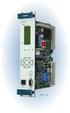 Machinery Protection Card Type FEATURES Continuous on-line Machinery Protection Card Real-time measurement and monitoring using state-of-the-art DSP techniques Fully VME-compatible slave interface Fully
SoMA. Automated testing system of camera algorithms. Sofica Ltd
 SoMA Automated testing system of camera algorithms Sofica Ltd February 2012 2 Table of Contents Automated Testing for Camera Algorithms 3 Camera Algorithms 3 Automated Test 4 Testing 6 API Testing 6 Functional
FOURTH GRADE EARTHQUAKES 1 WEEK LESSON PLANS AND ACTIVITIES
 FOURTH GRADE EARTHQUAKES 1 WEEK LESSON PLANS AND ACTIVITIES PLATE TECTONIC CYCLE OVERVIEW OF FOURTH GRADE VOLCANOES WEEK 1. PRE: Comparing different structures of volcanoes. DURING: Modeling three types
COMPUTING CLOUD MOTION USING A CORRELATION RELAXATION ALGORITHM Improving Estimation by Exploiting Problem Knowledge Q. X. WU
 COMPUTING CLOUD MOTION USING A CORRELATION RELAXATION ALGORITHM Improving Estimation by Exploiting Problem Knowledge Q. X. WU Image Processing Group, Landcare Research New Zealand P.O. Box 38491, Wellington
Chapter 1. An Introduction. The Quake-Catcher Network, The EPIcenter Network, And You
 T he H andbook Chapter 1 An Introduction The Quake-Catcher Network, The EPIcenter Network, And You How to Use this Booklet QCN and the EPIcenter Network How to Participate 3 How to Use This Booklet The
Seismic Risk Study: Earthquake Scenario-Based Risk Assessment
 Review of Arup Report Seismic Risk Study: Earthquake Scenario-Based Risk Assessment Julian Bommer, Helen Crowley & Rui Pinho Scope This document presents a brief review of the report by Arup (REP/229746/SR001,
A Strong Motion Velocity Meter in a Modern Seismic Network?
 17 Chapter 2 A Strong Motion Velocity Meter in a Modern Seismic Network? 2.1 Introduction Seismometry has seen huge advances in the past 30 years. The dynamic range of typical seismometers has increased
Magnitude 8.8 OFFSHORE MAULE, CHILE
 A great 8.8-magnitude struck central Chile early Saturday. The quake hit 200 miles (325 kilometers) southwest of the capital Santiago. The epicenter was just 70 miles (115 kilometers) from Concepcion,
KCC Event Brief: 2014 La Habra Earthquake
 KAREN CLARK & COMPANY KCC Event Brief: 2014 La Habra Earthquake June 2014 2 COPLEY PLACE BOSTON, MA 02116 T: 617.423.2800 F: 617.423.2808 Overview On Friday, March 28, 2014 at 9:09pm, a magnitude 5.1 earthquake
12.510 Introduction to Seismology Spring 2008
 MIT OpenCourseWare http://ocw.mit.edu 12.510 Introduction to Seismology Spring 2008 For information about citing these materials or our Terms of Use, visit: http://ocw.mit.edu/terms. 04/30/2008 Today s
RF Measurements Using a Modular Digitizer
 RF Measurements Using a Modular Digitizer Modern modular digitizers, like the Spectrum M4i series PCIe digitizers, offer greater bandwidth and higher resolution at any given bandwidth than ever before.
Five Essential Components for Highly Reliable Data Centers
 GE Intelligent Platforms Five Essential Components for Highly Reliable Data Centers Ensuring continuous operations with an integrated, holistic technology strategy that provides high availability, increased
Real Time Bus Monitoring System by Sharing the Location Using Google Cloud Server Messaging
 Real Time Bus Monitoring System by Sharing the Location Using Google Cloud Server Messaging Aravind. P, Kalaiarasan.A 2, D. Rajini Girinath 3 PG Student, Dept. of CSE, Anand Institute of Higher Technology,
Ground Motion Estimation with Antelope
 Ground Motion Estimation with Antelope European Antelope Users Group Meeting Dr. Kent Lindquist Goal Understand the true 2D ground motion right after an earthquake Ideal Solution: Measure It! One station
Dong-Joo Kang* Dong-Kyun Kang** Balho H. Kim***
 Visualization Issues of Mass Data for Efficient HMI Design on Control System in Electric Power Industry Visualization in Computerized Operation & Simulation Tools Dong-Joo Kang* Dong-Kyun Kang** Balho
Figure1. Acoustic feedback in packet based video conferencing system
 Real-Time Howling Detection for Hands-Free Video Conferencing System Mi Suk Lee and Do Young Kim Future Internet Research Department ETRI, Daejeon, Korea {lms, dyk}@etri.re.kr Abstract: This paper presents
Presentations. Session 1. Slide 1. Earthquake Risk Reduction. 1- Concepts & Terminology
 Earthquake Risk Reduction Presentations Session 1 Slide 1 Earthquake Risk Reduction 1- Concepts & Terminology Welcome to the World Bank Institute s (WBI) Distance Learning (DL) course on Earthquake Risk
Earthquake detection systems can sound the alarm in the moments before a big tremor strikes time enough to save lives
 SEISMOLOGY Earthquake detection systems can sound the alarm in the moments before a big tremor strikes time enough to save lives By Richard Allen in brief Earthquake early-warning networks detect the earliest
How To Forecast Solar Power
 Forecasting Solar Power with Adaptive Models A Pilot Study Dr. James W. Hall 1. Introduction Expanding the use of renewable energy sources, primarily wind and solar, has become a US national priority.
Infrasound events detected with the Southern California Seismic Network
 Click Here for Full Article GEOPHYSICAL RESEARCH LETTERS, VOL. 33, L19803, doi:10.1029/2006gl026951, 2006 Infrasound events detected with the Southern California Seismic Network E. S. Cochran 1 and P.
Gaming as a Service. Prof. Victor C.M. Leung. The University of British Columbia, Canada www.ece.ubc.ca/~vleung
 Gaming as a Service Prof. Victor C.M. Leung The University of British Columbia, Canada www.ece.ubc.ca/~vleung International Conference on Computing, Networking and Communications 4 February, 2014 Outline
Program Life Cycle Cost Driver Model (LCCDM) Daniel W. Miles, General Physics, June 2008
 Program Life Cycle Cost Driver Model (LCCDM) Daniel W. Miles, General Physics, June 28 Introduction Several years ago during the creation of the Periscope Total Ownership Cost (TOC) Program, it became