
Biodiversity. Newsletter
|
|
|
- Vanessa Grant
- 10 years ago
- Views:
Transcription
1 K S KA OA R D RNATA DI V E R YB IT A BIO Biodiversity Newsletter Karnataka Biodiversity Board Editorial To create awareness and disseminate information on biodiversity, the Karnataka Biodiversity Board (KBB) is bringing out this quarterly Newsletter in which articles on biodiversity conservation and management in Karnataka are being published. Articles related to biodiversity are invited for individuals and organizations (Forests, Ecology & Environment) Ground Floor, Vana Vikas 18th Cross, Malleshwaram Bengaluru Volume 4 - Issue:3 Julr-Sept 2013 For private circulation only

2 National Biodiversity Congress and Expo Held at Kanakakunnu Palace, Thiruvananthapuram on Dec, Major Theme: Biodiversity for Food Security. A special session on "Western Ghats in World Heritage Status: Challenges and Opportunities". Displayed publications of Karnataka Biodiversity Board depicting the rich Biodiversity of the State. Vivek Dhage Report warns of human folly in Western Ghats, Times of India Conference of Parties (COP) - 11 K. Jayaram COP-11 held at Hyderabad from 1st to 19th October Scientists discover 133 new fauna species in India, Zeenews Karnataka Biodiversity Board (KBB) was the coordinator deputed by National Biodiversity Authority for the preparation and display of publications of all State Biodiversity Boards of India. Participants from 194 countries attended the COP. Almost all State Biodiversity Boards participated with 20 SBB putting exhibits on the natural, cultural and heritage elements of their states. Brouchers-7, Posters-18, Standees-8, PBR-44, Documentary movie-1, Seeds of minor millets-15, Booklets-9, Annual report, Action plan (Karnataka state Biodiversity Strategies and action plan), Books-25, Newsletter-7, Fliers-5 Demand for a Himalayan policy gathers pace, Business Standard People's Biodiversity Registers (PBRs) contain comprehensive information on availability and knowledge of local biological resources, their uses, traditional knowledge associated with them. Preparation of PBRs has been one of the major functions of the Board. This year the Board has planned to prepare PBRs in 90 GPs by 12 Universities in 10 different agro climatic zones of Karnataka. Universities have identified Coordinators and Co coordinators to guide the PBR Preparation. Estuaries are one of the highly productive and biologically rich ecosystems of the planet. The Karnataka Biodiversity Board has taken initiatives to conserve these estuaries and planning to declare them as Biodiversity Heritage Sites with the co-opeartion of CMFRI. KBB has also funded the survey of Kali and Aghanashini estuaries. Turtle smuggling rampant on KrishnaWest Godavari border, The Hindu Cover Photo by Sandeep Dutta Karnataka Biodiversity Board has funded the Study of Floristic diversity, ecological uniqueness and conservation strategies of Riparian flora of Netravati river system in Western Ghats range of Dakshina Kannada. This study includes documentation of riparian flora including several rare, endangered endemic plants. Activities of Karnataka Biodiversity Board Second Indian Biodiversity Congress & Expo KBB participated in Indian Biodiversity Congress Held at JN TATA auditorium, Bangalore on 9-11 December Major theme: Biodiversity Heritage of Western Ghats - Challenges and Strategies for conservation and sustainable management. KBB participated in Indian Biodiversity Expo Held at Veterinary College Ground, Hebbal, Bangalore on 8-11 December Major theme: Showcasing the rich Biodiversity Heritage of the country and a kaleidoscopic spectacle of variety of life in India. KBB was awarded first place for best display of Biodiversity of Karnataka in Indian Biodiversity Expo.

3 marriage, livelihood or death. No other set of humans has such a symbiotic and peaceful coexistence as tribals have with nature. This anthropo-sylvan ecosystemic relationship has led to a large concentration of tribals wherever there are tribals. Infact, it would be fair to say that wherever there are forests, tribals are bound to be living there. Thus forests and tribals are inseparable as long as forests exist. The entire gamut of activities that the tribal undertakes is linked to the forest. In tribal dominated regions, it is the forest, which provides resources for food, cloth and shelter. Not only this, forests also satisfy cultural and religious aspirations of the people. A Need to conserve Forests Forests are the givers of life to millions of people worldwide. They provide innumerable benefits to people living adjacent to them. A large percentage of the rural poor live in the vicinity of forests and majority of them are totally dependent upon the forest for their livelihood. Proper development of the people depends upon the resources, which are available to them. Forests are thus one of the major resources, which have an influence upon the people living in the fringes. Moreover tribals are a set of people whose life is closely intertwined with nature. They are born, are brought up and die in the close vicinity of the forests. Forest is the common thread in all their aspects of life, whether it is Shanker As India progresses, the immediate concern is to ensure that the natural heritage of the country is protected at any cost. Forests of Karnataka grow naturally in these forests. Karnataka forest is endowed with rich wildlife, harbors 25 percent of the elephant population of India, 10% of the Tiger population. The state has 5 National parks and 21 sanctuaries comprising about 17.3% of total forest area as protected area for wildlife and biodiversity. The state ranks 4th among all the state and union territories in respect of area under tree cover. Forests provide Non Timber Forest Produce, which play a major role in the tribal economy. NTFPs are biological resources other than timber, which are harvested from either natural or managed forests. These NTFPs are an important source of livelihood for many indigenous communities in Karnataka particularly those living in forest fringe villages. NTFPs like nellikai, honey and other products have a major bearing on the social, cultural and economic life of the tribals. The coming years are going to be a test of the resilience and character of the people of Karnataka who have to strive extra hard to protect these fragile resources, and indeed the future looks bright for the forests of Karnataka. The State of Karnataka is one of the biodiversity rich regions of India. The State is endowed with great diversity of climate, topography and soil. Karnataka, has 3.83 Million ha of recorded forestarea which is around 20 percent of its geographical area. Forests abound, ranging from majestic evergreen forests of the Western Ghats to the scrub jungles of the plains. The Western Ghats of Karnataka are one of the 25 global priority hotspots for conservation and one of the two on the Indian subcontinent. Several economically important species such as Sandalwood, Rosewood, Teak, White cedar

4 BIODIVERSITY of Karnatak The prime objective of the Board is to foster the institutional setup for documen sustainable use and development of the rich biodiversity of the state. The functions of the Board as per section 23 of Act are to: Advise the State Government, subject to any guidelines issued by the Central Government, on matters relating to the conservation of biodiversity, sustainable use of its components and equitable sharing of the benefits arising out of the utilization of biological resources; Regulate by granting of approvals or otherwise requests for commercial utilization or bio-survey and bioutilization of any biological resource by Indians Perform such other functions as may be necessary to carry out the provisions of the Biological Diversity Act, 2002 or as may be prescribed by the State Government. NATA YAR A DI VER BIO S O AR D YB IT K Biodiversity is the degree of variation of life forms within a given species, ecosystem, biome, or planet. This includes ecosystem, genetic and cultural diversity, and the connections between these and all species. The diversity of species on Earth is incredible. Right now, there are more than 1.7 million species that have been discovered and named while scientists think that there are millions more we don t know about. The different plants, animals and other forms of life interact with each other in so many ways that we are still figuring them out. Over time, many species of plants and animals have evolved to depend on one another. For example, some plants can only be pollinated by a certain kind of bird or insect. In relationships like these, if one species becomes extinct, the other species could too. The term biological diversity was used first by wildlife scientist and conservationist Raymond F. Dasmann in the 1968 lay book A Different Kind of Country advocating conservation. The term was widely adopted only after more than a decade, when in the 1980s it came into common usage in science and environmental policy. Biodiversity is everywh Look around you!!!

5 FLORA & FAUNA ka 3410 Plants 522 Birds 180 Mammals 160 Reptiles 70 Amphibians 276 Fishes (Marine & Brackish) 201 Fishes (Fresh water) 300 Butterflies ntation, here. CROP 43 Ragi (Finger Millet) 16 Millets 29 Rice (Dryland) 121Rice (Wetland) 115 Vegetables 34 Cereals 9 Oil seeds 4 Wheat LIVESTOCK BREEDS 6 Cow 3 Buffalo 4 Sheep 1Goat 5 Hen 3 Rabbit PROTECTED AREAS Kms National parks - 5 Nos 4000 Kms Sanctuaries - 22 Nos 6 Fish sanctuaries 5 ZOOLOGICAL PARKS 15 MEDICINAL PLANTS (Dhanvantari vana) Habitat loss may be the greatest threat to Biodiversity on earth, being the primary threat to 85% of species most habitat loss is due to intensive harvesting and expansion of agricultural land. The bigest cause include felling of trees (Both legal and ill-legal) for the cause of land exploitation and human disasters. Conserve NOW!!

6 Biodiversity and Wetlands W Wetlands can be thought of as "biological supermarkets" They provide great volumes of food that attract many animal species. These animals use wetlands for part of or all of their life-cycle. The enriched material found in wetlands feeds many small aquatic insects, shellfish, and small fish that in turn are food for larger predatory fish, reptiles, amphibians, birds and mammals.biodiversity in wetlands is also valuable as a reservoir of genes. Rice is a common wetland plant and the staple Sandeep Dutta etlands are among the more important reservoirs of biodiversity that nature has painstakingly crafted over millions of years. It is estimated that wetlands are second only to the rain forests in the number of wildlife and plant species that depend on them for feeding and habitat. They form refuge areas in times of drought, provide important breeding and nursery areas for a large range of animals. Freshwater wetlands hold more than 40% of the world's species and 12% of all animal species. Some wetlands contain significant numbers of endemic species. Wetland biodiversity is a significant reservoir of genes that has considerable economic potential in the pharmaceutical industry and in commercial crop plants. diet for over half the world's population. Many animals that live in other habitats use wetlands for migration or reproduction. For example, herons nest in large old trees, but need shallow areas in order to wade for fish and aquatic life. Amphibians often forage in upland areas but return to the water to mate and reproduce. WETLANDS & BIRDS we depend on you Sandeep Dutta For most wetland-dependent birds, habitat loss in breeding areas translates directly into population losses as birds may move to less suitable habitats. Wetlands provide valuable habitat for birds to breed, nest, and rear their young. Wetlands are a source of drinking water, feeding, resting, shelter, and social interactions. Wetlands provide food for birds in the form of plants, vertebrates, and invertebrates. Wetland vegetation provides shelter from predators and from the weather. For most wetland-dependent birds, habitat loss in breeding areas translates directly into population losses as birds may move to less suitable habitats. Birds that breed in this environment will not contribute to a sustainable population through the years. Wetland loss due to draining, filling, or altering of surface-water and ground-water flow is a serious concern. Wetland vegetation may be altered by introducing exotic species, making it of little value to wetlanddependent birds. The use of pesticides on farmland has further reduced the amount of safe habitat available for birds. Wetlands and birds form a symbiotic bond a link that is strained today. Birds common in your locality are increasingly becoming rare in most parts. We need to take immediate steps to protect our birds from disappearing. You can start by protecting a wetland close to you.

7 Secondly, wetlands act as water purifiers and trap suspended and dissolved contaminants by acting as settling basins. They filter pollutants that might otherwise flow into rivers and lakes. As water passes through the wetland it slows down, allowing sediment to settle. As a result, cleaner water flows from the wetland. Wetlands are infact, often referred to as the kidneys of the landscape. W etlands are complex and there is much that human beings still do not know about them. Yet, it has been studied by scientists and understood by communities that live close to them that wetlands provide invaluable benefits to both man and wildlife that is so dependent upon them. Firstly, wetlands aid in preserving the environment by acting like sponges. They absorb water from various sources during wet periods, and release it slowly into the surrounding areas during dry periods. Wetlands also function in groundwater recharge as some floodwaters that wetlands capture during storms percolates down. In this way, wetlands can help reduce flooding, ease the impact of drought and recharge groundwater supplies. In addition, wetlands perform several other functions such as participation in the water cycle, functioning as a sink for natural and anthropogenic waste material and acting as a protective barrier to coastlines, shorelines and deep water habitat Wetlands are threatened water quality. The rich biodiversity that we often see in wetlands, though abundant, is most vulnerable to any change in wetland ecology. Much of this biodiversity stands to be lost forever if wetland resources are not used judiciously. Whether in the hills or plains, wetlands need to preserved. The immense loss and undermining of wetland status needs to be reviewed, active rethinking must happen and restorative action undertaken to preserve our wetlands. Vivek Dhage G lobally and in India, wetlands are facing relentless pressure. They have been steadily and rapidly disappearing across the country over the past decades. The most severe impact has been from man and his activities. Besides, threat of invasive plant species has also accelerated loss of wetland habitat. A number of activities cause wetland degradation and loss including development, road buildingaccording to the World Conservation Union (IUCN): Already 50% of the world's wetlands have been lost. The degradation of wetlands puts the livelihoods of communities and the biological diversity at risk. Over 800 freshwater species worldwide are now threatened with extinction., grazing, agriculture, mining, dumping, dredging, draining, diverting flow, devegetation, damming flow and destruction of springs Destroying or degrading wetlands can lead to severe consequences that include increased flooding, extinction of species, and decline in Fourthly, many wetlands support abundant wildlife. Wetlands often have a complex food chain that supports many organisms and wildlife species. They are the breeding, feeding, and nesting grounds for a tremendous diversity of biota, including many threatened and endangered species. Role of a wetland Sunil S.S Thirdly, wetlands use up excess nitrate which when converted into nitrite in groundwater may cause a deadly disease called blue baby syndrome. Wetland plant communities can remove a lot of nitrate from polluted water inputs. In addition, microbes that live on the surface of plant roots in a wetland remove 10 times more nitrate than do the plants themselves. According to the World Conservation Union (IUCN): Already 50% of the world's wetlands have been lost. The degradation of wetlands puts the livelihoods of communities and the biological diversity at risk. Over 800 freshwater species worldwide are now threatened with extinction.

8 Karnataka State Marine Biodiversity Molluscs: 234 molluscan species were recorded belonging to 65 families. The Class Gastropoda accounted for 62% of the molluscan diversity followed by Bivalvia (30%); Cephalopoda (7%) and Amphineura & Scaphopoda (1%). K arnataka State has a 300 km long coastline and is a frontline state in marine fisheries development. Historically known as the ''mackerel coast'', it has a continental shelf area of 25,000 km2. About 80% of the shelf area lies between 0 and 72m depth. Its contribution to the total marine fish production of the country has varied from 6 to 14 % annually. Crustaceans: A total of 29 species of shrimps, belonging to 6 families were collected from coastal and marine zones of Karnataka. Penaeidae was the largest family with 16 species. Flora: Total of 62 phytoplankton species were observed and out of which 5 species were toxic capable of producing paralytic Shell fish poisoning if they bloom. A total of 78 species of seaweeds and 2 species of sea grasses were observed. Vivek Dhage Intertidal rocks along the Islands registered fairly good flora of brown seaweeds dominated by Sargassum ilicifolium, having economic importance for extracting algin. Five species of starfish, 2 species of sea urchins and only 1 species of sea cucumber was identified. Zooplankton: Total of 115 zooplankton species belonging to 56 families were recorded from the Karnataka coast. Fishes: Three hundred and ninety (390) fish species belonging to 24 orders and 118 families which were collected and identified from the coast, which forms 15.3% of the coastal fishes reported from Indian coast. Six species of demospongia sponges, 25 species of sea anemones and 3 species of bryozoans were identified. The coast consisted of 40 elasmobranch species (sharks, rays and skates) and 350 bony fishes. Benthic organisms: Polychaetes were the most dominant species. Nearly 143 species of polychaetes belonging to 34 different families were recorded. Marine reptiles: Three species of sea turtles belonging to a single family (Chelonidae) have been found (endangered). Four species of nematodes and 1 species nemertians were also recorded. Three species of sea snakes belonging to a single family (Hydrophiidae) was also recorded. Book Post Biodiversity is everywhere. Look around you!!! Editor-in-Chief: Member Secretary, KBB Bangalore Ph: Fax: [email protected] Sandeep Dutta Biodiversity Board, Ground Floor, Vana Vikas 18th Cross, Malleshwaram, Bengaluru If Undelivered return to Printed Matter Editorial Board Information, statements or mention of products in Biodiversity Newsletter does not imply endorsement by the KBB, Editorial Board.

RESTORATION & REVITALIZATION
 RESTORATION & REVITALIZATION Legal preservation has not proved to be sufficient to preserve natural communities. Restoration activities are diverse and includes revitalization of natural communities which
How To Plan A Buffer Zone
 Backyard Buffers Protecting Habitat and Water Quality What is a buffer? A buffer (also called a riparian buffer area or zone) is the strip of natural vegetation along the bank of a stream, lake or other
Importance of Wildlife
 Importance of Wildlife The wildlife comprises all living organism (plants, animals, microorganisms) in their natural habitats which are neither cultivated or domesticated nor tamed. But in its strictest
Doing Business, Small & Medium Enterprise Support and Information Access
 Doing Business, Small & Medium Enterprise Support and Information Access Vietnam, a nation of 92 million people, aspires to be more fully integrated into the global economy and community and an industrialized
Wetland Vocabulary Organizer
 Wetland Vocabulary Organizer Vocabulary Word Definition Wetland Picture Species Nutrients Sediment Groundwater Habitat Vocabulary Word Wetland Wetland Vocabulary Organizer Key Definition is an area that,
www.irishseedsavers.ie Natural surface water on earth includes lakes, ponds, streams, rivers, estuaries, seas and oceans.
 www.irishseedsavers.ie POND LIFE FACT SHEET Natural surface water on earth includes lakes, ponds, streams, rivers, estuaries, seas and oceans. A pond is a small body of fresh water shallow enough for sunlight
Lesson Overview. Biodiversity. Lesson Overview. 6.3 Biodiversity
 Lesson Overview 6.3 6.3 Objectives Define biodiversity and explain its value. Identify current threats to biodiversity. Describe how biodiversity can be preserved. THINK ABOUT IT From multicolored coral
PROCEDURE. See: Great Lakes Coastal Wetlands (http:// www.miseagrant.umich.edu/wetlands/index.html)
 Activity: Students review a selection of career profiles and play a lively classroom game to find out more about marine and aquatic science professionals. Grade Level: 4-8 Subjects: Science, social studies
Facts on biodiversity
 Facts on biodiversity What is biodiversity? Biological diversity (biodiversity) comprises diversity of species and habitats as well as the genetic diversity within the individual species of fauna and flora.
Ranger Report About Deforestation of the Rainforest
 Ranger Report About Deforestation of the Rainforest About deforestation Forests are cut down for many reasons, but most of them are related to money or to people s need to provide for their families. The
The Colorado River Delta
 The Colorado River Delta An Invaluable Resource for People and Wildlife the colorado river delta The Colorado River Delta and its waters support a rich and diverse treasure of plants and animals in an
A Functional Classification System for Marine Protected Areas in the United States
 A Functional Classification System for Marine Protected Areas in the United States The U.S. Classification System: An Objective Approach for Understanding the Purpose and Effects of MPAs as an Ecosystem
France s biodiversity at risk
 France s biodiversity at risk A call for action France hosts a large proportion of the species that are threatened at the European level, and has the important responsibility for protecting these species
Population Ecology. Life History Traits as Evolutionary Adaptations
 Population Ecology An Overview of Population Ecology Population ecology is the study of factors that affect population: Density Growth A population is a group of individuals of a single species that occupy
Environmental Law Primer. Adapted from Vermont Law School s Environmental Law Primer for Journalists
 Environmental Law Primer Adapted from Vermont Law School s Environmental Law Primer for Journalists General Categories Command and Control Liability Disclosure Ecosystem and Place-based Programs Marketable
NATURAL RESOURCE RESTORATION LESSON PLAN Fix It!
 NATURAL RESOURCE RESTORATION LESSON PLAN Fix It! Theme Repairing Damaged Resources Links to Overview Essays and Resources Needed for Student Research http://oceanservice.noaa.gov/education/corals http://oceanservice.noaa.gov/topics/coasts/restoration/
CORPORATE POLICY STATEMENT NO. 12 MANAGEMENT OF PEST ANIMALS
 1. OBJECTIVE CORPORATE POLICY STATEMENT NO. 12 MANAGEMENT OF PEST ANIMALS August 2015 To provide direction and guidance for the management of pest animals on lands and waters managed by the Department
Madagascar: Makira REDD+
 project focus Madagascar: Makira REDD+ Madagascar is considered to be one of the top five biodiversity hotspots in the world due to more than 75% of all animal and plant species being endemic while less
AP ENVIRONMENTAL SCIENCE 2010 SCORING GUIDELINES
 AP ENVIRONMENTAL SCIENCE 2010 SCORING GUIDELINES Question 4 (a) Based on the rate cited above, calculate the expected increase in sea level, in meters, during the next 50 years. One point can be earned
Creating Green Jobs within the Environment and Culture sector.
 Creating Green Jobs within the Environment and Culture sector. Matilda Skosana Environmental Programmes (ILO Definition): 1. DEFINITION OF GREEN JOB. Jobs are green when they help reduce negative environmental
SLOW ONSET EVENTS. climate change impacts on BIODIVERSITY
 Regional Gateway for Technology Transfer and Climate Change Action in Latin America and the Caribbean (ROLAC UNEP) Characterizing and addressing SLOW ONSET EVENTS climate change impacts on BIODIVERSITY
Aquatic Biomes, Continued
 Aquatic Biomes, Continued Introduction Extent of Marine biomes Issues & challenges Factors influencing distribution Dynamics in time & space Depth Tour of marine biomes Issues (by biome) Freshwater biomes
The Everglades & Northern Estuaries; St. Lucie River Estuary, Indian River Lagoon & Caloosahatchee Estuary. Water Flows & Current Issues
 The Everglades & Northern Estuaries; St. Lucie River Estuary, Indian River Lagoon & Caloosahatchee Estuary Water Flows & Current Issues Florida Governor Rick Scott August 20, 2013 Upper Chain of Lakes
Michigan Wetlands. Department of Environmental Quality
 Department of Environmental Quality Wetlands are a significant component of Michigan s landscape, covering roughly 5.5 million acres, or 15 percent of the land area of the state. This represents about
Ecology 1 Star. 1. Missing from the diagram of this ecosystem are the
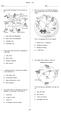 Name: ate: 1. Missing from the diagram of this ecosystem are the 5. ase your answer(s) to the following question(s) on the diagram below and on your knowledge of biology.. biotic factors and decomposers.
THE IMPORTANCE OF BIODIVERSITY
 THE IMPORTANCE OF BIODIVERSITY Dr. Nitasha Malhotra Associate Professor, Kamala Nehru College, University of Delhi Introduction Environmentalists might define biodiversity as the total of all plant and
GREAT BARRIER REEF. Climate Change Action Plan
 GREAT BARRIER REEF Climate Change Action Plan 2007 2011 Climate change is now recognised as the greatest long-term threat to the Great Barrier Reef. The Great Barrier Reef is internationally renowned as
ECOSYSTEM RESPONSES. reflect
 reflect There is a saying, No man is an island, which means that people need one another in order to survive. Everyone on Earth is interconnected in some way. This is not only true of human beings, but
NEW YORK SEASCAPE PROGRAM A COMMITMENT TO OCEAN CONSERVATION
 NEW YORK SEASCAPE PROGRAM A COMMITMENT TO OCEAN CONSERVATION JULY 2012 1 Wildlife Conservation Society The Wildlife Conservation Society (WCS) saves wildlife and wild places worldwide. We do so through
PRESENTATION 2 MAJOR ENVIRONMENTAL PROBLEMS
 UNEP GLOBAL JUDGES PROGRAMME APPLICATION OF ENVIRONMENTAL LAW BY NATIONAL COURTS AND TRIBUNALS PRESENTATION 2 MAJOR ENVIRONMENTAL PROBLEMS OUTLINE OF PRESENTATION A) Major environmental issues B) Responses
ARIMNet 2 Call 2014-15
 Coordination of the Agricultural Research In the Mediterranean Area Call i text ARIMNet 2 Call 2014-15 SUBMISSION Pre-proposal by December 1 st, 2014 Full Proposal by May 11 th 2015 on http://arimnet-call.eu/
Addendum D. Nomination of Moody Wash ACEC
 Addendum D Nomination of Moody Wash ACEC Moody Wash ACEC is hereby nominated by Citizens for Dixie s Future to: BLM St. George Field Office 345 East Riverside Drive St. George, UT 84790 Moody Wash is a
Biodiversity Concepts
 Biodiversity Concepts WHAT IS BIODIVERSITY? Biodiversity is the variety of life on Earth. For any kind of animal or plant each individual is not exactly the same as any other; nor are species or ecosystems.
How To Improve The Health Of The Zambezi River
 Environmental Flows and Restoration of the Zambezi Delta, Mozambique Dr. Richard Beilfuss International Crane Foundation Zambeze Delta 18 000 km² 230 km coastal frontage 124 km apex to coast Hydropower
AQUATIC ECOSYSTEMS & BIOMES
 AQUATIC ECOSYSTEMS & BIOMES A) Name three general types of aquatic ecosystems and describe the salinity for each. Give an example for each. 1) 2) 3) B) MATCHING In the space provided, write the letter
Climate Change: A Local Focus on a Global Issue Newfoundland and Labrador Curriculum Links 2010-2011
 Climate Change: A Local Focus on a Global Issue Newfoundland and Labrador Curriculum Links 2010-2011 HEALTH Kindergarten: Grade 1: Grade 2: Know that litter can spoil the environment. Grade 3: Grade 4:
Ecosystems and Food Webs
 Ecosystems and Food Webs How do AIS affect our lakes? Background Information All things on the planet both living and nonliving interact. An Ecosystem is defined as the set of elements, living and nonliving,
ENVIRONMENTAL CHANGES
 reflect How do you respond to environmental changes? Maybe you wear different types of clothes in different seasons. Maybe you only ride your bike during certain times of the year. What if you moved to
Ecosystem Services in the Greater Houston Region. A case study analysis and recommendations for policy initiatives
 Ecosystem Services in the Greater Houston Region A case study analysis and recommendations for policy initiatives Ecosystem Services Ecosystems provide services through their natural processes that we
3. Which relationship can correctly be inferred from the data presented in the graphs below?
 1. Recent evidence indicates that lakes in large areas of New York State are being affected by acid rain. The major effect of acid rain in the lakes is (1) an increase in game fish population levels (3)
Monitoring the Critically Endangered Bird Species (White-shouldered Ibis) in Western Siem Pang Important Bird and Biodiversity Area (IBA)
 Monitoring the Critically Endangered Bird Species (White-shouldered Ibis) in Western Siem Pang Important Bird and Biodiversity Area (IBA) Transboundary Biodiversity Landscapes (TBLs) Knowledge Meeting
Restoring Ecosystems. Ecosystem Restoration Services
 Restoring Ecosystems Ecosystem Restoration Services 2 Ecosystem Restoration Services AECOM s integrated approach sciencebased planning, with innovative design and execution delivers sustainable and cost-effective
National Environment Awareness Campaign(NEAC) 2014-2015. Theme
 National Environment Awareness Campaign(NEAC) 2014-2015. Theme COMBATING DESERTIFICATION, LAND DEGRADATION AND DROUGHT Background Note Desertification is about land degradation: the loss of the land s
Spain s biodiversity at risk
 Spain s biodiversity at risk A call for action Spain hosts a large proportion of species that are threatened at the European level, and has an important responsibility for protecting these species within
Human Impacts on the World Ocean
 This website would like to remind you: Your browser (Safari 7) is out of date. Update your browser for more security, comfort and the best experience on this site. lesson Human Impacts on the World Ocean
What is the Ecological Role of an Estuary?
 Estuary Values and Changes Activity 1 of Two To most people, an estuary (es-chew-airy) is a place where fresh water meets the sea. In its broader meaning, an estuary is that part of the mouth of a stream
The relationship of pastoralism to the SDGs. The land people livestock nexus
 1 The relationship of pastoralism to the SDGs. The land people livestock nexus Irene Hoffmann, FAO 16th Annual Mee-ng of the Inter-Agency Donor Group 18-20 November, GIZ, Berlin, Germany Global Land Cover-SHARE,
Chapter 3 Communities, Biomes, and Ecosystems
 Communities, Biomes, and Ecosystems Section 1: Community Ecology Section 2: Terrestrial Biomes Section 3: Aquatic Ecosystems Click on a lesson name to select. 3.1 Community Ecology Communities A biological
NEIGHBORHOOD WATER QUALITY
 1 NEIGHBORHOOD WATER QUALITY Lesson 1: Aquatic Ecosystems Keywords: ecosystem, ecology, watershed, surface water, hydrologic cycle, evaporation, transpiration, precipitation, surface runoff, percolation,
Longboat Dr Noeleen Smyth. Pitcairn 24 21 41 S, 128 18 58 W. UK Overseas Territories and Crown Dependencies: 2011 Biodiversity snapshot 87
 Longboat Dr Noeleen Smyth Pitcairn 24 21 41 S, 128 18 58 W 13 UK Overseas Territories and Crown Dependencies: 2011 Biodiversity snapshot 87 Pitcairn Author: Michele Christian, Division Manager Natural
WATER: ENVIRONMENTAL SCIENCE Syllabus
 WATER: ENVIRONMENTAL SCIENCE Syllabus Course Title Water: Environmental Science Course Description Central to all ecosystems, water is essential to life as we know it. It shapes our planet on every level,
CHAPTER 2: APPROACH AND METHODS APPROACH
 CHAPTER 2: APPROACH AND METHODS APPROACH Given Hawaii s biological uniqueness on a global scale, the Comprehensive Wildlife Conservation Strategy (CWCS) recognizes the importance of protecting all native
Briefing Paper on Lower Galveston Bay and Bayou Watersheds Lower Bay I: Armand Bayou to Moses Lake and Adjacent Bay Waters
 Briefing Paper on Lower Galveston Bay and Bayou Watersheds Lower Bay I: Armand Bayou to Moses Lake and Adjacent Bay Waters Jim Lester, PhD. and Lisa Gonzalez Houston Advanced Research Center Galveston
Using Aerial Photography to Measure Habitat Changes. Method
 Then and Now Using Aerial Photography to Measure Habitat Changes Method Subject Areas: environmental education, science, social studies Conceptual Framework Topic References: HIIIB, HIIIB1, HIIIB2, HIIIB3,
Ecosystem Approach as a Main Strategy for
 Urmia lake July 2011 1st International Conference for Urmia Lake Rescue 22 Nov. 2013 Berlin - Germany Ecosystem Approach as a Main Strategy for Urmia Lake Rescue Dr. Masoud Bagherzadeh Karimi Deputy Director
A Global View of Ecological Restoration and the Role of SER International
 A Global View of Ecological Restoration and the Role of SER International Presented by: George D. Gann Chair, SER International Board of Directors Executive Director, The Institute for Regional Conservation
Aquatic Ecosystems Restoration
 Presenter s name Aquatic Ecosystems Restoration Lessons Learned from Asian Development Bank Operations Qingfeng Zhang, Senior Water Resources Engineer Asian Development Bank This Presentation will discuss
Climate Change and Sri Lanka. Ajith Silva Director/ Policy and Planning Ministry of Environment and Natural Resources Sri Lanka
 Climate Change and Sri Lanka Ajith Silva Director/ Policy and Planning Ministry of Environment and Natural Resources Sri Lanka Asia Total Area: 65610 Km Land Area : 62705 Km Inland water : 2905 Km 2 Coastal
Flood Risk Management
 Flood Risk Management Value of Flood Risk Management Every year floods sweep through communities across the United States taking lives, destroying property, shutting down businesses, harming the environment
Flood Risk Management
 Flood Risk Management Value of Flood Risk Management Value to Individuals and Communities Every year floods sweep through communities across the United States taking lives, destroying property, shutting
Name Date Hour. Plants grow in layers. The canopy receives about 95% of the sunlight leaving little sun for the forest floor.
 Name Date Hour Directions: You are to complete the table by using your environmental text book and the example given here. You want to locate all the abiotic (non-living) and biotic (living) factors in
3. The submittal shall include a proposed scope of work to confirm the provided project description;
 QIN Shoreline Master Program Project Summary The Shoreline Master Program (SMP) development process for the Quinault Indian Nation (QIN) includes the completion of inventory and analysis report with corresponding
FLOOD PROTECTION AND ECOSYSTEM SERVICES IN THE CHEHALIS RIVER BASIN. May 2010. Prepared by. for the. 2010 by Earth Economics
 FLOOD PROTECTION AND ECOSYSTEM SERVICES IN THE CHEHALIS RIVER BASIN May 2010 Prepared by for the Execubve Summary The Chehalis Basin experienced catastrophic flooding in 2007 and 2009. In response, the
Research to improve the use and conservation of agricultural biodiversity for smallholder farmers
 Research to improve the use and conservation of agricultural biodiversity for smallholder farmers Agricultural biodiversity the variability of crops and their wild relatives, trees, animals, arthropods,
SEMESTER AT SEA COURSE SYLLABUS University of Virginia, Academic Sponsor
 Voyage: Fall 2015 Discipline: Biology Course Title: Introduction to Marine Biology Division: Lower Division Faculty Name: Dr Christine Dudgeon Credit Hours: 3; Contact Hours: 38 Pre-requisites: SEMESTER
Ecological Restoration of a Brackish Marsh at Parcel 11, Estate Carolina, St. John
 Ecological Restoration of a Brackish Marsh at Parcel 11, Estate Carolina, St. John Gary Ray, Ph.D. Virgin Forest Restorations For Coral Bay Community Council Aerial of Parcel 11 Brackish Marsh Ecological
Policy & Management Applications of Blue Carbon. fact SHEET
 Policy & Management Applications of Blue Carbon fact SHEET Policy & Management Applications of Blue Carbon Coastal Blue Carbon - An Important Wetland Ecosystem Service Coastal Blue Carbon refers to the
It s hard to avoid the word green these days.
 Going green : Environmental jobs for scientists and engineers Alice Ramey Alice Ramey is an economist in the Office of Occupational Statistics and Employment Projections, BLS. She is available at (202)
Human Impact to Wetlands
 Human Impact to Wetlands Oregon State Standards 3.2 3.2P.1 3.3S.1 3.3S.2 3.3S.3. 4.2 4.2L.1 4.3 4.3S.1 4.3S.2 4.3S.3 5.1 5.1L.1 5.2 5.2L.1 5.3 5.3S.3 5.3S.2 5.3S.3 Vocabulary Wetland Riparian Biodiversity
Seagrasses. What are seagrasses? Why seagrass isn t seaweed!
 Seagrasses What are seagrasses? Seagrasses are plants that grow underwater but they are not the same as seaweeds (algae). Some species of seagrass look very much like terrestrial (land) grass, with straplike
Global Water Resources
 Global Water Resources Highlights from assessment activities over the past two decades, which are used to establish present and future water trends, reveal that: 1. Freshwater resources are unevenly distributed,
FORESTED VEGETATION. forests by restoring forests at lower. Prevent invasive plants from establishing after disturbances
 FORESTED VEGETATION Type of strategy Protect General cold adaptation upland and approach subalpine forests by restoring forests at lower Specific adaptation action Thin dry forests to densities low enough
American Forest Foundation (AFF) 2010-2015 Standards of Sustainability for Forest Certification
 American Forest Foundation (AFF) 2010-2015 Standards of Sustainability for Forest Certification Standards Prologue The American Forest Foundation s (AFF) 2010-2015 Standards of Sustainability for Forest
THE ECOSYSTEM - Biomes
 Biomes The Ecosystem - Biomes Side 2 THE ECOSYSTEM - Biomes By the end of this topic you should be able to:- SYLLABUS STATEMENT ASSESSMENT STATEMENT CHECK NOTES 2.4 BIOMES 2.4.1 Define the term biome.
Marine Protected Areas POLICY
 Marine Protected Areas POLICY Canada March 1999 Published by: Canada Marine Ecosystems Conservation Branch Oceans Directorate Ottawa, ON K1A 0E6 DFO / 5870 Minister of Public Works and Government Service
Flora and Fauna. Section 4.9: Flora and Fauna
 Flora and Fauna Section 4.9: Flora and Fauna BACK OF TAB 81 4.9 Flora and Fauna Objectives Ensure protection of the significant natural environment in and around Sydney Airport Minimise the propagation
Green Infrastructure Case Study Template
 Green Infrastructure Case Study Template The aim of the exercise is to provide information on how the elements of the Green Infrastructure Strategy are implemented at national level and to provide case
Oregon. Climate Change Adaptation Framework
 Oregon Climate Change Adaptation Framework Oregon Environmental Quality Commission Climate Change Adaptation Framework Presentation at a glance: Purposes of the framework Participating agencies Climate
How are people affecting biodiversity
 ? How are people affecting biodiversity The major threats to biodiversity and the role of people 2 Kieran Noonan-Mooney, CBD Christine Gibb, CBD and FAO Every day we are faced with choices. As individuals
Biomes An Overview of Ecology Biomes Freshwater Biomes
 Biomes An Overview of Ecology Ecology is the scientific study of the interactions between organisms and their environments. Ecology can be divided into four increasingly comprehensive levels: Organismal
Rainforest Concern Module 2 Why do we need rainforests?
 Rainforest Concern Module 2 Why do we need rainforests? Rainforest Concern Module 2: Why do we need Rainforest? Before we go any further, there are some words you may not understand, and these words and
Ecosystem services in grasslands: evidence, trade-offs and restoration. James Bullock NERC Centre for Ecology and Hydrology [email protected].
 Ecosystem services in grasslands: evidence, trade-offs and restoration James Bullock NERC Centre for Ecology and Hydrology [email protected] Ecosystem services definitions and types Grasslands 13% of Earth
Phosphorus. Phosphorus Lake Whatcom Cooperative Management. www.ecy.wa.gov/programs/wq/nonpoint/phosphorus/phosphorusban.html
 Phosphorus Phosphorus Brochure Lake Whatcom Cooperative Management Reducing Phosphorus Website Washington State Department of Ecology www.ecy.wa.gov/programs/wq/nonpoint/phosphorus/phosphorusban.html Nutrients
ENDANGERED AND THREATENED
 ENDANGERED AND THREATENED Understand how species in the Sonoran Desert Region may become endangered or threatened and what is being done to protect them. ARIZONA SCIENCE STANDARDS SC03-S4C3-03&04, SC08-S1C3-07,
COMPREHENSIVE PLAN SECTION B, ELEMENT 4 WATER RESOURCES. April 20, 2010 EXHIBIT 1
 COMPREHENSIVE PLAN SECTION B, ELEMENT 4 WATER RESOURCES April 20, 2010 EXHIBIT 1 ELEMENT 4 WATER RESOURCES TABLE OF CONTENTS 4.1 INTRODUCTION 4.2 GOALS AND POLICIES 4.2.A General Goals and Policies 1 4.2.B
NATURAL RESOURCES DEGREES AND CERTIFICATES. Environmental Conservation A.S. Degree (formerly Natural Resources)
 Area: Science and Engineering Dean: Dr. Rina Roy Phone: (916) 484-8107 Counseling: (916) 484-8572 DEGREES AND CERTIFICATES Environmental Conservation A.S. Degree (formerly Natural Resources) Environmental
Appendix B: Cost Estimates
 Appendix B: Estimates This appendix presents the estimated costs of the monitoring and supplemental research components presented in Section 3 of this document. A 20% quality assurance and quality control
STATE UNIVERSITY OF NEW YORK COLLEGE OF TECHNOLOGY CANTON, NEW YORK COURSE OUTLINE ESCI 101 - INTRODUCTION TO ENVIRONMENTAL SCIENCE
 STATE UNIVERSITY OF NEW YORK COLLEGE OF TECHNOLOGY CANTON, NEW YORK COURSE OUTLINE ESCI 101 - INTRODUCTION TO ENVIRONMENTAL SCIENCE Prepared By: Rajiv Narula, Ph.D. SCHOOL OF SCIENCE, HEALTH, AND CRIMINAL
MANAGING WETLANDS IN ACCRA, GHANA
 MANAGING WETLANDS IN ACCRA, GHANA African Regional Workshop Cities, Ecosystems and Biodiversity Nairobi, 21 September 2006 Side Event at the Africities Summit (18-24 September 2006) BY Samuel Kwame Anku
GLOBAL CIRCULATION OF WATER
 Global Circulation of Water MODULE - 8A 27 GLOBAL CIRCULATION OF WATER More than three-fourths of the earth s surface is covered by water. Water is an odorless, tasteless, substance than can naturally
4.2 Buena Vista Creek Watershed
 Buena Vista Creek Watershed 4.2 Buena Vista Creek Watershed Watershed Overview The Buena Vista Creek Watershed is the fourth-largest system within the Carlsbad Hydrologic Unit. The watershed extends approximately
Amherst County Public Schools. AP Environmental Science Curriculum Pacing Guide. College Board AP Environmental Science Site
 Amherst County Public Schools AP Environmental Science Curriculum Pacing Guide College Board AP Environmental Science Site REV: 8/12 1 st 9 weeks AP Objectives Energy Resources and Consumption A. Energy
Ch. 15-Restoration Ecology
 Ch. 15-Restoration Ecology Conservation focuses on protecting and maintaining diversity and ecological processes Restoration emphasizes active management to bring back a former state of an ecosystem (
Communities, Biomes, and Ecosystems
 Communities, Biomes, and Ecosystems Before You Read Before you read the chapter, respond to these statements. 1. Write an A if you agree with the statement. 2. Write a D if you disagree with the statement.
Extinction; Lecture-8
 I. introduction Definition Current extinction Genetic drift Extinction; Lecture-8 II. 3 types of extinction 1. background 2. mass 3. stochastic III. 5 periods of mass IV. human caused 1. on land and in
San Francisco Bay Area Wetlands Restoration Program Design Review Group. Project Summary Outline
 San Francisco Bay Area Wetlands Restoration Program Design Review Group Project Summary Outline The project proponent desiring to have a project considered by the Design Review Group (DRG) shall provide
Passive Restoration 101: Framework and Techniques Overview. Amy Chadwick, Great West Engineering August 26, 2015 Butte, America
 Passive Restoration 101: Framework and Techniques Overview Amy Chadwick, Great West Engineering August 26, 2015 Butte, America What Defines Passive Restoration? Process-based, nature-driven Minimal equipment
Protected Area Categories and Management Objectives
 Protected Area Categories and Management Objectives A protected area is defined as: An area of land and/or sea especially dedicated to the protection and maintenance of biological diversity, and of natural
 Developing a Representative System of Marine Protected Areas in NSW 1 Developing a Representative System of Marine Protected Areas in NSW an Overview N O V E M B E R 2 0 0 1 New South Wales Developing
Pond Water Web Lesson Plan
 Pond Water Web Lesson Plan Purpose: As a result of this lesson, students will become familiar with common organisms found in a pond and discover their importance in a balanced aquatic habitat as they create