
Credit Card Fraud Training
|
|
|
- Brianne Oliver
- 10 years ago
- Views:
Transcription
1 Credit Card Fraud Training Lesson Plan A Consumer Action Publication Consumer Action created this project in partnership with Chase 2009 Consumer Action

2 Credit Card Fraud Training Lesson Plan (For the Instructor s Use) Course Purpose & Objectives: The purpose of this workshop is to inform participants about credit card fraud, to promote prevention and provide useful information to victims of identity theft. By the end of the workshop, participants will understand:! the effects of credit card fraud! how credit card fraud is perpetrated! how to recognize different types of deception! how to avoid becoming a victim of credit card fraud! steps victims of credit card fraud can take! available helpful resources Check List of Materials Participant s folder, which includes: " Recognizing Credit Card Fraud brochure " Activities (attached at the end of this lesson plan) " I. Test Your Credit Card Fraud IQ " 2. Something s Phishy - Can you catch a phish? " 3. You Are the Judge - Credit Card Fraud Scenarios " 4. Credit Card Log For the Trainer: Training Manual: Questions and Answers About Credit Card Fraud Credit Card Fraud Lesson Plan Easel, Pad and Markers Power Point Outline (Optional) Power Point Presentation, LCD projector, computer Workshop Duration: 2 hours Consumer Action Credit Card Fraud Training Page 1 of 18

3 Credit Card Fraud Training Lesson Plan Suggested Time Allotment Segment 10 minutes Welcome and training overview 15 minutes Group introductions 10 minutes Why learn about credit card fraud? 10 minutes Types of deception 10 minutes How to recognize and avoid credit card fraud 15 minutes What to do if you become a victim 10 minutes Helpful resources 10 minutes Questions & Answers 20 minutes Activities 10 minutes Wrap-up, evaluations / take-aways Before conducting the training, familiarize yourself with the materials: # Credit Card Fraud brochure, # Training manual Questions & Answers About Credit Card Fraud # Lesson plan & 4 activities Welcome and Training Overview 10 minutes # Power Point presentation outline Welcome participants: Hand out folders (or place them on the tables before the participants arrive). Give a quick overview about the Credit Card Fraud Training and tell them that you d like to hear what they hope to gain from the workshop. Go over the Credit Card Fraud workshop agenda. Start participant introductions/ice breakers. Consumer Action Credit Card Fraud Training Page 2 of 18

4 Group Introductions and Ice Breakers 15 minutes Ask participants to introduce themselves. Or if time permits, ask them to pair off with someone seated close to them. Have each of them introduce their partner to the group. To keep introductions brief, list 3-4 main questions to ask: # their name # how they heard about the workshop (if appropriate) # what agency are they from (if appropriate) # what they hope to gain from the workshop (They can continue their conversation within the time allotted.) Write down participants expectations on an easel pad or whiteboard after each participant introduces themselves or one another. At the end of the introductions, go over the expectations list briefly, assuring participants that much of what they d like to accomplish during the workshop will be covered. Note: Save or post the expectations list to use during the workshop wrap up. Getting started on the presentation Start the presentation by asking participants to raise their hand if they, or someone they know, have ever been a victim of identity theft or credit card fraud. This will give people an idea of the magnitude of the problem and stress the importance of educating consumers about credit card fraud. It also helps to develop a common ground and lets people who have been victimized know they are not alone. Start Power Point Presentation The Power Point presentation (excluding activities) is approximately 50 minutes long. Overview of topics (Slide 2) In addition to defining credit card fraud, plus when, where and how it can occur, the presentation covers 4 key topics: 1) Recognizing types of credit card fraud 2) Protecting yourself from fraud 3) Steps to take if you become a victim 4) Resources and referrals Consumer Action Credit Card Fraud Training Page 3 of 18

5 What is Credit Card Fraud? When can it occur? (Slides 3 & 4) Stress to participants that credit card fraud can happen to any of us no matter how careful we are. There is no reason to become paranoid, but be vigilant with your credit card information and know the steps to take should you become a victim of credit card fraud. Why learn about credit card fraud? The bottom line (Slides 5 & 6) Credit card fraud affects us all. If we become victims of credit card theft, it takes time and effort to close down accounts and have new credit cards issued and sent to you in addition to correcting billing statement and credit reports. What is ID theft and how can it harm you? (Slides 7 & 8) Identity thieves use other people s personal information, such as their Social Security numbers or credit card numbers, to commit financial fraud. They can harm victims by using personal information to open up new credit card accounts, or use the information to access existing accounts to make unauthorized charges. Note: ID theft can harm people in other ways, in addition to making unauthorized credit card charges. For example, criminals have used other people s identities to collect Social Security and public assistance. There are circumstances that involve family members or friends using credit cards without the permission of the cardholder. Unless a police report is filed about the unauthorized use of cards, it is not treated as identity theft and the cardholder must pay the credit card charges. Recognizing types of credit card fraud (Slides 9-11) Dumpster Diving Criminals steal personal information from the garbage. Make sure you shred any paperwork containing personal information before disposing of it. Skimming Skimming devices can capture account information from magnetic strips on credit and ATM cards. The stolen credit information is used to make purchases by phone and on the Internet, or to make counterfeit cards Note: Your credit card information can be captured in other ways. For instance, your card information can be swiped on a credit card imprinter to a blank credit purchase form, or by using a pencil your credit card info can be rubbed on to a purchase form. When making a purchase, keep your eyes on your card. Consumer Action Credit Card Fraud Training Page 4 of 18

6 Phishing Phishing is a term that refers to fishing, but instead of catching fish, criminals catch victims. Criminals whose scam is phishing use the Internet to catch their victims. They send out massive numbers of s that look like legitimate messages from financial institutions or charitable organizations. They know that there are people who will take the bait and respond to their fraudulent s by revealing personal information such as credit card numbers. Protecting yourself from fraud (Slides 12-26) Financial institutions and credit card companies are attempting to curb credit card fraud in a number of ways. Security Codes Companies now give customers additional numbers called security codes to help prevent unauthorized charges made by phone or online. New Cards For added protection, credit card issuers ask you to call from home to activate new credit cards. As soon as you receive your credit card in the mail, sign the back of it with a permanent ink pen. Should you write, Ask for ID? In addition to signing your credit card, it s not a bad idea to write, Ask for ID next to your signature. In case your card is lost or stolen A credit card log is included in the Recognizing Credit Card Fraud workshop packet. Urge participates to record all of their account numbers and company contact information using the credit card log, and to keep it in a secure place. Protect your PIN PIN is the acronym for personal identification number. Memorize the number and never give it to anyone. Protect your account numbers Never write your credit card number on post cards or on the outside of envelopes, or give your account number to anyone who calls you on the phone or sends you an . Remember that if you let others use your credit card, you are responsible for charges. Consumer Action Credit Card Fraud Training Page 5 of 18

7 Billing Statements You have 60 days to report any mistakes on your credit card statement so review it closely on the day the statement arrives. Report any questionable charges to your card issuer immediately. Contact your card issuer right away if your bill doesn t arrive around the usual date, as a missing statement may indicate stolen mail. Online account access Signing up for online credit card account access allow you to track your account activity between statements. Liability Report lost or stolen cards as soon as possible. Fraud victims are not generally required to pay for unauthorized charges; however, victims may be liable for up to $50 of the loss, depending on the circumstances. Protect your wallet or purse Never carry all your credit cards. Bring only the 1 or 2 cards you might need and carry your credit cards separate from your wallet. Call your credit card issuers immediately if your wallet or purse is lost or stolen. Watch your credit card Often it is difficult to keep your eye on your credit card when using it at a restaurant. If you feel uncomfortable about using your card where you know that it will be briefly out of your sight, bring enough money with you to pay by cash. Take precautions Credit card issuers sometimes block your credit card if it is being used outside of your normal geographic area, or if the card is being used for unusually large purchases. To avoid this from happening to you, notify your credit card company if you are going to be traveling or if you are planning to make any unusually large purchases. Sometimes credit card issuers contact their customers if they notice unusual activity on their cards. Safeguard your mail Be sure to shred old credit card and banking statements before discarding. Also shred unwanted credit card solicitations you receive in the mail. If you are moving, notify your credit card issuer, banks, and the post office immediately. To make it easy for mail to reach your new address, the post office provides free information for you to follow. Consumer Action Credit Card Fraud Training Page 6 of 18

8 Internet safeguards Don t use automatic sign on for bank or credit card sites Don t fall for free access web site offers that ask for your credit card number. Install a firewall in your computer to prevent unauthorized access from hackers Steps to take if you become a victim (Slides 27-29) Reporting credit card fraud If you lose your credit cards or realize that they have been lost or stolen, call the issuers immediately. Credit card companies have 24-hour customer service lines to deal with emergencies. Follow up your phone call with a letter to the issuer giving your card number, the date you discovered your card was missing and the date you called to report it. Report the loss of your card as soon you can. Once you have reported the loss or theft, you have no responsibility for unauthorized charges. If someone has used your card without your permission, your maximum liability under federal law is $50 per card. The Fair Credit Billing Act The Fair Credit Billing Act, a section of the Truth in Lending Act, protects you against inaccurate credit card bills and unauthorized purchases and allows you to withhold payments on defective goods until you are notified of the outcome of your dispute. To be fully protected, report the problem to the credit card issuer in writing and make sure your complaint is received within 60 days of the billing statement. Include your name and account number and an explanation of why you believe the charge is incorrect. Include a copy of your billing statement with the questionable charge highlighted. Send your letter to the address designated by the creditor for handling errors. Do not send it in the same envelope with your payment. You must pay the portion of your bill that is not in dispute. Resources and referrals (Slides 30-34) The federal Fair Credit Reporting Act (FCRA) gives you the right to get a free credit report if you are the victim of identify theft and to place a fraud alert in your file if you discover that it contains inaccurate information as a result of fraud. States can enforce FCRA and many states have their own consumer reporting laws that may give you stronger rights. Contact your state or local consumer protection agency or your state attorney general for more information. You can find these agencies in the government pages of the phone book. Helpful resources Urge participants to spread the word about credit card fraud. It can happen to anyone, so let people know where to go to for help. Consumer Action Credit Card Fraud Training Page 7 of 18

9 Free Credit Reports Get a copy of your credit report annually. Consumers now have the right to request a free copy of their credit report from each of the three major national credit reporting agencies. The law has been phased in from the West Coast to the East Coast. Residents of the Northeastern states are the last group to be eligible for free reports as of Sept. 1, You can get free credit reports on the Internet at To request your free reports by phone, call Your reports will be mailed to you. Federal Trade Commission (FTC) The Federal Trade Commission (FTC) ( offers free publications on credit cards, billing rights and how to avoid credit card fraud. The National Fraud Information Center The National Fraud Information Center, a project of the National Consumers League, offers advice and prevention tips Your State Attorney General s Office The National Association of Attorneys General web site is Check the phone directory to find your state office. Consumer Action Visit our web site: or contact us at [email protected] Call: Created by Consumer Action with funding from Chase Consumer Action Credit Card Fraud Training Page 8 of 18

10 Something s Phishy Can you catch a phish? Credit Card Fraud Training CONSUMER ACTION Page 9 of 18

11 Source: CONSUMER ACTION Credit Card Fraud Training Page 10 of 18

12 Source: CONSUMER ACTION Credit Card Fraud Training Page 11 of 18

13 Source: CONSUMER ACTION Credit Card Fraud Training Page 12 of 18

14 Source: CONSUMER ACTION Credit Card Fraud Training Page 13 of 18

15 Source: CONSUMER ACTION Credit Card Fraud Training Page 14 of 18

16 How to spot a Phish 1. Chase Example This is legitimate How can you tell? Companies such as Chase DO use to market offers to existing customers but they will not ask for personal information. Legitimate s link to the exact company in this case, chase.com. Practice safe browsing. Don t click on links. If an offer interests you, go directly to the company s homepage to learn what they offer. To find the company s legitimate web site and web address, type its name in a search engine such as Google. 2. PayPal Example This is phish How can you tell? No web site, phone number, address, or contact person are listed. Donations are limited to PayPal legitimate organizations would accept other forms of payment. This is one of those cases where it is better to be safe than sorry. To ensure that contributions to non-profit organizations are used for intended purposes, go directly to recognized charities and aid organizations websites. Do not click on a link to another site. 3. Washington Mutual Example This is phish How can you tell? Consider the ways legitimate companies might communicate with customers by . If your credit card company found a suspicious purchase, would it send you an e- mail? NO! The company s fraud department would call you on the phone. This is a good example of Click here or something bad will happen to you a sure sign of fraud that uses a sense of urgency and fear to lure you in. When an doesn t make sense, contact the company directly. 4. MSN (Microsoft Network) Example This is phish How can you tell? The URL link in the does not link to the Microsoft Network s official domain. Phishing s often use false domain names ( that contain a bit of the real company s name. Yes, this URL contains msn but anyone can establish a link containing 3 letters or even a name. Things might not be what they seem. You can spot the tricks if you look closely. 5. Amazon Example This is phish How can you tell? Look at the link: In some browser applications, when a URL uses sign, everything to the left of is disregarded and the browser only reads to the right of sign. This is a common phishing trick. When you see or suspect trick, hit the delete button. CONSUMER ACTION Credit Card Fraud Training Page 15 of 18

17 The Bottom Line... Be suspicious of all unsolicited or unexpected s you receive, even if they appear to originate from a trusted source. Be suspicious of any with urgent requests for personal financial information. If you receive "phishing" or spoofed s: forward the to [email protected] forward the to the Federal Trade Commission at [email protected] forward the to the abuse address at the company that is being spoofed (e.g. "[email protected]") when forwarding spoofed messages, always include the entire original with its original header information intact notify the Internet Fraud Complaint Center of the FBI by filing a complaint on at CONSUMER ACTION Credit Card Fraud Training Page 16 of 18

18 Test Your Credit Card Fraud IQ Test to see if you are at risk for Credit Card Fraud. Check True or False to answer the following questions. 1) You should keep your Social Security number in your wallet at all times.! True! False 2) Never allow anyone to use your credit cards.! True! False 3) You should always shred unwanted credit card solicitations you receive in the mail before you throw them away.! True! False 4) You should write down your personal identification numbers on your credit cards so you won t forget them.! True! False 5) Keep an eye on your credit card when it is being used for a payment transaction.! True! False 6) You should check your credit report at least once a year.! True! False 7) It is safe to give out your personal information or account and credit card numbers when responding to s you receive.! True! False 8) You should carry all of your credit cards whenever you go shopping.! True! False 9) If your credit card statement doesn t arrive in the mail, you don t need to pay your credit card bill.! True! False 10) You should review your credit card statements as soon as you receive them.! True! False Answers: 1) False. No one should carry their Social Security card with them unless they need it for business reasons such as filing for an unemployment claim or enrolling in school. 2) True. You shouldn t allow anyone to use your credit card, as you will be responsible for the debt. 3) True. Always shred credit applications as well as credit statements before you throw them away. 4) False. Never write down your personal identification number (PIN) on your card. It s best to memorize your PIN. 5) True. Keep your eye on your card to avoid someone stealing your credit card information. (Skimming) 6) True. Check your credit report at least once a year to make sure all the information is accurate. 7) False. It is not safe to give out your personal information in response to s you receive. (Phishing) 8) False. You should only carry the credit cards you plan to use that day. 9) False. You are responsible for paying your credit card bill each month whether you receive the statement or not. If you don t receive your credit card statement in the mail around the expected due date, contact your credit card company. 10) True. Review your credit card statements as soon as you receive them to make sure there aren t any mistakes or unauthorized charges. CONSUMER ACTION Credit Card Fraud Training Page 17 of 18

19 Write down all of your credit cards, account numbers, company contact information, payment due dates, and approximate statement arrival dates for your records. Keep this information in a safe place. It will come in handy in case you ever need access to your card information or if you have to report lost or stolen cards Payment Due Date Statement Arrival Date Credit Card Log Name of Creditor Account Number Billing Address Phone CONSUMER ACTION Credit Card Fraud Training Page 18 of 18

I know what is identity theft but how do I know if mine has been stolen?
 What is identity theft? You might hear stories on the news about stolen identities, but what is identity theft? When someone uses the personal information that identifies you, like your name, credit card
I dentity theft occurs
 1.3.1.F1 Identity Family Economics and Financial Education W h at i s I d e n t i t y T h e f t? I dentity theft occurs when someone wrongfully acquires and uses a consumer s personal identification, credit,
Information carelessly discarded into the trash can be stolen when a thief digs through the garbage.
 Identity theft occurs when someone wrongfully acquires and uses a consumer s personal identification, credit, or account information. Identity theft can wreak havoc on an individual s credit report, cause
Questions and Answers
 Consumer Action T r a i n i n g M a n u a l www.consumer-action.org 221 Main Street, Suite 480 San Francisco, CA 94105 415-777-9635 TTY: 415-777-9456 523 W. Sixth Street, Suite 1105 Los Angeles, CA 90014
PROTECTING YOURSELF FROM IDENTITY THEFT. The Office of the Attorney General of Maryland Identity Theft Unit
 PROTECTING YOURSELF FROM IDENTITY THEFT The Office of the Attorney General of Maryland Identity Theft Unit CONTENTS 1) What is Identity Theft? 2) How to Protect Yourself From ID Theft. 3) How to Tell If
When Fraud Comes Knocking
 When Fraud Comes Knocking Identity theft occurs when someone uses your name, Social Security number, credit card number, or other personal information without your permission. It is a very serious crime.
Intercepting your mail. They can complete change of address forms and receive mail that s intended for you.
 At SunTrust, we re committed to protecting your accounts and identity. That s why we ve created this Identity Theft Guide. This guide provides information about online fraud and identity theft, as well
According to the Federal Trade Commission (FTC): The FTC is a government agency that promotes consumer protection
 According to the Federal Trade Commission (FTC): IDENTITY THEFT occurs when someone wrongfully acquires and uses a consumer s personal identification, credit, or account information The FTC is a government
Information to Protect Our Customers From Identity Theft
 Our Customers From Identity Theft Identity (ID) Theft Capital One understands that ID Theft is a growing concern of our customers, and that it is a frustrating experience for victims. We share these concerns
Identity Theft, Fraud & You. Prepare. Protect. Prevent.
 Prepare. Protect. Prevent. Identity Theft, Fraud & You Fraud and identity theft incidents claimed fewer victims in 2010 than in previous years. But don t get too comfortable. Average out-of-pocket consumer
INTRODUCTION. Identity Theft Crime Victim Assistance Kit
 Identity Theft Crime Victim Assistance Kit INTRODUCTION In the course of a busy day, you may write a check at the grocery store, charge tickets to a ball game, rent a car, mail your tax returns, change
Identity Theft Assistance Kit A self-help guide to protecting yourself and your identity
 Identity Theft Assistance Kit A self-help guide to protecting yourself and your identity Stillman Bank works hard to serve and protect our customers identities and ensure their safety. That s why we have
THINGS YOU SHOULD KNOW ABOUT IDENTITY THEFT
 THINGS YOU SHOULD KNOW ABOUT IDENTITY THEFT Compliments of: Fripp Island Security and FIPOA Security Committee November 2013 1 INTRODUCTION Identity theft is a serious crime. It occurs when your personal
Identity Theft Protection
 Identity Theft Protection Learning Objectives Discuss the aspects of identity theft Discuss the signs of recognizing when your identify has been stolen Understand the steps to take to reclaim your identity
PROTECT YOURSELF AND YOUR IDENTITY. Chase Identity Theft Tool Kit
 PROTECT YOURSELF AND YOUR IDENTITY Chase Identity Theft Tool Kit USE THESE IMPORTANT CONTACTS TO KEEP YOURSELF PROTECTED CHASE CONTACTS Customer Protection Group Credit Cards 1-888-745-0091 Other Account
Identity Theft. Protecting Yourself and Your Identity. Course objectives learn about:
 financialgenius.usbank.com Course objectives learn about: Avoiding Identity Theft Recognize Phishing Attempts Getting Help for ID Theft Victims Identity Theft Protecting Yourself and Your Identity Index
Fraud and Identity Theft. Megan Stearns, Credit Counselor
 Fraud and Identity Theft Megan Stearns, Credit Counselor Agenda Fraud and identity theft statistics Fraud Identity theft Identity theft prevention Protecting your Social Security Number Online prevention
Learn to protect yourself from Identity Theft. First National Bank can help.
 Learn to protect yourself from Identity Theft. First National Bank can help. Your identity is one of the most valuable things you own. It s important to keep your identity from being stolen by someone
IDENTITY THEFT WHAT YOU NEED TO KNOW. Created by GL 04/09
 IDENTITY THEFT WHAT YOU NEED TO KNOW Created by GL 04/09 Table of Contents 1. What is Identity Theft? 2. How Do Thieves Steal An Identity? 3. What Do Thieves Do with Stolen Identities? 4. What Can I Do
PROTECT YOURSELF AND YOUR IDENTITY CHASE IDENTITY THEFT TOOL KIT
 PROTECT YOURSELF AND YOUR IDENTITY CHASE IDENTITY THEFT TOOL KIT At Chase, we work hard to pro v help prepare you for whatever h Convenient Reference for Important Contacts: Chase Identity Theft Center
IdentityTheft HOW IDENTITY THEFT HAPPENS PROTECTING YOURSELF RECOVERING FROM IDENTITY THEFT
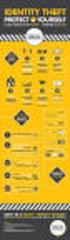 CREDIT What You Should Know About... IdentityTheft HOW IDENTITY THEFT HAPPENS PROTECTING YOURSELF RECOVERING FROM IDENTITY THEFT YourMoneyCounts You may have heard of a crime called identity theft, but
Online Fraud and Identity Theft Guide. A Guide to Protecting Your Identity and Accounts
 A Guide to Protecting Your Identity and Accounts As part of SunTrust s commitment to protecting your accounts and identity, we ve created the Online Fraud & Identity Theft Guide, which provides information
DVD Companion Learning Guide
 DVD Companion Learning Guide How to Use This Learning Guide This learning guide is a companion to the DVD, Identity Theft: Outsmarting the Crooks It can be used to guide classroom discussion of the material
Client Resources SAFEGUARDING YOUR IDENTITY. Your personal and financial information is precious. Protect it by being savvy about identity theft.
 Client Resources SAFEGUARDING YOUR IDENTITY Your personal and financial information is precious. Protect it by being savvy about identity theft. EVERYONE IS AT RISK FOR IDENTITY THEFT. It s an unfortunate
Guide to credit card security
 Contents Click on a title below to jump straight to that section. What is credit card fraud? Types of credit card fraud Current scams Keeping your card and card details safe Banking and shopping securely
Protecting Yourself from Identity Theft
 Protecting Yourself from Identity Theft Guide 4 Because you don t have to be the next victim Desert Schools Money Matters Series Guiding you toward financial success Table of Contents How ID theft happens.............................
Do s & Don ts Reference website. www.farmersidentityshield.com
 What is identity theft? How do thieves steal an identity? What do thieves do with a stolen identity? How can you find out if your identity was stolen? How long can the effects of identity theft last? What
Avoid completing forms in email messages that ask for personal financial information.
 INTERNET FRAUD Online scams and viruses are constantly evolving and they threaten the security of computers worldwide. As criminals evolve their tactics, you need to keep your PC's security software (virus
Citi Identity Theft Solutions
 Identity Theft what you need to know Citi Identity Theft Solutions At Citi, we want to keep you informed about all of the issues that can affect your financial life. We re bringing you helpful information
IDENTITY THEFT VICTIMS: IMMEDIATE STEPS
 IDENTITY THEFT VICTIMS: IMMEDIATE STEPS If you are a victim of identity theft, take the following four steps as soon as possible, and keep a record with the details of your conversations and copies of
Understanding Credit Cards
 Understanding Credit Cards INTRODUCTION This brochure can help you understand how credit cards work, become familiar with common terms offered with a credit card, and avoid the dangers of using credit
Protection from Fraud and Identity Theft
 Table of Contents Protection from Fraud & Identity Theft... 1 Simple Steps to Secure Your Devices... 1 Setting Up Your Computer and/or Mobile Device... 2 Adding Security Software... 2 Internet Safety Tips...
Protect Your Personal Information. Tips and tools to help safeguard you against identity theft
 Protect Your Personal Information Tips and tools to help safeguard you against identity theft Trademark of Visa International Service Association; Visa Canada Association is a licensed user. What is Identity
Protection. Identity. What should I do if I m. Common ID Theft TACTICS. a criminal obtains your personal information and uses it for his/her own gain.
 Common ID Theft TACTICS. HOW DOES IT HAPPEN? Identity What should I do if I m a Protection PROTECT YOURSELF: OLD-FASHIONED STEALING: Criminals steal your wallet or purse. > Never leave your wallet or purse
A Guide to Protecting Yourself From Identity Theft
 A Guide to Protecting Yourself From Identity Theft 2010 Capital One. Capital One is a registered trademark. At Capital One, we understand that Identity Theft is a frustrating, and sometimes frightening,
Fraud Guide Fraud Protection
 Fraud Guide Fraud Protection A simple guide on how to protect yourself against fraud. A simple guide on how to protect yourself against fraud It seems like every day there are new reports of different
Protecting Yourself from Identity Theft
 Protecting Yourself from Identity Theft Identity theft is everywhere. In fact, according to a 2013 report by Javelin Research, there is one incident of identity fraud every two seconds. While we cannot
Standard 9: The student will identify and explain consumer fraud and identity theft.
 TEACHER GUIDE 9.2 FRAUD AND IDENTITY THEFT PAGE 1 Standard 9: The student will identify and explain consumer fraud and identity theft. Beware! Identity Theft Priority Academic Student Skills Personal Financial
Protect Your Personal Information. Tips and tools to help safeguard you against identity theft
 Protect Your Personal Information Tips and tools to help safeguard you against identity theft Trademark of Visa International Service Association; Visa Canada Association is a licensed user. WHAT IS IDENTITY
With the Target breach on everyone s mind, you may find these Customer Service Q & A s helpful.
 With the Target breach on everyone s mind, you may find these Customer Service Q & A s helpful. Breach Overview Q: Media reports are stating that Target experienced a data breach. Can you provide more
Why Credit is Important
 Page 1 Why Credit is Important Page 6 How to Protect Yourself from Identity Theft Page 7 Cosigning and Money Lending Tips Page 8 How to Avoid Credit Card Interest Why Credit is Important Learning to build
What is Identity Theft?
 What is Identity Theft? Identity theft is a crime in which someone obtains key pieces of personal information, such as Social Security or driver's license numbers, in order to impersonate someone else.
identity theft: How To Safeguard Your Privacy and Keep Your Good Name
 identity theft: How To Safeguard Your Privacy and Keep Your Good Name Do you know anyone who has been the victim of identity theft? If not, odds are you will soon. According to the Federal Trade Commission,
1. Any email requesting personal information, or asking you to verify an account, is usually a scam... even if it looks authentic.
 Your identity is one of the most valuable things you own. It s important to keep your identity from being stolen by someone who can potentially harm your good name and financial well-being. Identity theft
Protect Yourself Against Identity Theft
 Protect Yourself Against Identity Theft Watch out for Phishing Attacks! A Message from District Attorney P. David Soares Dear Friends, In the age of the Internet, the information highway runs right into
Many of these tips are just common sense and others are tips to keep in mind when doing a transaction, at ATMs, restaurants and merchants.
 Credit and Debit Card Security Tips Many of these tips are just common sense and others are tips to keep in mind when doing a transaction, at ATMs, restaurants and merchants. Be careful with your PIN Always
IDENTITY PROTECTION MEMBER. Protect Your Identity. Security of Personal Information is Our Top Priority
 MEMBER IDENTITY PROTECTION Protect Your Identity Security of Personal Information is Our Top Priority Imagine this Unexpectedly, you get turned down for a loan, you get a call from a collection agency
Identity Theft. Occurs when someone uses your personal information without your permission for personal gain.
 Identity Theft Identity Theft Occurs when someone uses your personal information without your permission for personal gain. Someone uses your personal information to open a department store credit account
Fraud Prevention Tips
 Fraud Prevention Tips The best defense against fraud or identity theft is a proactive approach. Here are a few steps you can take to help protect yourself. Protect your identity Copy the front and back
When visiting online banking's sign-on page, your browser establishes a secure session with our server.
 The privacy of communications between you (your browser) and our servers is ensured via encryption. Encryption scrambles messages exchanged between your browser and our online banking server. How Encryption
Chapter 9-Section 3. Consumer Protection Laws
 Chapter 9-Section 3 Consumer Protection Laws Fair Credit Reporting Act Grants you the right to know what is in your credit file Gives you the ability to see who has seen your file Right to view credit
Identity Theft: Prevention & Survival
 Identity Theft: Prevention & Survival Crime of the Century Provide By: Nick Sabetta Don t t Let Someone Steal Your Good Name What is Identity Theft? When someone uses your personal information without
OIG Fraud Alert Phishing
 U.S. EQUAL EMPLOYMENT OPPORTUNITY COMMISSION Washington, D.C. 20507 Office of Inspector General Aletha L. Brown Inspector General July 22, 2005 OIG Fraud Alert Phishing What is Phishing? Phishing is a
IDENTITY THEFT PROTECT YOUR IDENTITY IT S POSSIBLE@ LEARN HOW TO PROTECT YOUR PRIVATE INFORMATION
 IDENTITY THEFT IT S POSSIBLE@ PROTECT YOUR IDENTITY protection center LEARN HOW TO PROTECT YOUR PRIVATE INFORMATION IT S POSSIBLE @ What Is Identity Theft? According to the FBI, identity theft is the fastest
Scams and Schemes LESSON PLAN UNIT 1. Essential Question What is identity theft, and how can you protect yourself from it?
 LESSON PLAN Scams and Schemes Essential Question What is identity theft, and how can you protect yourself from it? Lesson Overview Students learn strategies for guarding against identity theft and scams
Plastic Fraud. Debit Cards Debit cards, unlike credit cards, automatically withdraw funds from your account at the time you make a transaction.
 Getting a Handle on Debit and Credit Cards Plastic Fraud State-of-the-art thieves are concentrating on plastic cards. In the past, this type of fraud was not very common. Today, it is a big business for
Identity Theft/Credit Fraud Kit
 Provided by: Your source for information on Credit Reports and Credit Scores, where you can also safely order your own 3 Bureau Credit Report online that includes your credit information from Equifax,
How To Get A Free Credit Report From A Credit Report Website
 FACTS FOR OLDER CONSUMERS National Consumer Law Center Protect Yourself From Identity Theft Identity theft is one of the fastest growing crimes in the country. It can strike anyone, but elders may be particularly
IDENTITY THEFT RESOURCE KIT
 IDENTITY THEFT RESOURCE KIT TABLE OF CONTENTS Introduction 2 What To Do Now 3 Key Agencies to Contact 3 Other Important Contacts 4 Action Taken Form 6 Sample Letters 7 How Identity Theft Can Occur 9 What
Identity Theft: An Introduction to the Scope of the Crime, and Its Prevention, Detection and Remediation
 Identity Theft: An Introduction to the Scope of the Crime, and Its Prevention, Detection and Remediation June 2009 Cairo, Egypt Joanna P. Crane Identity Theft Program Manager Senior Attorney The views
IDENTITY SMART. Resources to Help Against Identity Theft and Fraud
 IDENTITY SMART Resources to Help Against Identity Theft and Fraud IDENTITY ALERT: The Fight to Help Defend Your Identity and Personal Information A crime with an untraceable weapon, identity theft is creating
Identity Theft Grade Level 10-12
 Identity Theft Grade Level 10-12 Take Charge of Your Finances Materials provided by: Karen Dawson, Family and Consumer Sciences Educator, Skyview High School, Billings, Montana Time to complete: 75 minutes
Beware! Identity Theft
 STUDENT MODULE 9.2 FRAUD AND IDENTITY THEFT PAGE 1 Standard 9: The student will identify and explain consumer fraud and identity theft. Beware! Identity Theft Imagine getting a letter from the Internal
Identity Theft PROTECT YOUR INFORMATION AND YOUR IDENTITY HIGHLIGHTS
 This publication is intended to provide general information only and is not a substitute for legal advice. HIGHLIGHTS 1 PROTECT YOUR INFORMATION AND YOUR IDENTITY 3 BE VIGILANT 3 CORRECTING INFORMATION
Payment Systems Department
 v Note: Please follow these guidelines for your safety as you enjoy the convenience of technology. However these guidelines are general; therefore, specific precautions may be taken as warranted by the
Identity Theft. Emergency Repair Kit
 Identity Theft Emergency Repair Kit 2012 Beavercreek Marketing, a division of Beavercreek Inc. All rights reserved. Any duplication or reproduction is strictly prohibited. Identity Theft Emergency Repair
Security Breaches. There are unscrupulous individuals, like identity thieves, who want your information to commit fraud.
 IDENTITY THEFT Security Breaches Our economy generates an enormous amount of data. Most users of that information are from honest businesses - getting and giving legitimate information. Despite the benefits
Take our Fraud Quiz and see what you know about frauds and scams in Canada. Test yourself on
 Take our Fraud Quiz and see what you know about frauds and scams in Canada. Test yourself on Are you a Target? On-Line Scams Credit/Debit Card Investment Identity Theft Frauds Scams Mark the following
IDENTITY THEFT BROCHURE 2 6/3/05 3:07 PM Page 1 IDENTITY THEFT PROTECT YOUR IDENTITY IT S POSSIBLE@ LEARN HOW TO PROTECT YOUR PRIVATE INFORMATION
 IDENTITY THEFT BROCHURE 2 6/3/05 3:07 PM Page 1 IDENTITY THEFT PROTECT YOUR IDENTITY IT S POSSIBLE@ protection center LEARN HOW TO PROTECT YOUR PRIVATE INFORMATION @ What Is Identity Theft? IDENTITY THEFT
Guide to Identity Theft
 Guide to Identity Theft 1 Receive a free copy of your credit report. Visit www.annualcreditreport.com to get a copy of your credit report from all three credit reporting agencies. Review your credit report
suntrust.com 800.SUNTRUST
 suntrust.com 800.SUNTRUST SunTrust Bank is an Equal Housing Lender. Member FDIC. 2010 SunTrust Banks, Inc., SunTrust, Live Solid. Bank Solid., SunTrust Rewards, and Signature Advantage Checking, are federally
E-MAIL & INTERNET FRAUD
 FRAUD ALERT! FRAUD ALERT! Guarding Against E-MAIL & INTERNET FRAUD What credit union members should know to counter Phishing Pharming Spyware Online fraud On-Line Fraud Is Growing E-Mail and Internet Fraud
Understanding Your Credit Report Rights. Legal Aid Society of San Diego, Inc. Consumer Protection Division
 Understanding Your Credit Report Rights Legal Aid Society of San Diego, Inc. Consumer Protection Division One Free Copy Per Agency Every 12 Months The Federal Trade Commission guarantees you one free copy
Fraud Prevention Guide
 Fraud Prevention Guide Table of Contents Protect your Information 2 Protect your wallet or purse 3 Don t forget around the house 3 Secure your credit cards and debit cards 4 Stop the telemarketing calls
For Consumers Federal Trade Commission. Credit Repair: Self-Help May Be Best. n companies that want you to pay for credit repair
 FTC Facts For Consumers Federal Trade Commission For The Consumer December 2005 www.ftc.gov 1-877-ftc-help Credit Repair: Self-Help May Be Best You see the advertisements in newspapers, on TV, and on the
Scams and Schemes. objectives. Essential Question: What is identity theft, and how can you protect yourself from it? Learning Overview and Objectives
 Estimated time: 45 minutes Essential Question: What is identity theft, and how can you protect yourself from it? Learning Overview and Objectives Overview: Students learn strategies for guarding against
TAKING CHARGE WHAT TO DO IF YOUR IDENTITY IS STOLEN FEDERAL TRADE COMMISSION FTC.GOV/IDTHEFT
 TAKING CHARGE WHAT TO DO IF YOUR IDENTITY IS STOLEN FEDERAL TRADE COMMISSION FTC.GOV/IDTHEFT Introduction 3 Immediate steps 5 Place an Initial Fraud Alert 6 Order Your Credit Reports 8 Create an Identity
The Merchant. Skimming is No Laughing Matter. A hand held skimming device. These devices can easily be purchased online.
 1 February 2010 Volume 2, Issue 1 The Merchant Serving Florida State University s Payment Card Community Individual Highlights: Skimming Scam 1 Skimming at Work 2 Safe at Home 3 Read your Statement 4 Useful
IMMEDIATE STEPS 5 NEXT STEPS 13
 INTRODUCTION 3 IMMEDIATE STEPS 5 Place an Initial Fraud Alert 6 Order Your Credit Reports 8 Create an Identity Theft Report 9 NEXT STEPS 13 Review Your Credit Reports 13 Dispute Errors with Credit Reporting
the first ACNB Bank transactionss in ACNB Bank will work number. Information on Thank you
 Identity theft is a terrible problem in this Information Age. You have already taken the first important step by contacting ACNB Bank immediately. ACNB Bank will work with you every step of the way to
Protect yourself against fraud
 With the approach of festive season and the shopping boom associated with this time of year, we would like to warn you about the ways used by fraudsters to trick unsuspecting members of the public. Here