
GEOTECHNICAL EARTHQUAKE ENGINEERING
|
|
|
- Marcia McDowell
- 10 years ago
- Views:
Transcription
1 54 GEOTECHNICAL EARTHQUAKE ENGINEERING Dr. S.K. Sarma Room 501 Extension 46054

2 55 TABLE OF CONTENTS 1. DYNAMIC SOIL PROPERTIES 1.1 Elastic Properties 1.2 Measurement and modeling 1.3 Behaviour of soils under cyclic/dynamic loading 1.4 Liquefaction 1.5 Pore pressure parameters 1.6 Undrained Strength 2. LIQUEFACTION PHENOMENON 2.1 Introduction 2.2 Assessment of Liquefaction potential 2.3 Methods of improving liquefiable sites 3. EFFECT OF SOIL LAYERS ON GROUND RESPONSE 3.1 Seismic waves in unbounded medium 3.2 Seismic waves in semi-infinite and bounded medium 3.3 Impedance/radiation effect- Boundary conditions 3.4 Elastic response of soil layers 3.5 Steady state response of soil layers- SHAKE program 4. CRITICAL ACCELERATION 4.1 The Concept 4.2 Sliding block displacements 5. SEISMIC DESIGN OF EARTH DAMS AND EMBANKMENTS 5.1 Response analysis 5.2 Average seismic acceleration 5.3 The critical acceleration-slope stability analysis 5.4 Displacement analysis 5.5 Design principles 6. SEISMIC EARTH PRESSURES ON RETAINING WALLS 6.1 Active pressure 6.2 Passive pressure 6.3 Effect of water in the backfill 7. SEISMIC DESIGN OF FOUNDATIONS 7.1 Seismic bearing capacity factors 7.2 Shallow Strip footings 7.3 Pile foundations 8. REFERENCES 9. TABLE OF SHEAR WAVE VELOCITIES

3 56 The aim of Geotechnical Earthquake Engineering is two fold: 1. The study of geotechnical materials such as soils and rocks under seismic loading conditions 2. Analysis and design of earth structures and foundations including soil layers and slopes subjected to earthquakes. The first part of the course gives an overview of dynamic soil properties including the liquefaction phenomenon. Response analysis of soil layers gives an idea of how the local soil conditions effect the ground motion at a site. Seismic response and stability of earth dams show the simplified design analysis technique. Seismic earth pressures and the seismic design of foundations are also included.

4 57 1. DYNAMIC SOIL PROPERTIES Dynamic response of a soil mass depends on loading conditions. For example, the response for small strain loading is different from that for large strain loading. While for small strain loading, we may treat soil as a visco-elastic material with quite good accuracy, the assumption of visco-elastic material may not be valid for large strain loading. Earthquake loading may be either small strain or large strain loading. Similarly, the behaviour under monotonic loading and cyclic loading may be different. In cyclic loading, the soil strength may degrade. The response may be different depending on the frequency of the loading, particularly for saturated soils. Under seismic loading, for saturated soils, the behaviour is undrained. Also speed of loading has its effect. Also, when sliding occurs (strain is no longer applicable), the strength may depend on the amount of displacement. Soil has non-linear material properties with limited strength and quite often, the strength degrades under cyclic loading conditions. However, more often than not, we use soil as a visco-elastic material which is therefore a simplification. When we use soil as elastic material for modeling purposes, we should keep in mind the limited strength characteristics. 1.1 Elastic properties The elastic properties of the soil is given by the mass density, elastic modula and the damping values. The elastic modula are defined by two parameters which may be any of the following combinations. a) The Lame s constants λ and µ; b) Youngs Modulus E and Shear Modulus G, (G=µ); c) E or G and Poissons Ratio ν; d) Compression Wave Velocity ( C or V p ) and Shear Wave Velocity (S or V s ); e) C or S and the ratio α = C/S. The following relationships may be useful. λ = Eν ( 1+ ν )(1 2ν ) µ = E 2(1 + ν ) C = λ + 2µ ρ S = µ ρ C α = S = 2(1 ν ) (1 2ν ) Where ρ is the mass density. Lame s Constant µ and shear Modulus G are one and the same. The wave velocities combine the elastic modula and the mass densities. In soil, the shear wave velocities ( or the shear modulus) and the damping values are the most

5 58 important parameters. In saturated soils, particularly when under water, when the compression wave velocity is measured in the field, it often appears to be the velocity of sound waves in water. When a soil sample is taken through a loading-unloading-reloading cycle, the stressstrain graphs show a hysteresis loop. See figure 1. The area under the loop gives the energy that is lost while going through a cycle. This loss of energy is related to the damping factor in a visco-elastic solid. The shear modulus is represented by the secant modulus at any given strain. The damping coefficient is related to the energy loss by the relationship: = 1 λ 4 π W W where W = Area under the loop and W = Area under the triangle as shown in the figure 1. (Do not confuse the damping coefficient with the Lame s Constant. We would not use Lame s Constant again. ) Figure 1 The shear modulus and damping of soil depends on the strain level. Higher the strain level, the lower is the modulus and higher is the damping. Figures 2 and 3 show relationships of the modulus and damping with the strain level, Seed et al (1973). In general, G at any strain γ is related to the G max value at low strain although the relationship differs from soil to soil. Field measurements of shear wave velocities generally give those at the very low strain level. Soil type, void ratio, initial effective confining pressures, over consolidation ratio, plasticity index are some of the factors which influence the shape of the curves, the value of the G max and the damping factor, Dobry & Vucetic (1987), Vucetic & Dobry (1991). Empirical relationships for G max can be found in the literature, Richart, Hall & Woods(1970), Hardin (1978), Hardin & Drnevich(1972) etc. When subjected to undrained cyclic loading, the stiffness and the strength of the soil degrades with number of cycles due to the increase of pore water pressures while the damping increases. The limit strength of soil under seismic loading conditions may be expressed by the total undrained strength or by the effective strength associated with the pore water pressure. The undrained strength and the pore water pressures are stress path dependent and therefore limit strength of soil depends on how the failure state is arrived at. Since a soil element in the field is subjected to 3 normal and 3 shear stress components, the limit strength will depend on how each component is varied in the field during an earthquake. Therefore, prediction of soil strength under field conditions during earthquake is a very complex problem. W W

6 G/S u Damping % Strain % Shear Modulus and Damping of Clay Figure G=1000 k 2 σ m K Damping % Strain % Shear Modulus and damping of sand Figure 3

7 MEASUREMENT OF SOIL STRENGTH laboratory testing of soils: Soil may be tested in the laboratory in the following devices: a) Cyclic triaxial tests; b) Cyclic simple shear tests; c) Resonant column tests; d) Other specialist tests such as in hollow cylinder apparatus or in ring shear apparatus. In these tests, only some of the components of the variations of the stress conditions may be applied. Resonant column apparatus is designed to determine the modulus and damping of soils but the limit strength cannot be determined in this test. The cyclic triaxial and simple shear tests and the specialist tests can be performed for low strain and high strain conditions. The resonant column tests are generally performed at low strains. Triaxial tests can be performed both under drained and undrained conditions with measurements of pore water pressures while in simple shear tests, no pore water pressures are measured. The frequency of loading generally depends on the capability of the measuring devices In-situ tests These tests are generally applied in the seismic survey to determine the wave velocities. The following tests can be used: a) Seismic reflection and refraction survey; b) Seismic cross-hole survey; c) Seismic up or down hole survey. In all these methods, an explosive charge is detonated at a given point and the arrivals of different kinds of waves are noted by sensors at other points. From the time taken by different waves to arrive at the sensor, average wave velocities are estimated. Other field tests include: d) SPT tests e) CPT tests. These two tests determine the resistance of soil (i) by the number of blows required for the apparatus to penetrate a given distance (SPT) or (ii) by the force required to push the cone penetrometer at a given rate (CPT) and then these numbers are correlated to other soil properties. SPT test is performed by using a 140 lb (63.5 kg) hammer which drops through a height of 30" (76cm) and pushes a sampling tube of 2"(5.1cm) diameter through a

8 61 distance of 12" (30cm). 100% efficiency is assumed when the hammer is in free-fall. However, in real tests, the hammer is never in free-fall and the mechanism that is used to lift the weight (such as a rope going around a pulley) and allowed to fall (rope released) loses some energy. The most common practice gives about 60% efficiency. But different practices have different efficiencies. SPT is performed at intervals while drilling for site investigation is in progress. For correlation purposes, the measured SPT value (N) at a given depth is normalised to an effective overburden pressure of 100kPa (denoted N 1 ) and to an efficiency level of 60% (denoted N 60 1 ), Seed et al (1985). Thus N 60 = N. E/60 (Normalisation with energy efficiency) N 1 = N.C N (Normalisation with depth) 60 N 1 = N. C N E / 60 (Normalisation with depth and energy efficiency where C N = Depth normalisation factor = (100/ σ ) 0.5. Another expression for C N is given by C N = 0.77 log 10 (2145/σ ) E = Energy efficiency of the SPT procedure (%) σ = Overburden pressure at the point of measurement (kpa). CPT is a continuous process and in this case a device which has a (10cm 2 base area, 60 o ) cone at the tip is pushed through the ground at a constant rate (2cm/s) and the resistance is measured continuously. The device has capabilities to measure other parameters, such as pore pressures. For study of stratigraphy of the soil, the CPT is preferred now a days. Similar to SPT, the CPT values are normalised to an effective overburden pressure of 100 kpa. SPT and CPT values are empirically related to other soil parameters. Seed et al(1986) gives: V s (m/s) = 85 N (D m ) 0.2 (1) V s = Shear wave velocity in the soil = (G max / ρ) D m = Depth of measurement in metres. G max = Shear modulus at low strain ρ = Density (mass) There are other similar relationships, mainly relating to G max e.g. Imai and Tonouchi (1982), Stroud (1988), Wong and Pun (1997), Baldi et al (1989), Rix and Stokoe (1991), Mayne and Rix (1993). There are other field and laboratory measuring devices which are not very common yet Model Tests: f) Shake table tests g) Centrifuge tests In these tests, models of soil structures are subjected to loading conditions that are expected in the field and the behaviour is analysed. From the response of the model, the behaviour of the prototype is interpreted, based on the theory of models.

9 Behaviour of soil under cyclic/dynamic loading Modelling the soil behaviour requires the understanding of soil properties under cyclic/dynamic loading conditions. Cyclic loading of dry soils (or saturated soil under drained conditions) does not show any change of strength with cycles. See figure 4. There is no degradation of strength. The behaviour of the soil in the monotonic loading can be used to interpret its behaviour under cyclic loading. Behaviour of saturated soil is, however, dependent on the type of soil. Sand or silt or clay all show different behaviour, particularly in undrained conditions. In sand, behaviour also depends on the relative density while in clay the behaviour depends on whether the soil is normally or over consolidated and also on its plasticity index Cyclic pore water pressure rise Figure 4: Simple shear drained cyclic loading test (after Sha al 1972) In order to understand the behaviour of soils under undrained loading, we need to understand the two kinds of soils (a) Collapsible soil- In this case, pore pressures rise continuously; at first the strength increases reaching a peak and then decreases until a steady state (residual) strength is reached which is lower than the consolidation pressure. This is a strain softening material. (b) Non-collapsible soil- In this case, pore pressures rise continuously until a state is reached beyond which, pore pressures tend to decrease. The strength increases after failure. This is strain hardening material. The behaviour of saturated soil under cyclic loading in undrained conditions can be understood from the stress-strain diagrams as shown in the figure 5 and from the stress path diagrams shown in figures 6. This shows that as the soil is first loaded from the initial confined state, pore pressure develops, particularly in loose cohesionless soils and in normally consolidated clays. In dense cohesionless soils or in over consolidated clays, we may have initial negative pore pressures even.

10 63 However, during cycling, there will be positive pore pressures. On unloading, the pore pressure is not reduced. But on reloading, whether on the same or in opposite direction, more pore pressure develops and therefore the ultimate strength and the stiffness of the soil reduces. Therefore, due to the increase of the pore pressures, the effective stress approaches the failure envelope. When it is close to the failure envelope, large strains accumulate. For very loose cohesionless soils, the soil structure may collapse and is unable to withstand any external pressure. The behaviour may be different in stress-controlled and strain controlled tests. While in a strain controlled tests, we will see the steady decrease in strength showing liquefaction, in a stress controlled tests, a large cumulative strain will be witnessed in a very small time. In loose cohesionless soils, the increase of pore pressures may lead to liquefaction ( a state of zero effective stress). Monotonic loading after such liquefaction will show nearly zero shear strength. In dense cohesionless soils or in clays or silts, liquefaction (in the sense of zero effective stress) is unlikely to happen or may happen

11 64 momentarily. However, cyclic loading may lead to large cumulative strain (which is same as failure). For dense or medium dense sand consolidated under low confining pressures- even though cycling may produce momentary liquefaction (zero effective stress)- monotonic loading after cycling shows considerable strength. Real liquefaction does not happen but there may be large cumulative strain which is unacceptable. For very loose sand, the structure of the sand may collapse due to cyclic loading (or may be even due to monotonic loading - the phenomenon of quicksand) and any monotonic loading after such collapse may show nearly zero shear strength. This is proper liquefaction.

12 65 4 The rise in pore pressures and the cumulative strain depend on the level of the cyclic stress compared to the static strength. See figure 7. For the ratio τ/s u > 0.6, ( τ is the applied shear stress and s u is the limit shear strength, given by the maximum deviatoric stress) the cumulative strain approaches failure within about cycles or less. For smaller ratios, the pore pressures and the cumulative strain approach a limit value. For cycling within a very small strain level, the pore pressures and the strain appear to be elastic. Also the cyclic strength depends on the initial static stress that a soil sample may be subjected to. While, in a horizontal layered soil deposits, the cycling generally loads the sample in both directions (i.e stress reversal), a soil sample under an embankment may be initially stressed in such a way that the cycling may load the sample only in one direction i.e no stress reversal. Behaviour of a soil sample may be different under these two circumstances. In case of clay soil, cyclic loading does not produce liquefaction but may produce large cumulative strain. There is a rise of pore water pressure as in the static undrained loading and the cycling produces extra pore pressures at a very slow rate and therefore is of little consequence during earthquakes. For such soils, the static undrained strength becomes important and does not change very much with smaller number of cycles. In soils, it is noticed that the volumetric strain or the excess pore pressure increases simply by the rotation of the principal stress directions without changing their values. (This effect is not properly quantified yet. ). Therefore, it is essential to reproduce the field stress state as faithfully as possible in order to determine the soil strength.

13 Strain-rate/ Displacement rate effect In case of sand, the strain-rate has little effect on the strength but in clay, the speed of loading has considerable effect. (This implies viscous damping.) Even when the soil is at its residual strength statically, during monotonic rapid loading it shows an initial gain of strength leading to a peak and then reduce to a fast residual strength value. The fast residual strength may be bigger or smaller or same as the static value, depending on the type of material, Parathiras (1994), Tika (1989), Lemos (1986). This may explain why slopes which exist at its residual value before earthquake does not fail during earthquake because of the initial gain of strength. However, if the earthquake is strong enough to produce sufficient displacement, it may go past the peak followed by catastrophic failure. 1.4 Liquefaction In literature, the term liquefaction is quite often used to define either zero effective stress or large strain situation. Liquefaction of soils leads to catastrophic failure. On level ground, this leads to loss of bearing capacity. On sloping ground, this leads to flow conditions. On very mild slopes, lateral spreading occurs. There may be some delay for the effect of liquefaction to appear on the surface. This happens when the liquefied deposits are at some depth overlain by a relatively impermeable clay layer. It takes time for the water under high pressure at the depth to flow out through the clay layer thus effecting the pore pressures in the top layer and causing damage. The upper layer will first swell and then consolidate while the liquefied layer will consolidate. The time and the pressure gradient will depend on the relative consolidation and swelling characteristics of the two layers, Ambraseys and Sarma (1969), see figure 13. A discussion on liquefaction is given in Section Pore pressure parameters A & B Skempton defined the two pore pressure parameters such that u = B σ + A( σ )] (2) [ σ where u = change in pore pressure σ 1, σ 3 = changes in major and minor principal stresses. B depends on the degree of saturation. B equals 1 for fully saturated soils and 0 for dry soils. A depends on the stress path to failure. Sarma & Jennings (1980) defined the parameter A n as a function of the number of cycles. Figures 8a and 8b shows the rise of pore water pressure with cycles.

14 67

15 Undrained Strength Using the parameter A n with B=1, from the Mohr s Circle of stress at failure in terms of effective stresses and assuming that there is no effect of principal stress rotation on the pore pressure, we can define the undrained strength of the soil c u (or s u ). c u c'cosφ ' + p'[k0 + An (1 K0)]sin φ' = (3) 1 (1 2A )sin φ' n Where p' = Major confining stress K o = Coefficient of anisotropic consolidation. ( K o p' = Minor confining stress) c u = Undrained peak strength A n = Pore pressure parameter which depends on number of cycles and on the soil type and the stress path c' and φ' = Effective strength parameters of the soil Undrained shear strength can be estimated empirically through the SPT value, e.g. Stroud(1988). LIQUEFACTION PHENOMENON 2.1 Introduction What is liquefaction: When a soil loses its shear strength due to pore water pressure, the soil is said to liquefy. In the literature, liquefaction is also associated with large strains and deformations. In this sense, the soil does not lose its shear strength completely but is unable to support a structure on it. Cause of liquefaction: The cause of liquefaction in the field is the collapse of the structure of loose saturated cohesionless soil due to vibration and cyclic loading. Under static condition, liquefaction is associated with the quick condition. Liquefaction phenomenon manifests in several forms: Sand Boils: Sand boils are evidence of high pore water pressure at some depth which is generally caused by liquefaction. Flow failures: Caused by liquefaction of loose cohesionless deposits in or around sloping ground causing massive land slides. These most commonly occur in mine tailings and may also take place without earthquakes. Lateral spreading: These generally develop on gentle slopes due to liquefaction of subsurface deposits. In this case, ground breaks up causing large fissures and similar phenomenon and the ground generally moves slowly down the slope.
![c u c'cosφ ' + p'[k0 + An (1 K0)]sin φ' = (3) 1 (1 2A )sin φ' n Where p' = Major confining stress K o = Coefficient of anisotropic consolidation.](/docs-images/40/8961005/images/page_15.jpg "( K o p' = Minor confining stress) c u = Undrained peak strength A n = Pore pressure parameter which depends on number of cycles and on the soil type and the stress path c' and φ' = Effective")
16 69 Ground oscillations: When the ground is very gentle, lateral spreading may not occur but the ground may still break up into blocks and these blocks may oscillate on the liquefied layer causing opening and closing of fissures. Bearing capacity failure of structures: Due to liquefaction, the bearing capacity of the ground below a foundation decreases causing tilting or sinking of structures. Rise of buried structures: If buried structures are lighter than the liquefied deposits, then these may float upwards in the liquefied soils. General ground settlements: This is a post earthquake phenomenon which occurs due to densification of deposits after liquefaction. Failure of quay walls: Due to liquefaction, the pressure on the wall may increase causing failure of retaining walls. 2.2 Assessment of liquefaction potential The method of assessing the liquefaction potential by field performance was proposed by Seed et al (1983) and later modified by Ambraseys (1989). In the following section, Ambrasey s procedure is followed and in the attached paper, a more detailed version is given, Sarma(1999). This is an empirical method determined from field evidence of liquefaction in earthquakes. The liquefaction potential of a site with loose cohesionless deposit depends on a) The size of the earthquake generally measured by the surface wave magnitude or the moment magnitude preferably the moment one; b) The distance of the earthquake from the site measured as epicentral distance or fault distance, preferably the fault distance; c) The SPT value of the cohesionless soil deposit, which is normalised to an effective overburden pressure of 100kPa and a rod efficiency of 60%. This is denoted by N d) The position of the water table with respect to the deposit. Given the size of an earthquake, liquefaction was observed up to a distance, given by the relationship M w = R f log R f (4) where R f is the fault distance in km,[ Ambraseys(1989) which is modified to represent the distance in km]. Figure 9. This does not mean that liquefaction cannot occur at further distances but only that no liquefaction has been observed. Attenuation relationship, Joyner and Boore(1981), gives corresponding values of peak acceleration expected at a distance. log (a g ) = M w - log (r) r p (5)

17 70 where r 2 = (R f ) and p is zero for 50 percentile values and 1 for 84 percentile values of a g. Figure 10 shows the expected peak ground acceleration values at the limit distance. We can use any other attenuation relationship. This shows that level of acceleration required to produce liquefaction is not a constant but varies with the magnitude and the distance of the earthquake. A relationship between the cyclic stress ratio Q and the SPT value of liquefied sites (at the boundary between liquefied and non-liquefied sites) was observed which gives, see figure 11: where Q = 0.4 exp(0.06n 1 60 )(N 1 60 ) exp(-0.525m w ) (6) Q = τ/σ o ' = 0.65 (a max )[ γh/σ o ']r d (7) where a max is the peak acceleration at the ground surface (in the absence of liquefaction) given as a fraction of g. The depth is h. The Q in equation 6 represents the cyclic resistance ratio (CRR) while Q in equation 7 represents cyclic stress ratio (CSR). The above equations are combined to give the set of graphs shown in figure 12, which allows the liquefaction potential to be assessed. These curves are valid for overburden pressures of less than 1.2 kg/cm 2. N 1 60 represents normalised SPT value, discussed in section 1. The measured N value at any depth is normalised to an effective overburden pressure of 100 kpa (or approximately 1t/ft 2 ) which gives N 1 and then normalised to 60% efficiency of the SPT procedure. The relationship is given by: where N C 60 1 = N = N.C / 0 N 100 σ E / 60 E = Efficiency of the SPT procedure / σ 0 is the effective overburden pressure at the depth measured in kpa. Note: 100 kpa represents approximately 10 m depth of submerged soil. r d represents the effect of the response of the soil layer on the average shear stress at depth. If the soil is rigid, then the accelerations at any depth will be equal to that at the surface. The value of r d in that case will be equal to one. Since, soil is not rigid, the

18 71 induced average stresses at a depth will be slightly reduced. The general practice is to vary r d linearly from 1 at the surface to 0.9 at 10m depth. Actual variation will be a curve. The maximum acceleration, a max, generally occurs about once or twice during the earthquake. The average acceleration in the time history is about 0.65 a max which corresponds to about 95% energy of the record. The reason that large magnitude earthquake may liquefy sites at large distance even though the corresponding acceleration is small is due to the longer duration and therefore to the larger number of cycles. Liquefaction can be achieved by smaller number of cycles with large stress amplitude and by larger number of cycles with smaller stress amplitude which is borne out by laboratory tests as well. Figure 12 combines all the information given above and allows easy determination of liquefaction hazard for a given seismic source. 2.3 Methods of improving liquefiable sites: Following techniques may be considered. a) Remove and replace unsatisfactory material. b) Densify the loose deposits c) Improve material by mixing additives d) Grouting or chemical stabilization e) Drainage solutions. 2.4 Post-seismic failure due to liquefaction Liquefaction of a loose sand layer underneath a competent soil layer may delay the effect of liquefaction to be visible on the surface. The consolidation of the liquefied layer with time and the swelling and consolidation of the top layer may increase the pore pressure in the top layer some time after the earthquake and may cause bearing capacity failure. The upward flow of the soil may even cause piping failure. The delay depends on the relative consolidation and swelling properties of the two layers. This characteristic is shown in figure 13, Ambraseys and Sarma(1969). 6. References: Soil Properties Ambraseys N.(1972) Behaviour of foundation materials during strong earthquakes. Proc. 4th Euro. Symp. Earthquake Engg., London, Baldi G., Bellotti R., Ghionna V., Jamiolkowski M. And Lo Presti D. (1989) Modulus of sands from CPTs and DMTs. 12th International conf. Soil Mech and Found. Engg., Rio de Janeiro, Brazil, 1, Imai T. & Tonouchi K. (1982) Correlation of N value with S-wave velocity and shear modulus. Proc. 2nd Euro. Symp. On penetration testing,

19 72 Ishihara K.(1993) Liquefaction and flow failures during earthquakes- Rankine lecture Geotechnique. Liquefaction of soils during earthquakes. Report No. CETS-EE-001, Committee on Earthquake Engineering, National Research Council. National Academy Press, Washington DC Mayne P. & Rix G.(1993) Gmax- qc relationships for clays Geotechnical testing journal, ASTM, 16, 1, Rix G. & Stokoe K. (1991) Correlation of initial tangent modulus and cone penetration resistance. Int. Symp. Calibration Chamber testing. Ed A.B. Huang et al. Elsevier, New York, Sarma S.K. & Jennings D.(1980) A dynamic pore pressure parameter A n. Soils under cyclic and transient loading. Proceedings of the International Symp. vol 1, Seed H.B., Tokimatsu K., Harder L., Chung R. (1985) Influence of SPT procedure in soil liquefaction resistance evaluation. Jour. Geot. Engg. Div., ASCE 111, 12, Seed H.B. & Idriss I.M.(1970): Soil moduli and damping factors for dynamic response analyses. Report No. EERC Earthquake Engg. Res. Center, Univ. of Calif, Berkeley. Seed H.B., Wong R.T., Idriss I.M., Tokimatsu K. (1986) Moduli and damping factors for dynamic analyses of cohesionless soils. Jour. Geot. Engg., Div, ASCE, 112, GT11, Stroud M. (1988) The standard penetration test - its application and interpretation. Geotechnology conf. On penetration testing in the UK, ICE London. Vucetic M & Dobry R.(1991)Effect of soil plasticity on cyclic response. Jour. Geot. Div., ASCE, 117, 1, Wong A.C.W. & Pun W.K. (1997) Pilot study of effects of soil amplification of seismic ground motions in Hong Kong. Technical note TN 5/97, Geotechnical Consulting Office, Hong Kong, June. Zergoun M & Vaid Y.P.(1994): Effective stress response of clay to undrained cyclic loading. Canadian Geot. Journal, 31, Parathiras A (1994): Ph.D. Thesis - Imperial College, Civil Engineering Tika T (1989)- -do- Lemos L.(1986)- -do- Liquefaction Ambraseys, N. (1989) Liquefaction induced ground failure. Earthquake Engineering and Structural Dynamics. Ambraseys N. & Sarma S.(1969) Liquefaction of soils induced by earthquakes, Bulletin of Seis. Soc. Am., 59, 2,

20 73 Ishihara K.(1993) Liquefaction and flow failures during earthquakes- Rankine lecture Geotechnique. Liquefaction of soils during earthquakes. Report No. CETS-EE-001, Committee on Earthquake Engineering, National Research Council. National Academy Press, Washington DC Robertson P. and Campanella R.(1985) Liquefaction potential of sands using CPT. Jour. Geot. Eng. Div, ASCE 111, 3, Seed H.B., Idriss I., Arango,I. (1983): Evaluation of liquefaction potential using field performance data. Jour. Gt. Div, ASCE, 109, 3, Seed H.B., Tokimatsu K., Harder L., Chung R. (1985) Influence of SPT procedure in soil liquefaction resistance evaluation. Jour. Geot. Engg. Div., ASCE 111, 12, Youd T.L. & Idriss I.M. (Ed) (1997) Evaluation of liquefaction resistance of soils. Proc. NCEER Workshop, National Centre for Earthquake Engg Research, State University of New York, Buffalo. Technical report NCEER NSF (1998) Shear strength of liquefied soils. National Science Foundation Workshop.Grant No. CMS Principal investigator T.D. Stark, University of Illinois, Urbana-Champaign, USA There are many references on this subject and impossible to list here. Reference 4 and 1 can be used as a guide. Soil Layer Ambraseys N. (1959) A note on the response of an elastic overburden of varying rigidity to an arbitrary ground motion. Bull. Seis. Soc. Am., 49, 3, Sarma S. (1994) Analytical solution to the seismic response of visco-elastic soil layers, Geotechnique, 44, 2, Schnabel P, Lysmer J, Seed H.B. (1972) SHAKE, a computer program for earthquake response analysis of horizontally layered sites. Report no. EERC 72-12, Berkeley, University of California. Critical accelerations Ambraseys N.(1972) Behaviour of foundation materials during strong earthquakes. Proc. 4th Euro. Symp. Earthquake Engg., London, Ambraseys N., J. Menu (1988) Earthquake induced ground displacements. Earthquake Engg. & Structural Dyn., 16, 7, Newmark N (1965) Effects of earthquakes on dams and embankments, Geotechnique, 15, Sarma S (1968) The response and stability of earth dams during strong earthquakes. PhD Thesis, Imperial College, London Univ.

21 74 Sarma S(1975) Seismic stability of earth dams and embankments. Geotechnique, 25, 4, Sarma S.(1988) Seismic response and stability of earth dams. Seismic risk assessment and design of building structures, Ed. A.Koridze, Omega Scientific, Sarma S.K. & Jennings D.(1980) A dynamic pore pressure parameter A n. Soils under cyclic and transient loading. Proceedings of the International Symp. vol 1, Foundations Meyerhof (1953) The bearing capacity of foundations under eccentric and inclined loads. Proc. 3rd ICSMFE, 1, Brinch Hansen (1961) A general formula for bearing capacity. Bulletin 11, Danish Geot. Inst., Brinch Hansen (1970) A revised and extended formula for bearing capacity. Bulletin 28, Danish Geot. Inst., Vesic A. S. (1975) Bearing capacity of shallow foundations. Foundation Engineering Handbook. H.F.Winkerton & H.Y. Fang (eds), Chap 3, Van Nostrand Reinhold Co. Inc. New York, Sarma S. & I. Iossifelis (1990) Seismic bearing capacity of shallow strip footings. Geotechnique, 40, 2, Sarma S. & Y.C. Chen (1995) Seismic bearing capacity of shallow strip footings near sloping ground. In European Seismic Design Practice, Research & Application, Ed Elnashai, 5th SECED Conf. Chester UK, AA Balkema, Rotterdam, Sarma S. & Y.C. Chen (1996) Bearing capacity of strip footings near sloping ground during earthquakes. Paper No. 2078, 11th World Conf. Earthquake Engg., Mexico. Sarma S. & Y.C. Chen (1997) Seismic bearing capacity of rigid deep foundations. Proc. 14th Int. Conf. Soil Mechanics & Foundation Engg., Special Volume, Hamburg, Germany.
22 75 SHEAR WAVE VELOCITIES IN FOUNDATION AND BUILDING MATERIALS ( S- Wave velocities in m/sec) Material Depth of Deposit 1-6 m 7-15 m > 15 m Loose sand, saturated Fluvial sand Clay Silt Silty clay Marsh-land Reclaimed land, recent Sandy clay Gravel, loose Fine sand, saturated Medium sand, uniform grading Tertiary moist clay Clay mixed with sand Loam Dense ssand Saturated medium sand Argillaceous sand Gravel with stones Clay saturated Medium sand with fines Clayey sand with gravel Medium sand in-situ Marl Dry clay with limestones Compacted clay fill Dry loess Puddled clay heavily compacted Coarse gravel tightly packed medium gravel Quartz sandstone Atlantic muck, ooze Hard sandstones (mesozoic) Ice, glaciers
23 76 Tuffaceous sandstone Concrete ( = 0.21, 137 pcf) Mesozoic shales Granite (intact) Limestone (palaeozoic) Clay slate (palaeozoic)
Numerical Simulation of CPT Tip Resistance in Layered Soil
 Numerical Simulation of CPT Tip Resistance in Layered Soil M.M. Ahmadi, Assistant Professor, [email protected] Dept. of Civil Engineering, Sharif University of Technology, Tehran, Iran Abstract The paper
CONE PENETRATION TESTING AND SITE EXPLORATION IN EVALUATING THE LIQUEFACTION RESISTANCE OF SANDS AND SILTY SANDS ABSTRACT
 CONE PENETRATION TESTING AND SITE EXPLORATION IN EVALUATING THE LIQUEFACTION RESISTANCE OF SANDS AND SILTY SANDS E. J. Newman 1, T. D. Stark 2, and S. M. Olson 3 ABSTRACT Refined relationships between
Evaluation of Post-liquefaction Reconsolidation Settlement based on Standard Penetration Tests (SPT)
 RESEARCH ARTICLE OPEN ACCESS Evaluation of Post-liquefaction Reconsolidation Settlement based on Standard Penetration Tests (SPT) AlketaNdoj*,VeronikaHajdari* *Polytechnic University of Tirana, Department
STABILITY ANALYSIS OF AN EARTH DAM FOUNDATION IN TUNISIA
 Int. J. of GEOMATE, June, 1, Vol., No. (Sl. No. 1), pp. 919-9 Geotech., Const. Mat. & Env., ISSN:1-9(P), 1-99(O), Japan STABILITY ANALYSIS OF AN EARTH DAM FOUNDATION IN TUNISIA El Ouni Mohamed Ridha 1,
Chapter 7 Analysis of Soil Borings for Liquefaction Resistance
 Chapter 7 Analysis of Soil Borings for Liquefaction Resistance 7.1. Introduction. This chapter addresses the analysis of subsurface soil data to determine the factor of safety against liquefaction and
SEISMIC SETTLEMENT OF SHALLOW FOUNDATIONS
 10NCEE Tenth U.S. National Conference on Earthquake Engineering Frontiers of Earthquake Engineering July 21-25, 2014 Anchorage, Alaska SEISMIC SETTLEMENT OF SHALLOW FOUNDATIONS S. Prakash 1, V.K. Puri
Drained and Undrained Conditions. Undrained and Drained Shear Strength
 Drained and Undrained Conditions Undrained and Drained Shear Strength Lecture No. October, 00 Drained condition occurs when there is no change in pore water pressure due to external loading. In a drained
c. Borehole Shear Test (BST): BST is performed according to the instructions published by Handy Geotechnical Instruments, Inc.
 Design Manual Chapter 6 - Geotechnical 6B - Subsurface Exploration Program 6B-2 Testing A. General Information Several testing methods can be used to measure soil engineering properties. The advantages,
Geotechnical Measurements and Explorations Prof. Nihar Ranjan Patra Department of Civil Engineering Indian Institute of Technology, Kanpur
 Geotechnical Measurements and Explorations Prof. Nihar Ranjan Patra Department of Civil Engineering Indian Institute of Technology, Kanpur Lecture No. # 13 (Refer Slide Time: 00:18) So last class, it was
vulcanhammer.net This document downloaded from
 This document downloaded from vulcanhammer.net since 1997, your source for engineering information for the deep foundation and marine construction industries, and the historical site for Vulcan Iron Works
AN INVESTIGATION INTO WHY LIQUEFACTION CHARTS WORK: A NECESSARY STEP TOWARD INTEGRATING THE STATES OF ART AND PRACTICE
 AN INVESTIGATION INTO WHY LIQUEFACTION CHARTS WORK: A NECESSARY STEP TOWARD INTEGRATING THE STATES OF ART AND PRACTICE by Ricardo Dobry Tarek Abdoun Department of Civil and Environmental Engineering Rensselaer
Site Investigation. Some unsung heroes of Civil Engineering. buried right under your feet. 4. Need good knowledge of the soil conditions
 This is an attempt to create a stand alone self learning module on site investigation. Fasten your seat belts. Sit back, relax and enjoy. 1 2 Site Investigation Some unsung heroes of Civil Engineering
NUMERICAL MODELLING OF PIEZOCONE PENETRATION IN CLAY
 NUMERICAL MODELLING OF PIEZOCONE PENETRATION IN CLAY Ilaria Giusti University of Pisa [email protected] Andrew J. Whittle Massachusetts Institute of Technology [email protected] Abstract This paper
Washington 98102-3699, [email protected]
 LESSONS LEARNED FROM A STONE COLUMN TEST PROGRAM IN GLACIAL DEPOSITS Barry S. Chen 1, P.E., Member, Geo-Institute and Michael J. Bailey 2, P.E., Member, Geo-Institute ABSTRACT A stone column test program
COSMOS 2012: Earthquakes in Action COSMOS 2012
 COSMOS 2012 What is SFSI and why is it important? Soil issues in Earthquakes Structures where SFSI important Retaining structures (lateral earth pressure) Foundations (spread and pile footings, bearing
Figure 2.31. CPT Equipment
 Soil tests (1) In-situ test In order to sound the strength of the soils in Las Colinas Mountain, portable cone penetration tests (Japan Geotechnical Society, 1995) were performed at three points C1-C3
ENCE 4610 Foundation Analysis and Design
 This image cannot currently be displayed. ENCE 4610 Foundation Analysis and Design Shallow Foundations Total and Differential Settlement Schmertmann s Method This image cannot currently be displayed. Strength
INTRODUCTION TO SOIL MODULI. Jean-Louis BRIAUD 1
 INTRODUCTION TO SOIL MODULI By Jean-Louis BRIAUD 1 The modulus of a soil is one of the most difficult soil parameters to estimate because it depends on so many factors. Therefore when one says for example:
Cone Penetration Testing in Geotechnical Practice. Tom Lunne Peter K. Robertson John J.M. Powell
 Cone Penetration Testing in Geotechnical Practice Tom Lunne Peter K. Robertson John J.M. Powell BLACKIE ACADEMIC & PROFESSIONAL An Imprint of Chapman & Hall London Weinheim New York Tokyo Melbourne Madras
INDIRECT METHODS SOUNDING OR PENETRATION TESTS. Dr. K. M. Kouzer, Associate Professor in Civil Engineering, GEC Kozhikode
 INDIRECT METHODS SOUNDING OR PENETRATION TESTS STANDARD PENETRATION TEST (SPT) Reference can be made to IS 2131 1981 for details on SPT. It is a field edtest to estimate e the penetration e resistance
A Ground Improvement Update from TerraSystems
 TERRANOTES A Ground Improvement Update from TerraSystems SOIL MODULUS AFTER GROUND IMPROVEMENT Evaluation of ground improvement is accomplished using a variety of methods, from simple elevation surveys
Module 1 : Site Exploration and Geotechnical Investigation. Lecture 4 : In-situ tests [ Section 4.1: Penetrometer Tests ] Objectives
![Module 1 : Site Exploration and Geotechnical Investigation. Lecture 4 : In-situ tests [ Section 4.1: Penetrometer Tests ] Objectives](/thumbs/26/8734290.jpg "Module 1 : Site Exploration and Geotechnical Investigation. Lecture 4 : In-situ tests [ Section 4.1: Penetrometer Tests ] Objectives") Lecture 4 : In-situ tests [ Section 4.1: Penetrometer Tests ] Objectives In this section you will learn the following Penetrometer Tests Standard penetration test Static cone penetration test Dynamic cone
Lecture 4 : In-situ tests [ Section 4.1: Penetrometer Tests ] Objectives In this section you will learn the following Penetrometer Tests Standard penetration test Static cone penetration test Dynamic cone
ON THE INTERPRETATION OF SEISMIC CONE PENETRATION TEST (SCPT) RESULTS
 Studia Geotechnica et Mechanica, Vol. XXXV, No. 4, 213 DOI: 1.2478/sgem-213-33 ON THE INTERPRETATION OF SEISMIC CONE PENETRATION TEST (SCPT) RESULTS IRENA BAGIŃSKA Wrocław University of Technology, Faculty
Instrumented Becker Penetration Test for Liquefaction Assessment in Gravelly Soils
 Instrumented Becker Penetration Test for Liquefaction Assessment in Gravelly Soils Mason Ghafghazi 1, PhD, PEng. Jason DeJong 2, Professor Department of Civil and Environmental Engineering University of
ESTIMATION OF UNDRAINED SETTLEMENT OF SHALLOW FOUNDATIONS ON LONDON CLAY
 International Conference on Structural and Foundation Failures August 2-4, 2004, Singapore ESTIMATION OF UNDRAINED SETTLEMENT OF SHALLOW FOUNDATIONS ON LONDON CLAY A. S. Osman, H.C. Yeow and M.D. Bolton
Penetration rate effects on cone resistance measured in a calibration chamber
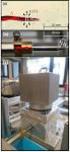 Penetration rate effects on cone resistance measured in a calibration chamber K. Kim Professional Service Industries, Inc, Houston, TX, USA M. Prezzi & R. Salgado Purdue University, West Lafayette, IN,
Geotechnical Testing Methods II
 Geotechnical Testing Methods II Ajanta Sachan Assistant Professor Civil Engineering IIT Gandhinagar FIELD TESTING 2 1 Field Test (In-situ Test) When it is difficult to obtain undisturbed samples. In case
Equivalent CPT Method for Calculating Shallow Foundation Settlements in the Piedmont Residual Soils Based on the DMT Constrained Modulus Approach.
 Equivalent CPT Method for Calculating Shallow Foundation Settlements in the Piedmont Residual Soils Based on the DMT Constrained Modulus Approach. Paul W. Mayne, PhD, P.E., Professor, Geosystems Engineering
Using Combination of SPT, DMT and CPT to Estimate Geotechnical Model for a Special Project in Turkey
 Using Combination of SPT, DMT and CPT to Estimate Geotechnical Model for a Special Project in Turkey Figen Orhun Onal GE, M.Sc., Site Works Manager, Zemin Etud ve Tasarım A.Ş., Istanbul, [email protected]
Improvement in physical properties for ground treated with rapid impact compaction
 International Journal of the Physical Sciences Vol. 6(22), pp. 5133-5140, 2 October 2011 Available online at http://www.academicjournals.org/ijps ISSN 1992-1950 2011 Academic Journals Full Length Research
4.3 Results... 27 4.3.1 Drained Conditions... 27 4.3.2 Undrained Conditions... 28 4.4 References... 30 4.5 Data Files... 30 5 Undrained Analysis of
 Table of Contents 1 One Dimensional Compression of a Finite Layer... 3 1.1 Problem Description... 3 1.1.1 Uniform Mesh... 3 1.1.2 Graded Mesh... 5 1.2 Analytical Solution... 6 1.3 Results... 6 1.3.1 Uniform
Cone Penetration Testing (CPT) Michael Bailey, P.G. U.S. Army Corps of Engineers, Savannah District
 Cone Penetration Testing (CPT) Michael Bailey, P.G. U.S. Army Corps of Engineers, Savannah District Recommended publications ASTM D 5778-07 Standard Test Method for Electronic Friction Cone and Piezocone
Soil behaviour type from the CPT: an update
 Soil behaviour type from the CPT: an update P.K. Robertson Gregg Drilling & Testing Inc., Signal Hill, California, USA ABSTRACT: An initial application of CPT results is to evaluate soil type and soil
By D. P. StewarP and M. F. Randolph z
 T-BAR PENETRATION TESTING IN SOFT CLAY By D. P. StewarP and M. F. Randolph z ABSTRACT: A t-bar penetration test for soft clay that can be performed with existing cone penetration test (CPT) equipment is
ASSESSMENT OF TWO CONE PENETRATION TEST BASED METHODS FOR EVALUATING THE LIQUEFACTION POTENTIAL OF TAILINGS DAMS
 ASSESSMENT OF TWO CONE PENETRATION TEST BASED METHODS FOR EVALUATING THE LIQUEFACTION POTENTIAL OF TAILINGS DAMS Luis Alberto Torres Cruz Interim research report. University of the Witwatersrand. Faculty
ASSESSMENT OF SHEAR WAVE VELOCITY FROM INDIRECT INSITU TESTS
 Proceedings of Indian Geotechnical Conference IGC-2014 December 18-20, 2014, Kakinada, India ASSESSMENT OF SHEAR WAVE VELOCITY FROM INDIRECT INSITU TESTS Kant, L., M. Tech Student, Department of Earthquake
BEARING CAPACITY AND SETTLEMENT RESPONSE OF RAFT FOUNDATION ON SAND USING STANDARD PENETRATION TEST METHOD
 SENRA Academic Publishers, British Columbia Vol., No. 1, pp. 27-2774, February 20 Online ISSN: 0-353; Print ISSN: 17-7 BEARING CAPACITY AND SETTLEMENT RESPONSE OF RAFT FOUNDATION ON SAND USING STANDARD
Worked Example 2 (Version 1) Design of concrete cantilever retaining walls to resist earthquake loading for residential sites
 Worked Example 2 (Version 1) Design of concrete cantilever retaining walls to resist earthquake loading for residential sites Worked example to accompany MBIE Guidance on the seismic design of retaining
Measurement of In-Place Relative Density in Coarse Grained Alluvium for Comparison to Penetration Tests DSO-99-01
 Measurement of In-Place Relative Density in Coarse Grained Alluvium for Comparison to Penetration Tests DSO-99-01 Department of the Interior Bureau of Reclamation Earth Sciences and Research Laboratory
Effect of grain size, gradation and relative density on shear strength and dynamic cone penetration index of Mahi, Sabarmati and Vatrak Sand
 Discovery ANALYSIS The International Daily journal ISSN 2278 5469 EISSN 2278 5450 2015 Discovery Publication. All Rights Reserved Effect of grain size, gradation and relative density on shear strength
Measurement of Soil Parameters by Using Penetrometer Needle Apparatus
 Vol.3, Issue.1, Jan-Feb. 2013 pp-284-290 ISSN: 2249-6645 Measurement of Soil Parameters by Using Penetrometer Needle Apparatus Mahmoud M. Abu zeid, 1 Amr M. Radwan, 2 Emad A. Osman, 3 Ahmed M.Abu-bakr,
DEM modelling of the dynamic penetration process on Mars as a part of the NASA InSight Mission
 Proceedings of the 4th European Young Geotechnical Engineers Conference (EYGEC), Durham, UK Osman, A.S. & Toll, D.G. (Eds.) 05 ISBN 978-0-9933836-0 DEM modelling of the dynamic penetration process on Mars
PAPAMOA EAST URBAN DEVELOPMENT PART 1 AREA LIQUEFACTION HAZARD REVIEW Technical Report
 PAPAMOA EAST URBAN DEVELOPMENT PART 1 AREA LIQUEFACTION HAZARD REVIEW Technical Report Tauranga District Council Papamoa East Urban Development Strategy Part 1 Area Liquefaction Hazard Review Technical
CONSTANT HEAD AND FALLING HEAD PERMEABILITY TEST
 CONSTANT HEAD AND FALLING HEAD PERMEABILITY TEST 1 Permeability is a measure of the ease in which water can flow through a soil volume. It is one of the most important geotechnical parameters. However,
Cone Penetration Test (CPT)
 Cone Penetration Test (CPT) The cone penetration test, or CPT in short, is a soil testing method which will provide a great deal of high quality information. In the Cone Penetration Test (CPT), a cone
Caltrans Geotechnical Manual
 Cone Penetration Test The cone penetration test (CPT) is an in-situ sounding that pushes an electronic penetrometer into soil and records multiple measurements continuously with depth. Compared with rotary
HAULBOWLINE, CORK STATIC CONE PENETRATION TESTS FACTUAL REPORT
 HAULBOWLINE, CORK STATIC CONE PENETRATION TESTS FACTUAL REPORT CONE PENETRATION TESTS Cone resistance Local friction Porewater pressure Dissipations REPORT NO: RRM CONTRACT NO: GLOVER SITE INVESTIGATIONS
Eurocode 7 - Geotechnical design - Part 2 Ground investigation and testing
 Brussels, 18-20 February 2008 Dissemination of information workshop 1 Eurocode 7 - Geotechnical design - Part 2 Ground investigation and testing Dr.-Ing. Bernd Schuppener, Federal Waterways Engineering
Laterally Loaded Piles
 Laterally Loaded Piles 1 Soil Response Modelled by p-y Curves In order to properly analyze a laterally loaded pile foundation in soil/rock, a nonlinear relationship needs to be applied that provides soil
SUGGESTION ABOUT DETERMINATION OF THE BEARING CAPACITY OF PILES ON THE BASIS OF CPT SOUNDING TESTS
 SUGGESTION ABOUT DETERMINATION OF THE BEARING CAPACITY OF PILES ON THE BASIS OF CPT SOUNDING TESTS JóZSEF PUSZTAI About the authors Pusztai József Budapest University of Technology and Economics, Department
INSITU TESTS! Shear Vanes! Shear Vanes! Shear Vane Test! Sensitive Soils! Insitu testing is used for two reasons:!
 In-situ Testing! Insitu Testing! Insitu testing is used for two reasons:! To allow the determination of shear strength or penetration resistance or permeability of soils that would be difficult or impossible
International Journal of Scientific & Engineering Research, Volume 4, Issue 9, September-2013 409 ISSN 2229-5518
 International Journal of Scientific & Engineering Research, Volume 4, Issue 9, September-2013 409 Estimation of Undrained Shear Strength of Soil using Cone Penetration Test By Nwobasi, Paul Awo Department
How To Model A Shallow Foundation
 Finite Element Analysis of Elastic Settlement of Spreadfootings Founded in Soil Jae H. Chung, Ph.D. Bid Bridge Software Institute t University of Florida, Gainesville, FL, USA Content 1. Background 2.
1 Mobilisation and demobilisation 1 Deep boring sum 2 Cone penetration tests sum 3 Miscellenous tests sum
 Malaysian Civil Engineering Standard Method of Measurement (MyCESMM) CLASS D: SITE INVESTIGATION WORK Measurement covered under other classes: Excavation not carried out for the purpose of soil investigation
Numerical study of rate effects in cone penetration test
 Numerical study of rate effects in cone penetration test Daichao Sheng, Richard Kelly, Jubert Pineda and Lachlan Bates Australian Research Council Centre of Excellence for Geotechnical Science and Engineering,
Standard penetration test (SPT)
 Standard penetration test (SPT) Evolution of SPT Test methods and standards Influence of ground conditions on penetration resistance SPT energy measurement and corrections for SPT Use of SPT results Profiling
KWANG SING ENGINEERING PTE LTD
 KWANG SING ENGINEERING PTE LTD 1. INTRODUCTION This report represents the soil investigation works at Aljunied Road / Geylang East Central. The objective of the soil investigation is to obtain soil parameters
Soil Mechanics. Outline. Shear Strength of Soils. Shear Failure Soil Strength. Laboratory Shear Strength Test. Stress Path Pore Pressure Parameters
 Soil Mechanics Shear Strength of Soils Chih-Ping Lin National Chiao Tung Univ. [email protected] 1 Outline Shear Failure Soil Strength Mohr-Coulomb Failure Criterion Laboratory Shear Strength Test
CPTic_CSM8. A spreadsheet tool for identifying soil types and layering from CPTU data using the I c method. USER S MANUAL. J. A.
 CPTic_CSM8 A spreadsheet tool for identifying soil types and layering from CPTU data using the I c method. USER S MANUAL J. A. Knappett (2012) This user s manual and its associated spreadsheet ( CPTic_CSM8.xls
INTERNATIONAL JOURNAL OF CIVIL AND STRUCTURAL ENGINEERING Volume 3, No 3, 2013
 INTERNATIONAL JOURNAL OF CIVIL AND STRUCTURAL ENGINEERING Volume 3, No 3, 2013 Copyright by the authors - Licensee IPA- Under Creative Commons license 3.0 Research article ISSN 0976 4399 Reliability of
Soil Mechanics. Soil Mechanics
 Soil is the most misunderstood term in the field. The problem arises in the reasons for which different groups or professions study soils. Soil scientists are interested in soils as a medium for plant
NEW DEVELOPMENTS AND IMPORTANT CONSIDERATIONS FOR STANDARD PENETRATION TESTING FOR LIQUEFACTION EVALUATIONS. Jeffrey A Farrar M.S.
 NEW DEVELOPMENTS AND IMPORTANT CONSIDERATIONS FOR STANDARD PENETRATION TESTING FOR LIQUEFACTION EVALUATIONS Jeffrey A Farrar M.S., P E 1 ABSTRACT Standard Penetration Tests (SPT) are often used for evaluating
Fundamentals of CONE PENETROMETER TEST (CPT) SOUNDINGS. J. David Rogers, Ph.D., P.E., R.G.
 Fundamentals of CONE PENETROMETER TEST (CPT) SOUNDINGS J. David Rogers, Ph.D., P.E., R.G. Cone Penetration Test CPT soundings can be very effective in site characterization, especially sites with discrete
product manual HS-4210 HS-4210_MAN_09.08 Digital Static Cone Penetrometer
 HS-4210_MAN_09.08 product manual HS-4210 Digital Static Cone Penetrometer Introduction This Manual covers the measurement of bearing capacity using the Humboldt Digital Static Cone Penetrometer (DSCP).
Ingeniería y Georiesgos Ingeniería Geotécnica Car 19 a Nº 84-14 of 204 ; TEL : 6916043 E-mail: [email protected]
 The plot below presents the cross correlation coeficient between the raw qc and fs values (as measured on the field). X axes presents the lag distance (one lag is the distance between two sucessive CPT
Appendix A Sub surface displacements around excavations Data presented in Xdisp sample file
 Appendix A Sub surface displacements around excavations Data presented in Xdisp sample file Notation B1 = lowest level of basement slab c = cohesion E = drained Young s Modulus Eu = undrained Young s Modulus
Consolidation and Settlement Analysis
 19 Consolidation and Settlement Analysis Patrick J. Fox Purdue University 19.1 Components of Total Settlement 19.2 Immediate Settlement 19.3 Consolidation Settlement Total Consolidation Settlement Rate
CIVL451. Soil Exploration and Characterization
 CIVL451 Soil Exploration and Characterization 1 Definition The process of determining the layers of natural soil deposits that will underlie a proposed structure and their physical properties is generally
An Automatic Kunzelstab Penetration Test
 An Automatic Kunzelstab Penetration Test Yongyuth Sirisriphet 1, Kitidech Santichaianant 2 1 Graduated student: Faculty of Industrial Education in and Technology. King Mongkut's University of Technology
LABORATORY DETERMINATION OF CALIFORNIA BEARING RATIO
 LABORATORY DETERMINATION OF CALIFORNIA BEARING RATIO STANDARD IS: 2720 (Part 16) 1979. DEFINITION California bearing ratio is the ratio of force per unit area required to penetrate in to a soil mass with
GUIDELINE FOR HAND HELD SHEAR VANE TEST
 GUIDELINE FOR HAND HELD SHEAR VANE TEST NZ GEOTECHNICAL SOCIETY INC August 2001 CONTENTS Page 1.0 Introduction 2 2.0 Background 2 3.0 Recommended Practice 3 4.0 Undrained Shear Strength 3 5.0 Particular
INTERPRETATION OF CONE PENETRATION TESTS IN COHESIVE SOILS
 Final Report FHWA/IN/JTRP-2006/22 INTERPRETATION OF CONE PENETRATION TESTS IN COHESIVE SOILS by Kwang Kyun Kim Graduate Research Assistant Monica Prezzi Assistant Professor and Rodrigo Salgado Professor
NOTES on the CONE PENETROMETER TEST
 GE 441 Advanced Engineering Geology & Geotechnics Spring 2004 Introduction NOTES on the CONE PENETROMETER TEST The standardized cone-penetrometer test (CPT) involves pushing a 1.41-inch diameter 55 o to
DEM modeling of penetration test in static and dynamic conditions
 DEM modeling of penetration test in static and dynamic conditions Quoc Anh Tran, Bastien Chevalier, Pierre Breul To cite this version: Quoc Anh Tran, Bastien Chevalier, Pierre Breul. DEM modeling of penetration
Abstract. Keywords. Pouya Salari 1, Gholam Reza Lashkaripour 2*, Mohammad Ghafoori 2. Email: * [email protected]
 Open Journal of Geology, 2015, 5, 231-2 Published Online May 2015 in SciRes. http://www.scirp.org/journal/ojg http://dx.doi.org/./ojg.2015.55021 Presentation of Empirical Equations for Estimating Internal
PACIFIC EARTHQUAKE ENGINEERING RESEARCH CENTER
 PACIFIC EARTHQUAKE ENGINEERING RESEARCH CENTER Guidelines for Estimation of Shear Wave Velocity Profiles Bernard R. Wair Jason T. DeJong Department of Civil and Environmental Engineering University of
Module 1 : Site Exploration and Geotechnical Investigation. Lecture 5 : Geophysical Exploration [ Section 5.1 : Methods of Geophysical Exploration ]
![Module 1 : Site Exploration and Geotechnical Investigation. Lecture 5 : Geophysical Exploration [ Section 5.1 : Methods of Geophysical Exploration ]](/thumbs/40/20679662.jpg "Module 1 : Site Exploration and Geotechnical Investigation. Lecture 5 : Geophysical Exploration [ Section 5.1 : Methods of Geophysical Exploration ]") Objectives In this section you will learn the following General Overview Different methods of geophysical explorations Electrical resistivity method Seismic refraction method 5 Geophysical exploration
Objectives In this section you will learn the following General Overview Different methods of geophysical explorations Electrical resistivity method Seismic refraction method 5 Geophysical exploration
Soil Classification Through Penetration Tests
 Pak. J. Engg. & Appl. Sci. Vol. 9, Jul., 2011 (p. 76-86) Soil Classification Through Penetration Tests A. H. Khan, A. Akbar, K. Farooq, N. M. Khan, M. Aziz and H. Mujtaba Department of Civil Engineering,
Geotechnic Parameters Analysis Obtained by Pencel Presuremeter Test on Clayey Soils in Resistencia City
 American Journal of Science and Technology 2015; 2(5): 237-242 Published online August 10, 2015 (http://www.aascit.org/journal/ajst) ISSN: 2375-3846 Geotechnic Parameters Analysis Obtained by Pencel Presuremeter
Comparison of Seismic Retrofitting Methods for Existing Foundations in Seismological Active Regions
 Comparison of Seismic Retrofitting Methods for Existing Foundations in Seismological Active Regions Peyman Amini Motlagh, Ali Pak Abstract Seismic retrofitting of important structures is essential in seismological
Anirudhan I.V. Geotechnical Solutions, Chennai
 Anirudhan I.V. Geotechnical Solutions, Chennai Often inadequate In some cases, excess In some cases, disoriented Bad investigation Once in a while good ones Depends on one type of investigation, often
How To Design A Foundation
 The Islamic university - Gaza Faculty of Engineering Civil Engineering Department CHAPTER (2) SITE INVESTIGATION Instructor : Dr. Jehad Hamad Definition The process of determining the layers of natural
Table of Contents 10.1 GENERAL... 10.1-1
 Table of Contents Section Page 10.1 GENERAL... 10.1-1 10.1.1 Overview... 10.1-1 10.1.2 Role of Uncertainty in Property Interpretation... 10.1-1 10.1.3 Role of Drainage in Property Interpretation... 10.1-2
USE OF CONE PENETRATION TEST IN PILE DESIGN
 PERIODICA POLYTECHNICA SER. CIV. ENG. VOL. 47, NO. 2, PP. 189 197 (23) USE OF CONE PENETRATION TEST IN PILE DESIGN András MAHLER Department of Geotechnics Budapest University of Technology and Economics
A Theoretical Solution for Consolidation Rates of Stone Column-Reinforced Foundations Accounting for Smear and Well Resistance Effects
 The International Journal of Geomechanics Volume, Number, 135 151 (00) A Theoretical Solution for Consolidation Rates of Stone Column-Reinforced Foundations Accounting for Smear and Well Resistance Effects
SPECIFICATION FOR DYNAMIC CONSOLIDATION / DYNAMIC REPLACEMENT
 SPECIFICATION FOR DYNAMIC CONSOLIDATION / DYNAMIC REPLACEMENT 1.0 SOIL IMPROVEMENT 1.1 General Soil Investigation Information are provided in Part B1 annex as a guide to the Contractor for his consideration
Soil Strength. Performance Evaluation of Constructed Facilities Fall 2004. Prof. Mesut Pervizpour Office: KH #203 Ph: x4046
 ENGR-627 Performance Evaluation of Constructed Facilities, Lecture # 4 Performance Evaluation of Constructed Facilities Fall 2004 Prof. Mesut Pervizpour Office: KH #203 Ph: x4046 1 Soil Strength 2 Soil
2009 Japan-Russia Energy and Environment Dialogue in Niigata S2-6 TANAKA ERINA
 Importance of the Site Investigation for Development of Methane Hydrate Hokkaido University Hiroyuki Tanaka Civil Engineer My Background Site Investigation Soil Parameters for Design Very Soft Clay and
Overview of Topics. Stress-Strain Behavior in Concrete. Elastic Behavior. Non-Linear Inelastic Behavior. Stress Distribution.
 Stress-Strain Behavior in Concrete Overview of Topics EARLY AGE CONCRETE Plastic shrinkage shrinkage strain associated with early moisture loss Thermal shrinkage shrinkage strain associated with cooling
A case study of large screw pile groups behaviour
 Jongerenforum Geotechniek 5 juni 2015 A case study of large screw pile groups behaviour Alice Manzotti Content of the presentation 2 Introduction General soil conditions at the site Foundation design -
Penetrometer testing in residual soils from granitic rocks in the South of Portugal
 Penetrometer testing in residual soils from granitic rocks in the South of Portugal Isabel M. R. Duarte Department of Geosciences, University of Évora; Research Centre Industrial Minerals and Clays António
vulcanhammer.net This document downloaded from
 This document downloaded from vulcanhammer.net since 1997, your source for engineering information for the deep foundation and marine construction industries, and the historical site for Vulcan Iron Works
PROVA DINAMICA SU PALI IN ALTERNATIVA ALLA PROVA STATICA. Pile Dynamic Load test as alternative to Static Load test
 PROVA DINAMICA SU PALI IN ALTERNATIVA ALLA PROVA STATICA Pile Dynamic Load test as alternative to Static Load test Gorazd Strnisa, B.Sc.Civ.Eng. SLP d.o.o. Ljubljana ABSTRACT Pile Dynamic test is test
PILE FOUNDATIONS FM 5-134
 C H A P T E R 6 PILE FOUNDATIONS Section I. GROUP BEHAVIOR 6-1. Group action. Piles are most effective when combined in groups or clusters. Combining piles in a group complicates analysis since the characteristics
The advantages and disadvantages of dynamic load testing and statnamic load testing
 The advantages and disadvantages of dynamic load testing and statnamic load testing P.Middendorp & G.J.J. van Ginneken TNO Profound R.J. van Foeken TNO Building and Construction Research ABSTRACT: Pile
Earth Pressure and Retaining Wall Basics for Non-Geotechnical Engineers
 PDHonline Course C155 (2 PDH) Earth Pressure and Retaining Wall Basics for Non-Geotechnical Engineers Instructor: Richard P. Weber, P.E. 2012 PDH Online PDH Center 5272 Meadow Estates Drive Fairfax, VA
EXPERIMENT 10 CONSTANT HEAD METHOD
 EXPERIMENT 10 PERMEABILITY (HYDRAULIC CONDUCTIVITY) TEST CONSTANT HEAD METHOD 106 Purpose: The purpose of this test is to determine the permeability (hydraulic conductivity) of a sandy soil by the constant
ODOT/OSU collaboration on the development of CPT Capabilities for use in Ohio Transportation Projects
 CPT Cone Penetration Testing ODOT/OSU collaboration on the development of CPT Capabilities for use in Ohio Transportation Projects Presented by: Jason Ross, Staff Engineer, BBC&M Engineering, Inc. Kirk
CE 366 SETTLEMENT (Problems & Solutions)
 CE 366 SETTLEMENT (Problems & Solutions) P. 1) LOAD UNDER A RECTANGULAR AREA (1) Question: The footing shown in the figure below exerts a uniform pressure of 300 kn/m 2 to the soil. Determine vertical