
Place. a short introduction. Tim Cresswell. ~IJ Blackwell. ~l Publishing
|
|
|
- Edwina Brown
- 7 years ago
- Views:
Transcription
1 Place a short introduction Tim Cresswell ~IJ Blackwell ~l Publishing
2 2004 by Tim Cresswell 350 Main Street, Malden, MA , USA 108 Cowley Road, Oxford OX4 1JF, UK 550 Swanston Street, Carlton, Victoria 3053, Australia The right of Tim Cresswell to be identified as the Author of this Work has been asserted in accordance with the UK Copyright, Designs, and Patents Act All rights reserved. No part of this publication may be reproduced, stored in a retrieval system, or transmitted, in any form or by any means, electronic, mechanical, photocopying, recording or otherwise, except as permitted by the UK Copyright, Designs, and Patents Act 1988, without the prior permission of the publisher. First published 2004 by Blackwell Publishing Ltd Library of Congress Cataloging-in-Publication Data Cresswell, Tim. Place : a short introduction / Tim Cresswell. p. cm. - (Short introductions to geography) Includes bibliographical references and index. ISBN (alk. paper) - ISBN (alk. paper) 1. Human geography. 2. Geographical perception. 1. Title. II. Series. GF50.C '3-dc A catalogue record for this title is available from the British Library. Set in 10.5/12pt Palatino by MHL Production Services, Coventry, United Kingdom Printed and bound in the United Kingdom by MPG Books Limited, Bodmin, Cornwall For further information on Blackwell Publishing, visit our website:

3 I Defining Place Human geography is the study of places. It is, of course, many other things but it is, on an intuitive level, a discipline which has place as one of its principle objects of study. Students signing up for geography degrees and courses will often site their interest in different places around the world. Despite this general enthusiasm for the study of places there is very little considered understanding of what the word'place' means. This is as true in theory and philosophy as it is among the new students signing up for university geography courses. Place is a word that seems to speak for itself. The popularity of place is an opportunity for geography. It is also a problem as no-one quite knows what they are talking about when they are talking about place. Place is not a specialized piece of academic terminology. It is a word we use daily in the English-speaking world. It is a word wrapped in common sense. In one sense this makes it easier to grasp as it is familiar. In another sense, however, this makes it more slippery as the subject of a book. As we already think we know what it means it is hard to get beyond that common-sense level in order to understand it in a more developed way. Place, then, is both Simple (and that is part of its appeal) and complicated. It is the purpose of this book to scrutinise the concept of place and its centrality to both geography and everyday life. Think of the ways place is used in everyday speech. 'Would you like to come round to my place?' This suggests ownership or some kind of connection between a person and a particular location or building. It also suggests a notion of privacy and belonging. 'My place' is not 'your place' - you and I have different places. 'Brisbane is a nice place.' Here 'place' is referring to a city in a common sense kind of way and the fact that it is nice suggests something of the way it

4 2 DEFINING PLACE DEFINING PLACE 3 looks and what it is like to be there. 'She put me in my place' refers to more of a sense of position in a social hierarchy. 'A place for everything and everything in its place' is another well-known phrase that suggests that there are particular orderings of things in the world that have a socio-geographical basis. Place is everywhere. This makes it different from other terms in geography like 'territory', which announces itself as a specialized term, or 'landscape' which is not a word that permeates through our everyday encounters. So what is this 'place'? Cast your mind back to the first time you moved into a particular space - a room in college accommodation is a good example. You are confronted with a particular area of floor space and a certain volume of air. In that room there may be a few rudimentary pieces of furniture such as a bed, a desk, a set of drawers and a cupboard. These are common to all the rooms in the complex. They are not unique and mean nothing to you beyond the provision of certain necessities of student life. Even these bare essentials have a history. A close inspection may reveal that a former owner has inscribed her name on the desk in an idle moment between classes. There on the carpet you notice a stain where someone has spilt some coffee. Some of the paint on the wall is missing. Perhaps someone had used putty to put up a poster. These are the hauntings of past inhabitation. This anonymous space has a history - it meant something to other people. Now what do you do? A common strategy is to make the space say something about you. You add your own possessions, rearrange the furniture within the limits of the space, put your own posters on the wall, arrange a few books purposefully on the desk. Thus space is turned into place. Your place Q N Q W does not mean that much to most people. Some people with a sound knowledge of the globe may be able to tell you what this signifies but to most of us these are just numbers indicating a location - a site without meaning. These co-ordinates mark the location of New York City - somewhere south of Central Park in Manhattan. Immediately many images come into our heads. New York or Manhattan are place names rich with meaning. We might think of skyscrapers, of 9/11, of shopping or of any number of movie locations. Replacing a set of numbers with a name means that we begin to approach 'place'. If we heard that two planes had flown into Q N Q W it would not have quite the same impact as hearing that they had flown into New York, into Manhattan, into the Twin Towers. Cruise missiles are programmed with locations and spatial referents. If they could be programmed with 'place' instead, with all the understanding that implies, they might decide to ditch in the desert. Towards the southern tip of Manhattan and to the east of center is an area - a place - known as the Lower East Side. This is an area which has been known as a place of successive immigrant groups Irish, Jewish, German, Italian, Eastern European, Haitian, Puerto Rican, Chinese. It is a little to the north of the infamous Five CorneJ;s the setting for the film The Gangs of New York (2002). It is a place of closely-knit tenement blocks south of Houston Street - buildings once crammed with large families in small rooms. A succession of moral panics over immigration have focused on this place. It has also been a place of political uprisings and police riots. In the middle of this place is Tompkins Square Park - a little piece of nature in the city built to provide a place of calm in the hurly burly of metropolitan life. It was built in the 1830s and named after the US Vice-President Daniel Tompkins. Later the park became a place of demonstrations by unions and anarchists as well as a place for children and the preaching of temperance. By the 1960s it was the epicenter of a Lower East Side dominated by bohemian counter-cultures, squatters and artists and by the 1980s it was newly respectable - a place where the new cultural elite could savor city life. Needless to say, property prices meant that the buildings were now out of the reach of most people. Homeless people began to sleep in the park. Some of the newly respectable residents were scared by this and supported the removal of homeless people by the police. Once again, in 1986, the park was the site of a demonstration and riot. In the area around the park, from the 1960s on, residents were busy building 84 community gardens in vacant lots. In 1997 Mayor Giuliani transferred responsibility for the gardens from the City Park's Department to the Housing, Preservation and Development Department with the intention that they be sold off for development. The first four gardens were auctioned in July 1997 together with a local community centre. In May 1999,114 community gardens across New York were saved from development when they were bought by Bette Midler's New York Restoration Fund and Trust for Public Land for a combined total of $4.2 million. However the policy of privatization has continued, and gardens continued to be demolished. If you visit the Lower East Side now you can dine in any number of fancy and not-so-fancy restaurants, bars and cafes, you can shop in boutiques and admire the brownstone architecture. You can stroll through Tompkins Square Park and visit the remaining community gardens. Crossing over Houston Street to the south you can visit the Lower East Side Tenement Museum in one of the old buildings that formally housed new immigrants. You could, in other words, see many manifestations of 'place'. The museum is an attempt to produce

5 4 DEFINING PLACE DEFINING PLACE 5 a 'place of memory' where the experiences of immigrants will not be forgotten. The gardens are the result of the efforts of immigrants and others to carve out a place from a little piece of Manhattan for their community to enjoy nature. Some of the community gardens - often the first to be leveled - are the sites of Casitas - little houses made by the Puerto Rican community to replicate similar buildings from 'home'. They are draped with Puerto Rican flags and other symbols of elsewhere. Old men sit out in the sun watching baseball. Community meetings take place around these eight foot by ten foot buildings. They are, as the urban historian Delores Hayden puts it: Figure 1.1 A flyer attached to a community garden fence in the Lower East Side on Manhattan calls for the gardens to be saved from the City government. (Photo by author) Figure 1.2 One ofthe gardens destroyed by the City Government in New York was Esperanza. People invest a lot in the places they create and were understandably angry at the demolition. (Photo by author) a conscious choice by community organizers to construct the rurat preindustrial bohio... from the island as a new kind of community center in devastated tenement districts such as Lower Harlem, the South Bronx, and the Lower East Side... Painted in coral, turquoise, or lemon yellow, these dwellings recall the colors of the Caribbean and evoke a memory of the homeland for immigrants who find themselves in Alphabet City or Spanish Harlem. (Hayden 1995, 35-6) Other gardens, ones not planted by Puerto Rican immigrants, are more bucolic, replicating some ideal of an English garden. Yet others are wild nature reserves set aside for local school lessons on biology and ecology. All of these are examples of the ongoing and diverse creation of places - sites of history and identity in the city. Meanwhile back in Tompkins Square Park there are still tensions between the needs of the homeless to have even the smallest and most insecure 'place-for the night' and the desires of some local residents to have what they see as an attractive and safe place to live and raise families - one that does not include the homeless. Again places are being made, maintained and contested. New York and Manhattan are places. The Lower East Side is a place. The Tenement Museum, community gardens and Tompkins Square Park are all part of the rich tapestry of place making that make up the area in and around Q N Q W. We will return to the Lower East Side throughout the book to illustrate the many facets of the use of 'place' in geography. Allover the world people are engaged in place-making activities. Homeowners redecorate, build additions, manicure the lawn. Neighborhood organizations put pressure on people to tidy their yards; city governments legislate for new public buildings to express the spirit of particular places. Nations project themselves to the rest of the world through postage stamps, money, parliament buildings, national stadia, tourist brochures, etc. Within nation-states oppressed

6 6 DEFINING PLACE DEFINING PLACE 7 Figure 1.3 Abucolic scene in 0 Lower East Side community garden - a place for nature in the city? (Photo by author) Figure 1.4 Acasita in a community garden. Note the Puerto Rican flag hanging in the porch and the masks on the wall. Immigrant Puerto Rican groups in New York City place these in their community gardens to recreate something ofthe place they came from - to make themselves 'feel at home'. (Photo by author) groups attempt to assert their own identities. Just as the new student climbs on the bed to put the poster on the wall so the Kosovan Muslim flies a new flag, erects a new monument and redraws the map. Graffiti artists write their tags in flowing script on the walls of the city. This is their place too. So what links these examples: a child's room, an urban garden, a market town, New York City, Kosovo and the Earth? What makes them all places and not simply a room, a garden, a town, a world city, a new nation and an inhabited planet? One answer is that they are all spaces which people have made meaningful. They are all spaces people are attached to in one way or another. This is the most straightforward and common definition of place - a meaningful location. The political geographer John Agnew (1987) has outlined three fundamental aspects of place as a'meaningfullocation'. 1. Location. 2. Locale. 3. Sense of place. Perhaps the most obvious point is that all of the places mentioned above are located. They have fixed objective co-ordinates on the Earth's surface (or in the Earth's case a specific location vis-a.-vis other planets and the sun). New York is 'here' and Kosovo is 'there'. Given the appropriate scale we could find them on a map. The word place is often used in everyday language to simply refer to location. When we use place as a verb for instance (where should I place this?) we are usually referring to some notion of location - the simple notion of 'where'. But places are not always stationary. A ship, for instance, may become a special kind of place for people who share it on a long voyage, even though its location is constantly changing. By 'locale' Agnew means the material setting for social relations - the actual shape of place within which people conduct their lives as individuals, as men or women, as white or black, straight or gay. It is clear that places almost always have a concrete form. New York is a collection of buildings and roads and public spaces including the community gardens which are themselves material - made of plants and statues and little sheds and houses with fences around them. The child's room has four walls, a window, a door, and a closet. Places then, are material things. Even imaginary places, like Hogwarts School in Harry Potter novels, have an imaginary materiality of rooms, staircases and tunnels that make the novel work. As well as being located and having a material visual form, places must have some relationship to humans and the human capacity to produce and consume meaning. By'sense of place' Agnew means the subjective and emotional attachment people have to place. Novels and films (at least

7 8 DEFINING PLACE successful ones) often evoke a sense of place - a feeling that we the reader/viewer know what it is like to 'be there'. We often have a sense of place about where we live, or where we lived when we were children. This is what the author Lucy Lippard has called The Lure of the Local (Lippard 1997). It is commonplace in Western societies in the twentyfirst Century to bemoan a loss of a sense of place as the forces of globalization have eroded local cultures and produced homogenized global spaces. We will return to this issue of 'placelessness' in Chapter 2. Agnew's three-part definition of place certainly accounts for most examples of place. In addition, however, it helps to think of place in distinction to two other familiar concepts in human geography _ 'space' and 'landscape' - both of which are occasionally substituted with the word 'place'. Space and Place An advertisement for a large furniture shop in my Sunday paper read 'Transforming space into place.' Such an advertisement cannot rely on an in-depth understanding of the development of human geography and yet it speaks to one of the central themes in the development of the discipline. The ad suggests that we might want to take the rooms we have recently bought or rented and make them mean something to us by arranging furniture in them - making them comfortable literally and experientially. Humanistic geographers are unlikely to agree that the mere purchase of furniture is going to enact such a transformation but they will recognize the intent. Space is a more abstract concept than place. When we speak of space we tend to think of outer-space or the spaces of geometry. Spaces have areas and volumes. Places have space between them. Yi Fu Tuan has likened space to movement and place to pauses - stops along the way. What begins as undifferentiated space becomes place as we get to know it better and endow it with value... The ideas 'space' and 'place' require each other for definition. From the security and stability of place we are aware of the openness, freedom, and threat of space, and vice versa. Furthermore, if we think of space as that which allows movement, then place is pause; each pause in movement makes it possible for location to be transformed into place. (Tuan 1977, 6) Consider the relationship between the sea and land along the coast between Seattle and Vancouver. In his book Passage to Juneau (1999) DEFINING PLACE 9 the travel writer Jonathan Raban tells of his trip by boat along that shore. Alongside his travel narrative he tells of the voyage of the explorer Captain Vancouver in his ship HMS Discovery in Vancouver's task was to map the coast and name it as he went making it a place of empire. Naming is one of the ways space can be given meaning and become place. Vancouver's journal reports the seemingly nonsensical movements of natives in their canoes in the sea around them. Rather then taking a direct line from point A to point B the natives would take complicated routes that had no apparent logic. To the native canoeists their movements made perfect sense as they read the sea as a set of places associated with particular spirits and particular dangers. While the colonialists looked at the sea and saw blank space, the natives saw place. Two world-views were in collision; and the poverty of white accounts of these canoe journeys reflect the colonialists' blindness to the native sea. They didn't get it - couldn't grasp the fact that for Indians the water was a place, and the great bulk of the land was undifferentiated space. The whites had entered a looking-glass world, where their own most basic terms were reversed. Their whole focus was directed toward the land: its natural harbours, its timber, its likely spots for settlement and agriculture. They travelled everywhere equipped with mental chainsaws and at a glance could strip a hill of its covering forest... and see there a future of hedges, fields, houses, churches. They viewed the sea as a medium of access to the all-important land. Substitute 'sea' for 'land' and vice-versa, in that paragraph, and one is very close to the world that emerges from Indian stories, where the forest is the realm of danger, darkness, exile, solitude, and self-extinction, while the sea and its beaches represent safety, light, home, society, and the continuation of life. (Raban 1999, 103) Raban recounts the visit of the German geographer Aurel Krause while working for the Breman Geographical Society in He was astonished by what he saw as the local Tlingits' ignorance of their place in the world, which to him was dominated by the enormous mountains that towered behind the small strip of land they inhabited beside the sea. In spite of the fact that the Tlingit is constantly surrounded by nature, he is only acquainted with it as it offers him the necessities of life. He knows every bay that lends itself to fishing or the beaching of a canoe... and for these he has names; but the mountain peaks themselves, even though they are outstanding on account of their shape and size, are scarcely noticed by him. (Raban 1999, 106)

8 10 DEFINING PLACE DEFINING PLACE II The Tlingits had many names for the sea but the land remained unnamed and seemingly invisible. To the explorers the sea was empty space and the land full of potential places waiting to be mapped and named but this was the mirror image of the Tlinget 'sense of place'. Space, then, has been seen in distinction to place as a realm without meaning - as a 'fact of life' which, like time, produces the basic coordinates for human life. When humans invest meaning in a portion of space and then become attached to it in some way (naming is one such way) it becomes a place. Although this basic dualism of space and place runs through much of human geography since the 1970s it is confused somewhat by the idea of social space - or socially produced space - which, in many ways, plays the same role as place (Lefebvre 1991; Smith 1991). Place and Landscape Another concept that frequently appears alongside place in geography texts is landscape. The idea of landscape has a very particular history which dates back to the emergence of mercantile capitalism in Renaissance Venice and Flanders. Landscape painting emerged with the rediscovery of the science of 'optics', new techniques of navigation and the development of a new class of traders. Landscape referred to a portion of the earth's surface that can be viewed from one spot (see Cosgrove 1984; Jackson 1997). It combined a focus on the material topography of a portion of land (that which can be seen) with the notion of vision (the way it is seen). Landscape is an intensely visual idea. In most definitions of landscape the viewer is outside of it. This is the primary way in which it differs from place. Places are very much things to be inside of. Again a literary example illustrates this. In Raymond Williams' (1960) novel Border Country Matthew Price returns to the place of his childhood in the Welsh borders after spending many years at University in England. He is surprised at what he finds when he gets there. He has forgotten the qualities of life that made it a 'place' and replaced it in his mind with a 'landscape'. What follows is an examination of the gap between the idea of the village as 'landscape' and the idea of the village as a lived and felt 'place.' As Matthew realizes he has become an outsider in his own village he reflects on his change of perspective: He realized as he watched what had happened in going away. The valley as landscape had been taken, but its work forgotten. The visitor sees beauty, the inhabitant a place where he works and has his friends. Far away, closing his eyes, he had been seeing this valley, but as the visitor sees it, as the guide book sees it. (Williams 1960, 75) Later in the novel Matthew gets back into the routine of the village 'It was no longer a landscape or view, but a valley that people were using.' No longer a view from a hill the valley was once again a place. Landscape refers to the shape - the material topography - of a piece of land. This may be apparently natural (though few, if any, parts of the Earth's surface are untouched by humans) landscape or it might be the obviously human, or cultural, landscape of a city. We do not live in landscapes - we look at them. Place as a Way of Understanding An important theme of this book is that place is not just a thing in the world but a way of understanding the world. While we hold commonsense ideas of what places are, these are often quite vague when subjected to critical reflection. Most often the designation of place is given to something quite small in scale, but not too small. Neighborhoods, villages, towns and cities are easily referred to as places and these are the kinds of places that most often appear in writing on place. There is little writing on the corner of a favorite room as place at one scale, or on the globe at another. Yet, as Tuan suggested, there is something of place in all of these. So, as it turns out, places as 'things' are quite obscure and hard to grasp. But place is also a way of seeing, knowing and understanding the world. When we look at the world as a world of places we see different things. We see attachments and connections between people and place. We see worlds of meaning and experience. Sometimes this way of seeing can seem to be an act of resistance against a rationalization of the world, a way of seeing that has more space than place. To think of an area of the world as a rich and complicated interplay of people and the environment - as a place - is to free us from thinking of it as facts and figures. To think of Baghdad as a place is in a different world to thinking of it as a location on which to drop bombs. At other times, however seeing the world through the lens of place leads to reactionary and exclusionary xenophobia, racism and bigotry. 'Our place' is threatened and others have to be excluded. Here 'place' is not so much a quality of things in the world but an aspect of the way we choose to think about it - what we decide to emphasize and what we decide to designate as unimportant. This

9 14 DEFINING PLACE concern the connections between place, identity and power they use place in radically different ways and from different political perspectives. Finally in Chapter 5 I provide an annotated bibliography and lists of key readings and texts, a survey of web resources, pedagogical resources and possible student projects.
PUSD High Frequency Word List
 PUSD High Frequency Word List For Reading and Spelling Grades K-5 High Frequency or instant words are important because: 1. You can t read a sentence or a paragraph without knowing at least the most common.
About This Lesson: Figurative Language and Imagery
 About This Lesson: Figurative Language and Imagery Common Core State Standards Grade 6 Grade 7 Grade 8 RL 4 Determine the meaning of words and phrases as they are used in a text, including figurative and
Using sentence fragments
 Lesson 8 Descriptive Essays Description is not a distinct mode of writing, like expository, narrative, and persuasive, but the ability to write descriptively is essential to a host of writing genres. Many
Reading Comprehension
 Literacy Preparation Week November 2009 Student Edition Learning About Reading Comprehension Spoiling Paradise: The Impact of Tourism (Reading for Information) Created by: Darren Reed with contributions
Virginia Standards of Learning & Essential Historical Skills Taught
 Title The Africans Arrive: A History Mystery! Lesson Author Donna Shifflett Key Words Negro, victual, indentured servant, slave Grade Level Grade 4 or 5, Virginia Studies Time Allotted 60 minutes Lesson
New York: Center of the World Teacher s Guide
 Page 1 The Center of the World offers insights into American history topics including the post-world War II economic order, city planning in the era of urban renewal, and globalization and its consequences.
Henry Hudson by Kelly Hashway
 Before planes, people traveled by boat. And getting goods from one place to another took a long time, especially when ships had to sail around continents. In the early 1600s, European trading companies
Communication Audit Chapel Hill Downtown Partnership
 Communication Audit Chapel Hill Downtown Partnership Executive Summary This audit explains how Chapel Hill Downtown Partnership (CHDP) can function as a nonprofit but still be successful in bring together
FILMS AND BOOKS ADAPTATIONS
 FILMS AND BOOKS Reading a book is very different to watching a film. The way that we understand both is also different. We firstly need to think of the ways in which films and books tell their stories.
The Handbook of Program Management: How to Facilitate Project Success with Optimal Program Management. Dr. James T. Brown, McGraw Hill, 2008
 The Handbook of Program Management: How to Facilitate Project Success with Optimal Program Management Dr. James T. Brown, McGraw Hill, 2008 I received this book unsolicited in the mail from Dr. Brown.
A Field Guide to the American Literature Survey: "Doing the Reading" and Literary Tourism 1 Alisa Marko Iannucci, Boston College
 A Field Guide to the American Literature Survey: "Doing the Reading" and Literary Tourism 1 Alisa Marko Iannucci, Boston College When I moved to Boston for graduate school, I couldn't wait to head out
Fry Phrases Set 1. TeacherHelpForParents.com help for all areas of your child s education
 Set 1 The people Write it down By the water Who will make it? You and I What will they do? He called me. We had their dog. What did they say? When would you go? No way A number of people One or two How
Property Investment Appraisal UNCORRECTED PROOF
 Property Investment Appraisal Baum-Prelims.indd i 6/8/2007 5:08:38 PM Baum-Prelims.indd ii 6/8/2007 5:08:38 PM Property Investment Appraisal Third edition Andrew Baum Professor of Land Management Department
Trip to Kristiansund - Norway
 Trip to Kristiansund - Norway Sophia, Nico and Vincent from Germany Thursday, 20.09.2012 This is my story of the unforgettable days in Kristiansund, Norway. We went from our hometown Mering with the train
What is Organizational Communication?
 What is Organizational Communication? By Matt Koschmann Department of Communication University of Colorado Boulder 2012 So what is organizational communication? And what are we doing when we study organizational
Pippi Longstocking by Astrid Lindgren
 Pippi Longstocking by Astrid Lindgren Pippi Longstocking Chapter 1 - Pippi moves into Villa Villekulla 1. Who is Pippi Longstocking and how old is she? 2. What happened to Pippi s mother? 3. What did Pippi
Phonics. High Frequency Words P.008. Objective The student will read high frequency words.
 P.008 Jumping Words Objective The student will read high frequency words. Materials High frequency words (P.HFW.005 - P.HFW.064) Choose target words. Checkerboard and checkers (Activity Master P.008.AM1a
Copyright 2013 Steven Bradley All Rights Reserved
 Copyright 2013 Steven Bradley All Rights Reserved Vanseo Design Boulder, Colorado http://vanseodesign.com Version 1.0 Contents 1 Introduction 9 Chapter 1: VisualGrammar Objects Structures Activities Relations
God is Eternal Lesson 1
 Preschool Curriculum (4K / 5K) August 15 th & 16 th, 2009 God is Eternal Lesson 1 Divine Attribute: Heart Response: God is Eternal Be Amazed Memory Verse: Jesus Christ is the same yesterday, today and
SCHEHERAZADE LESSON PLAN. Discovering the world of the Arabian Nights fairy tales through the music of Rimsky-Korsakov s Scheherazade
 Content focus: Music Visual Arts Language Arts History/Social Sciences SCHEHERAZADE LESSON PLAN Discovering the world of the Arabian Nights fairy tales through the music of Rimsky-Korsakov s Scheherazade
Garden design and restoration - rebuilding hystorical places Yvoire France
 Volume 17(3), 118-122, 2013 JOURNAL of Horticulture, Forestry and Biotechnology www.journal-hfb.usab-tm.ro Garden design and restoration - rebuilding hystorical places Yvoire France Szekely G. 1 * 1 Banat
STARTER CORE HOUSE IMPLEMENTATION FOR FIJI
 STARTER CORE HOUSE IMPLEMENTATION FOR FIJI Clay Bismarc Anderson Fiji has its share of housing problems much like the rest of the developing world. The particular problem in Fiji is a land issue due to
Faulty Pronoun Reference:
 1 Faulty Pronoun Reference: A pronoun depends on a noun (called the pronoun s antecedent) for meaning. Ensure clarity in your writing by making pronoun antecedents absolutely clear and obvious. a) Place
Lesson Plans. Before Beginning the unit, please read Teaching Immigration History. Second Grade Immigration History
 Lesson Plans This unit explores immigration to the United States, with an emphasis on the latter half of the 19 th century. Because such time concepts typically are not meaningful for children, for the
1. Find a partner or a small team of three or four classmates to work on this lesson.
 Culture Inspiration for this lesson came from ESL Special Collection found at: http://www.literacynet.org/esl/tta5.html. Within that website, there is Building Bridges: A Peace Corps Guide to Cross-Cultural
Elements for Analyzing Fiction
 Learning Centre Elements for Analyzing Fiction Authors use various literary devices to develop ideas in their work. These devices are analyzed by academics in order to understand fiction. This handout
the values that people have from their life experiences that they embrace in your workplace;
 Are you happy with your current organizational culture, the environment you provide for employees in your workplace? Does your culture support your employees in producing results for your business or does
Objective: God is all Powerful! Bible Memory Verse: Matthew 19:26b With man this is impossible, but with God all things are THEME OVERVIEW
 Jesus the Magnificent Scripture: Luke 8:40-56 and Luke 18:35-43 Objective: God is all Powerful! Bible Memory Verse: Matthew 19:26b With man this is impossible, but with God all things are possible. THEME
INSEEC BACHELOR EPREUVE D ANGLAIS. durée : 30 min - coef. 3
 INSEEC BACHELOR EPREUVE D ANGLAIS durée : 30 min - coef. 3 READING COMPREHENSION AND VOCABULARY Read the following passage and answer questions 1 10 below. Edward Hopper s painting Nighthawks of an American
FORM 5 ENGLISH TIME: 15 minutes Listening Comprehension. Instructions for the conduct of the Listening Comprehension Examination
 DIRECTORATE FOR QUALITY AND STANDARDS IN EDUCATION Department for Curriculum Management and elearning Educational Assessment Unit Annual Examinations for Secondary Schools 2011 Track 1 FORM 5 ENGLISH TIME:
Writing Topics WRITING TOPICS
 Writing Topics Topics in the following list may appear in your actual test. You should become familiar with this list before you take the computer-based TOEFL test. Remember that when you take the test
God, the Great Creator
 Pre-Session Warm Up God, the Great Creator (Genesis 1: 2:3) Today we re going to start a new series of lessons all about God s attributes. An attribute is a character trait or quality about someone. For
ПРИМЕРЕН ТЕСТ ЗА ДОКТОРАНТИ TASK ONE
 ПРИМЕРЕН ТЕСТ ЗА ДОКТОРАНТИ TASK ONE Read the article carefully. Match these headings A - F with the appropriate parts of the article, marked 1-6. There is an example at the beginning (0). 12 points A)
Adapted from Stone Girl Bone Girl by Laurence Anholt, Francis Lincoln Children s Book
 1. Mary Anning Adapted from Stone Girl Bone Girl by Laurence Anholt, Francis Lincoln Children s Book This is the true story of Mary Anning, who lived 200 years ago. Mary was born in 1799 and was one of
NATIONAL CURRICULUM LINKS
 Special Places Key Stage 1 < < Special Places SUMMARY OF ACTIVITY Based around a Native American theme whereby pupils spend time in the outdoors on their own, but with each pupil supported by their own
Created by Elizabeth Rossi, Valley View Middle School Art Teacher
 Odili Donald Odita, Flow Abstracted Architecture Multimedia Drawings Created by Elizabeth Rossi, Valley View Middle School Art Teacher Age Adaptable Visual Arts 2-3 Lessons On-Site Lesson Plan About the
1. Listen to your teacher read the vocabulary words.
 Lesson 6 Literature Link 1. Listen to your teacher read the vocabulary words. Vocabulary Tilda Tennessee troublemaker chicken visitors special invited outwit enough bridle saddle reins different comfortable
Screening Host Guide. M13 Movie Guide/Curriculum
 Screening Host Guide M13 Movie Guide/Curriculum Hosting a Screening The Memphis 13 seeks to not only share an important and untold story of the Civil Rights Movement, but to challenge viewers to consider
SNIP Inclusion Training Toolkit Part 3: Using Visual Tools to Support Inclusion
 SNIP Inclusion Training Toolkit Part 3: Using Visual Tools to Support Inclusion 2/15/2013 Using Visual Tools to Support Inclusion Special Needs Inclusion Project Support for Families of Children with Disabilities
Girl Meets Boy. And suddenly there he was, this tall, quiet boy in a blue and white shirt... I'll always remember the first time I saw him.
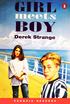 Girl Meets Boy And suddenly there he was, this tall, quiet boy in a blue and white shirt... I'll always remember the first time I saw him. Donna is on a boat. She is going to Spain with her family for
LESSON TITLE: Jesus Visits Mary and Martha THEME: Jesus wants us to spend time with \ Him. SCRIPTURE: Luke 10:38-42
 Devotion NT249 CHILDREN S DEVOTIONS FOR THE WEEK OF: LESSON TITLE: Jesus Visits Mary and Martha THEME: Jesus wants us to spend time with \ Him. SCRIPTURE: Luke 10:38-42 Dear Parents Welcome to Bible Time
B1 certification. March 2016. Reading and Writing
 B1 certification March 2016 B1 certification March 2016 Reading and Writing You have 1 hour and 30 minutes to complete both parts. Please keep your eyes on your exam only. Copying or cheating will result
Volcanoes and More: A Visit to Two National Parks in Hawaii
 VOA Special English is a daily news and information service for English learners. Read the story and then do the activities at the end. MP3s of stories can be found at voaspecialenglish.com Volcanoes and
C ontents. How Does Culture Change? 17. Hunters and Gatherers 25. Early Agricultural Societies 49. The Industrial Revolution 81
 Preface This book introduces a content-based approach to the teaching of English as a foreign language (EFL) reading skills and low-intermediate level discussion-based activities. It is believed that by
Read Item 1, entitled New York, When to Go and Getting There, on page 2 of the insert. You are being asked to distinguish between fact and opinion.
 GCSE Bitesize Specimen Papers ENGLISH Paper 1 Tier H (Higher) Mark Scheme Section A: Reading This section is marked out of 27. Responses to this section should show the writer can 1. understand texts and
A PHOTO OF BARBARA. expressing feelings in an artistic way.
 I like portraits, especially the ones which reveal an aspect of someone s life. This is what I try to achieve in my photographs as well. How you go about this is important. I try to get to know a person.
Stages of development
 112 Chapter 8: Cognitive development Jean Piaget, 1896 1980. An example of the dominance in play of assimilation over accommodation pretending that an old packing case, a box, and a tube are a tank. The
GED Language Arts, Writing Lesson 1: Noun Overview Worksheet
 CLN Televised Courses Nina Beegle, Instructor Lesson 1: Noun Overview Worksheet NOUNS: DEFINITION A NOUN can be a person, a place, a thing, or an idea. EXAMPLES: man, children, store, a dream There are
A Student Response Journal for. The Invisible Man. by H. G. Wells
 Reflections: A Student Response Journal for The Invisible Man by H. G. Wells Copyright 2001 by Prestwick House, Inc., P.O. Box 658, Clayton, DE 19938. 1-800-932-4593. www.prestwickhouse.com Permission
Objective: God has a Plan! Bible Memory Verse: Jeremiah 29:11 For I know the plans I have for you, declares the Lord, plans THEME OVERVIEW
 Miraculous Catches of Fish Scripture: Luke 5:1-11; John 21:1-6 Objective: God has a Plan! Bible Memory Verse: Jeremiah 29:11 For I know the plans I have for you, declares the Lord, plans to prosper you
WRITING ABOUT FICTION. by Anne Garrett
 WRITING ABOUT FICTION by Anne Garrett THINK CRITICALLY AND ANALYZE Your job in writing about literature is to uncover the author s message (theme(s) of the work) and analyze how that message was produced
A Guide for Using Big Books in the Classroom
 Why Big Books? A Guide for Using Big Books in the Classroom There s something spectacular about Big Book versions of good children s books. Neither adults nor children can resist the urge to touch and
Discussion Guide for The Big Wave By Pearl S. Buck
 Discussion Guide for The Big Wave By Pearl S. Buck 1. (Slide 2) Where does this story take place? Japan (that is all that is given for a location, but a fishing village near a mountain) 2. (Slide 3) Where
LENGUA INGLESA III. E.g.: Impressed by Jeremy s work, the manager extended his contract for 5 more years. OR...
 PARTICIPLE CLAUSES: Theory 1. Introduction E.g.: Opening her eyes, the baby began to cry. OR... When she opened her eyes, the baby... The baby, who opened her eyes, began... E.g.: Feeling tired, Louise
Assisted Living & Memory Care
 SACRAMENTO ASSISTED LIVING & MEMORY CARE 8685 GREENBACK LANE SACRAMENTO CALIFORNIA APN 261-0210-005 DESIGN REVIEW NARRATIVE PROPOSAL Rood Investments proposes to develop a 92,816 square foot Assisted Living
Little Mermaid. The. The Little Mermaid. by Hans Christian Andersen. Name:
 The Little Mermaid Name: Hans Christian Andersen was a famous Danish writer of children s stories and fairy tales. He wrote The Little Mermaid in 1837. It s the story of a young mermaid who is the youngest
Pacemaker World Geography and Cultures. correlated to. Florida Sunshine State Standards Social Studies Grades 6-8
 Pacemaker World Geography and Cultures correlated to Florida Sunshine State Standards Social Studies Grades 6-8 Pacemaker World Geography and Cultures Pearson Learning Group correlated to Sunshine State
What are you. worried about? Looking Deeper
 What are you worried about? Looking Deeper Looking Deeper What are you worried about? Some of us lie awake at night worrying about family members, health, finances or a thousand other things. Worry can
ANCIENT PHILIPPI: CONNECTION AND DESIGNATION OF URBAN & SUBURBAN AREA OF KRINIDES
 L. Kapeta, C. Kyriakou, M. Xygki Ancient Philippi: Connection and Designation of Urban & Suburban area of Krinides ANCIENT PHILIPPI: CONNECTION AND DESIGNATION OF URBAN & SUBURBAN AREA OF KRINIDES Luna
Answer Keys to Unit Tests
 Reading Geography Series Answer Keys to Unit Tests Unit 1 Patterns in Human Geography Unit 2 Economic Systems Unit 3 Migration 8 Portage & Main Press Unit Test for Patterns in Human Geography A. Understanding
Model answer: Timeline
 Teaching package: answer sheet Vincent van Gogh. An artist s struggle This graphic novel about the life of Vincent van Gogh can be used in lessons in a variety of ways and is an ideal introduction to a
The Story of Ruby Bridges
 The Story of Ruby Bridges Our Ruby taught us all a lot. She became someone who helped change our country. She was part of history, just like generals and presidents are part of history. They re leaders,
In the module, we look at the factors that make the living room a desirable place. The living room has many purposes. Here are some of them:
 8. THE LIVING ROOM Extract OVERVIEW In the module, we look at the factors that make the living room a desirable place. FUNCTIONS OF THE LIVING ROOM The living room has many purposes. Here are some of them:
Geography at GISSV: An Introduction to the Curriculum
 Geography at GISSV: An Introduction to the Curriculum Classes Geography is taught for two hours per week in Grades 5-9. The only exception is in Grade 8, where class is taught for one hour per week for
SOUTH AMERICA CONTENTS. What s in This Book... 2. Section 1: South America in the World... 3. Section 2: Political Divisions of South America...
 SOUTH CONTENTS What s in This Book 2 Section 1: 3 Section 2: Political Divisions of 1 Section 3: Physical Features of 41 Section 4: Valuable Resources of 67 Section : n Culture 89 Section 6: Assessment
Database Design Exercises
 Database Design Exercises Miguel Rebollo Introduction to Computer Science 2010-2011 Example 1 Given a department code, obtain their name, director and their employees, with their name, category and dedication.
Send all inquiries to: Glencoe/McGraw-Hill 8787 Orion Place Columbus, Ohio 43240-4027 ISBN 0-07-824996-1. Printed in the United States of America
 Copyright by The McGraw-Hill Companies, Inc. All rights reserved. Permission is granted to reproduce the material contained herein on the condition that such material be reproduced only for classroom use;
Sociology of Time and the Goals of Israel Education at Jewish Schools
 Sociology of Time and the Goals of Israel Education at Jewish Schools Dr. Ezra Kopelowitz, Research Success Technologies. Paper for Melton Centre Conference on Israel Education January 6-7, 2008 This paper
City Plans Redevelopment for Vacant Area in Lower Manhattan
 City Plans Redevelopment for Vacant Area in Lower Manhattan Bryan Thomas for The New York Times The Seward Park urban renewal area has been the subject of disagreement between various factions in New York
Activity 2. Activity 3
 WORKSHEET 1 E.T. TURNS 20 E.T. is a story of a lost little visitor from another planet who makes friends with a young boy called Elliot. Together they find a way to return the young alien home. The film
Angel Guidance Messages of Love and Guidance
 A beautiful expanded collection of messages inspired from the daily Angel Wisdom that Sharon Taphorn channels and shares with thousands of readers around the world. Each message contains thought provoking
Contact: Barbara McIntosh Telephone: 07801290575 Email: [email protected].
 Personal Planning Book The Personal Planning Book was originally written by Barbara McIntosh and Andrea Whittaker. Several revisions and additions to this book have been made since the original version
LESSON TITLE: Jesus is the Way, the Truth, and the Life
 Devotion NT271 CHILDREN S DEVOTIONS FOR THE WEEK OF: LESSON TITLE: Jesus is the Way, the Truth, and the Life THEME: We can always trust Jesus. SCRIPTURE: John 14:1-6 Dear Parents Welcome to Bible Time
Fun Learning Activities for Mentors and Tutors
 Fun Learning Activities for Mentors and Tutors Mentors can best support children s academic development by having fun learning activities prepared to engage in if the child needs a change in academic/tutoring
Picture games. 1. What do you see? A picture says a thousand words and the camera does not lie - or does it? Instructions
 A picture says a thousand words and the camera does not lie - or does it? THEMES GEN. HUMAN RIGHTS MEDIA DISCRIMINATION COMPLEXITY Themes Complexity Level 1 Group size Time Overview Related rights Objectives
Welcome to Northern Lights A film about Scotland made by you.
 Welcome to Northern Lights A film about Scotland made by you. As part of the Year Of Creative Scotland 2012 we want you to take out a camera and show us what you can see. We are not sure what you will
http://www.nationalarchives.gov.uk/education/homefront/ 2
 Create your own Home Front diary for the Second World War Use the documents and photographs in our Home Front website as evidence to help you write a diary about how your life was affected by the Second
What did you have for breakfast this morning? Do you know where the things you ate and drank were produced or grown?
 1 warmer a) b) is made up of the two English words: fair + trade fair (adjective) to treat people equally trade (noun) the activities of buying and selling Read the labels in the clothes you are wearing
Reading aloud to a child
 Reading aloud to a child Festivals and celebrations: introduction Me and my culture: festivals and celebrations Contents Festivals and celebrations: teachers notes Festivals and celebrations: classroom
SOCIAL STUDIES UNIT OUTLINES FOURTH GRADE
 SOCIAL STUDIES UNIT OUTLINES FOURTH GRADE In fourth grade, students use their understanding of social studies concepts and skills to explore Washington State in the past and present. Students learn about
Chapter 8, Section 2 The Louisiana Purchase. Pages 272-277
 Chapter 8, Section 2 The Louisiana Purchase Pages 272-277 American Settlers Move West By the early 1800s, thousands of Americans settle in the area between the Appalachians and the Mississippi River. Kentucky,
Champlain and the Hudson Valley. When thinking about the many journeys and adventures of Samuel de Champlain,
 Champlain and the Hudson Valley When thinking about the many journeys and adventures of Samuel de Champlain, one does not think of the Hudson Valley. Rightfully so, we associate the Hudson Valley with
JW Marriott Hotel Kuala Lumpur
 JW Marriott Hotel Kuala Lumpur An exclusive report to be distributed with THE INDEPENDENT Transcript of the interview with: Mr Mahmoud Skaf General Manager WORLD REPORT: In your opinion, what is it about
Chapter 9: The Policies of Alexander Hamilton and Thomas Jefferson
 Chapter 9: The Policies of Alexander Hamilton and Thomas Jefferson Department of State, Department of Treasury, Department of War, Attorney General, Postmaster General : 5 government departments established
GLENVIEW NEW CHURCH SUNDAY MORNING PROGRAM Preschool Lessons, Phase 2 Lesson 14 The Wise Men (Matthew 2:1-12)
 GLENVIEW NEW CHURCH SUNDAY MORNING PROGRAM Preschool Lessons, Phase 2 Lesson 14 The Wise Men (Matthew 2:1-12) Theme: Christmas - The Lord's Birth I. Underlying Ideas for the Teacher A. The Lord's corning
LESSON TITLE: Taming the Tongue. THEME: God wants us to watch what we say. SCRIPTURE: James 3:1-12 CHILDREN S DEVOTIONS FOR THE WEEK OF:
 Devotion NT349 CHILDREN S DEVOTIONS FOR THE WEEK OF: LESSON TITLE: Taming the Tongue THEME: God wants us to watch what we say. SCRIPTURE: James 3:1-12 Dear Parents Welcome to Bible Time for Kids! Bible
Fundamentals Explained
 Fundamentals Explained Purpose, values and method of Scouting Item Code FS140099 July 13 Edition no 2 (103297) 0845 300 1818 Fundamentals Explained This document contains detailed information on Fundamentals
My name is Jonathan Harker. I am a lawyer and I live in
 1 The Road to Castle Dracula My name is Jonathan Harker. I am a lawyer and I live in London. About seven years ago, some strange and terrible things happened to me. Many of my dear friends were in danger
Please see the Global Visions module description. Sequence
 Overview In Satellite Eyes, students will explore the ways in which satellite images provide details of the Earth s surface. By using lenses, satellites are capable of taking digital images of the Earth
Human Impacts on the World Ocean
 This website would like to remind you: Your browser (Safari 7) is out of date. Update your browser for more security, comfort and the best experience on this site. lesson Human Impacts on the World Ocean
Schools Online Project
 Schools Online Project In association with the Cornwall Museums Group and Cornwall Council Background to the collection Learning resources and content for the Cornwall Council Schools Art Collection Online
Little Blue and Little Yellow: A Story for Pippo and Other Children. Little Blue and Little Yellow: Predicting the Story Critical Thinking
 Little Blue and Little Yellow: A Story for Pippo and Other Children (ASTOR-HONOR, 1959) This Book s Message or Theme - - Friends come in all colors. Friends can affect each other s lives. About the Book
Scientific Method Worksheet
 Scientific Method Worksheet Anyone who has ever read a mystery novel or seen a whodunit on TV, has seen the scientific method in action. Anyone who has ever tried to figure out what happens to the refrigerator
Essay Titles. 2. Persons who drink and drive should be barred from driving for a minimum number of years. Discuss.
 Essay Titles 1. A good book is the best of friends, the same today as for ever. Use this as the basis for a newspaper report intended to introduce the readers to the advertising campaign of a small bookshop
White Line Penthouse Antalya Exposé 11.2014 Copyright 2014
 1 White Line Penthouse Antalya WHITELINE INTRO Region Antalya Living space approx. 150 m² Number of rooms 4 Price 225.000 House type Apartment Kitchen Fitted kitchen, open Bathroom Shower Number of bedrooms
LIFE AT HOME 2016 HELSINKI
 LIFE AT HOME 2016 HELSINKI About the survey An online survey was conducted in (incl. Espoo & Vantaa) between May 13 th and May 20 th. 1007 answers were collected and the average response time was 18 minutes.