
or visit the Motorcycle Safety Unit s web page,
|
|
|
- Thomasina Richards
- 10 years ago
- Views:
Transcription
1 For information about driver licenses, call your local Driver License Office or Driver License Customer Service at 512/ or visit the Driver License web page For information about motorcycle operator training courses, call the Motorcycle Safety Unit at 512/ or toll free , the Motorcycle Safety Unit at or visit the Motorcycle Safety Unit s web page,

2 MOTORCYCLES MAKE SENSE SO DOES PROFESSIONAL TRAINING The Department of Public Safety s Motorcycle Operator Training Program was developed for all persons wishing to improve their riding skills. Research shows that motorcycle operator training is equal to two years of riding experience. Experts provide professional training that prepares one for real world traffic. This inexpensive and valuable training program teaches and improves activities such as: NOTICE: The Texas Department of Public Safety does not discriminate because of race, color, religion, sex, national origin, age, or disability. Persons needing accommodation under the provisions of the Americans With Disabilities Act (ADA) should contact their local Driver License Office. ADA Grievance Procedures are published in the Texas Administrative Code, Title 37, Section Effective Turning Braking Maneuvers Protective Gear Selection Street Strategies Obstacle Avoidance For the Basic or Advanced Motorcycle Operator Training Course nearest you, contact the Motorcycle Safety Unit at: TEXAS MOTORCYCLE SAFETY UNIT TEXAS DEPARTMENT OF PUBLIC SAFETY 5805 N. Lamar Blvd., Box 4087 Austin, Texas / or Web Address: [email protected]

3 PREFACE This Motorcycle Operator s Manual has been prepared in cooperation with the Motorcycle Safety Foundation. Within these pages are numerous instructions, suggestions, and tips that, if followed, will prepare anyone for a lifetime of enjoyable motorcycling. In recent years motorcycle safety has received a great deal of attention. This is the result of many serious injuries and deaths of motorcyclists in motor vehicle traffic accidents. This handbook was prepared to assist the beginning motorcyclist in passing the required written examination. In addition, this manual serves to refresh and therefore, improve the experienced rider. Although comprehensive, this handbook does not include all laws regulating traffic on the streets and highways. The Department of Public Safety strongly recommends reference to the motor vehicle statutes and local ordinances in order to gain an exact knowledge of motor vehicle laws. A copy of the Texas Motorcycle Laws pamphlet is available from the Motorcycle Safety Unit. Refer to their contact information on the inside of the back cover.

4 CONTENTS PREPARING TO RIDE WEAR THE RIGHT GEAR Helmet Use Helmet Selection Eye and Face Protection Clothing KNOW YOUR MOTORCYCLE The Right Motorcycle For You.6 Borrowing and Lending Know Your Motorcycle Controls 7 Check Your Motorcycle RIDE WITHIN YOUR ABILITIES BASIC VEHICLE CONTROL Body Position Shifting Gears Braking Turning KEEPING YOUR DISTANCE Lane Positions Following Another Vehicle...13 Being Followed Passing and Being Passed Lane Sharing Merging Cars Cars Alongside SIPDE INTERSECTIONS Blind Intersections Passing Parked Cars Parking at the Roadside INCREASING CONSPICUITY Clothing Headlight Signals Brake Light Using Your Mirrors Head Checks Horn Riding at Night CRASH AVOIDANCE Quick Stops Swerving or Turning Quickly.25 Cornering HANDLING DANGEROUS SURFACES.27 Uneven Surfaces and Obstacles..27 Slippery Surfaces Tracks and Pavement Seams.29 Grooves and Gratings MECHANICAL PROBLEMS Tire Failure Stuck Throttle Wobble Chain Problems Engine Seizure ANIMALS FLYING OBJECTS GETTING OFF THE ROAD CARRYING PASSENGERS AND CARGO Equipment Instructing Passengers Riding With Passengers Carrying Loads GROUP RIDING Keep the Group Small Keep the Group Together Keep Your Distance BEING IN SHAPE TO RIDE WHY INFORMATION IS IMPORTANT..36 ALCOHOL AND OTHER DRUGS IN MOTORCYCLE OPERATION ALCOHOL IN THE BODY Blood Alcohol Concentration..37 ALCOHOL AND THE LAW Consequences of a DWI Arrest.38 Consequences of Conviction...38 MINIMIZE THE RISKS STEP IN TO PROTECT FRIENDS..39 FATIGUE RIDING TEXAS HIGHWAYS EARNING YOUR LICENSE Knowledge Test On-Cycle Skill Test Frequently Asked Questions..47 A MESSAGE FROM THE DIRECTOR OF THE TEXAS DEPARTMENT OF PUBLIC SAFETY Motorcycling is an enjoyable driving experience. However, motorcyclists too often suffer severe injury or even death as a result of a crash. Motorcycling only looks easy. In reality it is quite challenging, requiring special knowledge and skills beyond those needed to drive a car. This handbook was prepared primarily for the beginning rider. I encourage you to digest this information in preparation for your licensing examination. I believe that you will be a safer motorcyclist if you follow the suggestions outlined in this document. Experienced motorcyclists also benefit from a regular review of this document. Establishing safe riding habits early in your motorcycling career will, no doubt, yield years of enjoyment. Stanley E. Clark, Director Department of Public Safety

5 PREPARING TO RIDE HELMETS What you do before you start a trip goes a long way toward determining whether or not you ll get where you want to go safely. Before taking off on any trip, a safe rider makes a point to: 1. Wear the right gear. 2. Become familiar with the motorcycle. 3. Check the motorcycle equipment. 4. Be a responsible rider. WEAR THE RIGHT GEAR When you ride, your gear is right if it protects you. In any crash, you have a far better chance of avoiding serious injury if you wear: An approved helmet Face or eye protection Protective clothing HELMET USE Crashes are not rare events particularly among beginning riders. And one out of every five motorcycle crashes result in head or neck injuries. Head injuries are just as severe as neck injuries and far more common. Crash analyses show that head and neck injuries account for a majority of serious and fatal injuries to motorcyclists. Research also shows that, with few exceptions, head and neck injuries are reduced by the proper wearing of an approved helmet. Some riders don t wear helmets because they think helmets will limit their view to the sides. Others wear helmets only on long trips or when riding at high speeds. Here are some facts to consider: An approved helmet lets you see as far to the sides as necessary. A study of more than 900 motorcycle crashes, where 40% of the riders wore helmets, did not find even one case in which a helmet kept a rider from spotting danger. Most crashes happen on short trips (less than five miles long), just a few minutes after starting out. Most riders are riding slower than 30 mph when a crash occurs. At these speeds, helmets can cut both the number and the severity of head injuries by half. No matter what the speed, helmeted riders are three times more likely to survive head injuries than those not wearing helmets at the time of the crash. HELMET SELECTION There are two primary types of helmets, providing two different levels of coverage: three-quarter and full face. Whichever style you choose, you can get the most protection by making sure that the helmet: Meets U.S. Department of Transportation (DOT) and state standards. Helmets with a label from the Snell Memorial Foundation gives you an added assurance of quality. Fits snugly all the way around. Has no obvious defects such as cracks, loose padding or frayed straps. Whatever helmet you decide on, keep it securely fastened on your head when you ride. Otherwise, if you are involved in a crash, it s likely to fly off your head before it gets a chance to protect you. EYE AND FACE PROTECTION A plastic shatter-resistant face shield can help protect your whole face in a crash. It also protects you from wind, dust, dirt, rain, insects, and pebbles thrown up from cars ahead. These problems are distracting and can be painful. If you have to deal with them, you can t devote your full attention to the road. Goggles protect your eyes, though they won t protect the rest of your face like a face shield does. A windshield is not a substitute for a face shield or goggles. Most windshields will not protect your eyes from the wind. Neither will eyeglasses or sunglasses. Glasses won t keep your eyes from watering, and they might blow off when you turn your head while riding. To be effective, eye or face shield protection must: Be free of scratches. Be resistant to penetration. Give a clear view of either side. Fasten securely so it does not blow off. Permit air to pass through, to reduce fogging. Permit enough room for eyeglasses or sunglasses, if needed. Tinted eye protection should not be worn at night or any other time when little light is available. CLOTHING The right clothing protects you in a collision. It also provides com- 4 5

6 fort, as well as protection from heat, cold, debris, and hot and moving parts of the motorcycle. Jacket and pants should cover arms and legs completely. They should fit snugly enough to keep from flapping in the wind, yet loosely enough to move freely. Leather offers the most protection. Sturdy synthetic material provides a lot of protection as well. Wear a jacket even in warm weather to prevent dehydration. Many are designed to protect without getting you overheated, even on summer days. Boots or shoes should be high and sturdy enough to cover your ankles and give them support. Soles should be made of hard, durable slip resistant material. Keep heels short so they do not catch on rough surfaces. Tuck laces in so they won t catch on your motorcycle. Gloves allow a better grip and help protect your hands in a crash. Your gloves should be made of leather or similar durable material. KNOW YOUR MOTORCYCLE There are plenty of things on the highway that can cause you trouble. Your motorcycle should not be one of them. To make sure that your motorcycle won t let you down: Read the owner s manual first. Start with the right motorcycle for you. Be familiar with the motorcycle controls. Check the motorcycle before every ride. Keep it in safe riding condition between rides. Avoid add-ons and modifications that make your motorcycle harder to handle. THE RIGHT MOTORCYCLE FOR YOU First, make sure your motorcycle is right for you. It should fit you. Your feet should reach the ground while you are seated on the motorcycle. At minimum, your street-legal motorcycle should have: Headlight, taillight and brakelight Front and rear brakes Turn signals Horn Two mirrors BORROWING AND LENDING Borrowers and lenders of motorcycles, beware. Crashes are fairly common among beginning riders especially in the first months of riding. Riding an unfamiliar motorcycle adds to the problem. If you borrow a motorcycle, get familiar with it in a controlled area. And if you lend your motorcycle to friends, make sure they are licensed and know how to ride MOTORCYCLE CONTROLS Light Switch (high/low) Choke (varies) Turn-Signal Switch Ignition Key (varies) before allowing them out into traffic. No matter how experienced you may be, ride extra carefully on any motorcycle that s new or unfamiliar to you. More than half of all crashes occur on motorcycles ridden by the operator for less than six months. GET FAMILIAR WITH THE MOTORCYCLE CONTROLS Make sure you are completely familiar with the motorcycle before you take it out on the street. Be sure to review the owner s manual. This is particularly important if you are riding a borrowed motorcycle. If you are going to use an unfamiliar motorcycle: Engine Cut-Off Switch Engine Start Button In cold or wet weather, your clothes should keep you warm and dry, as well as protect you from injury. You cannot control a motorcycle well if you are numb. Riding for long periods in cold weather can cause severe chill and fatigue. A winter jacket should resist wind and fit snugly at the neck, wrists, and waist. Good quality rainsuits designed for motorcycle riding resist tearing apart or ballooning up at high speeds. 1 Test Yourself A plastic shatter-resistant face shield: A. Is not necessary if you have a windshield. B. Only protects your eyes. C. Helps protect your whole face. D. Does not protect your face as well as goggles. Horn Button Clutch Lever Speedometer & Odometer Fuel Supply Valve (if equipped) Gear-Changer Lever Tachometer (if equipped) Throttle Front Brake Lever Rear Brake Pedal Kick Starter (if equipped) 6 7

7 Make all the checks you would on your own motorcycle. Find out where everything is, particularly the turn signals, horn, headlight switch, fuel-control valve, and engine cut-off switch. Find and operate these items without having to look for them. Know the gear pattern. Work the throttle, clutch, and brakes a few times before you start riding. All controls react a little differently. Ride very cautiously and be aware of your surroundings. Accelerate gently, take turns more slowly, and leave extra room for stopping. CHECK YOUR MOTORCYCLE A motorcycle needs more frequent attention than a car. A minor technical failure in a car seldom leads to anything more than an inconvenience for the driver. If something is wrong with the motorcycle, you ll want to find out about it before you get in traffic. Make a complete check of your motorcycle before every ride. Before mounting the motorcycle make the following checks: Tires Check the air pressure, general wear and tread. Fluids Oil and fluid levels. At a minimum, check hydraulic fluids and coolants weekly. Look under the motorcycle for signs of an oil or gas leak. Headlight and Taillight Check them both. Test your switch to make sure both high and low beams are working. Turn Signals Turn on both right and left turn signals. Make sure all lights are working properly. Brake Light Try both brake controls, and make sure each one turns on the brake light. Once you have mounted the motorcycle, complete the following checks before starting out: Clutch and Throttle Make sure they work smoothly. The throttle should snap back when you let go. The clutch should feel tight and smooth. Mirrors Clean and adjust both mirrors before starting. It s difficult to ride with one hand while you try to adjust a mirror. Adjust each mirror so you can see the lane behind and as much as possible of the lane next to you. When properly adjusted, a mirror may show the edge of your arm or shoulder, but it s the road behind and to the side that s most important. Brakes Try the front and rear brake levers one at a time. Make sure each one feels firm and holds the motorcycle when the brake is fully applied. Horn Try the horn. Make sure it works. 2 Test Yourself More than half of all crashes: A. Occur at speeds greater than 35 mph. B. Happen at night. C. Are caused by worn tires. D. Involve riders who have ridden their motorcycles less than six months. In addition to the checks you should make before every trip, check the following items at least once a week: Wheels, cables, fasteners, and fluid. Follow your owner s manual to get recommendations. KNOW YOUR RESPONSIBILITIES Accident implies an unforeseen event that occurs without anyone s fault or negligence. Most often in traffic, that is not the case. In fact, most people involved in a crash can usually claim some responsibility for what takes place. Consider a situation where someone decides to try to squeeze through an intersection on a yellow light turning red. Your light turns green. You pull into the intersection without checking for possible latecomers. That is all it takes for the two of you to tangle. It was the driver s responsibility to stop. And it was your responsibility to look before pulling out. Neither of you held up your end of the deal. Just because someone else is the first to start the chain of events leading to a crash, doesn t leave any of us free of responsibility. As a rider, you can t be sure that other operators will see you or yield the right of way. To lessen your chances of a crash occurring: Be visible Wear proper clothing, use your headlight, ride in the best lane position to see and be seen. Communicate your intentions Use the proper signals, brake light, and lane position. Maintain an adequate space cushion When following, being followed, lane sharing, passing and being passed. Scan your path of travel 12 seconds ahead. Identify and separate multiple hazards. Be prepared to act Remain alert and know how to carry out proper crash-avoidance skills. Blame doesn t matter when someone is injured in a crash. There is rarely a single cause of any crash. The ability to ride aware, make critical decisions, and carry them out separates responsible drivers from all the rest. Remember, it is up to you to keep from being the cause of, or an unprepared participant, in a crash. 8 9

8 RIDE WITHIN YOUR ABILITIES This manual cannot teach you how to control direction, speed, or balance. That s something you can learn only through practice. But control begins with knowing your abilities and riding within them, along with knowing and obeying the rules of the road. BASIC VEHICLE CONTROL BODY POSITION To control a motorcycle well: Posture Sit so you can use your arms to steer the motorcycle rather than to hold yourself up. Seat Sit far enough forward so that arms are slightly bent when you hold the handlegrips. Bending your arms permits you to press on the handlebars without having to stretch. Hands Hold the handgrips firmly to keep your grip over rough surfaces. Start with your right wrist flat. This will help you keep from accidentally using too much throttle. Also, adjust the HOLDING HANDGRIPS WRONG RIGHT handlebars so your hands are even with or below your elbows. This permits you to use the proper muscles for precision steering. Knees Keep your knees against the gas tank to help you keep your balance as the motorcycle turns. Feet Keep your feet firmly on the footpegs to maintain balance. Don t drag your feet. If your foot catches on something, you can be injured and it could affect your control of the motorcycle. Keep your feet near the controls so you can get to them fast if needed. Also, don t let your toes point downward they may get caught between the road and the footpegs. SHIFTING GEARS There is more to shifting gears than simply getting the motorcycle to pick up speed smoothly. Learning to use the gears when downshifting, turning, or starting on hills is important for safe motorcycle operation. Shift down through the gears with the clutch as you slow or stop. Remain in first gear while you are stopped so that you can move out quickly if you need to. Make certain you are riding slow enough when you shift into a lower gear. If not, the motorcycle will lurch, and the rear wheel may skid. When riding downhill or shifting into first gear you may need to use the brakes to slow enough before downshifting safely. Work towards a smooth, even clutch release, especially when downshifting. It is best to change gears before entering a turn. However, sometimes shifting while in the turn is necessary. If so, remember to do so smoothly. A sudden change in power to the rear wheel can cause a skid. BRAKING Your motorcycle has two brakes: one each for the front and rear wheel. Use both of them at the same time. The front brake is more powerful and can provide at least three-quarters of your total stopping power. The front brake is safe to use if you use it properly. Remember: Use both brakes every time you slow or stop. Using both brakes for even normal stops will permit you to develop the proper habit or skill of using both brakes properly in an emergency. Squeeze the front brake and press down on the rear. Grabbing at the front brake or jamming down on the rear can cause the brakes to lock, resulting in control problems. If you know the technique, using both brakes in a turn is possible, although it should be done very carefully. When leaning the motorcycle some of the traction is used for cornering. Less traction is available for stopping. A skid can occur if you apply too much brake. Also, using the front brake incorrectly on a slippery surface may be hazardous. Use caution and squeeze the brake lever, never grab. Some motorcycles have integrated braking systems that link the front and rear brakes together by applying the rear brake pedal. (Consult the owner s manual for a detailed explanation on the operation and effective use of these systems.) TURNING Riders often try to take curves or turns too fast. When they can t hold the turn, they end up crossing into another lane of traffic or going off the road. Or, they overreact and brake too hard, causing a skid and loss of control. Approach turns and curves with caution. Use four steps for better control: SLOW LOOK LEAN ROLL SLOW Reduce speed before the turn by closing the throttle and, if necessary, applying both brakes. LOOK Look through the turn to where you want to go. Turn just your head, not your shoulders, and keep your eyes level with the horizon. LEAN To turn, the motorcycle must lean. To lean the motorcycle, press on the handgrip in the direction of the turn. Press left lean left go left. Press right lean right go right. Higher speeds and/or tighter turns require the motorcycle to lean more

9 ROLL Roll on the throttle through the turn to stabilize suspension. Maintain steady speed or accelerate gradually through the turn. This will help keep the motorcycle stable. In normal turns, the rider and the motorcycle should lean together at the same angle. NORMAL TURNING 3 Test Yourself When riding, you should: A. Turn your head and shoulders to look through turns. B. Keep your arms straight. C. Keep your knees away from the gas tank. D. Turn just your head and eyes to look where you are going. LANE POSITIONS KEEPING YOUR DIS- TANCE In slow tight turns, counterbalance by leaning the motorcycle only and keeping your body straight. SLOW TURNING The best protection you can have is distance a cushion of space all around your motorcycle. If someone else makes a mistake, distance permits you: Time to react Space to maneuver LANE POSITIONS In some ways the size of the motorcycle can work to your advantage. Each traffic lane gives a motorcycle three paths of travel, as indicated in the illustration. Your lane position should: Increase your ability to see and be seen. Avoid others blind spot. Avoid surface hazards. Protect your lane from other drivers. Communicate your intentions. Avoid wind blast from other vehicles. Provide an escape route. Select the appropriate path to maximize your space cushion and make yourself more easily seen by others on the road. In general, there is no single best position for riders to be seen and to maintain a space cushion around the motorcycle. No portion of the lane need be avoided including the center. Position yourself in the portion of the lane where you are most likely to be seen and you can maintain a space cushion around you. Change position as traffic situations change. Ride in path 2 or 3 if vehicles and other potential problems are on your left only. Remain in path 1 or 2 if hazards are on your right only. If vehicles are being operated on both sides of you, the center of the lane, path 2, is usually your best option. The oily strip in the center portion that collects drippings from cars is usually no more than two feet wide. Unless the road is wet, the average center strip permits adequate traction to ride on safely. You can operate to the left or right of the grease strip and still be within the center portion of the traffic lane. Avoid riding on big buildups of oil and grease usually found at busy intersections or toll booths. FOLLOWING ANOTHER VEHICLE Following too closely is a major factor in crashes involving motorcyclists. In traffic, motorcycles need as much distance to stop as cars. Normally, a minimum of two seconds of distance should be maintained behind the vehicle ahead. To gauge your following distance: Pick out a marker, such as a pavement marking or lamppost, on or near the road ahead. When the rear bumper of the vehicle ahead passes the marker, count off the seconds: onethousand-one, one-thousandtwo. If you reach the marker before you reach two, you are following too closely. A two-second following distance leaves a minimum amount of space to stop or swerve if the driver ahead stops suddenly. It also permits a better view of potholes and other hazards in the road. A larger cushion of space is needed if your motorcycle will take longer than normal to stop. If the pave

10 FOLLOWING ment is slippery, if you cannot see through the vehicle ahead, or if traffic is heavy and someone may squeeze in front of you, open up a three second or more following distance. Keep well behind the vehicle ahead even when you are stopped. This will make it easier to get out of the way if someone bears down on you from behind. It will also give you a cushion of space if the vehicle ahead starts to back up for some reason. When behind a car, ride where the driver can see you in the rearview mirror. Riding in the center portion of the lane should put your image in the middle of the rearview mirror where a driver is most likely to see you. Riding at the far side of a lane may permit a driver to see you in a sideview mirror. But remember that most drivers don t look at their sideview mirrors nearly as often as they check the rearview mirror. If the traffic situation allows, the center portion of the lane is usually the best place for you to be seen by the drivers ahead and to prevent lane sharing by others. BEING FOLLOWED Speeding up to lose someone following too closely only ends up with someone tailgating you at a higher speed. A better way to handle tailgaters is to get them in front of you. When someone is following too closely, change lanes and let them pass. If you can t do this, slow down and open up extra space ahead of you to allow room for both you and the tailgater to stop. This will also encourage them to pass. If they don t pass, you will have given yourself and the tailgater more time and space to react in case an emergency does develop ahead. PASSING AND BEING PASSED Passing and being passed by another vehicle is not much different than with a car. However, visibility is more critical. Be sure other drivers see you, and that you see potential hazards. PASSING 1. Ride in the left portion of the lane at a safe following distance to increase your line of sight and make you more visible. Signal and check for oncoming traffic. Use your mirrors and turn your head to look for traffic behind. 2. When safe, move into the left lane and accelerate. Select a lane position that doesn t crowd the car you are passing and provides space to avoid hazards in your lane. 3. Ride through the blind spot as quickly as possible. 4. Signal again, and complete mirror and headchecks before returning to your original lane and then cancel signal. Remember, passes must be completed within posted speed limits, and only where permitted. Know your signs and road markings! BEING PASSED When you are being passed from behind or by an oncoming vehicle, PASSING stay in the center portion of your lane. Riding any closer to them could put you in a hazardous situation. Avoid being hit by: The other vehicle A slight mistake by you or the passing driver could cause a sideswipe. Extended mirrors Some drivers forget that their mirrors hang out farther than their fenders. Objects thrown from windows Even if the driver knows you re there, a passenger may not see you and might toss something on you or the road ahead of you. Blasts of wind from larger vehicles They can affect your control. You have more room for error if you are in the middle portion when hit by this blast than if you are on either side of the lane. Do not move into the portion of the lane farthest from the passing vehicle. It might invite the other driver to cut back into your lane too early. BEING PASSED 14 15

11 LANE SHARING Cars and motorcycles need a full lane to operate safely. Lane sharing is usually prohibited. Riding between rows of stopped or moving cars in the same lane can leave you vulnerable to the unexpected. A hand could come out of a window; a door could open; or a car could turn suddenly. Discourage lane sharing by others. Keep a center-portion position whenever drivers might be tempted to squeeze by you. Drivers are most tempted to do this: In heavy, bumper-to-bumper traffic. When they want to pass you. When you are preparing to turn at an intersection. When you are getting in an exit lane or leaving a highway. MERGING CARS Drivers on an entrance ramp may not see you on the highway. Give MERGING them plenty of room. Change to another lane if one is open. If there is no room for a lane change, adjust speed to open up space for the merging driver. CARS ALONGSIDE Do not ride next to cars or trucks in other lanes if you do not have to. You might be in the blind spot of a car in the next lane, which could switch into your lane without warning. Cars in the next lane also block your escape if you come upon danger in your own lane. Speed up or drop back to find a place clear of traffic on both sides. BLIND SPOTS SIPDE Good experienced riders remain aware of what is going on around them. They improve their riding strategy by using SIPDE, a 5-step process used to make appropriate judgments, and apply them correctly in different traffic situations: Scan Identify Predict Decide Execute Let s examine each of these steps. SCAN Search aggressively ahead, to the sides and behind to avoid potential hazards even before they arise. How assertively you search, and how much time and space you have, can eliminate or reduce harm. Focus even more on finding potential escape routes in or around intersections, shopping areas, schools and construction zones. IDENTIFY Locate hazards and potential conflicts. Vehicles and other motorcycles may move into your path and increase the likelihood of a crash. Pedestrians and animals are unpredictable, and make short, quick moves. Stationary objects potholes, guard rails, bridges, roadway signs, hedges, or trees won t move into your path but may influence your riding strategy. PREDICT Consider speed, distance, and direction of hazards to anticipate how they may affect you. Cars moving into your path are more critical than those moving away or remaining stationary. Predict where a collision may occur. Completing this what if...? phrase to estimate results of contacting or attempting to avoid a hazard depends on your knowledge and experience. Search for: DECIDE 4 Test Yourself Usually, a good way to handle tailgaters is to: A. Change lanes and let them pass. B. Use your horn and make obscene gestures. C. Speed up to put distance between you and the tailgater. D. Ignore them. Oncoming traffic that may turn left in front of you. Traffic oncoming from the left and right. Traffic approaching from behind. Hazardous road conditions. Be especially alert in areas with limited visibility. Visually busy surroundings could hide you and your motorcycle from others. Determine what you need to do based on your prediction. The mental process of determining your course of action depends on how aggressively you searched. The result is your action and knowing which strategy is best for the situation. You want to eliminate or reduce the potential hazard. You must decide when, where and how to take action. Your constant decision making tasks must stay sharp to cope with constantly changing traffic situations

12 The decisions you make can be grouped by the types of hazards you encounter. Single hazard Two hazards Multiple hazards EXECUTE Carry out your decision. To create more space and minimize harm from any hazard: Communicate your presence with lights and/or horn. Adjust your speed by accelerating, stopping or slowing. Adjust your position and/or direction. Apply the old adage one step at a time to handle two or more hazards. Adjust speed to permit two hazards to separate. Then deal with them one at a time as single hazards. Decision making becomes more complex with three or more hazards. Weigh consequences of each and give equal distance to the hazards. In potential high risk areas, such as intersections, shopping areas, and school and construction zones, cover the clutch and both brakes to reduce the time you need to react. INTERSECTIONS The greatest potential for conflict between you and other traffic is at intersections. An intersection can be in the middle of an urban area or at a driveway on a residential street anywhere traffic may cross your path of travel. Over one-half of motorcycle/car crashes are caused by drivers entering a rider s right-of-way. Cars that turn left in front of you, including cars turning left from the lane to your right, and cars on side streets that pull into your lane, are the biggest dangers. Your use of SIPDE (p. 17) at intersections is critical. There are no guarantees that others see you. Never count on eye contact as a sign that a driver will yield. Too often, a driver looks right at a motorcyclist and still fails to see him. The only eyes that you can count on are your own. If a car can enter your path, assume that it will. Good riders are always looking for trouble not to get into it, but to stay out of it. Increase your chances of being seen at intersections. Ride with your headlight on in a lane position that provides the best view of oncoming traffic. Provide a space cushion around the motorcycle that permits you to take evasive action. LARGE INTERSECTIONS As you approach the intersection, select a lane position to increase your visibility to the driver. Cover the clutch and both brakes to reduce reaction time. Reduce your speed as you approach an intersection. After entering the intersection, move away from vehicles preparing to turn. Do not change speed or position radically. The driver might think that you are preparing to turn. BLIND INTERSECTIONS SMALL INTERSECTIONS BLIND INTERSECTIONS 5 Test Yourself To reduce your reaction time, you should: A. Ride slower than the speed limit. B. Cover the clutch and the brakes. C. Shift into neutral when slowing. D. Pull in the clutch when turning. If you approach a blind intersection, move to the portion of the lane that will bring you into another driver s field of vision at the earliest possible moment. In this picture, the rider has moved to the left portion of the lane away from the parked car so the driver on the cross street can see him as soon as possible. Remember, the key is to see as much as possible and remain visible to others while protecting your space

13 STOP SIGNS If you have a stop sign or stop line, stop there first. Then edge forward and stop again, just short of where the cross-traffic lane meets your lane. From that position, lean your body forward and look around buildings, parked cars, or bushes to see if anything is coming. Just make sure your front wheel stays out of the cross lane of travel while you re looking. PASSING PARKED CARS When passing parked cars, stay toward the left of your lane. You can avoid problems caused by doors opening, drivers getting out of cars, or people stepping from between cars. If oncoming traffic is present, it is usually best to remain in the center-lane position to maximize your space cushion. A bigger problem can occur if the driver pulls away from the curb without checking for traffic behind. Even if he does look, he may fail to PARKED CARS see you. In either event, the driver might cut into your path. Slow down or change lanes to make room for someone cutting in. Cars making a sudden U-turn are the most dangerous. They may cut you off entirely, blocking the whole roadway and leaving you with no place to go. Since you can t tell what a driver will do, slow down and get the driver s attention. Sound your horn and continue with caution. PARKING AT THE ROADSIDE Park at a 90 angle to the curb with your rear wheel touching the curb. PARKING AT CURBS INCREASING CONSPICUITY In crashes with motorcyclists, drivers often say that they never saw the motorcycle. From ahead or behind, a motorcycle s outline is much smaller than a car s. Also, it s hard to see something you are not looking for, and most drivers are not looking for motorcycles. More likely, they are looking through the skinny, two-wheeled silhouette in search of cars that may pose a problem to them. Even if a driver does see you coming, you aren t necessarily safe. Smaller vehicles appear farther away, and seem to be traveling slower than they actually are. It is common for drivers to pull out in front of motorcyclists, thinking they have plenty of time. Too often, they are wrong. However, you can do many things to make it easier for others to recognize you and your cycle. CLOTHING Most crashes occur in broad daylight. Wear bright colored clothing to increase your chances of being seen. Remember, your body is half of the visible surface area of the rider/motorcycle unit. Reflective material on a vest and on the sides of the helmet will help drivers coming from the side spot you. Reflective material can also be a big help for drivers coming toward you or from behind. HEADLIGHT The best way to help others see your motorcycle is to keep the headlight on at all times (although motorcycles sold in the U.S. since 1978 automatically have the headlights on when running.) Studies show that, during the day, a motorcycle with its light on is twice as likely to be noticed. Use of the high beam during the day increases the likelihood that oncoming drivers will see you. Use low beam at night and in cloudy weather. SIGNALS The signals on a motorcycle are similar to those on a car. They tell others what you plan to do. SIGNALING 6 Test Yourself Making eye contact with other drivers: A. Is a good sign they see you. B. Is not worth the effort it takes. C. Doesn t mean that the driver will yield. D. Guarantees that the other driver will yield to you. Bright orange, red, yellow or green jackets or vests are your best bets for being seen. Your helmet can do more than protect you in a crash. Brightly colored helmets can also help others see you. Any bright color is better than drab or dark colors. Reflective, bright colored clothing (helmet and jacket or vest) is best

14 However, due to a rider s added vulnerability, signals are even more important. Use them anytime you plan to change lanes or turn. Use them even when you think no one else is around. It s the car you don t see that s going to give you the most trouble. Your signal lights also make you easier to spot. That s why it s a good idea to use your turn signals even when what you plan to do is obvious. When you enter onto a freeway, drivers approaching from behind are more likely to see your signal blinking and make room for you. Turning your signal light on before each turn reduces confusion and frustration for the traffic around you. Once you turn, make sure your signal is off or a driver may pull directly into your path, thinking you plan to turn again. Use your signals at every turn so drivers can react accordingly. Don t make them guess what you intend to do. BRAKE LIGHT Your motorcycle s brake light is usually not as noticeable as the brake lights on a car particularly when your taillight is on. (It goes on with the headlights.) If the situation will permit, help others notice you by flashing your brake light before you slow down. It is especially important to flash your brake light before: You slow more quickly than others might expect (turning off a high-speed highway). You slow where others may not expect it (in the middle of a block or at an alley). If you are being followed closely, it s a good idea to flash your brake light before you slow. The tailgater may be watching you and not see something ahead that will make you slow down. This will hopefully discourage them from tailgating and warn them of hazards ahead they may not see. USING YOUR MIRRORS While it s most important to keep track of what s happening ahead, you can t afford to ignore situations behind. Traffic conditions change quickly. Knowing what s going on behind is essential for you to make a safe decision about how to handle trouble ahead. Frequent mirror checks should be part of your normal scanning routine. Make a special point of using your mirrors: When you are stopped at an intersection. Watch cars coming up from behind. If the driver isn t paying attention, he could be on top of you before he sees you. Before you change lanes. Make sure no one is about to pass you. Before you slow down. The driver behind may not expect you to slow, or may be unsure about where you will slow. For example, you signal a turn and the driver thinks you plan to turn at a distant intersection, rather than at a nearer driveway. USING MIRRORS Some motorcycles have rounded (convex) mirrors. These provide a wider view of the road behind than do flat mirrors. They also make cars seem farther away than they really are. If you are not used to convex mirrors, get familiar with them. (While you are stopped, pick out a parked car in your mirror. Form a mental image of how far away it is. Then, turn around and look at it to see how close you came.) Practice with your mirrors until you become a good judge of distance. Even then, allow extra distance before you change lanes. HEAD CHECKS Checking your mirrors is not enough. Motorcycles have blind spots like cars. Before you change lanes, turn your head, and look to the side for other vehicles. On a road with several lanes, check the far lane and the one next to you. A driver in the distant lane may head for the same space you plan to take. Frequent head checks should be your normal scanning routine, also. Only by knowing what is happening all around you, are you fully prepared to deal with it. HORN Be ready to use your horn to get someone s attention quickly. It is a good idea to give a quick beep before passing anyone that may move into your lane. Here are some situations: A driver in the lane next to you is driving too closely to the vehicle ahead and may want to pass. A parked car has someone in the driver s seat. Someone is in the street, riding a bicycle or walking. In an emergency, press the horn button loud and long. Be ready to stop or swerve away from the danger. Keep in mind that a motorcycle s horn isn t as loud as a car s, therefore, use it, but don t rely on it. Other strategies may be appropriate along with the horn. RIDING AT NIGHT At night it is harder for you to see and be seen. Picking your headlight or taillight out of the car lights around you is not easy for other drivers. To compensate, you should: Reduce Your Speed Ride even slower than you would during the day particularly on roads you don t know well. This will increase your chances of avoiding a hazard

15 Increase Distance Distances are harder to judge at night than during the day. Your eyes rely upon shadows and light contrasts to determine how far away an object is and how fast it is coming. These contrasts are missing or distorted under artificial lights at night. Open up a three-second following distance or more. And allow more distance to pass and be passed. Use the Car Ahead The headlights of the car ahead can give you a better view of the road than even your high beam can. Taillights bouncing up and down can alert you to bumps or rough pavement. Use Your High Beam Get all the light you can. Use your high beam whenever you are not following or meeting a car. Be visible, wear reflective materials when riding at night. Be flexible about lane position. Change to whatever portion of the lane is best able to help you see, be seen, and keep an adequate space cushion. CRASH AVOIDANCE No matter how careful you are, there will be times when you find yourself in a tight spot. Your chances of getting out safely depends on your ability to react quickly and properly. Often, a crash occurs because a rider is not 7 Test Yourself Reflective clothing should: A. Be worn at night. B. Be worn during the day. C. Not be worn. D. Be worn day and night. prepared or skilled in crash-avoidance maneuvers. Know when and how to stop or swerve, two skills critical to avoiding a crash. It is not always desirable or possible to stop quickly to avoid an obstacle. Riders must also be able to swerve around an obstacle. Determining the skill necessary for the situation is important as well. Studies show that most crashes involved riders who: Underbrake the front tire and overbrake the rear. Did not separate braking from swerving or did not choose swerving when it was appropriate. The following information offers some good advice. QUICK STOPS To stop quickly, apply both brakes at the same time. Don t be shy about using the front brake, but don t grab it, either. Squeeze the brake lever firmly and progressively. If the front wheel locks, release the front brake immediately then reapply it firmly. At the same time, press down on the rear brake. If you accidentally lock the rear brake on a good traction surface, keep it locked until you have completely stopped. Even with a locked rear wheel, you can control the motorcycle on a straightaway if it is upright and going in a straight line. Always use both brakes at the same time to stop. The front brake can provide 70% or more of the potential stopping power. STOPPING DISTANCE REAR FRONT BOTH If you must stop quickly, while turning or riding a curve, the best technique is to straighten the motorcycle upright first and then brake. However, it may not always be possible to straighten the motorcycle and then stop. If you must brake while leaning, apply light brakes and reduce the throttle. As you slow, you can reduce your lean angle and apply more brake pressure until the motorcycle is straight and maximum brake pressure is possible. You should straighten the handlebars in the last few feet of stopping, the motorcycle should then be straight up and in balance. SWERVE, THEN BRAKE SWERVING OR TURNING QUICKLY Sometimes you may not have enough room to stop, even if you use both brakes properly. An object might appear suddenly in your path. Or the car ahead might squeal to a stop. The only way to avoid a crash may be to turn quickly, or swerve around it. A swerve is any sudden change in direction. It can be two quick turns, or a rapid shift to the side. Apply a small amount of hand pressure to the handgrip located on the side of your intended direction of escape. This will cause the motorcycle to lean quickly. The sharper the turn(s), the more the motorcycle must lean. Keep your body upright and allow the motorcycle to lean in the direction of the turn while keeping your knees against the tank and your feet solidly on the pegs. Let the motorcycle move underneath you. Make your escape route the target of your vision. Press on the opposite handgrip once you clear the obstacle to return you to your orig- BRAKE, THEN SWERVE 24 25

16 inal direction of travel. To swerve to the left, press the left handgrip, then press the right to recover. To swerve to the right, press right, then left. IF BRAKING IS REQUIRED, SEPARATE IT FROM SWERV- ING. Brake before or after never while swerving. CORNERING A primary cause of single-vehicle crashes is motorcyclists running wide in a curve or turn and colliding with the roadway or a fixed object. CONSTANT CURVES Every curve is different. Be alert to whether a curve remains constant, gradually widens, gets tighter, or involves multiple turns. Ride within your skill level and posted speed limits. Your best path may not always follow the curve of the road. Change lane position depending on traffic, road conditions and curve of the road. If no traffic is present, start at the outside of a curve to increase your line of sight and the effective radius of the turn. As you turn, move toward the inside of MULTIPLE CURVES the curve, and as you pass the center, move to the outside to exit. Another alternative is to move to the center of your lane before entering a curve and stay there until you exit. This permits you to spot approaching traffic as soon as possible. You can also adjust for traffic crowding the center line, or debris blocking part of your lane. 8 Test Yourself The best way to stop quickly is to: A. Use the front brake only. B. Use the rear brake first. C. Throttle down and use the front brake. D. Use both brakes at the same time. HANDLING DANGEROUS SURFACES Your chance of falling or being involved in a crash increases whenever you ride across: Uneven surfaces or obstacles Slippery surfaces Railroad tracks Grooves and gratings UNEVEN SURFACES AND OBSTACLES Watch for uneven surfaces such as bumps, broken pavement, potholes, or small pieces of highway trash. Try to avoid obstacles by slowing down or going around them. If you must go over the obstacle, first, determine if it is possible. Approach it at as close to a 90 angle as possible. Look where you want to go to control your path of travel. If you have to ride over the obstacle, you should: Slow down as much as possible before contact. Make sure the motorcycle is straight. Rise slightly off the seat with your weight on the footpegs to absorb the shock with your knees and elbows, and avoid being thrown off the motorcycle. Just before contact, roll on the throttle slightly to lighten the front end. OBSTACLES DECREASING CURVES (TIGHTER TURNS) WIDENING CURVES 26 27

17 If you ride over an object on the street, pull off the road and check your tires and rims for damage before riding any further. SLIPPERY SURFACES Motorcycles handle better when ridden on surfaces that permit good traction. Surfaces that provide poor traction include: Wet pavement, particularly just after it starts to rain and before surface oil washes to the side of the road. Gravel roads, or where sand and gravel collect. Mud, snow, and ice. Lane markings, steel plates and manhole covers, especially when wet. To ride safely on slippery surfaces: Reduce Speed Slow down before you get to a slippery surface to lessen your chances of skidding. Your motorcycle needs more distance to stop. And, it is particularly important to reduce speed before entering wet curves. Avoid Sudden Moves Any sudden change in speed or direction can cause a skid. Be as smooth as possible when you speed up, shift gears, turn or brake. Use Both Brakes The front brake is still effective, even on a slippery surface. Squeeze the brake lever gradually to avoid locking the front wheel. Remember, gentle pressure on the rear brake. The center of a lane can be hazardous when wet. When it starts to rain, ride in the tire tracks left by cars. Often, the left tire track will be the best position, depending on traffic and other road conditions as well. Watch for oil spots when you put your foot down to stop or park. You may slip and fall. Dirt and gravel collect along the sides of the road especially on curves and ramps leading to and from highways. Be aware of what s on the edge of the road, particularly when making sharp turns and getting on or off freeways at high speeds. Rain dries and snow melts faster on some sections of a road than on others. Patches of ice tend to crop up in low or shaded areas and on bridges and overpasses. Wet surfaces or wet leaves are just as slippery. Ride on the least slippery portion of the lane and reduce speed. Cautious riders steer clear of roads covered with ice or snow. If you can t avoid a slippery surface, keep your motorcycle straight up and proceed as slowly as possible. If you encounter a larger surface so slippery that you must coast, or travel at a walking pace, consider letting your feet skim along the surface. If the motorcycle starts to fall, you can catch yourself. Be sure to keep off the brakes. If possible, squeeze the clutch and coast. Attempting this maneuver at anything other than the slowest of speeds could prove hazardous. CROSS TRACKS-RIGHT CROSS TRACKS-WRONG RAILROAD TRACKS, TROLLEY TRACKS AND PAVEMENT SEAMS Usually it is safer to ride straight within your lane to cross tracks. Turning to take tracks head-on (at a 90 angle) can be more dangerous your path may carry you into another lane of traffic. For track and road seams that run parallel to your course, move far enough away from tracks, ruts, or PARALLEL TRACKS-RIGHT PARALLEL TRACKS-WRONG pavement seams to cross at an angle of at least 45. Then, make a quick, sharp turn. Edging across could catch your tires and throw you off balance. GROOVES AND GRATINGS Riding over rain grooves or bridge grating may cause a motorcycle to weave. The uneasy, wandering feeling is generally not hazardous. Relax, maintain a steady speed and ride straight across. Crossing at an angle forces riders to zigzag to stay in the lane. The zigzag is far more hazardous than the wandering feeling. GRATE CROSSINGS-RIGHT GRATE CROSSINGS-WRONG 99 Test Yourself When it starts to rain it is usually best to: A. Ride in the center of the lane. B. Pull off to the side until the rain stops. C. Ride in the tire tracks left by cars. D. Increase your speed

18 MECHANICAL PROBLEMS You can find yourself in an emergency the moment something goes wrong with your motorcycle. In dealing with any mechanical problem, take into account the road and traffic conditions you face. Here are some guidelines that can help you handle mechanical problems safely. TIRE FAILURE You seldom hear a tire go flat. If the motorcycle starts handling differently, it may be a tire failure. This can be dangerous. You must be able to tell from the way the motorcycle reacts. If one of your tires suddenly loses air, react quickly to keep your balance. Pull off and check the tires. If the front tire goes flat, the steering will feel heavy. A front-wheel flat is particularly hazardous because it affects your steering. You have to steer well to keep your balance. If the rear tire goes flat, the back of the motorcycle may jerk or sway from side to side. If either tire goes flat while riding: Hold handgrips firmly, ease off the throttle, and keep a straight course. If braking is required, however, gradually apply the brake of the tire that isn t flat, if you are sure which one it is. When the motorcycle slows, edge to the side of the road, squeeze clutch and stop. STUCK THROTTLE Twist the throttle back and forth several times. If the throttle cable is stuck, this may free it. If the throttle stays stuck, immediately operate the engine cut-off switch and pull in the clutch at the same time. This will remove power from the rear wheel, though engine noise may not immediately decline. Once the motorcycle is under control, pull off and stop. After you have stopped, check the throttle cable carefully to find the source of the trouble. Make certain the throttle works freely before you start to ride again. WOBBLE A wobble occurs when the front wheel and handlebars suddenly start to shake from side to side at any speed. Most wobbles can be traced to improper loading, unsuitable accessories, or incorrect tire pressure. If you are carrying a heavy load, lighten it. If you can t, shift it. Center the weight lower and farther forward on the motorcycle. Make sure tire pressure, spring pre-load, air shocks, and dampers are at the settings recommended for that much weight. Make sure windshields and fairings are mounted properly. Check for poorly adjusted steering; worn steering parts; a front wheel that is bent, misaligned, or out of balance; loose wheel bearings or spokes; and swingarm bearings. If none of these are determined to be the cause, have the motorcycle checked out thoroughly by a qualified professional. Trying to accelerate out of a wobble will only make the motorcycle more unstable. Instead: Grip the handlebars firmly, but don t fight the wobble. Close the throttle gradually to slow down. Do not apply the brakes; braking could make the wobble worse. Move your weight as far forward and down as possible. Pull off the road as soon as you can to fix the problem. 910 Test Yourself If your motorcycle starts to wobble: A. Accelerate out of the wobble. B. Use the brake gradually. C. Grip the handlebars firmly and close the throttle gradually. D. Downshift. CHAIN PROBLEMS A chain that slips or breaks while you re riding could lock the rear wheel and cause your cycle to skid. Chain slippage or breakage can be avoided by proper maintenance. Slippage If the chain slips when you try to speed up quickly or ride uphill, pull off the road. Check the chain and sprockets. Tightening the chain may help. If the problem is a worn or stretched chain or worn or bent sprockets, replace the chain, the sprockets, or both before riding again. Breakage You ll notice an instant loss of power to the rear wheel. Close the throttle and brake to a stop. ENGINE SEIZURE When the engine locks or freezes it is usually low on oil. The engine s moving parts can t move smoothly against each other, and the engine overheats. The first sign may be a loss of engine power or a change in the engine s sound. Squeeze the clutch lever to disengage the engine from the rear wheel. Pull off the road and stop. Check the oil. If needed, oil should be added as soon as possible or the engine will seize. When this happens, the effect is the same as a locked rear wheel. Let the engine cool before restarting. ANIMALS Naturally, you should do everything you safely can to avoid hitting an animal. If you are in traffic; however, remain in your lane. Hitting something small is less dangerous to you than hitting something big like a car. Motorcycles seem to attract dogs. If you are chased, downshift and approach the animal slowly. As you approach it, accelerate away and leave the animal behind. Don t kick at an animal. Keep control of your motorcycle, and look to where you want to go. For larger animals (deer, elk, cattle) brake and prepare to stop, they are unpredictable. 911 Test Yourself If you are chased by a dog: A. Kick it away. B. Stop until the animal loses interest. C. Swerve around the animal. D. Approach the animal slowly, then speed up

19 FLYING OBJECTS From time to time riders are struck by insects, cigarettes thrown from cars, or pebbles kicked up by the tires of the vehicle ahead. If you are wearing face protection, it might get smeared or cracked, making it difficult to see. Without face protection, an object could hit you in the eye, face, or mouth. Whatever happens, keep your eyes on the road and your hands on the handlebars. When safe, pull off the road and repair the damage. GETTING OFF THE ROAD If you need to leave the road to check the motorcycle (or just to rest for a while), be sure you: Check the roadside Make sure the surface of the roadside is firm enough to ride on. If it is soft grass, loose sand, or if you re just not sure about it, slow way down before you turn onto it. Signal Drivers behind might not expect you to slow down. Give a clear signal that you will be slowing down and changing direction. Check your mirror and make a head check before you take any action. Pull off the road Get as far off the road as you can. It can be very hard to spot a motorcycle by the side of the road. You don t want someone else pulling off at the same place you are. Park carefully Loose and sloped shoulders can make setting the side or center stand difficult. CARRYING PASSENGERS AND CARGO Only experienced riders should carry passengers or large loads. The extra weight changes the way the motorcycle handles, balances, turns, speeds up, and slows down. Before taking a passenger or heavy load on the street, practice away from traffic. EQUIPMENT To carry passengers safely: Equip and adjust your motorcycle to carry passengers. Instruct the passenger before you start. Adjust your riding technique for the added weight. Equipment should include: A proper seat large enough to hold both of you without crowding. You should not sit any farther forward than you usually do. Footpegs for the passenger. Firm footing prevents your passenger from falling off and pulling you off, too. Protective equipment the same protective gear recommended for operators. Adjust the suspension to handle the additional weight. You will probably need to add a few pounds of pressure to the tires if you carry a passenger. (Check your owner s manual for appropriate settings.) While your passenger sits on the seat with you, adjust the mirror and headlight according to the change in the motorcycle s angle. INSTRUCTING PASSENGERS Even if your passenger is a motorcycle rider, provide complete instructions before you start. Tell your passenger to: Get on the motorcycle only after you have started the engine. Sit as far forward as possible without crowding you. Hold firmly to your waist, hips, or belt. Keep both feet on the pegs, even when stopped. Keep legs away from the muffler(s), chains or moving parts. Stay directly behind you, leaning as you lean. Avoid unnecessary talk or motion. Also, tell your passenger to tighten his or her hold when you: Approach surface problems. Are about to start from a stop. Warn that you will make a sudden move. RIDING WITH PASSENGERS Your motorcycle will respond more slowly with a passenger on board. The heavier your passenger, the longer it will take to slow down, speed up, or turn especially on a light motorcycle. 912 Test Yourself Passengers should: A. Lean as you lean. B. Hold on to the motorcycle seat. C. Sit as far back as possible. D. Never hold onto you. Ride a little slower, especially when taking curves, corners, or bumps. Start slowing earlier as you approach a stop. Open up a larger cushion of space ahead and to the sides. Wait for larger gaps to cross, enter, or merge in traffic. Warn your passenger of special conditions when you will pull out, stop quickly, turn sharply, or ride over a bump. Turn your head slightly to make yourself understood, but keep your eyes on the road ahead. CARRYING LOADS Most motorcycles are not designed to carry much cargo. Small loads can be carried safely if positioned and fastened properly. Keep the Load Low Fasten loads securely, or put them in saddle bags. Piling loads against a sissybar or frame on the back of the seat raises the motorcycle s center of gravity and disturbs its balance. Keep the Load Forward Place the load over, or in front of, the rear axle. Tank bags keep loads forward, but use caution when loading hard or sharp objects. Make sure tank bag does not interfere with handlebars or controls. Mounting loads behind the rear axle can affect how the motorcycle turns and brakes. It can also cause a wobble. Distribute the Load Evenly Load saddlebags with about the same weight. An uneven load can cause the motorcycle to drift to one side

20 Secure the Load Fasten the load securely with elastic cords (bungee cords or nets). Elastic cords with more than one attachment point per side are more secure. A tight load won t catch in the wheel or chain, causing it to lock up and skid. Rope tends to stretch and knots come loose, permitting the load to shift or fall. Check the Load Stop and check the load every so often to make sure it has not worked loose or moved. GROUP RIDING If you ride with others, do it in a way that promotes safety and doesn t interfere with the flow of traffic. KEEP THE GROUP SMALL Small groups make it easier and safer for car drivers who need to get around them. A small number isn t separated as easily by traffic or red lights. Riders won t always be hurrying to catch up. If your group is larger than four or five riders, divide it up into two or more smaller groups. KEEP THE GROUP TOGETHER Plan The leader should look ahead for changes and signal early so the word gets back in plenty of time. Start lane changes early to permit everyone to complete the change. Put Beginners Up Front Place inexperienced riders just behind the leader. That way the more experienced riders can watch them from the back. Follow Those Behind Let the tailender set the pace. Use your mirrors to keep an eye on the person behind. If a rider falls behind, everyone should slow down a little to stay with the tailender. Know the Route Make sure everyone knows the route. Then, if someone is separated they won t have to hurry to keep from getting lost or taking a wrong turn. Plan frequent stops on long rides. KEEP YOUR DISTANCE Maintain close ranks, but at the same time keep a safe distance to allow each rider in the group time and space to react to hazards. A close group takes up less space on the highway, is easier to see and is less likely to be separated. However, it must be done properly. Don t Pair Up Never operate directly alongside another rider. There is no place to go if you have to avoid a car or something on the road. To talk, wait until you are both stopped. Staggered Formation This is the best way to keep ranks close yet maintain an adequate space cushion. The leader rides in the left side of the lane, while the STAGGERED FORMATION second rider stays one second behind in the right side of the lane. A third rider maintains in the left position, two seconds behind the first rider. The fourth rider would keep a two-second distance behind the second rider. This formation keeps the group close and permits each rider a safe distance from the others ahead, behind and to the sides. Passing in Formation Riders in a staggered formation should pass one at a time. First, the lead rider should pull out and pass when it is safe. After passing, the leader should return to the left position and continue riding at passing speed to open room for the next rider. After the first rider passes safely, the second rider should move up to the left position and watch for a safe chance to pass. After passing, this rider should return to the right position and open up room for the next rider. Some people suggest that the leader should move to the right side after passing a vehicle. This is not a good idea. It encourages the second rider to pass and cut back in before there is a large enough space cushion in front of the passed vehicle. It s simpler and safer to wait until there is enough room ahead of the passed vehicle to allow each rider to move into the same position held before the pass. Single File-Formation It is best to move into a single-file formation when riding curves, turning, entering or leaving a highway. 913 Test Yourself When riding in a group, inexperienced riders should position themselves: A. Just behind the leader. B. In front of the group. C. At the tail end of the group. D. Beside the leader. GROUP PASSING (STAGE 1) GROUP PASSING (STAGE 2) 34 35

21 BEING IN SHAPE TO RIDE Riding a motorcycle is a demanding and complex task. Skilled riders pay attention to the riding environment and to operating the motorcycle, identifying potential hazards, making good judgments, and executing decisions quickly and skillfully. Your ability to perform and respond to changing road and traffic conditions is influenced by how fit and alert you are. Alcohol and other drugs, more than any other factor, degrade your ability to think clearly and to ride safely. As little as one drink can have a significant effect on your performance. Let s look at the risks involved in riding after drinking or using drugs. What to do to protect yourself and your fellow riders is also examined. WHY THIS INFORMATION IS IMPORTANT Alcohol is a major contributor to motorcycle crashes, particularly fatal crashes. Studies show that 40% to 45% of all riders killed in motorcycle crashes had been drinking. Only one-third of those riders had a blood alcohol concentration above legal limits. The rest had only a few drinks in their systemenough to impair riding skills. In the past, drug levels have been harder to distinguish or have not been separated from drinking violations for the traffic records. But riding under the influence of either alcohol or drugs poses physical and legal hazards for every rider. Drinking and drug use is as big a problem among motorcyclists as it is among automobile drivers. Motorcyclists; however, are more likely to be killed or severely injured in a crash. Injuries occur in 90% of motorcycle crashes and 33% of automobile crashes that involve abuse of substances. On a yearly basis, 2,100 motorcyclists are killed and about 50,000 seriously injured in this same type of crash. These statistics are too overwhelming to ignore. 36 By becoming knowledgeable about the effects of alcohol and other drugs you will see that riding and substance abuse don t mix. Take positive steps to protect yourself and to prevent others from injuring themselves. ALCOHOL AND OTHER DRUGS IN MOTORCYCLE OPERATION No one is immune to the effects of alcohol or drugs. Friends may brag about their ability to hold their liquor or perform better on drugs, but alcohol or drugs make them less able to think clearly and perform physical tasks skillfully. Judgment and the decision-making process needed for vehicle operation are affected long before legal limitations are reached. Many over-the-counter, prescriptions, and illegal drugs have side effects that increase the risk of riding. It is difficult to accurately measure the involvement of particular drugs in motorcycle crashes. But we do know what effects various drugs have on the process involved in riding a motorcycle. We also know that the combined effects of alcohol and other drugs are more dangerous than either is alone. ALCOHOL IN THE BODY Alcohol enters the bloodstream quickly. Unlike most foods and beverages, it does not need to be digested. Within minutes after being consumed, it reaches the brain and begins to affect the drinker. The major effect alcohol has is to slow down and impair bodily functions both mental and physical. Whatever you do, you do less well after consuming alcohol. BLOOD ALCOHOL CONCENTRATION Blood Alcohol Concentration or BAC is the amount of alcohol in relation to blood in the body. Generally, alcohol can be eliminated in the body at the rate of almost one drink per hour. But a variety of other factors may also influence the level of alcohol retained. The more alcohol in your blood, the greater the degree of impairment. Three factors play a major part in determining BAC: The amount of alcohol you consume. How fast you drink. Your body weight. ALCOHOL CONCENTRATION Other factors also contribute to the way alcohol affects your system. Your sex, physical condition and food intake are just a few that may cause your BAC level to be even higher. But the full effects of these are not completely known. Alcohol may still accumulate in your body even if you are drinking at a rate of one drink per hour. Abilities and judgment can be affected by that one drink. A 12-ounce can of beer, a mixed drink with one shot of liquor and a 5-ounce glass of wine all contain the same amount of alcohol. The faster you drink, the more alcohol accumulates in your body. If you drink two drinks in an hour, at the end of that hour, at least one drink will remain in your bloodstream. Without taking into account any of the other factors, the formula below illustrates the LEAST amount of drinks remaining in the bloodstream. Total # hours drinks drinks LESS since last EQUALS left consumed drink in body - = 37
22 A person drinking: 8 drinks in 4 hours would have at least 4 drinks remaining in his/her system. 7 drinks in 3 hours would have at least 4 drinks remaining in his/her system. There are times when larger persons may not accumulate as high a concentration of alcohol for each drink consumed. They have more blood and other bodily fluids. But because of individual differences it is better not to take the chance that abilities and judgment have not been affected. Whether or not you are legally intoxicated is not the real issue. Impairment of judgment and skills begins well below the legal limit. ALCOHOL AND THE LAW It is against the law to operate a motor vehicle while intoxicated. In Texas, a person with a Blood Alcohol Concentration (BAC) of.08 percent or more is legally intoxicated. Texas Zero Tolerance for Minors law make it illegal for persons under 21 to operate a motor vehicle (motorcycle) with ANY detectable amount of alcohol in his or her system in a public place. Doing so constitutes a criminal offense of (Driving Under the Influence of Alcohol by a Minor). CONSEQUENCES OF A DWI ARREST A few years ago, DWI offenders had a good chance of getting off with a small fine and participation in a DWI class. Today, Texas has a tough stand against the drinking driver and a person arrested for DWI could expect the following on a first offense. Being videotaped as you perform different tests at the police station. Spending the night in jail with drunks, thieves, drug addicts, and the like. Posting a cash bond of $500 or more or paying a bonding fee to get out. Paying a towing fee to a wrecker for towing your motorcycle from the arrest scene. Having a wrecker driver strap your motorcycle to his wrecker and carry it away. Explaining what happened to your family and employer. Paying a legal fee to an attorney. Interrupting your life and your work to have to appear in court. Having your fingerprints taken. Undergoing an alcohol or drug dependency evaluation. CONSEQUENCES OF CONVICTION Have your driver license suspended for up to 180 days under the Administrative License Revocation Program. Pay a fine up to $2,000 for the first DWI conviction. Subsequent convictions can cost up to $10,000. Pay court costs from $70 up. Receive a jail sentence from 72 hours to 10 years. You may be eligible for probation on a first offense of DWI. Visit your probation officer weekly while on probation. May be required to do volunteer service in your community. May be required to attend a DWI rehabilitation program. May have to pay increased insurance rates. May have to pay a lawyer for legal defense. Will have an entry on your criminal history that can follow you the rest of your life. MINIMIZE THE RISKS Your ability to judge how well you are riding is affected first. Although you may be performing more and more poorly, you think you are doing better and better. The result is that you ride confidently, taking greater and greater risks. Minimize the risks of drinking and riding by taking steps before you drink. Control your drinking or control your riding. DON T DRINK Don t Drink Once you start, your resistance becomes weaker. Setting a limit or pacing yourself are poor alternatives at best. Your ability to exercise good judgment is one of the first things affected by alcohol. Even if you have tried to drink in moderation, you may not realize to what extent your skills have suffered from alcohol s fatiguing effects. Don t Ride If you haven t controlled your drinking, you must control your riding. Leave the motorcycle home So you won t be tempted to ride. Arrange another way to get home. Wait If you exceed your limit, wait until your system eliminates the alcohol and its fatiguing effects. STEP IN TO PROTECT FRIENDS People who have had too much to drink are unable to make a responsible decision. It is up to others to step in and keep them from taking too great a risk. No one wants to do this it s uncomfortable, embarrassing, and thankless. You are rarely thanked for your efforts at the time. But the alternatives are often worse. There are several ways to keep friends from hurting themselves: Arrange a safe ride Provide alternative ways for them to get home. Slow the pace of drinking Involve them in other activities. Keep them there Use any excuse to keep them from getting on their motorcycle. Serve them food and coffee to pass the time. Explain your concerns for their risks of getting arrested or hurt, or hurting someone else. Get friends involved Use peer pressure from a group of friends to intervene. It helps to enlist support from others when you decide to step in. The more people on your side, the easier it is to be firm and the harder it is for the rider to resist. While you may not be thanked at the time, you will never have to say, If only I had Test Yourself If you wait an hour for each drink before riding: A. You cannot be arrested for drinking and riding. B. Your riding skills will not be affected. C. Side effects from the drinking may still remain. D. You will be okay as long as you ride slowly
23 FATIGUE RIDING TEXAS HIGHWAYS Riding a motorcycle is more tiring than driving a car. On a long trip, you ll tire sooner than you would in a car. Avoid riding when tired. Fatigue can affect your control of the motorcycle. Protect yourself from the elements Wind, cold, and rain make you tire quickly. Dress warmly. A windshield is worth its cost if you plan to ride long distances. Limit your distance Experienced riders seldom try to ride more than about six hours a day. Take frequent rest breaks Stop, and get off the motorcycle at least every two hours. Don t drink or use drugs Artificial stimulants often result in extreme fatigue or depression when they start to wear off. Riders are unable to concentrate on the task at hand. Motorcycling is very popular in Texas. Before you take to the road, you should know the Texas laws governing motorcycles, and the common sense safety rules. If you have never ridden a motorcycle, you should know that a motorcycle only looks easy to ride. Motorcycles are different from other vehicles only two wheels place more demand on the operator for balance and coordination. The motorcycle s smaller size makes it harder for others to see it in traffic and the rider more vulnerable to injury in a crash. Riding a motorcycle requires special skills and knowledge beyond those required for driving a car. On today s highways, there are large numbers of motorcycle riders and an even larger number of automobile drivers who do not understand how to safely mix in traffic. This lack of knowledge has resulted in an increase in motorcycle-related crashes. The key to safety is understanding and learning how to share the roadway. Knowing all you can about the motorcycle you ride, or intend to ride, is good preparation for safe and enjoyable riding. Learning to ride off the street in The Course for Motorcycle Riders is good insurance. When you take to the road, you will be able to concentrate on the traffic because control of the motorcycle becomes second nature with the proper instruction. There are plenty of things on the highway that can cause you trouble. Your motorcycle should not be one of them. Three ways to be sure your motorcycle won t let you down are: Make sure you have the right equipment to begin with. Keep your motorcycle in safe riding condition. Avoid adding accessories or making modifications that make your motorcycle harder to handle. EQUIPMENT Texas law requires the following equipment on Motorcycles and Motor-Driven Cycles: Wheel Assembly Exhaust System Tail Lamp (1) Stop Lamp (1) License Plate Lamp Rear Red Reflector Head Lamp (1) Motorcycle, Serial, or, Vehicle Identification Number Horn Mirror Steering Brakes Tires Texas law requires the following equipment on Mopeds: Brake Reflector Head Lamp Rear Lamp These are just minimum requirements. To survive in traffic, you should have a mirror on each side. It is also a good idea to have additional reflectors on the motorcycle
24 Motorcycles manufactured after 1975 must be ridden with the headlight on. Helmet and Passengers Helmets meeting Federal Motor Vehicle Safety Standard #218 (FMVSS-218) are required for motorcycle operators and passengers. This requirement applies to all motorcycles, motor scooters, and mopeds regardless of size or number of wheels. Persons at least 21 years old are exempt from wearing a helmet if they have completed a Department-approved Motorcycle Operator Training Course or they are covered with at least $10,000 in medical insurance. (Proof of medical insurance must be a card or certificate that contains the name of the insurer, the insurance policy number, and the policy period). Upon application and payment of a $5 fee, the Department s Motorcycle Safety Unit will issue a helmet exemption sticker to all persons meeting the motorcycle training or the medical insurance requirements. The exemption sticker should be placed on the bottom center point of the motorcycle license plate or on the license plate bracket. The sticker may not be transferred from one motorcycle to another and is only applicable to the registered owner of the motorcycle. Persons operating or riding upon a motorcycle with a helmet exemption sticker displayed are presumed to meet the helmet exemption requirements. An operator who uses someone else s motorcycle to take the road test portion of the driver license examination must wear a helmet unless he or she is at least 21 years old and meets the course or insurance requirements described above. Helmets should also: Fit snugly Be securely fastened when riding Be free of defects such as cracks, loose padding, frayed straps, or exposed metal. A motorcycle operator cannot carry a passenger unless the motorcycle is equipped with a permanent passenger seat. LICENSING AND OPERATION ADULT MOTORCYCLE OPERATOR LICENSING The operator of a motorcycle on a public highway must hold a valid motorcycle license (Class M driver license). This requirement also applies to operators of motor-driven cycles and mopeds. To receive a license to operate a motorcycle, applicants must pass a written test covering traffic laws pertaining to motorcycles and a road test. The road test may be waived. ROAD TEST AND WAIVER INFORMATION In order to take a road test, applicants must have their own motorcycle and provide a passenger vehicle and a licensed driver to drive the examiner during the road test. The vehicle owners must show proof of liability insurance for both vehicles and must pass an on-site safety inspection. This test will be similar to that described for passenger cars in the Texas Drivers Handbook. An applicant (must be age 16 or older) who has passed a Department of Public Safety approved Basic Motorcycle Operator Training Course, and has an unrestricted (not an instructional permit) Class A, B, or C license, can present an MSB-8 completion certificate or a completion card from a course meeting Motorcycle Safety Foundation curriculum standards and receive a waiver of the road test. Texas law requires that the approach for a right turn and the right turn shall be made as close as practicable to the right-hand curb or edge of the roadway. This does not conflict with the material presented elsewhere in this manual. A motorcycle positioned to the right of center of its lane is complying with the law while still protecting its lane position. REQUIREMENTS FOR LICENSING MINORS Texas law requires that minors, ages 15 through 17, pass a Basic Motorcycle Operator Training Course approved by the Department of Public Safety before applying for a motorcycle license. Before taking the course, minors must have successfully completed the classroom phase of a driver education course. A minor must present the MSB-8 before testing for a motorcycle license. Minors over the age of 16 who already have an unrestricted Class A, B, or C driver license are eligible for a road test waiver. Minors under the age of 16 can only be licensed to ride a motorcycle with no more than 250cc piston displacement. This restriction is indicated by the restriction code I on the driver license. After the person reaches the age of 16, the 250cc restriction may be removed. Mopeds The operator of a moped must hold a valid license as a moped operator (Class M driver license with a restriction code of K ). A moped is defined as a motor-driven cycle that cannot exceed 30 mph, does not have an engine larger than 50cc, and does not have manual gear shifting. Applicants for a moped operator s license must be at least 15 years old. The licensing requirements involve a written examination on traffic laws that apply to the operation of mopeds. No road test involving the operation of a moped is required. Registration Every owner of a motor vehicle, including motorcycles, motor scooters, and mopeds that will be ridden on public roadways, must register their vehicle through the County Tax Assessor- Collector in their county of residence. A license plate must be attached to the rear of the vehicle and must include a sticker showing current registration. Inspection All motor vehicles registered in Texas (including motorcycles, motor scooters, and mopeds) must be inspected each year at an Official Motor Vehicle 42 43
25 Inspection Station. When the motorcycle passes inspection, an approved certificate must be placed near the rear license plate. These certificates are good for one year from the month of inspection. Insurance All motor vehicle operators must show proof of liability insurance when the vehicle is registered or inspected, or when obtaining an original Texas Driver License. BE ROAD READY Studies indicate that in crashes, motorcycle riders and passengers are more likely to be seriously injured or killed than automobile operators or passengers. Your chance of reaching your destination safely is directly related to the preparation you do before the ride. You need to mentally prepare by being alert, free of stress, sober, and ready for riding. Head Protection A helmet protects you against head injury, windblast, cold, sunburn, flying objects, and hearing loss. Head injuries account for the majority of motorcycle fatalities. Without a helmet, you are five times more likely to sustain a critical head injury in a crash. Eye Protection Eyeglasses with shatterproof lenses protect the eyes but most styles do not seal out the wind that makes your eyes water. Goggles provide eye protection and most models protect your eyes from the wind. A motorcycle windshield or fairing alone is not adequate for eye protection. Eye protection should: Be shatterproof Be securely fastened Be optically clear Resist impact and penetration Not block peripheral vision Protection Clothing The clothes you wear when riding a motorcycle should protect you from sunburn, windburn, rain, dehydration, cold, and parts of the motorcycle, and provide visibility and comfort. In case of a crash, quality riding clothes may prevent or reduce the severity of cuts, abrasions, and bodily injury. Quality riding clothes consist of: Low-heeled footwear that covers the ankle with no dangling laces or rings and provides a good grip on the road surface and footpegs. Gloves that protect the hands from cuts and bruises, blisters, cold, wind, and provide better grip for control. Brightly colored long-sleeved shirt or jacket and long pants that will resist abrasions and fit comfortably without binding. Rain suits are recommended in rainy weather. Face Shields Any motorcyclist who has been hit in the face by a stone or an insect while riding can tell you about the benefits of face protection. Studies indicate that motorcycle riders with shields covering their faces suffer fewer facial injuries than others without a shield. A face shield should: Be securely fastened to the helmet and be free of scratches. Resist impact and penetration. DISABLED PARKING: State law provides that it is a violation (Class C misdemeanor - up to $500 fine) for a person to park, stand, or stop a vehicle (motorcycle) in a disabled person parking space. The law specifically states: 1. You may not park in a disabled parking space unless the vehicle (motorcycle) has a disabled license plate or a state issued removable windshield identification card; 2. You may not use a disabled parking windshield identification card unless transporting the disabled person to whom it was issued; 3. You may not lend your windshield identification card to someone else; 4. You may not block an access or curb ramp; Additionally, certain municipalities also prohibit stopping or standing a vehicle (motorcycle) in a disabled parking space unless bearing a disabled parking windshield identification card or disabled license plate. Do NOT park in striped areas Do not park a vehicle (motorcycle) in striped areas adjacent to handicap parking spaces or in striped area in front of entrance to a business adjacent to a parking space. The striped area is for wheelchair lifts. In addition, motorcycles should not be parked on sidewalks. Parking on sidewalks can prevent a person who is handicapped from gaining access to a business or their residence
26 EARNING YOUR LICENSE Safe riding requires knowledge and skill. Licensing tests are the best measurement of the skills necessary to operate safely in traffic. Assessing your own skills is not enough. People often overestimate their own abilities. It s even harder for friends and relatives to be totally honest about your skills. Licensing exams are designed to be scored more objectively. To earn your license, you must pass a knowledge test and an on-cycle skill test. Knowledge test questions are based on information, practices, and ideas from this manual. They require that you know and understand road rules and safe riding practices. An on-cycle skill test will either be conducted in an actual traffic environment or in a controlled, off-street area. KNOWLEDGE TEST (Sample Questions) 1. It is MOST important to flash your brake light when: A. Someone is following too closely. B. You will be slowing suddenly. C. There is a stop sign ahead. D. Your signals are not working. 2. The FRONT brake supplies how much of the potential stopping power? A. About one-quarter. B. About one-half. C. About three-quarters. D. All of the stopping power. 3. To swerve correctly: A. Shift your weight quickly. B. Turn the handlebars quickly. C. Press the handgrip in the direction of the turn. D. Press the handgrip in the opposite direction of the turn. Answers to Test Yourself (previous pages) 1-C. 2-D. 3-D, 4-A. 5-B. 6-C. 7-D. 8-D. 9-C, 10-C, 11-D, 12-A, 13-A, 14-C 4. If a tire goes flat while riding, and you must stop, it is usually best to: A. Relax on the handlegrips. B. Shift your weight toward the good tire. C. Brake on the good tire and steer to the side of the road. D. Use both brakes and stop quickly. 5. The car below is waiting to enter the intersection. It is best to: A. Make eye contact with the driver. B. Reduce speed and be ready to react. C. Maintain speed and position. D. Maintain speed and move right. Answers to above Knowledge Test: 1-B. 2-C. 3-C, 4-C. 5-B ON-CYCLE SKILL TEST Basic vehicle control and crashavoidance skills are included in oncycle test to determine your ability to handle normal and hazardous traffic situations. You may be tested for your ability to: Know your motorcycle and your riding limits. Accelerate, brake, and turn safely. See, be seen and communicate with others. Adjust speed and position to the traffic situation. FREQUENTLY ASKED QUESTIONS Q. What is The Course for Motorcycle Riders? A. The Basic Motorcycle Operator Training Course teaches the mental and physical skills that new, or inexperienced riders need for safe and enjoyable street riding. The Advanced Motorcycle Operator Training Course is for the more experienced rider and teaches more advanced street survival skills. Both courses are approved by the Department of Public Safety and offered by contracted sponsors participating in the Texas Motorcycle Operator Training Program. Q. Who is required to take the course? A. Minors, 15 through 17 years old, must complete the Basic Motorcycle Operator Training Stop, turn and swerve quickly. Make critical decisions and carry them out. Examiners may score on factors related to safety such as: Selecting safe speeds to perform maneuvers. Choosing the correct path and staying within boundaries. Completing normal and quick stops. Completing normal and quick turns, or swerves. Course to be eligible to receive a motorcycle operator s license. Riders of all ages are encouraged to take it. Q. When and where are the courses offered? A. Course schedules vary both in days and times offered. Courses are available in more than 40 sites throughout the state. Call toll free in Texas or (512) (in Austin) to find the course nearest you. Q. What do you get out of the course? A. Course graduates receive a program patch, decal, and a course completion certificate (MSB-8) that indicates which course was attended. The MSB-8, annotated for the basic or advanced course, is recognized by many insurance companies for a discount on motorcycle 46 47
27 liability insurance and is proof of course completion for ticket dismissal. The MSB-8, annotated for the basic course, may be accepted to waive the driver s license road test. Q. Who can become an instructor? A. To find out about the next available instructor training course, contact the Motorcycle Safety Unit. Q. Where can I locate motorcycle specific laws? A. The DPS Motorcycle Safety Unit provides a Texas Motorcycle Laws pamphlet to all requesters. The information is also incorporated in the unit s web page. For more information contact: TEXAS MOTORCYCLE SAFETY UNIT TEXAS DEPARTMENT OF PUBLIC SAFETY 5805 N Lamar Blvd, Box 4087 Austin, Texas / or 1/ Web Address: [email protected] Diagrams and drawings used in this manual are for reference only and are not to correct scale for size of vehicles and distances. 48
WEAR THE RIGHT GEAR HELMET USE HELMET SELECTION
 What you do before you start a trip goes a long way toward determining whether or not you ll get where you want to go safely. Before taking off on any trip, a safe rider makes a point to: 1. Wear the right
NORTH CAROLINA DEPARTMENT OF TRANSPORTATION Division of Motor Vehicles
 MOTORCYCLISTS HANDBOOK NORTH CAROLINA DEPARTMENT OF TRANSPORTATION Division of Motor Vehicles Thirteenth Edition, September 2007 LICENSING AND REGISTRATION The law in North Carolina requires the operator
ONLINE EDITION MOTORCYCLE ENDORSEMENT STUDY GUIDE
 ONLINE EDITION MOTORCYCLE ENDORSEMENT STUDY GUIDE OCTOBER 2009 2 Preface Operating a motorcycle safely in traffic requires special skills and knowledge. The Motorcycle Safety Foundation (MSF) has made
Motorcycle Operator Manual
 Motorcycle Operator Manual PUB 147 (3-15) PREFACE Operating a motorcycle safely in traffic requires special skills and knowledge. This handbook will provide you with the information necessary to enable
Jesse White Secretary of State
 The number of motorcycles on our roadways is increasing every year. Currently, there are nearly 270,000 motorcycles on Illinois roads. Because of their size and vulnerability in a crash, it is important
ILLINOIS MOTORCYCLE. Operator Manual
 ILLINOIS MOTORCYCLE Operator Manual Currently, there are approximately 356,000 licensed motorcycles on Illinois roads, and this number is increasing every year. Because of their size and vulnerability
How To Be Safe On A Motorcycle
 PREPARED BY ALASKA DEPARTMENT OF ADMINISTRATION DIVISION OF MOTOR VEHICLES www.alaska.gov/dmv State of Alaska MOTORCYCLE MANUAL This publication was released by the Alaska Department of Administration,
10. COLLISION AVOIDANCE...9 10.1 Quick Stops...10 10.2 Swerving or Turning Quickly...10 10.3 Riding in a Curve...10
 DRP 2336 (11/19/04) This Motorcycle Operator s Handbook has been prepared to inform you of the basic knowledge and skills necessary for the safe operation of a motorcycle. Motorcycling is fun and exciting.
Atlanta, Georgia Road Test
 1. When driving your car Into traffic from a parked position, you should: A. Sound your horn and pull Into the other lane. B. Signal and proceed when safe. C. Signal other traffic and pull directly into
KENTUCKY MOTORCYCLE MANUAL
 KENTUCKY MOTORCYCLE MANUAL Dear Kentucky Motorcyclist: Each day we work to make our highways in Kentucky safer for all to travel. Riding a motorcycle on the open roads can be a wonderful way to experience
How To Ride A Motorcycle
 Motorcycle Operator Manual Dannel P. Malloy Governor Andres Ayala, Jr. Commissioner Prepared By Motorcycle Safety Foundation Adapted with Permission By Connecticut Department of Motor Vehicles 60 State
California Motorcycle Handbook
 California Motorcycle Handbook 2006 Arnold Schwarzenegger, Governor State of California Sunne Wright McPeak, Secretary Business, Transportation and Housing Agency DISCLAIMER...ii WHERE TO WRITE...ii INTRODUCTION...
8. WHAT EVERY MOTORCYCLIST MUST KNOW
 8. WHAT EVERY MOTORCYCLIST MUST KNOW It is an offence to carry passengers on the handle bars, frame or tank of the motorcycle. It is also an offence to cling to or attach yourself or your vehicle to any
A Guide to Accident Prevention on Motorcycles
 A Guide to Accident Prevention on Motorcycles SEE me now? Always ride with your dipped headlight on DAY AND NIGHT Avoiding the 5 most common motorcycle accidents... 1 Collisions at Junctions... These can
DRP 2336 (07/23/08) Colorado Motorcycle Operator s Handbook
 DRP 2336 (07/23/08) Colorado Motorcycle Operator s Handbook This Motorcycle Operator s Handbook has been prepared to inform you of the basic knowledge and skills necessary for the safe operation of a 2-
Bicycle Riding. WHAT ARE the. One Final Note... It is against the law to ride a bicycle under the influence of alcohol and/or drugs. (21200.
 One Final Note... It is against the law to ride a bicycle under the influence of alcohol and/or drugs. (21200.0 VC) Bicycle Riding WHAT ARE the CALIFORNIA HIGHWAY PATROL CHP 909 (12/11) OPI 013 94 75015
Motorcycle Operator s Handbook
 COLORADO Motorcycle Operator s Handbook PUBLISHED BY THE COLORADO DEPARTMENT OF REVENUE DR 2336 (08/27/12) Colorado Motorcycle Operator s Handbook This Motorcycle Operator s Handbook has been prepared
June 2014. Wisconsin Motorcyclists Handbook
 June 2014 Wisconsin Motorcyclists Handbook DMV service centers www.dot.state.wi.us/about/locate/dmv/index.htm DMV web site www.wisconsindmv.gov Motorcycle crash facts www.dot.wisconsin.gov/safety/motorist/crashfacts/docs/motorcyclefacts.pdf
Thailand Motorcycle Safety Course
 Thailand Motorcycle Safety Course Lesson 3 Getting Ready to Ride PREPARING TO RIDE What you do before you start a trip goes a long way toward determining whether or not you ll get where you want to go
Bicycle Safety Quiz Answers Parental Responsibilities
 Bicycle riding is a great way to get into shape and enjoy the outdoors. To remain safe on Illinois roads, it is important to follow the same traffic safety laws that govern vehicle drivers. No amount of
Motorcycles. Motorcycles
 8 177 8 This chapter contains information on how to obtain a motorcycle driver s licence. It also provides safety information for the operation of a motorcycle. 178 Anyone who lives in Nova Scotia and
MOTORCYCLE. Operator Manual
 MOTORCYCLE Operator Manual MESSAGE FROM THE MARYLAND MOTOR VEHICLE ADMINISTRATION Operating a motorcycle safely in traffic requires special skills and knowledge. This handbook has been prepared by the
ve been rolling Here, s to you, Oregon riders! You, , s no wonder for longer than you, ve been walking, so it
 THE BICYCLIST S 1 the bicyclist s survival guide ride safely. the way to go. 2 Here, s to you, Oregon riders! You, ve been rolling for longer than you, ve been walking, so it, s no wonder you feel right
Motorcycle Safety. Goal. Objectives. Equipment. Overview
 Motorcycle Safety HS05-040B (03/09) Goal This program will provide information and tips for safely driving a motorcycle both on public streets and highways and off-terrain. Objectives Following this safety
Bicycle riding is a great way to get into shape
 Bicycle riding is a great way to get into shape and have fun. To remain safe on Illinois roads, it is important to follow the same traffic safety laws that govern vehicle drivers. No amount of bicycle
16th Edition. Motorcycle Operator. Manual. With Supplementary Information for Three-Wheel Motorcycles MSF LICENSING PROGRAMS
 a n m s f m a n ua l 16th Edition Maine Motorcycle Operator Manual With Supplementary Information for Three-Wheel Motorcycles MSF LICENSING PROGRAMS State of Maine Department of the Secretary of State
Rules of the Road. The 2007 State of Wyoming MOTORCYCLE LICENSE MANUAL
 Rules of the Road The 2007 State of Wyoming MOTORCYCLE LICENSE MANUAL Above all else, drive safely Welcome to the latest edition of Wyoming s Motorcycle License Manual. This book has been revised to include
GENERAL KNOWLEDGE PRACTICE TEST
 GENERAL KNOWLEDGE PRACTICE TEST 1. Driving under the influence of any drug that makes you drive unsafely is: a. Permitted if it is prescribed by a doctor b. Against the law c. Permitted if it is a diet
Teaching Your Teen to Drive
 MetLife Auto & Home Teaching Your Teen to Drive Without driving each other crazy! Dear Parent/Guardian, One of the best ways for you to influence your teen s driving habits is to sit in the copilot seat
Cycle Safety. Some tips on safer cycling. Údarás Um Shábháilteacht Ar Bhóithre Road Safety Authority
 Cycle Safety Some tips on safer cycling Údarás Um Shábháilteacht Ar Bhóithre Road Safety Authority Be safe For further information on safe cycling, please look at the Rules of the Road website at www.rulesoftheroad.ie
DOT HS 807 709 Revised December 2007 MOTORCYCLE SAFETY
 DOT HS 807 709 Revised December 2007 MOTORCYCLE SAFETY How safe is motorcycling? How does it compare to driving an automobile? Are there any special precautions to be observed? What are the causes of motorcycle
motorcycle riders information
 Chapter 11 166 168 170 175 177 180 NJ Definition of a Motorcycle Practice Riding and Road Test Prepare to Ride Control for Safety See, Be Seen and Be Heard Use the SIPDE System MOTORCYCLE MANUAL motorcycle
HOW TO PREPARE FOR YOUR MARYLAND NONCOMMERCIAL CLASS C DRIVER S TEST
 ` HOW TO PREPARE FOR YOUR MARYLAND NONCOMMERCIAL CLASS C DRIVER S TEST A portion of your noncommercial driving test will be conducted on a closed course to test your basic control of the vehicle, and a
A Guide to Safe Bicycling in Hawai i
 A Guide to Safe Bicycling in Hawai i Sharing the Road: A Guide to Safe Bicycling in Hawai i What Motorists & Bicyclists Should Know Everyone has the right to be safe on Hawai i s roads. Law of the Splintered
MOTORCYCLE OPERATOR MANUAL
 MOTORCYCLE OPERATOR MANUAL STATE OF NEVADA DEPARTMENT OF MOTOR VEHICLES SEPTEMBER 2014 DMV-701 Brian Sandoval Governor Troy L. Dillard Director NEVADA MOTORCYCLE OPERATOR MANUAL DEPARTMENT OF MOTOR VEHICLES
6: LANE POSITIONS, TURNING, & PASSING
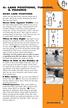 6: LANE POSITIONS, TURNING, & PASSING BASIC LANE POSITIONS Traffic law says that slower vehicles should stay to the right. But where exactly should bicycles ride? Here are some basics. Never Ride Against
Motorcycle Operator Manual
 Motorcycle Operator Manual With Supplementary Information for Three-Wheel Motorcycles 17 th Edition 2 Preface Welcome to the Seventeenth Edition of the MSF Motorcycle Operator Manual (MOM). Operating a
Chapter 4 DEFENSIVE DRIVING
 Chapter 4 DEFENSIVE DRIVING Chapter 4 Table of Contents Chapter 4 DEFENSIVE DRIVING... 4-1 DEFENSIVE DRIVING... 4-3 Positioning The Bus... 4-3 When Making a Turn at an Intersection... 4-3 Making the perfect
general, accidents caused by misjudging
 Unit 3: The Effect of Natural Forces on your Vehicle Page 1 of 11 Purpose: Acquaint the student with some of the natural forces acting on a vehicle while stopping, maneuvering, and during a crash. Explain
Motorcycle Operator s Manual
 Texas Department of Public Safety Motorcycle Operator s Manual Revised June 2014 STRANDED MOTORISTS NEED HELP? CALL 1-800-525-5555 PREFACE This Motorcycle Operator s Manual has been prepared in cooperation
DEFENSIVE DRIVING. It s an Attitude
 DEFENSIVE DRIVING It s an Attitude RLI Design Professionals Design Professionals Learning Event DPLE 155 July 15, 2015 RLI Design Professionals RLI Design Professionals is a Registered Provider with The
Oregon Motorcycle & Moped Manual DRIVER AND MOTOR VEHICLE SERVICES
 2014 2015 Oregon Motorcycle & Moped Manual DRIVER AND MOTOR VEHICLE SERVICES Manual Cover.indd 1 6/17/2015 9:22:44 AM Visit us at our web site www.oregondmv.com Published by Oregon Department of Transportation
SAFE CYCLING GUIDE. 7th Edition
 SAFE CYCLING GUIDE 7th Edition BEFORE SETTING OUT A Check tire pressure B Check that the chain does not slip C Check the brakes D Check lights and reflectors: 1 A WELL-MAINTAINED BICYCLE is key 3 4 5 Adjust
12 & 15- Passenger Van Defensive Driver Training
 12 & 15- Passenger Van Defensive Driver Training NHTS-national Highway Traffic Safety Administration Recognizes that 12-15 passenger vans (include driver) are similar type vehicle and offer the same hazards
SAFE CYCLING GUIDE. 6th Edition
 SAFE CYCLING GUIDE 6th Edition BEFORE SETTING OUT A WELL-MAINTAINED BICYCLE is key A Check tire pressure B Check that the chain does not slip C Check the brakes D Check lights and reflectors: 3 4 1 5 2
Slips, Trips and Falls. Awareness Month. February 2005. Slips, Trips and Falls
 THE SCHOOL DISTRICT OF PITTSBURGH Slips, Trips and Falls Awareness Month Joint Labor / Management Safety Committee Please open the attachment for additional information that will answer safety questions
BIKE BASICS. The AAA Guide to a Great Ride
 BIKE BASICS The AAA Guide to a Great Ride FREEDOM ON WHEELS Bicycles can be considered symbols of independence and freedom. They are also fun, providing riders a greener, healthier form of transportation.
The motorcycle. you and your motorcycle. in this chapter. Types of motorcycles. A rider goes shopping
 2 you and your motorcycle in this chapter The motorcycle types of motorcycles The gear helmet clothing gloves footwear Budgeting In chapter 1, you in the rider s seat, you learned the importance of making
What Every Young Michigan Bicyclist Must Know
 What Every Young Michigan Bicyclist Must Know A Guide for Youth Tips for Riding Your Bicycle Legally and Safely Meet the LMB Safety Kids Sprocket Madison Hub Spokes Chase Ryder What Every Young Michigan
Document Name: Driving Skills. Purpose: To outline necessary driving skills required to maximize driving safety.
 Document Name: Driving Skills Date Created: 8 October 2013 Date Reviewed: 4 February 2014 Date Approved: 29 July 2015 Purpose: To outline necessary driving skills required to maximize driving safety. Overview:
1. When the roads are slippery, you should make turns as gentle as possible.
 GENERAL KNOWLEDGE KEY FACTS CDL 1. When the roads are slippery, you should make turns as gentle as possible. 2. The heavier a vehicle or the faster it is moving, the more heat the brakes have to absorb
MOTORCYCLE HANDBOOK ENGLISH 2013. Edmund G. Brown Jr., Governor State of California
 STATE OF CALIFORNIA ENGLISH 2013 MOTORCYCLE HANDBOOK Edmund G. Brown Jr., Governor State of California Brian P. Kelly, Acting Secretary Business, Transportation and Housing Agency Page left intentionally
- FREE! - The Official San Francisco BIKE GUIDE. 1st Edition
 - FREE! - The Official San Francisco BIKE GUIDE 1st Edition SF BIKE LAWS SAN FRANCISCO BICYCLISTS MUST: Yield to People Walking Whether they re in a crosswalk or not, ALWAYS yield to people walking. Stop
Defensive Driving While Towing a Trailer By Elizabeth Koncki, Maryland Department of Agriculture
 Defensive Driving While Towing a Trailer By Elizabeth Koncki, Maryland Department of Agriculture Many of you have heard the term defensive driving, but maybe you may have not been taught the method or
Safety-conscious Drivers Prevent Crashes. Defensive Driving: Managing Visibility, Time and Space. Improve Your Defensive Driving Skills
 Defensive Driving: Managing Visibility, Time and Space Motor vehicle travel is the primary means of travel in the United States. With all the benefits that come along with mobility, there are thousands
Bicycle Safety Enforcement Action Guidelines
 Introduction Bicycle Safety Enforcement Action Guidelines People ride bicycles for many different reasons: fitness, recreation, or for transportation. Regardless of the reason for riding, bicyclists young
Motorcycle. You can also study this handbook online plus use many other DMV online services at www.dmv.ca.gov. Tell us how we re doing!
 DMV handbook Motorcycle ) &$/,)2 5 2 7( $ 1, 67 $ You can also study this handbook online plus use many other DMV online services at www.dmv.ca.gov. Tell us how we re doing! Edmund G. Brown Jr., Governor
Back to School Car Safety. Direct Buy Warranty Staff September 19, 2014
 Back to School Car Safety Direct Buy Warranty Staff September 19, 2014 It s back to school season, and that means kids are picking out new clothes, putting on their backpacks, and hitting the road to get
15-Passenger Van Safety Awareness Program. Environmental Health & Safety Department 570-662-4906
 15-Passenger Van Safety Awareness Program Environmental Health & Safety Department 570-662-4906 Course Objective The objective of this presentation is to increase the safety awareness of passenger van
Bicycle, In-Line Skating & Skateboarding Safety
 Bicycle, In-Line Skating & Skateboarding Safety Overview Over 70 percent of children between the ages of 5 and 14 ride bicycles. In-line skating and skateboarding are also very popular among this age group.
Operating Vehicle Control Devices
 Module 2 Topic 3 Operating Vehicle Control Devices 1. Identify the vehicle controls in the pictures below: 1. 2. 3. 4. 7. 7. 5. 6. 1. accelerator 2. parking brake 3. foot brake 4. gear shift lever_ 5.
Imagine a bike that s there when you need it, wherever you are, and gone when you don t. That s B-cycle. In this guide, you ll find all you need to
 Imagine a bike that s there when you need it, wherever you are, and gone when you don t. That s B-cycle. In this guide, you ll find all you need to know about operating a B-cycle to ensure your ride is
FMCSA Webinar Nov.18th to Examine Large Truck Crash Fatalities Involving Pedestrians & Bicyclists. New Technology for Better Fleet Management
 In This Issue: FMCSA Webinar Nov.18th to Examine Large Truck Crash Fatalities Involving Pedestrians & Bicyclists Help Prevent Roadway Accidents involving Pedestrians How to Steer Clear of Accidents with
Sharing the road safely
 6 sharing the road in this chapter Sharing the road safely Pedestrians Cyclists Motorcycle riders Passenger vehicles Large vehicles School buses Public transit buses Emergency vehicles Emergency workers
Carolina Road Driving School Sample Test Questions
 Carolina Road Driving School Sample Test Questions 1. A driver's license is required for which of the following? 1. Sitting in the driver's seat of a car while the engine is running. 2. Steering a car
AAA S GUIDE TO A SAFE
 Credit: ThinkStock SAME ROADS SAME RULES SAME RIGHTS AAA S GUIDE TO A SAFE BIKE RIDE DRIVING A BICYCLE Yes, bicyclists MUST drive their bicycles in the same manner that motorists drive their cars. Most
chapter 3 basic driving skills
 chapter 3 basic driving skills When curving to the left, keep the front wheels close to the right edge of the lane to keep your driver s side rear wheels out of the next lane of traffic. Curve ahead slow
TROPIC LIGHTNING CHECKRIDE PERFORMANCE MEASURE
 TROPIC LIGHTNING CHECKRIDE PERFORMANCE MEASURES V4.0 TASK 1: PERSONAL PROTECTIVE EQUIPMENT PERFORMANCE MEASURE DOT Approved Helmet Proper Reflective Equipment Full Fingered Gloves Proper Eye Protection
Broward County Public Schools Core Curriculum Department. Driver s Education Basic Driving Skills: Study Guide
 Broward County Public Schools Core Curriculum Department Driver s Education Basic Driving Skills: Study Guide 5 th Edition 2 nd Edition K.C. Wright Administrative Building 600 Southeast Third Avenue Fort
Beginner s Permit. Survival Guide. Compliments of. (843) 263-5023 www.123drivedrivingacademy.com [email protected]
 Beginner s Permit Survival Guide Compliments of (843) 263-5023 www.123drivedrivingacademy.com [email protected] Please use this study guide to assist you in studying for your written knowledge
cornering C O R N E R I N G Have you ever over-cooked a corner? Did your confidence take a knock as a result? Did you work out why it happened?
 This THINK is a pdf Norfolk is FREE Partnership to download - 011 for personal use - all content remains the property of the THINK Norfolk Partnership - 011 Page 1 Have you ever over-cooked a corner? Did
GENERAL DRIVING TEST QUESTIONS
 GENERAL DRIVING TEST QUESTIONS 99 15 16 16 17 15 20 18 GENERAL TEST QUESTIONS 1. When you take a road test for a driver s license: 1. You must provide the vehicle. 2. The vehicle must be in safe operating
New York Bicycling Pocket Guide
 New York Bicycling Pocket Guide Prepared by the New York Bicycling Coalition About This Guide Getting around by bike is good for one s health and wallet, and the environment. But many people aren t sure
Videos for Safety Meetings
 Videos for Safety Meetings 2474 2005, ERI Safety Videos OPERATING ELECTRIC PALLET JACKS SAFELY This easy-to-use Leader s Guide is provided to assist in conducting a successful presentation. Featured are:
20 Tips for Safe Driving
 20 Tips for Safe Driving www.libertymutualinsurance.com Liberty Mutual 20 Tips What s Your Driving Skill Level? As you can see, this national survey 1 found that drivers rated themselves highly. The tendency
The State Government recognises. areas, and regulates bicycle
 cycling & THE LAW rules introduction for roads The State Government recognises The cycling South Australian as a legitimate Road Traffic form of Act including transport the Australian and an increasingly
Bicycle Book. This book belongs to. Name. Address. Telephone number. Make of bicycle. Color of bicycle. Serial number.
 Bicycle Book Bicycle Book This book belongs to Name Address Telephone number Make of bicycle Color of bicycle Serial number License number Other identifying marks Message to Parents Most children love
RIDE ON THE RIGHT TIP:
 B I C Y C L I N G I N C O L O R A D O RULES OF THE ROAD Please consult the Colorado Revised Statutes for the specific language of the law regarding bicycles and their operation. Municipalities and other
20 Tips for Safe Driving
 Helping People Live Safer, More Secure Lives Since 1912 Thank you for considering Liberty Mutual for your insurance needs. As one of the leading providers of auto, home and life insurance in the United
Model Fleet Safety Program Short
 TM Model Fleet Safety Program Short CORPORATE HEADQUARTERS 518 EAST BROAD STREET COLUMBUS, OHIO 43215 614.464.5000 STATEAUTO.COM TM Disclaimer: The information contained in this publication was obtained
Tips for Safer Driving
 Fleet Management Fleet Management Introduction Improvements in technology will continue to help bring auto accident numbers down, but the bottom line remains that most car accidents are the result of human
Level 2 Award in Safe Driving at Work
 Level 2 Award in Safe Driving at Work Student notes (sample) www.britsafe.org Membership Training Qualifications Audit and Consultancy Audit and Policy Consultancy and Opinion Policy Awards and Opinion
CTOBER 2014 SAFETY MEETING
 CTOBER 2014 SAFETY MEETING Defensive Driving Seasonal GLARE Issues Deer & Animal Collision Avoidance Chain Saw Safety Practices Cold Weather Seasonal Preparedness General Reminders Defensive Driving Tips
TEST ON Driving Safely Among Bicyclists and Pedestrians
 TEST ON Driving Safely Among Bicyclists and Pedestrians Next you will take a 16 question test about driving safely among bicyclists and pedestrians. Please take out a sheet of paper to mark down and score
Commentary Drive Assessment
 Commentary Drive Assessment Time start: Time finish: Candidate s Name: Candidate s Email: Date of Assessment: Location: Candidate s Supervisor: Supervisors Contact Number: Supervisors Email: Assessor s
Nevada Non-Commercial Class A and B, J Endorsement Study Guide
 Nevada Non-Commercial Class A and B, J Endorsement Study Guide December 2012 Table of Contents Foreword... 4 General Information... 4 Non-Commercial Vehicle Classifications... 4 What You Need To Know...
These "rules of the road" are based on Texas Transportation Code statutes. Find the complete bicycle code at the bottom of the page
 Texas Bicycle Laws These "rules of the road" are based on Texas Transportation Code statutes. Find the complete bicycle code at the bottom of the page Bicyclists have the rights and duties of other vehicle
a family guide to January 2009 Bike Ed
 a family guide to January 2009 Bike Ed Childhood Development e program was developed by ycle education instructor s of programs available visit: gresources/health VRPIN 02026 5.08 a bicycle education program
FY16 Defensive Driving Test ANSWER SHEET. Instructor: Bob Bugger
 1. What is the most important safety item on the bus? a. First aid kit b. Bio hazard kit c. Safety reflector kit d. Driver* *The driver has to operate all the other equipment. The driver must be in top
the right stuff Guide to protective riding gear
 the right stuff Guide to protective riding gear stuff d the facts about the right stuff the wrong stuff the right stuff 1 2 Motorcycle and scooter crashes can happen anywhere, anytime even on short trips
What Every Driver Must Know Review Assignment
 What Every Driver Must Know Review Assignment 1. Who is the Michigan Secretary of State? What services does the Secretary of State office offer? What days and hours is your local Secretary of State branch