
Functional Capacity Evaluation and Chiropractic Case Management
|
|
|
- Collin Grant
- 10 years ago
- Views:
Transcription
1 Functional Capacity Evaluation and Chiropractic Case Management Purpose: In an era when expensive tests have flourished, it is timely that efficient and economical functional tests satisfying fundamental criteria are developed in order to contain costs. An overview of functional capacity tests is provided, and a discussion of types and components is offered. Further, the validity of functional tests is addressed, especially their ability to predict either an individual s performance in a target task or the development of future back pain/disability. Method: A qualitative review of relative literature is integrated with the clinical experience of the authors. Summary: Functional capacity tests are designed for use when a patient has been in treatment for 1 month and care may extend beyond a reasonable expected natural history. Functional capacity testing provides baseline information from which objective improvement can be monitored. It can also help in establishing a rehabilitation prescription, determining return to work goals, and determining an end point of care. Key words: accidents (occupational), activities of daily living, disability evaluation, pain measurement, questionnaires, range of motion (articular), rehabilitation, work capacity evaluation Steven G. Yeomans, DC, DABCO Private Practice Ripon, Wisconsin Craig Liebenson, DC Private Practice Santa Monica, California Practice aids and algorithms appear in Appendix A. FUNCTIONAL TESTING is a key part of the outcomes management process. According to a recent North American Spine Society consensus paper, a functional capacity evaluation (FCE) assesses whole body limitations such as lifting capacity and cardiovascular fitness. 1 Many of the most important functional capacities relate to tasks, activities, or roles that the individual is expected to carry out in his or her occupation or lifestyle. Any limitation or inability to perform tasks or activities is typically termed a disability. The FCE is contrasted with the physical capacity evaluation (PCE), where physical performance tests address discrete functional limitations such as trunk strength and mobility. 1 An example of a PCE is the Quantitative Functional Capacity Evaluation (QFCE), which is presented by the authors elsewhere. 2 The deficits that a PCE or a QFCE measures are considered to be impairments or functional limitations. Impairments, functional limitations, and disability are part of a continuum from pathophysiology to a societal limitation. 3 Functional testing is an extension of simple outcomes assessment (OA) with questionnaires and/or specific functional measurements (i.e. straight leg raise test, spine range of motion, etc.). It is necessary to perform such evaluations after the first month of care if treatment is expected to continue beyond 6 to 8 weeks, which is the usual recovery point in the natural history of nonspecific mechanical back pain. The true importance of these tests is that they document whether To order reprints contact Professional Sales Department, Aspen Publishers, Inc., 200 Orchard Ridge Drive, Suite 200, Gaithersburg, MD 20878, Steven G. Yeomans, DC, DABCO, Yeomans Chiropractic Center, SC, 404 Eureka Street, Ripon, Wisconsin Top Clin Chiro 1996; 3(3): Aspen Publishers Inc. 15

2 16 TOPICS IN CLINICAL CHIROPRACTIC/VOLUME 3, ISSUE 3, 1996 or not the care provided is useful. This may be important for personal injury, worker s compensation, private insurance, or managed care patients. A fundamental indication for an FCE, is when the patient cannot work and the disability has been present for longer than 1 month (total disability). However, if the patient is not totally disabled, but does have activity limitations and/or symptoms for greater than 1 month (partially disabled), then the less costly and less time consuming QFCE or PCE may be more appropriate. The functional tests selected should satisfy certain fundamental criteria (Table 1). A test that has been determined to be reliable may be useful to document an individual s progress. Tests that have a normative database can identify what percentage of normal function exists at baseline and, therefore, can guide the provider in establishing a specific functional restoration exercise program. This feature will also allow the provider to set specific rehabilitation goals accurately so that realistic end points of care can be prospectively determined. As previously stated, specific functional limitations evaluated by PCEs are considered impairments, while whole body movement evaluations such as the FCE determine levels of disabilities. An ideal valid test relates not only to impairment, but also to disability, and, therefore, relates to specific tasks or skills. This type of valid test yields practical clinical information. However, providing this type of information is perhaps the most challenging criterion to satisfy. A beginning point for evaluating functional status, impairment, or disability is determining the work or activity limitations of an individual. According to Agency for Health Care Policy and Research (AHCPR) guidelines, 5 reduction of activity intolerance is the main goal of care in addition to pain relief. Mooney and Matheson s Job Demands Questionnaire (JDQ) and Job Sort (JS) are practical starting points because they identify the specific Dictionary of Occupational Titles (DOT) items such as standing, walking, sitting, lifting, etc, which may be relevant for an injured worker. 3 A copy of the JDQ is provided in Appendix A1. In addition, outcomes assessment questionnaires like the Oswestry low back pain disability questionnaire 6 or the neck disability index (NDI), 7 can also be used to identify specific activity limitations that have occurred. The more specific the determination of activity limitation or job demands, the easier it will be to establish mutually agreeable goals and end points of care. Use of the JDQ and JS is therefore key to determining the specific functional tests needed to evaluate the patient who is disabled or impaired and hence will also function in establishing rehabilitation protocols that are individualized to the patient. Specific functional tests with proven reliability and normative databases, which relate to a job demand or activity limitation can be used to establish an individual s functional capacity. When returning a worker who was injured back into the work force, it is equally important to establish the functional limits of a job site so that the worker is not placed in a job that exceeds his or her functional capacities. According to Fishbain and coworkers, 8 DOT defines the demand minimum functional capacity of most jobs in the United States. By using the data derived from a patient s FCE or PCE and comparing it to a job s demand minimum functional capacity, the likelihood of reinjury is lessened. In this era of health care cost containment, comparing the activity limitations of a patient on the one hand, and the job demands on the other, the costeffectiveness of an FCE or PCE is highly defensible. CLINICAL INTEGRATION OF FUNCTIONAL TESTING There are five steps involved in integrating an FCE or PCE into a chiropractic practice model (Table 2). First, is performing a JS or JDQ (or both) to identify the activities that are important for that individual. Second, is taking a history of activity limitations (see Appendix A2). Third, is determining the patient s residual functional capacities with respect to the

3 Yeomans and Liebensen: Functional Capacity Evaluation 17 tasks that are important for that individual and comparing those with the demand minimum functional capacity of his or her job or specific work task. Fourth, is communicating to the patient, employer, and third-party payer the specific goals of care with respect to activity and functional limitations that relate to the job description and to compare them to the available worksite demands. Fifth, is forming a prescription for functional restoration that specifically addresses the patient s functional limitations and job demands. The evaluating physician must identify what activities or job demands are relevant for the patient. The JDQ is a short questionnaire that identifies how demanding the patient perceives his or her job to be. It can be self-administered and it is a very brief way (8 to 10 minute) to identify what kind of demands for lifting, carrying, sitting, and so forth are placed on the individual. Mooney and Matheson s JS is a set of small cards that show a wide variety of job tasks. The patient is instructed to pick out those cards that most closely resemble the tasks he or she performs on the job or at home. This methodology enables the physician to determine the patient s work activities as well as the patient s perception of his or her job demands. The second step is to take the history directly from the patient. The practitioner should seek to identify what activities are limited by the patient s pain. Most important, the practitioner should determine limitations in basic activities such as sitting, standing or walking (see Appendix A2). The Oswestry low back pain disability questionnaire 6 or NDI 7 can also be used to identify limitations of other activities of daily living (ADL). Patients should be asked what activities they are unable to perform due to pain. The third step in this process is the actual functional testing (FCE or PCE). A true FCE includes whole body testing including the following 8 : lifting capacity, hand function tests, daily living activity tests (i.e. pushing, pulling, carrying, kneeling, squatting), cardiovascular testing, upper body ergonometry, and static positional tolerance tests. Most FCEs take 2 or more hours to perform, while some require up to 2 days and use expensive equipment. However, a PCE, such as the QFCE 2, has the potential to be as valid as an FCE but requires far less time and expense. It gives special emphasis to simple, time-efficient, cost-effective functional testing and takes only 30 to 35 minutes to be administered. Thus, even though the QFCE does not measure lifting/carrying directly, the savings in time and resources are significant enough that this approach has great practical value. Often, only those tests that relate to the specific activity limitation or job demand need be assessed when concerned primarily with return-to-work goals. All of those activities which are relevant should be assessed to see if the patient can achieve the functional capacity to meet the demand minimum functional capacity of the job. The validity of the QFCE for determining work capacity is somewhat compromised because many whole body activities are not directly tested. However, functional movements which do correlate with the whole body activity can be compared. For example, in a classic FCE, lifting capacity requires timeconsuming (PILE, EPIC) or expensive (Cybex) testing. A more cost- and time-efficient approach for rehabilitation specialists is to test squatting strength, back extensor endurance, hamstring flexibility, and static positional tolerance. For example, quadriceps strength was found to be a limiting factor in a study group of forestry workers who shifted from a squat lift to a stoop lift when quadriceps weakness was present 9. Back extensor endurance is necessary to preserve the lumbar lordosis during lifting. Hamstring (and thigh adductor) flexibility is also crucial for allowing the back to remain upright and lordotic during squatting. The fourth step in integrating functional tests with clinical practice is communication of functional goals and capacities. The history of activity limitations automatically identifies end points or goals of care. According to the AHCPR guidelines, 5 the primary goal of care of low back pain is to reduce activity limitations. These activity limitations can be clearly communicated to the patient, employer, and third-party payer after they are determined. Also, the functional restoration of any functional capacity deficit becomes a realistic end point of care. The fifth and final step in this process is prescribing functional restoration for the physical and functional capacity deficits disclosed by testing. A typical example is a patient who, for example, cannot bend or stoop and has functional deficits such as poor trunk extension endurance and mobility. The functional restoration prescription may involve manipulation, exercise and advice. More specifically, manipulation to restore joint range of motion involved in lumbar extension; exercises to address strengthening of the erector spinae musculature including endurance training for spinal erectors, multifidus, and gluteus maximus muscles; and, advice about avoiding slumping during ADL may also prove beneficial. THE VALIDITY OF THE QFCE AND COMPARISON TO THE DOT Functional tests that correlate to real life activities have the most validity. The performance of valid tests (from both a qualitative and quantitative standpoint), yields information that can be practically applied to the care of a patient; the test therefore has prescriptive validity. The ideal test is one that has proven reliability in the methods, validity in its application, and a normative database. Such a test can provide a

4 18 TOPICS IN CLINICAL CHIROPRACTIC/VOLUME 3, ISSUE 3, 1996 baseline for future comparative assessment In this way, the specific rehabilitation approach can he assessed for effectiveness. In addition, the point of maximum therapeutic benefit with passive and/or active care can he identified when no change in function is observed. This important step can then assist the health care provider to Change the rehabilitation or treatment protocol. Refer the patient to the next level of service (to a secondary or tertiary care center). Accept the current level of function as permanent When considering the return of the patient to work. an ideal functional test is one that utilizes real life movements. For example, if squatting is a significant task of a patient s job and it is hindered by an injury, by utilizing the repetitive squat test and the normative data included in the QFCE. one can assess the patient s squatting capacity. One can then compare the patient s squatting physical capacity to the job s demand minimum functional capacity and a prescription for return to work squatting limitations could be determined. Hence, the DOT was developed and has been adopted as a standard for describing the physical demands of a specific job task, which are referred to as job factors There are 20 job factors described by the DOT including standing, walking, sitting, lifting, carrying, pushing, pulling, climbing, balancing, stooping, kneeling, crouching, crawling, reaching, handling (seizing, holding, grasping, turning), fingering (picking, pinching), feeling (size. shape, temperature, texture), talking, hearing, and seeing (acuity, depth perception, field vision, accommodation, color vision). The DOT attempts to define most jobs in the United States according to these job factors and recommends that a worker possess at least the equivalent of the physical demands of the job task. Hence, the phrase demand minimum functional capacity (DMFC) describes the minimum functional capacity needed to work successfully and safely at a particular job. Attempts have been made to assess a worker s physical performance on the job within the context of the DOT in quest of safely returning a worker who was injured hack to work. For example, Mooney and Matheson s 4 standing range of motion tests are static position tolerance tests that measure a person s ability to reach to various heights from standing, stooping, crouching, and kneeling positions. In this evaluation, the range of motion tests are described as an anthropometric examination, where the evaluee s own stature is used as a frame of reference. The test begins with an explanation of the purpose of each test using narrative similar to the following: This is a test of your ability to reach with both hands to various heights while standing, stooping, crouching, and kneeling. You will be asked to maintain each of these postures for 15 seconds. If you have any symptoms during the test, please let me know. Do you have any questions? The test is administered in front of a wall with the arms outstretched in front, feet shoulder width apart, and placed directly under the shoulders (ie, to avoid leaning). The preceding instructions are given and the test commences with an affirmative response of readiness by the evaluee. Instructions are given to the patient to move from a standing posture to each position listed subsequently and then back to a standing position: Height (reach) Posture Shoulder level Stand Eye level Stand Knee level Stoop Knee level Crouch Knee level Kneel A maximum of a 1-minute standing rest between postures may be utilized. For each of the five postures, a countdown from 15 seconds is used. The following scale is used to rate the evaluee s performance: Definition Score 1. Able Able to perform the task with no restrictions. 2. Slightly restricted Able to perform the task with slight restrictions. Can hold the hands at the designated level for 15 seconds. 3. Moderately Able to assume the proper restricted position; but is unable to maintain the position for 15 seconds. 4. Very restricted Able to assume the position, but unable to hold the position for more than 5 seconds. 5. Unable Unable to assume the position. The test may be documented in the patient s file in the following manner: Able Restricted Unable Can reach to Shoulder (height) Eye Knee-stoop Knee-crouch Knee-kneel This information may help identify specific job traits and can play an important role in the detection of injury causation. It should he used before further DOT testing to identify which items require the most in-depth evaluation. The next major hurdle is to devise a means by which the 20 DOT job factors can be clinically evaluated, fulfilling as many of the five criteria outlined earlier as possible (see Table 1). This effort may be partially accomplished by the establishment of functional capacity norms where the person who

5 Yeomans and Liebensen: Functional Capacity Evaluation 19 was injured could be compared to a normative database and, after the initial baseline evaluation, had the evaluation repeated. The results could then be used to decide whether the person had reached the demand minimum functional capacity for his or her particular job or a lighter duty job task. Because the DOT defines only two strength job factors (lifting and carrying) (see Table 3), jobs that demand other functional movements are not specifically assessed by this approach. Fishbain and associates 13 offer functional tests with referenced normative data. When published normative data were not found, clinical experience and acumen were used to establish a consensus opinion among the authors. The authors represented numerous different professions including psychology, neurosurgery, and industrial engineering. A total of 17 job factors were used to make up the DOT-residual functional capacity (DOT-RFC) battery and, when including the subfactors, a total of 36 factors were measured for a total time duration of 3 hours and 16 minutes. A summary of the 17 job factors, the tests used to evaluate each, the time for each test, the procedure, response variable, defined norms, acceptable values, and reference to norms are listed in Table 4. Though recognized as less than perfect, 8,10,13,14 using the DOT criteria allows for a classification of patients for which the objective is the safe and timely return of a patient to work. The following information correlates the QFCE, 2 sample Fishbain/FCE test, 13 and Mooney and Matheson s static positional tolerance tests 4 with DOT basic job traits In addition, qualitative testing is described to supplement the following tests when applicable. Standing QFCE tests: Test time: 5 minutes. In order to maintain an upright standing posture, the activities of several muscle groups must be posturally active. The QFCE tests that assess these various muscle groups include the ankle dorsiflexion tests (gastrocnemius and soleus length tests), modified Thomas/hip extension test (iliopsoas length test), knee flexion test (quadriceps length test), repetitive arch-up, and static back endurance (lumbar extension muscle strength). Static positional tolerance test: To test endurance, have the patient stand for a given time frame such as 15 to 30 minutes. 4 FCE test: Test: Standing; Time (minutes): 30; Response variable: Tolerance; Defined norm: 30 minutes; Acceptable value: 30 minutes. 13 Walking QFCE tests: Because this function is a multimuscular functional test, the same tests described under standing would apply, in addition to hamstring length (straight leg raise [SLR] test) and hip range of motion tests. The endurance aspect of walking can only be assessed by performing a more lengthy test such as walking at a given pace for 15 or 30 minutes. FCE test: Test: Normal walking; Time (minutes): 30; Response variable: Average walking speed (1 mile); Defined norm: 3 miles per hour, 1 mile; Acceptable value: 2 miles per hour, 1 mile Qualitative test: The one-leg standing testing is also appropriate. Employing a timed test adds a quantitative complement to this test. Normative data report that, with the eyes open, those aged 20 to 59 balanced on one leg for 29 to 30 seconds; 22.5 seconds for those aged 60 to 69 years; and 14.2 seconds for those aged 70 to 79 years. With the eyes closed, those aged 20 to 59 years balanced on one leg for 21 to 28.8 seconds; 10 seconds for those aged 60 to 69 years and 4.3 seconds for those aged 70 to 79 years. 16 Sitting QFCE tests: The primary muscles involved are those of trunk stabilization in which the static back endurance repetitive arch-up, and repetitive sit-up tests are utilized. The flexibility of the hamstrings, as well as the integrity

6 20 TOPICS IN CLINICAL CHIROPRACTIC/VOLUME 3, ISSUE 3, 1996

7 Yeomans and Liebensen: Functional Capacity Evaluation 21 of the hip joint, must also be intact in order to sit. Hence, the SLR test is appropriate. The act of changing positions from sitting to standing or vice versa incorporates the actions of almost all the tests with the exception of cervical range of motion and grip strength. Static positional tolerance test: The issue of endurance of sitting can only be addressed by having a patient sit for a unit of time (eg, 30 minutes). 4 FCE test: Test: Sitting; Time (minutes): 30; Response variable: Tolerance; Defined norm: 30 minutes; Acceptable value: 30 minutes. 13 Lifting QFCE tests: Classically, lifting is measured by floor-toknuckle, knuckle-to-shoulder, and floor-to-shoulder lift tasks. The QFCE does not specifically assess lift capacity. Rather, all of the QFCE tests are needed in order to test bending, stooping, and squatting, which are components of lifting with the exception of cervical range of motion and repetitive sit-up with emphasis of back extensor strength (repetitive arch-up and static back endurance tests). FCE test: Test: Iso-inertial; Time (minutes): 15; Response variable: Maximum acceptable weight raised and lowered; Defined norm: Sedentary = 10 lbs, Light = 20 lbs, Medium = 50 lbs, Heavy = 100 lbs, Very heavy > 100 lbs; Acceptable value: Same Carrying QFCE tests: These tests are not applicable. FCE test: Test: Iso-inertial; Time (minutes): 15; Response variable: Maximum acceptable weight carried 14 feet; Defined norm: Sedentary = 5 lbs, Light = 10 lbs. Medium = 25 lbs, Heavy = 50 lbs, Very Heavy > 50 lbs; Acceptable value: Same Pushing QFCE tests: These tests are not applicable. FCE test: Test: Iso-inertial; Time (minutes): 10; Response variable: Walking pushing a cart 25 feet; Defined norm: 100 lbs; Acceptable value: > 100 lbs. 13,15 Pulling QFCE tests: These tests are not applicable. FCE test: Test: Iso-inertial; Time (minutes): 10; Response variable: Moving pulling a cart 25 feet; Defined norm: 100 lbs; Acceptable value: > 80 lbs. 13,15 Climbing QFCE tests: Requires repetitive squat, gastrocnemius and soleus, modified Thomas or hip extension, SLR, knee flexion, and hip range of motion (ROM) tests. FCE test: Test: Stairs; Time (minutes): 5; Response variable: One flight up and down; Defined norm: One flight up; Acceptable value: Same. 13 Qualitative test: The one-leg standing testing is also appropriate. Employing a timed test adds a quantitative complement to this test. Normative data report that, with the eyes open, those aged 20 to 59 years balanced on one leg for 29 to 30 seconds; 22.5 seconds for those aged 60 to 69 years; and 14.2 seconds for those aged 70 to 79 years. With the eyes closed, those aged 20 to 59 years balanced on one leg for 21 to 28.8 seconds; 10 seconds for those aged 60 to 69 years, and 4.3 seconds for those aged 70 to 79 years. 16 Balancing QFCE tests: In this test, trunk stability is of great importance. Thus, all functions that are listed in the QFCE are required with the exception of the grip strength test. Static positional tolerance test: All of the standing range of motion tests, which include reaching from standing, stooping, crouching, and kneeling positions, are indicated regarding balance assessment. 4 FCE test: Test: Standing; Time (minutes): 3; Response variable: Standing, walking, crouching. Length of beam 6 feet; Defined norm: Able; Acceptable value: Same. 13,17 Qualitative test: The one-leg standing testing is also appropriate. Employing a timed test adds a quantitative complement to this test. Normative data report that, with the eyes open, those aged 20 to 59 years balanced on one leg for 29 to 30 seconds; 22.5 seconds for those aged 60 to 69 years, and 14.2 seconds for those aged 70 to 79 years. With the eyes closed, those aged 20 to 59 years balanced on one leg for 21 to 28.8 seconds; 10 seconds for those aged 60 to 69 years, and 4.3 seconds for those aged 70 to 79 years. 16 Stooping QFCE tests: As noted under lifting, this complex movement requires function measured by all of the QFCE tests with the exception of cervical range of motion (C-ROM) and grip strength. Static positional tolerance test: The stooping portion of the standing range of motion tests is indicated. 4

8 22 TOPICS IN CLINICAL CHIROPRACTIC/VOLUME 3, ISSUE 3, 1996 FCE test: Test: Trunk flexion; Time (minutes): 3; Response variable: Range of motion; Defined norm: >75 ; Acceptable value: Same. 13 Kneeling QFCE tests: Repetitive squat, gastrocnemius and soleus, modified Thomas/hip extension, SLR, knee flexion, and hip ROM tests. Static positional tolerance test: The kneeling portion of the standing range of motion tests is indicated. 4 FCE test: Test: Kneeling on one and two knees; Time (minutes): 3; Response variable: Kneeling on one and two knees; Defined norm: Able; Acceptable value: 13, 17 Same. Crouching QFCE tests: Repetitive squat, lumbar ROM (L-ROM), C-ROM, modified Thomas, SLR, hip ROM, repetitive arch-up, and static back endurance tests are indicated. Static positional tolerance test: The crouching portion of the standing range of motion test is indicated. 4 FCE test: Test: Patient stoops > 75 and bends knees; Time (minutes): 3; Response variable: Crouching; Defined norm: Able; Acceptable value: 13, 17 Same. Crawling QFCE tests: Modified Thomas, SLR, knee flexion, and hip ROM tests are indicated. FCE test: Test: Crawling hand/knee and hand/feet; Time (minutes): 3; Response variable: 6 feet each test; Defined 13, 17 norm: Able; Acceptable value: Same. Reaching QFCE tests: L-ROM (if tested in positions listed below in the static positional tolerance tests) is indicated. Static positional tolerance test: The standing range of motion tests, which include reaching from standing, stooping, crouching and kneeling positions, are indicated. 4 FCE test: Test: Standing reach; Time (minutes): 3; Response variable: Reaching any direction; Defined 13, 15 norm: Able; Acceptable value: Same. Qualitative test: The shoulder abduction test is performed by having the patient flex the elbows 90 (to limit undesirable rotation) and slowly abduct the upper extremities. A + test or failed qualification score is reported when scapula elevation or rotation occurs in the first 30 to 60. The purpose of the test is to identify abnormal glenohumeral rhythm due to overactivity of the upper trapezius and/or levator scapulae muscles. 18 Quantification of this test by the use of an inclinometer or goniometer recording the measurement at the point of premature upper trapezius contraction is recommended. Handling QFCE tests: Grip and pinch strength tests are indicated. FCE test: Test: Seizing, holding, grasping, turning; Time (minutes): 3 minutes each; Response variable: Seizing each hand and both hands, holding, turning, respectively; 13, 15 Defined norm: Able; Acceptable value: Same. Fingering QFCE tests: Grip strength and pinch strength tests are indicated. FCE test: Test: Picking, pinching; Time (minutes): 3 minutes each; Response variable: (a) Picking a nut with all fingers, (b) Tip pinching, (c) Key pinching, (d) Palmer pinching; Defined norm: (a) Able, (b) M (males) > 8 lbs and F (females) > 4 lbs, (c) M > 9 lbs and F > 7 lbs, (d) M 13, > 9 lbs and F > 6 lbs; Acceptable value: Same. Feeling QFCE tests: These tests are not applicable. FCE test: Test: Shapes: Round, Rectangle; Sizes: Large, Small; Temperature: Hot, cold; Texture: Rough, smooth; Time (minutes): 5 minutes each; Response variable: Discrimination; Defined norm: Able; Acceptable value: 13, 17 Same. Table 5 lists the 20 DOT job traits and the corresponding QFCE tests. Even though the QFCE tests are quantitative and hence, good for assessing outcomes, it is important to stress that assessment of the quality of movement is required in determining the safety in performing the job trait. Smith 22 reported inter-rater and intra-rater reliability in determining safe maximum floor-to-waist lifting for patients with low back pain during a FCE. In this study, 21 patients were videotaped lifting weight in progressively increased increments and observed by five experienced physical therapists. The study revealed that as weights increased and body mechanics deteriorated, the therapists could reliably determine when the biomechanical end point was near or reached. The step where functional tests performed in a clinical setting are utilized to determine return to work issues is very important. The transition between functional test and work task performance has been addressed, and reliability appears to be present. 8, 10, 22 The challenge of returning the worker to a

9 Yeomans and Liebensen: Functional Capacity Evaluation 23

10 24 TOPICS IN CLINICAL CHIROPRACTIC/VOLUME 3, ISSUE 3, 1996 safe work environment prior to completion of healing has long plagued health care providers and employers as, so often, the worker returns to work and is reinjured. This problem may be due to an overestimation of patient function on the part of the physician, poor job selection by the employer, and/or inadequate reporting by the worker to the supervisor that the assigned job task is aggravating his or her condition. In addition, it has been observed that patient motivation, psychological stressors both inside (internal factors) and outside (external factors) the workplace, and employer/patient compliance with carrying out the job restrictions further complicate 8, 9, 14, 23 the return to work process. In order for DOT information to be useful in returning the patient to work, the tests that evaluate function must be reliable and the patient must exert full effort. In addition, the demand minimum functional capacity must be calculated for each jobsite in order for the return to work form to be useful. If the minimums of a jobsite are not established, there is no baseline with which to compare the patient s functional capacities, and reinjury may more readily occur. The employer s role is to establish these minimums; the health care provider s role is to assess the patient in a manner by which the return-to-work criteria can be compared. The challenge of returning the patient to work safely has been addressed by a number of approaches, including the work of Mooney and Matheson, Fishbain, 4, 8, 10, 13, 22, 23 Lechner, Moffroid and associates, and Smith. All attempts at reproducing conditions in the workplace will fall short of the mark. Replicating the work environment and all the associated stressors cannot be accomplished outside the workplace. Also, cumulative trauma effects cannot be reproduced in a short time duration. More specifically, many occupational injuries are caused by a series of events that occur over time (ie, cumulative trauma disorders). Hence, it is unlikely that a laboratory, clinic, or job simulator can reproduce an environment in which there are similar gradual stresses. In additional, factors of utility, practicality, and safety would be compromised if an FCE lasted 8 hours a day, 5 days a week, for 1 or more weeks. Therefore, when a high percentage of workers are injured in a particular job site, a workstation evaluation may be of greater benefit than focusing on the individual worker who was injured. In general, it has been reported that it is easier to change a worksite than to change a worker. 24 CONCLUSION A set of tests can quantify functional limitations or impairments. 2 Such tests are time efficient, simple and economical to perform. However, a true FCE measures actual whole body functions such as the DOT items and not isolated functional limitations. Unfortunately, these FCEs are typically time consuming and costly. Recognizing the need for an intermediate form of functional testing, the QFCE was developed. More specifically, the FCE is indicated for individuals with total work disability of greater than 1 month. In cases of partial work disability or activity limitations (ADL) the FCE is cost and time prohibitive. Likewise, the use of outcomes measurement derived solely from subjective measures (ie, Oswestry, NDI, VAS, and so forth) is inadequate for determining the functional status and rehabilitation goals of individuals whose symptoms or activity limitations have outlasted the expected natural history of their illness. The QFCE appears to be a means to assure quality while containing costs because it objectively measures functional limitations in a reliable and practical manner. REFERENCES 1. Mayer TG, Polatin P, Smith B, Smith C, et al. Contemporary concepts in spine care: secondary and tertiary non-operative care. Spine 1995;20: Yeomans SG, Liebenson C. Quantitative functional capacity evaluation: the missing link to outcomes assessment. Top Clin Chiro 1996; 3(1): US Department of Health and Human Services, Research Plan for the National Center for Medical Rehabilitation Research. (NIH Pub. No ) March Mooney V, Matheson LN. Objective measurement of soft tissue injury: Feasibility study; Examiner's manual. 1994, October, p US Department of Health and Human Services. Agency for Health Care Policy and Research. AHCPR Publication No , Executive office center, suite 501, 2101 East Jefferson street, Rockville, MD Fairbank J, Davies J, et al. The Oswestry Low Back Pain Disability Questionnaire. Physiother 1980; 66(18): Vernon H, Mior S. The Neck Disability Index: A Study of Reliability and Validity. J Manip Phys Ther 1991;14(7): Fishbain DA, Khalil TM, Abdel-Moty E, et al. Physician limitations when assessing work capacity: a review. J Back Musculoskelet Rehabil 1995; 5: Hagen K, Harms-Ringdahl K. Ratings of perceived thigh and back exertion in forest workers during repetitive lifting using squat and stoop techniques. Spine 1994;19: Lechner DE, Jackson JR, Roth DL, Straaton KV. Reliability and validity of a newly developed test of physical work performance. J Occup Med 1994; 36: US Department of Labor, Employment and Training Administration: Dictionary of Occupational Titles, (4th Edition): Supplement. Washington, DC: U.S. Government Printing Office, US Department of Labor, Employment and Training Administration: Selected Characteristics of Occupations defined in the Dictionary of Occupational Titles. Washington, DC: US Printing Office, Fishbain DA, Abdel-Moty E, Cutler R, Khalil TM, et al. Measuring residual functional capacity in chronic low back pain patients based on the dictionary of occupational titles. Spine 1994; 19: Nelson EC, Landgraf JM, Hays RD, Wasson JH, Kirk JW. The functional status of patients: How can it be measured in physicians' offices? Med Care 1990; 28(12):

11 Yeomans and Liebensen: Functional Capacity Evaluation Woodson WE, editor. Human factors design handbook. New York: McGraw Hill, Byl NN. Spatial orientation to gravity and implications for balance training. Orthop Phys Therapy Clin North America, 1992; 1: Gamboa AM, Holland GH, Tierney SB. Assessing work and earning capacity. Adv Clin Rehabil 1988; 2:6-36.) 18. Lewit K. Manipulative Therapy in Rehabilitation of the Locomotor System. 2nd edition, London: Butterworths, Trombly C, editor. Occupational Therapy for Physical Dysfunction, Second edition. Baltimore: Williams and Wilkins, 1983: Kellor M, Frost J, Silberberg N, et al. Quantification of lumbar function. Part 4: isometric and isokinetic lifting simulation in normal subjects and low back dysfunction patients. Spine 1985; 10: Matheson LN, Ogden LD, Violette K, Schultz K. Work hardening: Occup Ther 1985; 39: ) 22. Smith RL. Therapists' ability to identify safe maximum lifting in low back pain patients during functional capacity evaluation. J Orthop Sports Phys Ther 1994; 19: Moffroid MT, Haugh LD, Henry SM, Short B. Distinguishable groups of musculoskeletal low back pain patients and asymptomatic control subjects based on physical measures of the NIOSH low back atlas. Spine 1994; 12: Putz-Anderson V. ed. Cumulative Trauma Disorders. A Manual for Musculoskeletal Diseases of the Upper Limbs. Philadelphia: Taylor and Francis, 1988: 7.

California Functional Capacity Evaluation
 California Functional Capacity Evaluation Introduction: This report is rendered as the result of Mr. Lumbar's participation in a functional capacity evaluation (FCE) which occurred on Thursday, October
Safe Lifting/Back Safety Training. Presented by Rita Gagnon Occupational Health Outreach Coordinator Benefis Health Systems 406-731-8328
 Safe Lifting/Back Safety Training Presented by Rita Gagnon Occupational Health Outreach Coordinator Benefis Health Systems 406-731-8328 Risk Factors Involved with Manual Handling Tasks: Bending at Trunk
OUTPATIENT PHYSICAL AND OCCUPATIONAL THERAPY PROTOCOL GUIDELINES
 OUTPATIENT PHYSICAL AND OCCUPATIONAL THERAPY PROTOCOL GUIDELINES General Therapy Guidelines 1. Therapy evaluations must be provided by licensed physical and/or occupational therapists. Therapy evaluations
IMGPT: Exercise After a Heart Attack 610 944 8140 805 N. RICHMOND ST (Located next to Fleetwood HS) Why is exercise important following a heart
 Why is exercise important following a heart attack? Slow progression back into daily activity is important to strengthen the heart muscle and return blood flow to normal. By adding aerobic exercises, your
Workplace Job Accommodations Solutions for Effective Return to Work
 Workplace Job Accommodations Solutions for Effective Return to Work Workplace Job Accommodations Solutions for Effective Return to Work Published by 102 275 Broadway Winnipeg, MB R3C 4M6 www.mflohc.mb.ca
Physical & Occupational Therapy
 In this section you will find our recommendations for exercises and everyday activities around your home. We hope that by following our guidelines your healing process will go faster and there will be
Knee Conditioning Program. Purpose of Program
 Prepared for: Prepared by: OrthoInfo Purpose of Program After an injury or surgery, an exercise conditioning program will help you return to daily activities and enjoy a more active, healthy lifestyle.
Cervical Fusion Protocol
 REHABILITATION DEPARTMENT Cervical Fusion Protocol The following protocol for physical therapy rehabilitation was designed based on the typical patient seen at the Texas Back Institute for the procedure
COMMON OVERUSE INJURIES ATTRIBUTED TO CYCLING, AND WAYS TO MINIMIZE THESE INJURIES
 COMMON OVERUSE INJURIES ATTRIBUTED TO CYCLING, AND WAYS TO MINIMIZE THESE INJURIES Listed are a few of the most common overuse injuries associated with cycling long distances. 1. Cervical and upper back
Preventing Overuse Injuries at Work
 Preventing Overuse Injuries at Work The Optimal Office Work Station Use an adjustable chair with good lumbar support. Keep your feet flat on a supportive surface (floor or foot rest). Your knees should
[Project name] Standard Operating Procedures. Body Mechanics
![[Project name] Standard Operating Procedures. Body Mechanics](/thumbs/27/11986346.jpg "[Project name] Standard Operating Procedures. Body Mechanics") [Project name] Standard Operating Procedures Body Mechanics PURPOSE. The purpose of this SOP is to provide information to minimize staff injuries with the focus on back injuries resulting from improper
[Project name] Standard Operating Procedures Body Mechanics PURPOSE. The purpose of this SOP is to provide information to minimize staff injuries with the focus on back injuries resulting from improper
TASK FORCE SUPPLEMENT FOR FUNCTIONAL CAPACITY EVALUATION
 TASK FORCE SUPPLEMENT FOR FUNCTIONAL CAPACITY EVALUATION A. GENERAL PRINCIPLES Use of a Functional Capacity Evaluation (FCE) is to determine the ability of a patient to safely function within a work environment.
Fact sheet Exercises for older adults undergoing rehabilitation
 Fact sheet Exercises for older adults undergoing rehabilitation Flexibility refers to the amount of movement possible around a joint and is necessary for normal activities of daily living such as stretching,
MAJOR DYSFUNCTION OF JOINTS TREATING PHYSICIAN DATA SHEET
 MAJOR DYSFUNCTION OF JOINTS TREATING PHYSICIAN DATA SHEET Long form FOR REPRESENTATIVE USE ONLY REPRESENTATIVE S NAME AND ADDRESS REPRESENTATIVE S TELEPHONE REPRESENTATIVE S EMAIL PHYSICIAN S NAME AND
SAMPLE WORKOUT Full Body
 SAMPLE WORKOUT Full Body Perform each exercise: 30 secs each x 2 rounds or 2-3 sets of 8-12 reps Monday & Wednesday or Tuesday & Thursday Standing Squat Muscles: glutes (butt), quadriceps (thigh) Stand
Spine Conditioning Program Purpose of Program
 Prepared for: Prepared by: OrthoInfo Purpose of Program After an injury or surgery, an exercise conditioning program will help you return to daily activities and enjoy a more active, healthy lifestyle.
Range of Motion. A guide for you after spinal cord injury. Spinal Cord Injury Rehabilitation Program
 Range of Motion A guide for you after spinal cord injury Spinal Cord Injury Rehabilitation Program This booklet has been written by the health care providers who provide care to people who have a spinal
ACL Reconstruction Rehabilitation Program
 ACL Reconstruction Rehabilitation Program 1. Introduction to Rehabilitation 2. The Keys to Successful Rehabilitation 3. Stage 1 (to the end of week 1) 4. Stage 2 (to the end of week 2) 5. Stage 3 (to the
ROTATOR CUFF HOME EXERCISE PROGRAM
 ROTATOR CUFF HOME EXERCISE PROGRAM Contact us! Vanderbilt Sports Medicine Medical Center East, South Tower, Suite 3200 1215 21st Avenue South Nashville, TN 37232-8828 For more information on this and other
HELPFUL HINTS FOR A HEALTHY BACK
 HELPFUL HINTS FOR A HEALTHY BACK 1. Standing and Walking For correct posture, balance your head above your shoulders, eyes straight ahead, everything else falls into place. Try to point toes straight ahead
Chief Executive Office Risk Management Division P.O. Box 1723, Modesto, CA 95354 Phone (209) 525-5710 Fax (209) 525-5779
 Employer: Occupation: Company Contact: Analysis Provided By: Stanislaus County Resident Physician Risk Management 1010 10 th Street Modesto, California 95354 (209) 525-5770 Date: October 2008 Lyle Andersen,
he American Physical Therapy Association would like to share a secret with you. It can help you do more with less effort breathe easier feel great.
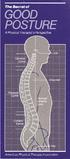 The Secret... T he American Physical Therapy Association would like to share a secret with you. It can help you do more with less effort breathe easier feel great. The secret is about good posture, which
Range of Motion Exercises
 Range of Motion Exercises Range of motion (ROM) exercises are done to preserve flexibility and mobility of the joints on which they are performed. These exercises reduce stiffness and will prevent or at
are you reaching your full potential...
 T h e r e s n o s u c h t h i n g a s b a d e x e r c i s e - j u s t e x e r c i s e d o n e b a d l y FIT for sport are you reaching your full potential... These tests are a series of exercises designed
Cervical Exercise: How important is it? What can be done? The Backbone of Spine Treatment. North American Spine Society Public Education Series
 Cervical Exercise: The Backbone of Spine Treatment How important is it? What can be done? North American Spine Society Public Education Series Important: If you have had an accident that started your neck
Safe Lifting and Carrying
 PART 1 Basic Lifts Proper lifting and handling will help protect against injury and make your job easier. It takes training and practice to do it right. The following are basic steps in safe lifting and
Don t. Hamstrings. Calf Muscles. both legs 2-3 times. stretch is felt in the back of the calf. Repeat with both legs 2-3 times.
 Remember to: Warm-up your muscles first before stretching (e.g. stretch after walking). Stretch until you feel mild discomfort, not pain. Never bounce or force a stretch. Hold the stretch for 10-30 seconds
12. Physical Therapy (PT)
 1 2. P H Y S I C A L T H E R A P Y ( P T ) 12. Physical Therapy (PT) Clinical presentation Interventions Precautions Activity guidelines Swimming Generally, physical therapy (PT) promotes health with a
BRUGGER'S POSTURAL RELIEF EXERCISE
 BRUGGER'S POSTURAL RELIEF EXERCISE Brugger's Postural Relief Exercise strengthens your muscles. lt promotes stability and relaxes tight muscles that tighten due to postural stress (see Figure 2). Check
Rehabilitation. Rehabilitation. Walkers, Crutches, Canes
 Walkers, Crutches, Canes These devices provide support through your arms to limit the amount of weight on your operated hip. Initially, after a total hip replacement you will use a walker to get around.
Rehabilitation after shoulder dislocation
 Physiotherapy Department Rehabilitation after shoulder dislocation Information for patients This information leaflet gives you advice on rehabilitation after your shoulder dislocation. It is not a substitute
ERGONOMICS. Improve your ergonomic intelligence by avoiding these issues: Awkward postures Repetitive tasks Forceful exertions Lifting heavy objects
 ERGONOMICS The goal of ergonomics is to reduce your exposure to work hazards. A hazard is defined as a physical factor within your work environment that can harm your body. Ergonomic hazards include working
Passive Range of Motion Exercises
 Exercise and ALS The physical or occupational therapist will make recommendations for exercise based upon each patient s specific needs and abilities. Strengthening exercises are not generally recommended
Hip Conditioning Program. Purpose of Program
 Prepared for: Prepared by: OrthoInfo Purpose of Program After an injury or surgery, an exercise conditioning program will help you return to daily activities and enjoy a more active, healthy lifestyle.
Injuries from lifting, loading, pulling or pushing can happen to anyone in any industry. It is important to be aware of the risks in your workplace.
 Workplace safety: lifting One of the biggest concerns in the workplace is lifting and loading. When you lift something, the load on your spine increases and your spine can only bear so much before it is
Work Conditioning Natural Progressions By Nancy Botting, Judy Braun, Charlene Couture and Liz Scott
 Work Conditioning Natural Progressions By Nancy Botting, Judy Braun, Charlene Couture and Liz Scott How a non-traditional, geared-to-work treatment is returning injured workers to full duties quickly,
Interpreting Physical Therapy Notes
 Interpreting Physical Therapy Notes Sending a patient to physical therapy does not always guarantee that they are going to receive the same treatment. In fact, the same patient with the same diagnosis
SAFETY GUIDANCE MATERIAL
 SAFETY GUIDANCE MATERIAL SAFETY MANAGEMENT MONDAY MARCH 23,GUIDANCE 2015 This safety resource was written for the scrap industry by the scrap industry and was developed to assist you in making your scrap
Chief Executive Office Risk Management Division P.O. Box 1723, Modesto, CA 95354 Phone (209) 525-5710 Fax (209) 525-5779
 Employer: Occupation: Classification: Company Contact: Analysis Provided By: Stanislaus County Licensed Vocational Nurse Licensed Vocational Nurse I, II Risk Management 1010 10 th Street Modesto, California
Lumbar/Core Strength and Stability Exercises
 Athletic Medicine Lumbar/Core Strength and Stability Exercises Introduction Low back pain can be the result of many different things. Pain can be triggered by some combination of overuse, muscle strain,
Prepared by: Kaitlin MacDonald, MOT, OTR/L 1, Stephanie Ramey, MS, OTR/L 1, Rebecca Martin, OTR/L, OTD 1 and Glendaliz Bosques 1,2, MD
 1 The Relationship between Power and Manual Wheelchair Mobility and Upper Extremity Pain in Youths with Low Level Cervical Spinal Cord Injury Prepared by: Kaitlin MacDonald, MOT, OTR/L 1, Stephanie Ramey,
MOON SHOULDER GROUP. Rotator Cuff Home Exercise Program. MOON Shoulder Group
 MOON Shoulder Group For information regarding the MOON Shoulder Group, talk to your doctor or contact: Rosemary Sanders 1215 21 st Avenue South 6100 Medical Center East Vanderbilt University Medical Center
Anterior Cruciate Ligament Reconstruction Rehabilitation Protocol
 The First Two Weeks After Surgery You will go home with crutches and be advised to use ice. Goals 1. Protect reconstruction 2. Ensure wound healing 3. Maintain full knee extension 4. Gain knee flexion
Injury Prevention for the Back and Neck
 Injury Prevention for the Back and Neck www.csmr.org We have created this brochure to provide you with information regarding: Common Causes of Back and Neck Injuries and Pain Tips for Avoiding Neck and
FRNSW Physical Aptitude Test Candidate Preparation Guide
 FRNSW Physical Aptitude Test Candidate Preparation Guide TABLE OF CONTENTS PART 1 Introduction & General s for Your Training Program PART 2 Physical Activity Readiness Questionnaire (PAR Q) PART 3 Functional
Position Description Questionnaire
 Position Description Questionnaire To the Employee: This written information is of great value in understanding and evaluating the duties and responsibilities of the job that you presently hold. These
Rotator Cuff Home Exercise Program MOON SHOULDER GROUP
 Rotator Cuff Home Exercise Program MOON SHOULDER GROUP Introduction The MOON Shoulder group is a Multi-center Orthopaedic Outcomes Network. In other words, it is a group of doctors from around the country
Health and Safety Initial Induction Training. Manual Handling
 Health and Safety Initial Induction Training Manual Handling This training has been designed to provide information to help you understand the problems associated with the manual handling of loads and
adj., departing from the norm, not concentric, utilizing negative resistance for better client outcomes
 Why Eccentrics? What is it? Eccentric adj., departing from the norm, not concentric, utilizing negative resistance for better client outcomes Eccentrics is a type of muscle contraction that occurs as the
Mike s Top Ten Tips for Reducing Back Pain
 Mike s Top Ten Tips for Reducing Back Pain The following article explains ways of preventing, reducing or eliminating back pain. I have found them to be very useful to myself, my clients and my patients.
THE BIG SIX. Six Best Volleyball Strength Training Exercises. By Dennis Jackson, CSCS www.strength-and
 THE BIG SIX Six Best Volleyball Strength Training Exercises By Dennis Jackson, CSCS www.strength-and and-power power-for for-volleyball.com THE SQUAT What it is The two most common squatting exercises
Lumbar Disc Herniation/Bulge Protocol
 Lumbar Disc Herniation/Bulge Protocol Anatomy and Biomechanics The lumbar spine is made up of 5 load transferring bones called vertebrae. They are stacked in a column with an intervertebral disc sandwiched
Bourassa and Associates Rehabilitation Centre Multidisciplinary Musculoskeletal Functional Rehabilitative Services
 Slide 1 Bourassa and Associates Rehabilitation Centre Multidisciplinary Musculoskeletal Functional Rehabilitative Services Slide 2 Introduction To Rehabilitation Professionals Physical Therapy Occupational
Do s and Don ts with Low Back Pain
 Do s and Don ts with Low Back Pain Sitting Sit as little as possible and then only for short periods. Place a supportive towel roll at the belt line of the back especially when sitting in a car. When getting
Rehabilitation Documentation and Proper Coding Guidelines
 Rehabilitation Documentation and Proper Coding Guidelines Purpose: 1) Develop a guide for doctors in South Dakota to follow when performing reviews on rehabilitation cases. 2) Provide doctors in South
Understanding Work Conditioning and Hardening
 Understanding Work Conditioning and Hardening David Raptosh, MA, OTR/L - Regional Director of - WorkStrategies Ashley Newcomer, MOT, OTR/L WorkStrategies Coordinator Select Medical Outpatient Division
Rehabilitation of Sports Hernia
 Rehabilitation of Sports Hernia (Involving Adductor Tenotomy, Ilioinguinal Neurectomy and Osteitis Pubis) An appendix follows this protocol for examples of exercises in each phase of rehabilitation. There
Manual Handling- The Whole Story!
 Manual Handling- The Whole Story! For Responsible Managers and Assessors Course Notes Mark Mallen Group Health and Safety Manager July 2005 Course Content 1 What is Manual Handling? 2 What s the Problem?
Info. from the nurses of the Medical Service. LOWER BACK PAIN Exercise guide
 Info. from the nurses of the Medical Service LOWER BACK PAIN Exercise guide GS/ME 03/2009 EXERCISE GUIDE One of the core messages for people suffering with lower back pain is to REMAIN ACTIVE. This leaflet
total hip replacement
 total hip replacement EXCERCISE BOOKLET patient s name: date of surgery: physical therapist: www.jointpain.md Get Up and Go Joint Program Philosophy: With the development of newer and more sophisticated
Sit stand desks and musculo skeletal health. Katharine Metters
 Sit stand desks and musculo skeletal health Katharine Metters Topics Sitting Standing Movement and activity Work and human change Sitting uses less energy Sitting provides support for the body to reduce
Lifting and Handling, a Risk Assessor s Guide
 Lifting and Handling, a Risk Assessor s Guide 1 Introduction Unfortunately manual handling accidents are all too common, and can lead to life-long problems with bad backs. While they do not have the same
Post-Operative Exercise Program
 785 E. Holland Spokane, WA 99218 (877) 464-1829 (509) 466-6393 Fax (509) 466-3072 Knee Joint Replacement Surgery Weeks 1 through 6 The goal of knee replacement surgery is to return you to normal functional
KNEE EXERCISE PROGRAM
 KNEE PROGRAM INTRODUCT ION Welcome to your knee exercise program. The exercises in the program are designed to improve your knee stability and strength of the muscles around your knee and hip. The strength
EXERCISE DESCRIPTIONS PHASE I Routine #1
 EXERCISE DESCRIPTIONS PHASE I Routine #1 Hip Mobility Exercise: Forward Out-In Movement: Raise leg out to the side, and rotate around to the front. Keep shin/thigh angle at 90 degrees. Exercise: Backward
Functional Job Requirements For the Position of Business Service Manager Department of Education, Training and the Arts Queensland
 Department of Education, Training and the Arts Queensland This document was developed for the following purposes: assisting in the development of rehabilitation programs for injured or ill employees, and
General Guidelines. Neck Stretch: Side. Neck Stretch: Forward. Shoulder Rolls. Side Stretch
 Stretching Exercises General Guidelines Perform stretching exercises at least 2 3 days per week and preferably more Hold each stretch for 15 20 seconds Relax and breathe normally Stretching is most effective
Patellofemoral/Chondromalacia Protocol
 Patellofemoral/Chondromalacia Protocol Anatomy and Biomechanics The knee is composed of two joints, the tibiofemoral and the patellofemoral. The patellofemoral joint is made up of the patella (knee cap)
How To Stretch Your Body
 Exercise Module A New Leaf Choices for Healthy Living University of North Carolina at Chapel Hill 2007 Center for Health Promotion and Disease Prevention Physical Activity Exercises for Keeping Active
The Insall Scott Kelly Center for Orthopaedics and Sports Medicine 210 East 64th Street, 4 th Floor, New York, NY 10065
 ANTERIOR CRUCIATE LIGAMENT RECONSTRUCTION POST-OPERATIVE REHABILITATION PROTOCOL 2003 AUTOGRAFT BONE-PATELLA TENDON-BONE and ALLOGRAFT PROTOCOL PHASE I-EARLY FUNCTIONAL (WEEKS 1-2) Goals: 1. Educate re:
Body Mechanics for Mammography Technologists
 Body Mechanics for Mammography Technologists Diane Rinella RT(R)(M)(BD)RDMS(BR)CDT Objectives Recognize causes and risk factors for Musculoskeletal Disorders (MSDs) for mammography technologists Understand
Progression to the next phase is based on Clinical Criteria and/or Time Frames as appropriate.
 BRIGHAM AND WOMEN S HOSPITAL Department of Rehabilitation Services Phyp Physical Therapy Total Hip Arthroplasty/ Hemiarthroplasty Protocol: The intent of this protocol is to provide the clinician with
Chief Executive Office Risk Management Division P.O. Box 1723, Modesto, CA 95354 Phone (209) 525-5710 Fax (209) 525-5779
 Employer: Occupation: Company Contact: Analysis Provided By: Stanislaus County Nursing Assistant (Medical Assistant) Risk Management 1010 10 th Street Modesto, California 95354 (209) 525-5770 Date: January
APPLICATION FOR PERMANENT DISABILITY
 APPLICATION FOR PERMANENT DISABILITY (This application form should be completed with a nomination form and the application form for a retirement benefit). If the benefit is approved you have to retire
Shoulders (free weights)
 Dumbbell Shoulder Raise Dumbbell Shoulder Raise 1) Lie back onto an incline bench (45 or less) with a DB in each hand. (You may rest each DB on the corresponding thigh.) 2) Start position: Bring the DB
Review Last Lecture. Definition of Gait? What are the 2 phases of gait? 5 parts of stance phase? 3 parts of swing phase?
 Abnormal Gait Review Last Lecture Definition of Gait? What are the 2 phases of gait? 5 parts of stance phase? 3 parts of swing phase? Abnormal Gait An altered gait pattern reflecting any lower extremity
Do you sit at a desk all day? Does your 9 to 5 leave no time for structured exercise..?
 Do you sit at a desk all day? Does your 9 to 5 leave no time for structured exercise..? Staying healthy at work is easier than you might think: Try building the following desk based exercises into your
CONSTRUCTION WORK and CUMULATIVE TRAUMA DISORDERS
 Connecticut Department of Public Health Environmental and Occupational Health Assessment Program 410 Capitol Avenue MS # 11OSP, PO Box 340308 Hartford, CT 06134-0308 (860) 509-7740 http://www.ct.gov/dph
Medical Office Assistant
 Career Service Authority Medical Office Assistant Page 1 of 5 GENERAL STATEMENT OF CLASS DUTIES Teams with health care professionals to provide direct patient care to patients/clients in a clinic setting.
LUBA Care Prompt Return to Work Program
 LUBA Care Prompt Return to Work Program Introduction At LUBA Workers Comp, our intent in regard to Prompt Return to Work (PRTW) is to create a situation which benefits all parties involved. A PRTW Program
Early Return to Work - A Practical Guide
 W O R K E R S C O M P E N S A T I O N I N S U R A N C E to Work an Early Return to Work Introduction Comprehensive Early Return programs have proven to be highly effective in containing and reducing the
ANKLE STRENGTHENING INTRODUCTION EXERCISES SAFETY
 ANKLE STRENGTHENING INTRODUCTION Welcome to your Ankle Strengthening exercise program. The exercises in the program are designed to improve your ankle strength, fitness, balance and dynamic control. The
Biomechanical Analysis of the Deadlift (aka Spinal Mechanics for Lifters) Tony Leyland
 Biomechanical Analysis of the Deadlift (aka Spinal Mechanics for Lifters) Tony Leyland Mechanical terminology The three directions in which forces are applied to human tissues are compression, tension,
Archery: Coaching Young Athletes. Developing Fundamental Movement Skills
 Archery: Coaching Young Athletes Developing Fundamental Movement Skills Make a long term commitment Long Term Athlete Development Long Term Athlete Development (LTAD) is a strategy for helping youngsters
Strength Training HEALTHY BONES, HEALTHY HEART
 Strength Training HEALTHY BONES, HEALTHY HEART No matter what your age, strength training can improve your bone health and your balance. As we age, our bones lose both tissue and strength. This condition
Notice of Independent Review Decision DESCRIPTION OF THE SERVICE OR SERVICES IN DISPUTE:
 Notice of Independent Review Decision DATE OF REVIEW: 08/15/08 IRO CASE #: NAME: DESCRIPTION OF THE SERVICE OR SERVICES IN DISPUTE: Determine the appropriateness of the previously denied request for physical
PERFORMANCE RUNNING. Piriformis Syndrome
 Piriformis Syndrome Have you started to experience pain in your hip or down your leg while beginning or advancing your fitness program? This pain may be stemming from the piriformis muscle in your hip.
An Effective Exercise Prescription for Ataxia. Polly Swingle, PT The Recovery Project, LLC www.therecoveryproject.net 734-953-1745
 An Effective Exercise Prescription for Ataxia Polly Swingle, PT The Recovery Project, LLC www.therecoveryproject.net 734-953-1745 1 Are you Functional? Sit to stand from a chair without the use of your
Basic Stretch Programme 3. Exercise Circuit 4
 Basic Stretch Programme 3 Exercise Circuit 4 2 1 Calves Stand approximately 1 metre away from wall with legs straight and heels on floor. Step and lean forward and slowly push hips towards wall. Should
Exercises for Low Back Injury Prevention
 DIVISION OF AGRICULTURE RESEARCH & EXTENSION University of Arkansas System Family and Consumer Sciences Increasing Physical Activity as We Age Exercises for Low Back Injury Prevention FSFCS38 Lisa Washburn,
Back Safety Program POLICY AND PROCEDURE
 Back Safety Program POLICY AND PROCEDURE This is (Enter Company Name Here) Back Safety Program. It meets all OSHA requirements and applies to all our work operations. (Enter Name Here) will be responsible
Ankle Sprain. Information and Rehabilitation. Grade II. Grade I. Grade III
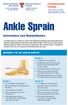 514-412-4400, ext. 23310 2300 Tupper street, C-831, Montreal (Quebec) H3H 1P3 Ankle Sprain Information and Rehabilitation An ankle sprain is a stretch or a tear of the ligaments (bands of tissue that hold
Current Concepts of Low Back Pain. Terry L. Grindstaff, PhD, PT, ATC, SCS, CSCS
 Current Concepts of Low Back Pain Terry L. Grindstaff, PhD, PT, ATC, SCS, CSCS 28% population reports LBP in past 3 months (CDC 2010) 60% recurrence rate (Turner et al, 1992) Low Back Pain Low Back Pain
Accident/Incident & Workers Compensation. Packet
 Accident/Incident & Workers Compensation Packet Accident/Incident & Workers Compensation Program The following information is to assist you in completing the Accident/Incident & Workers Compensation Program
Administrative Procedures Memorandum A4007
 Page 1 of 9 Date of Issue May 2015 Original Date of Issue March 2011 Subject WORKPLACE SAFETY AND INSURANCE BOARD (WSIB) CLAIMS References Links Contact Workplace Safety & Insurance Act (Ontario) Human
PREOPERATIVE: POSTOPERATIVE:
 PREOPERATIVE: ACL RECONSTRUCTION RECOVERY & REHABILITATION PROTOCOL If you have suffered an acute ACL injury and surgery is planned, the time between injury and surgery should be used to regain knee motion,
Mechanics of the Human Spine Lifting and Spinal Compression
 Mechanics of the Human Spine Lifting and Spinal Compression Hamill and Knutzen: Chapter 7 Nordin and Frankel: Ch. 10 by Margareta Lindh Hall: Ch. 9 (more muscle anatomy detail than required) Low Back Pain