
Interpreting Physical Therapy Notes
|
|
|
- Baldwin Merritt
- 9 years ago
- Views:
Transcription
1 Interpreting Physical Therapy Notes Sending a patient to physical therapy does not always guarantee that they are going to receive the same treatment. In fact, the same patient with the same diagnosis sent to varying practices most likely will receive a variety of different treatment techniques. While all aimed at decreasing pain, increasing strength, and improving the patients function, each therapist has their own different methods and techniques in which they feel will lead to the patient s recovery. Even when different therapists see the same patient in the same therapy practice, they often come up with a different plan of care for the patient to follow. Some therapists may choose a modality oriented therapy approach, while others advocate exercises. Some therapists are overly aggressive with their patients and some insist on passive therapies. Many work injury patients endure an industrial rehabilitation approach while others go through more hands-on therapy. Most therapies have been proven to be successful and often if one approach is not working the therapist will switch gears to concentrate on a different technique. No one can say for sure which therapy technique would be most appropriate until the patient begins therapy. Since there are so many different types of physical therapy, all aimed at accomplishing similar goals often it is the case manager who finds themselves attempting to determine whether or not the therapy that the patient is receiving is justified, necessary, and appropriate. Reading therapy notes Scrutinizing Physical Therapy notes is an expected part of a case manager s job description. The case manager might need to estimate return to work dates or provide assistance in preparing the patient for return to work. Often, the case manager can provide input to the physician regarding their therapy. All to often this task becomes a struggle as medical terminology, medical abbreviations and what appears to be pure hieroglyphics get in the way. Most physical therapy notes are written in a basic S.O.A.P. note format. The S.O.A.P. standing for Subjective, Objective, Analysis/Assessment and Plan. While not always defined by the letter, most PT notes will contain the S.O.A.P. information within the note. The case manager should be able to not only read the note, but interpret whether the correct course of action is being followed.

2 S = Subjective: This is the information that the patient tells the therapist. For example, I had a much better night sleep last night is a subjective comment made without any therapist interpretation. There should be no analysis or interpretation in this section. Try to look for the subjective portion of the note to be specific, such as Pain = Level 4/10 or patient states he has made a 30% improvement overall. The more specific this section of the note is, the easier the patient s subjective input will be to follow throughout the course of their therapy. O = Objective: This is the section of the note where any concrete measurements and treatments performed are recorded. This is the nondisputable portion of the record. For example, an objective section might state 1) Worked on proper positioning for sleeping 2) Lumbar flexion to 45 degrees today 3) Ultrasound 1. 5 w/cm2 for 10 minutes to lumbar spine with patient in prone. This section must be specific enough for another therapist to pick up and treat the patient should their treating therapist be out for the day. A= Analysis/Assessment: In this analysis section, the therapists put their own thoughts in writing, such as Patient appears to be improving or question patients compliance with home program. None of this information came directly from the patient, but is extremely relevant as this section can tell you what the therapists impression of the situation is. The case manager should look for functional statements that may help determine if the therapy is appropriate. Tolerated treatment well is a commonly used waste of words. It is nice to know that the patient tolerated that day s treatment well, but what is really important is whether or not the patient is progressing through the overall therapy plan. P = Plan: This is where the therapist writes what they would like to do going forward. If the treatment is to continue following the original plan from the evaluation/plan of care, then it might just say Continue with current plan. If the therapist would like to change a course of action, you might see Begin more functional lifting activities next visit written in this section. As reimbursement issues have decreased the time a therapist is allowed to spend with a patient, note writing has taken a turn for the basic. Now pressed for time, the therapist must write only the basic details in a note often using charts and flow sheets to reduce the time spent writing a note. These charts and graphs can often be more helpful than sheets of writing in interpreting a physical therapy note. While a perfectly legal (but non-functional) therapy note might read:

3 S = O = A = P = Better. US, Massage, Hamstring stretch Tol. Well Cont. A good, functional therapy note should read more like this: S = Pt. States that he was able to lift his 20 pound son last night. He rates his pain at a 3/10 and feels he has made 60% improvement overall. O = 1) Interferential electrical stimulation Hz X-set up through pain x 20min. in prone. 2) Educated patient on good body mechanics with 10lb. Box lift. For 20 reps. 3) Prone lumbar extensions x 30 reps. A = Appears to be muscular, patient responding well to treatment, patient appears compliant with home program. P = Continue therapeutic exercise progression towards work simulation. Caution patient needs constant verbal cueing with body mechanics. While reading through the physical therapy note, it is helpful to understand the PT terminology and short-hand. While there is no official standard in PT note writing, many PT s have adopted some of these common abbreviations. In recent years of declining reimbursement, PT s have more patients on their schedules and have less time to write, therefore, they have come to rely more and more upon some standard abbreviations to speed up their note writing. Often terminology is used interchangeably although often has different meanings. The Dictionary of Occupational Titles (1) has standardized industrial rehabilitation terminology by providing the following definitions for work restrictions: Work Restriction Lifting Max Carrying Frequently Sedentary work 10lbs. 10lbs. Light work 20lbs. 10lbs. Medium work 50lbs. 25lbs. Heavy work 100lbs. 50lbs. Very heavy work Lifting over 100lbs. Time restrictions have also been standardized: (1) No restrictions Occasionally activity or condition can be performed up to 1/3 of the time Frequently activity or condition can be performed from 1/3 to 2/3 of the time. Constantly activity or condition can be performed 2/3 or more of the time.

4 A therapist using these standardized terms when addressing a patient s ability to return to work will help decrease the chance of any communication problems between the therapist, case manager and employer. Looking for Function Medicare requires that all physical therapy performed on a patient be intended to improve the patient s function. Physical therapy note writing must reflect function in order for the physical therapy to be reimbursed. In order to determine whether a course of therapy is appropriate for a patient, make sure that the therapist is using return to function as their guiding light during the therapy. A therapy evaluation, while noting objective physical findings should also note functional limitations. For example: Physical Findings Functional Limitations 2/5 ant. Tibialis strength Can not clear foot while walking 10 deg external rotation of unable to elevate arm past shoulder level shoulder and unable to perform overhead work duties The therapist should be able to translate the functional limitations into specific goals of therapy. Therapy goals should be reasonable, related to function and easily understood. There must be an expectation of return to function in a reasonable period of time. For example: Functional limitations Functional Goal Can not elevate arm past Elevate arm to dress self independently by 2 weeks Shoulder level The therapist should then translate the goals into effective treatment programs. For example: Functional Goal Treatment Elevate arm to dress self Shoulder mobilization, shoulder range of motion independently by 2 weeks home program, modified lifting techniques for work The therapy program should be continually heading towards the original functional goal. For example, a physical goal might be to reduce a patient s pain, but the functional goal should be to return them to lifting 25 pound boxes at work. Although often important to achieve the physical goal before achieving the functional one, the therapist should be always keeping the functional goal as a part of the design of the treatment program. In our example, even though the patient is experiencing a pain level of 5/10, they may still be able to perform lumbar stabilization exercise in an aquatic therapy pool or practice

5 good body mechanics with an empty box. It is important that the treatment being performed be oriented towards achieving a functional outcome. Denying Coverage Repeated treatments over and over with little to no improvement should be a red flag for a case manager. Ultrasound, when used appropriately can be a tremendous asset to a therapist, but once the patient progresses to a more active phase of therapy, ultrasound treatments can usually be discarded. Continuous hands-on treatments like massage can be abused if they are not used concurrently with an active or exercise oriented treatments. Often patients, who like the feel of the massage during the treatment, will resist doing the active (harder) therapy. Massage techniques should not be allowed to continue indefinitely without the addition of muscular strengthening activities. Poor demonstration of compliance by the patient should be another cause for concern. The therapy clinic should be documenting both the attended and the missed treatment visits. If the therapy is ordered 3 times per week and the patient is missing every other appointment, then the course of therapy is being severely limited by the patient, and a positive outcome will be harder if not impossible to achieve. Therapy at home should be an extension or addition to what is performed in the clinic. Question a therapist who does not issue a home program of exercises and/or activities for the patient. A therapist who sees a patient for 3 hours per week can not expect to make permanent lifestyle changes with the patient unless they are incorporating some of what the patient is doing in therapy into their home environment. Most importantly, watch therapy documentation for signs of improving function. For example, if difficulty sleeping is presented as a problem, then some position education and a cervical pillow would be appropriate therapy aimed at getting an improved functional outcome. The therapist might be contributing to the patient s problem by not addressing sleep as a functional issue. If all of the therapy is aimed at the patient s pain, then it is likely that functional issues are being missed by the therapist. The Importance of Communication Open lines of communication with the therapist. The physical therapist is highly trained to design often complex treatment programs that must take into account physical and functional goals, including return to work goals. In addition, it is important to realize that the program that has been designed also reflects the patient s past medical and psychological history as well as tissue healing time. Ligamentous injury may take 3 to 6

6 weeks to heal, muscle tissue may take 2-3 weeks, and bone injuries can take up to 12 weeks for the tissue to heal enough to start an aggressive rehabilitation program. So any time you begin to question the design of a rehabilitation program, start by questioning the therapist themselves and opening up a line of communication. The benefits of a highly involved communicative case manager are felt by the therapist, the physician, the employer and most importantly the patient, helping them to achieve the best possible outcome. Bibliography 1. Dictionary of Occupational Titles, Vol. 1, US Department of Labor, NTC Publishing Group, April 1992.

7

Rotator Cuff Repair Protocol
 Rotator Cuff Repair Protocol Anatomy and Biomechanics The shoulder is a wonderfully complex joint that is made up of the ball and socket connection between the humerus (ball) and the glenoid portion of
UHealth Sports Medicine
 UHealth Sports Medicine Rehabilitation Guidelines for Arthroscopic Rotator Cuff Repair Type 2 Repairs with Bicep Tenodesis (+/- subacromial decompression) The rehabilitation guidelines are presented in
OUTPATIENT PHYSICAL AND OCCUPATIONAL THERAPY PROTOCOL GUIDELINES
 OUTPATIENT PHYSICAL AND OCCUPATIONAL THERAPY PROTOCOL GUIDELINES General Therapy Guidelines 1. Therapy evaluations must be provided by licensed physical and/or occupational therapists. Therapy evaluations
Combined SLAP with Arthroscopic Rotator Cuff Repair Large to Massive Tears = or > 3 cm
 Combined SLAP with Arthroscopic Rotator Cuff Repair Large to Massive Tears = or > 3 cm *It is the treating therapist s responsibility along with the referring physician s guidance to determine the actual
Bankart Repair For Shoulder Instability Rehabilitation Guidelines
 Bankart Repair For Shoulder Instability Rehabilitation Guidelines Phase I: The first week after surgery. Goals:!! 1. Control pain and swelling! 2. Protect the repair! 3. Begin early shoulder motion Activities:
ARTHROSCOPIC ROTATOR CUFF REPAIR PROTOCOL (DR. ROLF)
 ARTHROSCOPIC ROTATOR CUFF REPAIR PROTOCOL (DR. ROLF) Phase I Immediate Post Surgical Phase (Weeks 1-4): Maintain integrity of repair Diminish pain and inflammation Prevent muscular inhibition Independent
IMGPT: Exercise After a Heart Attack 610 944 8140 805 N. RICHMOND ST (Located next to Fleetwood HS) Why is exercise important following a heart
 Why is exercise important following a heart attack? Slow progression back into daily activity is important to strengthen the heart muscle and return blood flow to normal. By adding aerobic exercises, your
What are Core Muscles?... 2. A Healthy Lumbar Spine...3. What is Low Back Pain?...4. Rehabilitation...6. Stages of Rehabilitation...
 Table of Contents What are Core Muscles?... 2 A Healthy Lumbar Spine...3 What is Low Back Pain?...4 Rehabilitation...6 Stages of Rehabilitation...7 Pain Management....................... 8 Heat/Ice What
SLAP Repair Protocol
 SLAP Repair Protocol Anatomy and Biomechanics The shoulder is a wonderfully complex joint that is made up of the ball and socket connection between the humerus (ball) and the glenoid portion of the scapula
Coding and Billing for Physical Therapy and Occupational Therapy Services
 Coding and Billing for Physical Therapy and Occupational Therapy Services -CPT Codes-97000 series -Timed Based Codes -Service Based Codes -CMS - "8" Minute Rule -ICD-9 codes -CCI edits -HCPCS(DME) MODALITIES
Physical & Occupational Therapy
 In this section you will find our recommendations for exercises and everyday activities around your home. We hope that by following our guidelines your healing process will go faster and there will be
Injury Prevention for the Back and Neck
 Injury Prevention for the Back and Neck www.csmr.org We have created this brochure to provide you with information regarding: Common Causes of Back and Neck Injuries and Pain Tips for Avoiding Neck and
Rotator Cuff Surgery: Post-Operative Protocol for Mini-Open or Arthroscopic Rotator Cuff Repair
 Rotator Cuff Surgery: Post-Operative Protocol for Mini-Open or Arthroscopic Rotator Cuff Repair Considerations: 1. Mini-Open - shoulder usually assessed arthroscopically and acromioplasty is usually performed.
ROTATOR CUFF HOME EXERCISE PROGRAM
 ROTATOR CUFF HOME EXERCISE PROGRAM Contact us! Vanderbilt Sports Medicine Medical Center East, South Tower, Suite 3200 1215 21st Avenue South Nashville, TN 37232-8828 For more information on this and other
Cervical Fusion Protocol
 REHABILITATION DEPARTMENT Cervical Fusion Protocol The following protocol for physical therapy rehabilitation was designed based on the typical patient seen at the Texas Back Institute for the procedure
Chapter 24: Physical Medicine Services
 Payment Policies for Healthcare Services Provided to Injured Workers and Crime Victims Effective July 1, 2014 Link: Look for possible updates and corrections to these payment policies at: http://www.lni.wa.gov/claimsins/providers/billing/feesched/2014/
North Shore Shoulder Dr.Robert E. McLaughlin II 1-855-SHOULDER 978-969-3624 Fax: 978-921-7597 www.northshoreshoulder.com
 North Shore Shoulder Dr.Robert E. McLaughlin II 1-855-SHOULDER 978-969-3624 Fax: 978-921-7597 www.northshoreshoulder.com Physical Therapy Protocol for Patients Following Shoulder Surgery -Rotator Cuff
Rehabilitation of Sports Hernia
 Rehabilitation of Sports Hernia (Involving Adductor Tenotomy, Ilioinguinal Neurectomy and Osteitis Pubis) An appendix follows this protocol for examples of exercises in each phase of rehabilitation. There
LUBA Care Prompt Return to Work Program
 LUBA Care Prompt Return to Work Program Introduction At LUBA Workers Comp, our intent in regard to Prompt Return to Work (PRTW) is to create a situation which benefits all parties involved. A PRTW Program
Passive Range of Motion Exercises
 Exercise and ALS The physical or occupational therapist will make recommendations for exercise based upon each patient s specific needs and abilities. Strengthening exercises are not generally recommended
Brachial Plexus Palsy
 Patient and Family Education Brachial Plexus Palsy A Therapy Guide for Your Baby Brachial Plexus Palsy is caused by trauma to the nerves of the arm. This trauma may have caused muscle weakness, lack of
The type of cancer Your specific treatment Your pre training levels before diagnose (your current strength and fitness levels)
 Exercise and Breast Cancer: Things you can do! Cancer within the fire service is one of the most dangerous threats to our firefighter s health & wellness. According to the latest studies firefighters are
Documentation: Now More Than Ever, Your Reimbursement Depends On It
 Improving Your Documentation : Know What Is Expected By Medicare Or What We Could Have Titled: Documentation: Now More Than Ever, Your Reimbursement Depends On It Rhonda Lane, LOTR Objectives Participants
New York State Workers' Comp Board. Mid and Lower Back Treatment Guidelines. Summary From 1st Edition, June 30, 2010. Effective December 1, 2010
 New York State Workers' Comp Board Mid and Lower Back Treatment Guidelines Summary From 1st Edition, June 30, 2010 Effective December 1, 2010 General Principles Treatment should be focused on restoring
Open Rotator Cuff Repair Rehabilitation Program Methodist Sports Medicine Center, Indianapolis, IN Department of Physical Therapy
 Open Rotator Cuff Repair Rehabilitation Program Methodist Sports Medicine Center, Indianapolis, IN Department of Physical Therapy Rotator Cuff Repair is a surgical procedure utilized for a tear in the
SHOULDER INSTABILITY. E. Edward Khalfayan, MD
 SHOULDER INSTABILITY E. Edward Khalfayan, MD Instability of the shoulder can occur from a single injury or as the result of repetitive activity such as overhead sports. Dislocations of the shoulder are
Anterior Cruciate Ligament Reconstruction Progression Rehabilitation Program By Jenna Hennebry, Erin Stiefel, and Lauren Schmidt
 Anterior Cruciate Ligament Reconstruction Progression Rehabilitation Program By Jenna Hennebry, Erin Stiefel, and Lauren Schmidt Case Study: 18 year old female soccer player Isolated ACL rupture (planted
UTILIZING STRAPPING AND TAPING CODES FOR HEALTH CARE REIMBURSEMENT:
 UTILIZING STRAPPING AND TAPING CODES FOR HEALTH CARE REIMBURSEMENT: A GUIDE TO BILLING FOR SPIDERTECH PRE-CUT APPLICATIONS AND TAPE Billing and coding taping and strapping services can be a complex issue.
Resident will learn independently in addition to scheduled didactics. Learning is centered on the 7 core competencies as follows:
 Educational Goals & Objectives Physical and Occupational Therapies are an important part of patient care. The Physical Therapy rotation, under the supervision of the Director of Rehabilitation, is a one
Lumbar Disc Herniation/Bulge Protocol
 Lumbar Disc Herniation/Bulge Protocol Anatomy and Biomechanics The lumbar spine is made up of 5 load transferring bones called vertebrae. They are stacked in a column with an intervertebral disc sandwiched
Rotator Cuff Pathophysiology. treatment program that will effectively treat it. The tricky part about the shoulder is that it is a ball and
 Rotator Cuff Pathophysiology Shoulder injuries occur to most people at least once in their life. This highly mobile and versatile joint is one of the most common reasons people visit their health care
Range of Motion Exercises
 Range of Motion Exercises Range of motion (ROM) exercises are done to preserve flexibility and mobility of the joints on which they are performed. These exercises reduce stiffness and will prevent or at
Shoulder Arthroscopy Combined Arthoscopic Labrum Repair Rehabilitation Protocol
 LUKE S. CHOI, M.D. 14825 N. Outer Forty Road, Suite 360 Chesterfield, MO 63017 Office: (314) 392-5063 Fax: (314) 336-2571 Shoulder Arthroscopy Combined Arthoscopic Labrum Repair Rehabilitation Protocol
Herniated Lumbar Disc
 Herniated Lumbar Disc North American Spine Society Public Education Series What Is a Herniated Disc? The spine is made up of a series of connected bones called vertebrae. The disc is a combination of strong
Notice of Independent Review Decision DESCRIPTION OF THE SERVICE OR SERVICES IN DISPUTE:
 Notice of Independent Review Decision DATE OF REVIEW: 08/15/08 IRO CASE #: NAME: DESCRIPTION OF THE SERVICE OR SERVICES IN DISPUTE: Determine the appropriateness of the previously denied request for physical
Whiplash Associated Disorder
 Whiplash Associated Disorder Bourassa & Associates Rehabilitation Centre What is Whiplash? Whiplash is a non-medical term used to describe neck pain following hyperflexion or hyperextension of the tissues
Shoulder Tendonitis. Brett Sanders, MD Center For Sports Medicine and Orthopaedic 2415 McCallie Ave. Chattanooga, TN (423) 624-2696
 Shoulder Tendonitis Brett Sanders, MD Center For Sports Medicine and Orthopaedic 2415 McCallie Ave. Chattanooga, TN (423) 624-2696 Shoulder tendinitis is a common overuse injury in sports (such as swimming,
Biceps Tenodesis Protocol
 Department of Rehabilitation Services Physical Therapy The intent of this protocol is to provide the clinician with a guideline of the postoperative rehabilitation course of a patient that has undergone
Shoulder Replacement Surgery
 In What Activities May I Participate After I Recover? Shoulder Replacement Surgery After undergoing shoulder replacement surgery, it is important to have realistic expectations about the types of activities
ARTHROSCOPIC SHOULDER SURGERY REHABILITATION PROTOCOL. SLAP/Posterior Labral Repair
 ARTHROSCOPIC SHOULDER SURGERY REHABILITATION PROTOCOL SLAP/Posterior Labral Repair GENERAL GUIDELINES - The local anesthetic (similar to novacaine) in your shoulder will last 6-12 hours - Start taking
ROTATOR CUFF TEARS SMALL
 LOURDES MEDICAL ASSOCIATES Sean Mc Millan, DO Director of Orthopaedic Sports Medicine & Arthroscopy 2103 Burlington-Mount Holly Rd Burlington, NJ 08016 (609) 747-9200 (office) (609) 747-1408 (fax) http://orthodoc.aaos.org/drmcmillan
William J. Robertson, MD UT Southwestern Orthopedics 1801 Inwood Rd. Dallas, TX 75390-8882 Office: (214) 645-3300 Fax: (214) 3301 billrobertsonmd.
 Arthroscopic Rotator Cuff Repair Postoperative Rehab Protocol Starting the first day after surgery you should remove the sling 3-4 times per day to perform pendulum exercises and elbow/wrist range of motion
Corporate Medical Policy Spinal Manipulation under Anesthesia
 Corporate Medical Policy Spinal Manipulation under Anesthesia File Name: Origination: Last CAP Review: Next CAP Review: Last Review: spinal_manipulation_under_anesthesia 5/1998 1/2015 1/2016 1/2015 Description
PREOPERATIVE: POSTOPERATIVE:
 PREOPERATIVE: ACL RECONSTRUCTION RECOVERY & REHABILITATION PROTOCOL If you have suffered an acute ACL injury and surgery is planned, the time between injury and surgery should be used to regain knee motion,
Treatment Options for Rotator Cuff Tears A Guide for Adults
 Treatment Options for Rotator Cuff Tears A Guide for Adults Is This Guide for Me? YES, if your doctor has told you that you have a rotator cuff tear, which is an injury to one or more of the muscles and
Rehabilitation. Rehabilitation. Walking after Total Knee Replacement. Continuous Passive Motion Device
 Walking after Total Knee Replacement After your TKR, continue using your walker or crutches until your surgeons tells you it is okay to stop using them. When turning with a walker or crutches DO NOT PIVOT
he American Physical Therapy Association would like to share a secret with you. It can help you do more with less effort breathe easier feel great.
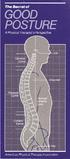 The Secret... T he American Physical Therapy Association would like to share a secret with you. It can help you do more with less effort breathe easier feel great. The secret is about good posture, which
J F de Beer, K van Rooyen, D Bhatia. Rotator Cuff Tears
 1 J F de Beer, K van Rooyen, D Bhatia Rotator Cuff Tears Anatomy The shoulder consists of a ball (humeral head) and a socket (glenoid). The muscles around the shoulder act to elevate the arm. The large
FUNCTIONAL STRENGTHENING
 FUNCTIONAL STRENGTHENING *This group of exercises are designed to increase leg and core endurance and stability as related to bipedal functional activities. *Perform this program for 4-6 weeks. It is ideal
MOON SHOULDER GROUP. Rotator Cuff Home Exercise Program. MOON Shoulder Group
 MOON Shoulder Group For information regarding the MOON Shoulder Group, talk to your doctor or contact: Rosemary Sanders 1215 21 st Avenue South 6100 Medical Center East Vanderbilt University Medical Center
A Patient s Guide to Guyon s Canal Syndrome
 A Patient s Guide to DISCLAIMER: The information in this booklet is compiled from a variety of sources. It may not be complete or timely. It does not cover all diseases, physical conditions, ailments or
Hip Conditioning Program. Purpose of Program
 Prepared for: Prepared by: OrthoInfo Purpose of Program After an injury or surgery, an exercise conditioning program will help you return to daily activities and enjoy a more active, healthy lifestyle.
Rotator Cuff Home Exercise Program MOON SHOULDER GROUP
 Rotator Cuff Home Exercise Program MOON SHOULDER GROUP Introduction The MOON Shoulder group is a Multi-center Orthopaedic Outcomes Network. In other words, it is a group of doctors from around the country
ACCELERATED REHABILITATION PROTOCOL FOR POST OPERATIVE POSTERIOR CRUCIATE LIGAMENT RECONSTRUCTION DR LEO PINCZEWSKI DR JUSTIN ROE
 ACCELERATED REHABILITATION PROTOCOL FOR POST OPERATIVE POSTERIOR CRUCIATE LIGAMENT RECONSTRUCTION DR LEO PINCZEWSKI DR JUSTIN ROE January 2005 Rationale of Accelerated Rehabilitation Rehabilitation after
Review the different reasons for documentation and goals for each Discuss strategies to prove medical necessity for treatment Review documentation
 Aaron Clark MS, ATC There are no conflicts of interest and information will be presented fairly and without bias No commercial support has been given for this presentation The focus of this presentation
Rehabilitation. Rehabilitation. Walkers, Crutches, Canes
 Walkers, Crutches, Canes These devices provide support through your arms to limit the amount of weight on your operated hip. Initially, after a total hip replacement you will use a walker to get around.
Sciatica Yuliya Mutsa PTA 236
 Sciatica Yuliya Mutsa PTA 236 Sciatica is a common type of pain affecting the sciatic nerve, which extends from the lower back all the way through the back of the thigh and down through the leg. Depending
THE MEDICAL TREATMENT GUIDELINES
 THE MEDICAL TREATMENT GUIDELINES I. INTRODUCTION A. About the Medical Treatment Guidelines. On December 1, 2010, the NYS Workers' Compensation Board is implementing new regulations and Medical Treatment
B. TED MAURER, MD POSTOPERATIVE REHABILITATION PROTOCOL TOTAL KNEE ARTHROPLASTY
 B. TED MAURER, MD POSTOPERATIVE REHABILITATION PROTOCOL TOTAL KNEE ARTHROPLASTY Goals addressed prior to discharge from hospital setting: Independence with bed mobility, transfers (supine to sit and sit
Strength Training for the Shoulder
 Strength Training for the Shoulder This handout is a guide to help you safely build strength and establish an effective weighttraining program for the shoulder. Starting Your Weight Training Program Start
Recent Injuries. www.physiofirst.org.uk
 Recent Injuries www.physiofirst.org.uk A recent or acute injury can occur suddenly during any activity, from tripping over the kerb, to making the bed, to playing sport. In some cases, an acute injury
Knee Conditioning Program. Purpose of Program
 Prepared for: Prepared by: OrthoInfo Purpose of Program After an injury or surgery, an exercise conditioning program will help you return to daily activities and enjoy a more active, healthy lifestyle.
MINDING OUR BODIES. Healthy Eating and Physical Activity for Mental Health
 MINDING OUR BODIES Healthy Eating and Physical Activity for Mental Health Facilitators Guide: Background Information (note: tell participants to consult with their doctor before starting to exercise) What
POST OPERATIVE ROTATOR CUFF REPAIR PROTOCOL. Therapist Instructions
 MOON SHOULDER GROUP For information regarding the MOON Shoulder Group, speak to surgeon or contact: Rosemary Sanders 4200 Medical Center East 1215 21st Avenue South Vanderbilt University Medical Center
School Based Health Services Medicaid Policy Manual MODULE 6 OCCUPATIONAL AND PHYSICAL THERAPY SERVICES
 School Based Health Services Medicaid Policy Manual MODULE 6 OCCUPATIONAL AND PHYSICAL THERAPY SERVICES BACKGROUND Administrative Requirements SCHOOL BASED HEALTH SERVICES ARE REGULATED BY THE CENTERS
We ve got your back. Physical Therapy After Lumbar Fusion Surgery
 We ve got your back Physical Therapy After Lumbar Fusion Surgery Physical therapy is an extremely important part of you recovery after spinal surgery. This booklet, prepared by the therapists who specialize
Current Concepts of Low Back Pain. Terry L. Grindstaff, PhD, PT, ATC, SCS, CSCS
 Current Concepts of Low Back Pain Terry L. Grindstaff, PhD, PT, ATC, SCS, CSCS 28% population reports LBP in past 3 months (CDC 2010) 60% recurrence rate (Turner et al, 1992) Low Back Pain Low Back Pain
Rotator Cuff and Shoulder Conditioning Program. Purpose of Program
 Prepared for: Prepared by: OrthoInfo Purpose of Program After an injury or surgery, an exercise conditioning program will help you return to daily activities and enjoy a more active, healthy lifestyle.
INSURANCE INFORMATION FOR MOTOR VEHICLE ACCIDENT CLAIMS. Date of Accident- YYYY-MM-DD - - Your name -
 INSURANCE INFORMATION FOR MOTOR VEHICLE ACCIDENT CLAIMS Date of Accident- YYYY-MM-DD - - Your name - Name of car insurance company- Branch Location- Name of insurance adjuster- Telephone - Fax- - Name
Headaches!!! What can Physical Therapy do??? Paul Wortley PT Rocky Mountain Therapy Services
 Headaches!!! What can Physical Therapy do??? Paul Wortley PT Rocky Mountain Therapy Services Take 2 Aspirin and Call Me in the Morning FACTS During the past year, nearly 90-95% men and women have had a
The Arizona Quarterly Spine Official Newsletter of SpineScottsdale Physical Therapy and the Center for SpineHealth
 Q2 2013 What s new in 2013? P a g e 1 SpineScottsdale Physical Therapy The Arizona Quarterly Spine Official Newsletter of SpineScottsdale Physical Therapy and the Center for SpineHealth Center for SpineHealth
Who May Bill For Physical Medicine Services Board Certified Physical Medicine and Rehabilitation (Physiatry) Physicians
 PHYSICAL MEDICINE GENERAL INFORMATION Physical and occupational therapy services must be ordered by the worker s: Attending doctor Nurse practitioner or By the physician assistant for the attending doctor.
Lumbar/Core Strength and Stability Exercises
 Athletic Medicine Lumbar/Core Strength and Stability Exercises Introduction Low back pain can be the result of many different things. Pain can be triggered by some combination of overuse, muscle strain,
2. Repair of the deltoid - the amount deltoid was released and security of repair
 Johns Hopkins Shoulder Surgery Rotator Cuff Rehabilitation Program Johns Hopkins Shoulder Surgeons INTRODUCTION: This program is designed for rotator cuff repairs involving fixation of the tendon to bone,
ARTHRITIS INTRODUCTION
 ARTHRITIS INTRODUCTION Arthritis is the most common disease affecting the joints. There are various forms of arthritis but the two that are the most common are osteoarthritis (OA), and rheumatoid arthritis
Lower Back Pain An Educational Guide
 Lower Back Pain An Educational Guide A publication from the Center of Pain Medicine and Physiatric Rehabilitation 2002 Medical Parkway Ste 150 1630 Main St Ste 215 Annapolis, MD 21401 Chester, MD 21619
Program of Study: Bachelor of Science in Athletic Training
 Program of Study: Bachelor of Science Training Program Description Athletic training, as defined by the National Athletic Trainer s Association, is practiced by athletic trainers, health care professionals
Understanding Work Conditioning and Hardening
 Understanding Work Conditioning and Hardening David Raptosh, MA, OTR/L - Regional Director of - WorkStrategies Ashley Newcomer, MOT, OTR/L WorkStrategies Coordinator Select Medical Outpatient Division
ACL Non-Operative Protocol
 ACL Non-Operative Protocol Anatomy and Biomechanics The knee is a hinge joint connecting the femur and tibia bones. It is held together by several important ligaments. The most important ligament to the
Cervical Exercise: How important is it? What can be done? The Backbone of Spine Treatment. North American Spine Society Public Education Series
 Cervical Exercise: The Backbone of Spine Treatment How important is it? What can be done? North American Spine Society Public Education Series Important: If you have had an accident that started your neck
Stretching the Low Back THERAPIST ASSISTED AND CLIENT SELF-CARE STRETCHES FOR THE LUMBOSACRAL SPINE
 EXPERT CONTENT by Joseph E. Muscolino photos by Yanik Chauvin body mechanics THE ESSENCE OF MOST MANUAL THERAPIES, and certainly clinical orthopedic massage therapy, is to loosen taut soft tissues, thereby
Physical Therapy Contract. Reference guide to understanding your contract
 Physical Therapy Contract Reference guide to understanding your contract Revised February 2011 HC-429 REV FEB 2011 Copyright 2009 at WCB Health Care Services Page 2 of 13 PHYSICAL THERAPY PROVIDER EXPECTATIONS
Back & Neck Pain Survival Guide
 Back & Neck Pain Survival Guide www.kleinpeterpt.com Zachary - 225-658-7751 Baton Rouge - 225-768-7676 Kleinpeter Physical Therapy - Spine Care Program Finally! A Proven Assessment & Treatment Program
Upper Arm. Shoulder Blades R L B R L B WHICH SIDE IS MORE PAINFUL? (CERVICAL PAIN SIDE) RIGHT LEFT EQUAL NOT APPLICABLE (N/A) CERVICAL.
 1 NECK PAIN Patient Name In order to properly assess your condition, we must understand how much your NECK/ARM problems has affected your ability to manage everyday activities. For each item below, please
CAPPAGH NATIONAL ORTHOPAEDIC HOSPITAL, FINGLAS, DUBLIN 11. The Sisters of Mercy. Rotator Cuff Repair
 1.0 Policy Statement... 2 2.0 Purpose... 2 3.0 Scope... 2 4.0 Health & Safety... 2 5.0 Responsibilities... 2 6.0 Definitions and Abbreviations... 3 7.0 Guideline... 3 7.1 Pre-Operative... 3 7.2 Post-Operative...
Standard of Care: Cervical Radiculopathy
 Department of Rehabilitation Services Physical Therapy Diagnosis: Cervical radiculopathy, injury to one or more nerve roots, has multiple presentations. Symptoms may include pain in the cervical spine
Our mission is to help you experience the greatest benefits possible. Our physicians and care staff are dedicated to your needs.
 What to Expect Our mission is to help you experience the greatest benefits possible. Our physicians and care staff are dedicated to your needs. You will most likely require 20-30 procedure sessions to
Chiropractic Coding. Michael D. Miscoe JD, CPC, CASCC, CUC, CCPC, CPCO, CHCC. Disclaimer
 Chiropractic Coding Michael D. Miscoe JD, CPC, CASCC, CUC, CCPC, CPCO, CHCC 1 Disclaimer DISCLAIMER This presentation is for general education purposes only. The information contained in these materials,
OCCUPATIONAL THERAPY
 OCCUPATIONAL THERAPY This document is subject to change. Please check our web site for updates. This provider manual outlines policy and claims submission guidelines for claims submitted to the North Dakota
THE THERAPIST S MANAGEMENT OF THE STIFF ELBOW MARK PISCHKE, OTR/L, CHT NOV, 17, 2014
 THE THERAPIST S MANAGEMENT OF THE STIFF ELBOW MARK PISCHKE, OTR/L, CHT NOV, 17, 2014 ELBOW FUNCTION 1. Required to provide stability for power and precision tasks for both open and closed kinetic chain
California Functional Capacity Evaluation
 California Functional Capacity Evaluation Introduction: This report is rendered as the result of Mr. Lumbar's participation in a functional capacity evaluation (FCE) which occurred on Thursday, October
Progression to the next phase is based on Clinical Criteria and/or Time Frames as appropriate.
 BRIGHAM AND WOMEN S HOSPITAL Department of Rehabilitation Services Phyp Physical Therapy Total Hip Arthroplasty/ Hemiarthroplasty Protocol: The intent of this protocol is to provide the clinician with
ACL RECONSTRUCTION POST-OPERATIVE REHABILITATION PROGRAMME
 ACL RECONSTRUCTION POST-OPERATIVE REHABILITATION PROGRAMME ABOUT THE OPERATION The aim of your operation is to reconstruct the Anterior Cruciate Ligament (ACL) to restore knee joint stability. A graft,
Pilates for Kyphosis A BASI Pilates program designed to help correct thoracic kyphosis
 Pilates for Kyphosis A BASI Pilates program designed to help correct thoracic kyphosis 1 Lucy Penrose 19/01/2014 Wimbledon UK, April 2013 Abstract Kyphosis refers to an exaggerated curve in the thoracic
Strength Training For Runners
 Strength Training For Runners Be the strongest, fastest athlete you can be Agenda Why to strength train and the benefits Myths about runners and strength training What to do How often Example program About