
The Deployment Production Line
|
|
|
- Geoffrey Bradford
- 10 years ago
- Views:
Transcription
1 The Deployment Production Line Jez Humble, Chris Read, Dan North ThoughtWorks Limited Abstract Testing and deployment can be a difficult and timeconsuming process in complex environments comprising application servers, messaging infrastructure and interfaces to external systems. We have seen deployments take several days, even in cases where teams have used automated builds to ensure their code is fully tested. In this paper we describe principles and practices which allow new environments to be created, configured and deployed to at the click of a button. We show how to fully automate your testing and deployment process using a multi-stage automated workflow. Using this deployment production line, it is possible to deploy fully tested code into production environments quickly and with full confidence that you can fall back to a previous version easily should a problem occur. 1. Automate your deployment process It is often the case when working on a large, complex application that it must be deployed into a number of different environments on its journey through into production. In the course of doing this we often spend a great deal of time building the software, getting it to work in the various testing and production environments, and debugging integration problems between the application and other systems. Often the processes for building, testing and deploying such applications into non-developer environments are manual, and can in extreme cases take days. These processes are usually complex, difficult to repeat reliably, and subject to change during the development process. Sometimes they are documented, but often the documentation is incomplete or out-of-date. In some cases, the information needed to deploy resides in the heads of several key members of staff who need to come together to perform the deployment. It is common for teams to be working on several application streams that share parts of their code base, such as libraries and frameworks. One solution to these problems is to automate fully the build, testing and deployment process. Automating this process in the early stages of your project is of immediate worth. Not only does it save developers time, but it also helps detect problems with deployment early on in the development cycle, where fixing the problem is cheaper. Furthermore, automating the entire deployment process embodies a key agile practice making your code (in this case your deployment scripts) your documentation. One benefit gained from this practice is that your build and deployment scripts capture your deployment and environment testing process, and can be leveraged to give you rapid feedback not just on the integration of the modules of your code, but also on problems integrating with your environment and external dependencies. However, automating deployment can be complex, time consuming and daunting, and it is not usually clear exactly how to go about it. In this paper we will present four basic principles, look at some practices they motivate, and give examples of how to implement these practices in order to address what we believe are the most common challenges facing automation of the build and deployment process. These principles are: 1. Each build stage should deliver working software don t have separate stages for intermediate artifacts such as frameworks. 2. Deploy the same artifacts in every environment manage your runtime configuration separately. 3. Automate testing and deployment use several independent testing stages. 4. Evolve your production line along with the application it assembles. In the following sections, we will examine the motivations for these practices and discuss the practical benefits they deliver.

2 2. Each build stage should deliver working software In the process of creating software, we write modules and package them in such a way that we can separate concerns within the application. These modules have dependencies on each other that are arranged such that the build process is as efficient as possible. Often, however, software has larger scale structures than modules, such as a framework that is shared between several independently deployed parts of an application, or between several distinct applications. It might seem logical to arrange these dependencies as a series of independent stages in the build process. Thus a change to the framework causes it to be built and tested and an intermediate library to be generated. The library thus built would then be checked in to dependent projects, which would in turn trigger the builds of these dependent applications. In effect, all this is doing is creating a dependency on binaries as well as source code, instead of depending on changes in source code alone to trigger builds. Current continuous integration tools all support triggering a single build from multiple source code repositories, so there is no technical reason why this we should not stick to source-only dependency. There are two primary reasons why checking in intermediate binaries can cause problems. Firstly it can be inefficient (especially when there is a large amount of change going on in the framework as well as modules that depend on it), and secondly it loses information. To see how it is inefficient, consider a stream of several parallel workflows, each with several intermediate library builds. Each time a library gets built as a result of a check-in at the beginning of the production line, a whole series of intermediate builds only get triggered once this binary itself is checked in. This means a time lag between checking in your code and the builds of your actual software. Anything that slows down your build process should be avoided, since quick feedback from continuous integration is essential to agile development. To put this in perspective, one project with separate, dependent builds for each discrete module took just over 30 minutes from a framework source code check in to all dependent modules being built and tested. Moving to a single build took it down to less than 3 minutes for the same code. It turned out that most of the time lost was in building up and tearing down the Ant JVMs to compile and test each module, plus the polling intervals for the different build stages. Taking the same approach on other projects has had a similar, though less dramatic impact. Another issue with building dependent components in independent stages is that you lose the connection between the initial source code check-in and the triggering of the later build stages. For the later stages, all you know is that a dependent library changed. To find out what source code actually changed and caused your build to trigger (and maybe fail!), you have to trace back through the previous stages. If your framework is under active development, this can become inconvenient and frustrating. One solution to both these problems is to build only deployable binaries. This means that you have a single build for each application. This build will be kicked off by any change in the source code of any part of that application, including the framework. A check-in of any part of the code will cause the continuous integration server to check out all source code, including that of the framework, and build the entire application in one go, running all associated tests. This allows the developers to see exactly what changes occurred in a particular build, and hence to determine quickly the exact change that caused the build to trigger. It also delivers the benefit that you need not check in potentially weighty libraries into version control, and that you reduce the number of builds and the length of time it takes to perform them. The disadvantage to this model is that your framework code is compiled and unit tested for each separate application, but in practice this is a negligible overhead. It is important to note that your source code should still be organized in exactly the same modular way you normally would. This may mean having separate source control projects for your frameworks, common modules and applications. These components may also each have their own continuous integration projects. The important point is that the binaries created by one build stage don t get used as inputs to dependent projects. The benefit of this approach is greatest when the framework is still developing and evolving at the same pace as the components that use it. As a framework matures and stabilizes, it should then be treated just as any other third party module that the software depends on. This is especially true when the system is large enough that parts of it are upgraded independently. 3. Deploy the same artifacts in every environment The build should generate one or more deployable artifacts. Components such as intermediate jars should

3 be rolled into the deployable artifacts within a single build stage. The same artifacts will be deployed into all of your environments, from development through the various UAT and staging environments into production. This ensures that what you test is what actually ends up in production. One of the primary objectives of configuration management is to get your application up and running on new environments as simply and quickly as possible. It should also be possible to change your configuration at runtime without the application becoming unavailable. In terms of application configuration, a common anti-pattern is to aim for ultimate configurability. This is often a requirement of new applications, even if only stated implicitly. To avoid this anti-pattern it is important to understand what you want to configure and how often it is likely to change, and devise the simplest possible configuration system that handles these cases. However, the application binaries are just one part of your configuration strategy. You also have to manage the configuration of your application server stack, databases, network and operating system. In practice it is possible to manage these different components of your environment using the same strategy. The key to managing configuration is twofold: separate binaries from configuration, and keep all configuration information in one place. In the case of your application this means moving its runtime configuration outside of any deployed binaries to a separate place. The same applies to your application server, operating system, database server, etc. It is worth checking that the way the binaries and the configuration have been separated will support the various different environments that need to support your application. There are two different approaches to doing this. Both have pros and cons, and most of them centre around ease of upgrading. There is often a fear of upgrading the underlying technology of an application, or infrastructure such as the application server, based upon its complexity. However, having a reliable automated system that configures and tests your environments allows you rapidly to gain confidence that an upgrade will not have a negative impact. The first and often easiest way to separate binaries and configuration is to prepare a stripped down version of each infrastructure component based on the standard installation, and then apply the configuration on top. Examples of this include having a standard operating system or application server build. When you request a new machine to deploy your application to, you know what will be installed, and all you have to do is apply your code and your configuration. The second approach is to use a script to apply changes to the standard installation, reconfiguring it and moving around files. This is often harder because it requires more logic and control in the application of the configuration deltas, and hence requires more time to implement. Whichever approach is taken, once you have separated out your configuration, it should be stored in a version control system such as Subversion. It can then be made available either directly from version control, or via LDAP, a RESTful web service, or some other simple, generic method. Your binaries should also be stored somewhere easily accessible, either on an exported file system or referenced by a URL so that you can create new environments or upgrade your software as simply and quickly as possible. Another choice that needs to be made in any configuration system is whether to have defaults that can be overridden, or to require all configurations to be explicit. The advantage of the former approach is that it keeps the custom information for each environment small and easy to manage. However, the latter option means you have all the configuration information in one place. While developing an online user management system for a well-known ISP, we used a combination of these two approaches. The configuration system we used for automatically building and configuring our WebLogic environments applied a set of defaults, with override properties to keep track of where each environment differed from this default. However the application itself had its default configuration compiled in, with each environment having an explicit set of runtime configuration options. 4. Automate testing and deployment The final stage of the deployment production line is to automate testing and deployment. There are three principles that drive how this should be done. The first principle is that different types of testing should be independent from each other, with every stage of application testing tagging a particular version of a binary with an OK or fail stamp. The second principle is to automate fully deploying into all test environments, staging, and even production. Finally, you need to be able to test the environments to which you are deploying Separating out your application testing

4 There are many types of testing that an application needs to undergo before it can be put into production. Unit, functional, integration and performance tests all need to be executed. Many of these tests can be done in parallel, and not all builds need to undergo all tests. For instance, if a tester wants to carry out exploratory testing, they may only require a build that has passed its automated functional tests, rather than the full performance-testing suite. Splitting up automated testing into several different suites gives development teams rapid feedback, and is a good use of resources. For example, functional tests can be split up such that a simple set of smoke tests that complete in a couple of minutes are run first. Then a suite that tests the happy path of your business logic can be run. Following this, your main functional test suite can be executed, excluding UI tests, which would be separated out into a final suite. When these tests do pass, the source code that generated the tested binaries should be tagged to indicate this. Tagging the source with the same name as the binary is a simple and effective way of tracking the relationship between the two. The same approach can also be used for environments in which manual testing is performed. When the continuous integration system has informed the testers that automated testing is complete, they can begin manual testing. Once this is complete, they can then pass or fail that version of the software. If the software passes all manual and automated tests, it is then ready for deployment into staging and production. One metaphor for this aspect of the build production line is scout badges. As the binaries pass certain testing stages, they earn badges. Badges don t necessarily need to be earned in any specific order, although some badges may define pre-requisites. It s also possible to drop out of the badge certification process early if you decide it s not for you. At the end of the process, if a build has a full set of badges, then it earns a big shiny badge that says it has completed the entire gamut of tests. Once a binary reaches this stage, it can be considered fit for production. As an easy way to keep track of the various versions of binaries you are generating, the temptation is often to check these binaries into the same version control system you use for your source code and configuration. The problem here is that in many such systems, once you ve checked something in, it s very hard to get rid of it. In the case of checking in binaries that are built as part of a continuous integration process, you can have tens of check ins per day. In one scenario we decided to check the binaries into our Subversion repository from day one. Three months in to the project, we discovered that the repository was 5.5GB in size, but of that only about 250MB was source code. The easiest way to get around this is to use a simple file system hierarchy to keep your binaries in. Having this file system available as an NFS or Windows share, or even as a URL, allows easy access for your testing systems to the binaries they need to test. Where the test production line is linear, simply copying the file to a new section of this file system once a test on it has passed works well. A more complex system is needed where the production line branches out into parallel stages. Methods we ve used include creating files in the same directory as the binaries when they pass, and using an issue tracking system. Once a binary (or set of binaries) has passed all the required tests, it can then be moved off to a safer location. Binaries that are no longer required can be removed Automate deployment If left unchecked, deploying an application to a test environment can, over time, become a long, error prone ordeal. This is why you should automate deployment early. All modern application servers have scriptable remote administration tools. For example, Microsoft s IIS can be administered remotely using Active Directory. Your build and deploy process should leverage these tools. Bringing up and down clusters of application servers, deploying binaries to these clusters, configuring messaging queues, loading databases and related deployment tasks can all be scripted. Build systems such as Ant provide tools for performing many of these tasks, but if Ant cannot carry out the tasks required, custom scripts can fill the gap. Once you have this in place, testers can select which build they would like to deploy into a specific environment, and trigger a deployment of that build themselves. Having this one click deployment that can be triggered by testers as and when they are ready to test new builds has had a great impact on all the members of the project teams where we have implemented it. On one large J2EE project, deploying a new build to a testing environment literally required more than a day of a developer s time in order to get a new version of the software deployed and ready for testing. The complexity and pressure involved often resulted in a higher than expected number of human errors in preparing the environment, usually requiring the whole process to start again. Having the whole environment set-up and deployment process automated brought that time down to less than half an hour.

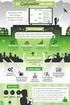
5 It is a common requirement to have multiple versions of an application working on the same server or cluster at the same time, especially when hardware is at a premium. It is also vital in functional testing where you want to compare the behaviour of different versions of an application. These issues can sometimes be solved using slices. A slice is a single instance of your application server and application, using a preset range of resources on your server (a set of ports, a directory on the file system, a labelled messaging queue, etc.). Once you have separated out your binaries and configuration, it is possible to deploy multiple slices on a machine simultaneously. In this way, when you deploy the latest version of your application, you create a new instance of the application server, assign it an unused range of ports and other resources on the host, deploy your application, and bring it up. Thus you have multiple versions of your application testable at any time. This strategy can be used on your production environment to ensure that your service is continually available, and to provide an extremely simple failover or back-out strategy to a previous version of your software in case the newest version fails. There are a few things to be aware of when using this approach. The key one is to ensure that this can be done safely. Not all infrastructure components support a slicing model. Another issue arises when changes need to be made to a component that is shared between slices, although this can usually be worked around with a bit of care. With the more mainstream adoption of virtualization, a new and compelling paradigm is emerging. In addition to creating environments using scripts, it also becomes possible to create entire canned environments, and control them programmatically. Using a standard virtual machine image makes it easy to have a well-known, consistent environment to use for all your testing. Developers can run local copies of the virtual machine on their desktops, and make sure that their new code runs in the environment as a pre-check in requirement. It also makes it possible to script complex scalability and integration tests. For instance, you could simulate a cluster with a set of virtual machines. You could then fake a catastrophic failure by programmatically bringing down a virtual machine and seeing how the cluster reacts. In the same way, network failures, database connectivity problems and application scalability can be programmatically induced and the application s behaviour tested. We have also used virtual machines to host multiple versions of CruiseControl on one box to avoid resource conflicts, for example when running automated UI tests. However this is a broad topic that is beyond the scope of this paper, so we will leave discussion of this promising field in build engineering Test your environments Once your environment is configured and your application deployed, you can also script environment testing tasks, sometimes known as smoke tests (based on the principle of switch it on and see if smoke comes out ). These tasks include ensuring you can connect to each of the nodes on a cluster, checking the database is reachable and that your login is valid, making sure the correct version of the application is deployed, sending test messages across message buses and other common integration tests. Once these tasks are automated, it becomes possible to set up an environment, deploy to it and run integration tests in a fully automated fashion. The end result of this automation is that your build process extends beyond continuous build and testing. It covers configuring your test environments, testing the environments themselves and deploying your binaries into them. 5. Evolve your production line along with the application it assembles The diagram below describes a theoretical full production line. Actual implementation of the production line will vary depending on the nature of the application being developed. Just as each application is different and evolving over time, so the build process that supports the application will evolve. The ideas presented here are a guide based on what we have seen in the field. Trying to build a full production line before writing any code is written doesn t deliver any value, so it is important to apply the same amount of pragmatism to build automation as you do to your code. Figure 1: The Deployment Production Line

6 None of the projects we have mentioned has a complete production line as described above. Either we felt that that they didn t require the full process at their current stage of development, or we came into the project at a later stage, where the cost of fully retrofitting the production line outweighed the benefits. 6. Conclusion By carefully organizing a project build system so that every stage delivers independent value, we ensure that builds are completed as quickly as possible and that we can link individual builds directly to the source code changes responsible for triggering them. Organizing builds monolithically such that the binary built is unchanged right through to deployment guarantees that what you test is what ends up in production. The second principle of the build production line is to separate binaries from configuration for all infrastructure components in addition to your application binaries and manage configuration using a simple, consistent strategy. Careful application of this principle allows you to upgrade elements of your infrastructure without undue pain. The next step is to manage application testing on the scout badge model. Your automated deployment system is responsible for setting up and smoke testing environments, and deploying binaries into them for testing. In order to ensure you can run multiple versions of your application on your servers at the same time, you can use slices and virtualization. These techniques also allow you to deploy a new version of your application into production safe in the knowledge that you can fall back to the previous version easily. These various principles and practices comprise the deployment production line, a multi-stage, automated workflow of tasks that facilitates multiple teams building and deploying into complex environments. Its emphasis is on simplicity and feedback, using de facto tools such as CruiseControl, Subversion and Ant to ensure a consistent, robust and automated build, test and deployment process from development through UAT into production.

Continuous Delivery Workshop
 Continuous Delivery Workshop deployment pipelines Workshop materials created by Jez Humble, Martin Fowler, Tom Sulston, & Neal Ford deployment pipelines tests, synergistic practices, incremental deployment
Developing Software in a Private workspace - 4.01 PM PMS
 SBCH06.fm Page 67 Friday, October 4, 2002 4:01 PM 6 Private Workspace A government clerk s room, showing a desk with books, telephone and directory, and a desk lamp on it. Washington, D.C., 1939. Photo
Pipeline Orchestration for Test Automation using Extended Buildbot Architecture
 Pipeline Orchestration for Test Automation using Extended Buildbot Architecture Sushant G.Gaikwad Department of Computer Science and engineering, Walchand College of Engineering, Sangli, India. M.A.Shah
The Deployment Pipeline
 The Deployment Pipeline (Extending the range of Continuous Integration) Dave Farley 2007 Continuous Build A core practice in Agile development projects is the use of Continuous Integration. CI is a process
1z0-102 Q&A. DEMO Version
 Oracle Weblogic Server 11g: System Administration Q&A DEMO Version Copyright (c) 2013 Chinatag LLC. All rights reserved. Important Note Please Read Carefully For demonstration purpose only, this free version
We (http://www.newagesolution.net) have extensive experience in enterprise and system architectures, system engineering, project management, and
 We (http://www.newagesolution.net) have extensive experience in enterprise and system architectures, system engineering, project management, and software design and development. We will be presenting a
Pragmatic Version Control
 Extracted from: Pragmatic Version Control using Subversion, 2nd Edition This PDF file contains pages extracted from Pragmatic Version Control, one of the Pragmatic Starter Kit series of books for project
Continuous Integration
 Continuous Integration Collaborative development issues Checkout of a shared version of software ( mainline ) Creation of personal working copies of developers Software development: modification of personal
s@lm@n Oracle Exam 1z0-102 Oracle Weblogic Server 11g: System Administration I Version: 9.0 [ Total Questions: 111 ]
![s@lm@n Oracle Exam 1z0-102 Oracle Weblogic Server 11g: System Administration I Version: 9.0 [ Total Questions: 111 ]](/thumbs/34/13135225.jpg "s@lm@n Oracle Exam 1z0-102 Oracle Weblogic Server 11g: System Administration I Version: 9.0 [ Total Questions: 111 ]") s@lm@n Oracle Exam 1z0-102 Oracle Weblogic Server 11g: System Administration I Version: 9.0 [ Total Questions: 111 ] Oracle 1z0-102 : Practice Test Question No : 1 Which two statements are true about java
s@lm@n Oracle Exam 1z0-102 Oracle Weblogic Server 11g: System Administration I Version: 9.0 [ Total Questions: 111 ] Oracle 1z0-102 : Practice Test Question No : 1 Which two statements are true about java
Continuous delivery Release software on-demand, not on Red Alert
 Continuous delivery Release software on-demand, not on Red Alert Have it all. Ahead of the competition Value In a world where customers expect a mobile and connected 24x7 experience, businesses must adapt
App-V Deploy and Publish
 App-V Deploy and Publish Tools from TMurgent Technologies Updated Aug 5, 2010 Version 1.8 Introduction: The deployment of Virtual Applications in the simplest way possible, without the need for complicated
Oracle EXAM - 1Z0-102. Oracle Weblogic Server 11g: System Administration I. Buy Full Product. http://www.examskey.com/1z0-102.html
 Oracle EXAM - 1Z0-102 Oracle Weblogic Server 11g: System Administration I Buy Full Product http://www.examskey.com/1z0-102.html Examskey Oracle 1Z0-102 exam demo product is here for you to test the quality
Continuous Integration and Delivery at NSIDC
 National Snow and Ice Data Center Supporting Cryospheric Research Since 1976 Continuous Integration and Delivery at NSIDC Julia Collins National Snow and Ice Data Center Cooperative Institute for Research
Releasing High Quality Applications More Quickly with vrealize Code Stream
 Releasing High Quality Applications More Quickly with vrealize Code Stream T E C H N I C A L W H I T E P A P E R A B S T R A C T : If your company relies on applications to enable new business opportunities
Install guide for Websphere 7.0
 DOCUMENTATION Install guide for Websphere 7.0 Jahia EE v6.6.1.0 Jahia s next-generation, open source CMS stems from a widely acknowledged vision of enterprise application convergence web, document, search,
The Importance of Continuous Integration for Quality Assurance Teams
 The Importance of Continuous Integration for Quality Assurance Teams Without proper implementation, a continuous integration system will go from a competitive advantage for a software quality assurance
Sample copy. Introduction To WebLogic Server Property of Web 10.3 Age Solutions Inc.
 Introduction To WebLogic Server Property of Web 10.3 Age Solutions Inc. Objectives At the end of this chapter, participants should be able to: Understand basic WebLogic Server architecture Understand the
Delivery. Continuous. Jez Humble and David Farley. AAddison-Wesley. Upper Saddle River, NJ Boston Indianapolis San Francisco
 Continuous Delivery Jez Humble and David Farley AAddison-Wesley Upper Saddle River, NJ Boston Indianapolis San Francisco New York Toronto Montreal London Munich Paris Madrid Cape Town Sydney Tokyo Singapore
Continuous Integration (CI)
 Introduction A long standing problem for software development teams has been to maintain the stability of an application while integrating the changes made by multiple developers. The later that integration
1Z0-102. Oracle Weblogic Server 11g: System Administration I. Version: Demo. Page <<1/7>>
 1Z0-102 Oracle Weblogic Server 11g: System Administration I Version: Demo Page 1. Which two statements are true about java EE shared libraries? A. A shared library cannot bedeployed to a cluster.
Continuous Delivery. Anatomy of the Deployment Pipeline (Free Chapter) by Jez Humble and David Farley
 Continuous Delivery Anatomy of the Deployment Pipeline (Free Chapter) by Jez Humble and David Farley Copyright 2011 ThoughtWorks Inc. All rights reserved www.thoughtworks-studios.com Introduction Continuous
zen Platform technical white paper
 zen Platform technical white paper The zen Platform as Strategic Business Platform The increasing use of application servers as standard paradigm for the development of business critical applications meant
Meister Going Beyond Maven
 Meister Going Beyond Maven A technical whitepaper comparing OpenMake Meister and Apache Maven OpenMake Software 312.440.9545 800.359.8049 Winners of the 2009 Jolt Award Introduction There are many similarities
GECKO Software. Introducing FACTORY SCHEMES. Adaptable software factory Patterns
 Introducing FACTORY SCHEMES Adaptable software factory Patterns FACTORY SCHEMES 3 Standard Edition Community & Enterprise Key Benefits and Features GECKO Software http://consulting.bygecko.com Email: [email protected]
What s New in VMware vsphere 5.1 VMware vcenter Server
 What s New in VMware vsphere 5.1 VMware vsphere 5.1 TECHNICAL MARKETING DOCUMENTATION V 1.0/UPDATED JULY 2012 Table of Contents Introduction... 3 Key Components... 3 vcenter Single Sign-On Server.... 3
Running a Workflow on a PowerCenter Grid
 Running a Workflow on a PowerCenter Grid 2010-2014 Informatica Corporation. No part of this document may be reproduced or transmitted in any form, by any means (electronic, photocopying, recording or otherwise)
DevOps for the Mainframe
 DevOps for the Mainframe Rosalind Radcliffe IBM Distinguished Engineer, Enterprise Modernization Solution Architect [email protected] 1 Please note IBM s statements regarding its plans, directions, and
DeployStudio Server Quick Install
 DeployStudio Server Quick Install v1.7.0 The DeployStudio Team [email protected] Requirements OS X 10.7.5 to 10.11.1 DeployStudioServer_v1.7.x.pkg and later NetBoot based deployment 100 Mb/s switched
EVALUATION ONLY. WA2088 WebSphere Application Server 8.5 Administration on Windows. Student Labs. Web Age Solutions Inc.
 WA2088 WebSphere Application Server 8.5 Administration on Windows Student Labs Web Age Solutions Inc. Copyright 2013 Web Age Solutions Inc. 1 Table of Contents Directory Paths Used in Labs...3 Lab Notes...4
Pcounter Web Report 3.x Installation Guide - v2014-11-30. Pcounter Web Report Installation Guide Version 3.4
 Pcounter Web Report 3.x Installation Guide - v2014-11-30 Pcounter Web Report Installation Guide Version 3.4 Table of Contents Table of Contents... 2 Installation Overview... 3 Installation Prerequisites
Nexus Professional Whitepaper. Repository Management: Stages of Adoption
 Sonatype Nexus Professional Whitepaper Repository Management: Stages of Adoption Adopting Repository Management Best Practices SONATYPE www.sonatype.com [email protected] +1 301-684-8080 12501 Prosperity
The Real Challenges of Configuration Management
 The Real Challenges of Configuration Management McCabe & Associates Table of Contents The Real Challenges of CM 3 Introduction 3 Parallel Development 3 Maintaining Multiple Releases 3 Rapid Development
Implementing Continuous Integration Testing Prepared by:
 Implementing Continuous Integration Testing Prepared by: Mr Sandeep M Table of Contents 1. ABSTRACT... 2 2. INTRODUCTION TO CONTINUOUS INTEGRATION (CI)... 3 3. CI FOR AGILE METHODOLOGY... 4 4. WORK FLOW...
VMware vsphere Data Protection Evaluation Guide REVISED APRIL 2015
 VMware vsphere Data Protection REVISED APRIL 2015 Table of Contents Introduction.... 3 Features and Benefits of vsphere Data Protection... 3 Requirements.... 4 Evaluation Workflow... 5 Overview.... 5 Evaluation
Jenkins on Windows with StreamBase
 Jenkins on Windows with StreamBase Using a Continuous Integration (CI) process and server to perform frequent application building, packaging, and automated testing is such a good idea that it s now a
Nick Ashley TOOLS. The following table lists some additional and possibly more unusual tools used in this paper.
 TAKING CONTROL OF YOUR DATABASE DEVELOPMENT Nick Ashley While language-oriented toolsets become more advanced the range of development and deployment tools for databases remains primitive. How often is
What is new in Switch 12
 What is new in Switch 12 New features and functionality: Remote Designer From this version onwards, you are no longer obliged to use the Switch Designer on your Switch Server. Now that we implemented the
THE WINDOWS AZURE PROGRAMMING MODEL
 THE WINDOWS AZURE PROGRAMMING MODEL DAVID CHAPPELL OCTOBER 2010 SPONSORED BY MICROSOFT CORPORATION CONTENTS Why Create a New Programming Model?... 3 The Three Rules of the Windows Azure Programming Model...
Efficient Automated Build and Deployment Framework with Parallel Process
 Efficient Automated Build and Deployment Framework with Parallel Process Prachee Kamboj 1, Lincy Mathews 2 Information Science and engineering Department, M. S. Ramaiah Institute of Technology, Bangalore,
IBM Rational ClearCase, Version 8.0
 IBM Rational ClearCase, Version 8.0 Improve software and systems delivery with automated software configuration management solutions Highlights Improve software delivery and software development life cycle
Software Development In the Cloud Cloud management and ALM
 Software Development In the Cloud Cloud management and ALM First published in Dr. Dobb's Journal, February 2009: http://www.ddj.com/development-tools/212900736 Nick Gulrajani is a Senior Solutions Architect
Sreerupa Sen Senior Technical Staff Member, IBM December 15, 2013
 Sreerupa Sen Senior Technical Staff Member, IBM December 15, 2013 Abstract In this experience report, I ll talk about how we transformed ourselves from a team that does one big bang release a year, to
PRESENTS... Reasons to Switch from SourceSafe: How to Make Your Life Easier with SourceAnywhere Standalone
 Standalone PRESENTS... Reasons to Switch from SourceSafe: How to Make Your Life Easier with SourceAnywhere Standalone Most developers are familiar with Visual SourceSafe. It's a popular version control
Software Configuration Management Best Practices for Continuous Integration
 Software Configuration Management Best Practices for Continuous Integration As Agile software development methodologies become more common and mature, proven best practices in all phases of the software
Windows Server 2008 R2 Hyper-V Live Migration
 Windows Server 2008 R2 Hyper-V Live Migration Table of Contents Overview of Windows Server 2008 R2 Hyper-V Features... 3 Dynamic VM storage... 3 Enhanced Processor Support... 3 Enhanced Networking Support...
Best Practices for Implementing Autodesk Vault
 AUTODESK VAULT WHITE PAPER Best Practices for Implementing Autodesk Vault Introduction This document guides you through the best practices for implementing Autodesk Vault software. This document covers
NetBeans IDE Field Guide
 NetBeans IDE Field Guide Copyright 2005 Sun Microsystems, Inc. All rights reserved. Table of Contents Introduction to J2EE Development in NetBeans IDE...1 Configuring the IDE for J2EE Development...2 Getting
Redundancy Options. Presented By: Chris Williams
 Redundancy Options Presented By: Chris Williams Table of Contents Redundancy Overview... 3 Redundancy Benefits... 3 Introduction to Backup and Restore Strategies... 3 Recovery Models... 4 Cold Backup...
Windows Server 2008 R2 Hyper-V Live Migration
 Windows Server 2008 R2 Hyper-V Live Migration White Paper Published: August 09 This is a preliminary document and may be changed substantially prior to final commercial release of the software described
E-mail Listeners. E-mail Formats. Free Form. Formatted
 E-mail Listeners 6 E-mail Formats You use the E-mail Listeners application to receive and process Service Requests and other types of tickets through e-mail in the form of e-mail messages. Using E- mail
BIRT Application and BIRT Report Deployment Functional Specification
 Functional Specification Version 1: October 6, 2005 Abstract This document describes how the user will deploy a BIRT Application and BIRT reports to the Application Server. Document Revisions Version Date
Automation Engine 14. Troubleshooting
 4 Troubleshooting 2-205 Contents. Troubleshooting the Server... 3. Checking the Databases... 3.2 Checking the Containers...4.3 Checking Disks...4.4.5.6.7 Checking the Network...5 Checking System Health...
Cloudera Manager Training: Hands-On Exercises
 201408 Cloudera Manager Training: Hands-On Exercises General Notes... 2 In- Class Preparation: Accessing Your Cluster... 3 Self- Study Preparation: Creating Your Cluster... 4 Hands- On Exercise: Working
Manage Dell Hardware in a Virtual Environment Using OpenManage Integration for VMware vcenter
 Manage Dell Hardware in a Virtual Environment Using OpenManage Integration for VMware vcenter This Dell Technical White Paper gives an overview of using OpenManage Integration to streamline the time, tools
How To Migrate To Redhat Enterprise Linux 4
 Migrating to Red Hat Enterprise Linux 4: Upgrading to the latest Red Hat release By Donald Fischer Abstract Red Hat Enterprise Linux subscribers may choose to deploy any of the supported versions of the
Your Guide to VMware Lab Manager Replacement
 Your Guide to VMware Lab Manager Replacement white paper BROUGHT TO YOU BY SKYTAP 2 Your Guide to VMware Lab Manager Replacement Contents Your Guide to VMware Lab Manager Replacement... 3 The Power and
Intellicus Enterprise Reporting and BI Platform
 Intellicus Cluster and Load Balancer Installation and Configuration Manual Intellicus Enterprise Reporting and BI Platform Intellicus Technologies [email protected] www.intellicus.com Copyright 2012
Upping the game. Improving your software development process
 Upping the game Improving your software development process John Ferguson Smart Principle Consultant Wakaleo Consulting Email: [email protected] Web: http://www.wakaleo.com Twitter: wakaleo Presentation
Chapter 2 TOPOLOGY SELECTION. SYS-ED/ Computer Education Techniques, Inc.
 Chapter 2 TOPOLOGY SELECTION SYS-ED/ Computer Education Techniques, Inc. Objectives You will learn: Topology selection criteria. Perform a comparison of topology selection criteria. WebSphere component
Automatic Service Migration in WebLogic Server An Oracle White Paper July 2008
 Automatic Service Migration in WebLogic Server An Oracle White Paper July 2008 NOTE: The following is intended to outline our general product direction. It is intended for information purposes only, and
Continuous Integration: Improving Software Quality and Reducing Risk. Preetam Palwe Aftek Limited
 Continuous Integration: Improving Software Quality and Reducing Risk Preetam Palwe Aftek Limited One more title Do you love bugs? Or Are you in love with QC members? [Courtesy: Smita N] Agenda Motivation
How to Build an Enterprise App in 5 Days 1
 How to Build an Enterprise App in 5 Days 1 TABLE OF CONTENTS STAGES OF TRADITIONAL APP DEVELOPMENT 3 STAGE 1: DEFINE 4 STAGE 2: BUILD & TEST 4 STAGE 3: ROLLOUT 6 STAGE 4: MANAGEMENT 7 BUILDING AN ENTERPRISE
Principles of Continuous Integration
 Whitepaper Principles of Continuous Integration Best Practices to Simultaneously Improve Speed, Quality and Responsiveness in Mobile Development Table of Contents Mobile Services... 3 Benefits of Continuous
Building a Continuous Integration Pipeline with Docker
 Building a Continuous Integration Pipeline with Docker August 2015 Table of Contents Overview 3 Architectural Overview and Required Components 3 Architectural Components 3 Workflow 4 Environment Prerequisites
SavvyDox Publishing Augmenting SharePoint and Office 365 Document Content Management Systems
 SavvyDox Publishing Augmenting SharePoint and Office 365 Document Content Management Systems Executive Summary This white paper examines the challenges of obtaining timely review feedback and managing
ORACLE SERVICE CLOUD GUIDE: HOW TO IMPROVE REPORTING PERFORMANCE
 ORACLE SERVICE CLOUD GUIDE: HOW TO IMPROVE REPORTING PERFORMANCE Best Practices to Scale Oracle Service Cloud Analytics for High Performance ORACLE WHITE PAPER MARCH 2015 Table of Contents Target Audience
Overview... 1 Requirements... 1. Installing Roles and Features... 3. Creating SQL Server Database... 9 Setting Security Logins...
 Contents CHAPTER 1 IMail Server using Failover Clustering Overview... 1 Requirements... 1 CHAPTER 2 IIS Installing Roles and Features... 3 CHAPTER 3 Configuring Storage Area Network Requirements... 5 Connecting
WHITE PAPER. Getting started with Continuous Integration in software development. - Amruta Kumbhar, Madhavi Shailaja & Ravi Shankar Anupindi
 WHITE PAPER Getting started with Continuous Integration in software development - Amruta Kumbhar, Madhavi Shailaja & Ravi Shankar Anupindi Introduction DevOps culture is gaining rapid momentum in the IT
Postgres Plus xdb Replication Server with Multi-Master User s Guide
 Postgres Plus xdb Replication Server with Multi-Master User s Guide Postgres Plus xdb Replication Server with Multi-Master build 57 August 22, 2012 , Version 5.0 by EnterpriseDB Corporation Copyright 2012
Using HP Systems Insight Manager to achieve high availability for Microsoft Team Foundation Server
 Using HP Systems Insight Manager to achieve high availability for Microsoft Team Foundation Server Executive summary... 2 Audience... 2 Architecture... 3 Prerequisite... 4 Deploying AT servers... 5 Configuring
Hardware/Software Guidelines
 There are many things to consider when preparing for a TRAVERSE v11 installation. The number of users, application modules and transactional volume are only a few. Reliable performance of the system is
Lavastorm Analytic Library Predictive and Statistical Analytics Node Pack FAQs
 1.1 Introduction Lavastorm Analytic Library Predictive and Statistical Analytics Node Pack FAQs For brevity, the Lavastorm Analytics Library (LAL) Predictive and Statistical Analytics Node Pack will be
TECHNICAL DOCUMENTATION SPECOPS DEPLOY / APP 4.7 DOCUMENTATION
 TECHNICAL DOCUMENTATION SPECOPS DEPLOY / APP 4.7 DOCUMENTATION Contents 1. Getting Started... 4 1.1 Specops Deploy Supported Configurations... 4 2. Specops Deploy and Active Directory...5 3. Specops Deploy
Enabling Continuous Delivery by Leveraging the Deployment Pipeline
 Enabling Continuous Delivery by Leveraging the Deployment Pipeline Jason Carter Principal (972) 689-6402 [email protected] Pariveda Solutions, Inc. Dallas,TX Table of Contents Matching
EMC Documentum Composer
 EMC Documentum Composer Version 6.5 User Guide P/N 300 007 217 A02 EMC Corporation Corporate Headquarters: Hopkinton, MA 01748 9103 1 508 435 1000 www.emc.com Copyright 2008 EMC Corporation. All rights
Best Practices & Deployment SurfControl Mobile Filter v 5.0.2.60
 Best Practices & Deployment SurfControl Mobile Filter v 5.0.2.60 rev2.1, January 2006 Pre-Installation Guide Notice 2006 SurfControl. All rights reserved. SurfControl, SurfControl E-mail Filter, SurfControl
FUNCTIONAL PRODUCT OVERVIEW: BOND ENTERPRISE RELEASE AND DEPLOYMENT MANAGEMENT
 FUNCTIONAL PRODUCT OVERVIEW: BOND ENTERPRISE RELEASE AND DEPLOYMENT MANAGEMENT BOND IS A READY-MADE SOLUTION FOR THE RELEASE MANAGEMENT AND DEPLOYMENT OF ENTERPRISE IT SYSTEMS. IT COMBINES PROCESS CONTROL
W H I T E P A P E R. Reducing Server Total Cost of Ownership with VMware Virtualization Software
 W H I T E P A P E R Reducing Server Total Cost of Ownership with VMware Virtualization Software Table of Contents Executive Summary............................................................ 3 Why is
Deploying the BIG-IP System with VMware vcenter Site Recovery Manager
 Deployment Guide Version 1.0 Deploying the BIG-IP System with VMware vcenter Site Recovery Manager Contents 2 Prerequisites and configuration notes 2 Deployment overview 3 Example configuration of BIG-IP
Product Overview. Dream Report. OCEAN DATA SYSTEMS The Art of Industrial Intelligence. User Friendly & Programming Free Reporting.
 Dream Report OCEAN DATA SYSTEMS The Art of Industrial Intelligence User Friendly & Programming Free Reporting. Dream Report for Trihedral s VTScada Dream Report Product Overview Applications Compliance
Virtual Application Management with Microsoft Application Virtualization 4.6 and System Center 2012 Configuration Manager
 Virtual Application Management with Microsoft Application Virtualization 4.6 and System Center 2012 Configuration Manager This whitepaper describes the virtual application management capabilities provided
Dell High Availability Solutions Guide for Microsoft Hyper-V
 Dell High Availability Solutions Guide for Microsoft Hyper-V www.dell.com support.dell.com Notes and Cautions NOTE: A NOTE indicates important information that helps you make better use of your computer.
Relational Databases in the Cloud
 Contact Information: February 2011 zimory scale White Paper Relational Databases in the Cloud Target audience CIO/CTOs/Architects with medium to large IT installations looking to reduce IT costs by creating
Quick Start Guide. User Manual. 1 March 2012
 Quick Start Guide User Manual 1 March 2012 This document outlines the steps to install SAMLite system into a single box of server and configure it to run for passive collection (domain login script). This
Agile Web Application Testing
 Agile Web Application Testing Technologies and Solutions V. Narayan Raman Tyto Software Goals Rapid feedback on the quality of software Problem in Web App Testing Many Browsers Many Operating Systems Browsers
Global Software Change Management for PVCS Version Manager
 Global Software Change Management for PVCS Version Manager... www.ikanalm.com Summary PVCS Version Manager is considered as one of the leading versioning tools that offers complete versioning control.
CloudCenter Full Lifecycle Management. An application-defined approach to deploying and managing applications in any datacenter or cloud environment
 CloudCenter Full Lifecycle Management An application-defined approach to deploying and managing applications in any datacenter or cloud environment CloudCenter Full Lifecycle Management Page 2 Table of
CA Single Sign-On r12.x (CA SiteMinder) Implementation Proven Professional Exam
 CA Single Sign-On r12.x (CA SiteMinder) Implementation Proven Professional Exam (CAT-140) Version 1.4 - PROPRIETARY AND CONFIDENTIAL INFORMATION - These educational materials (hereinafter referred to as
Department of Veterans Affairs VistA Integration Adapter Release 1.0.5.0 Enhancement Manual
 Department of Veterans Affairs VistA Integration Adapter Release 1.0.5.0 Enhancement Manual Version 1.1 September 2014 Revision History Date Version Description Author 09/28/2014 1.0 Updates associated
Continuous integration End of the big bang integration era
 Continuous integration End of the big bang integration era Patrick Laurent Partner Technology & Enterprise Applications Deloitte Mario Deserranno Manager Technology & Enterprise Applications Deloitte The
Secure Messaging Server Console... 2
 Secure Messaging Server Console... 2 Upgrading your PEN Server Console:... 2 Server Console Installation Guide... 2 Prerequisites:... 2 General preparation:... 2 Installing the Server Console... 2 Activating
Print Audit 6 Network Installation Guide
 Print Audit 6 Network Installation Guide IMPORTANT: READ THIS BEFORE PERFORMING A PRINT AUDIT 6 INSTALLATION Print Audit 6 is a desktop application that you must install on every computer where you want
Hands-On Lab. Embracing Continuous Delivery with Release Management for Visual Studio 2013. Lab version: 12.0.21005.1 Last updated: 12/11/2013
 Hands-On Lab Embracing Continuous Delivery with Release Management for Visual Studio 2013 Lab version: 12.0.21005.1 Last updated: 12/11/2013 CONTENTS OVERVIEW... 3 EXERCISE 1: RELEASE MANAGEMENT OVERVIEW...
VirtualCenter Database Performance for Microsoft SQL Server 2005 VirtualCenter 2.5
 Performance Study VirtualCenter Database Performance for Microsoft SQL Server 2005 VirtualCenter 2.5 VMware VirtualCenter uses a database to store metadata on the state of a VMware Infrastructure environment.
This Deployment Guide is intended for administrators in charge of planning, implementing and
 YOUR AUTOMATED EMPLOYEE Foxtrot Deployment Guide Enterprise Edition Introduction This Deployment Guide is intended for administrators in charge of planning, implementing and maintaining the deployment
CoCreate Manager Server Installation Guide. CoCreate Manager Server Installation Guide 1
 CoCreate Manager Server Installation Guide CoCreate Manager Server Installation Guide 1 CoCreate Manager Server Installation Guide 2 Table Of Contents 1. CoCreate Manager Server 2008 4 1.1. Installation
AUTOMATED MOBILE TESTING REQUIRES BOTH REAL DEVICES AND EMULATORS
 WHITE PAPER AUTOMATED MOBILE TESTING REQUIRES BOTH REAL DEVICES AND EMULATORS SEPTEMBER 2015 Today, businesses compete in an increasingly mobile-centric marketplace. Mobile QA can no longer take a backseat