
Don t Double Our Rates
|
|
|
- Melissa Short
- 10 years ago
- Views:
Transcription
1 Don t Double Our Rates An Issue Brief Congress should be helping to keep college affordable, not making it more expensive for student loan borrowers to pay for college

2 Background Unless Congress acts decisively, the interest rate on new federal subsidized Stafford student loans will double from 3.4 percent to 6.8 percent on July 1, A 2007 college affordability plan gradually reduced the interest rate from 6.8 percent to 3.4 percent through 2012, when the rate was scheduled to revert to 6.8 percent. Last year, in the midst of the election cycle, motivated primarily by sluggish economic conditions, President Obama and Congress led a successful effort to extend the low 3.4 percent rate for one more year. Students have already suffered from a variety of aid restrictions and limitations that have resulted in students contributing $4.6 billion to deficit reduction. Since the federal government makes 36 cents on every dollar loaned, increasing interest rates simply increases the government s profits from students. We need to overhaul the student loan system so it is equitable to all borrowers. Such a comprehensive approach will take time and must provide ample opportunity for participation by borrowers and the general public. Economic Impact If the interest rate is allowed to double, borrowers will pay about $1,000 more over the life of the loan per year of school. Nationally, more than 7 million borrowers each year would be forced to pay more for their college education. 1 Student loan borrowers already graduate with an average of more than $27,000 in education debt. 2 The program in question, the federal subsidized Stafford student loan, primarily serves low and moderate income families. The federal government pays the interest on the loan while the borrower is enrolled in college on at least a half-time basis. More than two-thirds of all subsidized student loan borrowers come from families with annual incomes of less than $50, These families have been hard hit in the recent recession and continue to face high unemployment and tight family finances. Meanwhile, the job market is experiencing a skills gap between the number of people without jobs and the qualifications employers are seeking in prospective employees. By 2018, the nation will need 22 million additional college graduates but will fall short by at least 3 million. In addition, there will be a demand for at least 4.7 million new workers with post-secondary certificates. 4 Keeping the interest rate low on student loans enables students, workers, and the unemployed to get the post-secondary training needed to adapt to new economic realities. Now is not the time to dramatically increase college loan costs and make college less affordable. 1 Brief, Keeping Student Interest Rates Low, The White House. 2 Analysis, Debt At Graduation, Mark Kantrowitz, Analysis, Targeting Student Aid, Mark Kantrowitz, Report, Help Wanted: Projects of Jobs and Education Requirements through 2018, Georgetown Center on Education and Workforce, June 2010.

3 Federal Policy Earns Money off Student Aid Recipients Doubling the interest rate on federal subsidized Stafford student loans will continue an unfortunate and inappropriate trend of using student aid funding to pay down the federal deficit, or simply to generate enormous federal revenues. Surveys shows that the majority of Americans would increase spending on education, even as they support deficit reduction overall. 5 Sadly, federal student loan policy is already missing the mark, and will only get worse if an unjustifiable rate hike is allowed to stand. Raiding student aid to pay for deficit reduction: In 2011, as part of the Budget Control Act, Congress reached a bipartisan commitment to maintain a maximum Pell grant of $5,550 for lowincome students and provided $17 billion in additional funding over two years for Pell grants. 6 Unfortunately, to find the funds, Congress eliminated the in-school interest subsidy for all graduate student loans and also eliminated most student loan repayment incentives. These cuts generated $4.6 billion more savings than were needed to maintain the Pell maximum. 7 Rather than re-invest those billions in student aid to keep college affordable, congressional leaders applied those dollars to deficit reduction. In addition, Congress also robbed Peter to pay Pell through a series of other restrictions and eligibility limitations on student aid that shifted those savings to Pell grants. Among these student aid cuts were the elimination of Pell grants for summer learning; the elimination of the in-school interest subsidy during the first six months after completing one s postsecondary education program; limits on the length of time a student can receive a Pell grant or a subsidized Stafford loan; restrictions that make it more difficult for low-income students to automatically qualify for the maximum Pell award; and the elimination of Pell eligibility for students without a high school degree who demonstrate the ability to benefit from postsecondary education. But cutting student aid to the generations that have to pay off the $17 trillion federal debt is the wrong choice. If this generation and future generations of American students have to shoulder the burden of the accumulated federal budget deficits of the past 40 years, at the very least the federal government should enable them access to the post-secondary skills and knowledge necessary to cope with that debt. College students have already given up student aid funding to pay down the debt, aid that could have been used to help make college more affordable. Some 140,000 low-income students were knocked out of the Pell grant program due to the restrictions and limitations imposed. 8 Given what students and families have already given up, low-cost financing for needy students seeking loans is all the more critical now. Squeezing student loan borrowers to generate revenue: Under our federal student loan system, student borrowers have generated revenue either for private banks and lenders, or for the federal government itself. 5 Poll, As Sequester Deadline Looms Little Support For Cutting Most Programs, Pew Research Center for the People and the Press, 2/13/12. 6 Blog, Understand Why Federal Budgets Matter to Students, US News and World Report, 1/18/12; brief, Debt Ceiling Law Provides $17 Billion for Pell, National Association of Student Financial Aid Administrators, 8/3/11. 7 Interview, Five Questions for Joel Packer of the Committee for Education Funding, National Education Writers Association, 2/28/13. 8 Release, 143,000 Students Lose Their Pell Grant Next Year, U.S. Public Interest Research Group, 12/19/11.

4 Before 2010, Sallie Mae and other financial institutions received billions of dollars of student loan interest revenue each year through the Federal Family Education Loan (FFEL) program, which originated about two-thirds of all student loans. Borrowers suffered under this system. 9 Banks and lenders lobbied Congress aggressively to keep interest rates and loan fees high and offered various incentives to schools to capture higher loan volumes, all at the borrowers' expense. Before the market meltdown in 2008, lenders used the already lucrative federal loan programs as marketing tools to mislead hundreds of thousands of borrowers into taking out outrageously high-priced private student loans, among other wasteful and abusive activities. 10 Student aid and consumer advocates lobbied for years against the banks to lower student loan interest rates and improve borrower terms and conditions. While we enjoyed some victories, the loan industry's huge profit margins and lobbying muscle more often prevailed. By 2008, faltering credit markets threatened to undermine lenders abilities to make new federal loans to students. To keep the student loan program solvent, Congress had to step in to further support the banks, on top of the profits that the banks were already reaping from borrowers. Meanwhile, the Direct Loan program, which by this point handled roughly 35% of all federal student lending, was running efficiently and reliably, and certainly less expensively. Toward that end, in 2009, President Obama proposed student loan reform to eliminate FFEL, with the support of student and consumer groups. 11 Sallie Mae and other student lenders mounted a massive opposition campaign to halt the reform, but ultimately they failed, and the FFEL program ceased for all federal student loan borrowers taking out a loan on or after July 1, 2010, although private lenders currently still hold hundreds of billions of dollars of federal education loans. Student loan borrowers have no doubt benefited from student loan reform, which delivered reliability in student lending, and some assurance that they would no longer be targeted by banks through their federal loans. Nonetheless, the high interest rates that banks had pushed for and won for years have persisted. Right now, the federal government is reaping the benefits rather than the banks. For instance, the federal government is borrowing money at a record low the 91-day Treasury bill is selling at a.08% discount. 12 Federal student loan borrowers are paying rates that are stunningly high in comparison: 6.8% for unsubsidized Stafford student loan borrowers, 3.4% for subsidized Stafford student loan borrowers, and 7.9% for Grad PLUS student loan borrowers and for Parent PLUS loan borrowers. Recent projections from the Congressional Budget Office, the official scorekeeper for federal programs, indicate that federal educational lending now carries a negative cost subsidy of percent for On average, every dollar lent will yield more than 36 cents of profit to the federal government. The amount of profit varies by the type of loan. In 2014, according to the Congressional Budget Office, the federal government will make 12.5 cents per each dollar loaned through the federal subsidized Stafford student loan program. It will make 33.3 cents per dollar loaned through the federal unsubsidized Stafford student loan program, 54.8 cents on each dollar loaned through 9 Report, Obama's Budget Supporting Students, Not Banks, U.S. Public Interest Research Group, 3/26/ Story, Pre-emptive Strike on Student Loans, Inside Higher Ed, 4/25/ Speech, Remarks by the President on Innovation and Sustainable Growth at Hudson Valley Community College, President Obama, 10/21/ Post, 91 Day Treasury Bill, 13 Report, CBO February 2013 Baseline Projections for the Student Loan Program, Congressional Budget Office, 2013.

5 loans to graduate students, and 49 cents on the dollar for parent loans 14. Applying these margins to the $108 billion in educational loans that the government will make next year, the following chart calculates that over $34 billion in profit is generated 15. * CBO data provides net number of loan data per loan type. We assume one student per loan, although one student may borrow more than one type of loan. The federal student loan program as it currently operates is the opposite of a low cost program to student loan borrowers it makes billions in revenue yearly. Meanwhile, student loan borrowers, continuing to face economic uncertainty, bear the brunt of continued high costs. Fixing the Student Loan System Will Require Deliberation and Time Considering the enormity of the student debt problem and the significant number of students and borrowers impacted, it is clear that we need a comprehensive overhaul of federal student loan policy. The focus of that reform should be to ensure that students can access affordable borrowing rates and have reasonable repayment options to keep debt burden in check. Achieving a comprehensive student loan solution should be a priority for policy makers, particularly given the looming deadline on subsidized Stafford interest rates. If comprehensive student loan reform proves politically impossible, we must at least come to a short-term agreement that is good for students and leads us on a path toward a long term solution. Not only is it the right thing to do for the low- and moderate-income families that overwhelmingly receive federal subsidized Stafford student loans, but it demonstrates a political commitment to moving student loan and student aid policy away from being a financial bonanza for the federal government, and toward being a tool that enables Americans to access a higher education equitably. 14 Ibid. 15 Report, Direct Loan Program, AY , Q4, Federal Student Aid, 2012.

NATIONAL STUDENT AID PROFILE: OVERVIEW OF 2015 FEDERAL PROGRAMS
 NATIONAL STUDENT AID PROFILE: OVERVIEW OF 2015 FEDERAL PROGRAMS Published July 2015 Table of Contents Overview... 1 The Federal Pell Grant Program... 4 Campus-Based Aid Programs... 6 The Federal Supplemental
 Testimony of Charmaine N. Mercer, PhD Vice President of Policy, Alliance for Excellent Education Before the U.S. House of Representatives Committee on Education and Workforce Keeping College Within Reach:
A. The President proposed adding money to the Pell Grant program, which was running a deficit, by eliminating Perkins Loans.
 Dr. Dave: The President s budget adds money to the Pell grant program, but cuts money for student loans. On balance, do students win? Do the states have a role in this? A. The President proposed adding
Fast Facts on Education in America UPDATED FEBRUARY 2014
 Fast Facts on Education in America UPDATED FEBRUARY 2014 The climate of postsecondary education in America has changed dramatically since Scholarship America s inception more than 55 years ago. Access
Testimony of. Luke Swarthout, Higher Education Advocate United States Public Interest Research Group (U.S. PIRG)
 Testimony of Luke Swarthout, Higher Education Advocate United States Public Interest Research Group (U.S. PIRG) Senate Committee on Banking, Housing and Urban Affairs June 6 th, 2007 U.S. PIRG is the federation
Student Loans. The State of Lending in America & its Impact on U.S. Households. Sonia Garrison. December 2012
 Student Loans The State of Lending in America & its Impact on U.S. Households Sonia Garrison December 2012 Center for www.responsiblelending.org Responsible Lending 105 Student Loans An Introduction to
December 9, 2008. and Future. Robert S. Lavet, Powers Pyles Sutter & Verville PC #2530116
 December 9, 2008 Student Lending: Past, Present and Future Robert S. Lavet, Powers Pyles Sutter & Verville PC #2530116 Key Issues and Developments in the FFEL Program College Cost Reduction Act ( CCRA
Federal Student Financial Aid: 2011 National Profile of Programs in Title IV of the Higher Education Act
 Federal Student Financial Aid: 2011 National Profile of Programs in Title IV of the Higher Education Act Overview...2 The Federal Pell Grant Program...5 The Federal Supplemental Educational Opportunity
The Everyone Deserves a Shot Initiative
 The Everyone Deserves a Shot Initiative P.G. Sittenfeld s Proposal to Reduce Student Loan Debt At the heart of the American Dream is the promise of a good education, the key to opportunity for this generation
Department of Education STUDENT LOANS OVERVIEW. Fiscal Year 2016 Budget Proposal CONTENTS
 Department of Education STUDENT LOANS OVERVIEW Fiscal Year 2016 Budget Proposal CONTENTS Page Account Summary Table... R-1 Program Description: Federal Student Loans... R-3 Interest Rates and Terms By
GAO STUDENT LOAN PROGRAMS. As Federal Costs of Loan Consolidation Rise, Other Options Should Be Examined. Report to Congressional Requesters
 GAO United States General Accounting Office Report to Congressional Requesters October 2003 STUDENT LOAN PROGRAMS As Federal Costs of Loan Consolidation Rise, Other Options Should Be Examined GAO-04-101
Department of Education FY13 Budget Summary
 Department of Education FY13 Budget Summary **Subject to changes based on the Department of Education s budget briefing on 2/14.** The FY13 budget would provide $69.8 billion in discretionary appropriations
CRS Report for Congress
 Order Code RL31575 CRS Report for Congress Received through the CRS Web Consolidation Loan Provisions in the Federal Family Education Loan and Direct Loan Programs Updated November 16, 2004 Adam Stoll
FEDERAL STUDENT LOANS. Borrower Interest Rates Cannot Be Set in Advance to Precisely and Consistently Balance Federal Revenues and Costs
 United States Government Accountability Office Report to Congressional Committees January 2014 FEDERAL STUDENT LOANS Borrower Interest Rates Cannot Be Set in Advance to Precisely and Consistently Balance
Public Sector Student Loan Forgiveness and the Taxpayer
 Insight Public Sector Student Loan Forgiveness and the Taxpayer SCOTT FLEMING OCTOBER 1, 2014 In the wake of the administration s effort to ensure college remains affordable for millions of low-income
Student Loans Bankruptcy and Student Loans: NUTS & BOLTS The Options (pressing your plea Prov 6:1-5) Federal loan
 Student Loans Bankruptcy and Student Loans: Must prove undue hardship Must initiate an adversary hearing, a separate lawsuit within the bankruptcy where the undue hardship is illustrated. Most can t afford
Common Ground Project: Direct Federal Student Loans Citizens for Political Reform
 Common Ground Project: Direct Federal Student Loans Citizens for Political Reform THE ISSUE We are fast approaching June 30 the date on which the current 3.4% interest rate for subsidized Stafford loans
Household Debt and Credit: Student Debt
 Household Debt and Credit: Student Debt February 28, 2013 Donghoon Lee The views presented here are those of the author and do not necessarily reflect those of the Federal Reserve Bank of New York, or
Why 529 College Savings Plans Favor the Fortunate
 By Chad Aldeman Why 529 College Savings Plans Favor the Fortunate College costs have skyrocketed 82 percent over the past decade, prompting more and more families to turn to private savings accounts, or
Most discussions of student loans focus on the
 January 2003 The Role of Student Loans in College Access Sandy Baum, Ph.D., Professor of Economics, Skidmore College Most discussions of student loans focus on the difficulties they generate for students.
Student Loan Forgiveness Programs: An Evolving Workforce Development Tool
 American Association of State Colleges and Universities A Higher Education Policy Brief September 2009 Student Loan Forgiveness Programs: An Evolving Workforce Development Tool by Thomas L. Harnisch Research
quality of life. spending water and rebuild its project s costs cost of infrastructure for every
 A Cost Effective Approach to Increasing Investment in Water Infrastructure: The Water Infrastructure Finance and Innovation Authority (WIFIA) Background. High-quality and quality of life in the United
The Economics Of Student Debt
 ! The Economics Of Student Debt Stafford Loan Interest Rates Are A Short-Term Problem Reflective of A Long-Term Tension As Congress returns from the Fourth of July recess, one of the first pieces of unfinished
TOP 10 WAYS THE OBAMA BUDGET DISPLACES PRIVATE ENTREPRENEURSHIP
 TOP 10 WAYS THE OBAMA BUDGET DISPLACES PRIVATE ENTREPRENEURSHIP By: Joseph Onorati The President s 2010 budget proposal increases taxes and spending by magnitudes only matched previous to this year by
WikiLeaks Document Release
 WikiLeaks Document Release February 2, 2009 Congressional Research Service Report RS22308 Student Loans and FY2006 Budget Reconciliation Adam Stoll, Domestic Social Policy Division February 14, 2006 Abstract.
Testimony of. Deborah Lucas. Before the Committee on Education and the Workforce U.S. House of Representatives
 Testimony of Deborah Lucas Before the Committee on Education and the Workforce U.S. House of Representatives "Keeping College Within Reach: Examining Opportunities to Strengthen Federal Student Loan Programs"
The End of Grace. How to Navigate Your Student Loans After You Graduate
 The End of Grace How to Navigate Your Student Loans After You Graduate Where to find your loans National Student Loan Data System Complete your Financial Aid Review Complete your Exit Counseling www.nslds.ed.gov
To improve college affordability in meaningful ways, any new resources and reforms should:
 November 5, 2008 Dear President-Elect Obama, Congratulations on your victory. Throughout your campaign, you called welcome attention to the critical importance of higher education to our economy and our
Student Loans Terms To Know
 Student Loans Terms To Know Borrower The borrower in most cases is the student. The loan is made in the borrower s name and he/she is responsible for paying back the loan(s) including principal plus any
Understand your interest rate options
 Understand your interest rate options Wells Fargo offers you the choice of variable and fixed interest rates. Each option has unique advantages to consider before choosing your rate. How are they different?
A BIPARTISAN PLAN TO REDUCE OUR NATION S DEFICITS EXECUTIVE SUMMARY
 A BIPARTISAN PLAN TO REDUCE OUR NATION S DEFICITS EXECUTIVE SUMMARY This bipartisan, comprehensive, and balanced plan consistent with the recommendations of the Bowles-Simpson fiscal commission that will:
2005-06 UC Merced Catalog pp. 32-34 excerpted
 UNDERGRADUATE FINANCIAL AID AND SCHOLARSHIPS The Office of Financial Aid and Scholarships strives to make a college education affordable for all students regardless of their families' financial situations.
tudent oans Federal Stafford, PLUS and Grad Plus For Loan Period July 1, 2008-June 30, 2009
 Your guide to tudent oans Federal Stafford, PLUS and Grad Plus For Loan Period July 1, 2008-June 30, 2009 Lender Code: 833506 orrower enefits * 0% Origination Fee for Stafford Loans Allegiance Credit Union
STATEMENT OF DAVID S. MUNDEL ASSISTANT DIRECTOR FOR HUMAN RESOURCES AND COMMUNITY DEVELOPMENT CONGRESSIONAL BUDGET OFFICE BEFORE THE
 STATEMENT OF DAVID S. MUNDEL ASSISTANT DIRECTOR FOR HUMAN RESOURCES AND COMMUNITY DEVELOPMENT CONGRESSIONAL BUDGET OFFICE BEFORE THE EDUCATION, ARTS AND HUMANITIES SUBCOMMITTEE SENATE COMMITTEE ON LABOR
STUDENT LOAN REPAYMENT
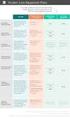 STUDENT LOAN REPAYMENT Chase College of Law Financial Aid Presentation April 14 th, 2011 TOPICS TO BE COVERED General Repayment Information Loan consolidation Repayment Plans Public service loan forgiveness
Financial AID. for Law School: A PRELIMINARY GUIDE. A Publication of the Law School Admission Council. Visit us at www.lsac.org or call 215.968.1001.
 Financial AID for Law School: A PRELIMINARY GUIDE A Publication of the Law School Admission Council. Visit us at www.lsac.org or call 215.968.1001. Introduction Considering law school but concerned about
COMPONENTS OF AID PACKAGES: WHAT TO EXPECT
 23359_ch01.qxd 7/15/04 9:00 AM Page 176 176 Paying for College based grants or scholarships if the institution provides them, may decrease loans in the aid package and increase grants even at an institution
Obama Administration Record on Education
 Obama Administration Record on Education A world-class education is the single most important factor in determining not just whether our kids can compete for the best jobs but whether America can out-compete
Big Loans Bigger Problems:
 Big Loans Bigger Problems: A Report on the Sticker Shock of Student Loans March 2001 By Tracey King and Ivan Frishberg Surveying was conducted by the State PIRG s student chapters. Thanks to the state
FEDERAL STUDENT LOANS. Education Could Do More to Help Ensure Borrowers Are Aware of Repayment and Forgiveness Options
 United States Government Accountability Office Report to Congressional Requesters August 2015 FEDERAL STUDENT LOANS Education Could Do More to Help Ensure Borrowers Are Aware of Repayment and Forgiveness
Student Debt: Bigger and Bigger. By Heather Boushey. September 2005
 cepr Briefing Paper CENTER FOR ECONOMIC AND POLICY RESEARCH Student Debt: Bigger and Bigger By Heather Boushey September 2005 CENTER FOR ECONOMIC AND POLICY RESEARCH 1611 CONNECTICUT AVE., NW, SUITE 400
How To Resolve A Defaulted Loan
 Default Issues in Detail Since most of your current students will be eligible for inschool deferment if they re attending at least half-time, you are most likely to be involved in default issues with students
William D. Ford Federal Direct Loan Program Direct Subsidized Loan and Direct Unsubsidized Loan Borrower s Rights and Responsibilities Statement
 Important Notice: This Borrower s Rights and Responsibilities Statement provides additional information about the terms and conditions of the loans you receive under the accompanying Master Promissory
Winning at the college financial aid game
 Winning at the college financial aid game By the numbers Average tuition and fees per year for four-year colleges in 2006-07: 1 Private institutions: $30,367, up 4.6% from the previous year Public colleges:
The Cost of College. Is the Price of Higher Education Worth Paying? Yasmine Byungura, Tessa Wood Introduction
 The Cost of College Is the Price of Higher Education Worth Paying? Yasmine Byungura, Tessa Wood Introduction For decades, oncoming generations have been taught that the key to a successful, happy, and
How To Determine The Cost Of College At The Universtarca
 Benchmarks: Measures of College Affordability and Student Aid in North Carolina May 2006 An Update to the Study Published December 2004 The State Education Assistance Authority is pleased to make available
Financial AID. for Law School: A PRELIMINARY GUIDE. A Publication of the Law School Admission Council. Visit us at www.lsac.org or call 215.968.1001.
 Financial AID for Law School: A PRELIMINARY GUIDE A Publication of the Law School Admission Council. Visit us at www.lsac.org or call 215.968.1001. Introduction Considering law school but concerned about
William D. Ford Federal Direct Loan Program Direct Subsidized Loan and Direct Unsubsidized Loan Borrower s Rights and Responsibilities Statement
 Important Notice: This Borrower s Rights and Responsibilities Statement provides additional information about the terms and conditions of the loans you receive under the accompanying Master Promissory
How To Get A Student Loan From Wells Fran
 Understand your interest rate options Wells Fargo offers you the choice of variable and fixed interest rates. Each option has unique advantages to consider before choosing your rate. How are they different?
Federal Budget in Pictures CUT SPENDING // FIX THE DEBT // REDUCE THE TAX BURDEN
 2014 Federal Budget in Pictures CUT SPENDING // FIX THE DEBT // REDUCE THE TAX BURDEN 2014 Federal Budget in Pictures CUT SPENDING // FIX THE DEBT // REDUCE THE TAX BURDEN The Thomas A. Roe Institute for
Loan Consolidation: What You Need to Know to Make an Informed Decision. Name Title Sallie Mae. April 2006
 Loan Consolidation: What You Need to Know to Make an Informed Decision Name Title Sallie Mae April 2006 Welcome To The Seminar!!! Consolidation often seems complicated, especially now You probably have
An Introduction to Graduate Financial Aid
 An Introduction to Graduate Financial Aid University of Pittsburgh FAFSA 2014/15 Complete a Free Application for Federal Student Aid (FAFSA) School Code: 008815 Recommended that forms are completed as
The Financial Aid Application Process and Frequently Asked Questions
 The Financial Aid Application Process and Frequently Asked Questions Step 1 - To apply for financial aid, a student must complete the Free Application for Federal Student Aid (FAFSA) each year. Students